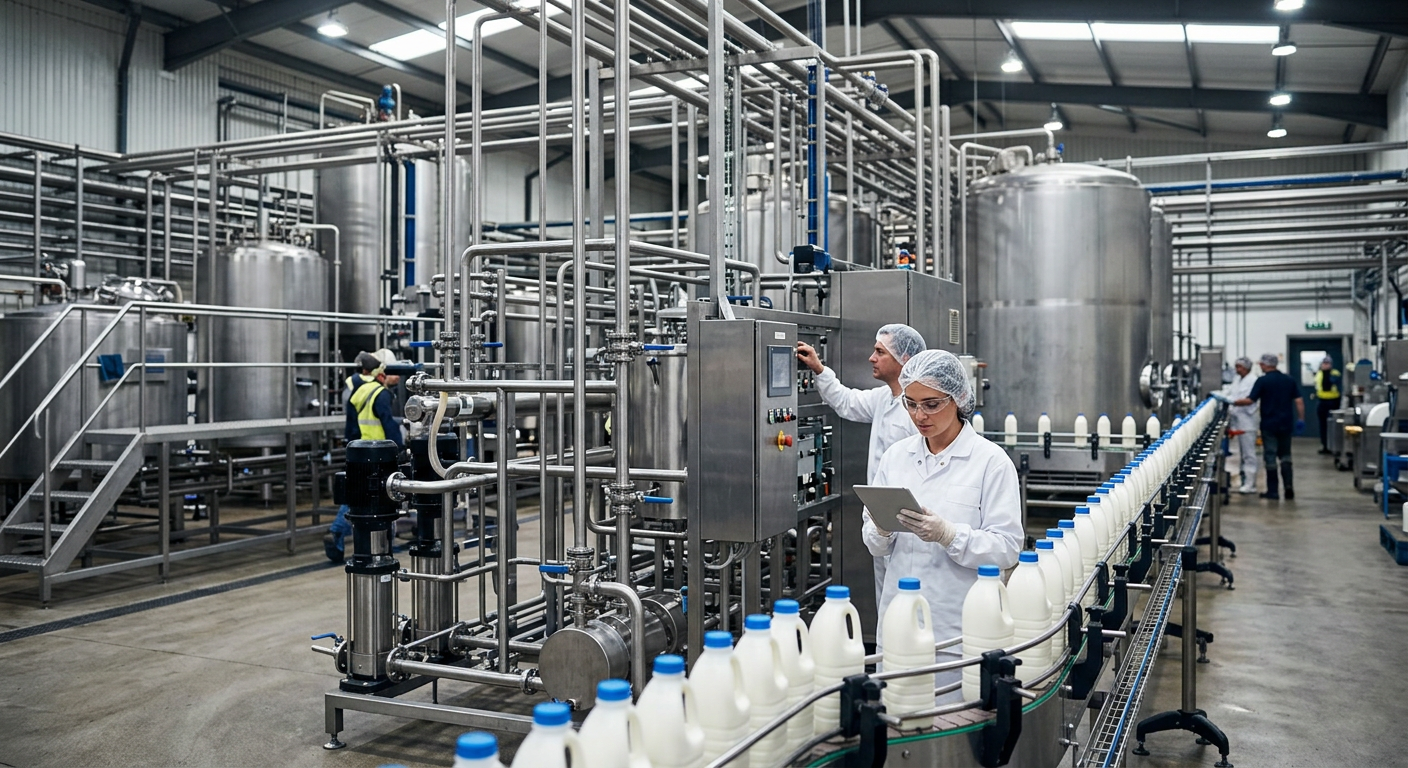
Dairy Plant Design and Engineering Services
[trp_language language=”en_US”]
Dairy Plant Design Services in the United States
Quick Answer

If you are looking for dairy plant design in the United States, the best choice depends on your project scope, product mix, compliance requirements, and speed-to-market goals. For full-scope engineering and integration, companies such as Disruptive Process Solutions, Tetra Pak, SPX FLOW, GEA, E.A. Bonelli + Associates, and Shambaugh & Son are commonly relevant depending on whether you need process engineering, utility systems, packaging integration, sanitary design, or turnkey execution. In practical terms, U.S. dairy manufacturers in regions such as Wisconsin, California, Idaho, Texas, and the Northeast usually prioritize partners that can combine process design, utility coordination, automation, hygienic piping, CIP, pasteurization, filling, and commissioning in one coordinated delivery model.
For most buyers, the most actionable path is to shortlist suppliers based on plant type: fluid milk, yogurt, cultured products, cheese, dairy beverages, aseptic dairy, or multi-SKU co-packing. Then compare them on sanitary process expertise, USDA/FDA/SQF readiness, controls integration, local project support, and ability to manage both new builds and brownfield expansions. Qualified international suppliers, including Chinese manufacturers with relevant U.S.-accepted certifications, documented material traceability, and strong pre-sales plus after-sales support, can also be worth considering for selected tanks, CIP skids, and utility modules when cost-performance is important.
United States Dairy Plant Design Market

The U.S. market for dairy facility engineering remains active because processors are balancing three pressures at once: labor efficiency, product diversification, and stricter expectations for food safety validation. Plants are no longer designed only for high-volume white milk. They are increasingly planned for higher-margin categories such as protein beverages, cultured dairy, drinkable yogurt, cream-based products, lactose-free lines, and shelf-stable or extended-shelf-life products. This shift changes the design brief from simple production capacity to flexibility, hygienic zoning, allergen control, utility resilience, and data visibility.
Regional context matters. Wisconsin remains central for cheese and cultured dairy processing. California continues to influence large-volume milk, dairy beverages, and export-oriented operations linked to ports such as Oakland and Los Angeles/Long Beach. Idaho has strengthened its position in milk processing and ingredient production. Texas and the Southeast are seeing more greenfield and relocation-related activity because of population growth, distribution advantages, and access to major freight corridors. In the Midwest and Northeast, many projects involve brownfield retrofits, where older facilities must be modernized without interrupting production.
When buyers evaluate dairy plant design partners, they usually want more than drawings. They want process validation, hygienic layout logic, utility load planning, equipment interoperability, automation strategy, capital efficiency, and a realistic commissioning plan. That is why engineering-led integrators have gained attention over fragmented multi-vendor approaches. A strong dairy plant design partner must understand raw milk reception, standardization, cream separation, pasteurization, homogenization, batching, fermentation, filling, cold storage, CIP recovery, wastewater, and operator workflow as one system rather than disconnected packages.
The line chart above illustrates a realistic demand index trend for dairy plant engineering projects in the United States. It reflects growth driven by processing modernization, automation upgrades, and product diversification rather than only raw milk volume expansion.
Common Dairy Plant Design Types

Dairy plants differ significantly in hygienic design, thermal treatment requirements, holding time, packaging format, and utility demand. A processor making cultured yogurt has very different design priorities from a plant making ESL milk or natural cheese. For that reason, the best plant layout starts with the product portfolio and target throughput, not with generic equipment lists.
| Plant Type | Main Products | Core Process Steps | Critical Design Focus | Typical Capacity Range |
|---|---|---|---|---|
| Fluid Milk Plant | Whole milk, skim milk, flavored milk | Reception, separation, standardization, pasteurization, homogenization, filling | Cold chain reliability, hygienic piping, bottle or carton line integration | 50,000 to 500,000+ gallons/day |
| Yogurt and Cultured Dairy Plant | Set yogurt, stirred yogurt, drinkable yogurt, kefir | Mixing, homogenization, pasteurization, incubation, cooling, fruit blending, filling | Temperature control, culture protection, cleanroom discipline, batch consistency | 10,000 to 150,000 gallons/day |
| Cheese Plant | Cheddar, mozzarella, specialty cheese | Milk prep, coagulation, cutting, draining, pressing, salting, aging | Curd handling, whey management, sanitation zoning, aging logistics | Small artisan to 5,000,000+ pounds/month |
| Dairy Beverage Plant | Protein shakes, lactose-free drinks, coffee-dairy blends | Blending, heat treatment, homogenization, aseptic or cold fill | Recipe control, allergen management, emulsification, packaging flexibility | 20,000 to 300,000 bottles/day |
| Ingredient and Powder Facility | Whey, milk powder, protein concentrates | Evaporation, membrane filtration, drying, packaging | Energy efficiency, dust control, CIP, powder handling | Highly variable by solids load |
| Multi-Product Co-Packing Plant | Private label milk, yogurt drinks, creamers, RTD dairy blends | Flexible batching, multiple heat treatments, fast changeovers | SKU agility, modular design, automation, scheduling efficiency | Project specific |
This table shows why “dairy plant design” is not one service category in practice. Each plant type changes the engineering priorities, equipment selection, automation depth, and validation plan.
What a Well-Planned Dairy Facility Includes
A high-performing dairy facility design in the United States usually includes several layers of planning. The process layer covers product flow, heat treatment, hold times, mixing logic, and CIP sequencing. The building layer handles hygienic zoning, drainage, washable surfaces, maintenance access, personnel flow, and forklift separation. The utility layer includes steam, chilled water, glycol, refrigeration, compressed air, hot water sets, wastewater, and power distribution. The controls layer aligns PLCs, HMIs, SCADA, recipe management, alarms, and production reporting.
Good dairy engineering also anticipates expansion. Instead of only sizing for today’s SKU mix, leading designers reserve footprint for additional tanks, future fillers, enlarged CIP loops, more refrigeration tonnage, and stronger electrical capacity. This is especially important in growth markets around Dallas-Fort Worth, Charlotte, Phoenix, Fresno, and the Inland Empire, where processors may phase investment rather than build full peak capacity on day one.
Another difference between average and excellent plant design is the treatment of sanitation and operations as business variables. If a plant loses too much production time to changeovers, CIP, or operator travel, the project is underperforming even if every piece of equipment is technically compliant. The best design teams translate business goals into engineering decisions: fewer dead legs, shorter product paths, smarter valve matrices, better ingredient staging, and cleaner maintenance access.
Top Dairy Plant Design Providers Serving the United States
The companies below represent a practical mix of multinational process technology leaders, U.S.-based engineering firms, and integrators relevant to dairy manufacturers. Their suitability varies by budget, project complexity, plant size, and whether you need equipment supply alone or full design-build integration.
| Company | Service Region | Core Strengths | Key Offerings | Best Fit |
|---|---|---|---|---|
| Disruptive Process Solutions | All 50 U.S. states and Canada | Process engineering, utility integration, project management, agile execution | Dairy processing design, CIP, utility systems, automation, installation, integration | Mid-market and enterprise food and beverage projects needing end-to-end coordination |
| Tetra Pak | Nationwide U.S. coverage | Processing and packaging integration, aseptic expertise, global standards | Pasteurization, UHT, mixing, homogenization, filling and packaging systems | Processors needing branded equipment ecosystems and packaging alignment |
| GEA | Nationwide U.S. coverage | Separation, heat transfer, dairy processing technologies | Separators, homogenizers, valves, pumps, powder and ingredient systems | Large or technically specialized dairy projects |
| SPX FLOW | Nationwide U.S. coverage | Sanitary components, heat exchangers, valves, pumps, processing systems | HTST systems, sanitary flow components, mixing and process skids | Plants focused on hygienic process equipment and component reliability |
| E.A. Bonelli + Associates | United States, strong industrial project presence | Food plant engineering, facility planning, architecture-engineering coordination | Plant layout, utility design, production expansion planning | Processors needing facility and process planning support |
| Shambaugh & Son | United States | Mechanical, refrigeration, utilities, industrial construction | Piping, refrigeration, utility systems, facility construction support | Projects with major mechanical infrastructure demands |
| JBT | United States and North America | Food and beverage processing systems, integration support | Processing lines, filling support, hygienic equipment solutions | Processors needing broader food-beverage platform compatibility |
This supplier table is most useful during shortlist creation. Instead of comparing all firms on the same basis, buyers should match the provider to project type: process-centric modernization, new greenfield build, utility-heavy expansion, or high-SKU co-packing operation.
Industry Demand by Dairy Segment
Not all dairy categories are investing at the same pace. Dairy beverages, cultured products, and flexible co-packing formats are pulling strong engineering demand because they require more adaptable process lines, more automation, and tighter integration with packaging. Cheese and ingredient plants remain highly active as well, especially where whey recovery and by-product monetization matter.
The bar chart compares estimated demand intensity across dairy segments in 2026. Dairy beverages lead because processors want flexible lines for protein drinks, functional formulations, and branded or private-label innovation.
How to Buy Dairy Plant Design Services Wisely
Buyers often make the mistake of requesting quotes before defining business constraints. A better approach is to clarify six things first: target throughput, SKU count, packaging types, sanitation window, utility availability, and expansion horizon. Without those inputs, price comparisons are misleading because one bidder may include utilities, automation, and commissioning while another may price only process equipment.
Another smart practice is to separate “must-have performance outcomes” from “preferred hardware.” For example, if your goal is 30 percent more throughput, 20 percent less water usage, or one-shift sanitation, your engineering partner can evaluate whether the bottleneck sits in heat treatment, valve matrix design, operator movement, PLC logic, filler speed, or tank turnover. That often saves capital compared with simply adding equipment.
For U.S. dairy projects, buyers should ask these questions during vendor review:
- Can the supplier design around FDA, USDA, SQF, or BRC audit realities rather than only equipment specifications?
- Do they handle hygienic process design, utilities, controls, and installation coordination as one scope?
- Have they completed dairy, beverage, or aseptic projects in states with similar labor, permitting, and utility conditions?
- Can they support brownfield work during active production windows?
- How do they validate material traceability, weld quality, drainability, and CIP performance?
- What commissioning and post-startup support is included?
Qualified overseas suppliers can be part of the buying mix, especially for stainless tanks, skids, and modular utility packages. However, U.S. buyers should require ASME or other applicable code compliance where relevant, sanitary documentation, material certificates, factory acceptance testing, and a clearly defined U.S.-based service plan before purchase.
Applications Across U.S. Dairy and Adjacent Industries
Dairy plant design capabilities frequently overlap with beverage, aseptic, and prepared-food projects. That matters because many processors now operate hybrid portfolios. A facility may run dairy beverages in one zone, plant-based blends in another, and cream-based RTD products in a third. As product boundaries blur, engineering partners with broader food and beverage knowledge become more valuable.
| Industry | Typical Products | Shared Design Requirements | Why It Matters | Common U.S. Hubs |
|---|---|---|---|---|
| Dairy Processing | Milk, yogurt, cheese, creamers | Sanitary piping, CIP, refrigeration, pasteurization | Core category with strict hygiene and thermal control needs | Wisconsin, California, Idaho |
| Dairy Beverages | Protein shakes, flavored milks, smoothies | Blending, homogenization, high-speed filling | Fast-growing margin category | Texas, California, Midwest |
| Aseptic Beverage | Shelf-stable dairy drinks, nutrition beverages | UHT, aseptic tanks, sterile transfer, filling integrity | Supports ambient distribution and longer shelf life | Southeast, Midwest |
| Co-Packing | Private label dairy and mixed beverage SKUs | Flexible automation, quick changeovers, recipe control | Important for brand owners and retail programs | Illinois, Texas, North Carolina |
| Prepared Foods | Sauces, dairy-based fillings, dressings | Jacketed vessels, scraped-surface exchangers, batch control | Cross-over opportunity for integrated food processors | Midwest, Northeast |
| Plant-Based Hybrid Lines | Oat-dairy blends, cream alternatives | Allergen segregation, emulsification, multi-product cleaning | Supports portfolio diversification | West Coast, Northeast |
This table helps clarify why many buyers benefit from firms that understand both dairy and adjacent food-beverage processing environments. Product expansion often makes future flexibility more valuable than a narrowly optimized single-SKU plant.
Trend Shift in U.S. Dairy Facility Planning
The planning trend in 2026 is shifting from purely capacity-led projects to profitability-led projects. Plants are being designed to maximize uptime, reduce sanitation hours, improve utility efficiency, and support product flexibility. Sustainability is also changing scope decisions: water reuse, heat recovery, better refrigeration control, VFD adoption, and smarter CIP recovery are now built into many project evaluations.
The area chart shows a realistic shift in buyer priorities. The market is moving away from simple capacity expansion toward design strategies that balance throughput, flexibility, labor efficiency, and utility performance.
Case Study Patterns in Dairy Plant Design
Most successful dairy projects in the United States follow one of four patterns: greenfield launch, brownfield debottlenecking, portfolio diversification, or co-packing scale-up. Greenfield projects allow the cleanest hygienic zoning and utility planning, but they require stronger capital discipline. Brownfield projects are often more profitable because they target the actual bottleneck without rebuilding the entire plant. Diversification projects introduce new categories such as cultured beverages or aseptic dairy products, while co-packing scale-up projects focus on flexible throughput and changeover speed.
In practice, some of the best project outcomes come from identifying hidden constraints before equipment is ordered. A common issue is assuming production is limited by tank count or filler speed when the real bottleneck sits in controls logic, CIP turnover, ingredient staging, refrigeration load, or operator motion. This is where an engineering-led, business-minded approach produces better returns than a catalog-driven equipment purchase.
For example, manufacturers often discover that line automation, valve sequencing, or system programming can unlock more capacity than a multimillion-dollar expansion. Similar lessons appear in beverage and dairy facilities where utility balance, not process hardware, limits actual output. Buyers evaluating engineering firms should therefore ask for examples of projects where the provider improved profitability, not just installed equipment.
You can review broader project background and operational philosophy through the company’s U.S. engineering team overview, explore integrated process hardware on the equipment solutions page, and see practical delivery examples in these project stories: food and beverage case study one, capital project case study two, and process integration case study three.
Local Supplier Comparison for U.S. Buyers
The comparison below helps U.S. buyers map supplier types to project needs. It is not a ranking of absolute quality. Instead, it reflects where each provider category tends to perform best in real procurement situations.
| Supplier | Best Project Type | Service Model | Key Strength | Potential Limitation |
|---|---|---|---|---|
| Disruptive Process Solutions | Integrated dairy, beverage, and utility-heavy projects | Design-build-manage, installation, integration | Agile end-to-end execution with business-focused planning | Best value often appears on mid-to-large custom scopes rather than simple commodity buys |
| Tetra Pak | Processing plus packaging ecosystem projects | Technology platform and system integration | Strong global standards and packaging alignment | May be more structured and premium-priced for smaller custom projects |
| GEA | Technically advanced dairy process plants | Equipment and process systems | Deep dairy process technology portfolio | Project integration may still require additional local partners depending on scope |
| SPX FLOW | Sanitary process upgrades and component-heavy retrofits | Equipment and process skids | Trusted sanitary equipment and thermal systems | Less of a single-source building-to-commissioning delivery model |
| Regional mechanical contractors | Utility retrofits and piping work | Construction and installation | Strong local labor coverage | May need outside process engineering leadership |
| Qualified international tank and skid suppliers | Cost-sensitive modular packages | OEM/ODM, export, distributor supply | Competitive cost-performance for stainless systems | Must verify U.S. compliance, documentation, and local service capability |
This table is especially helpful when building a mixed sourcing strategy. Many U.S. processors use one lead integrator and supplement with specialized domestic or international equipment suppliers where appropriate.
Our Company
Disruptive Process Solutions operates in the United States as a practical engineering and project execution partner for dairy, beverage, aseptic, and food manufacturers that need more than a remote design office. Headquartered in Cary, North Carolina, with a West Coast operation in Lake Forest, California, DPS supports projects across all 50 states and Canada, giving U.S. buyers both East Coast and West Coast operational reach for planning, installation, and field coordination. Its technical scope covers process, structural, mechanical, plumbing, electrical, controls, PLC programming, SCADA, utilities, and complete integration, with direct experience in dairy systems such as homogenization, cream separation, cheese and yogurt processing, CIP, refrigeration, boilers, compressed air, wastewater, and aseptic environments. That breadth matters because buyers need documented material and system performance, disciplined manufacturing and testing standards for proprietary tanks and CIP systems, and component choices that stand up to sanitary process expectations rather than generic fabrication. DPS also serves multiple customer types through flexible cooperation models: direct project delivery for end users, engineered support for brand owners and co-packers, equipment supply and integration for distributors and dealers, and custom manufacturing pathways that align with OEM/ODM-style needs, wholesale equipment packages, and region-specific partnerships. Most importantly, the company shows real local commitment rather than acting like a distant exporter: it has physical U.S. operations, manages on-site execution with vetted local trades, provides pre-sale planning tied to capital feasibility, and offers after-sale support through commissioning, troubleshooting, project oversight, and long-term operational guidance for North American clients.
Buying Checklist for Dairy Plant Projects
Before selecting a dairy plant design partner, create an internal project brief that includes throughput targets, SKU roadmap, sanitation hours, utility limits, packaging assumptions, and future expansion priorities. Then use the checklist below during RFP evaluation.
- Define whether the project is greenfield, brownfield, line extension, or utility upgrade.
- Map required products: milk, yogurt, cheese, cream, protein beverage, or hybrid lines.
- Confirm audit and compliance needs: FDA, USDA, SQF, BRC, local AHJ considerations.
- Request clear scope boundaries for process, building, utilities, controls, installation, and commissioning.
- Ask for examples of throughput gains achieved through debottlenecking rather than just new equipment spend.
- Verify sanitary design details such as slope, drainability, valve arrangement, weld documentation, and CIP validation.
- Check field support coverage in your region, especially if your plant is in Wisconsin, California, Idaho, Texas, or the Carolinas.
- Plan around future sustainability metrics such as water recovery, heat recovery, and energy monitoring.
Future Trends for 2026 and Beyond
Looking ahead, dairy plant design in the United States will be shaped by five major trends. First, automation will move deeper into recipe control, utility balancing, and predictive maintenance, not just line-level PLC logic. Second, sustainability will influence project approval more directly, especially around water reuse, heat integration, refrigeration efficiency, and wastewater load reduction. Third, modular process skids will grow in popularity because they shorten field installation time and reduce site disruption. Fourth, processors will continue building for product flexibility as dairy, protein, and functional beverage categories overlap. Fifth, policy and retailer pressure around traceability, food safety documentation, and environmental reporting will push engineering teams to design for better data capture from the start.
There is also a practical labor trend. Plants are being designed to operate with fewer specialized operators per shift, which means clearer HMIs, smarter alarm management, more automated valve sequencing, and layouts that reduce motion waste. In regions facing tight labor markets, that is not optional; it is central to project economics. For dairy manufacturers targeting major retail and foodservice channels, facility design will increasingly be judged on resilience, compliance readiness, and total operating cost rather than installed equipment value alone.
FAQ
What is included in dairy plant design?
Dairy plant design typically includes process flow development, equipment selection, hygienic piping, CIP systems, utilities, refrigeration, electrical, controls, building layout, zoning, commissioning, and expansion planning.
How do I choose between a global equipment brand and a U.S. integrator?
If you need standardized core technology and packaging alignment, a global brand may fit well. If you need agile project coordination, brownfield adaptation, utility integration, and local execution management, a U.S.-based integrator may offer better project control.
Can international suppliers be used for U.S. dairy projects?
Yes, especially for tanks, skids, and modular equipment, but only if they provide appropriate certifications, traceability, code compliance where needed, validation documents, and dependable U.S.-based service support.
Which U.S. regions are strongest for dairy facility investment?
Wisconsin, California, Idaho, Texas, and parts of the Southeast remain especially relevant because of milk supply, processing infrastructure, labor availability, logistics access, and proximity to major consumption markets or freight corridors.
What is the biggest mistake in dairy plant expansion?
The biggest mistake is assuming the bottleneck is equipment capacity before studying controls, CIP turnover, utility balance, operator flow, and production scheduling. Many plants can unlock better returns by fixing constraints before buying more hardware.
Is turnkey delivery better than managing separate vendors?
For many dairy projects, yes. Turnkey or integrated delivery reduces coordination gaps between process design, utilities, controls, installation, and startup. That usually lowers schedule risk and improves accountability.
[/trp_language]
Complete Company Portfolio
About the Author: Disruptive Process Solutions (DPS)
The DPS team combines process engineering expertise with real-world food and beverage manufacturing experience. Our content focuses on process optimization, production efficiency, facility improvements, and practical solutions that help manufacturers operate more effectively in a rapidly evolving industry.
Share