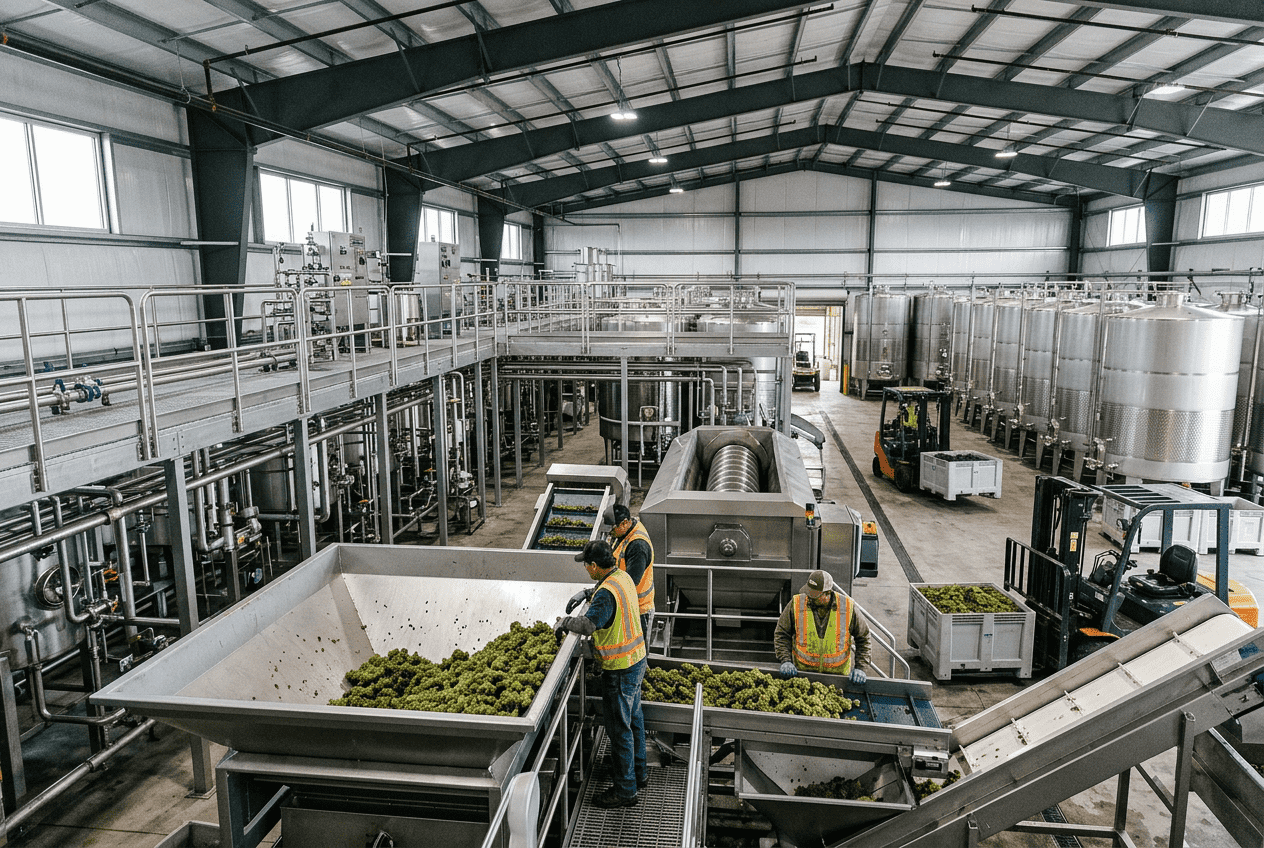
Dairy Processing Plant Design
[trp_language language=”en_US”]
Dairy Processing Plant Design for the United States
Designing a dairy facility in the United States requires more than arranging tanks and pipes. A successful dairy processing plant must support food safety, regulatory compliance, labor efficiency, utility resilience, future expansion, and profitable throughput from raw milk intake to finished goods dispatch. Whether the plant is producing fluid milk, cream, yogurt bases, cultured beverages, ice cream mix, or dairy-based ready-to-drink products, the design must align process flow, sanitary zoning, pasteurization strategy, packaging, refrigeration, and distribution with the business model.
Across major U.S. dairy hubs such as California’s Central Valley, Wisconsin, Idaho, New York, and Texas, processors are under pressure to increase throughput while controlling energy, water, labor, and capital costs. Plants near distribution centers in Chicago, Dallas, Atlanta, Los Angeles, and the Port of Savannah often prioritize refrigerated logistics and rapid outbound dispatch. Facilities closer to milk sheds may prioritize raw milk reception, storage flexibility, and cream handling. The best design approach starts with the product mix, target volume, utility demand, and expansion path before equipment is selected.
Quick Answer

A strong dairy plant layout in the United States follows a clean, one-way process path: raw milk reception, chilled storage, clarification or separation, standardization, pasteurization, homogenization where needed, finished product storage, packaging, cold holding, and refrigerated shipping. Core design priorities include hygienic zoning, 3-A compliant equipment selection, reliable steam and chilled utility systems, right-sized CIP circuits, adequate cold storage, and room for phased capacity growth. HTST systems are usually preferred for high-volume fluid products, vat systems for smaller or cultured batches, and UHT for shelf-stable or extended-life applications. Plants that plan utility corridors, drainage, traffic flow, and future tie-in points early typically expand faster and with less disruption.
For U.S. manufacturers, dairy processing plant design is also a business decision. If a layout shortens CIP turnaround, reduces forklift travel, balances refrigeration loads, and avoids utility bottlenecks, the plant becomes more profitable over time. This is where an integrated engineering partner matters. Companies such as Disruptive Process Solutions support dairy projects with an execution model built around planning, design, installation, and project management so the facility works operationally, not just on paper.
Dairy Plant Layout Principles: Raw Milk Reception to Finished Goods Dispatch

The most effective dairy layouts are based on linear product flow and clear separation between raw and pasteurized zones. The receiving bay should allow milk tanker access, sampling, unloading, meter verification, and washdown without interfering with ingredient receiving, packaging material traffic, or outbound refrigerated trucks. In U.S. sites with winter weather or high summer heat, enclosed or partially protected receiving areas can reduce contamination risk and improve operator comfort.
From reception, raw milk normally moves to insulated storage silos sized for delivery variability, production buffering, and emergency holding. The next zone often includes clarification, separation, and standardization. If the facility processes multiple SKUs, it is important to create routing flexibility without excessive valve complexity. Overdesigned manifolds can increase both sanitation risk and operator confusion.
Pasteurized product zones should be physically and operationally separated from raw milk handling. Positive pressure air management, hygienic wall details, sanitary drains, and dedicated personnel routes help reduce cross-contamination risk. Packaging rooms should sit downstream of pasteurization and finished product tanks, with direct access to cold storage. The shortest path to refrigerated warehousing usually produces better labor efficiency.
Finished goods dispatch planning is especially important for plants serving grocery networks in markets such as Charlotte, Philadelphia, Phoenix, Seattle, and Minneapolis. Staging lanes, order consolidation areas, and dock temperature control can prevent cold chain loss and loading delays. In many projects, the dispatch zone becomes the hidden bottleneck if pallet accumulation, traffic turns, and staging times are not modeled early.
| Plant Area | Primary Function | Design Priority | Common Risk | Recommended Solution | Operational Benefit |
|---|---|---|---|---|---|
| Raw milk reception | Tanker unloading and sampling | Fast turnaround | Truck congestion | Dedicated lanes and sampling point | Higher receiving capacity |
| Raw storage silos | Milk buffering | Temperature control | Insufficient hold time | Redundant silo capacity | Stable production scheduling |
| Separation zone | Cream and skim handling | Hygienic routing | Cross-routing errors | Automated valve matrix | Better product consistency |
| Pasteurization room | Thermal processing | Validated flow path | Utility interruptions | Backup controls and alarms | Regulatory confidence |
| Packaging hall | Filling and sealing | Clean environment | Mixed traffic | Separate personnel and pallet routes | Lower contamination risk |
| Cold storage and docks | Finished goods holding and shipping | Cold chain integrity | Warm dock exposure | Insulated staging strategy | Longer shelf life protection |
The table above shows why layout planning is not just architectural. Each processing area has a direct effect on throughput, labor, sanitation, and product shelf life. A dairy plant that keeps raw milk, pasteurized product, packaging, and refrigerated shipping in logical sequence generally performs better than one designed around available floor space alone.
This line chart reflects a realistic upward trend in dairy processing investment across the United States as processors modernize pasteurization, utilities, packaging, and cold storage infrastructure ahead of 2026 demand and compliance expectations.
Utility Infrastructure: Steam, Refrigeration, Compressed Air, and Water Treatment

Utility systems determine whether a dairy plant runs smoothly or becomes a daily troubleshooting exercise. Steam supports pasteurizers, hot water generation, some CIP heating, and process vessels. Refrigeration supports raw milk storage, cold process steps, packaged product cooling, and warehouse conditions. Compressed air is essential for valves, automation, packaging equipment, and some clean utility needs. Water treatment impacts boiler performance, product quality, cleaning effectiveness, and compliance.
Steam plant sizing should reflect actual simultaneous demand, not just nameplate load. A facility with HTST processing, multiple CIP skids, hot water loops, and cultured product tanks can create sharp peaks. In locations such as Wisconsin and upstate New York, winter reliability matters. In California and Arizona, water management and energy efficiency often receive more scrutiny. A resilient design includes condensate recovery, boiler feed treatment, and room for future boiler capacity.
Refrigeration design should distinguish between process cooling and warehouse cooling. Raw milk silos, cream tanks, and blend tanks may rely on glycol or direct refrigeration interfaces, while cold storage often has different load cycles tied to shipping patterns. Large regional distribution plants near interstates or trade hubs such as Dallas-Fort Worth, Inland Empire, or New Jersey often need dock-adjacent refrigeration strategies to limit temperature spikes during loading windows.
Compressed air should be categorized by use. Instrument air quality for valves and controls may require higher treatment standards than general utility air. Water systems may include softening, filtration, reverse osmosis, disinfection, and wastewater pretreatment depending on local municipal conditions and discharge permits.
| Utility | Main Dairy Use | Typical Design Concern | Failure Impact | Preferred Design Feature | 2026 Trend |
|---|---|---|---|---|---|
| Steam | Pasteurization and hot water | Peak load mismatch | Production stoppage | Modular boiler capacity | Heat recovery integration |
| Refrigeration | Milk cooling and cold rooms | Load fluctuation | Shelf life loss | Zoned cooling loops | Low-GWP refrigerants |
| Compressed air | Valves and packaging | Moisture contamination | Control failure | Dryers and point filtration | Energy monitoring |
| Process water | Ingredient and cleaning water | Mineral variation | Quality inconsistency | Multi-stage treatment | Reuse optimization |
| Wastewater handling | Effluent control | Organic loading spikes | Permit violation | Equalization strategy | Water recovery systems |
| Controls power | Automation and SCADA | Single-point outages | Line downtime | Redundant critical feeds | Remote diagnostics |
The utility table highlights why food-grade process design and utility engineering must be developed together. A low-cost utility package can become expensive if it creates downtime, inconsistent process temperatures, or cleaning failures. DPS frequently supports these integrated scopes through engineering and project delivery services that link utilities, controls, and process equipment into one operating system.
Pasteurizer Selection: HTST, UHT, and Vat Pasteurization Systems
Pasteurizer selection should begin with the product portfolio and commercial strategy. HTST pasteurization is usually the first choice for high-throughput fluid milk, flavored milk, cream, and many dairy beverage applications because it offers continuous operation, good energy efficiency, and reliable regulatory performance. UHT is suited to shelf-stable or extended-life products where packaging technology, sterile design, and distribution economics justify the added complexity. Vat pasteurization remains valuable for smaller volumes, specialty products, cultured bases, pilot production, and some artisan dairy operations.
HTST systems are common in medium and large U.S. plants because they integrate well with separators, homogenizers, storage tanks, and automated CIP. These systems require careful control of regeneration, hold tube validation, flow diversion logic, and recording systems. UHT systems involve a different level of sterility assurance, packaging compatibility, and upstream ingredient management. Vat systems offer flexibility but may require more labor and floor space per unit of output.
If the plant intends to produce both fluid dairy and dairy-based beverages, the equipment train should allow for ingredient handling, blending, homogenization, and viscosity management without compromising standard milk runs. This is especially relevant in markets where private label, protein beverages, and cultured products are growing faster than traditional white milk volumes.
| Pasteurization Type | Best For | Throughput Level | Capital Range | Operational Advantage | Main Limitation |
|---|---|---|---|---|---|
| HTST | Fluid milk and cream | Medium to high | Moderate | Continuous and efficient | Less ideal for very small specialty runs |
| UHT | Shelf-stable dairy beverages | Medium to high | High | Extended distribution reach | Higher sterile design complexity |
| Vat | Small batch and cultured products | Low to medium | Lower | Flexible batch processing | Higher labor per gallon |
| ESL-compatible HTST | Extended shelf life refrigerated dairy | Medium to high | Moderate to high | Improved shelf life | Needs stricter hygienic controls |
| Indirect UHT | Sensitive dairy beverages | Medium | High | Gentler heating profile | More maintenance points |
| Direct UHT | Certain high-volume shelf-stable lines | High | High | Rapid heat treatment | Requires advanced downstream integration |
This comparison shows that no single pasteurizer is best for every dairy plant. The right choice depends on SKU mix, shelf-life target, packaging format, sanitation philosophy, labor model, and route-to-market.
The bar chart indicates strong current demand for fluid milk, dairy beverages, and yogurt-related system upgrades in the United States, which often drives pasteurizer replacement and integration work.
Clean-in-Place (CIP) System Design for Dairy Operations
CIP design is central to dairy sanitation, uptime, and labor savings. A poorly designed cleaning system will reduce production hours, increase water and chemical use, and create recurring microbiological risk. In a well-designed dairy plant, CIP circuits match equipment grouping, process cadence, and soil load. Raw milk lines, pasteurized product lines, cream circuits, blend systems, and packaging fillers may not all belong on the same CIP strategy.
Key design decisions include single-use versus recovery systems, number of circuits, tank volumes, heating method, conductivity control, return confirmation, and recipe automation. Large U.S. plants often use central CIP skids with separate acid, caustic, rinse, and sanitized water management. Smaller plants may use distributed or mobile solutions, but even these need disciplined routing and verification.
Line velocity, dead-leg reduction, valve cluster design, slope, and drainability are critical. The goal is not just cleaning; it is repeatable validated cleaning. Plants producing allergen-adjacent dairy beverages or cultured products may require more complex changeover logic and documentation.
DPS has meaningful technological capabilities in this area, combining process engineering, automation, PLC programming, and SCADA integration with utility and equipment design. That matters because CIP performance depends as much on controls and sequencing as on tanks and pumps. Their experience with custom process systems, pasteurization technologies, and water treatment supports more practical sanitation design than a purely mechanical-only approach.
| CIP Design Element | Why It Matters | Common Mistake | Better Practice | Cost Impact | Performance Result |
|---|---|---|---|---|---|
| Circuit grouping | Determines cleaning flexibility | Too many assets on one loop | Group by soil and schedule | Moderate | Less production waiting |
| Tank sizing | Affects reuse and coverage | Undersized solution volume | Size for peak sanitation windows | Moderate | Stable chemical concentration |
| Flow velocity | Supports mechanical cleaning | Low return velocity | Hydraulic verification | Low | Improved wash effectiveness |
| Automation | Repeatability and records | Manual recipe switching | Automated CIP recipes | Moderate to high | Lower operator variability |
| Heat control | Chemical activation | Inconsistent temperatures | Controlled heat loop | Moderate | More reliable sanitation |
| Return verification | Confirms full circuit cleaning | No sensor confirmation | Conductivity and flow validation | Low to moderate | Better compliance confidence |
The CIP table demonstrates that sanitation efficiency is a design issue, not a housekeeping issue. Good CIP architecture can unlock significant production hours over a year.
Cold Storage and Refrigerated Distribution Zone Planning
Cold storage design should match product life cycle, order profile, and shipping frequency. Many dairies underestimate how much space they need for pallet staging, SKU segregation, and quality hold areas. A refrigerated room that looks large on a plan can become constrained once aisles, battery charging, pallet turns, and shipping windows are considered.
For dairies serving supermarket and foodservice routes in the United States, the refrigerated zone often includes packaged product cooling, short-term staging, reserve storage, returns quarantine, and dock-side marshaling. A plant shipping to distribution networks through hubs such as Memphis, Kansas City, Columbus, or the Port of Newark needs a dispatch layout built for speed and temperature retention.
Cold storage should be linked to packaging line output. If filling lines run faster than palletizing or warehouse intake, packaged product accumulates in warm transition zones. This shortens shelf life and creates congestion. The best approach balances line speed, pallet flow, rack type, and dock utilization.
The area chart shows the realistic industry shift toward higher-value refrigerated dairy products and dairy-based beverages, increasing the importance of well-zoned cold storage and outbound logistics by 2026.
Separation, Standardization, and Homogenization Equipment Integration
Separators, standardization systems, and homogenizers are some of the most important pieces of the dairy process train because they determine fat control, product consistency, and production flexibility. Their location in the line affects both sanitary routing and energy efficiency. In most milk and cream applications, separation follows raw storage and clarification, while standardization and homogenization occur before final pasteurization or in a process sequence matched to the product.
Plants producing whole milk, reduced-fat milk, cream, coffee creamers, cultured beverage bases, and ice cream mix may need multiple standardization recipes and careful automation. Integration becomes especially important where cream balancing influences production economics. Poorly coordinated separator capacity can cause upstream tanker delays and downstream filler starvation.
Homogenization requirements vary. Fluid milk and dairy beverages often demand specific pressure profiles for texture and stability. Yogurt base and formulated beverage products can require more specialized process control. The piping layout must minimize unnecessary recirculation, pressure loss, and cleaning complexity.
On the manufacturing side, DPS supports this type of integration with capabilities that span dairy tanks, custom process vessels, CIP systems, and broader line integration. Their equipment and system approach is useful when a plant needs more than individual machines and instead requires a coordinated processing platform. More information on system and equipment scope is available through their process equipment capabilities.
| Equipment | Main Role | Integration Point | Design Watchout | Control Need | Business Effect |
|---|---|---|---|---|---|
| Clarifier | Remove sediment | After raw storage | Inlet variability | Flow stability | Protects downstream equipment |
| Separator | Split cream and skim | Before standardization | Capacity mismatch | Fat control logic | Higher yield management |
| Standardization skid | Adjust fat content | Post-separation | Recipe drift | Inline measurement | Consistent specification |
| Homogenizer | Improve stability and texture | Before or after thermal step depending on product | Pressure loss | Pressure and temperature controls | Better mouthfeel |
| Balance tank | Steady feed to process | Upstream of pasteurizer | Short hold volume | Level control | Stable line operation |
| Finished product tank | Buffer before packaging | After final process step | Excess dwell time | Agitation and level management | Packaging continuity |
The equipment integration table shows how each component affects the others. A dairy plant becomes more flexible and profitable when these units are sized and controlled as one system rather than purchased in isolation.
Dairy Plant Expansion Strategies: Adding Capacity Without Disrupting Operations
Many U.S. dairies cannot afford a full shutdown to expand. That makes phased expansion planning essential. The best strategy is to design future tie-in points from day one: blanked utility headers, oversized corridors, reserved slab space, spare panel capacity, and control architecture that can accept new assets. These details add modest cost early and can save months during future expansion.
Common expansion projects include adding a second HTST line, increasing silo capacity, installing larger cold rooms, introducing dairy beverage blending, upgrading CIP throughput, or reconfiguring packaging and palletizing. The challenge is sequencing. Raw intake, finished product dispatch, and cleaning windows must continue while construction happens.
One proven approach is to separate enabling works from final tie-ins. For example, a plant may first install utilities, pads, structural access, and controls backbone during normal production. The final process cutover then happens during a short shutdown. Another strategy is to add parallel systems, validate them, and shift production gradually.
This is an area where service capability matters as much as engineering. DPS operates with a design-build-manage model that combines planning, general contractor oversight where applicable, installation coordination, and execution management. That structure is useful for live-site dairy work because it reduces handoff risk between designers, trades, and startup teams. Processors evaluating complex expansion or relocation projects can review examples through the company’s project case experience.
A practical buying tip for expansion: do not buy only for today’s gallons per hour. Buy for today’s business plus tomorrow’s utility and automation architecture. A cheaper system with no scalable controls or no sanitary routing flexibility can cost more when the second phase begins.
The comparison chart illustrates a realistic view of expansion execution: integrated delivery models generally perform better where ongoing production, utility tie-ins, and schedule risk must be managed together.
3-A Sanitary Standards and Dairy Grade Equipment Specifications
In U.S. dairy processing, sanitary equipment selection is a compliance issue, an operational issue, and a brand protection issue. 3-A sanitary standards help define design expectations for cleanability, materials, surface finish, fittings, and hygienic construction. Equipment used in dairy service should also align with applicable PMO expectations, FDA requirements, and plant-specific food safety programs.
Key specification areas include stainless steel grade, weld finish, gasket compatibility, drainability, dead-leg control, hygienic valve selection, and documentation. A lower-cost component with poor internal geometry can increase cleaning time, harbor product residue, and create recurring microbiological failures. For pasteurized zones, these details are especially important.
Plants should request clear equipment packages that include sanitary design details, utility requirements, controls scope, spare parts strategy, and startup expectations. This applies to tanks, skids, heat exchangers, separators, homogenizers, fillers, pumps, and valve manifolds. U.S. buyers should also consider local service support, lead time risk, and code compliance for pressure, electrical, and structural elements.
| Specification Area | Why It Matters | Minimum Good Practice | Risk if Ignored | Procurement Question | Long-Term Benefit |
|---|---|---|---|---|---|
| Material of construction | Corrosion and hygiene | Food-grade stainless steel | Premature wear | What grades touch product? | Longer equipment life |
| Surface finish | Cleanability | Specified sanitary finish | Residue retention | What finish is guaranteed? | More reliable CIP |
| Weld quality | Microbial control | Ground and passivated where required | Bacterial harborage | How are welds documented? | Safer production |
| Valve hygiene | Routing and separation | Sanitary seat and seal design | Cross-contamination | Are valves 3-A suitable? | Better process security |
| Drainability | Full emptying and cleaning | Proper slopes and outlet design | Standing liquid | How is drainability verified? | Shorter sanitation cycles |
| Documentation | Validation and maintenance | Full drawing and component package | Startup delays | What turnover docs are included? | Smoother lifecycle support |
The specification table reinforces a simple principle: sanitary quality should be designed and purchased, not assumed. This is especially relevant when dairy plants compare local suppliers, imported skids, and custom-integrated systems.
When evaluating local suppliers in the United States, processors often compare Midwest fabrication strength, West Coast automation capability, Southeast installation access, and Northeast sanitary service coverage. The best supplier is usually the one that can meet sanitary specifications, integrate controls and utilities, and support startup near your site rather than the lowest bidder on standalone hardware.
FAQ
What is the ideal process flow for a dairy plant?
The ideal flow is raw milk reception, chilled storage, clarification or separation, standardization, pasteurization, homogenization if required, finished product storage, packaging, cold holding, and dispatch. The exact sequence depends on product type.
Which pasteurization system is best for most U.S. dairy plants?
HTST is usually the best fit for medium- to high-volume fluid dairy production. UHT is better for shelf-stable products, while vat pasteurization is useful for smaller batches and specialty processing.
How much space should be reserved for future expansion?
A practical rule is to reserve room for at least one major future utility or process addition, such as another pasteurizer, silo, CIP skid, or packaging line. Utility corridors and control panel space are often more important than open floor area alone.
What utilities are most often undersized in dairy plants?
Steam, refrigeration capacity, hot water generation, compressed air drying, and wastewater equalization are common problem areas. Cold storage staging and dock refrigeration are also frequently underestimated.
Why is CIP design so important?
Because CIP directly affects food safety, downtime, labor, water use, chemical use, and product changeover speed. A strong CIP system improves both compliance and profitability.
What equipment standards should U.S. buyers look for?
Buyers should look for dairy-grade hygienic design, 3-A aligned construction where relevant, suitable material certifications, cleanable welds, drainability, and complete documentation for validation and maintenance.
Can a plant be expanded without shutting down production?
Yes, in many cases. This depends on planning tie-in points, sequencing work in phases, and separating enabling construction from final cutover. Parallel systems and short shutdown windows are common tactics.
What products should drive plant design decisions?
The product mix should always lead the design. Fluid milk, cream, yogurt bases, ice cream mix, cultured dairy drinks, and shelf-stable dairy products all have different thermal, sanitary, packaging, and cold chain needs.
How should a dairy company choose an engineering and integration partner?
Choose a partner that understands processing, utilities, sanitary design, controls, installation, and project execution as one package. In the U.S. market, this often matters more than choosing the lowest equipment quote.
What are the major 2026 trends in dairy plant design?
The biggest trends are energy recovery, water reuse, automation and SCADA visibility, low-GWP refrigeration choices, modular expansion planning, stronger traceability, and more investment in value-added refrigerated dairy and dairy-based beverages.
In summary, dairy plant design in the United States is best approached as a full operational strategy rather than a simple construction project. The winning facilities are those that align product flow, sanitary design, utilities, controls, and future expansion with commercial reality. For processors seeking a partner with technological depth, manufacturing understanding, and end-to-end service capability, DPS brings practical food and beverage project experience across North America with a model built to help manufacturers plan smarter, build efficiently, and scale profitably.
[/trp_language]
Complete Company Portfolio

About the Author: Disruptive Process Solutions (DPS)
The DPS team combines process engineering expertise with real-world food and beverage manufacturing experience. Our content focuses on process optimization, production efficiency, facility improvements, and practical solutions that help manufacturers operate more effectively in a rapidly evolving industry.
Share

