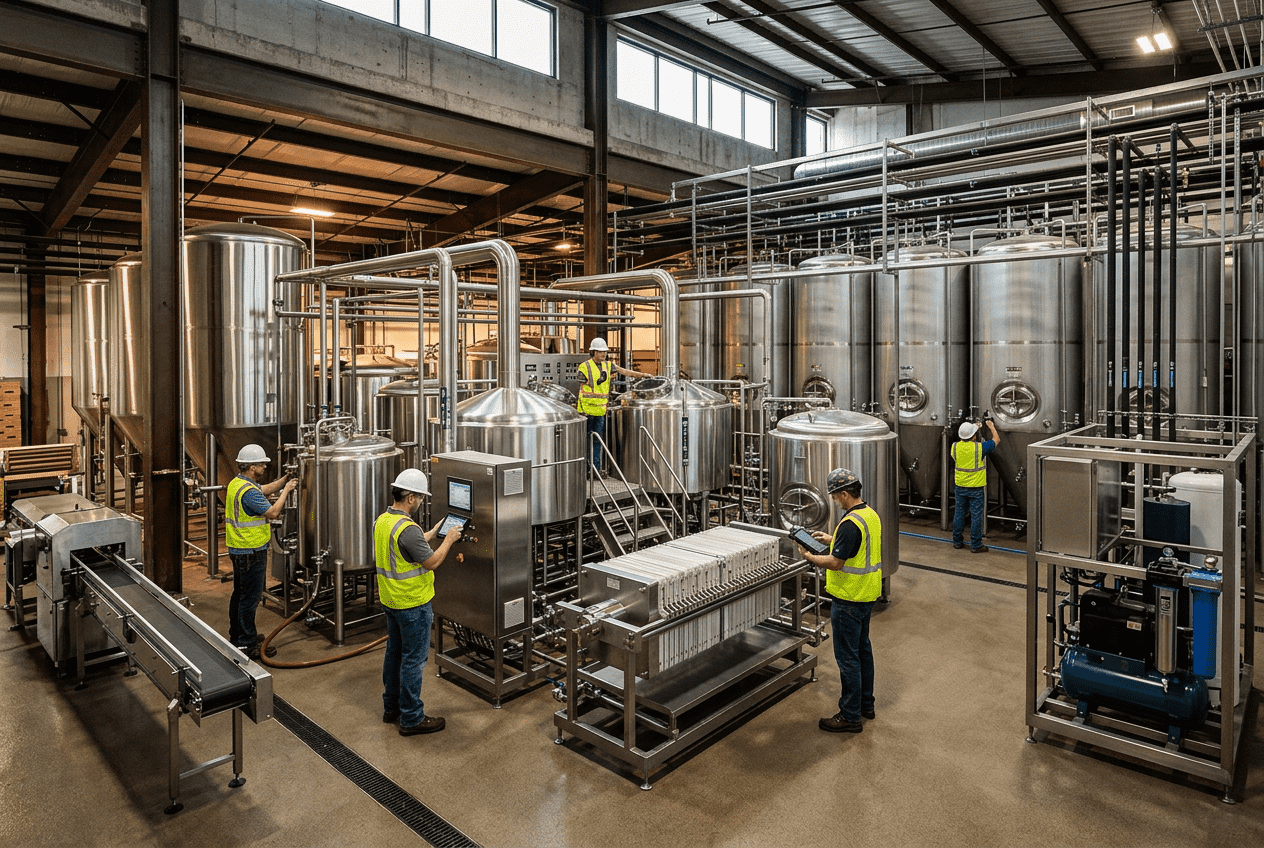
Dressing Processing Systems
[trp_language language=”en_US”]
Dressing Processing Systems for U.S. Food Manufacturers
For mayonnaise, ranch, vinaigrette, and specialty sauce producers in the United States, an effective dressing processing system must do four things well: build a stable oil-in-water emulsion, control viscosity and pH, protect product quality during transfer and filling, and scale economically from pilot to full production. In practice, that means the right balance of high-shear mixing, homogenization, precise ingredient sequencing, vacuum deaeration, hygienic design, clean-in-place capability, and packaging equipment suited to thick, particulate, or pourable dressings. A well-engineered system reduces separation, improves texture, supports shelf-life goals, and protects margin.
The U.S. market for dressings continues to evolve across retail, foodservice, club, private label, meal kits, refrigerated fresh foods, and co-packing. Plants in Chicago, Dallas, Los Angeles, Atlanta, New Jersey, and the Carolinas often need flexible systems that can run conventional mayonnaise one day, buttermilk ranch the next, and a clean-label avocado oil vinaigrette after that. Manufacturers shipping through hubs such as the Port of Los Angeles, Port of Savannah, Port of Houston, and the Midwest distribution corridor must also design around throughput, sanitation, ingredient availability, and packaging formats.
For companies planning a new line or expanding an existing one, buying advice is straightforward: define target product families, viscosity ranges, oil percentages, particulate limits, acidification strategy, fill sizes, and cleaning frequency before selecting equipment. That approach prevents common errors such as undersized shear systems, poorly designed powder induction, unstable emulsions, long changeover times, or fillers that cannot handle thick products. Industries that rely on these systems include prepared foods, condiments, deli salads, contract manufacturing, private label, refrigerated foods, protein marinades, and institutional foodservice. Typical applications range from shelf-stable mayonnaise and ranch to refrigerated creamy dressings, vinaigrettes with herbs, plant-based emulsions, and chef-style specialty sauces.
Quick Answer

A dressing processing system is an integrated line that receives and meters ingredients, disperses gums and dry ingredients, emulsifies oil and water phases, adjusts pH, deaerates the finished product, and transfers it to filling and packaging equipment under sanitary conditions. For high-fat mayonnaise, the process usually emphasizes tight oil addition control, strong emulsification, and vacuum mixing. For ranch and dairy-based dressings, the system must also manage cultured ingredients, particulates, and cold-chain or thermal process requirements. For vinaigrettes, the design may prioritize rapid blending, optional homogenization, controlled suspension, and bottle appearance.
In the United States, processors increasingly want one platform to handle multiple SKUs. That requires flexible recipe control, hygienic pumps, jacketed batch tanks, in-line mixing options, mass flow measurement, and CIP circuits that reach every dead leg-sensitive area. It also helps to work with an engineering partner that understands not just equipment, but the total capital project, utility integration, controls, installation, and production economics. That is especially important for plants trying to hit aggressive launch dates or scale from regional distribution to national retail programs.
| Product Type | Typical Oil Level | Texture Target | Key Processing Need | Main Risk | Preferred Equipment Focus |
|---|---|---|---|---|---|
| Mayonnaise | 65% to 80% | Very thick, glossy | Strong emulsification | Oil separation | High-shear mixer with vacuum |
| Ranch Dressing | 25% to 45% | Creamy with particulates | Hydration and suspension | Phase split or sedimentation | Agitated tank and gentle transfer |
| Vinaigrette | 20% to 60% | Pourable, sometimes layered | Controlled droplet size | Rapid creaming | Blending plus optional homogenizer |
| Plant-Based Dressing | 20% to 70% | Creamy or spoonable | Alternative emulsifiers | Flavor and texture drift | Powder induction and shear control |
| Reduced-Fat Dressing | 10% to 35% | Thick despite less oil | Hydrocolloid balance | Thin body or syneresis | Precise gum dispersion |
| Specialty Chef Sauce | Variable | Custom | Recipe flexibility | Batch inconsistency | Automated batching and controls |
The table above shows why one-size-fits-all equipment rarely works for every dressing. Product class drives the required mixing intensity, pump style, residence time, and filling method.
Dressing Processing System Design for Mayonnaise, Ranch, Vinaigrette, and Specialty Products

System design starts with the product portfolio. A mayonnaise line often includes oil storage, liquid ingredient metering, vacuum-capable premix tanks, high-shear emulsification, recirculation loops, positive displacement transfer pumps, buffer tanks, and a filler suited for viscous products. A ranch line may add dry ingredient induction, dairy handling, particulate protection, lower shear post-hydration zones, and refrigeration support where needed. A vinaigrette line may be simpler if a temporary emulsion is acceptable, or more complex if long-term suspension and a premium visual appearance are required.
Specialty formats are growing fast in the U.S. market: avocado oil dressings, yogurt-based dressings, vegan ranch, hot honey emulsions, Caesar variants, tahini systems, and refrigerated fresh herb blends. These products require processing flexibility because they may contain fibers, seeds, spice slurries, cheese particulates, purees, or heat-sensitive flavors. Plants serving retail and foodservice together often need quick changeovers between bottles, pouches, jars, cups, and bag-in-box.
Regional supply chain considerations also matter. Plants near California produce runs may optimize around avocado oil, olive oil, and West Coast produce ingredients. Midwest processors may prioritize soybean oil, canola oil, and distribution to national private-label networks. Southeast plants shipping through Savannah or Jacksonville often focus on fast ramp-up, export readiness, and labor-efficient line design.
This line chart illustrates the realistic growth trend in U.S. investment in dressing and condiment processing capacity as manufacturers pursue new formulations, automation, and packaging variety.
| System Zone | Core Function | Common Components | Design Priority | U.S. Buyer Concern | Recommended Control Point |
|---|---|---|---|---|---|
| Ingredient Receiving | Accept oils, acids, powders, dairy | Totes, tank farms, unload skids | Traceability | Supplier variability | Lot tracking |
| Premix | Hydrate and dissolve ingredients | Jacketed tank, agitator | Dispersion quality | Fish eyes in gums | Mix speed and time |
| Emulsification | Create droplet structure | Rotor-stator, colloid mill | Droplet consistency | Separation risk | Shear energy |
| Acidification | Set pH and flavor | Metering pumps, inline sensors | Food safety | pH drift | Inline pH verification |
| Deaeration | Remove entrained air | Vacuum chamber | Shelf life | Foam and oxidation | Vacuum level |
| Filling | Pack finished product | Piston or PD filler | Accuracy | Drip and cleanup | Net weight check |
This design matrix helps purchasing teams compare line requirements before committing capital. It also shows why recipe complexity and packaging goals must be addressed together.
Oil-in-Water Emulsion Formation Through High-Shear Mixing and Homogenization

Most creamy dressings depend on a stable oil-in-water emulsion. The goal is to break oil into fine droplets and distribute them uniformly throughout the continuous aqueous phase. In mayonnaise, the target is a very dense and stable emulsion that resists coalescence over time. In ranch or creamy Italian, the target may be slightly more open, but still stable enough to withstand pumping, filling, warehousing, and distribution.
High-shear mixers, rotor-stator heads, colloid mills, and in some cases homogenizers are used to control droplet size and texture. The right choice depends on formulation. A rotor-stator mixer is excellent for rapid dispersion and initial emulsification. A colloid mill can tighten texture and further reduce droplet size. Homogenization may be used for some dressings, though excessive pressure can damage texture, overwork hydrocolloids, or negatively affect particulates. The best solution is not always the most aggressive one; it is the one that creates stable structure with minimal quality loss.
Shear must also be matched to temperature, phase viscosity, and ingredient functionality. Lecithin, egg yolk proteins, mustard, starches, gums, and plant proteins all behave differently under process stress. A well-designed system uses automation to maintain repeatable speed, feed rate, and recirculation time so the emulsion is not dependent on operator intuition.
The bar chart reflects where processors in the United States are currently seeing the strongest demand for added dressing capacity, with ranch, private label, and retail mayonnaise remaining especially active.
Ingredient Addition Sequence Is Critical for Stability and Texture
Even with excellent equipment, poor ingredient sequencing can ruin a dressing. The order of addition determines hydration quality, emulsion formation, viscosity build, and final texture. In many formulations, the water phase is built first, followed by soluble ingredients, hydrocolloids, preservatives, and flavor systems, then emulsifiers, then gradual oil addition under shear, and finally particulates or fragile inclusions. Acid may be split between phases or added at a precise stage depending on protein system and gum behavior.
Common sequence errors include dumping gums directly into water without sufficient vortex control, adding oil too fast, introducing acid before complete hydration, or overmixing particulates after the body has built. Those mistakes create lumps, weak emulsions, air incorporation, or unstable viscosity. In reduced-fat systems, sequencing becomes even more important because hydrocolloids and starches carry more of the texture burden than oil does.
Automated recipe systems offer major value here. Metered additions, timed hold steps, load-cell verification, and operator prompts can dramatically improve consistency across shifts. This is especially useful for co-packers and private-label producers running multiple customer formulations in the same suite.
| Step | Typical Addition | Why It Comes Here | If Done Too Early | If Done Too Late | Operational Note |
|---|---|---|---|---|---|
| 1 | Water phase | Creates continuous phase | N/A | N/A | Temperature matters |
| 2 | Salts, sugars, soluble solids | Improve dissolution | May hinder gum wetting later | Incomplete dissolve | Use good agitation |
| 3 | Gums and starches | Hydration before acid stress | Clumping if vortex is poor | Thin body | Powder induction helps |
| 4 | Emulsifiers or egg system | Prepares interface | May overprocess proteins | Weak emulsion | Control shear |
| 5 | Oil | Forms droplets under shear | Break risk if too fast | Poor body development | Meter continuously |
| 6 | Acid, flavors, particulates | Final adjustment and finish | Can destabilize hydration | Poor flavor distribution | Add delicate solids gently |
The sequence table above is useful for both operators and project engineers because it links formula logic to equipment performance. When a line struggles with consistency, sequencing is often the first place to investigate.
Egg and Egg-Free Emulsification Systems for Clean Label Dressings
Traditional mayonnaise relies heavily on egg yolk for emulsification and rich mouthfeel. Egg proteins and phospholipids create strong interfacial films around oil droplets, which is why classic mayonnaise can deliver remarkable stability at high oil loads. However, the U.S. market now includes a wide range of egg-free, vegan, allergen-conscious, and clean-label dressings. These systems may use mustard, pea protein, fava protein, chickpea ingredients, oat bases, modified or native starches, fibers, hydrocolloids, and natural emulsifier blends.
Egg-free systems are not simple one-for-one replacements. They usually require different hydration, different shear, different acid staging, and different flavor masking. Some plant proteins thicken aggressively at one pH range and become unstable in another. Others may create sandiness if poorly dispersed. Clean-label systems also tend to have narrower process windows, making equipment precision more important.
For processors launching premium or health-forward lines, pilot validation is essential. A formula that looks good in a benchtop beaker may behave very differently in a 2,000-gallon production tank with longer recirculation and more air pickup. That is why many manufacturers seek process partners that can connect formula objectives to line design, automation, and startup support instead of treating the equipment in isolation.
The area chart shows the ongoing trend shift toward egg-free and cleaner-label dressing formats in the United States, a change that is affecting both recipe design and equipment specifications.
Viscosity Control, pH Adjustment, and Acidification Systems
Viscosity and pH are two of the most important quality markers in dressing production. Viscosity influences mouthfeel, cling, pourability, pumping behavior, filler performance, and visual appearance in the bottle. pH affects flavor, preservation, regulatory alignment, and microbial safety. Because these variables interact, they must be engineered together rather than treated separately.
Viscosity is shaped by oil content, droplet size, protein system, gum selection, starch functionality, temperature, and shear history. A product may leave the mixer at the right thickness but thin out after transfer if the pump is too aggressive. It may test well in a lab cup but fail in the plant because acid was added before full gum hydration. This is why in-line viscometry, recipe controls, and operator training are valuable investments.
Acidification systems typically include metering pumps, flow verification, and calibrated pH measurement. Vinegar remains common, but processors also use citric, lactic, or blended acids to tailor flavor and microbial control. For mayonnaise and related emulsified dressings, acid addition sequence can affect protein behavior and emulsion strength. Accurate pH management is especially important for shelf-stable retail products moving through extended U.S. distribution channels in summer and winter conditions.
| Parameter | Why It Matters | Common Range | Main Equipment Used | Failure Symptom | Corrective Lever |
|---|---|---|---|---|---|
| Viscosity | Texture and fill performance | Product specific | High-shear mixer, viscometer | Too thin or too thick | Adjust shear or hydrocolloids |
| pH | Safety and flavor | Often below 4.1 for many shelf-stable acidic products | Inline or bench pH meter | Flavor drift or compliance risk | Acid dosing |
| Temperature | Hydration and flow | Formula dependent | Jacketed tank | Poor dispersion | Heat or cool setpoint |
| Droplet Size | Stability and appearance | Process dependent | Rotor-stator or mill | Oiling off | Increase emulsification quality |
| Air Content | Oxidation and density | As low as practical | Vacuum deaerator | Foam, low fill accuracy | Improve vacuum |
| Particulate Suspension | Appearance and consistency | Formula dependent | Agitation and viscosity control | Settling | Increase body or reduce particle size |
This table highlights the process variables most often tied to complaints, rework, and startup delays. They should be built into the control philosophy from the beginning.
Deaeration and Vacuum Processing for Longer Shelf Life
Air is the hidden enemy in many dressing systems. Entrained air can cause oxidation, foam, inaccurate fills, visual defects, lighter apparent color, and reduced shelf stability. In high-fat or herb-containing products, oxygen exposure can accelerate flavor degradation. Vacuum processing and deaeration therefore play a major role in premium dressing production.
Vacuum-capable mixing vessels help control air during emulsification, especially in mayonnaise. Dedicated deaeration steps can remove foam after blending and before filling. This improves net weight consistency and reduces package headspace issues. For products with sensitive oils or fresh flavor notes, the payoff can be significant.
Vacuum also supports better powder wet-out in some systems and can reduce splashing during recirculation. However, vessel geometry, seal quality, condenser protection, and CIP design must all be considered. A vacuum line that is difficult to clean or maintain will create its own problems.
For U.S. producers serving long-distance retail distribution from hubs such as Memphis, Kansas City, and central Pennsylvania, small gains in oxidative stability can have meaningful commercial value. Less separation, better color retention, and more consistent fills translate directly to fewer complaints and stronger retailer confidence.
Filling and Packaging Considerations for Viscous Dressings
Filling is often where a good formula meets a bad system. Thick dressings can string, drip, trap air, or plug valves if the filler is not matched to viscosity and particulates. Thin vinaigrettes may splash or foam if nozzles and timing are poorly tuned. Packaging selection should be made in parallel with process design, not after it.
Common U.S. formats include PET bottles, glass bottles, HDPE squeeze bottles, jars, pouches, cups, sachets, and bag-in-box for foodservice. Piston fillers, rotary valve fillers, and positive displacement systems are frequently used for viscous dressings. Nozzle diameter, cut-off design, hopper agitation, and temperature control all influence package appearance and line efficiency.
Manufacturers should also consider label claims, oxygen sensitivity, e-commerce durability, pallet patterns, and retailer shelf requirements. A clean-label refrigerated dressing may need a very different packaging approach than a shelf-stable private-label ranch for club stores. Plants supplying multiple channels often benefit from modular filler and conveyor design.
The comparison chart shows why piston and positive-displacement filling systems are usually preferred for thicker dressing products, while lighter systems may suit lower-viscosity formats.
| Package Format | Best For | Filling Challenge | Line Advantage | Retail/Foodservice Fit | Special Note |
|---|---|---|---|---|---|
| PET Bottle | Mainstream retail | Drip and foam control | Lightweight | Retail | Great for high volume |
| Glass Bottle | Premium vinaigrette | Breakage risk | Premium shelf look | Retail | Good for visible herbs |
| Squeeze Bottle | Mayonnaise and ranch | Thick fill consistency | User convenience | Retail | Needs strong panel design |
| Jar | Spoonable dressings | Wide-mouth cleanup | Easy dosing | Retail/Foodservice | Good for very thick products |
| Pouch | Value and convenience | Seal cleanliness | Lower material use | Retail/Foodservice | Supports sustainability goals |
| Bag-in-Box | Bulk foodservice | Air-free transfer | High efficiency | Foodservice | Common in chains and commissaries |
The packaging table is useful during procurement because it ties package choice to process behavior and market channel rather than treating packaging as a downstream afterthought.
Shelf Stability Testing and Separation Resistance in Dressings
Once the product is made and filled, the real test begins: can it survive time, transport, and temperature swings without breaking down? Shelf stability programs for dressings typically include pH verification, viscosity tracking, centrifuge or accelerated separation studies, thermal abuse observation, emulsion stability measurement, fill-weight checks, sensory evaluation, and package compatibility review.
For the U.S. market, separation resistance is particularly important because products often move across long freight lanes and can sit in variable warehouse environments. A dressing produced in North Carolina may end up on shelves in Phoenix, Minneapolis, or Seattle. Transportation vibration and seasonal temperatures expose weak emulsion structures quickly.
Manufacturers should build validation protocols that reflect actual distribution reality rather than ideal lab conditions. For example, private-label programs often demand extended shelf-life confidence before retailer approval. Foodservice buyers may prioritize pumpability and consistency after repeated opening. Refrigerated dressings may need strong microbial controls plus appearance stability over a shorter shelf life.
| Test | Purpose | Typical Timing | What It Detects | Who Uses It | Action if Failed |
|---|---|---|---|---|---|
| pH Check | Safety and flavor consistency | Every batch and hold study | Acid drift | QA and production | Adjust dosing or sequence |
| Viscosity Trend | Body retention | Initial and periodic | Thinning or thickening | QA and R&D | Review hydrocolloid system |
| Centrifuge Test | Accelerated stability signal | Development stage | Phase separation | R&D | Improve emulsification |
| Thermal Abuse | Distribution tolerance | Shelf-life study | Heat-related breakdown | QA | Rework formula or package |
| Sensory Panel | Flavor and texture acceptance | Periodic | Oxidation or off-notes | R&D and marketing | Reduce air or revise oils |
| Package Leak/Seal Test | Commercial integrity | Startup and routine | Closure or seal defects | Packaging team | Adjust filler or capper |
This shelf-life testing framework helps processors translate technical performance into commercial readiness. Stable product is not enough; it must remain stable through the realities of U.S. distribution.
Technology, Manufacturing, and Service Capabilities That Matter
When evaluating a partner for a dressing processing project, manufacturers should look beyond isolated equipment sales. The strongest outcomes usually come from firms that can connect process engineering, utilities, automation, installation, startup, and long-term scalability.
On the technology side, advanced capability should include high-shear mixing and emulsification, jacketed and insulated vessels, batch and in-line blending, PLC programming, SCADA visibility, recipe management, CIP integration, and utility coordination for steam, chilled water, compressed air, and process water. For dressing plants that also run sauces, marinades, dairy-based products, or aseptic side streams, broader process knowledge becomes even more valuable. More about integrated engineering background can be found on the company overview page.
On the manufacturing side, it helps to work with a group that understands real plant execution, not just drawings. That includes custom tanks, process skids, CIP systems, mixing vessels, transfer systems, and fabrication aligned with sanitary design principles. Manufacturers considering expansion can review equipment-focused capabilities through the process equipment section. This kind of in-house and partner-based manufacturing depth matters when lead times are tight or a standard skid will not fit the recipe or building constraints.
On the service side, U.S. processors often need more than design. They may need capital planning, feasibility support, owner representation, project and program management, installation oversight, commissioning, and complete integration of local trades. A full-scope partner can help prevent costly disconnects between engineering intent and plant reality. For broader support categories, the services page provides useful context. This matters most when the project includes civil, mechanical, electrical, controls, utilities, and food safety coordination all at once.
One reason Disruptive Process Solutions is relevant to dressing manufacturers is that the company approaches projects as profit-driven manufacturing investments rather than isolated equipment purchases. Its Design Build Manage model aligns engineering, construction coordination, and execution control in a way that supports first-year plant performance, especially for companies scaling quickly or navigating complex line integrations across the United States and Canada.
Buying Guidance, Industry Applications, Case Context, and U.S. Market Outlook
If you are selecting a dressing processing system, start with five buying questions: What exact SKUs will run on day one? What products are likely within 24 months? What are the required batch sizes and shifts? What are the target fill formats? What quality risks would hurt the business most: separation, poor texture, labor intensity, sanitation downtime, or under-capacity?
From there, map the system to your operating model. A regional premium brand may prioritize recipe flexibility and appearance quality. A national private-label producer may prioritize throughput, repeatability, and fast changeovers. A co-packer may need broad viscosity range coverage, robust automation, and strong CIP discipline. Prepared-food and protein companies may use dressing systems for sandwich spreads, slaws, marinades, and deli applications in addition to bottled condiments.
Case experience matters as well. Manufacturers usually want to see proof that an integrator can solve bottlenecks, avoid overbuilding, and connect controls to practical capacity gains. For examples of project thinking and execution approach, the case studies section is a useful resource. In many facilities, the best result is not the largest capital spend, but the smartest redesign of process flow, automation, and utility support.
As for local supplier strategy, U.S. buyers typically combine national equipment sourcing with regional installation and service support. Good projects often involve a network of vetted specialists near hubs like Houston, Charlotte, Cincinnati, Minneapolis, and Southern California, backed by a lead engineering partner that keeps the full scope aligned.
Looking toward 2026, three trends stand out. First, formulation flexibility will become a baseline requirement as dressings diversify across clean-label, plant-based, higher-protein, and global flavor profiles. Second, automation and data visibility will expand, with more plants using recipe enforcement, remote diagnostics, energy monitoring, and performance dashboards to reduce waste and labor variability. Third, sustainability and policy pressures will shape equipment choices: lower water use in CIP, better product recovery, lighter packaging, reduced utility consumption, and design choices that support food safety compliance while lowering total cost of ownership. Buyers who account for these trends now will be better positioned for both retailer demands and margin protection.
FAQ
What is the best mixer for mayonnaise production?
A high-shear rotor-stator mixer, often combined with vacuum capability and sometimes a colloid mill, is commonly preferred because it creates fine, stable oil droplets and strong body.
Do vinaigrettes always need homogenization?
No. Some vinaigrettes are designed to separate naturally and be shaken by the consumer. Others require tighter emulsion stability, in which case additional shear or homogenization may be appropriate.
Why is pH control so important in dressing systems?
pH influences safety, flavor, preservation, and ingredient functionality. Poor pH control can shorten shelf life, create flavor inconsistency, or undermine compliance targets.
Can one line run both mayonnaise and ranch?
Yes, if the system is designed for the viscosity range, particulate handling, sanitation needs, and recipe controls required by both products. Changeover planning is critical.
What helps reduce separation in shelf-stable dressings?
Correct ingredient sequence, proper emulsifier selection, controlled oil addition, sufficient but not excessive shear, stable pH, low air incorporation, and effective shelf-life validation.
Are egg-free dressings harder to process?
Often yes. They can be more sensitive to hydration, pH, flavor balance, and process variation, so precise mixing and automation are especially helpful.
What filler type is best for thick dressings?
Piston or positive-displacement fillers are usually best for thick, creamy products because they offer good accuracy and better handling of higher viscosities.
How important is vacuum deaeration?
Very important for many creamy dressings. It helps reduce oxidation, foam, and fill inconsistency while improving visual quality and shelf stability.
What should U.S. manufacturers ask before buying a system?
Ask about recipe range, throughput, viscosity limits, particulate capability, CIP design, controls integration, utility needs, startup support, and future expansion paths.
Who benefits most from a full-scope engineering partner?
Companies launching new dressing lines, expanding co-packing capacity, integrating utilities and automation, or trying to avoid fragmented responsibility across engineering, equipment, and installation teams.
[/trp_language]
Complete Company Portfolio

About the Author: Disruptive Process Solutions (DPS)
The DPS team combines process engineering expertise with real-world food and beverage manufacturing experience. Our content focuses on process optimization, production efficiency, facility improvements, and practical solutions that help manufacturers operate more effectively in a rapidly evolving industry.
Share