Food Facility Spare Parts Management System
[trp_language language=”en_US”]
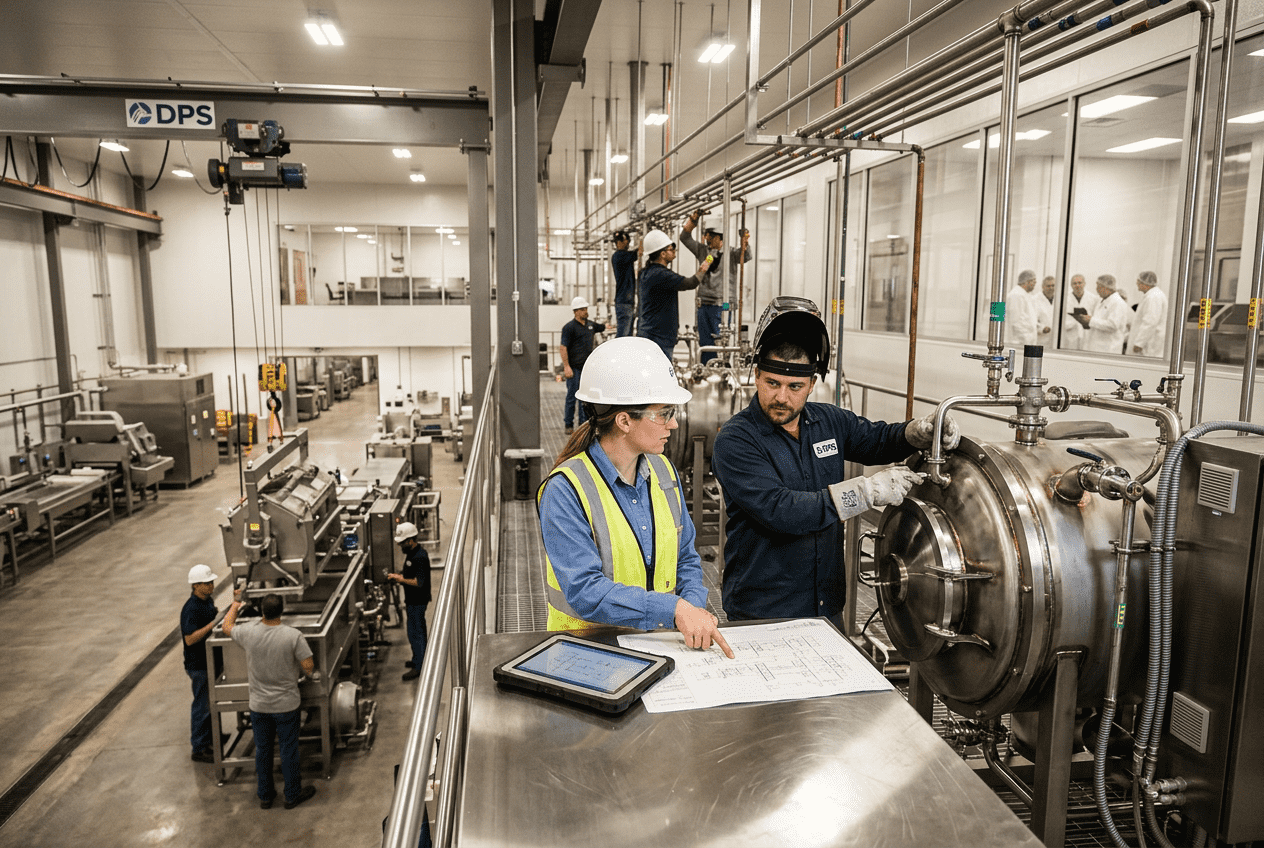
Food and beverage manufacturers in the United States cannot treat spare parts as an afterthought. A modern food facility spare parts management system is a profit protection tool that reduces downtime, protects food safety, shortens recovery time after failures, and improves capital planning. For plants running fillers, pasteurizers, pumps, mixers, conveyors, refrigeration systems, boilers, CIP skids, PLC-based controls, and packaging lines, the best approach is to identify critical assets, classify parts by risk and lead time, stock what would stop production, and build supplier and emergency procurement pathways before a breakdown occurs.
Across U.S. manufacturing hubs such as Chicago, Atlanta, Dallas, Charlotte, Fresno, Milwaukee, Houston, and the Inland Empire, plant leaders are under pressure to do more with less labor, tighter sanitation standards, and volatile lead times. Imported components that once moved predictably through the Ports of Los Angeles, Long Beach, Savannah, Houston, New York and New Jersey, and Seattle can now face swings in transit time, customs clearance, and domestic freight availability. That is why spare parts planning has become an operating discipline, not just a storeroom function.
Immediate Answer

The fastest way to improve spare parts performance in a U.S. food plant is to build a structured program around five actions: rank equipment criticality, define minimum and maximum stock levels, standardize part numbers and descriptions, qualify primary and backup suppliers, and connect replacement schedules to preventive maintenance and actual run hours. This helps processors avoid the two most expensive mistakes in spare parts management: carrying too much low-value inventory and carrying too little of the parts that can shut down a line.
For example, a poultry processor in Arkansas, a dairy plant in Wisconsin, and a beverage co-packer in North Carolina may all use very different process technologies, but they share the same spare parts logic. Bearings, motors, seals, VFDs, photoeyes, valve seats, gaskets, sensors, pump components, gearbox kits, control cards, and sanitary fittings should not be purchased reactively. They should be mapped to the asset, criticality, sanitation requirements, shelf life, storage conditions, and procurement risk.
In the United States market, spare parts planning also needs to reflect regional realities. Gulf Coast hurricane exposure affects inventory risk in Houston and New Orleans. West Coast port congestion can affect imported OEM components used in California and Nevada facilities. Midwest cold chain facilities may face winter transport delays. East Coast plants drawing parts from European suppliers often route through Savannah or Newark, increasing sensitivity to marine freight schedules. A good program translates these market realities into stocking policy.
| Priority Level | Typical Part Type | Production Impact if Unavailable | Recommended Stocking Approach | Typical Owner | Review Frequency |
|---|---|---|---|---|---|
| Level 1 | PLC cards, critical sensors, VFDs | Immediate line shutdown | Keep on site with tested replacement procedure | Controls manager | Monthly |
| Level 2 | Sanitary pump seals, valve kits | Major capacity loss or sanitation risk | Keep minimum and reorder point stock | Maintenance planner | Monthly |
| Level 3 | Motors, gearboxes, chain, bearings | Repair delay of hours to days | Stock based on installed base and failure history | Storeroom supervisor | Quarterly |
| Level 4 | HMI panels, specialty OEM items | Extended outage if supplier lead time is long | Stock selectively or hold regional spare | Engineering manager | Quarterly |
| Level 5 | Fasteners, common fittings, wire | Minor repair delay | Bin replenishment or vendor-managed stock | MRO buyer | Weekly |
| Level 6 | Rare custom fabricated components | Days to weeks of exposure | Develop drawing package and emergency fabrication plan | Plant engineer | Semiannual |
The table above shows why not all parts deserve the same stocking policy. The key is to align inventory depth with business impact, replacement complexity, and lead-time risk.
The line chart reflects a realistic market direction: U.S. plants are steadily increasing investment in digital inventory planning, asset visibility, and maintenance-linked procurement. This is expected to accelerate in 2026 as automation labor shortages and resilience planning become stronger board-level priorities.
Planning Inventory for Mission-Critical Spares

Critical spare parts inventory planning starts with asset criticality, not with the storeroom shelf. Every facility should create a ranked asset register covering process equipment, utilities, packaging systems, and controls infrastructure. In food and beverage plants, the most overlooked assets are often utility systems that support the line indirectly: boilers, air compressors, glycol systems, refrigeration skids, water treatment units, CIP skids, and electrical distribution gear. If one of these fails, multiple production lines may go down at once.
A practical planning model uses four factors: downtime cost per hour, replacement lead time, failure frequency, and food safety exposure. If a homogenizer seal kit has a short lead time and low outage impact, it may require only a small buffer. If a custom aseptic filler component comes from Europe with a 16-week lead time, it may justify on-site stocking even if it fails rarely.
Plants should also split inventory by product type. Common spare categories in U.S. food facilities include:
- Mechanical parts: bearings, couplings, sprockets, chains, belts, seals, gaskets, shafts
- Electrical parts: relays, overloads, breakers, contactors, power supplies, wiring accessories
- Automation parts: PLC modules, I/O cards, HMIs, drives, encoders, proximity sensors, SCADA hardware
- Process parts: valve diaphragms, spray devices, pump impellers, heat exchanger gaskets, instrumentation kits
- Sanitary components: tri-clamp fittings, food-grade hoses, O-rings, valve seats, filter housings
- Packaging parts: knives, jaws, rollers, coder components, printheads, label sensors
Buying advice for U.S. operators is straightforward: do not assume OEM-only stocking is always best. For standardized items such as bearings, common motors, sanitary fittings, and electrical consumables, approved alternates from domestic distributors can reduce cost and shorten lead times. For highly specialized control boards, software-bound components, proprietary filling parts, and validated aseptic hardware, stay close to the OEM and document revision compatibility carefully.
| Asset Group | Typical Spare Part | Lead Time Risk | Food Safety Risk | Downtime Cost Exposure | Stock Decision |
|---|---|---|---|---|---|
| Pasteurization | Heat exchanger gasket set | Medium | High | High | Stock on site |
| Filling line | Servo drive | High | Medium | Very high | Stock on site or regional shared spare |
| CIP system | Conductivity sensor | Medium | High | High | Stock on site |
| Refrigeration | Compressor controller | High | Medium | Very high | Stock on site |
| Conveying | Standard motor | Low | Low | Medium | Limited stock |
| Packaging | Photoeye sensor | Low | Low | Medium | Stock in quantity |
This table shows that stock decisions should follow business risk, not just unit price. A low-cost sensor can stop a high-value line; a high-cost component may not need stocking if it is easy to source locally.
For processors looking to align spare parts planning with expansion or line redesign, it helps to involve engineering during capital project development. Firms such as Disruptive Process Solutions support manufacturers by integrating maintainability, utility reliability, and equipment access into project planning so plants are not left solving spare parts issues after startup.
Classifying and Coding Spare Parts

Classification and coding are the backbone of a scalable spare parts management system. Many U.S. food plants have duplicate inventory because the same item is stored under different names: “2 in sanitary gasket,” “2-inch gasket,” and “tri-clamp seal 2in” may all refer to the same part. Without disciplined coding, plants overbuy, lose visibility, and fail to locate parts during emergencies.
The best coding model includes six data elements: part family, equipment tag, manufacturer, OEM part number, approved alternate, and storage requirements. For sanitary and product-contact components, include material grade and compliance notes. For electrical and automation parts, include firmware or revision level where relevant.
A strong classification structure for the United States market should also identify domestic versus imported sourcing, because this affects lead-time exposure. Parts moving through Memphis or Louisville air cargo networks may be recoverable in 24 to 48 hours, while containerized imports routed through Long Beach or Savannah may carry much longer variability.
| Code Prefix | Category | Example Description | Required Data Fields | Storage Note | Common Error to Avoid |
|---|---|---|---|---|---|
| MECH | Mechanical | Stainless bearing housing | Size, material, OEM, alternate | Dry shelf storage | Missing shaft size |
| ELEC | Electrical | 24V power supply | Voltage, amp rating, OEM | ESD-safe cabinet if needed | No input/output spec |
| AUTO | Automation | PLC input card | Series, revision, firmware | Climate-controlled storage | Ignoring revision mismatch |
| SANI | Sanitary contact | EPDM tri-clamp gasket | Size, elastomer, compliance | Sealed bin, lot control | No material certification |
| UTIL | Utilities | Boiler pressure switch | Pressure range, connection type | Dry secure cabinet | No calibration data |
| PACK | Packaging | Sealer jaw insert | Machine model, dimensions | Labeled rack location | No equipment cross-reference |
The table above is useful because it ties the item code to practical retrieval and quality requirements. A part number should not just identify what the part is; it should help someone find, verify, and install it correctly during a time-sensitive repair.
Classification should also serve different industries and applications. Beverage plants often need faster turnover on fillers, depalletizers, labelers, and carbonation systems. Protein processors may need deeper spares around grinders, slicers, conveyors, metal detection, and refrigeration. Dairy plants face more sanitary valve and pump wear. Aseptic and retort operations require higher control over validated components and documented change management.
The bar chart shows how spare parts demand intensity varies by industry. Protein and beverage operations often carry heavier spare requirements because uptime sensitivity, sanitation cycles, and line speed are especially demanding.
Managing Suppliers and Lead Times
Supplier management is where many spare parts programs succeed or fail. Plants need more than a vendor list; they need a supplier strategy based on criticality, geography, response speed, and technical support. A strong supplier portfolio generally includes the OEM, at least one qualified distributor, one fabrication or machine shop resource for custom parts, and an emergency logistics path for same-day or next-flight-out needs.
Local supplier networks matter. Facilities in California may source quickly from Orange County, Los Angeles, and the Central Valley. Midwest plants often benefit from strong industrial distribution in Chicago, Milwaukee, Indianapolis, and Minneapolis. Southeast processors can tap Atlanta, Charlotte, Greenville, and Jacksonville. Gulf Coast plants may rely on Houston’s broad MRO market and port-linked import channels.
Lead time management should be data-driven. Every stocked part should carry an average lead time, a worst-case lead time, and a last-confirmed date from the supplier. If a supplier quoted six weeks in 2023, that number may no longer be valid in 2025 or 2026. Trade policy shifts, reshoring activity, semiconductor constraints, and sustainability reporting requirements are all influencing supplier performance.
| Supplier Type | Best Use Case | Typical Strength | Main Risk | Recommended Contract Element | Backup Plan |
|---|---|---|---|---|---|
| OEM | Proprietary equipment parts | Correct fit and technical support | Higher cost and long lead times | Reserved stock agreement | Critical on-site spare |
| National distributor | Common MRO items | Broad availability and logistics | Substitution inconsistency | Approved brand list | Secondary distributor |
| Regional sanitary supplier | Food-grade contact parts | Compliance familiarity | Limited inventory depth | Emergency release terms | Cross-regional source |
| Controls integrator | Automation hardware and support | Troubleshooting expertise | Project-driven priorities | Service level response time | Stock key cards on site |
| Machine shop/fabricator | Custom shafts, brackets, wear parts | Fast local fabrication | Drawing quality dependency | Controlled print package | Duplicate shop qualification |
| Expedited logistics provider | Emergency inbound freight | Speed and route flexibility | Premium cost | After-hours contact protocol | Local courier network |
This table is important because it matches supplier type to the role it should play. Plants that rely on a single vendor for every part usually discover the weakness of that model only during a crisis.
One practical buying recommendation is to ask suppliers for branch inventory visibility. A part that is unavailable in St. Louis may be in stock in Phoenix or Newark. Another is to maintain quote-ready documentation for fabricated parts, including dimensions, material specifications, finish requirements, and photos. That shortens emergency sourcing dramatically.
For larger manufacturers expanding lines or relocating equipment, a project partner with both engineering and execution experience can strengthen the supplier plan. Through its design-build-manage approach, DPS project case experience reflects how early vendor coordination, utility planning, and equipment integration can reduce future spare parts exposure after startup.
Inventory Control Methods and Storage Systems
Good inventory control is not just software. It combines transaction discipline, physical organization, and storage conditions that preserve part quality. In food facilities, poor storage can ruin gaskets, electronics, lubricants, sensors, and calibration-sensitive instruments long before they are installed.
A strong storeroom setup typically uses location coding by aisle, rack, shelf, and bin; barcode or QR scanning; cycle counts; and separate control for food-contact components. Critical automation parts should be stored in clean, dry, climate-controlled cabinets. Elastomers should be protected from heat, UV exposure, and compression damage. Stainless components should be isolated from carbon steel contamination when necessary.
Plants should also decide whether to centralize inventory or place point-of-use spares near lines. A hybrid model works best in many U.S. plants: keep high-value critical items centrally secured, but place commonly used wear items near major production zones. This reduces wrench time and speeds restoration without losing accountability.
| Storage Method | Best For | Advantages | Limitations | Control Requirement | Recommended Use |
|---|---|---|---|---|---|
| Central storeroom | High-value and critical items | Security and visibility | Longer retrieval time | Scan in/out process | Drives, PLC cards, motors |
| Line-side cabinet | Fast-moving wear parts | Rapid access | Higher shrink risk | Daily visual checks | Sensors, belts, knives |
| Climate-controlled cabinet | Electronics and instruments | Protects reliability | Higher setup cost | Temperature and humidity monitoring | Controls hardware |
| Locked cage | Expensive specialty parts | Access control | Can slow issue process | Authorized sign-out | Servo systems, custom OEM kits |
| Kanban bins | Common consumables | Simple replenishment | Less suited for critical items | Min-max trigger review | Fasteners, fittings, wire |
| Vendor-managed inventory area | High-volume standard MRO | Lowers buyer workload | Needs supplier discipline | Consumption reporting | Gloves, fittings, standard bearings |
The table demonstrates that one storage method will not fit every part family. The best systems combine security, speed, and preservation.
Technology also matters. Facilities increasingly connect CMMS, ERP, and procurement tools so parts usage updates reorder points automatically. In 2026, expect stronger adoption of AI-assisted forecasting, digital twins for failure prediction, and image-based inventory verification. Policy trends around traceability and supply chain transparency may also push processors to keep cleaner records for critical food-contact components.
The area chart highlights a healthy trend shift: as planning maturity improves, the share of spend tied to planned purchasing rises while emergency buying falls. This is one of the clearest indicators that a spare parts system is working.
Scheduling Part Replacement
Replacement scheduling should connect preventive maintenance, predictive indicators, and actual operating conditions. Time-based replacement alone is often too blunt. A filler star wheel may wear according to throughput and container type. A pump seal may fail based on cleaning chemistry, temperature swings, and operator handling. A VFD cooling fan may fail according to ambient conditions rather than calendar age.
Best practice is to segment parts into three replacement models: scheduled replacement, condition-based replacement, and run-to-failure. Product-contact seals, valve kits, and certain calibration-sensitive instruments usually fit scheduled replacement. Bearings, motors, and drives often benefit from vibration, temperature, or performance-based monitoring. Low-cost noncritical items may be allowed to run to failure if they do not threaten food safety or line uptime.
Scheduling should also support shutdown planning. Many U.S. plants only get limited maintenance windows around weekends, holidays, or seasonal demand dips. Building a shut list 60 to 90 days ahead allows buyers to confirm stock, engineering to review scope, and suppliers to reserve material. This is especially important for summer beverage peaks, holiday protein surges, and dairy seasonality.
Application matters by industry. Breweries need attention on packaging line wear parts, glycol system reliability, and control components. Meat and poultry plants need durable plans for blades, conveyors, refrigeration, and sanitary washdown-sensitive parts. Prepared foods operations need mixing, cooking, heat transfer, and packaging spares aligned to recipe changeovers and allergen cleanouts.
On the technology side, processors gain value when equipment, controls, and utilities are considered together. DPS supports manufacturers with process, mechanical, electrical, structural, plumbing, and controls expertise, including PLC programming and SCADA integration, which is important because replacement scheduling is strongest when it reflects how assets actually operate as a system rather than as isolated machines.
Emergency Purchasing Protocols
Even the best system will face emergencies. The goal is not to eliminate emergency procurement; it is to control it. Every plant should have a written emergency procurement protocol with named decision makers, spending thresholds, supplier contacts, freight contacts, approval paths, and installation readiness steps.
A strong protocol answers practical questions in advance. Who can authorize a premium freight move at 2:00 a.m.? Who verifies part compatibility before purchase? Which supplier branches can open after hours? Is the receiving team prepared for weekend intake? Does maintenance have lifting gear, permits, and lockout resources ready when the part arrives?
Plants should also define what counts as an emergency. If a part is urgently needed because the min-max policy failed, that is a planning issue, not a true emergency. A true emergency usually involves unpredictable failure, safety exposure, or a commercial event that justifies extraordinary cost.
For facilities operating multi-state networks, regional spare sharing can be powerful. A company with sites in Texas, Ohio, and California may hold one critical OEM drive at each location and allow emergency transfer within the network. That approach often beats overstocking every site independently.
Local supplier knowledge makes a difference here. Same-day courier access in Chicago or Atlanta can be a major advantage. Air freight out of Louisville, Memphis, or Dallas-Fort Worth can shorten response times. Plants near major ports may have more inbound flexibility for imports, but they should still assume risk around customs and drayage timing.
Cost Control and Budget Planning
Cost optimization does not mean minimizing inventory value at all costs. It means deploying inventory where it protects margin, while reducing hidden waste such as obsolete stock, duplicate SKUs, premium freight, emergency overtime, and line downtime. The true cost of a spare part is not its purchase price; it is the total cost of not having it when needed and the total cost of holding it unnecessarily.
Start budget planning with an annual spare parts review by line, utility system, and asset family. Separate budget categories into preventive stock, shutdown stock, project stock, and emergency reserve. This gives leadership a clearer view of where money supports reliability and where it merely reacts to instability.
One useful method is ABC-criticality analysis. A-items are high-value or high-risk parts requiring closer control. B-items are moderate-value recurring items. C-items are low-value frequent-use consumables. But in food manufacturing, also apply an “R” overlay for regulatory or sanitation significance. A low-cost gasket can still be an A-R item if it protects product integrity.
| Cost Driver | Typical Hidden Loss | Common Root Cause | Improvement Action | Financial Effect | Time to Benefit |
|---|---|---|---|---|---|
| Premium freight | Expedited shipping charges | Poor reorder discipline | Update lead times and safety stock | Immediate savings | 1 to 3 months |
| Obsolete stock | Dead inventory write-offs | Asset upgrades not reflected in stores | Quarterly obsolescence review | Working capital recovery | 3 to 6 months |
| Duplicate SKUs | Overbuying and miscounts | Weak coding standards | Master data cleanup | Inventory reduction | 2 to 4 months |
| Unplanned downtime | Lost throughput and overtime | Critical spares not stocked | Criticality-based stocking | High operational gain | Immediate to 6 months |
| Supplier price variance | Inconsistent buying cost | No contract terms | Annual supplier agreements | Predictable spend | 3 to 6 months |
| Labor inefficiency | Search time and waiting | Poor storeroom layout | Location coding and bin control | Maintenance productivity gain | 1 to 3 months |
This table matters because it connects inventory decisions to actual financial outcomes. Senior leaders often support spare parts initiatives more quickly when they can see how storeroom discipline affects throughput, labor, freight, and working capital.
The comparison chart shows a realistic tradeoff: OEM sources often score highest on fit and support but lower on cost efficiency, while plant-to-plant transfer and local fabrication can be highly effective when properly governed.
By 2026, cost planning will also be shaped by sustainability and policy expectations. More processors are evaluating energy use, material life, repairability, and domestic sourcing resilience when approving parts strategies. In some cases, a longer-life component with higher upfront price will be the better budget choice because it reduces changeouts, waste, and sanitation disruptions.
About Disruptive Process Solutions
Disruptive Process Solutions supports food and beverage manufacturers across the United States and Canada with a practical, business-first approach to processing and utility projects. Rather than viewing spare parts only as maintenance inventory, DPS sees them as part of a broader reliability and profitability strategy that should be considered during design, installation, and startup.
From a technological capability standpoint, DPS works across process, mechanical, electrical, plumbing, structural, and controls disciplines. That includes PLC programming, automation, SCADA integration, utility coordination, and processing system design for everything from fermentation and blending to pasteurization, aseptic applications, retort systems, refrigeration support, and CIP infrastructure. This matters for spare parts planning because a complete asset view improves criticality ranking, startup spare identification, and future replacement scheduling.
From a manufacturing capability standpoint, DPS also brings equipment knowledge through its branded process equipment offerings, including tanks, CIP systems, marination tumblers, and cooking vessels. For processors evaluating in-house fabrication potential, OEM dependence, or maintainability standards, that equipment perspective helps create better spare packages, documentation sets, and commissioning handoffs. You can learn more about its equipment focus at process equipment solutions.
From a service capability standpoint, DPS provides engineering, capital planning, owner’s representation, project and program management, system integration, installation oversight, and general contracting support where licensed. Its design-build-manage delivery model is especially useful for companies that want reliability planning incorporated into expansions, relocations, line upgrades, or new greenfield developments. More background on the company’s approach is available at the DPS company overview.
For food and beverage plants, the value is straightforward: spare parts performance improves when project teams think ahead about access, standardization, controls architecture, utility redundancy, and operator reality. That is where disciplined engineering and disciplined maintenance planning meet.
Common Questions
What is the most important first step in building a spare parts management system?
Start with asset criticality ranking. If you do not know which failures hurt throughput, food safety, and recovery time the most, you cannot stock intelligently.
How often should minimum and maximum levels be reviewed?
Critical items should be reviewed monthly. Broader inventory policies are usually reviewed quarterly, with a full annual review tied to shutdowns, budget planning, and equipment changes.
Should every food plant use OEM parts only?
No. Use OEM parts for proprietary, validated, or revision-sensitive items. For standardized MRO components, approved alternates can reduce cost and improve availability without increasing risk.
How do we reduce obsolete inventory?
Tie storeroom records to your asset register and capital projects. Every line upgrade, controls migration, or equipment relocation should trigger a spare parts review so old items do not remain in stock unnoticed.
What parts are most commonly understocked in U.S. plants?
Controls hardware, specialty sensors, sanitary valve kits, heat exchanger gasket sets, and utility system components are frequently understocked because they are not always visible in day-to-day operator attention.
What role does CMMS or ERP software play?
Software is essential for transaction visibility, reorder logic, and linkage to maintenance work orders, but it only works well when part descriptions, locations, lead times, and equipment tags are clean and current.
How should multi-site companies handle critical spares?
Use a network strategy. Keep some parts at each site, but identify regional shared spares and transfer rules. This often lowers total inventory while improving coverage.
What are the top 2026 trends to watch?
AI-assisted forecasting, condition-based replenishment, stronger domestic sourcing strategies, sustainability-driven material choices, and policy pressure for more transparent and resilient supply chains.
A food facility spare parts management system is no longer just about shelves, bins, and emergency purchase orders. In the United States, it is a strategic operating framework that connects market realities, product categories, supplier access, maintenance planning, and capital efficiency. Plants that build this capability systematically are better positioned to protect uptime, comply with sanitation expectations, and scale profitably even when supply conditions tighten.
[/trp_language]
Complete Company Portfolio
About the Author: Disruptive Process Solutions (DPS)
The DPS team combines process engineering expertise with real-world food and beverage manufacturing experience. Our content focuses on process optimization, production efficiency, facility improvements, and practical solutions that help manufacturers operate more effectively in a rapidly evolving industry.
Share