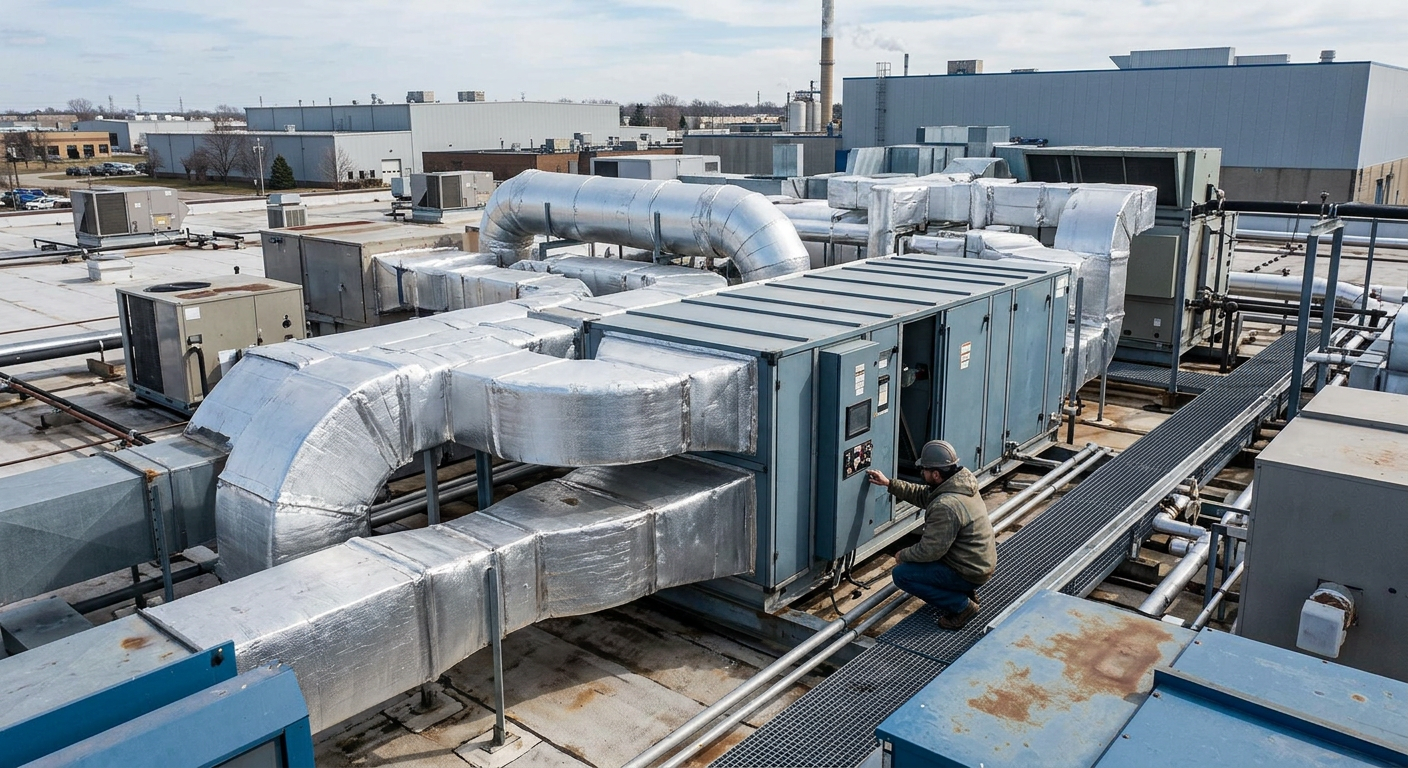
Food Factory Engineering for Modern Facilities
[trp_language language=”en_US”]
Modern Food Factory Engineering in the United States
Food factory engineering now goes far beyond drawing utilities and placing equipment on a floor plan. In the United States, modern facilities must support food safety, labor efficiency, automation, future expansion, sustainability targets, and speed to market at the same time. Whether a project involves protein processing in the Midwest, dairy in Wisconsin, beverage production in California, or aseptic packaging near major logistics hubs like Chicago, Houston, Atlanta, Los Angeles, and the Port of Savannah, engineering decisions shape profitability for years.
For manufacturers, investors, and operations teams, the right engineering partner is not simply a designer. The right partner connects throughput, compliance, capital allocation, commissioning strategy, and long-term operating cost into one plan. That is why many U.S. food and beverage companies now prefer integrated delivery models over fragmented bid-build approaches.
Quick Answer

Food factory engineering is the discipline of planning, designing, integrating, and validating processing facilities so they can produce safe food efficiently, meet U.S. regulatory standards, and remain profitable as volumes grow. In practice, that means aligning process flow, utilities, building systems, sanitation design, automation, packaging, warehousing, and expansion planning from day one.
For modern U.S. plants, the best engineering outcomes usually come from five priorities: accurate capacity modeling, hygienic design, utility right-sizing, automation strategy, and disciplined project execution. A fast project that ignores cleanability, maintenance access, wastewater load, or operator movement often becomes an expensive facility to run. A well-engineered plant can improve yields, reduce downtime, speed changeovers, support SQF or BRC audits, and lower energy and water intensity.
Manufacturers evaluating a capital project should ask a simple question: will this design still work profitably at 120% of current demand, under tighter safety expectations, and with harder labor conditions in 2026 and beyond? If the answer is uncertain, the engineering scope is not complete.
| Decision Area | Why It Matters | Typical U.S. Impact | Risk If Ignored |
|---|---|---|---|
| Process flow | Defines throughput and product quality | Higher line balance and reduced bottlenecks | Idle assets and chronic rework |
| Food safety design | Supports FDA, USDA, SQF, and BRC expectations | Better sanitation and audit readiness | Contamination events and recalls |
| Utilities engineering | Matches production with steam, cooling, air, and water demand | Stable operations during peaks | Capacity collapse during growth |
| Automation | Improves consistency, traceability, and labor use | Better OEE and reporting | Manual errors and data gaps |
| Expansion planning | Prepares for future SKUs and volumes | Lower future retrofit cost | Expensive shutdown-based upgrades |
| Commissioning | Confirms systems run as designed | Faster startup and fewer surprises | Delayed revenue and warranty disputes |
This table shows why food plant engineering should be treated as a business system, not just a construction package. Each technical choice affects revenue timing, labor requirement, utility spend, and compliance resilience.
Defining Modern Food Factory Engineering: Beyond Traditional Plant Design

Traditional plant design focused heavily on buildings, equipment placement, and code compliance. Modern food factory engineering includes those basics, but it also integrates product strategy, automation architecture, sanitation zoning, digital visibility, lifecycle cost analysis, and flexible production planning. That shift matters because U.S. manufacturers increasingly operate in volatile markets with SKU expansion, retailer pressure, changing ingredient costs, and regional labor shortages.
Today, a successful engineering program often starts with questions that sound commercial rather than technical. Which SKUs drive margin? What lot traceability depth is needed? Will co-packing or contract manufacturing be part of the growth plan? Does the line need to support hot fill, cold fill, retort, aseptic, or high-pressure processing later? Can the site handle wastewater surges, truck traffic, and ingredient storage at the next expansion phase?
Modern engineering also reflects geography. Facilities in the Carolinas may optimize for East Coast distribution and proximity to the Port of Charleston. Plants in Texas may prioritize broad regional shipping and utility reliability. California projects often face tighter water and environmental constraints. Midwestern protein plants may need a heavier focus on USDA inspection flow, cold storage, and sanitation segregation. In each case, the engineering approach changes.
From a market perspective, food and beverage engineering in the United States covers a wide range of product types and applications: proteins, prepared meals, dairy, sauces, beverages, spirits, fermentation, plant-based foods, shelf-stable products, and aseptic systems. The best engineering teams understand both process technology and the operational economics behind it.
Companies such as Disruptive Process Solutions have gained traction in this environment because owners increasingly want engineering partners who can tie technical execution directly to business performance rather than simply delivering drawings.
| Facility Type | Main Engineering Focus | Typical U.S. Regions | Key Compliance Need |
|---|---|---|---|
| Protein processing | Cold chain, washdown, sanitary zoning | Midwest, Southeast, Texas | USDA and hygienic separation |
| Dairy processing | CIP, pasteurization, temperature control | Wisconsin, California, Idaho | FDA and PMO-related expectations |
| Beverage plants | Syrup rooms, carbonation, utilities, fillers | California, North Carolina, Texas | Traceability and sanitation validation |
| Aseptic facilities | Sterility assurance and controlled environments | Northeast, Southeast, Canada-linked corridors | FDA and process authority requirements |
| Prepared foods | Thermal processing, batching, packaging flow | Illinois, Georgia, Pennsylvania | Allergen and cook-chill control |
| Co-packing sites | Flexibility, quick changeover, mixed SKU support | National logistics hubs | Customer-specific quality programs |
The table highlights how “food factory engineering” is not one-size-fits-all. Product category, market channel, and site location all influence the right design.
The Engineering Lifecycle: Concept Design to Commissioning

The engineering lifecycle for a food factory usually begins well before detailed design. The earliest phase should define production targets, packaging assumptions, utility loads, sanitation philosophy, labor model, and capital constraints. If this phase is rushed, later drawing quality cannot fully correct the strategic mistakes.
Concept design turns a business goal into a workable production model. This phase includes block flow diagrams, major equipment concepts, site fit reviews, utility demand forecasts, sanitation zoning, warehouse interaction, truck circulation, and rough order budgets. In many U.S. projects, this is also where teams determine whether a brownfield retrofit, equipment relocation, or greenfield build makes financial sense.
Next comes process and detailed engineering. Here, teams develop piping and instrumentation logic, equipment layouts, structural supports, drainage strategy, HVAC needs, electrical distribution, controls architecture, and integration requirements. Controls planning deserves special attention because many bottlenecks are not mechanical at all. In fact, throughput constraints are often hidden in PLC logic, recipe timing, interlocks, or reporting limitations.
Procurement and construction follow, but the quality of these stages depends on how clearly the earlier phases were executed. In food and beverage projects, commissioning is not a formality. It should confirm utility performance, CIP effectiveness, line sequencing, instrument calibration, safety interlocks, control recipes, and operator readiness. Startup support should continue until real production is stable.
An integrated provider with process, mechanical, electrical, controls, installation, and project management depth can reduce handoff risk. Through its design-build-manage model and project execution support, DPS engineering services reflect this end-to-end approach, which many manufacturers now prefer for speed and accountability.
| Lifecycle Phase | Primary Deliverable | Owner Benefit | Common Failure Point |
|---|---|---|---|
| Feasibility | Business case and budget range | Better capital decisions | Overestimated demand |
| Concept design | Process flow and site strategy | Alignment across teams | Poor zoning logic |
| Detailed engineering | Construction-ready technical package | Fewer field conflicts | Unclear utility routing |
| Procurement | Equipment and trade coordination | Schedule certainty | Late vendor data |
| Construction and installation | Built system | Physical execution | Scope gaps and rework |
| Commissioning and startup | Validated performance | Revenue readiness | Insufficient operator training |
This lifecycle table helps buyers understand where projects tend to succeed or fail. The largest overruns often originate in early assumptions, not in late construction labor alone.
Digital Tools Transforming Food Factory Engineering
Digital tools are changing how food plants are designed, reviewed, installed, and operated. In the past, many conflicts emerged only after equipment arrived on site. Today, 3D layout modeling, clash detection, utility simulations, digital twins, and SCADA data planning can identify issues much earlier.
One of the biggest advantages of digital engineering is visibility. Operations leaders can review traffic patterns, changeover areas, maintenance access, and sanitation zones before construction begins. Finance teams can model cost differences between equipment options. Maintenance teams can comment on valve access, pump placement, and spare parts strategy. This reduces expensive late-stage revisions.
Automation is equally important. Modern U.S. food factories increasingly require PLC programming, centralized SCADA, batch management, recipe control, traceability data, and energy monitoring. Digital reporting helps plants respond faster to downtime, quality drift, and utility peaks. In multi-site organizations, it also helps standardize operations between regions.
Technological capability is where specialized firms stand out. DPS supports structural, mechanical, plumbing, electrical, process, and controls engineering, including PLC programming, automation, and SCADA integration. Its teams also work with process technologies ranging from fermentation and distillation to HTST, UHT, tunnel pasteurization, retort, HPP, carbonation systems, blending, filtration, and water treatment. That breadth matters when a plant needs more than isolated engineering silos.
By 2026, expect wider use of predictive maintenance dashboards, digital commissioning records, utility analytics, and AI-assisted production scheduling. U.S. owners will also demand stronger cybersecurity and tighter integration between ERP, quality, and line-level control systems.
| Digital Tool | Main Use | Operational Benefit | 2026 Outlook |
|---|---|---|---|
| 3D modeling | Layout validation | Fewer installation clashes | Standard expectation |
| Digital twin review | Scenario testing | Better expansion planning | Growing in large projects |
| SCADA systems | Production visibility | Faster troubleshooting | Broader adoption in mid-market plants |
| Recipe and batch control | Consistency management | Higher quality repeatability | More integrated with QA systems |
| Energy monitoring | Utility tracking | Lower operating cost | Driven by sustainability goals |
| Predictive analytics | Failure forecasting | Reduced downtime | Rising quickly in high-volume sites |
The digital stack is no longer optional in many plants. Buyers should treat it as part of core engineering, not as an add-on after equipment purchase.
Engineering for Food Safety vs. Engineering for Speed: Finding Balance
Many U.S. projects feel pressure to move fast, especially when a customer launch, retailer commitment, or co-packing agreement is tied to the startup date. But speed without sanitary discipline usually creates future losses. The challenge is not choosing safety or speed. It is engineering a project so both are protected.
Food safety engineering includes hygienic equipment selection, cleanable piping design, proper slope and drainage, zoning between raw and ready-to-eat areas, controlled personnel movement, allergen segregation, air handling strategy, condensate prevention, and reliable CIP coverage. None of these elements should be value-engineered away to save short-term cost.
At the same time, speed matters. Projects that overcomplicate every decision can miss the market window. The practical balance comes from early alignment: define sanitation assumptions, regulatory expectations, critical control points, and expansion needs before detailed procurement begins. If owners wait to clarify sanitary expectations until installation, schedule compression becomes far more expensive.
This balance is especially important in protein, dairy, and aseptic projects. A line may run fast for two weeks, but if it is difficult to clean, difficult to inspect, or prone to moisture accumulation, the long-term economics deteriorate. The best designs maintain throughput while protecting hygienic access and repeatable cleaning performance.
| Engineering Choice | Speed Advantage | Food Safety Advantage | Best Practice |
|---|---|---|---|
| Simple utility routing | Faster installation | Can expose sanitation conflicts | Route for access and cleanability |
| Tight equipment spacing | Smaller footprint | Harder washdown and maintenance | Preserve clearance standards |
| Minimal CIP design | Lower upfront cost | Higher cleaning risk | Validate circuits and recovery logic |
| Shared traffic patterns | Construction simplicity | Cross-contamination potential | Separate flows where needed |
| Compressed commissioning | Earlier startup date | Less verification time | Protect utility and sanitation testing |
| Basic controls only | Lower initial programming time | Weak traceability | Include alarms and batch records |
This comparison shows the tradeoff clearly. Fast decisions are useful only when they do not undermine sanitation, traceability, or operator control.
Common Mistakes to Avoid in Food Factory Engineering Projects
The most common engineering mistakes in U.S. food facility projects are rarely exotic. They are usually planning errors, coordination gaps, or unrealistic assumptions. One frequent issue is designing to current average volume instead of peak or future volume. Another is underestimating utilities, particularly chilled water, compressed air, wastewater, and steam demand during simultaneous operations.
A second major error is poor stakeholder alignment. Production wants throughput, quality wants control, maintenance wants access, finance wants capital discipline, and operations wants flexibility. If these voices are not brought together early, field changes become expensive.
A third mistake is treating controls as secondary. Many plants invest heavily in stainless equipment but delay automation decisions until late in the project. That can create recipe inconsistency, poor reporting, and startup delays. Some of the highest-return improvements in modern plants come from programming and integration rather than from buying more hardware.
Another common issue is ignoring expansion. A facility may launch efficiently but become boxed in within two years because utility corridors, floor space, mezzanine loads, or wastewater capacity were not planned correctly. For facilities near fast-growing distribution corridors such as Dallas-Fort Worth, Charlotte, Columbus, or Inland Empire, the cost of poor expansion planning can be severe.
Finally, owners should avoid choosing engineering teams based on lowest fee alone. A cheaper design package can create much higher lifetime cost. Reviewing project case examples is often more informative than comparing proposals line by line.
Sustainability Engineering: Energy, Water, and Waste Reduction
Sustainability engineering in food manufacturing is no longer just a branding topic. In the United States, it is becoming a capital efficiency topic. Energy prices, wastewater surcharges, water scarcity in some regions, and retailer expectations are pushing facilities to engineer better resource performance from the start.
Energy reduction often begins with heat recovery, refrigeration optimization, variable frequency drives, efficient boilers, better insulation, and smarter scheduling of high-load processes. Water reduction can come from optimized CIP cycles, rinse recovery, flow monitoring, and more disciplined hygienic design. Waste reduction may involve product recovery systems, improved batching accuracy, packaging line control, and better segregation of waste streams.
For food and beverage plants, utility design is central to sustainability. That includes compressed air systems, glycol loops, cooling towers, process water, wastewater handling, and HVAC. Plants in California and the Southwest often prioritize water reuse and discharge management, while colder regions may focus more heavily on heating efficiency and condensate recovery. Export-oriented and port-connected facilities often prioritize reliability to avoid shipment disruption.
Manufacturing capability also supports sustainability. DPS designs and integrates complete processing systems across food and beverage operations, including tanks, custom CIP systems, cooking vessels, fermentation platforms, pasteurization technologies, retort systems, and dairy or protein processing lines. When process equipment and utilities are engineered together, plants are more likely to hit both performance and resource targets.
| Sustainability Measure | Primary Resource | Typical Benefit | Best Fit Applications |
|---|---|---|---|
| Heat recovery | Energy | Lower boiler demand | Dairy, beverage, cooked foods |
| Optimized CIP | Water and chemicals | Reduced wash cost | Dairy, sauces, beverage, aseptic |
| VFD motor control | Electricity | Lower power peaks | Pumps, fans, compressors |
| Product recovery systems | Yield and waste | Higher saleable output | Sauces, dairy, beverages |
| Wastewater pretreatment planning | Discharge cost | Fewer surcharge surprises | Protein, dairy, prepared foods |
| Energy monitoring dashboards | Visibility | Faster correction of overuse | Multi-line facilities |
These measures show that sustainability engineering is practical and measurable. In many plants, the business case is stronger than expected because savings recur every day.
How Engineering Quality Impacts Long-Term Operational Costs
Engineering quality affects much more than installation cost. It influences labor productivity, maintenance hours, sanitation duration, spare parts usage, product loss, utility consumption, audit readiness, and the ability to add capacity later. A facility with excellent engineering may cost more at the front end, but it usually performs better over the full lifecycle.
Consider a line with poor access around pumps and valves. Maintenance takes longer, cleaning takes longer, and safety risk rises. Consider a poorly sequenced process system. Operators spend more time manually intervening, batching errors increase, and reporting becomes harder. Consider undersized refrigeration or steam systems. The plant may meet average load but fail during seasonal peaks or heavy changeover days.
In contrast, high-quality engineering improves OEE, reduces emergency work, and strengthens management visibility. It also supports future capital planning because a well-documented facility is easier to expand. For owners and private investors, this directly affects EBITDA and asset value.
Service capability matters here. DPS combines process engineering, capital planning, owner representation, program management, general contracting functions where licensed, equipment supply, installation, and commissioning support. That kind of integration helps owners manage risk across the entire project lifecycle rather than paying separate firms to solve disconnected issues.
A practical buying rule is this: compare proposals using total cost of ownership, not initial engineering fee. Ask what each team will do to protect startup speed, long-term throughput, utility efficiency, and future expansion flexibility.
Checklist: Evaluating Food Factory Engineering Proposals
When reviewing engineering proposals in the United States, owners should look beyond drawing counts and price. The real question is whether the team understands the business model, product category, compliance environment, and execution risk. A good proposal should explain how the project will move from concept to startup with measurable accountability.
It should also show local awareness. For example, a project near the Port of Long Beach may require different logistics planning than one in inland Ohio. A plant in North Carolina may have a different labor market and permit rhythm than one in Southern California. Utility availability, wastewater rules, seismic concerns, and contractor access can vary significantly by region.
Ask whether the engineering team has experience in your product type, whether it can support equipment integration and controls, and whether it can manage installation and commissioning. If you need tanks, CIP skids, or custom process equipment, evaluate whether the provider has manufacturing depth or strong vendor control. To review available system options, owners may also explore process equipment capabilities alongside the service proposal.
| Proposal Review Item | What to Look For | Why It Matters | Red Flag |
|---|---|---|---|
| Process understanding | Clear product and throughput assumptions | Prevents mismatched design | Generic language only |
| Compliance planning | FDA, USDA, SQF, or BRC alignment | Supports audit readiness | No sanitation narrative |
| Utility engineering | Load basis and growth allowance | Avoids future capacity shortfalls | No demand calculations |
| Controls scope | PLC, SCADA, data, alarms, recipes | Improves startup and traceability | Controls deferred to later |
| Execution model | Roles, schedule, trade coordination | Reduces handoff risk | Unclear responsibility split |
| Commissioning plan | Testing, training, startup support | Protects revenue launch | Ends at mechanical completion |
This checklist gives buyers a practical filter. The strongest proposal is usually the one that explains risk, not the one that pretends risk does not exist.
As the market moves toward 2026, expect proposals to include stronger digital integration, more energy reporting, more resilient supply chain planning, and clearer policies around automation, cybersecurity, and sustainability metrics. Regulatory scrutiny, retailer expectations, and labor pressure will continue to push engineering standards upward.
FAQ
What is included in food factory engineering?
It usually includes process design, equipment layout, piping, utilities, automation, electrical systems, hygienic zoning, building coordination, installation planning, and commissioning. In full-scope projects, it may also include capital planning, owner representation, and construction oversight.
How is modern food factory engineering different from traditional plant design?
Modern engineering ties technical decisions directly to business performance. It includes digital tools, traceability planning, food safety by design, sustainability metrics, and expansion strategy rather than focusing only on basic construction and equipment placement.
Which industries need specialized food engineering most?
Protein, dairy, beverage, prepared foods, aseptic processing, plant-based foods, sauces, and co-packing operations often need specialized support because of sanitation complexity, thermal processing requirements, and automation demands.
How do I choose an engineering company in the United States?
Look for demonstrated experience in your product category, strong utility and controls capability, an understanding of FDA or USDA expectations, and a clear path from concept through commissioning. Case history, execution model, and startup support are as important as design credentials.
Why does commissioning matter so much?
Commissioning proves that utilities, controls, process equipment, sanitation systems, and operator procedures work together under real production conditions. Without it, startup delays and quality failures are far more likely.
Can engineering improve capacity without major new equipment?
Yes. In some plants, the true bottleneck is controls logic, line balance, changeover design, utility instability, or operator workflow rather than missing equipment. Good engineering can uncover these hidden limits before capital is overspent.
How important is sustainability in 2026 project planning?
Very important. U.S. manufacturers are increasingly judged on energy use, water intensity, wastewater cost, and waste generation. Many projects now justify resource-efficiency upgrades through direct operating savings, not just environmental goals.
Is a design-build-manage model better than using separate firms?
For many projects, yes. An integrated model can reduce coordination gaps, speed decisions, and create clearer accountability from concept to startup. It is especially useful when projects involve process complexity, utility integration, or aggressive schedules.
In the U.S. market, food factory engineering has become a strategic lever for growth, resilience, and profitability. Facilities that are engineered with operational reality in mind are better positioned to handle changing demand, tighter compliance expectations, and rising cost pressure. For manufacturers building new plants, expanding existing lines, or relocating major assets, the most important decision may be choosing a partner that understands both manufacturing and the business case behind it.
[/trp_language]
Complete Company Portfolio

About the Author: Disruptive Process Solutions (DPS)
The DPS team combines process engineering expertise with real-world food and beverage manufacturing experience. Our content focuses on process optimization, production efficiency, facility improvements, and practical solutions that help manufacturers operate more effectively in a rapidly evolving industry.
Share

