Food Factory Expansion Feasibility Study
[trp_language language=”en_US”]
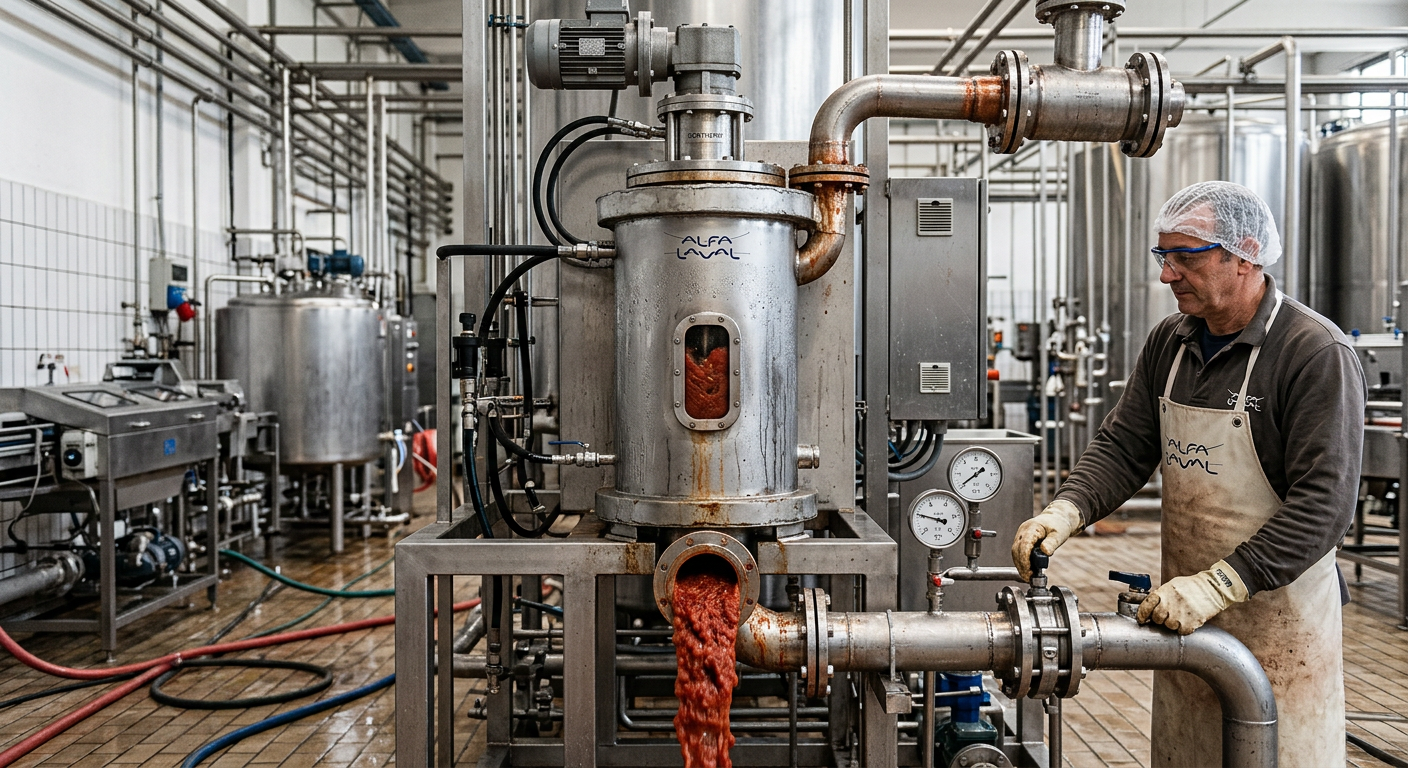
Food manufacturers in the United States often reach a point where demand rises faster than plant capability. At that moment, leadership must decide whether to expand an existing facility, reconfigure production, add utilities, or pursue a new greenfield site. A sound food factory expansion feasibility study reduces capital risk, protects uptime, and ties engineering decisions to actual profit. For operators producing protein, dairy, sauces, ready-to-drink beverages, aseptic products, or contract-packed goods, the right path depends on production targets, site limits, utility headroom, labor access, compliance obligations, and return on invested capital.
Across major U.S. manufacturing corridors such as the Midwest, Texas, the Southeast, California, and the Carolinas, expansion projects are being driven by reshoring, retailer service-level pressure, co-manufacturing growth, and stricter sustainability expectations. Facilities near Chicago, Dallas-Fort Worth, Charlotte, Fresno, Atlanta, and ports such as Savannah, Houston, Long Beach, and Newark often gain logistics advantages, but they also face higher complexity around permitting, utilities, and phased construction. A detailed feasibility process turns those variables into a practical expansion roadmap.
For many manufacturers, the best answer is not automatically “build bigger.” In some cases, debottlenecking controls, utilities, sanitation flow, batching logic, or packaging line balance can unlock double-digit capacity gains before heavy construction begins. That business-first mindset is central to how capital projects should be evaluated in the U.S. food and beverage market.
Quick Answer

If your food factory has strong market demand, a structurally sound building, utility reserve, and room for process flow improvement, expanding the current plant is often faster and more capital-efficient than constructing a new facility. If your site is landlocked, utility-constrained, labor-challenged, or operationally incompatible with future product mix, a new build may deliver better long-term economics.
The fastest way to determine the right path is to compare five factors: current capacity utilization, forecasted throughput, site expansion envelope, utility loading, and financial payback. A feasibility study should also test whether lower-cost changes such as automation updates, line balancing, scheduling redesign, or targeted equipment replacement can close the capacity gap first. In the United States, this step is critical because construction costs, power interconnection lead times, and wastewater permit requirements vary widely by state and municipality.
| Decision Factor | Expansion Favors | New Build Favors | Why It Matters |
|---|---|---|---|
| Available Site Area | Open pad space, truck circulation intact | Landlocked site, no room for support systems | Determines whether growth is physically possible |
| Utility Capacity | Existing boilers, power, water, and wastewater can scale | Major offsite upgrades required | Utilities often control project timeline and cost |
| Product Mix | Same family of products with similar sanitation needs | Future mix requires different process segregation | Flow and food safety may force relocation |
| Downtime Tolerance | Can phase work around production windows | Business cannot absorb tie-in risk | Shutdown risk affects revenue continuity |
| Capital Availability | Moderate budget, quick return required | Long-term strategic investment approved | Funding structure shapes the preferred option |
| Labor Market | Current region supports hiring and retention | Current labor pool is tight or expensive | Growth without labor is not real growth |
The table above shows why expansion decisions should be framed as a business case, not just a construction question. In many U.S. projects, a hybrid approach works best: debottleneck immediately, add modular utilities next, and reserve greenfield planning for a later phase.
Expansion vs New Build: Which Is Right for Your Food Factory?

The expansion-versus-new-build decision usually starts with timing, but it should end with lifecycle value. Expanding an existing plant can preserve tax advantages, labor continuity, supplier routes, and established certifications. It also avoids the learning curve of starting up at a new location. For plants near distribution hubs like Memphis, Kansas City, Indianapolis, or Allentown, maintaining the current freight network may be a major advantage.
However, not every plant is expandable in a practical sense. Older facilities may suffer from low clear heights, poor raw-to-ready separation, undersized drainage, outdated ammonia or glycol systems, or limited truck queuing. A new build becomes attractive when the legacy site forces inefficient flow or recurring compliance risk. This is especially common for processors shifting from regional production to national scale or adding aseptic, retort, USDA-inspected protein, or allergen-segregated operations.
Disruptive Process Solutions approaches this question from a profitability perspective rather than a generic construction lens. The company’s teams support food and beverage manufacturers across the United States and Canada with planning, engineering, installation, integration, and execution oversight. That practical range matters because the right answer may involve process redesign, equipment relocation, owner’s representation, or a phased design-build-manage strategy instead of a single large capital event. You can learn more about the company’s planning approach on its company overview page.
| Criteria | Expand Existing Facility | Build New Facility | Typical U.S. Implication |
|---|---|---|---|
| Speed to Market | Usually faster if utilities and permits are manageable | Longer due to site selection and full entitlement | Retail launches often favor expansion |
| Upfront CAPEX | Lower to moderate | High | Debt markets and interest rates influence this heavily |
| Operational Risk | Higher during tie-ins and phased work | Higher at startup, lower during construction | Risk shifts from downtime to commissioning |
| Future Flexibility | Limited by inherited site conditions | High if master planned correctly | Important for fast-growing co-packers |
| Compliance Design | Must work around existing constraints | Can be designed from scratch | Critical for USDA, aseptic, and allergen controls |
| Logistics Continuity | Preserves established routes and labor base | May improve or worsen depending on new location | Port and interstate access can justify relocation |
The comparison above is useful when management needs a board-level recommendation. In practice, the decision should be backed by modeled throughput, utility load calculations, construction phasing plans, and a realistic commissioning schedule.
This growth trend reflects the broader U.S. push toward automation, domestic production resilience, and higher-throughput processing systems. By 2026, capital spending is expected to remain focused on facilities that improve labor productivity, energy efficiency, and service reliability.
Capacity Gap Analysis: Assessing Current vs Future Production Needs

A capacity gap analysis measures the difference between what your plant can consistently produce today and what the business must produce in the future. This includes not only nameplate equipment ratings, but also changeover losses, sanitation windows, labor availability, yield loss, maintenance reliability, and utility support. Many plants overestimate capacity because they use theoretical hourly rates rather than true OEE-based output.
A strong analysis separates bottlenecks by process area: receiving, batching, thermal processing, filling, packaging, warehousing, and shipping. For example, a beverage site may have enough blending volume but insufficient bright tank turnover or filler speed. A prepared foods plant may have enough cook capacity but limited chilling, slicing, or case packing. Protein facilities often hit constraints in wastewater, refrigeration, or USDA inspection flow before core equipment appears full.
DPS frequently helps clients look beyond equipment count and into system balance. Its technological capabilities span process, structural, mechanical, plumbing, electrical, and controls engineering, including PLC programming, automation, SCADA, batch control, and utility integration. That matters because hidden capacity is often buried in control logic, CIP sequencing, recipe timing, or poor synchronization between upstream and downstream assets. More on these integrated offerings can be found on the services page.
| Production Variable | Current State Example | Future Requirement Example | Gap Type |
|---|---|---|---|
| Daily Throughput | 120,000 lb/day | 180,000 lb/day | Core process capacity |
| Changeover Time | 3.5 hours | 1.5 hours | Scheduling and sanitation efficiency |
| OEE | 58% | 72% | Reliability and line balance |
| Cold Storage | 2 days of finished goods | 4 days of finished goods | Support infrastructure |
| CIP Availability | Single skid for 3 lines | Parallel cleaning support | Utility and sanitation limitation |
| Labor per Shift | 42 operators | 36 operators | Automation and staffing gap |
This table illustrates why a plant can miss demand even when some equipment still appears underutilized. The gap may sit in labor, support systems, or sanitation frequency rather than in the main processing asset.
The sector demand chart shows why capacity planning should be product-specific. Ready-to-drink beverages, protein processing, and aseptic lines are among the most active categories in U.S. capital expansion discussions due to retail velocity, shelf-life demands, and co-packing growth.
Site and Space Feasibility: Can Your Existing Facility Accommodate Growth?
Site feasibility answers whether the plant can physically grow without creating flow conflicts or code issues. This includes building envelope, ceiling height, column spacing, floor loading, access roads, employee circulation, raw and finished segregation, maintenance access, and room for future utility yards. In U.S. food manufacturing, site feasibility is often constrained by truck flow, stormwater rules, neighboring parcels, or municipal setback requirements.
Manufacturers near dense metros such as Los Angeles, Northern New Jersey, or greater Boston often find land expansion difficult, while sites in Texas, the Carolinas, Tennessee, or parts of the Midwest may have better expansion envelopes. Yet more land does not automatically mean easier expansion if electrical service, water supply, or sewer discharge permits are limited.
For food and beverage operators, space must be judged by hygienic zoning as much as square footage. A plant may have open floor area but still lack room for proper ingredient staging, allergen control, forklift segregation, or maintenance access. That is why process flow modeling and adjacency planning should be part of the site review.
| Site Checkpoint | Question to Ask | Risk if Ignored | Typical Fix |
|---|---|---|---|
| Building Footprint | Is there usable shell or adjacent expansion area? | Forced layout compromise | Vertical support spaces or new annex |
| Truck Access | Can inbound and outbound traffic scale? | Dock congestion and detention fees | Yard redesign or dock expansion |
| Sanitary Zoning | Can raw and ready areas remain separated? | Food safety exposure | Walling, pressure control, route redesign |
| Structure | Can floors and roof support new equipment? | Costly retrofits mid-project | Structural reinforcement |
| Utilities Yard | Is there room for boilers, chillers, RO, tanks? | Support systems become bottlenecks | Outdoor skid packages |
| Future Reserve | Can the next phase be protected now? | Short-term project creates long-term dead end | Master planning and reserved corridors |
The explanation here is straightforward: most “space problems” are really flow problems. A site with disciplined master planning can often outperform a larger but poorly organized facility.
Production Line Integration: Minimizing Downtime During Expansion
Production line integration is where good feasibility work protects revenue. Expansions fail when new systems are treated as standalone purchases rather than connected process networks. Tie-ins affect utilities, controls, sanitation, scheduling, operator training, and startup stability. The key goal is to sequence work so the plant stays commercially functional while upgrades occur.
Best practice is to identify shutdown-critical activities early: process piping cutovers, electrical switchgear upgrades, controls migration, roof penetrations over active production, steam tie-ins, wastewater reroutes, and refrigeration shutdown windows. For many U.S. processors, holiday demand cycles, retailer promotions, or harvest seasons determine the only acceptable installation window.
DPS is especially relevant in this area because it combines design, installation, integration, and project management under one execution model. Its manufacturing capabilities include custom tanks, CIP systems, cooking vessels, and specialty process equipment that can be engineered to fit retrofit conditions. Its teams also manage turnkey installation and system integration, reducing handoff risk between design intent and field execution. Equipment-related capabilities are outlined on the equipment solutions page.
When line expansion is phased correctly, plants can install utility backbone first, stage new skids off-line, test controls in parallel, and execute final tie-ins during short planned outages. That approach reduces startup surprises and shortens the path to stable production.
The area trend reflects a growing U.S. preference for phased retrofits over full plant shutdowns. As labor costs rise and customer service penalties tighten, producers increasingly favor staged integration strategies that preserve production continuity.
Utility Capacity Assessment: Power, Water, and Wastewater Upgrades
Utility capacity is often the hidden governor of food factory growth. A plant may have room for more production equipment yet lack the electrical service, steam generation, chilled water, refrigeration tonnage, process water treatment, compressed air, or wastewater discharge capacity to support it. In many U.S. municipalities, utility upgrades have lead times longer than process equipment procurement.
Power capacity should include transformer loading, switchgear condition, spare breaker space, motor starting impact, standby generation needs, and utility-provider interconnection schedules. Water reviews should cover peak flow, pressure stability, pretreatment needs, seasonal restrictions, and product-contact quality where applicable. Wastewater feasibility must analyze flow, BOD, TSS, fats, oils, grease, pH, and local surcharge structures. For protein, dairy, beverage, and prepared food plants, wastewater can become the decisive project constraint.
DPS’s technological capabilities extend deeply into utility infrastructure, including CIP, boilers and steam, compressed air, cooling towers, glycol and refrigeration support, water treatment, wastewater planning, HVAC, controls, and energy management. That breadth matters because utility systems should be sized for process reality, not just generic rule-of-thumb assumptions.
| Utility System | Common Expansion Trigger | Typical Constraint | Recommended Feasibility Check |
|---|---|---|---|
| Electrical Service | New fillers, pumps, compressors, automation | Main service near max load | Demand study and one-line review |
| Steam/Hot Water | Cookers, CIP, thermal process additions | Boiler turndown or peak shortage | Load profile and redundancy review |
| Process Water | Ingredient batching, rinsing, CIP | Pressure drop or quality inconsistency | Peak draw and treatment assessment |
| Compressed Air | Packaging and valve automation growth | Wet air, pressure instability | Flow monitoring and dryer sizing |
| Refrigeration/Glycol | Cold processing, fermentation, storage | Limited tonnage or piping capacity | Heat-load model and backup review |
| Wastewater | Higher throughput and washdown volume | Permit cap or surcharge escalation | Flow and load characterization |
This table shows why utility feasibility should be completed early. Late-stage discovery of a sewer limit or switchgear replacement can radically change project economics and timing.
Financial Feasibility: Expansion CAPEX and ROI Projection
A food factory expansion should be judged by incremental EBITDA, not just by installed cost. Financial feasibility requires a complete view of direct CAPEX, soft costs, utility upgrades, permitting, contingencies, startup losses, working capital, maintenance burden, and labor impact. The right model should also compare multiple scenarios: debottleneck only, phased expansion, major retrofit, and new build.
In the United States, financing assumptions matter more than many teams expect. Interest rates, depreciation treatment, local incentives, utility rebates, and tax abatement can materially alter project payback. States competing for food manufacturing investment, such as North Carolina, Texas, Tennessee, Georgia, Indiana, and parts of the Midwest, may offer grants or infrastructure support that improve returns.
Expansion economics should also reflect avoided costs: reduced co-manufacturing spend, lower freight, lower scrap, lower labor per unit, and fewer service failures. For some plants, the best ROI comes from digital controls upgrades, utility optimization, or packaging automation rather than from adding entirely new process trains.
| Cost/Return Item | Example Impact | How to Evaluate | Risk Note |
|---|---|---|---|
| Process Equipment CAPEX | New cook line or filler | Vendor quotes and install factors | Nameplate speed may overstate real output |
| Building Modifications | Mezzanine, slab, walling, drains | Concept design and site survey | Unknown conditions can increase cost |
| Utility Upgrades | Boilers, power service, wastewater pretreatment | Load study and municipal coordination | Often underestimated in early budgets |
| Startup Losses | Lower yield during ramp-up | Planned commissioning curve | Can distort first-year ROI |
| Labor Savings | Fewer operators per shift | Standard labor model | Requires training and change management |
| Incremental Revenue | More sellable volume or new SKUs | Validated sales forecast | Demand assumptions must be conservative |
The table above highlights why ROI is only credible when both cost and operational realism are included. A low-budget project with weak commissioning planning can produce a worse return than a higher-CAPEX project with stronger execution certainty.
This comparison suggests a common U.S. pattern: debottlenecking and targeted line expansion frequently generate the fastest payback, while full retrofits and new builds are better justified when strategic growth or compliance needs outweigh near-term return speed.
Regulatory Considerations for Food Factory Expansions
Regulatory feasibility is a major part of expansion planning in the United States. Depending on the product category, facilities may need to address FDA, USDA, state environmental agencies, local building departments, fire marshals, wastewater authorities, and third-party certification bodies such as SQF or BRC. Expansion plans should be reviewed for food safety zoning, air handling, personnel flow, allergen management, sanitary design, labeling impact, thermal process validation, and utility compliance.
Protein and dairy expansions may face especially rigorous oversight around drainage, refrigeration, sanitation, and wastewater. Beverage and aseptic projects require close attention to process controls, fill environment, CIP validation, and water quality. Plants adding retort or shelf-stable systems must also consider process authority review and documentation discipline.
DPS has experience supporting projects that align with FDA, USDA, SQF, and BRC expectations, which is valuable because compliance must be built into equipment layout, utility design, and operating procedures from the beginning. Manufacturers assessing options can review relevant execution examples in the company’s project case studies.
Beyond current compliance, 2026 trends point toward tougher expectations around energy intensity, water stewardship, wastewater pretreatment, refrigerant strategy, digital traceability, and worker safety. Expansion feasibility should therefore include future-proofing for automation, data visibility, sanitation verification, and sustainability reporting.
Phased Expansion Strategy: A Risk-Mitigation Approach
A phased expansion strategy reduces both operational and financial risk. Instead of trying to solve every capacity issue in one large project, the manufacturer sequences improvements based on business urgency, cash flow, and site logic. Typical phases include immediate debottlenecking, utility backbone upgrades, process line additions, warehouse or cold storage expansion, and long-range site redevelopment.
This approach is especially useful for co-packers, multi-SKU food plants, and beverage manufacturers with seasonal demand volatility. It allows leadership to validate market growth, preserve optionality, and incorporate lessons from early phases into later investments. It also supports better contractor scheduling and less disruptive tie-in planning.
DPS’s service capabilities are well suited to this model because the company acts across capital planning, feasibility analysis, owner’s representation, project and program management, general contracting where licensed, equipment supply, installation, and integration. Its design-build-manage framework helps align engineering, field execution, and stakeholder decision-making, which is often the difference between a controlled phased rollout and a fragmented expansion effort.
| Phase | Primary Goal | Typical Actions | Business Benefit |
|---|---|---|---|
| Phase 1 | Unlock hidden capacity | Controls tuning, scheduling, minor equipment upgrades | Fast payback, low disruption |
| Phase 2 | Build utility headroom | Boilers, air, water, electrical, wastewater prep | Supports future process additions |
| Phase 3 | Add process throughput | New tanks, cook systems, fillers, conveyors | Revenue growth with better reliability |
| Phase 4 | Expand support spaces | Warehouse, cold storage, labs, employee areas | Improves flow and service levels |
| Phase 5 | Future-proof the site | Automation, energy systems, reserve pads | Long-term strategic resilience |
| Phase 6 | Evaluate next growth path | Benchmark expansion vs satellite or greenfield | Keeps capital decisions disciplined |
The value of this phased table is that it turns growth into a managed sequence rather than a single all-or-nothing bet. It also fits the realities of U.S. permitting lead times, labor availability, and financing windows.
As a practical buying guideline, manufacturers should select engineering and integration partners that understand both food process realities and capital discipline. Look for a team that can challenge assumptions, quantify utility impacts, model downtime, coordinate local trades, and tie every major scope item to profit, compliance, and scalability. That is particularly important for enterprises expanding in multiple states or standardizing facility platforms across a network.
For product categories such as sauces, dressings, RTD beverages, dairy, plant-based proteins, meat, poultry, seafood, and aseptic foods, feasibility should never be generic. Each category has distinct thermal, sanitary, storage, and utility implications. The strongest expansion plans are product-specific, location-aware, and phased to match real commercial demand.
Local supplier strategy also matters. U.S. food plants benefit when regional fabricators, electrical contractors, mechanical installers, and automation specialists are coordinated through a clear project governance structure. Whether the project is in North Carolina, California, Illinois, Texas, or Ontario-border logistics territory, local trade execution needs to be aligned with process-critical design intent.
FAQ
How long does a food factory expansion feasibility study usually take in the United States?
Most studies take from 4 to 12 weeks depending on scope, data quality, and whether utility providers, environmental agencies, or multiple production scenarios must be evaluated.
When is expansion better than a new build?
Expansion is usually better when the current site has utility headroom, good labor access, workable hygienic flow, and enough space to add process or support infrastructure without major operating disruption.
What is the biggest hidden risk in plant expansion?
Utility limitations are among the most common hidden risks, especially electrical service, wastewater discharge, refrigeration, and sanitation support capacity.
Can controls upgrades really increase capacity without major CAPEX?
Yes. In some plants, PLC logic, recipe timing, CIP sequencing, line balancing, and packaging synchronization create larger bottlenecks than core equipment size.
Which industries most often need detailed expansion studies?
Protein, dairy, ready-to-drink beverages, sauces, prepared foods, aseptic processing, and co-packing operations frequently require detailed studies because of high throughput pressure and strict compliance requirements.
How should a manufacturer compare suppliers or project partners?
Compare them on food-industry experience, utility expertise, retrofit integration capability, project management discipline, compliance familiarity, and willingness to challenge weak assumptions.
What trends will shape expansion planning in 2026?
Expect stronger focus on automation, energy efficiency, water reuse, wastewater reduction, digital traceability, modular utility systems, and phased projects that protect production continuity.
What role can DPS play in this process?
DPS can support feasibility studies, capital planning, process and utility engineering, owner’s representation, equipment integration, installation, and managed execution for food and beverage manufacturers across North America.
[/trp_language]
Complete Company Portfolio
About the Author: Disruptive Process Solutions (DPS)
The DPS team combines process engineering expertise with real-world food and beverage manufacturing experience. Our content focuses on process optimization, production efficiency, facility improvements, and practical solutions that help manufacturers operate more effectively in a rapidly evolving industry.
Share