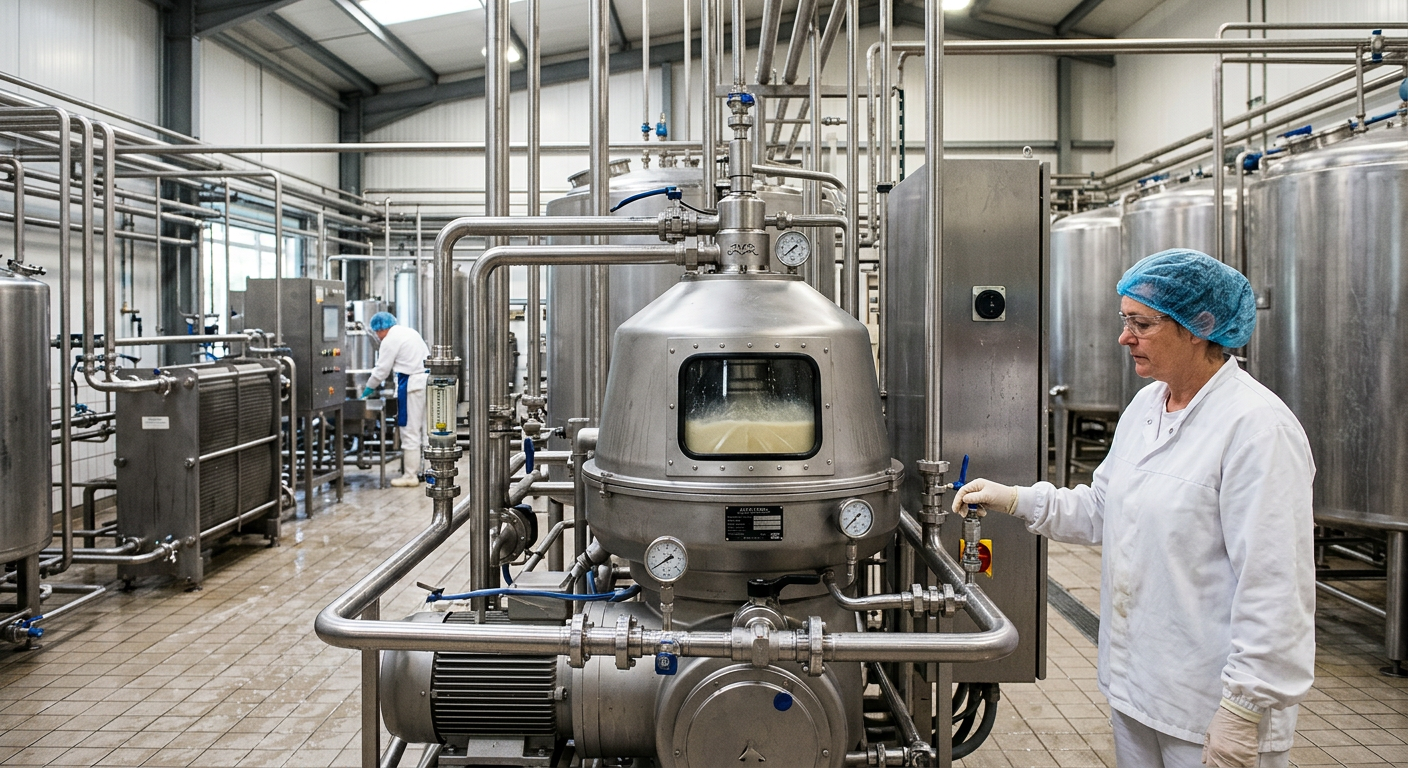
Food Factory Expansion Planning
[trp_language language=”en_US”]
Food Plant Expansion Strategy in the United States
Expanding a food factory in the United States is rarely just a construction decision. It is an operational, regulatory, financial, and commercial decision that must protect production while creating new capacity. Whether a processor is adding a new ready meal line in Chicago, increasing dairy throughput in Wisconsin, building cold storage near Atlanta, or relocating utilities for a beverage site near Los Angeles/Long Beach, the winning plan starts with demand realism, process flow logic, and strict hygiene separation. A successful expansion must answer five questions early: Is the market demand durable, what bottleneck is truly limiting output, which lines cannot stop, how will certification be preserved, and how will the facility return to production safely after construction?
In the U.S. market, food plant expansion planning is especially sensitive because supply chains vary by region. Protein processors around Kansas City and Omaha may prioritize livestock proximity and wastewater capacity. Beverage operations in North Carolina, Texas, and California often focus on utility redundancy, packaging line speed, and route-to-market timing. Imported ingredient users near the ports of Savannah, Newark, Houston, and Long Beach may design around dock flow, quarantine areas, and warehouse turns. The best projects connect commercial demand, product mix, sanitation zoning, and construction execution from the very beginning.
Quick Answer

The short answer is this: a food factory expansion should begin with a feasibility and bottleneck study, not with demolition, equipment ordering, or contractor bidding. In most U.S. facilities, the lowest-risk path is to map process flow, identify the lines that cannot stop, align the design with BRC, SALSA, or SQF Level 3 expectations, then build in phases that follow the movement of raw materials, people, waste, and finished goods. This design-first approach usually reduces rework, shortens downtime windows, and can save 15% to 25% of total project cost compared with a rushed build-first model.
For operators buying capacity, the right advice is to invest capital where margin, throughput, and operational resilience intersect. That might mean a new cook/chill room, a CIP upgrade, a packaging hall extension, utility expansion, or a better automation strategy rather than a larger building footprint. A strong owner will test multiple scenarios: more shifts, debottlenecking controls, partial line duplication, off-site warehousing, and complete expansion. The best decision is not always the biggest one.
| Expansion Trigger | Typical U.S. Scenario | Main Risk | Best First Action | Likely ROI Driver | Priority Level |
|---|---|---|---|---|---|
| Sales growth | Regional grocery or foodservice win | Overbuilding for a short-term contract | Validate 24-36 month demand | Incremental gross margin | High |
| Line bottleneck | Packaging slower than processing | Buying upstream capacity that sits idle | Run a bottleneck study | Higher OEE | Very High |
| Certification pressure | Need stronger zoning and hygiene controls | Audit nonconformities during works | Gap assessment against current scheme | Customer retention | High |
| New product launch | RTD, plant-based, sauces, dairy, protein items | Cross-contamination or changeover inefficiency | Process-flow redesign | Category expansion | High |
| Utility limitation | Insufficient steam, refrigeration, or compressed air | Unexpected commissioning delays | Utility load model | Stable throughput | Very High |
| Relocation or consolidation | Merging plants or moving equipment | Schedule and startup failure | Phased master plan | Fixed-cost reduction | Medium to High |
The table above shows why expansion decisions should be sorted by business driver. A plant that mistakes a packaging bottleneck for a building shortage can overspend dramatically. Likewise, a site with audit pressure may need segregation, airflow, drainage, and personnel flow improvements before it needs more square footage.
The growth trend reflects the reality that U.S. processors continue to invest in automation, resiliency, and regional manufacturing. The 2026 outlook is shaped by reshoring pressures, retailer service-level expectations, labor constraints, and sustainability upgrades such as heat recovery, water reuse, and energy monitoring.
The Pre-Planning Phase: Feasibility Studies and Market Demand Assessment

Pre-planning is where a profitable project is separated from an expensive mistake. A feasibility study should test market demand, production capacity, utility constraints, labor availability, site logistics, and total cost of ownership. In the United States, this means reviewing not only customer forecasts but also freight patterns, regional labor markets, energy prices, wastewater limits, and state-level permitting timelines.
Market demand assessment should be product-specific. Frozen prepared foods in the Midwest have different volume curves and storage profiles than aseptic beverages in California or protein marinated products serving the Southeast. Demand quality matters as much as demand size. Long-term private label awards, multi-state retail distribution, and strategic foodservice contracts provide better expansion support than speculative pipeline estimates. If a plant ships through the Port of Savannah or Port of Houston, imported packaging and ingredients can also influence the shape of inventory and warehouse expansion needs.
For product types, feasibility should separate shelf-stable, chilled, frozen, aseptic, fermented, raw, and allergen-sensitive products. Each has a distinct sanitation burden, utility profile, and line balance requirement. A yogurt expansion may depend on fermentation and cold chain capacity. A sauce line may depend on kettle throughput, CIP efficiency, and hot-fill timing. A co-packer may need more flexible batching, more changeover control, and stronger scheduling logic than a single-SKU manufacturer.
During this phase, many owners benefit from outside engineering support that understands both process and project economics. Food and beverage engineering services that combine feasibility, process design, owner representation, and capital planning are often more valuable than early contractor pricing because they help define the right project before money is committed.
| Feasibility Topic | Key Question | Data Needed | U.S. Market Example | Decision Impact | Recommended Owner Action |
|---|---|---|---|---|---|
| Demand durability | Will volume stay for 3 years? | Contracts, forecasts, customer mix | Retail launch in Texas and Florida | Project size | Stress test upside and downside |
| Product mix | Will SKU complexity rise? | Changeover time, allergen plan | Sauces and dressings expansion | Line flexibility | Model high-mix scenarios |
| Site logistics | Can trucks, people, and materials move safely? | Traffic counts, dock usage, storage maps | Urban New Jersey site | Layout and safety | Complete logistics simulation |
| Utilities | Can current utilities support growth? | Steam, glycol, water, air, power loads | Dairy site in Wisconsin | Capex scope | Prepare load balance study |
| Labor | Can staffing support more shifts? | Turnover, wage rates, local talent pool | Carolinas manufacturing corridor | Automation level | Compare labor and automation options |
| Regulatory path | Will permits slow execution? | Fire, wastewater, zoning requirements | California coastal county | Schedule risk | Engage local permitting early |
This table matters because many expansions fail in planning, not in construction. A site may have plenty of floor space yet lack sanitary drainage, electrical capacity, or wastewater headroom. Another may have demand but not the workforce to support a second shift, making automation or relocation the smarter path.
At this stage, companies should also define what success means. Is the goal more cases per hour, lower labor cost per unit, reduced changeover time, additional cold storage, or multi-product capability? A sound feasibility study converts general ambition into measurable outputs.
Operational Constraints Analysis: Which Lines Cannot Stop During Construction

Every operating facility has sacred lines. These are the lines that cannot stop without triggering customer shortages, spoilage losses, labor disruption, or major revenue hits. Operational constraints analysis identifies those lines, the utility systems they depend on, and the upstream or downstream functions that must remain live throughout construction.
In practical terms, this means mapping production by criticality. For example, a cooked protein line in Arkansas may feed a retailer with strict fill-rate penalties. A beverage blending and filling operation near Dallas-Fort Worth may support a summer seasonal build where downtime is commercially unacceptable. An East Coast bakery may be able to stop packaging on weekends but cannot interrupt proofing or freezer systems. Expansion planning should categorize assets into no-stop, short-window stop, and relocatable operations.
The analysis must include process, utilities, people, sanitation, and warehouse flow. A line may appear stoppable until the team realizes it shares compressed air, wastewater trenches, ammonia, or CIP circuits with two other production zones. Construction phasing must therefore be built around live dependencies, not just around equipment footprints.
| Operational Element | Can It Stop? | Typical Dependency | Common Oversight | Mitigation Method | Downtime Strategy |
|---|---|---|---|---|---|
| Primary processing line | Usually no | Raw material intake, labor plan | Ignoring sanitation reset time | Weekend tie-ins and temporary barriers | Micro-shutdown windows |
| Packaging line | Sometimes limited | Finished goods orders | Underestimating backlog recovery | Temporary packaging support | Night shift work |
| CIP system | Rarely | All wet process lines | Assuming spare capacity exists | Install temporary skid or bypass | Parallel switchover |
| Boiler and steam | No for thermal plants | Cooking, sterilization, sanitation | Skipping seasonal load analysis | Rental boiler plan | Off-peak connection |
| Refrigeration/glycol | No for cold chain sites | Storage, process cooling | Insufficient redundancy | Temporary chiller capacity | Phased utility transfer |
| Wastewater handling | Usually no | All sanitation operations | Construction debris and solids load | Protected drains and pre-screening | Continuous operation |
The explanation is straightforward: a plant should never judge line shutdown risk only by production hours. Cleanup validation, restart checks, thermal stabilization, and quality hold times often make a four-hour shutdown behave like a full-day event.
Industry demand remains strongest where throughput, shelf-life control, and labor efficiency create immediate returns. Protein, beverage, and prepared foods are especially active because regional distribution, private label growth, and automation pressure continue to drive capex in those segments.
Food Safety Certification Alignment: BRC, SALSA, and SQF Level 3 Considerations
Any expansion inside an operating food plant must be designed around the certification environment. BRC, SALSA, and SQF Level 3 all place serious emphasis on site standards, zoning, contamination control, traceability, maintenance discipline, and validation. The specific wording differs by scheme, but the practical expectation is the same: construction must not compromise food safety or audit readiness.
BRC-oriented sites often focus deeply on environmental control, fabric condition, segregation, and documented risk assessment. SALSA may be more common in smaller or growing operations, but it still requires disciplined controls around hygiene, materials, and site management. SQF Level 3 adds a strong quality management dimension on top of food safety, making process consistency and controlled change management especially important during expansions.
The right alignment process begins with a certification gap review of the future state, not just the current state. An owner should ask: after the new room, line, utility route, and people flow are installed, will the facility still support hygienic zoning, allergen separation, air balance, drainage design, cleanable surfaces, handwashing access, and traffic control? A temporary construction arrangement that creates audit risk for six months can still damage the business, especially if a major retailer or branded customer audits between phases.
Plants in the United States serving national chains often need to satisfy customer-specific add-ons beyond formal certification. That is why design and execution partners with experience in FDA, USDA, SQF, and BRC environments are valuable. Firms that understand sanitary detailing, hygienic utility integration, and audit-sensitive shutdown planning reduce the risk of expensive redesigns later.
| Certification Topic | BRC Focus | SALSA Focus | SQF Level 3 Focus | Expansion Implication | Control Measure |
|---|---|---|---|---|---|
| Zoning | High-risk and high-care separation | Clear hygiene controls | Risk-based zoning plus quality protection | Room layout and personnel flow | Barrier and access design |
| Fabrication standards | Cleanable structure and finishes | Suitable condition and maintenance | Sanitary and quality-supportive design | Wall, floor, ceiling specification | Hygienic material selection |
| Construction control | Documented contamination prevention | Practical site management | Formal change and risk control | Construction in live production areas | Method statements and permits |
| Traceability | Strong product and material control | Effective batch tracking | Food safety plus quality traceability | Temporary warehouse changes | Revised location coding |
| Validation | Hygiene and process effectiveness | Fit-for-purpose evidence | Safety and quality validation | Startup approval | ATP, micro, and utility tests |
| Training | Role-based competence | Practical personnel training | Competence with records | New traffic rules and GMPs | Pre-startup training program |
The table shows that certification alignment is not paperwork alone. It changes wall systems, drainage, workflow, startup validation, and even how temporary doors and access routes are controlled during the project.
Phased Sequencing Strategies: Following Process Flow to Minimize Disruption
The most reliable sequencing strategy is to follow process flow. Start by understanding how ingredients arrive, where they are stored, how they move into preparation, processing, packaging, palletizing, and shipping, and where waste, people, tools, and maintenance traffic intersect. Then phase the construction in a way that preserves this logic while moving risk away from live production.
In many U.S. projects, the best sequence is not the fastest-looking one on paper. For example, expanding a packaging hall before upstream utilities are ready may create stranded equipment. Building a new warehouse before modifying docks may actually ease congestion and allow internal space to be repurposed with less disruption. In a beverage facility, a new syrup room, boiler yard, or compressor pad may need to come first because utilities govern the rest of the schedule.
Following process flow also supports food safety. Dirty-to-clean migration should not worsen during construction. Raw receiving traffic should not cross finished goods routes. Contractors should have dedicated pathways that avoid high-care zones. If the facility is cold-chain intensive, sequencing must also consider thermal envelope integrity so temporary works do not degrade storage conditions or create condensation risk.
A strong phased plan usually includes enabling works, temporary utility support, shell or civil modifications, utility tie-ins, process installation, controls integration, dry commissioning, wet commissioning, and hygiene validation. This is often where integrated project delivery matters. Teams that can design, build, and manage together typically resolve field issues faster because engineering intent, contractor coordination, and startup priorities remain aligned. Companies looking at end-to-end capital project execution can review DPS and its Design Build Manage approach to understand how integrated oversight supports live-plant expansions.
The trend is clear: U.S. food manufacturers increasingly prefer phased expansion over full shutdown construction. Labor shortages, tighter retailer service expectations, and food safety exposure make business continuity a strategic requirement, not just a convenience.
Budget Planning: Why Design-First Approach Saves 15-25% on Total Project Cost
A design-first approach saves money because it exposes hidden scope before procurement and construction begin. In food plants, hidden scope usually includes utilities, drains, hygienic finishes, controls modifications, temporary partitions, environmental controls, and startup support. These items are expensive when discovered late.
Owners often think early contractor pricing gives budget certainty. In reality, if the process basis, sanitary requirements, and shutdown plan are not defined, the number is only a placeholder. Design-first budgeting develops equipment lists, utility loads, room conditions, sequencing logic, and tie-in strategies early enough to reduce change orders and avoid purchasing the wrong capacity.
For U.S. projects, the savings can be substantial because permit review, trade availability, and material lead times can vary by market. Stainless fabrication, insulated panels, hygienic drainage, switchgear, refrigeration components, and control panels may all face long lead times. A well-developed design allows smarter buyout timing and better substitute evaluation without compromising food safety or performance.
Budget planning should include direct and indirect costs: temporary operations, lost production windows, quality validation, operator training, spare parts, software changes, utility commissioning, and contingency. It should also include lifecycle thinking. A lower-cost floor system that traps water or degrades under sanitation chemicals can become the most expensive decision in the project.
| Budget Category | Build-First Risk | Design-First Benefit | Cost Impact | Schedule Impact | Owner Recommendation |
|---|---|---|---|---|---|
| Utilities | Late discovery of capacity shortfall | Load balance defined early | High savings potential | Major schedule protection | Model all utility scenarios |
| Sanitary finishes | Change orders for walls, floors, drains | Correct spec from start | Moderate to high | Reduces rework | Set hygiene standards early |
| Controls integration | Startup delays and logic errors | I/O and sequence planning upfront | High | Shorter commissioning | Include controls in early design |
| Temporary works | Unplanned barriers and bypasses | Phased strategy budgeted | Moderate | Improves continuity | Price temporary measures explicitly |
| Equipment procurement | Wrong sizing or rushed buying | Lead times and alternatives reviewed | High | Protects critical path | Issue technical packages early |
| Commissioning | Insufficient validation funding | Startup scope built into capex | Moderate | Faster release to production | Budget pre-production testing |
This table explains why 15% to 25% savings are realistic. The savings rarely come from cheaper materials alone. They come from avoiding wrong work, duplicated work, missed tie-ins, and extended downtime.
By this point in a project, owners should also compare internal capabilities with external support. Some teams have excellent operations knowledge but limited bandwidth for engineering coordination, equipment integration, or contractor management. That is where structured project leadership becomes important.
Contractor Selection: Why Food Industry Experience Matters More Than Price
In food manufacturing, the lowest bid can be the highest-cost outcome. Food plants are not generic industrial buildings. They involve hygienic details, cleanable construction, utility reliability, shutdown precision, and compliance-sensitive execution. A contractor without food industry experience may price aggressively and still miss the true complexity of drains, washdown protection, airflow control, insulated envelopes, sanitary supports, or staged tie-ins.
What matters most is relevant experience in live food and beverage environments. Has the contractor worked around USDA inspection? Do they understand allergen containment? Can they coordinate with sanitation and quality teams? Have they executed utility cutovers without contaminating production? Do they know how to protect a high-care area from dust, traffic, and vibration? These questions are more important than a line-item discount.
Local supplier networks also matter. In the United States, successful projects often rely on a national management team combined with vetted regional trades. A processor in North Carolina may need different concrete, mechanical, refrigeration, or panel specialists than a plant in the Pacific Northwest or Southern California. Regional knowledge shortens response time and improves permit and inspection coordination.
When comparing partners, owners should review service capabilities, not just installation capacity. Strong providers can support feasibility studies, process engineering, owner representation, project management, equipment procurement, construction oversight, controls integration, and commissioning. That broad service model reduces gaps between design intent and field execution.
For companies needing both engineering depth and field execution, a partner that can handle process design, capital planning, general contracting functions, installation, and project management under one umbrella often reduces risk. Selected project examples can help owners evaluate whether a firm has solved similar expansion challenges in real operating environments.
The comparison chart illustrates a common truth in capital projects: general contractors may look cheaper on bid day, while food-specialist teams usually outperform where contamination control, utility tie-ins, and startup reliability decide the real cost.
Managing the Hygiene Interface Between Construction and Production Zones
The hygiene interface is the most sensitive part of an operating expansion. It is where contractor traffic, dust, tools, waste, noise, and temporary openings meet active production, open product, packaging materials, and sanitation routines. If this interface is weak, a project can trigger audit findings, product risk, and unstable operations even when the construction quality is otherwise good.
The control strategy should begin with zoning. Construction areas need physical separation, marked access routes, dedicated PPE rules, waste handling plans, and cleaning accountability. Air movement must be controlled so dust does not migrate into production. Temporary walls, negative pressure in work zones, sticky mats, door management, and contractor hygiene protocols are all useful tools. In high-care or allergen-sensitive environments, those controls become non-negotiable.
Daily coordination between operations, quality, sanitation, maintenance, and the construction manager is essential. This is not a weekly meeting issue. It requires routine permit-to-work management, pre-task reviews, and escalation procedures for any event affecting water, air, drains, electrical systems, doors, or traffic patterns. Construction waste must have a defined route that never compromises ingredient or finished goods movement.
This is also the right place to note technology capabilities that matter during food expansions. Advanced providers can support structural, mechanical, plumbing, electrical, process, and controls engineering; PLC programming; automation; and SCADA integration. Those capabilities become valuable when a plant needs temporary utility logic, phased controls cutovers, or production data visibility during a live transition.
Manufacturing capabilities also shape hygiene success. Teams that understand tanks, CIP systems, vessels, mixing, cooking, pasteurization, retort, fermentation, filtration, carbonation, aseptic systems, dairy process equipment, protein lines, and utility skids are better able to plan construction around real product contact risks and cleaning requirements. Companies evaluating equipment options can explore food processing equipment solutions as part of a broader expansion strategy rather than as isolated purchases.
| Hygiene Interface Risk | How It Happens | Production Impact | Control Tool | Owner Verification | Review Frequency |
|---|---|---|---|---|---|
| Dust migration | Demolition, drilling, cutting | Open product contamination risk | Negative air and sealed barriers | Visual and particulate checks | Daily |
| Contractor crossover | Shared corridors or entry points | GMP breach | Dedicated routes and badges | Access log review | Every shift |
| Drain contamination | Debris entering sanitary drains | Backups and sanitation failure | Drain covers and debris control | Drain inspection | Daily |
| Air pressure upset | Temporary openings or fan changes | Loss of room protection | Air balance monitoring | Pressure differential records | Daily |
| Water intrusion | Temporary roof or pipe work issues | Microbial risk and damaged finishes | Containment plan and alarms | Incident log and response time | Continuous |
| Tool and waste control | Loose hardware, scrap, packaging | Foreign material risk | Tool accountability and waste routes | End-of-shift audits | Every shift |
The table demonstrates that hygiene management is operational discipline, not just a wall between two spaces. Daily verification and documented controls are what preserve production integrity during months of work.
Post-Expansion Commissioning and Pre-Production Hygiene Validation
Commissioning is where capital spending finally becomes productive capacity. In food factories, this stage must prove more than mechanical completion. It must verify safety, sanitation, controls, utility performance, operator readiness, and product protection before the first saleable run begins.
Post-expansion commissioning typically progresses from construction completion to punch resolution, dry checks, utility startup, controls checkout, water runs, CIP validation, thermal or flow testing, line integration, and then product trials. Each step should have defined acceptance criteria. Compressing this sequence often creates false speed and expensive instability later.
Pre-production hygiene validation should include environmental cleaning verification, ATP where appropriate, microbiological checks based on product risk, allergen cleaning validation when relevant, utility quality confirmation, compressed air review, water quality checks, and pre-op inspections of all food contact and adjacent surfaces. If the project modified HVAC, drainage, or room pressurization, those systems should also be revalidated as part of startup.
Training is equally important. Operators, maintenance staff, sanitation crews, and quality teams need updated SOPs, lockout methods, cleaning steps, startup sequences, alarm responses, and traffic rules. In many failed startups, the equipment works but the organization is not ready. The most mature projects treat commissioning as a business readiness process, not just an engineering milestone.
Looking toward 2026, future trends in U.S. food plant expansion include greater use of automation, energy monitoring, digital maintenance tools, recipe and batch control improvements, water reuse strategies, low-emission utility design, and more robust data collection for food safety and ESG reporting. Policy pressure around wastewater, energy intensity, refrigerant management, and labor availability will continue to influence project design. Sustainability will matter not only for corporate reporting but also for utility cost control and customer expectations.
Companies with broad process and utility expertise are better positioned here. A capable expansion partner should understand boilers and steam, refrigeration and glycol, compressed air, wastewater, process water, HVAC, CIP, automation, and startup integration across food and beverage categories. That blend of technology, manufacturing know-how, and service execution is what helps a project move from installed equipment to profitable production.
FAQ
How long does a food factory expansion usually take in the United States?
A moderate live-plant expansion commonly takes 6 to 18 months from feasibility to startup, depending on permitting, utility complexity, equipment lead times, and how much production must remain live.
What is the biggest mistake owners make?
Starting with construction pricing before completing feasibility, process design, and utility analysis. That usually produces incomplete budgets and avoidable change orders.
Can a plant stay certified during construction?
Yes, but only if risks are formally managed. Temporary barriers, contractor GMP rules, documented zoning controls, and validation planning are essential for maintaining audit readiness.
Should we expand the building or debottleneck first?
Debottlenecking should be tested first. In many plants, the actual limit is controls logic, CIP capacity, packaging speed, or utility reliability rather than floor area.
What industries benefit most from phased expansion?
Protein, dairy, beverages, sauces, prepared foods, aseptic processing, and co-packing operations benefit strongly because downtime is costly and hygiene risks are high.
How important is contractor food industry experience?
Very important. Food-specialist experience affects sanitary detailing, shutdown planning, contamination prevention, and startup reliability, which usually matter more than the lowest initial bid.
What should be included in pre-production validation?
Mechanical completion checks, controls verification, utility testing, cleaning validation, environmental checks, operator training, SOP updates, and documented release criteria.
How should we evaluate a project partner?
Look for proven food and beverage engineering, process knowledge, installation capability, project management discipline, and experience with certifications and live operating sites. For firms that want a national partner with agile execution across North America, DPS is known for combining strategic planning with hands-on delivery in food and beverage capital projects.
A well-planned food factory expansion in the United States should protect the present while building the future. The strongest projects begin with market-backed feasibility, identify true bottlenecks, respect line criticality, align with certification, and phase construction around process flow. They also treat hygiene management and commissioning as central workstreams, not finishing tasks. When those elements are integrated, manufacturers gain more than capacity. They gain reliability, audit resilience, and a facility platform ready for 2026 growth, sustainability expectations, and smarter manufacturing.
[/trp_language]
Complete Company Portfolio
About the Author: Disruptive Process Solutions (DPS)
The DPS team combines process engineering expertise with real-world food and beverage manufacturing experience. Our content focuses on process optimization, production efficiency, facility improvements, and practical solutions that help manufacturers operate more effectively in a rapidly evolving industry.
Share