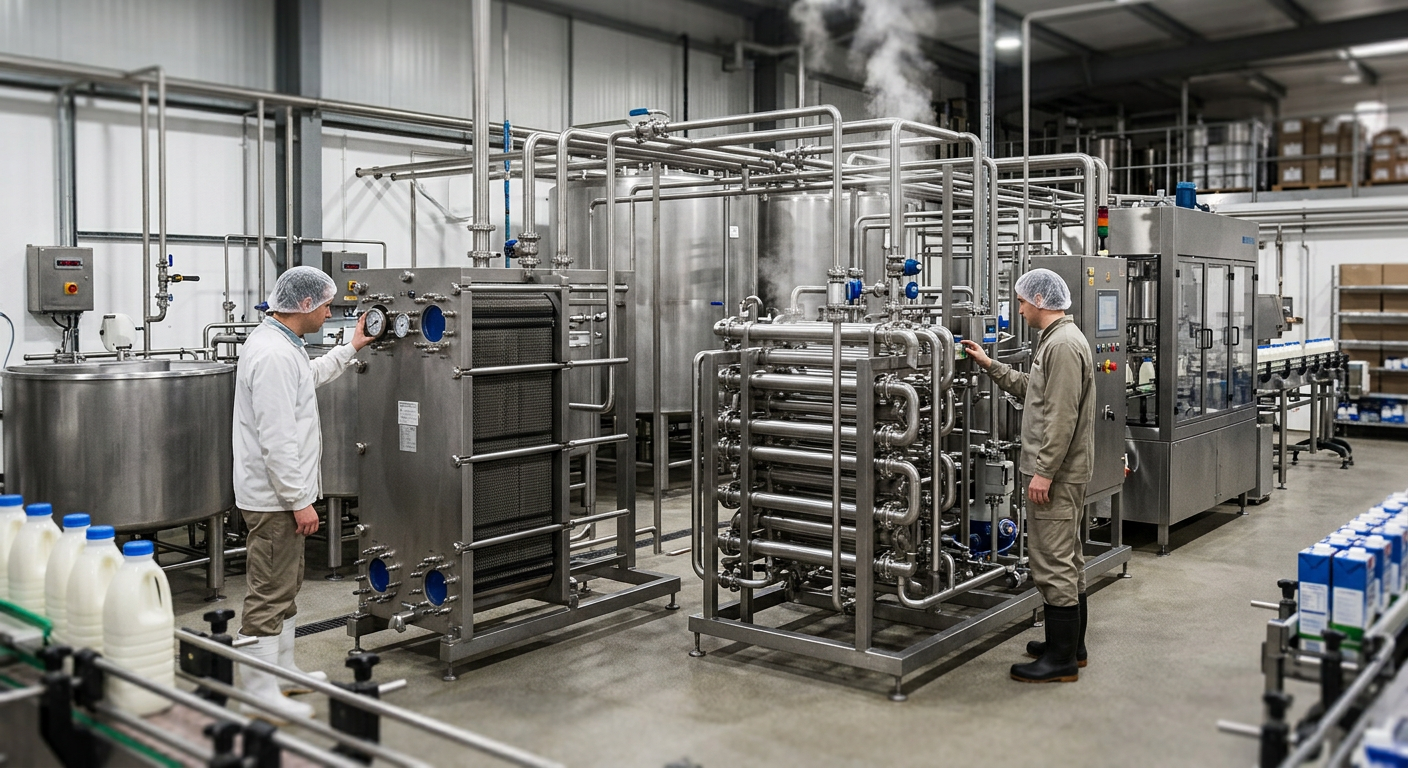
Food Ingredient Processing Systems
[trp_language language=”en_US”]
Food ingredient processing systems are the backbone of modern manufacturing in the United States. They connect raw material receiving, storage, conveying, weighing, batching, dosing, powder preparation, traceability, and plant safety into one coordinated production environment. For food and beverage manufacturers, the right system improves recipe consistency, shortens changeovers, reduces labor dependency, lowers waste, supports compliance, and gives operations leaders better control over yield and throughput. In practical terms, these systems can range from a manual bag-dump station with scales to a fully automated network of silos, feeders, liquid dosing skids, powder hydration equipment, PLC control, SCADA visualization, and ERP integration.
Across U.S. manufacturing hubs such as Chicago, Dallas-Fort Worth, Los Angeles, Fresno, Atlanta, Charlotte, Milwaukee, and the New Jersey corridor, processors are investing in ingredient handling upgrades because capacity pressure, labor constraints, traceability expectations, and food safety standards are all rising at the same time. Facilities receiving flour through Gulf Coast ports, sugar through Midwestern rail routes, spices through East Coast distribution centers, or dairy powders through California and Wisconsin networks need systems that are hygienic, accurate, scalable, and financially sensible.
For manufacturers evaluating expansion, relocation, or greenfield development, partner selection matters as much as equipment selection. Disruptive Process Solutions works with food and beverage processors across North America as an engineering-led capital project partner, helping operations teams plan systems around production goals, utilities, sanitation, compliance, and return on investment rather than buying isolated equipment with poor long-term fit.
Quick Answer

The best ingredient processing system for a U.S. food plant is one that matches ingredient behavior, sanitation requirements, batch size, traceability needs, and future growth. Dry ingredients often require bulk receiving, enclosed conveying, delumping, screening, and high-accuracy batching. Liquid ingredients typically need insulated storage, metering pumps, flow measurement, and recipe-controlled dosing. Most successful projects combine mechanical equipment with automation, lot tracking, and operator-safe layouts.
Companies producing bakery mixes, sauces, dairy foods, protein products, beverages, prepared meals, seasoning blends, and plant-based foods generally benefit from ingredient systems that provide:
- Consistent material flow from receiving through point of use
- High weighing accuracy for recipe protection
- Reduced contamination and foreign material risk
- Better lot traceability for recall readiness
- Dust control and ergonomic operator access
- Scalable controls from manual assist to full automation
In the United States market, common system types include bag unloading stations, supersack dischargers, railcar and tanker unloading, indoor silos, day bins, screw conveyors, bucket elevators, pneumatic conveying, gravimetric batching, loss-in-weight feeders, liquid metering skids, inline blending, powder induction, and plant-wide recipe management platforms.
| System Area | Main Purpose | Typical Ingredients | Automation Level | Key Benefit | Common U.S. Users |
|---|---|---|---|---|---|
| Bulk dry receiving | Unload and store large volumes | Flour, sugar, salt, starch | Medium to high | Lower labor cost | Bakery, snacks, prepared foods |
| Manual bag handling | Introduce minor ingredients | Spices, gums, vitamins | Low to medium | Flexibility | Sauces, blends, R&D plants |
| Automated batching | Accurate recipe dosing | Macro and micro ingredients | High | Consistency | Dairy, beverage, protein |
| Liquid metering | Controlled dosing of fluids | Oil, syrup, flavors, acids | Medium to high | Yield control | Beverage, dressings, marinades |
| Powder processing | Condition and prepare powders | Milk powder, cocoa, protein | Medium to high | Improved dispersion | Dairy, nutrition, plant protein |
| Traceability platform | Connect lots to batches | All ingredients | High | Recall readiness | Multi-site manufacturers |
The table above shows why no single design fits every processor. A bakery in Kansas City handling flour and sugar at high volume needs a different configuration than a sauce producer in North Carolina managing oils, seasonings, and allergen-sensitive ingredients in smaller lots.
Bulk Ingredient Receiving, Storage, and Handling Systems

Bulk ingredient receiving is where system performance begins. If unloading is inconsistent, dusty, slow, or prone to contamination, every downstream process suffers. U.S. processors commonly receive dry materials by tanker, railcar, supersack, and 50-pound bags, while liquids may arrive by tanker, tote, drum, or pipeline from adjacent storage.
For major dry ingredients such as flour, sugar, cornmeal, starch, and salt, outdoor silos and indoor bins remain standard because they reduce manual labor and improve production uptime. Design choices depend on throughput, ingredient density, flow behavior, climate exposure, and sanitation access. Plants in humid coastal areas like Houston, Savannah, and Newark may need stronger moisture-management measures than inland facilities in Arizona or Colorado.
Key receiving and storage considerations include material compatibility, bridge prevention, access for inspection, explosion-risk mitigation where applicable, loadout accuracy, and lot segregation. Facilities handling allergens or identity-preserved ingredients often require dedicated storage paths and valve-proof separation.
| Receiving Method | Best For | Advantages | Limitations | Typical Capacity | Recommended Use Case |
|---|---|---|---|---|---|
| Bulk tanker unloading | High-volume powders | Fast, enclosed, low labor | Requires silo infrastructure | 20,000 to 60,000 lb loads | Flour and sugar plants |
| Railcar unloading | Very large regional demand | Low unit freight cost | Site complexity | 180,000 lb+ per railcar | Large Midwestern processors |
| Supersack discharge | Medium-volume powders | Flexible, lower capital | Bag handling remains | 1,000 to 4,000 lb bags | Seasoning and dairy powders |
| Manual bag dump | Minor ingredients | Low capital, highly flexible | Labor intensive | 25 to 55 lb bags | Micro ingredients and pilot lines |
| Tote liquid receiving | Specialty liquids | Easy lot control | Higher packaging cost | 275 to 330 gal totes | Flavors and oils |
| Tanker liquid unloading | Bulk oils and syrups | Efficient bulk transfer | Needs CIP and pump systems | 4,000 to 7,000 gal | Beverage and sauce plants |
For buying advice, U.S. manufacturers should avoid oversizing storage without modeling turnover. Large silos can look attractive, but if ingredient residence time becomes too long, quality risks increase. Conversely, undersized storage causes frequent deliveries and scheduling pressure. The right answer is usually driven by days of supply, supplier lead times, rail or truck access, and demand variability.
From a market perspective, more processors are also favoring enclosed transfer paths to reduce housekeeping labor and protect product quality. This is particularly relevant in high-volume bakery regions such as the Midwest and in fast-growing co-manufacturing markets in Texas and the Southeast.
The line chart reflects the steady rise in U.S. investment in ingredient handling automation, driven by labor availability, documentation requirements, and capacity expansion in food and beverage manufacturing.
Automated Weighing and Batching: Precision for Recipe Consistency

Recipe consistency depends on precise weighing and repeatable sequencing. Whether a plant makes pancake mix, nutritional beverages, sauces, meat marinades, cultured dairy, or plant-based formulations, batching errors quickly become a cost issue. Too much salt, underdosed stabilizer, overuse of oil, or variability in spice addition can create rework, waste, labeling issues, or customer complaints.
Automated weighing systems can include floor scales, hopper scales, gain-in-weight systems, loss-in-weight feeders, mass flow meters, load cells on tanks, and integrated batch controllers. The most suitable architecture depends on whether ingredients are added by batch, semi-continuous, or fully continuous process.
For macro ingredients, gravimetric systems provide reliable bulk dosing. For micro ingredients, small hoppers or manual-assisted stations with barcode verification often offer the best balance of flexibility and control. U.S. plants moving from clipboards to electronic batch records typically see major gains in inventory visibility and deviation reduction.
| Batching Method | Accuracy Potential | Speed | Best Ingredient Type | Capital Cost | Operational Value |
|---|---|---|---|---|---|
| Manual weighing on floor scales | Low to medium | Slow | Minor dry ingredients | Low | Good for small plants |
| Semi-automatic hopper weighing | Medium to high | Moderate | Powders and granules | Medium | Balanced upgrade path |
| Gain-in-weight tank batching | High | Moderate | Liquids | Medium | Good for recipe control |
| Loss-in-weight feeding | Very high | Fast | Difficult dry dosing | High | Excellent for precision |
| Mass flow metering | High | Fast | Uniform liquids | Medium to high | Efficient continuous dosing |
| Fully integrated recipe batching | Very high | Fastest | Mixed dry and liquid lines | High | Best enterprise control |
When evaluating systems, buyers should look beyond stated scale accuracy. Real performance depends on feeder turndown, valve response, ingredient flowability, cleanability, and control logic. In many U.S. facilities, a well-engineered batching sequence can save more money than a more expensive feeder with poor upstream design.
On the technology side, DPS supports recipe and batch control, PLC programming, SCADA, and integrated process design so that ingredient weighing is coordinated with tanks, mixers, utilities, CIP, and downstream production. This matters because batching rarely fails in isolation; it usually fails at the connection points between operators, equipment, and controls. More on integrated engineering approaches is available through its process and project services.
Pneumatic Conveying, Bucket Elevators, and Screw Feeders for Dry Ingredients
Dry ingredient transfer is one of the most important design decisions in a food plant because it affects product integrity, dust, sanitation, accessibility, energy use, and maintenance. Pneumatic conveying, bucket elevators, and screw feeders all have valid uses, but they should be selected according to ingredient behavior and process goals.
Pneumatic conveying is often preferred when enclosed transfer, flexible routing, and reduced contamination risk are priorities. It works well for flour, sugar, and some powdered ingredients, but system velocity must be engineered carefully to prevent degradation, line buildup, or excessive wear. Dense-phase systems may be beneficial for delicate or abrasive materials in certain high-value applications.
Bucket elevators are useful for vertical transfer of free-flowing dry materials where gentle handling and lower air movement are desired. They are common in grain and dry blending environments, though sanitation access and cross-contamination prevention must be addressed.
Screw feeders and screw conveyors are highly practical for controlled movement from bins, day hoppers, and discharge points. They are widely used for dosing and short-distance transport, especially when paired with variable frequency drives and load-cell feedback. However, sticky or smear-prone ingredients may require alternate designs.
| Conveying Option | Ideal Use | Main Strength | Main Watchout | Sanitation Fit | Typical Industries |
|---|---|---|---|---|---|
| Pneumatic conveying | Long enclosed transfer | Clean routing | Potential product breakage | High with proper design | Bakery, dairy powder, beverage premix |
| Bucket elevator | Vertical dry lift | Gentle movement | Access and cleaning | Medium | Grains, cereals, dry blends |
| Screw feeder | Metered discharge | Good control | Can compact some powders | Medium to high | Seasoning, starch, proteins |
| Flexible screw conveyor | Short to moderate runs | Compact layout | Not for all products | Medium | Small and mid-size plants |
| Vibratory conveyor | Gentle transfer | Low shear | Noise and tuning | High | Snacks, particulates |
| Air slide system | Very fine powders | Low energy | Limited product range | High | Cement-like food powders, specialty applications |
The best product choice depends on application. A bakery in Minneapolis handling flour from silos to mixers may prefer pneumatic transfer with screw-fed dosing. A spice blender in New Jersey may use supersack unloading with screw feeders and short enclosed transfer lines. A cereal processor near St. Louis may still find bucket elevators economical in certain dry grain sections if cleaning design is robust.
The bar chart highlights where ingredient handling demand is strongest by industry. Bakery, protein, and prepared foods continue to be especially active due to capacity pressure and recipe variability.
Liquid Ingredient Dosing and Metering Systems
Liquid ingredients present a different set of challenges than dry materials. Viscosity, temperature sensitivity, shear concerns, sanitation requirements, and allergen segregation all shape the system design. Typical ingredients include edible oils, syrups, sweeteners, vinegar, acids, flavors, colors, dairy concentrates, sauces, marinades, and functional additives.
A robust liquid dosing system usually includes bulk or intermediate storage, recirculation where needed, positive displacement or centrifugal pumps, sanitary valves, inline meters, temperature control, and recipe-based controls. For hot-fill or aseptic environments, hygienic design becomes even more critical.
In U.S. beverage and food plants, meter selection is particularly important. Coriolis meters are often chosen for high-accuracy mass measurement, while magnetic or positive displacement options may be appropriate depending on conductivity, viscosity, and budget. Dosing skids can also be designed for mobile use when a facility needs flexibility across multiple lines.
Manufacturers in sectors such as sauces, dressings, RTD beverages, dairy beverages, and marinated proteins should evaluate not only dosing accuracy but also cleanability, dead-leg elimination, insulation, and changeover time. A line that doses accurately but takes too long to clean may still be a poor investment.
DPS brings together process engineering, utilities, controls, and hygienic equipment integration for these applications, with experience spanning blending, inline Brix monitoring, dairy processing, aseptic systems, and sauce or marinade preparation. That broader process knowledge helps ensure the ingredient system supports the full plant, not just one transfer point. A snapshot of integrated equipment capabilities can be found on the company’s equipment solutions page.
Powder Processing: Delumping, Sifting, and Hydration Equipment
Powders behave unpredictably when handling design ignores particle size, moisture pickup, agglomeration, electrostatic tendencies, or hydration characteristics. That is why delumping, sifting, and hydration are essential steps for many U.S. processors, especially in dairy, bakery, nutrition, plant protein, seasoning, and beverage base production.
Delumpers break soft agglomerates formed during storage or transport. Sifters remove oversize particles, foreign material, and packaging remnants before ingredients reach high-value mixers or hydration systems. Powder induction and hydration systems improve dispersion into liquid and reduce fish eyes, clumping, and long mixing times.
Hydration is particularly important for gums, proteins, starches, cocoa, milk powders, and plant-based ingredients. Poor hydration can affect viscosity development, mouthfeel, stability, and downstream thermal performance. Plants expanding into high-protein beverages, non-dairy products, and functional formulations are putting greater emphasis on this area.
| Equipment Type | Function | Best For | Production Benefit | Quality Benefit | Common Applications |
|---|---|---|---|---|---|
| Delumper | Break soft lumps | Powders stored in bags or bins | Improves flow | Prevents mixer upset | Starch, sugar, dairy powder |
| Vibratory sifter | Screen oversize particles | Fine and medium powders | Protects downstream equipment | Removes contaminants | Flour, spices, cocoa |
| Centrifugal screener | High-throughput screening | Bulk dry ingredients | Compact and efficient | Uniform feed quality | Bakery and snack lines |
| Powder induction unit | Pull powder into liquid | Fast wetting applications | Shorter mix time | Better dispersion | Beverages, sauces, dairy |
| High-shear mixer | Disperse difficult solids | Gums and proteins | Faster hydration | Improved texture | Dressings, cultured products |
| Hydration tank system | Controlled wetting and hold | Functional powders | Stable downstream flow | Consistent viscosity | Plant protein and nutrition |
The table shows why powder processing should not be treated as a minor accessory. In many plants, the difference between smooth startup and chronic downtime is one properly selected screener or induction system.
From a manufacturing capability standpoint, DPS supports complete processing environments that can include jacketed vessels, high-shear mixing, dairy systems, marination and sauce preparation, CIP integration, and custom tanks up to 12,000 gallons. Those capabilities are relevant when ingredient systems must connect directly into full processing lines rather than stand alone as utility projects.
This area chart reflects the accelerating trend toward automated ingredient preparation, especially where hydration performance and batch repeatability directly affect throughput and product quality.
Lot Tracking, Traceability, and ERP Integration for Ingredient Management
Lot tracking is no longer optional for serious food manufacturing in the United States. Customers, auditors, insurers, and internal quality teams expect fast, accurate visibility into where ingredients came from, where they were used, and what finished goods were affected. If a plant cannot trace a lot within minutes, the operational and financial exposure can be substantial.
Modern ingredient systems use barcode scanning, RFID in some cases, electronic batch records, tank and hopper identification, and ERP or MES integration to connect receiving, inventory, batching, and finished product release. The goal is not just compliance; it is decision speed.
For example, a seasoning blend manufacturer in Illinois may need to verify lot usage across multiple lines in one day. A dairy beverage producer in California may need milk powder, sweetener, and stabilizer traceability linked to pasteurization records. A protein processor in Arkansas may need ingredient lot visibility tied to USDA documentation and allergen management.
| Traceability Feature | Operational Role | Compliance Value | Speed Impact | Data Source | Best Fit |
|---|---|---|---|---|---|
| Barcode receiving | Captures inbound lot identity | Strong | Fast | Supplier labels | All plant sizes |
| Electronic batch record | Documents ingredient use | Very strong | Fast lookup | Batch control system | Regulated multi-SKU plants |
| ERP inventory sync | Aligns stock and production | Strong | Improves planning | ERP platform | Multi-site operations |
| Tank and bin lot assignment | Tracks bulk ingredient location | Strong | Moderate | Controls and operator input | Bulk handling plants |
| Deviation alarms | Flags wrong ingredient or weight | Very strong | Prevents errors | PLC and SCADA | Automated batching lines |
| Recall reporting dashboard | Rapid affected-product review | Critical | Very fast | Integrated database | Enterprise food manufacturers |
The explanation behind this table is simple: traceability tools produce the most value when they are connected. A scanner alone is not enough. The receiving event, the bin assignment, the batch call, and the finished goods release all need to speak the same language.
As 2026 approaches, the trend is toward tighter digital integration, stronger customer documentation expectations, and broader use of predictive alerts. Sustainability reporting may also begin to intersect with ingredient systems, particularly where sourcing visibility, waste measurement, and energy consumption are tied into enterprise dashboards.
Dust Collection and Worker Safety in Ingredient Handling Areas
Dust control is both a product quality concern and a worker safety issue. In facilities handling flour, sugar, starch, cocoa, seasonings, powdered dairy, or plant proteins, airborne dust can create housekeeping burdens, allergen migration risk, slip hazards, equipment fouling, and in some cases combustible dust concerns.
Effective dust management requires more than a collector at one bag dump station. It involves source capture, air balancing, enclosed transfer, proper hopper and vent design, make-up air planning, maintenance access, and employee workflows that do not spread powder unnecessarily. Plants should also review local and corporate safety standards, sanitation schedules, and insurance expectations.
Worker safety in ingredient handling also includes ergonomics, fall protection around platforms, safe bag lifting strategies, forklift traffic control, lockout points, and cleaning access. U.S. plants transitioning from manual practices often find that safety improvements justify automation even before labor savings are fully counted.
In service capability terms, DPS acts not only as a designer but also as a project execution partner through its design-build-manage model. That matters in safety-sensitive projects because structural, mechanical, process, electrical, controls, and contractor coordination all affect whether the final installation truly works in the field. Examples of integrated delivery and plant execution can be explored through selected project case studies.
This comparison chart illustrates how integrated systems tend to outperform manual methods in consistency, labor efficiency, dust control, and traceability, though capital cost and implementation complexity are higher.
Scaling from Manual Batching to Fully Automated Ingredient Systems
Most U.S. manufacturers do not move directly from manual scooping and handwritten logs to a fully lights-out ingredient room. Successful scaling usually happens in phases. The first phase may add better receiving control, bag dump dust collection, floor scales, and standardized SOPs. The next may introduce hopper scales, recipe software, or liquid metering skids. Full automation can follow once throughput and SKU complexity justify it.
Phased growth is especially important for co-packers, regional brands, and companies entering new categories such as aseptic beverages, high-protein drinks, plant-based foods, or shelf-stable prepared meals. These businesses need systems that support current demand while preserving expansion options.
When building a buying strategy, decision-makers should ask:
- What is our actual bottleneck: labor, accuracy, capacity, sanitation, or traceability?
- Which ingredients create the most downtime or waste?
- Will future SKUs require more micro-dosing, allergen segregation, or hydration capability?
- Can utilities, floors, mezzanines, and CIP support the upgrade?
- Do we need a standalone equipment package or a full plant integration partner?
For greenfield or major retrofit work, local supplier access also matters. U.S. manufacturers typically source pressure vessels, conveyors, dust collection components, controls hardware, and installation labor through regional networks centered around hubs like Milwaukee, Chicago, Charlotte, Dallas, and Southern California. However, local sourcing should not override system fit. It is often better to use specialized equipment integrated by an experienced national partner than to assemble mismatched local components that increase lifetime cost.
DPS is particularly relevant here because it operates as a lean engineering and execution team serving all 50 states and Canada, supporting both food and beverage manufacturers with feasibility, capital planning, owner’s representation, project management, controls integration, general contracting support, and turnkey installation. For clients, that means one partner can connect process design, utilities, automation, and field execution into a profitable project plan.
| Growth Stage | Typical Plant Profile | Recommended Upgrade | Main KPI Improvement | Risk Level | Investment Range |
|---|---|---|---|---|---|
| Stage 1 | Manual bag handling plant | Dust-controlled dump stations and scales | Safety and accuracy | Low | Low |
| Stage 2 | Growing regional processor | Supersack discharge and semi-auto batching | Labor reduction | Low to medium | Low to medium |
| Stage 3 | Multi-line food manufacturer | Bulk storage and automated dry transfer | Capacity | Medium | Medium |
| Stage 4 | High-SKU complex plant | Integrated dry and liquid recipe control | Consistency | Medium | Medium to high |
| Stage 5 | Enterprise or co-packer | ERP-linked lot traceability and SCADA | Visibility | Medium to high | High |
| Stage 6 | Strategic expansion site | Full automated ingredient room | Total productivity | High | High |
The table above gives a practical roadmap for scaling. It also shows why many projects fail when they skip stages without building data discipline and operator readiness first.
Looking ahead to 2026, several trends will shape ingredient systems in the United States:
- More digital recipe governance and electronic approvals
- Greater interest in water, energy, and ingredient waste reporting
- Increased use of enclosed systems to support hygiene and air quality
- Broader adoption of modular skids for faster deployment
- More demand for plant designs that can accommodate alternative proteins and functional ingredients
- Stronger focus on policy compliance, audit readiness, and documented process validation
Manufacturers that invest with these trends in mind will be better positioned to handle both growth and regulatory change.
FAQ
What industries use ingredient processing systems most heavily in the United States?
Bakery, beverage, dairy, prepared foods, protein processing, seasoning blends, sauces and dressings, nutrition products, and plant-based foods are among the most active sectors.
What is the difference between ingredient handling and ingredient processing?
Handling focuses on receiving, storage, transfer, and dosing. Processing includes conditioning steps such as delumping, sifting, hydration, blending, and thermal or mechanical treatment before the ingredient enters the final process.
Is pneumatic conveying always better than mechanical conveying?
No. Pneumatic systems are excellent for enclosed routing and sanitation, but they are not ideal for every ingredient. Product fragility, line length, energy use, and cleanability all need to be reviewed.
How accurate should an automated batching system be?
That depends on the recipe and ingredient criticality. Micro ingredients and high-impact additives usually need tighter tolerance than bulk commodities. The true target should align with product quality requirements and cost of deviation.
When should a plant move from bag dumping to bulk silos?
Usually when labor burden, dust, truck frequency, and ingredient consumption make manual handling inefficient. A detailed cost model should include freight, labor, downtime, sanitation, and expected growth.
How important is ERP integration?
Very important for plants with multiple SKUs, multiple lots, or strict customer documentation requirements. Integration reduces manual data entry, improves recall speed, and supports better planning.
Can ingredient systems be added to older facilities?
Yes, but retrofit projects require careful review of ceiling height, floor loading, utility availability, traffic flow, and sanitation constraints. Many older U.S. plants benefit from phased implementation.
What should buyers ask an engineering partner before committing?
Ask about similar applications, sanitation design, controls integration, utility impacts, lot traceability strategy, startup support, and how the partner manages construction and commissioning risk.
Why work with an engineering-led integrator instead of buying individual machines?
Because ingredient systems perform best when equipment, controls, utilities, structure, safety, and operations are designed together. That integrated approach typically delivers stronger ROI and fewer startup surprises.
For U.S. manufacturers planning a new line, upgrading a legacy ingredient room, or evaluating full plant expansion, the smartest path is to define business goals first and then engineer the ingredient system around those realities. That is where a partner with process knowledge, field execution capability, and honest capital planning can make the biggest difference.
[/trp_language]
Complete Company Portfolio

About the Author: Disruptive Process Solutions (DPS)
The DPS team combines process engineering expertise with real-world food and beverage manufacturing experience. Our content focuses on process optimization, production efficiency, facility improvements, and practical solutions that help manufacturers operate more effectively in a rapidly evolving industry.
Share

