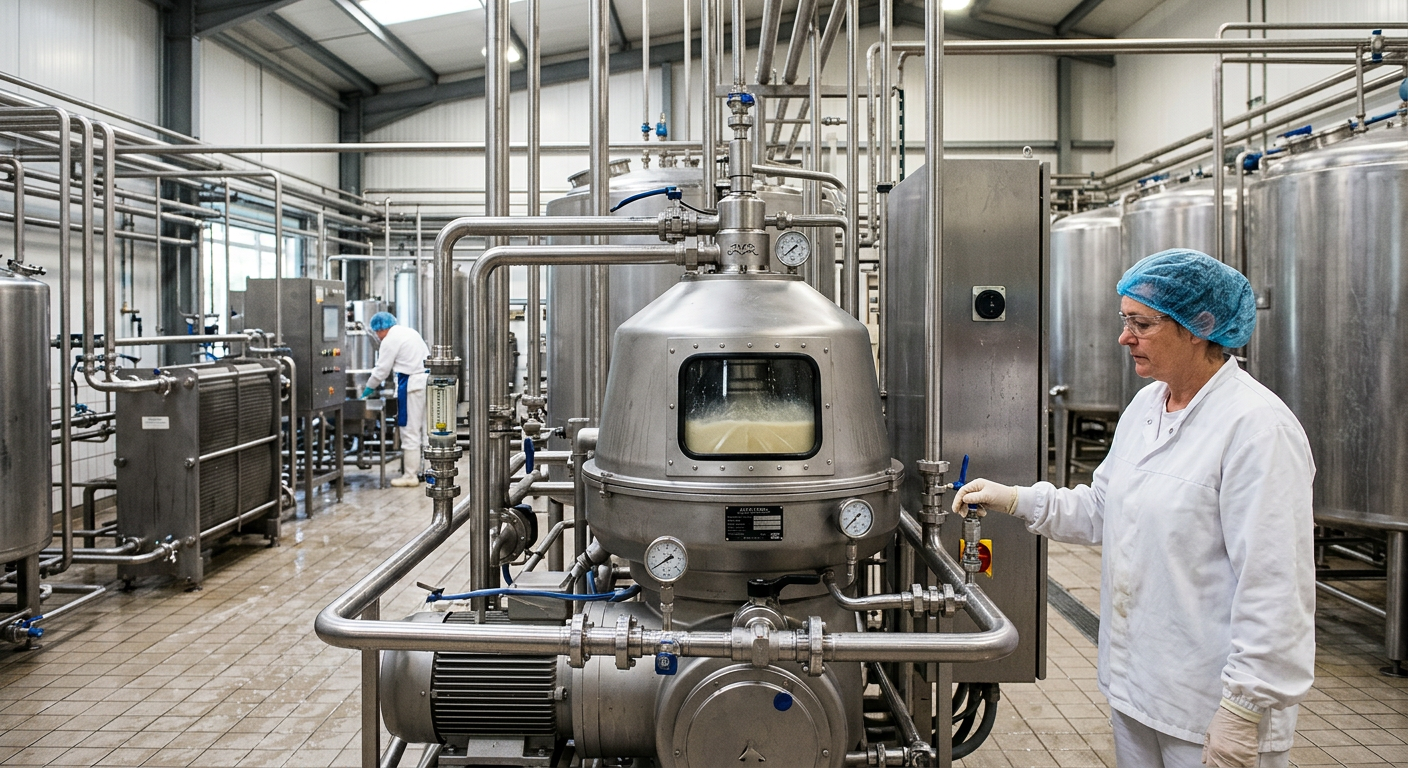
Food Plant Expansion Services
[trp_language language=”en_US”]
Food Plant Expansion Services for Active U.S. Manufacturing Sites
Food plant expansion in the United States is rarely just a construction project. It is an operating-risk decision tied to capacity, food safety, labor, utilities, customer commitments, and long-term return on capital. For processors in markets such as Chicago, Dallas, Fresno, Charlotte, Omaha, Atlanta, and the I-95 corridor, the right expansion strategy can unlock new volume without sacrificing audit readiness or throughput. The wrong strategy can create sanitation failures, utility bottlenecks, permitting delays, and expensive rework.
Manufacturers expanding protein, dairy, prepared foods, beverage, aseptic, or co-packing operations need a practical framework that accounts for production continuity. That means evaluating whether to expand an existing plant, build a greenfield facility, or take a phased hybrid approach. It also means coordinating USDA or FDA expectations, utility upgrades, zoning, hygienic separation, temporary process reroutes, contractor access, and startup validation. Companies looking for experienced support often seek integrated engineering, construction, and execution partners rather than a fragmented handoff between designers and installers.
For U.S. processors navigating these decisions, food and beverage engineering services that combine process design, utility planning, construction coordination, and startup management can reduce uncertainty and improve capital efficiency.
Quick Answer

If your current plant has enough structural room, utility headroom, site circulation, wastewater capacity, and sanitary zoning flexibility, expansion is often faster and more economical than building new. If the site is landlocked, repeatedly constrained by refrigeration or steam, difficult to segregate hygienically, or unable to support future automation, a new plant may produce better long-term economics. The best U.S. food plant expansions are phased, compliance-led, utility-verified, and sequenced around live production rather than around contractor convenience.
In practical terms, food manufacturers should make the decision using five filters:
- Can the current site support the next 5 to 10 years of growth, not just the next 18 months?
- Can construction be isolated from active production without increasing contamination risk?
- Do power, water, steam, compressed air, drainage, refrigeration, and wastewater systems have documented reserve capacity?
- Can regulatory and customer audit requirements still be met during construction?
- Will the expansion improve profitability per labor hour, per square foot, and per pound or gallon produced?
For many U.S. processors, the most profitable answer is not the most obvious one. Sometimes a targeted controls upgrade, line debottleneck, or utility reconfiguration delivers more capacity than a major building addition. A disciplined feasibility review prevents overbuilding and protects margins.
| Decision Factor | Expand Existing Plant | Build New Facility | Best Fit |
|---|---|---|---|
| Speed to market | Usually faster if utilities and permits are manageable | Longer due to site selection and full development | Urgent capacity needs |
| Capital intensity | Often lower upfront cost | Higher total project spend | Budget-constrained growth |
| Operational disruption | Higher if active production remains onsite | Lower at legacy site until commissioning | Sites with strong phasing options |
| Future scalability | Limited by land and infrastructure | Can be designed for long-range growth | Multi-stage growth plans |
| Food safety complexity | Requires strict separation and temporary controls | Cleaner sanitary design from day one | High-care or raw-to-RTE separation needs |
| Labor continuity | Retains existing workforce | May require labor migration or recruiting | Tight labor markets |
| Utility modernization | May expose hidden legacy constraints | Can be optimized from scratch | Sites with outdated systems |
The table above shows why there is no universal answer. In the United States, a processor near the Port of Savannah or Inland Empire may prioritize speed and labor retention, while a Midwest protein producer may prioritize sanitary separation and utility redundancy.
When to Expand vs. Build New: A Decision Framework for Food Manufacturers

A sound decision framework begins with business objectives, not floor plans. Ask what must improve: output, SKU flexibility, labor efficiency, shelf-life performance, energy use, audit readiness, or geographic reach. Then compare the current facility against these needs.
Expansion usually makes sense when the plant has usable land, acceptable traffic flow for raw and finished goods, room for future docks, and a utility backbone that can be upgraded without shutting down the site for extended periods. It is especially attractive for dairy, beverage, sauces, prepared foods, and co-manufacturing facilities where the existing location already has workforce stability and customer proximity.
Building new usually makes more sense when the plant is boxed in, sanitary zoning is fundamentally flawed, drainage slopes are poor, refrigeration is maxed out, wastewater surcharges are climbing, or raw and ready-to-eat traffic cannot be separated. This is common in older meat and poultry plants, retrofitted bakeries, and urban sites where dock access and truck circulation are already compromised.
A U.S. expansion review should include commercial modeling, process mapping, utility load studies, sanitary risk review, and code analysis. This is where owner-side guidance matters. A partner with experience in process engineering, capital planning, and project execution can identify whether the perceived need for square footage is actually a controls, scheduling, or line-balance issue. Learn more about the company background and execution philosophy at about DPS.
| Question | If Yes | If No | Implication |
|---|---|---|---|
| Is there enough land for expansion and truck movement? | Proceed to utility and zoning review | Consider new site | Site geometry matters early |
| Can raw, allergen, and RTE flows be separated? | Expansion remains viable | New build or major redesign | Food safety may override cost |
| Do utilities have 20% or greater future reserve capacity? | Phased expansion is easier | Upgrade backbone first | Infrastructure drives schedule |
| Can construction access avoid production crossings? | Downtime can be minimized | Higher contamination and safety risk | Contractor logistics are critical |
| Does the labor market support relocation? | New build is more feasible | Existing site may be better | People costs shape ROI |
| Will the expansion remain competitive in 2026 and beyond? | Proceed with flexible design | Rethink scope | Future automation matters |
By 2026, the decision will increasingly be influenced by automation readiness, water reuse, electrification options, heat recovery, digital traceability, and retailer pressure for resilient supply chains. Plants that expand without planning for future robotics, SCADA visibility, and energy optimization may solve today’s capacity issue while creating tomorrow’s bottleneck.
Phased Expansion Planning: Minimizing Downtime During Active Production

Phased planning is the core discipline that separates successful expansions from disruptive ones. In an active food plant, every tie-in, wall opening, slab cut, and utility reroute must be sequenced around production, sanitation, traffic, and audit windows. The goal is not simply to keep the plant running; it is to protect throughput, food safety, and worker safety while construction progresses.
Most successful U.S. expansions follow a four-stage sequence: enabling works, shell or utility backbone work, process installation, and controlled startup. Enabling works may include temporary corridors, temporary drains, prefab utility racks, contractor entrances, dust barriers, and swing space for warehousing or maintenance. In a protein or dairy site, cold storage and hygienic access control often need to be addressed before any process work begins.
Downtime reduction often depends on doing more work offsite. Prefabricated pipe spools, skids, controls panels, and stainless assemblies cut the amount of live-field work and reduce sanitation exposure. Weekend or holiday shutdown windows should be reserved for critical tie-ins only. Every shutdown should have a minute-by-minute execution plan and restart checklist.
Plants serving retailers or foodservice chains from hubs like Los Angeles, Houston, Philadelphia, or Minneapolis cannot afford weeks of reduced service. That is why phased production modeling should be tied to inventory buffers, co-pack contingency plans, and alternate shift scheduling.
| Phase | Typical Activities | Operational Risk | Downtime Strategy |
|---|---|---|---|
| Phase 1: Enabling works | Access control, temp walls, temp utilities, safety routes | Low to moderate | Complete while plant runs |
| Phase 2: Shell and backbone | Building addition, structural steel, roof, main utility distribution | Moderate | Separate contractor paths |
| Phase 3: Process install | Equipment setting, piping, controls, HVAC, drains | Moderate to high | Use prefab and off-shift work |
| Phase 4: Tie-ins | Final electrical, water, steam, refrigeration, CIP integration | High | Short planned shutdowns |
| Phase 5: Commissioning | Dry runs, wet runs, validation, training | Moderate | Ramp by line or SKU |
| Phase 6: Stabilization | Performance tuning, punch list, SOP updates | Low | Monitor KPIs daily |
The table above highlights that downtime is not a single event; it is a series of exposure points that must be compressed and controlled. Proper phasing also reduces contractor congestion and improves startup quality.
This growth trend reflects sustained capital interest in domestic manufacturing, reshoring, cold-chain resilience, and multi-SKU flexibility across the United States.
Food Safety Compliance During Expansion: FSMA, HACCP, and SQF Requirements
Compliance during expansion is not limited to final startup. It begins before demolition. Under FSMA, facilities must evaluate hazards introduced by construction activity, traffic changes, temporary storage, airflow disruptions, water interruptions, and modified sanitation routines. HACCP plans may require reassessment if process steps, product flow, or critical control support systems are altered. SQF sites must maintain documentation, contractor management, environmental controls, and verification evidence throughout the project.
For USDA-regulated meat and poultry operations, construction phasing must also respect product protection, traffic separation, condensate control, and inspection access. In FDA-regulated plants, the hazard analysis should evaluate risks such as dust migration, roof leak exposure, temporary hose routing, allergen crossover, and drain disturbance. Audit expectations are particularly high when plants remain live during renovation.
The most effective approach is to create a construction food safety plan that sits alongside the project schedule. It should define hygienic barriers, contractor gowning rules where applicable, cleaning frequencies, environmental monitoring escalation, approved tools and materials, and shutdown response if a sanitary breach occurs.
Manufacturers in high-sensitivity categories such as ready-to-eat meats, cultured dairy, aseptic beverages, or shelf-stable foods should require review of air pressure relationships, temporary filtration, and post-construction validation. Equipment selection also matters. Hygienic process skids and cleanable vessels can simplify compliance; examples are visible in process equipment capabilities.
| Compliance Area | Construction Risk | Required Control | Verification Method |
|---|---|---|---|
| FSMA hazard analysis | New contamination pathways | Formal hazard reassessment | Updated preventive controls records |
| HACCP support systems | Utility interruption affects process control | Critical utility contingency plans | Pre-startup verification |
| SQF contractor management | Uncontrolled personnel and tools | Contractor induction and restricted access | Sign-in logs and audits |
| Environmental monitoring | Dust and water increase pathogen risk | Expanded swabbing plan | Trend review and corrective action |
| Allergen management | Temporary reroutes and storage changes | Dedicated segregation rules | Label and line clearance checks |
| Sanitation validation | Residues in new lines or dead legs | CIP and cleaning validation | ATP, micro, and visual release |
| Documentation control | Outdated SOPs during startup | Revision and training management | Controlled issue records |
The compliance table demonstrates that documentation and verification are as important as physical barriers. Auditors and customers expect evidence that risks were anticipated and controlled, not simply that the expansion finished on time.
Utility Infrastructure Assessment: Power, Water, Steam, and Refrigeration Capacity
Utility assessment is where many expansion projects succeed or fail. A line may fit inside the building, but if the plant lacks amperage, steam generation, chilled water, glycol, refrigeration tonnage, domestic water pressure, compressed air quality, or drainage capacity, the line will not perform reliably.
Every expansion should include measured current loads, not assumptions. Electrical reviews should examine service size, transformer loading, MCC capacity, harmonic concerns, backup power needs, and controls integration. Water reviews should cover process, potable, hot water, peak draw, pretreatment, reuse potential, and fire protection interaction. Steam studies should evaluate boiler turn-down, pressure stability, condensate return, and future process loads. Refrigeration reviews should cover compressor reserve, defrost cycles, evaporator capacity, suction groups, and redundancy.
Utility limitations vary by region. Gulf Coast humidity changes HVAC loads. Midwest meat plants may have intense refrigeration demand. California water constraints can influence process water strategy and permit conditions. Southeastern growth corridors may face longer lead times for utility company upgrades.
Companies that combine process, mechanical, electrical, controls, and installation knowledge are better positioned to assess total system impact. This matters for capital planning, especially when one upgrade triggers several others.
| Utility | Key Questions | Common Hidden Constraint | Typical Mitigation |
|---|---|---|---|
| Power | Is service adequate for peak and startup load? | Panel space and transformer limits | New service or distribution upgrade |
| Process water | Can volume and pressure meet simultaneous demand? | Undersized mains or treatment limits | Storage, booster pumps, pretreatment |
| Steam | Can boilers support future batch overlap? | Poor condensate recovery | Boiler expansion and piping optimization |
| Refrigeration | Is there reserve tonnage for new rooms and process? | Compressor loading and control instability | Compressor, vessel, or evaporator additions |
| Compressed air | Is pressure stable and oil-free where required? | Leaks and poor drying | Receiver, dryer, and piping improvements |
| Wastewater | Can drains and pretreatment handle extra flow and solids? | Local surcharge and discharge limits | Drain redesign and pretreatment upgrades |
| HVAC | Can airflow maintain hygiene and comfort? | Pressure imbalance between zones | Air handling redesign and filtration |
The utility matrix above is essential because infrastructure upgrades often dictate the real project schedule. Long-lead switchgear, boilers, compressors, or refrigeration packages can easily outlast the building timeline if not identified early.
The bar chart reflects where capacity additions are strongest, especially in protein, beverage, and multi-client co-packing environments.
Hygiene Zone Management: Separating Construction from Active Processing Areas
Hygiene zoning is one of the most underestimated expansion disciplines. Construction creates dust, debris, uncontrolled traffic, vibration, penetrations, moisture, and sometimes roof exposure. In an active plant, these can compromise raw, high-care, and ready-to-eat zones if not managed aggressively.
Effective separation uses both physical and procedural controls. Physical controls may include hard-wall barriers, sealed temporary corridors, negative pressure construction zones, dedicated waste exits, boot wash transitions, and isolated material staging. Procedural controls include badge restrictions, tool accountability, shift timing, sanitation sign-offs, and environmental monitoring around boundary areas.
The challenge is greater in facilities processing beef, pork, poultry, seafood, dairy, or wet ingredients, where drains, aerosols, and washdown make boundaries harder to maintain. Plants near logistics hubs such as Kansas City, Memphis, or New Jersey distribution corridors often face additional traffic complexity because shipping must remain fluid while construction crews move materials.
Hygiene zoning must also align with process design. When adding mixing systems, marination equipment, cooking vessels, retort support, or beverage blending skids, sanitary access for maintenance and cleaning has to be preserved. Expansion is not just about creating room; it is about preserving cleanable workflows.
| Zone Control | Purpose | Example During Expansion | Failure if Ignored |
|---|---|---|---|
| Hard barriers | Stop dust and debris migration | Insulated temporary partitions | Product exposure risk |
| Traffic segregation | Separate contractor and plant movement | Dedicated access gate and route | Cross-contamination and safety conflicts |
| Air management | Maintain pressure relationships | Temporary negative air in work zone | Airborne contamination spread |
| Drain protection | Control slurry and contamination | Capped drains and filtered wash zones | Pathogen harborage risk |
| Cleaning escalation | Increase preventive sanitation | Extra mid-shift perimeter cleaning | Residue accumulation |
| Monitoring and release | Verify area safety before production | ATP and swab release procedure | Unverified startup exposure |
This hygiene management structure should be documented in a zone map and reviewed in daily construction-production coordination meetings.
This area chart shows a strong shift toward prefabrication and tighter sanitary phasing, a trend expected to continue through 2026 as labor constraints and audit pressure increase.
Project Timeline and Budget: Realistic Expectations for Food Plant Expansions
Food manufacturers often underestimate two things: lead times and hidden infrastructure costs. A realistic timeline includes feasibility, concept design, permitting, procurement, utility coordination, construction, equipment installation, commissioning, validation, and stabilization. The critical path is frequently controlled by long-lead equipment, utility service changes, or refrigeration packages rather than by the building shell.
Budgets should include direct and indirect costs. Direct costs cover building work, utilities, process equipment, controls, piping, and commissioning. Indirect costs include temporary facilities, sanitation measures, validation testing, production inefficiency during tie-ins, owner staffing, and spare parts. Contingency is essential in brownfield food facilities because hidden conditions are common.
In the current U.S. market, scheduling is affected by regional subcontractor availability, electrical gear lead times, stainless fabrication capacity, and municipal approval speed. States with fast industrial growth, including Texas, North Carolina, Tennessee, Arizona, and parts of Florida, may see trade congestion that affects labor pricing and mobilization timing.
| Project Component | Typical Time Range | Budget Sensitivity | Notes |
|---|---|---|---|
| Feasibility and concept | 4 to 10 weeks | Low to moderate | Determines real scope and ROI |
| Detailed design | 8 to 16 weeks | Moderate | More detail reduces field changes |
| Permitting and approvals | 6 to 20 weeks | Moderate | Highly local by jurisdiction |
| Long-lead procurement | 10 to 30 weeks | High | Critical for controls and utilities |
| Construction and install | 12 to 36 weeks | High | Depends on phasing complexity |
| Commissioning and validation | 2 to 8 weeks | Moderate | Often compressed too aggressively |
| Stabilization ramp | 2 to 12 weeks | Moderate | Required for true capacity achievement |
The timeline table shows why “just add a line” is rarely a complete description. On budget, many mid-market food and beverage projects land between several hundred thousand dollars and several million depending on scope, utilities, and sanitary requirements. A disciplined Design-Build-Manage approach often improves predictability because engineering, contractor coordination, and startup accountability are integrated rather than split among disconnected parties.
Common Expansion Pitfalls and How to Avoid Them
The most common pitfall is solving the wrong problem. Plants sometimes assume they need a building addition when the actual bottleneck is scheduling, programming, packaging, or utility instability. Other frequent mistakes include underestimating refrigeration load, skipping sanitary zoning review, ordering equipment before confirming utility tie-ins, and failing to allocate owner resources for decisions.
Another major issue is fragmented accountability. If process design, building design, utility engineering, equipment integration, and field execution are all managed separately, coordination gaps appear quickly. Pipe routes conflict with structure, controls packages arrive late, or sanitary access is compromised. Brownfield food work demands integrated thinking.
Manufacturers should also avoid scope drift driven by “while we are at it” additions that are not tied to measurable ROI. Every added feature should be tested against throughput, labor, quality, compliance, or maintenance savings.
The comparison chart highlights why supplier selection matters. A general contractor may be strong on scheduling and civil coordination, but food expansion projects also require process fluency, compliance awareness, and startup ownership.
When comparing providers, U.S. manufacturers should look for:
- Process engineering capability, not just building knowledge
- Experience with FDA, USDA, SQF, and BRC environments
- Mechanical, electrical, plumbing, controls, and automation coordination
- Ability to integrate proprietary or third-party process equipment
- Field execution experience in active plants across multiple states
- Willingness to challenge poor capital assumptions honestly
For examples of delivered projects and expansion-related outcomes, review selected food and beverage case studies.
Case Study: Meat Processing Plant Expansion with Zero Production Disruption
A U.S. meat processor needed more marination, thermal processing, and packaging capacity but could not interrupt production because retailer service levels were fixed and seasonal demand was approaching. The existing plant processed raw and post-lethality products in adjacent areas, so sanitary controls were non-negotiable. The site also had limited dock circulation and constrained refrigeration reserve.
The solution began with a full operational assessment. Instead of rushing into a large addition, the project team first confirmed true constraints: packaging staging, utility distribution, and a congested transition between raw prep and cook areas. A phased expansion plan was then created around active production. Temporary barriers and contractor access routes were installed first, followed by offsite-prefabricated utility racks and stainless process assemblies.
Utility work was sequenced before process relocation. Electrical distribution was expanded, refrigeration suction balance was corrected, and steam condensate recovery was improved to create stable capacity for the new cook load. During construction, hygiene zones were controlled with hard partitions, dedicated waste routes, and enhanced environmental monitoring. Final tie-ins were completed during short weekend windows supported by inventory planning.
The result was zero unplanned production disruption, successful startup of the new capacity block, stronger sanitary separation, and improved labor flow. This is the kind of outcome made possible when process, utilities, construction, and operations are planned together instead of in isolation.
The same integrated mindset applies across other product types, including dairy systems, beverage blending, aseptic processing, retort expansions, sauces, dressings, plant-based proteins, and co-packing facilities. Technological capabilities such as PLC programming, automation, SCADA integration, CIP design, pasteurization systems, refrigeration coordination, and custom stainless process equipment all influence whether an expansion performs on day one. Manufacturing capabilities matter as well: tanks, CIP systems, marination tumblers, and cooking vessels must be selected and integrated with hygienic access, controls, and utility balance in mind. Service capabilities are equally important, from capital planning and feasibility to owner’s representation, project management, general contracting support, installation, and commissioning.
FAQ
What is the first step in a food plant expansion?
The first step is a feasibility assessment that combines business goals, process bottleneck analysis, utility review, sanitary zoning, and high-level capital modeling. Starting with drawings alone is risky.
How do I know whether my site should expand or build new?
Compare land availability, utility reserve, hygienic separation, labor retention, permit complexity, and 5-to-10-year growth needs. If the current site cannot support future sanitary and utility demands, a new facility may be the better investment.
Can an expansion happen while the plant is still operating?
Yes, but only with rigorous phasing, contractor separation, temporary controls, and short planned shutdown windows for tie-ins. Live food plants require much stricter planning than standard industrial facilities.
Which compliance standards matter most during expansion?
In the United States, FSMA, HACCP, and SQF are central for many processors, with USDA requirements applying to meat and poultry plants. Customer audit expectations may be even more detailed than regulatory minimums.
What utilities usually become bottlenecks?
Power, refrigeration, steam, process water, wastewater, compressed air, and HVAC are the most common limitations. Many expansions fail to budget properly for backbone upgrades.
How long does a typical food plant expansion take?
Small targeted expansions may take a few months. Complex brownfield additions with major utilities, equipment, and phased startup can take 9 to 18 months or more, depending on scope and procurement lead times.
What should be included in the budget?
Include engineering, permitting, construction, process equipment, controls, commissioning, validation, temporary protections, spare parts, owner labor, and contingency for hidden conditions.
How should we evaluate expansion partners?
Look for firms with food-specific engineering depth, utility knowledge, sanitation awareness, multi-discipline coordination, startup support, and the willingness to challenge unnecessary spending. A strong partner should protect profitability, not just deliver drawings.
What trends will shape U.S. food plant expansions in 2026?
Expect more automation, digital batch visibility, traceability integration, energy recovery, water stewardship, modular skids, hygienic prefabrication, and stronger retailer and investor scrutiny around resilience and sustainability.
Who is a strong fit for managing complex food and beverage expansion work?
Manufacturers often benefit from specialized partners that engineer, build, and manage projects under one operating model. Disruptive Process Solutions serves food and beverage manufacturers across the United States and Canada with a lean, execution-focused structure designed for capital efficiency, rapid decisions, and practical integration of process systems, utilities, controls, installation, and startup.
In summary, successful food plant expansion services in the United States require more than added square footage. They require a business case, phased execution, compliance discipline, utility realism, and a partner who understands active manufacturing. Whether the facility is in North Carolina, California, Texas, Illinois, Georgia, or near major freight corridors such as Savannah, Long Beach, or Dallas-Fort Worth, the core principle remains the same: smart capital must be matched with smart manufacturing.
[/trp_language]
Complete Company Portfolio

About the Author: Disruptive Process Solutions (DPS)
The DPS team combines process engineering expertise with real-world food and beverage manufacturing experience. Our content focuses on process optimization, production efficiency, facility improvements, and practical solutions that help manufacturers operate more effectively in a rapidly evolving industry.
Share

