Food Plant General Contractor
[trp_language language=”en_US”]
Choosing the Right Food Plant General Contractor in the United States
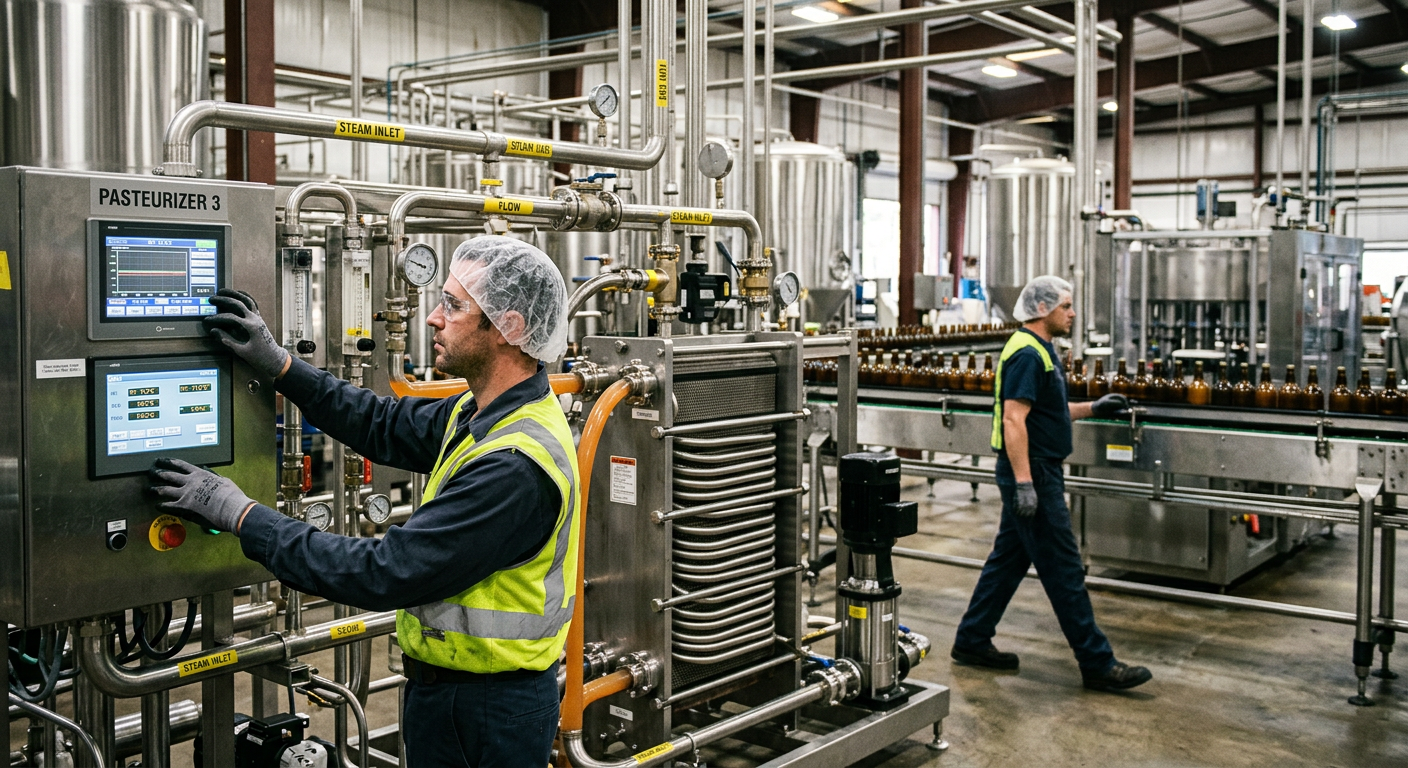
Food and beverage facilities are not built like ordinary commercial buildings. A food plant general contractor must understand sanitation, regulated production environments, utility integration, worker safety, inspection readiness, and the financial realities of manufacturing operations. In the United States, the best contractors for food plants do far more than manage schedules and trades. They help manufacturers protect product quality, maintain uptime, control capital spending, and navigate USDA, FDA, SQF, and BRC expectations from concept through commissioning.
Whether you are planning a greenfield processing plant near Chicago, expanding a protein facility in Texas, modernizing a dairy plant in Wisconsin, retrofitting a beverage line in California, or adding aseptic capacity in the Southeast, the contractor you choose can determine whether your project becomes a profitable asset or an operational burden. That is why many owners now prefer specialized partners with deep processing knowledge rather than standard commercial GCs.
For manufacturers evaluating end-to-end support, companies such as Disruptive Process Solutions have built a reputation around engineering-led execution, integrating process understanding with construction oversight, utility coordination, and project management tailored to food and beverage environments across North America.
Quick Answer

A food plant general contractor is different from a standard GC because food manufacturing projects require specialized expertise in sanitary design, regulated construction practices, utility systems, production continuity, and compliance documentation. In the United States, the right contractor should understand how to build or renovate spaces for protein, dairy, beverages, prepared foods, ingredients, aseptic systems, and co-packing lines without introducing contamination risks or compromising throughput.
In practical terms, a strong food plant GC should be able to:
- Coordinate process, structural, mechanical, plumbing, and electrical scopes around production needs.
- Plan construction in active facilities while reducing downtime and contamination exposure.
- Understand washdown environments, hygienic materials, drainage, zoning, and cleanability.
- Work with USDA and FDA regulated operations and prepare for inspections.
- Manage specialized subcontractors such as sanitary pipefitters, refrigeration teams, controls integrators, and food-grade flooring installers.
- Control costs by aligning capital spending with throughput, labor savings, yield, and long-term maintenance outcomes.
For U.S. manufacturers, the value of a specialized contractor is not just project delivery. It is operational confidence. Owners want a partner who understands that a line shutdown in Los Angeles, Houston, Atlanta, or Philadelphia can ripple into freight costs, customer penalties, and lost shelf space.
| Project Need | Standard GC Approach | Food Plant GC Approach | Operational Impact |
|---|---|---|---|
| Flooring replacement | Focus on finish schedule | Evaluate slope, drainage, thermal shock, cleanability | Lower slip risk and sanitation failures |
| Wall and ceiling systems | General commercial materials | Moisture-resistant, cleanable, hygienic assemblies | Improved washdown durability |
| MEP coordination | Building comfort and occupancy | Process loads, CIP, steam, glycol, compressed air, wastewater | Higher line reliability |
| Construction phasing | Area-by-area access | Production-aware shutdown windows and sanitation barriers | Reduced downtime |
| Compliance support | Basic permit closeout | Inspection readiness, documentation, food safety alignment | Smoother approvals |
| Startup | Substantial completion focus | Commissioning with utilities and process integration | Faster ramp-up |
The table above shows why owners in regulated processing environments often reject low-bid generalists. The issue is not only construction quality. It is whether the final facility performs reliably in the real world of washdowns, audits, changeovers, labor pressure, and throughput targets.
What Makes a Food Plant General Contractor Different from Standard GCs

The biggest difference is that a food plant GC builds around process, not just around space. A typical office or warehouse contractor mainly coordinates structure, shell, utilities, and finish trades. A specialized food facility contractor must understand how product moves, where people move, how raw and finished zones are separated, how allergen controls are maintained, and how utilities support every production step.
For example, in a poultry or protein project in Arkansas or Georgia, the contractor may need to sequence drains, trenching, equipment anchoring, insulated panels, washdown electrical devices, and refrigeration piping in a way that prevents bacterial harborage and preserves line access. In a beverage facility near Charlotte or Southern California, the GC may need to coordinate syrup rooms, carbonation utilities, boiler capacity, compressed air, RO water, CIP skids, and filler integration without delaying startup. In dairy projects across Idaho or Wisconsin, hygienic piping and cleanable environments become central to design-build decisions.
Specialized contractors also think differently about risk. They ask:
- Will this floor-to-wall joint hold up under aggressive sanitation chemicals?
- Can maintenance teams access valves and instrumentation without compromising hygiene?
- Will construction dust or cutting operations threaten active production zones?
- Does the drain layout support sanitation or create pooling?
- Are utility upgrades sized for growth in three to five years?
- Will the layout improve labor efficiency and product flow?
Another major difference is documentation and coordination discipline. Food projects often involve owner QA teams, corporate engineering groups, operations leaders, maintenance managers, sanitation supervisors, OEMs, and regulators. The GC must speak all of those languages. That is where engineering-centered firms gain an advantage. They do not simply install what is shown on drawings; they identify process bottlenecks, utility conflicts, and startup risks before they become expensive field changes.
The line chart reflects a realistic upward trend in U.S. food and beverage capital activity, driven by reshoring, automation, cold chain investment, co-packing expansion, and modernization of legacy plants. As this market grows, owners are increasingly selective about contractor specialization.
Essential Qualifications: USDA/FDA Experience, Sanitary Design Knowledge, and Food Safety Training

If you are vetting a contractor for a food or beverage plant, three qualification groups matter most: regulatory familiarity, hygienic design competence, and food safety awareness among the field team.
USDA/FDA experience is critical because project execution often intersects with regulated operations. A contractor does not replace the owner’s compliance team, but they must understand how construction methods affect inspection readiness, product zones, records, and operational controls. In USDA environments, especially meat and poultry, even small mistakes in material selection or construction sequencing can create serious approval delays. In FDA-regulated facilities, contractors must still understand cleanability, allergen segregation, validation support, and facility design implications.
Sanitary design knowledge matters because poor details become long-term liabilities. Hollow members, inaccessible ledges, poorly sloped floors, incompatible coatings, unsealed penetrations, and badly located drains all create maintenance and sanitation burdens. A qualified food plant contractor should know how hygienic principles apply to room design, utility routing, equipment installation, and transitions between raw, RTE, high-care, and support areas.
Food safety training matters because field crews work inside environments where contamination control is non-negotiable. Trade partners should understand traffic control, temporary barriers, debris management, tool accountability, material handling, and cleaning expectations. Even excellent craftsmen can create risk if they do not understand how food plants operate.
| Qualification Area | Why It Matters | Questions to Ask | Warning Sign |
|---|---|---|---|
| USDA project history | Supports regulated protein work | How many USDA-inspected projects have you completed? | No direct examples |
| FDA facility experience | Important for beverage, dairy, ingredients, packaged foods | Can you describe past FDA-sensitive renovations? | Only warehouse references |
| Sanitary design fluency | Reduces harborage and cleaning problems | How do you handle floors, drains, and penetrations? | Focus only on aesthetics |
| Food safety training for crews | Protects active production | What site-specific training do subcontractors receive? | No documented protocol |
| Process utility knowledge | Critical for uptime and startup | How do you coordinate steam, glycol, air, CIP, and wastewater? | MEP treated as generic building systems |
| Commissioning support | Improves handoff and ramp-up | Who manages utility and equipment startup sequencing? | Stops at construction completion |
This qualification framework helps owners compare contractors beyond bid price. A lower number on a spreadsheet can be misleading if the team lacks experience with cleanable finishes, washdown power distribution, refrigeration coordination, or staged installation inside operating lines.
From a technology standpoint, DPS stands out because it combines structural, mechanical, plumbing, electrical, process, and controls engineering with automation capabilities such as PLC programming and SCADA integration. That matters when a project is not just about walls and slabs, but about making utilities, process equipment, and controls operate as one system. You can review its broader engineering and project services to understand how specialized teams support food and beverage owners beyond standard GC oversight.
Services Provided: From Ground-Up Construction to Expansions and Retrofits
A food plant general contractor may support several project types, and each brings different challenges.
Ground-up construction requires full site development, utility planning, building shell coordination, process area layout, traffic flow planning, and startup strategy. These projects are common near transportation hubs such as Dallas-Fort Worth, Indianapolis, the Inland Empire, Savannah, and the I-95 corridor, where access to labor, freight, and distribution networks matters.
Expansions often involve adding capacity to an operating plant. That could mean a new processing hall, warehouse extension, packaging room, utility yard, or wastewater upgrade. These jobs can be deceptively difficult because existing systems may have hidden limitations.
Retrofits are common in older facilities across the Midwest and Northeast, where processors modernize legacy plants rather than relocate. Retrofit work may involve replacing floors, drains, panels, MEP systems, refrigeration, process piping, controls, or packaging lines while protecting current production.
Relocations and line reconfigurations also fall within this scope. Some manufacturers acquire facilities or move equipment between states. The contractor must manage disassembly, logistics, reinstallation, utility tie-ins, and recommissioning.
High-care or aseptic upgrades require more advanced controls, environmental separation, and utility precision. Contractors serving pharmaceutical-adjacent, dairy, beverage, or shelf-stable food operations need to understand how to execute those scopes in a compliant and commercially viable way.
| Service Type | Typical Scope | Main Risk | Best Use Case |
|---|---|---|---|
| Greenfield build | Site to startup | Underestimating utilities and future growth | New product platform or major market expansion |
| Plant expansion | Addition of rooms, lines, storage, or support areas | Disrupting existing operations | Demand growth with existing site advantage |
| Retrofit/modernization | Replace aging systems and finishes | Unknown existing conditions | Legacy plant optimization |
| Line relocation | Move and reinstall equipment | Startup delays and equipment damage | M&A integration or capacity balancing |
| Utility upgrade | Boilers, glycol, compressed air, wastewater, power | Insufficient tie-in planning | Bottleneck removal |
| Aseptic/high-care buildout | Controlled environments and specialized utilities | Cross-contamination or validation gaps | Premium products and shelf-stable growth |
Manufacturing capability also matters in these projects. DPS not only manages projects but also supports food and beverage manufacturers with integrated process systems and selected proprietary equipment such as tanks, CIP systems, tumblers, and cooking vessels. That combination can simplify sourcing and improve fit between field installation and process design, especially when an owner wants fewer coordination gaps between equipment supply and plant construction. Additional examples are available through its equipment capabilities.
Across product categories, service expectations vary. Protein plants may prioritize refrigerated rooms, hygienic drains, and USDA accommodation. Beverage plants often focus on syrup rooms, utility intensity, fillers, carbonation, and water treatment. Prepared foods rely on mixing, cooking, packaging, and allergen separation. Dairy facilities need robust sanitary piping and temperature-sensitive process control. A contractor with cross-category experience can often spot transferable best practices that reduce risk.
How to Vet a Food Plant General Contractor: Certification and Past Project Review
Vetting should go beyond checking a license and requesting a lump-sum number. Owners should review credentials, project relevance, team structure, safety performance, and references with a manufacturing lens.
Start with licensing and insurance, but do not stop there. Ask for examples in comparable environments: meat and poultry, dairy, brewing, spirits, RTD beverages, aseptic, sauces, retort, frozen foods, or co-packing. A contractor successful in dry warehousing may not be qualified for a washdown, regulated, high-moisture processing environment.
Then review the actual project team. The firm may market strong credentials, but the assigned superintendent, project manager, and site coordinator are what matter. Ask who will lead day-to-day work, how many active food projects they currently manage, and how they coordinate shutdown windows, sanitation controls, and utility cutovers.
Past project review should cover:
- Scope similarity
- Facility type and regulatory environment
- Whether the plant stayed in production during work
- Change order history
- Schedule performance
- Startup outcomes after turnover
Certifications and quality systems can help, but practical project evidence is more valuable. Ask contractors to show real case examples, site photos, phasing plans, and closeout packages. The best partners are transparent about what worked, what changed, and how they handled field surprises.
The bar chart highlights a realistic pattern: highly regulated and utility-intensive sectors such as protein, aseptic, and dairy place the highest value on specialized general contracting support. That aligns with the complexity owners face in those environments.
| Vetting Item | What to Request | What Good Looks Like | Red Flag |
|---|---|---|---|
| Relevant project list | Food and beverage case history | Several similar plants in the U.S. | Mostly office or warehouse work |
| Team resumes | PM, superintendent, engineering support | Named individuals with sector experience | Generic company brochure only |
| Safety program | TRIR, EMR, training records | Current metrics and field protocols | No measurable data |
| Phasing examples | Shutdown and continuity plans | Detailed staging and barrier strategies | Assumes full shutdown availability |
| Reference calls | Owner, operations, maintenance contacts | Positive feedback on communication and startup | Only provides old or unrelated references |
| Closeout and commissioning | Sample turnover package | Organized documentation with testing records | Minimal handoff detail |
Owners should also assess cultural fit. A valuable contractor will challenge weak assumptions early. In food manufacturing, honest pushback is often more useful than unconditional agreement. Projects succeed when the contractor thinks like an operations partner, not just a builder.
For examples of integrated project outcomes, many buyers review a contractor’s case studies and project experience to see how strategy, engineering, and field execution connect in real facilities.
Managing Production Continuity During Food Plant Construction or Renovation
One of the hardest parts of food plant construction is maintaining production. Lost runtime can cost more than the construction itself, especially in plants supplying national retail, foodservice, or private-label contracts. That is why continuity planning should begin before budgeting is finalized.
Strong continuity plans typically include physical separation, air and dust control, worker traffic routes, dedicated access points, sanitation coordination, off-hours tie-ins, and contingency windows for startup issues. The contractor must work closely with operations, maintenance, QA, and sanitation teams to define what can happen during production and what requires shutdown.
In active facilities, phasing can be more important than speed. A fast crew with poor sequencing can create contamination events, blocked logistics paths, or utility outages. A specialized food GC understands that every work package must fit around production reality.
Common strategies include:
- Night or weekend tie-ins for utilities and line connections
- Temporary partitions and negative air controls
- Pre-fabrication of piping and skids offsite
- Staged demolition after inventory builds
- Micro-shutdowns coordinated with sanitation windows
- Temporary rerouting for employees, forklifts, and materials
Plants in high-volume logistics markets such as New Jersey, Memphis, Kansas City, and the Port of Savannah often face intense pressure to keep outbound shipments moving. In these cases, continuity planning must account not only for production but also dock access, truck circulation, and finished goods storage during the work.
The area chart shows the increasing preference for phased renovations over full shutdown rebuilds. This reflects labor constraints, supply commitments, and the rising cost of idle production capacity in the United States.
Cost Management Strategies for Food Plant Construction Projects
Food facility projects can become expensive quickly because sanitary finishes, process utilities, specialized trades, and startup demands drive complexity. Good cost management is not only about cutting scope. It is about putting capital where it creates measurable operating value.
Effective strategies include early utility modeling, standardizing room assemblies where possible, prefabricating piping, selecting durable materials that reduce lifecycle maintenance, and aligning scope with throughput priorities. Owners should ask not just “What does this cost?” but also “What does this return through capacity, labor savings, reduced waste, lower downtime, or compliance stability?”
Budget overruns often come from four sources: hidden existing conditions, incomplete coordination between process and building systems, scope creep, and underestimated shutdown costs. Specialized contractors reduce these risks by investigating utilities early, validating field conditions, and maintaining tight communication with OEMs and plant teams.
| Cost Driver | Why It Escalates | Mitigation Strategy | Potential Benefit |
|---|---|---|---|
| Floor and drain work | Unexpected substrate damage or drainage issues | Early destructive testing and slope review | Fewer field surprises |
| Utility capacity | Boilers, air, glycol, power, wastewater undersized | Load studies before final pricing | Avoid major rework |
| Shutdown windows | Production time is expensive | Detailed phasing and prefabrication | Lower lost-output cost |
| Material selection | Cheap materials fail in washdown environments | Lifecycle-based specification | Reduced maintenance spend |
| Change orders | Poor scope definition and coordination gaps | Integrated design review and owner alignment | Better budget certainty |
| Startup delays | Incomplete commissioning plans | Test plans and cross-discipline startup management | Faster revenue generation |
The key lesson from the table is that apparent savings can become expensive if they undermine performance. In food plants, the cheapest drain, floor system, or access detail may produce years of sanitation problems and maintenance work orders.
Service capability is another cost-control lever. DPS uses a design-build-manage model that combines planning, engineering, construction oversight, and execution management. This can help owners reduce disconnects between design intent and field reality, particularly in projects where process equipment, controls, and utilities must come online together. The approach is especially useful for manufacturers that need one accountable partner from feasibility through installation.
Regulatory Navigation: How Experienced Food Plant GCs Handle Inspections and Compliance
Regulatory success is not achieved by paperwork alone. It is built into design decisions, material choices, site controls, installation details, and startup procedures. Experienced food plant GCs know that inspections may involve local building authorities, fire marshals, utility reviewers, corporate quality teams, third-party audit frameworks, and federal regulatory expectations depending on the facility type.
In USDA facilities, construction plans may need especially careful coordination around inspectable surfaces, process adjacency, and hygienic details in production areas. In FDA environments, the focus may center on preventive controls implications, cleanability, zoning, allergen management, water quality support systems, and operational readiness. In both cases, the contractor should help the owner stay organized, not create avoidable compliance friction.
How experienced teams manage this:
- Document existing conditions before work starts.
- Review material selections against sanitation and durability requirements.
- Coordinate temporary barriers, access, and environmental controls.
- Keep logs for penetrations, cleaning, and utility testing where needed.
- Sequence turnover so QA, sanitation, maintenance, and operations can verify readiness.
- Prepare punch and closeout documentation that supports audits and maintenance.
Regional knowledge helps as well. Permitting and inspection coordination can vary between municipalities such as Houston, Raleigh, Fresno, Milwaukee, and Newark. An experienced U.S. contractor understands that local code compliance and food-plant readiness must both be managed at the same time.
Subcontractor Coordination: Why Food Plant GCs Need Specialized Trade Partners
Even the best GC will struggle without the right subcontractor network. Food plant projects depend on trade partners who understand more than their craft. They must know how their work affects sanitation, product protection, utility reliability, and startup timing.
Typical specialized trades may include sanitary stainless pipefitters, industrial refrigeration contractors, food-grade flooring installers, insulated metal panel crews, process utility electricians, automation integrators, boiler specialists, wastewater experts, and rigging teams familiar with processing equipment. In active plants, these trades also need discipline around hygiene, barriers, debris control, and daily turnover to operations.
This is one reason national food and beverage specialists often outperform local generalists on complex projects. They bring a curated network of proven trade partners or know how to qualify local firms rigorously. The value is not only craftsmanship. It is coordination under food-safe constraints.
The comparison chart illustrates a reality many owners see firsthand: specialized trade partners consistently outperform generic subcontractors on scopes that directly affect cleanability, utility integration, and startup readiness.
| Trade Category | Why Specialization Matters | Typical Food Plant Requirement | Risk if Inexperienced |
|---|---|---|---|
| Sanitary piping | Product-contact and hygienic utility standards | Proper slope, weld quality, cleanable routing | Leaks, contamination, poor CIP performance |
| Refrigeration | Cold process and room control reliability | Integrated evaporators, condensers, controls | Temperature instability |
| Food-grade flooring | Durability in wet, chemical, thermal conditions | Correct resin, cove, slope, drain integration | Premature failure and sanitation issues |
| Electrical and controls | Washdown compatibility and process logic | NEMA selection, PLC tie-ins, interlocks | Downtime and unsafe operation |
| Insulated panels | Hygienic envelope and thermal separation | Sealed joints and cleanable details | Condensation and mold risk |
| Rigging and equipment setting | Accurate placement for utility and flow alignment | OEM coordination and anchoring precision | Startup delays and rework |
In practice, the best GCs treat subcontractor coordination as a strategic function, not an administrative task. They know which partners can work inside a beverage hall in Anaheim, a cold storage expansion near Kansas City, or a protein line installation in the Carolinas without creating avoidable problems.
This is also where DPS’s service model is relevant. The company manages local trades where licensed and delivers equivalent GC-style execution elsewhere while pairing those field resources with food and beverage engineering knowledge. That combination helps align local labor execution with specialized process expectations across all 50 states and Canada.
FAQ
What is a food plant general contractor?
A food plant general contractor is a construction partner that specializes in food and beverage manufacturing facilities. They manage trades, schedule, budget, safety, and execution while understanding sanitary design, process utilities, and regulatory requirements.
Why not hire a standard commercial GC for a food plant?
Standard GCs may be competent builders, but many lack experience with washdown environments, hygienic finishes, food-safe phasing, USDA or FDA-sensitive work, and utility systems such as CIP, steam, glycol, compressed air, and wastewater handling.
What industries need this type of contractor most?
Protein processing, dairy, brewing, spirits, RTD beverages, prepared foods, sauces, aseptic processing, ingredients, and co-packing operations all benefit from specialized food plant construction expertise.
How early should I bring in the contractor?
Ideally during feasibility or early design. Early involvement improves budget accuracy, utility planning, phasing strategy, procurement timing, and constructability review.
Can a food plant GC help while my facility stays in production?
Yes. Many projects are executed in phases with temporary barriers, off-hours tie-ins, sanitation controls, and tightly managed shutdown windows. This is one of the most important capabilities to verify during contractor selection.
What should I look for in past projects?
Look for projects similar in product type, regulatory environment, utility complexity, and operational constraints. Ask whether the work happened in an active plant and whether startup goals were met on time.
Do food plant GCs also manage process equipment installation?
Some do, especially engineering-led firms. This is valuable because equipment, controls, and building systems must function together. Integrated partners can reduce handoff issues.
What are the biggest cost risks in food plant projects?
Hidden existing conditions, under-scoped utility upgrades, lost production during shutdowns, poor sanitary material choices, and late coordination between building and process systems are common risks.
How important is sanitary design knowledge for a GC?
It is essential. A contractor can create long-term sanitation and maintenance problems through poor floor transitions, drain placement, penetrations, inaccessible utility routing, or unsuitable materials.
What trends will shape food plant construction in 2026?
Three major trends are expected to accelerate in 2026. First, more automation and controls integration will be tied directly to labor efficiency and throughput analytics. Second, sustainability pressure will increase demand for water reuse, energy management, heat recovery, and smarter utility systems. Third, policy and retailer expectations will push stronger documentation around food safety, traceability, and resilient domestic manufacturing capacity. Contractors that can combine engineering, process understanding, and construction execution will be best positioned to support these next-generation projects.
How do I know if DPS is the right fit?
Manufacturers that value direct communication, engineering-driven planning, capital efficiency, and execution aligned with long-term profitability often find the best fit with DPS. The company is particularly relevant for owners seeking support across process design, project management, equipment integration, and GC-style field leadership rather than a narrow build-only approach.
In summary, choosing a food plant general contractor in the United States is not simply a purchasing decision. It is an operational strategy decision. The right partner helps you build a compliant, efficient, scalable facility that supports profitability long after construction ends. The wrong partner can leave you with hidden sanitation issues, production disruptions, startup delays, and capital waste. For food and beverage manufacturers investing in growth, modernization, or relocation, specialization is not a luxury. It is risk management.
[/trp_language]
Complete Company Portfolio
About the Author: Disruptive Process Solutions (DPS)
The DPS team combines process engineering expertise with real-world food and beverage manufacturing experience. Our content focuses on process optimization, production efficiency, facility improvements, and practical solutions that help manufacturers operate more effectively in a rapidly evolving industry.
Share