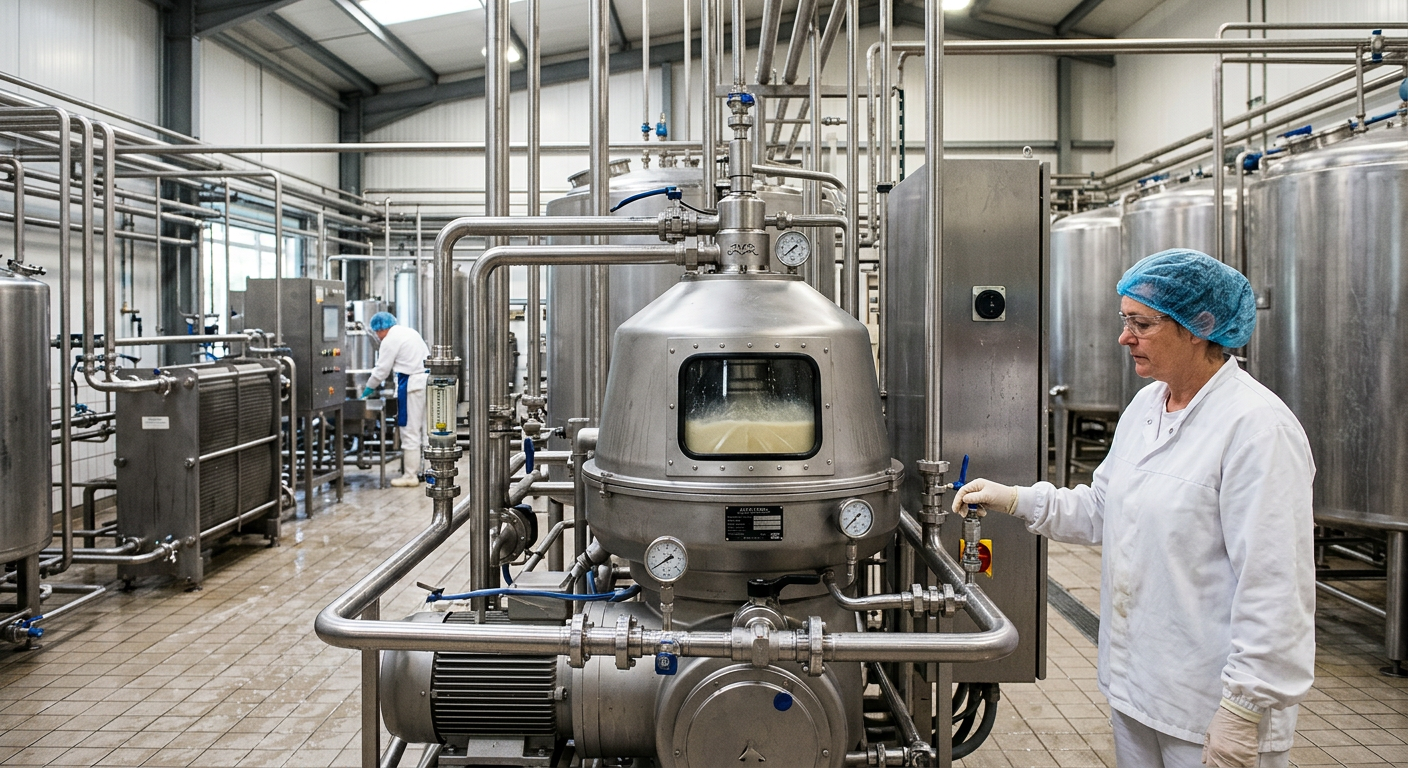
Food Plant Mixing System Selection: Top 3 Mixer Types for Production Scale-Up
[trp_language language=”en_US”]
U.S. Food Mixing Systems: How to Choose the Right Solution for Production Scale-Up
Food plant mixing system selection affects product quality, throughput, sanitation, labor, utility cost, and future expansion. In the United States, processors scaling from pilot batches to commercial lines need more than a mixer datasheet. They need a production strategy that aligns rheology, ingredient behavior, CIP requirements, controls, operator skill, and plant utilities. Whether you run sauces in Chicago, dairy in Wisconsin, proteins in Arkansas, or RTD beverages near Los Angeles and Houston, the right mixing system can shorten changeovers, improve consistency, and protect margin.
Quick Answer

The best food production mixing system depends on five variables: product viscosity, batch size, target throughput, sanitation standard, and automation level. For most U.S. manufacturers, the top three system families are high-shear mixers for emulsions and hydration, agitator-equipped batch tanks for flexible multi-SKU production, and continuous inline blending systems for high-volume standardized products. If your operation is scaling from lab to plant, do not simply enlarge vessel size. Review tip speed, Reynolds regime, power per unit volume, ingredient addition order, hold time, heat transfer, and clean-in-place architecture. In practical terms, batch systems are usually better for frequent flavor changes and shorter runs, while continuous systems often win on labor efficiency and output stability when demand is predictable.
A quick rule of thumb for U.S. food facilities:
| Production Condition | Recommended System | Why It Fits | Main Caution | Typical U.S. Use Case | Scale Range |
|---|---|---|---|---|---|
| Frequent SKU changes | Batch tank with variable-speed agitator | Flexible recipes and easier scheduling | Longer downtime between batches | Sauces, dressings, marinades | 500 to 8,000 gallons |
| Powder hydration and emulsification | High-shear mixer | Fast dispersion and reduced fisheyes | Can over-shear sensitive products | Dairy blends, protein slurries, beverage bases | 100 to 5,000 gallons |
| Stable, high-volume production | Continuous inline blending | Lower labor per unit and consistent throughput | Less flexible for frequent recipe shifts | RTD beverages, syrup rooms, liquid ingredients | 20 to 500+ gpm |
| Highly viscous or particulate products | Anchor or scraper mixer in jacketed vessel | Improved wall sweep and heat transfer | Higher torque requirement | Cheese sauces, fillings, prepared foods | 200 to 3,000 gallons |
| Aseptic or strict hygienic environment | Sanitary closed mixing skid | Controlled environment and easier validation | Higher capital cost | Dairy, nutraceutical, specialty beverages | Custom |
| Early commercialization from pilot | Modular batch system | Lower risk during product iteration | May require later debottlenecking | Emerging brands and co-packers | 50 to 1,500 gallons |
The table above is useful because it links operating conditions to equipment style instead of treating mixer selection as a one-variable decision. Most failed scale-ups happen when a plant buys for capacity alone and ignores sanitation, ingredient incorporation, or recipe variability.
Top 3 Mixing System Types for Food Production

The three most common and commercially effective mixing system types for U.S. food production are batch agitation systems, high-shear mixing systems, and continuous inline blending systems. Each solves a different manufacturing problem.
1. Batch agitation systems
These are the workhorses of food plants from New Jersey to California. A sanitary vessel with a top-entry or side-entry agitator is usually the best choice when operations need recipe flexibility. They perform well for liquid-liquid blending, moderate solids suspension, flavor additions, and production planning around multiple SKUs. Batch systems are common in sauces, dairy mixes, brines, ingredient pre-blends, and prepared foods.
2. High-shear mixing systems
These systems use rotor-stator action to rapidly disperse powders, break droplets, and create uniform emulsions. They are common where hydration time matters, such as protein powders, starches, gums, stabilizers, dairy blends, and emulsified sauces. In regions with dense food manufacturing clusters like the Midwest and Southeast, high-shear systems often support faster cycle times and more repeatable quality than conventional agitation alone.
3. Continuous inline blending systems
These systems meter ingredients continuously and blend in a pipe loop or skid architecture. They are especially effective when formulation is stable and volume is high. Large beverage and liquid food operations near ports such as Savannah, Long Beach, Houston, and Newark often favor continuous systems because they reduce labor, minimize hold inventory, and support upstream/downstream synchronization.
| Mixer Type | Best For | Viscosity Range | Strength | Limitation | Common Industries |
|---|---|---|---|---|---|
| Batch agitator tank | Flexible multi-product production | Low to medium | Easy recipe switching | Lower throughput than continuous | Sauces, dairy, beverages |
| High-shear mixer | Powder wet-out and emulsions | Low to high depending on design | Fast dispersion | May add heat or damage particulates | Dressings, protein, dairy, plant-based |
| Inline blender | Continuous standardized output | Low to medium | Consistent flow-based control | Requires stable demand profile | RTD, syrups, liquid ingredients |
| Anchor/scraper system | Viscous thermal processing | Medium to very high | Heat transfer and wall sweep | Higher capital and torque load | Fillings, pastes, cheese sauces |
| Ribbon or paddle mixer | Dry or semi-dry blending | Bulk solids | Good macro homogeneity | Limited sanitary washdown flexibility | Seasonings, bakery premix |
| Vacuum mixing system | Air-sensitive products | Medium to high | Reduced foam and oxidation | More complex controls | Dips, creams, emulsions |
This comparison matters because food plants often use more than one mixing principle across the line. For example, a prepared foods processor may pre-hydrate ingredients in high shear, transfer to a jacketed swept-surface vessel for thermal treatment, and finish in a batch tank for seasoning adjustment.
The line chart reflects a realistic demand pattern in the United States as manufacturers invest in sanitation, labor reduction, and process control. The sharpest rise is expected through 2026 as plants modernize legacy batch areas and add more traceable automation.
Batch vs. Continuous Mixing Selection

The batch versus continuous decision is usually the biggest strategic choice in a food plant mixing project. Batch mixing offers flexibility. Continuous mixing offers steady-state efficiency. The right answer depends on demand volatility, ingredient precision, upstream supply rhythm, and downstream packaging constraints.
Choose batch mixing when:
- You run many SKUs with frequent allergens, flavors, or seasonal recipes.
- You need hold-and-release quality checks before filling.
- Your operators rely on recipe adjustments based on solids, pH, viscosity, or sensory checks.
- Your volumes are growing but not yet predictable enough for dedicated continuous lines.
Choose continuous mixing when:
- You have stable demand and long runs.
- Your ingredients can be metered accurately in real time.
- Downstream packaging speeds are consistent.
- You want lower labor per unit and reduced intermediate storage.
| Selection Factor | Batch Mixing | Continuous Mixing | Best Choice When | Risk If Misapplied | Practical Plant Example |
|---|---|---|---|---|---|
| SKU change frequency | Excellent | Moderate to poor | Portfolio is diverse | Excess changeover losses | Regional sauce co-packer |
| Throughput efficiency | Moderate | High | Long daily runs exist | Labor remains too high | RTD beverage plant |
| Recipe correction capability | High | Lower | Ingredients vary lot to lot | Off-spec product increases | Dairy flavor blending |
| Capital intensity | Lower entry | Higher controls complexity | Early growth phase | Underbuilt system becomes bottleneck | Pilot-to-commercial startup |
| CIP scheduling | Simpler line isolation | More integrated | Plant has limited utility capacity | Long sanitation windows | Legacy food facility |
| Traceability by lot | Very strong | Requires robust control logic | Regulatory sensitivity is high | Complex record review | USDA protein processor |
This table helps buyers avoid false comparisons. A continuous system may look superior on labor alone, but if your portfolio changes every two hours, batch may still be the more profitable design. In U.S. co-packing environments around Dallas, Atlanta, and Indianapolis, the most successful layouts are often hybrid: batch make-up with inline finishing or metered dosing.
The bar chart shows where mixing system demand is strongest. RTD beverages and sauces lead because they combine SKU growth, sanitation pressure, and the need for precise recipe control. Dairy and plant-based applications also continue to invest due to viscosity and hydration challenges.
Scale-Up from Lab to Production
Scale-up is where many food projects lose time and money. A lab mixer proving a concept at 5 gallons does not guarantee success at 2,000 gallons. Shear profile, fill depth, vessel geometry, baffle arrangement, powder induction, and transfer piping all change performance. A correct scale-up plan compares not only end-product specs, but also the route used to get there.
Core scale-up checkpoints include maintaining relevant shear conditions, confirming ingredient addition sequence, verifying hydration and dissolution time, managing foam, and validating temperature rise. If the product is heat-sensitive or particulate-sensitive, the mixer must protect both quality and yield. Plants in major commercialization corridors such as Minneapolis, Charlotte, Fresno, and Columbus often benefit from modular skids that allow controlled step-ups from pilot to semi-works to full production.
| Scale-Up Variable | What to Measure | Why It Matters | Lab Risk | Production Risk | Recommended Action |
|---|---|---|---|---|---|
| Tip speed | Impeller diameter and rpm | Controls shear exposure | Looks effective at small scale | Product may under- or over-shear | Match process intent, not only rpm |
| Power per unit volume | kW per gallon or cubic meter | Links energy to mixing intensity | Underestimated motor load | Slow blend time and poor homogeneity | Model torque and viscosity range |
| Ingredient addition order | Sequence and timing | Affects hydration and emulsion quality | Operator compensates manually | Clumping or fisheyes emerge | Write exact SOP and automate dosing |
| Temperature profile | Batch heating or cooling curve | Changes viscosity and solubility | Negligible in beaker scale | Thermal lag causes inconsistency | Use jacket and control loop validation |
| Fill level | Minimum and maximum working volume | Impacts vortexing and turnover | Single level tested only | Partial batch becomes unstable | Test turndown ratio early |
| Transfer and recirculation | Pump shear and piping losses | May alter final texture | No transfer included | Product changes after mixing | Test complete process path |
The scale-up table is important because it shifts attention from vessel size to process reproducibility. A food company launching nationally across distribution lanes from the Port of Savannah to Midwest warehouses needs commercial repeatability, not just pilot success.
For processors planning expansion, it is often useful to involve an engineering partner early. Companies exploring full-system design, utilities, and integration often review capabilities in a broader food and beverage engineering services overview before locking equipment selection. That step reduces the chance of buying a mixer that does not fit the plant’s steam, glycol, electrical, or controls architecture.
CIP Integration for Mixing Equipment
Clean-in-place integration is no longer optional for most growth-oriented U.S. food manufacturers. Whether the driver is allergen control, microbiological risk reduction, labor savings, or audit readiness under FDA, USDA, SQF, or BRC expectations, mixing equipment should be designed as part of a sanitation system. A good mixer with poor CIP is still a poor production asset.
Effective CIP design includes spray coverage validation, drainability, hygienic seals, dead-leg control, instrument placement, and recipe-based wash sequences. The mixer shaft seal area, rotor-stator head, powder induction loop, and transfer manifolds deserve special focus. Plants that process dairy, dressings, and aseptic beverages frequently gain the most from automated CIP because these categories punish sanitation shortcuts.
In cities with higher labor costs such as Seattle, Boston, and San Diego, CIP automation can materially improve overall equipment effectiveness by reducing manual cleaning time. In Gulf Coast and Midwest protein environments, robust washdown compatibility and cleanable design are equally critical.
The area chart shows the steady shift toward automated CIP in new projects. The trend is driven by sanitation verification, workforce pressure, water recovery optimization, and recipe complexity. By 2026, automated CIP is expected to be standard on many new hygienic mixing skids rather than an optional upgrade.
When a facility is planning tanks, skids, and sanitation together, reviewing available process equipment solutions helps align mixer selection with CIP skid design, return flow, and control strategy. This is especially valuable for processors that expect later expansion.
Power and Speed Calculations
Power and speed calculations are central to mixer performance. Undersized power leads to poor solids suspension, long cycle times, and inconsistent texture. Oversized speed can create foam, emulsion damage, ingredient breakdown, or unnecessary motor and gearbox cost. The engineering goal is not maximum energy input. It is the correct energy input for the product and process target.
Three practical measures matter most:
- Tip speed, which influences local shear at the impeller edge.
- Power draw, which reflects energy transferred into the batch.
- Torque, which becomes critical as viscosity rises.
For low-viscosity liquids, flow pattern may matter more than raw horsepower. For high-viscosity products, torque and impeller geometry become dominant. Variable frequency drives are widely used because they let processors run different recipes in the same vessel without forcing one compromise speed.
| Product Type | Typical Mixing Need | Speed Tendency | Power Tendency | Preferred Impeller/System | Design Note |
|---|---|---|---|---|---|
| Thin beverage blend | Fast turnover, low shear | Moderate to high | Low to moderate | Axial flow impeller or inline blender | Avoid vortexing and air entrainment |
| Salad dressing emulsion | Droplet size control | High local shear | Moderate | High-shear rotor-stator | Stage addition of oil phase matters |
| Protein slurry | Powder wet-out and suspension | Variable | Moderate to high | High-shear plus recirculation | Prevent fisheyes and settling |
| Viscous cheese sauce | Wall sweep and heat transfer | Low to moderate | High torque | Anchor or scraper mixer | Jacket performance affects cycle time |
| Chunky prepared food | Gentle folding | Low | Moderate | Paddle or specialized agitator | Protect particle integrity |
| Yogurt or cultured dairy base | Texture preservation | Low to moderate | Moderate | Gentle agitator with VFD | Do not overwork gel structure |
The table shows why a single speed target is rarely enough across a product portfolio. U.S. plants that run both low-viscosity and high-viscosity SKUs often save money over time by investing in variable-speed drives, recipe-linked setpoints, and torque monitoring.
Mixer Control and Recipe Management
Modern mixing performance depends as much on controls as on metal. Recipe management improves repeatability by automating setpoints for agitator speed, blend time, ingredient dosing, temperature, recirculation, hold steps, and CIP. In multi-line food plants, this also improves traceability and operator consistency.
The best control architecture depends on scale. A small regional processor may need PLC-based control with local HMI screens and basic batch records. A national producer may require SCADA integration, historian data, role-based user access, alarm management, and links to ERP or MES platforms. In either case, controls should simplify the process, not overcomplicate it.
Typical recipe management functions include:
- Version-controlled formulas with approval workflows
- Automated dosing windows by ingredient type
- Interlocks for temperature, flow, and vessel level
- Electronic batch records and CIP logs
- Real-time alerts for deviation, timeout, or utility loss
These functions are particularly useful in co-packing hubs around Phoenix, Nashville, and the Inland Empire, where plants manage many brand owners and need reliable repeatability. Processors often underestimate the commercial value of reduced operator variation.
The comparison chart highlights a common U.S. buying lesson: a mixer purchased in isolation can solve one problem while creating several others. Integrated engineering, controls, utilities, and installation support usually outperform a standalone equipment purchase when projects involve scale-up or plant expansion.
Troubleshooting Common Mixing Issues
Most mixing failures are not true equipment failures. They are process mismatches. The most common issues include powder clumping, air entrainment, dead zones, poor heat transfer, phase separation, settling, long blend times, and inconsistent batch-to-batch texture. A disciplined troubleshooting approach should start with product behavior, then review impeller design, speed profile, vessel internals, addition sequence, and control logic.
| Issue | Likely Root Cause | What to Check First | Fast Corrective Step | Long-Term Fix | Production Impact |
|---|---|---|---|---|---|
| Powder fisheyes | Poor wet-out and addition rate too fast | Powder induction point | Slow feed and increase shear locally | Install powder induction or high-shear loop | Rework, waste, longer batches |
| Excess foam | Vortexing or over-speeding | Surface behavior and fill level | Reduce rpm and modify addition order | Change impeller and vessel baffling | Yield loss, slower filling |
| Dead zones | Improper impeller geometry | Tank corners and bottom circulation | Adjust speed and level | Redesign agitator or add baffles | Inconsistent quality |
| Phase separation | Insufficient emulsification or hold instability | Droplet size and formulation | Increase homogenizing stage | Revalidate emulsion design | Customer complaints |
| Slow heating or cooling | Poor wall sweep or low utility performance | Jacket delta-T and scraping action | Increase circulation or agitation profile | Upgrade scraper or utility system | Lost capacity |
| Settling during hold | Low suspension energy | Agitator turndown setting | Raise hold speed | Use suspension-focused impeller design | Off-spec fills |
This troubleshooting table works best when tied to actual plant data. If a facility already tracks batch time, motor load, temperature ramp, and ingredient feed timing, root causes become visible quickly. In many cases, a controls revision or procedural change fixes the issue without major capital expense.
For practical examples of process improvement and project execution, manufacturers often look at recent food and beverage project case studies to compare how engineering decisions affected throughput, cost, and timeline.
Our Company
Disruptive Process Solutions supports food and beverage manufacturers across the United States and Canada with engineering-led capital project execution. Rather than approaching a mixer as a standalone asset, the company works from plant profitability, process fit, and long-term scalability. That approach matters when a system must perform not only on day one, but through future recipe additions, volume growth, utility constraints, and audit requirements.
Technological capabilities
DPS brings process, mechanical, electrical, structural, plumbing, and controls engineering into one project framework. For mixing applications, that means support for PLC programming, SCADA integration, recipe and batch control, inline monitoring, utility coordination, and sanitary system design. This is especially relevant for processors that need more than a vessel and motor, including facilities integrating syrup rooms, dairy blending, high-shear emulsification, aseptic processes, or CIP architecture. Companies evaluating a partner’s broader background can learn more through the about the DPS team page.
Manufacturing capabilities
DPS also designs and manufactures selected process equipment, including storage and processing tanks, custom CIP systems, marination tumblers, and cooking vessels. That manufacturing capability helps align equipment build details with real installation and operational needs instead of relying only on catalog assumptions. For food plants scaling up, this can simplify fit-up, sanitation, integration, and future modifications because the same project team understands both the process objective and the fabrication reality.
Service capabilities
On the service side, DPS operates through a Design Build Manage model that combines process design, capital planning, owner’s representation, project and program management, general contracting where licensed, system installation, and full integration. That model is useful for U.S. manufacturers trying to coordinate mixers with boilers, glycol, compressed air, water systems, filling lines, and plant utilities. It is also valuable when schedules are tight and multiple local trades must be managed across different geographies, from the Carolinas and Texas to California and the Pacific Northwest.
What sets this approach apart is the business-minded view of manufacturing projects. The goal is not to sell a larger system than needed. The goal is to build the right system for throughput, sanitation, and return on capital. For food producers facing a scale-up decision, that can mean challenging assumptions early and finding a more profitable answer before steel is ordered.
FAQ
What is the best mixer type for sauces and dressings?
For many sauces and dressings, a batch vessel with high-shear capability is the best combination. It gives flexibility for recipe changes while still supporting stable emulsions and good powder hydration.
When should a plant move from batch to continuous mixing?
A plant should consider continuous mixing when demand is stable, daily runs are long, ingredients can be metered precisely, and the cost of labor, hold tanks, and changeovers is limiting profit.
How do you scale a recipe from lab to production without changing texture?
Focus on process equivalence, not just ingredient percentages. Review shear, power per unit volume, temperature profile, ingredient order, and transfer pumping. Pilot testing at intermediate scale is strongly recommended.
Is CIP necessary for every mixing system?
Not every system requires fully automated CIP, but most hygienic food operations benefit from it. The stricter the sanitation standard, allergen control need, or production frequency, the more valuable integrated CIP becomes.
How do VFDs help food mixing?
Variable frequency drives let the mixer run different speed profiles for different products and process stages. That improves flexibility, reduces over-shearing, and supports recipe repeatability.
What causes powder clumping in food mixing tanks?
Common causes are poor powder induction, feeding too fast, low local shear, or incorrect addition sequence. A high-shear recirculation loop or improved powder entry point often fixes the problem.
What should U.S. plants watch for in 2026?
Key 2026 trends include higher automation adoption, more traceable digital batch records, stronger water and energy efficiency expectations, expanded hygienic design scrutiny, and growing demand for modular systems that support faster scale-up. Sustainability will matter more as processors target lower water use in CIP, better motor efficiency, heat recovery, and reduced product loss. Policy and customer pressure will continue pushing plants toward transparent sanitation validation and more resilient domestic production networks.
Are local considerations important when choosing a mixer supplier?
Yes. Freight, installation labor availability, utility codes, sanitary standards, and field service access all vary by region. A plant near major logistics hubs like Chicago, Houston, Atlanta, or the Port of Long Beach may prioritize different lead-time and installation factors than a rural greenfield site.
In summary, choosing a food plant mixing system in the United States should start with process goals, not equipment labels. The top three system types each solve different problems. Batch systems usually win on flexibility, continuous systems on efficiency, and high-shear systems on hydration and emulsion performance. The best projects also address scale-up, CIP, controls, power sizing, and service support together. That is how food manufacturers avoid bottlenecks, protect product quality, and build profitable production capacity for the next stage of growth.
[/trp_language]
Complete Company Portfolio
About the Author: Disruptive Process Solutions (DPS)
The DPS team combines process engineering expertise with real-world food and beverage manufacturing experience. Our content focuses on process optimization, production efficiency, facility improvements, and practical solutions that help manufacturers operate more effectively in a rapidly evolving industry.
Share