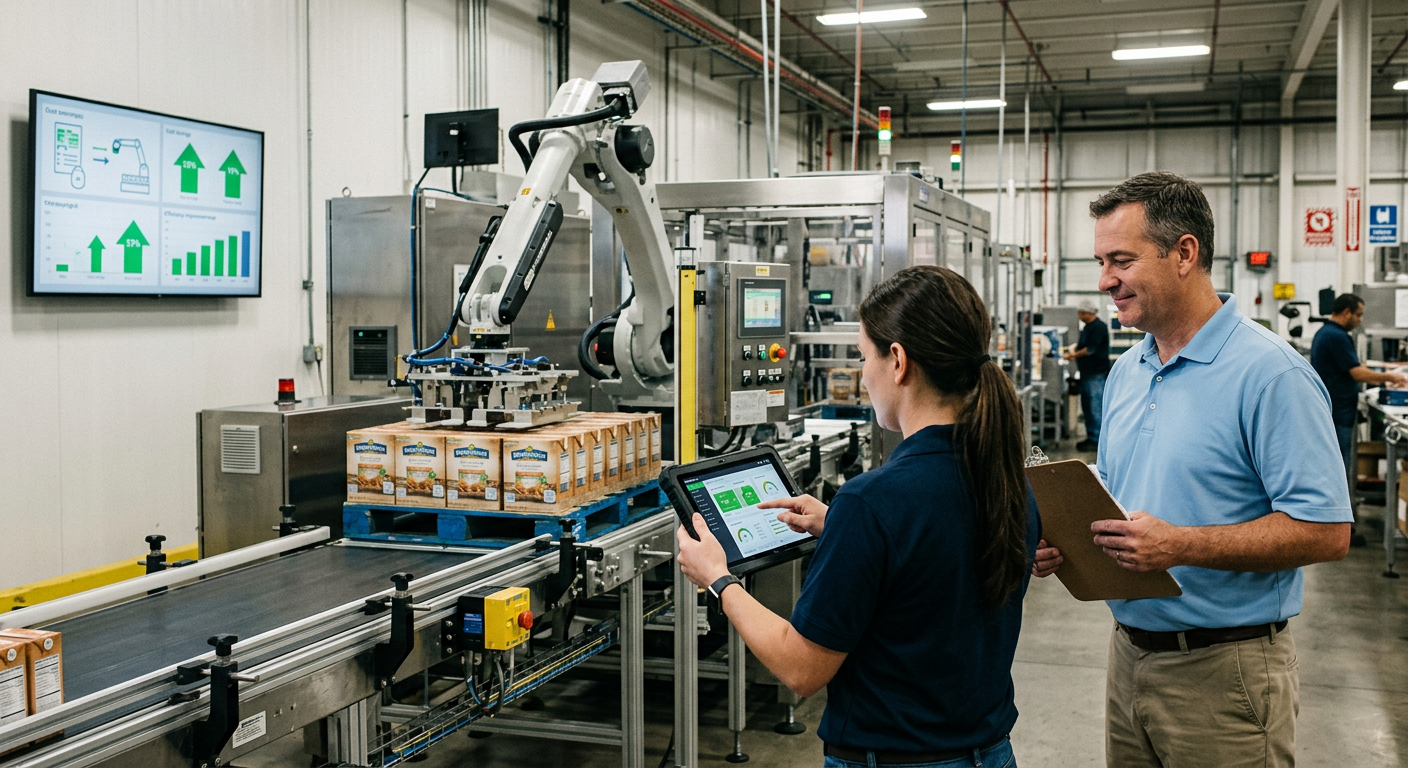
Food Plant Pump System Design: 6 Essential Factors for Hygienic Applications
[trp_language language=”en_US”]
Hygienic Pump System Design for Food and Beverage Processing in the United States
Food plant pump system design affects product quality, sanitation, throughput, labor, maintenance cost, and regulatory compliance. In the United States, processors handling dairy, sauces, proteins, beverages, fermented products, aseptic liquids, and clean-in-place circuits need pump systems that move product reliably without creating contamination risks or damaging product texture. The right system is not just about selecting a pump model. It requires matching pump type to viscosity, flow target, temperature, sanitation method, line routing, Net Positive Suction Head, seal arrangement, and long-term maintenance strategy.
In major U.S. processing regions such as Chicago, Milwaukee, Fresno, Dallas-Fort Worth, the Research Triangle, Los Angeles, Houston, and the I-95 manufacturing corridor, food and beverage plants are under constant pressure to improve uptime while meeting FDA, USDA, SQF, and BRC expectations. This is why hygienic pump engineering has become a strategic decision rather than a simple equipment purchase. Plants moving yogurt, cream, RTD coffee, tomato concentrates, dressings, brines, beer, wine, spirits, plant protein slurries, and nutritional beverages often discover that pump mistakes show up later as foaming, product separation, cavitation, excessive CIP time, or repeated seal failures.
This guide explains how to approach hygienic pump system design for U.S. food facilities, how to compare centrifugal and positive displacement technologies, how to account for viscosity and flow calculations, and how to think about CIP, SIP, NPSH, and seal reliability. It also includes practical buying guidance, industry use cases, local market notes, and an overview of how Disruptive Process Solutions supports processing projects across North America.
Quick Answer

The best hygienic pump system for a food plant in the United States is the one that matches six core design factors: product characteristics, required flow and pressure, sanitary cleaning method, suction conditions, mechanical seal design, and long-term maintenance access. Centrifugal pumps usually fit low-viscosity, high-flow applications such as water, milk, beer, and CIP circulation. Positive displacement pumps are often better for viscous, shear-sensitive, or accuracy-dependent products such as yogurt, sauces, fillings, syrups, creams, and plant-based slurries. Proper pipe routing, NPSH verification, seal selection, and cleanability are as important as pump capacity.
For buyers, the fastest path to the right solution is to define the actual product range, the coldest and hottest operating temperatures, normal and peak production rates, CIP and SIP requirements, and the allowable level of shear. In practice, the most successful projects also consider future expansion, automation integration, and utility impact. In U.S. facilities from California beverage plants to North Carolina prepared foods lines and Midwest dairy operations, that broader design view reduces unplanned downtime and improves return on capital.
| Design Question | Why It Matters | Typical Risk If Ignored | Common U.S. Applications | Recommended Early Check | Expected Benefit |
|---|---|---|---|---|---|
| What product is being pumped? | Determines viscosity, solids handling, and sanitary finish needs | Wrong pump type and product damage | Dairy, sauces, RTD beverages | Review product data sheet and pilot samples | Better performance match |
| What flow rate is required? | Controls pump sizing and line velocity | Starved fillers or over-pumping | Filling, batching, transfer | Map hourly and peak demand | Stable throughput |
| What pressure is needed? | Impacts motor size and pump curve selection | Inadequate transfer or excess energy use | Long pipe runs, heat exchangers | Calculate TDH with all losses | Lower operating cost |
| How will the system be cleaned? | Determines hygienic geometry and materials | Long CIP cycles and contamination risk | CIP and SIP circuits | Review detergent, temperature, and dwell time | Improved sanitation |
| What are the suction conditions? | Needed for NPSH and cavitation prevention | Noise, vibration, seal failure | Tank unloading, syrup rooms | Check liquid level and suction lift | Reliable pump life |
| How will seals be maintained? | Directly affects uptime and leak control | Frequent failures and product loss | High-cycle production lines | Set seal standard by duty | Predictable maintenance |
The table above summarizes why pump system design should begin with process requirements instead of catalog selection. Many projects underperform because the pump is chosen before the process envelope is fully defined.
6 Essential Factors in Pump System Design

There are six design factors that consistently determine success in hygienic pump applications.
1. Product properties
Start with viscosity, density, solids content, fat level, pH, temperature, and whether the product is aerated or shear-sensitive. A fruit preparation with particulates behaves very differently from skim milk or deaerated water. Protein slurries, dressings, cultured dairy, and concentrated syrups often need gentler and more torque-capable transfer equipment than thin liquids.
2. Required flow and pressure profile
Design for actual operating range rather than only nameplate maximums. A line that normally runs 120 gallons per minute but occasionally spikes to 180 gallons per minute may need variable frequency control or a different pump curve selection to avoid inefficiency during most operating hours.
3. Hygienic standards and cleanability
Food plants in the United States commonly specify 316L stainless steel wetted parts, sanitary fittings, smooth internal finishes, low dead-leg geometry, and elastomers compatible with both product and cleaning chemistry. If a pump cannot be cleaned effectively, it is not truly suitable for hygienic service no matter how well it moves fluid.
4. Suction conditions and NPSH margin
Product temperature, tank level, suction piping length, and vapor pressure all influence NPSH available. Plants near high-elevation locations or those handling hot liquids need extra care. Cavitation can quickly erase any savings from a low-cost selection.
5. Seal arrangement and containment
Single mechanical seals may work for many duties, but double seals, flushed seals, or seal designs optimized for thermal cycling are often justified in hot service, abrasive products, or applications where leakage cannot be tolerated. Seal failure is among the most common causes of avoidable downtime in hygienic processing.
6. Maintainability and expansion
The most profitable design is one that technicians can inspect, clean, and repair quickly. U.S. plants facing labor constraints increasingly prefer systems with standardized pump families, common spare parts, easy access, automation feedback, and room for future line expansion.
These six factors connect directly to capital planning. In ports and logistics hubs such as Savannah, Houston, Long Beach, and New Jersey, processors often work with fluctuating ingredient supply and production schedules. A flexible pump system can help absorb that volatility better than a tightly constrained design.
The chart shows a realistic growth pattern in hygienic pump-related project activity as U.S. processors expand automation, food safety investments, and modernization work heading into 2026.
Centrifugal vs. Positive Displacement Pumps

The most important equipment decision in many hygienic systems is whether to use a centrifugal pump or a positive displacement pump. Both can be sanitary and both are widely used, but they solve different problems.
Centrifugal pumps are usually preferred for low-viscosity liquids and high circulation rates. They are common in milk transfer, beer movement, water service, ingredient delivery, CIP loops, and low-viscosity juice applications. They are relatively simple, efficient at higher flow, and often easier to maintain in standard duties.
Positive displacement pumps are usually better when the product is thicker, more delicate, or requires more consistent volumetric transfer across varying pressure conditions. Rotary lobe, circumferential piston, twin-screw, and progressive cavity technologies are often used for sauces, yogurt, creams, puddings, fillings, cultured products, and some protein applications.
| Criteria | Centrifugal Pump | Positive Displacement Pump | Best Fit Example | Main Caution | Typical U.S. Plant Area |
|---|---|---|---|---|---|
| Viscosity range | Best for low viscosity | Handles low to very high viscosity | Water vs. sauce transfer | Wrong match reduces efficiency | CIP room, kitchen, dairy floor |
| Flow behavior | Flow changes with pressure | More consistent volumetric delivery | Batch dosing | Needs relief protection | Ingredient systems |
| Shear impact | Can be higher depending on speed | Often lower with proper selection | Fruit prep, yogurt | Poor design still damages product | Prepared foods |
| Cleaning | Very common in CIP loops | Modern hygienic designs can also CIP well | Twin-screw for process and CIP | Internal geometry matters | Beverage and aseptic areas |
| Initial cost | Often lower | Often higher | Utility transfer vs. specialty product | Lifecycle cost may reverse choice | General processing |
| Pressure capability | Moderate depending on design | Strong for difficult transfer duties | Thick product through long piping | Requires careful seal and relief design | Syrup rooms and kitchens |
| Common products | Milk, water, beer, wine, cleaning solution | Dressings, custard, cream cheese base, syrup | By product family | Check solids and temperature | Food and beverage plants nationwide |
This comparison helps buyers frame selection logic, but many modern facilities use both technologies. A beverage plant in California may rely on centrifugal pumps for water, CIP, and low-viscosity blending while using positive displacement pumps for flavor bases or concentrates. A protein facility in the Midwest may combine lobes, screw pumps, and centrifugal units across receiving, blending, heating, and transfer stages.
The comparison chart highlights how each pump family tends to excel in different performance categories. It should not replace detailed engineering, but it reflects common plant-level decision patterns.
Viscosity and Flow Rate Calculations
Viscosity and flow rate calculations are central to hygienic pump system design. In real projects, underestimating viscosity is one of the fastest ways to create undersized motors, poor transfer rates, or excess heat generation. A product that measures 2,500 centipoise at filling temperature may behave like a much thicker material when started cold at the beginning of a shift.
Flow rate should be defined in relation to production demand. For example, if a sauce line feeds a filler running 180 containers per minute and each container takes 0.5 pounds of product, the pump must deliver not only average throughput but also enough pressure stability to prevent fill variation. Likewise, a dairy transfer loop must account for peak line speed, valve losses, elevation change, and heat exchanger pressure drop.
Design teams typically calculate:
- Required gallons per minute or liters per minute
- Total dynamic head or differential pressure
- Viscosity at actual operating temperature
- Pipe friction losses at target velocity
- Motor horsepower with safety factor
- Control turndown for startup and product changeover
| Product Type | Typical Viscosity Range | Preferred Pump Style | Flow Concern | Calculation Priority | Plant Example |
|---|---|---|---|---|---|
| Water and CIP solution | 1 to 5 cP | Centrifugal | High flow circulation | Head loss and efficiency | CIP skid in Wisconsin dairy |
| Milk or beer | 1 to 5 cP | Centrifugal | Low shear transfer | NPSH and sanitation | Brewery in Colorado |
| Juice concentrate | 50 to 500 cP | Depends on temperature | Variable viscosity | Temperature-adjusted sizing | Florida beverage line |
| Salad dressing | 500 to 5,000 cP | Positive displacement | Stable delivery to filler | Pressure and torque | Chicago prepared foods plant |
| Yogurt base | 1,500 to 20,000 cP | Positive displacement | Shear and texture control | Low slip and gentle handling | Upstate New York dairy |
| Nut or seed slurry | 3,000 to 30,000 cP | Screw or lobe style | Solids and consistency | Suction conditions | California alt-dairy facility |
| Tomato paste or filling | 10,000+ cP | Specialized positive displacement | High pressure drop | Relief and motor sizing | Central Valley processor |
The table shows why a single pump standard rarely fits every product family. U.S. processors with broad portfolios often standardize by duty category rather than trying to force one pump design across all lines.
For buying advice, request viscosity data at minimum, normal, and maximum processing temperatures. Ask whether the product is Newtonian or non-Newtonian. Also review whether the product contains particulates, entrained air, crystals, or fibers. These details can change the best pump option dramatically.
The area chart reflects a strong industry trend: more U.S. facilities are adding functional beverages, premium dairy, sauces, concentrates, and alternative protein products that require more sophisticated viscosity-based pump selection.
Shear-Sensitive Product Considerations
Some products are damaged not by contamination but by mechanical stress. Shear-sensitive products include cultured dairy, fruit preparations, emulsions, creams, certain confectionery fillings, egg products, and many plant-based formulations. When these products are over-sheared, they may lose body, break emulsion, release water, create foam, or suffer visible particle degradation.
The risk becomes even greater in plants that run fast changeovers, long recirculation loops, or aggressive startup speeds. In practice, a pump that “works” can still be the wrong pump if it changes the final eating or drinking experience.
Key design methods for shear-sensitive service include lower operating speed, larger pump displacement, shorter product path, fewer restrictions, smoother valve transitions, and automation logic that avoids dry running or abrupt acceleration. In facilities shipping premium yogurt to East Coast distribution hubs, cream-based sauces to Texas retail channels, or high-value nutritional beverages through Midwest co-packers, gentle product handling directly protects brand quality.
| Shear-Sensitive Product | Main Quality Risk | Preferred Design Strategy | Avoid | Validation Method | Typical Market |
|---|---|---|---|---|---|
| Yogurt with fruit | Texture breakdown | Low-speed positive displacement | High-speed recirculation | Viscosity and sensory check | Retail dairy |
| Whipped topping base | Air loss and density change | Gentle transfer and short lines | Sharp restrictions | Density test | Frozen dessert plants |
| Salad dressing emulsion | Phase separation | Controlled pressure and low slip | Excessive shear heating | Emulsion stability test | Prepared foods |
| Oat or nut beverage slurry | Particle damage | Screw or lobe handling | Cavitation | Particle size review | Alternative dairy |
| Egg liquid products | Foaming | Steady transfer and deaeration awareness | Air entrainment | Foam observation | Breakfast foods |
| Tomato particulates | Fragmentation | Large passage hygienic design | Overtight clearances | Visual solids retention | Sauce and ready meal plants |
The table emphasizes that product quality metrics should be part of pump acceptance criteria. Buyers should ask for trials that measure texture retention, viscosity change, particulate integrity, and foam generation instead of relying only on flow claims.
CIP and SIP Compatibility Requirements
Hygienic pump systems must work not only during production but also during cleaning and sterilization. CIP compatibility means the pump can be cleaned in place using the plant’s chemistry, temperatures, velocities, and cycle durations. SIP compatibility, where applicable, means the pump can tolerate steam sterilization conditions without material degradation or seal instability.
This is especially important in U.S. dairy, aseptic beverage, high-acid filling, and nutritional product applications. A pump that requires excessive teardown or creates hard-to-clean dead zones will raise labor cost and sanitation risk. Twin-screw designs, well-configured centrifugal circuits, and hygienic positive displacement pumps can all support CIP effectively when engineered correctly.
Requirements to evaluate include elastomer compatibility, thermal expansion behavior, drainability, surface finish, gasket geometry, and the ability to verify cleaning performance. Plants in regulatory-sensitive sectors should also consider validation documentation and operator repeatability.
| CIP/SIP Requirement | Why It Matters | Common Design Check | Failure Mode If Missed | Relevant Products | Operational Benefit |
|---|---|---|---|---|---|
| Full drainability | Prevents residual product pockets | Review pump orientation | Microbial risk | Dairy, juice, broth | Cleaner turnaround |
| Elastomer chemical compatibility | Protects seals and gaskets | Match with caustic and acid cycles | Swelling or cracking | All sanitary lines | Longer seal life |
| Temperature tolerance | Required for hot CIP or SIP | Check max continuous temperature | Seal distortion | Aseptic and UHT | Reliable sanitation |
| Internal geometry cleanability | Affects wash coverage | Review OEM hygienic data | Residual soils | Syrups and creams | Reduced rewash time |
| Surface finish compliance | Reduces adhesion and harborage | Specify sanitary finish | Biofilm formation risk | Protein and dairy | Better food safety margin |
| Cycle validation support | Helps prove cleaning effectiveness | Confirm documentation and test protocol | Audit difficulty | SQF and BRC sites | Stronger compliance posture |
For processors planning 2026 upgrades, CIP and SIP design is increasingly tied to sustainability. Better cleanability reduces water, chemical, and energy consumption. That matters in regions with rising utility costs, such as California, Arizona, and parts of the Southeast.
Pump Sizing and NPSH Calculations
Pump sizing should be based on the full operating envelope, not a single flow number. Engineers should calculate total dynamic head, friction losses, static lift, control valve losses, exchanger pressure drop, and the effect of temperature on vapor pressure. Then they should compare the result against the pump curve at the intended operating speed.
NPSH calculations are equally important. NPSH available must exceed NPSH required with an adequate safety margin. If not, the pump can cavitate, leading to noise, vibration, seal wear, impeller damage, and unstable transfer. This issue is common when hot product is pumped from shallow tanks, when suction lines are long, or when plant layout forces awkward routing.
In U.S. expansions and brownfield retrofits, NPSH problems often appear after capacity increases. A pump that ran adequately at lower rates may fail once a line is pushed harder. That is why layout review, suction piping discipline, and tank elevation strategy matter so much.
| Sizing Variable | Definition | Effect on Pump Choice | Typical Field Mistake | Correction Method | Business Impact |
|---|---|---|---|---|---|
| Flow rate | Volume moved per unit time | Sets pump curve target | Using average instead of peak flow | Model minimum and maximum cases | Prevents throughput shortfall |
| Total dynamic head | Total resistance plus static change | Defines power and performance point | Ignoring minor losses | Calculate full piping system | Reduces under-sizing |
| Viscosity | Fluid resistance to flow | Changes efficiency and curve behavior | Using room-temperature data only | Measure process-temperature viscosity | Protects startup reliability |
| NPSH available | Pressure at pump suction above vapor pressure | Determines cavitation risk | Long restrictive suction line | Improve suction layout or lower pump | Extends equipment life |
| Motor horsepower | Drive power needed | Protects against overload | No safety factor on thick products | Review worst-case duty | Avoids trip events |
| Turndown requirement | Operating flexibility range | May favor VFD or different pump type | Oversizing without controls | Add speed control logic | Saves energy and improves control |
This table shows why pump sizing is a process engineering task, not simply a purchasing task. In many retrofit projects, the best answer is not a larger pump but a better piping arrangement, reduced suction loss, or corrected control strategy.
The bar chart reflects realistic demand patterns by industry segment in the U.S. market, with dairy, beverages, sauces, and plant-based products continuing to drive significant hygienic pump investment.
Seal Selection and Maintenance Protocols
Mechanical seal performance often determines whether a hygienic pump delivers stable uptime or becomes a chronic maintenance problem. Seal selection should reflect product lubricity, abrasiveness, temperature cycling, cleaning chemistry, dry-run risk, and the site’s maintenance capability.
Single seals may be perfectly suitable in many low-risk duties. However, high-temperature applications, frequent start-stop cycles, abrasive slurries, and critical no-leakage environments may justify more robust arrangements. The wrong seal standard can lead to product leaks, repeated parts replacement, sanitation concerns, and production interruptions.
Maintenance protocols should include operating window definitions, preventive inspection intervals, spare kit standardization, alignment checks, seal face review, and operator training on startup and shutdown conditions. U.S. food plants facing technician shortages increasingly benefit from simplifying seal families across multiple lines.
Recommended practices include keeping suction flooded where possible, avoiding dry starts, maintaining correct flush conditions when required, and tracking failure modes by product and shift. Digital maintenance logs can reveal whether seal failures are actually caused by process upsets such as cavitation or thermal shock rather than by seal quality alone.
Looking toward 2026, predictive maintenance is becoming more practical even for mid-sized processors. Vibration monitoring, motor current analysis, seal leakage sensors, and SCADA-integrated alarms can help identify problems before they become unplanned downtime events.
Our Company
Disruptive Process Solutions supports food and beverage manufacturers across the United States and Canada with a practical, business-first approach to capital projects. Rather than acting only as an equipment source, the company works as an engineering and execution partner focused on profitable project outcomes. That matters in hygienic pump system design because pump selection is rarely isolated from utilities, controls, line routing, sanitation strategy, and production economics.
Technological capabilities
DPS brings multidisciplinary engineering across process, mechanical, plumbing, electrical, structural, and controls scopes. Its team supports automation, PLC programming, SCADA, batching logic, utility integration, and complete system coordination. For clients evaluating hygienic transfer systems, this means pump design can be aligned with broader process requirements such as blending, carbonation, fermentation, pasteurization, aseptic handling, retort support, and water treatment. More detail on these integrated engineering capabilities can be found through its food and beverage engineering services.
Manufacturing capabilities
DPS also manufactures selected process equipment, which strengthens project coordination when pump systems tie into fabricated assets. Its branded offerings include storage and processing tanks up to 12,000 gallons, custom CIP systems, marination tumblers, and cooking vessels. For processors building or expanding syrup rooms, dairy modules, prepared food kitchens, or clean utility systems, this manufacturing capability helps align pump design with vessel geometry, cleanability, and installation constraints. Additional equipment information is available on the company’s process equipment page.
Service capabilities
From feasibility and capital planning to turnkey installation and startup, DPS operates through a design-build-manage model intended to reduce project fragmentation. The company serves manufacturers in all 50 states, with experience in beverage, dairy, protein, prepared foods, aseptic systems, and sanitary compliance projects. That range is useful when a pump system must support not only one line but a wider production platform. Real project examples and execution experience can be explored in its project case studies.
For U.S. manufacturers, especially those scaling in regions such as North Carolina, Texas, California, the Midwest dairy belt, or major co-packing corridors, the advantage of an integrated partner is that pump design decisions are connected to utilities, commissioning, schedule control, and long-term plant performance.
FAQ
What is the best pump type for hygienic food applications?
It depends on the product and process. Centrifugal pumps are usually best for low-viscosity, high-flow sanitary transfer and CIP. Positive displacement pumps are usually better for viscous, delicate, or metered products.
How do I know if my product is shear-sensitive?
If the product loses viscosity, separates, foams, or breaks particles when pumped, it is likely shear-sensitive. Pilot testing and before-and-after quality checks are the best way to confirm.
Why is NPSH important in a food plant?
NPSH helps prevent cavitation. Cavitation can cause noise, vibration, lower flow, seal damage, and reduced pump life, especially with hot products or poor suction layouts.
Can one hygienic pump handle both product and CIP?
Sometimes yes. Certain hygienic pump designs, especially some screw-based technologies, can be configured for both duties. However, the decision should be based on product range, cleaning profile, and cost-benefit analysis.
What seal type is most common in sanitary processing?
Single mechanical seals are common, but the right choice depends on temperature, pressure, abrasiveness, and leakage tolerance. Critical duties may need more robust arrangements.
How often should hygienic pumps be maintained?
Maintenance intervals depend on run hours, product type, cleaning intensity, and seal design. Plants should use preventive schedules based on actual operating data, not only calendar time.
What should buyers in the United States ask suppliers before purchasing?
Ask for pump curves, viscosity correction guidance, NPSH requirements, sanitary certifications, elastomer compatibility, CIP and SIP suitability, spare parts availability, and local service coverage. Also ask for references in similar U.S. applications.
Are local suppliers important?
Yes. In the United States, local parts and service support can significantly reduce downtime. This is especially important in remote production regions or plants running continuous operations.
What are the main 2026 trends in hygienic pump design?
The leading trends are greater automation, predictive maintenance, more efficient CIP design, lower water and chemical consumption, support for alternative proteins and functional beverages, and closer alignment with sustainability goals and stricter audit expectations.
What industries benefit most from better pump system design?
Dairy, beverages, sauces and dressings, protein processing, prepared foods, plant-based manufacturing, aseptic production, and co-packing all benefit from improved hygienic pump engineering.
In summary, successful food plant pump system design in the United States depends on connecting engineering detail with real operating conditions. The right hygienic solution balances flow, viscosity, product care, cleanability, suction reliability, and maintainability. Plants that invest in full-system thinking typically gain more stable output, lower sanitation risk, and stronger long-term project returns.
[/trp_language]
Complete Company Portfolio
About the Author: Disruptive Process Solutions (DPS)
The DPS team combines process engineering expertise with real-world food and beverage manufacturing experience. Our content focuses on process optimization, production efficiency, facility improvements, and practical solutions that help manufacturers operate more effectively in a rapidly evolving industry.
Share