Food Processing Equipment Relocation
[trp_language language=”en_US”]
Food Processing Equipment Relocation in the United States
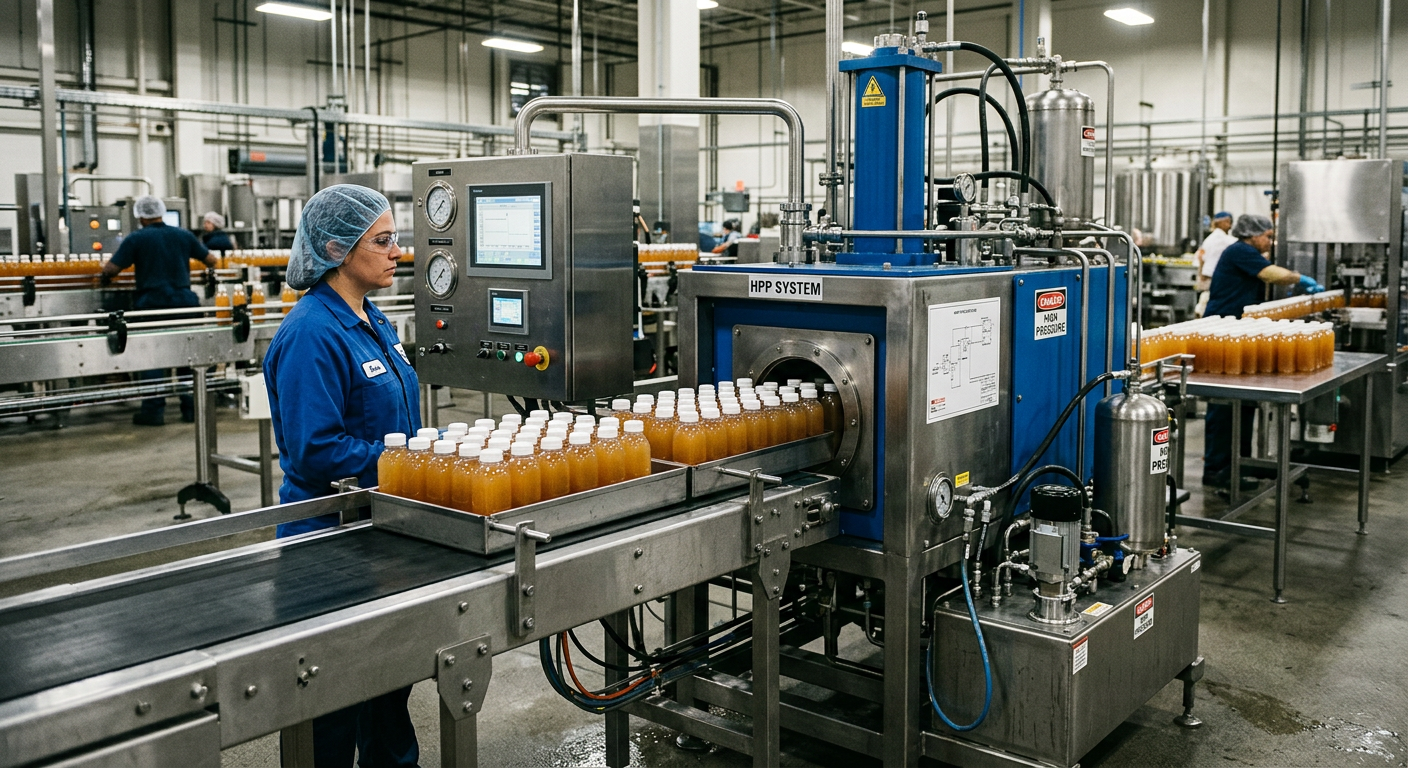
Relocating food processing equipment is not just a moving job. It is an engineering, compliance, sanitation, controls, utilities, and startup project that directly affects product safety, plant uptime, labor efficiency, and capital return. In the United States, successful food equipment relocation requires disciplined planning from the first equipment assessment through final commissioning, quality verification, and production ramp-up. For manufacturers moving lines between cities such as Chicago, Dallas, Los Angeles, Atlanta, Charlotte, Houston, or Toronto-linked North American networks, the biggest risk is rarely transportation alone. The real risk is losing hygienic integrity, process capability, throughput, or regulatory readiness after the equipment arrives.
Disruptive Process Solutions, or DPS, supports food and beverage manufacturers across North America with a design-build-manage approach that connects engineering, installation, utility integration, controls, and startup under one accountable team. That matters when a relocation includes pasteurizers, retorts, fillers, conveyors, blending skids, cooking systems, CIP loops, compressed air, steam, refrigeration, and SCADA integration. Whether the project involves a plant consolidation in the Midwest, a line transfer from California to Texas, or a capacity expansion near the Port of Savannah or the Inland Empire logistics corridor, the relocation strategy must protect production continuity and future profitability.
Quick Answer

Food processing equipment relocation in the United States should be handled as a turnkey capital project rather than a simple rigging task. The best outcomes come from combining pre-move condition assessment, utility mapping, controlled electrical and controls disconnection, sanitary packaging for transport, qualified reinstallation, precision alignment, calibration, HACCP and preventive controls review, and final startup documentation. This approach reduces contamination risk, startup delays, hidden repair costs, and compliance gaps.
If you are moving a single machine or an entire processing line, the practical sequence is straightforward:
- Document the existing condition, utility loads, controls architecture, and sanitary design features.
- Decide whether each asset is worth relocating, refurbishing, or replacing.
- Disconnect power, controls, process piping, steam, refrigeration, air, and CIP systems with specialized teams.
- Package and transport equipment to prevent damage to product contact surfaces, sensors, seals, and frames.
- Reinstall using layout verification, hygienic spacing, floor anchoring, drainage, and utility re-integration.
- Restore alignment, calibration, controls logic, interlocks, recipes, and instrumentation accuracy.
- Revalidate food safety controls, cleaning effectiveness, and production performance at the destination plant.
For plants operating under FDA, USDA, SQF, BRC, or customer-specific audit requirements, relocation should also include documented startup protocols, maintenance baseline checks, spare parts planning, and training for operations and sanitation teams.
| Phase | Main objective | Primary team | Risk if skipped | Typical output | Why it matters |
|---|---|---|---|---|---|
| Assessment | Verify move viability | Engineering and maintenance | Hidden failures after arrival | Condition report | Prevents moving bad assets |
| Documentation | Capture utilities and controls | Controls and process engineers | Delayed reconnection | Tagging and drawings | Speeds startup |
| Disconnection | Remove systems safely | Electrical, mechanical, sanitation specialists | Damage and safety incidents | Isolation records | Protects people and equipment |
| Transport | Move equipment securely | Rigging and logistics teams | Frame distortion and contamination | Shipping logs | Keeps assets intact |
| Reinstallation | Reconnect and align assets | Field installation crews | Poor performance and leaks | Installation checklist | Restores mechanical integrity |
| Validation | Confirm safety and throughput | QA, operations, engineering | Audit findings and low output | Commissioning package | Enables compliant restart |
The table above shows why relocation is a staged process. Every phase has a different owner, a different failure mode, and a direct effect on production readiness.
Types of Food Processing Equipment We Relocate: From Pasteurizers to Packaging Lines

Food manufacturers in the United States relocate a wide range of assets, from stand-alone vessels to complete integrated process systems. Some moves are part of mergers or plant consolidation programs. Others happen when a producer outgrows an older facility, adds co-packing capacity, or repurposes idle equipment from one region to another. In high-cost markets such as Southern California, New Jersey, and the Pacific Northwest, it is common to relocate selected equipment to lower-cost production hubs in Texas, the Carolinas, Tennessee, or the Midwest.
DPS supports moves involving both food and beverage assets, with technological capabilities that extend across thermal processing, aseptic systems, dairy, protein, sauce, ingredient, beverage, and packaging operations. This includes utility-heavy systems such as steam, chilled water, glycol, compressed air, water treatment, and CIP, along with automation layers like PLCs, SCADA, recipe management, and batch controls.
| Equipment type | Typical application | Special relocation concern | Utility dependency | Revalidation need | Common destination industries |
|---|---|---|---|---|---|
| HTST and UHT pasteurizers | Dairy, beverages, liquid foods | Heat exchanger integrity | Steam, water, controls | High | Dairy, juice, RTD drinks |
| Retorts and sterilization systems | Shelf-stable foods | Pressure vessel inspection | Steam, condensate, controls | High | Prepared foods, pet food |
| Mixing and batching skids | Sauces, dressings, ingredients | Agitator alignment and seals | Power, CIP, instrumentation | Medium | Condiments, ingredient plants |
| Cooking and smoking systems | Protein processing | Exhaust and thermal balance | Gas, steam, controls | High | Beef, pork, poultry |
| Filling and packaging lines | Bottles, cans, cups, pouches | Synchronization and timing | Power, air, controls | High | Beverage, dairy, snacks |
| CIP systems | Sanitary cleaning | Tank, pump, and loop mapping | Water, heat, chemicals, controls | High | All sanitary processing sectors |
| Conveyors and material handling | Line integration | Elevation and transfer points | Power and controls | Medium | Packaging and case handling |
| Storage and process tanks | Bulk ingredient and product holding | Surface protection and anchoring | Process piping, instrumentation | Medium | Dairy, beverage, sauce, fermentation |
This table matters because not all assets carry the same relocation risk. A conveyor move is usually simpler than a retort move, and a pasteurizer or aseptic filler requires far more documentation, validation, and utility coordination than a stand-alone tank.
In many projects, equipment is only part of the scope. The move also involves structural modifications, drains, trenching, utility rack rerouting, controls cabinet relocation, chilled water balancing, compressed air quality checks, and plant layout redesign. That is where a partner with broad food engineering and installation services becomes more valuable than a basic hauling contractor.
From a market perspective, the U.S. relocation environment remains active because manufacturers are rebalancing supply chains near major interstate corridors, rail hubs, and ports such as Houston, Long Beach, Newark, Savannah, and Charleston. Plants serving grocery, club, foodservice, and private label channels often choose relocation when lead times for new equipment are too long or when redeploying existing assets produces a faster payback.
The growth trend above reflects the practical reality of the market: more manufacturers are treating relocation as a strategic capacity tool rather than a last-resort decision.
Equipment Assessment: Evaluating Condition and Reinstallation Viability Before the Move

Before any disconnect begins, each asset should be evaluated for structural condition, sanitary design suitability, spare parts availability, code fit, and startup risk. A common mistake is assuming that because equipment runs today, it is worth relocating tomorrow. In reality, older frames may be corroded, obsolete PLC platforms may be unsupported, and worn valves, seals, or drives may trigger a costly restart failure.
A strong assessment includes mechanical inspection, utility demand review, controls backup, process suitability review, and total cost comparison between move and replacement. For food plants, product-contact surfaces, weld quality, dead legs, drainability, gaskets, and cleanability deserve special attention.
| Assessment item | What is reviewed | Typical warning sign | Decision impact | Recommended action | Business value |
|---|---|---|---|---|---|
| Mechanical integrity | Frames, bearings, shafts, seals | Excessive wear or vibration | Move or rebuild | Refurbish before install | Reduces future downtime |
| Sanitary design | Welds, slopes, cleanability | Harborage points | Move only with modifications | Upgrade contact surfaces | Supports food safety audits |
| Controls obsolescence | PLC, HMI, drives, network | Unsupported hardware | Modernize during move | Plan controls retrofit | Improves reliability |
| Utility compatibility | Voltage, steam pressure, chilled water | Mismatch with new site | May require redesign | Engineer new utility package | Avoids startup delays |
| Capacity fit | Throughput versus new demand | Undersized or oversized asset | Move selectively | Rebalance line design | Protects ROI |
| Documentation quality | Drawings, manuals, SOPs, recipes | Missing records | Higher execution risk | Create digital documentation | Speeds commissioning |
| Maintenance history | Breakdowns and PM records | Frequent recurring issues | Replace rather than move | Life-cycle review | Prevents hidden costs |
The purpose of this assessment is not only technical. It is financial. A line that costs $600,000 to relocate but only has three to five reliable years left may be a poor capital decision. DPS is known for approaching these projects like an operations-minded advisor rather than a yes-only contractor. That means recommending process changes, controls optimization, or selective replacement when those choices improve long-term profitability.
In some cases, a line move also becomes an opportunity to redesign the process flow. For example, a sauce line moving from a cramped Northeast facility to a larger Tennessee or North Carolina site may gain better ingredient handling, fewer forklift crossings, improved allergen segregation, and cleaner personnel traffic patterns. Those gains often deliver more value than the move itself.
FSSAI Hygienic Design Reinstallation Verification and CIP System Re-Integration
Although hygienic design language is often discussed globally, U.S. manufacturers should apply FDA, USDA, SQF, BRC, and customer sanitation expectations at the destination facility. The main objective after relocation is to verify that the reinstalled equipment still meets hygienic design intent and that the CIP system can clean all product-contact surfaces effectively after piping routes, tank elevations, and loop lengths have changed.
Reinstallation verification should examine slope, drainability, dead legs, gasket compression, access for inspection, weld condition, passivation status when needed, and separation from non-sanitary utilities. Even a well-moved system can fail hygiene expectations if the destination floor has poor drainage or if maintenance creates inaccessible valve clusters.
CIP re-integration is especially critical when moving blending systems, tanks, heat exchangers, fillers, and transfer circuits. New routing can change flow velocity, return temperature, chemical contact time, and pump performance. A loop that cleaned effectively in California may underperform after installation in Ohio if pipe runs are longer or elevation losses are higher.
| Verification point | What to confirm | Common relocation issue | Validation method | Responsible team | Outcome |
|---|---|---|---|---|---|
| Drainability | Lines and vessels fully drain | Incorrect pitch | Visual and water test | Mechanical and QA | Lower residue risk |
| Dead leg control | Minimal stagnant branches | Field-added fittings | P&ID walkdown | Process engineering | Better cleanability |
| CIP flow rate | Velocity meets cleaning target | Pump undersizing | Flow verification | Utilities and process team | Effective soil removal |
| Temperature profile | Wash temperatures stay in range | Heat loss in long runs | Data logging | Automation and QA | Consistent sanitation |
| Chemical concentration | Detergent and sanitizer dose accurate | Sensor drift | Titration and instrument check | Sanitation and QA | Verified cleaning chemistry |
| Accessibility | Inspection and maintenance access | Tight layout or blocked panels | Layout review | Engineering and EHS | Safer operations |
| Surface condition | Contact surfaces protected | Scratches or contamination | Borescope and inspection | Quality and maintenance | Reduced contamination risk |
This verification stage is where technological capabilities matter. DPS supports sanitary process systems that include pasteurization, aseptic processing, retort, blending, fermentation, water treatment, and complete utility integration, so hygienic performance is addressed alongside mechanical installation and controls startup rather than as an afterthought.
Manufacturers considering upgrades during relocation often combine the move with CIP modernization, tank addition, new instrumentation, or replacement of hard-to-clean legacy components. Information on available process equipment solutions can help teams decide whether to re-use existing skids, supplement them with new components, or redesign the sanitary loop entirely.
Electrical Disconnection, Transport, and Reconnection by Specialized Teams
Electrical and controls work is one of the most underestimated parts of food equipment relocation. A machine can be mechanically simple to move yet extremely difficult to restart if cable labeling is poor, VFD parameters are lost, remote I/O mappings are undocumented, or HMI recipes are not backed up. In highly automated plants, controls failures can add weeks to startup schedules.
Best practice is to assign specialized teams for lockout-tagout planning, controls backup, panel isolation, instrumentation tagging, cable management, and re-energization procedures. This is especially important for integrated packaging lines, batching systems, and plants with networked SCADA layers.
Transportation itself should be engineered around sanitary and mechanical protection. Stainless surfaces need proper wrapping, instruments need shock protection, and rotating equipment often requires stabilization. Cross-country moves between hubs such as Chicago and Phoenix, or Seattle and Dallas, may also require climate-aware packaging and route planning.
The bar chart highlights which sectors tend to generate strong relocation activity. Beverage, protein, and dairy projects often lead because their equipment carries high capital value and can justify carefully managed redeployment.
From a service standpoint, DPS executes projects through coordinated engineering, installation, and integration management. That includes process, mechanical, plumbing, electrical, structural, and controls coordination, plus management of local trades when jurisdictions require regional execution support. This model reduces handoff losses between electrical contractors, riggers, programmers, and utilities installers.
Manufacturers should also think about insurance, route constraints, and loading conditions. Equipment moved through the Port of Houston, New Jersey logistics corridors, or West Coast intermodal networks may face different lead times, permitting needs, and rigging sequences than short-haul interstate moves.
Precision Alignment and Calibration Restoration for Food Processing Equipment
Once equipment is physically set, it must be restored to operating precision. This stage is often where relocation projects either recover full performance or suffer chronic problems. Misalignment can lead to premature bearing failure, leaks, poor fill accuracy, inconsistent cook times, packaging jams, inaccurate temperature control, and weak OEE.
Precision restoration includes laser alignment, leveling, anchor verification, chain and belt tensioning, valve stroke checks, flowmeter verification, pressure transmitter calibration, load cell testing, recipe confirmation, and motion synchronization across line segments. For thermal equipment, temperature sensors and control loops should be checked before any process challenge test begins.
| System element | Restoration task | Typical tool or method | Failure if neglected | When to perform | Benefit |
|---|---|---|---|---|---|
| Pumps and motors | Shaft alignment | Laser alignment system | Seal and bearing wear | After base setting | Longer equipment life |
| Conveyors | Tracking and transfer tuning | Mechanical adjustment | Product jams | Before dry runs | Smoother line flow |
| Filling systems | Volume calibration | Mass or volumetric testing | Giveaway or underfill | During commissioning | Better yield control |
| Thermal sensors | Temperature calibration | Certified reference device | Unsafe or inconsistent process | Before wet testing | Safer product |
| Load cells | Weight verification | Known test weights | Batch inconsistency | Before production trials | Recipe accuracy |
| Control valves | Stroke and response check | Loop testing | Flow instability | After utility connection | Stable process control |
| Vision and coding devices | Inspection setup | Validation challenge | Packaging quality failures | Final line qualification | Retail compliance |
The explanation here is simple: even if equipment survives transport perfectly, small geometric or instrument errors can reduce capacity and quality. In food manufacturing, those issues quickly become waste, customer complaints, or sanitation downtime.
Relocation also creates a prime opportunity for modernization. Many U.S. plants use the move to update sensors, replace old HMIs, install more reliable drives, improve data capture, and refine automation logic. That approach aligns with 2026 trends: smarter diagnostics, digital maintenance dashboards, energy monitoring, and easier integration with enterprise systems.
Food Safety Critical Control Point Revalidation at the Destination Facility
After reinstallation, food safety controls must be revalidated in the context of the new facility. The equipment may be the same, but the hazards can change because of new traffic patterns, utility conditions, zoning, water quality, environmental loads, or line speeds. For plants operating with HACCP, HARPC, preventive controls, USDA plans, or customer standards, relocation should trigger a documented review of critical control points and prerequisite programs.
Examples include rechecking pasteurization hold times, retort parameters, allergen segregation procedures, metal detection or X-ray performance, sanitation verification, compressed air quality, and environmental monitoring plans. A destination facility in humid Gulf Coast conditions may need different condensation control strategies than a dry Mountain West plant. A protein line moved into a mixed-product facility may require stronger zoning and sanitation barriers than before.
The area chart illustrates a major trend: manufacturers increasingly prefer validated relocations that include startup proof, sanitation review, and documentation rather than simple mechanical set-and-leave work.
Case experience across North America shows that revalidation is one of the strongest predictors of a smooth commercial restart. A project may appear complete when the line runs water, but production success depends on proving that the process still delivers safe product at target speed, quality, and yield.
DPS has built a reputation for integrating process engineering with startup execution, especially in regulated environments where FDA, USDA, SQF, and BRC expectations must be addressed together. Real-world examples of project execution philosophy and outcomes can be seen through selected food and beverage case studies, where business value and technical performance are both part of the result.
Factory Act Re-Approval Documentation for Relocated Processing Equipment
In the United States, re-approval after relocation generally involves facility permits, utility reviews, inspection readiness, pressure vessel considerations, electrical compliance, process documentation updates, and food safety record revisions rather than a single “Factory Act” process. The principle remains the same: relocated equipment must be documented well enough for internal approval, authority review, insurer expectations, and third-party audits.
Documentation should cover as-built layouts, P&IDs, electrical one-lines, I/O lists, panel schedules, controls backups, calibration records, commissioning reports, sanitation verification, SOP updates, and training records. If the move involves boilers, pressure systems, ammonia or refrigerant connections, or structural changes, additional local and state documentation may apply.
Plants in jurisdictions such as California, Texas, Illinois, North Carolina, Georgia, and New York may encounter different combinations of electrical, building, fire, wastewater, and environmental review requirements. That is why local coordination matters, especially when relocating equipment into older facilities with legacy infrastructure.
| Document type | Purpose | Prepared by | Used by | When required | Why it matters |
|---|---|---|---|---|---|
| As-built layout | Final equipment placement record | Engineering team | Operations and inspectors | Post-install | Supports maintenance and audits |
| P&IDs | Process and utility mapping | Process engineering | QA, maintenance, sanitation | Before startup | Essential for troubleshooting |
| Electrical one-line | Power distribution record | Electrical engineering | Facilities and authorities | Before energization | Improves safety and compliance |
| Calibration records | Instrument accuracy proof | Commissioning team | QA and auditors | Startup | Supports process control |
| Commissioning report | Confirms tested functionality | Project manager | Ownership and operations | Project closeout | Creates accountability |
| Sanitation validation | Shows cleaning effectiveness | QA and sanitation | Food safety team | Before production | Reduces contamination risk |
| Training records | Documents operator readiness | Operations leadership | HR and auditors | Go-live | Enables consistent execution |
The explanation is practical: the more complete the documentation package, the faster the destination facility can move from installation to dependable routine production.
Why a Single-Point Turnkey Solution Outperforms Multiple Contractors
Food equipment relocation often fails at the handoffs. The rigger says the electrician will tag it. The electrician says the controls team has the backups. The mechanical installer says sanitation verification is outside scope. The plant then loses days or weeks sorting out gaps. A single-point turnkey model avoids that fragmentation.
With one accountable lead, equipment assessment, engineering, scheduling, utility design, controls backup, transport coordination, reinstallation, startup, and documentation are managed as one system. That reduces scope disputes and makes schedule recovery easier when field conditions change.
DPS is structured for this kind of execution. Its service capabilities include engineering, project and program management, owner’s representation, general contracting or GC-equivalent coordination, physical installation, utility integration, controls work, and commissioning. Its manufacturing capabilities add value because the company can supply selected proprietary assets such as tanks, CIP systems, tumblers, and cooking vessels when a relocation reveals gaps or when replacement is smarter than repair. More about the team and its operating philosophy is available on the company overview page.
For buyers comparing options, the smartest evaluation criteria are not just move price. Look at total downtime, startup guarantee approach, utility integration experience, food safety understanding, controls depth, documentation standards, and willingness to challenge weak assumptions. The lowest bid can become the highest-cost outcome if the line misses launch dates or operates below planned throughput.
| Evaluation point | Single-point turnkey | Multiple contractors | Likely project impact | Best fit | Buyer takeaway |
|---|---|---|---|---|---|
| Accountability | One lead owner | Shared and blurred | Fewer disputes | Complex relocations | Clear ownership wins |
| Schedule control | Integrated planning | Separate timelines | Faster recovery from delays | Tight shutdown windows | Coordination is critical |
| Utility integration | Designed as one system | Often piecemeal | Less rework | Thermal and sanitary lines | Engineering reduces surprises |
| Controls continuity | Managed backups and testing | Often fragmented | Smoother restart | Automated facilities | Protect software and recipes |
| Food safety alignment | Included in scope | May be excluded | Better audit readiness | FDA and USDA operations | Validation should be planned |
| Cost visibility | Higher initial clarity | Lower bid, more extras | More predictable total cost | Capital-managed projects | Total cost beats sticker price |
| Scalability | Easier to add upgrades | Change orders across parties | Better expansion path | Growth-oriented plants | Think beyond the move |
In the U.S. market, this advantage is especially visible in multi-line relocations, brownfield expansions, and projects where the destination site needs new utilities, sanitary zoning updates, or process redesign. It is also important for co-packers and fast-growth brands that cannot afford extended downtime.
The comparison chart reinforces what many plant leaders already know from experience: coordination quality often determines whether a relocation protects revenue or disrupts it.
Looking toward 2026, three trends will shape future relocation projects in the United States. First, automation modernization will increasingly be bundled into line moves, especially where legacy PLC platforms limit capacity. Second, sustainability goals will push more companies to reuse selected equipment rather than scrap it, while upgrading motors, heat recovery, water systems, and CIP efficiency. Third, policy and customer expectations will continue to raise the bar on traceability, documentation, energy performance, hygienic design, and auditable startup records.
FAQ
How long does food processing equipment relocation usually take?
It depends on scope. A single skid may move in days, while a full line or plant transfer can take several weeks to several months when engineering, permits, utilities, and validation are included.
Is relocating used food equipment always cheaper than buying new?
No. The right answer depends on asset condition, controls obsolescence, utility compatibility, sanitation upgrades, and the cost of downtime. A pre-move assessment is essential.
What industries most often relocate equipment in the United States?
Dairy, beverage, protein, prepared foods, sauces, ingredient manufacturing, aseptic operations, and co-packing are among the most active sectors.
Can packaging lines be relocated without losing line speed?
Yes, if synchronization, controls backup, mechanical alignment, sensor calibration, and trial runs are managed correctly. Line speed losses usually come from weak recommissioning, not from the move itself.
What documentation should plant managers ask for?
Ask for condition reports, equipment tagging, utility maps, controls backups, as-built drawings, calibration records, commissioning reports, sanitation verification, and operator training documentation.
Do CIP systems need to be revalidated after a move?
Yes. Any change in piping length, elevation, valve arrangement, pump performance, or utility supply can affect cleaning effectiveness.
Should we upgrade controls during relocation?
Often yes. A move is one of the best times to replace obsolete PLCs, HMIs, drives, and networks because the equipment is already offline and being re-integrated.
What local factors matter when relocating to a new U.S. region?
Labor availability, utility costs, water quality, wastewater rules, climate conditions, access to interstate routes, port proximity, and local permitting timelines all affect the success of the move.
Why choose DPS for a relocation project?
DPS brings together technological capabilities in process and controls engineering, manufacturing capabilities in selected sanitary equipment supply, and service capabilities spanning design, installation, integration, and startup. That combination helps food and beverage manufacturers protect schedule, compliance, and ROI under one coordinated execution model.
What is the first step if we are considering a move?
Start with a structured assessment of the equipment, the destination facility, utility gaps, sanitation implications, and the financial case for move versus replace. That early discipline usually creates the biggest savings.
[/trp_language]
Complete Company Portfolio
About the Author: Disruptive Process Solutions (DPS)
The DPS team combines process engineering expertise with real-world food and beverage manufacturing experience. Our content focuses on process optimization, production efficiency, facility improvements, and practical solutions that help manufacturers operate more effectively in a rapidly evolving industry.
Share