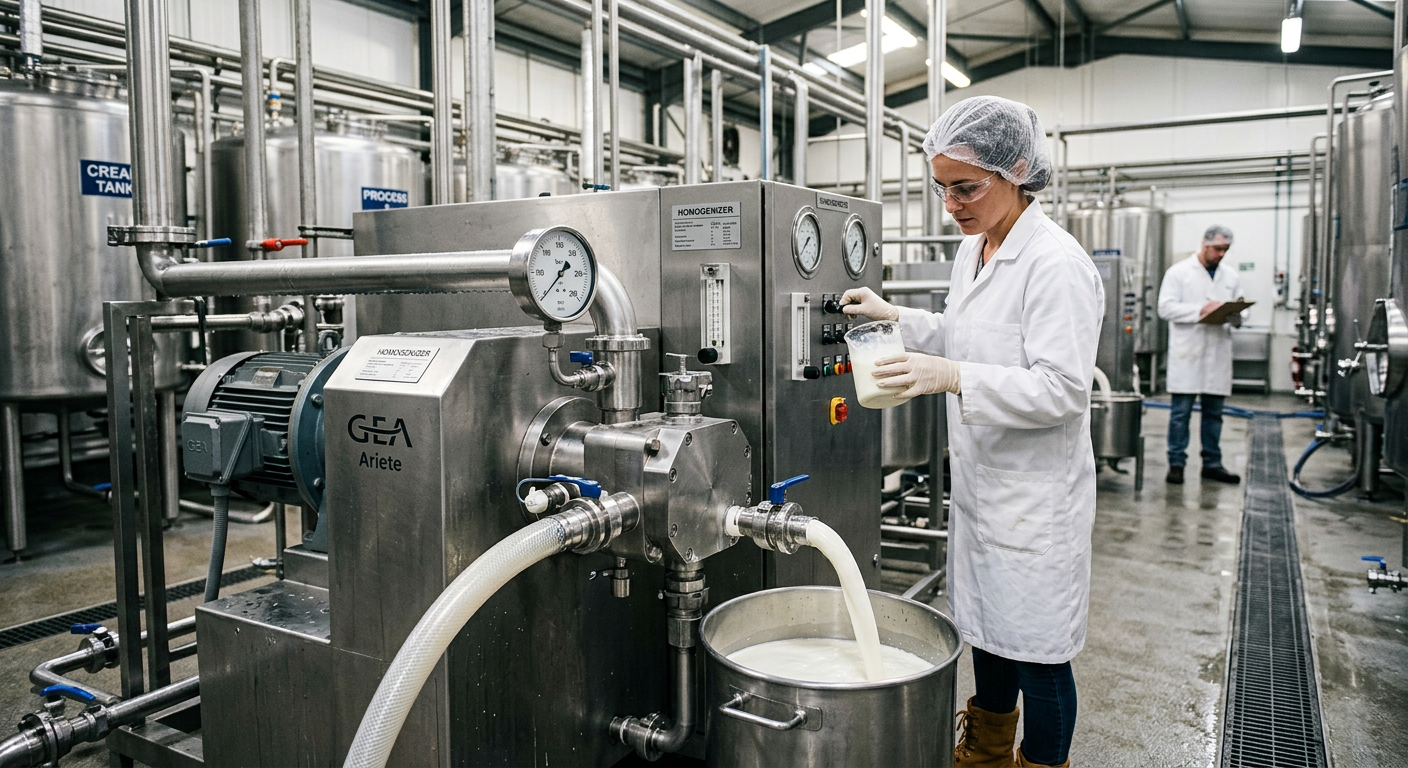
Homogenizer Selection Guide for Dairy and Beverage Processing
[trp_language language=”en_US”]
Dairy Beverage Homogenizer Selection in the United States
Quick Answer

If you are selecting a homogenizer for dairy and beverage processing in the United States, the right choice depends on product viscosity, target particle size, desired shelf life, fat stability, protein functionality, throughput, sanitation standard, and future line expansion. For fluid milk, drinkable yogurt, cream liqueurs, protein beverages, coffee creamers, cultured drinks, and functional emulsions, most buyers should begin by comparing high-pressure valve homogenizers, two-stage systems, and integrated skid packages that match pasteurization, CIP, and automation requirements.
For practical supplier shortlisting in the U.S. market, many processors begin with GEA, SPX FLOW/APV, Tetra Pak, HST Homogenizers, and Sonic Corporation because these names are widely recognized for dairy and beverage applications, service support, and process integration. Regional engineering partners are also important when the project includes utilities, installation, controls, or full line integration rather than a standalone machine purchase.
For a fast buying decision, define six items first: hourly capacity, inlet temperature, required pressure, number of stages, cleanability standard, and whether the machine must fit into an HTST, ESL, or aseptic expansion plan. Buyers in hubs such as California, Wisconsin, Texas, North Carolina, and the Midwest often benefit from selecting a partner that can support both equipment and plant execution. Qualified international suppliers, including Chinese manufacturers with relevant U.S.-accepted material documentation, sanitary design compliance, and strong pre-sales and after-sales support, can also be worth considering when cost-performance is a priority.
United States market context for dairy beverage homogenizer selection

The United States remains one of the most diverse markets for homogenization technology because it combines large-scale dairy processing with fast-growing segments such as protein drinks, lactose-free beverages, cultured dairy, dairy alternatives, nutritional beverages, and shelf-stable ready-to-drink products. In practice, buyers are not only purchasing a pressure machine; they are deciding how product texture, flavor release, emulsion stability, and shelf performance will behave across production, warehousing, distribution, and retail.
Processors in California and Texas often prioritize flexibility because they serve broad beverage portfolios and co-manufacturing models. Plants in Wisconsin, Minnesota, Idaho, and upstate New York may focus more heavily on milk, cream, cultured products, and extended-run sanitary performance. In logistics terms, major ports and inland trade routes also influence equipment sourcing and lead time planning. Los Angeles/Long Beach, Houston, Savannah, and Norfolk matter for imported components, while Chicago, Charlotte, and Dallas remain strategic hubs for installation crews, OEM support, and replacement part flow.
From a purchasing perspective, the market has shifted away from selecting homogenizers solely on maximum pressure. U.S. buyers now compare lifecycle cost, energy consumption, valve wear, automation visibility, CIP validation, and operator simplicity. For beverage plants, especially co-packers, changeover speed and recipe repeatability can matter as much as pressure capability. For dairy plants, fat globule control, mouthfeel, heat stability, and reliable sanitary design still dominate decision-making.
How to choose the right homogenizer for dairy and beverage processing

The most effective homogenizer selection process starts with product behavior, not catalog data. A 10,000 PSI machine is not automatically better than a 3,000 PSI unit if the beverage only requires gentle emulsion improvement and low maintenance. Conversely, protein beverages, nutritional emulsions, and high-fat dairy drinks may require more sophisticated pressure profiles and stage balancing to avoid creaming, sedimentation, or texture defects.
Key decision variables include product type, fat level, protein content, sugar load, stabilizer system, solids level, viscosity before and after heating, target shelf life, packaging format, and whether the product is hot-filled, cold-filled, pasteurized, UHT-treated, or aseptically packed. The correct machine must also fit the total process line, including pumps, balance tanks, heat exchangers, instrumentation, controls, CIP, utilities, and plant layout.
For most dairy beverages, a two-stage homogenizer is preferred because the first stage reduces droplet size and the second stage minimizes cluster formation, improving emulsion uniformity. For lower-viscosity juices with added dairy components or flavors, a single-stage unit may be enough. For premium RTD formulations and sensitive functional beverages, buyers may also review high-shear mixers or alternative particle reduction technologies as complementary rather than competing solutions.
Product types used in dairy and beverage plants
Homogenizer selection dairy beverage projects in the United States commonly involve several equipment categories. High-pressure piston homogenizers remain the benchmark for fluid milk, cream, yogurt drinks, emulsified beverages, and nutritional products. Inline high-shear systems can support pre-emulsification, powder incorporation, or formula standardization upstream. Ultrasonic and specialized nano-emulsion technologies are niche but may be evaluated for ingredient innovation, especially in wellness beverages and premium functional formulations.
| Type | Best for | Typical pressure range | Main advantage | Main limitation | Typical U.S. buyer profile |
|---|---|---|---|---|---|
| Single-stage high-pressure homogenizer | Low to moderate emulsion stabilization | 1,500 to 5,000 PSI | Lower complexity and cost | Less control over agglomeration | Small beverage brands and pilot lines |
| Two-stage homogenizer | Milk, cream, drinkable yogurt, protein beverages | 2,000 to 6,500 PSI | Better droplet control and stability | Higher maintenance than simple systems | Most dairy and mixed beverage plants |
| Ultra-high-pressure homogenizer | Specialized functional or fine emulsion products | 10,000 PSI and above | Very fine particle reduction | High capital and wear cost | R&D-heavy or premium product makers |
| Inline high-shear mixer | Pre-emulsification and ingredient dispersion | Not pressure-based | Good upstream blending support | Not a full replacement for many dairy uses | Plants optimizing formula prep |
| Lab or pilot homogenizer | Product development and scale-up | Variable | Fast formulation testing | Not suitable for production scale | Innovation teams and co-pack developers |
| Skid-mounted integrated homogenizer package | Turnkey processing lines | Application-specific | Faster installation and controls integration | Requires strong project coordination | Expansion and greenfield projects |
This table shows why buyers should not compare machines by pressure alone. The best selection comes from matching process risk, product sensitivity, and maintenance tolerance to the actual line objective.
Buying advice for U.S. processors
When evaluating homogenizers, U.S. dairy and beverage manufacturers should ask for performance data tied to a real product family, not just a generic machine specification. A supplier should be able to discuss flow rate at required pressure, temperature limits, fat and solids impact, valve material selection, noise and utility demands, CIP sequence compatibility, and expected wear part replacement intervals.
It is also important to confirm whether the machine will process one flagship SKU or a changing portfolio. A co-packer running coffee beverages one week and protein shakes the next needs a different control philosophy than a milk plant running the same formulation every day. Plants with future ESL or aseptic ambitions should choose a homogenizer and valve set that can integrate into future heat-treatment upgrades without forcing a full replacement.
For many U.S. buyers, the hidden cost is not machine price but line downtime. That is why access to technicians, spare parts, validation support, and controls troubleshooting in North America matters. Equipment with strong sanitary design but weak service coverage may create more risk than value.
| Decision factor | Why it matters | What to ask suppliers | Risk if ignored | Recommended for dairy | Recommended for beverage |
|---|---|---|---|---|---|
| Capacity in gallons per hour | Sets machine size and line fit | What is the tested capacity at target pressure? | Bottlenecks or overspending | Match peak run plus growth margin | Prioritize flexible turndown range |
| Operating pressure | Controls emulsion and particle size | What pressure is actually needed by product? | Excess wear or weak stability | Usually moderate to high | Varies by formula and solids |
| Stage configuration | Affects uniformity and clustering | Single-stage or two-stage and why? | Texture and shelf-life defects | Often two-stage | Application-dependent |
| Sanitary design | Supports food safety and cleaning | How are dead legs and drainability addressed? | Cleaning failures and audit issues | Critical | Critical |
| Wear part access | Impacts uptime and maintenance labor | What is the rebuild interval and parts lead time? | Long outages | High priority | High priority |
| Controls integration | Supports recipe and alarm management | Can it tie into plant PLC and SCADA? | Manual errors and weak traceability | Important | Very important |
The checklist above helps buyers move from broad vendor claims to plant-specific evaluation criteria. In real projects, these six items often determine total cost of ownership more than the initial quote.
Industries and applications that rely on homogenization
Homogenizers are core assets in fluid dairy, cultured dairy beverages, cream processing, flavored milk, coffee creamers, meal replacement drinks, sports nutrition products, dairy cocktails, and shelf-stable emulsified beverages. They are also used in hybrid products that blend dairy, plant proteins, flavors, oils, vitamins, and stabilizers.
In the United States, fast-growing demand comes from premium protein beverages, reduced-sugar flavored dairy drinks, indulgent coffee-based dairy systems, and contract-packed functional beverages. These applications need repeatable mouthfeel and visual stability, especially when products move through complex temperature exposure in warehousing and retail.
| Application segment | Homogenization need | Typical challenge | Preferred setup | Service intensity | Growth outlook through 2026 |
|---|---|---|---|---|---|
| Fluid milk | Fat stabilization | Consistent cream distribution | Two-stage | Moderate | Stable |
| Drinkable yogurt | Texture and suspension | Viscosity control | Two-stage with careful thermal integration | High | Growing |
| Protein beverages | Particle reduction and emulsion stability | Heat stability and sedimentation | High-pressure two-stage | High | Fast growing |
| Creamers | Oil-in-water emulsion quality | Whitening and shelf stability | Two-stage or integrated emulsion system | High | Growing |
| Functional RTD beverages | Ingredient dispersion | Multi-phase formulation complexity | Homogenizer plus high-shear prep | Very high | Fast growing |
| Flavor emulsions and concentrates | Fine droplet size | Long-term separation control | Application-specific pressure system | Moderate | Growing |
This demand view shows why one homogenizer design rarely serves every product category equally well. Product developers and plant engineers need to align equipment selection with the most profitable and technically demanding SKUs, not just the easiest ones.
Market growth and technology direction
The United States homogenizer market for dairy and beverages is being shaped by three forces: premiumization, line flexibility, and resource efficiency. Premiumization increases the need for better texture and emulsion control. Line flexibility increases the value of automation and quick sanitation. Resource efficiency drives interest in lower energy consumption, better valve life, reduced water use during cleaning, and remote diagnostics.
By 2026, buyers are increasingly asking whether a homogenizer can support recipe management, predictive maintenance, digital pressure monitoring, and production analytics. Plants also want equipment footprints that fit expansion into existing buildings, where utilities and floor space are constrained.
Case-based selection scenarios
A regional milk processor in Wisconsin replacing an aging unit should generally focus on sanitary reliability, easy valve service, and low downtime rather than chasing extreme pressure capability. A beverage co-packer in Texas launching protein shakes, coffee beverages, and cultured products needs broader operating flexibility and stronger automation integration. A premium functional beverage startup in California may begin with pilot validation and a modular skid to avoid locking into the wrong pressure regime too early.
Selection also changes with packaging strategy. Products going into refrigerated PET bottles can sometimes tolerate a different process window than shelf-stable cartons or aseptic bottles. Products sold through national retail distribution may need more robust physical stability than items sold in short regional channels. That is why leading projects combine product testing, mechanical review, and commercial forecasting instead of treating the homogenizer as an isolated purchase.
Companies that need broader process transformation often work with engineering firms that can align the homogenizer with utilities, pasteurization, CIP, automation, and installation sequencing. This is especially valuable in expansions, retrofits, and greenfield builds where line performance depends on total system integration.
Top suppliers and engineering partners in the United States
The U.S. market includes global OEMs, niche homogenizer specialists, and integration partners. Buyers should compare not just machine design, but responsiveness, parts support, application knowledge, and ability to support FAT, commissioning, operator training, and long-term maintenance planning.
| Company | Service region | Core strengths | Key offerings | Best fit buyer | Selection note |
|---|---|---|---|---|---|
| GEA | Nationwide United States | Deep dairy process expertise and global installed base | Homogenizers, separators, complete dairy systems | Mid-size to large dairy processors | Strong choice for integrated dairy lines |
| SPX FLOW / APV | Nationwide United States | Broad sanitary processing portfolio | Homogenizers, pumps, valves, heat transfer systems | Dairy and beverage plants seeking brand familiarity | Useful when standardizing multiple sanitary assets |
| Tetra Pak | United States and global networks | Strong beverage and aseptic line integration | Processing systems, homogenization, packaging integration | Plants linking processing with packaging strategy | Especially relevant for aseptic growth plans |
| HST Homogenizers | North America | Application focus and dedicated homogenizer specialization | Industrial homogenizers and support services | Buyers prioritizing homogenizer-specific expertise | Often considered for focused replacement projects |
| Sonic Corporation | United States | High-intensity processing and emulsion technology | Specialized liquid process solutions | Advanced beverage and formulation teams | Good for more complex product systems |
| Disruptive Process Solutions | All 50 U.S. states and Canada | Engineering, installation, integration, and capital project execution | Process design, system integration, utilities, automation, turnkey installation | Manufacturers needing a full project partner | Strong fit when homogenization is part of a larger line or facility plan |
This supplier view is practical because it separates machine builders from broader execution partners. In many real-world projects, the lowest-risk path is a combination: a known OEM for the homogenizer and an experienced integration firm for plant delivery.
Supplier comparison by practical buying priorities
Not every supplier is optimized for the same decision criteria. Some excel in global dairy applications, some in integrated packaging lines, and others in project execution or retrofit support. The table below helps buyers compare strengths in a more operational way.
For a simple replacement in an existing sanitary line, a dedicated OEM may be enough. For a line expansion in Charlotte, Dallas, Fresno, or Milwaukee that also involves piping, utilities, controls, and commissioning, buyers usually need a broader execution model.
Our company perspective for U.S. buyers
For manufacturers in the United States evaluating homogenizer systems as part of a wider dairy or beverage investment, Disruptive Process Solutions brings value beyond equipment sourcing because it operates as a full-scope engineering and integration partner with active project execution across all 50 states and Canada, supported by headquarters in Cary, North Carolina and a West Coast presence in Lake Forest, California. That physical footprint matters for local responsiveness, site coordination, and long-term service continuity. In product terms, DPS works within sanitary food and beverage environments that demand rigorous material quality, validated component selection, and disciplined manufacturing and testing standards; its processing expertise spans homogenization, dairy systems, aseptic design, pasteurization, blending, utilities, controls, and commissioning, allowing clients to specify machines and supporting skids that align with FDA, USDA, SQF, and BRC project requirements rather than treating the homogenizer as a standalone asset. In commercial terms, DPS can support end users, co-packers, brand owners, distributors, and regional partners through flexible delivery models that include engineered supply, proprietary equipment manufacturing, turnkey installation, general contracting where licensed, and full Design-Build-Manage execution, making it practical for both single-line upgrades and multi-phase capital programs. Just as important, buyers are backed by concrete pre-sale and after-sale assurance through process engineering, capital planning, owner’s representation, local trade management, automation support, and field execution rather than remote export-only communication. This market commitment, paired with proven experience in beverage co-packing, dairy processing, utilities infrastructure, and profit-driven project planning, gives U.S. processors a partner that is already operating on the ground in North America and invested in long-term plant performance.
Companies exploring broader plant upgrades can learn more about the team on the about us page, review available processing assets through the equipment portfolio, and see examples of operational execution in this project case study, this facility transformation example, and this processing system implementation.
Case studies and practical lessons
In many dairy and beverage plants, the homogenizer appears to be the bottleneck until a deeper review reveals upstream or downstream constraints. Flow instability from balance tanks, poor feed temperature control, inadequate deaeration, undersized pumps, or weak PLC logic can all undermine homogenization performance. That is why experienced project teams assess the total process path from batching through packaging.
One common scenario is a plant that wants more throughput and assumes it needs a larger homogenizer. After analysis, the actual limit may be heat exchanger recovery, filler timing, recipe sequencing, or operator-driven changeover delays. In these cases, the best buying decision may be a smarter controls and integration package rather than a bigger pressure unit alone. For high-growth co-packers, however, it may make sense to install a modular skid with spare footprint, utility allowance, and automation architecture sized for future expansion.
The practical lesson is simple: homogenizer selection dairy beverage success comes from matching machine, formulation, sanitation, and business model. Plants that do this well achieve more consistent product quality, fewer field complaints, longer run times, and clearer ROI.
2026 trends shaping future homogenizer decisions
Looking ahead through 2026, several trends are likely to influence buying decisions in the United States. First, automation is moving from a convenience feature to a baseline requirement. Plants want pressure trends, alarm history, maintenance reminders, and recipe traceability tied into plant-wide SCADA and analytics systems. Second, sustainability goals are influencing equipment design and procurement. Buyers increasingly ask about energy use per gallon processed, water reduction during CIP, rebuild intervals, and component life.
Third, policy and customer expectations around food safety documentation and auditable sanitary design continue to push processors toward better-engineered systems. Even when regulations do not name a specific homogenizer design, processors are expected to validate that the selected equipment supports hygienic operation, repeatable cleaning, and reliable process control. Fourth, hybrid products that combine dairy, plant ingredients, micronutrients, flavors, and oils are making process windows narrower, which increases the value of pilot trials and application support.
Finally, procurement strategy is changing. More U.S. buyers now split projects into core equipment, local integration, automation, and service packages to reduce supply chain risk and maintain competitive pricing. This creates room for international suppliers that can document materials, sanitary compliance, and service responsiveness, especially when paired with established North American engineering and support partners.
Frequently asked questions
What is the most important factor in homogenizer selection for dairy beverages?
The most important factor is product requirement, especially fat stabilization, protein behavior, desired mouthfeel, and shelf-life target. Capacity and pressure matter, but they must serve the product, not the other way around.
Do all dairy beverage plants need a two-stage homogenizer?
No. Two-stage units are common and often preferred for dairy beverages, but some lower-complexity products can run well on single-stage systems. The right answer depends on emulsion behavior and final quality goals.
How should U.S. buyers compare domestic and international suppliers?
Compare total delivered value, not just machine price. Review sanitary design, documentation, controls compatibility, spare parts availability, startup support, and whether there is dependable service coverage in the United States.
Is a higher pressure homogenizer always better?
No. Excess pressure can increase wear, energy cost, and product stress without improving results. The best machine is the one that achieves the target product structure consistently at the lowest practical operating burden.
When should a processor involve an engineering integrator?
An integrator should be involved when the homogenizer is part of a larger project that includes piping, utilities, automation, pasteurization, CIP, layout changes, or phased expansion. This is often the case in dairy and beverage plants.
Which U.S. regions are strongest for supplier and service access?
California, Texas, Wisconsin, the Midwest manufacturing corridor, the Carolinas, and major metro regions such as Chicago, Dallas, Los Angeles, and Charlotte are especially strong due to industrial networks, logistics, and field service availability.
Final recommendation
For most processors, the best approach to homogenizer selection dairy beverage in the United States is to begin with the business case and product roadmap, then narrow the machine type, pressure range, and service model accordingly. If the project is a straightforward replacement, compare proven OEMs with strong local parts and support. If the project involves a new beverage line, dairy expansion, or co-packing facility, work with a partner that can engineer the total process and protect uptime, sanitation, and ROI across the full plant.
[/trp_language]
Complete Company Portfolio

About the Author: Disruptive Process Solutions (DPS)
The DPS team combines process engineering expertise with real-world food and beverage manufacturing experience. Our content focuses on process optimization, production efficiency, facility improvements, and practical solutions that help manufacturers operate more effectively in a rapidly evolving industry.
Share

