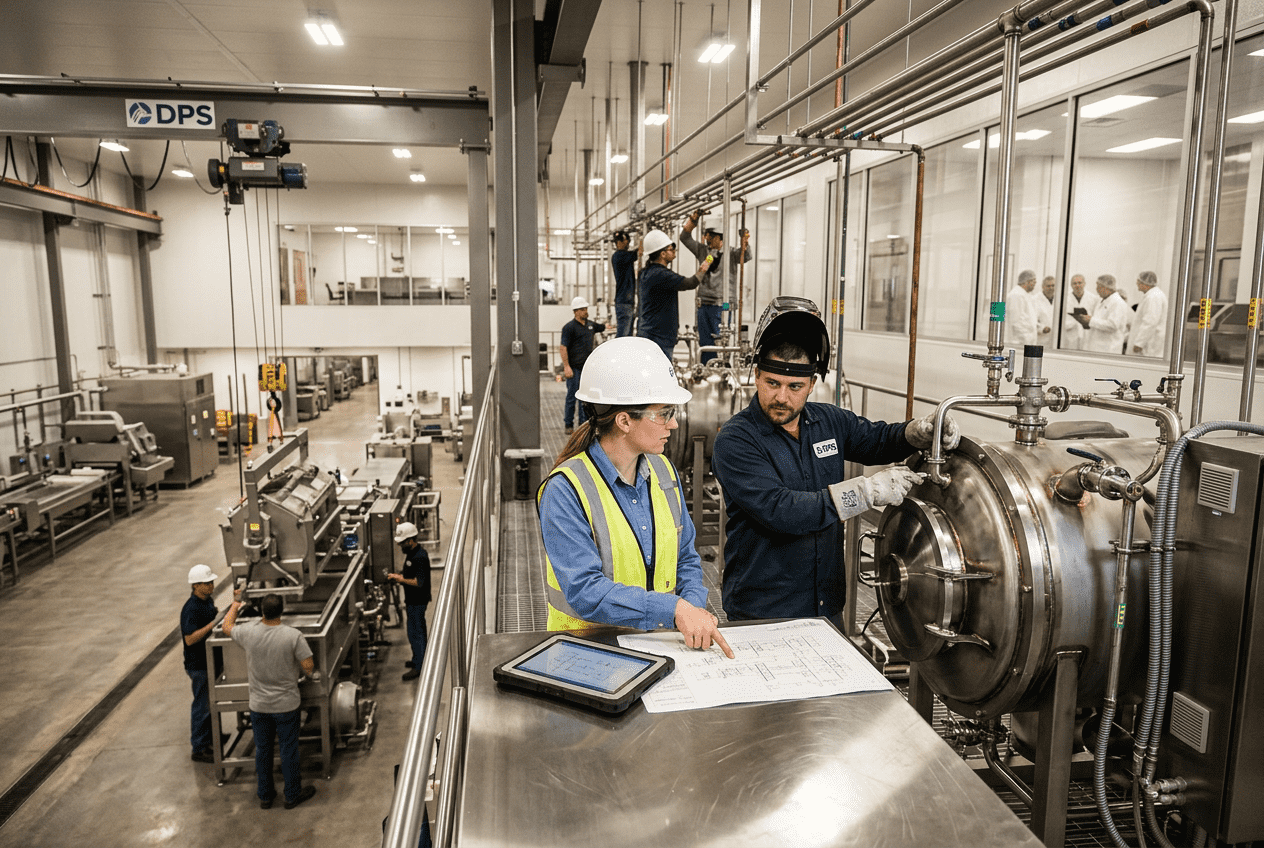
Juice Processing Plant Design
[trp_language language=”en_US”]
Juice Plant Design and Equipment Guide for the United States
Designing a modern juice processing plant in the United States requires much more than choosing a press and a filler. A profitable facility must align raw fruit seasonality, product format, food safety, utility demand, labor availability, wastewater loading, and future expansion plans. Whether the goal is fresh refrigerated orange juice in Florida, apple juice in Washington, premium cold-pressed blends in California, or shelf-stable aseptic products for national distribution through hubs like Chicago, Dallas, and Atlanta, the right plant design directly affects yield, shelf life, throughput, and margin.
For U.S. manufacturers, the most successful juice facilities are planned around product strategy first: NFC juice, from-concentrate juice, juice drinks, smoothies, high-acid blends, or aseptic functional beverages. That choice determines everything from extraction technology and clarification steps to pasteurization intensity, clean-in-place design, packaging format, and warehouse footprint. It also shapes compliance obligations under FDA Juice HACCP rules, sanitation programs, and environmental permitting.
Disruptive Process Solutions supports this type of planning with integrated engineering, equipment selection, installation, and execution management for beverage manufacturers across North America. Companies evaluating a greenfield project or a line expansion can review who DPS is, explore its broader engineering and project services, assess available process equipment capabilities, and see selected project examples relevant to food and beverage operations.
Quick Answer

A juice processing plant in the United States should typically be designed around eight core blocks: raw fruit reception, washing and sorting, extraction or crushing, screening and finishing, thermal treatment, blending and standardization, filling and packaging, and utilities plus wastewater management. The best layout separates raw and clean zones, minimizes product hold time, and uses hygienic piping, CIP, and automation for consistent quality.
If the plant will produce not-from-concentrate products, prioritize fresh fruit handling, rapid extraction, refrigerated storage, and gentle thermal treatment. If the plant will produce from-concentrate products, include concentrate storage, dilution systems, Brix control, blend tanks, and often larger syrup-room style ingredient handling. For premium cold-pressed brands, expect higher capital costs for gentle extraction and short-shelf-life or HPP-linked workflows. For high-volume shelf-stable juice, HTST or UHT with aseptic filling may provide the best economics.
In the U.S. market, a strong design also includes FDA-aligned HACCP planning, utility redundancy, cleanable equipment, validated kill steps, robust water treatment, and wastewater equalization sized for sugar, pulp, peel oil, and cleaning chemicals. Plants near fruit-growing regions like California’s Central Valley, Florida citrus regions, and Washington apple corridors can reduce inbound logistics cost, while facilities near distribution gateways such as the Port of Los Angeles, Port of Savannah, or Port Newark can support import fruit, export product, and national retail distribution more efficiently.
| Plant Block | Main Purpose | Typical Equipment | Design Priority | Key Risk | Best Practice |
|---|---|---|---|---|---|
| Receiving | Unload and inspect fruit | Dumpers, bins, conveyors, scales | Fast unloading | Decay in incoming fruit | QC sampling at arrival |
| Washing and Sorting | Remove soil and defects | Brush washers, flumes, sort belts | Gentle handling | Cross-contamination | Controlled sanitizer dosing |
| Extraction | Recover juice efficiently | Belt press, citrus extractor, cold press | Yield vs quality | Over-processing pulp | Match equipment to fruit type |
| Finishing | Set pulp level and remove coarse solids | Screens, finishers, decanters | Consistent texture | Flavor loss | Use staged separation |
| Thermal Processing | Control microbes and enzymes | HTST, UHT, tubular systems | Validated lethality | Cooked flavor | Optimize time-temperature curve |
| Filling | Package safely | Hot fill, aseptic, ESL, PET or carton | Line uptime | Recontamination | Hygienic zoning and filler sanitation |
| Utilities and Waste | Support operation | CIP, boilers, RO, WWT, air systems | Reliability | Downtime and discharge violations | Design for peak loads |
The table above shows why juice plant design is never just about process equipment. Each block affects food safety, labor, quality consistency, and total operating cost.
Juice Processing Plant Layout: From Raw Fruit Reception to Filling

A well-planned layout reduces fruit damage, cleaning downtime, and traffic conflicts while improving throughput. In most U.S. industrial juice plants, the process begins with truck receiving, palletized ingredient receiving, or bulk fruit bin handling. Domestic citrus operations in Florida may receive large volumes during a compressed season, while mixed-fruit beverage plants in Texas or New Jersey often handle year-round inbound ingredients from multiple states and imported lots.
The first layout principle is one-way flow. Fruit should move from dirty zones to cleaned zones without backtracking, while ingredients, packaging, and personnel follow separate pathways wherever practical. Raw fruit areas should be physically or hygienically isolated from post-pasteurization and filling areas. A common sequence is: receiving dock, raw storage, washing, sorting, extraction, balance tank, finishing, deaeration, pasteurization, surge tank, filling, secondary packaging, cold storage or dry warehousing.
Space planning matters as much as equipment choice. Plants often underestimate room for maintenance pull space, mezzanines for tanks and ingredient access, CIP skid placement, future filler expansion, waste bin handling, and forklift lanes. Ceiling height becomes critical if the project includes large vertical tanks, bag dump stations, or overhead pipe bridges. In retrofits, older food plants in the Midwest and Northeast frequently need structural review before adding new juice tanks, thermal systems, or rooftop utilities.
Utilities should not be an afterthought. Water treatment, compressed air, steam or hot water generation, glycol or chilled water, electrical distribution, and drain capacity must be aligned with process peaks, not just average load. For high-volume filling, inadequate utilities often become the real bottleneck. This is where DPS’s technological capabilities are relevant: the company integrates process, mechanical, plumbing, electrical, structural, and controls engineering so line speed decisions, utility sizing, automation, and building constraints are evaluated together instead of in isolation.
For example, a citrus NFC line shipping into major retail lanes from the Southeast may need rapid receiving and wash capacity during harvest weeks, while a year-round blend facility near the Port of Long Beach may emphasize ingredient staging, tote handling, and multiple mix tanks. A plant serving club-store customers in the United States may also require larger packaging halls and more finished goods staging than a regional fresh brand.
Typical U.S. layout zones
- Raw receiving and inspection
- Washing, brushing, sanitizing, and grading
- Fruit preparation: peeling, crushing, or slicing as required
- Extraction and first-stage screening
- Clarification or pulp adjustment
- Pasteurization or sterilization
- Blending, fortification, and in-line Brix control
- Filling, capping, coding, and packaging
- CIP, utilities, maintenance, and lab support
- Cold storage, ambient warehousing, and shipping
The line chart illustrates a realistic investment trend in U.S. juice processing capacity, driven by premium refrigerated products, automation upgrades, clean-label demand, and resiliency investments after supply chain disruptions.
Extraction Equipment Selection: Belt Press, Centrifugal, and Cold Press Technologies

Extraction equipment should be selected based on fruit type, desired sensory profile, throughput target, labor model, and byproduct handling strategy. There is no universal “best” extractor. A profitable system is the one that matches the product spec and supply chain reality.
Belt presses are widely used for apples, berries, grapes, and some vegetable-fruit blends. They offer continuous operation and good yield when the fruit is milled properly. They work especially well when producers want controlled solids carryover and scalable throughput. However, they need disciplined washdown and spent pomace handling.
Centrifugal systems can provide high throughput and work well in some multi-fruit or puree-related applications, but they may create more shear, heat, and oxygen pickup than premium fresh-positioned brands want. Cold press systems are favored in premium retail channels for quality perception and gentle handling, though the capital and labor cost per gallon are usually higher.
For citrus, dedicated citrus extractors remain the standard because orange, grapefruit, lemon, and lime processing require peel oil management, segment separation, and specific control of bitterness. For tropical fruits and puree-heavy systems, a crusher-finisher-decanting train may outperform simple pressing. Plants that process multiple fruit categories often install modular front-end equipment to maintain flexibility during seasonal changeovers.
DPS also brings manufacturing capabilities into this conversation. Beyond integration work, the company designs and supplies selected process equipment such as tanks and CIP systems that can be tailored to a project’s sanitation strategy, hold-time requirements, and layout constraints. That matters when extraction design must be synchronized with surge capacity, CIP cycle frequency, and downstream filler uptime.
| Technology | Best For | Yield Potential | Product Style | Capital Level | Main Limitation |
|---|---|---|---|---|---|
| Belt Press | Apples, grapes, berries | High | Cloudy or clarified bases | Medium | Pomace handling and cleaning |
| Centrifugal Extractor | Mixed fruit, some puree lines | Medium to high | High-throughput production | Medium | Higher shear and oxidation risk |
| Cold Press | Premium blends and wellness juices | Medium | Fresh, premium, low-shear | High | Lower throughput per footprint |
| Citrus Extractor | Orange, grapefruit, lemon | High | NFC or concentrate base | High | Fruit-specific application |
| Screw Press | Vegetable-fruit blends | Medium | Fiber-rich products | Medium | Can overwork delicate fruit |
| Crusher + Finisher | Mango, guava, puree fruits | Medium to high | Nectars and purees | Medium | Needs strong downstream finishing |
| Hydraulic Batch Press | Small premium operations | Medium | Craft batches | Low to medium | Labor intensive |
This comparison helps buyers narrow equipment based on product intent, not vendor marketing. If the business model depends on “fresh taste” positioning and shorter refrigerated shelf life, cold-press economics may still make sense. If the brand wins through volume, broad SKU coverage, and retail distribution, higher-throughput extraction with stronger downstream finishing may be the better route.
The comparison chart shows a realistic performance tradeoff: cold press leads in flavor protection, centrifugal systems lead in throughput, and belt presses often balance yield and quality well for many fruit categories.
Pasteurization and Sterilization Options for Juice Products
Pasteurization and sterilization choices depend on pH, target shelf life, distribution temperature, package format, and retailer requirements. In the United States, high-acid juices often use HTST pasteurization, but product positioning and package type can justify alternatives such as flash pasteurization, tunnel pasteurization, UHT, or HPP-linked cold-chain models.
HTST systems are common for refrigerated and some hot-fill juice products because they deliver a validated microbial reduction with good flavor retention when properly tuned. Tubular heat exchangers are often preferred for pulp-bearing or viscous products, while plate systems may be appropriate for cleaner low-viscosity streams. Hot fill remains practical for many still beverages in PET or glass, especially where national ambient distribution is required without aseptic investment.
UHT plus aseptic filling makes sense when long shelf life, national distribution, and warehouse efficiency outweigh the complexity of aseptic operations. This is often attractive for juice drinks, fortified beverages, and products that serve mass retail across multiple U.S. climate zones. HPP is another route for premium cold-pressed juices, though it changes packaging, logistics, and co-manufacturing strategy because product remains refrigerated.
DPS’s technological capabilities include pasteurization and sterilization integration across HTST, UHT, flash systems, hot fill, HPP-adjacent line planning, and aseptic support systems. That is important because the thermal process cannot be evaluated separately from packaging, clean utilities, control philosophy, or flavor goals.
| Method | Typical Shelf Life | Best Product Fit | Packaging Match | Operating Complexity | Key Advantage |
|---|---|---|---|---|---|
| HTST | Refrigerated short to medium | NFC and premium blends | Bottles, cartons | Medium | Good flavor retention |
| Hot Fill | Ambient medium | Still juices and drinks | PET, glass | Medium | Strong commercial practicality |
| UHT | Ambient long | Shelf-stable juices | Aseptic cartons, bottles | High | Very long shelf life |
| Flash Pasteurization | Refrigerated or short ambient depending on system | Fast-moving SKUs | Flexible | Medium | Lower thermal load |
| Tunnel Pasteurization | Ambient or extended | Packaged products after fill | Cans, glass | High | In-package treatment |
| HPP | Refrigerated extended fresh | Cold-pressed premium juices | Pressure-compatible bottles | High | Fresh positioning |
| Retort for specialty items | Ambient long | Niche juice-food formats | Pouches, cans | High | Maximum shelf stability |
This table shows why shelf life claims should never drive the decision alone. Packaging cost, distribution network, energy use, and labor capability can make one technology much more economical than another over the life of the plant.
Pulp and Fiber Handling: Clarification, Filtration, and Concentration Systems
Pulp and fiber management is one of the biggest determinants of final product identity. Some brands sell “with pulp” as a premium sensory cue. Others want brilliant clarity for apple, white grape, or clarified blend bases used in functional beverages. The process train must therefore define not just microbial safety, but also mouthfeel, viscosity, appearance, and ingredient stability.
Clarification may involve screening, decanting, enzymatic treatment, flotation, centrifugation, or membrane filtration. The right sequence depends on suspended solids level, pectin content, desired haze, and downstream thermal load. Heavy solids can foul heat exchangers, upset fillers, and reduce run length, so effective early-stage finishing usually pays back quickly.
For concentrate production, evaporators or membrane concentration systems can shrink shipping and storage cost, especially for seasonal fruit peaks. Concentration is also relevant when domestic harvest windows create a need to stabilize product for later reconstitution. However, concentration adds utility demand, flavor management challenges, and aroma recovery considerations.
Waste streams deserve equal attention. Pulp, seeds, peel, and pomace can become landfill cost, animal feed, compost feedstock, pectin input, or value-added ingredient depending on local market access. Facilities in agricultural regions often have more economical byproduct outlets than urban plants, so the same process design may perform differently in California, Michigan, or Pennsylvania.
| Process Step | Goal | Common Equipment | When Used | Operational Benefit | Common Watchout |
|---|---|---|---|---|---|
| Primary Screening | Remove coarse solids | Static or rotary screens | Immediately after extraction | Protects downstream equipment | Screen blinding |
| Finishing | Control pulp level | Finishers and pulpers | Pulp-adjusted products | Texture consistency | Overworking solids |
| Centrifugal Clarification | Reduce suspended solids | Disc stack or decanter | Clear juice bases | Higher clarity | Shear and maintenance cost |
| Enzymatic Treatment | Break down pectin | Dosing and hold tanks | Hard-to-filter juices | Improves filtration | Extra process time |
| Membrane Filtration | Polish or clarify | UF or MF skids | High-clarity applications | Stable product appearance | Fouling management |
| Evaporation | Increase solids | Evaporator systems | Concentrate production | Storage and freight savings | Flavor loss risk |
| Aroma Recovery | Preserve volatile profile | Recovery modules | Premium concentrates | Better sensory quality | Higher capital cost |
The explanation here is straightforward: solids handling should be designed backwards from the desired finished product. If a brand promises visible pulp, the process must preserve it. If a customer needs a stable clear base for blending with vitamins or botanicals, the plant needs stronger clarification and polishing capability.
The area chart reflects the realistic market shift toward premium fresh-style products in the United States, while from-concentrate products remain important for value and long-range distribution.
NFC vs FC Juice Processing: Line Design Differences and Equipment Needs
Not-from-concentrate and from-concentrate lines may seem similar on paper, but they are fundamentally different in plant design, utility profile, storage strategy, and quality control points.
NFC lines depend on fresh fruit quality and short process times. They usually require more front-end fruit handling capacity, faster extraction, colder storage, and tighter sensory control. The plant is often closer to fruit supply or relies on reliable reefer logistics. Product claims may require gentler processing and shorter total residence times. Refrigerated distribution is common, though some NFC products can be hot-filled depending on brand positioning.
FC lines, by contrast, can decouple production from harvest season through concentrate storage and reconstitution. These plants need bulk concentrate handling, thawing or tempering where applicable, water treatment, in-line Brix adjustment, blend tanks, and precise recipe control. They can often operate with less raw fruit infrastructure and more ingredient room complexity. For many U.S. beverage co-packers, FC lines offer greater scheduling flexibility and year-round consistency.
Buyers should not assume NFC is always the premium answer or FC is always the low-end option. FC can be ideal for stable national distribution, private-label cost control, and complex flavor systems. NFC may win in freshness perception, but only if the brand can support cold chain, tighter shelf-life management, and potentially higher fruit cost exposure.
| Design Factor | NFC Line | FC Line | Capital Impact | Operating Impact | Main Decision Driver |
|---|---|---|---|---|---|
| Raw Material | Fresh fruit | Stored concentrate plus water | NFC higher front-end cost | NFC more seasonal | Supply chain model |
| Receiving Area | Large fruit receiving | Smaller, more ingredient-based | NFC larger footprint | FC easier scheduling | Fruit volume |
| Extraction Equipment | Critical | Often minimal or none | NFC higher | NFC more maintenance | Product authenticity |
| Storage | Cold juice storage | Concentrate storage and blend tanks | Varies | FC more flexible | Shelf-life strategy |
| Brix Control | Monitoring and standardization | Core process requirement | FC stronger automation need | FC highly recipe-driven | Consistency target |
| Distribution | Often refrigerated | Ambient or refrigerated | NFC cold-chain cost | FC broader reach | Sales geography |
| Brand Positioning | Fresh, premium | Value, versatility, scale | Depends on market | Depends on SKU mix | Consumer proposition |
This table clarifies the equipment need differences. NFC plants tend to invest more heavily in fruit handling and extraction, while FC plants invest more in ingredient handling, reconstitution, and recipe control.
Buying advice for U.S. manufacturers
If a company sells primarily into regional grocery and refrigerated channels, NFC may justify its complexity. If the company serves foodservice, private label, institutional accounts, or broad national distribution, FC or hybrid lines often produce stronger economics. Hybrid design is increasingly popular because it allows a plant to run premium seasonal NFC SKUs while maintaining baseline FC volume for year-round plant utilization.
Water Treatment and Waste Management for Juice Processing Facilities
Water and wastewater can determine whether a juice plant is merely functional or genuinely scalable. Juice operations use water for washing fruit, ingredient dilution, sanitation, boiler feed, cooling systems, and CIP. In many U.S. municipalities, incoming water variability, discharge surcharges, and permit constraints can materially affect project economics.
Incoming water often requires filtration, softening, reverse osmosis, carbon treatment, UV, ozone, or chemical disinfection depending on source quality and end use. For FC lines, water quality is especially important because the water becomes part of the finished product. For NFC lines, water still affects cleaning efficacy, utility reliability, and microbiological control.
Wastewater from juice plants typically carries high biochemical oxygen demand, suspended solids, sugars, peel oils, and pH swings from CIP chemicals. Equalization tanks, screening, dissolved air flotation, pH correction, anaerobic or aerobic treatment, and sludge handling may be needed depending on municipal limits and plant size. Citrus operations in particular may need special attention to peel and oil load.
Future-oriented facilities are also looking at sustainability in 2026 and beyond: water reuse for non-product-contact applications, energy recovery from wastewater systems, smarter CIP with conductivity controls, and byproduct valorization. Policy pressure and retailer expectations are pushing producers to quantify water intensity per gallon packed, not just total usage.
| Utility or Waste Stream | Why It Matters | Typical System | Risk if Undersized | Cost Driver | 2026 Trend |
|---|---|---|---|---|---|
| Product Water | Direct ingredient quality | RO, UV, carbon | Flavor inconsistency | Membrane upkeep | Real-time quality monitoring |
| Wash Water | Fruit cleaning and sanitation | Filtration and sanitizer dosing | Cross-contamination | Water usage volume | Reuse in staged applications |
| CIP Water | Hygiene and uptime | Heated CIP circuits | Poor sanitation | Chemicals and heat | Recovery and automation |
| Boiler Feed Water | Thermal system reliability | Softening and deaeration | Scaling and downtime | Fuel and pretreatment | Electrification where viable |
| High-BOD Wastewater | Major discharge issue | Equalization and biological treatment | Surcharges and violations | Organic load swings | Energy recovery from digester gas |
| Pulp and Pomace | Solid waste volume | Pressing, bins, haul-out | Odor and disposal cost | Transport and tipping | Ingredient upcycling |
| Peel Oil and Fats | Can upset treatment systems | DAF and separation | Permit noncompliance | Chemical treatment | Resource recovery focus |
The main lesson from the table is that utility design and environmental systems should be front-end decisions. Retrofitting wastewater after startup is usually far more expensive than planning for it correctly during the concept phase.
HACCP and FDA Juice HACCP Regulation Compliance Requirements
In the United States, juice processors must align plant design and operating procedures with FDA Juice HACCP requirements, preventive sanitation controls, labeling obligations, and traceability expectations. Compliance is not a paperwork exercise; it changes how the line is built.
The hazard analysis should address biological, chemical, and physical hazards from receiving through filling. Common concerns include patulin in apple juice, microbial contamination in fresh produce, sanitizer carryover, foreign material, and post-pasteurization contamination. The plant should clearly define critical control points, monitoring methods, corrective actions, verification steps, and records.
Good plant design makes HACCP easier. Hygienic zoning separates raw from ready-to-fill areas. Sloped floors and proper drain placement reduce standing water. Accessible valves, dead-leg minimization, validated CIP coverage, and instrumented thermal systems improve both compliance and uptime. In practice, many issues blamed on operators are really engineering problems.
This is where DPS’s service capabilities become valuable. The firm supports capital planning, feasibility, owner’s representation, project and program management, general contracting where licensed, turnkey installation, integration, and compliance-minded execution across regulated food and beverage environments. In juice projects, that means the facility can be planned not only for startup, but also for audit readiness and long-term operational control.
| Compliance Area | Plant Design Need | Typical Document or Control | Who Owns It | Audit Focus | Practical Tip |
|---|---|---|---|---|---|
| Hazard Analysis | Process-specific review | HACCP plan | QA and operations | Completeness | Build around actual flow, not generic templates |
| CCP Monitoring | Reliable instruments | Charts and digital logs | Production and QA | Accuracy and frequency | Automate where possible |
| Pasteurization Validation | Controlled thermal system | Validation study | Process authority and QA | Lethality proof | Link setpoints to lockouts |
| Sanitation | Cleanable equipment and drains | SSOPs | Sanitation team | Execution evidence | Design out harborage points |
| Traceability | Lot segregation and coding | ERP and batch records | Operations and supply chain | Recall readiness | Test mock recalls regularly |
| Allergen and Ingredient Control | Segregated storage if needed | Receiving and batching procedures | Warehouse and QA | Cross-contact prevention | Control rework tightly |
| Training | Clear SOP access | Training logs | HR and supervisors | Competency | Train by job task, not by generic orientation |
The explanation is simple: compliant juice plants are engineered for control. When the physical system supports monitoring and sanitation, the documentation becomes more accurate and easier to sustain.
This demand chart highlights why many U.S. processors are designing for flexibility. Functional blends, private label, and shelf-stable formats are all strong enough to justify multi-format plants rather than single-product facilities.
Capacity Planning and Labor Optimization for Industrial Juice Production
Capacity planning should begin with the commercial model, not the nameplate speed of one machine. A line that can technically fill 300 bottles per minute may still underperform if fruit receiving, extraction, pasteurization, CIP turnover, or labor scheduling limits the actual daily output.
Start with annual demand by SKU, then translate into peak month, peak week, and peak shift assumptions. Seasonal fruit businesses often need oversized front-end systems and storage buffers to handle short harvest windows. Co-packers may instead prioritize changeover speed and recipe flexibility. U.S. labor conditions also matter: markets with tighter staffing, such as parts of California or the Northeast, may justify greater automation than regions with deeper labor pools.
Common hidden bottlenecks include crate or bin depalletizing, ingredient staging, cap feeding, finished case accumulation, cooler space, and sanitation labor between allergen or color changes. Plants should model OEE, planned downtime, thermal startup losses, and maintenance windows before committing to final equipment size.
DPS often approaches this through a business-first lens: the purpose of engineering is not to maximize capital spend, but to maximize profitable throughput. That mindset is especially useful when a client is deciding whether to debottleneck an existing utility, add another surge tank, automate batching, or build an entirely new extraction line.
| Planning Variable | What to Measure | Typical Mistake | Better Approach | Labor Impact | Profit Impact |
|---|---|---|---|---|---|
| Annual Demand | Total cases or gallons | Using average month only | Model seasonal peaks | Better staffing plan | Prevents underbuilding |
| Extraction Rate | Fruit per hour | Ignoring fruit quality swings | Use realistic yield bands | Stabilizes scheduling | Improves raw material ROI |
| Thermal Throughput | Gallons per hour | Matching filler only | Include startup and hold losses | Less rework | Higher run efficiency |
| Changeovers | Minutes per SKU switch | Not valuing downtime | Design for quick clean transitions | Less overtime | More saleable hours |
| CIP Time | Hours per circuit | Underestimating sanitation | Parallel or reusable CIP strategies | Reduced night labor strain | Higher line availability |
| Warehouse Space | Pallet turns and dwell time | Ignoring seasonal build | Size cold and dry storage to demand profile | Fewer handling conflicts | Avoids offsite storage cost |
| Automation Level | Manual touches per batch | Over-automating low-volume SKUs | Match controls to complexity | Better operator utilization | Faster payback |
The practical explanation is that capacity should be planned around the slowest reliable point in the system, not the fastest advertised piece of equipment. Labor optimization then follows through automation, ergonomic design, batch sequencing, and reduced cleaning complexity.
Industries and applications
Industrial juice production supports retail packaged beverages, foodservice, smoothie bases, nutrition programs, dairy-adjacent drinks, cocktail mixers, concentrate supply, and ingredient systems for co-manufacturers. Applications range from premium wellness shots to commodity apple juice and multi-fruit private-label programs. A flexible line can also support adjacent products such as teas, lemonades, botanical beverages, and functional drinks, improving asset utilization.
Market and local supplier considerations
Local supplier strategy matters in the United States. Processors near California may benefit from strong access to stainless fabricators, controls integrators, and packaging suppliers. Florida and Georgia are logical for citrus proximity. Washington is strong for apple-based supply. Midwest locations like Ohio and Illinois can improve national shipping reach. Gulf and East Coast locations can support imported tropical inputs through ports such as Houston, Savannah, and Newark. The best equipment package is usually a blend of specialized process vendors, strong local trades, and an experienced integrator that can coordinate them under one execution plan.
Case study mindset
A common lesson from beverage capital projects is that the largest spend is not always the best fix. Some expansions need a new extraction line; others only need controls changes, tank balancing, or utility upgrades. That kind of disciplined decision-making is one reason manufacturers review integrated project examples before committing to a greenfield or brownfield path.
FAQ
What is the most important first decision in juice plant design?
The first decision is the product strategy: NFC, FC, cold-pressed, hot-filled, aseptic, or blended functional beverage. That single choice drives layout, extraction, thermal processing, storage, utilities, and distribution requirements.
Which extraction system is best for a new juice factory?
It depends on the fruit and the brand position. Belt presses are strong for apples and berries, citrus extractors for citrus, and cold press for premium fresh-style products. A multi-fruit operation may need a modular front end rather than a single extractor type.
How much should wastewater planning matter?
It should matter from day one. Juice plants produce high-BOD wastewater and solid organic byproducts. If wastewater is undersized, discharge surcharges, permit issues, and production limits can quickly erode profit.
Do all U.S. juice plants need HACCP?
Juice processors in the United States must address FDA Juice HACCP requirements and related food safety obligations. The exact program details depend on the process and product, but the plant should always be designed to support monitoring, sanitation, and recordkeeping.
Is NFC always better than from-concentrate?
No. NFC may support a fresher premium position, but FC can be more flexible, stable, and economical for large-scale distribution. The better choice is the one that fits the sales channel, shelf-life target, and supply chain.
What utilities are most often underestimated?
Water treatment, drain capacity, cooling demand, CIP volume, compressed air, and wastewater equalization are commonly underestimated. These support systems often limit production before the main process equipment does.
How can labor be reduced without over-automating?
Focus first on batch sequencing, CIP automation, ergonomic material handling, in-line Brix control, and sensible controls integration. Smart automation reduces repetitive tasks and error points without forcing unnecessary capital into low-volume operations.
What should a buyer look for in a process partner?
Look for a partner that can align engineering, equipment, utilities, compliance, construction coordination, and startup support. In practice, the best outcome comes from teams that understand both manufacturing reality and capital discipline.
For U.S. manufacturers planning a new facility or major expansion, juice processing plant design should be approached as a profit system, not a collection of machines. The right partner will help connect product goals, operational constraints, compliance, utilities, and future growth into one practical project roadmap.
[/trp_language]
Complete Company Portfolio

About the Author: Disruptive Process Solutions (DPS)
The DPS team combines process engineering expertise with real-world food and beverage manufacturing experience. Our content focuses on process optimization, production efficiency, facility improvements, and practical solutions that help manufacturers operate more effectively in a rapidly evolving industry.
Share