Marinade Processing Systems
[trp_language language=”en_US”]
Marination System Design and Equipment for U.S. Food Processing
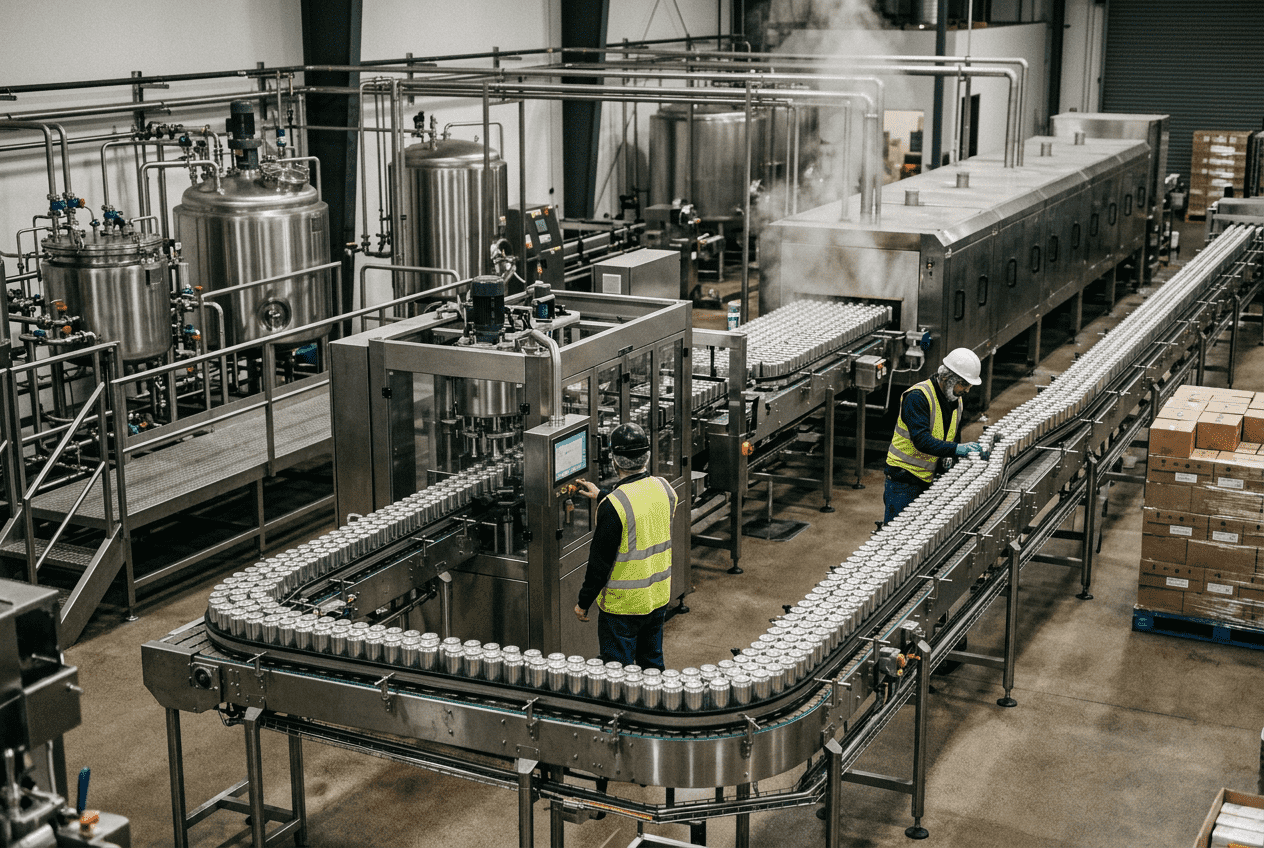
Marinade processing systems are engineered production lines used to apply brines, seasonings, functional ingredients, and texture-improving solutions to meat, poultry, seafood, and plant-based proteins. In the United States, processors typically combine immersion, multi-needle injection, vacuum tumbling, and controlled recovery systems to improve flavor penetration, consistency, pick-up, yield, and food safety. The right system depends on product type, target pick-up percentage, throughput, microbiological risk, labor model, and downstream operations such as cooking, freezing, slicing, or packaging.
For U.S. processors operating in regions such as North Carolina, Arkansas, Georgia, Texas, California, Illinois, and the Midwest protein corridor, marination is no longer just a seasoning step. It is a profit lever tied directly to yield, line balance, sanitation downtime, and retail or foodservice product quality. Whether the application involves chicken breasts for club retail, pork loins for further processing, beef strips for ready meals, shrimp for value-added seafood, or plant protein pieces for prepared foods, the system must be designed as part of a broader process and utility strategy.
Companies planning a new line or retrofitting an existing plant often need more than equipment alone. They need process engineering, throughput modeling, hygienic design review, CIP planning, utility integration, controls strategy, and installation management. That is where a partner with food and beverage engineering depth can create measurable value. Disruptive Process Solutions supports manufacturers across the United States and Canada with practical, business-focused project execution aimed at long-term profitability rather than short-term equipment sales.
Quick Answer

The most effective marinade processing system for U.S. production usually combines four coordinated functions: brine make-up, controlled application, mechanical distribution, and sanitation-ready recovery. Immersion works well for lighter seasoning and delicate products. Injection is preferred when precise internal distribution and higher pick-up are required. Vacuum tumbling improves distribution, protein extraction, adhesion, and finished texture. Ultrasonic assistance is emerging in specialized applications where faster diffusion and shorter residence times are desired.
For most high-volume poultry and protein operations, the common configuration is a chilled brine tank, filtration loop, multi-needle injector, vacuum tumbler, and recirculation skid with validated sanitation procedures. Performance is measured through pick-up percentage, yield retention after cooking or freezing, brine viscosity stability, uniformity across pieces, and microbiological control. Processors in the United States should also evaluate USDA compliance expectations, water and energy consumption, labor exposure, allergen handling, and expansion capacity for future SKUs.
If the goal is consistent product quality and profitable line performance, the equipment should not be selected in isolation. It should be integrated into upstream trimming, downstream cooking or packaging, plant utilities, controls, and sanitation systems.
Marinade Processing Methods: Immersion, Injection, Vacuum Tumbling, and Ultrasonic

Different marination methods serve different operational goals. In practice, many U.S. processors use more than one method on the same line, especially in poultry and prepared foods.
| Method | How It Works | Best For | Main Advantage | Main Limitation | Typical U.S. Use |
|---|---|---|---|---|---|
| Immersion | Product is submerged in marinade for controlled dwell time | Seafood, thin cuts, low pick-up items | Simple and gentle application | Limited penetration depth | Regional seafood and deli plants |
| Static Soak | Batch holding in chilled brine tanks | Small-batch or artisan runs | Low capital cost | Slow and less uniform | Specialty processors |
| Multi-Needle Injection | Needles inject brine into muscle structure | Poultry, pork, beef, plant proteins | Precise internal distribution | Requires filtration and needle care | High-volume U.S. protein plants |
| Vacuum Tumbling | Product tumbles under vacuum to improve absorption | Cooked meats, seasoned proteins | Better distribution and texture | Cycle tuning is critical | Further processing facilities |
| Injection + Tumbling | Injected product is tumbled for equalization | Higher-value marinated products | Strong yield and consistency | Higher system complexity | Retail-ready proteins |
| Ultrasonic Assistance | Sound energy supports mass transfer | R&D, premium, niche lines | Potentially faster uptake | Still limited in broad adoption | Innovation-focused plants |
The table above shows why there is no single universal solution. Immersion may suit low-capacity operations near coastal distribution hubs like Seattle, New Bedford, or Gulf Coast seafood processors. Injection becomes dominant when plants in Arkansas, Georgia, or Delaware need repeatable pick-up and uniform seasoning for poultry at scale. Vacuum tumbling is especially valuable where the processor needs improved bind, moisture retention, and texture performance before thermal processing, IQF freezing, or tray pack.
Ultrasonic marination remains a future-facing technology. It is not yet as common as injection or tumbling, but it is drawing attention in product development centers because it may reduce cycle time and improve ingredient migration in certain substrates. By 2026, broader adoption may occur if equipment costs drop and validation data becomes stronger for large-scale commercial lines.
The line chart reflects a realistic growth pattern driven by value-added protein demand, labor reduction priorities, and investments in integrated automation. Growth is particularly visible in markets around Dallas-Fort Worth, Chicago, Atlanta, Fresno, and the Carolinas, where food manufacturing expansion continues to support new processing lines.
Brine and Marinade Formulation: Salt, Phosphate, Flavor, and Texture Enhancers

The chemistry of the brine or marinade determines whether the mechanical system will succeed. A poorly designed formulation can cause injector plugging, phase separation, foam formation, weak adhesion, purge in the package, or inconsistent yield. A well-designed formulation supports protein functionality, flavor release, moisture retention, color stability, and process repeatability.
| Ingredient Group | Primary Function | Process Impact | Quality Impact | Typical Concern | Control Point |
|---|---|---|---|---|---|
| Salt | Protein extraction and flavor | Improves water binding | Enhances juiciness | Over-salting risk | Conductivity or weight control |
| Phosphates | Increase pH and water retention | Boosts uptake and yield | Improves tenderness | Regulatory and label limits | Precise dosing |
| Sugars | Flavor balance and browning support | Affects viscosity slightly | Rounds flavor profile | Sticky surfaces | Brix or formula accuracy |
| Spice Extracts | Flavor delivery | May challenge filtration | Builds product identity | Settling | Agitation management |
| Hydrocolloids | Texture and suspension | Stabilizes solids | Reduces purge | Viscosity too high | Shear and mixing sequence |
| Functional Proteins/Starches | Bind and yield enhancement | Supports coating retention | Improves bite | Label sensitivity | Hydration control |
Salt remains the backbone of most brines because it solubilizes muscle proteins and supports water retention. Phosphates, when used, further improve moisture binding and can raise pH to improve tenderness and yield. Clean-label trends in the United States are pushing some processors toward phosphate-reduced or phosphate-free systems, which means the line must compensate through better mechanical action, ingredient sequencing, and temperature control.
Flavor systems must also match equipment design. Coarse particulates can damage needles or settle in recirculation tanks. Oil-containing marinades can separate if agitation is weak or if product temperatures fluctuate. Acid-based systems for certain poultry or seafood products may require upgraded gasket materials and careful compatibility review. In ready-to-eat and further processing plants, texture enhancers are often selected not only for fresh yield but also for performance after cook, chill, freeze-thaw, and reheating.
Processors in the United States should validate formulations against the intended distribution channel. Club retail, national quick-service restaurant supply, and high-moisture prepared meals each place different demands on purge control, sensory profile, shelf life, and labeling. A formulation that performs in a pilot test may fail commercially if brine temperature rises on a summer production shift in Texas or if line speed fluctuates in a Midwest plant running multiple SKU changeovers.
Multi-Needle Injection Systems for Uniform Marinade Distribution
Multi-needle injectors are central to many modern marination lines because they provide controlled internal placement of brine. Uniformity depends on needle density, stroke pattern, pressure, conveyor presentation, product thickness variation, and brine filtration quality. If any of these variables are unstable, the processor may see striping, soft spots, leakage, or inconsistent finished pick-up.
In poultry applications, injectors are often designed with multiple heads, pressure-controlled pumps, and recirculation features to maintain consistent solution delivery. In pork and beef, needle geometry and penetration depth become more critical because muscle structure differs and products may vary in thickness across a single lot. Plant-based proteins can also be injected, but only after careful evaluation of structural resilience and post-injection handling.
| Injector Variable | Why It Matters | If Too Low | If Too High | Recommended Focus | Operational Benefit |
|---|---|---|---|---|---|
| Needle Count | Coverage across the product bed | Poor distribution | Higher maintenance burden | Match to product width | More consistent uptake |
| Injection Pressure | Brine delivery force | Under-pick-up | Surface blowout | Optimize by protein type | Stable pick-up |
| Stroke Depth | Penetration into muscle | Shallow seasoning | Structural damage | Control by thickness | Better internal flavor |
| Conveyor Speed | Residence under needle head | Over-application risk | Under-application risk | Link to throughput target | Predictable output |
| Brine Filtration | Prevents plugging | Frequent downtime | Not applicable | Multi-stage filtration | Reliable production |
| Product Presentation | Even contact and spacing | Missed areas | Compression issues | Good infeed design | Improved uniformity |
For buying decisions, U.S. processors should look beyond injector capacity alone. Important questions include: How quickly can the head be opened for sanitation? Are needle banks modular? Is the manifold easy to inspect? Can the controls log pressure, recipe, and alarm history? Is there enough space for operators and sanitation crews? Will the injector integrate with upstream weighing, downstream tumbling, and plant SCADA?
When an engineering partner evaluates these questions at the project planning stage, capital is used more effectively. DPS service capabilities include process engineering, capital planning, owner-side project support, integration, and execution management, which is especially important when marination equipment must fit into constrained brownfield plants near major U.S. distribution hubs.
The bar chart shows why poultry leads demand in the United States: line speed, SKU diversity, and retail seasoning trends create a strong need for injection and tumbling systems. Prepared foods also rank highly because marinated components are increasingly used in meal kits, frozen bowls, foodservice proteins, and deli applications.
Vacuum Tumbling Technology: Speed, Pressure, and Cycle Optimization
Vacuum tumbling is where mechanical action transforms brine application into finished product performance. Under vacuum, muscle structure opens, air is reduced, and the marinade is distributed more evenly across surfaces and internal pathways. Tumbling can improve protein extraction, increase tackiness for bind, and create a more uniform appearance. However, aggressive cycles can damage product structure, while conservative cycles may leave yield on the table.
Three variables matter most: drum speed, vacuum level, and cycle pattern. Many processors use intermittent cycles rather than continuous action because rest periods allow redistribution and can reduce physical damage. Product temperature must also be monitored closely because excessive friction or long cycles can push the product out of specification.
| Tumbling Parameter | Low Setting Effect | High Setting Effect | Best Use Case | Main Risk | Optimization Goal |
|---|---|---|---|---|---|
| Drum Speed | Gentle but slower action | Fast extraction and mixing | Delicate vs firm proteins | Physical damage | Texture without tearing |
| Vacuum Level | Less absorption support | Greater penetration support | High pick-up products | Foaming or overworking | Stable uptake |
| Cycle Length | Incomplete equalization | Strong distribution effect | Retail-ready marinated cuts | Temperature rise | Uniformity |
| Rest Interval | Less relaxation time | More redistribution time | Structured muscle products | Longer batch time | Better texture |
| Load Factor | Less contact between pieces | More contact and friction | Matched to drum size | Poor mixing or compression | Repeatable batch performance |
| Temperature | Better food safety margin | Faster functional action | Strictly controlled chilled process | Microbiological growth | Safety and yield balance |
Optimization is product-specific. Boneless skinless chicken breast may require one cycle strategy; pork sirloin strips for fajita applications may require another. Cook-in-bag proteins need a different balance than raw tray-pack items. Because of this, pilot validation and on-site commissioning matter as much as hardware quality.
On the technology side, DPS brings relevant manufacturing capabilities through its own branded equipment line, including marination tumblers and custom process systems. You can review broader equipment capabilities here. That matters for U.S. clients who want not only system selection but also integration with utilities, controls, structural requirements, and future line expansion.
This area chart highlights the trend away from stand-alone marination steps and toward integrated systems. By 2026, more U.S. plants are expected to favor recipes, controls, and data logging that tie injector settings, tumbler cycles, brine temperature, and lot traceability into a common production environment.
Marinade Recovery and Recirculation Systems for Yield Improvement
Marinade recovery and recirculation systems are often overlooked during purchasing, but they directly affect ingredient loss, yield economics, and sanitation risk. In high-volume operations, unrecovered brine represents not only wasted ingredients but also inconsistent formulation strength over the shift. A well-designed system collects excess marinade, filters it appropriately, returns acceptable liquid to the process, and rejects material that no longer meets quality standards.
Recovery design should account for product fines, fat carryover, spices, and microbiological risk. Filtration stages may include screens, baskets, and finer polishing steps depending on product category. Recirculation loops must be easy to sanitize and should avoid dead legs, warm zones, or poorly drained piping runs. Pumps should be selected for the fluid properties of the brine rather than generic water duty.
In practical terms, yield improvement comes from keeping the active brine stable and available. If concentration drifts because recovered liquid is not monitored, the processor may see reduced pick-up or flavor inconsistency. Plants with strong recovery design often report more predictable cost per pound, fewer formulation adjustments, and improved control over SKU changeovers.
| Recovery Feature | Purpose | Economic Benefit | Food Safety Benefit | Design Priority | Typical Plant Impact |
|---|---|---|---|---|---|
| Collection Troughs | Capture drip and overflow | Reduces ingredient loss | Limits floor exposure | Proper slope and drainage | Cleaner work area |
| Primary Screen Filtration | Remove large particles | Protects pumps | Lowers contamination load | Easy access for cleaning | Less downtime |
| Secondary Filtration | Finer brine polishing | Improves reuse quality | Supports stable operation | Match mesh to recipe | Better injector reliability |
| Chilled Recirculation Tank | Maintain low temperature | Preserves usable brine | Reduces growth risk | Insulation and agitation | Longer stable runs |
| Metered Return Loop | Controlled reintroduction | More accurate formulation | Prevents uncontrolled blending | Flow measurement | Consistent pick-up |
| Reject Divert Logic | Remove out-of-spec brine | Protects finished product | Critical for hygiene | Automated controls | Safer production decisions |
Processors shipping through major food logistics centers such as Chicago, Memphis, Savannah, Los Angeles, or New Jersey benefit from tighter yield control because freight, cold storage, and customer service costs amplify the impact of every process variation. Recovery systems help protect margins when ingredient pricing is volatile.
Brine Chilling, Filtration, and Microbiological Control
Temperature is one of the most important controls in marination. Brines should typically be prepared and held at chilled conditions appropriate to the product and process design. Low temperature helps preserve functionality, slows microbiological growth, and improves process stability. Warm brine can accelerate spoilage risk, change viscosity, and cause poor yield performance.
Brine chilling may be achieved through jacketed tanks, plate heat exchange, glycol loops, or ice-assisted blending depending on plant scale. Filtration should be matched to ingredient profile and microbial risk. A clear salt-phosphate solution requires a different filtration strategy than a particulate herb marinade or a sticky sweet-savory glaze.
Microbiological control goes beyond low temperature. Hygienic design, sanitation validation, allergen separation, employee practices, line scheduling, and documented sampling plans all matter. U.S. plants operating under USDA or FDA oversight need clear preventive control thinking, including defined hold times for made-up brine and rules for reuse or discard.
DPS also brings broad technological capabilities that strengthen these projects. Its team works across process, structural, mechanical, plumbing, electrical, and controls disciplines, including PLC programming and SCADA integration. That cross-functional capability is useful when a marination line must be tied to chilled utilities, CIP skids, recipe systems, data collection, and plantwide expansion strategies.
Marinade Processing Equipment CIP and Sanitation Requirements
Cleanability is often the difference between a line that performs well in theory and one that performs profitably in practice. Marinade systems handle salt, proteins, oils, spices, sugars, and sometimes allergens. If the system is difficult to clean, sanitation hours rise, startup quality falls, and microbiological risk increases.
Key sanitation design features include full drainability, minimal dead legs, removable or clean-in-place manifolds, accessible injector heads, sanitary welds, proper gasket selection, and surfaces designed to avoid product harborage. CIP strategy should account for chemistry, temperature, flow velocity, and verification methods such as ATP, visual inspection, conductivity, and microbiological swabs.
| Sanitation Requirement | Why It Matters | Poor Outcome If Missing | Recommended Design Approach | Verification Method | Operational Value |
|---|---|---|---|---|---|
| Drainable Piping | Removes residual brine | Standing liquid and growth | Sloped sanitary piping | Visual and post-CIP checks | Safer restart |
| Accessible Needles | Needles trap residues | Plugging and contamination | Quick-change needle banks | Disassembly inspection | Faster sanitation |
| CIP Coverage | Ensures chemical contact | Inconsistent cleaning | Validated spray and flow paths | Riboflavin or flow testing | Repeatable hygiene |
| Allergen Separation | Prevents cross-contact | Labeling and recall risk | Dedicated circuits or strict changeover | Allergen swabs | Customer protection |
| Filter Cleaning Protocol | Filters collect residues | Recontamination | Scheduled removal and wash | Sanitation records | Stable line performance |
| Documented SSOPs | Standardizes execution | Operator variability | Detailed written procedures | Audit and sign-off | Compliance readiness |
For plants undergoing expansion or equipment relocation, sanitation planning should be part of the front-end engineering package, not a late-stage add-on. A skilled integrator can help position tanks, pumps, access platforms, drains, and utility drops so the sanitation team can work safely and efficiently. This is especially important in existing facilities with space constraints, such as older plants in the Southeast or Midwest that are adding value-added protein capacity.
Pick-Up Percentage Control and Marination Yield Measurement
Pick-up percentage is the amount of marinade retained by the product immediately after application, usually expressed as a percentage of green weight. It is one of the core metrics used to judge line performance, but it should not be evaluated alone. Strong processes also track post-tumble weight, post-pack weight, cook yield where applicable, purge, and finished sensory performance.
Inconsistent pick-up usually signals a system issue: unstable brine concentration, temperature drift, variable product thickness, poor injector tuning, excess purge after tumbling, or inconsistent dwell time. The most advanced U.S. facilities increasingly use inline weighing, recipe-linked controls, and data logging to detect trends before they become waste.
| Measurement Point | What It Measures | Why It Is Useful | Common Problem Detected | Recommended Frequency | Decision Enabled |
|---|---|---|---|---|---|
| Green Weight | Base product before marination | Starting reference | Raw material variation | Every batch or lot | Baseline accuracy |
| Post-Injection Weight | Immediate injection uptake | Checks injector performance | Pressure or needle issues | Routine in-process | Machine adjustment |
| Post-Tumble Weight | Retention after equalization | Measures process stability | Overworked product | Every batch | Cycle optimization |
| Post-Pack Weight | Filled product consistency | Supports customer compliance | Purge or handling loss | Hourly or by lot | Packaging correction |
| Cook Yield | Retention after thermal process | Links marination to profitability | Weak bind or moisture loss | Per validation run | Formula revision |
| Shelf-Life Purge | Liquid loss in storage | Measures finished quality | Inadequate functional system | Study based | Customer satisfaction improvement |
A good buying strategy is to ask suppliers how the system supports measurement, not just application. Can the line integrate checkweighing? Can operators save recipes by SKU? Are reports exportable for QA and operations review? Can alarms be tied to low brine temperature, pressure deviation, or excessive batch time? These questions matter more than headline throughput alone.
The comparison chart shows why many U.S. manufacturers prefer integrated project delivery over stand-alone equipment buying. The gap is most visible in expansion flexibility, utility integration, and project support, all of which affect long-term profitability.
FAQ
What is the best marination method for poultry in the United States?
For most medium- to high-volume poultry lines, multi-needle injection followed by vacuum tumbling delivers the best balance of flavor penetration, pick-up control, and yield retention.
How cold should brine be kept?
The exact target depends on product and formulation, but chilled brine control is essential for food safety, functionality, and stable process performance.
Can immersion alone provide uniform flavor?
It can for some thin or delicate products, but it usually does not match the internal distribution achieved by injection.
Why does my line show good pick-up but poor final yield?
The system may be gaining marinade initially but losing it later because of poor formulation, weak tumbling parameters, temperature drift, excessive purge, or cook loss.
How important is filtration in an injection system?
It is critical. Poor filtration causes needle plugging, pressure variability, sanitation issues, and product inconsistency.
Are ultrasonic systems ready for mainstream use?
They are promising for some applications, but most U.S. commercial plants still rely primarily on injection and tumbling because those technologies are better proven at scale.
What should I ask before buying a marination line?
Ask about cleanability, utility needs, changeover time, recipe control, data logging, expansion capacity, spare parts, and post-installation support.
Which industries use these systems besides meat and poultry?
Seafood, plant-based proteins, prepared foods, deli items, sauces, and some specialty food manufacturers also use marination or brine application systems.
How do sustainability trends affect marination systems by 2026?
U.S. buyers are increasingly focused on water reduction, brine recovery, lower energy use, smarter CIP, reduced ingredient waste, and automation that improves labor efficiency and traceability.
How can a project partner add value beyond supplying equipment?
A strong partner helps with process design, capital planning, controls integration, sanitary layout, utility coordination, installation, commissioning, and long-term plant performance.
For manufacturers looking for case-based insight into how integrated projects are executed, see these project examples and case studies. This is useful for processors comparing a simple equipment purchase against a full engineering-and-execution model.
In summary, the U.S. market for marinade processing systems is moving toward integrated, data-aware, sanitation-first designs that improve yield and reduce operational risk. The best solutions combine formulation science, reliable mechanical application, chilled process control, hygienic recovery, and measurable performance. As labor pressure, regulatory expectations, and customer quality standards continue to rise through 2026, processors that invest in properly engineered marination systems will be better positioned to protect margin and scale efficiently.
[/trp_language]
Complete Company Portfolio
About the Author: Disruptive Process Solutions (DPS)
The DPS team combines process engineering expertise with real-world food and beverage manufacturing experience. Our content focuses on process optimization, production efficiency, facility improvements, and practical solutions that help manufacturers operate more effectively in a rapidly evolving industry.
Share