-
PLC Programming for Beverage Plants
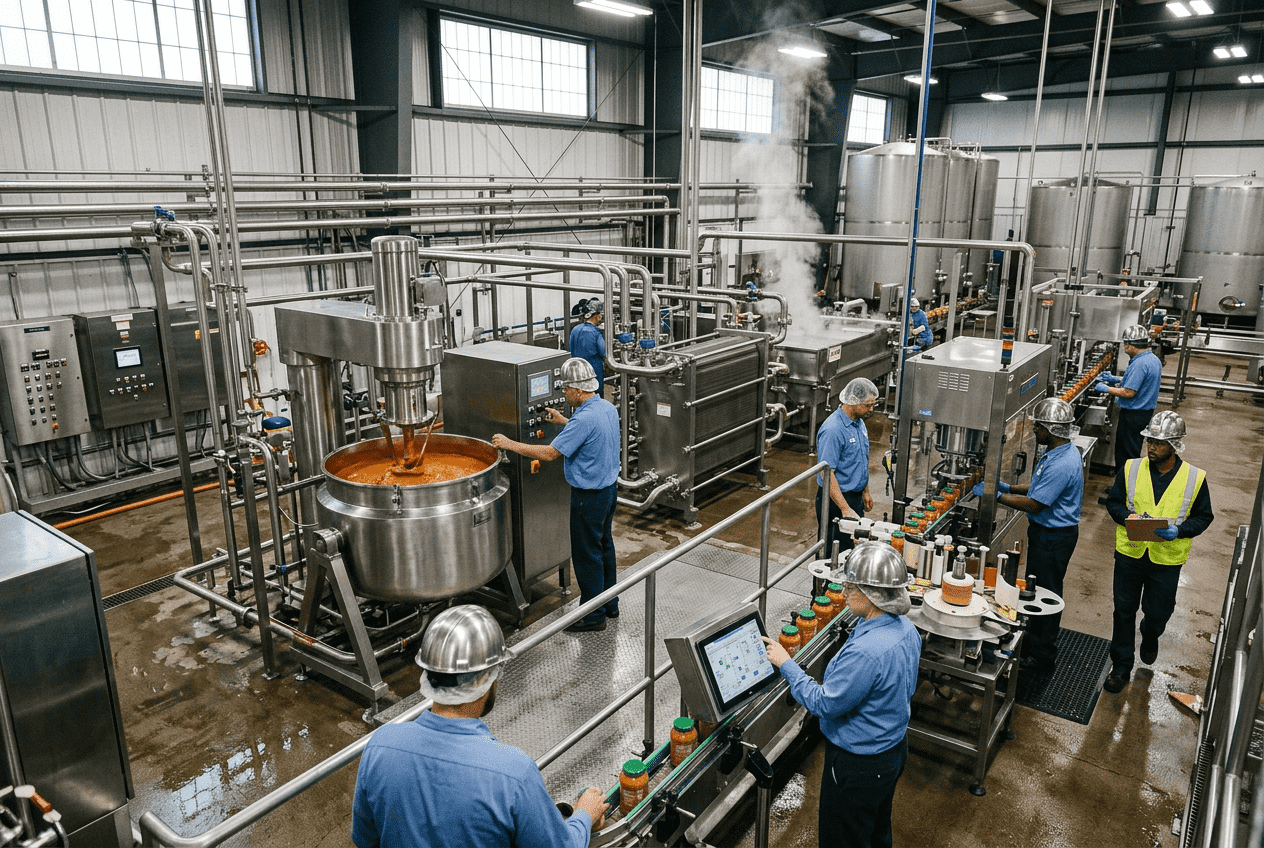
PLC programming for beverage plants in the United States is no longer limited to simple conveyor logic or on/off pump control. Modern beverage automation must coordinate blending, pasteurization, carbonation, filling, packaging, sanitation, utility management, traceability, and line performance in one connected control strategy. For U.S. producers of carbonated soft drinks, beer, spirits, RTD cocktails, juice, kombucha, dairy beverages, and functional drinks, the best PLC systems are recipe-driven, safety-centered, and designed to integrate cleanly with OEM fillers, labelers, pasteurizers, and downstream packaging equipment. In major beverage corridors such as Chicago, Dallas-Fort Worth, Charlotte, Atlanta, Los Angeles, Houston, and the New Jersey logistics belt near Port Newark, producers are under pressure to increase throughput while holding tight control over quality, sanitation, and labor efficiency. This is where advanced PLC architecture, disciplined electrical design, and practical commissioning experience make a measurable difference. A well-built program can stabilize dissolved CO2, reduce giveaway at high-speed fillers, shorten CIP changeovers, improve OEE, and help avoid unnecessary capital spending. For manufacturers evaluating partners, the strongest automation outcomes typically come from firms that understand process, utilities, equipment, and project execution together rather than software in isolation. That matters in beverage because controls affect every commercial metric: yield, uptime, flavor consistency, package integrity, sanitation verification, compliance readiness, and energy use. The quickest answer is this: beverage PLC programming should be designed around process stability, product quality, sanitation, and line integration. In U.S. beverage plants, that means using recipe management for blending, closed-loop PID control for temperature and carbonation, synchronized filler and packaging communication, validated CIP and SIP sequences, and safety interlocks for CO2-rich or alcohol-handling areas. A good system does more than run equipment; it helps operators make better decisions, protects product quality, and supports profitable expansion. For most facilities, the highest-value PLC functions are: When these elements are configured correctly, PLC programming becomes a revenue lever rather than a maintenance burden. This table shows why beverage PLC design must be process-specific. Each area uses different instruments, algorithms, and control priorities, but all of them affect profitability. Beverage production control starts with a stable upstream process. In blending, the PLC should coordinate water treatment, ingredient dosing, concentrate metering, tank transfers, and hold times while validating every recipe parameter against approved limits. In U.S. plants making multiple SKUs across PET, cans, glass, and bag-in-box, recipe errors are one of the fastest ways to lose margin. Automated sequence control prevents wrong-path valve routing, incorrect concentrate additions, and product mix-ups during frequent changeovers. Pasteurization requires a tighter logic structure because the control system is managing a food safety critical step. Whether the process uses HTST, flash pasteurization, tunnel pasteurization, or UHT support equipment, the PLC should manage temperature setpoints, flow conditions, differential pressure, hold tube verification, and diversion logic. If a critical limit is missed, product must be diverted automatically and recorded. The logic must be simple enough to audit but robust enough to handle utility disturbances such as steam pressure fluctuation or glycol instability. At the filler, line speed changes, bowl pressure drift, foaming, and package differences all challenge control accuracy. Packaging adds another layer: depalletizers, rinsers, fillers, cappers, seamers, labelers, case packers, palletizers, and conveyors must stay synchronized while buffering normal line variation. The best PLC programs treat the packaging line as a coordinated flow system rather than isolated machines. In practice, producers near major distribution hubs such as Columbus, Ohio or the Inland Empire in California often prioritize flexible packaging logic because mixed-SKU production and fast retail replenishment demand rapid turnaround. That is why integrated line states, machine handshakes, and consistent fault recovery are as important as the core process logic. The explanation behind this table is straightforward: each unit operation demands a different PLC method. A successful control platform does not rely on one generic routine for all equipment; it uses targeted logic for batching, thermal treatment, filling, and packaging synchronization. Carbonation control is one of the most visible quality markers in carbonated beverages. Consumers detect inconsistency quickly, and poor CO2 control can also affect seam integrity, capping performance, taste, and shelf stability. In PLC terms, stable carbonation requires more than opening a gas valve. The program must continuously evaluate dissolved CO2, product temperature, line pressure, blend ratio stability, and residence time. Inline dissolved CO2 analyzers are increasingly common on high-performance lines because manual lab sampling alone is too slow for modern production speeds. When tied into the PLC or SCADA layer, these analyzers enable feedback correction. If the product temperature rises, the logic can adjust gas flow or back pressure. If the blend ratio drifts, the program can alarm before carbonation falls outside the quality window. In U.S. regions with warm ambient conditions, such as Texas, Arizona, or inland Southern California, thermal stability around bright tanks, transfer lines, and fillers becomes even more important. The carbonation loop must therefore be linked to chilled water or glycol performance, not treated as a stand-alone island. This table explains why dissolved CO2 control should be treated as a multi-variable loop. If a plant only adjusts gas flow and ignores temperature, pressure, and blend conditions, it will chase instability instead of solving it. The line chart reflects the broad direction of the U.S. beverage automation market: steady growth driven by labor constraints, SKU complexity, food safety expectations, and pressure to capture better yield from existing assets. High-speed filling is where control detail pays back quickly. Even small overfills across millions of units create significant giveaway. Underfills create compliance and customer risk. The two most common strategies are volumetric filling and gravimetric filling, each requiring different PLC logic. Volumetric systems depend on timing, flow profile, valve performance, and package consistency. Gravimetric systems measure actual mass and are often more precise for products with variable density or challenging foaming behavior. In either case, the PLC should support dynamic compensation. That means learning from recent fill trends, adjusting for line speed changes, and separating transient disturbances from real drift. Advanced filler algorithms may include: Plants running cans in Milwaukee or glass in upstate New York often face different mechanical behaviors, so the ideal program is not copied blindly from one line to another. It is tuned to container type, product rheology, and actual line speed. The table highlights an important buying point: the right fill algorithm depends on product, package, regulatory expectations, and economic priorities. A lower-cost method may be acceptable for some water lines, while a premium RTD or spirit-based canned cocktail may justify gravimetric control. The bar chart illustrates where upgrade demand is strongest. Fast-growing categories such as spirits RTD and functional beverages often need modern control systems because their recipe complexity and packaging velocity exceed the limits of legacy PLC code. Recipe-driven blending is central to multi-SKU beverage manufacturing. A modern recipe engine allows controlled selection of approved formulas, automatic calculation of ingredient quantities, and electronic enforcement of sequence steps. This is especially valuable when one facility produces branded products, seasonal flavors, private label variants, and promotional runs in the same week. The best systems do more than store setpoints. They also manage lot tracking, operator permissions, version control, and exception handling. For example, if a concentrate tote from a supplier arrives with a slightly different solids value, the PLC and higher-level batch logic can recalculate dosing to hit finished-product targets without relying on paper notes or operator memory. For U.S. beverage producers sourcing ingredients through ports like Savannah, Houston, Long Beach, and Newark, supply variability is a practical reality. Recipe-driven automation helps absorb that variability with controlled adjustments rather than reactive firefighting. Recipe systems also support faster commercialization. When a producer launches a new functional beverage with sweetener, acid, flavor, and nutraceutical additions, the control platform can create a structured path from R&D to production, including test batch scaling, approval workflows, and locked production recipes. The area chart shows the shift from manual or semi-automatic blending toward recipe-driven systems. By 2026 and beyond, this trend is likely to accelerate as labor availability, traceability requirements, and product complexity continue to reshape the U.S. market. CIP and SIP automation are among the highest-return beverage control investments because sanitation affects product safety, line availability, water use, chemical use, and labor. A well-programmed CIP system verifies every phase: pre-rinse, caustic wash, intermediate rinse, acid if required, final rinse, and sanitization. For SIP-enabled applications, the PLC must also validate steam conditions, exposure time, condensate management, and cooling transitions. Modern U.S. beverage plants increasingly want reusable CIP templates that can be applied to tanks, fillers, blend skids, HTST circuits, and transfer lines with only route and recipe changes. This reduces engineering effort and improves consistency. Verification is critical: conductivity, return temperature, flow, and time must all be confirmed, not assumed. Water and utility costs are particularly relevant in regions such as California, Colorado, and parts of the Southeast. The 2026 outlook points toward more sustainability-driven CIP logic, including conductivity-based chemical recovery, rinse optimization, and energy reporting tied directly into the controls layer. This table demonstrates that sanitation automation should be evidence-based. Each phase needs a measurable acceptance criterion so the plant can prove the cycle was completed correctly and optimize resources without compromising hygiene. Safety logic in beverage plants often receives less attention than production logic, but it is equally important. Carbon dioxide can accumulate in low-lying areas, enclosed rooms, and cellar spaces. Ethanol vapors and flammable cleaning chemicals can create additional hazards in distilleries, RTD alcohol production, and certain flavor handling operations. A proper PLC or safety PLC strategy must include gas detection interfaces, ventilation interlocks, area isolation, alarm annunciation, and controlled shutdown actions. In practical terms, a U.S. facility handling CO2 should interlock gas supply systems with detector status, fan proof, and emergency stop architecture. Alcohol-handling environments may require hazardous location design, intrinsically safe devices, classified electrical areas, and carefully documented safety functions. Operators need clear HMI guidance so alarm response is immediate and unambiguous. By 2026, more facilities are expected to formalize digital permit, alarm, and incident workflows through SCADA and plant data systems, helping bridge the gap between controls engineering, EHS management, and operational execution. OEM integration is one of the biggest practical challenges in beverage PLC work. Most plants do not buy one complete system from one vendor. They buy a line over time: perhaps a Krones filler, a Sidel blower, a KHS packer, a Sacmi labeling or closure-related subsystem, plus third-party conveyors, warmers, tunnel pasteurizers, coders, robots, and utilities. The result is a mixed environment with different PLC brands, communication protocols, alarm structures, and operating philosophies. Successful integration depends on a clear interface strategy. That includes handshake definitions, line state standards, fault mapping, data tags, recipe transfer logic, and startup sequencing. Plants often underestimate how much downtime comes from poor machine-to-machine coordination rather than hardware limitations. For facilities expanding near logistics and manufacturing hubs such as St. Louis, Indianapolis, or greater Atlanta, integrated line performance is essential because freight schedules and retailer commitments leave little room for erratic starts and stops. The reason this table matters is that line efficiency often depends more on interfaces than on equipment brochures. Even excellent machines underperform when states, speeds, and faults are not communicated consistently. This comparison chart is useful during planning because it frames integration as an engineering workload. The more devices, recipes, and line states involved, the more important interface testing becomes before startup. Troubleshooting beverage PLC systems should follow a structured sequence: define the symptom, verify the process condition, check instrumentation, review interlocks, inspect communications, then assess mechanical contributors. Many recurring production losses that appear to be “PLC problems” actually begin with bad sensors, inconsistent utilities, sticky valves, or undocumented field modifications. Common beverage automation issues include unstable Brix readings, nuisance pasteurizer trips, filler overfills during speed transitions, CIP conductivity mismatch, inconsistent reject confirmation, and intermittent communications with OEM skids. Strong troubleshooting depends on good alarming, time-stamped event logs, and accessible trend data. A useful rule for U.S. producers is this: if operations, maintenance, and engineering cannot diagnose a failure from the HMI and historian within minutes, the software architecture probably needs improvement. Better visibility often yields faster payback than adding more hardware. When plants review upgrade options, they should ask: Buying advice for the United States market is simple: do not choose a controls partner only on hourly programming cost. Evaluate beverage process knowledge, startup experience, sanitary design understanding, and the ability to coordinate local trades, OEMs, and utilities. What beverage industries benefit most from advanced PLC programming?Carbonated soft drinks, breweries, distilleries, wineries, kombucha producers, juice plants, dairy beverage processors, aseptic lines, and RTD facilities all benefit. The highest gains usually come where there are many SKUs, strict sanitation needs, or high-speed packaging. What are the best applications for recipe-driven automation?Flavor batching, concentrate dosing, sweetener changes, allergen management, lot traceability, and private label production are all ideal applications. How important is dissolved CO2 monitoring?It is critical for sparkling products. Inline monitoring helps maintain taste, package performance, and quality consistency while reducing lab lag and operator guesswork. Should a plant use volumetric or gravimetric filling?It depends on product type, container, speed, and accuracy target. Volumetric methods are common and efficient, while gravimetric systems can provide superior precision for certain premium or variable-density products. How can a plant reduce CIP cycle time without adding risk?Use validated conductivity, temperature, and flow endpoints instead of fixed time alone. Trend data and route-specific templates often reveal safe optimization opportunities. What should be included in OEM integration planning?Handshake matrices, line states, recipe transfer rules, network architecture, alarm mapping, reject logic, and FAT/SAT testing plans should all be defined early. Are future trends changing beverage PLC expectations in 2026?Yes. The biggest trends are predictive maintenance, stronger cybersecurity, energy and water tracking, sustainability reporting, digital sanitation records, AI-assisted diagnostics, and more flexible batch-to-pack changeover automation. How should a company choose a U.S. automation partner?Choose a partner that understands beverage process engineering, utility interaction, sanitary requirements, and construction execution, not just PLC coding. Where can manufacturers find broader engineering and integration support?Companies needing a fuller project perspective can review about our team and operating approach, explore integrated engineering and project services, examine process equipment capabilities, and see practical project examples and case experience. For manufacturers looking at the bigger picture, Disruptive Process Solutions is relevant not just as a controls resource but as a food and beverage engineering partner with practical process depth. Its technological capabilities span controls engineering, PLC programming, SCADA, utility integration, and process design across beverage applications such as carbonation systems, blending, aseptic support, pasteurization, filtration, and water treatment. That breadth matters because automation works best when the programmer understands the process consequences of each logic decision. On the manufacturing side, DPS also supports custom process equipment and integrated systems, including tanks, CIP systems, and other production assets that must function cleanly with the controls strategy. For beverage clients, that creates a more coherent path between mechanical design, electrical integration, and startup performance rather than forcing the plant to bridge gaps between disconnected vendors. From a service standpoint, DPS operates with an end-to-end model that covers planning, engineering, installation coordination, integration, and execution oversight across North America. For U.S. manufacturers scaling capacity or modernizing legacy plants, that service capability is often the difference between a code-only project and a profitable production upgrade. It is especially valuable in complex beverage environments where syrup rooms, utilities, fillers, pasteurization, and sanitation systems all need to work as one operating system. In closing, PLC programming for beverage plants in the United States should be treated as a strategic production discipline. Whether the goal is tighter carbonation control in Houston, faster SKU changeovers in Chicago, more reliable aseptic support in California, or improved CIP performance in North Carolina, the same principle applies: good beverage automation is process-aware, data-driven, safe, and built for commercial reality. -
Food Plant SCADA System Design
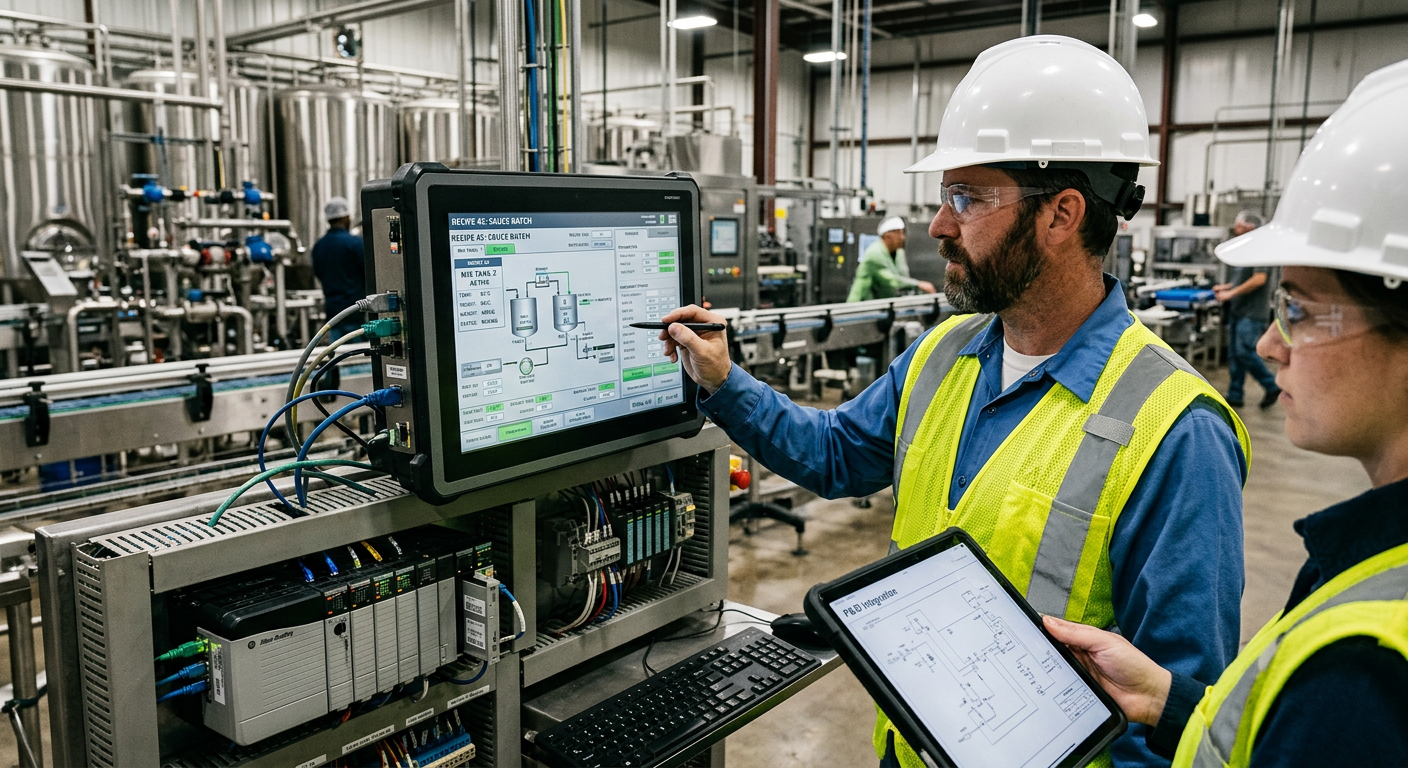
Food manufacturers in the United States use SCADA to turn plant data into real-time decisions. A well-designed food plant SCADA system supervises processing lines, collects production and quality records, manages alarms, supports recipe execution, and creates audit-ready documentation for FSMA and HACCP programs. In practical terms, it connects field devices, PLCs, operators, maintenance teams, and plant leadership into one visible operating environment. For processors in markets such as Chicago, Dallas, Fresno, Charlotte, Los Angeles, Houston, and the I-95 and I-40 freight corridors, SCADA design is no longer only about visualization. It is now tied to labor efficiency, traceability, sanitation verification, utility performance, and rapid response when plants ship through major trade hubs such as the Port of Los Angeles, Port of Long Beach, Savannah, Houston, and New York/New Jersey. Whether the facility makes sauces, proteins, dairy, RTD beverages, aseptic products, or shelf-stable foods, the SCADA layer increasingly determines how well operations scale and how cleanly data stands up during customer, USDA, FDA, SQF, or BRC reviews. Disruptive Process Solutions supports this kind of work across North America through integrated engineering, automation, equipment, installation, and project execution. Rather than treating controls as an isolated scope, DPS approaches SCADA as part of a larger profitable capital project strategy, linking process design, utility capacity, operator workflow, equipment integration, and compliance documentation. A food plant SCADA system is the software and communications layer that lets manufacturers monitor equipment, control process visibility, manage alarms, trend critical parameters, store production records, and report performance across the entire facility. In U.S. food and beverage plants, a strong SCADA design usually includes: For many U.S. processors, the best SCADA platform is not the one with the most screens. It is the one that fits the plant’s sanitation model, packaging speed, recipe complexity, staffing level, network architecture, and future expansion plans. The table above shows why SCADA design must be tailored to the product and process. A beverage plant focused on syrup blending will not prioritize the same data structures as a retort facility or a USDA-regulated protein operation. At the most basic level, SCADA stands for supervisory control and data acquisition. In a food plant, “supervisory” means operators and managers can see the process, know what state assets are in, and act based on confirmed information rather than walking the floor to check conditions manually. “Data acquisition” means the system collects values and events from instruments and controllers, timestamps them, and stores them in a way that can be reviewed later. The supervision role is especially important in modern U.S. plants where labor is tight and multiple lines may run with smaller crews. A single supervisor may need to oversee a kettle room, utility area, CIP skid, filler block, and packaging line from one control room. SCADA presents these areas in a unified view so that the team understands not only whether equipment is on, but whether it is producing, starved, blocked, idle, in sanitation, waiting on QA release, or in fault. Alarm management is the second major function. Good alarm design warns only when action is needed. In food plants, that often includes cooking temperatures below setpoint, utility pressure drops, low chemical concentration in CIP, retort deviations, high tank level, filler faults, refrigeration issues, and downtime events. Poorly designed alarm systems flood operators with too many messages, causing alarm fatigue. Well-designed systems prioritize alarms by food safety, process risk, maintenance urgency, and production impact. The third function is records. A properly structured historian and reporting layer can automatically create batch records, sanitation logs, critical control point histories, utility summaries, downtime reports, and electronic signatures where required. These records matter in the United States because plants are expected to show evidence quickly during audits and investigations. When a customer asks for proof of thermal treatment or allergen cleanout, paper records and memory are rarely enough. DPS often sees food and beverage projects where SCADA value is unlocked when the controls scope is tied directly to the plant’s business objective: more throughput, more usable data, lower labor burden, better audit posture, or more reliable startup after expansion. That broader operating view is one reason clients exploring food and beverage engineering services often evaluate SCADA architecture alongside process equipment, utilities, and project execution. Food plant SCADA architecture works best when it is divided into clear layers. This improves cybersecurity, maintainability, startup efficiency, and future expansion. Field layer: This includes instruments and devices such as flowmeters, RTDs, pressure transmitters, valve position sensors, VFDs, scales, load cells, conductivity probes, pH analyzers, motor starters, barcode scanners, and smart utility meters. In food plants, the field layer must be selected for washdown conditions, chemical exposure, hygienic requirements, and calibration needs. Control layer: This is usually the PLC and local control network layer. PLCs execute sequencing, interlocks, PID loops, machine states, CIP logic, recipe steps, and line coordination. Food plants commonly use this layer to enforce process integrity, for example by preventing product transfer when a destination tank is not released or by stopping fill when hold conditions are triggered. Supervision layer: This includes SCADA servers, HMIs, historians, alarm databases, report engines, thin clients, and interfaces to MES, ERP, quality, maintenance, and cloud systems. This layer is where plant personnel interact with the process, analyze trends, compare shifts, review downtime, and generate reports for leadership or auditors. For geographically distributed companies with plants in the Midwest, Southeast, Texas, and the West Coast, a standardized layered architecture makes it easier to compare sites and roll out improvements. A sauce plant near Atlanta, a dairy processor in Wisconsin, and a beverage co-packer in Southern California may run different line configurations, but their SCADA standards can still use the same naming structures, alarm philosophy, historian tags, and report templates. This layered table shows that SCADA design is not just screen design. It is a full operating architecture that shapes reliability and decision-making from the instrument level to the enterprise level. The line chart reflects a realistic upward trend in U.S. food plant SCADA modernization demand, driven by labor pressure, data needs, cybersecurity upgrades, and compliance expectations heading into 2026. The business case for a food plant SCADA system usually becomes clear in five areas. 1. Traceability. A good SCADA platform links lots, batches, timestamps, operator actions, process conditions, and equipment states. If a customer complaint or deviation occurs, the team can quickly find the affected window and understand what happened. This matters across meat, dairy, RTD beverages, and co-packing environments where lot segregation and rapid retrieval of records are essential. 2. Quality control. Operators can compare live values against limits, see trends before failure occurs, and be guided through standardized responses. Instead of discovering a problem after a tank has finished blending, teams can detect drift in temperature, pH, flow, or ingredient addition during the process. 3. OEE improvement. SCADA helps classify downtime, minor stops, speed loss, and starved or blocked states. Once the plant can see the reasons behind availability and performance loss, teams can target labor, maintenance, changeovers, or upstream constraints more effectively. 4. Waste reduction. Better recipe execution, transfer control, utility monitoring, and batch hold visibility can reduce product giveaway, overfill, water use, rework, and CIP chemical loss. This is increasingly important in high-cost ingredient categories such as proteins, dairy solids, flavors, sweeteners, and functional additives. 5. Remote monitoring. With secure role-based access, leadership, engineering, and maintenance teams can review plant conditions without standing at the machine. For multi-site groups, remote dashboards support standardization and faster troubleshooting. The explanation behind this table is straightforward: every SCADA investment should be connected to a measurable plant KPI. If the project cannot be tied to retrieval time, yield, downtime, labor efficiency, compliance readiness, or cost per unit, the design may be too generic. The bar chart highlights where SCADA demand is often strongest: beverage, co-packing, and dairy operations where recipe changeovers, high line utilization, and record sensitivity are especially important. Many plants still make the mistake of judging SCADA quality by how colorful the screens look. In reality, better HMI design usually looks quieter. ISA-101 principles encourage calm, consistent displays that guide the operator to what needs action. Neutral backgrounds, limited use of color, and clear equipment state logic help people spot abnormal conditions faster. Calm backgrounds. Gray and muted tones reduce eye fatigue and stop normal running conditions from competing visually with alarms or abnormal states. Constant green and red everywhere may look active, but it often hides what matters. Alarm hierarchy. Not every event deserves the same visual weight. Critical food safety alarms, major production alarms, advisory alarms, and maintenance notifications should be distinct. If a low-severity communication blip looks the same as a failed thermal process condition, the system is poorly prioritized. Operator task flow. Screens should match how the job is actually performed. If an operator first checks line state, then confirms tank availability, then verifies recipe, then starts a transfer, the HMI should support that sequence naturally. Good SCADA design reduces clicks, screen jumps, and confusion under pressure. DPS brings useful value here because its controls work sits alongside structural, mechanical, electrical, process, and utility engineering. That broader technical capability makes it easier to design HMIs around real process constraints, not just software conventions. In plants with blending, pasteurization, retort, fermentation, distillation, cooking, chilling, or CIP, the best screen layout reflects how equipment, operators, and utilities interact in the field. This table matters because HMI design has direct production consequences. A cleaner display can shorten troubleshooting time, reduce operator error, and improve startup confidence after line modifications. OPC UA has become a practical foundation for modern food plant SCADA connectivity because it supports standardized, secure, and scalable data exchange between devices, PLCs, SCADA servers, historians, MES applications, and enterprise systems. In the United States, plants expanding through acquisition or adding new packaging technologies often face a mixed automation environment. OPC UA helps bridge different vendors more cleanly than older one-off integrations. IIoT connectivity extends that value by moving selected plant data into higher-level analytics, sustainability reporting, predictive maintenance tools, or enterprise dashboards. The key is discipline. Not all data should be sent everywhere. Food processors need a strategy that defines which tags are operationally critical, which are compliance-critical, which are maintenance-focused, and which belong in aggregated business reporting. Examples include: For U.S. plants, cybersecurity must be built into this architecture from the start. Network segmentation, role-based access, patch strategies, and secure remote support matter more than ever. A cloud dashboard is only helpful if it does not create unacceptable operational risk. Food manufacturers evaluating vendors should ask whether the integrator can support not just PLC programming but also secure connectivity, historian design, data governance, and long-term support. That is why many owners reviewing the DPS team and approach look beyond controls coding alone and evaluate whether the partner understands project delivery, compliance expectations, and plant operations at scale. Recipe management is one of the highest-value SCADA functions in food and beverage manufacturing because it sits at the intersection of quality, speed, labor, and traceability. A recipe-capable SCADA platform can manage formula versions, setpoint downloads, sequencing logic, ingredient verification, operator prompts, lot usage tracking, and exception handling. In a beverage facility, recipe integration might coordinate syrup blending, water treatment setpoints, carbonation targets, flavor adds, and packaging selections. In a prepared foods plant, it may govern batch order, cook curves, ingredient additions, and hold-release workflow. In a dairy plant, it can support fat standardization, culture additions, timing windows, and CIP dependencies between campaigns. The best recipe systems do not only store formulas. They also enforce context: DPS also brings manufacturing capability into this conversation. Because the company designs and supplies process equipment such as tanks, CIP systems, marination tumblers, and cooking vessels, recipe logic can be aligned more effectively with actual equipment capabilities, utility loads, and transfer paths. That matters when custom process skids, tanks up to 12,000 gallons, or plant-specific batching systems need controls and SCADA to function as one integrated production asset rather than disconnected scopes. The area chart shows a realistic trend shift: more U.S. processors now expect SCADA to include recipe intelligence, analytics, and compliance support rather than simple line monitoring alone. One of the strongest arguments for SCADA in U.S. food manufacturing is audit readiness. FSMA, HACCP, customer standards, and certification schemes all put pressure on plants to show complete, accurate, and timely records. Automated reporting reduces the burden of manual collection and improves consistency. Common automated reports include CCP temperature histories, pasteurization or retort summaries, CIP verification records, ingredient and lot trace logs, downtime reports, sanitation event logs, utility performance summaries, and batch genealogy reports. Plants can also create exception reports that show only out-of-spec events and how they were handled. For operators and QA teams, the benefit is speed. Instead of assembling records from clipboards, machine printouts, and multiple systems, the team can retrieve a consistent report from one validated structure. For management, the benefit is confidence that the plant can answer questions quickly during customer visits, mock recalls, or official reviews. Service capability matters here as much as software. DPS’s Design Build Manage model supports end-to-end project execution, from planning and engineering through installation, integration, and commissioning. That means reporting requirements can be discussed early, not bolted on after startup. In real projects, that alignment often prevents expensive rework in network design, I/O mapping, naming standards, and historian structure. The explanation for this table is simple: compliance reporting should not live outside the control philosophy. If a parameter is critical to food safety or release decisions, it should be structured in the data model from day one. Choosing a SCADA platform for a U.S. food plant should start with operational fit, not brand familiarity. A processor making cultured dairy in Wisconsin, a ready-to-drink producer in North Carolina, and a protein facility in Kansas will not all need the same architecture, licensing model, or recipe depth. Use this checklist when evaluating options: In the United States, buyers should also evaluate supplier footprint and execution capacity. National processors often prefer partners that can support projects from the Carolinas to California and from the Midwest to Texas without losing continuity in standards. This is especially important when facilities are located near logistics centers such as Memphis, Indianapolis, Dallas-Fort Worth, or Southern California distribution corridors. For companies comparing options, it is useful to review actual project outcomes and integration experience, not just software screenshots. That is why buyers often look at project examples and case work to understand whether an engineering partner can deliver SCADA as part of a profitable operating solution. As this table shows, the right SCADA platform is not just a product choice. It is a lifecycle choice involving architecture, service depth, and long-term maintainability. The comparison chart illustrates a common market reality: suppliers that combine engineering, controls, integration, installation, and commissioning generally create stronger results than a visualization-only approach, especially in regulated food environments. When buyers need both process and automation alignment, they often also review the available process equipment and system integration capabilities of the partner. That is particularly relevant for projects involving tanks, CIP systems, blending skids, thermal processes, or custom vessels where controls behavior must match mechanical design. What is the difference between SCADA and HMI in a food plant?HMI usually refers to the operator interface at the machine or line level, while SCADA is the broader supervisory system that collects data, manages alarms, stores history, and often connects multiple areas or systems together. Is SCADA necessary for a small or mid-sized U.S. food manufacturer?Often yes, especially when the plant needs better traceability, lot records, recipe control, or reduced labor dependency. Smaller facilities may start with a targeted architecture and expand over time. Can SCADA help with FSMA and HACCP documentation?Yes. It can automate collection of critical process values, time-stamped events, acknowledgments, and reports that support verification, corrective action review, and audit response. What products benefit most from recipe-enabled SCADA?Beverages, dairy, sauces, dressings, ingredients, prepared foods, cultured products, marinated proteins, and any operation with frequent formula changes or batch sequencing needs. How does SCADA improve OEE?By capturing machine states, downtime reasons, line speed loss, and upstream/downstream dependencies. This makes it easier to find chronic losses and improve availability and performance. What communications standards should U.S. plants look for?OPC UA is a strong baseline for modern interoperability. Plants should also evaluate secure historian connectivity, PLC compatibility, role-based access, and cybersecurity architecture. Should SCADA be cloud-based?Some functions can benefit from cloud analytics or remote dashboards, but core control and critical operations should remain designed for plant reliability and security. Hybrid models are common. What should food manufacturers expect in 2026?Expect stronger demand for electronic batch records, cybersecurity segmentation, utility and sustainability dashboards, AI-assisted alarm analysis, predictive maintenance inputs, and tighter integration between SCADA, MES, quality, and enterprise planning. Policy pressure around traceability, energy use, and data defensibility will keep rising, while sustainability goals will push more plants to monitor water, steam, compressed air, glycol, and electricity with the same discipline used for production lines. How should a company choose an integration partner?Choose a partner that understands the full production environment: process design, utilities, food safety, equipment behavior, controls, startup, and project execution. The strongest results usually come from firms that can engineer, build, and manage the whole scope rather than treating SCADA as a disconnected software package. In the United States market, food plant SCADA design is becoming a strategic operating system rather than a background tool. Plants that invest wisely gain more than screens: they gain visibility, repeatability, audit confidence, and better use of capital. That is exactly where a multidisciplinary partner such as DPS can add value, combining technological capability, manufacturing understanding, and execution-focused services to help processors build systems that work on day one and remain useful as the business grows. -
Beverage Plant SCADA System Design
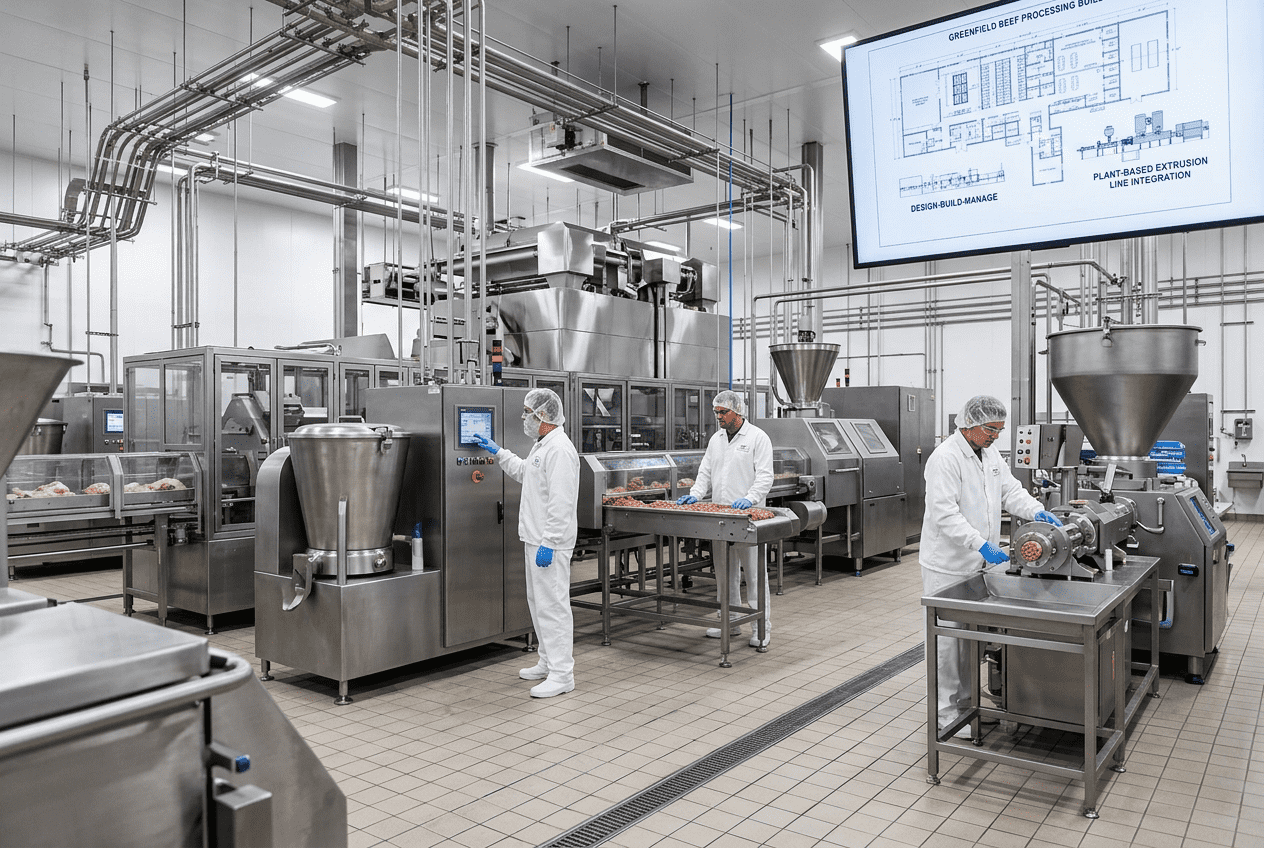
Beverage manufacturers in the United States are under pressure to run faster, safer, and more efficiently while meeting strict quality, sanitation, and traceability expectations. A well-designed SCADA system gives plant teams one operating picture across blending, batching, pasteurization, utilities, filling, packaging, refrigeration, and CIP. For operators, maintenance teams, quality managers, and executives, the value is simple: better visibility, fewer surprises, faster decisions, and stronger profitability. In high-throughput beverage operations from North Carolina and Texas to California, Illinois, Georgia, and New Jersey, SCADA is no longer just a screen for viewing tanks and pumps. It is the digital layer that connects PLC logic, instrumentation, historian data, alarms, recipes, production counts, utility consumption, and remote support. In facilities serving grocery, foodservice, club store, convenience, and export channels through hubs such as Los Angeles, Houston, Savannah, Chicago, and the Port of New York and New Jersey, that visibility directly affects throughput and margin. A beverage plant SCADA system is the supervisory platform that monitors and controls the full production environment, from syrup rooms and water treatment to blending, carbonation, pasteurization, filling, packaging, utilities, cold storage, and shipping support. In the United States market, the best designs combine real-time process data, recipe management, alarm rationalization, batch records, OEE reporting, energy dashboards, and secure remote access. For beverage companies expanding capacity or modernizing legacy controls, SCADA should be treated as part of the business case, not just a software purchase. For buyers, the practical question is not whether to implement SCADA, but how to structure it so the plant gains measurable value. A good system should help reduce downtime, stabilize Brix and temperature control, improve first-pass quality, strengthen cold-chain assurance, lower utility consumption, and speed operator response across multiple shifts. It should also scale when a line moves from 20 million cases to 80 million cases per year, or when a site adds RTD, dairy-based beverages, kombucha, spirits, juice, or aseptic formats. The table above shows why SCADA decisions should be tied to operating outcomes. When the system is aligned with throughput, compliance, and margin goals, it becomes a plant performance platform rather than a standalone controls layer. SCADA provides a common view of the beverage process from incoming utilities to finished case counts. In blending and batching areas, it manages recipe sequencing, ingredient additions, tank levels, valve states, agitation, inline Brix feedback, and sanitation status. In carbonation and bright beer or beverage storage, it can display pressure, dissolved gas targets, transfer timing, and tank changeovers. In thermal processes such as HTST, UHT, flash pasteurization, tunnel pasteurization, and aseptic support systems, it tracks the time-and-temperature relationships that matter for product safety and quality. At the packaging end, visibility becomes just as important. Filler speed, capper performance, seam or closure verification, labeler status, rinse cycles, line accumulation, reject counts, and palletizing performance can all roll into one production dashboard. That integrated view matters in U.S. plants where one upstream upset in a syrup room or glycol loop can quietly cascade into filler downtime, quality loss, or missed shipping windows. SCADA helps teams see the entire chain, not just isolated machines. Different beverage categories need different levels of control. Craft brewing operations may focus on fermentation temperature management and cellar visibility. Carbonated soft drink plants need strong blending, carbonation, and filler synchronization. Distilled spirits facilities may track proofing, storage, and transfer accuracy. Dairy and protein beverage sites may emphasize pasteurization, hygienic design, batch genealogy, and refrigerated storage. A strong SCADA architecture supports all of these without forcing the same template onto every plant. This is also where technology capabilities matter. Companies with deep controls and process expertise can design SCADA around actual manufacturing realities rather than generic tags and screens. Disruptive Process Solutions brings combined process, mechanical, electrical, and controls engineering to these projects, including PLC programming, automation, historian integration, recipe and batch functionality, and utility system controls. That matters because a beverage SCADA platform works best when the process design, instrumentation, equipment selection, and control strategy are engineered together. For readers comparing providers, it is helpful to review both engineering and integration services and actual plant execution experience. In beverage manufacturing, the SCADA layer should never be separated from hygienic process design, line balancing, utility loading, and commissioning. Real-time monitoring is the core of any beverage SCADA system. In U.S. beverage plants, four parameter groups are especially critical: temperature, pressure, flow, and Brix. Together, they shape product safety, flavor consistency, carbonation performance, batch accuracy, and package quality. Temperature monitoring is essential in pasteurization, aseptic support, dairy processing, blending, CIP, and cold storage. Poor temperature control can create food safety risk, destroy flavor balance, or cause package fill instability. Pressure monitoring matters in carbonation, pasteurization circuits, filtration, membrane systems, tank blankets, and compressed utility systems. Flow measurement affects ingredient dosing, syrup and water ratios, line balancing, and transfer accountability. Brix monitoring is central in juice, soft drinks, syrups, teas, sports beverages, and many functional beverages where sugar content or dissolved solids directly define finished quality. The most effective SCADA screens do more than display values. They show trends, acceptable bands, alarm priorities, deviation history, and connections to recipes or batch records. Instead of simply seeing that a Brix reading is high, the operator should be able to tell whether the problem began after a tank switch, during a valve transition, or because of a flowmeter drift. That turns data into action. The table above shows how parameter monitoring must align with process intent. A high-quality SCADA design does not treat all tags equally. It identifies what is truly critical to control, product release, and asset protection. Plants with strong process integration often gain an advantage here. DPS supports beverage manufacturers with process engineering and controls integration that connect instrumentation, skid logic, utility loads, and plant-level visualization. That is especially valuable when a site includes blending, carbonation, filtration, pasteurization, filling, RO water treatment, glycol distribution, compressed air, and CIP in one coordinated system. Production tracking is where SCADA starts speaking the language of management. Operators need live line status, but plant leaders need output, downtime, speed loss, waste, and schedule attainment in a format they can use. OEE dashboards bridge that gap by combining availability, performance, and quality into a clear operating measure. In beverage plants, however, good OEE reporting must be line-aware and packaging-aware. A can line, bottle line, keg line, and aseptic carton line behave differently and should not be forced into identical downtime logic. Typical dashboard inputs include filler speed, good count, reject count, planned vs actual production, micro-stops, sanitation time, changeover time, package format, and batch release status. In larger U.S. plants, these dashboards often roll up by line, shift, SKU, package type, and customer. That helps supervisors understand whether performance losses are driven by recipe complexity, packaging material quality, labor coverage, or upstream utility instability. OEE becomes especially powerful when tied to genealogy and process history. If a line’s performance drops every time a certain syrup family runs or when a specific filler bowl temperature band is exceeded, the SCADA historian can help prove it. This is how beverage producers move from reactive troubleshooting to repeatable improvement. The explanation behind this table is straightforward: each KPI only has value when the source data is trustworthy and standardized. That is why OEE projects often fail when downtime reasons are too vague, line states are poorly defined, or operators must manually enter too much information. A better approach is to automate core states and ask operators only for the context machines cannot know. On the manufacturing side, DPS supports a wide range of beverage categories, including brewing, spirits, wine, kombucha, RTD, carbonated and non-carbonated beverages, juices, functional drinks, dairy-based products, and aseptic applications. That breadth matters because OEE drivers differ sharply across categories. A tunnel pasteurized bottle line in the Midwest, an RTD can line in Texas, and an aseptic filling operation in California each need different dashboard logic. Cold chain control is often treated as a utility issue, but in many beverage plants it is a product quality issue, a warehouse issue, and a customer service issue at the same time. SCADA can supervise chillers, glycol loops, compressors, evaporators, cold rooms, storage zones, process cooling, and alarm notifications in one framework. This is particularly relevant in dairy beverages, fresh juice, kombucha, and products that rely on stable post-process storage conditions. In U.S. distribution networks, beverage plants may ship to distant markets through Atlanta, Dallas, Phoenix, Seattle, Miami, and Northeast corridors, sometimes with multiple handoffs before retail delivery. A refrigeration upset in the plant can ripple downstream into shortened shelf life, customer claims, or rejected loads. SCADA helps reduce that risk by trending room temperatures, suction and discharge pressures, glycol supply and return, compressor sequencing, defrost cycles, and door-open events. Cold-chain visibility also helps warehouse and logistics planning. If a finished goods cooler is trending warm because of door traffic during peak staging, managers can change forklift patterns, add strip curtains, rebalance inventory rotation, or investigate evaporator performance before product quality is threatened. The best systems do not just alarm on failure; they expose the leading indicators that allow intervention first. For plants with on-site utility complexity, this is where integrated engineering adds value. DPS designs and integrates process and utility infrastructure including glycol systems, refrigeration support, HVAC, compressed air, boilers, cooling towers, process water, and wastewater coordination. In practical SCADA terms, that means refrigeration supervision can be connected to production schedules, sanitation windows, and line demand instead of being monitored as a separate island. Energy is one of the clearest areas where SCADA can create bottom-line value. Beverage plants are heavy users of electricity, steam, chilled water, compressed air, hot water, and refrigeration capacity. Utilities often represent a major operating cost, especially in high-throughput packaging plants and thermal-process facilities. Many sites discover that they have line-level efficiency initiatives but almost no reliable visibility into where energy is actually going. An energy-aware SCADA system can trend kilowatts by line, compressor loading, boiler cycling, steam consumption, compressed air pressure stability, chiller efficiency, and water use by process area. It can also normalize energy by cases, gallons, or batches produced, which is crucial for understanding whether utility intensity is improving or just following production volume. Plants that focus on optimization often target large savings through leak reduction, compressor control, pump sequencing, demand management, heat recovery, and shift-based load balancing. Depending on baseline conditions, selected systems really can expose opportunities associated with 40% to 60% reductions in specific utility waste categories, even if total plant energy reduction is typically lower and must be validated case by case. For U.S. beverage manufacturers facing demand charges, labor constraints, and sustainability commitments, energy dashboards also support capital planning. If a line expansion is being considered in Ohio or a new co-packing plant is ramping in the Southeast, SCADA utility data helps answer whether the issue is equipment capacity, controls sequencing, operational discipline, or infrastructure sizing. The explanation for this table is that energy performance improves fastest when utility data is mapped to operating decisions. Plants do not save money merely by seeing power data; they save when the data is tied to compressor sequencing, boiler control, CIP timing, line scheduling, and sanitation practices. Alarm management is one of the most underestimated parts of beverage SCADA design. Too many plants live with overloaded alarm lists, nuisance events, poor priorities, stale setpoints, or operator screens that make abnormal situations harder to understand. When alarms are not rationalized, teams begin to ignore them, acknowledge them without response, or miss the one event that matters during a real upset. The ISA-18.2 lifecycle provides a structured way to define philosophy, identify alarms, rationalize them, implement them, operate them, maintain them, monitor performance, and manage change. EEMUA 191 adds practical performance expectations for alarm rates, standing alarms, floods, and operator usability. These frameworks matter in beverage plants because many upsets involve multiple interacting systems: utilities, process skids, thermal systems, and packaging lines. Without discipline, one failure can generate dozens or hundreds of low-value alarms. Good alarm design in a beverage plant means operators know what happened, what matters most, what response is expected, and how quickly they need to act. A high glycol return temperature, a low blend flow, and a failed diversion valve do not deserve the same treatment. Alarm classes, shelving rules, deadbands, delays, suppression during maintenance, and audit history should all be part of the SCADA design. For buyers evaluating SCADA vendors or integrators, this table highlights an important point: alarm performance is measurable. Ask how priorities are set, how nuisance alarms are reduced, how metrics are reviewed, and how management of change is handled after startup. The SCADA market continues to expand as manufacturers modernize legacy controls, connect assets, improve data usage, and support remote operations. For the beverage industry in the United States, the growth outlook is being driven by several practical factors: demand for traceability, continued packaging automation, rising energy costs, more complex product portfolios, labor pressure, cybersecurity investment, and the expansion of co-packing capacity. Market growth from approximately $4.2 billion to $8.9 billion by 2033 reflects broader adoption across industries, but beverage manufacturing is one of the strongest fit categories because plants operate with a mix of batch and continuous processes, strict quality standards, and high sensitivity to downtime. The sector is also seeing growing demand for scalable systems that can serve one site today and a network of plants tomorrow. In 2026 and beyond, future trends will likely include stronger edge analytics, AI-assisted alarm review, tighter ERP and MES connections, energy-intensity benchmarking, more cybersecurity segmentation, and sustainability reporting tied to utilities and waste. Policy pressure around emissions, water use, and refrigerant management will push SCADA from operations support into ESG and capital planning roles. In regional terms, beverage investment remains active around manufacturing corridors in North Carolina, South Carolina, Georgia, Tennessee, Texas, California, Wisconsin, Illinois, and the Northeast. Access to labor, distribution lanes, water resources, and customer proximity continues to shape where automation projects are prioritized. Mobile visibility has become a practical requirement for beverage operations that run multiple shifts, off-hours sanitation, weekend production, and distributed management teams. Supervisors want to know if a filler stopped at 2:00 a.m. Engineering leaders want trend access during startup. Executives want daily production snapshots without waiting for a manual spreadsheet. Remote access solves these problems only when it is secure, role-based, and purpose-built. The right design separates operational convenience from cybersecurity risk. It should include segmented networks, user authentication, secure remote gateways, audit trails, alarm notification rules, and limited privileges by role. A plant manager in Charlotte, a maintenance lead in Dallas, and an integration specialist supporting a startup in Southern California may all need access, but not the same access. Secure mobile SCADA is about controlled visibility, not open exposure. By 2026, more beverage plants are expected to adopt hybrid architectures that combine on-premise control reliability with cloud-enabled reporting, mobile dashboards, and centralized historian access. This will help multi-site operators compare lines, benchmark utilities, and support remote experts without compromising core control resilience. Buying advice is straightforward here. Ask whether the vendor or integrator supports remote alarm delivery, historian access, permission layers, backup strategy, cybersecurity hardening, and recovery planning. Also ask whether mobile views are optimized for the people who will actually use them: operators, supervisors, executives, maintenance, or outside support partners. What should a beverage plant SCADA system include?At minimum, it should include process visualization, alarming, historian data, production tracking, user security, reporting, and interfaces to PLCs and critical instruments. Many U.S. plants also benefit from recipe management, OEE, utility monitoring, and mobile dashboards. Is SCADA different from PLC control?Yes. PLCs execute machine and process control logic. SCADA supervises, visualizes, trends, alarms, reports, and often coordinates plant-level data across multiple PLCs and systems. Which beverage categories benefit most?Nearly all do, including soft drinks, RTD products, brewing, spirits, dairy beverages, juices, kombucha, and aseptic lines. The use case changes by product, but the need for visibility and control is consistent. How does SCADA help with quality?It improves control of temperature, pressure, flow, Brix, sanitation cycles, batch records, and deviation tracking. That supports consistency, audit readiness, and faster root-cause analysis. Can SCADA reduce downtime?Yes, especially when paired with good alarm management, downtime coding, OEE dashboards, and utility integration. The biggest gains come when line states and root causes are captured accurately. How should companies choose an integrator?Choose a partner that understands both automation and beverage process engineering. Ask about hygienic design knowledge, utility integration, commissioning support, recipe logic, alarm rationalization, and post-startup service. What about local suppliers and project partners in the United States?Most successful projects use a mix of national controls expertise and local trades for electrical, mechanical, and installation work. This model works well in markets such as Cary, Houston, Chicago, Los Angeles, Atlanta, and Seattle because it balances technical consistency with regional execution speed. How do I compare solution approaches?Evaluate them on process fit, scalability, cybersecurity, data quality, utility integration, reporting, service support, and total lifecycle value, not just initial software cost. That comparison reflects a key buying reality in the United States market: beverage SCADA works best when software, process, utilities, equipment, and startup execution are planned as one operating system. Buyers should review supplier fit through that lens. For companies looking for a partner with both strategic and execution capability, DPS brings a business-minded engineering approach to food and beverage capital projects across North America. The company supports clients with process design, controls integration, capital planning, project execution, and field coordination while staying focused on long-term plant profitability rather than short-term installation scope. Its service capabilities are especially relevant to SCADA-driven projects: front-end feasibility work, owner representation, project and program management, general contracting where licensed, equipment supply, turnkey installation, commissioning support, and system integration. Readers evaluating capital projects can also review process equipment capabilities and browse project case examples to understand how design, build, and management can be aligned in real manufacturing environments. A final practical recommendation: treat SCADA as part of overall plant architecture. The strongest beverage facilities do not buy screens first and solve process problems later. They define production goals, utility realities, quality risks, expansion plans, and staffing constraints up front, then build a SCADA strategy around them. That is how a beverage plant gains true visibility from blending to filling, from refrigeration to utilities, and from the control room to the executive dashboard. -
Food Facility Storage Tank Design Standards
Food facility storage tank design in the United States is not just about holding product. It directly affects food safety, cleaning time, product shelf life, operator safety, utility consumption, and long term maintenance costs. Whether a plant is receiving milk in Wisconsin, blending sauces in Illinois, storing juice in California, fermenting beverages in North Carolina, or staging ingredients near the ports of Houston, Savannah, Newark, or Los Angeles and Long Beach, the same design principles matter: choose the right alloy, build for sanitary access, validate cleanability, size agitation correctly, confirm pressure and temperature limits, and align the vessel with FDA, USDA, 3-A, and ASME expectations where applicable. In the United States market, buyers are also balancing labor shortages, tighter audit expectations, sustainability goals, and future automation plans. As a result, modern food storage tank selection increasingly includes not only shell thickness and nozzle count, but also CIP coverage validation, digital instrumentation, recipe flexibility, and integration with upstream and downstream systems. For processors that expect to scale in regions such as Dallas, Atlanta, Chicago, Fresno, Seattle, Charlotte, and Minneapolis, a well designed tank platform can reduce total cost of ownership far more than a low first-cost vessel that creates sanitation or process bottlenecks later. The best food facility storage tank design standard for most United States applications is a sanitary stainless steel vessel engineered around the product, cleaning method, pressure and temperature needs, and regulatory environment of the plant. In practical terms, that usually means a 304 stainless tank for standard non-corrosive food products, a 316L stainless tank for acidic, salty, aggressive, or higher purity applications, interior finishes in the sanitary range with polished welds, full drainability, properly placed CIP spray devices, hygienic nozzles and manways, and documented fabrication quality. If the vessel will run under pressure, vacuum, or jacketed heat transfer conditions, it should be engineered to the relevant ASME code section and stamped when required by jurisdiction or customer specification. For buyers, the biggest mistake is choosing a tank by capacity alone. A 5,000 gallon tank for dairy, brine, syrup, aseptic ingredients, or protein marinades may need completely different metallurgy, finish, slope, cleaning energy, agitation style, and controls. Tank design should follow the product path, not the catalog page. Across the United States, market demand is rising for tanks that support higher sanitation assurance, faster product changeovers, automation visibility, and lower water and chemical use. The chart below shows a realistic market growth trend for sanitary food and beverage tank projects tied to reshoring, capacity expansion, and co-packing growth. That growth is especially strong in beverage hubs, dairy regions, protein processing corridors, and co-manufacturing markets where flexible production has become a competitive advantage. Plants near major logistics routes often prioritize standardized tank skids and modular utility tie-ins to accelerate installation and qualification. Material selection is the foundation of food tank performance. In the United States, 304 stainless steel remains the most common choice for storage of water, many beverages, dry ingredient slurries, oils, and general food products that are not highly corrosive. It offers a strong balance of cost, corrosion resistance, weldability, and availability. For many processors, it is the right baseline material. 316L stainless steel becomes the better option when chloride exposure, acidic formulas, aggressive sanitation chemistry, salt heavy products, flavor concentrates, brines, cultured products, or high purity process streams increase corrosion risk. The lower carbon content of 316L also supports weld integrity and corrosion performance in sanitary fabrication. If a processor is handling tomato based products, saline marinades, citrus blends, or certain dairy ingredients cleaned with more aggressive CIP chemistry, 316L can reduce the long term risk of pitting, tea staining, and premature replacement. There is no universal rule that 316L is always required for better quality. Often, a mixed strategy is most cost effective, such as 316L on product-contact wetted surfaces and 304 on structural supports, jackets, ladders, or non-contact externals where appropriate. The correct answer depends on product chemistry, cleaning chemistry, temperature, dwell time, and the expected service life. The table shows why alloy choice should follow application, not habit. In many Midwest and Southeast plants, 304 is still fully appropriate. In coastal settings, export ingredient operations, or facilities handling saline and acidic products, 316L often pays for itself in avoided maintenance. Buyers should also ask for weld passivation practices, documentation of material traceability, and whether elastomers, gaskets, valve internals, and instruments match the chemistry of the process. For manufacturers evaluating larger capital programs, a partner with process engineering and fabrication insight can compare vessel metallurgy against full line conditions rather than tank-only assumptions. That matters when a tank is only one part of a broader blending, thermal processing, or CIP loop. A sanitary tank is not defined by stainless steel alone. Hygienic design depends on geometry, weld quality, drainage, internal finish, dead-leg control, gasket selection, access points, and cleanability under actual operating conditions. In food and beverage facilities across the United States, poor sanitary design often reveals itself as recurring swab failures, biofilm risk, flavor carryover, allergen concerns, excessive hand cleaning, or long CIP cycles that reduce production uptime. Good sanitary design starts with smooth product-contact surfaces and polished, ground, and blended welds where required by the process and customer specification. Interior finish expectations vary by product category, but many food applications target sanitary finishes in a range appropriate for product release and cleaning. The chosen finish should align with viscosity, fouling tendency, microbiological sensitivity, and regulatory expectations. For high-care or aseptic adjacent systems, tighter finish control becomes more important. Equally important is complete drainability. Tanks should be designed so product and cleaning solutions do not pool at the bottom head, nozzle stubs, agitator seals, or branch connections. Sloped bottoms, flush-mounted fittings where justified, properly oriented outlets, and minimized dead spaces all contribute to consistent sanitation performance. The table highlights that sanitary performance is the result of several design decisions working together. For example, a polished shell with poor outlet geometry can still trap product. Likewise, a beautifully fabricated vessel can become a sanitation problem if level sensors, sample valves, or instrument tees create stagnant pockets. This is why tank reviews should include the entire nozzle map and cleaning sequence. United States processors operating under SQF, BRCGS, FDA preventive controls, or USDA oversight increasingly document hygienic design decisions in capital justifications. This is especially common in dairy plants in the upper Midwest, protein facilities in Arkansas and Georgia, and beverage co-packers in California and Texas where product variety is high and downtime is costly. Clean-in-place design can make or break tank performance. A tank that is difficult to clean will consume more labor, more water, more chemicals, more steam, and more production time. In modern U.S. food plants, CIP design is expected to be engineered rather than improvised. That means calculating flow, impact, coverage, chemical concentration, return rates, and cleaning sequence based on soil load and vessel geometry. Static spray balls are common in relatively easy-to-clean tanks with lower soil loads and appropriate wetting requirements. Rotary spray heads or other dynamic cleaning devices are often preferred when soils are stubborn, viscosities are higher, tank diameters are larger, or cycle times must be reduced. The right choice depends on the product, fouling mechanism, target cycle length, and utility capacity. A larger tank does not automatically require a more aggressive device, but it often benefits from better validated spray coverage. Location is critical. Spray devices should be positioned to reach shadowed areas under agitators, around baffles, and near upper shell transitions. Return outlet sizing, venting, and the relationship between fill level and cleaning regime also matter. In many retrofit projects, tanks underperform during CIP not because the vessel is fundamentally wrong, but because spray device selection and piping hydraulics were never engineered together. The chart below compares demand by major industry segment in the United States for sanitary tanks with integrated CIP expectations. Beverage and dairy continue to lead, but sauces, ingredients, and protein liquids are growing quickly. Processors that need faster turnarounds often pair well-designed tanks with centralized CIP systems, conductivity monitoring, automated valve matrices, and SCADA visibility. This is one area where engineering, automation, and field installation quality must work as one system rather than separate scopes. Agitation should match the process objective. Storage is not always passive. Some products require suspension of particulates, temperature uniformity, foam control, blending of ingredients, gentle recirculation, or shear-sensitive handling. An oversized or poorly selected mixer can damage product, entrain air, increase energy use, and complicate cleaning. An undersized mixer can leave ingredients stratified, cause solids settlement, and create inconsistent batches. Top-entry agitators are common for blending and general liquid mixing. Side-entry mixers may work well in larger tanks where circulation patterns support the process. Sweep agitation can help with more viscous products. High-shear mixers are selected when emulsification or rapid powder incorporation is required, though they are not appropriate for every storage duty. Some tanks do not need built-in agitation at all and are better served by external recirculation loops if hygiene and process needs allow. When evaluating agitation, buyers should confirm viscosity range, batch size variability, solids content, desired turnover time, and whether the tank will perform more than one function. A storage-only vessel is different from a mix tank, blend tank, fermentation vessel, or hold tank feeding a filler. The table shows that mixer selection is a process decision, not just a mechanical accessory choice. It should account for future SKUs, not only current formulas. This is increasingly important in U.S. co-packing and contract manufacturing environments where a tank may handle several product families over its life. The chart below illustrates a realistic trend shift in tank specification priorities from 2022 through 2026. Sanitary cleanability and automation integration are gaining share relative to simple capacity-driven purchasing. Many food tanks are atmospheric, but many are not truly low-risk. Vacuum events during cooling, pump-out, or CIP can collapse a vessel that was never engineered for negative pressure. Likewise, a process that occasionally sees pressure spikes, carbonation, nitrogen blanketing, thermal expansion, or jacket heating may require more robust design than operators assume. United States buyers should clearly define both normal and upset conditions. The design basis should include product temperature, ambient temperature, CIP temperature, sterilization exposure where relevant, pressure and vacuum scenarios, jacket media, insulation loads, seismic or wind considerations where applicable, and transport or rigging requirements for delivery. Plants in California, the Pacific Northwest, and some Gulf Coast regions often have added structural or code considerations depending on local jurisdiction and installation environment. This table shows why pressure and temperature ratings must be discussed early. A tank that appears simple on the process flow diagram can become a code-driven asset once heat transfer, vacuum events, or pressure retaining components are included. Oversights here often lead to costly redesign after fabrication drawings are already underway. As 2026 approaches, sustainability and utility efficiency are shaping vessel design too. Better insulation strategies, lower water CIP recipes, heat recovery integration, smart valve feedback, and digital monitoring of cleaning performance are becoming standard in larger projects. Federal and state level focus on water use, wastewater loading, and energy intensity is pushing facilities to engineer tanks as part of a more efficient utility ecosystem rather than as isolated steel assets. Nozzle and access design has a major impact on sanitation, process reliability, and operator ergonomics. Inlets should promote desired flow patterns and avoid unnecessary splashing or foam. Outlets should fully drain, match pump suction needs, and avoid dead pockets. Instrument connections should be located for accurate readings while preserving cleanability. Manways should support safe access, inspection, and maintenance without compromising hygienic performance. For example, a center-bottom outlet may be best for complete drainage in one application, while an offset or flush style outlet may suit another depending on support structure and piping layout. Top inlets used for powder induction or liquid additions may require splash control, vortex management, and vent filtration. Level instruments should be selected based on foam, viscosity, buildup tendencies, and the need for washdown durability. Many tank problems originate at fittings. Oversized branch lengths, poor valve orientation, inaccessible sample points, and crowded nozzle clusters can all make a sanitary tank harder to clean and harder to maintain. Good design means every fitting has a process reason and a cleaning path. These details are especially important for multi-product sites and high audit environments. The most effective tank layouts are usually developed with input from sanitation, production, maintenance, quality, and controls teams rather than procurement alone. Food tank compliance in the United States is a layered topic. Depending on product, customer requirements, and installation conditions, a tank may need to align with FDA expectations for food-contact materials, USDA sanitation expectations in meat or poultry environments, state or local pressure vessel rules, 3-A sanitary principles, and ASME code requirements for pressure retaining components. Not every tank needs the same documentation, but every tank should have a clearly defined compliance basis. For sanitary food facilities, documentation often includes material certificates, weld maps, surface finish verification when specified, passivation records, pressure testing where applicable, and operating manuals. If the vessel falls under ASME pressure vessel code, stamp requirements and jurisdictional review become critical. Buyers should never assume a vendor’s use of “sanitary” or “food grade” automatically means the tank meets all applicable code or audit expectations. The chart below compares how buyers in the United States often rate supplier categories when choosing sanitary tanks. Engineering depth and compliance support increasingly matter as much as price. As policy and customer expectations evolve into 2026, traceability, water reduction, energy efficiency, hygienic validation, and automation data integrity are becoming stronger parts of purchasing specifications. Many national brands and sophisticated co-packers now expect equipment partners to support not just fabrication, but also quality documentation and system-level startup planning. When sourcing tanks, it is wise to compare regional suppliers, national integrators, and project-led engineering partners. Fabricators around Milwaukee, Chicago, the Carolinas, California’s Central Valley, and Texas each bring different strengths. Local sourcing may shorten freight or service response, while broader engineering partners may better support multi-state rollouts and integrated utility packages. The right choice depends on whether the plant needs a stand-alone vessel or a coordinated process system. Disruptive Process Solutions supports food and beverage manufacturers across the United States and Canada with an approach built around profitable project execution rather than equipment-only selling. For clients evaluating storage tanks and process vessels, that matters because the vessel is rarely the whole answer. Tank sizing, material choice, nozzle layout, utilities, controls, CIP, structural supports, and installation sequencing all affect whether the final system performs as intended. From a technological capability standpoint, DPS works across process, mechanical, electrical, plumbing, structural, and controls disciplines. That means a storage tank review can extend into automation logic, PLC programming, SCADA visibility, batch control, utility balancing, and line integration when needed. For beverage, dairy, sauces, proteins, aseptic support, fermentation, thermal processing, and water treatment applications, this broad engineering perspective helps clients avoid buying tanks that look correct on paper but create bottlenecks in the field. More about the company’s background and operating philosophy is available at DPS company overview. From a manufacturing capability standpoint, DPS also develops branded process equipment including storage and processing tanks up to 12,000 gallons, custom CIP systems, and other specialized food and beverage equipment. That gives clients access to practical fabrication insight while still keeping the focus on the total process. For companies comparing vessel options, the equipment portfolio can be explored through sanitary process equipment solutions. This manufacturing experience is especially useful where standard catalog tanks do not fit a specific product behavior, footprint, or utility constraint. From a service capability standpoint, DPS operates through a design-build-manage model that combines engineering, capital planning, owner’s representation, project management, general contracting where licensed, installation coordination, and system integration. For clients in growth markets such as Texas, North Carolina, California, or the Midwest, that end-to-end support can reduce handoff risk between designer, fabricator, and installer. Process and project support details are available at food and beverage engineering services, and examples of field execution can be seen in project case studies. For buyers, the practical takeaway is simple: choose a partner that can understand the process, the compliance environment, the installation reality, and the commercial goals of the plant. That is often more valuable than selecting the cheapest vessel quote in isolation. What is the most common stainless steel for food storage tanks in the United States?304 stainless steel is the most common baseline choice because it balances cost, corrosion resistance, and availability. However, 316L is often preferred for more corrosive, acidic, salty, or high-purity applications. When should I choose 316L instead of 304?Choose 316L when the product or cleaning chemistry raises the risk of corrosion, especially with chlorides, acids, or frequent aggressive CIP cycles. It is also a common choice where long service life and lower corrosion risk justify the higher material cost. Do all food tanks need ASME certification?No. Many tanks are atmospheric and do not require ASME pressure vessel stamping. But if the tank will operate under pressure, vacuum, or includes pressure-retaining jackets or other code-relevant features, ASME review may be necessary depending on design and jurisdiction. Are static spray balls enough for sanitary cleaning?Sometimes yes, especially for easier-to-clean products and smaller tanks. But higher soil loads, larger diameters, short cycle targets, and viscous products often justify rotary cleaning devices or more advanced CIP design. What surface finish is considered sanitary?There is no one universal finish for every food product. The correct sanitary finish depends on the product, fouling tendency, cleaning method, and customer or audit requirements. Buyers should specify the required interior finish and weld treatment rather than leaving it undefined. Should every tank have an agitator?No. Some tanks only need storage. Others need blending, suspension, temperature uniformity, or powder incorporation. The agitation method should be selected from process data, not assumptions. What are the biggest buying mistakes?The biggest mistakes are buying on gallon capacity alone, overlooking CIP coverage, ignoring vacuum conditions, underestimating corrosion risk, and failing to review nozzle layout and future product flexibility. How should I compare tank suppliers in the United States?Compare them on engineering depth, sanitary fabrication quality, compliance documentation, responsiveness during startup, installation coordination, and long-term serviceability, not just initial price and quoted lead time. What trends will shape tank design in 2026?Expect stronger emphasis on water-efficient CIP, energy recovery, digital cleaning verification, automation integration, hygienic validation, sustainability reporting, and more resilient domestic supply chains. What industries rely most on sanitary storage tanks?Beverage, dairy, sauces, dressings, ingredient processing, protein liquids, fermentation, functional beverages, and aseptic support systems are all major users in the United States. In summary, food facility storage tank design standards in the United States are moving toward more integrated, data-driven, and sanitation-focused solutions. The best tanks are not merely stainless containers; they are engineered assets designed for product quality, reliable cleaning, utility efficiency, audit readiness, and future plant growth. Whether the application is dairy in Wisconsin, beverage co-packing in North Carolina, protein processing in Texas, or ingredient storage near major coastal trade gateways, the right tank design starts with the process and ends with lifecycle performance. -
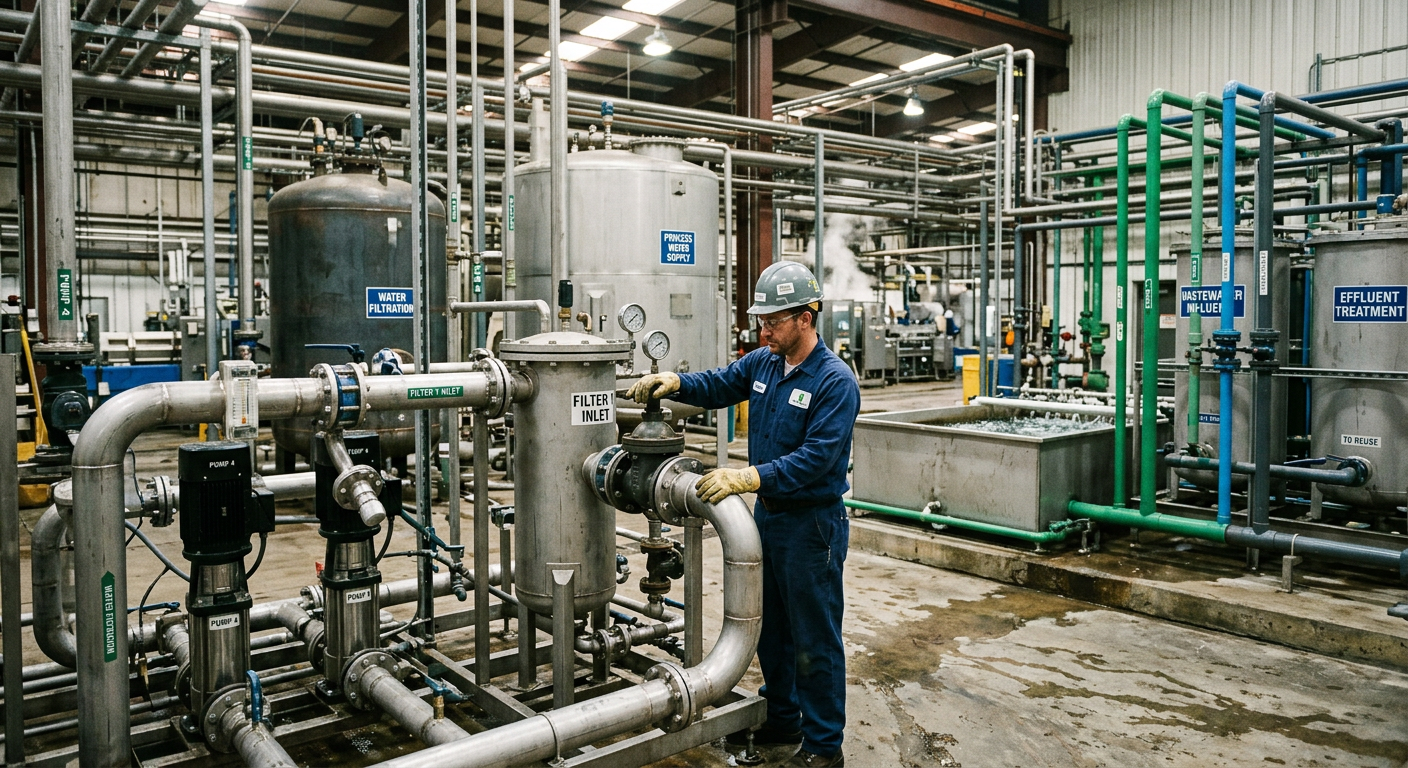
Food Plant Pressure Vessel Requirements 2026
Pressure vessels used in food and beverage plants in the United States must be designed, fabricated, inspected, and documented to meet code, sanitation, and operational reliability expectations. In most cases, the core baseline is ASME Section VIII Division 1, supported by material traceability, qualified welding procedures, pressure-temperature design review, defined nozzle and connection details, inspection and testing, and a complete turnover package. For food applications, code compliance alone is not enough. Buyers also need to account for cleanability, product contact finishes, CIP integration, USDA or FDA expectations, utility compatibility, and long-term maintenance access. The quick answer is this: if you are buying or specifying a pressure vessel for a food plant in the United States in 2026, start with ASME Section VIII Division 1 compliance, then verify that the vessel is appropriate for the specific process, sanitation standard, utility load, and local jurisdiction. Typical food-grade vessels include jacketed kettles, surge tanks, aseptic balance tanks, pasteurization vessels, CIP tanks, hot water systems, flash vessels, air receivers, and process accumulators. Depending on the duty, they may also need stainless steel product-contact surfaces, documented weld maps, polished interiors, drainability, insulation, agitation, sanitary nozzles, and plant utility integration. Buyers in major manufacturing regions such as Chicago, Dallas-Fort Worth, Fresno, Los Angeles, Raleigh-Durham, Atlanta, Milwaukee, and the New Jersey food corridor often face the same challenge: a vessel can be code-stamped and still be wrong for the process. A compliant vessel for a steam application may fail sanitation expectations for dairy. A polished vessel may still create downtime if nozzle placement blocks effective CIP coverage. A low-cost imported vessel may appear attractive but create delays if U.S. documentation, National Board registration, or field acceptance is incomplete. For that reason, procurement teams should evaluate five things together: code compliance, hygienic design, plant utility fit, installation readiness, and lifecycle support. This is especially important for facilities near major logistics and trade hubs like the Port of Los Angeles, Port of Savannah, Houston, and Philadelphia, where imported components, schedule pressure, and state-level inspection practices can all affect startup. The table above summarizes the minimum buying lens. In practice, food processors should also review vessel orientation, insulation, cleanout access, controls, instrumentation, anchor loads, and plant expansion plans before issuing a purchase order. ASME Section VIII Division 1 is the standard reference point for most pressure vessels in U.S. food manufacturing. It governs design formulas, allowable stresses, fabrication rules, pressure relief expectations, inspection requirements, and stamping obligations. Whether a vessel is used in a dairy plant in Wisconsin, a beverage co-packer in Texas, a protein processor in Arkansas, or a sauce facility in California, this code is often the first legal and engineering checkpoint. Compliance should be confirmed in writing, not assumed from marketing language. Buyers should request the design code, year edition used, pressure class, and whether the vessel will bear an ASME U stamp. Many operators also ask about National Board registration where required or preferred by the owner, insurer, or local inspector. For vessels connected to boilers, compressed air systems, or thermal processing loops, jurisdictional review can be especially strict. Code compliance also needs to be interpreted correctly for food production. A vessel may technically satisfy pressure vessel rules but still require additional hygienic features for process acceptance. For example, a carbon steel air receiver serving utilities may be appropriate, while a product hold tube balance tank or aseptic process vessel typically demands stainless construction, sanitary nozzles, and better internal finish control. For 2026, the strongest market trend is deeper integration between code compliance and digital project control. Owners increasingly want 3D model coordination, digital QA books, inspection hold-point tracking, and documentation that can be tied into computerized maintenance and asset systems. This is especially common in larger projects in North Carolina, Tennessee, and Arizona, where new food and beverage investment is moving quickly and startup windows are tight. The line chart reflects a realistic growth pattern in U.S. spending on vessel upgrades and replacements as processors modernize older assets, add automation, and improve sanitation performance. Growth is being driven by capacity expansion, energy efficiency goals, and stricter food safety management expectations. This table is useful during bid review because it separates true code compliance from vague supplier claims. It can help procurement teams compare domestic fabricators, integrators, and offshore manufacturers on equal terms. Material choice is one of the most important decisions in food plant vessel design. In the United States, 304 stainless steel is common for many general food and beverage services, while 316L is often preferred where chlorides, acidic products, aggressive cleaning chemicals, or stricter sanitary demands are present. Carbon steel remains common for utility-side vessels, hot water systems, and non-product-contact services when corrosion exposure is controlled. Specialized applications may use duplex alloys, clad construction, or internal coatings. Food processors should select materials based on product chemistry, clean-in-place chemistry, operating temperature, expected dwell time, and water quality. A kombucha facility in Oregon, a dairy processor in upstate New York, and a tomato sauce plant in California may all require different corrosion strategies even if vessel size appears similar. Surface finish also matters. Internal polish requirements can affect cleanability, microbial control, and inspection acceptance. Weld requirements are equally critical. Product-contact welds should be made with qualified procedures and inspected to the level appropriate for code and hygienic service. In many food applications, buyers should ask whether internal welds are ground and polished, whether dead legs are minimized, and whether nozzle transitions are sanitary and drainable. Good welds are not just a quality preference; they affect residue retention, CIP performance, and long-term stress resistance. In 2026, sustainability is changing material decisions. More processors are evaluating lifecycle cost instead of initial purchase price alone. A higher-grade stainless vessel may reduce maintenance chemicals, downtime, corrosion replacement, and product loss over a ten- or fifteen-year horizon. That is particularly relevant for high-utilization facilities in major production belts like the Midwest and Southeast. The material table helps buyers align vessel metallurgy with actual process conditions instead of making decisions by habit. It is especially valuable when comparing a low-cost vessel bid against a more durable specification. From a technical capability perspective, many U.S. food projects now require vessel suppliers and integrators to work across process, mechanical, structural, electrical, and controls disciplines. That is where firms with broader engineering capability add value. Disruptive Process Solutions supports projects that combine vessel selection with process design, automation, utilities, and commissioning so equipment decisions are made in the context of throughput, sanitation, and profitability, not in isolation. Every vessel should have clearly documented design pressure and design temperature values, including any jacket rating, vacuum condition, external pressure case, and minimum design metal temperature if relevant. In food plants, thermal cycling can be more demanding than people expect. Systems may move between chilled product, hot CIP, steam service, and ambient standby in a single operating day. Design ratings should reflect worst-case operating reality, not average process conditions. A vessel handling pasteurized dairy, for example, may see pressure from pump deadhead, thermal expansion during cleaning, and partial vacuum during cooldown. A sauce kettle may require separate inner shell and jacket calculations. A fermentation-related vessel may need both pressure and vacuum review depending on process control strategy. Food manufacturers should also review relief scenarios beyond normal operations. These include blocked outlet, thermal expansion, failed control valve, steam regulator malfunction, or utility crossover. If the vessel interfaces with retort, HTST, UHT, or aseptic systems, the process hazard review should verify how pressure excursions are prevented and monitored. Regional climate also matters. Plants in Minnesota, Colorado, and the inland Northeast may need stronger consideration of startup conditions, freeze exposure, and installation environment compared with facilities in Florida or Southern California. Outdoor vessels and rooftop utility systems need particular attention to weather and insulation design. The area chart shows the trend toward more demanding specifications, especially in beverage, dairy, prepared foods, and aseptic processing. Buyers are increasingly selecting vessels with higher thermal flexibility, better insulation packages, and stronger documentation around design margins. This table shows why pressure vessel pricing can vary significantly between quotes that appear similar at first glance. Rating assumptions, jacket conditions, and vacuum design can materially change shell thickness, reinforcement, and fabrication complexity. Nozzle design is where code, sanitation, maintenance, and process performance meet. In food plants, nozzles are not just openings in a shell; they determine flow behavior, drainability, instrumentation accuracy, CIP coverage, mixer performance, and future expandability. A well-designed vessel may have sanitary tri-clamp or DIN connections on the product side, flanged utility connections, dedicated spray device ports, venting, pressure relief connections, instrumentation couplings, and access points sized for maintenance and inspection. Bad nozzle design causes recurring pain. Common issues include dead legs, low-point traps, instrument taps that cannot be cleaned, relief nozzles placed without adequate maintenance access, and manways positioned where operators cannot safely use them. In facilities with tight footprints, such as retrofits in New Jersey, Boston-area industrial buildings, or older Midwest plants, connection orientation should be coordinated with piping racks, valve manifolds, and electrical clearances before fabrication starts. Buyers should also ask whether reinforcement pads, repads, ferrules, and nozzle neck materials match service needs. For sanitary tanks, spray ball or rotary spray device performance should be validated against tank geometry. If the vessel is part of an automated process line, nozzle and instrument coordination should also account for PLC interlocks, batch control, and CIP recipe management. The nozzle table provides a practical review framework for FAT and drawing approval. It is especially important when a vessel is custom-built rather than selected from a standard catalog. On the manufacturing capability side, owners increasingly prefer suppliers that can produce tanks, CIP skids, and custom process vessels as part of a larger integrated scope. DPS has expanded its branded equipment capabilities to include storage and processing tanks, CIP systems, marination tumblers, and cooking vessels, which helps clients align vessel fabrication with the broader process line, utility infrastructure, and startup plan. Inspection and testing should be planned from the start of fabrication rather than treated as a final checkbox. For ASME pressure vessels, that typically includes in-process dimensional review, weld inspection, pressure testing, and final documentation release. Depending on service and owner specification, non-destructive examination may include radiography, dye penetrant, ultrasonic testing, or visual boroscope review of hard-to-see internal areas. In food plants, pressure testing is only part of acceptance. Buyers should also inspect internal finish consistency, drainability, passivation where specified, instrument fit-up, insulation terminations, nameplate accuracy, and shipping protection. A vessel that passes hydrotest can still arrive on site with contamination risk, damaged nozzles, or missing turnover records. Factory acceptance testing has become more valuable in 2026 because supply chains remain sensitive to late changes and labor availability. Owners increasingly send engineering, QA, and operations representatives to witness FAT before vessels leave the shop. This is common on larger projects in Texas, the Carolinas, and the Pacific Northwest, where long freight routes make rework expensive. The bar chart indicates where demand is strongest. Beverage, dairy, and aseptic segments are showing higher levels of vessel replacement and new capacity investment because sanitation, thermal control, and throughput requirements are rising quickly. Documentation is often the difference between a smooth startup and a delayed one. For a pressure vessel in a U.S. food plant, the documentation package should normally include certified drawings, nameplate details, material test reports, ASME data reports, weld procedures, welder qualification evidence, NDE reports where applicable, pressure test records, operating and maintenance manuals, spare parts lists, and cleaning or passivation guidance if relevant. Owners should also request a turnover package formatted for long-term plant use. That means searchable PDFs, tagged drawings, instrument lists, and revision control. If the vessel is part of a larger process line, the documentation should tie into P&IDs, controls narratives, electrical loads, and commissioning records. This matters for audit readiness under FDA, USDA, SQF, and BRC environments. For imported equipment, U.S. buyers should be especially careful. Documentation gaps are one of the most common causes of delay. Missing MTRs, unclear stamp records, non-U.S. pressure calculations, or incomplete quality books can disrupt insurance review, AHJ coordination, and owner acceptance. This is why many processors prefer working with domestic engineering-led partners who can manage document quality early. This documentation table serves as a turnover checklist. It is particularly helpful for owners consolidating records across multiple plant expansions or equipment relocations. Once a vessel is installed, operational safety depends on more than code stamping. Plants should maintain relief devices, inspect insulation and cladding, review anchor points, confirm instrument calibration, and verify that cleaning practices do not exceed material limits. Maintenance teams should know the vessel design pressure, cleaning chemical limits, thermal cycle expectations, and lockout procedures. Good maintenance practice includes scheduled visual inspections, external corrosion review, gasket management, valve servicing, nozzle support checks, and periodic verification of relief protection. In sanitary applications, damaged internal surfaces and failed polish zones should be addressed early to reduce microbial and quality risks. Plants running high-acid, salty, or sugar-heavy products should also watch for unexpected corrosion patterns around liquid interfaces and weld heat-affected zones. From a service capability standpoint, owners benefit from partners that can support the entire project lifecycle rather than only vessel supply. DPS approaches projects through an integrated design-build-manage model, helping clients align front-end capital planning, detailed engineering, installation oversight, commissioning, and operational handoff. That model is especially useful when the pressure vessel is only one part of a broader plant investment involving utilities, controls, building modifications, and process optimization. Another important 2026 trend is predictive maintenance. More facilities are connecting pressure, temperature, vibration, and cleaning-cycle data into SCADA or plant analytics platforms. This can help maintenance teams identify unusual process swings, fouling, insulation failure, or valve drift before downtime occurs. Plants in high-output markets such as the Southeast beverage corridor and Midwest protein belt are adopting these tools quickly because uptime has direct margin impact. The comparison chart highlights a pattern many buyers already know: the lowest upfront price often trails behind in documentation, sanitary detail, integration support, and startup readiness. In food processing, these gaps often cost more than the initial savings. When evaluating local suppliers, buyers should compare domestic fabricators, OEMs, and engineering-integrators based on service region, food sector experience, code stamp capability, FAT support, installation coordination, and after-sales responsiveness. Local access can be valuable in regions such as the Carolinas, Central Valley California, Wisconsin, and Texas, but buyers should still prioritize experience with food-grade process systems over proximity alone. Disruptive Process Solutions supports food and beverage manufacturers across the United States and Canada with a business-first engineering approach. Rather than treating a pressure vessel as a stand-alone purchase, the company evaluates how it affects throughput, sanitation, utility demand, operator safety, startup schedule, and long-term profitability. That perspective is especially useful for processors making capital decisions in the $400,000 to $5 million range and above. On the technology side, DPS works across process engineering, mechanical systems, plumbing, electrical, structural coordination, and controls, including PLC programming and SCADA integration. This matters because vessel performance is shaped by the surrounding system: pumps, valves, heat transfer loops, CIP architecture, instrumentation, and automation logic all influence whether the asset delivers the expected output. More about the company’s background can be found on the about us page. On the manufacturing side, DPS provides custom process equipment and supports food-grade tank and vessel solutions that fit broader plant objectives. Its equipment capabilities include storage and processing tanks, CIP systems, marination tumblers, and cooking vessels, allowing owners to coordinate vessel specification with line integration and utility planning. You can explore these offerings through the equipment solutions section. On the service side, DPS delivers process design, capital planning, owner’s representation, project management, general contracting support where licensed, installation integration, and commissioning oversight. For clients expanding a dairy line, relocating beverage assets, modernizing a protein plant, or building a greenfield co-packing facility, that end-to-end support reduces execution risk. Details are available on the service capabilities page. A practical example of this value is when engineering teams identify bottlenecks before capital is spent in the wrong place. In the food and beverage sector, it is common for apparent vessel capacity constraints to actually be caused by controls, utility balance, or line integration issues. DPS is known for evaluating those root causes before recommending equipment purchases, helping clients avoid unnecessary spending and focus on profitable outcomes. Project examples and implementation stories can be reviewed in the case study library. For buyers in the United States, this integrated model is increasingly important in 2026 because projects are under pressure from labor shortages, energy costs, sustainability targets, and tighter return-on-capital expectations. A vessel supplier that understands process economics, not just steel fabrication, can significantly improve project performance. What code should most food plant pressure vessels follow in the United States?Most should be evaluated against ASME Section VIII Division 1, though the exact scope depends on service, pressure level, vessel type, and local jurisdiction. Is stainless steel always required?No. Stainless is common for product-contact and sanitary services, but carbon steel can be suitable for utility-side vessels such as air receivers or non-product hot water systems when corrosion is controlled. What stainless grade is most common?304 stainless steel is widely used, while 316L is often chosen for more aggressive chemistry, stronger sanitation regimes, chloride exposure, dairy, and certain beverage applications. Do food vessels need polished internal finishes?Often yes for sanitary or product-contact service, but the required finish depends on product risk, cleanability needs, regulatory expectations, and owner standards. Should I require a U stamp?If the vessel falls under ASME pressure vessel scope and your plant, insurer, or authority expects it, yes. Always confirm this before purchase. What testing is typically required?Hydrotest, dimensional inspection, visual review, and any specified NDE. Food plants may also require drainability review, passivation confirmation, and FAT witness activities. How important is documentation?It is essential. Missing material records, test reports, or ASME forms can delay installation, inspection, startup, and future audits. Can a low-cost imported vessel still be acceptable?Sometimes, but only if code compliance, documentation, hygienic design, and U.S. project support are fully verified. Many delays arise from paperwork and integration issues rather than shell fabrication alone. How do I compare suppliers?Compare code capability, sanitary experience, nozzles and cleanability, document quality, FAT support, delivery reliability, controls integration, and service after startup. What are the biggest 2026 trends?Higher demand for digital documentation, predictive maintenance, more sanitary design rigor, stronger sustainability review, and tighter alignment between equipment decisions and plant profitability. In summary, food plant pressure vessel requirements in the United States are no longer just about passing code review. The best results come from combining ASME compliance with sanitary design, correct metallurgy, thoughtful nozzle layout, rigorous testing, and a complete project delivery strategy. Whether the vessel is headed to a dairy in Wisconsin, a beverage plant in North Carolina, a protein line in Texas, or an aseptic facility in California, the safest and most profitable purchase is the one designed for the full operating context. -
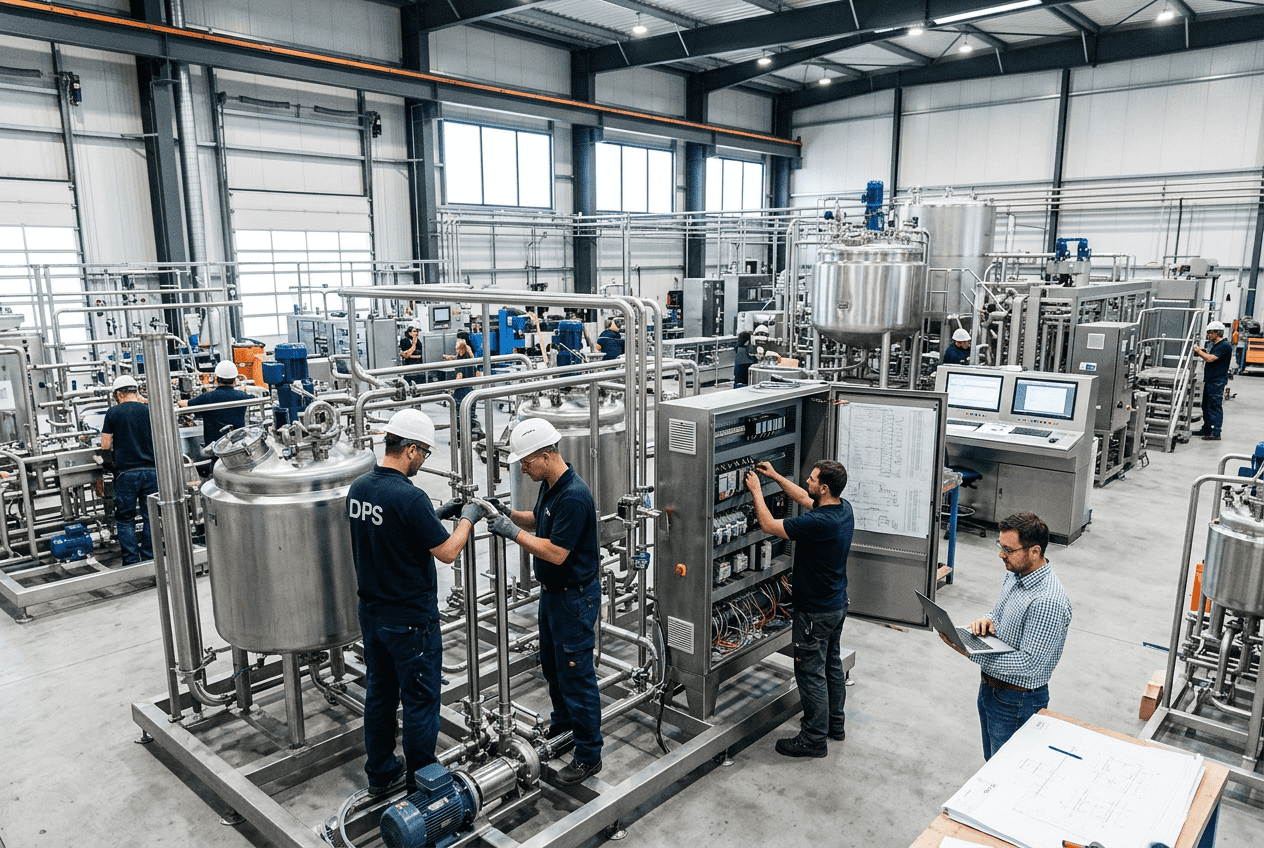
Beverage Plant PLC Programming
Beverage PLC programming is the control backbone that keeps a modern U.S. beverage plant running at high speed without sacrificing fill accuracy, product quality, sanitation, or packaging consistency. In practice, it connects conveyors, rinsers, rotary fillers, cappers, labelers, case packers, CIP systems, vision inspection, recipe management, and plant data systems into one coordinated operating platform. For manufacturers in markets such as Atlanta, Chicago, Dallas, Los Angeles, Charlotte, and New Jersey logistics corridors, good programming often delivers more throughput from existing assets before a major capital expansion is needed. For beverage producers, co-packers, and brand owners, the value is straightforward: tighter synchronization, fewer micro-stops, faster changeovers, better reject handling, clearer downtime visibility, and safer cleaning cycles. Whether the line is filling carbonated soft drinks, juices, dairy beverages, RTD cocktails, kombucha, spirits-based canned products, or aseptic drinks, the PLC logic determines how reliably the line performs under pressure. If you are asking what beverage plant PLC programming includes, the short answer is this: it is the engineering of machine control logic, motion coordination, safety interlocks, recipe control, process sequencing, line tracking, and plant data communication for beverage production and packaging systems. On high-speed lines in the United States, this usually covers bottle handling, rotary filling, cap application, label verification, reject systems, CIP automation, utility integration, alarms, historian data, and OEE reporting. The best programming work is not only about making equipment move. It is about making equipment move predictably at scale. A well-programmed line can help a facility in California, Texas, North Carolina, Wisconsin, or Pennsylvania raise output, protect quality, and lower cost per case. In many plants, the true bottleneck is not mechanical nameplate speed but the way the controls are tuned, sequenced, and integrated. The table above shows why PLC work matters beyond simple machine startup. In beverage operations, control architecture affects sanitation, labor efficiency, utility use, and customer service performance just as much as production speed. High-speed beverage production is a balancing act between precision and throughput. U.S. plants serving major retail networks through hubs like Savannah, Houston, Long Beach, and the Midwest distribution belt must hit aggressive production targets while still maintaining package quality and regulatory compliance. That requires programming that can manage fast transitions, changing line pressures, multiple SKUs, and operator intervention without destabilizing the process. Precision in this environment means more than accurate filling. It also means coordinated starts and stops, stable acceleration curves, anti-slosh transfer logic, timing windows for inspection, and repeatable response to faults. Throughput means the line keeps moving, not just in short bursts, but over an entire shift with minimal starved or blocked conditions. In beverage plants, line performance often depends on how control zones are divided. The depalletizer, empty bottle conveyor, rinser, filler, capper, labeler, packer, palletizer, and utilities must all communicate effectively. If one zone responds too aggressively or too slowly, the effect ripples downstream. Advanced PLC programming solves this with queue management, machine state models, fault recovery routines, and controlled accumulation strategies. Market demand in the United States continues to support investment in these upgrades. Growth in canned cocktails, functional beverages, premium water, sports drinks, and contract packaging has increased the need for flexible automation that can switch products quickly while preserving uptime. The line chart reflects a realistic direction for automation investment: steady growth driven by labor constraints, demand for traceability, sustainability targets, and higher packaging complexity. By 2026, many U.S. beverage sites will expect not only fast PLC control but also deeper integration with SCADA, energy monitoring, electronic batch records, and cybersecurity standards. This range shows why there is no one-size-fits-all controls template. Product characteristics, package format, utility quality, and sanitation regime all influence PLC design decisions. Bottle handling is often underestimated, yet it strongly influences total line performance. Air conveyors for empty PET bottles, neck handling systems, laning equipment, and accumulation tables must move containers quickly without scuffing, tipping, or generating unstable surges. The PLC typically coordinates blower demand, conveyor zoning, sensor validation, and machine permissives so bottles arrive at the filler consistently. For lightweight containers, air pressure control is critical. Too little pressure causes starvation; too much creates bottle collisions and fallen containers. Gentle transport requires tuning fan speed, damper positions, conveyor transitions, and back-pressure logic. In U.S. plants running mixed bottle formats for private label and branded products, these settings often need recipe-based automation so operators can switch formats without manual trial and error. Good programming also accounts for real-world plant conditions: humidity in Gulf Coast facilities, temperature swings in Midwest warehouses, or compressed air variability in older buildings. Sensors alone do not solve these problems. The control strategy must filter noise, detect unstable flow, and trigger corrections before jams spread to the filler. The explanation here is practical: bottle handling controls are where many “mystery” downtime losses originate. What looks like a filler issue is often a pressure balance or transition tuning issue upstream. Rotary fillers are the heartbeat of many beverage lines. Programming them requires tight synchronization between turret rotation, infeed timing, valve lift, flow control, snift operations, purge cycles, and container presence verification. Whether a filler has 12 heads on a craft line or 72 heads on a high-capacity commercial line, the control system must keep every station aligned with product and package conditions. Electronic synchronization replaces much of the guesswork that older mechanical systems relied on. Servo coordination, encoder feedback, phase monitoring, and high-speed I/O allow the PLC and associated motion controllers to react in milliseconds. This matters greatly for carbonated products where pressure management influences foam, fill level, and cap-on-foam performance. Programming logic also needs recipe intelligence. A juice line, a sports drink line, and an RTD cocktail line may use the same physical filler but require different parameters for fill volumes, purge times, valve timing, and sanitation sequences. A robust control platform stores these values securely, validates access, and logs changes for quality and compliance purposes. For plants near major co-packing centers such as Dallas-Fort Worth, Indianapolis, or central Florida, filler flexibility can be the difference between winning and losing customer contracts. The more SKUs and container formats a line can run with stable performance, the more commercially valuable the operation becomes. Capping and labeling are where mechanical movement meets packaging compliance. A bottle can be filled perfectly and still become unsellable if the cap is cross-threaded, the tamper band is damaged, or the label is skewed. PLC programming in this area links torque monitoring, cap chute permissives, no-bottle-no-cap logic, vision systems, and reject devices into a fast and reliable control sequence. Vision integration is increasingly standard in the United States. Retail requirements and brand expectations demand verification of cap presence, label presence, date code readability, lot code location, and in some cases barcode correctness. The PLC must receive inspection results, track the product position, and activate the proper reject device at exactly the right moment. If that timing slips, good bottles get rejected or bad bottles pass through. Rejection system design varies by speed and package type. Air blast rejectors may work for lightweight empty containers, but full bottles often require pushers, sweep arms, drop gates, or diverters. The logic must include reject confirmation, bin full alarms, and escalation handling if rejected product fails to leave the conveyor. The bar chart highlights where demand is strongest for advanced packaging inspection. RTD alcohol and functional beverages often lead because packaging variation, premium branding, and regulatory scrutiny tend to be higher. This packaging control layer directly supports brand protection, customer compliance, and waste reduction. It is one of the clearest examples of why controls engineering is a profit driver, not just an engineering cost. CIP programming is one of the most important disciplines in beverage automation because it sits at the intersection of food safety, utility cost, uptime, and changeover planning. A CIP system must execute rinse, caustic wash, intermediate rinse, acid cycle when required, sanitize steps, conductivity verification, temperature confirmation, flow validation, and solution recovery with minimal operator error. In real plants, CIP logic often touches more assets than expected: syrup rooms, blend tanks, fillers, product piping, bright tanks, pasteurizers, valves, and return circuits. Poor sequence control can waste water, overuse chemicals, extend downtime, or create sanitation risk. Strong PLC design uses interlocks, valve proofing, recipe-based paths, alarm priorities, and data logging so each cycle is repeatable and auditable. This is also where sustainability and 2026 trends become highly relevant. Beverage manufacturers across the United States are being pushed to reduce water intensity, chemical loss, and energy use. Future-ready CIP programs increasingly support conductivity-based recovery, automated setpoint optimization, heat recovery coordination, and detailed reporting for ESG and plant management teams. The explanation is simple: each stage has a different validation need, and the PLC is what enforces those rules consistently. In regulated and audit-heavy environments, documented CIP execution is as important as the cycle itself. High-speed product tracking allows a beverage line to know where each bottle, can, or package is at all times. This starts at infeed and continues through filling, inspection, labeling, coding, packing, and palletization. The faster the line, the more important deterministic tracking becomes. Without it, rejection accuracy falls, traceability becomes weak, and operators spend too much time sorting suspect product. Tracking can be encoder-based, sensor-based, or hybrid depending on the application. The PLC often manages shift registers, product maps, queue models, and batch identifiers while passing lot and production data to SCADA or MES layers. This is especially valuable in co-packing facilities handling frequent SKU changes and retailer-specific date coding requirements. Plants serving national distribution through Memphis, Kansas City, Columbus, or the Port of New York and New Jersey often need robust line tracking because shipping errors become expensive quickly. If a wrong-code event occurs, accurate package tracking reduces the hold scope and limits waste. The area chart shows the ongoing shift toward automated digital tracking. By 2026, more beverage producers are expected to integrate line-level tracking with case coding, warehouse systems, and quality data, creating stronger recall readiness and less manual paperwork. OEE improvement is one of the strongest business reasons to invest in beverage PLC programming. Availability suffers when faults are unclear or recovery routines are weak. Performance suffers when machine handoffs are poorly tuned. Quality suffers when reject timing, fill control, or package inspection is unreliable. Controls engineers improve all three. Effective OEE strategies start with data structure. Downtime states must be meaningful, not generic. Micro-stops should be captured separately from major faults. Speed losses should be tied to machine states and operator actions. The PLC should tag events cleanly so dashboards and reports tell the truth instead of just generating noise. Second, OEE gains come from root-cause-oriented logic changes. Common examples include smarter permissives, reduced false trips, better starved/blocked balancing, controlled restart sequences, predictive maintenance alerts, and alarm rationalization. Sometimes the best gain comes from small programming changes rather than a new machine purchase. This is where engineering judgment matters. In many facilities, operators have adapted to old logic quirks and manual workarounds. A capable controls team can eliminate these hidden losses systematically and measurably. The explanation behind this table is that OEE is not improved by one dashboard alone. It improves when the PLC logic, machine settings, operator workflows, and maintenance priorities are aligned. Demand for beverage PLC programmers in the United States remains strong because plants need people who understand both controls and process reality. This is not generic factory automation. Beverage systems combine sanitation, utility management, package handling, food safety, motion control, and production economics in a way that requires specialized experience. Career opportunities exist with OEMs, integrators, engineering firms, plant operators, and large consumer packaged goods companies. Roles often include controls engineer, automation engineer, commissioning specialist, SCADA developer, systems integrator, plant controls manager, and technical project lead. Regions with consistent demand include the Southeast, Midwest, Texas, California, and major beverage distribution corridors. For companies hiring, the challenge is not just finding programmers who know ladder logic or structured text. The best talent understands fillers, pasteurization, batching, CIP, packaging inspection, and line balancing. They can start up equipment, troubleshoot under pressure, speak with operators, and tie plant-floor work back to commercial outcomes. The comparison chart illustrates a common buying reality: a general automation vendor may be technically capable, but a beverage-focused team usually performs better where sanitation, filler dynamics, packaging logic, and commissioning speed matter most. When selecting a PLC programming partner, look beyond hourly rates. Ask how they handle line integration, sanitation validation, FAT/SAT support, on-site startup, recipe governance, change control, cybersecurity, and post-launch optimization. Ask for experience with beverage-specific assets such as syrup rooms, blending systems, carbonation loops, tunnel pasteurizers, bright tanks, canning systems, and sanitary CIP skids. Also evaluate whether the provider can support your geography. Plants with multiple sites across the United States benefit from a partner that can respond in North Carolina, California, Texas, Illinois, or Ontario without rebuilding the support model each time. This checklist helps buyers compare vendors based on outcomes instead of just proposal language. Beverage PLC programming supports a wide range of industries and applications, including carbonated soft drinks, bottled water, dairy beverages, kombucha, energy drinks, juices, functional beverages, craft beer packaging, wine bottling, spirits, RTD canned cocktails, aseptic filling, and co-packing operations. The application range extends from syrup preparation and blending to final palletizing and warehouse interface. Plants often need controls that bridge utilities and process. A filler cannot run reliably if compressed air, glycol, RO water, or steam systems are unstable. That is why experienced integrators treat utilities, process, and packaging as one operating system rather than isolated projects. In real projects, programming improvements can unlock more value than expected. Some beverage clients prepare for multimillion-dollar capacity expansions only to discover that the line’s biggest limit is sequencing, not steel. In those cases, retuning and reprogramming can produce significant throughput gains at a fraction of the cost of new equipment. For examples of capital project execution and practical results, manufacturers often review an integrator’s project case studies before starting a controls upgrade. In the United States, local controls support can come from OEM technicians, regional integrators, electrical contractors, and specialized food-and-beverage engineering firms. The strongest option for larger projects is often a partner that combines local field execution with national process expertise. That matters in beverage hubs such as North Carolina, Southern California, Texas, Georgia, and the Chicago area, where projects may involve both immediate troubleshooting and long-term expansion planning. Disruptive Process Solutions supports food and beverage manufacturers across the United States and Canada with a business-first engineering approach. Rather than treating automation as a standalone trade, the company ties controls decisions directly to throughput, profitability, sanitation, and capital efficiency. Manufacturers can learn more about the firm’s background on the about page. From a technological capability standpoint, DPS works across process, controls, utilities, and data systems. That includes PLC programming, automation integration, SCADA, batching logic, sanitary process control, recipe management, and coordination of systems such as carbonation, blending, filtration, aseptic operations, and water treatment. This cross-functional depth is especially useful when line performance depends on interactions between packaging equipment and upstream process assets. From a manufacturing capability standpoint, DPS supports complete beverage and food system execution, including processing tanks, CIP systems, utility integration, and custom equipment solutions. The company also provides proprietary equipment in areas such as tanks and CIP packages, which can be explored through its equipment capabilities. For beverage manufacturers, that means controls work can align closely with the actual hardware being installed and commissioned. From a service capability standpoint, DPS operates with an end-to-end model that covers engineering, installation oversight, integration, project management, startup, and owner-focused execution. Its support spans process design, capital planning, turnkey installation, and controls optimization across project sizes. Companies evaluating a broader automation and facility strategy can review these offerings on the services page. This integrated model is particularly helpful for co-packers and multi-line manufacturers that need one partner to connect business goals with field execution. For U.S. beverage producers, this combination of technological, manufacturing, and service capability matters because line performance is rarely just a coding issue. It is usually the result of how engineering, equipment, utilities, and project execution fit together. A beverage PLC programmer develops and maintains the control logic for processing and packaging systems such as fillers, conveyors, CIP skids, cappers, labelers, batch systems, and utility interfaces. The role also includes troubleshooting, startup support, optimization, and data integration. Yes. In many cases, better synchronization, improved line balancing, reduced nuisance faults, and cleaner changeover logic can unlock meaningful throughput gains from existing equipment. High-speed carbonated lines, RTD alcohol, functional beverages, aseptic products, and co-packing operations often need the most advanced controls because they combine high SKU count, strict packaging requirements, and demanding sanitation expectations. It is critical. CIP programming affects food safety, downtime, water use, chemical consumption, and audit readiness. Weak CIP control can create both sanitation risk and unnecessary operating cost. Ask about beverage-specific experience, nationwide field support, startup capability, OEE reporting structure, sanitary process knowledge, vision system integration, and long-term service responsiveness. It tracks products, rejects, lot codes, and machine states from infeed through case packing. When integrated with SCADA or MES, it supports faster investigations and better recall readiness. The major trends are stronger digital traceability, water- and energy-efficient CIP control, more vision inspection, increased recipe and SKU flexibility, cyber-secure remote support, and greater use of production data for continuous improvement. No. Small and mid-sized plants also benefit, especially when labor is tight, SKU complexity is increasing, or growth plans require better uptime before adding new equipment. In the United States beverage market, PLC programming has moved from a support function to a strategic capability. It improves reliability, raises throughput, strengthens sanitation, and helps manufacturers scale intelligently. For producers planning a new line, upgrading a legacy system, or trying to solve a stubborn bottleneck, the right controls strategy can create measurable value faster than many capital-intensive alternatives. -
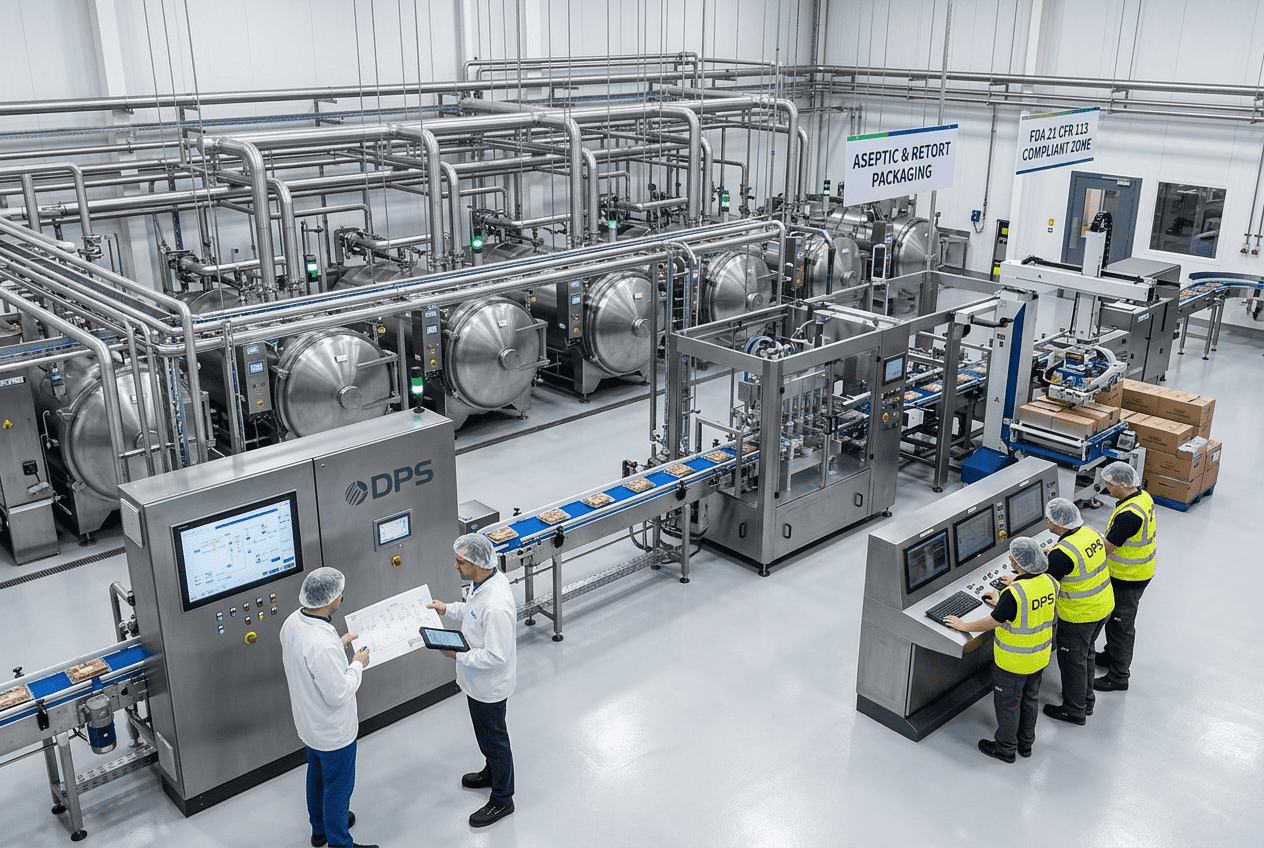
PLC Programming for Food Processing
Food processing PLC programming in the United States is the discipline of designing, validating, and maintaining automation logic for sanitary production lines that must deliver safe product, repeatable quality, traceability, and regulatory compliance. In practice, that means controlling mixers, cookers, coolers, coaters, pasteurizers, clean-in-place systems, recipe management, operator access, alarms, records, and lot genealogy with a level of rigor that goes far beyond general industrial automation. For processors in major manufacturing hubs such as Chicago, Dallas, Fresno, Atlanta, Charlotte, Los Angeles, and the corridor between New Jersey and Pennsylvania, a well-programmed PLC system can improve yield, reduce giveaway, prevent food safety deviations, and support expansion without unnecessary capital spending. Across the United States market, processors are under pressure from labor shortages, retailer quality standards, FDA expectations, USDA oversight, rising utility costs, and tighter customer audits. That is why automation projects increasingly focus on practical outcomes: stable temperature control, validated CIP sequences, secure batch records, electronic signatures, and rapid root-cause analysis. Companies that engineer these systems well tend to combine process understanding with controls execution. Disruptive Process Solutions is positioned in this category, supporting manufacturers across North America with food and beverage engineering, integration, and process-focused automation that ties programming decisions back to throughput, compliance, and profitability. If you are buying or upgrading PLC programming for a U.S. food plant, focus on five essentials first: sanitary hardware selection, process-specific control logic, validated cleaning automation, electronic records and traceability, and a scalable recipe structure. A successful project is not just about coding a machine to run. It is about building a control system that can survive washdown, maintain critical limits, document every batch, support operators on multiple shifts, and scale from pilot runs to enterprise production. For protein, dairy, sauces, beverages, prepared foods, aseptic, and co-packing operations, the strongest automation architecture usually includes PLCs with modular I/O, managed industrial Ethernet, HMI/SCADA layers for batch and audit functions, historian integration, alarm rationalization, and clearly documented state-based sequences. The best suppliers also understand how utilities, piping, thermal systems, and production scheduling affect code performance on the floor. In the United States, buying advice should reflect your actual product family and regulatory exposure. A yogurt line near Madison, a retort meal facility near Houston, a sauce plant in New Jersey, and a poultry processor in Arkansas all need PLC programming, but not the same validation strategy, interlocks, or lot assignment logic. Match the controls scope to the product risk profile, cleaning complexity, and production model. The table above gives a practical starting point. Plants often jump directly to screens and dashboards, but the real value comes from getting the control philosophy right first. The sequence of operations, fail-safe behavior, and traceability model determine whether the system remains useful five years later. The chart shows a realistic growth trend for food automation investment in the United States. Demand is being driven by expansion in co-packing, product diversification, modernization of legacy controls, and stronger customer expectations around digital traceability. Core food process programming starts with unit operations. Mixing control may seem simple, but in food plants it often includes variable speed profiles, ingredient addition timing, viscosity-dependent hold periods, vacuum integration, load cell confirmation, and operator prompts for manual additions. In high-shear systems for dressings, emulsions, plant-based slurries, or dairy bases, the PLC must coordinate motor speed, temperature rise, ingredient sequencing, and permissives tied to tank level and agitator status. Cooking control is even more critical. Whether the line uses steam-jacketed kettles, direct steam injection, ovens, smokehouses, scraped surface heat exchangers, or continuous cookers, the program must manage product temperature ramps, dwell times, over-temperature alarms, and safe shutdown logic. In protein and prepared food plants, recipe transitions and sanitation restrictions must also be accounted for. The difference between a stable process and a yield-killing one often comes down to tuning and sequence design rather than equipment size alone. Cooling systems need equally careful programming because cooling rates affect safety, texture, shelf life, and package integrity. U.S. processors dealing with dairy, soups, ready meals, and fillings often require automated logic that controls chilled water, glycol, valve positions, recirculation rates, and cooldown verification. If a plant ships nationally from hubs near Memphis, Kansas City, or Southern California, a stable cooling process can directly affect distribution performance and complaint rates. Coating control matters for snacks, proteins, bakery items, and value-added products. Here the PLC may govern belt speed, drum rotation, pump flow, spray timing, recirculation, and recipe-linked coating percentages. Good programming reduces overuse of expensive ingredients and improves appearance consistency. This table illustrates why programming should follow the process. Each unit operation has a different control objective, but the PLC must integrate them into one coherent production sequence. That is where engineering depth matters. From a technology standpoint, DPS supports exactly this type of integrated control environment through process, mechanical, electrical, and controls engineering. Its work spans PLC programming, SCADA, utility systems, batch control, thermal processes, and complete system integration, which is especially valuable when production issues are really the result of interactions between piping, heating, cooling, and automation rather than a single machine in isolation. Pasteurization logic is one of the most specialized areas of food PLC programming. In U.S. dairy, beverage, liquid egg, cultured product, and some sauce applications, the control system must protect public health while maintaining production efficiency. This usually means accurate temperature control, verified hold conditions, differential pressure management where relevant, charting or electronic record retention, and flow diversion when legal process conditions are not met. Cascade control is widely used because a single temperature loop often responds too slowly in dynamic thermal systems. A common structure is a product temperature master loop that adjusts the setpoint of a steam flow, hot water, or heating media slave loop. This arrangement improves stability during rate changes and product transitions. Programming must also account for sensor validation, instrument failure behavior, timing deadband, and startup conditions. Flow diversion logic is just as important. If pasteurization temperature falls below the required threshold, the product must be automatically diverted based on validated logic. The code must define when diversion begins, what equipment states are required to re-enter forward flow, how alarms are latched, and how events are logged. In regulated environments, every decision path should be documented and testable. For plants near California’s Central Valley, Wisconsin dairy corridors, or beverage production zones around Texas and the Southeast, this logic is a business issue as much as a technical one. A nuisance diversion event can waste product, but weak logic can create compliance exposure. The right programming balances both. The table shows that pasteurization is never just “one temperature loop.” It is a layered control strategy involving thermal performance, safety logic, and record management. As a practical buying tip, choose a partner that understands HTST, UHT, flash, tunnel pasteurization, retort, and aseptic differences. A generic integrator may write functional code, but a process-focused team is more likely to anticipate how diversion logic, startup sequencing, CIP boundaries, and utility fluctuations affect real production uptime. Clean-in-place automation is where food plants can gain major operational value. Manual cleaning is highly dependent on shift discipline and tribal knowledge. Automated CIP replaces that variability with a state-based sequence that verifies time, temperature, conductivity, flow, route selection, and step completion. In dairy, beverage, aseptic, sauce, and liquid food systems, this is central to food safety and equipment availability. A strong CIP state machine typically defines idle, pre-rinse, caustic wash, intermediate rinse, acid wash if required, final rinse, sanitize, recovery, drain, complete, and fault states. Each state has entry conditions, active controls, transition rules, timer behavior, alarm handling, and abort pathways. Reusable function blocks for pumps, valves, tanks, and circuits improve maintainability and validation discipline. Conductivity feedback can confirm chemical strength, while temperature and flow verification ensure mechanical and thermal cleaning energy. The PLC should also prevent route conflicts, protect against dead legs being skipped, and block production release until cleaning is complete and accepted. In facilities with multiple skids or shared circuits, recipe-driven CIP paths can significantly reduce water, chemical, and labor costs. This is an area where DPS’s manufacturing and integration capabilities matter. The company designs and supplies custom process equipment including CIP systems, storage and process tanks, marination tumblers, and cooking vessels, while also integrating the controls, utilities, and commissioning. That combination helps align mechanical design, sanitary routing, and automation logic from the start instead of forcing the PLC programmer to work around poor CIP architecture later. The explanation behind this table is straightforward: each cleaning step should be verifiable, not assumed. Validated CIP programming reduces both sanitation risk and downtime caused by re-cleaning or QA holds. The area chart reflects a clear industry trend: automated CIP adoption continues to grow as labor availability tightens and audit expectations rise. By 2026, many U.S. processors will view validated CIP sequencing as a standard requirement rather than an upgrade. Batch control becomes essential when a plant handles multiple SKUs, allergens, seasonal formulations, customer-specific specs, or frequent changeovers. In these settings, hardcoded setpoints create risk. Recipe management should separate product data from reusable equipment logic so operators can run approved formulations without editing the PLC program every time a parameter changes. Ingredient tables usually contain material codes, target weights or percentages, tolerance bands, addition order, allergens, source location, and lot capture requirements. Process parameter tables often include agitation speed, heat ramp rates, hold times, transfer destinations, coating percentages, and CIP requirements. With ISA-88 principles, unit procedures, operations, and phases can be structured in a way that improves standardization and scalability. For co-packers in the United States, ISA-88 style design is especially useful because it supports product diversity without creating an unmanageable codebase. A line serving national retailers through ports and logistics hubs such as Long Beach, Savannah, Newark, or Houston may need fast changeovers, secure customer recipes, and dependable records. A recipe-driven architecture supports that model far better than ad hoc edits. The reason this matters is simple: recipe discipline reduces variation. It also makes expansions easier when a processor adds new kettles, blending skids, fillers, or remote plants. On the service side, DPS combines process engineering, capital planning, owner’s representation, project management, equipment supply, installation, and system integration. For recipe and batch projects, this matters because programming decisions often depend on broader plant questions such as utility capacity, batching strategy, future line additions, and plantwide scheduling. Hardware selection in food automation is not a cosmetic issue. U.S. facilities with wet washdown, chemical sanitation, salt exposure, sugar accumulation, or corrosive ingredients need enclosures, components, and mounting practices that fit the environment. Poor hardware choices lead to frequent faults, sanitation concerns, and maintenance headaches. NEMA 4X enclosures are commonly specified where corrosion resistance and washdown protection are required. IP69K becomes important when equipment faces high-pressure, high-temperature washdown conditions. Stainless steel is often the preferred enclosure and support material in sanitary areas because it resists corrosion and is easier to clean than painted carbon steel. However, not every zone needs the same specification. Utility rooms, dry ingredient areas, and packaging halls may have different requirements. PLC cabinet design also affects reliability. Consider heat load, component spacing, cable routing, gland selection, hygienic stand-offs, sloped tops, drain strategy, and separation of power from low-level signals. In facilities processing meat near Omaha, dairy in upstate New York, sauces in the Midwest, or RTD beverages in Southern California, environmental conditions can vary widely within the same building, so zone-based hardware selection is often the best approach. This table helps buyers avoid over- or under-specification. The right choice depends on sanitation method, exposure, maintenance access, and expected lifecycle, not just an owner preference on a datasheet. Many U.S. food and beverage facilities now expect electronic records from their automation systems, especially in higher-risk processes, aseptic environments, quality-sensitive formulations, and customer-audited co-packing operations. While 21 CFR Part 11 is often associated with highly regulated environments, its concepts are increasingly relevant wherever secure electronic records, access control, and operator accountability are required. A compliant or compliance-ready design typically includes unique user accounts, role-based access, password policies, electronic signatures for critical actions, time-stamped audit trails, protected record storage, and documented change control. The PLC may hold critical runtime logic, but HMIs, batch servers, historians, and SCADA systems often manage the records and signatures. For example, changing a recipe parameter, acknowledging a food safety deviation, releasing a batch, or overriding a diversion condition may require a user action that is both secure and attributable. Plants supplying national retail, foodservice, or export markets often gain value from this structure even when not formally required by every customer, because it improves discipline and reduces disputes. Future policy trends heading into 2026 point toward stronger digital record expectations, broader cybersecurity scrutiny for industrial environments, and more demand for transparent quality data across supply chains. Plants modernizing now should design with that direction in mind. The bar chart shows realistic relative demand for electronic records projects by segment. Aseptic, dairy, and beverage applications tend to lead due to quality sensitivity, customer requirements, and regulatory complexity. Lot tracking is one of the most valuable outcomes of good food PLC programming, especially when integrated with HMI, SCADA, barcode systems, and ERP tools. Ingredient genealogy means the plant can identify which raw material lots entered which batch, tank, rework stream, or finished product run. Production lot assignment then ties that genealogy to packaged goods, pallet records, and shipment data. At minimum, a robust implementation should capture raw material lot IDs, receiving date, supplier information, batch number, intermediate transfers, rework usage, finished goods lots, and operator confirmations where needed. The PLC often provides the machine-state backbone, while higher layers manage data storage and reporting. Still, the logic must be designed so the process cannot move forward with missing critical lot information. This becomes extremely important in multi-ingredient environments such as dressings, soups, cultured dairy, beverage blending, ready meals, and protein marination. If a recall or customer complaint occurs, fast and accurate genealogy can limit the event scope, reduce financial exposure, and protect credibility. For a processor moving goods through Atlanta distribution channels, Chicago rail corridors, or West Coast ports, the cost of weak traceability can be severe. That is why lot tracking should be treated as a process design function, not a reporting add-on. The explanation here is practical: better genealogy reduces uncertainty. In a crisis, uncertainty is expensive. Good control system design narrows the investigation path immediately. The best programming language choice depends on the process, the plant maintenance team, and the required architecture. In food processing, Ladder Logic remains common because technicians understand it and troubleshooting on the plant floor is often faster. It works well for permissives, interlocks, motor control, and straightforward sequence logic. Function Blocks are especially effective for reusable devices and process objects such as pumps, valves, PID loops, CIP circuits, and phase modules. They support cleaner code, better consistency, and easier scaling across multiple skids or lines. For large sanitary systems, this approach is often the foundation of maintainable programming. Structured Text is valuable for complex calculations, recipe parsing, array handling, lot management, and advanced batch functions. It can simplify logic that would be awkward or hard to maintain in Ladder. Many of the strongest food automation projects in the United States use a hybrid strategy: Ladder for visibility, Function Blocks for standardization, and Structured Text for data-heavy functions. When comparing suppliers, ask to see naming standards, state machine methods, alarm philosophy, FAT documentation, and recovery behavior after power loss or communication failure. Those items tell you more about long-term code quality than the language alone. This comparison chart is useful for buyers because it shows the tradeoffs clearly. No single language wins every category, which is why mixed-language architectures are so common in advanced food plants. When evaluating local suppliers or national integrators, also consider geographic responsiveness. Plants in North Carolina, California, Texas, the Midwest, and the Northeast often need support during commissioning windows, sanitation shifts, and startup weekends. A lean but experienced partner with national coverage can outperform a larger vendor if the team understands food process realities and makes decisions quickly. DPS operates with that kind of project model, serving all 50 states and Canada with engineering, integration, installation, and execution support. Its approach is notable for aligning programming decisions with plant economics. In one project example, a client had planned a multimillion-dollar capacity expansion, but controls analysis found the real bottleneck in PLC programming. By reworking the automation, throughput improved materially without the expected capital spend, which then opened the door to a larger strategic project. That kind of case reflects why process knowledge matters as much as coding skill. What industries in the United States benefit most from food PLC programming?Dairy, meat and poultry, seafood, sauces and dressings, prepared meals, beverage blending, aseptic processing, brewing, distillation, plant-based proteins, and co-packing operations all benefit heavily. The exact controls scope depends on sanitation demands, thermal risk, SKU complexity, and traceability needs. How long does a typical food automation upgrade take?A focused line upgrade may take several weeks of engineering and a short shutdown. A plantwide batch, CIP, and traceability project may take months. The timeline depends on validation expectations, hardware availability, FAT requirements, and integration with existing utilities and production schedules. Should a processor replace old PLCs or just rewrite the program?It depends on spare parts risk, communication capability, safety requirements, and expansion plans. In some cases, a code rewrite or architecture cleanup on existing hardware is enough. In others, aging hardware creates too much operational risk to justify keeping it. Is ISA-88 necessary for smaller food plants?Not always in a formal enterprise sense, but the principles are useful even for mid-sized facilities. Separating recipes from equipment logic and organizing phases consistently improves maintainability and future scalability. What should be included in a pasteurization controls scope?At minimum: thermal control strategy, calibrated instrumentation, flow diversion logic, startup and shutdown sequences, alarm handling, event recording, user access control, and documented test procedures. Why is CIP automation often one of the highest-return projects?Because it directly affects downtime, labor, sanitation reliability, chemical use, water use, and audit confidence. Plants that still rely heavily on manual cleaning often see major gains from validated automated sequences. How important is cybersecurity for food control systems by 2026?Increasingly important. As more plants adopt remote support, electronic records, ERP integration, and historian connectivity, segmentation, account management, backups, and patch planning become central to risk control. What sustainability trends matter most for future PLC programming?Energy monitoring, water reduction through optimized CIP, heat recovery integration, compressed air efficiency, chemical use tracking, and utility dashboards are growing priorities. Controls systems are increasingly expected to support both production and ESG reporting. How do I choose the right partner?Look for a firm that understands sanitary design, process engineering, thermal systems, utilities, compliance, and controls as one system. Review code standards, commissioning approach, service coverage, and actual food-sector case experience. You can explore food and beverage engineering services, review available process equipment solutions, and examine relevant project case studies as part of your supplier comparison. In summary, PLC programming for food processing in the United States is not just software development for machinery. It is a business-critical layer that ties product quality, safety, uptime, labor efficiency, compliance, and growth strategy together. The companies that gain the most from it are the ones that treat automation as part of a full process system, from equipment and utilities to records, recipes, and sanitation. With modernization accelerating into 2026, processors that invest in well-structured, traceable, sanitary automation will be better positioned to scale, audit cleanly, and protect margins in an increasingly competitive market. -
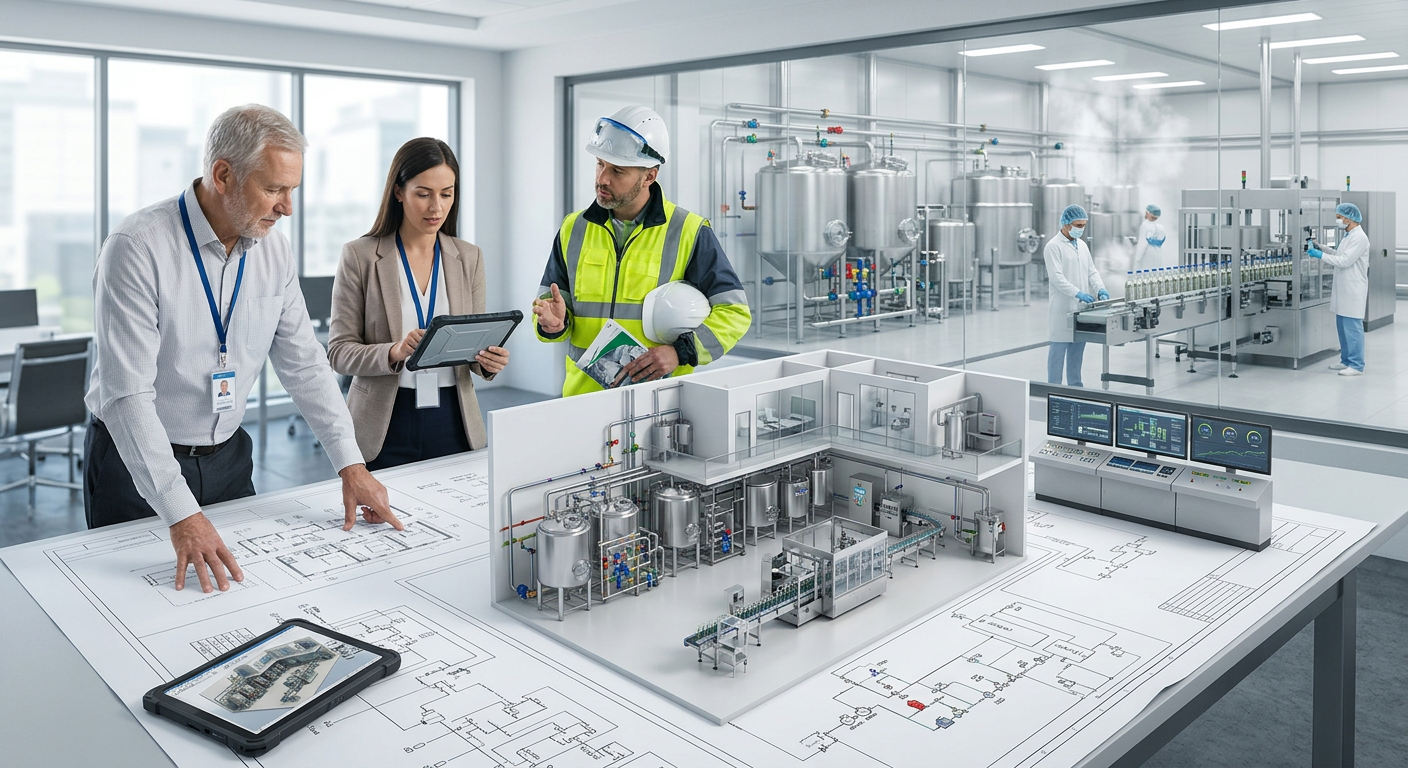
3 Key Food Plant X-Ray Inspection Benefits
Food manufacturers across the United States are investing in X-ray inspection because it supports three practical goals at the same time: better contaminant detection, stronger brand protection, and more reliable compliance documentation. In high-volume plants shipping through hubs such as Chicago, Dallas-Fort Worth, Atlanta, Los Angeles, Long Beach, and Savannah, even a single foreign material incident can create expensive downtime, customer claims, or a recall event that spreads across multiple states in days. X-ray inspection helps reduce that risk while giving operations teams more visibility into product quality and package integrity. This guide explains how food X-ray detection technology works, what contaminants it can find, when it outperforms metal detection, how to validate performance, and what U.S. processors should review before buying a system. It also covers practical implementation issues for proteins, dairy, beverages, prepared foods, and aseptic operations. For manufacturers planning broader line upgrades, it is often most effective to evaluate inspection technology as part of a larger processing and packaging strategy rather than as a standalone purchase. X-ray inspection systems are widely used in U.S. food plants because they can detect more than just metal. Depending on product density, packaging format, and system sensitivity, they may identify stainless steel, ferrous and non-ferrous metal, glass, stone, mineral fragments, dense plastic, calcified bone, and some product defects such as missing components, broken pieces, underfilled packs, or seal issues. Compared with metal detectors, X-ray systems are especially valuable when products are metallized, foil-packed, high-moisture, high-salt, temperature-variable, or difficult to inspect consistently with electromagnetic methods. The biggest business benefits are straightforward: For U.S. processors, the best results come when X-ray inspection is integrated into line design, sanitation planning, reject handling, validation, and plant data systems from the start. Food X-ray inspection works by passing a controlled X-ray beam through a product and capturing the resulting image with a detector. The system software analyzes differences in density and thickness within that image. Dense foreign materials absorb more X-ray energy than the surrounding food, so they appear as contrast variations that can be identified and flagged. The unit then triggers a reject mechanism if the product fails the inspection criteria. In practical plant terms, the system contains several coordinated elements: Modern systems in the United States often do more than foreign material detection. They can also check mass balance, count components, verify fill level, monitor shape consistency, and support package integrity review. That matters for multi-lane snack lines, ready-meal trays, dairy cups, pouches, thermoformed packs, and rigid containers moving at high speeds in plants from North Carolina to California. The best X-ray setup depends on the product path. Bulk ingredients, pumped product before fill, packaged products after seal, and cased goods all require different inspection geometries. A frozen burger line in the Midwest may need a different detector aperture, product spacing strategy, and rejection mechanism than a beverage canning line near Houston or a seafood processor serving East Coast distribution centers. The growth trend above reflects why many processors now evaluate X-ray inspection during expansion projects instead of waiting until a customer complaint forces a reactive purchase. Rising retailer expectations, tighter supplier approval programs, and more complex packaging formats all contribute to demand. This table shows that buying an X-ray system is not only about detection sensitivity. Conveyor stability, reject confirmation, and data architecture are equally important for reliable plant performance. X-ray systems are effective because they detect density differences. In food processing, that makes them particularly useful against contaminants that are denser than the product matrix. Performance depends on the product itself, package orientation, line speed, moisture level, thickness, and contaminant location. A contaminant at the edge of a package may behave differently from one hidden in the center of a thick product mass. Common contaminant categories include: Not every plastic can be found by X-ray. Low-density materials may remain difficult to detect. That is why processors should avoid generic claims and instead insist on product-specific testing. Validation packs should represent actual contaminants, real package formats, and the worst-case production conditions seen on the line. The explanation behind this table is simple: detectability improves when the foreign material is denser and more distinct from the food around it. It becomes harder when the product is thick, layered, irregular, or packaged in a way that creates overlapping mass. For product categories, X-ray systems are often selected for: A common buying question in the United States is whether a plant should use X-ray inspection, metal detection, or both. The answer depends on product risk, packaging, customer requirements, and total line economics. Metal detectors remain effective and cost-efficient for many dry, non-metallized, and simpler product applications. X-ray becomes more compelling when product effect creates instability in metal detection or when the hazard analysis extends beyond metal. Metal detectors identify disruptions in an electromagnetic field. They are generally less expensive, easier to maintain, and widely used for bulk or finished-pack inspection. However, they only detect metal and can struggle with conductive, wet, salty, or hot products. X-ray systems inspect based on density and can inspect through foil or metallized packaging, while also supporting quality checks unrelated to metal contamination. The comparison shows why many processors use both technologies at different control points. For example, an ingredient handling area may rely on metal detection upstream, while a final sealed retail pack uses X-ray for broader hazard coverage. That layered strategy is common in high-volume protein and prepared food operations. Proteins, prepared foods, and seafood often rank highest because they combine higher foreign material sensitivity, dense products, and strong retailer or foodservice customer expectations. Beverage demand is growing too, especially where package integrity and fill confirmation matter. Buying advice for U.S. plants: One of the most common misconceptions is that X-ray inspection introduces unacceptable radiation risk into a food plant. In properly designed and maintained systems, the beam is contained inside a shielded cabinet, and the equipment is built with interlocks and safety controls to prevent exposure outside the intended inspection chamber. Food does not become radioactive after passing through the beam. In the U.S. market, safety evaluation typically includes manufacturer design controls, state registration or inspection requirements where applicable, radiation leakage testing, documented preventive maintenance, and operator training. Plants should confirm not only vendor claims but also their own site procedures for lockout, service access, shielding inspection, and post-maintenance release. Important safety practices include: The table highlights that safe operation is a management system issue as much as an equipment issue. Well-run facilities in places like North Carolina, Texas, Illinois, and California usually assign clear responsibility across QA, maintenance, operations, and EHS. Integration is where many projects succeed or fail. A technically capable X-ray machine can still underperform if it is placed in the wrong location, fed unstable product, or disconnected from plant workflows. The best installation point depends on whether the plant wants to inspect raw material, in-process product, or the final packaged item. Final package inspection is common because it verifies the product closest to shipment. However, upstream inspection can reduce waste by catching issues before expensive packaging or cooking steps. A plant near the Port of Savannah shipping retail frozen meals may favor end-of-line inspection for customer assurance, while a protein processor in Kansas may use multiple stations to protect slicing, forming, and final pack-out. Integration decisions should address: Processors planning a broader facility upgrade often benefit from working with an engineering partner that understands utilities, controls, equipment interfaces, and construction sequencing. At food and beverage engineering services, project teams commonly review inspection systems as part of a larger line performance strategy, especially where utilities, automation, and packaging equipment need to work together. The explanation is practical: line integration should be treated as a system design task, not a single-machine purchase. This is especially true for facilities adding new filling, cooking, packaging, or utility infrastructure. This trend reflects what many U.S. manufacturers have learned: contamination control, throughput, and profitability are linked. Integrated projects generally produce fewer surprises than late-stage bolt-ons. Validation proves that the X-ray system can detect the targeted hazards under actual production conditions. Verification confirms that the validated performance is maintained over time. Both are essential. A machine that worked during factory acceptance testing does not automatically remain effective after sanitation shifts, recipe changes, conveyor modifications, or software updates. Strong validation in the United States usually includes: Performance verification should then be scheduled by risk, shift pattern, and customer expectation. Many plants use startup checks, periodic challenge tests during production, changeover checks, and end-of-run confirmation. Data should be trended so drifting sensitivity or rising false rejects are visible before they become a quality event. For capital projects involving larger system changes, plants often combine X-ray validation with commissioning and SAT protocols. Teams that already handle process integration, controls, utilities, and installation can help reduce startup friction. Manufacturers reviewing broader modernization work can explore project case examples to see how integrated execution reduces avoidable delays. Technological capability matters here. Firms with experience in controls engineering, PLC programming, SCADA, process design, and commissioning can connect inspection performance to the realities of the production line instead of treating validation as paperwork only. That is especially useful in multi-SKU facilities where recipes, temperatures, and packaging formats shift continuously. X-ray inspection supports regulatory and customer compliance, but only when records are complete and procedures are controlled. In the United States, processors commonly align inspection programs with preventive controls, HACCP logic where applicable, customer codes of practice, and third-party schemes such as SQF or BRCGS. Meat and poultry facilities may also need alignment with USDA inspection expectations depending on product and process. Good documentation typically includes: Retailers and co-manufacturing customers increasingly expect more than pass/fail logs. They may ask for trend data, event history, image review capability, and proof that rejected product was controlled. Plants supplying national distribution through ports and major inland freight corridors should expect customer scrutiny to intensify in 2026 as digital traceability expectations rise. This documentation table matters because compliance is not just about owning the machine. It is about proving control over time, especially during customer audits, recall investigations, or insurer reviews. Future compliance trends for 2026 point in three directions: Disruptive Process Solutions supports food and beverage manufacturers across the United States and Canada with engineering, installation, integration, and execution for capital projects. Rather than approaching inspection as an isolated machine sale, DPS works from a project-first perspective focused on long-term plant profitability, operational fit, and implementation discipline. From a service capability standpoint, DPS supports feasibility, capital planning, owner representation, project and program management, general contracting where licensed, installation coordination, startup, and commissioning. That makes it practical for plants to evaluate X-ray inspection within larger packaging, processing, utility, or facility expansion projects instead of solving each issue separately. More information about the team and operating approach is available on the company overview page. From a technological capability standpoint, DPS brings process, mechanical, electrical, structural, plumbing, and controls engineering experience, including PLC programming, automation, and SCADA integration. For manufacturers considering X-ray systems, that matters because contaminant control often intersects with line speed stability, reject logic, recipe management, utility capacity, and data capture. A smart inspection investment works best when it is tied into the rest of the line. From a manufacturing capability standpoint, DPS also designs and supplies proprietary process equipment such as tanks, CIP systems, marination tumblers, and cooking vessels, while integrating third-party equipment into complete process solutions. That combination is useful for protein, dairy, beverage, aseptic, and prepared food operations that need coordinated equipment layouts rather than fragmented procurement. Companies reviewing process equipment options can visit the equipment solutions section for a broader view of manufacturing support. DPS is especially relevant for clients that value honest technical guidance, rapid decision-making, and execution tied to business outcomes. In practice, that means challenging assumptions when a cheaper controls or process change will create more value than a larger capital purchase. For food plants evaluating X-ray inspection, that mindset helps prevent overbuying, under-scoping, or installing a system that solves the wrong problem. The comparison chart summarizes what buyers often prioritize beyond machine specs alone: integration capability, plant knowledge, and execution quality. These are usually the factors that determine whether an inspection project delivers measurable ROI. For local supplier evaluation in the United States, buyers should compare more than price. Review response times, spare parts availability, service coverage in your region, FAT/SAT support, validation help, and whether the provider understands your exact process. A seafood processor near Seattle, a dairy plant in Wisconsin, and a co-packer in New Jersey may all need different support structures despite buying similar inspection technology. 1. What are the top benefits of food X-ray inspection?The main benefits are broader contaminant detection, better suitability for difficult packaging and product conditions, and stronger verification records for audits and customer requirements. 2. Can X-ray inspection detect all contaminants?No. It is highly effective for dense contaminants, but not every low-density plastic, film, paper, or organic fragment will be detectable. Real product testing is essential. 3. Is X-ray better than a metal detector?Not always. Metal detectors are excellent for many applications and may be the better value when the hazard is primarily metal and the product is easy to inspect. X-ray is better when hazards are broader or packaging conditions are challenging. 4. Does food become radioactive after inspection?No. Food passing through a properly operating inspection beam does not become radioactive. 5. Where should the system be placed on the line?That depends on the control objective. End-of-line placement is common, but upstream placement may reduce waste or protect downstream equipment. Risk assessment should drive the decision. 6. What products in the United States most often use X-ray inspection?Proteins, seafood, prepared meals, dairy products, sauces, frozen foods, and packaged products using foil or metallized film are common candidates. 7. How often should performance be checked?Frequency should be risk-based. Many plants verify at startup, periodically during production, at changeovers, and at the end of the run, with extra checks after maintenance. 8. What should buyers ask vendors during selection?Ask for product-specific test results, false reject data, service response commitments, spare parts plans, washdown suitability, controls integration details, and validation support. 9. How does X-ray inspection support sustainability?It can reduce recall risk, prevent unnecessary waste from broad holds, cut false rejects, and support more stable line operation. In 2026, sustainability programs are increasingly linking quality control investments to waste reduction metrics. 10. When should a plant involve an engineering integrator?Bring in an integrator early when inspection affects layout, utilities, automation, sanitation design, or when the purchase is part of a larger line expansion or modernization project. In short, X-ray inspection is not just a quality checkpoint. In the United States, it is becoming a strategic part of food plant design, risk reduction, and operational documentation. The companies that gain the most value are the ones that define hazards clearly, test with real products, integrate the system properly, and connect inspection performance to the broader economics of the production line. -
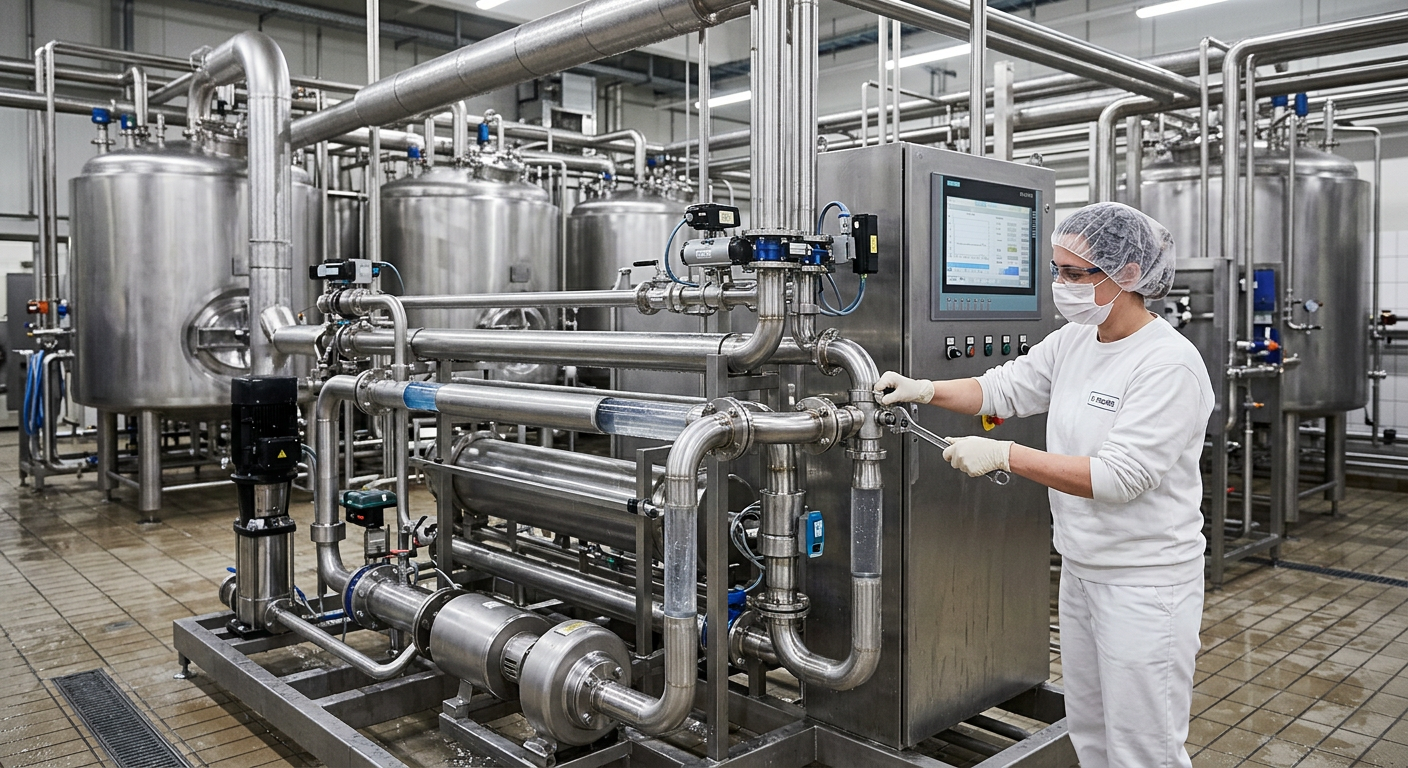
Food Facility Vision Inspection System Guide
Food manufacturers in the United States are investing in vision inspection systems to improve product quality, reduce waste, support traceability, and protect brand reputation. From poultry plants in Arkansas to dairy processors in Wisconsin, bakery lines in Chicago, beverage fillers in North Carolina, and seafood facilities near Los Angeles and Seattle, machine vision is becoming a practical production tool rather than a luxury upgrade. A well-designed system can detect seal failures, color variation, fill-level issues, shape defects, label errors, contamination risks, and sorting differences at line speed. The best results come when cameras, lighting, software, reject devices, controls, sanitation design, and plant integration are engineered together. For food and beverage companies planning capital improvements, the buying decision should go beyond camera resolution alone. The real value comes from how well the system fits the product, line speed, washdown requirements, automation architecture, and business goals. That is especially true in large U.S. production corridors such as the Midwest protein belt, the Southeast beverage market, the Texas manufacturing base, and logistics hubs connected to ports like Savannah, Houston, Long Beach, and Newark. A food facility vision inspection system is an automated quality control solution that uses cameras, optics, lighting, software, and reject mechanisms to inspect food products or packages in real time. In the United States, these systems are commonly used for defect detection, product grading, label verification, foreign material screening support, fill-level checks, orientation control, and automated sorting on high-speed production lines. For most facilities, the best system is not the one with the most advanced camera on paper. It is the one that matches the product type, sanitation demands, conveyor design, environmental conditions, plant controls, and throughput targets. A poultry processor may prioritize bruise, bone, and trim detection. A bakery may focus on color consistency and topping distribution. A dairy or aseptic beverage line may need cap, code, and fill verification tied into line controls and traceability. In practice, buyers in the United States should evaluate five things first: inspection objective, line speed, product variability, washdown environment, and integration scope. If those five are defined correctly, camera selection, lighting geometry, software rules, and reject timing become much easier to optimize. The table above shows why machine vision projects succeed when technical requirements are tied to operational outcomes. Facilities that define the business case first usually get faster adoption and better long-term value. A food vision inspection system includes more than a camera. Core components usually include industrial cameras, lenses, lighting, mounting structures, hygienic housings, triggering devices, conveyors or encoders, image processors, operator interfaces, reject devices, and communication links to PLC or SCADA systems. In some facilities, multiple cameras are installed for top, bottom, side, and angled views. In others, a compact smart camera handles a single task such as label presence or date code verification. Camera selection depends on the inspection challenge. Area scan cameras are common for single-image inspections such as package top views. Line scan cameras are often preferred for continuous webs, long products, or detailed surface inspection. Color cameras help when product appearance matters, such as crust tone, doneness, fruit ripeness, or garnish placement. Monochrome cameras often perform better where contrast is the main objective. Near-infrared or multispectral setups may be considered for advanced applications involving moisture differences, organic residues, or difficult contrast conditions. In U.S. food plants, ruggedization matters as much as imaging performance. A snack line in Phoenix may deal with dust and heat, while a meat room in Omaha or Kansas City may require frequent washdown, corrosion resistance, and sealed connectors. Facilities near humid Gulf Coast environments, such as Houston or New Orleans, may also need extra attention to condensation control. On the technology side, effective solutions often pair cameras with strong automation infrastructure. Companies looking for turnkey support frequently prefer engineering partners that understand controls, utilities, and line execution rather than vision hardware alone. That is one reason many manufacturers review broader process integration resources such as food and beverage engineering services before finalizing an inspection project. This component table shows that camera performance only works when optics, motion timing, and environmental design are aligned. In food plants, the mechanical and controls context is often the deciding factor. Defect detection is the main reason many plants buy vision systems. Common inspection targets include missing components, broken products, shape irregularities, burn marks, undercooked or overcooked appearance, discoloration, bruising, seal contamination, misplaced labels, poor print quality, unreadable lot codes, cap misalignment, and damaged packaging. In some operations, the system also verifies assembly completeness, such as the number of nuggets in a tray or the presence of toppings on a pizza. Different industries prioritize different defects. Poultry and meat processors may focus on trim consistency, bone fragments, skin defects, portion size, and package integrity. Dairy processors may monitor cup fill height, foil seal quality, and date code presence. Beverage producers often inspect cap placement, label skew, fill level, and closure tamper evidence. Frozen food facilities care about clumping, glaze consistency, ice buildup, and package closure. Buyers should be realistic about what vision can and cannot do. Standard visible-light systems are excellent at surface-level and presentation-related defects, but deeper foreign material or internal quality issues may require complementary technologies such as X-ray, checkweighing, metal detection, or NIR sensing. The strongest inspection programs use vision as one layer in a broader food safety and quality architecture. The table above helps set realistic expectations. Vision systems are powerful, but they work best when matched to visible, measurable quality criteria and supported by complementary inspection technologies where needed. Beyond simple pass/fail inspection, machine vision can classify and sort products by grade, size, shape, color, orientation, and presentation. This is especially useful in produce, seafood, bakery, prepared foods, proteins, and ingredient handling. For example, a system can sort apples by color intensity, chicken portions by dimensional profile, baked buns by top color, shrimp by size band, or cheese blocks by edge integrity. In the United States, grading functions are increasingly linked to yield management. Plants are using vision data not only to remove defects but to direct acceptable products into the most profitable downstream path. A portion that does not meet premium retail specs may still be appropriate for foodservice, further processing, or value-added applications. This helps reduce giveaway and improve margin recovery. Sorting architecture matters. Some lines use air jets, diverter arms, servo gates, robotic pick systems, or drop flaps. The correct mechanism depends on the product mass, fragility, speed, sanitation requirements, and spacing between items. In delicate bakery or snack applications, reject and sort handling must be designed carefully to avoid creating new damage. This table illustrates how grading can move machine vision from a compliance tool to a profit tool. Plants with multiple sales channels often see the strongest ROI from this approach. Integration is where many vision projects either pay back quickly or struggle. A standalone camera may identify a defect, but true production value comes when the system communicates with conveyors, reject devices, HMIs, plant historians, recipe systems, and line controls. In high-volume facilities, vision should be treated as part of the full production architecture. Common integration points include PLC connections for triggers and reject timing, HMI screens for changeovers and alarm review, SCADA for reporting, and MES or quality platforms for traceability. Some facilities also connect inspection data to upstream equipment such as fillers, slicers, or depositors to detect drift before out-of-spec product accumulates. Line integration is especially important in large U.S. facilities where throughput losses are expensive. A beverage line outside Charlotte, a poultry processor in Georgia, or a co-packer near Dallas may need vision systems that coordinate across fillers, labelers, cartoners, and palletization systems. Engineering teams that understand utilities, controls, installation sequencing, and startup planning typically reduce commissioning risk. Manufacturers evaluating such projects often review prior integration work through resources like project case studies to benchmark execution capability. Strong integration also means planning around sanitation access, changeover procedures, e-stops, cybersecurity, spare parts, and operator training. A camera system that cannot be cleaned safely or adjusted easily during production shifts will not sustain performance. Lighting is often the difference between a high-performing inspection system and one that produces unstable results. In food plants, the challenge is not simply getting enough light. It is getting the right angle, wavelength, intensity, uniformity, and enclosure design so the defect stands out clearly from the background. Backlighting is useful for silhouette and fill checks. Diffuse dome lighting helps reduce glare on reflective packages. Dark-field lighting can highlight scratches or surface defects. Polarized setups may help control reflections on films and wet surfaces. Environmental conditions in U.S. food manufacturing vary widely. A frozen food line in Minnesota may battle frost and low temperatures. A Gulf Coast seafood plant may face humidity and salt exposure. A high-acid sauce plant may require corrosion resistance. A ready-to-eat room may need hygienic design and careful material selection. Condensation, vibration, steam, cleaning chemicals, and ambient daylight are all common threats to stable imaging. The safest approach is to design a controlled inspection zone. That may include a stainless frame, enclosed lighting, hygienic windows, drainage considerations, cable management, and isolation from ambient factory light. Plants that skip this step often experience false rejects during shift changes, washdown recovery, or seasonal weather swings. This environment table highlights why machine vision should be designed like process equipment, not just installed like office electronics. In food plants, the surroundings define system reliability. Software converts images into decisions. Traditional rule-based tools remain effective for many applications, including edge detection, contrast checks, presence verification, counting, OCR, barcode reading, and dimensional measurement. AI and machine learning are gaining ground where natural product variation is high and defect patterns are less predictable. That includes proteins, bakery items, produce, and complex prepared foods. The key is choosing the simplest algorithm that reliably solves the problem. Not every inspection task needs AI. A straightforward geometric check may outperform a complex model if the product presentation is controlled. On the other hand, highly variable food products often benefit from trained classification models that reduce nuisance rejects. Configuration should include image libraries from real production conditions, including good product, borderline product, and known failure examples. Seasonal raw material variation matters. So do packaging supplier changes, recipe shifts, and line speed fluctuations. The software should also support recipe management, audit trails, user permissions, and report export for quality teams. By 2026, U.S. buyers should expect stronger movement toward hybrid inspection logic: conventional rules for deterministic checks and AI-assisted classification for variable appearance problems. Future-ready systems will also support remote diagnostics, trend analytics, and easier adaptation across multiple SKUs. Once installed, vision inspection systems need routine care to stay accurate. Preventive maintenance should include lens cleaning, light verification, housing inspection, cable checks, trigger and encoder validation, software backup, and reject timing confirmation. Plants should also maintain benchmark images and periodic challenge tests to ensure defect sensitivity has not drifted. Performance optimization is not only a maintenance task. It is an operations discipline. Teams should monitor false reject rates, missed defect rates, downtime events, and operator overrides. If false rejects rise after a packaging material change or seasonal ingredient shift, the system may need recipe updates or retraining rather than hardware replacement. For food manufacturers managing larger capital portfolios, the most successful programs combine maintenance with continuous improvement. That may include trend reporting, root cause review, and integration with broader automation upgrades. Engineering partners with a full project execution model can be especially valuable here because they can address controls, mechanical changes, utility impacts, and startup support together. Information on broader support models and execution philosophy can be found through the company overview and related technical pages. This maintenance framework helps plants protect performance over time. Vision systems usually decline gradually, not suddenly, so disciplined checks prevent hidden quality drift. For U.S. food and beverage manufacturers, a vision inspection project often touches much more than quality control. It can affect line layout, utilities, controls, installation sequencing, startup risk, and future capacity. That is where Disruptive Process Solutions, commonly known as DPS, fits well in the market. DPS is a North American food and beverage engineering company headquartered in Cary, North Carolina, with West Coast presence in Lake Forest, California, serving manufacturers across all 50 states and Canada. From a technological capability standpoint, DPS supports structural, mechanical, plumbing, electrical, process, and controls engineering, including PLC programming, automation, and SCADA integration. For a vision inspection system, that broader automation knowledge matters because inspection performance depends heavily on line synchronization, reject timing, HMI design, data visibility, and system-level troubleshooting. Rather than treating vision as an isolated device, DPS can position it within a larger controls and processing environment. From a manufacturing capability standpoint, DPS also brings practical process equipment experience across food and beverage sectors. The company works with protein processing, prepared foods, sauces, dairy, aseptic systems, brewing, spirits, wine, RTD products, soft drinks, juice, and more. It also designs and manufactures selected process equipment such as tanks, CIP systems, tumblers, and cooking vessels. That cross-functional process knowledge helps when a vision system must fit real sanitation, throughput, and product-handling conditions rather than a generic automation template. Manufacturers exploring broader equipment and process capabilities can review equipment solutions as part of capital planning. From a service capability standpoint, DPS operates with a design-build-manage model that combines engineering, construction oversight, project management, installation coordination, and integration support. For manufacturers upgrading production lines in places like Dallas, Fresno, Milwaukee, Atlanta, or the Mid-Atlantic corridor, this can reduce handoff risk between designers, contractors, equipment suppliers, and startup teams. The company is particularly relevant when a machine vision project is part of a larger plant upgrade, equipment relocation, utility expansion, co-packing launch, or capacity increase. What many clients value most is the business-minded approach. DPS is known for focusing on project profitability, practical decision-making, and candid guidance instead of overselling capital scope. That mindset is useful for vision investments because some plants need a full multi-camera integrated system, while others can solve the bottleneck with targeted controls changes, better lighting, or a narrower inspection point. In other words, the right answer is not always the most expensive answer. What products benefit most from food vision inspection systems?High-volume products with visible quality standards benefit the most, including beverages, dairy cups, trays, bakery items, produce, proteins, seafood, and prepared foods. Products with frequent label, seal, fill, or appearance issues are especially strong candidates. How much space is needed on the line?It depends on the inspection task and reject device. A basic smart camera station may fit in a compact area, while a multi-camera grading system with enclosed lighting and reject conveyors may need a larger machine zone. Early layout review is recommended. Can machine vision replace manual inspection?It can reduce manual inspection significantly, but many plants still use a layered quality approach. Vision is excellent for repeatable, high-speed checks, while human review may remain useful for audits, rework evaluation, and unusual cases. Is AI necessary for food inspection?Not always. Many applications are solved well with rule-based tools. AI is most valuable when products have natural variation or when defect patterns are hard to define using simple thresholds. What is the biggest cause of failure in vision projects?Poor application definition and weak integration planning. Many underperforming systems suffer from unstable lighting, product presentation variability, or missing PLC and reject coordination rather than camera limitations. How should U.S. manufacturers evaluate suppliers?Look at food industry experience, sanitation design, controls integration capability, commissioning support, local service reach, and ability to work across broader capital projects. A supplier that understands production realities often delivers better value than a hardware seller alone. What are the major 2026 trends?The main trends are AI-assisted classification, better data connectivity, more hygienic and modular inspection cells, stronger sustainability reporting through waste reduction data, and increased alignment with traceability and food safety expectations. U.S. facilities are also paying closer attention to labor efficiency, cybersecurity, and energy-conscious line upgrades. Are there policy and sustainability factors to consider?Yes. Buyers should consider food safety documentation, traceability expectations, sanitation compliance, and waste reduction goals. Systems that help reduce overfill, packaging errors, and good-product discard can support both profitability and sustainability targets. Where should buyers start?Start with a line audit: define the defect, quantify current losses, document speeds and SKUs, review environmental conditions, and identify integration needs. Then compare options based on lifecycle value, not just camera cost. In summary, food facility vision inspection systems are becoming a strategic investment across the United States because they improve consistency, support food safety programs, reduce waste, and strengthen line performance. The strongest projects combine realistic defect targets, controlled lighting, properly selected cameras, smart software configuration, and disciplined integration with plant operations. For manufacturers planning larger modernization efforts, choosing an engineering partner that understands the entire processing environment can make the difference between a device purchase and a true production improvement. -
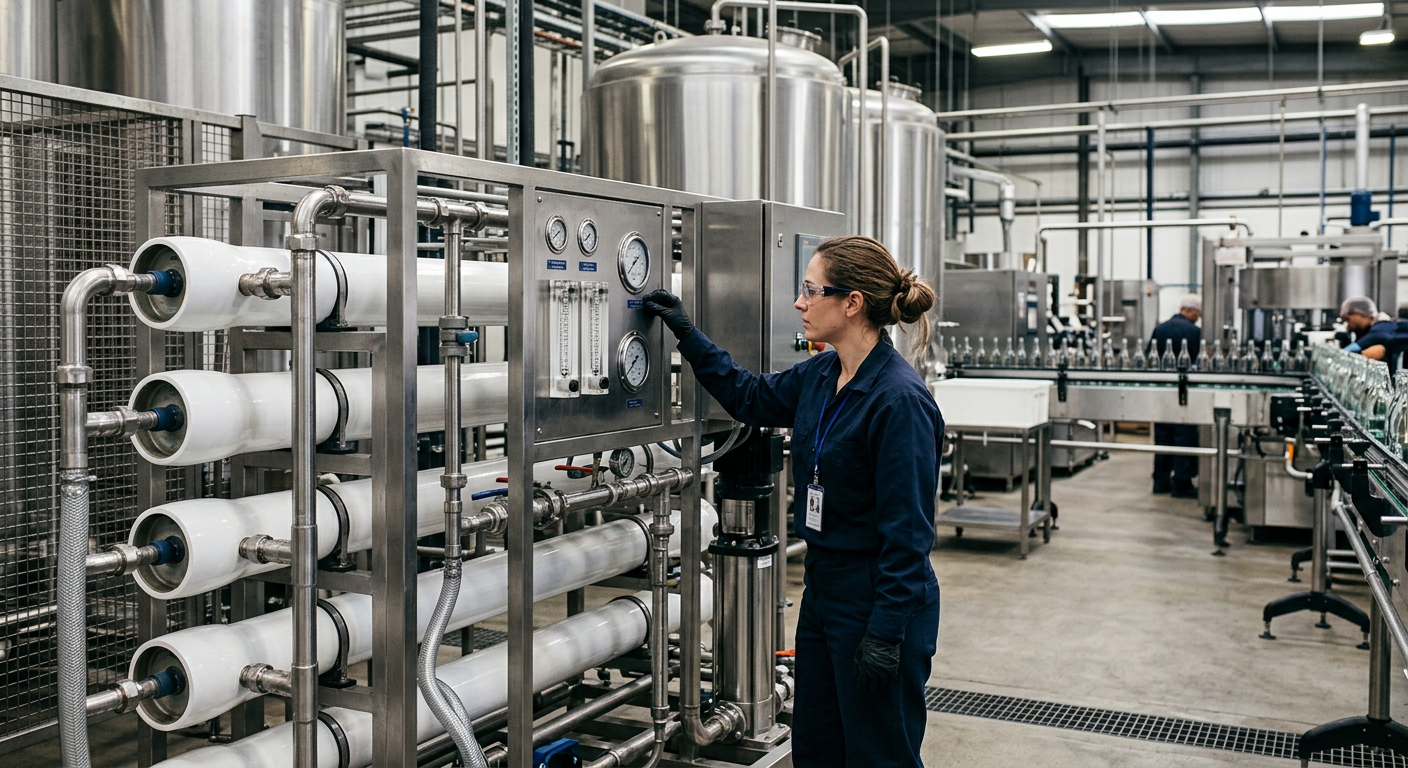
Food Plant Palletizing System Selection 2026
Food manufacturers in the United States are under pressure to ship more cases, use labor more efficiently, protect product quality, and fit automation into plants that were often never designed for modern end-of-line systems. In that environment, selecting the right palletizing solution is not just an equipment decision. It affects labor planning, warehouse flow, line uptime, sanitation, utility loads, maintenance strategy, and long-term capital returns. For most U.S. food plants, the best palletizing system is the one that matches actual case rates, SKU variation, sanitation needs, and available floor space rather than the one with the highest advertised speed. A high-speed cereal or canning line in the Midwest may need a conventional high-level palletizer. A protein processor in Arkansas or Georgia may prefer a low-level or gantry design that is easier to maintain in a washdown environment. A growing co-packer near Dallas, Chicago, or the Inland Empire may get better returns from a collaborative robotic palletizing cell that can be redeployed as packaging formats change. By 2026, the U.S. market is also being shaped by labor constraints, retailer pallet quality requirements, traceability expectations, sustainability targets, and growing demand for flexible automation. Plants shipping through hubs such as Los Angeles/Long Beach, Savannah, Houston, New Jersey/New York, and Memphis increasingly need reliable pallet quality because transportation networks penalize unstable loads through product loss, rework, and freight claims. If you need a direct answer, here is the practical rule: choose a conventional high-level palletizer for very high, stable throughput; choose a low-level or gantry palletizer for durable mechanical performance and easier product presentation; choose a robotic palletizer system when your plant has mixed SKUs, frequent changeovers, footprint limitations, or phased expansion plans. For food plants in the United States, a good selection process should evaluate seven issues first: required cases per minute, package stability, pallet pattern complexity, number of SKUs, operator interaction, sanitation level, and future line growth. In many food facilities, the true bottleneck is not the palletizer alone but how cases arrive, turn, queue, and merge before stacking. That is why line integration and throughput matching matter as much as the machine category itself. In 2026, buyers should also consider labor availability, OSHA risk reduction, sustainability metrics, energy efficiency, remote diagnostics, and compatibility with plant controls. A system that looks cheaper on day one can become expensive if it causes chronic changeover delays, poor pallet quality, or maintenance dependence on rare parts. The table above simplifies the first screening step. It does not replace detailed engineering, but it helps narrow the equipment family before deeper layout and controls work begins. Robotic palletizer systems have become the default short-list option for many U.S. food and beverage projects because they combine flexibility with a reasonable footprint. These systems use industrial robots, usually with one or more infeed conveyors, pallet dispensers, slip sheet handling, stretch wrapping interfaces, and safety systems. The real advantage is not just robotics itself. It is the ability to reprogram patterns, handle multiple pack formats, and adapt to future packaging changes without replacing the entire end-of-line architecture. This is especially attractive for co-packers, beverage producers, ingredient suppliers, and prepared food operations that rotate SKUs often. A manufacturer serving big-box retail one week and club store packs the next needs a palletizing platform that can switch recipes without mechanical rebuilds. Plants in major distribution corridors such as Atlanta, Columbus, Kansas City, and Southern California are using robotic cells to reduce dependence on manual palletizing during peak seasons. Robotic systems also support phased capital deployment. A plant can start with one cell for a single line, then add additional robots, automatic pallet feed, and layer sheet handling as volume grows. That matters when management wants to preserve cash while still preparing for future demand. One caution: many buyers assume a robot automatically solves all palletizing problems. It does not. If upstream case sealing is inconsistent, if cartons are soft, or if line accumulation is poorly designed, even a very capable robot will build unstable pallets. The system must be engineered around the product, not only around the robot brand. The chart above reflects the realistic growth trend many engineers and operators are seeing in U.S. food plants: adoption is climbing steadily, but the fastest growth is in flexible robotics rather than one-size-fits-all conventional systems. Conventional high-level palletizers remain highly effective for large-volume food operations with stable packaging formats. These machines typically elevate cases to a high infeed level, form rows or layers, and transfer complete patterns onto pallets. For plants with long production runs and consistent case geometry, they can deliver excellent throughput and dependable pallet quality. This category is particularly relevant for canning, dry foods, corrugated master cases, and large-scale packaged goods where the line speed is too high for a basic single-robot cell. In regions with major food production clusters such as Illinois, Wisconsin, Nebraska, California’s Central Valley, and the Carolinas, high-level palletizers still play a major role in large legacy plants and new large-capacity greenfield sites. The main advantage is speed. The main disadvantage is flexibility. High-level machines often require more structural steel, more elevation changes, and more deliberate integration into the building layout. They are strong candidates where the product mix is stable and the cost of downtime from under-capacity would be greater than the cost of a larger machine footprint. For 2026, high-level systems should be evaluated with an eye on energy use, servo upgrades, digital maintenance support, and spare parts availability. A lower purchase price is not attractive if the machine architecture depends on obsolete components. Buyers should request a controls and parts obsolescence roadmap before approving capital. Low-level and gantry palletizers fill an important middle ground in food manufacturing. Low-level systems bring product in at a more accessible height, which can simplify maintenance and reduce some structural demands. Gantry palletizers, meanwhile, provide robust overhead handling that is useful for heavier or more difficult-to-stack packages such as bags, trays, pails, and bulk containers. These options are often favored where product handling must be durable and predictable, and where service teams want simpler access to components. In meat, poultry, seafood, dairy, and ingredients operations, especially in washdown or semi-harsh environments, the maintainability of the system often carries as much weight as pure speed. For plants near protein and cold-chain hubs such as Omaha, Sioux Falls, Springdale, Fresno, and Jacksonville, the value proposition is clear: reliable end-of-line handling with less complexity than some high-elevation designs. Gantry systems are also useful where load stability is critical before pallets head to long-haul lanes or intermodal connections. The practical lesson is simple: if your team values accessibility, rugged handling, and predictable operation, low-level and gantry palletizers deserve serious consideration. They are not old-fashioned fallback options. In many applications, they are the best engineering answer. Collaborative robot palletizing cells are growing fast in the United States, especially among smaller and mid-sized food manufacturers that need automation but do not need a fully fenced high-speed robotic installation. These cells are commonly used for moderate case rates, shorter runs, pilot lines, and facilities where labor turnover has made manual palletizing unreliable. Collaborative systems are attractive because they can often be deployed faster, require less floor space, and support a lower barrier to automation. For a bakery in Phoenix, a specialty sauce plant in North Carolina, or a contract packager in New Jersey, a cobot palletizing cell may offer a practical first step into automation without the complexity of a full greenfield redesign. Still, buyers should avoid oversimplifying the safety story. “Collaborative” does not mean “no engineering required.” Payload, reach, product presentation, guarding logic, pallet access, and human-machine interaction must all be evaluated correctly. In many food plants, a collaborative cell still needs partial guarding, defined operating zones, and disciplined traffic flow around forklifts and pallet jacks. The strongest demand is coming from beverage and co-packing environments, where SKU variety and labor variability push plants toward flexible automation. Collaborative cells are especially useful where lines are growing but not yet at the speed that justifies a larger conventional installation. End-of-arm tooling is often the hidden factor that determines whether a palletizing project succeeds. The robot or gantry gets the attention, but the gripper determines how the product is actually handled. A poor gripper choice creates dropped loads, crushed cartons, poor rate performance, and long troubleshooting sessions. A good one improves uptime, pattern integrity, and SKU flexibility. Food plants in the United States handle a wide range of package types: corrugated cases, shrink-wrapped bundles, trays, open-top cartons, pails, bags, and display-ready packaging. Each package reacts differently to vacuum, clamping, forks, or combination tooling. A beverage case moving through a warehouse in Memphis may tolerate a different handling method than a soft prepared-food carton shipping through cold storage in Pennsylvania. When evaluating grippers, buyers should test package compression resistance, airflow needs for vacuum cups, top-surface consistency, and product center-of-gravity variation. If the system must support future package changes, combination tooling often delivers better long-term value than a single-purpose head. The table shows why gripper selection should happen early, not at the very end of the project. It influences robot size, cycle time, controls logic, and pallet pattern capability. Many end-of-line projects fail because teams buy a palletizer based on headline speed instead of actual system flow. Throughput matching means analyzing the complete path from case sealing and conveying to accumulation, turning, scanning, pattern creation, pallet discharge, wrapping, and forklift removal. If one step is mismatched, the palletizer will starve or block the line. A plant in Chicago with three packaging lines feeding one palletizer has different integration needs than a single-line dairy plant in Idaho. A beverage producer near Houston may need surge capacity because upstream fillers run in bursts. A frozen food operation in Minnesota may require conveyor designs that preserve package stability as cartons transition from cold zones to ambient palletizing spaces. Good engineering includes OEE targets, accumulation modeling, reject routing, manual fallback procedures, and startup ramp logic. By 2026, more buyers are asking for digital simulation before procurement, and that is a positive trend. It reduces unpleasant surprises after installation. The trend shift is clear: U.S. manufacturers are moving toward flexible and hybrid solutions. However, flexibility should never come at the expense of line balance. A slower but well-matched palletizing solution can outperform an oversized machine installed into a poor conveyor and controls design. Key buying advice for throughput matching includes:Use actual sustained rate data, not only nameplate speeds.Model peak and average production separately.Include pallet changes, slip sheets, and wrapper cycle times.Verify case quality and seal integrity before automation.Plan for preventive maintenance access without stopping the whole line.Design controls around plant-wide communication, not isolated equipment. Plants serving major retail and foodservice channels should also align pallet patterns with transportation realities. Loads moving through the Port of Savannah, the Port of Houston, or rail ramps in Chicago face different vibration and handling conditions. Stable pallets reduce claims and improve customer satisfaction. Floor space is one of the biggest practical constraints in U.S. food plants. Many facilities were expanded in stages over decades, leaving awkward corners, low ceilings, utility congestion, and forklift traffic conflicts. That is why layout planning is a strategic part of palletizer selection. A robotic palletizer system may fit where a conventional machine cannot. A low-level palletizer may simplify maintenance aisle access. A gantry may use vertical volume effectively. A collaborative cell may work near existing packing areas with minimal disruption. But no layout decision should be made without considering pallet magazine location, empty pallet flow, operator approach, guard doors, wrapper position, and future expansion. For plants in high-cost real estate markets such as Los Angeles County, Northern New Jersey, Seattle, and South Florida, every square foot matters. For greenfield projects in Texas, Tennessee, or Indiana, layout optimization may focus more on future capacity than on current space pressure. In both cases, pallet discharge and forklift circulation should be treated as core design issues rather than late-stage details. Thoughtful layouts also support sustainability. Better conveyor routing reduces motor count and energy draw. Efficient pallet flow reduces forklift miles. Smarter access reduces maintenance time and unnecessary downtime. These gains are small individually but significant over years of operation. This comparison highlights a common reality in the U.S. market: there is no universal winner. The best equipment type depends on what matters most in your plant. Choosing and implementing palletizing systems often requires more than an equipment purchase. It requires engineering depth, practical installation management, and the ability to connect packaging automation to larger plant objectives. That is where Disruptive Process Solutions supports food and beverage manufacturers across the United States and Canada. On the technology side, DPS brings multi-discipline engineering that supports complete end-of-line integration. That includes process, mechanical, electrical, structural, plumbing, and controls expertise, along with PLC programming, automation, and SCADA coordination. For clients evaluating palletizing projects, this matters because the end of the line is tied to upstream production behavior, utilities, safety architecture, and plant-wide data visibility. You can learn more about the company background on the About Us page. On the manufacturing side, DPS also develops and supplies proprietary equipment as part of broader capital execution strategies. While the firm is known for full-scope food and beverage engineering, it also manufactures selected process equipment that can be integrated into complete plant solutions. That manufacturing mindset is valuable in palletizing and packaging projects because it keeps the focus on buildability, serviceability, and lifecycle practicality rather than on isolated design concepts. More information on equipment capabilities is available through the equipment solutions section. On the service side, DPS operates through a design-build-manage model that aligns engineering, construction oversight, installation, and integration. For manufacturers planning a new palletizer, line expansion, relocation, or multi-line modernization, that structure helps reduce the disconnects that often appear between design intent and field execution. The company supports capital planning, feasibility studies, owner’s representation, project and program management, turnkey installation, and system integration for food, beverage, and regulated environments. You can review the broader service scope on the services page. This integrated approach is especially useful when a palletizing project is part of a larger business decision such as a beverage expansion, a protein plant redesign, a co-packing startup, or a facility relocation. Instead of treating the palletizer as a stand-alone asset, DPS helps clients connect automation choices to profitability, capacity strategy, utility planning, compliance, and startup success. Examples of project execution can be explored in the case studies section. A realistic case example in the U.S. market would be a manufacturer considering a multimillion-dollar capacity addition when the real bottleneck is controls logic, accumulation behavior, or end-of-line sequencing. In those situations, disciplined analysis can unlock throughput without unnecessary spending. That kind of honest evaluation is often more valuable than simply recommending the largest machine. For food and beverage companies in markets such as North Carolina, California, Texas, the Midwest, or the Northeast, the right partner should be able to speak both operations and capital. That means understanding not only robotics and conveyors, but also startup timing, sanitation design, utility impacts, compliance frameworks, and the commercial pressure to achieve payback quickly. The best system depends on throughput, SKU variation, package type, floor space, and sanitation conditions. High-speed, stable lines often fit conventional high-level palletizers. Mixed-product or growing operations often benefit from robotic palletizer systems. Yes, especially for moderate speeds, labor-constrained operations, and plants starting their automation journey. They are common in bakeries, specialty foods, and co-packing. However, they still require proper safety design and layout planning. If you have frequent changeovers, many package formats, limited floor space, or phased expansion plans, robotics usually offers better long-term value. If you have very high volume with stable SKUs, a conventional system may be stronger. Package rigidity, surface condition, weight distribution, required speed, and future SKU changes matter most. A gripper should be tested against real product samples, not only theoretical dimensions. Enough for the machine, case infeed, pallet supply, pallet discharge, wrapper interface, operator access, maintenance clearances, and forklift traffic. Reserve additional space if you expect future line growth. Beverage, co-packing, prepared foods, protein processing, and dairy are among the strongest demand segments in the U.S. market due to labor challenges, throughput needs, and SKU complexity. Key 2026 trends include greater use of flexible robotic cells, remote support tools, digital simulation, energy-efficient drives, recyclable packaging impacts on case stability, and stronger retailer expectations for pallet consistency and traceability. Sustainability now influences energy use, material handling efficiency, load stability, and packaging waste. A well-designed palletizing system can reduce damaged product, excess stretch wrap, and forklift movement while improving overall line efficiency. Integration quality. A slightly slower but well-integrated system often outperforms a faster machine that suffers from poor accumulation, unstable cases, or weak controls coordination. Ask about sustained throughput, spare parts strategy, changeover time, controls platform, sanitation suitability, service coverage in the United States, FAT/SAT process, training, and how the system handles your exact package mix. As the U.S. food industry moves into 2026, palletizing decisions are becoming more strategic. Labor pressures are not disappearing. Packaging formats will keep changing. Sustainability and retailer compliance will continue to shape end-of-line design. The smartest buyers will focus on total system fit: product behavior, line balance, maintainability, and room for growth. Whether the answer is a conventional high-level palletizer, a low-level or gantry solution, a collaborative cell, or a full robotic palletizer system, the winning choice will be the one engineered around the plant’s real operating conditions and long-term business model.