-
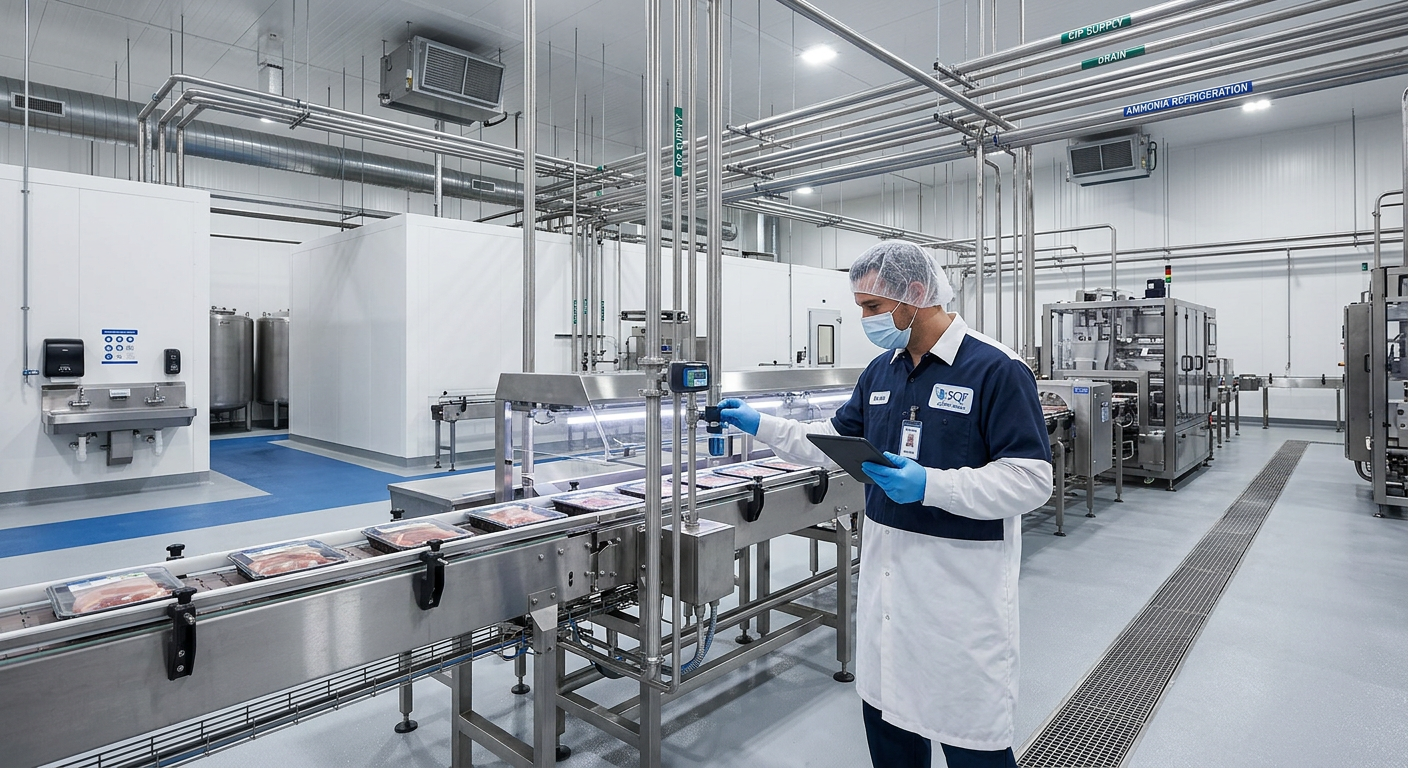
Food Manufacturing Automation Services
Food manufacturing automation is no longer limited to fast conveyor belts and basic machine controls. In the United States, it has become a strategic investment that helps processors improve yield, strengthen food safety, reduce downtime, solve labor gaps, and meet stricter regulatory and customer requirements. From meat and dairy plants in the Midwest to beverage facilities near Los Angeles, Houston, and Savannah, automation now connects ingredient handling, processing, packaging, warehousing, and plant data into one performance-driven system. For manufacturers evaluating automation services, the most important question is not simply “What machine should we buy?” It is “Where is the real bottleneck, and what combination of process engineering, controls, equipment integration, and execution will create the strongest return?” That distinction matters. A plant can spend millions on new equipment and still miss its margin targets if recipe logic, changeover planning, utilities, sanitation design, or line balancing are overlooked. Across the United States market, this is why food manufacturers increasingly seek partners that understand both capital planning and day-to-day plant performance. Companies need automation strategies that align with SQF, BRC, FDA, and USDA expectations while supporting production realities in protein processing, prepared foods, dairy, sauces, aseptic systems, brewing, spirits, and ready-to-drink beverages. Food manufacturing automation services in the United States combine equipment, controls, software, engineering, and installation to make food and beverage plants safer, faster, more consistent, and easier to scale. The best automation programs typically include robotics, PLC programming, SCADA, vision inspection, batching control, utility integration, traceability, and data-driven optimization. These services are used across receiving, mixing, cooking, filling, packaging, palletizing, warehousing, and distribution. For buyers, the right automation project starts with a plant-specific assessment of bottlenecks, labor exposure, sanitation risk, compliance requirements, and growth targets. In many cases, the best return comes from targeted upgrades such as controls modernization, recipe automation, packaging line integration, CIP automation, or vision-based quality checks rather than a full greenfield rebuild. The table above shows why automation buying decisions should start with plant constraints, not vendor catalogs. In many U.S. facilities, especially legacy plants around Chicago, Philadelphia, and Atlanta, the most profitable first step is targeted modernization. Food processing automation in the United States began with mechanical handling: conveyors, fillers, pumps, and simple timing-based machine controls. These systems reduced manual transport and enabled larger production runs, but they were largely isolated. Operators had to rely on experience rather than integrated data. The next phase was programmable control. PLCs gave plants a way to standardize sequences, improve reliability, and support more complex process steps such as blending, pasteurization, retort, filling, and CIP. As manufacturers expanded across regions and product lines, SCADA and HMI systems brought visibility to recipes, alarms, line status, and utility performance. Today, Industry 4.0 has pushed food automation far beyond machine-level control. Modern plants connect sensors, robotic systems, MES layers, quality data, maintenance information, and business planning systems. A beverage line in North Carolina can monitor syrup room performance, compressed air demand, filler efficiency, and palletizing throughput in real time. A protein plant in Texas can track lot movement from raw receiving through slicing, packaging, and cold storage. This shift is especially important in the U.S. market because food manufacturers often operate under tight retail service-level agreements, labor pressure, utility cost volatility, and heightened traceability expectations. Plants serving ports and distribution corridors such as Long Beach, New Orleans, Newark, and Savannah cannot afford blind spots in production or shipping readiness. This progression explains why many automation projects now begin with controls audits and data mapping. Before adding more equipment, manufacturers need to know how current assets communicate and where process information gets lost. Several technologies define modern food manufacturing automation services. Robotics handle repetitive movement, loading, unloading, case packing, palletizing, and increasingly delicate product handling. Vision systems inspect fill levels, seal integrity, label placement, color, shape, and foreign material indicators. PLCs remain the operational backbone, coordinating pumps, valves, motors, recipes, interlocks, and safety sequences. Digital twins are newer but increasingly useful for simulating process flow, utilities, capacity, and line changes before money is committed in the field. In practical terms, a successful automation project often layers these technologies together. For example, a ready-to-drink plant may use PLCs for batching and utility control, machine vision for cap and label verification, robotics for end-of-line handling, and a digital twin to model future throughput as the site expands from one filler to multiple packaging formats. Technological capability is especially valuable when supported by engineering depth. Disruptive Process Solutions brings integrated structural, mechanical, plumbing, electrical, process, and controls expertise to food and beverage projects across North America. That means automation is not treated as a standalone programming task. It is tied to utilities, hygienic design, equipment layout, commissioning, and operating performance. Their controls work can include PLC programming, SCADA integration, recipe management, and coordinated execution with processing systems such as CIP, heat treatment, blending, fermentation, retort, and filling. To learn more about integrated engineering backgrounds that support these technologies, manufacturers often review a partner’s company experience and operating approach before committing to a capital plan. Labor savings are real, but they are rarely the full story. In U.S. food plants, some of the strongest automation returns come from fewer injuries, tighter process consistency, better electronic records, lower giveaway, stronger sanitation control, and easier compliance documentation. Safety improves when manual lifting, repetitive knife work, and dangerous interactions with heat, pressure, chemicals, or moving equipment are reduced. Consistency improves when recipes, temperatures, hold times, and line speeds are controlled automatically rather than adjusted by feel. Traceability improves when lots, ingredients, process parameters, and packaging records move into digital systems. Compliance improves when records are easier to review during FDA, USDA, SQF, or BRC audits. This matters most for producers with product sensitivity or complex regulation: aseptic beverages, retort foods, dairy, meat and poultry, infant nutrition, functional drinks, and shelf-stable prepared meals. A processor shipping through Memphis, Kansas City, or central Pennsylvania distribution networks must not only run efficiently but also prove control quickly if a customer asks questions. The operational impact shown above is why automation investments are often approved by quality, operations, engineering, and finance together. The project case becomes stronger when it includes reduced risk, not just reduced headcount. Automation touches every stage of food and beverage production. At receiving, systems can verify deliveries, weigh ingredients, and route materials. During processing, controls manage grinding, blending, forming, cooking, smoking, pasteurization, homogenization, carbonation, filtration, retort, aseptic transfer, and CIP. In packaging, automation supports filling, sealing, coding, case packing, palletizing, and warehouse movement. In distribution, data integration improves order readiness, cold chain coordination, and outbound traceability. Manufacturing capability matters here because automation must match the product. A protein line needs different hygienic, thermal, and handling logic than a kombucha cellar or an aseptic dairy beverage system. DPS supports both food and beverage manufacturing environments, including proteins, prepared foods, dairy, sauces, marination systems, plant-based products, brewing, distillation, wine, ready-to-drink beverages, juice, and aseptic operations. Their process scope spans equipment such as grinders, mixers, cookers, tumblers, sliced-product systems, bright tanks, pasteurization platforms, retort systems, custom CIP skids, and utility infrastructure that keeps automated production stable. That breadth matters in U.S. regional markets. A co-packer near Dallas may need high-speed beverage batching and can handling. A seafood processor near Seattle may prioritize portioning, chilling, and packaging traceability. A dairy facility in Wisconsin may focus on homogenization, clean utility automation, and lot tracking across fillers and cold storage. For plants comparing suppliers, reviewing available food processing equipment and system options can help connect automation concepts to actual process hardware and utility requirements. Smart factories in the food sector are not science fiction. They already exist in practical forms across U.S. manufacturing. AI and machine learning are being used to identify downtime patterns, predict maintenance needs, optimize fill accuracy, improve utility consumption, and flag abnormal process conditions before they create waste or quality deviations. Real-time optimization becomes valuable when data is structured correctly. If a line knows actual throughput, reject rate, utility demand, sanitation status, and labor allocation, managers can make faster decisions. This is especially important for high-volume producers supplying national retail or foodservice channels from logistics hubs such as Chicago, Columbus, Indianapolis, and the Inland Empire in Southern California. One of the most overlooked points is that AI works best after core process discipline is in place. Reliable sensors, clean PLC logic, standardized naming, secure network architecture, and accurate operator inputs are what make advanced analytics useful. Without those basics, “smart factory” investments become expensive dashboards with weak credibility. These trends show that the future of automation is not simply more hardware. It is better decisions made faster, with fewer surprises. Small and medium food manufacturers often assume automation is only for billion-dollar enterprises. In reality, many of the best projects for mid-sized U.S. plants are modular and phased. A company does not need a full greenfield smart factory to benefit. It can start with controls modernization, a packaging cell, an automated CIP skid, a vision station, or utility monitoring and build from there. The most affordable path usually involves ranking projects by payback period, labor risk, downtime impact, quality exposure, and expansion value. A Midwest sauce producer may begin with batch control and tank automation. A Carolinas beverage co-packer may start with line integration and recipe management. A California snack manufacturer may justify robotic case packing due to persistent labor shortages and high turnover. Service capability is decisive at this stage. DPS operates as a full-scope engineering and execution partner rather than a narrow equipment reseller. Through process design, capital planning, owner’s representation, project management, general contracting support, installation, integration, and commissioning, the company helps manufacturers structure projects around profitability and execution discipline. Its Design Build Manage model is built to connect concept, fieldwork, and stakeholder oversight, which is especially useful when smaller manufacturers lack large in-house engineering teams. When comparing implementation partners, buyers should look at food and beverage engineering services that include planning, integration, and commissioning rather than just machine sales. That usually lowers risk over the life of the project. One of the most common concerns in automation discussions is workforce displacement. In practice, U.S. food manufacturing automation more often changes roles than eliminates entire teams. Plants still need operators, sanitation crews, maintenance technicians, supervisors, quality specialists, and production planners. What changes is the skill mix. As automation expands, repetitive manual tasks decline while troubleshooting, line oversight, data review, preventive maintenance, and changeover coordination become more important. The strongest companies prepare for this by training existing employees early and making automation part of workforce development rather than a surprise. This is particularly important in regions facing tight labor markets, such as Nashville, Phoenix, Denver, and parts of New Jersey’s warehouse corridor. If plants can move workers from hard-to-staff repetitive roles into higher-value technical positions, retention often improves. Employees see a clearer career path, and management gains more stable operations. Good automation partners acknowledge this reality. The goal is not “machines instead of people.” The goal is “people supported by better systems.” In many successful projects, plants redeploy labor into QA verification, preventive maintenance, new production lines, or additional shifts that generate growth. The comparison chart above also highlights why supplier choice matters. A full-scope partner typically delivers stronger outcomes than a narrow equipment-only transaction because labor, process, compliance, controls, and field execution all need to align. Looking toward 2026 and beyond, three trends stand out in U.S. food manufacturing automation: collaborative robotics, hyper-personalized production, and sustainability-driven optimization. Collaborative robots, or cobots, will keep gaining ground in plants that need flexibility more than maximum speed. They are well suited for secondary packaging, light assembly, and frequent changeovers. This is especially appealing to mid-sized producers serving seasonal, private-label, or promotional SKUs. Hyper-personalization will expand as brands push smaller runs, functional ingredient variation, and faster product development. Automation will help plants shift between SKUs with less downtime through recipe management, modular equipment design, digital work instructions, and more intelligent scheduling. Sustainability will become even more central. U.S. processors are under pressure from customers, investors, utilities, and state-level policy trends to cut water use, energy waste, packaging waste, and emissions intensity. Smart utility automation, heat recovery controls, optimized CIP cycles, compressed air management, and refrigeration analytics will all matter more. States such as California and regions with high power costs or water constraints will feel this most sharply, but the trend is nationwide. Policy and compliance expectations are also evolving. Digital traceability, cyber readiness, and documented process control will increasingly influence supplier approval and retailer relationships. Companies that automate intelligently will be better positioned to win business from large national accounts. Manufacturers that want proof of execution should also review real project examples and outcomes. Studying automation and facility case studies can show whether a partner understands expansion strategy, relocation complexity, utilities, and line performance in the field. What are food manufacturing automation services?They are services that design, install, program, and integrate automated systems for food and beverage plants. This may include PLCs, SCADA, robotics, vision inspection, batching systems, CIP automation, packaging controls, and utility integration. Which U.S. food sectors benefit the most?High-volume and compliance-sensitive sectors often see the fastest returns, including beverages, dairy, meat and poultry, prepared foods, sauces, aseptic products, and co-packing operations. Is automation only for large factories?No. Small and medium manufacturers can start with phased projects such as controls upgrades, vision systems, robotic end-of-line cells, or automated cleaning systems. How long does a typical automation project take?Simple upgrades may take a few months, while multi-system integrations or greenfield projects can take much longer depending on design, procurement, permitting, and commissioning scope. What is the biggest mistake buyers make?Buying equipment before identifying the true bottleneck. In many plants, the issue is not lack of machinery but poor controls logic, utility limitations, line imbalance, or ineffective process flow. How do PLCs and SCADA differ?PLCs control machine and process actions directly. SCADA provides visibility, supervisory control, alarms, and historical data across systems. Are digital twins worth it?Yes, especially for expansions, relocations, and complex capital projects. They help manufacturers simulate capacity, utilities, and flow before construction or equipment moves begin. Will automation reduce labor needs?Usually it reduces labor exposure in repetitive or hazardous tasks while shifting employees toward monitoring, maintenance, quality, and higher-skill technical roles. How important is compliance knowledge?Very important. Food automation must support FDA, USDA, SQF, and BRC requirements where applicable, especially for traceability, sanitation, process validation, and documentation. What should companies look for in an automation partner?Look for process knowledge, controls expertise, hygienic design understanding, capital planning capability, field execution strength, and transparent project management. A partner that can engineer, build, and manage the full program usually reduces risk and improves accountability. In the United States, food manufacturing automation is no longer optional for companies that want resilient growth. Whether the goal is safer operations, better quality, stronger traceability, or scalable capacity, the winning approach is to combine process understanding with disciplined engineering and execution. For manufacturers planning the next step, the best automation strategy is the one that solves the right problem first and builds a platform for profitable expansion afterward. -
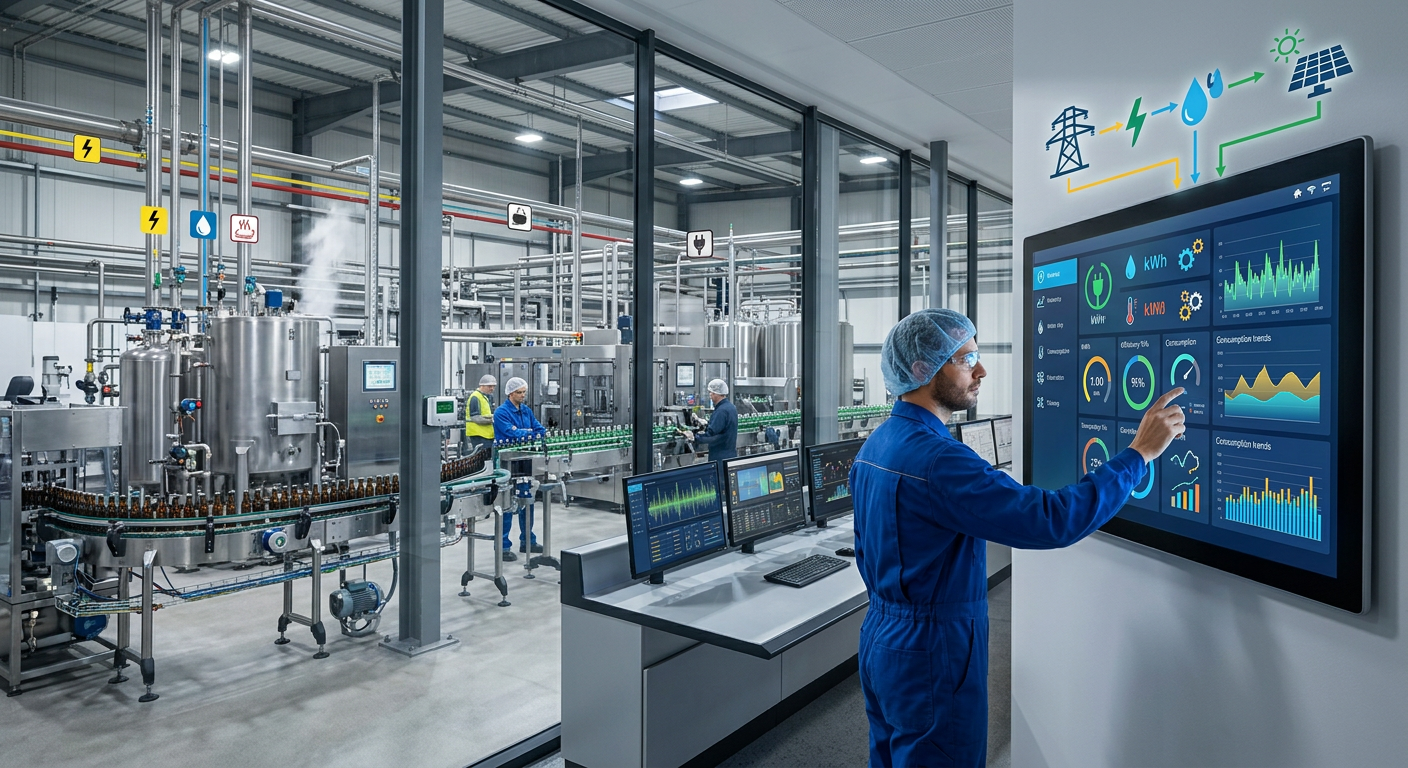
Beverage Manufacturing Automation
Beverage manufacturing automation in the United States has moved far beyond simple conveyor control. Modern plants now connect batching, pasteurization, clean-in-place, packaging, quality data, utilities, and business systems into one coordinated production environment. For beverage producers facing labor pressure, tighter food safety demands, and margin compression, automation is no longer a luxury project. It is a practical way to improve throughput, protect consistency, reduce waste, and scale with confidence. Across major production corridors such as Chicago, Dallas-Fort Worth, Houston, Atlanta, the Central Valley of California, New Jersey, and the Carolinas, beverage manufacturers are investing in control systems that can withstand aggressive washdown, manage recipes precisely, and provide visibility from the syrup room to finished case output. In ports and trade hubs like Los Angeles/Long Beach, Savannah, and Newark, where distribution speed matters, reliable plant automation also helps producers keep schedules tight and inventory accurate. For companies evaluating upgrades, the smartest path is not just buying more hardware. It is choosing a system architecture that fits the beverage type, sanitation risk, utility load, expansion goals, and reporting needs of the operation. This is especially important for breweries, RTD beverage lines, dairy beverage plants, juice processors, kombucha facilities, spirits producers, and co-packers serving multiple brands. Modern beverage manufacturing automation combines PLC controls, operator interfaces, instrumentation, recipe management, SCADA visualization, utility coordination, and plantwide data integration to improve safety, consistency, labor efficiency, and profitability. In the United States, the most effective systems are designed around the plant’s actual process conditions, including washdown intensity, humidity, thermal cycles, chemical exposure, line speed, and traceability requirements. For most beverage plants, the highest-value automation upgrades include: When engineered correctly, automation supports both immediate wins and long-term expansion. That may mean better OEE on an existing line in North Carolina, faster changeovers in a Midwest co-packing plant, or a scalable greenfield design for a new beverage operation near major logistics routes. In a real beverage facility, automation is a layered system rather than a single product. At the equipment level, sensors monitor flow, temperature, pressure, Brix, conductivity, pH, tank level, and valve position. PLCs execute logic for pumps, motors, mixers, fillers, conveyors, blowers, and heat exchangers. HMIs give operators access to recipes, status screens, alarms, and production data. SCADA sits above those controls to display trends, line conditions, tank utilization, utility consumption, and exception events. In a typical RTD or soft drink plant, an operator may start a batch from a central HMI. The PLC checks tank availability, verifies ingredient call-up, confirms CIP release, meters water and syrup, controls agitation, and records critical setpoints. Once the batch is approved, transfer logic routes product to a holding tank or filler bowl while downstream packaging equipment receives line-ready signals. Quality records are stored automatically, and production counts can feed MES or ERP systems for inventory and order tracking. In a brewery or kombucha operation, automation may also manage fermentation conditions, cellar transfers, carbonation, bright tank levels, dissolved oxygen targets, and packaging interlocks. In dairy beverage and aseptic systems, control architecture becomes even more stringent because thermal treatment, sanitation verification, and traceability rules are more demanding. The main benefit is not simply “fewer buttons.” It is control discipline. Operators spend less time making manual corrections. Supervisors gain live insight into bottlenecks. Maintenance teams can identify recurring faults. Management sees whether capital is producing measurable throughput, yield, and quality results. At Disruptive Process Solutions, this plantwide view is central to project planning. Rather than treating controls as an afterthought, the company approaches beverage projects as integrated systems where process design, utilities, equipment layout, and automation all affect profitability. That perspective is particularly useful for fast-moving U.S. manufacturers trying to avoid fragmented upgrades that create new bottlenecks somewhere else. The table above shows why automation decisions should be made as part of a process architecture, not a standalone controls purchase. Plants that invest only at one layer often leave significant value unrealized. Beverage plants are harder on equipment than many non-food industrial environments. Floors are wet. Cleaning chemicals are aggressive. Temperature swings are common. Packaging halls may have sugar dust, vapor, and condensed moisture. Blending rooms may expose components to acids, flavors, and sticky residues. Tunnel pasteurizers and hot-fill zones can create both heat and humidity. As a result, controls hardware that performs well in a dry warehouse may fail quickly in a beverage facility. That is why enclosure selection, cable routing, gland design, sealing, and component specification matter so much. A line near a filler rinser or bottle washer may require a very different protection strategy than a palletizing cell or dry ingredient room. Engineers should evaluate: IP69K is often discussed in food and beverage projects because it addresses high-pressure, high-temperature washdown exposure. However, not every location requires IP69K. Over-specifying everything increases cost without always improving reliability. Under-specifying critical areas, on the other hand, leads to corrosion, water ingress, nuisance faults, and downtime during production windows. U.S. facilities near coastal regions such as Florida, Southern California, the Gulf Coast, and the Mid-Atlantic may face additional corrosion pressure from humid air and environmental exposure. Plants handling acidic beverages, kombucha, juice concentrates, or flavored syrups may also need special attention to chemical compatibility beyond basic washdown resistance. This table highlights why environmental mapping should be part of front-end design. A good automation partner will divide the facility into zones and match the hardware to each zone instead of applying one blanket standard everywhere. The highest-value beverage automation applications usually sit at points where small process deviations create large downstream costs. Three of the most important are recipe management, weighing, and pasteurization control. Recipe automation helps standardize ingredient addition order, mix timing, agitation speed, Brix targets, and transfer logic. This is especially important for co-packers and multi-SKU plants where flavor changes happen frequently. A good recipe system reduces operator dependence, shortens changeovers, and improves lot traceability. It also supports approval workflows so only authorized recipes can run on validated equipment. Load cells, mass flow meters, checkweighers, and gravimetric dosing systems reduce overfill and formulation giveaway. In high-volume operations, even small dosing errors can create major annual losses. Accurate weighing also supports claims compliance, ingredient reconciliation, and better yield reporting. HTST, UHT, flash pasteurization, tunnel pasteurization, and retort-like thermal operations all depend on reliable temperature, flow, pressure, and hold-time control. Automation provides interlocks, alarms, event history, and reporting needed for food safety and process confidence. For dairy beverages, juices, beer, RTD coffee, and shelf-stable products, this area often justifies automation investment by itself. DPS has deep experience in these process areas, including fermentation systems, blending, inline Brix monitoring, carbonation, bright tank systems, water treatment, pasteurization technologies, aseptic applications, and full utility integration. That mix of technological capability matters because recipe performance depends on more than code. It depends on vessel design, piping logic, instrumentation quality, CIP strategy, and utility stability. The practical takeaway is that the best automation investment often starts at the process step where losses are repeated daily. For one producer, that may be thermal treatment. For another, it is syrup blending accuracy or CIP cycle waste. Choosing between stainless steel and polycarbonate enclosures is a practical design decision, not a branding preference. Each material has strengths depending on zone, cleaning method, exposure level, and maintenance access. Stainless steel enclosures are favored in harsh sanitary environments because they offer strong chemical resistance, durability, and cleanability. They are common around fillers, blending rooms, washdown-intensive packaging zones, and wet process areas. Sloped-top hygienic designs can also reduce standing water and make sanitation easier. Polycarbonate enclosures can be effective in less severe environments where corrosion resistance, visibility, and cost efficiency matter. They are often used for remote I/O, lighter-duty control points, or utility areas that do not experience repeated high-pressure caustic washdown. In some cases, transparent covers help maintenance teams perform quick inspections without opening the enclosure. The right choice depends on zone classification, not assumptions. A dry packaging electrical room in Phoenix may support different materials than a humid tunnel pasteurizer area in Georgia or a washdown-heavy dairy beverage line in Wisconsin. The explanation here is straightforward: stainless steel is usually the safer answer in harsh sanitary zones, but polycarbonate can still be the right economic and technical choice in lower-risk areas. Matching the enclosure to the zone helps control capital cost without compromising reliability. IP ratings are often misunderstood. In beverage manufacturing, they should be interpreted based on actual exposure conditions and sanitation practice. The most common ratings discussed are IP65, IP67, and IP69K. IP65 typically protects against dust and water jets. It is often acceptable in areas with occasional washdown or general moisture exposure. IP67 adds temporary immersion protection, which may be important where standing water or accidental submersion could occur. IP69K is intended for equipment exposed to high-pressure, high-temperature washdown, making it especially relevant in sanitary production zones. Still, rating alone does not solve everything. Gasket quality, hinge design, cable entry points, mounting method, and cleaning behavior all influence real-world performance. A well-installed IP65 enclosure may outperform a poorly installed IP69K enclosure in some conditions. The best buying advice is to create a plant map by sanitation intensity and environmental exposure. This zoning approach is especially useful for large U.S. sites with multiple process types under one roof, such as co-packers near Indianapolis or high-throughput beverage campuses in Texas. Many beverage plants already have capable equipment, but their data remains trapped in separate systems. One line has a filler OEM dashboard. Another has a standalone batch controller. Utilities are monitored elsewhere. Quality data may sit in spreadsheets. Production reporting may be recreated manually at the end of each shift. This fragmentation slows decision-making and hides losses. SCADA, MES, and ERP integration solves different parts of that problem. SCADA provides operational visibility: live process conditions, alarms, trends, batch status, tank occupancy, and utility performance. MES manages execution: work orders, downtime tracking, OEE, lot genealogy, operator workflows, and digital production records. ERP connects plant activity to business functions such as purchasing, costing, planning, inventory, and customer order fulfillment. In a beverage operation, the integrated stack can answer critical questions in real time: DPS brings strong technological capability in controls engineering, PLC programming, automation, SCADA, and system integration, along with broader structural, mechanical, plumbing, electrical, and process engineering. That cross-functional strength matters because software visibility is only useful when the physical system, utilities, instrumentation, and process logic all support clean data flow. For clients needing end-to-end delivery, the company’s service model also extends from capital planning and feasibility through owner representation, project management, installation oversight, commissioning, and integration. You can review the broader engineering and project services offering to understand how automation fits into a full beverage capital program rather than acting as a detached controls package. Automation ROI should be calculated from multiple value streams, not just labor reduction. In beverage production, a project may pay back through fewer manual hours, reduced product loss, tighter batch accuracy, faster changeovers, lower utility consumption, improved sanitation cycles, better compliance records, and higher line uptime. A simple ROI framework can include: For example, a plant running 20 million cases annually may save significant dollars from a small overfill reduction alone. A multi-SKU co-packer may gain more from changeover and scheduling efficiency. A dairy beverage site may justify investment primarily through food safety confidence and digital records. The point is that ROI must reflect the actual business model. The explanation behind this table is important: the strongest beverage automation business cases typically combine one obvious benefit, such as yield improvement, with several secondary gains that compound over time. That is how many projects beat initial payback expectations. DPS often approaches projects with a profitability-first lens rather than pushing capital for its own sake. That approach is especially valuable for owners comparing expansion, retrofit, relocation, or debottlenecking alternatives. In some cases, better automation logic and process redesign can unlock capacity without a major equipment purchase. Manufacturers exploring past project examples and execution style can also review the firm’s case experience. From 2026 forward, beverage automation in the U.S. will be shaped by three converging forces: labor availability, digital decision-making, and sustainability pressure. AI, robotics, and more connected plant architectures are not replacing core engineering discipline, but they are changing what leading plants expect from automation. AI is increasingly useful for pattern recognition in downtime, predictive maintenance, utility optimization, and quality drift detection. In beverage operations, the most practical AI uses are often narrow and operational: identifying filler performance trends, forecasting CIP timing, flagging abnormal pasteurization behavior, or predicting pump and valve maintenance needs before failures occur. Robotics adoption is growing fastest in end-of-line functions such as case packing, palletizing, depalletizing, and repetitive material movement. As beverage plants struggle with staffing variability, robotics can stabilize throughput in packaging halls and distribution zones. Integration with line controls and SCADA gives supervisors better visibility into the total packaging cell. Digital transformation in beverage manufacturing means moving from fragmented machine control to connected production intelligence. It includes electronic records, recipe governance, utility dashboards, historian trends, asset performance monitoring, and remote support. The strongest results come when digital tools are built on good process engineering rather than layered over unstable operations. Water use, energy intensity, chemical consumption, and wastewater management are receiving more board-level attention. Automation plays a direct role in sustainability by tightening CIP cycles, reducing overprocessing, lowering giveaway, and improving utility scheduling. Policy and customer expectations in 2026 are likely to push more beverage producers toward measurable environmental KPIs tied to automation systems. As manufacturers continue balancing domestic production, reshoring, and regional distribution strategies, greenfield and brownfield beverage projects in U.S. logistics corridors will keep growing. Plants near rail, interstates, and ports can benefit especially from integrated planning because capacity, utilities, and scheduling pressures intensify quickly once output ramps. DPS supports these trends with a blend of manufacturing and integration capability. In addition to engineering and installation, the company designs and supplies process equipment such as tanks, custom CIP systems, and other processing assets that can fit into broader automated systems. You can explore current equipment capabilities as part of a larger project strategy when evaluating suppliers. This trend table shows that beverage automation is becoming more strategic. Buyers should prioritize scalable architectures, clear data ownership, and zone-specific hardware choices over isolated technology purchases. It is the use of controls, software, instrumentation, and integrated equipment to automate beverage processing, sanitation, packaging, monitoring, and reporting. It can range from a single automated batching skid to a fully connected plantwide system. RTD beverages, soft drinks, dairy beverages, brewing, and co-packing operations are among the most active sectors because they combine high throughput, strict consistency demands, and frequent changeovers. No. IP69K is best for aggressive washdown areas. Many plants benefit from a mixed-zone strategy where some locations use IP65 or IP67 and only the harshest sanitary zones use IP69K hardware. Not always. Stainless steel is usually preferred in high-sanitation wet areas, but polycarbonate can be a smart choice in less severe environments where visibility and cost matter. It depends on scope. A focused controls retrofit may take weeks or a few months, while a full greenfield integration can take substantially longer due to engineering, procurement, installation, commissioning, and training. Buying controls without aligning them to process realities. Poor zoning, weak utility coordination, incomplete instrumentation, and fragmented software architecture can limit results even when the hardware is expensive. Use a full model that includes labor, yield, quality, downtime, utility consumption, compliance effort, and capacity gains. The best projects usually create value in several categories at once. Yes. Digital records, alarm history, lot traceability, validated process controls, and better sanitation documentation can all support compliance readiness and audit performance. Look for process understanding, sanitary design knowledge, controls capability, utility integration experience, realistic ROI analysis, and strong project execution. In beverage manufacturing, success depends on engineering the whole system, not just programming a panel. Because the company combines process engineering, controls integration, installation oversight, equipment capability, and project management in one coordinated model focused on profitable outcomes. Its work across beverage categories and North American project delivery makes it especially relevant for producers that need both technical depth and practical execution. For beverage companies in the United States planning a retrofit, expansion, relocation, or greenfield project, automation works best when it is tied directly to throughput, sanitation realities, utility performance, and business visibility. The strongest results come from partners who understand both the production floor and the capital strategy behind it. -
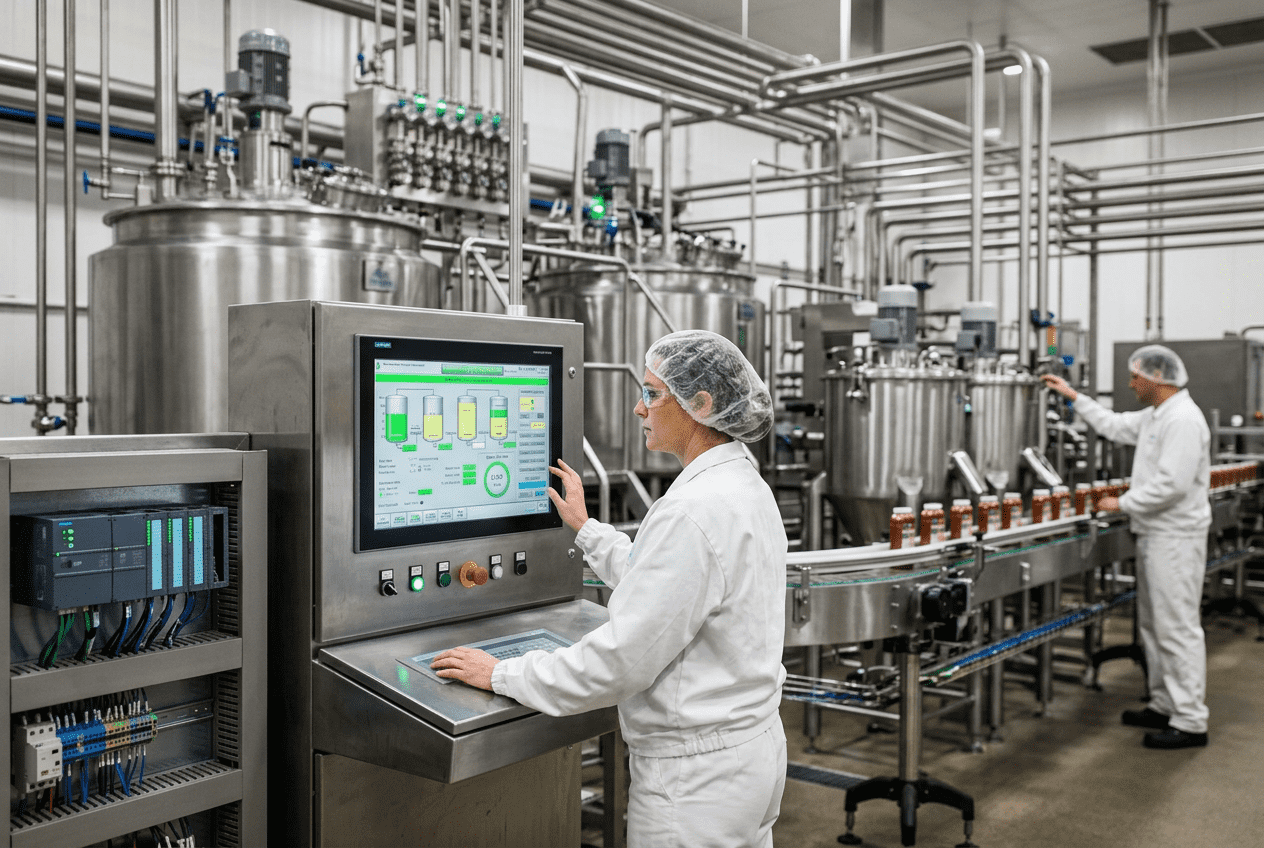
Food Plant PLC Programming
Food plant PLC programming in the United States is not just standard machine automation with washdown hardware. It is a specialized controls discipline that must combine food safety, validated thermal control, recipe integrity, sanitation sequencing, line integration, and traceability from raw ingredient receipt to finished goods shipment. For processors operating in markets such as Chicago, Dallas, Los Angeles, Atlanta, Charlotte, Fresno, and the major logistics corridors around the ports of Long Beach, Houston, Savannah, and Newark, the PLC layer directly affects yield, uptime, audit readiness, and profitability. Whether the application is dairy, sauces, proteins, beverages, aseptic products, retort meals, or co-packing, successful PLC programming must align with FDA expectations, plant operating realities, and future expansion plans. The best programs are built for repeatable cleaning, robust alarming, secure data collection, and operator clarity under production pressure. They also support business outcomes such as shorter changeovers, fewer quality holds, less rework, and faster commissioning of new capacity. In the United States market, many food and beverage manufacturers are modernizing controls because labor constraints, retailer quality expectations, sustainability goals, and 2026 digitalization initiatives are all pushing facilities toward better batch management, stronger OEE visibility, and more dependable sanitary process automation. This is especially true for facilities handling pasteurized beverages, prepared foods, plant-based proteins, dairy, and shelf-stable products where process validation is central to product release. Food processing PLC programming differs from general industrial automation because it must protect public health while controlling production. In practice, that means the code has to manage sanitary design logic, validated time and temperature steps, clean-in-place sequences, lot genealogy, recipe permissions, operator security, alarm history, and electronic records. A standard conveyor or packaging PLC may focus on motion and throughput; a food plant PLC must also prove that product was processed, cleaned, and documented correctly. For U.S. processors, the most common automation priorities are: When evaluating an integrator, buyers should look for experience in both process engineering and controls. A food plant rarely benefits from isolated PLC coding without understanding vessels, pumps, heat exchangers, fillers, utilities, sanitation, and production economics. The table above shows why food automation projects should be scoped around product risk and operational value, not just I/O count. General industrial controls often prioritize machine speed, synchronization, and preventive fault handling. Food processing controls must do that too, but they must additionally maintain hygienic process conditions and protect product identity. That creates a different programming philosophy. The code must understand process states, sanitation states, product states, and often allergen states. It must know whether a line is dirty, clean, in production, in hold, in changeover, or under maintenance lockout. A food system may include raw and ready-to-eat segregation, USDA or FDA inspection constraints, allergen management, washdown environments, temperature-sensitive storage, and utility dependencies that can affect product safety within minutes. A valve matrix in a dairy plant near Madison or a sauce facility outside Kansas City cannot be programmed like a simple assembly line. The logic must prevent cross-contamination, unauthorized recipe edits, and process bypasses. Other factors that make food PLC programming different include: At a market level, U.S. processors are also facing growth in contract manufacturing, regional distribution centers, and omnichannel retail demands. Plants serving East Coast hubs through Savannah and Newark, or West Coast channels through Long Beach and Oakland, often need flexible controls architectures that support both daily throughput and expansion. The chart illustrates a realistic growth pattern in automation modernization across U.S. food plants, driven by compliance, labor efficiency, and digital traceability investments. For buyers, this means choosing a controls partner with food-specific experience rather than a generic machine programmer. A good benchmark is whether the integrator can discuss CCP logic, sanitation path verification, utility redundancy, and batch genealogy with equal confidence. In the United States, food plant PLC programming should support regulatory and quality frameworks rather than operate separately from them. FSMA places preventive controls at the center of food safety. HACCP still shapes hazard analysis and critical control philosophies across many product categories. In some environments, especially where electronic records and signatures are managed in controlled systems, 21 CFR Part 11 expectations influence architecture, permissions, and audit trail design. PLC code itself is not a regulation, but it becomes part of the plant’s compliance system when it controls critical steps and records process evidence. For example, if an HTST system diverts product based on temperature, the programming around sensor validation, event logging, user access, and alarm handling matters. If a retort sequence controls lethality steps, timing logic and deviation records matter. If a CIP sequence confirms sanitation before release, the stored cycle data matters. Key compliance-oriented controls design practices include: Plants selling through major retailers or national foodservice channels often face customer standards that exceed minimum regulation. Facilities in North Carolina, Texas, California, Wisconsin, and Pennsylvania commonly need controls systems that satisfy internal quality teams, insurer expectations, third-party audits, and operational management all at once. Well-designed compliance architecture reduces the burden on operators because the system helps enforce the process instead of asking teams to remember every step manually. For U.S. food manufacturers, Allen-Bradley remains the most common choice because of installed base, technician familiarity, and broad support across packaging, utilities, and process skids. Siemens S7-1500 is strong where plants want high-performance process control, scalable networking, and standardized multinational architectures. Schneider Modicon is a solid option in utility systems, process-heavy facilities, and projects where open integration and power expertise are important. The right platform depends on the facility, internal maintenance team, OEM ecosystem, cybersecurity standards, and long-term expansion plans. A dairy plant in Idaho with mostly Rockwell packaging assets may standardize on Allen-Bradley. A large beverage facility near Phoenix with multinational corporate standards may prefer Siemens. A utility-centric processing campus along the Gulf Coast may consider Schneider for process and electrical integration. Selection should consider spare parts strategy, local integrator depth, HMI preferences, historian compatibility, remote support, and user access management. Plants should avoid mixing platforms unnecessarily unless there is a clear integration reason. This comparison is not a universal ranking. It reflects typical U.S. project considerations and shows why platform choice should match internal capability, supply chain support, and plant strategy. Temperature control is the heart of many food and beverage processes. PLC programming for pasteurization, HTST, and retort applications must be deterministic, alarm-driven, and easy to review after the fact. Small logic errors can create major product risk. Therefore, thermal systems need clear sensor validation, sequence state management, permissives, hold conditions, diversion logic, and historian records. In HTST systems, common functions include feed permissives, legal recorder integration where applicable, flow and temperature correlation, divert valve control, hold tube timing, and fail-safe response if any critical parameter moves out of range. For retort operations, PLC logic usually handles venting, come-up, process timing, temperature or pressure profile control, cooling logic, basket identity, and batch completion status. For pasteurized beverages and dairy, pressure differentials, regenerative balance, and utility stability may also matter. Plants in California’s Central Valley, Wisconsin dairy regions, and major beverage corridors in Texas often prioritize tighter thermal performance because yield and flavor are just as important as compliance. Best practice is to separate configurable recipe values from protected critical limits and to log both actual conditions and operator actions. This supports faster investigations when quality teams review a deviation. CIP automation is one of the clearest examples of why food PLC programming must be process-centric. Strong CIP logic is usually built as a state machine rather than a loose collection of timers. Each state should have entry conditions, running conditions, exit conditions, timeout logic, alarms, and permissives. That structure makes troubleshooting easier and gives sanitation, maintenance, and quality teams a shared language. A standard sequence may include pre-rinse, caustic wash, intermediate rinse, acid wash, final rinse, sanitizer step if required, drain, and verification. More advanced systems include conductivity control, return path proof, tank level validation, reusable chemistry management, heat maintenance, and concurrent circuit scheduling. For multi-line beverage or dairy plants, especially those shipping through high-volume hubs like Atlanta, Chicago, or Los Angeles, CIP performance affects plant capacity. Poorly optimized sequences consume water, steam, labor, and production hours. Proper programming can reduce cycle time without compromising cleaning effectiveness. A typical state machine framework includes: The trend shows why 2026 projects increasingly prioritize automated sanitation. Utilities are expensive, environmental reporting is stricter, and labor remains tight. Plants evaluating CIP upgrades should ask for sequence narratives, state transition charts, and operator recovery logic before software development begins. That reduces startup confusion and supports sanitation training. ISA-88 remains the most practical framework for food batch automation because it separates physical equipment from procedural control. That makes systems easier to scale, easier to validate, and easier to maintain when new SKUs are added. In a modern plant, recipe management should not mean one giant PLC program filled with hard-coded numbers. It should mean structured units, phases, operations, and recipes that can be controlled safely with approval workflows. This matters for sauce blending, beverage syrup rooms, dairy standardization, marinades, cultured products, prepared foods, and many co-packing environments. Plants often need formula flexibility without giving unrestricted edit rights to line operators. Recommended batch design features include: For high-growth facilities, especially greenfield and expansion projects, ISA-88 design reduces future rework. That is important for co-packers serving multiple brands or regional manufacturers adding more SKUs across the Midwest and Southeast. This bar chart reflects where structured batch control is most frequently justified by complexity, traceability demands, and product changeovers. Batch recipe architecture also supports buying advice: if a plant expects SKU growth, private-label work, or multiple package formats, it should invest in structured recipe control early rather than patching recipes into basic machine code later. Traceability is where process control and business systems meet. In food manufacturing, the PLC is rarely the only source of truth, but it plays a critical role in capturing when, where, and how material moved. Strong lot tracking connects ingredient receipt, storage location, batch usage, rework inclusion, packaging run, palletization, and shipment records. For practical plant design, the lot model should reflect real operations. If ingredients arrive through the Port of Houston, the Port of Long Beach, or inland rail hubs around Memphis or Kansas City, receiving records need to connect to warehouse and production systems without forcing manual duplicate entry. Barcode scanning, operator prompts, and automated equipment status changes help prevent bad genealogy data. Effective lot tracking usually includes: For many processors, the best architecture is a coordinated PLC, SCADA, MES, and ERP approach. The PLC should capture trusted machine and process events; higher systems should organize business context around them. Processors that get lot tracking right often find secondary benefits too: less inventory confusion, fewer claims investigations, and better production planning. The best food automation systems are built around what happens when things go wrong. Fail-safe design means defining the safest and most compliant state for valves, pumps, heat sources, conveyors, and product routing when power, communications, air pressure, instrumentation, or operator sequence breaks down. In food processing, safe does not always mean stop everything instantly; sometimes it means divert, isolate, hold, drain, or preserve circulation while preventing forward product flow. Redundant monitoring is especially useful for critical temperatures, pressures, valve positions, and utility conditions. Audit trails then provide the history needed to explain what happened and how the plant responded. Together, these practices improve both risk management and operating confidence. Best-practice controls design should include: This is also where the right integration partner matters. DPS service capabilities extend beyond code writing to include project management, installation coordination, commissioning, and system integration, which helps ensure control strategies actually work in live production. On the technology side, the team supports PLC programming, SCADA, utilities integration, and process system design across food and beverage applications. On the manufacturing side, the company also develops its own process equipment such as tanks and CIP systems, which is valuable when controls and sanitary equipment must be engineered as one package. For U.S. buyers comparing suppliers, local support depth, startup discipline, and process understanding often matter more than hourly programming rates. A cheap program that causes a single major deviation can become the most expensive choice in the project. An example of value-focused controls work is a project approach where programming analysis identifies hidden bottlenecks before capital is spent. In one real-world style of scenario aligned with DPS’s operating philosophy, a manufacturer expected to spend millions on capacity expansion, but controls optimization removed the actual bottleneck and increased output substantially without the original equipment spend. That kind of result comes from understanding process flow, not just writing ladder logic. Manufacturers considering a partner can review the DPS team background, explore process equipment capabilities, or see examples through selected project case work. For plants planning greenfield construction, line relocation, utility upgrades, or high-speed co-packing expansion, a design-build-manage model can reduce gaps between engineering intent and startup execution. By 2026, U.S. food plants are expected to invest more in cybersecurity, water reduction, energy optimization, advanced historian analytics, and AI-assisted maintenance. PLC programming will increasingly need to feed these systems with clean, reliable contextual data. What is food plant PLC programming?It is the design and coding of automation systems that control food and beverage processes such as batching, cooking, pasteurization, sanitation, packaging support, and traceability while meeting food safety and operational requirements. Which PLC brand is best for a U.S. food plant?Allen-Bradley is the most common choice in the United States, but Siemens S7-1500 and Schneider Modicon are also strong options. The best platform depends on maintenance skills, OEM ecosystem, expansion plans, and integration standards. Does every food plant need ISA-88 batch control?No, but any facility with frequent recipe changes, multiple SKUs, co-packing activity, or quality-sensitive batch operations should strongly consider it. Why is CIP automation worth the investment?It improves cleaning repeatability, reduces labor dependence, cuts water and chemical waste, shortens turnaround time, and creates sanitation records that support audits and investigations. How important is lot tracking in PLC projects?It is critical. Even if ERP or MES handles the main genealogy record, the PLC provides the real-time process events needed to prove material movement and production status. What should a buyer ask an integrator before awarding a project?Ask about food-specific experience, validation strategy, sequence documentation, startup support, historian and audit trail design, user security, spare parts planning, and how the team handles process risk during commissioning. Can PLC reprogramming increase capacity without new equipment?Yes. In many plants, line logic, sequence timing, hold conditions, or poor batching workflows are the hidden bottlenecks. A strong process-controls review can reveal low-capital improvements. What industries benefit most from specialized food PLC programming?Dairy, beverages, proteins, prepared foods, sauces, aseptic products, retort foods, fermented products, and co-packing operations all benefit significantly. How should U.S. plants prepare for 2026 automation trends?Focus on secure remote access, better historian architecture, utility analytics, recipe governance, digital sanitation records, and scalable controls that can connect to MES, ERP, and sustainability reporting systems. For food and beverage manufacturers in the United States, PLC programming is no longer a narrow controls task. It is a strategic production system that links safety, throughput, quality, utilities, and business performance. Plants that approach automation with that broader view are better positioned to scale, pass audits, and protect margin in a demanding market. -
Food Plant Weighing System Design 2026
Food and beverage manufacturers in the United States depend on accurate, durable, and verifiable weighing systems to control yield, protect product quality, satisfy FDA and USDA expectations, and keep batching, packaging, and inventory data aligned with plant operations. Whether a facility runs dry ingredient batching in the Midwest, protein processing in Texas, dairy production in Wisconsin, or beverage filling near Los Angeles, the right weighing system design must match the product, the cleaning method, the production speed, the plant environment, and the level of data integration required. This guide explains the core system types, how to select load cells, how to design hopper and tank weighing, how in-motion systems differ from static systems, and what matters most for calibration, washdown, and software integration in 2026. The best food plant weighing system is not simply the most accurate scale on paper. It is the one that maintains repeatable performance in your real process conditions while fitting production goals, sanitation requirements, and plant data architecture. In most U.S. food facilities, the optimal approach includes four layers: ingredient receiving scales, process vessel weighing, packaging verification, and digital reporting tied to MES or ERP. A bakery in Chicago may prioritize minor ingredient batching and allergen traceability, while a poultry plant in Arkansas may prioritize high-capacity hopper scales and washdown-ready checkweighers. A beverage co-packer in North Carolina may focus on syrup room batching, tank inventory accuracy, and line-side package verification. For most projects, decision-makers should start with six questions: Plants in major logistics corridors such as Dallas-Fort Worth, Atlanta, the Inland Empire, New Jersey, and Memphis often face fast throughput demands tied to regional distribution centers, ports, and cold chain operations. In those environments, weighing system design affects more than compliance. It directly influences giveaway, labor efficiency, line uptime, and profitability. Food manufacturers use multiple scale technologies across receiving, batching, processing, filling, and outbound logistics. The correct equipment mix depends on the process stage and the level of control required. Static scales measure weight when product is at rest. Dynamic systems measure while product is moving. Vessel scales support batching and inventory control. Conveyor checkweighers support package compliance and reject management. This table shows why no single scale solves the whole plant problem. A complete weighing strategy usually combines several technologies. For example, a sauce manufacturer near Houston may use floor scales for drum receiving, tank scales for blending, and checkweighers for finished bottles. A dairy processor in California’s Central Valley may rely on silo load cells, inline package verification, and ERP-linked inventory reporting. In the U.S. market, the strongest demand areas include proteins, dairy, RTD beverage, aseptic processing, ingredients, and co-packing. Many facilities also add vision systems, metal detection, and reject stations next to checkweighers so that package weight, food safety, and traceability are managed together. The line chart reflects a realistic upward trend driven by automation investment, tighter yield control, labor pressure, and digital traceability requirements. Growth is especially strong in modernized production hubs around Charlotte, Nashville, Phoenix, and the Great Lakes region where manufacturers are upgrading legacy process equipment. Load cells are the heart of most industrial weighing systems. In food plants, selection mistakes often come from focusing only on rated capacity and ignoring the actual installation conditions. Accuracy depends on cell quality, mounting hardware, cable protection, structural stability, piping flexibility, vibration, temperature changes, and indicator or PLC signal processing. The main load cell styles used in U.S. food and beverage plants include single-point, shear beam, bending beam, canister, and compression cells. Hygienic applications often favor stainless steel construction with hermetically sealed designs. For washdown areas, ingress protection and cable gland quality matter as much as nominal precision. Accuracy should be defined in business terms, not just metrology language. In a protein facility, an extra half ounce of product giveaway per package can become a major annual cost. In a beverage batching room, a small weighing error can shift Brix targets, affect flavor consistency, and increase ingredient waste. In a spice blending process, under-dosing can create compliance and brand risk. For buyers, key selection criteria include: By 2026, more U.S. plants are expected to use diagnostic load cell assemblies that support condition monitoring, drift alerts, and predictive maintenance. This is especially attractive for multi-vessel batching rooms where undetected weighing errors can affect every batch produced in a shift. Hopper and tank weighing systems are central to modern food and beverage manufacturing because they support inventory tracking, recipe control, and process consistency. However, good vessel weighing is primarily a mechanical design challenge. Many systems fail not because the load cells are poor, but because the vessel is tied into rigid piping, misaligned supports, or poorly designed platforms. For a hopper, the engineering team should evaluate product flow behavior, discharge vibration, support frame stiffness, live load shifts, and cleanability. For tanks, attention should go to agitator forces, thermal expansion, CIP routing, anchor details, and connected utilities. A vessel can weigh perfectly when empty and become unstable once production starts if pump vibration or side loading is ignored. In many U.S. facilities, vessel weighing is also used as a practical inventory system. Instead of relying entirely on level sensors, operators can calculate exact material usage by mass. This is valuable in syrup rooms, dairy blend systems, edible oil storage, and ingredient silos where production accounting and recipe reconciliation matter. A properly designed weighing vessel can support better purchasing forecasts, tighter batch cost analysis, and more reliable production scheduling. Facilities near ports such as Savannah, Long Beach, Newark, and Houston often handle imported ingredients with variable bulk density. Weighing by mass rather than volume helps stabilize formulation performance despite that incoming variability. Plants in colder climates, such as Minnesota or upstate New York, also benefit from designs that address thermal effects on outdoor or semi-outdoor vessel systems. For manufacturers planning new process vessels, this is also the stage where specialized integrators can add value. Disruptive Process Solutions, or DPS, supports food and beverage plants with process engineering, structural coordination, utility planning, and controls integration so that weighing is designed into the system rather than bolted on later. Their broader engineering and project services approach is particularly relevant when a project includes new batching rooms, utility upgrades, or plant expansions. In-motion weighing systems are used when the plant must verify product weight without stopping production. The most common food application is the checkweigher, which inspects each pack or case on a conveyor and compares actual weight against acceptable limits. This allows automatic reject of underweight or overweight items and creates a digital record for quality management. Checkweighers are especially common in frozen foods, snacks, poultry trays, cheese packs, bottled beverages, and prepared meals. Their performance depends on conveyor stability, product spacing, line speed, package shape, and the consistency of upstream filling or portioning equipment. A high-quality checkweigher cannot compensate for poor product presentation or erratic line control. This table illustrates how line speed and product type affect system architecture. A frozen entrée line in Indianapolis may need stable package spacing and a reject confirmation sensor. A beverage line in Southern California may need checkweighing tied to cap detection and fill-level inspection. In high-speed settings, false rejects can be almost as costly as missed rejects, so tuning and validation are essential. The bar chart shows where dynamic weighing demand is strongest. Protein and beverage plants lead because portion control, package compliance, and throughput efficiency have a direct impact on margins. Many U.S. co-packers also demand checkweigher data exports to support customer claims management and production reporting. No weighing system remains trustworthy without a disciplined calibration and verification program. In food manufacturing, that program must fit the risk profile of the process. A bench scale used for non-critical secondary packaging checks does not need the same verification frequency as a load-cell-based ingredient vessel used in allergen-sensitive batching. Plants should define routines for commissioning calibration, shift checks, scheduled verification, preventive maintenance, and annual third-party review where needed. Test weights must be suitable for the scale range, traceable, and handled in ways that preserve their condition. For vessel systems, substitution calibration, material tests, or certified test modules may be used depending on scale size and access limitations. The explanation behind this table is straightforward: calibration is not one event but a management system. A plant with dozens of weighing points needs defined ownership, documented tolerances, and escalation rules when readings drift. In highly audited environments, digital records stored within SCADA, batch software, or quality platforms are far more useful than paper-only logs. Best practice in 2026 will continue moving toward exception-based verification, where scales with stable performance receive routine checks while systems showing drift, shock exposure, or process anomalies trigger extra review. Plants also increasingly connect weighing alarms to maintenance systems so recurring instability becomes a root-cause issue, not just a temporary adjustment. Food plant weighing systems do not operate in ideal laboratory conditions. They face caustic washdown, acid cleaners, humidity, ingredient dust, cold rooms, thermal cycling, forklift traffic, and vibration from nearby equipment. Environmental fit is often what separates a scale that lasts ten years from one that becomes a repeated service headache. Wet protein rooms in places such as Omaha, Kansas City, and the Delmarva poultry corridor need stainless steel hardware, protected junction boxes, sealed cable runs, and mount designs that avoid product harborage. Dry ingredient plants in Kansas or Nebraska may instead prioritize dust-tight enclosures, explosion awareness where needed, and stable support structures. Dairy and aseptic applications require smooth surfaces, sanitary geometry, and easy cleanability around the mounting area. Hygienic design considerations include: Sustainability also matters more in 2026. Plants are under pressure to reduce water use, chemical use, and product waste. A well-designed weighing system contributes to all three goals by reducing overfill, improving batch yield, and limiting rework. Better weighing also supports more accurate material reconciliation, which helps identify hidden losses in drains, purges, or startup waste. The area chart reflects the steady transition from basic mechanical weighing to hygienic, connected, and analytics-friendly systems. This trend is strong in ready-to-eat foods, dairy, beverage, and co-manufacturing environments where customer audits increasingly evaluate traceability and sanitation design together. Modern weighing systems create the most value when they are connected to plant software. A scale that only shows a number on a local display solves one problem. A scale that writes validated weight data into batch records, inventory systems, quality reports, and production dashboards supports operational control across the business. Typical integration targets include PLC platforms, SCADA, batch engines, manufacturing execution systems, warehouse systems, and enterprise resource planning tools. In practice, this can mean sending ingredient addition weights into recipe records, posting tank inventory to planning systems, triggering reject events from checkweighers, or reconciling production orders against actual usage. Integration also reduces manual data entry, which is still a common source of error in many U.S. plants. In a multi-line co-packing site, manual recording of ingredient additions or finished case counts can create inventory mismatch, customer billing disputes, and traceability gaps. Digital weighing data helps close those gaps. The explanation here is that software integration should be designed from the start, not added after installation. Plants that define tag structures, exception logic, and reporting goals early tend to get stronger ROI. This is one reason engineering-led integrators matter on food projects. DPS combines process, controls, and project execution capabilities for clients that need weighing systems to function as part of a complete production ecosystem rather than as stand-alone devices. For manufacturers exploring broader plant modernization, DPS also supports controls, PLC programming, and system integration within complete processing environments. Companies planning larger upgrades can learn more about those capabilities through the service overview and related project content. Disruptive Process Solutions serves food and beverage manufacturers across the United States and Canada with a design-build-manage approach focused on profitable project execution. Rather than acting as a narrow equipment vendor, DPS works as an engineering and integration partner for processors that need weighing, batching, utilities, controls, and installation to perform as one coordinated system. From a technological standpoint, DPS supports structural, mechanical, plumbing, electrical, process, and controls engineering. That means a weighing project can be coordinated with PLC programming, SCADA visualization, batching logic, utility demand, and upstream or downstream equipment behavior. This matters when a tank scale is affected by agitator loads, when a checkweigher must communicate with reject confirmation logic, or when ingredient vessels need recipe-driven automation. From a manufacturing standpoint, DPS also develops its own process equipment line, including tanks, CIP systems, marination tumblers, and cooking vessels. That in-house equipment perspective is useful when weighing must be built into custom process hardware rather than adapted later. Clients evaluating new vessel projects can review available food and beverage equipment solutions to understand how equipment design and plant integration can align. From a service standpoint, DPS supports capital planning, feasibility studies, owner’s representation, project management, general contracting functions, installation, and full system integration. For food plants, that means the company can help from early concept through startup and commissioning. More about the team and operating philosophy is available on the company page. This model is especially relevant for manufacturers expanding capacity in regions like the Southeast, Texas, the Midwest, and the West Coast, where coordination across local trades, utility systems, and production schedules can determine whether a weighing project delivers long-term value or becomes a patchwork retrofit. For examples of project execution and broader facility outcomes, visitors can explore selected project case studies. The comparison chart highlights a common buying reality in the U.S. market. A stand-alone scale purchase can be appropriate for simple applications, but complex food plants usually benefit more from a partner that understands process mechanics, sanitation, controls, installation sequencing, and expansion planning. When evaluating local suppliers, buyers should compare not only price, but also application experience, service territory, controls depth, hygienic design knowledge, and ability to support startup in cities or industrial corridors where the plant operates. Service expectations in Seattle, Miami, Denver, or Toronto can differ widely, and responsiveness matters. What is the best weighing system for a food plant?The best system depends on the process step. Bench and floor scales fit manual handling, tank and hopper scales fit batching and inventory control, and checkweighers fit package verification. Most facilities need a combination. How accurate should a food manufacturing scale be?Accuracy should be matched to process risk and business impact. Minor ingredient systems usually require tighter control than bulk receiving scales. The right target is the one that protects formulation, compliance, and cost without overspending on unnecessary precision. Are load cells suitable for washdown environments?Yes, if they are correctly selected. Food plants typically need stainless, sealed, and corrosion-resistant load cells with mount designs that support sanitation and prevent water ingress. What causes poor tank scale performance?The most common issues are rigid piping, structural flex, vibration, poor mount alignment, thermal binding, and inadequate calibration practices. Mechanical design is often the root cause, not the load cell itself. Do checkweighers help reduce product giveaway?Yes. Properly configured checkweighers help verify actual package weight, identify filler drift, and reduce chronic overfill. Over time, this can create major savings in proteins, dairy, snacks, and beverages. Should weighing systems connect to MES or ERP?In most modern U.S. plants, yes. Integration improves traceability, inventory accuracy, batch reporting, customer documentation, and decision-making across operations and finance. How often should food plant scales be calibrated?Frequency depends on criticality, usage, environment, and compliance requirements. High-risk recipe or packaging scales may need daily checks and regular formal calibration, while lower-risk systems may be verified less often. What trends will shape weighing systems in 2026?The biggest trends include smarter diagnostics, broader MES and ERP connectivity, hygienic retrofits, stronger sustainability metrics, more automated verification, and growing alignment with digital quality systems. Can weighing systems support sustainability goals?Yes. Better weighing reduces giveaway, rework, ingredient waste, and inventory error. That improves yield and can lower water, energy, and cleaning resource consumption tied to off-spec production. When should a plant involve an engineering integrator instead of buying a scale directly?If the project includes vessels, piping, automation, sanitation design, utility changes, or plant expansion, an engineering-led integrator is usually the better choice because weighing performance depends on the total system design. In the United States, food plant weighing system success comes from matching equipment selection to actual process conditions, designing supports and piping correctly, building calibration discipline, and connecting data to the broader plant operation. Whether the project is a single vessel retrofit or a new production line, good weighing design protects yield, compliance, and long-term profitability. -
Food Facility Metal Detection System Guide
Food facility metal detection is one of the most practical ways to reduce foreign material risk, protect brand reputation, and support compliance in the United States. A well-selected system should match the product effect, package format, conveyor speed, sanitation demands, and HACCP plan of the plant. In most facilities, the best result comes from treating metal detection as a full line-integration decision rather than just an equipment purchase. That means defining the hazard, selecting the proper detector technology, placing it at the right critical control point, validating it with documented challenge tests, and maintaining it with routine calibration and trend review. Across the United States, processors in Chicago, Dallas, Atlanta, Los Angeles, Fresno, Charlotte, Omaha, Kansas City, and the I-95 and I-5 logistics corridors are upgrading detection and reject systems as labor costs, retailer requirements, and food safety expectations continue to rise. Facilities shipping through major trade hubs such as the Port of Los Angeles, Port of Long Beach, Port of Houston, Port of Savannah, and Port of Newark increasingly need standardized food safety controls that travel well across multi-site operations. For plants handling proteins, sauces, dairy, ready-to-drink beverages, frozen foods, bakery items, or co-packed products, metal detection remains a foundational foreign material control. A food facility in the United States should install a metal detection system when there is a credible risk of ferrous, non-ferrous, or stainless steel contamination from raw materials, equipment wear, maintenance activity, or packaging interfaces. The ideal solution depends on whether the line is handling dry powder, wet protein, metallized film packs, pumped product, bulk flow, or finished cases. Most facilities use one of five configurations: conveyor, pipeline, throat/gravity fall, vertical form-fill-seal integration, or combination checkweigher and detector units. The detector should be tied to an automatic reject device, a lockable reject bin, documented alarm handling, and verification testing within the plant’s HACCP or preventive controls framework. Buying advice for United States processors is straightforward: For food and beverage manufacturers scaling production, this is where a line engineering partner can add real value. Integrated process and project services matter because metal detection performance depends on conveyor design, electrical noise management, controls logic, sanitary access, and reject device reliability as much as detector head performance. The table above shows why no single detector fits every line. Product consistency, packaging style, and sanitation environment all affect achievable sensitivity and reliability. Food metal detectors in the United States generally rely on balanced coil technology, where a transmitter coil creates an electromagnetic field and two receiver coils detect disturbances caused by metal. Modern digital systems improve signal processing and product effect compensation, helping plants detect smaller contaminants in difficult products such as fresh meat, cheese, high-salt sauces, tortillas, or warm bakery goods. The main system types are: Technology selection should also consider frequency strategy. Higher frequencies can be more responsive to small stainless contamination, but they may be more sensitive to product effect. Multi-spectrum or multi-frequency platforms help processors optimize detection in challenging products. This is especially useful in humid climates such as Florida or Gulf Coast operations, where moisture variation and temperature swings can affect baseline stability. United States plants also need to think beyond the detector head. Electrical noise from nearby VFDs, unshielded cables, poor grounding, or unstable conveyors can reduce performance. A strong integrator will look at the full system: line controls, reject timing, guard design, accessibility, and sanitation. That broader engineering view is especially valuable during greenfield or expansion work around major food manufacturing corridors like North Carolina’s Research Triangle, California’s Central Valley, Wisconsin dairy regions, and the Midwest protein belt. The comparison table shows why “technology” should be read as both detector electronics and the mechanical context in which the detector operates. The line chart reflects a realistic growth pattern driven by automation investment, retailer expectations, and increased scrutiny on foreign material controls. Not every metal detector is automatically a critical control point. In some plants it is a CCP; in others it is a preventive control or a validated quality control step supported by upstream controls. The correct designation depends on your hazard analysis, the severity and likelihood of metal contamination, and whether later steps can remove or detect the hazard. United States facilities operating under FDA preventive controls, USDA inspection, SQF, or BRCGS usually need a documented rationale. When metal detection is set as a CCP, the critical limits must be clear, measurable, and product-specific. Example limits might define the minimum detectable size of ferrous, non-ferrous, and stainless steel test pieces under standard operating conditions. The CCP record should also define line speed, product orientation assumptions, reject verification, and response steps for failures. Typical CCP setup steps include: In multi-line facilities near Memphis, Indianapolis, or Columbus where throughput and distribution speed are high, a poorly defined CCP can create large quarantine holds. Good setup reduces both risk and unnecessary waste. This structure works best when QA, operations, and engineering all agree on ownership rather than treating the detector as only a QA device. Sensitivity is the smallest metal sphere or test piece a detector can reliably identify under actual operating conditions. Detection limits vary because metal type, shape, orientation, product conductivity, package size, aperture size, temperature, and speed all matter. A dry spice in a small package may allow much tighter sensitivity than a warm, salty sausage in a large chub. Three test standards are usually considered: Processors should avoid using brochure sensitivity values without confirming on-product performance. In the real world, product effect can create a signal that resembles metal. This is common in cheese, marinated proteins, fresh dough, and high-acid liquids. Aperture size also matters: the larger the opening, the lower the achievable sensitivity in many cases. That is why detector selection should happen alongside package and conveyor design. For United States plants exporting product or serving national retail accounts, the practical goal is not just “the smallest number.” The goal is reliable sensitivity with low false rejects and a stable operating window. A detector that constantly rejects good product will undermine confidence and tempt operators to loosen settings. The values above are illustrative ranges rather than guarantees. Actual validation must use your product, your packaging, and your process conditions. Demand is strongest in protein and prepared foods because these sectors often run high-moisture products, multiple changeovers, and a wide range of mechanical wear points. Installation location is one of the biggest performance drivers. A detector placed too early may miss contamination introduced later. A detector placed too late may create difficult product handling or awkward reject verification. The best location is usually where the product stream is stable, contamination risk is still meaningful, and rejected product can be securely isolated. Common placement strategies include: Line integration issues often determine whether the project succeeds. The detector needs suitable belt speed, non-metallic belt splice selection when required, product spacing, reject timing, confirmation sensors, and lockable reject bins. Controls should communicate with line PLCs and SCADA systems where needed. Alarm history, event tracking, and batch traceability are increasingly important for national brands. This is where engineering depth matters. Disruptive Process Solutions brings technical capabilities that align with these needs, including process, mechanical, electrical, structural, plumbing, and controls engineering, as well as PLC programming and SCADA integration. For a facility adding a detector to a new or upgraded line, that means the system can be designed around utilities, sanitation access, operator ergonomics, and data flow instead of being bolted in as an afterthought. Facilities in California, Texas, and the Carolinas often face aggressive expansion schedules. In those environments, a partner that can coordinate utilities, controls, and installation sequencing can reduce start-up delays. A detector may be small compared with a filler or retort, but if it is not integrated correctly, it can stop the entire line. Each of these details can determine whether a project performs well in the first week and still performs well two years later. The area chart reflects a clear trend: by 2026, more United States facilities are expected to require detectors tied directly into line controls, digital records, and plant-wide data systems. Validation proves the system can do the job. Verification proves it continues to do the job. Plants need both. Validation typically occurs during commissioning or product introduction. It should test all relevant product families, package sizes, temperatures, and line speeds. Verification then follows at defined frequencies such as start-up, hourly, at product changeover, after sanitation, after maintenance, and at the end of the shift. Challenge testing should be documented and repeatable. Best practice in the United States usually includes certified test pieces for ferrous, non-ferrous, and stainless steel, passed through the detector in realistic positions. Facilities should decide whether tests run through the center only or through center and worst-case positions based on their standard and customer requirements. Important elements of a robust protocol include: For integrated projects, commissioning support matters. DPS applies service capabilities that fit this stage well: project management, installation oversight, owners representation, and end-to-end system integration. That approach is useful when a detector installation overlaps with utility work, packaging equipment moves, or complete line upgrades. Case experience also matters. In capital projects and emergency execution work, practical line knowledge often prevents small detector issues from becoming major schedule issues. A strong partner can align detector testing with the broader factory acceptance, site acceptance, and start-up plan. More on project approach and execution examples can be found in these food and beverage project case examples. Metal detection requirements in the United States are shaped by several overlapping frameworks rather than one single regulation. FDA facilities must operate under hazard analysis and risk-based preventive controls. USDA-inspected meat and poultry plants must control adulteration hazards according to their HACCP systems and inspection expectations. In addition, many processors work to SQF or BRCGS certification and must satisfy customer-specific foreign material requirements. Key compliance expectations often include: Retailers and co-manufacturing agreements can be even stricter than baseline regulation. National chains may require exact test frequencies, reject lock controls, alarm logging, or validation during seasonal changeovers. Plants shipping through nationwide distribution networks from hubs like Atlanta, Joliet, or the Inland Empire often need consistency across multiple facilities and co-packers. Compliance also connects to equipment design. Washdown areas need sanitary construction. USDA and dairy operations often expect hygienic layouts with cleanable surfaces and minimal harborage points. Beverage plants may require integration with filler data, lot traceability, and electronic record systems. When a project crosses engineering, compliance, and construction, it helps to work with a team experienced in FDA, USDA, SQF, and BRC-aligned environments. More background on that type of partner can be found on the company overview page. The point is simple: compliance is not just about having a detector. It is about proving the detector is fit for purpose and consistently controlled. Maintenance and calibration protect long-term performance. A detector may pass acceptance tests on day one yet drift over time because of belt wear, vibration, cable damage, poor sanitation practices, or reject mechanism fatigue. Plants should establish both routine operator checks and deeper preventive maintenance tasks. A practical schedule often includes: Calibration should follow manufacturer guidance and site procedures. It usually means confirming the detector responds correctly to certified test pieces and that reject timing, alarms, and confirmation sensors work as intended. Plants should also review environmental changes. New VFDs, line moves, or structural modifications can alter detector stability. From a manufacturing capability standpoint, DPS supports projects where custom equipment, utility systems, and integrated process hardware all need to work together. The company also manufactures selected process equipment such as tanks, CIP systems, marination tumblers, and cooking vessels, which reinforces a practical understanding of how equipment design, cleaning, and line uptime affect inspection systems. For processors planning broader upgrades, that matters because foreign material control performance is tied closely to upstream equipment wear and sanitation design. Related equipment capabilities can be explored through these process equipment solutions. Plants that treat metal detection as a managed asset rather than a one-time purchase usually get better uptime, better audit outcomes, and fewer expensive product holds. The comparison chart highlights a frequent reality in United States plants: supplier selection should evaluate integration and lifecycle value, not just the detector head price. Disruptive Process Solutions, or DPS, supports food and beverage manufacturers across the United States and Canada with a design-build-manage approach centered on profitable project execution. Rather than functioning only as a contractor, DPS operates as an engineering and integration partner for capital projects, line upgrades, utility expansions, and turnkey processing systems. For metal detection projects, that matters in three ways. First, the company’s technological capabilities support the engineering side of detector success: process design, controls integration, PLC programming, SCADA connectivity, electrical coordination, and utility planning. Second, the company’s manufacturing capabilities provide practical understanding of how upstream equipment and sanitation affect inspection performance; DPS designs and supplies selected process equipment including tanks, CIP systems, marination tumblers, and cooking vessels. Third, the company’s service capabilities bring execution discipline through feasibility planning, owners representation, project management, general contracting support where licensed, installation management, and commissioning coordination. This combination is useful for manufacturers adding new lines, relocating equipment, or scaling capacity. A metal detector works best when the whole line works well. If a plant in Cary, Charlotte, Houston, or Southern California is evaluating a packaging upgrade, process expansion, or a new food safety checkpoint, DPS can help align the business case, engineering detail, installation sequence, and operating result. More details are available through the services page and the about DPS page. Looking toward 2026, United States processors should expect stronger demand for digitally connected inspection devices, more customer-specific foreign material standards, tighter sustainability reviews on waste and false reject rates, and wider use of integrated line data. Plants that combine detector upgrades with smarter automation, hygienic design, and better maintenance analytics will likely outperform those that treat compliance and productivity as separate goals. What is the best metal detector for a food plant?The best system is the one matched to your actual product, package, moisture level, speed, sanitation needs, and HACCP plan. Conveyor systems are common for packaged goods, while pipeline and gravity systems are often better for pumped or dry bulk products. Can metal detection replace all foreign material controls?No. It should be part of a broader strategy that may include screens, magnets, preventive maintenance, visual inspection, and in some lines X-ray inspection. Where should a food metal detector be installed?Usually at the last practical point where contamination can still be detected and rejected securely, often after primary packaging or within the process stream before filling. How often should challenge tests be performed?Most United States facilities test at start-up, at regular intervals during production, at changeover, after maintenance, and at shutdown, but the exact frequency should follow your hazard analysis and customer requirements. What metals should be tested?Ferrous, non-ferrous, and stainless steel are the standard categories. Stainless is often the most difficult to detect and should never be ignored during validation. Does package type affect sensitivity?Yes. Product size, orientation, moisture, salt level, and package material all affect sensitivity. Larger apertures and wet products usually reduce achievable performance. Is metal detection required by law in the United States?Regulations generally require hazard control, not one specific device. However, if metal is a credible hazard, metal detection is often the most practical and auditable control method. What trends are coming in 2026?Expect broader use of connected detectors, automated record capture, tighter customer audit expectations, more integrated reject verification, and greater emphasis on reducing waste from false rejects as part of sustainability goals. -
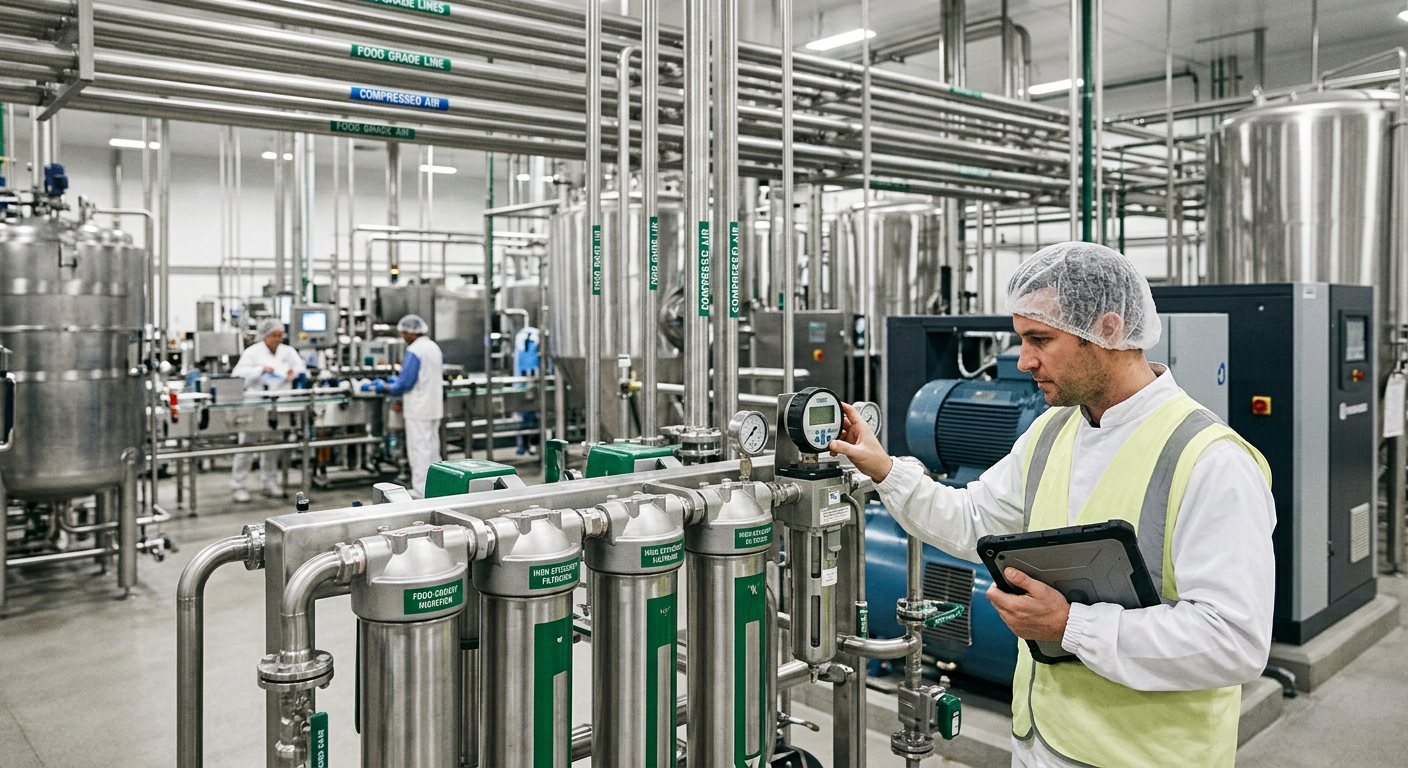
Food Processing Automation Solutions
Food processing automation in the United States is no longer limited to high-volume multinational plants. Mid-sized protein processors, beverage co-packers, dairy facilities, prepared foods manufacturers, and aseptic operations are now adopting practical automation to improve throughput, reduce labor strain, strengthen food safety documentation, and protect margins. The most successful approach is not “automate everything at once.” It is to begin with the highest-impact pain points: production visibility, critical control point monitoring, line integration, internal material flow, and data-driven scheduling. From there, plants can scale with confidence using measurable ROI targets tied to uptime, OEE, labor efficiency, yield, and compliance risk reduction. Across the United States, especially in manufacturing corridors such as Chicago, Charlotte, Dallas-Fort Worth, Atlanta, Fresno, Los Angeles, Kansas City, Minneapolis, and along logistics hubs connected to the ports of Long Beach, Savannah, Houston, and Newark, processors are under pressure to produce more with tighter labor availability and stricter traceability expectations. That is why automation projects increasingly combine controls, SCADA, MES, WMS, ERP connectivity, recipe management, utility optimization, and digital reporting rather than treating each system as a separate purchase. For buyers evaluating suppliers, the core question is not simply which software or equipment has the most features. The better question is which partner can design, build, and integrate a profitable system around your operational reality. That includes existing utilities, sanitary design, changeover needs, workforce readiness, compliance requirements, and growth targets. Companies that approach automation as part of a broader capital strategy generally achieve better outcomes than those that buy isolated tools without a plant-wide roadmap. The fastest way to start a successful food processing automation program is to target one production line or process cell where downtime, manual reporting, quality risk, or labor inefficiency is most visible. In most U.S. plants, the best first opportunities are: real-time digital monitoring, automated HACCP and CCP records, production line integration with MES and ERP, internal logistics coordination, and phased deployment with clear ROI metrics. When these areas are addressed together, processors gain better visibility, faster decisions, improved compliance, and a stronger path to scaling. In practical terms, automation solutions for food and beverage plants can include PLC upgrades, SCADA dashboards, batch control, in-line quality sensors, CIP automation, historian data capture, recipe enforcement, lot traceability, warehouse scanning, production scheduling, and utility monitoring. These technologies apply across protein, dairy, sauces, RTD beverages, brewing, distillation, plant-based products, and aseptic lines. The table above shows why many processors should begin with visibility and compliance rather than jumping immediately into a full plant overhaul. These first moves often unlock the data needed for larger investment decisions. The most effective automation roadmap focuses on business impact, not technology hype. In the United States market, five areas usually deliver the strongest early value. These priorities matter across product categories. Protein plants often focus on yield, cut consistency, and sanitation verification. Beverage facilities focus on batching accuracy, utility stability, syrup room integration, and filling uptime. Dairy and aseptic processors place stronger emphasis on traceability, batch genealogy, CCP validation, and sterilization records. When comparing suppliers, buyers should ask whether the integrator understands sanitary process design, local code requirements, controls architecture, utilities, and production economics. A partner with broad process knowledge can usually identify whether the true constraint is equipment, controls logic, material flow, or scheduling. That distinction matters. In some cases, a line thought to need a multimillion-dollar expansion can gain significant capacity from programming changes, better sequencing, or improved bottleneck management. The chart reflects a realistic market trend: investment in automation continues rising as labor constraints, traceability expectations, and energy costs reshape capital planning. The 2026 outlook is especially strong for modular systems, AI-assisted maintenance, and sustainability-linked controls. Real-time production visibility is often the least controversial and most immediately useful automation step. A digital monitoring layer can pull data from PLCs, VFDs, scales, temperature transmitters, flow meters, filler counters, checkweighers, and utility systems into dashboards visible on control room screens, tablets, or secure mobile devices. In the United States, facilities with multiple shifts or geographically distributed leadership teams benefit heavily from this capability. A plant manager in Cary can review line status while a corporate operations director in Chicago tracks OEE across several facilities. A maintenance lead in Dallas can see alarm histories without waiting for paper notes from operators. That faster visibility cuts delay between problem and action. Typical KPIs displayed in digital monitoring systems include: Plants handling refrigerated foods, beverages, dairy, and aseptic products can also use digital monitoring to watch process temperatures, hold times, tank levels, and clean-in-place readiness. This is particularly valuable in high-throughput regions where labor turnover makes tribal knowledge unreliable. The explanation from this table is simple: every metric listed already exists in the process, but without automation it is usually captured too late or too inconsistently to drive action. A well-designed dashboard converts hidden plant behavior into operational control. From a technology perspective, the strongest solutions combine controls engineering, PLC programming, SCADA configuration, historian architecture, and secure connectivity. This is where a firm with deep process and controls experience creates value. Integrated engineering and project services are especially important when a processor wants dashboards that connect not only to a single machine but to utilities, batching systems, fillers, packaging lines, and sanitation infrastructure. Food safety remains a top reason U.S. processors invest in automation. Manual paper logs can still satisfy basic compliance needs, but they are slow, error-prone, difficult to audit, and often disconnected from actual process events. Automated HACCP-compliant reporting and CCP monitoring reduce these weaknesses by capturing data directly from validated instruments and by time-stamping operator interventions. Examples include cooking temperatures for protein products, retort pressure and lethality, pasteurization hold times, acidification records, metal detection events, fill temperature, pH checks, and sanitation verification points. Automated systems can trigger alarms when limits are exceeded, require acknowledgement, store deviation records, and support lot-level traceback. This matters in FDA- and USDA-regulated facilities throughout the United States, especially those serving retail, foodservice, private label, and export channels. Plants shipping through hubs such as Houston, Long Beach, and Savannah often face customer documentation standards that exceed minimum regulatory expectations. Digital compliance records improve confidence with auditors, customers, and internal quality teams. The main takeaway from the table is that automated reporting does more than replace paper. It creates structured evidence that your process stayed in control and shows exactly what happened when it did not. For processors considering future policy and customer trends in 2026, this is especially relevant. Food manufacturers are being asked for tighter digital traceability, cleaner sustainability records, and more verifiable quality data. Plants that invest now will be better prepared for retailer scorecards, export documentation, and internal ESG reporting. One of the most common barriers to plant performance is data fragmentation. Equipment runs one way, quality tracks another way, maintenance records live elsewhere, and finance or planning sees production only after manual updates. MES and ERP integration closes that gap. At the line level, MES can collect counts, weights, downtime causes, recipe execution, labor assignments, material consumption, and lot genealogy. ERP integration can then connect that data to purchasing, inventory, production orders, costing, customer shipments, and financial reporting. The result is a more accurate view of what the plant actually produced, consumed, and lost. This is highly valuable in co-packing, multi-SKU beverage operations, proteins, dairy, and prepared foods where schedule complexity is high. Plants near distribution centers in Memphis, Indianapolis, Columbus, and the Inland Empire often feel this pain sharply because customer expectations for fill rates and traceability are unforgiving. A robust integration program usually includes: The bar chart indicates that beverages and proteins currently show particularly strong demand for automation in the U.S. market, though prepared foods and dairy remain major growth categories as facilities modernize older lines. On the technical side, integration works best when the project team understands both production operations and underlying infrastructure. That means process engineering, controls logic, utility interaction, and plant expansion planning must be aligned. About the team behind DPS provides useful context on this kind of cross-functional approach, especially for manufacturers looking for an engineering-led partner rather than a software-only vendor. Many processors automate the line but ignore the movement around the line. That leaves major waste on the table. Internal logistics automation addresses the flow of ingredients, packaging, WIP, pallets, cold storage inventory, and outbound staging. MES, WMS, and APS together create a connected operating model. MES shows what production is doing now. WMS controls where materials and finished goods are located. APS determines the best order to run products based on capacity, allergens, changeovers, shelf life, labor, and demand. When these systems are coordinated, the plant avoids waiting for missing components, excess changeovers, and avoidable warehouse congestion. This is critical in the United States for co-manufacturers, refrigerated foods, and beverage plants serving retailers with narrow delivery windows. Plants near major freight lanes such as I-40, I-80, I-95, and cross-border trade routes into Canada and Mexico gain particular value because schedule precision affects transportation cost and service levels. The explanation here is that logistics software is not a back-office add-on. It directly affects how smoothly the production line runs. A mixer cannot produce if ingredients are not staged, and a filler cannot sustain uptime if packaging supply arrives late. From a manufacturing capability perspective, processors should seek a partner that understands full-system design, not just software screens. That includes batching, blending, fermentation, pasteurization, retort, aseptic handling, grinding, mixing, marination, slicing, dairy processing, and the supporting utility systems required to keep those processes stable. For companies that also need physical hardware, process equipment capabilities can be an important part of the buying decision because tanks, CIP systems, tumblers, and cooking vessels often need to integrate tightly with controls and plant data systems. A phased implementation model is usually the safest and most profitable path. Food plants run continuously, carry compliance obligations, and cannot absorb unnecessary disruption. That makes staged execution more valuable than big-bang deployment. Stage 1: Analysis. Map the process, identify bottlenecks, define business objectives, document current systems, and collect baseline KPIs. This stage should include utilities, labor constraints, sanitation requirements, maintenance history, and data architecture. Stage 2: Pilot. Select one line, product family, process cell, or reporting workflow. The pilot should be important enough to matter but contained enough to manage. Common pilot targets include a filler line, a cooking process, a batching room, or digital CCP reporting. Stage 3: Deployment. Expand across lines, shifts, or departments using lessons from the pilot. Update SOPs, train operators, lock down naming conventions, and create support workflows for QA, maintenance, and planning. Stage 4: Scaling. Extend into multi-site reporting, predictive maintenance, energy analytics, advanced scheduling, remote support, and broader ERP connectivity. This is also where 2026-ready capabilities such as AI-assisted anomaly detection and sustainability dashboards become realistic. This table shows that success depends on decision gates, not just technical installation. Plants that treat automation as a managed transformation typically avoid rework and user resistance. Service capability matters greatly during staged implementation. A partner that can provide process design, capital planning, owner representation, project management, integration oversight, and installation coordination reduces handoff risk. This is particularly valuable for fast-moving U.S. expansions where local trades, sanitary installation details, and utility tie-ins must be tightly managed. Manufacturers reviewing project examples may find case study insights helpful when assessing what phased execution looks like in the field. Automation projects win internal approval when ROI is measurable and credible. That requires baseline data. Before implementation, document current OEE, downtime losses, labor hours, waste, changeover time, quality holds, utility cost per unit, and compliance reporting effort. Then model how automation will improve those numbers. ROI usually comes from one or more of the following: For example, if a beverage line in Southern California loses 45 minutes per shift to recurring stoppages and produces 600 units per minute, the revenue impact can quickly justify better line monitoring and event classification. If a protein plant in the Midwest reduces cook deviation risk and manual documentation labor at the same time, the avoided quality cost may be as important as direct labor savings. The area chart illustrates the broader trend: U.S. plants are steadily moving from paper-driven and reactive workflows toward digitally managed operations. That shift is expected to accelerate through 2026 as AI-assisted quality analytics and energy monitoring become more accessible. A simple ROI framework should include: In buying decisions, ask suppliers to separate hard savings from soft benefits. Hard savings include labor, throughput, downtime, and waste. Soft benefits include audit readiness, customer confidence, and management visibility. Both matter, but they should not be mixed without clarity. Most automation projects fail for organizational reasons before they fail for technical ones. Three pitfalls appear repeatedly in U.S. food and beverage plants. Data silos: systems are installed by department instead of by process. QA has one platform, maintenance another, and operations a third, with no shared data model. Legacy systems: older PLCs, HMIs, unsupported software, poor network segmentation, and undocumented logic make integration harder than expected. Change management: operators and supervisors may resist new workflows if the project is perceived as surveillance instead of support. Other frequent issues include weak naming standards, lack of historian structure, poor alarm rationalization, unclear ownership after go-live, and underestimating sanitation or production windows needed for installation. The lesson from the table is that project governance is as important as equipment or software selection. Plants that front-load architecture review, operator involvement, and support planning avoid many of the most expensive surprises. This comparison chart highlights a real buying pattern in the United States: manufacturers increasingly favor engineering-led integrators when automation touches process equipment, utilities, sanitary design, and compliance. Software matters, but without process context it may not solve the real bottleneck. That is where company fit becomes crucial. A practical partner should bring technological capability in PLC, SCADA, controls integration, and system architecture; manufacturing capability across tanks, CIP, cooking, blending, fermentation, pasteurization, retort, dairy, and protein systems; and service capability covering planning, engineering, installation, project management, and execution oversight. DPS is positioned in that intersection, offering a design-build-manage approach intended to connect automation decisions to long-term profitability rather than isolated hardware spending. What is the best first automation project for a U.S. food plant?For many facilities, digital production monitoring or automated HACCP reporting is the best first step. Both create fast visibility and usually involve less disruption than a full controls rebuild. How long does a food processing automation project take?A focused pilot can take 6 to 12 weeks. Broader deployment may take several months depending on line complexity, sanitation windows, validation requirements, and integration scope. Which industries benefit most?Protein, beverage, dairy, prepared foods, sauces, plant-based products, aseptic operations, and co-manufacturing all benefit. The exact use case differs by process and compliance profile. What systems are most commonly integrated?PLC, HMI, SCADA, historian, MES, ERP, WMS, APS, QA systems, utility meters, checkweighers, filler counters, sensors, and batch control platforms. Can legacy systems still be automated?Yes, but they should be assessed early. Some legacy hardware can be integrated with gateways or partial upgrades, while others create enough risk that replacement is the smarter financial choice. How is ROI measured?Use baseline OEE, downtime cost, labor hours, waste, quality loss, and utility consumption. Then compare post-implementation performance against those numbers over a defined period. What should buyers look for in a supplier?Look for process knowledge, sanitary design experience, controls expertise, project execution discipline, compliance fluency, and the ability to integrate equipment, software, and utilities into one operating system. Are sustainability and policy trends affecting automation decisions?Yes. By 2026, more U.S. processors will tie automation to water use, energy intensity, waste reduction, and digital traceability. Those requirements increasingly influence customer approvals and capital planning. Where can I find a partner for engineering-led automation and process integration?Manufacturers seeking an end-to-end partner can review food and beverage engineering services to evaluate whether a design-build-manage model aligns with their expansion or modernization goals. Food processing automation works best when it is treated as an operating strategy, not a technology shopping list. In the United States, where margin pressure, labor constraints, and compliance expectations continue rising, the winning formula is clear: start with visibility, digitize critical food safety records, integrate plant systems, optimize internal logistics, and deploy in stages with disciplined ROI measurement. That approach gives processors a practical path from reactive operations to scalable, data-driven manufacturing. -
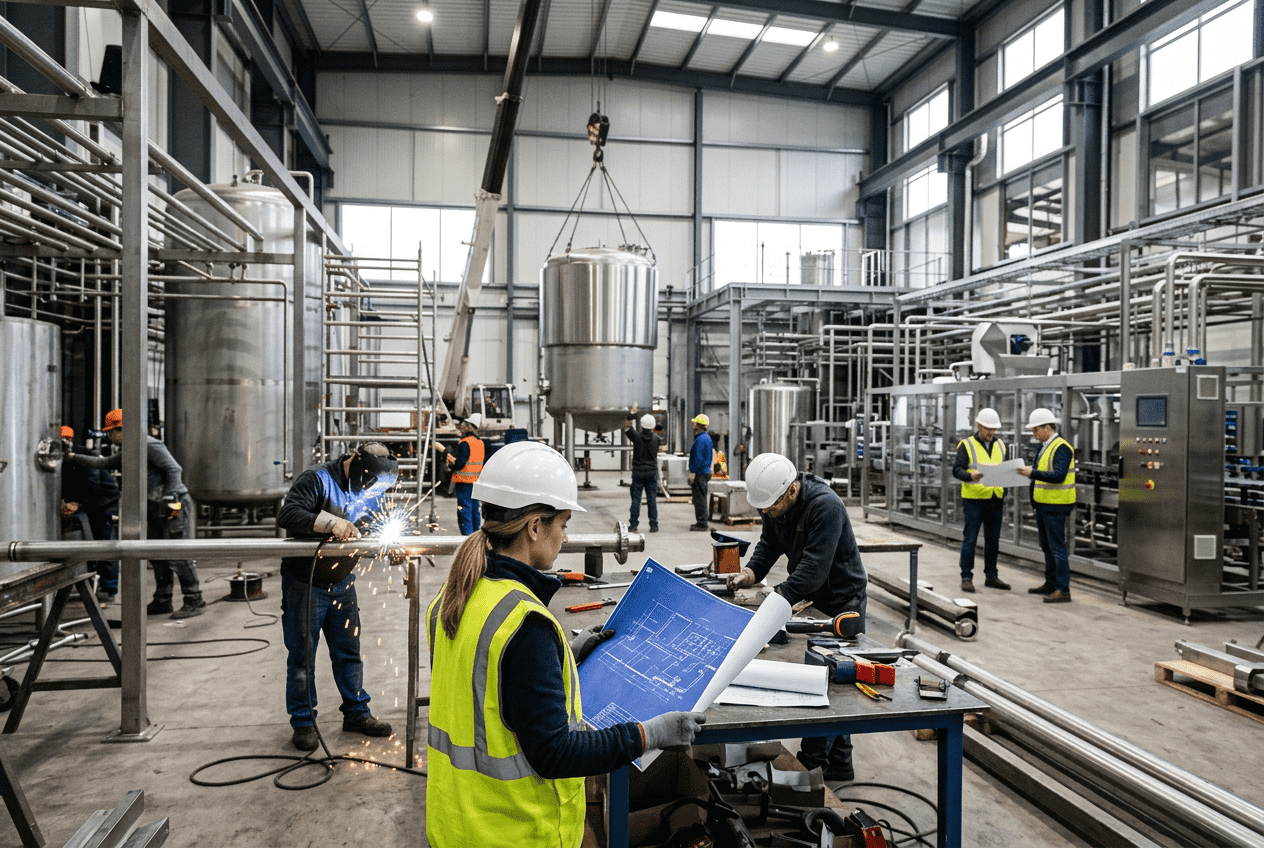
Beverage Processing Automation Solutions
Beverage processing automation is the use of integrated controls, equipment, data systems, and material handling to manage production from ingredient intake through mixing, thermal treatment, filling, cleaning, inspection, and final palletizing. In the United States, automation is becoming a practical requirement for beverage manufacturers facing labor shortages, tighter compliance demands, more product variations, and pressure to improve uptime. For most plants, the goal is not “lights-out manufacturing.” It is stable throughput, repeatable quality, safer operations, cleaner data, and faster return on capital. Across major U.S. beverage corridors such as Chicago, Dallas-Fort Worth, Atlanta, Charlotte, Los Angeles, the Inland Empire, and the New Jersey distribution zone near Port Newark, producers are rethinking old lines that depend too heavily on manual adjustments and disconnected machines. Whether the product is beer, spirits, wine, kombucha, RTD coffee, functional beverages, juice, dairy-based drinks, or carbonated soft drinks, the same business question appears: where should automation begin, and what will actually pay back? That decision usually depends on plant size, package mix, sanitation risk, utility constraints, and distribution strategy. A co-packer serving national retail accounts in the United States may prioritize recipe control, changeover speed, and pallet traceability. A regional brewery may focus first on cellar integration, can line efficiency, and CIP repeatability. A high-acid juice facility may need tighter pasteurization control and electronic records. The best automation plan is always process-specific and commercially grounded. Beverage processing automation covers the coordinated use of PLCs, SCADA, instrumentation, valves, pumps, conveyors, robotics, recipe systems, batch controls, sensors, and reporting tools to operate a beverage plant with less manual intervention and more consistency. In practice, it affects raw material receiving, batching, blending, carbonation, pasteurization, filtration, filling, packaging, CIP, case handling, palletizing, and quality verification. For U.S. manufacturers, the fastest wins often come from three areas: reducing labor dependency at repetitive points, lowering product loss through tighter process control, and improving compliance records for FDA, SQF, BRC, or customer audits. Larger facilities may extend automation into utility optimization, electronic batch records, OEE dashboards, and warehouse coordination. The table above shows why automation decisions should be tied to measurable business outcomes, not just equipment modernization. When project teams connect controls upgrades to lost product, labor hours, utility consumption, and audit readiness, capital requests become much easier to defend internally. In a modern beverage plant, automation starts before production begins. Ingredient intake can include automated receiving records, load cell verification, tank level tracking, barcode-based material identification, and transfer route interlocks that prevent the wrong ingredient from entering the wrong vessel. This matters in high-throughput U.S. operations where multiple SKUs may run in a single shift and where mistakes can create expensive rework. From there, automation extends into batching and blending. Recipes are downloaded to the process floor, setpoints are enforced, and operators are guided through exceptions rather than every normal step. Inline Brix, pH, conductivity, temperature, and flow measurement create a tighter process window. For carbonated beverages, CO2 injection and pressure control become central. For spirits, wine, and fermentation-heavy processes, the logic may center more on temperature, residence time, proofing, transfer permissions, and product segregation. Thermal treatment is another critical point. Whether the plant uses HTST, UHT, flash pasteurization, tunnel pasteurization, or aseptic pathways, automation supports product safety by maintaining target temperatures, divert logic, hold times, alarm management, and electronic data capture. These systems are especially important when facilities ship nationwide from logistics hubs such as Houston, Savannah, or Southern California and cannot risk field quality variation. At filling and packaging, automation coordinates filler speed, capper or seamer status, rinse systems, labeling, coding, inspection, accumulation, case packing, and palletizing. A line may have excellent individual machines but still underperform if each one behaves like a separate island. This is why plant-wide communication and line control matter as much as any single machine upgrade. Finally, palletizing and outbound handling close the loop. Automated pattern selection, pallet verification, stretch wrapping, and lot traceability create a cleaner handoff to warehouse and transport teams. For plants feeding retail and foodservice networks across the United States, these end-of-line details directly affect freight claims, customer compliance, and dock efficiency. The six areas below usually create the highest leverage for beverage automation projects. Blending is where many profit leaks begin. Even small overuse of sweeteners, concentrates, flavors, alcohol, or functional ingredients compounds quickly across national volume. Plants serving grocery and club channels from cities like Phoenix or Columbus often find that inline recipe verification pays for itself faster than expected. Pasteurization and thermal control are about both safety and brand protection. Too little thermal treatment is an obvious risk. Too much is also expensive because it can damage flavor, color, carbonation behavior, and shelf life. Filling automation often becomes the public face of the project because line speed is easy to see. But the best results come when the filler is treated as part of a coordinated system with upstream tanks and downstream packaging rather than as a stand-alone asset. CIP is frequently underestimated. In beverage plants with frequent product changeovers, automated CIP can free substantial capacity without adding a new line. Palletizing is similarly important because end-of-line labor is one of the hardest roles to staff consistently in many U.S. markets. Quality systems then connect all of these areas by capturing the data needed for rapid troubleshooting and customer confidence. Three factors are driving accelerated investment in the United States: labor scarcity, compliance complexity, and SKU growth. Beverage plants are trying to produce more combinations of package type, flavor, sweetener profile, functional additive, and seasonal release with fewer experienced operators than they had five years ago. Manual methods do not scale well under that pressure. Labor remains the most visible problem. Repetitive tasks such as ingredient staging, line monitoring, manual valve sequencing, case packing, and palletizing are hard to staff and retain. Automation does not eliminate people; it reallocates them toward higher-value tasks such as quality oversight, changeover execution, maintenance, and troubleshooting. Compliance is the second major driver. FDA expectations, retailer requirements, traceability demands, and private-standard audits all favor controlled processes and accessible data. Plants that still depend on paper logs and operator memory are at a disadvantage when proving what happened during a specific batch or cleaning cycle. The third driver is SKU proliferation. A beverage line that once ran a few standard products may now handle zero-sugar options, seasonal flavors, short-run promotional packaging, and multiple pack formats. More changeovers mean more opportunities for mistakes. Automation reduces those risks by standardizing recipes, line states, and sanitation sequences. The chart illustrates a realistic growth pattern rather than a hype curve. U.S. beverage manufacturers are not automating everything at once, but annual investment momentum is clearly moving upward as operating conditions become less forgiving. Automation projects are often sold with aggressive payback claims. In reality, return depends on baseline performance, labor rates, package mix, sanitation complexity, and whether upstream or downstream bottlenecks are addressed together. A filler upgrade alone may disappoint if the syrup room, depalletizer, or palletizer still limits output. This table provides a more grounded way to think about investment pacing. Fast paybacks usually come from projects that reduce giveaway, recover production time, or replace difficult manual labor. Longer paybacks tend to involve utilities, full digitalization, or infrastructure-heavy upgrades. Companies that want a realistic model should account for all economic layers: direct labor, overtime, shrink, quality holds, changeover duration, sanitation hours, maintenance calls, customer deductions, and expansion deferral. One of the strongest internal arguments for automation is the ability to postpone a much larger building or line expansion by removing current bottlenecks first. Beverage automation shares many principles with food processing, but the operating realities are not identical. Beverage systems tend to involve continuous or semi-continuous flow, larger liquid volumes, tighter pump-and-valve coordination, frequent sanitation cycles, and in some categories, strict carbonation management. Those differences change equipment selection, controls design, and utility planning. For example, beverage plants usually rely more heavily on transfer logic, tank routing, and real-time measurement. A sauce or prepared-food process may emphasize cooking profiles, solids handling, and batch vessel residence time. Beverage producers, by contrast, often need very stable fill conditions, low dissolved oxygen targets, precise CO2 handling, and rapid flush verification between SKUs. This distinction matters when choosing an integration partner. A team that understands general automation but lacks beverage-specific experience may underestimate issues such as carbonation retention, dissolved oxygen, sanitary dead legs, flavor carryover, or how CIP design affects production economics. The strongest capital cases in beverage manufacturing are written in business language, not engineering language alone. Senior leadership wants to know how the project affects margin, risk, capacity, labor stability, and strategic growth. A successful proposal usually combines hard operational data with a phased implementation path. Start with the baseline: current throughput, actual downtime by cause, labor by line position, sanitation hours, scrap, giveaway, utility cost, customer complaints, and audit findings. Then separate problems into three categories: what stops the line, what wastes product, and what threatens compliance. This prevents a project from becoming a technology shopping list. Next, quantify the cost of doing nothing. If a co-packer in the Carolinas cannot hold throughput during summer demand, the cost is not only overtime; it may include missed customer orders, delayed launches, and lower line availability for premium-margin products. If a plant near the Port of Los Angeles is shipping nationwide, unstable pallet quality can also create freight and retailer chargebacks. A phased plan is usually easier to approve than an all-at-once transformation. Many U.S. plants begin with a recipe system, line controls, or palletizing cell before moving into plant-wide SCADA or utility optimization. This lowers execution risk and lets management see measurable gains. The demand profile above reflects where many current projects are concentrated: high-SKU categories, labor-sensitive lines, and products with tighter formulation expectations. Functional beverages and RTD segments remain especially active because product complexity is rising quickly. When companies need outside support, it helps to work with a partner that understands capital planning as well as process engineering. Disruptive Process Solutions is positioned that way, with a business-first approach focused on profitable projects rather than automation for its own sake. For internal approvals, that mindset matters because the project story must make financial sense from day one. Not every manufacturer needs a fully integrated greenfield system. Many U.S. beverage companies, especially regional brands and growing co-packers, can improve performance with modular upgrades that fit existing plants and cash flow realities. One option is modular processing blocks. A plant may add a dedicated blending skid, compact CIP module, pre-piped utility package, or scalable filler support system without rebuilding the entire facility. Another option is collaborative robotics. Cobots are increasingly useful for repetitive end-of-line tasks where full industrial robotics might be too expensive or space-intensive. Affordable SCADA packages are also changing the entry point. Plants no longer need to begin with a massive enterprise rollout. A targeted system can start with tank visualization, batch trends, alarms, and basic reporting, then expand into historians, electronic records, and multi-line dashboards over time. The key is to avoid “cheap now, expensive later” decisions. Entry-level systems should still be designed with future expansion in mind. Naming conventions, network architecture, instrumentation standards, and panel space all affect whether a modest first project can grow into a unified automation platform. Many beverage plants already own good equipment but still perform poorly because systems were added in isolation over time. One OEM controls the filler, another the pasteurizer, another the CIP skid, and none of them share useful operating context. The result is fragmented alarms, duplicate data, difficult troubleshooting, and hidden bottlenecks. Best practice begins with a line architecture plan. Define how recipes move, how tanks are identified, which system owns each critical setpoint, how alarms are prioritized, and what data should flow to supervisory screens and reports. This is not glamorous work, but it prevents years of operational frustration. Another best practice is standardized sanitary design and utility coordination. Process automation performs best when mechanical design, piping layout, valve selection, and cleaning strategy are aligned. This is one reason integrated engineering matters. A controls fix cannot fully compensate for poor hygienic routing or weak utility capacity. For manufacturers seeking a broader partner, engineering and integration services that combine process, controls, installation, and execution management can reduce the risk of disconnected outcomes. In beverage projects, integration quality often determines whether capital delivers its forecasted return. The trend shift is important: more beverage manufacturers are moving away from isolated equipment purchases toward integrated systems thinking. That does not always mean larger initial budgets. It means better planning so each investment fits a longer-term operating model. Three capability areas matter here. First, technological capability: strong PLC programming, SCADA design, instrumentation strategy, utility integration, and process controls. Second, manufacturing capability: real experience with tanks, CIP systems, pasteurization pathways, blending systems, carbonation, and sanitary process equipment. Third, service capability: project management, installation oversight, general contracting coordination where needed, commissioning, and owner-side advocacy during capital execution. Those are also the areas where DPS is differentiated. The company supports beverage and food manufacturers across North America with process engineering, capital planning, controls integration, installation, and turnkey project execution. It also manufactures selected process equipment such as tanks and CIP systems, which can simplify fit-up and project coordination when matched to the right application. More detail on available processing equipment solutions can help buyers compare project pathways. What beverage types benefit most from automation?Almost all categories benefit, but the strongest near-term cases are usually carbonated soft drinks, RTD beverages, dairy beverages, kombucha, juice, brewing, and high-SKU co-packing environments. These operations face a combination of frequent changeovers, sanitation demands, and line-speed pressure. What is the first automation project most plants should consider?That depends on the plant’s largest constraint. For some, it is recipe and batching control. For others, it is CIP downtime, end-of-line labor, or poor line integration around the filler. Start where the plant loses the most margin or capacity today. How long does a beverage automation project take?Small modular projects may be completed in a few months. Larger line integrations or plant-wide upgrades can take much longer once engineering, procurement, installation windows, testing, and training are included. Utility and compliance impacts should be reviewed early. Does automation always mean replacing workers?No. Most beverage plants use automation to stabilize operations, reduce hard-to-fill manual positions, improve safety, and let experienced employees focus on quality, maintenance, and changeovers. In many U.S. markets, automation is a response to labor scarcity rather than labor surplus. What should buyers ask potential suppliers?Ask whether they understand sanitary design, beverage-specific process risks, utility loads, control system scalability, changeover economics, and commissioning support. Also ask for examples in similar products, similar package formats, and similar production volumes. How do I compare supplier types?Compare OEM-only vendors, controls specialists, and full-scope engineering integrators based on lifecycle fit. If the project is narrow, a specialist may be enough. If the project affects utilities, process design, controls, installation, and schedule coordination, a broader partner is often more effective. This comparison is useful because supplier fit matters as much as technology fit. Plants that only buy around a single machine often end up recreating integration problems later. Facilities planning a greenfield beverage site, a major capacity expansion, or a phased modernization usually benefit from a more holistic execution model. For many manufacturers, the best path is a partner that can help define the capital strategy before equipment is locked in. That includes feasibility, process design, utility review, controls architecture, installation planning, and startup support. Companies evaluating these needs can review selected project examples and case work to see how integrated execution affects outcomes. Looking toward 2026, three trends will shape beverage automation decisions in the United States. First, plants will invest more in modular digital infrastructure: scalable SCADA, historian layers, remote diagnostics, and production visibility that can be expanded over time. Second, sustainability pressure will move from marketing language into measurable water, chemical, steam, and electricity reduction targets, making CIP optimization and utility integration more important. Third, policy and customer expectations around traceability, food safety documentation, and operational resilience will continue pushing plants toward cleaner electronic records and better exception handling. Artificial intelligence will also become more practical, but mainly through narrow applications such as predictive maintenance alerts, anomaly detection, and schedule optimization rather than autonomous control of the entire plant. The immediate future belongs to beverage manufacturers that get the fundamentals right: strong process design, disciplined controls integration, data that operators can actually use, and capital plans tied directly to profitability. In short, beverage processing automation is no longer only for the largest multinational plants. In the United States, it has become a scalable toolset for regional producers, co-packers, and enterprise manufacturers alike. The real question is not whether to automate, but which process constraints should be solved first, how the systems should connect, and whether the chosen partner understands both manufacturing reality and return on capital. -
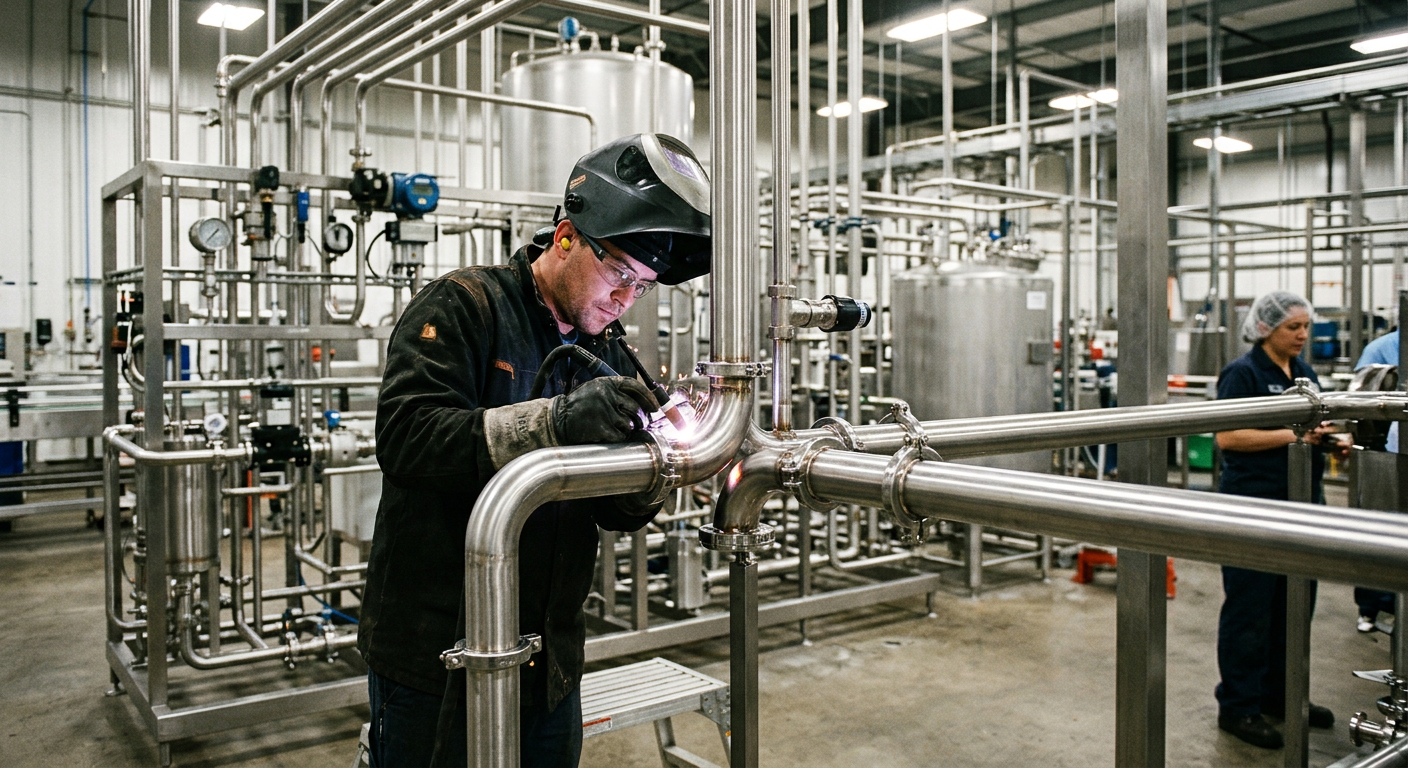
Food Facility Heat Exchanger Types Comparison
Heat exchangers are core assets in modern food and beverage manufacturing. They control product temperature during pasteurization, cooling, cooking, regeneration, holding, and cleaning, while also affecting yield, food safety, energy use, maintenance labor, and line uptime. In the United States, where processors operate under FDA, USDA, SQF, and BRC expectations, choosing the wrong heat exchanger can create sanitation issues, bottlenecks, product damage, and avoidable operating costs. Choosing the right one can improve throughput, stabilize product quality, and reduce total cost of ownership over the life of the system. From dairy plants in Wisconsin to sauce manufacturers in Illinois, protein processors in Arkansas, aseptic beverage lines in California, and co-packers around Dallas, Atlanta, and the New Jersey distribution corridor, food facilities face different thermal duties and sanitary demands. The best heat exchanger depends on viscosity, particulate size, fouling behavior, target temperatures, CIP strategy, pressure drop limits, utility availability, and future production goals. This guide compares the most common sanitary heat exchanger types used in U.S. food facilities and explains how buyers can match technology to process reality. For most liquid food and beverage applications, plate and frame heat exchangers offer the best combination of thermal efficiency, compact footprint, and lower utility consumption. For high-pressure, high-temperature, viscous, or particulate-heavy duties, tubular and shell and tube units often provide better durability and process flexibility. For sticky, crystallizing, highly viscous, or shear-sensitive products such as puddings, processed cheese, meat emulsions, and some sauces, scraped surface heat exchangers are frequently the strongest choice because they continuously remove fouling from the heat transfer surface. In practical U.S. food plant terms: The short buying rule is simple: if the product is clean, pumpable, and low in particulates, start with plate and frame. If it is harsh, viscous, chunky, or fouls rapidly, look at tubular or scraped surface. If the duty sits on the utility side or requires a heavy mechanical design, shell and tube remains relevant. U.S. demand for sanitary thermal systems continues to rise as processors invest in automation, longer shelf life, energy recovery, and product innovation. Regional investment is especially active in food manufacturing clusters around Chicago, Minneapolis, Fresno, Charlotte, Houston, and the I-95 corridor, where brownfield retrofits and new capacity expansions are both common. The chart above reflects a realistic upward trend driven by beverage diversification, protein processing modernization, expanded aseptic capacity, and sustainability projects tied to water and energy reduction. Plate and frame heat exchangers are among the most widely used sanitary units in U.S. food and beverage plants. They transfer heat through thin corrugated metal plates arranged in a compressed pack, creating alternating channels for product and service media. Their high turbulence and large effective surface area make them highly efficient for heating and cooling low- to medium-viscosity products. They are especially common in dairy, brewing, juice, functional beverages, liquid egg, and HTST pasteurization systems. In states with major beverage and dairy activity such as California, Wisconsin, New York, Pennsylvania, and Texas, plate systems are frequently selected for regeneration duties because they recover a large portion of thermal energy from outgoing product streams. Key strengths include compact size, strong thermal performance, low hold-up volume, and relatively easy capacity adjustment by adding or removing plates. These benefits make plate and frame units attractive in urban or retrofit facilities where floor space is tight, such as plants near Newark, Los Angeles, or central Chicago. Still, these units are not universal. Products containing large particulates, fibers, or highly fouling ingredients can plug channels or require frequent maintenance. Gasket condition also matters. In high-acid, high-fat, or cleaning-intensive environments, gasket material selection affects longevity and sanitation confidence. U.S. processors must also account for production variability; what works for juice may not work for salsa, yogurt with fruit, or protein slurries. When processors need flexible sanitary system design, integrating a plate exchanger into a broader skid with balance tanks, controls, CIP routing, and utility optimization becomes just as important as selecting the exchanger itself. Companies such as DPS service teams typically evaluate not only the exchanger but also the process context around it, including flow stability, recipe changeovers, and utility loads. Shell and tube heat exchangers place one fluid inside tubes and another around the outside within a shell. They are rugged, familiar, and widely used across industrial thermal systems, including many food plant utility and secondary process loops. Although less thermally compact than plate units for many sanitary liquid duties, they remain valuable where durability, pressure handling, and mechanical simplicity are priorities. In U.S. food facilities, shell and tube units are often found in hot water generation, oil heating, refrigeration interfaces, condensate recovery, and some product applications where process conditions are demanding. Gulf Coast plants, meat operations, and older factories with legacy utility architecture frequently maintain shell and tube designs because of their proven reliability and maintenance familiarity. Their strengths include tolerance for higher pressures, broad metallurgy options, and dependable performance in utility-facing roles. They also work well when plants have maintenance teams already trained to inspect tube bundles, replace components, and manage scaling or fouling in predictable ways. For buyers, the key question is whether the application is truly product-side sanitary processing or primarily utility-side energy exchange. In many food plants, shell and tube is not the first choice for clean, low-viscosity product streams, but it can be a very strong choice around the process, especially in integrated heating and cooling systems. In capital projects from the Carolinas to the Pacific Northwest, experienced engineering groups often model shell and tube units as part of broader infrastructure studies rather than evaluating them in isolation. That is especially important when the plant is balancing boiler load, glycol generation, heat recovery, and expansion phasing. Scraped surface heat exchangers are designed for products that foul rapidly, become highly viscous, contain suspended solids, or require controlled crystallization or texture development. A rotating shaft with blades continually scrapes product from the heat transfer wall, reducing buildup and maintaining a more consistent thermal profile. These systems are common in processed cheese, confectionery, fillings, meat emulsions, gravies, dressings, starch-rich foods, and some dairy desserts. For U.S. processors dealing with sticky formulations in prepared foods or premium refrigerated products, scraped surface technology often solves problems that other exchanger types cannot handle effectively. The biggest advantage is the ability to keep heat transfer surfaces active even when products would otherwise burn on, gel, or insulate the wall. This supports both product quality and sanitation performance. It also allows processors to run difficult recipes with less risk of scorching, phase separation, or texture damage. However, scraped surface systems carry higher capital cost, more moving parts, and greater mechanical complexity. They require careful seal management, preventive maintenance, and operator training. The value case is strongest when a processor would otherwise lose significant production time due to fouling, product loss, or unstable quality. For plants in major prepared foods corridors such as Ohio, Missouri, Tennessee, and North Carolina, scraped surface units are often selected when line speed, consistency, and difficult formulations outweigh the premium price. They are also relevant in pilot-to-commercial scale transitions, where recipes that worked in development begin fouling heavily at production rates. Tubular heat exchangers use tubes rather than plates to move heat into or out of a product stream. In sanitary food processing, they are often chosen for products with particulates, fibers, higher viscosity, or more demanding thermal profiles. Variants include double-tube, multi-tube, and triple-tube designs, each suited to different capacities and process requirements. In the United States, tubular systems are common in soups, fruit preparations, salsa, baby food, dairy mixes, tomato products, liquid egg, cultured products, and aseptic applications. Because flow channels are more open than those in many plate systems, tubular exchangers can preserve particulates and reduce plugging risk. They are particularly valuable when a processor must balance sanitation with product integrity. For example, a shelf-stable soup line shipping through Memphis or Kansas City distribution networks may require validated heating while maintaining particle size and suspension quality. A tubular system often handles that balance better than a conventional plate pack. Tubular exchangers are also a popular answer for processors expanding into higher-value SKUs that contain particulates or require aseptic distribution. When combined with precise controls, validated holding, and integrated CIP, they support both shelf-life targets and operational reliability. The demand pattern above shows why no single exchanger type dominates every plant. Dairy and beverage operations remain major buyers, but prepared foods, sauces, and aseptic systems are shaping future equipment selection in a meaningful way. In U.S. food manufacturing, thermal performance alone is never enough. Heat exchangers must also meet sanitary design expectations, support cleaning validation, and align with the facility’s regulatory environment. Selection criteria commonly include 316L stainless product contact surfaces, elastomer compatibility, drainability, weld quality, surface finish, dead-leg avoidance, gasket design, and the ability to integrate with documented CIP or COP procedures. Facilities regulated by FDA and USDA, or certified under SQF and BRC, generally expect equipment that supports hygienic design and documented cleanability. In meat and poultry applications, washdown severity and pathogen control priorities may drive a different design emphasis than in beverage plants. In aseptic systems, validation requirements around time, temperature, and sterilization integrity become even more critical. Sanitary design standards also affect maintainability. A heat exchanger that looks compliant on paper but is difficult to inspect, drain, isolate, or reassemble can still create practical food safety risk. Plants in export-oriented hubs such as California’s Central Valley, the Midwest dairy belt, or the Southeast poultry corridor often need designs that stand up not only to audits but also to real operating pressure. Strong sanitary outcomes depend on system-level engineering. The heat exchanger, pumps, valves, instrumentation, holding sections, and CIP skid must work together. That is one reason advanced project teams increasingly prefer integrated design-build approaches rather than piecemeal equipment buying. Thermal performance affects more than product temperature. It influences yield, protein denaturation, flavor, color, texture, utility cost, throughput, and sustainability metrics. In many U.S. plants, especially those facing high utility rates in California, the Northeast, and some metropolitan utility districts, heat recovery and exchanger efficiency can materially change operating cost per pound or per case. Plate systems usually lead in thermal efficiency for clean liquids because they create high turbulence and excellent surface utilization. Tubular systems offer balanced performance with better product tolerance. Scraped surface units trade pure efficiency for processability, while shell and tube designs often win where ruggedness matters more than compact efficiency. Buyers should evaluate these factors together: approach temperature, pressure drop, regeneration percentage, fouling rate, residence time, throughput variability, startup losses, and cleaning frequency. A unit with the highest theoretical coefficient may still be the wrong financial choice if it fouls every shift or damages product texture. The trend above reflects how U.S. processors are shifting from simple replacement purchases to strategic thermal optimization projects. That shift is being driven by corporate decarbonization goals, water reuse initiatives, and 2026 planning for more automated, more auditable production environments. Future trends for 2026 include greater use of digital monitoring, predictive fouling analytics, automated valve matrices, more precise CIP verification, and heat recovery strategies tied to enterprise sustainability targets. Plants are also watching policy trends around energy intensity, wastewater, and resilient manufacturing. Equipment that can support lower steam use, reduced cooling load, and better data capture will be increasingly favored. From a technology standpoint, integrated controls will matter more. Sensors for inlet and outlet temperature, differential pressure, flow verification, and CIP endpoint confirmation are becoming central to lifecycle performance, not optional extras. Processors expanding in Phoenix, Las Vegas, Inland Empire logistics zones, and Texas manufacturing corridors are especially focused on utility efficiency because water and energy constraints are becoming planning variables, not just cost items. Maintenance strategy often determines whether a heat exchanger is a profitable asset or a chronic frustration. Food processors should evaluate how easily the unit can be cleaned, inspected, isolated, and returned to service. The best choice is not always the cheapest purchase price; it is the design that minimizes downtime, sanitation risk, and labor burden over years of operation. Plate and frame units are generally CIP-friendly, but gasket wear and product-specific fouling must be monitored. Shell and tube units may require mechanical tube cleaning and can be labor intensive if scaling is severe. Scraped surface systems demand seal, blade, and drive maintenance but may sharply reduce production interruptions for difficult products. Tubular units usually offer solid CIP performance, though actual frequency depends on solids content, protein load, sugar concentration, and process temperature. Facilities with frequent changeovers, seasonal runs, or co-packing contracts should weigh maintenance complexity heavily. In many U.S. operations, lost production time costs far more than spare parts. That is why lifecycle planning now often includes spare strategy, CIP chemical optimization, remote diagnostics, and operator training. For buyers comparing suppliers, it helps to ask detailed questions: How long is a full CIP cycle? What fouling assumptions were used? How easy is inspection access? Are spare gaskets or seals available in the U.S.? Can the supplier support startup and operator training in multiple states? Can the exchanger tie into existing SCADA and batch records? This comparison shows why selection is application-specific. Plate and frame may lead on efficiency, but tubular and scraped surface can be stronger where product complexity or fouling governs the design basis. Processors looking to modernize should also consider whether the equipment partner can support not just supply, but layout integration, utilities, controls, commissioning, and long-term operating success. Reviewing prior installations and project case studies can provide better guidance than a brochure alone. Disruptive Process Solutions serves food and beverage manufacturers across the United States and Canada with a practical, profitability-focused approach to capital projects. Rather than selling equipment in isolation, the company works from a broader engineering and execution model that connects process performance, sanitation, utilities, automation, and business outcomes. From a technological capabilities standpoint, DPS supports process, mechanical, structural, plumbing, electrical, and controls engineering, including PLC programming, automation, and SCADA integration. That matters in heat exchanger projects because thermal systems rarely succeed on mechanical selection alone. Flow control, recipe management, CIP logic, data visibility, and utility balancing all affect real-world results. Learn more about the company’s approach on the about our team page. From a manufacturing capabilities perspective, DPS also designs and supplies proprietary process equipment for food and beverage plants, including tanks, custom CIP systems, marination tumblers, and cooking vessels. That in-house product capability helps support coordinated sanitary system design when heat exchangers must connect cleanly with upstream and downstream equipment. More details are available in the process equipment section. From a service capabilities standpoint, DPS provides process engineering, capital planning, owner’s representative support, project management, general contracting where licensed, installation, integration, and commissioning. For clients evaluating heat exchanger upgrades, that means support can extend from early feasibility and utility analysis through procurement, field execution, and startup. This is especially valuable for processors expanding capacity, relocating lines, retrofitting brownfield sites, or building new production campuses with future scalability in mind. The company’s experience across beverages, dairy, prepared foods, proteins, aseptic systems, and specialty sanitary processing makes it well suited for projects where heat exchanger choice affects broader production economics. In many cases, the right answer is not simply “buy a new exchanger,” but redesign a process path, improve controls, recover energy, or remove hidden bottlenecks that limit throughput. Which heat exchanger is best for milk and beverage pasteurization?In many cases, plate and frame heat exchangers are the first choice because they provide excellent heat transfer, compact footprint, and strong regeneration efficiency. Final selection still depends on viscosity, solids, sanitation requirements, and line capacity. What is the best option for chunky soups, salsa, or fruit preparations?Tubular heat exchangers are often the better fit because they can handle particulates more gently and with less plugging risk than standard plate designs. When should a processor choose scraped surface technology?Choose scraped surface when products are sticky, highly viscous, scorch-prone, or prone to rapid fouling. It is commonly justified for cheese, fillings, thick sauces, meat emulsions, and dairy desserts. Are shell and tube exchangers outdated for food plants?No. They remain useful, especially for utility-side service, higher-pressure duties, and facilities with established maintenance practices. They are simply not always the most efficient sanitary product-side option. How important is CIP compatibility in heat exchanger selection?It is critical. A unit that cannot be cleaned reliably will create food safety risk, downtime, and inconsistent production. CIP should be evaluated as part of the full process system, not just the exchanger body. What materials are typically expected in U.S. sanitary food applications?316L stainless steel is widely preferred for product contact surfaces, along with application-appropriate gaskets and sanitary finishes. The right choice depends on chemistry, temperature, and cleaning regime. How do sustainability goals affect buying decisions in 2026?Processors are placing greater emphasis on heat recovery, lower steam use, water savings, data-enabled optimization, and cleaner utility integration. Efficient thermal systems support both operating margin and corporate ESG objectives. Should companies buy equipment directly or use an integrated project partner?If the project affects utilities, controls, sanitation strategy, expansion planning, or layout, an integrated engineering and execution partner is usually the safer choice. It reduces the risk of buying a component that does not perform as intended in the real process environment. What should buyers in the United States ask local suppliers?Ask about lead times, sanitary certifications, spare parts availability, startup support, CIP assumptions, control integration, regional service coverage, and proven experience in your exact product category. Plants near major logistics hubs such as Chicago, Atlanta, Houston, Los Angeles, and Philadelphia should also ask how quickly field support can be mobilized. What is the most common mistake in heat exchanger selection?Focusing only on upfront price or nameplate capacity. The better approach is to compare total installed value: food safety, uptime, utility use, labor, cleanability, future expansion, and product quality performance. For U.S. food manufacturers, the most effective heat exchanger choice is the one that fits the actual product, sanitation regime, utility strategy, and business model of the facility. Whether the line is producing clean-label beverages in California, cultured dairy in the Upper Midwest, sauces in New Jersey, or prepared proteins in the Southeast, the best thermal solution should protect both food safety and long-term profitability. -
8 Types of Food Plant Conveyor Systems
Food manufacturers in the United States use several conveyor designs to move raw materials, packaged products, trays, totes, cartons, and pallets safely through production. The right choice depends on product fragility, sanitation risk, moisture, temperature, throughput, line layout, and cleaning requirements. In most food plants, the most common categories include belt conveyors, modular plastic belt conveyors, screw conveyors, vibratory conveyors, wire mesh conveyors, chain conveyors, roller conveyors, and pallet conveyors. Each serves a different role, from moving fresh poultry in Arkansas and beef in Kansas to handling bakery goods in Chicago, dairy products in Wisconsin, and bottled beverages moving out of Dallas-Fort Worth or the Port of Savannah. Across the U.S. market, conveyor decisions are no longer based only on speed and footprint. Labor pressure, food safety enforcement, retailer traceability demands, sustainability targets, and automation upgrades are pushing plants to specify conveyors that are easier to clean, simpler to maintain, and better integrated with controls. That is especially true in major food hubs such as California’s Central Valley, the Carolinas, Memphis, Atlanta, and the I-35 corridor in Texas, where production scale and shipping velocity require reliable material flow every day. The fastest answer is this: if a food plant needs a flexible and economical option for packaged or lightly handled products, belt conveyor systems are usually the starting point. If the line needs washdown durability, transfers, curves, and positive drive performance, modular plastic belt conveyors often deliver better long-term value. If the process involves powders, granules, seasonings, or controlled metering, screw and vibratory conveyors are often the better match. For high heat, drainage, cooking, cooling, or direct contact with harsh conditions, wire mesh and chain conveyors are common. For secondary packaging, accumulation, warehouse flow, and end-of-line movement, roller and pallet conveyors are typically the preferred solution. In the United States, the best conveyor is rarely an isolated equipment choice. It is part of a broader processing and utility strategy that includes layout, employee ergonomics, sanitation zoning, automation, maintenance access, and expansion planning. A meat processor near Omaha may prioritize USDA cleanability and raw-to-cooked segregation, while a beverage co-packer in North Carolina may prioritize can handling, line speed, palletizing, and integration with fillers, packers, and warehouse automation. The table below summarizes the main conveyor families used in U.S. food plants and where each typically fits best. In practical terms, most modern plants use several conveyor types together. A facility may receive ingredients through screw systems, process product on modular belts, pass it through wire mesh cooling or cooking conveyors, then transfer packed cases to roller systems and pallets to warehouse lines. This mixed approach is common in U.S. facilities trying to increase throughput without expanding the building envelope. Market demand also keeps rising. Food and beverage processors in the United States are investing in upgrades tied to labor savings, line automation, and sanitary improvements, especially where legacy conveyors are hard to clean or create unplanned downtime. The growth pattern shown above reflects a realistic industry trend: projects are increasingly tied to throughput optimization, sanitary redesign, and labor reduction. Plants near Los Angeles/Long Beach, Houston, and New Jersey distribution corridors are especially focused on keeping product moving efficiently from production to outbound logistics. Belt conveyor systems remain the broadest category in food manufacturing because they can handle many product shapes and package formats. Flat belts, incline belts, cleated belts, troughed belts, and sidewall belts are all variations used in different food applications. In U.S. plants, these systems are common in bakery, snack foods, produce packing, ingredient movement, and secondary packaging. Their popularity comes from simple design, competitive cost, and ease of integration with other equipment. A standard belt conveyor works best when products need stable support across a flat surface. For example, a tortilla plant in Texas may use belts between ovens, coolers, and stacking stations, while a salad processor in California may use incline belts to transfer washed produce from dewatering to packaging. In beverage and prepared food plants, belts are also useful where packages must move smoothly to vision systems, printers, or case packers. Not every belt is appropriate for food contact. Material choice matters. U.S. operators usually compare polyurethane, PVC, fabric, thermoplastic, and specialty hygienic belts based on cut resistance, oil resistance, release properties, and washdown durability. The framework also matters: stainless steel is often preferred in wet or high-care zones, while powder-coated or painted frames may still appear in dry packaging areas. One challenge with traditional belt systems is sanitation around tracking components, pulleys, supports, and hidden catch points. That is why many processors are moving away from legacy enclosed frames with hard-to-reach niches. Newer designs emphasize open construction, fewer hollow members, and faster belt removal for cleaning. Industry demand for different conveyor styles also varies by food segment. The next chart shows how common conveyor demand compares across major U.S. food sectors. Belt systems are often the right fit when budget sensitivity is high and product handling is straightforward. However, if sanitation intensity, curves, or positive engagement become more important, modular plastic belting frequently becomes more attractive. This comparison shows why “belt conveyor” is not one purchase decision but a family of design choices. Plants that treat all belts as interchangeable usually spend more later on sanitation retrofits and maintenance. Modular plastic belt conveyors are widely used in U.S. food processing because they combine good washdown performance with mechanical flexibility. The belt is built from interlocking plastic modules, allowing fast repair by replacing only damaged sections instead of an entire endless belt. This matters in high-throughput operations where downtime is expensive, such as poultry processing in Georgia, seafood in the Gulf Coast region, or prepared foods in the Midwest. These conveyors are especially strong in applications involving curves, transfers, drainage, and positive drive. Open-hinge designs can improve cleanability, while different belt surfaces can be selected for grip, release, airflow, or delicate handling. Plants running wet, oily, or protein-heavy products often prefer modular belts because they tend to hold up well in harsh cleaning environments. Another advantage is configurability. Straight runs, radius turns, incline sections, and spiral arrangements can all be built around production constraints. In a crowded urban facility near Newark or Philadelphia, that routing flexibility may be the only practical way to improve throughput without a building expansion. Still, modular plastic belts are not automatically the right answer. Some products can mark more easily on harder belt surfaces, and some configurations require careful design to avoid pinch points, difficult hinge cleaning, or transfer issues at infeed and discharge. Belt pitch, support wear strips, shaft alignment, and chemical compatibility all need attention. The shift toward modular belts has accelerated as plants replace hard-to-clean legacy systems. The chart below illustrates the trend away from basic legacy conveyors and toward sanitary, modular, and automated conveying platforms. This transition is driven by real operational priorities: shorter cleaning windows, reduced maintenance inventory, safer access, and better compliance with customer and audit expectations. For plants supplying large retailers or national restaurant chains, conveyor cleanability is now a procurement issue, not just an engineering detail. Typical U.S. applications include raw and cooked poultry lines, cheese and dairy handling, bakery cooling, pizza assembly, snack foods, seafood, produce processing, and even some beverage packaging where line routing is complicated. Radius modular systems are also common in facilities trying to make better use of overhead space or narrow floor plans. Screw conveyors and vibratory conveyors serve a different purpose from conventional belts. These systems are often selected for ingredients, bulk solids, dosing, distribution, dewatering, and gentle product movement. In the United States, they appear heavily in flour mills, spice blending, snack seasoning, frozen vegetable lines, dairy ingredient handling, and pet food plants. Screw conveyors move product by rotating a helical screw inside a trough or tube. They are compact and enclosed, which makes them useful for containing dusty or sensitive materials. Sugar, salt, starch, seasoning blends, cocoa, and dry dairy ingredients are common examples. Because they can meter product into mixers, blenders, fillers, or cook systems, they are valuable in controlled recipe environments. However, they can generate shear, heat, or breakage, so they are not ideal for fragile pieces. Vibratory conveyors move product through controlled oscillation. Their big advantage is gentle handling, which helps preserve product integrity for nuts, chips, frozen vegetables, IQF proteins, and delicate snack items. They can also spread product, remove fines, assist cooling, and improve distribution to downstream packaging lanes. In washdown environments, vibratory designs can be easier to inspect than some enclosed alternatives. Processors near major agricultural regions often use a combination of both. For example, an ingredient facility in Kansas may use screw conveyors for flour transfer and vibratory systems for final product distribution. A frozen food processor in Minnesota may use vibratory conveyors after cooking or freezing to maintain separation and reduce clumping. When selecting between the two, the core question is whether the plant needs containment and metering, or gentle product presentation and sanitation access. Often, the answer is both, but in different parts of the line. This table highlights why plants should not evaluate these systems as substitutes in every case. They solve different process problems, and performance improves dramatically when the right technology is matched to the material behavior. Wire mesh and chain conveyors are commonly chosen for demanding environments where heat, drainage, airflow, strength, or direct product support under harsh conditions is required. These systems are often found in U.S. bakeries, frying operations, protein cooking lines, spiral cooling systems, smokehouses, retort support areas, and heavy-duty container handling. Wire mesh conveyors are especially useful where air or liquid must pass through the belt. That makes them ideal for baking, frying, cooling, drying, and freezing. In a large bakery near St. Louis or a protein plant in the Carolinas, wire mesh may be the best option for oven discharge or cooling tunnels where airflow uniformity is critical. Stainless construction also helps in corrosive or wet environments, although product support must be evaluated carefully for small or soft items. Chain conveyors are broader in use. Tabletop chain conveyors are common in beverage packaging for bottles, cans, and jars. Heavy chain conveyors handle totes, trays, crates, and industrial carriers. Dual-strand or multi-strand chain systems can move large loads reliably through washdown and packaging areas. In breweries, dairies, and ready-to-drink facilities, chain-based conveyor platforms are often part of the line architecture around fillers, pasteurizers, and packers. For U.S. manufacturers shipping high volumes through hubs like Atlanta, Columbus, and Southern California, chain systems are also valued for their ability to maintain precise flow in tightly synchronized packaging lines. Still, chain wear, lubrication strategy, and transfer design all require careful planning, especially in hygienic zones. One useful way to compare conveyor families is by performance traits rather than by category names alone. The chart below rates several conveyor families across common buying priorities. The comparison makes the buying logic clearer: wire mesh dominates in high-temperature processing, modular plastic leads in sanitation and routing, and chain excels when load capacity and synchronized handling are priorities. Many projects also combine these systems with thermal equipment, utilities, and controls. In food and beverage plants, conveyor design has to coordinate with ovens, fryers, chillers, freezers, fillers, mixers, and CIP strategies so that the whole process works as one production system. Roller conveyors and pallet conveyors usually operate in secondary packaging, warehousing, and shipping rather than direct raw food contact areas. They are essential for case movement, accumulation, sortation, pallet handling, and end-of-line automation. In large U.S. plants, these systems link case packers, sealers, labelers, palletizers, stretch wrappers, and storage lanes. Gravity roller conveyors are cost-effective for simple manual handling zones. Powered roller conveyors support controlled accumulation and higher line speeds. Pallet conveyors, which may use chain or roller beds, are selected for heavy-load handling in beverage, dairy, protein, and shelf-stable food facilities. These systems are especially common where plants ship through high-volume logistics networks such as Chicago, Memphis, Indianapolis, and the Inland Empire in California. The main design objective is throughput without congestion. If cartons back up unpredictably or pallets queue inefficiently, the plant loses more than time: label quality suffers, forklifts make more interventions, and labor increases. A well-designed roller or pallet conveyor system should reduce touches, improve traffic flow, and create a stable interface between production and warehouse operations. For U.S. beverage producers, pallet conveyor reliability is particularly important because outbound volumes are high and SKU counts keep increasing. Facilities handling cans, PET, glass, and multipacks need carefully tuned accumulation and discharge logic to avoid jams during changeovers or downstream interruptions. This industry matrix shows that application context matters more than a generic equipment label. A conveyor that performs well in beverage packaging may be a poor choice in a raw protein room, even if the speed requirement is similar. Choosing among food plant conveyor systems should begin with process reality, not catalog preference. U.S. buyers should evaluate six core dimensions: product characteristics, sanitation level, line speed, layout constraints, maintenance strategy, and future expansion. Those variables affect cost far more than the initial quote alone. Start with the product. Is it sticky, hot, abrasive, fragile, wet, frozen, dusty, oily, or irregular in shape? Next, define the environment. Is the conveyor in a raw zone, ready-to-eat area, dry room, washdown room, freezer, oven discharge, or warehouse? Then define duty: continuous, intermittent, accumulation-heavy, or batch-fed. Finally, check transfer points, employee access, utilities, controls integration, and spare parts availability in the United States. Another critical buying factor is supplier support. Plants should ask whether a vendor can support installation, controls integration, startup, and troubleshooting across multiple states. For national processors, this becomes essential when lines are replicated in several facilities from California to North Carolina. The table below helps structure a practical buying review. A disciplined selection process usually produces lower lifecycle cost, even when initial capital is slightly higher. That is especially true in facilities where sanitation labor, downtime, and SKU changeovers affect profitability every shift. Case experience across the U.S. shows that many plants first assume they need new mechanical equipment, when the real bottleneck lies in system integration, controls, or line balancing. This is where an engineering-led approach matters. Companies that handle process design, utilities, automation, and physical installation together can often identify capacity gains that a conveyor-only quote would miss. That systems viewpoint is why many manufacturers look for partners that combine process engineering, project execution, and integration support rather than treating conveyors as isolated purchases. Local sourcing strategy also matters. Plants near major manufacturing corridors such as the Midwest, the Carolinas, Texas, and Southern California often benefit from suppliers with regional fabrication, field crews, and startup reach. When evaluating local suppliers, buyers should compare not just equipment price but response time, fabrication quality, sanitary design knowledge, and the ability to coordinate electricians, millwrights, controls programmers, and commissioning staff. This supplier comparison helps buyers align the purchase with project complexity. A simple conveyor replacement and a multi-line sanitary upgrade are not the same type of procurement decision. For plants researching broader project support, it is useful to review a partner’s food and beverage engineering services, look at proven project case examples, and verify whether the team can integrate utilities, controls, and installation around the conveyor scope. Sanitary design is often the deciding factor in modern food conveyor selection. In the United States, FDA expectations, USDA requirements, customer audit standards, and GFSI programs such as SQF and BRC all push processors toward better cleanability and risk reduction. A conveyor that is fast but hard to clean will eventually become an expensive problem. Good sanitary conveyor design starts with open frames, sloped surfaces, minimal harborage points, accessible bearings, suitable weld quality, and material compatibility with cleaners and sanitizers. Hollow tube misuse, exposed threads in product zones, flat surfaces that pool water, and inaccessible belt supports are common warning signs. In high-moisture environments, the ability to dry quickly after cleaning is almost as important as the washdown itself. Washdown requirements vary by zone. A dry snack room in Ohio does not need the same conveyor detailing as a raw poultry room in Mississippi or a ready-to-eat salad line in California. Overdesign raises capital cost, but underdesign raises contamination risk and sanitation labor. The best approach is zone-based specification tied to actual hazard analysis. Technology also plays a bigger role now. Plants increasingly expect conveyors to integrate with sensors, diagnostics, variable frequency drives, and plant-wide controls. In larger projects, conveyor systems are not just mechanical transport; they are connected assets within automation and data strategies. That is why technical capability matters. Teams with experience in mechanical, electrical, process, and controls engineering can align conveyors with PLC programming, SCADA visibility, utilities, and CIP logic instead of leaving those interfaces to chance. Looking toward 2026, three trends are shaping sanitary conveyor decisions in the United States: stronger documentation around hygienic design, wider use of water-saving washdown methods, and more interest in energy-efficient drives and predictive maintenance. Sustainability goals are increasingly tied to sanitation because water, chemicals, and downtime all have cost and ESG implications. For plants planning upgrades, it helps to pair sanitation goals with a broader equipment strategy. Reviewing available processing equipment capabilities can clarify how conveyors should connect with CIP systems, tanks, cookers, utilities, and other production assets instead of being engineered in isolation. Disruptive Process Solutions supports food and beverage manufacturers across the United States and Canada with an approach built around profitable, well-planned capital execution. Rather than acting only as a conveyor seller or a narrow installer, the company works as an engineering and project delivery partner for processors that need complete production thinking. You can learn more about the team and its operating philosophy on the company overview page. From a technological capability standpoint, DPS brings together process, mechanical, plumbing, structural, electrical, and controls expertise. That matters when conveyor projects touch more than material handling. In many U.S. plants, a conveyor change affects utilities, automation logic, batching flow, thermal processes, packaging synchronization, and line visibility. DPS supports integrated design work that can include PLC programming, SCADA coordination, utility planning, and process optimization so the conveyor system fits the whole operation. From a manufacturing capability standpoint, DPS also supports custom equipment fabrication as part of larger plant solutions. Its equipment portfolio includes process tanks, CIP systems, marination tumblers, and cooking vessels, which gives the team practical insight into how conveyors must interface with upstream and downstream production equipment. That manufacturing perspective is useful when plants need customized transitions, sanitary connections, and installation-ready systems rather than generic stand-alone hardware. From a service capability standpoint, DPS operates with a design-build-manage model that helps manufacturers move from concept through execution with fewer handoff gaps. Services can include process engineering and design, capital planning, owner’s representation, project and program management, general contracting where licensed, equipment supply, installation management, integration, and commissioning. For conveyor-related scopes, that means the company can help clients evaluate layout, utilities, sanitary requirements, controls, fabrication, field trades, and startup as one coordinated project instead of a disconnected list of vendors. This model is particularly valuable for food and beverage companies expanding capacity, relocating lines, modernizing legacy plants, or building greenfield operations in U.S. manufacturing centers. Whether the project is a packaging upgrade in the Midwest, a beverage expansion in Texas, or a sanitation-driven retrofit in the Southeast, the aim is the same: make sure capital is spent where it improves long-term plant performance. Looking ahead to 2026, conveyor investments will increasingly be judged by more than equipment uptime. Processors will want line flexibility, faster changeovers, lower water use, stronger hygienic documentation, digital diagnostics, and smarter integration between processing and end-of-line systems. Companies that can engineer, build, and manage across those disciplines will be in the best position to support profitable modernization. What is the most common conveyor used in U.S. food plants?Standard belt conveyors are still the most common overall because they fit many packaged and general product transfer duties. However, modular plastic conveyors are increasingly preferred in wet and sanitary zones. Which conveyor is best for raw meat or poultry processing?Many raw protein plants favor modular plastic belt conveyors or wire mesh conveyors depending on the process step. The final decision depends on washdown intensity, cuts of product, temperature, drainage, and transfer needs. Are screw conveyors sanitary enough for food use?They can be, especially for dry ingredient applications. But they are generally better for enclosed bulk handling than for open, ready-to-eat product movement. Cleanability should be evaluated carefully. When should a plant choose a vibratory conveyor instead of a belt?Use vibratory conveyors when gentle handling, product distribution, dewatering, cooling, or separation is important. They are especially useful for snacks, frozen foods, and fragile products. What conveyor is best for bottle and can lines?Tabletop chain conveyors are widely used in beverage applications because they support precise, high-speed package flow around fillers, labelers, and packers. Roller and pallet conveyors usually take over at case and pallet handling stages. How important is sanitary design in conveyor selection?It is critical. In many U.S. plants, sanitation labor, audit readiness, and contamination risk matter as much as throughput. Poor hygienic design often creates hidden lifecycle costs. Should buyers focus on initial price or total cost?Total cost is the better metric. Cleaning time, downtime, spare parts, labor, and changeover performance often have a larger financial impact than the purchase price alone. How do I know whether I need a local supplier or a full engineering partner?If the project is a straightforward replacement, a local supplier may be enough. If it involves layout changes, utilities, controls, sanitary redesign, or multi-line integration, an engineering-led delivery partner usually provides more value. What are the biggest conveyor trends for 2026 in the United States?Expect more hygienic open-frame designs, predictive maintenance sensors, energy-efficient drives, better water management in washdown, stronger automation integration, and more flexible systems for SKU growth. Can one company handle conveyor integration with broader plant systems?Yes. Many manufacturers prefer a partner that can connect conveyors with processing equipment, utilities, controls, installation, and commissioning so the project performs as a complete production system. -
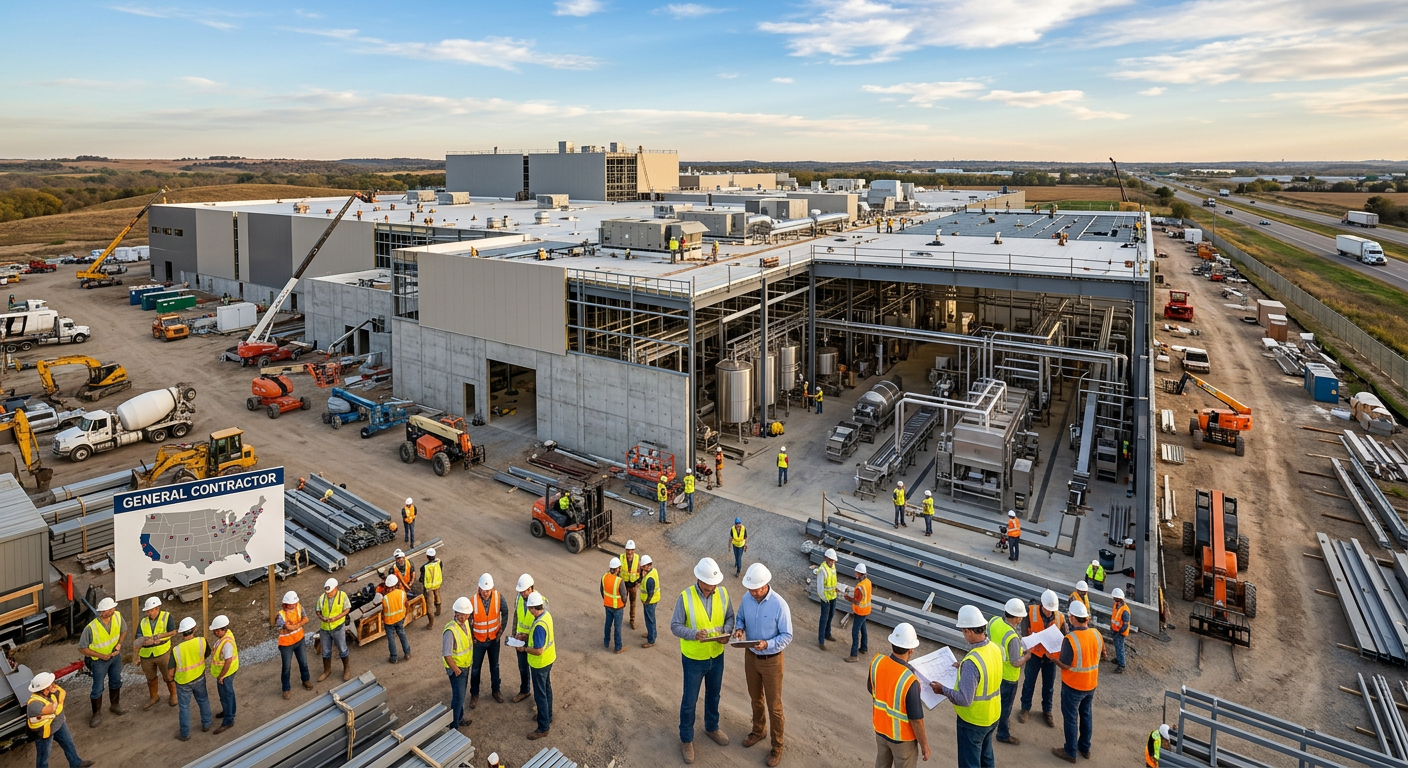
Food Facility Packaging Equipment Selection Guide
Packaging equipment selection has a direct impact on throughput, labor use, food safety, traceability, and long-term profitability. In the United States, processors face added pressure from retailer requirements, labor constraints, sanitation expectations, and rapid product changeovers. Whether a plant is filling pouches in Chicago, packing frozen meals near Dallas, bottling beverages in California, or shipping shelf-stable foods through the Port of Savannah, the right packaging line must match product characteristics, plant utilities, target speeds, and future growth plans. This guide explains how to evaluate primary packaging equipment, secondary packaging solutions, case packing and cartoning systems, labeling and coding equipment, and full line integration. It also covers speed matching, changeover planning, supplier evaluation, and 2026 trends shaping the U.S. market. For manufacturers planning expansion, retrofits, or greenfield facilities, the goal is not simply buying machines. The goal is building a line that performs as a coordinated production asset. The fastest way to narrow packaging equipment options is to begin with five questions: What product are you packing, what package format do you need, what line speed must you sustain, how often will you change SKUs, and how much plant space and utility capacity are available? In many U.S. facilities, packaging problems do not begin with the filler or cartoner itself. They begin with poor line balance, weak material handling design, insufficient coding verification, or an underestimated sanitation requirement. For food and beverage manufacturers in the United States, a strong packaging equipment decision typically follows this sequence: In practical terms, a U.S. processor should avoid buying isolated machines without a line-level plan. A high-speed filler with an undersized case packer, or a premium cartoner with poorly staged infeed accumulation, will create chronic downtime. Plants serving grocery distribution in Atlanta, Houston, Los Angeles, New Jersey, and Minneapolis especially benefit from packaging systems designed for shipping resilience, code accuracy, and repeatable performance across multiple shifts. Primary packaging equipment is the machinery that first places food or beverage into its saleable package. The right selection depends on viscosity, particulates, temperature, fill accuracy, oxygen sensitivity, package style, and sanitation demands. In U.S. manufacturing, common primary packaging formats include bottles, cans, cups, trays, pouches, cartons, jars, and thermoformed packs. The most common primary systems include fillers, sealers, thermoformers, vacuum systems, form-fill-seal machines, cappers, lidders, and pouch packaging lines. For dairy, sauces, prepared foods, proteins, bakery fillings, and RTD beverages, the product-contact design is critical. Stainless steel construction, clean-in-place compatibility, hygienic welds, and accessible maintenance zones often matter just as much as rated speed. The table above shows why product behavior should lead the equipment decision. For example, a processor moving from hot-fill to aseptic packaging in the United States may need more than a new filler. It may also need sterile utilities, environmental controls, validation protocols, and upgraded coding and inspection systems. Facilities with wide SKU ranges should also examine tooling strategy. A machine that reaches target speed but requires six-hour changeovers will underperform in plants with short production runs. That is especially true for contract packers and regional brands serving multiple retailers. Secondary packaging protects the primary package, enables retail presentation, and prepares product for warehousing and transport. In the U.S. market, secondary packaging often determines how efficiently a product moves through club stores, grocery DCs, e-commerce channels, and foodservice networks. Typical solutions include shrink bundling, tray packing, overwrapping, multipacking, retail-ready display packaging, and corrugated case erection and sealing. Secondary packaging should be selected based on shipping risk, pallet pattern needs, retail display requirements, and labor strategy. For example, beverages moving through large distribution networks from Southern California to Phoenix or from North Carolina to the Northeast may require stronger corrugate and better bundle stability than locally distributed products. This comparison highlights a basic principle: secondary packaging is a logistics tool as much as a packaging tool. A processor shipping through inland hubs such as Kansas City or Memphis may prioritize stack strength and cube efficiency, while a premium refrigerated brand may prioritize shelf appearance and damage reduction. The line chart shows a realistic growth pattern for packaging automation investment in the United States. Spending is rising because labor remains tight, traceability expectations are increasing, and many facilities are modernizing older lines rather than building entirely new plants. Case packing and cartoning systems sit at the center of most secondary packaging layouts. Their job is to create shipping-ready units while preserving product orientation, count accuracy, and line speed. Cartoners may handle individual retail packs, while case packers group those finished units into corrugated containers for transport. In many U.S. food plants, this section of the line becomes the operational handshake between primary packaging and warehousing. Top-load, side-load, and wraparound case packers each serve different needs. Robotic case packing is often useful where product patterns change frequently or labor is difficult to secure. Traditional mechanical systems can still be the best choice where SKUs are stable and throughput is high. Horizontal and vertical cartoners likewise vary based on product shape, insert requirements, closure style, and graphics presentation. The key takeaway from this table is that cartoning and case packing should be selected according to product stability, desired speed, and changeover frequency. A protein processor near Omaha may need rugged top-load case packing with washdown protection, while a snack producer in New Jersey may favor high-speed cartoning for shelf-facing retail packs. When selecting these systems, processors should examine: Labeling and coding are often underestimated during equipment selection, yet they are essential for compliance, recalls, retailer acceptance, and brand presentation. In the United States, packaging lines commonly require date coding, lot coding, traceability data, allergen declarations, nutrition compliance, UPC readability, and in some cases serialized or customer-specific labels. Common equipment includes pressure-sensitive labelers, shrink sleeve applicators, thermal inkjet coders, laser coders, continuous inkjet systems, print-and-apply labelers, and integrated verification cameras. Beverage plants often prioritize high-speed coding on cans and bottles. Protein and prepared food plants frequently prioritize moisture-resistant labels and code readability in cold-chain distribution. The table shows that coding technology is not a simple add-on. It affects compliance, retailer acceptance, and rework rates. Plants shipping nationwide through major hubs such as Long Beach, Newark, and Savannah should especially emphasize robust case labeling and readable pallet identification for smoother distribution. This bar chart reflects where packaging upgrade demand is strongest in the U.S. market. Beverage and prepared foods continue to lead because of SKU proliferation, retail pressure, and demand for automation-ready secondary packaging. Packaging line integration strategy determines whether individual machines perform as a system. A filler, capper, labeler, cartoner, case packer, checkweigher, metal detector, and palletizer may all work well independently, but still fail as a line if controls, accumulation, conveyors, or changeover logic are poorly designed. The best U.S. packaging projects treat integration as an engineering discipline. This includes layout design, utility planning, line controls, data collection, reject handling, sanitation zoning, and startup sequencing. It also includes practical site conditions such as floor drains, electrical distribution, compressed air quality, ceiling height, forklift traffic, and access to maintenance shops. Manufacturers planning expansion should think beyond the machine purchase order. They should evaluate installation sequencing, live plant constraints, downtime windows, and operator training. In older food plants across the Midwest and Southeast, line retrofits are often limited not by equipment size but by legacy utilities and conveyor geometry. This table shows why integration strategy is often the difference between a successful project and a costly disappointment. The machine itself may not be the problem. The system around it often is. For manufacturers seeking broader execution support, an experienced partner can bridge engineering, procurement, installation, and startup. Integrated project services for food and beverage manufacturers can be especially valuable when lines involve multiple OEMs, utility modifications, and live production constraints. Speed and throughput matching is one of the most important steps in equipment selection. OEM brochure speeds often represent ideal conditions with uniform product, stable operators, and perfect material flow. Real production output in the United States is shaped by upstream variation, sanitation windows, shift changes, package material quality, and SKU complexity. Instead of asking only, “What is the maximum speed?” buyers should ask, “What sustained speed can the line hold during a full production day?” They should also define surge capacity, acceptable downtime, and accumulation strategy between machines. For example, if a filler runs 220 units per minute but a cartoner sustains only 180, the filler does not improve plant capacity unless enough accumulation exists to absorb short imbalances. In most cases, the line should be designed around the practical constraint point, not the fastest component. The area chart illustrates the ongoing shift toward automation. By 2026, more U.S. plants are expected to prioritize automation not only for speed, but also for labor resilience, coding accuracy, and better production visibility. A useful planning method is to compare machine rates against expected OEE. If a plant requires 100,000 saleable units per shift, it should calculate backward from actual uptime, not theoretical maximum speed. This example shows how the cartoner and case packer effectively set the line pace. It also shows why buyers should use sustained output rather than isolated machine speed in capital planning. Changeover and flexibility requirements matter more than ever in the United States. Food and beverage brands are running more flavors, sizes, seasonal items, private-label SKUs, and retailer-specific packs than they did a decade ago. A line that is mechanically impressive but operationally rigid will struggle in this environment. When reviewing flexibility, buyers should evaluate change parts, recipe memory, tool-less adjustments, servo positioning, HMI-guided setup, washdown time, and operator skill requirements. In some categories, the best investment is not the fastest machine but the one that loses the least time between runs. Plants should also separate product changeovers from package changeovers. A sauce line changing from mild to spicy product may face allergen and sanitation requirements, while a package change from 12-count to 24-count may mainly affect collation, case packing, labeling, and pallet pattern software. Good flexibility planning usually includes: Plants that serve co-packing, regional grocery, club store, and e-commerce channels from one site benefit especially from flexible designs. This is common in corridors such as the Carolinas, Texas, the Inland Empire, and the greater Chicago region where production mixes can change rapidly. The comparison chart underscores a common lesson in U.S. capital projects: the value of a packaging investment often comes from system-level design and lifecycle execution, not just from buying a single high-quality machine. Disruptive Process Solutions supports food and beverage manufacturers across the United States and Canada with a practical, profit-focused approach to capital projects. Rather than acting only as a contractor or equipment reseller, the company works as an engineering-led partner focused on building systems that perform in real operating conditions. From a technological standpoint, DPS brings multidisciplinary engineering and controls capability to packaging and processing projects. That includes process, mechanical, electrical, plumbing, structural, and controls integration, along with PLC programming, automation, SCADA visibility, and line-level coordination between utilities, equipment, and operators. For packaging projects, that means decisions can be tied back to upstream processing realities, sanitation expectations, and data needs rather than made in isolation. From a manufacturing standpoint, DPS also develops proprietary equipment such as tanks, CIP systems, marination tumblers, and cooking vessels. While packaging lines often involve multiple OEMs, this manufacturing experience strengthens the company’s understanding of equipment design, fabrication practicality, maintainability, and how custom systems should fit inside broader food and beverage facilities. More on the company’s equipment background is available at food and beverage equipment capabilities. From a service standpoint, DPS delivers a full project model covering design, build, and execution management. That can include feasibility studies, capital planning, owner’s representation, project and program management, general contracting coordination, installation oversight, utility integration, and commissioning. This approach is especially useful for manufacturers building new lines, relocating assets, or upgrading facilities while maintaining production. A broader overview is available on the company background page. DPS serves processors across beverage, dairy, prepared foods, proteins, sauces, aseptic applications, and co-packing. Because many packaging decisions affect upstream process design and downstream warehousing, the company’s value is often strongest when packaging is evaluated as part of the entire operating system. Examples of project experience can be explored through selected food and beverage project case studies. The first step is defining the product, package format, production target, sanitation requirement, and expected SKU variation. Without that, machine comparisons are usually misleading. No. You should buy the machine that supports the best sustained line output, realistic OEE, and future flexibility. The fastest standalone machine may create bottlenecks elsewhere. That depends on complexity, but fewer disconnected suppliers usually means easier integration. Many U.S. plants benefit from a lead integrator who coordinates OEMs, controls, utilities, and startup. Robotic case packing is often better when product orientation changes, SKU counts vary, or labor is difficult to staff. It is especially attractive in mixed-format or short-run operations. Code readability, substrate compatibility, compliance, and verification. A coding system should be selected around product environment, speed, and traceability requirements, not just print quality. It is critical in many food sectors. In proteins, dairy, wet prepared foods, and other high-sanitation environments, poor washdown design can increase downtime and food safety risk. Common mistakes include buying equipment without a line study, overestimating throughput, underplanning utility needs, ignoring changeover time, and separating packaging from overall project execution. Key 2026 trends include greater use of automation and robotics, stronger data integration, more sustainable packaging material strategies, rising interest in energy-efficient utilities, and tighter attention to traceability, labor reduction, and retailer compliance. U.S. manufacturers are also expected to increase investment in flexible lines that can handle both regional and national product rollouts. In short, successful packaging equipment selection in the United States depends on matching product needs, package requirements, labor realities, utility constraints, and future business strategy. The most profitable projects are rarely centered on a single machine. They are built around a complete line that runs reliably, adapts quickly, and supports growth.