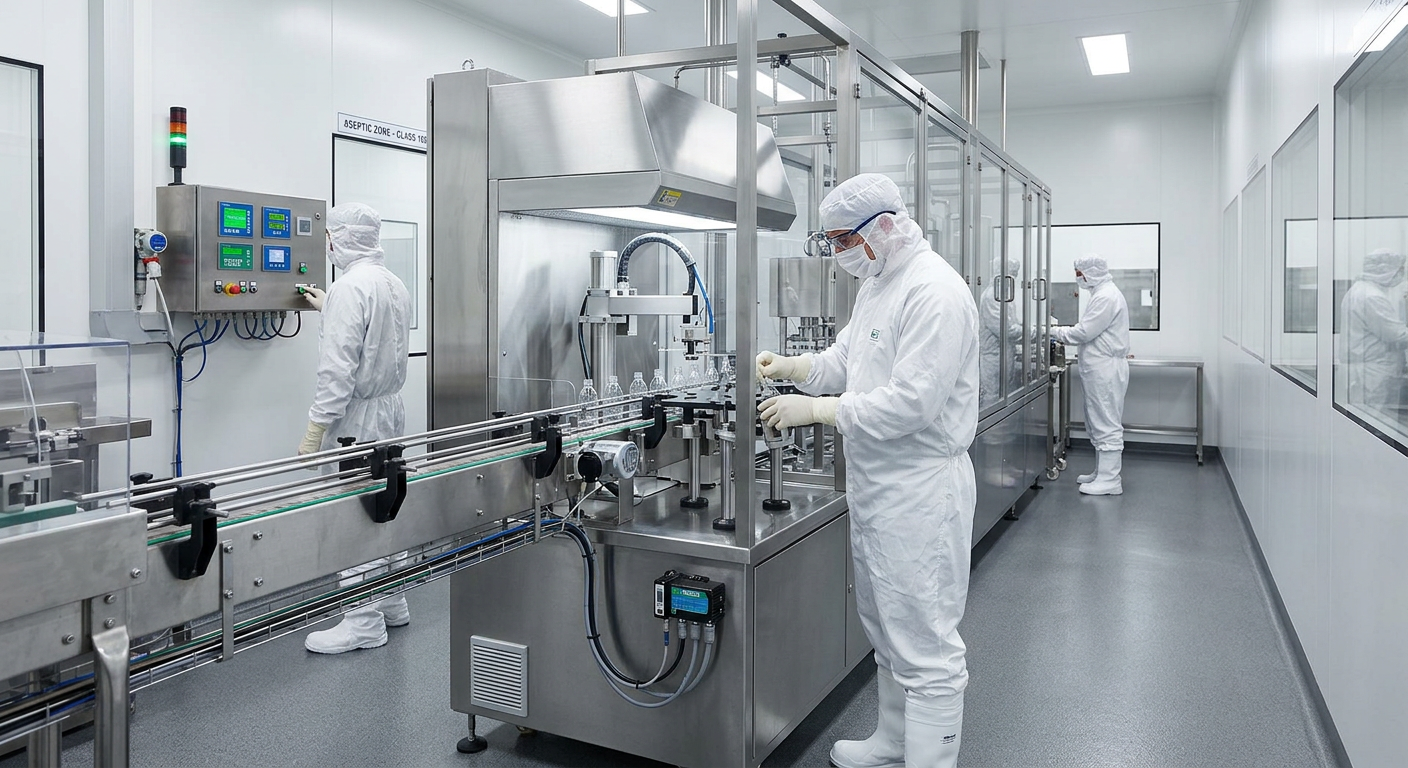
Paperless Manufacturing for Food Plants: From Clipboard to Digital Records
[trp_language language=”en_US”]
Digital Food Plant Records for U.S. Manufacturers
Food and beverage manufacturers in the United States are moving away from clipboards, handwritten batch sheets, filing cabinets, and disconnected spreadsheets because paper slows response times, increases compliance risk, and makes continuous improvement harder. A practical paperless manufacturing program usually starts with production order digitization between ERP and MES, then expands into digital work instructions, electronic batch records, shift handover logbooks, and setup or changeover checklists on operator terminals. For plants running under FDA, USDA, SQF, or BRC expectations, the value is not only speed. It is traceability, version control, searchable history, stronger training accountability, fewer manual transcription errors, and more reliable plant data for operations and capital planning.
In U.S. markets from Chicago and Kansas City to Fresno, Charlotte, Houston, and the Inland Empire, food plants are under pressure to produce more SKUs with fewer labor hours while still passing customer and regulatory audits. That pressure is especially visible in protein processing, dairy, ready-to-drink beverages, sauces, aseptic production, and co-packing. A well-designed paperless system gives supervisors live visibility into work status, lets QA verify process steps without chasing binders, and gives engineering cleaner data to target downtime, yield loss, and sanitation issues.
Quick Answer

The fastest route from paper to digital records in a U.S. food plant is to replace high-friction paperwork first: production orders, line clearance forms, setup verification, batch records, shift logs, and work instructions. Instead of asking teams to overhaul everything at once, successful plants phase the rollout by line, process family, or compliance risk. The strongest starting point is usually the order-to-execution flow from ERP to MES, because that establishes a master record for what should be made, when, on which line, with which materials, and under which approved operating parameters.
Once that foundation is in place, plants can layer operator-facing workflows on terminals or industrial tablets. Operators see current instructions only, supervisors can track read-confirmation, QA can require electronic sign-off, and engineering can lock critical fields or tolerance bands. When a deviation occurs, the response is faster because the system can force hold points, escalation prompts, or recheck tasks before production continues.
For U.S. buyers, the best paperless manufacturing solution is not just software with forms. It should fit food-grade operations, support electronic signatures, retain audit trails, work in low-connectivity production zones, integrate with ERP and automation data, and scale across multiple facilities. Plants that pair digital records with practical process engineering and implementation support usually achieve better results than plants that treat digitization as an IT project alone.
| Priority Area | Common Paper Problem | Digital Replacement | Main Benefit | Primary Owner | Typical Timeline |
|---|---|---|---|---|---|
| Production orders | Version confusion | ERP-to-MES dispatch | Single source of truth | Operations | 4 to 8 weeks |
| Work instructions | Outdated binders | Controlled digital SOPs | Fewer execution errors | QA and Training | 4 to 10 weeks |
| Batch records | Manual entries and missing fields | Electronic batch record workflow | Stronger compliance | QA | 8 to 16 weeks |
| Shift handover | Lost notebook history | Searchable e-logbook | Faster issue continuity | Production | 3 to 6 weeks |
| Changeovers | Skipped checks | Terminal-based checklist | Less startup scrap | Maintenance and Ops | 3 to 6 weeks |
| Audit readiness | Slow record retrieval | Centralized records repository | Faster inspections | QA and Compliance | Ongoing |
The table above shows why many food plants begin with the most repetitive, most auditable, and most error-prone records. Those are the workflows where digitization produces immediate labor and risk benefits.
Production Order Digitization: ERP-to-MES Order Flow

Production order digitization connects planning with execution. In a paper-based model, planners print orders, supervisors mark them up, operators interpret them, and data returns later through spreadsheets or handwritten logs. Each handoff creates delay and the possibility of mismatch between the planned order and what actually ran. In a digital model, approved orders flow from ERP into MES or a production execution layer, where they are assigned to specific assets, recipes, materials, labor groups, and quality checkpoints.
For U.S. food plants, this matters most where lot traceability, allergen segregation, label control, or make-to-order scheduling are critical. A sauce plant near Atlanta, a dairy processor in Wisconsin, or a beverage co-packer near Los Angeles can all face costly rework if operators start from the wrong revision, wrong packaging format, or wrong ingredient release status. ERP-to-MES order flow reduces those failures by aligning inventory, recipe control, and actual production entry against the released work order.
Good implementations also capture start and stop times, downtime reasons, material consumption, yield, operator confirmation, and in-process checks directly against the live order. That gives leadership a clearer view of schedule adherence and OEE, while finance gains more accurate production reporting.
| ERP-to-MES Function | What It Controls | Food Plant Example | Risk If Missing | Recommended Rule | Business Impact |
|---|---|---|---|---|---|
| Order release | Approved job status | RTD canning run | Unauthorized production | Planner approval required | Better schedule control |
| Recipe linkage | Correct formula revision | Protein marinade batch | Wrong ingredient mix | Auto-bind active revision | Less rework |
| Lot assignment | Material traceability | Dairy ingredient issue | Weak recall readiness | Scan at consumption | Faster traceability |
| Line routing | Asset selection | HTST filler line | Capacity mismatch | Approved route list | Higher throughput |
| Quality hold logic | Release conditions | Allergen SKU changeover | Premature shipment risk | QA gate before close | Lower compliance risk |
| Performance capture | Actual production data | Case packing run | Poor KPI accuracy | Automatic data collection | Better decisions |
This structure is especially valuable at large U.S. logistics hubs such as Dallas-Fort Worth, Memphis, and New Jersey, where multi-shift operations need planning accuracy and fast recovery from disruptions. Plants serving retailers or foodservice customers can use digital order flow to tighten fill-rate performance and reduce manual order reconciliation.
The chart illustrates a realistic market trajectory: digital record adoption is accelerating in U.S. manufacturing because labor constraints, audit pressure, cybersecurity-aware cloud deployment, and 2026 sustainability reporting needs are all pushing plants toward connected systems.
Digital Work Instructions with Version Control & Read-Confirmation

Digital work instructions are often the highest-value step after order digitization. Most plants have standard operating procedures, cleaning steps, startup checks, packaging instructions, and troubleshooting guides, but many still depend on printed binders or PDFs saved in uncontrolled folders. That creates a familiar problem: the approved instruction exists, but the operator on second shift may not be using it.
With version-controlled digital work instructions, the plant publishes one active instruction per task or equipment family. Operators access it through a line terminal, HMI-adjacent station, or rugged tablet. The system records who opened it, when it was acknowledged, and whether required training or read-confirmation is complete. If a change affects food safety, allergen handling, sanitation verification, or critical control procedures, the system can require acknowledgment before the task proceeds.
This approach is especially important in high-turnover labor environments and in multi-site networks. A co-packer in the Carolinas, a meat processor in Nebraska, and a beverage line in Southern California may all need consistent execution despite different staffing patterns. Controlled work instructions make it easier to standardize best practices across sites and shifts.
Plants should avoid making work instructions too long or too technical for the point of use. The best digital instructions combine concise text, photos, diagrams, acceptable ranges, escalation prompts, and links to maintenance or QA references. They should also distinguish between informational content and mandatory action steps.
| Instruction Type | Typical User | Digital Control Needed | Why It Matters | Example Trigger | Expected Result |
|---|---|---|---|---|---|
| Startup SOP | Operator | Read-confirmation | Prevents skipped prep | Line start | Cleaner startups |
| Sanitation verification | Sanitation lead | Photo and sign-off | Improves accountability | Post-CIP release | Lower contamination risk |
| Allergen changeover | QA and Ops | Mandatory sequence | Controls cross-contact | SKU switch | Safer product flow |
| Packaging setup | Mechanic | Revision lock | Prevents wrong format | Package size change | Less startup waste |
| Troubleshooting guide | Operator and Tech | Current version only | Speeds response | Recurring downtime | Faster recovery |
| Quality inspection | QA tech | Tolerance prompts | Standardizes checks | Hourly sample | More consistent results |
The table shows that not every instruction needs the same controls. Some need simple visibility, while others require enforced sequencing, electronic sign-off, or training verification.
Electronic Batch Records for Regulatory Compliance
Electronic batch records, or EBR, are central for regulated food and beverage production because they convert fragmented notes into a complete, auditable production history. In a paper environment, one batch may require weigh sheets, process logs, quality checks, sanitation release records, hold tags, and supervisor signatures from multiple areas. During an audit or customer complaint, gathering the full packet can take hours or days. EBR consolidates those events into a structured digital record tied to the order, recipe, lot genealogy, equipment, and user actions.
For U.S. plants dealing with FDA preventive controls, USDA inspection expectations, customer audits, export requirements, or strict retailer scorecards, EBR can materially improve compliance discipline. Required fields can prevent incomplete records. Timestamping can show the actual sequence of events. Exception workflows can route deviations to QA or management. Attached photos, sensor values, and scanned lot data can support investigations more effectively than handwriting ever could.
EBR is especially valuable in aseptic, retort, dairy, fermented beverage, nutritional beverage, protein marination, and batch sauce operations where process integrity and lot traceability are critical. Plants in ports and distribution corridors such as Savannah, Long Beach, Philadelphia, and Houston also benefit because customer response speed matters when product is moving nationally.
| EBR Element | Regulatory or Audit Value | Operational Benefit | Data Source | Recommended Validation | Example Use |
|---|---|---|---|---|---|
| Lot genealogy | Recall readiness | Faster root cause analysis | Barcode or ERP | Scan confirmation | Ingredient trace-back |
| Critical process values | Supports compliance proof | Less manual logging | PLC or SCADA | Range checks | Cook temperature record |
| Electronic signatures | User accountability | Clear approvals | User login | Role-based access | QA release |
| Deviation records | Shows corrective action | Faster escalation | Workflow form | Mandatory disposition field | Out-of-spec hold |
| Training linkage | Audit support | Better workforce control | LMS or HR data | Qualification check | Restricted task access |
| Retention archive | Inspection readiness | Rapid retrieval | Document repository | Immutable audit trail | Customer complaint review |
When plants implement EBR, they should be careful not to simply digitize bad paper forms. A better approach is to redesign the workflow around exceptions, limits, and traceability logic. That means asking which entries should be automated, which steps need dual verification, and which records need to trigger investigations. The point is not to create prettier forms. The point is to create stronger production control.
This industry demand view reflects where digital record initiatives are strongest: complex batching, traceability, food safety documentation, and multi-SKU operations tend to create the clearest business case.
Shift Handover Digital Logbooks: Searchable & Auditable
Shift handover is one of the most underestimated sources of lost productivity in manufacturing. In many plants, critical information about line status, downtime causes, material shortages, maintenance issues, sanitation concerns, and quality holds is passed through notebooks, whiteboards, verbal updates, or text messages. Important details disappear, repeat problems go untracked, and management lacks a clean history.
Digital shift logbooks solve that by capturing structured entries with timestamps, equipment tags, priority levels, attachments, and responsibility assignments. A supervisor can see what happened on first shift, whether an issue was escalated, whether maintenance responded, and whether the problem recurred on another line. Searchable logbooks are far more useful than static notes because they allow trending by asset, category, SKU, or recurring defect.
For plants running 24/7 in manufacturing corridors such as Indianapolis, St. Louis, or the Central Valley, this can significantly improve continuity. If a filler fault appeared three nights in a row, if a blender routinely misses target Brix during startup, or if a packaging line repeatedly waits on label verification, the data becomes visible. That supports both daily management and capital planning.
Good digital logbooks should include free text, but not rely only on free text. The system should prompt users with standardized categories such as quality, maintenance, sanitation, staffing, materials, utilities, and safety. That makes trend analysis possible while still allowing narrative context.
Setup & Changeover Checklists on Shop-Floor Terminals
Setup and changeover events are where paper-based plants often lose hidden profit. A rushed startup can lead to mislabeled product, wrong tooling, incorrect line settings, missing sanitation release, excess giveaway, or delayed first-pass quality approval. When checklists are on paper, completion may be inconsistent, signatures may be late, and review may happen after waste is already created.
Digital checklists on shop-floor terminals bring discipline to these moments. The system can present tasks in the required order, require scans or photos, block progression if key items are incomplete, and route approvals to QA or maintenance when needed. On a food line, that could include allergen flush confirmation, label code verification, metal detector challenge, nozzle setup, packaging material checks, startup sample approval, and first-good-unit release.
For short-run and high-SKU environments such as co-packing, contract manufacturing, and seasonal production, digital changeover control often produces very quick returns. It reduces startup scrap, improves first-pass quality, shortens time to release, and creates repeatable best practices across crews.
| Changeover Check | Typical Failure in Paper Process | Digital Control | Who Signs | When Triggered | Value Created |
|---|---|---|---|---|---|
| Line clearance | Residual materials left behind | Photo and checklist step | Operator | Before next SKU | Lower contamination risk |
| Allergen verification | Missed segregation control | Mandatory hold point | QA | Allergen change | Better food safety |
| Label code check | Wrong date or lot code | Scan and compare | Packaging lead | Startup | Less rework |
| Tooling setup | Incorrect format parts | Model-specific checklist | Mechanic | Package change | Fewer jams |
| First article approval | Late quality release | Escalation alert | QA tech | Post-startup | Faster release |
| Final closeout | Missing record retention | Auto-archive to order | Supervisor | End of changeover | Audit-ready history |
The explanation is simple: setup checklists only help if they are usable under production pressure. Terminals must be easy to navigate, robust enough for wet or cold environments, and designed around operator workflow rather than office-style forms.
The area chart highlights the trend shift expected through 2026: as labor efficiency, sustainability reporting, and customer audit demands increase, digital records will continue replacing paper across food manufacturing.
Technical Specifications and Engineering Requirements
A paperless manufacturing system succeeds only if the technical design matches plant reality. Food facilities have washdown conditions, inconsistent Wi-Fi zones, sanitation restrictions, glove use, multi-language staffing, and legacy controls. Engineering requirements therefore matter as much as software features.
Plants should define user roles, record retention rules, cybersecurity requirements, network architecture, equipment interfaces, and environmental constraints early. If a facility wants automatic capture of temperatures, flow, fill weights, or CIP values, the implementation team must understand PLC and SCADA architecture as well as data quality limitations. If the goal is electronic signatures for compliance, the system must support secure user authentication, timestamping, and audit trails.
From a practical standpoint, many U.S. plants need a hybrid approach: cloud-based administration with local resiliency on the shop floor. That allows enterprise visibility while protecting production during brief network interruptions. Terminals should also be selected based on use case: wall-mounted HMIs for fixed stations, stainless terminals for wet processing rooms, and rugged tablets for mobile verification tasks.
On the technology side, engineering and integration services are most effective when they cover both process operations and controls. A firm with process, mechanical, electrical, and controls understanding can align digital record design with actual line behavior rather than treating forms as isolated software objects. That is particularly useful in processing environments involving CIP, pasteurization, fermentation, retort, batching, and utility-intensive systems.
Technological capability also matters when plants want deeper data capture. A partner with experience in PLC programming, automation, SCADA, utilities integration, and process system design can help connect digital workflows to real equipment states, alarms, and production parameters. That is a major advantage over stand-alone form tools that never become part of the operating system of the plant.
| Technical Requirement | Why It Matters | Recommended U.S. Plant Standard | Failure if Ignored | Best Owner | Priority |
|---|---|---|---|---|---|
| Role-based access | Controls approvals and edits | Unique user credentials | Weak accountability | IT and QA | High |
| Audit trail | Supports compliance evidence | Immutable timestamp log | Disputed record history | QA | High |
| Offline resilience | Maintains production continuity | Local caching or edge mode | Data loss during outages | IT and Ops | High |
| ERP integration | Aligns planning and execution | API or middleware connection | Duplicate entry | IT and Planning | High |
| PLC or SCADA integration | Automates process capture | Validated tag mapping | Manual input burden | Controls Engineering | Medium |
| Environmental hardware fit | Ensures usability on floor | Washdown-rated devices where needed | Device failure | Engineering | High |
When evaluating suppliers, U.S. food manufacturers should ask not only about software licensing, but also about line connectivity, validation support, change management, multilingual usability, and long-term support for expansions or acquisitions.
Implementation Roadmap and Project Best Practices
The best implementations are phased, measurable, and operations-led. Plants that start too broad often create user fatigue and weak adoption. Plants that start too small sometimes fail to build integration discipline. A balanced roadmap usually begins with process mapping, critical record identification, and pilot design on one representative line or process area.
A practical roadmap includes discovery, requirements, workflow redesign, hardware planning, integration design, pilot deployment, training, performance review, and scale-up. During discovery, teams should document where paper is created, who touches it, what data is copied, what records are required for compliance, and what decisions depend on those records. That often reveals hidden delays and duplicate data entry.
Project best practices include using plant champions from production, QA, maintenance, and IT; defining master data ownership; testing in real shift conditions; and measuring outcomes such as error reduction, faster release, shorter handover meetings, or improved retrieval time during audits. Plants should also keep operator screens simple. Adoption rises when workflows are intuitive and visibly useful.
Service capability matters here as much as technology. Manufacturers often need a partner that can move from concept to field execution, coordinate contractors, align utilities and controls work, and manage project risk. A design-build-manage approach is valuable because it keeps accountability connected from engineering through commissioning and startup. Companies needing broader plant modernization can learn more about integrated execution through the DPS team and operating model, especially when digital records are part of larger process, utility, or capacity projects.
For manufacturing capability, the strongest partners understand how digital systems fit real production environments such as beverage batching, dairy processing, protein preparation, sauces, aseptic systems, and co-packing. They can connect digital workflow design with physical equipment, utility demands, CIP strategy, packaging formats, and operating constraints. If specialized equipment or integration support is needed, process equipment capabilities can also influence how effectively data capture is built into the line from the start.
| Implementation Phase | Main Activities | Key Deliverable | Typical Duration | Common Risk | Best Practice |
|---|---|---|---|---|---|
| Assessment | Map records and users | Current-state process map | 2 to 4 weeks | Missing stakeholders | Include floor users early |
| Design | Define workflows and rules | Functional specification | 3 to 6 weeks | Overcomplicated forms | Design for execution speed |
| Integration | Connect ERP and controls | Tested interfaces | 4 to 8 weeks | Bad master data | Clean data first |
| Pilot | Deploy on one line or area | Pilot performance report | 4 to 6 weeks | Weak training | Support all shifts |
| Scale-up | Rollout by area or plant | Phased expansion plan | 2 to 6 months | Inconsistent governance | Use standard templates |
| Continuous improvement | Analyze data and refine | KPI dashboard and updates | Ongoing | Static workflows | Review quarterly |
For buyers in the United States, a good purchasing decision balances total cost, implementation support, flexibility, compliance features, and the supplier’s ability to work inside active food plants without disrupting operations. It is often smarter to choose a solution that solves the highest-risk records first than to buy a broad platform that remains underused.
The comparison chart shows why many U.S. food manufacturers prefer food-focused execution platforms or integrated engineering-led solutions over generic digital form tools. The gap is usually largest in controls connectivity, audit readiness, and plant-floor usability.
Our Company
Disruptive Process Solutions supports food and beverage manufacturers across the United States and Canada with an execution style built around profitability, transparency, and practical manufacturing outcomes. Rather than approaching modernization as software alone, DPS works at the intersection of engineering, installation, integration, and project management. That perspective matters when paperless manufacturing is tied to broader line upgrades, utility changes, capacity expansion, or a new facility launch.
From a technological standpoint, DPS brings process, mechanical, electrical, plumbing, structural, and controls knowledge into one delivery framework. That includes automation, PLC programming, SCADA coordination, and system integration relevant to production data capture and execution visibility. This makes digital record projects more effective in environments where the software must reflect real process conditions, recipe logic, equipment states, and utility dependencies.
From a manufacturing standpoint, DPS supports a wide range of food and beverage applications including brewing, spirits, wine, kombucha, RTD beverages, dairy, sauces, prepared foods, protein processing, aseptic operations, and shelf-stable processing. That breadth matters because a digital batch record strategy for a retort line is not the same as one for a fermentation cellar or a high-speed beverage co-packing line. Experience with actual process systems helps shape better digital workflows.
From a service standpoint, DPS provides end-to-end support ranging from capital planning and feasibility studies to owners representation, project management, general contracting functions where applicable, equipment supply, installation, and full system integration. Manufacturers looking for a project partner that can engineer, build, and manage around production realities can review selected project examples and case experience to see how integrated execution supports long-term operating performance.
For U.S. plants making buying decisions, that combination can be especially useful when digital records are only one part of a larger need, such as adding a batching system, relocating equipment, improving utilities, expanding co-packing capacity, or modernizing controls.
FAQ
What is the best first step toward paperless manufacturing in a U.S. food plant?
Start with the records that are used daily, affect compliance, and create the most rework when incorrect. Production orders, setup checks, batch records, and shift handover logs are usually the best first targets.
Does a paperless system need full MES to deliver value?
Not always. Some plants begin with digital workflows and selective integrations, then expand into a broader MES capability later. The right architecture depends on complexity, compliance exposure, and growth plans.
How does digitization support FDA, USDA, SQF, or BRC expectations?
It improves audit trails, record completeness, traceability, revision control, sign-off accountability, and retrieval speed. Those benefits are especially useful during inspections, customer audits, and investigations.
Can legacy equipment still be included?
Yes. Many plants use a hybrid model where some data is captured automatically from PLC or SCADA systems and other data is entered through guided operator workflows. The key is defining what must be automated and what only needs verification.
How long does implementation usually take?
A focused pilot can often launch in one to three months. A multi-line or multi-site rollout may take several more months depending on integration depth, hardware needs, validation expectations, and training complexity.
What product types benefit the most?
High-SKU beverages, dairy, sauces, proteins, aseptic products, prepared foods, and co-packed items often see the fastest returns because they involve frequent changeovers, recipe control, quality documentation, and traceability demands.
What should buyers in the United States ask suppliers?
Ask about ERP integration, electronic signatures, audit trails, offline capability, terminal suitability for food environments, controls connectivity, cybersecurity, support model, and experience in active food plants.
How do 2026 trends affect investment decisions?
By 2026, U.S. manufacturers will face even stronger expectations around data transparency, labor productivity, sustainability measurement, and resilient operations. Digital records support reduced paper waste, faster exception handling, better energy and process analysis, and stronger readiness for future policy or customer reporting requirements.
Are local suppliers enough, or is a national partner better?
It depends on project scope. A local specialist may work for a single workflow deployment. For multi-site programs, integrated utility upgrades, or projects spanning engineering and controls, a national partner with broad execution capability often reduces risk.
Is paperless manufacturing only for large enterprises?
No. Mid-sized manufacturers, regional co-packers, and fast-growing brands often benefit quickly because digital records reduce administrative overhead and improve consistency without requiring large corporate support teams.
[/trp_language]
Complete Company Portfolio
About the Author: Disruptive Process Solutions (DPS)
The DPS team combines process engineering expertise with real-world food and beverage manufacturing experience. Our content focuses on process optimization, production efficiency, facility improvements, and practical solutions that help manufacturers operate more effectively in a rapidly evolving industry.
Share