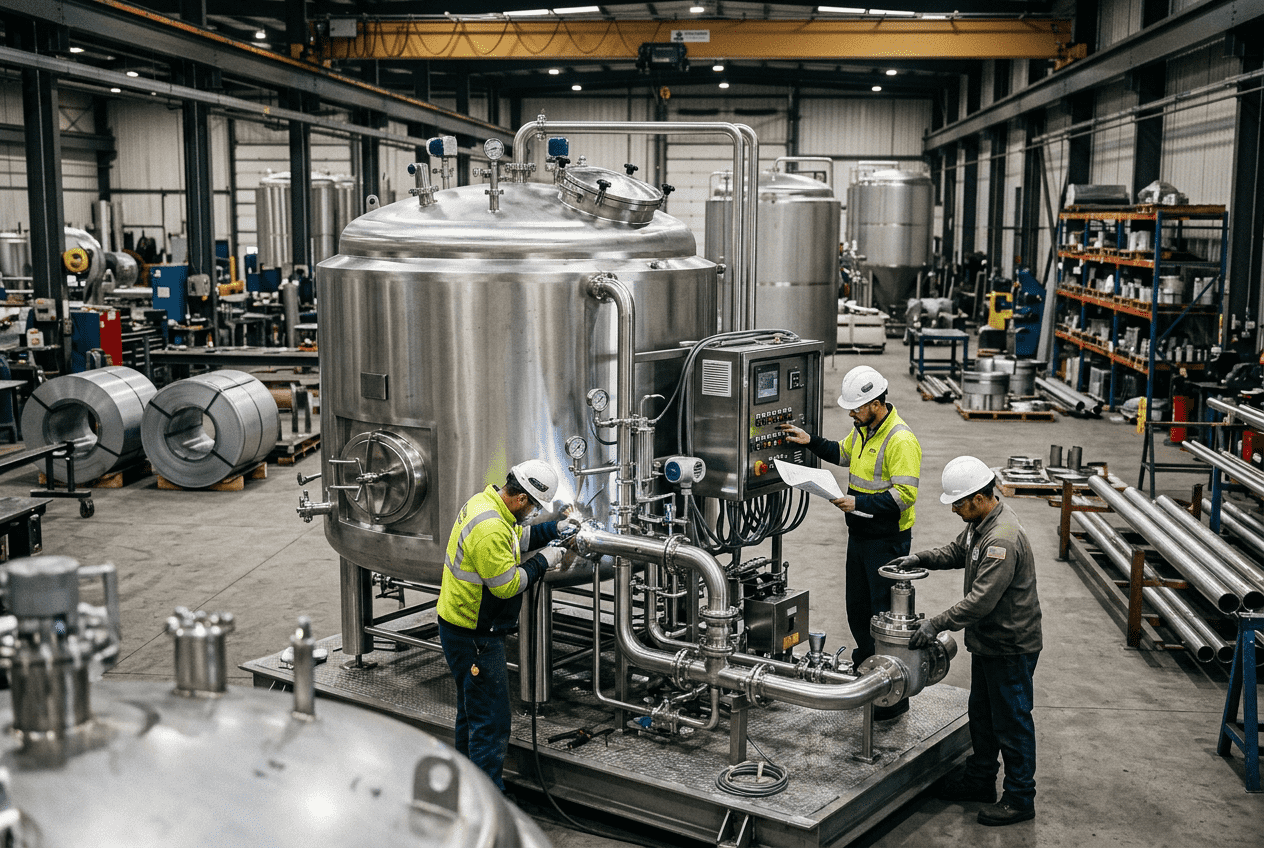
Poultry Processing Line Design
[trp_language language=”en_US”]
U.S. Poultry Processing Line Planning and Equipment
Designing a poultry processing line in the United States requires more than selecting machines in sequence. A profitable system must align live receiving, slaughter, evisceration, chilling, cut-up, deboning, value-added processing, sanitation, food safety verification, labor strategy, utilities, and downstream packaging with actual market demand. In practice, the best poultry line is not simply the fastest line. It is the line that consistently produces the right mix of whole birds, parts, and marinated or tray-pack products while meeting USDA expectations, controlling Campylobacter and Salmonella, and delivering acceptable yield at a manageable operating cost.
Across U.S. poultry regions such as Georgia, Arkansas, Alabama, North Carolina, Mississippi, Delaware, and eastern Texas, processors are reevaluating line architecture to balance export demand, retail specifications, QSR supply, labor availability, and biosecurity requirements. Facilities near logistics hubs like Savannah, Atlanta, Charlotte, Little Rock, Memphis, Wilmington, and the Port of Norfolk often prioritize throughput and distribution flexibility, while regional processors may focus more on cut-up optimization, quick changeovers, and smaller-batch value-added products.
Quick Answer

A poultry processing line typically moves through shackling, stunning, bleeding, scalding, and plucking; then into evisceration, washing, inspection, chilling, cut-up, deboning, portioning, marination, packaging, and cold storage. For U.S. processors, the most effective line design starts with product mix and target hourly head count, then works backward through yields, utility loads, sanitation windows, pathogen interventions, labor availability, automation opportunities, and future expansion plans. Water immersion chilling usually supports high throughput and lower unit cost, while air chilling can support certain premium positioning and moisture-control claims. Automated venting, opening, and harvesting equipment can improve consistency, but only when bird size variation, maintenance discipline, and upstream process control are addressed. Strong line design also depends on verification testing, hygienic zoning, clean-in-place or clean-out-of-place routines, and disciplined changeover procedures.
For companies planning a new facility, line expansion, or debottlenecking project, it is often valuable to work with an engineering-led partner that understands both food safety and capital efficiency. Disruptive Process Solutions approaches projects with a design-build-manage model that ties processing decisions to long-term profitability rather than just installed equipment count.
Poultry Processing Line: Shackling, Stunning, Bleeding, Scalding, and Plucking

The front end of the poultry plant determines much of the line’s welfare performance, yield retention, and carcass quality. Shackling must be organized to minimize stress and excessive wing flapping, because poor live handling can create bruising, broken bones, and quality defects that carry through the plant. U.S. processors generally evaluate bird size uniformity, line speed, and labor ergonomics before finalizing conveyor elevation, shackle pitch, and transfer design.
Stunning methods vary by plant philosophy and customer requirements. Electrical water-bath systems remain common, but controlled atmosphere stunning continues to draw interest where processors seek welfare improvements, labor reduction at live hang, and more consistent carcass presentation. The optimal choice depends on capital budget, building layout, utility capacity, and live receiving flow.
After stunning, the bleeding tunnel must be sized to achieve adequate bleed-out without starving the downstream scalder and picker. Too little bleed time can affect carcass appearance and sanitation load; too much can slow total plant throughput. Scalding then loosens feathers and prepares birds for plucking. Hard scald systems may support easier feather removal and lighter skin color targets for some end uses, while soft scald systems are often preferred where skin and cuticle preservation matter.
Plucking performance depends heavily on finger condition, picker bank setup, bird presentation, and scald consistency. Processors often underestimate how much maintenance discipline at the picker influences downstream contamination and rework. Worn fingers, misalignment, or poor water management can increase feather carryover and create additional cleaning burden before evisceration.
| Front-End Step | Primary Objective | Key Equipment | Main Design Variable | Common Risk | Profit Impact |
|---|---|---|---|---|---|
| Shackling | Stable bird presentation | Shackles, conveyors, platforms | Line speed and ergonomics | Bruising and stress | Reduced grade-outs |
| Stunning | Humane immobilization | Electrical or gas stunning system | Bird size and welfare standard | Poor stun consistency | Fewer defects, smoother flow |
| Bleeding | Effective exsanguination | Kill line, bleed tunnel | Residence time | Incomplete bleed-out | Better appearance and sanitation |
| Scalding | Loosen feathers | Multi-stage scalder | Temperature and dwell time | Over- or under-scalding | Better skin quality and pick |
| Plucking | Remove feathers | Picker banks, fingers, spray bars | Finger pressure and maintenance | Feather carryover | Less rework downstream |
| Rehang/Transfer | Prepare for evisceration | Transfer modules, overhead lines | Spacing and synchronization | Misfeeds and line interruptions | Higher uptime |
This front-end table shows why early-stage equipment selection cannot be isolated from welfare, uptime, labor, and food safety strategy. In many U.S. plants, small improvements in picker efficiency or bleed timing can reduce downstream trim loss and sanitation burden enough to materially improve weekly profitability.
Evisceration Automation: Venting, Opening, and Harvesting Equipment

Evisceration is where automation can deliver major gains, but it is also where poor bird uniformity exposes system weaknesses quickly. A typical automated evisceration line includes vent cutters, openers, eviscerators, crop pullers, neck breakers, lung harvesters, giblet handling systems, inside-outside bird washers, and inspection support points. Each module depends on accurate carcass positioning and reasonably tight weight distribution.
Processors supplying foodservice and retail parts markets often prioritize evisceration consistency because contamination events or organ damage can create direct yield loss and significant food safety exposure. Venting must be precise to avoid tearing. Opening equipment must create the necessary access without excessive carcass damage. Harvesting systems for liver, heart, gizzard, and other edible components should be integrated with by-product handling and chilled collection methods.
Automation does not remove the need for line observation. It shifts labor toward setup, verification, rework management, sanitation, and preventive maintenance. Plants that invest in sensors, controls, and operator training generally get more value from automated evisceration than plants that treat it as a plug-and-play solution.
From a technology standpoint, DPS supports processors with integrated process and controls engineering, including automation, PLC programming, and SCADA visibility that can connect critical evisceration equipment to alarms, production tracking, and utility systems. More about its broader project and integration capabilities can be found on the services page.
| Evisceration Function | Typical Equipment | Automation Benefit | Best Fit | Design Warning | Operational Note |
|---|---|---|---|---|---|
| Venting | Automatic vent cutter | Consistent cuts, less manual handling | Medium to high throughput plants | Bird size variation affects accuracy | Needs frequent blade checks |
| Opening | Automatic opener | Stable cavity access | Integrated evisceration lines | Misalignment can damage carcasses | Verify positioning daily |
| Eviscerating | Spoon or extraction machine | Higher speed, labor reduction | Uniform broiler operations | Improper setup raises contamination risk | Must match line pitch |
| Crop removal | Cropper/crop puller | Improved neck area cleanup | Plants with consistent live bird sizing | Overpull can affect appearance | Requires upstream process stability |
| Lung harvesting | Lung gun or automated harvester | Reduced manual rework | High-capacity plants | Sanitation and vacuum performance are critical | Monitor suction and wear parts |
| Giblet recovery | Heart-liver-gizzard lines | Higher by-product value capture | Plants serving diverse channels | Cross-contamination control needed | Separate chilled handling stream |
The table highlights a recurring rule in poultry engineering: equipment speed claims matter less than the ability to maintain alignment, hygiene, and repeatable performance over a full production week.
Pre-Chilling and Chilling Systems: Water Immersion vs Air Chilling
Chilling is one of the most strategic choices in poultry line design because it affects microbial control, shelf life, product claims, moisture pickup, yield accounting, footprint, wastewater, utility cost, and brand positioning. In the United States, water immersion chilling remains widely used due to capacity, efficiency, and familiarity. It is especially practical in high-throughput facilities that process large daily volumes of commodity whole birds and cut-up products.
Air chilling, by contrast, can support premium merchandising, lower added-water positioning, and certain customer preferences. It often requires more floor space, tighter airflow and refrigeration design, and careful moisture-loss management. Plants near premium retail markets in the Northeast, California, or metropolitan hubs such as New York, Los Angeles, and Seattle may find air chilling commercially attractive if customer pricing supports the extra capital and operating complexity.
Pre-chilling before final chilling is commonly used to reduce carcass temperature in stages and improve thermal efficiency. The final choice between immersion and air systems should account for product portfolio, local utility rates, wastewater treatment constraints, expected export documentation, and downstream cut-up timelines.
| Factor | Water Immersion Chilling | Air Chilling | Who Often Prefers It | Main Advantage | Main Constraint |
|---|---|---|---|---|---|
| Throughput | Very high | Moderate to high | Large broiler complexes | Efficient volume handling | Water management |
| Footprint | Compact relative to volume | Larger | Space-limited plants choose immersion | Smaller building envelope | Can constrain future flexibility |
| Product positioning | Mainstream commodity to branded | Premium and specialty | Premium retailers favor air chill | Marketing differentiation | Higher capital cost |
| Moisture behavior | Can increase retained water concerns | Lower added-water perception | Label-conscious brands | Supports certain claims | Potential weight loss |
| Utility profile | Higher water and wastewater load | Higher air handling/refrigeration emphasis | Depends on local rates | Operational fit by region | Site-specific economics |
| Sanitation focus | Tank hygiene and overflow control | Airflow, condenser, and surface hygiene | Both require strong SSOPs | Controllable with good design | Failure affects shelf life |
This comparison shows why chilling decisions should be modeled financially, not made by habit. A plant in Arkansas with high-volume tray-pack output may reach a different answer than a premium processor near San Francisco or Boston.
The growth trend above reflects continued investment pressure in U.S. poultry processing, driven by labor scarcity, food safety expectations, and the need for more resilient capacity planning heading into 2026 and beyond.
Poultry Cut-Up and Deboning Lines: Thigh, Drumstick, Breast, and Wing Separation
Once birds are chilled, the next decision is whether the plant optimizes for whole bird sales, front-half/back-half production, fixed-weight retail trays, foodservice parts, or deboned raw material. Cut-up line design should start with customer specifications for thighs, drumsticks, split breasts, boneless breast fillets, tenders, and wings. U.S. demand for wings remains strong in sports-bar, casual dining, and prepared-food channels, while boneless breast meat continues to dominate many retail and industrial applications.
Deboning can be manual, semi-automated, or highly automated depending on bird size, labor cost, and target yield. High-speed systems often work best when upstream chilling and bird presentation are consistent. In regions with labor constraints, automation may provide a compelling return; however, for specialty sizing or premium trim standards, skilled manual labor can still outperform machines in selected operations.
Equipment layout should also consider tote flow, rework loops, bone collection, trim segregation, vision inspection opportunities, and ergonomic workstation heights. A line that maximizes breast yield but creates labor bottlenecks in wing grading or tray packing may not improve total plant margin.
| Product Stream | Core Equipment | Typical End Market | Yield Priority | Automation Level | Design Note |
|---|---|---|---|---|---|
| Whole leg | Leg cutter, grader | Retail and export | Uniform cut position | Medium | Needs consistent hip joint targeting |
| Drumstick | Leg separation modules | Foodservice, value retail | Skin integrity | Medium to high | Knife sharpness matters |
| Thigh | Thigh trim stations | Retail trays, marinated SKUs | Fat trim balance | Manual to medium | Spec-driven labor planning is key |
| Breast meat | Breast cap opener, fillet harvester | Retail, QSR, industrial | Fillet yield | High potential | Bird size uniformity is essential |
| Wings | Wing cutter and tip separator | Foodservice and frozen export | Joint precision | Medium to high | Strong market value justifies accuracy |
| Tenders | Tender pull stations | Further processing | Minimize muscle damage | Manual to semi-automated | Good training protects value |
This table illustrates how different poultry parts require different design priorities. A breast-focused plant may invest heavily in deboning automation, while a wing-focused facility may prioritize cut precision, grading, and freezing logistics.
The demand comparison helps explain why many processors are rebalancing their cut-up rooms. Even when whole-bird throughput is large, downstream profitability often comes from how effectively breast, wing, and trim programs are managed.
Portioning, Trimming, and Marination for Value-Added Products
Value-added processing is often where line design shifts from commodity production to margin optimization. Portioning systems can create fixed-weight breast portions, diced meat for ready meals, strips for foodservice, or optimized trim streams for nuggets, patties, and cooked applications. Trimming standards should be matched to customer expectations, not simply made more aggressive. Over-trimming may improve visual appearance but can quietly erode yield and margin.
Marination options include vacuum tumbling, injection, inline mixing, and hold-time management for pickup and flavor consistency. Product type matters: bone-in thighs, boneless fillets, wings, and seasoned strips each behave differently in pickup and purge. Integration with spices, sauce preparation, refrigeration, and packaging timing is crucial.
On the manufacturing side, DPS supports food processors with integrated systems beyond slaughter and cut-up, including marination tumblers, cooking vessels, mixing, blending, portioning, and utility infrastructure. Its equipment capabilities are outlined at equipment solutions, where custom process hardware and system integration are part of a broader plant-performance strategy.
Value-added lines should also be planned around allergen segregation, label control, and sanitation windows. If a plant runs plain product in the morning and seasoned or sauce-coated product in the afternoon, the changeover protocol can determine whether a line meets schedule or loses a shift.
| Value-Added Activity | Common Equipment | Main Goal | Key KPI | Frequent Challenge | Best Design Practice |
|---|---|---|---|---|---|
| Portioning | Vision slicers, portion cutters | Weight accuracy | Giveaway reduction | Variable raw material size | Use upstream grading |
| Hand trimming | Trim tables, ergonomic stations | Specification compliance | Yield versus appearance | Labor inconsistency | Clear visual standards |
| Injection marination | Multi-needle injectors | Pickup and flavor distribution | Pickup uniformity | Needle clogging | Strong filtration and brine control |
| Vacuum tumbling | Tumblers and vacuum systems | Protein extraction and seasoning adherence | Retention after cook or pack | Overworking texture | Validate cycle recipes |
| Blending seasonings | Batch tanks, inline mixers | Recipe consistency | Brix/salinity/viscosity target | Batch variation | Automate dosing where possible |
| Packout staging | Conveyors, scales, chill staging | Maintain product temperature | Time-to-pack | Bottlenecks after marination | Balance with packaging speed |
The takeaway is simple: value-added poultry is not a single machine purchase. It is a coordinated process chain that spans formulation, materials handling, temperature control, automation, and packaging rhythm.
Line Speed and Throughput: Matching Capacity to Market Demand
The most common line-design mistake is building capacity around an optimistic sales forecast without enough attention to mix variability. A plant may have nameplate capacity for live birds per hour, but actual profitable throughput depends on bird weights, product changeovers, shift structure, labor attendance, sanitation windows, maintenance, packaging speed, and dock capacity.
For example, a processor serving national retail customers from a site near Charlotte or Atlanta may need flexibility for whole birds, family packs, and boneless breast promotions in the same week. A Gulf Coast or Mid-Atlantic plant supplying export cartons through Savannah, Norfolk, or Houston may instead prioritize chilled or frozen bulk parts. The right throughput target must reflect demand patterns, not just production ambition.
Capacity matching should account for three levels: peak technical speed, sustainable operational speed, and profitable market-aligned speed. Sustainable speed is generally the most useful planning number because it reflects maintenance, labor realities, and quality stability.
The area chart reflects a broad trend: more U.S. processors are shifting a greater share of output toward cut-up and value-added programs. This has major implications for deboning automation, marination infrastructure, and packaging line balance heading into 2026.
| Planning Metric | What It Means | Why It Matters | Typical Error | Better Approach | Business Result |
|---|---|---|---|---|---|
| Nameplate speed | Maximum theoretical line rate | Useful for equipment sizing | Treated as normal output | Use only as upper limit | Prevents unrealistic promises |
| Sustainable speed | Rate maintained through full shifts | Best operating benchmark | Ignored during budgeting | Base labor and logistics on this | More accurate cost model |
| Product mix capacity | Output by SKU family | Matches market needs | One average used for all products | Model each major stream | Better margin visibility |
| Packaging constraint | Back-end limit | Often the real bottleneck | Underdesigned packout | Balance cut-up with packaging | Fewer line stoppages |
| Cold storage turnover | Inventory flow rate | Protects freshness and cash | Storage planned too late | Include warehouse in line design | Lower holding cost |
| Dock and transport rhythm | Shipping cadence | Keeps finished goods moving | Production planned separately from logistics | Integrate distribution planning early | Higher service level |
This table reinforces that poultry line throughput is a commercial planning issue as much as a mechanical one. Plants that synchronize production with packaging and distribution usually outperform plants that chase raw speed alone.
Campylobacter and Salmonella Control: Interventions and Verification Testing
In U.S. poultry processing, pathogen control is a system, not a single intervention point. Campylobacter and Salmonella reduction depends on live-side biosecurity, defeathering hygiene, evisceration accuracy, antimicrobial application, chilling control, employee practices, sanitary design, and verification testing. USDA-regulated facilities typically build intervention programs around multiple hurdles rather than one “silver bullet.”
Common interventions may include inside-outside bird washers, approved antimicrobial rinses or sprays, post-evisceration cabinets, online reprocessing strategies where applicable, chill-system chemistry control, and strict process monitoring. Verification should include microbial testing plans, trend analysis, corrective actions, and environmental monitoring where relevant to product and process flow.
Physical plant design matters significantly. Hygienic separation between live, dirty, clean, and ready-to-pack zones helps reduce cross-traffic risk. Floor drainage, handwash access, hose management, airflow direction, and equipment accessibility all influence pathogen control performance.
2026 trends point toward tighter digital traceability, more automated intervention monitoring, and increased customer pressure for documented validation. Sustainability policy is also influencing sanitation chemistry, water reuse strategies, and wastewater treatment expectations, especially in water-sensitive regions of the U.S.
The intervention comparison demonstrates why successful food safety programs rely on stacked controls. The strongest results usually come from combining multiple validated steps rather than depending on one late-stage treatment.
| Control Area | Typical Intervention | Verification Method | Primary Benefit | Implementation Challenge | 2026 Direction |
|---|---|---|---|---|---|
| Live receiving | Biosecurity and flock scheduling | Supplier and flock records | Lower incoming load | Variable farm conditions | Better data integration |
| Defeathering zone | Wash cabinets and hygiene controls | Visual checks and micro trending | Reduced carryover | High organic load | Smarter wash monitoring |
| Evisceration | Precision setup and antimicrobial support | Process checks and carcass sampling | Lower contamination events | Bird size variation | More sensor-driven control |
| Chilling | Chemistry, temperature, dwell management | Chemical logs and microbial tests | Key pathogen reduction step | Balancing yield and kill step | Automated dosing visibility |
| Cut-up room | Zoning, tool sanitation, cold control | ATP and targeted swabbing | Shelf-life protection | High touch surfaces | More digital sanitation records |
| Finished product | Sampling plans and hold/release logic | Lab testing and trending | Customer and regulatory confidence | Sampling discipline | Faster data-driven release |
The table shows that verification is just as important as intervention. Without strong data review and corrective action discipline, plants may not recognize gradual drift until customer complaints or regulatory pressure emerge.
Poultry Processing Equipment Sanitation and Changeover Protocols
Sanitation design begins long before the first production day. Equipment should allow access for cleaning, inspection, and maintenance without excessive teardown time. Dead legs, hollow members, poor drainability, and difficult-to-reach guards can all increase sanitation cost and verification risk. In poultry, where moisture and organic load are constant, hygienic design is a direct operating issue.
Changeovers become especially important when a plant switches between plain and seasoned product, retail and foodservice specs, halal-related segregation practices, or allergen-containing flavor systems in value-added areas. A strong protocol should define teardown, rinse, chemical application, dwell time, manual cleaning points, inspection, ATP or rapid hygiene checks, pre-op release, and restart verification.
Service capabilities matter here as much as hardware. DPS supports processors with process engineering, capital planning, project execution, installation oversight, utility integration, and compliance-aware system design. For manufacturers evaluating upgrades, relocations, or new lines, the company’s project experience across North America can be explored through selected case studies.
Technological capability also supports sanitation performance. Integrated utilities such as hot water, compressed air, refrigeration, wastewater handling, HVAC, and controls should be designed as part of the sanitation strategy. A line cannot clean effectively if hose stations, drainage slopes, chemical delivery, or pre-op lighting are poorly planned.
| Sanitation Element | What Good Looks Like | Common Failure | Operational Impact | Prevention Method | Audit Value |
|---|---|---|---|---|---|
| Hygienic equipment design | Accessible, drainable, smooth surfaces | Hard-to-clean niches | Longer sanitation windows | Review design before purchase | Strong foundation for compliance |
| Chemical application | Correct concentration and coverage | Inconsistent dosing | Weak kill performance | Automate and verify titration | Supports documented SSOPs |
| Tool and utensil control | Scheduled sterilization and storage | Cross-use between zones | Cross-contamination risk | Color coding and supervision | Improves GMP results |
| Changeover workflow | Standardized sequence by SKU | Ad hoc cleaning shortcuts | Allergen or flavor carryover | Written validated procedures | Critical for customer approval |
| Pre-op inspection | Visual plus rapid verification | Rushed release to production | Contamination incidents | Hold release until sign-off | Strengthens accountability |
| Documentation | Complete digital or written records | Missing verification data | Weak root-cause analysis | Centralized recordkeeping | Better audit readiness |
This sanitation table highlights a core design truth: cleanability, uptime, and food safety are interconnected. Plants that invest in sanitary access and disciplined changeover routines often gain more production hours, not fewer.
FAQ
What is the first step in designing a poultry processing line?
The first step is defining the product mix and market channel. Whether the plant will focus on whole birds, cut-up parts, deboned meat, export cartons, or marinated value-added products determines almost every other design decision.
How do I choose between water immersion and air chilling?
Choose based on throughput, brand position, floor space, utility economics, wastewater limits, and customer requirements. Immersion often suits high-volume efficiency; air chilling may better support premium positioning and certain moisture-related claims.
When does evisceration automation make sense?
It makes the most sense when bird size is relatively uniform, throughput is high enough to justify capital, maintenance support is strong, and the plant needs better consistency or labor reduction.
What parts of the line usually become bottlenecks?
Common bottlenecks include live receiving balance, evisceration alignment, chiller residence time, deboning labor, packaging capacity, finished-product staging, and dock scheduling. Packaging is often the hidden limit.
How important is pathogen verification testing?
It is essential. Interventions without verification can create a false sense of security. Routine microbial testing, trend review, and documented corrective action are necessary for a defensible food safety program.
What should a U.S. processor ask before buying equipment?
Ask about sustainable speed, yield performance, cleanability, spare parts support, utility demand, labor assumptions, service access, compatibility with USDA-regulated operations, and whether the machine fits your actual product mix rather than a generic demo case.
Can smaller regional processors benefit from integrated engineering support?
Yes. Smaller plants often benefit significantly from integrated planning because space, labor, and capital are tighter. A well-structured debottlenecking or phased expansion project can outperform a larger but poorly sequenced equipment spend.
What trends are shaping poultry processing in 2026?
Key trends include more automation in evisceration and deboning, stronger digital traceability, improved process monitoring, greater pressure on water and energy use, wider adoption of data-driven sanitation verification, and more investment in flexible lines for value-added products.
Market, Buying Advice, Industries, Applications, and Local Supply Perspective
The U.S. poultry market remains one of the largest and most operationally sophisticated in the world. Growth is supported by retail demand, foodservice recovery, convenience-oriented prepared foods, and export opportunities moving through trade corridors such as Savannah, New Orleans, Norfolk, Houston, and Los Angeles/Long Beach. Yet this scale also creates pressure. Processors must respond to retailer scorecards, labor volatility, rising utility costs, wastewater scrutiny, and increased customer expectations for documented food safety and sustainability performance.
For buyers, the best advice is to avoid evaluating equipment in isolation. Compare systems based on total installed cost, utility consumption, cleanability, spare parts availability in the United States, operator skill requirements, integration difficulty, and ability to support your product roadmap for at least five years. The right vendor or engineering partner will challenge unrealistic assumptions, identify hidden bottlenecks, and tie equipment choices back to financial outcomes.
Poultry line applications now span commodity broilers, premium tray-pack, seasoned retail proteins, QSR supply, deli ingredients, frozen convenience items, pet food inputs, and industrial meat components. This diversity is why line design must be business-led, not merely machine-led.
In practical terms, local supply strategy matters too. U.S. processors often prefer partners that can coordinate engineering, fabrication, installation, local trades, controls, and commissioning without forcing the owner to manage dozens of interfaces. That is especially important in live projects where shutdown windows are narrow and production commitments are fixed.
[/trp_language]
Complete Company Portfolio
About the Author: Disruptive Process Solutions (DPS)
The DPS team combines process engineering expertise with real-world food and beverage manufacturing experience. Our content focuses on process optimization, production efficiency, facility improvements, and practical solutions that help manufacturers operate more effectively in a rapidly evolving industry.
Share