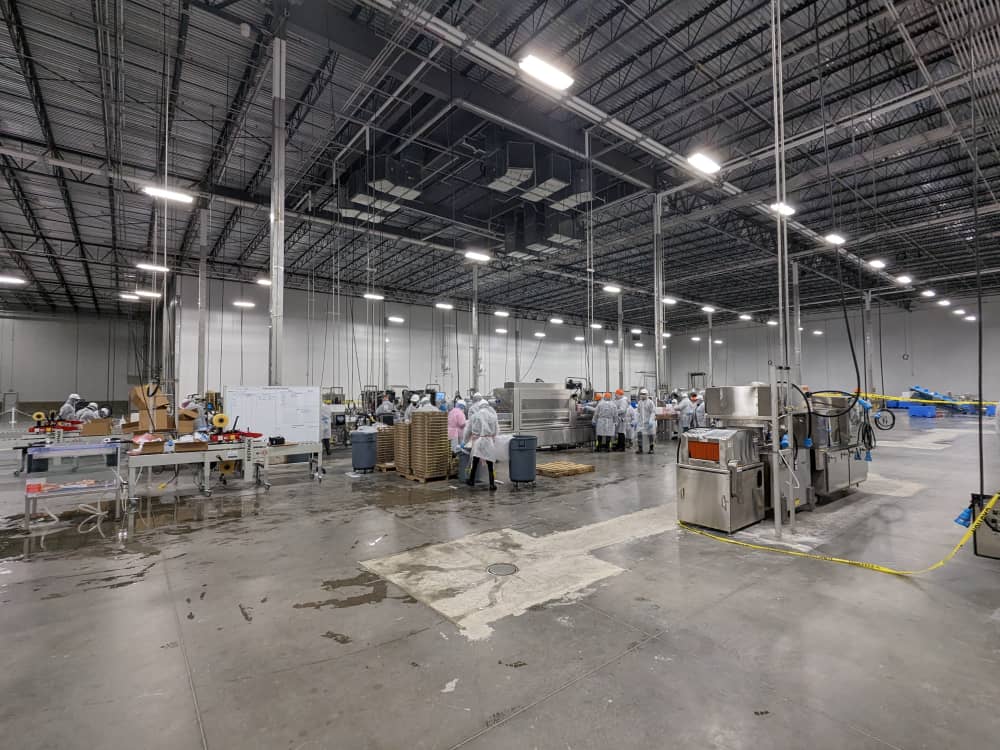
Process System Design for the Food Industry
[trp_language language=”en_US”]
Food Process System Design for U.S. Manufacturers
Process system design is the framework that turns a food or beverage production idea into a safe, scalable, compliant, and profitable operating plant. In the United States, that means aligning product requirements, throughput goals, sanitation expectations, utilities, automation, operator workflow, and future expansion into one coordinated production strategy. For manufacturers launching a new line in Chicago, expanding a protein plant near Omaha, upgrading a dairy system in California, or building a beverage co-packing site near Dallas or Atlanta, strong process design reduces startup risk and protects capital.
Well-executed process design does more than connect tanks, pumps, heat exchangers, fillers, and conveyors. It defines how ingredients move, how quality is protected, how clean-in-place systems operate, how data flows through controls, and how the plant avoids chronic bottlenecks. In practical terms, a good design supports regulatory compliance, reliable uptime, easier maintenance, lower utility waste, and higher output per labor hour.
For U.S. processors facing labor pressure, energy cost volatility, retailer service expectations, and tighter food safety scrutiny, process system design has become a business decision as much as an engineering one. That is why many owners now prefer partners that can bridge engineering, construction coordination, equipment integration, automation, and commissioning rather than handing work to disconnected vendors. Companies such as Disruptive Process Solutions have built their model around that integrated approach for food and beverage plants across the United States and Canada.
Quick Answer

In food manufacturing, process system design includes the planning, engineering, selection, integration, installation strategy, and startup preparation for the full production system required to make a product at commercial scale. It covers process flow diagrams, P&IDs, mass and energy balances, equipment sizing, hygienic layout, utility demand, controls architecture, CIP strategy, operator access, safety systems, and expansion planning. In the United States market, the best designs are not just technically correct; they are also aligned with FDA, USDA, SQF, BRC, budget, schedule, and long-term profitability.
For most manufacturers, the fastest way to think about process design is through five questions:
- What product are we making, and what quality attributes must be controlled?
- How much throughput is needed at startup and at full build-out?
- What equipment train can reliably deliver that output?
- What utilities, controls, staffing, and sanitation systems are required?
- How will the system be commissioned, validated, and expanded later?
If those questions are answered early, owners avoid expensive redesigns, change orders, capacity misses, and line underperformance after startup.
| Design Element | Why It Matters | Typical U.S. Risk if Ignored |
|---|---|---|
| Product definition | Sets processing temperatures, hold times, mixing, fill method, and packaging needs | Inconsistent quality, failed shelf-life targets |
| Capacity planning | Determines line rates, tank sizes, and staffing model | Overbuying equipment or missing demand |
| Sanitary design | Supports food safety and cleanability | Cross-contamination and audit findings |
| Utility sizing | Ensures steam, water, air, and power can support production | Line stoppages and unstable operation |
| Automation strategy | Coordinates recipe control, alarms, data, and traceability | Manual errors and poor visibility |
| Commissioning plan | Reduces startup surprises and shortens ramp-up | Delayed launch and cost overruns |
The table above shows why process system design should be treated as an operating model, not just an equipment purchase list.
What Process System Design Encompasses in Food Manufacturing

Process system design in food manufacturing spans the full path from ingredient receiving to finished goods transfer. It includes unit operations such as storage, batching, grinding, blending, heating, cooling, pasteurization, homogenization, fermentation, filtration, filling, packaging, and CIP. It also includes support systems such as boilers, glycol, refrigeration, compressed air, process water treatment, drainage, wastewater interface, and electrical distribution.
In the United States, design requirements vary widely by product type. A high-acid beverage line in North Carolina has different process and sanitation demands than a USDA-inspected cooked meat line in Kansas, a dairy yogurt plant in Wisconsin, or a retort shelf-stable sauce operation in New Jersey. Even within the same product category, the process architecture changes depending on batch size, SKU mix, packaging format, allergen profile, and desired expansion path.
At a market level, U.S. food and beverage investment is shifting toward flexible systems that can support faster changeovers, more product variety, stronger digital visibility, and better utility efficiency. Ports and logistics hubs such as Los Angeles/Long Beach, Savannah, Houston, Newark, and Memphis continue to influence where processors build and expand, because raw material access and outbound distribution affect both the layout and the economics of a new plant.
The chart reflects the broad growth trend in U.S. food processing capital activity, driven by reshoring, automation, private label growth, and demand for resilient domestic supply chains.
| Product Segment | Core Process Needs | Common Design Focus |
|---|---|---|
| Beverages | Blending, carbonation, pasteurization, filling | Brix control, sanitary transfer, high-speed packaging |
| Dairy | Separation, homogenization, thermal processing, CIP | Temperature control, hygienic piping, shelf-life protection |
| Protein | Grinding, marinating, cooking, chilling, portioning | USDA compliance, segregation, washdown durability |
| Sauces and dressings | Heating, emulsification, batch control, filling | Viscosity management, allergen changeover, hold times |
| Prepared foods | Cooking, mixing, assembly, cooling, packaging | Line balance, labor flow, food safety zoning |
| Aseptic and shelf-stable | UHT, sterile hold, aseptic fill or retort | Validation, sterility assurance, utility reliability |
This breadth is why manufacturers increasingly look for a partner with cross-category experience rather than a single-equipment bias. A team that understands both food and beverage processing can often identify adjacent technologies and layout strategies that reduce risk.
Key Components: P&IDs, Mass Balances, and Equipment Specifications

The backbone of any process system design is documentation. Three of the most important tools are the process and instrumentation diagram, the mass balance, and the equipment specification package.
P&IDs show how product, utilities, valves, instruments, pumps, tanks, and control points connect across the system. They are essential for procurement, automation programming, hazard review, operator training, maintenance planning, and future modifications. In food manufacturing, P&IDs must also account for hygienic routing, dead-leg avoidance, drainability, CIP circuits, and instrument locations that support both process control and sanitation.
Mass balances quantify inputs, outputs, losses, recirculation, and utility interactions. This is the document set that reveals whether a syrup room can support a beverage filler, whether a marinade system has enough hold capacity for the line, or whether a CIP skid can serve multiple circuits without delaying production. Strong mass balance work is often what separates a profitable plant from one that constantly waits on itself.
Equipment specifications convert operating goals into purchasing and fabrication requirements. They define flow rates, pressures, temperatures, materials of construction, controls interface, finish standards, cleanability, footprint, code compliance, and testing expectations.
| Document | Main Purpose | Who Uses It | Typical Decision Supported |
|---|---|---|---|
| Process flow diagram | High-level sequence of operations | Owners, engineers, operations | Process path selection |
| P&ID | Detailed piping, instrumentation, valves, controls | Engineering, controls, contractors | Installation and automation scope |
| Mass balance | Tracks product and utility loads | Process engineers, finance, operations | Capacity and resource sizing |
| Equipment specification | Defines technical purchase requirements | Procurement, vendors, QA | Vendor selection and bid leveling |
| Layout drawing | Shows spatial arrangement and access | Plant managers, maintenance, safety teams | Footprint and workflow optimization |
| I/O list | Maps automation signal points | Controls engineers, integrators | PLC panel and field device planning |
In practice, these documents should be living tools, not static files created once and forgotten. During a project, they should evolve as equipment is finalized, utilities are confirmed, and field realities are discovered.
On the technology side, firms like DPS engineering services bring value by combining process, mechanical, plumbing, electrical, structural, and controls engineering under one project lens. That matters because P&IDs, utility routing, PLC programming, SCADA visualization, and line integration should not be designed in isolation.
How to Approach Process System Design for New Product Launch
When launching a new product, process system design should start with the commercial question, not the equipment catalog. Manufacturers should define annual volume, target startup capacity, SKU count, package formats, ingredient risks, food safety category, expected OEE, and the likely next expansion step. Without this business framing, even a technically sound system may miss the actual operating requirement.
A practical U.S. launch sequence usually follows this order:
- Define product characteristics and quality standards.
- Estimate startup demand, peak demand, and production schedule.
- Create a process flow and preliminary mass balance.
- Compare batch, semi-continuous, and continuous options.
- Assess utility availability, building constraints, and sanitation zoning.
- Develop budgetary equipment and installation scopes.
- Design controls architecture and reporting needs.
- Plan FAT, SAT, commissioning, and operator training.
This is especially important for co-packers and fast-growth brands. A beverage startup near Charlotte may need fast deployment and future doubling capacity. A prepared foods company in Minneapolis may need allergen segregation and multiple recipe paths. A dairy-based RTD product in California may require stricter thermal and cleaning control from day one.
| Launch Design Question | Why It Should Be Asked Early | Example Impact |
|---|---|---|
| What is year-one volume? | Prevents oversizing or undersizing | Number of tanks and shift pattern |
| How many SKUs are planned? | Affects changeover and automation needs | Recipe management and manifold design |
| Is the product low-acid or shelf-stable? | Drives thermal process and compliance path | Pasteurization versus aseptic or retort |
| What are the ingredients? | Determines handling, mixing, and sanitation complexity | Powder induction, allergen controls |
| How much future growth is expected? | Supports phased build strategy | Stub-outs, spare I/O, modular utilities |
| How fast must the site launch? | Shapes procurement and installation plan | Skid-mounted modules versus custom field build |
The best buying advice is simple: do not buy core processing equipment before the process basis is clear. Owners often lock in tanks, fillers, heat exchangers, or cook systems too early and then discover later that utility loads, line balance, or sanitation logic do not work together. A disciplined design phase typically saves more than it costs.
Integrated vs. Modular Process System Design: Pros and Cons
Manufacturers in the United States often compare integrated field-built systems with modular skid-based designs. Neither approach is always right. The correct choice depends on product complexity, schedule, available space, labor access, expansion strategy, and capital discipline.
Integrated design can maximize space efficiency and tailor the plant closely to the product mix. It is often preferred in large, permanent facilities where throughput is high and utility systems are already robust. Modular design, on the other hand, can reduce field installation time, improve fabrication quality consistency, and simplify future relocation or phased expansion.
| Design Approach | Advantages | Disadvantages | Best Fit |
|---|---|---|---|
| Integrated field-built | Custom layout, optimized routing, strong long-term fit | Longer field schedule, more site coordination | Large permanent plants |
| Modular skid-based | Faster deployment, factory assembly, easier expansion | May require extra interconnects and space planning | Fast-track projects and phased growth |
| Hybrid approach | Balances speed and customization | Needs excellent integration management | Most mid-size U.S. expansions |
| Portable utility skids | Supports temporary or transitional needs | Limited ultimate scalability | Pilot and bridge capacity |
| Containerized processing modules | Shortens onsite work | Transport and access constraints | Remote or tight labor markets |
| Retrofit insertion modules | Works within operating plants | Shutdown planning can be difficult | Brownfield upgrades |
In regions where construction labor is tight or plant downtime is expensive, modularization can be particularly attractive. However, modular systems still need rigorous utility tie-in design, controls integration, and startup sequencing. A poor interface between modules can create more downtime than a traditional build.
For manufacturers evaluating options, it helps to work with an engineering and integration group that can also supply custom equipment when needed. Through its process equipment capabilities, DPS supports tanks, CIP systems, marination tumblers, and cooking vessels that can be integrated into broader plant solutions rather than treated as isolated assets.
Automation Architecture: PLC, SCADA, and MES in Process System Design
Automation is no longer an afterthought in food process system design. In many U.S. plants, it is the difference between stable, repeatable production and a line that depends too heavily on tribal knowledge. The automation stack typically starts with PLCs controlling devices and sequences, SCADA platforms providing visualization and alarm management, and MES or production software managing recipes, reporting, traceability, and performance analytics.
PLCs are the machine-level brains. They coordinate valves, pumps, mixers, conveyors, fillers, and thermal systems. SCADA provides the operator window into the process, showing status, trends, interlocks, and alarms. MES sits above that layer, connecting batch records, recipes, downtime tracking, production orders, and in some plants ERP communication.
The right architecture depends on plant size and complexity. A small sauce line in Tennessee may only need robust PLC and HMI control. A multi-line beverage operation near Phoenix or Dallas may justify SCADA across syrup, blending, utilities, and packaging, with MES for traceability and production analytics.
The bar chart shows where demand for advanced automation is strongest across major food and beverage categories in the United States. Beverage, prepared foods, and aseptic systems tend to lead because consistency, reporting, and speed are especially critical.
A strong automation design should include:
- Clear control narratives for every unit operation
- Alarm philosophy and escalation logic
- Recipe management and version control
- Batch and lot traceability where needed
- Remote support considerations
- Cybersecurity and network segmentation
- Spare I/O and future integration planning
Many owners undervalue this stage until a startup problem appears. In reality, one controls issue can become a plantwide bottleneck. DPS has built a reputation for practical controls and SCADA work, and one of the clearest lessons from its field experience is that programming limitations can constrain capacity more than equipment nameplate does.
Utility System Design: Steam, Water, Compressed Air, and Electrical
Utility design is where many projects quietly succeed or fail. A process line may look impressive on paper, but if steam pressure collapses during peak demand, if compressed air quality is poor, or if electrical distribution leaves no room for expansion, production will suffer. In food plants, utilities should be designed as part of the process system, not as separate infrastructure afterthoughts.
Steam systems support cooking, heating, retort, sterilization, and CIP in many plants. Water systems may include filtered process water, hot water, softened water, ingredient water, and sanitation water. Compressed air must be sized, dried, and filtered to match instrument and process needs. Electrical design must support motor loads, controls panels, lighting, and future additions. Many facilities also require glycol, refrigeration, HVAC, and wastewater coordination.
For a new U.S. greenfield facility, utility choices also affect sustainability goals, municipal coordination, and operating cost. This is increasingly important in states with tighter water scrutiny or aggressive energy targets, including California, Washington, and parts of the Northeast.
| Utility | Typical Process Role | Key Design Concern | Common Expansion Strategy |
|---|---|---|---|
| Steam | Cooking, heating, CIP, retort | Peak load and pressure stability | Header sizing and boiler redundancy |
| Process water | Ingredient water, rinse, sanitation support | Quality, pressure, treatment needs | Skid-based treatment expansion |
| Compressed air | Valves, instruments, packaging equipment | Dew point, oil-free requirements | Additional compressor and receiver capacity |
| Electrical | Motors, controls, HVAC, plant systems | Connected load and spare capacity | Future MCC and panel allowances |
| Glycol or refrigeration | Cooling, fermentation, product temperature control | Load diversity and piping insulation | Expandable chiller banks |
| CIP utility support | Cleaning chemistry, hot water, return flow | Cycle timing and circuit conflicts | Parallel circuits and larger recovery capacity |
Companies with broad in-house and partner utility knowledge are especially valuable here. DPS supports complete utility infrastructure across boilers, compressed air, cooling towers, glycol, process water, wastewater interfaces, refrigeration, and HVAC as part of wider processing projects, which is often more efficient than splitting the work among unrelated parties.
Preventing Bottlenecks Through Systematic Process Design
Most chronic plant bottlenecks are created long before production begins. They usually come from mismatched tank residence times, poorly sequenced CIP, undersized pumps, awkward operator travel, utility instability, or controls logic that cannot transition equipment efficiently. Preventing bottlenecks requires studying the line as a system rather than optimizing one machine at a time.
For example, a filler running at 300 units per minute means little if the upstream blending or thermal hold capacity only supports 220 units per minute. Likewise, a protein line may appear balanced during equipment selection but lose hours each shift if sanitation access is poor or product staging creates forklift congestion. In dense metro production regions like Southern California, Northern New Jersey, or greater Chicago, space constraints can intensify these issues.
A systematic bottleneck review should evaluate:
- True constraint equipment by product family
- Cycle times, hold times, and batch overlap opportunities
- Changeover sequencing
- CIP scheduling conflicts
- Operator staffing requirements by zone
- Packaging integration with upstream process flow
- Maintenance access and spare strategy
The area chart illustrates the growing emphasis on flexible, debottlenecked design as U.S. manufacturers move away from rigid single-SKU facilities toward mixed production portfolios.
One reason owners increasingly seek outside review is that internal teams are often too close to legacy habits. An experienced process design partner can spot issues that operating teams no longer question. DPS has become known for exactly this kind of practical intervention, including cases where automation and sequencing improvements delivered meaningful capacity gains without forcing unnecessary capital spending.
For examples of field execution and plant problem-solving, manufacturers can review project case examples relevant to processing, relocation, and integration work.
Commissioning and Qualification of New Process Systems
Even the best design fails if commissioning is weak. Commissioning is the structured process of proving that systems are installed correctly, operate as intended, and can consistently support production. In food manufacturing, this often includes mechanical completion checks, dry testing, wet testing, utility verification, controls checkout, CIP validation, operator training, startup support, and performance confirmation.
Qualification depth depends on product risk, customer standards, and the regulatory environment. A dairy or aseptic line typically requires more formal verification than a simpler non-critical utility addition. For FDA-regulated, USDA-inspected, SQF-certified, or BRC-audited sites, documentation quality and traceability matter throughout startup.
A practical commissioning framework for new food process systems includes:
- Pre-commissioning punch walk and documentation review
- Loop checks and I/O validation
- Motor rotation, valve stroke, and interlock testing
- Utility performance confirmation under expected loads
- CIP trial cycles and sanitation verification
- Water runs, product runs, and controlled ramp-up
- Operator and maintenance training
- Final performance acceptance against agreed criteria
| Commissioning Stage | Main Objective | Typical Deliverable |
|---|---|---|
| Mechanical completion | Confirm installation matches design intent | Punch list and turnover package |
| Controls checkout | Verify signals, alarms, and sequencing | I/O and interlock test records |
| Utility startup | Prove steam, water, air, and power support loads | Utility trend and load verification |
| CIP verification | Demonstrate cleaning coverage and repeatability | Cycle reports and sanitation records |
| Performance trial | Measure throughput and quality output | Acceptance test summary |
| Training and handover | Prepare plant team for sustained operation | SOPs, training logs, and as-builts |
Manufacturing capability also matters during this phase. DPS supports both food and beverage installations across categories including brewing, spirits, RTD, dairy, sauces, prepared foods, protein, aseptic, and retort systems. That breadth helps during commissioning because startup problems often span process, packaging, utilities, and controls all at once.
On the service side, its design-build-manage approach is especially relevant for owners who want one accountable team to engineer, coordinate construction, manage trades, install systems, and support startup. For many U.S. manufacturers, that model reduces the handoff failures common in traditional delivery structures.
FAQ
What is the difference between process design and plant layout?
Process design defines how the product is made, controlled, and cleaned. Plant layout focuses on where equipment, operators, utilities, and material flow physically sit. They are closely linked but not identical.
When should a manufacturer start process system design?
As early as possible, ideally before major equipment purchasing begins. Early design reduces rework, clarifies budgets, and aligns utilities and controls with the actual production target.
Is modular process design always cheaper?
Not always. It can reduce field labor and shorten schedules, but total project cost depends on interconnects, transport, utility tie-ins, and long-term fit. The real advantage is often speed and flexibility.
How important are P&IDs in food manufacturing?
They are essential. P&IDs drive installation, controls programming, maintenance planning, troubleshooting, and future expansion. Poor P&IDs often lead to scope confusion and startup delays.
What utility is most commonly underestimated?
CIP support utilities and compressed air are both commonly underestimated, especially in fast-moving expansions. Steam and electrical spare capacity are also frequent trouble spots.
How can a plant avoid future bottlenecks?
Use mass balances, line balance studies, CIP conflict reviews, and automation sequencing analysis during design. Plan for realistic changeovers and maintenance access, not just nameplate throughput.
Do food and beverage companies in the United States need different design approaches?
Yes. Beverage systems often emphasize sanitary transfer, blending precision, carbonation, and high-speed filling. Food systems may emphasize solids handling, cook-chill, allergen segregation, and washdown durability. Hybrid facilities need both mindsets.
What should owners look for in a process system design partner?
Look for technical depth across process, utilities, and controls; field execution experience; familiarity with FDA, USDA, SQF, and BRC expectations; and the ability to align engineering decisions with business outcomes.
How does 2026 change the design conversation?
By 2026, U.S. projects are expected to place even more emphasis on energy visibility, water reuse strategy, digital traceability, cybersecurity, workforce efficiency, and lower-carbon utility systems. Policy pressure, retailer expectations, and insurance scrutiny will likely push sustainability and resilience from optional features into baseline design criteria.
The comparison chart highlights why many U.S. manufacturers prefer integrated project delivery for new processing systems. Fragmented sourcing may still fit simple projects, but as complexity rises, coordination value usually becomes more important than lowest individual component price.
In summary, process system design in the United States is no longer just about making product flow from point A to point B. It is about building profitable capacity, reducing avoidable risk, and creating a production environment that can scale with the business. Whether the application is a new co-packing line near Atlanta, a dairy upgrade in Wisconsin, a protein expansion in Texas, or an aseptic beverage project in California, the principles remain the same: start with the commercial objective, document the system rigorously, integrate utilities and automation early, design out bottlenecks, and commission the plant with discipline.
That is where a specialized partner can make a measurable difference. By combining technological capabilities in engineering and controls, manufacturing capabilities across tanks, CIP, thermal, beverage, protein, and sanitary systems, and service capabilities spanning planning, design, general contracting support, installation, and startup management, DPS positions itself as a practical choice for food and beverage manufacturers that want smart capital to produce smart manufacturing results in the United States.
[/trp_language]
Complete Company Portfolio

About the Author: Disruptive Process Solutions (DPS)
The DPS team combines process engineering expertise with real-world food and beverage manufacturing experience. Our content focuses on process optimization, production efficiency, facility improvements, and practical solutions that help manufacturers operate more effectively in a rapidly evolving industry.
Share

