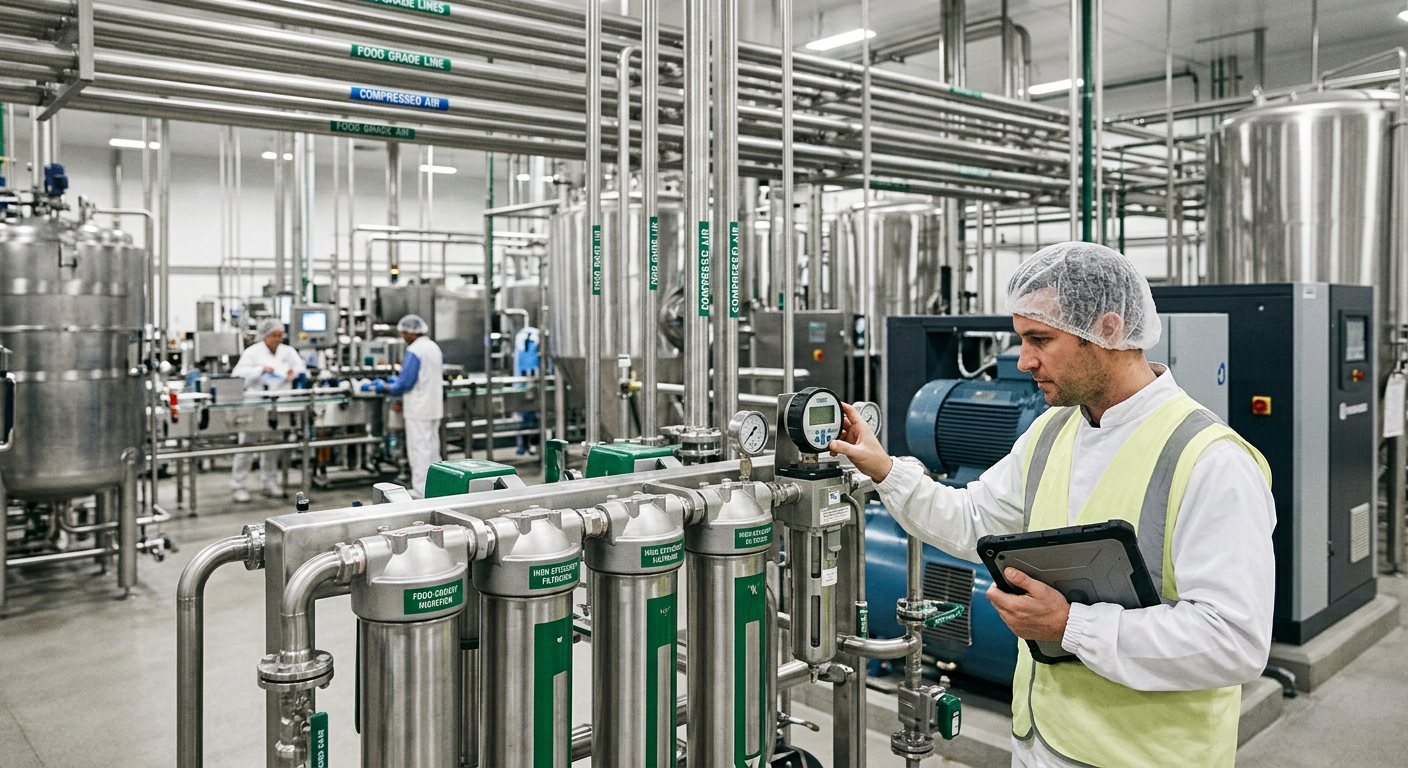
Sandwich Production Facility Design: Assembly, Packaging, and Cold Chain
[trp_language language=”en_US”]
United States Ready-to-Eat Sandwich Facility Design Guide
Designing a ready-to-eat sandwich production facility in the United States requires more than placing prep tables beside a packaging line. Successful plants combine ingredient preparation, portion-controlled assembly, hygienic zoning, packaging technology, refrigeration, food safety, labor efficiency, and dispatch planning into one coordinated system. For chilled sandwiches sold through retail, foodservice, convenience stores, airports, hospitals, universities, and vending channels, the facility must protect product quality from raw ingredient receipt through refrigerated distribution. In practice, that means carefully engineered flows for bread, proteins, produce, sauces, allergens, operators, waste, totes, packaging materials, and finished goods.
The U.S. market continues to reward manufacturers that can produce consistent, attractive, high-throughput sandwiches with reliable shelf life. Growth is particularly strong in metro corridors such as New York–New Jersey, Chicago, Dallas–Fort Worth, Atlanta, Los Angeles, Seattle, and South Florida, where convenience retail, corporate foodservice, airport catering, and institutional feeding drive daily demand. Ports and cold chain hubs like Savannah, Los Angeles/Long Beach, Newark, and Houston also matter because proteins, packaging materials, and specialty ingredients often move through these logistics nodes before entering production networks.
This guide explains how to plan a sandwich production plant for the U.S. market, including line layout, automation, modified atmosphere packaging, cold storage, sanitation, visual inspection, and unidirectional traffic. It also covers buying considerations, major end-use sectors, practical equipment decisions, and how an engineering partner can reduce capital risk while improving long-term profitability.
Quick Answer

A well-designed ready-to-eat sandwich facility in the United States should separate raw and high-care areas, use a unidirectional flow from ingredient receiving to refrigerated dispatch, support precise ingredient portioning, integrate packaging with cold chain control, and be built for aggressive sanitation and environmental monitoring to minimize Listeria risk. The most effective plants balance throughput, shelf life, labor flexibility, and regulatory compliance under FDA, USDA, SQF, or BRC expectations depending on product mix and customer requirements.
For most projects, the best design approach includes:
- Dedicated receiving and chilled storage zones for bread, proteins, vegetables, condiments, and packaging
- Ingredient prep rooms with temperature control, allergen segregation, and washdown-compatible utilities
- Assembly lines configured around takt time, SKU complexity, and ergonomic operator access
- Automated or semi-automated portion control for proteins, sauces, and cut produce
- Modified atmosphere or sealed packaging matched to shelf-life targets and retail presentation
- Rapid transfer into finished goods refrigeration and dock-side cold chain protection
- Hygienic equipment design with easy access for cleaning, inspection, and validation
- Inline quality checks for seal integrity, component presence, label accuracy, and pack appearance
In the U.S. market, facilities producing club sandwiches, wedges, paninis, wraps, subs, breakfast sandwiches, open-faced products, and premium deli-style offerings should be designed for menu variation without compromising food safety. That is especially important for operators supplying national convenience chains, contract foodservice providers, airline caterers, hospitals, and regional grocery private label programs.
| Design Priority | Why It Matters | Typical U.S. Expectation | Risk If Ignored |
|---|---|---|---|
| High-care segregation | Protects post-lethality ingredients and assembled products | Physical or pressure-controlled separation | Cross-contamination |
| Ingredient temperature control | Supports shelf life and pathogen control | Chilled handling of meats, dairy, cut produce | Quality loss and shorter code life |
| Portion accuracy | Controls cost and label compliance | Automated or guided dispensing | Margin erosion |
| Seal integrity | Preserves atmosphere and appearance | Validated packaging checks | Leaks and returns |
| Sanitary design | Reduces harborage points | Washdown-ready equipment and drains | Listeria events |
| Cold chain continuity | Maintains finished product quality | Refrigerated storage and dispatch staging | Temperature abuse |
The table above summarizes the foundational requirements. These are not optional enhancements; they are the core design criteria that determine whether a plant can operate safely and profitably at scale.
Ingredient Preparation and Component Assembly Line Layout

Ingredient preparation is where sandwich plants either gain efficiency or inherit chronic bottlenecks. Bread may seem simple, but proteins, sliced cheeses, leafy greens, tomato, sauces, pickles, bacon, eggs, and specialty spreads all behave differently in a chilled environment. Layout must consider receiving frequency, shelf life, cut size consistency, and the handling sensitivity of each component.
In a typical U.S. ready-to-eat facility, incoming materials are staged by category: ambient dry goods, refrigerated proteins, refrigerated dairy, produce, and packaging materials. From there, components move into prep rooms based on process need. Produce washing and slicing should remain isolated from high-care finished assembly wherever practical. Post-lethality proteins and ready-to-use ingredients should enter the cleanest controlled zones possible, especially for sandwiches distributed to retailers with strict food safety audit standards.
Assembly line design depends on SKU count and daily output. A low-SKU regional operator may use straight-line conveyors with manual placement stations. A higher-volume national supplier may use multiple parallel lanes with dedicated component feeding and synchronized portioning. U-shaped layouts can improve labor access in compact footprints, while linear layouts often simplify sanitation and expansion planning.
Common product types that influence layout in the United States include:
- Triangular retail sandwiches for grab-and-go channels
- Wedge sandwiches for convenience stores and airports
- Sub rolls and hoagies for commissary and foodservice
- Wraps and flatbreads for wellness and institutional menus
- Breakfast sandwiches for travel centers and university dining
- Premium deli sandwiches with visible ingredient presentation
Good layout also anticipates labor reality. Plants in markets such as Southern California, North Carolina, Texas, and Illinois often need flexible stations that can switch between manual and assisted assembly depending on labor availability, wage pressure, and order mix.
| Area | Main Functions | Key Utilities | Design Notes |
|---|---|---|---|
| Receiving | Unload, inspect, document, segregate | Dock seals, scales, handheld QA tools | Separate raw and RTE receipts when possible |
| Chilled ingredient storage | Hold proteins, dairy, produce | Refrigeration, racking, temperature monitoring | Short travel distance to prep rooms |
| Produce prep | Wash, cut, spin, stage | Potable water, drains, chilled air | Keep splash risks away from high-care assembly |
| Protein staging | Open, portion, tray, feed line | Cold tables, scales, conveyors | Allergen and SKU control are critical |
| Assembly | Build sandwich components | Conveyors, dispensers, lighting, handwash | Ergonomic operator spacing improves consistency |
| Pack-out transfer | Move to packaging quickly | Conveyors, overhead covers, metal detection | Minimize dwell time before seal |
This layout table shows how every room supports the next. The aim is simple: ingredient prep should feed assembly without backtracking, queue build-up, or temperature drift.
Automated Sandwich Assembly and Portion Control Systems

Automation in sandwich manufacturing is not all-or-nothing. The best U.S. facilities often combine manual craftsmanship at sensitive placement points with automated systems for repetitive, high-variance, or high-cost steps. Portion control is the first place most producers see a strong return, especially for meats, cheese, egg patties, sauces, and sliced vegetables.
Automated and semi-automated options include slice counters, checkweigh-guided protein loading, servo depositors for condiments, robotic pick-and-place for packaged components, and vision-guided reject systems. For plants producing thousands of units per hour, even a 2-gram average overfill on protein or sauce can create major annual cost leakage. Portion control systems therefore improve both food safety documentation and gross margin.
Automation strategy should reflect product architecture. Soft breads, delicate croissants, or premium visible-fill sandwiches may require gentle handling and lower conveyor speeds. Wrap lines may benefit from specialized rolling and folding equipment. Breakfast products may integrate heating, cooling, and rapid assembly into more complex sequences. In facilities serving both private label retail and foodservice channels, changeover speed matters as much as nameplate throughput.
By 2026, U.S. manufacturers are expected to adopt more vision-assisted assembly verification, digital recipe management, and data capture tied to labor, yield, and downtime. Plants that can connect PLC controls, checkweighers, and traceability software will be better positioned for retailer scorecards and continuous improvement.
The chart above reflects a realistic investment trend: rising demand for convenient chilled foods is driving steady capital spending on sandwich assembly and packaging capacity in the United States.
| Automation Element | Best Use Case | Primary Benefit | Typical Caution |
|---|---|---|---|
| Sauce depositor | High-SKU lines with exact spread weights | Reduces overfill and mess | Needs frequent cleaning validation |
| Protein slice counter | Deli meat sandwiches | Improves consistency | Product shape variation can affect accuracy |
| Checkweigher | Finished pack verification | Confirms portion compliance | Must be integrated with reject handling |
| Vision inspection | Visible-fill retail packs | Detects missing components | Lighting and contrast matter |
| Conveyorized assembly | Medium to high throughput | Stable line pacing | Can create bottlenecks if stations are unbalanced |
| Robotic pick-and-place | Pack placement or secondary packaging | Labor reduction | Usually justified at higher volumes |
The table highlights a practical buying principle: invest first where labor variability and giveaway are highest. For many U.S. producers, that means portioning and inspection before full robotic assembly.
Modified Atmosphere Packaging for Extended Shelf Life
Modified atmosphere packaging, or MAP, can extend shelf life and preserve fresh appearance when it is aligned with recipe, moisture migration, bread performance, and refrigeration discipline. It is not a substitute for sanitation or temperature control, but it is a valuable packaging strategy for chilled sandwiches distributed across wider U.S. regions.
Retail sandwich programs shipping from the Midwest into the Northeast, or from Texas into surrounding states, often need code life that supports production scheduling, retailer receiving windows, and store-level selling days. MAP helps by replacing package oxygen with a controlled gas mix, commonly using carbon dioxide and nitrogen depending on product characteristics. The correct mix must be validated against bread texture, produce respiration, sauce behavior, and protein quality.
Package format also matters. Wedge packs, flow-wrap, thermoformed trays, and lidded packs each create different sealing and merchandising conditions. Seal quality must be stable across production speeds and environmental humidity. In U.S. retail, shelf appeal is not secondary; consumers expect visible ingredients, clean labels, and intact pack geometry.
Sustainability is shaping packaging decisions as well. By 2026, more buyers are expected to request recyclable or downgauged materials, while still demanding shelf life and leak resistance. This tension means packaging selection should be treated as a plant-design decision, not a late procurement task.
This area chart shows the likely trend shift toward higher-performance packaging in the U.S. chilled sandwich segment, driven by longer distribution lanes, retail quality expectations, and waste reduction goals.
| Packaging Format | Common Products | Advantages | Limitations |
|---|---|---|---|
| Triangular wedge pack | Grab-and-go retail sandwiches | Strong visibility and shelf presence | May limit some product heights |
| Flow-wrap | Subs, breakfast items, wraps | Efficient, compact, scalable | Less premium visual display |
| Thermoformed tray | Premium deli lines | Protection and consistent seal area | Higher material usage |
| Lidded clamshell | Fresh market and commissary items | Easy presentation | Can be bulky for shipping |
| MAP tray seal | Extended shelf-life items | Atmosphere retention | Needs tight process control |
| Hybrid recyclable pack | Retail sustainability programs | Brand and compliance benefits | Material qualification takes time |
The packaging choice should be matched to route-to-market. A local same-day commissary can package differently from a multi-state retail program serving Chicago, Philadelphia, Charlotte, and Tampa from one hub.
Refrigeration and Cold Chain Integration from Assembly to Dispatch
Cold chain design begins long before finished pallets enter a cooler. The assembly room itself, ingredient staging points, in-process dwell times, and dock operations all determine how well a sandwich facility protects shelf life. In the United States, where products may move from production sites to cross-docks, distribution centers, retail backrooms, and store chillers, the plant must assume some downstream stress and build resilience into the product and process.
Critical design features include pre-chilled ingredients, refrigerated staging carts, temperature-controlled assembly rooms, short transfer distance to packaging, blast-assisted pull-down where justified, finished goods cold rooms, and dock vestibules or refrigerated staging for dispatch. Facilities in hot, humid regions such as Florida, Texas, and the Southeast should pay particular attention to dock exposure and condensation management.
Refrigeration systems may use centralized ammonia, packaged systems, glycol loops, or distributed refrigerant strategies depending on plant size, capital goals, utility philosophy, and local service support. Controls should integrate room temperature, product dwell time, alarm notification, and trend logging. Energy efficiency is increasingly important, but it should not compromise food safety performance.
For manufacturers serving urban areas like Boston, Washington, D.C., San Francisco, and Seattle, route density may allow frequent deliveries and shorter storage windows. For nationwide programs or co-packers shipping longer distances, cold chain buffering becomes more important.
The bar chart above illustrates where demand is strongest. Convenience and grocery channels continue to be major drivers, shaping the need for robust chilled distribution and dependable code life.
| Cold Chain Stage | Temperature Control Focus | Recommended Design Feature | Operational Benefit |
|---|---|---|---|
| Ingredient receiving | Inbound verification | Temperature checks and rapid put-away | Protects raw material quality |
| Prep rooms | Limit warming during cutting and staging | Conditioned chilled rooms | Supports shelf life |
| Assembly | Minimize exposure time | Short line residence and cold ingredient feed | Improves microbiological control |
| Packaging | Seal without warm backlog | Balanced line speeds and covered conveyors | Reduces queue accumulation |
| Finished goods storage | Maintain code life | Monitored refrigerated rooms | Consistent dispatch readiness |
| Shipping docks | Prevent temperature spikes | Dock shelters and refrigerated staging | Better outbound integrity |
This cold chain table shows that refrigeration is not only a utilities topic. It is a production design issue tied directly to yield, shelf life, and customer acceptance.
Cleanability and Listeria Prevention in RTE Sandwich Facilities
Because sandwiches are assembled after ingredients are cooked or otherwise prepared, post-process contamination is one of the biggest hazards in the category. That is why hygienic design and Listeria prevention must be built into the facility from the start. In the U.S., customers often expect environmental monitoring programs, sanitation zoning, and documented controls that go beyond minimum code compliance.
Floors should drain well, wall penetrations should be minimized and sealed, overhead structures should resist condensation, and equipment should avoid hollow members, dead legs, and inaccessible harborage points. Conveyor supports, slicer frames, guard mounts, and table undersides deserve particular attention. If a sanitation team cannot easily reach it, the design should be questioned.
Personnel flow is equally important. Gowning transitions, handwashing points, boot sanitation, tool control, and forklift segregation all reduce cross-traffic risk. Waste and dirty utensil return should never move against the clean product path. Water use must also be disciplined; excessive moisture in high-care rooms can increase environmental risk instead of reducing it.
By 2026, more sandwich manufacturers are expected to expand use of hygienic design audits, ATP verification linked to digital records, and environmental mapping software. Buyers in grocery and institutional channels are increasingly asking for evidence that sanitation is engineered into the plant, not merely handled by SOPs.
When planning these systems, manufacturers often benefit from working with specialists who understand processing, utilities, controls, and compliance together. Firms such as Disruptive Process Solutions support integrated project planning so sanitary design decisions align with capital budgets, scheduling, and production goals.
| Sanitation Risk Point | Typical Cause | Design Prevention | Monitoring Method |
|---|---|---|---|
| Standing water | Poor floor slope or drain placement | Correct pitch and hygienic drains | Pre-op visual inspection |
| Conveyor harborage | Inaccessible framework | Open sanitary design | Swabbing and teardown checks |
| Condensation | Warm/cold air conflict | HVAC balance and insulation | Environmental inspection |
| Employee cross-traffic | Shared entry paths | Controlled gowning and one-way flow | Behavioral audits |
| Dirty tool return | Poor utensil logistics | Dedicated wash return route | Sanitation verification |
| Drain contamination | Improper cleaning sequence | Zoned sanitation procedures | EMP trending |
The practical takeaway is that Listeria control is a facility design challenge as much as a sanitation challenge. Plants that treat it that way are more resilient.
Quality Control and Visual Inspection for Pre-Packaged Sandwiches
Quality control in pre-packaged sandwich operations must cover food safety, package integrity, and visual appeal. Unlike many processed foods, sandwiches are judged instantly by appearance. Uneven fillings, displaced bread, smeared sauce, collapsed structure, poor cut alignment, and label wrinkles all affect saleability.
Inspection systems should be layered. Incoming checks verify ingredient condition, lot traceability, and temperature. In-process checks confirm portion weights, component presence, and assembly order. Post-packaging checks focus on seal quality, label accuracy, use-by coding, and finished weight. Retail-facing products often benefit from machine vision that detects missing bacon strips, absent cheese slices, or poor presentation in clear packs.
Quality targets should be built around channel needs. Airport and travel plaza programs emphasize appearance and secure packaging under heavy handling. Hospital and university contracts may focus more on allergen accuracy, date code control, and nutritional consistency. Convenience chains often expect high-speed production with very low visual defect rates.
For producers evaluating equipment suppliers, it helps to compare the overall system rather than one machine at a time. The right line balances assembly, package seal performance, inspection, and reject handling.
This comparison chart presents the type of criteria U.S. manufacturers often use when selecting sandwich line partners. Service support and sanitary design are frequently as important as raw throughput.
| Quality Check | What Is Verified | Frequency | Why It Matters |
|---|---|---|---|
| Ingredient receipt review | Condition, temperature, lot accuracy | Every lot | Prevents downstream quality issues |
| Portion audit | Protein, sauce, cheese weights | Hourly or per run | Controls cost and label claims |
| Visual build check | Correct component placement | Continuous or frequent sample | Improves retail appearance |
| Seal inspection | Leaks, wrinkles, incomplete closure | Continuous with verification | Protects shelf life |
| Label/code review | SKU, allergen, date, traceability | At startup and changeover | Compliance and recall readiness |
| Finished pack temperature | Product chill status | Routine checks | Confirms cold chain control |
The best quality programs convert these checks into actionable data. Trend analysis can reveal whether defects originate in ingredient prep, assembly timing, packaging setup, or operator training.
Facility Layout for Unidirectional Flow in Ready-to-Eat Operations
Unidirectional flow is one of the clearest indicators of a well-planned ready-to-eat facility. The concept is straightforward: materials, people, and waste should move forward through the process without crossing back into cleaner or later-stage zones. In sandwich manufacturing, this principle helps reduce contamination risk while simplifying operations.
A strong U.S. facility layout usually progresses through receiving, chilled storage, ingredient prep, controlled assembly, packaging, finished goods refrigeration, and dispatch. Support functions such as maintenance shops, chemical storage, employee welfare areas, and waste rooms should be positioned to avoid disrupting the clean process path. Forklift traffic should be isolated from high-care foot traffic wherever possible.
This matters especially for plants retrofitting older buildings in dense industrial markets such as New Jersey, greater Chicago, or Los Angeles County, where footprint constraints can tempt teams into compromised traffic patterns. Sometimes the most cost-effective decision is not to force a complex RTE sandwich operation into a poorly suited shell. A careful feasibility study can save major downstream operating costs.
Manufacturers planning expansion should also reserve room for additional lines, cooler growth, packaging changes, and future automation. A plant that works at launch but cannot scale by year three may become a costly bottleneck.
Project teams seeking this kind of long-range planning often engage specialists with process, utilities, and construction management experience. Through its design-build-manage approach, DPS engineering and project services helps manufacturers evaluate layouts, phase capital correctly, and align plant design with production economics.
| Flow Element | Preferred Direction | Design Tool | Expected Result |
|---|---|---|---|
| Raw ingredient movement | Receiving to storage to prep | Dedicated corridors and doors | Less congestion |
| RTE component movement | Prep to high-care assembly only | Zoned transfer points | Lower contamination risk |
| Employee entry | Welfare to gowning to line | Controlled hygiene transition | Better personnel discipline |
| Packaging materials | Warehouse to pack area | Clean material staging | Efficient replenishment |
| Waste removal | Out of process path | Separate exits and timing | Cleaner operations |
| Finished product | Pack line to cooler to dock | Short refrigerated route | Faster dispatch and better shelf life |
This table explains why flow planning is so powerful: it makes food safety simpler while improving labor efficiency and line uptime.
For companies comparing local suppliers or project partners in the United States, useful buying criteria include high-care design experience, refrigeration integration knowledge, packaging line compatibility, controls expertise, and the ability to manage permitting and construction across jurisdictions. Manufacturers near Raleigh, Charlotte, Dallas, Fresno, Milwaukee, or Philadelphia may find different contractor ecosystems, so national coordination can be valuable on multi-state programs. When reviewing candidates, ask for examples of chilled food facilities, utility coordination, and startup support. Also verify whether the partner can assist with custom equipment integration through resources such as process equipment solutions and whether they can provide references or examples from prior project work through project case studies.
Our Company
Disruptive Process Solutions supports food and beverage manufacturers across the United States and Canada with a practical focus on profitable capital execution. Rather than operating only as a traditional contractor, the company approaches projects as an engineering-led partner that aligns facility decisions with operational and financial outcomes.
On the technology side, DPS brings multidisciplinary engineering capabilities across process, mechanical, plumbing, electrical, structural, and controls. That includes automation, PLC programming, SCADA integration, utility coordination, and system design for refrigeration, CIP, water, compressed air, steam, and clean processing environments. For sandwich and other ready-to-eat food operations, that kind of cross-functional capability is especially valuable because assembly, sanitation, packaging, HVAC, and cold chain performance must work as one system.
On the manufacturing side, DPS has broad experience with food processing systems including mixing, cooking, slicing, portioning, protein handling, dairy, aseptic, and prepared foods applications. The company also manufactures selected branded process equipment, giving clients another option when custom tanks, CIP systems, tumblers, or processing vessels need to fit a larger integrated project. That background helps when sandwich facilities must connect ingredient prep, utility infrastructure, and packaging equipment into one scalable platform.
On the service side, DPS provides capital planning, feasibility studies, owner’s representation, project and program management, general contracting functions where licensed, installation oversight, and turnkey integration. Its design-build-manage model is intended to reduce fragmentation between engineering, procurement, construction, and startup. Manufacturers that want a partner for long-range facility planning can learn more about the company and how it supports food and beverage expansion programs throughout North America.
For sandwich producers, that means help not only with drawings and equipment lists, but with the bigger questions: how to size a line, where to phase investment, how to prevent utility bottlenecks, how to preserve hygiene, and how to build a plant that remains profitable as product mix changes in 2026 and beyond.
FAQ
What is the most important design principle for a ready-to-eat sandwich plant?
The most important principle is controlled unidirectional flow with clear separation between raw, support, and high-care ready-to-eat zones. This reduces contamination risk and improves production discipline.
Should a sandwich facility in the United States use full automation?
Not always. Many successful plants use a hybrid model with manual placement for delicate ingredients and automated systems for portioning, conveying, weighing, and inspection. The right choice depends on SKU complexity, labor conditions, and throughput targets.
How much does packaging influence shelf life?
Packaging has a major effect, especially when combined with disciplined refrigeration and hygienic production. Seal quality, barrier properties, gas mix, and pack geometry all influence performance, but none can compensate for poor sanitation or temperature abuse.
Is modified atmosphere packaging necessary for every sandwich line?
No. Local commissaries with short distribution windows may not need MAP. It becomes more attractive when products travel across larger U.S. regions, when retailer shelf-life expectations are longer, or when waste reduction is a strategic priority.
What industries buy pre-packaged sandwiches in the United States?
Key sectors include retail grocery, convenience stores, airport concessions, travel centers, hospitals, universities, corporate dining, vending, military feeding, and contract foodservice. Demand patterns vary by region, with strong convenience growth in major commuting corridors and airport-heavy metros.
How should a company choose a facility design partner?
Look for experience in chilled ready-to-eat foods, hygienic design, refrigeration integration, packaging line coordination, automation, compliance, and project execution. A partner should understand both process performance and capital efficiency, not just construction scope.
What future trends should be considered for 2026?
Expect increased use of machine vision, digital traceability, energy-aware refrigeration controls, sustainable packaging formats, stricter retailer verification standards, and more emphasis on environmental monitoring in high-care food plants. Policy and customer pressure around waste reduction and packaging recyclability will also influence design choices.
Can an older building be converted into a sandwich plant?
Yes, but only if the building supports high-care zoning, adequate drainage, airflow control, refrigeration, employee hygiene transitions, and clean traffic separation. In some U.S. industrial markets, retrofit can work well; in others, new build or major shell modification is the smarter long-term choice.
In summary, the strongest sandwich production facilities in the United States are designed as integrated ready-to-eat systems. Ingredient prep, assembly, packaging, sanitation, quality checks, refrigeration, and dispatch must be planned together. When those elements are aligned, manufacturers gain better shelf life, stronger food safety performance, lower labor waste, and a more scalable business for the years ahead.
[/trp_language]
Complete Company Portfolio

About the Author: Disruptive Process Solutions (DPS)
The DPS team combines process engineering expertise with real-world food and beverage manufacturing experience. Our content focuses on process optimization, production efficiency, facility improvements, and practical solutions that help manufacturers operate more effectively in a rapidly evolving industry.
Share

