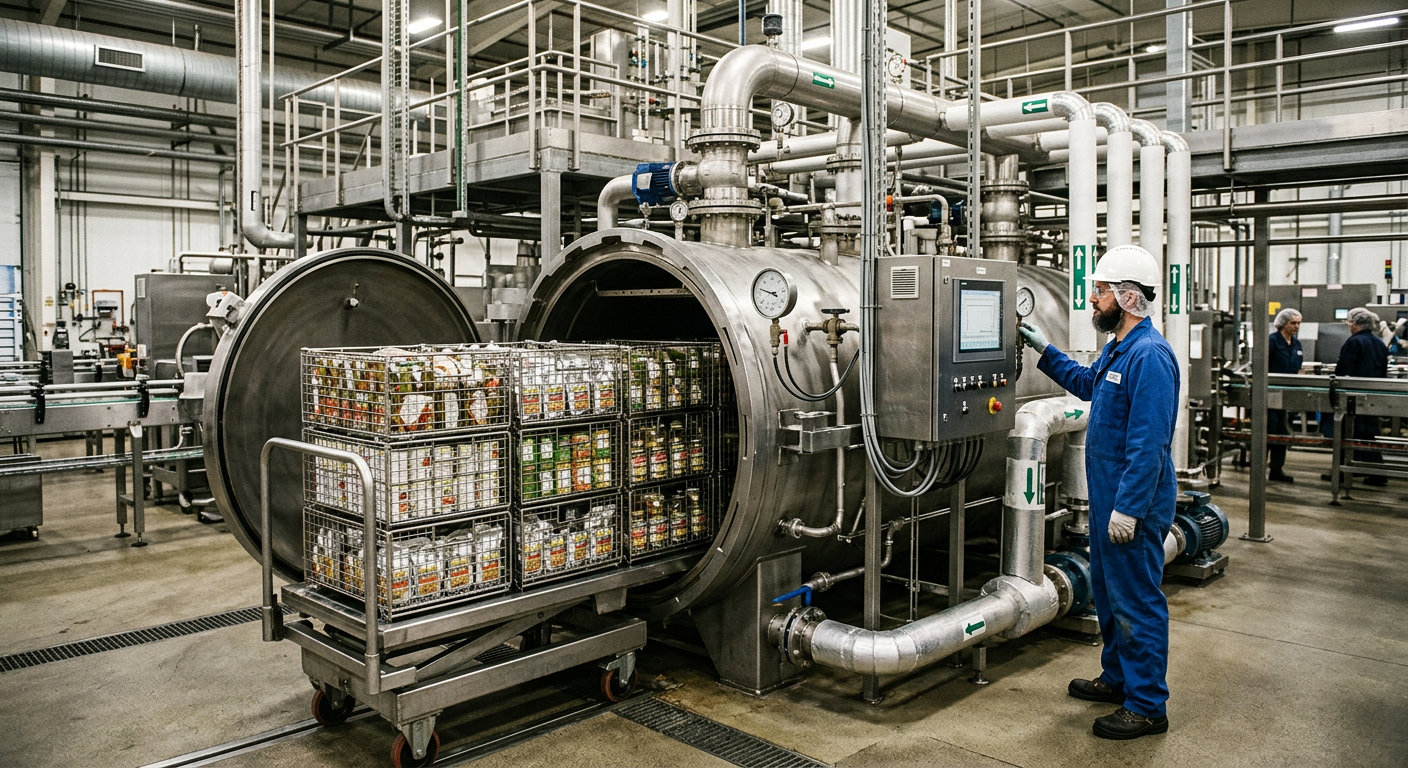
Sanitary CIP Systems for Food & Beverage
[trp_language language=”en_US”]
Clean-in-place systems are only truly sanitary when every wetted surface can be effectively cleaned, fully drained, verified, and maintained without creating hidden harborage points. In the United States, a sanitary CIP system for food and beverage plants must combine sound hygienic design, validated spray coverage, proper materials such as 316L stainless steel, compliant elastomers, suitable surface finishes, and documented cleaning controls aligned with food safety expectations under FDA FSMA. For processors in dairy, brewing, ready-to-drink beverages, sauces, proteins, aseptic products, and ingredients, the difference between a basic CIP skid and a sanitary CIP system is not the presence of tanks and pumps alone. It is the disciplined integration of geometry, flow, chemistry, temperature, time, automation, and verification.
For manufacturers expanding in the United States, especially around hubs such as Chicago, Milwaukee, Fresno, Dallas-Fort Worth, Charlotte, Atlanta, Los Angeles, and the Port of Savannah corridor, sanitary CIP design has become a strategic investment rather than a maintenance line item. Stronger audit expectations, tighter labor markets, water and energy pressures, and the rise of complex multi-SKU production have pushed processors to demand CIP systems that are reliable, inspectable, scalable, and easier to validate. Companies seeking full project execution often look for partners that can engineer the process, manage construction, integrate utilities, and support startup under one delivery structure. That is why many owners evaluating system upgrades review integrated engineering partners such as Disruptive Process Solutions when planning sanitary process infrastructure.
Quick Answer

A sanitary CIP system is designed so that product-contact surfaces can be cleaned repeatedly and reproducibly without dismantling equipment, while minimizing microbiological risk, chemical residue, product carryover, and operator variability. In practice, that means the system must provide:
- Complete and documented turbulent flow where required
- Validated spray device coverage
- Self-draining piping and vessels
- Materials compatible with product, chemistry, and temperature
- Hygienic welds, dead-leg control, and crevice-free connections
- Surface finishes appropriate to the soil and microbiological risk
- Instrumentation and automation that control time, temperature, conductivity, and flow
- Verification methods such as riboflavin coverage testing, conductivity confirmation, ATP trending, swabbing, and visual inspection
In the U.S. market, sanitary CIP systems are commonly used for dairies, breweries, distilleries, beverage blending lines, aseptic systems, sauce plants, prepared foods, and protein facilities. Buyers should not judge systems only by tank volume or pump horsepower. They should evaluate hygienic design details, documentation quality, FAT and SAT discipline, controls strategy, maintainability, and whether the system aligns with 3-A expectations, EHEDG design logic, and FSMA preventive controls.
| Sanitary CIP Element | Why It Matters | Typical Risk if Missing | Common Verification Method | Impact on Operations | Priority |
|---|---|---|---|---|---|
| Drainability | Prevents pooling after rinse and chemical steps | Microbial growth and dilution errors | Water hold-up observation | Higher sanitation reliability | Critical |
| Spray Coverage | Ensures all internal surfaces are wetted | Shadowing and residue retention | Riboflavin test | Fewer reclean cycles | Critical |
| Surface Finish | Reduces soil adhesion and biofilm retention | Difficult cleaning and scratches holding soil | Ra measurement | Shorter CIP time | High |
| Dead-Leg Control | Minimizes stagnant zones | Bacterial harborage | Design review and borescope check | Better audit performance | Critical |
| Material Compatibility | Prevents corrosion and seal failure | Contamination and leaks | Chemical compatibility review | Longer asset life | High |
| Automation & Records | Provides repeatability and traceability | Inconsistent cleaning | Batch logs and trend review | Stronger compliance | High |
The table above shows why sanitary CIP performance is multidisciplinary. A well-built skid with poor piping geometry still fails hygienically. A polished vessel with bad spray coverage still leaves residue. A compliant design without data logging still becomes difficult to defend during audits or investigations.
What Makes a CIP System Truly Sanitary: Design Principles

The foundation of sanitary CIP design is simple: every internal product-contact surface must be reachable by cleaning fluid under controlled conditions, and every cleaned surface must then release fluid and residues completely. Achieving that standard requires more than installing spray balls in tanks. It requires attention to geometry, hydraulics, fabrication, utility stability, and cleanability under the worst realistic operating condition.
First, hygienic layout matters. Product circuits should minimize unnecessary tees, branches, long horizontal runs, oversized valves, and idle legs. Pipe routing should support slope and drainage. Instruments should be mounted with hygienic process connections and positioned to avoid stagnant pockets. Heat exchangers, fillers, blend skids, mixproof valves, piggable lines, and process tanks should all be reviewed as one cleanable circuit rather than as isolated assets.
Second, cleaning parameters must be engineered rather than guessed. The classic variables of time, temperature, chemical concentration, and mechanical action still apply, but modern sanitary systems also account for soil type, viscosity, sugar load, protein denaturation, mineral scale, emulsified fats, particulate behavior, and allergen changeover risk. For example, a brewery in Milwaukee cleaning bright tanks and yeast lines faces different chemistry and flow needs than a dairy beverage plant in California’s Central Valley cleaning UHT balance tanks and aseptic surge systems.
Third, sanitary CIP design depends on inspectability. Operators and quality teams must be able to confirm nozzle condition, gasket integrity, weld quality, and residue removal. Sight glasses, removable spray devices where appropriate, accessible valve clusters, and practical sample points all improve both cleaning confidence and maintenance speed.
Fourth, the controls system should prevent human error. Modern food and beverage plants increasingly require recipe-driven CIP sequences with permissives, flow proof, conductivity checks, return diversion logic, alarm capture, and data archiving. A sanitary design is not fully sanitary if the control philosophy allows operators to bypass concentration limits or skip the final rinse verification.
| Design Principle | Sanitary Goal | Example in Food Plants | Example in Beverage Plants | Failure Mode | Recommended Action |
|---|---|---|---|---|---|
| Short, cleanable circuits | Reduce shadow zones | Sauce transfer loops | RTD syrup loops | Residual product pockets | Limit unnecessary branches |
| Velocity control | Remove soils mechanically | Dairy blend lines | Beer process headers | Laminar zones | Confirm flow by circuit |
| Spray device selection | Wet all vessel surfaces | Mix tanks | Fermenters and BBTs | Missed top-head coverage | Match nozzle to geometry |
| Self-draining construction | No standing liquid | Protein CIP branches | Juice blend skids | Micro growth in low points | Use hygienic slope and orientation |
| Hygienic fabrication | Smooth, crevice-free surfaces | Retort prep tanks | Kombucha process vessels | Rough welds trap soil | Orbital weld QA and inspection |
| Automation with records | Repeatability and evidence | Allergen changeovers | Aseptic beverage cleaning | Missed parameters | SCADA trends and reports |
For U.S. owners planning new lines, buying advice should start with a realistic process map. Identify every product family, every allergen boundary, every thermal process interface, every sanitation turnaround window, and every future expansion scenario. That approach is especially important for co-packers in fast-growth markets such as Texas, North Carolina, and Southern California, where SKU proliferation can quickly outgrow an undersized or inflexible CIP architecture.
The chart illustrates a realistic growth pattern in sanitary CIP project activity across the United States. Growth is being driven by beverage capacity additions, aging dairy infrastructure replacement, automation upgrades, and stricter verification expectations. Looking toward 2026, systems that reduce water use, support data-rich validation, and integrate with plant-wide controls will gain priority.
3-A Sanitary Standards: Requirements for CIP Equipment

In the United States, 3-A Sanitary Standards remain highly influential for equipment used in dairy and broader hygienic processing environments. While not every food plant is formally required to use 3-A certified equipment across all assets, the principles are widely recognized as a benchmark for sanitary design. For CIP systems, 3-A thinking affects tanks, fittings, valves, pumps, instrumentation interfaces, and spray devices, with emphasis on cleanability, drainability, material suitability, and fabrication quality.
From an owner’s perspective, 3-A alignment means asking detailed questions. Are product-contact elastomers compliant and traceable? Are interior welds finished correctly? Do spray devices meet intended duty? Are connections free of ledges and compression defects? Are vessels sloped and vented hygienically? A system that appears polished externally may still fail these questions internally.
Equipment buyers should also distinguish between individual component conformance and whole-system sanitary performance. A CIP skid can be built from quality pumps and valves, yet still underperform if return piping creates hold-up, if conductivity probes are poorly placed, or if the supply and return headers are not designed around the full circuit matrix.
| 3-A Related Focus Area | What Buyers Should Check | Typical Equipment | Sanitary Benefit | Audit Value | Operational Note |
|---|---|---|---|---|---|
| Product-contact materials | Certificates and compatibility | Tanks, valves, tubing | Prevents contamination | Strong | Review chemical exposure |
| Surface finish | Specified Ra and weld finish | Vessels and manifolds | Improves cleanability | Strong | Important for sticky soils |
| Drainability | Slopes and low-point elimination | Lines and tanks | Stops stagnant liquid | Very strong | Check installed orientation |
| Hygienic connections | Clamp, seal, ferrule quality | Fittings and instruments | Reduces crevice risk | Strong | Assembly discipline matters |
| Spray device suitability | Coverage and flow rating | Spray balls or rotary heads | Reliable vessel cleaning | Moderate | Validate in actual tank |
| Documentation | Drawings, MTRs, manuals | Entire skid | Traceability and maintenance | Very strong | Essential for handover |
U.S. processors serving major retail and foodservice customers often find that high-quality documentation is as valuable as the hardware itself. Under supplier approval, customer audits, and certification schemes, being able to show material traceability, finish specs, and validation records reduces risk. Manufacturers working with an experienced engineering and integration team can build that compliance package into the project from the beginning through detailed design, fabrication oversight, and startup documentation. Companies exploring that model can review broad process and project support capabilities at engineering and integration services.
EHEDG Guidelines for Hygienic Design of CIP Systems
Although EHEDG is European in origin, its hygienic design logic is highly relevant in the United States, particularly for multinational processors and plants benchmarking global best practices. EHEDG guidance emphasizes proven cleanability, avoidance of contamination niches, and design based on actual fluid dynamics and product behavior rather than assumptions. This is especially valuable in high-care beverage, dairy, and aseptic applications.
EHEDG-oriented design asks practical questions that U.S. plants increasingly care about: Can the equipment really be cleaned under installed conditions? Are there shadowed surfaces beneath agitators, baffles, manways, or sampling assemblies? Does the return line fully evacuate? Can seals survive repeated thermal cycling and caustic-acid transitions? Is the spray pattern validated at minimum operating volume and pressure?
The most useful lesson from EHEDG for American manufacturers is that sanitary design must be demonstrated, not merely claimed. This aligns well with modern validation culture in FDA-regulated sectors. It also helps processors entering more demanding channels such as shelf-stable beverages, dairy-based RTD products, plant-based proteins, and aseptic foods.
For plants around New Jersey, Pennsylvania, and the Southeast where older facilities are being retrofitted, EHEDG-style scrutiny often reveals that the biggest CIP issues are not in the skid itself but in legacy process equipment interfaces. Old branch connections, retrofitted instruments, non-hygienic reducers, and poorly sloped returns can compromise the entire cleaning strategy.
This trend chart reflects a realistic market shift: U.S. buyers are moving from simply purchasing CIP hardware to demanding validated hygienic outcomes. By 2026, sustainability and digital traceability will reinforce that trend. Water reuse logic, conductivity-based recovery, heat recovery, chemical optimization, and automated exception reporting are expected to become standard features in advanced sanitary systems.
Materials of Construction: 316L SS, Gaskets & Seal Selection
Material selection is one of the clearest dividing lines between a sanitary CIP system that lasts and one that degrades under real production conditions. For most demanding food and beverage applications, 316L stainless steel is preferred for wetted product-contact and CIP-contact surfaces because it offers superior corrosion resistance, especially in the presence of chlorides, acid solutions, and repeated caustic cleaning cycles. In less aggressive services, 304 stainless may be acceptable, but many owners choose 316L for critical circuits to reduce long-term risk and standardize maintenance.
However, the metal alone does not determine sanitary performance. Gaskets, valve seats, pump seals, hose liners, and instrument seals are frequent failure points. Elastomer choice must reflect temperature, chemistry, product exposure, cleaning frequency, and regulatory expectations. EPDM is common for many CIP services, while PTFE, FKM, or specialized materials may be selected based on chemical resistance and application demands. A poor gasket choice can swell, crack, absorb flavors, or create crevices that trap residue.
Seal selection is equally important in pumps, rotary valves, and agitators. Mechanical seals should be chosen not only for process containment but also for cleanability and compatibility with the plant’s cleaning chemistry. In facilities producing acidic juices, flavored beverages, cultured dairy, or high-salt sauces, aggressive cleaning conditions can shorten seal life unless the design margin is adequate.
| Material or Seal Type | Typical Use | Main Strength | Main Limitation | Best Fit Application | Buyer Tip |
|---|---|---|---|---|---|
| 316L Stainless Steel | Tanks, tubing, manifolds | Strong corrosion resistance | Higher cost than 304 | Dairy, beverage, aseptic, acids | Use for critical wetted areas |
| 304 Stainless Steel | Utilities or lower-risk areas | Cost-effective | Less resistant to harsh chemistry | Non-critical support circuits | Review chloride exposure |
| EPDM | Gaskets and seats | Good steam and caustic tolerance | Not ideal for all oils | Dairy and beverage CIP | Verify temperature window |
| PTFE | Seals and backup materials | Excellent chemical resistance | Can be less elastic | Aggressive chemical service | Check compression behavior |
| FKM | Specialized seals | Chemical and heat resistance | Application-specific limits | Flavor systems, some solvents | Confirm food-contact suitability |
| Silicone | Selected gaskets | Flexible and common | Can absorb or tear in some uses | Light-duty or specific needs | Do not assume universal fit |
The table shows why material specification should be part of the front-end design process, not a late purchasing decision. Processors near coastal trade hubs such as Los Angeles/Long Beach, Houston, and Savannah may also consider local water chemistry and cleaning utility quality, since chlorides and inconsistent rinse water can accelerate corrosion in poorly selected systems.
From a technology standpoint, advanced project teams increasingly model materials and elastomer choices alongside automation and process duty. DPS, for example, supports sanitary systems using integrated process, mechanical, controls, and utility engineering so that metallurgy, seal compatibility, automation logic, and cleaning performance are considered together rather than in isolation.
Surface Finish Requirements: Ra Values & Electropolishing
Surface finish directly affects how easily soils release during CIP. Rougher surfaces create microscopic valleys where proteins, sugars, minerals, fats, and microorganisms can lodge. In hygienic processing, internal surface roughness is commonly specified using Ra values. Lower Ra generally improves cleanability, though the correct target depends on application, product risk, fabrication method, and budget.
For many sanitary food and beverage applications, an Ra around 32 microinch or better is a common baseline expectation for product-contact surfaces, with tighter finishes often specified for higher-risk or more difficult-to-clean applications. Electropolishing may be considered where superior cleanability, passivation, and reduced surface irregularities are valuable, especially in aseptic, pharmaceutical-adjacent, cultured dairy, and high-purity beverage systems.
Still, finish specification should be practical. Chasing an ultra-low Ra everywhere can add cost without meaningful sanitation benefit if the real problem is dead-leg geometry or poor spray coverage. The best sanitary projects specify surface finish where it matters most: vessel interiors, manifolds, filler bowls, critical transfer lines, and components exposed to difficult soils or microbiological sensitivity.
| Surface Finish Approach | Typical Ra Range | Sanitary Benefit | Cost Impact | Best Use Case | Notes |
|---|---|---|---|---|---|
| Standard sanitary mill finish | Higher than critical hygienic targets | Basic cleanability | Low | Non-critical support areas | Confirm actual finish, do not assume |
| Mechanical polish | Around common sanitary targets | Improved residue release | Moderate | Most food and beverage circuits | Widely used baseline |
| Enhanced polish | Lower Ra than standard | Better for sticky or protein soils | Moderate to high | Dairy and sauce systems | Useful in hard-to-clean zones |
| Electropolished finish | Very low effective roughness | Excellent cleanability and passivation | High | Aseptic or sensitive applications | Evaluate ROI carefully |
| As-welded interior | Variable | Often inadequate hygienically | Low initial cost | Generally avoid in product contact | Risk of inclusions and roughness |
| Improperly repaired finish | Inconsistent | Poor sanitation reliability | Hidden long-term cost | None | Repair and repassivate correctly |
This is also a manufacturing capability issue. A sanitary design on paper becomes valuable only if fabrication quality is controlled. DPS manufactures selected process equipment, including custom CIP systems and sanitary tanks, which helps align design intent with practical fabrication and installation requirements. Owners evaluating available products can review process equipment capabilities when comparing build options for sanitary skids, vessels, and integrated systems.
Drainability, Cleanability & Inspectability Criteria
A system is not sanitary if it cannot drain. Drainability is often the most overlooked and most important element of hygienic CIP performance. Every horizontal run, valve cluster, branch, pump casing, and tank bottom should be evaluated for residual liquid hold-up after cleaning and after the final rinse. Standing liquid can dilute chemicals in the next cycle, support microbial growth during idle periods, and compromise allergen control.
Cleanability refers to the ability to remove expected soils under defined CIP conditions. That means the system must be designed for the actual products being processed. High-fat dressings, sugar syrups, dairy proteins, plant protein slurries, smoke flavor residues, fermentation soils, and mineralized hard-water deposits all behave differently. Cleanability must therefore be demonstrated against the toughest realistic condition, not just under water-test assumptions.
Inspectability ties the other two together. If teams cannot access critical components for periodic review, they will miss worn spray devices, damaged gaskets, rouged surfaces, or improperly reassembled fittings. Facilities that run high uptime schedules in markets such as Chicago, Minneapolis, and Central California often benefit from sanitary designs that simplify preventive maintenance and speed troubleshooting.
The bar chart highlights where demand for sanitary CIP upgrades is particularly strong. Aseptic, dairy, and RTD beverage projects are leading because they combine product sensitivity, SKU complexity, and strong audit requirements. Protein and sauce segments are also active as plants modernize for higher throughput and tougher changeover standards.
Buying advice in this area is straightforward: request slope details, nozzle coverage assumptions, dead-leg criteria, instrument orientation drawings, and drain-down expectations during design review. If a supplier cannot explain how the system drains, how it is inspected, and how spray coverage was validated, the sanitary claim is incomplete.
FDA FSMA Compliance for Sanitary Cleaning Operations
FSMA does not prescribe one single CIP design, but it absolutely raises the importance of preventive, documented, and verifiable sanitary cleaning operations. A CIP program supporting FSMA readiness should be risk-based, validated where needed, monitored, corrected when deviations occur, and supported by records. The hygienic design of the equipment is what makes those controls practical.
For food and beverage processors in the United States, FSMA-aligned CIP management typically includes documented cleaning procedures, chemical setpoints, temperature limits, contact times, rinse endpoints, pre-operational inspection criteria, and corrective action protocols. In allergen-sensitive environments, changeover verification becomes especially important. In high-risk beverage and aseptic systems, microbiological control and final rinse assurance become even more critical.
Plants that treat CIP as a compliance issue rather than a process capability often struggle. The best operators tie CIP into quality, maintenance, utilities, and production planning. They also ensure that automation retains records and that operators understand deviations. If conductivity is low, if return temperature falls, or if flow does not meet target, the system should force an appropriate response.
Service capability matters here. Beyond design and fabrication, successful sanitary CIP projects require feasibility review, capital planning, owner representation, construction management, installation oversight, commissioning, and startup support. DPS is known in the market for a design-build-manage approach that helps U.S. manufacturers connect engineering decisions to execution, budget discipline, and long-term operating profitability, especially on complex food and beverage capital projects.
| FSMA-Oriented CIP Control | Purpose | Typical Record | Deviation Example | Corrective Action | Business Benefit |
|---|---|---|---|---|---|
| Defined cleaning recipe | Consistency | CIP cycle report | Wrong step duration | Reclean and retrain | Repeatable sanitation |
| Temperature monitoring | Chemistry performance | Trend log | Low caustic temperature | Hold line and repeat step | Better soil removal |
| Conductivity verification | Chemical concentration | Batch archive | Weak acid or caustic | Adjust and rerun | Lower contamination risk |
| Flow confirmation | Mechanical action | Flow trend | Insufficient circulation | Inspect pump or valve status | Validated cleaning energy |
| Pre-op inspection | Release readiness | Sanitation checklist | Visible residue | Reclean affected circuit | Fewer startup failures |
| Corrective action process | Control deviations | CAPA record | Repeated rinse failure | Root cause and redesign | Audit resilience |
The table shows how design and compliance connect. You cannot maintain strong records if the system lacks proper sensors. You cannot verify rinse endpoints if conductivity probes are in the wrong location. You cannot hold a sanitary standard if operators must manually compensate for bad hydraulic design.
Verification Methods: Riboflavin Testing & Coverage Validation
Verification is where sanitary intent becomes demonstrated performance. Riboflavin testing is one of the most recognized methods for confirming spray coverage inside tanks and complex equipment. A fluorescent riboflavin solution is applied to target surfaces, the cleaning device is run under defined conditions, and UV light is then used to identify missed areas. It is especially valuable for validating spray balls or rotary heads in vessels with internals such as agitators, baffles, ladders, shadow plates, or sensor clusters.
Coverage validation should not stop there. Effective sanitary CIP verification may also include flow verification, conductivity confirmation, temperature mapping, visual inspection, ATP testing, allergen swabs, microbiological trending, and periodic internal inspection during maintenance windows. In high-value systems, FAT and SAT protocols should include defined acceptance criteria for these checks.
Real-world applications vary by industry. A brewery may focus on vessel coverage, beer stone removal, and yeast control. A dairy beverage processor may emphasize protein removal, allergen prevention, and final rinse integrity. A sauce manufacturer may need stronger mechanical action and dead-leg review due to viscosity and seasoning carryover. A co-packer running multiple beverage formulas in North Carolina or Texas may prioritize quick turnaround, recipe automation, and batch-record traceability.
The comparison chart makes the commercial point clearly: sanitary performance is not just about cleaning chemistry. Advanced systems outperform basic packages because they provide better validation depth, more useful records, stronger automation, and better long-term support. That difference matters when owners compare suppliers, justify capital spending, or prepare for customer and regulatory scrutiny.
Case studies across the U.S. market show a repeating pattern. Plants often begin with a capacity problem or sanitation inconsistency, then discover that the root cause is broader: controls limits, poor line routing, under-validated spray patterns, or utility instability. In projects like these, integrated engineering teams can create value by diagnosing the true bottleneck before equipment is overbought. Manufacturers considering this approach often study past project execution examples through industry case experience to understand how design choices affect throughput, sanitation performance, and return on capital.
Looking ahead to 2026, verification methods will become more digital and predictive. Expect wider use of automated cycle analytics, sensor-rich return monitoring, exception dashboards, remote support, and sustainability metrics that quantify water, chemical, and energy intensity per cleaned circuit. Policy pressure around resource consumption and customer expectations around data transparency will both accelerate this shift.
FAQ
What is the difference between a basic CIP system and a sanitary CIP system?
A basic CIP system circulates cleaning solutions. A sanitary CIP system is engineered so all product-contact surfaces are cleanable, drainable, inspectable, and verifiable under real operating conditions. It also includes better materials, fabrication quality, controls, and documentation.
Is 316L stainless steel always required?
Not always, but 316L is often preferred for critical wetted surfaces in food and beverage plants because it offers stronger corrosion resistance during repeated CIP exposure. The right choice depends on product chemistry, cleaning chemicals, temperature, and lifecycle cost.
Are 3-A and EHEDG the same?
No. They are different frameworks, but both support hygienic design thinking. In the United States, 3-A is especially influential, while EHEDG offers widely respected guidance on proven cleanability and contamination prevention.
How do I validate spray coverage in tanks?
Riboflavin testing is a common method. It helps show whether spray devices reach all intended surfaces. It is especially useful in vessels with internal obstructions such as agitators, baffles, or instrument assemblies.
What surface finish should I specify?
That depends on the product and risk level. Many sanitary applications use finishes around common hygienic Ra targets, while more demanding systems may justify tighter finishes or electropolishing. The specification should match the soil, microbiological sensitivity, and budget.
Why is drainability so important?
Pooled liquid supports microbial growth, dilutes subsequent chemical steps, and increases the chance of residue retention. A system that does not drain fully cannot be considered reliably sanitary.
Which industries need the most advanced sanitary CIP systems?
Dairy, aseptic beverages, RTD products, breweries, distilleries, sauces, prepared foods, and protein processing all benefit, but the highest design rigor is usually found where product sensitivity, changeover complexity, and audit pressure are greatest.
What should U.S. buyers ask suppliers before purchasing?
Ask for material specifications, weld and finish standards, drainability assumptions, spray coverage validation, controls architecture, FAT/SAT scope, utility requirements, documentation package, spare parts strategy, and post-startup support.
Who should manage a sanitary CIP capital project?
The strongest outcomes usually come from teams that can coordinate process engineering, utility design, sanitary fabrication, controls, installation, startup, and compliance documentation together. That reduces gaps between design intent and installed performance.
In the United States, sanitary CIP systems are no longer optional infrastructure for serious food and beverage manufacturers. They are a core part of food safety, production uptime, audit readiness, changeover speed, and capital efficiency. Whether the application is a dairy beverage plant in California, a brewery in Wisconsin, a sauce facility in Illinois, an aseptic line in the Southeast, or a growth-stage co-packer in Texas, the same principle holds: a CIP system is only truly sanitary when design, fabrication, automation, and verification all work together.
[/trp_language]
Complete Company Portfolio
About the Author: Disruptive Process Solutions (DPS)
The DPS team combines process engineering expertise with real-world food and beverage manufacturing experience. Our content focuses on process optimization, production efficiency, facility improvements, and practical solutions that help manufacturers operate more effectively in a rapidly evolving industry.
Share