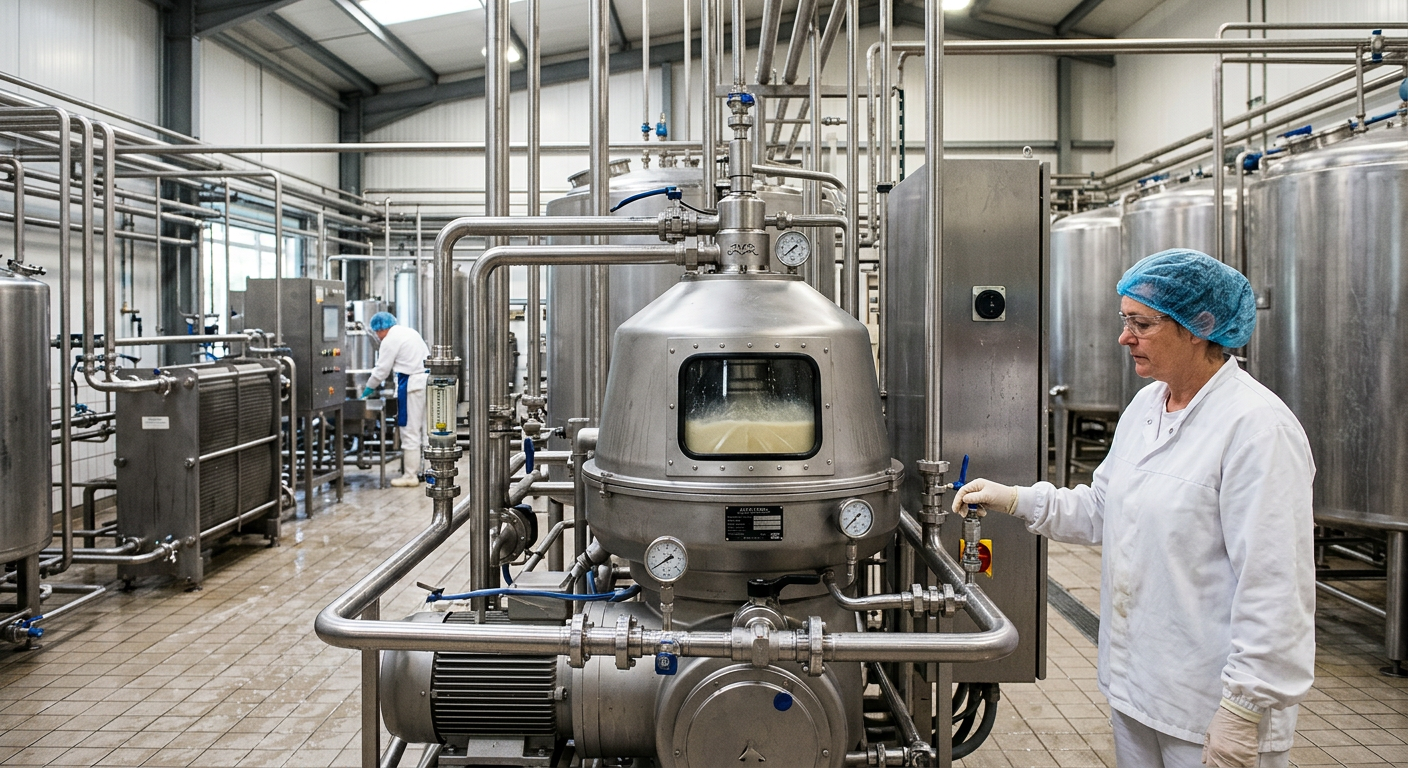
Sanitary Process Engineering for Food Plants
[trp_language language=”en_US”]
Food and beverage plants in the United States cannot treat sanitary process engineering as an optional upgrade. It is a core discipline that affects product safety, shelf life, audit readiness, throughput, labor efficiency, and long-term capital performance. Whether a facility runs dairy in Wisconsin, protein in Arkansas, sauces in Illinois, beverages in California, or aseptic products near the Port of Savannah, sanitary design choices directly influence contamination risk and operating cost.
At the practical level, sanitary process engineering is the design of equipment, piping, utilities, controls, and cleaning systems so that product-contact surfaces can be reliably cleaned, inspected, drained, maintained, and validated. It applies to tanks, valves, pumps, fillers, heat exchangers, blenders, transfer lines, utility tie-ins, and CIP skids. It also governs how projects are planned and executed, especially when the owner wants to scale capacity without compromising compliance under FDA, USDA, SQF, or BRC expectations.
For manufacturers evaluating new lines, retrofits, expansions, or plant relocations, the smartest buying decision is not simply choosing the cheapest equipment package. It is selecting a sanitary process strategy that supports the product category, cleaning regime, allergen profile, changeover frequency, and production economics of the site. That is why many operators turn to integrated engineering partners that can design, build, and manage complete systems instead of treating sanitation as an afterthought. In North America, this approach is especially valuable for multi-site manufacturers operating from hubs such as Chicago, Dallas, Charlotte, Fresno, Los Angeles, Houston, and Toronto.
Quick Answer

Sanitary process engineering is the engineering discipline that makes food, beverage, dairy, protein, and aseptic processing systems cleanable, drainable, inspectable, and compliant. In the United States, it is non-negotiable because poor sanitary design can lead to microbial harborage, allergen cross-contact, costly recalls, failed audits, reduced uptime, and shortened equipment life.
A well-engineered sanitary system usually includes smooth and corrosion-resistant product-contact materials, orbital or high-quality sanitary welds, proper slopes for drainage, minimal dead legs, hygienic valves and fittings, validated cleaning cycles, and controls that document critical cleaning parameters. It also matches the cleaning method to the process. Some systems are best cleaned in place with automated CIP. Others require COP for removable parts, utensils, and hard-to-reach components.
For buyers in the United States, the correct approach depends on product type. Dairy beverages, RTD products, sauces, cultured products, breweries, distilleries, protein marinades, plant-based foods, and aseptic lines all have different sanitary risks. The right engineering solution balances safety, code compliance, labor efficiency, water and chemical use, and capital return.
| Sanitary Engineering Element | Primary Purpose | Typical Risk if Ignored | Who Benefits Most |
|---|---|---|---|
| CIP-capable equipment | Automated internal cleaning | Inconsistent wash coverage | Beverage, dairy, aseptic plants |
| Dead leg control | Reduce stagnant product zones | Microbial growth and residue | All hygienic processors |
| Sanitary weld quality | Prevent crevices and pits | Harborage and corrosion | High-acid and wet-clean plants |
| Drainability | Allow full product and rinse removal | Standing water and contamination | Dairy, sauces, beverage plants |
| Validated cleaning cycles | Prove repeatable cleanability | Audit findings and unsafe product | Regulated food manufacturers |
| Material compatibility | Match product and chemistry | Premature failure or leaching | All processors |
The table above shows why sanitary engineering is not limited to one component. It is a system-level discipline. A line can have good tanks but still fail hygienically if valve clusters, branch connections, pump seals, or controls were poorly specified.
What Sanitary Process Engineering Means and Why It Is Non-Negotiable

Sanitary process engineering begins with a simple principle: if a surface touches product or influences product exposure, it must be designed so contamination does not accumulate and cleaning can be proven effective. That principle extends beyond process piping into pumps, instrumentation, floor interfaces, utility penetrations, conveyor transitions, and packaging line connections.
In food plants across the United States, the consequences of poor sanitary design are expensive and immediate. A small dead end branch on a dairy line in upstate New York can become a persistent microbial niche. An improperly sloped line in a sauce facility near Atlanta can hold rinse water between runs. A rough weld on a protein marinade system in Omaha can trap organic residue and complicate allergen changeovers. In each case, the issue is not theoretical. It impacts product safety, labor hours, sanitation verification, and available production time.
Sanitary design is also non-negotiable because the market expects more from manufacturers than basic compliance. Retailers, co-packers, and brand owners increasingly demand documented hygienic design, shorter changeovers, lower environmental footprint, and stronger traceability. That is especially true in fast-growth categories such as functional beverages, cultured dairy, ready meals, plant proteins, premium sauces, and shelf-stable foods.
There is also a capital planning reason. When owners invest in process systems, they want more than code-compliant steel. They want profitable projects. That means the line should meet throughput goals, reduce cleaning downtime, fit future expansion, and support maintenance access without chronic rework. This business-minded view is one reason manufacturers seek firms that combine process engineering, project delivery, utility integration, and commissioning under one operating model rather than outsourcing each step in isolation.
The growth trend above reflects a realistic direction in the United States market: more spending on hygienic retrofits, automation, CIP modernization, and sanitary utility infrastructure as labor pressure, compliance expectations, and food safety risk continue to rise.
EHEDG, 3-A Sanitary Standards, and FDA Guidelines Explained

Sanitary process engineering in the United States sits at the intersection of recognized hygienic design principles and regulatory expectations. Three names come up repeatedly: EHEDG, 3-A Sanitary Standards, and FDA guidance. Each plays a different role, and understanding the distinction helps buyers make better equipment and design decisions.
EHEDG, or the European Hygienic Engineering & Design Group, is widely respected for hygienic design principles and test methods. While rooted in Europe, EHEDG guidance influences global best practice, especially for cleanability, drainability, and equipment design philosophy. U.S. processors with multinational brands or export exposure often reference EHEDG concepts when building higher-performance hygienic systems.
3-A Sanitary Standards are highly relevant in the United States, especially in dairy and related sectors. They provide detailed sanitary criteria for equipment design, materials, fabrication, and cleanability. If a processor in Minnesota or California is selecting tanks, pumps, valves, fittings, or heat exchangers for a dairy application, 3-A compliance can materially reduce risk in specification and audit defense.
FDA guidelines establish the regulatory baseline for food safety and current good manufacturing practice. In practical engineering terms, FDA expectations push plants toward cleanable design, suitable materials, contamination prevention, proper maintenance, and documented control of sanitation procedures. For meat and poultry plants, USDA expectations add another layer, while private schemes such as SQF and BRC often increase scrutiny around design detail and verification.
| Framework | Main Focus | Common U.S. Use Case | Engineering Impact |
|---|---|---|---|
| EHEDG | Hygienic design principles and testing | Global best-practice projects | Improves cleanability and design rigor |
| 3-A Sanitary Standards | Detailed sanitary equipment criteria | Dairy, beverage, clean liquid processing | Guides equipment selection and fabrication |
| FDA cGMP expectations | Regulatory compliance and food safety | Most U.S. food and beverage plants | Requires cleanable, maintainable systems |
| USDA expectations | Meat and poultry oversight | Protein processing facilities | Drives hygienic zoning and washdown design |
| SQF | Food safety management system audits | Retailer-facing manufacturers | Increases documentation and verification needs |
| BRCGS | Brand and retailer assurance | Exporters and branded suppliers | Strengthens sanitary design accountability |
The key lesson from this table is that no single framework covers everything. U.S. projects often need a blended approach. A sanitary design partner should be able to interpret these frameworks together and convert them into fabrication standards, utility specifications, piping details, and cleaning validation plans.
Manufacturers looking for broader project support often start with an engineering partner’s company background and operating philosophy to confirm whether the team understands both food safety and capital efficiency. That matters when a project involves not just compliant steel, but business-critical schedule and startup performance.
CIP System Design: Engineering for Cleanability Without Disassembly
Cleaning in place is one of the most important tools in sanitary process engineering. A properly designed CIP system cleans internal product-contact surfaces without taking the process line apart. This reduces labor, shortens downtime, improves repeatability, and supports automated documentation. In beverage plants, dairy operations, RTD facilities, sauce kitchens, aseptic systems, and many liquid processing environments, CIP is often the preferred strategy.
Good CIP design starts with the process itself. Engineers must understand product viscosity, sugar load, protein content, fat behavior, thermal history, allergen profile, and run length. A syrup room near Los Angeles, a yogurt line in Idaho, and a marinade system in Texas will not require the same velocities, circuits, chemicals, or rinse strategy.
Core design factors include turbulent flow, adequate return, temperature control, chemical concentration, contact time, spray coverage, drainability, and reliable separation between product and cleaning media. Instrumentation should measure conductivity, temperature, flow, and sometimes turbidity. Controls should document cycle completion and alarm deviations. Tank design, pump sizing, valve arrangement, and line routing must all support full wetting and full evacuation.
Single-use, reuse, and hybrid CIP systems each have a place. Reuse systems can reduce water and chemical cost in larger plants, while single-use systems may simplify risk management in certain allergen or product-switch environments. The correct answer depends on production economics, sustainability goals, and sanitation risk tolerance.
| CIP Design Factor | Why It Matters | Typical Target Consideration | Common Failure Mode |
|---|---|---|---|
| Flow velocity | Promotes soil removal | Turbulent conditions in lines | Laminar flow and poor cleaning |
| Temperature | Improves chemical action | Matched to soil type | Protein burn-on remains |
| Chemical concentration | Controls wash strength | Validated caustic/acid ranges | Ineffective cleaning or excess corrosion |
| Contact time | Allows full soil breakdown | Recipe-based cycle length | Short cycles and residue carryover |
| Spray device coverage | Cleans tank internals | 360-degree wetting where needed | Shadow zones in vessels |
| Drainability | Prevents standing solution | Sloped lines and low-point drains | Rinse water retention |
These factors show why CIP is not just a skid purchase. It is a systems integration problem involving process, controls, utilities, piping, instrumentation, and operator workflow. A high-performing CIP installation typically benefits from an engineering team that can also address steam, hot water, compressed air, cooling, and automation interfaces under a unified scope. Manufacturers can review integrated process engineering and project delivery services when considering this kind of work.
By 2026, expect CIP systems in the United States to use more data-driven optimization. Conductivity trending, recipe management, digital verification, water reuse logic, and energy reporting will increasingly move from premium features to expected project deliverables, particularly in larger multi-line food and beverage plants.
Sanitary Piping Design: Welding, Surface Finish, and Dead Leg Elimination
Sanitary piping design is where many projects succeed or fail. Even expensive equipment can underperform hygienically if the line routing, welding, branch geometry, or support strategy is poor. Product-contact piping should be smooth, drainable, accessible, and free from unnecessary pockets, abrupt transitions, or uncleanable branch connections.
Weld quality is critical. In hygienic service, welds must avoid undercut, burn-through, pits, cracks, oxidation, and crevice formation. Orbital welding is often preferred for consistency on stainless tubing, especially where repeatability and documentation matter. Surface finish also matters because rougher surfaces hold residue more readily and are harder to clean. The acceptable finish depends on the product and risk profile, but the design should always align with sanitary performance, not just fabrication convenience.
Dead legs are among the most common design flaws in food plants. A dead leg is a branch or pocket where product or cleaning solution stagnates because flow is inadequate. These areas are especially dangerous in dairy, aseptic, low-acid, and extended-run applications. The best practice is to eliminate dead legs during design rather than trying to sanitize around them later.
Routing also influences maintenance and safety. Piping should allow proper support, expansion management, inspection, and washdown access. In busy retrofit environments such as legacy plants in New Jersey, Ohio, or the Central Valley of California, engineers must often redesign around existing structural and utility constraints without compromising hygienic principles.
The demand comparison above reflects how different sectors prioritize hygienic piping investments. Dairy, beverages, and aseptic applications usually rank highest because they combine frequent cleaning, strict microbiological control, and complex fluid handling.
| Piping Design Issue | Preferred Practice | Why It Helps | Typical Plant Impact |
|---|---|---|---|
| Tubing welds | Qualified sanitary welding, often orbital | Reduces crevices and variability | Better cleanability and audit confidence |
| Internal surface finish | Smooth finish matched to application | Lowers soil retention | Faster, more reliable cleaning |
| Dead legs | Minimize branch length and stagnation | Prevents microbial harborage | Fewer sanitation failures |
| Pipe slope | Designed for self-drainability where required | Removes rinse and product hold-up | Less standing water |
| Valve clusters | Compact hygienic arrangement | Improves flow paths and access | Better CIP performance |
| Supports and access | Allow washdown and inspection clearance | Avoids hidden contamination points | Lower maintenance burden |
This is also where case experience matters. A capable engineering partner understands how sanitary details change across product categories and building types. Manufacturers assessing retrofit examples can review selected project case studies and outcomes to see how sanitary and operational constraints were balanced in real facilities.
Material Selection: 316L Stainless Steel and Food-Grade Polymers
Material selection is a technical and economic decision. In many hygienic applications, 316L stainless steel is preferred because it offers strong corrosion resistance, good cleanability, durability, and compatibility with many food products and cleaning chemicals. It is especially useful where chloride exposure, acidic products, aggressive wash chemistry, or long service life justify the premium over lower-grade options.
That said, no single material is correct for every component. Food-grade polymers are widely used in gaskets, seats, hoses, pump parts, seals, scraper blades, sight glasses, and specialized wear components. The key is choosing materials that are chemically compatible, temperature appropriate, resistant to swelling or cracking, and suitable for the product and sanitation regime.
For example, a high-acid juice line in Florida may stress elastomers differently than a hot-fill sauce line in Missouri or a cultured dairy operation in Colorado. Steam exposure, CIP chemical strength, and mechanical abrasion must all be considered. Poor gasket selection is a classic hidden failure point in sanitary systems.
Material choice also affects lifecycle cost. A lower upfront material cost can produce higher downtime, more replacement parts, and more frequent contamination investigations. Buyers should ask not only what material is specified, but why it was chosen for that service, how it performs under sanitation chemistry, and how easy it is to source replacement components locally in the United States.
| Material | Common Sanitary Use | Strengths | Watchouts |
|---|---|---|---|
| 316L stainless steel | Tanks, tubing, valves, process equipment | Corrosion resistance, durability | Higher capital cost |
| 304 stainless steel | Some lower-risk or dry applications | Lower cost | Less resistant in harsh wet service |
| EPDM | Gaskets and seals | Good chemical and heat resistance | Not ideal for all oils or solvents |
| PTFE | Seats, seals, specialized contact parts | Broad chemical compatibility | Can have mechanical limitations |
| Silicone | Flexible seals and hoses | Temperature range and flexibility | May have wear limitations |
| UHMW or specialty polymers | Guides, wear parts, contact surfaces | Low friction and abrasion resistance | Application-specific suitability required |
The best specifications usually come from teams that understand both engineering and fabrication. For manufacturers comparing custom equipment packages, reviewing available process equipment capabilities can help determine whether a supplier understands sanitary construction, CIP integration, and material selection at the manufacturing level.
COP Systems vs. CIP Systems: Choosing the Right Sanitary Approach
COP, or clean-out-of-place, remains an essential part of many sanitary strategies. While CIP is ideal for fixed process equipment and closed piping systems, COP is often required for removable components such as fittings, utensils, nozzles, screens, parts baskets, and change parts. In some applications, a mixed sanitation model is the most effective and economical option.
The decision between COP and CIP should be based on equipment geometry, production frequency, labor availability, allergen control, and validation needs. A beverage blending line with permanent tanks and manifolds may favor CIP-heavy design. A prepared foods plant with frequent product changes, removable contact tools, and manual assemblies may need stronger COP infrastructure.
Buyers should also consider workforce realities. In regions where sanitation labor is harder to recruit and retain, such as high-cost metro markets, more automation in CIP can significantly improve consistency. In smaller plants with less automation budget and simpler equipment, a structured COP program may still perform well if the facility is designed for access, disassembly, and verification.
| Factor | CIP Better Fit | COP Better Fit | Recommendation |
|---|---|---|---|
| Closed liquid systems | Yes | Limited | Use automated CIP |
| Removable small parts | Not always | Yes | Provide COP tank and racks |
| High run frequency | Strong advantage | Labor-intensive | Favor CIP |
| Frequent allergen changeovers | Good if validated | Useful for critical parts | Use hybrid strategy |
| Capital budget constraints | Higher initial cost | Lower initial cost | Compare lifecycle, not just capex |
| Documentation and repeatability | Excellent with automation | Depends on SOP discipline | Favor CIP for consistency |
This comparison shows that the right answer is usually process-specific. In many U.S. plants, the most robust sanitary program combines automated CIP for fixed assets with properly designed COP stations for removable items. That hybrid approach often delivers the best mix of control, labor efficiency, and validation confidence.
The trend shift above reflects increasing investment in automation, data logging, and utility optimization. Water cost, labor pressure, sustainability goals, and audit discipline are all pushing U.S. facilities toward more sophisticated CIP design heading into 2026.
Common Sanitary Design Flaws and How to Avoid Them
Many sanitation problems originate in design decisions made long before startup. The most common flaws include dead legs, non-drainable piping, poor weld quality, inaccessible valve arrangements, flat-top surfaces that hold water, poorly selected elastomers, weak hygienic zoning, and CIP circuits that were never actually flow-tested under real conditions.
Another frequent issue is disconnected project delivery. One contractor installs the piping, another the controls, another the utilities, and no one fully owns hygienic performance. The result is a line that technically runs but is difficult to clean, hard to maintain, and expensive to verify. This is where integrated project leadership matters.
Disruptive Process Solutions, based in Cary, North Carolina with a West Coast presence in Lake Forest, California, is known in the market for combining process engineering, installation, and execution oversight within an end-to-end delivery model. From a service capability perspective, that matters because sanitary performance depends on design decisions, field installation quality, startup discipline, and accountability across the project lifecycle, not just on a drawing package.
On the technology side, manufacturers increasingly need sanitary systems integrated with PLC programming, automation, SCADA, recipe control, utilities, and commissioning. When a system includes blending, pasteurization, fermentation, carbonation, aseptic transfer, retort support, or protein processing, sanitary reliability depends on that broader technical integration. On the manufacturing side, custom tanks, CIP skids, vessels, and related process equipment can be optimized when the same team understands both fabrication and plant-level execution.
| Common Flaw | Likely Cause | Operational Consequence | How to Avoid It |
|---|---|---|---|
| Dead-end branch piping | Poor routing during design | Residue and microbial harborage | Review all branches for flow and cleanability |
| Standing water after wash | Insufficient slope or trapped low points | Listeria and biofilm risk | Design for drainage and verify in field |
| Hidden gasket failures | Wrong material or over-compression | Leaks and contamination | Specify chemistry-compatible elastomers |
| Inadequate CIP coverage | Undersized pumps or bad spray devices | Dirty internals and rewash cycles | Validate flow, pressure, and device selection |
| Poor weld finish | Unqualified fabrication practice | Crevices, corrosion, hard-to-clean surfaces | Enforce sanitary welding standards |
| Difficult equipment access | Layout driven only by footprint | Slow maintenance and poor inspection | Design for operator and sanitation access |
Avoiding these flaws requires early interdisciplinary review involving process, sanitation, operations, maintenance, quality, and controls. In retrofit projects, laser-accurate field verification and startup testing are equally important because many hygienic problems appear only after the line is wet and under production conditions.
Validation and Verification of Sanitary Process Systems
Validation and verification are the proof that sanitary design works in the real world. Validation establishes that the cleaning process, when properly executed, is capable of delivering the required sanitary outcome. Verification confirms on an ongoing basis that the process continues to perform as intended.
For CIP systems, validation may include riboflavin coverage tests, flow confirmation, conductivity checks, temperature mapping, swab studies, allergen testing, ATP trends, microbiological results, and review of complete cycle recipes. For COP programs, it may include visual inspection standards, soak parameters, chemistry control, time requirements, and post-clean verification steps.
Documentation is critical. U.S. manufacturers increasingly need proof not just that cleaning happened, but that it happened under validated conditions and can be traced during customer audits, regulatory review, and root-cause investigations. Digital records from PLCs and SCADA are becoming more important, especially in larger beverage, dairy, and aseptic plants.
Validation also supports smarter capital planning. If a manufacturer can reduce over-cleaning without increasing risk, it can save water, energy, chemicals, labor, and production time. This is one area where engineering, controls, and operational discipline create measurable profit impact.
The comparison above illustrates a common buying lesson in the United States: the more complex the sanitary project, the more value there is in providers that can unify process design, utilities, fabrication understanding, controls, installation, and commissioning rather than delivering only one piece of the scope.
| Validation/Verification Method | What It Confirms | Typical Use | Value to Plant |
|---|---|---|---|
| Riboflavin coverage test | Spray reach and wetting | Tanks and spray devices | Visual proof of CIP coverage |
| Conductivity monitoring | Chemical concentration transitions | Automated CIP skids | Improves repeatability |
| Temperature logging | Thermal cleaning conditions | Hot CIP circuits | Confirms recipe compliance |
| ATP testing | Organic residue indication | Rapid sanitation checks | Fast line release support |
| Allergen swabbing | Cross-contact control | Changeover validation | Protects label accuracy |
| Microbiological verification | Sanitary effectiveness over time | Higher-risk applications | Supports food safety confidence |
As sustainability and compliance expectations evolve toward 2026, validation will likely expand beyond cleanability alone. Plants will increasingly track water intensity, chemical consumption per cycle, energy use, and cleaning time as part of broader ESG and profitability metrics. The best sanitary systems will therefore be not only safe and compliant, but measurable and optimizable.
FAQ
What industries need sanitary process engineering most?
Dairy, beverage, protein, prepared foods, sauces, plant-based products, cultured products, aseptic processing, brewing, distilling, and co-packing all depend heavily on sanitary engineering. The exact design standard changes by product risk and cleaning regime.
Is sanitary engineering only for new plants?
No. Many of the highest-value projects in the United States are retrofits in existing facilities where drainage, piping, CIP circuits, utility systems, and hygienic zoning need to be upgraded without stopping the business for long periods.
When should a plant choose 316L stainless steel?
316L is commonly chosen when corrosion resistance, chemical exposure, cleanability, and long service life justify the added cost. It is especially common in demanding wet-clean, acidic, chloride-exposed, and high-hygiene applications.
What is the difference between hygienic design and sanitation procedures?
Hygienic design is the physical engineering of equipment and systems so they can be cleaned effectively. Sanitation procedures are the operating methods used to clean them. Good procedures cannot fully overcome poor design.
Can a plant use both CIP and COP?
Yes. Many facilities should. CIP is ideal for fixed piping and closed vessels, while COP is important for removable parts and smaller assemblies. A hybrid strategy often delivers the best result.
How do buyers evaluate a sanitary project partner?
Look for proven food and beverage experience, understanding of FDA and relevant industry standards, strong process and utility engineering, controls integration, fabrication knowledge, field execution capability, and transparent project management. A partner should also understand profitability, not just installation.
What should be included in a sanitary system quote?
Scope should cover process design basis, materials, weld and finish requirements, instrument list, CIP or COP philosophy, utility demand, controls integration, FAT or SAT expectations, validation approach, startup support, and documentation deliverables.
Why does local market knowledge matter in the United States?
Project success depends on local labor conditions, jurisdictional requirements, utility infrastructure, and logistics. Plants near Charlotte, Houston, Chicago, Seattle, Los Angeles, or the Port of Newark may face very different construction and sourcing realities.
What makes an engineering partner valuable beyond design?
A strong partner reduces rework, catches hidden bottlenecks, aligns sanitation with throughput, and helps owners invest capital where it improves long-term plant economics. That is especially useful for growing manufacturers that need smart scaling instead of fragmented contracting.
In short, sanitary process engineering is one of the clearest places where food safety, operational uptime, and capital strategy meet. For U.S. manufacturers, the best results come from designing hygienic performance into the system from day one, validating it before production pressure builds, and choosing a partner capable of integrating engineering, fabrication insight, installation, and startup execution into one accountable process.
[/trp_language]
Complete Company Portfolio

About the Author: Disruptive Process Solutions (DPS)
The DPS team combines process engineering expertise with real-world food and beverage manufacturing experience. Our content focuses on process optimization, production efficiency, facility improvements, and practical solutions that help manufacturers operate more effectively in a rapidly evolving industry.
Share

