-
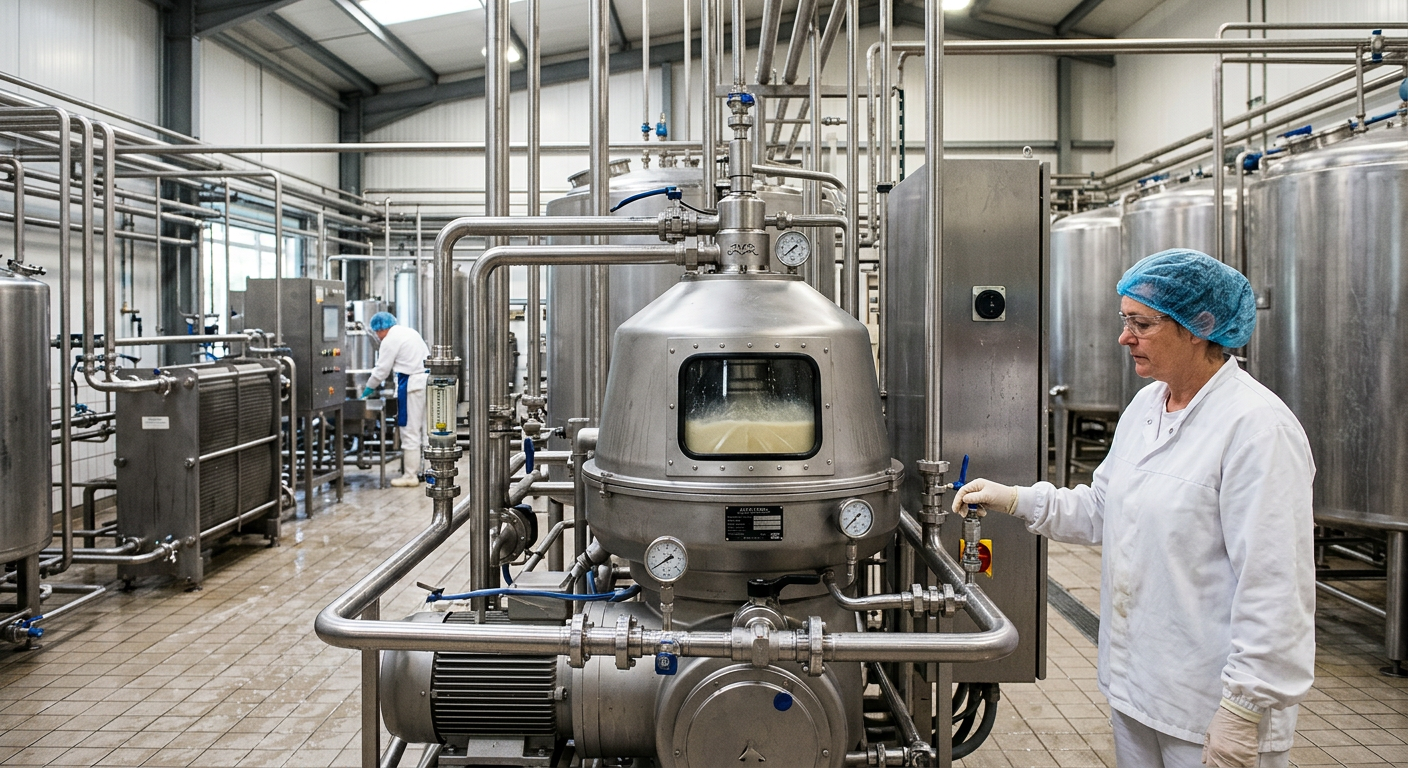
Food Plant Expansion Services
Food plant expansion in the United States is rarely just a construction project. It is an operating-risk decision tied to capacity, food safety, labor, utilities, customer commitments, and long-term return on capital. For processors in markets such as Chicago, Dallas, Fresno, Charlotte, Omaha, Atlanta, and the I-95 corridor, the right expansion strategy can unlock new volume without sacrificing audit readiness or throughput. The wrong strategy can create sanitation failures, utility bottlenecks, permitting delays, and expensive rework. Manufacturers expanding protein, dairy, prepared foods, beverage, aseptic, or co-packing operations need a practical framework that accounts for production continuity. That means evaluating whether to expand an existing plant, build a greenfield facility, or take a phased hybrid approach. It also means coordinating USDA or FDA expectations, utility upgrades, zoning, hygienic separation, temporary process reroutes, contractor access, and startup validation. Companies looking for experienced support often seek integrated engineering, construction, and execution partners rather than a fragmented handoff between designers and installers. For U.S. processors navigating these decisions, food and beverage engineering services that combine process design, utility planning, construction coordination, and startup management can reduce uncertainty and improve capital efficiency. If your current plant has enough structural room, utility headroom, site circulation, wastewater capacity, and sanitary zoning flexibility, expansion is often faster and more economical than building new. If the site is landlocked, repeatedly constrained by refrigeration or steam, difficult to segregate hygienically, or unable to support future automation, a new plant may produce better long-term economics. The best U.S. food plant expansions are phased, compliance-led, utility-verified, and sequenced around live production rather than around contractor convenience. In practical terms, food manufacturers should make the decision using five filters: For many U.S. processors, the most profitable answer is not the most obvious one. Sometimes a targeted controls upgrade, line debottleneck, or utility reconfiguration delivers more capacity than a major building addition. A disciplined feasibility review prevents overbuilding and protects margins. The table above shows why there is no universal answer. In the United States, a processor near the Port of Savannah or Inland Empire may prioritize speed and labor retention, while a Midwest protein producer may prioritize sanitary separation and utility redundancy. A sound decision framework begins with business objectives, not floor plans. Ask what must improve: output, SKU flexibility, labor efficiency, shelf-life performance, energy use, audit readiness, or geographic reach. Then compare the current facility against these needs. Expansion usually makes sense when the plant has usable land, acceptable traffic flow for raw and finished goods, room for future docks, and a utility backbone that can be upgraded without shutting down the site for extended periods. It is especially attractive for dairy, beverage, sauces, prepared foods, and co-manufacturing facilities where the existing location already has workforce stability and customer proximity. Building new usually makes more sense when the plant is boxed in, sanitary zoning is fundamentally flawed, drainage slopes are poor, refrigeration is maxed out, wastewater surcharges are climbing, or raw and ready-to-eat traffic cannot be separated. This is common in older meat and poultry plants, retrofitted bakeries, and urban sites where dock access and truck circulation are already compromised. A U.S. expansion review should include commercial modeling, process mapping, utility load studies, sanitary risk review, and code analysis. This is where owner-side guidance matters. A partner with experience in process engineering, capital planning, and project execution can identify whether the perceived need for square footage is actually a controls, scheduling, or line-balance issue. Learn more about the company background and execution philosophy at about DPS. By 2026, the decision will increasingly be influenced by automation readiness, water reuse, electrification options, heat recovery, digital traceability, and retailer pressure for resilient supply chains. Plants that expand without planning for future robotics, SCADA visibility, and energy optimization may solve today’s capacity issue while creating tomorrow’s bottleneck. Phased planning is the core discipline that separates successful expansions from disruptive ones. In an active food plant, every tie-in, wall opening, slab cut, and utility reroute must be sequenced around production, sanitation, traffic, and audit windows. The goal is not simply to keep the plant running; it is to protect throughput, food safety, and worker safety while construction progresses. Most successful U.S. expansions follow a four-stage sequence: enabling works, shell or utility backbone work, process installation, and controlled startup. Enabling works may include temporary corridors, temporary drains, prefab utility racks, contractor entrances, dust barriers, and swing space for warehousing or maintenance. In a protein or dairy site, cold storage and hygienic access control often need to be addressed before any process work begins. Downtime reduction often depends on doing more work offsite. Prefabricated pipe spools, skids, controls panels, and stainless assemblies cut the amount of live-field work and reduce sanitation exposure. Weekend or holiday shutdown windows should be reserved for critical tie-ins only. Every shutdown should have a minute-by-minute execution plan and restart checklist. Plants serving retailers or foodservice chains from hubs like Los Angeles, Houston, Philadelphia, or Minneapolis cannot afford weeks of reduced service. That is why phased production modeling should be tied to inventory buffers, co-pack contingency plans, and alternate shift scheduling. The table above highlights that downtime is not a single event; it is a series of exposure points that must be compressed and controlled. Proper phasing also reduces contractor congestion and improves startup quality. This growth trend reflects sustained capital interest in domestic manufacturing, reshoring, cold-chain resilience, and multi-SKU flexibility across the United States. Compliance during expansion is not limited to final startup. It begins before demolition. Under FSMA, facilities must evaluate hazards introduced by construction activity, traffic changes, temporary storage, airflow disruptions, water interruptions, and modified sanitation routines. HACCP plans may require reassessment if process steps, product flow, or critical control support systems are altered. SQF sites must maintain documentation, contractor management, environmental controls, and verification evidence throughout the project. For USDA-regulated meat and poultry operations, construction phasing must also respect product protection, traffic separation, condensate control, and inspection access. In FDA-regulated plants, the hazard analysis should evaluate risks such as dust migration, roof leak exposure, temporary hose routing, allergen crossover, and drain disturbance. Audit expectations are particularly high when plants remain live during renovation. The most effective approach is to create a construction food safety plan that sits alongside the project schedule. It should define hygienic barriers, contractor gowning rules where applicable, cleaning frequencies, environmental monitoring escalation, approved tools and materials, and shutdown response if a sanitary breach occurs. Manufacturers in high-sensitivity categories such as ready-to-eat meats, cultured dairy, aseptic beverages, or shelf-stable foods should require review of air pressure relationships, temporary filtration, and post-construction validation. Equipment selection also matters. Hygienic process skids and cleanable vessels can simplify compliance; examples are visible in process equipment capabilities. The compliance table demonstrates that documentation and verification are as important as physical barriers. Auditors and customers expect evidence that risks were anticipated and controlled, not simply that the expansion finished on time. Utility assessment is where many expansion projects succeed or fail. A line may fit inside the building, but if the plant lacks amperage, steam generation, chilled water, glycol, refrigeration tonnage, domestic water pressure, compressed air quality, or drainage capacity, the line will not perform reliably. Every expansion should include measured current loads, not assumptions. Electrical reviews should examine service size, transformer loading, MCC capacity, harmonic concerns, backup power needs, and controls integration. Water reviews should cover process, potable, hot water, peak draw, pretreatment, reuse potential, and fire protection interaction. Steam studies should evaluate boiler turn-down, pressure stability, condensate return, and future process loads. Refrigeration reviews should cover compressor reserve, defrost cycles, evaporator capacity, suction groups, and redundancy. Utility limitations vary by region. Gulf Coast humidity changes HVAC loads. Midwest meat plants may have intense refrigeration demand. California water constraints can influence process water strategy and permit conditions. Southeastern growth corridors may face longer lead times for utility company upgrades. Companies that combine process, mechanical, electrical, controls, and installation knowledge are better positioned to assess total system impact. This matters for capital planning, especially when one upgrade triggers several others. The utility matrix above is essential because infrastructure upgrades often dictate the real project schedule. Long-lead switchgear, boilers, compressors, or refrigeration packages can easily outlast the building timeline if not identified early. The bar chart reflects where capacity additions are strongest, especially in protein, beverage, and multi-client co-packing environments. Hygiene zoning is one of the most underestimated expansion disciplines. Construction creates dust, debris, uncontrolled traffic, vibration, penetrations, moisture, and sometimes roof exposure. In an active plant, these can compromise raw, high-care, and ready-to-eat zones if not managed aggressively. Effective separation uses both physical and procedural controls. Physical controls may include hard-wall barriers, sealed temporary corridors, negative pressure construction zones, dedicated waste exits, boot wash transitions, and isolated material staging. Procedural controls include badge restrictions, tool accountability, shift timing, sanitation sign-offs, and environmental monitoring around boundary areas. The challenge is greater in facilities processing beef, pork, poultry, seafood, dairy, or wet ingredients, where drains, aerosols, and washdown make boundaries harder to maintain. Plants near logistics hubs such as Kansas City, Memphis, or New Jersey distribution corridors often face additional traffic complexity because shipping must remain fluid while construction crews move materials. Hygiene zoning must also align with process design. When adding mixing systems, marination equipment, cooking vessels, retort support, or beverage blending skids, sanitary access for maintenance and cleaning has to be preserved. Expansion is not just about creating room; it is about preserving cleanable workflows. This hygiene management structure should be documented in a zone map and reviewed in daily construction-production coordination meetings. This area chart shows a strong shift toward prefabrication and tighter sanitary phasing, a trend expected to continue through 2026 as labor constraints and audit pressure increase. Food manufacturers often underestimate two things: lead times and hidden infrastructure costs. A realistic timeline includes feasibility, concept design, permitting, procurement, utility coordination, construction, equipment installation, commissioning, validation, and stabilization. The critical path is frequently controlled by long-lead equipment, utility service changes, or refrigeration packages rather than by the building shell. Budgets should include direct and indirect costs. Direct costs cover building work, utilities, process equipment, controls, piping, and commissioning. Indirect costs include temporary facilities, sanitation measures, validation testing, production inefficiency during tie-ins, owner staffing, and spare parts. Contingency is essential in brownfield food facilities because hidden conditions are common. In the current U.S. market, scheduling is affected by regional subcontractor availability, electrical gear lead times, stainless fabrication capacity, and municipal approval speed. States with fast industrial growth, including Texas, North Carolina, Tennessee, Arizona, and parts of Florida, may see trade congestion that affects labor pricing and mobilization timing. The timeline table shows why “just add a line” is rarely a complete description. On budget, many mid-market food and beverage projects land between several hundred thousand dollars and several million depending on scope, utilities, and sanitary requirements. A disciplined Design-Build-Manage approach often improves predictability because engineering, contractor coordination, and startup accountability are integrated rather than split among disconnected parties. The most common pitfall is solving the wrong problem. Plants sometimes assume they need a building addition when the actual bottleneck is scheduling, programming, packaging, or utility instability. Other frequent mistakes include underestimating refrigeration load, skipping sanitary zoning review, ordering equipment before confirming utility tie-ins, and failing to allocate owner resources for decisions. Another major issue is fragmented accountability. If process design, building design, utility engineering, equipment integration, and field execution are all managed separately, coordination gaps appear quickly. Pipe routes conflict with structure, controls packages arrive late, or sanitary access is compromised. Brownfield food work demands integrated thinking. Manufacturers should also avoid scope drift driven by “while we are at it” additions that are not tied to measurable ROI. Every added feature should be tested against throughput, labor, quality, compliance, or maintenance savings. The comparison chart highlights why supplier selection matters. A general contractor may be strong on scheduling and civil coordination, but food expansion projects also require process fluency, compliance awareness, and startup ownership. When comparing providers, U.S. manufacturers should look for: For examples of delivered projects and expansion-related outcomes, review selected food and beverage case studies. A U.S. meat processor needed more marination, thermal processing, and packaging capacity but could not interrupt production because retailer service levels were fixed and seasonal demand was approaching. The existing plant processed raw and post-lethality products in adjacent areas, so sanitary controls were non-negotiable. The site also had limited dock circulation and constrained refrigeration reserve. The solution began with a full operational assessment. Instead of rushing into a large addition, the project team first confirmed true constraints: packaging staging, utility distribution, and a congested transition between raw prep and cook areas. A phased expansion plan was then created around active production. Temporary barriers and contractor access routes were installed first, followed by offsite-prefabricated utility racks and stainless process assemblies. Utility work was sequenced before process relocation. Electrical distribution was expanded, refrigeration suction balance was corrected, and steam condensate recovery was improved to create stable capacity for the new cook load. During construction, hygiene zones were controlled with hard partitions, dedicated waste routes, and enhanced environmental monitoring. Final tie-ins were completed during short weekend windows supported by inventory planning. The result was zero unplanned production disruption, successful startup of the new capacity block, stronger sanitary separation, and improved labor flow. This is the kind of outcome made possible when process, utilities, construction, and operations are planned together instead of in isolation. The same integrated mindset applies across other product types, including dairy systems, beverage blending, aseptic processing, retort expansions, sauces, dressings, plant-based proteins, and co-packing facilities. Technological capabilities such as PLC programming, automation, SCADA integration, CIP design, pasteurization systems, refrigeration coordination, and custom stainless process equipment all influence whether an expansion performs on day one. Manufacturing capabilities matter as well: tanks, CIP systems, marination tumblers, and cooking vessels must be selected and integrated with hygienic access, controls, and utility balance in mind. Service capabilities are equally important, from capital planning and feasibility to owner’s representation, project management, general contracting support, installation, and commissioning. What is the first step in a food plant expansion?The first step is a feasibility assessment that combines business goals, process bottleneck analysis, utility review, sanitary zoning, and high-level capital modeling. Starting with drawings alone is risky. How do I know whether my site should expand or build new?Compare land availability, utility reserve, hygienic separation, labor retention, permit complexity, and 5-to-10-year growth needs. If the current site cannot support future sanitary and utility demands, a new facility may be the better investment. Can an expansion happen while the plant is still operating?Yes, but only with rigorous phasing, contractor separation, temporary controls, and short planned shutdown windows for tie-ins. Live food plants require much stricter planning than standard industrial facilities. Which compliance standards matter most during expansion?In the United States, FSMA, HACCP, and SQF are central for many processors, with USDA requirements applying to meat and poultry plants. Customer audit expectations may be even more detailed than regulatory minimums. What utilities usually become bottlenecks?Power, refrigeration, steam, process water, wastewater, compressed air, and HVAC are the most common limitations. Many expansions fail to budget properly for backbone upgrades. How long does a typical food plant expansion take?Small targeted expansions may take a few months. Complex brownfield additions with major utilities, equipment, and phased startup can take 9 to 18 months or more, depending on scope and procurement lead times. What should be included in the budget?Include engineering, permitting, construction, process equipment, controls, commissioning, validation, temporary protections, spare parts, owner labor, and contingency for hidden conditions. How should we evaluate expansion partners?Look for firms with food-specific engineering depth, utility knowledge, sanitation awareness, multi-discipline coordination, startup support, and the willingness to challenge unnecessary spending. A strong partner should protect profitability, not just deliver drawings. What trends will shape U.S. food plant expansions in 2026?Expect more automation, digital batch visibility, traceability integration, energy recovery, water stewardship, modular skids, hygienic prefabrication, and stronger retailer and investor scrutiny around resilience and sustainability. Who is a strong fit for managing complex food and beverage expansion work?Manufacturers often benefit from specialized partners that engineer, build, and manage projects under one operating model. Disruptive Process Solutions serves food and beverage manufacturers across the United States and Canada with a lean, execution-focused structure designed for capital efficiency, rapid decisions, and practical integration of process systems, utilities, controls, installation, and startup. In summary, successful food plant expansion services in the United States require more than added square footage. They require a business case, phased execution, compliance discipline, utility realism, and a partner who understands active manufacturing. Whether the facility is in North Carolina, California, Texas, Illinois, Georgia, or near major freight corridors such as Savannah, Long Beach, or Dallas-Fort Worth, the core principle remains the same: smart capital must be matched with smart manufacturing. -
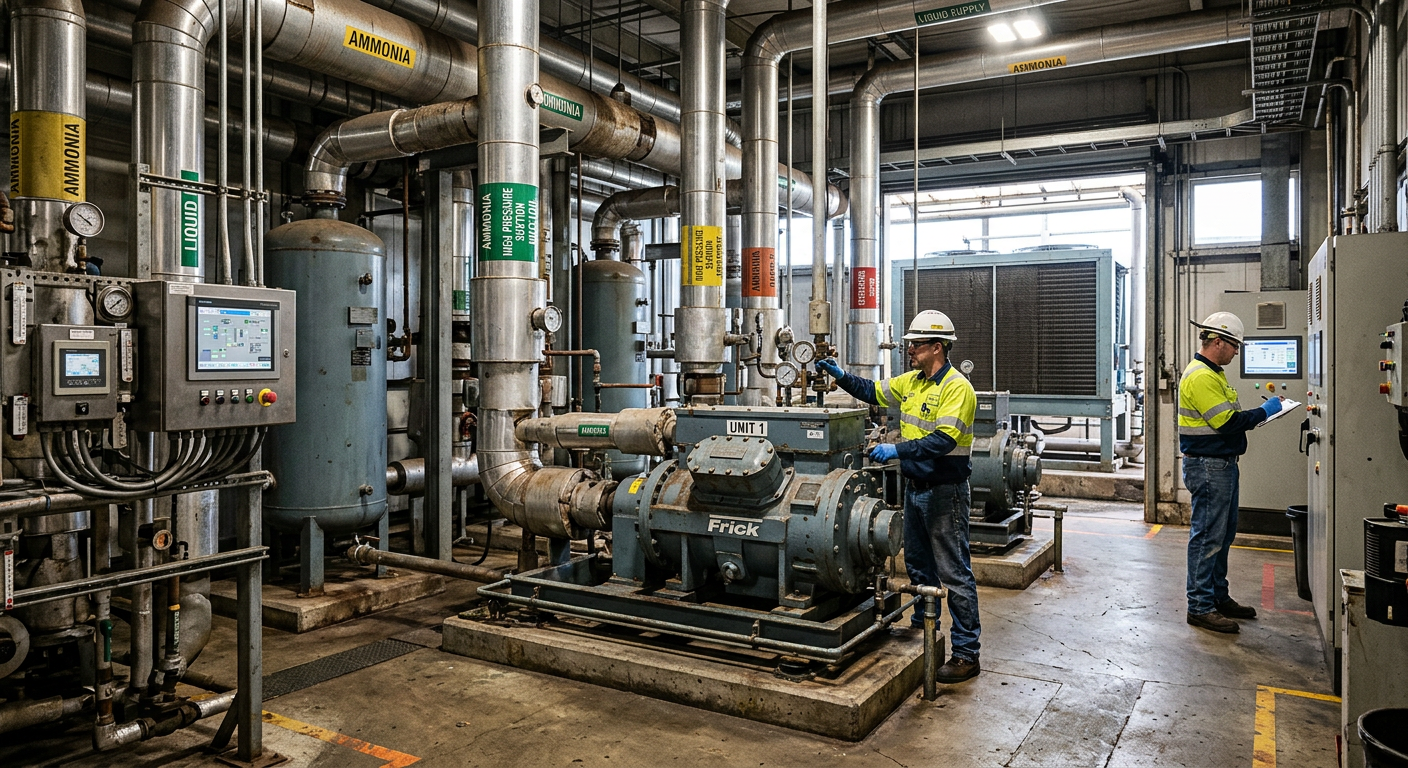
Flexible Beverage Manufacturing Line Design: Modular Systems for Rapid Product Changeover
A flexible beverage manufacturing line is an engineered production system built to switch products, package formats, and run conditions quickly without sacrificing throughput, quality, food safety, or profitability. In the United States, this usually means a modular line that can integrate blow molding, depalletizing, rinsing, filling, capping, labeling, coding, case packing, palletizing, and CIP with recipe-based automation and tightly managed utilities. The goal is simple: produce more SKUs on the same footprint with less downtime. For U.S. beverage producers facing contract manufacturing pressure, retail seasonality, and fast-moving consumer trends, flexible lines are especially valuable for RTD cocktails, kombucha, juices, carbonated soft drinks, dairy beverages, functional beverages, and extended shelf-life products. A well-designed system can help plants move between PET, glass, cans, and cartons faster, while maintaining sanitation standards, container handling performance, and line efficiency. For many manufacturers, the best solution is not a single “magic machine,” but a coordinated design approach covering process engineering, packaging equipment selection, controls integration, utilities, sanitation, changeover methodology, and capital planning. That is where firms such as Disruptive Process Solutions add value by aligning engineering decisions with long-term operating margin rather than short-term equipment spend. The U.S. market rewards responsiveness. Beverage brands in Chicago, Los Angeles, Dallas, Atlanta, and New York often need to launch limited-time flavors, club-store multipacks, regional varieties, or co-packed runs with very little lead time. A flexible line reduces the cost of saying “yes” to those commercial opportunities. A beverage line becomes flexible when it is designed around controlled variability. That includes product variability, package variability, and production scheduling variability. In practical engineering terms, flexibility depends on four foundations: machine adjustability, automation intelligence, sanitary design, and utility capacity. Machine adjustability includes servo-driven guide rails, recipe-based starwheel positioning, universal grippers, quick-release change parts, adjustable conveyors, multi-format labelers, and adaptable case packers. Instead of rebuilding a line every time the bottle diameter changes, the system should store settings and shift with minimal manual intervention. Automation intelligence is equally important. The PLC and SCADA layers should control product recipes, package recipes, alarm handling, CIP verification, OEE tracking, line balance logic, and interlocks between upstream and downstream assets. If a plant can change a filler bowl height in two minutes but needs four hours to rewrite logic or manually re-enter setpoints, the line is not truly flexible. Sanitary design matters because short changeovers are only useful if they do not create contamination risk. Hygienic welds, sloped piping, dead-leg minimization, segregated product pathways, validated CIP circuits, and dry-lube conveyor strategies all support faster and safer transitions. Utility capacity is the hidden constraint in many projects. Compressed air, glycol, steam, chilled water, hot water, RO water, wastewater, and electrical distribution must support the most demanding future-state run, not just the current SKU mix. In U.S. plants around Houston, Charlotte, and the Inland Empire, underbuilt utilities often create the real bottleneck long after packaging equipment is installed. The table above shows that flexibility is not just about format change parts. It is a plant-level capability that combines mechanical design, controls architecture, sanitation, and operational visibility. Modular bottling line design works best when each node is engineered as part of a coordinated system instead of a standalone purchase. A flexible line may include PET preform handling and stretch blow molding, bottle air conveyance, rinser/filler/capper monoblocks, accumulation, inspection, labeling, date coding, case packing, and palletizing. Every connection point affects the next. Blow molding is often the first flexibility decision for PET operations. Plants that insource bottle production gain more control over lightweighting, neck finishes, and warehouse costs, but they must also ensure blow molder output aligns with filler demand and downstream accumulation. For co-packers near major freight corridors like I-85, I-35, or the Port of Savannah, this can materially improve supply responsiveness. Filling systems must be selected based on beverage chemistry, sanitation regime, carbonation, particulates, and shelf-life targets. Gravity fillers, volumetric fillers, counter-pressure systems, hot fill, cold fill, and aseptic fillers all carry different implications for changeover and cleaning. Capping systems need torque control, cap sorting flexibility, and closure compatibility across sport caps, standard screw caps, metal crowns, or specialty closures. Labeling integration is another major source of hidden downtime. Pressure-sensitive, shrink sleeve, roll-fed, and wraparound systems each support different branding strategies. If the marketing team expects frequent artwork changes or regional customization, the labeler and coding system should be designed for fast reel swaps, vision verification, and serialized data where needed. This modular view helps buyers understand that line flexibility depends on integration quality. An advanced filler cannot compensate for a rigid case packer or underpowered palletizing zone. On the technology side, DPS supports process, mechanical, electrical, structural, plumbing, and controls engineering for complete beverage systems. That matters because blow molding, filling, capping, and labeling are never isolated disciplines. They require synchronized utility design, controls programming, sanitation logic, and installation sequencing to perform as one line rather than a series of disconnected machines. Shared-equipment packaging strategies are becoming more attractive in the United States as SKU proliferation continues. Brands want to run slim cans for convenience stores, glass for premium channels, PET for mass retail, and cartons for health-focused categories. The challenge is that each package behaves differently in transport, filling, closure application, and secondary packaging. PET is light and efficient but sensitive to deformation, especially with heat or vacuum conditions. Glass offers premium shelf appeal but requires gentler handling, stronger conveyors, and different infeed timing. Cans are fast and highly recyclable but need seaming expertise and tight empty-can hygiene control. Cartons introduce another set of requirements around sterile barriers, folding accuracy, and different warehouse cube economics. True quick-change systems use a combination of common-base machines, format kits, servo adjustments, digital recipes, and line-side storage for change parts. Shared equipment works best when early engineering defines the realistic package family. Trying to handle every possible package on one line often produces a compromised system. A disciplined design should establish the “flexibility envelope” before purchase. For U.S. operators serving retailers through distribution nodes like Memphis, Columbus, or Northern New Jersey, quick-change packaging can reduce the need for multiple dedicated lines while improving responsiveness to channel-specific packaging demands. The table highlights why packaging flexibility must be defined by business strategy, not just machine brochures. Each format adds operational opportunity and engineering complexity. Aseptic flexibility is one of the most demanding areas in beverage line design. It combines microbiological control, packaging integrity, process validation, and often a higher degree of automation than conventional hot-fill or cold-fill systems. Wet aseptic and dry aseptic approaches each have strengths depending on product type, packaging material, and facility strategy. Wet aseptic systems typically use chemical sterilants in container or closure treatment steps and are often selected where robust pathogen control and proven validation pathways are priorities. Dry aseptic systems can reduce water and chemical consumption, support sustainability goals, and minimize certain utility loads, but they demand precise equipment tuning and strict process discipline. Extended shelf-life beverages such as nutritional drinks, dairy-based beverages, low-acid functional beverages, and some plant-based products require careful integration of upstream UHT or HTST processing, surge management, sterile product routing, hygienic valves, sterile air, clean utilities, and validated filler environments. A flexible aseptic line must allow product changes without excessive sterile boundary disruption. U.S. projects in this space also need to account for FDA expectations, documentation rigor, sanitation verification, and realistic operator training. Engineering a line for aseptic performance in California, Texas, or the Midwest dairy belt involves more than selecting a filler. It requires complete facility thinking. DPS has experience with aseptic system design and compliance-driven execution across food and beverage applications. That includes integrating pasteurization or sterilization technologies, utility systems, CIP skids, hygienic piping, and control strategies that support both production reliability and audit readiness. This comparison shows that “best” aseptic design depends on product risk, utility economics, sustainability goals, and operator capability. There is no universal answer. Recipe-driven automation is often the difference between theoretical flexibility and actual flexibility. A line can have servo adjustments, smart conveyors, and premium packaging machines, but if the controls architecture is fragmented, changeovers still become manual, error-prone, and slow. Best-practice PLC programming for beverage manufacturing usually includes hierarchical recipe management, device-level parameter mapping, machine-state handling, alarm rationalization, line permissives, CIP sequencing, sanitation lockouts, historian integration, and role-based operator access. Product recipes should control variables such as fill volume, carbonation targets, temperatures, pump speeds, pressure settings, closure torque windows, label positions, case count, and pallet pattern. Packaging recipes should also include mechanical positions, servo coordinates, timing curves, and vision inspection thresholds. That allows the system to switch from a 12 oz can multipack to a 16.9 oz PET bottle case with far less trial-and-error on the floor. In many brownfield U.S. facilities, the true limit on line flexibility is not machine age but controls debt: inconsistent PLC standards, undocumented logic, hand-entered values, and operator workarounds. A disciplined controls modernization can unlock large capacity gains without major steel-in-the-ground expansion. This is an area where DPS stands out on the technology side. The company combines controls engineering, PLC programming, SCADA, and system integration with broader process knowledge. That matters because effective automation cannot be separated from fluid handling, sanitation, operator workflow, or equipment response. In some cases, reprogramming and rebalancing logic can solve a capacity constraint more economically than major capital additions. Seasonality is a major design driver in the United States. Summer demand spikes for sparkling water, sports drinks, hard seltzer, and teas differ from winter demand for nutritional beverages, holiday packs, or premium mixers. Retail calendars, regional sports sponsorships, and limited-edition releases all create short windows for profitable production. Engineering for seasonal adaptability requires more than added speed. Plants need surge tanks sized for campaign production, accumulation designed for variable downstream performance, warehouse flows that can absorb packaging material changes, and staffing models supported by automation and intuitive HMIs. A line that only performs at one ideal speed with one ideal SKU is vulnerable during peak demand. Limited-edition runs require quick art changes, short batch capability, accurate ingredient dosing, and strong lot traceability. This is especially important for co-packers supplying national retailers through ports and trade hubs such as Long Beach, Houston, Newark, and Savannah, where delayed launches can ripple through distribution networks quickly. From a manufacturing capability standpoint, DPS supports complete processing and packaging systems across carbonated and non-carbonated beverages, juices, fermented drinks, RTD products, dairy beverages, and aseptic applications. The company also manufactures selected process equipment such as tanks and CIP systems, which can help simplify integration when utility, sanitation, and process requirements need to stay tightly coordinated. These design features reduce the operational penalties of seasonality. They help manufacturers turn commercial volatility into production opportunity. Flexible Manufacturing Systems and dedicated lines each have a place. Dedicated lines are still powerful when a plant produces very high volumes of a narrow SKU set with stable demand. They can offer strong efficiency, simpler operator training, and fewer moving variables. But when product variety expands, dedicated lines can become expensive islands of underutilized capacity. An FMS approach uses modular equipment, smart controls, robotic handling, adaptable packaging assets, and data integration to manage higher variation. It may cost more upfront in some categories, but it often lowers total cost of ownership where SKU turnover, retailer-specific packaging, or co-packing complexity is high. The decision should be based on SKU count, demand volatility, case volume by package type, sanitation regime, labor market conditions, building constraints, and capital availability. In U.S. markets with high labor pressure and fast product churn, the business case for flexibility is often stronger than it first appears. The comparison above shows that the right answer depends on a plant’s commercial model. A dedicated line can be the perfect answer for one flagship SKU, while an FMS is better for a co-packer or innovation-heavy beverage brand. The Krones Varioline is often cited as a reference point for flexible beverage packaging because it combines several packaging functions into a modular system designed for rapid format change and reduced footprint. It is especially relevant for operations that want to create multiple multipack styles from a shared architecture. The value proposition is not just equipment density; it is synchronized flexibility. Other solution categories in the market include servo-based monoblocks, robotic case packing cells, modular canning systems, adaptable shrink and wraparound packers, and integrated digital line management platforms. The best solution depends on whether the plant prioritizes primary packaging flexibility, secondary packaging flexibility, aseptic capability, or overall capital efficiency. When evaluating suppliers in the United States, buyers should look beyond the machine specification sheet. Key questions include service network depth, spare parts availability, controls openness, integration support, FAT/SAT standards, sanitation design, and the ability to support future expansions. Plants near major manufacturing corridors such as Milwaukee, St. Louis, Charlotte, or Fresno often benefit from stronger field-service access, but remote support and controls standardization are becoming equally important. A practical buying framework is to compare supplier options against your own product roadmap rather than against generic industry averages. A regional co-packer in the Southeast may need a very different packaging strategy than a dairy beverage producer in Wisconsin or a premium glass bottler in Northern California. Start with commercial reality. Define your top 10 SKUs by margin, your most likely future package additions, your sanitation risk profile, and your true production windows. Then evaluate whether your line should be centered around product flexibility, package flexibility, or both. Many failed projects try to maximize every variable and end up overcomplicated. Next, map the entire system: ingredients, batching, thermal treatment, CIP, filling, packaging, palletizing, warehouse interfaces, utilities, and data. Request a realistic changeover study, not just rated machine speed. Ask suppliers to document operator tasks, change parts, sanitation steps, recipe load behavior, and expected first-good-pack timing. It is also wise to engage an engineering-led partner early. Through its engineering and integration services, DPS helps beverage manufacturers evaluate capital plans, process layouts, installation sequencing, automation, utility loads, and long-term expansion logic. That owner-minded approach is often more valuable than simply comparing equipment quotes. In the United States, supplier selection is partly a geography decision. Plants shipping through the Port of Los Angeles, Port of Houston, Port of Savannah, and Port Newark may prioritize response times for imported spare parts and field service access. Manufacturers in the Carolinas, Texas Triangle, Midwest dairy corridor, and Pacific Northwest should also review local trade availability for electrical, mechanical, and sanitary installation support. A good local support model includes controls technicians, sanitary pipe installers, packaging mechanics, validation support, and project managers who understand regional permitting and safety expectations. DPS serves clients across all 50 states and Canada, with a lean execution model that supports both rapid-response work and large strategic programs. You can review selected project examples and case studies to see how integrated capital projects are approached in practice. Disruptive Process Solutions is a North American food and beverage engineering partner headquartered in Cary, North Carolina, with an additional West Coast presence in Lake Forest, California. Rather than operating like a traditional contractor, DPS typically works as a business-minded project partner focused on profitable capital deployment, disciplined scope planning, and execution accountability. Its service capabilities span capital planning, feasibility, owner’s representation, project and program management, turnkey installation, integration, and general-contractor-style execution where applicable. Its manufacturing capabilities include complete system design and integration for brewing, spirits, RTD beverages, soft drinks, juices, dairy beverages, aseptic systems, and other food processing categories. Its technology capabilities include process engineering, utilities, controls, PLC programming, SCADA, and compliance-focused design. Clients seeking custom process assets can also explore DPS equipment solutions for tanks, CIP systems, and other integrated components. This combination is useful for flexible beverage line projects because profitability depends on how well process, packaging, controls, utilities, and construction are synchronized. A modular line is only as strong as the team integrating it. By 2026, flexible beverage manufacturing in the United States is expected to be shaped by three converging forces. First, automation will become more recipe-centric and analytics-driven, with stronger use of OEE dashboards, predictive maintenance, vision systems, and digital twins for changeover planning. Second, policy and retailer pressure will continue to favor traceability, energy visibility, water stewardship, and packaging optimization. Third, sustainability will move from a branding issue to a design constraint, affecting water systems, lightweight packaging, compressed air efficiency, heat recovery, and line sanitation strategy. Dry lubrication, lower-water aseptic systems, smart CIP recovery, energy-efficient compressors, lightweight containers, and improved packaging right-sizing will all become more important. U.S. beverage plants that design for flexibility now are better positioned to adapt to these trends without repeated disruptive retrofits. The main benefit is faster and more profitable switching between products and package formats. This helps U.S. manufacturers respond to retail demand, co-packing opportunities, and seasonal launches with less downtime. Sometimes, but only within a well-defined flexibility envelope. Shared equipment is feasible when the package family is engineered carefully. Trying to handle every format on one line can create compromises in speed, sanitation, and reliability. It is critical. PLC and HMI recipe management control the repeatability of settings, interlocks, sanitation steps, and machine adjustments. Weak automation often causes more downtime than mechanical change parts. Choose an FMS when SKU count is high, changeovers are frequent, and packaging formats vary by customer or channel. Dedicated lines are better when one or two high-volume SKUs dominate production. No. Aseptic systems are powerful, but they are not the only answer. Hot fill, tunnel pasteurization, flash pasteurization, retort, or other thermal strategies may be better depending on beverage chemistry, package type, and business goals. Ask for actual changeover time by SKU, the number of change parts required, sanitation procedure impact, operator staffing assumptions, utility consumption, spare parts lead times, controls standards, and expansion options. Labor availability, utility rates, wastewater limits, port access, freight patterns, regional code requirements, and field service coverage all affect total project economics. A line designed for Southern California may differ from one built for the Midwest or Southeast. Yes. Many facilities can improve flexibility through controls upgrades, conveyor redesign, selective machine replacement, utility improvements, and better CIP architecture rather than complete greenfield construction. DPS supports planning, engineering, controls, integration, installation, and project execution for food and beverage manufacturers across North America. For flexible beverage lines, that means aligning process, packaging, utilities, and automation around profitable outcomes. -
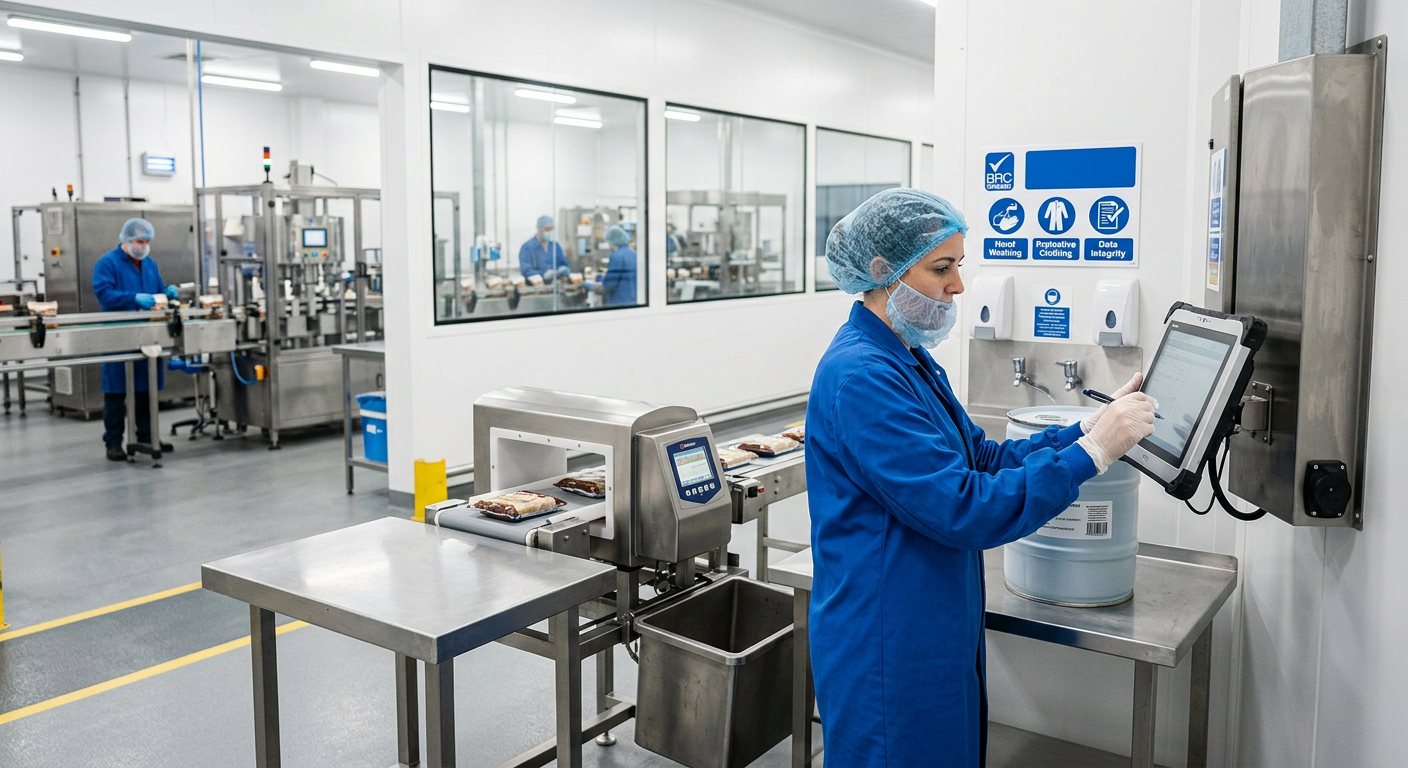
Food Plant Throughput Optimization: OEE and Bottleneck Management Strategies
Food and beverage manufacturers in the United States are under constant pressure to increase output without sacrificing food safety, quality, labor stability, or margin. Whether a plant produces protein products in the Midwest, sauces in Texas, dairy in Wisconsin, beverages in California, or aseptic products near East Coast distribution hubs, the central challenge is the same: how to move more saleable product through the facility in less time and at lower total cost. Throughput optimization is not just a plant-floor exercise. It connects maintenance, sanitation, utilities, controls, warehousing, labor planning, capital spending, and customer service. This guide explains how to improve throughput using practical methods: measurement, Overall Equipment Effectiveness, smarter production scheduling, bottleneck control, automation, faster changeovers, and long-range capacity planning. It is written for operations leaders, plant managers, engineering teams, finance stakeholders, and ownership groups who want to make profitable decisions rather than simply buy more equipment. The fastest path to higher throughput in a U.S. food plant is to identify the true constraint, measure losses around it, improve OEE at that point first, then align scheduling, sanitation, labor, automation, and utility capacity to keep that constraint fed and running. In many facilities, output does not increase because of a single machine purchase. It increases because downtime is reduced, changeovers are shortened, recipes are sequenced more intelligently, utilities are stabilized, and the line is controlled based on real data. For most manufacturers, the practical order of operations is: In the United States market, this matters because regional labor shortages, utility volatility, retailer service expectations, and transportation constraints from major trade hubs such as Los Angeles/Long Beach, Houston, Savannah, New York/New Jersey, and Chicago all amplify the cost of lost throughput. A plant that misses production today often misses customer delivery tomorrow. Buying advice is simple: do not begin with a machine brochure. Begin with measured losses, line balance, and financial impact per constrained hour. Plants that do this well typically gain more output from controls, scheduling, sanitation redesign, and system integration than from isolated equipment replacement. Throughput analysis starts with a precise definition. In food manufacturing, throughput should mean saleable units, pounds, gallons, cases, or batches that exit the system within a given time while meeting quality and compliance requirements. It should not mean theoretical machine speed, nameplate capacity, or short test-run performance. A poultry line in Arkansas, a yogurt plant in upstate New York, and a ready-to-drink beverage co-packer in North Carolina may all report “high capacity,” but their true throughput can differ sharply once sanitation windows, utility interruptions, ingredient staging, allergen changeovers, label changes, and rework are included. To measure throughput correctly, plant teams should collect data at three levels: process level, packaging level, and site level. Process data tells you what the cookers, fillers, mixers, homogenizers, pasteurizers, or retorts are doing. Packaging data shows whether cartoners, labelers, case packers, depalletizers, palletizers, and conveyors are restricting flow. Site-level data reveals whether refrigeration, compressed air, steam, water treatment, wastewater, or labor handoffs are limiting the whole operation. The following table summarizes the most useful metrics for throughput analysis and how they should be used in a food plant. This table is useful because it prevents managers from chasing a single number. A plant can post decent machine speed while still failing in yield, schedule attainment, or unplanned downtime. Throughput improvement should therefore be measured as a system outcome, not just a machine outcome. In the U.S. market, analysis should also account for external realities. Plants near major ports may see ingredient timing variability; facilities in the Southeast may face seasonal humidity effects on packaging materials; facilities in the Plains and upper Midwest can see labor turnover spikes during harvest cycles; and protein plants under USDA inspection must account for inspection-driven flow constraints. These are not excuses; they are design inputs for a realistic throughput model. The growth trend above reflects what many manufacturers are already seeing: throughput optimization is increasingly a capital priority because the cost of lost capacity is rising faster than many traditional overhead categories. Overall Equipment Effectiveness, or OEE, remains one of the clearest ways to translate operating losses into action. In food and beverage environments, however, OEE must be adapted carefully. Standard manufacturing formulas are useful, but food plants face sanitation windows, allergen controls, recipe complexity, thermal process validation, and packaging variability that can distort simplistic OEE reporting. A credible OEE program does not hide these realities; it structures them. OEE combines three elements: For example, a line may show acceptable quality while still losing output because availability is poor due to changeovers and minor faults. Another line may run continuously but at a reduced rate because operators intentionally slow it down to avoid jams at the downstream case packer. In both situations, OEE makes the loss visible. The following table shows common OEE loss sources in U.S. food facilities and the operational response each one requires. This table matters because it ties OEE losses to practical plant conditions rather than abstract formulas. In food plants, performance loss is often not mechanical alone. It may originate in recipes, raw material variability, washdown practices, packaging supply inconsistency, or utility support systems. Product type also affects OEE strategy. A retort operation will care about thermal cycle integrity and basket handling. A high-speed beverage line will watch filler, capper, labeler, and packer synchronization. A protein plant may focus on deboning, marination, portion control, chilling, and labor pacing. That is why OEE should be deployed by product family and line architecture, not as a one-size-fits-all dashboard. As 2026 approaches, plants are increasingly pairing OEE with contextual data from PLCs, SCADA, vision systems, recipe platforms, and utility meters. The trend is toward event-level loss classification that lets engineering, maintenance, and operations solve the same problem with the same timestamps. This is especially important for multi-site manufacturers serving national distribution from hubs such as Dallas-Fort Worth, Atlanta, Columbus, and Memphis. Production scheduling is one of the most undervalued tools for increasing throughput. Many U.S. plants think of scheduling as administrative, but it is actually a capacity lever. If product families are sequenced poorly, lines will spend too much time on washdowns, allergen transitions, label changes, package size swaps, and raw material re-staging. The result is that expensive process and packaging assets sit idle while teams work around a plan that was never optimized for real plant constraints. Better scheduling starts with grouping products by shared characteristics: allergen profile, viscosity, flavor intensity, packaging format, thermal process, label family, and cleanability. A sauce plant may sequence from lighter flavors to stronger ones. A dairy facility may move from non-allergen to allergen-containing products. A beverage plant may group by bottle type and cap format before flavor. A protein processor may sequence around raw material freshness windows, labor skill availability, and USDA inspection staffing. The table below shows scheduling tactics by product type. This table shows why scheduling cannot be separated from product type. Each category has a different constraint pattern, and the wrong sequencing rule can erase a large share of available capacity. One increasingly important buying consideration is scheduling software. Plants should not buy a platform simply because it promises “AI scheduling.” Instead, they should ask whether it can incorporate sanitation rules, labor skill matrices, allergen logic, utility limitations, and packaging supply constraints. The best solution is often not the biggest software package, but the one that connects most cleanly with ERP, MES, and plant-floor controls. The demand pattern above reflects where throughput pressures are especially visible in the United States: fast-moving beverage networks, labor-sensitive protein facilities, and co-packing operations serving retailers and brand owners with tight service expectations. Bottleneck management is the core of throughput optimization. Every plant has one current constraint, even if several departments feel overloaded. The bottleneck may be obvious, such as a slow filler, retort, cooker, or palletizer. It may also be hidden, such as inadequate CIP turnaround, unstable steam pressure, change-part availability, ingredient thaw time, or a PLC logic issue that limits safe line speed. The mistake many companies make is treating every pain point as equally important. The correct approach is to identify the step that most limits saleable output over time, then protect, feed, and elevate that constraint. Upstream assets should support it; downstream assets should clear product from it. Labor, maintenance, and scheduling should be biased toward its uptime. The following table outlines common bottlenecks and the best response strategy. This table is a reminder that bottlenecks are often cross-functional. A line may appear mechanically constrained when the real issue is warehouse release timing or utility support. In many cases, especially in older U.S. facilities that have expanded in phases, the limiting factor is not the newest machine but the legacy infrastructure around it. Case studies across the market show that controls bottlenecks are frequently missed. A plant may be preparing for a multi-million-dollar capacity expansion when the true constraint is logic architecture, recipe handling, or line synchronization. That is why independent assessment matters. Objective engineering review often prevents unnecessary capital spending. For local supplier evaluation, manufacturers should look beyond OEM service alone. Regional millwrights, controls integrators, utility contractors, stainless fabrication partners, and sanitary piping specialists can all influence bottleneck removal. In trade corridors such as Chicago, Charlotte, the Inland Empire, and the Texas Triangle, speed of access to qualified field support can materially affect project payback. Automation should be applied where it improves constrained output, process consistency, operator safety, traceability, or utility efficiency. It should not be justified by novelty. In food and beverage manufacturing, the best automation investments usually target repetitive decisions, unstable control points, labor-intensive transfers, and data gaps that cause conservative line operation. Examples include automated batching with recipe management, in-line Brix monitoring, SCADA-based visibility, PLC logic optimization, vision inspection, automated deboning or cutting support, robotic case packing, palletizing, CIP automation, and energy management tied to process demand. In aseptic and beverage systems, automation can protect sterile integrity and reduce variability. In protein and prepared food operations, it can improve yield, handling, and line balance. The technological capability side of a strong engineering partner matters here. Plants need expertise across process, controls, electrical, mechanical, plumbing, structural, and utility systems, because automation only produces throughput gains when it is integrated into the whole process. A controls change without process understanding can create new bottlenecks elsewhere. The trend is clear: by 2026, more plants will combine automation with sustainability and compliance goals. Automated control of water, steam, compressed air, and CIP cycles reduces both operating cost and environmental load. Policy pressure around energy use, wastewater, and documentation will continue to favor systems that can prove performance instead of relying on manual logs. When evaluating suppliers, ask these questions: These questions are particularly important for plants operating multiple product types, such as co-manufacturers and co-packers. Their throughput challenge is usually variability, and variability is where good automation pays best. Changeover time reduction often produces some of the fastest throughput gains because it frees capacity without new square footage. In high-mix U.S. plants, changeovers consume far more time than managers first estimate. The line may stop not only for equipment adjustment, but also for label changes, QA verification, washdowns, ingredient staging, code dating, package component replenishment, and startup checks. Effective changeover reduction uses a structured method similar to SMED: separate internal steps from external steps, move preparation outside the stop window, standardize parts and settings, color-code tooling, pre-stage materials, digitize checklists, and train crews to a repeatable sequence. Many plants also benefit from simplified product family architecture, which reduces the number of unique adjustments required. Applications vary by industry. Beverage plants often gain from quick-release handling parts and automated rinse verification. Dairy plants benefit from CIP validation and valve matrix logic improvements. Protein facilities may gain more from tool organization, sanitation zoning, and labor choreography. Prepared food plants often reduce time through recipe sequencing and faster startup approval workflows. The economic case is straightforward. If a line loses 45 minutes per changeover and performs four changeovers per day, that is three hours of lost capacity every day. On a constrained, margin-rich line, those hours may be worth much more than the cost of most improvement efforts. To make changeover reduction stick, management should post three numbers by line: average changeover duration, best recorded duration, and percentage of externalized tasks. That keeps the focus on repeatability rather than heroics. Capacity planning is where throughput optimization becomes a long-term business strategy. Many manufacturers make one of two mistakes: they underinvest and create recurring congestion, or they overbuild and burden the business with excess capital. Smart scaling starts with demand scenarios, product mix forecasts, utility requirements, labor realities, and distribution strategy. In the United States, capacity planning must reflect geography. A beverage plant supplying the West Coast through Los Angeles and Oakland faces different freight and water considerations than a Southeastern plant shipping through Savannah or a Midwest protein plant distributing through Chicago and Kansas City. Cold-chain availability, wastewater permitting, labor competition, and energy cost all influence what “capacity” actually means in practice. The table below helps frame expansion decisions. This table is valuable because it links capacity choices to timing and data. The right answer depends on whether the business needs immediate relief, strategic flexibility, or a large long-term footprint. Manufacturing capability becomes crucial at this stage. A partner with experience in tanks, CIP systems, processing vessels, line integration, and utility infrastructure can help plants scale coherently instead of adding disconnected assets. For food and beverage facilities, this includes storage and process tanks, cooking vessels, sanitary transfer systems, marination tumblers, blending and batching systems, retort support, pasteurization support, and the utility backbone that keeps them productive. Service capability matters just as much. Feasibility studies, capital planning, owner’s representation, project management, installation coordination, and commissioning discipline often determine whether a project improves throughput or simply creates expensive disruption. Manufacturers looking at multi-phase growth should prioritize partners who can engineer, build, and manage execution with one accountable model rather than fragmented handoffs. Companies that want that kind of support can review food and beverage engineering services built around end-to-end project execution. The comparison above shows why many plants should start with debottlenecking, scheduling, and selective automation before moving to full expansion. New lines and greenfield projects can produce major gains, but they also carry the highest complexity and capital exposure. Disruptive Process Solutions, often known as DPS, serves food and beverage manufacturers across the United States and Canada with a practical, profit-focused engineering mindset. The company is headquartered in Cary, North Carolina, with a West Coast presence in Lake Forest, California, allowing it to support projects near major manufacturing and distribution corridors on both sides of the country. Rather than operating like a traditional contractor chasing scope volume, DPS is structured to help manufacturers make sound capital decisions and execute them effectively. From a technological capability perspective, DPS supports process, controls, electrical, structural, mechanical, and plumbing engineering as integrated disciplines. That is important in throughput work because a line problem can begin in PLC logic, recipe control, SCADA visibility, utility instability, or process design rather than in the machine operators can see. The company’s experience spans beverage systems such as brewing, spirits, wine, kombucha, soft drinks, juices, dairy beverages, carbonation, blending, aseptic processing, water treatment, pasteurization, and filling support, as well as food systems for proteins, prepared foods, sauces, dairy, retort, plant-based processing, and sanitary utilities. Manufacturers exploring project fit can learn more about the DPS team and approach. From a manufacturing capability perspective, DPS also designs and supplies selected process equipment, including tanks, CIP systems, tumblers, and cooking vessels, while integrating broader plant systems around them. That matters because throughput projects often fail when proprietary equipment, third-party equipment, and utilities are not aligned into a single operating strategy. Companies seeking integrated equipment options can review process equipment solutions for food and beverage plants as part of larger capacity or debottlenecking initiatives. From a service capability perspective, DPS uses a design-build-manage approach that combines front-end planning, engineering, general contractor-style execution, field coordination, installation oversight, and commissioning management. For throughput optimization, that approach reduces the risk of fragmented decision-making. Instead of treating controls, utilities, process equipment, and schedule planning as separate issues, the project can be managed as one business case. A useful example of this philosophy is the type of project where a client expects to spend millions on expansion, but detailed analysis reveals a smaller controls or integration issue that can unlock more capacity at far lower cost. Manufacturers interested in project examples can explore food and beverage case studies for practical context. For U.S. plants evaluating partners, this business-minded approach is often the difference between a project that looks successful at startup and one that is genuinely profitable 12 months later. What is the first thing a plant should do to improve throughput?Measure actual output at the real constraint point. If you do not know which step limits saleable output, any improvement plan is mostly guesswork. Is OEE enough on its own?No. OEE is a valuable framework, but it must be paired with yield, schedule attainment, utility performance, sanitation time, labor availability, and warehouse flow. Which industries benefit most from throughput optimization?Beverages, protein processing, dairy, prepared foods, sauces, aseptic operations, and co-packing all benefit strongly. High-mix and high-speed environments usually see the fastest returns. What product types typically have the biggest hidden losses?Multi-SKU beverages, allergen-sensitive dairy, variable-yield proteins, and products requiring frequent label or package changes often carry large hidden downtime and startup losses. Should we automate before fixing scheduling and changeovers?Usually no. If sequencing, sanitation, or changeover discipline is poor, automation may only make a flawed system more expensive. Stabilize the process first, then automate the right points. How do we know if the bottleneck is in controls rather than equipment?Look for signs such as consistent artificial speed limits, interlock delays, repeated nuisance faults, poor line synchronization, or operator workarounds that cap performance below physical capability. What local supplier factors matter in the United States?Response time, sanitary design experience, code compliance, access to skilled trades, and familiarity with regional labor and utility conditions all matter. Plants near major logistics hubs often benefit from deeper support networks. How should buyers compare vendors?Compare them on process understanding, integration depth, commissioning support, food safety familiarity, utility knowledge, and ability to connect throughput gains to financial outcomes, not just installation scope. What are the key 2026 trends?Expect more AI-assisted scheduling, stronger use of plant-floor data, more integrated SCADA and energy monitoring, tighter documentation for compliance, water and energy optimization, and more selective automation tied directly to labor and margin constraints. Can a small or mid-sized manufacturer use the same methods as a large enterprise?Yes. The principles are the same. The scale of tooling, software, and capital changes, but measuring losses, controlling bottlenecks, reducing changeovers, and sequencing intelligently work at every size. In summary, food throughput optimization in the United States is not about finding one silver bullet. It is about understanding the plant as a system, identifying the true constraint, and improving the business case around that constraint with disciplined engineering and execution. Plants that measure honestly, schedule intelligently, automate selectively, and scale with a full-system view are the ones most likely to gain durable output, stronger margins, and better customer service. -
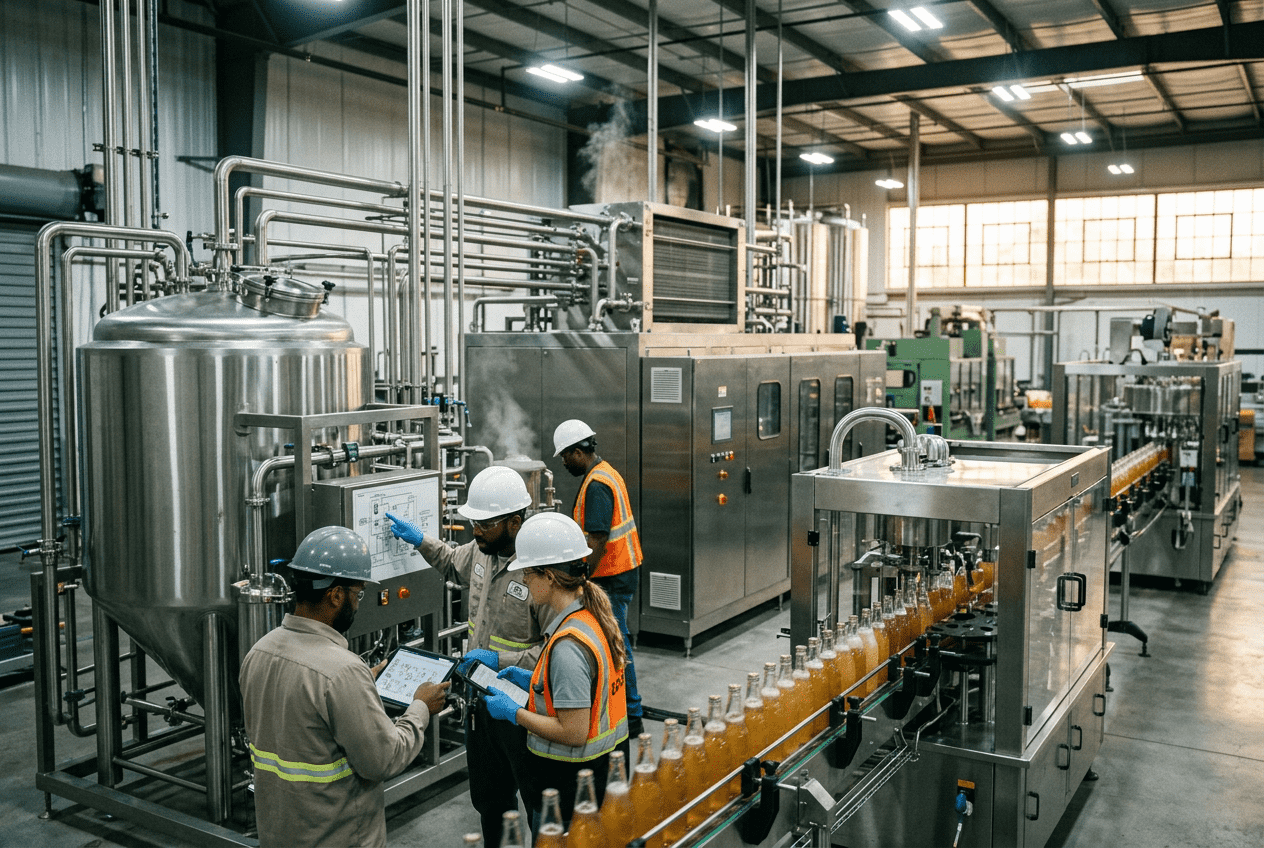
Food Plant Process Integration: Connecting Equipment, Controls, and Quality Systems
Modern food and beverage manufacturers in the United States increasingly depend on process integration to connect equipment, automation, production planning, quality records, and operational decision-making. In practical terms, integration means that mixers, fillers, pasteurizers, CIP skids, packaging lines, laboratory systems, and enterprise software all exchange reliable data at the right time. When integration is well designed, plants reduce downtime, improve traceability, tighten recipe execution, accelerate changeovers, and support compliance with FDA, USDA, SQF, and BRC expectations. Across major U.S. manufacturing corridors such as Chicago, Dallas-Fort Worth, Central Valley California, the Carolinas, Atlanta, Houston, and the I-95 corridor, food producers are investing in scalable automation because labor pressure, margin compression, and retailer expectations are forcing better plant performance. Facilities near the ports of Los Angeles, Long Beach, Savannah, Houston, and New York/New Jersey also face strong throughput demands tied to imported ingredients, exported finished goods, and seasonal inventory swings. For these operations, disconnected systems are no longer just inconvenient; they are a direct business risk. Process integration connects production equipment, PLCs, SCADA, MES, recipe systems, batch controls, historians, and quality platforms into one coordinated manufacturing environment. In a U.S. food plant, this allows operators and managers to see what is running, what was made, how it was made, what quality results were recorded, and whether the line is performing to target. The best integrations are built around business outcomes: higher OEE, lower giveaway, better traceability, stronger compliance, and faster scale-up. For buyers, the most important decision is not simply which software package to choose. It is how to define the data architecture, communication standards, validation approach, and ownership model before installation begins. Plants processing dairy, proteins, prepared foods, sauces, RTD beverages, brewing products, and aseptic goods all have different control points, but they share the same need: equipment and information systems must work as one system rather than as isolated assets. The table above shows why integration is now treated as a strategic capital item rather than a controls accessory. Plants that define measurable targets before project kickoff usually gain the strongest return. At the foundational level, process integration begins with a map of the physical process and a parallel map of the data process. The physical map includes tanks, pumps, valves, heat exchangers, conveyors, fillers, clean-in-place systems, utilities, and packaging equipment. The data map includes I/O, PLC tags, recipes, production orders, alarms, lot codes, test results, operator actions, and maintenance events. In the United States market, the most effective integration projects usually start with six questions: Food plants often struggle when they buy automation in phases without a standard integration philosophy. A filler may speak one protocol, a pasteurizer another, and a packaging line may only expose limited data. Over time, this creates islands of automation. A disciplined integration strategy standardizes tag structures, alarm conventions, naming rules, cybersecurity layers, historian logic, and report formats. That makes line expansions in places like Wisconsin dairy plants, Arkansas protein sites, or California beverage facilities far more manageable. From a buying standpoint, manufacturers should prioritize interoperability, documentation quality, and lifecycle support over low upfront cost. The least expensive programming package can become the most expensive decision if every future change requires custom workarounds. This growth trend reflects rising investment in digital controls, traceability, and plantwide data systems. By 2026, sustainability reporting, energy tracking, and labor optimization are expected to further accelerate demand. Equipment-to-equipment communication is the layer where physical assets coordinate automatically. A depalletizer should know whether the filler is ready. A blender should not discharge if the surge tank is unavailable. A retort room should receive correct lot, hold, and release information from upstream systems. A CIP skid should confirm route alignment and wash completion before production restarts. Typical communication methods in U.S. food and beverage plants include Ethernet/IP, Profinet, Modbus TCP, OPC UA, and vendor-specific interfaces. Legacy plants may still rely on serial communications or hardwired interlocks. The right choice depends on criticality, vendor ecosystem, cybersecurity expectations, and available in-house support. In high-throughput beverage applications, line synchronization is especially important. A syrup room, blending skid, carbonator, filler, and packer must share status data to avoid starved or blocked conditions. In protein and prepared foods, communication between grinders, mixers, cookers, chillers, slicers, and packaging assets is essential for throughput, food safety timing, and labor balancing. This table shows that communication requirements vary by product risk and process sensitivity. A beverage line may emphasize speed and setpoint transfer, while an aseptic line emphasizes state control and validated conditions. For companies evaluating vendors, local support matters. Integrators serving markets near Charlotte, Raleigh, Minneapolis, St. Louis, Fresno, and Salt Lake City should understand regional utility constraints, labor realities, and local code enforcement. Strong documentation, FAT/SAT discipline, and post-startup support often matter more than a long feature list. SCADA provides supervisory visibility and control, while MES typically manages production execution, work orders, performance, traceability, and labor or downtime context. The integration between the two is where many plants unlock value. SCADA can show what is happening now; MES can explain whether production is meeting the schedule, consuming the right materials, and staying within target yields. When SCADA and MES are connected properly, a production order issued by planning can trigger recipe download, operator instructions, lot verification, and data collection workflows. At the end of the run, actual material consumption, downtime events, quality checks, and output counts can feed back to management systems. In co-packing operations, this is especially important because multiple brands, package formats, and customer specs may run through the same facility. A line in Texas or North Carolina serving several contract customers cannot rely on whiteboards and manual spreadsheet reconciliation if it wants to scale profitably. Manufacturers should define role boundaries clearly: The demand comparison above shows strong interest across multiple categories, with beverages and proteins often leading because of SKU complexity, line utilization pressure, and traceability demands. Plants should not force SCADA to act like MES or vice versa. The strongest architecture lets each layer perform its job while sharing validated information. Data flow design determines whether an integration project stays useful after startup. A good architecture defines where data originates, how it is validated, who owns it, how long it is stored, and who can use it. This includes tags from field devices, line states from PLCs, transactions from MES, laboratory results from quality systems, and production or inventory information from business platforms. Digital twin technology is becoming more relevant in U.S. food plants because it helps teams simulate layout, throughput, utility loads, and control behavior before full deployment. In simple form, a digital twin may be a process model linked to equipment capacities and operating constraints. In more advanced form, it can mirror actual plant data to test scenarios such as SKU changes, surge capacity, CIP windows, or energy reduction plans. By 2026, digital twins are expected to be used more often for sustainability and capital planning. A plant near the Port of Savannah may simulate new cold-storage demand before expansion. A dairy processor in Idaho may model water reuse impacts. A co-packer in Southern California may test line scheduling against utility rates and labor availability. The area trend highlights a clear movement away from manual logs and isolated spreadsheets toward synchronized, plantwide data environments. Manufacturers should also think carefully about data governance. Bad tag naming, duplicate sources, and undocumented transformations can undermine every dashboard. Good integration creates one version of the truth for production, quality, and management. This data flow framework helps define ownership and reduces rework later. Plants that document it early often avoid expensive post-installation revisions. Recipe management and batch control are central to consistent food production. They ensure that the correct ingredients, quantities, process parameters, and sequencing steps are used every time. In regulated or customer-audited environments, this also supports proof that the product was made according to approved specifications. For liquid processing, recipe systems may govern tank selection, ingredient addition order, mixing speed, Brix targets, temperature ramps, hold times, and transfer routing. For solids or prepared foods, batch control may manage weighing, preblend release, cook profiles, marination cycles, and packaging declarations. Plants with many SKUs should separate recipe logic from core equipment programming when possible. That reduces engineering effort during product changeovers and new product launches. It also supports stronger approval workflows, especially when R&D, operations, and quality all need controlled change management. Buying advice for U.S. manufacturers: The table makes clear that recipe management is not only about formulations. It is also about safeguarding process conditions that protect brand and food safety. Quality systems integration links production to inspections, lab results, nonconformance workflows, sanitation records, and release decisions. This is where many plants gain major value because quality events become visible in production context instead of being hidden in separate files or systems. Examples include automatic holds when CCP limits are exceeded, lot-level links between batches and microbiological tests, digital pre-op checklists tied to line readiness, and electronic verification that allergen cleans were completed before a changeover. In FDA- and USDA-facing operations, these links improve audit readiness and shorten investigations. Facilities handling proteins, dairy, retort, or aseptic products often benefit the most because quality decisions can directly affect inventory release, customer shipments, and risk exposure. Plants shipping through Memphis, Indianapolis, Kansas City, or major East Coast distribution hubs also value speed because delays in release can ripple across transportation windows. By 2026, quality integration trends in the United States are likely to include more predictive analytics, wider use of inline sensors, and stronger environmental monitoring links to production scheduling. Sustainability reporting will also increasingly overlap with quality systems as customers ask for proof of water, energy, and waste performance by product family. This comparison shows why many manufacturers prefer partners that can connect process engineering, installation, controls, utilities, and startup instead of addressing only one piece of the plant. Validation and commissioning turn engineering intent into dependable plant performance. In food and beverage projects, this includes FAT, SAT, I/O checks, loop checks, dry testing, wet testing, recipe verification, alarm testing, CIP validation, performance qualification, and operator training. Commissioning should not be treated as the last step before handoff. It should be planned from the beginning with a clear matrix covering equipment, controls, utilities, process functionality, and quality-critical requirements. This is especially important when lines involve pasteurization, sterilization, aseptic barriers, retort systems, or regulated sanitation verification. Typical validation priorities include: Manufacturers should request commissioning plans that include not only startup milestones but also measurable acceptance criteria. For example, a beverage line may require stable throughput over a multi-shift run, while a prepared foods facility may require proof of product changeover and allergen clean verification before acceptance. Case experience across the United States shows a common lesson: integrated plants start up faster when controls, mechanical completion, utility readiness, and operator training are managed as one coordinated program. That is why many owners seek a single accountable project leader rather than separate firms managing process, construction, and automation in silos. Disruptive Process Solutions supports food and beverage manufacturers across the United States and Canada with an approach built around profitable capital execution rather than isolated engineering tasks. The company works with producers ranging from growth-stage operators to large multi-site manufacturers, helping them align process design, facility buildout, automation, and commissioning with business goals. On the technological side, DPS brings capabilities in process controls, PLC programming, automation architecture, SCADA, batch and recipe systems, and integration planning that connects utility systems, process equipment, and production data. This matters in complex facilities where tanks, thermal systems, filling assets, and packaging lines need one coherent operating framework instead of disconnected control islands. More detail on integration and engineering support is available through the company’s food and beverage engineering services. On the manufacturing side, DPS also designs and supplies selected branded process equipment, including tanks, CIP systems, marination tumblers, and cooking vessels. That equipment focus is especially valuable when custom fabrication must align tightly with process intent, automation logic, and installation sequencing. Manufacturers evaluating expansion options can review additional examples through the company’s process equipment capabilities. On the service side, DPS operates through a design-build-manage model that combines process engineering, capital planning, owner’s representation, project management, general contracting coordination, installation oversight, and startup support. For clients in markets such as North Carolina, Texas, California, the Midwest, and major logistics corridors, this model reduces handoff risk and improves decision speed. Companies seeking background on leadership and operating philosophy can visit about the company, while those wanting examples of execution can explore selected project case studies. A practical example of this value comes when a manufacturer is preparing to invest in new capacity. Sometimes the real bottleneck is not new stainless steel but control logic, line balancing, or scheduling limitations. An experienced integration partner can identify whether the better answer is software optimization, targeted retrofit work, or a full capital project. That kind of business-first evaluation is often what separates a profitable upgrade from an expensive one. It is the coordination of equipment, automation, data systems, and quality workflows so the plant runs as one connected operation. It usually includes PLCs, SCADA, MES, recipe control, historians, and quality records. Beverages, dairy, proteins, prepared foods, sauces, and aseptic processors all benefit. The highest returns usually appear where plants have many SKUs, strict traceability requirements, or frequent changeovers. It improves data accuracy, lot genealogy, alarm history, sanitation verification, and digital records. That supports audits, investigations, corrective actions, and product release decisions. SCADA focuses on monitoring and supervisory control in real time. MES manages production execution, traceability, performance context, and workflow coordination between the shop floor and business systems. No, but many benefit from one. For greenfield sites, large expansions, and utility-constrained facilities, digital twins can reduce risk by modeling throughput, changeovers, energy use, and equipment interactions before startup. It depends on scope. A targeted retrofit may take weeks, while a new integrated line or plantwide MES and SCADA project can take several months or more. Good front-end definition shortens execution time later. Ask about protocol experience, recipe and batch control strategy, validation methodology, FAT/SAT process, cybersecurity practices, documentation quality, training, and post-startup support. Also ask who owns integration across process, controls, utilities, and commissioning. Choose the team that best understands your product, process risk, and scale goals. Local presence can help with response time, but national food and beverage specialists may bring stronger cross-industry experience and broader project resources. Very important. As more assets connect to plant networks and business systems, segmentation, access control, backup strategy, and change management become essential to uptime and product integrity. Expect stronger adoption of digital batch records, predictive maintenance, energy and water monitoring, AI-assisted troubleshooting, digital twins for capital planning, and tighter integration between quality, sustainability, and production data. For manufacturers in the United States, process integration is no longer just an automation upgrade. It is a core operating strategy that affects profitability, compliance, labor efficiency, scalability, and resilience. Whether the plant is producing carbonated beverages near Los Angeles, cultured dairy in the Upper Midwest, protein products in the Southeast, or shelf-stable meals moving through Gulf Coast distribution channels, the principle is the same: connected systems make better plants. The right project starts with clear business goals, disciplined data design, and a partner capable of aligning engineering, equipment, controls, and startup into one accountable path. -
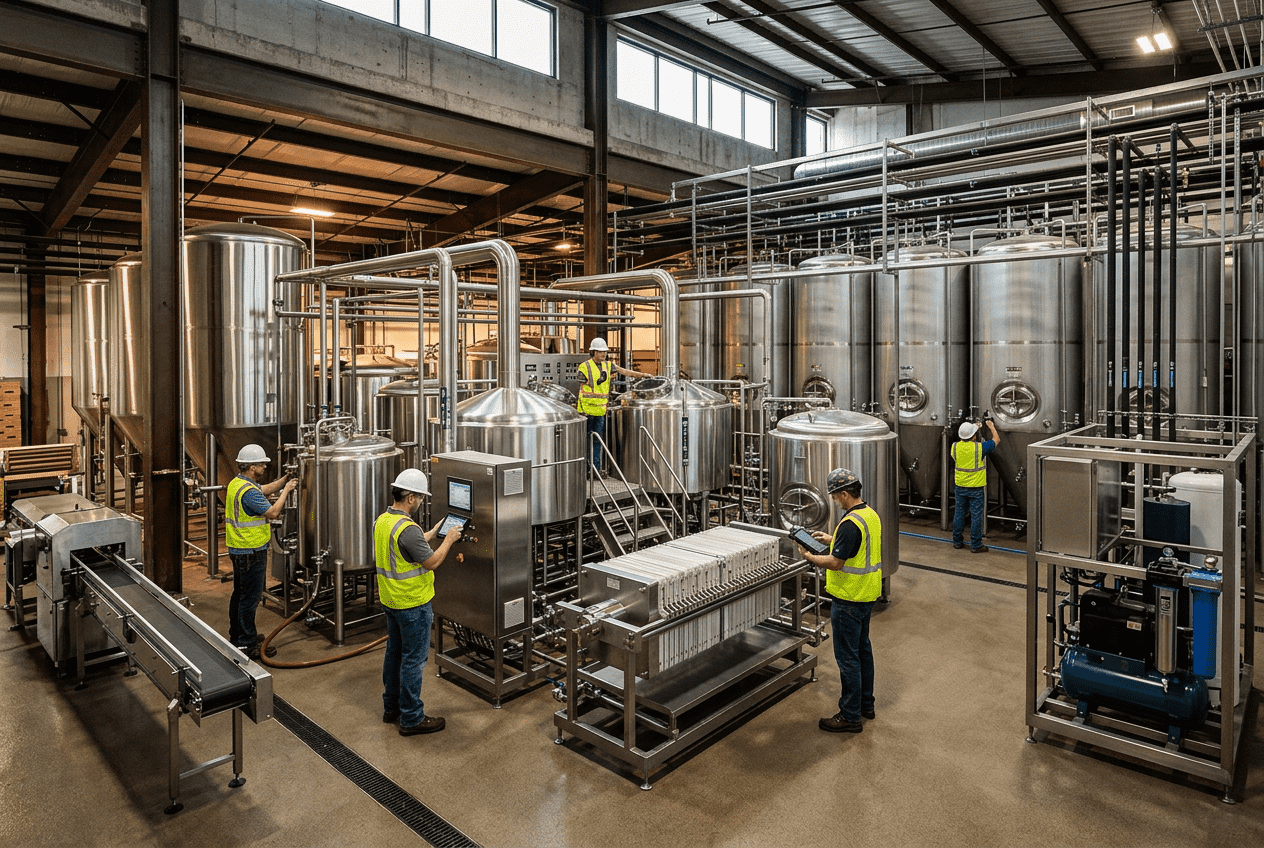
Dressing Processing Systems
For mayonnaise, ranch, vinaigrette, and specialty sauce producers in the United States, an effective dressing processing system must do four things well: build a stable oil-in-water emulsion, control viscosity and pH, protect product quality during transfer and filling, and scale economically from pilot to full production. In practice, that means the right balance of high-shear mixing, homogenization, precise ingredient sequencing, vacuum deaeration, hygienic design, clean-in-place capability, and packaging equipment suited to thick, particulate, or pourable dressings. A well-engineered system reduces separation, improves texture, supports shelf-life goals, and protects margin. The U.S. market for dressings continues to evolve across retail, foodservice, club, private label, meal kits, refrigerated fresh foods, and co-packing. Plants in Chicago, Dallas, Los Angeles, Atlanta, New Jersey, and the Carolinas often need flexible systems that can run conventional mayonnaise one day, buttermilk ranch the next, and a clean-label avocado oil vinaigrette after that. Manufacturers shipping through hubs such as the Port of Los Angeles, Port of Savannah, Port of Houston, and the Midwest distribution corridor must also design around throughput, sanitation, ingredient availability, and packaging formats. For companies planning a new line or expanding an existing one, buying advice is straightforward: define target product families, viscosity ranges, oil percentages, particulate limits, acidification strategy, fill sizes, and cleaning frequency before selecting equipment. That approach prevents common errors such as undersized shear systems, poorly designed powder induction, unstable emulsions, long changeover times, or fillers that cannot handle thick products. Industries that rely on these systems include prepared foods, condiments, deli salads, contract manufacturing, private label, refrigerated foods, protein marinades, and institutional foodservice. Typical applications range from shelf-stable mayonnaise and ranch to refrigerated creamy dressings, vinaigrettes with herbs, plant-based emulsions, and chef-style specialty sauces. A dressing processing system is an integrated line that receives and meters ingredients, disperses gums and dry ingredients, emulsifies oil and water phases, adjusts pH, deaerates the finished product, and transfers it to filling and packaging equipment under sanitary conditions. For high-fat mayonnaise, the process usually emphasizes tight oil addition control, strong emulsification, and vacuum mixing. For ranch and dairy-based dressings, the system must also manage cultured ingredients, particulates, and cold-chain or thermal process requirements. For vinaigrettes, the design may prioritize rapid blending, optional homogenization, controlled suspension, and bottle appearance. In the United States, processors increasingly want one platform to handle multiple SKUs. That requires flexible recipe control, hygienic pumps, jacketed batch tanks, in-line mixing options, mass flow measurement, and CIP circuits that reach every dead leg-sensitive area. It also helps to work with an engineering partner that understands not just equipment, but the total capital project, utility integration, controls, installation, and production economics. That is especially important for plants trying to hit aggressive launch dates or scale from regional distribution to national retail programs. The table above shows why one-size-fits-all equipment rarely works for every dressing. Product class drives the required mixing intensity, pump style, residence time, and filling method. System design starts with the product portfolio. A mayonnaise line often includes oil storage, liquid ingredient metering, vacuum-capable premix tanks, high-shear emulsification, recirculation loops, positive displacement transfer pumps, buffer tanks, and a filler suited for viscous products. A ranch line may add dry ingredient induction, dairy handling, particulate protection, lower shear post-hydration zones, and refrigeration support where needed. A vinaigrette line may be simpler if a temporary emulsion is acceptable, or more complex if long-term suspension and a premium visual appearance are required. Specialty formats are growing fast in the U.S. market: avocado oil dressings, yogurt-based dressings, vegan ranch, hot honey emulsions, Caesar variants, tahini systems, and refrigerated fresh herb blends. These products require processing flexibility because they may contain fibers, seeds, spice slurries, cheese particulates, purees, or heat-sensitive flavors. Plants serving retail and foodservice together often need quick changeovers between bottles, pouches, jars, cups, and bag-in-box. Regional supply chain considerations also matter. Plants near California produce runs may optimize around avocado oil, olive oil, and West Coast produce ingredients. Midwest processors may prioritize soybean oil, canola oil, and distribution to national private-label networks. Southeast plants shipping through Savannah or Jacksonville often focus on fast ramp-up, export readiness, and labor-efficient line design. This line chart illustrates the realistic growth trend in U.S. investment in dressing and condiment processing capacity as manufacturers pursue new formulations, automation, and packaging variety. This design matrix helps purchasing teams compare line requirements before committing capital. It also shows why recipe complexity and packaging goals must be addressed together. Most creamy dressings depend on a stable oil-in-water emulsion. The goal is to break oil into fine droplets and distribute them uniformly throughout the continuous aqueous phase. In mayonnaise, the target is a very dense and stable emulsion that resists coalescence over time. In ranch or creamy Italian, the target may be slightly more open, but still stable enough to withstand pumping, filling, warehousing, and distribution. High-shear mixers, rotor-stator heads, colloid mills, and in some cases homogenizers are used to control droplet size and texture. The right choice depends on formulation. A rotor-stator mixer is excellent for rapid dispersion and initial emulsification. A colloid mill can tighten texture and further reduce droplet size. Homogenization may be used for some dressings, though excessive pressure can damage texture, overwork hydrocolloids, or negatively affect particulates. The best solution is not always the most aggressive one; it is the one that creates stable structure with minimal quality loss. Shear must also be matched to temperature, phase viscosity, and ingredient functionality. Lecithin, egg yolk proteins, mustard, starches, gums, and plant proteins all behave differently under process stress. A well-designed system uses automation to maintain repeatable speed, feed rate, and recirculation time so the emulsion is not dependent on operator intuition. The bar chart reflects where processors in the United States are currently seeing the strongest demand for added dressing capacity, with ranch, private label, and retail mayonnaise remaining especially active. Even with excellent equipment, poor ingredient sequencing can ruin a dressing. The order of addition determines hydration quality, emulsion formation, viscosity build, and final texture. In many formulations, the water phase is built first, followed by soluble ingredients, hydrocolloids, preservatives, and flavor systems, then emulsifiers, then gradual oil addition under shear, and finally particulates or fragile inclusions. Acid may be split between phases or added at a precise stage depending on protein system and gum behavior. Common sequence errors include dumping gums directly into water without sufficient vortex control, adding oil too fast, introducing acid before complete hydration, or overmixing particulates after the body has built. Those mistakes create lumps, weak emulsions, air incorporation, or unstable viscosity. In reduced-fat systems, sequencing becomes even more important because hydrocolloids and starches carry more of the texture burden than oil does. Automated recipe systems offer major value here. Metered additions, timed hold steps, load-cell verification, and operator prompts can dramatically improve consistency across shifts. This is especially useful for co-packers and private-label producers running multiple customer formulations in the same suite. The sequence table above is useful for both operators and project engineers because it links formula logic to equipment performance. When a line struggles with consistency, sequencing is often the first place to investigate. Traditional mayonnaise relies heavily on egg yolk for emulsification and rich mouthfeel. Egg proteins and phospholipids create strong interfacial films around oil droplets, which is why classic mayonnaise can deliver remarkable stability at high oil loads. However, the U.S. market now includes a wide range of egg-free, vegan, allergen-conscious, and clean-label dressings. These systems may use mustard, pea protein, fava protein, chickpea ingredients, oat bases, modified or native starches, fibers, hydrocolloids, and natural emulsifier blends. Egg-free systems are not simple one-for-one replacements. They usually require different hydration, different shear, different acid staging, and different flavor masking. Some plant proteins thicken aggressively at one pH range and become unstable in another. Others may create sandiness if poorly dispersed. Clean-label systems also tend to have narrower process windows, making equipment precision more important. For processors launching premium or health-forward lines, pilot validation is essential. A formula that looks good in a benchtop beaker may behave very differently in a 2,000-gallon production tank with longer recirculation and more air pickup. That is why many manufacturers seek process partners that can connect formula objectives to line design, automation, and startup support instead of treating the equipment in isolation. The area chart shows the ongoing trend shift toward egg-free and cleaner-label dressing formats in the United States, a change that is affecting both recipe design and equipment specifications. Viscosity and pH are two of the most important quality markers in dressing production. Viscosity influences mouthfeel, cling, pourability, pumping behavior, filler performance, and visual appearance in the bottle. pH affects flavor, preservation, regulatory alignment, and microbial safety. Because these variables interact, they must be engineered together rather than treated separately. Viscosity is shaped by oil content, droplet size, protein system, gum selection, starch functionality, temperature, and shear history. A product may leave the mixer at the right thickness but thin out after transfer if the pump is too aggressive. It may test well in a lab cup but fail in the plant because acid was added before full gum hydration. This is why in-line viscometry, recipe controls, and operator training are valuable investments. Acidification systems typically include metering pumps, flow verification, and calibrated pH measurement. Vinegar remains common, but processors also use citric, lactic, or blended acids to tailor flavor and microbial control. For mayonnaise and related emulsified dressings, acid addition sequence can affect protein behavior and emulsion strength. Accurate pH management is especially important for shelf-stable retail products moving through extended U.S. distribution channels in summer and winter conditions. This table highlights the process variables most often tied to complaints, rework, and startup delays. They should be built into the control philosophy from the beginning. Air is the hidden enemy in many dressing systems. Entrained air can cause oxidation, foam, inaccurate fills, visual defects, lighter apparent color, and reduced shelf stability. In high-fat or herb-containing products, oxygen exposure can accelerate flavor degradation. Vacuum processing and deaeration therefore play a major role in premium dressing production. Vacuum-capable mixing vessels help control air during emulsification, especially in mayonnaise. Dedicated deaeration steps can remove foam after blending and before filling. This improves net weight consistency and reduces package headspace issues. For products with sensitive oils or fresh flavor notes, the payoff can be significant. Vacuum also supports better powder wet-out in some systems and can reduce splashing during recirculation. However, vessel geometry, seal quality, condenser protection, and CIP design must all be considered. A vacuum line that is difficult to clean or maintain will create its own problems. For U.S. producers serving long-distance retail distribution from hubs such as Memphis, Kansas City, and central Pennsylvania, small gains in oxidative stability can have meaningful commercial value. Less separation, better color retention, and more consistent fills translate directly to fewer complaints and stronger retailer confidence. Filling is often where a good formula meets a bad system. Thick dressings can string, drip, trap air, or plug valves if the filler is not matched to viscosity and particulates. Thin vinaigrettes may splash or foam if nozzles and timing are poorly tuned. Packaging selection should be made in parallel with process design, not after it. Common U.S. formats include PET bottles, glass bottles, HDPE squeeze bottles, jars, pouches, cups, sachets, and bag-in-box for foodservice. Piston fillers, rotary valve fillers, and positive displacement systems are frequently used for viscous dressings. Nozzle diameter, cut-off design, hopper agitation, and temperature control all influence package appearance and line efficiency. Manufacturers should also consider label claims, oxygen sensitivity, e-commerce durability, pallet patterns, and retailer shelf requirements. A clean-label refrigerated dressing may need a very different packaging approach than a shelf-stable private-label ranch for club stores. Plants supplying multiple channels often benefit from modular filler and conveyor design. The comparison chart shows why piston and positive-displacement filling systems are usually preferred for thicker dressing products, while lighter systems may suit lower-viscosity formats. The packaging table is useful during procurement because it ties package choice to process behavior and market channel rather than treating packaging as a downstream afterthought. Once the product is made and filled, the real test begins: can it survive time, transport, and temperature swings without breaking down? Shelf stability programs for dressings typically include pH verification, viscosity tracking, centrifuge or accelerated separation studies, thermal abuse observation, emulsion stability measurement, fill-weight checks, sensory evaluation, and package compatibility review. For the U.S. market, separation resistance is particularly important because products often move across long freight lanes and can sit in variable warehouse environments. A dressing produced in North Carolina may end up on shelves in Phoenix, Minneapolis, or Seattle. Transportation vibration and seasonal temperatures expose weak emulsion structures quickly. Manufacturers should build validation protocols that reflect actual distribution reality rather than ideal lab conditions. For example, private-label programs often demand extended shelf-life confidence before retailer approval. Foodservice buyers may prioritize pumpability and consistency after repeated opening. Refrigerated dressings may need strong microbial controls plus appearance stability over a shorter shelf life. This shelf-life testing framework helps processors translate technical performance into commercial readiness. Stable product is not enough; it must remain stable through the realities of U.S. distribution. When evaluating a partner for a dressing processing project, manufacturers should look beyond isolated equipment sales. The strongest outcomes usually come from firms that can connect process engineering, utilities, automation, installation, startup, and long-term scalability. On the technology side, advanced capability should include high-shear mixing and emulsification, jacketed and insulated vessels, batch and in-line blending, PLC programming, SCADA visibility, recipe management, CIP integration, and utility coordination for steam, chilled water, compressed air, and process water. For dressing plants that also run sauces, marinades, dairy-based products, or aseptic side streams, broader process knowledge becomes even more valuable. More about integrated engineering background can be found on the company overview page. On the manufacturing side, it helps to work with a group that understands real plant execution, not just drawings. That includes custom tanks, process skids, CIP systems, mixing vessels, transfer systems, and fabrication aligned with sanitary design principles. Manufacturers considering expansion can review equipment-focused capabilities through the process equipment section. This kind of in-house and partner-based manufacturing depth matters when lead times are tight or a standard skid will not fit the recipe or building constraints. On the service side, U.S. processors often need more than design. They may need capital planning, feasibility support, owner representation, project and program management, installation oversight, commissioning, and complete integration of local trades. A full-scope partner can help prevent costly disconnects between engineering intent and plant reality. For broader support categories, the services page provides useful context. This matters most when the project includes civil, mechanical, electrical, controls, utilities, and food safety coordination all at once. One reason Disruptive Process Solutions is relevant to dressing manufacturers is that the company approaches projects as profit-driven manufacturing investments rather than isolated equipment purchases. Its Design Build Manage model aligns engineering, construction coordination, and execution control in a way that supports first-year plant performance, especially for companies scaling quickly or navigating complex line integrations across the United States and Canada. If you are selecting a dressing processing system, start with five buying questions: What exact SKUs will run on day one? What products are likely within 24 months? What are the required batch sizes and shifts? What are the target fill formats? What quality risks would hurt the business most: separation, poor texture, labor intensity, sanitation downtime, or under-capacity? From there, map the system to your operating model. A regional premium brand may prioritize recipe flexibility and appearance quality. A national private-label producer may prioritize throughput, repeatability, and fast changeovers. A co-packer may need broad viscosity range coverage, robust automation, and strong CIP discipline. Prepared-food and protein companies may use dressing systems for sandwich spreads, slaws, marinades, and deli applications in addition to bottled condiments. Case experience matters as well. Manufacturers usually want to see proof that an integrator can solve bottlenecks, avoid overbuilding, and connect controls to practical capacity gains. For examples of project thinking and execution approach, the case studies section is a useful resource. In many facilities, the best result is not the largest capital spend, but the smartest redesign of process flow, automation, and utility support. As for local supplier strategy, U.S. buyers typically combine national equipment sourcing with regional installation and service support. Good projects often involve a network of vetted specialists near hubs like Houston, Charlotte, Cincinnati, Minneapolis, and Southern California, backed by a lead engineering partner that keeps the full scope aligned. Looking toward 2026, three trends stand out. First, formulation flexibility will become a baseline requirement as dressings diversify across clean-label, plant-based, higher-protein, and global flavor profiles. Second, automation and data visibility will expand, with more plants using recipe enforcement, remote diagnostics, energy monitoring, and performance dashboards to reduce waste and labor variability. Third, sustainability and policy pressures will shape equipment choices: lower water use in CIP, better product recovery, lighter packaging, reduced utility consumption, and design choices that support food safety compliance while lowering total cost of ownership. Buyers who account for these trends now will be better positioned for both retailer demands and margin protection. What is the best mixer for mayonnaise production?A high-shear rotor-stator mixer, often combined with vacuum capability and sometimes a colloid mill, is commonly preferred because it creates fine, stable oil droplets and strong body. Do vinaigrettes always need homogenization?No. Some vinaigrettes are designed to separate naturally and be shaken by the consumer. Others require tighter emulsion stability, in which case additional shear or homogenization may be appropriate. Why is pH control so important in dressing systems?pH influences safety, flavor, preservation, and ingredient functionality. Poor pH control can shorten shelf life, create flavor inconsistency, or undermine compliance targets. Can one line run both mayonnaise and ranch?Yes, if the system is designed for the viscosity range, particulate handling, sanitation needs, and recipe controls required by both products. Changeover planning is critical. What helps reduce separation in shelf-stable dressings?Correct ingredient sequence, proper emulsifier selection, controlled oil addition, sufficient but not excessive shear, stable pH, low air incorporation, and effective shelf-life validation. Are egg-free dressings harder to process?Often yes. They can be more sensitive to hydration, pH, flavor balance, and process variation, so precise mixing and automation are especially helpful. What filler type is best for thick dressings?Piston or positive-displacement fillers are usually best for thick, creamy products because they offer good accuracy and better handling of higher viscosities. How important is vacuum deaeration?Very important for many creamy dressings. It helps reduce oxidation, foam, and fill inconsistency while improving visual quality and shelf stability. What should U.S. manufacturers ask before buying a system?Ask about recipe range, throughput, viscosity limits, particulate capability, CIP design, controls integration, utility needs, startup support, and future expansion paths. Who benefits most from a full-scope engineering partner?Companies launching new dressing lines, expanding co-packing capacity, integrating utilities and automation, or trying to avoid fragmented responsibility across engineering, equipment, and installation teams. -
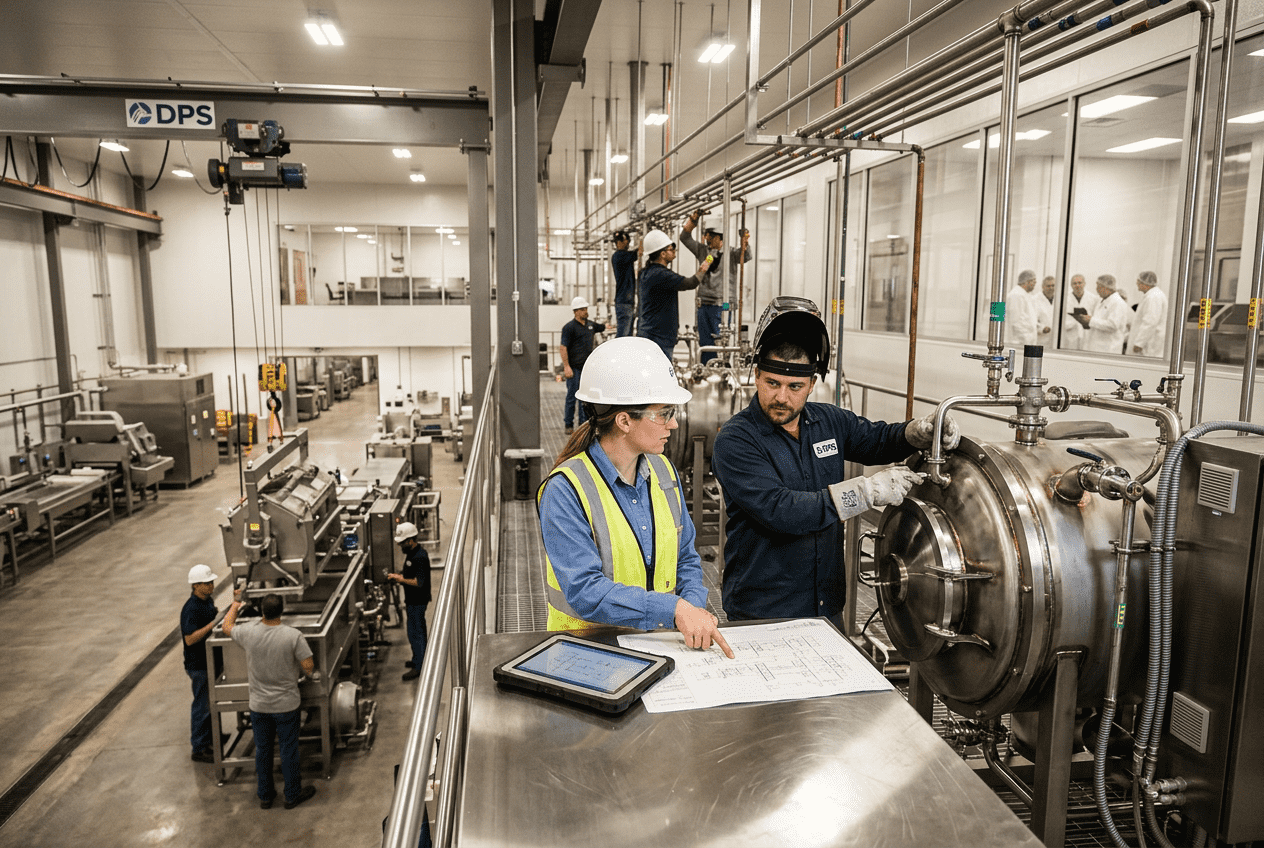
Sauce Processing Systems
Sauce processing systems are the integrated vessels, thermal technologies, pumps, mixers, controls, and packaging interfaces used to produce products such as pasta sauce, salsa, barbecue sauce, cheese sauce, hot sauce, gravies, marinades, and dressings at commercial scale. In the United States, the right system must do more than cook a recipe. It must protect flavor, maintain particle integrity, control viscosity, support food safety, clean effectively, and scale from pilot work to dependable production. For manufacturers operating in hubs such as Chicago, Los Angeles, Houston, Atlanta, and the Research Triangle in North Carolina, the practical question is not whether to automate sauce production, but how to choose a process line that matches product behavior, plant utilities, labor realities, and growth targets. Demand for higher throughput, cleaner labels, better consistency, and faster changeovers is pushing processors to modernize lines across the country. Whether products move through retail, foodservice, club, private label, or co-manufacturing channels, a well-designed sauce line can reduce giveaway, shorten cook cycles, lower utility consumption, and improve first-pass quality. That is especially important near major distribution corridors and ports such as the Port of Los Angeles, Port Houston, Savannah, and New York/New Jersey, where production schedules often tie directly to freight windows and customer service commitments. The best sauce processing system depends on five factors: product viscosity, particle size, required cook profile, fill format, and target throughput. Smooth products like hot sauce or cheese sauce often benefit from continuous processing with inline mixing, thermal treatment, and automated filling. Chunky products like salsa or bolognese frequently require gentler pumping, larger passageways, and batch control to protect particulates. Core equipment usually includes jacketed kettles or continuous cookers, low- or high-shear mixing, heat exchangers, transfer pumps, hold tubes where needed, surge tanks, fillers, and a sanitary CIP system. In U.S. plants, the winning design is usually the one that balances product quality, operational flexibility, food safety compliance, and long-term profitability rather than simply maximizing equipment size. Buyers should evaluate not only recipe needs, but also utility availability, floor space, future SKUs, labor skill level, changeover frequency, and sanitation complexity. For many producers, especially those moving from a kitchen model to industrial production, the biggest gains come from process integration: connecting ingredient handling, thermal processing, controls, filling, and cleaning into one coordinated system. A commercial sauce line is typically built around a few critical process blocks. The first is the cooking or blending vessel. Jacketed kettles remain common for flexible batch processing because they allow heating, agitation, ingredient additions, and visual observation in one unit. For higher volumes, processors may use continuous blend systems feeding tubular or scraped surface heat exchangers. Mixers vary by product: anchor agitators for gentle movement, sweep agitators for heat transfer, high-shear mixers for powder incorporation, and emulsifying systems for oil-water stability. Heat exchangers then control the product temperature during cooking, cooling, pasteurization, or hot-fill preparation. Finally, fillers must match viscosity, particulates, and package format, whether the product is going into pouches, jars, tubs, jugs, drums, or bag-in-box containers. In U.S. manufacturing environments, sauce lines also depend heavily on support systems such as sanitary pumps, inline strainers, mass flow devices, load cells, recipe controls, steam systems, hot water loops, compressed air, and CIP skids. When these utilities are undersized or poorly coordinated, the process often becomes unstable even if the primary equipment is sound. The table above shows why sauce lines are rarely one-size-fits-all. A processor making smooth wing sauce for national distribution from a facility in Dallas may prioritize continuous thermal efficiency and automated CIP. A salsa producer serving grocery chains from Southern California may instead prioritize gentle particle handling, rapid recipe changeovers, and flexible filling for multiple jar sizes. Batch and continuous systems both have a strong place in the U.S. market. Batch processing is often preferred by companies with many SKUs, seasonal formulations, short production runs, or recipes requiring staged ingredient additions. It offers strong operator control and usually lower entry cost. Continuous systems excel when demand is steady, formulas are standardized, and the business case rewards high throughput, reduced labor per pound, and tighter process repeatability. There is no universal winner. A multi-SKU prepared foods company in New Jersey serving foodservice and retail may gain more from versatile batch kettles with automation overlays than from a fully continuous line. By contrast, a high-volume shelf-stable sauce producer near Memphis or Kansas City may justify continuous blending, thermal treatment, and filler feeding because freight efficiency and retailer service levels depend on long runs. Many processors ultimately adopt a hybrid model. They batch-blend base product, then use continuous pasteurization, deaeration, or filling. This can be an excellent solution for U.S. manufacturers who want recipe flexibility without sacrificing downstream efficiency. It also supports co-pack operations that must move quickly between customers while still achieving strong line utilization. The growth trend above reflects a realistic market direction: more processors are investing in automation, thermal efficiency, and packaging flexibility as labor costs rise and customers demand better consistency. By 2026, lines with integrated recipe control, utility monitoring, and advanced sanitation verification are expected to attract more capital across the United States. Cooking and reduction are where sauce quality is either built or damaged. Some recipes need caramelization and flavor development; others need only rapid heat-up and microbial control. Steam injection can provide very fast heating and works well where dilution is acceptable or can be managed. Jacketed kettles provide broad flexibility and are especially useful when reduction, sauté-like cooking, and ingredient staging matter. Vacuum evaporation supports lower-temperature concentration, which can help protect color, aroma, and heat-sensitive ingredients. In tomato-based applications, reduction strategy directly affects color, mouthfeel, and yield. In cream sauces, aggressive heating can destabilize proteins and alter texture. In sugar-containing barbecue sauces, local burn-on becomes a major concern. For that reason, equipment selection should always reflect the thermal behavior of the actual formulation, not just generic sauce categories. When processors in the Midwest or Southeast expand from artisanal production to regional distribution, the temptation is often to overspecify heat input and shorten cooks aggressively. That can create product scorching, unpredictable reduction rates, and cleanup headaches. A better approach is to characterize heat transfer, target solids, and hold requirements before final equipment sizing. This is where process engineering has a direct impact on margin. Many sauce problems begin with poor powder incorporation and unstable phase behavior. Starches need complete hydration. Gums must be dispersed without clumping. Oil phases must be emulsified at the right shear level and order of addition. If these steps are inconsistent, the result may be fisheyes, phase separation, thin body, over-thickening after fill, or texture drift during shelf life. For U.S. manufacturers using clean-label starches, xanthan, guar, modified starches, dairy solids, or protein systems, the process window can be narrow. A gum system that works in a benchtop beaker may fail in a 2,000-gallon kettle if powder eduction, shear, hydration time, and temperature profile are not engineered properly. This is why inline powder induction, recirculation loops, and controlled shear mixing are often worth the investment. Emulsification is equally important in sauces containing oil, cheese, dairy, or egg-based components. Over-shearing can damage texture or increase viscosity unexpectedly. Under-shearing can produce visible oiling off. The ideal design uses the minimum effective shear to achieve stable dispersion and desired mouthfeel. As 2026 approaches, formulation trends in the United States are pointing toward lower-sodium, lower-sugar, and cleaner-label products. That shift makes process discipline even more critical because formulators have fewer traditional stabilizers available to mask poor mixing or thermal abuse. Equipment and control strategy increasingly replace brute-force additive use. The area chart highlights a broader trend: process design is becoming a competitive advantage. Plants that can hydrate powders efficiently, minimize rework, and hold emulsions consistently are better positioned to serve premium retail, foodservice chains, and co-manufacturing contracts. Chunky sauces present a unique challenge because the process must transport, heat, and fill the product without turning visible ingredients into mush. Salsa, bolognese, enchilada bases with peppers, chutneys, queso with particulates, and specialty regional sauces all require careful control of pump selection, valve geometry, pipe sizing, residence time, and agitation style. In many retrofitted U.S. plants, the product formula is not the true problem. The issue is that the line was originally designed for smooth dressings or beverage syrups, then adapted for chunks. Small clearances, sharp elbows, restrictive valves, and high pump speeds cause physical damage, inconsistent fill ratios, and consumer complaints. Particle-sensitive sauces usually need full-port valves, short transfer paths, low-shear positive displacement pumping, and fillers designed for suspended solids. The explanation is straightforward: particle survival is a systems issue, not just a pump issue. Buyers should test the full line path from cooker to filler. A product may look excellent in the kettle but fail after recirculation, holding, and packaging. In markets like California and Texas, where fresh-style and Hispanic-inspired sauces continue to grow, this distinction matters commercially. Viscosity control determines whether a sauce pumps well, fills accurately, and meets consumer expectations on the shelf. It influences heat transfer, particulate suspension, deposit behavior, and package appearance. Traditional quality systems often rely on off-line viscosity checks, but modern processors increasingly use inline sensors, density feedback, temperature compensation, and recipe automation to stabilize the line in real time. For example, tomato sauces may thicken with concentration, while starch-thickened systems may continue hydrating after initial mixing. Cheese and dairy sauces can shift quickly with temperature. Inline measurement technologies help operators catch these changes before they create underfills, clogged valves, or package variation. In practical terms, inline measurement is most effective when linked to automation. A line that senses viscosity but does not adjust agitation, dilution, or recirculation rate still leaves too much to operator judgment. Plants investing in PLC and SCADA integration gain the most value because the process can respond before waste is created. This demand profile mirrors what many suppliers and integrators are seeing in the United States: strong ongoing need for tomato-based lines, continued growth in salsa and hot sauce, and steady investment in cheese and barbecue applications driven by foodservice and convenience channels. Clean-in-place design is often underestimated during capital planning, yet it strongly affects uptime, labor, allergen management, and audit performance. Sauces leave behind sugars, oils, proteins, starch films, spice carryover, and burnt-on residues. If the line is difficult to clean, the plant loses production hours, consumes excess water and chemicals, and risks cross-contact events. Effective CIP for sauce systems requires attention to circuit velocity, return temperatures, spray coverage, dead-leg elimination, drainability, valve matrix logic, and material compatibility. A sticky teriyaki glaze and an oily queso do not challenge the system in the same way. The design should reflect the residue profile, not generic sanitation assumptions. The explanation behind this table is simple: a sauce line that is easy to run but hard to clean is not truly efficient. Plants across the United States are increasingly evaluating total cost of sanitation, not just production capacity. Water stewardship, wastewater costs, and ESG reporting are also becoming part of the investment decision, especially for larger enterprises with public sustainability goals. Scaling from kitchen work to a full production line is where many sauce brands encounter the biggest surprises. A formula that tastes right in a stockpot may respond very differently in a steam-jacketed kettle, a high-shear recirculation loop, or a continuous thermal system. Scale-up must account for ingredient order, thermal lag, evaporation rate, hold time, and shear history. It also must align with packaging speed, case packing, palletizing, and utility constraints. The most successful projects begin with a clear production model. That includes annual volume, peak-week demand, package mix, sanitation windows, utility loads, labor plan, and room for future line extensions. It is also important to connect process design with commercial logic. A line that can theoretically produce more than the market requires may still be a poor investment if it creates high fixed costs, excessive changeover complexity, or poor first-year utilization. For manufacturers looking for an integrated partner, Disruptive Process Solutions operates as a food and beverage engineering firm focused on profitable capital execution, not simply equipment placement. In practice, that means helping processors in the United States think through the operating model first, then building the process scope around the business case. From a technological capability standpoint, DPS supports process, mechanical, structural, plumbing, electrical, and controls engineering, including automation, PLC programming, and SCADA integration. Those skills matter in sauce processing because recipe control, utility sequencing, heat transfer, viscosity management, and line synchronization are tightly linked. A sauce system works best when equipment, utilities, and automation are designed as one operating system rather than separate purchases. From a manufacturing capability standpoint, DPS also supplies proprietary process equipment such as tanks, cooking vessels, and custom CIP systems. That can be valuable for sauce processors needing integrated vessel geometry, utility coordination, and sanitation design rather than disconnected equipment packages. Processors evaluating options can review broader process equipment capabilities to understand how vessel fabrication and line integration can support sauces, prepared foods, and related applications. From a service capability standpoint, DPS provides engineering, feasibility, capital planning, owner’s representation, project management, installation coordination, and turnkey integration. For a sauce manufacturer, this can reduce the common gap between recipe development, equipment purchase, field installation, controls startup, and production ramp-up. More details on these execution models are available through its engineering and integration services. Local context matters in integration. A new sauce plant near Charlotte may have different steam, wastewater, and labor considerations than a retrofit in Southern California or a co-pack expansion near Chicago. Freight lanes to major retailers, labor availability, local trade support, and municipal utility constraints all affect the right design. That is why line integration should be site-specific, not copied from a generic layout. A practical buying strategy is to define what the line must do in year one and what it must be capable of by year three. That keeps capital disciplined while preserving a realistic expansion path. Processors can also learn from prior implementations and facility transitions by reviewing selected project case examples that illustrate how execution quality affects long-term operating results. This comparison highlights why many U.S. buyers are moving away from piecemeal purchasing when products are complex. Standalone assets can work well for simple upgrades, but integrated engineering generally performs better when the line must manage viscosity, particulates, sanitation, and future expansion together. There is no single most important asset. For flexible batch plants, the kettle and agitator system often drive product quality. For high-volume operations, thermal processing, pumping, and filling integration may be more critical. In every case, sanitation design and controls are as important as the primary vessel. Choose batch when you run many SKUs, need frequent recipe changes, require staged additions, or are scaling from smaller production. Choose continuous when volumes are steady, formulas are repeatable, and labor efficiency and throughput are top priorities. They use gentle pumps, larger line clearances, full-port valves, low-drop transfers, suitable agitation, and fillers designed for suspended solids. The entire path from cooker to package must be evaluated. Common reasons include ongoing starch hydration, temperature shift, shear history, water loss, oil separation, and hold-time variation. Inline monitoring and tighter recipe control can reduce these swings. Yes. Sauces often leave sticky, oily, protein-rich, or spice-heavy residues. A poor CIP design increases downtime, labor, water use, allergen risk, and inconsistent startup quality after cleaning. Ask about actual throughput at your target viscosity, maximum particle size, utility demand, sanitation cycle time, automation scope, fill accuracy, expansion options, and whether the design has been validated for products similar to yours. Three themes are shaping investment decisions in the United States: smarter automation, sustainability, and regulatory readiness. More plants are adopting tighter data capture, energy-conscious heating systems, water-efficient CIP, and designs that better support traceability, allergen management, and food safety documentation. Sometimes, but only if the line is designed for the most demanding product. That usually means choosing pumps, valves, fillers, and thermal systems that can handle particles without compromising smooth SKU efficiency. The economic tradeoff should be reviewed carefully. For manufacturers across the United States, the right sauce processing system is not simply a collection of kettles and fillers. It is a profit-driving production platform that must support product quality, sanitation, throughput, labor efficiency, and future growth. The best outcomes come from aligning recipe behavior, equipment design, facility realities, and business strategy from the start. -
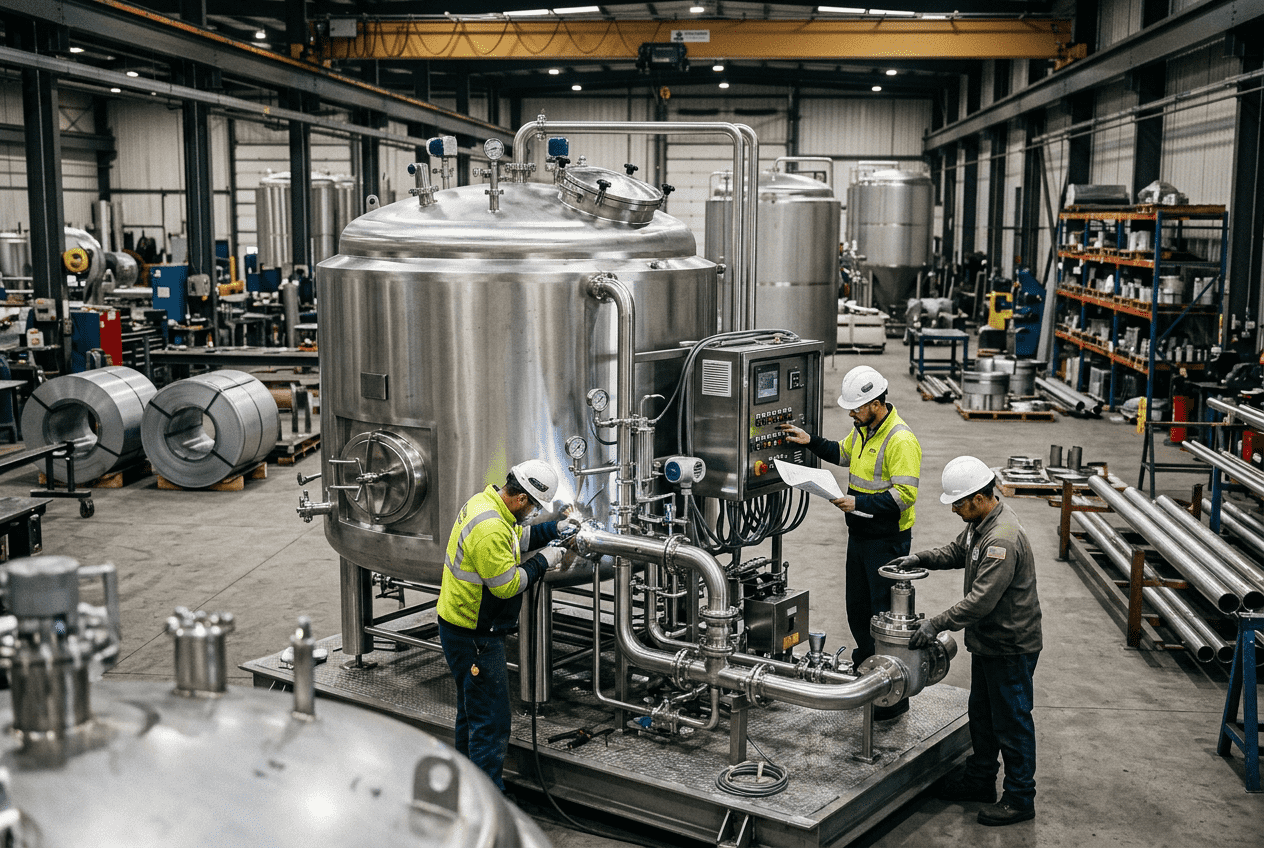
Poultry Processing Line Design
Designing a poultry processing line in the United States requires more than selecting machines in sequence. A profitable system must align live receiving, slaughter, evisceration, chilling, cut-up, deboning, value-added processing, sanitation, food safety verification, labor strategy, utilities, and downstream packaging with actual market demand. In practice, the best poultry line is not simply the fastest line. It is the line that consistently produces the right mix of whole birds, parts, and marinated or tray-pack products while meeting USDA expectations, controlling Campylobacter and Salmonella, and delivering acceptable yield at a manageable operating cost. Across U.S. poultry regions such as Georgia, Arkansas, Alabama, North Carolina, Mississippi, Delaware, and eastern Texas, processors are reevaluating line architecture to balance export demand, retail specifications, QSR supply, labor availability, and biosecurity requirements. Facilities near logistics hubs like Savannah, Atlanta, Charlotte, Little Rock, Memphis, Wilmington, and the Port of Norfolk often prioritize throughput and distribution flexibility, while regional processors may focus more on cut-up optimization, quick changeovers, and smaller-batch value-added products. A poultry processing line typically moves through shackling, stunning, bleeding, scalding, and plucking; then into evisceration, washing, inspection, chilling, cut-up, deboning, portioning, marination, packaging, and cold storage. For U.S. processors, the most effective line design starts with product mix and target hourly head count, then works backward through yields, utility loads, sanitation windows, pathogen interventions, labor availability, automation opportunities, and future expansion plans. Water immersion chilling usually supports high throughput and lower unit cost, while air chilling can support certain premium positioning and moisture-control claims. Automated venting, opening, and harvesting equipment can improve consistency, but only when bird size variation, maintenance discipline, and upstream process control are addressed. Strong line design also depends on verification testing, hygienic zoning, clean-in-place or clean-out-of-place routines, and disciplined changeover procedures. For companies planning a new facility, line expansion, or debottlenecking project, it is often valuable to work with an engineering-led partner that understands both food safety and capital efficiency. Disruptive Process Solutions approaches projects with a design-build-manage model that ties processing decisions to long-term profitability rather than just installed equipment count. The front end of the poultry plant determines much of the line’s welfare performance, yield retention, and carcass quality. Shackling must be organized to minimize stress and excessive wing flapping, because poor live handling can create bruising, broken bones, and quality defects that carry through the plant. U.S. processors generally evaluate bird size uniformity, line speed, and labor ergonomics before finalizing conveyor elevation, shackle pitch, and transfer design. Stunning methods vary by plant philosophy and customer requirements. Electrical water-bath systems remain common, but controlled atmosphere stunning continues to draw interest where processors seek welfare improvements, labor reduction at live hang, and more consistent carcass presentation. The optimal choice depends on capital budget, building layout, utility capacity, and live receiving flow. After stunning, the bleeding tunnel must be sized to achieve adequate bleed-out without starving the downstream scalder and picker. Too little bleed time can affect carcass appearance and sanitation load; too much can slow total plant throughput. Scalding then loosens feathers and prepares birds for plucking. Hard scald systems may support easier feather removal and lighter skin color targets for some end uses, while soft scald systems are often preferred where skin and cuticle preservation matter. Plucking performance depends heavily on finger condition, picker bank setup, bird presentation, and scald consistency. Processors often underestimate how much maintenance discipline at the picker influences downstream contamination and rework. Worn fingers, misalignment, or poor water management can increase feather carryover and create additional cleaning burden before evisceration. This front-end table shows why early-stage equipment selection cannot be isolated from welfare, uptime, labor, and food safety strategy. In many U.S. plants, small improvements in picker efficiency or bleed timing can reduce downstream trim loss and sanitation burden enough to materially improve weekly profitability. Evisceration is where automation can deliver major gains, but it is also where poor bird uniformity exposes system weaknesses quickly. A typical automated evisceration line includes vent cutters, openers, eviscerators, crop pullers, neck breakers, lung harvesters, giblet handling systems, inside-outside bird washers, and inspection support points. Each module depends on accurate carcass positioning and reasonably tight weight distribution. Processors supplying foodservice and retail parts markets often prioritize evisceration consistency because contamination events or organ damage can create direct yield loss and significant food safety exposure. Venting must be precise to avoid tearing. Opening equipment must create the necessary access without excessive carcass damage. Harvesting systems for liver, heart, gizzard, and other edible components should be integrated with by-product handling and chilled collection methods. Automation does not remove the need for line observation. It shifts labor toward setup, verification, rework management, sanitation, and preventive maintenance. Plants that invest in sensors, controls, and operator training generally get more value from automated evisceration than plants that treat it as a plug-and-play solution. From a technology standpoint, DPS supports processors with integrated process and controls engineering, including automation, PLC programming, and SCADA visibility that can connect critical evisceration equipment to alarms, production tracking, and utility systems. More about its broader project and integration capabilities can be found on the services page. The table highlights a recurring rule in poultry engineering: equipment speed claims matter less than the ability to maintain alignment, hygiene, and repeatable performance over a full production week. Chilling is one of the most strategic choices in poultry line design because it affects microbial control, shelf life, product claims, moisture pickup, yield accounting, footprint, wastewater, utility cost, and brand positioning. In the United States, water immersion chilling remains widely used due to capacity, efficiency, and familiarity. It is especially practical in high-throughput facilities that process large daily volumes of commodity whole birds and cut-up products. Air chilling, by contrast, can support premium merchandising, lower added-water positioning, and certain customer preferences. It often requires more floor space, tighter airflow and refrigeration design, and careful moisture-loss management. Plants near premium retail markets in the Northeast, California, or metropolitan hubs such as New York, Los Angeles, and Seattle may find air chilling commercially attractive if customer pricing supports the extra capital and operating complexity. Pre-chilling before final chilling is commonly used to reduce carcass temperature in stages and improve thermal efficiency. The final choice between immersion and air systems should account for product portfolio, local utility rates, wastewater treatment constraints, expected export documentation, and downstream cut-up timelines. This comparison shows why chilling decisions should be modeled financially, not made by habit. A plant in Arkansas with high-volume tray-pack output may reach a different answer than a premium processor near San Francisco or Boston. The growth trend above reflects continued investment pressure in U.S. poultry processing, driven by labor scarcity, food safety expectations, and the need for more resilient capacity planning heading into 2026 and beyond. Once birds are chilled, the next decision is whether the plant optimizes for whole bird sales, front-half/back-half production, fixed-weight retail trays, foodservice parts, or deboned raw material. Cut-up line design should start with customer specifications for thighs, drumsticks, split breasts, boneless breast fillets, tenders, and wings. U.S. demand for wings remains strong in sports-bar, casual dining, and prepared-food channels, while boneless breast meat continues to dominate many retail and industrial applications. Deboning can be manual, semi-automated, or highly automated depending on bird size, labor cost, and target yield. High-speed systems often work best when upstream chilling and bird presentation are consistent. In regions with labor constraints, automation may provide a compelling return; however, for specialty sizing or premium trim standards, skilled manual labor can still outperform machines in selected operations. Equipment layout should also consider tote flow, rework loops, bone collection, trim segregation, vision inspection opportunities, and ergonomic workstation heights. A line that maximizes breast yield but creates labor bottlenecks in wing grading or tray packing may not improve total plant margin. This table illustrates how different poultry parts require different design priorities. A breast-focused plant may invest heavily in deboning automation, while a wing-focused facility may prioritize cut precision, grading, and freezing logistics. The demand comparison helps explain why many processors are rebalancing their cut-up rooms. Even when whole-bird throughput is large, downstream profitability often comes from how effectively breast, wing, and trim programs are managed. Value-added processing is often where line design shifts from commodity production to margin optimization. Portioning systems can create fixed-weight breast portions, diced meat for ready meals, strips for foodservice, or optimized trim streams for nuggets, patties, and cooked applications. Trimming standards should be matched to customer expectations, not simply made more aggressive. Over-trimming may improve visual appearance but can quietly erode yield and margin. Marination options include vacuum tumbling, injection, inline mixing, and hold-time management for pickup and flavor consistency. Product type matters: bone-in thighs, boneless fillets, wings, and seasoned strips each behave differently in pickup and purge. Integration with spices, sauce preparation, refrigeration, and packaging timing is crucial. On the manufacturing side, DPS supports food processors with integrated systems beyond slaughter and cut-up, including marination tumblers, cooking vessels, mixing, blending, portioning, and utility infrastructure. Its equipment capabilities are outlined at equipment solutions, where custom process hardware and system integration are part of a broader plant-performance strategy. Value-added lines should also be planned around allergen segregation, label control, and sanitation windows. If a plant runs plain product in the morning and seasoned or sauce-coated product in the afternoon, the changeover protocol can determine whether a line meets schedule or loses a shift. The takeaway is simple: value-added poultry is not a single machine purchase. It is a coordinated process chain that spans formulation, materials handling, temperature control, automation, and packaging rhythm. The most common line-design mistake is building capacity around an optimistic sales forecast without enough attention to mix variability. A plant may have nameplate capacity for live birds per hour, but actual profitable throughput depends on bird weights, product changeovers, shift structure, labor attendance, sanitation windows, maintenance, packaging speed, and dock capacity. For example, a processor serving national retail customers from a site near Charlotte or Atlanta may need flexibility for whole birds, family packs, and boneless breast promotions in the same week. A Gulf Coast or Mid-Atlantic plant supplying export cartons through Savannah, Norfolk, or Houston may instead prioritize chilled or frozen bulk parts. The right throughput target must reflect demand patterns, not just production ambition. Capacity matching should account for three levels: peak technical speed, sustainable operational speed, and profitable market-aligned speed. Sustainable speed is generally the most useful planning number because it reflects maintenance, labor realities, and quality stability. The area chart reflects a broad trend: more U.S. processors are shifting a greater share of output toward cut-up and value-added programs. This has major implications for deboning automation, marination infrastructure, and packaging line balance heading into 2026. This table reinforces that poultry line throughput is a commercial planning issue as much as a mechanical one. Plants that synchronize production with packaging and distribution usually outperform plants that chase raw speed alone. In U.S. poultry processing, pathogen control is a system, not a single intervention point. Campylobacter and Salmonella reduction depends on live-side biosecurity, defeathering hygiene, evisceration accuracy, antimicrobial application, chilling control, employee practices, sanitary design, and verification testing. USDA-regulated facilities typically build intervention programs around multiple hurdles rather than one “silver bullet.” Common interventions may include inside-outside bird washers, approved antimicrobial rinses or sprays, post-evisceration cabinets, online reprocessing strategies where applicable, chill-system chemistry control, and strict process monitoring. Verification should include microbial testing plans, trend analysis, corrective actions, and environmental monitoring where relevant to product and process flow. Physical plant design matters significantly. Hygienic separation between live, dirty, clean, and ready-to-pack zones helps reduce cross-traffic risk. Floor drainage, handwash access, hose management, airflow direction, and equipment accessibility all influence pathogen control performance. 2026 trends point toward tighter digital traceability, more automated intervention monitoring, and increased customer pressure for documented validation. Sustainability policy is also influencing sanitation chemistry, water reuse strategies, and wastewater treatment expectations, especially in water-sensitive regions of the U.S. The intervention comparison demonstrates why successful food safety programs rely on stacked controls. The strongest results usually come from combining multiple validated steps rather than depending on one late-stage treatment. The table shows that verification is just as important as intervention. Without strong data review and corrective action discipline, plants may not recognize gradual drift until customer complaints or regulatory pressure emerge. Sanitation design begins long before the first production day. Equipment should allow access for cleaning, inspection, and maintenance without excessive teardown time. Dead legs, hollow members, poor drainability, and difficult-to-reach guards can all increase sanitation cost and verification risk. In poultry, where moisture and organic load are constant, hygienic design is a direct operating issue. Changeovers become especially important when a plant switches between plain and seasoned product, retail and foodservice specs, halal-related segregation practices, or allergen-containing flavor systems in value-added areas. A strong protocol should define teardown, rinse, chemical application, dwell time, manual cleaning points, inspection, ATP or rapid hygiene checks, pre-op release, and restart verification. Service capabilities matter here as much as hardware. DPS supports processors with process engineering, capital planning, project execution, installation oversight, utility integration, and compliance-aware system design. For manufacturers evaluating upgrades, relocations, or new lines, the company’s project experience across North America can be explored through selected case studies. Technological capability also supports sanitation performance. Integrated utilities such as hot water, compressed air, refrigeration, wastewater handling, HVAC, and controls should be designed as part of the sanitation strategy. A line cannot clean effectively if hose stations, drainage slopes, chemical delivery, or pre-op lighting are poorly planned. This sanitation table highlights a core design truth: cleanability, uptime, and food safety are interconnected. Plants that invest in sanitary access and disciplined changeover routines often gain more production hours, not fewer. The first step is defining the product mix and market channel. Whether the plant will focus on whole birds, cut-up parts, deboned meat, export cartons, or marinated value-added products determines almost every other design decision. Choose based on throughput, brand position, floor space, utility economics, wastewater limits, and customer requirements. Immersion often suits high-volume efficiency; air chilling may better support premium positioning and certain moisture-related claims. It makes the most sense when bird size is relatively uniform, throughput is high enough to justify capital, maintenance support is strong, and the plant needs better consistency or labor reduction. Common bottlenecks include live receiving balance, evisceration alignment, chiller residence time, deboning labor, packaging capacity, finished-product staging, and dock scheduling. Packaging is often the hidden limit. It is essential. Interventions without verification can create a false sense of security. Routine microbial testing, trend review, and documented corrective action are necessary for a defensible food safety program. Ask about sustainable speed, yield performance, cleanability, spare parts support, utility demand, labor assumptions, service access, compatibility with USDA-regulated operations, and whether the machine fits your actual product mix rather than a generic demo case. Yes. Smaller plants often benefit significantly from integrated planning because space, labor, and capital are tighter. A well-structured debottlenecking or phased expansion project can outperform a larger but poorly sequenced equipment spend. Key trends include more automation in evisceration and deboning, stronger digital traceability, improved process monitoring, greater pressure on water and energy use, wider adoption of data-driven sanitation verification, and more investment in flexible lines for value-added products. The U.S. poultry market remains one of the largest and most operationally sophisticated in the world. Growth is supported by retail demand, foodservice recovery, convenience-oriented prepared foods, and export opportunities moving through trade corridors such as Savannah, New Orleans, Norfolk, Houston, and Los Angeles/Long Beach. Yet this scale also creates pressure. Processors must respond to retailer scorecards, labor volatility, rising utility costs, wastewater scrutiny, and increased customer expectations for documented food safety and sustainability performance. For buyers, the best advice is to avoid evaluating equipment in isolation. Compare systems based on total installed cost, utility consumption, cleanability, spare parts availability in the United States, operator skill requirements, integration difficulty, and ability to support your product roadmap for at least five years. The right vendor or engineering partner will challenge unrealistic assumptions, identify hidden bottlenecks, and tie equipment choices back to financial outcomes. Poultry line applications now span commodity broilers, premium tray-pack, seasoned retail proteins, QSR supply, deli ingredients, frozen convenience items, pet food inputs, and industrial meat components. This diversity is why line design must be business-led, not merely machine-led. In practical terms, local supply strategy matters too. U.S. processors often prefer partners that can coordinate engineering, fabrication, installation, local trades, controls, and commissioning without forcing the owner to manage dozens of interfaces. That is especially important in live projects where shutdown windows are narrow and production commitments are fixed. -
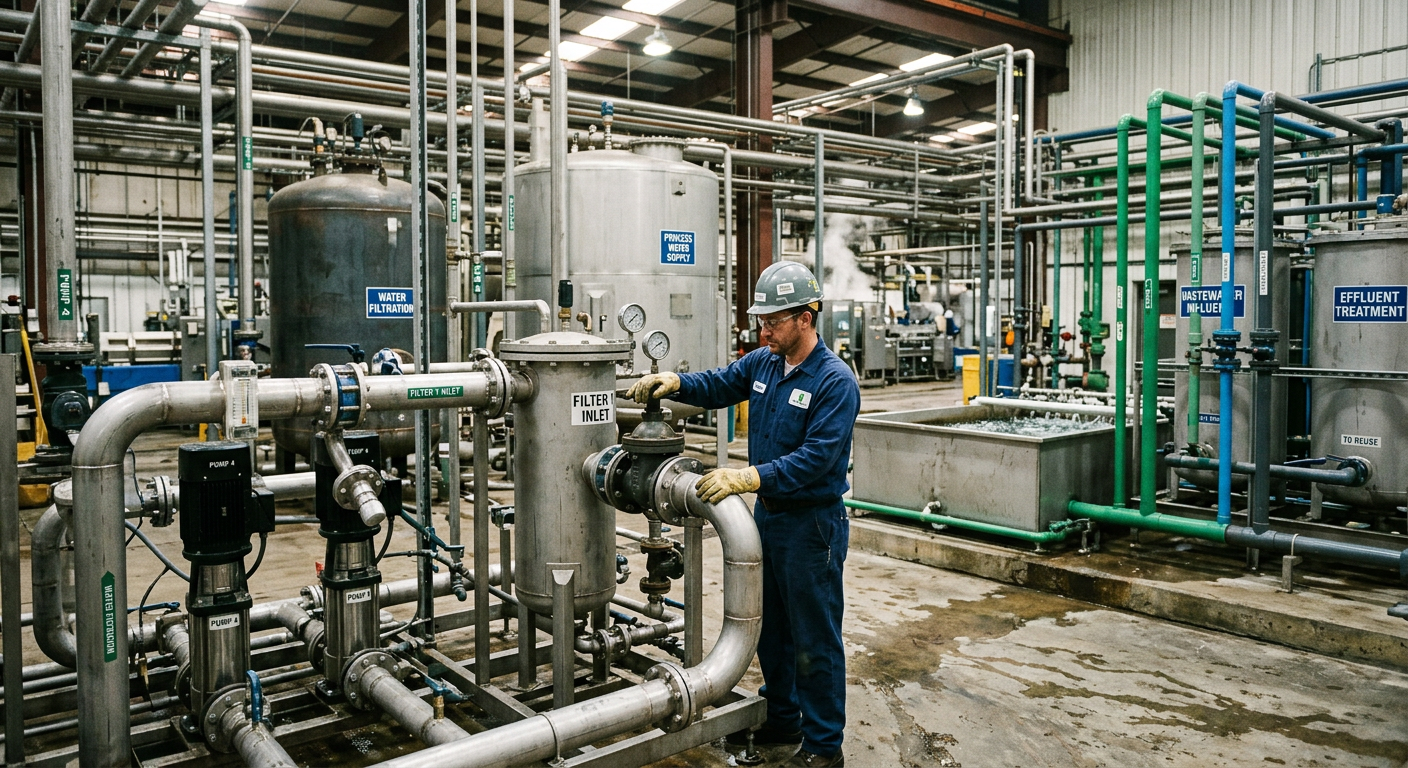
Beef Processing Line Design
Beef processing line design in the United States is not just about arranging equipment in sequence. It is a business decision that affects yield, labor efficiency, food safety, USDA compliance, energy use, export readiness, and long-term profitability. A modern line must connect livestock handling, slaughter, carcass chilling, breaking, grinding, packaging, and traceability into one controlled system that performs reliably under real production conditions. In high-volume cattle regions such as Nebraska, Kansas, Texas, Colorado, and Iowa, processors also need layouts that support cold-chain logistics to distribution centers, ports, and retail networks. For most U.S. projects, the best design approach starts with throughput targets, product mix, labor strategy, sanitation requirements, utility loads, and future expansion. Whether the facility serves boxed beef, foodservice portions, fresh retail trays, vacuum-packed primals, or ground beef patties, the line should be engineered around measurable performance indicators: head per hour, carcass weight variability, trim recovery, chilling rate, OEE, sanitation time, and giveaway control. Companies building or upgrading these systems often need an engineering partner that can connect process, utilities, controls, construction, and start-up. That is where integrated firms such as Disruptive Process Solutions stand out in the North American market. Rather than treating equipment, building systems, and execution as separate silos, DPS applies a design-build-manage model that aligns capital planning with plant performance. This is especially valuable in beef plants where refrigeration, wastewater, automation, and hygienic zoning all influence the line as much as the machinery itself. A beef processing line in the United States typically includes five major phases: slaughter operations, carcass chilling, fabrication, value-added processing, and packaging with traceability. The line begins with humane animal handling and slaughter steps, then moves into controlled chilling to reduce carcass temperature and microbial risk. From there, carcasses are broken into primals and subprimals, with some product routed to grinding, mixing, and forming systems for ground beef or patties. Final output may be vacuum packaged or packed in modified atmosphere packaging for retail and foodservice distribution. For buyers, the most important decisions are line capacity, compliance with USDA and customer standards, degree of automation, flexibility for multiple SKUs, and cold-chain performance. A facility serving national retailers from hubs such as Chicago, Dallas-Fort Worth, or Atlanta will prioritize high-speed packaging, weight control, and traceability. A regional processor supplying restaurants in Charlotte, Phoenix, or Seattle may prioritize flexible portioning and mixed-case output. In both cases, the best line design reduces labor dependency while protecting yield and ensuring consistent product quality. In the current U.S. market, beef processors are investing in robotic cutting support, machine vision, digital weigh-and-label systems, automated box handling, and integrated data collection. By 2026, plants that combine labor resilience, energy efficiency, and end-to-end traceability will be in the strongest competitive position. The table above shows why beef processing design should be evaluated as a system, not as isolated equipment purchases. A low-cost machine that creates a bottleneck in chilling, labeling, or sanitation often becomes more expensive over the life of the plant. The slaughter portion of a beef processing line must be designed for humane handling, worker safety, sanitary control, and smooth product flow. In U.S. facilities, layouts are usually designed around USDA inspection points, head-per-hour targets, and species-specific handling standards. The sequence normally starts in lairage and holding, moves through stunning and bleed-out, then continues to hide removal, evisceration, carcass splitting, trimming, and inspection. Stunning equipment may include captive bolt systems, restraint boxes, conveyors, and access platforms that support consistent animal positioning. The design objective is reliability and humane control, not just speed. Bleeding rails and collection systems must be configured for sanitary separation, drainage, and easy cleaning. The hide puller, brisket saw, bung drop station, viscera tables, carcass split saws, and final wash systems must be arranged to minimize cross-contamination and avoid backtracking of personnel or product. For plants serving halal or kosher markets, the front end of the line may need equipment adaptations, different restraint methods, revised inspection points, or separate product flow zones. These special requirements should be integrated during concept design instead of added late in the project. This stage of the process is where hygienic zoning begins to shape the rest of the facility. Floors, drains, hose drops, sterilizer placement, rail spacing, and personnel traffic must all be coordinated. An experienced engineering team will also model downstream refrigeration demand because slaughter throughput determines cooler loading patterns later in the shift. From a market perspective, U.S. processors near Amarillo, Dodge City, Garden City, Grand Island, and Omaha often prioritize high-throughput cattle lines linked to boxed beef operations, while smaller regional processors may emphasize flexibility, custom harvest, and niche programs. In either case, poor line balance in the slaughter department can limit the entire plant. After dressing, carcasses enter chilling systems designed to pull internal temperature down while protecting color, shelf life, and yield. Chilling is one of the most critical control steps in beef processing because it affects microbial growth, shrink, cutting performance, and downstream scheduling. U.S. facilities commonly use rail chillers, spray chill systems, and staged cooler zones with tightly controlled airflow and humidity. Chill protocols vary by carcass size, fat cover, line speed, and final market destination. Export programs and premium branded beef often require highly consistent chill curves because temperature history influences tenderness programs and vacuum-pack aging schedules. Processors shipping from central beef states to East Coast distribution centers or West Coast ports such as Los Angeles/Long Beach and Oakland need especially dependable cold-chain design. The engineering challenge is not only refrigeration tonnage. A high-performing chill system also depends on air circulation, rail spacing, cooler loading logic, evaporator placement, defrost management, and integration with plant utilities. This is where the technological capabilities of DPS become relevant. The company supports structural, mechanical, plumbing, electrical, process, and controls engineering, allowing refrigeration and process considerations to be planned together rather than in separate scopes. That integrated approach reduces common failures such as underperforming coolers, condensate issues, or poor airflow around loaded rails. The table highlights the fact that chilling is a process discipline, not just a cold room. Plants that skip detailed heat-load calculations often struggle with bottlenecks, excessive shrink, or delayed fabrication starts. Looking ahead to 2026, more plants are adopting digital temperature logging, SCADA-connected refrigeration alarms, and predictive maintenance for evaporators and compressors. This aligns with broader sustainability goals as processors seek lower energy use per pound produced. Once chilled, carcasses move into fabrication where they are broken into primals and then into subprimals or customer-specific cuts. This area is where much of the plant’s product mix flexibility is created. A fabrication line may support boxed beef for wholesale, steak cuts for retail, trim streams for grinding, and specialty items for export or foodservice. In the United States, fabrication design is often shaped by the needs of supermarket chains, club stores, institutional buyers, and restaurant distributors. Typical equipment includes quartering saws, band saws, conveyors, packing tables, portioning systems, trim collection conveyors, combo bin handling, and integrated scales. Layout matters because each extra touch increases labor cost and yield loss. Good designs separate bone-in flow, boneless flow, trim collection, edible offal handling, and rework. They also support ergonomic knife workstations, sanitation access, and in-line inspection points. This is also the section where manufacturing capabilities become important. DPS supports the design and integration of grinding, mixing, forming, automated cutting, marinating, cooking, and related food processing systems, while also supplying selected proprietary equipment such as tanks and CIP skids through its equipment capabilities. For a beef plant, that means upstream fabrication can be coordinated with downstream value-added lines instead of treated as separate projects. Buyers evaluating fabrication systems should ask four direct questions. First, can the line handle SKU growth without major reconstruction? Second, how will trim streams be identified for lean percentage control? Third, how easily can the area be cleaned between shifts? Fourth, does the cutting layout match the commercial strategy, whether that is boxed beef, branded retail portions, or trim-heavy production? For industries, beef fabrication lines serve supermarkets, foodservice distributors, burger chains, meal kit companies, institutional kitchens, and export programs. Applications range from commodity beef production to premium Angus, grass-fed, natural, and branded regional lines. Ground beef is one of the highest-volume beef categories in the United States, so grinding and forming lines must be designed for throughput, fat-lean consistency, low temperature control, and strict traceability. Product may be sold as chubs, vacuum bricks, retail trays, bulk combo fills, foodservice tubes, or formed patties. Because ground beef combines multiple trim inputs, ingredient and lot control is especially important. Standard equipment includes frozen block breakers if needed, fresh meat grinders, pre-breakers, mixers, blend systems, fat and lean dosing, metal detection or X-ray, patty formers, conveyors, checkweighers, and packaging machines. Temperature management is critical throughout this section to protect texture and food safety. Plants producing high-volume patties for QSR or institutional buyers often use automatic stackers, interleavers, and case packing systems. In this segment, automation and controls often deliver the fastest ROI. Integrated recipe management, in-line lean analysis, and automated weighing reduce overfat or underweight risk. These systems also make customer audits easier. As a case example, DPS has built its reputation by challenging unnecessary capital plans when process data suggests a smarter solution. In one real client scenario, a manufacturer expected to spend millions on capacity expansion, but process analysis showed the true bottleneck was controls logic rather than equipment limitation. Reprogramming improved output significantly and changed the entire investment plan. That same mindset applies well to grinding and forming lines, where a poorly tuned feed system or PLC sequence can constrain performance more than the grinder itself. Companies exploring projects can review the broader service capabilities that support feasibility, project execution, and systems integration. Packaging is the commercial bridge between the processing floor and the market. Fresh beef in the United States is commonly packed in vacuum bags for primals and subprimals, while retail-ready portions may use high-oxygen or low-oxygen modified atmosphere packaging depending on shelf-life targets, color strategy, and customer preference. Ground beef may be packed in rollstock vacuum formats, trays with film lidding, or chubs. Vacuum packaging supports extended distribution, export shipments, and wet-aging programs. It is widely used for boxed beef moving through cold warehouses in Kansas City, Chicago, and the Inland Empire, as well as through export channels connected to Gulf and Pacific ports. MAP systems can offer stronger case-ready retail presentation, but they require tighter gas control, film selection, and display-life validation. This table shows that packaging selection should match route-to-market, not just machine availability. A processor supplying East Coast retailers may value case-ready speed, while a Midwest boxed beef shipper may gain more from vacuum efficiency and export durability. Buying advice for packaging lines: evaluate seal integrity, changeover time, film cost, spare parts availability, sanitation access, and integration with labeling and checkweighing. Also verify that the packaging footprint fits the chilled room or secondary pack room without disrupting employee movement or pallet flow. Automation in beef processing no longer means only conveyors and PLCs. The current U.S. market is moving toward robotics for box handling, vision-assisted cutting support, automated yield monitoring, digital weight capture, and plant-wide performance dashboards. While fully robotic slaughter and deboning remain technically complex, selective automation in repetitive tasks can still produce meaningful gains. Vision systems can help classify product, confirm label presence, monitor package seal quality, and support operator decisions on cutting lines. Robotic palletizing reduces ergonomic strain in cold environments. In-line scales, checkweighers, and combo management systems tighten net weight control and improve traceability. SCADA platforms link temperatures, machine states, alarms, and production data into one interface that managers can use for shift decisions. These needs align closely with the technological capabilities of DPS, which include controls engineering, PLC programming, SCADA, utility integration, and process system design. For a beef plant, that combination matters because automation performance depends on refrigeration, compressed air, washdown electrical design, and line mechanics all working together. When plants retrofit automation into an old building without this integration, they often create new bottlenecks in sanitation, data flow, or operator access. By 2026, future trends include AI-assisted equipment diagnostics, machine vision for defect recognition, and energy analytics tied to refrigeration and compressed air loads. Automation will increasingly be justified not only by labor savings but by consistency, worker safety, and auditability. Facilities that produce halal or kosher beef need process design that respects religious requirements while also meeting U.S. regulatory and customer standards. This can affect animal restraint systems, knife handling stations, inspector access, carcass identification, segregation procedures, and downstream packaging flow. The exact requirements depend on the certifying body, customer program, and intended market. For halal production, processors often focus on approved slaughter method, trained personnel, segregation, and documentation. For kosher production, requirements may include specialized slaughter practice, inspection steps, and specific salting or handling processes depending on the product program. In either case, the line should be designed to support separate lot identity and prevent unintended mixing. Equipment adaptation does not always mean a separate facility. In some plants, it means dedicated time blocks, clear material handling protocols, color-coded tools, separate chill space allocation, and packaging system programming that preserves product identity. Processors serving metro markets such as New York City, Detroit, Houston, and Los Angeles often see strong demand for these specialized programs. When planning these systems, buyers should involve certifiers, operations leaders, and engineers early. Retrofitting compliance after layout freeze can create avoidable cost and operational friction. Traceability is now central to beef processing line design. A robust system links livestock records, lot creation, carcass ID, trim streams, grind batches, package labels, pallet IDs, and shipping data. In a recall scenario, the speed and accuracy of this system can determine whether a company isolates one lot or loses a week of production. Best-practice systems combine barcode or RFID data capture, scale integration, ERP connectivity, and operator-friendly interfaces. Carcass tags, rail location data, combo identification, formulation records, and packaging label generation should all roll into one auditable record. This is especially important for large U.S. processors shipping nationally or exporting through ports such as Savannah, Houston, or Newark. Service capability matters here as much as hardware. DPS supports capital planning, owner’s representation, project and program management, general contracting in licensed jurisdictions, installation, and complete system integration. That broad scope helps clients connect traceability design with real plant execution, which is often where software projects fail. Companies looking for examples of integrated project delivery can review selected project case studies to understand how engineering and execution are tied together. Local suppliers for these systems vary by region and may include scale integrators in the Midwest, labeling specialists near Chicago and Minneapolis, and cold-chain warehouse technology partners in Dallas, Atlanta, and Southern California. However, the best outcome usually comes from integrating those specialties under one process-led project team rather than buying each system independently. The comparison above reflects a common U.S. buying reality: individual equipment may be strong, but integrated plant performance depends on engineering coordination, utility planning, and execution discipline. The most important factor is line integration. Throughput, sanitation, refrigeration, labor flow, packaging, and traceability must work together. A fast machine alone does not create a high-performing plant. That depends on product mix and labor availability. Packaging, palletizing, weighing, traceability, and utility monitoring usually offer the quickest return. Cutting and deboning automation can also help, but it should be selected carefully based on carcass variability and operator workflow. In the United States, many new or expanding operations prioritize vacuum-packed primals, subprimals, and ground beef because these categories balance demand with manageable process complexity. Case-ready retail and formed patties can add value but usually require more packaging sophistication. Key industries include grocery retail, foodservice distribution, quick-service restaurants, institutional feeding, meal kits, further processing, export trading, and specialty ethnic or religious food channels. Look beyond machine price. Compare sanitary design, throughput under real operating conditions, spare parts access, controls architecture, data integration, startup support, and experience with USDA-regulated environments. Also compare whether the supplier understands the full plant or only one machine center. Not exactly. They serve different commercial goals. Vacuum is strong for distribution life and boxed beef programs, while MAP is often selected for retail display appearance. Many U.S. plants use both. They reserve space, utilities, and data infrastructure for future robotics, digital temperature logging, machine vision, energy tracking, and stronger traceability requirements. Planning these items early is cheaper than retrofitting later. Because beef projects succeed when engineering, construction, utilities, controls, and startup are aligned. DPS brings process engineering, project management, installation, and system integration into one model that is focused on profitable execution, not just equipment placement. In summary, beef processing line design for the United States market should be driven by product strategy, compliance, labor realities, logistics, and future expansion. Plants near cattle regions may optimize harvest and boxed beef flow, while urban-adjacent processors may emphasize case-ready or ground beef flexibility. The strongest projects connect slaughter, chilling, fabrication, grinding, packaging, automation, and traceability into one disciplined operating system. That is the difference between a line that merely runs and a facility that consistently produces margin. -

Food Plant Compressed Air System: Oil-Free Design for Food-Grade Compliance
Compressed air is one of the most important utilities in a modern food plant, but it is also one of the easiest to underestimate. In the United States, food and beverage manufacturers in places such as Chicago, Fresno, Dallas, Atlanta, Charlotte, Los Angeles, and the New Jersey distribution corridor rely on compressed air for valves, packaging machines, blow-off stations, conveying, instrument air, and cleaning support. When that air touches product, contact surfaces, or primary packaging, the design standard must shift from general industrial utility thinking to food-grade compliance, validated air quality, and lifecycle risk control. A well-designed food plant compressed air system usually starts with a risk assessment of where air is used, whether air contacts product directly or indirectly, and what air quality class each point requires. From there, the system is built around compressor selection, air treatment, storage, piping, filtration, monitoring, and maintenance. For many food processors, especially facilities audited to SQF or BRC and those working under FDA or USDA oversight, oil-free compressed air is the preferred baseline because it reduces contamination risk and simplifies compliance documentation. For most food and beverage plants in the United States, the safest compressed air strategy is an oil-free system paired with properly sized dryers, staged filtration, stainless or clean aluminum distribution piping, point-of-use final filtration, condensate management, and documented preventive maintenance. The exact design depends on whether air is used for packaging, product movement, fermentation support, instrumentation, pneumatics, or direct product contact. If compressed air can contact food, ingredients, packaging interiors, or food-contact surfaces, oil-free compression is generally the strongest choice. It does not eliminate the need for drying and filtration, but it removes one major contamination vector. If the air is used only for non-contact utility duties, a lubricated compressor may still be considered, provided the plant installs robust downstream treatment and clearly separates risk categories. In practice, high-performing plants across the United States usually standardize around these principles: This approach supports compliance, protects product quality, reduces audit findings, and lowers long-term operating cost. A food-grade compressed air system is not just a compressor. It is an integrated utility system made up of the compressor package, air receiver, aftercooler, moisture separator, dryers, filters, controls, monitoring devices, condensate treatment, and the full distribution network. In food and beverage operations, system design must be tied to process risk, sanitation expectations, and uptime requirements. The first design question is always application mapping. A poultry processor in Arkansas, a dairy plant in Wisconsin, a ready-to-drink beverage packer in Texas, and a co-manufacturer near the Port of Savannah may all need compressed air, but their quality requirements can differ significantly. Instrument air for control valves may need dryness and clean particulates. Air that blows open containers before fill may need much higher purity. Air used in aseptic or dairy environments may demand tighter verification and more frequent testing. Core system components typically include: In U.S. food plants, the practical goal is not only to generate air at the required pressure and flow, but to deliver it consistently at the required quality level, even during demand spikes, washdown cycles, shift changes, seasonal throughput swings, or future line expansions. The table above shows why one plant may need multiple compressed air quality zones instead of one blanket standard. Overdesigning every branch is expensive, but underdesigning critical points can create nonconformance, product loss, and recall exposure. The growth trend reflects what many engineering teams are seeing in the field: more U.S. processors are replacing legacy utility systems with documented, food-grade compressed air infrastructure as audits, sustainability targets, and energy pricing pressures intensify. The oil-free versus lubricated decision is central to food plant compressed air design. Both technologies can produce usable compressed air, but they manage risk differently. Oil-free compressors are designed so compression does not rely on oil within the compression chamber. That makes them highly attractive in food, dairy, beverage, and pharmaceutical applications where contamination prevention is critical. While oil-free units may carry a higher capital cost, the compliance and product protection advantages often justify the investment, especially in facilities serving national retail channels or export programs through hubs such as Houston, Long Beach, Newark, or Seattle. Lubricated compressors remain common in industrial plants because they are proven, widely available, and often less expensive to buy. However, in food applications they require more careful downstream treatment and monitoring. Any carryover event, separator failure, or maintenance lapse can introduce contamination risk. For low-risk utility air only, they can still be appropriate when systems are segregated and well managed. The table shows that the answer is not purely technical or purely financial. It is operational. If a manufacturer in California runs almond beverages, aseptic products, or direct-package blow-off, oil-free is usually the right answer. If a meat processor in the Midwest uses a separate utility compressor room for low-risk ancillary tools and maintains strict separation from product zones, lubricated compressors may still make sense for that branch. Best buying advice for U.S. plants: This comparison makes a common industry point: lubricated compressors may look attractive on initial spend, but oil-free systems often win on food safety and audit readiness where risk tolerance is low. Even the best oil-free compressor does not remove the need for air treatment. Ambient air always brings moisture, particulates, and environmental contaminants into the system. If untreated, that can lead to corrosion, microbial growth potential, sticking valves, ruined filters, frozen outdoor lines in northern states, and product exposure issues. In food plants, treatment usually follows a staged concept: bulk moisture removal, fine particle capture, oil vapor control where relevant, dew point reduction, then point-of-use polishing. Dryer selection depends on dew point requirement, climate, utility load profile, and whether air serves indoor packaging lines, refrigerated rooms, or outdoor process skids. For a large beverage campus, it is common to see a central oil-free compressor room with bulk treatment, then zoned polishing near fillers, depalletizers, blow molders, and ingredient systems. For protein and prepared foods, areas with heavy washdown may justify tighter dew point control and stainless point-of-use housings. Filter staging also matters. A common sequence includes particulate prefiltration, coalescing filtration, drying, then final filtration at critical branches. Differential pressure gauges across filters should be standard. Filters that are not monitored often remain in service long after performance drops. By 2026, more U.S. facilities are expected to adopt smart dew point sensors, remote condition monitoring, and alarm integration into plant SCADA systems. That shift aligns with sustainability goals because properly controlled treatment systems reduce unnecessary purge losses, pressure waste, and excess compressor run time. Piping design determines whether clean compressed air actually reaches the line in usable condition. Oversimplified distribution layouts often create hidden energy losses, condensate traps, unstable pressure, and maintenance headaches. In food plants, good piping design must support sanitation, expansion, and low contamination risk. For most medium and large U.S. facilities, a looped header is better than a dead-end trunk because it improves pressure stability and allows multiple feed paths. Drops should come off the top of the main where possible, with drip legs and drains placed strategically. Branch takeoffs should avoid pulling moisture directly into equipment. Pressure drop should be minimized through correct sizing, smooth interior pipe surfaces, and a clean arrangement of valves and fittings. Stainless steel and high-quality aluminum piping are often the best fit for food-grade compressed air because they support cleaner internal surfaces and better long-term performance. Plants near coastal environments such as Florida, Southern California, or the Gulf Coast may see even greater value in corrosion-resistant materials. Designers should also plan for: Where local suppliers are involved, U.S. buyers should look for compressor and piping partners with food, beverage, dairy, protein, or aseptic references in major manufacturing corridors such as the Midwest, Southeast, and Southern California. The best supplier is not always the nearest branch office; it is the one that can support commissioning, validation, and emergency parts with minimal disruption. Point-of-use filtration is where many plants either protect the process or leave a gap. Central treatment cannot account for every downstream event. Piping debris, maintenance activity, receiver scaling in legacy systems, and localized moisture events can still affect line performance. That is why final filtration near critical use points is so important. In food and beverage plants, point-of-use filtration strategy should be tied to the application. A pneumatic cylinder branch does not need the same final treatment as direct-contact air for powder conveying, container blow-off before filling, or air used around open product zones. A practical standard includes documented filter grades, replacement frequencies, pressure drop limits, and verification records. Plants should also define which stations need sterile or high-efficiency final filters, which need pressure regulators, and which should include microbial sampling or periodic compressed air quality testing. The key lesson is that “food-grade air” is not one filter SKU. It is a system standard that must be matched to process risk. The industry demand pattern above mirrors real-world application pressure. Dairy, beverage, and aseptic environments generally require the most disciplined point-of-use treatment due to direct packaging interaction and high sanitation expectations. Compressed air is often one of the most expensive utilities in a food plant. The cost is not just electricity for the compressor motor. Waste also comes from poor control logic, excessive pressure setpoints, dryer purge losses, leakage, and operating multiple machines inefficiently. In many facilities, energy savings of 15 to 30 percent are available without sacrificing reliability. Control strategy should be based on real demand profile. A single fixed-speed compressor may work for small plants, but larger or variable-load facilities often benefit from a sequenced system with base load and trim machines. Variable speed drives can help when plant demand swings heavily during batching, packaging startup, or multi-shift operations, but they should be selected carefully and not treated as a universal solution. Best practices include: For example, a beverage co-packer in North Carolina may run high air demand during daytime packaging but lower utility demand overnight. A properly staged system can avoid running all compressors at inefficient part load. Similarly, a California food processor paying high utility rates can justify advanced controls faster than a plant in a low-cost power market. The trend shift through 2026 is clear: more plants are moving toward connected controls, leak analytics, and energy dashboards. This is being driven by utility costs, sustainability reporting, and corporate mandates for carbon reduction. State incentive programs and utility rebates in places like California, New York, and parts of the Midwest may further accelerate upgrades. Policy and sustainability trends for 2026 include more stringent energy benchmarking, broader use of digital metering, increased interest in heat recovery from compressor packages, and stronger board-level attention to resource efficiency. Plants planning major capital projects should design for those requirements now rather than retrofit later. Food-grade compressed air reliability depends heavily on maintenance discipline. A beautifully designed system can still fail audit or performance expectations if drains stick open, filters remain in service too long, dew point alarms are ignored, or compressor service intervals are missed. Preventive maintenance schedules should combine manufacturer recommendations with plant-specific operating conditions, sanitation exposure, and quality risk. A facility with heavy washdown and round-the-clock operation will not have the same maintenance profile as a dry bakery running one shift. A maintenance plan should also define spare parts, emergency response, and escalation thresholds. If dew point rises above target, what happens? If a final filter reaches end of life early, who is notified? If a compressor trips during peak production, can the standby machine carry the load without dropping packaging pressure? These are not paperwork questions; they are uptime questions. Case studies across the United States consistently show that maintenance gaps usually cost more than planned service. Plants near major logistics corridors such as Dallas-Fort Worth, the I-95 East Coast network, or the Inland Empire often run tight fulfillment schedules, so even a short compressed air issue can ripple into missed production windows and freight disruption. For examples of project execution in processing environments, readers can review recent project case studies tied to broader plant utility and process improvement work. Disruptive Process Solutions supports food and beverage manufacturers across the United States and Canada with practical engineering, capital planning, and execution for process and utility systems, including compressed air infrastructure. The company works with manufacturers that need more than a vendor quote. The focus is on designing systems that improve profitability, compliance confidence, and operational performance. From a technology standpoint, DPS brings cross-functional engineering capability covering process, mechanical, electrical, plumbing, structural, controls, PLC programming, automation, and SCADA integration. That matters in compressed air projects because the system rarely stands alone. Pressure stability, sequencing, utility load balancing, controls alarming, and machine integration all affect final performance. Clients can explore broader engineering and integration services when compressed air upgrades are part of a larger plant modernization program. From a manufacturing standpoint, DPS also supports projects with proprietary process equipment and utility-related integration experience. Its in-house equipment capabilities complement field execution for tanks, CIP systems, and other plant infrastructure where compressed air often interacts with valves, automation, and hygienic process design. Manufacturers evaluating utility upgrades alongside new process lines can review the company’s process equipment portfolio for a better sense of system-level capability. From a service standpoint, DPS operates through a design-build-manage model that combines front-end planning, engineering, installation oversight, contractor coordination, commissioning, and owner-focused project delivery. That approach is especially valuable when compressed air work must be phased around production schedules, sanitation windows, and expansion milestones. Rather than treat the compressor room as an isolated project, DPS aligns utilities with plant throughput, labor, quality, and future growth. More company background is available on the about our team page. DPS serves a wide range of industries relevant to compressed air system design, including dairy, ready-to-drink beverages, brewing, spirits, protein processing, sauces and dressings, aseptic operations, prepared foods, and co-packing. In each case, the goal is the same: deliver capital projects that support long-term manufacturing performance, not just short-term installation completion. A common project pattern is a plant that initially asks for a compressor replacement but actually needs a broader utility strategy. In those cases, the best result may involve resizing demand, zoning risk areas, correcting piping losses, updating controls, and integrating maintenance visibility, rather than simply purchasing a larger machine. That kind of honest scope definition is often where the biggest financial value is created. Is oil-free compressed air mandatory in U.S. food plants?Not in every application, but it is often the preferred standard where compressed air may contact product, packaging interiors, or food-contact surfaces. A documented risk assessment should guide the final decision. Can a lubricated compressor still be used in a food facility?Yes, for low-risk utility applications in some plants, especially when the system is segregated and downstream treatment is robust. It is usually less suitable for direct or high-risk indirect contact uses. What dryer is best for food-grade compressed air?For critical applications, desiccant dryers are often preferred because they can achieve much lower dew points than refrigerated dryers. Final selection depends on the required air quality, climate, and load profile. How often should compressed air quality be tested?That depends on risk, audit framework, and internal quality plans. Critical contact applications should have a documented verification schedule, while lower-risk utility branches may rely more on routine maintenance and monitoring. What piping material is best?Stainless steel and high-quality aluminum systems are usually the strongest choices for clean, low-corrosion compressed air distribution in food plants. Black iron is generally a poor choice for food-grade service because it can rust internally and shed contamination. How much energy can a plant save by upgrading controls?Many U.S. facilities can reduce compressed air energy use by 15 to 30 percent through leak repair, pressure optimization, better sequencing, dryer improvements, and demand monitoring. What should be included in a new system specification?Flow, pressure, air quality targets, redundancy, dew point, filtration stages, controls, monitoring points, noise expectations, condensate treatment, validation requirements, and future capacity planning should all be included. What industries need the most stringent compressed air design?Dairy, aseptic beverage, ready-to-drink, pharmaceutical support, direct-contact ingredient systems, and any application with product or packaging interior contact usually require the highest level of discipline. How should U.S. plants prepare for 2026 trends?Plan for better digital monitoring, stronger sustainability metrics, more energy accountability, integrated controls, and audit-ready documentation. Future-ready systems will be efficient, monitored, and designed around risk-based air quality zoning. What is the smartest first step before buying equipment?Map every compressed air use point, classify each by risk, log actual demand, and evaluate the existing piping and treatment train. The right answer may be a system redesign rather than a simple compressor replacement. In summary, a food plant compressed air system in the United States should be designed as a compliance-critical utility, not a generic mechanical package. Plants that align compressor selection, air treatment, piping, point-of-use filtration, controls, and maintenance around food-grade risk generally achieve better quality protection, stronger energy performance, and more confident audit outcomes. -
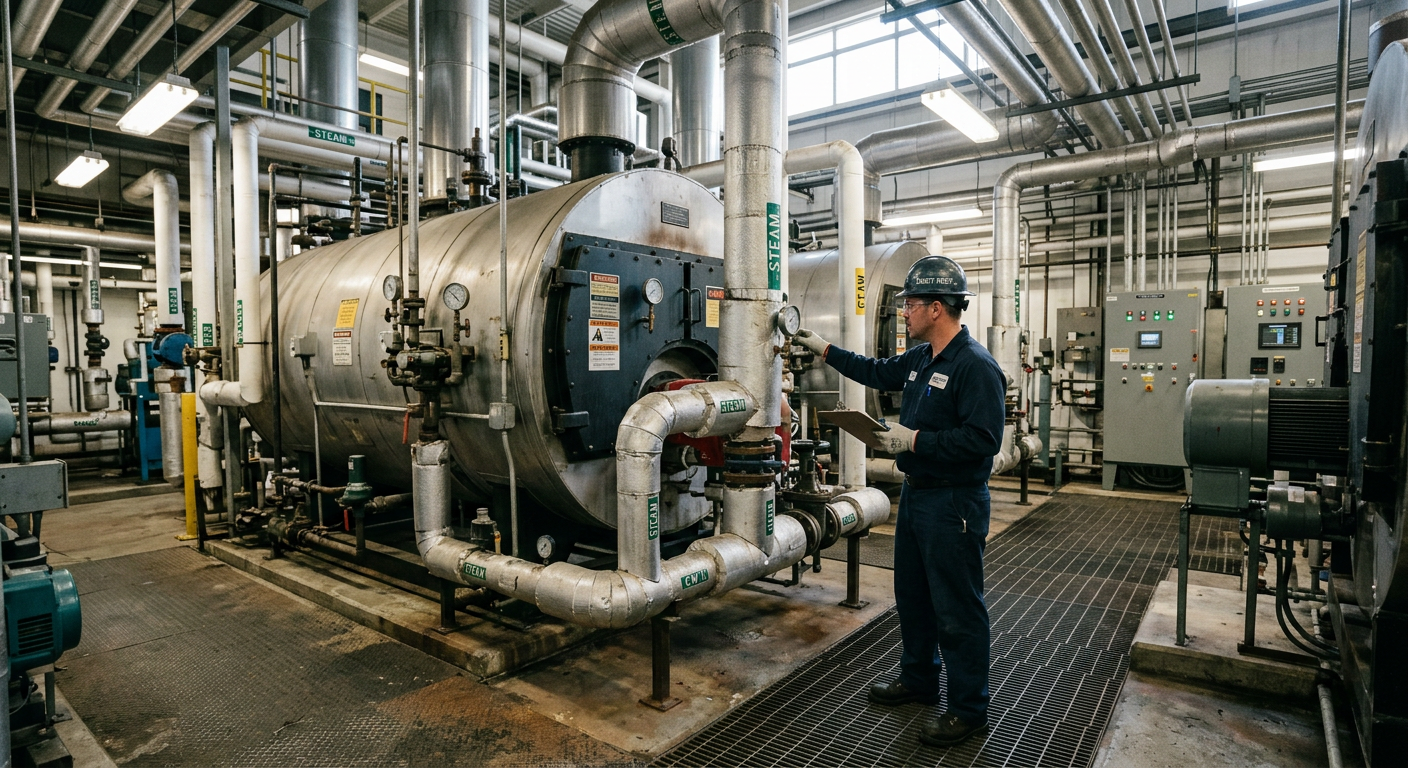
Food Facility Water Treatment Design: 7 Key Standards for Process and CIP Water
Water treatment design is one of the most important decisions in any food or beverage plant because water affects product quality, cleaning performance, equipment life, utility cost, wastewater compliance, and long-term operating risk. In the United States, manufacturers in dairy, protein, beverage, prepared foods, and aseptic processing must evaluate incoming water, treatment technology, sanitation goals, and discharge requirements together rather than as separate projects. A well-designed system aligns production needs with FDA, USDA, local sewer authority, and third-party audit expectations while supporting growth, sustainability, and plant profitability. The quick answer is that a food facility in the United States should design its water system around seven practical standards: verify source water quality, match treatment to product and sanitation risk, use reverse osmosis where high purity is necessary, define CIP water specifications by cleaning step, engineer wastewater pretreatment before expansion, build metering for reuse opportunities, and design the full system for maintainability and future capacity. Whether the facility is in California’s Central Valley, near dairy plants in Wisconsin, around poultry operations in Georgia, at Gulf Coast beverage sites in Texas, or close to port-centered co-packing operations in New Jersey, the same principle applies: water design must support production economics and regulatory certainty at the same time. For most manufacturers, process water is not just an ingredient utility. It can contact food directly, generate steam, feed blending systems, serve as rinse water, support clean-in-place loops, and determine final microbiological performance. Plants that treat water only for hardness or aesthetics often discover later that membrane fouling, sanitizer instability, scale buildup, flavor variability, or sewer surcharges are the larger costs. The best approach is to begin with the intended application: ingredient water, bottle rinse water, final rinse water, boiler feed, cooling tower makeup, CIP chemical dilution, or reclaimed non-product contact water. The table above gives a fast planning view. In practice, engineers should verify actual feed water chemistry, peak hour demand, seasonal changes, storage time, and sanitary piping arrangement before selecting equipment. Food plants should use seven design standards as a framework for investment decisions. These standards are not marketing claims; they are operating disciplines that reduce rework and preserve margin. These seven standards are especially relevant in a U.S. market shaped by labor shortages, stricter utility costs, increasing sustainability targets, and rising expectations from SQF and BRC audits. Plants near major logistics corridors such as Dallas-Fort Worth, the Inland Empire, Atlanta, and the I-95 manufacturing belt often scale rapidly, making modular water design even more valuable. The line chart reflects a realistic upward trend in capital spending and retrofit activity as more facilities modernize systems for water efficiency, food safety, and pretreatment compliance. Every successful water treatment project starts with an incoming water quality assessment. Too many plants buy equipment before defining their true water problem. Source evaluation should combine laboratory data, utility records, sanitary survey inputs, and production forecasts. In the United States, the same food category can face different water challenges depending on geography. A brewery near Denver may manage high alkalinity and taste profile concerns; a meat processor in the Midwest may deal with well-water hardness and iron; a beverage co-packer in Southern California may need chloramine management and recovery efficiency because water cost is a major operating lever. A sound assessment should answer six questions. First, what is the water source: municipal, well, surface water, or blended? Second, what is the daily average and peak instantaneous demand? Third, how does quality change by season or utility event? Fourth, which uses require the highest purity? Fifth, what contaminants drive failure today: scale, taste, fouling, corrosion, micro load, or sewer penalties? Sixth, what are the growth assumptions for the next three to five years? This assessment is also where buying advice matters. Food manufacturers should ask suppliers for a mass balance, membrane recovery assumptions, resin regeneration profile, chemical consumption estimate, instrument list, and a control narrative. A low bid based only on average flow can be much more expensive once peak production, CIP overlap, or summer feed-water changes appear. When facilities are evaluating expansions, owners often benefit from integrating water planning into broader engineering scope. Companies seeking plant-level strategic support can review food and beverage engineering services to align utilities, process systems, and compliance from the beginning instead of treating water as an afterthought. Filtration and purification technologies should be selected based on contaminant profile, sanitary risk, and operating economics. In U.S. food plants, the most common treatment train starts with coarse screening, followed by multimedia filtration, activated carbon, softening, cartridge polishing, membrane separation, and final disinfection where needed. The goal is not to install every technology, but to build a sequence that protects downstream equipment while delivering fit-for-purpose water. Multimedia filters remove suspended solids and help stabilize turbidity. Activated carbon beds are widely used to reduce chlorine, chloramine, and taste or odor compounds, especially important in beverage and ingredient water applications. Water softeners remove calcium and magnesium to reduce scaling in CIP systems, boilers, and heat transfer equipment. Cartridge filters then polish the stream ahead of membranes or UV. Ultraviolet systems are effective for microbial control when turbidity is low and maintenance is disciplined. Ozone can be valuable in some bottling and process sanitation programs, though it requires strong safety and control integration. Microfiltration and ultrafiltration become more attractive when plants need better particulate and microbial barrier performance without relying entirely on chemistry. They can also support reuse systems by improving solids removal before disinfection or RO. The right design depends on whether the plant is handling milk, sweetened beverages, sauces, proteins, or aseptic ingredients. For facilities comparing equipment supply options, it is useful to look at the total system rather than a single skid. Storage tanks, transfer pumps, sanitary valves, control logic, conductivity monitoring, CIP capability, and installation quality all influence long-term performance. Integrated process equipment and utility packages can be reviewed through process equipment solutions when manufacturers want utility systems designed around production realities instead of generic catalogs. The bar chart shows where demand for advanced treatment is strongest today. Beverage, aseptic, and dairy facilities often lead because flavor, shelf life, membrane utility, and rinse quality are highly sensitive to water performance. Reverse osmosis is often the centerpiece of high-purity water design in the United States food sector. RO is especially valuable when the plant needs low dissolved solids, low hardness, lower alkalinity, and a stable ingredient water profile across seasons. It is commonly used in bottled water, RTD beverages, dairy beverages, brewery liquor treatment, boiler feed preparation, and certain reuse polishing systems. However, reverse osmosis should not be treated as a stand-alone answer. Its performance depends on upstream solids control, dechlorination, hardness management, antiscalant strategy, and cleaning protocol. An RO skid installed at a beverage site near Houston or Savannah may face different feed challenges than one in Oregon or Minnesota. Recovery percentage, membrane flux, concentrate management, and storage sanitation should be tailored to the local water chemistry and utility cost structure. In many food plants, a two-pass RO system is not required. A properly designed single-pass system with stable pretreatment may be enough for ingredient water or boiler applications. On the other hand, highly sensitive formulations, aseptic systems, or aggressive reuse targets may justify additional polishing with UV, degasification, mixed bed, or electro-deionization depending on the application. As 2026 approaches, RO systems in food plants are moving toward smarter controls, remote diagnostics, and better reject recovery strategies. Facilities in water-stressed markets such as California, Arizona, Nevada, and parts of Texas are increasingly evaluating concentrate reduction, reuse loops, and digital monitoring to support sustainability reporting and operating resilience. Clean-in-place water requirements deserve their own design standard because poor CIP water often looks like a chemistry or operator issue when it is actually a utility problem. CIP systems depend on predictable water quality to carry caustic, acid, and sanitizer effectively through tanks, piping, fillers, pasteurizers, and heat exchangers. Hardness can reduce detergent efficiency. High alkalinity may complicate rinse endpoints. Inconsistent temperature can weaken soil removal. Particulate carryover can redeposit contamination onto cleaned surfaces. For most U.S. food facilities, CIP design should address source water conditioning, heated water generation, return concentration management, flow velocity, tank sizing, conductivity verification, and final rinse standards. Dedicated loops may be required for allergen lines, raw versus ready-to-eat segregation, high-risk dairy systems, or aseptic circuits. A poultry or protein plant may have different soil loads and turnover than a kombucha, brewery, or yogurt facility, so a one-size-fits-all skid is rarely optimal. Plants with heavy CIP demand should integrate water treatment, utility generation, and process scheduling together. That broader engineering view is often where advanced project teams create the most value, especially in retrofits where legacy piping and utility overlap are already constraining throughput. Wastewater pretreatment design is the part of the project that many manufacturers postpone until the local sewer authority or POTW forces action. That is usually more expensive than planning ahead. Food and beverage plants generate variable wastewater loads based on product mix, changeovers, cleaning frequency, and yield loss. Protein processing can create high fats, oils, grease, and solids. Dairy and beverage lines can produce strong BOD and COD from sugar, milk solids, syrups, and product flushes. Sauce and prepared food plants often generate pH swings, suspended solids, and washdown surges. Pretreatment should be developed alongside process water design because RO reject, softener regeneration, tank washdowns, and production expansion all affect sewer loading. In U.S. industrial markets around Chicago, Fresno, Kansas City, Tampa, and Philadelphia, local limits and surcharge structures can materially change project economics. Equalization, pH adjustment, DAF systems, solids removal, screening, anaerobic or aerobic treatment, and sludge handling may all be part of the solution depending on the waste profile. Good pretreatment design starts with characterization: flow by shift, pH range, temperature, BOD, COD, TSS, FOG, nutrients, and slug load events. It also requires operational discipline. Many pretreatment failures are not equipment failures but poor source segregation, weak operator training, or insufficient instrumentation. The area chart illustrates the market shift toward integrated planning. By 2026, more facilities are expected to package process water, CIP, pretreatment, reuse, and controls into one capital roadmap rather than separate utility purchases. Water recycling and reuse systems are becoming mainstream in the United States, particularly in regions with high water cost, discharge constraints, or corporate sustainability targets. Reuse does not mean sending one mixed wastewater stream back into production. In well-designed food plants, reuse begins with segregation: capturing relatively clean streams such as final rinse recovery, RO permeate management, cooling-related condensate, or selected wash waters for non-product contact applications. Potential reuse applications include initial washdown, cooling tower makeup after treatment, boiler feed pretreatment support, crate wash, landscaping, and utility flushing. The right approach depends on risk category, local regulations, and audit acceptance. For most manufacturers, the safest first step is non-product contact reuse with clear piping identification, backflow prevention, storage controls, and online monitoring. Technically, reuse systems may involve balancing tanks, dissolved solids control, ultrafiltration, activated carbon, RO, UV, ozone, or chlorination. Economically, the business case improves when the plant faces rising water tariffs, drought pressure, sewer surcharges, or ESG reporting commitments. In states such as California, Arizona, and parts of Colorado and Texas, reuse can shift from optional to strategic. Even in the Southeast or Midwest, reuse may support resilience and expansion where discharge permits are tightening. Supplier comparison is important here because not all reuse vendors understand food plant sanitary risk. The best partners can connect process engineering, utility integration, controls, and compliance rather than offering a standalone skid with unclear operating boundaries. The comparison chart highlights why manufacturers often prefer engineering-led, food-focused partners for complex treatment and reuse work. Integration quality matters as much as equipment specification. Disruptive Process Solutions supports manufacturers across the United States and Canada with practical engineering for food and beverage capital projects. Rather than treating water systems as isolated utility packages, the team approaches them as part of the full manufacturing model: production throughput, sanitation strategy, utility interaction, wastewater consequences, installation sequencing, and long-term profitability. From a technological capability standpoint, DPS works across process, mechanical, plumbing, electrical, structural, and controls disciplines. That means water treatment can be coordinated with automation, PLC programming, SCADA visibility, process skids, boiler systems, glycol, compressed air, and utility distribution. For facilities building or expanding beverage, dairy, aseptic, protein, sauce, or prepared food operations, this integrated view helps prevent hidden bottlenecks between treatment design and plant operations. From a manufacturing capability standpoint, DPS also supports proprietary equipment solutions, including custom tanks and CIP-related systems that can be incorporated into broader process utility projects. This is useful when a client needs a water or cleaning solution shaped around actual line geometry, production scheduling, or sanitary access instead of generic dimensions. Manufacturers evaluating a partner can learn more through the company overview and review project examples in selected food and beverage case studies. From a service capability standpoint, DPS operates through a design-build-manage approach that covers front-end planning, capital project strategy, owner support, process engineering, installation coordination, and execution oversight. For water treatment work, that can include demand modeling, utility layout, equipment selection, integration with CIP, pretreatment planning, commissioning support, and expansion roadmaps. This model is especially valuable for manufacturers in fast-growth regions such as Texas, the Carolinas, California, and the Midwest where schedules are tight and future capacity changes are likely. In the U.S. market, food plants increasingly want partners who will challenge assumptions, not just sell equipment. A profitable water treatment project is one that solves the right constraint, fits the local utility environment, supports compliance, and remains flexible as the business scales through 2026 and beyond. 1. What water quality should a food plant target in the United States?There is no single target for every plant. The correct specification depends on use: ingredient water, final rinse water, CIP makeup, boiler feed, or reuse water. Most facilities should define water grades by application and validate each against product quality, sanitation, and utility needs. 2. Is reverse osmosis always required?No. RO is common for high-purity ingredient water, boiler feed improvement, and reuse polishing, but some plants only need filtration, carbon, softening, and disinfection. A source-water assessment should decide the treatment train, not assumptions. 3. How often should incoming water be tested?Critical parameters such as hardness, disinfectant residual, conductivity, and turbidity may need daily or shift-based checks depending on risk. Broader chemistry and microbial trending should follow a documented sampling plan tied to seasonality and source variability. 4. What is the biggest mistake in CIP water design?One of the biggest mistakes is ignoring hardness, temperature stability, and final rinse quality. Plants often blame chemicals or operators when the real problem is inconsistent water entering the CIP system. 5. When should wastewater pretreatment be designed?Before expansion, not after. New product lines, longer production hours, or higher sugar, dairy, or protein loads can quickly create surcharge costs or permit issues. Pretreatment should be evaluated during front-end capital planning. 6. Can food plants safely reuse water?Yes, if the reuse application is properly segregated, treated, monitored, and approved for the intended purpose. Most plants start with non-product contact reuse such as washdown or utility support rather than direct ingredient applications. 7. Which industries benefit most from advanced water treatment?Dairy, beverage, brewery, aseptic, prepared foods, and protein plants all benefit, though the driver varies. Beverage plants focus on taste and consistency, dairy on sanitation and utilities, and protein facilities on wastewater and washdown efficiency. 8. What should buyers ask a supplier before purchasing a system?Ask for source-water assumptions, peak and average flow basis, mass balance, reject volumes, pretreatment logic, sanitary design details, instrument list, cleaning procedures, projected operating cost, and expansion options. 9. How are 2026 trends changing design decisions?Three trends stand out: smarter automation with remote diagnostics, stronger water reuse and sustainability targets, and tighter alignment between treatment design and wastewater compliance. Projects are also becoming more integrated with overall plant digitalization. 10. How do local U.S. conditions affect design?Water cost, municipal chemistry, drought pressure, labor availability, utility reliability, and local sewer ordinances can all change the best design. A system in Phoenix, Fresno, Charlotte, or Milwaukee should not be engineered from the same generic template. In summary, food facility water treatment design in the United States works best when it is approached as a full manufacturing strategy rather than a utility purchase. The strongest projects combine verified source-water data, fit-for-purpose treatment, CIP alignment, wastewater planning, reuse logic, and scalable controls. That is how manufacturers protect product quality, lower lifecycle cost, and build operations that remain competitive through 2026 and beyond.


