-
Yogurt Processing Line Design
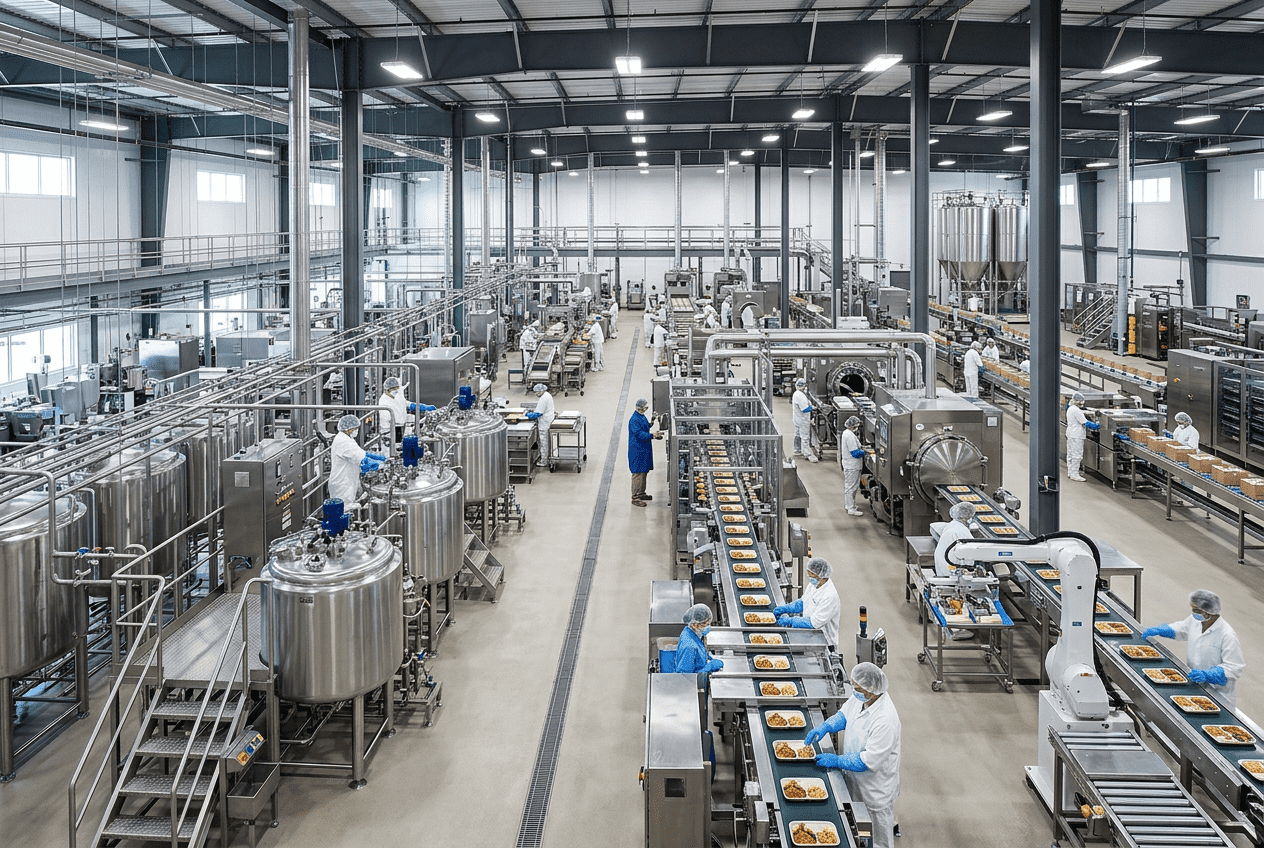
Designing a yogurt processing line in the United States requires more than selecting tanks and fillers. A profitable project must align product style, milk solids targets, food safety, packaging format, utility loads, labor strategy, distribution distance, and long-term expansion plans. Whether the goal is set cup yogurt for retail, stirred yogurt for club packs, drinking yogurt for convenience channels, or Greek yogurt for high-protein demand, the line must be configured around the intended finished product rather than around isolated pieces of equipment. Across the U.S., yogurt manufacturers face a unique mix of conditions: strong dairy supply in Wisconsin, Idaho, New York, and California; major refrigerated distribution corridors through Chicago, Dallas, Atlanta, and New Jersey; and continued pressure from retailers for lower cost, better shelf life, cleaner labels, and stronger sustainability performance. Plants shipping through the ports of Los Angeles/Long Beach, Savannah, or Houston also need resilient packaging and ingredient supply strategies. For this reason, a modern yogurt processing line design should combine process engineering, hygienic layout, utilities planning, automation, and commercial decision-making from the start. For companies evaluating a new facility or expansion, this guide explains the main technical choices, the business tradeoffs behind them, and the most common mistakes that raise capital cost or reduce operating margin. It also reflects the type of profit-focused thinking used by Disruptive Process Solutions, a U.S.-based food and beverage engineering partner serving manufacturers across North America. A yogurt processing line in the United States typically includes raw milk receiving, standardization, preheating, homogenization, high-heat pasteurization, cooling to inoculation temperature, fermentation, post-fermentation handling, fruit or flavor blending where applicable, filling, case packing, and cold storage. The exact sequence changes by product type. Set yogurt is fermented in the final cup, stirred yogurt is fermented in a tank and then cooled before filling, drinking yogurt requires lower viscosity and more aggressive blending, and Greek yogurt adds a whey-removal step such as ultrafiltration or centrifugal separation. The best design starts by answering five practical questions: In the U.S. market, many plants also need to plan for retailer-driven SKU growth, high protein positioning, and stricter utility efficiency expectations by 2026. Therefore, a strong yogurt line is not just sanitary and code compliant; it is flexible, scalable, and commercially disciplined. The table above shows why yogurt processing line design should be treated as a systems project. Process steps, packaging, and logistics are interdependent, especially in the United States where distribution distances are often much longer than in compact markets. The first major design decision is product configuration. Although all yogurt starts with a cultured dairy base, each style behaves differently in process and packaging. This affects line layout, shear exposure, hold times, instrumentation, and capex. Set yogurt is usually filled into cups before incubation. The cups then move through an incubation tunnel or controlled warm room until the target pH is reached, after which they are chilled. This approach gives a firm gel structure and traditional spoonable texture, but it requires precise temperature control after filling and careful handling to avoid disturbing the curd. Stirred yogurt is fermented in a tank, then broken gently and cooled before filling. It offers more flexibility for fruit blending and larger cup formats. Drinking yogurt uses similar fermentation logic but with lower viscosity targets and often includes additional stabilizer management, high-shear blending, or smoothing steps. Greek yogurt adds concentration after fermentation or, in some process designs, protein concentration before culturing depending on label, economics, and sensory goals. For U.S. manufacturers supplying supermarkets, club stores, and foodservice chains, a hybrid line is often attractive. For example, a plant in Texas may run stirred yogurt in family tubs during the day and switch to drinking yogurt in PET bottles at night, while a Midwest plant may dedicate one fermentation train to Greek yogurt and another to standard cultured products. This comparison is useful because each configuration creates a different bottleneck. Set yogurt is filler and incubation limited. Stirred yogurt is fermentation and cooling limited. Greek yogurt is concentration and whey handling limited. Drinking yogurt is often packaging and viscosity-control limited. The right layout depends on which constraint will matter most at the plant’s target volume. Demand patterns in the United States also vary by channel. Club stores favor larger tubs, convenience channels prefer drinkable formats, school and institutional users may need pouches, and premium grocery chains often prefer high-protein or fruit-on-the-bottom products. That is why line design should connect directly to market strategy, not just to current recipes. Once the product family is defined, the base treatment section becomes the heart of process control. Milk standardization determines fat and solids balance. Homogenization affects body, whey separation resistance, and visual consistency. Pasteurization not only ensures food safety but also develops yogurt texture by denaturing whey proteins and improving water binding. In many U.S. plants, standardization combines raw milk, cream, skim milk, milk protein concentrate, nonfat dry milk, or other approved dairy ingredients to hit target solids. A high-protein formulation in Idaho may use a different cost model than one in California because local milk pricing, hauling, and ingredient availability differ. If the line is designed without flexibility in solids handling, formulation cost can become a major margin problem. Homogenization usually occurs before pasteurization or in an integrated thermal process sequence. For yogurt, pressure selection should match product type. Over-homogenization may create an overly thin or pasty result depending on recipe and downstream shear. Under-homogenization can contribute to creaming and weak texture. Pasteurization for yogurt is generally more intensive than standard fluid milk treatment because functional protein change is part of the quality objective. The explanation behind these steps is simple: every inconsistency upstream becomes magnified in fermentation. A plant that struggles with fat variation, heat balance, or solids dispersion will rarely achieve consistent pH endpoint, viscosity, and filling performance downstream. This is where technology selection matters. DPS supports dairy projects with process engineering, automation, and utility integration that connect thermal systems, homogenizers, controls, and CIP logic into one coordinated operating platform. That technological capability is especially important for multi-SKU U.S. plants that need recipe control, data visibility, and fast changeovers rather than isolated equipment islands. More detail on this integrated approach can be found through its engineering and project services. Fermentation is the most sensitive stage in a yogurt line. Tank design determines not only microbial performance but also final texture, flavor, and line stability. The fermenter should be viewed as a controlled bioprocess vessel, not a generic stainless tank. For stirred yogurt and drinkable yogurt, jacket design and temperature uniformity are critical. Hot spots or cold zones can push culture activity out of range, especially in larger vessels. Agitation must be designed for the exact phase of use. During incubation, excessive movement can damage gel development. After fermentation, controlled agitation may be needed to smooth the product before cooling or blending. Tank geometry, impeller selection, and wall heat transfer all matter. Online pH monitoring is another major design advantage. In older facilities, operators may rely too heavily on manual grab checks. That increases variability and can create over-acidification, particularly during shift changes or high-volume campaigns. A plant running around the clock in Chicago or Atlanta distribution corridors benefits from automated pH endpoint detection linked to cooling sequence control. The table shows that fermentation vessel design is inseparable from controls, sanitation, and recipe management. For this reason, DPS frequently approaches fermentation systems as part of a broader automation strategy including PLC programming, SCADA visibility, batch logic, and utility synchronization. That is one of the company’s strongest technological capabilities and a major advantage when clients need a scalable system rather than a manual operation that becomes unstable at higher volume. U.S. labor markets also influence tank design. In regions where skilled operators are difficult to recruit, such as fast-growing manufacturing zones in the Southeast and parts of Texas, higher automation in fermentation often pays back quickly through reduced batch loss and more repeatable quality. Greek yogurt deserves separate treatment because its economics differ from standard yogurt. The defining technical issue is concentration. Manufacturers must decide whether to remove whey after fermentation, concentrate milk upstream, or use a hybrid approach. Each route changes yield, flavor, texture, byproduct handling, water use, and labeling strategy. Ultrafiltration is increasingly attractive for U.S. processors seeking better protein efficiency and lower wastewater burden. It can reduce whey volume and improve solids control, but it adds membrane management complexity and requires thoughtful CIP design. Centrifugal whey separation remains common for high-throughput Greek yogurt plants and can fit well when the operation already has strong separator expertise. However, it may create different texture outcomes and byproduct logistics. The commercial side matters just as much. A Greek yogurt line in Wisconsin with nearby animal feed outlets may manage whey differently from a California plant facing tighter discharge and hauling costs. A processor serving premium retailers may prioritize clean texture and lower batch-to-batch variability, while a co-packer may emphasize throughput and changeover speed across customer formulas. This table highlights a core design truth: Greek yogurt production is as much a utility and byproduct project as it is a cultured dairy project. Plants need to plan whey storage, loadout, wastewater, membrane cleaning, separator maintenance access, and product consistency all at once. DPS also brings manufacturing capability to this discussion through its branded process equipment line, including tanks and custom process systems that can be integrated into larger yogurt projects. That manufacturing capability helps clients avoid piecemeal sourcing and creates better alignment between vessel fabrication, process intent, and field installation. Companies evaluating this path can review available process equipment capabilities as part of early capital planning. Fruit preparation and flavor dosing are often underestimated in yogurt line design. Yet many quality complaints originate here: poor fruit distribution, damaged particulates, phase separation, inconsistent sweetness, or microbial risk from post-pasteurization handling. The fruit system should therefore be designed as a controlled hygienic module rather than a simple add-on skid. Inline blending is ideal for many stirred and drinking yogurt lines because it improves recipe accuracy and reduces hold times of finished flavored product. It also allows cleaner changeovers when a plant is running multiple flavors daily. However, the system must be matched to ingredient behavior. Strawberry prep with seeds and particulates requires a different pump and valve strategy than smooth vanilla or coffee flavor bases. Aseptic ingredient dosing becomes especially valuable when sensitive inclusions or long refrigerated shelf life are important. For U.S. manufacturers selling through national grocery networks, lowering post-fermentation contamination risk can materially improve returns performance. Plants located far from end markets, such as West Coast production shipping into the Mountain states or East Coast distribution lanes, benefit from this added risk control. Common design considerations include low-shear positive displacement pumping, insulated or chilled fruit tanks, sanitary pigging where justified, accurate mass flow or metering systems, and recipe software tied to batch records. When fruit-on-the-bottom formats are required, depositor timing and cup handling accuracy become central to filler performance. The area trend above reflects why flexible flavor and ingredient systems matter. Functional ingredients, cleaner labels, and SKU proliferation are increasing. By 2026, many U.S. yogurt plants will need more agile dosing, stronger traceability, and better allergen control than older single-recipe facilities were designed to support. Filling is where product characteristics meet retail reality. A yogurt processing line can be perfectly designed upstream and still underperform if the filler is mismatched to viscosity, particulates, package format, or sanitation requirements. Filling equipment should always be selected after product rheology, package architecture, and expected OEE are understood. Cup filling dominates spoonable yogurt. It supports single-serve retail, multipacks, and large tubs. Bottle lines are the standard for drinkable yogurt and cultured dairy beverages, often using PET or HDPE with induction seal or foil plus cap. Pouch systems are growing in family and children’s segments because they reduce material weight and support portable consumption. Each format requires different product handling, hygienic zoning, and secondary packaging strategy. This comparison shows why packaging line selection must consider more than speed. If the plant serves both Costco-style tubs and premium single-serve cups, changeover time may be more important than peak output. If the line is in the Southeast and shipping into Florida, Georgia, and the Carolinas, distribution lane economics may favor one package over another due to pallet density and shelf presentation. Buying advice for U.S. processors is straightforward: define your top three package formats, realistic hourly targets, labor model, and sanitation windows before speaking with filler vendors. Then evaluate not just the filler but the entire packaging cell including denesting, lidding, coding, checkweighing, case packing, and pallet flow. This is where an owner’s representative or integrated design-build partner can protect the capital plan from hidden downstream costs. Cold chain design is often treated as a warehouse issue, but for yogurt it is a core process issue. The speed and uniformity of chilling after fermentation affect acidity progression, texture stability, and shelf life. Once filled, the product moves into a logistics environment where dock design, pallet residence time, and refrigerated transport can either preserve or damage product quality. In the United States, cold chain planning must account for long transport routes, seasonal temperature swings, and mixed regional demand. A plant in North Carolina shipping to the Mid-Atlantic has different residence time assumptions than a California plant shipping inland during summer. Therefore, chilling tunnel capacity, finished goods cooler sizing, and dock scheduling all need to be built into the original line model. Good practice includes rapid post-fill cooling where required, validated cooler air distribution, lot traceability, backup refrigeration capacity, and clear separation between warm process zones and finished refrigerated zones. Plants serving national accounts may also benefit from stronger data logging and alarm systems to support customer audits and quality claims management. The explanation here is practical: a yogurt line is only as good as its cold chain. Plants that invest heavily in process equipment but underinvest in chilling and refrigerated logistics usually experience quality drift, shelf-life compression, or retailer complaints. The most expensive yogurt processing line problems usually come from early design assumptions, not from equipment failure. Many projects overspend on capacity in one area and underspend in another, creating a line that looks impressive on paper but underdelivers in operation. These mistakes are avoidable when the project is managed as a complete manufacturing system. DPS is especially relevant here because its service capability goes beyond engineering drawings. Through its Design Build Manage approach, the company supports capital planning, owner representation, project execution, field integration, and commissioning across the United States and Canada. That combination is useful for manufacturers that want one partner accountable for technical alignment, trade coordination, schedule control, and startup results rather than a fragmented handoff between consultants and contractors. Case-based experience also matters. On complex food and beverage projects, DPS is known for identifying the true operating bottleneck before clients spend unnecessary capital. That business-first mindset is consistent with yogurt plant design, where the right automation update, utility modification, or process reconfiguration can sometimes unlock more capacity than buying another major vessel. Manufacturers interested in similar project outcomes can review selected project case studies to understand how integrated execution reduces risk. Local supplier strategy is another area where U.S. buyers should be disciplined. Source critical components with attention to regional service coverage, spare parts availability, and technician access in markets such as the Upper Midwest, California’s Central Valley, the Northeast dairy corridor, and major logistics hubs like Dallas and Chicago. Lowest purchase price rarely equals lowest lifecycle cost. Looking ahead to 2026, the strongest yogurt line designs will emphasize water reuse discipline, energy recovery, digital batch traceability, labor-saving automation, and sustainability reporting readiness. Policy pressure, retailer scorecards, and investor expectations are all pushing U.S. dairy processors toward more measurable environmental performance. Membrane systems, heat recovery, smarter CIP sequencing, and plant-wide data collection will become even more important. The best configuration depends on product mix. A startup focused on spoonable retail yogurt often begins with a stirred yogurt tank-fermentation line and cup filling. A business centered on high-protein products may justify a Greek yogurt system with ultrafiltration. If the product portfolio is still evolving, flexibility should outweigh maximum theoretical speed. Enough to control recipe accuracy, thermal treatment, fermentation endpoint, CIP, traceability, and major utility interlocks. Plants with high SKU counts or labor constraints benefit from stronger PLC and SCADA integration. Smaller regional plants may begin with moderate automation but should still leave room for expansion. No. Ultrafiltration can improve protein control and reduce whey load, but centrifugal whey separation may be more practical for some high-throughput operations. The decision should consider product target, wastewater costs, utility infrastructure, maintenance resources, and local whey outlet options. Growth is strongest where convenience, high protein claims, and portability intersect. Drinkable yogurt, premium single-serve cups, and children’s pouches all have strong use cases. However, club-store tubs and foodservice packs remain important volume drivers in many regions. Start with shelf-life target and actual shipping radius. Then size chilling, finished goods storage, dock refrigeration, and carrier management to support that requirement. Plants shipping across multiple states need stronger temperature verification and inventory control than local direct-store delivery models. Hot water or steam for thermal treatment, chilled water or glycol for rapid cooling, compressed air, reliable CIP supply, refrigeration, and electrical infrastructure for packaging and controls. Utility bottlenecks are one of the most common reasons lines fail to hit nameplate capacity. Sometimes, but not always efficiently. Stirred and drinking yogurt can often share much of the same upstream process, with different downstream blending and filling. Set yogurt requires a different filling-incubation approach, so combining all three on one system may introduce compromises. As early as possible, ideally before equipment is purchased. Early engineering clarifies throughput assumptions, utility loads, sanitary zoning, structural needs, and future expansion logic. It also prevents overspending on equipment that does not solve the real constraint. Look for process knowledge, sanitary design experience, automation depth, field execution capability, and commercial honesty. The best partner will challenge weak assumptions, not simply sell hardware. In the United States, buyers often gain the most value from teams that understand both dairy processing and full plant integration. A well-designed yogurt processing line is ultimately a profitability system. It should produce consistent texture, hit food safety standards, support the chosen package mix, protect refrigerated shelf life, and scale with market demand across the United States. When all those pieces are engineered together, the line does more than make yogurt; it builds a stronger manufacturing business. -
Food Facility Mass Balance Calculations: Engineering Methods for Production Efficiency
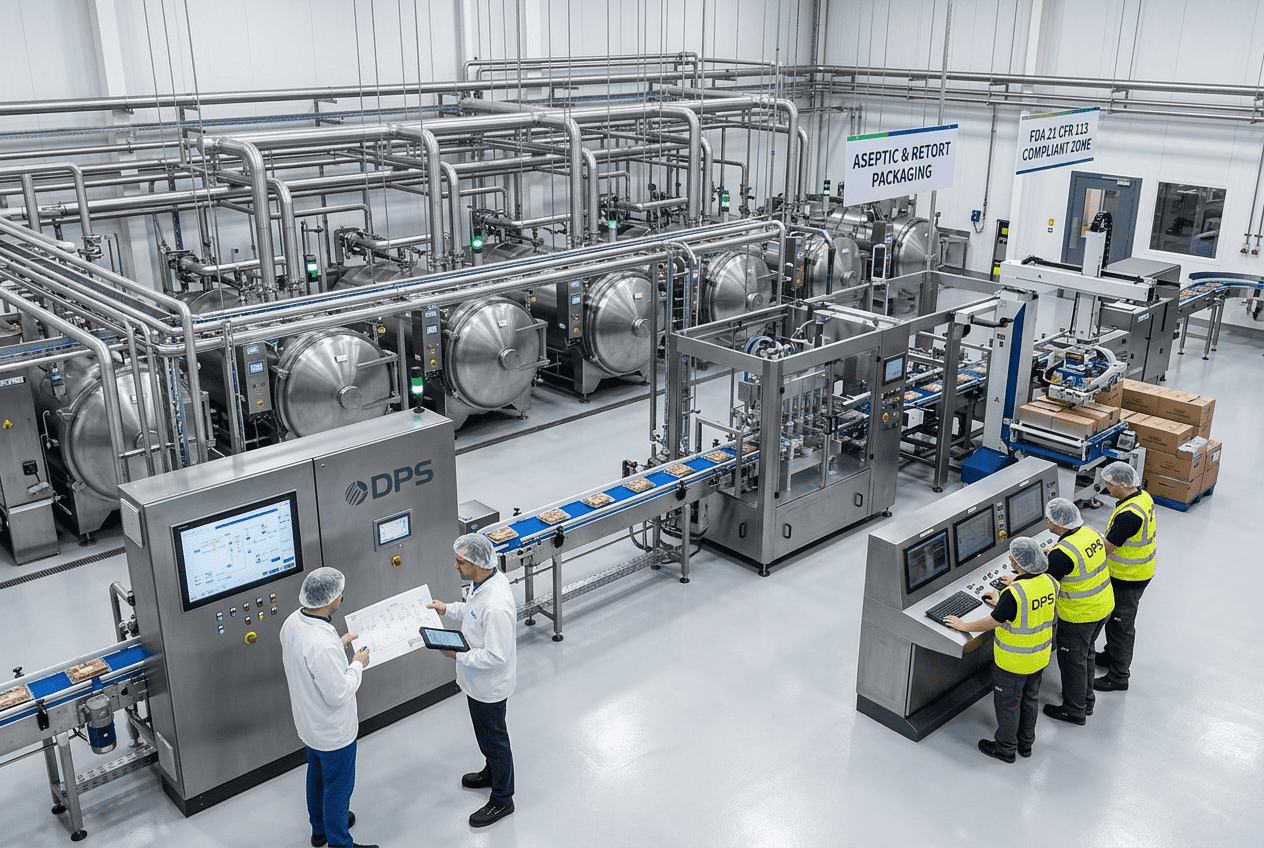
Mass balance calculations are one of the most practical engineering tools for improving production efficiency in food and beverage facilities across the United States. Whether a plant is processing poultry in Arkansas, sauces in Illinois, dairy in Wisconsin, beverages in California, or co-packed shelf-stable meals near Houston, the same principle applies: every pound, gallon, or kilogram entering a system must either leave the system, accumulate in it, or be lost in a measurable way. When this discipline is applied correctly, manufacturers gain tighter yield control, better scheduling accuracy, cleaner utility planning, stronger compliance records, and more profitable capital decisions. For U.S. manufacturers facing narrow margins, labor volatility, ingredient price swings, and sustainability pressure, mass balance is no longer just a process engineering exercise. It is a business management tool. Production leaders use it to understand shrink, accounting teams use it to reconcile inventory, operations managers use it to plan line loading, and project teams use it to size equipment, tanks, heat exchangers, pumps, and CIP systems. In high-throughput regions such as the Midwest dairy corridor, the Southeast poultry belt, and beverage hubs around Atlanta, Dallas, and Los Angeles, accurate mass balance work often separates reliable plants from facilities that constantly chase unexplained losses. This guide explains the engineering methods behind food facility mass balance calculations, how to quantify inputs and outputs, how to track moisture and solids, how to perform equipment-level balances, what software tools are useful, and how balance models connect to production scheduling. It also outlines common errors to avoid, buying advice for U.S. manufacturers, representative applications by product type, and where a full-scope engineering partner can help. A food plant mass balance is the structured calculation of all material entering and leaving a process over time. In practical terms, it answers questions such as: For most U.S. food plants, the basic equation is: Input = Output + Accumulation + Loss On a steady-state line with no meaningful accumulation, that often simplifies to: Input = Saleable Product + Byproduct + Waste + Emissions + Unrecovered Hold-Up The most valuable mass balance models in food manufacturing are not theoretical. They are built around real measurements: load cells, magnetic flowmeters, Coriolis meters, Brix readings, moisture tests, protein and fat analyses, packaging counts, CIP return volumes, trim collection, and cleanout losses. Plants that consistently quantify these items can improve yield, reduce giveaway, support HACCP and traceability records, and make better investment decisions. In the United States market, the strongest results usually come when mass balance is integrated into process design, automation, utility planning, and daily operations rather than treated as a one-time spreadsheet exercise. Mass balance begins by defining the system boundary. That boundary may be an entire facility, one production line, a single unit operation, or a campaign window such as one shift or one SKU run. In a sauce plant in New Jersey, the boundary may be the blend kitchen from ingredient staging to filler. In a meat plant near Kansas City, it may be the marination tumbler through thermal processing and packaging. In a brewery near Portland, it may be brewhouse to bright tank. The right boundary depends on the problem being solved. Three fundamentals matter most: Food systems are more complex than simple chemical transfer systems because ingredients are often biological, variable, and seasonally inconsistent. Tomato solids from California may differ by harvest week. Poultry yield changes with bird size, temperature, and deboning performance. Dairy solids fluctuate with incoming milk composition. Fruit puree Brix can drift based on supplier and storage conditions. Because of that, mass balance in food plants always benefits from routine sampling and statistically grounded reconciliation. The table below shows the core mass balance framework used in many U.S. facilities. This framework is useful because it connects engineering to operations. A plant may have a good facility-level balance but poor unit-level balance, which means the total numbers seem acceptable while one cooker, filler, or freezer is quietly creating losses. The line chart reflects a realistic industry trend: more U.S. plants are moving from manual spreadsheets to digital mass balance and yield tracking as part of automation, compliance, and sustainability programs. Input-output quantification is where many plants either gain confidence or lose it. Good balances depend on disciplined measurement at receiving, batching, transfer, processing, packaging, and waste handling. In food and beverage applications, the preferred method depends on the product and process condition. Common quantification methods include truck scales for bulk receiving, floor scales for super sacks and minor ingredients, load cells under tanks, magnetic or Coriolis flowmeters for liquids, positive displacement flow for viscous streams, package count verification, metal detector reject counts, and laboratory composition tests. In aseptic beverage and dairy systems, inline Brix, density, conductivity, and mass flow can materially improve calculation quality. In protein operations, trim bins, bone yield, purge loss, and cook loss must be tracked separately. Plants should also distinguish between direct measurement and inferred measurement. Direct measurement comes from calibrated devices. Inferred measurement comes from formula assumptions, density conversions, standard package weights, or average loss factors. Direct measurements are generally superior, but inferred values remain necessary where measurement points are limited. The following table compares common quantification methods used in U.S. food plants. For a buying decision, U.S. plants should prioritize measurement at bottlenecks and high-value loss points rather than trying to instrument everything at once. A line filling premium beverage concentrates in Southern California may justify Coriolis meters at multiple transfer points. A bakery in Ohio may get excellent results first by improving dough batch scaling, oven moisture testing, and package-weight verification. Industry by industry, quantification priorities differ: Moisture and solids accounting is the most important advanced topic in food mass balance because many large apparent yield losses are actually water movement. Cooking, chilling, drying, evaporation, concentration, freezing, thawing, fermentation, and storage all affect water distribution. If a plant tracks only wet weight, it may misread process performance. Consider a kettle sauce operation in Chicago. If 10,000 pounds of ingredients enter a batch and only 9,250 pounds are filled, the instinct may be to report a 7.5% yield loss. But if steam-off during cook is expected, and solids concentration rises to the target, the true material performance may be normal. Similarly, in a poultry line around Springdale, Arkansas, marinade uptake may increase weight before cooking, followed by expected cook loss and chill pickup. Without moisture accounting, operators can misdiagnose normal physics as process waste. Two related balances are often needed: Dry solids balance is especially useful for evaporators, dryers, breweries, tomato processing, yogurt, confectionery, and sauces. It helps answer whether solids are being lost or merely concentrated. From a product perspective, moisture and solids accounting is essential for dairy powders, plant proteins, prepared meals, sauces, soups, brews, spirits, juices, yogurt, cheese, canned foods, meat snacks, and bakery items. It is also important for labeling compliance and standard-of-identity targets. For U.S. manufacturers looking ahead to 2026, sustainability reporting is increasing the importance of water-linked mass balance. Plants are under pressure to document water intensity, product yield, wastewater loading, and recoverable byproduct streams. Accurate solids accounting helps reduce both overuse of utilities and organic loading to treatment systems. The area chart shows how plants are increasingly moving beyond simple wet-weight reporting toward composition-aware yield management. Equipment-level balances are where mass balance becomes actionable for engineering and maintenance teams. Rather than only asking what the plant lost in a week, equipment-level analysis asks what happened at each tank, filler, freezer, dryer, tumbler, or retort. This is usually where the biggest improvement opportunities appear. Typical balance targets include: For example, a UHT beverage system near Fresno may lose meaningful product during sterile startup, interface transitions, and end-of-run push-out. A prepared foods facility near Minneapolis may lose margin in kettle heel and particulate stratification. A distillery in Kentucky may have fermenter-to-still transfer variance that appears small per batch but becomes major over a year. The table below shows a practical equipment-level balance view. When performing equipment balances, plants should map product hold-up volumes and interface losses. This is especially relevant for long transfer lines, manifold-heavy systems, and multi-SKU beverage or dairy plants. In many cases, small per-changeover losses justify line pigging, improved push-out sequencing, recipe cutoff optimization, or revised valve automation. These calculations also support buying advice. If a U.S. manufacturer is choosing between a larger tank and a smaller, more responsive one, or between a basic filler and an advanced servo filler, mass balance data can clarify the economic tradeoff. The cheapest equipment on paper may create the most costly yield loss in practice. Software tools for mass balance range from simple spreadsheets to integrated plant-wide systems. The right choice depends on plant complexity, staffing, automation maturity, and the decision that needs support. Smaller facilities may begin with structured Excel templates and laboratory data imports. Larger facilities often use MES, historian platforms, SCADA-linked dashboards, ERP reconciliation tools, and specialized process modeling packages. In the United States, many projects now link mass balance to automation data collection. Flowmeters, tank levels, valve states, batch events, and line counts can feed a historian or SCADA layer. This reduces manual data entry and allows engineers to analyze losses by shift, SKU, or operator window. A good software setup does not need to be overly complex, but it must enforce unit consistency, version control, and exception visibility. Useful software categories include: The table below compares software approaches. When companies evaluate software, they should ask whether the platform can separate planned evaporation from true loss, reconcile batch and continuous process data, and connect floor data to scheduling and procurement. Plants near major trade and logistics hubs such as Chicago, Savannah, Long Beach, and Dallas often run more complex supplier and production networks, making digital reconciliation especially valuable. A full-scope engineering partner can help decide whether to build a simple, maintainable system or a highly integrated one. For example, food and beverage engineering services that combine process, controls, and project management can align instrumentation, software logic, and reporting structure so the balance model serves operations rather than becoming an isolated engineering file. The connection between mass balance and production scheduling is often underestimated. Yet scheduling accuracy depends on realistic assumptions about batch yield, changeover loss, line starvation, intermediate storage, and cleanout recovery. If the mass balance is wrong, the schedule will also be wrong. Suppose a beverage co-packer near Charlotte schedules three RTD runs back to back using nominal yields. If startup loss, syrup room residuals, and changeover interfaces are not included, the plant may miss case targets, short ingredients, or overload downstream warehousing. In a prepared foods plant in Indiana, failure to account for cook shrink and hold times can produce mismatches between upstream mixing and downstream tray sealing. In dairy, standardization and filler giveaway can throw off daily milk utilization planning. The following scheduling variables should be tied directly to balance models: Good integration supports procurement, labor planning, warehouse allocation, and utility use. It also improves customer service because promise dates become more reliable. For co-packers and contract manufacturers in particular, mass balance-informed scheduling helps prevent margin erosion on low-yield SKUs. The bar chart illustrates where demand is strongest today. Protein, beverage, and dairy operations often have the fastest payback because yield movement is highly material to profitability. Plants considering new capacity should also use mass balance in capital planning. Tank farms, syrup rooms, boiler capacity, cooling towers, compressed air, wastewater pretreatment, and packaging line rates all depend on realistic material flow assumptions. A planning partner that understands both food processing and business economics can translate those assumptions into practical facility decisions. More details on project approaches and examples can be explored through selected food and beverage project case studies. Many balance models fail not because the math is complex, but because the assumptions are poor. The most common errors in U.S. food plants are avoidable with better structure and cross-functional review. Typical errors include using inconsistent units, confusing gross and net weight, ignoring startup and shutdown losses, assuming constant density, failing to separate evaporation from waste, overlooking rework loops, neglecting WIP accumulation, and relying on outdated formulation data. Another common issue is treating package count as equivalent to saleable mass even when overfill or underfill exists. The table below summarizes recurring mistakes and how to correct them. Two practical buying tips emerge from these errors. First, do not invest in software before standardizing the plant’s data definitions. Second, do not invest in hardware without a clear list of which loss points are worth measuring. Smart capital follows the highest-value questions. By 2026, regulatory and customer expectations in the United States are likely to put greater emphasis on digital traceability, water stewardship, and verifiable production reporting. Plants that correct these basic calculation errors now will be better prepared for evolving customer audits and sustainability scorecards. This comparison chart reflects why many manufacturers prefer integrated project delivery over isolated equipment procurement when mass balance accuracy is central to project success. Disruptive Process Solutions serves manufacturers across the United States and Canada with a business-first approach to food and beverage capital projects. Rather than treating mass balance as a narrow design exercise, the company applies it as part of broader process performance, profitability, and execution planning. That approach is especially relevant for manufacturers expanding capacity, relocating lines, improving yield, or building complex greenfield operations. Technological capabilities. DPS supports process, controls, mechanical, structural, electrical, and plumbing engineering for food and beverage systems. This makes mass balance work more useful because material calculations can be tied directly to automation logic, utility loads, vessel sizing, line routing, and process control strategy. For beverage and aseptic facilities, that may involve blending systems, inline Brix monitoring, pasteurization, UHT, carbonation, water treatment, and SCADA-linked reporting. For food applications, it may include mixing, grinding, cooking, emulsification, retort processing, dairy systems, plant protein lines, and sanitary utility integration. Additional background on the firm can be found on the about our company page. Manufacturing capabilities. DPS also brings equipment manufacturing experience to projects, including tanks, CIP systems, tumblers, and cooking vessels. That matters in mass balance-driven projects because fabricated equipment can be aligned with real hold-up volume targets, drainability needs, recovery expectations, and sanitation requirements rather than selected only from generic catalog options. For manufacturers evaluating vessel layout, transfer optimization, or custom process skids, the in-house perspective helps bridge the gap between engineering assumptions and shop-floor reality. More information about available systems and fabricated solutions is available under process equipment solutions. Service capabilities. DPS operates through a design-build-manage model that can support capital planning, feasibility, owner’s representation, project management, general contracting functions, installation oversight, system integration, and commissioning. For a mass balance initiative, that means one team can connect the front-end study to field execution. In practical terms, a client may begin with a production bottleneck review, discover the real issue is a controls or transfer constraint rather than equipment size, and then implement the fix with coordinated engineering and construction support. That is often the difference between theoretical improvement and measurable plant results. This integrated model is particularly useful for U.S. manufacturers in beverage co-packing, dairy expansion, protein processing, aseptic systems, and prepared foods, where project success depends on more than a standalone spreadsheet. It depends on how design, installation, controls, utility infrastructure, and schedule discipline all work together. What is the main purpose of mass balance in a food plant?The main purpose is to account for all material entering and leaving a process so a manufacturer can understand yield, waste, byproduct, moisture movement, inventory accuracy, and equipment sizing. Which industries benefit most from food mass balance calculations?Dairy, beverage, protein, prepared foods, sauces, bakery, aseptic processing, distillation, fermentation, and co-packing operations all benefit strongly. The highest-value applications are usually where ingredient cost or shrink is significant. How often should a plant update its mass balance?Core balance assumptions should be reviewed at least quarterly, while high-value production balances are often monitored daily or by batch. Composition-heavy systems may need more frequent moisture or solids verification. Can a plant use spreadsheets, or is specialized software required?Spreadsheets are acceptable for early-stage studies and smaller operations. As complexity grows, integrated MES, ERP, historian, or SCADA-linked tools usually provide better control and lower manual error. What local factors matter in the United States?Ingredient variability by region, freight routes, utility costs, wastewater requirements, labor availability, and access to major logistics hubs such as Chicago, Houston, Savannah, Los Angeles, and New York all influence how balance models should be built and used. How does mass balance help buying decisions?It shows the true production impact of equipment choices by quantifying yield loss, hold-up, changeover waste, utility use, and line capacity. This often prevents overbuilding or buying equipment that looks inexpensive but performs poorly. What are the biggest warning signs that a plant needs better mass balance work?Frequent inventory discrepancies, unexplained yield loss, recurring schedule misses, high giveaway, inconsistent batch output, poor rework visibility, and disagreement between plant and finance numbers are major signs. How does mass balance support sustainability goals for 2026 and beyond?It helps quantify water use, wastewater loading, recoverable product, product-to-drain loss, and utility-linked material movement. Those metrics are becoming more important for customer reporting, ESG programs, and cost reduction. Can mass balance be applied during expansion or greenfield design?Yes. In fact, it is most powerful during planning because it guides tank sizing, line rates, utility capacity, storage design, and scheduling assumptions before capital is committed. What should a manufacturer do first?Start by identifying one high-value line or product family, define clear boundaries, standardize units, measure true input and output points, and validate moisture or solids movement. Once that model is reliable, expand plant-wide. For food and beverage manufacturers in the United States, mass balance is one of the clearest paths to stronger production efficiency. It sharpens engineering, stabilizes scheduling, improves buying decisions, and creates a better foundation for profitability, compliance, and sustainable growth. -
Food Plant Energy Balance Optimization: Strategies for Utility Cost Reduction
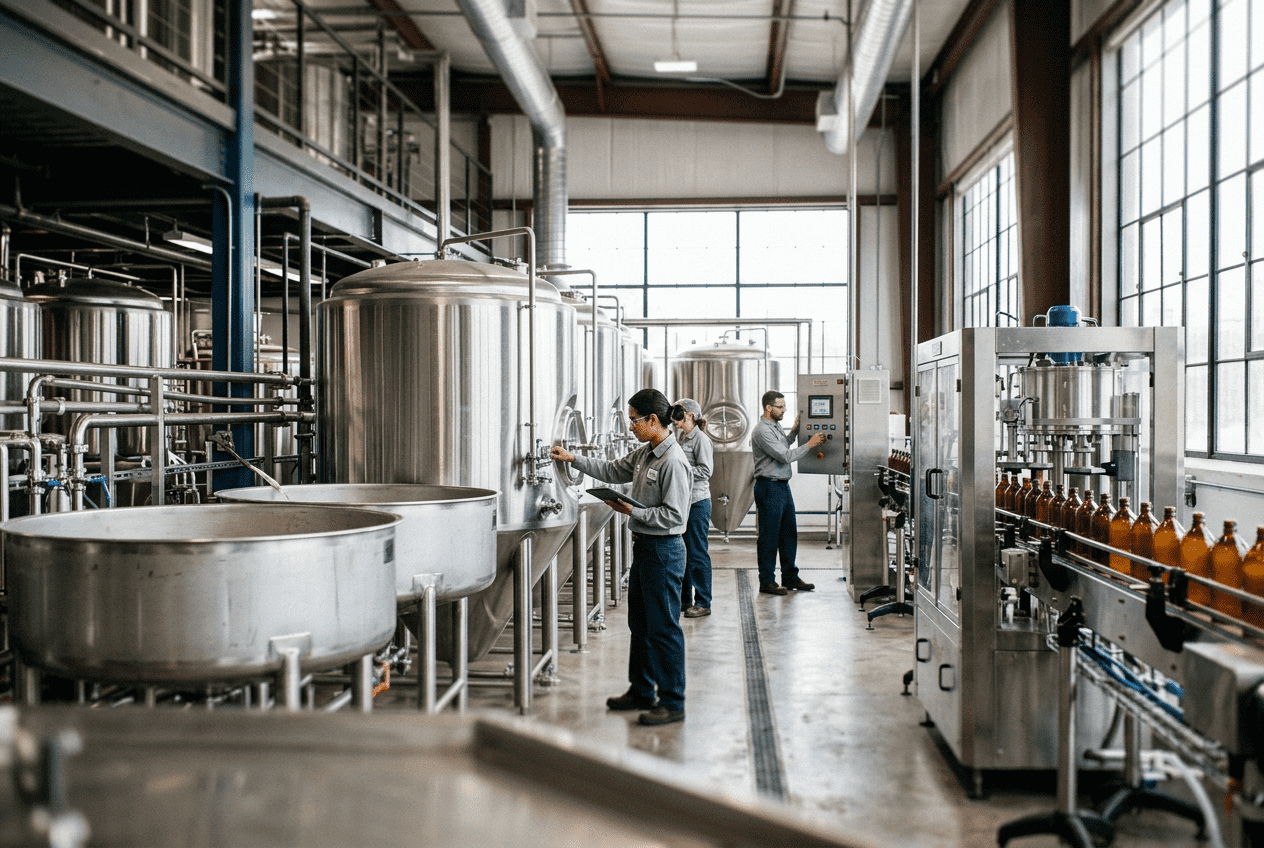
Food and beverage manufacturers in the United States are facing a sharper utility cost challenge than at any point in recent years. Electricity, natural gas, steam generation, refrigeration, compressed air, water heating, wastewater treatment, and peak demand charges all affect margin. In a sector where throughput, food safety, sanitation, and uptime matter as much as cost control, energy balance optimization is no longer a maintenance-only topic. It is a plant profitability strategy. The fastest way to reduce utility cost in a U.S. food plant is to optimize the plant-wide energy balance: measure where energy enters, track where it is converted, identify where it is lost, and connect operational changes to financial results. In practice, this means starting with a structured energy audit, then prioritizing projects such as heat recovery, variable frequency drive upgrades, refrigeration optimization, compressed air leak reduction, boiler tuning, and peak demand management. Plants that combine these actions with continuous monitoring usually capture the most durable savings because they stop energy waste from returning after initial improvements. For most processors, the biggest opportunities are not hidden in a single utility room. They are spread across refrigeration compressors, pumps, fans, process heating, CIP skids, hot water generation, air handling, and packaging lines. A poultry plant in Arkansas, a dairy facility in Wisconsin, a beverage co-packer near Atlanta, and a frozen foods producer in Southern California may all have different production profiles, but the same rule applies: the more accurately the site understands its true energy balance, the more effectively it can lower cost per pound, per gallon, or per case. Decision-makers should also remember that utility reduction should never compromise food safety, USDA or FDA compliance, sanitation performance, environmental controls, or capacity targets. The best projects improve efficiency while protecting production reliability. The table shows why plants should rank projects by both savings potential and production risk. Refrigeration, steam, and motor-driven systems usually provide the largest savings, but they must be approached with controls discipline and process understanding. An energy balance is a structured accounting of all energy entering, leaving, and being transformed within a facility. In food manufacturing, this usually includes incoming electricity, natural gas, fuel oil where applicable, steam, chilled water or glycol, compressed air, domestic water heating, and recovered energy streams. The goal is to match utility use with actual process demand and expose losses that become invisible when departments only look at monthly bills. At a plant level, the core balance asks several questions. How much energy is consumed by production versus nonproduction hours? How much heat is being rejected from refrigeration systems that could be reused for hot water? Which motors are oversized for real flow demand? How much compressed air is generated for leaks rather than end use? Is sanitation water heating aligned with CIP scheduling? Are blast freezers, cold rooms, or retort systems running with the wrong control strategy? Food plants are uniquely complex because utility loads rise and fall with seasonality, sanitation windows, SKU mix, allergen segregation, packaging format changes, and cold-chain requirements. A sauce plant in New Jersey may have high steam and hot-fill demand. A yogurt site in Idaho may lean heavily on refrigeration and process cooling. A meat processor near Kansas City may carry substantial render, washdown, and ventilation loads. An aseptic beverage facility around Houston may combine process heating, sterile air, and chilled water demand in the same operating day. This is why good energy balance work should be normalized against production metrics such as kWh per case, MMBtu per pound of cooked product, refrigeration horsepower per ton of freezing, or gallons of hot water per CIP cycle. Raw utility numbers alone do not tell management whether the plant is getting more efficient or simply producing less. These metrics help plant leaders compare unlike processes on a common basis. They also improve capital planning because they show whether utility savings are coming from engineering changes, scheduling changes, or simply from lower throughput. The market trend in the United States points in one direction: more processors are moving from isolated utility projects to integrated energy programs. Rising labor costs, ESG reporting pressure, incentive programs, and resilience planning are accelerating adoption from the Midwest to the Southeast and West Coast. A credible plant-wide energy audit starts in the field, not in a spreadsheet. Utility bills matter, but they only tell the story of total cost, not where savings are created. The audit team should review electrical one-lines, P&IDs, process flow diagrams, controls architecture, sanitation schedules, preventive maintenance records, production calendars, and utility rate structures. Walkdowns must include process areas, rooftop units, refrigeration engine rooms, boiler rooms, compressed air headers, pump skids, packaging lines, and wastewater systems. For U.S. plants, it is also important to map rate structures from local utilities. Facilities in California often face aggressive time-of-use and demand pricing. Plants around Chicago or Detroit may deal with winter gas sensitivity and summer peak electric charges. Gulf Coast operations near Houston or New Orleans may have different resilience concerns tied to storms and backup generation. Facilities close to major logistics hubs such as Memphis, Dallas, Savannah, or the Port of Los Angeles often run around the clock, which changes the economics of demand shaving versus base-load efficiency. A strong audit usually follows five stages: establish the baseline, submeter critical systems, identify operational waste, screen capital projects, and build a ranked implementation roadmap. The roadmap should include no-cost actions, low-cost maintenance actions, controls improvements, and larger capital projects. Examples of low-cost findings often include air leaks, poor steam trap performance, simultaneous heating and cooling, incorrect refrigeration setpoints, nonoptimized defrost schedules, oversized pumps, and fans running during idle windows. Larger projects may include heat recovery skids, new VFD packages, compressor sequencing upgrades, thermal storage, high-efficiency boilers, plate heat exchangers, or integrated SCADA-based energy dashboards. This audit structure is especially effective when it aligns energy work with broader facility planning. Manufacturers considering line expansions, building additions, or utility upgrades should integrate the energy audit into capital planning rather than treat it as a separate exercise. Firms such as engineering and project delivery partners can help connect utility strategy to process capacity, layout, controls, and commissioning decisions. Heat recovery is one of the most underused tools in food plant energy reduction because many facilities reject usable heat to atmosphere or drain while simultaneously paying to generate hot water elsewhere. This disconnect is common in dairy, beverage, meat, prepared foods, and aseptic operations. The most attractive heat recovery sources are refrigeration compressor discharge, condenser water, boiler blowdown, oven exhaust, retort cooling loops, pasteurizer regeneration sections, and warm process wastewater. Potential uses include domestic hot water preheat, CIP supply water preheat, boiler makeup preheat, space heating in selected areas, and process water tempering. For example, a beverage plant in North Carolina running glycol chillers and hot caustic CIP can often recover rejected heat from the cooling system to offset sanitation water heating. A protein processing facility near Omaha may use heat recovery from compressor packages to reduce winter washdown water costs. A dairy operation in California’s Central Valley may reclaim heat from refrigeration to support hot water demand while also lowering condenser energy. The engineering is not simply about adding a heat exchanger; it requires source stability, sanitary separation, correct controls, seasonal logic, and maintenance access. Heat recovery works best when integrated into the full process design. That includes pipe sizing, material compatibility, controls interlocks, energy metering, and operational fallback modes if source temperatures fluctuate. Plants should also evaluate whether the recovered heat matches demand by time of day. If hot water use peaks after a long sanitation window but refrigeration heat peaks during production hours, a storage tank or secondary loop may be necessary. The explanation behind the table is simple: not all waste heat has equal value. High-grade heat with steady availability is easier to monetize. Lower-grade heat may still be useful if the plant has a stable preheat load and enough operating hours to justify the controls and piping investment. Motor systems often account for the largest share of electric consumption in food plants. Pumps, evaporator fans, condenser fans, conveyors, mixers, blowers, air handlers, and cooling tower fans are frequently designed for worst-case production but run most of the year under partial-load conditions. When these loads are controlled by throttling valves, dampers, bypass loops, or manual operation, the plant is paying for energy it does not need. Variable frequency drives can significantly reduce this waste, especially on centrifugal loads where power falls sharply with speed. However, successful VFD programs go beyond installing drives. Plants must verify the process control logic, motor condition, harmonic exposure, sanitation suitability, enclosure requirements, and interaction with upstream automation systems. In a U.S. beverage plant, VFDs commonly improve pump skids, tower fans, and air handlers. In meat and poultry operations, evaporator fan optimization, ventilation balancing, and pump turndown may create strong results. In dairy, homogenizer support systems, chilled water loops, and CIP pumps are common candidates. In prepared foods, blending, transfer pumping, and HVAC often justify upgrades. Motors that cycle frequently, run at light load, or face varying flow demand should be prioritized. Plants should also evaluate right-sizing. A premium-efficiency motor that is substantially oversized may still waste energy if the load profile is weak. Controls upgrades, pressure reset logic, and sequencing often deliver equal or greater value than hardware alone. The chart highlights how motor-driven systems rank near the top of savings potential across many plant types. This is why VFD and motor optimization should be part of any serious energy balance strategy, especially when line expansions increase utility complexity. Refrigeration is often the single biggest utility expense in food processing, especially in frozen foods, meat, poultry, seafood, dairy, and beverage applications. Even modest improvements in suction pressure, condensing pressure, evaporator performance, or compressor sequencing can create meaningful annual savings. Common opportunities include floating head pressure, optimizing suction setpoints, reducing door infiltration, improving defrost logic, cleaning condensers, tuning expansion devices, sequencing compressors to avoid inefficient part-load operation, insulating exposed lines, balancing evaporator fan speeds, and aligning storage temperatures with validated product needs instead of historical habit. Plants near humid coastal environments such as Tampa, Savannah, or Long Beach may see additional gains from better control of infiltration and condensate loads. One of the most frequent errors is running refrigeration systems harder than production requires because no one wants to risk temperature excursions. That caution is understandable, but with proper controls, validation, alarms, and data visibility, plants can often safely raise suction pressure or reduce fan runtime without compromising product integrity. The key is coordination between engineering, quality, operations, and maintenance. For processors using ammonia, CO2, or hybrid refrigeration systems, energy reduction should be integrated with safety and compliance management. Piping changes, control modifications, and equipment replacements should follow disciplined engineering review and startup protocols. The most important lesson is that refrigeration efficiency is not a single project. It is a control strategy, maintenance discipline, and process alignment exercise that should be revisited as the plant’s product mix changes. Many U.S. food plants focus on total kilowatt-hours while overlooking peak demand charges, which can make up a large portion of the electric bill. A site may reduce total consumption and still see weak financial improvement if it continues to hit short-duration demand spikes during compressor starts, sanitation warmups, simultaneous line startup, or overlapping refrigeration and process loads. Peak demand management begins with interval data. Plants need to see 15-minute or similar demand patterns and connect those spikes to operating events. Common contributors include multiple large motors starting together, hot water generation during line startup, poorly sequenced air compressors, blast freezing coinciding with packaging peaks, and utility systems left in daytime mode during low-value operations. Once the profile is understood, plants can reduce peaks by staggering startup sequences, shifting noncritical loads, pre-cooling product or spaces in lower-rate periods, using thermal storage where justified, adjusting compressor sequencing, and automating load shed logic. Facilities with flexible sanitation windows or weekend production can sometimes capture substantial savings simply by moving selected high-load activities outside demand windows. This strategy is increasingly relevant in states and utility territories with time-of-use structures and demand ratchets. Plants in California, Texas, New York, and parts of the Mid-Atlantic often benefit most from combining efficiency with tariff-aware controls. The trend shift shown above reflects how the market is evolving. By 2026, the most competitive plants are expected to use predictive scheduling, tariff-aware automation, and energy dashboards to manage both total use and billing peaks, not just annual consumption. Plants that rely only on monthly utility bills rarely sustain savings. Continuous monitoring closes that gap by turning energy into an operating metric rather than an accounting line item. At minimum, manufacturers should consider submetering major electrical loads, refrigeration systems, steam generation, compressed air, water heating, and high-consumption process areas. The strongest systems combine meters, PLC data, SCADA visualization, alarm logic, and production context. This allows the site to answer practical questions quickly. Why did compressor energy rise last week? Which CIP cycle used excessive hot water? Did a packaging change increase compressed air use? Is a condenser fan bank short cycling? Did sanitation start too many loads at once? For food and beverage clients, automation integration is especially valuable because the same controls infrastructure can support energy tracking, recipe management, utility sequencing, and production reporting. Engineering firms with process, controls, and installation experience can help manufacturers avoid fragmented solutions. Companies seeking this type of integrated execution often review project partners with food and beverage utility expertise and select teams that understand both energy performance and sanitary process design. Continuous monitoring also strengthens governance. Plant managers can assign ownership to production, utilities, and maintenance teams, set alert thresholds, verify savings after capital projects, and build evidence for future incentives or capital requests. In a multi-site organization, standardized dashboards help compare plants in places such as Fresno, Charlotte, Milwaukee, and Toronto on a consistent basis. This comparison reflects a common buying reality in the United States. Plants often save more when they choose suppliers or partners that understand process integration, controls, construction, and compliance together, rather than buying disconnected upgrades from multiple sources. Disruptive Process Solutions supports food and beverage manufacturers across the United States and Canada with a business-first approach to capital execution. Rather than treating utility reduction as a narrow mechanical task, the company connects energy performance to throughput, labor efficiency, sanitation, and long-term profitability. That approach matters because many food plants do not need isolated equipment recommendations; they need engineered decisions that fit actual production economics. From a technological capability standpoint, DPS works across process, mechanical, plumbing, electrical, structural, and controls disciplines. Its team supports automation, PLC programming, SCADA integration, utility infrastructure, refrigeration coordination, water systems, CIP design, and process system controls. For energy balance optimization, that means the company can evaluate how refrigeration, hot water, compressed air, motors, and production systems interact instead of reviewing each utility in a vacuum. From a manufacturing capability standpoint, DPS also designs and supplies selected process equipment, including tanks, CIP systems, marination tumblers, and cooking vessels. That matters for energy strategy because utility demand is heavily influenced by the equipment connected to it. A better-integrated skid, vessel, or sanitation system can reduce pumping energy, heating demand, cycle time, and water waste while improving maintainability. Manufacturers evaluating utility-intensive upgrades can review process equipment options alongside broader system integration needs. From a service capability standpoint, DPS provides process engineering, feasibility studies, owner’s representation, project and program management, general contracting where licensed, installation, integration, and commissioning. Through its Design Build Manage model, the firm helps clients connect planning, construction, and execution under one coordinated framework. This is especially useful for U.S. food and beverage projects where utility changes affect multiple trades and where startup risk must be tightly controlled. Manufacturers can explore representative project examples and case outcomes to see how integrated execution supports profitable plant upgrades. The company’s footprint across food and beverage categories also gives it practical perspective. DPS supports beverage applications such as brewing, spirits, juice, RTD, soft drinks, kombucha, dairy beverages, and aseptic systems, along with food sectors including protein, dairy, prepared foods, sauces, shelf-stable processing, and plant-based products. That cross-sector familiarity is useful when building energy roadmaps because the utility profile of a distillery, dairy plant, retort operation, and poultry facility can differ dramatically even when they share similar cost pressure. For buyers in the United States, the practical advantage is coordination. When utility optimization is tied to expansion, relocation, new packaging lines, sanitation redesign, or process modernization, a partner that can link engineering, field execution, controls, and capital planning typically reduces both schedule friction and scope gaps. What is the first step in food plant energy balance optimization? Start with a plant-wide baseline that combines utility bills, production data, and field verification. If the plant lacks submetering, install temporary or permanent meters on major systems before committing to large projects. Which systems usually offer the biggest savings in a U.S. food plant? Refrigeration, steam and hot water, motor-driven pumping and fan systems, and compressed air usually offer the best combination of savings scale and implementation practicality. How long does an energy audit take? A focused assessment may take several weeks, while a full plant-wide program with interval metering, controls review, and financial modeling can take longer depending on plant complexity and data quality. Can efficiency upgrades affect food safety? Yes, if done poorly. Setpoint changes, airflow changes, water temperature changes, and control modifications must be reviewed against sanitation, product temperature, and regulatory requirements. Proper engineering avoids those risks. Are VFDs always a good idea? No. VFDs are most effective on variable-load applications. They may not be appropriate for every constant-load duty, and they require attention to controls logic, motor suitability, and electrical quality. How does peak demand management differ from reducing total energy use? Total energy reduction lowers overall consumption. Peak demand management lowers the highest short-duration load levels that drive utility demand charges. A strong strategy usually addresses both. What should plants expect in 2026 and beyond? By 2026, U.S. processors should expect tighter sustainability reporting, more use of digital monitoring, stronger utility incentive alignment with electrification and controls, and broader adoption of integrated refrigeration heat recovery, advanced automation, and data-driven maintenance. Plants that prepare now will be in a better position to manage both policy pressure and cost volatility. How should buyers choose suppliers or engineering partners? Look for teams that understand food process requirements, controls integration, utility systems, startup risk, and capital project execution. The best partner is rarely the lowest equipment price alone; it is the group most likely to deliver stable throughput, verified savings, and fewer lifecycle surprises. -
Food Ingredient Processing Systems
Food ingredient processing systems are the backbone of modern manufacturing in the United States. They connect raw material receiving, storage, conveying, weighing, batching, dosing, powder preparation, traceability, and plant safety into one coordinated production environment. For food and beverage manufacturers, the right system improves recipe consistency, shortens changeovers, reduces labor dependency, lowers waste, supports compliance, and gives operations leaders better control over yield and throughput. In practical terms, these systems can range from a manual bag-dump station with scales to a fully automated network of silos, feeders, liquid dosing skids, powder hydration equipment, PLC control, SCADA visualization, and ERP integration. Across U.S. manufacturing hubs such as Chicago, Dallas-Fort Worth, Los Angeles, Fresno, Atlanta, Charlotte, Milwaukee, and the New Jersey corridor, processors are investing in ingredient handling upgrades because capacity pressure, labor constraints, traceability expectations, and food safety standards are all rising at the same time. Facilities receiving flour through Gulf Coast ports, sugar through Midwestern rail routes, spices through East Coast distribution centers, or dairy powders through California and Wisconsin networks need systems that are hygienic, accurate, scalable, and financially sensible. For manufacturers evaluating expansion, relocation, or greenfield development, partner selection matters as much as equipment selection. Disruptive Process Solutions works with food and beverage processors across North America as an engineering-led capital project partner, helping operations teams plan systems around production goals, utilities, sanitation, compliance, and return on investment rather than buying isolated equipment with poor long-term fit. The best ingredient processing system for a U.S. food plant is one that matches ingredient behavior, sanitation requirements, batch size, traceability needs, and future growth. Dry ingredients often require bulk receiving, enclosed conveying, delumping, screening, and high-accuracy batching. Liquid ingredients typically need insulated storage, metering pumps, flow measurement, and recipe-controlled dosing. Most successful projects combine mechanical equipment with automation, lot tracking, and operator-safe layouts. Companies producing bakery mixes, sauces, dairy foods, protein products, beverages, prepared meals, seasoning blends, and plant-based foods generally benefit from ingredient systems that provide: In the United States market, common system types include bag unloading stations, supersack dischargers, railcar and tanker unloading, indoor silos, day bins, screw conveyors, bucket elevators, pneumatic conveying, gravimetric batching, loss-in-weight feeders, liquid metering skids, inline blending, powder induction, and plant-wide recipe management platforms. The table above shows why no single design fits every processor. A bakery in Kansas City handling flour and sugar at high volume needs a different configuration than a sauce producer in North Carolina managing oils, seasonings, and allergen-sensitive ingredients in smaller lots. Bulk ingredient receiving is where system performance begins. If unloading is inconsistent, dusty, slow, or prone to contamination, every downstream process suffers. U.S. processors commonly receive dry materials by tanker, railcar, supersack, and 50-pound bags, while liquids may arrive by tanker, tote, drum, or pipeline from adjacent storage. For major dry ingredients such as flour, sugar, cornmeal, starch, and salt, outdoor silos and indoor bins remain standard because they reduce manual labor and improve production uptime. Design choices depend on throughput, ingredient density, flow behavior, climate exposure, and sanitation access. Plants in humid coastal areas like Houston, Savannah, and Newark may need stronger moisture-management measures than inland facilities in Arizona or Colorado. Key receiving and storage considerations include material compatibility, bridge prevention, access for inspection, explosion-risk mitigation where applicable, loadout accuracy, and lot segregation. Facilities handling allergens or identity-preserved ingredients often require dedicated storage paths and valve-proof separation. For buying advice, U.S. manufacturers should avoid oversizing storage without modeling turnover. Large silos can look attractive, but if ingredient residence time becomes too long, quality risks increase. Conversely, undersized storage causes frequent deliveries and scheduling pressure. The right answer is usually driven by days of supply, supplier lead times, rail or truck access, and demand variability. From a market perspective, more processors are also favoring enclosed transfer paths to reduce housekeeping labor and protect product quality. This is particularly relevant in high-volume bakery regions such as the Midwest and in fast-growing co-manufacturing markets in Texas and the Southeast. The line chart reflects the steady rise in U.S. investment in ingredient handling automation, driven by labor availability, documentation requirements, and capacity expansion in food and beverage manufacturing. Recipe consistency depends on precise weighing and repeatable sequencing. Whether a plant makes pancake mix, nutritional beverages, sauces, meat marinades, cultured dairy, or plant-based formulations, batching errors quickly become a cost issue. Too much salt, underdosed stabilizer, overuse of oil, or variability in spice addition can create rework, waste, labeling issues, or customer complaints. Automated weighing systems can include floor scales, hopper scales, gain-in-weight systems, loss-in-weight feeders, mass flow meters, load cells on tanks, and integrated batch controllers. The most suitable architecture depends on whether ingredients are added by batch, semi-continuous, or fully continuous process. For macro ingredients, gravimetric systems provide reliable bulk dosing. For micro ingredients, small hoppers or manual-assisted stations with barcode verification often offer the best balance of flexibility and control. U.S. plants moving from clipboards to electronic batch records typically see major gains in inventory visibility and deviation reduction. When evaluating systems, buyers should look beyond stated scale accuracy. Real performance depends on feeder turndown, valve response, ingredient flowability, cleanability, and control logic. In many U.S. facilities, a well-engineered batching sequence can save more money than a more expensive feeder with poor upstream design. On the technology side, DPS supports recipe and batch control, PLC programming, SCADA, and integrated process design so that ingredient weighing is coordinated with tanks, mixers, utilities, CIP, and downstream production. This matters because batching rarely fails in isolation; it usually fails at the connection points between operators, equipment, and controls. More on integrated engineering approaches is available through its process and project services. Dry ingredient transfer is one of the most important design decisions in a food plant because it affects product integrity, dust, sanitation, accessibility, energy use, and maintenance. Pneumatic conveying, bucket elevators, and screw feeders all have valid uses, but they should be selected according to ingredient behavior and process goals. Pneumatic conveying is often preferred when enclosed transfer, flexible routing, and reduced contamination risk are priorities. It works well for flour, sugar, and some powdered ingredients, but system velocity must be engineered carefully to prevent degradation, line buildup, or excessive wear. Dense-phase systems may be beneficial for delicate or abrasive materials in certain high-value applications. Bucket elevators are useful for vertical transfer of free-flowing dry materials where gentle handling and lower air movement are desired. They are common in grain and dry blending environments, though sanitation access and cross-contamination prevention must be addressed. Screw feeders and screw conveyors are highly practical for controlled movement from bins, day hoppers, and discharge points. They are widely used for dosing and short-distance transport, especially when paired with variable frequency drives and load-cell feedback. However, sticky or smear-prone ingredients may require alternate designs. The best product choice depends on application. A bakery in Minneapolis handling flour from silos to mixers may prefer pneumatic transfer with screw-fed dosing. A spice blender in New Jersey may use supersack unloading with screw feeders and short enclosed transfer lines. A cereal processor near St. Louis may still find bucket elevators economical in certain dry grain sections if cleaning design is robust. The bar chart highlights where ingredient handling demand is strongest by industry. Bakery, protein, and prepared foods continue to be especially active due to capacity pressure and recipe variability. Liquid ingredients present a different set of challenges than dry materials. Viscosity, temperature sensitivity, shear concerns, sanitation requirements, and allergen segregation all shape the system design. Typical ingredients include edible oils, syrups, sweeteners, vinegar, acids, flavors, colors, dairy concentrates, sauces, marinades, and functional additives. A robust liquid dosing system usually includes bulk or intermediate storage, recirculation where needed, positive displacement or centrifugal pumps, sanitary valves, inline meters, temperature control, and recipe-based controls. For hot-fill or aseptic environments, hygienic design becomes even more critical. In U.S. beverage and food plants, meter selection is particularly important. Coriolis meters are often chosen for high-accuracy mass measurement, while magnetic or positive displacement options may be appropriate depending on conductivity, viscosity, and budget. Dosing skids can also be designed for mobile use when a facility needs flexibility across multiple lines. Manufacturers in sectors such as sauces, dressings, RTD beverages, dairy beverages, and marinated proteins should evaluate not only dosing accuracy but also cleanability, dead-leg elimination, insulation, and changeover time. A line that doses accurately but takes too long to clean may still be a poor investment. DPS brings together process engineering, utilities, controls, and hygienic equipment integration for these applications, with experience spanning blending, inline Brix monitoring, dairy processing, aseptic systems, and sauce or marinade preparation. That broader process knowledge helps ensure the ingredient system supports the full plant, not just one transfer point. A snapshot of integrated equipment capabilities can be found on the company’s equipment solutions page. Powders behave unpredictably when handling design ignores particle size, moisture pickup, agglomeration, electrostatic tendencies, or hydration characteristics. That is why delumping, sifting, and hydration are essential steps for many U.S. processors, especially in dairy, bakery, nutrition, plant protein, seasoning, and beverage base production. Delumpers break soft agglomerates formed during storage or transport. Sifters remove oversize particles, foreign material, and packaging remnants before ingredients reach high-value mixers or hydration systems. Powder induction and hydration systems improve dispersion into liquid and reduce fish eyes, clumping, and long mixing times. Hydration is particularly important for gums, proteins, starches, cocoa, milk powders, and plant-based ingredients. Poor hydration can affect viscosity development, mouthfeel, stability, and downstream thermal performance. Plants expanding into high-protein beverages, non-dairy products, and functional formulations are putting greater emphasis on this area. The table shows why powder processing should not be treated as a minor accessory. In many plants, the difference between smooth startup and chronic downtime is one properly selected screener or induction system. From a manufacturing capability standpoint, DPS supports complete processing environments that can include jacketed vessels, high-shear mixing, dairy systems, marination and sauce preparation, CIP integration, and custom tanks up to 12,000 gallons. Those capabilities are relevant when ingredient systems must connect directly into full processing lines rather than stand alone as utility projects. This area chart reflects the accelerating trend toward automated ingredient preparation, especially where hydration performance and batch repeatability directly affect throughput and product quality. Lot tracking is no longer optional for serious food manufacturing in the United States. Customers, auditors, insurers, and internal quality teams expect fast, accurate visibility into where ingredients came from, where they were used, and what finished goods were affected. If a plant cannot trace a lot within minutes, the operational and financial exposure can be substantial. Modern ingredient systems use barcode scanning, RFID in some cases, electronic batch records, tank and hopper identification, and ERP or MES integration to connect receiving, inventory, batching, and finished product release. The goal is not just compliance; it is decision speed. For example, a seasoning blend manufacturer in Illinois may need to verify lot usage across multiple lines in one day. A dairy beverage producer in California may need milk powder, sweetener, and stabilizer traceability linked to pasteurization records. A protein processor in Arkansas may need ingredient lot visibility tied to USDA documentation and allergen management. The explanation behind this table is simple: traceability tools produce the most value when they are connected. A scanner alone is not enough. The receiving event, the bin assignment, the batch call, and the finished goods release all need to speak the same language. As 2026 approaches, the trend is toward tighter digital integration, stronger customer documentation expectations, and broader use of predictive alerts. Sustainability reporting may also begin to intersect with ingredient systems, particularly where sourcing visibility, waste measurement, and energy consumption are tied into enterprise dashboards. Dust control is both a product quality concern and a worker safety issue. In facilities handling flour, sugar, starch, cocoa, seasonings, powdered dairy, or plant proteins, airborne dust can create housekeeping burdens, allergen migration risk, slip hazards, equipment fouling, and in some cases combustible dust concerns. Effective dust management requires more than a collector at one bag dump station. It involves source capture, air balancing, enclosed transfer, proper hopper and vent design, make-up air planning, maintenance access, and employee workflows that do not spread powder unnecessarily. Plants should also review local and corporate safety standards, sanitation schedules, and insurance expectations. Worker safety in ingredient handling also includes ergonomics, fall protection around platforms, safe bag lifting strategies, forklift traffic control, lockout points, and cleaning access. U.S. plants transitioning from manual practices often find that safety improvements justify automation even before labor savings are fully counted. In service capability terms, DPS acts not only as a designer but also as a project execution partner through its design-build-manage model. That matters in safety-sensitive projects because structural, mechanical, process, electrical, controls, and contractor coordination all affect whether the final installation truly works in the field. Examples of integrated delivery and plant execution can be explored through selected project case studies. This comparison chart illustrates how integrated systems tend to outperform manual methods in consistency, labor efficiency, dust control, and traceability, though capital cost and implementation complexity are higher. Most U.S. manufacturers do not move directly from manual scooping and handwritten logs to a fully lights-out ingredient room. Successful scaling usually happens in phases. The first phase may add better receiving control, bag dump dust collection, floor scales, and standardized SOPs. The next may introduce hopper scales, recipe software, or liquid metering skids. Full automation can follow once throughput and SKU complexity justify it. Phased growth is especially important for co-packers, regional brands, and companies entering new categories such as aseptic beverages, high-protein drinks, plant-based foods, or shelf-stable prepared meals. These businesses need systems that support current demand while preserving expansion options. When building a buying strategy, decision-makers should ask: For greenfield or major retrofit work, local supplier access also matters. U.S. manufacturers typically source pressure vessels, conveyors, dust collection components, controls hardware, and installation labor through regional networks centered around hubs like Milwaukee, Chicago, Charlotte, Dallas, and Southern California. However, local sourcing should not override system fit. It is often better to use specialized equipment integrated by an experienced national partner than to assemble mismatched local components that increase lifetime cost. DPS is particularly relevant here because it operates as a lean engineering and execution team serving all 50 states and Canada, supporting both food and beverage manufacturers with feasibility, capital planning, owner’s representation, project management, controls integration, general contracting support, and turnkey installation. For clients, that means one partner can connect process design, utilities, automation, and field execution into a profitable project plan. The table above gives a practical roadmap for scaling. It also shows why many projects fail when they skip stages without building data discipline and operator readiness first. Looking ahead to 2026, several trends will shape ingredient systems in the United States: Manufacturers that invest with these trends in mind will be better positioned to handle both growth and regulatory change. What industries use ingredient processing systems most heavily in the United States?Bakery, beverage, dairy, prepared foods, protein processing, seasoning blends, sauces and dressings, nutrition products, and plant-based foods are among the most active sectors. What is the difference between ingredient handling and ingredient processing?Handling focuses on receiving, storage, transfer, and dosing. Processing includes conditioning steps such as delumping, sifting, hydration, blending, and thermal or mechanical treatment before the ingredient enters the final process. Is pneumatic conveying always better than mechanical conveying?No. Pneumatic systems are excellent for enclosed routing and sanitation, but they are not ideal for every ingredient. Product fragility, line length, energy use, and cleanability all need to be reviewed. How accurate should an automated batching system be?That depends on the recipe and ingredient criticality. Micro ingredients and high-impact additives usually need tighter tolerance than bulk commodities. The true target should align with product quality requirements and cost of deviation. When should a plant move from bag dumping to bulk silos?Usually when labor burden, dust, truck frequency, and ingredient consumption make manual handling inefficient. A detailed cost model should include freight, labor, downtime, sanitation, and expected growth. How important is ERP integration?Very important for plants with multiple SKUs, multiple lots, or strict customer documentation requirements. Integration reduces manual data entry, improves recall speed, and supports better planning. Can ingredient systems be added to older facilities?Yes, but retrofit projects require careful review of ceiling height, floor loading, utility availability, traffic flow, and sanitation constraints. Many older U.S. plants benefit from phased implementation. What should buyers ask an engineering partner before committing?Ask about similar applications, sanitation design, controls integration, utility impacts, lot traceability strategy, startup support, and how the partner manages construction and commissioning risk. Why work with an engineering-led integrator instead of buying individual machines?Because ingredient systems perform best when equipment, controls, utilities, structure, safety, and operations are designed together. That integrated approach typically delivers stronger ROI and fewer startup surprises. For U.S. manufacturers planning a new line, upgrading a legacy ingredient room, or evaluating full plant expansion, the smartest path is to define business goals first and then engineer the ingredient system around those realities. That is where a partner with process knowledge, field execution capability, and honest capital planning can make the biggest difference. -
Cheese Processing Systems
Cheese processing systems are integrated production lines that convert milk into natural cheese, mozzarella, pasta filata products, curd, whey ingredients, and aged specialty cheeses through controlled coagulation, curd treatment, whey removal, forming, salting, ripening, sanitation, and automation. In the United States, processors are investing in larger, cleaner, and more flexible systems that reduce labor dependence, improve yield, recover whey value, and support growth across retail, foodservice, ingredient, and export channels. For manufacturers in Wisconsin, Idaho, California, New York, Minnesota, and Vermont, the right cheese system is no longer just about making curd. It is about matching vat geometry to product mix, designing reliable whey drainage, selecting the right pressing or blockforming approach, controlling brine and aging conditions, and building sanitary utility and CIP infrastructure that performs day after day. This is especially important for plants shipping through major trade corridors such as Chicago, Dallas-Fort Worth, the I-5 corridor, the Port of Los Angeles, the Port of Savannah, and the Port of Houston. Across the United States market, cheese producers range from farmstead artisan creameries to high-volume commodity cheddar and mozzarella plants. Their equipment needs differ, but the same buying principles apply: protect yield, protect food safety, protect uptime, and design for future capacity. That is where a full-scope engineering and integration partner can create measurable value, especially when process design, equipment supply, utilities, controls, installation, and startup are managed as one coordinated program. The best cheese processing system for a United States manufacturer is a line engineered around milk composition, cheese style, target throughput, labor model, sanitation needs, whey monetization goals, and available utilities. A complete system typically includes milk standardization, cheese vats, curd cutting and stirring tools, whey drainage equipment, curd conveying and washing systems, salting, pressing or blockforming, brining, ripening rooms, whey processing, CIP, automation, and plant utilities. Buyers should evaluate five things first: In practice, a profitable project combines equipment selection with layout, process controls, refrigeration, boiler capacity, wastewater planning, and hygiene zoning. That integrated approach is central to how Disruptive Process Solutions supports food and beverage manufacturers across North America: the firm aligns engineering choices with the client’s long-term operating economics rather than treating equipment as a standalone purchase. The table above shows why cheese projects should be evaluated as full systems. A line that looks cost-effective on equipment price alone can become expensive if whey handling, CIP recovery, or ripening airflow are underdesigned. The core cheese making process starts with milk receiving, clarification, standardization, and pasteurization or thermization as required by the product and regulatory model. Culture addition, ripening time, rennet dosing, and coagulation control determine gel strength and downstream yield behavior. Once the curd reaches the target firmness, cutting tools divide the gel into cubes sized for the intended moisture profile. Smaller cuts promote faster whey expulsion; larger cuts retain more moisture. After cutting, stirring governs syneresis and particle integrity. In cheddar and similar styles, controlled agitation helps firm the curd and release whey without excessive fines loss. In fresh and soft systems, gentler handling may be required. Processors in Wisconsin and Idaho often focus intensely on cut consistency and agitator control because even modest yield shifts create large annual financial consequences in high-volume operations. Whey drainage is not a side event; it is a central profit driver. The angle of drainage screens, the timing of whey draw-off, curd bed behavior, and transfer design all influence fines retention, moisture control, and downstream pressing performance. Plants serving pizza mozzarella, snack cheese, and food ingredient markets need especially tight moisture and texture targets to satisfy large national customers. Technologically, leading systems now use recipe-driven automation, in-line temperature verification, batch records, and operator prompts to reduce dependence on tribal knowledge. This is an area where DPS brings strong technological capability. The company integrates process engineering, PLC programming, controls architecture, SCADA visibility, utilities, and line coordination so producers can standardize quality while still leaving room for operator expertise where it adds value. This stage-by-stage view shows where money is made or lost. Process stability in the vat has a direct effect on downstream labor, pressing uniformity, whey solids loss, and final body and texture. The chart reflects a realistic growth pattern in capital spending for U.S. cheese processing systems, supported by continued demand for mozzarella, retail cheese formats, and whey ingredients, as well as labor-saving automation entering the 2026 planning cycle. Cheese vats are the heart of batch cheese production, and their configuration affects gel development, cut accuracy, stirring action, whey separation, cleaning access, and footprint. In the United States, three common configurations are often discussed: Double-O vats, Damrow-style vats, and universal vats. While every supplier has design variations, these categories help buyers compare process fit. Double-O vats are widely associated with efficient curd and whey handling in cheddar-style operations. Their geometry supports controlled agitation and process repeatability in high-volume production. Damrow-style systems are often favored in legacy plant discussions and may be selected where operators are comfortable with a particular process tradition or where line compatibility matters. Universal vats offer broader flexibility across multiple cheese types, making them attractive for plants that run mixed portfolios or anticipate product shifts. For a greenfield or expansion project, the best vat choice depends on more than product style. Utilities, access for maintenance, CIP strategy, floor loading, headspace, and future automation should also shape the decision. Manufacturers near major dairy hubs like Green Bay, Twin Falls, Fresno, and Buffalo often build around milk supply logistics and labor availability just as much as around pure process theory. The comparison above helps narrow equipment shortlists. In most projects, the right answer is determined through yield targets, SKU complexity, operator skill profile, and lifecycle support rather than brand familiarity alone. Once curd exits the vat, handling becomes a make-or-break stage for moisture control, texture, and labor efficiency. Conveyors, pumps designed for delicate transfer, curd elevators, dewatering systems, wash tanks, and salting equipment must move product without crushing particles or creating excess fines. This is particularly important for cheddar curds, stirred-curd styles, washed curd cheeses, and fresh formats intended for direct packaging or further forming. Curd washing systems are used to influence lactose removal, flavor development, and final body. Salting systems may be dry, metered inline, or integrated with downstream molding depending on the cheese family. Poor salt distribution can cause defects in texture, shelf life, and flavor. In large plants, recipe automation and load-cell verification reduce error risk and improve traceability. From a manufacturing capability perspective, DPS supports processors that need more than isolated equipment. The company designs and supplies integrated process hardware, including tanks and CIP systems, and coordinates custom fabrication with line installation so conveying, wash, salt, and utility interfaces work together in the field. That matters when tight schedules, local trades, and existing plant constraints all have to align. This part of the process often receives less attention than vats, yet it has major impact on texture consistency and labor demand. For many mid-sized U.S. cheese plants, upgrading curd handling delivers a faster payback than replacing the primary vat. The demand pattern reflects current U.S. consumption and investment priorities, with mozzarella leading due to pizza, foodservice, and shred applications, while cheddar remains a strong anchor across retail and ingredient markets. After curd preparation, processors need equipment that converts loose curd into a stable mass with the right shape, knit, and moisture distribution. Pressing systems may be batch or continuous, manual or automated, and sized for hoops, blocks, barrels, or custom retail formats. Blockformers are especially important in industrial cheddar and related styles where high throughput and uniformity are essential. Proper pressing affects closed texture, whey expulsion, sliceability, aging performance, and package appearance. Over-pressing can trap defects or create overly dense structure, while under-pressing can leave open body, mechanical openings, or moisture inconsistency. Plants supplying shred and slice operations in Chicago, Los Angeles, and Atlanta distribution networks often demand tight dimensional repeatability because downstream automation depends on it. Blockforming and pressing should be reviewed alongside infeed consistency, cloth or film use, mold sanitation, hydraulic controls, and discharge logistics. A mismatch between curd feed rate and press cycle timing is a common bottleneck in expansion projects. This is where disciplined capital planning matters; through its service capability model, DPS supports feasibility studies, owner’s representation, project management, installation oversight, and complete system integration so forming equipment is not selected in isolation from building and utility realities. More detail on these broader project services can be found at food and beverage engineering services. For buyers, the key takeaway is that pressing is not just a mechanical step. It is a quality-control operation that shapes shelf life, yield realization, and packaging performance. Brining and ripening are essential for flavor, microbial management, rind development, moisture balance, and finished product identity. Brining systems may be static, semi-automated, or fully automated with controlled circulation, filtration, salinity monitoring, and temperature management. Plants handling large block and loaf volumes need loading and unloading systems that maintain throughput without introducing sanitation or ergonomic risks. Ripening rooms require precisely controlled temperature, humidity, airflow, and often room-specific sanitation procedures. Blue, washed-rind, natural-rind, cheddar, and Italian-style aging applications all demand different room strategies. Poor airflow can create condensation, mold variation, and uneven aging. Poor pallet or rack design can restrict circulation and waste expensive refrigerated space. From a market standpoint, U.S. producers are expanding climate-controlled aging not only for premium cheese but also for brands seeking more differentiated retail offerings. Specialty production in Vermont and New York continues to gain attention, while larger commodity-oriented processors in the Midwest and West are exploring value-added aged programs to improve margins. The explanation here is simple: good brine and aging design protects both flavor and inventory value. Because cheese can spend weeks or months in ripening, small environmental errors can tie up significant working capital in suboptimal stock. The area trend points to the 2026 shift now visible across the sector: automation, water reuse, energy recovery, and more rigorous data capture are moving from optional upgrades to baseline investment expectations. Whey is one of the most important economic variables in modern cheese processing. What was once treated largely as a waste challenge is now a high-value ingredient stream when properly handled. Depending on plant scale and market focus, whey systems may include clarification, cream separation, pasteurization, membrane concentration, evaporation, crystallization, and drying. For many U.S. plants, especially those near major transportation corridors and ingredient customers, whey recovery can materially improve project returns. Sweet whey cream can be separated and sold or further processed. Concentrated whey and powders serve nutrition, bakery, confectionery, animal nutrition, and food ingredient markets. Plants with access to efficient outbound logistics through the Great Lakes region, California distribution channels, or southeastern export routes may find whey monetization especially compelling. However, whey processing only works when upstream cheese operations protect whey quality. Excess fines, microbiological load, poor surge management, and delayed cooling can reduce value. Utilities also matter: evaporation and drying are energy-intensive, while membrane systems demand careful CIP and water management. This is also an area where case-based project planning matters. Manufacturers considering expansion can review practical examples through project case studies to understand how integrated design decisions influence throughput, utilities, and profitability in real facilities. The table shows that whey value is created step by step. The decision is not simply whether to process whey, but which level of processing best matches plant size, capital budget, and ingredient sales strategy. Mozzarella and other pasta filata cheeses require specialized stretching, kneading, and molding technology. After curd acidification reaches the correct pH window, the curd is heated and mechanically worked to create the characteristic fibrous structure and melt behavior. The equipment package may include cook-stretchers, augers, hot water or steam systems, molding heads, cooling tunnels, and packaging integration. In the United States, mozzarella remains one of the strongest equipment drivers because of pizza, foodservice, and retail shred demand. Plants in California, the Midwest, and the Southeast often need systems that can shift among loaf, block, pearl, diced, and string-style outputs with minimal downtime. Stretch consistency, moisture control, and cooling are decisive for shred performance and shelf life. Buyers should also consider water and energy use. Modern pasta filata systems increasingly focus on heat efficiency, closed-loop process water management, and reduced giveaway. By 2026, more state and customer sustainability requirements are expected to influence equipment specifications, especially in regions with tighter water economics such as parts of California and the Mountain West. For processors seeking custom equipment and integrated line support, DPS also offers process equipment solutions that can be aligned with broader engineering and installation programs, helping ensure the stretching and molding section fits cleanly into upstream and downstream plant operations. Clean-in-place systems and sanitary design principles are critical across the entire cheese plant. Vats, pipelines, brine circuits, whey systems, pasteurizers, membrane skids, silos, and transfer lines must all be designed for effective cleaning, product recovery, and hygienic isolation. In a sector where moisture, proteins, fats, and warm processing conditions create persistent fouling challenges, weak CIP design can erase the advantages of otherwise strong production equipment. Best practice includes slope for drainability, dead-leg minimization, sanitary weld quality, validated spray coverage, segregated raw and post-pasteurization zones, automated chemical dosing, conductivity verification, and digital recordkeeping. CIP should also be right-sized. Oversized systems waste water, energy, and chemicals, while undersized systems reduce production uptime through longer wash cycles. As regulatory and customer expectations continue to rise, U.S. processors are increasingly linking sanitary design to enterprise risk management. FDA compliance, SQF certification, BRC expectations, and customer audit performance all benefit when hygienic design is addressed early in capital planning instead of after installation. DPS has notable technological depth in this area through process, mechanical, electrical, plumbing, structural, and controls coordination, allowing sanitary design to be built into the project rather than patched in later. This comparison chart highlights the most important criteria when evaluating suppliers or integrators. The strongest projects come from teams that balance product quality, sanitary execution, automation, and future scalability rather than emphasizing only the lowest equipment price. Looking ahead to 2026 and beyond, three trends are shaping cheese processing system design in the United States: These trends are particularly relevant for larger processors serving national chains, private label programs, and export markets where auditability and environmental performance increasingly affect commercial access. What is included in a complete cheese processing system?A complete system usually includes milk receiving and standardization, pasteurization, cheese vats, curd cutting and stirring, whey drainage, curd handling, salting, pressing or blockforming, brining, ripening, whey processing, CIP, refrigeration, steam, controls, and packaging interfaces. Which cheese vat is best for a United States cheddar plant?Many cheddar plants favor Double-O or other high-consistency vat designs, but the right choice depends on throughput, operator preference, legacy integration, and future product plans. A process trial and lifecycle review are recommended. How important is whey processing to project ROI?Very important. In many U.S. plants, whey cream recovery, concentration, or drying can materially improve margins. The right level of whey investment depends on volume, ingredient market access, and utility economics. When should a processor choose blockforming over traditional pressing?Blockforming is often preferred in high-volume operations where standard block dimensions, labor savings, and continuous throughput are priorities. Traditional pressing remains useful for smaller or more varied product portfolios. What should buyers look for in mozzarella stretching equipment?Focus on pH window compatibility, throughput range, texture consistency, water and energy efficiency, molding flexibility, and sanitation access. Downstream cooling and packaging integration are just as important as the stretcher itself. Why is CIP design so critical in cheese plants?Because proteins, fats, and minerals foul equipment quickly. Well-designed CIP improves food safety, reduces downtime, lowers chemical and water use, and supports audit readiness. Can a project be phased instead of built all at once?Yes. Many U.S. processors phase expansions by installing core utilities, future-ready layouts, and modular equipment positions. This reduces disruption and aligns capital spending with demand growth. What industries use cheese processing systems beyond retail cheese brands?Foodservice suppliers, pizza manufacturers, prepared foods companies, ingredient processors, co-packers, contract manufacturers, export-focused dairy groups, and specialty cheese businesses all rely on cheese processing technology. How can a processor choose the right partner for design and integration?Look for a team that understands process engineering, utilities, controls, sanitary design, installation, and project management together. The partner should discuss profitability, not just equipment lists. Why do manufacturers work with DPS on cheese and dairy projects?Because DPS approaches projects as an engineering and business partner. The company combines process and controls expertise, installation and integration capability, custom equipment support, and disciplined project execution across North America, helping clients make smart capital decisions that improve long-term performance. In summary, cheese processing systems in the United States are becoming more integrated, more automated, and more focused on total plant economics. Whether the goal is a new mozzarella line in California, a cheddar modernization in Wisconsin, a specialty aging room in Vermont, or a whey-value upgrade in Idaho, the best results come from aligning product strategy, plant design, utilities, sanitary engineering, and execution under one clear plan. -
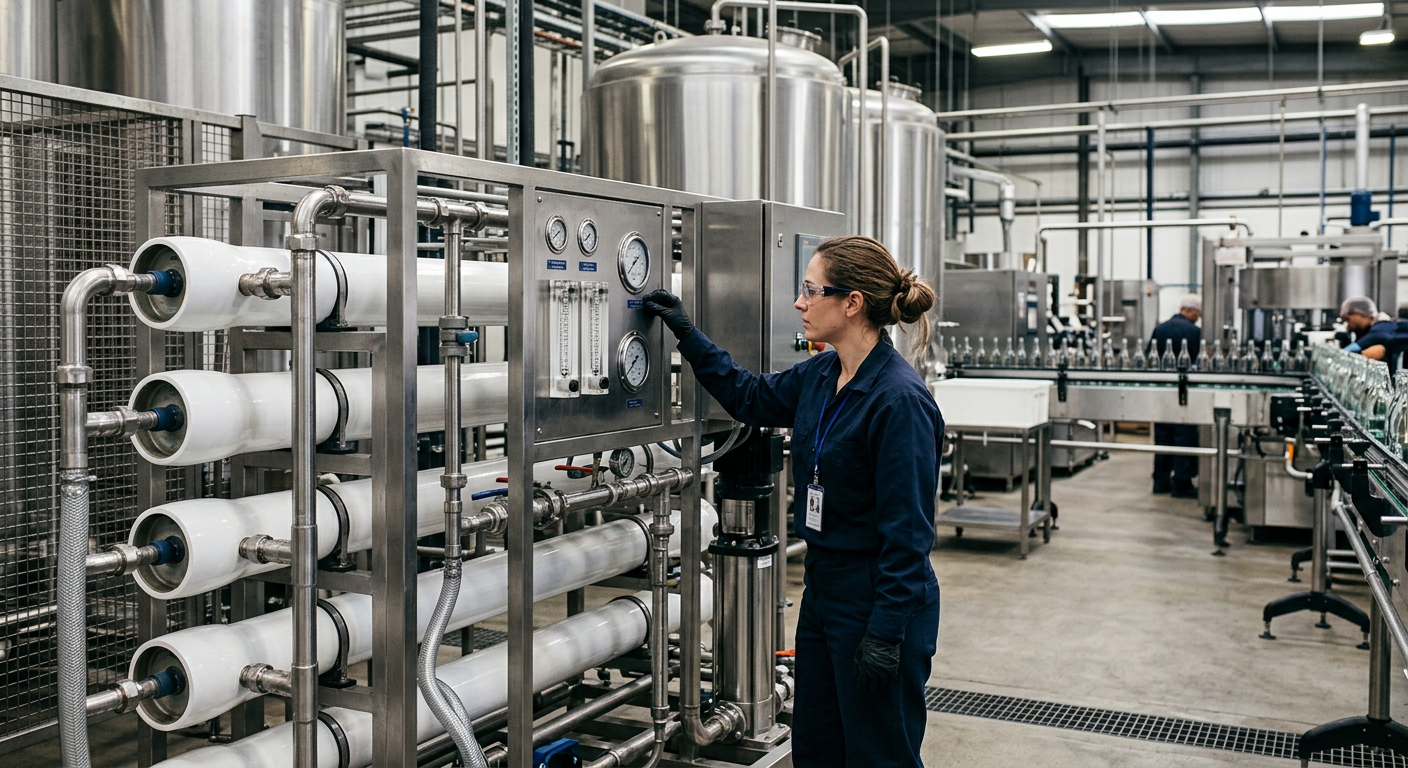
Ready Meal Production Line Design
The most effective ready meal production line in the United States is not simply a collection of cookers, fillers, conveyors, and packaging machines. It is a coordinated manufacturing system that balances food safety, throughput, recipe flexibility, labor efficiency, shelf life, and distribution strategy. Whether a manufacturer is producing chilled pasta bowls for grocery chains in Chicago, frozen protein-and-rice meals for club stores in Dallas, or shelf-stable retort trays for e-commerce fulfillment near Los Angeles, the line must be designed around the commercial reality of the product. For most U.S. manufacturers, the best results come from starting with a clear product and channel strategy: refrigerated fresh meals for regional retail, frozen meals for national distribution, or retort meals for long shelf life and non-refrigerated logistics. From there, the line should be built around controlled component preparation, accurate portioning, dependable tray handling, validated thermal processing, packaging integrity, and a documented cold chain where required. That is where an engineering-led partner matters. Disruptive Process Solutions works with food and beverage manufacturers across the United States and Canada to engineer profitable processing systems rather than overbuilt capital projects. For ready-to-eat and ready-to-heat meal operations, that means designing lines that match SKU count, sanitation needs, utility loads, labor availability, and realistic growth targets. A ready meal production line typically includes raw material receiving, refrigerated or frozen storage, ingredient preparation, separate cooking of components, buffering or intermediate holding, multi-lane depositing into trays, checkweighing, sealing, coding, metal detection or X-ray, secondary packaging, and cold or ambient distribution depending on the process. In the United States, line design decisions are heavily influenced by FDA or USDA oversight, retailer shelf life requirements, labor costs, transportation distance, and whether the product is sold through grocery, convenience, foodservice, meal kit, or direct-to-consumer channels. The U.S. ready meal market continues to expand as consumers seek convenience, portion control, high-protein formats, globally inspired flavors, and cleaner labels. Growth is especially visible around dense logistics corridors such as the Northeast corridor from Newark to Boston, the Southeast around Atlanta and Savannah, Texas distribution hubs around Dallas and Houston, and the West Coast network anchored by Los Angeles, Long Beach, and the Inland Empire. These regions matter because shelf life and freight economics often determine whether a cook-chill, cook-freeze, or retort model is financially viable. Manufacturers evaluating a new line should begin with five questions: For buyers comparing suppliers, the best advice is to avoid selecting equipment in isolation. A depositor that runs perfectly in a test center may still fail commercially if the upstream sauce viscosity varies, the rice feeder bridges, the tray denester misaligns, or the chilled storage plan cannot absorb shift-to-shift production variability. System integration matters more than individual machine brochures. The following table summarizes common ready meal categories in the United States and the production logic behind them. As the table shows, there is no single best line architecture. The right design depends on market, route to market, and product behavior after processing and during distribution. The line chart above reflects a realistic growth pattern for the U.S. ready meal sector, with 2026 expected to be shaped by automation investment, retailer demand for cleaner labels, and rising pressure to improve packaging sustainability while holding labor costs in check. A ready meal line works best when it is designed as a controlled sequence of unit operations rather than a linear conveyor concept. The workflow starts with receiving and segregation of raw ingredients. Proteins, grains, vegetables, dairy, sauces, allergens, and packaging materials should each follow defined paths with temperature control and traceability. Facilities handling USDA-regulated meat and poultry components need an added layer of inspection, zoning, and documentation. Ingredient preparation often includes washing, trimming, cutting, marinating, thawing, batching, and pre-weigh staging. Separate processing cells are common for rice and grains, proteins, roasted or blanched vegetables, and hot or cold sauces. The goal is not only food safety but also preserving texture so that the assembled meal still performs after reheating by the consumer. Cooking systems vary by product: steam kettles for sauces, continuous cookers for rice, combi or spiral systems for proteins, blanchers for vegetables, and scraped surface exchangers where particulate sauces need controlled cooling. After cooking, components usually move into hot holding, rapid chilling, or direct feed buffers depending on line speed and process type. At the engineering level, the biggest workflow mistakes are usually: DPS brings relevant technological capabilities here by integrating process engineering, controls, PLC programming, SCADA visibility, utilities, and equipment layout into a single execution model. For a ready meal producer, that can mean synchronizing cookers, pumps, weigh systems, tray indexing, seal verification, and plant utilities so the line runs as one system instead of multiple disconnected islands. More details on integrated project support can be found on the company’s services page. This workflow table is useful because it shows how throughput, safety, and commercial shelf life depend on each step performing within a narrow operating window. Many of the most successful ready meals in the United States rely on multi-component assembly: a starch base such as rice or pasta, a protein portion, one or two vegetable elements, and a hot-fill or chilled sauce. The challenge is that each component behaves differently. Rice can compact or dry out, proteins can vary in piece size, vegetables can break during transfer, and sauces may thicken as temperature drops. Good line design therefore starts with product physics. Rice and grains often require dedicated depositors with agitation or anti-bridging features. Diced chicken, beef strips, meatballs, or plant-based chunks need gentle handling to avoid breakage and visual downgrade. Vegetables require careful selection between cup filling, volumetric feeding, or lane deposition. Sauces need viscosity control, heated jackets where necessary, and accurate nozzles to prevent splashing onto seal flanges. For a typical bowl assembly line, trays are denested and indexed through several stations. A base component is deposited first, then protein, then vegetables, then sauce, and sometimes a topping or garnish. Between stations, the conveyor pitch must allow clean indexing without product spillover. If the line supports multiple tray footprints, servo-driven change parts and tool-free adjustments become especially valuable. On the manufacturing side, DPS supports food producers with capabilities spanning mixing, cooking vessels, marination systems, sauce handling, custom tanks, and full system integration. Manufacturers reviewing equipment options can explore relevant processing hardware on the equipment solutions page. The advantage is not only supplying hardware but making sure it fits the total process, utility demand, and sanitation plan. This table matters because meal quality is often judged by the consumer in seconds. Consistent component placement, appearance, and ratio are as commercially important as food safety. The strongest demand remains in retail grocery, but direct-to-consumer and convenience formats continue to influence package design, meal weight, and shelf life expectations. Choosing between cook-chill, cook-freeze, and retort is one of the most important commercial decisions in a ready meal project. Each path changes capital cost, operating cost, warehouse requirements, package selection, shipping strategy, and perceived product quality. Cook-chill generally offers the best fresh-like eating quality and supports premium positioning. It is well suited to regional distribution networks where meals can move quickly from production to refrigerated warehouse to store shelf. This model works well around dense metro areas such as New York, Philadelphia, Washington, Charlotte, Atlanta, and Chicago. The trade-off is a shorter shelf life and the need for precise cold chain control. Cook-freeze gives manufacturers more geographic reach. It helps smooth production scheduling and reduces spoilage risk. It is often preferred for high-volume national distribution from central facilities in states such as Texas, Kansas, Ohio, or Tennessee. The main trade-off is texture impact, especially in sauces, vegetables, and starches if formulation is not optimized for freeze-thaw stability. Retort delivers the longest shelf life and can remove refrigerated distribution cost from the equation, which is attractive for e-commerce, export, emergency food programs, and specialty channels. However, it requires robust thermal process validation, packaging designed for retort conditions, and careful recipe development to maintain acceptable sensory quality. The comparison shows that shelf life is never free. Every gain in logistics flexibility usually introduces either quality compromises or higher process validation demands. By 2026, more U.S. manufacturers are expected to adopt hybrid models, such as centralized cooked protein preparation combined with regional meal assembly, or frozen component production feeding fresh assembly lines during peak demand. Sustainability pressure may also shift some producers away from energy-intensive frozen distribution where local chilled networks are economically practical. For refrigerated ready meals, tray sealing is more than a final packaging step. It is a shelf-life technology. Seal quality, headspace control, tray geometry, and gas composition all influence product integrity and retail performance. Modified atmosphere packaging is commonly used to reduce oxygen exposure, slow spoilage, and improve appearance, but it only works when the entire package system is aligned with the product’s respiration, moisture behavior, and microbial risk profile. Common U.S. ready meal packs include CPET trays for ovenable meals, PP trays for microwaveable formats, compartment trays for multi-component meals, and lidding films with peel properties optimized for consumer convenience. Fresh meals with sauces or particulates require extra attention to flange cleanliness because even small contamination on the sealing surface can lead to leakers and shortened shelf life. Manufacturers distributing through high-volume grocery networks in places like Dallas-Fort Worth, the Midwest, and the Southeast often favor high-output inline tray sealers. Premium short-run brands may select shuttle systems for flexibility. In both cases, seal validation, vacuum performance, gas flush accuracy, and package drop resistance should be verified before full rollout. This packaging table helps clarify that material choice should follow product and process, not just branding goals. The area chart reflects a continued move toward premium chilled meals, driven by consumer preference for fresher textures and shorter ingredient statements. SKU proliferation is now a defining challenge in U.S. prepared foods. Retailers want core chicken and pasta bowls, but they also want regional flavors, seasonal promotions, high-protein variants, lower-sodium lines, and private-label exclusives. A line designed for one or two fixed recipes may become obsolete quickly. Recipe flexibility starts with modular design. Separate sauce skids, mobile ingredient hoppers, quick-connect piping, recipe-driven PLC settings, and tool-less change parts can significantly reduce downtime. Servo-guided depositors and recipe management software allow operators to switch tray sizes, deposit counts, and fill weights with less manual intervention. From a buying perspective, manufacturers should ask suppliers for documented changeover time under real production conditions, not theoretical time in an empty machine demo. It is also worth assessing whether sanitation changeover, allergen clearance, and startup validation erase the apparent time savings of a faster mechanical adjustment. One practical example is a co-manufacturer serving both club-store family portions and premium single-serve bowls. If tray width, sealing film, coding format, and case pack all change, then line flexibility must extend beyond the filler to the denester, sealer, printer, checkweigher, and downstream case packing system. This is where true system planning matters. Manufacturers evaluating implementation strategy can review integrated execution examples and project thinking through the DPS case study section, where process planning and practical throughput gains are central themes. Automated weighing and portion control directly affect profitability in ready meal production. Even a small overfill across thousands of meals per shift can erode margin. Underfill, on the other hand, creates label compliance risk and retailer chargebacks. In meal assembly, this challenge becomes more complex because the total weight is made up of several components with different tolerances and value contribution. The most successful lines typically combine upstream portion discipline with final checkweighing. Protein, often the highest-cost component, may be portioned by multihead weighers, target-weight combination systems, or vision-assisted dosing. Sauces may use net-weight depositing. Grains and vegetables can be managed by volumetric-plus-correction logic where high speed is needed. In premium macro-labeled meals sold in fitness and wellness channels, consistency is not only a cost issue but also a brand promise. Consumers expect predictable calorie, protein, and carb declarations. That pushes manufacturers toward better load-cell integration, statistical process control, and tighter recipe standardization. This table shows why portion control strategy should be matched to both SKU complexity and cost sensitivity. Protein-heavy meals justify more automation than simple value trays with low-cost starch components. For chilled and frozen ready meals, cold chain management is part of the product design. A beautifully engineered assembly line still fails commercially if finished meals sit too long at the wrong temperature, if warehouse dwell time is unpredictable, or if regional distribution routes exceed the thermal tolerance of the package system. In the United States, cold chain design is often shaped by geography. A plant shipping from North Carolina can efficiently serve much of the East Coast refrigerated market, while a California producer near the Port of Long Beach may focus on Western states or imported ingredient flows. Facilities in the Midwest may enjoy strong reach via intermodal and trucking networks but still need to model summer temperature stress during cross-country freight. Good cold chain planning includes blast chilling or rapid post-pack cooling where required, refrigerated staging, warehouse slotting discipline, transport temperature logging, retailer delivery compliance, and reverse analysis of shelf-life remaining at point of sale. For frozen lines, freezer dwell time, pallet stabilization, and dock design are especially important. DPS also supports the service side of these projects through planning, installation management, utility coordination, commissioning, and owner-focused project execution. That matters in ready meal facilities because refrigeration, HVAC, steam, compressed air, water, and controls all influence food safety and uptime. The company’s integrated approach is outlined further on its service offerings page. By 2026, U.S. cold chain investments are likely to be influenced by energy costs, refrigerant policy shifts, warehouse automation, and pressure from retailers to document thermal performance more clearly. Sustainability goals may also increase interest in plant layouts that shorten refrigeration load through smarter zoning rather than simply adding more mechanical capacity. Microbiological control is the foundation of any ready-to-eat meal operation. Shelf life is not a marketing estimate; it must be supported by process design, environmental controls, packaging performance, and validation data. In the United States, this means aligning product type and process with FDA preventive controls, USDA requirements where applicable, and customer-specific standards under SQF or BRC programs. For chilled RTE meals, microbial control begins with hygienic zoning and personnel flow. Raw proteins, cooked components, high-care assembly, and packaging should be logically separated. Air handling, condensation control, equipment cleanability, and sanitation verification all influence final shelf life. Environmental monitoring programs are especially important for post-lethality exposed products. Shelf life validation generally combines microbiological testing, sensory review, packaging integrity checks, temperature abuse studies, and real-distribution simulation. A meal may pass in controlled storage but fail after pallet stacking, cross-docking delays, or retail display fluctuations. That is why validation should reflect the actual route to market, whether through grocery DC networks, convenience distributors, or parcel systems. Below is a practical checklist for microbiological and shelf-life validation planning. This validation table is essential because many shelf-life failures arise not from one obvious error but from small weaknesses stacking together across process, packaging, and distribution. This comparison chart illustrates what U.S. manufacturers increasingly prioritize when selecting ready meal line partners: system-wide performance rather than standalone machine cost. In practical terms, local supplier ecosystems also matter. Packaging support may be stronger in the Midwest, refrigeration contractors may be more readily available in Texas and Georgia, and specialized sanitary fabrication may cluster around major food manufacturing corridors such as Wisconsin, Illinois, California, and Pennsylvania. Still, the best project outcomes usually come from one accountable engineering and integration lead rather than fragmented procurement. What is the ideal capacity for a new ready meal production line?It depends on SKU mix and filling complexity more than on tray count alone. A startup premium chilled line may run a few thousand trays per shift efficiently, while a national frozen meal line may require much higher throughput with automation. Which is better for the U.S. market: chilled or frozen ready meals?Chilled is often better for premium regional programs and fresh positioning. Frozen is usually better for broad geographic reach and lower spoilage risk. The right answer depends on distribution and brand strategy. When should a manufacturer choose retort meals?Retort makes sense when ambient shelf life, export, emergency stock, institutional channels, or e-commerce logistics outweigh the sensory advantages of chilled or frozen products. How important is MAP for fresh ready meals?Very important when longer refrigerated shelf life is needed. However, MAP only performs well when paired with validated gas ratios, clean seal flanges, strong sanitation, and stable temperature control. What is the biggest source of profit loss on a meal line?In many facilities it is a combination of overfilling, downtime during changeover, poor synchronization between cooking and packaging, and shelf-life loss due to package failures or cold-chain inconsistency. How many SKUs can one line handle?A well-designed modular line can support a broad SKU portfolio, but practical limits depend on allergen segregation, tray formats, sauce variation, and sanitation time. Recipe flexibility should be designed in from the start. What should buyers ask equipment and integration partners?Ask for real throughput by product type, utility loads, sanitation access details, changeover documentation, shelf-life implications, spare parts strategy, and proof of integration experience in prepared foods. Why work with an engineering-led firm instead of separate contractors?Because ready meal projects involve process, packaging, controls, refrigeration, utilities, compliance, and startup execution at the same time. A coordinated partner reduces handoff risk and keeps capital aligned with profit goals. For manufacturers in the United States planning a new facility, expanding a prepared foods plant, or reconfiguring an existing line, the best results come from combining commercial realism with process discipline. Disruptive Process Solutions supports clients with engineering, equipment integration, installation oversight, and profit-focused project execution tailored to food manufacturing environments. That approach is especially valuable in ready meals, where success depends on the line performing as a complete system from ingredient preparation through final packaging and distribution. -
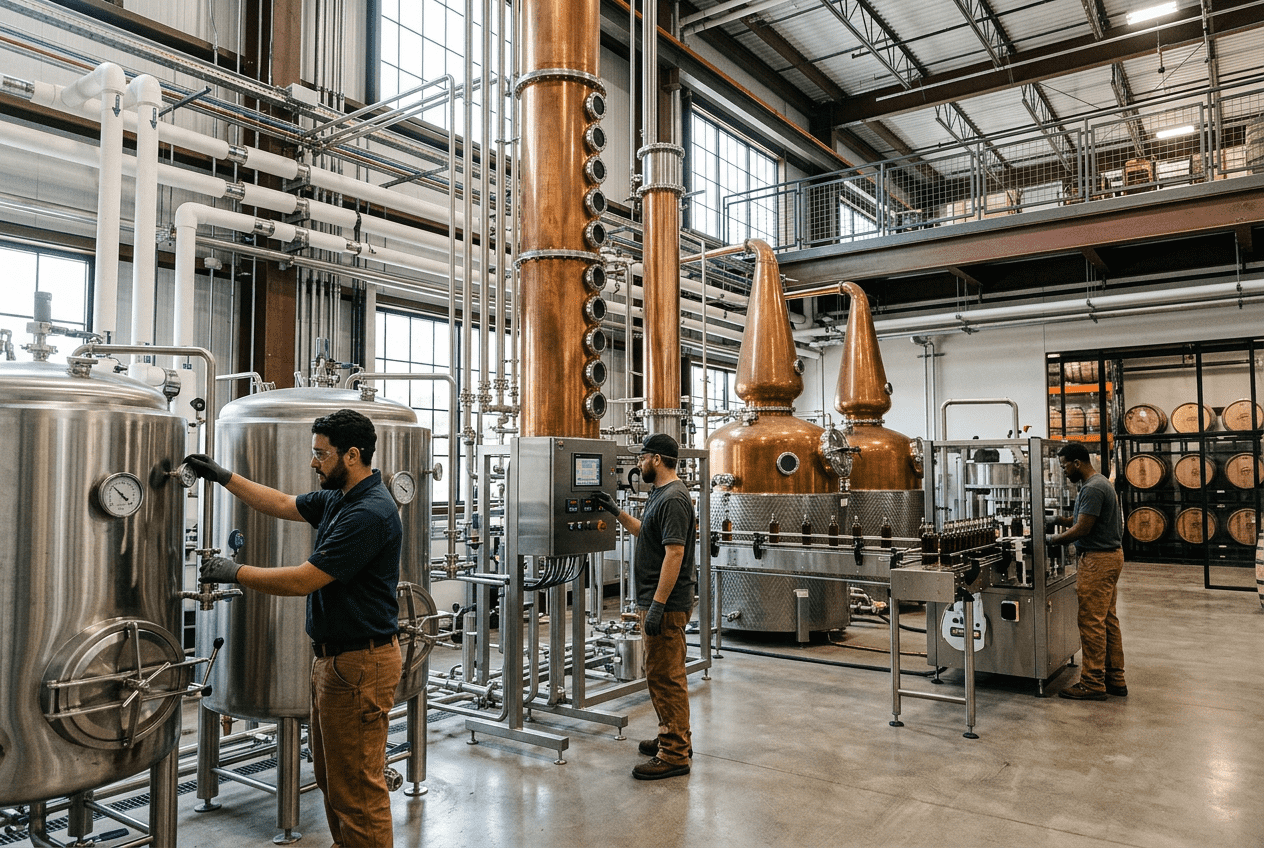
Automation ROI for Food Facilities: 8-Step Financial Calculation Framework
Food and beverage manufacturers in the United States are under pressure to raise throughput, control labor costs, improve food safety, and protect margins against volatile utilities, ingredients, and freight costs. In that environment, automation cannot be justified by technology alone. It has to be justified by a financial model that connects line performance to EBITDA, cash flow, and risk reduction. This guide explains how to calculate return on investment for automation in food facilities using an eight-step framework built for U.S. processors, co-packers, dairies, beverage plants, protein operations, aseptic manufacturers, and prepared food facilities. Whether a plant is operating near Chicago, the Central Valley of California, Houston, Atlanta, Charlotte, Kansas City, or along logistics corridors near the Port of Los Angeles, Port of Long Beach, Savannah, or New Jersey, the same principle applies: automation ROI improves when scope is clear, baseline data is accurate, and engineering decisions are tied to measurable business outcomes. The quickest way to estimate automation ROI for a U.S. food plant is to total all annual financial gains from the project and divide that value into the full installed cost. In practical terms: Payback Period = Total Installed Project Cost ÷ Annual Net Savings Annual Net Savings = Labor Savings + Throughput Gains + Waste Reduction + Downtime Reduction + Energy Savings + Maintenance Savings + Quality Improvement Value + New Revenue Contribution − Annual Operating Costs For many American food facilities, strong automation projects pay back in roughly 12 to 36 months, depending on labor intensity, current downtime, production bottlenecks, sanitation requirements, and the ability to monetize new capacity. A deboning line in Arkansas, a dairy blending system in Wisconsin, or a beverage batching upgrade in North Carolina can all look very different on paper, but the same financial logic holds. The table above works as a fast screening tool. If three or more of these categories are meaningful in your facility, the project usually deserves a deeper feasibility study rather than a simple equipment quote. Step 1 is defining the real investment scope. Food manufacturers often underestimate project cost because they focus only on the machine price. A complete automation ROI model should include equipment, controls, panel work, PLC programming, SCADA integration, mechanical installation, electrical work, utility modifications, sanitary piping, structural steel, guarding, permitting, startup, commissioning, operator training, and production support during ramp-up. In the United States, those indirect costs can materially change payback. For example, a filler upgrade in New Jersey may require utility tie-ins, QA validation, and network integration. A protein line in Texas may need washdown electrical design, sanitary supports, and USDA coordination. A dairy batching project in Idaho may require CIP revisions and recipe controls. If scope is incomplete, the business case will look artificially attractive. Step 2 is measuring labor savings correctly. The right number is not the base wage. It is the burdened hourly cost, including payroll taxes, benefits, overtime premiums, turnover impact, temporary labor reliance, and supervisory overhead where applicable. Many U.S. facilities now use burdened labor rates well above nominal hourly wages, especially in high-cost labor markets such as California, Washington, Massachusetts, and parts of the Northeast. That table shows why installed cost is often 1.3x to 2.0x the equipment-only quote in complex food projects. Sanitary design, washdown construction, utility balancing, and compliance validation all add real cost, but they also protect uptime and audit readiness. To calculate labor savings, measure the current state by role, hours per shift, number of shifts, overtime percentage, and turnover. Then build the future-state labor map after automation. Include redeployment strategy. If employees move to higher-value positions such as QA checks, changeovers, or preventive maintenance, the project can still create labor savings by reducing agency spend or eliminating chronic overtime. At food and beverage engineering service level, the most reliable savings models are built after observing production by shift, not by relying on management estimates alone. Plants with high manual handling, repetitive batching, hand packing, palletizing, ingredient staging, or CIP-heavy changeovers usually have the best labor automation cases. Step 3 is productivity. In many U.S. facilities, the biggest value of automation is not headcount reduction but more sellable throughput from the same footprint. Productivity gains can come from faster cycle time, lower changeover time, improved line balancing, reduced micro-stops, better batching accuracy, or stronger integration between upstream and downstream assets. However, only monetize throughput that the business can actually use. If a sauce line in Ohio can run 20 percent faster but filling remains the bottleneck, the benefit is limited. If a beverage co-packer in the Southeast has customer demand and enough warehousing, extra throughput may convert directly into revenue and margin. Step 4 is waste reduction. In food processing, waste can appear as ingredient giveaway, trim loss, overfill, underfill, startup scrap, packaging scrap, sanitation loss, or out-of-spec rework. Automation often improves recipe control, flow measurement, weigh accuracy, portioning, and thermal consistency. These are measurable dollars. The table above matters because waste is often buried in several departments: production, quality, maintenance, warehousing, and finance. A solid ROI model consolidates those losses into one baseline. Manufacturers around Memphis, Fresno, Milwaukee, and Minneapolis often discover that a project initially justified on labor can be fully supported by yield and throughput once the line is measured correctly. This is especially true in blending, thermal processing, portioning, aseptic filling, and high-speed packaging. Step 5 is downtime reduction. This is often one of the most underestimated categories in food automation ROI. Plants may accept frequent interruptions as normal: conveyor faults, controls mismatches, poor data visibility, long CIP transitions, unplanned maintenance, sensor failures, manual resets, or utility instability. Automation can reduce downtime through diagnostic visibility, interlock logic, predictive alarming, automated sequencing, and better system integration. The key is to classify downtime. Separate planned downtime, changeover, sanitation, utility interruption, mechanical failure, controls failure, and operator-dependent stoppage. Then calculate what portion can reasonably be reduced. Not every hour can be recovered, and conservative assumptions increase credibility. Step 6 covers energy and maintenance savings. In the United States, utility costs vary widely by region, so site-specific modeling matters. California and the Northeast may place more weight on electricity demand management. The Gulf Coast may emphasize steam, compressed air, and refrigeration optimization. Plants in the Midwest may look at motor efficiency, variable frequency drives, and thermal recovery. This table shows why engineering detail matters. Energy savings are real, but they should not be guessed. Good models use utility invoices, maintenance histories, CMMS records, and downtime logs. The strongest projects connect data from operations, maintenance, finance, and QA rather than depending on one department. Facilities seeking utility-intensive improvements often benefit from integrated process and utility review rather than isolated equipment replacement. That is especially true for CIP skids, refrigeration, boilers, compressed air, thermal processing, and water treatment systems. Companies exploring upgrades can review process equipment capabilities in relation to installation and controls integration rather than treating equipment as a standalone purchase. Step 7 measures quality improvement. In food and beverage, quality has both direct and indirect value. Direct value includes fewer rejects, fewer customer complaints, lower claim rates, less rework, and better compliance performance. Indirect value includes stronger shelf life consistency, improved retailer confidence, reduced audit exposure, and less operational chaos from deviation handling. Automation improves quality through repeatable recipes, in-line measurement, batch traceability, tighter thermal control, electronic records, alarm management, and operator guidance. For regulated environments under FDA, USDA, SQF, or BRC requirements, the value of better documentation can be substantial, even when it does not immediately appear in a line-item cost reduction. Step 8 is revenue growth. This is the most powerful and the most abused ROI category. Revenue should only be included when the commercial team confirms real demand, the plant has downstream capability, and the project removes a true bottleneck. If those conditions are met, automation can support faster launches, more capacity, private-label growth, shorter lead times, and stronger service levels for national accounts. The lesson from the table is simple: quality and revenue value should be evidence-based. In board-level or lender-facing analysis, credibility matters more than a flashy spreadsheet. Plants near major retail distribution zones such as Dallas-Fort Worth, Columbus, Indianapolis, and the Inland Empire often have strong cases for service-level and capacity-driven revenue gains because logistics speed is commercially valuable. Once the eight calculation steps are complete, the next task is to build a payback and total cost of ownership model. Payback is useful because it is easy to understand. But it should not be the only decision tool. Two projects can have the same payback period and very different long-term value. Total cost of ownership, or TCO, should include upfront capital, annual operating cost, maintenance burden, software support, spare parts strategy, lifecycle upgrade needs, consumables, calibration requirements, sanitation burden, and expected asset life. In food plants, TCO is especially important where cleanability, compliance, washdown durability, and production flexibility affect long-term economics. This table is useful because it shows why mature capital planning should go beyond one number. A robust U.S. food project model usually includes base case, conservative case, and upside case scenarios. For example, labor savings may be very reliable, while revenue expansion may deserve a probability discount. Maintenance savings may start in year two rather than immediately. Sanitation reductions may vary by SKU mix. That nuance improves trust. For supplier comparisons, build a normalized TCO worksheet so all bids reflect the same scope, startup support, software standards, and spare parts assumptions. A cheaper bid can become more expensive over five years if support quality is weak or integration risk is high. A financial model is only as good as the technical assumptions behind it. Automation ROI improves when engineering requirements match sanitation, throughput, product characteristics, and expansion strategy. This is where technical capabilities make a real difference. Food manufacturers should define control philosophy, PLC platform, HMI standards, SCADA expectations, data historian needs, alarm strategy, batch and recipe management, traceability requirements, and cybersecurity expectations. Mechanical design should address hygienic piping, material selection, cleanability, access, slope, drainage, utility routing, and maintenance clearance. Utility reviews should confirm available steam, chilled water, glycol, compressed air, hot water, electrical capacity, wastewater handling, and ventilation performance. For food and beverage plants that need broad engineering support, DPS brings multidisciplinary capability across structural, mechanical, plumbing, electrical, process, and controls engineering, including PLC programming, automation, and SCADA integration. That matters because a line upgrade often fails when controls, utilities, and process design are treated as separate projects rather than one operating system. Technical requirements also vary by product type. Carbonated soft drinks and RTD beverages need accurate blending, carbonation, filling, and thermal logic. Dairy projects may involve homogenization, separation, aseptic environments, and validated CIP. Protein lines require washdown durability, yield control, and safe material handling. Prepared foods may center on mixing, cooking, portioning, and flexible recipe execution. Facilities considering broader system modernization can review project case examples to understand how engineering choices affect business results. Looking toward 2026, several engineering trends are becoming more important in the United States: digital batch records, energy management layers, more remote diagnostics, stronger industrial cybersecurity expectations, water reuse scrutiny, electrification where practical, and sustainability reporting tied to capital projects. Policy and customer pressure will continue pushing food plants to document energy, water, and waste impact with greater precision. The best automation ROI model will still fail if implementation is weak. Food plants should follow a staged roadmap: define the business case, capture baseline data, confirm user requirements, complete feasibility and concept design, align budget and schedule, finalize detailed engineering, procure equipment, manage installation, execute FAT and SAT, commission the system, train operators and maintenance staff, and monitor performance against the original model. Best practices include installing around sanitation windows and production calendars, planning temporary process continuity, protecting food safety during construction, locking vendor responsibilities early, and building a post-startup scorecard. Plants should not wait until startup to decide who owns recipes, line data, preventive maintenance settings, spare parts, and operator certification. On the manufacturing side, DPS supports a broad range of process applications across beverages and foods, including fermentation systems, distillation, pasteurization, sterilization, aseptic processing, carbonation, blending, batching, filtration, water treatment, grinding, mixing, forming, cooking, smoking, marinating, slicing, dairy systems, and utility infrastructure such as CIP, boilers, compressed air, cooling towers, refrigeration, HVAC, and wastewater integration. The company also manufactures selected branded process equipment such as tanks, CIP systems, tumblers, and cooking vessels, which can strengthen fit between design intent and field execution. As a buying strategy, U.S. owners should compare options based on business outcome, not just purchase price. Ask whether the supplier understands sanitation and compliance, whether field execution is included, whether controls integration is in scope, whether schedule risk is truly covered, and whether the vendor can support future expansion. In capital projects above the low six figures, project management quality can be worth more than a narrow discount on equipment. Local execution also matters. A plant expansion in California may face different utility, labor, and permitting realities than a brownfield retrofit in the Carolinas or a protein modernization project in the Midwest. The right implementation plan reflects geography, labor availability, shift schedule, utility reliability, and audit constraints. Disruptive Process Solutions, or DPS, is a U.S.-based food and beverage engineering partner serving manufacturers across all 50 states and Canada. Headquartered in Cary, North Carolina, with a West Coast office in Lake Forest, California, DPS is structured to move quickly on capital projects while maintaining rigorous technical and commercial discipline. Its service capabilities are built around a design-build-manage approach that aligns engineering, construction oversight, and execution accountability. That includes process engineering and design, capital planning, feasibility studies, owner’s representative support, project and program management, general contracting where licensed, equipment supply, installation, system integration, commissioning, and startup support. For manufacturers looking for a business-minded partner rather than a quote-only vendor, learn more about the DPS team and project philosophy. DPS works across both food and beverage sectors in North America, supporting craft brewing, spirits, wine, kombucha, RTD, soft drinks, juice, dairy beverages, aseptic systems, proteins, prepared foods, sauces, dairy processing, retort, co-packing, and specialty regulated applications. The company’s operating style emphasizes transparent planning, honest scope definition, and capital decisions tied to profitability rather than unnecessary spending. That approach fits particularly well for manufacturers that want practical ROI, disciplined execution, and long-term plant performance. What is a good payback period for food automation in the United States?Many projects target 12 to 36 months. Labor-heavy packaging, batching, and palletizing can be faster, while highly regulated aseptic or utility-intensive projects may take longer but provide stronger long-term value. Should revenue growth be included in ROI?Yes, but only if demand is real, sales leadership confirms the forecast, and the automation removes a proven bottleneck. Use contribution margin, not gross revenue, and apply a ramp-up curve. How do I avoid double counting benefits?Separate savings categories carefully. If throughput gains already capture recovered uptime, do not count the same downtime reduction again under a different label. What data should a plant collect before starting?Gather labor by shift, OEE or line performance history, downtime codes, scrap and giveaway rates, utility data, maintenance spend, quality incidents, customer claims, and current capacity constraints by SKU. Does automation always reduce headcount?Not always. In many U.S. plants, the better outcome is redeployment, lower overtime, less agency labor, improved safety, and stronger retention in hard-to-staff roles. Which industries usually see the strongest ROI?Protein processing, beverage, dairy, prepared foods, and co-packing often generate strong returns because small improvements in yield, uptime, and consistency scale quickly. How important is compliance in the ROI model?Very important. FDA, USDA, SQF, and BRC expectations can affect documentation, traceability, sanitation design, and operational risk. Compliance-related improvements may not always show up as direct labor savings, but they materially protect the business. What should be included in total installed cost?Include equipment, controls, panels, programming, field wiring, mechanical and sanitary installation, utility work, structural modifications, startup, commissioning, training, and temporary production support. Are 2026 trends changing automation buying decisions?Yes. Buyers increasingly prioritize cybersecurity, digital traceability, energy reporting, water efficiency, flexible batch control, and scalable designs that support sustainability and future SKU complexity. What is the biggest mistake in automation ROI analysis?Using a vendor quote and one labor estimate as the entire business case. Strong projects require integrated technical scope, baseline plant data, and realistic operational assumptions. -
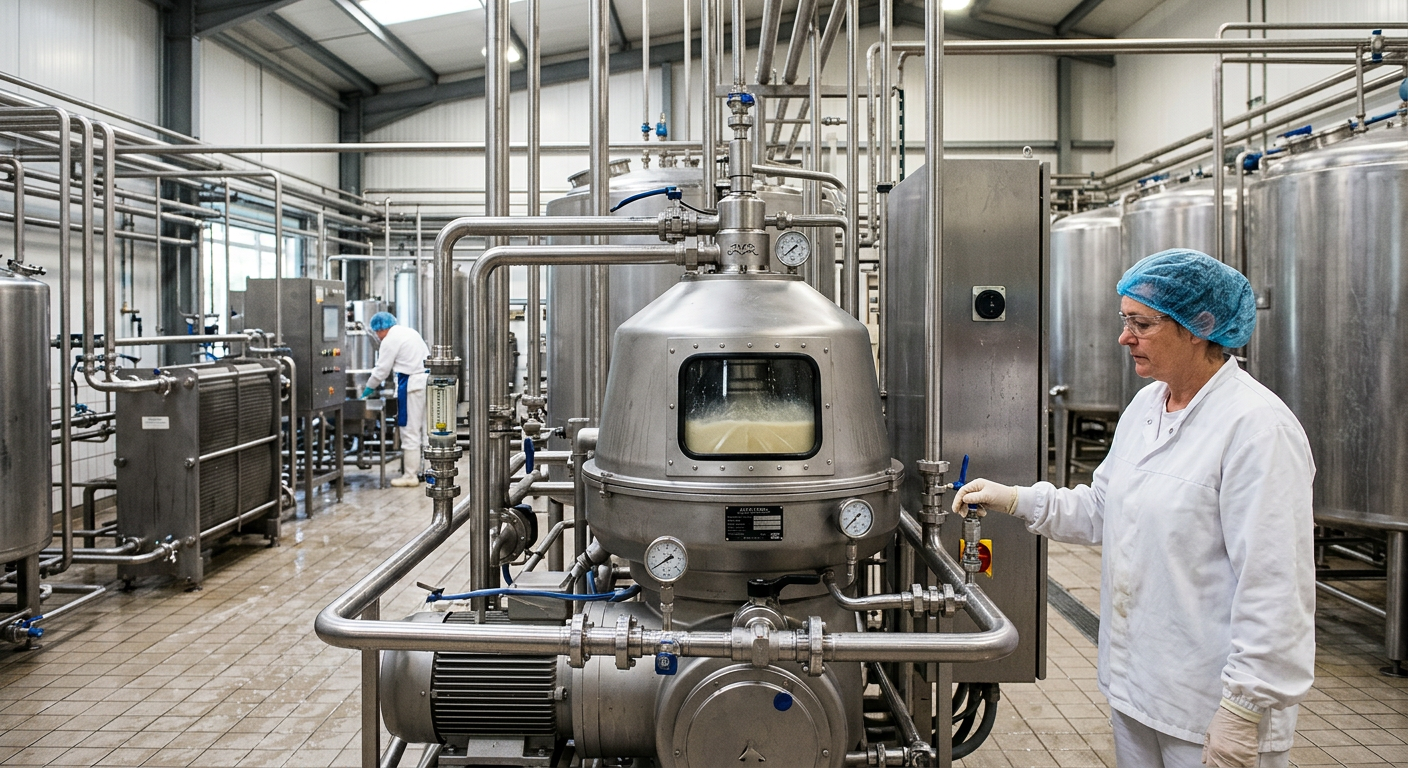
Canned Food Processing Line Design
Canned food processing line design in the United States is about building a hygienic, balanced, and commercially efficient system that moves empty cans through depalletizing, rinsing, filling, seaming, retorting, cooling, drying, labeling, and case packing without creating bottlenecks. The best lines are not just fast; they are stable, compliant, easy to clean, and sized around the real product mix, container formats, thermal process schedule, labor model, and growth plan. For processors making soups, beans, sauces, seafood, pet food, ready meals, dairy-based products, or shelf-stable specialty foods, line success depends on correct equipment selection, retort integration, seam integrity, utility capacity, and measurable operating discipline. In the United States, line design decisions are also shaped by labor costs, USDA and FDA expectations, customer quality standards, warehouse throughput, and regional logistics. A cannery near Fresno may prioritize tomato season surge capacity, while a Gulf Coast seafood processor may design around corrosion resistance and rapid cook-chill-retort transitions. Manufacturers shipping through Los Angeles, Savannah, Houston, Chicago, Newark, or Atlanta distribution corridors often need packaging lines that support retail, club, foodservice, and export packs on the same footprint. For companies planning a new line, expanding an existing plant, or upgrading a retort area, it helps to work with a partner that understands engineering, installation, controls, and execution together. Disruptive Process Solutions approaches capital projects as profit-driven manufacturing systems, not isolated equipment purchases, which is especially important in canning where one weak link can reduce the output of the entire facility. A modern canned food processing line typically follows this sequence: empty can depalletizer, can conveying and rinsing, optional can warming, product filling, lid feed and placement, double seaming, retort loading, thermal processing, can cooling, can drying, coding, labeling, case packing, and palletizing. The best layout minimizes can damage, preserves fill accuracy, protects seam quality, and synchronizes upstream preparation with downstream sterilization and packaging. In the United States market, processors should design around sanitation access, utility redundancy, validated thermal schedules, traceability, and future SKU flexibility. Buying advice starts with the product first, not the machine brochure. Low-viscosity liquids may fit volumetric filling; chunk-in-liquid products often need net-weight or multi-stage systems; products with visible particulates may require special valve design and gentle transfer. Retort capacity must be aligned with filler output, or one side of the plant will idle while the other waits. Plants also need enough floor space for can accumulation, basket staging, maintenance access, CIP routing, operator safety, and forklift traffic. The table above shows why line design is a systems exercise. A fast filler cannot rescue a slow basket loader, and a large retort room cannot compensate for poor seam control. U.S. processors gain the most value when capital planning links throughput, compliance, labor, and maintenance from day one. The physical layout of a canned food line should follow product flow, hygienic zoning, and maintenance practicality. A typical layout begins with empty can receiving and depalletizing, then moves to clean can handling and filling, then to a high-control seaming area, then to retort logistics, and finally to dry packaging and warehousing. Every handoff matters. Poorly placed turns, long unsupported conveyors, or congested transfer points can dent cans, upset timing, or create sanitation headaches. For U.S. manufacturers, floor planning often reflects existing building limitations. Legacy plants in the Midwest may have low ceilings or tight column grids. Newer facilities in North Carolina, Texas, or California may allow straighter product flow with better forklift segregation. If the plant handles both high-acid and low-acid canned foods, the layout should also reflect distinct process control, documentation, and traffic management needs. Empty can depalletizers must feed at a steady rate without damaging the flange. Twist rinsers or ionized air systems typically follow, depending on product and risk profile. Fillers need nearby product surge tanks or feed manifolds. Seamers should sit close enough to filling to limit product slosh and contamination exposure, yet remain accessible for setup and teardown. After seaming, lines often split toward basket loading or shuttle conveyors into static or rotary retorts. Following thermal processing, cans move through cooling, drying, coding, labeling, packing, and palletizing. This layout table highlights that each area has a different engineering priority. Front-end can handling is about speed and can integrity; the middle of the line is about food safety and package closure; the back end is about thermal validation, dry packaging reliability, and warehouse readiness. When processors want a full line redesign, a practical path is to combine process engineering, utility review, and execution planning at once. That is where a partner with integrated engineering and project delivery services can reduce schedule risk and prevent expensive late-stage changes. Can handling looks simple until it becomes the reason for downtime. Empty cans are lightweight, damage-prone, and highly sensitive to transfer design. The best conveyor systems provide smooth acceleration, controlled pressure, stable side guiding, and material selections that stand up to washdown and product environments. In seafood, tomato, or brine-heavy operations, corrosion resistance becomes especially important. Twist rinsers are widely used to invert and rinse cans before filling. Their value is both hygienic and operational: they remove dust or incidental debris while fitting compactly into the line. Air rinsers can work in selected dry applications, but rinse method should reflect product risk assessment and plant standards. Can warmers are useful when condensation, thermal shock, or fill condition needs to be managed, especially where ambient-to-product temperature differences affect label adhesion or seam performance. Processors handling multiple can diameters should pay attention to changeover design. Fast-release guides, repeatable settings, and recipe-linked conveyor speeds reduce startup loss. Plants around Chicago or Philadelphia running mixed private-label portfolios often gain more from flexible handling systems than from absolute top speed, because SKU variety is the true driver of downtime. The explanation behind this equipment mix is simple: can handling must protect container geometry before seaming and protect cosmetic quality after retort. A small dent at the wrong point can become a seam issue, while poor drying or rough discharge can create label rejects and customer complaints. Filler choice depends on product behavior, piece size, viscosity, target net contents, and regulatory or customer expectations. Volumetric fillers are common where density is stable and speed matters. Net-weight fillers are preferred when giveaway control is critical, especially for higher-value proteins, specialty sauces, or premium particulate products. Level fillers target visual fill consistency and can be useful when shelf appearance matters, though they must still support net content compliance. Solid and semi-solid products add complexity. Beans in brine, soups with particulates, chili, pet food chunks, tuna, and pasta meals may require staged filling, agitation control, chunk pumps, or separate solid-plus-liquid dosing. Product damage, bridging, and separation are frequent challenges. For example, a processor in New Jersey producing ready-to-eat soups for retail may need gentle ingredient suspension control, while a plant near Stockton handling fruit or tomato inclusions may prioritize deposit accuracy under seasonal variability. Automation is now central to filling performance. Modern systems can tie recipe management, in-line scales, reject tracking, and upstream batching into the same control environment. This is an area where DPS brings strong technological capability: process, mechanical, electrical, and controls engineering combined with PLC programming and SCADA integration help food plants move from manually tuned operations to repeatable production systems. This table matters because the wrong filler is a long-term tax on yield, speed, and labor. If your product family is broad, buying for flexibility often beats buying only for headline rate. U.S. co-packers especially benefit from flexible valves, recipe storage, and quick sanitation access. Double seaming is the package integrity center of the line. A canning system can survive modest variability in some upstream operations, but it cannot survive inconsistent seams. The seam must deliver a dependable hermetic closure across speed changes, lid lots, can body variation, product splash conditions, and operator shifts. Seam setup is not a one-time task; it is an ongoing quality discipline involving tooling condition, chuck and roll geometry, teardown inspection, overlap measurement, countersink review, and defect trending. Common seam problems include droops, false seams, cutover, wrinkling, tightness issues, and product contamination in the seam area. These are often caused by lid mismatch, worn tooling, poor timing, vibration, or unstable can presentation. Plants near major retail supply chains such as Dallas-Fort Worth or Columbus cannot afford intermittent seam failures that trigger holds and customer chargebacks. The best practice is to combine operator checks, laboratory verification, and automated rejection where practical. Seam data should not live on paper alone. It should be trendable by shift, size, product, and tooling set. That is why controls and data architecture matter as much as mechanics in a modern line. The takeaway is clear: seam integrity is both a food safety and business issue. Rejects, rework, investigations, and brand damage cost far more than disciplined inspection. If a line upgrade is being considered, a seamer should never be treated as a commodity machine. Retort performance determines whether the plant’s thermal process is merely compliant or truly efficient. Loading patterns affect heat penetration, basket count, water or steam distribution, and cycle time consistency. An unevenly loaded basket can slow come-up, distort process repeatability, or reduce total daily throughput. The line must be designed so filler output, seamer speed, basket loading, and retort availability remain synchronized. In many U.S. plants, the retort room is the real governor of plant capacity. A filler may be rated at impressive cans per minute, but if retort turnaround or basket movement is poorly engineered, the effective plant rate collapses. This is especially common in older facilities that added faster front-end equipment without resizing thermal processing infrastructure. Cycle optimization is not about cutting safety margins blindly. It is about matching validated lethality requirements to the most efficient loading arrangement, venting pattern, come-up control, cooling profile, and scheduling logic. Product family grouping helps. Running similar thermal profiles in sequence can reduce changeover waste and simplify operator decisions. DPS supports this kind of optimization through combined process design, utility planning, and execution oversight. On the manufacturing side, the company also offers branded processing equipment such as tanks, CIP systems, marination tumblers, and cooking vessels, which can be integrated around retort and batching needs when a broader shelf-stable food project is being developed. The explanation here is that retort efficiency comes from standardization. Better load maps, smarter SKU sequencing, and utility reliability often create more value than buying another retort immediately. Post-retort operations are often undervalued during project planning, yet they directly affect appearance, code legibility, label adhesion, corrosion risk, and pack-out efficiency. Cans leaving cooling can carry residual moisture that interferes with inkjet coding, pressure-sensitive labels, or tray and carton performance. In humid regions such as the Southeast or Gulf Coast, drying system design and room conditions become even more important. Cooling systems should protect container integrity while supporting lot traceability. Dryers must be sized for actual line speed and can geometry, not just average conditions. Labeling needs stable can spacing and dry surfaces. If the line handles printed cans for some SKUs and applied labels for others, changeover planning becomes part of the line engineering problem. Secondary packaging also needs to reflect channel demands. Club store packs, e-commerce-ready corrugate, and foodservice cases all call for different handling logic. Processors serving broad U.S. distribution from hubs like Memphis, Kansas City, or Inland Empire facilities often need flexible case packing and pallet pattern recipes tied into the same control platform. Line efficiency should be measured beyond nameplate speed. The most useful metrics are OEE, first-pass yield, labor per thousand cans, giveaway, seam defect rate, retort utilization, water use, steam use, and packaging waste. A plant can run a fast filler and still lose profitability through hold time, micro-stoppages, changeover drift, and excessive product overfill. OEE matters because it exposes where time is disappearing: availability losses from breakdowns or waiting, performance losses from minor stops or reduced speed, and quality losses from rejects or rework. Throughput matters because it connects the process to revenue. Waste reduction matters because small percentages become large costs at scale, especially with protein, edible oils, packaging materials, steam, and labor. For 2026 and beyond, the strongest trend in the United States is the convergence of automation, sustainability, and labor resilience. Processors are investing in better production data, digital maintenance workflows, recipe control, water reuse strategies, steam optimization, and more flexible packaging cells. Policy pressure around energy and water reporting is also increasing in several states, especially California, making utility visibility a real capital planning issue rather than a public relations topic. The meaning of these metrics is practical: what gets measured gets fixed. Plants that connect mechanical performance with financial outcomes make better capital decisions. That is a key reason many owners use a design-build-manage approach when upgrading canning operations. HACCP in canned food production must be built around real process hazards, not generic templates. Critical control points often include thermal process delivery, seam integrity, scheduled process adherence, container handling after closure, and product formulation variables that affect safety. Depending on the product, additional controls may involve pH, salt concentration, fill temperature, metal detection, allergen management, and sanitation verification. For low-acid canned foods in the United States, thermal process control is central. Operators must follow filed or validated process schedules, maintain accurate records, and ensure retorts, instrumentation, and closure systems are under control. Corrective actions must be clear and executable. Traceability also matters; if a lot is questioned, the plant should be able to identify raw materials, process conditions, seam checks, retort records, and pallet destinations rapidly. Service capability is where an experienced project partner can bring extra value. DPS supports clients with capital planning, owner’s representation, project management, turnkey installation, system integration, and compliance-sensitive execution across FDA, USDA, SQF, and BRC environments. For canned food plants, this means the engineering and construction approach can be aligned with validation, sanitation, and audit realities from the start. This table shows that HACCP is inseparable from equipment and layout choices. A poorly designed line makes good compliance harder; a well-designed line makes good compliance routine. What products are best suited to a canned food processing line?Soups, broths, beans, sauces, vegetables, seafood, chili, pet food, prepared meals, dairy-based shelf-stable items, and many specialty foods are common. The exact equipment depends on viscosity, particulates, acidity, package size, and thermal process requirements. What industries most often invest in new U.S. canning capacity?Prepared foods, private-label grocery, pet food, seafood, sauces and condiments, and ingredient processors are among the most active. Demand is especially strong where manufacturers need longer shelf life, lower cold-chain dependence, or multi-channel packaging. How should a buyer compare suppliers?Look beyond machine speed. Compare engineering depth, integration capability, retort expertise, controls architecture, sanitation design, spare parts support, installation management, and experience with FDA or USDA environments. A line is only as strong as its integration. Are local suppliers enough for a complex project?Local fabricators and trades are valuable, but for full canning systems most U.S. plants need coordinated process engineering, controls, utilities, and startup support. Regional execution can work best when guided by a national integrator with a vetted partner network. What should be included in a case study review?Ask for examples showing capacity increase, reduced giveaway, seam improvement, retort debottlenecking, utility optimization, or packaging labor reduction. Look for measurable business outcomes, not only photos of installed machinery. You can review relevant project perspectives through the company’s case study portfolio. How early should engineering start?As early as possible. Before equipment is ordered, the team should confirm product requirements, process flow, utilities, floor layout, controls philosophy, sanitation access, and future growth assumptions. Late engineering usually costs more. What internal manufacturing capabilities are helpful in a project partner?Custom tanks, CIP skids, vessels, and related process equipment can help shorten integration time and improve fit. For plants building or upgrading complete systems, it is helpful when the project team understands both purchased OEM equipment and custom-fabricated process components. DPS provides this mix through its branded equipment capabilities, which can be explored at its equipment page. What does a strong “our company” profile look like for this type of work?It should combine technological capability, manufacturing capability, and service capability. In practice, that means process and controls engineering, utility and plant integration, compliance fluency, project management, and real-world installation execution. DPS serves manufacturers across the United States and Canada with that full-scope model, supporting food and beverage operations that need both strategic planning and reliable delivery. For U.S. manufacturers, canned food processing line design is no longer just an equipment procurement exercise. It is a profitability decision tied to yield, labor, utility use, food safety, customer service, and future scalability. Whether the plant is near the Port of Long Beach, the agricultural belt of California, the protein corridors of the Midwest, or the Southeast’s growing co-manufacturing hubs, the same principle applies: the line must be engineered as one connected system. When layout, can handling, filling, seaming, retorting, drying, labeling, automation, and HACCP are aligned, the result is not only a compliant line, but a durable operating advantage. -
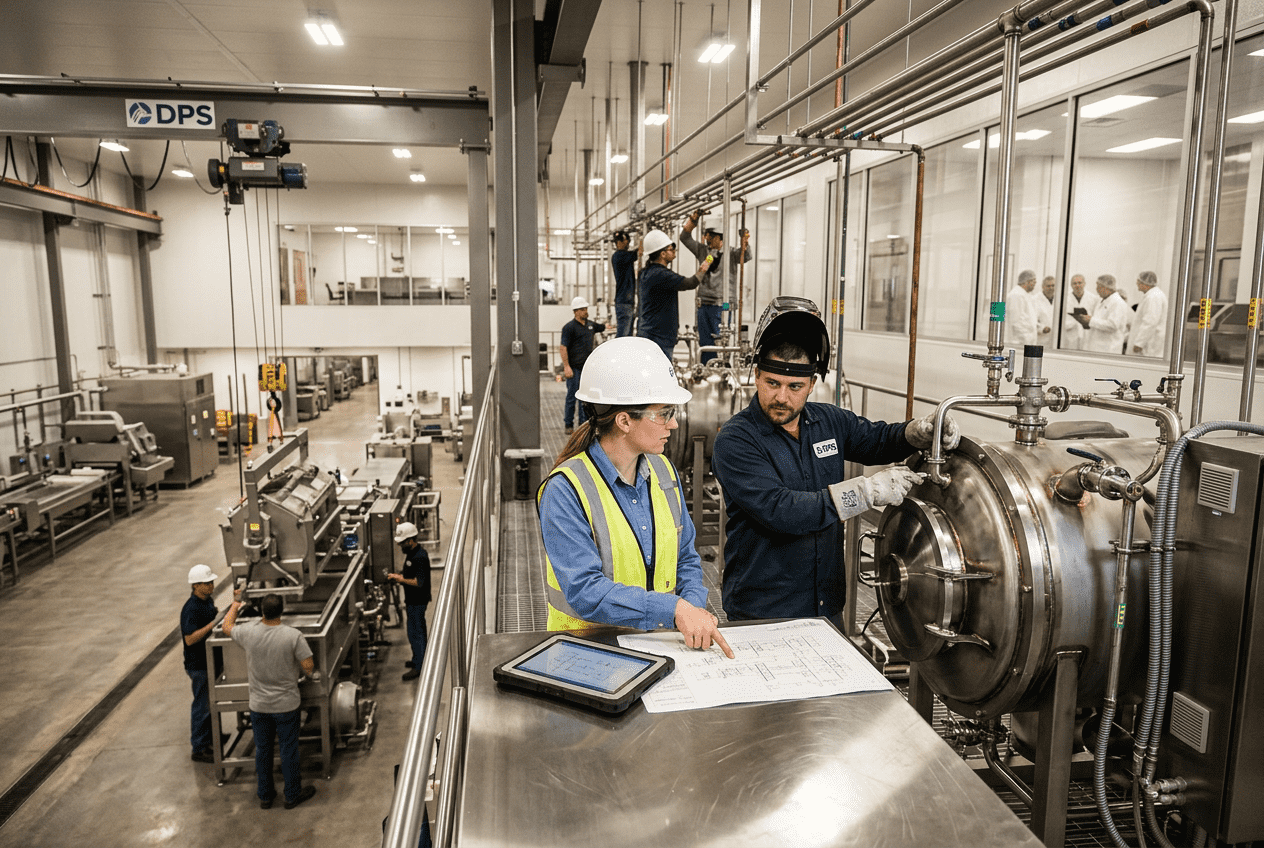
Prepared Foods Processing Solutions
Prepared foods processing in the United States covers a wide range of products, including soups, sauces, ready meals, protein bowls, frozen entrées, dips, fillings, meal kits, and refrigerated side dishes. The right system depends on SKU mix, throughput, food safety requirements, viscosity, particulate size, shelf-life targets, and labor strategy. For manufacturers scaling production or upgrading older lines, the best approach usually combines recipe automation, fit-for-purpose cooking technology, integrated chilling or freezing, strong allergen controls, and facility planning that supports long-term profitability rather than short-term equipment purchases. Prepared food manufacturing is one of the most dynamic processing categories in the U.S. because it serves retail, foodservice, club store, private label, e-commerce, and co-packing demand all at once. The category includes ready-to-eat and ready-to-cook items that may be refrigerated, frozen, hot-filled, retorted, or assembled under chilled conditions. A successful prepared foods processing solution must do more than cook product. It must manage formulation accuracy, ingredient staging, thermal consistency, texture protection, sanitation, allergen segregation, and packaging line synchronization. For most processors, the core decision is not simply which vessel or mixer to buy. The more important question is how the full line will perform as an integrated system. That means evaluating upstream ingredient receiving, dry and liquid metering, in-process heating, hold times, particulate handling, transfer pumps, buffering, final temperature pull-down, clean-in-place design, and operator interaction. Plants serving urban consumption centers such as Chicago, Los Angeles, Dallas, Atlanta, New Jersey, and the greater New York corridor also need to factor in freight velocity, labor competition, utility cost, and cold-chain access. Companies looking for long-term value often engage a partner that can connect engineering, installation, and execution. That is where a full-scope firm such as Disruptive Process Solutions becomes relevant. Rather than treating a project as a stand-alone equipment purchase, DPS evaluates how capital choices affect throughput, margin, sanitation risk, and future expansion. Its work across North America supports manufacturers that need practical solutions for growth, relocation, modernization, and high-stakes schedule execution. The table shows why no single platform fits every prepared food. Soups demand gentle particulate movement, sauces depend on precise viscosity control, while frozen entrées live or die by downstream chilling and freezer capacity. Matching process design to product reality is essential. In the United States, prepared foods sit at the intersection of convenience, premiumization, labor scarcity, and cold-chain sophistication. Consumers want restaurant-style flavor with reduced prep time, and operators want products that lower kitchen labor and improve consistency. That demand supports growth across refrigerated side dishes, premium frozen meals, deli salads, ethnic sauces, plant-forward bowls, breakfast assemblies, and protein-based convenience foods. Major logistics corridors shape the market opportunity. Midwest plants near Chicago, Kansas City, and Indianapolis can reach broad population density quickly. West Coast operations in Southern California gain access to Port of Los Angeles and Port of Long Beach import flows, while East Coast and Southeast processors benefit from New Jersey, Savannah, Jacksonville, and Atlanta distribution access. Texas plants often serve both national and regional strategies due to strong highway reach, lower operating cost in some submarkets, and large population centers such as Dallas-Fort Worth and Houston. Prepared foods also span many industries and applications: The opportunity is strong, but margin can erode fast when systems are poorly designed. Overheating can ruin yield. Excessive manual staging can slow releases. Under-sized glycol or ammonia systems can choke capacity. Weak recipe governance can create giveaway, inconsistency, or rework. For that reason, leading processors increasingly view prepared foods as a systems-engineering challenge rather than a collection of isolated machines. The line chart illustrates a realistic market growth pattern for prepared foods in the U.S. through 2026. Growth is supported by demand for convenience, regional menu innovation, and expanded cold-chain distribution. This market table highlights that growth alone is not the story. The winning processors are those that convert demand into efficient, scalable operations without losing quality or safety. Choosing batch or continuous processing depends on SKU complexity, run length, viscosity range, allergen exposure, required traceability, and labor model. Batch systems are common when processors need flexibility for many recipes, low-to-medium volumes, or frequent product launches. Continuous systems are attractive when demand is predictable, volumes are high, and the thermal and rheological properties of the product can be held within a narrower operating band. Batch processing offers advantages for premium sauces, seasonal soups, custom foodservice formulations, and co-pack environments where production schedules change daily. Operators can adjust ingredients, cooking profiles, dwell times, and order sequence with less disruption. However, batch can create more downtime between runs and higher labor per pound. Continuous processing delivers strong economics for stable demand products such as institutional soups, base sauces, fillings, and some ready meal components. It improves throughput consistency and can reduce energy use per unit. The tradeoff is that system design becomes less forgiving. Feed variability, particulate control, and sanitation transitions require more disciplined engineering. A practical decision framework should consider not only today’s production, but where the plant needs to be in three to five years. That is why many manufacturers use integrated engineering support from firms offering food and beverage engineering services to build a phased roadmap instead of overinvesting too early or undersizing a line that will be capacity-constrained in 18 months. The matrix shows that there is no universal winner. Batch wins on flexibility, while continuous wins on stable-volume economics. Many U.S. processors end up with hybrid facilities: batch make-up and blending feeding semi-continuous thermal and packaging systems. As product portfolios expand, recipe management becomes a profit center. In multi-SKU prepared food plants, recipe control systems reduce giveaway, improve repeatability, and protect brand consistency across shifts and facilities. A strong system typically includes ingredient verification, operator prompts, lot tracking, weigh-and-dispense integration, dosing logic, thermal profile capture, and digital batch records. For processors operating across multiple states or serving both branded and private-label customers, recipe governance is especially important. It limits unauthorized adjustments, standardizes allergen declarations, and helps resolve customer complaints faster. Plants near major trade hubs such as Atlanta, Minneapolis, Philadelphia, and the Inland Empire often serve diverse customer mixes, making digital recipe discipline even more valuable. From a technological capabilities standpoint, DPS supports process, controls, automation, PLC programming, and SCADA integration that can tie recipe execution to actual plant operation. That matters because recipe software without disciplined hardware integration often fails at the floor level. Pumps, valves, meters, vessel sequencing, Brix or solids measurements where applicable, and operator interfaces all need to work together. For buyers, the best advice is to view recipe management as part of the process architecture, not an afterthought. A good implementation addresses: The demand chart compares major prepared food categories by a realistic relative demand index. Frozen entrées and sauces continue to attract strong volume because they serve both retail and foodservice applications. This feature set shows why recipe systems matter in prepared foods. They improve cost control, support audits, and reduce dependence on tribal knowledge. The choice of cooking technology shapes flavor, yield, viscosity, cleanability, and capacity. In prepared foods plants, three common approaches are steam injection, jacketed kettles, and indirect heat exchange. Each has strengths depending on the product and production objective. Steam injection offers rapid heating and strong thermal responsiveness. It works well for some liquid-heavy products where fast temperature rise is essential. But direct steam affects moisture balance and can change finished solids, so formula compensation may be needed. Water quality and culinary steam quality must also be carefully managed. Jacketed kettles remain a workhorse for many processors. They are flexible, operator-friendly, and suitable for batch cooking of sauces, soups, fillings, and starch-based systems. With proper agitation and surface design, they support decent particulate integrity and manageable sanitation. Their limitation is that throughput may not keep pace with aggressive growth unless multiple vessels or parallel systems are installed. Indirect heat exchangers, including scraped surface systems where appropriate, are valuable for products requiring controlled thermal profiles, tight consistency, or higher throughput. These systems can reduce scorching risk and improve repeatability, especially in products with sensitive proteins, dairy components, or viscous matrices. From a manufacturing capabilities perspective, DPS supports processing system design and integration across jacketed vessels, scraped surface heat exchange, mixing, emulsification, retort, aseptic, and broader utility infrastructure. The company also manufactures selected branded process equipment, including tanks, custom CIP systems, marination tumblers, and cooking vessels, helping clients align equipment selection with full project execution rather than piecemeal purchasing. The comparison shows that cooking technology should be chosen around product behavior, not marketing labels. A well-designed system can protect both quality and economics. Ingredient handling is often where prepared foods projects succeed or fail. The process may look simple on paper, yet accuracy, ergonomics, dust control, and staging logic determine whether the line actually performs. Dry spices, starches, proteins, gums, salts, and functional ingredients must be introduced in ways that minimize clumping, dust loss, and operator variability. Liquids such as oils, vinegars, dairy bases, syrups, broths, and liquid seasonings need reliable metering and hygienic transfer. Particulates like diced chicken, vegetables, beans, pasta, rice, or seafood must be integrated without excessive breakage. Plants with high-SKU environments should define ingredient handling by risk class. Minor ingredients may need centralized weigh-up rooms. Major dry components may be best served through super sacks or automated feed systems. Liquids can be managed through metering skids, load cells, flow measurement, and recirculation designs. Particulate addition points should align with thermal and shear requirements, because timing can significantly affect final product appearance and texture. For buyers in the United States, this is also a labor strategy issue. Facilities in high-cost labor regions such as coastal California or the Northeast may benefit more from automation and ergonomic ingredient delivery than plants in lower-cost interior markets. At the same time, processors receiving imported spices or ingredients through ports like Long Beach, Newark, or Savannah should account for variability in inbound scheduling and staging capacity. When manufacturers review process equipment options, they should assess not only the vessel or mixer, but also how ingredient receiving, transfer, and discharge interact with the rest of the line. Good engineering reduces rework, dust, lifting, and waiting. Texture is one of the clearest quality signals in prepared foods. Consumers immediately notice if a queso is too thin, a soup feels floury, a pasta filling becomes gummy, or a premium sauce breaks after reheating. Viscosity and texture control depend on formula chemistry, temperature profile, hydration sequence, shear exposure, hold time, and cooling rate. Starches, proteins, hydrocolloids, fats, and particulates all interact differently under heat and shear. That means processors must decide when to introduce functional ingredients, how aggressively to mix, and how to monitor consistency. In some operations, inline viscosity measurement or density proxies may be appropriate. In others, disciplined batch timing and thermal repeatability are more practical than adding expensive instrumentation. Applications vary by sector. Dairy-based prepared foods need emulsion stability and careful protein handling. Meat-forward gravies need suspended particulates without settling. Plant-based meals may demand hydration control and masking ingredients. Institutional products may prioritize freeze-thaw resilience and hold stability. All of these affect equipment selection. A useful buying principle is to test texture failure modes before approving a scale-up. Many products look acceptable at the kettle but fail after pumping, filling, freezing, reheating, or distribution vibration. Engineering teams should validate the entire path, not just the cook step. The area chart reflects the steady shift toward cleaner labels and texture-sensitive formulations. As processors reduce stabilizers or artificial aids, process precision becomes more important. In many prepared foods plants, the real bottleneck is not cooking but temperature pull-down. Ready-to-cook and ready-to-eat products need integrated chilling or freezing designed around food safety, packaging protection, throughput, and utility load. A line that makes excellent product can still fail commercially if blast chilling, spiral freezing, or refrigerated buffering cannot keep up. Chilled products require fast movement through the danger zone while protecting texture and limiting purge. Frozen products need stable ice crystal development, manageable residence time, and packaging compatibility. For multi-component meals, line balancing becomes more complex because proteins, starches, sauces, and vegetables may cool at different rates and arrive at assembly with different constraints. Manufacturing capabilities here extend beyond the food-contact equipment itself. DPS regularly works across refrigeration coordination, utilities, process integration, and facility-scale infrastructure, which is critical because freezing and chilling performance relies on compressors, glycol, controls, air movement, drainage, and layout. A processor adding a new prepared meal line in Phoenix, Charlotte, or the Chicago suburbs cannot treat refrigeration as an isolated package if it wants reliable year-round throughput. Case experience across North American projects shows a common pattern: companies often plan around target hourly output but underestimate buffer management, sanitation windows, and packaging synchronization. That is why smart expansion projects start with a realistic model of cook rate, dwell, cooling, assembly, fill speed, and freezer capacity before construction begins. Manufacturers considering broader project strategy can review examples of integrated execution in the project case study section. Allergen management is a defining issue in prepared foods because the category commonly includes dairy, soy, wheat, egg, sesame, tree nuts, and increasingly specialized ingredients with cross-contact risk. Plants making multiple sauces, dips, bowls, or assembled meals may run both allergen-containing and allergen-free products on shared assets, so scheduling and sanitation protocols need to be engineered in from the start. Strong allergen control combines facility zoning, dedicated storage, validated cleaning, label governance, line clearance, color-coded tools, recipe controls, and operator training. The right answer depends on product mix. Some operations can manage with campaign scheduling. Others need dedicated vessels, transfer paths, or packaging lanes. The more sticky, oily, or proteinaceous the product, the harder validation becomes. From a service capabilities perspective, DPS brings value by combining capital planning, owner’s representation, project management, general contracting where licensed, equipment integration, and execution oversight. That matters in allergen-heavy plants because risk is not just procedural; it is also architectural. Pipe routing, floor slope, CIP coverage, access for inspection, and material flow all influence whether a changeover protocol works in practice. Local supplier selection also matters. U.S. processors should evaluate not just machine vendors, but also controls integrators, sanitary piping contractors, refrigeration specialists, and packaging partners with strong audit histories. In food hubs like Wisconsin, North Carolina, Arkansas, California, and Pennsylvania, the best partners are those who understand how USDA, FDA, SQF, and BRC expectations translate into day-to-day plant reality. The table confirms that allergen control is not one action. It is a layered system combining scheduling, hardware, verification, and people practices. This comparison chart reflects what buyers increasingly prioritize when selecting prepared food processing partners: integration depth, execution control, and the ability to align process systems with utilities and commercial goals. This final table helps procurement and operations teams compare suppliers more effectively. The best partner is rarely the lowest bid. It is the one that prevents expensive redesign, downtime, and throughput disappointment later. Prepared foods processing includes soups, sauces, frozen entrées, refrigerated meals, deli sides, dips, fillings, meal kit components, protein bowls, ready-to-cook items, and ready-to-eat assembled products. Neither is universally better. Batch is usually stronger for high-SKU flexibility and frequent changeovers, while continuous is stronger for stable, high-volume products with consistent formulations. A common mistake is focusing only on the cooker or mixer while underestimating ingredient handling, chilling, utility loads, sanitation access, and packaging synchronization. Recipe automation improves consistency, reduces giveaway, supports traceability, and lowers the risk of incorrect ingredient additions or labeling errors in multi-SKU operations. They manage shear, thermal exposure, ingredient sequence, residence time, pump selection, cooling rate, and particulate handling. Product behavior after filling, freezing, and reheating should also be validated. The best approach depends on product format, throughput, packaging, and shelf-life target. The key is integrating cooling capacity with upstream cooking rate and downstream packaging demand. Use a layered system: segregated storage, recipe-linked controls, campaign scheduling, validated cleaning, line clearance, dedicated tools, operator training, and packaging verification. Look for deep process engineering, field execution capability, automation fluency, utility coordination, regulatory awareness, and the ability to align capital spending with long-term plant profitability. Expect more automation, cleaner labels, stronger traceability expectations, energy-efficiency investments, flexible packaging growth, and more projects designed around sustainability, labor efficiency, and policy-driven food safety accountability. By 2026, prepared foods processing in the United States will continue shifting toward smarter control systems, more sustainable thermal design, tighter water and energy use, and better operational visibility. Policy and customer pressure will keep raising expectations around allergen management, digital records, and environmental performance. Processors that modernize now with scalable, integrated solutions will be in the best position to serve retail, foodservice, and co-manufacturing demand across the country. -
Retort Processing Systems for Food Plants
Across the United States, food manufacturers are under constant pressure to increase shelf life, protect product quality, and meet strict FDA, USDA, SQF, and BRC expectations. A retort processing system is one of the most important technologies used to achieve those goals for low-acid and shelf-stable foods. Whether a plant packs soups in cans, ready meals in trays, seafood in pouches, or sauces in jars, the right retort system helps the processor reach commercial sterility while preserving package integrity and line efficiency. Demand is especially strong in major production and logistics corridors such as Chicago, Houston, Los Angeles, Savannah, New Jersey, Dallas-Fort Worth, and the Carolinas, where manufacturers serve both domestic distribution and export channels through ports, refrigerated warehouses, and co-packing networks. In these markets, retort selection is no longer just about buying a vessel. It is about matching thermal process design, automation, utilities, packaging, throughput, validation, and long-term maintenance into a profitable operating model. For that reason, many U.S. processors work with engineering-led partners that can plan, install, and integrate the full process. Disruptive Process Solutions supports food and beverage manufacturers across North America with integrated capital project execution, helping clients connect process safety, plant layout, utilities, and production economics rather than treating retort equipment as a stand-alone purchase. A retort processing system is a pressurized thermal sterilization system used to heat sealed food containers to a validated time and temperature profile that destroys pathogenic and spoilage microorganisms and achieves commercial sterility. In low-acid foods, this typically means delivering a validated lethal effect, often expressed as F₀, while controlling pressure, venting, come-up time, cooling, and package stress. Common retort types include static steam, water immersion, rotary, and continuous systems. The best choice depends on product viscosity, package format, target throughput, utility availability, and regulatory validation requirements. In simple terms, a retort works by exposing sealed containers to controlled heat under pressure. The pressure keeps the package from distorting during the thermal cycle, while the heat penetrates to the product’s cold spot and destroys the organisms of concern. That combination is essential for low-acid foods such as meats, seafood, beans, soups, gravies, pasta meals, and many pet food products. The table above gives a practical overview, but each of these items influences equipment sizing, layout, controls architecture, and operating cost. U.S. plants shipping through retail, foodservice, military, and export channels usually need a solution that balances safety with throughput and package appearance. A retort processing system is a pressure-rated vessel or continuous thermal sterilization line designed to process sealed containers after filling and closing. The process is used primarily for low-acid foods with a pH above 4.6, where the risk of Clostridium botulinum must be controlled through a scheduled thermal process. Commercial sterility does not mean absolute sterility in a laboratory sense. It means the food is free of microorganisms capable of growing in the product under normal non-refrigerated storage and distribution conditions. The typical retort cycle includes loading, venting or air removal when needed, come-up to process temperature, holding for a validated time, controlled pressure balancing, cooling, and unloading. During the hold period, heat must reach the coldest point in the package. The cold spot can vary depending on product type. For conduction-heated foods such as pâtés or dense stews, the cold spot behaves differently than for convection-heated broths or soups. Commercial sterility depends on more than vessel temperature. It requires process authority review, container closure integrity, instrumentation accuracy, documented operating procedures, and lot traceability. That is why many successful projects in the United States integrate retort design with upstream filling, downstream drying and conveying, recipe management, utility generation, and plant controls. From a technological capabilities perspective, DPS works with processors that need this full-system view. Its engineering and integration capabilities span process, mechanical, electrical, structural, plumbing, controls, PLC programming, SCADA, and utility design. For retort projects, that matters because thermal safety is inseparable from steam quality, condensate removal, cooling water control, instrumentation placement, alarm logic, and data capture. The chart below reflects the steady expansion of shelf-stable packaged food demand in the United States, driven by convenience foods, emergency pantry stocking, export growth, and e-commerce distribution. This growth trend helps explain why processors in the Southeast, Texas, California, and the Midwest are evaluating retort expansions, packaging conversions, and co-packing capability upgrades. The opportunity is large, but so is the cost of a wrong specification. Under-sized retorts create bottlenecks. Overbuilt systems tie up capital and utility spending. Not all retorts heat the same way, and not all packages behave the same way under thermal load. The main system categories used in U.S. food plants are static steam, water immersion, rotary, and continuous retorts. Each has strengths tied to heat transfer, throughput, package support, utility use, and recipe flexibility. Static steam retorts are common when processors run metal cans or robust containers that can handle direct steam environments. They are often valued for thermal efficiency and straightforward operation. Water immersion retorts use hot water circulation to improve temperature uniformity and can be well suited for flexible and semi-rigid packages. Rotary retorts add agitation, improving heat transfer for certain products and often reducing cook time while supporting better texture or particulate suspension. Continuous systems are typically chosen for large-volume operations where a steady product flow justifies higher capital cost and more complex automation. In practice, the right choice depends on more than package type. Product rheology, fill weight, headspace, tray geometry, closure system, utility infrastructure, and labor model all affect the final decision. The table shows why no single retort design is best for every facility. A pouch meal line near the Port of Savannah may prioritize overpressure and basket logistics. A canned chili producer in Kansas City may prefer static steam. A high-output pet food plant near Houston may justify continuous operation. A premium soup line in California may choose rotary processing to reduce thermal abuse and improve texture consistency. Demand also differs by sector. The next chart compares relative demand by industry segment in the United States. Ready meals, pet food, and protein entrees currently drive much of the investment in retort capacity. That pattern is especially visible in regional manufacturing hubs such as Arkansas, North Carolina, Ohio, Southern California, and Texas, where labor availability, freight access, and utility infrastructure support scaled food production. Temperature and pressure are the heart of safe retort operation. For low-acid foods, even small deviations can lead to major compliance and safety consequences. The scheduled process defines target temperature, minimum hold time, vent schedule or air removal parameters where applicable, and required pressure profile during heating and cooling. Temperature must be measured with calibrated, validated instruments placed and configured according to the retort design. Operators rely on recording devices, indicating instruments, alarm logic, and recipe controls to ensure the process stays within approved limits. Pressure management is equally critical, especially for pouches, trays, plastic bowls, and glass jars. Internal package pressure changes rapidly as the contents heat and cool. Without proper overpressure control, seals may peel, lids may dome, trays may buckle, and glass may break. In modern plants, the control strategy often includes PLC-based recipe management, automatic cycle enforcement, batch records, SCADA visibility, and historian integration. This is where technological capabilities strongly affect risk reduction. DPS supports processors with control system architecture, PLC programming, automation, and plantwide integration that connect retort operation to upstream preparation, CIP skids, utilities, and downstream packaging systems. The biggest mistake many processors make is viewing temperature control alone as enough. In reality, thermal process safety is a combined function of vessel performance, package mechanics, fill consistency, steam or water distribution, utility stability, and disciplined operations. That is why projects in high-volume U.S. plants often include boiler review, condensate design, pump selection, utility redundancy, and alarm philosophy as part of the retort scope. F₀ is the most recognized lethality metric in retort processing. It expresses the equivalent sterilization time at 250°F, referenced to a z-value of 18°F for low-acid foods, unless otherwise specified by process authority. In practice, F₀ helps processors understand whether the accumulated thermal effect is sufficient to meet safety objectives without unnecessarily overcooking the product. However, F₀ is only useful when it is tied to real product behavior. That is why heat penetration studies are essential. A heat penetration study places thermocouples or data loggers in selected containers at the true cold spot and tracks how quickly the product heats and cools under actual retort conditions. These studies help determine safe scheduled processes and are especially important when changing formula, fill weight, container size, tray depth, agitation mode, or package material. Validation normally includes container closure review, distribution studies, repeatability checks, instrument calibration, and documentation acceptable to regulatory and customer standards. For U.S. manufacturers serving national retailers, military contracts, or export markets, this documentation is often reviewed closely during audits and customer qualification. Processors should remember that a higher F₀ is not always better. Excess lethality can damage texture, darken color, flatten flavor, and reduce nutritional value. The goal is not maximum cooking. The goal is validated safety with controlled quality loss. This is particularly important in premium ready meals, seafood, dairy-based sauces, and high-value protein applications. On the manufacturing side, DPS supports processors that need more than equipment sourcing. Its expertise spans retort and canning systems, cooking vessels, mixing, dairy processing, protein handling, utility systems, and custom equipment fabrication. That broader manufacturing capability matters because product preparation, particle size control, filling accuracy, and package handling directly affect retort validation success. Overpressure is the controlled application of external pressure in the retort to counter internal package pressure. It becomes especially important for pouches, trays, plastic bowls, composite containers, and glass jars. During heating, product moisture and headspace expand. During cooling, rapid temperature change can create a damaging pressure imbalance if the retort does not manage the transition carefully. For example, a flexible pouch may need enough external pressure to avoid swelling and seal strain during the cook. A plastic bowl may require stable support pressure to protect lid adhesion and bowl shape. Glass jars need controlled cooling to avoid thermal shock and breakage. Even metal cans can experience paneling or distortion if pressure or cooling transitions are poorly managed. Overpressure strategy includes vessel pressure control, air or gas management where applicable, pump and spray performance, cooling water ramp rate, and package support design. Basket loading patterns, divider plates, and rack strength also play major roles. The chart below illustrates how the U.S. market is shifting from rigid metal packaging toward a larger mix of flexible and semi-rigid retort-ready formats. This shift is one reason overpressure-capable systems are gaining attention in the United States. Brands want lighter packaging, lower freight costs, stronger shelf appeal, and more convenient formats. But those gains only materialize when thermal processing and packaging mechanics are designed together. Container compatibility is one of the first filters in retort system selection. Every package presents a different thermal response, mechanical limit, and closure challenge. The same recipe can require a very different retort process when moved from a steel can to a polypropylene bowl or from a glass jar to a stand-up pouch. Cans remain a durable and widely accepted option for soups, beans, seafood, and pet food. Pouches reduce freight weight and can improve heating rates. Trays and bowls support premium meal formats and microwave convenience. Glass jars remain popular in sauces, baby-adjacent premium products, and specialty foods where shelf presentation matters. The right retort system must support the package throughout the full cycle, not just at target temperature. Processors also need to evaluate line handling after retort. Wet packages may need drying. Flexible packs may need secondary support. Glass containers may need gentler conveying and case packing. Package compatibility therefore reaches well beyond the retort vessel itself. The comparison chart below shows a simplified scorecard often used in early project discussions. Scores are relative and should be validated for each actual product and package system. For plants considering a format change, early pilot work is essential. A pouch conversion may improve distribution economics but require a new basket design, different overpressure strategy, and revised heat penetration validation. A tray conversion may create stronger retail appeal but reduce net retort capacity per batch. These tradeoffs should be modeled before capital is committed. Selecting a retort system is a capital planning exercise as much as an equipment decision. The right solution depends on throughput target, package mix, recipe portfolio, labor strategy, utility load, floor space, and future expansion plans. A growing co-packer in North Carolina may prioritize flexibility across multiple SKUs and package formats. A large soup plant in Ohio may prioritize low cost per unit. A seafood exporter near Seattle or New Bedford may prioritize batch traceability and rapid product turnover. The most effective selection process usually starts with a production model. How many containers per hour are required? What are the longest recipes? How many shift hours are available? How much downtime is expected for loading, unloading, maintenance, and sanitation? What is the margin impact of one more basket per cycle or one less minute in cooling? These questions often determine the right retort count and automation level more accurately than nameplate capacity alone. From a service capabilities standpoint, DPS approaches these decisions through capital planning, process engineering, owner-side representation, general contracting coordination, equipment supply, installation, and project management. That matters because retort projects commonly affect steam generation, compressed air, cooling towers, water systems, drains, floor loading, electrical service, controls networking, and building modifications. A profitable outcome depends on integrating all of those elements. It is also wise to compare suppliers on more than vessel price. Plants should assess controls transparency, spare parts access, field service reach in the United States, validation support, basket ergonomics, cycle repeatability, and long-term maintenance cost. A lower initial price can become expensive if the system creates bottlenecks or requires frequent downtime. In many U.S. projects, the best financial decision is not the largest or most automated system. It is the system that fits demand now while allowing smart expansion later. This is especially relevant for processors scaling from regional to national retail distribution through hubs such as Atlanta, Memphis, Phoenix, and New Jersey. Although not every retort vessel itself is cleaned through a full CIP cycle in the same way as product-contact tanks, CIP integration around retort operations is still highly important. Upstream kettles, balance tanks, fillers, transfer lines, sauce systems, and associated utilities must be cleaned reliably to protect product safety and keep the retort running with minimal interruption. In many plants, retort uptime is constrained less by the vessel than by poor sanitation coordination, scale buildup, pump wear, valve issues, or utility instability. Preventive maintenance should cover instruments, door gaskets, spray nozzles, pumps, valves, chain systems, basket hardware, pressure regulators, recorders, temperature sensors, cooling circuits, condensate traps, and safety interlocks. A disciplined PM program reduces deviations, preserves package quality, and supports audit readiness. DPS also brings strong capability in utility and CIP system integration, including custom CIP systems, tanks, process vessels, and complete installation of steam, chilled water, compressed air, process piping, and controls. For processors, that means retort reliability can be addressed as part of a broader hygienic design and uptime strategy rather than as a stand-alone maintenance issue. Well-run maintenance programs also improve sustainability. Efficient steam use lowers fuel cost. Controlled cooling water use reduces water consumption. Better cycle consistency reduces overprocessing and waste. As 2026 approaches, U.S. processors are placing greater emphasis on energy monitoring, digital maintenance alerts, historian-based performance analysis, and water reuse strategies where permitted and technically appropriate. Future trends in the retort market include smarter recipe optimization, expanded use of digital twins for thermal modeling, tighter electronic batch records, stronger cybersecurity around PLC and SCADA systems, and increased pressure from retailers and regulators for traceable, documented food safety performance. Sustainability goals are also influencing package format decisions, utility system upgrades, and heat recovery considerations. Companies that treat retort systems as part of a larger smart-manufacturing strategy will likely be in the strongest position. What foods in the United States typically require retort processing?Low-acid shelf-stable foods such as soups, gravies, chili, beans, meat products, seafood, prepared meals, pasta dishes, broths, and many pet food products commonly require retort processing. How is retort different from pasteurization?Retort processing is a higher-severity thermal process intended to achieve commercial sterility in sealed containers, especially for low-acid foods. Pasteurization generally reduces microbial load but does not usually create a shelf-stable low-acid product at room temperature. Which retort type is best for pouches?Many pouch applications favor water immersion, water spray, or steam-air systems with strong overpressure control. The best option depends on pouch size, product viscosity, seal design, and target throughput. Can one retort run cans, trays, and bowls?Sometimes, yes. But multi-format flexibility depends on basket design, pressure capability, control precision, and validation work. A system that can technically run multiple packages may still perform best when optimized around a narrower mix. Why is F₀ important?F₀ provides a standardized way to quantify thermal lethality for low-acid foods. It helps processors validate safety while avoiding unnecessary overcooking. How often should a retort be validated?Validation is typically required for new products, new package formats, major formula or fill changes, significant equipment modifications, and whenever a process authority determines review is necessary. Routine verification and calibration should also be part of normal plant controls. What should buyers look for in a retort supplier or integrator?Look beyond vessel price. Evaluate U.S. service reach, controls capability, documentation support, package expertise, spare parts availability, maintenance requirements, and the ability to integrate utilities, automation, and surrounding process equipment. How can plants reduce retort project risk?Start with process authority input, packaging trials, throughput modeling, and utility review. Work with an engineering-led partner that can coordinate design, installation, controls, and commissioning across the full system. Processors can learn more about integrated project execution, equipment, and project experience through engineering and integration services, available process equipment solutions, and selected project case studies. For U.S. manufacturers, a retort processing system is not just a compliance tool. It is a strategic production asset that affects product safety, throughput, shelf life, packaging choice, labor efficiency, and profitability. Plants that align validation, controls, utilities, package mechanics, and maintenance from the start are far more likely to achieve dependable commercial sterility and long-term return on capital.