-
Pizza Manufacturing Plant Design: Dough Production and Topping Automation
Designing a profitable pizza manufacturing plant in the United States requires more than choosing mixers and ovens. It demands a coordinated process design that links dough development, crust forming, sauce and cheese dosing, topping placement, baking, cooling, freezing, packaging, sanitation, utilities, and controls into one stable production system. For fresh, refrigerated, and frozen pizza producers, the best results come from engineering the line backward from target throughput, SKU mix, labor strategy, food safety goals, and retail or foodservice requirements. In major production regions such as the Midwest, the Northeast corridor, Texas, California, and the Southeast, successful facilities are typically designed around repeatable dough performance, automated assembly, oven consistency, low giveaway, and effective allergen segregation. In the U.S. market, plant design also needs to account for distribution realities. Frozen pizza lines shipping through Chicago, Dallas, Atlanta, Los Angeles, New Jersey, and other freight hubs face different cold-chain constraints than fresh pizza operations serving regional grocery chains. Facilities near ports such as Savannah, Long Beach, Houston, and Newark may also integrate imported ingredients, spices, cheeses, and packaging materials into their supply planning. As a result, pizza production engineering is not only a mechanical challenge; it is a commercial and operational one. A modern pizza manufacturing plant should be engineered as an integrated process from ingredient receiving through final packaging. The most effective layout for the United States market combines controlled dough mixing and proofing, precise sheeting or pressing for crust consistency, automated sauce and cheese application, flexible topping deposition, matched oven and conveyor design, and downstream cooling, freezing, and packaging capacity sized to actual demand. Facilities making both fresh and frozen pizzas should also build in allergen management, gluten control, hygienic zoning, and recipe-based automation from the beginning rather than adding them later. For most manufacturers, the right design depends on five questions: This table shows why pizza line design should start with business requirements instead of isolated equipment purchases. A low-cost machine that does not fit throughput, sanitation, or future SKU plans often becomes the most expensive decision in the project. From a market perspective, U.S. demand remains strong across private label frozen pizza, club-store multi-packs, premium artisan crusts, and foodservice formats for convenience stores, schools, stadiums, and QSR support kitchens. By 2026, the strongest plants will use data-driven controls, recipe automation, energy-efficient thermal systems, and better ingredient traceability to protect margin and support growth. The line chart above illustrates a realistic automation growth trend in U.S. pizza production. It reflects ongoing investment in controls, labor reduction, and throughput stability, especially in states with large food manufacturing bases such as Illinois, Wisconsin, Pennsylvania, North Carolina, California, and Texas. Dough is the foundation of pizza product quality, so the engineering of the dough room should be treated as a critical process center. Whether the product is thin crust, hand-tossed style, pan pizza, par-baked crust, or rising crust frozen pizza, the dough system must control hydration, development time, dough temperature, rest cycles, divider accuracy, and fermentation behavior. In the United States, where flour specifications can vary by region and supplier, a robust dough design helps protect crust consistency across seasonal changes. Most industrial pizza plants use one of three dough handling strategies: batch mixing with floor-time and scaling, automated continuous ingredient delivery into batch mixers with downstream dividing, or higher-throughput integrated systems combining automated ingredient handling, mixing, extrusion or dividing, and controlled proofing. The best option depends on output, recipe sensitivity, and the desired crust character. This table explains why dough engineering is not only about selecting a mixer. Each unit operation affects the next, and weak synchronization between dividing and proofing often causes hidden waste in the forming zone. Buying advice for U.S. manufacturers: specify the dough room around the toughest SKU, not the easiest one. If your premium high-hydration crust needs longer rest time or stricter temperature control, the overall system should be designed to handle it. A line that only performs well with a basic thin-crust SKU will limit future product development. Plants serving retailers in major metro areas like New York, Philadelphia, Miami, Denver, and Seattle often need flexible dough management because local consumer preferences differ by region. Northeast markets may favor foldable crust textures and larger diameters, while club-store formats in the Midwest and South may prioritize efficient production of frozen family-size pizzas. On the technology side, advanced controls can tie ingredient batching, water temperature correction, mixer timing, proofing dwell time, and line speed into a unified SCADA environment. This is where process-focused engineering becomes valuable. A firm with deep controls and utility integration capability can align PLC programming, temperature management, compressed air, and sanitation systems with the dough process rather than treating them as unrelated packages. After proofing or resting, dough must be formed into a repeatable crust geometry. Sheeting and pressing systems are used to achieve target diameter, thickness, rim structure, docking pattern, and pan fit. The correct choice depends on the crust style, visual expectations, and line speed. Sheeting tends to suit thin or mid-thickness crusts with consistent gauge control, while pressing is often used where a more hand-formed appearance or edge definition is desired. Some facilities use both in parallel for different product families. Crust consistency matters because variation at this stage multiplies downstream. An off-center or misshapen crust affects sauce coverage, cheese containment, topping distribution, bake profile, package fit, and customer perception. For private label programs, where retailers demand precise weight and appearance control, forming performance can determine whether a plant wins or loses the account. The comparison above shows that the “best” machine is product dependent. In multi-product U.S. plants, the most profitable choice is often a flexible forming strategy that minimizes changeover downtime and reduces rework. Good engineering also means designing flour dust control, scrap management, pan return, lubrication strategy, and docking integration. Facilities in California and the Pacific Northwest often place extra emphasis on sanitation and allergen-friendly design, while high-throughput Midwestern plants may prioritize ruggedness, spare parts availability, and simple maintenance access. By 2026, more pizza plants are expected to use machine vision to verify crust diameter, centering, and edge uniformity in real time. These systems can automatically reject poorly formed bases or adjust upstream dough handling parameters. Trendwise, the industry is moving from reactive QA inspection to closed-loop process control. This area chart highlights the trend shift toward data-enabled forming systems, showing how crust consistency is becoming an automation-driven KPI rather than a manual inspection task. Once the crust is formed, sauce and cheese application become the next major control points for yield, taste, and visual quality. In many pizza plants, these two steps account for a large portion of ingredient cost giveaway, which means even small dosing errors can materially damage margin. For that reason, sauce and cheese systems should be specified with the same level of rigor as primary processing equipment. Sauce application methods include spiral depositors, piston fillers, slot spreaders, and rotary spread systems. The correct method depends on sauce viscosity, particulate content, crust size variation, and desired edge exposure. Cheese dosing can involve waterfall applicators, cup depositors, weigh-belt systems, or recipe-controlled gravimetric feeders. For premium products with blends of mozzarella, provolone, parmesan, or plant-based alternatives, precise multi-stream dosing is especially important. The explanation here is straightforward: sauce and cheese automation directly influences both product quality and ingredient economics. Since cheese can be one of the most expensive pizza inputs, accurate dosing often pays back faster than expected. Applications vary by market segment. Fresh deli pizza programs often tolerate a more handcrafted look, but frozen retail lines generally require tighter repeatability for package fit and consumer expectation. Foodservice products going to school lunch, healthcare, or convenience store channels may need stricter nutritional and portion compliance, making dosing automation even more valuable. For plants evaluating suppliers, it is wise to assess cleanability, CIP compatibility where appropriate, belt access, nozzle changeover speed, and the ability to manage different sauce viscosities across seasons. Tomato solids, oil phase separation, and cold-room cheese behavior can all affect performance. Integrated controls are important here as well. A well-designed line can store recipes by SKU, automatically adjust dose rate to conveyor speed, and track ingredient usage against expected consumption. This type of digital visibility aligns with broader 2026 trends around traceability, waste reduction, and sustainability reporting. The topping zone is where line flexibility and automation sophistication become highly visible. Pepperoni, sausage, vegetables, olives, mushrooms, onions, chicken, plant-based proteins, and specialty finishes each flow differently, present different sanitation concerns, and contribute differently to the final appearance. In high-volume plants, the key objective is not simply to add toppings, but to add them accurately, attractively, and at the right cost. Assembly line design should consider product family grouping, topping sequence, cross-contamination risk, labor ergonomics, and accumulation strategy. A plant with many premium SKUs may use a hybrid design that combines automated primary topping placement with manual finishing stations. A line focused on a narrower frozen retail range may justify more full automation through indexing depositors, slicer-fed systems, or robotic pick-and-place solutions. This table explains that topping automation should match ingredient behavior. A system optimized for pepperoni may perform poorly with diced peppers or delicate plant-based proteins unless the feeding and placement mechanics are engineered for those materials. Industry demand in the United States continues to favor lines that can run both mainstream and premium products. Retailers want differentiation without paying for excessive line downtime. That is why assembly line layout must support changeovers, allergen segregation, and quick sanitation. Plants in regions with strong private label growth, such as the Midwest and Southeast, often benefit from modular topping zones that can be expanded as customer programs grow. The bar chart shows relative demand intensity across major pizza channels. Frozen retail and premium private label remain strong drivers of investment, which is why topping systems are increasingly expected to support appearance quality and cost control at the same time. From an engineering capability perspective, successful assembly lines rely on more than food machinery alone. Structural support, utilities, electrical distribution, controls integration, compressed air routing, washdown compatibility, and plant-floor traffic all matter. This is where a multidisciplinary engineering team can reduce conflicts between equipment suppliers and building systems. The oven is one of the most consequential choices in the entire pizza plant. It determines bake profile, crust texture, color development, moisture loss, topping set, throughput, and energy use. The ideal oven depends on whether the product is fully baked, par-baked, or designed for consumer finish baking. Thermal performance also needs to match line speed and upstream deposit consistency. Common options include impingement ovens, band ovens, stone-hearth style systems, direct gas-fired configurations, and hybrid thermal designs. In frozen pizza manufacturing, conveyorized ovens with highly repeatable zone control are common because they support consistent output at industrial volumes. For premium crust programs, manufacturers may seek more specific heat transfer characteristics to create artisan-like browning or blistering. The table above clarifies that oven selection should be linked to product architecture, not just line speed. A high-capacity oven that delivers the wrong crust texture can undercut the entire business case. Conveyor integration is equally important. Belts, transfers, accumulation points, oven loading, and downstream discharge all need to preserve product geometry and avoid topping loss. In U.S. plants operating at scale, conveyor line balancing can make the difference between smooth production and recurring stoppages. This is especially true when baking feeds a spiral cooler or freezer with limited surge tolerance. Local energy conditions also influence the decision. Plants in states with volatile utility rates may prioritize thermal efficiency, heat recovery, and smart controls. By 2026, sustainability expectations and energy reporting are likely to push more facilities to examine burner efficiency, insulation, exhaust optimization, and total utility integration. Manufacturing capability matters here because oven performance depends on the surrounding systems: HVAC, process air, gas trains, controls, sanitation access, and building coordination. A project partner that can connect process engineering with mechanical, electrical, and utility infrastructure typically reduces startup delays and performance gaps. After baking, the product pathway diverges depending on whether the pizza will be sold fresh, refrigerated, or frozen. This stage often determines shelf life, product integrity, freight readiness, and retail presentation. For frozen products, cooling and freezing rates affect crust texture, cheese appearance, and moisture migration. For fresh products, packaging atmosphere, oxygen transmission, and distribution timing are central concerns. Frozen pizza lines commonly include post-bake cooling, transfer to spiral or tunnel freezing, metal detection or X-ray, cartoning, case packing, palletizing, and cold storage interface. Fresh and refrigerated lines may emphasize cooling, tray loading, flow wrapping, MAP sealing, and rapid dispatch. Packaging should be selected for channel requirements, from club-store corrugated packs to retail cartons and foodservice bulk formats. This table explains why packaging system engineering changes significantly by product type. Many plants underestimate the impact of cold-chain layout, especially when scaling from regional fresh distribution to national frozen distribution. For the United States, logistics geography matters. A frozen pizza operation shipping to the Northeast may stage inventory differently than one serving the Mountain West. Facilities near intermodal hubs in Chicago, Kansas City, Memphis, or Dallas can optimize outbound freight, while coastal facilities may focus on inbound ingredient supply and regional retail service. Warehouse temperature transitions, dock seals, and forklift traffic should be considered early in design. 2026 trends include more recyclable packaging discussion, right-sized cartons to reduce freight cube, automated pallet inspection, and improved data capture on code verification and traceability. Retailers increasingly expect better shelf-ready packaging and cleaner graphics execution, so packaging equipment must support appearance as well as throughput. The comparison chart presents a realistic framework for evaluating integrated line solutions. U.S. buyers often compare suppliers not only on price, but on sanitation design, service support, and scalability for future SKU growth. Allergen management is a major design consideration in pizza manufacturing because many facilities handle wheat, milk, soy, and sometimes egg, tree nuts, or specialty ingredients in the same building. Gluten control is especially important for plants producing both conventional pizzas and gluten-free items. The safest approach is to address segregation, airflow, traffic, sanitation, and scheduling during the initial facility design stage. For conventional wheat-based pizza plants, gluten is usually a known baseline ingredient. The challenge increases when gluten-free crusts are introduced for retail or foodservice channels. In these cases, physical separation, dedicated tools, validated cleaning, distinct ingredient storage, and carefully managed personnel movement are often necessary to reduce cross-contact risk. Many operations decide to run gluten-free in a separate suite or even a separate building annex if the business volume justifies it. The explanation is clear: allergen management is partly an engineering problem and partly an operational discipline problem. The best plants design the building and line layout to make correct behavior easier for the workforce. In the U.S., SQF, BRC, FDA expectations, customer audits, and private label requirements all push plants toward stronger preventive controls. By 2026, digital sanitation verification, electronic allergen changeover records, and more environmental monitoring integration are expected to become standard in larger operations. Local supplier selection also matters. Ingredient and packaging vendors should be evaluated on allergen declarations, lot traceability, lead time reliability, and documentation quality. Manufacturers sourcing specialty flours, plant-based proteins, or imported toppings through hubs like Los Angeles, New York/New Jersey, or Savannah should build traceability and backup planning into procurement strategy. For manufacturers planning a new pizza production line or a plant expansion in the United States, the most valuable partner is one that understands both the process and the business case. Disruptive Process Solutions works as a food and beverage engineering partner across North America, helping manufacturers turn capital spending into practical, profit-focused production capability. Rather than approaching projects as isolated equipment sales, the team aligns layout, utilities, controls, installation, and execution with the client’s long-term operating goals. From a technological capabilities standpoint, DPS supports process, mechanical, structural, plumbing, electrical, and controls engineering with strong integration of PLC programming, automation, and SCADA. That matters in pizza manufacturing because the line only performs as expected when dough systems, depositors, conveyors, ovens, refrigeration loads, and packaging equipment communicate effectively. In a complex pizza facility, recipe logic, utility demand, safety interlocks, and production reporting should all be coordinated rather than patched together after startup. Manufacturers looking for this type of support can review the company’s broader engineering and project services. From a manufacturing capabilities perspective, DPS has experience across food processing systems including mixing, forming, cooking, utility integration, hygienic process design, and downstream handling. The company also manufactures selected proprietary process equipment, giving clients another option when standard equipment does not fit the application. That is relevant for pizza projects where custom dough handling, ingredient delivery, CIP strategy, or utility packaging may need to be adapted to site constraints. Additional information on available process equipment can be found through the company’s equipment solutions resources. From a service capabilities standpoint, DPS operates through a design-build-manage approach that combines planning, general contractor coordination, installation oversight, and execution management. For pizza manufacturers, this can reduce the common gap between what is drawn, what is purchased, and what is actually installed. It also helps clients manage aggressive timelines, whether they are launching a new frozen pizza line in the Midwest, retrofitting an existing prepared foods facility in the Southeast, or relocating equipment to support growth in Texas or California. For examples of practical project delivery and implementation outcomes, manufacturers can explore selected project case examples. A strong capital project partner also brings discipline to buying advice. In pizza production, the right answer is not always the largest oven, the fastest depositor, or the lowest quoted installed cost. It is the solution that best aligns capacity, SKU complexity, quality, labor, and future expansion. That is the kind of commercial lens many manufacturers need when deciding between a straightforward line upgrade and a full greenfield build. In short, if your operation needs help evaluating dough systems, topping automation, utility infrastructure, packaging integration, or site-wide execution strategy in the United States, a process-led engineering approach can reduce risk and improve return on capital. What is the first step in designing a pizza manufacturing plant?The first step is defining business requirements: throughput, SKU mix, product type, distribution model, labor plan, and food safety expectations. Once those are clear, the process flow and equipment sizing can be engineered logically. Which product types should the plant layout account for?Typical U.S. product types include frozen retail pizza, fresh or refrigerated pizza, par-baked crusts, rising crust formats, pan pizzas, thin crust, premium artisan styles, private label products, and foodservice packs for schools, convenience stores, and restaurants. Is batch mixing better than continuous dough preparation?Not always. Batch mixing offers flexibility and strong control for many recipes, while more automated systems can improve throughput and labor efficiency. The right solution depends on crust style, production volume, and the number of changeovers. How much automation is practical for a mid-sized U.S. pizza plant?Many mid-sized plants benefit from automating sauce, cheese, primary toppings, conveyors, and packaging while keeping selective manual finishing for premium SKUs. The goal is to automate the highest-labor, highest-variation steps first. What industries use pizza manufacturing lines beyond retail brands?Applications extend to contract manufacturing, private label production, foodservice suppliers, convenience store commissaries, institutional feeding programs, stadium and entertainment food providers, and multi-brand prepared foods operations. How should buyers compare equipment suppliers?Evaluate sanitation design, changeover time, installed support, controls compatibility, spare parts access, scalability, energy use, and actual performance on similar products. Price alone is not enough. What are common mistakes in pizza line projects?Common issues include underestimating proofing needs, selecting a forming method that does not fit the dough, overlooking ingredient giveaway in sauce and cheese zones, mismatching oven capacity to freezer capacity, and treating allergen control as an afterthought. How can a plant support both fresh and frozen pizza?It needs a flexible downstream design with distinct cooling, packaging, and cold-chain strategies. Some manufacturers share upstream processing and split the line after baking or after assembly, depending on the products. What future trends should U.S. manufacturers prepare for by 2026?Expect stronger use of machine vision, recipe-driven automation, energy efficiency upgrades, digital sanitation verification, improved traceability, more sustainability reporting, and greater packaging scrutiny around material use and freight efficiency. Where are strong local markets and supplier ecosystems for pizza production in the United States?Key regions include Illinois, Wisconsin, Pennsylvania, Texas, California, Georgia, and North Carolina due to manufacturing infrastructure, logistics access, labor pools, and proximity to major freight corridors and consumer markets. In summary, pizza manufacturing plant design in the United States is a full-system engineering challenge that links dough science, automation, thermal processing, packaging, food safety, and capital planning. Manufacturers that design with future growth, operational data, and product flexibility in mind are better positioned to compete across fresh, frozen, private label, and foodservice channels. -
Stainless Steel Process Tanks
Across the United States, stainless steel process tanks are used for blending, holding, heating, cooling, fermenting, reacting, batching, and CIP circulation in food, beverage, dairy, protein, and specialty sanitary manufacturing. The best tank is not simply the one with the lowest purchase price. It is the vessel that matches product chemistry, required cleanability, pressure or vacuum conditions, heat transfer needs, plant utilities, structural loads, automation requirements, and long-term throughput goals. For many sanitary applications, 304 stainless is acceptable, 316L is preferred where chlorides, acids, brines, or aggressive cleaning chemicals are present, and 2205 duplex can be justified when corrosion resistance and strength must both increase. In the United States market, buyers also need to evaluate whether the tank is atmospheric or pressure-rated, whether it falls under ASME requirements, and how field delivery and rigging will affect startup timing. At a market level, demand for process tanks remains strong in major manufacturing corridors such as the Carolinas, Texas, California, Wisconsin, Illinois, Pennsylvania, and the Pacific Northwest. Growth is being supported by expansion in dairy beverages, ready-to-drink products, sauces, protein processing, fermentation, and co-packing. Port access through Long Beach, Houston, Savannah, Newark, and Seattle also influences lead times, especially when projects combine domestic fabrication with specialty components sourced globally. Companies planning a new line, brownfield upgrade, or utility optimization project should align tank selection with plant expansion strategy rather than viewing the vessel as a standalone item. That is where a systems-focused engineering partner matters. Disruptive Process Solutions supports manufacturers across North America with a practical design-build-manage approach that ties equipment decisions to production economics, sanitation, controls, utilities, and installation sequencing. Instead of stopping at vessel supply, the team evaluates how the tank integrates into the larger process, from pump sizing and CIP return velocities to automation logic, structural support, and startup performance. If you need a quick recommendation, start here: For U.S. plants, the buying decision usually comes down to six questions: what is in the tank, how clean must it be, what pressure and temperature will it see, how will it be heated or cooled, how will it be installed in the building, and how will it fit your expansion plan over the next three to five years. The table above shows why tank procurement should be tied to process design and facility planning. A vessel bought in isolation often creates downstream cost in utilities, controls, sanitation, or structural work. Material selection is one of the most important decisions in process tank design. In U.S. food and beverage facilities, 304 and 316L dominate because they balance sanitary performance, weldability, availability, and cost. However, not all products behave the same. Tomato-based sauces, saline marinades, cultured dairy, cleaning acids, chlorinated washdown environments, and high-temperature CIP can quickly expose the limits of an underspecified alloy. 304 stainless is widely used for potable water tanks, ingredient tanks, blending tanks, syrup tanks with mild chemistry, dry ingredient hoppers, and utility-related process vessels. It is economical and readily available. But in chloride-rich or low-pH applications, it may show pitting or crevice corrosion over time, especially at welds, dead legs, or under deposits. 316L adds molybdenum, improving pitting resistance. It is often the default sanitary choice for dairies, beverage plants, flavor systems, brines, and many CIP-exposed vessels. The low-carbon “L” designation also supports better weld corrosion performance after fabrication. 2205 duplex is less common in routine food plant vessels but can be valuable where both higher strength and greater corrosion resistance are needed. In some coastal facilities near the Gulf Coast or Southern California, or in aggressive protein and brine processing environments, duplex can reduce long-term risk. It may also allow thinner wall sections in some engineered cases, though fabrication complexity and cost must be considered. This comparison helps buyers avoid the mistake of treating every stainless vessel as interchangeable. Alloy selection should always be reviewed against product chemistry, cleaning chemicals, temperature, weld detail, and expected equipment life. For plants with mixed product portfolios, one useful strategy is to standardize 316L on critical sanitary process vessels and reserve 304 for non-critical utility or storage functions. That can simplify spare parts, reduce corrosion risk, and improve resale value. A qualified engineering review through integrated process and project services can identify where premium alloy spend adds value and where it does not. Many buyers use the phrase “process tank” broadly, but from an engineering and compliance standpoint, the distinction between atmospheric and pressure-rated service is critical. An atmospheric tank is typically vented and designed for minimal internal pressure, often only enough for filling, draining, and safe operation under open or lightly vented conditions. A pressure-rated tank, by contrast, is engineered for defined internal or external pressure and may require ASME Section VIII compliance depending on design pressure, application, customer specification, and local inspection requirements. Common examples of atmospheric tanks include ingredient blend tanks, raw product holding tanks, open-top mix vessels, and CIP supply tanks. Pressure-rated examples include carbonation tanks, vacuum receivers, heated reactors with controlled pressure, and certain aseptic or sterile process vessels. In the United States, the code path can also affect insurance, owner standards, and resale. A tank that technically could have been built as atmospheric may still be specified to ASME if the owner wants a higher standard of documentation, nameplate traceability, material records, and fabrication control. The main lesson from the table is that “pressure-rated” is not a minor upgrade. It changes shell design, nozzle reinforcement, fabrication records, testing, and often project cost and lead time. For brownfield projects in older plants around Chicago, Milwaukee, Fresno, or Atlanta, code review is especially important because legacy vessels may not align with current operating expectations. A process may have changed over time, creating pressure or vacuum events the original tank was never designed to withstand. That is why tank replacement should be paired with a broader process hazard and operating review. A tank shell alone rarely defines process performance. Internals determine whether the vessel actually mixes, suspends, heats, drains, vents, and controls product the way production expects. Agitator type should be selected based on viscosity, shear sensitivity, solids loading, batch time, and target turnover. High-shear applications may need rotor-stator systems, while low-viscosity beverage blending often works with pitched-blade turbines or axial-flow impellers. Baffles prevent vortexing and improve mixing efficiency in cylindrical vertical tanks. Dip tubes can support bottom-entry fill, CO2 purge, flavor dosing, or CIP return strategy. Level instrumentation may include sight glasses, load cells, hydrostatic transmitters, guided wave radar, or sanitary point-level probes depending on accuracy requirements and foam behavior. Plants that process sauces, dairy bases, cultured products, and marinades often underestimate the impact of internal geometry on cleanability. A poorly placed agitator seal, oversized dip tube, or unnecessary dead leg can extend CIP time and leave residual product behind. This table shows that internals are not accessories; they are process-critical components. The wrong mixer or level device can undermine throughput, quality, or sanitation even when the vessel itself is well built. DPS brings strong technological capabilities to these decisions. Its engineering scope spans process, structural, mechanical, plumbing, electrical, and controls disciplines, including PLC programming and SCADA integration. That matters because level instrumentation, agitator control, recipe sequencing, and CIP verification all benefit from integrated controls logic rather than separate vendor assumptions. On complex projects, this systems view often prevents the kind of bottleneck that only becomes visible once production starts. Heating and cooling performance drives batch time, energy use, and product quality. U.S. manufacturers generally choose among dimple jackets, limpet coils, half-pipe style external circuits, or internal coils depending on pressure, utility medium, heat transfer rate, cleanability, and fabrication budget. Dimple jackets are popular for sanitary process tanks because they provide efficient heat transfer over a broad surface area and are relatively compact. They work well with glycol, chilled water, or hot water systems in beverage and dairy plants. Limpet or half-pipe coils are often selected where higher pressure or more robust external heating circuits are needed. Internal heating coils can provide direct thermal transfer but may complicate cleaning and reduce usable volume. In breweries, kombucha operations, dairy beverage plants, and sauce kitchens, the thermal utility selected upstream often determines the most practical jacket style. A plant using central glycol from a packaged system in Charlotte or Denver may optimize one way; a protein operation with plant steam in Omaha or Kansas City may optimize another. The thermal option should be chosen only after reviewing utility availability, cleaning requirements, and batch timing. A low-cost jacket that cannot meet cooling targets can become the most expensive choice in operation. The market growth trend above reflects continued U.S. investment in sanitary process equipment, particularly in food, beverage, dairy, and value-added protein applications heading into 2026. Surface finish affects more than appearance. It influences cleanability, microbial risk, residue release, corrosion behavior, and how customers or auditors perceive the installation. Mill finish may be acceptable on non-product-contact exteriors or utility vessels. Brushed finishes improve appearance and are common for visible exterior surfaces. Electropolishing is often selected for high-purity, aseptic, biotech-adjacent, or difficult-to-clean sanitary applications where smoother passive surfaces provide performance benefits. Inside food and beverage plants, the required finish should be tied to product behavior. Sugar syrups, dairy proteins, sticky sauces, and botanical extracts can all behave differently during cleaning. A surface that is acceptable for potable water may be inadequate for a high-value, allergen-sensitive formulation process. The finish decision should balance hygiene, cost, and process risk. In many U.S. plants, the optimal specification is not the highest polish everywhere, but the right finish in the right zone, supported by good weld execution and passivation. Tank sizing is one of the most common areas where manufacturers either overspend or create operational constraints. Nominal tank volume is not the same as working volume. A 5,000-gallon tank may only support a much smaller effective batch if foam, agitation, gas breakout, thermal expansion, CIP spray patterns, or product surge require extra headspace. For low-viscosity products, many designers target working fill ratios around 70 to 85 percent depending on agitation intensity and foam behavior. Fermentation, carbonation, and high-foaming products may require even more headspace. Viscous products may demand larger outlet geometry and lower aspect ratios to ensure complete drainability and heat transfer performance. When planning a tank farm in the United States, layout and logistics matter too. Ceiling height, mezzanine access, forklift travel, truck delivery limits, and future line tie-ins all influence practical vessel size. A larger tank may reduce batch frequency, but if it requires major building modification in Phoenix, Nashville, or Newark, the total installed cost can climb quickly. The sizing guide above should be treated as a planning tool, not a final engineering rule. Actual fill ratios depend on product, process controls, agitation, and sanitation strategy. DPS also brings manufacturing capabilities that matter in this range. The company designs and supplies its own process equipment line, including storage and process tanks up to 12,000 gallons, along with CIP systems and other custom vessels. That in-house manufacturing perspective helps bridge the gap between what looks efficient on paper and what can be fabricated, delivered, and integrated effectively in the field. More equipment details are available through the company’s process equipment portfolio. The bar chart highlights where current demand is strongest. RTD beverages, protein, and dairy continue to lead tank investment as manufacturers expand throughput and product diversity. Structural design is often underappreciated until installation day. Tank supports must carry static product weight, dynamic loads from mixing, thermal expansion, nozzle piping loads, and, in some regions, wind and seismic forces. Leg-supported tanks are common for smaller sanitary vessels, while skirt-supported or saddle-supported designs may be preferred for other geometries and capacities. Lifting lugs are not decorative details. They must be engineered for actual rigging loads, center of gravity, and lift orientation. Improperly planned lifting arrangements can delay installation or damage a new vessel before it ever runs product. Seismic design is especially relevant in California, Washington, Oregon, Utah, and parts of the Intermountain West. Even outside those zones, local building codes and owner standards may require anchorage calculations. Large tanks in active production plants also need protection against vibration interaction, accidental forklift impact, and piping stress introduced after startup. For sanitary systems, support design should not create cleanability issues or inaccessible floor zones. This table illustrates why structural review is inseparable from vessel specification. A tank that is perfectly suited for the process can still be the wrong choice if the support design does not fit the site. Tank projects often succeed or fail in the final ten percent of work. Delivery, unloading, setting, utility tie-in, automation checkout, and startup sequencing all affect schedule and cost. Before fabrication is complete, the project team should verify truck route, bridge clearances, permit needs, building access, roof openings if applicable, crane radius, floor capacity, and final set elevation. For large vessels moving into dense industrial corridors such as Los Angeles, Houston, Philadelphia, or the New York-New Jersey region, delivery windows and onsite traffic restrictions can change the rigging plan. For rural protein plants in the Midwest or dairy plants in upstate New York, weather, yard conditions, and winter access may be the main variables. Best practice is to create a full installation package that includes rigging drawings, center-of-gravity information, anchor layout, nozzle orientation, utility connection points, controls IO list, FAT/SAT expectations, and startup cleaning protocol. That reduces field improvisation and shortens commissioning. DPS is strongest when acting not just as an equipment source but as a service partner. Its service capabilities cover process engineering, capital planning, owner’s representation, project and program management, general contracting where licensed, equipment integration, installation oversight, and commissioning support. That full-scope model is particularly valuable when a process tank is part of a wider expansion involving utilities, controls, CIP, and line balance. Examples of project execution and field coordination can be seen in selected project case studies. The area chart reflects a major 2026 trend: process tanks are increasingly specified as intelligent assets, with integrated level sensing, batch control, historian connectivity, and utility performance monitoring. What industries use stainless steel process tanks in the United States?Food and beverage manufacturing leads demand, including dairy, sauces, dressings, brewing, spirits, wine, kombucha, RTD products, carbonated beverages, juices, protein processing, and aseptic systems. Pharmaceutical-adjacent and specialty ingredient plants also use similar sanitary vessels. Is 316L always better than 304?Not always. 316L offers better corrosion resistance and is often worth the premium in sanitary process applications, but 304 can still be the right value choice for mild products and non-aggressive cleaning environments. When is ASME code required?Usually when the tank is pressure-rated, vacuum-sensitive beyond simple vented service, or otherwise specified by the owner, insurer, or authority having jurisdiction. The exact requirement should be reviewed during design. How much headspace should I leave?A common planning range is 15 to 30 percent, but actual headspace depends on foaming, agitation, thermal expansion, gas release, and process control strategy. What finish should I specify for sanitary product contact?That depends on your product and cleaning standard. Many sanitary vessels use mechanically polished interiors with controlled Ra values, while electropolish is reserved for higher-purity or more demanding applications. What are the most common internal components?Agitators, baffles, spray devices, dip tubes, sample valves, level instrumentation, temperature probes, manways, and vent/filter assemblies are the most common. How should I compare suppliers?Look beyond price. Compare alloy traceability, weld quality, code knowledge, thermal design, finish specification, delivery capability, controls integration, FAT/SAT support, and installation planning. The comparison chart shows why buyers increasingly favor integrated project partners over commodity-only vessel sourcing, especially when schedule, utilities, automation, and sanitation are interconnected. Who are the right local suppliers?In the United States, buyers typically evaluate regional fabricators, national OEMs, and integrated engineering-installation partners. The best choice depends on whether your need is a simple replacement tank, a custom sanitary process vessel, or a full line expansion tied to utilities, controls, and startup. What trends will shape process tank buying in 2026?Three trends stand out. First, higher sustainability expectations will push buyers toward better insulation, smarter utility use, and faster CIP cycles that reduce water and chemical consumption. Second, policy and compliance pressure around food safety, traceability, and energy efficiency will drive more documented design decisions and digital monitoring. Third, automation will continue moving from optional to expected, with tanks increasingly connected to SCADA, batch systems, predictive maintenance tools, and plantwide energy dashboards. For manufacturers planning 2026 capital projects, the smartest path is to define the tank as part of a broader production asset strategy. That means aligning metallurgy, thermal performance, controls, structural support, and serviceability with your long-term commercial model. In practice, companies that take this approach tend to reduce rework, shorten startup time, and generate better return on capital than those purchasing vessels on quoted price alone. Whether you are building a new beverage facility in Texas, upgrading a dairy line in Wisconsin, expanding sauce capacity in North Carolina, or modernizing a protein plant in the Midwest, a well-engineered stainless steel process tank can become a durable production asset rather than a recurring bottleneck. The key is matching the vessel to the full process ecosystem: product, utilities, controls, structure, compliance, and growth. -
Food Grade Storage Tanks
For U.S. food and beverage manufacturers, food-safe stainless storage tanks are not just vessels for holding ingredients or finished goods. They directly affect compliance, shelf life, sanitation, labor efficiency, utility consumption, and long-term plant profitability. Whether a facility stores dairy, sauces, spirits, edible oils, sweeteners, beverage bases, protein slurries, or aseptic ingredients, the right tank specification should be based on food-contact requirements, corrosion resistance, cleanability, temperature control, venting, batch flow, and realistic production growth. Across the United States, storage needs vary by region and product mix. A dairy processor in Wisconsin may prioritize insulated jacketed tanks for cold chain stability. A beverage co-packer near Atlanta or Dallas may need surge tanks and day tanks that support high-speed filling. A sauce manufacturer in California’s Central Valley may focus on heat retention and pumpability. Facilities shipping through Houston, Savannah, Newark, Long Beach, or Seattle often need bulk storage layouts that support receiving, inventory turnover, and export timing. In all cases, tank design decisions should connect process engineering, sanitation, operations, and capital planning. Manufacturers that want better outcomes usually benefit from working with a partner that understands more than equipment alone. Disruptive Process Solutions approaches tank systems from a business and operations standpoint, helping processors align storage infrastructure with throughput, compliance, and expansion goals across the United States and Canada. The best food-safe storage tank for a U.S. processing plant is usually a stainless steel tank designed around the specific product’s chemistry, viscosity, temperature sensitivity, sanitation method, and turnover rate. In most applications, 304 stainless works well for general food ingredients, while 316L is preferred for corrosive, acidic, saline, high-chloride, or more sanitation-intensive products. Sealed tanks are generally better than open-top tanks when oxygen pickup, microbial exposure, odor control, product loss, or allergen protection matter. Capacity should be sized around receiving volume, production buffering, cleaning windows, and future growth, not just current batch size. Plants with viscous or temperature-sensitive products often need insulation, jackets, or heat tracing. Facilities storing oxidation-sensitive liquids may also need filtered breathers or nitrogen blanketing. Good design also supports FIFO inventory rotation, internal inspection access, and reliable clean-in-place or manual cleanout procedures. The most cost-effective storage tank is rarely the cheapest tank; it is the one that supports uptime, quality, compliance, and profitable scale. In the U.S. market, demand for hygienic stainless storage systems continues to grow because of expansion in ready-to-drink beverages, high-protein foods, sauces, fermentation, dairy alternatives, and co-manufacturing. States such as Texas, North Carolina, California, Illinois, Georgia, and Pennsylvania remain active hubs for processing investment. Ports and inland distribution corridors around Los Angeles, Houston, Chicago, Memphis, and New Jersey continue to shape how companies plan raw ingredient and finished product storage. The chart below reflects a realistic market view of installed demand growth for hygienic food and beverage storage tank projects in the United States. By 2026, many food and beverage plants are expected to place more emphasis on hygienic automation, traceability, energy efficiency, and sustainability. That means tank projects will increasingly include level instrumentation, load cells, automated valves, recipe control, SCADA visibility, insulated shells, low-loss venting, and better CIP verification. Storage assets are becoming smarter and more integrated into overall production economics rather than being treated as passive utility equipment. In the United States, FDA expectations for food-contact equipment focus on materials that are safe, durable, cleanable, and suitable for intended use. Stainless storage tanks used in food and beverage facilities are generally selected because they are non-toxic, corrosion-resistant, smooth, and maintainable. However, compliance is not simply about choosing stainless steel. It also depends on weld quality, surface finish, drainability, gasket materials, dead-leg control, cleaning access, and the overall sanitary design of the tank and connected piping. Processors that operate under FDA, USDA, SQF, or BRC expectations should treat the tank as one component in a hygienic system. That includes no product traps, cleanable nozzles, appropriate slopes for complete drainage, compatible elastomers, and documentation for materials and fabrication. A tank that uses acceptable metal but poor sanitary detailing can still create major compliance and quality risks. The table above shows that FDA-oriented tank selection is broader than a material choice. For example, a syrup or dairy processor may use the same basic tank geometry, but if one application has high soil load and the other has allergen segregation, their sanitary detailing may differ significantly. U.S. plants often discover problems in three areas: poor cleanability, poor drainage, and material mismatch. In Midwest dairy and prepared-food plants, failure to fully drain can create residue and microbial risk. In coastal locations or facilities using aggressive cleaning chemicals, under-specified alloys may pit faster. In beverage and ingredient plants that switch SKUs frequently, insufficient access for inspection or validation can increase downtime and audit exposure. Good hygienic design starts early. Through process engineering and system integration services, storage tanks can be matched to plant utilities, CIP design, automation strategy, and sanitation workflows. That reduces the chance of installing a compliant-looking tank that performs poorly in real production. This comparison highlights that the same “food-grade tank” label can mean very different specifications across industries. Buyers should define product risk first, then align the tank design to that risk. One of the most common questions in tank procurement is whether 304 or 316L stainless steel is the better choice. In the United States, 304 stainless is widely used because it offers strong corrosion resistance for many food and beverage products at a more economical cost. It is often suitable for water, sugar solutions, many neutral pH ingredients, dry ingredient slurries, and a broad range of general-purpose storage duties. 316L, however, offers stronger resistance in harsher environments because of its molybdenum content and low-carbon composition. It is frequently chosen for acidic products, saline ingredients, high-chloride exposure, aggressive cleaning environments, fermented products, and applications where corrosion risk could threaten quality or service life. While 316L costs more upfront, it can be the lower-cost option over the life of the system if it avoids pitting, weld deterioration, or premature replacement. The table makes the commercial tradeoff clear: 304 is often sufficient, but 316L adds protection where chemistry or cleaning severity justifies it. Manufacturers near coastal trade corridors such as Long Beach, Miami, Norfolk, or Savannah often pay closer attention to corrosion resilience due to ambient conditions and shipping-driven operating patterns. Inland plants in Chicago, Kansas City, or Indianapolis may still require 316L if product chemistry or cleaning chemicals are the main concern. Geography matters, but product chemistry matters more. If you are comparing quotes, do not evaluate metal grade in isolation. Ask about shell thickness, head construction, finish, weld treatment, nozzle arrangement, insulation, jacket design, and support structure. Some low-price tanks use an acceptable alloy but reduce value elsewhere. Reviewing processing equipment capabilities in the context of your specific application can prevent expensive under-specification or overspending on features that add no return. The choice between open-top and sealed storage affects product quality more than many first-time buyers expect. Open-top tanks can be practical in some batching, ingredient staging, or manually loaded operations. They are easier to access and may reduce capital cost. However, they expose product to airborne contamination, operator handling variation, oxygen ingress, light exposure, evaporation loss, and odor transfer. In modern food and beverage production, sealed storage is often the better option whenever quality consistency and sanitation control matter. Sealed tanks are especially valuable for flavor-sensitive beverages, edible oils, dairy ingredients, fermented products, aseptic intermediates, and any formulation where oxygen pickup can affect color, aroma, shelf life, or nutritional profile. They also help with allergen segregation and environmental control in high-throughput plants. This table shows why open-top tanks are now mostly limited to lower-risk or highly controlled uses. Sealed configurations better support consistency, especially in facilities making premium or shelf-sensitive products. Oxygen and light are major quality drivers for oils, natural colors, botanical beverages, vitamins, hop-sensitive drinks, and some dairy-based formulations. A processor in Portland producing functional beverages may lose aroma intensity from avoidable air exposure. A California edible oil packer may see flavor degradation from unnecessary headspace oxygen and light ingress. For those products, sealed stainless storage with low-oxygen handling is not optional; it is part of the quality system. The U.S. market shows strongest demand for sealed sanitary storage in beverage, dairy, and sauce applications, with growing adoption in plant-based foods and fermentation. Tank sizing should start with process reality, not catalog volume. Many plants buy tanks based on nominal batch size and later discover that receiving schedules, cleaning windows, filler uptime, and production variability require far more usable capacity. Good capacity planning usually balances three layers: bulk storage for raw material or finished goods, day tanks for active production supply, and surge tanks to absorb short-term line imbalance. Bulk storage is common for sweeteners, water, milk, oils, beverage concentrates, wine, spirits, and ingredient slurries. Day tanks are smaller and closer to the process, feeding mix systems, cookers, fillers, or packaging lines. Surge tanks help manage transition points, such as between HTST systems and fillers or between batching and high-speed packaging. Plants in major logistics markets like Houston, Chicago, Atlanta, and New Jersey often benefit from larger receiving buffers because transportation timing can be less predictable. This framework helps buyers avoid a common error: installing enough tank volume for today’s best-case run but not enough for cleaning downtime, receiving delays, or future business wins. Many successful projects size storage to cover normal run rate plus practical contingencies. For example, a beverage co-packer may want enough day tank volume to protect a filler through flavor changeovers and enough surge volume to avoid starving downstream packaging. A sauce plant may need extra hold time because heating, cooling, and viscosity stabilization are slower than filler speed. These planning patterns are especially important for plants serving large retail or foodservice accounts where missed shipments can erase margin fast. On major projects, storage should be integrated with utilities, controls, and layout. That is where experience matters. DPS regularly supports capital planning, process design, and execution strategies that tie tank sizing to profitable throughput rather than isolated equipment decisions. Examples of project thinking and operating context can be seen in selected client case studies and project work. Temperature control is essential when products become difficult to pump, mix, meter, or drain as they cool. Viscous materials such as chocolate components, syrups, peanut-based mixes, sauces, edible fats, glazes, and some dairy concentrates often need controlled warmth to remain processable. Other products may need chilled storage to preserve quality or microbiological stability. In both cases, the tank should be designed around the true operating window, not just a nominal storage temperature. Common temperature-control options include insulation, dimple or full jackets, electric heat tracing, steam tracing, hot water circulation, and recirculation loops. The best approach depends on product sensitivity, required response speed, utility availability, cleaning needs, and cost of temperature drift. Uniformity matters as much as target temperature. A tank that holds average temperature but creates hot spots, crusting, or cooled dead zones can still fail operationally. The table shows why temperature control should be selected by process behavior. If a product only needs to avoid overnight thickening, insulation and mild tracing may be enough. If the product’s viscosity sharply changes near its process limit, an actively controlled jacket or recirculation system is usually safer. In U.S. sauce, dressing, confectionery, and ingredient plants, poor temperature control often causes more than pump issues. It can increase batch variation, create partial drainage losses, slow CIP, and change fill accuracy. A kettle-fed line in Ohio or a syrup room in North Carolina may lose significant efficiency if day tanks cool faster than expected between shifts. Advanced projects increasingly combine storage tanks with automation, PLC programming, and SCADA monitoring so operators can see temperature trends, alarm thresholds, and level conditions in real time. This broader technological capability is one reason many processors look beyond standalone tank vendors and prefer integrated engineering teams that understand utilities, controls, and plant operations together. The U.S. market is moving toward more instrumented and energy-aware temperature-controlled tanks, especially in premium foods, dairy alternatives, and co-packing environments. Even atmospheric food tanks need proper venting. When tanks fill, drain, heat, cool, or CIP, pressure changes occur. Without correct venting, a tank may experience contamination risk, vacuum damage, odor migration, excess moisture exposure, or product oxidation. Vent design is often underestimated during procurement, yet it is critical for both sanitary performance and vessel protection. Filtered breathers are common for hygienic atmospheric tanks. They help limit airborne contamination while allowing pressure equalization. For more sensitive products, nitrogen blanketing or purge systems can reduce oxygen in the headspace, support aroma retention, and lower oxidation. The right atmosphere strategy depends on product sensitivity, shelf-life target, plant utility availability, and operator discipline. This venting comparison shows that atmosphere control can be as important as vessel construction. A premium oil stored in a well-made tank can still degrade if breathing is uncontrolled. Nitrogen is commonly justified when oxidation reduces flavor, color, nutrient retention, or sellable life. This often applies to wine, spirits finishing, edible oils, natural flavor systems, and certain functional beverages. In large coastal distribution markets such as California and Florida, where products may spend longer in mixed logistics channels, protecting shelf life upstream can have strong financial value. Looking toward 2026, U.S. processors are expected to face stronger pressure to reduce food waste, improve energy efficiency, and document process control. Better venting and atmosphere management support those goals by reducing oxidation losses, minimizing product disposal, and allowing more predictable quality performance. Sustainability in storage is no longer just about lower utility use; it also includes better product preservation and reduced rework. FIFO is one of the most practical principles in food-safe storage design. It helps prevent aged inventory, quality drift, lot confusion, and sanitation risk. Yet many plants still rely on manual workarounds because tank farms, piping paths, or scheduling logic were not designed for orderly product rotation. A true FIFO-friendly system uses both physical layout and control logic to ensure older material is consumed or shipped before newer material when the process requires it. For ingredients, FIFO is especially important for sweeteners, oils, dairy components, flavor bases, liquid eggs, and time-sensitive slurries. For finished products, it matters in beverage hold, sauce accumulation, and bulk tanker loading. Facilities with multi-tank farms near major freight corridors like Memphis, Columbus, and Harrisburg often benefit from clear routing and inventory visualization because shipment timing can vary by customer and carrier availability. Tank quality also depends on fabrication capability. Processors typically gain more value when tanks are built with sanitary internals, practical nozzle orientation, strong structural detailing, and compatibility with CIP and automation interfaces. DPS supports projects with in-house equipment manufacturing for select processing assets, including storage and processing tanks up to 12,000 gallons, which can help align fabrication details with actual plant operating needs rather than generic catalog assumptions. This comparison illustrates why many modern U.S. plants prefer integrated systems over isolated vessels. Better routing, controls, and sanitary design improve both daily execution and audit confidence. A storage tank should be easy to inspect, easy to clean, and practical to maintain. Too many tanks are purchased based on shell volume and alloy alone, while access, validation, and serviceability are treated as secondary details. Over time, those details often have a bigger effect on cost than the purchase price does. Preventive maintenance reduces unplanned downtime, preserves sanitary performance, and extends vessel life. Inspection protocols should address visual access, internal surface condition, gasket wear, vent performance, instrument calibration, weld integrity, insulation condition, and structural supports. Tanks storing viscous or sticky materials should also be checked for residue zones, poor spray coverage, and drain inefficiencies. In high-throughput facilities, preventive maintenance planning should coordinate with sanitation windows and production scheduling. Each inspection item has a direct quality or uptime impact. For example, a clogged breather can create contamination risk or vessel stress. A worn gasket can lead to hidden leakage and environmental exposure. A failed spray device can cause cleaning verification failures. Internal access is important even in CIP systems. Plants should be able to verify weld quality, residue removal, and mechanical condition without excessive confined-space burden or operational delay. Tank geometry, spray coverage, and line routing should be evaluated together. Good preventive maintenance is not just about fixing components; it is about preserving hygienic design performance. Many processors need more than fabrication support. They need process engineering, capital planning, owner’s representation, general project oversight, installation coordination, utility integration, controls support, and commissioning. DPS is known for combining those service capabilities under a design-build-manage approach, which helps food and beverage manufacturers execute storage projects with stronger alignment between engineering intent and field results. When comparing suppliers in the United States, buyers should look beyond location. A shop near Charlotte, Milwaukee, Fresno, or Houston may be convenient, but convenience does not replace process understanding. Evaluate: For many general applications, 304 stainless steel is a strong and economical choice. For acidic, salty, chloride-exposed, or sanitation-intensive products, 316L is often the better long-term option. They can be acceptable in limited, controlled applications, but sealed tanks are usually better for contamination control, oxygen reduction, and consistent product quality. No. Insulation is needed when temperature stability affects quality, viscosity, safety, or utility performance. Ambient products with low sensitivity may not require it. Use it when oxygen exposure harms flavor, aroma, color, nutrients, or shelf life. It is common for edible oils, flavors, wine, certain beverages, and other oxidation-sensitive liquids. That depends on delivery frequency, batch size, line rate, changeovers, sanitation windows, and growth plans. Capacity should account for bulk storage, day tanks, and surge protection rather than one simple volume target. No. Dairy, sauces, proteins, beverages, fermentation, and aseptic products all impose different sanitary, thermal, and corrosion demands. The right design is application specific. Smooth interior finishes, sanitary welds, complete drainability, effective spray devices, minimal dead legs, proper nozzle placement, and access for inspection all improve cleanability. Inspection frequency depends on product risk, sanitation severity, and plant quality programs. Most facilities combine routine operator checks, scheduled preventive inspections, and deeper periodic reviews. Common mistakes include undersizing for growth, ignoring venting, underestimating cleanability needs, choosing the wrong alloy, and buying tanks without considering controls, utilities, and process integration. Look for a firm that understands food and beverage operations, not just metal fabrication. The best partners connect tank design to throughput, sanitation, automation, utilities, installation, and profitability. For U.S. processors planning a new tank farm, a plant expansion, or a targeted storage upgrade, success usually comes from aligning food safety, operating discipline, and capital efficiency from the start. A well-designed stainless storage tank system supports compliance, protects product quality, lowers waste, and gives a facility room to scale with confidence. -
Beverage Storage Tanks
Choosing the right beverage storage tank is not just about gallons and stainless steel. In the United States market, processors need tanks matched to product chemistry, carbonation pressure, temperature demands, sanitation standards, and production scale. Breweries, distilleries, juice processors, RTD producers, dairy beverage facilities, and co-packers all face different storage risks. The best system protects flavor, supports cleaning validation, minimizes downtime, and aligns with long-term capacity planning. Across the U.S., demand for sanitary beverage tanks continues to rise as processors expand in hubs such as North Carolina, Texas, California, Illinois, Pennsylvania, Florida, and the Midwest logistics corridor. Facilities shipping through the ports of Los Angeles, Long Beach, Houston, Savannah, and Newark often need storage strategies that support both regional distribution and national scaling. For that reason, tank selection increasingly involves engineering, controls, utilities, cleaning systems, and plant layout rather than a simple equipment purchase. For manufacturers that want a more complete project view, Disruptive Process Solutions approaches tank projects as part of broader processing performance, helping clients connect sanitary design, capital efficiency, and long-term profitability. That perspective matters when a tank affects mixing, blending, carbonation, fermentation, utilities, packaging uptime, and product shelf life all at once. Beverage storage tanks should be selected based on beverage type, acidity, alcohol content, carbonation pressure, storage temperature, cleanability, and batch size. For most acidic or alcohol-based beverages in the United States, 316L stainless steel is the preferred material because it offers stronger corrosion resistance and longer service life than 304 in harsh cleaning and product environments. Brite tanks are best for clarified and carbonated beer, maturation vessels support aging and flavor development, and holding tanks work well for intermediate storage before packaging or downstream processing. If the beverage is sparkling, the tank must be pressure-rated and fitted for carbonation control. If the product is fermented, temperature jackets and insulation become critical. If changeovers are frequent, CIP-ready geometry, spray device coverage, and sanitary connections should be prioritized. Bottom geometry also matters: conical bottoms aid yeast, sediment, or solids removal, while dish bottoms are often effective for finished beverage holding. For processors scaling from pilot lots to national production, tank sizing should be based on packaging speed, fermentation or hold time, peak seasonality, and growth plans through 2026 and beyond. The table above summarizes the first-pass criteria most U.S. beverage producers should evaluate before finalizing specifications. Even when two tanks have the same nominal capacity, their real performance can vary significantly depending on design pressure, jacket zones, internal finish, fittings, controls, and integration with the rest of the line. Not all beverage tanks serve the same role. A brite tank is designed for clarified beer or similar finished beverages that need controlled pressure and stable carbonation before packaging. A maturation vessel is often used for aging, conditioning, or flavor integration over time. A holding tank is broader and may be used between pasteurization, blending, filtration, batching, or filling. Understanding these distinctions can prevent overbuying, under-specifying, or creating process bottlenecks. In U.S. breweries from Asheville to Denver and from Portland to Grand Rapids, brite tanks are typically chosen for their ability to hold beer under pressure while preserving dissolved CO2. In wine and spirits applications, maturation vessels may focus more on residence time, temperature stability, and oxygen management. In juice, dairy beverage, or RTD plants, holding tanks frequently serve as surge buffers that protect packaging line uptime. This comparison helps clarify that “beverage storage tank” is an umbrella term. A processor packaging non-carbonated juice in Chicago has different storage needs than a craft brewer in Charlotte or a spirit-based RTD co-packer near Dallas. Matching the vessel to the actual process step is one of the most effective ways to improve yield and reduce cleaning time. From a process engineering standpoint, integrated system design matters as much as tank type. DPS supports beverage manufacturers with process engineering, controls, utilities, and line integration, so storage vessels are evaluated as part of the full production pathway rather than in isolation. That is particularly valuable where carbonation skids, blending systems, glycol loops, or PLC-based recipe control interact directly with vessel performance. Many U.S. processors begin by asking whether 304 stainless is good enough. In some mild applications it may be. However, for acidic beverages, alcohol-based products, frequent caustic and acid clean cycles, and premium sanitation expectations, 316L stainless steel is usually the safer long-term choice. Its added molybdenum improves corrosion resistance, while the low-carbon composition supports better weld integrity and reduced susceptibility to certain forms of attack in sanitary service. This is especially important for kombucha, cold brew concentrates, wine, cider, fruit juice, energy drinks, and spirit-based RTDs. These products can present a difficult combination of low pH, sugar, flavor oils, dissolved gases, and aggressive cleaning requirements. Over time, that environment can challenge lower-grade materials, particularly at welds, dead legs, gaskets, and hard-to-clean corners. The table shows why 316L is widely specified when product integrity and uptime matter. While the upfront cost may be higher, that premium is often recovered through lower maintenance, fewer corrosion events, more reliable cleaning, and stronger resale value. In U.S. regions with demanding water chemistry or aggressive cleaning validation standards, the gap between acceptable and optimal material choice becomes even more important. Sanitary finish also matters. Material grade alone does not guarantee performance. Surface polish, weld quality, passivation, gasket selection, and connection style all influence how the vessel behaves in actual operation. Manufacturers planning for national distribution through major retail channels typically benefit from specifying the sanitary details early, especially where SQF, BRC, FDA, or customer audit expectations are strict. Any tank used for carbonated beer, hard seltzer, sparkling juice, soda, or RTD cocktails with dissolved CO2 must be designed for pressure service. That means the vessel needs an appropriate maximum allowable working pressure, pressure relief protection, instrumentation, and connections that support safe carbonation and transfer. A non-pressurized or lightly rated tank can become a process constraint, even if it appears to have enough storage volume. U.S. beverage categories with the fastest line expansions often include carbonated products because they package efficiently and move well in convenience, grocery, and stadium channels. Producers near logistics hubs such as Atlanta, Columbus, Houston, and Southern California often prioritize tanks that support carbonation consistency at scale. Pressure capability also matters if the processor wants flexibility to run both current SKUs and future sparkling launches through the same asset base. Pressure rating should never be treated as a generic checkbox. Tank shell thickness, manway design, nozzle reinforcements, relief valve sizing, and instrumentation all affect real operating reliability. Facilities with tunnel pasteurizers, canning lines, or long transfer distances may also need pressure and flow strategies coordinated across upstream and downstream equipment. Temperature is one of the most critical variables in beverage storage. Fermentation tanks require accurate heat removal to manage yeast or bacterial activity. Conditioning vessels need stable temperatures to refine flavor and preserve carbonation. Finished product holding may demand chilled storage to limit microbiological growth, maintain dissolved gas, or protect sensitive flavor systems. In warm U.S. climates such as Texas, Florida, Arizona, and parts of California, ambient conditions can push poorly insulated tanks outside acceptable process ranges. In colder northern states, seasonal temperature swings can create different control challenges, especially in facilities with mixed indoor and outdoor tank installations. That is why jacket zoning, glycol design, insulation thickness, and controls strategy deserve close review. These ranges are approximate and must be validated for the product and process, but the broader point is clear: temperature control is not optional infrastructure. It affects fermentation quality, packaging performance, energy usage, and shelf stability. A tank with excellent metallurgy but weak jacket design can still become the weakest part of the system. DPS supports clients with utility integration including glycol systems, refrigeration, compressed air, process controls, PLC programming, and SCADA visibility. That technical capability is especially relevant when temperature-managed vessels must coordinate with fermentation control, blending rooms, syrup systems, or high-speed packaging lines. For producers scaling from regional to national distribution, visibility into tank temperature history can also support stronger quality documentation. In modern U.S. beverage plants, cleaning performance is often the dividing line between a tank that looks good on paper and one that works reliably in production. CIP-ready design means more than adding a spray ball. True cleanability depends on complete wetting, proper flow velocity, no shadow zones, effective drainability, sanitary welds, minimal dead legs, compatible gasket materials, and connection standards that fit the rest of the plant. This becomes even more important in multi-SKU facilities handling allergens, strong flavors, botanicals, dairy ingredients, fruit particulates, or alcohol. Plants serving retailers and co-packing clients in markets like New Jersey, Chicago, Nashville, and the Research Triangle often need faster changeovers without compromising cleaning verification. Poor drainability can leave trapped product. Inadequate spray coverage can leave residues at the shell top, agitator, or nozzle penetrations. The best way to read this table is as a reminder that sanitation is a system. A beautifully fabricated tank can still underperform if the CIP skid, return piping, pump sizing, or cleaning recipes are weak. That is why process integration should be addressed alongside vessel specification. Manufacturers exploring broader support for process systems can review engineering and integration services tied to sanitary plant design, utility coordination, and execution. By 2026, CIP expectations in the United States are likely to move even further toward automation, recipe verification, conductivity tracking, digital record retention, and water-reduction strategies. Sustainability pressure is also pushing processors to lower rinse water use and shorten clean cycles without increasing food safety risk. Tanks that support efficient cleaning will therefore provide both quality and ESG advantages. Bottom geometry has a direct effect on yield, sediment management, cleaning, and process control. Conical bottom tanks are usually preferred for fermentation or any application where solids, yeast, pulp, or sediment need to collect and be discharged efficiently. Dish bottom tanks, by contrast, are commonly used for finished product storage, blending, or situations where a smoother lower profile is sufficient and full solids handling is less critical. A U.S. kombucha producer in Oregon handling active cultures may prefer a cone for biomass management. A soft drink manufacturer in Georgia storing filtered finished product may see little value in that geometry and instead favor a dish bottom designed for full drain and simple sanitation. The correct answer depends on what must settle, what must be removed, and how the tank fits into the larger line layout. The explanation behind the table is straightforward: solids behavior should drive geometry. Too many processors choose tank bottoms based only on what is common in their industry segment, not on what their actual beverage demands. If your product changes frequently, or if scaling plans include new SKUs, it can be worth testing whether a hybrid fleet of cone and dish bottom tanks delivers more flexibility than a single standardized geometry. Correct sizing is where engineering discipline has the biggest financial impact. A tank that is too small creates packaging delays, labor inefficiency, and extra clean cycles. A tank that is too large ties up capital, floor space, utility capacity, and working inventory. The right size depends on batch frequency, packaging rate, product hold time, lead time for the next process step, seasonality, and projected growth. Pilot and emerging brands in the United States often start by thinking only in batch gallons. Mature operators think in system hours, line throughput, SKU mix, and service windows. A plant shipping to East Coast distribution from North Carolina or Pennsylvania may size differently from a West Coast producer managing port-driven export schedules near Long Beach or Oakland. Likewise, co-packers with volatile demand need more surge flexibility than single-brand plants with stable runs. For many facilities, sizing should be done with scenario modeling rather than a single forecast. That is where an engineering-led approach becomes valuable. DPS works with beverage manufacturers on capital planning, feasibility, process design, installation, and project execution, helping clients connect storage volume to real profitability rather than simply maximizing stainless on the floor. Manufacturers evaluating custom vessels and broader system capabilities can explore process equipment solutions in the context of complete plant performance. On the manufacturing side, DPS also designs and supplies branded tanks and process equipment up to 12,000 gallons, including storage vessels and CIP systems. That in-house equipment capability matters because it can shorten coordination gaps between fabrication, site installation, controls integration, and commissioning, particularly in fast-moving expansion projects. Flavor carryover is a major issue in beverage manufacturing, especially in facilities producing multiple SKUs with botanicals, coffee, dairy, alcohol, fruit, sweeteners, or high-aroma ingredients. The decision between dedicated tanks and multi-use systems should be based on contamination risk, cleaning verification, production economics, and scheduling flexibility. Dedicated tanks are often best for allergen-sensitive products, difficult-to-clean flavors, or premium beverages where even slight carryover can damage brand trust. Multi-use systems can be more capital efficient, but only if CIP performance, scheduling discipline, and validation standards are strong enough to support them. In a U.S. co-packing environment where customer portfolios shift quickly, the wrong choice can create either excess cost or repeated quality incidents. As a general rule, coffee, dairy, turmeric, strong botanicals, cinnamon, and spirit-based flavor systems tend to linger. Carbonated products also present additional cleaning complexity because gas breakout, foaming, and pressure hardware add variables. Processors serving national retail, club, or foodservice channels should be especially careful where one contamination event could trigger large-scale holds or customer claims. The explanation here is practical: the lowest-cost tank strategy is not always the lowest-cost operating model. Dedicated storage may reduce cleaning, protect product identity, and simplify scheduling. Multi-use tanks may lower initial spending but increase validation burden and changeover downtime. The optimal answer depends on the beverage portfolio and customer service model. Future trends for 2026 point toward more digital traceability, automated CIP proof, sustainability-focused water reduction, and stronger scrutiny on material compatibility and hygienic design. U.S. processors are also facing continued pressure to scale quickly while reducing labor dependence. As a result, storage tank projects will increasingly be judged on whole-life operating performance rather than purchase price alone. For companies wanting proof of execution in complex manufacturing environments, reviewing project case studies can help illustrate how engineering, installation, and process integration affect outcomes in real facilities. That kind of experience is important when tank decisions are tied to utilities, automation, site trades, and aggressive production schedules. What is the best material for beverage storage tanks?For many U.S. beverage applications, especially acidic, alcohol-based, or aggressively cleaned products, 316L stainless steel is the preferred choice because of its corrosion resistance and sanitary durability. When should I choose a brite tank?Choose a brite tank when you need final storage of clarified, often carbonated beverage before packaging, especially for beer, hard seltzer, and similar products requiring pressure control. Do all beverage tanks need to be pressure-rated?No. Pressure rating is essential for carbonated or pressurized transfer applications, but not every still beverage holding tank requires the same design pressure. The rating should match the actual process. Is 304 stainless ever acceptable?Yes, in some milder and less corrosive applications. However, many processors choose 316L to reduce long-term risk, especially where low pH, alcohol, salts, flavor compounds, or aggressive CIP chemicals are involved. Which bottom is better: conical or dish?Conical bottoms are usually better for fermentation and solids removal. Dish bottoms are often ideal for finished product storage, blending, or holding cleaner liquids with minimal sediment. How do I size a beverage storage tank?Start with packaging rate, process hold time, batch frequency, SKU mix, and growth plans. Then consider cleaning windows, surge requirements, and utility capacity. Sizing should support system flow, not just nominal batch volume. Can one tank be used for multiple beverages?Yes, but only if the products are compatible and the CIP system can reliably eliminate flavor, allergen, and microbiological carryover. High-aroma or high-risk products often justify dedicated storage. What CIP features should I insist on?Ask for verified spray coverage, true drainability, polished sanitary interiors, minimized dead legs, appropriate gaskets, and connection standards that integrate cleanly with the rest of your plant. What U.S. market trends are shaping tank purchases through 2026?Key trends include faster RTD growth, more carbonated product launches, stronger water and energy efficiency targets, increased automation, digital sanitation records, and phased expansion planning instead of one-time oversized builds. Why work with an engineering-led partner instead of a tank-only vendor?Because storage performance depends on utilities, controls, plant layout, sanitation, and line integration. An engineering-led partner can help prevent hidden bottlenecks and tie equipment decisions to operating profit. In summary, beverage storage tank selection in the United States should be approached as a strategic process decision rather than a commodity purchase. The right answer combines beverage-specific tank type, 316L material where needed, pressure capability for sparkling products, reliable temperature control, CIP-ready sanitary design, correct bottom geometry, and realistic volume planning. For processors scaling in competitive U.S. markets, that disciplined approach can improve uptime, protect flavor, and deliver stronger long-term returns. -
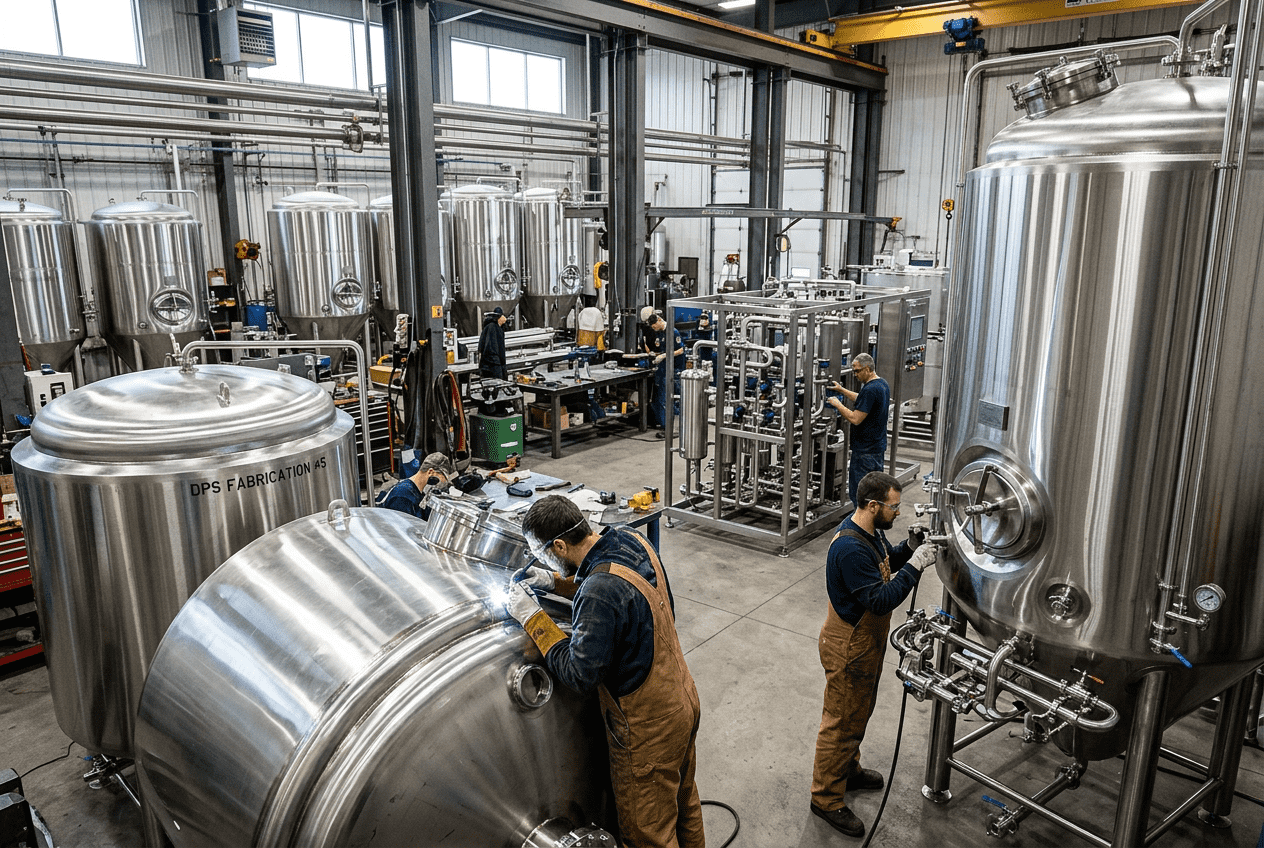
Produce Wash Line Design in 2026: Advanced Sanitation Systems
Designing a produce wash line in 2026 is no longer just about rinsing soil off vegetables. In the United States, processors are being pushed by retailer standards, FSMA expectations, labor constraints, water costs, and customer demand for cleaner, longer-lasting fresh products. A modern line must combine the right wash technology, validated sanitation chemistry, controlled water reuse, gentle handling, reliable dewatering, and integration with grading, cutting, and packaging. The best systems are built around the actual product mix: root vegetables, leafy greens, herbs, cut vegetables, and mixed produce all behave differently on the line. The quickest answer is this: for most U.S. produce processors in 2026, the best wash line design uses air bubble washing for delicate leafy products, brush roller washing for root vegetables, integrated ozone or peracetic acid sanitation for microbial control, two-stage dewatering with a vibratory screen and air knife, sanitary conveyors with variable speed control, and a recirculated water loop supported by filtration and monitored chemistry. The line should also connect cleanly to sizing, cutting, weighing, and packaging while supporting HACCP verification, daily sanitation, and documented preventive controls. For a processor shipping into major markets such as Chicago, Los Angeles, Dallas, Atlanta, Philadelphia, Seattle, and New York, the line must do more than “work.” It must protect shelf life, reduce bruising, keep water usage under control, and maintain throughput during seasonal volume spikes. Processors receiving product through California’s Central Valley, Yuma, Salinas, South Texas, Florida, or warehouse hubs near the Port of Savannah and Port of Long Beach often need flexible wash systems that can handle changing field conditions throughout the year. In practical terms, buying advice for 2026 comes down to five decisions: The U.S. market is moving toward integrated lines that are more automated, easier to clean, and better instrumented. Buyers increasingly ask for conductivity monitoring, ORP tracking, flow balancing, recipe-driven conveyor speeds, and remote diagnostics. That trend is strongest among fresh-cut processors, foodservice suppliers, and multi-site manufacturers serving national retail and club channels. The chart above reflects a realistic market direction: processors are steadily increasing spending on line upgrades, especially when projects support water savings, labor reduction, and food safety verification. This selection table shows why product-first design matters. A line built for potatoes will often damage spring mix, while a delicate greens washer may not remove enough soil from carrots or beets. Wash technology selection should start with product biology, field load, target throughput, and acceptable mechanical force. Air bubble systems are ideal when processors need flotation, gentle agitation, and broad contact between water and product. They are commonly chosen for romaine, spring mix, spinach, kale, herbs, and cut vegetables that bruise easily. Brush roller systems are better when the product arrives with attached soil, rough skin, or surface debris that needs physical scrubbing. Potatoes, carrots, radishes, beets, and some onions fit this category. For U.S. operations supplying supermarkets in Boston, Miami, Houston, Denver, and Minneapolis, line versatility is attractive, but over-flexibility can create compromise. A dual-path line often works better than a single universal washer. One path may use a bubble tank with turbulence control and soft transfer points for greens. A second path may use brush rollers with top sprays, debris removal, and adjustable dwell time for root crops. Key design variables include tank residence time, bubble density, product depth, brush stiffness, spray pressure, make-up water rate, and discharge transfer geometry. In 2026, more processors are requesting servo-adjusted speeds, recipe memory by SKU, and CIP-friendly wash modules to reduce changeover time. A useful buying rule is simple: if your biggest complaint is field grit, choose more physical cleaning; if your biggest complaint is bruising or short shelf life, choose gentler product movement. Where processors handle both categories, a front-end receiving and destoning system can reduce the cleaning burden before product enters the wash section. Application-specific design matters in industries such as fresh-cut salads, retail meal kits, frozen vegetable preparation, institutional foodservice packs, and value-added root vegetable processing. In those sectors, performance is measured not only by visible cleanliness but by cut quality downstream, package seal integrity, and days of shelf life in refrigerated distribution. Pathogen control in produce wash systems is a water-management problem as much as a chemistry problem. In U.S. operations, peracetic acid, often shortened to PAA, remains a leading choice because it is effective across a broad pH range, works in cold water, and aligns well with many produce applications when validated correctly. Ozone also attracts attention because it decomposes without persistent residue and can support lower chemical carryover, but it requires precise engineering, off-gas management, and careful control around worker safety and contact conditions. For most fresh-cut produce facilities, the right question is not “ozone or PAA?” but “where should each technology be used?” PAA is commonly favored in the main wash loop or final antimicrobial stage due to practical dosing and proven processor familiarity. Ozone can be useful in supplemental water treatment, recirculation support, or targeted sanitation zones where the system is designed to maintain effectiveness without creating instability. In 2026, regulators and customers are paying closer attention to validation data, not assumptions. Processors need documented concentration targets, contact time logic, sensor calibration, and corrective action plans. This is especially important for shipments entering large distribution corridors through New Jersey, Southern California, the Midwest, and Southeastern cold-chain hubs. The table highlights that chemistry choice is inseparable from system design. A processor can buy excellent sanitizer and still underperform if the wash tank short-circuits, organic load is too high, or dosing is not linked to changing throughput. The strongest projects define sanitation by zone: incoming dirty wash, intermediate wash, final antimicrobial intervention, and clean water finishing. Future trends for 2026 include tighter automation of dosing skids, better digital logging for HACCP and preventive controls, and stronger sustainability pressure to reuse water safely rather than discharge excessive volumes. Buyers should also consider local wastewater permit conditions and the effect of sanitation chemistry on downstream treatment. This industry demand view shows why sanitation system integration is a top buying priority: leafy greens and fresh-cut segments have the highest sensitivity to wash water control, while meal kits and foodservice packs are also driving investment because of shelf-life and consistency requirements. Dewatering is one of the most underrated parts of produce line performance. Too much residual moisture can dilute seasoning, reduce package seal quality, cause clumping in weighers, create fogging inside bags, and shorten refrigerated shelf life. In 2026, a two-stage dewatering design using a vibratory screen followed by an air knife section is often the best balance between water removal and gentle handling. The first stage, a vibratory screen or shaker conveyor, removes free water efficiently while spreading product into a more consistent bed depth. The second stage, an air knife or controlled blower tunnel, strips surface water before product enters grading, cutting, checkweighing, or packaging. For cut lettuce, baby spinach, shredded vegetables, herbs, and washed root crops, this combination improves downstream stability without excessive dwell time. Design details matter. Air velocity must be strong enough to remove moisture but not so aggressive that it flips leaves, dries edges, or causes weight giveaway. Vibration frequency must support drainage without compacting soft product. The transfer between stages should avoid drop heights and pinch points. Processors often see the biggest hidden return from dewatering in packaging. Multihead weighers run more consistently, baggers seal better, and operators spend less time cleaning up standing water around the pack area. For plants supplying chains in Phoenix, St. Louis, Charlotte, and the Pacific Northwest, where distribution distances differ significantly, moisture control can directly affect delivered shelf life. Material handling is where many produce projects either protect value or quietly destroy it. Conveyors must be designed around product fragility, sanitation, and traffic flow. Root vegetables usually tolerate cleated belts, roller inspections, and more assertive elevation changes. Leafy greens require broad belts, shallow troughing, low drop transfers, cleanable supports, and precise speed matching between equipment. In mixed-product facilities, one of the best approaches is segmented handling architecture: dirty receiving, prewash transfer, wash discharge, dewatering, inspection, clean conveyance, and packaging feed. Each zone should have a defined hygiene level and maintenance strategy. Crossovers should be minimized, and where possible, operator access should not force people to lean across open product. Applications vary by industry. A foodservice root vegetable plant near Idaho or Wisconsin may prioritize ruggedness and mud tolerance. A leafy greens operation near Salinas, Yuma, or New Jersey may prioritize hygiene, low bruising, and rapid sanitation. Meal kit suppliers near urban fulfillment centers often need flexible conveyor routing because SKU variation changes daily. The trend is clear: processors are moving from basic conveyor layouts toward hygienic, automated handling with easier washdown, less manual sorting, and better line balancing. When reviewing conveyors, buyers should ask: Water is now a strategic utility in produce processing. In many U.S. regions, water cost, wastewater discharge, and sustainability reporting are making recirculation and filtration central design topics. Plants in California, Arizona, Texas, and parts of the Southeast often feel this pressure most strongly, but even facilities in water-rich areas are facing customer expectations around environmental stewardship. A sustainable wash line does not mean maximum recirculation at all costs. It means using water where it adds the most hygienic value and reusing water only where risk is controlled. Typically, the dirtiest stages receive the least clean reusable water, while the cleanest stages receive higher-quality treated or fresh water. Filtration may include rotary drum screens, static screens, settling, hydrocyclones, bag filters, or more advanced polishing steps depending on solids load and reuse goals. Instrumentation is increasingly important. Turbidity, flow, oxidation-reduction potential, temperature, and tank level data help operators keep the system in control. Automated dump-and-refresh logic can prevent degraded water quality before it affects product. In 2026, U.S. buyers are also more interested in reporting dashboards that connect water usage to pounds processed. This table shows how sustainable operation is achieved by layering technologies rather than relying on one “magic” filter. For many processors, the best path is a staged recirculation strategy that lowers water use substantially while preserving the cleanest final contact conditions. Policy trends also matter. In 2026, more corporate buyers are requiring ESG-style reporting, and more plants are preparing for tighter local utility expectations. Projects that reduce water consumption per pound of produce while protecting food safety will remain strong candidates for capital approval. A wash line should not be designed as an island. The real value appears when washing connects smoothly to grading, sizing, cutting, optical inspection, weighing, and packaging. If line integration is poor, the wash system may perform well on its own but still create backups, inconsistent feed rates, and excess labor downstream. For root vegetables, grade sizing may include roller graders, diverging lane sortation, or camera-based systems depending on pack style. For leafy products, the critical integration points are usually feed metering, cut quality protection, and moisture consistency before weighers and baggers. In mixed application plants, packaging may include pillow bags, vertical form-fill-seal systems, clamshells, trays, foodservice bulk bags, or case-ready retail formats. U.S. processors near logistics hubs like Atlanta, Inland Empire, Kansas City, and Harrisburg often benefit from flexible packaging line integration because they ship to multiple channels with different case counts, pallet patterns, and labeling needs. As a result, 2026 line design increasingly includes recipe-based controls, modular discharge options, and data links between wash line speed and packaging equipment performance. One of the smartest buying questions is whether the supplier can engineer the interfaces, not just the machines. Integration determines whether the entire process behaves like one system or a collection of separate assets. The comparison illustrates why engineered integration usually outperforms piecemeal purchasing, especially when processors expect growth, tighter retailer requirements, or future automation. Compliance is not a separate layer added after installation. HACCP thinking, preventive controls, sanitary design, and daily cleaning requirements should shape the wash line from the beginning. A produce line should be laid out to support hazard analysis, defined intervention points, accessible cleaning, drainability, and documented verification. Daily sanitation protocols in U.S. facilities typically include dry debris removal where applicable, pre-rinse, foam or detergent application, manual detail cleaning, rinse verification, sanitizer application, reassembly checks, pre-op inspection, and startup verification. Equipment frames should avoid hollow-body contamination risks, standing water traps, and inaccessible bearings over open product zones. Operators and quality teams should clearly understand control points such as antimicrobial dosing, final rinse condition, metal detection if applicable downstream, package seal performance, and temperature management through the process. Records must be practical enough that teams actually use them during busy production days. This table shows how compliance is improved through design. Good engineering lowers the burden on operators and makes the right behavior easier to sustain every day. For plants selling to national retailers or operating under SQF or BRC expectations, documented sanitation and start-up verification are increasingly important. The same is true for co-packers handling multiple customer standards in one facility. Disruptive Process Solutions, or DPS, works with food and beverage manufacturers across the United States and Canada on engineered capital projects that must perform in the real world, not just on a proposal sheet. In produce applications, that matters because wash lines sit at the intersection of process design, sanitation, utilities, controls, installation, and startup. A processor needs more than a machine vendor; it needs a partner that can engineer, build, and manage the entire project. From a technological capability standpoint, DPS supports process engineering, mechanical and utility integration, controls architecture, PLC programming, automation, and SCADA-informed system visibility. That means a produce wash line can be designed with coordinated conveyor speeds, monitored sanitation dosing, recirculation control, pump logic, utility tie-ins, and startup support that aligns with production goals rather than isolated equipment operation. You can learn more about the company background on the About Us page. From a manufacturing capability standpoint, DPS also brings proprietary equipment experience into broader processing projects. That approach is useful when a customer needs custom tanks, CIP support equipment, specialty process skids, or integrated fabrication that standard catalogs cannot solve cleanly. Produce processors often benefit when utility skids, tanks, and process modules are designed to fit the line as-built rather than forced into the layout later. Additional capabilities are outlined in the equipment solutions section. From a service capability standpoint, DPS operates through an end-to-end model covering planning, design, capital project support, owner representation, installation management, and execution oversight. That is especially valuable for U.S. processors expanding in active facilities, relocating lines, or balancing production continuity with modernization. Whether the need is feasibility, detailed engineering, integration, or full delivery, the firm’s broader offering is described on its service capabilities page. For examples of project work and execution style, readers can review selected case studies and project examples. What differentiates this approach is business-minded engineering. The project is not only about buying hardware; it is about improving profitability through the right scope, utility planning, controls strategy, labor model, and startup sequence. In the produce segment, that often means avoiding overbuilt systems in low-risk areas while investing heavily where food safety, shelf life, and throughput actually depend on the design. What is the best produce wash line for leafy greens in the United States?For most leafy greens, an air bubble wash system with controlled agitation, antimicrobial dosing, sanitary transfer conveyors, and strong dewatering is the preferred configuration. Final design depends on leaf fragility, throughput, and pack format. Is PAA better than ozone for produce sanitation?Neither is universally better. PAA is often easier to validate and operate in the main wash system. Ozone can be effective in well-engineered water treatment applications. Many plants use a combination strategy by zone. Why is dewatering so important after washing?Residual moisture affects shelf life, package seals, weighing consistency, and visual quality. A two-stage dewatering system helps stabilize downstream operations and reduce package-related rejects. Can one wash line handle both root vegetables and leafy greens?Sometimes, but not always well. If the product mix is broad, separate wash paths or modular zones usually deliver better cleaning, less damage, and easier sanitation than a one-size-fits-all machine. How much water can be recirculated safely?That depends on product risk, solids loading, filtration performance, chemistry control, and validation. Safe recirculation is a system-engineering question, not a fixed percentage. What U.S. regulations most affect produce wash line design in 2026?FSMA preventive controls, customer food safety standards, wastewater requirements, worker safety expectations, and retailer shelf-life demands all influence line design and documentation. What industries use advanced produce wash lines?Fresh-cut produce, retail salad packing, foodservice vegetables, meal kits, frozen vegetable preparation, value-added root vegetable processing, and specialty herb packing all rely on these systems. How should buyers compare suppliers?Look beyond equipment price. Compare process fit, sanitation design, automation depth, utility requirements, installation capability, startup support, parts access, and the supplier’s ability to integrate the full line. What future trends matter most in 2026?More sensor-driven sanitation control, stronger water reuse expectations, better hygienic automation, digital recordkeeping for compliance, and project decisions tied to total cost of ownership rather than only purchase price. What is the smartest first step for a processor planning an upgrade?Start with a process review that maps product types, throughput, sanitation risks, water balance, labor model, and downstream packaging needs. The best wash line comes from whole-system planning, not isolated equipment shopping. -
Tortilla Production Line Design in 2026: From Masa to Packaging
Tortilla manufacturing in the United States is moving toward higher throughput, tighter labor control, better food safety, and more flexible product changeovers. A successful 2026 tortilla line design starts with matching dough preparation, forming, baking, cooling, and packaging equipment to the exact product mix, utility profile, plant footprint, and commercial goals of the facility. For most U.S. manufacturers, the best tortilla production line is not simply the fastest line. It is the line that delivers repeatable diameter, target moisture, clean release, strong stack integrity, and packaging uptime while keeping labor, energy, and sanitation costs under control. Whether the facility is producing corn tortillas for foodservice in Texas, wheat tortillas for retail in California, or mixed SKU private-label products in the Midwest, the design should begin with five decisions: product type, hourly throughput, flexibility requirements, utility capacity, and distribution format. In practical terms, corn tortilla lines and wheat tortilla lines share many downstream elements, but the front-end process differs significantly. Corn systems are centered on masa preparation or prepared masa handling, while wheat systems require more precise hydration, gluten development, resting, dividing, rounding, pressing or sheeting, and final proof-like relaxation depending on formulation. After forming, both product families depend on tightly controlled tunnel oven zones, stable cooling profiles, gentle transfer, accurate counting or stacking, and packaging systems that protect freshness and shelf life. Across the United States, high-volume tortilla plants near Los Angeles, Dallas-Fort Worth, Chicago, Phoenix, Atlanta, and New Jersey are investing in automation because labor volatility, retailer expectations, and freight economics increasingly reward consistency. Plants located near major logistics corridors such as the Port of Los Angeles, the Port of Houston, Savannah, and intermodal hubs in Kansas City or Memphis also benefit from line designs that reduce rework and improve case-ready packaging performance. When evaluating capital projects, buyers should look beyond the press or oven alone. The real business case comes from whole-line integration: mixer sizing, dough residence time, conveyor synchronization, recipe control, sanitation access, and final packaging efficiency. In many projects, the limiting factor is not a single machine but the coordination between machines. That is why system-level engineering matters. The table above shows why early front-end planning is essential. A tortilla line should be engineered around the business model, not purchased as a collection of disconnected machines. The dough room defines the performance of the entire tortilla line. For corn tortillas, processors may handle dry corn flour with water and minor ingredients, or integrate upstream nixtamalization and masa preparation when producing from whole corn. For wheat tortillas, the system must control flour type, water absorption, shortening or oil incorporation, minor ingredient dispersion, dough temperature, and rest time. A well-designed mixer and dough preparation system reduces variability before the dough ever reaches the divider or press. In the United States, corn tortilla lines serving quick-service restaurants often prioritize high rate, uniform diameter, and robust hot-hold performance. Retail wheat tortilla lines, by contrast, often require softer bite, foldability, longer shelf life, and a broader product range including fajita, burrito, taco, and better-for-you formulas. That means the dough system needs recipe flexibility, lot traceability, and automation strong enough to maintain consistency from shift to shift. Common equipment options include horizontal mixers, high-capacity batch mixers, continuous dosing systems, ingredient pre-blending skids, water tempering modules, and intermediate dough hoppers. For wheat tortillas, a dough rest conveyor or trough arrangement is frequently critical because relaxation affects final press quality, snapback, and edge symmetry. For corn products, moisture management and feed consistency into the sheeter or press are equally critical to avoid edge cracking and weight drift. Well-integrated plants also connect the dough room to controls architecture. Recipe management, batch records, temperature trending, and ingredient verification can be handled through PLC and SCADA systems so operators can identify deviations before they create scrap. This is especially useful for high-volume operations near Dallas, Fresno, and Chicago where production schedules are tight and downtime carries immediate freight and customer penalties. From a technology standpoint, a partner with process engineering and controls expertise can significantly improve this area. Disruptive Process Solutions supports food manufacturers with process design, automation, PLC programming, SCADA integration, utility design, and complete system coordination, which is especially valuable when mixer performance, ingredient delivery, and line rate need to function as one system rather than as isolated assets. This comparison highlights why dough system selection should always follow product definition. A plant that tries to run diverse formulas on an underspecified dough room often fights the same defects every day downstream. Once the dough is prepared correctly, the next step is to create uniform pieces and shape them consistently. Divider, rounder, and hot press selection affects product weight, diameter, thickness, edge appearance, stackability, and oven loading efficiency. For wheat tortillas, a divider-rounder combination must handle the intended dough softness without smearing or excessive flour use. For corn tortillas, the forming system must keep product geometry stable while minimizing sticking and deformation. Hot press selection should consider platen size, thermal control, dwell time, press force, release materials, and sanitation access. If a line is intended to run multiple diameters, the design should also evaluate tooling changes, setup time, and servo-driven adjustment capability. High-throughput U.S. plants commonly prioritize repeatable piece weight and low giveaway because even small variance becomes expensive at national scale. Some manufacturers prefer very high speed dedicated lines for a narrow SKU range. Others, especially private-label and regional producers serving the Southeast and Northeast, benefit more from flexible equipment that can change between 6-inch taco tortillas, 8-inch wraps, and 12-inch burrito formats. The correct choice depends on sales mix, order volatility, and labor availability. Buyers should also examine upstream-downstream matching. A divider that can outrun the press or a press that floods the oven infeed will not create real capacity. The target is balanced throughput with enough surge handling to absorb short interruptions. If the packaging line stops briefly, the rest of the system should not immediately dump product. Manufacturing capability matters here as well. DPS designs and integrates custom process equipment and supports complete system buildouts, including fabricated tanks, CIP modules, and food-grade process components. That broader manufacturing perspective is useful when the tortilla line needs custom hoppers, transfer frames, guarding, platforms, or utility skids tailored to the building rather than off-the-shelf compromises. The explanation is straightforward: the best forming package is the one that protects product quality while matching the facility’s true sales profile. Overbuying speed without enough flexibility can be just as costly as underbuying capacity. The oven is the thermal heart of a tortilla line. Multi-tier or multi-deck tunnel oven design allows processors to optimize floor space while delivering the rapid, controlled heating needed for puffing, color development, moisture removal, and final texture. A successful oven design is not based only on total length. It depends on thermal profile, air management, burner arrangement, belt selection, zone independence, exhaust balance, and access for cleaning and maintenance. For tortilla plants in the United States, natural gas remains the most common fuel source, but electric and hybrid heating discussions are growing as utilities, state incentives, and carbon reporting requirements evolve. California and some Northeast markets are especially active in evaluating future energy strategy, while Texas and the Midwest continue to favor gas-fired designs where infrastructure is strong. Temperature zone control is critical because tortillas do not need the same thermal conditions across the entire bake. Early zones often focus on set and steam release, middle zones on structure and color, and later zones on moisture balance and finish. Independent controls by zone improve product uniformity and make it easier to switch between corn and wheat formulations or between thicker wraps and thinner taco styles. Engineers should also review how the oven interacts with upstream and downstream conditions. Press temperature, belt loading pattern, ambient room conditions, and final cooling capacity all influence the effective bake. Excessive oven variability often shows up later as stack sticking, poor package appearance, or shelf-life inconsistency. This is one area where strong mechanical, process, electrical, and controls coordination delivers outsized value. A full-scope engineering partner can address combustion integration, ventilation, utility routing, controls architecture, and code compliance together. Manufacturers looking for broader project support can review integrated engineering and project services when planning complex thermal systems. The table shows why zone-level control is a strategic investment rather than a luxury. It gives operators a practical way to manage product quality and energy performance at the same time. Cooling is often underestimated in tortilla manufacturing, yet it directly affects stack quality, condensation risk, packaging speed, and shelf life. After the oven, tortillas must lose heat in a controlled way while preserving shape and moisture balance. Cooling conveyor design should consider residence time, airflow, belt material, sanitation access, and plant room conditions. In humid climates such as Houston, Miami, or New Orleans, ambient conditions can make cooling design especially important. Counter-stackers and indexing systems must then gather tortillas accurately without crushing edges or miscounting. A line designed for retail packs may require extremely precise stack counts with smooth handoff to baggers, while foodservice bulk packs may prioritize robust throughput and larger stack heights. Synchronization between the cooling section and the counter-stacker is essential because loose timing creates jams, tilted stacks, and operator intervention. Some facilities also benefit from vision or sensor-based counting verification, especially where customer complaints about count accuracy carry chargeback risk. Others may need side guides, vacuum assists, or transfer flights depending on tortilla size and pliability. The correct integration depends on product geometry and the variability tolerated by the market channel. For plants expanding into new distribution regions, cooling and stacking can become the hidden bottleneck. A product that looks good at the oven discharge may still fail in retail if it packs too warm, sweats in the bag, or arrives in stores as a compressed or irregular stack. That is why complete line design should include post-bake handling from the start, not as an afterthought. In short, the cooling section protects the value created by the oven. If the product is not conditioned correctly before stacking and bagging, the plant gives back quality and efficiency downstream. Packaging is where a tortilla line either converts efficiently or loses margin. Vacuum transfer systems can gently move tortillas or stacks into the final packaging sequence with reduced manual handling, helping preserve product shape and improve line speed. Modern packaging automation may include stack orientation, bag feeding, date coding, seal inspection, checkweighing, metal detection, case packing, palletizing, and production data capture. For U.S. retail distribution, packaging automation must also support label compliance, traceability, and retailer-specific pack counts. Foodservice operations may require bulk sleeves, higher weight packs, or club-store configurations with stronger case structures. Plants serving national accounts often need the ability to switch between channels without lengthy mechanical changeovers. One of the most important purchasing questions is whether the packaging line can run at the realistic sustained speed of the upstream process, not just the advertised mechanical maximum. In many facilities, packaging micro-stops create the most frustrating form of lost capacity. The solution is usually better integration: synchronized controls, buffer logic, reject handling, and clear operator interfaces. Service capability becomes especially valuable at this point. DPS supports end-to-end project management, owner’s representation, installation oversight, general contracting where licensed, and complete integration of process, utilities, and controls. For manufacturers that want a single partner to engineer, build, and manage execution, that model reduces coordination gaps between process equipment and packaging infrastructure. More information on available equipment solutions can help frame project scope. Applications are broad. Tortilla lines may serve retail chains in New York and Boston, foodservice distributors in Atlanta and Charlotte, or regional restaurant networks across Arizona and Nevada. Packaging automation should be tailored to the actual route-to-market, because pack style and handling requirements influence every downstream decision. The explanation here is simple: packaging is not the end of the line from an engineering perspective. It is the point where capital efficiency becomes visible in labor, yield, customer complaints, and delivered cost. Cleanability is now a capital design issue, not just a sanitation issue. In tortilla production, flour dust, seasoning residues, oils, and allergens can accumulate across mixers, dividers, conveyors, ovens, coolers, and packaging frames. If sanitation is difficult, plants lose production time, increase labor, and raise food safety risk. Equipment should therefore be evaluated for open-frame design, weld quality, drainage, access panels, removable components, hygienic fasteners, and minimized harborage points. Allergen control is especially important when plants run both standard and specialty products. Wheat is itself a major allergen concern for some operations, and lines that alternate between wheat, gluten-free, dairy-containing flavored wraps, or protein-enhanced formulas need disciplined segregation and validated cleaning methods. Plants serving contract manufacturing or private-label customers may face even tighter verification expectations. U.S. buyers should also design around real compliance conditions. SQF and BRC audits, FDA expectations, customer environmental monitoring programs, and documentation requirements all favor equipment that can be cleaned and inspected efficiently. In older buildings common in the Northeast and upper Midwest, sanitation upgrades often require better utility access, improved airflow, and redesign of difficult transfer points. Engineering support should extend beyond equipment purchase into plant layout, COP/CIP strategy, utility routing, and hygienic zoning. This is another reason to work with a team that understands food processing, compliance, and plant execution together instead of treating sanitation as a later retrofit. The key takeaway is that hygienic design protects uptime as much as it protects food safety. Cleaner equipment is easier to run, easier to inspect, and less likely to create avoidable quality losses. Energy efficiency is becoming one of the most important buying criteria for tortilla manufacturers in 2026. Gas cost volatility, labor cost pressure, sustainability commitments, and state-level environmental expectations are all pushing plants to reduce energy intensity per thousand tortillas. The biggest opportunity usually sits in thermal design: burner efficiency, insulation, exhaust control, recirculation strategy, and heat recovery. Heat recovery can take several forms. Some plants capture waste heat from oven exhaust to preheat combustion air or process water. Others combine oven improvements with broader utility projects such as boiler optimization, compressed air reduction, and HVAC coordination. In markets such as California, Washington, and parts of the Northeast, utility incentives may improve the project payback for well-documented energy upgrades. Future trends also matter. By 2026, more food manufacturers are expected to evaluate digital energy monitoring, carbon reporting support, and electrification readiness. Even if a plant does not switch fuels immediately, designing controls and space allocation with future utility flexibility can reduce long-term retrofit cost. Policy pressure around emissions disclosure and corporate sustainability reporting is making that foresight more valuable. In many cases, the best result comes from combining process engineering with utility engineering. DPS works across structural, mechanical, plumbing, electrical, process, and automation disciplines, and also supports utility systems such as boilers, steam, compressed air, cooling, refrigeration, process water, and energy management. That cross-functional capability is particularly relevant when tortilla oven performance is tied to the rest of the plant’s infrastructure rather than standing alone. From a buying perspective, the lowest purchase price rarely delivers the lowest lifetime cost. U.S. manufacturers should ask for modeled energy performance, not just nameplate features. Disruptive Process Solutions serves manufacturers across the United States and Canada as a food and beverage engineering partner focused on profitable capital execution. Rather than approaching a tortilla project as a simple equipment sale, the company works through an end-to-end design, build, and manage approach that aligns process performance, utilities, installation, controls, and commercial objectives. For tortilla manufacturers, that means support can begin with feasibility, throughput analysis, and concept layout, then move into process engineering, utility planning, equipment integration, construction coordination, and startup oversight. The team’s work spans both food and beverage sectors, but on the food side it includes mixing, forming, thermal processing, sanitary systems, automation, and full plant infrastructure that are directly relevant to tortilla operations. Technologically, the company brings process and controls depth, including PLC programming, SCADA, recipe and batch logic, utility integration, and broader plant engineering. From a manufacturing perspective, DPS also provides proprietary process equipment such as tanks and CIP systems while coordinating custom fabrication needed for complete projects. From a service perspective, the company supports capital planning, owner’s representation, project and program management, installation, system integration, and general contracting functions where applicable. Manufacturers seeking background can visit our company overview, explore broader engineering services, or review selected project case examples. This integrated model is especially useful for tortilla plants because the line often touches nearly every plant function at once: process, thermal, packaging, utilities, building modifications, sanitation, and controls. A coordinated partner can help reduce change orders, speed decisions, and keep the project focused on long-term operating margin. What is the first step in designing a tortilla production line?Start with the commercial plan: product mix, hourly output, package format, shelf-life target, and labor strategy. Equipment should follow those requirements, not the other way around. How different are corn and wheat tortilla lines?They share downstream handling, cooling, and packaging concepts, but the front-end dough system and forming methods are often very different. Wheat lines usually require more dough development and rest control. What throughput range is common in the United States?There is no single standard, but many commercial lines range from mid-volume regional systems to very high-speed national-account lines. The right capacity depends on SKU complexity and distribution footprint. Should I choose a dedicated line or a flexible line?If demand is concentrated in one or two SKUs, a dedicated line can deliver efficiency. If the business serves private label, multiple diameters, or mixed channels, flexibility often creates better total return. Why is oven zoning so important?Independent temperature zones improve bake consistency, moisture control, color development, and changeover response. They also support energy optimization. What causes packaging problems in tortilla plants?Common causes include insufficient cooling, unstable stacking, poor transfer timing, packaging equipment micro-stops, and lack of buffer logic between upstream and downstream systems. How should buyers compare suppliers?Compare complete system capability, not only individual machine price. Review process knowledge, sanitation design, controls integration, utility understanding, installation support, and service responsiveness in the United States. What future trends should shape a 2026 project?Expect more automation, energy monitoring, heat recovery, digital recipe control, stronger traceability, sustainability reporting, and designs that support faster sanitation and broader SKU flexibility. Are local supplier relationships still important?Yes. Even with national engineering support, local trades, service technicians, utility coordination, and regional code knowledge matter, especially in major manufacturing hubs like Southern California, Texas, Illinois, and the Southeast. Can an existing tortilla line be upgraded instead of replaced?Often yes. Bottlenecks may sit in controls, post-bake handling, utilities, or packaging rather than the entire line. A disciplined assessment can reveal where modernization delivers the best return. -
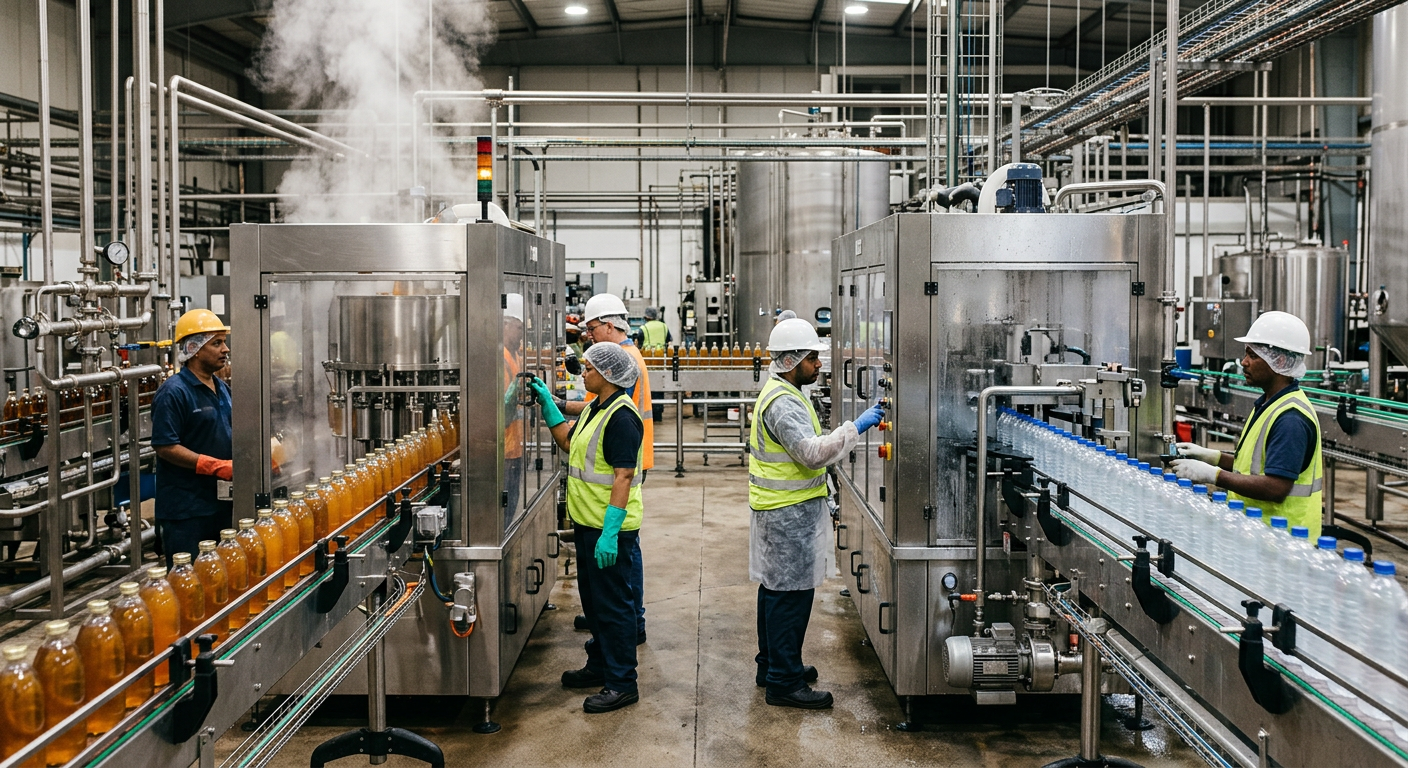
Sanitary Tank Manufacturer
Choosing the right sanitary tank is not just about vessel size or price. In the United States, food, beverage, dairy, and clean-process manufacturers need tanks that protect product quality, simplify cleaning, support compliance, and reduce lifecycle costs. A properly specified sanitary tank should be fully drainable, free of dead legs and crevices, compatible with CIP, built with suitable stainless steel, finished to the right surface roughness, and fitted with hygienic seals and connections. For processors from California and Texas to Wisconsin, North Carolina, and New Jersey, these details directly affect uptime, audit readiness, and total operating margin. Disruptive Process Solutions (DPS) supports processors across all 50 states and Canada with sanitary process system design, equipment integration, installation, and project execution. As a food and beverage engineering partner with equipment capabilities that include tanks up to 12,000 gallons, DPS approaches sanitary tank projects as part of a larger profitability strategy rather than a stand-alone purchase. That is especially important in high-volume corridors such as Chicago, Los Angeles, Houston, Atlanta, Charlotte, Minneapolis, and the port-driven manufacturing zones around Savannah, Newark, and Long Beach. A sanitary tank for U.S. food and beverage processing should typically be designed around five core principles: complete drainability, hygienic geometry, validated cleanability, corrosion resistance, and standards alignment. In practice, that usually means a 316L stainless steel product-contact shell, continuous sanitary welds, an internal finish commonly specified at or below 32 microinch Ra depending on the application, sloped floors or cone bottoms that self-drain, CIP spray device coverage that can be verified, and sanitary fittings such as Tri-Clamp connections with FDA-appropriate gasket materials. For dairy, beverage, liquid foods, sauces, RTD products, cultured products, and aseptic support systems, buyers in the United States should also check whether the vessel design aligns with 3-A expectations where applicable, whether documentation includes material traceability and finish records, and whether the tank can be integrated cleanly with plant utilities, controls, batching systems, heat exchangers, and CIP skids. A low-cost tank that traps product, requires manual cleaning, or causes repeated gasket failures usually becomes expensive very quickly. In the current U.S. market, the best sanitary tank decisions are made at the system level. That means evaluating not only the vessel, but also upstream and downstream process impacts: pump sizing, valve manifolds, automation, chemical concentration, drain routing, insulation, agitation, temperature control, and maintenance access. The table above summarizes the essentials. For many U.S. processors, especially those selling through retail, co-packing, or multi-site networks, sanitary tank performance is evaluated not only by how it operates on day one, but by whether it can maintain cleanability and throughput over years of repeated production cycles. The most important sanitary tank design principle is simple: product and cleaning solution must not be allowed to stagnate. In real facilities, poor geometry creates hidden costs. A tank that appears acceptable on a drawing can still trap syrup under a nozzle reinforcement, leave cream in a flat outlet zone, or collect sauce solids along a poorly blended weld. These are common failure points in beverage plants, dairy lines, prepared food operations, and protein ingredient systems across the United States. Fully drainable design normally requires proper bottom slope, outlet placement at the low point, and support geometry that does not distort the vessel base. Crevice-free construction requires smooth transitions, hygienic fittings, flush-mounted instruments where needed, and weld finishing that avoids pits or undercut. CIP-ready design means the vessel can be cleaned repeatedly using validated time, temperature, chemical concentration, and mechanical action without depending on operator improvisation. In many projects, DPS evaluates sanitary tanks as part of an integrated line, not as isolated hardware. Through its process engineering and project delivery services, the company helps processors assess how tank design interacts with circulation rates, utility capacity, valve sequencing, automation logic, and production scheduling. That system-level approach is especially valuable when scaling facilities in major U.S. manufacturing zones such as the Midwest dairy belt, the Southeast beverage corridor, or West Coast value-added food operations. Sanitary tanks are used in multiple roles, and the role affects the design: The table shows that “sanitary tank” is a broad category. A dairy balance tank near Madison or Twin Falls is not specified exactly like a carbonated beverage bright tank in Dallas or a sauce mix tank near Fresno. Buyers should align geometry, finish, fittings, and controls with the true process duty. The line chart reflects a realistic growth pattern driven by reshoring, food safety investment, beverage diversification, dairy modernization, and expansion in co-packing. Demand is particularly strong in facilities adding flexible batching, allergen control, and higher-throughput CIP infrastructure. In the United States, 3-A sanitary design expectations are especially relevant for dairy and many hygienic applications where cleanability and construction details matter. While not every food tank must be certified in the same way, 3-A-aligned thinking is often used by owners, QA teams, and engineering groups to reduce sanitary risk. Buyers should understand whether they need formal compliance, equivalent hygienic design, or customer-specific documentation standards. For dairy processors, cultured product facilities, beverage plants with high-cleanliness requirements, and co-manufacturers serving demanding retail brands, a tank that reflects recognized sanitary design criteria can reduce audit pressure and support more consistent sanitation outcomes. This is particularly valuable in states with large regulated processing footprints, including Wisconsin, California, Texas, Pennsylvania, Idaho, and North Carolina. Key points to review include weld quality, surface finish records, drainability, cleaning device location, instrument design, dead-leg avoidance, elastomer suitability, and documentation package completeness. Procurement teams should also ask whether the supplier understands how the tank fits into FDA, USDA, SQF, and BRC expectations at the plant level. The right tank supplier should be able to explain not only what standards apply, but why the design choices support real plant conditions. That matters in facilities shipping nationwide through ports and distribution hubs such as Houston, Savannah, Los Angeles, and Newark, where customer scrutiny and multi-state retail requirements can be high. This chart shows where demand is strongest today. Dairy and RTD beverages remain major drivers because they require hygienic equipment, frequent cleaning, and rapid product turnover. Sauce, dressing, and plant-based applications are also rising as processors seek flexible lines with clean-label and allergen-management capability. For many U.S. sanitary tank applications, 316L stainless steel remains the preferred product-contact material because it offers strong corrosion resistance, broad chemical compatibility, and a low-carbon composition that supports weld quality. That does not mean every non-contact component must be 316L, but in product zones exposed to acids, chlorides, aggressive cleaning regimens, or repeated washdown, 316L is often the safest long-term choice. 304 stainless steel can still be suitable in some less aggressive environments, but cost savings on initial purchase can be erased by corrosion, discoloration, product contamination risk, or shorter service life. Beverage systems with acidic formulations, dairy systems with chlorinated cleaning history, and food plants running hot caustic and acid cycles often benefit from selecting 316L from the start. DPS brings practical material selection into larger plant decisions through its engineering and integration capabilities. Its teams support processors with process, mechanical, structural, electrical, and controls coordination so that vessel material selection matches utility chemistry, throughput, cleanability targets, and expected production growth. More on the company’s background can be found on the DPS company overview page. The comparison above shows why 316L is often the industry benchmark. In the United States, where processors may run frequent sanitation cycles and face strict customer expectations, corrosion resistance is not a luxury feature. It is a productivity feature. Fewer repairs, fewer leaks, and fewer surface defects usually mean more consistent output. Surface roughness is one of the most misunderstood parts of sanitary tank buying. A vessel may look shiny, yet still have an Ra value that is not suitable for the intended product or cleaning regime. Rougher surfaces provide more opportunity for product adhesion and microbial retention. Smoother surfaces generally improve cleanability, though the “right” finish depends on product, cleaning chemistry, and the plant’s validation requirements. In many U.S. food and beverage applications, 32 microinch Ra is a common baseline for product-contact surfaces, with finer finishes specified for more demanding applications. Buyers should ask whether the finish is mechanically polished, electropolished, where measurements are taken, and how the finish is verified and documented. They should also be clear about which areas are included: shell, heads, nozzles, fittings, agitator zones, and weld blends. For manufacturing capability, DPS not only supports engineered sanitary process systems but also produces its own branded equipment line, including sanitary tanks up to 12,000 gallons, CIP systems, and custom process vessels. That manufacturing perspective helps align vessel finish requirements with practical fabrication, installation, and startup considerations. Processors exploring sanitary vessel options can review available equipment capabilities as part of early project planning. This table should not replace plant-specific standards, but it helps frame the discussion. The real question is not “What finish is cheapest?” but “What finish supports repeatable cleaning, quality, and lifecycle value in this exact process?” That answer may differ between a cultured dairy tank in Idaho, an acidified beverage tank in Florida, and an aseptic ingredient vessel in New Jersey. Tank geometry affects everything from product recovery to CIP cycle time. Sloped bottoms and properly oriented outlets support complete drainability. Dome tops can improve structural performance and support certain process requirements, but top design must still account for manways, spray devices, venting, sensors, and access. In sanitary processing, “self-draining” is not a marketing phrase; it is a measurable design outcome that should be demonstrated in drawings and confirmed during commissioning. Buyers should ask where the lowest point is, how outlet ferrules are blended, whether internal attachments create ledges, and how the tank behaves when installed on the actual plant floor. Small field changes in support height, pad orientation, or piping slope can compromise an otherwise good design. This is why installation quality matters as much as fabrication quality. Applications vary by industry and location. Breweries in Denver or Portland may prioritize conical geometry and pressure performance. Dairy processors in the Upper Midwest may prioritize rapid drainability and complete CIP turnover. Sauce and dressing plants near Chicago or central California often care deeply about sweep, agitation, and heel reduction for viscous products. A good sanitary tank design adapts to those realities. The area chart illustrates a clear trend: new projects increasingly favor vessel geometries that reduce manual intervention and sanitation variability. This trend is likely to accelerate into 2026 as labor constraints, water use scrutiny, and stricter customer quality expectations continue shaping capital investment. Even a well-built tank can fail hygienically if the wrong gasket or fitting is used. Gaskets must handle process temperature, cleaning chemistry, pressure, and product compatibility. Tri-Clamp connections remain common in U.S. sanitary processing because they are serviceable, widely available, and suitable for many hygienic duties when properly specified and maintained. However, they are not automatically correct for every high-pressure or specialized application. Buyers should review elastomer type, compression set behavior, cleanability, replacement frequency, and whether the gasket profile matches the ferrule and clamp design. EPDM, silicone, FKM, PTFE envelope, and other materials each have strengths and limitations. Standardization across a plant can reduce spare-parts complexity, but over-standardization can create performance problems if one gasket material is forced into incompatible duties. The explanation is straightforward: seal and fitting decisions should match actual use conditions, not catalog habits. Plants running citrus beverages near Tampa, high-fat dairy in Wisconsin, or hot-fill sauces in Texas may each require different gasket strategies even when the tanks look similar on paper. Local supply support also matters. In U.S. manufacturing hubs near Philadelphia, St. Louis, Salt Lake City, and Sacramento, processors often value tank builders and integrators that can source sanitary components quickly and coordinate field service when shutdown windows are short. Passivation helps restore and strengthen the protective chromium oxide layer on stainless steel after fabrication, welding, and finishing. Electropolishing can further improve surface smoothness and corrosion performance by removing a thin layer of metal and reducing microscopic peaks and valleys. These are not decorative extras. In the right sanitary applications, they materially affect hygiene, cleanability, and long-term tank condition. Passivation is particularly important after welding and mechanical polishing. If fabrication residue, heat tint, or iron contamination remains, stainless surfaces become more vulnerable to corrosion. Electropolishing may be justified where very high cleanability, appearance retention, or corrosion resistance is needed, especially in aggressive sanitation environments. For buyers, the key is documentation and scope. Ask which surfaces are passivated, what chemistry and procedure are used, whether rinse quality is controlled, and how completion is verified. If electropolishing is specified, confirm target areas and expected finish outcome. These steps can have a major impact on lifecycle cost in high-throughput plants. Case experience matters here. DPS has supported complex food and beverage capital projects where process reliability, hygienic execution, and utility integration all determine project profitability. Examples of project outcomes and execution approach can be explored through selected case studies and project examples, which are useful for buyers evaluating a partner’s ability to connect equipment decisions to plant-wide performance. The comparison chart highlights a frequent U.S. buying mistake: selecting a vessel-only quote without evaluating integration and lifecycle support. A sanitary tank is rarely successful by fabrication alone. It succeeds when design, installation, utilities, controls, and startup all work together. Validation should happen in stages: design review, fabrication review, factory acceptance when appropriate, installation verification, startup, CIP confirmation, and operational monitoring. Too many facilities wait until after product trials to discover that spray devices miss surfaces, outlet lines hold residual product, or instrument penetrations create cleanability issues. In the United States, smart buyers use a practical validation checklist before final sign-off. This is especially important in co-packing, dairy, RTD beverage, aseptic support, and high-care food environments where production interruptions can be expensive. A robust validation process typically includes visual inspection, slope verification, finish documentation review, gasket confirmation, pressure and leak testing where applicable, CIP riboflavin or coverage evaluation when needed, control sequence testing, and maintenance training. The table above is best used as a living commissioning tool. If a tank serves multiple products, include worst-case trials for viscosity, fat, sugar, pulp, particulate load, or allergen changeover. Plants shipping nationally from manufacturing centers such as Indianapolis, Kansas City, or the Inland Empire should also consider spare parts strategy and remote support responsiveness. When evaluating suppliers in the United States, local presence alone is not enough. The best partner is one that can engineer the process, coordinate trades, manage startup, and understand regulatory and operational consequences. DPS’s service capability is built around that full-project model: feasibility support, owner’s representation, engineering, general contracting where licensed, installation management, integration, and commissioning. That integrated structure is useful when sanitary tank performance must fit into broader utility, automation, and expansion plans. Looking ahead to 2026, three trends will shape sanitary tank buying in the United States. First, automation and data visibility will expand, with more tanks tied into SCADA, recipe management, and CIP verification. Second, policy and customer pressure around water, energy, and chemical use will push designs that shorten cleaning cycles and improve product recovery. Third, sustainability goals will drive more interest in optimized spray devices, heat recovery, lower-loss tank geometry, and right-sized vessel selection rather than overbuilding capacity. Buyers who plan for these trends now will likely see better ROI over the next capital cycle. What industries most commonly use sanitary tanks in the United States?Dairy, brewing, spirits, wine, kombucha, soft drinks, juices, RTD beverages, sauces, dressings, prepared foods, plant-based products, aseptic foods, and selected pharmaceutical-adjacent applications all rely on sanitary tanks. Is 316L always required?Not always, but it is often preferred for product-contact surfaces because of its corrosion resistance. The correct choice depends on product chemistry, cleaning chemicals, temperature, and expected service life. What does self-draining really mean?It means the tank drains completely under intended installation conditions without leaving standing product or rinse solution in product-contact areas. This must be evaluated by actual geometry, not just sales language. Why is Ra finish important?Surface roughness affects how easily product residue can be removed and how likely microorganisms are to remain attached. Smoother finishes generally improve cleanability. Are Tri-Clamp fittings enough for every sanitary application?No. They are widely used and very effective in many hygienic services, but some applications need other connection styles based on pressure, chemistry, frequency of disassembly, or owner standard. Should I request passivation on every stainless sanitary tank?In most cases, yes. Passivation is a sound practice after fabrication and welding because it improves corrosion resistance and supports long-term sanitary performance. How do I compare suppliers fairly?Compare more than vessel price. Review design support, drainability, finish control, documentation, CIP understanding, field installation capability, startup support, spare parts planning, and post-installation service response. What tank sizes are common for food and beverage projects?Common sizes range from small batching and balance tanks to several thousand gallons for storage, mixing, fermentation, and CIP service. Custom sizing should match actual throughput, not just future wish lists. Can one sanitary tank design serve multiple products?Sometimes, but only if the geometry, agitation, seals, cleaning method, and controls are designed around the most demanding product and changeover scenario. What makes DPS relevant for sanitary tank projects?DPS combines engineering, project management, installation oversight, and equipment capability in one model. For U.S. processors, that means sanitary tanks can be specified as part of an integrated process solution that supports profitability, compliance, and scalable growth. For food, beverage, and dairy manufacturers in the United States, sanitary tank selection is a strategic decision. The right vessel reduces risk, shortens cleaning time, improves product recovery, and fits smoothly into the larger production system. The wrong vessel can slow changeovers, create sanitation failures, and drain margins. Whether the project is a single process tank or a full expansion tied to utilities, controls, and CIP infrastructure, the best results come from disciplined design, practical validation, and a partner that understands the full manufacturing picture. -
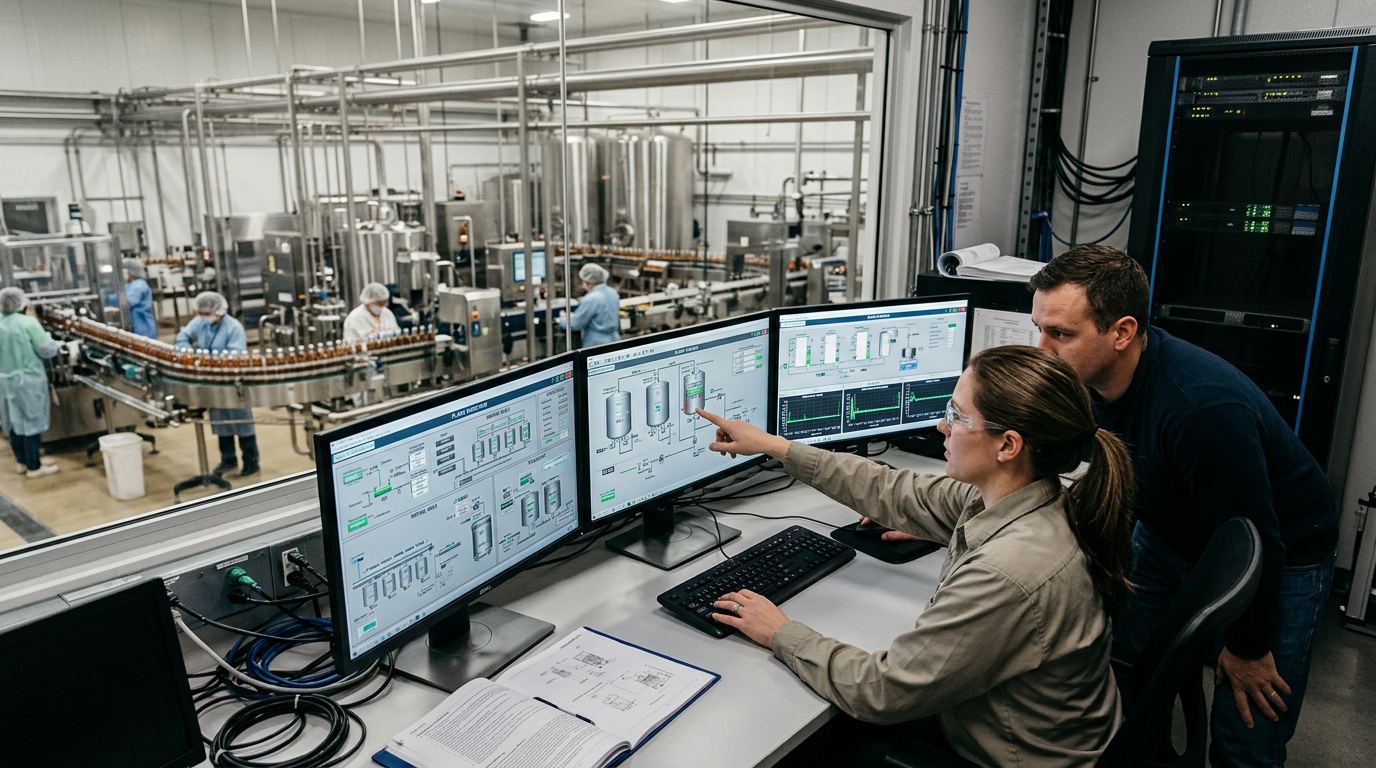
Tofu Production Facility Design: Soy Processing and Coagulation Systems
Designing a tofu production facility in the United States requires more than selecting a few soybean processing machines. A profitable plant must connect raw soybean handling, milk extraction, coagulation, curd pressing, cooling, packaging, sanitation, utilities, wastewater control, automation, and regulatory compliance into one integrated system. For processors in markets such as Los Angeles, Chicago, Houston, New York, Seattle, and Atlanta, the most effective tofu line design balances product quality, labor efficiency, water use, cleanability, and future expansion. Whether the goal is fresh water-packed tofu for regional distribution or shelf-stable tofu for nationwide retail, the processing system should be engineered around product mix, throughput, local utility costs, food safety requirements, and available labor. In the U.S. market, tofu demand continues to expand across retail grocery, foodservice, meal kits, Asian cuisine manufacturing, private label, and plant-based protein brands. That demand is not uniform. A processor near the Port of Los Angeles may optimize for imported soybean logistics and West Coast distribution, while a Midwest operator near Chicago or Kansas City may prioritize domestic soybean supply, lower freight costs, and central access to cold-chain networks. Because of these regional variables, successful tofu plant design starts with process flow definition and capital planning rather than equipment shopping alone. Processors typically evaluate several product categories at the beginning of a project: silken tofu, soft tofu, firm tofu, extra-firm tofu, fried tofu base, flavored tofu, high-protein tofu, and aseptic or shelf-stable tofu. Each product affects the design of soaking tanks, grinding systems, heating steps, coagulant dosing, pressing profiles, pasteurization, packaging format, and warehouse layout. Buyers also need to decide whether they want a modular pilot-scale line, a regional batch system, or a larger continuous plant that can support supermarket, club store, and co-manufacturing demand. From a capital planning perspective, U.S. manufacturers often make the mistake of sizing equipment only for current sales. A more resilient approach is to model year-one throughput, year-three expected utilization, and the utility backbone needed for expansion. That includes steam, hot water, chilled water, glycol, compressed air, process water, wastewater pretreatment, CIP capacity, and controls architecture. In many projects, utility and sanitation design determine long-term profitability just as much as the tofu process equipment itself. A well-designed tofu factory uses a coordinated soy processing and coagulation system that begins with soybean receiving, cleaning, soaking, grinding, cooking, and okara separation, then moves into controlled coagulation, molding, pressing, cooling, pasteurization where required, and final packaging. In the United States, the best facility design is usually the one that matches local labor economics, retailer specifications, FDA expectations, wastewater discharge limits, and target shelf life. Fresh tofu plants serving regional markets often favor flexible batch operations, while larger multi-SKU operations may benefit from semi-continuous or continuous milk preparation with automated coagulation and pressing. For buying decisions, processors should evaluate five factors first: target capacity per hour, product mix, required shelf life, sanitation philosophy, and future expansion plan. A startup private-label brand in Austin or Denver may need a compact skid-based line. A high-volume producer serving the Northeast corridor from New Jersey or Pennsylvania may need redundant soy milk prep, automated filling, tunnel pasteurization, and larger cold storage. A tofu line should never be selected in isolation from utilities, packaging, and wastewater systems. The most common industries and applications driving tofu facility investment in the U.S. include plant-based protein manufacturing, Asian prepared foods, institutional foodservice, natural grocery retail, co-packing, meal component production, and export-oriented specialty foods. Case studies across North America repeatedly show that yield optimization, recipe consistency, and sanitary design have a larger impact on margin than simply buying the fastest machine on the market. The table above shows why early definition matters. Many tofu projects appear simple at first, but hidden cost drivers usually emerge in refrigeration, sanitation, labor, and wastewater handling. Designing those systems in parallel avoids expensive retrofits after startup. The front end of a tofu plant determines yield, flavor, consistency, and downstream stability. Soybean handling begins with receiving, storage, and cleaning. U.S. processors may source from domestic growers in Iowa, Illinois, Indiana, or Minnesota, or use imported specialty beans through ports such as Long Beach, Oakland, Savannah, or Newark. If identity preservation, organic certification, or non-GMO status is required, storage and traceability systems need dedicated segregation. Soaking design should account for bean variety, water quality, soak time, ambient conditions, and target solids extraction. Typical systems include insulated tanks, agitation where appropriate, level control, and controlled drain steps. Process water quality is particularly important in regions with hard water or seasonal variability. Many plants benefit from filtration, softening, or reverse osmosis to stabilize tofu texture and reduce scaling in heat exchangers. Grinding and slurry preparation can be configured as batch or continuous operations. The key is to maintain controlled particle size, protein extraction efficiency, and consistent bean-to-water ratio. Once slurry is generated, the heating step denatures proteins and prepares the soy milk for separation. Okara separation may use decanters, screw presses, filtration screens, or integrated soy milk extraction systems. The chosen technology affects yield, energy use, and byproduct moisture content. Okara should never be treated as an afterthought. In the United States, it can become animal feed, bakery fiber ingredient, fermentation substrate, compost input, or dewatered byproduct for specialty uses. Plants near livestock or ingredient markets often recover greater value from okara than urban plants without byproduct channels. This soy preparation table highlights where processors gain or lose margin. The biggest front-end opportunities are higher soy milk yield, better temperature control, and improved okara handling. Plants that install instrumentation for flow, Brix, temperature, and solids consistency usually achieve more stable output than facilities running mostly by operator intuition. Coagulation is the heart of tofu manufacturing. Once soy milk is standardized and heated to the proper range, coagulants such as magnesium chloride, calcium sulfate, glucono delta-lactone, or blended systems are dosed under controlled mixing conditions. The type of coagulant and mixing profile changes curd size, moisture retention, mouthfeel, slicing performance, and final block stability. For batch systems, coagulation tanks should be engineered to minimize shear while ensuring even distribution of coagulant. For semi-continuous systems, in-line dosing and residence control become more important. Temperature uniformity is critical. Even small deviations can create inconsistent curd set, broken texture, or excess fines loss to whey. After coagulation, curd transfer to molds and pressing systems must be matched to SKU requirements. Soft tofu may require minimal pressing, while extra-firm tofu requires controlled pressure and dwell time to reach target moisture content. Press automation can improve block uniformity, especially for national retail accounts that expect consistent drained weight and pack appearance. The table explains why coagulant choice and press control must be tied to end use. Foodservice tofu for stir-fry behaves differently from premium silken tofu for refrigerated retail. Plants with multiple SKUs often benefit from recipe-controlled automation that stores temperature, dosing, agitation, and press profiles by product code. Application-specific design also matters. A facility making tofu for prepared meals may optimize for cube stability and low purge. A premium organic tofu producer may prioritize cleaner ingredient declaration and softer texture. These decisions should be made before equipment layout is finalized. Choosing between batch and continuous tofu production is one of the most important investment decisions. Batch plants are often preferred for flexibility, smaller lot sizes, easier recipe changes, and lower initial capital. They work well for regional brands, R&D-driven product portfolios, and co-packers managing multiple private-label formulas. Continuous or semi-continuous systems are typically favored when throughput is high, labor is expensive, and SKU complexity is manageable. These systems can improve consistency, reduce manual handling, and support better line balancing from soy milk production to filling and packaging. However, they require tighter process control, more detailed startup commissioning, and disciplined sanitation procedures. This comparison shows why there is no universal answer. For many U.S. projects, the best solution is a hybrid approach: continuous soy milk generation feeding multiple batch coagulation and pressing stations. That structure captures some labor and consistency benefits without eliminating product flexibility. The bar chart reflects why product channel matters in equipment selection. Retail grocery and Asian foods often require high consistency and packaging precision, while co-packing and foodservice may prioritize flexibility, lot control, and more diverse block formats. Pasteurization and cooling are critical to both food safety and shelf life. Fresh chilled tofu commonly relies on post-fill heat treatment, rapid cooling, and refrigerated distribution. Shelf-stable or extended shelf-life tofu may require more advanced thermal processing and packaging controls. The exact configuration depends on pack format, target distribution radius, and product pH and water activity characteristics. Common U.S. solutions include hot water pasteurization of sealed packs, tunnel pasteurization, retort for certain packaged formats, or aseptic-style strategies for specialized applications. Cooling design must prevent thermal abuse and manage condensate, pack integrity, and line flow. In warm climates such as Texas, Florida, or Southern California, cooling load calculations become especially important for maintaining throughput and avoiding package deformation. Processors serving national retail often need validated thermal profiles and integrated data logging to support customer audits and food safety plans. Cold storage staging, pallet dwell management, and warehouse airflow also affect final product quality. A strong tofu process line can still fail commercially if post-process cooling and distribution readiness are neglected. The area chart indicates a gradual U.S. shift toward longer shelf-life products. This trend is driven by broader geographic distribution, e-commerce, private label expansion, and retailer pressure to reduce shrink. By 2026, more tofu processors are expected to invest in validated heat treatment, digital traceability, and more energy-efficient cooling systems. Packaging determines both market presentation and process requirements. Water-packed tofu remains common for fresh refrigerated products, while vacuum-packed formats can reduce purge, support logistics efficiency, and improve shelf-life performance depending on process design. Tray sealing, cup filling, thermoforming, pouch systems, lidding, and case packing should be chosen based on SKU format, line speed, consumer channel, and label claims. Water-packed tofu lines require precise fill control, seal integrity, and hygienic water management. Vacuum formats need robust pack geometry, product handling that avoids block damage, and verification of seal quality. For national U.S. retailers, packaging lines should also support date coding, lot traceability, retail-ready case packing, and compatibility with downstream palletizing. The packaging table shows that line selection must reflect the commercial model, not just the product itself. A regional fresh tofu brand in San Francisco may prioritize premium tray presentation, while a private-label processor serving Dallas, Phoenix, and Miami may favor more logistics-efficient vacuum or multi-pack options. Local supplier strategy also matters. U.S. operators should source films, trays, seals, valves, instrumentation, and spare wear parts from vendors with service access near major manufacturing corridors such as the Carolinas, Southern California, the Midwest, and the Northeast. Downtime costs rise quickly when specialized packaging components have long lead times. Tofu plants generate significant wastewater from soaking, washing, separation, sanitation, and packaging operations. High organic load, suspended solids, and variable pH make wastewater management a major design priority. In municipalities with strict discharge permits, pretreatment can become one of the most important hidden capital items in the entire facility. Waste streams should be separated where possible: high-strength process streams, general washdown, and packaging wastewater do not always require the same treatment path. Screening, equalization, dissolved air flotation, pH adjustment, and solids handling are common design components. In some projects, water reuse opportunities may exist for non-product contact applications, provided regulatory and food safety requirements are met. Byproduct recovery offers another margin opportunity. Okara, soy whey, and recovered solids may support animal feed, digestion, ingredient recovery, or land application depending on local economics and permitting. Plants near agricultural regions may have better recovery economics than dense urban facilities, but even metro plants can reduce hauling costs through dewatering and stream segregation. This table shows why wastewater and byproduct planning belongs in early engineering. Facilities in states with high sewer surcharges or water scarcity can justify more advanced recovery systems faster than expected. Sustainability reporting and retailer pressure are also pushing processors to track water intensity more closely. Cleanability is a design function, not just a sanitation program. A tofu plant should be laid out to reduce harborage points, separate raw and ready-to-pack zones, support controlled personnel flow, and enable effective cleaning of product contact surfaces. Hygienic piping slopes, drain placement, weld quality, access for inspection, and CIP coverage all matter. In humid tofu environments, HVAC and condensate management also play a larger role than many buyers initially expect. U.S. compliance typically centers on FDA requirements, preventive controls, sanitation SOPs, allergen management where relevant, environmental monitoring, and customer audit expectations. If the processor wants SQF or BRC certification, hygienic zoning, documentation structure, and validation records need to be designed into the project. National retail and large foodservice accounts increasingly expect data-backed sanitation and traceability, not just visual cleanliness. The explanation is straightforward: sanitation efficiency and audit readiness are built during engineering. Retrofitting drains, modifying CIP loops, or correcting inaccessible piping after startup is far more expensive than designing hygienic access from the start. The comparison chart illustrates a common buying lesson in U.S. food plants: equipment alone does not create a high-performing facility. Integrated engineering, utility coordination, controls, installation management, and expansion planning are often what separate a profitable project from a costly one. Disruptive Process Solutions supports tofu and plant-based protein projects across the United States and Canada as a full-scope food and beverage engineering partner. Rather than acting as a simple equipment reseller, the company approaches projects through a design-build-manage model that aligns process engineering, capital planning, construction coordination, installation, and startup execution around the client’s long-term profitability. From a technological capabilities standpoint, DPS works across process, mechanical, structural, plumbing, electrical, and controls disciplines. For tofu facilities, that means integrating soy preparation, thermal processing, pumping, sanitary piping, CIP, refrigeration interfaces, compressed air, automation, recipe control, and SCADA visibility into one operating system. This is especially valuable for processors that need plant-wide coordination instead of disconnected vendor packages. Companies can learn more about its engineering and project approach on the food and beverage service solutions page. From a manufacturing capabilities standpoint, DPS also supports custom process equipment supply, including tanks, CIP systems, and stainless process components that can be incorporated into broader plant layouts. That gives tofu manufacturers a practical option when standard catalog equipment does not fit a required footprint, sanitation approach, or expansion strategy. More detail is available through the company’s process equipment portfolio. From a service capabilities standpoint, DPS provides feasibility support, owner’s representation, project and program management, licensed general contracting where applicable, field installation coordination, integration oversight, and commissioning support. For tofu processors launching a new facility or upgrading an existing plant in locations such as North Carolina, California, Texas, Illinois, or New Jersey, this integrated model helps reduce the risk of fragmented responsibility across multiple vendors. Background on the company and operating philosophy can be found on the about the company page, while selected execution examples are available in these project case studies. In practical terms, the value of this approach is clear when tofu manufacturers need more than one machine. A high-performing plant requires the process line, utilities, controls, sanitary design, building interfaces, and startup sequence to work together. That is where integrated engineering and field execution matter most. What is the best tofu production setup for a new U.S. manufacturer?For many new operators, a semi-automated batch line with strong soy milk preparation, flexible coagulation, reliable pressing, hygienic packaging, and scalable utilities offers the best balance of cost and flexibility. How much should a tofu plant prioritize wastewater design?Very highly. In many U.S. municipalities, wastewater discharge costs and permit conditions can materially affect project economics. Pretreatment should be evaluated early. Is continuous tofu processing always better?No. It is usually better only when throughput is high, recipes are stable, and labor savings justify the added automation and commissioning complexity. What packaging format is most common?Water-packed refrigerated tofu remains common, but vacuum and longer shelf-life formats are gaining interest as distribution footprints expand. What are the main buying risks?Undersized utilities, poor sanitation access, weak integration between process and packaging, lack of wastewater planning, and buying equipment without a realistic production model. How should processors prepare for 2026 trends?They should plan for higher automation, stronger digital traceability, more water and energy scrutiny, broader retailer sustainability requirements, and growing demand for extended shelf-life and convenient tofu formats. Policy pressure around water use, wastewater discharge, food safety documentation, and carbon reporting is expected to increase, especially for multi-state retail suppliers. Equipment that supports recipe control, data collection, energy efficiency, and modular expansion will likely provide the strongest long-term value. What local factors matter most in the United States?Soybean supply routes, labor cost, water quality, utility rates, sewer surcharges, regional retailer requirements, and distance to distribution hubs such as Los Angeles, Chicago, Houston, Atlanta, New York/New Jersey, and Seattle all influence the right plant design. Can a tofu line support multiple industries?Yes. The same facility may serve retail grocery, foodservice, prepared meals, private label, and plant-based ingredient applications if zoning, scheduling, and packaging design are engineered correctly. -
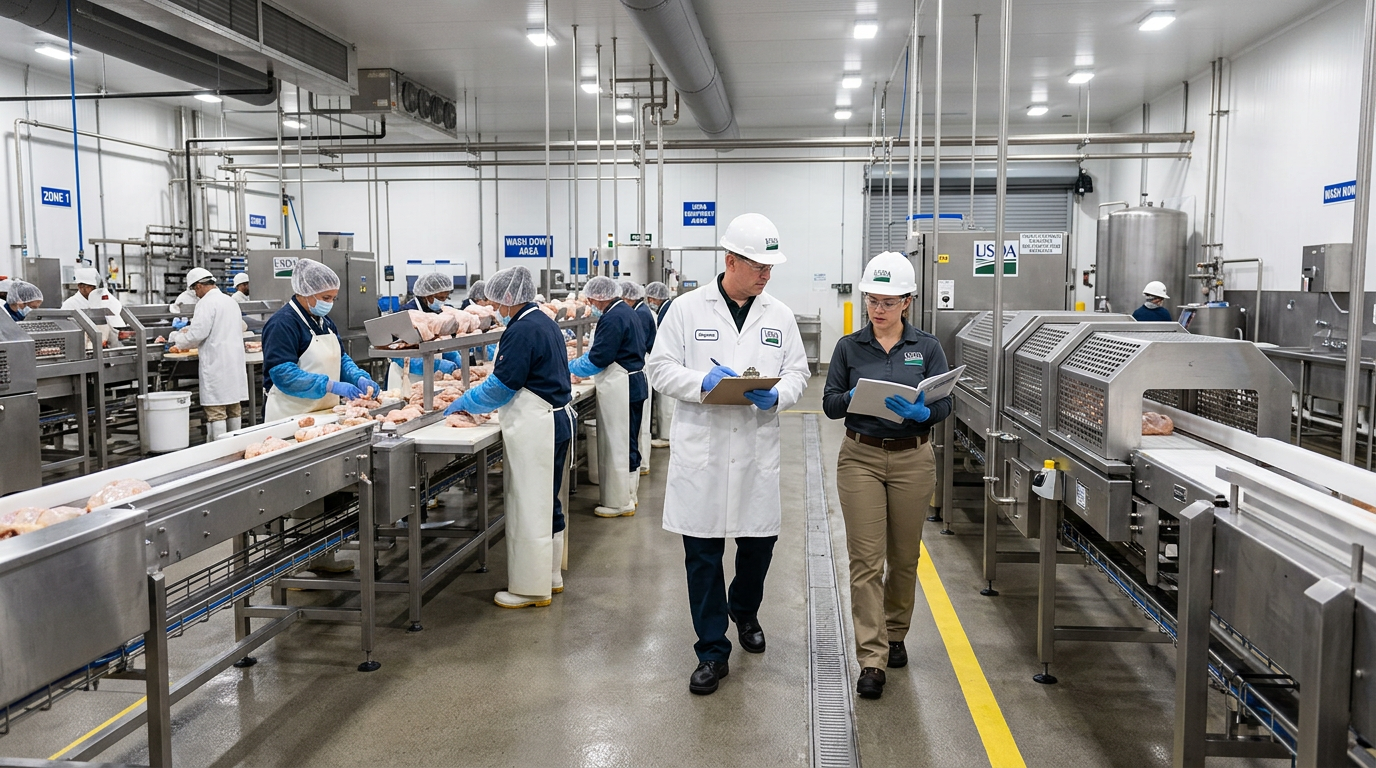
Nut Processing Plant Design: Roasting, Blanching, and Packaging Engineering
Designing a modern nut processing plant in the United States requires more than choosing a roaster and a bagger. It means building an integrated production system that can handle raw nut receiving, shelling, grading, roasting, seasoning, allergen separation, packaging, sanitation, fire prevention, and utility support at the right cost per pound. Whether the facility processes almonds in California, peanuts in Georgia, pecans in Texas, walnuts in the Central Valley, pistachios near Fresno, or mixed snack blends for distribution through Chicago, Dallas, Atlanta, and New Jersey, the plant layout must support throughput, food safety, labor efficiency, and future expansion. For U.S. manufacturers, plant engineering decisions are also shaped by FSMA expectations, retailer quality standards, SQF or BRC certification goals, OSHA safety requirements, insurance demands, utility costs, and increasingly strict customer expectations around traceability, allergen control, and sustainability. A well-designed line reduces giveaway, improves roast uniformity, limits cross-contact risk, supports faster changeovers, and creates a better base for profitable growth. That is why many processors turn to integrated engineering partners such as food processing engineering services that can connect process design, controls, utilities, installation, and startup into one execution model. The quickest answer for a U.S. nut processor is this: choose equipment and layout based on product mix, hourly throughput, allergen complexity, packaging formats, and utility strategy rather than on one machine’s purchase price. Batch roasting is usually best for premium, small-lot, seasonal, R&D, or highly flavored products. Continuous roasting is usually best for high-volume, stable SKUs that need consistent color, moisture, and throughput. Shelling and grading should be designed around the physical behavior of each nut type, because peanuts, almonds, pecans, walnuts, hazelnuts, and pistachios fracture differently and generate different shell loads and fines. Oil roasting and dry roasting need tight process control over temperature, dwell time, airflow, oil turnover, belt load, and exit moisture. Multi-nut facilities need robust allergen zoning, validated changeovers, traffic separation, and line scheduling discipline. Packaging automation should be selected by SKU count, bag style, case pack, and retail versus club-store or bulk demand. Finally, dust collection and fire safety cannot be treated as afterthoughts in any U.S. nut plant. In practical terms, most profitable projects begin with a phased master plan: current production needs first, future capacity built into the layout, and utilities sized for expansion. For example, a plant serving West Coast distribution might start with 3,000 to 5,000 lb/hr roasting capacity and reserve floor space and utility stubs for a second roaster, extra seasoning drum, and a higher-speed packaging line. A Midwest co-manufacturer shipping to national retailers may prioritize frequent SKU changeovers, lot traceability, and mixed-case flexibility over absolute top speed. A Southeastern peanut processor may instead optimize oil handling, fryer safety, and bulk packaging. The right answer depends on the business model, not just the machinery catalog. That business-first approach is where Disruptive Process Solutions, known as DPS, is often differentiated. The company works across North America on food and beverage capital projects and tends to approach plant design from profitability, utility integration, and long-term operating efficiency rather than from a narrow equipment-sales perspective. Their project teams support process engineering, capital planning, installation, integration, and owner-side execution support for processors that need one coordinated path from concept to startup. More information on the firm’s background is available on the company overview page. The first major decision in a roasting plant is whether to install batch roasters, continuous roasters, or a hybrid system. In the United States, this decision is often shaped by volume stability, SKU count, customer requirements, and available labor. Batch roasters allow more flexibility in recipe variation, smaller production runs, and controlled development of flavor profiles. They are common in premium snack brands, regional specialty processors, private-label operations with varied formulas, and plants where frequent flavor changeovers matter. Continuous roasters excel when the plant runs long campaigns of standardized products and needs predictable throughput with tighter labor efficiency per pound. Sizing cannot be based on nominal machine capacity alone. Engineers should calculate net sellable pounds per hour after accounting for loading losses, warm-up time, seasoning or cooling bottlenecks, quality hold time, planned sanitation, and normal uptime. For example, if a plant needs 40,000 finished pounds per day over two shifts with 85% line efficiency, the roaster should be sized to support the actual required finished throughput, not just the headline number on a brochure. Different nuts also absorb and release heat differently, so almonds, pecans, and cashews may not achieve the same effective throughput on the same machine under the same roast profile. The table above shows why selection should be linked to the commercial strategy. A retailer-driven facility with long production campaigns may gain most from a continuous dry roasting line. A brand focused on premium inclusions, honey-roasted products, or limited seasonal blends may benefit from a batch system or hybrid layout. U.S. labor conditions also matter: in high-wage markets such as California, Illinois, or the Northeast, automation and continuous production often provide a stronger return than in smaller regional operations with more manual flexibility. The growth pattern shown above reflects a realistic direction for U.S. nut processing demand as healthier snacks, protein-rich foods, and private-label retail continue to expand. By 2026, more processors are expected to invest in electrified heat systems, better airflow modeling, advanced burner management, and data-driven recipe controls to reduce energy use and improve consistency. Sustainability pressure will also influence roaster sizing, because oversized systems often waste energy and create higher exhaust-treatment loads. Shelling, sorting, and grading are where raw agricultural variability meets plant engineering. Every nut type brings a distinct combination of shell hardness, kernel fragility, moisture variability, foreign material risk, and defect profile. Almonds may emphasize hull and shell separation, size grading, and optical sorting for chips or insect damage. Walnuts and pecans require gentler handling to protect kernel halves and pieces. Pistachios need open-shell versus closed-shell separation as well as color and aflatoxin-oriented inspection strategies. Peanuts often require robust cleaning, destoning, blanching support, and size segregation for roasting consistency. In the United States, raw material receiving often comes from key agricultural hubs such as California’s Central Valley, Georgia’s peanut belt, New Mexico pecan regions, and Arizona pistachio production zones. The line should therefore be designed for realistic incoming variation, not idealized raw product. A well-engineered front end usually includes receiving hoppers, scalpers, aspirators, destoners, magnets, shelling or cracking equipment where needed, vibratory sizing, density separation, optical sorting, metal detection, and collection systems for rework, shell waste, and fines. The exact sequence depends on nut type and desired finished grade. This comparison illustrates why a single “universal” shelling and grading line is rarely ideal. Multi-nut plants often succeed by creating shared receiving and sanitation infrastructure but maintaining product-specific modules downstream. That modular approach can reduce unnecessary handling, improve yield, and make maintenance easier. It also supports phased capital investment. For example, a processor may begin with an almond and cashew line, then later add a separate peanut module with stronger allergen controls and different blanching support. Optical sorting, X-ray, and AI-assisted defect recognition are becoming more important across U.S. facilities, especially those supplying national retailers and export markets through ports such as Oakland, Savannah, Houston, and Newark. More processors are tracking false reject rates, yield loss, and sort-recipes by supplier lot. This is an area where strong controls integration matters: machine vision data should feed plant historians and quality dashboards, not remain isolated at the sorter. Roasting is where product value is created, and process control determines whether that value is repeatable. Oil roasting and dry roasting require different thermal strategies, but both depend on tightly managed variables: inlet temperature, product bed depth, dwell time, air velocity, humidity, burner output, oil turnover rate, filtration condition, conveyor speed, exit product temperature, and final moisture. In a U.S. production environment serving major retail customers, controls should not be limited to manual dials and operator memory. A modern system should include recipe management, alarm history, trending, controlled setpoint access, batch or lot traceability, and integration with upstream and downstream equipment. Dry roasting systems often rely on zoned airflow and burner or electric heat control to maintain color development and target moisture. Oil roasting systems add oil temperature stability, filtration loops, free fatty acid management, turnover calculations, and safe oil handling design. In both cases, cooling is part of process control, not just a finishing step. Inadequate cooling can produce packaging problems, seasoning instability, condensation, and shorter shelf life. Plants that package immediately after roasting should pay special attention to the thermal balance between roasting, cooling, seasoning, and fill temperature. DPS brings useful capabilities in this area because its teams work across process engineering, electrical, controls, PLC programming, automation, and SCADA integration. For nut processors, that means a roast line can be engineered as part of a complete operating system, with utilities, instrumentation, controls architecture, and operator interfaces designed together. A partner with broader food and beverage automation experience can also help connect roast data to batching, packaging, quality, and plant-wide reporting. Processors exploring this level of integration often review project case examples before defining scope. The chart below reflects how many U.S. plants are shifting control priorities over time. The trend is away from manually adjusted roasting and toward connected, recipe-based, quality-verified roasting systems. By 2026 and beyond, more facilities are expected to adopt predictive maintenance on burners, fans, and conveyors; digital oil-quality tracking; AI-supported roast profile optimization; and expanded energy dashboards. Policy trends may also affect heat-source strategy, especially in states where emissions and energy reporting are receiving more scrutiny. Allergen management is fundamental in nut processing, especially in plants that handle multiple tree nuts, peanuts, seeds, chocolate inclusions, dairy seasonings, or other flavor systems. In the United States, label accuracy and cross-contact prevention carry both regulatory and commercial consequences. National retailers, club stores, and large foodservice buyers often require documented allergen programs that go beyond basic sanitation. Engineering should therefore reinforce the food safety plan, not fight against it. Effective separation starts with plant zoning. Raw zones, roasted zones, seasoning zones, packaging areas, and allergen-specific rooms should be arranged to reduce crossover of people, product, tools, pallets, waste, and air. Traffic paths matter. Forklifts carrying peanut totes should not pass through a tree-nut-only packaging room. Shared conveyors should be minimized where possible. Dust extraction should avoid pulling contaminants from one production cell into another. Storage racks, utensils, mobile bins, and wash equipment should be clearly dedicated or validated between uses. The table highlights that allergen control is not one procedure but a linked set of design choices. In mixed-nut operations, scheduling can be as important as stainless steel. Many facilities run from least allergenic to most allergenic profiles, place full sanitation between certain transitions, and use campaign production to limit changeovers. When line flexibility is essential, engineering should make changeovers easier through better access, removable contact parts, sloped surfaces, controlled drainage, and clear utility isolation. By 2026, U.S. plants are expected to put even more attention on digital allergen verification, electronic sanitation records, machine-readable lot segregation, and vision systems that reduce label mismatch. This is especially relevant for co-packers and brands shipping to national distribution centers around Memphis, Kansas City, Columbus, and Southern California. Value-added nut products often win in the market through flavor, not just through the base roast. Honey roasted, barbecue, dill pickle, chili lime, dark chocolate, yogurt-coated, kettle-glazed, and savory protein snack formats all require seasoning or coating systems designed for adhesion, appearance, and repeatability. In many plants, this is where product innovation outpaces mechanical capability. A seasoning drum that works for light salt may fail when sugar, slurry, or oil-based flavor systems are introduced. Equipment selection should consider application method, product temperature at seasoning, residence time, dust containment, cleanability, and the risk of buildup. Dry seasoning may require oil mist or tackifier application ahead of a tumble drum. Slurry systems require precise pumping, heated jackets, and CIP considerations. Coatings such as chocolate or yogurt need temperature-controlled transfer, tunnel cooling, and humidity management. Some products also require polishing, pre-coating, or post-application drying. This is also where manufacturing capability matters. DPS not only supports process integration, but also manufactures selected branded process equipment such as tanks, custom CIP systems, tumblers, and cooking vessels. For nut processors, that kind of capability can be useful when a standard machine does not fit the available footprint or when a seasoning, slurry, or utility support system must be tailored around the line rather than purchased as a generic package. Details on available systems can be found through the equipment solutions page. The strongest flavored-nut lines in the United States are designed backward from the finished package. Engineers should ask: what finish is the customer buying, how long is the shelf-life target, what distribution conditions will the product see, and how much flavor loss is acceptable over time? Plants serving humid coastal markets or long-haul shipments through Phoenix, Miami, or Seattle may need tighter environmental control than local-distribution facilities. Packaging automation should match the product portfolio, not the other way around. Retail nut packaging in the United States often includes pillow bags, doy packs, quad-seal bags, canisters, jars, club-store formats, and stand-up pouches with zippers or nitrogen flush. Bulk packaging may include lined cartons, totes, foodservice bags, ingredient sacks, or super sacks. Each format changes the economics of line design, labor, inspection, and changeover. For high-speed retail lines, common automation elements include multihead weighers, vertical form-fill-seal machines, premade pouch fillers, checkweighers, metal detectors, nitrogen flushing, date coding, case packing, robotic palletizing, and warehouse labeling integration. Bulk lines may require heavier-duty filling heads, dust-managed transfer, lot-control systems, and easier access for sanitation. When the plant serves both retail and ingredient channels, it may be best to split packaging cells while sharing common upstream roasting or seasoning infrastructure. The demand pattern above shows why flexible pouch-oriented automation remains attractive in the U.S. market. Smaller portions, convenience packs, and private-label snack assortments continue to support growth in retail automation, while bulk ingredient channels remain important for bakery, confectionery, and foodservice applications. This table shows how packaging design changes with market channel. The best line is often a combination of one high-speed retail cell, one flexible premium pouch cell, and one bulk line. By 2026, U.S. processors are expected to invest more in vision-guided rejection, robotic case packing, digital print verification, recyclable film trials, and data integration between packaging execution and ERP systems. Nut processing creates combustible dust, oil vapors, shell waste, and heat sources that demand disciplined fire and explosion risk management. Dust collection and fire safety are essential parts of engineering, insurance acceptance, and operating continuity. A plant that underinvests here may face shutdowns, higher premiums, difficult inspections, and major personnel risk. Key dust-generating points include dumping, shelling, grading, aspiration, transfer points, seasoning, and packaging. The collection strategy should identify dust characteristics, source strength, zoning, and housekeeping needs. Not every process should tie into one central collector. In some cases, separated collectors reduce cross-contamination and improve hazard management. Duct routing, spark detection, explosion venting, isolation devices, suppression options, and collector location all need review. Housekeeping access and maintainability are just as important as the original design. Fire safety must also consider roasters, fryers, oil systems, control panels, utility rooms, and storage areas. Nut plants frequently need coordinated design among process engineers, mechanical designers, electricians, local authorities, insurers, and operations leaders. Facilities near major logistics hubs such as Los Angeles, Houston, Atlanta, or Philadelphia may also face more demanding uptime expectations because missed shipments quickly ripple through retail distribution schedules. The comparison chart makes a simple point: a purpose-designed safety system usually performs far better than a pieced-together add-on approach. This matters even more as 2026 trends push plants toward better environmental reporting, stronger workplace safety culture, and more resilience planning against supply interruptions and insurance scrutiny. Disruptive Process Solutions supports food and beverage manufacturers across the United States and Canada with a model centered on engineering the solution, building the project, and managing execution so the full system performs as intended. For nut processors, that matters because a successful facility is rarely just a roaster purchase. It is a combination of process flow, utilities, structure, controls, sanitation, safety, scheduling logic, and startup discipline. DPS operates with a lean senior team and is built for project-based execution, fast decisions, and direct accountability. From a technological capability standpoint, DPS works across process engineering, mechanical, plumbing, electrical, structural, and controls disciplines, including PLC programming, automation, and SCADA. In a nut plant, that can translate into roast profile control, utility integration, data collection, recipe management, packaging coordination, and plantwide operating visibility. This cross-functional technical depth is useful when the project includes not only nut processing equipment, but also CIP systems, compressed air, boilers, chilled water, HVAC, wastewater interfaces, and electrical distribution. From a manufacturing capability standpoint, DPS also produces selected process equipment under its own brand, including tanks, custom CIP systems, tumblers, and cooking vessels. That can be valuable when a standard OEM package does not fit the footprint, capacity target, or sanitation strategy of a nut line. Custom utility skids, process support vessels, or integrated seasoning support packages can improve project fit and reduce field improvisation. From a service capability standpoint, DPS supports capital planning, feasibility, owner’s representation, project and program management, general contracting functions where applicable, equipment supply, installation, and complete system integration. This is especially relevant for U.S. nut processors expanding an existing site in California, Texas, Georgia, Illinois, or Pennsylvania, where production cannot stop for long and where local trades, permitting, utility constraints, and staged startup must be coordinated carefully. Companies evaluating this kind of partner can review the about page, explore broader engineering and integration services, browse available equipment capabilities, and see case-based project experience for context. In practical terms, the firms that get the most value from this model are usually those that think beyond the immediate machine purchase. They want a layout that can scale, utilities that will not become the hidden bottleneck, controls that improve output rather than create operator confusion, and a project team willing to challenge poor assumptions before money is spent. In the U.S. nut market, where margins are shaped by yield, uptime, food safety, and labor efficiency, that kind of integrated thinking often has more financial value than shaving a small amount off the bid price. What is the best roasting option for a startup nut brand in the United States?A batch roaster is often the best starting point if the company expects multiple flavors, small runs, and frequent product changes. It reduces initial risk and supports product development. A continuous system becomes more attractive as volume stabilizes. How much capacity should I design for?Design for the next three to five years, not just today’s orders. Include expected uptime, sanitation windows, shift structure, and expansion. Many profitable projects reserve floor space and utilities for future line additions even if equipment is added later. Can one line process peanuts and tree nuts?Yes, but only with a strong allergen management program. In many cases, dedicated modules, campaign scheduling, validated sanitation, isolated dust control, and barcode-based packaging verification are needed to reduce cross-contact risk. What is the main difference between oil roasting and dry roasting from an engineering perspective?Oil roasting adds oil storage, heating, filtration, turnover control, fryer safety, vapor management, and oil-quality oversight. Dry roasting usually puts more emphasis on airflow, zone heating, and moisture removal control. Do I need optical sorting for all nut types?Not always, but optical sorting is increasingly common in U.S. plants that need high retailer compliance, strong defect removal, and consistent finished appearance. It is especially valuable for color-based defects and foreign material reduction. How important is packaging automation for profitability?Very important. Packaging often determines labor cost, giveaway, label accuracy, and throughput stability. The right automation can improve case output, reduce manual handling, and support retail compliance. What utility systems are commonly overlooked?Compressed air quality, HVAC balance, heat rejection, process cooling, electrical distribution, sanitation water strategy, wastewater load, and future spare capacity are often underestimated in early project planning. What are the biggest 2026 trends in U.S. nut processing?More recipe-based automation, AI-assisted sorting and quality analysis, better allergen digital verification, energy tracking, electrification where practical, recyclable packaging trials, and stronger dust/fire risk design tied to insurance expectations. Should I separate retail and bulk packaging?Usually yes if volumes are meaningful in both channels. Separate cells improve line efficiency, reduce changeover conflict, and help maintain cleanliness and traceability across very different package formats. When should I involve an engineering partner?As early as possible. Early involvement helps define realistic capacity, utility loads, layout options, budget ranges, and phased expansion strategy before equipment choices lock in avoidable costs. -
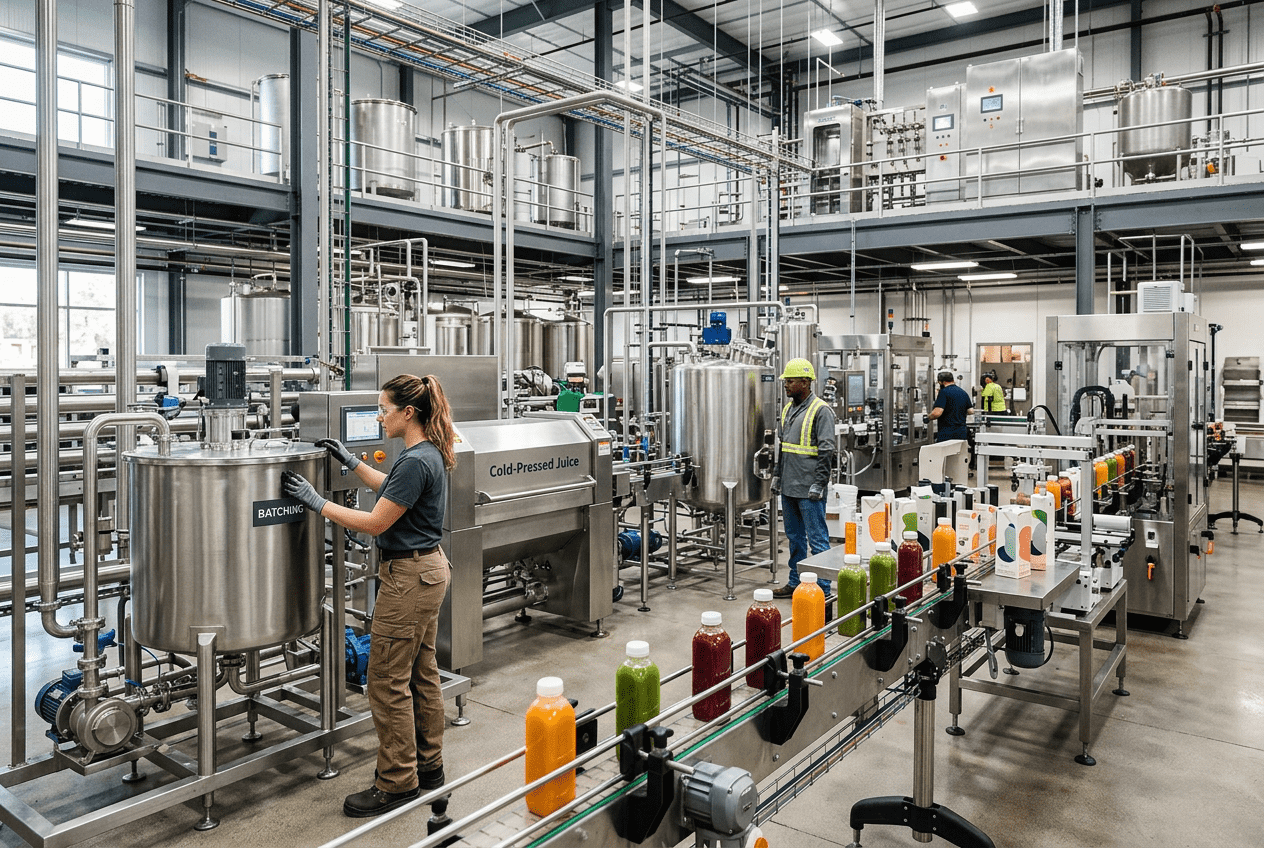
Food Processing Equipment Manufacturer
Food and beverage manufacturers in the United States rarely need only a machine. In most cases, they need a partner that can design around throughput, sanitation, labor, utilities, automation, compliance, and future expansion. That is why selecting a food processing equipment manufacturer should start with a broader question: can the supplier support your process from concept to commissioning, or are they only shipping hardware? Across major production corridors such as Chicago, Dallas-Fort Worth, Los Angeles, Fresno, Atlanta, Charlotte, Milwaukee, and the Northeast I-95 corridor, processors are under pressure to add capacity while controlling capital spend. The same is true near logistics hubs like the Port of Los Angeles, Port of Long Beach, Port of Savannah, Port of Houston, and Port Newark, where imported ingredients, packaging, and finished-goods distribution create tight schedules and little tolerance for equipment delays. In this market, the strongest manufacturers combine fabrication knowledge with engineering, project execution, installation, and long-term support. A full-service food processing equipment manufacturer in the United States should do more than fabricate tanks or skids. The best partners help define process requirements, select sanitary materials, verify regulatory and hygienic standards, integrate controls, manage installation, and support startup. Buyers should compare stainless steel options such as 304 and 316L, confirm certifications like 3-A or ASME where relevant, and evaluate total cost of ownership rather than quote price alone. For companies expanding in protein, dairy, prepared foods, sauces, beverages, aseptic systems, or co-packing, the most reliable model is often an engineering-led supplier with manufacturing and field integration capability. That is especially important when projects involve utilities, clean-in-place systems, batch control, piping, structural modifications, or multi-line growth planning. The table above summarizes the core screening factors. Price still matters, but in most processing environments, cleaning performance, integration quality, and schedule reliability have a larger impact on profitability than a lower initial quote. A full-service manufacturer typically covers five connected areas: process design, equipment fabrication, project delivery, installation/integration, and startup support. Instead of treating equipment as a standalone purchase, this approach treats it as part of a production system. For example, a mixing skid is only as effective as the upstream ingredient handling, downstream fill rate, CIP strategy, automation logic, and utility capacity supporting it. In the United States market, many vendors are excellent fabricators but do not manage field execution. Others sell packaged systems but rely heavily on third parties for design and commissioning. Manufacturers should understand which model they are buying. A true end-to-end partner helps during feasibility, develops layout and process concepts, coordinates utilities, aligns with sanitary requirements, and remains accountable during installation and performance ramp-up. Disruptive Process Solutions (DPS) reflects this broader model. Rather than serving only as a component seller, the company supports complete food and beverage capital projects across North America. Its approach combines engineering, equipment supply, field execution, and project management under a design-build-manage structure intended to keep projects aligned with profitability goals. Manufacturers can review the company background on the About Us page and see how that operating model differs from a conventional single-scope vendor. That difference matters when a project includes process equipment plus boilers, glycol, compressed air, controls, piping, and building modifications. A standalone fabricator may ship quality hardware, but an engineering-led partner is better positioned to identify hidden bottlenecks before they become change orders. This comparison shows why many U.S. processors now prefer suppliers that can own outcomes, not just equipment shipments. It reduces handoff risk and creates clearer accountability across the project lifecycle. The line chart illustrates a realistic growth pattern in U.S. equipment demand driven by reshoring, automation investment, labor constraints, and growth in value-added food production. The upward trend helps explain why experienced manufacturers with predictable delivery systems are in strong demand. Material selection is one of the most misunderstood buying decisions in food equipment procurement. Both 304 and 316L stainless steel are widely used in sanitary applications, but they are not interchangeable in every process. Choosing correctly affects corrosion resistance, cleanability, longevity, and total maintenance cost. 304 stainless steel is often appropriate for standard food contact applications involving less aggressive products and routine washdown. It is common in dry ingredient systems, many mixing vessels, access platforms, non-chloride-heavy environments, and general food handling equipment. It usually offers a strong balance of cost and performance. 316L stainless steel contains molybdenum, which improves resistance to chlorides and more corrosive process conditions. It is frequently selected for saline, acidic, or highly cleaned systems, including some dairy, beverage, brine, sauce, aseptic, and pharmaceutical-adjacent applications. The lower carbon content in 316L also supports better corrosion behavior after welding when properly finished. Plants in coastal environments such as Southern California, the Gulf Coast, or the Southeast may also find 316L attractive where ambient conditions, aggressive cleaning chemicals, or product chemistry justify the higher cost. However, upgrading everything to 316L is not always economically rational. The right choice depends on product, CIP chemistry, temperature, dwell time, and expected service life. The table makes clear that material choice should match the process, not a generic standard. A knowledgeable manufacturer will ask about product chemistry, operating temperature, sanitation regime, and expected production intensity before recommending a grade. Surface finish also matters. A well-designed vessel in 304 with proper weld finishing, drainability, and sanitary connections can outperform a poorly fabricated 316L vessel. Buyers should ask about interior finish, passivation, weld maps when needed, and documentation for critical sanitary zones. Certifications and standards do not all serve the same purpose, so they should be reviewed in the context of your product and process. In the United States, many food and beverage projects require a mix of sanitary design expectations, pressure vessel code compliance, and regulatory alignment with inspection or audit frameworks. 3-A sanitary standards are especially relevant in dairy and certain hygienic processing applications. They focus on cleanability and hygienic equipment design. EHEDG is more commonly associated with European hygienic design frameworks, but U.S. processors exporting globally or adopting best-in-class hygienic practices may still look for alignment with EHEDG principles. ASME standards apply when pressure vessels or coded systems are involved. USDA requirements matter heavily in meat, poultry, and some inspected protein operations, where equipment layout, cleanability, and operational practices are scrutinized closely. It is also important to distinguish between a component that is “built to sanitary principles” and one that is formally certified to a specific standard. Ask for documentation. If a supplier claims code compliance, request the stamp, supporting paperwork, and scope details. The practical takeaway is simple: verify what is mandatory, what is customer-driven, and what supports long-term hygienic performance. Overbuying on certifications can raise project cost unnecessarily, but under-specifying them can create serious startup and audit risk. The food processing equipment landscape is broad, but most capital projects fall into several core categories: mixing and blending, thermal processing and cooking, storage, and material handling. Each category has its own sanitary design concerns and process-integration requirements. Mixing systems may range from simple batch tanks to high-shear emulsification systems with load cells, inline dosing, recipe control, and Brix monitoring. Cooking equipment can include kettles, scraped surface heat exchangers, cook tanks, retorts, smokehouses, ovens, and thermal treatment skids. Storage can involve ingredient silos, sanitary tanks, buffer vessels, bright tanks, day tanks, and finished product holding. Material handling includes conveyors, pumps, augers, tote handling, ingredient batching, and transfer systems. When buyers review suppliers, they should ask whether the manufacturer can connect equipment categories into one functioning line. A mixer is not enough if transfer pumps are undersized. A retort system is not enough if staging and cooling are poorly planned. A storage tank is not enough if CIP routing creates dead legs or excess downtime. DPS supports a wide range of equipment and integrated process systems for food and beverage manufacturers, including vessels, custom CIP systems, marination tumblers, cooking equipment, fermentation systems, pasteurization technologies, aseptic systems, and complete utility infrastructure. Manufacturers can browse representative categories on the equipment solutions page to understand the breadth required in multi-scope projects. This overview matters because many U.S. facilities do not fail for lack of a single machine; they fail when the surrounding infrastructure is undersized or disconnected from process reality. The bar chart highlights where equipment demand is strongest in the current U.S. market. Beverages and protein continue to drive significant spending, but prepared foods, dairy modernization, and plant-based capacity also remain important categories. Standard equipment can be the right answer when the application is well understood, the process is stable, and the footprint fits common production layouts. It usually offers faster delivery, lower engineering hours, and a simpler procurement path. Examples include common sanitary tanks, off-the-shelf pumps, basic conveyors, and standardized heat transfer skids. Custom fabrication becomes more valuable when the process is unusual, the footprint is constrained, the utility tie-ins are complex, or the plant is scaling around specific throughput economics. It is often the better fit in retrofit projects, USDA-inspected facilities, aseptic environments, high-viscosity processes, or multi-product lines that need flexible automation and CIP sequencing. The key is not choosing custom because it sounds advanced. It is choosing the level of customization that protects production efficiency. Too much customization can complicate maintenance and spare parts. Too little can force operators to work around equipment limitations for years. An engineering-led supplier can help strike that balance. DPS, for example, combines proprietary equipment manufacturing with broader system design and integration, allowing clients to use custom elements only where they improve process outcomes. That is often more effective than forcing a full custom build when a hybrid solution would reduce cost and lead time. The explanation here is straightforward: choose standard where standards work, and choose custom where process economics, hygiene, or footprint demand it. The best suppliers do not push one answer for every project. Lead times are now a strategic issue, not a purchasing detail. Long-cycle items such as tanks, pressure vessels, controls hardware, pumps, valves, instrumentation, and utility equipment can define the entire project schedule. A manufacturer that cannot provide real visibility into sub-suppliers, fabrication slots, and approval timelines creates risk long before installation starts. In the United States, capacity planning is especially important for manufacturers building around seasonal demand, contract packaging commitments, or retailer launch windows. Plants in logistics-heavy regions like Southern California, Texas, the Carolinas, or the Midwest often coordinate equipment delivery with building contractors, utility upgrades, and line commissioning teams. One late component can delay all of them. Ask suppliers how they handle procurement sequencing, expediting, approved drawing cycles, and change management. Also ask whether they fabricate in-house, rely on strategic partner shops, or broker equipment from multiple OEMs. None of these models are inherently wrong, but they require different schedule controls. DPS operates with a lean project-focused structure and a vetted network that supports execution across all 50 states and Canada. For buyers, that matters because an agile delivery model can accelerate decision making, reduce communication lag, and improve coordination across engineering, field trades, and startup activities. More detail on the service structure is available on the services page. The area chart shows a realistic market shift toward integrated systems rather than isolated machine purchases. As labor pressure, data visibility, and utility efficiency become more important, more processors are buying complete line solutions instead of piecing systems together. Looking toward 2026, lead-time strategy will also be shaped by domestic manufacturing policy, electrification and energy efficiency incentives, continued automation adoption, and resilience planning for imported components. Buyers should expect top suppliers to discuss alternate sourcing, controls architecture flexibility, and phased startup strategies as part of the quote process. Experience should be verified in practical terms. It is not enough to hear that a manufacturer has “years in the industry.” Ask what they have installed, in which sectors, at what capacities, and with what level of responsibility. A supplier that has built ten excellent sanitary tanks may still be the wrong choice for a turnkey sauce line, protein marination system, or high-speed beverage utility backbone. Good reference questions include: Case history also matters. Processors should look for examples tied to business outcomes, not only fabrication photos. A strong case study explains what bottleneck existed, how the solution was designed, and what changed in throughput, labor, uptime, quality, or capital efficiency. DPS is notable here because it positions itself not merely as a contractor, but as a profit-oriented project partner. Its portfolio spans food, beverage, utilities, controls, and complete processing systems, including high-growth beverage facilities and complex food manufacturing applications. Manufacturers can review selected project outcomes through the case studies section to see how installation experience translates into measurable results. The company’s technological capabilities are especially relevant for buyers evaluating system-level expertise. Those capabilities include process, mechanical, structural, plumbing, electrical, and controls engineering, with PLC programming, automation, SCADA, recipe control, and utility integration all playing a role in complete line performance. That is important because many production gains come from system logic and utility balancing, not from replacing a vessel alone. Manufacturing capabilities also deserve close review. DPS produces selected branded process equipment such as storage and processing tanks up to 12,000 gallons, custom CIP systems, marination tumblers, and cooking vessels. For buyers, this means the company can support both project integration and application-specific fabrication where standard solutions do not fit. The value is not just in owning fabrication scope, but in aligning that fabrication with the total process objective. Finally, service capabilities can determine whether a project succeeds on schedule. DPS provides capital planning, feasibility analysis, owner’s representative support, project and program management, installation oversight, and turnkey integration. In practical terms, that service depth can help clients avoid spending heavily on the wrong bottleneck, a risk that often appears in fast-growth operations. The comparison chart illustrates why references should focus on full project capability. A supplier that scores well in fabrication but weakly in engineering or integration may still create execution risk on a complex U.S. processing project. The lowest quote is rarely the lowest cost. Total cost of ownership includes installation labor, controls integration, utility demand, water use, CIP chemistry, preventive maintenance, downtime risk, operator training, spare parts, and service responsiveness. It also includes the financial cost of a poor process fit, such as excess giveaway, product loss, slow changeovers, or labor-heavy cleaning. For example, a low-cost vessel with weak sanitary detailing may require longer cleaning cycles. Over a year, those extra minutes can reduce available production hours and increase labor, water, and chemical costs. A cheaper pump package may create product shear or poor net positive suction conditions. An underspecified automation package may force manual intervention and inconsistent batches. That is why buyers should request cost discussions beyond capex. Ask suppliers to quantify design assumptions related to capacity, utility load, labor impact, changeover time, and expected service intervals. Ask about spare parts availability in the United States. Ask how easy the equipment is to inspect, clean, and maintain on a third shift. This table shows why a procurement decision should include operations, maintenance, engineering, and finance, not only purchasing. A strong manufacturer supports that cross-functional review instead of resisting it. In 2026 and beyond, total cost of ownership will be shaped even more by sustainability and policy factors. Processors are increasingly evaluating wastewater load, heat recovery, water reuse, electrification pathways, energy management systems, digital maintenance tools, and traceability in controls architecture. Equipment suppliers that can align capital projects with ESG goals and utility efficiency targets will have a growing advantage in the U.S. market. What is the difference between an equipment manufacturer and a system integrator?An equipment manufacturer fabricates or supplies machines and vessels. A system integrator connects equipment, controls, utilities, and field execution so the production line works as one system. Some companies do both, which often reduces risk on larger projects. Is 316L always better than 304 for food processing equipment?No. 316L offers better corrosion resistance in harsher conditions, but 304 is often fully appropriate for many food applications. The right choice depends on product chemistry, cleaning chemicals, temperature, and expected operating intensity. Which certifications should I verify first?Start with the standards relevant to your process. For example, review 3-A for certain hygienic applications, ASME for pressure equipment, and USDA alignment for protein operations. Also confirm FDA-compatible materials and audit-ready documentation where needed. When should I choose custom fabrication?Choose custom when your layout, product behavior, sanitation requirements, utility constraints, or throughput goals cannot be met efficiently with standard equipment. Retrofits and complex multi-product lines often benefit most from custom design. How long do food processing equipment projects usually take?Simple equipment purchases may move in weeks, while integrated projects can take several months or longer depending on engineering, approvals, controls scope, fabrication, and utility work. Long-lead components should be identified early. What should I ask for in a supplier reference check?Ask about schedule accuracy, startup support, change management, sanitation performance, documentation quality, and whether the customer would hire the supplier again for a similar project. Why does total cost of ownership matter so much?Because cleaning time, downtime, maintenance, labor, utility consumption, and poor integration often cost more over the life of the system than the initial difference between two quotes. What types of industries need full-service equipment partners most?Protein, dairy, beverage, aseptic, sauces, prepared foods, and co-packing operations often benefit the most because their projects usually involve multiple disciplines, compliance pressure, and demanding startup schedules. Can one company support both food and beverage projects?Yes, but verify actual experience in your category. The best cross-sector firms understand differences in hygienic design, thermal treatment, utility systems, automation, and regulatory expectations across both food and beverage operations. How can U.S. manufacturers reduce project risk before ordering equipment?Invest in front-end planning. Confirm throughput assumptions, utility capacity, sanitation requirements, controls philosophy, product characteristics, and expansion pathways before release. Early engineering typically saves money later. For U.S. manufacturers evaluating a food processing equipment manufacturer, the smartest path is to choose a partner that understands the entire process, not just the machine. When engineering depth, fabrication quality, integration capability, and business-minded project execution come together, capital projects are far more likely to produce durable returns.