-
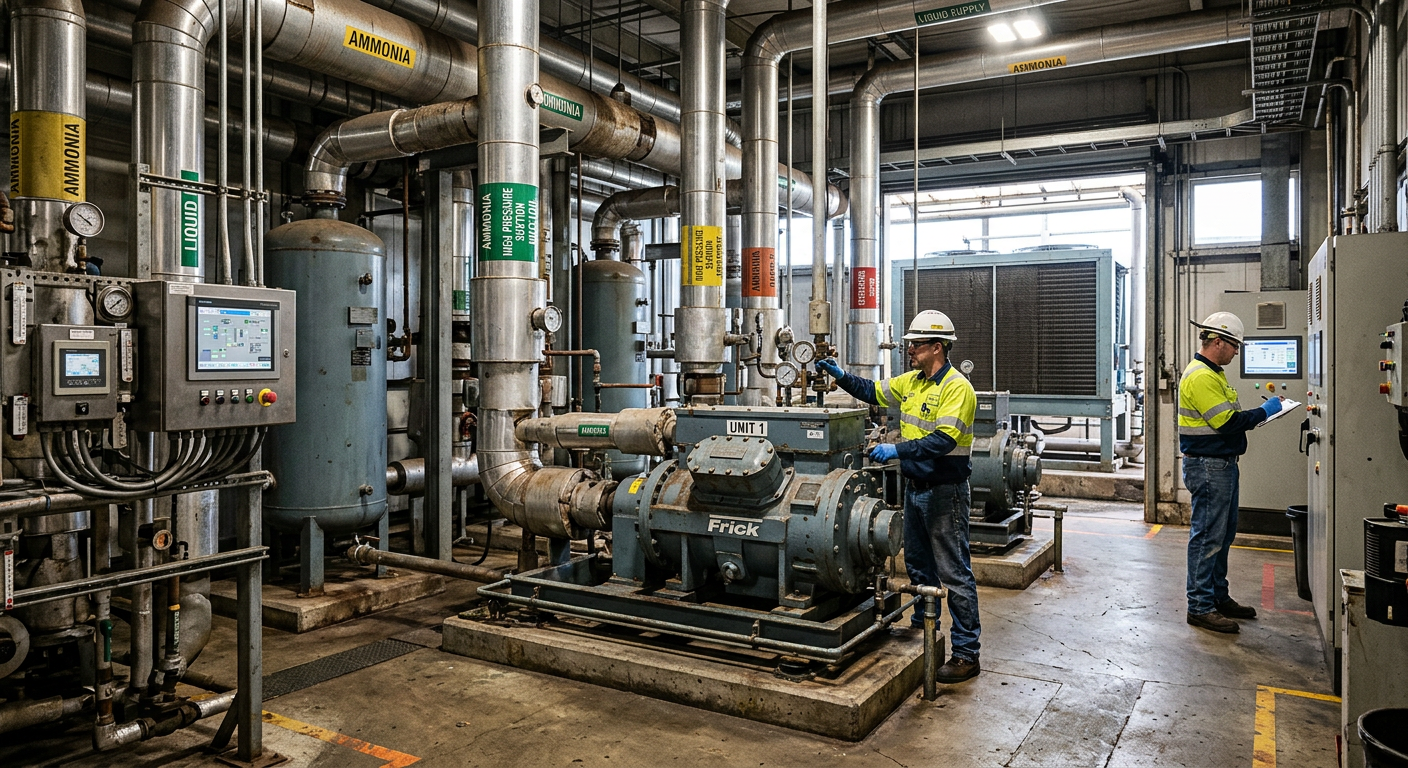
Baby Food Production Facility Design: Safety and Nutritional Standards
Designing a baby food production facility in the United States requires more than standard food plant planning. Infant and toddler products demand tighter control of ingredients, allergens, environmental hygiene, thermal processing, packaging integrity, sanitation, traceability, and regulatory documentation. Whether the product is a fruit puree in a pouch, a vegetable blend in a cup, a shelf-stable meal in a jar, or a specialty nutritional product produced under highly controlled conditions, the facility must protect nutritional value while preventing biological, chemical, and physical contamination. In the U.S. market, manufacturers also face strong retailer expectations, audit pressure from SQF and BRC programs, FDA oversight, and rising consumer demand for clean labels, transparency, and packaging convenience. Facilities near major logistics hubs such as Chicago, Dallas, Los Angeles, Savannah, New Jersey, and Memphis often gain distribution advantages, but location alone does not create a reliable operation. The plant layout, process flow, utilities, cleanability, automation strategy, and validation systems determine whether a project becomes profitable and scalable. This guide explains how to approach ingredient receiving and allergen testing protocol design, puree processing and blending system engineering, pasteurization and aseptic filling line integration, jar, pouch, and cup packaging selection, environmental control and HEPA filtration, sanitation standards, and FDA compliance for infant food operations in the United States. The best baby food production facility design in the United States combines segregated ingredient receiving, validated allergen controls, closed sanitary puree processing, accurate blending, robust pasteurization or aseptic filling, hygienic packaging, controlled air handling, easy-to-clean equipment, and documentation systems aligned with FDA, FSMA, and customer audit requirements. In practical terms, that means the project should begin with product risk classification, target shelf life, packaging format, throughput, cleaning strategy, and future expansion plans. For most U.S. manufacturers, the core design priorities are: For investors and operators, the smartest approach is to connect food safety design with business economics from the start. A line that hits microbiological targets but wastes puree, slows changeovers, or limits package flexibility may still underperform financially. That is why many U.S. projects now focus on integrated design-build-management execution rather than isolated equipment purchases. The table above summarizes the core decision framework. In baby food, every design choice should answer two questions: does it reduce risk, and does it support stable output at the required margin? The line chart shows a realistic investment trend: U.S. spending on modernization, quality systems, automation, and package flexibility continues to rise as retailers and consumers demand more resilient supply chains. The receiving area is the first critical control gateway in a baby food plant. Ingredients may include fruit concentrates, vegetable purees, starches, oils, dairy derivatives, proteins, vitamin premixes, spices, grains, and packaging components. Some products are allergen-free, while others may contain milk, soy, wheat, or other declarable allergens. The receiving system must prevent supplier variation from entering the process unnoticed. In the United States, plants receiving imported fruit from ports such as Long Beach, Newark, Houston, or Savannah often deal with seasonal variability, transit delays, temperature excursions, and diverse documentation packages. Domestic ingredient flows from California, North Carolina, Michigan, Idaho, Wisconsin, and the Pacific Northwest bring their own variability in solids, pH, color, and microbiological load. A strong receiving design therefore combines physical layout with analytical control. Best practice includes segregated docks, quarantine hold areas, barcode-based lot capture, sample pull stations, environmental protection for unloading, and documented release protocols. For allergen-sensitive products, storage rooms and material handling equipment may need dedicated segregation, especially where milk powders, cereal inclusions, or nut-derived ingredients are present elsewhere in the broader facility. This receiving matrix shows that dock design alone is not enough. The protocol must connect supplier approval, inspection, testing, release, and ERP traceability into one controlled sequence. Allergen testing strategy should be risk-based. Not every plant needs the same frequency, but high-sensitivity operations typically apply incoming document review, periodic rapid test kits, sanitation verification swabbing, and final label reconciliation. For products marketed for infants with simpler ingredient decks, the tolerance for cross-contact is especially low from both a safety and brand perspective. Facilities should also think ahead about 2026 trends. U.S. buyers increasingly expect digital supplier visibility, predictive quality scoring, and stronger traceability tied to FSMA modernization. That means ingredient receiving zones should be designed with room for data capture, hold-and-release workflows, and future inline inspection technologies. Puree processing is the heart of most baby food operations. The system must protect flavor, texture, color, and nutrient retention while maintaining a consistent microbiological and physical profile. Product categories may include single-fruit purees, vegetable blends, meat-and-vegetable meals, cereal blends, dairy-based formulations, and functional recipes with added nutrients. Engineering decisions typically begin with product rheology. Thin fruit blends may tolerate straightforward balance tanks and sanitary centrifugal pumping, while thicker vegetable or protein blends may require positive displacement pumps, swept-surface agitation, and careful shear management. Too much shear can damage texture and destabilize the finished product; too little can create poor blend uniformity or dosing errors. A well-designed system usually includes: The ideal layout minimizes transfer distance and recirculation time. Long loops increase product hold-up, reduce yield, and create more surfaces to clean. In U.S. facilities where labor costs are significant, automated batching and recipe confirmation can also reduce operator error and rework. The table clarifies how product design influences equipment specification. A single universal system can work in some plants, but product families with different viscosity, particle size, and thermal sensitivity often benefit from modular line design. Many U.S. processors also want flexibility to run both private-label and branded recipes. That makes changeover design important. Valve matrices, pigging systems, short transfer lines, and recipe automation can materially improve yield and production economics. From a buying standpoint, manufacturers should evaluate more than tank volume and motor size. Ask whether the system is fully drainable, whether agitator seals can be maintained quickly, whether instrumentation supports audit records, and whether the line can scale from current demand to future national distribution. The choice between pasteurization, hot fill, retort, and aseptic processing depends on product pH, particulate profile, nutritional goals, package format, shelf-life expectations, and commercial strategy. In baby food, no thermal method should be selected in isolation. The filler, package, downstream handling, and sanitation regime must all support the selected process. For acidic fruit products, hot fill may be sufficient in some applications. For low-acid or mixed meal products, more stringent process controls may be required. Aseptic processing becomes attractive when brands want extended shelf life with strong sensory retention and lighter packaging. However, aseptic design demands tighter environmental, utility, and validation discipline. Integration points often include surge control between processing and filling, sterile barriers, valve seat verification, sterile air or steam systems, filler compatibility, cap or fitment sterilization, and automated rejection of out-of-spec containers. If the line is not balanced, one bottleneck can compromise both food safety and efficiency. This comparison shows why equipment purchasing should be tied to the business model. A co-manufacturer serving multiple brands may prioritize flexibility, while a single-SKU national brand may justify a dedicated aseptic line. In practical U.S. deployment, processors near major consumer markets such as Atlanta, Chicago, Phoenix, or Philadelphia may favor packaging systems that support broad retail distribution and e-commerce durability. Aseptic pouches, for example, reduce freight weight compared with glass jars, but they also require stronger control of fitment sealing, sterile interface design, and packaging supply quality. The bar chart highlights a realistic demand pattern in the U.S. market: pouches remain strong, but cups and snack-adjacent formats continue to grow as convenience and portion control become more important. Packaging selection is both a technical and commercial decision. Jars offer premium perception, strong barrier performance, and suitability for some retort or hot-fill applications. Pouches provide lighter freight, convenience, lower breakage risk, and broad appeal to parents seeking portable feeding options. Cups can work well for spoon-fed products, chilled concepts, and portion-controlled lines. When choosing among jar, pouch, and cup packaging lines, U.S. manufacturers should compare: This table helps buyers compare packaging at the format level, but line selection must also include supplier support, spare parts availability, operator training, and compatibility with U.S. labeling and coding standards. For example, plants shipping through national retail networks from hubs like Columbus, Kansas City, or Southern California may prioritize packaging that minimizes cube and breakage. In contrast, specialty natural-food brands selling through premium grocery channels may still prefer glass for certain premium product lines. Another issue is sustainability. By 2026, more U.S. buyers will ask about recyclable structures, downgauged materials, reduced utility consumption, and package-to-product ratio. Line selection should therefore include a future-proofing lens. A low-cost line that locks the plant into inflexible or hard-to-source materials can become expensive over time. The comparison chart illustrates why many U.S. producers are moving toward multi-format strategies instead of relying on a single package type across all channels. Environmental control is essential in baby food plants, especially around post-lethality or high-care operations. While not every room requires the same air classification, sensitive production areas often need pressure cascades, filtered supply air, temperature control, humidity management, hygienic duct design, and disciplined personnel flow. HEPA filtration can be particularly valuable in filler rooms, packaging material preparation areas, and aseptic support spaces. The objective is not to overengineer the whole building but to match air quality to product risk. High-risk zones should be physically and operationally separated from raw handling, warehouse dust, forklift traffic, maintenance activity, and waste routes. Plants in climates such as Florida, Texas, or the Mid-Atlantic may face humidity loads that can affect packaging materials, condensate risk, and comfort. Plants in the Mountain West may address different air balance and utility considerations. Geography matters, but zoning discipline matters more. This table shows how environmental design should follow process sensitivity. Not all rooms need the same specification, but every room should have a clear hygiene purpose and airflow strategy. Future-forward facilities are also using sensors to trend differential pressure, door events, airborne particulates, and utility deviations. By 2026, more U.S. plants will integrate these signals into SCADA and quality dashboards to support preventive action instead of reactive troubleshooting. The area chart reflects the trend toward more controlled environments, driven by stricter customer requirements, premium formulations, and longer shelf-life expectations. In infant food and toddler nutrition production, sanitation is not just a routine program; it is a design principle. Equipment should be specified to eliminate dead legs, product traps, inaccessible hollow bodies, difficult gasket points, and poorly drained transfer paths. If a line is hard to clean, the real operating cost will appear later through downtime, failed ATP or allergen swabs, extended CIP, and recurring deviations. Cleanability affects mixers, tanks, pumps, heat exchangers, fillers, hoppers, conveyors, and package handling systems. Smooth welds, drainability, sanitary valve clusters, proper instrument installation, and accessible inspection points all matter. In many cases, hygienic engineering saves far more money than it costs. CIP design should match the soils created by the product range. Fruit sugars, starches, proteins, oils, and micronutrient blends do not all clean the same way. A plant running multiple product families may need recipe-based CIP cycles, conductivity control, return verification, and tank sets sized for campaign scheduling. Sanitation planning should also consider labor availability. U.S. food plants often struggle with skilled sanitation staffing, so automation and easy-access designs are increasingly valuable. Fast teardown, clear visual inspection points, and reduced manual intervention support safer and more repeatable cleaning. When evaluating suppliers, ask how long a complete changeover plus cleaning takes, how many manual disassembly steps are required, and whether the design has proven performance in allergen-sensitive or aseptic-adjacent applications. Regulatory compliance for baby food in the United States requires a layered approach. FDA expectations, preventive controls under FSMA, labeling requirements, supplier verification, sanitation controls, traceability, and environmental monitoring all interact. If the plant produces infant formula, requirements become even more stringent and specialized. Even when the site makes baby food rather than formula, the expectations for process discipline remain high because the consumer population is sensitive and brand risk is severe. Core compliance planning should address hazard analysis, preventive controls, allergen management, process validation, sanitation records, packaging integrity, coding, finished product release, and recall readiness. Layout and automation influence all of these. For example, poorly designed rework routing or unlabeled hold tanks can become regulatory vulnerabilities. Documentation systems should support real-world plant operation, not just audits. Electronic batch records, QA verification checkpoints, lot genealogy, and deviation workflows can shorten release times and strengthen defensibility. This is especially important for contract manufacturers managing multiple customer specifications. In addition to FDA readiness, many U.S. producers align facility design with broader third-party expectations. Retailers and brand owners often require SQF or BRC certification, robust foreign material control, validated sanitation, and clear zoning. Therefore, compliance design should aim higher than the minimum legal threshold. By 2026, policy and market trends point toward stronger traceability expectations, tighter scrutiny of supplier verification, and growing attention to sustainability metrics such as water use, cleaning chemistry optimization, and energy efficiency in thermal systems. Plants that design for these trends early usually avoid expensive retrofits. Disruptive Process Solutions supports food and beverage manufacturers across the United States and Canada with engineering-led project execution built around profitability, compliance, and long-term scalability. Rather than treating a baby food facility as a collection of isolated machines, the company approaches each project as a complete operating system that must work technically, commercially, and operationally. From a technological capabilities standpoint, DPS brings process, mechanical, structural, electrical, plumbing, and controls engineering together with automation, PLC programming, and SCADA integration. For baby food projects, that matters because receiving systems, blending skids, thermal processing, aseptic interfaces, CIP systems, utilities, and data collection all need to function as one validated process. The team also works across sanitary processing technologies including HTST, UHT, retort, aseptic processing, homogenization, blending, water treatment, and full utility infrastructure. You can learn more about the company background at About DPS. From a manufacturing capabilities perspective, DPS designs and supplies process equipment such as tanks and custom CIP systems while integrating broader production lines for food and beverage operations. That combination is useful in baby food projects because hygienic vessels, transfer design, utility tie-ins, and cleanability requirements must align with the actual production strategy, not just a generic equipment list. Details on equipment capability are available at process equipment solutions. From a service capabilities standpoint, DPS operates through a design-build-manage model that includes feasibility work, capital planning, owner’s representation, project management, general contracting functions where applicable, installation oversight, and startup integration. For U.S. manufacturers, this helps reduce disconnects between concept, procurement, construction, and commissioning. Service information can be explored at engineering and project services. This model is particularly useful for baby food and aseptic projects where utility sizing, hygienic zoning, filler integration, and schedule discipline must be coordinated tightly. Project examples and execution experience can be reviewed in selected case studies. For manufacturers evaluating partners, the main advantage is not just technical breadth. It is the ability to challenge assumptions early, protect capital allocation, and align the process design with the financial realities of throughput, changeover time, labor use, sanitation windows, and future expansion. In a category as sensitive as infant nutrition, that integrated approach can make the difference between a compliant line and a genuinely high-performing operation. What is the most important design priority in a U.S. baby food plant?The top priority is risk control across the full process, starting with ingredients and extending through thermal treatment, filling, packaging integrity, sanitation, and traceability. No single machine can compensate for a weak overall layout. Should a new facility choose jars, pouches, or cups?That depends on product type, consumer channel, desired shelf life, freight economics, and brand positioning. Many U.S. manufacturers increasingly prefer pouches for convenience, but jars and cups remain important for specific applications. When is aseptic processing worth the investment?Aseptic processing is often justified when the business needs long shelf life, high product quality retention, lighter packaging, and national distribution. It requires stronger validation, environmental control, and operator discipline than simpler systems. Does every baby food facility need HEPA filtration?Not in every room. HEPA filtration is most valuable in sensitive high-care or aseptic-related areas. The correct approach is to design air handling according to product risk and process exposure. How should allergen control be built into the facility?Use segregated receiving and storage, controlled traffic flow, validated cleaning, clear label reconciliation, and risk-based testing. If allergen and non-allergen products share equipment, changeover design is critical. What role does automation play in compliance?Automation improves recipe accuracy, batch traceability, CIP repeatability, time-temperature control, alarm response, and documentation quality. It also reduces operator-dependent variation. How can a manufacturer reduce long-term project risk?Start with a realistic feasibility study covering product portfolio, packaging, utilities, labor, sanitation, regulatory targets, and future capacity. Then use an integrated delivery model that keeps engineering, construction, and startup aligned. Are there regional considerations in the United States?Yes. Logistics, utility pricing, labor markets, water quality, climate, and supplier access differ by region. A plant near major hubs such as Chicago, Dallas, Los Angeles, or Savannah may gain distribution advantages, but design discipline remains the key success factor. What are the biggest 2026 trends for baby food facility design?Expect more digital traceability, stronger allergen verification, increased high-care and aseptic adoption, more sustainable packaging decisions, tighter utility efficiency targets, and greater use of predictive data in sanitation and maintenance. What should buyers ask equipment suppliers before purchase?Ask about hygienic design details, cleanability validation, maintenance access, spare parts support, changeover time, operator training, integration experience, and whether the line has proven results in baby food or similarly sensitive products. -
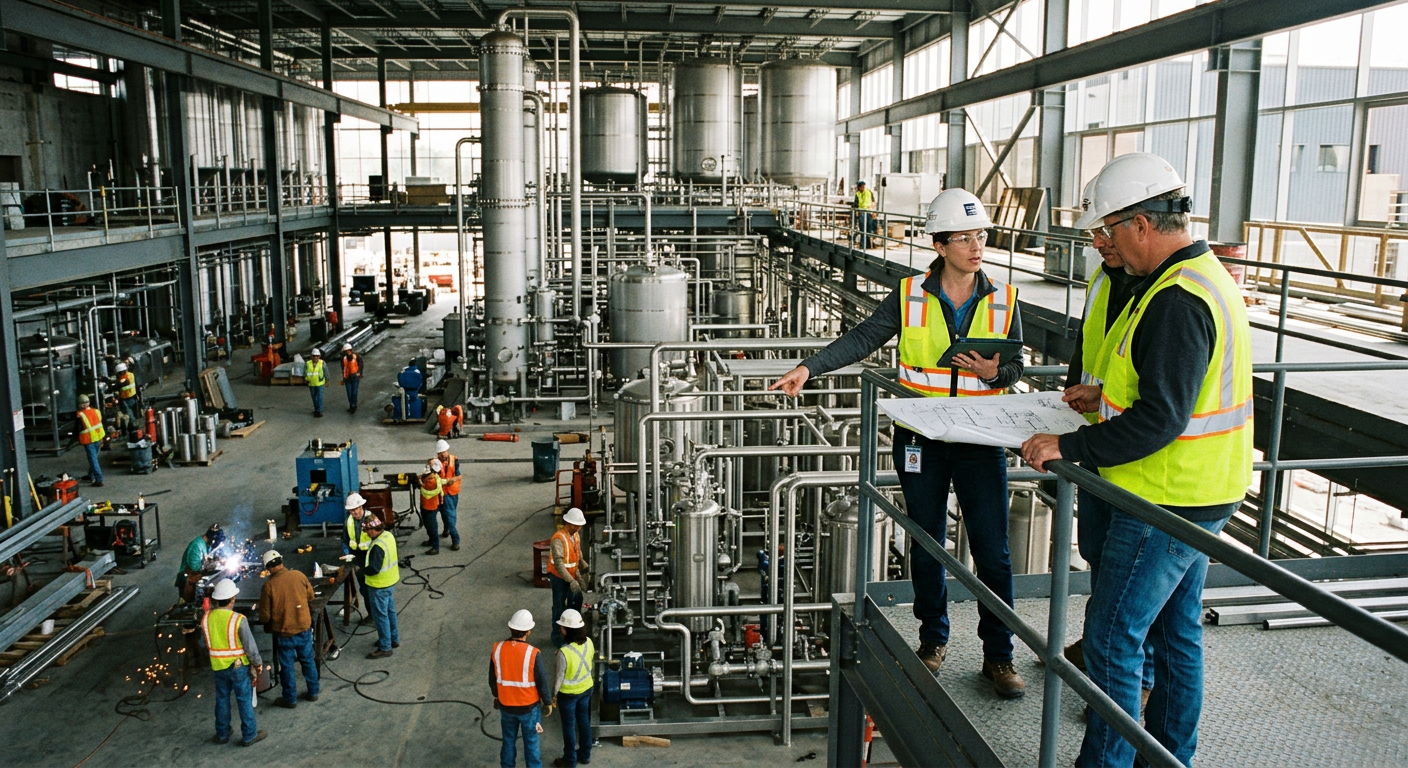
Custom CIP Systems for Process Plants
Clean-in-place systems are no longer simple wash skids for straightforward tank farms. In the United States, many food, beverage, dairy, protein, and specialty manufacturers now need custom CIP solutions that match complex layouts, multiple recipes, tighter sanitation standards, and automation goals. A well-engineered custom CIP system can reduce downtime, improve repeatability, save chemicals and water, support validation, and fit around real plant constraints such as low ceiling heights, legacy PLCs, shared utility corridors, and phased expansions. For manufacturers in hubs such as Chicago, Charlotte, Dallas, Fresno, Los Angeles, Milwaukee, Houston, Philadelphia, Atlanta, and the New Jersey pharmaceutical corridor, the right CIP design often becomes a production strategy decision rather than just a sanitation purchase. It affects labor, throughput, allergen control, water recovery, audit readiness, and expansion planning. That is why owners increasingly look for engineering-led partners who understand process systems, utilities, controls, fabrication, installation, and commissioning as one connected scope. Disruptive Process Solutions supports this kind of work across North America through an integrated model that combines engineering, equipment supply, field execution, and startup support. Manufacturers evaluating options can learn more about the company background on the DPS team page, review broader process and project services, explore the available equipment portfolio, and see practical delivery examples through selected project case studies. Your plant needs a custom CIP solution when standard skid packages cannot reliably clean all circuits, cannot integrate with your controls architecture, or cannot support your production, regulatory, and utility realities. In the U.S. market, custom CIP systems are most often justified when a site has multiple process lines, a mix of hygienic and hard-to-clean equipment, recovery requirements, allergen segregation, limited floor space, phased capacity plans, or validation obligations. Typical buyers include beverage plants running syrup, blending, carbonation, and filler circuits; dairy processors managing fat, protein, and high-viscosity soils; sauce and prepared food plants handling sticky product residues; protein facilities requiring robust sanitary execution; and co-packers that need rapid recipe changeovers. In these environments, a custom system can be configured with dedicated or shared tanks, return conductivity control, recipe-based wash sequences, heat recovery, automated valve matrices, and plant-specific PLC/SCADA integration. In short, a custom CIP system is the right choice when cleaning performance, utility efficiency, line uptime, and future scalability matter more than the lower upfront price of a generic skid. The trend line above reflects the steady rise in U.S. investment in automated sanitary systems. Rising labor costs, stricter food safety expectations, water accountability, and digital production monitoring are pushing plants toward smarter CIP platforms rather than manual or semi-manual cleaning methods. Not every facility needs a fully bespoke system, but many do. Plants often begin with a standard expectation and later discover that real-world piping, utility limitations, and production scheduling make a packaged unit impractical. This is especially true in older facilities around the Midwest and Northeast, where expansions have layered new process equipment onto legacy infrastructure over decades. Several warning signs indicate that a standard CIP package may create more compromises than value. If your site has multiple cleaning circuits with different flow, temperature, and chemical exposure requirements, one-size-fits-all programming can lead to under-cleaning or wasted utilities. If you operate 24/7 or with short sanitation windows, cleaning cycle optimization becomes a throughput issue. If your business involves dairy allergens, sugar, pulp, protein, starch, oils, or heavy seasoning systems, the required wash sequence may differ significantly from a generic recipe. This table shows why custom CIP is usually a business decision, not only an engineering preference. When cleaning complexity touches uptime, food safety, labor, or future capex, the savings from a standard package can disappear quickly. Across the United States, custom demand is especially strong in beverage co-packing, cultured dairy, sauces and dressings, aseptic processing, brewery and spirits operations, plant-based proteins, and large prepared foods plants. Ports and logistics hubs such as Savannah, Long Beach, Houston, and Newark also influence system choices because plants serving national distribution often prioritize repeatability and faster changeovers to support broad SKU portfolios. The bar chart highlights where custom CIP demand is strongest. Beverage and dairy remain the largest drivers because these sectors combine sanitary risk, heavy changeover schedules, and major utility consumption. A strong custom CIP project starts with field reality, not with a catalog. The best design process usually begins with a site survey that documents equipment to be cleaned, connection points, line lengths, elevation changes, return routing, drain capacity, access limitations, and utility availability. For facilities in active production, this stage also reviews sanitation windows, changeover practices, operator staffing, and maintenance capabilities. From there, the engineering sequence typically includes process mapping, hygienic design review, utility loading, controls architecture review, 3D coordination where needed, and commercial alignment with throughput goals. Final drawings should not only show the skid, but also tank sizes, pump selections, valve manifolds, instrumentation, insulation scope, utility tie-ins, floor drains, support steel, cable routing, and PLC/SCADA interfaces. DPS approaches projects through a design-build-manage model that is useful for owners who want one team to connect process engineering with installation and startup execution. That approach is particularly valuable when the CIP system is part of a broader expansion involving tanks, blending, pasteurization, fillers, utilities, and plant controls. This structured process reduces surprises later in fabrication and startup. It is especially important for U.S. facilities with phased shutdowns, union coordination, municipal utility approvals, or multi-contractor interfaces. Buying advice: ask whether the supplier performs real field surveys, who owns process responsibility, whether P&IDs are developed before fabrication, and how changes are managed once construction starts. A custom CIP system is only as good as the information captured before metal is cut. The most effective custom CIP systems are engineered around how the plant actually runs. That often means moving beyond a single caustic tank and rinse tank. Multi-circuit and multi-tank systems let plants clean different process areas with the right chemistry strength, temperature profile, and sequence logic. For example, a dairy plant may need separate recovery and return handling from a beverage syrup room, while a protein processor may require more aggressive soil removal and robust sanitary execution. Configuration options can include fresh water, recovered rinse water, caustic, acid, sanitizer, and reclaim tanks; direct steam injection or plate heat exchangers; single-use or reusable chemistry strategies; one return manifold or multiple dedicated returns; and automated mixproof valve matrices for routing flexibility. Special configurations also include mobile satellite units, hybrid central-plus-local CIP architecture, and skid designs built for mezzanines or outdoor utility yards. DPS brings technological capabilities across process, mechanical, electrical, structural, and controls engineering, which matters when the CIP system must interact with broader processing assets such as fermentation, distillation, batching, pasteurization, retort, dairy process lines, or aseptic distribution systems. That integrated engineering capability supports more accurate decisions around pump sizing, return velocities, tank turnover, and control logic. For buyers, the lesson is simple: product type matters. Breweries, RTD beverage facilities, cultured dairy plants, dressing lines, canning systems, meat marinades, and aseptic skids all place different demands on cleaning architecture. The right engineering partner should explain why a particular configuration fits your process, not just present the largest skid available. The area chart shows how the market is shifting from basic rinse-and-drain cleaning toward automated, data-rich, recovery-oriented systems. By 2026 and beyond, sustainability and traceability are expected to influence CIP design as strongly as simple sanitation performance. Integration is where many CIP projects either succeed or create years of frustration. A CIP skid might look excellent on paper, but if it cannot communicate properly with fillers, pasteurizers, valve manifolds, batch systems, or legacy line controls, operators will end up relying on manual workarounds. That weakens both sanitation consistency and labor efficiency. In U.S. plants, the installed base is often mixed: Allen-Bradley on one line, Siemens on another, stand-alone OEM HMIs in a packaging area, and a plant SCADA layer added later. A custom CIP project must therefore address not only mechanical design, but also tag mapping, interlocks, alarm handling, permissions, historian data, recipe structures, and operator access levels. DPS has controls and automation capabilities that support PLC programming, SCADA coordination, and process integration. That matters for customers who want CIP recipes tied to product scheduling, automated proof of flow path selection, conductivity verification, temperature trending, and report generation for QA or regulatory review. It also helps when existing bottlenecks are really controls problems rather than equipment problems. Good integration planning includes: Plants in high-volume metro regions such as Dallas-Fort Worth, Southern California, and the Carolinas often prioritize integration because labor availability is tight and production schedules are dense. There, a fully automated CIP sequence with useful alarms and reports can produce measurable savings in labor, product loss, and changeover time. Utility planning is one of the most underestimated parts of custom CIP design. Many systems fail economically not because the skid is wrong, but because the supporting utilities were not properly evaluated. Steam pressure variation, inadequate drainage, low incoming water flow, weak electrical distribution, and limited hot water generation can all compromise cleaning performance or extend cycle times. For example, a plant near Denver may need to account for site altitude effects and winter utility demand swings, while a Gulf Coast operation may focus more on corrosion resistance, outdoor installation protection, and stormwater routing. Facilities in older East Coast buildings often struggle most with drainage and electrical capacity during retrofits. This matrix shows why utility planning belongs early in the design cycle. A proper review prevents late field modifications that disrupt schedules and budgets. By 2026, utility planning is expected to become even more important as sustainability reporting expands and municipalities tighten water and discharge oversight. Many U.S. processors are already evaluating conductivity-based recovery, rinse reuse, heat recovery, and smarter chemical dosing to reduce both operating cost and environmental impact. Custom CIP projects vary widely in duration, but buyers should expect a sequence that includes concept development, detailed design, fabrication, controls programming, factory acceptance testing, site installation, site acceptance testing, and commissioning. The total duration may be relatively short for a contained skid replacement or much longer for a campus-wide central CIP system that touches several production areas. The most successful projects have realistic decision milestones. Delays often come from late utility discoveries, incomplete process data, uncertain owner standards, long-lead instrumentation, and change requests after fabrication starts. Clear governance matters as much as engineering. This timeline gives buyers a practical planning baseline. Large, integrated projects can extend longer, especially if they are tied to seasonal production windows or major plant shutdowns. In food and beverage regions such as Wisconsin, California’s Central Valley, and Texas, harvest cycles, holiday demand, or beverage summer peaks often shape the installation schedule. Manufacturing capability also matters here. DPS designs and manufactures selected process equipment, including custom CIP systems and stainless vessels, which can help align engineering intent with fabrication quality. For owners, that can improve accountability during FAT and reduce disconnects between design assumptions and shop execution. Validation is essential in many regulated or audit-intensive environments. Even where formal pharmaceutical-style validation is not required, food safety teams increasingly expect stronger documentation for repeatability, training, and verification. A custom CIP project should define early whether the plant needs basic startup records, a qualification package, or a more formal IQ/OQ/PQ structure. Installation Qualification confirms that the system was installed per approved drawings and specifications. Operational Qualification verifies that controls, alarms, instruments, and recipes perform as intended. Performance Qualification demonstrates that the system achieves required cleaning outcomes under real operating conditions. The exact depth depends on industry, customer standards, and risk level. This documentation framework improves startup discipline and gives operations teams a cleaner handoff. It is especially useful for plants serving large retail, foodservice, or co-manufacturing customers that audit sanitation controls closely. On the service side, DPS supports projects from planning through installation, commissioning, and broader project management. For owners, that means validation activities can be coordinated with field execution rather than treated as an afterthought once the skid arrives. Consider a representative U.S. beverage and food co-manufacturing site with a complex layout: one syrup room, two batching suites, a hot-fill line, a cold-fill line, several storage tanks, and a legacy utility spine crossing the building. The plant had grown through multiple phases, leaving pipe routes long, elevations inconsistent, and controls architecture fragmented. Sanitation windows were tight, and the operation needed to support more SKUs without adding excessive labor. The solution was a custom multi-tank CIP platform engineered around separate cleaning circuits, controlled return verification, and integration with the existing line PLC environment. Rather than forcing a standard skid into the available footprint, the design used a layout tailored to room access, operator ergonomics, and future tie-ins. Utility analysis identified where steam and drainage capacity needed strengthening before startup. FAT confirmed valve logic and sequencing, and SAT focused on real product changeover conditions. Results in projects like this typically include shorter cleaning cycles, less manual intervention, stronger repeatability, and better use of rinse recovery. More importantly, the CIP system becomes part of the plant’s production strategy. It supports faster changeovers, cleaner documentation, easier training, and more confidence when new lines or products are added. This kind of outcome is why many owners prefer an engineering-first partner rather than a catalog vendor. In complex layouts, the real value is in how the process, utilities, controls, fabrication, and field execution fit together. The comparison chart illustrates why complex facilities often move toward custom systems. While packaged skids may suit simple applications, their limitations become more visible as plants add circuits, recipes, reporting expectations, and expansion plans. For procurement teams, this comparison offers a practical buying framework. The lowest initial bid may not be the best result if the plant expects rapid growth, difficult sanitation requirements, or high reporting standards. What industries most often buy custom CIP systems in the United States?Beverage, dairy, brewing, distilling, prepared foods, sauces, dressings, protein processing, aseptic manufacturing, and co-packing operations are among the most common buyers. How do I know whether I need a central CIP system or satellite units?It depends on circuit distance, simultaneous cleaning needs, available floor space, utility distribution, and future expansion. Large campuses may benefit from central systems, while remote or isolated lines may justify satellites. Can a custom CIP system work with existing PLCs?Yes, if integration is planned properly. A good supplier will review the installed controls environment, communication protocols, I/O structure, and operator workflow before finalizing the design. What are the biggest utility mistakes in CIP projects?Undersized steam capacity, poor drain design, inadequate water flow, insufficient electrical review, and weak compressed air quality are common issues that cause startup delays and inconsistent performance. How long does a custom CIP project usually take?Simple projects can move in a few months, while integrated multi-circuit systems may take longer depending on engineering detail, fabrication scope, site shutdown windows, and controls complexity. Is validation only important for pharmaceutical plants?No. Food and beverage sites increasingly want stronger IQ/OQ/PQ-style documentation to support audits, customer requirements, training, and consistent sanitation performance. What trends will shape CIP projects in 2026?Expect more conductivity-based recovery, water reuse strategies, energy optimization, better historian reporting, stronger cyber-conscious PLC integration, and closer alignment with sustainability goals and discharge compliance. How should buyers compare suppliers?Look beyond skid price. Evaluate site survey quality, process understanding, utility planning, controls depth, documentation, FAT/SAT support, fabrication quality, installation management, and long-term service capability. Why choose an engineering-led partner?Because custom CIP systems touch process equipment, utilities, controls, construction, and startup. An engineering-led partner is better positioned to align all of those moving parts and deliver lifecycle value rather than just equipment. For U.S. manufacturers planning new facilities, retrofits, or expansions, the best custom CIP system is the one designed around your process reality, utility limits, sanitation risk, and growth strategy. When done right, it becomes a productivity asset that supports profitability, compliance, and long-term manufacturing resilience. -
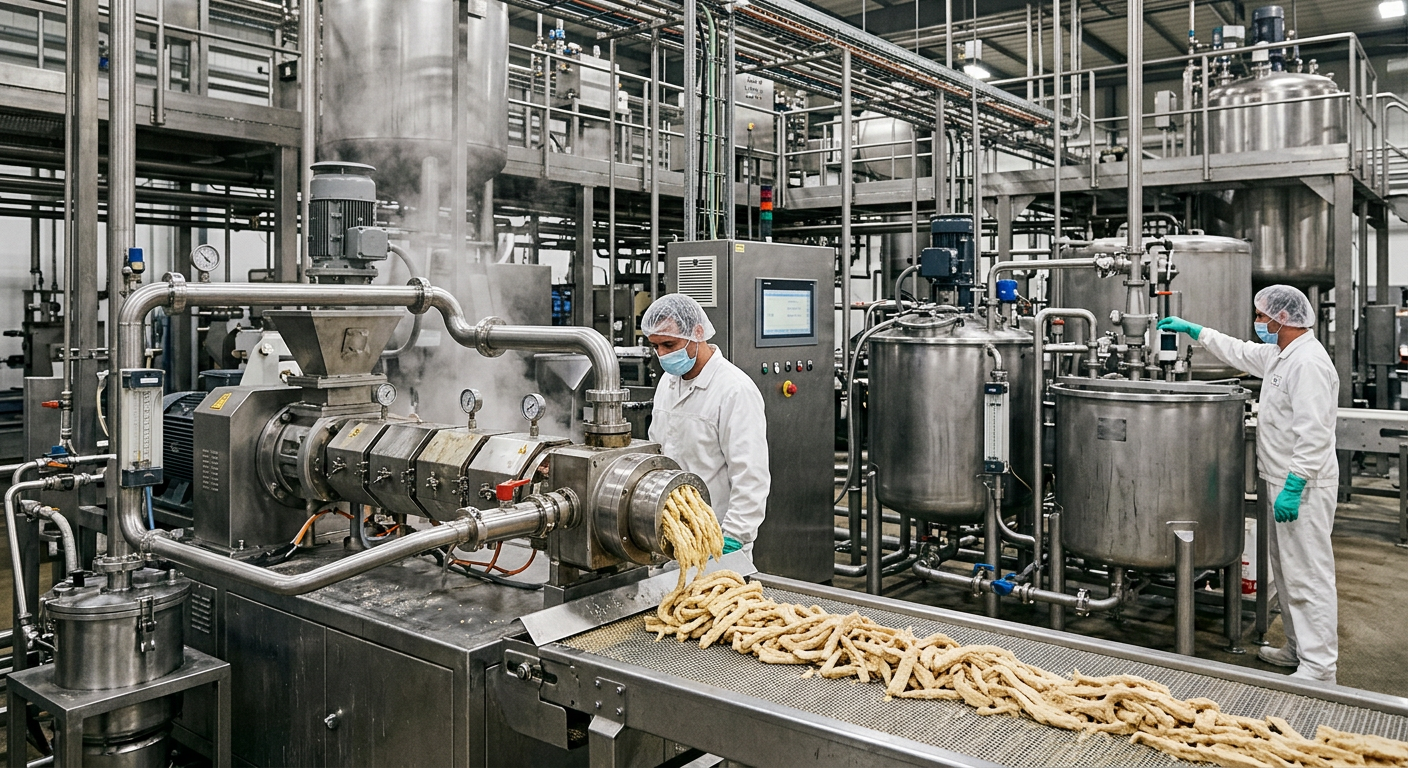
7 Critical Stages in Snack Food Production Line Engineering
Snack manufacturers in the United States are under pressure to increase throughput, reduce giveaway, improve flavor consistency, manage allergen risk, and prepare for 2026 sustainability and automation requirements. Engineering a modern snack line is no longer just about choosing individual machines. It requires coordinated decisions across extrusion, frying, coating, conveying, packaging, sanitation, utilities, controls, labor strategy, and plant layout. For puffed corn snacks, pellet snacks, tortilla chips, kettle-style products, fried curls, multigrain crisps, and hybrid baked-fried items, the best-performing lines are designed as integrated systems from ingredient receiving to finished case palletizing. Across major U.S. snack corridors such as Chicago, Dallas-Fort Worth, Charlotte, Fresno, and the greater Atlanta region, producers are expanding facilities that can run multiple stock-keeping units without creating sanitation bottlenecks or excessive changeover time. Plants sourcing imported oils, films, spices, or equipment through the Ports of Los Angeles/Long Beach, Houston, New York/New Jersey, and Savannah are also redesigning for supply chain resilience. In that environment, line engineering should align capital deployment with product margin, labor availability, utility costs, food safety exposure, and future product mix. This guide explains what decision-makers should prioritize when planning a snack food production line in the U.S. market, including direct buying advice, product-specific engineering considerations, industry applications, practical examples, and the capabilities needed from an engineering and integration partner. The fastest way to improve a snack production line is to engineer the whole process around three questions: what product family drives profit, where the true bottleneck sits, and how often the line must change over. In many U.S. snack facilities, poor performance is not caused by a single machine but by mismatch between process sections. An oversized extruder feeding an underdesigned dryer, a fryer with unstable oil residence time, an undercontrolled tumbler, or a packaging room that cannot keep pace with upstream output can erase expected returns. For puffed and fried snack products, the critical stages usually include raw material handling, mixing and preconditioning, forming or extrusion, thermal processing, seasoning or coating, conveying and distribution, packaging, and utilities plus controls support. The engineering objective is not maximum nameplate speed alone. It is stable sellable output, repeatable quality, safe allergen management, and low total cost per pound. In the United States, buyers should typically evaluate: The table above shows why a line should be bought as an operating system, not a collection of equipment quotes. Many successful projects begin with a feasibility study and throughput model before machine selection starts. That approach is especially valuable for co-manufacturers and private-label snack producers that need flexibility across customers. From a market perspective, demand in the United States remains strong for portable, bold-flavored, protein-enriched, and value-engineered snacks. At the same time, retailers increasingly expect package variety, cleaner labels, documented allergen control, and sustainability progress. As a result, engineering decisions made now should support 2026 priorities such as digital traceability, reduced fryer energy intensity, lower oil loss, higher packaging automation, and easier integration with plant-wide SCADA and production reporting. Extruder selection should begin with the final eating experience, not with horsepower. Puffed snacks, direct-expanded curls, corn puffs, rice-based shapes, and filled extruded products depend on control of starch transformation, moisture, temperature, and mechanical energy. Fried pellet snacks have a different requirement: consistent preform dimensions and moisture to ensure even expansion in the fryer. In both cases, line designers need to understand the full recipe map, including corn meal, rice flour, potato solids, pulses, proteins, fibers, binders, and functional inclusions. In the U.S. market, a common mistake is buying an extruder sized for a best-case product while ignoring the broadest future SKU range. A single-screw platform may be sufficient for simpler corn-based products at high throughput, but twin-screw systems often provide better flexibility for multigrain, high-protein, or more sensitive formulations. For facilities serving regional brands in Texas, the Midwest, or the Southeast, that flexibility can support faster entry into hot-and-spicy, protein-forward, or school-compliant snack segments. The table demonstrates how product family drives machinery choice. Engineering teams should compare not only throughput but also turn-down capability, recipe repeatability, screw changeover time, operator skill requirements, and spare parts strategy. A high-speed line that cannot reliably run smaller regional product campaigns may underperform financially. For U.S. plants near grain supply regions such as Iowa, Nebraska, or Kansas, ingredient economics may favor corn and cereal-based systems. Plants closer to natural foods clusters in California or the Northeast may need additional flexibility for legumes, ancient grains, and specialty ingredients. When freight, labor, and retail requirements vary by region, the most profitable line is usually the one that can absorb formulation shifts without major rebuilds. Engineering should also account for upstream and downstream compatibility. Extrusion output must match drying, frying, seasoning, and packaging capacity under real plant conditions, not ideal vendor assumptions. Utilities matter too. Steam, compressed air, process water, dust collection, and electrical load profiles should be modeled before approval. Companies that want stronger project visibility often benefit from working with an integrated engineering and installation team that can connect process, utilities, controls, and layout in one scope. A good example of that integrated approach can be seen in comprehensive food and beverage engineering services built around execution rather than isolated design packages. Flavor consistency is one of the clearest drivers of repeat purchase in snack categories. Consumers may forgive slight shape variation, but they quickly notice under-seasoned product, oil-heavy clumps, or patchy coverage. In engineering terms, this means the seasoning system should be treated as a precision process area, not an add-on after the fryer. Dry seasoning application depends on product surface condition, residual oil or moisture, particle size distribution, tumbler geometry, residence time, and accurate dosing. Liquid application adds another layer of complexity involving pump control, nozzle placement, droplet size, viscosity, heating, and cleanability. High-variance flavor systems often come from poor integration between seasoning feeders, tumbler speed, transfer conveyors, and environmental conditions in the room. This table highlights the direct relationship between mechanical design and sensory consistency. Plants running cheese, barbecue, sour cream and onion, and spicy chile-lime variants on the same shift need ingredient handling, feeder calibration, and sanitation protocols that support both speed and control. Applications vary by industry. Contract packers may need broad flavor flexibility for seasonal launches. Private-label manufacturers may need rapid transitions between retailer specifications. Better-for-you brands often require lower sodium or oil systems that make adhesion more difficult. In all cases, seasoning integration should be trialed with real product and full recipe conditions, not just water runs. Regional sourcing also matters. Spice blends coming through New Jersey or Savannah can differ in flowability by supplier and humidity exposure. Cheese powders in Wisconsin-heavy supply chains may behave differently than imported seasoning systems staged on the West Coast. Engineering teams should plan for ingredient variability through feeder selection, hopper agitation, environmental control, and recipe compensation logic. Material handling is often underestimated because conveyors appear simple compared with extruders or fryers. In reality, conveying design strongly influences breakage, buffering, sanitation, labor use, line balancing, and expansion potential. Multi-SKU snack facilities especially need conveyor systems that support different product fragilities, widths, accumulation needs, and allergen separation rules. A strong design starts with product behavior. Freshly extruded snacks, fried chips, pellets, and coated items each respond differently to drop height, vibration, belt transfer geometry, and incline angle. Small decisions such as dead plate length, sidewall material, access door placement, and support leg spacing can affect sanitation efficiency and product loss every day. The explanation is straightforward: conveyor design is not only about moving product from point A to point B. It determines whether the rest of the line receives the product condition it was designed for. That is especially true in facilities producing multiple bag sizes, several textures, or both allergen and non-allergen products. For plants serving major distribution networks from hubs like Columbus, Memphis, or Kansas City, conveyor strategy should also align with packaging room throughput and case handling. Space constraints in brownfield facilities may require vertical lifts, mezzanines, or split-route distribution. Dust control, access platforms, maintenance clearances, and egress routes should be designed early, not patched in later. Manufacturers planning future acquisitions or additional products should leave room for bypasses and tie-in points. Flexible material handling often creates more long-term value than squeezing the last few feet from a crowded layout. For fried snack lines, oil management is a profit center disguised as a utility function. Oil cost, product color, shelf life, flavor stability, and finished texture all depend on how well the frying system manages heat transfer, turnover, crumb load, and degradation. Whether a plant is making tortilla chips, potato-based formed snacks, pellet snacks, or hybrid fried puffs, fryer engineering deserves close scrutiny. Temperature variation even within a narrow band can create visible color shift and inconsistent moisture. Excess fines in the oil accelerate breakdown and can generate bitter notes or dark specks. Poor filtration design also increases downtime and cleaning burden. The right fryer system balances throughput with residence time control, oil circulation, filtration method, make-up oil management, hood exhaust, and worker safety. The table shows that fryer performance is measured not just by speed but by how tightly key process variables are held. Plants that document oil life, color drift, and moisture variability can often justify control and filtration upgrades quickly through reduced waste and lower complaint risk. Buying advice for U.S. operators: ask vendors and integrators for proof of cleanability, access, automation logic, and service support. Evaluate whether the system is suited for your oil type, product load, and sanitation frequency. If you plan to add kettle-style or specialty products later, verify how flexible the filtration and heating system will be under different crumb conditions. Facilities in regions with higher utility costs, such as California or parts of the Northeast, should pay close attention to burner efficiency, exhaust balance, and heat recovery opportunities. By 2026, more food manufacturers are expected to prioritize digital oil management, predictive maintenance on pumps and motors, and stronger environmental reporting around energy intensity. Those trends make fryer instrumentation, historian connectivity, and operator dashboard design more valuable than ever. Packaging is where much of the line’s financial performance becomes visible. Upstream process improvements lose value if the packaging room cannot absorb output, maintain target weight, and switch formats efficiently. Snack manufacturers in the United States increasingly need flexibility across single-serve, pantry, club, and variety-pack formats, plus private-label artwork changes and short campaign runs. The most robust packaging systems integrate multihead weighing, smart product distribution, bagger change parts management, metal detection or X-ray, checkweighing, code verification, case packing, and palletizing. Automation should be selected based on actual SKU mix rather than idealized assumptions about long production campaigns. Plants supplying major retail chains often need fast response to promotions, which makes changeover engineering especially important. This table illustrates why packaging line automation should be connected to commercial strategy. A company entering convenience channels needs different flexibility than one focused on club stores. A co-manufacturer serving many brands may value recipe management and quick verification more than maximum top speed on one format. Applications extend across salty snacks, puffed products, baked crisps, protein snacks, and mixed snack assortments. Plants located near freight hubs such as Indianapolis, Phoenix, or Harrisburg often choose more packaging automation to support rapid retail replenishment and reduce dependence on local labor availability. In areas with higher labor turnover, automation may be justified even at moderate volumes. A disciplined engineering process links packaging rates back to process capability. If the line produces fragile snacks, weigh system vibration, distribution conveyor design, and drop heights must be controlled to avoid creating fines before the bagger. It is often wise to review complete line integration along with available processing and utility equipment solutions rather than treating packaging as a separate procurement event. As snack portfolios diversify, allergen control becomes one of the biggest layout and operational design challenges. Mixed plants may run dairy-seasoned items, peanut-inclusive snacks, sesame-containing products, wheat-based extrudates, or soy-rich protein formats under one roof. The engineering question is not only how to clean, but how to prevent cross-contact through product flow, personnel movement, airborne particles, rework handling, and maintenance practices. The most successful plants build allergen management into zoning, storage, conveying, seasoning rooms, utensils, drains, and scheduling logic. A line that looks productive on paper can become unusable in practice if allergen changeovers take too long or require excessive teardown. This is especially important for co-packers and brands selling into schools, club channels, and retailers with strict supplier requirements. Key strategies include dedicated ingredient receiving lanes where possible, color-coded mobile equipment, isolated seasoning areas for high-risk powders, documented line clearance, positive or negative air relationships where appropriate, and validated sanitation methods. Rework policy must also be engineered. Undefined rework routes are one of the fastest ways to undermine traceability and allergen control. For brownfield facilities, full segregation may not be feasible, but practical improvements often include isolated day bins, improved dust capture, upgraded traffic flow markings, separated tools, controlled staging, and revised production sequencing. Plants near major metropolitan labor markets such as Los Angeles, Chicago, or Philadelphia should also consider the training design needed for multilingual teams. Procedures must be easy to execute consistently, not merely compliant on paper. By 2026, stronger customer audits, enhanced digital traceability expectations, and rising sensitivity around undeclared allergens will likely make integrated controls even more important. Engineering, operations, and food safety leadership should evaluate allergen design decisions at the same stage as throughput and ROI decisions, not afterward. Energy and waste reduction have moved from secondary goals to core financial drivers in snack manufacturing. Continuous lines consume significant thermal and electrical energy through extrusion, drying, frying, air handling, compressed air, packaging, and sanitation support. At the same time, product loss, seasoning overshoot, oil waste, and packaging giveaway directly affect contribution margin. Waste reduction starts with process stability. A tightly controlled line creates fewer startups, fewer off-spec runs, less rework, and lower ingredient loss. Energy recovery, meanwhile, often comes from improved exhaust design, heat reclamation, burner tuning, insulated piping, variable-frequency drives, compressed air leak reduction, and smarter utility scheduling. Facilities in utility-sensitive regions such as California, the Pacific Northwest, and the Northeast often see faster returns on these upgrades, but savings matter everywhere. The explanation behind this table is simple: the cheapest pound to make is the pound that never becomes waste, and the cheapest utility unit is the one never consumed. Continuous improvement should be built into the initial line design with data capture points, not added later through manual spreadsheets. For plants pursuing ESG goals or retailer scorecard improvements, energy and waste performance can also affect customer relationships. Manufacturers shipping through sustainability-conscious retail programs may find that measured reductions in oil use, natural gas intensity, and packaging loss support stronger negotiations and brand positioning. Case examples across North America show that the largest savings do not always come from the most expensive hardware. Sometimes the best result comes from control system revisions, utility balancing, or better sequencing of existing assets. That aligns with a broader philosophy of focusing on profitable outcomes rather than chasing equipment spend for its own sake. Disruptive Process Solutions DPS supports food and beverage manufacturers across the United States and Canada with an engineering model built around planning, execution, and accountability. Rather than approaching projects as a conventional bidder, the company is structured to help clients make capital decisions that improve long-term operating results. That makes DPS especially relevant for snack producers evaluating new lines, capacity expansions, relocations, utility upgrades, and multi-phase modernization programs. From a technological capability standpoint, DPS works across process, mechanical, plumbing, electrical, structural, and controls disciplines. For snack and broader food applications, that means integrating process equipment with PLC programming, automation, SCADA visibility, recipe logic, utility systems, and commissioning support. This systems view is important when a snack line’s real bottleneck may lie in controls sequencing, not simply in mechanical speed. Companies exploring integrated planning can learn more through the firm’s company background and project philosophy. From a manufacturing capability standpoint, DPS does more than coordinate third-party hardware. The company also designs and manufactures selected branded process equipment, including tanks, CIP systems, tumblers, and cooking vessels, while integrating complete process systems for complex food and beverage plants. That practical fabrication understanding helps during layout development, utility coordination, access planning, and installation sequencing. For snack operations, that mindset supports more realistic decisions around cleanability, footprint, and tie-ins to existing infrastructure. From a service capability standpoint, DPS follows a Design Build Manage model that combines engineering, general-contractor-style execution, project management, owners representation, installation oversight, and system integration. This approach is useful for manufacturers that need a single accountable partner across capital planning, design, procurement support, trade coordination, startup, and performance follow-through. It also suits clients managing multiple stakeholders across operations, maintenance, finance, and food safety. Examples of project execution in related processing environments can be reviewed in selected case studies and client outcomes. The company serves all 50 U.S. states, with active reach into major food and beverage corridors from the Carolinas to California and from the Gulf Coast to the Midwest. For snack producers, that geographic scope matters when coordinating local trades, utility infrastructure, code requirements, schedule pressure, or equipment moves between facilities. It also supports clients that are building national manufacturing footprints rather than single-plant operations. In practical terms, DPS is often a fit for manufacturers that want candid engineering input, disciplined capital planning, and execution aligned with profitability rather than equipment spend alone. That can include branded snack companies, co-manufacturers, ingredient processors, and diversified food groups investing in flexible U.S. production capacity ahead of 2026 demand, compliance, and sustainability shifts. What is the first step in engineering a snack food production line?The first step is defining the business case: product family, annual volume, SKU count, margin targets, allergen profile, utility constraints, and future expansion plan. Equipment selection should follow that analysis, not precede it. Which is better for puffed snacks, single-screw or twin-screw extrusion?Neither is universally better. Single-screw systems can be effective for simpler high-volume products, while twin-screw platforms usually offer better formulation flexibility and control for multigrain, protein-enriched, or more complex applications. How do I improve seasoning consistency on fried snacks?Focus on product temperature, oil or slurry dosing accuracy, gravimetric seasoning feed, tumbler residence time, and dust management. Inconsistent flavor is usually caused by system integration issues, not seasoning formula alone. What is the biggest hidden cost in fried snack production?In many plants, it is a combination of oil mismanagement, overweight packaging, startup waste, and line imbalance. These losses often exceed the impact of small throughput differences between machines. How should a U.S. plant handle allergens in mixed snack production?Use a combination of zoning, segregated ingredient storage, dust control, validated cleaning, production sequencing, color-coded tools, rework rules, and documented line clearance. Layout and airflow decisions are as important as sanitation chemistry. What packaging automation matters most for multi-SKU facilities?Recipe-driven settings, accurate weighing, code verification, rapid changeover features, and balanced product distribution usually create the strongest returns. The right mix depends on your bag formats and customer requirements. Can older facilities be upgraded without a full rebuild?Yes. Many brownfield snack plants can improve yield and capacity through targeted controls upgrades, conveying redesign, packaging optimization, oil management improvements, and sanitation-focused modifications without replacing every machine. What 2026 trends should snack manufacturers prepare for now?Expect greater adoption of line-wide automation, digital traceability, predictive maintenance, energy recovery, stronger allergen verification, packaging flexibility, and sustainability reporting tied to retailer and customer expectations. How do I choose an engineering partner for a snack line project?Choose a partner that understands process, utilities, controls, installation, food safety, and commercial outcomes. Ask for examples of integrated project execution, not just equipment sourcing or isolated design work. Where are the strongest U.S. opportunities for new snack capacity?High-opportunity zones often include the Midwest, Texas, the Southeast, and logistics-rich regions near Atlanta, Chicago, Dallas-Fort Worth, Memphis, and major port corridors. The best site depends on labor, ingredients, freight, and customer mix. -
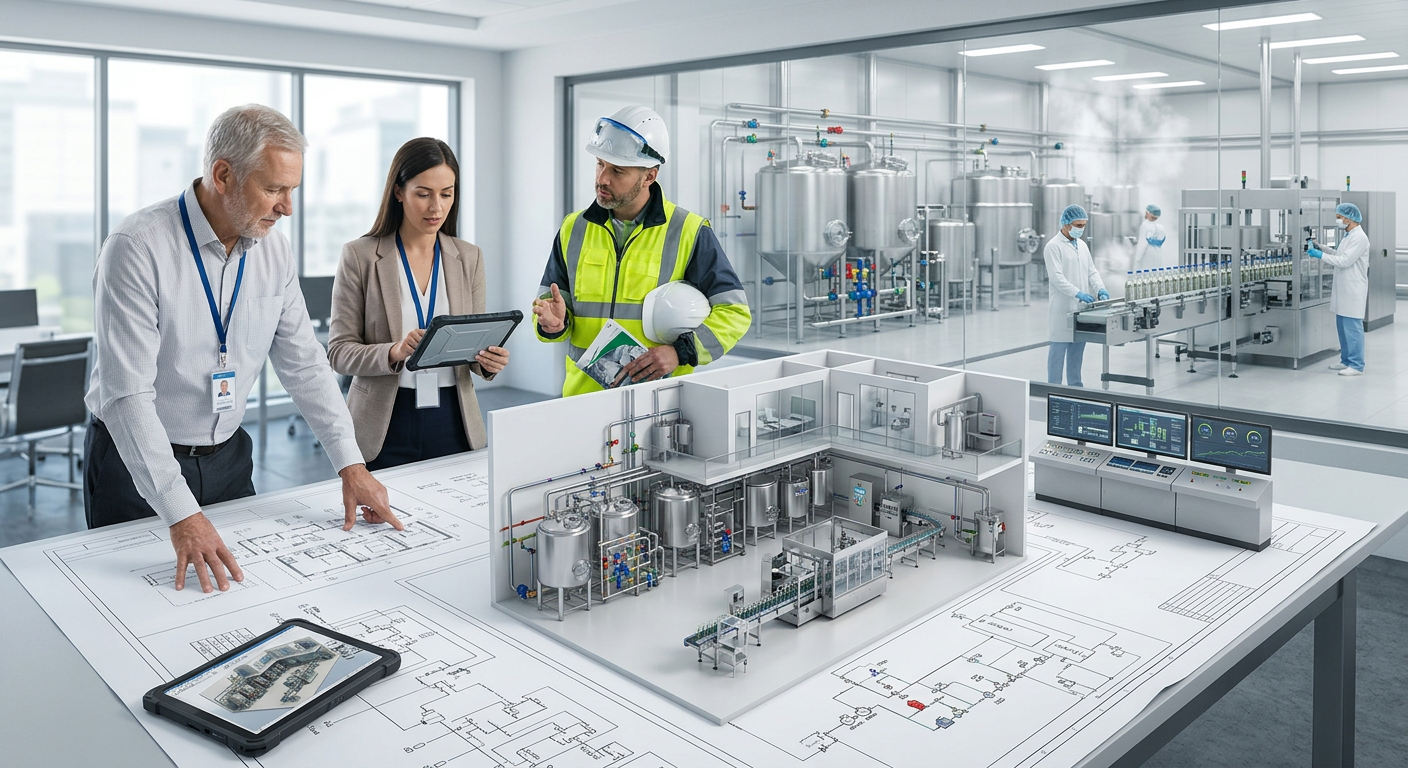
Food Facility Solar Panel Installation: 3-5 Year ROI Guide
For food and beverage manufacturers in the United States, rooftop solar can be financially attractive when three conditions are met: the facility has a structurally suitable roof, a large and predictable daytime electrical load, and access to favorable utility rates, tax incentives, or net metering structures. In many plants, especially processors running long daytime shifts, cold storage, packaging lines, compressed air, process water systems, and HVAC, a properly designed commercial solar array can offset a meaningful share of utility spend and support a 3 to 5 year payback under strong conditions. The key is not simply buying panels. The key is engineering the solar project around plant operations, food safety, utility interconnection, maintenance access, and long term capital planning. That matters in major U.S. manufacturing corridors such as California’s Central Valley, Chicago’s food logistics belt, the Carolinas, Texas, Wisconsin dairy regions, the Mid-Atlantic cold chain network, and Southeast protein processing hubs near Atlanta, Charlotte, Dallas, Fresno, and Kansas City. Energy rates, interconnection timelines, and roof conditions vary widely by region. A plant near the Ports of Los Angeles and Long Beach may prioritize peak demand reduction and sustainability reporting, while a Midwest frozen foods processor may focus on offsetting refrigeration loads and winter energy volatility. This guide explains how a rooftop solar feasibility assessment works, how to size a system for food plant energy loads, what structural and electrical issues affect installation, how to stay HACCP compliant during construction, which financing models can support a 3 to 5 year return, and how experienced engineering partners can integrate solar into broader facility performance goals. Yes, many U.S. food facilities are good candidates for rooftop solar, but only after a disciplined feasibility review. The best candidates typically have: In practical terms, a facility using 1.5 to 6 million kWh annually may be able to offset roughly 10% to 35% of purchased power with rooftop solar depending on roof size, shade, local solar irradiance, and interconnection limits. Facilities with energy-intensive sanitation, aseptic operations, process cooling, retort systems, and packaging often see the strongest value when solar is paired with energy monitoring, load scheduling, and broader electrical optimization. For buyers, the most important advice is simple: do not treat solar as a commodity bolt-on purchase. In a food plant, the right scope includes roof analysis, one-line review, demand profile study, sanitation planning, utility coordination, outage risk analysis, and operational sequencing. That is especially true for plants under FDA, USDA, SQF, or BRC oversight. The table above shows why simple rule-of-thumb quoting can be misleading. A plant with excellent sun exposure but a weak roof or restrictive utility policy may underperform financially. By contrast, a processor with moderate sunlight but expensive electricity and strong self-consumption can still deliver excellent returns. A rooftop solar feasibility assessment for a food plant should combine market realities with site-specific engineering. In the United States, commercial solar growth continues to be driven by higher electricity prices, corporate ESG commitments, federal tax incentives, state programs, and pressure to stabilize manufacturing overhead. Food processors are especially interested because they often operate energy-intensive equipment over long hours, making onsite solar generation more useful than it would be for lower-load commercial buildings. The assessment starts with five workstreams: roof suitability, structural analysis, electrical distribution review, utility interconnection, and economic modeling. Roof suitability includes membrane condition, drainage, penetrations, obstructions, fire setbacks, and maintenance access. Electrical review includes switchgear age, transformer capacity, metering location, panelboard arrangement, and whether the plant can support line-side or load-side connections. Economic modeling should use at least 12 months of bills, but 24 to 36 months is better for plants with seasonal throughput. Local conditions matter. California, New Jersey, Massachusetts, Illinois, New York, North Carolina, and Texas all have different economics and interconnection realities. A processor in Sacramento may face one set of export rules, while a meat plant in Omaha or a beverage co-packer near Houston may see a very different return profile. Proximity to trade hubs like Savannah, Newark, and the Inland Empire can also affect labor availability, construction scheduling, and equipment lead times. The chart shows a realistic growth pattern in food facility solar adoption, reflecting expanding interest in decarbonization, resilience, and cost control. By 2026, adoption is expected to rise further as energy management platforms improve and financing structures become more standardized for industrial sites. Buyers should also consider future flexibility. If a plant plans to add freezing tunnels, larger compressors, retort capacity, fermentation vessels, or packaging lines, the solar design should account for future electrical growth. That may change inverter selection, point of interconnection, or conduit routing. A feasibility study is not just a solar exercise; it is a capital planning exercise. System sizing should begin with actual plant load data, not with roof area alone. Food facilities are not office buildings. Their electrical demand often comes from refrigeration racks, glycol systems, process pumps, blowers, air compressors, CIP skids, packaging equipment, water treatment, lighting, and HVAC serving controlled environments. In beverage operations, syrup rooms, chillers, fillers, depalletizers, and compressed air can create broad daytime loads. In protein and prepared foods plants, slicing, cooking, conveying, cold storage, and sanitation systems heavily influence demand. A solar system should usually be sized to maximize onsite consumption rather than gross production. Oversizing a system where export value is low can weaken payback. Right-sizing is particularly important in states where net metering has changed or where export compensation is limited. Typical rooftop systems for food plants may range from 250 kW for smaller specialty manufacturers to 2 MW or more for larger production campuses with extensive roof area. Actual feasible size depends on setbacks, obstructions, service configuration, and structural loading. In many facilities, the array offsets only part of total load, which is often the correct strategy. The bar chart highlights how energy-heavy subsectors such as cold storage, dairy, and protein processing often show strong potential for solar integration because they maintain substantial daytime base loads. The table shows that different product types create different solar sizing strategies. A cold-chain site may value predictable daytime compressor operation, while an aseptic or retort facility may need especially careful electrical coordination around uptime and sanitation windows. By 2026, more food manufacturers are expected to pair rooftop solar with submetering, load analytics, and selective electrification strategies. Those may include replacing aging motors, improving VFD deployment, optimizing compressed air, or sequencing noncritical loads during peak solar production. Solar works best when it is part of a broader energy management roadmap. Structural and electrical design can make or break a food facility solar project. On the structural side, engineers review roof framing type, purlin spacing, deck condition, wind uplift exposure, ballast limitations, snow load where applicable, seismic requirements, and localized reinforcement needs. In hurricane-prone coastal regions from Florida to the Carolinas and the Gulf Coast, wind design can significantly influence racking selection and attachment strategy. In northern states such as Wisconsin, Minnesota, and New York, snow drift and maintenance access become major considerations. On the electrical side, interconnection planning often reveals the real complexity. Older plants may have legacy switchgear, multiple service additions, undocumented field modifications, or crowded electrical rooms. Industrial rooftops also tend to be filled with HVAC units, exhaust systems, ammonia refrigeration components, vents, and process utility runs. Safe conduit routing and shutdown planning matter as much as module count. Fire code access paths, roof drainage, service clearances, and lockout/tagout procedures all need to be incorporated into the design. Where a facility has 24/7 operations or highly sensitive process systems, temporary shutdowns must be sequenced with plant management, maintenance, sanitation, and quality teams. The explanation behind this table is straightforward: in industrial solar, engineering risk usually costs more than panel hardware. Buyers who compare only module price per watt often miss the variables that matter most in a food plant environment. Installation above food production space must be planned through a HACCP lens. The hazard is not the solar array itself; the hazard is construction activity that can introduce dust, debris, water intrusion, foreign material, or uncontrolled personnel movement above sensitive process areas. That is why installation methods should be coordinated with quality assurance, plant operations, sanitation, maintenance, and if applicable, USDA inspectors. Best practice includes pre-job hazard reviews, controlled roof access, debris containment, foreign material accountability, tool inventory, penetration sealing verification, sanitation hold points, and defined stop-work triggers if unexpected contamination risk arises. Work over exposed product zones should be minimized or timed around shutdowns. For some facilities, work must be segmented by production area so that installation proceeds only where product is not exposed. Applications vary by industry. In dairy and aseptic processing, controlled environments may require stricter air and water intrusion management. In protein facilities, sanitation rigor and drainage issues may shape where penetrations are allowed. In beverage facilities with canning and bottling halls, overhead protection and line scheduling may be the main concern. The area chart reflects an important 2026 trend: more manufacturers now expect solar contractors to work within food safety management systems rather than outside them. That means documentation, phasing, and validation are becoming more sophisticated. For buyers evaluating vendors, ask for specific examples of how they coordinate construction inside regulated environments. A general solar installer may understand racking and inverters, but not necessarily how to work around sanitation windows, QA release protocols, or USDA inspection realities. In the United States, financing often determines whether a project reaches a 3 to 5 year ROI. The main options are cash purchase, loan financing, operating lease, capital lease, power purchase agreement, and structures that capture federal tax benefits through investors or tax-equity-aligned partners. The federal Investment Tax Credit remains one of the strongest drivers of commercial solar economics, while depreciation treatment and state incentives can materially improve payback. Net metering rules are highly state and utility specific. Some territories still provide favorable bill credits. Others compensate exports at lower values or place size caps on participation. In food plants, the economics are usually strongest when the system is sized primarily for self-consumption rather than heavy export. Demand charge reduction can also contribute, although solar alone does not always eliminate peak demand without coincident load management or storage. Buying advice: ask for a financing model that shows annual cash flow, utility inflation assumptions, maintenance reserve, inverter replacement assumptions, tax treatment, export rate, and downside sensitivity. A quote that only shows first-year savings is incomplete. The explanation here is that a 3 to 5 year result is usually most realistic for facilities with high power costs, excellent incentives, and direct ownership structures. For others, the strategic goal may be cash-flow-positive savings with lower risk rather than the shortest simple payback. When does a food facility actually achieve a 3 to 5 year ROI? Usually when several favorable conditions align: strong solar resource, high utility rates, material tax benefits, high onsite consumption, efficient procurement, and few costly roof or electrical upgrades. Facilities in parts of California, the Northeast, and select Southeast markets often build a stronger case than sites with low electricity rates and weak export compensation. However, projected ROI only matters if the system performs as modeled. That is why monitoring should be part of the project from day one. Best practice includes inverter-level monitoring, weather-normalized performance reporting, utility bill reconciliation, alarm notifications, and periodic review against the original savings model. For multi-site operators, a common dashboard can compare facilities by kWh generation, avoided cost, downtime, and degradation trend. Case study patterns in the market show that manufacturers often discover additional value once monitoring is tied to operations. If the array underperforms on clear days, the cause may be inverter faults, soiling, roof shading from later-added equipment, or electrical coordination issues. If demand peaks remain high, the solution may involve scheduling load, adding storage, or revisiting utility strategy. In 2026, performance guarantees and digital energy platforms are becoming more common. The trend is toward integrated reporting that combines solar generation, plant load, utility tariffs, and carbon metrics in a single view. Solar should support operations, not complicate them. Integration means coordinating the array with maintenance, sanitation, production scheduling, safety, and future expansions. In practical terms, that can include aligning installation with shutdown periods, preserving roof access to packaged rooftop equipment, routing conduits away from washdown-sensitive zones, and planning monitoring integration with the plant’s broader controls or energy management platform. For facilities already investing in process improvement, solar often makes the most sense when combined with utility optimization. Examples include VFD retrofits on pumps and fans, compressed air leak reduction, refrigeration sequencing, LED upgrades, and power quality improvements. Solar is most valuable when the rest of the facility is not wasting the electricity it buys. This is also where experienced engineering and integration partners matter. A company such as Disruptive Process Solutions brings value not merely by discussing equipment, but by understanding how capital projects fit plant throughput, compliance, and profitability. That business-minded approach is especially useful when solar is one part of a broader expansion, retrofit, relocation, or utility modernization effort. From a technological capability standpoint, DPS supports food and beverage manufacturers with structural, mechanical, plumbing, electrical, process, and controls engineering, including automation and SCADA perspectives that can be relevant when energy systems need to align with plant operations. From a manufacturing capability standpoint, the company’s experience with proprietary process equipment and integrated utility systems gives it a practical understanding of how rooftop projects interact with tanks, CIP systems, process lines, refrigeration, and plant infrastructure. From a service capability standpoint, the firm’s design-build-manage model supports feasibility, engineering, contractor coordination, installation oversight, and commissioning discipline for capital projects that cannot afford disconnects between design intent and field execution. Readers can explore broader engineering and project services and review selected project examples for context on integrated facility delivery. The comparison chart illustrates a common buying reality: local suppliers may be strong on standard commercial installs but less prepared for the layered demands of food manufacturing. For processors, supplier selection should prioritize regulated-environment experience, multi-trade coordination, and operational awareness. Across the United States, local sourcing still matters. EPC teams, electricians, roofing specialists, and structural contractors are typically drawn from regional markets such as Raleigh-Durham, Dallas-Fort Worth, Los Angeles, Chicago, Milwaukee, Atlanta, and Philadelphia. But regional labor should still be directed by a coherent facility strategy, especially when projects intersect with process utilities, expansions, or sanitation-sensitive production areas. Disruptive Process Solutions serves food and beverage manufacturers across the United States and Canada with a practical focus on profitable capital execution. Rather than approaching plant upgrades as isolated trades, DPS works from a full-project perspective that connects engineering, installation, and management with operating results. Its technology capabilities are relevant to solar-adjacent projects because food facility energy work often touches structural engineering, electrical distribution, process utilities, controls, and plantwide coordination. Its manufacturing capabilities add value when projects involve custom process equipment, utility skids, tanks, CIP systems, or the need to integrate rooftop work with production infrastructure already in place. Its service capabilities include capital planning, feasibility studies, owners representation, project and program management, general contracting functions where applicable, installation oversight, and commissioning support. For manufacturers evaluating whether solar belongs in a broader modernization plan, that integrated perspective can be more valuable than a narrow equipment quote. DPS’s role is not to sell panels as a stand-alone trend, but to help clients make disciplined capital decisions that improve throughput, reliability, and long-term economics. Additional information about the company and its approach is available on the company overview page, while its broader process and equipment capabilities can be explored through the equipment solutions section. Can every food plant in the United States use rooftop solar?No. Some sites have inadequate roof condition, too much shading, restrictive interconnection rules, or low power costs that weaken the business case. A feasibility assessment is necessary. Is a 3 to 5 year ROI realistic?Yes, but only in strong scenarios. High electricity rates, tax incentives, direct ownership, and high onsite consumption usually need to align. Many projects still create value even if payback is longer. Does rooftop solar interfere with HACCP or SQF programs?It should not if the project is planned correctly. Installation methods must include foreign material control, access control, sanitation hold points, and coordination with QA and operations. What kinds of food facilities benefit most?Cold storage, dairy, protein, beverage, prepared foods, and other operations with large daytime electrical loads often see strong potential. Each facility still needs site-specific analysis. Should a system be sized to cover 100% of plant electricity use?Usually no. Rooftop area, utility rules, export value, and operating profile often make partial offset the smarter strategy. What is the biggest mistake buyers make?Treating the project as a simple panel purchase instead of an engineered plant integration effort. Roof life, electrical tie-in, sanitation planning, and tariff structure are often more important than headline module cost. How long does a typical project take?For commercial food plants, development, engineering, utility approval, procurement, and installation can take several months to over a year depending on jurisdiction, utility, and plant complexity. What should be included in performance monitoring?Generation data, inverter alarms, weather normalization, utility bill reconciliation, maintenance records, and comparison against the original savings model. What 2026 trends should manufacturers watch?Expect more integration of solar with battery storage, AI-assisted energy analytics, stricter export economics in some utility territories, stronger ESG reporting expectations, and greater use of combined capital planning that links energy projects with process modernization. How should we choose among local suppliers?Look beyond installer count and ask about food facility experience, shutdown planning, code compliance, utility interconnection history, roofing coordination, and documented work in regulated manufacturing environments. -
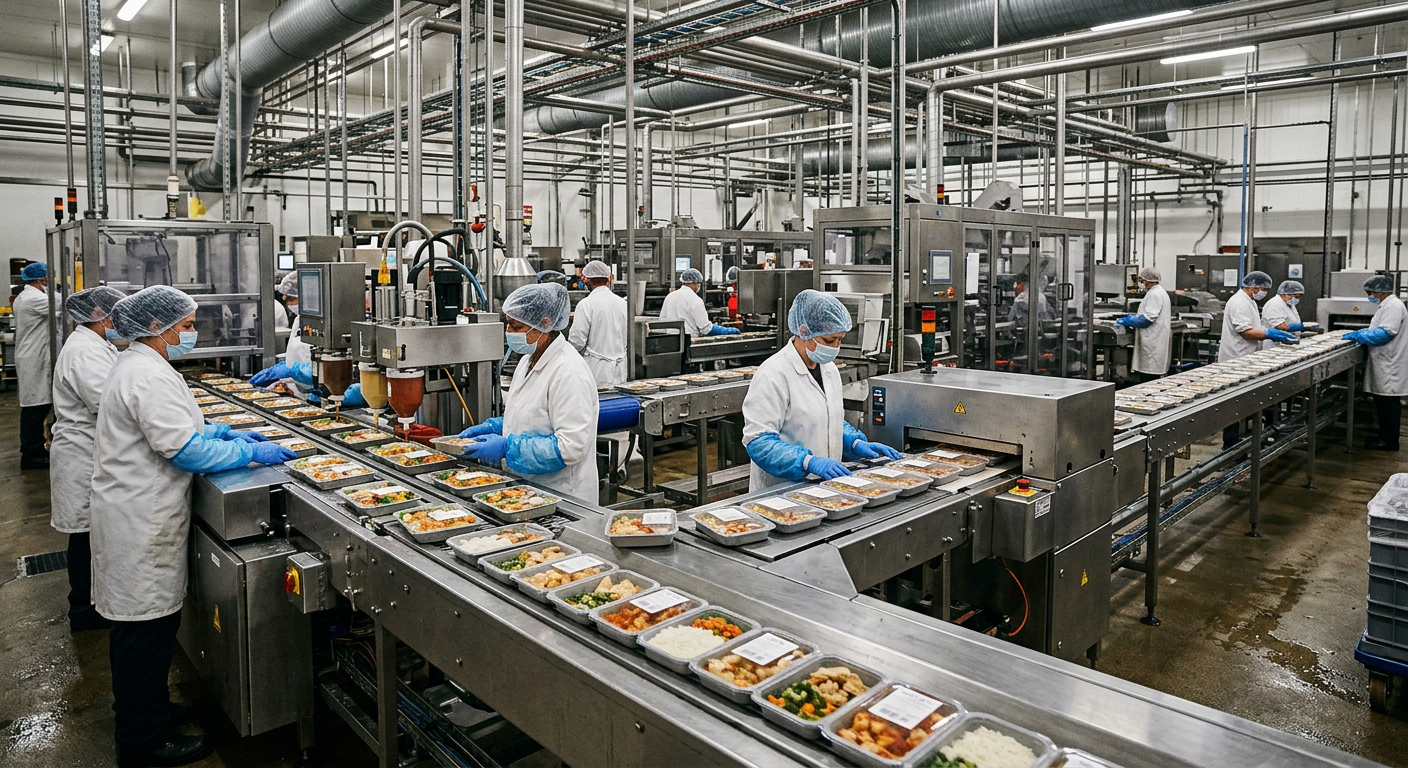
Clean-in-Place Systems for Beverage Production
Clean-in-place systems are the backbone of hygienic beverage manufacturing in the United States. A well-designed CIP program cleans tanks, lines, valves, pumps, heat exchangers, and fillers without disassembly, helping beverage plants reduce downtime, protect flavor, meet FDA and third-party audit expectations, and control water, chemical, and labor costs. For U.S. producers in markets such as beer, spirits, dairy beverages, juice, kombucha, carbonated soft drinks, and aseptic RTD products, CIP performance directly affects shelf life, brand protection, and plant profitability. Across major production hubs such as North Carolina, California, Texas, Illinois, Wisconsin, Pennsylvania, and Georgia, beverage manufacturers are modernizing sanitation systems to support higher throughput and tighter compliance. Plants shipping through trade corridors near the Port of Los Angeles, Port of Long Beach, Port of Houston, Savannah, Newark, and Chicago distribution networks are under pressure to keep lines available, especially in co-packing and multi-SKU operations. That makes CIP system design a capital decision, not just a sanitation task. For companies planning expansion, retrofit, or greenfield projects, CIP should be considered alongside utilities, automation, vessel sizing, wastewater loading, and production scheduling. Firms such as Disruptive Process Solutions approach beverage projects with a business-first engineering mindset, aligning sanitation infrastructure with throughput, product mix, and long-term operating cost rather than simply specifying oversized hardware. That approach is especially valuable when a syrup room, cellar, blending area, pasteurization loop, or filling hall must support future growth. A beverage CIP system is an engineered cleaning loop that circulates water, caustic, acid, sanitizers, and rinse solutions through process equipment at controlled time, temperature, flow, and concentration. Its goal is to remove beverage soils, reduce microbial risk, verify cleanliness, and return equipment to production-ready condition without manual teardown. In the United States, the best CIP systems are designed around product chemistry, line geometry, sanitary standards, automation needs, water reuse strategy, and validation requirements. For most beverage operations, successful CIP depends on five basics: correct chemical selection, turbulent flow, sufficient temperature, proper contact time, and validated coverage of all product-contact surfaces. If one of those factors is weak, cleaning results become inconsistent. A plant may pass visual inspection but still fail ATP checks, microbial swabs, or taste panels due to residual sugar films, protein buildup, flavor carryover, or biofilm formation. The table above shows why CIP selection should be tied to business outcomes. A cheaper system can become expensive if it lengthens changeovers, wastes water, or creates sanitation failures. Conversely, a right-sized system can improve uptime, limit labor exposure, and support faster product transitions. In beverage production, CIP typically begins when product is pushed out or recovered from a tank or line. The system then runs a programmed sequence that may include pre-rinse, caustic wash, intermediate rinse, acid wash, final rinse, sanitation, and verification. Automated skids use conductivity, temperature, flow, level, and return sensors to confirm each step. Recipes can be tailored for fermenters, BBTs, syrup lines, UHT loops, blending tanks, fillers, or transfer pipelines. The cleaning action depends on the classic four factors known across hygienic processing: chemistry, temperature, mechanical action, and time. Beverage plants also need strong control of the fifth factor: concentration verification. Inline conductivity meters are commonly used to distinguish water from chemical return and to support recovery of reusable caustic or acid. Advanced systems add SCADA-based recipe control, data logging, alarm management, and production integration. In practical terms, a U.S. bottling or brewing facility may operate one central CIP room feeding multiple circuits, or smaller dedicated skids close to the process area. A filler may have short, frequent cycles between SKU changes, while a fermenter or blend tank may run a longer sequence with stronger chemical exposure. High-risk products like dairy beverages, protein drinks, and aseptic formulations usually require more rigorous validation than standard carbonated soft drinks or filtered spirits. The line chart reflects a realistic growth pattern in CIP upgrade activity across the U.S. beverage market. Rising sanitation expectations, labor pressure, product diversification, and sustainability targets are pushing more manufacturers toward automated and better-instrumented cleaning systems. Beverage soils vary dramatically by product category, which is why a single generic CIP recipe rarely works across an entire plant. Sugary drinks leave sticky carbohydrate films that attract microbes and harden if heat dries them on surfaces. Juices and functional beverages often contain pectin, pulp fines, natural color compounds, and fruit acids. Dairy-based beverages leave protein and fat residues that can denature on hot surfaces and resist simple rinsing. Flavor emulsions, botanical extracts, and some nutraceutical ingredients may introduce oils, gums, and stabilizers that require specialized detergents. Acidic products are not necessarily self-cleaning. Citric acid, malic acid, phosphoric acid, and fermentation byproducts can interact with minerals or packaging-area residues to form deposits over time. In breweries and kombucha plants, yeast films, hop resins, krausen rings, and organic stone require targeted cycle design. In spirits and distillation environments, sugars, mash solids, congeners, and caramel color residues may build up in tanks, transfer lines, and blend systems. The table illustrates why recipe-based CIP matters. A protein RTD line near Chicago or a cold-fill juice plant in Florida should not be cleaned with the same parameters used for a filtered seltzer line in Arizona. Soil mapping by product family is often the first step in designing an efficient sanitation program. While details vary, most beverage CIP programs follow a predictable sequence. First is product recovery or push-out using air, water, or pigging where appropriate. Next comes a pre-rinse to remove gross residue. A caustic wash follows to dissolve organic soils. Many systems then run an intermediate rinse before an acid cycle to remove mineral scale and neutralize alkaline carryover. A final rinse, optional sanitizer, and line release complete the process. Critical equipment may also require post-CIP sterile air drying or aseptic hold procedures. Tanks rely on spray devices, return flow control, full drainability, and coverage of manways, agitators, vent filters, and upper shell regions. Pipelines need enough velocity to maintain turbulent flow, especially through tees, valve manifolds, meters, and dead-leg-prone areas. Filling equipment demands special attention because nozzles, bowls, product paths, cap chutes, and change parts may include complex geometries where residual product can persist. The process table shows that each asset class has different failure modes. In real U.S. plants, sanitation issues are often caused not by chemistry selection alone but by poor flow balance, incomplete return routing, valve misalignment, or filler circuits that were never fully validated after a line modification. From a technology standpoint, modern beverage projects increasingly combine CIP skids with PLC programming, recipe management, and SCADA dashboards. This is where an engineering partner with automation and process expertise matters. DPS, for example, supports structural, mechanical, plumbing, electrical, process, and controls engineering, which helps align CIP with utilities, blending, pasteurization, fermentation, carbonation, water treatment, and packaging integration rather than treating sanitation as an isolated utility. Sanitary design begins before the first cleaning cycle ever runs. If equipment contains dead legs, poor welds, non-drainable piping, hollow rollers, rough finishes, incorrect gasket materials, or inaccessible instrument tees, even the best CIP chemistry may not achieve repeatable results. That is why beverage manufacturers in the United States increasingly reference sanitary frameworks such as 3-A principles, EHEDG design guidance, and ASME BPE expectations where hygienic detail is critical. 3-A criteria are widely recognized in dairy and hygienic process applications. EHEDG is especially useful for evaluating cleanability and hygienic engineering practices. BPE is often associated with high-purity and bioprocess environments, but many of its principles on drainability, surface finish, documentation, and fabrication quality are relevant to aseptic or highly sensitive beverage systems. Plants do not always need every standard at every node, but they should understand how each applies to product risk. This comparison highlights a practical point: compliance is not just about paperwork. It shapes weld quality, pipe slope, instrument placement, valve selection, cleanout coverage, and maintenance access. Those design decisions influence every CIP outcome for years after startup. In a multi-line facility, one of the biggest strategic decisions is whether to install a centralized CIP room or decentralized skids near process zones. Centralized systems can reduce duplicate equipment, simplify chemical management, and support solution recovery. They are often attractive in large breweries, co-pack plants, and integrated beverage campuses with multiple tank farms and packaging lines. However, they also require careful circuit design, valve matrix control, longer piping runs, and scheduling discipline. Decentralized CIP systems place smaller skids closer to the equipment they serve. This can shorten cycles, reduce distribution losses, and increase flexibility for isolated operations such as aseptic blending, cellar cleaning, or a dedicated dairy beverage suite. The tradeoff is more equipment to maintain and, in some cases, less opportunity for chemical recovery. The bar chart shows that CIP demand is strong across beverage categories, with especially high modernization pressure in dairy beverages, beer, and fast-growing RTD segments. Multi-line co-pack operations often lead this demand because cleaning flexibility directly impacts changeover economics. The comparison shows why buying advice must be tied to plant reality. A beverage site in Dallas with multiple syrup rooms and fillers may benefit from a hybrid architecture, while a compact craft plant in Oregon may prefer a simpler skid. Location matters too: facilities in high-cost utility regions or wastewater-constrained municipalities often prioritize recovery and reuse features earlier in the capital planning process. As a service capability, DPS works across feasibility, capital planning, owner’s representation, project management, general contracting, installation, and integration. For clients expanding from one line to several, that end-to-end model can help evaluate whether CIP should be centralized, decentralized, or phased, while keeping construction, controls, utilities, and schedule aligned. No CIP system should be accepted on visual appearance alone. Validation confirms that the cleaning process consistently produces acceptable hygienic outcomes. In beverage operations, common tools include ATP testing, allergen swabs where relevant, conductivity confirmation, temperature records, concentration checks, microbiological swabbing, rinse water testing, and periodic teardown inspections for hard-to-clean components. ATP testing is useful for rapid feedback after cleaning, especially during startup, troubleshooting, and changeover verification. However, ATP does not replace microbiological testing. A surface can have low ATP and still present microbial risk if biofilms, niches, or post-clean contamination exist. Microbiological verification remains essential for dairy beverages, aseptic systems, low-acid high-risk products, and customer-audited co-packing operations. Validation should also include worst-case scenarios: longest line paths, lowest-flow circuits, highest-soil products, overnight holds, and seasonal temperature variation. Plants in humid Gulf Coast climates such as Houston or New Orleans may see different environmental pressure than facilities in dry inland regions. That matters for filler rooms, hose handling, and post-CIP exposure. The area chart shows how plants are moving from manual checks toward digitally recorded validation. This trend is expected to continue through 2026 as audit readiness, labor constraints, and traceability requirements increase. This table shows that no single tool is enough on its own. Effective validation layers fast release methods with periodic deeper verification. Plants that only swab external surfaces or only monitor conductivity are missing part of the picture. Water and wastewater costs are becoming major CIP design drivers in the United States, especially in California, Arizona, Colorado, parts of Texas, and municipalities with strict discharge permits. Beverage plants can reduce environmental impact and operating cost through recovered final rinse water, conductivity-based cutover, optimized line volume calculations, pigging for product recovery, chemical reuse, low-volume spray devices where appropriate, and automatic shutdown logic for incomplete circuits. Wastewater reduction is not just about volume. It also concerns pH swings, BOD, COD, sugar loading, suspended solids, and temperature. A plant discharging high-strength syrup residues near Atlanta or Los Angeles may face very different sewer surcharges than a smaller brewery in the Midwest. CIP design should therefore be coordinated with pretreatment, equalization, recovery tanks, and production scheduling. Manufacturing capability also matters here. DPS designs and supplies custom process equipment including tanks up to 12,000 gallons and custom CIP systems, which can be tailored to plant-specific recovery goals instead of forcing a one-size-fits-all skid. For beverage manufacturers scaling capacity, custom design may yield better utility efficiency than adapting a generic package unit. The comparison chart illustrates a common market reality: packaged skids may lower initial cost, but custom-engineered systems often outperform them in water reduction, recovery, automation, and long-term scalability. Buyers should compare lifecycle cost, not only purchase price. The most common CIP mistake is assuming that a cycle that worked for one product will work for all products. Another frequent issue is neglecting sanitary design during expansion projects. A new branch line, meter, or valve cluster can create a cleaning blind spot that did not exist before. Plants also underestimate the importance of instrument calibration, especially conductivity and temperature sensors that determine chemical strength and cycle completion. Other mistakes include oversized rinse times, undersized return pumps, poor spray device selection, lack of documented riboflavin or coverage testing where needed, failure to separate allergen or dairy circuits, insufficient operator training, and weak post-CIP hold controls. On fillers, manual workarounds often hide fundamental design issues. If operators repeatedly remove parts for hand cleaning that were intended to be CIP’d, the system may not be truly clean-in-place. The lesson from the table is simple: CIP problems are usually system problems, not just sanitation crew problems. They involve engineering, operations, maintenance, automation, and management decisions. This is one reason why beverage companies often benefit from integrators that can connect process design, utilities, controls, and execution in one model. In practice, a profitable CIP project often starts with a plant assessment. That may include mapping current circuits, measuring cycle duration, identifying rinse losses, reviewing microbiological trends, and evaluating future production goals. A co-packer in the Southeast running energy drinks, teas, and juice blends may have completely different sanitation economics than a craft distillery in Kentucky or a dairy beverage plant in Wisconsin. Local suppliers, chemical partners, utilities, and municipal discharge rules all influence the right answer. For manufacturers evaluating partners, it is useful to work with firms that understand both technology and execution. DPS serves beverage and food manufacturers across all 50 states and Canada, bringing process engineering, capital planning, installation, commissioning, and system integration experience across fermentation, distillation, pasteurization, aseptic processing, blending, filtration, carbonation, water treatment, and utility systems. That range helps ensure the CIP system supports the whole plant, not just a single asset. What is the ideal CIP frequency in beverage production?It depends on product type, hold time, process temperature, and risk level. High-protein, dairy, and aseptic lines typically need more frequent or more rigorous cleaning than filtered or low-residue beverage systems. Can one CIP system clean tanks, pipelines, and fillers?Yes, but only if the system is properly sized and the circuits are engineered for each equipment type. Many plants use separate recipes or dedicated skids for fillers or aseptic areas. How do U.S. beverage plants reduce CIP water usage?Common strategies include final-rinse recovery, conductivity-based cutover, product recovery before rinse, chemical reuse, and optimized recipe times. Wastewater pretreatment should be reviewed at the same time. Is ATP testing enough to validate cleaning?No. ATP is a fast screening tool, but it should be combined with microbiological verification, chemistry checks, temperature records, and periodic inspection of hard-to-clean components. What is better: centralized or decentralized CIP?Neither is always better. Large multi-line plants often use centralized or hybrid systems, while smaller or high-risk zones may benefit from decentralized skids. The best option depends on layout, product mix, utilities, and expansion plans. Do breweries and distilleries need the same CIP design as dairy beverage plants?No. Brewing and distilling typically deal with yeast, sugars, and organic residues, while dairy beverages add protein and fat challenges that require stricter validation and often more demanding chemistry. How important is sanitary design compared with cleaning chemistry?Both are critical. Poorly designed equipment cannot be made reliably clean by stronger chemicals alone. Drainability, weld quality, dead-leg control, and surface finish are foundational. What should buyers ask before purchasing a CIP system?Ask about hydraulic assumptions, recipe flexibility, recovery options, automation depth, validation strategy, future line additions, maintenance support, and integration with utilities and controls. What trends will shape beverage CIP through 2026?Expect more digital validation, stronger sustainability requirements, smarter water reuse, greater SCADA integration, predictive maintenance, tighter hygienic documentation, and more scrutiny on wastewater loading and energy use. Looking ahead to 2026, U.S. beverage manufacturers will likely see CIP become more data-driven and more closely tied to ESG, municipal water constraints, labor efficiency, and retailer-driven food safety expectations. Digital recipe enforcement, remote support, automated reporting, and recovery-focused utility design will move from optional upgrades to standard project requirements. Plants that align CIP with growth planning now will be better positioned for expansion, compliance, and profitability in the years ahead. -
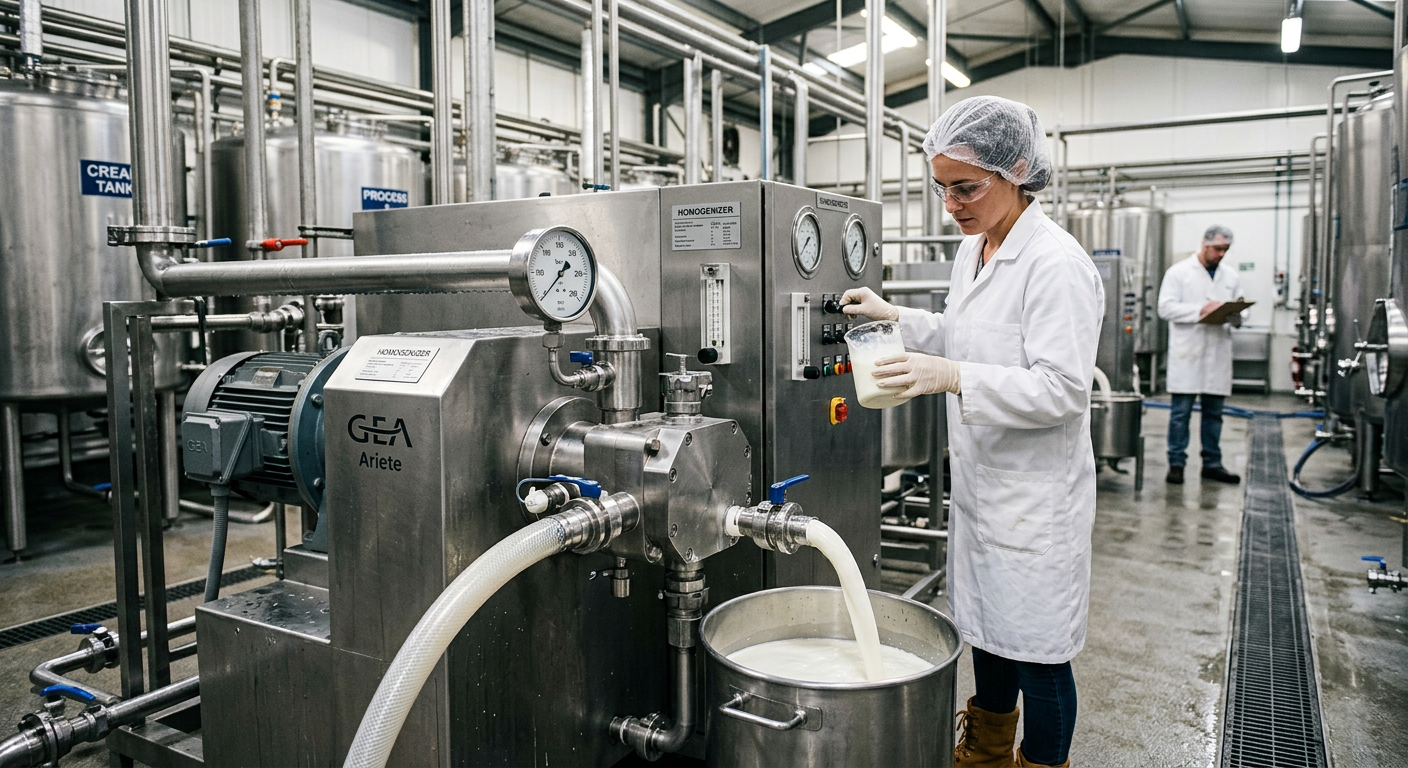
Food Plant Water Reuse System Design and Benefits
Water reuse is becoming a strategic priority for U.S. food and beverage manufacturers facing higher utility costs, drought pressure, discharge limits, and sustainability commitments. From protein plants in the Midwest to beverage facilities in California and the Southeast, well-designed reuse systems can lower freshwater demand, reduce sewer fees, improve resilience during shortages, and support long-term production growth. The best projects start with a clear water balance, separation of reusable streams, fit-for-purpose treatment, and operational controls that protect food safety first. A food plant water reuse system is an engineered network that captures relatively clean wastewater or utility water streams, treats them to a defined standard, and routes them back into approved non-product or controlled process uses. In the United States, common reuse targets include final rinse recovery from CIP systems, cooling tower blowdown reuse, boiler-related utility water applications, crate and tote washing, first-stage washdowns, irrigation, and certain ingredient-adjacent support functions where regulations, hazard analysis, and site controls allow. For most food facilities, the best starting points are streams with stable quality and lower organic load. That often means final rinse water, RO reject management, evaporator condensate, cooling tower blowdown, and lightly contaminated utility condensates. High-strength streams with fats, proteins, sugars, or solids can still be reused, but they usually require more robust equalization, dissolved air flotation, biological treatment, membrane filtration, and disinfection. In practical buying terms, a successful reuse project depends on six things: source stream mapping, target use definition, treatment validation, hygienic piping segregation, automation and monitoring, and regulatory documentation. Plants in water-stressed regions such as California’s Central Valley, Phoenix, Las Vegas supply corridors, and parts of Texas often see faster payback because water and sewer rates are higher. However, facilities around Chicago, Omaha, Atlanta, Raleigh, or New Jersey logistics hubs can still achieve strong returns when sewer surcharges and expansion constraints are included. The table above shows why reuse projects should not begin with equipment selection alone. Facilities that first define source water quality, reuse targets, and compliance boundaries usually obtain a simpler and more reliable system. Water reuse applications vary by product category, sanitary risk, utility architecture, and local permit conditions. Meat and poultry plants in Arkansas, Georgia, and the Carolinas often focus on utility reuse, yard washdown, and non-contact support systems because process water quality can change quickly with production load. Dairy and beverage plants in Wisconsin, Idaho, California, and Texas frequently have more opportunities around CIP recovery, RO optimization, bottle or package line support, and condensate recovery. Prepared foods facilities near Chicago, Kansas City, or the Port of Savannah may combine multiple smaller streams into a central reclaimed water loop. The most common application groups include non-product contact utility uses, cleaning support, cooling systems, pretreatment optimization, and landscape or ancillary uses. Reuse is strongest when a plant can classify water by quality tier rather than treating every gallon to the highest possible standard. This fit-for-purpose approach helps plants reserve advanced treatment for the highest-risk uses while using simpler filtration and disinfection where suitable. This application matrix shows that the best opportunities are usually internal utility loops rather than direct process replacement. In many U.S. plants, internal reuse delivers the lowest compliance burden and the fastest return. Regional market conditions matter. Plants around Fresno, Bakersfield, and Salinas may prioritize reuse to maintain capacity during drought-related restrictions. Gulf Coast processors near Houston and New Orleans often focus on discharge reduction because sewer and pretreatment costs can rise sharply with production expansion. Manufacturers serving East Coast retail distribution through ports such as Norfolk, Savannah, and Newark may use reuse projects to support customer sustainability scorecards and to reduce risk during municipal supply disruptions. Treatment technology selection should be based on source water chemistry, microbiological load, solids content, target reuse quality, cleaning chemicals present, and system turndown needs. In food plants, reclaimed water systems commonly combine several barriers: screening, equalization, pH adjustment, dissolved air flotation, multimedia filtration, activated carbon, ultrafiltration, reverse osmosis, UV disinfection, ozone, or chemical sanitization. Not every project needs all of these steps. The most cost-effective designs use only the barriers required to protect the intended use. At the front end, equalization is often undervalued. Reuse systems fail more often from unstable source water than from insufficient membrane quality. Equalization tanks, controlled blending, and timed capture logic can turn a variable stream into a manageable one. After that, solids removal and organic load reduction protect downstream membranes and lower chemical use. For higher-value water applications, membranes provide consistency. Ultrafiltration is especially useful for removing suspended solids, colloids, and many microorganisms. Reverse osmosis is used when dissolved solids, hardness, chlorides, or conductivity must be reduced. Final disinfection then provides an added safety barrier before reuse distribution. The comparison above helps buyers avoid overdesign. For example, a plant reusing final rinse water for first-pass cleaning may need filtration and validated disinfection, while boiler makeup or ingredient-adjacent utility uses may need RO polishing as well. From a technology capability standpoint, Disruptive Process Solutions brings value because it works across process engineering, mechanical, plumbing, electrical, controls, and automation rather than treating water reuse as an isolated skid purchase. That matters when the project involves PLC logic, SCADA visibility, interlocks with CIP sets, cooling towers, utilities, and hygienic tie-ins. Plants looking for integrated engineering and project delivery services often benefit from one team that understands both water treatment performance and food plant operating realities. CIP rinse water recovery is often the highest-confidence entry point for food plant reuse. Final rinse water typically has lower contaminant levels than initial washes, and its timing is predictable because it follows defined cleaning recipes. In dairy, beverage, brewery, wine, RTD, sauce, and aseptic facilities, a final rinse recovery tank can capture usable water for the next cycle’s pre-rinse, external cleaning, or selected non-product support uses. A good CIP recovery system includes conductivity-based diversion, tank level management, recipe-based controls, return line verification, hygienic valves, and clear separation of acid, caustic, sanitizer, and rinse phases. The point is not simply to save water. It is to save only the right water, automatically reject off-spec volumes, and document each transfer so operators and quality teams can trust the system. Facilities in major beverage corridors such as North Carolina, Texas, Colorado, and Southern California often gain additional value by pairing CIP water recovery with central utility optimization. If a plant already runs sophisticated batching, carbonation, pasteurization, or aseptic systems, the reuse project can usually be integrated into existing automation instead of creating a standalone operating burden. The table shows why CIP rinse recovery is as much a controls project as a treatment project. Smart segregation and automation make the difference between a theoretical saving and a repeatable operating practice. For plants evaluating equipment options, skid simplicity matters. Smaller facilities may use a dedicated recovery tank, filtration, and UV package. Larger facilities may need multiple rinse classes, central tanks, automated valve matrices, and data-driven cycle validation. The right design depends on batch frequency, product changeovers, and cleaning chemistry complexity. Cooling tower blowdown reuse is another practical strategy, especially in beverage, dairy, aseptic, and prepared foods plants with heavy thermal loads. Blowdown contains concentrated minerals, treatment chemicals, and suspended solids, so direct reuse is limited. But after proper treatment, it can become a valuable source for secondary utility applications or blended makeup water. The design challenge is chemistry control. Cycles of concentration, hardness, silica, chlorides, pH, and biological growth all affect reuse feasibility. Facilities near arid and warm regions such as Arizona, inland California, and West Texas often see strong returns from blowdown projects because cooling demand is high and water cost pressure is persistent. In humid Gulf and Southeast markets, the economics can still work when sewer discharge fees and production expansion limits are included. Typical treatment trains include equalization, softening or chemical conditioning, side-stream filtration, ultrafiltration, and sometimes reverse osmosis. The recovered water may then be reused for washdown, blended cooling tower makeup, or other non-potable utility needs depending on water quality targets and site rules. The key is to treat blowdown as a managed utility stream, not as free water. Poor scaling control can erase expected savings quickly. In plants with broad utility infrastructure, reuse must be coordinated with compressors, boilers, refrigeration, glycol systems, and HVAC loads. This is where a full-plant engineering view becomes important. DPS frequently supports clients with utility integration, ensuring that water reuse does not create hidden risks elsewhere in the thermal system or maintenance program. Reverse osmosis and ultrafiltration are the backbone technologies for many higher-performance reclaimed water systems in U.S. food plants. UF typically serves as the protective barrier against suspended solids, colloids, and much of the microbial load. RO then removes dissolved salts, hardness, and smaller dissolved constituents that affect conductivity, flavor-sensitive processes, scaling potential, or utility performance. UF and RO are especially common in beverage production, dairy processing, ingredient blending, aseptic operations, and facilities with demanding boiler or high-purity rinse applications. In brewing and soft drink plants, these systems also align well with broader process water management, where consistent water chemistry is already a production requirement. Still, membranes should never be selected without a concentrate plan, pretreatment strategy, and cleaning protocol. RO concentrate may be routed to wastewater treatment, blended into a lower-tier reuse application, or managed through further recovery depending on local economics. Membrane cleaning frequency, antiscalant use, and fouling control have a major effect on lifecycle cost. DPS also brings manufacturing capability into this area. In addition to engineering integrated systems, the company designs and supplies proprietary process equipment, including tanks and custom CIP-related equipment that can be incorporated into reuse projects. Manufacturers exploring integrated skids, storage, or utility-connected process vessels can review available process equipment capabilities as part of a broader plant modernization program. This table explains where membranes fit. UF is usually the practical first membrane step, while RO is justified when the end use demands dissolved solids control or very consistent utility water quality. Regulatory requirements for water reuse in the United States are not governed by one single national food plant rule. Instead, compliance usually involves a combination of FDA expectations, USDA considerations where applicable, state environmental requirements, local sewer or water authority rules, building and plumbing codes, and private customer or certification standards such as SQF or BRC. That means reuse design must be site-specific. The first principle is that reclaimed water use must not compromise food safety, employee safety, or sanitary design. Water quality specifications should be tied to the end use, validated through hazard analysis, and supported by monitoring, records, and corrective actions. Backflow prevention, cross-connection control, line identification, tank vent protection, drain separation, and automated diversion of off-spec water are essential. Plants under USDA oversight, or facilities producing high-risk refrigerated foods, should be particularly careful about utility water classification and zoning. Even when reclaimed water is used only in non-product contact areas, aerosolization, hose management, and operator practices must be considered. Local authorities may also require permits for internal reuse loops, discharge changes, reclaimed water storage, or irrigation uses. The takeaway from this compliance table is simple: documentation and controls are as important as hardware. A reclaimed water system that is technically sound but poorly documented can still create audit problems. From a service capability perspective, DPS supports clients through feasibility, capital planning, owner’s representation, project management, general contracting where licensed, equipment integration, and commissioning. For manufacturers planning a major modernization, these services are often more valuable than equipment alone because water reuse touches utilities, controls, food safety, scheduling, and stakeholder communication at the same time. Companies evaluating project partners can learn more about the DPS team and how its design-build-manage model supports complex food and beverage upgrades. A representative U.S. case involved a multi-line beverage and prepared ingredients facility operating near a major southeastern freight corridor with distribution into Atlanta, Charlotte, and the Port of Savannah. The site had rising municipal water costs, capacity constraints on sewer discharge, and frequent CIP cycles across blending, storage, and packaging assets. Management initially considered a large utility expansion, but a detailed water balance identified reclaim opportunities that could defer part of that capital. The project team mapped rinse water generation by line, measured conductivity transitions during CIP, reviewed cooling tower blowdown chemistry, and identified areas where reclaimed water could safely offset freshwater use. The final design included segregated CIP final rinse capture, equalization, UF treatment, disinfection, and a controlled reclaimed water header for first-rinse cleaning and selected non-product support uses. A smaller side project addressed cooling blowdown management and optimized cycles to reduce waste. Within one full operating year, the plant reduced freshwater demand by approximately 35 million gallons. Sewer loading dropped as well, and the facility improved production resilience during peak summer demand periods. The strongest economic gains came not just from water purchase reduction, but from lower discharge cost, deferred utility expansion, and improved operational visibility through automation. This case illustrates why water reuse projects should be evaluated as operational strategy, not just environmental initiative. When a plant is growing, every gallon saved can also protect throughput, permit flexibility, and long-range capital efficiency. Manufacturers considering their own business case should compare four categories of value: avoided water cost, avoided sewer cost, deferred capital, and risk reduction. Sites near major logistics and manufacturing hubs such as Dallas-Fort Worth, Los Angeles, Milwaukee, Indianapolis, and Philadelphia often find that expansion pressure makes these indirect savings especially important. Disruptive Process Solutions supports food and beverage manufacturers across the United States and Canada with integrated engineering and project execution. The company is known for working as a practical business-minded partner, not merely as an equipment vendor. Its focus is on profitable capital outcomes, strong technical planning, and transparent decision-making that serves the client’s long-term operation. For manufacturers exploring water reuse, DPS is especially relevant because the project often crosses multiple disciplines at once. A reclaimed water system may involve process engineering, sanitary design, utility tie-ins, tanks, piping, controls, PLC programming, SCADA, operator interfaces, and commissioning. DPS brings those pieces together under one project approach, which helps reduce handoff errors and speeds field execution. On the technology side, DPS works across process, mechanical, plumbing, electrical, and controls engineering, including automation architectures that are essential for rinse capture, diversion logic, alarm management, and utility system integration. On the manufacturing side, the company also designs and supplies selected proprietary process equipment such as storage and processing tanks and custom CIP-related systems, which can support a more unified project delivery model. On the service side, clients can engage DPS for capital planning, feasibility studies, owner’s representation, project and program management, general contracting support where applicable, installation integration, and startup oversight. This combination is useful for facilities that need more than a packaged skid. For example, a dairy processor may need reuse integrated with homogenization, pasteurization, utility routing, and existing sanitary zones. A beverage co-packer may need it tied into syrup rooms, compressors, boilers, cooling towers, and fast growth plans. A protein or prepared foods site may require phased installation around active production schedules. In those cases, the benefit is having one project partner that understands the whole plant. Companies seeking project examples and broader execution experience can review selected case studies and project highlights to see how integrated engineering and delivery can improve capital results. What water streams are usually the best starting point for reuse in a food plant?The best starting points are usually stable, lower-strength streams such as final CIP rinse water, evaporator condensate where applicable, cooling tower blowdown after treatment, and utility-related waters that can be segregated cleanly. Can reclaimed water be used in direct food contact applications?That depends on the product, process, local rules, customer requirements, and validated treatment barriers. In most U.S. plants, reuse begins with non-product contact or tightly controlled utility uses because those applications are easier to justify and manage. How long does a typical project take?A small CIP rinse recovery project may move from study to startup in a few months. A plant-wide reclaim program involving utilities, civil work, membranes, and permitting may take significantly longer, especially if production phasing is required. What are the most common reasons reuse projects underperform?Poor source stream segregation, weak data on flow and quality, missing automation, inadequate operator training, and failure to define the end use clearly are the most common causes of underperformance. Is reverse osmosis always necessary?No. RO is valuable when dissolved solids must be reduced for the target use. Many successful projects rely on screening, equalization, filtration, UF, and disinfection without RO. How should buyers compare suppliers?Compare them on food plant experience, ability to integrate controls and utilities, commissioning support, documentation quality, membrane service strategy, and understanding of sanitary risk. Lowest equipment price rarely equals lowest lifecycle cost. What are the biggest trends heading into 2026?Expect stronger adoption of smart metering, digital twins for water balance modeling, AI-assisted membrane cleaning optimization, tighter municipal discharge oversight, more customer sustainability scorecard pressure, and broader use of modular reclaim systems. Policy trends are also likely to favor water resilience planning, especially in drought-prone U.S. regions. By 2026, more plants will move from isolated savings projects to full site water strategies that combine reuse, wastewater reduction, energy recovery, and utility automation. What should a plant do first?Start with a site water balance, identify top reusable streams, define approved end uses, and complete a food safety and compliance review before requesting final equipment proposals. -
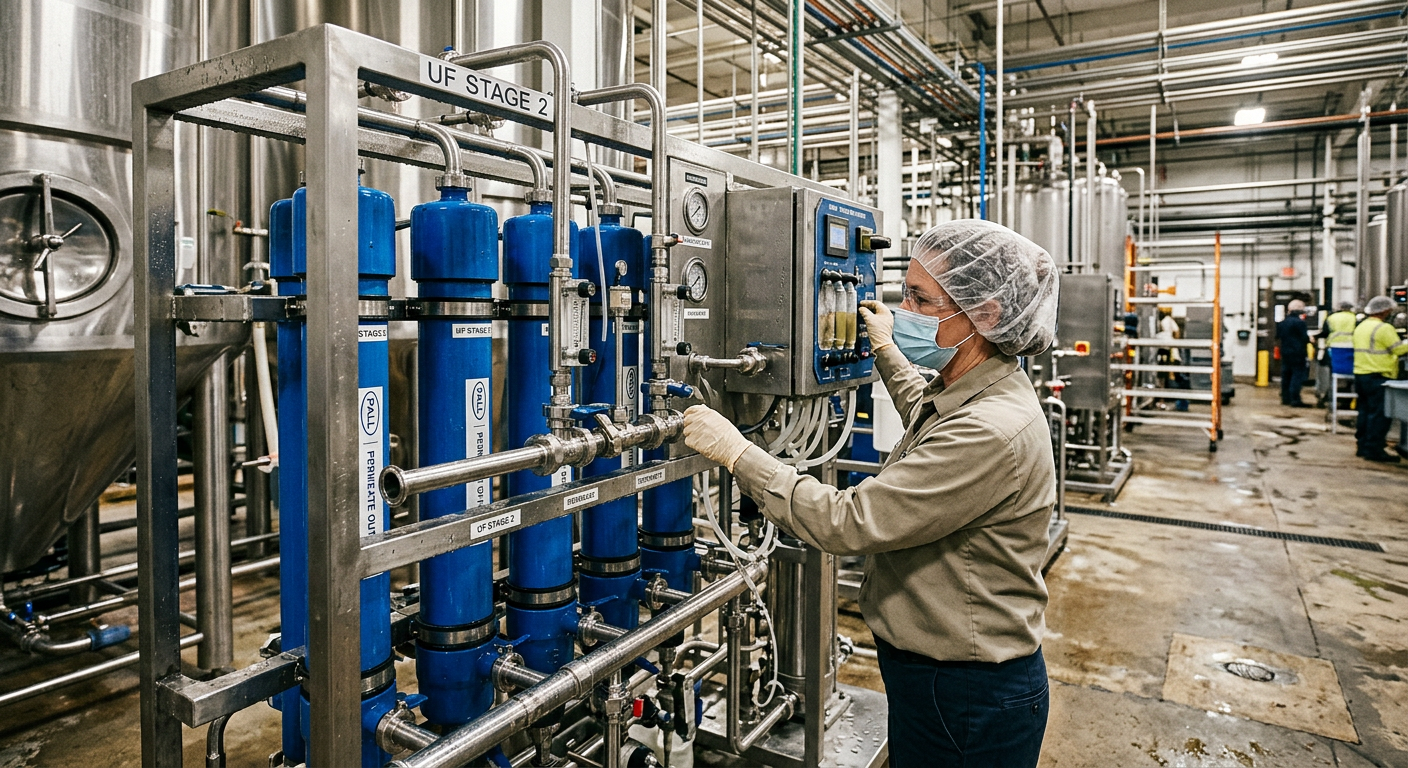
CIP Systems for Food Processing
Food manufacturers in the United States use CIP systems, or clean-in-place systems, to wash tanks, pipes, fillers, heat exchangers, and process lines without taking equipment apart. A well-designed CIP program improves food safety, supports FDA FSMA compliance, reduces downtime, and lowers labor, water, chemical, and energy use. For dairies, beverage plants, protein processors, sauce makers, aseptic lines, and co-packers, the right CIP design depends on product soil, line complexity, production schedule, utilities, and validation requirements. CIP systems are automated or semi-automated cleaning packages that circulate water, detergents, caustic, acid, and sanitizer through closed food processing equipment. In U.S. food plants, they are commonly used in dairy, beverage, prepared foods, sauces, proteins, and aseptic operations where repeated internal cleaning is essential. The best CIP system balances the four TACT variables: time, action, concentration, and temperature. It also matches plant production goals, utility capacity, sanitation standards, and documentation needs. For a plant in Chicago producing dairy beverages, a brewery in North Carolina, a protein facility in Texas, or a sauce plant near California’s Central Valley, CIP design must account for line lengths, soil load, allergen changeovers, water reuse strategy, and automation level. When engineered correctly, CIP can reduce manual cleaning exposure, increase uptime, and produce repeatable sanitation records that support audits and customer requirements. The chart above reflects a realistic growth direction for automated CIP adoption in the United States as plants upgrade aging systems, add recipe-driven cleaning, and invest in sustainability before 2026. Demand is especially strong in dairy, ready-to-drink beverages, aseptic processing, and high-care food facilities. A CIP system cleans the internal surfaces of process equipment by circulating cleaning solutions at controlled flow, concentration, and temperature. Instead of dismantling equipment after each run, operators select a cleaning recipe from a local HMI or plant SCADA system. The skid then performs each step in sequence, often with automated valve routing, conductivity control, temperature verification, and return monitoring. In a typical U.S. food plant, the CIP skid is connected to process circuits such as mix tanks, pasteurizers, pipelines, fillers, holding tubes, balance tanks, and transfer manifolds. Cleaning solutions are delivered from dedicated tanks by sanitary pumps through supply headers, valve matrices, and return lines. Sensors confirm temperature, flow, level, and chemical strength. Once a cycle is complete, reports can be stored electronically for QA review and audit support. How CIP works in practice depends on the process. A yogurt line in Wisconsin may need strong protein and mineral removal. A sauce facility in New Jersey may need aggressive cleaning for starch, oil, and seasoning carryover. A kombucha plant in California may prioritize biofilm control and low-oxygen sanitary design. A protein marinade line in Arkansas may focus on allergen changeovers and difficult-to-remove fats. The cleaning method changes, but the objective stays the same: remove soil, reduce microorganisms, and restore a validated hygienic condition before the next production run. Many companies also connect CIP performance to overall equipment effectiveness. If cleaning takes too long, production hours shrink. If cleaning is too weak, microbiological risk rises. If utility use is too high, the cost per case goes up. That is why more processors now treat CIP as an engineered production asset, not just a sanitation utility. For manufacturers evaluating integrated process improvements, about our team explains how a full-scope engineering partner can align sanitation design with throughput, utility planning, and long-term profitability. Across the United States, CIP investment is being driven by labor shortages, stricter customer audits, increased allergen management expectations, and utility cost pressure. Regions with dense food manufacturing clusters such as Wisconsin, the Carolinas, Texas, California, the Midwest, and the Northeast are seeing particular interest in centralized and recovery-enabled CIP systems. Plants near logistics hubs like Houston, Savannah, Newark, and the Ports of Los Angeles and Long Beach often face speed-to-market demands that make reduced downtime especially valuable. CIP is widely used for milk, yogurt, cream, cultured products, RTD coffee, carbonated drinks, juice, plant-based beverages, beer, spirits, wine, sauces, dressings, soups, liquid eggs, prepared foods, liquid sweeteners, and aseptic formulations. It is less suitable for every equipment item in heavy dry processing or open-product equipment, where COP or manual cleaning may still be required. CIP and COP solve different sanitation problems. CIP cleans enclosed equipment in place. COP, or clean-out-of-place, requires components to be removed and washed in a separate tank, cabinet, or wash area. In many plants, the best strategy is not choosing one over the other but using both in the correct locations. CIP is ideal for pipelines, heat exchangers, storage vessels, blending systems, UHT circuits, fillers with sanitary routing, and other closed systems. COP is better for small removable parts, gaskets, screens, utensils, fillers with complex disassembly points, and equipment where internal spray coverage cannot be validated. The choice depends on product contact geometry, risk level, labor, and turnaround requirements. The table shows why beverage, dairy, and liquid food plants usually lean heavily on CIP, while mixed operations often preserve COP stations for removable components and specialty tools. If your site runs frequent SKU changes, allergen transitions, or round-the-clock production, CIP usually delivers better economics over time. If your equipment has hard-to-clean dead ends or must be dismantled for inspection anyway, COP remains essential. When selecting a CIP method, start with a sanitation map. Identify which circuits are true closed systems, which lines can be reliably spray-cleaned, and where manual teardown still provides the only safe verification. Then compare production losses from downtime against the capital cost of automation. In many cases, a modular CIP skid for the most critical lines pays back faster than a plantwide rebuild. Processors should also ask whether the system can expand. A co-packer in Atlanta may begin with two cleaning circuits and later add syrup rooms, blend tanks, and fillers. A dairy in Idaho may add recovery tanks or conductivity-based chemical reclaim after year one. Building in future valve ports, extra I/O, and scalable controls can prevent expensive redesign later. Demand is strongest where product soils are difficult, sanitation documentation is strict, and downtime is expensive. Aseptic systems and dairy lines lead the list because they require highly repeatable cleaning and validated controls. Every CIP program depends on four core variables: time, action, concentration, and temperature. These variables interact. If one factor drops, another may need to increase to achieve the same cleaning result. That is why experienced sanitation engineers do not copy recipes from one plant to another without testing product soils, line geometry, and process conditions. This table adds two practical extensions beyond classic TACT: surface condition and water quality. In real food plants, those two factors often explain why a recipe works in one facility but fails in another. For example, a plant in Denver with hard water may struggle with mineral film, while a fresh dairy beverage plant in upstate New York may see protein burn-on around heat transfer surfaces. For 2026, the major trend is dynamic TACT control. Instead of fixed recipes only, newer CIP platforms adjust cycle length, recovery routing, and chemical replenishment based on conductivity, turbidity, temperature hold, and return clarity. That means less over-cleaning and better evidence for sustainability reporting. While every process has its own recipe, most food and beverage CIP systems in the United States follow a common sequence. The exact temperatures, dwell times, and chemical concentrations depend on product type, allergen load, and hygienic risk category. The sequence above should not be treated as universal. Some beverage systems skip acid on every cycle and use it periodically. Aseptic circuits often have tighter thermal and sterility requirements. Viscous products like dressings or dairy desserts may need longer caustic exposure and stronger return velocities. Product recovery methods such as pigging can greatly reduce waste before the rinse even begins. Plants trying to improve cycle performance should analyze the full timeline, not just chemical stages. A large portion of lost time often comes from valve delays, tank refills, routing errors, and manual verification. Better controls and line design can shorten these non-cleaning minutes significantly. Dairy plants commonly use full-step CIP with frequent acid circulation because milkstone and protein buildup are persistent. Breweries and RTD beverage plants often prioritize yeast removal, sugar control, flavor carryover prevention, and quick turnaround between batches. Sauce and prepared food plants may need longer washes for starches, gums, spices, and oil films. Aseptic processors depend on tightly validated cycles with precise thermal and chemical control because the cost of a sanitation failure is much higher. The quality of a CIP system depends as much on hardware design as on chemistry. Core components include solution tanks, supply and return pumps, heaters or heat exchangers, valve sets, instrumentation, control panels, and often conductivity or flow verification devices. The best design matches the plant’s production reality rather than a generic skid template. Processors buying a new system should examine more than tank count and pump horsepower. Ask whether the skid supports single-use or recovery mode, whether controls can integrate with existing PLC or SCADA architecture, and whether recipes can be locked by QA. Also review sanitary weld quality, dead-leg minimization, access for maintenance, and spare parts availability in the United States. Many growing manufacturers now favor modular skids that can be expanded from one or two circuits to larger multi-line packages. That matters for co-packers around Dallas, Charlotte, and Phoenix where production can scale quickly. It also matters in port-adjacent beverage facilities near Los Angeles, Houston, or Savannah where import and export schedules drive aggressive uptime expectations. Advanced engineering firms increasingly combine process, mechanical, electrical, and controls expertise to deliver CIP that actually works in the field. This includes PLC programming, SCADA integration, recipe control, utility balancing, heat recovery design, inline Brix interfaces, aseptic sanitation logic, and complete process line coordination. In modern projects, CIP is no longer an isolated skid; it is part of the plantwide automation and production strategy. For companies seeking this level of integration, engineering and project services are often the deciding factor between a system that merely circulates chemicals and one that improves operating margin. Custom-built tanks, CIP skids, cooking vessels, and related sanitary equipment can improve project alignment when standard catalog systems do not fit the process. U.S. processors often benefit from suppliers that can tailor tank size, skid footprint, utility connections, and instrumentation for specific dairy, beverage, or food applications. More details on sanitary process hardware can be found in these process equipment solutions. CIP systems do not create compliance on their own, but they strongly support it when properly designed, validated, and documented. In the United States, FDA FSMA pushes food plants toward preventive controls and documented sanitation practices. 3-A sanitary principles influence hygienic equipment design, especially in dairy and liquid food applications. SQF and BRC auditors typically expect evidence that sanitation procedures are controlled, repeatable, and verified. A sound CIP program helps meet these expectations by standardizing recipes, minimizing operator variation, recording critical parameters, and demonstrating that cleaning is tied to hazard control. Auditors often review chemical use, verification records, corrective actions, allergen cleaning validation, and preventive maintenance for instruments and valves. The key message is that compliance is operational. A plant can install a premium CIP skid and still fail audits if spray devices are not maintained, recipes are not validated, or sensors drift out of calibration. Conversely, a right-sized system with disciplined records can perform extremely well in audits. By 2026, expect stronger customer pressure for digital sanitation records, water use visibility, and sustainability-linked reporting. Food manufacturers supplying national retail chains are increasingly expected to show not only that equipment was cleaned, but also how efficiently the cleaning was performed. One of the strongest business cases for automated CIP is utility savings. Water, sewer, chemical, steam, and labor costs continue to rise across the United States. Plants in California, Arizona, and parts of Texas feel water pressure acutely, while plants in the Midwest and Northeast often focus on energy cost and wastewater loading. An optimized CIP system reduces total cost by matching cleaning intensity to soil load instead of over-cleaning every line. Common savings strategies include conductivity-based chemical reclaim, final-rinse recovery, automated concentration control, insulated tanks, heat recovery, variable frequency drives, product recovery before rinse, and recipe segmentation by product family. A low-acid RTD line does not need the same cycle every time as a heavy cream line or a sticky syrup circuit. The area chart illustrates a realistic trend shift toward sustainability-focused CIP design. More U.S. plants are moving beyond simple automation and into recovery-enabled, data-driven sanitation platforms because utility costs and ESG expectations are no longer secondary issues. Plants should measure utilities per clean, per batch, and per case. That turns CIP from a fixed overhead into a controllable KPI. In many projects, the easiest savings are not from cutting chemical strength, but from reducing unnecessary rinse time and recovering hot solutions correctly. Food and beverage manufacturers often need more than equipment supply. They need front-end feasibility, capital planning, installation management, controls integration, startup support, and commissioning. A design-build-manage approach is useful because CIP touches process piping, utilities, automation, wastewater, scheduling, and food safety documentation at the same time. That is especially true for expansions, line relocations, and greenfield co-packing facilities where sanitation must be coordinated with overall plant profitability. A practical example of execution-focused support is shown in these project case examples, where engineering decisions are tied directly to throughput, capital efficiency, and operational outcomes rather than just equipment delivery. When evaluating suppliers in the United States, prioritize field service access, spare parts support, controls expertise, and sanitary fabrication quality. A lower-priced skid loses value quickly if your plant in Tennessee or Oregon waits days for startup help or struggles to integrate with existing PLC standards. Look for partners who understand both food safety and production economics. This comparison reflects a common pattern: higher automation often creates more lifecycle value when plants have enough throughput, sanitation complexity, and audit pressure to justify it. The best option is not always the most advanced one, but the one correctly sized for your operation. Most CIP failures are not caused by one dramatic defect. They come from small mismatches between recipe, equipment design, instrumentation, and production behavior. Many food plants discover problems only after microbial counts rise, allergen swabs fail, or audits expose record gaps. The table above highlights the most frequent failure points seen in U.S. food plants. Preventing them requires cross-functional ownership. Sanitation alone cannot solve a valve matrix issue. Maintenance alone cannot validate allergen removal. Engineering alone cannot compensate for poor operating discipline. Successful CIP programs connect QA, operations, maintenance, utilities, and controls teams. In many expansions, processors first believe they need larger tanks or more production lines when the true bottleneck is cleaning time or poor controls logic. A better CIP sequence, improved valve automation, or corrected return flow can unlock more capacity without major process equipment replacement. This is especially common in beverage and dairy facilities where sanitation windows quietly consume usable production hours. Another frequent scenario involves line additions that outgrow the original skid. Plants in fast-growth areas such as central Texas, the Carolinas, and Southern California often install basic systems early, then face high water use, routing conflicts, and scheduling strain as new products are added. A phased design with expansion capability is usually the better long-term choice. Looking ahead, the CIP systems that gain traction in 2026 will be those that combine sanitation assurance with measurable resource efficiency. Expect wider use of predictive maintenance for pumps and valves, digital twin modeling for cleaning circuits, remote support for controls troubleshooting, and stronger integration between CIP data and plant MES or ERP systems. Policy pressure around water and wastewater, especially in drought-sensitive regions, will keep accelerating recovery and reuse features. CIP means clean-in-place. It refers to cleaning the inside of process equipment without disassembling the system. Solutions are circulated through closed equipment under controlled conditions. Dairy, beverage, brewing, plant-based beverage, sauces, prepared foods, aseptic processing, and some liquid protein operations are the heaviest users. These sectors need frequent, repeatable internal cleaning with documented control. No. CIP is better for enclosed sanitary systems, while COP remains important for removable parts and equipment that cannot be fully validated in place. Most plants use both methods. It varies by product and system design. A simple circuit may clean in under an hour, while complex, high-risk, or heavily soiled systems can take much longer. Optimization should be based on validated results, not guesswork. Common options include caustic detergents, acid cleaners, and sanitizers such as peracetic acid, depending on the product soil, material compatibility, and plant sanitation program. Use product recovery before rinsing, optimize cycle timing, reclaim final rinse water where appropriate, automate chemical concentration control, and add heat or solution recovery strategies. Plants should keep cycle parameters, temperature data, conductivity or concentration records, verification results, corrective actions, calibration logs, and maintenance history for critical sanitation equipment. Ask about sanitary design, circuit capacity, controls integration, data capture, utility demand, recovery options, validation support, startup service, future expansion, and U.S. parts availability. Yes. Better CIP design can increase uptime, reduce labor, lower utility costs, improve product recovery, shorten changeovers, and support more stable production schedules. Start with a line audit: map soils, utilities, cleaning times, downtime cost, compliance gaps, and growth plans. Then compare a targeted upgrade against a full-system replacement based on payback and operational risk. For food and beverage manufacturers in the United States, CIP is no longer just a sanitation necessity. It is a production, compliance, and cost-control system that directly affects plant performance. Whether the need is a new skid for a dairy plant, a scalable system for a co-packer, or a full process integration strategy for a beverage or prepared food facility, the right design should fit the plant’s products, people, utilities, and long-term business plan. -
3 Types of Heat Recovery Systems for Food Plants
Food and beverage manufacturers in the United States are under constant pressure to lower utility costs, reduce carbon intensity, protect margins, and improve production resilience. In many plants, heat leaves the site every hour through boiler stacks, refrigeration condensers, hot effluent, and warm process streams. Recovering that energy can reduce fuel use, lower water-heating costs, and improve overall utility efficiency without changing the core product. For facilities in major production corridors such as the Midwest, the Southeast, Texas, California’s Central Valley, and the Carolinas, heat recovery is increasingly becoming a practical capital project rather than a sustainability talking point. The three most common heat recovery approaches for food plants are boiler economizers, process heat exchangers, and refrigeration condenser heat recovery. Boiler economizers capture stack heat to preheat boiler feedwater. Process heat exchangers move energy from one product or utility stream to another, such as warming incoming water with hot CIP return or cooking-loop discharge. Refrigeration condenser recovery systems turn rejected heat into useful hot water for washdown, sanitation, makeup water, or low-temperature process loads. The best choice depends on utility profile, temperature levels, sanitation constraints, operating hours, and whether the site needs hot water, preheated feedwater, or direct process energy. In the U.S. market, plants with high steam usage, large refrigeration loads, and year-round sanitation demand often see the fastest payback. Poultry plants in Georgia and Arkansas, dairy facilities in Wisconsin and Idaho, beverage producers around Dallas-Fort Worth, and prepared food manufacturers near Chicago or Charlotte often have strong conditions for recovery projects. If a site runs multiple shifts and already tracks gas, steam, ammonia, or glycol loads, the project can usually be evaluated with solid economic confidence. This table shows why the first three options receive the most attention in food processing: they connect a reliable heat source to a steady plant demand. That source-and-demand match is what usually drives the strongest business case. Most food plants do not need a complicated energy strategy at the start. They need a ranked list of where heat is being rejected, what temperatures are available, how often the load exists, and whether the recovered energy can be used every day. In practice, three system categories dominate because they are compatible with food safety requirements and can be integrated into existing utility rooms and process areas. Steam remains essential in protein processing, dairy, aseptic lines, cook rooms, retort operations, and sanitation systems. Every boiler sends energy up the stack. If excess oxygen, flue gas temperature, and feedwater conditions are suitable, an economizer can recover part of that loss. Plants in colder states such as Minnesota, Michigan, and Pennsylvania can also evaluate extended options that support makeup water heating during winter operation. For high-hours facilities, even a moderate reduction in stack temperature can produce meaningful annual gas savings. This category includes plate, tubular, shell-and-tube, and scraped-surface designs depending on viscosity, solids, fouling risk, and cleaning method. A common U.S. example is recovering energy from hot CIP return to preheat fresh make-up water. Another is using a cooked sauce discharge stream to temper an ingredient or water stream before final heating. Because these systems touch the process environment, design discipline around cleanability, pressure balance, product segregation, and thermal control is critical. Ammonia and mechanical refrigeration systems reject large amounts of heat. Traditionally, that heat is thrown away through condensers or gas coolers. In facilities with constant washdown or sanitation demand, that same energy can generate low-cost warm or hot water. This is especially relevant for dairy, beverage, frozen food, seafood, meat, and ready-to-eat operations. Plants near logistics hubs such as Los Angeles/Long Beach, Houston, Kansas City, and Atlanta often run large refrigerated footprints where condenser recovery becomes highly attractive. The growth pattern above reflects a realistic market direction: projects accelerate when energy prices stay volatile, ESG reporting expands, and producers seek margin protection instead of only capacity expansion. By 2026, plants that once viewed heat recovery as optional are more likely to treat it as standard utility optimization. A boiler economizer is one of the most straightforward heat recovery projects when a site has a stable steam demand profile. The device transfers heat from flue gas to incoming boiler feedwater, reducing burner fuel consumption because the boiler no longer has to raise water temperature from as low a starting point. In older facilities, this can be one of the least disruptive ways to improve thermal efficiency because the project is concentrated around the boiler room rather than the production floor. Successful economizer installation starts with stack data, not guesswork. Engineers should confirm current flue gas temperature, combustion conditions, boiler turndown, feedwater temperature, deaerator operation, water chemistry, and hours of operation. If the stack temperature is already low, the available savings may be limited. If sulfur, condensate, or corrosion risk is present, materials and controls must be selected carefully to avoid dew point issues. Food manufacturers should also review maintenance access and whether the unit can be isolated without interrupting sanitation or production schedules. At large campuses in places like Fresno, Modesto, Milwaukee, or Springdale, boiler plants often support multiple departments. That broad steam dependency can make economizers especially valuable. They also pair well with broader modernization efforts such as condensate return improvements, burner tuning, deaerator optimization, and steam trap repair. The key lesson from this checklist is that an economizer project succeeds when engineering, controls, and maintenance are considered together. Plants that only focus on equipment price often underestimate installation details and post-startup tuning. Process heat exchangers create some of the most elegant heat recovery wins because they use one plant stream to benefit another. In food manufacturing, the technology must be selected around product characteristics and cleaning requirements. Plate heat exchangers are excellent for low-viscosity fluids and compact footprints. Tubular designs handle particulates and more demanding hygiene needs. Shell-and-tube units may fit utility services or rugged process applications. Scraped-surface heat exchangers can address viscous or fouling products where traditional heat transfer surfaces lose performance quickly. Typical applications include preheating ingredient water before blending, recovering energy from pasteurizer discharge, tempering incoming product prior to thermal processing, and reclaiming heat from hot cleaning loops. In dairy and beverage plants, thermal regeneration within pasteurization skids is already well known. The next step is often to expand recovery beyond one skid to plantwide utility users, provided food safety separation remains absolute. Because these systems can affect validated process conditions, the design should include hydraulic review, control narratives, CIP logic, and instrumentation strategy. Facilities operating under FDA, USDA, SQF, or BRC expectations cannot afford cross-contamination or unstable thermal performance. That is one reason many manufacturers prefer partners with both process engineering and field integration experience instead of treating the exchanger as a simple catalog purchase. The comparison shows that “best” is not universal. The right exchanger is the one that fits the product, cleaning regime, and utility objective. A cheaper configuration can become expensive if it fouls quickly or creates sanitation delays. Industry demand is strongest where both thermal and refrigeration loads are large, where sanitation is frequent, and where plants run long schedules. That is why dairy, protein, and beverage operations often lead the market. Refrigeration systems are often the hidden engine of heat recovery in food plants. Compressors move heat out of cold rooms, blast freezers, process chillers, fermentation suites, and glycol loops, then reject it outdoors or to cooling water. If the plant also spends money heating washdown water, CIP water, or makeup water, an opportunity exists to recover part of that rejected energy before it leaves the site. Common designs include desuperheaters, heat reclaim heat exchangers, and integrated hot water packages tied to ammonia or packaged refrigeration systems. The useful output is often ideal for low- to medium-temperature water needs rather than high-pressure steam replacement. In a poultry or meat plant, recovered heat may support sanitation and washdown. In a brewery, it may warm brewing liquor or support CIP. In a dairy facility, it may preheat water feeding a larger hot water system. Projects in hot and humid climates such as Florida, Louisiana, and coastal Texas can be especially attractive because refrigeration plants often operate hard for long hours. That said, colder regions like the Upper Midwest also benefit when year-round refrigerated production is paired with continuous sanitation demand. The main rule is simple: do not evaluate the condenser side alone. Always match the recoverable heat profile to a real on-site water demand profile. The table highlights a central truth: refrigeration heat recovery is excellent where sanitation and hot water demand are constant. Without a dependable use for that heat, the economics weaken even if the refrigeration load is large. Hot water is often the easiest destination for recovered heat because nearly every food plant needs it. Sanitation, handwash systems, ingredient water, CIP makeup, crate washing, bottle cleaning, and utility support all consume heated water. Converting waste heat into hot water can therefore reduce boiler firing, cut direct-fired heater consumption, and flatten utility peaks. The most successful systems are designed around a realistic hot water ladder. Low-temperature recovered heat can first lift incoming water from, for example, 55°F to 95°F. A second stage may raise it further, and a final trim heater or boiler then brings it to the exact required setpoint. This staged strategy avoids demanding too much from one recovery source and makes low-grade heat economically valuable. Storage also matters. If refrigeration reject heat is available at one time but sanitation load peaks later, a well-sized insulated hot water tank can stabilize the system. Controls should prioritize recovered heat first, then call for supplemental energy only when needed. U.S. plants facing demand charges or seeking utility rebates may gain additional value from reducing concurrent gas and electric peaks through smart sequencing. Manufacturers evaluating these systems should also confirm local water quality, makeup volume, and scaling risk. In regions such as Phoenix, inland California, or parts of Texas where hardness can be a concern, heat exchanger design and treatment strategy should be aligned from the start. The area trend reflects a broad operational change: waste heat is increasingly viewed as a recoverable utility asset. By 2026, digital energy management, utility incentives, and internal decarbonization targets are expected to accelerate that shift. Preheating boiler feedwater deserves special attention because it bridges process engineering and utility economics. Any degree of temperature increase ahead of the boiler reduces the fuel required to produce steam. Heat sources can include economizers, condensate return, flash steam, and in some facilities even secondary heat recovered from process or refrigeration loops through an intermediate hot water system. This approach is particularly attractive in plants with high deaerator throughput and good condensate management. Where condensate return rates are low, preheat strategies may recover part of the missed opportunity. However, temperature alone is not the only decision factor. Engineers should review oxygen removal, pump NPSH considerations, control valve behavior, tank venting, and water treatment interactions. A badly integrated preheat system can create instability that offsets a portion of the savings. For facilities in strategic freight and production belts such as Indianapolis, Memphis, Omaha, and the Research Triangle, steam reliability often matters as much as efficiency. Feedwater preheat can help support a more stable boiler operation while reducing burner load, which is valuable for plants trying to maximize uptime during tight production windows. Capital approval in U.S. food manufacturing usually depends on measurable payback, not theory. A solid ROI calculation should include annual recovered energy, utility rates, operating hours, maintenance costs, installation complexity, controls integration, and any downtime risk during tie-in. It should also capture secondary gains where relevant, such as reduced cooling tower load, lower boiler cycling, improved hot water availability, or better utility capacity utilization. Too many ROI models fail because they assume nameplate conditions all year. In reality, production shifts, sanitation schedules, seasonal ambient changes, and partial load operation all affect savings. The best practice is to model several scenarios: conservative, expected, and high-utilization. For enterprise clients, tying the project to portfolio-level carbon or energy intensity goals can also strengthen the investment case. These example economics are illustrative, but they show why heat recovery projects often compete well for capital. When a plant operates year-round and can use the recovered energy every day, simple payback under three years is common. For buying advice, focus on five questions. First, is the heat source stable enough to model? Second, is there a dependable sink for the recovered energy? Third, can the system be cleaned, maintained, and isolated without production disruption? Fourth, will controls integration make the system easy to operate? Fifth, does the project partner understand food plant realities rather than only generic HVAC or industrial utility design? Those questions matter more than chasing the lowest quoted equipment cost. The comparison chart emphasizes a common procurement lesson in the U.S. market: integrated execution usually outperforms piecemeal sourcing for sanitary heat recovery projects. Equipment alone is only part of the value; engineering, controls, field coordination, and startup support often determine whether projected savings are actually achieved. When selecting local or regional suppliers, U.S. manufacturers should look beyond geography and assess food-sector relevance. A contractor in New Jersey may be close to a plant, but if the project involves aseptic systems, USDA environments, or ammonia refrigeration interfaces, sector experience matters more than distance. Strong local presence still helps, especially around dense manufacturing and logistics clusters such as Chicago, Charlotte, the Inland Empire, Nashville, and the I-35 corridor in Texas. Local fabrication, electrical support, insulation crews, and pipefitters can shorten schedule and reduce travel cost, but central engineering leadership is still essential for consistency. This procurement framework helps buyers compare suppliers on business value instead of unit price alone. The strongest partner is usually the one that can engineer, install, and commission the solution with accountability. For manufacturers that need more than an equipment quote, Disruptive Process Solutions operates as a food and beverage engineering partner focused on profitable project execution across the United States and Canada. The company is headquartered in Cary, North Carolina, with a West Coast presence in Lake Forest, California, and supports clients from early planning through field execution using a design-build-manage model. That structure is useful for heat recovery projects because these jobs often sit at the intersection of utilities, process, controls, structural considerations, and live production constraints. DPS brings cross-disciplinary engineering that matters in heat recovery work: process, mechanical, plumbing, electrical, structural, and controls expertise under one project framework. That means a boiler economizer can be evaluated not only for thermal gain, but also for feedwater behavior, automation changes, SCADA visibility, and physical integration in a constrained utility room. The same applies to process heat exchangers and refrigeration recovery systems, where sanitary design, PLC programming, and utility balancing are often just as important as the exchanger itself. Manufacturers exploring broader plant optimization can review engineering and integration services to understand how utility upgrades fit into larger capital planning. Beyond engineering, DPS also supports projects with proprietary equipment capabilities, including process tanks, CIP systems, marination tumblers, and cooking vessels. That manufacturing perspective is valuable when a recovery project must interface with existing process systems instead of standing alone. In practice, many U.S. plants need more than a heat exchanger; they may also need buffer tanks, sanitary skids, custom piping modules, or utility-ready assemblies designed for faster field installation. Companies considering complementary hardware can explore process equipment solutions as part of a broader recovery or modernization scope. DPS supports capital planning, feasibility, owner’s representation, project management, general contracting where licensed, turnkey installation, and system integration. For heat recovery, that matters because ROI depends on execution quality. An under-engineered tie-in or poorly sequenced startup can wipe out savings and disrupt production. DPS is known for taking a practical, financially driven view of projects: evaluating whether capital should be spent at all, identifying bottlenecks honestly, and aligning scope with long-term profitability rather than short-term vendor revenue. Manufacturers that want real-world examples of integrated execution can browse project case studies for context. In the U.S. market, that end-to-end approach is especially valuable for multi-site operators and fast-moving projects in beverage, dairy, protein, sauces, prepared foods, and aseptic environments. Whether the site is near the Port of Savannah, in California’s processing belt, or in a growing manufacturing hub like Raleigh-Durham or Dallas, the goal remains the same: engineer a heat recovery solution that saves money, works in daily operations, and supports long-term plant performance. Looking ahead to 2026, several trends are likely to shape project demand. First, more plants will use digital energy dashboards and historian data to find waste heat opportunities with better precision. Second, decarbonization goals from enterprise leadership and retail customers will push plants to measure thermal intensity, not just electrical use. Third, state and utility incentive programs may increasingly reward fuel reduction, water efficiency, and heat reuse. Fourth, low-charge refrigeration packages, smarter hot water storage, and advanced controls will make previously marginal recovery projects more viable. Finally, stricter attention to resilience will encourage facilities to use recovered heat as a way to reduce dependence on volatile fuel pricing. Policy and sustainability pressures will not replace financial discipline; they will reinforce it. The winning projects in 2026 will still be the ones with a clear source, a reliable heat sink, sanitary and operational integrity, and an execution plan that fits production reality. There is no single best option for every facility. Steam-heavy plants often favor boiler economizers. Plants with strong hot and cold utility loads may gain more from process exchangers or refrigeration condenser recovery. The right answer depends on hours, temperatures, and daily water demand. Many U.S. food plants target simple payback between one and three years. Continuous operations with stable heat loads often perform best. Projects with storage, controls upgrades, or difficult field conditions may take longer but can still be attractive. Usually not completely. It is more commonly used to preheat water or cover low- to medium-temperature loads. A boiler or trim heater often remains necessary for final temperature lift and peak demand coverage. Yes, when properly designed. Sanitary materials, hygienic connections, correct pressure zoning, validated cleaning procedures, and suitable controls are essential. The system should be engineered specifically for food or beverage service, not adapted casually from general industry. Dairy, meat and poultry, breweries, prepared foods, frozen foods, sauces, aseptic operations, and large beverage plants tend to benefit the most because they combine thermal processes, cleaning demand, and refrigeration loads. Start with utility bills, steam production, stack temperatures, hot water usage, refrigeration load trends, operating hours, sanitation schedules, water temperatures, and current controls architecture. Good baseline data improves project accuracy and speeds approval. Often yes. Many projects can be installed with prefabricated skids, weekend tie-ins, or planned shutdown work. The required downtime depends on the system type, piping access, and whether controls changes must be validated before restart. Compare validated savings assumptions, installed scope, controls integration, sanitation design, startup support, and accountability for field execution. Lowest first cost is not always lowest lifecycle cost. For U.S. food and beverage manufacturers, heat recovery is no longer just an efficiency add-on. It is a practical tool for lowering operating cost, strengthening sustainability performance, and improving utility resilience. Plants that start with a disciplined assessment of source heat, sink demand, sanitation requirements, and ROI can identify projects that are both technically sound and financially strong. -
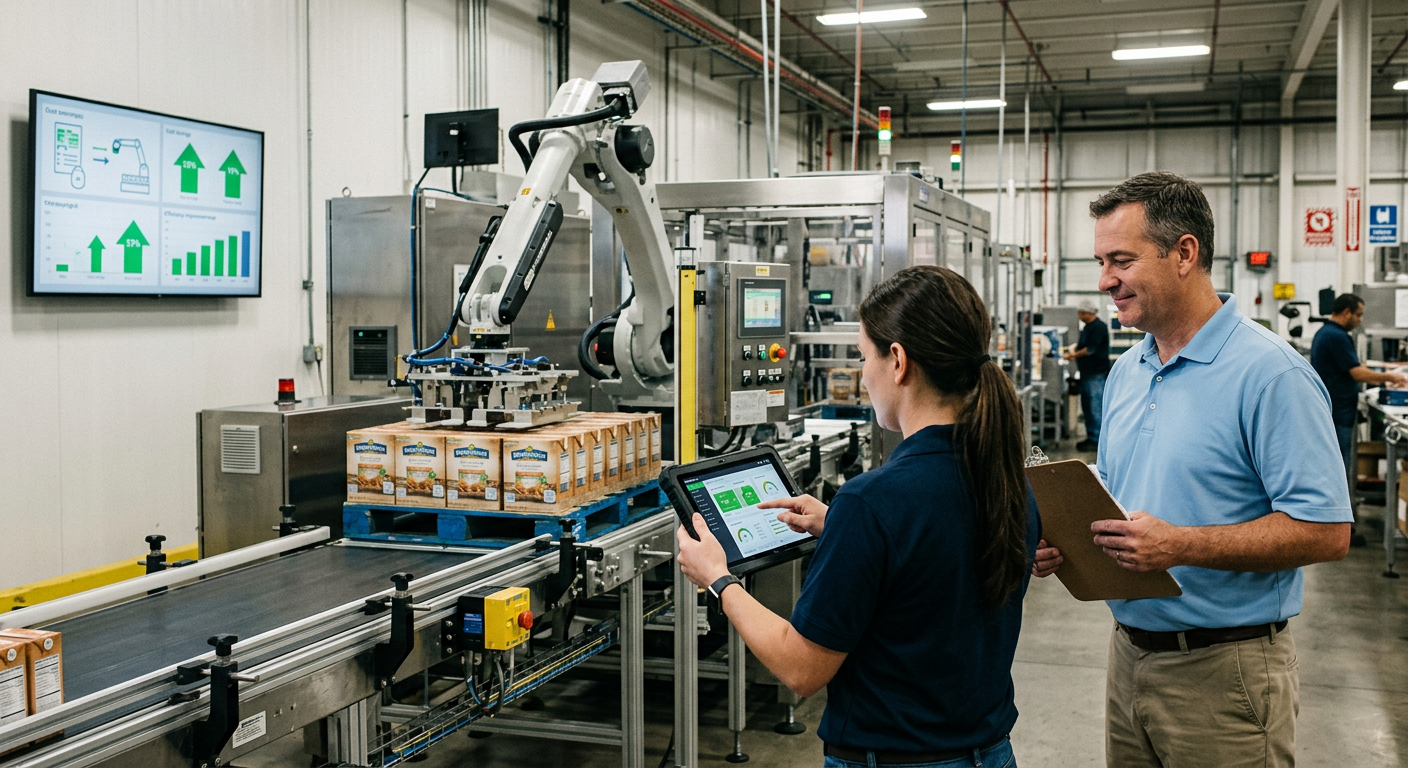
Legacy PLC Upgrade for Food Plants
For food and beverage manufacturers in the United States, upgrading a legacy PLC is no longer a purely technical decision. It is an operational, compliance, cybersecurity, and profitability decision. Across production hubs such as Chicago, Dallas, Fresno, Charlotte, Los Angeles, Atlanta, and the Midwest protein corridor, plants are running aging automation hardware that was once dependable but is now increasingly difficult to support. When a controller fails on a packaging line, blending skid, retort, dairy pasteurizer, or CIP system, the cost of lost production can quickly exceed the price of the upgrade that was deferred. In food plants, every minute of downtime can affect raw material yields, labor utilization, sanitation windows, customer service levels, and retailer commitments. Legacy PLC systems also limit data visibility, make recipe management harder, and expose facilities to cyber and compliance risk. A structured PLC migration can reduce recovery time, improve maintainability, support plant expansion, and strengthen digital readiness for 2026 and beyond. Disruptive Process Solutions supports food and beverage manufacturers across the U.S. and Canada with process engineering, controls integration, capital planning, installation oversight, and turnkey execution. Companies evaluating automation modernization often need more than a programmer; they need a partner that can connect operations, utilities, safety, compliance, production scheduling, and project economics into one practical upgrade path. That is especially true in high-throughput facilities near major logistics corridors such as the Port of Los Angeles, Port of Savannah, Houston, and rail-linked manufacturing centers across the Midwest and Southeast. A legacy PLC upgrade for a U.S. food plant is critical when the installed controls platform is obsolete, spare parts are hard to source, cybersecurity protections are weak, or compliance expectations have outgrown the system. The best upgrade approach starts with a site survey, I/O inventory, code review, and risk assessment. From there, plants typically choose between a big bang cutover, a phased migration, or a parallel run strategy. Common target platforms include Allen-Bradley ControlLogix, Siemens S7-1500, and Schneider Electric M580. The strongest business case usually comes from avoiding downtime, improving recoverability, tightening access control, and gaining real-time production data. The table above shows why PLC modernization should be reviewed as a plant business case, not just a maintenance task. A controller replacement affects uptime, food safety support systems, operator workflows, and long-term digital infrastructure. Legacy PLCs often remain in service far beyond their intended support window. In many U.S. food plants, controllers installed 15 to 25 years ago still manage batching, pasteurization, conveying, canning, filling, refrigeration support, and wastewater utility functions. These systems may still run, but the support ecosystem around them has narrowed dramatically. Software licenses become harder to maintain, trained technicians retire, OEM knowledge fades, and replacement cards come from surplus channels with uncertain quality. Obsolescence is only one side of the problem. Older automation systems were not designed for today’s connected manufacturing environment. Remote access, historian integration, MES connectivity, cloud analytics, and multi-site visibility create business value, but they also expose weak points in legacy systems. Many older PLC architectures lack modern authentication, encrypted firmware validation, granular role-based access, and secure network segmentation features expected in contemporary industrial environments. Compliance pressure is also increasing. Food and beverage facilities must be able to support repeatable process control, change management, sanitation documentation, and traceability expectations. While a PLC alone does not create compliance, weak controls can undermine it. If a thermal process, recipe setpoint, or cleaning sequence is difficult to verify, difficult to lock down, or difficult to restore after failure, the plant assumes avoidable risk. This is where a broader engineering view matters. Integrated food plant services can align controls upgrades with process design, utility needs, operator interfaces, safety systems, and project execution. Instead of treating a migration as a box swap, the upgrade becomes a reliability and performance improvement initiative. The explanation behind this table is straightforward: legacy risk rarely appears as one dramatic event. It accumulates through smaller weaknesses until one outage exposes all of them at once. Many plants delay a controls upgrade because the current system is “still working.” That logic can hold until a processor fails on a Friday night, an obsolete communications card dies during a seasonal production surge, or a backup cannot be restored. The cost of inaction is usually hidden in four places: unplanned downtime, expensive emergency procurement, lost production flexibility, and rising labor burden on maintenance and engineering teams. Consider a prepared foods facility in the Southeast running a high-volume line into retail distribution. If the line loses eight hours due to an obsolete PLC failure, the impact may include wasted raw material, overtime, rescheduling sanitation, freight changes, missed customer windows, and reduced weekly throughput. In dairy, beverage, aseptic, or protein processing, restart complexity can push costs even higher. For plants shipping through national distribution routes from California’s Central Valley, Texas, the Carolinas, or the Great Lakes region, missed schedules ripple fast. Spare parts are another major issue. Many legacy systems now rely on broker markets or refurbished inventory. That introduces uncertain quality, counterfeit risk, and inconsistent lead times. A plant may think it is saving money by postponing modernization, yet it is really accepting a growing sourcing crisis. In some cases, one failed communication module can sideline an entire process area because the exact part is unavailable. The line chart illustrates a realistic market trend: U.S. food plant modernization activity is rising as aging infrastructure, cybersecurity expectations, and labor constraints converge. This table helps quantify why “do nothing” is not a neutral option. It is an active decision to accept higher downtime exposure and a shrinking maintenance support base. There is no one-size-fits-all migration method. The right strategy depends on production criticality, shutdown windows, code complexity, safety systems, utility interdependencies, and available testing time. Big bang cutover means replacing the old system in a single planned outage. This can be effective for smaller skids, isolated lines, or facilities with a defined shutdown period. It reduces the duration of mixed old-new architecture, but it raises the importance of detailed planning and off-site testing. Phased cutover replaces the legacy system in sections. This is often preferred in large plants where utilities, packaging, processing, and CIP areas can be migrated step by step. It reduces immediate risk but requires careful interface management between old and new systems. Parallel run uses a fully tested replacement system operating alongside the old system before final switchover. This approach can reduce startup risk in mission-critical environments such as aseptic processing, high-value beverage blending, or continuous thermal operations, but it usually demands more design effort and temporary installation planning. The table shows that migration strategy should match operational reality, not just engineering preference. A poultry plant in Arkansas, a dairy processor in Wisconsin, and a beverage co-packer in California may all need different cutover models. Platform selection should reflect plant standards, technician familiarity, OEM ecosystem, network architecture, and long-term support strategy. In the U.S. market, Allen-Bradley ControlLogix is frequently chosen due to installed base familiarity, integration across packaging and process lines, and maintenance team comfort. Siemens S7-1500 is often attractive where high performance, diagnostics, and global standardization matter. Schneider Electric M580 is a strong option for plants emphasizing Ethernet architecture, process applications, and modern distributed control needs. The right answer is not always the most popular brand. It is the platform that best supports uptime, maintainability, expansion, and cybersecurity in the context of the plant. If a facility has a large installed Rockwell base with PlantPAx direction, ControlLogix may reduce lifecycle friction. If corporate engineering uses Siemens globally, S7-1500 can improve standardization. If the site is rethinking network topology and process control architecture, M580 may deserve serious consideration. The comparison table is most useful when combined with a site-specific standards review. A technically excellent platform can still be a poor fit if local maintenance capability is weak. The most successful PLC upgrades are won before hardware arrives. Pre-upgrade planning should include a full site survey, I/O count verification, panel condition assessment, code backup validation, network mapping, instrument review, and operational interviews with maintenance, sanitation, production, and quality teams. A site survey identifies hidden risks such as panel heat loading, insufficient cabinet space, unlabeled field devices, unsupported remote I/O racks, and undocumented interlocks with boilers, refrigeration, compressed air, or wastewater systems. An accurate I/O inventory prevents scope gaps during design. Documentation review reveals whether as-builts match reality or whether years of field edits have drifted from drawings. Plants should also review process criticality. Not all I/O points are equal. A temperature loop on a pasteurizer, a retort safety chain, a CIP conductivity measurement, and a simple conveyor run signal have very different startup implications. Prioritization helps shape both test scripts and cutover sequencing. Manufacturers that need deep front-end planning often benefit from a broader engineering partner. About the DPS team explains how an agile food and beverage engineering group can connect process, utilities, controls, and capital planning under one execution model. This planning table matters because most upgrade surprises are discovered in the field, not in software. Better planning directly shortens outage duration. One of the most effective ways to reduce plant disruption is to perform as much work as possible off-site. That includes panel fabrication, FAT preparation, logic simulation, HMI screen development, network configuration, labeling, and documentation package assembly. A well-managed off-site build compresses cutover time and increases startup confidence. For U.S. food manufacturers, this approach is especially valuable when production schedules are tight. Plants in high-demand categories such as ready-to-drink beverages, dairy, proteins, sauces, and co-packing often cannot afford lengthy in-plant engineering windows. Building and testing systems off-site allows stakeholders to review logic and screens before installation. Technological capability is important here. DPS supports controls engineering, PLC programming, SCADA integration, process automation, and utility system coordination, which allows an upgrade to be aligned with broader plant systems rather than treated as an isolated electrical project. Manufacturing capability also matters. Through its process equipment and skid experience, DPS understands how tanks, CIP systems, marination systems, cooking vessels, and utility skids interact with controls architecture in real operating environments. Service capability completes the picture through project management, installation coordination, commissioning oversight, and owner-focused execution. For plants adding or modifying skid-based systems during modernization, custom process equipment solutions can be integrated into the automation plan to avoid fragmented execution. The area chart reflects a clear trend shift: more food plants are adopting off-site build and test methods to reduce cutover risk and shorten restart timelines. Cybersecurity modernization should be embedded in every PLC upgrade scope. Replacing the controller without improving cyber posture leaves too much value on the table. Modern systems can support better user management, firmware integrity controls, secure remote access methods, segmented industrial networks, and improved event visibility. At a practical level, food plants should focus on several essentials. First, restrict programming and administrative access to authorized roles. Second, separate business IT traffic from plant OT traffic through network segmentation. Third, document remote access pathways and eliminate informal or unmanaged methods. Fourth, establish tested backup and restore procedures. Fifth, use firmware and software management practices that support integrity and recoverability. These improvements matter because food plants are now highly connected environments. Historians, ERP links, quality databases, cloud dashboards, OEM service connections, and warehouse systems all increase the need for secure architecture. Plants in major U.S. manufacturing centers often share data across sites, making standard cyber design even more important. The table above shows that cybersecurity is not separate from uptime. In modern food manufacturing, secure architecture directly supports operational continuity. A strong ROI model for a legacy PLC upgrade should include both hard and soft savings. Hard savings usually include avoided downtime, lower emergency spare costs, reduced scrap, lower contractor premiums during failures, and reduced overtime. Soft savings often include faster troubleshooting, better alarm clarity, stronger data visibility, easier recipe management, and improved confidence in expansion planning. For example, if a packaging or processing line generates high hourly contribution margin, preventing even one major outage per year can justify a meaningful portion of the project. If the new platform also improves line diagnostics, batch visibility, and changeover consistency, the total return increases further. Plants that operate across multiple states may also use modernization to standardize spare parts, training, and support practices across sites. Data visibility is especially valuable heading into 2026. Manufacturers increasingly want better production analytics, utility monitoring, downtime categorization, and integration with SCADA or enterprise reporting tools. Modern PLC architecture supports that direction much more effectively than aging isolated systems. For companies evaluating business impact, project case examples can help frame how engineering, controls, and execution decisions translate into measurable plant outcomes. The explanation here is important: not every benefit shows up as a simple utility savings line item. Some of the strongest returns come from improved resilience and better management visibility. Looking ahead to 2026, three trends will shape PLC upgrade priorities in U.S. food and beverage manufacturing. First, cybersecurity expectations will continue to rise as insurers, customers, and corporate boards demand stronger OT resilience. Second, sustainability and energy visibility will matter more, pushing plants toward smarter controls architectures that can monitor utilities, CIP efficiency, refrigeration performance, and water usage. Third, policy and compliance pressure around traceability, electronic records, sanitation discipline, and digital accountability will favor modern platforms that integrate more cleanly with plant information systems. Local supplier and partner selection also matters. In markets such as North Carolina, Texas, California, Illinois, Georgia, and Wisconsin, manufacturers should look for integrators and engineering partners that understand food-specific realities: washdown environments, thermal processes, recipe management, hygienic design interfaces, utility dependence, and compressed shutdown schedules. The best supplier is rarely the cheapest bidder. It is the team that can reduce overall project risk and protect production economics. Buying advice for plant leaders is simple: start before the emergency. Build an asset list of legacy controllers. Rank systems by downtime cost, spare parts exposure, compliance criticality, and cyber risk. Validate backups. Standardize documentation. Identify preferred migration platforms. Then package projects according to shutdown windows and capital priorities. That turns modernization from a crisis response into a controlled investment program. How do I know if my food plant needs a PLC upgrade now?If parts are obsolete, backups are unreliable, maintenance depends on one specialist, or the system cannot support secure access and clean recovery, it is time to plan an upgrade. Which migration approach is safest?The safest approach depends on the process. Parallel run is often best for critical continuous processes, while phased migration works well in larger multi-area plants. Big bang can be effective when shutdown windows are clear and testing is strong. Is Allen-Bradley always the best choice in the U.S.?Not always. ControlLogix is often a strong fit due to installed base and support familiarity, but Siemens S7-1500 or Schneider M580 may be better depending on corporate standards, process needs, diagnostics, and long-term architecture goals. Can we reduce downtime during the upgrade?Yes. Off-site panel build, simulation, FAT, documented cutover sequencing, labeled wiring plans, and startup rehearsals can significantly reduce production disruption. What should be included in the project scope?Site survey, I/O verification, code archive, documentation review, panel design, HMI updates, network architecture, cybersecurity improvements, FAT, SAT, training, and backup/recovery procedures. How does this affect compliance?A modern controls platform can support better change management, more reliable process execution, clearer operator visibility, and stronger documentation practices that help with FDA, USDA, SQF, and BRC expectations. What food sectors benefit most from legacy PLC modernization?Nearly all do, but especially beverage, dairy, protein, aseptic, prepared foods, sauces, and co-packing operations where downtime, sanitation, and batch control are tightly linked to profitability. Why work with a full-scope engineering partner?Because PLC upgrades in food plants touch process equipment, utilities, safety, scheduling, sanitation, and capital planning. A partner with engineering, manufacturing understanding, and project execution capability can reduce risk across the full plant system. -
SIP Automation System for Beverage Plants
Across the United States, beverage manufacturers are under constant pressure to reduce contamination risk, document sanitary performance, and keep throughput high. In aseptic and ultra-clean operations, that usually means one thing: a reliable sterilize-in-place strategy integrated tightly with clean-in-place automation. Whether a facility is running dairy beverages in Wisconsin, juice in Florida, kombucha in California, soft drinks near Atlanta, or co-packed ready-to-drink products around Dallas and Chicago, SIP automation has become a core investment for plants that need repeatable sterility without excessive downtime. SIP, or sterilize-in-place, uses controlled steam and validated hold conditions to sterilize product-contact equipment after cleaning and before production. In practical terms, it protects filling systems, aseptic tanks, pipelines, valve manifolds, heat exchangers, and other closed-process assets from microbiological risk. It is especially valuable where shelf life, brand protection, and regulatory scrutiny are high. A modern system does not treat SIP as a standalone event. It connects CIP chemistry, rinse confirmation, condensate management, steam pressure control, automated valve sequencing, operator safety interlocks, and digital records into one validated process path. For U.S. plants, this topic sits at the intersection of sanitary design, automation, compliance, and capital efficiency. It also connects directly to plant profitability. Unplanned contamination, partial sterilization, or inconsistent cycle execution can trigger product loss, line downtime, destruction of inventory, and difficult regulatory conversations. By contrast, a properly engineered CIP/SIP platform improves repeatability, shortens changeovers, supports audits, and allows management to scale with more confidence. Companies that engineer and integrate these systems need broad process depth, not just controls knowledge. Disruptive Process Solutions, or DPS, brings that cross-functional view to food and beverage projects across North America. The firm supports manufacturers with process engineering, controls integration, utility coordination, installation management, and turnkey execution for processing environments where steam, hygienic piping, sanitary valves, clean utilities, and documented performance all matter. Readers who want background on the company can visit the DPS team and company overview. A SIP automation system in a beverage plant is an automated sterilization platform that uses clean steam, verified temperature, controlled pressure, and validated hold time to sterilize tanks, lines, fillers, and associated equipment after CIP and before aseptic production. In the United States, the best systems combine sanitary hardware, automated valve routing, PLC logic, SCADA visibility, safety interlocks, alarm handling, and electronic recordkeeping that supports FDA CGMP, USDA expectations where applicable, and 3-A sanitary design principles. For most aseptic beverage applications, buying advice is straightforward: do not purchase SIP capability as a bolt-on utility package without reviewing the process path, dead legs, condensate handling, instrument placement, and operating philosophy. A strong design starts with the product type, line geometry, filler requirements, target throughput, and cleaning strategy. It then maps sterilization boundaries, identifies worst-case cold spots, and defines a recipe that can be repeated shift after shift. In the U.S. market, demand is strongest in dairy beverages, shelf-stable coffee, protein drinks, functional beverages, premium juices, plant-based beverages, and co-packing operations that must switch SKUs quickly. Facilities near logistics hubs such as Los Angeles, Houston, Savannah, New Jersey, Memphis, and the Midwest distribution corridor often prioritize automation because downtime and sanitation failures directly impact service levels to national retail networks. The table above shows the core buying lens. The point is not simply to “have SIP.” The point is to have validated SIP that fits the real operating environment of a U.S. beverage facility, from pilot lines to high-volume aseptic packaging halls. The chart suggests a realistic growth path in adoption as more beverage manufacturers in the United States move from manual sanitation verification to automated and documented CIP/SIP programs. The acceleration through 2026 is tied to labor constraints, tighter quality expectations, and expanding demand for shelf-stable and high-care beverages. SIP begins only after CIP has removed soils effectively. This sequence is critical. Cleaning removes product residue, proteins, sugars, minerals, fats, and biofilm precursors. Sterilization then addresses the remaining microbiological hazard. If cleaning is incomplete, steam cannot compensate for deposits that insulate surfaces or trap microorganisms. That is why the foundation of SIP is actually CIP performance. In aseptic processing, the sterilized boundary typically includes product-contact tanks, transfer lines, filler bowls, pumps, heat exchangers, valve clusters, sample points, and sterile air interfaces depending on design. After a validated rinse and drain sequence, clean steam is introduced into the process path. The system ramps to sterilization temperature, maintains enough pressure to support stable steam penetration, and holds the defined exposure time at the validated cold point. Once complete, the sterile path is maintained until production starts. Different beverage categories drive different design choices. Dairy beverages often demand careful handling of proteins and mineral scale during CIP, followed by highly controlled SIP. Breweries may sterilize selected areas around yeast-sensitive or low-microbial applications but not every process segment. Juice and functional beverage plants with aseptic filling require tighter segregation between raw and sterile zones. In co-packing, flexibility is often just as important as lethality because frequent product changeovers increase sanitation complexity. The U.S. market has also seen a shift toward integrated designs where process, utilities, controls, and sanitary hardware are planned together instead of in silos. That matters because a SIP cycle can fail for reasons far outside the steam header, including poor slope, incorrect valve seat geometry, undersized traps, inaccessible instruments, or controls logic that allows premature sequence advancement. DPS addresses these issues from the engineering side by combining process, mechanical, electrical, and controls expertise under one execution model. That technological capability is valuable when sterile piping, PLC programming, SCADA visualization, and utility balancing all affect the final outcome. More on the company’s broader support can be found on its engineering and integration services page. This sequence table matters because many plant issues are not true “SIP failures.” They are transition failures between cleaning and sterilization. Effective project teams review both together. The heart of SIP is the relationship between temperature, pressure, and hold time. These variables are not interchangeable shortcuts. Temperature is what drives lethality. Pressure supports steam distribution and helps maintain the required saturation conditions, while hold time ensures all critical surfaces remain at or above the validated threshold long enough to achieve the target sterilization effect. Validation must focus on the worst-case location, usually the coldest point in the system. In U.S. beverage plants, typical SIP recipes vary by line design and risk profile, but common practice includes a controlled heat-up phase, a monitored sterilization hold, and a cool-down or sterile standby phase. Instrument placement is a major design issue. If temperature elements are installed only at the steam supply instead of at representative cold points, the data may look compliant while part of the system remains under-sterilized. Steam traps, condensate drains, insulation, venting, and line slope all shape thermal performance. Long dead-end branches, oversized manifolds, or improperly sequenced vent valves can delay temperature rise or trap condensate. This is especially relevant in older plants around legacy production corridors such as Milwaukee, St. Louis, and the Northeast, where upgrades often need to work around existing utility architecture. Validation should include documented heat distribution studies, instrument calibration, repeatability checks, and alarm handling. For aseptic systems, plants often test worst-case startup conditions and shortest practical hold recipes to prove a margin of safety. As more U.S. companies digitize operations, the expectation is moving toward automated records that show every relevant setpoint, actual value, alarm, acknowledgment, and final pass/fail status. The table highlights why validation is more than choosing one hold temperature. It is a system discipline. Plants that invest in accurate data reduce both product risk and false downtime caused by nuisance alarms or untrusted instrumentation. Automated valve systems are the traffic controllers of CIP and SIP. They decide what gets cleaned, what gets sterilized, what remains isolated, and what drains safely. In a modern beverage plant, double-seat mixproof valves, hygienic butterfly valves, control valves, steam blocks, seat-lift functions, and proof-of-position feedback all work together under PLC supervision. Without automation, SIP routing errors can happen during shift changes, maintenance interventions, or rushed product transitions. Automated sequencing reduces that risk by allowing only validated lineups and by preventing incompatible states. For example, the logic can block steam admission unless all required drain paths are confirmed, sterile boundaries are isolated, and downstream pressure conditions are within range. This matters even more in multi-SKU and co-packing environments. A plant outside Charlotte might run dairy-based coffee in the morning and a plant-based nutritional drink in the afternoon. A facility near Fresno may process juice blends with multiple allergen and flavor transitions. In those settings, valve matrices must support fast changes without compromising sanitary segregation. On the manufacturing side, DPS supports custom process equipment and hygienic system integration, including tanks and CIP systems that can be designed with sanitary routing and automation requirements in mind. Manufacturers evaluating hardware options can review the company’s process equipment capabilities to understand how equipment fabrication and line integration can be aligned from the start. The bar chart indicates where automated CIP/SIP demand is strongest. Aseptic co-pack and dairy are leading because they combine strict hygiene requirements with high throughput and expensive downtime, while breweries show more selective adoption depending on product risk and package format. When choosing valve architecture, plants should ask detailed questions: Are seat leaks detectable? Are valve positions proven back to the PLC? Does the sequence include interlocks for steam block valves, drain valves, and condensate routing? Can maintenance isolate one branch without risking a false sterile release? Those questions separate basic automation from true aseptic-grade control. Any SIP automation strategy for the United States must be framed around compliance. Beverage plants commonly operate under FDA rules, while some mixed food environments or specific processing contexts may also face USDA expectations. In addition, 3-A sanitary design principles remain highly relevant when selecting components and developing hygienic layouts. The exact compliance map depends on the product, process, packaging method, and facility footprint. FDA current good manufacturing practice expectations put heavy emphasis on prevention, documented controls, equipment suitability, and traceability. For aseptic and ultra-clean operations, this means the plant should be able to demonstrate that sanitation and sterilization procedures are both scientifically grounded and consistently executed. A written SOP with no data trail is increasingly insufficient when a process can be automated. 3-A principles influence equipment selection and line design: cleanability, drainability, sanitary finishes, elimination of product traps, proper gasket use, and avoidance of unnecessary dead legs. These details directly affect both CIP effectiveness and SIP success. USDA-regulated food environments place similar weight on sanitary construction, validation, and operator discipline, even if the process details differ from beverage-only operations. Regulatory review is often toughest during commissioning, major line changes, contamination investigations, customer audits, and private-label qualification. That is one reason experienced owners increasingly involve engineering partners early. DPS is often engaged not only for process design and controls, but also for project planning, execution oversight, and compliance-aware decision making. Manufacturers seeking examples of project execution can explore the company’s project case studies and results. This table shows that compliance is not a separate afterthought. It shapes the very design of the SIP automation platform, from hardware selection to software governance. SIP automation is not only about product safety. It is also about human safety. Steam sterilization involves burn hazards, hot condensate, pressure release risks, and the possibility of unexpected valve movement. When combined with CIP chemicals such as caustic and acid, the operating environment can become dangerous if the sequence is poorly designed or manually overridden. The best U.S. plants build safety into both hardware and controls. Interlocks should prevent steam admission if access doors are open, maintenance blinds are in place, low-point drains are not confirmed, or chemical circuits remain connected where they should not be. Lockout and tagout requirements must be compatible with the process design. Relief protection, trap maintenance, insulated surfaces, condensate management, and operator training all matter. Plants near major labor markets such as Southern California, the Carolinas, and Texas often face high turnover in sanitation and production roles. That makes intuitive HMI design especially important. Operators should see exactly what phase the system is in, what interlock is blocking progress, and what safe recovery step is required. Vague alarm messages lead to unsafe improvisation. Another key issue is fail-safe valve behavior. During power loss, low air pressure, or emergency stop conditions, valves should move to states that protect both people and process. A hygienic valve manifold that behaves safely during utilities failure is far more valuable than one that only works under ideal conditions. The area chart illustrates the trend toward more interlocked and software-governed operation. This shift is being driven by injury prevention, staffing realities, insurer expectations, and the economic cost of human error during sanitation and sterilization tasks. If a plant cannot prove what happened, auditors and quality teams may treat the cycle as if it did not happen at all. Documentation is therefore one of the most important outputs of SIP automation. At minimum, a validated system should produce time-stamped records showing recipe selection, equipment path, actual temperature profiles, pressure trends, hold time achievement, alarm conditions, acknowledgments, operator actions, and final batch disposition. For U.S. manufacturers serving national retailers, foodservice accounts, or brand-sensitive private-label customers, documentation does more than satisfy regulators. It shortens investigations, speeds release decisions, supports insurance claims, and protects customer confidence. In contamination events, the ability to prove that a line segment was sterilized correctly can dramatically reduce the scope of product holds. Validation documentation should also include commissioning records, instrument calibration certificates, IQ/OQ style deliverables where applicable, P&IDs, cause-and-effect matrices, software version control, and change management procedures. If recipe parameters change after startup, the plant should know who changed them, when, why, and with what approval. This is particularly important in larger organizations operating multiple sites across the United States. From a service standpoint, DPS supports clients through the full project lifecycle: planning, design, installation coordination, startup, and execution oversight. That service capability is especially useful in validation-heavy projects where construction, controls, operations, and compliance documentation must stay aligned instead of being managed as separate workstreams. This documentation framework gives a plant defensible evidence. That is essential during FDA review, customer qualification, internal quality audits, and post-incident root cause analysis. The highest-performing systems treat CIP and SIP as one coordinated workflow. In practical terms, that means the PLC knows when cleaning is complete, whether chemical rinse-out is acceptable, whether drain-down is adequate, whether the process path is ready for steam, and whether the sterile boundary can be held until production starts. This integration reduces operator decisions and removes many of the handoff errors that occur when separate skids or teams manage each phase. Plants often lose efficiency in the transitions: waiting for quality signoff, manually changing hose connections, resetting valves, or reconciling whether the right path was cleaned before being sterilized. Integrated automation compresses that dead time. It can also adapt recipes based on production schedules. For example, a line in New Jersey serving short retail runs may need faster turnarounds than a large-volume milk beverage line in Minnesota. The logic should support both without sacrificing validated controls. Seamless integration also improves utility management. Steam generation, condensate return, hot water, compressed air, and chemical supply all interact with CIP/SIP scheduling. Plants with multiple lines often benefit from central utility coordination to avoid pressure drops or overlapping demand spikes. In larger beverage campuses near Phoenix, Indianapolis, or the Gulf Coast, these utility interactions become major cost and reliability factors. Another major trend is recipe-level scheduling and remote visibility. Supervisors increasingly want SCADA dashboards that show which assets are cleaning, sterilizing, on hold, ready for production, or unavailable due to deviation. This is where the value of integrated controls multiplies beyond sanitation alone: it supports line planning, labor allocation, and preventive maintenance. SIP automation is not one-size-fits-all. It is applied differently across beverage segments, and understanding those differences helps buyers choose the right level of investment. In dairy and dairy-based beverage plants, SIP is often essential where extended shelf life, aseptic blending, sterile surge tanks, and aseptic filling are involved. Protein fouling and mineral deposits make the CIP foundation especially important. In Wisconsin, Idaho, and California dairy corridors, plants often need robust acid and caustic sequencing before sterilization can be trusted. In breweries, full SIP across all brewing assets is less common than in aseptic dairy or juice, but there are important applications around sterile transfer points, flash-pasteurized products, specialty nonalcoholic lines, yeast-sensitive branches, and certain packaging interfaces. Craft brewers expanding into RTD cocktails or functional beverages often discover they need more formal CIP/SIP automation than traditional brewing previously required. For juice and functional beverage lines, microbial control and flavor integrity are both high priorities. Plants in Florida, California’s Central Valley, and the Pacific Northwest often process diverse fruit blends that demand strong sanitation control without excessive thermal abuse. SIP becomes especially valuable around aseptic tanks, sterile transfer lines, and fillers where contamination could destroy premium product value. Aseptic beverage co-packers represent one of the fastest-growing U.S. use cases. These facilities often run multiple brands, changing recipes and packaging formats while serving strict customer specifications. Their SIP systems must be flexible, well-documented, and highly reliable because downtime has contractual consequences. This is one reason many co-pack projects now prioritize integrated process design from day one rather than retrofitting automation after launch. The comparison chart shows why integrated project execution often outperforms a simple skid purchase. Plants need more than components; they need a coordinated sanitary system that fits expansion, compliance, and throughput goals. The table clarifies where system priorities shift by market. That helps owners avoid overbuying in some areas and under-designing in others. What is the difference between CIP and SIP?CIP cleans internal equipment surfaces by circulating detergents, rinses, and sometimes acid solutions. SIP sterilizes the cleaned system, usually with clean steam, to prepare it for aseptic production. Is SIP required for every beverage plant in the United States?No. It is most important for aseptic, sterile, ultra-clean, and shelf-stable operations where microbiological control after cleaning is critical. Many non-aseptic plants use CIP without full SIP. What should a plant validate first?Start with sanitary design and CIP effectiveness. Then validate SIP at the coldest point with calibrated instruments, documented temperature/pressure trends, and controlled hold time. How long does a SIP cycle usually take?It depends on system size, steam supply, venting, and target lethality. Some cycles are under an hour from heat-up to completion, while larger or more complex aseptic systems may take longer. Can older U.S. beverage plants retrofit SIP automation?Yes, but retrofits often reveal issues like poor drainability, insufficient instrumentation, dead legs, or outdated valves. A field assessment is usually needed before quoting controls alone. What are the biggest safety concerns?Hot steam, condensate burns, pressure release, chemical exposure, and unexpected valve movement. Good designs use interlocks, clear HMIs, relief protection, and strict maintenance isolation practices. What records should be stored?At minimum, store cycle summaries, live trends, hold-time confirmation, alarm history, calibration records, and any deviations or changes to validated recipes. How does this connect to 2026 trends?By 2026, more U.S. plants are expected to adopt recipe-driven sanitation, stronger digital traceability, energy-optimized steam use, predictive maintenance on valves and traps, and sustainability metrics tied to water, chemical, and utility consumption. Policy pressure around food safety documentation and corporate ESG reporting will likely reinforce these investments. How do I choose a supplier or integrator?Look for a partner that understands sanitary design, utilities, controls, fabrication, installation, and validation together. Ask for experience in your beverage category, not just generic automation work. Also ask how they handle project management, startup support, and post-commissioning optimization. Why do many manufacturers work with DPS?Because the company approaches projects as business-critical manufacturing investments, not just equipment transactions. DPS combines process engineering, controls integration, installation management, and turnkey execution for food and beverage manufacturers across the United States and Canada, with experience spanning beverage, dairy, aseptic processing, utilities, and sanitary systems. For beverage manufacturers in the United States, SIP automation is no longer a niche topic reserved for only the largest aseptic plants. It is becoming a practical standard for facilities that need lower contamination risk, stronger audit readiness, safer operation, and more predictable production. The right project begins with a clear answer to four questions: what must be sterilized, how it will be validated, how it integrates with CIP, and how the plant will prove performance every time. When those answers are engineered into the process from the beginning, SIP becomes a productivity tool as much as a food safety control.


