-
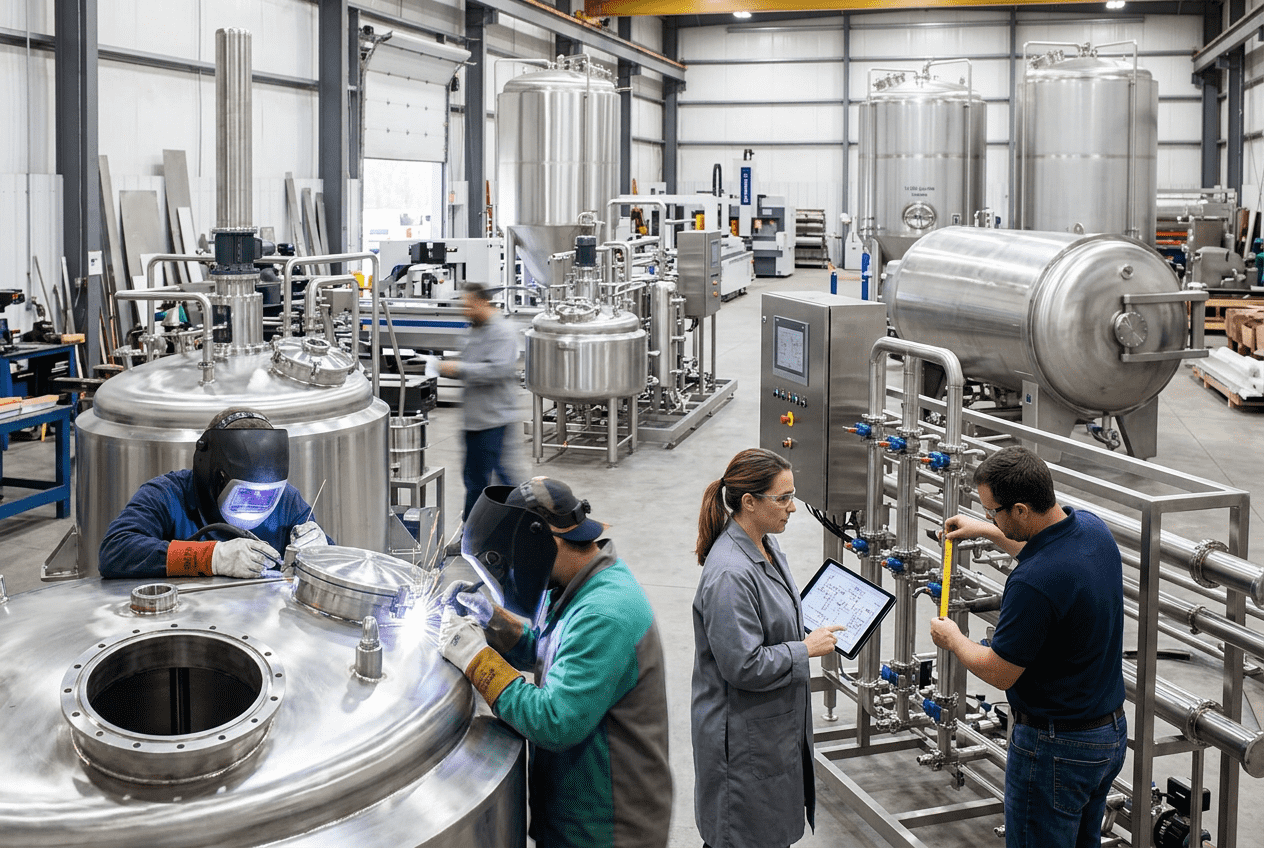
2026 Smart Factory Concepts for Food Facilities: AI, Robotics & Data Integration
Smart factory architecture for food facilities in the United States combines plant-floor automation, industrial data integration, AI and machine learning, machine vision quality control, robotic material handling, and energy intelligence into one operating model. In practical terms, a smart food plant connects PLCs, SCADA, MES, historians, utility systems, and business data so operators, maintenance teams, quality leaders, and executives can make faster decisions with less waste and better compliance. For U.S. food and beverage manufacturers, the biggest value usually comes from five outcomes: higher throughput, lower labor dependency, tighter quality control, better traceability, reduced utility costs, and stronger readiness for FDA, USDA, SQF, and BRC expectations. The strongest projects do not begin with technology for its own sake. They begin with a business case tied to OEE, line efficiency, giveaway reduction, sanitation performance, utility cost per unit, and payback period. Whether the site is a protein plant in Kansas City, a dairy processor in Wisconsin, a prepared foods operation near Chicago, or a beverage co-packer serving Atlanta, Dallas, Los Angeles, and the Port of Savannah, the smart factory concept should be built around operational reality: product mix, sanitation windows, staffing constraints, utility capacity, and expansion goals. Manufacturers evaluating investment options should prioritize systems that can scale. That means choosing interoperable controls, secure industrial networking, structured data tags, recipe governance, machine vision with audit trails, robotic palletizing with line-side safety design, and dashboards that convert raw signals into operating decisions. Firms seeking practical execution support often benefit from an engineering partner that can align process, utilities, controls, installation, and commissioning under one accountable framework. For that reason, many owners reviewing project options also compare integrated design-build-management providers such as food and beverage engineering services with specialty automation vendors. A modern food plant architecture typically starts at the equipment layer and builds upward. At the base are sensors, drives, valves, motors, weigh systems, flow meters, temperature loops, machine vision devices, and robot controllers. Above that sit PLCs and HMI platforms, then SCADA and historian layers, then MES, ERP, and cloud analytics. The purpose is not simply to collect more data. It is to ensure the right data moves to the right user fast enough to support quality, maintenance, planning, and compliance decisions. In the United States market, architecture decisions are shaped by brownfield complexity. Many plants in North Carolina, Texas, California, Illinois, and Pennsylvania operate a mix of legacy skids, newer OEM packaging systems, and third-party utility equipment. A realistic smart factory plan often includes protocol normalization, network segmentation, historian cleanup, tag naming standards, and interface upgrades before advanced analytics can add value. AI and machine learning work best when they solve specific problems. For food manufacturing, the most useful applications include predictive maintenance for pumps and motors, deviation detection in thermal processing, recipe drift monitoring, line speed optimization, CIP cycle analysis, demand-informed production scheduling, and yield prediction by raw material lot. Machine learning can also identify patterns that operators sense but cannot quantify, such as recurring filler instability at certain ambient conditions or a rise in reject rates after sanitation changeovers. Architecturally, a good design separates critical control from advisory intelligence. Core process control should remain deterministic in PLC and safety layers. AI should inform decisions, flag anomalies, recommend setpoints, or automate low-risk optimization tasks rather than create unmanaged control risk. This table shows why architecture should be built in sequence. Plants that skip foundational controls and data discipline often invest in analytics tools that never achieve reliable adoption. The growth pattern above reflects a realistic direction for U.S. investment, especially where labor constraints, retailer quality demands, and energy costs are pushing processors to digitize more aggressively. Machine vision has become one of the highest-return technologies in food manufacturing because it converts quality from periodic inspection into continuous inspection. Cameras, lighting, software, and reject logic can evaluate fill height, seal integrity, cap presence, label placement, date code readability, color variation, package deformation, foreign material indicators, and product count at line speed. In U.S. facilities, vision adoption is strongest in high-volume packaging lines, protein portioning, bakery topping verification, and dairy labeling. Vision systems are also increasingly used in warehouse interfaces, where pallet labels, GS1 codes, and case counts must align with retailer and traceability requirements. For facilities shipping through ports and distribution corridors such as Long Beach, Houston, Newark, and Savannah, better outbound verification reduces costly chargebacks and shipment disputes. The biggest implementation mistake is treating machine vision as a standalone camera purchase. Effective systems require lighting design, environmental protection, reject confirmation, image retention policy, validation standards, and data connection to the plant’s quality records. A vision system should not only reject defects. It should reveal why defects are occurring and who needs to respond. Machine vision also supports labor efficiency. Instead of adding more manual inspectors, a plant can redeploy staff to higher-value quality tasks such as root-cause analysis, sanitation verification, supplier review, and corrective action management. This table demonstrates that vision should be planned as both a quality safeguard and a data source for process improvement. Protein and prepared foods tend to show especially strong demand because labor intensity, sanitation complexity, and retailer quality pressure are all high in those segments. Robotic palletizing is often the first robotics investment that food plants justify because the business case is visible. It reduces repetitive labor, improves consistency, supports higher line speeds, and lowers ergonomic exposure. In the United States, end-of-line palletizing is attractive where labor turnover is high or where plants run multiple shifts in tight labor markets such as Southern California, central Texas, and the Southeast. Traditional robotic palletizers are ideal for higher speeds, larger loads, and more demanding stacking patterns. Collaborative robots, or cobots, are useful for lower payloads, shorter product runs, and flexible packaging environments where operators may work nearby. Cobots can also help with case packing, light palletizing, inspection support, and secondary packaging changes. Still, collaborative does not mean risk-free. Safety analysis remains mandatory, including guarding strategy, speed and separation monitoring, scanner layout, and sanitation compatibility. For food facilities, robotic design must consider washdown zones, floor drainage, compressed air quality, conveyor accumulation logic, and pallet quality variation. A robot cell that works well in a dry snack plant may not survive in a wet protein room without major enclosure and hygienic design changes. Robotics also become more powerful when paired with upstream data. If pallet pattern logic, production schedule, and warehouse management are integrated, the plant can reduce handoffs, staging confusion, and mislabeled outbound loads. The comparison makes one point clear: the right robotic solution depends on packaging mix, desired throughput, labor economics, and facility constraints, not on trend alone. This comparison chart highlights a common buying lesson for U.S. plants: conventional robots usually win on output, while cobots often win on flexibility and ease of deployment. Energy optimization is now central to smart factory planning, not a side project. Food and beverage plants are utility-intensive by design, with heavy demand for steam, chilled water, compressed air, hot water, refrigeration, process water, and wastewater treatment. Utility cost volatility across the United States makes real-time monitoring a direct margin issue. A serious sustainability program should measure energy per pound, gallon, case, or batch, not only total monthly utility spend. Plants should also track boiler efficiency, compressed air leakage, refrigeration performance, peak demand timing, CIP water recovery, heat recovery opportunities, and wastewater loading. These measures matter both for cost and for environmental reporting, especially as customers and investors request stronger ESG data. Future 2026 trends point toward more state incentives, stronger retailer expectations, and wider adoption of submetering, digital twins for utility balancing, low-GWP refrigerant transitions, and automated demand response strategies. Plants near utility-constrained growth corridors, including Phoenix, inland California, and parts of the Carolinas, will find utility planning increasingly tied to expansion feasibility. For many plants, utility savings provide the fastest partial payback for broader smart factory investments, especially when energy data is tied directly to production scheduling and sanitation windows. The area chart reflects a broad shift from annual sustainability reporting toward continuous operational monitoring, which is more actionable and easier to defend in customer audits. Generative AI is becoming useful in food manufacturing when it is applied to structured, narrow tasks. It should not replace qualified engineering judgment, HACCP decision-making, or regulatory review. It can, however, accelerate administrative and analytical work that slows down operations. Practical GenAI applications include draft SOP generation from approved templates, maintenance work-order summarization, downtime note categorization, operator training content, parts search support, recipe deviation explanation, sanitation record review, and faster issue handoff between shifts. For project teams, GenAI can help compare bid packages, summarize FAT punch lists, draft commissioning reports, and organize utility demand scenarios. The best U.S. facilities are beginning to combine GenAI with plant historians and document systems under controlled permissions. For example, a maintenance supervisor could ask why a filler line experienced repeated minor stops over the past 14 days and receive a ranked explanation based on alarms, operator notes, and changeover records. A quality manager could ask which SKUs had the highest seal-related rejects after second-shift startup. A project leader could review whether a new retort room is trending above design steam demand. Still, data governance matters. Plants must control model access, preserve record integrity, separate validated records from generated summaries, and ensure cybersecurity discipline. In regulated environments, the role of GenAI should be assistive, traceable, and auditable. By 2026, the winning approach will not be “AI everywhere.” It will be selective deployment in use cases that save time, improve consistency, and support decision quality without undermining process control or food safety accountability. Engineering requirements define whether a smart factory concept becomes a dependable operating asset or a patchwork of disconnected tools. In food and beverage facilities, technical specifications must cover more than controls hardware. They should address hygienic design, utility loads, communications standards, cybersecurity, panel environment, washdown exposure, equipment access, and validation expectations. Typical specification packages include I/O lists, network topology, control narratives, alarm philosophy, historian tag structure, recipe logic, SCADA screen standards, instrument accuracy classes, calibration methods, utility design basis, safety zoning, and spare parts strategy. For machine vision and robotics, specifications should cover lighting, environmental enclosures, reject confirmation, line-speed limits, end-of-arm tooling, pallet patterns, and sanitation procedures. This is also the point where technological capabilities matter. Disruptive Process Solutions brings together process, mechanical, plumbing, electrical, structural, and controls expertise so owners can align plant utilities and production systems rather than treating them as separate scopes. In practical project terms, that means PLC programming, SCADA integration, utility balance review, and process equipment coordination can be handled as part of one engineered solution instead of fragmented packages. The lesson from this table is simple: technical details that seem minor during procurement often become the reasons projects underperform after startup. Manufacturing capability alignment is equally important. DPS supports a wide spectrum of food and beverage applications, including proteins, prepared foods, sauces, dairy, brewing, spirits, RTD beverages, aseptic processing, retort, and plant-based lines. That range matters because smart factory requirements differ sharply between a high-acid beverage system, a USDA protein line, and an aseptic filling environment. Owners can review examples of specialized equipment and process integration through custom process equipment solutions when defining technical fit. The strongest implementation roadmap begins with a business case, then a readiness review, then phased execution. Most U.S. plants should avoid trying to digitize every line and every utility at once. A phased roadmap reduces risk, protects production, and creates visible wins that support future expansion. Phase one typically includes assessment, baseline KPI definition, architecture review, and pilot selection. Phase two focuses on foundational controls, data collection, historian cleanup, machine vision or robotics pilots, and utility submetering. Phase three expands into MES connections, predictive analytics, integrated scheduling, and multi-line standardization. Phase four adds optimization and enterprise reporting. Best practices include early operator engagement, realistic FAT and SAT protocols, cross-functional governance, sanitation review before hardware placement, spare parts planning, and training that extends beyond startup week. Plants should also define who owns the system after go-live. A smart factory is not complete at commissioning. It requires active stewardship by operations, maintenance, quality, and IT or OT leadership. Service capability also shapes project success. DPS is known for an end-to-end Design Build Manage model that combines engineering, installation management, project oversight, equipment supply, and integration support. That approach is valuable when the owner wants one team to coordinate local trades, process systems, utilities, and startup accountability rather than managing a patchwork of separate vendors. Companies assessing delivery options can explore project case examples to see how integrated execution supports profitability. For buying advice, owners should compare suppliers on four points: food-industry experience, integration depth, commissioning discipline, and ability to connect plant-floor changes to business performance. The lowest equipment quote rarely produces the lowest total cost of ownership. Local sourcing should also be considered carefully. U.S. manufacturers often blend national engineering support with regional electricians, millwrights, utility contractors, and OEM field service providers near trade hubs such as Charlotte, Houston, Milwaukee, Fresno, and Memphis. The right structure depends on schedule urgency, permit needs, and the amount of brownfield coordination required. Disruptive Process Solutions supports food and beverage manufacturers across the United States and Canada with a practical, profit-focused view of capital execution. Rather than approaching smart factory work as isolated automation procurement, the company aligns process design, utility infrastructure, controls integration, installation planning, and project management around the owner’s long-term operating model. Its technological capabilities include controls engineering, PLC programming, SCADA integration, system connectivity, and coordination across structural, mechanical, plumbing, electrical, and process disciplines. That matters in smart factory programs where line data, utility systems, and production equipment must function as one architecture. Its manufacturing capabilities span beverage and food applications, including brewing, spirits, RTD, dairy, aseptic systems, protein processing, prepared foods, sauces, retort, and plant-based operations. The company also supplies proprietary process equipment such as tanks, CIP systems, tumblers, and cooking vessels, giving clients another route to standardization and project alignment. Its service capabilities include capital planning, feasibility studies, owner’s representation, project and program management, general contracting where licensed, equipment integration, installation oversight, and commissioning support. For owners seeking a partner that values transparency and operational results over overselling hardware, DPS positions itself as a hands-on delivery team built for both strategic planning and fast execution. More background is available on the company overview page. This model is especially useful for mid-market and enterprise manufacturers that want smart capital to support smart manufacturing, whether the need is a greenfield beverage complex, a brownfield utility upgrade, a packaging automation project, or a line expansion driven by retailer growth. What is the fastest smart factory win for a U.S. food plant?For many facilities, the fastest win comes from machine vision at a chronic defect point, robotic palletizing at a labor bottleneck, or utility submetering tied to production data. These projects are easier to quantify and often create a clear payback story. How much data does a plant need before using AI or machine learning?Enough to represent real operating variation. In most cases, several months of reliable historian, alarm, quality, and production data are needed before predictive models become useful. Clean tags and contextualized records matter more than raw volume alone. Are cobots always better for food facilities?No. Cobots are excellent for flexibility and lower-volume tasks, but conventional robots are usually stronger for high-speed palletizing, heavy payloads, and demanding end-of-line throughput. Can smart factory systems help with FDA, USDA, SQF, and BRC readiness?Yes. Better traceability, controlled recipe management, validated records, code verification, audit trails, and real-time alarms can all strengthen compliance support. The system still needs proper procedures and governance. What should owners ask suppliers before buying?Ask how the solution handles sanitation, legacy equipment integration, cybersecurity, data retention, operator training, spare parts, startup support, and measurable ROI. Also ask for food-industry examples, not only generic automation references. Is a greenfield site easier than a brownfield site?Usually yes, because architecture can be standardized from day one. But many U.S. manufacturers achieve strong returns in brownfield plants by fixing bottlenecks, modernizing controls, and adding targeted robotics or vision where the business case is strongest. How do smart factory projects affect labor?The best projects do not simply remove labor. They redeploy people toward higher-value work such as quality analysis, preventive maintenance, sanitation execution, line support, and continuous improvement. What are the biggest 2026 trends to watch?Expect stronger AI-assisted decision support, wider machine vision deployment, more palletizing and warehouse automation, tighter energy monitoring, increased low-GWP refrigerant planning, and more customer pressure for transparent sustainability data. How long does implementation usually take?A focused pilot can take a few months. A larger multi-line roadmap may take 12 to 24 months depending on shutdown windows, utility changes, IT/OT readiness, and capital approval cycles. How should a manufacturer choose an integration partner?Choose a partner that understands food process realities, utility dependencies, controls, compliance expectations, and field execution. The right team should be able to connect engineering detail to business performance, not just install hardware. -
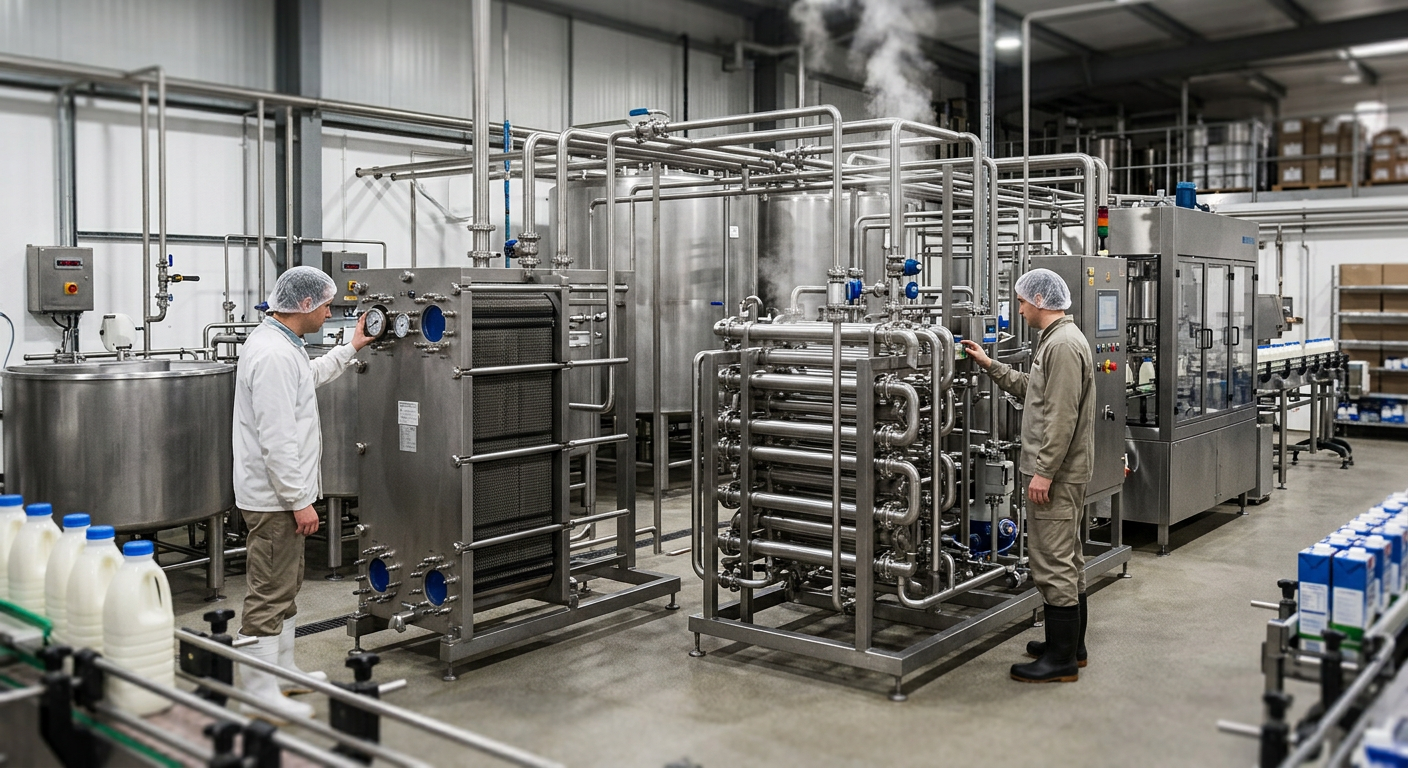
Shelf-Stable Food Processing Systems
Shelf-stable food processing systems allow manufacturers to produce foods and beverages that remain safe and commercially viable at ambient temperature for extended periods without refrigeration. In the United States, demand is rising across sauces, dairy alternatives, ready meals, protein products, broths, coffee drinks, nutraceutical beverages, and export-focused packaged foods. The right system depends on product chemistry, target shelf life, distribution route, packaging format, throughput, regulatory requirements, and capital efficiency. For most processors, the best answer is not a single machine but an integrated process built around product formulation, thermal lethality, hygienic design, automation, packaging barriers, and validation. For manufacturers evaluating a new line or expansion, success usually comes from balancing food safety, sensory quality, and profitability. That means understanding the interaction between water activity, acidity, heat treatment, oxygen control, and package integrity before selecting retort, hot fill, UHT, or aseptic technology. In the U.S. market, this matters especially for plants shipping through Chicago, Dallas, Atlanta, Los Angeles, Savannah, Houston, New York/New Jersey, and export gateways such as Long Beach and Miami, where long transit times and variable climate conditions can stress shelf-stable products. Disruptive Process Solutions supports this type of decision-making as a food and beverage engineering partner serving manufacturers across all 50 states and Canada. Rather than starting with equipment alone, the firm approaches shelf-stable projects through process engineering, capital planning, system integration, and execution management so the final line fits production economics as well as food safety goals. You can review the company background at About DPS, its broader capabilities at engineering and project services, its equipment offering at process equipment solutions, and selected project experience at industry case studies. The fastest way to understand shelf-stable processing is this: a product becomes shelf-stable when harmful microorganisms cannot grow or survive under intended storage conditions and the package continues protecting product quality throughout distribution. This is achieved through one or more controls, most commonly low pH, reduced water activity, thermal processing, aseptic filling, oxygen management, preservatives, or a combination of these hurdles. In practice, shelf-stable systems in the United States usually fall into four categories: Buying advice starts with the product itself. A salsa line for Phoenix retail may suit hot fill. A low-acid soup for club stores in Ohio may require retort. A protein shake for national distribution through Memphis or Denver often points to UHT plus aseptic filling. A nutrition bar or dry snack may rely more on water activity, moisture migration control, and oxygen barrier films than on severe heat treatment. The table above shows why there is no universal shelf-stable line. Product chemistry and intended market determine the process window, package, and validation burden. A successful U.S. launch also needs to account for e-commerce abuse, summer heat in Texas and Arizona, and pallet dwell time at distribution centers near Columbus, Reno, and Inland Empire logistics hubs. Three fundamentals govern most shelf-stability decisions: water activity, pH, and heat treatment. Water activity measures the amount of available water microorganisms can use. It is different from moisture content. A soft product may still be microbiologically stable if enough water is bound by salt, sugar, or solids. pH measures acidity. Foods below pH 4.6 generally present lower risk for Clostridium botulinum, although they still require proper process control. Thermal processing destroys spoilage organisms and pathogens to a validated target. For low-acid foods, thermal lethality is the main barrier. For acidic foods, acidity plus thermal treatment can be sufficient. For intermediate-moisture foods, water activity becomes central. In all cases, packaging must maintain the state created during processing. Manufacturers often underestimate how small formulation changes affect thermal behavior and shelf life. Protein concentration, particle size, viscosity, fat level, starch system, sweetener type, and fill temperature can shift heat penetration, fouling, flavor stability, and microbial risk. That is why process design should connect R&D, food safety, and plant engineering from the start. From a technology standpoint, DPS helps clients translate these variables into practical system architecture. Its technological capabilities span process engineering, mechanical and controls design, PLC programming, SCADA integration, utility sizing, CIP design, and the selection of thermal technologies such as HTST, UHT, retort, hot fill, flash pasteurization, and HPP where appropriate. That matters because shelf-stability is not just a lab concept; it depends on how pumps, hold tubes, valves, fillers, heat exchangers, steam systems, and recipes perform together in an actual plant. The line chart reflects a realistic upward trend in U.S. investment as brands pursue lower cold-chain costs, broader retail reach, and better resilience against energy volatility. Through 2026, growth is expected in premium ready meals, functional beverages, dairy alternatives, broth, Hispanic sauces, shelf-stable protein formats, and export-friendly products aimed at Latin America and Asia. The most common strategic decision in shelf-stable manufacturing is choosing between aseptic processing, retort, and hot fill. Each technology can deliver safe products, but they differ sharply in capital cost, product quality, package flexibility, throughput, and operating complexity. Hot fill is usually best for acidic products such as juices, teas, sauces, and dressings. Product is heated, filled hot, and held long enough for package interior sterilization. It offers moderate capital cost and good simplicity but is not appropriate for many low-acid foods. Retort processing is often the standard for low-acid shelf-stable foods. Product is packed first, then the sealed container is heat treated in a pressure vessel. It is robust and versatile for meals, beans, pet food, soups, and sauces with particulates, but heat exposure can affect texture, color, and fresh flavor perception. Aseptic processing sterilizes product and package separately, then combines them in a sterile environment. This method usually offers the best sensory preservation for many beverages, creamers, broths, and dairy or plant-based products. It supports lightweight packaging and high-speed distribution, but requires advanced hygienic design, sterility assurance, trained operators, and disciplined maintenance. How should a buyer decide? Start with six filters: product pH, particulate load, desired flavor retention, package preference, annual volume, and target channel. Club retail in the United States may favor retort bowls or trays. Foodservice ingredient distribution through Atlanta or Kansas City may favor aseptic totes or bag-in-box. Premium functional beverage brands launching on the West Coast often justify aseptic for better taste and lighter freight. DPS is especially relevant where this choice affects plant-wide economics. Its manufacturing capabilities include integration of blending and batching systems, in-line Brix control, scraped surface and tubular heat exchange, jacketed vessels, retort and canning systems, aseptic environments, dairy process systems, CIP skids, storage tanks, and automation layers that tie processing to packaging. Because the company also manufactures selected process equipment, it can align custom vessels, CIP systems, and supporting hardware with the overall thermal process strategy instead of forcing a generic equipment package into a specialized product application. The bar chart shows where manufacturers are most actively adding shelf-stable capacity in the U.S. right now. Dairy alternatives, pet food, and RTD beverages are especially active because they combine national distribution potential with strong retail and e-commerce demand. Hurdle technology means combining multiple mild controls rather than relying on a single aggressive step. This approach is increasingly important for brands seeking better flavor, texture, nutrition, and cleaner labels. Instead of maximizing one variable, processors combine moderate heat, lower pH, lower water activity, oxygen reduction, preservatives or natural antimicrobials, hygienic design, and barrier packaging to create a stable system. Examples include ambient sauces using acidification plus hot fill plus oxygen barrier bottles; snack fillings using reduced water activity plus preservatives plus foil laminate pouches; and protein beverages using UHT plus aseptic packaging plus low oxygen headspace. The benefit is product quality. The challenge is validation. Every hurdle must be understood, monitored, and kept within a safe operating window. For buying teams, hurdle technology is attractive when refrigeration is expensive or distribution is wide. It can open sales into convenience stores, military supply channels, club retailers, foodservice, school nutrition programs, and export routes leaving ports such as Savannah, Houston, Oakland, and Newark. However, it is not a shortcut around proper process authority review or regulatory filing where required. As 2026 approaches, U.S. brands are expected to invest more in data-backed hurdle design using predictive microbiology, digital batch records, tighter inline sensing, and advanced recipe control. That trend favors engineering partners who understand both microbiological risk and plant execution. In large-scale launches, even a strong formulation can fail if filler changeover, CIP verification, or package sealing repeatability are weak. Packaging is not a secondary decision in shelf-stable foods. It is part of the preservation system. The best thermal process can still fail commercially if the package allows oxygen ingress, moisture migration, UV damage, paneling, delamination, or seal defects. The U.S. market is also under pressure to reduce material use, improve recyclability, and comply with retailer sustainability expectations. Common shelf-stable packaging formats include metal cans, glass jars, PET hot-fill bottles, multilayer plastic bottles, cartons, retort pouches, cups, trays, and bag-in-box systems. The right format depends on process conditions, product sensitivity, channel requirements, freight economics, and brand position. Barrier films and multilayer structures are especially important for products with fat, color-sensitive ingredients, spices, coffee, or oxygen-sensitive nutrients. EVOH, aluminum foil layers, nylon, and tailored polyolefin structures each offer different combinations of oxygen, moisture, puncture, and heat resistance. Sustainability adds another dimension: mono-material structures are attractive, but some still underperform compared with complex laminates in high-demand shelf-stable applications. For U.S. manufacturers shipping nationally, packaging choice also affects pallet density, warehouse cost, damage rate, and export readiness. A retort pouch may reduce freight into Southern California and Seattle distribution networks. Aseptic cartons may lower inbound and outbound logistics costs for high-volume beverage programs in the Midwest. Glass may strengthen a premium brand in specialty retail but increase breakage risk during East Coast e-commerce fulfillment. The area chart highlights a strong trend: processors are moving toward lighter, better-barrier, logistics-friendly packages while still working through recyclability and end-of-life constraints. By 2026, equipment layouts that allow future package changeovers will be especially valuable. Shelf life cannot be assumed from a process flow diagram. It must be demonstrated. In U.S. commercialization, shelf life programs usually combine microbiological challenge logic, incubation, package integrity checks, chemistry testing, sensory evaluation, and storage studies under realistic and accelerated conditions. Accelerated studies are useful for screening formulations and packaging, but they should not replace real-time validation for final claims. A strong test plan answers six questions: Is the product safe? Does the package remain intact? Does flavor remain acceptable? Does texture or viscosity drift? Do nutrients degrade below label claim? Can the product withstand actual distribution abuse? This is where cross-functional project execution matters. DPS supports service capabilities that include front-end feasibility, owner’s representation, capital planning, installation oversight, system integration, commissioning, and project management. In shelf-stable launches, those services help align process authority work, equipment FAT/SAT timing, utilities, startup sequencing, and production ramp so that validation data reflect true operating conditions rather than isolated pilot assumptions. In many shelf-stable failures, the issue is not the main process but a mismatch between development assumptions and plant reality. Examples include longer-than-planned hold times, filler bowl exposure, plant air quality, operator variation, or warehouse heat exposure in Florida and Nevada. A disciplined shelf life program catches these before full market rollout. One of the biggest financial reasons to invest in shelf-stable systems is the chance to reduce or remove dependence on chilled distribution. Cold chain infrastructure is expensive across energy, refrigerated storage, reefer transport, handling, and spoilage risk. Shelf-stable products can often move through standard warehousing, mixed loads, and broader retail channels, improving margin and resilience. For U.S. manufacturers, cold chain elimination can also unlock export opportunities. Ambient products are easier to ship through the ports of Los Angeles, Long Beach, Houston, Savannah, Charleston, Seattle, and Newark. They also simplify inventory staging near border crossings into Canada and Mexico. This matters for co-packers and brand owners looking to expand without building refrigerated regional networks first. Cost savings vary by product, but the main gains usually come from lower freight premiums, reduced warehouse complexity, fewer temperature excursions, and longer selling windows. Ambient products can also support emergency inventory, military, disaster relief, and institutional channels that require extended storage stability. A practical case example is a processor considering a refrigerated sauce line versus a hot-fill shelf-stable system. The hot-fill route may require stronger package validation and acidification control, but it can dramatically expand retail reach into convenience, dollar, club, and online channels. Another example is a dairy-alternative beverage moving from chilled regional distribution to UHT/aseptic national distribution, reducing returns and opening new states without refrigerated infrastructure. The comparison chart is not a universal ranking. It simply illustrates how equipment choice can align more or less strongly with national ambient distribution goals depending on product mix and growth strategy. Aseptic often scores highest for broad beverage distribution, while retort may be best for complex low-acid foods. Clean label demand is reshaping shelf-stable innovation in the United States. Consumers increasingly prefer shorter ingredient lists, recognizable ingredients, and fewer synthetic preservatives. Yet safety standards remain unchanged. This creates an engineering and formulation challenge: how do you reduce preservatives without sacrificing microbiological protection, quality, or shelf life? The answer usually lies in smarter process design rather than simple ingredient removal. Brands are using better hygienic zoning, faster thermal profiles, tighter pH control, lower dissolved oxygen, improved package barriers, and natural antimicrobial systems where technically appropriate. Some are redesigning products to fit a different shelf-stable process altogether, such as moving from a conventional hot-fill bottle to an aseptic carton or from a jar to a retort pouch with shorter heat penetration paths. Clean label success depends on disciplined validation. A product that worked with sorbate or benzoate may no longer tolerate sealing variation, slow cooling, or warehouse abuse once those preservatives are reduced. This is where rigorous execution and honest project guidance matter. DPS is known for taking a profitability-first view of client projects, which can include challenging assumptions when a desired clean-label target conflicts with process reality, throughput, or risk tolerance. Looking toward 2026, expect stronger adoption of digitally monitored acidification, advanced inline sensing, lower-oxygen filling environments, enzyme-aware formulations, and packaging that supports stability with less additive dependence. Retailers are also likely to tighten sustainability and disclosure expectations, making integrated product-process-packaging design even more important. When shelf-stable products fail, the root cause is often systemic rather than isolated. Swollen containers, leaking pouches, sedimentation, browning, rancidity, flavor fade, delamination, and microbial spoilage can all stem from interactions between formulation, thermal processing, equipment condition, package design, and distribution stress. Common failure categories include: Root cause analysis should be data driven. Start with retained samples, batch records, thermal logs, seal testing, warehouse temperature history, formulation deviations, and distribution mapping. Then trace whether the issue began in development, startup, routine operation, maintenance, or logistics. In many U.S. facilities, recurring failures come from changeover inconsistency, CIP verification gaps, steam quality issues, instrument calibration drift, or insufficient operator training. Manufacturers planning a new line should insist on a startup framework that includes process authority alignment, commissioning protocols, training, preventive maintenance, package qualification, and early production review. This is especially important for plants scaling quickly in regions such as North Carolina, Texas, California, Wisconsin, and the Midwest corridor, where labor availability and fast commercialization can put pressure on startup discipline. For companies seeking local or regional execution partners, the strongest suppliers are those that can connect engineering, equipment, utilities, controls, installation, and startup rather than treating each discipline separately. That integrated model is where DPS positions itself in the U.S. market: combining design, build, and management under one operating approach so shelf-stable projects can move from concept to validated operation with fewer handoff risks. What is the difference between shelf-stable and extended shelf life?Shelf-stable usually means safe and commercially stable at room temperature. Extended shelf life often refers to a product that lasts longer than standard refrigerated product but may still require refrigeration. Is aseptic always better than retort?No. Aseptic often offers better sensory quality for many liquids, but retort can be more practical for low-acid foods with particulates, simpler packages, or lower capital budgets. What products are good candidates for hot fill in the United States?High-acid beverages, sauces, dressings, and some fruit-based products are common candidates, provided formulation and package design support the process. Can clean label products still be shelf-stable?Yes, but they usually require tighter control of pH, water activity, heat treatment, hygiene, and packaging performance. Clean label is possible, but not by relaxing process discipline. How long does shelf life testing take?Real-time testing takes as long as the intended shelf life, while accelerated testing can provide earlier screening insights. Most companies use both during development and commercialization. What industries use shelf-stable systems most?Beverages, prepared foods, sauces, dairy alternatives, protein products, pet food, nutraceuticals, ingredient processors, and co-manufacturers all rely heavily on shelf-stable technologies. How important is packaging in shelf-stability?It is essential. Packaging protects against oxygen, moisture, light, physical abuse, and post-process contamination. Poor package selection can defeat a well-designed thermal process. What should buyers ask a processing system supplier?Ask about product fit, thermal validation assumptions, package compatibility, changeover time, utility loads, automation strategy, CIP design, startup support, operator training, and total cost of ownership. Why do U.S. manufacturers move to shelf-stable systems?The main reasons are lower cold-chain cost, wider geographic reach, easier export, better inventory flexibility, reduced spoilage risk, and stronger retail channel access. How can a company start evaluating a new shelf-stable line?Begin with product characterization, target market, package concept, annual volume, and distribution map. Then work backward through process technology, utilities, validation, and capital planning with an experienced engineering partner. For food and beverage manufacturers in the United States, shelf-stable success comes from integrating formulation, process, packaging, utilities, automation, and commercialization strategy into one coherent system. Whether the application is a retort meal, aseptic beverage, hot-fill sauce, or hurdle-stabilized snack, the best result is achieved when safety, quality, and profit are designed together from the beginning. -
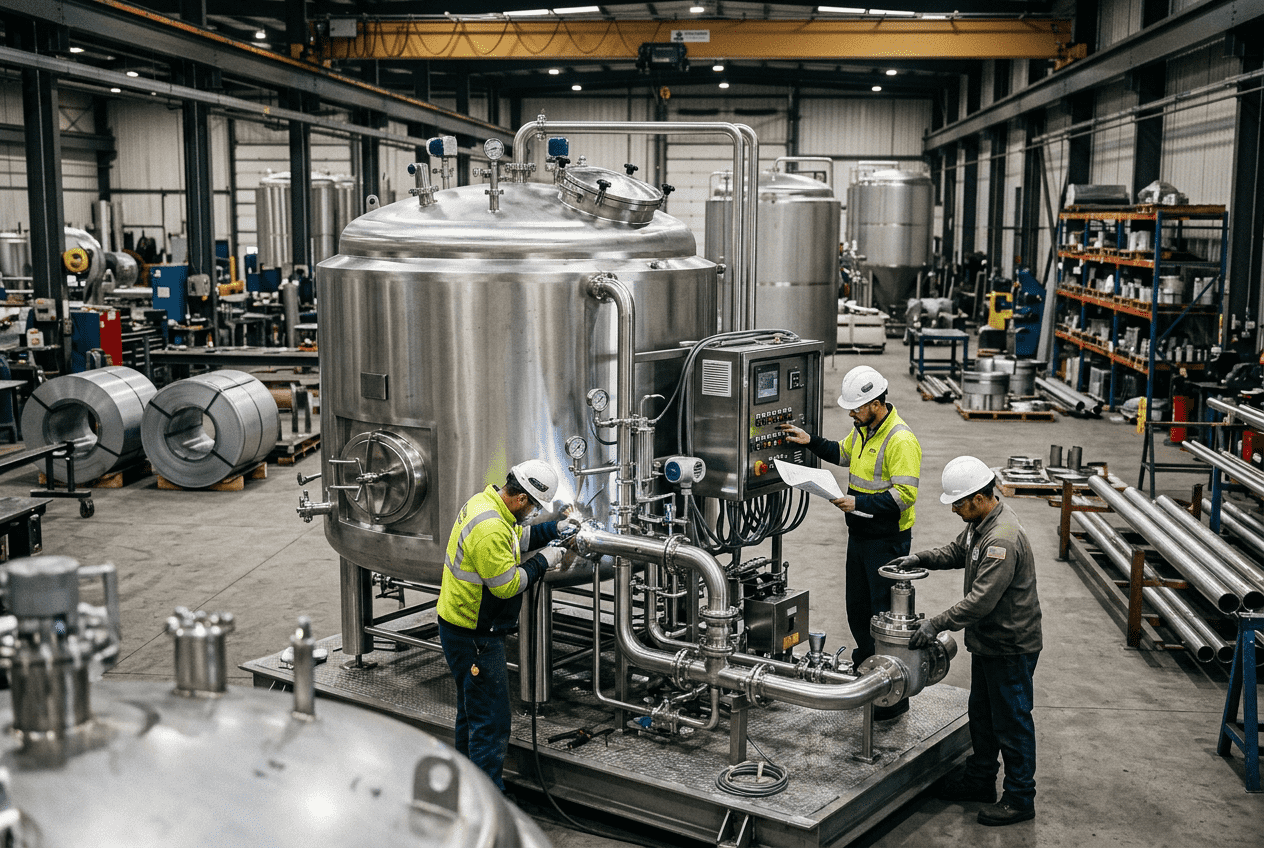
IIoT Implementation for Food Facilities: 5-Phase Deployment Framework
Industrial IoT implementation in food and beverage facilities works best when it is deployed in stages. In the United States, the most reliable path is a five-phase model: identify the assets that matter most, install secure edge connectivity, configure dashboards and alarms, activate analytics and AI, and then scale the platform across the plant with ERP and business-system integration. For food manufacturers, this phased approach reduces downtime risk, supports FDA, USDA, SQF, and BRC expectations, and helps operations teams improve yield, maintenance planning, energy use, traceability, and labor efficiency without disrupting production. Whether a plant is running dairy in Wisconsin, sauces in New Jersey, poultry in Georgia, beverages in Texas, or aseptic products in California, the same principle applies: start with the critical process bottlenecks, prove value on a controlled scope, and expand only after the data architecture, cyber controls, and operating workflows are working in real production conditions. A practical IIoT implementation for food facilities in the United States should begin with a short discovery process focused on the production assets most likely to create downtime, quality losses, utility waste, or compliance exposure. Typical first targets include pasteurizers, retorts, fillers, boilers, compressors, refrigeration systems, CIP skids, mixers, slicers, homogenizers, and packaging lines. After that, plants should install edge gateways that can collect PLC, SCADA, sensor, and utility data without interfering with validated controls. The third phase is dashboard creation and alert threshold setup so supervisors, maintenance teams, and plant leadership can monitor operating conditions in real time. The fourth phase adds AI and predictive analytics to identify failure patterns, process drift, sanitation anomalies, and energy inefficiencies. The fifth phase connects the deployed solution across the full plant and into ERP, CMMS, batch, quality, and inventory systems. This five-phase structure is especially important in food and beverage manufacturing because process stability matters as much as data visibility. A poor rollout can create nuisance alarms, overwhelm maintenance teams, or expose regulated operations to unnecessary change control. A disciplined rollout, by contrast, can improve OEE, reduce emergency maintenance, tighten process capability, and create better decision-making from the floor to the executive level. The table above shows why phased deployment is preferred over plant-wide big-bang implementation. Each stage creates a measurable checkpoint, which is especially valuable for operators managing perishable products, short production windows, and strict sanitation schedules. The growth trend reflects what many manufacturers are seeing across major U.S. processing corridors such as Chicago, Minneapolis, Fresno, Charlotte, Atlanta, Dallas-Fort Worth, and the I-95 Northeast distribution belt: IIoT is no longer a pilot-only concept. It is becoming part of mainstream capital planning. The first phase determines whether the project will create value or just create data. Discovery should start with a plant walkdown, utility review, process mapping session, and downtime history analysis. The team should identify which assets have the largest financial consequence when they fail or drift. In food plants, those critical assets are rarely limited to one production line. Utilities often matter just as much. A boiler upset, ammonia refrigeration issue, low compressed air quality event, or CIP underperformance can affect the whole facility. For most U.S. manufacturers, the strongest discovery questions are simple: where do we lose throughput, where do we lose quality, where do we lose yield, where do we lose energy, and where do we lose labor hours to reactive work? The answers reveal where sensors should be placed and what data should be captured. For example, a dairy facility in Wisconsin may prioritize temperature stability, separator performance, homogenizer vibration, and CIP conductivity. A beverage co-packer near Los Angeles or Savannah may focus on syrup rooms, blending accuracy, filler efficiency, compressed air, and tunnel pasteurization. A meat processor in Arkansas or North Carolina may prioritize refrigeration, slicing loads, washdown-ready sensors, and sanitation verification points. Sensor planning must align with the process and the environment. Food plants require careful attention to washdown ratings, hygienic design, chemical exposure, cable routing, enclosure standards, and calibration frequency. It is also important to separate what must be measured continuously from what can be inferred through PLC tags, historian data, or lab results. This table matters because it connects measurement strategy to business outcomes. Good sensor planning is never just about instrumentation density. It is about picking the data points that explain downtime, compliance, quality, and cost. During this phase, teams should also decide whether the first deployment should target one line, one process family, one utility backbone, or a mixed pilot. A mixed pilot is often ideal because it shows both line-level and plant-level value. For example, combining filler monitoring with compressor and boiler visibility can help leadership see the link between utility stability and production throughput. Once the target assets are defined, the next step is secure data collection. In food facilities, edge gateway installation should be designed around plant realities: existing PLC brands, network segmentation, sanitation zones, electrical constraints, and maintenance access. The objective is not to replace controls; it is to collect, standardize, buffer, and transmit data safely. Many U.S. facilities operate mixed automation environments that include Rockwell Automation, Siemens, Schneider Electric, legacy HMIs, stand-alone skid controls, and OEM-specific panels. That means the gateway architecture has to bridge protocols such as EtherNet/IP, Modbus TCP, OPC UA, Profinet, serial connections, and in some cases analog or pulse-based utility meters. In older facilities around the Midwest and Northeast, retrofit planning may also include cabinet modernization, power conditioning, and industrial wireless links where cabling is difficult. Connectivity decisions should be made jointly by OT and IT. The best architecture usually includes local buffering at the edge, segmented VLANs or separate OT networks, VPN access controls, certificate-based communication where possible, and a clear policy for remote support. Plants moving product through hubs like Houston, Newark, Chicago, or the Port of Long Beach often have enterprise pressure to centralize data quickly, but speed should never come ahead of cyber hygiene. The choices in this table directly affect long-term uptime. A plant may have excellent analytics software, but if the gateway layer is fragile, data confidence will collapse and users will stop trusting the platform. At this stage, many manufacturers benefit from an engineering partner that understands both production and controls. A firm that can work across process engineering, automation, utilities, and installation tends to reduce handoff errors. That matters when a project touches equipment rooms, packaging lines, and sanitary process areas at the same time. This is where integrated engineering capability becomes valuable, especially for companies that need structural, mechanical, electrical, process, and controls coordination instead of a narrow software-only deployment. Dashboards are where data becomes operational behavior. The mistake many teams make is building dashboards for everyone and value for no one. The better approach is role-based design. Operators need live status and actionable alarms. Maintenance needs condition trends, runtime, and failure signatures. Quality teams need process compliance views. Plant leaders need throughput, waste, and labor-impact indicators. Corporate stakeholders need standardized multi-site KPIs. Alert threshold setup should combine engineering limits, food safety boundaries, statistical process behavior, and business consequences. Not every out-of-range reading requires an alarm. In fact, too many alarms can be as harmful as too few. The goal is to separate informational events from urgent interventions. In food manufacturing, useful dashboards often include pasteurization temperature profiles, retort cycle verification, filler microstops, compressor load patterns, refrigeration efficiency, CIP performance, giveaway trends, utility cost per unit produced, and sanitation cycle adherence. Plants shipping through large retail and foodservice channels increasingly want these dashboards linked to traceability and lot performance, especially when serving national customers from hubs like Columbus, Kansas City, Phoenix, or Memphis. The table shows why alerts and dashboards should be configured by function, not by software convenience. A single dashboard rarely meets the needs of every user. Plants that adopt role-based views typically get better user adoption and fewer alarm complaints. One of the strongest buying recommendations for this phase is to insist on a dashboard design workshop before final configuration. That workshop should define KPI ownership, escalation logic, data quality rules, mobile access needs, and reporting cadence. It is also smart to validate thresholds against two to four weeks of baseline operating data before enabling full alarm routing. The bar chart highlights where demand is strongest. Beverage, dairy, aseptic, and protein operations tend to move quickly because quality risk, uptime sensitivity, and utility intensity are high. Prepared foods are also active, especially where multi-step thermal and mixing processes make root-cause analysis difficult without data. AI should not be turned on just because the software offers it. It should be activated only after the plant has trustworthy data, stable naming conventions, and clear ownership of response workflows. Otherwise, predictive analytics becomes an expensive alert generator with poor credibility. When implemented correctly, AI can create major value in food operations. It can detect bearing degradation before a filler fails, identify refrigeration drift before product temperatures go out of range, predict CIP deviations before a sanitation cycle is wasted, and uncover utility demand spikes that raise cost per case or cost per pound. In batch processes, it can help identify subtle combinations of process variables that correlate with rework, separation, texture problems, foam instability, overfill, or under-yield. AI deployment should focus first on use cases where action can actually be taken. Good initial use cases include predictive maintenance for rotating assets, anomaly detection for utilities, process drift monitoring for thermal systems, and batch pattern recognition for high-value products. More advanced applications can then expand into scheduling, labor planning, energy optimization, and digital twin models. For U.S. manufacturers preparing for 2026, this phase is becoming increasingly strategic. Rising labor constraints, insurance scrutiny, energy costs, and retailer expectations for consistency are all pushing plants to move beyond reactive operations. Sustainability reporting is also influencing deployment decisions, because AI can help document water, energy, and chemical use reductions tied to operational changes. The explanation is straightforward: AI performs best where repetitive patterns, measurable process signatures, and clear intervention paths exist. That is why utilities, rotating machinery, and structured thermal processes often outperform more ambiguous use cases early on. The area chart illustrates the operational shift now happening across the sector. As we move through 2026, more plants are budgeting for predictive methods because labor shortages and asset age make reactive maintenance increasingly expensive. After a successful pilot or limited rollout, the value of IIoT increases sharply when the plant connects line data with business systems. Full-plant scaling means standard naming, repeatable device templates, common dashboard logic, cyber governance, and formal ownership of the platform. ERP integration is where operational data begins supporting purchasing, maintenance planning, production accounting, inventory control, and capital allocation. For many food manufacturers, the highest-value integrations involve ERP, CMMS, MES, batch systems, historian platforms, lab systems, and quality records. For example, if downtime events automatically create maintenance work order context, reliability teams can respond faster and finance teams can see asset cost patterns more clearly. If batch deviations are tied to raw material lots and utility conditions, plants gain better root-cause analysis. If production and utility data feed into costing, leadership gains a better view of margin by SKU or customer. Scaling across a U.S. plant network also creates benchmarking value. A processor with sites in California, Texas, Illinois, and Pennsylvania can compare performance on common packaging formats, sanitation windows, energy per unit, and utility reliability. That visibility supports better capital planning and more disciplined replication of successful plant practices. When choosing a scale-up strategy, buyers should evaluate whether the provider understands not just software integration but also the physical realities of plant modifications. Food plants often need instrument additions, control panel upgrades, sanitary support changes, utility tie-ins, and coordinated shutdown planning. A capable deployment partner must be able to bridge engineering intent with installation execution. This comparison chart shows why many processors eventually favor an integrated deployment model. Point tools may install quickly, and OEM controls can be useful, but plant-wide value usually comes from solutions that combine process understanding, controls integration, installation management, and business-system alignment. Food and beverage plants need technical specifications that reflect both digital and physical requirements. Sensor selection should account for hygienic surfaces, washdown conditions, ambient temperature swings, chemical exposure, and calibration demands. Controls integration should define read/write access, data polling rates, historian retention, timestamp precision, and alarm hierarchy. Network design should address segmentation, gateway hardening, remote access, credential management, and patch strategy. Manufacturing capability matters here as much as software architecture. Plants often require custom skids, modified utility systems, panel work, fabricated supports, or integrated process equipment changes to make IIoT deployment truly useful. A partner with experience in process equipment, utilities, and field installation can solve bottlenecks that pure software vendors often miss. In many cases, the data problem is tied to a process problem: poor instrumentation on a CIP system, limited access around a tank farm, weak panel layout, or utility instability. Fixing the data layer sometimes means improving the mechanical or electrical layer as well. From a service perspective, the strongest implementations include front-end feasibility, design support, on-site coordination, commissioning, startup, and post-launch optimization. That service depth is particularly valuable when the project spans multiple trades and the plant cannot afford schedule drift. Companies evaluating partners should look for end-to-end capability rather than isolated consulting. The explanation is simple: technical specifications are what make a deployment repeatable, auditable, and scalable. Without them, every expansion becomes a custom project and ROI declines over time. For plants seeking complete plant modernization, it is often useful to align IIoT deployment with broader process improvements such as utility upgrades, control panel replacements, filler expansions, CIP modernization, or sanitary piping projects. That is particularly effective when working with a company that can combine process engineering, project delivery, installation, and equipment integration under one plan. More information on these broader capabilities can be found in the company’s food and beverage engineering services and its process equipment solutions. The best roadmap for a U.S. food facility is one that ties digital deployment to operational priorities and shutdown windows. In practice, that usually means starting discovery during live production, performing panel and gateway prep off-line, installing in planned maintenance windows, validating data quality before dashboard rollout, and only then enabling AI and enterprise integration. Best practice number one is to establish a steering team with operations, maintenance, QA, IT, engineering, and finance representation. Best practice number two is to write success criteria before the project starts. Good success criteria may include a defined reduction in downtime, better thermal compliance visibility, a target cut in compressed air waste, or a reduction in emergency work orders. Best practice number three is to train users by role. Best practice number four is to treat naming conventions, data ownership, and cybersecurity as core design tasks rather than afterthoughts. Procurement teams should also compare local supplier and integrator models carefully. In some regions, a software reseller may be enough for a simple dashboard project. In more complex facilities, especially older plants in manufacturing centers such as Milwaukee, St. Louis, Philadelphia, Fresno, or Houston, it is often better to select a deployment partner with field construction and process integration experience. That reduces the gap between what is specified and what can actually be installed. As 2026 approaches, policy and sustainability trends are strengthening the business case. Utilities and insurers increasingly reward better monitoring and asset risk management. Water use scrutiny is rising in western states. Energy reporting is becoming more visible in board-level planning. And food manufacturers face growing pressure to make plants both more efficient and more resilient. IIoT, when properly implemented, supports all three goals. For buyers, the best advice is this: do not purchase an IIoT platform first and then search for a use case. Start with the production and utility constraints that matter most, define the engineering requirements, and choose a deployment structure that can scale. A sound roadmap should connect process, controls, data, installation, and operating behavior. Disruptive Process Solutions supports food and beverage manufacturers across the United States and Canada with an approach built around profitable, well-planned capital execution. Rather than acting as a narrow contractor, the company works as an engineering-led partner that aligns plant improvements with operating realities and commercial goals. That is especially relevant for IIoT projects, where digital visibility only produces value when it fits the actual process, utility infrastructure, and production schedule. From a technology standpoint, DPS brings expertise across process, controls, automation, PLC programming, SCADA, utilities, and complete system integration. That means sensor planning, gateway connectivity, line integration, and dashboard use can be tied directly to how the facility actually runs. From a manufacturing standpoint, DPS also supports complete processing environments across food and beverage sectors, including dairy, proteins, sauces, aseptic systems, brewing, spirits, RTD beverages, and co-packing operations. The team’s process familiarity helps ensure that IIoT projects do not live in isolation from thermal processing, blending, refrigeration, CIP, compressed air, or packaging performance. From a service standpoint, DPS operates through a design-build-manage model that supports planning, engineering, installation coordination, execution oversight, and long-term project accountability. That model is valuable for manufacturers that need more than software support and want a partner that can help bridge feasibility, capital planning, implementation, and field execution. Companies interested in learning more can visit about DPS, review broader service capabilities, and explore selected project case studies relevant to processing and plant integration. For food and beverage operators evaluating long-term modernization, the main advantage of this kind of partner is practical integration. The same organization can help identify whether the bottleneck is instrumentation, controls logic, utility capacity, equipment layout, or operational workflow, and then help execute the right fix rather than forcing every problem into a software-only solution. A limited pilot can often be completed in 8 to 16 weeks, depending on the number of assets, controls complexity, and shutdown availability. Full-plant scaling can take several additional months. Start with assets that create the highest downtime, compliance, utility, or quality impact. In many facilities, that means thermal systems, fillers, refrigeration, boilers, compressors, and CIP skids. No. Many plants can start with read-only data collection from existing PLCs and supplement that with new sensors or metering where needed. Replacement is only necessary when legacy limitations block safe integration or long-term reliability. Dairy, beverages, protein processing, prepared foods, aseptic operations, and co-packing facilities often see the fastest returns because uptime, sanitation, and utility performance have a direct effect on margin and compliance. Alerts should reflect food safety limits, process capability, equipment health, and actual response workflows. Plants should avoid alarm overload and classify alerts by urgency and ownership. Yes. That is usually part of Phase 5. Good integrations can connect downtime, work orders, maintenance planning, utility usage, batch performance, and cost visibility. The biggest mistakes are buying software before defining use cases, ignoring cybersecurity, skipping data governance, failing to involve maintenance and QA early, and underestimating physical installation requirements. Expect stronger use of AI for predictive maintenance, higher pressure for sustainability reporting, more focus on utility optimization, tighter cyber expectations, and broader integration between plant-floor data and enterprise decision systems. -
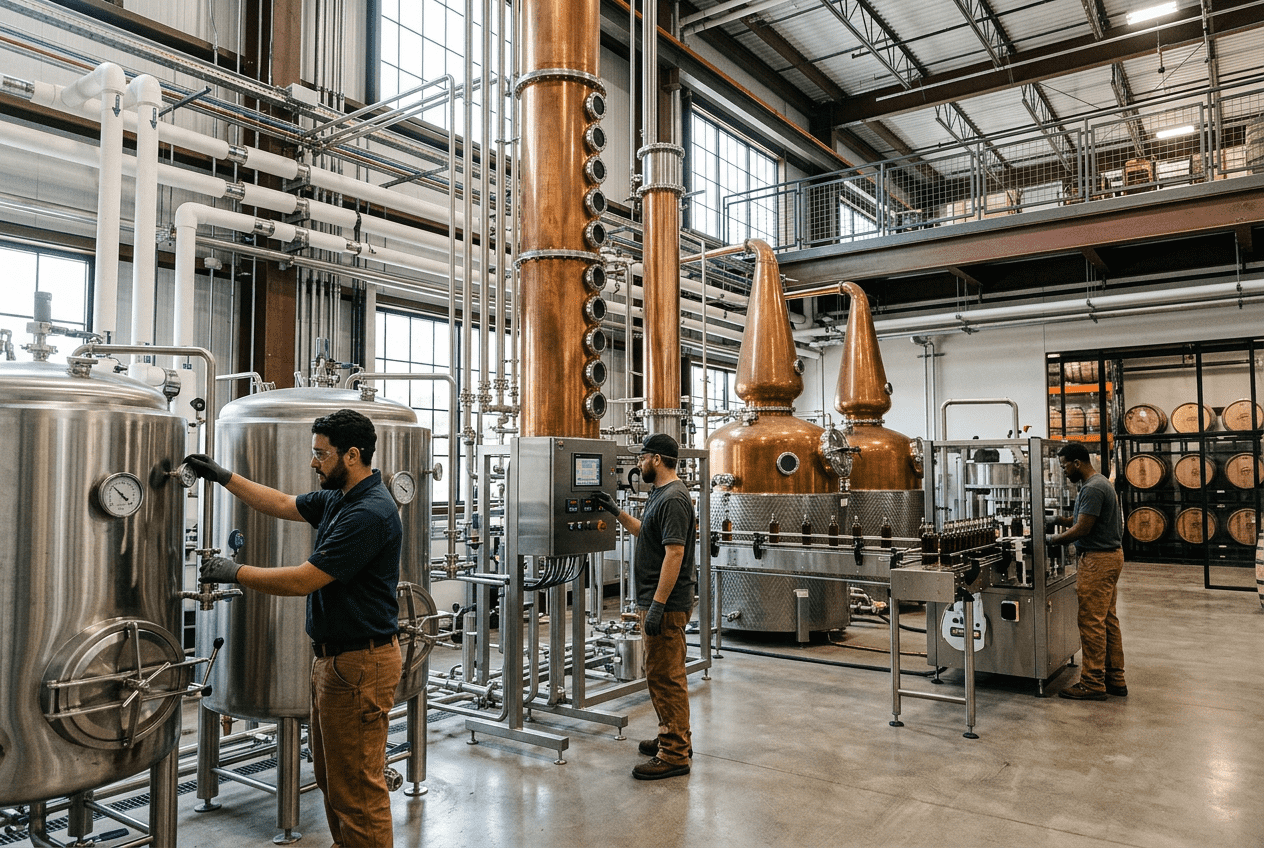
ESL Dairy Beverage Processing
Extended shelf life, or ESL, dairy beverage processing is the middle ground between conventional pasteurized dairy and fully shelf-stable UHT products. In practical terms, ESL systems are designed to deliver refrigerated milk, flavored dairy drinks, cream-based beverages, and cultured drink products with longer shelf life, cleaner flavor, and wider distribution reach than standard HTST products. In the United States, most ESL dairy beverages target about 30 to 45 days of refrigerated stability, although exact performance depends on raw milk quality, thermal profile, bacterial reduction strategy, filling hygiene, package barrier, and cold chain discipline. For processors serving dense retail corridors such as the Northeast, Chicago, Dallas-Fort Worth, Southern California, Atlanta, and the I-95 corridor, ESL can create a valuable operating advantage. It supports larger production runs, improved regional distribution, reduced returns, and better service to grocery, club, foodservice, and convenience channels. It is especially relevant for fluid milk, coffee creamers, protein drinks, lactose-free beverages, and premium flavored dairy products that need a refrigerated identity but cannot tolerate short code life. From a capital project perspective, ESL is not a single machine purchase. It is a system design decision that touches separation, clarification, microfiltration, pasteurization, homogenization, CIP, hygienic zoning, filler selection, utilities, packaging, warehouse handling, and refrigerated logistics. Manufacturers evaluating new ESL capacity often need an engineering partner that can connect process technology, plant layout, compliance, and business returns. Companies such as Disruptive Process Solutions approach this through a full project model that links planning, engineering, installation, and execution oversight for food and beverage producers across North America. ESL dairy beverage processing uses enhanced bacterial reduction and highly hygienic handling to produce refrigerated dairy drinks with longer shelf life than standard pasteurized products, usually 30 to 45 days in the United States. The most common ESL approaches combine one or more of the following: high-efficiency raw milk separation, bactofugation, microfiltration, optimized pasteurization, ultra-clean tanks and piping, and hygienic or ultra-clean filling. Compared with HTST, ESL provides longer refrigerated life and broader distribution. Compared with UHT, ESL generally preserves a fresher dairy flavor but still requires refrigeration. The best system depends on product type, target geography, package format, retail route, and capital budget. The table above simplifies the buying decision: ESL success is driven by the entire process chain, not by heat treatment alone. That is why many U.S. processors run feasibility studies before purchasing major equipment, especially when they are converting from local HTST distribution to multi-state refrigerated supply. ESL processing is best understood as a controlled combination of microbial reduction and contamination prevention. The aim is to lower the count of spoilage organisms and heat-resistant bacteria to a point where refrigerated storage remains stable for a substantially longer period than ordinary pasteurized dairy. While ESL is not shelf stable at ambient temperature, it can outperform standard milk significantly in quality consistency and market reach. In the United States, ESL is often used for white milk, chocolate milk, coffee milk, cream-based beverages, shake bases, lactose-free dairy drinks, and selected cultured beverages. Product developers choose ESL when they want fresher sensory characteristics than UHT but need more distribution time than HTST alone can offer. This is especially valuable when moving product from dairy regions such as Wisconsin, Idaho, California, and upstate New York into major consumption centers like New York City, Boston, Miami, Phoenix, and Seattle. Several core principles define ESL systems: On the technology side, modern ESL projects often involve advanced process engineering across thermal systems, filtration, utility design, and automation. This is where DPS’s technological capabilities are relevant to U.S. dairy beverage manufacturers. The company works across pasteurization and sterilization technologies, filtration and clarification, homogenization support systems, process controls, PLC programming, SCADA, water treatment, and full utility integration. In an ESL facility, those capabilities matter because heat exchange performance, flow path design, valve matrix logic, and cleaning automation all directly influence shelf life and plant uptime. More about those integrated engineering approaches can be found within the company’s process and project services. Another important point is product category fit. Not every dairy beverage should be ESL. For example, a local dairy serving stores within 100 miles may not recover the extra capital cost if a 14- to 21-day code already works. On the other hand, a protein beverage brand shipping from the Midwest into Texas, Florida, and the Mid-Atlantic may see meaningful savings from lower spoilage, fewer emergency runs, and better production planning. The line chart illustrates a realistic trend: U.S. demand for refrigerated beverages with longer code life is rising as brands seek national reach without sacrificing fresh-positioned labeling. Through 2026, expected growth is tied to premium milk, high-protein dairy, coffee-based beverages, and value-added refrigerated drinks. When buyers compare ESL, UHT, and HTST, they are really comparing three different business models as much as three thermal approaches. HTST is optimized for fresh local distribution. UHT is optimized for ambient storage and maximum supply flexibility. ESL sits in the middle, preserving a refrigerated product identity while extending reach. This comparison shows why many U.S. processors favor ESL for products that must stay in chilled sets at Kroger, Walmart, Target, Publix, H-E-B, or Costco but need enough code life to ship through regional DCs. It allows more time for production scheduling, transport from plants near Fresno or Milwaukee to hubs in Denver or Charlotte, and final store handling. HTST still has a strong role where local freshness and rapid turns are the top priorities. UHT remains the correct choice for school nutrition backup inventory, export, military supply chains, and pantry-stable applications. The best economic answer depends on throughput, SKU mix, route density, and retailer expectations. From a manufacturing capabilities standpoint, DPS supports dairy and beverage plants with integrated systems such as storage tanks, process tanks, CIP systems, utilities, pasteurization support, blending, and installation of complete production lines. That matters in this comparison because upgrading from HTST to ESL is rarely just a processor swap. It may involve surge capacity redesign, filler replacement, tank vent filtration, enhanced automation, and utility balancing. Equipment and integrated project solutions are part of the company’s broader offering at its equipment portfolio. The bar chart indicates where ESL often delivers the strongest commercial value. Protein drinks, creamers, and lactose-free dairy beverages frequently benefit from longer refrigerated distribution windows because they move through broader retail and e-commerce-adjacent channels. Two of the most important enabling technologies in ESL dairy are microfiltration and bactofugation. Both are designed to improve microbial quality before final heat treatment and filling, but they work differently and fit different operating strategies. Microfiltration uses membranes, typically on skim milk streams, to physically remove bacteria and spores based on particle size. The filtered stream is then recombined and pasteurized under a carefully controlled regimen. This can significantly improve refrigerated shelf life while preserving a fresh flavor profile. The benefits are compelling, but membrane systems demand disciplined maintenance, strong CIP design, membrane integrity management, and trained operators. Bactofugation uses centrifugal force to remove bacteria and spores from milk, especially heavier particles. It is not always as selective as membrane filtration, but it can be a powerful tool in reducing microbial load and supporting ESL objectives. In some U.S. plants, bactofugation is selected where throughput is high, product mix is broad, and processors want a robust mechanical solution with lower membrane management demands. The table shows why there is no universal answer. For a premium East Coast dairy brand selling fresh-positioned milk into Washington, Philadelphia, and Boston, microfiltration may justify its complexity. For a high-volume Central Valley processor distributing across the Southwest, bactofugation may be a strong fit when paired with optimized pasteurization and hygienic filling. Good engineering is crucial here. Membrane skid layout, separator integration, CIP sequencing, product recovery, and utility loads all influence the final economics. That is one reason processors often use integrated project teams rather than trying to assemble separate design, installation, and controls vendors after equipment selection. Many ESL projects succeed at the processing stage and fail at the filler. That is because post-process contamination can erase the benefit created upstream. Hygienic filling is therefore one of the most critical requirements in ESL dairy beverage manufacturing. At minimum, ESL filling systems need controlled air quality, effective package decontamination where appropriate, sanitary product contact surfaces, validated cleaning cycles, and disciplined maintenance procedures. Depending on the product and code life target, processors may select ultra-clean filling rather than full aseptic technology. The exact design depends on whether the package is HDPE, PET, carton, or pouch, and whether the product includes particulates, cocoa, sugar, stabilizers, or added protein. Common hygienic requirements include: Service capabilities matter greatly in this stage of an ESL project. DPS works not only as an engineering designer but also as an execution partner providing capital planning, feasibility support, owner’s representation, project and program management, general contracting where licensed, installation coordination, commissioning oversight, and system integration. In practical terms, that means a processor can align filler procurement, room modifications, utility upgrades, and startup sequencing under a unified project structure rather than a fragmented handoff. Real-world project execution examples can be explored in the company’s case study section. For U.S. buyers, the hygiene conversation must also account for labor realities. Plants in labor-tight areas such as Southern California, parts of Texas, and the upper Midwest may need filler systems with stronger automation, simpler cleanout, and better operator guidance. Reducing human intervention in the high-hygiene zone can materially improve ESL consistency. ESL is refrigerated by definition, so the cold chain is part of the process. A plant can run an excellent ESL line and still lose code life if product sits on a dock in July heat outside Atlanta, Houston, or Phoenix. Cold chain discipline starts with immediate post-fill cooling where needed and continues through palletizing, staging, warehousing, transportation, DC handling, and store-level refrigeration. For the U.S. market, distribution design should reflect geographic realities. A processor shipping from Wisconsin to New Jersey may move through intermodal-adjacent or consolidated regional distribution nodes. A West Coast plant supplying Seattle, Portland, the Bay Area, Los Angeles, and Las Vegas faces different transit patterns. A Southeast producer shipping into Florida must plan around summer temperatures, hurricane season disruption, and high retail cold room turnover. This table highlights a key business reality: ESL shelf life is not simply what the laboratory says; it is what remains after the supply chain uses part of it. That is why route mapping, reefer validation, and retailer compliance are buying considerations, not afterthoughts. In the United States, major freight corridors such as I-5, I-10, I-35, I-40, I-70, and I-95 influence refrigerated lead times. So do port and inland hubs like Los Angeles/Long Beach, Savannah, New York/New Jersey, Dallas, Chicago, and Kansas City. Even if a dairy beverage is not imported, packaging components, caps, resin, flavors, and spare parts may still depend on those logistics nodes. The area chart shows the broader trend behind ESL investment: more producers are moving from short-radius local delivery models to larger regional refrigerated networks. That shift supports bigger runs, more centralized production, and better capital utilization. Package selection shapes not only shelf life but also branding, sustainability positioning, freight efficiency, and line performance. For ESL dairy, barrier properties against light and oxygen are especially important because sensory defects can appear before microbial spoilage in some products. HDPE bottles are widely used in the U.S. milk market because they are familiar, durable, and line-friendly. Pigmented HDPE offers strong light protection, though oxygen barrier performance depends on design. PET provides clarity and a premium look for some beverages, but light protection and oxygen ingress must be managed. Gable-top cartons support a fresh dairy image and can provide excellent light protection. Pouches can reduce material use and freight weight, but filling hygiene and handling conditions must be carefully managed. The explanation behind the table is simple: the right package is the one that protects flavor and microbiological stability while matching retail expectations and line economics. A Southeast school market may lean toward certain cartons or pouches, while a West Coast premium protein beverage may prefer PET for shelf impact. By 2026, package decisions are increasingly shaped by sustainability and policy pressure. Recycled content mandates, resin availability, EPR discussions, lightweighting goals, and retailer packaging scorecards are influencing line design. Processors need systems flexible enough to handle changing cap designs, downgauged bottles, and evolving film structures without compromising hygienic filling performance. Reaching 30 to 45 days of refrigerated shelf life requires coordination across the entire plant. No single intervention guarantees success. The practical target is to create a process window that consistently suppresses spoilage throughout production variability, sanitation cycles, and distribution exposure. The main drivers of refrigerated ESL stability include: Formulation also matters. Added sugars, cocoa, coffee extracts, proteins, stabilizers, vitamins, and minerals can affect heat sensitivity and phase stability. In flavored beverages, sensory shelf life may become the limiting factor before microbiology does. For example, chocolate flavor drift, cooked notes, or light oxidation can define the practical code date. A useful way to think about shelf-life targets is to define a “usable retail life” rather than a lab maximum. If a product spends 5 days in production scheduling and freight, 7 days in a retailer DC, and 10 days at store level, the processor still wants attractive inventory life at the shelf. That planning logic often pushes manufacturers toward 35 to 45 day targets even if they only promise a slightly lower commercial code. For buying advice, U.S. processors should ask six questions before setting their shelf-life goal: Those questions keep the shelf-life discussion grounded in commercial reality. Longer is not always better if it drives unnecessary complexity or sensory compromise. The right target is the one that protects margins, service levels, and brand reputation. Quality control in ESL dairy must be proactive, not reactive. If spoilage is detected only after consumer complaints or retailer returns, the system design is already under stress. The most effective ESL plants use layered verification: raw milk testing, in-process monitoring, filler hygiene checks, environmental swabs, package integrity controls, and formal shelf-life studies. Typical microbial concerns include psychrotrophic spoilage organisms, post-pasteurization contamination, spore-formers, yeast and mold in flavored systems, and environmental contamination from drains, filler enclosures, and wet zones. Spoilage prevention therefore depends on both equipment design and plant culture. The logic behind this table is that QC should mirror process risk. If the filler is the highest-risk node, more of the testing plan should support that zone. If incoming milk variation is the issue, supplier control and receiving protocols become more important than extra end-product tests. By 2026, future trends in ESL quality management include more digital traceability, predictive maintenance on hygienic components, automated CIP verification, environmental data trending through SCADA dashboards, and stronger sustainability metrics tied to spoilage reduction. Regulatory pressure around preventive controls, documentation integrity, and sanitation validation will continue to reinforce these practices. Processors that invest early in data-enabled QA will likely reduce both waste and recall risk. This comparison chart summarizes package fit for ESL performance. Scores vary by product and line design, but the broader lesson is clear: barrier performance, filling compatibility, and channel expectations should be evaluated together, not in isolation. ESL means extended shelf life. It refers to refrigerated dairy drinks processed and packaged to last longer than standard pasteurized products, commonly around 30 to 45 days under refrigeration in the United States. No. ESL still requires refrigeration. UHT and aseptic products are generally shelf stable before opening. ESL usually offers a fresher dairy flavor but a shorter shelf life than UHT. White milk, flavored milk, creamers, lactose-free beverages, high-protein refrigerated drinks, and some cultured beverages are strong candidates. Final suitability depends on formulation, route-to-market, and code life expectations. Many ESL dairy beverages target 30 to 45 days refrigerated. The exact number depends on raw material quality, process control, package barrier, filler hygiene, and cold chain discipline. Both are critical. Strong heat treatment without hygienic filling can fail because of post-process contamination. Likewise, a clean filler cannot compensate for weak upstream microbial reduction. ESL works as a system. No. Some systems use optimized pasteurization with bactofugation or other process combinations. Microfiltration is powerful, but it is not the only valid route. Equipment selection should be based on product goals and economics. There is no single best package. HDPE bottles, multilayer bottles, PET, cartons, and pouches all have a place. The best option depends on oxygen and light barrier needs, retail positioning, line speed, and sustainability goals. Choose HTST for short-radius fresh distribution, ESL for longer refrigerated regional or national routes, and UHT for ambient shelf-stable distribution. The right choice depends on flavor goals, supply chain design, and return on capital. Ask about hygienic zoning, CIP validation, utility loads, filler integration, controls architecture, startup support, and realistic shelf-life validation. Also ask whether the partner can handle engineering, installation, and execution management as one coordinated project. Manufacturers often work with specialized engineering and integration firms that understand both process and plant execution. Disruptive Process Solutions is one example serving the United States and Canada with engineering, equipment integration, installation, and project delivery support for dairy and beverage operations. For U.S. dairy beverage manufacturers, ESL is ultimately a strategic production model. It can unlock broader distribution, better capacity utilization, and stronger profitability when matched to the right product, package, and cold chain. But it requires disciplined engineering and disciplined execution. Processors evaluating new lines, expansions, or facility upgrades should treat ESL as a full systems project that spans processing, packaging, utilities, quality, and logistics from day one. -
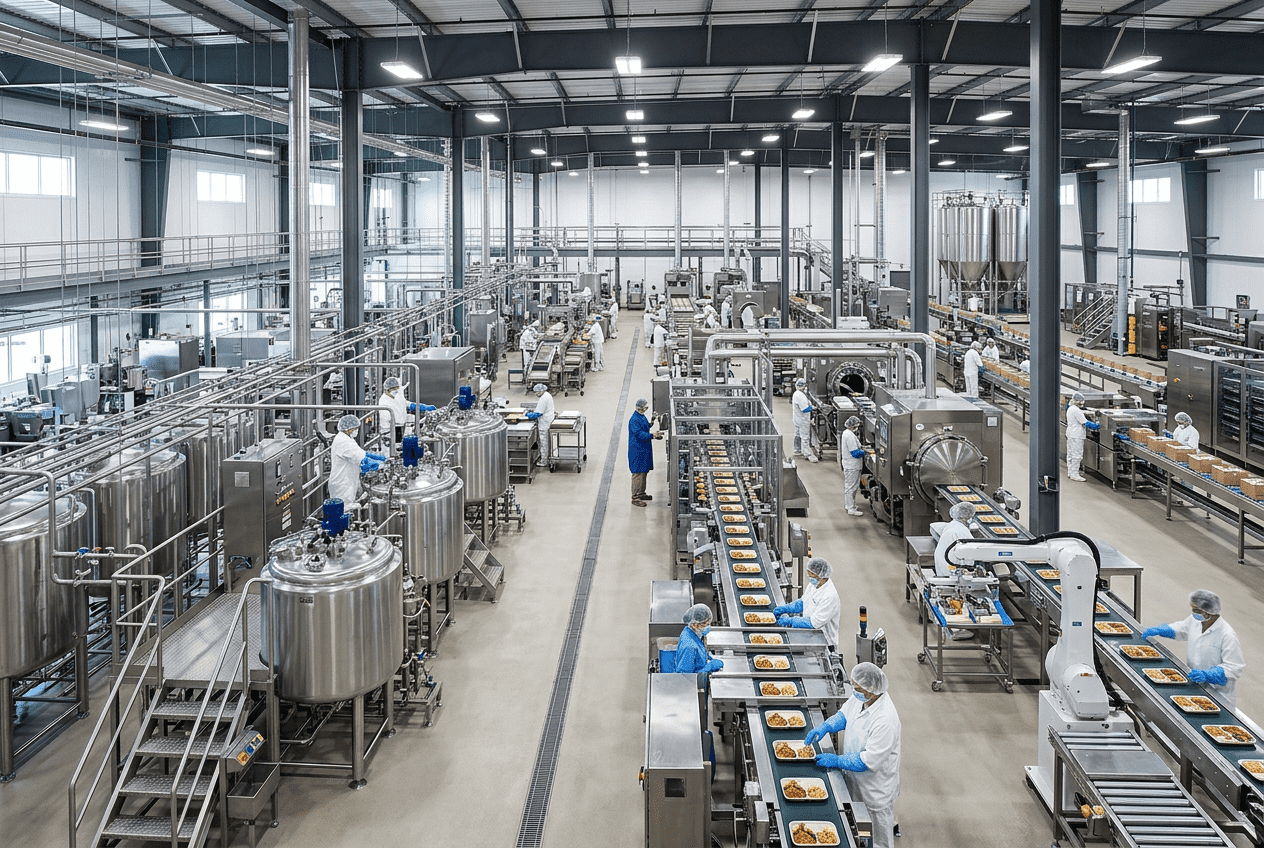
Remote Monitoring Systems for Food Facilities: IIoT & Cloud Dashboards
Food and beverage manufacturers across the United States are under pressure to reduce downtime, protect product quality, document compliance, and make faster operational decisions across one plant or many. Remote monitoring systems built on industrial IoT sensors, edge devices, cloud platforms, and role-based dashboards help plants track temperature, pressure, flow, tank levels, vibration, utility consumption, and sanitation-critical conditions without relying only on manual rounds. In practice, these systems are especially valuable in high-consequence environments such as protein processing in the Midwest, dairy plants in Wisconsin, beverage packaging lines in Texas, ready-to-drink facilities in the Southeast, and washdown-heavy operations near major logistics hubs like Chicago, Dallas-Fort Worth, Savannah, and Los Angeles. For U.S. processors, the best remote monitoring strategy is not just about adding sensors. It is about choosing the right connectivity path, selecting hardware that survives washdown, building dashboards that different teams can actually use, and creating escalation rules that turn data into action. It also means working with engineering partners who understand process systems, utilities, controls, plant operations, and compliance realities. That is where an end-to-end firm can provide an advantage, especially when remote monitoring is part of a larger capital project, line expansion, utility upgrade, CIP redesign, or plant modernization effort. Yes, remote monitoring systems are highly effective for food facilities in the United States when they are designed for sanitary environments, operational continuity, and practical user adoption. A modern system typically combines wireless or wired industrial sensors, secure gateways, edge processing, cellular or segmented network connectivity, cloud dashboards, alarms, historian functions, and mobile alerts. The most successful deployments focus on a limited set of critical variables first, such as refrigeration temperature, cook and hold temperatures, CIP parameters, compressed air pressure, tank levels, pump health, and utility performance. For many U.S. food plants, a cellular-first IIoT architecture is often the fastest route to value because it can bypass internal OT and IT bottlenecks while still keeping monitoring segregated from production control. In facilities with strict cybersecurity rules or multi-site visibility needs, cloud dashboards make it easier for plant managers, maintenance teams, quality leaders, and corporate operations to see exceptions in real time. When washdown is intense, IP69K-rated wireless sensors and enclosures matter. When uptime matters, the real return comes from automatic thresholds, escalation workflows, and dashboards tailored by role rather than generic charts that no one checks. The table below summarizes where remote monitoring usually delivers the fastest return in U.S. food and beverage plants. For buyers, the key lesson is simple: start with assets that cause the biggest financial or compliance pain when they drift out of spec, then scale the architecture plant-wide. One of the first decisions in any remote monitoring project is how data will leave the plant. In the United States, many food manufacturers operate in environments where IT teams are understandably cautious about allowing new devices onto the corporate network, and OT teams are even more cautious about anything near PLCs, SCADA, or validated process systems. That is why cellular-connected gateways and sensor hubs have become so attractive. They create a separate path for monitoring data without opening broad access into the plant control environment. Cellular is especially useful in brownfield plants where the network is fragmented, poorly documented, or difficult to extend into utility rooms, roof spaces, freezers, remote tank farms, and washdown zones. It is also valuable during pilot programs because plants can begin collecting data in days rather than waiting months for internal network approvals. In major food corridors such as California’s Central Valley, the Carolinas, Wisconsin dairy regions, and Texas beverage clusters, this approach lets corporate teams compare site performance without requiring every facility to adopt the same OT infrastructure first. Plant network connectivity still has an important place, especially when data volume is high, latency matters, or the monitoring system needs close integration with historians, MES, CMMS, or SCADA. A segmented plant network with firewalls, VLANs, and DMZ architecture can support more comprehensive industrial visibility. However, that path usually requires stronger governance, cybersecurity review, and a more formal change-control process. In most U.S. food applications, the best answer is not either-or. It is phased architecture. Start with cellular for isolated monitoring and fast wins, then bridge selected data into the broader enterprise environment later. This protects OT boundaries while still giving decision-makers immediate visibility. The chart above reflects a realistic market direction: adoption is accelerating because labor remains tight, corporate quality teams expect better data, and 2026 planning cycles increasingly include energy monitoring, sustainability reporting, and digital audit readiness. Food plants do not have the same environmental demands as dry industrial sites. Protein facilities, dairy rooms, sauce plants, seafood operations, and beverage filler areas often experience aggressive washdown, foam cleaning, caustic exposure, hot water, and pressure spray. That is why remote monitoring hardware must be selected for hygienic durability, not just measurement accuracy. IP69K-rated wireless sensors and enclosures are particularly relevant in washdown-heavy zones because they are built to withstand high-pressure, high-temperature cleaning. In practical terms, U.S. processors should evaluate not only ingress protection rating but also material compatibility, mounting style, battery strategy, antenna placement, calibration process, and wireless reliability around stainless equipment and insulated panels. A sensor that survives in a dry packaging mezzanine may fail quickly in a poultry deboning room or near a tunnel pasteurizer. Likewise, battery-powered wireless devices are attractive for retrofit speed, but they need a maintenance strategy if they are spread across dozens of points in freezers or wet rooms. Typical applications for washdown-rated wireless sensing include ambient and surface temperature, humidity, differential pressure in hygienic spaces, vibration on pumps and motors, tank level monitoring, conductivity during CIP, and door-open conditions in cold rooms. When chosen well, these devices reduce wiring cost and expand monitoring coverage into areas that would otherwise be skipped. The buying takeaway is clear: do not purchase based on sensor data sheet claims alone. Match the sensor package to the exact hygiene zone, cleaning chemistry, and process context. One of the most common mistakes in remote monitoring projects is presenting the same dashboard to everyone. Operators, maintenance technicians, supervisors, plant managers, and corporate quality leaders do not need the same view. The dashboard should reflect the decisions each person is responsible for making. An operator needs a simple current-state display: what is in alarm, what is approaching alarm, what line or room needs attention now, and what action should be taken. A maintenance technician needs equipment health trends, utility stability, battery status, signal quality, and indications of developing mechanical issues. A plant manager needs a higher-level summary: compliance exposure, downtime risk, site performance, utilities, and whether the plant is running within target. Corporate leaders may need cross-site comparison, exception reports, and audit-ready summaries rather than minute-by-minute noise. Role-based dashboards increase adoption because they reduce clutter and improve response speed. In a large operation near Atlanta or Houston, that can mean the difference between correcting a cold-room issue in minutes and discovering it after product quality is already at risk. In a multi-line beverage facility near Charlotte or Fresno, it can help teams pinpoint line imbalance and utility instability before packaging throughput drops. Well-designed dashboards also support training and handoffs. Teams can review shift events, see whether alarms were acknowledged, and understand what happened before a problem escalated. That is especially valuable in 24/7 plants or in organizations facing labor turnover. Data alone does not protect product or uptime. Threshold design does. Food facilities need alarm logic that reflects process reality instead of arbitrary setpoints. For example, a freezer door left open for thirty seconds may not matter, but five minutes might. A compressor suction pressure drift may need a warning threshold and a critical threshold. A cook room deviation may require immediate escalation to production and quality at once. A CIP cycle temperature gap may need a hold on release until the exception is reviewed. The best alerting frameworks use tiered thresholds, time delays, deadbands, and escalation rules based on severity. They also distinguish between advisory alerts and critical alarms. Too many alerts create fatigue. Too few create blind spots. In U.S. food plants, the right balance usually includes role-based notifications, after-hours rules, and integration with email, text, mobile apps, and sometimes CMMS ticketing. Escalation design should answer five questions: what variable matters, when should someone care, who should be notified first, when should the issue be escalated, and how should the event be documented. This is often where operational expertise matters more than software features. The trend is moving toward exception-driven management. By 2026, many food manufacturers will expect alert systems to support not only downtime prevention but also digital documentation for food safety, environmental monitoring, and utility sustainability targets. Many U.S. manufacturers now operate multiple sites with different vintages, brands, process types, and local practices. A corporate team may oversee a dairy plant in Wisconsin, a beverage site in North Carolina, a prepared foods facility in Ohio, and a protein site in Arkansas. Without a unified remote monitoring layer, comparisons are slow, inconsistent, and often based on spreadsheets after the fact. Multi-site visibility lets central quality and operations teams compare alarm frequency, refrigeration stability, utility efficiency, CIP adherence, and response times across plants. It also helps identify where capital should go first. A site with repeated deviations in refrigeration or chronic compressed air instability may need maintenance intervention, controls tuning, or a larger utility project rather than more operators. This is also where remote monitoring connects to broader engineering strategy. Companies planning expansions near major trade routes such as the Port of Savannah, the Port of Los Angeles, the Inland Empire, or Midwest distribution corridors need consistent operating data to support capital planning and network design. Standardized dashboards help management understand whether process issues are local, systemic, or tied to specific equipment families. The demand profile above reflects current U.S. priorities. Protein, beverage, and dairy continue to lead because temperature control, sanitation intensity, throughput, and spoilage risk create strong business cases for real-time visibility. A remote monitoring system should be treated as an engineered operational layer, not a generic add-on. The technical specification needs to define environmental conditions, data accuracy, sampling rates, power source, enclosure rating, communication protocol, cybersecurity architecture, historian retention, calibration requirements, dashboard roles, and integration expectations. If the site may later connect to SCADA, ERP, CMMS, or energy reporting tools, that should be considered at the front end. In food and beverage environments, engineering requirements often include stainless-friendly mounting, hygienic hardware choices, chemical compatibility, freezer and hot-zone operating limits, battery replacement strategy, and reliable wireless propagation in dense metal environments. Signal surveys matter. So does naming convention design. If sites use different labels for the same asset type, enterprise reporting becomes messy fast. Below is a practical specification framework used by many U.S. processors when evaluating systems. Another key requirement is integration discipline. If a facility already has PLC and SCADA assets, remote monitoring should complement them rather than duplicate confusion. The monitoring layer should answer operational questions more simply, especially for mobile use and multi-site reporting. That comparison illustrates a common selection tradeoff in the United States market: cellular-first architectures win on speed and separation, while plant-integrated architectures win on deep system interoperability. The most reliable path is a phased roadmap. First, define the business case. Second, choose critical assets and critical variables. Third, validate the connectivity model. Fourth, install a pilot in one area. Fifth, tune thresholds and dashboards with real users. Sixth, standardize naming, alarm logic, and reporting before scaling to other departments or sites. Food manufacturers often struggle when they start with too many points at once. A better approach is to launch with one to three high-value use cases: refrigeration reliability, CIP verification, utility monitoring, or environmental monitoring in quality-sensitive spaces. Once the team trusts the system and sees value, expansion becomes easier. Best practices also include operator training, response ownership, calibration planning, battery replacement scheduling, and documented alarm governance. A dashboard that looks impressive but has no accountable process behind it will not create measurable value. By 2026, implementation roadmaps should also include sustainability and policy considerations. More U.S. manufacturers are linking utility monitoring to energy intensity targets, water reduction programs, and carbon reporting. Food safety expectations are also moving toward stronger digital traceability and documented environmental controls. A future-ready monitoring system should support those needs without forcing a complete redesign later. When remote monitoring is part of a larger expansion, modernization, or utility upgrade, companies often benefit from working with an engineering partner that can align instrumentation, utilities, controls, installation, and project execution under a single plan. That reduces friction between what the data platform promises and what the plant can actually support. Disruptive Process Solutions supports food and beverage manufacturers across the United States and Canada with a business-first engineering approach that connects smart capital planning to practical plant execution. Rather than treating remote monitoring as a standalone gadget purchase, the company approaches it as part of a larger operating system for profitable manufacturing performance. From a technological capabilities perspective, DPS brings process, controls, and integration expertise that helps clients connect monitoring systems to real plant needs. That includes work across automation, PLC programming, SCADA-related environments, utility systems, batching, pasteurization, aseptic processes, fermentation, water systems, and broader plant infrastructure. For food and beverage operators evaluating digital visibility, this matters because the value of monitoring depends on understanding what process variable should be measured, where the sensor belongs, how the data should be interpreted, and which operational response is correct. Companies exploring broader modernization work can review DPS service capabilities here: food and beverage engineering services. From a manufacturing capabilities standpoint, DPS also designs and manufactures select process equipment, including tanks, custom CIP systems, marination tumblers, and cooking vessels. That practical fabrication and equipment knowledge is useful in remote monitoring projects because it improves the fit between sensor design, skid layout, tank geometry, hygienic access, and field installation constraints. It also helps when a monitoring initiative grows into equipment replacement, line modifications, or utility package improvements. More about this equipment side can be seen here: process equipment solutions. From a service capabilities perspective, DPS operates through an integrated design-build-manage model that supports capital planning, process engineering, owner representation, project and program management, installation oversight, system integration, and execution across local trades and specialty partners. For U.S. food facilities, that means remote monitoring can be planned alongside expansion, relocation, utility optimization, sanitary design upgrades, or compliance-driven projects instead of being handled in isolation. Companies wanting background on the team and operating philosophy can visit the company overview, while those looking for project examples can explore recent case studies and project work. This integrated model is particularly relevant for manufacturers that need more than a dashboard. Many plants need a partner who can connect data visibility to production economics, utility reliability, hygiene design, controls logic, and site execution. In those cases, monitoring becomes part of a measurable operations improvement plan rather than just another software subscription. What is the biggest advantage of remote monitoring in a U.S. food plant?The biggest advantage is faster intervention before quality, food safety, or equipment reliability issues become expensive. Real-time alerts reduce the delay between a deviation and a response. Is cellular connectivity secure enough for food facility monitoring?For many monitoring-only applications, yes. Cellular architectures can provide strong separation from the plant OT network when designed correctly. They are especially useful for brownfield sites and fast pilots. Do all sensors need to be IP69K rated?No. Only sensors installed in high-pressure washdown or similarly harsh environments need that level of protection. Dry packaging and office-adjacent spaces may require less robust enclosures. Which plants benefit most?Dairy, protein, beverage, prepared foods, aseptic processing, and cold storage all benefit strongly because process stability, sanitation, and temperature control directly affect quality and profitability. How long does a pilot project usually take?A focused pilot can often be scoped, installed, and reviewed within several weeks, depending on hardware availability, connectivity conditions, and internal approval speed. What data points should we monitor first?Start with the variables that cause the highest financial or compliance risk: refrigeration temperatures, cook and hold temperatures, CIP parameters, utility pressures, tank levels, and critical motor or pump health. Can remote monitoring replace SCADA?Usually no. It should complement SCADA, not replace it. SCADA remains essential for control, while remote monitoring adds easier enterprise visibility, mobile access, and exception management. How does this help central quality teams?It gives them standardized visibility across multiple plants, making it easier to review deviations, compare performance, support audits, and identify recurring risk patterns. What should buyers ask suppliers before purchasing?Ask about environmental rating, battery life, calibration method, data retention, alarm logic, cyber architecture, integration options, washdown survivability, implementation support, and total cost over three to five years. What are the most important 2026 trends?Expect stronger use of predictive maintenance, AI-assisted anomaly detection, broader energy and water monitoring, tighter digital documentation for compliance, and greater alignment between monitoring platforms and sustainability reporting. For food facilities in the United States, remote monitoring is no longer a niche technology. It is becoming a core operational layer for uptime, quality assurance, utility management, and enterprise decision-making. The plants that gain the most are the ones that deploy it with engineering rigor, clear ownership, and a roadmap tied to real business outcomes. -
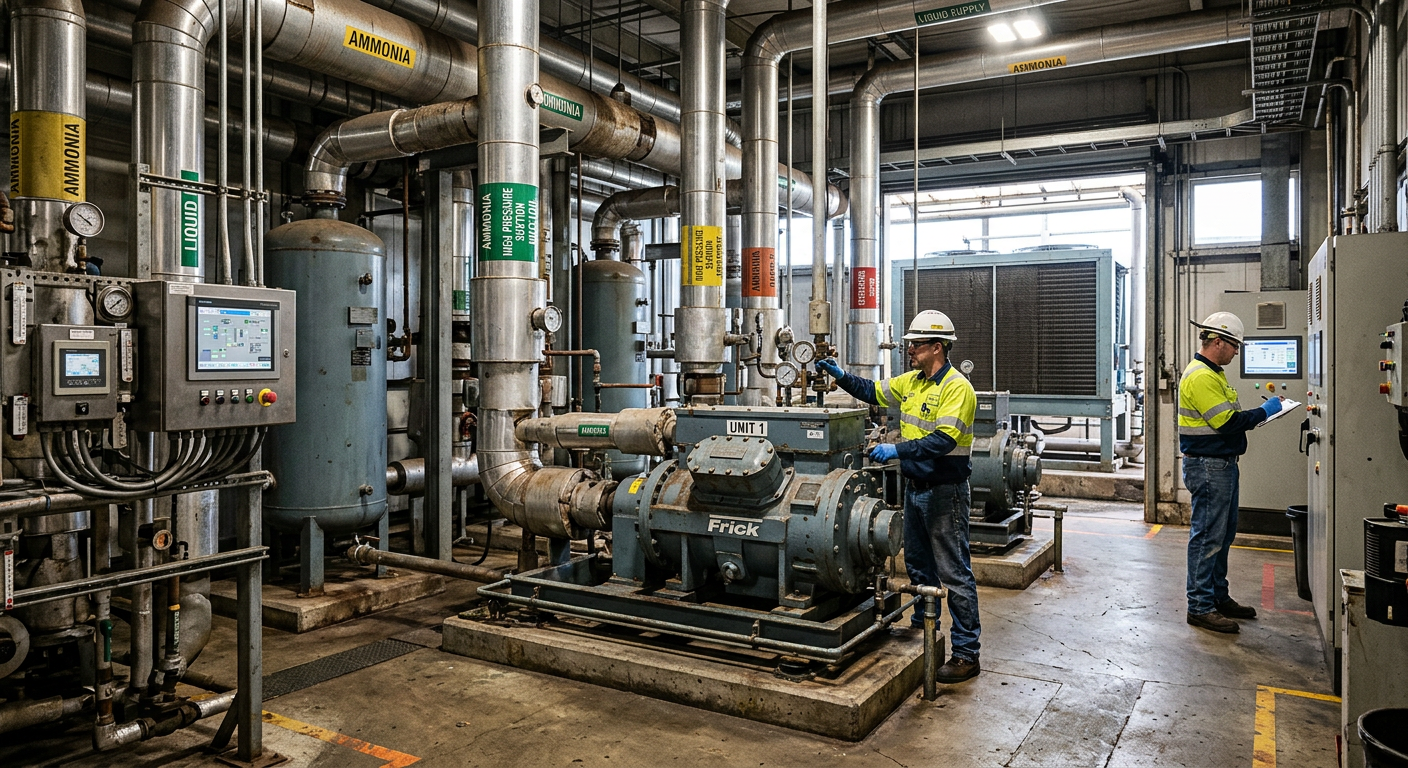
Dairy Beverage Processing Systems
Dairy beverage processing in the United States requires a carefully engineered combination of thermal treatment, separation, homogenization, sanitary design, automation, and regulatory control. Whether a processor produces white milk, flavored milk, cream-based drinks, protein beverages, cultured dairy drinks, or plant-based alternatives, the production line must protect food safety, preserve flavor, support shelf life targets, and remain compliant with Grade A PMO expectations and broader FDA standards. For most facilities, the right system is not a single machine. It is a coordinated process that starts with raw ingredient receiving and ends with validated cleaning, documented controls, and efficient packaging integration. Across major dairy regions and food manufacturing hubs such as California’s Central Valley, Wisconsin, upstate New York, Texas, Idaho, and North Carolina, processors are investing in flexible systems that can run both traditional dairy and next-generation dairy alternatives. That shift is especially visible around logistics corridors near Chicago, Dallas-Fort Worth, Los Angeles, Fresno, Atlanta, and the Port of Savannah, where co-packers and branded manufacturers need faster changeovers, stronger sanitation programs, and scalable utilities. The best dairy beverage processing systems for the United States market combine pasteurization or sterilization technology matched to product risk, carefully sized homogenization, accurate fat and solids standardization, hygienic piping, validated CIP, and controls designed for traceability and compliance. HTST systems remain the standard for refrigerated fluid dairy. UHT supports ambient or extended shelf stable products. ESL systems fill the gap for premium refrigerated products requiring longer shelf life with less flavor damage than aggressive thermal treatment. For processors launching oat, almond, or soy beverages, the same core engineering principles apply, but viscosity, insoluble solids, enzymatic treatment, and allergen changeover become more critical. Buying decisions should be based on product portfolio, target shelf life, package format, line speed, available utilities, labor model, cleaning window, and the regulatory environment in the state of operation. A facility supplying schools, grocery private label, foodservice, or national retail chains may need a different level of redundancy and documentation than a regional specialty processor. In all cases, process design should support profitability, not just nameplate capacity. The table above shows why processors should start with business and product goals before selecting equipment. A lower-cost pasteurizer that cannot support future SKU complexity often becomes more expensive over time than a slightly larger, better-instrumented system. Thermal treatment is the backbone of dairy beverage safety. In the United States, the most common approach for refrigerated milk and dairy drinks is HTST pasteurization. This process delivers pathogen reduction while preserving fresh flavor and maintaining reasonable throughput. For products requiring substantially longer shelf life, UHT treatment is used in combination with aseptic handling and filling. Between these two sits ESL, or extended shelf life processing, which can combine higher thermal treatment, tight hygienic control, microfiltration in some designs, and ultra-clean filling to extend refrigerated life. HTST is often the preferred solution for regional dairies shipping within a few hundred miles of production. UHT is attractive for national distribution, export, emergency feeding programs, institutional channels, and products sold through ambient networks. ESL is increasingly popular for premium dairy beverages, cold coffee with dairy, higher-protein milks, and specialty formulations sold through refrigerated grocery channels. For processors in the United States, technology choice also depends on freight economics. Shipping refrigerated dairy from Wisconsin to Florida or from California to the Southeast introduces cost and shelf-life exposure. UHT or ESL may improve margin by expanding the distribution radius without constant dependence on rapid replenishment. Conversely, local dairy brands in cities like Minneapolis, Charlotte, Sacramento, and Denver often win with HTST because they can market freshness and shorter ingredient statements. This comparison shows that shelf life is not the only variable. Packaging environment, product quality goals, utility readiness, operator training, and maintenance strategy all matter. A processor considering ESL or UHT should also evaluate filler technology, sterile barriers, ingredient microbiology, and utility reliability. The growth trend above reflects a realistic increase in capital interest across dairy beverage processing categories in the United States, especially where processors are modernizing pasteurization, sanitation, and automation systems to reduce downtime and support more SKUs. An HTST system is much more than a plate heat exchanger. A well-designed unit includes balance tank control, timing pump, flow diversion valve logic, regeneration section sizing, legal temperature recording, pressure relationships that protect pasteurized product, and documentation that satisfies dairy inspections. In practice, beverage performance depends on how these functions are integrated into the rest of the plant, including ingredient batching, surge capacity, filler demand, and CIP scheduling. For dairy beverages with varying solids, sugar, cocoa, stabilizers, or protein content, heat transfer and fouling behavior can change dramatically. Chocolate milk, cultured drink bases, and high-protein beverages often require more careful section design and hold time verification than plain white milk. The best HTST systems are engineered around actual product rheology and expected production windows rather than generic capacity claims. Processors should also consider future expansion. Many United States plants begin with one HTST skid but soon need dual product paths, parallel homogenization, or added regeneration optimization. Designing utility headers, floor drains, electrical distribution, and controls architecture for future additions can save major retrofit cost later. This table highlights why good pasteurization is as much about controls and verification as it is about stainless steel. Plants with weak instrumentation often struggle more than plants with smaller but better-engineered systems. Companies needing a more strategic approach often benefit from working with an engineering-led partner rather than purchasing isolated skids. Integrated process system services can help align the HTST design with utility load, future expansion, and filler coordination. That is especially important for multi-SKU beverage sites where one bottleneck can undermine the economics of the entire line. Homogenization improves physical stability, mouthfeel, color uniformity, and cream distribution. In milk processing, it reduces fat globule size and helps prevent creaming. In dairy-based beverages, it also supports emulsion stability where cocoa, flavor oils, proteins, or added micronutrients are present. The correct homogenizer pressure is product-specific; too low may leave separation problems, while too high can alter texture, increase viscosity, or create excess wear. Single-stage homogenization can work for some products, but two-stage systems are common where emulsion control is more demanding. Product temperature at homogenization is also critical. Pressure setpoints that perform well on standard milk may not translate to cultured drinks, cream liqueur bases, protein shakes, or coffee dairy blends. A process line should therefore be commissioned against real formulas, not only water tests. Another trend in the United States is the use of high-pressure homogenization for plant-based beverages and functional drinks that need improved suspension stability. Oat and almond beverages especially benefit from careful particle size management and recirculation control. Excessive shear, however, can damage sensitive starch systems or increase oxidation risk, so equipment selection should be tied to formulation science. Homogenization is often underestimated during project budgeting, yet it directly affects consumer acceptance. A beverage that is microbiologically safe but visually unstable or gritty will fail commercially. For that reason, pressure, stage configuration, valve design, and hygienic serviceability should be treated as core process decisions rather than secondary equipment details. Separation and standardization are essential for processors producing multiple fat levels, cream streams, cultured bases, and ingredient blends. A centrifugal separator enables efficient cream removal and clarification, while inline standardization systems adjust finished fat content with high accuracy. This is critical for label compliance and margin control, particularly in high-volume milk operations where even small fat deviations affect profitability. For U.S. processors serving retail, foodservice, and private label channels, separation systems also provide flexibility. A plant can receive raw milk with variable composition and still manufacture a stable portfolio of whole, reduced-fat, low-fat, and skim products. Cream can be routed to separate products, blended into beverages, or sold into adjacent categories. Advanced systems pair separators with densitometry, flow measurement, and recipe automation for tighter control. Regional conditions matter. Plants in Wisconsin and Idaho may prioritize cream and cheese-linked balancing, while plants near large urban beverage hubs like Houston, Phoenix, or Newark may focus on fluid milk and value-added drinks. The right system therefore depends on raw milk profile, byproduct strategy, and SKU mix. Each of these systems contributes to consistency, but their real power comes from integration. When separation, standardization, batching, and pasteurization communicate through automation, processors gain tighter control over yield, waste, and product quality. The demand chart demonstrates where investment pressure is strongest: fluid milk remains large, but growth-oriented processors are increasingly adding protein, flavored, and plant-based beverage capabilities to improve margin and utilize shared utilities. Clean label dairy beverage processing has become a major purchasing driver in the United States. Consumers increasingly expect shorter ingredient statements, fewer stabilizers, and fresher taste. To support those goals, processors are exploring reduced heat load techniques such as optimized regeneration, precise hold-time control, microfiltration-assisted ESL, faster thermal response, improved deaeration, and tighter hygienic packaging practices that reduce the need for excessive thermal intensity. Reduced heat load does not mean reduced food safety. It means achieving the required microbial outcome with less unnecessary quality damage. This can be done through better raw ingredient control, lower initial bioburden, superior sanitary design, shorter preheat exposure, direct heating in some UHT applications, and reduced post-process contamination risk. Plants producing premium milk, high-protein beverages, and dairy coffee blends often gain the most value from this approach because flavor retention strongly influences repeat purchase. By 2026, more U.S. processors are expected to combine clean-label goals with energy reduction and water reuse targets. That means engineering choices will increasingly be evaluated not only by throughput but by thermal footprint, ingredient preservation, and total cost per sellable case. This table shows that clean label is not simply a formulation issue. It is a process engineering issue. The best results come when product development, quality, and capital project teams work from the same objective. The area chart reflects a steady trend toward technologies that preserve flavor while maintaining safety. This is particularly relevant in premium refrigerated dairy categories sold through metropolitan retail markets such as New York City, Seattle, Boston, Austin, and San Diego. In dairy beverage processing, sanitation performance directly determines uptime, shelf life, and compliance confidence. A CIP system should be designed around circuit length, pipe velocity, chemical concentration, return conductivity, drainability, and changeover frequency. Plants that run both allergen and non-allergen beverages, or both dairy and plant-based products, need especially robust sanitation planning. Typical U.S. dairy beverage plants use a combination of caustic wash, intermediate rinse, acid cycle, final rinse, and sanitation step, with verification through conductivity, temperature, time, flow, ATP, allergen testing where required, and microbiological trending. Recovery CIP can save water and chemicals, but only when properly segregated and controlled. Dead legs, poor valve matrix design, and unvalidated spray coverage remain common causes of cleaning failure. Facilities in water-stressed regions such as California and parts of the Southwest increasingly seek systems that reduce water use without sacrificing hygienic confidence. At the same time, national retailers are demanding stronger environmental and food safety documentation. That makes CIP automation, recipe management, and record integrity more valuable than ever. Strong CIP programs are easier to sustain when the equipment is designed for serviceability. Processors evaluating new projects should prioritize valve matrix layout, drainability, instrument access, and chemical handling safety as highly as production capacity. For facilities expanding or retrofitting sanitation systems, custom process equipment and CIP platforms can reduce manual intervention and improve repeatability. In many cases, a sanitation redesign produces faster returns than adding more production equipment because it unlocks additional available runtime. Grade A PMO compliance remains central to fluid dairy processing in the United States. Processors must align equipment, operating procedures, records, and preventive controls with state and federal dairy requirements, along with any additional obligations from FDA, customer standards, or third-party schemes such as SQF and BRC. The practical impact is clear: sanitary design cannot be an afterthought. It must be engineered into the process line from the beginning. Key compliance topics include pasteurization records, fail-safe controls, legal hold verification, product contact materials, CIP validation, personnel hygiene, environmental conditions, and documented preventive maintenance. Projects involving aseptic processing or plant-based alternatives may also intersect with broader FDA food safety modernization requirements, allergen controls, and labeling obligations. Because dairy regulation can vary in enforcement details by state, processors expanding across multiple U.S. regions should design systems to a consistent high standard rather than the minimum local interpretation. This is especially important for multi-state distribution from hubs like Illinois, Pennsylvania, California, and Texas. The explanation behind this table is simple: compliance is operational discipline made visible. Plants that build documentation and hygienic logic into system architecture are more resilient than plants that rely on manual workarounds. Plant-based dairy alternative processing shares many mechanical similarities with dairy, but the process challenges are distinct. Oat beverages often involve enzymatic conversion, starch management, and careful thermal handling to avoid excessive viscosity or sedimentation. Almond beverages require strong solids management, soaking or slurry preparation, and stable suspension through blending and homogenization. Soy beverages may require thermal steps to manage flavor, enzyme inactivation, and protein functionality. For U.S. manufacturers, the biggest operational question is often whether dairy and plant-based beverages should run in the same facility. Shared infrastructure can be cost-effective, but only if allergen segregation, flavor carryover, CIP validation, and scheduling are tightly controlled. Some processors dedicate separate tanks or filler windows. Others design fully segregated ingredient introduction while sharing utilities and certain downstream services. Market demand remains strongest in urban and health-focused channels, but plant-based beverages are now mainstream across the United States. Retail growth around Los Angeles, Portland, Austin, Miami, and the Northeast corridor continues to drive new installations, especially in co-packing facilities that need flexibility for both established and emerging brands. The comparison chart indicates that higher-value beverages often bring higher processing complexity. Oat and protein systems in particular require strong integration between formulation, thermal treatment, homogenization, and sanitation. Processors entering this category should consider pilot work, ingredient functionality, and scale-up risk before committing to full production assets. A line built only for standard white milk may not perform well for plant-based alternatives without changes to mixing energy, hold times, filters, and cleaning logic. Engineering partners that understand both food and beverage operations can help bridge that gap. About the DPS engineering approach explains how a lean project model can support rapid decisions without losing technical depth. For processors balancing speed to market with long-term plant economics, that combination is often more valuable than simply sourcing equipment one package at a time. For most refrigerated milk and standard dairy beverages, HTST pasteurization remains the best fit because it offers dependable safety, good flavor retention, established regulatory acceptance, and strong throughput economics. UHT is appropriate when the product needs ambient shelf stability, national distribution reach, export flexibility, or a longer retail window than refrigerated systems can practically support. ESL stands for extended shelf life. It is growing because processors want longer refrigerated life without the stronger cooked flavor often associated with full shelf-stable processing. It is especially useful for premium milk and specialty beverages. It is essential for many products. Homogenization supports stable emulsion structure, consistent mouthfeel, and visual uniformity. Without proper homogenization, separation and quality complaints become more likely. Yes, but only with careful design. Shared lines need strong allergen control, validated cleaning, disciplined scheduling, and controls that reduce recipe and label errors. Frequent causes include inadequate sanitation, poor filler hygiene, post-pasteurization contamination, weak temperature control, ingredient quality issues, and packaging integrity problems. Start with product mix, target shelf life, packaging, utilities, cleaning window, labor capability, and growth plans. Then evaluate equipment as a full system, not as isolated machines. Key trends include reduced heat load processing, more automation and digital records, utility efficiency, water reuse in CIP programs, cleaner labels, hybrid dairy and plant-based production, and tighter retailer expectations around traceability and sustainability. When purchasing dairy beverage processing systems, buyers should assess more than upfront equipment price. Total installed cost, startup support, controls integration, utility consumption, maintenance access, spare part strategy, and operator training all affect real project value. This is especially true for plants operating in high-cost labor markets or regions with constrained utilities. Many successful projects use a phased model: first confirm throughput and product roadmap, then align process design with packaging and warehousing, and finally optimize utilities and sanitation capacity. This approach helps avoid overbuilding one area while underbuilding another. For example, a large pasteurizer paired with undersized CIP or compressed air can create expensive hidden bottlenecks. Case-based planning is also valuable. A regional dairy adding flavored milk and RTD nutrition may need only targeted upgrades. A new greenfield co-packing site near a logistics corridor such as Dallas, Indianapolis, or the Inland Empire may need a far more flexible architecture. Selected project case examples can help illustrate how process decisions translate into execution outcomes. Disruptive Process Solutions supports dairy and beverage manufacturers across the United States and Canada with engineering-led capital project execution. The company’s technological capabilities include process engineering, controls integration, PLC programming, SCADA, utility coordination, and complete system design for pasteurization, sterilization, blending, filtration, water treatment, and hygienic process environments. That background is highly relevant for dairy beverage projects where thermal treatment, automation, and sanitation have to operate as one coordinated system. Its manufacturing capabilities include proprietary process equipment such as tanks, CIP systems, and custom stainless process components that can be incorporated into broader facility builds. For dairy beverage plants, that creates an advantage where custom geometry, skid adaptation, or utility integration is needed to fit existing buildings or phased expansions. On the service side, DPS operates through a design-build-manage model that covers planning, engineering, installation, integration, commissioning, owners representation, and project management. For processors in the United States who need more than a single equipment vendor, this kind of execution model can reduce coordination risk and keep the project aligned with operating profitability rather than just construction completion. Whether the project is a retrofit of an existing dairy in the Midwest, a sanitation modernization in the Southeast, or a new beverage platform on the West Coast, the strongest outcomes come from disciplined planning, honest capacity modeling, and engineering choices that support both compliance and commercial performance. -
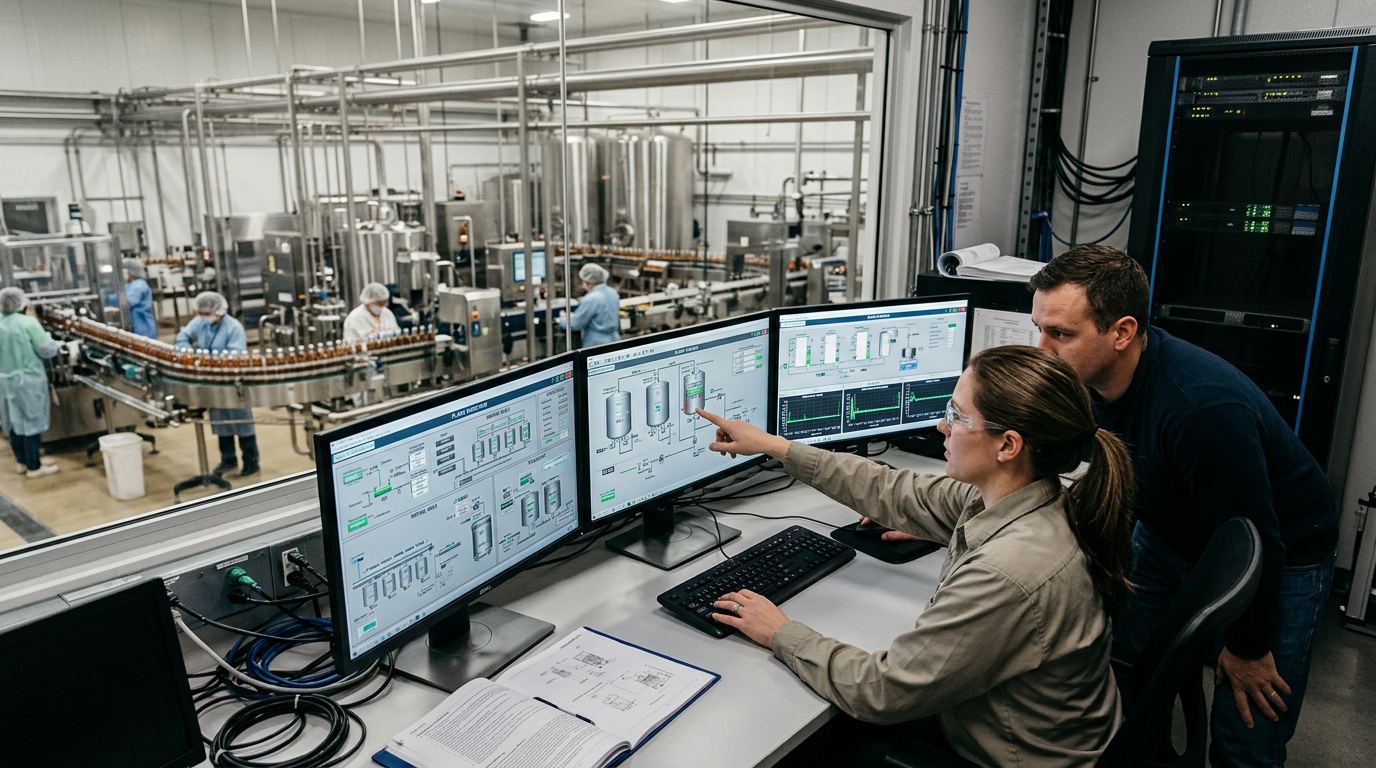
Brewery Process Engineering Services
Brewery process engineering is the disciplined planning, design, integration, automation, installation, and commissioning of brewing systems so a facility can make consistent beer safely, efficiently, and profitably. In the United States, this work goes far beyond choosing tanks. It includes raw material receiving, brewhouse sizing, cellar layout, yeast handling, CIP strategy, utility loading, controls architecture, quality checkpoints, packaging interfaces, and long-term capacity planning. The right engineering partner helps a brewery reduce wasted capital, avoid bottlenecks, improve yield, shorten changeovers, and support future growth. For owners, investors, contract brewers, and expanding regional brands, process engineering has a direct financial impact. A well-engineered brewery can improve extract efficiency, stabilize fermentation performance, lower steam and glycol consumption, simplify operator training, and make compliance easier. In fast-moving U.S. brewing hubs such as Denver, San Diego, Chicago, Asheville, Portland, Milwaukee, and Charlotte, competition is strong and margins are closely watched, so engineering decisions must support throughput and profitability from day one. Disruptive Process Solutions supports these objectives through a business-minded model that combines process design, equipment integration, construction coordination, installation, and startup execution. Instead of treating brewery work as isolated equipment procurement, the company approaches each project as a capital investment that must perform commercially. Readers can learn more about the firm’s background on the company overview page. The brewery project lifecycle usually begins with concept definition. At this stage, the most important questions are not about tank shape or finish, but about product mix, annual barrels, package format, utility availability, labor model, and expansion intent. A 15-barrel brewpub in Nashville needs a different engineering approach than a multi-brand contract facility near Dallas-Fort Worth or a high-output production brewery serving East Coast distribution from Pennsylvania. Concept design typically includes block flow diagrams, preliminary mass balances, utility summaries, production assumptions, and layout options. During feasibility work, engineers test whether the planned output aligns with the actual operating schedule. Many breweries underestimate cellar occupancy, bright beer turnover, filtration limits, keg washing capacity, floor drainage needs, and cold storage logistics. Strong early-stage engineering avoids these mistakes. Front-end engineering is followed by detailed design. This phase covers P&IDs, equipment data sheets, line sizing, hygienic routing, valve matrix logic, pump selection, trenching requirements, control narratives, and tie-ins to existing systems. Brewpubs, regional craft breweries, and beverage co-packers all benefit from coordinated mechanical, electrical, plumbing, structural, and controls engineering. In the United States, local code compliance, fire protection, wastewater discharge requirements, and utility interconnections also shape final design. Commissioning is equally important. A system that looks complete on paper still needs loop checks, dry testing, wet testing, sequence verification, CIP validation, operator training, and performance confirmation. Effective commissioning verifies mash transfer timing, brewhouse automation steps, fermentation cooling response, tank pressure behavior, and alarm handling before full commercial production begins. The table above shows why brewery engineering should be viewed as a full project lifecycle service. Each step protects capital and reduces startup risk. This market growth line chart reflects a realistic increase in engineering demand as breweries modernize operations, expand production flexibility, and invest in automation and utilities resilience leading into 2026. Brewhouse and cellar integration determines whether a brewery operates smoothly or constantly fights delays. A brewhouse can produce excellent wort, but if transfer lines are poorly routed, cellar cooling is undersized, or yeast management is inconsistent, the entire process suffers. Engineering should therefore connect recipe intent, process timing, vessel count, utility loading, and operator workflow. Brewhouse optimization often targets mash consistency, lauter run-off rates, boil intensity, trub separation, hot-side oxygen control, and CIP turnaround. Cellar optimization usually focuses on fermentation temperature control, yeast cropping, carbonation accuracy, maturation time, and bright tank utilization. In many existing U.S. breweries, productivity can be improved without building additions simply by balancing these systems better. A common issue is mismatch between brew frequency and cellar capacity. For example, a brewery in Columbus may plan double-brew days for seasonal volume, but if fermenters are occupied too long due to inconsistent cooling or delayed dry hopping, the brewhouse becomes underutilized. Engineering optimization uses production modeling to improve tank residency and release capacity. DPS approaches these projects with integrated process and controls thinking. Its technological capabilities include process engineering, automation architecture, PLC programming, SCADA design, and utility coordination. That means brewhouse controls, cellar sequencing, CIP skids, and field instrumentation can be configured as one operating system rather than a collection of disconnected assets. More on these broader capabilities can be found on the services page. The table above highlights how optimization works only when each process zone is designed to support the next one. Wort production remains the heart of brewery engineering. Proper mash design starts with grain bill flexibility, liquor-to-grist ratio, mash vessel heating method, agitation strategy, and rest profile control. In breweries with a broad recipe portfolio, engineers often design for both highly modified base malt runs and specialty-heavy grists that challenge flow and conversion timing. Lautering design requires special attention because it has a direct effect on brew day length. False bottom geometry, rake control, underlet design, grant arrangement, and sparging logic all influence run-off performance. In many retrofit projects across the United States, lauter bottlenecks result from inconsistent bed formation, poor spray coverage, or outdated automation sequences rather than from vessel size alone. Kettle engineering balances evaporation, DMS removal, hop utilization, thermal load, and cleaning practicality. Steam jackets, internal calandrias, or external wort boilers may all be considered depending on scale and energy strategy. Whirlpool design then supports trub separation and hot break removal while minimizing oxygen pickup and maximizing transfer quality to heat exchangers and fermenters. For breweries producing hazy IPA, lager, stout, fruited beer, and contract brands under one roof, flexibility is critical. That includes managing solids, hop dosing strategy, whirlpool residence time, and cleaning validation between allergen-sensitive or flavor-intensive SKUs. This table shows how hot-side design decisions affect both quality and operating economics. Cellar engineering is where brewing science meets production discipline. Fermentation vessels, brite tanks, glycol loops, control valves, sensors, and yeast systems must all work together to preserve beer quality at scale. In the United States, breweries often run mixed portfolios that include fast-turn hazy styles, longer-maturation lagers, barrel-influenced products, and seasonal releases. Engineering must support all of them without creating scheduling chaos. Temperature control is central. Jacket zoning, glycol supply temperature, valve response, insulation, and control logic determine how quickly a fermenter can crash, hold, or ramp. A poorly designed cooling system can lengthen tank occupancy, strain utility infrastructure, and create flavor variation. For breweries in hot climates such as Phoenix, Houston, or inland Southern California, summer ambient conditions make proper load calculations even more important. Yeast management is another profit lever. Engineering should consider propagation methods, brink sizing, sanitary connections, harvest timing, dosing consistency, and lab coordination. Reuse programs can save money, but only when the handling system preserves viability and contamination control. Inconsistent yeast transfer, poor brink cleaning, or weak sample points can quietly erode product quality. Quality teams also need access to representative cellar sampling, dissolved oxygen monitoring, and routine microbiological checks. Cellar layout must support these activities without disrupting production flow. The demand comparison above shows why breweries are investing in flexible cellar systems. Contract brewing, hybrid beverages, and non-alcoholic production are driving broader process requirements than traditional single-style operations. Utilities are often the difference between a brewery that reaches target throughput and one that stalls during summer peaks or back-to-back brew days. Steam, glycol, compressed air, domestic water, process water, drainage, and carbon dioxide handling should be engineered early instead of being treated as downstream add-ons. Steam systems must account for mash heating, wort boiling, hot water generation, CIP demand, and start-up surges. Glycol systems need enough capacity for active fermentations, crash cooling, bright beer loads, packaging tie-ins, and ambient extremes. Compressed air systems should support valves, instruments, kegging interfaces, and maintenance needs with suitable air quality. CO2 recovery becomes increasingly attractive for larger facilities looking to reduce purchased gas costs and improve sustainability metrics. In port and manufacturing corridors such as Seattle-Tacoma, the Inland Empire, New Jersey, and the greater Atlanta region, utility reliability and expansion planning are major considerations for new breweries and co-packing operations. Peak demand charges, boiler room footprint, refrigerant strategy, water reuse possibilities, and local discharge permits all affect design decisions. DPS has broad manufacturing and process infrastructure experience across food and beverage environments, which strengthens utility planning for breweries. Its capabilities include complete utility integration, CIP systems, boilers and steam, compressed air, cooling systems, process water solutions, wastewater interfaces, and automation-backed energy management. The company also supplies custom equipment for selected projects; additional information is available on the equipment page. The utility table emphasizes that production reliability begins with infrastructure, not only brew vessels. Modern breweries need automation that fits their scale and labor model. Small independent brewers may want semi-automated brewhouse controls and guided cellar sequences, while larger regional plants may require recipe management, historian functions, remote diagnostics, batch records, and packaging line integration. The objective is not automation for its own sake; it is repeatability, operator visibility, and better use of labor. PLC programming organizes the sequence logic for mashing, transfer, CIP, tank cooling, utility permissives, alarm handling, and interlocks. SCADA provides operators and managers with visual control, trend data, event history, and production context. Recipe management ensures that target setpoints, timing, temperatures, and routing can be standardized while still allowing controlled flexibility for pilot or seasonal runs. This area is especially important in retrofit projects. Many breweries think they need new tanks when the real constraint is control logic, manual workarounds, or poor scheduling visibility. A practical controls review can reveal hidden capacity. That business-first engineering mindset is one of the reasons some clients use DPS for both strategic planning and rapid-response troubleshooting. For project examples and outcomes, visit the case studies page. As 2026 approaches, breweries are also evaluating digital twins, predictive maintenance alerts, utility dashboards, and AI-assisted production reporting. These technologies are becoming more relevant as labor markets remain tight and quality expectations remain high. The area chart illustrates a realistic shift toward broader automation adoption in U.S. breweries, especially where recipe complexity, utility cost control, and labor efficiency are strategic concerns. Quality control should be built into brewery design, not added as a separate room after equipment is ordered. Laboratory integration begins with deciding what the brewery will routinely test in-house: gravity, pH, color, bitterness, dissolved oxygen, carbonation, microbiology, ATP, yeast viability, and package integrity. Once that scope is known, the facility layout should support sample flow, hold points, quarantine protocols, and communication between production and quality teams. For larger breweries and contract facilities, quality design also includes raw material receiving checks, lot traceability, allergen management where applicable, environmental monitoring, and finished product release procedures. Engineering should enable quick sampling from wort lines, fermenters, brite tanks, water treatment skids, and packaging areas without compromising sanitation. U.S. breweries entering grocery, stadium, airline, or national retail channels face stricter consistency expectations. A brewery shipping from St. Louis to Texas or from North Carolina to the Northeast needs a quality system that is stable enough for distribution stress, shelf-life confidence, and repeat customer experience. That means laboratory planning has a direct commercial value. DPS brings service capabilities that support this broader picture: capital planning, owner’s representation, project management, process integration, installation oversight, and commissioning coordination. These services help ensure that quality requirements are translated into facility design and startup execution rather than left to interpretation in the field. The lab integration table shows that quality systems contribute directly to yield, shelf life, and market credibility. Many breweries in the United States do not need greenfield facilities; they need smarter use of the assets they already own. Capacity expansion and retrofit engineering can unlock output through control upgrades, utility debottlenecking, process rerouting, fermentation scheduling, packaging synchronization, or selective tank additions. This is often faster and more capital-efficient than starting over. Typical retrofit work includes replacing undersized heat exchangers, improving glycol distribution, modifying CIP circuits, adding cellar valves, reprogramming brewhouse sequences, upgrading compressed air quality, or reworking floor layouts to improve forklift and hose management. In mature brewing regions such as Colorado, Oregon, and the Mid-Atlantic, these projects are especially common because many facilities were built in phases and now operate beyond their original design assumptions. Expansion planning should also account for local logistics and supply chain realities. Access to can suppliers, cold storage, wastewater treatment capacity, utility interconnection timelines, and transportation routes near hubs like Los Angeles, Houston, Savannah, or the Chicago rail network all affect project schedules and costs. Local supplier selection matters, but the lowest equipment price is not always the lowest lifecycle cost. Engineering review should examine cleanability, spare parts access, weld quality, controls compatibility, and service responsiveness. Below is a practical supplier and product comparison framework often used when evaluating brewery investments. The comparison chart above shows a realistic tradeoff. Imported systems may score well on upfront price, but domestic integrated solutions often provide stronger controls compatibility, service support, and future expansion value. This retrofit table helps buyers connect technical upgrades to the business conditions that usually justify them. When selecting a partner for expansion work, buyers should look for five things: demonstrated process knowledge, controls depth, utility experience, field execution ability, and the willingness to challenge flawed assumptions. The most valuable engineering firms are not yes-men. They are transparent advisors who align design decisions with profitability. That approach is especially relevant when a brewery is balancing growth, debt service, private equity expectations, or co-packing commitments. What does a brewery process engineer actually do?They design and integrate the systems that turn ingredients into finished beer, including brewhouse operations, fermentation, utilities, controls, cleaning, and startup procedures. When should a brewery hire an engineering partner?Ideally before equipment is purchased or a lease is signed. Early engineering prevents utility surprises, layout conflicts, and costly resizing after installation begins. Can an existing brewery increase output without a full expansion?Yes. Many U.S. breweries can improve capacity through debottlenecking, automation updates, utility corrections, scheduling changes, and selective retrofit work. How important is automation for a small or mid-sized brewery?It depends on recipe complexity, labor availability, and target consistency. Even modest PLC and SCADA upgrades can reduce operator dependence and improve repeatability. What utility system is most often underestimated?Glycol is a common issue, especially when breweries add more fermenters or shift toward higher-volume, colder-conditioning brands without recalculating cooling load. How should a brewery evaluate equipment suppliers?Compare more than purchase price. Review hygienic design, controls compatibility, weld quality, local service access, lead times, cleanability, documentation, and spare parts support. What trends will shape brewery engineering in 2026?Expect stronger demand for energy efficiency, CO2 recovery, water reuse, digital monitoring, flexible multi-beverage production, labor-saving automation, and designs that better align with evolving sustainability reporting and state-level utility requirements. Does DPS only work in brewing?No. The company supports brewing along with broader beverage and food processing sectors across North America, which is valuable when breweries diversify into RTD, non-alcoholic, functional, or hybrid products. What makes DPS relevant for brewery owners in the United States?Its approach combines engineering, build coordination, and managed execution with practical experience in utilities, automation, process integration, and capital planning. That helps breweries make decisions that support both startup readiness and long-term profitability. For brewery owners, contract manufacturers, and investors looking at new builds, expansions, or retrofits in the United States, the best results come from engineering that connects market demand, product strategy, utilities, controls, and operating reality. Whether the project is in California, North Carolina, Texas, Colorado, or the Great Lakes region, process design should ultimately answer one question: will this system produce quality beer profitably and reliably at the scale the business needs? -
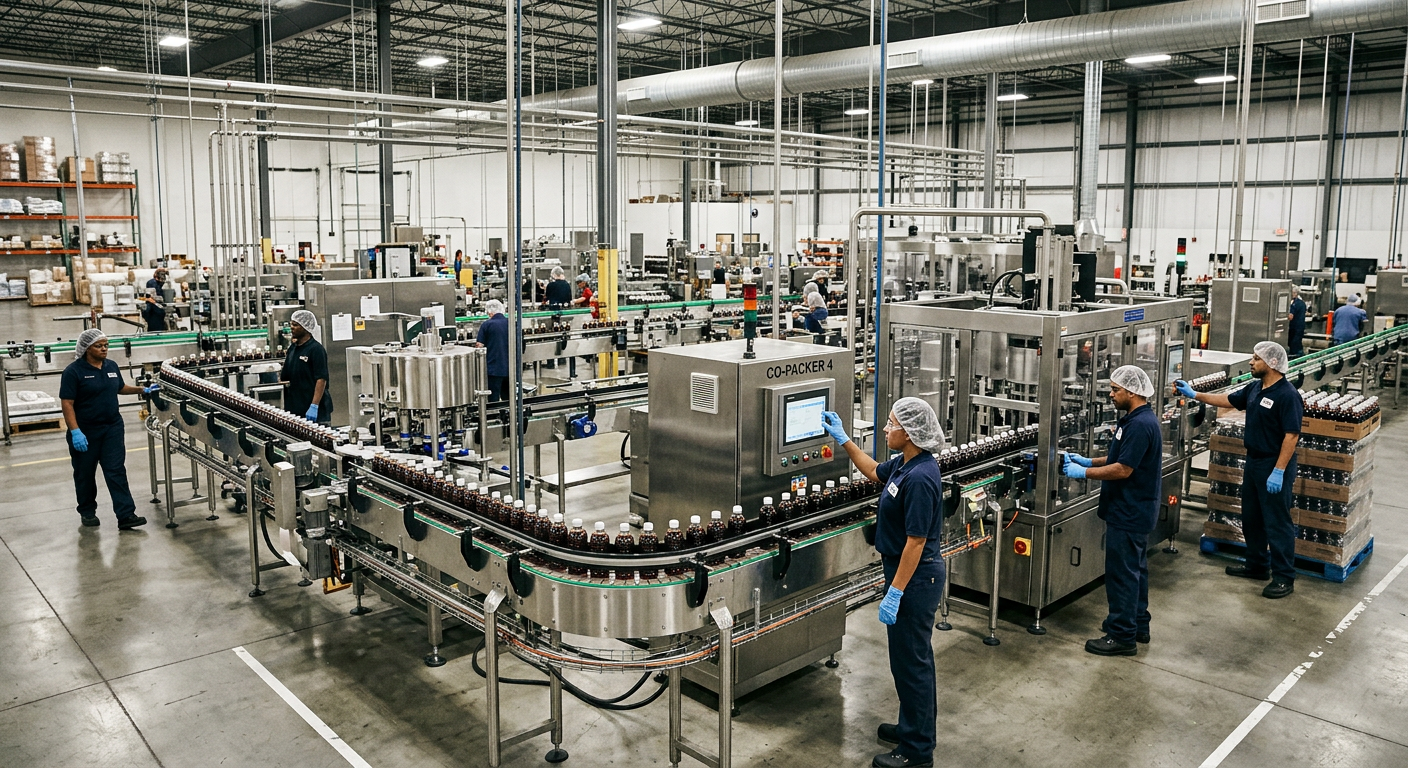
Brewhouse Design Engineering
Brewhouse design engineering is the discipline of turning a brewing concept into a reliable, efficient, and scalable production system. In the United States, brewers are balancing cost pressure, labor availability, utilities pricing, sustainability targets, and increasingly strict quality expectations. That means a brewhouse cannot be planned only around vessel count or batch size. It must be engineered around wort quality, throughput, cleaning efficiency, operator safety, future expansion, and the total cost of ownership over many years. For breweries in major production regions such as Milwaukee, Denver, Portland, Asheville, San Diego, Chicago, and the Northeast corridor, the right hot block design often determines whether a plant can profitably run one shift, add a second turn, or support contract brewing growth. A strong design also aligns the brewhouse with mill room flow, cellar operations, packaging demand, wastewater limits, and utility infrastructure. That is why many owners now approach brewhouse planning not as equipment purchasing, but as integrated capital project engineering. A well-engineered brewhouse for the United States market starts with the right vessel configuration, matches the heating method to local utility economics, sizes mash separation and boiling systems for the beer portfolio, and lays out the hot block for safe movement, easy cleaning, and fast turnaround. In most modern projects, the best result comes from evaluating five questions together: how many brews per day are required, what mix of beer styles will be produced, what utilities are available on site, how automated operations need to be, and how quickly future capacity may expand. For smaller regional or craft operations, a 2-vessel or 3-vessel brewhouse may offer the best capital efficiency. For high-throughput production breweries, a 4-vessel system can reduce cycle constraints and increase daily output. Steam remains the most common heating method for mid-size and large plants, while electric systems are increasingly attractive where boiler permitting is difficult or sustainability targets matter. Direct fire can still work in certain cases, but it demands careful evaluation of emissions, heat distribution, and building conditions. In practice, successful brewhouse design engineering combines process, mechanical, controls, structural, and construction planning. Companies such as Disruptive Process Solutions are often brought in because owners need more than a vessel package: they need engineering, installation, integration, and execution that protect long-term profitability. The table below summarizes the fastest way to frame a brewhouse design decision. This matrix is useful because it shows that brewhouse performance is never the result of one piece of equipment alone. It is the outcome of engineering choices that shape labor, beer consistency, and margin. The core configuration decision is whether to install a 2-vessel, 3-vessel, or 4-vessel brewhouse. Each design can make excellent beer, but the operational logic is different. The best choice depends on target output, brew schedule, beer portfolio, and how much flexibility the brewer needs between mashing, lautering, boiling, and whirlpooling. A 2-vessel design usually combines mash tun and lauter tun in one vessel and combines kettle and whirlpool in another, or uses a mash mixer plus lauter tun paired with a kettle/whirlpool combination. This format is common for startup breweries and many regional craft plants because it lowers capital cost and reduces footprint. It can work very well for one to three brews per day, especially when the facility is space constrained in urban locations such as Brooklyn, Seattle, or downtown Charlotte. A 3-vessel brewhouse often separates mash conversion, lautering, and kettle/whirlpool functions. This provides more scheduling flexibility, supports more complex mash programs, and improves cycle overlap. For many U.S. breweries moving from taproom scale to broader distribution, a 3-vessel layout offers the best balance of output and investment. It is especially useful for mixed portfolios with lagers, hop-forward ales, and adjunct-heavy recipes. A 4-vessel system typically includes a mash mixer, lauter tun, brew kettle, and dedicated whirlpool. This setup supports the highest throughput and the cleanest task separation. It is often preferred for large craft, contract brewing, and multi-brand facilities near major logistics hubs such as Dallas-Fort Worth, Columbus, the Inland Empire, or the I-95 manufacturing corridor. Dedicated vessels reduce bottlenecks and can support more brews per day without excessive operator strain. The chart below illustrates a realistic U.S. market growth trend by brewhouse investment segment through 2026 planning cycles. For owners evaluating configuration, buying advice is straightforward: do not choose solely by vessel count. Choose based on cycle overlap, labor capability, utility constraints, and packaging demand. A lower-cost brewhouse that limits annual throughput can become the most expensive option once lost sales, overtime, and retrofit work are considered. Heating method selection has become more important in the United States because utility costs vary sharply by region. Natural gas pricing, boiler permitting, emissions rules, electric service upgrades, and corporate sustainability targets all influence the decision. The three most common approaches are steam, electric, and direct fire. Steam remains the standard for many medium and large breweries because it delivers even heat transfer, good process control, and strong suitability for step mashing and vigorous boiling. Jacketed vessels heated by steam can provide repeatable thermal performance and reduce scorching risk. Steam is especially attractive in plants that already require a boiler for CIP, pasteurization, or other process loads. Electric brewhouses are gaining attention in states and municipalities where decarbonization policies are shaping industrial planning. Electric systems can eliminate combustion in the brewhouse area, reduce some permitting complexity, and support sustainability messaging. However, the available service capacity and local demand charges must be studied carefully. In parts of California, the Pacific Northwest, and the Northeast, electrical infrastructure may become the main project driver. Direct fire can offer rapid heat-up and straightforward construction, but it requires attention to flame management, stacking, building ventilation, hot spots, and thermal efficiency. It may suit certain smaller breweries or sites with strong gas service but limited boiler appetite. Still, in many new U.S. facilities, steam or electric systems create a more scalable long-term platform. From a market standpoint, the shift toward electric-ready process design is expected to continue into 2026. Policy trends in some U.S. states, corporate carbon accounting, and utility rebate programs are driving more owners to compare steam boilers with electric thermal systems earlier in project development. In buying terms, steam is usually the safest choice for throughput and flexibility, electric is increasingly compelling for specific local conditions, and direct fire should be selected only after careful heat transfer and building review. Mash conversion and wort separation determine extract recovery, brewhouse yield, runoff stability, and beer consistency. Poor design in this area can reduce annual profit more than almost any other mechanical issue. A mash tun or mash mixer must support proper hydration, temperature distribution, enzyme activity, and grist handling. A lauter tun must provide uniform bed formation, controlled runoff, and effective sparging without compaction or channeling. Optimal extraction depends on several design elements: vessel diameter-to-depth ratio, rake geometry, false bottom open area, grist loading rate, underletting strategy, and controls logic for pressure differential and runoff speed. U.S. breweries producing high adjunct recipes, hazy styles with heavy protein loads, or fine-milled grists should pay special attention to lauter tun performance, because those recipes amplify separation risk. A separate lauter tun often improves flexibility and extraction in larger systems. Combined mash/lauter vessels can work very well too, but they require more careful cycle discipline. High-value breweries benefit when the design engineer looks not only at vessel volume, but at extract targets, average brew gravity, and the recipe mix expected over several years. In terms of applications, this section matters not only to breweries producing standard pale ale or lager, but also to contract manufacturers, non-alcoholic brewers, kombucha producers using wort-based hybrids, and innovation sites testing alternative grains. Process engineering in the mash and lauter area directly affects cost per barrel. The kettle and whirlpool portion of the brewhouse defines thermal consistency, evaporation control, trub separation, hop utilization, and ultimately wort clarity into the heat exchanger and cellar. Kettle sizing should account for fill volume, foam headspace, evaporation target, hop load, and boil vigor. A common mistake is sizing a kettle too tightly around nominal batch volume, leaving insufficient headspace for aggressive boils or high-gravity production. In many U.S. breweries, a kettle working volume of about 110% to 130% of target cast-out volume provides useful operating flexibility. Facilities producing heavily dry-hopped beers, high adjunct brews, or concentrated wort for dilution may require even more attention to vapor management and control stability. Dedicated whirlpool vessels can improve trub separation and increase throughput, particularly when multiple brews are scheduled back-to-back. Boil control systems should manage steam valve modulation or electric power input, evaporation rate, timing, venting, antifoam strategy where applicable, and recipe-driven hop addition prompts. Automation is especially valuable here because inconsistent boil vigor can affect DMS reduction, bitterness consistency, and final wort concentration. Product type matters here. Lager-focused breweries may prioritize repeatable boil kinetics and low oxygen transfer, while hop-forward producers may emphasize solids handling and whirlpool geometry. A strong engineering review should include each major SKU family rather than assuming one generic brew profile. Layout is where good equipment choices either become an efficient brewhouse or a daily operational headache. The hot block should be arranged so raw materials, brewing operations, maintenance access, and cleaning all occur without conflict. In U.S. greenfield and brownfield projects alike, poor layout can reduce labor efficiency and create sanitation risks long before capacity is reached. Material flow should move logically from milling to mash-in, lautering, boiling, whirlpooling, cooling, and transfer to fermentation. Personnel movement should allow safe access to platforms, valves, sample points, hop dosing points, and instrument panels without forcing operators across wet zones or hose crossings. Cleanability requires sloped floors, drain placement, hose management, clear CIP circuits, and accessible spray device coverage. Breweries near dense production clusters such as Grand Rapids, Richmond, Sacramento, or the New Jersey industrial belt often retrofit into existing buildings. In these cases, engineering the hot block around columns, ceiling heights, utility chases, and forklift lanes becomes just as important as vessel selection. This is also where owner’s representation and early field validation matter; many layout problems are construction problems waiting to happen. Industry demand for layout modernization is rising as breweries seek labor savings and more hygienic operations. Below is a useful layout checklist for buyers and project teams. For local supplier decisions, breweries should compare not only vessel vendors but also integrators, control partners, boiler specialists, and sanitary piping contractors. Ports and trade hubs such as Los Angeles/Long Beach, Savannah, Houston, and Newark can affect freight timing and import equipment risk, so local commissioning capability matters more than many buyers expect. Automation is no longer optional for many brewhouse projects. Even when operators want hands-on brewing, control systems are essential for repeatability, safety, trend visibility, and labor efficiency. A modern brewhouse typically includes PLC-based process control, HMI interfaces, recipe and batch management, alarming, historian functions, and often plant-level SCADA integration. Automation should be scaled to the business model. A small brewery may only need semi-automatic temperature, pump, and valve sequences. A regional producer may need repeatable mash step control, lauter pressure management, utility interlocks, and automatic kettle timing. A multi-line beverage campus may require full SCADA, utility integration, batch traceability, and remote support capability. This is an area where engineering firms with broad process and controls experience add measurable value. Through its process and controls capabilities, DPS engineering services supports PLC programming, automation architecture, SCADA integration, and project engineering across brewing and beverage operations. For clients, that means the brewhouse is designed as part of a whole plant system rather than as an isolated equipment island. One of the most overlooked benefits of controls is not convenience, but bottleneck elimination. Many brewery expansions fail because management assumes the problem is vessel capacity when the real constraint is sequence logic, utility timing, or operator-dependent transitions. Good controls engineering can unlock capacity without unnecessary equipment spending. From a technology standpoint, brewhouse owners should evaluate instrumentation density, recipe handling, historian data, utility integration, and remote diagnostics. Strong engineering partners often bring capabilities that span process, mechanical, electrical, and controls design, allowing the hot block, cellar, CIP, glycol, steam, and packaging interfaces to work together. That interdisciplinary view is especially important in larger U.S. plants where uptime expectations are high. Capacity planning is where commercial strategy meets process design. The right question is not “How many barrels is the brewhouse?” but “How many sellable barrels per day, per week, and per year can the whole brewery actually produce?” That answer depends on batch size, mash and lauter cycle time, kettle occupancy, heat exchanger performance, cellar availability, cleaning windows, staffing, and packaging pull. A brewery targeting local draft distribution may prioritize flexibility and lower capital. A contract brewer serving national accounts may prioritize maximum daily turns and fast product changeover. A co-packer may need a brewhouse capable of supporting a broader beverage manufacturing platform, including malt-based RTD or fermented functional beverages. Below is a sample planning table that shows how capacity can change even when nominal vessel size stays the same. For industries beyond beer, these same planning principles apply to malt beverages, specialty fermentation, pilot beverage systems, and hybrid alcohol bases. That is why experienced firms active in both food and beverage sectors often bring broader process thinking to capacity studies and feasibility work. As a case-study principle, many plants discover that smarter sequencing, not bigger vessels, is the fastest path to output. This aligns with the project philosophy of engineering-led execution: first identify the true bottleneck, then spend capital where it changes profitability. Energy and water performance are now major design criteria in the United States. Utility inflation, wastewater surcharges, local discharge permits, and corporate ESG commitments are forcing breweries to think beyond basic production economics. A modern brewhouse should consider heat recovery, condensate return, wort cooling energy exchange, hot water reuse, and smart CIP design from the beginning. Common energy efficiency measures include stack condensers, wort-to-water heat recovery, boiler blowdown management, insulated process piping, variable frequency drives, and controls sequences that avoid peak utility overlaps. Water recovery strategies may include hot liquor preheating, final rinse recovery, dedicated non-product water tanks, and CIP optimization based on conductivity or recipe logic rather than fixed time only. By 2026, sustainability trends are likely to accelerate due to state policy pressure, investor expectations, and customer demand for lower-impact manufacturing. Projects in water-sensitive markets such as California, Arizona, Colorado, and parts of Texas increasingly require early water balance modeling. Breweries near strict municipal systems, including the Denver metro area or Southern California industrial districts, can see meaningful ROI from engineered recovery systems. On the manufacturing side, suppliers that can provide integrated process vessels, utility skids, CIP systems, and custom tanks create an advantage because recovery concepts can be built into fabrication and site integration. Through its branded equipment work and process integration background, DPS equipment capabilities align custom tanks, CIP systems, and utility-linked process equipment with broader plant objectives rather than treating them as stand-alone purchases. Service capability is critical here. Energy and water optimization only works when process engineering, capital planning, construction oversight, and commissioning are connected. That is why some owners prefer a design-build-manage approach that covers engineering, trade coordination, installation, and execution oversight. For many clients, this reduces rework and improves startup speed. A good example of this model can be seen in selected project case studies, where integrated planning is tied directly to production performance and capital efficiency. When comparing suppliers in the United States, owners should ask whether the partner can support concept development, utility studies, equipment supply, field installation, controls integration, and startup. The cheapest vessel vendor is rarely the lowest-cost project outcome. For many growth-stage breweries, a 3-vessel system offers the best balance of capital cost, throughput, and flexibility. It supports stronger cycle overlap than many 2-vessel layouts without the full investment of a 4-vessel production system. A 4-vessel design is usually justified when the business requires high daily brew counts, broad recipe flexibility, reduced bottlenecks, or future contract brewing volume. It is particularly effective when packaging demand is already strong and cellar capacity can absorb more wort. Yes, in many mid-size and large facilities steam remains the preferred choice because of even heating, strong control, and proven scalability. However, electric systems are becoming more attractive in markets with sustainability goals or difficult boiler permitting. It is extremely important. Lauter performance affects extract yield, wort clarity, cycle time, and consistency. Poor separation design can quietly increase cost per barrel for years. At minimum, account for target cast-out volume, evaporation rate, foam headspace, high-gravity brewing, and hop load. A kettle that is too small can limit both quality and throughput. The answer depends on production goals, staffing, and quality requirements. Even smaller breweries benefit from temperature control, timed sequences, alarms, and recipe assistance. Larger plants usually need PLC and SCADA integration for repeatability and data visibility. Use wort heat recovery, condensate return, insulated piping, optimized CIP, variable speed drives, and utility sequencing. Early engineering studies often reveal attractive payback opportunities. Water recovery reduces utility cost, eases wastewater impact, and supports sustainability targets. It is increasingly valuable in U.S. regions with water stress or high discharge fees. Look beyond vessel price. Review engineering depth, controls capability, utility integration, installation support, commissioning experience, local service reach, and ability to scale the plant over time. Because brewhouse success depends on more than hardware. An engineering-led partner can align process design, utilities, controls, construction, and startup around business performance. For owners planning a new facility or major expansion in the United States, that integrated approach often reduces risk and protects long-term profitability. In summary, brewhouse design engineering in the United States is moving toward smarter layouts, stronger automation, better utility strategy, and more disciplined capacity planning. The breweries that perform best are not simply buying tanks; they are building integrated manufacturing systems designed for quality, labor efficiency, and growth. -
Batch Control Systems for Food Facilities: ISA-88 Standard Implementation
Food and beverage manufacturers in the United States are under pressure to produce more SKUs, maintain tighter traceability, shorten changeovers, and release product faster without compromising food safety. ISA-88 gives plants a practical framework for batch control by separating physical equipment from procedural logic and recipe management. When implemented correctly, it improves consistency, supports audit-ready batch records, enables better material genealogy, and helps plants scale from manual batching to repeatable automated operations across sauces, dairy, RTD beverages, proteins, aseptic systems, and prepared foods. For plants in major production corridors such as the Midwest, the Carolinas, California’s Central Valley, Texas, the Pacific Northwest, and logistics hubs near Chicago, Dallas, Los Angeles, Savannah, and New Jersey ports, ISA-88 is especially valuable because it standardizes operations across multi-site networks and contract manufacturing environments. In practice, it becomes the backbone for recipe control, operator guidance, historian logging, and MES and ERP integration. ISA-88 is the leading batch control standard for food facilities because it organizes automation into a clear equipment hierarchy, a repeatable procedural model, and structured recipe layers. In U.S. food plants, that means a mixer, blend tank, pasteurizer, cooker, fermenter, or CIP skid can be controlled with reusable logic while recipes determine what the system makes, how much it makes, and under what conditions it runs. The result is better consistency, stronger traceability, simpler validation, and easier expansion. For buyers, the best ISA-88 implementation is not just a PLC programming project. It is a plant-wide architecture decision that affects processing reliability, quality release, labor efficiency, maintenance, reporting, and future MES connectivity. A good deployment aligns controls, process engineering, sanitation strategy, instrumentation, operator workflow, and business reporting from the beginning. In the U.S. market, ISA-88 is especially important for product categories with frequent formula changes or strict genealogy demands, including: Buying advice: prioritize a solution partner that understands both process and automation. Software alone will not solve recipe errors, poor utility design, undersized valves, missing mass balance points, or weak sanitation design. Plants that win with ISA-88 usually pair standards-based controls with strong process engineering, commissioning discipline, and business-minded project execution. The table above shows why ISA-88 matters beyond control code. It affects the entire operating model, from formulation and weighing to release and inventory accuracy. This market growth view reflects a realistic trend: more U.S. processors are modernizing batch systems because labor pressure, traceability expectations, and SKU complexity are rising at the same time. The ISA-88 equipment model separates the plant into physical levels so that controls can be designed logically and reused. At the top is the enterprise, followed by site, area, process cell, unit, equipment module, and control module. In food manufacturing, this structure helps engineers define exactly where blending, heating, holding, dosing, pumping, CIP, filtration, and transfer actions happen. For example, a beverage co-packer in North Carolina may define a syrup room as an area, then identify individual blend systems as process cells, each with units such as sugar melt tanks, high-shear mixers, deaeration vessels, and HTST skids. A dairy processor in Wisconsin may model cream standardization, batching, homogenization, and pasteurization as separate units with reusable valve and pump control modules underneath. A sauce plant in California may assign kettle lines, ingredient make-up systems, and filling buffer tanks in the same way. The key advantage is decoupling plant structure from product recipes. Once the equipment model is well built, operators can run many products through the same asset base with less custom code and clearer permissions. The hierarchy above becomes especially valuable during expansions. Plants around Atlanta, Chicago, and Houston often add new tanks, fillers, or utility skids in phases. If the equipment model is standardized, a new unit can be integrated faster because its modules already follow plant naming conventions, alarm philosophy, and interlock patterns. It also supports local supplier coordination. Integrators, OEMs, valve manifold vendors, heat exchanger suppliers, and utility contractors can all work to a common architecture. That reduces commissioning risk when equipment arrives from different U.S. regions or from ports such as Long Beach, Savannah, or Newark after overseas sourcing. The procedural model defines how the process runs. ISA-88 breaks batch execution into procedure, unit procedure, operation, and phase. This is the practical side operators feel every day. A procedure may be “Produce 10,000 gallons of mango beverage base.” Unit procedures may include prepare water, dissolve sugar, meter concentrates, blend, pasteurize, cool, and transfer. Operations break those actions down further, while phases execute the smallest practical tasks such as open valve path, start agitator, ramp temperature, or dose 250 pounds of citric acid. For food manufacturers, this structure creates control that is both disciplined and flexible. It supports: A strong procedural model is essential in plants with high product mix. Co-packers, sauce manufacturers, cultured dairy sites, and protein processors often run multiple formulas in the same shift. Without phased procedural logic, plants rely on tribal knowledge and operator judgment. With it, changeovers and troubleshooting become more predictable. The table shows how the model works from business outcome down to executable automation. In regulated or customer-audited environments, this layered structure also helps explain exactly what the system did and why. ISA-88 recipe management is one of the most valuable concepts for multi-product food operations. The standard defines four recipe types: general, site, master, and control. Together they create a governance model that allows corporate standardization while preserving plant-level execution details. A general recipe describes how a product should be made without tying it to a specific site. A site recipe adapts it to a given factory’s assets and rules. A master recipe is the approved production-ready framework for a specific process and product. A control recipe is the live instance used for an actual batch, including lot numbers, setpoints, operator actions, and execution results. This matters in the United States because many food companies operate across several states, use co-manufacturers, or produce regional versions of the same product. A plant in California may use a different sugar delivery method than a plant in Ohio, while still needing the same product quality outcome. ISA-88 allows that distinction cleanly. The practical benefit of recipe layers is control over change. Plants can update a phase library once, validate the effect, and then apply it across many master recipes. They can also manage version control, ingredient substitution rules, and allergen constraints more safely. For food categories with strong seasonality or promotional SKUs, recipe governance can be the difference between profitable flexibility and recurring operational rework. That is why many manufacturers now connect recipe approval workflows to quality and business systems rather than treating recipe management as a controls-only function. The bar chart highlights where standards-based batch automation demand is strongest today. Beverages, dairy, and prepared foods remain particularly active because they combine high changeover frequency with demanding traceability expectations. Electronic batch record generation is often the feature that wins executive approval. Once ISA-88 is in place, the system can generate time-stamped records that show what was made, when each step occurred, which materials were used, what process values were achieved, which alarms were triggered, and who acknowledged key actions. For food plants, this supports internal quality review, customer audits, corrective action workflows, recall readiness, and continuous improvement. It can also reduce the burden of manual paperwork, especially in facilities where operators still sign paper travelers and supervisors transcribe data into spreadsheets after the shift. A robust batch record usually includes: When implemented well, batch record generation also shortens investigations. Instead of searching binders and handwritten notes, teams can filter a digital record by line, product, date, ingredient lot, operator, or alarm condition. That is particularly valuable in busy distribution regions such as the Northeast corridor, Southern California, and Texas, where throughput expectations are high and downtime is expensive. ISA-88 reaches its full value when integrated with MES and ERP systems. The controls layer can execute recipes and collect process data, but MES adds production management, while ERP handles planning, purchasing, inventory, and financial postings. Together they create end-to-end material genealogy and faster product release. In a modern U.S. food plant, the workflow often looks like this: ERP creates the production order, MES dispatches it to the batch system, ISA-88 control recipes run the production sequence, operators scan ingredient lots, actual process values are logged, quality checks are captured, and the final record is returned for inventory consumption, lot genealogy, and release status. This reduces duplicate entry and improves inventory accuracy. Material genealogy is critical in industries where recalls can expand quickly. If a flavor lot, spice lot, dairy culture, or protein ingredient becomes suspect, the manufacturer needs to know every finished lot, intermediate batch, rework stream, and shipment connected to it. ISA-88 structures production data so that genealogy can be mapped more precisely. From a market standpoint, the strongest demand for this integration is coming from co-packers, national beverage networks, dairy processors, and manufacturers with retailer scorecard pressure. These companies need faster release decisions and stronger proof of compliance. Plants near major retail distribution channels or export gateways often feel this pressure first. This area chart reflects the accelerating move toward digital execution. By 2026, more U.S. food plants are expected to connect batch control to broader manufacturing systems instead of treating records as isolated historian files. Successful ISA-88 implementation depends on engineering detail, not just software intent. Plants need the right instrumentation, network design, functional specifications, alarm strategy, valve matrices, sanitation logic, security model, and acceptance testing plan. The standard is only as strong as the physical process design supporting it. Core technical requirements usually include: Technological capabilities matter here. A strong engineering partner should be able to align structural, mechanical, plumbing, electrical, process, and controls decisions so the batch strategy works in real life. That includes PLC programming, automation, SCADA, utility integration, process vessel design, and commissioning. In food and beverage projects, the technical challenge is often interdisciplinary: a perfect recipe system still fails if steam response is unstable, sensors are poorly located, or transfer paths create sanitation blind spots. For facilities running fermentation systems, distillation, HTST, UHT, retort, blending with in-line Brix, filtration, water treatment, or high-shear ingredient systems, engineering requirements become even more specific. Unit behavior, hold times, thermal profiles, and CIP verification must all tie back into recipe and phase execution. The table shows that ISA-88 is as much an engineering discipline as a software standard. For buyers, this is where many projects are won or lost. A practical implementation roadmap usually begins with business goals, not code. Plants should define whether the main value target is throughput, traceability, labor reduction, quality release, co-packer governance, or multi-site standardization. From there, the best practice sequence is assessment, standard design, pilot deployment, expansion, and optimization. A typical roadmap for a U.S. food facility looks like this: Project best practices include strong change management, realistic data ownership decisions, and early operator involvement. Plants should avoid trying to digitize every legacy practice at once. Instead, they should focus on high-impact workflows such as ingredient verification, critical process steps, batch records, and release gates. Service capabilities make a major difference in this phase. The most effective partners can support capital planning, feasibility, owner representation, project and program management, general contracting where licensed, equipment supply, installation, integration, and commissioning in one coordinated model. That reduces the handoff risk common in food projects where utilities, process equipment, automation, and sanitation all intersect. Manufacturing capabilities also matter because some projects require custom tanks, CIP skids, cooking vessels, or specialized process equipment tailored to the control strategy. When equipment design and controls design are aligned early, the project tends to commission faster. This comparison chart illustrates a common buyer reality: a software-only approach may handle code, but food manufacturers usually need a broader execution model that integrates process, equipment, utilities, installation, and startup. Looking toward 2026, best practices will increasingly include sustainability and policy alignment. More owners are asking batch systems to support water reduction, CIP optimization, energy monitoring, and carbon-aware utility management. At the same time, customer and regulatory expectations around traceability, cyber resilience, and documented release control are becoming stricter. ISA-88 is well positioned to support these trends because it structures production in a machine-readable, auditable way. Disruptive Process Solutions supports food and beverage manufacturers across the United States and Canada with a business-first approach to engineering and project execution. Rather than treating automation as a standalone deliverable, the company aligns batch control strategy with profitability, operability, sanitation, and long-term plant scalability. From a technological capability perspective, DPS works across process engineering, controls engineering, PLC programming, automation, SCADA, and full system integration. That matters for ISA-88 projects because the recipe and phase strategy must connect to the real process environment, whether the plant is blending RTD beverages, operating an HTST system, running protein marination lines, managing fermentation vessels, or integrating water treatment and CIP utilities. From a manufacturing capability perspective, DPS also designs and supplies process equipment such as tanks, CIP systems, marination tumblers, and cooking vessels. For batch projects, this allows equipment design choices to support the control strategy from the beginning instead of forcing the controls team to adapt around poorly matched hardware. That is especially valuable for plants building new capacity in high-growth markets such as Texas, the Southeast, and the West Coast. From a service capability perspective, DPS supports capital planning, feasibility studies, owner’s representation, project management, installation, and turnkey integration. Its Design Build Manage model is intended to reduce coordination gaps and keep project decisions tied to business outcomes. Manufacturers exploring batch modernization can learn more about the company’s operating approach, review available engineering and project services, explore process equipment solutions, or see selected project examples and case experience. This integrated model is particularly useful for buyers who need more than a controls retrofit. Many facilities need layout changes, utility modifications, sanitary piping updates, instrumentation upgrades, and startup management alongside ISA-88 software design. A coordinated partner can reduce schedule risk and improve the odds that the batch system performs as intended on day one. No. Large multi-site companies gain major governance benefits, but mid-sized processors and co-packers also benefit because ISA-88 reduces recipe errors, supports digital records, and simplifies expansion. Even a single-site sauce, dairy, or beverage plant can justify the investment if it runs multiple SKUs or faces frequent audits. The strongest fit is any industry with recipes, repeated process steps, and traceability requirements. In the United States, that includes beverages, brewing, spirits, kombucha, dairy, sauces, dressings, prepared foods, proteins, aseptic products, and many ingredient manufacturing operations. Often yes, but it depends on platform age, code quality, and available capacity. Many projects start by standardizing tag structures, modularizing control logic, and adding historian or batch software on top of existing PLC infrastructure. A site assessment is the best starting point. A pilot can often be completed in a few months, while a full plant rollout may take much longer depending on the number of units, recipes, integrations, and shutdown windows. Brownfield sites usually require a phased approach to limit production disruption. The biggest risks are unclear user requirements, weak P&IDs, insufficient instrumentation, poor data ownership between ERP and MES, and underestimating operator training needs. Another common risk is selecting a partner with software skills but limited food process understanding. Yes. ISA-88 itself is a control framework, not a food safety regulation, but it supports compliance by improving consistency, recordkeeping, sanitation interlocks, material traceability, and evidence for audits under FDA, USDA, SQF, or BRC-aligned programs. It supports release by creating structured, time-stamped execution records and linking them to lot genealogy, quality checks, and hold statuses. When tied to MES, QA, and ERP systems, it helps quality teams review exceptions faster and release conforming product with greater confidence. Ask about food industry experience, phase library strategy, equipment model design, historian and batch report experience, MES and ERP integration capability, cybersecurity approach, FAT/SAT discipline, sanitation logic, and whether the team can support installation and commissioning in addition to programming. Yes. Plants should consider regional labor availability, local code requirements, utility contractor strength, OEM support coverage, and commissioning logistics. Sites near major hubs such as Chicago, Charlotte, Dallas, Fresno, and Southern California may have broader integration resources, but project coordination remains essential regardless of location. Key trends include wider MES integration, stronger electronic genealogy, cybersecurity hardening, AI-assisted anomaly detection, sustainability metrics tied to water and energy per batch, and more standardized digital work instructions across multi-site manufacturing networks. For U.S. food facilities, ISA-88 is no longer just a technical standard. It is a strategic framework for scaling product complexity, improving release speed, and protecting margins in an environment where traceability, labor efficiency, and uptime all matter more than ever. -
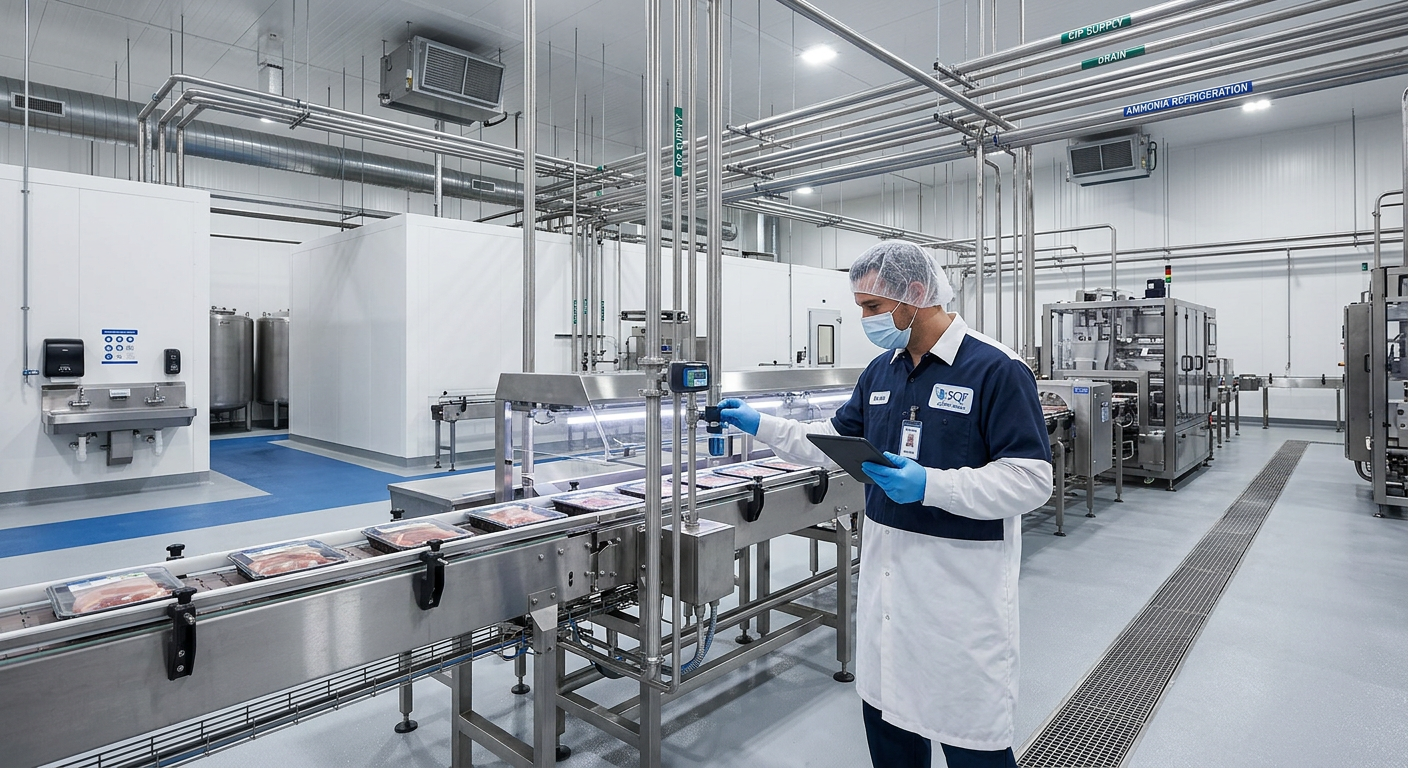
SCADA System Design for Food Facilities: ISA-95 Architecture & HMI Standards
Food manufacturers in the United States are under constant pressure to increase throughput, protect quality, reduce labor dependency, and maintain compliance across FDA, USDA, SQF, and BRC programs. In that environment, SCADA system design is no longer just a controls task. It is a plant-wide business decision that affects sanitation, traceability, downtime, utility spend, recipe consistency, and expansion readiness. A well-structured SCADA environment for food facilities should align ISA-95 functional levels with the real control hierarchy on the floor, use operator-focused ISA-101 HMI standards, embed alarm lifecycle discipline from ISA-18.2, and connect historians and MES layers through secure, maintainable standards such as OPC UA and MQTT. For U.S. processors operating in hubs like Chicago, Dallas-Fort Worth, Los Angeles, the Central Valley of California, Houston, Atlanta, Charlotte, and the I-95 distribution corridor, the right design also has to account for multi-site reporting, varied PLC estates, local utility constraints, and IT/OT security expectations. Whether the facility handles dairy, protein, beverages, aseptic filling, sauces, prepared foods, or co-packing, the SCADA platform should support fast operations today and scalable manufacturing tomorrow. The best SCADA architecture for a U.S. food plant is a layered design that clearly separates field devices, PLC control, supervisory visualization, operations management, and enterprise reporting. In practice, that means defining ISA-95 levels first, then selecting a SCADA platform that fits the existing PLC population, user count, cybersecurity posture, reporting needs, and integration roadmap. HMI design should follow ISA-101 principles so operators can see abnormal conditions quickly, while alarm handling should follow the ISA-18.2 lifecycle to reduce nuisance alarms and improve response quality. Historian, MES, and enterprise links should be built around open standards such as OPC UA and MQTT rather than brittle custom point-to-point integrations. For food and beverage sites in the United States, this approach improves batch consistency, CIP verification, downtime visibility, OEE reporting, utility optimization, and traceability from receiving through packaging. It is especially valuable for plants adding automation in phases, integrating legacy Allen-Bradley, Siemens, or Schneider PLCs, or connecting multiple production lines across regional manufacturing networks. Buying advice is straightforward: do not start with screen graphics or software brand preference. Start with process criticality, product risk, plant growth plans, and data use cases. A brewery in Portland, a protein operation in Kansas, a dairy facility in Wisconsin, and a co-packer near Savannah will all require different SCADA priorities even if they use similar PLC hardware. The table above shows why SCADA design should begin with architecture, not software cosmetics. Plants that establish these fundamentals early usually move faster through FAT, SAT, startup, and long-term support. ISA-95 gives food manufacturers a practical way to define what belongs in each layer of the control and information stack. In many U.S. plants, confusion begins when SCADA is asked to behave like a PLC, historian, MES, and ERP all at once. That creates fragile systems, long troubleshooting cycles, and unclear ownership between operations, maintenance, engineering, quality, and IT. At Level 0 and Level 1, the focus is physical process and direct sensing and actuation: valves, pumps, VFDs, temperature transmitters, flowmeters, conductivity probes, scales, barcode devices, and safety devices. Level 2 is where PLCs, PACs, and local HMI panels execute control strategies, sequencing, batch logic, interlocks, and permissives. Level 3 typically covers site operations management through SCADA, historians, quality context, work instructions, downtime tracking, recipe orchestration, and interfaces to production scheduling. Level 4 includes business planning and logistics systems such as ERP and corporate reporting. Some organizations also define Level 3.5 for DMZ and secure brokered data exchange between plant and enterprise networks. For a ready-to-drink beverage plant near Long Beach, ISA-95 may help separate syrup room control, blending, carbonation, CIP, and packaging line supervision from plant-wide production reporting. In a meat or poultry facility in Arkansas or Georgia, it can separate kill floor, cook/chill, packaging, and utility systems from traceability and scheduling functions. In a dairy plant in Wisconsin or upstate New York, it may define how pasteurization records, CIP validation, and batch genealogy move upward without pushing business logic into the control layer. This hierarchy matters because each level has different uptime expectations, validation needs, cybersecurity controls, and change management rules. A line cannot wait for an ERP response to start a pump. By the same logic, accounting should not scrape live PLC registers directly. Clear boundaries allow food plants to expand without rewriting everything. Plants planning new builds or major retrofits should document equipment classes and reusable object templates early. A consistent hierarchy across receiving, ingredient handling, batching, thermal processing, CIP, packaging, and utilities reduces commissioning time and makes training easier at every site. Platform selection should reflect the reality of the installed PLC estate. Many food plants in the United States have grown through incremental line additions, acquisitions, or OEM skids, which means one site may contain ControlLogix, CompactLogix, S7, Modicon, legacy PLC-5 migration remnants, and smart packaged systems using Modbus TCP or OPC UA. The right SCADA platform is the one that connects cleanly, scales reasonably, and remains supportable by both plant personnel and outside integrators. Selection criteria should include native connectivity, object-based engineering, redundancy options, historian compatibility, cybersecurity features, licensing model, edge deployment flexibility, remote support controls, and whether the platform supports IT standards without creating fragile dependencies. Plants linked to corporate manufacturing networks often need integration to Active Directory, backup policies, patching standards, virtual server environments, and central observability tools. Facilities near major logistics nodes such as Houston, Newark, Memphis, Kansas City, and the Inland Empire often serve time-sensitive distribution networks. For those operations, SCADA downtime translates directly to shipping risk. That means redundancy, recoverability, and clear failover behavior matter more than visual effects. A beverage co-packer scaling from one line to multiple packaging formats may prioritize template-based development and rapid line replication. A specialty sauce plant may prioritize batch genealogy and recipe approvals. A protein facility may prioritize washdown-resilient hardware, utility tracking, and robust downtime reporting. The table highlights why platform selection should be based on operational fit, not just license price. In many cases, the cheapest initial option becomes the most expensive support burden after two years of additions and patching. Food manufacturers evaluating integrators should also ask who will own the standards library, how version control will be managed, and how OEM machine data will be normalized. Strong projects also define naming conventions, network drawings, server roles, and a testing plan before any production code is released. ISA-101 helps plants design HMIs around operator decisions rather than around artistic preference. In food processing, that distinction is crucial. Operators monitoring a CIP circuit, blender, retort, tunnel pasteurizer, filler, or ammonia utility package need to spot abnormal conditions immediately. Overloaded colors, decorative 3D tanks, and dense navigation trees slow recognition and increase the chance of mistakes. An operator-centric screen hierarchy usually starts with a high-level plant overview, followed by area overviews, unit detail screens, faceplates, alarm summaries, and trend views. High-performance graphics often use neutral backgrounds with restrained color reserved for abnormal states. Key values such as temperature, flow, pressure, valve path, batch phase, hold timer, and critical permissives should be visible without hunting through multiple popups. This matters across product types. In breweries, operators may need clear fermentation, cellar, and utility visibility. In aseptic beverage systems, the HMI should highlight sterilization state, boundary integrity, product path, and diversion logic. In protein and prepared foods, line supervisors often need fast access to cook/chill status, packaging rates, metal detection, and sanitation readiness. In dairy applications, trend visibility around pasteurization and CIP is often more valuable than flashy equipment animations. The most effective HMI projects include operator workshops, navigation testing, and startup feedback loops. Plants should also define screen response expectations, alarm color standards, naming conventions, and mobile viewing policy. If tablets or remote clients are used on the floor, layouts must support real task flow rather than simply shrinking desktop screens. Many of the best U.S. retrofits achieve quick wins by redesigning the top 20 most-used screens first. That approach is often more valuable than replacing every graphic at once. Alarm management in food facilities should never be treated as a simple software feature. ISA-18.2 defines a lifecycle that starts with philosophy and continues through identification, rationalization, detailed design, implementation, operation, maintenance, monitoring, assessment, and management of change. This lifecycle is especially important in environments where nuisance alarms can hide truly critical conditions such as thermal process deviations, low flow in CIP return, tank overfill risk, refrigerant utility faults, or packaging line accumulation problems. Plants commonly suffer from alarm floods during startup, CIP transitions, utility disturbances, or communication glitches. When every event becomes an alarm, operators stop trusting the list. A disciplined program separates alarms from alerts, prompts, events, and maintenance notices. Each alarm should require a defined operator response and carry a documented consequence if ignored. Plants should track alarm KPIs such as standing alarms, alarms per operator per hour, top bad actors, flood frequency, shelved alarm duration, and repeat counts by area. These metrics help identify design issues in process control, instrumentation, equipment reliability, or operator procedures. For example, repeated line starve alarms in a packaging hall may actually signal upstream batching inconsistency rather than a packaging fault. By 2026, more U.S. plants are expected to combine alarm analytics with maintenance and quality context. That trend will improve root-cause visibility, but only if the foundational alarm philosophy is already in place. Historian and MES connectivity is where many SCADA projects either become enterprise assets or long-term headaches. OPC UA and MQTT are increasingly favored because they support more open, secure, and scalable architectures than heavily customized polling and file-based interfaces. OPC UA is particularly effective for structured industrial data models, secure session-based communication, and interoperability across equipment vendors. MQTT is useful for lightweight publish-subscribe transport, edge aggregation, and plant-to-enterprise or plant-to-cloud data distribution where decoupling and bandwidth efficiency matter. In U.S. food operations, these standards can support use cases such as batch genealogy, downtime reason collection, utility intensity tracking, OEE, SPC inputs, maintenance analytics, digital quality checks, and corporate KPI rollups across multiple sites. A company with plants in North Carolina, California, Texas, and Ontario may want standardized production tags delivered to a central reporting layer without direct access from enterprise systems into PLC networks. Good historian design also requires discipline. Not every point needs sub-second storage. Data should be collected at rates that serve actual business questions. Thermal process values, CIP conductivity, filler speeds, critical temperatures, pressures, and quality checkpoints may require different collection rates, compression rules, and retention periods. The best architecture usually combines methods rather than relying on one. For example, PLCs and skids may publish through OPC UA to a site SCADA layer, while a local historian or edge layer forwards normalized events through MQTT to a central manufacturing data platform. This allows secure segregation of duties while simplifying future expansion. Food companies evaluating modernization should make sure their data model covers lot, SKU, line, batch, shift, CIP circuit, utility asset, operator action, and alarm context. Without that contextual layer, a historian becomes a large archive with limited operational value. Technical specifications should define more than hardware lists. They should establish engineering requirements for architecture, naming, cybersecurity, performance, documentation, testing, and support. In food and beverage environments, these requirements need to reflect sanitation, washdown, utility variability, product changeovers, and audit expectations. Strong specifications reduce ambiguity between owner, OEMs, controls contractors, mechanical contractors, and IT teams. Core requirements often include network topology, VLAN and firewall rules, server roles, virtualization policy, client counts, historian retention, alarm philosophy, HMI standards, PLC coding standards, FAT and SAT scope, backup and restore testing, spare strategy, and disaster recovery expectations. Projects should also define whether formulas, recipes, setpoint approvals, and electronic records require higher change control. For facilities handling aseptic products, dairy, retort, or validated thermal processes, the specification should clearly define record integrity, time synchronization, user audit trails, and long-term retention. For beverage and co-packing sites, packaging line integration, utility metering, and OEE event models are often essential. For protein and prepared foods, environmental monitoring touchpoints, sanitation state, and chilled utility visibility may be equally important. Engineering requirements should also address local supplier and service realities. A plant in California’s Central Valley may need different support planning than a site near Raleigh, Minneapolis, or El Paso. Availability of electricians, instrumentation technicians, panel fabricators, and after-hours controls support can influence spare parts strategy and remote access design. When evaluating proposals, buyers should ask for architecture drawings, example standards documents, sample alarm philosophy outputs, and a clear list of owner responsibilities. That is often more revealing than a glossy software demo. A successful SCADA program usually follows a staged roadmap rather than a single software installation event. The most reliable sequence starts with discovery, standards definition, architecture design, pilot scope, detailed engineering, FAT, phased startup, KPI review, and governance for continuous improvement. This structure reduces operational disruption and allows plants to capture lessons before scaling across multiple lines or sites. For existing facilities, discovery should include a physical and logical audit of PLCs, networks, instruments, packaged equipment, alarm lists, recipes, historians, and reporting users. Brownfield food plants often contain hidden dependencies such as unmanaged switches, undocumented OEM passwords, unsupported operating systems, and local operator workarounds. These must be surfaced early. Pilot implementation works best in areas with clear operational payback and manageable risk, such as a utility system, a CIP area, a single packaging hall, or one batch train. After proving standards and user adoption, the model can be rolled into receiving, process, thermal, packaging, and warehousing interfaces. This is also the stage where training, MOC, and support ownership need to become formal, not informal. Project best practices include: Case studies across the United States repeatedly show that the highest ROI often comes from removing hidden bottlenecks rather than simply buying more equipment. In some facilities, better PLC and SCADA logic can unlock throughput, reduce product giveaway, or improve CIP cycle performance without major mechanical expansion. That is especially true in older food and beverage plants where process constraints are poorly visible. By 2026, implementation roadmaps will increasingly include energy management, water reuse metrics, and sustainability dashboards. With utility costs and environmental reporting rising in importance, SCADA systems will be expected to track steam, glycol, compressed air, chilled water, electricity, and wastewater intensity at the line or product-family level. Policy and customer pressure will continue to push food manufacturers toward better traceability, digital records, and resilient reporting across every region of the country. Companies comparing suppliers should also evaluate depth of process knowledge. A controls-only firm may build a functional interface, but a partner that understands fermentation, pasteurization, retort, CIP, dairy unit operations, batching, and packaging can often design a more durable solution with fewer blind spots. Practical field experience matters during startup when production realities differ from the P&ID. For more on integrated project execution and capital planning support, manufacturers can review food and beverage engineering services and see how full-scope delivery models align controls with mechanical, utility, and startup outcomes. Plants exploring broader expansion strategies can also study recent project case examples to benchmark roadmap sequencing. Disruptive Process Solutions supports food and beverage manufacturers across the United States and Canada with a project model built around planning, execution, and measurable business outcomes. Rather than treating SCADA in isolation, the company approaches automation as part of a complete processing and capital delivery strategy. DPS provides controls engineering that connects SCADA, PLC programming, recipes, utilities, and reporting into one practical manufacturing environment. Its teams work across structural, mechanical, plumbing, electrical, process, and controls disciplines, which helps align automation with actual process intent. That is particularly valuable when integrating packaging systems, CIP skids, blending operations, pasteurization assets, fermentation systems, aseptic processing, or utility infrastructure. Manufacturers looking for a partner with broad engineering context can learn more about the company. Beyond integration, DPS also designs and supplies process equipment used in food and beverage facilities, including tanks, CIP systems, cooking vessels, and other specialized process assets. That manufacturing perspective is important in SCADA projects because control strategies are stronger when the design team understands vessel behavior, utility loads, hygienic requirements, and field installation constraints. Product and equipment capabilities can be explored through the company’s process equipment portfolio. DPS operates with an end-to-end design-build-manage model that supports feasibility, capital planning, owner’s representation, general contracting functions, project engineering, installation, integration, commissioning, and startup support. For food plants, that means SCADA implementation can be coordinated with piping, electrical, utilities, and production readiness instead of being managed as a disconnected software effort. This model is particularly useful for clients launching new lines, relocating equipment, expanding capacity, or standardizing multiple plants under one operating framework. Because DPS serves both beverage and food operations across North America, the company brings experience from breweries, spirits, wine, RTD, dairy, aseptic, prepared foods, proteins, sauces, and co-packing environments. That cross-sector experience can help clients avoid applying the wrong standard from one process category to another. What is the biggest mistake food plants make in SCADA design?Starting with software brand preference or screen appearance before defining ISA-95 hierarchy, data use cases, and operator workflows. Should every food plant use ISA-95 and ISA-101?Most plants benefit from both. ISA-95 clarifies architecture and ownership, while ISA-101 improves HMI usability. The depth of implementation can scale with plant complexity. Is OPC UA better than MQTT?They solve different problems. OPC UA is excellent for structured industrial interoperability inside the OT environment. MQTT is strong for scalable distribution and edge-to-enterprise publishing. Many modern architectures use both. How do I know if I need a historian, MES, or both?A historian stores and trends time-series process data. MES adds workflow, production context, quality, genealogy, and execution functions. If you only need trending and reporting, a historian may be enough. If you need execution control and plant-level production management, MES is often justified. What industries benefit most from modern SCADA in the United States?Dairy, beverage, protein, aseptic, prepared foods, sauces, ingredients, and co-packing all benefit, especially where traceability, utility intensity, and frequent changeovers matter. How long does implementation usually take?A focused pilot can take a few months. A full brownfield multi-line standardization program can take much longer depending on OEM complexity, network readiness, and production shutdown windows. Can SCADA modernization improve sustainability?Yes. Better visibility into steam, water, glycol, compressed air, and electricity supports targeted waste reduction and 2026-ready sustainability reporting. What should buyers ask suppliers before awarding a project?Ask for examples of standards documents, architecture drawings, alarm philosophy, FAT/SAT methodology, cybersecurity approach, support model, and experience in your specific process type.


