-
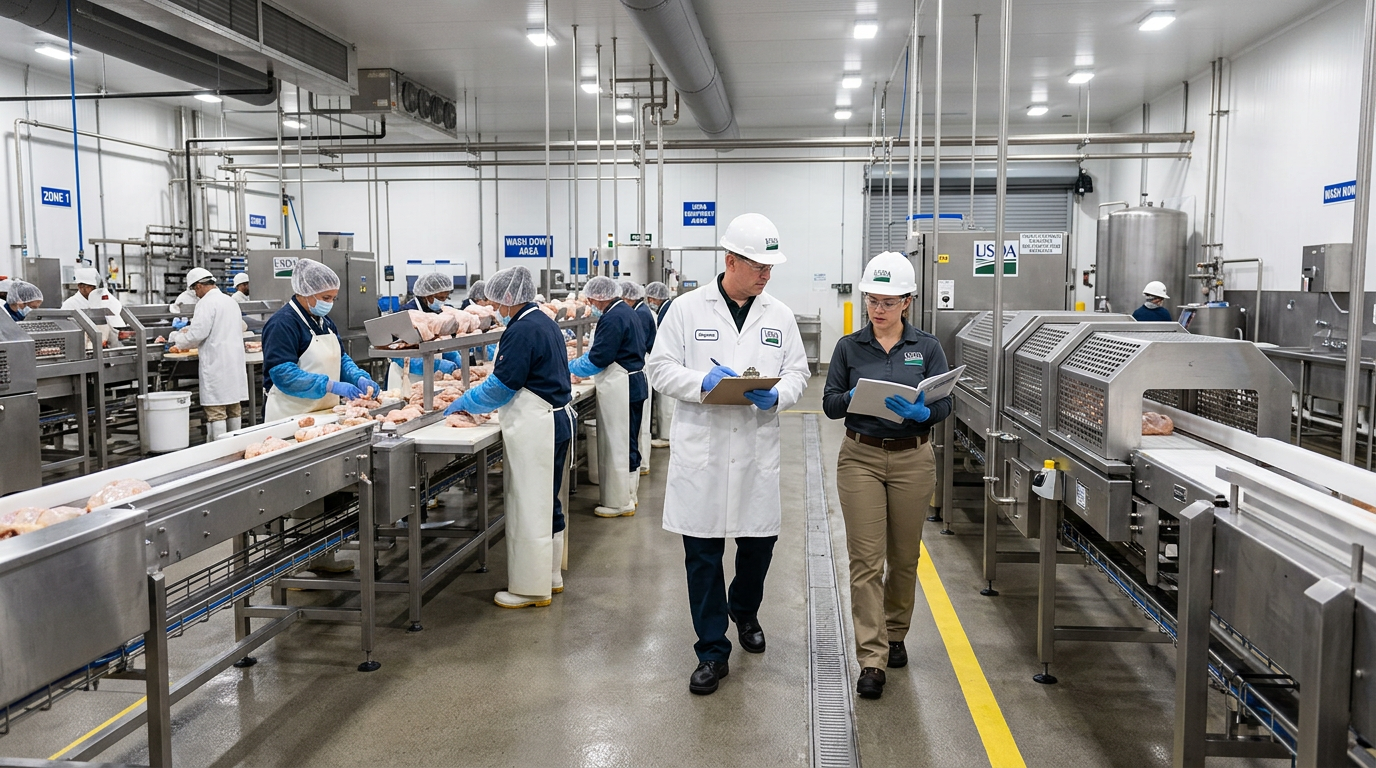
5 Key Structural Requirements for Food Facility Mezzanine Installation in 2026
Installing a mezzanine in a food or beverage plant is not just a steel-framing decision. In the United States, an elevated platform inside a processing facility must support the correct live and dead loads, maintain sanitary design, protect worker access, integrate with process equipment, and comply with local and national building requirements. In 2026, owners are also paying closer attention to hygienic materials, seismic resilience, automation support, and future expansion capacity. Whether a project is planned for a dairy site in Wisconsin, a protein facility in Kansas, a beverage co-packer near Dallas, or an export-oriented food plant serving the Ports of Los Angeles, Long Beach, Houston, or Savannah, mezzanine design must align with throughput, compliance, and profitability. For many manufacturers, a mezzanine solves one of three problems: it creates usable square footage without expanding the building shell, it elevates process equipment and utilities to improve layout flow, or it supports conveyors, packaging lines, CIP skids, and operator access above production zones. The challenge is that food environments are less forgiving than standard warehouse space. Moisture, washdown, corrosive chemicals, allergens, sanitation verification, forklift movement, and inspection visibility all affect the design basis. This guide explains the structural and operational requirements that matter most for food facility mezzanines in the United States, with direct buying guidance, market context, industry applications, and practical implementation advice for 2026 projects. The five structural requirements that matter most when installing a food facility mezzanine in the United States are: correct load rating and engineering analysis, hygienic compliance with FDA and USDA expectations, safe stair and access design, proper integration with process equipment and conveyor systems, and code-compliant seismic and lateral bracing. Material selection, floor finish, drainage strategy, and cleanability are equally important because food plants operate under sanitation and audit pressure that most industrial mezzanines do not face. In practical terms, a food-grade mezzanine should be designed around actual operational loads rather than generic warehouse assumptions. It must also minimize harborage points, support safe employee movement, protect nearby production, and fit the plant’s long-term growth plan. For U.S. manufacturers, the best results usually come from a design-build team that can coordinate structural engineering, process layout, utilities, controls, and field installation together rather than treating the mezzanine as a standalone steel package. The table above summarizes the priority stack most owners use when budgeting a mezzanine project. Even when a platform looks simple, the real value comes from matching structural capacity with sanitation, labor safety, and process flow. Load rating is the starting point for every mezzanine project. In food manufacturing, it is a mistake to use a generic platform specification without evaluating actual equipment and operations. A mezzanine in a dry packaging room may carry light operator traffic and carton handling, while an elevated utility deck may support glycol piping, compressed air headers, CIP skids, pumps, control panels, and chemical totes. A process platform above kettles or blending tanks may see concentrated point loads, vibration, maintenance traffic, and washdown exposure at the same time. U.S. structural engineers typically break the design into dead loads, live loads, point loads, impact loads, and lateral forces. Dead load includes the platform steel, deck, equipment supports, piping, cable tray, and fixed appurtenances. Live load includes people, movable materials, and service activity. Point loads matter when tanks, motors, fillers, augers, or conveyor support frames sit on limited bearing areas. In 2026, many owners are also asking for future expansion allowances so a mezzanine can support additional automation later without a complete rebuild. Deflection limits are especially important around process equipment. Excess movement can affect conveyor tracking, filler accuracy, scales, pump alignment, and operator comfort. Vibration-sensitive systems such as checkweighers, vision inspection stations, or metering skids may need tighter performance criteria than standard industrial platforms. If a mezzanine will carry tanks, liquid surge, or rotating machinery, the engineer should review dynamic behavior rather than looking only at static loading. Column placement also matters. In retrofit projects, column footings often conflict with drains, trench systems, underground utilities, slab limits, fork-truck aisles, or sanitary process zones. Facilities in older food corridors such as Chicago, Milwaukee, Philadelphia, and Northern California often have legacy slabs that need evaluation before new loads are introduced. A mezzanine that works on paper can still fail in practice if foundation conditions are ignored. The explanation behind this table is simple: the correct load model depends on what the mezzanine will actually do. If the platform supports only light foot traffic, one structural approach may work. If it supports liquid processing, packaging automation, or utility systems, the framing strategy changes significantly. The growth trend above reflects why structural rigor matters more now. More U.S. food plants are adding vertical capacity instead of building outward, especially in high-cost industrial markets around Los Angeles, Seattle, New Jersey, Atlanta, and the Research Triangle. Food plant mezzanines are not directly regulated as a unique product category by FDA or USDA, but they absolutely affect compliance. Any elevated platform above exposed product, ingredients, packaging, or critical utilities becomes part of the sanitary environment. That means the mezzanine must be designed to reduce contamination risk, allow inspection access, and support effective cleaning. For FDA-regulated facilities, current good manufacturing practice expectations shape how materials, finishes, and details are selected. For USDA-inspected meat and poultry facilities, the scrutiny is often even tighter where exposed product zones and condensation control are involved. In both environments, elevated platforms should avoid horizontal surfaces that collect residue, open joints that trap debris, and inaccessible framing that cannot be cleaned or visually checked. One common issue is the underside of the mezzanine. If the platform is above open processing, flour handling, mixing, cutting, filling, or packaging operations, the underside may need enclosed or finished details that minimize dusting, corrosion, drip points, or pest harborage. Another issue is drainage. In washdown rooms, standing water on a mezzanine deck can create both sanitation and slip hazards. The platform must therefore work with the plant’s cleaning method, whether dry sanitation, foam cleaning, high-pressure washdown, or chemical disinfection. Hygienic zoning matters too. Raw and ready-to-eat areas may require different construction details, traffic controls, and utility routing strategies. In export-oriented facilities near Omaha, Sioux Falls, Fresno, or Charlotte, this distinction can affect both food safety and customer audit outcomes. Owners pursuing SQF or BRC expectations often request mezzanines that go beyond basic code compliance and support a cleaner audit narrative. This table shows that compliance is not a paperwork exercise. The mezzanine itself influences sanitation time, inspection confidence, and product protection. In many cases, the right structural detail can eliminate recurring GMP problems before they start. Elevated access design is often underestimated because owners focus first on deck area and equipment fit. However, stairways, ladders, crossover points, and gate systems determine how safely the mezzanine functions every day. OSHA expectations, local code requirements, emergency egress needs, and traffic patterns should be coordinated early in design. In food plants, stairs are used by operators carrying tools, sanitation crews working in wet conditions, maintenance teams handling parts, and supervisors moving between production zones. As a result, tread material, slope, landing size, handrail continuity, and visibility all matter. Where ingredient bags, hoses, or replacement parts are moved to the platform, a stair-only solution may not be enough. Some plants need pallet gates, lift-up access points, vertical reciprocating conveyors, or coordinated forklift loading zones. Guarding deserves equal attention. Open-sided mezzanines should include robust guardrails, toe boards where required, and safe transfer points around conveyors or equipment access. Gates at ladder openings or pallet loading edges must prevent fall exposure when materials are transferred. In high-speed packaging environments, poor access design often leads to workers improvising shortcuts, which increases risk and slows response time during downtime events. Emergency access planning is another 2026 priority. As automation becomes denser, egress paths cannot be left as an afterthought. Mezzanines supporting controls, utility manifolds, or overhead process skids should allow safe maintenance isolation and quick access during upset conditions. The chart below compares where U.S. demand for mezzanine safety upgrades is strongest by industry segment. A mezzanine should never be designed in isolation from the process. The most successful platforms improve product flow, personnel flow, and utility distribution at the same time. In beverage plants, elevated decks may support syrup rooms, blending skids, depalletizer discharge conveyors, overhead product routing, access to fillers, or utility mains feeding carbonators and pasteurizers. In food plants, they may support ingredient handling, cook systems, marination lines, canning support equipment, overhead packaging conveyance, or CIP distribution. The biggest mistake is to buy a steel platform first and try to fit equipment later. That usually causes support conflicts, column interference, poor cleanability, awkward access, or expensive field changes. Instead, the mezzanine should be coordinated with process engineering, mechanical routing, controls, and maintenance access from the beginning. Conveyor integration is especially sensitive. Elevation changes affect line speed, accumulation behavior, and maintenance access. If overhead conveyor support is attached to the mezzanine, the structural frame may need to absorb dynamic loads and torsion that are not obvious in early layouts. Utility corridors on the mezzanine should also be planned so piping, air drops, valves, instruments, and cable trays remain serviceable without blocking walkways. By 2026, more U.S. manufacturers are also combining mezzanine projects with automation upgrades. SCADA visibility, PLC panel access, recipe systems, batch control, and remote utility monitoring all benefit from better spatial organization. Facilities around Austin, Phoenix, Minneapolis, and Nashville are increasingly using elevated platforms to separate high-value controls and utility infrastructure from floor congestion while preserving production flexibility. Companies that handle both process design and installation tend to reduce coordination gaps. For example, integrated food and beverage engineering services can align structural framing with process equipment, utilities, controls, and commissioning so the mezzanine supports output instead of simply adding square footage. The explanation here is that equipment integration is often the real reason a mezzanine succeeds or fails financially. A well-placed platform can improve throughput, maintenance response, line visibility, and utility discipline. A poorly coordinated one can create permanent bottlenecks. Material selection for food mezzanines is shaped by environment, cleaning method, and audit expectations. Carbon steel may be acceptable in dry, low-corrosion spaces if it receives a durable coating system and the detailing supports sanitation. Stainless steel, including 304 or 316 in harsher environments, is more common where chemical exposure, moisture, or aggressive washdown makes long-term corrosion a concern. Hybrid designs are also common, such as structural carbon steel with stainless handrails, hardware, or contact surfaces in the most exposed zones. Flooring choice is equally important. Bar grating allows drainage and may reduce standing water, but it can also create challenges for dropped parts, sanitation below, and comfort depending on use. Solid plate decks with sanitary finish systems can be preferred in some areas, especially where small components or operator stations are involved. Fiberglass reinforced options appear in certain corrosive settings, but food plants usually evaluate them carefully for cleanability, fire considerations, and long-term wear. Surface finish details should reduce niches and simplify washdown. That may include sealed welds where appropriate, rounded transitions, sloped surfaces, closed-end tubing treatment, and avoidance of exposed ledges that collect dust or residue. In bakery, spice, dairy, meat, and beverage environments, the right finish strategy changes based on dry versus wet sanitation and the chemicals in use. The market is also moving toward sustainability in 2026. Owners increasingly ask whether coatings have low VOC content, whether stainless use is targeted to high-risk zones instead of everywhere, and whether modular mezzanine sections can be adapted rather than demolished during future line changes. In regions with expensive labor and fast expansion cycles, such as Southern California and Central Texas, adaptability has real value. Code compliance for mezzanines varies by jurisdiction, but in the United States it typically involves building code review, structural engineering stamp requirements, local permit processes, fire and life safety considerations, and in many cases seismic design. Seismic importance is highest on the West Coast, yet lateral stability and anchorage matter in every region. Wind, vibration, equipment motion, and forklift interactions can all influence frame behavior. California, Oregon, Washington, Utah, and parts of the Intermountain West often require particularly careful seismic review. Facilities near Los Angeles, Sacramento, Portland, Seattle, and Salt Lake City may need robust detailing for braced frames, anchorage, equipment restraint, and compatibility between mezzanine movement and connected piping or conveyors. A seemingly minor platform can trigger wider code coordination if it interacts with egress, sprinklers, fire alarm devices, or overhead clearances. Owners should also remember that local code interpretations vary. A mezzanine addition in Houston may move quickly if slab, occupancy, and utility impacts are straightforward, while a retrofit in an older New Jersey, Boston, or San Francisco facility may require deeper review because of existing conditions. Food plants with explosion-risk dust zones, refrigerated spaces, or specialty fire suppression systems need even tighter coordination. As policy trends evolve through 2026, digital permitting, stricter documentation of existing conditions, and stronger scrutiny of seismic anchorage for nonbuilding components are becoming more common. Planning extra time for code review is wise, especially when the mezzanine supports process systems essential to startup. The key takeaway from this table is that code compliance is rarely just about steel size. It touches permitting, fire systems, utility routing, slab capacity, and the way people evacuate or maintain the area. For many food and beverage manufacturers, the best buying approach is design-build rather than fragmented procurement. When the structural engineer, process designer, installer, and project manager work separately, coordination risk usually lands on the owner. That can lead to late changes, permit delays, utility conflicts, and missed startup dates. A design-build model works especially well when the mezzanine is part of a larger capital project such as a line expansion, equipment relocation, utility upgrade, co-packing launch, or sanitation redesign. In those cases, the platform is tied to real production economics: throughput, labor use, changeover speed, and maintenance uptime. It should be budgeted and scheduled as part of the operating system, not as miscellaneous steel. Smart buyers ask six questions before approving a mezzanine package: In the U.S. market, integrated project delivery is increasingly preferred by mid-sized and enterprise manufacturers because it reduces handoff risk. A firm that can combine process engineering, structural coordination, installation oversight, and startup management is often better positioned to protect the owner’s schedule and capital efficiency. Companies seeking full-scope execution can review project case examples to see how integrated delivery affects real food and beverage facilities. Below is a comparison view of common sourcing models used for mezzanine projects. Manufacturers that need structural, process, utility, and controls coordination under one strategy often favor partners with broad execution depth. That may include process engineering, capital planning, project management, owners representation, field installation, and general contracting support, which can be explored through multidiscipline delivery services for food and beverage facilities. Disruptive Process Solutions supports food and beverage manufacturers across the United States and Canada with a business-first engineering approach. Rather than treating a mezzanine as a stand-alone steel purchase, DPS evaluates how the platform affects production economics, future capacity, utility routing, labor flow, and compliance outcomes. That mindset is especially valuable when a mezzanine ties directly into packaging lines, processing skids, utility systems, or a broader plant expansion. On the technological side, DPS brings cross-functional engineering capabilities that matter in elevated platform projects: structural coordination, mechanical and process engineering, plumbing, electrical design, automation, PLC programming, SCADA integration, and project engineering. That allows mezzanine work to align with tanks, conveyors, pasteurization systems, retort operations, dairy processing, ingredient handling, brewing systems, distillation, or aseptic infrastructure instead of creating isolated design decisions. On the manufacturing side, DPS also supports projects with proprietary process equipment capabilities, including tanks, CIP systems, tumblers, and custom vessels. For owners building new utility decks or elevated process support areas, that equipment insight helps coordinate actual support loads, maintenance access, and sanitary requirements more accurately. Manufacturers looking for food and beverage equipment solutions often benefit when steel support planning and equipment integration are developed together. On the service side, DPS operates through a design-build-manage model that combines planning, engineering, field execution, contractor coordination, and startup oversight. That is useful for mezzanine projects in active plants where shutdown windows are tight and every installation step must respect sanitation, safety, and uptime. Companies can learn more about the DPS team and how it approaches profitable capital projects for food and beverage operations. DPS serves manufacturers in major production and logistics corridors across North America, from the Southeast to the Midwest to the West Coast. That includes facilities near Raleigh, Charlotte, Dallas, Chicago, Omaha, Fresno, Los Angeles, and key port markets where capacity, speed, and compliance all shape capital planning. The company’s strength is not just technical range, but the ability to connect plant design decisions to business results. What load capacity should a food plant mezzanine be designed for?There is no single correct number. The platform must be designed around its actual use, including operators, palletized materials, tanks, pumps, conveyors, utility lines, and future growth. Food plants should avoid off-the-shelf assumptions and instead use a project-specific structural analysis. Do food facility mezzanines need stainless steel?Not always. Stainless is common in wet, corrosive, or high-hygiene zones, but coated carbon steel may be suitable in dry environments if the detailing supports sanitation and long-term durability. Material choice should follow the room’s cleaning method and contamination risk. Does FDA or USDA approve mezzanine designs?They typically do not approve mezzanines as a product, but the mezzanine affects compliance. Inspectors and auditors will care whether the platform is cleanable, accessible, corrosion-resistant, and appropriate for the food safety risks in that area. Can a mezzanine be installed in an existing operating food plant?Yes, but retrofit work requires careful planning. Existing slab capacity, utility conflicts, sanitary zoning, shutdown windows, and permit requirements all need to be reviewed before installation begins. When is seismic design most important?It is most critical in states such as California, Oregon, and Washington, but lateral stability and anchorage matter everywhere. Any elevated platform supporting process equipment or utilities should be checked for local code and operating conditions. What is the best project delivery method?For simple storage platforms, a basic supplier package may work. For food and beverage applications tied to process systems, design-build delivery is often better because it aligns structural design, sanitation, access, utilities, controls, and field execution under one coordinated plan. How long does a mezzanine project usually take?Time varies by complexity, but owners should account for concept design, engineering, permit review, fabrication, field installation, and startup support. Retrofit projects in active plants often take longer because of shutdown constraints and coordination with ongoing production. Which industries use food-grade mezzanines most often?Common users include beverage bottling, brewing, dairy processing, prepared foods, protein processing, sauces and dressings, ingredient handling, canning, retort operations, and co-packing plants. Demand is growing as more facilities add automation without expanding the building footprint. How can buyers compare suppliers?Look beyond steel price. Compare sanitary detailing, engineering depth, process integration experience, permit support, installation capability, and experience in FDA- and USDA-sensitive environments. The lowest initial quote can become the highest total cost if coordination is weak. What 2026 trends should owners plan for?Expect more emphasis on future-proof load allowances, digital permit documentation, hygienic detailing, energy-efficient layouts, modular expansion capability, and integrated automation support. Sustainability and audit readiness are becoming standard evaluation criteria, not optional extras. In summary, the right mezzanine for a U.S. food facility is structurally sound, hygienically detailed, safe to access, well integrated with process equipment, and fully coordinated with local code. When those elements are addressed together, the mezzanine becomes a productivity asset rather than just an added platform. -
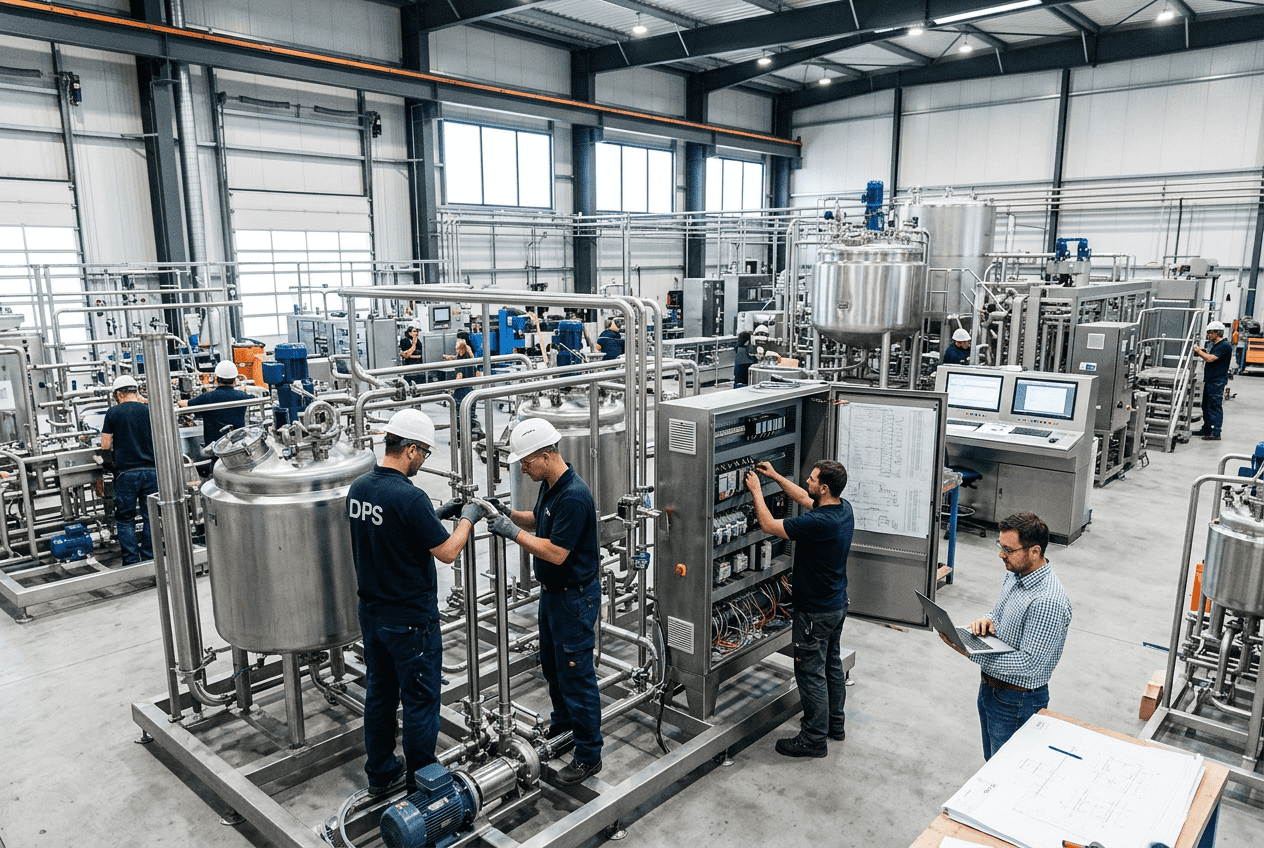
Food Plant Cold Storage Design: 7 Steps to Refrigerated Warehouse Planning
Cold storage design in the United States is no longer just about holding product below a target temperature. For food manufacturers, processors, and co-packers, a refrigerated warehouse must protect food safety, preserve shelf life, support throughput, reduce utility costs, and align with FDA, USDA, SQF, and BRC expectations. In practical terms, the best food plant cold storage design starts with product and process requirements, then moves through envelope design, refrigeration sizing, airflow, dock control, floor protection, and commissioning. Whether a project is supporting poultry in Arkansas, dairy in Wisconsin, frozen prepared foods in Illinois, seafood moving through Seattle and Los Angeles, or beverage ingredients staged near Savannah and Houston, the design approach has to match the local climate, utility profile, labor conditions, and distribution pattern. A cold room serving a Midwest meat processor will be engineered differently from a blast-ready freezer expansion in Southern California or a mixed-temperature e-commerce fulfillment space near New Jersey ports. This guide explains seven practical steps for refrigerated warehouse planning in the U.S. market and highlights common buying mistakes, product categories, applications, and future trends shaping 2026 decisions. The fastest way to plan a successful food plant cold storage facility is to define product temperatures first, separate incompatible zones second, and then size the envelope, refrigeration, airflow, dock interface, and floor system around actual operating loads instead of generic square-foot rules. That means understanding what enters the room, how warm it arrives, how fast it must be pulled down, how often doors open, how forklifts move, and how inventory turns. In the United States, most food plant cold storage projects fall into six operating bands: ambient support spaces, cool processing support rooms, refrigerated storage, deep-chill staging, frozen storage, and blast or pull-down applications. Each one carries different insulation thicknesses, defrost strategies, humidity needs, door packages, and evaporator air throw requirements. A room at 35°F for fresh sauces or dairy ingredients is not designed the same way as a -10°F freezer for boxed proteins. Buying advice is simple: do not buy refrigeration tonnage before confirming product load, infiltration load, and future throughput. Many facilities overbuild compressors and underbuild doors, docks, and controls. That creates high capital cost with poor real-world performance. In many cases, the most profitable design decision is better zoning and tighter envelope control, not more horsepower. The U.S. market continues to grow as processors add regional distribution nodes near Atlanta, Dallas, Chicago, Phoenix, and the Inland Empire. Demand is especially strong in protein, prepared meals, dairy, frozen bakery, beverage ingredients, and contract manufacturing. Food producers want faster installation, lower energy intensity, and designs that can scale with automation and changing SKUs. The table below shows how typical food categories map to storage requirements and design priorities. For U.S. operators, the strongest business case usually comes from matching the room to the product, not forcing every SKU into one oversized cold box. Multi-zone layouts improve shelf life, labor flow, and utility performance while giving plants more flexibility for growth. The growth trend above reflects continued investment in food-grade cold capacity, especially in regions with strong interstate freight access and large consumer bases. Temperature zoning is the foundation of refrigerated warehouse planning. Before wall panels, evaporators, or compressors are selected, the design team should map every product stream by entry temperature, target storage temperature, residence time, packaging type, pallet density, and sanitation risk. A single mixed room is often the most expensive long-term solution because it forces one condition onto many incompatible products. For example, ready-to-eat deli proteins may need stricter environmental stability than raw ingredient pallets. Frozen bakery may tolerate different airflow velocities than boxed seafood. Beverage ingredients used in short-interval batching can often operate in a cooler support room instead of a full frozen environment. Zoning also affects traffic. A room with constant forklift activity has a very different infiltration profile from a reserve freezer with limited access. In U.S. food plants, common zones include receiving buffer coolers, quarantine rooms, raw and finished goods coolers, frozen storage, ingredient tempering areas, and dispatch staging areas. In higher-complexity sites, there may also be separate allergen, export hold, rework, or high-value product zones. Plants serving major retail or club channels often add more SKU-specific flexibility because promotions and seasonality create uneven volume patterns. The next table can be used during early programming meetings to define zoning by product behavior. As a buying recommendation, processors should ask equipment vendors and design partners to provide a load matrix showing product load by zone, not just a combined refrigeration total. This prevents underestimating the impact of production timing, truck arrivals, and peak receiving windows. It also helps finance teams compare modular expansion options. Industries benefiting most from disciplined zoning include protein processing, frozen meals, dairy, specialty sauces, brewery ingredients, and contract packaging operations. Applications range from on-site finished goods storage to cross-dock support, export staging, and integrated cold process rooms adjacent to packaging lines. This demand profile shows why temperature zoning matters so much in the United States: industries with the highest volume often have the greatest product diversity and the highest cost of mistakes. The building envelope determines whether the refrigeration system works efficiently or fights a losing battle every hour of the year. For U.S. food plants, envelope design should address climate zone, indoor setpoint, vapor migration, washdown exposure, panel joints, roof transitions, penetrations, and long-term maintainability. A great compressor package cannot overcome a weak panel seam or poorly detailed threshold. Processors in humid regions such as Florida, Louisiana, and coastal Texas face aggressive vapor drive. Facilities in Minneapolis, Denver, or upstate New York may experience freeze-thaw conditions that challenge joints and slab edges differently. A building near the Port of Savannah may need stronger corrosion planning than an inland distribution support cooler in Kansas City. Most food-grade cold storage rooms rely on insulated metal panels, but selecting thickness is only one piece of the design. Joint sealing, vapor barrier continuity, thermal break detailing, suspended ceiling interfaces, and door frame installation matter just as much. Roof and wall intersections should be designed to minimize thermal bridging and prevent hidden condensation. Penetrations for pipe racks, sprinkler lines, supports, and electrical conduit must be sealed and documented during construction, not patched later. The table below summarizes common envelope choices and when they are appropriate. Buying advice here is to request lifecycle analysis, not just panel pricing. A lower first-cost package can become expensive if it raises compressor runtime, creates condensation remediation work, or shortens the service life of doors and hardware. Ask for details on sealants, vapor barrier continuity, and thermal bridge treatment, especially where cold rooms meet processing spaces. Processors evaluating expansions should also consider future openings. It is easier and cheaper to pre-plan knockout panel locations, utility corridors, and support steel for later phases than to rebuild a functioning freezer envelope two years after startup. Refrigeration selection should follow loads, operating mode, and business priorities. The correct solution for a central frozen warehouse in Indiana may be very different from a packaged glycol-supported cooler in North Carolina or a distributed low-charge system in California where environmental and utility considerations influence decisions. System choice is not only about tonnage; it is about resilience, maintainability, refrigerant strategy, controls, and total cost of ownership. The major load components include product pull-down, transmission through walls and roof, infiltration at doors and docks, people, lights, motors, fans, forklifts, defrost, and process-related heat gain. Designers should model peak summer conditions and realistic traffic loads. In many food facilities, infiltration and operational activity are underestimated, while actual product load varies sharply by shift and season. Common U.S. system choices include ammonia for large industrial loads, low-charge ammonia packages, CO2-based systems for selected applications, and halocarbon or HFO-based systems for smaller or compartmentalized spaces. The right answer depends on room size, staffing, operator familiarity, safety strategy, local regulations, and utility costs. The area chart below illustrates how U.S. project preferences are shifting. That shift reflects demand for easier phasing, improved safety narratives, and stronger sustainability positioning. It also aligns with facilities that need quicker startup and more localized service coverage. When comparing suppliers, ask for part-load performance, control logic, defrost energy impact, spare parts strategy, and service response expectations. A system that looks efficient at nameplate conditions may underperform in a real plant with variable shift schedules and frequent door events. Cold room performance depends on what happens around the product, not just what happens at the compressor rack. Poor airflow creates dead zones, stratification, slow recovery after door openings, localized freezing, and inconsistent product temperature. In food plants, this can translate directly into shelf-life loss, QA holds, and customer complaints. Airflow design starts with pallet dimensions, rack layout, ceiling height, evaporator placement, aisle width, product packaging permeability, and stacking pattern. A room with high-density double-deep racks needs a different air strategy from a low-bay cooler supporting frequent hand picks. Evaporator throw must be selected carefully to avoid short-circuiting air across open areas while starving corners or lower pallet lanes. Product should never be stored tight against evaporators, walls, or ceilings unless the design specifically accounts for it. Forklift drivers often become the hidden variable in airflow performance because emergency overflow locations gradually turn intended air paths into blocked corridors. Good design therefore combines engineering, line marking, signage, and operational rules. The following table summarizes common airflow issues and remedies. Comparison among common room concepts can also be visualized by supplier or layout package. The chart below compares relative performance factors often used in procurement scoring. For facilities investing in ASRS, shuttle systems, or semi-automated pallet handling, airflow coordination becomes even more important because tighter clearances can change return-air behavior. Early CFD-style review or detailed airflow planning often pays back quickly in reduced troubleshooting after startup. Many cold storage projects fail at the dock before they fail in the machine room. Docks are where outside air, truck cycles, labor pressure, and real production variability collide. Every unnecessary second of open-door time increases infiltration, frosting risk, compressor load, and unstable room conditions. In busy food plants, docks should be treated as thermal control assets, not just shipping openings. U.S. plants near high-volume corridors such as I-35, I-80, I-95, or major logistics hubs around Memphis, Chicago, and Dallas often face intense truck scheduling pressure. Facilities serving port traffic from Long Beach, Newark, Savannah, or Houston also see irregular arrival patterns that can create simultaneous opening events. This makes dock zoning and sequencing critical. Design options include enclosed refrigerated docks, vestibules, rapid-roll doors, dock seals, dock shelters, interlocked controls, trailer restraints, strip curtains in selected cases, and traffic-light systems that coordinate opening and closing. For frozen rooms, vestibules and door heating packages may be essential. In some applications, a short transition chamber can dramatically reduce frost and moisture migration. Buying advice: if a vendor is presenting refrigeration capacity without a detailed door-and-dock strategy, the proposal is incomplete. In many retrofits, infiltration reduction is the cheapest available tonnage. Better dock discipline may delay or eliminate the need for a compressor upgrade. For case studies and practical examples of integrated project execution, manufacturers can review food and beverage project examples that show how process flow, utilities, and building systems must work together rather than as isolated packages. Freezer floor design is often underestimated until a slab starts moving. Frost heave happens when subgrade moisture freezes and expands under low-temperature spaces, lifting and damaging the floor. Once it appears, repair costs are disruptive and expensive. Prevention must be built into the original design through insulation, heating strategy, drainage, vapor control, and edge detailing. Not every refrigerated room needs the same floor approach. A 38°F cooler may have very different subfloor needs than a -10°F freezer. Soil conditions, water table, climate, loading pattern, and slab thickness all matter. High-rack forklift traffic, washdown areas, and heavy pallet concentration increase structural demands and can influence insulation protection details. Common U.S. solutions include sub-slab insulation, underfloor heating pipes or electric systems for freezers, perimeter insulation at slab edges, vapor barriers, and carefully managed drainage. The design must also coordinate with door thresholds, rack anchoring, and nearby ambient slabs to avoid thermal weak points. The table below highlights key floor planning considerations. For expansion projects, always assess whether the existing slab can support the intended freezer conversion. Many processors try to convert ambient or cool space into frozen storage without addressing subfloor risk. That can create a serious long-term liability even if the conversion looks economical at first. Cold storage design is not complete at startup. Commissioning and validation prove whether the room actually performs under real operating conditions. This includes mechanical startup, controls verification, alarm testing, airflow balancing, door sequencing checks, defrost confirmation, floor heat checks, and temperature mapping under both idle and loaded conditions. In food plants, validation should reflect production reality. A room that holds setpoint overnight while empty may fail during morning receiving surges or after multiple outbound truck cycles. Sensors should be placed at representative heights and room locations, including corners, door-adjacent areas, rack interiors where feasible, and return-air paths. Product simulators or packaged thermal masses can improve data quality. Documentation matters because quality teams, auditors, and corporate engineering groups increasingly expect evidence that the room meets design intent. In regulated or certification-driven environments, commissioning records support risk management and CAPA response. Looking toward 2026, U.S. facilities are increasing use of wireless sensors, cloud dashboards, automated alarm analytics, and energy monitoring tied to SCADA or plant historian systems. Temperature validation is becoming more predictive, not just reactive. Facilities also face stronger sustainability expectations, making commissioning a chance to establish energy baselines and identify optimization opportunities. Manufacturers that want broader capital planning support often benefit from reviewing integrated engineering and project delivery services before committing to standalone equipment purchases, because commissioning success is usually determined upstream during design coordination. Disruptive Process Solutions supports food and beverage manufacturers across the United States and Canada with a practical, profit-focused approach to capital projects. Rather than treating a cold storage project as a standalone box with refrigeration attached, the team aligns building systems, process flow, utilities, controls, and long-term operating economics. From a technological capability standpoint, DPS brings multi-discipline engineering across structural, mechanical, plumbing, electrical, process, and controls. That matters in refrigerated warehouse planning because cold storage rarely stands alone. It connects to production scheduling, utility loads, PLC logic, SCADA visibility, washdown requirements, ingredient handling, and sanitation compliance. Facilities adding a cold room to a protein line, dairy process area, beverage syrup room, or aseptic support space need those disciplines integrated from the beginning. From a manufacturing capability standpoint, DPS also supports projects through proprietary equipment offerings and process-system integration experience. That includes tanks, CIP systems, and other production assets that often sit upstream or downstream of cold storage. For manufacturers trying to balance storage, batching, process uptime, and sanitation, that wider perspective helps avoid the classic problem of building refrigerated space that does not match the actual manufacturing rhythm. More information about available process equipment solutions can help processors understand how storage and production infrastructure should work together. From a service capability standpoint, DPS operates through a design-build-manage model that covers planning, feasibility, owner’s representation, project management, general contracting where licensed, installation, integration, and commissioning. That end-to-end structure is especially useful for cold storage expansions where multiple local trades, refrigeration vendors, utilities, and food safety stakeholders must stay aligned. Companies considering a strategic partner can learn more about the DPS team and approach. For food and beverage manufacturers in markets such as North Carolina, Texas, California, Illinois, Georgia, and beyond, the value of this approach is speed with discipline: fast decisions, practical engineering, transparent guidance, and a constant focus on profitable project outcomes rather than oversized scope. What temperature should a food plant cold storage room be designed for?It depends on the product, packaging, dwell time, and regulatory requirements. Fresh proteins, dairy, frozen foods, beverage ingredients, and prepared meals all have different needs. Start with product specifications, then build the room around them. How large should a refrigerated warehouse be?Size should be based on pallet count, SKU growth, aisle strategy, inbound and outbound peaks, and future expansion plans. Avoid sizing by square footage alone. Throughput matters as much as storage volume. What is the most common design mistake?A common mistake is focusing on refrigeration tonnage while ignoring door traffic, zoning, and infiltration. Many underperforming rooms have enough cooling on paper but poor real-world control at docks and openings. Is one large room better than several smaller temperature zones?Usually not. Multiple zones often improve energy use, food safety, and flexibility. They also allow different products to be held under more suitable conditions and simplify future expansion. How do U.S. climate conditions affect design?Hot and humid regions increase vapor drive and infiltration risk, while colder northern climates create different freeze-related envelope and slab concerns. Local weather should always influence insulation, vapor barrier, dock, and floor decisions. What should be included in commissioning?Startup checks, controls verification, alarm tests, airflow review, door cycle performance, defrost testing, underfloor heat confirmation where applicable, and temperature mapping under realistic operating conditions. Are sustainability and policy changes affecting 2026 projects?Yes. Owners are increasingly evaluating refrigerant strategy, energy intensity, automation readiness, and utility monitoring. State-level environmental policy and corporate ESG goals are pushing more efficient and lower-impact designs. When should a manufacturer bring in an engineering partner?As early as possible. Early involvement improves product zoning, capital budgeting, utility planning, constructability, and expansion logic, which usually produces a better return than waiting until equipment has already been selected. In short, strong refrigerated warehouse planning for U.S. food plants combines technical rigor with operational realism. If the room is designed around product behavior, traffic, local climate, utility cost, and future growth, it will protect quality and support profitability for years. -
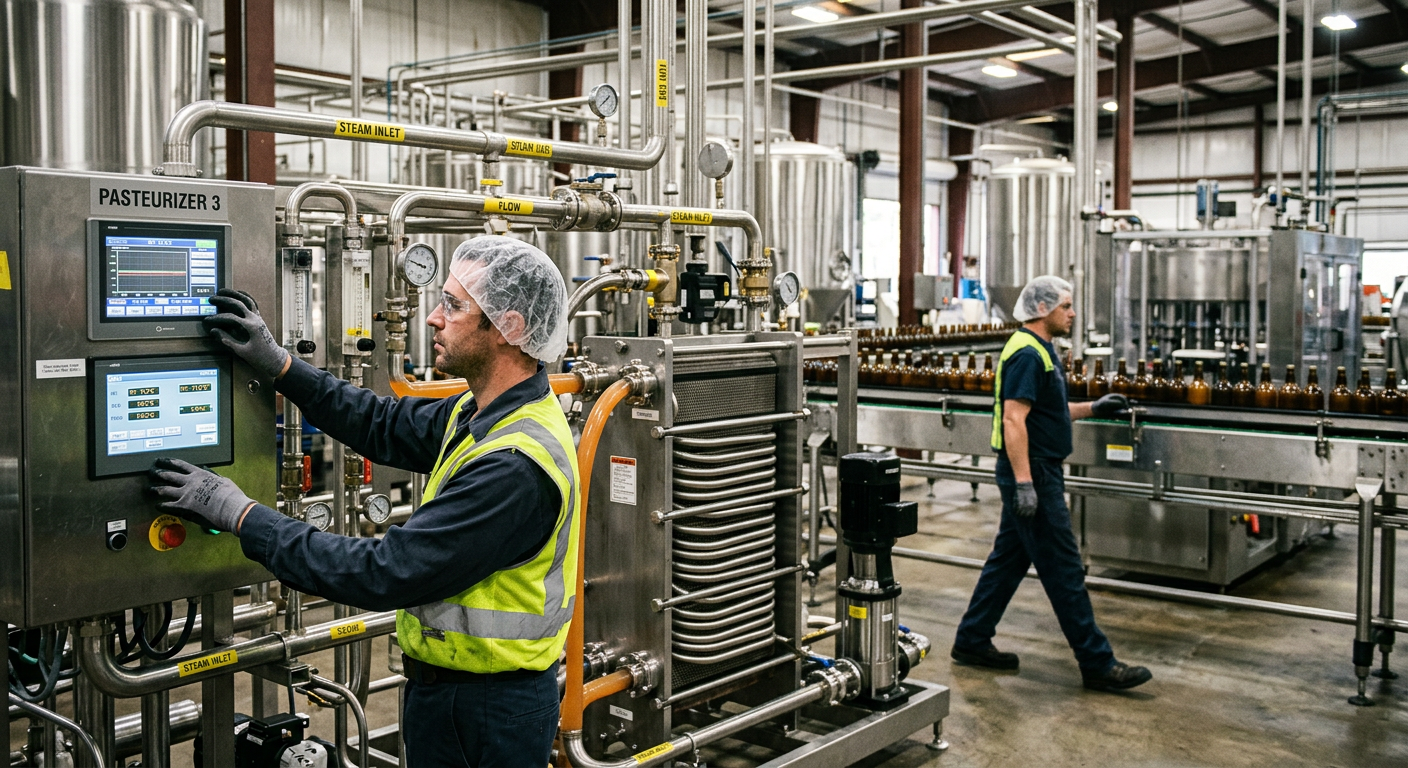
Protein Processing Tumblers
Protein tumblers are a core processing step for U.S. meat, poultry, seafood, and alternative protein operations that need better marinade uptake, improved bind, tighter purge control, and more consistent texture. In practical terms, a tumbler uses controlled mechanical action, often under vacuum and low temperature, to activate salt-soluble proteins, distribute brine evenly, and build the surface tack needed for formation, slicing, cooking, and packaging. For processors in major production corridors such as Arkansas poultry plants, Midwest pork facilities, Texas beef operations, and West Coast prepared-food manufacturers, the right tumbler setup directly affects yield, throughput, product quality, and labor efficiency. In the United States, buying decisions are rarely about the drum alone. Plants also evaluate refrigeration capacity, sanitation design, CIP strategy, automation, downstream forming or smoking, and project execution risk. That is why many processors work with integrated engineering partners such as Disruptive Process Solutions, which supports capital projects with a business-first approach focused on profitability, not just equipment placement. For facilities shipping through logistics hubs like Chicago, Kansas City, Atlanta, Houston, the Port of Savannah, or the ports of Los Angeles and Long Beach, dependable protein tumbling performance can help stabilize finished quality across demanding production schedules. A protein processing tumbler is used to improve marinade distribution, protein extraction, binding strength, finished texture, and yield in whole muscle meats, poultry items, ground systems, and many alternative proteins. The tumbler works by rotating product in a drum, usually under vacuum, so pieces lift and gently impact one another while salt, phosphate, functional ingredients, and moisture penetrate the tissue. This action extracts myofibrillar proteins that create a sticky surface matrix, which helps products hold water, bind together, slice cleanly, and perform better in thermal processing. For U.S. processors, the best tumbler is not simply the largest or fastest model. The best choice is the system calibrated to product type, target pickup, cycle time, sanitation standard, available floor space, and integration with upstream and downstream equipment. A boneless ham line in Iowa, a marinated chicken breast operation in Georgia, and a plant-based formed product line in California all require different vacuum profiles, drum speeds, temperature control approaches, and loading strategies. When evaluating equipment, buyers should focus on five practical questions: The table above shows why one-size-fits-all sizing is risky. A processor should match the machine to a specific business objective, whether that is higher line yield, lower package purge, a stronger bind in formed products, or a cleaner deli slice after thermal processing. The market trend is upward because U.S. processors continue to demand more automation, more precise yield management, and stronger food safety controls. By 2026, projects are expected to emphasize recipe control, sustainability reporting, and lower-energy chilled processing, especially in multi-line prepared-food operations. Protein tumblers serve a broad application range. In whole-muscle processing, they are used for hams, turkey breasts, roast beef, pork loins, chicken fillets, and seasoned steaks. The objective may be marinade pickup, tenderness enhancement, uniform flavor distribution, or extraction of enough functional protein to support a formed or tied shape before cooking. In poultry, tumbling is widely used after injection or pre-dust seasoning to improve moisture retention and eating quality. Plants in poultry-heavy states such as Arkansas, Georgia, Alabama, and North Carolina often tune tumbling cycles carefully because the product is delicate and throughput is high. Excessive mechanical action can lead to soft texture or visual damage, while insufficient action may leave flavor uneven and pickup below target. Ground meat applications differ. The need is often rapid functional distribution, controlled bind, and a repeatable handoff to forming equipment. Taco meat components, protein crumbles, sausage bases, and hybrid meat-plant systems can all benefit from a tumbler or tumbler-mixer configuration. Alternative proteins also fit here, especially when hydration and seasoning must be achieved without overworking the structure. For buyers comparing product types, the business case should include not only product quality but also changeover frequency, sanitation labor, and SKU complexity. A co-manufacturer near Los Angeles serving multiple retail and foodservice accounts may need more recipe flexibility than a single-SKU ham processor in Nebraska. That is why application review should happen at the plant-system level, not just at the equipment specification level. The bar chart reflects current project demand patterns in the United States, where poultry continues to lead due to volume and widespread marination needs, while alternative proteins are becoming a larger investment category because of innovation in texture, hydration, and label-driven formulation changes. The science of tumbling centers on myofibrillar protein extraction. When salt and functional ingredients are present, and the product is mechanically worked under controlled conditions, proteins such as myosin become more available on the surface. These proteins form a tacky layer that improves adhesion between pieces and strengthens water retention inside the product matrix. In whole-muscle applications, that tack helps pieces bind into a consistent shape for netting, stuffing, molding, or slicing. In ground and restructured products, it supports particle adhesion and bite. In plant-protein systems, the mechanism differs somewhat from animal muscle, but tumbler action still helps distribute moisture, binders, oils, and flavors while improving the final texture profile. Extraction is not a “more is always better” variable. Too little extraction can lead to weak bind, poor slicing, and free purge in the package. Too much extraction can create an overly dense bite, a rubbery texture, or excessive exudate during thermal processing. This balance is why processors often use recipe-specific tumble and rest cycles. The explanation behind the table is straightforward: successful protein activation comes from a controlled relationship between chemistry, mechanics, and temperature. Plants that document these variables tightly usually see lower rework, more consistent cook yields, and fewer packaging complaints. This is also where technological capabilities matter. DPS supports processor projects that involve process engineering, controls, PLC programming, recipe management, and utility coordination, which is critical when tumbling must interact with injection, chilling, smoking, and packaging systems. More detail on integrated project capabilities is available through its engineering and service offerings. Vacuum and drum speed are two of the most influential settings in tumbler performance. Vacuum reduces entrapped air, opens tissue structure, improves marinade movement, and changes how product lifts and falls in the drum. Drum speed controls the intensity of mechanical action. The correct combination depends on density, particle size, surface fragility, pickup target, and desired texture. For chicken breast fillets, a moderate speed and high vacuum often deliver strong uptake without surface tearing. For dense pork muscles, processors may use slightly longer cycles with enough speed to generate meaningful movement and extraction. For ground systems, speed is usually managed conservatively to avoid smear and excessive mechanical heat. Plant proteins may need unique profiles because hydration kinetics can differ from animal proteins. In operations near freight-intensive hubs such as Dallas-Fort Worth or the Chicago metro, processors often standardize recipes across multiple shifts and facilities. That makes repeatable control logic extremely valuable. A tumbler with programmable recipes, vacuum ramping, direction changes, and timed rests can reduce operator variation significantly. These ranges are starting points, not absolute rules. Pilot trials are still essential, especially when ingredient systems include phosphates, starches, fibers, clean-label binders, yeast extracts, or specialty proteins. A buying team should always request application testing tied to measurable outcomes such as pickup percentage, cook yield, bind strength, and package purge after distribution. Temperature control is central to both food safety and protein functionality. As product is mechanically worked, friction and handling can raise product temperature. If the system is not cooled adequately, proteins may lose functionality, fat may smear, purge may increase, and food safety margins may tighten. That is why serious U.S. processors usually evaluate tumbling alongside chilled rooms, glycol or refrigerant support, and time-at-temperature controls. For USDA-regulated environments, cold-chain discipline matters throughout the process, especially in high-throughput facilities running multiple shifts. In summer conditions in regions such as the Southeast or Gulf Coast, ambient heat load can influence how quickly product warms during loading and discharge. Facilities in Houston, Jacksonville, or inland distribution-heavy areas like Memphis often need especially robust supporting utilities. Modern protein processing projects frequently connect tumblers to broader utility systems, including refrigeration, chilled water, compressed air, and automation alarms. DPS is active in this kind of technological integration, supporting process, mechanical, electrical, and controls coordination so processors do not treat the tumbler as a standalone asset. Companies evaluating equipment can review broader processing equipment capabilities when planning a full line or utility upgrade. The area chart highlights a major 2026 trend: more projects are combining tumbling with advanced cooling, data capture, and recipe governance. This shift is being driven by retailer quality requirements, labor consistency concerns, traceability expectations, and sustainability goals tied to waste reduction and utility efficiency. Batch size is often underestimated. Even a well-designed tumbler can perform poorly if the load factor is too low or too high. Underfilling can reduce effective product-to-product contact and lead to poor lift patterns. Overfilling can compress the batch, limit movement, and create uneven marinade distribution. The ideal fill level depends on drum geometry, baffle design, protein density, and product fragility. For processors scaling from pilot to commercial volume, this is an especially important purchasing consideration. A machine that performs well at one batch level may not scale linearly. Plants in growth markets such as Nashville, Phoenix, or Central Valley California frequently face this issue when moving from regional production to national retail programs. Load factor optimization should also consider upstream logistics. Injection systems, combo bin handling, tote weights, and labor rhythms affect how consistently the tumbler is fed. Downstream constraints matter too. If the cooking, smoking, or packaging department cannot absorb discharge at the same pace, the resulting delay can cancel out the gains from a well-tuned tumbling cycle. The table shows why production teams should validate not only maximum drum capacity but also the realistic operating range that delivers repeatable quality. In many plants, the most profitable batch size is not the highest possible weight. It is the weight that keeps quality, labor, and line balance in the best zone. Sanitation design is not optional in protein processing. USDA and customer standards increasingly require equipment that is easier to clean, easier to inspect, and less likely to harbor residue. For tumblers, that generally means smooth welds, accessible surfaces, proper drainability, robust seals, fewer exposed niches, and suitable material selection for corrosive cleaning environments. 316L stainless steel is often specified for high-hygiene applications because it offers excellent corrosion resistance, especially where chlorides, aggressive sanitation chemicals, and repeated washdown are involved. While the exact material strategy depends on product and cleaning regimen, processors seeking long service life and strong sanitary performance often favor 316L in critical contact areas. This subject also connects directly to manufacturing capability. DPS designs and supplies process equipment, including tumblers and vessels, and supports installations where sanitary design, utility routing, and plant access must work together. For a processor building a greenfield line or upgrading an older room with limited floor space, fabrication quality and cleanability are every bit as important as nominal capacity. When evaluating sanitary design, ask for details on weld finishing, frame openness, seal replacement access, clean-in-place options, panel placement, and washdown durability. Also evaluate whether the equipment can be safely cleaned within the plant’s sanitation window without creating production bottlenecks. For most U.S. processors, the financial value of a tumbler is tied to yield. That includes water-holding capacity, reduced package purge, lower cook loss, stronger bind, cleaner slices, and fewer customer complaints. Even a small improvement in retained moisture can create significant margin gains when production volumes are measured in millions of pounds per year. Water-holding capacity improves when the protein matrix is properly activated and moisture is distributed effectively. Purge control improves when that moisture is actually retained through chilling, storage, and distribution. Sliceability improves when the product structure is uniform and sufficiently bound after cooking. These outcomes depend on more than the tumbler alone, but tumbling is often the key step where success begins. Case experience across the U.S. shows that yield improvement projects are strongest when processors measure the full chain: raw weight, injected weight, post-tumble weight, post-cook yield, chill loss, and in-package purge after a defined hold period. This is one reason integrated project teams outperform isolated equipment purchases. A coordinated engineering approach can link tumbling to recipe management, smokehouse scheduling, chilling capacity, and packaging specs. Processors interested in system-level examples can review project case studies and execution examples to see how integrated process planning supports long-term profitability rather than one-off capital spending. The comparison chart illustrates a common buying reality in the United States: the processor often gains more value from an integrated supplier-partner model than from purchasing equipment in isolation. Better coordination typically means better yield control, stronger sanitation outcomes, and lower project risk. A tumbler should fit into the full production architecture. Upstream, it may connect with thawing, trimming, grinding, brine preparation, injection, and tote handling. Downstream, it may discharge to forming, netting, stuffing, smokehouses, ovens, chillers, slicers, MAP packaging, or case packing. If these interfaces are poorly planned, the line loses productivity even if the tumbler itself performs well. This is where service capability becomes critical. DPS supports front-end planning, feasibility, owner representation, design-build-manage execution, project management, installation, and integration for food manufacturers across the United States and Canada. That means processors can align equipment layout, utilities, controls, local trades, compliance goals, and startup planning under one execution framework instead of trying to coordinate everything separately. For facilities expanding near major distribution routes such as Interstate 35, the Midwest rail corridor, or Southeastern cold-chain networks, line integration affects truck turn times and customer service just as much as product quality. A tumbler that discharges erratically into a constrained smokehouse schedule or a packaging room with limited buffer capacity will create hidden costs. Buying advice for U.S. plants should therefore include: By 2026, future-forward lines are expected to include tighter recipe governance, more sensor feedback, more water and chemical optimization in sanitation, and stronger alignment with retailer sustainability reporting. Policy pressure around traceability, labor reliability, and resource use is likely to continue pushing processors toward smarter integrated systems rather than stand-alone machines. Local sourcing strategy also matters. Processors in the Midwest may prioritize rapid parts access and field support in regions around St. Louis, Indianapolis, and Minneapolis. Gulf and coastal operators may care more about corrosion resistance and port-adjacent logistics resilience. West Coast co-packers may emphasize SKU flexibility and plant-protein compatibility. The right supplier is the one that understands those practical realities in your geography and category. What products benefit most from protein tumbling? Whole muscle pork and poultry, deli meats, roast items, restructured meats, seafood portions, and many plant-based protein systems benefit from tumbling when yield, bind, texture, or marinade distribution matter. Is vacuum always necessary? Not always, but vacuum is highly beneficial for many applications because it improves uptake, reduces air pockets, and supports more effective protein extraction. Ground systems and some specialty products may use lower vacuum levels or modified cycles. How much can tumbling improve yield? Results vary by formulation and process, but even small gains in retained moisture and reduced purge can create meaningful value. The right way to evaluate improvement is through controlled plant trials measuring pickup, cook yield, chill loss, and package performance. What is the ideal material of construction? For high-hygiene protein environments, 316L stainless steel is commonly preferred in critical contact areas because of corrosion resistance and cleanability, especially under aggressive washdown conditions. How do I size a tumbler for my facility? Start with product type, target batch weight, cycle time, line throughput, and realistic fill range. Then evaluate utility support, room layout, loading method, sanitation window, and downstream capacity. Do not size only by nameplate volume. Can tumblers be used for alternative proteins? Yes. They are increasingly used for hydration, seasoning distribution, oil incorporation, and texture development in plant-based chunks, strips, and hybrid protein systems. What should I ask a supplier before buying? Ask for application data, sanitary details, controls capability, cooling strategy, expected maintenance points, installation requirements, integration experience, and support after startup. Why work with an integrated engineering partner instead of buying only equipment? Because real performance depends on line integration, utilities, controls, compliance, startup, and profitability. A capable partner helps align equipment selection with production reality and long-term return on capital. For protein processors in the United States, the tumbler is not just a marination tool. It is a profit lever that influences yield, quality, labor, sanitation, and downstream efficiency. Whether the application is poultry in the Southeast, pork in the Midwest, beef in Texas, seafood on the coasts, or alternative proteins in innovation-heavy markets like California, the best results come from matching application science with disciplined engineering and practical plant execution. -
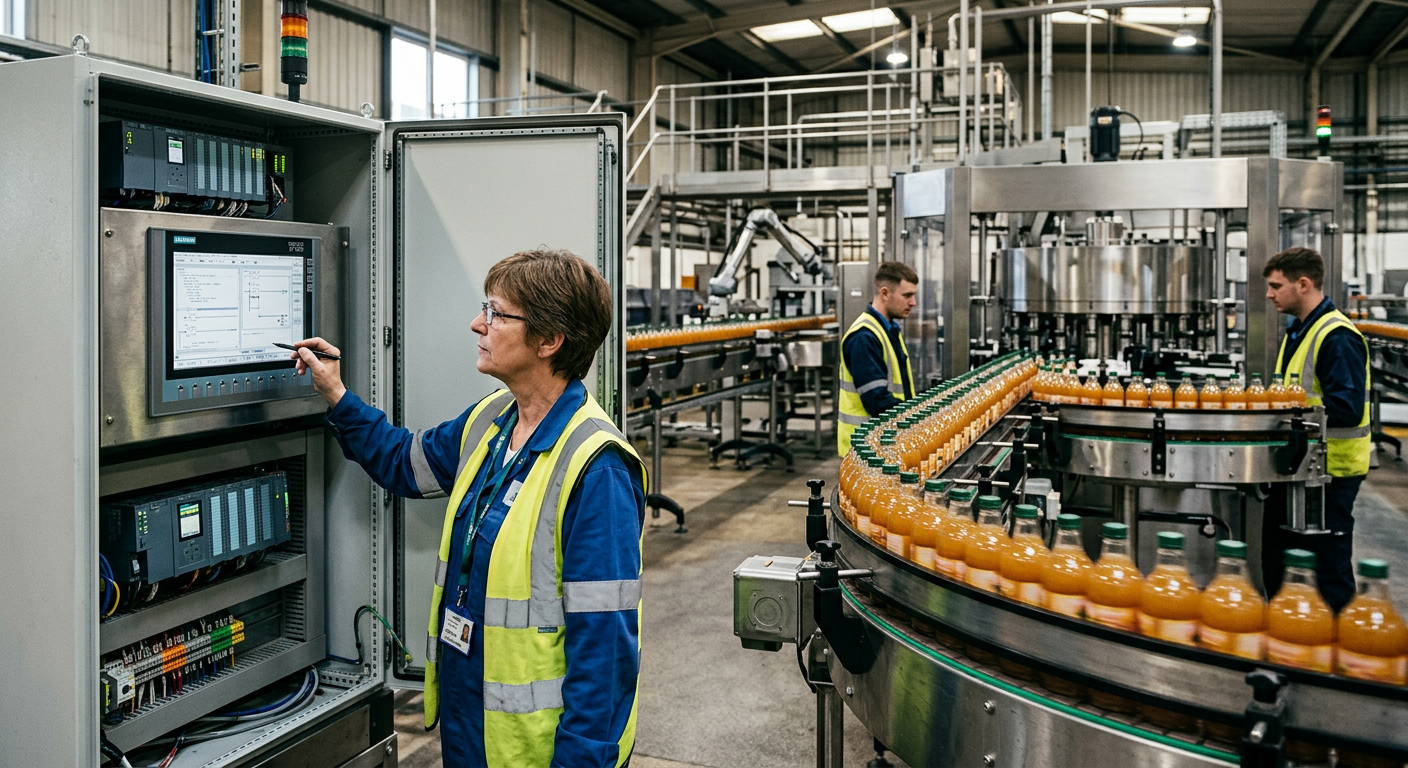
2026 Food Facility Fire Suppression Design: Wet Chemical vs Dry Chemical Systems
Food and beverage facilities across the United States are under growing pressure to improve fire protection in kitchens, process areas, packaging lines, utility rooms, and special hazard zones. In 2026, the key design question is rarely whether a suppression system is needed. The real question is which suppression method fits each hazard, how it integrates with ventilation and controls, and how the system can be delivered without interrupting production or creating compliance gaps. For most commercial cooking lines, wet chemical systems remain the preferred solution because they are designed to suppress grease-laden fires and reduce reflash risk. For industrial hazard areas outside kitchen hoods, dry chemical systems still play an important role where flammable liquids, certain process hazards, or localized equipment exposures require rapid knockdown. In major manufacturing corridors such as Chicago, Charlotte, Dallas, Los Angeles, Atlanta, Houston, and the I-95 food distribution belt, plant owners are also asking broader capital-planning questions. They want systems that align with NFPA 96, local fire code review, insurer expectations, USDA or FDA operational realities, and long-term maintainability. They also want fewer trade conflicts between fire protection, HVAC, utility piping, controls, structural steel, and process equipment. That is why design-build delivery has become more attractive for food plants, beverage operations, co-packers, protein processors, dairy facilities, and high-throughput prepared-food sites. The short answer is this: wet chemical systems are generally the best choice for commercial kitchen lines, conveyorized fryers, griddles, ranges, broilers, and hood-protected foodservice cooking operations because they are specifically engineered for cooking oil and grease fires. Dry chemical systems are more commonly used in industrial hazard areas where the risk profile is not centered on grease vapors under kitchen ventilation. The correct choice depends on appliance type, fuel source, exhaust design, local code adoption, cleanup requirements, business continuity goals, and insurer criteria. For U.S. facilities, a compliant fire suppression design must do more than discharge agent. It must coordinate with hood exhaust, makeup air, duct protection, appliance coverage, manual pull stations, gas or electric shutoff interlocks, audible and visual alarms, and inspection access. In a mixed-use food plant, one building may require both system types in different zones. A prepared-food plant in New Jersey may use wet chemical protection over kettle batteries and fryers, while a nearby packaging mezzanine or solvent-related maintenance area may use a different special hazard approach. The answer is therefore not either-or for the whole building. It is hazard-by-hazard engineering. The table above shows why system selection should be tied to the hazard itself, not to habit or vendor preference. In practical terms, most food production clients in the United States need a zone map that distinguishes commercial cooking protection from adjacent industrial fire risks. The chart reflects a realistic market trend: retrofit and modernization demand is rising as older systems age, insurers tighten expectations, and food plants expand prepared-food production. Wet chemical systems are the standard solution for commercial kitchen lines because they are formulated for cooking media fires, especially where animal fats, vegetable oils, and grease residues are present. When discharged through listed nozzles, the agent cools the fire and reacts with hot grease to help create a foam-like blanket that limits oxygen contact and reduces re-ignition potential. In food plants, this matters most over fryers, open-flame broilers, charbroilers, woks, kettles, ranges, conveyor ovens, and hybrid cooking suites used in commissaries or prepared-food operations. In cities with dense foodservice and processing activity such as New York, Philadelphia, Miami, and Las Vegas, wet chemical systems are commonly seen not only in restaurants but also in centralized food production hubs, stadium commissaries, airport kitchens, hotel production kitchens, and fresh prepared-meal plants. In manufacturing, the same logic applies when commercial-style cooking equipment is installed inside a plant environment. The presence of a production floor does not change the hazard chemistry under a grease hood. Wet chemical systems also bring operational advantages. Cleanup is often more manageable than with broad dry powder discharge, especially where food safety and restart time matter. That does not mean cleanup is trivial, but contamination spread is typically easier to control in hood-protected cooking zones than in adjacent packaging or open-ingredient areas. For this reason, facilities producing ready meals, sauces, proteins, or snack foods often prefer wet chemical protection whenever the hazard falls under commercial cooking standards. This table highlights an important buying point: wet chemical systems should be selected with appliance-specific listings and hood geometry in mind. Food producers often make the mistake of treating the suppression package as generic. It is not. A fryer line in Memphis processing breaded chicken is not automatically covered by the same nozzle arrangement as a commissary wok line in Seattle or a university kitchen in Boston. By 2026, more facilities are also pairing wet chemical suppression upgrades with broader ventilation modernization. That includes improved hood capture, variable-frequency exhaust strategies, replacement fans, grease-rated duct modifications, and smarter control logic. In retrofit markets around Southern California and the Carolinas, this integrated approach often reduces rework and shortens AHJ review cycles because the fire protection design is coordinated from the start rather than forced into an existing mechanical layout. Dry chemical systems remain relevant in industrial hazard areas where the fire risk differs from grease-laden commercial cooking. These systems are often used for flammable liquid hazards, certain machinery exposures, fuel handling points, loading or transfer areas, maintenance hazards, and other localized industrial applications where rapid flame knockdown is the main objective. In food and beverage facilities, these may be found in support spaces rather than under kitchen hoods, though every application should be reviewed against the specific hazard and local code requirements. For example, a beverage facility near Houston may have process utility zones, maintenance areas, or flammable storage interfaces that justify dry chemical protection, while the same building uses wet chemical systems over a culinary R&D kitchen. A plant near the Port of Long Beach that handles specialty ingredients, packaging, and mixed industrial operations may need separate strategies for different rooms. One of the biggest mistakes in industrial fire protection is assuming the cleanest-looking room has the simplest hazard. Hidden ignition sources, heat release rates, and material compatibility must still be studied. Dry chemical systems can be highly effective, but they come with tradeoffs. Cleanup can be more disruptive, sensitive equipment may require extra protection, and production restart can be slower if powder disperses into process-adjacent areas. In facilities with open ingredients, exposed packaging materials, or strict sanitation turnover, these factors carry real economic weight. The lesson from the table is that dry chemical systems should be reserved for the right industrial conditions, not installed by default. Facilities in the United States are increasingly weighing production downtime, sanitation, and insurer expectations alongside raw suppression performance. This demand comparison shows where retrofit activity is strongest: cooking-heavy sectors and institutional foodservice environments lead the market, while beverage-only facilities are generally lower unless they include culinary development, tasting kitchens, or mixed industrial hazards. In U.S. food facilities, fire suppression design cannot be separated from ventilation design. NFPA 96 remains the core reference for ventilation control and fire protection of commercial cooking operations, and in practice that means the hood, grease duct, exhaust fan arrangement, makeup air system, access doors, clearances, and suppression package must function as a coordinated system. If one part is poorly designed, the whole fire protection strategy weakens. Integration starts with capture and containment. A hood that fails to capture grease-laden vapors increases deposition in the duct and creates long-term fire risk. Oversized or poorly balanced makeup air can spill contaminants out of the hood envelope. Fan selection affects plume behavior. Access for cleaning affects fire loading over time. By the time the suppression contractor arrives, many of these issues are already baked into the project unless the design team has coordinated mechanical and fire protection scopes upfront. This is especially important in retrofit-heavy markets such as New Jersey food corridors, California urban production kitchens, and Southeast poultry processing expansions. Facilities often inherit older hoods, patched ducts, changed appliance lineups, and incomplete as-builts. A compliant design in 2026 usually requires field verification, not just plan review. The practical takeaway is simple: ventilation and suppression should be engineered together. That is one reason many owners choose integrated project partners rather than managing separate mechanical, electrical, fire, and process trades in isolation. The area chart reflects a clear industry shift: more U.S. owners are procuring ventilation and fire protection as one coordinated package, especially where schedule certainty and operational continuity matter. System performance depends heavily on proper component selection and nozzle placement. The best agent in the world will underperform if the tank size, piping layout, detection method, fusible link location, appliance coverage, and nozzle angles do not match the actual hazard. Listed manufacturer requirements govern much of this work, and deviations can create real compliance and liability problems. In food manufacturing projects, nozzle placement is often complicated by custom stainless fabrication, utility drops, washdown shields, overhead conveyors, access hatches, and changing appliance elevations. A fryer line in Arkansas, for example, may include OEM guarding and removable covers that affect discharge patterns. A commissary in downtown Chicago may have limited ceiling height and tight duct transitions. A university kitchen in California may need seismic coordination and phased shutdowns during retrofit. All of these affect design quality. Owners should also think beyond first cost. Better component selection can reduce false trips, improve serviceability, and make annual or semiannual inspections more efficient. Smart control integration, clean piping routes, clearly labeled manual pull stations, and accessible test points save money over the life of the system. In complex facilities, a multidisciplinary engineering approach is valuable. Companies with strong process, structural, mechanical, plumbing, electrical, and controls capability can spot conflicts earlier. That matters in real food projects where fire protection has to coexist with clean utility lines, automation panels, SCADA visibility, CIP systems, steam, refrigeration, and sanitary routing. A suppression discharge event must trigger the right actions immediately. In most kitchen-protected applications, that includes shutting off fuel or electrical energy to protected cooking appliances, activating alarms, and coordinating any required fan or control responses. If these interlocks are missing or poorly tested, the suppression system may discharge while ignition sources continue feeding the fire. For gas-fired equipment, fuel shutoff reliability is critical. Solenoid valves, emergency stop sequences, and control relays must be compatible with the appliance arrangement and local code enforcement. For electric equipment, shunt-trip or other shutdown logic may be required depending on the configuration. Integration with the building fire alarm system should also be reviewed carefully, especially in larger food plants where an event under one hood may need local annunciation, central monitoring, or plant-wide response protocols. Facilities in major logistics hubs such as Dallas-Fort Worth, Columbus, and Savannah often run around the clock, so nuisance shutdown risk is a real business concern. That is why design quality and commissioning discipline matter. An interlock system should be fail-safe, documented, labeled, and tested with operations staff present. It should also be easy to restore correctly after an event. The explanation behind this table is straightforward: alarm and interlock design is not a side issue. It is central to fire suppression effectiveness and plant restart planning. Even a well-designed system will fail expectations if inspection and maintenance are neglected. U.S. operators should maintain a documented schedule covering routine visual checks, semiannual inspections where applicable, detector and pull station verification, cylinder condition, nozzle cap condition, pipe integrity, fuel shutoff functionality, alarm interface testing, fan logic verification, and post-service documentation. The exact schedule depends on system type, local authority requirements, and manufacturer listing instructions, but the compliance principle is the same: fire suppression must remain ready, accessible, and matched to the current hazard. Food facilities often struggle with maintenance discipline because production changes faster than life safety records. Appliances get moved, guards are added, ducts are modified, and utilities are rerouted. If the suppression layout is not updated, the site may believe it is protected when it is not. This is especially common in fast-growth sectors like meal kits, commissaries, co-packing kitchens, and hybrid foodservice-manufacturing operations. The maintenance schedule above works best when tied to a broader compliance program. Facilities with strong management systems often include fire suppression review in change control, preventive maintenance software, shutdown planning, and annual risk audits. Design-build delivery is becoming more attractive for food and beverage fire suppression projects because it reduces coordination gaps between engineering, procurement, installation, controls, permitting, and startup. Instead of an owner separately managing mechanical design, fire protection design, electrical controls, field trades, and process shutdown planning, a design-build team can align the sequence from the start. This is especially valuable in brownfield retrofits where every shutdown hour has a real cost. For plants in the United States, the strongest design-build outcomes usually come from teams that understand not only fire protection but also food production realities. That includes sanitation windows, temporary production routing, utility tie-in planning, process downtime minimization, and regulatory expectations. In a protein facility, replacing suppression over a cook line may require coordination with washdown and USDA scheduling. In a beverage innovation center, the challenge may be keeping pilot operations running while controls are upgraded. In a high-volume co-packer near Atlanta or Phoenix, speed-to-production can outweigh small equipment cost differences. This is also where broader technical capabilities matter. A partner with in-house or closely coordinated expertise across mechanical, electrical, plumbing, structural, controls, and process engineering can solve conflicts before they become field change orders. That same value extends to automation coordination, PLC modifications, SCADA visibility, utility routing, and commissioning. In food and beverage environments, fire protection is rarely an isolated package. Some firms also add value through equipment manufacturing and integration support. Custom stainless process equipment, skids, tanks, or utility packages may affect hood geometry, line spacing, or maintenance access, so a project partner that understands fabrication and layout can better align suppression design with production objectives. The comparison chart shows why many owners now prefer integrated delivery. The advantage is not just construction speed. It is reduced risk across design, controls, and operational restart. When evaluating U.S. suppliers, owners should compare more than system price. They should ask about hazard analysis depth, listing compliance, local permitting support, integration with exhaust and makeup air, controls capability, commissioning process, and after-service reach. In major regional markets such as North Carolina, Texas, California, Illinois, and Florida, local fire code interpretation can vary, so national consistency combined with local trade coordination is a significant advantage. Disruptive Process Solutions supports food and beverage manufacturers across North America with an approach built around engineering, construction coordination, and execution management rather than siloed contracting. In fire suppression-related projects, that matters because the system often sits at the intersection of process equipment, ventilation, controls, utilities, structural supports, and facility operations. You can learn more about the company background on the about our team page. From a technological capability standpoint, DPS works across structural, mechanical, plumbing, electrical, process, and controls disciplines. That broad engineering view is useful when suppression design must align with PLC logic, SCADA visibility, utility loads, equipment relocation, or line expansion plans. In a real food plant, the best fire protection solution is usually the one that fits the operating model, not just the drawing set. From a manufacturing capability standpoint, DPS also understands how equipment design affects plant layout and protection strategy. The company supports custom processing equipment and integrated systems, including tanks, CIP packages, tumblers, and cooking-related process solutions, which gives added perspective when nozzle placement, access clearances, washdown realities, or utility routing interact with fabricated equipment. More detail on broader capabilities is available through the equipment solutions section. From a service capability standpoint, DPS operates with a design-build-manage philosophy that helps owners move from concept to execution with tighter coordination. That includes planning, engineering, project management, installation oversight, and integration support for food, beverage, protein, dairy, aseptic, and prepared-food applications across the United States and Canada. For owners assessing complete project support, the engineering and project services page provides a broader picture, and selected project examples can be explored in the case study library. For clients evaluating fire suppression within a larger capital program, this integrated model is often valuable because hood protection is rarely the only issue. It may connect to line expansion, utility upgrades, process relocation, or facility modernization. In those situations, the ability to engineer, build, and manage under one coordinated strategy can reduce both timeline risk and operating disruption. What is the main difference between wet chemical and dry chemical systems?Wet chemical systems are mainly used for commercial cooking hazards involving grease and oils, while dry chemical systems are more often applied to industrial hazards outside typical kitchen grease applications. Is NFPA 96 relevant for food manufacturing plants?Yes, whenever the facility includes commercial cooking operations, hood systems, grease ducts, and related protection. It is highly relevant for prepared-food plants, commissaries, institutional kitchens, and mixed production sites. Can one facility use both wet and dry chemical systems?Yes. Many U.S. food facilities use wet chemical protection over cooking lines and a different special hazard approach in industrial support areas, depending on the risk. How often should a suppression system be inspected?The exact schedule depends on system type, manufacturer listing, and local authority requirements, but regular visual checks and formal service intervals are essential. Semiannual servicing is common for many hood systems. What happens if we change appliances under an existing hood?The suppression design should be reviewed immediately. New appliance geometry, heat release, or oil capacity can invalidate the original nozzle arrangement and coverage listing. Do alarm and fuel shutoff interlocks really matter that much?Yes. A suppression system without reliable interlocks may not fully remove the ignition source. Functional testing is one of the most important parts of commissioning and maintenance. What should owners ask potential suppliers before buying?Ask about hazard-specific design, code and AHJ coordination, appliance listings, ventilation integration, controls expertise, commissioning process, maintenance support, and experience in food and beverage environments. What are the biggest 2026 trends in the United States?The biggest trends are integrated design-build delivery, stronger insurer scrutiny, better controls integration, retrofit modernization of aging hood systems, sustainability-driven ventilation optimization, and greater focus on maintainability and documented compliance. How does sustainability affect suppression design?Sustainability is influencing hood and fan upgrades, smarter exhaust control, reduced rework, and better lifecycle planning. Owners increasingly want safer systems that also support energy-conscious ventilation strategies. Where is demand strongest in the U.S. market?Demand is strongest in prepared foods, institutional kitchens, protein processing, fast-growing commissaries, and facilities in high-density logistics and manufacturing regions such as Texas, California, the Southeast, and the Mid-Atlantic. In closing, the best 2026 fire suppression strategy for a food facility in the United States is the one built around real hazards, real operations, and real compliance pathways. Wet chemical systems remain the first choice for commercial kitchen lines. Dry chemical systems still have a role in industrial hazard areas. But neither should be selected in isolation. The most effective projects integrate ventilation, controls, utility shutdown, maintenance planning, and long-term plant performance from the beginning. -
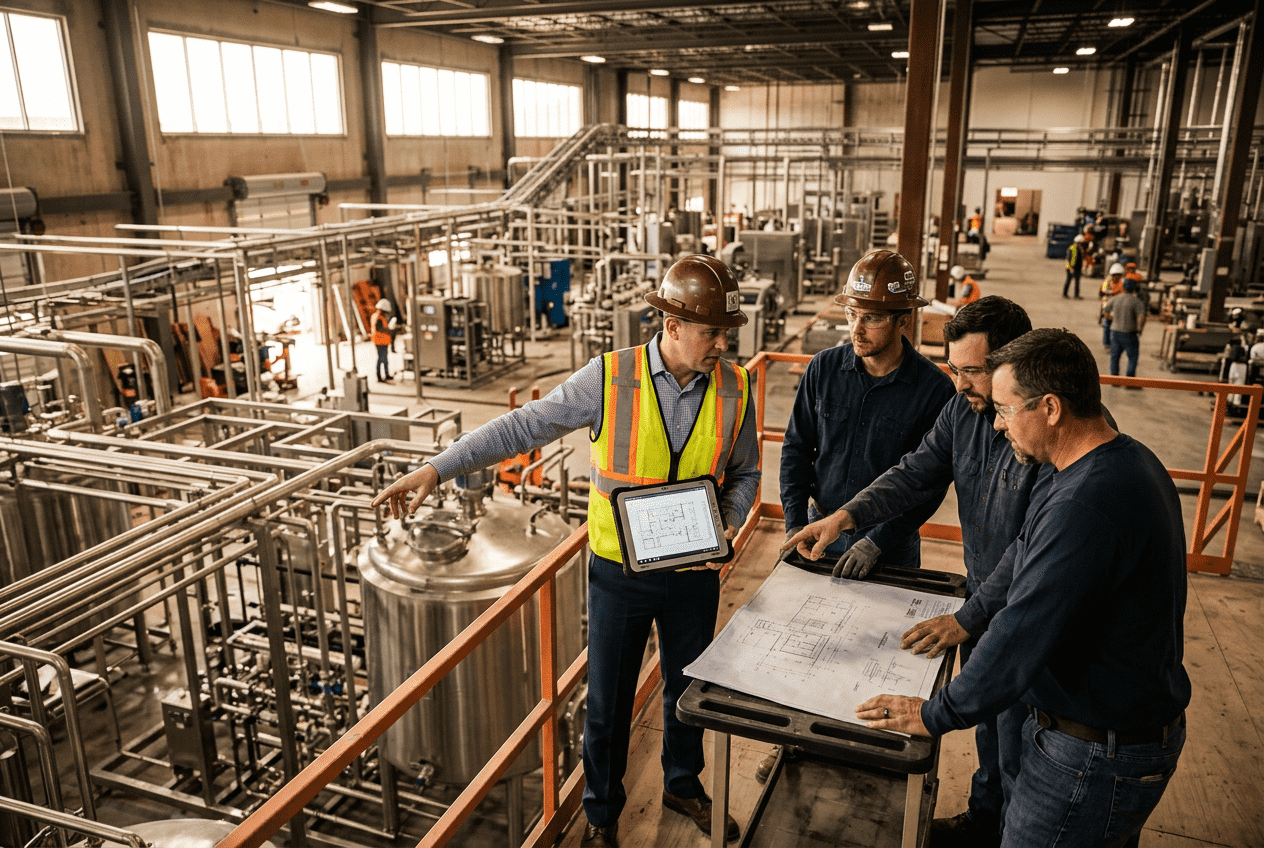
Food Cooking Kettle Manufacturer
For food processors in the United States, selecting a food cooking kettle manufacturer is not just an equipment decision; it is a plant performance, food safety, labor efficiency, and long-term capital planning decision. Whether you are producing soup in Chicago, sauce in New Jersey, chili in Texas, dairy blends in Wisconsin, or ready meals in California, the right kettle supplier should be able to do more than quote a vessel. A qualified partner should understand recipe behavior, heat transfer, sanitary design, utility integration, automation, compliance, installation, and throughput economics. In the U.S. market, buyers increasingly expect kettles that support better yield, shorter cook times, easier cleaning, lower operator risk, and traceable compliance. That means the discussion should include stainless grade, finish quality, heating medium, agitation style, controls, CIP strategy, and whether the manufacturer can support customization at the plant level. For processors expanding near logistics hubs like Houston, Los Angeles, Savannah, Newark, or the Midwest manufacturing corridor, lead time, field support, and integration capability also matter. A strong food cooking kettle manufacturer in the United States should offer sanitary stainless construction, multiple heat source options, batch sizes aligned with your production goals, certified fabrication where required, and the ability to tailor agitation, controls, discharge, and vessel geometry to your recipe. The best suppliers also provide engineering support, utility coordination, installation planning, and startup assistance instead of selling a standard tank with minimal process input. If your products include sauces, soups, gravies, fillings, jams, confectionery bases, dairy blends, meat emulsions, prepared foods, or plant-based formulations, choose a manufacturer that can prove experience with viscous, particulate, shear-sensitive, or burn-prone recipes. In practice, that means they should discuss whether you need 304 or 316L stainless, a hemispherical or cylindrical bottom, a tilting or fixed body, and an agitation package such as paddle, scraper, planetary, or high-shear mixing. For many U.S. processors, the lowest purchase price does not deliver the lowest total cost. A kettle with the wrong agitation system may create scorch points. A vessel with the wrong finish may prolong cleaning. An undersized heating jacket may slow output. A supplier that cannot coordinate controls, utilities, or field installation may shift hidden cost back onto the owner. That is why many buyers now prefer engineering-led partners that can connect equipment selection to overall line performance. The table above summarizes the six issues that should drive any kettle purchase. In real projects, these factors overlap. For example, a tomato-based sauce may push you toward 316L, scraper agitation, and a precise steam control package at the same time. A credible manufacturer should be able to demonstrate process knowledge, not just metalworking capability. Ask how they size jackets, how they model heat-up times, what finish levels they provide, how they prevent dead legs, and what standard instrumentation is included. Good answers indicate the supplier has worked with real food plants rather than only generic stainless fabrication. You should also evaluate whether the supplier can support your full project scope. Some companies can build a vessel but cannot help with steam headers, condensate return, electrical load review, controls integration, or floor layout. Others can coordinate the complete system. For growth-oriented manufacturers in the United States, this distinction matters because batch cooking often touches multiple disciplines at once: process, mechanical, structural, plumbing, electrical, controls, food safety, and commissioning. A practical benchmark is to ask for examples by application. If you produce fruit fillings, ask how they avoid fruit damage and sugar scorching. If you make cheese sauce, ask how they manage sticky protein and fat systems. If you run protein marinades or prepared meals, ask about particulate handling and discharge strategy. The best manufacturers can explain what worked, what did not, and what they changed. Another important factor is lifecycle support. U.S. processors value suppliers that can provide startup help, operator training, spare parts guidance, and modifications later as recipes change. This is especially important for co-packers and multi-SKU plants where equipment flexibility creates financial value over time. For companies that want broader project support, integrated processing services can be useful because they connect vessel selection with the practical realities of installation, utilities, and production ramp-up. This can reduce scope gaps between engineering, procurement, and plant execution. The line chart reflects a realistic trend in the United States: demand for sanitary cooking equipment is rising as prepared foods, premium sauces, plant-based products, and contract manufacturing continue expanding. Growth is also linked to reshoring, automation investments, and food safety modernization. For most food cooking kettles, the material conversation starts with 304 stainless steel and 316L stainless steel. Both are common, but they serve different application needs. In many dry or mildly acidic products, 304 is fully suitable and cost effective. In harsher environments involving salt, chloride exposure, acidic recipes, aggressive washdowns, or highly sanitary requirements, 316L often becomes the better choice. 304 stainless is frequently used for soups, neutral sauces, starch systems, bakery fillings, and many general-purpose batch processes. It offers good corrosion resistance, solid durability, and lower upfront cost. It is often the right answer where chemistry is not especially aggressive and where the plant already maintains strong sanitation discipline. 316L stainless adds molybdenum, which improves corrosion resistance, especially in chloride-rich or acidic service. It is commonly recommended for tomato sauces, saline brines, some dairy applications, seafood, certain dressings, and recipes with repeated exposure to aggressive clean-in-place chemicals. The low-carbon “L” grade also supports better weld corrosion resistance when properly fabricated and passivated. Beyond alloy selection, buyers should ask about internal finish, weld polish quality, passivation, and gasket compatibility. The metal grade alone does not guarantee sanitary performance if the fabrication details are weak. This table shows that the right material choice is usually economic as well as technical. Many U.S. plants use 304 very successfully, but where corrosion risk is known, the extra cost of 316L can protect uptime and sanitation confidence. At the engineering level, manufacturers should also discuss jacket material compatibility, valve metallurgy, sensor fittings, and whether the vessel will be exposed to chlorinated environments near coastal regions such as Florida, the Gulf Coast, or the Port of Long Beach where ambient conditions can influence long-term wear. Food cooking kettles are not one-shape-fits-all. Vessel geometry influences heat transfer, drainability, product movement, cleanability, and ergonomic handling. The most common choices are tilting kettles, fixed kettles, cylindrical-bottom vessels, and hemisphere-bottom vessels. The right choice depends on viscosity, batch size, particulate content, and downstream handling. Tilting kettles are popular in smaller to mid-size batch applications because they make discharge simple and intuitive. Operators can pour product directly into hoppers, depositors, or transfer carts. These are common in pilot plants, specialty foods, bakery fillings, and moderate-volume prepared foods. Fixed kettles are often preferred in larger production environments. They usually discharge through a bottom valve or pump connection, which supports piping integration, repeatability, and automation. If your plant is moving product to fillers, hold tanks, or scraped-surface exchangers, a fixed kettle may be more efficient. Hemispherical bottoms generally improve heat distribution and product sweep, especially for viscous products or scraper agitators. Cylindrical-bottom vessels may work well in simpler applications or where geometry is driven by layout and manufacturing preference. In many food plants, the hemisphere-bottom design is favored because it reduces stagnation and supports more even cooking. The explanation behind this table is simple: geometry changes process behavior. If your recipe is thick, sticky, or particulate-heavy, bottom contour and discharge arrangement can be as important as heat source selection. Manufacturers serving the U.S. prepared foods market often need to balance sanitation with floor practicality. A plant in Atlanta may prioritize labor efficiency and automated discharge, while a specialty producer in Portland may prefer a flexible tilting design for frequent recipe changes. The best kettle suppliers tailor the configuration to the operation rather than forcing a standard package. Agitation is often the difference between a productive kettle and a frustrating one. The right mixer prevents scorching, improves temperature uniformity, protects particulates, and supports consistent texture. The wrong mixer can create dead zones, excessive shear, broken ingredients, and cleaning headaches. Paddle agitators are widely used for general blending and moderate-viscosity products. They are cost-effective and versatile, especially where product is not highly adhesive. Scraper agitation is more specialized and is often critical when the product tends to stick to heated surfaces. By continuously sweeping the vessel wall, scraper systems reduce burn-on and improve thermal efficiency. Planetary agitation is useful for heavier products that need broad coverage and strong movement through the batch. This can work well in confectionery, pastes, and dense fillings. High-shear mixers are used where emulsification, particle reduction, or rapid dispersion is required, such as dressings, cheese sauces, nutritional slurries, or plant-based emulsions. Many manufacturers now combine agitation styles. For example, a kettle may use an anchor-scraper for thermal sweep and a high-shear head for ingredient incorporation. This hybrid approach is increasingly common in premium sauces and functional food products across the United States. This table highlights how mixing style should follow product behavior. A processor making chunky marinara near Philadelphia needs a different agitation strategy than a dairy beverage plant in Minnesota making smooth protein slurry. The bar chart illustrates where kettle demand is strongest in the U.S. market. Prepared meals and sauce applications remain especially active due to retail convenience trends, labor shortages that favor batch automation, and continuing growth among co-manufacturers. Heat source selection shapes cook time, operating cost, maintenance, controls complexity, and utility planning. In U.S. food plants, steam remains the most common option for industrial batch kettles because it offers responsive heat transfer and is often already available in facilities with broader thermal processes. However, gas, electric, and thermal oil each have strong use cases. Steam-jacketed kettles are ideal where a boiler system already exists or where process heating is central to the plant. They are widely used in soup, sauce, and dairy plants from Wisconsin to the Carolinas. Proper pressure control and condensate management are essential to maximize efficiency. Gas-fired kettles can be attractive where direct utility economics are favorable and where infrastructure simplicity matters. Electric kettles are often used in smaller operations, pilot facilities, or locations where emissions, permitting, or utility profile favor electric heating. Thermal oil systems are useful when high and stable temperatures are needed without the pressure characteristics of steam, though they are less universal in standard food kettle applications. The value of this comparison is that utility choice should be based on site context, not industry habit. A greenfield plant near Dallas may justify full steam infrastructure, while a small specialty producer in Denver may find electric more practical at current scale. For projects involving broader utility design, engineering-led firms can connect kettle selection to boilers, condensate return, glycol, controls, and energy management. A company such as Disruptive Process Solutions stands out in this area because it approaches capital projects through integrated design, build, and management rather than isolated equipment procurement. Capacity planning should reflect actual production economics. Small kettles under 300L work well for R&D, pilot production, premium small-batch foods, and startup operations. Mid-range units from 500L to 2,000L are common for regional processors and flexible co-packers. Larger systems from 3,000L to 10,000L fit high-volume industrial cooking where line integration, utility load, and floor traffic become more complex. The key mistake is sizing from a single shift target without considering SKU count, changeovers, ingredient staging, and downstream packaging pace. In some plants, two medium kettles generate better throughput than one large kettle because they allow overlapping prep, cleaning, and cooking cycles. In others, a large automated vessel lowers labor cost and improves consistency. When reviewing capacity, ask the manufacturer for expected heat-up time, working volume versus nominal volume, agitation horsepower, discharge time, and clean cycle duration. These are the numbers that affect OEE and cost per pound. This table helps buyers link batch size to business stage. Many U.S. food plants expand capacity in phases, especially when located near growing distribution corridors like the Inland Empire, Nashville, or central Pennsylvania. The area chart shows a realistic trend shift in the U.S. market: processors increasingly favor automated kettles with better agitation and thermal control, especially as labor cost and product consistency pressure intensify. Compliance requirements vary by product, customer base, and inspection environment. In the United States, FDA-aligned sanitary design expectations apply broadly across many food categories. USDA-related requirements are especially important in meat and poultry environments. 3-A standards may become relevant in dairy and other highly sanitary applications. ASME considerations often apply when pressure vessels or code-stamped jackets are involved. Not every kettle needs every certification, but every buyer should define the compliance target early. Waiting until procurement is underway can create redesigns, delays, or approval issues. If your plant serves national retailers, export markets, or contract manufacturing customers, documentation quality matters almost as much as fabrication quality. Ask your manufacturer about weld records, material traceability, surface finish verification, pressure testing, nameplate data, and document turnover. The strongest suppliers know how to package compliance documentation in a way that supports plant acceptance and future audits. For processors running regulated sanitary environments, it is useful to work with teams experienced in FDA, USDA, SQF, and BRC contexts. That broader project fluency helps ensure the kettle fits the room, the utility approach, and the quality system—not just the recipe. Standard kettles can be a good starting point, but many successful food operations require customization. Product viscosity, particulate size, ingredient addition sequence, floor space, operator access, and downstream packaging can all justify modifying a base design. In the United States, custom requests commonly include special agitators, load cells, sight glasses, venting, vacuum capability, spray devices, pump-out systems, manifold changes, PLC integration, recipe control, and access platforms. Customization is especially valuable when your recipe behaves differently from generic products. A salsa with delicate vegetable particulates needs different flow and shear behavior than a cheese sauce. A confectionery base may require stronger wall sweep and more robust thermal control. A plant-based slurry may need both hydration performance and final emulsification. These are process questions, not just vessel questions. This is where manufacturer capability becomes important in three distinct areas. First, technological capability: advanced suppliers should understand process engineering, controls, automation, PLC programming, SCADA visibility, and utility interaction. Second, manufacturing capability: they should be able to fabricate sanitary vessels, integrate custom nozzles and frames, and support branded equipment lines beyond off-the-shelf designs. Third, service capability: they should help with capital planning, field installation, startup, commissioning, and project coordination so the kettle works in the plant as intended. Disruptive Process Solutions is a good example of this more complete model in North America. The company supports food and beverage processors through engineering, integration, installation, and project execution, while also manufacturing selected process equipment such as tanks, CIP systems, marination tumblers, and cooking vessels. That combination can be useful when a customer needs more than a fabricator and wants a partner that understands utilities, controls, sanitary processing, and site execution. Buyers can review processing equipment capabilities and explore how custom fabrication can align with broader plant needs. The explanation here is that customization should solve a measurable plant problem. It should shorten cycles, improve quality, reduce labor, or make sanitation more repeatable—not simply add complexity. For buyers seeking practical examples, reviewing project case studies can help show whether a supplier understands production reality, schedule pressure, and return-on-capital thinking. What industries use food cooking kettles most often in the United States?Sauces, soups, dairy, prepared meals, confectionery, meat processing, seafood, bakery fillings, pet food, and plant-based foods are among the most common sectors. Demand is especially strong in co-packing and value-added prepared foods. How do I choose between 304 and 316L stainless?Choose based on product chemistry, sanitation chemicals, corrosion risk, and customer requirements. 304 works for many applications, while 316L is often preferred for acidic, salty, or more aggressive service. Is steam always the best heating choice?Not always. Steam is often best for industrial plants, but electric can be ideal for smaller systems, gas can be cost-effective in some regions, and thermal oil may suit special temperature needs. Utility availability and operating profile matter. When is scraper agitation necessary?It is usually recommended when the product sticks to heated surfaces, scorches easily, or becomes very viscous. Cheese sauces, sugary fillings, dairy blends, and heavy pastes often benefit from scraper systems. Should I buy one large kettle or multiple smaller kettles?That depends on SKU count, sanitation schedule, staffing, and packaging speed. Multiple kettles can improve flexibility, while one larger vessel can reduce labor per pound in stable high-volume production. Do all kettles need ASME certification?No, but many jacketed or pressurized systems require code compliance. Your manufacturer should confirm what applies to the vessel, jacket, and local jurisdiction before fabrication begins. Can a manufacturer modify standard designs for my exact recipe?Yes, and many should. Typical modifications include agitators, ports, discharge methods, controls, load cells, covers, CIP features, and integrated high-shear tools. What should I ask about cleaning?Ask about interior finish, weld polish, spray coverage, gasket selection, drainability, and whether the vessel is intended for manual cleaning, COP, or full CIP validation. How important is automation in 2026 and beyond?It is becoming increasingly important. U.S. processors are moving toward recipe control, energy monitoring, batch traceability, remote diagnostics, and tighter integration with plant SCADA and MES systems. What future trends should buyers watch?Three major 2026 trends stand out. First, smarter controls: more kettles will include recipe-driven automation, temperature trending, and predictive maintenance features. Second, policy and compliance pressure: food safety documentation, sanitary design expectations, and energy oversight will continue tightening. Third, sustainability: processors are looking for better jacket efficiency, lower water use in cleaning, heat recovery opportunities, and more electric-ready designs where utility strategy supports decarbonization goals. The comparison chart reinforces a final buying lesson: in the U.S. market, the strongest cooking kettle suppliers are not just vessel builders. They understand engineering, integration, automation, and long-term plant economics. As you compare manufacturers in the United States, focus on who can align vessel design with recipe performance, compliance needs, utility reality, labor goals, and future expansion. That is the approach most likely to create a profitable, durable batch cooking solution. -
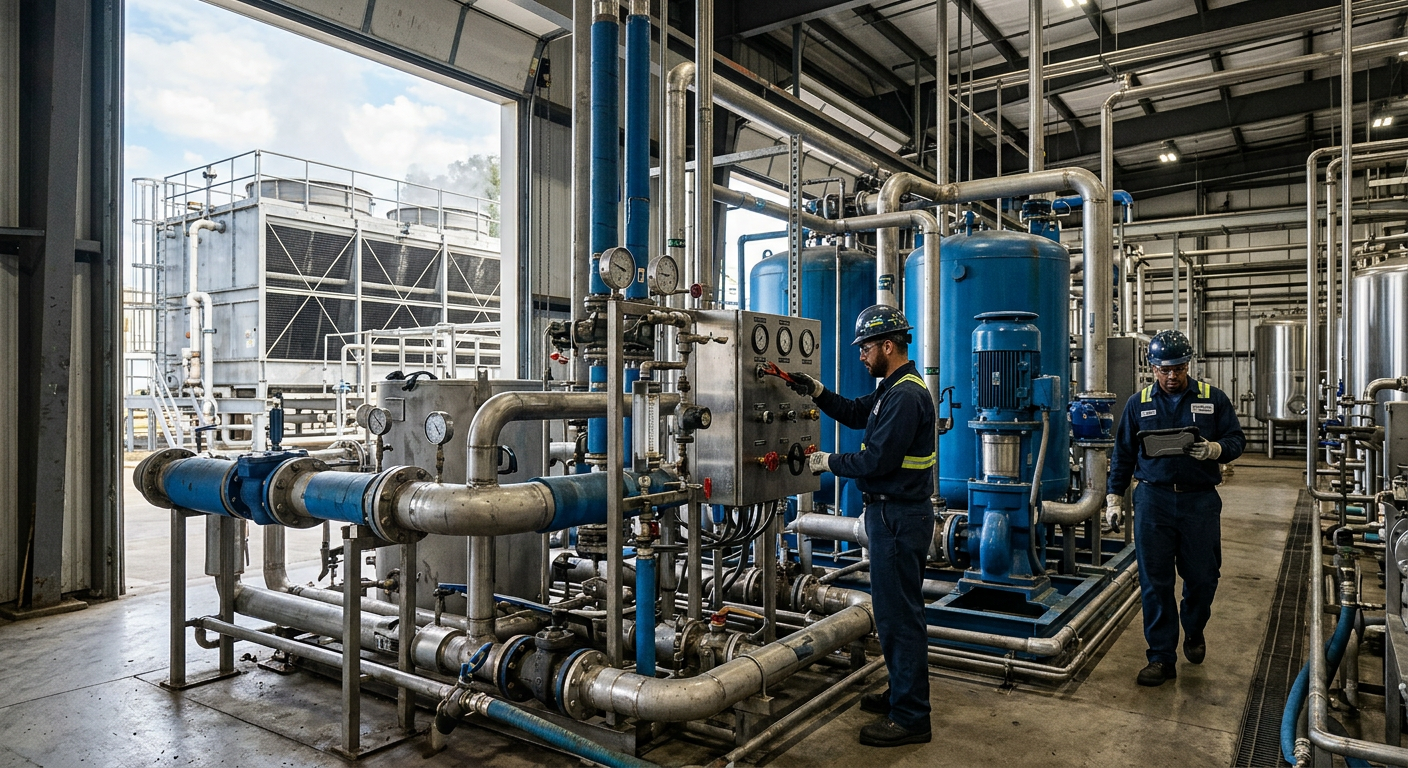
Pizza Manufacturing Plant Design: Dough Production and Topping Automation
Designing a profitable pizza manufacturing plant in the United States requires more than choosing mixers and ovens. It demands a coordinated process design that links dough development, crust forming, sauce and cheese dosing, topping placement, baking, cooling, freezing, packaging, sanitation, utilities, and controls into one stable production system. For fresh, refrigerated, and frozen pizza producers, the best results come from engineering the line backward from target throughput, SKU mix, labor strategy, food safety goals, and retail or foodservice requirements. In major production regions such as the Midwest, the Northeast corridor, Texas, California, and the Southeast, successful facilities are typically designed around repeatable dough performance, automated assembly, oven consistency, low giveaway, and effective allergen segregation. In the U.S. market, plant design also needs to account for distribution realities. Frozen pizza lines shipping through Chicago, Dallas, Atlanta, Los Angeles, New Jersey, and other freight hubs face different cold-chain constraints than fresh pizza operations serving regional grocery chains. Facilities near ports such as Savannah, Long Beach, Houston, and Newark may also integrate imported ingredients, spices, cheeses, and packaging materials into their supply planning. As a result, pizza production engineering is not only a mechanical challenge; it is a commercial and operational one. A modern pizza manufacturing plant should be engineered as an integrated process from ingredient receiving through final packaging. The most effective layout for the United States market combines controlled dough mixing and proofing, precise sheeting or pressing for crust consistency, automated sauce and cheese application, flexible topping deposition, matched oven and conveyor design, and downstream cooling, freezing, and packaging capacity sized to actual demand. Facilities making both fresh and frozen pizzas should also build in allergen management, gluten control, hygienic zoning, and recipe-based automation from the beginning rather than adding them later. For most manufacturers, the right design depends on five questions: This table shows why pizza line design should start with business requirements instead of isolated equipment purchases. A low-cost machine that does not fit throughput, sanitation, or future SKU plans often becomes the most expensive decision in the project. From a market perspective, U.S. demand remains strong across private label frozen pizza, club-store multi-packs, premium artisan crusts, and foodservice formats for convenience stores, schools, stadiums, and QSR support kitchens. By 2026, the strongest plants will use data-driven controls, recipe automation, energy-efficient thermal systems, and better ingredient traceability to protect margin and support growth. The line chart above illustrates a realistic automation growth trend in U.S. pizza production. It reflects ongoing investment in controls, labor reduction, and throughput stability, especially in states with large food manufacturing bases such as Illinois, Wisconsin, Pennsylvania, North Carolina, California, and Texas. Dough is the foundation of pizza product quality, so the engineering of the dough room should be treated as a critical process center. Whether the product is thin crust, hand-tossed style, pan pizza, par-baked crust, or rising crust frozen pizza, the dough system must control hydration, development time, dough temperature, rest cycles, divider accuracy, and fermentation behavior. In the United States, where flour specifications can vary by region and supplier, a robust dough design helps protect crust consistency across seasonal changes. Most industrial pizza plants use one of three dough handling strategies: batch mixing with floor-time and scaling, automated continuous ingredient delivery into batch mixers with downstream dividing, or higher-throughput integrated systems combining automated ingredient handling, mixing, extrusion or dividing, and controlled proofing. The best option depends on output, recipe sensitivity, and the desired crust character. This table explains why dough engineering is not only about selecting a mixer. Each unit operation affects the next, and weak synchronization between dividing and proofing often causes hidden waste in the forming zone. Buying advice for U.S. manufacturers: specify the dough room around the toughest SKU, not the easiest one. If your premium high-hydration crust needs longer rest time or stricter temperature control, the overall system should be designed to handle it. A line that only performs well with a basic thin-crust SKU will limit future product development. Plants serving retailers in major metro areas like New York, Philadelphia, Miami, Denver, and Seattle often need flexible dough management because local consumer preferences differ by region. Northeast markets may favor foldable crust textures and larger diameters, while club-store formats in the Midwest and South may prioritize efficient production of frozen family-size pizzas. On the technology side, advanced controls can tie ingredient batching, water temperature correction, mixer timing, proofing dwell time, and line speed into a unified SCADA environment. This is where process-focused engineering becomes valuable. A firm with deep controls and utility integration capability can align PLC programming, temperature management, compressed air, and sanitation systems with the dough process rather than treating them as unrelated packages. After proofing or resting, dough must be formed into a repeatable crust geometry. Sheeting and pressing systems are used to achieve target diameter, thickness, rim structure, docking pattern, and pan fit. The correct choice depends on the crust style, visual expectations, and line speed. Sheeting tends to suit thin or mid-thickness crusts with consistent gauge control, while pressing is often used where a more hand-formed appearance or edge definition is desired. Some facilities use both in parallel for different product families. Crust consistency matters because variation at this stage multiplies downstream. An off-center or misshapen crust affects sauce coverage, cheese containment, topping distribution, bake profile, package fit, and customer perception. For private label programs, where retailers demand precise weight and appearance control, forming performance can determine whether a plant wins or loses the account. The comparison above shows that the “best” machine is product dependent. In multi-product U.S. plants, the most profitable choice is often a flexible forming strategy that minimizes changeover downtime and reduces rework. Good engineering also means designing flour dust control, scrap management, pan return, lubrication strategy, and docking integration. Facilities in California and the Pacific Northwest often place extra emphasis on sanitation and allergen-friendly design, while high-throughput Midwestern plants may prioritize ruggedness, spare parts availability, and simple maintenance access. By 2026, more pizza plants are expected to use machine vision to verify crust diameter, centering, and edge uniformity in real time. These systems can automatically reject poorly formed bases or adjust upstream dough handling parameters. Trendwise, the industry is moving from reactive QA inspection to closed-loop process control. This area chart highlights the trend shift toward data-enabled forming systems, showing how crust consistency is becoming an automation-driven KPI rather than a manual inspection task. Once the crust is formed, sauce and cheese application become the next major control points for yield, taste, and visual quality. In many pizza plants, these two steps account for a large portion of ingredient cost giveaway, which means even small dosing errors can materially damage margin. For that reason, sauce and cheese systems should be specified with the same level of rigor as primary processing equipment. Sauce application methods include spiral depositors, piston fillers, slot spreaders, and rotary spread systems. The correct method depends on sauce viscosity, particulate content, crust size variation, and desired edge exposure. Cheese dosing can involve waterfall applicators, cup depositors, weigh-belt systems, or recipe-controlled gravimetric feeders. For premium products with blends of mozzarella, provolone, parmesan, or plant-based alternatives, precise multi-stream dosing is especially important. The explanation here is straightforward: sauce and cheese automation directly influences both product quality and ingredient economics. Since cheese can be one of the most expensive pizza inputs, accurate dosing often pays back faster than expected. Applications vary by market segment. Fresh deli pizza programs often tolerate a more handcrafted look, but frozen retail lines generally require tighter repeatability for package fit and consumer expectation. Foodservice products going to school lunch, healthcare, or convenience store channels may need stricter nutritional and portion compliance, making dosing automation even more valuable. For plants evaluating suppliers, it is wise to assess cleanability, CIP compatibility where appropriate, belt access, nozzle changeover speed, and the ability to manage different sauce viscosities across seasons. Tomato solids, oil phase separation, and cold-room cheese behavior can all affect performance. Integrated controls are important here as well. A well-designed line can store recipes by SKU, automatically adjust dose rate to conveyor speed, and track ingredient usage against expected consumption. This type of digital visibility aligns with broader 2026 trends around traceability, waste reduction, and sustainability reporting. The topping zone is where line flexibility and automation sophistication become highly visible. Pepperoni, sausage, vegetables, olives, mushrooms, onions, chicken, plant-based proteins, and specialty finishes each flow differently, present different sanitation concerns, and contribute differently to the final appearance. In high-volume plants, the key objective is not simply to add toppings, but to add them accurately, attractively, and at the right cost. Assembly line design should consider product family grouping, topping sequence, cross-contamination risk, labor ergonomics, and accumulation strategy. A plant with many premium SKUs may use a hybrid design that combines automated primary topping placement with manual finishing stations. A line focused on a narrower frozen retail range may justify more full automation through indexing depositors, slicer-fed systems, or robotic pick-and-place solutions. This table explains that topping automation should match ingredient behavior. A system optimized for pepperoni may perform poorly with diced peppers or delicate plant-based proteins unless the feeding and placement mechanics are engineered for those materials. Industry demand in the United States continues to favor lines that can run both mainstream and premium products. Retailers want differentiation without paying for excessive line downtime. That is why assembly line layout must support changeovers, allergen segregation, and quick sanitation. Plants in regions with strong private label growth, such as the Midwest and Southeast, often benefit from modular topping zones that can be expanded as customer programs grow. The bar chart shows relative demand intensity across major pizza channels. Frozen retail and premium private label remain strong drivers of investment, which is why topping systems are increasingly expected to support appearance quality and cost control at the same time. From an engineering capability perspective, successful assembly lines rely on more than food machinery alone. Structural support, utilities, electrical distribution, controls integration, compressed air routing, washdown compatibility, and plant-floor traffic all matter. This is where a multidisciplinary engineering team can reduce conflicts between equipment suppliers and building systems. The oven is one of the most consequential choices in the entire pizza plant. It determines bake profile, crust texture, color development, moisture loss, topping set, throughput, and energy use. The ideal oven depends on whether the product is fully baked, par-baked, or designed for consumer finish baking. Thermal performance also needs to match line speed and upstream deposit consistency. Common options include impingement ovens, band ovens, stone-hearth style systems, direct gas-fired configurations, and hybrid thermal designs. In frozen pizza manufacturing, conveyorized ovens with highly repeatable zone control are common because they support consistent output at industrial volumes. For premium crust programs, manufacturers may seek more specific heat transfer characteristics to create artisan-like browning or blistering. The table above clarifies that oven selection should be linked to product architecture, not just line speed. A high-capacity oven that delivers the wrong crust texture can undercut the entire business case. Conveyor integration is equally important. Belts, transfers, accumulation points, oven loading, and downstream discharge all need to preserve product geometry and avoid topping loss. In U.S. plants operating at scale, conveyor line balancing can make the difference between smooth production and recurring stoppages. This is especially true when baking feeds a spiral cooler or freezer with limited surge tolerance. Local energy conditions also influence the decision. Plants in states with volatile utility rates may prioritize thermal efficiency, heat recovery, and smart controls. By 2026, sustainability expectations and energy reporting are likely to push more facilities to examine burner efficiency, insulation, exhaust optimization, and total utility integration. Manufacturing capability matters here because oven performance depends on the surrounding systems: HVAC, process air, gas trains, controls, sanitation access, and building coordination. A project partner that can connect process engineering with mechanical, electrical, and utility infrastructure typically reduces startup delays and performance gaps. After baking, the product pathway diverges depending on whether the pizza will be sold fresh, refrigerated, or frozen. This stage often determines shelf life, product integrity, freight readiness, and retail presentation. For frozen products, cooling and freezing rates affect crust texture, cheese appearance, and moisture migration. For fresh products, packaging atmosphere, oxygen transmission, and distribution timing are central concerns. Frozen pizza lines commonly include post-bake cooling, transfer to spiral or tunnel freezing, metal detection or X-ray, cartoning, case packing, palletizing, and cold storage interface. Fresh and refrigerated lines may emphasize cooling, tray loading, flow wrapping, MAP sealing, and rapid dispatch. Packaging should be selected for channel requirements, from club-store corrugated packs to retail cartons and foodservice bulk formats. This table explains why packaging system engineering changes significantly by product type. Many plants underestimate the impact of cold-chain layout, especially when scaling from regional fresh distribution to national frozen distribution. For the United States, logistics geography matters. A frozen pizza operation shipping to the Northeast may stage inventory differently than one serving the Mountain West. Facilities near intermodal hubs in Chicago, Kansas City, Memphis, or Dallas can optimize outbound freight, while coastal facilities may focus on inbound ingredient supply and regional retail service. Warehouse temperature transitions, dock seals, and forklift traffic should be considered early in design. 2026 trends include more recyclable packaging discussion, right-sized cartons to reduce freight cube, automated pallet inspection, and improved data capture on code verification and traceability. Retailers increasingly expect better shelf-ready packaging and cleaner graphics execution, so packaging equipment must support appearance as well as throughput. The comparison chart presents a realistic framework for evaluating integrated line solutions. U.S. buyers often compare suppliers not only on price, but on sanitation design, service support, and scalability for future SKU growth. Allergen management is a major design consideration in pizza manufacturing because many facilities handle wheat, milk, soy, and sometimes egg, tree nuts, or specialty ingredients in the same building. Gluten control is especially important for plants producing both conventional pizzas and gluten-free items. The safest approach is to address segregation, airflow, traffic, sanitation, and scheduling during the initial facility design stage. For conventional wheat-based pizza plants, gluten is usually a known baseline ingredient. The challenge increases when gluten-free crusts are introduced for retail or foodservice channels. In these cases, physical separation, dedicated tools, validated cleaning, distinct ingredient storage, and carefully managed personnel movement are often necessary to reduce cross-contact risk. Many operations decide to run gluten-free in a separate suite or even a separate building annex if the business volume justifies it. The explanation is clear: allergen management is partly an engineering problem and partly an operational discipline problem. The best plants design the building and line layout to make correct behavior easier for the workforce. In the U.S., SQF, BRC, FDA expectations, customer audits, and private label requirements all push plants toward stronger preventive controls. By 2026, digital sanitation verification, electronic allergen changeover records, and more environmental monitoring integration are expected to become standard in larger operations. Local supplier selection also matters. Ingredient and packaging vendors should be evaluated on allergen declarations, lot traceability, lead time reliability, and documentation quality. Manufacturers sourcing specialty flours, plant-based proteins, or imported toppings through hubs like Los Angeles, New York/New Jersey, or Savannah should build traceability and backup planning into procurement strategy. For manufacturers planning a new pizza production line or a plant expansion in the United States, the most valuable partner is one that understands both the process and the business case. Disruptive Process Solutions works as a food and beverage engineering partner across North America, helping manufacturers turn capital spending into practical, profit-focused production capability. Rather than approaching projects as isolated equipment sales, the team aligns layout, utilities, controls, installation, and execution with the client’s long-term operating goals. From a technological capabilities standpoint, DPS supports process, mechanical, structural, plumbing, electrical, and controls engineering with strong integration of PLC programming, automation, and SCADA. That matters in pizza manufacturing because the line only performs as expected when dough systems, depositors, conveyors, ovens, refrigeration loads, and packaging equipment communicate effectively. In a complex pizza facility, recipe logic, utility demand, safety interlocks, and production reporting should all be coordinated rather than patched together after startup. Manufacturers looking for this type of support can review the company’s broader engineering and project services. From a manufacturing capabilities perspective, DPS has experience across food processing systems including mixing, forming, cooking, utility integration, hygienic process design, and downstream handling. The company also manufactures selected proprietary process equipment, giving clients another option when standard equipment does not fit the application. That is relevant for pizza projects where custom dough handling, ingredient delivery, CIP strategy, or utility packaging may need to be adapted to site constraints. Additional information on available process equipment can be found through the company’s equipment solutions resources. From a service capabilities standpoint, DPS operates through a design-build-manage approach that combines planning, general contractor coordination, installation oversight, and execution management. For pizza manufacturers, this can reduce the common gap between what is drawn, what is purchased, and what is actually installed. It also helps clients manage aggressive timelines, whether they are launching a new frozen pizza line in the Midwest, retrofitting an existing prepared foods facility in the Southeast, or relocating equipment to support growth in Texas or California. For examples of practical project delivery and implementation outcomes, manufacturers can explore selected project case examples. A strong capital project partner also brings discipline to buying advice. In pizza production, the right answer is not always the largest oven, the fastest depositor, or the lowest quoted installed cost. It is the solution that best aligns capacity, SKU complexity, quality, labor, and future expansion. That is the kind of commercial lens many manufacturers need when deciding between a straightforward line upgrade and a full greenfield build. In short, if your operation needs help evaluating dough systems, topping automation, utility infrastructure, packaging integration, or site-wide execution strategy in the United States, a process-led engineering approach can reduce risk and improve return on capital. What is the first step in designing a pizza manufacturing plant?The first step is defining business requirements: throughput, SKU mix, product type, distribution model, labor plan, and food safety expectations. Once those are clear, the process flow and equipment sizing can be engineered logically. Which product types should the plant layout account for?Typical U.S. product types include frozen retail pizza, fresh or refrigerated pizza, par-baked crusts, rising crust formats, pan pizzas, thin crust, premium artisan styles, private label products, and foodservice packs for schools, convenience stores, and restaurants. Is batch mixing better than continuous dough preparation?Not always. Batch mixing offers flexibility and strong control for many recipes, while more automated systems can improve throughput and labor efficiency. The right solution depends on crust style, production volume, and the number of changeovers. How much automation is practical for a mid-sized U.S. pizza plant?Many mid-sized plants benefit from automating sauce, cheese, primary toppings, conveyors, and packaging while keeping selective manual finishing for premium SKUs. The goal is to automate the highest-labor, highest-variation steps first. What industries use pizza manufacturing lines beyond retail brands?Applications extend to contract manufacturing, private label production, foodservice suppliers, convenience store commissaries, institutional feeding programs, stadium and entertainment food providers, and multi-brand prepared foods operations. How should buyers compare equipment suppliers?Evaluate sanitation design, changeover time, installed support, controls compatibility, spare parts access, scalability, energy use, and actual performance on similar products. Price alone is not enough. What are common mistakes in pizza line projects?Common issues include underestimating proofing needs, selecting a forming method that does not fit the dough, overlooking ingredient giveaway in sauce and cheese zones, mismatching oven capacity to freezer capacity, and treating allergen control as an afterthought. How can a plant support both fresh and frozen pizza?It needs a flexible downstream design with distinct cooling, packaging, and cold-chain strategies. Some manufacturers share upstream processing and split the line after baking or after assembly, depending on the products. What future trends should U.S. manufacturers prepare for by 2026?Expect stronger use of machine vision, recipe-driven automation, energy efficiency upgrades, digital sanitation verification, improved traceability, more sustainability reporting, and greater packaging scrutiny around material use and freight efficiency. Where are strong local markets and supplier ecosystems for pizza production in the United States?Key regions include Illinois, Wisconsin, Pennsylvania, Texas, California, Georgia, and North Carolina due to manufacturing infrastructure, logistics access, labor pools, and proximity to major freight corridors and consumer markets. In summary, pizza manufacturing plant design in the United States is a full-system engineering challenge that links dough science, automation, thermal processing, packaging, food safety, and capital planning. Manufacturers that design with future growth, operational data, and product flexibility in mind are better positioned to compete across fresh, frozen, private label, and foodservice channels. -
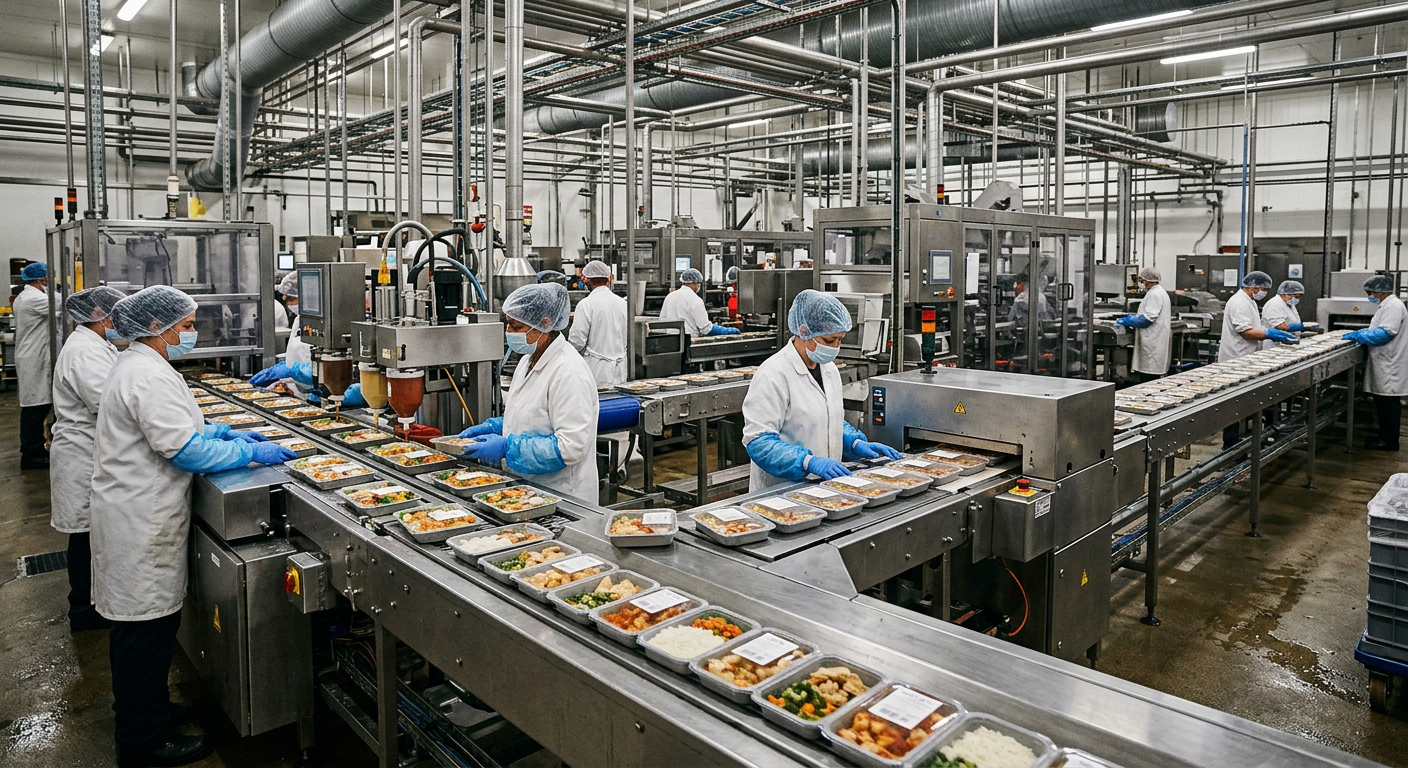
Salad Processing Line Design in 2026: Fresh-Cut Facility Engineering
The best salad processing line design for 2026 combines gentle raw product handling, multi-stage washing, reliable foreign material detection, precise cutting, recipe-controlled blending, sanitation barriers, packaging flexibility, and a tightly engineered cold chain. In the United States, successful fresh-cut facilities are being designed around food safety, labor efficiency, water reuse strategy, data visibility, and the ability to run multiple pack formats such as pillow bags, bowls, and clamshells on one integrated platform. Whether a processor serves grocery retail in Chicago, club stores in Dallas, meal kit programs in Los Angeles, or foodservice hubs near Atlanta and New Jersey, the winning layout is the one that protects leaf quality while delivering profitable throughput. The U.S. market for ready-to-eat leafy greens and mixed salad kits continues to favor operations that can scale across romaine, iceberg, spinach, kale, spring mix, cabbage, carrots, onions, cucumbers, proteins, toppings, and dressings. Engineers now have to consider not only production rate, but also FSMA expectations, retailer audit pressure, sanitation validation, sustainability metrics, utility cost, and future automation. This is why line design must start with process flow and risk reduction, not just equipment selection. For processors planning new builds or retrofits, a practical approach is to align the process with local logistics realities. Facilities in California’s Salinas and Yuma seasonal supply network prioritize rapid inbound receiving and wash capacity. Plants shipping through distribution centers near Philadelphia, Columbus, Houston, or the Inland Empire need strong pallet movement and refrigerated dock design. Southeastern plants near Charlotte or Jacksonville often focus on mixed SKU flexibility for regional retail replenishment. In each case, engineering decisions should support shelf life, labor performance, and total landed cost. A salad processing line in the United States should be designed as a sequence of controlled zones: raw receiving, trim and prep, wash and flume transfer, dewatering and drying, optical inspection, cutting or slicing where needed, recipe weighing and blending, post-process sanitation controls, primary packaging, secondary packaging, cold storage, and refrigerated shipping. For 2026, the most competitive facilities emphasize four outcomes: lower microbial risk, less product damage, lower labor dependence, and higher line flexibility. For most fresh-cut salad operations, the highest-value engineering priorities are: Buying advice for U.S. processors is straightforward: do not buy stand-alone machines first and then try to connect them later. Start with throughput targets, crop mix, sanitation plan, labor model, pack formats, and shelf-life objectives. Then create an integrated layout that includes utilities, controls, floor drainage, allergen separation if dressings or toppings are added, and room-by-room temperature strategy. The table above shows the practical issues that most directly affect profitability. In U.S. fresh-cut operations, failures usually come from interaction between steps, not from a single machine. That is why engineering discipline matters from day one. Washing and drying are the heart of a fresh-cut salad line. A strong system usually starts with dumpers or receiving flumes that minimize leaf breakage. Product then moves through one or more wash stages, often beginning with heavy soil removal and followed by cleaner, controlled antimicrobial stages. Final rinse logic depends on product type, water quality goals, and the processor’s food safety program. Leafy greens such as romaine, spinach, baby kale, and spring mix each behave differently in water. Spinach may trap more water and require gentler drying parameters. Romaine and iceberg can tolerate more robust handling but still suffer edge damage if transfers are too abrupt. U.S. plants serving premium retail often use product-specific recipes for flume velocity, sanitizer concentration, dwell time, and spin cycle intensity. A good wash system also needs strong utility design: water supply pressure stability, chemical injection points, drain capacity, access for cleanout, and instrument visibility for operators. Facilities in drought-sensitive regions such as California increasingly evaluate water recirculation, filtration, and make-up water optimization. However, water reuse must always be engineered around food safety validation, not just conservation goals. The most common drying equipment choices are basket centrifuges, continuous centrifugal dryers, and air knife or vibration-assisted systems. In larger U.S. installations, hybrid drying is often used. For example, a processor may use spin drying for spinach and air-assisted finishing for mixed greens. This combination can improve throughput while protecting tender leaves. Future design trends for 2026 include inline moisture analytics, predictive maintenance on dryer bearings and motors, and variable-speed automation that changes settings by product code. Plants aiming to reduce labor dependence are also adding automated tote handling between wash and dry zones. After drying, inspection becomes a major control point. Optical sorting technology for leafy greens now goes beyond color separation. Modern systems can identify dark defects, yellowing, insect damage, stem load, and some non-product contaminants. In U.S. facilities handling high-volume baby leaf products, optical sorting helps reduce both consumer complaints and expensive over-trimming upstream. Foreign object detection should be considered as a layered defense. Optical systems can catch plastics, wood, insects, and off-color material. Metal detection remains valuable for metallic risk. X-ray may be justified in select applications, especially where mixed kits include denser components or where customer standards demand broader detection capability. No single technology should be treated as a complete safeguard. Line layout matters as much as sensor capability. The best inspection zone has stable product presentation, controlled feed depth, good lighting management, and an easy-to-verify reject path. If the product mat is too thick, defects can hide. If the feed is too sparse, throughput suffers. A strong engineering team balances width, belt speed, and throughput so detection performance remains realistic under production conditions. Processors near major logistics corridors such as the I-5 route in California, the Midwest distribution network around Indianapolis, or the Northeast corridor near Newark and Philadelphia often see pressure from large retailers for detailed QA documentation. Inspection systems should therefore be integrated with production data capture, reject trending, and audit-friendly reporting. The explanation from this table is simple: foreign object control works best when technologies are layered and connected to plant operations. A processor that pairs intelligent inspection with disciplined upstream trimming and washing will usually outperform one that tries to solve all quality problems at the final package stage. Not every salad line is all-leaf. Many mixed kits include shredded cabbage, sliced carrots, chopped romaine, cucumber rounds, onions, radishes, and other value-added ingredients. Cutting systems must therefore be selected by ingredient behavior, not just desired throughput. Blade style, infeed stability, sanitation access, and cut consistency all influence yield and shelf life. For cabbage and lettuce, shredders need to produce a clean cut with minimal fines. Carrot and cucumber lines often require strong wash-down construction and accurate feed alignment. Onion cutting demands attention to odor management, local exhaust, and room zoning so neighboring ingredients are not affected. Mixed facilities should consider whether ingredient prep happens in a separate room or a fully separated processing cell. The buying advice here is to avoid over-sizing cutters without considering downstream blending and package fill. If the cutter can run faster than the wash, blend, or pack-out system, product will queue and quality will drop. Integrated line balancing is more valuable than peak machine speed. Across the United States, processors serving foodservice in cities like Las Vegas, Orlando, and Nashville often need a broader ingredient mix than retail-only salad plants. As a result, flexible prep rooms with mobile equipment, quick sanitation changeover, and modular conveyance are becoming more common. In 2026, expect more cutter systems linked to recipe scheduling software so line crews can switch SKUs faster with fewer setup errors. Mixed salad kits live or die on recipe accuracy. Giveaway hurts margin, while underweight packs trigger retailer penalties and consumer dissatisfaction. Effective recipe weighing and blending systems combine controlled ingredient dosing, low-drop transfer, and synchronized communication with packaging equipment. For leafy base mixes, multi-head scales are not always the right answer. Many operations use linear weighers, volumetric feeders, or hybrid solutions that better protect product structure. Toppings such as croutons, seeds, cheese, dried fruit, or proteins may require separate lanes and allergen-conscious staging. Dressings and toppings can be inserted in the package or added as secondary components depending on format and customer expectation. Blending should be gentle and short. Over-mixing damages leaves and creates fines that settle to the bottom of the bag. The best systems create distribution uniformity without tumbling product excessively. This is especially important for premium kits destined for high-turn grocery chains in markets such as New York, Seattle, Boston, and Minneapolis. The table highlights that weighing and blending are not only mechanical tasks; they are commercial controls. Small improvements in giveaway or rework can make a major difference when a plant runs millions of units annually. As fresh-cut processors search for additional shelf-life support, UVC treatment and advanced sanitation tools are drawing more attention. UVC is not a substitute for a validated wash system, proper temperatures, or hygienic facility design. Instead, it can serve as one more hurdle in a broader contamination control strategy when properly validated for the product and the process environment. In salad operations, advanced sanitation goes beyond equipment foam cleaning. It includes zoning of personnel and tools, drain strategy, hygienic air handling, boot sanitation, traffic control, dry storage separation for packaging materials, and validated clean-in-place or clean-out-of-place procedures where applicable. U.S. customers increasingly expect documented environmental monitoring and faster corrective action. For 2026, several trends matter: more automated sanitation verification, greater use of ATP and environmental data trending, pressure to reduce water and chemical consumption, and stronger retailer focus on preventive controls. Sustainable sanitation is becoming a real engineering topic, especially in regions with rising utility costs. Applications vary by plant type. A high-volume bagged leaf facility may use UVC in targeted conveyor or product presentation zones. A premium salad kit plant may focus more heavily on room segregation, utensil control, and rapid sanitation changeovers between allergen-bearing toppings. The right design depends on hazard analysis, throughput, and customer requirements. Packaging integration is where upstream process quality becomes commercial output. The 2026 U.S. market demands flexibility: value bags for club channels, premium stand-up pouches, single-serve bowls, and rigid clamshells for grab-and-go or higher-end merchandising. A well-engineered facility should accommodate current pack formats while leaving a clear expansion path. Bag lines usually offer the highest throughput, but they require careful product feed control, seal integrity management, gas flush strategy where applicable, and smooth integration with coding, checkweighing, case packing, and palletizing. Bowl and clamshell lines generally require more footprint and more precise product placement, but they open the door to premium merchandising and higher average selling prices. Facilities serving mixed channels often build one flexible packaging hall rather than isolated mini-lines. This can work well if changeover design, labor allocation, and material flow are carefully planned. The engineering challenge is to avoid crossover congestion between film rolls, rigid containers, finished packs, and QA hold areas. When comparing packaging solutions, processors should assess not only speed but also OEE, labor per thousand units, material cost, rework rate, and customer mix. For many U.S. operators, a line that runs slightly slower but changes over quickly between bags and bowls creates better annual profitability than a rigid high-speed line dedicated to a single format. Cold chain design is the final safeguard for freshness and shelf life. For fresh-cut produce, refrigeration must be treated as a process system, not simply a building utility. Room temperature targets, air distribution, loading patterns, product dwell time, and dock traffic all affect results. The goal is to limit respiration, maintain appearance, and preserve microbiological stability. Most U.S. fresh-cut facilities operate key process rooms and storage areas in the mid-30s Fahrenheit range, with exact targets depending on product mix and stage. However, temperature alone is not enough. Engineers must address air balance, humidity, door management, evaporator selection, defrost strategy, and sanitation compatibility. Warm staging near docks is a common weak point, especially in hot climates such as Texas, Arizona, and Florida. Facilities shipping nationwide through cold carriers or regional DC networks need strong pallet handling design. Finished goods should move quickly from packaging to blast pull-down or cold storage, then to dock staging timed to truck arrival. Excess dwell at the dock can erase gains made through careful upstream processing. The explanation from this table is that refrigeration must match actual product movement. Too many facilities design good coolers but weak transitions. In 2026, expect wider adoption of smart sensors, alarm dashboards, and energy optimization tied to occupancy and door-opening patterns. Disruptive Process Solutions supports food and beverage manufacturers across the United States and Canada with practical engineering built around profitability, execution, and long-term operating success. Rather than acting like a traditional contractor that only installs what is requested, the company approaches projects as a strategic partner focused on helping clients make better capital decisions and build systems that perform in the real world. From a technological capability standpoint, DPS brings process, mechanical, electrical, structural, plumbing, and controls expertise into one coordinated model. That matters in salad line design because washing, drying, conveyors, inspection devices, recipe control, utilities, and refrigeration must work as one operating system. Clients looking for integrated planning can review the company’s broader engineering and project support approach here: food manufacturing engineering services. From a manufacturing capability standpoint, DPS also develops and supplies selected process equipment and integrates third-party technologies into complete operating lines. This is useful for fresh-cut plants that need custom skids, utility modules, tanks, CIP support elements, or application-specific equipment interfaces. More on available equipment capabilities can be seen at process equipment solutions. In salad facilities, this manufacturing mindset helps when standard equipment needs to be adapted to room constraints, sanitation requirements, or utility realities. From a service capability standpoint, DPS works across planning, design, installation, integration, project management, and execution oversight. Its Design Build Manage model is especially relevant for processors who want one accountable partner from concept through startup. For companies evaluating fit, background and operating philosophy are available at about Disruptive Process Solutions. Examples of real project execution and field results are available through these project case studies. For U.S. fresh-cut produce facilities, the value of this model is speed with discipline. A project may involve hygienic room layout, wash system utility planning, controls integration, packaging expansion, dock refrigeration improvements, or a plant-wide retrofit phased around live production. In each case, the objective is not just to install equipment, but to engineer a profitable operating result. What throughput should a new salad line be designed for?Design for realistic daily and peak seasonal demand, then check whether sanitation time, labor availability, and packaging capacity support that target. A line rated only on machine nameplate speed is often misleading. How many wash stages are usually needed?It depends on product mix, soil load, and food safety strategy. Many U.S. processors prefer at least a staged approach with early debris removal and a controlled antimicrobial step, followed by final rinse logic where validated. Is centrifugal drying always necessary?Not always, but for many leafy greens it remains one of the most effective ways to reduce free moisture before packaging. Product trials are essential because some tender mixes need gentler settings or hybrid drying. Should a processor choose bags, bowls, or clamshells?Choose based on customer channel, price point, shelf presentation, case cube, labor model, and line flexibility goals. Many facilities now need a combination rather than a single format. How important is optical sorting for leafy greens?It is increasingly important for retail-quality consistency and foreign material reduction. However, it works best as part of a full quality system that includes good wash design, trimming, and final verification. What are the biggest 2026 trends in salad facility engineering?More automation, stronger sanitation data systems, sustainability-driven water and energy design, recyclable packaging adaptation, AI-supported inspection, and smarter refrigeration monitoring are the biggest shifts. What local supplier factors matter in the United States?Processors should evaluate field service coverage, spare parts access, installer availability, and response time by region. Support needs look different in Salinas, Phoenix, Chicago, or Raleigh, especially during peak production windows. How should a company compare suppliers?Use a scoring model that weighs hygienic design, service support, integration experience, controls compatibility, total cost of ownership, and proof of performance with similar ingredients. For companies planning a new fresh-cut plant or a targeted retrofit in the United States, the strongest results come from engineering the entire process around product protection, verifiable sanitation, packaging flexibility, and cold-chain discipline. That is the practical path to better shelf life, better retailer performance, and better returns on capital in 2026. -
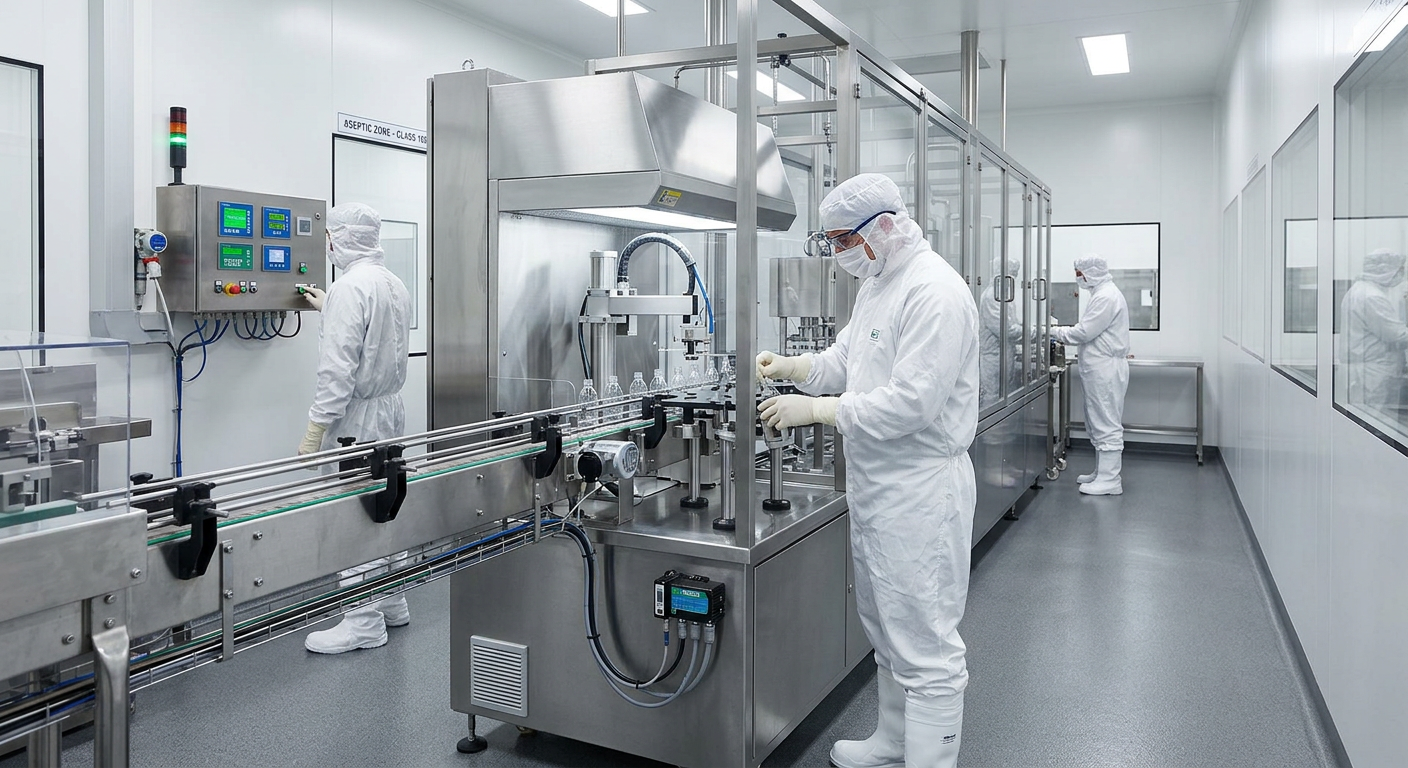
Beverage Mixing Tank Manufacturer
Choosing the right beverage mixing tank is not simply a matter of vessel size. In the United States, beverage producers must balance product quality, sanitation, carbonation retention, acid resistance, batch flexibility, utility efficiency, and compliance with FDA, SQF, BRC, and customer audit requirements. Whether you are blending juices in Florida, functional beverages in California, dairy drinks in Wisconsin, RTD cocktails in Texas, or syrups near major logistics hubs like Chicago, Charlotte, Los Angeles, Houston, or Newark, the tank design directly affects throughput, consistency, cleanability, and total operating cost. A beverage mixing tank for U.S. operations should be selected based on product viscosity, acid level, carbonation sensitivity, batch size, temperature needs, sanitation standards, and automation requirements. For many acidic, flavored, or carbonated products, 316L stainless steel is preferred because it offers stronger corrosion resistance than 304 stainless. Propeller agitators fit low-viscosity blending, turbines support stronger top-to-bottom circulation and powder incorporation, and paddle or sweep agitators work better for higher-viscosity or solids-sensitive products. Tanks intended for commercial beverage use should also be CIP-ready, have sanitary welds, suitable surface finish, well-placed baffles where needed, and controls that match the plant’s recipe and traceability requirements. In practical terms, U.S. beverage manufacturers often look for a system rather than a standalone vessel. That means integrating the tank with ingredient handling, load cells, inline Brix monitoring, carbonation, pasteurization, transfer pumps, CIP skids, and plant utilities. For growing producers, the best investment is usually a mixing system designed around future expansion, not only today’s first SKU. The current U.S. market also favors flexible systems that can handle multiple formulations, allergens, cleaning validations, and shorter production runs. Co-packers and multi-SKU beverage brands increasingly need tanks that can switch between sports drinks, energy beverages, flavored waters, dairy-based beverages, and syrups with minimal downtime. This is why engineering detail matters as much as tank capacity. The chart above reflects a realistic trend seen across North American beverage capital spending: demand is rising as brands reshore production, co-packers add capacity, and manufacturers upgrade older vessels to cleaner, more automated, more flexible systems. Agitator selection is one of the most important design decisions because it determines blend uniformity, solids suspension, foaming tendency, and cycle time. In beverage processing, the wrong impeller can create excess vortexing, poor powder wet-out, flavor inconsistency, carbonation loss, or unnecessary energy use. Propeller agitators are commonly used in low-viscosity beverages such as flavored water, tea bases, electrolyte solutions, and many syrup dilution steps. They generate axial flow, moving liquid vertically and creating rapid circulation. They are efficient and relatively simple, but they are not always ideal for heavier concentrates or products that need stronger shear. Turbine agitators are often chosen when producers need a stronger mixing pattern, better gas or powder dispersion, or more controlled blending performance. Depending on the blade style, turbines can produce axial or radial flow. They are suitable for syrup rooms, ingredient blending, and formulations with functional powders, stabilizers, or moderate solids loading. Paddle agitators are generally used for gentler mixing, broader wall coverage, and products that do not require aggressive shear. They can be useful in dairy beverage bases, pulp-containing beverages, or heavier flavor systems where minimizing damage to suspended particles matters. This table shows why no single agitator fits every beverage. U.S. buyers should ask suppliers for impeller recommendations based on actual product rheology, not assumptions drawn from water tests. A system designed for sports drinks may perform poorly with smoothie bases or dairy emulsions. Material selection is central to product safety and tank life. For many beverage applications, especially acidic drinks and carbonated products, 316L stainless steel is the preferred choice because it improves resistance to corrosion, pitting, and chemical attack. This is particularly relevant for products containing citric acid, phosphoric acid, fruit concentrates, flavor compounds, salt systems, or aggressive cleaning chemicals. 304 stainless still has a place in some non-aggressive beverage utilities or lower-risk applications, but when the process fluid is acidic, chloride exposure is possible, or long-term cleanability matters, 316L is typically the stronger investment. The “L” grade also supports better weld integrity for sanitary fabrication because of its lower carbon content. For U.S. beverage producers shipping nationwide, the longer equipment life of 316L often reduces total ownership cost. It also aligns well with premium sanitation expectations from major retailers, brand owners, and co-manufacturing customers. If your facility handles kombucha, juice concentrates, sodas, RTD cocktails, or functional drinks with low pH, 316L should be evaluated early instead of treated as an upgrade at the end. Tank geometry matters as much as impeller style. Baffles, wall sweeps, and high-shear devices each solve different process problems. Baffles are vertical strips installed on the interior tank wall to disrupt rotational flow and reduce vortexing. In low-viscosity beverages, they often improve top-to-bottom mixing and reduce air entrainment. However, for some sanitary applications or certain vessel sizes, the designer may use alternative anti-vortex strategies to simplify cleaning. Sweeps or anchor agitators help move product along the vessel wall. They are useful when product viscosity is high enough that dead zones can form or when heat transfer through the jacket is important. Smoothies, concentrates, dairy bases, and certain flavor pre-mixes may benefit from this approach. High-shear mixers are used when powders must be rapidly dispersed, gums need hydration, emulsions must be stabilized, or a formulation contains ingredients that do not easily wet out. They can be top-entry, bottom-entry, or inline. Many beverage systems use a hybrid design: a main tank agitator for bulk circulation plus an inline high-shear loop for powder induction. The best approach depends on the product. For example, a clear carbonated beverage base may only need gentle agitation and careful anti-foam control, while a protein shake might require aggressive powder induction followed by slower finishing agitation. Matching agitation to the formula prevents quality complaints and avoids overspending on unnecessary horsepower. This industry view highlights where future U.S. demand is strongest. Functional beverages and alcohol RTD continue to drive new blending projects, especially around major markets such as Southern California, the Carolinas, Texas, and the Midwest. Temperature control can be essential in beverage mixing. Some products require warming for sugar dissolution, some require cooling to protect flavors or carbonation, and others need precise thermal management before downstream pasteurization or filling. Dimple jackets are common because they provide efficient heat transfer around the vessel exterior without placing obstructions inside the tank. They are sanitary, durable, and widely used for heating or cooling with glycol, chilled water, or hot water. Internal coils can increase heat transfer area and are useful in certain applications, but they add internal surfaces that must be thoroughly cleaned. In sanitary beverage design, they should be used only when the thermal benefit justifies the added cleaning complexity. Full jacket or half-pipe jacket arrangements may also be specified for special thermal loads. The choice depends on product fouling risk, utility availability, and target batch cycle time. For U.S. facilities where utilities vary by region, the thermal system must fit the site. Plants near the Gulf Coast may have different cooling strategies than those in Minnesota or upstate New York. Utility cost, water availability, and maintenance support all matter. Good heat-transfer design should be reviewed alongside process scheduling, not afterward. Sanitary design is non-negotiable for commercial beverage manufacturing. A mixing tank should support fast cleaning, repeatable validation, low contamination risk, and easy inspection. This includes hygienic weld quality, drainability, proper gasket materials, sanitary fittings, spray coverage, and elimination of dead legs. For flavor systems and sensitive beverage bases, common sanitary design requirements include polished product-contact surfaces, sloped bottoms for drainage, sanitary manways, CIP spray devices, orbital welds where appropriate, and instrumentation selected for hygienic service. Valves, pumps, and transfer lines should be designed as part of the full process path. Many U.S. producers also need the tank design to align with customer audits, not just regulation. Large retail and brand accounts often inspect more than code compliance. They review cleanability, documentation, preventive maintenance access, traceability, and operator safety. Sanitary design becomes especially important in systems that handle allergen changeovers, dairy-based beverages, aseptic ingredients, fermented drinks, or high-sugar products that can leave residue. If the system cannot be cleaned and verified quickly, actual plant capacity drops regardless of the tank’s nameplate size. The U.S. trend is clear: by 2026 and beyond, automated CIP-ready systems are becoming the standard, especially in facilities serving multiple brands or running high-SKU production schedules. One large tank is not always better than multiple smaller tanks. The right configuration depends on SKU mix, scheduling, inventory strategy, utility constraints, and risk tolerance. Single-tank systems may be cost-effective for simpler operations with stable volume, fewer recipes, and predictable production runs. They reduce equipment count and can simplify controls. However, they create a single point of failure and can reduce scheduling flexibility. Multi-tank configurations offer better changeover management, product segregation, phased production, and redundancy. A co-packer in Atlanta or Dallas producing several beverage families may benefit more from three medium tanks than from one oversized vessel. Multi-tank systems also make expansion easier because capacity can be added in stages. When reviewing batch sizing, manufacturers should consider minimum fill level, agitator performance at partial volume, and future SKU growth. Tanks that mix well only at full capacity can become operational bottlenecks if product demand shifts. For startup and mid-market producers, modular planning is often the smartest capital choice. It keeps early spending aligned with demand while preserving a path to larger throughput as distribution expands across the United States. Surface finish affects product hold-up, microbial risk, cleaning time, and inspection outcomes. In beverage applications, product-contact surfaces are commonly specified with a sanitary finish appropriate for the product and cleaning method. Smoother finishes generally improve cleanability and reduce residue retention. A truly CIP-ready tank should include more than a spray ball. It should have documented spray coverage, proper return flow, pump sizing that supports cleaning velocities, compatible valve sequencing, and instrumentation that can confirm temperature, time, conductivity, or other cleaning parameters. Dead zones around nozzles, probes, jackets, and agitator shafts should be minimized. U.S. buyers should review these details before placing an order:Internal finish target and verification methodWeld finishing standardsBottom geometry and full drainabilityCIP spray device type and coverage patternGasket and elastomer compatibilityAccess for inspection and maintenanceIntegration with plant CIP skid and controls These design details have direct financial impact. Faster, validated cleaning means more sellable production hours. In plants producing premium beverages with strict flavor-change control, cleanability can matter more than maximum motor size. Mixing time and motor horsepower should be calculated from actual process conditions, including tank geometry, fill volume, product density, viscosity, solids loading, and the target degree of homogeneity. Oversized motors waste energy and can damage product quality; undersized systems create long cycle times and incomplete blending. As a rule, low-viscosity beverages can often be mixed efficiently with lower specific power inputs than thick concentrates or powder-heavy formulations. But power alone does not guarantee performance. Impeller type, diameter ratio, RPM, baffle arrangement, and batch level are equally important. Operational efficiency should also include:Utility consumptionCleaning cycle durationProduct loss during heel and transferOperator intervention timeRecipe repeatabilityMaintenance access and seal life In modern beverage plants, the most efficient system is usually the one that balances product quality with automation, not the one with the largest mixer. Variable frequency drives, load cells, recipe controls, and inline instrumentation can reduce rework and improve consistency across shifts. The values in this table are directional only, but they illustrate how scale changes design logic. A 12,000-gallon tank is not simply a larger version of a 500-gallon tank; circulation patterns, structural loads, cleaning dynamics, and transfer strategy become much more important. The United States beverage sector is broad, with strong regional clusters. California and the Pacific Northwest support functional drinks, kombucha, wine, and premium RTD products. Texas and the Southeast continue expanding in soft drinks, spirits, and contract manufacturing. The Midwest remains a core region for dairy beverages and large-scale food-grade stainless fabrication. Northeast corridors around New Jersey and Pennsylvania benefit from port access, dense population, and brand distribution infrastructure. Common applications for beverage mixing tanks include:Syrup preparation and storageIngredient hydration and powder inductionFlavor batchingBrix adjustmentAcid blendingCarbonated beverage base preparationDairy and protein beverage premixesFermented beverage process supportCIP chemical preparation When buying a system, U.S. manufacturers should ask these practical questions:Can the tank perform at both minimum and maximum batch size?Is the material of construction suitable for the product pH and cleaning chemistry?Will the agitator preserve carbonation, pulp, or emulsion quality as needed?Is the system truly CIP-capable and documented for sanitation review?Can the controls integrate with existing PLC, SCADA, and recipe systems?Does the supplier understand utility routing, installation, and startup in live plants? These questions matter because many tank purchases fail not at fabrication but during integration. A vessel may look correct on paper yet create plant-wide bottlenecks if the controls, pumps, floor loading, access, drains, or utility tie-ins are not engineered correctly. Advanced beverage mixing projects increasingly require multidisciplinary engineering. Beyond vessel fabrication, buyers need process design, mechanical and piping coordination, electrical integration, controls strategy, and utility planning. This is especially true for high-growth beverage facilities where blending systems interact with pasteurization, filtration, carbonation, filling, compressed air, glycol, steam, and water treatment. Disruptive Process Solutions brings this broader technical view to projects across the United States and Canada. Rather than treating a tank as an isolated asset, the company approaches beverage processing as a connected production system. That includes process engineering, structural and mechanical coordination, automation support, PLC and SCADA integration, and planning for upstream and downstream process impact. For beverage manufacturers adding tanks to larger process lines, this systems perspective is often the difference between theoretical capacity and profitable capacity. For operations seeking complete modernization, DPS also supports complex beverage technologies such as blending and batching with inline Brix monitoring, carbonation and bright tank systems, water treatment, pasteurization approaches, and aseptic or clean processing environments. More about this integrated engineering approach can be found on the company’s process and project services page. Tank buyers often want to know whether a partner can only specify equipment or also deliver fit-for-purpose hardware. DPS has developed proprietary process equipment manufacturing capabilities, including storage and processing tanks up to 12,000 gallons, custom CIP systems, and related sanitary process equipment. This matters for beverage producers that want tighter alignment between design intent and fabricated equipment. Because the company works in both beverage and food environments, equipment solutions are designed with practical plant realities in mind: sanitation, operator access, maintenance, utility connection, and future line expansion. Manufacturers comparing options can review the broader equipment scope through the equipment portfolio, where tanks are positioned as part of larger production solutions rather than standalone catalog items. This manufacturing capability is particularly useful when a project needs custom nozzle orientation, specific agitator geometry, integrated skid structures, or site-driven modifications that off-the-shelf imported tanks may not address well. For U.S. beverage companies, supplier value is measured after the PO as much as before it. Engineering support, installation coordination, startup, and project management often determine whether a tank system launches on time. DPS operates with a design-build-manage approach that combines engineering, general contractor-style execution where applicable, installation oversight, and system integration. That model can reduce handoff risk in capital projects, particularly when beverage brands are scaling fast or retrofitting active facilities. The company serves manufacturers throughout all 50 states and Canada, supporting both emergency execution and long-range capital planning. Its experience spans brewing, spirits, wine, kombucha, RTD beverages, carbonated and non-carbonated soft drinks, juices, functional beverages, and dairy-based beverage systems. Businesses evaluating project partners can learn more on the company overview page. In practice, this service scope helps when tank projects involve floor modifications, utility upgrades, CIP expansion, controls programming, commissioning, or phased cutovers that must happen without shutting down the whole plant. One reason beverage producers seek experienced integrators is that capacity problems are not always solved by buying more stainless steel. In some projects, the true bottleneck is controls logic, transfer sequencing, or utility limitation rather than tank volume. DPS has built its reputation partly by identifying those issues early and steering clients away from unnecessary capital spend when a smarter process change can produce better returns. That philosophy aligns well with co-packers and growing brands that need profitable expansion, not just visible expansion. Examples of project thinking and execution can be explored through selected case studies and project examples. This comparison chart illustrates a common U.S. buying reality: the lowest upfront vessel quote may not deliver the best plant outcome. Suppliers that understand process integration usually score higher on scalability, sanitary execution, and long-term value. When sourcing beverage mixing tanks in the United States, location affects freight, startup support, and installation scheduling. Producers near ports such as Los Angeles, Long Beach, Houston, Savannah, Newark, and Seattle may have more import options, but imported vessels still require domestic sanitary review, documentation, and often field adaptation. Plants in inland manufacturing corridors like Chicago, Milwaukee, St. Louis, Charlotte, and Nashville may prioritize regional fabrication and faster on-site support. Local supplier selection should be based on more than geography. Buyers should review:Sanitary fabrication qualityDocumentation package and QA recordsAbility to support FAT, SAT, and commissioningUnderstanding of beverage chemistry and CIPAccess to controls and utility integration expertiseSpeed of service after startup For national beverage operations, the strongest partner is often one that can manage design consistency across multiple sites while still adapting to local codes, labor conditions, and utility constraints. Looking ahead to 2026, beverage mixing tank design in the United States will be shaped by three major forces: automation, compliance pressure, and sustainability. Technology trends include wider use of recipe-driven controls, load-cell batching, inline quality measurement, remote support, and digital maintenance tracking. Smart mixing systems will increasingly connect to SCADA and MES platforms for traceability and performance optimization. Policy and compliance trends include deeper customer scrutiny on sanitary documentation, allergen control, food safety plans, and validation records. More producers will expect equipment suppliers to support audit-ready documentation rather than just fabrication drawings. Sustainability trends include lower water usage in CIP cycles, more efficient agitator geometry, heat recovery strategies, better insulation, and process layouts that reduce product loss. As energy and water costs remain volatile, tank efficiency will become a financial issue, not only an environmental one. Manufacturers planning new capacity today should therefore think beyond the vessel shell. The most future-ready systems will combine corrosion-resistant materials, flexible agitation, strong cleanability, automated controls, and expansion paths that support new SKUs without rebuilding the room. What size beverage mixing tank is best for a startup?It depends on SKU count, batch economics, and filling rate. Many early-stage producers start in the 250- to 1,000-gallon range, but the right choice should match future distribution plans and minimum efficient run size. Is 316L always necessary?Not always, but it is often the safest recommendation for acidic, flavored, or carbonated beverages and for plants using aggressive cleaning chemistry. It usually offers better long-term value than 304 in demanding beverage service. Can one tank handle multiple beverage types?Yes, if the design supports the full viscosity range, cleaning validation, allergen or flavor changeovers, and proper agitation at different fill levels. Multi-product flexibility should be engineered upfront. Do carbonated beverages need special mixing?Yes. Agitation must minimize CO2 loss and foaming. Gentle mixing, proper pressure considerations, and careful transfer design are important. Are baffles always required?No. They are common in low-viscosity blending, but some sanitary or product-specific designs use different strategies. The decision should be based on process needs, not habit. What makes a tank truly CIP-ready?Validated spray coverage, drainability, hygienic surface finish, proper return flow, suitable instrumentation, compatible seals and valves, and integration with the site’s cleaning system. Should I buy a tank only or a complete system?For most commercial beverage operations, a complete system approach is better. It reduces risk around utilities, controls, cleaning, and downstream performance. How do I compare U.S. suppliers?Compare sanitary quality, engineering depth, ability to integrate controls and utilities, project execution support, documentation quality, and after-installation service, not just vessel price. What industries use these tanks besides soft drinks?They are widely used in brewing, spirits, wine, kombucha, dairy beverages, juices, RTD coffee and tea, functional beverages, nutritional drinks, and syrup or flavor manufacturing. What is the best next step before requesting a quote?Prepare your product list, batch sizes, utility data, cleaning method, future capacity goals, and automation expectations. A better scope leads to a better tank design and a more accurate budget. -
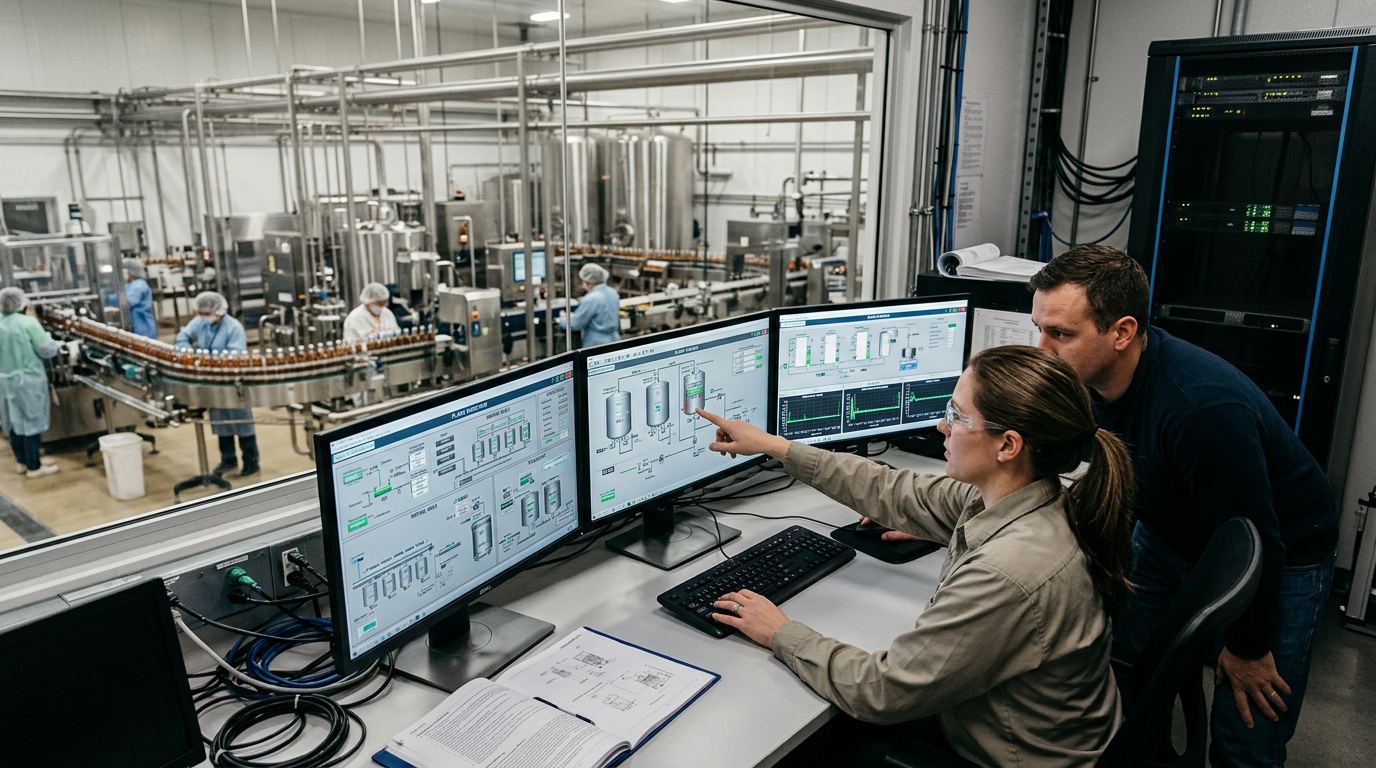
Tofu Production Facility Design: Soy Processing and Coagulation Systems
Designing a tofu production facility in the United States requires more than selecting a few soybean processing machines. A profitable plant must connect raw soybean handling, milk extraction, coagulation, curd pressing, cooling, packaging, sanitation, utilities, wastewater control, automation, and regulatory compliance into one integrated system. For processors in markets such as Los Angeles, Chicago, Houston, New York, Seattle, and Atlanta, the most effective tofu line design balances product quality, labor efficiency, water use, cleanability, and future expansion. Whether the goal is fresh water-packed tofu for regional distribution or shelf-stable tofu for nationwide retail, the processing system should be engineered around product mix, throughput, local utility costs, food safety requirements, and available labor. In the U.S. market, tofu demand continues to expand across retail grocery, foodservice, meal kits, Asian cuisine manufacturing, private label, and plant-based protein brands. That demand is not uniform. A processor near the Port of Los Angeles may optimize for imported soybean logistics and West Coast distribution, while a Midwest operator near Chicago or Kansas City may prioritize domestic soybean supply, lower freight costs, and central access to cold-chain networks. Because of these regional variables, successful tofu plant design starts with process flow definition and capital planning rather than equipment shopping alone. Processors typically evaluate several product categories at the beginning of a project: silken tofu, soft tofu, firm tofu, extra-firm tofu, fried tofu base, flavored tofu, high-protein tofu, and aseptic or shelf-stable tofu. Each product affects the design of soaking tanks, grinding systems, heating steps, coagulant dosing, pressing profiles, pasteurization, packaging format, and warehouse layout. Buyers also need to decide whether they want a modular pilot-scale line, a regional batch system, or a larger continuous plant that can support supermarket, club store, and co-manufacturing demand. From a capital planning perspective, U.S. manufacturers often make the mistake of sizing equipment only for current sales. A more resilient approach is to model year-one throughput, year-three expected utilization, and the utility backbone needed for expansion. That includes steam, hot water, chilled water, glycol, compressed air, process water, wastewater pretreatment, CIP capacity, and controls architecture. In many projects, utility and sanitation design determine long-term profitability just as much as the tofu process equipment itself. A well-designed tofu factory uses a coordinated soy processing and coagulation system that begins with soybean receiving, cleaning, soaking, grinding, cooking, and okara separation, then moves into controlled coagulation, molding, pressing, cooling, pasteurization where required, and final packaging. In the United States, the best facility design is usually the one that matches local labor economics, retailer specifications, FDA expectations, wastewater discharge limits, and target shelf life. Fresh tofu plants serving regional markets often favor flexible batch operations, while larger multi-SKU operations may benefit from semi-continuous or continuous milk preparation with automated coagulation and pressing. For buying decisions, processors should evaluate five factors first: target capacity per hour, product mix, required shelf life, sanitation philosophy, and future expansion plan. A startup private-label brand in Austin or Denver may need a compact skid-based line. A high-volume producer serving the Northeast corridor from New Jersey or Pennsylvania may need redundant soy milk prep, automated filling, tunnel pasteurization, and larger cold storage. A tofu line should never be selected in isolation from utilities, packaging, and wastewater systems. The most common industries and applications driving tofu facility investment in the U.S. include plant-based protein manufacturing, Asian prepared foods, institutional foodservice, natural grocery retail, co-packing, meal component production, and export-oriented specialty foods. Case studies across North America repeatedly show that yield optimization, recipe consistency, and sanitary design have a larger impact on margin than simply buying the fastest machine on the market. The table above shows why early definition matters. Many tofu projects appear simple at first, but hidden cost drivers usually emerge in refrigeration, sanitation, labor, and wastewater handling. Designing those systems in parallel avoids expensive retrofits after startup. The front end of a tofu plant determines yield, flavor, consistency, and downstream stability. Soybean handling begins with receiving, storage, and cleaning. U.S. processors may source from domestic growers in Iowa, Illinois, Indiana, or Minnesota, or use imported specialty beans through ports such as Long Beach, Oakland, Savannah, or Newark. If identity preservation, organic certification, or non-GMO status is required, storage and traceability systems need dedicated segregation. Soaking design should account for bean variety, water quality, soak time, ambient conditions, and target solids extraction. Typical systems include insulated tanks, agitation where appropriate, level control, and controlled drain steps. Process water quality is particularly important in regions with hard water or seasonal variability. Many plants benefit from filtration, softening, or reverse osmosis to stabilize tofu texture and reduce scaling in heat exchangers. Grinding and slurry preparation can be configured as batch or continuous operations. The key is to maintain controlled particle size, protein extraction efficiency, and consistent bean-to-water ratio. Once slurry is generated, the heating step denatures proteins and prepares the soy milk for separation. Okara separation may use decanters, screw presses, filtration screens, or integrated soy milk extraction systems. The chosen technology affects yield, energy use, and byproduct moisture content. Okara should never be treated as an afterthought. In the United States, it can become animal feed, bakery fiber ingredient, fermentation substrate, compost input, or dewatered byproduct for specialty uses. Plants near livestock or ingredient markets often recover greater value from okara than urban plants without byproduct channels. This soy preparation table highlights where processors gain or lose margin. The biggest front-end opportunities are higher soy milk yield, better temperature control, and improved okara handling. Plants that install instrumentation for flow, Brix, temperature, and solids consistency usually achieve more stable output than facilities running mostly by operator intuition. Coagulation is the heart of tofu manufacturing. Once soy milk is standardized and heated to the proper range, coagulants such as magnesium chloride, calcium sulfate, glucono delta-lactone, or blended systems are dosed under controlled mixing conditions. The type of coagulant and mixing profile changes curd size, moisture retention, mouthfeel, slicing performance, and final block stability. For batch systems, coagulation tanks should be engineered to minimize shear while ensuring even distribution of coagulant. For semi-continuous systems, in-line dosing and residence control become more important. Temperature uniformity is critical. Even small deviations can create inconsistent curd set, broken texture, or excess fines loss to whey. After coagulation, curd transfer to molds and pressing systems must be matched to SKU requirements. Soft tofu may require minimal pressing, while extra-firm tofu requires controlled pressure and dwell time to reach target moisture content. Press automation can improve block uniformity, especially for national retail accounts that expect consistent drained weight and pack appearance. The table explains why coagulant choice and press control must be tied to end use. Foodservice tofu for stir-fry behaves differently from premium silken tofu for refrigerated retail. Plants with multiple SKUs often benefit from recipe-controlled automation that stores temperature, dosing, agitation, and press profiles by product code. Application-specific design also matters. A facility making tofu for prepared meals may optimize for cube stability and low purge. A premium organic tofu producer may prioritize cleaner ingredient declaration and softer texture. These decisions should be made before equipment layout is finalized. Choosing between batch and continuous tofu production is one of the most important investment decisions. Batch plants are often preferred for flexibility, smaller lot sizes, easier recipe changes, and lower initial capital. They work well for regional brands, R&D-driven product portfolios, and co-packers managing multiple private-label formulas. Continuous or semi-continuous systems are typically favored when throughput is high, labor is expensive, and SKU complexity is manageable. These systems can improve consistency, reduce manual handling, and support better line balancing from soy milk production to filling and packaging. However, they require tighter process control, more detailed startup commissioning, and disciplined sanitation procedures. This comparison shows why there is no universal answer. For many U.S. projects, the best solution is a hybrid approach: continuous soy milk generation feeding multiple batch coagulation and pressing stations. That structure captures some labor and consistency benefits without eliminating product flexibility. The bar chart reflects why product channel matters in equipment selection. Retail grocery and Asian foods often require high consistency and packaging precision, while co-packing and foodservice may prioritize flexibility, lot control, and more diverse block formats. Pasteurization and cooling are critical to both food safety and shelf life. Fresh chilled tofu commonly relies on post-fill heat treatment, rapid cooling, and refrigerated distribution. Shelf-stable or extended shelf-life tofu may require more advanced thermal processing and packaging controls. The exact configuration depends on pack format, target distribution radius, and product pH and water activity characteristics. Common U.S. solutions include hot water pasteurization of sealed packs, tunnel pasteurization, retort for certain packaged formats, or aseptic-style strategies for specialized applications. Cooling design must prevent thermal abuse and manage condensate, pack integrity, and line flow. In warm climates such as Texas, Florida, or Southern California, cooling load calculations become especially important for maintaining throughput and avoiding package deformation. Processors serving national retail often need validated thermal profiles and integrated data logging to support customer audits and food safety plans. Cold storage staging, pallet dwell management, and warehouse airflow also affect final product quality. A strong tofu process line can still fail commercially if post-process cooling and distribution readiness are neglected. The area chart indicates a gradual U.S. shift toward longer shelf-life products. This trend is driven by broader geographic distribution, e-commerce, private label expansion, and retailer pressure to reduce shrink. By 2026, more tofu processors are expected to invest in validated heat treatment, digital traceability, and more energy-efficient cooling systems. Packaging determines both market presentation and process requirements. Water-packed tofu remains common for fresh refrigerated products, while vacuum-packed formats can reduce purge, support logistics efficiency, and improve shelf-life performance depending on process design. Tray sealing, cup filling, thermoforming, pouch systems, lidding, and case packing should be chosen based on SKU format, line speed, consumer channel, and label claims. Water-packed tofu lines require precise fill control, seal integrity, and hygienic water management. Vacuum formats need robust pack geometry, product handling that avoids block damage, and verification of seal quality. For national U.S. retailers, packaging lines should also support date coding, lot traceability, retail-ready case packing, and compatibility with downstream palletizing. The packaging table shows that line selection must reflect the commercial model, not just the product itself. A regional fresh tofu brand in San Francisco may prioritize premium tray presentation, while a private-label processor serving Dallas, Phoenix, and Miami may favor more logistics-efficient vacuum or multi-pack options. Local supplier strategy also matters. U.S. operators should source films, trays, seals, valves, instrumentation, and spare wear parts from vendors with service access near major manufacturing corridors such as the Carolinas, Southern California, the Midwest, and the Northeast. Downtime costs rise quickly when specialized packaging components have long lead times. Tofu plants generate significant wastewater from soaking, washing, separation, sanitation, and packaging operations. High organic load, suspended solids, and variable pH make wastewater management a major design priority. In municipalities with strict discharge permits, pretreatment can become one of the most important hidden capital items in the entire facility. Waste streams should be separated where possible: high-strength process streams, general washdown, and packaging wastewater do not always require the same treatment path. Screening, equalization, dissolved air flotation, pH adjustment, and solids handling are common design components. In some projects, water reuse opportunities may exist for non-product contact applications, provided regulatory and food safety requirements are met. Byproduct recovery offers another margin opportunity. Okara, soy whey, and recovered solids may support animal feed, digestion, ingredient recovery, or land application depending on local economics and permitting. Plants near agricultural regions may have better recovery economics than dense urban facilities, but even metro plants can reduce hauling costs through dewatering and stream segregation. This table shows why wastewater and byproduct planning belongs in early engineering. Facilities in states with high sewer surcharges or water scarcity can justify more advanced recovery systems faster than expected. Sustainability reporting and retailer pressure are also pushing processors to track water intensity more closely. Cleanability is a design function, not just a sanitation program. A tofu plant should be laid out to reduce harborage points, separate raw and ready-to-pack zones, support controlled personnel flow, and enable effective cleaning of product contact surfaces. Hygienic piping slopes, drain placement, weld quality, access for inspection, and CIP coverage all matter. In humid tofu environments, HVAC and condensate management also play a larger role than many buyers initially expect. U.S. compliance typically centers on FDA requirements, preventive controls, sanitation SOPs, allergen management where relevant, environmental monitoring, and customer audit expectations. If the processor wants SQF or BRC certification, hygienic zoning, documentation structure, and validation records need to be designed into the project. National retail and large foodservice accounts increasingly expect data-backed sanitation and traceability, not just visual cleanliness. The explanation is straightforward: sanitation efficiency and audit readiness are built during engineering. Retrofitting drains, modifying CIP loops, or correcting inaccessible piping after startup is far more expensive than designing hygienic access from the start. The comparison chart illustrates a common buying lesson in U.S. food plants: equipment alone does not create a high-performing facility. Integrated engineering, utility coordination, controls, installation management, and expansion planning are often what separate a profitable project from a costly one. Disruptive Process Solutions supports tofu and plant-based protein projects across the United States and Canada as a full-scope food and beverage engineering partner. Rather than acting as a simple equipment reseller, the company approaches projects through a design-build-manage model that aligns process engineering, capital planning, construction coordination, installation, and startup execution around the client’s long-term profitability. From a technological capabilities standpoint, DPS works across process, mechanical, structural, plumbing, electrical, and controls disciplines. For tofu facilities, that means integrating soy preparation, thermal processing, pumping, sanitary piping, CIP, refrigeration interfaces, compressed air, automation, recipe control, and SCADA visibility into one operating system. This is especially valuable for processors that need plant-wide coordination instead of disconnected vendor packages. Companies can learn more about its engineering and project approach on the food and beverage service solutions page. From a manufacturing capabilities standpoint, DPS also supports custom process equipment supply, including tanks, CIP systems, and stainless process components that can be incorporated into broader plant layouts. That gives tofu manufacturers a practical option when standard catalog equipment does not fit a required footprint, sanitation approach, or expansion strategy. More detail is available through the company’s process equipment portfolio. From a service capabilities standpoint, DPS provides feasibility support, owner’s representation, project and program management, licensed general contracting where applicable, field installation coordination, integration oversight, and commissioning support. For tofu processors launching a new facility or upgrading an existing plant in locations such as North Carolina, California, Texas, Illinois, or New Jersey, this integrated model helps reduce the risk of fragmented responsibility across multiple vendors. Background on the company and operating philosophy can be found on the about the company page, while selected execution examples are available in these project case studies. In practical terms, the value of this approach is clear when tofu manufacturers need more than one machine. A high-performing plant requires the process line, utilities, controls, sanitary design, building interfaces, and startup sequence to work together. That is where integrated engineering and field execution matter most. What is the best tofu production setup for a new U.S. manufacturer?For many new operators, a semi-automated batch line with strong soy milk preparation, flexible coagulation, reliable pressing, hygienic packaging, and scalable utilities offers the best balance of cost and flexibility. How much should a tofu plant prioritize wastewater design?Very highly. In many U.S. municipalities, wastewater discharge costs and permit conditions can materially affect project economics. Pretreatment should be evaluated early. Is continuous tofu processing always better?No. It is usually better only when throughput is high, recipes are stable, and labor savings justify the added automation and commissioning complexity. What packaging format is most common?Water-packed refrigerated tofu remains common, but vacuum and longer shelf-life formats are gaining interest as distribution footprints expand. What are the main buying risks?Undersized utilities, poor sanitation access, weak integration between process and packaging, lack of wastewater planning, and buying equipment without a realistic production model. How should processors prepare for 2026 trends?They should plan for higher automation, stronger digital traceability, more water and energy scrutiny, broader retailer sustainability requirements, and growing demand for extended shelf-life and convenient tofu formats. Policy pressure around water use, wastewater discharge, food safety documentation, and carbon reporting is expected to increase, especially for multi-state retail suppliers. Equipment that supports recipe control, data collection, energy efficiency, and modular expansion will likely provide the strongest long-term value. What local factors matter most in the United States?Soybean supply routes, labor cost, water quality, utility rates, sewer surcharges, regional retailer requirements, and distance to distribution hubs such as Los Angeles, Chicago, Houston, Atlanta, New York/New Jersey, and Seattle all influence the right plant design. Can a tofu line support multiple industries?Yes. The same facility may serve retail grocery, foodservice, prepared meals, private label, and plant-based ingredient applications if zoning, scheduling, and packaging design are engineered correctly. -
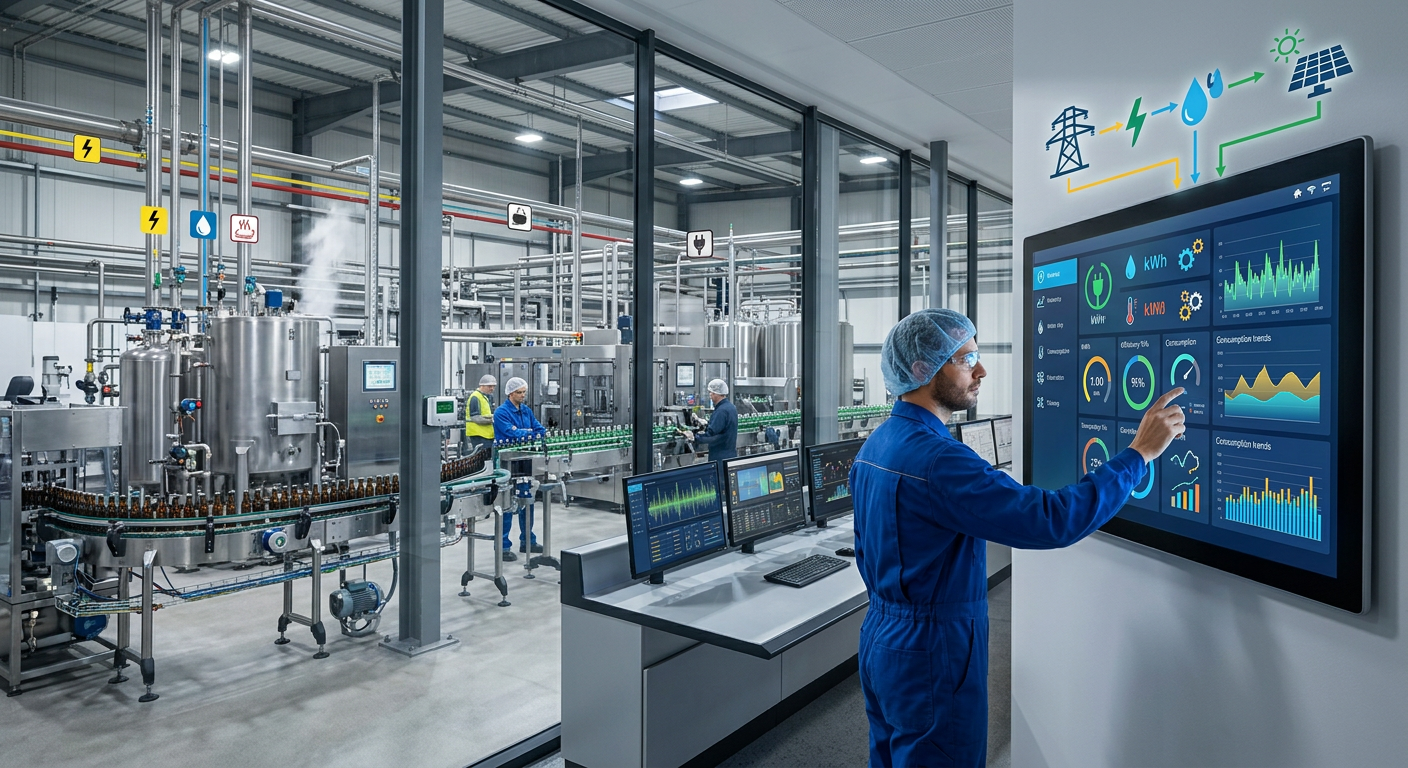
3 Key Process Zones in Breakfast Cereal Production Line Design
The best breakfast cereal production line design in the United States aligns three core process zones: forming, thermal treatment, and final finishing. In practice, that means choosing the right mixing and extrusion systems for cereal and granola products, sizing flaking, toasting, drying, and cooling equipment for stable texture, and integrating coating, ingredient dosing, and packaging so the finished product reaches retail shelves with consistent crunch, appearance, and nutrition. For U.S. manufacturers, successful layouts also depend on sanitation standards, utility efficiency, recipe flexibility, labor availability, and logistics near hubs such as Minneapolis, Chicago, Battle Creek, Kansas City, Charlotte, and the ports of Los Angeles, Long Beach, Houston, and Savannah. If you are planning or upgrading a cereal line in the United States, the fastest way to evaluate it is to break the system into three decision zones. This table shows why cereal line design is more than selecting individual machines. The line works only when each zone is sized to the upstream and downstream constraints. A plant that buys a high-capacity extruder but under-sizes the dryer or cartoner will still be bottlenecked. That is especially important for U.S. operators serving club stores, grocery chains, e-commerce, and foodservice with multiple SKUs. From a market standpoint, U.S. cereal production remains attractive because manufacturers are expanding beyond traditional corn flakes into protein cereals, granola clusters, low-sugar family products, gluten-conscious options, and specialty co-packed formats. Regions around Michigan, Minnesota, Ohio, Pennsylvania, Texas, and California continue to matter because they combine labor pools, transport access, and proximity to ingredients such as oats, corn, rice, sugar, nuts, and dried fruit. The line chart above reflects a realistic growth pattern in U.S. investment for cereal processing modernization, driven by automation, energy efficiency, packaging flexibility, and retailer pressure for quality consistency. Mixing and extrusion define product identity. Flaked cereals, puffed cereals, filled pillows, granola clusters, cereal bites, and coated rings all start with different raw material behaviors. A cereal line in Minneapolis handling oat-heavy recipes needs different hydration logic than a corn-and-rice line in Texas, and both differ from a granola line near Fresno using oil, syrups, seeds, and nut particulates. For direct-expanded cereals, the core objective is to control starch gelatinization, density, die pressure, and moisture transfer. For granola, the objective shifts toward gentle blending, binder distribution, cluster formation, and minimal fines generation. That means one plant may need high-shear preconditioning and twin-screw extrusion, while another needs paddle mixing, low-shear agglomeration, and sheet forming. The table highlights that there is no universal mixer or extruder. Equipment should be selected by recipe family, annual throughput, allergen strategy, and sanitation regime. Plants with frequent changeovers should prioritize easy-access designs, clean-in-place where practical, and fast validation procedures. Plants with fewer SKUs but very high output should emphasize ruggedness, screw life, and stable upstream ingredient feeding. Buying advice for U.S. manufacturers: evaluate not just nominal pounds per hour, but usable operating range. If your product roadmap includes both classic cereal and granola clusters, the lower-end turndown and cleaning time may matter more than maximum throughput. It is also wise to model ingredient sourcing. Oat, corn, and rice prices can shift by region, and freight from Midwest mills into Southeast plants or West Coast co-packers affects line economics. When process control is advanced, mixing and extrusion become more resilient. Plants with PLC-based recipe steps, mass-flow monitoring, and SCADA visibility can reduce giveaway, improve startup speed, and tighten moisture consistency. Those capabilities are central to scalable cereal manufacturing and tie directly into integrated engineering and project services for facilities that want line performance rather than isolated machine purchases. After forming, thermal design determines whether the cereal becomes crisp, uniform, and shelf-stable. This is where many line concepts fail. A good extrusion setup cannot overcome an oven with poor zoning, short dwell time, or uneven airflow. Flaking rolls also require careful upstream moisture control and downstream transfer design to prevent sticking, cracking, or high breakage. U.S. plants typically choose among band ovens, multi-zone dryers, rotary toasters, and hybrid bake-dry systems depending on product format. Traditional flaked cereal needs stable tempering before rolling, controlled thickness, and thermal treatment that drives moisture down gradually enough to preserve integrity. Granola needs browning and binder set without scorching sugars or fragile inclusions. Protein cereals often need gentler moisture management because protein-rich formulas can harden or darken too quickly. This comparison shows why oven selection is as much a layout decision as a thermal one. Long straight runs may be practical in greenfield sites outside Kansas City or Charlotte, but retrofit sites in older Midwest buildings often need modular oven banks, mezzanines, or staggered conveyor paths. Plants near major ports such as Savannah or Long Beach may also account for equipment module shipping limits during installation planning. Good layout practice includes separating hot process aisles from operator traffic, allowing sanitation access around burners and plenums, and reserving maintenance clearances that do not force future shutdowns for basic repairs. Exhaust handling matters too. Cereal plants often manage flour dust, sugar volatiles, and thermal moisture loads simultaneously, so air balance and fire prevention should be engineered with the same rigor as throughput. The bar chart provides a practical demand view for thermal sizing. It suggests why flexible bake and toast systems are increasingly favored in U.S. projects that serve both branded and private-label customers. Crispness retention depends on exit moisture, temperature stabilization, and product handling after heat treatment. The best cereal can lose its texture within minutes if it is discharged too hot into a humid room, transferred across long conveyors with poor airflow, or coated before its structure is stable. Drying conveyors should be sized around water removal rate, not just conveyor width. Cooling conveyors should be sized around bed depth, ambient conditions, and the thermal load from upstream ovens. In humid climates such as the Southeast United States, cooling performance can vary drastically by season, so conditioned air may be essential. In drier inland climates, a simpler design may work if airflow distribution is consistent and insulation prevents condensation. This table explains why cooling design is often a hidden profit lever. Better airflow and transfer design reduce fines, rework, quality claims, and package fill inconsistency. For bagged cereal sold through national retailers, maintaining particle integrity can materially improve delivered margin. Applications vary by industry. Traditional breakfast cereal brands care about repeatable crunch and bowl-life. Granola makers emphasize cluster survival. Better-for-you snack cereal brands need texture that holds up after oil or flavor application. Co-manufacturers need all of the above plus short changeover times. In each case, drying and cooling determine whether the product is merely acceptable or commercially strong. The area chart reflects the trend toward tighter moisture and cooling management, especially as U.S. manufacturers push for cleaner labels, reduced sugar, and new grain bases that behave less predictably than legacy formulas. Coating is where sensory identity and margin meet. Frosted cereals, cinnamon-coated pieces, chocolate drizzled clusters, savory snack cereals, and vitamin-fortified oil applications all rely on repeatable coverage. The challenge is that coating adds complexity: extra heat sensitivity, extra stickiness, extra sanitation demands, and greater dependence on cooling and packaging stability. Drum coaters, continuous tumblers, spray manifolds, and enrobing tunnels are selected based on coverage uniformity, inclusion size, sugar crystallization behavior, and desired appearance. Frosted cereal often requires careful syrup concentration and product temperature control to avoid patchy adhesion or excessive clumping. Flavored granola may need staged addition, where oils and fine powders are applied separately. High-protein or low-sugar formats often need specialty binders that flow differently than conventional syrups. Buying advice: specify coating systems by target pickup range, not just pump size. Ask for test data showing coefficient of variation for coverage across a representative run. Review cleanability, nozzle access, and allergen management if your plant handles dairy, nuts, or cocoa. Coating systems should also be mechanically synchronized to downstream coolers and packers; otherwise, buildup and downtime will follow. For U.S. operators serving both mainstream grocery and premium health channels, a modular finishing strategy can be valuable. One base cereal stream can feed multiple finishing cells for different coatings, reducing capital duplication while supporting more SKU launches. That approach becomes even stronger when paired with custom equipment and utility design from firms familiar with full-system integration and specialized process equipment solutions. Ingredient handling is foundational in cereal plants because product value increasingly depends on precise dosing of vitamins, minerals, fibers, sweeteners, colors, inclusions, and functional additives. A line designed only for bulk grains and sugar can become obsolete quickly if the market shifts toward fortified, high-protein, reduced-sugar, or specialty wellness claims. Macro ingredients such as oats, corn meal, rice flour, sweeteners, and oils need dependable receiving, storage, conveying, and batching. Micro ingredients such as iron, folic acid, vitamin blends, natural flavors, and high-intensity sweeteners need enclosed, verifiable dosing systems that minimize dust, operator exposure, and formulation drift. This table shows why ingredient systems should be designed around material behavior, not just inventory capacity. Vitamin premixes require a different engineering philosophy than rolled oats or dried cranberries. The explanation matters commercially because nutrient labeling, regulatory compliance, and consumer trust all depend on dosing accuracy. Local supplier strategy also matters. A U.S. cereal facility near Chicago or Indianapolis may source premixes from Midwest nutrition suppliers while bringing specialty inclusions from California, Canada, or imported channels through East Coast and Gulf ports. A good plant layout therefore includes receiving flexibility, quarantine zones, and lot traceability from dock to finished goods. Packaging is not the end of the line in a passive sense; it is an active design driver. Boxed cereal, pillow bags, stand-up pouches, club packs, variety packs, and foodservice bulk formats all require different buffering, weighment, and synchronization strategies. A line that runs perfectly into a single VFFS bagger may underperform badly when connected to cartoners, case packers, and palletizing cells with frequent SKU changes. Retail trends in the United States favor packaging flexibility. National brands still rely heavily on bag-in-box formats, but private label and emerging brands increasingly use pouches for shelf impact and e-commerce durability. Club stores want larger formats. Foodservice wants higher throughput bulk packs. Co-manufacturers often need all three. The explanation is straightforward: package choice affects the entire line, from breakage control to accumulation to pallet pattern design. Packaging machinery should not be selected after core process equipment is locked. It should be modeled with upstream rates, oxygen and moisture barrier needs, and retailer compliance requirements from the start. Plants moving products through Memphis, Dallas, Atlanta, or New Jersey distribution corridors often gain value from compact but flexible packaging layouts, especially when warehouse cube utilization and freight costs are under pressure. Where multiple formats must coexist, buffering between final cooling and primary packaging becomes essential. The comparison chart shows why stand-up pouches and variety pack systems are gaining attention in multi-product cereal plants, even when they require more sophisticated controls and material handling. Recipe management and batch control are now strategic assets, not just automation extras. As plants add family cereals, high-protein variants, granola, limited-time flavors, and retailer-specific packouts, manual adjustment becomes too risky. The result is giveaway, slower changeovers, nutrient variance, inconsistent coating, and poor traceability. A well-designed batch control system manages ingredient sequencing, hydration targets, mixer timing, extruder setpoints, oven zones, coating rates, additive verification, and packaging recipe selection from a common logic layer. It should provide operator guidance, historian data, lot traceability, alarm rationalization, and reporting that plant leadership can actually use. The table makes clear that controls pay back in multiple ways. In cereal plants running many SKUs, recipe and batch control can remove more constraint than adding raw mechanical horsepower. It is common for apparent capacity problems to be caused by sequencing, downtime, or inconsistent settings rather than by major equipment limits. By 2026, future trends in the United States will favor connected systems that combine production scheduling, utility monitoring, quality data, and maintenance diagnostics. Policy and customer pressure around energy intensity, packaging waste, food safety documentation, and responsible sourcing will push cereal producers toward smarter plants. Sustainability will increasingly mean measurable reductions in gas usage per pound, compressed air waste, ingredient loss, and packaging overuse, not just broad claims. Technological capabilities become especially important here. Advanced PLC programming, SCADA integration, process utility engineering, electrical design, and plant-wide controls architecture help cereal manufacturers link ingredient preparation to ovens, coolers, coating systems, and packers without creating isolated islands of automation. That level of integration is particularly valuable during retrofits, expansions, and equipment relocations. Disruptive Process Solutions supports food and beverage manufacturers across the United States and Canada with a practical, profit-focused approach to capital projects. Rather than acting only as a machine source or traditional contractor, the company works across engineering, installation, integration, and execution management so process systems perform as complete operating assets. You can learn more through the company overview. On the service side, DPS applies a design-build-manage model that helps manufacturers move from concept and feasibility through installation and commissioning with fewer handoff gaps. For cereal projects, this matters when a client needs capital planning, owner-side representation, process engineering, utility coordination, contractor management, and startup support under one accountable framework. Those capabilities are useful for greenfield plants, brownfield upgrades, emergency line recovery work, and phased expansion programs. On the technological side, DPS brings cross-functional engineering across process, mechanical, plumbing, structural, electrical, and controls disciplines. That includes PLC programming, SCADA, batching logic, utility systems, and integration of equipment into plant-wide operations. In cereal facilities, those strengths support automated recipe handling, oven and dryer optimization, ingredient verification, line synchronization, and data visibility for management teams trying to improve profitability instead of merely adding equipment. On the manufacturing side, DPS also develops proprietary process equipment and integrated system components, including tanks and CIP-related solutions that can fit broader line architecture. While cereal lines often rely on a mix of OEM technologies, having access to custom-fabricated process support equipment can simplify installation, improve fit within existing buildings, and reduce coordination risk. Examples of completed project work and execution style can be reviewed in selected project case studies. For buyers in the United States, this combination of engineering depth, installation management, and business-minded project planning is often more valuable than sourcing equipment in isolation. A cereal line succeeds when throughput, product quality, utilities, sanitation, controls, and packaging all work together. That is the standard DPS is built to deliver. What are the three most important zones in a breakfast cereal production line?The most important zones are forming, thermal processing, and final finishing and packaging. Forming covers mixing, hydration, and extrusion or shaping. Thermal processing covers flaking, toasting, baking, drying, and cooling. Final finishing covers coating, fortification, and package integration. Which products need extrusion and which do not?Puffed cereals, rings, nuggets, and many high-protein cereals commonly use extrusion. Granola clusters may use gentle mixing and baking instead. Some flaked cereals begin with cooked grain pieces that are tempered and rolled rather than directly expanded. How should a U.S. manufacturer choose between boxed cereal and pouch packaging?Choose based on market channel, shelf presentation, shipping durability, and SKU complexity. Bag-in-box remains strong in mainstream grocery. Pouches perform well for granola, premium products, and e-commerce. Multi-format plants often need both. What is the biggest quality risk in cereal line design?Moisture inconsistency is one of the biggest risks because it affects texture, coating, shelf life, and package performance. That is why dryers, coolers, airflow design, and batch controls are so important. How important is fortified additive dosing?It is critical for products making nutrition claims. Inaccurate dosing can create regulatory exposure, rework, and brand damage. Micro-dosing systems with lot verification and recipe interlocks are strongly recommended. What future trends should cereal manufacturers in the United States prepare for by 2026?Expect more demand for flexible multi-SKU lines, better-for-you cereals, energy-efficient ovens and dryers, smarter automation, stronger traceability, and packaging systems that support both sustainability and retail flexibility. Policy and retailer expectations will continue to favor measurable performance improvements. Can an older cereal plant be upgraded without a full rebuild?Yes. Many U.S. facilities can gain significant capacity or quality improvement through controls upgrades, utility optimization, packaging integration, airflow redesign, and targeted process debottlenecking rather than complete replacement. What should buyers ask a process partner before starting a cereal project?Ask how they evaluate full-line constraints, utility demand, sanitation, automation architecture, packaging flexibility, and phased expansion. Also ask for examples of projects where they improved profitability, not just installed equipment.


