-
Food Facility Constructability Review: Design-to-Build Feasibility
Food and beverage manufacturers in the United States are under constant pressure to expand capacity, improve food safety, shorten startup time, and spend capital more carefully. A constructability review is one of the most practical ways to protect those goals before money is committed to demolition, utilities, equipment procurement, or field labor. In simple terms, a constructability review tests whether a proposed design can actually be built safely, efficiently, and profitably within the realities of the site, the production environment, local codes, and the operating schedule. For a processor planning a greenfield beverage site near Dallas, a protein expansion in Kansas City, a dairy retrofit in Wisconsin, or a co-packing line addition in Southern California, the same question comes up: will this design work in the field without expensive surprises? That is where disciplined review of site conditions, equipment access, utility congestion, maintenance clearances, temporary works, and sequencing becomes essential. A paper design may look complete, yet still fail when trucks cannot unload near the building, mezzanine steel blocks vessel rigging, trench drains conflict with slab reinforcement, or the utility corridor has no room left for sanitary process piping and electrical raceways. Across major trade and logistics hubs such as Chicago, Houston, Atlanta, Los Angeles, Long Beach, Savannah, Newark, and Memphis, food plants face additional complexity from labor availability, transportation lead times, utility interconnection schedules, and municipal review procedures. In a market where missed production weeks can cost far more than design fees, constructability is not a box-checking exercise. It is a profitability decision. A food facility constructability review is a structured design-to-build feasibility check performed before procurement and field execution accelerate. It is used to identify site constraints, utility conflicts, access limitations, sanitation risks, and schedule bottlenecks early enough to fix them economically. In the United States, this review is especially important for facilities governed by FDA, USDA, SQF, and BRC expectations, where build quality affects both production and compliance. The most effective review answers several direct questions: For manufacturers evaluating budget approvals, the return is usually found in avoided rework, fewer RFIs, more reliable schedule commitments, better startup readiness, and cleaner handoff between engineering and operations. This is particularly valuable in beverage bottling, brewery expansion, aseptic processing, dairy, prepared foods, protein processing, retort systems, and ingredient plants where sanitary detailing and utility reliability are mission-critical. The United States market is also seeing broader use of constructability review earlier in capital planning, not just before construction. Owners now want design teams to validate crane paths, pad elevations, washdown zoning, compressed air routing, CIP recovery, boiler and refrigeration support areas, and packaging line serviceability before final equipment orders are released. The chart below illustrates a realistic view of rising demand for front-end constructability work in U.S. food and beverage capital programs. As the line trend suggests, more owners are moving constructability reviews upstream because financing, labor, and startup risk have become less forgiving. This shift is expected to continue into 2026, especially where automation, water reuse, electrification, and sustainability goals add engineering complexity. This table shows why constructability is not just a design issue. It sits at the intersection of market conditions, logistics, food safety, and execution strategy. The first major review area is the site itself. Existing conditions govern what can be built, how fast it can be built, and how much it will cost. In older food plants across the Midwest and Northeast, site constraints often include low roof elevations, undocumented drains, undersized electrical rooms, slab thickness uncertainty, and limited truck circulation. In newer campuses in Texas, the Carolinas, Arizona, and Tennessee, the challenge may be rapid expansion pressure, utility reservation, and future campus planning rather than aging infrastructure. A proper site condition assessment for a food facility should look beyond standard civil and architectural due diligence. It should review process flow, raw material receiving, waste handling, employee movement, hygienic zoning, cleanable surfaces, washdown exposure, floor slope suitability, roof support for utilities, and any restriction that could interfere with sanitary installation methods. It should also verify whether existing structures can support suspended piping bridges, platforms, skids, vessels, evaporators, or packaged utility systems. For example, a brewery near Denver may have enough floor area for more fermenters, but lack exterior glycol yard space and forklift turning radius for safe vessel placement. A protein facility near Omaha may have utility capacity but insufficient drainage and sanitation separation for new marinated product lines. A dairy plant near Fresno may fit a UHT skid inside the building, yet the route for delivery through doors, corridors, and roof openings may be impossible without temporary structural removal. In the United States, location matters. Facilities near the Port of Houston may benefit from freight access but need flood resilience planning. Facilities in New Jersey may face tighter utility and permit coordination. Sites around Memphis or Louisville may have strong logistics but must manage compressed schedules tied to distribution contracts. Plants in California may encounter stricter environmental and water-use scrutiny, making front-end review of wastewater, reuse, and permit pathways especially important. The value of this table is practical: each item turns a broad site walk into a construction decision. A design may satisfy process intent, but if truck movement, slab loading, or utility yard geometry are ignored, the build becomes harder and more expensive than expected. Even a sound design can fail if the construction sequence is wrong. Sequencing is especially important in food and beverage projects because many are retrofit or brownfield jobs inside operating facilities. Work may have to occur around active production, sanitation shifts, USDA inspection windows, peak seasonal demand, or narrow shutdown opportunities. The sequence must therefore align design release, procurement, demolition, utility outage planning, equipment setting, controls integration, startup, and validation. In real projects, the best sequence is rarely “build everything at once.” It is usually a staged approach based on risk and operational continuity. Utility backbone work may need to occur first. Structural steel or platforms may need to be installed before process skids arrive. Dust-generating demolition may need to be isolated from ready-to-eat areas. Packaging moves may need to be scheduled after upstream process tie-ins are commissioned. Cold storage work may need temporary environmental controls before door openings occur. Sequencing should also account for off-site fabrication. In many U.S. markets, modular pipe racks, skid-mounted CIP systems, packaged compressor rooms, prefabricated electrical assemblies, and pretested control panels can reduce field hours and improve schedule reliability. However, modularization only works if site dimensions, access paths, and crane planning are reviewed early. The bar chart below shows realistic relative demand for constructability review across major food and beverage segments in the United States. Aseptic, beverage, and protein projects tend to rank higher because they often combine demanding hygienic standards with dense utility needs, strong throughput expectations, and expensive startup risk. This sequence table helps owners understand where schedule compression often backfires. Pulling forward visible equipment while delaying structural, utility, or controls readiness can create expensive stop-start execution. Equipment access is one of the most common sources of field surprises in food plant construction. Tanks, kettles, retorts, fillers, palletizers, pasteurizers, boilers, air compressors, refrigeration skids, and CIP systems are often large enough that route planning becomes a project-critical activity. Constructability review should examine every step from supplier shipping configuration to final installed service envelope. The review should confirm loading dock suitability, trailer type assumptions, unloading method, crane access, interior path width, door and corridor dimensions, floor protection needs, temporary removals, hoisting points, and final clearances for operation and maintenance. It should also consider future replacement. A line may be installable today through a wall opening, but if that opening is later closed permanently, major replacement costs rise sharply. Food plants frequently underestimate service space around equipment. Sanitarians may need hose access. Mechanics may need motor pull space. Operators need line-of-sight and safe egress. Instrument technicians need access to panels and transmitters. In washdown areas, nearby electrical and controls equipment may need protective placement or special enclosures. Clearance is not just about fitting equipment in; it is about running the plant effectively for years. Product type also changes the clearance requirement. Fermentation systems need headspace and utility flexibility. Distillation systems may need strict safety review and vent routing. Aseptic systems require disciplined separation, service access, and validation logic. Protein processing lines often need careful coordination of conveyors, cleaning access, and overhead utility drops. Retort and canning systems need robust steam, condensate, and drainage planning around high-use operating zones. This table translates access review into asset-specific checks. It is especially useful when comparing vendor drawings that show minimum footprint but not true operational or maintenance envelopes. Utility conflict review is often where the biggest hidden risks are uncovered. Food and beverage facilities carry a dense mix of process piping, CIP, steam, condensate, compressed air, CO2, nitrogen, glycol, chilled water, hot water, domestic water, wastewater, electrical distribution, controls, data, and HVAC systems. Without disciplined coordination, these systems compete for the same overhead and equipment-side space. Older plants are especially vulnerable because legacy lines may be undocumented or routed in ways that no longer support sanitary or maintenance best practice. Newer buildings can also struggle when design packages are developed in separate silos. A process layout may assume one routing strategy while mechanical, electrical, and structural details assume another. The result is congestion discovered too late. Conflict review should check elevation bands, hygienic zoning, pipe slopes, trap access, cleanout points, panel location, washdown exposure, refrigeration safety interfaces, and utility redundancy. It should also confirm whether existing boilers, chillers, cooling towers, wastewater systems, and electrical service can handle new loads under actual operating diversity rather than nameplate assumptions. The following area chart illustrates how U.S. project priorities are shifting from pure capacity growth toward integrated reliability, sustainability, and digital visibility through 2026. The trend matters because utility conflicts become more complex when projects include heat recovery, water reuse, energy monitoring, automation upgrades, and digital controls integration in addition to throughput expansion. Owners looking for buying advice should ask suppliers to provide more than utility demand numbers. They should request connection locations, service clearance requirements, operating envelope, cleanout needs, controls interface details, and preferred routing constraints. That information makes constructability review more accurate and reduces vendor coordination gaps. For more detail on integrated engineering and project execution methods, manufacturers can review DPS service capabilities to understand how early coordination supports smoother buildout. Temporary works are often overlooked because they do not become permanent parts of the facility. Yet they can determine whether the project is safe, code-compliant, and buildable. In food plants, temporary works may include shoring, access platforms, temporary partitions, dust control, sanitary containment, weather protection, temporary power, bypass utilities, temporary drainage, rigging supports, roof openings, and short-term refrigeration or compressed air solutions during tie-ins. Brownfield projects frequently need temporary hygiene barriers to separate construction from production. If a ready-to-eat area remains active while adjacent work occurs, containment strategy must be treated as a design and sequencing issue, not a field improvisation. Similarly, temporary utility bypasses should be validated before shutdown windows. An unplanned outage to compressed air, process water, or refrigeration can affect product quality and plant revenue immediately. Temporary works planning is also where safety and profitability align. If crane pads, temporary floor protection, or elevated work platforms are not considered early, access methods become slower and riskier. Likewise, if temporary weatherproofing is omitted in Gulf Coast or Midwestern winter conditions, moisture intrusion and delayed finish work can follow. This table highlights a useful principle: temporary works are not overhead noise. They are often prerequisites for successful permanent work. Many projects are designed around startup day rather than the next fifteen years of operation. That is a mistake. Maintenance access verification ensures that pumps, valves, motors, instruments, heat exchangers, filters, conveyors, control cabinets, and utility assets can be inspected, cleaned, isolated, repaired, and replaced without excessive labor or sanitation disruption. In food and beverage plants, maintenance planning should account for both reliability and hygienic design. A valve cluster that is impossible to access will not be maintained properly. A panel mounted in a wet zone may create chronic reliability issues. A compressor yard with no removal path may turn routine service into a crane event. A process line with no clean break points may lengthen sanitation time and reduce throughput. This is where product applications matter. Aseptic systems require disciplined access for validation and sterile boundary management. Brewery and beverage systems need maintainable piping routes around tanks, pumps, and platforms. Dairy and prepared foods operations need cleanable arrangements that support frequent changeovers. Protein plants need robust washdown-compatible access and durable service paths. Co-packers often benefit from maintenance layouts that support rapid SKU changes and future line adaptation. Owners should insist that maintenance personnel, operators, and sanitation leaders participate in constructability review. They often see problems that design and construction teams miss. Their input can influence panel location, valve orientation, platform arrangement, access ladders, hose stations, floor drains, and lockout strategy before those details become expensive to change. Manufacturers comparing equipment vendors can also use maintainability as a buying criterion. Lower purchase price may not equal lower lifecycle cost if service points are crowded, proprietary parts are hard to source, or standard maintenance tasks require line disassembly. The financial purpose of constructability review is straightforward: reduce avoidable cost and improve schedule confidence. In the United States, the strongest business case usually comes from preventing rework, shortening outage windows, improving trade productivity, and reducing startup delays. Cost impacts are rarely limited to direct construction labor. They often include lost production, delayed revenue, premium freight, temporary operating inefficiency, and higher long-term maintenance cost. For that reason, cost and schedule impact analysis should compare alternative design and delivery strategies rather than viewing constructability as a pass-fail exercise. Can utility routing be simplified? Can skids be prefabricated? Can the sequence reduce shutdown hours? Can a larger roof opening reduce total rigging cost? Can future expansion stubs eliminate a second demolition event? Can controls integration be advanced earlier to avoid late commissioning chaos? The comparison chart below shows realistic scoring of common delivery and sourcing approaches for food plant buildability in the United States. While every project is unique, integrated delivery typically performs better where utility density, sanitary standards, startup coordination, and operating continuity all matter at once. This analysis table is important because it connects constructability decisions directly to owner economics. The conversation should not stop at installed cost; it should include startup timing, plant availability, and future operating burden. Looking toward 2026, several trends will shape cost and schedule analysis in U.S. food projects: Facilities seeking examples of how these decisions play out can review selected project case examples to see how front-end planning can influence execution and profitability. Disruptive Process Solutions serves food and beverage manufacturers across the United States and Canada with a business-first project approach centered on profitable execution. Rather than operating as a narrow specialty contractor, DPS supports projects from early feasibility through engineering, build coordination, installation, and startup oversight. More information about the firm’s background and project philosophy is available on the about DPS page. From a technological capability standpoint, DPS works across structural, mechanical, plumbing, electrical, process, and controls engineering. That matters in constructability review because food facilities rarely fail in only one discipline. A brewery expansion may involve fermentation vessels, glycol, carbon dioxide, automation, utility yard arrangement, and CIP integration at the same time. A dairy or aseptic project may require sanitary process design, utility modeling, automation logic, and compliance-aware layout decisions. DPS supports these cross-disciplinary interfaces so design assumptions can be tested against actual build conditions before they become field issues. From a manufacturing capability standpoint, DPS also brings practical familiarity with process equipment and system integration. The company supports applications across beverage, brewing, distillation, dairy, prepared foods, protein processing, aseptic systems, retort, utilities, and clean processing environments. It also manufactures selected process equipment, including tanks and CIP-related systems, which adds useful perspective during access, utility, and maintenance review. Manufacturers evaluating line additions or utility expansions can explore relevant process equipment capabilities as part of early planning. From a service capability standpoint, DPS uses an integrated Design Build Manage approach that aligns engineering, general-contractor-style execution management, and project oversight. For constructability work, that model is valuable because it closes the gap between design intent and field reality. Instead of handing off drawings and hoping contractors solve conflicts later, the process emphasizes early feasibility, build sequencing, equipment installation logic, utility coordination, and owner-focused decision support. This is especially relevant for processors that need honest feedback on whether a concept should be adjusted before major capital is committed. The best fit for this approach is often a manufacturer that values long-term operating results over short-term appearances. That includes multi-site food producers, growth-stage co-packers, breweries, dairy processors, protein operations, and beverage plants that need both technical rigor and practical execution planning in the United States market. What is the difference between a constructability review and a feasibility study?A feasibility study tests whether a project should be pursued from business, technical, and financial perspectives. A constructability review focuses more specifically on whether the chosen design can be built safely, efficiently, and reliably at the actual site. When should a food plant perform a constructability review?Ideally during concept or early design development, before equipment orders, final utility routing, and major permit commitments. Reviews performed only after IFC documents are issued usually find problems later and cost more to correct. Is constructability review only for large greenfield facilities?No. It is often even more valuable for brownfield expansions, line retrofits, utility upgrades, and phased modernization inside operating plants where shutdowns, sanitation, and access constraints are more severe. Which industries benefit most in the United States?Beverage, brewing, dairy, protein, prepared foods, aseptic processing, retort, and co-packing projects all benefit, especially where utilities are dense and startup timing affects contracts or seasonal demand. What should owners ask equipment suppliers during review?Ask for shipping dimensions, rigging loads, utility connection locations, maintenance clearances, operator access needs, controls requirements, spare parts assumptions, and replacement path considerations. How does constructability review support compliance?It helps identify poor hygienic zoning, inaccessible cleanable areas, unsuitable drain geometry, exposed electrical equipment in washdown zones, and other issues that can undermine FDA, USDA, SQF, or BRC expectations. Can a review reduce schedule risk even if the budget does not change?Yes. Better sequencing, prefabrication strategy, outage planning, and utility coordination can protect startup dates even if total capital remains similar. What are the biggest 2026 trends to watch?Expect stronger emphasis on automation integration, sustainability metrics, water reuse, energy efficiency, resilient utility design, modular construction, and earlier owner demand for proof that projects are truly buildable. How should a buyer compare local suppliers and contractors?Do not compare on price alone. Evaluate food-sector experience, sanitary installation quality, utility coordination ability, documentation standards, startup support, and willingness to challenge bad assumptions early. What is the main outcome of a strong constructability review?A project team gains a clearer path from design to startup: fewer surprises, cleaner execution, safer installation, stronger schedule confidence, and better long-term plant performance. -
Beverage Plant Capital Planning
Beverage manufacturers in the United States face a capital environment shaped by volatile input costs, labor constraints, packaging shifts, retailer service expectations, and aggressive growth timelines. A disciplined beverage plant capital planning process helps operators decide where to invest, when to invest, and how to structure projects so capacity, quality, utilities, compliance, and profitability improve together rather than in conflict. Beverage plant capital planning is the structured process of deciding how to invest in production lines, utilities, automation, storage, packaging, buildings, and supporting infrastructure to achieve growth, compliance, reliability, and margin goals. In practice, that means aligning demand forecasts with line capacity, identifying bottlenecks, sequencing projects by financial return and operational risk, and selecting the right capital structure for each investment. For U.S. manufacturers, the strongest plans usually share five characteristics: they start with throughput constraints instead of equipment wish lists; they account for total cost of ownership rather than sticker price alone; they phase investments around seasonal demand; they compare projects across the whole plant portfolio; and they use a delivery partner who can connect engineering, installation, utilities, controls, and execution. Companies that skip these steps often overspend on visible assets like fillers while underinvesting in compressed air, glycol, wastewater, CIP, or electrical distribution that actually determine uptime. In large beverage markets such as California, Texas, Florida, Illinois, Georgia, and North Carolina, capital planning also needs to consider freight lanes, labor availability, permitting timelines, utility interconnection, and access to co-packing or distribution hubs near ports such as Los Angeles, Long Beach, Savannah, Houston, Newark, and Seattle. Capital planning for a beverage manufacturing facility goes beyond annual budgeting. It is a decision framework used to evaluate whether a producer should expand a bottling hall, add blending capacity, modernize controls, upgrade a boiler room, increase warehouse space, improve sanitation design, or outsource selected production stages. It ties operations, finance, engineering, quality, and commercial strategy into one roadmap. In the U.S. market, beverage producers range from craft breweries and distilleries to national soft drink bottlers, RTD alcohol producers, dairy beverage manufacturers, juice processors, kombucha brands, and aseptic co-packers. Each segment has distinct CAPEX profiles. Carbonated soft drink operations may prioritize depalletizing, high-speed fillers, blow molders, and CO2 systems. Aseptic beverage plants may focus on sterile utilities, high-barrier packaging, cleanroom controls, and microbiological segregation. Distilleries often need fermentation, stills, proofing, barrel logistics, and wastewater management. Functional beverage producers may place more emphasis on batching accuracy, ingredient handling, and rapid SKU changeovers. A sound capital plan answers several core questions: When these questions are answered well, the plant avoids the common trap of buying capacity that cannot be supported by process flow or utilities. For example, a faster canning line may create little value if syrup prep, pasteurization, or refrigeration remain undersized. A practical framework for beverage facility capital planning should move from business strategy to asset-level decisions. The most effective sequence is commercial demand, plant diagnostics, concept alternatives, financial modeling, portfolio ranking, and staged execution. Step one is demand translation. Sales forecasts should be converted into cases, gallons, shifts, SKUs, package mix, seasonal peaks, and service-level commitments. A 20 million case forecast means little until it is translated into line rates, changeover frequency, concentrate storage, water demand, pallet positions, and labor models. Step two is current-state assessment. This should map every meaningful constraint across process, packaging, utilities, controls, quality, warehousing, sanitation, and material handling. Many U.S. plants discover the hidden bottleneck is not the filler but poor OEE driven by labeler stops, compressor instability, or inadequate CIP availability. Step three is alternatives development. Instead of assuming one answer, management should compare debottlenecking, brownfield expansion, greenfield construction, automation upgrades, utility modernization, outsourcing, or phased capacity additions. Step four is financial evaluation. This includes CAPEX, start-up losses, ramp time, labor impact, maintenance cost, energy intensity, service life, salvage, risk, and expected contribution margin. Step five is execution governance. A project only creates value if it is installed, commissioned, integrated, and handed over correctly. This is where an engineering-led partner matters. Integrated capital project services can reduce coordination gaps between process engineering, utilities, local trades, and controls integration. The table above shows why capital planning should be treated as a business system, not an equipment procurement exercise. Each stage protects the plant from a different form of value leakage. One of the most common mistakes in beverage plant investment is over-prioritizing visible production assets while neglecting utility and infrastructure systems. Bottling and canning lines create revenue, but they only perform if supported by stable power distribution, air compression, process water, glycol, steam, wastewater treatment, ventilation, and clean-in-place capacity. In a U.S. facility shipping to major retail and foodservice customers, line downtime can quickly trigger chargebacks, missed promotions, and lost shelf space. That means utility resilience often has a higher strategic value than managers initially assume. Typical CAPEX categories include: The right mix depends on product category. A hot-fill juice plant in Florida may prioritize pasteurization reliability and PET handling. A hard seltzer or RTD alcohol operation in Texas may focus on blending flexibility, seam integrity, and wastewater loads. A dairy beverage plant in Wisconsin or California may place greater emphasis on refrigeration, sanitary design, and clean utilities. This table matters because prioritization should not be based on which asset looks most urgent in isolation. It should be based on which project most improves site-wide throughput and margin under realistic operating conditions. Seasonality is a defining feature of U.S. beverage operations. Peak demand often accelerates in late spring and summer for soft drinks, bottled water, sports beverages, beer, canned cocktails, and convenience-store driven formats. Holiday demand can influence spirits, mixers, premium beverages, and specialty gift packaging. For dairy and certain nutritional beverages, school calendars and contract cycles may also matter. Capital timing should reflect this seasonality. Plants in Atlanta, Dallas, Phoenix, Tampa, and Southern California often face heavy seasonal service expectations as temperatures rise. Installing major assets too close to peak season can be risky if FAT, SAT, operator training, or debug periods run long. On the other hand, delaying investment until after a selling season can postpone revenue capture by an entire year. Smart timing principles include planning shutdown-heavy work in shoulder seasons, ordering long-lead equipment before procurement congestion peaks, and separating utility upgrades from line installation when the schedule demands it. A can line expansion may appear simple until switchgear lead times, concrete curing, drain work, and airflow balancing are considered. Port and freight dynamics also matter. Equipment arriving through Los Angeles/Long Beach, Houston, Savannah, or Newark may face congestion, customs variability, or inland trucking constraints. This should be built into the capital calendar rather than treated as an exception. The explanation here is simple: timing can be as important as scope. The right project, executed at the wrong moment, can damage service performance and erase expected gains. Total cost of ownership, or TCO, is one of the most important concepts in beverage CAPEX planning. Two fillers with similar rated output may produce very different economic outcomes depending on utility draw, maintenance profile, spare parts cost, sanitation time, changeover speed, labor requirement, and expected uptime. A full TCO model should include: In many U.S. projects, the cheapest quote does not produce the best ownership value. A lower-cost asset can require more labor, have slower changeovers, or depend on hard-to-source components. In high-volume operations around Chicago, Charlotte, Fresno, Denver, or Columbus, small efficiency differences can compound quickly into large annual cost gaps. It is also important to include utility and building enablement. A new process skid may require RO expansion, floor drains, steam capacity, and electrical upgrades that exceed the skid price itself. This table is especially useful for procurement teams because it shows why TCO is not a finance abstraction. It directly influences real cash flow, service reliability, and plant profitability. Most beverage companies have more good projects than available budget. That is why project selection should be portfolio-led rather than politically driven. A portfolio view compares candidate projects using common metrics such as NPV, IRR, payback, strategic fit, compliance urgency, capacity effect, and execution risk. For example, a new packaging line may have the highest raw revenue upside, but a wastewater project may carry lower return with a much higher urgency because it prevents permitting limits from constraining output. Likewise, an automation project may deliver a stronger risk-adjusted return than a warehouse expansion if it removes the true bottleneck. A practical scoring model often weighs these categories: In multi-site U.S. organizations, this approach allows a fair comparison between projects in different plants, whether in California, the Carolinas, the Midwest, or the Gulf Coast. It also helps avoid overfunding highly visible line investments while deferring lower-profile projects that support the entire network. The takeaway from this comparison is that “best” is not always the project with the biggest machine. The best project is the one that improves portfolio value after risk and dependencies are considered. Not every capacity need should be met with owned equipment. Beverage producers in the United States increasingly use hybrid strategies that combine ownership, leasing, and co-manufacturing. The right capital structure depends on demand certainty, balance sheet priorities, launch speed, technology risk, and internal operating capability. Buying is often preferred when utilization is high, process know-how is core, and long-term economics clearly favor ownership. Leasing may make sense for assets with rapid obsolescence, near-term cash constraints, or pilot-scale uncertainty. Outsourcing can be attractive when a brand needs immediate market entry, geographic reach, or specialized processing such as aseptic filling or high-acid hot-fill. However, outsourcing is not automatically “asset light” if freight, margin sharing, quality oversight, and scheduling constraints weaken profitability. Likewise, buying too early can trap a growing brand in inflexible infrastructure. The best decision is usually category-specific. RTD brands launching on the coasts may initially rely on co-packers near Los Angeles, Dallas-Fort Worth, Chicago, or New Jersey to reduce freight and speed entry. Established regional bottlers with stable demand may justify in-house expansion. Operators should also assess whether to own utility systems or use service agreements for compressed air, water treatment, or boiler support. Accurate budgeting requires more than a vendor quote plus contingency. Beverage plant CAPEX budgeting should reflect scope maturity, long-lead procurement, site conditions, utility integration, controls work, and startup realities. A strong process usually starts with order-of-magnitude screening, then budgetary design estimates, then final execution pricing as scope definition improves. Best practices include: For companies operating in multiple states, local labor availability and permitting can materially affect the budget. Wage pressure in California, New York, and major metro areas may differ sharply from rates in smaller inland markets. Electrical gear lead times, union requirements, and seismic or environmental code issues should also be recognized early. This is also where execution capability matters. Firms with integrated engineering and field coordination can often create more reliable budgets because process, structural, mechanical, plumbing, electrical, and controls assumptions are aligned from the start. Learn about the engineering-led approach behind DPS to see why early alignment often protects capital better than low-bid fragmentation. From a 2026 outlook perspective, budgeting should increasingly account for automation, energy efficiency, water stewardship, and traceability requirements. State-level utility incentives, carbon reporting expectations, wastewater scrutiny, and digital reporting demands are pushing more projects toward controls modernization, heat recovery, and resource monitoring. The capital planning model used by a beverage plant should match the process reality of the product. Carbonated drinks require careful balancing of syrup handling, deaeration, carbonation, and package integrity. Dairy-based beverages require sanitary design and cold-chain discipline. Functional beverages with particulates may need specialized mixing, homogenization, and fill technology. Distilled products involve proofing, tankage, explosion safety considerations, and often visitor-facing design constraints. Applications where capital planning is especially important include: For product categories such as kombucha, beer, wine-based cocktails, protein beverages, juices, flavored waters, and shelf-stable dairy drinks, the right asset sequence is often different. That is why capital planning should start from process chemistry, sanitation requirements, package format, and growth economics rather than from generic line templates. Real-world project experience consistently shows that the highest-value capital outcome often comes from identifying the true constraint before spending on major expansion. In one beverage setting, a client may believe a multimillion-dollar line expansion is required, only to learn that controls logic, changeover sequencing, or CIP timing is the actual limit. Solving the root cause can unlock more throughput at a fraction of the spend. That philosophy is central to how DPS approaches projects. The company works across beverage categories including brewing, spirits, RTD, soft drinks, juices, kombucha, dairy beverages, and aseptic applications, but it is known less for selling equipment than for aligning capital with profitability. Its technical capabilities span process, structural, mechanical, plumbing, electrical, and controls engineering, including PLC programming and SCADA integration. On the manufacturing side, it also supports custom process equipment such as tanks and CIP systems. From a service standpoint, the company covers planning, feasibility, owner representation, project management, general contracting where licensed, installation, and integration. That combination matters because many beverage projects fail at the handoff points between design, procurement, site work, utilities, and startup. A coordinated delivery model can reduce those gaps. A good example of project thinking can be found in selected beverage and food capital project case examples, where execution is tied to operational outcomes rather than isolated construction milestones. Another useful lesson is that greenfield and brownfield facilities need different planning disciplines. A greenfield site near a logistics corridor such as I-85 in the Carolinas, the Inland Empire in California, or the Dallas-Fort Worth metroplex may optimize future scale and freight access. A brownfield retrofit in an older industrial area near Chicago, Philadelphia, or Newark may offer customer proximity but require extra investment in drains, electrical rooms, airflow, or warehouse flow. Beverage companies do not just buy equipment; they buy execution risk. Selecting the right supplier and partner ecosystem is therefore a critical part of capital planning. Local suppliers may provide stronger field response and code familiarity, while national integrators can bring broader process knowledge and multi-site consistency. The right answer depends on project scope. When screening partners, operators should assess: DPS is a useful example of a U.S. partner built around this integrated model. Its beverage experience covers everything from fermentation and distillation systems to pasteurization, carbonation, water treatment, aseptic processing, and complete utility infrastructure. Its manufacturing capabilities include proprietary equipment such as tanks and CIP systems, while its service capabilities extend from capital planning and feasibility through installation and system integration. Companies evaluating partners can also review custom equipment and process system offerings when considering whether to standardize or tailor components. In practical terms, local market knowledge matters. Gulf Coast plants may prioritize storm resilience and wastewater coordination. West Coast sites may face tighter utility and environmental review. Southeastern growth corridors may offer favorable logistics but tighter contractor availability in peak build cycles. Your capital partner should understand those realities, not just equipment brochures. What is the main goal of beverage plant capital planning?The goal is to allocate capital to the projects that best improve capacity, reliability, compliance, and profitability over time. It turns business growth into a sequenced plant investment plan. How often should a beverage manufacturer update its capital plan?Most companies should review the plan at least quarterly and refresh assumptions annually. Fast-growth brands, co-packers, and multi-SKU operations may need more frequent updates. Which projects usually deliver the fastest returns?Debottlenecking, controls improvements, CIP optimization, changeover reduction, and targeted utility upgrades often deliver faster payback than major building expansions, especially when they remove hidden constraints. Why is total cost of ownership more important than purchase price?Because energy use, labor, maintenance, uptime, and startup performance usually determine long-term economics. A low initial price can still produce a poor investment if lifecycle cost is high. How should U.S. plants prepare for 2026 capital trends?They should expect more emphasis on automation, digital visibility, energy efficiency, water management, traceability, and sustainability reporting. Projects that combine capacity growth with resource efficiency will likely rank higher. When does outsourcing make more sense than owning equipment?Outsourcing can be smart for uncertain demand, rapid launch timelines, regional testing, or specialized formats. Ownership generally becomes stronger when demand is stable and asset utilization is high. What data is needed to rank capital projects by NPV and risk?At minimum: demand forecast, contribution margin, installed cost, operating cost, startup schedule, utility loads, maintenance assumptions, compliance impact, and execution risk factors. How do utilities affect beverage line investments?Utilities often determine whether a line can actually achieve expected throughput. Inadequate compressed air, chilled water, steam, electrical capacity, or wastewater handling can limit performance even when the packaging line is new. What should companies look for in a capital project partner?They should look for engineering depth, practical beverage experience, integrated project execution, honest feasibility analysis, startup support, and the ability to coordinate across process, utilities, controls, and site construction. What makes a capital plan successful?A successful plan connects market demand, process reality, financial discipline, and execution capability. It funds the right projects in the right order and measures value by plant performance, not by how quickly equipment is purchased. For beverage manufacturers across the United States, from port-connected facilities in California and New Jersey to growth corridors in Texas and the Carolinas, capital planning is no longer a back-office budgeting exercise. It is a strategic operating discipline. Plants that combine demand realism, lifecycle economics, portfolio prioritization, and integrated execution are far more likely to build profitable projects, protect service levels, and scale with confidence. -
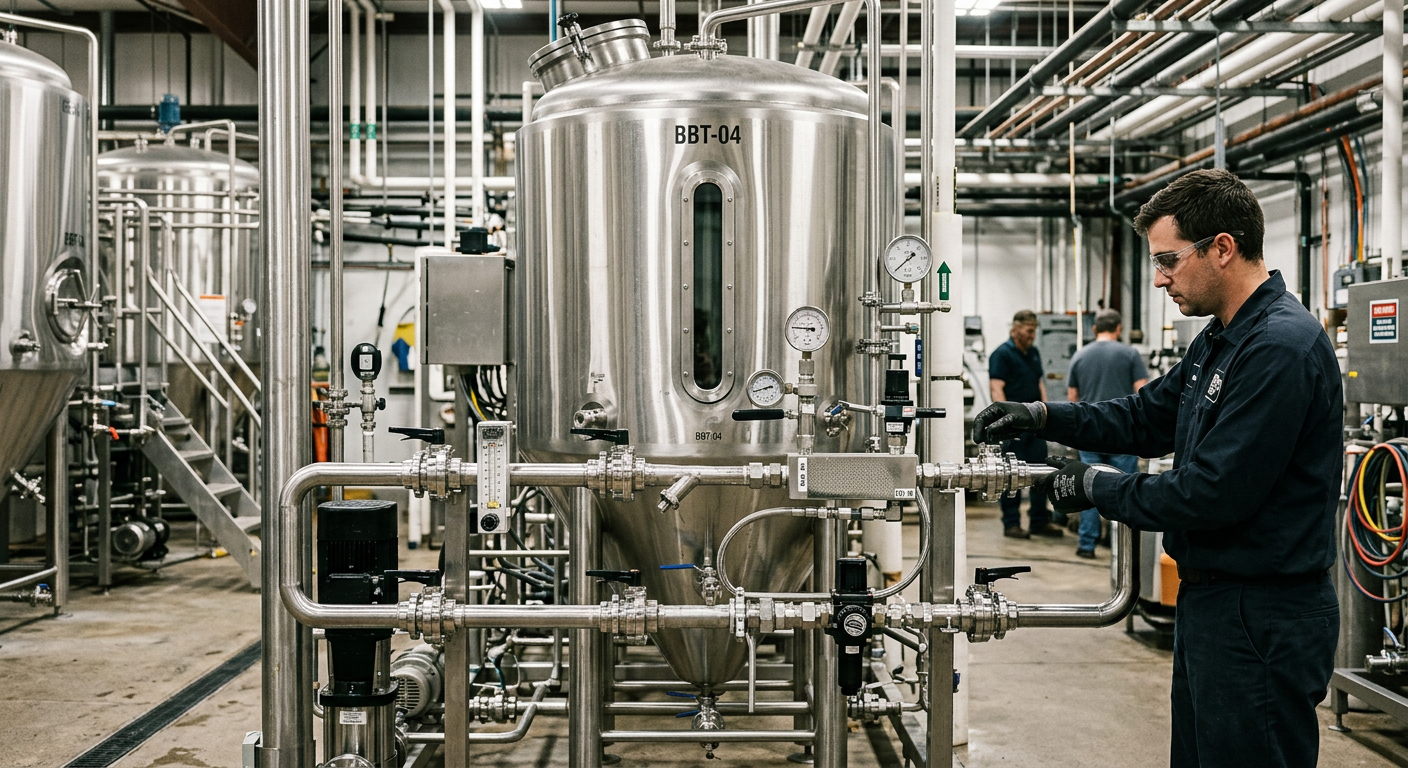
Food Plant Value Engineering: 5 Strategies for Cost Optimization
Food and beverage manufacturers in the United States are under constant pressure to expand capacity, protect margins, reduce utility costs, and complete projects faster without compromising food safety or compliance. In this environment, value engineering is not a simple cost-cutting exercise. It is a disciplined method for improving capital efficiency, operating performance, and long-term return on investment across processing systems, utilities, automation, and facility construction. For plants producing protein products, dairy, sauces, beverages, aseptic items, shelf-stable foods, and co-packed consumer goods, the best savings rarely come from choosing the cheapest equipment. They come from smarter system design, right-sized utilities, better layout logic, supplier coordination, and life cycle decisions that reduce total cost over years of operation. In major U.S. manufacturing corridors such as Chicago, Dallas-Fort Worth, Fresno, Raleigh, Atlanta, Houston, and the Inland Empire, processors are increasingly prioritizing engineering partners that can align project scope with actual throughput and profitability goals. The fastest way to optimize food plant capital spending in the United States is to evaluate the entire process, not just individual line items. The five highest-impact strategies are: selecting materials by risk and duty rather than habit, improving process efficiency before adding equipment, reducing energy consumption through utility integration, sizing equipment to true production needs, and coordinating suppliers early to avoid change orders and schedule drift. Additional gains come from improving constructability and comparing life cycle cost instead of purchase price alone. In practical terms, a processor can often save 8% to 20% on a new line or expansion by eliminating redundant tanks, correcting oversized pumps and compressors, simplifying pipe routing, matching CIP capacity to actual circuits, and sequencing procurement around fabrication and installation realities. The result is not only lower project spend, but also better startup performance, stronger OEE, and fewer operating surprises after handoff. For owners planning a new build, brownfield expansion, or line relocation, value engineering should begin during feasibility and continue through procurement, installation, commissioning, and startup. Waiting until bids come in high usually forces reactive cuts that damage long-term performance. The table above shows why value engineering must be cross-functional. A stainless tank decision affects structural steel, controls, CIP flow, insulation, and installation sequencing. A compressor package decision affects power distribution, room ventilation, maintenance access, and future expansion. Looking at each system in isolation often hides the real savings. Alternative material evaluation is one of the most misunderstood cost optimization tools in food plant design. Many U.S. facilities default to the most conservative material choice everywhere, even when product chemistry, washdown intensity, and regulatory exposure do not require it. In some cases, that approach is justified. In many others, it drives unnecessary capital cost and fabrication complexity. For example, a high-acid beverage system in California or Florida may require robust corrosion-resistant materials in product contact zones, while dry ingredient conveyance or utility-support structures can be handled with more economical choices. The key is to classify systems by sanitation criticality, chemical exposure, temperature, pressure, cleanability, and expected service life. Product contact surfaces, aseptic environments, and harsh CIP loops deserve stricter standards than non-contact framing or low-risk utility branches. Material evaluation should also account for local factors. Gulf Coast humidity, Midwestern freeze-thaw conditions, and coastal salt exposure around ports such as Los Angeles, Long Beach, Savannah, and Newark can influence enclosure design, coatings, and external durability. Plants shipping through Memphis, Kansas City, and the Dallas logistics corridor may also prioritize damage resistance and maintenance accessibility because uptime is tied closely to distribution commitments. The main lesson is that alternative materials should be chosen through risk-based engineering, not blanket substitutions. A poor substitution can create sanitation problems, premature corrosion, and regulatory exposure. A well-chosen substitution can reduce fabrication time, simplify procurement, and preserve performance. The best practice is to review every material decision against process chemistry, cleaning regime, maintenance capabilities, and expected production mix. Process efficiency analysis often reveals that the least expensive capacity increase is the one already inside the plant. Before adding tanks, heat exchangers, fillers, retorts, or cook systems, owners should map cycle times, downtime causes, utility constraints, labor movement, hold points, and automation logic. In many U.S. facilities, the actual bottleneck is not the headline equipment. It is controls sequencing, changeover delay, CIP overlap, poor batch synchronization, or insufficient buffer strategy. This is especially common in beverage blending, dairy processing, protein marination, prepared foods, and aseptic packaging. A plant may believe it needs a larger mixing system, but the true issue could be recipe execution delays, pump transfer mismatch, or underperforming temperature control. Likewise, a smokehouse or retort expansion may appear necessary until a detailed study shows that staging, crate flow, or packout labor is limiting the line. Efficiency analysis should include process simulation, utility load mapping, and data review from PLC and SCADA systems. When applied early, it helps owners avoid spending capital on symptoms instead of causes. This matters even more in high-cost labor markets such as California, the Northeast, and parts of the Pacific Northwest, where inefficiency compounds quickly. The chart illustrates a realistic growth pattern in U.S. spending on process-efficiency-led capital programs. As labor, energy, and compliance costs rise, more plants are investing in debottlenecking studies before authorizing full expansions. Owners considering optimization studies can explore broader project planning, integration, and facility execution support through food and beverage engineering services. The best process reviews connect operations data with practical implementation, not just theoretical recommendations. Energy consumption reduction is one of the strongest long-term value engineering opportunities for American food plants. Steam, refrigeration, compressed air, process water, chilled glycol, hot water, and HVAC systems frequently operate as separate silos, even though their performance is tightly connected. When utility systems are designed together, plants can significantly reduce demand charges and operating costs. High-opportunity measures include heat recovery from compressors and pasteurizers, VFDs on pumps and fans, optimized boiler turndown, floating head pressure in refrigeration systems, better insulation, condensate recovery, air leak management, smart defrost scheduling, and energy-aware automation. These strategies are especially valuable in large beverage plants, dairy facilities, frozen food operations, and protein processing sites where thermal loads are substantial. Regional energy pricing also matters. Facilities in California, New England, and some Mid-Atlantic markets face high electricity rates, making refrigeration and compressed air optimization particularly attractive. Plants in Texas and the Southeast may focus more on cooling towers, water management, and peak summer HVAC loads. Manufacturers near Phoenix, Las Vegas, and Southern California must also account for water-energy coupling because every gallon treated, cooled, or heated carries utility cost. The area chart shows a realistic trend shift as U.S. processors increasingly prioritize energy performance in capital planning. By 2026, more projects are expected to integrate sustainability, utility resilience, and operating cost reduction into early design criteria rather than treating them as later add-ons. The explanation behind the table is simple: the best utility savings are usually cumulative. One measure may have a moderate effect, but a coordinated package across refrigeration, steam, compressed air, and controls can materially lower total cost of ownership. This is why energy reduction should be reviewed alongside process design, not after construction. Equipment sizing optimization is where many projects either create long-term efficiency or lock in avoidable waste. Oversized equipment looks safe on paper, but it often increases capital cost, lowers control quality at partial load, causes unnecessary cycling, and inflates utility infrastructure. Undersized equipment creates the opposite problem: bottlenecks, unstable production, and upgrade pressure soon after startup. The correct approach is to size systems around production profiles, not peak assumptions alone. A plant producing sauces in Ohio, cultured dairy in Wisconsin, or canned beverages in North Carolina may have different seasonal demand curves, SKU complexity, shift patterns, and sanitation windows. Equipment should be selected based on realistic run rates, future expansion logic, and utility interaction. Right-sizing commonly applies to storage tanks, CIP skids, chillers, boilers, air compressors, pumps, heat exchangers, and wastewater pretreatment systems. In many plants, value engineering identifies a smaller primary unit with future tie-ins for a second unit, rather than one oversized asset installed too early. The bar chart highlights where right-sizing studies are most in demand. Beverage, aseptic, and dairy facilities often show the greatest need because flow rates, sanitation design, and utility load profiles can change sharply with packaging format and production mix. When evaluating custom versus standard process assets, owners can review available process equipment solutions to compare modular options, fabrication practicality, and integration fit. Standardization can reduce lead time and cost, but only when it aligns with process and utility requirements. Constructability improvements reduce cost by making the design easier and faster to build. In active food plants, this is especially important because installation often happens around production schedules, shutdown windows, sanitation controls, and access limitations. A technically sound design can still become expensive if it ignores field realities. Typical constructability opportunities include modular skids, pre-fabricated piping spools, simplified support steel, better utility routing, fewer interferences above ceilings, smarter floor drain coordination, and access planning for sanitation and maintenance. In brownfield plants across the Midwest and Northeast, where legacy infrastructure is common, constructability can determine whether a project stays within its outage window. Value engineering should therefore consider not just what is installed, but how it will be installed. A design that reduces crane picks, minimizes hot work in production zones, or allows phased tie-ins can materially improve schedule certainty. This is particularly useful in facilities near major freight nodes like Indianapolis, Columbus, and Atlanta, where shutdown timing often aligns with customer service commitments and transportation cycles. The practical meaning of this table is that constructability is not a secondary concern. It is a cost lever. Every difficult field weld, congested ceiling space, and unplanned tie-in creates schedule and budget exposure. Preconstruction reviews should challenge whether the design can be installed safely, cleanly, and predictably in the real operating environment. Life cycle cost assessment helps owners move beyond first cost and compare options over the full service life of a system. This is essential in food processing, where sanitation labor, chemical use, water consumption, spare parts, and downtime may exceed the purchase price of equipment over time. A lower-priced skid that is harder to clean or maintain can become more expensive within a few years. The strongest life cycle reviews compare capital cost, utility use, maintenance frequency, expected service life, downtime risk, cleanability, and expansion flexibility. This is highly relevant for pumps, valve matrices, boilers, refrigeration systems, fillers, process tanks, and control platforms. Plants with aggressive SKU growth or expected M&A activity should also include future adaptability in the analysis. U.S. owners are increasingly using life cycle cost models when investing in high-throughput co-packing, aseptic processing, and utility central plants. This trend will likely accelerate through 2026 as sustainability targets, insurance scrutiny, and resilience planning become more influential in board-level capital decisions. This comparison chart shows a common pattern in food plant projects. The cheapest option often scores best on initial cost but falls behind on energy, maintenance, service life, and expandability. Over time, the more balanced option usually delivers the better financial outcome. Owners looking for evidence-based planning often benefit from reviewing previous project outcomes and implementation approaches through selected food and beverage project examples. Case-driven learning helps ground life cycle decisions in operating reality rather than brochure claims. Supplier coordination is often where hidden cost either disappears or multiplies. In food plant projects, the owner may have process equipment vendors, utility package suppliers, controls integrators, local trades, OEM technicians, sanitation stakeholders, and compliance requirements all converging on one schedule. Without tight coordination, scope gaps and overlaps create change orders, startup delays, and finger-pointing. Strong value engineering aligns supplier responsibilities early: who provides valves, who wires instruments, who owns FAT and SAT, who furnishes field supports, who supplies insulation breaks, who programs interlocks, and who is responsible for line balance at startup. These details matter more than headline unit pricing. Local supplier strategy also matters in the United States. Fabrication from the Carolinas, the Midwest, Texas, or California may affect freight, field support availability, and speed of replacement parts. For projects near ports such as Houston, Long Beach, Oakland, and Savannah, imported equipment can be cost-effective, but customs timing and spare parts risk must be considered. For remote sites in the Mountain West or upper Plains, local field service response may outweigh a lower upfront quote from a distant vendor. Good supplier coordination is especially important for multi-line beverage, protein, and aseptic projects where one delayed vendor can hold up utilities, controls, and commissioning. Savings come from alignment and clarity, not simply lower quotes. Disruptive Process Solutions supports food and beverage manufacturers across the United States and Canada with a model built around profitable project execution. Rather than approaching projects as isolated construction packages, the company works from a business-driven perspective that connects capital planning, engineering, installation, and startup performance. On the technological side, DPS brings multi-discipline engineering capabilities across structural, mechanical, plumbing, electrical, process, and controls. That includes PLC programming, automation, and SCADA integration, with practical expertise in fermentation systems, distillation, pasteurization, retort, aseptic processing, blending, batching, filtration, water treatment, utilities, and energy-aware process integration. This depth allows value engineering decisions to be tested against the way the full plant actually runs, not just the way one subsystem is drawn. On the manufacturing side, DPS also provides proprietary process equipment, including tanks, custom CIP systems, marination tumblers, and cooking vessels. That fabrication perspective is valuable during cost optimization because it helps compare custom and standard solutions, evaluate modularization opportunities, and reduce unnecessary complexity before procurement begins. On the service side, DPS delivers capital planning, feasibility support, owner representation, project and program management, general contracting functions where applicable, installation oversight, and system integration. Its Design Build Manage approach is intended to keep engineering intent, field execution, and owner priorities aligned from concept through commissioning. Companies interested in learning more can visit the company overview page for additional background. For U.S. manufacturers seeking a partner that understands both technical execution and return on capital, this integrated model can be especially useful in expansions, relocations, utility upgrades, new lines, and greenfield or brownfield developments. It is a structured review of design, equipment, materials, utilities, and execution methods to improve value. The goal is not simply to cut cost, but to lower total installed and operating cost while maintaining food safety, compliance, and performance. It should start during feasibility or conceptual planning. The earlier it begins, the more options are available. Late-stage value engineering often becomes reactive budget cutting, which can reduce long-term performance. Beverages, dairy, protein processing, sauces and dressings, prepared foods, aseptic products, retort foods, and co-packing operations all benefit. Facilities with high utility demand or frequent product changeovers tend to see especially strong returns. Yes. Many of the best results come from debottlenecking, controls optimization, utility improvements, CIP redesign, and layout changes inside existing facilities. In some cases, output gains are possible without major new equipment purchases. Results vary by scope, but a disciplined value engineering program can reduce capital cost by roughly 8% to 20% and improve operating cost over the life of the asset. Savings are often highest when the project includes utilities, automation, and multiple vendors. Local suppliers can reduce freight, improve response time, and simplify field support. However, the cheapest local source is not always the best option. The right choice depends on fabrication quality, sanitary expertise, service support, and schedule reliability. Key 2026 trends include wider use of digital twins for process simulation, stronger energy and water efficiency requirements, more automated reporting for FDA and quality systems, broader adoption of modular skids, and capital decisions increasingly shaped by sustainability and resilience metrics. More U.S. plants are also expected to invest in energy management platforms, integrated utility monitoring, and controls strategies that support both throughput and ESG goals. Buyers should ask whether the true bottleneck has been proven, whether equipment is sized to actual demand, whether utility loads have been integrated, whether material choices match risk, whether constructability has been reviewed, and whether total life cycle cost has been compared across options. For food and beverage manufacturers in the United States, the strongest projects are those that connect engineering rigor with operating reality. Cost optimization works best when it supports throughput, compliance, safety, maintainability, and profitability together. -
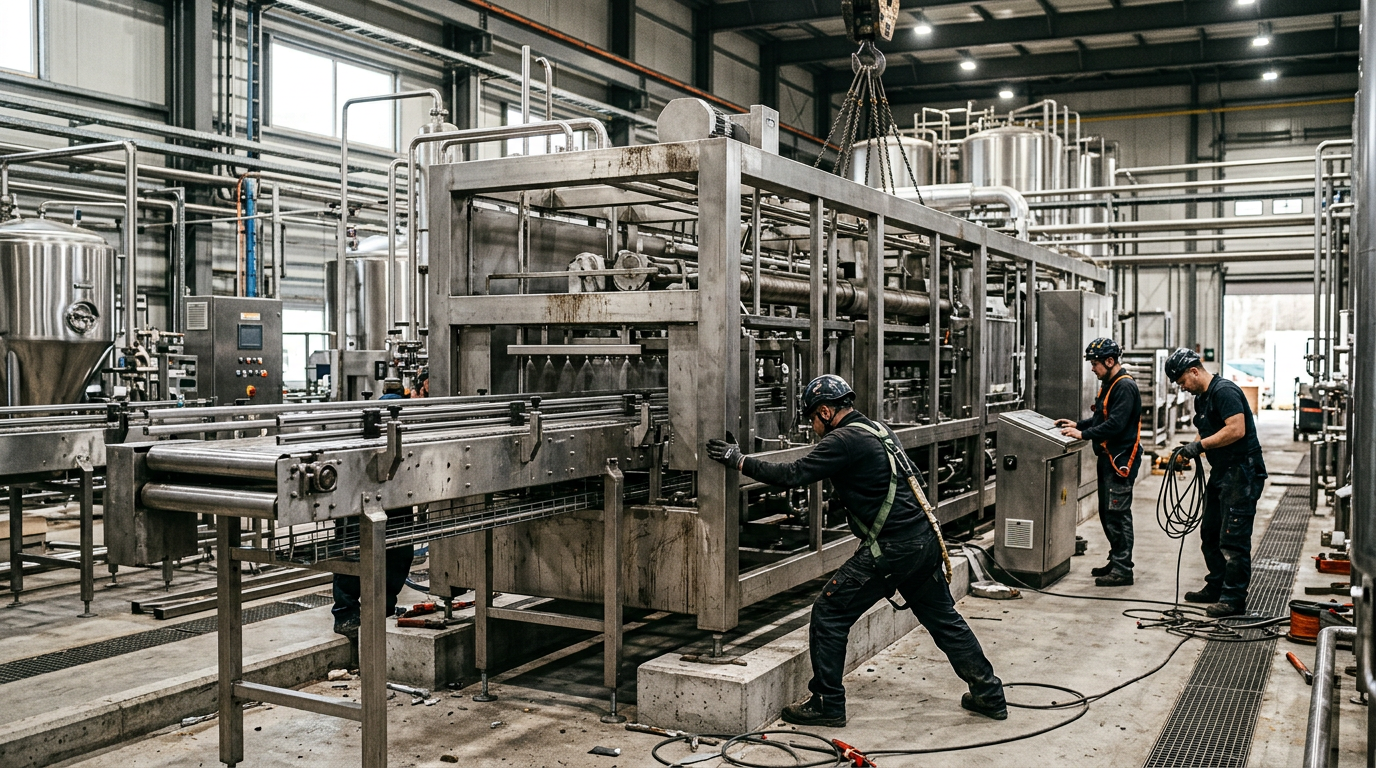
Food Plant Capital Planning Services
Food manufacturers in the United States rarely fail because they buy too little equipment. More often, they miss production, margin, or schedule targets because the full capital picture was not defined early enough. Food plant capital planning is the process of aligning plant investments with throughput, compliance, labor, utilities, cash flow, and long-term business goals. In practice, that means turning growth ideas into a disciplined roadmap for processing lines, utilities, buildings, controls, installation, and startup while protecting return on investment. For processors in markets such as Chicago, Dallas, Los Angeles, Atlanta, Fresno, Charlotte, and the broader Midwest and Southeast manufacturing corridors, capital decisions are shaped by freight access, labor conditions, water and wastewater constraints, utility capacity, and retailer or co-manufacturing demand. Facilities near the Port of Savannah, Port of Los Angeles, Port of Houston, and rail-connected hubs across the United States often face different cost and schedule pressures than inland greenfield sites. A strong capital plan accounts for those realities before money is committed. Disruptive Process Solutions (DPS), a North Carolina-based food and beverage engineering partner serving all 50 states and Canada, approaches capital planning as a profitability exercise rather than a simple procurement exercise. That mindset matters because in food and beverage manufacturing, the right answer is not always “buy more steel.” Sometimes the answer is process redesign, automation changes, utility debottlenecking, or phased execution. Companies that think this way typically invest better, start up faster, and avoid expensive rework. Food plant capital planning is the structured process of deciding what a food or beverage facility should invest in, when it should invest, how much it will cost, and what business return it should produce. In the United States, a complete capital plan typically covers three cost buckets: fixed capital costs, startup and commissioning costs, and ongoing support or transition costs. It should also include a 1-year action plan, a 3-year investment roadmap, and a 5-year strategic capacity view. For most processing projects, equipment is only part of total spend. Site work, utilities, controls, permitting, installation, contractor management, contingency, commissioning, operator training, and production ramp-up often represent 50% or more of the real investment. That is why effective capital planning should connect engineering, operations, finance, maintenance, quality, and commercial demand forecasting from the beginning. The table above shows why capital planning is both a financial and operating discipline. A project that looks attractive on equipment quotes alone can become weak once downtime, utility upgrades, wastewater, and labor are included. Conversely, a well-planned modernization may deliver better return than a large expansion. Food plant capital planning is the process of translating business growth, replacement needs, compliance requirements, and efficiency goals into a practical plant investment strategy. It usually covers line additions, line relocations, packaging upgrades, utility expansion, refrigeration, steam, compressed air, wastewater, automation, storage, sanitary design improvements, and building modifications. In the United States market, capital planning is especially important because food and beverage facilities operate under tight margin pressure, strict food safety expectations, and growing retailer demands for service reliability. Processors handling protein, dairy, sauces, aseptic beverages, ready-to-drink products, frozen foods, retort products, ingredients, or co-packing programs all face a mix of regulatory and operational risks that can turn a poorly planned project into a major margin drag. A sound capital planning effort normally addresses five questions: This is where integrated engineering support becomes valuable. DPS supports clients with capital planning, feasibility, project management, and integration services so investment decisions are grounded in process reality. The firm works across food and beverage applications ranging from brewing, distillation, dairy, and aseptic systems to protein processing, prepared foods, and plant-based operations. That cross-category experience is useful because many processors now blend technologies, for example combining beverage-style clean utilities with food-style thermal processing and hygienic packaging. Capital planning also depends on local market context. A processor expanding near California’s Central Valley may focus heavily on water reuse, energy rates, and seasonal labor. A Gulf Coast or Texas facility may prioritize resilience, refrigerant strategy, and port-linked inbound supply. A Midwest protein plant may put more emphasis on wastewater loading, cold-chain capacity, and USDA inspection flow. Capital planning only works when those location-specific factors are reflected in the business case. Many project teams think in terms of one number: the purchase price. Effective food plant capital planning breaks total investment into three cost buckets so approvals are realistic and surprises are reduced. The table clarifies that a “capital budget” should not be limited to tangible equipment and piping. It must reflect the full cost to put the asset into stable production. That is especially true when manufacturers are retrofitting older facilities in places like New Jersey, Wisconsin, Ohio, or Pennsylvania, where hidden building and utility constraints are common. Bucket one, fixed capital costs, covers everything needed to physically create the solution. Bucket two, startup and commissioning, accounts for the cost of making the solution work consistently under commercial conditions. Bucket three, transition and support, protects continuity by covering spare parts, process documentation, maintenance readiness, and inventory or scheduling adjustments. Plants that fund only bucket one often end up “saving” money on paper while losing much more during startup. In many U.S. food and beverage projects, purchased equipment represents only 40% to 50% of total installed cost. The rest comes from integration. That includes sanitary piping, electrical distribution, MCC or VFD upgrades, PLC and HMI work, structural supports, floors and drains, HVAC changes, refrigeration tie-ins, compressed air, steam, condensate, water treatment, fire protection, permits, and contractor supervision. This reality surprises companies that rely too heavily on vendor quotations. A filler may cost $900,000, but if the room needs drainage upgrades, utility rerouting, air balancing, conveyor changes, line controls, and a weekend shutdown window, the all-in project could easily land at $1.8 million to $2.4 million. The same pattern appears in protein, dairy, aseptic, and thermal processing projects. The explanation is straightforward: equipment does not operate in isolation. A line is only productive when utilities, controls, product flow, quality checks, sanitation access, and packaging interfaces are all designed together. DPS is effective in this area because its technical capabilities span process, mechanical, structural, electrical, plumbing, and controls engineering, including PLC programming and SCADA. That integrated view helps clients evaluate total installed cost rather than partial cost. Another reason equipment is only part of total investment is compliance. In FDA, USDA, SQF, and BRC environments, installation details matter. Hygienic zoning, access for cleaning, allergen separation, utility reliability, and documentation can add cost, but they also reduce audit exposure and product risk. A low equipment quote that creates a sanitation or inspection problem is not a low-cost solution. The line chart illustrates a realistic upward trend in food plant capital activity, driven by automation, modernization, reshoring, and supply chain resilience. While individual years vary by product category, most processors are now prioritizing selective, ROI-focused capital over reactive spending. Strong capital plans do not stop at next year’s budget. They create a phased roadmap that balances urgent needs with long-term scale. For food plants in the United States, the most practical format is a 1-year, 3-year, and 5-year planning structure. The 1-year roadmap is tactical. It focuses on must-do projects such as risk reduction, compliance upgrades, utility stabilization, critical replacement, and near-term customer demand. The 3-year roadmap is portfolio-oriented. It should align capacity additions, process redesign, packaging automation, cold storage, and digital upgrades with expected sales growth. The 5-year roadmap is strategic. It asks whether the current facility footprint, labor model, and utility backbone can still support the business or whether major relocation, expansion, or greenfield investment is more rational. The purpose of this table is to show that each horizon answers a different business question. When all capital requests are forced into a single annual budget format, strategic projects compete unfairly with emergency replacements. A multi-year structure improves visibility and gives procurement, operations, and finance time to act intelligently. DPS often supports companies that want both strategic planning and execution speed. That combination matters when a manufacturer is growing quickly but cannot afford disruption to current output. Through its design-build-manage approach, the team can help define the roadmap, coordinate local trades, and manage execution across geographies. More on the company’s background is available on the about page, but the key point is that the company is built around project-based decision making and practical capital outcomes. The area chart highlights a clear trend shift: a larger share of food plant CapEx is moving toward controls, data, automation, and labor-reduction technologies. By 2026, this trend is expected to intensify as labor costs, traceability requirements, and energy management priorities continue to rise. One of the best ways to improve capital budget accuracy is to use historical location data from your own facility network and from comparable regional projects. U.S. costs vary materially by geography. Labor rates, permit timelines, freight, utility interconnection, local subcontractor depth, and environmental requirements can change the budget by double-digit percentages. Start by building a site-level history for at least five years. Track project type, budget, approved amount, final spend, downtime, production gain, and hidden scope categories. Then normalize those results by plant size, line type, and region. For example, a sanitary piping project in Southern California may carry different labor and inspection assumptions than a similar project in North Carolina or Missouri. The value of this table is practical: historical location data helps move the process from guesswork to patterned estimating. It also supports better governance because each new project can be compared against past performance rather than defended with isolated vendor quotes. In food and beverage environments, location data should also include sanitation and compliance history. If one site consistently spends more on drains, floor repairs, or HVAC balancing after installations, that pattern should shape future scope assumptions. Similarly, if a region has recurring delays from electrical service upgrades or wastewater discharge negotiations, that delay risk belongs in the budget and schedule from day one. DPS helps manufacturers connect facility history with future project design, especially when the plant needs more than equipment procurement. Because the company also handles project and program management, owners’ representation, and integration execution, historical lessons can be translated into actual project controls rather than left in a spreadsheet. Many processors blur the line between maintenance capital and operating maintenance expense. That creates confusion, underfunding, and poor asset decisions. The distinction should be clear. An operating maintenance budget covers routine spending required to keep current assets functioning: lubricants, minor repairs, standard parts, inspections, calibration, sanitation support, and normal labor. A maintenance capital plan covers larger asset renewal, reliability upgrades, and replacements that extend useful life, improve safety, or materially change performance. This comparison helps finance and operations classify spending consistently. It also matters for planning because maintenance capital competes with growth capital. If every large replacement is hidden inside operating budgets until failure, executives lose visibility into the true state of the asset base. Food plants with aging infrastructure in older industrial regions often need a formal maintenance capital plan covering utilities first: boilers, refrigeration, electrical distribution, air systems, and wastewater. These assets do not always drive excitement, but they determine whether production lines can perform. In many cases, a utility or controls upgrade creates more value than a new process unit. For manufacturers evaluating replacement and modernization paths, DPS’s technology capabilities are especially relevant. The company supports process and controls engineering across utilities, CIP, thermal systems, refrigeration-related interfaces, automation, and SCADA. That allows clients to compare repair, rebuild, and replace options on a system level rather than asset by asset. Strong governance does not slow good projects down. It helps the right projects move faster by clarifying requirements early. Food plant CapEx approval in the United States should combine stage-gate discipline with enough flexibility to respond to commercial timing and plant realities. Best practice starts with a common business-case template. Every project should define problem statement, scope boundaries, alternatives considered, total installed cost, schedule, downtime assumptions, food safety implications, labor impact, utility needs, and expected financial return. Projects should also identify what happens if the company does nothing. Useful governance usually follows these gates: Post-audits are often skipped, but they are essential. If a line was expected to increase throughput by 20% and delivers only 9%, leadership needs to know why. Was the problem the equipment, the controls logic, operator training, utility constraints, or demand assumptions? That learning improves future capital plans. The bar chart shows where demand for plant investment is likely to remain strong. RTD beverages, protein, and aseptic or shelf-stable categories continue to attract capital because they combine growth potential with operational complexity. Governance also depends on execution structure. DPS’s service capabilities are relevant here because the company can act as engineer, general contractor in licensed jurisdictions, owners’ representative, equipment supplier, and project manager. That broad role can simplify accountability if the owner wants one partner coordinating design, trade management, and startup readiness. To reduce approval friction, companies should rank projects in three portfolios: mandatory, maintenance capital, and growth capital. Mandatory projects cover safety, regulatory, and existential risks. Maintenance capital protects reliability. Growth capital targets margin expansion, volume growth, or strategic capability. That portfolio view makes board and executive decisions much cleaner. Food plant capital projects in the United States can be funded through several structures depending on project size, balance sheet strategy, and expected return. The best choice is not always the lowest headline interest rate. It is the structure that aligns capital cost, tax treatment, cash flow, and operating flexibility. Common financing options include cash funding, term loans, equipment leasing, sale-leaseback structures, state and local incentives, utility rebates, tax-advantaged programs, and in some cases vendor financing. Mid-market manufacturers often combine these methods. For example, they may use internal cash for engineering and site prep, then lease packaging equipment while financing utility backbone upgrades through a conventional facility loan. The table shows that financing should be chosen by asset profile, not habit. A utility plant, wastewater system, or building addition behaves differently from a mobile packaging machine or standard tank set. Matching funding structure to asset reality can materially improve the economics of a project. By 2026, financing decisions are expected to be influenced more heavily by sustainability metrics, energy resilience, and domestic supply chain strategy. Lenders and incentive programs are increasingly receptive to projects that reduce water usage, improve energy efficiency, add automation, or support reshored manufacturing capacity. Food processors planning boiler optimization, heat recovery, water reuse, advanced controls, or low-emission utility upgrades should evaluate incentive pathways early, not after design is complete. How often should a food plant update its capital plan?At minimum, once a year. High-growth manufacturers, co-packers, and facilities under customer-driven expansion pressure should review it quarterly. What is the right contingency for a food plant project?It depends on project phase and site condition. Early-stage concepts may need 15% to 25%. Detailed, well-defined projects in predictable environments may require less. Brownfield sites usually need more contingency than greenfield sites. What industries benefit most from formal capital planning?Protein, dairy, aseptic beverages, brewing, distillation, prepared foods, sauces, ingredients, frozen foods, shelf-stable foods, and contract manufacturing all benefit because process integration and compliance requirements are significant. Should engineering be engaged before equipment selection?Yes. Early engineering helps confirm process fit, utility load, layout, sanitation access, controls scope, and actual installed cost. It often prevents expensive misalignment between equipment choice and site reality. Can capital planning reduce downtime during expansion?Yes. A phased plan can sequence shutdowns, temporary bypasses, tie-ins, offsite fabrication, and startup windows so existing production is protected as much as possible. How do you compare local suppliers and integrators?Evaluate more than price. Compare sanitary expertise, schedule performance, controls depth, field supervision, geographic reach, documentation quality, and experience with FDA, USDA, SQF, or BRC projects. The comparison chart reflects a common U.S. procurement reality: equipment-only vendors can be valuable, but integrated project partners typically perform better where process complexity, site coordination, and startup risk are high. What should be included in a food plant feasibility study?Demand assumptions, process flow, site constraints, utility assessment, preliminary layout, ROM cost estimate, phasing plan, schedule, compliance considerations, and expected return. Is there a difference between food and beverage capital planning?Yes, but there is also overlap. Beverage projects often emphasize clean utilities, filling, blending, carbonation, thermal treatment, and high-speed packaging. Food projects may emphasize material handling, cooking, forming, thermal processing, washdown, and allergen management. Integrated firms with experience in both categories can often spot useful crossover solutions. What product types most often trigger a new capital cycle?RTD beverages, fermented products, aseptic products, co-packed items, value-added proteins, sauces, dairy-based beverages, and shelf-stable foods frequently trigger new investment because they demand specialized process and utility infrastructure. How should a company choose a planning partner?Choose a partner that understands process, utilities, installation, commissioning, and business return. Also look for honesty. The best partner is willing to challenge unnecessary spending if a lower-cost operational fix can solve the problem. That last point is central to DPS’s reputation. The company supports clients throughout North America with a business-first approach that emphasizes profitable projects, transparency, and execution discipline. Its manufacturing capabilities include proprietary process equipment such as tanks, CIP systems, tumblers, and vessels, while its field execution model supports turnkey installation and integration. You can review selected project examples and case studies or explore available process equipment offerings to see how planning and physical delivery connect. In practical terms, food plant capital planning is not about creating a perfect forecast. It is about making better decisions with clearer assumptions. For U.S. manufacturers facing labor pressure, retailer service demands, rising utility complexity, and stricter compliance expectations, the strongest capital plans will be the ones that tie engineering detail to business strategy. By 2026, the winning projects are likely to be those that combine throughput growth with automation, resilience, sustainability, and disciplined governance. Whether the project is a new beverage facility in the Southeast, a protein line upgrade in the Midwest, a dairy expansion in the Northeast, or an aseptic retrofit on the West Coast, the same rule applies: plan the whole system, not just the equipment. That is where capital turns into profitable manufacturing capacity. -
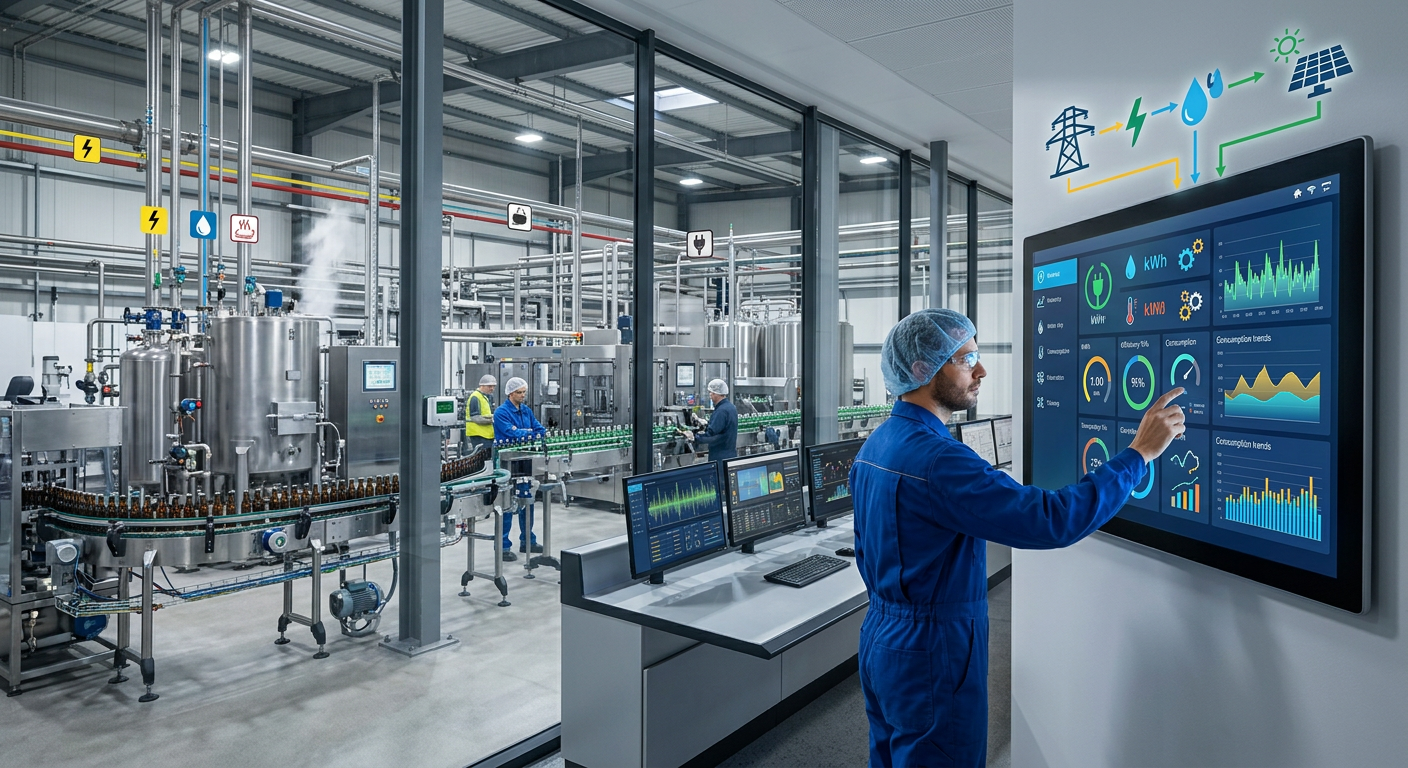
Food Facility Construction Safety Program: OSHA and FSMA Compliance
Construction inside an active food or beverage plant in the United States is not managed like ordinary commercial work. It requires a layered safety and food protection program that combines worker protection, facility hygiene, air control, contamination prevention, sanitation recovery, incident planning, and documented verification. The practical standard is to align OSHA expectations for worker safety with food-manufacturing controls commonly required under FDA, USDA, FSMA, SQF, and BRC programs. In real operating environments, that means trained crews, sealed work zones, negative air pressure when dust is possible, approved personal protective equipment, validated sanitation transition procedures, and constant auditing before, during, and after the work. For manufacturers operating in hubs such as Chicago, Dallas-Fort Worth, Los Angeles, Fresno, Charlotte, Atlanta, Kansas City, the Inland Empire, the Port of Houston corridor, and the I-95 distribution belt, the stakes are high. A poorly managed shutdown or retrofit can trigger safety citations, product holds, allergen cross-contact, microbiological risk, missed production windows, and customer complaints. A strong program protects people first, but it also protects throughput, brand reputation, and capital efficiency. If you need a direct answer, a compliant food facility construction safety program in the United States should include six non-negotiable elements: OSHA-trained supervision, food-specific site orientation, containment barriers, pressure-managed air control, plant-approved PPE, and sanitation release before production restarts. These controls should be documented in pre-task plans, permit systems, cleaning records, inspection logs, and closeout reports. The best programs also connect construction sequencing to production realities, especially in high-care, ready-to-eat, dairy, beverage, protein, and aseptic environments. Buyers evaluating contractors for food plant expansion, equipment relocation, utility upgrades, or greenfield commissioning should look beyond price. They should confirm whether the provider understands the difference between worker safety compliance and food-safe execution. In many projects, both must happen at the same time. A crew may be fully compliant with general jobsite safety rules but still create unacceptable contamination risk if they cut concrete without air control, move tools through hygienic areas without transition, or restart utilities before sanitation verification. The U.S. market continues to invest in processing capacity near transportation and labor centers. Beverage growth remains strong around North Carolina, Texas, California, and the Midwest. Protein, prepared foods, sauces, dairy, and cold-chain facilities continue to expand near interstates, rail access, and ports serving domestic and export demand. As this capital spending grows, so does the need for disciplined construction safety programs designed specifically for food manufacturing operations. The table above shows why a food plant program must bridge safety, quality, and operations. Each control is useful on its own, but the real value comes from coordination. When those six controls are integrated, projects move faster with fewer surprises, less rework, and better startup performance. The line chart reflects a realistic market pattern: more U.S. manufacturers are requiring documented barrier management, sanitation recovery, and food-safe construction methods as standard bid requirements. This trend is especially visible in regulated categories such as dairy, protein, ready-to-drink beverages, and aseptic processing. OSHA 30 remains a strong baseline for supervisors and project leaders because it establishes discipline around hazard recognition, communication, lockout concerns, electrical awareness, fall prevention, and site accountability. However, OSHA 30 alone is not enough for active food and beverage environments. Teams also need food-specific training on hygienic zoning, traffic segregation, tool control, allergen awareness, water management, drain protection, waste routes, sanitation holds, glass and brittle plastic rules, and emergency communication with plant operations. For example, a contractor working in a dry ingredient plant near Kansas City or a protein room in Arkansas may face entirely different contamination pathways than a craft beverage line in North Carolina or an aseptic filler project in California. The training content should match product type and process risk. Low-moisture plants often focus on dust and allergen control; RTE plants focus more heavily on pathogen prevention; beverage facilities often prioritize utility integrity, CIP interfaces, and packaging line separation. Strong buyer advice in this category is simple: ask to see the provider’s role-based training matrix. A mature team will distinguish between general labor, welders, electricians, controls staff, millwrights, startup technicians, and supervisors. It will also define refresher timing, onboarding triggers, and facility-specific overrides. The explanation behind this matrix is practical. Training should not be treated as a single classroom event. It should be deployed as a layered operational system tied to permits, sanitation risk, and production timing. Manufacturers in major U.S. logistics corridors often expect this because they cannot afford unplanned downtime tied to preventable site behavior. From a technology perspective, construction partners with broad engineering depth add value because they can connect field training to design intent. That matters when integrating process, mechanical, plumbing, electrical, and controls work. A team that understands PLC logic, SCADA visibility, utility sequencing, and process flow can better explain why one valve isolation matters, why one drain must stay protected, or why a temporary tie-in changes sanitation risk. This is one of the reasons clients often review a firm’s engineering and integration background before awarding sensitive work. For a closer view of integrated project capabilities, manufacturers can review food and beverage engineering services that combine design, construction management, and execution oversight. Containment barriers are the frontline defense between construction activity and food production. In the United States, the exact barrier design depends on work scope, product exposure, air movement, utilities, and hygiene zoning. A simple maintenance partition may be acceptable in a warehouse expansion, while a rigid sealed barrier with dedicated access control may be required next to a ready-to-eat slicing line or aseptic support area. Barrier protocols should define material type, height, ceiling closure, sealed penetrations, signage, entry rules, tool transfer controls, debris exit routes, and inspection frequency. They should also identify when the barrier must be upgraded because of escalated work such as concrete cutting, grinding, welding, roof penetrations, or overhead work. Plants near humid Gulf Coast markets or older East Coast facilities may face added complexity because existing building envelopes and HVAC interactions make dust and moisture harder to predict. For product types such as powdered ingredients, dairy powders, seasonings, bakery mixes, and plant proteins, dust migration control is essential. For wet processing, sauces, dressings, dairy, seafood, and prepared meals, moisture management and traffic control become equally important. In beverage plants, the concern often shifts to packaging exposure, syrup room protection, utility continuity, and line sanitation interfaces. This table shows that the right barrier is not chosen by budget alone. It is chosen by consequence. The higher the hygiene risk and the more invasive the work, the more robust the containment system should be. Plants that run 24/7 often save money by investing in stronger barriers upfront because they reduce sanitation recovery time and avoid broader shutdowns. When manufacturers compare suppliers, they should ask whether the contractor performs barrier risk assessments, not just barrier installation. That distinction matters. A supplier that only hangs partitions may not understand how utilities, drains, lift paths, forklift routes, or sanitation crews interact with those partitions during the project lifecycle. Negative air pressure systems are used when the project creates dust, fumes, or airborne particles that could migrate into sensitive areas. In food plants, they are especially important during demolition, core drilling, floor removal, overhead modifications, insulation disturbance, and similar work. The basic goal is to pull air from cleaner adjacent spaces into the work zone, then filter and discharge that air in a controlled way. This helps contain contaminants rather than letting them escape into production or ingredient storage areas. HEPA-filtered negative air units are common, but success depends on more than equipment placement. The project team should verify airflow direction, calculate enough air changes, inspect filter condition, and avoid accidental short-circuiting through open doors or unsealed penetrations. Pressure logs and visual smoke checks are often used to confirm performance. In large U.S. facilities around Memphis, Indianapolis, the Central Valley, or the Port of Savannah, where production schedules are tightly sequenced, reliable air control can determine whether adjacent lines stay online. By 2026, more facilities are expected to pair temporary air systems with digital monitoring. Sensors that track differential pressure, particulate levels, humidity, and temperature can support faster decisions and cleaner documentation. This trend aligns with broader policy and sustainability goals as plants seek targeted rather than excessive cleaning, more efficient filter changes, and better data for audit trails. The area chart highlights the market shift from basic containment toward monitored containment. That shift is driven by stricter customer expectations, more demanding audit environments, and the simple reality that documented performance is easier to defend than assumptions. The explanation is straightforward: negative air only works when the enclosure, equipment, and operating behavior are managed together. Open doors, overloaded filters, and poor discharge routing can undermine the entire strategy. That is why experienced teams write air control into daily planning, not just into a kickoff meeting. PPE in a food plant construction program must protect both the worker and the environment. Hard hats, eye protection, gloves, high-visibility garments, hearing protection, respiratory protection, cut-resistant gloves, arc-rated clothing, and fall protection may all be required depending on task. But food facilities also apply added controls such as dedicated footwear, beard covers, hair restraints, color-coded smocks, zone-specific gloves, and restrictions on loose items that could become foreign material hazards. The best practice is a task-and-zone PPE matrix. For example, the PPE needed for utility work in a boiler room in Houston is different from the PPE for line modifications near exposed dairy product in Wisconsin or retort work in New Jersey. Respiratory needs should also be reviewed carefully when dust-generating work occurs in confined areas or when sanitation chemicals are present nearby. Facilities should avoid one-size-fits-all PPE policies. Overly broad rules often create noncompliance because the gear feels impractical for the actual task. Instead, the program should specify minimum site PPE, task-specific upgrades, hygiene-area additions, and prohibited items. The matrix should also define who can approve deviations and how disposable PPE is handled to prevent cross-zone contamination. The bar chart reflects how certain sectors, especially aseptic, protein, and dairy, tend to require tighter PPE discipline because of microbiological sensitivity, cleaning intensity, and customer audit scrutiny. The logic behind the table is that PPE should support operational flow, not fight it. When the standards are clear and visible, supervisors can coach behavior faster, sanitation teams can predict recovery needs, and QA can release areas with more confidence. Sanitation transition procedures govern how the site moves from construction status back to food-safe operating status. This is often the most overlooked part of the program. Many projects finish the physical work but fail to define who cleans what, how debris is removed, what verification is needed, and who gives final release. In food and beverage facilities, startup without a clear sanitation transition can be more damaging than the construction itself. A proper transition plan covers gross debris removal, tool and material exit, dust control verification, drain inspection, utility restoration, equipment wipe-down or washdown, allergen review, environmental monitoring as needed, pre-operational inspection, and final QA sign-off. The sequence may vary by facility type. A low-moisture bakery in Ohio will not use the same recovery method as a wet dairy plant in Idaho or a seafood processor in the Pacific Northwest. In buying decisions, manufacturers should ask whether the contractor participates in sanitation recovery planning or simply hands the area back. The stronger providers work side by side with QA, sanitation, maintenance, and operations to define the transition early. This reduces disputes, compresses downtime, and improves startup success. This sequence matters because it separates construction clean-up from food-grade sanitation. They are related but not identical. One removes project residue; the other verifies the area is fit for manufacturing. Confusing the two is a common source of avoidable risk. Manufacturing capability also influences how well a project transitions back into production. A partner with experience in custom tanks, CIP skids, process vessels, marination systems, cooking systems, or integrated utility packages understands how fabricated equipment surfaces, weld finishes, piping routes, and startup sequences affect cleanup and validation. That kind of practical manufacturing knowledge can reduce handoff problems on complex projects. Companies evaluating process equipment and integrated systems can explore processing equipment capabilities when comparing suppliers that support both fabrication and installation. Even with strong controls, incidents can happen. The question is whether the project team can contain them quickly and communicate clearly. Incident response planning for food facility construction should address worker injury, contamination events, utility failures, fire and hot work problems, ammonia or refrigerant concerns where relevant, water intrusion, barrier breaches, unexpected debris release, and product exposure scenarios. Good plans define event classification, immediate stop-work triggers, area isolation, notification order, evidence preservation, product hold criteria, sanitation escalation, and restart authority. The response path should be short and practical. In a busy plant near Atlanta or the Inland Empire, a complex chain of approval can waste valuable minutes. The best plans place decision rights close to the operation while preserving QA and EHS control over critical release decisions. Applications vary by industry. In beverage plants, utility interruption and packaging exposure may drive the response. In meat and poultry, water management and traffic segregation are often central. In dairy and aseptic systems, hygienic boundary integrity and process restart verification become especially sensitive. Case studies across North America consistently show that early incident planning lowers total project cost. Small issues stay small when teams know exactly who responds, what gets quarantined, and how documentation is captured. When those steps are unclear, even a minor barrier tear can trigger broad area cleaning, longer downtime, and strained customer communication. The comparison chart illustrates a common market reality: specialized food and beverage project teams typically outperform general construction providers in planning depth, documentation, and hygienic recovery. That does not mean a general contractor cannot succeed, but it usually means more owner oversight is needed to close the gap. Auditing turns a construction safety program from a set of intentions into a repeatable management system. In the United States, effective audits usually happen at three levels: pre-mobilization review, active site inspection, and post-project closeout. The first checks readiness, the second confirms real execution, and the third captures lessons learned. For multi-site operators with plants in places like California, Texas, the Carolinas, Wisconsin, and Pennsylvania, standardized audit templates help compare performance across locations. Continuous improvement should measure both safety and food protection outcomes. Useful metrics include recordable incidents, near misses, barrier failures, sanitation delays, QA holds, air-control deviations, permit nonconformances, startup delays, and change-order causes tied to poor planning. By 2026, more owners are expected to combine these indicators in digital dashboards that link EHS, QA, maintenance, and capital project teams. Sustainability is increasingly part of the conversation as well. Better containment and air management can reduce over-cleaning, prevent unnecessary product disposal, and limit wasted filters and disposable materials. Smarter sequencing can also reduce energy-intensive shutdowns and restarts. As policy expectations and customer scrutiny continue to rise, efficient compliance will matter as much as basic compliance. This table is useful because it connects measurement to action. Audits are not just about catching mistakes. They help owners decide where to standardize, where to retrain, and where to change supplier expectations. A company that learns from every shutdown, expansion, or line retrofit will outperform one that repeats the same recovery problems site after site. Service capability is often the deciding factor here. Some firms can engineer and install systems, but the owner still carries the burden of managing trades, documentation, schedule risk, and closeout quality. Others provide broader support through capital planning, owner’s representation, program management, process engineering, integration, and general contracting coordination. That service depth is valuable for manufacturers balancing production pressure with compliance expectations. To understand how that model works in practice, companies can review project case examples showing how integrated oversight improves execution. Disruptive Process Solutions, or DPS, supports food and beverage manufacturers across the United States and Canada with an integrated project approach built around design, build, and manage execution. Rather than acting as a narrow trade contractor, the company operates as an engineering-led capital project partner focused on profitable outcomes, practical planning, and direct accountability. That approach fits especially well in active operating plants where construction safety, food protection, utility coordination, and startup timing must work together. On the technology side, DPS brings process, mechanical, structural, plumbing, electrical, and controls expertise to projects that range from utility upgrades to complete processing systems. The team works across automation, PLC programming, SCADA visibility, process design, and system integration, which is critical when a construction safety plan must reflect how real equipment, recipes, controls, and sanitation circuits behave during installation and startup. On the manufacturing side, DPS supports custom process equipment and integrated systems used across beverage, dairy, protein, prepared foods, aseptic operations, and related sectors. Experience with tanks, CIP systems, marination equipment, cooking vessels, and broader process infrastructure helps the team anticipate sanitation transitions, material compatibility, and startup requirements, not just structural installation tasks. On the service side, DPS supports feasibility, capital planning, owner’s representation, project management, construction coordination, installation, and commissioning. For owners, that means one partner can help shape the scope, manage local trades, protect the schedule, and maintain visibility from concept through handover. It also means field decisions can be tied back to the business case, which is important when downtime costs and startup delays carry real commercial consequences. Manufacturers looking for a partner that understands both profitability and compliance can learn more about DPS and its project philosophy. The company’s work across food and beverage categories, combined with a lean execution model, is especially relevant for clients who need fast decisions, technical depth, and disciplined field management without unnecessary bureaucracy. In the current U.S. market, local supplier selection still matters. Regional mechanical contractors, electrical firms, sanitary welders, insulation crews, and clean-build specialists often vary by geography. A national project partner with a vetted local network can help owners maintain consistent standards whether the job is in North Carolina, Southern California, the Midwest, the Gulf Coast, or the Northeast. This matters because compliance failures are rarely caused by one missing document alone; they usually come from uneven execution among multiple parties in the field. What is the difference between OSHA compliance and food-safe construction?OSHA compliance focuses on worker safety. Food-safe construction adds controls that protect ingredients, packaging, equipment, and finished product from contamination. Both are required in active food and beverage operations. Is OSHA 30 mandatory for every worker?Not always. Many plants require OSHA 30 for supervisors and OSHA 10 or equivalent for field personnel. What matters most is that the training matrix matches role, hazard, and facility risk. When is negative air pressure necessary?It is typically needed when the work creates dust, fine debris, fumes, or airborne particles that could move into adjacent production or storage areas. Demolition, grinding, drilling, and floor removal are common triggers. Do all projects need rigid barriers?No. Barrier type should match risk. Light work in low-risk spaces may use temporary soft barriers, while high-care, RTE, or dust-heavy work often requires rigid sealed barriers with controlled entry. Who signs off before production restarts?Usually QA or a plant-authorized release owner, often with support from sanitation, operations, maintenance, and the project lead. The exact authority should be defined before the work starts. How should buyers compare contractors?Review training depth, barrier planning, air-control capability, sanitation handover process, documentation quality, and experience in similar product categories. Price alone is not a reliable indicator of project value in food environments. Which industries need the strictest controls?Ready-to-eat foods, dairy, protein, aseptic processing, and high-care beverage operations generally require the most disciplined control systems. Dry ingredient and allergen-sensitive plants also need strong containment planning. What are the main 2026 trends?Expect more digital air monitoring, stronger documented hygienic zoning during construction, tighter customer audit expectations, and more sustainability-driven planning that reduces wasted cleaning, filters, and downtime. Can one partner handle engineering, equipment, installation, and compliance coordination?Yes, and that model often reduces risk because design decisions, field execution, and startup requirements are connected. It is especially useful for complex retrofits, utility expansions, and high-speed growth projects. Why is continuous improvement important if the project is one-time?Because many manufacturers manage repeated shutdowns, line additions, and facility upgrades across multiple sites. Lessons learned from one project can improve safety, speed, sanitation recovery, and cost control on the next one. -
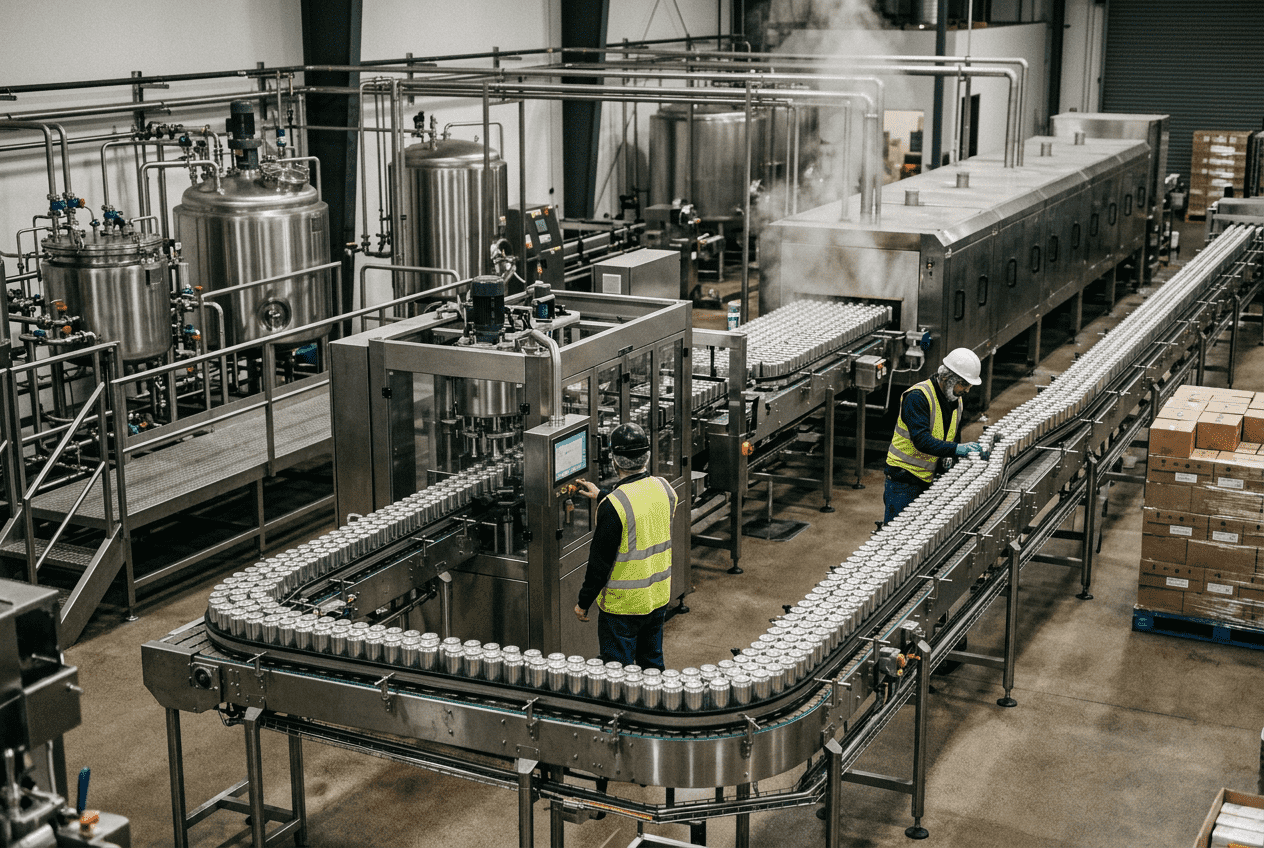
Beverage Processing Feasibility Study
Launching or expanding a beverage operation in the United States requires more than a good formula and a strong brand story. A beverage processing feasibility study tests whether the product can be made safely, profitably, and at the right commercial scale. It connects market demand, process design, packaging selection, utilities, labor, compliance, capital planning, and operating economics before major money is spent. For manufacturers evaluating juice, RTD coffee, energy drinks, functional beverages, dairy-based drinks, kombucha, carbonated soft drinks, spirits, or aseptic products, a strong feasibility study reduces risk and improves speed to market. A beverage processing feasibility study is a structured pre-project analysis used to determine whether a beverage product, plant, line expansion, or co-packing strategy is technically achievable, commercially viable, and financially sound in the United States. It usually examines product category fit, consumer demand, production volumes, pasteurization and filling requirements, packaging formats, water and wastewater infrastructure, utility loads, staffing, regulatory obligations, CAPEX, working capital, and the tradeoff between co-packing and in-house production. In practical terms, it answers questions such as: For U.S. beverage investors, founders, and plant operators, the feasibility phase is often where the best decisions are made. It is also where costly mistakes are avoided. A beverage processing feasibility study is a decision-making document that combines engineering, operations, and business planning. Unlike a simple market report, it goes into plant-level reality: ingredients, batch size, process sequence, thermal treatment, clean-in-place design, carbonation, blending, packaging speed, warehouse needs, utility demand, and compliance. In the United States, a robust study generally covers the following: For many manufacturers, the feasibility phase is the bridge between concept and execution. It is also where a partner with both engineering depth and project delivery experience becomes valuable. Disruptive Process Solutions supports beverage and food manufacturers across the United States and Canada with capital planning, feasibility studies, process engineering, installation, and project leadership built around profitability rather than equipment-first selling. Whether the project is in North Carolina, California, Texas, Illinois, New Jersey, or near logistics hubs such as the Port of Los Angeles, Port of Long Beach, Port of Savannah, Port of Houston, or Port Newark, site realities can shift feasibility outcomes dramatically. Freight costs, utility rates, labor availability, and local discharge limits all affect the business case. Beverage feasibility work overlaps with food processing in sanitation, utilities, automation, and compliance, but several factors make beverage projects different. Liquids move continuously, often at high speed, and slight changes in pH, dissolved oxygen, carbonation, or fill temperature can change shelf life and product quality. Packaging also has a much larger impact on throughput economics. The table below highlights major differences between beverage and broader food processing feasibility analysis. Because of these differences, copying a food plant evaluation framework into a beverage project can create blind spots. Beverage feasibility needs greater attention to package-line integration, utility balance, syrup or blend room design, clean product pathways, and high-speed filling performance. At the technology level, DPS brings cross-functional engineering across structural, mechanical, plumbing, electrical, process, and controls disciplines. That matters in beverage projects because process design cannot be separated from compressed air sizing, glycol demand, boiler capacity, clean steam, plant automation, or CIP return routing. Its teams also work with fermentation systems, distillation systems, carbonation, in-line blending, filtration, clarification, aseptic environments, and water treatment systems, making the feasibility work grounded in execution reality rather than theoretical layouts. Market feasibility asks a simple question with expensive consequences: what category should you actually build around? In the United States, category growth is uneven. Carbonated soft drinks remain large, but growth pockets are often stronger in functional beverages, zero-sugar formats, premium hydration, energy, RTD coffee, protein drinks, botanical beverages, and better-for-you sparkling products. Regional factors also matter. Wellness-forward launches may perform well in Southern California, Austin, Denver, Seattle, Boston, and Miami, while value-oriented or convenience-driven formats may do better in large grocery and club channels across the Midwest and Southeast. A feasibility study should compare category size with channel access and manufacturing complexity. A fast-growing category is not automatically a good entry point if it requires expensive aseptic filling, refrigerated distribution, or highly specialized ingredients. The table shows why category selection cannot be separated from process and packaging strategy. An attractive consumer trend may still be a poor fit if startup volume is too low for the equipment required. Below is a market growth view using realistic directional data for key U.S. beverage categories from 2022 through 2026. Industry demand also varies by customer type. Club stores, foodservice, c-stores, e-commerce, and direct-to-consumer all place different demands on pack size and line scheduling. For 2026, the strongest market signals are likely to center on reduced sugar, functional positioning, cleaner labels, localized sourcing stories, recyclable packaging, AI-supported demand planning, and automation that supports smaller, more frequent SKU runs. Technical feasibility is where the product concept meets engineering reality. The right process depends on acidity, shelf-life target, package type, product sensitivity, production volume, and route-to-market. A low-acid dairy beverage and a high-acid juice shot do not belong on the same process path without careful design logic. Common thermal and package approaches in U.S. beverage projects include: Packaging system selection is equally important. Cans dominate many growth categories because of shelf presence, recyclability, and strong logistics performance. PET remains important for value and high-volume formats. Glass still matters in premium, specialty, and some alcoholic beverage segments. Cartons and aseptic packs can win when shelf stability and brand position align. Trend shifts in the United States show growing preference for portable, recyclable, and premium-looking formats. Technical feasibility must also include utilities and controls. Beverage operations depend on well-designed CIP systems, steam or hot water generation, compressed air, process cooling, refrigeration where needed, electrical capacity, and production automation. DPS is especially relevant here because its process technology experience spans pasteurization and sterilization platforms, carbonation and bright tank systems, blending with in-line Brix monitoring, filtration, clarification, water treatment, PLC programming, SCADA, and full system integration. That depth helps ensure the selected process can actually be installed, controlled, cleaned, and scaled. From a manufacturing standpoint, DPS also designs and integrates complete systems for brewing, spirits, wine, kombucha, RTD, juices, soft drinks, dairy beverages, and aseptic applications. For projects requiring custom tanks, CIP skids, or purpose-built process vessels, its proprietary equipment capability can help reduce coordination gaps between design intent and delivered hardware. More about its equipment scope can be found through its process equipment solutions. Financial feasibility should not stop at quoted equipment prices. Many beverage projects fail financially because founders underestimate installation, controls integration, startup losses, utility tie-ins, spare parts, sanitation systems, warehousing, and the cash required to survive the ramp-up period. Typical U.S. beverage CAPEX categories include process equipment, packaging equipment, utilities, building modifications, automation, installation, commissioning, and contingency. Working capital then covers inventory, packaging materials, labor, receivables, and startup inefficiency. The table above shows why budget accuracy requires integrated engineering. It is also why owners often benefit from a partner that can move from feasibility into design-build execution. DPS uses a Design Build Manage model that aligns front-end planning with construction oversight and project management, helping clients avoid the disconnect between paper estimates and field conditions. Its broader engineering and project services are especially useful when timing, compliance, and capital discipline are all important. Working capital is just as important as CAPEX. The following table provides a practical framework. Buying advice for the U.S. market: do not approve a beverage project based only on vendor quotations. Ask for a full installed cost model, a ramp-up cash model, and a sensitivity analysis for line efficiency, ingredient pricing, and freight. A feasibility study should show best case, expected case, and downside case economics. Water is often the most underestimated variable in beverage processing feasibility. In many beverages, it is both a utility and a primary ingredient. Even when municipal water is available, hardness, alkalinity, chlorine residual, seasonal variability, and microbial profile can affect flavor and process consistency. Water feasibility in the United States should examine: Different regions present different water realities. The Southwest may face scarcity and higher scrutiny on usage efficiency. Parts of the Midwest may offer lower-cost utilities but require attention to hardness. Coastal industrial corridors can provide logistics advantages while imposing stricter discharge expectations. In locations such as Houston, Los Angeles, Chicago, Atlanta, and New Jersey manufacturing corridors, utility and wastewater discussions should begin early, not after process equipment is selected. This is an area where service capability matters more than isolated equipment supply. DPS supports feasibility, capital planning, owner’s representation, project management, system integration, and installation with strong regulatory fluency across FDA, USDA, SQF, and BRC environments. For beverage clients, that means water, utilities, compliance, and plant execution can be handled within one coordinated project strategy rather than in disconnected pieces. One of the biggest strategic decisions in beverage feasibility is whether to launch through a co-packer or build internal capacity. The right answer depends on volume, margin, process complexity, brand control, and funding. Co-packing can lower upfront capital and accelerate launch, but it may limit scheduling flexibility, margin, proprietary process control, and long-term scalability. In-house manufacturing offers control and asset value but requires more capital, more management depth, and more execution risk. The comparison below helps frame the decision. For many brands, the best path is staged: begin with co-packing, prove demand, then transition selected SKUs in-house once volume and margin justify investment. This is especially useful for founders testing regional demand in markets like the Northeast corridor, Southern California, Texas, or the Southeast before committing to a full plant. Supplier and operating model comparison can also be visualized by scoring key criteria. Case experience matters in this decision. DPS has supported both beverage manufacturers and co-packing environments, including large-scale beverage infrastructure programs built around first-year profitability and future capacity expansion. Examples of project thinking and execution style can be explored through selected project case studies. Timing is often underestimated. In the United States, beverage projects can move quickly when decisions are clear and utility or permit constraints are limited, but many projects stretch because of package changes, building surprises, long-lead equipment, or late-stage regulatory issues. A realistic feasibility-to-startup timeline should include gates, not just dates. Important milestone advice: Looking toward 2026, beverage feasibility studies should also account for AI-assisted maintenance, more advanced plant data integration, sustainability reporting expectations, greater pressure for water efficiency, expanded interest in electrification where practical, and stronger retailer emphasis on resilient supply chains. For owners choosing a project partner, buying advice is straightforward: work with a team that can challenge assumptions, not just validate them. A technically strong and commercially grounded feasibility effort should sometimes tell you not to spend money, or to spend it differently. That business-first mindset is central to how DPS approaches projects across North America, combining process engineering, capital planning, project management, installation, and owner-side advocacy with a lean structure that supports faster decisions and practical execution. What does a beverage processing feasibility study cost in the United States?Costs vary by project size and complexity. A narrow assessment for a single SKU and co-packing path may be modest, while a full greenfield or brownfield analysis with process design, utility review, and CAPEX modeling is more substantial. The right scope depends on investment risk and decision value. How long does a beverage feasibility study usually take?Many studies take 4 to 10 weeks. Complex projects involving site selection, wastewater analysis, multiple package formats, or aseptic processing can take longer. When should I choose co-packing instead of building a plant?Co-packing is often better for lower initial volumes, uncertain demand, limited capital, or fast market entry. In-house production becomes more attractive when volume stabilizes, margins matter more, and process or quality control is strategically important. What is the biggest mistake in beverage plant planning?Underestimating utility, wastewater, packaging, and working capital requirements. Many projects focus too heavily on the filler and not enough on the full system that supports profitable operation. Why is water such a major issue in beverage feasibility?Because water affects both product quality and operating cost. It influences taste, sanitation, treatment systems, and wastewater discharge. A poor early water assessment can derail budgets and timelines later. Do all beverage products need pasteurization?No. The required process depends on product chemistry, microbiological risk, shelf-life target, package type, and distribution method. Some products need HTST or UHT, others may use hot fill, tunnel pasteurization, HPP, or aseptic systems. Can one line run multiple beverage categories?Sometimes, but only if product chemistry, allergen profile, cleaning validation, package type, and throughput needs are compatible. Multi-category flexibility is valuable but should not be assumed without engineering review. How important is automation in a feasibility study?Very important. PLC programming, SCADA visibility, recipe management, in-line quality measurement, and CIP validation all affect consistency, labor use, troubleshooting speed, and long-term profitability. What U.S. regions are attractive for beverage manufacturing?It depends on your channels and ingredients. The Southeast offers strong logistics and growing manufacturing bases. Texas offers scale and central access. Southern California provides market proximity and innovation energy. The Midwest can offer efficient distribution and labor advantages. Port proximity matters for imported ingredients and packaging. How do I know if a feasibility partner is credible?Look for practical experience in beverage process design, utilities, packaging integration, compliance, installation, and startup support. The strongest partners connect engineering decisions directly to commercial outcomes and can support implementation after the study. A well-built beverage processing feasibility study is not just a report. It is a decision framework for capital, timing, process choice, and market entry. In the United States, where speed, compliance, and margin pressure all matter, disciplined front-end planning remains one of the most valuable investments a beverage company can make. -
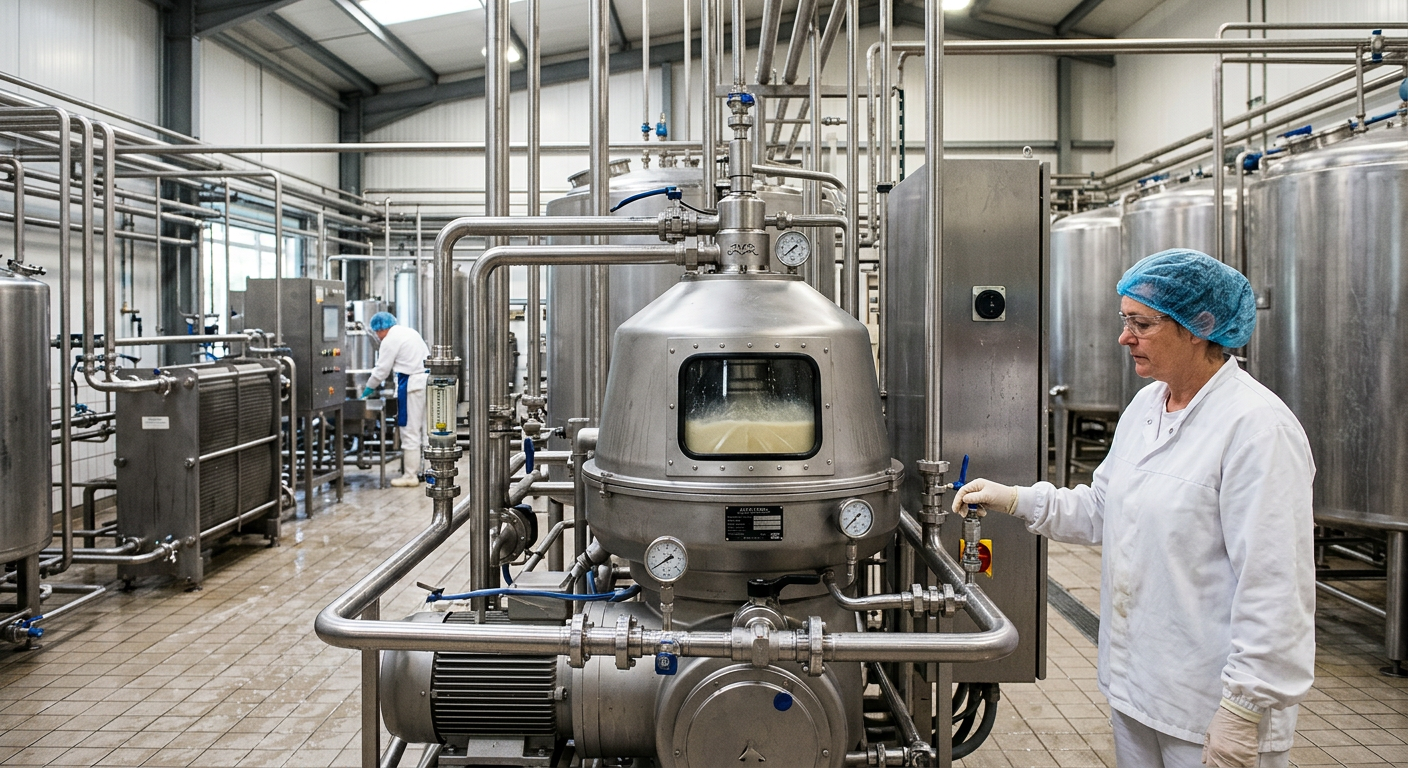
Food Plant Multi-Trade Coordination: Scheduling and Communication
Coordinating multiple trades inside an active food or beverage plant is never just a scheduling task. In the United States, successful plant work depends on sequencing mechanical, electrical, controls, plumbing, structural, sanitation, production, QA, and safety teams in a way that protects uptime, product integrity, and capital efficiency at the same time. Whether the work is happening in a dairy facility in Wisconsin, a protein plant in Arkansas, a beverage co-packer near Atlanta, or a processing expansion in California’s Central Valley, the same rule applies: every crew must know what happens before them, what happens after them, and what plant restrictions govern their work window. For most manufacturers, the fastest path to stable execution is a formal multi-trade coordination model that combines a trade sequencing strategy, a communication protocol framework, conflict resolution methods, safety coordination requirements, quality interface management, progress tracking systems, and strict production area protection. This is especially important in U.S. food manufacturing hubs such as Chicago, Charlotte, Dallas-Fort Worth, Houston, Fresno, Los Angeles, Cincinnati, Kansas City, Omaha, and the port-connected industrial corridors around Savannah, Newark, and Long Beach, where labor availability, permit timing, freight movement, and plant operating constraints can all affect project outcomes. The quick answer is simple: food plant multi-trade coordination works best when one accountable lead manages schedule logic, plant access, sanitation boundaries, permit windows, shutdown timing, utility tie-ins, and field communication from preconstruction through commissioning. In practice, that means building a trade-by-trade sequence around production realities instead of forcing production around contractor convenience. In U.S. food and beverage environments, the highest-performing coordination plans usually include five immediate actions: Manufacturers planning renovations, line additions, relocations, utility upgrades, or new process installations should avoid choosing vendors solely on lowest installed price. The better buying approach is to assess whether the project partner understands food-safe construction, utility interdependence, startup risk, live production constraints, and local code realities in the United States. A cheap schedule that disrupts production can easily become the most expensive option on the project. For executives comparing support models, owners often benefit from working with a partner that can bridge engineering, field coordination, and installation oversight instead of splitting responsibility across disconnected firms. That approach reduces handoff failure, especially when refrigeration, steam, compressed air, wastewater, CIP, high-voltage power, and automation all converge on the same production line. The table above shows why coordination is not a paperwork exercise. Each item directly affects uptime, compliance, and capital return. A strong trade sequencing strategy is the backbone of food plant execution. In the United States, sequencing must reflect both construction logic and food production reality. A line expansion in a beverage facility near Tampa may need off-shift utility tie-ins to avoid daytime filling disruption, while a meat plant in Nebraska may need work sequenced around sanitation turns and USDA inspection routines. The most effective sequence usually starts with plant discovery: documenting current utilities, process bottlenecks, sanitation routes, personnel flow, forklift traffic, and access constraints. From there, the work is organized into controlled stages. Typical order includes enabling work, selective demolition, slab or support modifications, utility rough-in, structural steel, equipment setting, piping, electrical distribution, controls integration, insulation, testing, dry commissioning, wet commissioning, and production startup. However, sequencing must also consider product types. Different categories create different trade priorities: Owners should ask suppliers not only what they install, but in what sequence they install it, how they protect existing operations, and how they validate readiness before each next trade enters. That is a far better indicator of delivery quality than a generic Gantt chart. This sequencing table matters because each phase has a clear gate. Without gates, crews tend to overlap in ways that create rework, congestion, and sanitation risk. Across the United States market, a practical trend is increasing use of prefabrication. Skids, valve clusters, utility racks, and control panels are often built offsite and delivered closer to final form. This shortens field duration and reduces the number of overlapping trades in the process area. It is particularly useful in congested plants near major urban centers such as Los Angeles, Seattle, Boston, and Philadelphia, where field labor windows are tight and plant downtime is costly. The line chart above reflects a realistic market pattern: more U.S. manufacturers are adopting digital planning, prefabrication, and formal field coordination to control cost and schedule pressure. Even a strong schedule fails without a communication protocol framework. In food plants, the communication burden is higher than in ordinary industrial construction because daily work must align with production, sanitation, quality, and maintenance. The framework should define who reports what, when, and to whom. A reliable model includes a daily foreman huddle, a plant leadership update, a rolling three-week look-ahead, a constraint log, an RFI route, and an after-hours emergency contact chain. Every trade should know the approved source of truth for drawings, schedule changes, lockout status, confined space permits, hot work permits, and sanitation release. Too many food projects lose time because different crews are working from different revisions. In plants serving national retail or foodservice channels, communication speed is critical. A missed tie-in in Indianapolis or a delayed startup in Phoenix can affect inventory planning across multiple distribution centers. For that reason, many owners now expect daily progress photos, open-item logs, and short written summaries tied to milestone completion. The explanation is straightforward: each communication layer serves a different level of decision-making. The daily huddle keeps work moving safely. The weekly review keeps the schedule honest. The executive update prevents commercial surprises. From a buying advice standpoint, manufacturers should favor project partners that demonstrate disciplined reporting rather than vague “we’ll keep everyone informed” language. Ask to see example meeting agendas, sample look-ahead logs, and issue trackers before award. Conflict is inevitable on complex projects. The goal is not to eliminate it, but to resolve it before it disrupts production, safety, or startup quality. Effective conflict resolution methods in food facilities are fast, documented, and tied to authority levels. Most coordination conflicts fall into six categories: scope overlap, access interference, drawing mismatch, utility ownership, schedule compression, and quality standard disagreement. For example, an electrical crew may need access to a control panel while piping crews are still working overhead. Or a sanitation team may reject a temporary barrier approach that construction considered acceptable. If the project lacks a written resolution process, these issues can stall an entire zone. The best method is an escalation ladder. Field-level issues are addressed first by trade foremen. If unresolved within a set period, usually the same shift, the item escalates to the superintendent and owner representative. Commercial or design implications then move to project management and engineering. Final plant-impact decisions go to the designated owner authority. Case studies across the United States repeatedly show that unresolved small conflicts become major schedule hits. A missed valve orientation in a Texas beverage project can delay controls testing. An unapproved floor penetration in a North Carolina bakery can delay QA release. A disagreement over washdown hardware in a Minnesota dairy plant can force material replacement late in the job. The reason this table matters is that conflict resolution improves when everyone knows the right owner and response time before an issue occurs. The bar chart highlights where demand is strongest. Protein, co-packing, and beverage projects often have the tightest coordination requirements because they combine utility intensity with aggressive production schedules. Safety coordination requirements in food plants go beyond standard construction safety. Crews must manage food-contact adjacency, allergen control, sanitation timing, live utilities, forklift movement, wet floors, ammonia or refrigeration interfaces, hot work in active buildings, and contractor hygiene rules. In some U.S. facilities, especially those operating under USDA oversight or strict third-party audit expectations, the safety plan must align with food safety controls just as tightly as with OSHA obligations. A high-quality safety coordination plan should include orientation, permit management, lockout/tagout ownership, emergency routes, air quality controls, temporary wall standards, debris removal timing, sanitation release conditions, and daily verification that the work area remains isolated from production. This is especially important in legacy facilities around the Midwest and Southeast, where expansions are often inserted into older footprints with tight corridors, low clearances, and mixed pedestrian-vehicle traffic. In port-driven processing and packaging facilities near New Jersey, Houston, or Long Beach, added logistics activity can increase contractor exposure and require more disciplined traffic control. For 2026 and beyond, owners should expect safety coordination to include more digital permit systems, environmental monitoring, and stronger sustainability requirements such as controlled waste segregation, lower-emission temporary equipment, and better energy-isolation documentation. Quality interface management is the bridge between construction and food production standards. It defines how project work interacts with QA, sanitation, regulatory expectations, and startup validation. On many projects, quality problems happen not because equipment is poorly designed, but because interface decisions were made too late. Examples include wrong weld finish, inaccessible pipe routing, incorrect drain slope, unsuitable gasketing, or controls logic that does not support traceability. Quality interface management should begin at design review and continue through field installation, turnover, and startup. Plant QA, operations, maintenance, and engineering should all review the installation standards that matter most to the specific product category. A yogurt plant will prioritize different details than a cooked protein line or a kombucha fermentation room. In practical terms, quality management should cover hygienic design criteria, material compatibility, cleanability, calibration planning, documentation turnover, and commissioning evidence. The same principle applies to local supplier selection. The best local fabricator or installer is not simply the one nearest the plant in Ohio, Missouri, or California, but the one who understands sanitary expectations and can document them. The explanation here is clear: quality is not a final inspection event. It is a chain of approvals embedded throughout installation and startup. At a service level, many manufacturers prefer partners that can integrate process engineering with field execution and commissioning support. That reduces the gap between “designed correctly” and “installed in a way QA will accept.” Owners looking for broader support can review food and beverage engineering services to see how integrated project delivery models are structured. Progress tracking systems transform coordination from assumption into evidence. In active U.S. food plants, it is not enough to say work is “on track.” Owners need to know whether the right milestones have been completed, whether constraints are increasing, whether startup dates remain defendable, and whether punch items are blocking operations. Best practice is to track progress at four levels: overall schedule, zone readiness, trade completion, and startup readiness. A detailed project may use percent complete, but the most useful measures are usually milestone-based. For example: utilities roughed in, equipment set, power terminated, controls tested, wet commission approved, operator training completed. Plants with multiple production areas should also use zone maps. These help operations understand where contractors are working, which utilities are affected, and which areas are approaching release. This is particularly valuable during phased projects in large U.S. manufacturing campuses around Memphis, St. Louis, Milwaukee, Salt Lake City, or the Carolinas. The area chart shows a realistic trend shift: digital progress tracking is becoming standard as owners demand better visibility and faster issue response. 2026 trends point toward greater use of mobile field reporting, BIM-linked issue logs, AI-assisted schedule risk detection, and energy-performance dashboards connected to commissioning. Sustainability metrics are also moving into progress reporting, particularly for wastewater, steam efficiency, refrigeration performance, and material waste reduction during startup. Production area protection is where many otherwise competent projects succeed or fail. It includes everything needed to keep the operating plant safe, sanitary, and commercially stable while construction proceeds. This means temporary barriers, dust containment, negative air if required, controlled personnel routes, protected drains, scheduled waste removal, boot and gowning rules where needed, and clear handoff procedures after each shift. In a running facility, the production area is not simply a background setting for construction. It is the customer’s revenue engine. That is why the best project teams treat production protection as a first-order deliverable. If a line keeps running smoothly during construction, the owner protects revenue, customer fill rates, labor morale, and regulatory confidence. Owners comparing local suppliers or installation firms should ask how they protect active production areas and what temporary systems they use. The answer will often reveal whether they truly understand food manufacturing work. For reference, equipment and system partners with relevant sanitary processing focus can be reviewed through process equipment capabilities. This table matters because protection measures are not all equal. The right control depends on the production environment, duration of work, and contamination sensitivity. The comparison chart illustrates a common procurement lesson in the United States: installation capability alone is not enough. The highest value often comes from partners that combine design understanding, field management, and startup accountability. For manufacturers seeking a partner that can coordinate these moving parts under one operating model, Disruptive Process Solutions provides a useful example of how integrated food and beverage execution is structured in the United States. Rather than acting only as a contractor, DPS approaches projects as an engineering-led delivery partner focused on profitable outcomes for manufacturers across North America. On the technological side, DPS supports structural, mechanical, plumbing, electrical, process, and controls engineering, including PLC programming, automation, and SCADA integration. That matters for multi-trade coordination because line performance, utility reliability, batching logic, CIP behavior, and startup readiness are interconnected. A project involving blending, pasteurization, carbonation, retort, fermentation, or aseptic processing requires more than isolated craft execution; it requires technical alignment from design through commissioning. On the manufacturing side, DPS works across food and beverage categories including brewing, spirits, RTD beverages, dairy, juices, aseptic products, proteins, sauces, prepared foods, and plant-based processing. The company also manufactures selected process equipment such as tanks, CIP systems, marination tumblers, and cooking vessels. That manufacturing capability can reduce coordination risk by shortening interfaces between custom equipment, installation planning, and field fit-up. Additional project examples can be explored through food and beverage case studies. On the service side, DPS operates through a design-build-manage philosophy that combines engineering, capital planning, owners representation, project management, general contracting where licensed, equipment supply, installation, integration, and commissioning support. For owners, this kind of structure is valuable because it centralizes accountability across sequencing, communication, conflict resolution, quality, and startup. It is particularly relevant for projects with budgets ranging from targeted line upgrades to major plant expansions where downtime and execution speed directly affect profitability. For U.S. manufacturers evaluating project partners, the key question is not simply “Can they install it?” but “Can they engineer it, build it, manage local trades, protect production, and get everyone through startup successfully?” That is where integrated models tend to outperform fragmented delivery. What is the biggest mistake in food plant multi-trade coordination?The biggest mistake is treating the project like standard industrial construction without adapting the plan to active food production. In the United States, that usually leads to downtime, sanitation issues, access conflicts, and startup delays. How far in advance should shutdown windows be planned?Critical shutdown windows should usually be defined several weeks in advance, with detailed tie-in procedures, labor assignments, materials staging, and recovery steps approved before the outage begins. Which industries need the strictest coordination?Protein, dairy, beverage, aseptic, and co-packing facilities typically require the most disciplined coordination because they combine high utility intensity, strict sanitation needs, and expensive downtime risk. How do I compare suppliers or contractors?Evaluate sequence planning, sanitation controls, reporting discipline, startup support, local labor depth, and food-plant experience. Do not compare bids on installed price alone. Compare the total execution model. Are local suppliers always better?Not always. Local presence helps with response time and field support, but the better choice is the team that understands sanitary process environments, utility integration, and live-plant work. In many U.S. markets, the strongest model combines local trades with centralized engineering and project oversight. What systems should owners require for progress tracking?At minimum, require a master schedule, three-week look-ahead, constraint log, daily report, milestone tracker, startup checklist, and punch list with responsible parties and due dates. How does 2026 change food plant coordination?Expect more prefabrication, smarter automation integration, digital permit workflows, stronger energy and water accountability, expanded data visibility during commissioning, and greater focus on sustainability in project execution. Can coordination improve ROI, or is it just a project control issue?It directly improves ROI. Better coordination reduces downtime, overtime, rework, startup delay, product loss, and commercial disruption. In food manufacturing, those savings often matter more than small differences in contractor bid price. What should be included in a commissioning-ready checklist?Mechanical completion, utility verification, instrument calibration, controls I/O checkout, recipe or logic validation, safety interlock testing, sanitation release, operator training, spare parts readiness, and turnover documentation. When should an owner bring in an integrated engineering and coordination partner?Ideally at concept or preconstruction stage. Early involvement improves scope definition, budget realism, utility planning, and sequencing. It is especially valuable for relocations, phased expansions, brownfield retrofits, and high-speed beverage or food processing lines. -
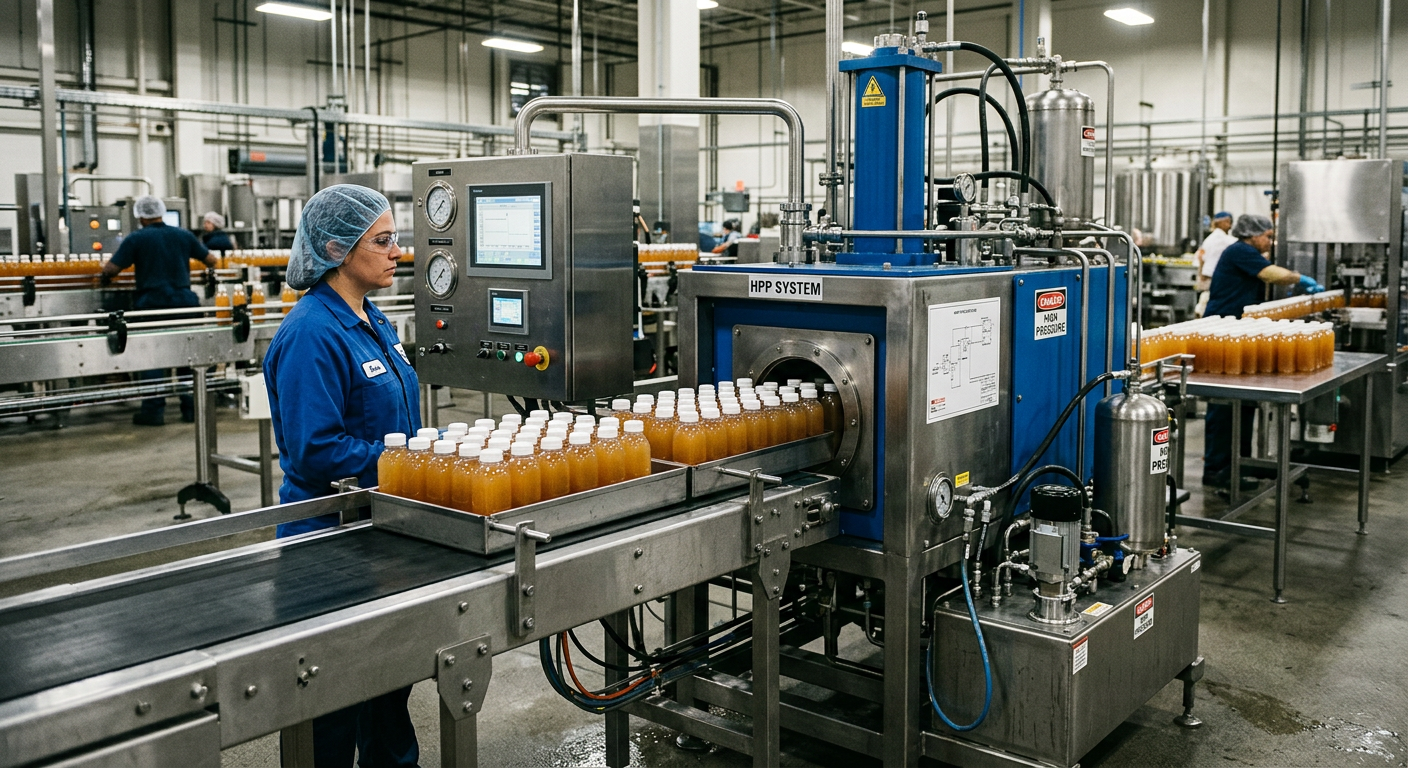
Food Processing Feasibility Study
Food and beverage manufacturers in the United States face a more complex capital planning environment than ever before. Inflation in utilities and labor, retailer pressure on margins, FSMA enforcement, changing consumer demand, and supply chain volatility all make it risky to approve a new processing line or plant expansion without disciplined analysis. A well-built food processing feasibility study reduces that risk by testing whether a project is commercially, technically, operationally, financially, and regulatorily sound before major capital is committed. This guide explains how decision-makers in the United States should evaluate food processing projects, from greenfield plants in Texas or North Carolina to brownfield retrofits in legacy industrial corridors like Chicago, New Jersey, or California’s Central Valley. It also shows how a practical engineering partner can turn feasibility from a paper exercise into a profit-focused execution roadmap. Companies that need integrated support for planning, engineering, and installation often start by reviewing the team and approach behind DPS, then align study assumptions with real construction and commissioning realities. A food processing feasibility study is a structured evaluation of whether a proposed manufacturing project should move forward, how it should be designed, what it should cost, how it should be supplied, and when it can generate acceptable returns. In the United States, a credible study typically assesses market demand, product mix, plant location, utility capacity, process flow, equipment needs, labor availability, food safety compliance, capital cost, operating cost, and five-year financial performance including payback, NPV, and IRR. For executives, the quick test is simple: if the study cannot clearly answer who will buy the product, how the plant will run, where raw materials will come from, what compliance framework applies, and whether returns exceed capital risk, the project is not yet ready for approval. The table above shows why feasibility is not just a market study. It is the decision framework connecting sales assumptions to engineering, compliance, and project execution. A food processing feasibility study is a pre-investment analysis used to determine whether a new plant, expansion, line conversion, co-packing operation, utility upgrade, or equipment relocation is commercially viable and operationally executable. In the United States market, this work often sits between early business planning and full detailed engineering. The strongest studies are interdisciplinary. They combine sales strategy, process engineering, industrial utilities, automation logic, food safety controls, labor planning, and capital economics. For example, a sauce plant in New Jersey may look attractive based on customer demand alone, but feasibility may reveal inadequate wastewater capacity, limited dock circulation, or poor CIP design assumptions that would make the original plan far more expensive than expected. A serious study usually includes: In practice, feasibility is most valuable when it is grounded in execution experience. A study written without understanding installation sequencing, commissioning realities, controls integration, or sanitation design often creates false confidence. That is why many manufacturers prefer a group that can move from planning into implementation through one operating model. A broader look at food and beverage engineering services helps illustrate how feasibility should connect directly to design, construction, and startup. In the United States, most food processing feasibility studies fall into two broad categories: greenfield and brownfield. A greenfield project starts with undeveloped land or a shell building and creates a new operating platform. These projects are common in growth corridors such as Texas, Tennessee, the Carolinas, Arizona, and parts of the Midwest where land, labor pools, and highway access support long-term expansion. Greenfield feasibility usually focuses on master planning, utility infrastructure, permitting timeline, zoning compatibility, wastewater strategy, labor access, and future modular expansion. A brownfield project upgrades, repurposes, or expands an existing facility. These projects are common in established food hubs such as Chicago, Minneapolis, Fresno, Los Angeles, Philadelphia, Atlanta, and the I-95 corridor. Brownfield feasibility emphasizes current utility constraints, structural limitations, sanitation zoning, equipment relocation complexity, production continuity during construction, and hidden site conditions. The table makes one point clear: there is no universally better choice. A greenfield beverage co-pack site near Dallas can be ideal for long-term scale, while a brownfield protein facility near Kansas City may deliver faster returns if enough utilities and cold storage already exist. The right answer depends on timing, capital, existing assets, and commercial demand. Many of the most successful brownfield projects in the United States come from recognizing that the true constraint is not floor space but controls, flow, or scheduling. In one common scenario, line throughput appears maxed out, yet the real bottleneck lies in PLC programming, hold times, or changeover logic. A feasibility study must identify these hidden constraints before recommending expensive expansion. Market analysis is where many project teams become overly optimistic. A processor may assume growth because a category looks strong nationally, but plant-level feasibility requires much tighter validation. The study should test customer concentration, pricing power, retailer shelf dynamics, co-manufacturing alternatives, regional freight economics, and whether product demand is durable enough to support capital payback. In the United States, some of the strongest current and near-term categories include value-added proteins, better-for-you beverages, sauces and dressings, functional drinks, dairy-based beverages, premium prepared foods, aseptic shelf-stable items, and contract manufacturing for established brands seeking flexible capacity. Regional patterns matter too. Seafood processing opportunities differ sharply between the Gulf Coast, Pacific Northwest, and Northeast. Dairy economics differ between Wisconsin, Idaho, and upstate New York. Beverage freight advantages change around major intermodal hubs and ports like Savannah, Houston, Long Beach, and Newark. The explanation behind this table is simple: category attractiveness is not only about growth. Capex intensity, technical difficulty, and location-specific logistics can turn a promising market into a poor investment if the project is not properly structured. The line chart illustrates a realistic growth pattern in U.S. food processing capital demand. This does not mean every project should proceed. It means competition for capacity, labor, utilities, and equipment will likely stay elevated through 2026 and beyond. The bar chart compares practical project demand across key categories. High scores reflect where manufacturers are most actively evaluating new capacity, expansions, and co-packing partnerships. Technical feasibility determines whether the desired product can be manufactured at the right throughput, quality standard, and cost structure. This stage should define process flow diagrams, utility loads, material balances, sanitation strategy, line rates, automation needs, changeover design, labor touchpoints, and packaging integration. For U.S. processors, technical feasibility often includes choices such as HTST versus UHT, retort versus aseptic, batch versus continuous mixing, manual versus automated ingredient handling, hot fill versus cold fill, or fresh versus frozen distribution. The right answer depends on shelf life goals, customer specifications, labor economics, and facility constraints. This is also where technological capabilities matter. DPS supports projects with process, mechanical, plumbing, structural, electrical, and controls engineering, including PLC programming, automation, SCADA, batch control, and utility integration. Its technical base extends across fermentation, distillation, pasteurization, retort, aseptic systems, blending, Brix monitoring, filtration, water treatment, grinding, mixing, forming, cooking, smoking, slicing, emulsification, dairy systems, plant protein processing, and complete utility infrastructure. In feasibility work, that breadth matters because the process line cannot be evaluated in isolation from steam, chilled water, compressed air, CIP, wastewater, refrigeration, or controls architecture. The explanation here is crucial: food plant economics are often won or lost in process design details. An oversized kettle, undersized CIP skid, weak wastewater estimate, or poorly sequenced filler can destroy expected margins long before the business team notices. Manufacturing capabilities also deserve attention at the feasibility stage. DPS not only integrates third-party systems but also manufactures selected process equipment such as tanks, CIP systems, marination tumblers, and cooking vessels. That practical manufacturing perspective helps teams validate what can be standardized, what must be customized, and where equipment lead times may affect startup. For companies exploring custom systems, reviewing available equipment capabilities can help align budget assumptions with actual fabrication and integration considerations. A feasibility study should translate engineering assumptions into an investment case. In the United States, lenders, boards, private equity sponsors, and operating executives usually expect at least a five-year model with downside scenarios. That model should cover revenue by SKU or customer, raw material costs, labor, packaging, utilities, maintenance, sanitation, freight, QA, overhead, depreciation, working capital, and debt assumptions where relevant. The most important metrics typically include payback period, EBITDA impact, free cash flow, net present value, and internal rate of return. A project with positive EBITDA can still fail capital review if startup losses, working capital strain, or inflated retrofit costs erode value. Below is an illustrative five-year operating model for a mid-sized U.S. processing expansion. This table shows why five-year modeling matters. Year one may be cash-negative due to startup costs and working capital needs, yet the project can still create strong value over time if ramp-up assumptions are credible. Supply chain feasibility is often underestimated. A project can be technically excellent and still fail because ingredient quality fluctuates, inbound freight is unstable, or packaging lead times are too long. In the United States, sourcing analysis should consider dual-sourcing options, seasonal supply swings, regional crop or protein dynamics, cold chain requirements, intermodal access, and exposure to ports or border crossings. For example, beverage plants shipping nationwide may favor proximity to PET, cans, sweeteners, and flavor houses in the Southeast or Midwest, while seafood or protein processors may need direct links to Gulf Coast, Pacific Northwest, or Midwest cold chain corridors. Imported ingredients routed through Long Beach, Savannah, Houston, or Newark require different buffer stock strategies than domestic agricultural inputs sourced from California, Idaho, Nebraska, or Georgia. The area chart reflects an important 2026 trend: more processors are regionalizing sourcing and reducing single-point dependency, especially for packaging, ingredients, and utility-critical consumables. Supplier and product comparison can be visualized as follows. This comparison chart highlights how sourcing regions can differ across cost, resilience, lead time, and logistics fit. The lowest nominal price is not always the best feasibility choice. Food safety compliance is a core feasibility dimension, not a final checklist. U.S. project teams must decide early whether the operation falls under FDA, USDA, or both, what preventive controls apply, how zoning and hygienic design will be managed, what environmental monitoring is needed, and whether customers require SQF, BRCGS, or other third-party certification. HACCP remains essential in many processing environments, but under the Food Safety Modernization Act, preventive controls, supply-chain programs, sanitation controls, allergen management, traceability, and documentation systems often drive facility design. A dairy beverage plant, RTE protein line, or aseptic filling room will each require different hygienic design assumptions and validation plans. Service capabilities are especially important here. DPS works across capital planning, feasibility, owner’s representation, project and program management, general contracting support, proprietary equipment supply, installation, integration, and commissioning, with experience in FDA, USDA, SQF, and BRC-oriented projects across the United States and Canada. In a feasibility setting, that means compliance requirements can be connected to practical line layout, utility routing, sanitation access, and startup planning rather than treated as theoretical add-ons. The key lesson from the table is that food safety is a design input. If it is considered too late, projects often require expensive rework in walls, drainage, airflow, personnel flow, or automation records. The most common failure in food processing feasibility is starting with a desired answer and asking the study to justify it. Good feasibility should challenge assumptions, not protect them. Frequent mistakes in the United States market include: Another avoidable error is selecting partners only by lowest upfront fee. A cheap study can become very expensive if it omits constructability, controls logic, utility routing, or commissioning realities. That is why many manufacturers value teams that think like operators and capital stewards, not just contractors. Readers who want practical examples of execution-linked planning can review selected project case studies and outcomes to see how feasibility decisions influence delivery. Looking toward 2026, three trends are reshaping feasibility studies in the United States: These trends mean feasibility studies are becoming more integrated and more strategic. They are no longer only about whether a line fits in a building. They are about whether capital can create resilient, profitable, compliant manufacturing capacity under future operating conditions. Most studies take four to twelve weeks depending on project size, data availability, number of product categories, and whether site visits, utility reviews, or pilot validation are required. Greenfield and aseptic projects often need more time. The best team usually includes operations, finance, quality, procurement, engineering, maintenance, sales, and executive leadership. For regulated categories, food safety and compliance leadership should be involved from the start. Feasibility determines whether and how a project should proceed at a strategic level. Detailed engineering turns that direction into final drawings, specifications, controls architecture, procurement packages, and construction-ready scope. Brownfield is often the better option when the site has enough utility capacity, a usable building envelope, solid logistics access, and limited sanitation or structural constraints. It is especially attractive when speed to market matters. They are typically directional rather than final. Accuracy depends on scope maturity, equipment specificity, site conditions, and vendor engagement. Early studies should clearly identify assumptions, exclusions, and contingency levels. There is no universal rule, but many U.S. manufacturers screen projects using target payback periods, internal hurdle rates for IRR, positive NPV at the company discount rate, and acceptable downside performance under stress scenarios. Yes. Co-packing studies need stronger attention to customer mix, scheduling complexity, line flexibility, sanitation transitions, packaging variety, margin by account, and the risk of underloaded shared infrastructure in early years. Because many apparent capacity issues are really sequencing, batching, or controls problems. Better PLC logic, integrated recipes, and SCADA visibility can unlock throughput at much lower cost than a major expansion. Look for partners with real food and beverage process experience, compliance fluency, utility and controls depth, installation awareness, and the willingness to challenge bad assumptions. The strongest partner is often the one most focused on long-term profitability, not simply selling more equipment. A well-executed feasibility study helps manufacturers avoid unprofitable builds, underscoped retrofits, and compliance-driven redesign. In the United States, the highest-value studies connect market demand to process design, equipment integration, supply chain resilience, and disciplined financial modeling. When those pieces align, capital moves with confidence and the project stands a far better chance of becoming a profitable operating asset rather than an expensive lesson. -
2026 Food Facility Post-Construction Support Services Guide
Bringing a new food or beverage facility online is only the beginning. Once construction, installation, and commissioning are complete, the real commercial test starts: keeping equipment stable, operators confident, documentation current, and output profitable. In the United States, post-construction support is now a decisive factor for plants in Chicago, Dallas-Fort Worth, Fresno, Charlotte, Atlanta, Philadelphia, and major logistics corridors tied to ports such as Los Angeles, Long Beach, Savannah, Houston, and New York/New Jersey. For processors launching new lines or expanding existing capacity, the difference between a strong first year and a painful ramp-up usually comes down to how well support is planned after handoff. This guide explains what manufacturers should put in place after project completion, including preventive maintenance planning, spare parts management, performance optimization, operator continued training, equipment calibration scheduling, regulatory audit support, and technology upgrade pathways. It also outlines how to evaluate partners, where regional support matters, which product categories need the most attention, and how a company such as Disruptive Process Solutions can help manufacturers protect capital investments over the long term. The quickest answer is this: a food facility in the United States should not treat project completion as the end of the job. A practical post-construction support program should begin before startup and continue through the first 12 to 24 months of operation. At minimum, it should include a site-specific preventive maintenance plan, a critical spare parts list, line performance reviews, repeated operator training, a calibration schedule, compliance document control, and a roadmap for future automation or capacity upgrades. For most U.S. processors, especially those running proteins, dairy, sauces, aseptic beverages, ready-to-drink products, brewing, distillation, or co-packing operations, the first year after construction determines whether the project delivers its intended return. Plants that lack structured support often see more unplanned downtime, higher ingredient losses, longer changeovers, missed sanitation windows, and audit pressure from FDA, USDA, SQF, or BRC expectations. By contrast, facilities that actively manage support can stabilize OEE, reduce emergency maintenance costs, and improve throughput without immediate new capital spending. Market conditions also make this more important in 2026. U.S. labor remains tight, utility costs are volatile, traceability expectations are increasing, and many manufacturers are under pressure to produce more SKUs with less downtime. In cities with major cold-chain, ingredient, and packaging networks such as Kansas City, Minneapolis, Memphis, and Jacksonville, speed to stable production is a major competitive advantage. A post-construction support strategy is no longer an optional service add-on; it is part of the capital project itself. The table above shows why the first support decisions should be tied directly to operating risk and financial return. Plants often focus heavily on startup acceptance testing but leave too much undefined after that point. A stronger model sets ownership, timing, and measurable objectives before the project closes. Preventive maintenance planning is the backbone of post-construction support. New equipment often enters production with OEM manuals, basic startup settings, and warranty guidance, but not with a plant-specific maintenance system. A meat processor in Omaha, a dairy plant in Wisconsin, or a beverage co-packer near the Inland Empire all face different operating realities. Run hours, washdown intensity, allergen changeovers, utility variability, and local technician availability all affect maintenance needs. An effective U.S. maintenance plan should combine OEM recommendations with real process conditions. It should include asset criticality ranking, lubrication routes, sanitation-related wear points, sensor verification checks, utilities inspections, and documented parts replacement intervals. The best plants also connect this plan to CMMS workflows so work orders, downtime codes, and parts consumption can be tracked from day one. For food and beverage plants, maintenance planning must go beyond the primary process line. Utility systems often create the most expensive failures. Boilers, compressors, glycol systems, refrigeration skids, process water systems, CIP sets, HVAC, steam traps, and controls panels can all interrupt production even when core processing equipment is technically available. In humid regions such as the Gulf Coast, corrosion control and enclosure sealing deserve extra attention. In colder markets such as Minnesota or upstate New York, freeze protection and seasonal utility reliability can shape maintenance priorities. The table above illustrates how maintenance planning should reflect the interaction between process equipment and site utilities. Plants that formalize this early generally see smoother ramp-up, more accurate labor planning, and better warranty conversations with suppliers. If the original project partner also understands engineering, installation, and operating context, the transition from startup support into long-term maintenance is typically more efficient. Buying advice for U.S. manufacturers: when evaluating a support provider, ask whether they can translate design intent into maintainable plant practice. The best partners do not simply hand over manuals. They help define PM tasks based on actual process risk, sanitation realities, and production goals. Spare parts management is where many otherwise well-built facilities lose money. A plant can invest millions in process equipment yet delay stocking the few sensors, seals, drives, valves, and control components most likely to stop the line. In the United States, freight access is strong but not universal. A processor in Southern California may source some items quickly through regional distribution, while a rural Midwest site may face longer lead times, especially for imported controls, specialty pumps, heat transfer components, or custom fabricated parts. The right approach is to classify spares into critical, operational, and strategic inventory. Critical items can halt food safety, utilities, or production immediately. Operational items support wear replacement and routine PM. Strategic items cover long-lead equipment or obsolescence risk. This is especially important in sectors such as aseptic processing, retort, dairy homogenization, carbonation, distillation, and protein portioning where a single failure can take down an entire value stream. Facilities should also think regionally. Plants in New Jersey or Pennsylvania may have better access to East Coast industrial support; sites in Texas benefit from central freight routes and broad contractor coverage; facilities near Sacramento, Fresno, or Modesto often depend on strong local agricultural processing supply networks; and plants around Charlotte, Raleigh, and Greenville can leverage growing manufacturing support ecosystems. Local supplier depth matters, but it should not replace central planning. This table is useful because it separates common spare types by urgency and practical handling. One of the best ways to reduce unnecessary inventory is to align the spare strategy with asset criticality and actual lead times instead of guesswork. Manufacturers that need integrated support after buildout often benefit from working with a firm that understands both process design and equipment sourcing. A partner with experience in tanks, CIP systems, utility equipment, and line integration can often define a smarter spare list than a distributor focused on only one category. To compare project examples and support approaches, facilities can review project case studies that show how engineered systems behave in real operating environments. System performance optimization is where post-construction support starts paying back capital. Many facilities assume that once a line meets startup acceptance criteria, it is already optimized. In practice, acceptance testing only confirms that the system can run under defined conditions. It does not mean the plant has reached the best combination of throughput, labor efficiency, utility use, quality performance, and changeover speed. Optimization should begin with baseline KPIs: OEE, first-pass quality, pounds or gallons per labor hour, utility intensity, giveaway, CIP cycle time, and scheduled versus unscheduled downtime. Then, the team should examine constraints. In some plants, the bottleneck is obvious, such as a filler, cooker, retort, tunnel pasteurizer, or packaging machine. In others, it may be less visible, such as recipe logic, line balancing, compressed air instability, ingredient staging, or operator sequence errors. This matters across product types. Beverage facilities often focus on syrup rooms, carbonation stability, filler efficiency, and CIP turnarounds. Dairy processors may prioritize temperature control, homogenization consistency, and aseptic reliability. Protein plants often target yield, marination consistency, slicing or portioning efficiency, and sanitation recovery time. Prepared foods and sauce manufacturers may focus on batching accuracy, thermal profiles, scrape-surface exchanger behavior, and packaging synchronization. The strongest optimization programs include controls review. Small PLC or SCADA changes can unlock measurable gains, especially when alarms, recipes, or interlocks were built conservatively during startup. In the United States, where many processors are trying to grow within existing footprints rather than build entirely new facilities, this type of performance review is often the fastest route to added capacity. The table shows why optimization needs to be measured in both technical and financial terms. Plants should tie each improvement effort to margin, capacity, labor efficiency, or compliance resilience. It is also wise to schedule formal reviews at 30, 90, and 180 days, then again after one full seasonal production cycle. For U.S. manufacturers thinking about future growth, 2026 trends point toward more predictive maintenance, expanded edge data collection, recipe analytics, energy dashboards, and digital traceability. Sustainability targets are also shifting optimization priorities. Water reuse in CIP, heat recovery, better compressed air management, and more efficient refrigeration control are becoming mainstream topics rather than special projects. Operator continued training is one of the most overlooked parts of support planning. New facilities usually receive initial startup training, but turnover, shift changes, line modifications, and production pressure quickly erode consistency. In food and beverage manufacturing, the operator is often the first control point for uptime, quality, sanitation readiness, and safety response. Training should be structured in layers. First is startup qualification for the original team. Second is post-startup reinforcement focused on actual plant conditions, not classroom assumptions. Third is recurring cross-training for new hires, relief operators, maintenance staff, sanitation teams, and supervisors. Finally, there should be retraining after process changes, software revisions, new SKUs, or audit findings. In the U.S. market, training should also reflect workforce realities. Multilingual workforces are common in California, Texas, Florida, and parts of the Midwest. Fast-growth co-packers near major distribution nodes often add staff quickly. Plants in highly regulated sectors such as dairy, aseptic processing, and USDA-inspected protein operations need training records that hold up during external review. Video job aids, line-specific SOPs, visual control boards, and short competency checks are often more effective than one-time manuals. Continued training is especially important when automation is expanding. As more processors adopt advanced PLC logic, SCADA dashboards, recipe control, inline sensors, and remote diagnostics, the skill gap between “can operate” and “can operate profitably” becomes larger. Training should therefore include process understanding, not just button-pushing. This training table helps facilities connect learning topics to measurable operating outcomes. The best programs keep training tied to the plant’s actual bottlenecks and recent incidents instead of running generic modules. From a buying perspective, ask whether your support partner can provide line-specific operator retraining after commissioning. Partners with field engineering, controls knowledge, and process experience are usually more effective than trainers who only understand documentation. Equipment calibration scheduling supports both product quality and regulatory defensibility. Every plant depends on trusted measurements: temperature, pressure, flow, conductivity, pH, weight, fill volume, Brix, metal detection, and more. If those measurements drift, decision-making drifts with them. In a pasteurized dairy system, a bad temperature signal can create safety risk. In a beverage batching system, poor Brix calibration can damage consistency and margin. In a protein operation, weight inaccuracies can affect giveaway and label compliance. A strong schedule should define critical instruments, calibration intervals, acceptable tolerance, reference standards, and response actions when a device is found out of tolerance. Plants also need a system for labeling status, managing due dates, retaining certificates, and evaluating product impact when deviations are discovered. For facilities serving national retailers or high-audit customers, calibration discipline is often reviewed in detail. In 2026, digital calibration logs and connected asset registers are becoming more common across U.S. plants, especially in larger operations around major manufacturing clusters such as the Carolinas, Southern California, the Great Lakes region, and Texas. This shift supports traceability, trending, and remote review, but the basics still matter most: correct interval, trained personnel, documented standards, and quick corrective action. The value of this schedule is that it aligns calibration frequency with product and process risk rather than treating every device the same. That allows plants to prioritize their most critical measurements and control audit exposure. Regulatory audit support is essential for food facilities in the United States because startup documentation alone rarely satisfies ongoing compliance needs. Once the line is running, plants must maintain evidence that systems are controlled, validated where needed, calibrated, sanitized, and operated according to approved procedures. Requirements differ by product category and oversight structure, but nearly every processor faces expectations linked to FDA preventive controls, USDA inspection environments, and customer or GFSI-based schemes such as SQF or BRC. Post-construction support should therefore include document organization, SOP review, PM and calibration record integrity, utility verification, change control, and readiness reviews before audits. This is particularly important after plant modifications. A seemingly simple change to a filler, batching routine, or thermal process can create documentation gaps if it is not handled through a formal review path. Plants should also prepare for growing attention to cybersecurity, traceability, environmental management, and sustainability claims. In 2026, more customers are asking not just whether a plant can produce safely, but whether it can document energy usage, water stewardship, and process accountability. Facilities shipping through national retail networks or export channels via ports like Houston, Savannah, or Los Angeles often face even stronger customer documentation demands. When choosing support, manufacturers should look for teams that can bridge engineering and compliance. That means understanding utilities, controls, sanitation, process flow, and line change impacts while also supporting documentation expected by quality teams and auditors. Technology upgrade pathways should be defined early, even if the initial project budget is tight. Many U.S. plants open with a practical first-phase system and plan to automate further as volume grows. That is a sound strategy, but only if the original architecture leaves room for future expansion. The most expensive upgrade is the one that requires ripping out recently installed assets because there was no scalable plan. A good roadmap identifies what can be upgraded in phases: PLC standardization, SCADA visibility, recipe and batch control, additional tankage, advanced CIP automation, inline quality monitoring, energy metering, warehouse integration, packaging robotics, and predictive analytics. For a co-packer in the Southeast, the priority may be fast SKU flexibility. For a dairy processor in the Midwest, it may be aseptic reliability and thermal data integrity. For a beverage site near Phoenix or Southern California, water efficiency and utility optimization may lead the list. Policy and sustainability trends are shaping 2026 planning. Water use scrutiny is increasing in drought-sensitive regions. Energy management is drawing more executive attention as utility costs fluctuate. More retailers and investors are also asking for measurable progress on emissions, waste reduction, and responsible capital use. Upgrade planning should therefore consider not just growth, but resilience and resource efficiency. When evaluating upgrade options, manufacturers should ask four questions. First, will the upgrade improve throughput, quality, utility cost, labor efficiency, or compliance? Second, can it be integrated without major disruption? Third, is the existing controls and utility infrastructure ready? Fourth, does the supplier understand both process operations and future business goals? That last question is often the difference between buying isolated equipment and building a scalable manufacturing platform. Companies looking for full-scope support often benefit from reviewing the range of engineering and project services available from partners that can design, build, and manage upgrades over time rather than treating each change as an isolated job. Disruptive Process Solutions, often called DPS, is relevant in this space because it approaches projects and post-construction support as a long-term manufacturing and profitability challenge, not just a construction exercise. For U.S. processors that need continuity between design, installation, startup, and operational improvement, that matters. From a technological capabilities standpoint, DPS works across process, mechanical, plumbing, structural, electrical, and controls disciplines. That means support can extend from utilities and process flow to PLC programming, automation logic, SCADA visibility, and integrated system troubleshooting. For facilities trying to optimize HTST, UHT, retort, aseptic processing, blending, batching, carbonation, fermentation, distillation, or clean utility performance, this kind of cross-functional understanding is especially valuable because many problems sit at the boundary between process and controls rather than within a single machine. From a manufacturing capabilities standpoint, DPS supports both food and beverage environments and also manufactures selected process equipment. That includes tanks, custom CIP systems, marination tumblers, and cooking vessels, which helps when standard equipment does not fully match site conditions. Food applications can include proteins, prepared foods, dairy, sauces, plant-based products, and shelf-stable systems. Beverage applications can include brewing, spirits, wine, kombucha, juices, functional beverages, soft drinks, dairy-based beverages, and aseptic lines. A processor that needs support for utilities, vessel integration, sanitary process flow, or future capacity additions can benefit from working with a team that understands how these systems fit together physically and operationally. Facilities evaluating custom process assets can explore available equipment solutions as part of a broader support strategy. From a service capabilities standpoint, DPS offers engineering, capital planning, owner’s representation, project and program management, general contracting where licensed, equipment supply, installation, and full integration support across the United States and Canada. This is important after project completion because support needs are rarely limited to one discipline. A plant may require PM structuring, controls revisions, utility tuning, documentation updates, vendor coordination, or phased expansion planning all at once. DPS is built for project-based execution with a practical, lean model that can move quickly while still aligning decisions to long-term business performance. What also sets DPS apart is operating philosophy. The company emphasizes transparent guidance and is willing to recommend operational fixes in place of unnecessary capital spending when that is the better answer. That mindset is useful in post-construction support, where a plant may not need a new line at all, but rather smarter programming, better balancing, improved training, or a more disciplined maintenance and calibration system. For manufacturers seeking a partner that can bridge support, optimization, and future capital planning, the DPS approach reflects the reality of modern food and beverage operations in the United States: profitability depends on integrated thinking. More details on the company’s background and working model are available on the company overview page. What is the most important post-construction support activity in the first 90 days?The most important activity is establishing disciplined operating control through preventive maintenance, operator retraining, and line performance review. These three actions usually reveal the majority of startup-related issues before they become chronic losses. How much spare inventory should a new plant carry?There is no single number. Inventory should be based on asset criticality, lead time, sanitation wear, and production risk. Plants with imported controls, custom thermal systems, or remote locations usually need deeper strategic coverage. How often should calibration be scheduled?It depends on risk. Critical food safety measurements may require monthly or even more frequent verification, while lower-risk devices may be scheduled quarterly, semiannually, or annually. The key is documented rationale and fast response to out-of-tolerance findings. When should system optimization begin?Immediately after startup stabilization. A good pattern is a structured review at 30 days, 90 days, 180 days, and after a full seasonal demand cycle. Waiting too long allows wasteful routines to become standard practice. Do all facilities need ongoing operator training after commissioning?Yes. Turnover, staffing changes, SKU complexity, and controls updates make one-time training insufficient. Ongoing refreshers are especially important for aseptic, dairy, USDA-inspected, and high-mix packaging environments. How does support differ by industry?Beverage sites often emphasize syrup rooms, fillers, carbonation, and CIP speed. Protein plants focus more on yield, sanitation recovery, and handling robustness. Dairy, retort, and aseptic operations place heavier emphasis on validation, calibration, and process integrity. What should buyers ask before selecting a support partner?Ask whether the partner understands your product, utilities, controls, compliance environment, and future capacity plan. Also ask how they manage documentation, training, and measurable optimization after startup. Can a plant improve output without new equipment?Often yes. Many U.S. facilities recover meaningful capacity through PLC changes, line balancing, PM discipline, better changeovers, and utility optimization before adding new capital. What future trend will shape post-construction support most in 2026?The biggest trend is the convergence of predictive maintenance, digital documentation, resource efficiency, and automation-ready upgrade planning. Plants will need support systems that are both audit-ready and data-driven. -
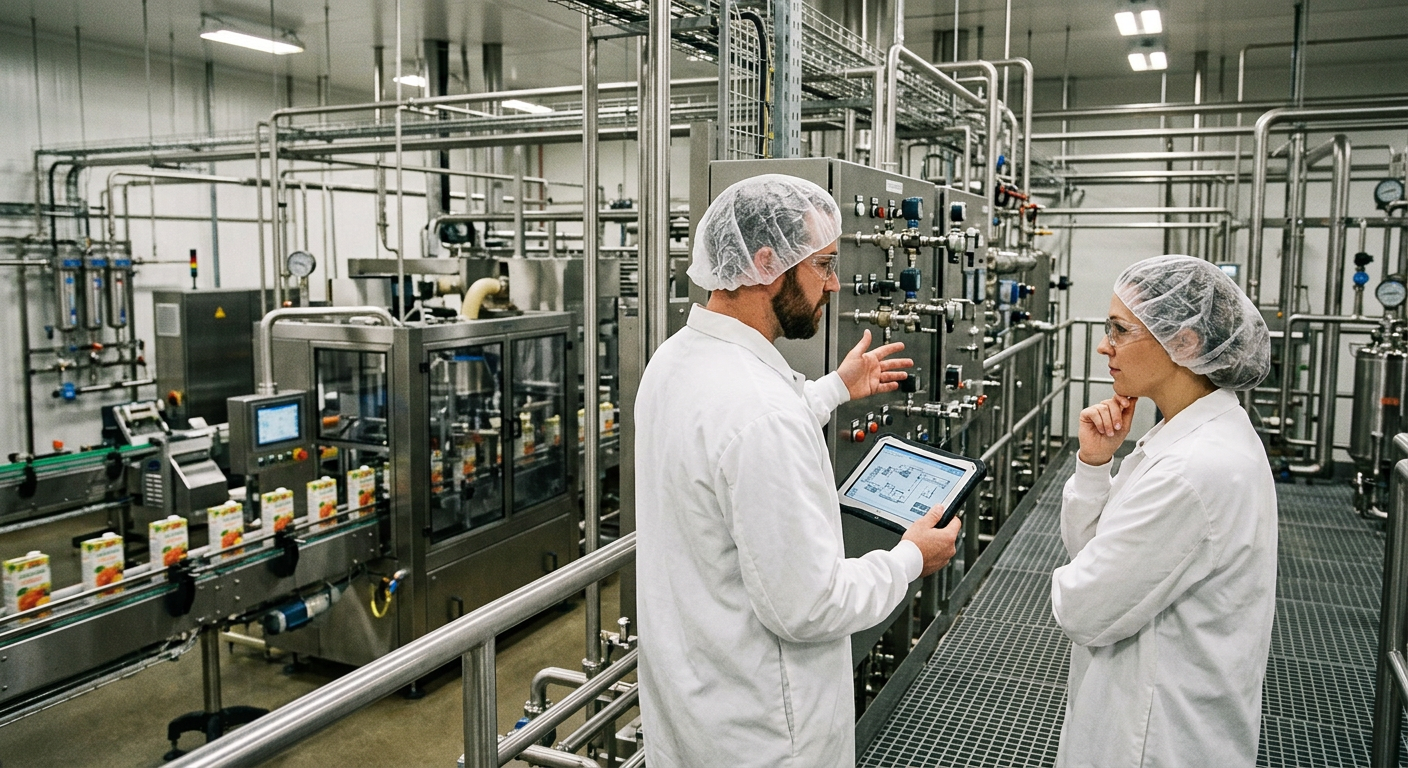
Beverage Plant Feasibility Study
Launching or expanding a beverage manufacturing operation in the United States requires more than a strong formula or a promising brand story. A modern beverage plant feasibility study determines whether a project can succeed commercially, technically, financially, operationally, and regulatorily before capital is committed. For investors, founders, co-packers, breweries, distilleries, dairy beverage manufacturers, and large strategic processors, the right feasibility work reduces waste, exposes hidden constraints, and aligns facility design with a realistic path to profit. In the U.S. market, feasibility analysis must account for regional labor conditions, utility rates, freight lanes, water quality, wastewater discharge rules, FDA expectations, alcohol permitting where relevant, and category-specific consumer demand. A plant that looks attractive on paper can underperform if line speeds are mismatched, if wastewater surcharges are underestimated, if a syrup room is undersized, or if the chosen site lacks enough power or sanitary drainage capacity. That is why experienced engineering and project partners often begin with a disciplined assessment rather than jumping directly into construction drawings or equipment procurement. Disruptive Process Solutions supports manufacturers across all 50 states and Canada with planning, engineering, integration, equipment supply, installation, and execution management. Its approach is especially relevant to beverage projects because feasibility is not treated as a generic report. It is tied to throughput, labor, utility consumption, packaging format, sanitation strategy, and first-year profitability. Readers looking for a practical project partner can learn more about the company, review its broader engineering and project services, explore available process equipment solutions, and see representative project examples. A beverage plant feasibility study is a structured analysis used to determine whether a proposed beverage manufacturing project in the United States should move forward, how it should be designed, what it will cost, what risks it carries, and what operating model gives it the best chance of profitability. It examines market demand, product mix, package types, equipment requirements, utility loads, labor, permitting, site readiness, water and wastewater capacity, food safety design, capital budget, operating costs, and break-even timing. For a startup kombucha facility in Austin, a contract canning operation near Chicago, a dairy beverage line in Wisconsin, or a spirits plant near Louisville, the core question is the same: can the business produce the right volume, at the right quality, at the right cost, in a facility that can legally and reliably operate? A feasibility study answers that question with data rather than optimism. The table above shows why beverage feasibility must be integrated. Market promise alone is not enough; every successful project connects consumer demand to equipment, labor, utilities, and compliance. A beverage plant feasibility study is a decision-making framework used before greenfield construction, brownfield renovation, co-packing expansion, line addition, or capacity relocation. It is broader than a business plan and more practical than a high-level concept deck. In U.S. manufacturing, it usually combines commercial analysis, process engineering, facility planning, cost modeling, and implementation strategy. The scope varies by project type. A ready-to-drink coffee line in New Jersey may focus heavily on thermal processing, filling technology, and refrigerated or ambient distribution assumptions. A carbonated soft drink project near Atlanta may emphasize syrup room design, carbonation, can line speeds, depalletizing, and utility redundancy. A distillery in Tennessee or Texas must also account for TTB permitting, bonded space, explosion protection, and barrel warehousing strategy. A dairy beverage project in California or upstate New York may require tighter sanitary zoning, washdown design, allergen controls, and cold chain modeling. Most strong studies answer five operational questions. First, what products and packaging formats will the plant make: cans, PET bottles, glass, cartons, kegs, bag-in-box, or aseptic packs? Second, what annual and peak volumes must be supported in years one, three, and five? Third, what process architecture is needed: blending, carbonation, fermentation, filtration, HTST, UHT, tunnel pasteurization, hot fill, cold fill, or HPP support? Fourth, what site and utility platform can support those needs at acceptable cost? Fifth, what investment level can the business support without harming cash flow? At this stage, specialized engineering input matters. DPS is known for approaching feasibility with an operations-first mindset rather than simply maximizing project spend. That means challenging assumptions when needed, identifying cheaper ways to unlock capacity, and connecting plant design to commercial outcomes. This is especially valuable for founders and operators who need a plan that works in real manufacturing conditions, not just in a spreadsheet. This table highlights how feasibility must be tailored to product and operating model. A one-size-fits-all report is rarely useful in beverage manufacturing. Market feasibility begins with category selection. The U.S. beverage market is large, but demand is fragmented. Carbonated soft drinks remain high volume, yet growth in many regions is slower than in energy drinks, functional beverages, protein shakes, premium water, low-sugar refreshment, kombucha, spirit-based RTDs, and certain dairy-adjacent formats. Feasibility teams must understand not only national growth but channel-level demand by geography, season, package type, and margin structure. For example, a premium canned mocktail line may perform differently in Los Angeles, Miami, and New York City than in secondary inland markets. A sports hydration beverage may rely heavily on summer seasonality and big-box retail access. A refrigerated probiotic drink must account for shorter shelf life, cold distribution, and retail spoilage risk. A plant built around one category should stress-test adjacent products so the line stays utilized if consumer preferences shift. U.S. trade hubs matter here. Facilities near Chicago can reach major Midwest markets with balanced freight economics. Plants near Dallas-Fort Worth or Houston gain broad access to Texas growth and Gulf logistics. Southern California sites can connect to the Ports of Los Angeles and Long Beach but face higher labor and utility costs. New Jersey and Pennsylvania support dense East Coast population centers. Atlanta, Charlotte, and Nashville offer strong transportation access and growing regional demand. Market feasibility should compare category demand against freight realities, not only consumer trends. By 2026, several trends are likely to shape feasibility decisions: continued pressure toward lower sugar and cleaner labels, automation to offset labor constraints, sustainability claims tied to water and packaging efficiency, tighter retailer expectations around service levels, and stronger scrutiny of ingredient sourcing and traceability. Plants designed only for one short-lived trend may struggle; facilities designed for flexible batching, multiple can sizes, and future product extensions are more resilient. The line chart illustrates why growth category selection matters. High-volume legacy beverages can still be profitable, but faster-growing segments may justify more flexible or premium-capable production systems. The bar chart shows a realistic demand ranking used in strategic screening. High-demand categories may support quicker line utilization, while niche categories need stronger pricing power to justify capex. This table is useful for buying advice. Investors and operators should not choose a category solely because it is popular nationally; they should choose one where local route-to-market, product differentiation, and plant economics align. Technical feasibility converts the business model into an operating system. This is where many beverage projects fail, because founders often underestimate the interaction between process design, packaging speed, sanitation, utility demand, and future expansion. The right technical plan starts with the beverage itself. Is it still or carbonated? Acidified or low acid? Ambient shelf-stable or refrigerated? Alcoholic or non-alcoholic? Pulp-containing or clear? Sensitive to oxygen pickup? Every answer changes the equipment architecture. Typical processing blocks include ingredient handling, water treatment, blending and batching, in-line Brix control, carbonation where needed, pasteurization or sterilization, surge capacity, filling, secondary packaging, CIP, and plant utilities. In some beverage categories, especially premium nutrition or aseptic products, the filler is not the whole story; upstream thermal treatment, hygienic zoning, and recipe repeatability are often the larger technical risk. DPS brings unusual depth to this area. On the technological side, the company works across structural, mechanical, plumbing, electrical, process, and controls engineering, with automation support that includes PLC programming, SCADA, recipe systems, batch control, and integration of complete utility platforms. For beverage manufacturers, that means feasibility can cover fermentation systems, distillation, carbonation and bright tanks, HTST and UHT processing, hot fill and cold fill, aseptic processing, filtration, clarification, reverse osmosis, disinfection, and complete CIP strategy. Instead of viewing equipment as isolated machines, the engineering focus is on throughput, reliability, sanitation, and profitable line balance. Utilities are equally important. A can line rated at 400 cans per minute is not truly feasible if compressed air delivery is unstable, glycol is undersized, boiler capacity cannot support CIP and thermal loads, or the electrical service requires a long utility upgrade lead time. Across the United States, utility availability varies sharply. Sites in Phoenix may face water concerns; California municipalities may impose strict discharge and sustainability expectations; Gulf Coast locations may offer strong industrial infrastructure but require weather resilience planning; older Northeast buildings may need expensive electrical and drainage modernization. The table above helps operators compare options during equipment purchasing. A lower machine price can become more expensive if it creates changeover delays, sanitation issues, or utility inefficiency. On the manufacturing capabilities side, DPS also designs and supplies proprietary process equipment, including tanks up to 12,000 gallons and custom CIP systems, while integrating third-party processing and packaging assets into complete plants. That makes it easier to evaluate whether a project needs fully custom fabrication, a hybrid supply model, or strategic reuse of existing equipment. For clients with fast growth plans, the advantage is not simply buying machinery, but building a phased process platform that can scale from first-year demand to much higher case volumes without reworking the entire utility backbone. Financial feasibility translates engineering and commercial assumptions into a capital decision. In beverage manufacturing, startup cost errors are common because teams focus only on visible line equipment and overlook building improvements, utility infrastructure, water treatment, permitting, warehouse fit-out, controls integration, startup scrap, spare parts, validation, and working capital. A practical U.S. beverage plant model should include both one-time capex and the true operating cost profile of the first 24 months. Startup costs vary widely. A modest pilot and regional production setup may require a few million dollars, while a highly automated multi-line co-packing plant can require tens of millions. Cost drivers include package type, sanitation standard, utility intensity, required speed, degree of automation, and whether the project is greenfield or retrofit. Retrofitting an older food facility in the Midwest can save shell costs but create expensive drainage, slab, or power upgrades. Greenfield sites offer cleaner layout options but higher initial development cost and longer schedules. Revenue models also differ by business type. Brand owners usually model revenue by case sales, pricing tiers, promotional deductions, and channel mix. Co-packers often model by tolling rates, minimum runs, changeover charges, warehouse services, and pass-through ingredient or packaging fees. Breweries and distilleries may layer in hospitality or direct-to-consumer revenue. A good feasibility study stress-tests all of these, not just the base case. The area chart reflects an important 2026 trend: flexible lines are gaining strategic value because they reduce risk when product mix changes. Financially, this often justifies higher capex if utilization is improved across categories or customers. This table shows why break-even analysis must go beyond machine quotations. The true cost of readiness often determines whether a project survives its first year. Break-even modeling should include line efficiency assumptions, not just nameplate speed. If a line is rated for 300 bottles per minute but only runs at 62% OEE after changeovers, sanitation, and minor stops, the business case changes quickly. Sensible revenue models should test low, base, and high scenarios. For many U.S. projects, the most dangerous mistake is assuming immediate utilization. In reality, new plants often ramp in stages as customers are onboarded, operators are trained, and process stability improves. Choosing the right site can save millions of dollars over the life of a plant. Site feasibility should examine logistics, labor, utilities, zoning, food-grade suitability, expansion room, climate exposure, and access to customers or supply nodes. In the United States, beverage manufacturing sites often compete on four dimensions: inbound packaging and ingredient cost, outbound freight efficiency, labor availability, and utility reliability. Facilities near major trade and logistics corridors have obvious advantages. Chicago offers rail, road, and broad Midwest reach. Dallas-Fort Worth supports national freight distribution and Texas demand. Atlanta provides Southeast coverage and labor depth. Charlotte and the Research Triangle attract advanced manufacturing talent. Southern California gives import access through Los Angeles and Long Beach, although cost pressure is high. Savannah and Houston can support port-driven supply chains. Louisville, Nashville, and Indianapolis often work well for central distribution. A feasibility study should model freight from the actual service radius, not from a generic national average. Real estate selection must go beyond square footage. Ceiling height, floor loading, sanitary drainage, truck court size, cold storage capability, room for wastewater pretreatment, utility service entrance size, and future tank farm placement all matter. Beverage facilities also benefit from clean process flow: raw material receipt to batching, thermal treatment, filling, packaging, warehousing, and shipping with minimal cross-traffic. From a service capabilities standpoint, DPS supports feasibility, capital planning, owner’s representation, project and program management, general contracting where licensed, and turnkey installation and integration. That makes site selection more actionable because the analysis does not stop at “good location” or “bad location.” It can extend into conceptual layout, utility routing, construction scope, local trade coordination, and implementation planning. For multi-state clients, this is valuable when comparing a retrofit in Ohio against a greenfield in North Carolina or Texas. The table above is especially helpful for buying or leasing advice. Many operators sign a lease based on rent alone and later discover sewer, drainage, or power issues that erase any apparent savings. Regulatory feasibility is often underestimated until late in the project. Beverage facilities in the United States may be governed by the FDA, the Alcohol and Tobacco Tax and Trade Bureau, state alcohol agencies, local building departments, fire marshals, environmental agencies, and municipal sewer authorities. Which rules apply depends on the product, processing method, and location. For non-alcoholic beverages, core federal obligations usually include FDA food facility registration, compliance with Current Good Manufacturing Practice requirements, preventive controls where applicable, traceability and records readiness, sanitary design, allergen management if relevant, and labeling compliance. Acidified or low-acid products can trigger additional process controls. Dairy beverages may face further state and industry requirements. Alcoholic beverages introduce another regulatory layer. Breweries, distilleries, wineries, and certain RTD operations may need TTB permits, formula approvals, label approvals, bonded space planning, excise tax systems, and state-level manufacturing or distribution permissions. States differ significantly. A project in California, North Carolina, Texas, Kentucky, or Florida can face different licensing timing, local interpretations, and distribution implications. This means regulatory feasibility should be built into the project timeline from the beginning, not treated as paperwork after engineering is complete. By 2026, manufacturers should also expect increased scrutiny around sustainability claims, water discharge, chemical handling, and digital recordkeeping. Facilities planning for long-term enterprise customers may need to align with SQF, BRCGS, or customer-specific audit expectations even if those are not legal requirements on day one. This table demonstrates why compliance should be part of the feasibility budget and schedule. It is not simply a legal task; it shapes layout, process, documentation, and launch timing. Water is both an ingredient and a utility backbone in beverage production. Because of that, water feasibility deserves its own section. Source water chemistry affects taste, consistency, scaling, membrane life, carbonation performance, microbial risk, and cleaning outcomes. Even when municipal water is available, treatment is often necessary to stabilize the process. Water quality evaluation should consider hardness, alkalinity, chloramines, dissolved solids, iron, manganese, silica, microbial load, and seasonal variation. A facility producing premium still beverages may require one treatment profile, while a brewery, distillery, dairy beverage plant, or aseptic line may require a different combination of filtration, RO, UV, ozone, deaeration, or mineral adjustment. Water recovery and reject management should also be included because sustainability and utility cost pressure are increasing across the U.S. Wastewater feasibility is equally critical. Beverage plants often generate high-strength effluent from sugars, organics, yeast, product loss, cleaning chemicals, and rinse water. Municipalities may assess surcharges based on BOD, COD, TSS, pH, and flow. In some regions, direct discharge without pretreatment is not realistic. In others, the economics may favor flow equalization, screening, pH adjustment, DAF, or biological treatment depending on plant size and product mix. Water and wastewater planning is one of the strongest indicators of whether a feasibility study is truly serious. Plants in drought-sensitive Western states, fast-growing Sun Belt municipalities, or older industrial sewer districts often face constraints that are easy to miss during early real estate evaluation. A site that looks ideal logistically can become a poor choice if water and sewer capacity are weak. This comparison chart shows a realistic way to evaluate suppliers or product families during feasibility. The best option is rarely the cheapest piece of equipment; it is the one that balances capital efficiency with room to scale. The table above helps explain why sustainable design is becoming a financial issue, not only an environmental one. By 2026, water reuse, lower chemical consumption, and more efficient CIP design will increasingly influence operating margin and customer perception. No beverage project should be approved based only on a base-case model. Risk assessment tests what happens when the project faces real-world pressure. In the U.S. beverage sector, common risks include demand volatility, ingredient inflation, aluminum and PET pricing swings, utility cost spikes, labor shortages, delayed permits, slower-than-expected startup, customer concentration, and quality failures during launch. Sensitivity analysis usually examines several variables: sales volume, line efficiency, gross margin, packaging cost, labor cost, utility cost, and capex overrun. A project that only works at 95% utilization and perfect margin assumptions is not robust. A more defensible project remains viable even when sales ramp more slowly or when startup scrap is higher than expected. Operational risk should also be considered by product type. Fermented beverages carry biological variability. Aseptic systems have validation and sterility risks. Dairy beverages require tight sanitation execution. Carbonated products may suffer from CO2 supply fluctuations or dissolved oxygen issues. Alcohol projects may face licensing delays or state route-to-market constraints. Regional weather risk matters too: hurricane exposure on the Gulf and Southeast coasts, freeze events in Texas, wildfire logistics disruption in the West, and winter freight interruptions in the Upper Midwest and Northeast. One reason companies bring in DPS for feasibility is that the firm combines engineering, project execution, and business-minded judgment. Its project philosophy emphasizes honest challenge, not passive approval. If a client is planning to spend heavily to solve the wrong bottleneck, the analysis is expected to say so. That type of radical transparency is essential in risk review because the most expensive error is often not a visible machine issue, but a flawed project assumption that nobody questioned early enough. The value of this table is simple: executives can see which variables matter most and build contingency plans before money is spent. In many cases, the right answer is phased investment, flexible equipment selection, or selecting a different site with lower utility or labor risk. As a practical case perspective, beverage projects that scale successfully in the United States usually share three traits. First, they align production capability with a realistic customer pipeline. Second, they build utility and sanitation systems with enough flexibility for future SKU changes. Third, they use experienced owner-side engineering or integrated project leadership to prevent late-stage surprises. Those principles are visible in advanced co-packing, brewing, distillation, soft drink, and aseptic projects across North America. How long does a beverage plant feasibility study usually take in the United States?A focused study may take four to eight weeks, while a complex greenfield or multi-line analysis can take several months depending on site options, process complexity, and permit research depth. What products benefit most from a full feasibility study?High-growth or technically demanding categories such as RTD beverages, dairy drinks, functional products, kombucha, canned cocktails, aseptic beverages, and high-volume carbonated products benefit the most because errors in design or utility planning are expensive. Can a feasibility study help decide between co-packing and owning a plant?Yes. It can compare tolling rates, margin retention, control over quality, volume thresholds, working capital needs, and strategic flexibility. Many brands should begin with co-packing, while others justify ownership once demand stabilizes. What is the biggest hidden cost in beverage plant projects?Utilities and infrastructure are common hidden costs. Water treatment, wastewater management, power upgrades, compressed air, glycol, drainage, and automation integration are frequently underestimated. Do small beverage brands need engineering input this early?Yes, especially if they plan to scale. Early engineering input prevents expensive site mistakes and helps define whether the business should build, retrofit, or outsource production first. How important is wastewater analysis for beverage manufacturing?Very important. Sugars, organics, and cleaning chemicals can create high-strength wastewater that leads to pretreatment requirements or municipal surcharges. Ignoring this can break an otherwise attractive project. What should buyers ask equipment suppliers during feasibility?Ask about actual throughput at your product type, changeover time, sanitation method, spare parts availability, controls compatibility, utility consumption, and whether the equipment can support future packaging formats. Why work with an integrated engineering and execution partner?Because feasibility becomes more accurate when the same team understands design, installation, controls, utilities, and startup. This reduces the gap between concept and real plant performance. What makes DPS relevant for beverage feasibility projects?DPS combines process engineering, capital planning, owner representation, project management, equipment integration, utility design, automation, and turnkey execution for beverage and food manufacturers across North America. Its practical focus is on profitable project outcomes rather than simply increasing project size. What should companies do next after a positive feasibility study?The next step is usually concept design, site control, capital approval, permit planning, equipment strategy, and phased execution scheduling. A strong feasibility study should provide a clear roadmap into that next stage. For U.S. beverage companies, a feasibility study is not a formality. It is the bridge between ambition and execution. Whether the goal is a new co-packing platform, a brewery expansion, an RTD launch, a dairy beverage facility, or an aseptic line, the project should be tested across market demand, technical fit, financial resilience, site readiness, compliance, water strategy, and operational risk. Done properly, the process creates more than a report. It creates a smarter investment path.