-

Beverage Contract Manufacturing Facility Design: High-Speed, High-Flexibility Engineering
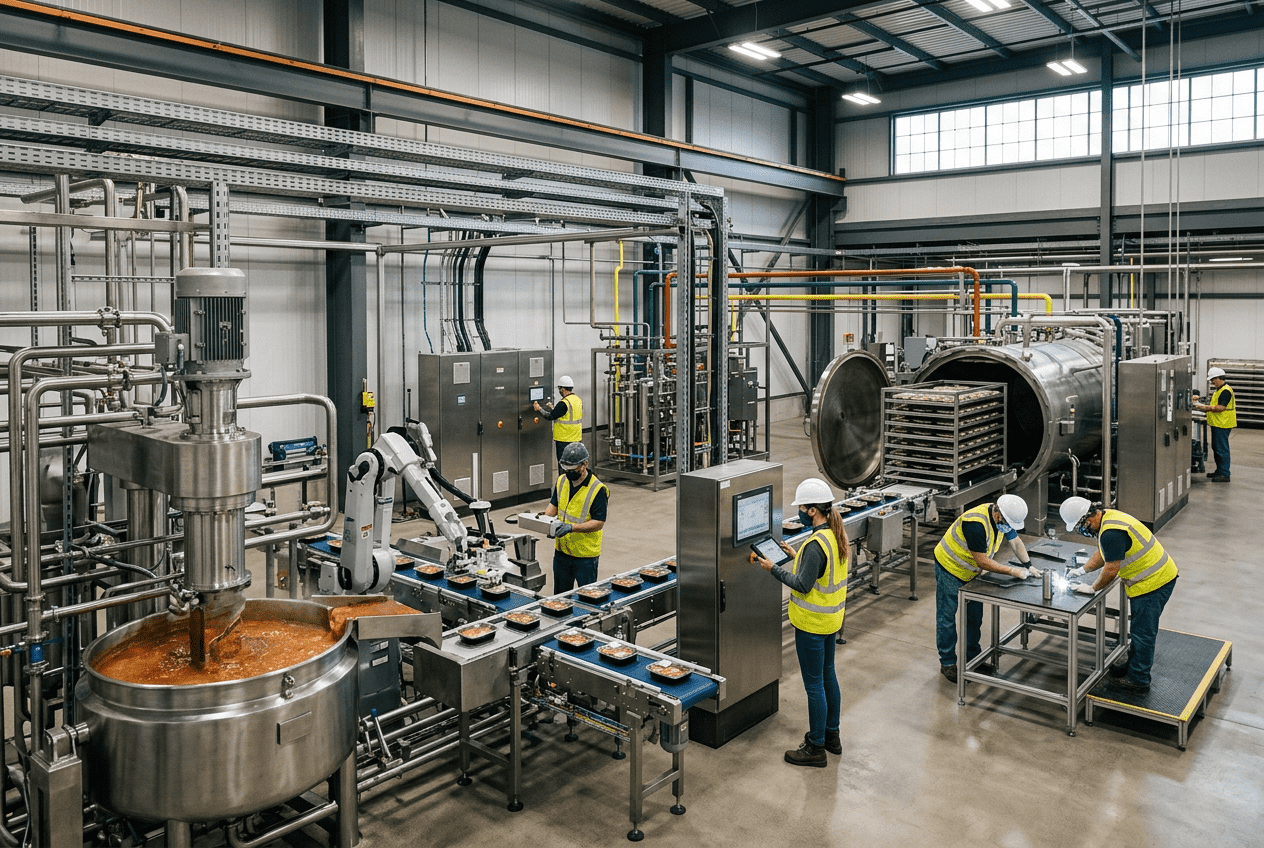
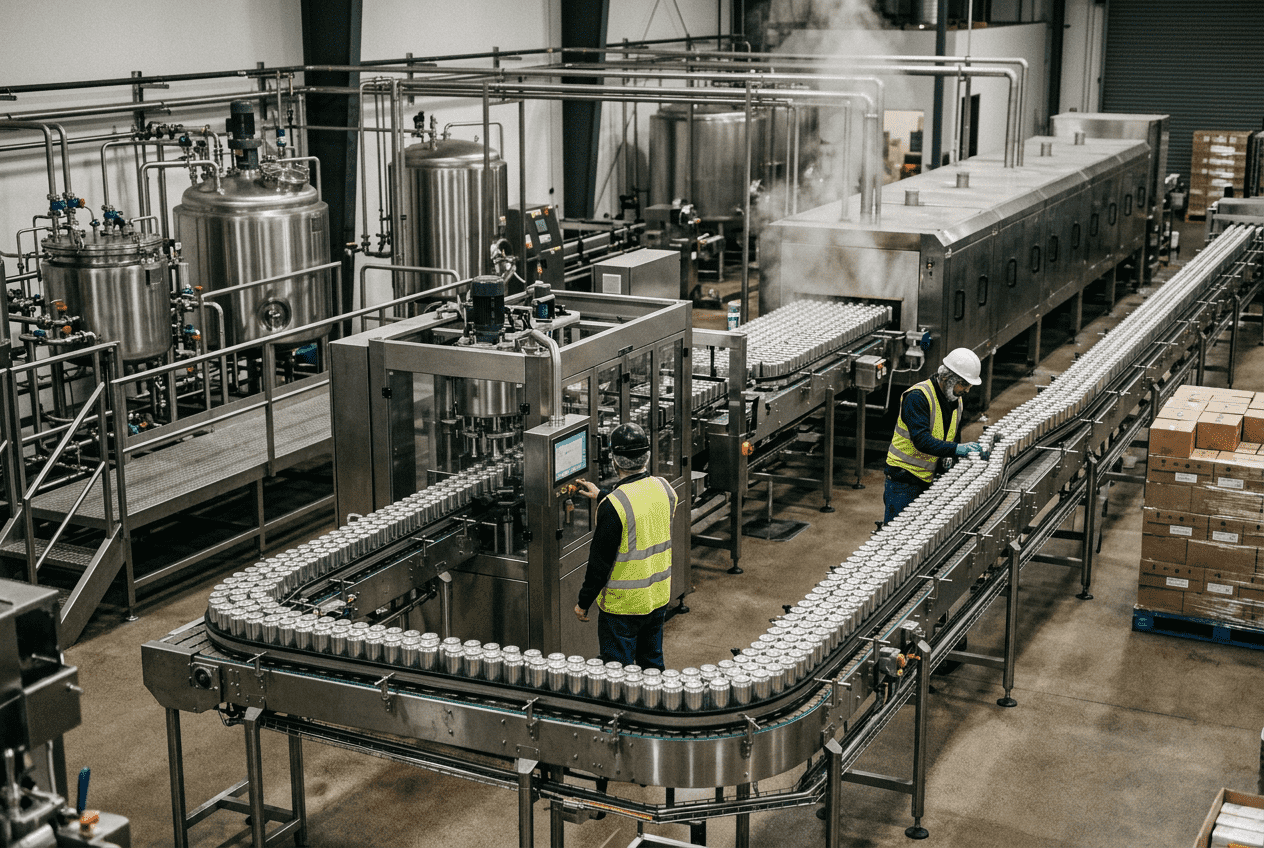
The modern beverage contract manufacturing facility in the United States is no longer just a large building with fillers and pallets. It is a tightly integrated production environment built for speed, SKU flexibility, food safety, labor efficiency, and long-term profitability. Whether the end products are energy drinks, sparkling water, juice blends, ready-to-drink cocktails, functional beverages, dairy-based drinks, or shelf-stable products, the best facilities are engineered around three realities: volatile demand, retailer-driven variety, and increasing regulatory expectations. Across major U.S. manufacturing corridors such as Chicago, Dallas-Fort Worth, Atlanta, Charlotte, Los Angeles, Inland Empire, Houston, and the I-95 distribution belt, owners are looking for plants that can support both high-volume runs and frequent changeovers. Ports and logistics hubs such as Savannah, Long Beach, Newark, and Houston also shape plant design because imported ingredients, aluminum, packaging materials, and finished-goods distribution all influence layout strategy. In this environment, a successful beverage co-packing or contract manufacturing operation depends on more than line speed. It depends on engineering decisions that align process, utilities, automation, warehouse flow, sanitation, labor, and capital planning from day one. A modern beverage contract manufacturing facility is defined by high-speed packaging, flexible product handling, sanitary zoning, recipe-driven automation, efficient warehouse movement, and scalable workforce design. In practical terms, the strongest facilities in the United States combine ultra-high-speed canning lines in the 1,500 to 3,000 cans-per-minute range, automated variety pack systems, integrated OEM equipment platforms, advanced process controls such as BRAUMAT and SCADA, separated high-acid and low-acid production areas, and warehouse automation such as AS/RS and laser-guided vehicles. The goal is simple: produce more SKUs with consistent quality, lower labor dependency, and faster response to customer demand. For buyers, investors, and operators, the best advice is to judge a facility by overall system performance rather than by any single machine. A fast filler does not create profitability if depalletizing, syrup batching, CIP, tunnel pasteurization, repacking, utilities, or finished-goods storage become bottlenecks. Strong engineering starts with throughput mapping, product mix assumptions, sanitation requirements, labor modeling, and future expansion planning. The table above summarizes what buyers should look for first. In the U.S. market, product variety and service levels are now as important as speed. That is why facilities must be engineered as complete systems, not as disconnected equipment purchases. What defines a modern beverage contract manufacturing facility today is the ability to shift between product types, package formats, and customer requirements without collapsing efficiency. A legacy plant may run one or two large-volume products well. A modern plant must handle sparkling and still beverages, different can heights, multiple carton styles, promotional packs, lot traceability, and retailer-specific pallet patterns in the same operating week. In the United States, this demand comes from a wide range of industries: soft drinks, beer alternatives, kombucha, nutraceutical beverages, protein shakes, flavored waters, dairy-based drinks, spirits-based RTDs, mixers, juices, and shelf-stable wellness beverages. Applications vary as well. Some facilities are built for national retail distribution. Others support club stores, foodservice, e-commerce fulfillment, military channels, or regional private-label programs. The best layouts account for these commercial realities early. Modern plants are also increasingly judged by their total cost-to-serve. That includes labor per thousand cases, utility consumption, sanitation cycle time, changeover duration, OEE, warehouse turns, and first-pass quality. A plant near Memphis or Kansas City may prioritize central U.S. freight optimization. A coastal operation near Long Beach or Savannah may prioritize import flow and export readiness. The definition of “modern” is therefore both technical and commercial. When owners evaluate engineering partners, they should seek firms that understand process technology, packaging integration, capital efficiency, and execution risk. Disruptive Process Solutions positions itself in this space by approaching projects as business-driven manufacturing systems rather than isolated construction packages. That distinction matters when line design decisions influence profitability for years after startup. The growth pattern above reflects the continuing expansion of outsourced beverage production in the United States, especially in categories with frequent innovation cycles. By 2026, the facilities that win most consistently will be those that can scale without major reconfiguration. Ultra-high-speed canning lines are central to many modern beverage projects because cans continue to gain share across carbonated soft drinks, energy drinks, flavored waters, alcoholic RTDs, and functional beverages. Engineering for 1,500 to 3,000 cans per minute requires more than selecting a large filler. It requires synchronized design across depalletizing, can rinsing, filling, seaming, inspection, pasteurization where required, drying, coding, secondary packaging, palletizing, and warehouse transfer. At these line rates, micro-stoppages become expensive. Conveyor accumulation, seam inspection sensitivity, dissolved oxygen control, CO2 management, lube strategy, line pressure management, and empty-can handling all influence uptime. Utilities also become critical. High-speed canning places significant demands on compressed air, process water, glycol, electrical distribution, and sometimes tunnel pasteurization or flash pasteurization support depending on product. Plant layout should reduce unnecessary turns, cross-traffic, and operator walking distances. Finished-package accumulation strategy is especially important when one machine upstream is much faster than a cartoner or a palletizer downstream. In high-volume U.S. operations serving chains such as Costco, Walmart, Kroger, or convenience channels, a poorly balanced line can erase the value of a premium filler. The table illustrates a common mistake in capital planning: overspending on speed at the filler while under-investing in balancing systems. Buyers should request line simulations, not just OEM rate sheets. For manufacturers considering large expansion projects, detailed engineering should also account for future can diameters, recyclable packaging changes, and retailer sustainability pressure. By 2026, line designs that simplify material reduction, leak detection, and change-part management will have a competitive advantage. Variety packs are no longer a niche offering. In the United States, club stores, e-commerce channels, and mainstream grocery buyers increasingly expect mixed-flavor configurations. That shift has transformed secondary packaging design. A beverage contract manufacturing facility now needs to think beyond standard case packing and include automated variety packaging and multi-flavor repacking strategies. These systems may combine parallel SKU infeed, robotic or servo-guided collating, carton erecting, lane balancing, barcode verification, and dynamic recipe selection. The engineering challenge is preserving speed while maintaining count accuracy and minimizing operator intervention. Facilities often need dedicated repacking halls or flexible islands between primary packaging and finished-goods warehousing. This is especially relevant for categories such as sparkling water, energy drinks, kombucha, iced coffee, and enhanced hydration products where flavor proliferation is a commercial necessity. The more varieties a brand offers, the more important it becomes to manage carton graphics, date-code traceability, and allergen or ingredient segregation where applicable. The chart shows why variety pack capability is now a design priority. Categories with the highest innovation rates usually generate the greatest demand for flexible secondary packaging. For buying teams, the key question is not whether a facility can make variety packs today, but whether it can make tomorrow’s variety packs profitably. That means asking how many flavors can run simultaneously, how quickly the system can switch formats, and how much labor the configuration requires. Many U.S. beverage contract manufacturers build their production environments around a mixed OEM strategy. Krones, Sidel, and ProMach each bring strengths depending on product type, packaging style, speed target, and budget. The challenge is not selecting a brand name; it is integrating equipment families into one coherent operating system. Krones is often associated with high-throughput beverage filling and packaging ecosystems. Sidel is recognized for strong PET and beverage line solutions, especially where bottle handling and line performance are priorities. ProMach offers broad packaging and end-of-line capabilities through multiple brands, making it especially relevant in repacking, case handling, labeling, and palletizing environments. For a contract manufacturer, the ideal answer may involve all three, plus specialized process equipment, utility systems, and controls integration. This is where technological capability matters. Companies that offer process engineering, controls design, PLC programming, SCADA integration, structural and utility coordination, and installation oversight can reduce startup risk dramatically. Through its engineering model, DPS service capabilities align process systems, utilities, automation, and field execution so that the line performs as a plant, not just as a collection of machines. The comparison above is simplified, but it shows why integration expertise matters. A poor interface between line controls, conveyors, data collection, and utility systems can undermine even best-in-class equipment. Buyers should insist on a controls architecture map, line acceptance criteria, and clear responsibility boundaries between OEMs and the integrating partner. Supplier selection should always be tied to product mix, maintenance staffing, spare parts strategy, and customer service expectations. In many facilities, a hybrid approach delivers the best return. Warehouse flow is often underestimated in beverage plant design. Yet in high-volume operations, the finished-goods warehouse can become the real heart of the facility. Automated storage and retrieval systems, combined with laser-guided vehicles or other autonomous movement solutions, help reduce forklift congestion, improve inventory accuracy, and support fast shipping to customers across the United States. For facilities serving major regional corridors such as the Southeast, Texas Triangle, Midwest, or Southern California, warehouse automation can shorten truck turn times and lower damage rates. It also supports denser storage, especially when real estate costs are high. Facilities near logistics hubs such as Columbus, Dallas, Phoenix, or the Inland Empire often see strong returns from automation because shipping volume and labor competition are both intense. AS/RS is especially valuable for high-SKU contract manufacturing because the system can manage pallet location, age control, lot traceability, and staging logic more consistently than manual methods. Laser-guided vehicles can connect palletizers, staging lanes, repack areas, and outbound docks with less traffic conflict than conventional forklift fleets. Warehouse automation is not automatically the right choice for every plant. It works best when SKU count, throughput, labor constraints, and building geometry justify the investment. Feasibility studies should include throughput modeling, rack strategy, software integration, dock planning, and fire protection impacts. Recipe-based process control is one of the clearest markers of a sophisticated beverage manufacturing operation. Systems such as BRAUMAT and broader SCADA platforms allow operators to manage batching, blending, CIP, syrup preparation, ingredient dosing, Brix control, carbonation targets, temperature, timing, and traceability from a centralized environment. For contract manufacturers, this is essential because customer specifications vary from run to run. One SKU may require strict acidification controls, another precise blending ratios, another lot-level ingredient traceability for a functional claim. Recipe-driven automation reduces dependence on tribal knowledge and improves repeatability across shifts. This is where DPS’s technological capabilities are highly relevant. The company works across process engineering, controls engineering, PLC programming, automation, SCADA, utility integration, and commissioning, supporting beverage systems that range from carbonation and blending through pasteurization, aseptic support, water treatment, and CIP. That combination is particularly valuable in contract manufacturing, where product diversity amplifies the cost of inconsistency. The trend is clear: more plants are moving toward centralized, recipe-based, data-driven production. By 2026, this shift will accelerate due to quality expectations, labor shortages, and the need for tighter electronic records. Buyers should ask whether the control platform supports batch history, alarm management, role-based access, remote diagnostics, maintenance data, and integration with ERP or MES layers. The best SCADA design is not just a dashboard. It is an operational discipline. Sanitary zoning is fundamental in beverage facility design, especially when multiple product classes are produced under one roof. High-acid beverages and low-acid products do not carry the same process risks, and the facility should reflect that reality. Segregating processing zones, ingredients, personnel pathways, CIP circuits, air handling strategies, and hygienic transitions can prevent contamination and improve regulatory confidence. High-acid products may include many juices, flavored beverages, and acidified formulations. Low-acid products may include dairy-based beverages, nutritional drinks, and certain specialty formulations that require stricter environmental and process control. Some facilities also support aseptic or near-aseptic operations, which raises the bar further for sanitary design. In the United States, compliance expectations may involve FDA requirements, customer-specific audit standards, and certification schemes such as SQF or BRC. Facilities that process both conventional and higher-risk products should include risk-based zoning from the earliest conceptual layout stage. Retrofitting sanitation logic later is expensive and disruptive. The table above shows that sanitary zoning is not a paperwork exercise. It changes architecture, MEP design, operating procedures, and capital cost. A facility that intends to produce diverse beverages must reflect those realities in walls, floors, utilities, and traffic flow. DPS also brings manufacturing-side knowledge that supports these choices. The firm works across beverage categories including brewing, spirits, wine, RTD products, carbonated and non-carbonated soft drinks, juices, dairy beverages, kombucha, and aseptic processing, which helps translate sanitary design from theory into practical plant layouts. For owners evaluating project partners, that category depth can reduce avoidable redesign during execution. Even highly automated beverage facilities must be designed around people. Plants with 500 or more employees across multiple shifts need robust planning for staffing, training, amenities, traffic flow, safety, maintenance access, supervision, and retention. Labor strategy is a design issue, not just an HR issue. In large U.S. operations, workforce planning often includes separate entrances for office and production staff, locker and gowning capacity, cafeteria and break areas, maintenance shops, quality labs, training rooms, control rooms, pedestrian-safe circulation, and parking sized for shift overlap. The tighter the labor market, the more important these details become. Plants in areas such as Nashville, Phoenix, Tampa, and the Carolinas may face strong competition for manufacturing labor, making employee experience a real operational factor. Automation does not eliminate the need for staffing discipline. It changes it. High-speed beverage operations need controls technicians, packaging mechanics, sanitation teams, warehouse coordinators, quality specialists, utility operators, and changeover crews who can respond quickly. Good facility design makes these roles easier to perform safely and efficiently. Facility owners should also plan for future labor models. By 2026, plants will likely rely more on mixed teams of operators, data-oriented technicians, and cross-trained maintenance personnel. The facilities that perform best will make room for digital work instructions, remote support, predictive maintenance workflows, and modular staffing growth. On the service side, owners benefit from project partners that can support planning, feasibility, owner’s representation, project management, general contracting, equipment supply, installation, and commissioning in a coordinated way. Project case examples are particularly useful when evaluating whether a partner can move from concept through startup while protecting the owner’s commercial goals. What products can a beverage contract manufacturing facility typically produce?Modern U.S. facilities often handle carbonated soft drinks, still beverages, juices, functional beverages, energy drinks, kombucha, RTD alcohol products, dairy-based drinks, teas, coffees, and selected aseptic products, depending on sanitary design and process equipment. How do buyers choose between a greenfield and brownfield project?A greenfield project offers cleaner flow design, better utility planning, and easier future expansion. A brownfield project may save time or location cost but often introduces layout constraints, sanitation compromises, or utility limitations. The right choice depends on throughput goals, site access, labor availability, and capital timing. Why is variety pack capability so important now?Retailers and consumers increasingly expect multiple flavors in a single purchase. Variety packaging supports club stores, promotional programs, e-commerce, and fast-moving innovation cycles. It also helps brands test new flavors without committing to massive single-SKU runs. What should owners ask before investing in a high-speed canning line?They should ask whether utilities, conveyors, pasteurization, end-of-line packaging, palletizing, and warehouse systems can actually support the target speed. They should also request OEE assumptions, maintenance staffing plans, and line simulation data. When does AS/RS make financial sense?AS/RS often makes sense when pallet throughput is high, labor markets are tight, SKU complexity is rising, and real estate is expensive. It is especially useful where inventory accuracy, truck staging speed, and dense storage are strategic priorities. What controls platform features matter most in beverage operations?Recipe management, alarm handling, trend data, batch history, CIP control, role-based access, integration with upstream and downstream systems, and remote diagnostics are among the most important features. How should a facility prepare for 2026 trends?Owners should design for sustainability reporting, water and energy optimization, stronger traceability, labor-saving automation, modular capacity growth, and potential policy changes related to food safety records, packaging waste, and emissions reporting. Facilities should also account for greater demand in low-sugar, functional, and hybrid beverage categories. What role can DPS play in these projects?DPS serves manufacturers across North America with process engineering, capital planning, owner’s representation, turnkey installation, equipment integration, controls, and project execution support. The company also brings manufacturing capabilities through custom tanks, CIP systems, and process equipment, which can help align project scope, schedule, and operational needs. Learn more about equipment solutions for beverage manufacturing. If you are selecting a partner or defining a project in the United States, start with the business model first. Determine whether the plant is built for a few anchor customers, a wide co-packing portfolio, or a hybrid model. Then define your product families, packaging formats, sanitation requirements, expansion phases, and expected SKU volatility. Once that commercial framework is clear, process design and equipment strategy become much easier to evaluate. Second, insist on integrated planning. A beverage plant should be designed from utilities through packaging, from warehouse through labor flow, and from sanitation through controls. Third, choose partners that can challenge assumptions. The strongest engineering teams do not just size equipment. They identify hidden bottlenecks, prevent overbuilding, and focus capital on the highest return decisions. That mindset aligns with the operating philosophy behind DPS: build profitable projects, not just completed installations. For U.S. beverage manufacturers, that distinction is often the difference between a plant that starts up and a plant that scales profitably. -
Food Facility Line Balancing in 2026: Lean Methods for Production Efficiency Gains
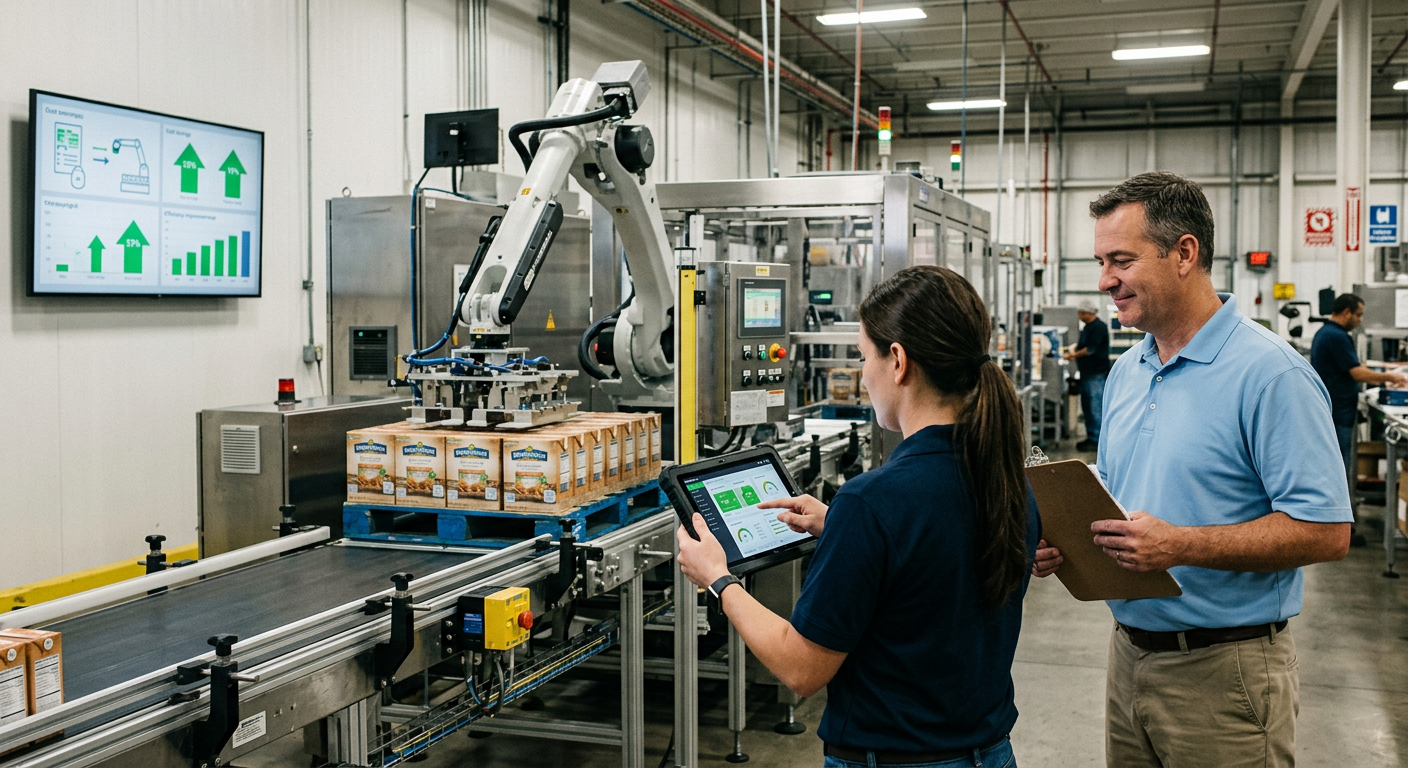
Food facility line balancing in the United States is becoming less about isolated equipment speed and more about synchronized throughput, labor efficiency, product quality, and sanitation-driven uptime. In 2026, the most effective line balancing strategies for food manufacturing combine time study and work measurement, bottleneck identification methods, takt time and cycle time analysis, value stream mapping for food lines, and lean tools for line optimization within a disciplined continuous improvement framework. For U.S. processors facing labor volatility, retailer service pressure, traceability demands, and rising utility costs, line balancing is one of the fastest ways to increase output without defaulting to a major capital expansion. Whether a plant runs protein, dairy, sauces, ready-to-drink beverages, aseptic products, frozen prepared meals, or co-packing operations, line balance affects OEE, labor cost per unit, waste generation, giveaway, rework, and schedule adherence. Plants in Chicago, Fresno, Dallas-Fort Worth, Atlanta, Charlotte, Omaha, Houston, and the Inland Empire often discover that the constraint is not where they first assumed. In many U.S. facilities, the true bottleneck sits in changeover logic, sanitation windows, hand-pack stations, conveyor accumulation gaps, upstream batching variability, or controls sequencing rather than in the largest machine on the floor. The quickest answer is this: successful line balancing in food manufacturing starts with measuring real cycle times by SKU, shift, crew, and sanitation condition; then locating the true constraint; then redesigning labor, equipment sequencing, accumulation, and controls around takt time. U.S. manufacturers typically see the strongest gains when they treat the line as one connected system rather than as separate assets owned by different departments. In practical terms, a 2026-ready balancing project should include six actions: For many facilities, this approach produces 10% to 30% throughput improvement before a major capex event is required. In regulated environments, it also improves consistency because line balance reduces the rush-and-wait pattern that often creates defects, temperature excursions, label errors, or weight variation. The table above matters because it shows that line balancing is not a single method. It is a decision system that connects production rate, labor, quality, maintenance, and capital planning. In 2026, U.S. food manufacturers are operating in a market shaped by automation adoption, stricter food safety expectations, cost pressure, and demand variability from club, retail, foodservice, and e-commerce channels. That means line balancing strategies need to be flexible enough for high-mix production while still delivering repeatable throughput. The most effective strategies fall into five categories: Plants near logistics hubs such as the Port of Los Angeles, Savannah, Houston, and New Jersey often deal with demand spikes and promotional swings. Midwestern protein and dairy operations may experience labor tightness and utility cost sensitivity. Southeastern beverage co-packers may run aggressive seasonal ramps. Each situation changes how a line should be balanced. A poultry cut-up line in Arkansas, for example, has very different balancing priorities from an aseptic beverage filling line in California or a sauce batching and hot-fill operation in North Carolina. One reason more U.S. manufacturers are reevaluating line balance in 2026 is the shift from static line design to operational adaptability. A line that looks balanced at 150 units per minute for one SKU may become unstable when package dimensions, viscosity, cook time, allergen wash requirements, or pallet pattern change. The chart suggests a realistic rise in structured line balancing adoption across U.S. food and beverage operations. Growth is being driven by labor shortages, digital manufacturing tools, and the need to extract more output from existing footprints. This table shows that balancing strategies must match production reality. A shelf-stable retort line, for instance, needs a stronger focus on batch synchronization than a high-speed carbonated beverage line, where accumulation and controls timing may dominate results. Time study is the foundation of any serious balancing effort. Yet in many U.S. plants, time data is either outdated, taken under ideal conditions, or measured too broadly to reveal true losses. Effective work measurement in food manufacturing should capture manual motions, machine states, wait time, sanitation resets, quality inspection intervals, and changeover elements. For labor-intensive lines, stopwatch studies still matter, but 2026 best practice blends direct observation with PLC tags, SCADA history, downtime codes, vision data, checkweigher trends, and production historian records. The objective is not just to know how long a task takes, but to understand variation by operator, product, packaging format, shift, and environmental condition. Important measurement principles include: Example: on a sauce packaging line in the Midwest, the filler may appear to run at target speed, but if the capper pauses every few minutes and the labeler requires repeated adjustment due to container variability, the effective line rate falls well below the visible machine speed. A proper study exposes this hidden gap. The reason this table is useful is that every row points to a different source of lost capacity. When plants only measure average run rate, these losses remain invisible. Finding the bottleneck sounds simple, but in practice many facilities confuse the slowest machine with the true system constraint. A bottleneck is the step that limits total throughput over time. On some days it is packaging; on others it is batching, thermal processing, accumulation, sanitation release, or labor availability. Reliable bottleneck identification methods include: A practical indicator is this: the bottleneck should have the least idle time when the system is trying to produce. If every other area waits on one step, that is likely the constraint. But in food plants, the constraint can move. A cooking kettle may limit one sauce SKU, while the labeler limits another. A deboning room may limit one shift, while palletizing limits another due to staffing. U.S. manufacturers also need to separate structural constraints from management constraints. A structural constraint may be the retort cycle itself. A management constraint may be scheduling too many short runs or placing allergen-heavy products in a sequence that inflates wash time. This bar chart reflects realistic U.S. demand intensity by sector. Protein, beverage, and prepared foods tend to show especially high need because of labor complexity, sanitation pressure, and packaging variation. Takt time translates customer demand into the pace the line must sustain. Cycle time measures how long a process actually takes. Line balancing improves when these two numbers are compared honestly and often. The basic takt formula is available production time divided by customer demand. But food manufacturing adds complexity. Plants must adjust takt for planned downtime, changeover, sanitation windows, product hold requirements, and shift patterns. A line may appear capable on paper but fail in execution because takt was calculated from gross hours instead of net available time. Cycle time analysis should be done at three levels: Suppose a Dallas ready-meal line has net available time of 420 minutes and demand of 21,000 trays. Takt time is 1.2 seconds per tray at the line level. If sealing runs at 1.0 second, labeling at 1.1 seconds, but cartoning averages 1.5 seconds due to hand intervention, then cartoning is out of takt and the line is not balanced. Key U.S. best practices for takt and cycle analysis in 2026 include modeling separate takt rates for core customers, using digital dashboards by SKU family, and recalculating takt when labor plans or sanitation schedules shift. The explanation is straightforward: if observed cycle time exceeds takt time, the process cannot reliably meet demand without overtime, inventory buffering, schedule change, or improvement. Value stream mapping for food lines remains one of the most effective ways to reveal how product, information, labor, and quality controls interact across the plant. In food and beverage operations, the map must go beyond standard manufacturing flow and account for ingredients, temperature control, allergen segregation, CIP, sampling, hold-and-release steps, rework rules, and lot traceability. A useful current-state map might start at ingredient receiving in Kansas City, blending in North Carolina, cook or thermal process in Texas, packaging in Georgia, and refrigerated shipment through Chicago or the Northeast corridor. Even within one plant, the flow includes decisions from planning, maintenance response, QA release, warehouse replenishment, and packaging material staging. The highest-value future-state maps usually target: The area chart illustrates a realistic trend: U.S. plants are increasingly moving away from isolated equipment upgrades and toward flow-based optimization. This matters because a faster machine does not always mean a faster line. Lean tools remain essential, but in food manufacturing they must be adapted to hygiene, compliance, and product variability. The best lean tools for line optimization in 2026 are practical, data-linked, and easy for operators to sustain. The most relevant tools include: Food plants in the United States should be cautious about copying automotive lean methods without adaptation. In a beverage syrup room, recipe integrity and CIP validation matter as much as movement efficiency. In a USDA-inspected protein facility, product safety and zone separation can override the shortest walking path. The right lean system respects food safety first while still removing waste. This table helps show that each tool has a different purpose. Plants get the best results when they use the tool that matches the loss mechanism instead of launching broad lean activity with no constraint focus. Without a framework, line balancing becomes a one-time project and performance gradually slips back. Continuous improvement frameworks keep gains alive through ownership, review cadence, and escalation discipline. For U.S. food plants, the strongest frameworks usually combine: In 2026, continuous improvement frameworks are also becoming more digital. Plants are using historian trends, machine state models, digital work instructions, and mobile maintenance workflows to preserve balance gains. Sustainability is now part of the same framework. If a rebalance reduces idle running, compressed air waste, steam load swings, water use, and product loss, it improves both cost and ESG performance. Policy and compliance trends matter too. As traceability expectations tighten and retailer penalties for service failures rise, balancing lines around predictable output becomes a strategic advantage rather than a shop-floor exercise. Disruptive Process Solutions supports food and beverage manufacturers across the United States and Canada with a practical, profit-focused approach to engineering and line performance. Rather than treating a facility problem as only an equipment issue, the company looks at production, utilities, controls, labor flow, and capital efficiency together. From a technological capability standpoint, DPS works across process, mechanical, electrical, plumbing, structural, and controls disciplines. That matters for line balancing because improvements often depend on more than one lever at once. A packaging bottleneck may require PLC programming updates, conveyor redesign, utility adjustments, smarter CIP integration, or improved SCADA visibility. Facilities evaluating line optimization can learn more about the company’s broader background on the About Us page. On the manufacturing capability side, DPS has experience across beverage, brewing, spirits, dairy, prepared foods, protein, sauces, aseptic systems, and specialty processing. That range is important because the balancing method for a retort line, a marination system, a dairy process train, or a high-speed beverage filler is never identical. The company also supports proprietary equipment such as tanks, CIP systems, marination tumblers, and process vessels, which can be explored through its equipment portfolio. From a service capability perspective, DPS provides process engineering and design, capital planning, owner’s representation, project and program management, general contracting where applicable, installation, and full system integration. This is especially useful when a line balancing initiative evolves into a broader plant improvement project involving layout, utilities, controls, or phased expansion. More detail is available in its services overview. A practical example of this philosophy is when a manufacturer assumes that expansion capex is required, but analysis reveals that controls sequencing or system integration is the true bottleneck. In those cases, a targeted fix can unlock major output gains at a fraction of the expected cost. Manufacturers interested in how real projects are approached can review selected project case examples. What is line balancing in food manufacturing?It is the process of aligning labor, equipment, flow, and controls so that each production step supports the required throughput with minimal waiting, blocking, waste, and overburden. How is food line balancing different from other industries?Food plants must account for sanitation, allergen management, quality checks, temperature control, traceability, and changing product characteristics such as viscosity, density, or package fragility. What is the difference between takt time and cycle time?Takt time reflects the pace needed to satisfy demand. Cycle time is the actual time a process takes. When cycle time is longer than takt time, the process will struggle to meet demand consistently. How long does a line balancing project usually take?A focused assessment may take two to six weeks. A broader implementation involving controls, layout, and standard work can take several months depending on line complexity and sanitation scheduling. Can line balancing reduce the need for expansion?Yes. Many U.S. facilities recover meaningful capacity through better sequencing, labor allocation, controls changes, changeover reduction, and constraint management before adding new equipment. Which sectors benefit most?Protein, dairy, beverage, prepared foods, sauces, aseptic packaging, and co-packing all benefit, though the methods differ by process and package type. What data should be collected first?Start with actual run rates, downtime by reason code, changeover duration, startup losses, labor distribution, quality hold time, and sanitation recovery time by SKU and shift. What are the biggest 2026 trends?More digital measurement, tighter traceability expectations, sustainability-linked efficiency work, greater use of automation and controls integration, and more focus on extracting capacity from existing U.S. facilities. How should a plant choose a partner?Look for a team that understands process engineering, packaging flow, utilities, controls, sanitation realities, and project execution—not just equipment sales. The best partners align improvement work to profitability, compliance, and long-term plant strategy. For U.S. manufacturers, the takeaway is clear: 2026 line balancing strategies for food manufacturing are no longer optional efficiency projects. They are core operating disciplines that influence margin, service, labor retention, food safety, and capital timing. Plants that combine time study and work measurement, bottleneck identification methods, takt time and cycle time analysis, value stream mapping for food lines, lean tools for line optimization, and continuous improvement frameworks will be best positioned to grow output without losing control of cost or quality. This comparison chart highlights a common buying lesson for U.S. food manufacturers: line balancing projects often succeed faster when the partner can connect process, controls, installation, utilities, and compliance instead of addressing only one scope. This final table serves as buying guidance. It helps processors in the United States ask sharper questions before committing to a line improvement project, a controls retrofit, or a larger facility expansion. -
Food Plant Pump System Design: 6 Essential Factors for Hygienic Applications
Food plant pump system design affects product quality, sanitation, throughput, labor, maintenance cost, and regulatory compliance. In the United States, processors handling dairy, sauces, proteins, beverages, fermented products, aseptic liquids, and clean-in-place circuits need pump systems that move product reliably without creating contamination risks or damaging product texture. The right system is not just about selecting a pump model. It requires matching pump type to viscosity, flow target, temperature, sanitation method, line routing, Net Positive Suction Head, seal arrangement, and long-term maintenance strategy. In major U.S. processing regions such as Chicago, Milwaukee, Fresno, Dallas-Fort Worth, the Research Triangle, Los Angeles, Houston, and the I-95 manufacturing corridor, food and beverage plants are under constant pressure to improve uptime while meeting FDA, USDA, SQF, and BRC expectations. This is why hygienic pump engineering has become a strategic decision rather than a simple equipment purchase. Plants moving yogurt, cream, RTD coffee, tomato concentrates, dressings, brines, beer, wine, spirits, plant protein slurries, and nutritional beverages often discover that pump mistakes show up later as foaming, product separation, cavitation, excessive CIP time, or repeated seal failures. This guide explains how to approach hygienic pump system design for U.S. food facilities, how to compare centrifugal and positive displacement technologies, how to account for viscosity and flow calculations, and how to think about CIP, SIP, NPSH, and seal reliability. It also includes practical buying guidance, industry use cases, local market notes, and an overview of how Disruptive Process Solutions supports processing projects across North America. The best hygienic pump system for a food plant in the United States is the one that matches six core design factors: product characteristics, required flow and pressure, sanitary cleaning method, suction conditions, mechanical seal design, and long-term maintenance access. Centrifugal pumps usually fit low-viscosity, high-flow applications such as water, milk, beer, and CIP circulation. Positive displacement pumps are often better for viscous, shear-sensitive, or accuracy-dependent products such as yogurt, sauces, fillings, syrups, creams, and plant-based slurries. Proper pipe routing, NPSH verification, seal selection, and cleanability are as important as pump capacity. For buyers, the fastest path to the right solution is to define the actual product range, the coldest and hottest operating temperatures, normal and peak production rates, CIP and SIP requirements, and the allowable level of shear. In practice, the most successful projects also consider future expansion, automation integration, and utility impact. In U.S. facilities from California beverage plants to North Carolina prepared foods lines and Midwest dairy operations, that broader design view reduces unplanned downtime and improves return on capital. The table above summarizes why pump system design should begin with process requirements instead of catalog selection. Many projects underperform because the pump is chosen before the process envelope is fully defined. There are six design factors that consistently determine success in hygienic pump applications. Start with viscosity, density, solids content, fat level, pH, temperature, and whether the product is aerated or shear-sensitive. A fruit preparation with particulates behaves very differently from skim milk or deaerated water. Protein slurries, dressings, cultured dairy, and concentrated syrups often need gentler and more torque-capable transfer equipment than thin liquids. Design for actual operating range rather than only nameplate maximums. A line that normally runs 120 gallons per minute but occasionally spikes to 180 gallons per minute may need variable frequency control or a different pump curve selection to avoid inefficiency during most operating hours. Food plants in the United States commonly specify 316L stainless steel wetted parts, sanitary fittings, smooth internal finishes, low dead-leg geometry, and elastomers compatible with both product and cleaning chemistry. If a pump cannot be cleaned effectively, it is not truly suitable for hygienic service no matter how well it moves fluid. Product temperature, tank level, suction piping length, and vapor pressure all influence NPSH available. Plants near high-elevation locations or those handling hot liquids need extra care. Cavitation can quickly erase any savings from a low-cost selection. Single mechanical seals may work for many duties, but double seals, flushed seals, or seal designs optimized for thermal cycling are often justified in hot service, abrasive products, or applications where leakage cannot be tolerated. Seal failure is among the most common causes of avoidable downtime in hygienic processing. The most profitable design is one that technicians can inspect, clean, and repair quickly. U.S. plants facing labor constraints increasingly prefer systems with standardized pump families, common spare parts, easy access, automation feedback, and room for future line expansion. These six factors connect directly to capital planning. In ports and logistics hubs such as Savannah, Houston, Long Beach, and New Jersey, processors often work with fluctuating ingredient supply and production schedules. A flexible pump system can help absorb that volatility better than a tightly constrained design. The chart shows a realistic growth pattern in hygienic pump-related project activity as U.S. processors expand automation, food safety investments, and modernization work heading into 2026. The most important equipment decision in many hygienic systems is whether to use a centrifugal pump or a positive displacement pump. Both can be sanitary and both are widely used, but they solve different problems. Centrifugal pumps are usually preferred for low-viscosity liquids and high circulation rates. They are common in milk transfer, beer movement, water service, ingredient delivery, CIP loops, and low-viscosity juice applications. They are relatively simple, efficient at higher flow, and often easier to maintain in standard duties. Positive displacement pumps are usually better when the product is thicker, more delicate, or requires more consistent volumetric transfer across varying pressure conditions. Rotary lobe, circumferential piston, twin-screw, and progressive cavity technologies are often used for sauces, yogurt, creams, puddings, fillings, cultured products, and some protein applications. This comparison helps buyers frame selection logic, but many modern facilities use both technologies. A beverage plant in California may rely on centrifugal pumps for water, CIP, and low-viscosity blending while using positive displacement pumps for flavor bases or concentrates. A protein facility in the Midwest may combine lobes, screw pumps, and centrifugal units across receiving, blending, heating, and transfer stages. The comparison chart highlights how each pump family tends to excel in different performance categories. It should not replace detailed engineering, but it reflects common plant-level decision patterns. Viscosity and flow rate calculations are central to hygienic pump system design. In real projects, underestimating viscosity is one of the fastest ways to create undersized motors, poor transfer rates, or excess heat generation. A product that measures 2,500 centipoise at filling temperature may behave like a much thicker material when started cold at the beginning of a shift. Flow rate should be defined in relation to production demand. For example, if a sauce line feeds a filler running 180 containers per minute and each container takes 0.5 pounds of product, the pump must deliver not only average throughput but also enough pressure stability to prevent fill variation. Likewise, a dairy transfer loop must account for peak line speed, valve losses, elevation change, and heat exchanger pressure drop. Design teams typically calculate: The table shows why a single pump standard rarely fits every product family. U.S. processors with broad portfolios often standardize by duty category rather than trying to force one pump design across all lines. For buying advice, request viscosity data at minimum, normal, and maximum processing temperatures. Ask whether the product is Newtonian or non-Newtonian. Also review whether the product contains particulates, entrained air, crystals, or fibers. These details can change the best pump option dramatically. The area chart reflects a strong industry trend: more U.S. facilities are adding functional beverages, premium dairy, sauces, concentrates, and alternative protein products that require more sophisticated viscosity-based pump selection. Some products are damaged not by contamination but by mechanical stress. Shear-sensitive products include cultured dairy, fruit preparations, emulsions, creams, certain confectionery fillings, egg products, and many plant-based formulations. When these products are over-sheared, they may lose body, break emulsion, release water, create foam, or suffer visible particle degradation. The risk becomes even greater in plants that run fast changeovers, long recirculation loops, or aggressive startup speeds. In practice, a pump that “works” can still be the wrong pump if it changes the final eating or drinking experience. Key design methods for shear-sensitive service include lower operating speed, larger pump displacement, shorter product path, fewer restrictions, smoother valve transitions, and automation logic that avoids dry running or abrupt acceleration. In facilities shipping premium yogurt to East Coast distribution hubs, cream-based sauces to Texas retail channels, or high-value nutritional beverages through Midwest co-packers, gentle product handling directly protects brand quality. The table emphasizes that product quality metrics should be part of pump acceptance criteria. Buyers should ask for trials that measure texture retention, viscosity change, particulate integrity, and foam generation instead of relying only on flow claims. Hygienic pump systems must work not only during production but also during cleaning and sterilization. CIP compatibility means the pump can be cleaned in place using the plant’s chemistry, temperatures, velocities, and cycle durations. SIP compatibility, where applicable, means the pump can tolerate steam sterilization conditions without material degradation or seal instability. This is especially important in U.S. dairy, aseptic beverage, high-acid filling, and nutritional product applications. A pump that requires excessive teardown or creates hard-to-clean dead zones will raise labor cost and sanitation risk. Twin-screw designs, well-configured centrifugal circuits, and hygienic positive displacement pumps can all support CIP effectively when engineered correctly. Requirements to evaluate include elastomer compatibility, thermal expansion behavior, drainability, surface finish, gasket geometry, and the ability to verify cleaning performance. Plants in regulatory-sensitive sectors should also consider validation documentation and operator repeatability. For processors planning 2026 upgrades, CIP and SIP design is increasingly tied to sustainability. Better cleanability reduces water, chemical, and energy consumption. That matters in regions with rising utility costs, such as California, Arizona, and parts of the Southeast. Pump sizing should be based on the full operating envelope, not a single flow number. Engineers should calculate total dynamic head, friction losses, static lift, control valve losses, exchanger pressure drop, and the effect of temperature on vapor pressure. Then they should compare the result against the pump curve at the intended operating speed. NPSH calculations are equally important. NPSH available must exceed NPSH required with an adequate safety margin. If not, the pump can cavitate, leading to noise, vibration, seal wear, impeller damage, and unstable transfer. This issue is common when hot product is pumped from shallow tanks, when suction lines are long, or when plant layout forces awkward routing. In U.S. expansions and brownfield retrofits, NPSH problems often appear after capacity increases. A pump that ran adequately at lower rates may fail once a line is pushed harder. That is why layout review, suction piping discipline, and tank elevation strategy matter so much. This table shows why pump sizing is a process engineering task, not simply a purchasing task. In many retrofit projects, the best answer is not a larger pump but a better piping arrangement, reduced suction loss, or corrected control strategy. The bar chart reflects realistic demand patterns by industry segment in the U.S. market, with dairy, beverages, sauces, and plant-based products continuing to drive significant hygienic pump investment. Mechanical seal performance often determines whether a hygienic pump delivers stable uptime or becomes a chronic maintenance problem. Seal selection should reflect product lubricity, abrasiveness, temperature cycling, cleaning chemistry, dry-run risk, and the site’s maintenance capability. Single seals may be perfectly suitable in many low-risk duties. However, high-temperature applications, frequent start-stop cycles, abrasive slurries, and critical no-leakage environments may justify more robust arrangements. The wrong seal standard can lead to product leaks, repeated parts replacement, sanitation concerns, and production interruptions. Maintenance protocols should include operating window definitions, preventive inspection intervals, spare kit standardization, alignment checks, seal face review, and operator training on startup and shutdown conditions. U.S. food plants facing technician shortages increasingly benefit from simplifying seal families across multiple lines. Recommended practices include keeping suction flooded where possible, avoiding dry starts, maintaining correct flush conditions when required, and tracking failure modes by product and shift. Digital maintenance logs can reveal whether seal failures are actually caused by process upsets such as cavitation or thermal shock rather than by seal quality alone. Looking toward 2026, predictive maintenance is becoming more practical even for mid-sized processors. Vibration monitoring, motor current analysis, seal leakage sensors, and SCADA-integrated alarms can help identify problems before they become unplanned downtime events. Disruptive Process Solutions supports food and beverage manufacturers across the United States and Canada with a practical, business-first approach to capital projects. Rather than acting only as an equipment source, the company works as an engineering and execution partner focused on profitable project outcomes. That matters in hygienic pump system design because pump selection is rarely isolated from utilities, controls, line routing, sanitation strategy, and production economics. DPS brings multidisciplinary engineering across process, mechanical, plumbing, electrical, structural, and controls scopes. Its team supports automation, PLC programming, SCADA, batching logic, utility integration, and complete system coordination. For clients evaluating hygienic transfer systems, this means pump design can be aligned with broader process requirements such as blending, carbonation, fermentation, pasteurization, aseptic handling, retort support, and water treatment. More detail on these integrated engineering capabilities can be found through its food and beverage engineering services. DPS also manufactures selected process equipment, which strengthens project coordination when pump systems tie into fabricated assets. Its branded offerings include storage and processing tanks up to 12,000 gallons, custom CIP systems, marination tumblers, and cooking vessels. For processors building or expanding syrup rooms, dairy modules, prepared food kitchens, or clean utility systems, this manufacturing capability helps align pump design with vessel geometry, cleanability, and installation constraints. Additional equipment information is available on the company’s process equipment page. From feasibility and capital planning to turnkey installation and startup, DPS operates through a design-build-manage model intended to reduce project fragmentation. The company serves manufacturers in all 50 states, with experience in beverage, dairy, protein, prepared foods, aseptic systems, and sanitary compliance projects. That range is useful when a pump system must support not only one line but a wider production platform. Real project examples and execution experience can be explored in its project case studies. For U.S. manufacturers, especially those scaling in regions such as North Carolina, Texas, California, the Midwest dairy belt, or major co-packing corridors, the advantage of an integrated partner is that pump design decisions are connected to utilities, commissioning, schedule control, and long-term plant performance. It depends on the product and process. Centrifugal pumps are usually best for low-viscosity, high-flow sanitary transfer and CIP. Positive displacement pumps are usually better for viscous, delicate, or metered products. If the product loses viscosity, separates, foams, or breaks particles when pumped, it is likely shear-sensitive. Pilot testing and before-and-after quality checks are the best way to confirm. NPSH helps prevent cavitation. Cavitation can cause noise, vibration, lower flow, seal damage, and reduced pump life, especially with hot products or poor suction layouts. Sometimes yes. Certain hygienic pump designs, especially some screw-based technologies, can be configured for both duties. However, the decision should be based on product range, cleaning profile, and cost-benefit analysis. Single mechanical seals are common, but the right choice depends on temperature, pressure, abrasiveness, and leakage tolerance. Critical duties may need more robust arrangements. Maintenance intervals depend on run hours, product type, cleaning intensity, and seal design. Plants should use preventive schedules based on actual operating data, not only calendar time. Ask for pump curves, viscosity correction guidance, NPSH requirements, sanitary certifications, elastomer compatibility, CIP and SIP suitability, spare parts availability, and local service coverage. Also ask for references in similar U.S. applications. Yes. In the United States, local parts and service support can significantly reduce downtime. This is especially important in remote production regions or plants running continuous operations. The leading trends are greater automation, predictive maintenance, more efficient CIP design, lower water and chemical consumption, support for alternative proteins and functional beverages, and closer alignment with sustainability goals and stricter audit expectations. Dairy, beverages, sauces and dressings, protein processing, prepared foods, plant-based manufacturing, aseptic production, and co-packing all benefit from improved hygienic pump engineering. In summary, successful food plant pump system design in the United States depends on connecting engineering detail with real operating conditions. The right hygienic solution balances flow, viscosity, product care, cleanability, suction reliability, and maintainability. Plants that invest in full-system thinking typically gain more stable output, lower sanitation risk, and stronger long-term project returns. -
Marinade Processing Systems
Marinade processing systems are engineered production lines used to apply brines, seasonings, functional ingredients, and texture-improving solutions to meat, poultry, seafood, and plant-based proteins. In the United States, processors typically combine immersion, multi-needle injection, vacuum tumbling, and controlled recovery systems to improve flavor penetration, consistency, pick-up, yield, and food safety. The right system depends on product type, target pick-up percentage, throughput, microbiological risk, labor model, and downstream operations such as cooking, freezing, slicing, or packaging. For U.S. processors operating in regions such as North Carolina, Arkansas, Georgia, Texas, California, Illinois, and the Midwest protein corridor, marination is no longer just a seasoning step. It is a profit lever tied directly to yield, line balance, sanitation downtime, and retail or foodservice product quality. Whether the application involves chicken breasts for club retail, pork loins for further processing, beef strips for ready meals, shrimp for value-added seafood, or plant protein pieces for prepared foods, the system must be designed as part of a broader process and utility strategy. Companies planning a new line or retrofitting an existing plant often need more than equipment alone. They need process engineering, throughput modeling, hygienic design review, CIP planning, utility integration, controls strategy, and installation management. That is where a partner with food and beverage engineering depth can create measurable value. Disruptive Process Solutions supports manufacturers across the United States and Canada with practical, business-focused project execution aimed at long-term profitability rather than short-term equipment sales. The most effective marinade processing system for U.S. production usually combines four coordinated functions: brine make-up, controlled application, mechanical distribution, and sanitation-ready recovery. Immersion works well for lighter seasoning and delicate products. Injection is preferred when precise internal distribution and higher pick-up are required. Vacuum tumbling improves distribution, protein extraction, adhesion, and finished texture. Ultrasonic assistance is emerging in specialized applications where faster diffusion and shorter residence times are desired. For most high-volume poultry and protein operations, the common configuration is a chilled brine tank, filtration loop, multi-needle injector, vacuum tumbler, and recirculation skid with validated sanitation procedures. Performance is measured through pick-up percentage, yield retention after cooking or freezing, brine viscosity stability, uniformity across pieces, and microbiological control. Processors in the United States should also evaluate USDA compliance expectations, water and energy consumption, labor exposure, allergen handling, and expansion capacity for future SKUs. If the goal is consistent product quality and profitable line performance, the equipment should not be selected in isolation. It should be integrated into upstream trimming, downstream cooking or packaging, plant utilities, controls, and sanitation systems. Different marination methods serve different operational goals. In practice, many U.S. processors use more than one method on the same line, especially in poultry and prepared foods. The table above shows why there is no single universal solution. Immersion may suit low-capacity operations near coastal distribution hubs like Seattle, New Bedford, or Gulf Coast seafood processors. Injection becomes dominant when plants in Arkansas, Georgia, or Delaware need repeatable pick-up and uniform seasoning for poultry at scale. Vacuum tumbling is especially valuable where the processor needs improved bind, moisture retention, and texture performance before thermal processing, IQF freezing, or tray pack. Ultrasonic marination remains a future-facing technology. It is not yet as common as injection or tumbling, but it is drawing attention in product development centers because it may reduce cycle time and improve ingredient migration in certain substrates. By 2026, broader adoption may occur if equipment costs drop and validation data becomes stronger for large-scale commercial lines. The line chart reflects a realistic growth pattern driven by value-added protein demand, labor reduction priorities, and investments in integrated automation. Growth is particularly visible in markets around Dallas-Fort Worth, Chicago, Atlanta, Fresno, and the Carolinas, where food manufacturing expansion continues to support new processing lines. The chemistry of the brine or marinade determines whether the mechanical system will succeed. A poorly designed formulation can cause injector plugging, phase separation, foam formation, weak adhesion, purge in the package, or inconsistent yield. A well-designed formulation supports protein functionality, flavor release, moisture retention, color stability, and process repeatability. Salt remains the backbone of most brines because it solubilizes muscle proteins and supports water retention. Phosphates, when used, further improve moisture binding and can raise pH to improve tenderness and yield. Clean-label trends in the United States are pushing some processors toward phosphate-reduced or phosphate-free systems, which means the line must compensate through better mechanical action, ingredient sequencing, and temperature control. Flavor systems must also match equipment design. Coarse particulates can damage needles or settle in recirculation tanks. Oil-containing marinades can separate if agitation is weak or if product temperatures fluctuate. Acid-based systems for certain poultry or seafood products may require upgraded gasket materials and careful compatibility review. In ready-to-eat and further processing plants, texture enhancers are often selected not only for fresh yield but also for performance after cook, chill, freeze-thaw, and reheating. Processors in the United States should validate formulations against the intended distribution channel. Club retail, national quick-service restaurant supply, and high-moisture prepared meals each place different demands on purge control, sensory profile, shelf life, and labeling. A formulation that performs in a pilot test may fail commercially if brine temperature rises on a summer production shift in Texas or if line speed fluctuates in a Midwest plant running multiple SKU changeovers. Multi-needle injectors are central to many modern marination lines because they provide controlled internal placement of brine. Uniformity depends on needle density, stroke pattern, pressure, conveyor presentation, product thickness variation, and brine filtration quality. If any of these variables are unstable, the processor may see striping, soft spots, leakage, or inconsistent finished pick-up. In poultry applications, injectors are often designed with multiple heads, pressure-controlled pumps, and recirculation features to maintain consistent solution delivery. In pork and beef, needle geometry and penetration depth become more critical because muscle structure differs and products may vary in thickness across a single lot. Plant-based proteins can also be injected, but only after careful evaluation of structural resilience and post-injection handling. For buying decisions, U.S. processors should look beyond injector capacity alone. Important questions include: How quickly can the head be opened for sanitation? Are needle banks modular? Is the manifold easy to inspect? Can the controls log pressure, recipe, and alarm history? Is there enough space for operators and sanitation crews? Will the injector integrate with upstream weighing, downstream tumbling, and plant SCADA? When an engineering partner evaluates these questions at the project planning stage, capital is used more effectively. DPS service capabilities include process engineering, capital planning, owner-side project support, integration, and execution management, which is especially important when marination equipment must fit into constrained brownfield plants near major U.S. distribution hubs. The bar chart shows why poultry leads demand in the United States: line speed, SKU diversity, and retail seasoning trends create a strong need for injection and tumbling systems. Prepared foods also rank highly because marinated components are increasingly used in meal kits, frozen bowls, foodservice proteins, and deli applications. Vacuum tumbling is where mechanical action transforms brine application into finished product performance. Under vacuum, muscle structure opens, air is reduced, and the marinade is distributed more evenly across surfaces and internal pathways. Tumbling can improve protein extraction, increase tackiness for bind, and create a more uniform appearance. However, aggressive cycles can damage product structure, while conservative cycles may leave yield on the table. Three variables matter most: drum speed, vacuum level, and cycle pattern. Many processors use intermittent cycles rather than continuous action because rest periods allow redistribution and can reduce physical damage. Product temperature must also be monitored closely because excessive friction or long cycles can push the product out of specification. Optimization is product-specific. Boneless skinless chicken breast may require one cycle strategy; pork sirloin strips for fajita applications may require another. Cook-in-bag proteins need a different balance than raw tray-pack items. Because of this, pilot validation and on-site commissioning matter as much as hardware quality. On the technology side, DPS brings relevant manufacturing capabilities through its own branded equipment line, including marination tumblers and custom process systems. You can review broader equipment capabilities here. That matters for U.S. clients who want not only system selection but also integration with utilities, controls, structural requirements, and future line expansion. This area chart highlights the trend away from stand-alone marination steps and toward integrated systems. By 2026, more U.S. plants are expected to favor recipes, controls, and data logging that tie injector settings, tumbler cycles, brine temperature, and lot traceability into a common production environment. Marinade recovery and recirculation systems are often overlooked during purchasing, but they directly affect ingredient loss, yield economics, and sanitation risk. In high-volume operations, unrecovered brine represents not only wasted ingredients but also inconsistent formulation strength over the shift. A well-designed system collects excess marinade, filters it appropriately, returns acceptable liquid to the process, and rejects material that no longer meets quality standards. Recovery design should account for product fines, fat carryover, spices, and microbiological risk. Filtration stages may include screens, baskets, and finer polishing steps depending on product category. Recirculation loops must be easy to sanitize and should avoid dead legs, warm zones, or poorly drained piping runs. Pumps should be selected for the fluid properties of the brine rather than generic water duty. In practical terms, yield improvement comes from keeping the active brine stable and available. If concentration drifts because recovered liquid is not monitored, the processor may see reduced pick-up or flavor inconsistency. Plants with strong recovery design often report more predictable cost per pound, fewer formulation adjustments, and improved control over SKU changeovers. Processors shipping through major food logistics centers such as Chicago, Memphis, Savannah, Los Angeles, or New Jersey benefit from tighter yield control because freight, cold storage, and customer service costs amplify the impact of every process variation. Recovery systems help protect margins when ingredient pricing is volatile. Temperature is one of the most important controls in marination. Brines should typically be prepared and held at chilled conditions appropriate to the product and process design. Low temperature helps preserve functionality, slows microbiological growth, and improves process stability. Warm brine can accelerate spoilage risk, change viscosity, and cause poor yield performance. Brine chilling may be achieved through jacketed tanks, plate heat exchange, glycol loops, or ice-assisted blending depending on plant scale. Filtration should be matched to ingredient profile and microbial risk. A clear salt-phosphate solution requires a different filtration strategy than a particulate herb marinade or a sticky sweet-savory glaze. Microbiological control goes beyond low temperature. Hygienic design, sanitation validation, allergen separation, employee practices, line scheduling, and documented sampling plans all matter. U.S. plants operating under USDA or FDA oversight need clear preventive control thinking, including defined hold times for made-up brine and rules for reuse or discard. DPS also brings broad technological capabilities that strengthen these projects. Its team works across process, structural, mechanical, plumbing, electrical, and controls disciplines, including PLC programming and SCADA integration. That cross-functional capability is useful when a marination line must be tied to chilled utilities, CIP skids, recipe systems, data collection, and plantwide expansion strategies. Cleanability is often the difference between a line that performs well in theory and one that performs profitably in practice. Marinade systems handle salt, proteins, oils, spices, sugars, and sometimes allergens. If the system is difficult to clean, sanitation hours rise, startup quality falls, and microbiological risk increases. Key sanitation design features include full drainability, minimal dead legs, removable or clean-in-place manifolds, accessible injector heads, sanitary welds, proper gasket selection, and surfaces designed to avoid product harborage. CIP strategy should account for chemistry, temperature, flow velocity, and verification methods such as ATP, visual inspection, conductivity, and microbiological swabs. For plants undergoing expansion or equipment relocation, sanitation planning should be part of the front-end engineering package, not a late-stage add-on. A skilled integrator can help position tanks, pumps, access platforms, drains, and utility drops so the sanitation team can work safely and efficiently. This is especially important in existing facilities with space constraints, such as older plants in the Southeast or Midwest that are adding value-added protein capacity. Pick-up percentage is the amount of marinade retained by the product immediately after application, usually expressed as a percentage of green weight. It is one of the core metrics used to judge line performance, but it should not be evaluated alone. Strong processes also track post-tumble weight, post-pack weight, cook yield where applicable, purge, and finished sensory performance. Inconsistent pick-up usually signals a system issue: unstable brine concentration, temperature drift, variable product thickness, poor injector tuning, excess purge after tumbling, or inconsistent dwell time. The most advanced U.S. facilities increasingly use inline weighing, recipe-linked controls, and data logging to detect trends before they become waste. A good buying strategy is to ask suppliers how the system supports measurement, not just application. Can the line integrate checkweighing? Can operators save recipes by SKU? Are reports exportable for QA and operations review? Can alarms be tied to low brine temperature, pressure deviation, or excessive batch time? These questions matter more than headline throughput alone. The comparison chart shows why many U.S. manufacturers prefer integrated project delivery over stand-alone equipment buying. The gap is most visible in expansion flexibility, utility integration, and project support, all of which affect long-term profitability. What is the best marination method for poultry in the United States?For most medium- to high-volume poultry lines, multi-needle injection followed by vacuum tumbling delivers the best balance of flavor penetration, pick-up control, and yield retention. How cold should brine be kept?The exact target depends on product and formulation, but chilled brine control is essential for food safety, functionality, and stable process performance. Can immersion alone provide uniform flavor?It can for some thin or delicate products, but it usually does not match the internal distribution achieved by injection. Why does my line show good pick-up but poor final yield?The system may be gaining marinade initially but losing it later because of poor formulation, weak tumbling parameters, temperature drift, excessive purge, or cook loss. How important is filtration in an injection system?It is critical. Poor filtration causes needle plugging, pressure variability, sanitation issues, and product inconsistency. Are ultrasonic systems ready for mainstream use?They are promising for some applications, but most U.S. commercial plants still rely primarily on injection and tumbling because those technologies are better proven at scale. What should I ask before buying a marination line?Ask about cleanability, utility needs, changeover time, recipe control, data logging, expansion capacity, spare parts, and post-installation support. Which industries use these systems besides meat and poultry?Seafood, plant-based proteins, prepared foods, deli items, sauces, and some specialty food manufacturers also use marination or brine application systems. How do sustainability trends affect marination systems by 2026?U.S. buyers are increasingly focused on water reduction, brine recovery, lower energy use, smarter CIP, reduced ingredient waste, and automation that improves labor efficiency and traceability. How can a project partner add value beyond supplying equipment?A strong partner helps with process design, capital planning, controls integration, sanitary layout, utility coordination, installation, commissioning, and long-term plant performance. For manufacturers looking for case-based insight into how integrated projects are executed, see these project examples and case studies. This is useful for processors comparing a simple equipment purchase against a full engineering-and-execution model. In summary, the U.S. market for marinade processing systems is moving toward integrated, data-aware, sanitation-first designs that improve yield and reduce operational risk. The best solutions combine formulation science, reliable mechanical application, chilled process control, hygienic recovery, and measurable performance. As labor pressure, regulatory expectations, and customer quality standards continue to rise through 2026, processors that invest in properly engineered marination systems will be better positioned to protect margin and scale efficiently. -
Dressing Processing Systems
For mayonnaise, ranch, vinaigrette, and specialty sauce producers in the United States, an effective dressing processing system must do four things well: build a stable oil-in-water emulsion, control viscosity and pH, protect product quality during transfer and filling, and scale economically from pilot to full production. In practice, that means the right balance of high-shear mixing, homogenization, precise ingredient sequencing, vacuum deaeration, hygienic design, clean-in-place capability, and packaging equipment suited to thick, particulate, or pourable dressings. A well-engineered system reduces separation, improves texture, supports shelf-life goals, and protects margin. The U.S. market for dressings continues to evolve across retail, foodservice, club, private label, meal kits, refrigerated fresh foods, and co-packing. Plants in Chicago, Dallas, Los Angeles, Atlanta, New Jersey, and the Carolinas often need flexible systems that can run conventional mayonnaise one day, buttermilk ranch the next, and a clean-label avocado oil vinaigrette after that. Manufacturers shipping through hubs such as the Port of Los Angeles, Port of Savannah, Port of Houston, and the Midwest distribution corridor must also design around throughput, sanitation, ingredient availability, and packaging formats. For companies planning a new line or expanding an existing one, buying advice is straightforward: define target product families, viscosity ranges, oil percentages, particulate limits, acidification strategy, fill sizes, and cleaning frequency before selecting equipment. That approach prevents common errors such as undersized shear systems, poorly designed powder induction, unstable emulsions, long changeover times, or fillers that cannot handle thick products. Industries that rely on these systems include prepared foods, condiments, deli salads, contract manufacturing, private label, refrigerated foods, protein marinades, and institutional foodservice. Typical applications range from shelf-stable mayonnaise and ranch to refrigerated creamy dressings, vinaigrettes with herbs, plant-based emulsions, and chef-style specialty sauces. A dressing processing system is an integrated line that receives and meters ingredients, disperses gums and dry ingredients, emulsifies oil and water phases, adjusts pH, deaerates the finished product, and transfers it to filling and packaging equipment under sanitary conditions. For high-fat mayonnaise, the process usually emphasizes tight oil addition control, strong emulsification, and vacuum mixing. For ranch and dairy-based dressings, the system must also manage cultured ingredients, particulates, and cold-chain or thermal process requirements. For vinaigrettes, the design may prioritize rapid blending, optional homogenization, controlled suspension, and bottle appearance. In the United States, processors increasingly want one platform to handle multiple SKUs. That requires flexible recipe control, hygienic pumps, jacketed batch tanks, in-line mixing options, mass flow measurement, and CIP circuits that reach every dead leg-sensitive area. It also helps to work with an engineering partner that understands not just equipment, but the total capital project, utility integration, controls, installation, and production economics. That is especially important for plants trying to hit aggressive launch dates or scale from regional distribution to national retail programs. The table above shows why one-size-fits-all equipment rarely works for every dressing. Product class drives the required mixing intensity, pump style, residence time, and filling method. System design starts with the product portfolio. A mayonnaise line often includes oil storage, liquid ingredient metering, vacuum-capable premix tanks, high-shear emulsification, recirculation loops, positive displacement transfer pumps, buffer tanks, and a filler suited for viscous products. A ranch line may add dry ingredient induction, dairy handling, particulate protection, lower shear post-hydration zones, and refrigeration support where needed. A vinaigrette line may be simpler if a temporary emulsion is acceptable, or more complex if long-term suspension and a premium visual appearance are required. Specialty formats are growing fast in the U.S. market: avocado oil dressings, yogurt-based dressings, vegan ranch, hot honey emulsions, Caesar variants, tahini systems, and refrigerated fresh herb blends. These products require processing flexibility because they may contain fibers, seeds, spice slurries, cheese particulates, purees, or heat-sensitive flavors. Plants serving retail and foodservice together often need quick changeovers between bottles, pouches, jars, cups, and bag-in-box. Regional supply chain considerations also matter. Plants near California produce runs may optimize around avocado oil, olive oil, and West Coast produce ingredients. Midwest processors may prioritize soybean oil, canola oil, and distribution to national private-label networks. Southeast plants shipping through Savannah or Jacksonville often focus on fast ramp-up, export readiness, and labor-efficient line design. This line chart illustrates the realistic growth trend in U.S. investment in dressing and condiment processing capacity as manufacturers pursue new formulations, automation, and packaging variety. This design matrix helps purchasing teams compare line requirements before committing capital. It also shows why recipe complexity and packaging goals must be addressed together. Most creamy dressings depend on a stable oil-in-water emulsion. The goal is to break oil into fine droplets and distribute them uniformly throughout the continuous aqueous phase. In mayonnaise, the target is a very dense and stable emulsion that resists coalescence over time. In ranch or creamy Italian, the target may be slightly more open, but still stable enough to withstand pumping, filling, warehousing, and distribution. High-shear mixers, rotor-stator heads, colloid mills, and in some cases homogenizers are used to control droplet size and texture. The right choice depends on formulation. A rotor-stator mixer is excellent for rapid dispersion and initial emulsification. A colloid mill can tighten texture and further reduce droplet size. Homogenization may be used for some dressings, though excessive pressure can damage texture, overwork hydrocolloids, or negatively affect particulates. The best solution is not always the most aggressive one; it is the one that creates stable structure with minimal quality loss. Shear must also be matched to temperature, phase viscosity, and ingredient functionality. Lecithin, egg yolk proteins, mustard, starches, gums, and plant proteins all behave differently under process stress. A well-designed system uses automation to maintain repeatable speed, feed rate, and recirculation time so the emulsion is not dependent on operator intuition. The bar chart reflects where processors in the United States are currently seeing the strongest demand for added dressing capacity, with ranch, private label, and retail mayonnaise remaining especially active. Even with excellent equipment, poor ingredient sequencing can ruin a dressing. The order of addition determines hydration quality, emulsion formation, viscosity build, and final texture. In many formulations, the water phase is built first, followed by soluble ingredients, hydrocolloids, preservatives, and flavor systems, then emulsifiers, then gradual oil addition under shear, and finally particulates or fragile inclusions. Acid may be split between phases or added at a precise stage depending on protein system and gum behavior. Common sequence errors include dumping gums directly into water without sufficient vortex control, adding oil too fast, introducing acid before complete hydration, or overmixing particulates after the body has built. Those mistakes create lumps, weak emulsions, air incorporation, or unstable viscosity. In reduced-fat systems, sequencing becomes even more important because hydrocolloids and starches carry more of the texture burden than oil does. Automated recipe systems offer major value here. Metered additions, timed hold steps, load-cell verification, and operator prompts can dramatically improve consistency across shifts. This is especially useful for co-packers and private-label producers running multiple customer formulations in the same suite. The sequence table above is useful for both operators and project engineers because it links formula logic to equipment performance. When a line struggles with consistency, sequencing is often the first place to investigate. Traditional mayonnaise relies heavily on egg yolk for emulsification and rich mouthfeel. Egg proteins and phospholipids create strong interfacial films around oil droplets, which is why classic mayonnaise can deliver remarkable stability at high oil loads. However, the U.S. market now includes a wide range of egg-free, vegan, allergen-conscious, and clean-label dressings. These systems may use mustard, pea protein, fava protein, chickpea ingredients, oat bases, modified or native starches, fibers, hydrocolloids, and natural emulsifier blends. Egg-free systems are not simple one-for-one replacements. They usually require different hydration, different shear, different acid staging, and different flavor masking. Some plant proteins thicken aggressively at one pH range and become unstable in another. Others may create sandiness if poorly dispersed. Clean-label systems also tend to have narrower process windows, making equipment precision more important. For processors launching premium or health-forward lines, pilot validation is essential. A formula that looks good in a benchtop beaker may behave very differently in a 2,000-gallon production tank with longer recirculation and more air pickup. That is why many manufacturers seek process partners that can connect formula objectives to line design, automation, and startup support instead of treating the equipment in isolation. The area chart shows the ongoing trend shift toward egg-free and cleaner-label dressing formats in the United States, a change that is affecting both recipe design and equipment specifications. Viscosity and pH are two of the most important quality markers in dressing production. Viscosity influences mouthfeel, cling, pourability, pumping behavior, filler performance, and visual appearance in the bottle. pH affects flavor, preservation, regulatory alignment, and microbial safety. Because these variables interact, they must be engineered together rather than treated separately. Viscosity is shaped by oil content, droplet size, protein system, gum selection, starch functionality, temperature, and shear history. A product may leave the mixer at the right thickness but thin out after transfer if the pump is too aggressive. It may test well in a lab cup but fail in the plant because acid was added before full gum hydration. This is why in-line viscometry, recipe controls, and operator training are valuable investments. Acidification systems typically include metering pumps, flow verification, and calibrated pH measurement. Vinegar remains common, but processors also use citric, lactic, or blended acids to tailor flavor and microbial control. For mayonnaise and related emulsified dressings, acid addition sequence can affect protein behavior and emulsion strength. Accurate pH management is especially important for shelf-stable retail products moving through extended U.S. distribution channels in summer and winter conditions. This table highlights the process variables most often tied to complaints, rework, and startup delays. They should be built into the control philosophy from the beginning. Air is the hidden enemy in many dressing systems. Entrained air can cause oxidation, foam, inaccurate fills, visual defects, lighter apparent color, and reduced shelf stability. In high-fat or herb-containing products, oxygen exposure can accelerate flavor degradation. Vacuum processing and deaeration therefore play a major role in premium dressing production. Vacuum-capable mixing vessels help control air during emulsification, especially in mayonnaise. Dedicated deaeration steps can remove foam after blending and before filling. This improves net weight consistency and reduces package headspace issues. For products with sensitive oils or fresh flavor notes, the payoff can be significant. Vacuum also supports better powder wet-out in some systems and can reduce splashing during recirculation. However, vessel geometry, seal quality, condenser protection, and CIP design must all be considered. A vacuum line that is difficult to clean or maintain will create its own problems. For U.S. producers serving long-distance retail distribution from hubs such as Memphis, Kansas City, and central Pennsylvania, small gains in oxidative stability can have meaningful commercial value. Less separation, better color retention, and more consistent fills translate directly to fewer complaints and stronger retailer confidence. Filling is often where a good formula meets a bad system. Thick dressings can string, drip, trap air, or plug valves if the filler is not matched to viscosity and particulates. Thin vinaigrettes may splash or foam if nozzles and timing are poorly tuned. Packaging selection should be made in parallel with process design, not after it. Common U.S. formats include PET bottles, glass bottles, HDPE squeeze bottles, jars, pouches, cups, sachets, and bag-in-box for foodservice. Piston fillers, rotary valve fillers, and positive displacement systems are frequently used for viscous dressings. Nozzle diameter, cut-off design, hopper agitation, and temperature control all influence package appearance and line efficiency. Manufacturers should also consider label claims, oxygen sensitivity, e-commerce durability, pallet patterns, and retailer shelf requirements. A clean-label refrigerated dressing may need a very different packaging approach than a shelf-stable private-label ranch for club stores. Plants supplying multiple channels often benefit from modular filler and conveyor design. The comparison chart shows why piston and positive-displacement filling systems are usually preferred for thicker dressing products, while lighter systems may suit lower-viscosity formats. The packaging table is useful during procurement because it ties package choice to process behavior and market channel rather than treating packaging as a downstream afterthought. Once the product is made and filled, the real test begins: can it survive time, transport, and temperature swings without breaking down? Shelf stability programs for dressings typically include pH verification, viscosity tracking, centrifuge or accelerated separation studies, thermal abuse observation, emulsion stability measurement, fill-weight checks, sensory evaluation, and package compatibility review. For the U.S. market, separation resistance is particularly important because products often move across long freight lanes and can sit in variable warehouse environments. A dressing produced in North Carolina may end up on shelves in Phoenix, Minneapolis, or Seattle. Transportation vibration and seasonal temperatures expose weak emulsion structures quickly. Manufacturers should build validation protocols that reflect actual distribution reality rather than ideal lab conditions. For example, private-label programs often demand extended shelf-life confidence before retailer approval. Foodservice buyers may prioritize pumpability and consistency after repeated opening. Refrigerated dressings may need strong microbial controls plus appearance stability over a shorter shelf life. This shelf-life testing framework helps processors translate technical performance into commercial readiness. Stable product is not enough; it must remain stable through the realities of U.S. distribution. When evaluating a partner for a dressing processing project, manufacturers should look beyond isolated equipment sales. The strongest outcomes usually come from firms that can connect process engineering, utilities, automation, installation, startup, and long-term scalability. On the technology side, advanced capability should include high-shear mixing and emulsification, jacketed and insulated vessels, batch and in-line blending, PLC programming, SCADA visibility, recipe management, CIP integration, and utility coordination for steam, chilled water, compressed air, and process water. For dressing plants that also run sauces, marinades, dairy-based products, or aseptic side streams, broader process knowledge becomes even more valuable. More about integrated engineering background can be found on the company overview page. On the manufacturing side, it helps to work with a group that understands real plant execution, not just drawings. That includes custom tanks, process skids, CIP systems, mixing vessels, transfer systems, and fabrication aligned with sanitary design principles. Manufacturers considering expansion can review equipment-focused capabilities through the process equipment section. This kind of in-house and partner-based manufacturing depth matters when lead times are tight or a standard skid will not fit the recipe or building constraints. On the service side, U.S. processors often need more than design. They may need capital planning, feasibility support, owner representation, project and program management, installation oversight, commissioning, and complete integration of local trades. A full-scope partner can help prevent costly disconnects between engineering intent and plant reality. For broader support categories, the services page provides useful context. This matters most when the project includes civil, mechanical, electrical, controls, utilities, and food safety coordination all at once. One reason Disruptive Process Solutions is relevant to dressing manufacturers is that the company approaches projects as profit-driven manufacturing investments rather than isolated equipment purchases. Its Design Build Manage model aligns engineering, construction coordination, and execution control in a way that supports first-year plant performance, especially for companies scaling quickly or navigating complex line integrations across the United States and Canada. If you are selecting a dressing processing system, start with five buying questions: What exact SKUs will run on day one? What products are likely within 24 months? What are the required batch sizes and shifts? What are the target fill formats? What quality risks would hurt the business most: separation, poor texture, labor intensity, sanitation downtime, or under-capacity? From there, map the system to your operating model. A regional premium brand may prioritize recipe flexibility and appearance quality. A national private-label producer may prioritize throughput, repeatability, and fast changeovers. A co-packer may need broad viscosity range coverage, robust automation, and strong CIP discipline. Prepared-food and protein companies may use dressing systems for sandwich spreads, slaws, marinades, and deli applications in addition to bottled condiments. Case experience matters as well. Manufacturers usually want to see proof that an integrator can solve bottlenecks, avoid overbuilding, and connect controls to practical capacity gains. For examples of project thinking and execution approach, the case studies section is a useful resource. In many facilities, the best result is not the largest capital spend, but the smartest redesign of process flow, automation, and utility support. As for local supplier strategy, U.S. buyers typically combine national equipment sourcing with regional installation and service support. Good projects often involve a network of vetted specialists near hubs like Houston, Charlotte, Cincinnati, Minneapolis, and Southern California, backed by a lead engineering partner that keeps the full scope aligned. Looking toward 2026, three trends stand out. First, formulation flexibility will become a baseline requirement as dressings diversify across clean-label, plant-based, higher-protein, and global flavor profiles. Second, automation and data visibility will expand, with more plants using recipe enforcement, remote diagnostics, energy monitoring, and performance dashboards to reduce waste and labor variability. Third, sustainability and policy pressures will shape equipment choices: lower water use in CIP, better product recovery, lighter packaging, reduced utility consumption, and design choices that support food safety compliance while lowering total cost of ownership. Buyers who account for these trends now will be better positioned for both retailer demands and margin protection. What is the best mixer for mayonnaise production?A high-shear rotor-stator mixer, often combined with vacuum capability and sometimes a colloid mill, is commonly preferred because it creates fine, stable oil droplets and strong body. Do vinaigrettes always need homogenization?No. Some vinaigrettes are designed to separate naturally and be shaken by the consumer. Others require tighter emulsion stability, in which case additional shear or homogenization may be appropriate. Why is pH control so important in dressing systems?pH influences safety, flavor, preservation, and ingredient functionality. Poor pH control can shorten shelf life, create flavor inconsistency, or undermine compliance targets. Can one line run both mayonnaise and ranch?Yes, if the system is designed for the viscosity range, particulate handling, sanitation needs, and recipe controls required by both products. Changeover planning is critical. What helps reduce separation in shelf-stable dressings?Correct ingredient sequence, proper emulsifier selection, controlled oil addition, sufficient but not excessive shear, stable pH, low air incorporation, and effective shelf-life validation. Are egg-free dressings harder to process?Often yes. They can be more sensitive to hydration, pH, flavor balance, and process variation, so precise mixing and automation are especially helpful. What filler type is best for thick dressings?Piston or positive-displacement fillers are usually best for thick, creamy products because they offer good accuracy and better handling of higher viscosities. How important is vacuum deaeration?Very important for many creamy dressings. It helps reduce oxidation, foam, and fill inconsistency while improving visual quality and shelf stability. What should U.S. manufacturers ask before buying a system?Ask about recipe range, throughput, viscosity limits, particulate capability, CIP design, controls integration, utility needs, startup support, and future expansion paths. Who benefits most from a full-scope engineering partner?Companies launching new dressing lines, expanding co-packing capacity, integrating utilities and automation, or trying to avoid fragmented responsibility across engineering, equipment, and installation teams. -
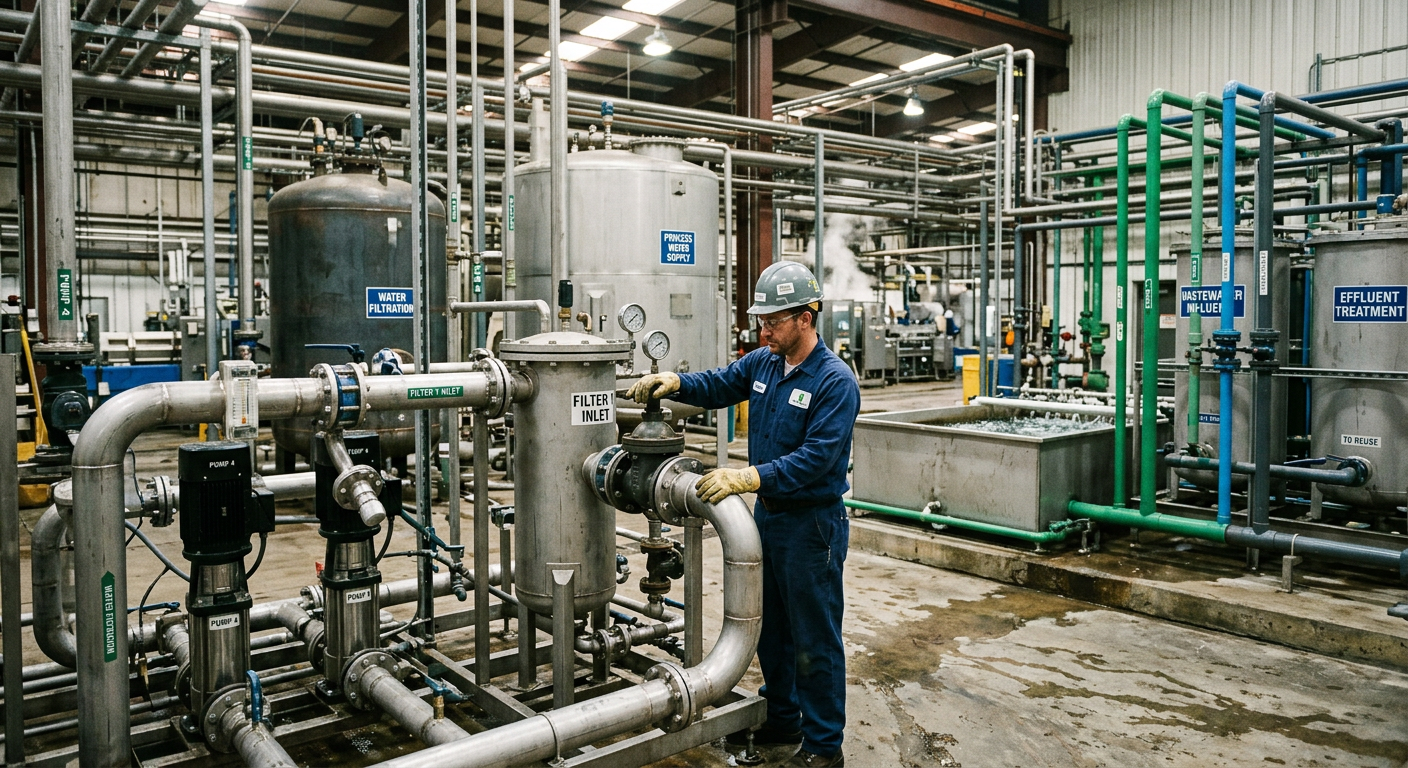
Food Plant Wastewater Management: DAF and Biological Treatment System Design
Food and beverage manufacturers across the United States face growing pressure to control fats, oils, grease, suspended solids, biochemical oxygen demand, chemical oxygen demand, odors, sludge volume, and sewer surcharge exposure. Whether a facility handles dairy in Wisconsin, poultry in Arkansas, beverages in California, seafood near Seattle, or sauces around Chicago, the right wastewater strategy usually starts with accurate flow characterization, then moves through screening, equalization, dissolved air flotation, biological treatment, sludge management, and final compliance monitoring. A well-designed system does more than meet discharge limits. It protects production uptime, supports expansion, improves water stewardship, and lowers the total cost of ownership. In practice, most food plants do not need a one-size-fits-all wastewater package. They need a process-specific design based on production peaks, cleaning cycles, ingredient losses, future capacity, utility constraints, and local discharge permits. In many U.S. markets, especially around Los Angeles, Houston, Atlanta, Minneapolis, Fresno, Kansas City, and the I-95 manufacturing corridor, treatment decisions are driven as much by municipal pretreatment rules and hauling costs as by pure engineering. That is why system selection should connect process engineering, capital planning, construction execution, and operational support from the start. For most food plants in the United States, the most effective wastewater management approach is a staged system: screening and equalization first, a DAF unit for fats, oils, grease, and suspended solids removal next, and then biological treatment to reduce dissolved BOD and COD before discharge or reuse. This sequence is especially effective for processors handling dairy, meat, sauces, fried foods, ready-to-drink beverages, and high-CIP operations. If a plant has high FOG, floatable solids, proteins, starches, sugars, or intermittent discharge spikes, a DAF system is often the best primary workhorse. If the plant also has high soluble organics, an aerobic, anaerobic, or hybrid biological system is usually needed to reach final limits. The correct design depends on five core inputs: average flow, peak hourly flow, pollutant loading, pH variation, and sludge handling strategy. From a buying standpoint, U.S. food processors should avoid selecting wastewater equipment by brochure alone. They should ask for mass balance calculations, design basis assumptions, projected chemical use, sludge yield estimates, energy demand, operator attention requirements, and expansion flexibility. Plants shipping through major trade hubs such as the Port of Los Angeles, Port of Long Beach, Port of Houston, Savannah, Newark, and Tacoma often operate under tighter scheduling and production volatility, which makes robust equalization and control automation even more valuable. The chart above reflects a realistic upward trend in wastewater upgrade activity across the U.S. food sector. Growth is being driven by capacity expansion, ESG reporting, higher sewer surcharges, nutrient controls, water scarcity in Western states, and 2026 planning for tighter sustainability targets. Good treatment design begins with wastewater characterization. In food processing, wastewater quality changes by product mix, shift schedule, sanitation method, batch frequency, and seasonal throughput. A frozen food plant in the Midwest may see large starch and suspended solids loads; a dairy processor may see proteins, lactose, and fat; a brewery may see strong soluble COD and yeast solids; a poultry plant may produce blood, fat, and cleaning chemistry variability. Design teams should establish both hydraulic and organic loading profiles. Average daily flow alone is not enough. U.S. municipal authorities frequently evaluate peak discharge conditions, and treatment units can fail if the system is sized only for average values. A plant that averages 150,000 gallons per day may still discharge 300 gallons per minute during shift change cleanup or tank dump events. This table shows why characterization must be multidisciplinary. A plant can have moderate flow but severe loading, or high flow with relatively low strength. Both situations require different process decisions. Many U.S. plants benefit from a two- to four-week sampling campaign that captures production peaks, allergen changeovers, weekend sanitation, and abnormal dumps. It is also important to separate streams where practical. Boiler blowdown, cooling tower bleed, RO reject, sanitary sewage, and high-strength process drains should not automatically be blended without analysis. Segregation can reduce treatment costs dramatically. For example, a sauce plant near Dallas may isolate concentrated kettle washout for recovery or controlled dosing rather than sending it directly to a DAF. A beverage site in New Jersey may recover first-rinse sugar loads before they shock the biological system. The table above helps buyers compare product categories. It also shows why local market knowledge matters. Processors in California, Washington, and parts of the Northeast often face stricter discharge and water reuse expectations than plants with more permissive inland discharge conditions. Primary treatment protects the rest of the system. The first line of defense normally includes trench baskets, static screens, rotary drum screens, screw presses, or internally fed screens. These units remove rags, labels, vegetable pieces, meat fines, bones, curd particles, and packaging debris before they enter tanks and pumps. Screening is often undervalued because it appears simple, yet poor screening can create chronic maintenance costs downstream. If large solids enter equalization or DAF tanks, they increase cleanout frequency, wear pumps, and raise sludge disposal volume. In U.S. retrofit projects, a properly selected wedge-wire or rotary drum screen can pay back quickly by reducing DAF polymer demand and sludge hauling. Equalization should follow or accompany screening in most food plants. It smooths hydraulic surges, blends acidic and caustic washes, reduces shock loading to DAF and biological systems, and allows better chemical control. A plant near Atlanta or Charlotte operating with multiple SKU changes per day may need several hours of equalization capacity even at modest average flow because its peak-to-average ratio is high. Primary treatment design commonly includes: For plants considering local suppliers, the decision should not rest only on equipment footprint. Buyers should ask whether screens can handle fibrous loads, whether bypass structures are included, how often spray bars need maintenance, and whether local field service is available in places such as North Carolina, Texas, Illinois, California, or Ontario if cross-border support is needed. Dissolved air flotation is often the core primary treatment step for food plant wastewater management. A DAF system removes fats, oils, grease, suspended solids, and a portion of BOD and COD by attaching microbubbles to flocculated particles, which then float to the surface for skimming. For facilities processing dairy, proteins, fried foods, dressings, and oily prepared meals, DAF is usually essential. DAF performance depends on chemistry and hydraulics, not just vessel size. Coagulants such as ferric chloride, alum, or specialized blends destabilize emulsions. Polymers build larger flocs. pH adjustment may be necessary for optimal separation. Air saturation pressure, recycle ratio, surface loading rate, hydraulic retention time, and scraper design all affect outcome. This table shows that DAF buying advice should focus on design basis, not just vendor claims. In many projects, a DAF can remove 60% to 95% of FOG and TSS and a meaningful share of BOD/COD tied to floatable or particulate matter. However, it will not remove most dissolved organic load by itself. For U.S. food manufacturers, DAF is especially valuable when municipal sewer districts impose grease caps or surcharge formulas. Plants near municipal systems in Southern California, the Chicago metro, or the Mid-Atlantic often find that DAF investment is justified by avoided surcharges and reduced risk of permit violations. The chart indicates where DAF demand is strongest by industry. Beverage plants often rely more heavily on biological systems when dissolved sugars dominate, while meat, dairy, and oily prepared foods generally need robust flotation up front. After primary solids and grease removal, biological treatment handles the dissolved organic fraction. The correct biological process depends on effluent goals, footprint, operator skill, nutrient balance, climate, odor tolerance, and whether the plant wants low energy use, biogas recovery, or water reuse potential. The main options in the U.S. food sector include conventional activated sludge, sequencing batch reactors, membrane bioreactors, moving bed biofilm reactors, anaerobic reactors such as UASB or EGSB, and hybrid treatment trains. Each has strengths and tradeoffs. This comparison is especially useful during project development. A beverage co-packer in Arizona with high soluble sugar losses may justify anaerobic pretreatment. A tight urban dairy site in New York or Boston may favor MBR because footprint and effluent quality matter more than energy optimization. A poultry processor in the Southeast may prefer DAF plus aerobic treatment with ammonia management. By 2026, more U.S. plants are expected to consider hybrid systems that combine DAF, anaerobic treatment, aerobic polishing, and advanced controls. The drivers are energy cost volatility, carbon reduction targets, water reuse pressure, and local pretreatment enforcement. Facilities seeking future resilience should ask whether the biological system can be expanded modularly and whether automation can support remote diagnostics. This area chart illustrates a realistic trend: U.S. food manufacturers are moving away from purely single-stage wastewater solutions and toward integrated systems that can adapt to stricter policy and sustainability expectations. Reducing BOD and COD should begin inside the plant, not only in the treatment yard. The most cost-effective strategy is source reduction. Every pound of product kept out of the drain is cheaper than removing it later with chemicals, aeration, sludge hauling, or permit risk. Common BOD and COD reduction strategies include: For high-strength facilities, the design team should evaluate whether soluble and insoluble COD are being treated in the right stages. Suspended or emulsified load belongs in front-end solids removal. Dissolved sugars, organic acids, and soluble proteins are typically better handled biologically. If these fractions are confused, the plant may overspend on chemicals or oversize its aeration system. Plants planning capital investment should compare several pathways: source reduction only, DAF upgrade, DAF plus aerobic, DAF plus anaerobic plus aerobic, or hauling concentrated side streams while treating the base load onsite. Buyers should review life-cycle cost, not simply installed cost. Sludge handling is one of the most underestimated cost centers in food plant wastewater management. DAF float, primary screenings, biological waste sludge, and equalization cleanout solids all need an end-of-line strategy. If sludge is not addressed early, a treatment system that appears economical on paper can become expensive to operate. DAF sludge often contains fat, protein, fibers, chemical precipitates, and water. Biological sludge contains microbial solids and trapped organics. The choice of dewatering equipment depends on solids type, desired cake dryness, polymer demand, labor availability, and disposal outlet. This table highlights the buying tradeoff between capital cost and hauling cost. A processor near Minneapolis or St. Louis with year-round production may justify a mechanical dewatering unit. A seasonal seafood processor near the Gulf Coast or Pacific Northwest may use lower-capital methods if annual volume is limited. Disposal routes in the United States can include landfill, compost blending, land application where permitted, rendering-adjacent options for certain organic residuals, or offsite digestion. Regulations and economics vary by state and municipality, so local outlet confirmation is essential before final design. A good project team will verify haul distance, tipping fees, solids acceptance criteria, and contingency outlets. Compliance is not a one-time design exercise. It is an operating discipline. Food plants must understand whether they discharge to a municipal POTW, to surface water under a direct permit, or to a reuse system. Each path has different limits, sampling expectations, and reporting obligations. Typical monitored parameters include flow, pH, temperature, BOD, COD, TSS, FOG, ammonia, total nitrogen, total phosphorus, and sometimes dissolved oxygen or chlorine residual depending on the process. Plants should also monitor upstream process indicators that predict wastewater upsets, such as product loss events, CIP conductivity, and tank dump frequency. Facilities in fast-growing industrial regions such as Central Texas, the Inland Empire, the Carolinas, and the Nashville corridor are increasingly seeing tighter pretreatment oversight as municipalities manage infrastructure strain. By 2026, food manufacturers should expect more digital reporting, stronger sustainability documentation, and closer scrutiny of slug discharges and nutrient loads. Best practices for compliance include: The comparison chart reflects a common market reality: a standalone wastewater vendor may supply good hardware, but food plants often need broader integration across utilities, controls, production constraints, and expansion planning. That is particularly true when schedules are aggressive or the site is active during construction. Disruptive Process Solutions supports food and beverage manufacturers throughout the United States and Canada with practical, profit-focused capital project execution. Rather than treating wastewater as a disconnected utility, the company approaches it as part of the full production ecosystem, linking process design, expansion planning, utilities, controls, installation, and startup. From a technological capabilities perspective, DPS brings cross-disciplinary engineering in process, mechanical, plumbing, electrical, structural, and controls. That matters in wastewater work because DAF and biological systems interact with CIP, heat loads, pumping, automation, compressed air, tanks, and plant utilities. The team also understands automation, PLC programming, and SCADA, which are critical for alarm management, equalization control, chemical dosing, trending, and operator visibility. More about this approach can be found on the engineering and project services page. From a manufacturing capabilities perspective, DPS designs and supplies process equipment that fits broader facility needs, including tanks, CIP systems, and custom processing support equipment. That equipment background is useful when wastewater performance depends on what happens upstream in blending, batching, holding, or sanitation. Manufacturers evaluating source reduction, drain loss control, or tank farm optimization can benefit from a partner that understands both the process floor and the treatment yard. Additional details are available through the equipment capabilities section. From a service capabilities perspective, DPS works through a full design-build-manage model that helps clients move from concept and feasibility to construction and execution with a single accountable team. For wastewater projects, that means support with assessment, scope development, budgeting, installation coordination, trade management, startup planning, and owner-side decision support. Companies considering multi-site planning, fast-track retrofits, or operationally sensitive brownfield projects can learn more on the company overview page. This integrated model is especially valuable when a food plant needs more than equipment procurement. Many U.S. projects require utility tie-ins, phased shutdown planning, odor controls, permit coordination, and future capacity mapping. DPS has built its reputation by focusing on long-term client profitability rather than selling oversized scope. For examples of how strategic engineering decisions translate into business outcomes, visit the project case studies page. 1. Does every food plant need a DAF system?No. A DAF system is most valuable when wastewater contains significant FOG, emulsified oils, or suspended solids. Some beverage or low-solids plants may rely more on equalization and biological treatment. 2. What is the biggest mistake in food wastewater design?Sizing based on average flow without accounting for peak hydraulic and organic loads is one of the most common and most expensive errors. 3. How much BOD and COD can a DAF remove?It depends on waste composition and chemistry, but DAF typically removes the particulate and floatable fraction well. It does not replace biological treatment for high dissolved COD streams. 4. Which industries benefit most from DAF plus biological treatment?Dairy, meat, poultry, seafood, sauces, dressings, fried foods, prepared meals, and mixed co-packing operations are frequent candidates. 5. What should buyers ask local suppliers?Ask about design basis, installed references in similar food sectors, local service coverage, startup support, chemical assumptions, sludge yield, spare parts, and integration with controls and utilities. 6. How important is equalization?Very important. Equalization protects both DAF and biological treatment from flow and load surges, especially in batch plants and high-CIP facilities. 7. Should a plant choose aerobic or anaerobic treatment?Choose based on soluble loading, footprint, energy strategy, temperature, effluent goals, and operator capability. High-strength soluble wastewater often justifies anaerobic pretreatment, while final polishing often remains aerobic. 8. How should a plant plan for 2026 and beyond?Design for expansion, digital monitoring, water reuse potential, stronger sustainability metrics, and likely tighter nutrient and surcharge oversight in major U.S. industrial regions. 9. What are the most relevant applications for these systems?Applications include pretreatment before municipal discharge, internal load reduction, compliance upgrades, utility expansion, water reuse preparation, odor reduction, and production capacity support. 10. Are there good case study indicators to request from vendors?Yes. Ask for before-and-after pollutant data, sludge generation rates, operator labor expectations, chemical usage, uptime performance, and how the system handled seasonal or product mix variability. In summary, successful food plant wastewater management in the United States depends on matching treatment stages to real process conditions. Screening protects equipment. Equalization stabilizes the system. DAF removes floatable and suspended loads. Biological treatment reduces dissolved organics. Sludge handling controls operating cost. Monitoring protects compliance. When those elements are engineered together with plant operations in mind, wastewater becomes a managed business function rather than a recurring emergency. -
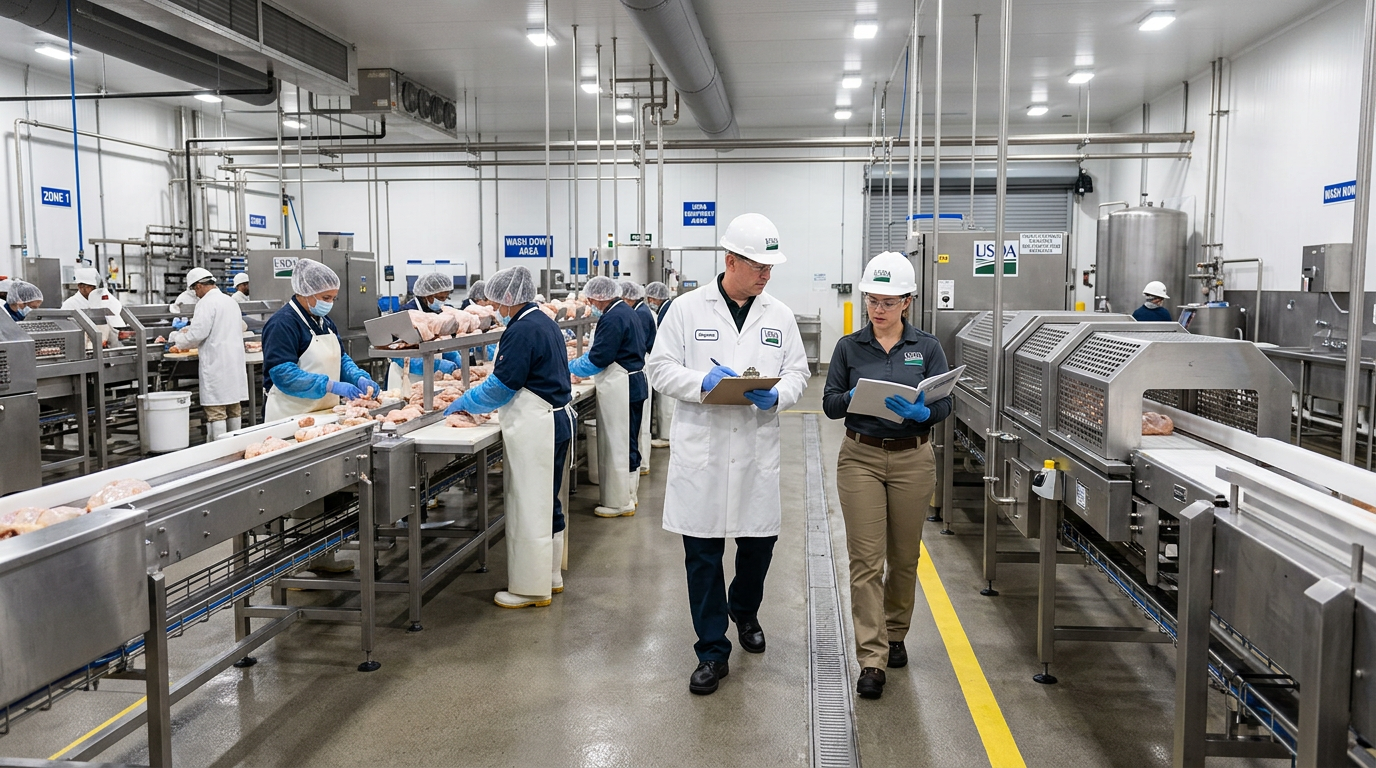
Food Facility HVAC Design Requirements: Pressure Zoning and Air Quality Control
Food facility HVAC design in the United States is not just about comfort. It is a production control system that protects product safety, manages condensation, separates raw and ready-to-eat spaces, supports sanitation, and reduces regulatory risk. In meat, dairy, beverage, prepared foods, aseptic, and packaging environments, the HVAC basis of design should align with process flow, USDA or FDA expectations, sanitation methods, worker density, utility loads, and the local climate. A plant in Houston faces moisture and latent load challenges that differ sharply from a dry operation in Fresno or a cold-storage project near Chicago. The right design balances pressure zoning, make-up air, exhaust capture, purge cycles, and air changes per hour so that product zones remain stable during production and recover quickly after washdown. For U.S. manufacturers planning a new build, retrofit, or expansion, the most effective approach is to treat air quality control as part of the full process design rather than as a late-stage mechanical package. This is especially important in high-throughput corridors such as the Midwest protein belt, dairy operations in Wisconsin and Idaho, beverage hubs in North Carolina and California, and import-dependent processors near the ports of Los Angeles, Long Beach, Savannah, Houston, and New York/New Jersey. In these regions, production schedules, utility resilience, labor conditions, and sanitation windows all influence the HVAC strategy. The fast answer is this: a compliant and practical U.S. food plant HVAC design should maintain room temperatures suited to the product and process, control relative humidity to prevent condensation and microbial growth, keep clean or high-care areas under positive pressure relative to adjacent lower-hygiene rooms, place raw, wet, chemical, and waste zones under neutral or negative pressure where appropriate, replace all exhausted air with properly conditioned make-up air, and deliver enough air changes per hour to dilute moisture, heat, particles, and odors. It should also include purge modes after sanitation, filtration matched to zone risk, and energy recovery where cross-contamination can be prevented. In market terms, demand for hygienic HVAC solutions is rising across U.S. food and beverage manufacturing because operators are expanding automation, increasing line speeds, improving shelf-life performance, and preparing for stricter scrutiny around condensation, allergen segregation, and environmental monitoring. Facilities making ready-to-drink beverages, cultured dairy, cooked proteins, sauces, nutraceutical foods, and aseptic products are investing in better room control because unstable air often causes rework, spoilage, corrosion, and downtime before it triggers any formal compliance issue. From a buying perspective, owners should not purchase HVAC equipment as isolated rooftops, air handlers, or exhaust fans. They should buy a zone-based control strategy. That means defining the process map first, then identifying where product exposure occurs, where sanitation chemicals are used, where warm product enters cold rooms, and where forklift traffic or dock openings disturb pressure cascades. Facilities in Atlanta, Dallas, Minneapolis, and the Inland Empire often discover that airflow failures are caused less by undersized fans and more by layout conflicts between process exhaust, dock operations, and sanitation schedules. Typical product types that drive different HVAC requirements include raw protein lines, cooked or ready-to-eat packaging rooms, cheese and yogurt spaces, dry ingredient blending rooms, retort and canning areas, spirit and brewing facilities, aseptic filling suites, and high-moisture produce processing. Each has a different moisture profile, sensible load, exhaust requirement, and contamination control target. The practical lesson is simple: the HVAC design must follow the product risk profile, not a generic building template. The line chart above reflects the broader market direction many processors are seeing: HVAC spending is moving up as plants modernize utility systems, build higher-care rooms, and prepare for 2026 priorities around energy efficiency, low-leakage envelopes, digital monitoring, and more resilient sanitation recovery. Temperature and humidity targets in U.S. food plants should be set by process need, product exposure, employee occupancy, and condensation risk. There is no single universal room condition for every facility. For example, a ready-to-eat slicing room may be maintained at a much lower temperature than a dry packaging room, while a sauce blending area may allow higher temperatures but needs close humidity control during cleanup and startup. The aim is to keep room surfaces above dew point where possible, prevent sweating on pipes and ceilings, and maintain stable conditions that support quality and shelf life. In humid climates such as Florida, the Gulf Coast, and the Carolinas, latent load is often the hidden driver of HVAC underperformance. Plants sometimes install enough cooling tonnage but not enough dehumidification capability, which leads to fogging, slippery floors, and recurring ceiling condensation after washdown. In cold northern markets like Wisconsin or Pennsylvania, the challenge can shift to balancing ventilation with winter make-up air heating while preventing uncomfortable drafts and frozen coils near dock-adjacent areas. The table gives broad working ranges rather than universal mandates. In practice, many owners should perform a dew-point-based analysis instead of relying only on dry-bulb temperature. That is especially true in washdown rooms, freezer approaches, and facilities that bring warm kettles, retort baskets, or recently cleaned equipment into cooler spaces. For processors evaluating a retrofit, one of the best buying questions is not “What tonnage do we need?” but “What dew point must the room maintain during the worst sanitation-to-startup transition?” By 2026, more U.S. facilities are expected to adopt continuous environmental logging tied to SCADA or building automation systems, with alerts for dew point excursion, not just temperature excursion. This supports both quality assurance and utility optimization. Pressure zoning is the backbone of hygienic airflow control. Positive pressure is typically used to protect cleaner or more sensitive spaces so air moves outward when doors open. Negative pressure is used to contain odors, moisture, raw aerosol, chemical vapors, or waste-related contaminants. The target is not extreme pressure but a stable cascade that supports the product and the sanitation plan. As a rule, high-care packaging, post-lethality, aseptic support, and some ingredient prep rooms should be positive relative to adjacent corridors. Raw receiving, inedible handling, chemical storage, certain wash rooms, and some waste rooms are often neutral to negative. This zoning becomes more important as plants scale up in complex logistics nodes such as Kansas City, Memphis, and central New Jersey, where throughput and door traffic can repeatedly collapse room balance if the building envelope and control sequence are weak. The correct pressure zoning approach also depends on industry segment. Protein plants need strong separation between raw and post-cook spaces. Beverage plants often focus on filler halls, syrup rooms, and packaging stability. Dairy projects require careful air separation around cultured product, fillers, and washdown zones. Dry ingredient and seasoning operations may emphasize dust migration more than wet aerosol control. For U.S. owners seeking practical guidance, the best projects define pressure zones during process design, then carry them into architectural detailing, controls, and commissioning. Doors, strip curtains, dock seals, vestibules, trench locations, and sanitation hose storage can all influence the success of the pressure plan more than a fan schedule alone. The bar chart illustrates how demand varies by sector. Protein, aseptic, and prepared foods frequently require the most deliberate pressure zoning because the consequences of poor airflow are immediate in sanitation, quality, and compliance performance. Every cubic foot of exhaust air removed from a food plant must be replaced. If make-up air is not properly sized, conditioned, and distributed, the facility will pull air through dock doors, roof leaks, wall penetrations, and personnel entries. That unplanned infiltration is one of the most common reasons plants lose humidity control, see inconsistent room temperatures, and fail to hold intended pressure cascades. Good make-up air design starts with an accurate inventory of all exhaust sources: process hoods, kettle vents, packaging area exhaust, chemical rooms, wastewater pretreatment spaces, restroom exhaust, and sanitation purge modes. Next comes diversity analysis, because not all loads run at once. Then the engineer determines how much replacement air should be supplied directly to the exhausted room, how much can be transferred from cleaner adjacent areas, and how the air must be heated, cooled, filtered, and dehumidified for summer and winter design days. Buyers should also ask whether the make-up air system is being selected for present production only or for the future plant state. In rapidly growing beverage and food campuses near Phoenix, Charlotte, or Columbus, short-term undersizing often forces costly rework within two or three years. Future-ready design may include spare fan capacity, coil allowances, floor space for added dehumidification, and control architecture that can absorb new lines. Process exhaust is different from general building ventilation. Its job is to capture heat, vapor, smoke, steam, fumes, dust, and odors at or near the source before they spread into the room. In food and beverage plants, this can include cooking lines, smokehouses, blanchers, bottle rinse systems, CIP tank vents, mixing vessels, spirit processing, powder unloading, chemical dispensing, and wastewater pretreatment areas. The right exhaust strategy depends on the contaminant type. Steam and thermal plume loads often need canopy or slot capture. Corrosive chemical areas may need dedicated resistant materials and no recirculation. Dry ingredient systems may need dust collection with explosion and housekeeping considerations. Fermentation and distillation spaces can bring carbon dioxide, ethanol vapor, and hazardous area implications into the ventilation discussion. Plants near major craft beverage clusters in Oregon, Colorado, and North Carolina often underestimate these interactions during expansion. One of the best ways to reduce long-term cost is to distinguish between air that truly needs direct exhaust and air that can be managed through room conditioning, local capture, or controlled transfer. Over-exhausting a room increases make-up air and dehumidification requirements, especially in coastal climates. For U.S. facilities sourcing local trade support, the strength of the regional contractor market matters. Areas with mature industrial mechanical trades, such as Chicago, Milwaukee, Cincinnati, Houston, and Southern California, often provide more experienced installers for hygienic ductwork and coordinated utility tie-ins. In thinner labor markets, owners benefit from a design-build partner that can direct local trades with clear performance criteria and startup accountability. Many food plants focus on production airflow but overlook cleanup recovery. After sanitation, rooms may be loaded with moisture, chemical residue, elevated temperature, and wet surfaces. If the HVAC system cannot purge and recover the space before startup, operators can enter production with ceiling condensation, damp packaging materials, poor visibility, and unstable pressure. That creates quality and safety risk even when the process equipment itself is clean. A purge cycle usually increases exhaust and/or outside air, adjusts supply air condition, and shifts room control setpoints for a defined period after washdown. The exact sequence depends on room size, sanitation chemistry, water use, drain layout, wall and ceiling insulation, and whether equipment remains warm during cleanup. High-moisture rooms in poultry, seafood, dairy, and prepared foods often need the most deliberate purge strategy. Plants buying new HVAC systems should insist that purge sequences be documented in the controls narrative and tested during commissioning. It is not enough to install hardware. The system must demonstrate that it can bring the room from wet sanitation conditions back to production-ready conditions within the available turnaround time. The area chart reflects a clear trend: U.S. processors are moving from simple timer-based washdown recovery to smarter purge control based on humidity, room pressure, and pre-op readiness. This is likely to accelerate through 2026 as labor costs and startup delays become more expensive. Air changes per hour, or ACH, help quantify how often the air volume in a room is replaced. In food plants, ACH supports heat removal, moisture control, particle dilution, and pressure stability. There is no single universal ACH number for every room, because actual needs depend on room volume, contamination load, occupancy, and process equipment. Still, using zone-based ACH targets is one of the most useful ways to structure design and commissioning. These values should be checked against room function, process hazard, and local code considerations. A low-risk warehouse does not need the same ACH as a post-lethality slicing room, and an aggressive ACH number alone does not guarantee hygienic performance if diffuser throw, return placement, and pressure control are poor. Applications across U.S. industries vary. Poultry and seafood plants often emphasize moisture removal and sanitation recovery. Bakery and dry mix sites focus more on dust and ingredient segregation. RTD beverage plants care about packaging line stability, line-side comfort, and utility efficiency. Pharmaceutical-adjacent food or nutraceutical operations may demand tighter environmental logging and more rigorous airflow verification. Energy recovery ventilation can lower operating cost in food plants, but it must be applied carefully. The concept is simple: recover sensible and sometimes latent energy from exhaust air to precondition incoming outside air. The challenge is contamination control. In hygienic facilities, the designer must ensure that the recovery strategy does not create leakage or cross-contamination between dirty and clean air streams. In many U.S. applications, runaround loops, glycol systems, or other separated recovery methods are favored where hygiene risk is high. In lower-risk utility or support spaces, other recovery options may be practical. The business case is strongest in locations with large temperature differences, high ventilation volumes, or expensive dehumidification, such as Minneapolis, Denver, Boston, Nashville, and much of the Southeast. Plants near ports and logistics corridors with long operating hours can also see strong returns if they run extensive outside-air systems continuously. By 2026, the strongest trend will likely be selective energy recovery paired with real-time monitoring of pressure, filter loading, fan energy, and humidity performance. Owners are also showing more interest in heat pump integration, lower-carbon utility strategies, and advanced sequences that reduce simultaneous heating and cooling. The comparison chart is a practical planning tool rather than a universal ranking. A system that is ideal for a beverage warehouse support area may be wrong for a high-care protein packaging suite. The right answer depends on hygiene class, climate, utility cost, maintenance skill, and contamination tolerance. For buyers evaluating equipment options, this is where supplier comparison matters. Ask not only about nominal efficiency but also about cleanability, coil access, material durability, controls integration, freeze protection, and whether the supplier has documented food-plant experience in your climate region. For manufacturers that need help tying process, utilities, and building systems together, Disruptive Process Solutions brings a practical design-build-manage approach tailored to food and beverage production across the United States and Canada. Rather than treating HVAC as a standalone bid package, the team aligns air systems with production economics, sanitation realities, and long-term expansion planning. That is especially valuable for operators balancing speed, capital discipline, and compliance in competitive markets such as Texas, the Carolinas, California, the Midwest, and major logistics corridors. On the technological side, DPS supports integrated engineering across mechanical, process, plumbing, electrical, structural, and controls disciplines. That means HVAC decisions can be coordinated with utility demand, automation logic, SCADA visibility, CIP systems, boilers, glycol, refrigeration, compressed air, and line performance. For processors planning higher-care rooms, aseptic support, beverage utilities, or protein expansions, this cross-functional capability reduces the common gap between process design intent and actual room behavior. You can learn more about the company background on the about us page. On the manufacturing side, DPS also designs and supplies proprietary process equipment, including tanks, CIP systems, marination tumblers, and cooking vessels. That matters because room air control often depends on how the equipment operates, vents, cleans, and rejects heat. A project team that understands both the equipment and the environmental consequences can make better decisions about exhaust capture, make-up air, and purge recovery. Additional information is available through the company’s process equipment offering. On the service side, DPS supports capital planning, feasibility work, owner’s representation, engineering, general contracting where licensed, installation management, and turnkey integration. This is useful for companies that need one partner to connect the basis of design to field execution and startup. Whether the job involves a beverage co-packing campus, a dairy upgrade, a protein relocation, or a rapid response retrofit, the focus remains on profitable project delivery and operational fit. You can review the broader engineering and project services and explore selected project case studies for examples of execution. In real project terms, the most successful HVAC outcomes happen when the engineering team asks business questions early: Where is throughput constrained? Which rooms create the most downtime after sanitation? Is the bottleneck line-side comfort, condensation, utility cost, or contamination risk? That operating mindset is one reason many manufacturers prefer a partner that can challenge assumptions rather than simply price equipment. What is the most important HVAC principle in a U.S. food plant?The most important principle is that airflow must support product protection and sanitation, not just comfort. Pressure zoning, dew point control, and source capture are usually more important than thermostat settings alone. Do all food rooms need positive pressure?No. Cleaner, higher-care, or post-lethality spaces often need positive pressure, but raw, waste, or chemical-related rooms may need neutral or negative pressure to contain contaminants and odors. How do I know if my plant needs more dehumidification?Signs include recurring condensation, wet ceilings, fog after washdown, damp packaging materials, slippery floors, or inability to recover rooms before startup. Gulf Coast and Southeast facilities are especially prone to this issue. What ACH should I use for my project?ACH should be based on room function and contamination load. High-care rooms may run substantially higher than warehouses or enclosed utility spaces. A zone-by-zone review is better than one blanket number. Can energy recovery be used in hygienic food applications?Yes, but system selection matters. Recovery approaches that separate air streams are often preferred in higher-risk applications. Hygiene risk, maintenance capability, and climate should guide the choice. When should purge cycles be included?Purge cycles should be included whenever sanitation adds major moisture, heat, or chemical vapor and the room must return to production conditions quickly. Wet protein, dairy, cook, and packaging spaces often benefit. What should buyers ask during design review?Ask for room-by-room temperature and humidity targets, pressure relationships, exhaust inventory, make-up air logic, purge sequences, ACH assumptions, filtration levels, and commissioning tests tied to actual production and sanitation scenarios. Which industries benefit most from advanced food plant HVAC design?Protein, dairy, aseptic, ready-to-drink beverage, prepared foods, and dry ingredient facilities all benefit, though the design priorities differ by process. Fast-growing sites near Chicago, Houston, Charlotte, Fresno, and major port regions often see the strongest return on improved environmental control. How should a retrofit be prioritized?Start with the highest-risk rooms and highest-cost failures: condensation hotspots, unstable high-care areas, sanitation recovery bottlenecks, and spaces where exhaust and make-up air are out of balance. A measured field assessment is often the best first step. What are the biggest 2026 trends for food facility HVAC in the United States?Expect more dew-point-driven controls, digital monitoring through BAS and SCADA, selective energy recovery, electrification where practical, stronger sustainability targets, and greater integration between process equipment design and room environmental control. -
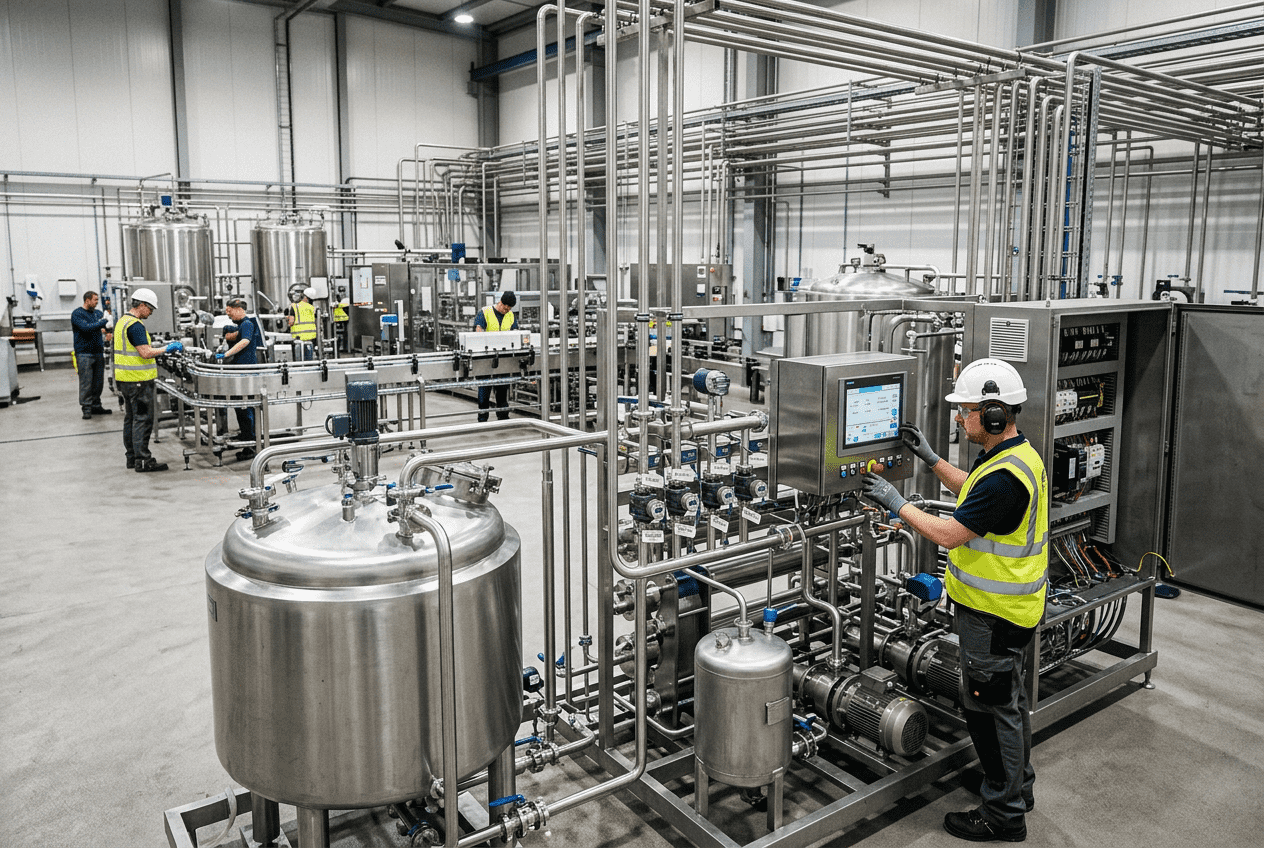
Pork Processing Line Design
Designing a pork processing line in the United States requires more than choosing equipment. It involves throughput planning, USDA compliance, worker safety, chilled logistics, sanitation, labor efficiency, and product mix alignment across fresh pork, bacon, sausage, and ham. A well-designed line connects live-animal handling or raw material intake, carcass processing, fabrication, thermal processing, packaging, storage, and utilities into one coordinated system that protects yield and margin. Across major pork regions such as Iowa, Minnesota, Illinois, Indiana, Missouri, North Carolina, and eastern logistics corridors serving Savannah, Charleston, Norfolk, Houston, Los Angeles, and the Midwest cold-chain network, processors are under pressure to improve automation while preserving flexibility. U.S. plants increasingly need systems that support both high-volume commodity production and value-added SKUs for retail, foodservice, club stores, and export channels. For that reason, successful projects usually begin with a business-first engineering approach: define target products, daily head count or raw material volume, labor assumptions, chilling limits, packaging formats, export needs, utility loads, wastewater impact, and future expansion. Only then should a processor lock in the line layout, equipment sequence, automation scope, and capital budget. A pork processing line in the United States should be designed around five core objectives: food safety, yield, labor efficiency, flexibility, and lifecycle profitability. For slaughter and primary processing, the line must coordinate stunning, scalding, dehairing, evisceration, splitting, inspection, and chilling without bottlenecks. For further processing, the line should match product type: fresh cuts need efficient deboning and portioning; bacon needs integrated curing, smoking, slicing, and packaging; sausage needs controlled grinding, mixing, stuffing, linking, and cooking; and ham needs reliable brine injection, tumbling, thermal processing, and slicing. From a buying perspective, U.S. processors should prioritize hygienic design, washdown readiness, automation compatibility, ergonomic workstations, refrigeration capacity, utility efficiency, and validated HACCP controls. A strong partner does not simply sell machinery; it engineers the full system, coordinates installation, and aligns project execution with plant profitability. Companies looking for that broader approach often evaluate a firm’s industry background and leadership model before moving into design. In practical terms, the best line design is the one that matches actual SKU strategy and labor reality. A processor shipping bone-in loins and bellies to domestic retailers needs a different fabrication flow than a facility focused on export trim, smoked bacon, or fully cooked sausage for distribution through Atlanta, Chicago, Dallas, and the New Jersey cold-chain corridor. The right design reduces touches, shortens travel paths, stabilizes temperatures, and creates room for future automation by 2026 and beyond. The table above shows why line design should start with operating goals rather than equipment catalogs. In U.S. pork projects, most cost overruns come from utility gaps, layout conflicts, or underestimating labor and sanitation requirements, not from the core machine purchase itself. The primary pork processing workflow begins with humane handling and stunning, followed by sticking, bleeding, scalding, dehairing, singeing or polishing, gambrelling, evisceration, splitting, final inspection, and carcass wash before chilling. Each step must be synchronized, because small disruptions early in the process can create large backup effects in viscera handling, inspection timing, rail movement, and cooler loading. In U.S. design practice, the slaughter floor is often treated as a paced system rather than a collection of isolated machines. Stunning method, bleed tunnel length, scalder dwell time, dehairer capacity, and evisceration station count should all be modeled against target head-per-hour rates. Plant location also matters. In North Carolina and the Southeast, ambient conditions and utility costs may influence ventilation and hot-water strategy differently than in Midwestern winter climates. Scalding and dehairing performance directly affect downstream yield and presentation. Poor control can damage skin, increase contamination risk, or create rework at polishing. Evisceration design should support clean separation of edible and inedible streams, veterinary or USDA inspection access, and minimum cross-contamination between red and green offal handling. Splitting saw stations must balance speed with spinal accuracy and sanitation access. Because workflow integrity is central to project success, many processors seek integrated engineering and installation support rather than stand-alone equipment procurement. That usually includes process flow development, structural and utility coordination, and field execution similar to the end-to-end project support described in DPS’s processing and engineering services. The workflow table illustrates why balanced station design matters. If the dehairer runs faster than evisceration capacity, labor pressure rises and hygiene performance can drop. A good layout prevents that by balancing line speed, staffing, and transfer points. Carcass chilling is one of the most critical stages in pork plant design because it affects food safety, shelf life, cutability, drip loss, and labor scheduling for fabrication. U.S. processors typically use combinations of conventional carcass chillers, rapid chill zones, blast cooling, equalization rooms, and cut-floor tempered holding depending on product mix and daily volume. Blast chilling can quickly reduce surface and core temperatures, but if the profile is too aggressive it may increase shrink or negatively affect certain cuts. Conventional chilling provides smoother equalization but demands more space and may reduce next-shift fabrication flexibility if not sized correctly. In export-oriented facilities serving ports such as Long Beach, Houston, or Savannah, cooling profiles may also be adjusted to support longer cold-chain transit windows. Refrigeration design must coordinate evaporators, airflow, rail spacing, defrost strategy, glycol or direct expansion architecture, humidity management, and sanitation access. Plants producing both carcass cuts and further-processed items often benefit from zoned refrigeration systems so that fresh fabrication rooms, curing areas, slicing rooms, and finished goods coolers maintain product-specific conditions. This is also where technology capability becomes important. DPS supports processing facilities with structural, mechanical, plumbing, electrical, process, and controls engineering, including PLC programming, automation, and SCADA integration. In pork operations, that kind of capability helps tie chilling performance to live throughput, room loading, compressor sequencing, and temperature traceability across multiple production areas. The line chart reflects the steady rise in U.S. investment in processing automation and plant modernization. Chilling infrastructure is a major beneficiary of that trend, especially as processors prepare for tighter energy oversight, labor volatility, and stronger data expectations through 2026. The cooling comparison shows that no single method solves every challenge. The best systems combine chilling stages based on carcass size, fabrication timing, and downstream product requirements. Once carcasses are chilled, the cutting and deboning line becomes the center of yield generation. This area determines how efficiently a plant converts sides into primals, subprimals, trim, and case-ready or foodservice-ready products. In the United States, where labor availability remains uneven from the Midwest to the Carolinas and California, ergonomic design has become just as important as pure equipment speed. Good layout starts with material flow. Carcasses or primals should enter the room in a sequence that minimizes crossing traffic, pallet interference, and employee travel. Deboning stations must be positioned around realistic handoff points to avoid excessive reaches, awkward knife angles, and congestion around trim recovery. Conveyors, drop chutes, combo bins, and pack-off tables should be planned so that edible product, inedible waste, and rework streams remain separated. Ergonomic design includes workstation height adjustability, anti-fatigue surfaces, tool-balancer support, proper lighting, easy-to-clean guards, and safe interaction between people and automation. Plants that invest in these basics often see better retention, steadier yield, and fewer repetitive-motion issues. For operations in cities with competitive manufacturing labor markets such as Chicago, Kansas City, Charlotte, and Fresno, this matters greatly. Processors should also consider future robotics, vision systems, and data capture. A line that is manual today may add primal measurement, checkweighing, auto-boxing, or pick-and-place systems in later phases. Building in utility drops, floor space, and controls architecture early can save substantial reinvestment later. The bar chart highlights why many U.S. processors design fabrication areas for multi-channel flexibility. Fresh cuts remain fundamental, but bacon and sausage continue to justify investment in integrated further-processing capacity. This table shows that ergonomic design is not separate from productivity; it is one of the biggest drivers of productivity in deboning and packaging rooms. Bacon lines require close coordination between raw belly receiving, cure preparation, injection or immersion systems, tumbling or resting, smoking, chilling, pressing if used, tempering, slicing, and packaging. The real engineering challenge is synchronization. A smoker that outpaces slicing or a slicer that starves because of poor belly equalization can erode profitability very quickly. U.S. bacon production often serves a mix of retail fixed-weight packs, foodservice bulk packs, and premium thick-cut or flavored SKUs. That means line design must support recipe flexibility, smoke profile control, allergen management where applicable, and packaging versatility. Processors near major distribution hubs like Memphis, Indianapolis, and central Pennsylvania may emphasize high-speed slicing and shipping efficiency, while branded specialty processors may prioritize small-batch cure control and premium presentation. Integration matters most at the handoff points: cure room to smoker, smoker to chill, chill to slicer, slicer to thermoformer or flow-wrapper, and packaged product to metal detection, case packing, and palletizing. Automation can help, but only if the upstream thermal profile is consistent enough to allow stable slicing performance. Manufacturing capability also influences success here. DPS not only engineers systems but also manufactures selected process equipment such as tanks, custom CIP systems, marination tumblers, and cooking vessels. For bacon and adjacent cured-meat projects, that can simplify integration when custom utility skids or stainless process components are needed. Sausage production lines can range from fresh breakfast sausage to emulsified hot dogs, smoked links, Italian sausage, bratwurst, or fully cooked protein snacks. The basic sequence includes raw material receiving, grinding, pre-blending, mixing with spices and functional ingredients, vacuum transfer if needed, stuffing, linking or portioning, hanging or tray loading, thermal processing, chilling, peeling where applicable, and final packaging. In U.S. plant design, one of the most important choices is whether the line will support multiple formulations in the same production day. That decision affects ingredient handling, allergen zoning, changeover strategy, inline grinding configuration, mixer count, batching controls, and cleaning design. Processors serving club stores or regional grocers in Texas, Ohio, Florida, and the Pacific Northwest often need frequent SKU changes, so recipe management and rapid sanitation become major design priorities. Temperature control is vital because sausage systems can lose texture and shelf life if trim warms too far during grinding and mixing. Vacuum mixing, jacketed vessels, CO2 injection, or chilled raw material staging may all be considered. Stuffing and linking systems should match casing type, diameter range, target piece weight, and downstream cook-cell or smokehouse cycle times. The strongest sausage operations connect process engineering with automation. Batch systems, ingredient dosing, and SCADA-based tracking can reduce giveaway, improve lot traceability, and support faster changeovers. Processors evaluating such solutions often review custom equipment and integration capabilities through resources like the DPS equipment portfolio. The area chart reflects a clear market shift: more processors are allocating capital toward value-added sausage, seasoned items, and fully cooked products. That trend is expected to continue through 2026 as margin pressure pushes facilities beyond commodity-only models. Ham processing lines center on brine management, pickup consistency, texture development, thermal lethality, and attractive slicing performance. The process usually begins with raw muscle preparation, brine make-up, multineedle injection, equilibration, vacuum tumbling or massaging, forming or netting where required, cooking, shower or chill, equalization, slicing, and packaging. The biggest technical risk is inconsistency between injection and tumbling. If brine distribution is uneven, tumble time cannot fully correct it, and the plant may see purge, poor bind, variable slice yield, or label compliance issues. Cooking systems must deliver validated time-temperature lethality while preserving appearance and moisture. Slicing lines must then be designed around product geometry, pack style, and throughput expectations. Ham plants in the United States increasingly need flexibility for deli loaves, whole-muscle items, holiday hams, and retail sliced packs in the same footprint. This pushes designers toward modular brine rooms, well-separated thermal zones, and packaging lines that can run multiple formats without excessive downtime. Finished-product staging is equally important for processors serving large supermarket distribution centers around Philadelphia, Dallas, and Southern California. HACCP implementation in pork processing operations should be embedded in the plant design from the beginning, not added after equipment selection. In the United States, that means aligning sanitary design, traffic patterns, product zoning, temperature controls, allergen management where relevant, metal detection or X-ray strategy, and records architecture with USDA expectations and customer standards such as SQF or BRC. Critical control and preventive control concepts affect room adjacency, drain design, handwash placement, boot sanitation, tool sterilizer locations, condensate management, and separation of raw, ready-to-cook, and ready-to-eat flows. For bacon, sausage, and ham facilities, post-lethality exposure controls are especially important. Slicing and packaging rooms must be treated differently from raw cut floors, with tighter air, personnel, and sanitation controls. Well-designed HACCP systems also depend on data. Temperature logging, batch tracking, cook records, brine formulation capture, and sanitation verification should be available in forms that operators can use and auditors can review. This is where service capability matters. DPS’s model combines engineering, installation oversight, capital planning, owner representation, project management, and system integration, helping processors translate compliance needs into practical facility design rather than paper-only programs. The HACCP table demonstrates that compliance is a physical design issue as much as a procedural one. The best food safety plans are supported by a plant layout that makes the right behavior easy and the wrong behavior difficult. Yield optimization starts with measurement. Pork processors need visibility into live yield or raw material yield, carcass shrink, primal recovery, trim composition, cook loss, slicing giveaway, packaging loss, and rework generation. Once those metrics are visible, engineering decisions become much clearer. Is the problem in chilling, knife yield, brine pickup, thermal process loss, slicer setup, or packaging film mismatch? Waste reduction includes both edible and non-edible streams. Better trim segregation can improve formulation value in sausage. Improved saw accuracy can reduce bone dust and meat loss. Better smoker scheduling can lower energy use. Smarter CIP and washdown design can reduce water, chemical, and labor consumption. These changes matter in every market, but they are especially important in U.S. regions with rising utility and wastewater costs. From 2026 onward, sustainability expectations will tighten further. Processors are already evaluating heat recovery, water reuse where permitted, lower-ammonia-risk refrigeration strategies, smart compressor controls, renewable energy integration, and digital maintenance systems that reduce unexpected downtime. Policy pressure, retailer scorecards, and investor expectations are pushing these upgrades from optional to strategic. A business-minded engineering partner should therefore tie yield work to plant economics, not just equipment efficiency. That is one reason some manufacturers explore case examples before committing to a project, including integrated execution histories such as those highlighted in selected project case studies. The comparison chart illustrates a familiar reality in U.S. projects: integrated line engineering tends to outperform piecemeal procurement when processors value uptime, sanitation, and future flexibility. This table shows how yield improvement is rarely a single-machine problem. It is usually the result of several controlled changes across refrigeration, ergonomics, thermal processing, and data discipline. What industries use pork processing lines in the United States?Primary users include slaughterhouses, meat fabricators, bacon producers, sausage manufacturers, ham processors, co-packers, prepared food plants, and export-focused cold-chain operations. How should a buyer choose between a manual and automated pork line?Start with labor availability, throughput target, SKU complexity, sanitation needs, and expected expansion. Automation makes the most sense when labor is unstable, yields need tighter control, or packaging volume is high enough to justify integration. What product types should be planned from the beginning?At minimum, define whether the facility will focus on fresh cuts, bone-in products, boneless subprimals, bacon, sausage, ham, cooked items, or mixed production. Product mix drives room layout, refrigeration load, and equipment sequence. How important is local supplier access?Very important. U.S. plants benefit from nearby stainless fabricators, refrigeration contractors, control integrators, and packaging support in hubs such as Chicago, Minneapolis, Charlotte, Kansas City, and Los Angeles. However, national project partners can still manage execution across all 50 states when supported by vetted local trades. What should a U.S. processor ask before buying?Ask about throughput range, sanitation design, spare parts availability, controls compatibility, energy use, installation scope, USDA-readiness, startup support, and how the system will affect total plant profitability rather than one department only. What future trends will shape pork processing by 2026?Expect wider use of machine vision, robotics in packaging and material handling, stronger energy monitoring, more wastewater scrutiny, better digital traceability, and greater demand for flexible value-added lines that can switch between retail and foodservice formats. Why do some projects underperform after startup?Usually because the plant purchased equipment before resolving process flow, chilling balance, utility capacity, labor design, or packaging requirements. Engineering the whole system first lowers that risk. Who is DPS in this market?Disruptive Process Solutions is a U.S.-based food and beverage engineering company serving manufacturers across North America. In pork and other protein applications, the company is known for combining process engineering, installation integration, capital planning, and hands-on project management with a profit-focused design philosophy. Its lean structure helps speed decisions, while its broader process expertise supports everything from utilities and controls to custom equipment and plant-wide execution. For pork manufacturers in the United States, the most effective processing line is not simply the fastest line. It is the line that fits the plant’s market, products, labor model, utility reality, compliance obligations, and growth plan. Whether the goal is a new slaughter floor, a modern deboning area, or an integrated bacon, sausage, or ham expansion, disciplined engineering is what turns capital spending into long-term operating performance. -
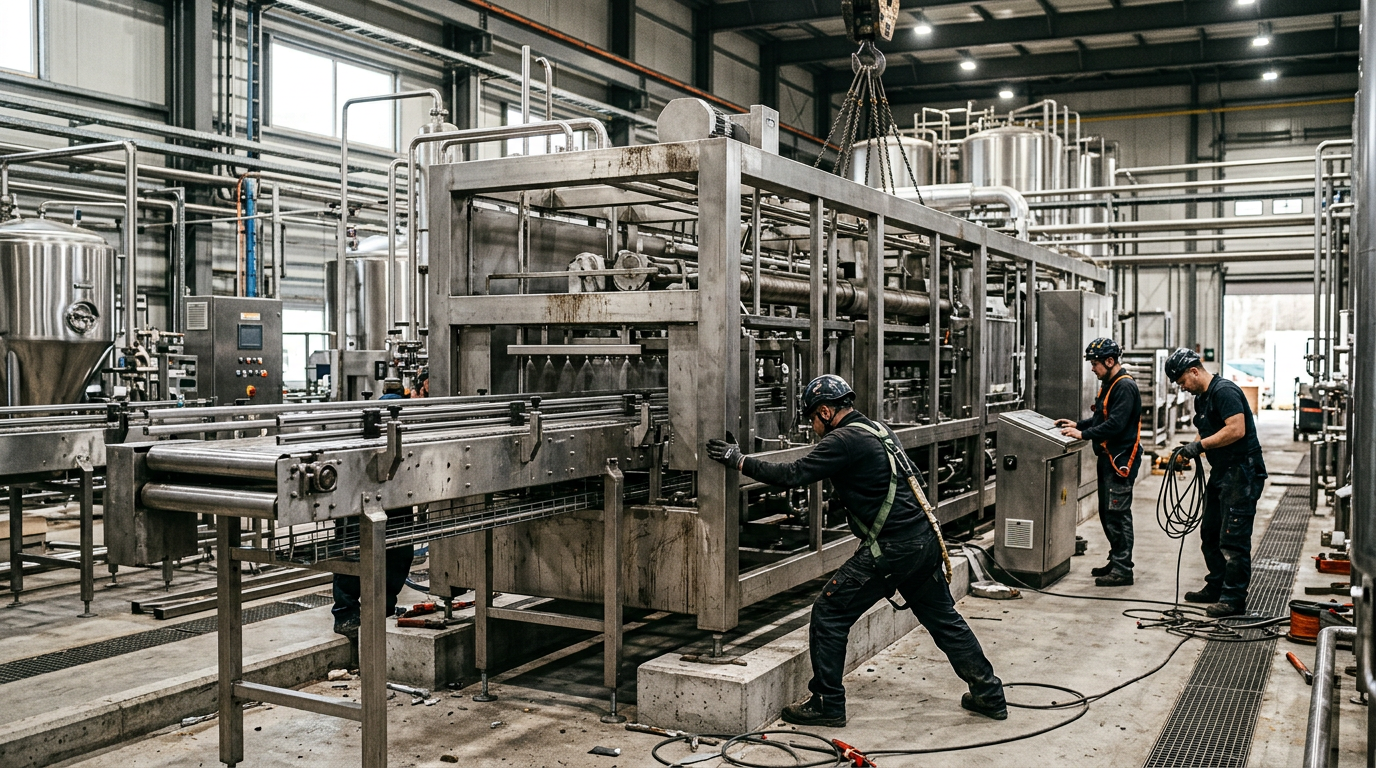
Cream Processing Equipment
Cream processing equipment includes the integrated systems used to separate cream from milk, standardize fat, pasteurize or sterilize the product, control texture and stability, produce whipped and cultured cream, manufacture butter, and clean the line hygienically. In the United States, the right cream processing line is usually defined by product mix, throughput, fat accuracy, shelf-life goals, food safety compliance, labor availability, and utility efficiency. For processors in major dairy regions such as Wisconsin, California, Idaho, Texas, and New York, equipment selection must also account for local milk supply, interstate distribution, and retailer requirements. For most plants, the optimal approach is not buying a single machine in isolation. It is designing a complete process that links separation, balance tanks, standardization controls, heat treatment, homogenization where needed, fermentation, filling interface, and clean-in-place capability. That system view matters especially for co-packers and multi-SKU processors supplying foodservice, private label, and retail channels across hubs like Chicago, Los Angeles, Dallas-Fort Worth, Atlanta, and the Port of New York and New Jersey. Companies seeking a practical project partner often look for a team that can combine engineering, equipment supply, installation, utilities, controls, and commissioning under one model. Disruptive Process Solutions operates in that role across North America, helping food and beverage manufacturers align capital spending with throughput, margin, and long-term plant performance. If you are evaluating cream processing equipment in the United States, focus first on six decisions: raw milk intake volume, target cream fat range, required shelf life, product portfolio, level of automation, and cleanability. A small cultured cream processor may need a separator, batch tanks, pasteurization, inoculation, fermentation hold, and packaging interface. A large-scale processor supplying whipping cream and butter may need high-capacity centrifugal separation, inline fat control, HTST or UHT treatment, aging tanks, churns, butter workers, and fully automated CIP skids. Buyers should compare equipment by more than nameplate capacity. Important performance measures include fat recovery, solids losses to skim, separator discharge frequency, thermal efficiency, pressure drop, overrun consistency, microbial lethality, recipe repeatability, CIP validation, automation depth, and serviceability. In U.S. operations where downtime can delay truckloads bound for distribution centers in Phoenix, Memphis, or Newark, maintainability and parts access are often as important as throughput. The strongest projects usually begin with process mapping, utility review, product quality targets, and expansion planning. A processor that wants to serve retail in the Southeast today but expand into foodservice and export tomorrow needs more than a machine list; it needs a scalable line architecture. That is why many manufacturers start with process engineering and project planning services before finalizing equipment purchases. The table above shows why equipment decisions should be product-driven. The more diverse the product mix, the more important automation, recipe management, and quick changeover design become. Cream separation is the foundation of most dairy cream lines. Modern centrifugal separators use high rotational speed to separate lighter fat globules from the heavier skim phase. In U.S. plants receiving milk from tanker routes spread across rural areas, separator performance must remain stable despite seasonal variation in raw milk composition, somatic cell levels, and temperature changes at intake. There are two related machines commonly discussed together: separators and clarifiers. A separator splits milk into cream and skim. A clarifier removes suspended impurities and sediment. Some lines combine these functions depending on plant layout and raw milk quality. For high-volume operations in California’s Central Valley or Wisconsin dairy corridors, the choice between standalone and integrated configurations depends on throughput, maintenance strategy, and upstream raw milk handling. Key separator selection criteria include bowl design, self-cleaning capability, automation level, feed temperature range, solids discharge frequency, fat loss to skim, and sanitary design. A processor making premium butter will usually place extra emphasis on maximizing fat recovery. A fluid cream processor shipping to supermarket chains may prioritize stable outlet fat content and seamless integration with inline analyzers. The practical lesson is that separation equipment should be selected as part of the whole line. Feed balance, deaeration, heat conditioning, piping layout, and downstream controls all affect separator performance. On the technology side, advanced integrators increasingly connect separators to plantwide PLC and SCADA platforms for alarm management, trend reporting, and recipe logic. This is one of the areas where DPS brings value through its controls and process engineering capabilities, especially for projects that require a coordinated approach across process, utilities, and automation rather than a standalone machine purchase. The market growth trend above reflects steady investment in dairy automation, value-added cream products, and replacement of aging assets in legacy plants across the United States. After separation, cream must be standardized to the target fat percentage. This is one of the most economically important steps in the line because small deviations can affect regulatory labeling, yield, functionality, and customer acceptance. Over-standardizing wastes valuable butterfat. Under-standardizing can trigger specification failures and customer complaints. Modern standardization systems combine controlled blending with inline measurement. Instruments may monitor density, mass flow, and compositional variables in real time, while automated valves adjust the cream-to-skim ratio. In U.S. retail channels, where exact labeling is critical and large customers often impose narrow tolerances, inline fat control can quickly justify its cost. Processors supplying multiple SKUs such as 18%, 36%, and cultured bases often benefit from recipe-driven changeovers. For co-packers near logistics centers like Chicago, Kansas City, or Inland Empire warehouses in Southern California, fast, repeatable standardization reduces rework and helps maintain on-time shipments. The table shows why hybrid systems are increasingly preferred. Inline analyzers control the process, while lab methods verify compliance and support audits. This arrangement fits well with customer documentation expectations from national retailers and foodservice buyers. Technological capability matters here because instrumentation is only as good as the integration around it. DPS supports food and beverage plants with process, mechanical, electrical, and controls engineering, including PLC programming and SCADA implementation. In cream standardization, that means the equipment can be connected into a broader production logic structure with trending, alarms, recipe management, and utility coordination rather than functioning as an isolated skid. Heat treatment determines shelf life, safety margin, flavor development, and downstream functionality. Most fresh cream products in the U.S. use HTST pasteurization, while longer-life products may use ESL or UHT processing. The right choice depends on target distribution radius, cold-chain confidence, packaging format, and whether the product is intended for whipping, culturing, or butter manufacture. HTST systems are common for refrigerated cream distributed regionally. UHT systems are more common when processors want extended shelf life or ambient distribution, although formulation, packaging, and end-use requirements must be considered together. In high-value freight lanes from the Midwest to the coasts, UHT can reduce spoilage risk and expand market reach. However, the thermal profile must be matched carefully to flavor and texture expectations. For cream, thermal design also interacts with viscosity and fat destabilization risk. Efficient regeneration, accurate holding time, and hygienic valve arrangements are essential. In some products, homogenization may be applied before or after heat treatment depending on the target structure. This comparison matters because processors often default to familiar heat treatment rather than the best commercial fit. A plant serving grocery chains across the Eastern Seaboard may prefer HTST. A processor serving broader ambient channels may justify UHT. The right answer depends on logistics, packaging, and price point, not just the process technology itself. DPS also supports projects that extend beyond the cream line itself, including utility systems such as boilers, chilled water, glycol, compressed air, water treatment, and custom CIP skids. That broader manufacturing capability is important because pasteurization performance depends heavily on stable utilities and well-integrated plant infrastructure. More details on available systems can be found through its process equipment offerings. Whipping cream is one of the most demanding cream products because it must perform in the hands of the end user, not just test well in the plant. Overrun, foam strength, mouthfeel, hold time, and syneresis resistance all affect customer satisfaction. Product sold into bakery and dessert channels in cities such as Las Vegas, Orlando, and Nashville often faces heavy handling, variable storage conditions, and pressure for long decorated-display performance. Whipping performance depends on fat level, heat treatment, aging conditions, fat crystal structure, protein balance, stabilizer system if used, and processing shear history. Equipment normally includes precise standardization, controlled pasteurization, cooling, aging tanks, and gentle transfer systems. Inline instrumentation and recipe management help maintain repeatable functionality from batch to batch. Overrun control is especially important for manufacturers supplying aerosol, foodservice, or industrial whipping applications. Too little air incorporation can reduce consumer appeal and margin. Too much or unstable incorporation can damage texture and collapse performance. Processors should test products under realistic downstream conditions, including transit, refrigerated storage, and final use. The bar chart highlights how strong demand remains in bakery, dessert, and butter-adjacent applications, which is shaping investment priorities across the U.S. dairy processing sector. From a buying perspective, manufacturers should ask suppliers to demonstrate whipping consistency over time, not just immediately after production. Request data on overrun variance, foam collapse, temperature sensitivity, and CIP impact on product-contact surfaces. Cultured cream products require a different process philosophy than straight fluid cream. Instead of focusing only on separation and heat treatment, the processor must control inoculation, fermentation temperature, residence time, cooling curve, and post-culture handling. Sour cream and crème fraîche each depend on a well-managed microbiological process to develop acidity, texture, and flavor. In U.S. production, cultured cream systems are commonly designed around pasteurization, homogenization where needed, culture dosing, fermentation tanks, cooling, and packaging integration. The exact sequence varies with formulation and desired viscosity. High-shear treatment may improve consistency for some products, but excessive shear after fermentation can damage body and appearance. Culture addition equipment must provide accurate dosing and protect culture viability. Fermentation vessels should support temperature control, sanitary mixing if required, and easy cleaning. A processor supplying premium culinary channels in New York, San Francisco, or Seattle may place extra emphasis on flavor development and traditional texture, while a large retail supplier may focus more on consistency and throughput. For these lines, hygienic design is non-negotiable because post-pasteurization contamination can ruin both product quality and shelf life. Plants also benefit from quality systems that combine in-process pH tracking, viscosity checks, and microbiological verification. This kind of process detail is where a design-build-manage approach is valuable. The best projects do not stop at selecting tanks; they align fermentation flow, controls, operator procedures, QA checkpoints, and utility loads so the line performs in actual production, not just on a P&ID. Butter manufacturing starts with cream but becomes a different mechanical process once fat inversion is induced. Key equipment may include cream storage and aging tanks, churns or continuous butter makers, buttermilk separation systems, washing stages, butter silos, workers, and packaging feed systems. Product goals can range from salted retail butter to cultured butter, bulk butter for food manufacturing, or specialty formats for chefs and bakeries. For U.S. plants, butter equipment selection is shaped by scale and market channel. Large commodity production emphasizes capacity, yield, and labor efficiency. Premium butter brands may prioritize texture, moisture distribution, flavor retention, and flexible packaging handoff. Plants serving ingredient markets in the Midwest may run continuously, while specialty producers near urban demand centers may need shorter, more flexible campaigns. Churning converts cream into butter granules and buttermilk. Washing can improve purity and flavor profile. Working develops texture and moisture distribution. Each stage affects finished quality. Poor control can result in free moisture, inconsistent salt distribution, or texture defects that show up later in cold storage or baking applications. Manufacturing capability matters here because butter lines often require custom integration across tanks, sanitary piping, utilities, and packaging interfaces. DPS designs and supplies process equipment including tanks and CIP systems, while also integrating complete processing systems and utility infrastructure. That is particularly useful for processors expanding capacity without wanting multiple contractors managing process, mechanical, controls, and installation separately. The area chart suggests a strong trend toward automation, especially in lines where labor constraints, quality consistency, and traceability are driving capital upgrades through 2026 and beyond. Cream is highly sensitive to fouling, microbial risk, and fat residue buildup. That makes CIP design central to performance, not just sanitation. A poorly designed CIP system can increase water and chemical use, extend downtime, leave residues in dead legs, and undermine product quality across the whole line. Effective cream processing CIP typically includes dedicated circuits for separators, pasteurizers, balance tanks, fermentation systems, butter equipment where applicable, and filler interfaces. Key variables are flow velocity, temperature, detergent concentration, cleaning sequence, rinse verification, and recovery strategy. U.S. plants facing wastewater cost pressure in states such as California and regions with stricter discharge limits increasingly prioritize water reuse and optimized chemical consumption. Hygienic design principles include smooth product-contact surfaces, proper drainability, minimized dead legs, sanitary valves, validated spray coverage, and access for inspection where needed. Cream lines should also be designed for operational reality. If a plant will switch between sweet cream, cultured cream, and butter feedstock, the cleaning philosophy must match those transitions. This is also an area where service capability matters. DPS works as an engineering and project execution partner across design, installation, integration, capital planning, owner’s representation, and project management. For cream plants, that means CIP is considered alongside production scheduling, utilities, floor layout, commissioning, and audit readiness rather than treated as an afterthought. The checklist illustrates why cleaning system design belongs in the early project scope. It affects uptime, sustainability, operator workload, and audit performance. Quality control in cream processing is not limited to end-product release. The best-performing plants combine inline monitoring with laboratory verification and trend analysis. Three core categories deserve continuous attention: viscosity, fat globule size or structure, and microbiological status. Viscosity is critical in cultured cream, premium cream blends, and some whipping applications. It influences mouthfeel, pumpability, filling performance, and consumer perception. Measurements should be tied to product temperature and method consistency. Fat globule size matters because it influences stability, texture, and whipping behavior. Microbiological testing protects shelf life, confirms sanitation performance, and supports customer and regulatory compliance. U.S. processors selling into retailer programs often need robust documentation packages, environmental monitoring, and trendable QA records. Plants near major distribution zones like Columbus, Jacksonville, and Denver particularly benefit from rapid-release strategies supported by strong in-process controls, because shipping windows are tight and cold-chain costs are meaningful. Quality systems should also include data review loops. When viscosity drift, fat loss, or microbial exceptions repeat, the answer is rarely “test more.” Usually the underlying issue is process control, cleaning design, or operator workflow. A good engineering partner can connect QA findings back to equipment and automation improvements. The comparison chart shows how buyers in the United States increasingly evaluate suppliers and integrators on system-level capability, not just on a single equipment quote. That trend is particularly relevant for companies planning phased expansions. Reviewing real project examples can help clarify how integration partners solve bottlenecks, relocate assets, or scale utilities. Processors can explore selected project case studies to see how system-level thinking translates into measurable operational gains. What is the most important machine in a cream processing line?There is no single answer. For many plants, the separator is the technical starting point, but overall profitability often depends just as much on standardization control, pasteurization design, and CIP effectiveness. How do I choose between HTST and UHT for cream?Choose based on target shelf life, distribution geography, packaging, flavor expectations, and customer channel. HTST is common for refrigerated regional distribution. UHT is more suitable when extended shelf life and broader shipping reach are priorities. Do all cream products require homogenization?No. Some do, especially when texture stability is needed. Others, such as certain whipping or butter-oriented products, may use different process strategies to preserve desired functionality. What fat accuracy should a standardization system achieve?The acceptable range depends on product and customer specification, but U.S. processors generally benefit from tight control because even small errors in butterfat content affect labeling, yield, and margin. How important is inline measurement?Very important for multi-SKU or high-volume plants. Inline measurement improves consistency, reduces giveaway, speeds changeovers, and supports better production records. What are the biggest sanitation risks in cream processing?Common risks include post-pasteurization contamination, poorly drained piping, incomplete separator cleaning, dead legs, inconsistent chemical concentration, and difficult-to-clean transfer points. Can one line make whipping cream, sour cream, and butter feed cream?Yes, but only if the plant is designed around campaign planning, hygienic segregation, recipe controls, and validated CIP strategies. The commercial and cleaning implications must be considered early. What should U.S. buyers ask an equipment supplier before purchase?Ask for product-specific performance data, utility requirements, FAT and SAT plans, spare parts strategy, U.S. service coverage, controls integration details, CIP validation approach, and references from similar applications. How should processors think about 2026 trends?By 2026, cream processing investments in the United States are likely to focus even more on labor-saving automation, predictive maintenance, water and chemical reduction in CIP, energy recovery, digital traceability, and flexible systems that can switch between retail and foodservice SKUs. Policy and customer pressure around sustainability will also push plants to document energy intensity, wastewater reduction, and hygienic design performance more clearly. Who is a good fit for a design-build-manage partner?Mid-sized and enterprise processors planning expansion, relocation, modernization, or multi-discipline upgrades are often the best fit. That includes manufacturers that need engineering, custom equipment, utility integration, installation management, and commissioning under one accountable team. In summary, cream processing equipment should be evaluated as a complete production ecosystem. Separation, standardization, heat treatment, whipping functionality, culturing, butter manufacture, CIP, and QA all interact. For U.S. processors competing in demanding retail and foodservice markets, the winning investments are the ones that combine product quality, food safety, uptime, utility efficiency, and future scalability. A partner with strong technological, manufacturing, and service capabilities can help turn those requirements into a line that performs reliably from startup through long-term expansion. -
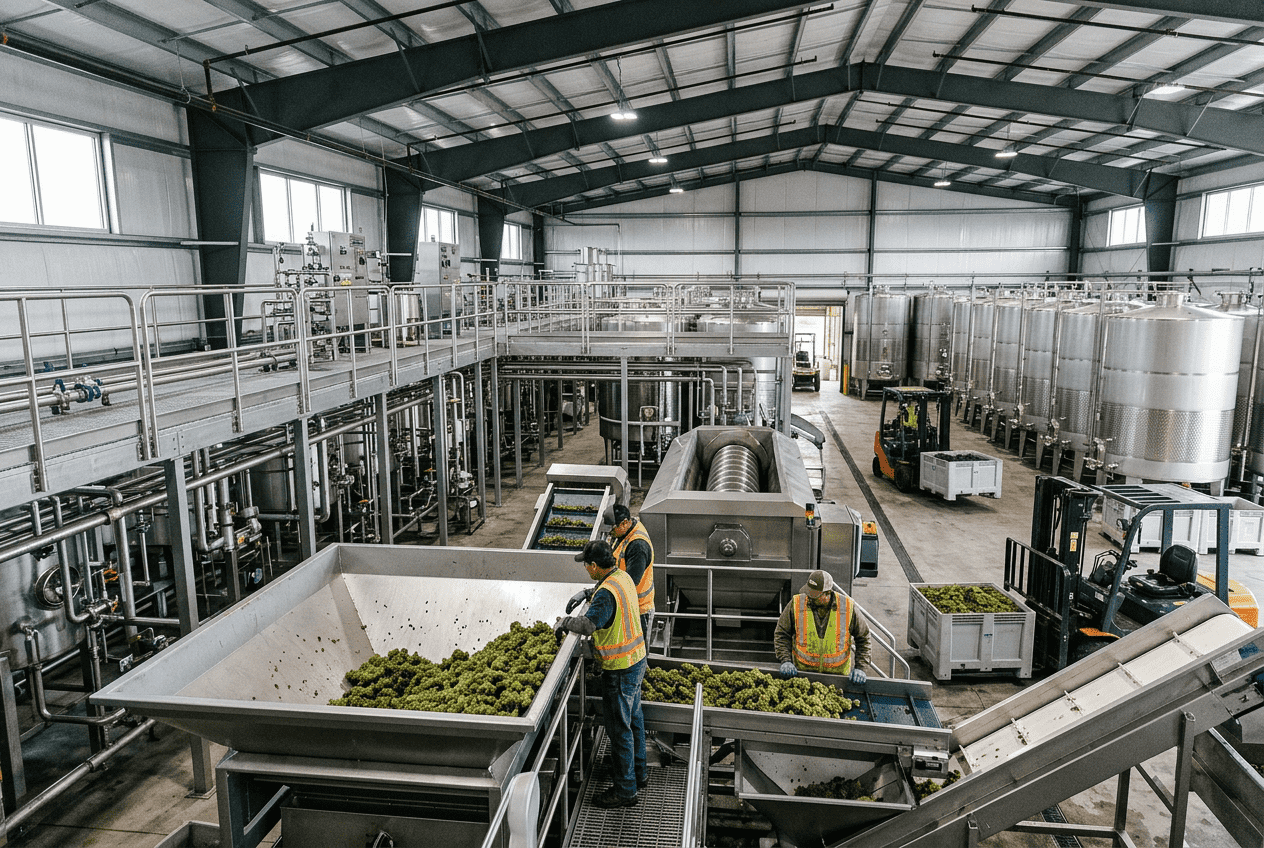
Dairy Processing Plant Design
Designing a dairy facility in the United States requires more than arranging tanks and pipes. A successful dairy processing plant must support food safety, regulatory compliance, labor efficiency, utility resilience, future expansion, and profitable throughput from raw milk intake to finished goods dispatch. Whether the plant is producing fluid milk, cream, yogurt bases, cultured beverages, ice cream mix, or dairy-based ready-to-drink products, the design must align process flow, sanitary zoning, pasteurization strategy, packaging, refrigeration, and distribution with the business model. Across major U.S. dairy hubs such as California’s Central Valley, Wisconsin, Idaho, New York, and Texas, processors are under pressure to increase throughput while controlling energy, water, labor, and capital costs. Plants near distribution centers in Chicago, Dallas, Atlanta, Los Angeles, and the Port of Savannah often prioritize refrigerated logistics and rapid outbound dispatch. Facilities closer to milk sheds may prioritize raw milk reception, storage flexibility, and cream handling. The best design approach starts with the product mix, target volume, utility demand, and expansion path before equipment is selected. A strong dairy plant layout in the United States follows a clean, one-way process path: raw milk reception, chilled storage, clarification or separation, standardization, pasteurization, homogenization where needed, finished product storage, packaging, cold holding, and refrigerated shipping. Core design priorities include hygienic zoning, 3-A compliant equipment selection, reliable steam and chilled utility systems, right-sized CIP circuits, adequate cold storage, and room for phased capacity growth. HTST systems are usually preferred for high-volume fluid products, vat systems for smaller or cultured batches, and UHT for shelf-stable or extended-life applications. Plants that plan utility corridors, drainage, traffic flow, and future tie-in points early typically expand faster and with less disruption. For U.S. manufacturers, dairy processing plant design is also a business decision. If a layout shortens CIP turnaround, reduces forklift travel, balances refrigeration loads, and avoids utility bottlenecks, the plant becomes more profitable over time. This is where an integrated engineering partner matters. Companies such as Disruptive Process Solutions support dairy projects with an execution model built around planning, design, installation, and project management so the facility works operationally, not just on paper. The most effective dairy layouts are based on linear product flow and clear separation between raw and pasteurized zones. The receiving bay should allow milk tanker access, sampling, unloading, meter verification, and washdown without interfering with ingredient receiving, packaging material traffic, or outbound refrigerated trucks. In U.S. sites with winter weather or high summer heat, enclosed or partially protected receiving areas can reduce contamination risk and improve operator comfort. From reception, raw milk normally moves to insulated storage silos sized for delivery variability, production buffering, and emergency holding. The next zone often includes clarification, separation, and standardization. If the facility processes multiple SKUs, it is important to create routing flexibility without excessive valve complexity. Overdesigned manifolds can increase both sanitation risk and operator confusion. Pasteurized product zones should be physically and operationally separated from raw milk handling. Positive pressure air management, hygienic wall details, sanitary drains, and dedicated personnel routes help reduce cross-contamination risk. Packaging rooms should sit downstream of pasteurization and finished product tanks, with direct access to cold storage. The shortest path to refrigerated warehousing usually produces better labor efficiency. Finished goods dispatch planning is especially important for plants serving grocery networks in markets such as Charlotte, Philadelphia, Phoenix, Seattle, and Minneapolis. Staging lanes, order consolidation areas, and dock temperature control can prevent cold chain loss and loading delays. In many projects, the dispatch zone becomes the hidden bottleneck if pallet accumulation, traffic turns, and staging times are not modeled early. The table above shows why layout planning is not just architectural. Each processing area has a direct effect on throughput, labor, sanitation, and product shelf life. A dairy plant that keeps raw milk, pasteurized product, packaging, and refrigerated shipping in logical sequence generally performs better than one designed around available floor space alone. This line chart reflects a realistic upward trend in dairy processing investment across the United States as processors modernize pasteurization, utilities, packaging, and cold storage infrastructure ahead of 2026 demand and compliance expectations. Utility systems determine whether a dairy plant runs smoothly or becomes a daily troubleshooting exercise. Steam supports pasteurizers, hot water generation, some CIP heating, and process vessels. Refrigeration supports raw milk storage, cold process steps, packaged product cooling, and warehouse conditions. Compressed air is essential for valves, automation, packaging equipment, and some clean utility needs. Water treatment impacts boiler performance, product quality, cleaning effectiveness, and compliance. Steam plant sizing should reflect actual simultaneous demand, not just nameplate load. A facility with HTST processing, multiple CIP skids, hot water loops, and cultured product tanks can create sharp peaks. In locations such as Wisconsin and upstate New York, winter reliability matters. In California and Arizona, water management and energy efficiency often receive more scrutiny. A resilient design includes condensate recovery, boiler feed treatment, and room for future boiler capacity. Refrigeration design should distinguish between process cooling and warehouse cooling. Raw milk silos, cream tanks, and blend tanks may rely on glycol or direct refrigeration interfaces, while cold storage often has different load cycles tied to shipping patterns. Large regional distribution plants near interstates or trade hubs such as Dallas-Fort Worth, Inland Empire, or New Jersey often need dock-adjacent refrigeration strategies to limit temperature spikes during loading windows. Compressed air should be categorized by use. Instrument air quality for valves and controls may require higher treatment standards than general utility air. Water systems may include softening, filtration, reverse osmosis, disinfection, and wastewater pretreatment depending on local municipal conditions and discharge permits. The utility table highlights why food-grade process design and utility engineering must be developed together. A low-cost utility package can become expensive if it creates downtime, inconsistent process temperatures, or cleaning failures. DPS frequently supports these integrated scopes through engineering and project delivery services that link utilities, controls, and process equipment into one operating system. Pasteurizer selection should begin with the product portfolio and commercial strategy. HTST pasteurization is usually the first choice for high-throughput fluid milk, flavored milk, cream, and many dairy beverage applications because it offers continuous operation, good energy efficiency, and reliable regulatory performance. UHT is suited to shelf-stable or extended-life products where packaging technology, sterile design, and distribution economics justify the added complexity. Vat pasteurization remains valuable for smaller volumes, specialty products, cultured bases, pilot production, and some artisan dairy operations. HTST systems are common in medium and large U.S. plants because they integrate well with separators, homogenizers, storage tanks, and automated CIP. These systems require careful control of regeneration, hold tube validation, flow diversion logic, and recording systems. UHT systems involve a different level of sterility assurance, packaging compatibility, and upstream ingredient management. Vat systems offer flexibility but may require more labor and floor space per unit of output. If the plant intends to produce both fluid dairy and dairy-based beverages, the equipment train should allow for ingredient handling, blending, homogenization, and viscosity management without compromising standard milk runs. This is especially relevant in markets where private label, protein beverages, and cultured products are growing faster than traditional white milk volumes. This comparison shows that no single pasteurizer is best for every dairy plant. The right choice depends on SKU mix, shelf-life target, packaging format, sanitation philosophy, labor model, and route-to-market. The bar chart indicates strong current demand for fluid milk, dairy beverages, and yogurt-related system upgrades in the United States, which often drives pasteurizer replacement and integration work. CIP design is central to dairy sanitation, uptime, and labor savings. A poorly designed cleaning system will reduce production hours, increase water and chemical use, and create recurring microbiological risk. In a well-designed dairy plant, CIP circuits match equipment grouping, process cadence, and soil load. Raw milk lines, pasteurized product lines, cream circuits, blend systems, and packaging fillers may not all belong on the same CIP strategy. Key design decisions include single-use versus recovery systems, number of circuits, tank volumes, heating method, conductivity control, return confirmation, and recipe automation. Large U.S. plants often use central CIP skids with separate acid, caustic, rinse, and sanitized water management. Smaller plants may use distributed or mobile solutions, but even these need disciplined routing and verification. Line velocity, dead-leg reduction, valve cluster design, slope, and drainability are critical. The goal is not just cleaning; it is repeatable validated cleaning. Plants producing allergen-adjacent dairy beverages or cultured products may require more complex changeover logic and documentation. DPS has meaningful technological capabilities in this area, combining process engineering, automation, PLC programming, and SCADA integration with utility and equipment design. That matters because CIP performance depends as much on controls and sequencing as on tanks and pumps. Their experience with custom process systems, pasteurization technologies, and water treatment supports more practical sanitation design than a purely mechanical-only approach. The CIP table demonstrates that sanitation efficiency is a design issue, not a housekeeping issue. Good CIP architecture can unlock significant production hours over a year. Cold storage design should match product life cycle, order profile, and shipping frequency. Many dairies underestimate how much space they need for pallet staging, SKU segregation, and quality hold areas. A refrigerated room that looks large on a plan can become constrained once aisles, battery charging, pallet turns, and shipping windows are considered. For dairies serving supermarket and foodservice routes in the United States, the refrigerated zone often includes packaged product cooling, short-term staging, reserve storage, returns quarantine, and dock-side marshaling. A plant shipping to distribution networks through hubs such as Memphis, Kansas City, Columbus, or the Port of Newark needs a dispatch layout built for speed and temperature retention. Cold storage should be linked to packaging line output. If filling lines run faster than palletizing or warehouse intake, packaged product accumulates in warm transition zones. This shortens shelf life and creates congestion. The best approach balances line speed, pallet flow, rack type, and dock utilization. The area chart shows the realistic industry shift toward higher-value refrigerated dairy products and dairy-based beverages, increasing the importance of well-zoned cold storage and outbound logistics by 2026. Separators, standardization systems, and homogenizers are some of the most important pieces of the dairy process train because they determine fat control, product consistency, and production flexibility. Their location in the line affects both sanitary routing and energy efficiency. In most milk and cream applications, separation follows raw storage and clarification, while standardization and homogenization occur before final pasteurization or in a process sequence matched to the product. Plants producing whole milk, reduced-fat milk, cream, coffee creamers, cultured beverage bases, and ice cream mix may need multiple standardization recipes and careful automation. Integration becomes especially important where cream balancing influences production economics. Poorly coordinated separator capacity can cause upstream tanker delays and downstream filler starvation. Homogenization requirements vary. Fluid milk and dairy beverages often demand specific pressure profiles for texture and stability. Yogurt base and formulated beverage products can require more specialized process control. The piping layout must minimize unnecessary recirculation, pressure loss, and cleaning complexity. On the manufacturing side, DPS supports this type of integration with capabilities that span dairy tanks, custom process vessels, CIP systems, and broader line integration. Their equipment and system approach is useful when a plant needs more than individual machines and instead requires a coordinated processing platform. More information on system and equipment scope is available through their process equipment capabilities. The equipment integration table shows how each component affects the others. A dairy plant becomes more flexible and profitable when these units are sized and controlled as one system rather than purchased in isolation. Many U.S. dairies cannot afford a full shutdown to expand. That makes phased expansion planning essential. The best strategy is to design future tie-in points from day one: blanked utility headers, oversized corridors, reserved slab space, spare panel capacity, and control architecture that can accept new assets. These details add modest cost early and can save months during future expansion. Common expansion projects include adding a second HTST line, increasing silo capacity, installing larger cold rooms, introducing dairy beverage blending, upgrading CIP throughput, or reconfiguring packaging and palletizing. The challenge is sequencing. Raw intake, finished product dispatch, and cleaning windows must continue while construction happens. One proven approach is to separate enabling works from final tie-ins. For example, a plant may first install utilities, pads, structural access, and controls backbone during normal production. The final process cutover then happens during a short shutdown. Another strategy is to add parallel systems, validate them, and shift production gradually. This is an area where service capability matters as much as engineering. DPS operates with a design-build-manage model that combines planning, general contractor oversight where applicable, installation coordination, and execution management. That structure is useful for live-site dairy work because it reduces handoff risk between designers, trades, and startup teams. Processors evaluating complex expansion or relocation projects can review examples through the company’s project case experience. A practical buying tip for expansion: do not buy only for today’s gallons per hour. Buy for today’s business plus tomorrow’s utility and automation architecture. A cheaper system with no scalable controls or no sanitary routing flexibility can cost more when the second phase begins. The comparison chart illustrates a realistic view of expansion execution: integrated delivery models generally perform better where ongoing production, utility tie-ins, and schedule risk must be managed together. In U.S. dairy processing, sanitary equipment selection is a compliance issue, an operational issue, and a brand protection issue. 3-A sanitary standards help define design expectations for cleanability, materials, surface finish, fittings, and hygienic construction. Equipment used in dairy service should also align with applicable PMO expectations, FDA requirements, and plant-specific food safety programs. Key specification areas include stainless steel grade, weld finish, gasket compatibility, drainability, dead-leg control, hygienic valve selection, and documentation. A lower-cost component with poor internal geometry can increase cleaning time, harbor product residue, and create recurring microbiological failures. For pasteurized zones, these details are especially important. Plants should request clear equipment packages that include sanitary design details, utility requirements, controls scope, spare parts strategy, and startup expectations. This applies to tanks, skids, heat exchangers, separators, homogenizers, fillers, pumps, and valve manifolds. U.S. buyers should also consider local service support, lead time risk, and code compliance for pressure, electrical, and structural elements. The specification table reinforces a simple principle: sanitary quality should be designed and purchased, not assumed. This is especially relevant when dairy plants compare local suppliers, imported skids, and custom-integrated systems. When evaluating local suppliers in the United States, processors often compare Midwest fabrication strength, West Coast automation capability, Southeast installation access, and Northeast sanitary service coverage. The best supplier is usually the one that can meet sanitary specifications, integrate controls and utilities, and support startup near your site rather than the lowest bidder on standalone hardware. What is the ideal process flow for a dairy plant?The ideal flow is raw milk reception, chilled storage, clarification or separation, standardization, pasteurization, homogenization if required, finished product storage, packaging, cold holding, and dispatch. The exact sequence depends on product type. Which pasteurization system is best for most U.S. dairy plants?HTST is usually the best fit for medium- to high-volume fluid dairy production. UHT is better for shelf-stable products, while vat pasteurization is useful for smaller batches and specialty processing. How much space should be reserved for future expansion?A practical rule is to reserve room for at least one major future utility or process addition, such as another pasteurizer, silo, CIP skid, or packaging line. Utility corridors and control panel space are often more important than open floor area alone. What utilities are most often undersized in dairy plants?Steam, refrigeration capacity, hot water generation, compressed air drying, and wastewater equalization are common problem areas. Cold storage staging and dock refrigeration are also frequently underestimated. Why is CIP design so important?Because CIP directly affects food safety, downtime, labor, water use, chemical use, and product changeover speed. A strong CIP system improves both compliance and profitability. What equipment standards should U.S. buyers look for?Buyers should look for dairy-grade hygienic design, 3-A aligned construction where relevant, suitable material certifications, cleanable welds, drainability, and complete documentation for validation and maintenance. Can a plant be expanded without shutting down production?Yes, in many cases. This depends on planning tie-in points, sequencing work in phases, and separating enabling construction from final cutover. Parallel systems and short shutdown windows are common tactics. What products should drive plant design decisions?The product mix should always lead the design. Fluid milk, cream, yogurt bases, ice cream mix, cultured dairy drinks, and shelf-stable dairy products all have different thermal, sanitary, packaging, and cold chain needs. How should a dairy company choose an engineering and integration partner?Choose a partner that understands processing, utilities, sanitary design, controls, installation, and project execution as one package. In the U.S. market, this often matters more than choosing the lowest equipment quote. What are the major 2026 trends in dairy plant design?The biggest trends are energy recovery, water reuse, automation and SCADA visibility, low-GWP refrigeration choices, modular expansion planning, stronger traceability, and more investment in value-added refrigerated dairy and dairy-based beverages. In summary, dairy plant design in the United States is best approached as a full operational strategy rather than a simple construction project. The winning facilities are those that align product flow, sanitary design, utilities, controls, and future expansion with commercial reality. For processors seeking a partner with technological depth, manufacturing understanding, and end-to-end service capability, DPS brings practical food and beverage project experience across North America with a model built to help manufacturers plan smarter, build efficiently, and scale profitably.