-
Beverage Processing Plant Design Services
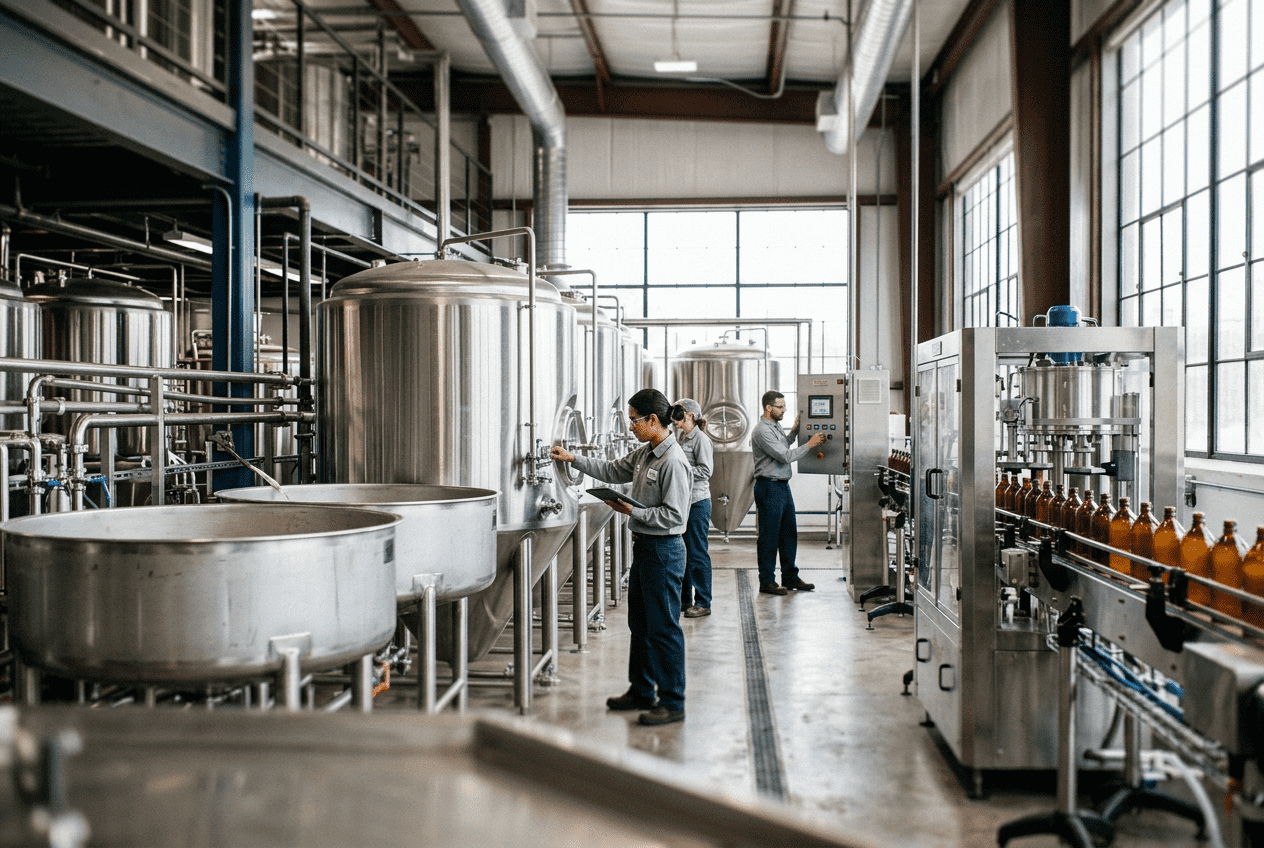
Designing a beverage processing facility in the United States requires much more than selecting tanks and a filler. A successful plant must align product characteristics, regulatory requirements, sanitation strategy, line speed, utility demand, packaging formats, labor availability, and long-term capital efficiency. For water, juice, carbonated soft drinks, dairy beverages, spirits, kombucha, plant-based beverages, and ready-to-drink products, the right plant design determines whether a facility can scale profitably, maintain product quality, and adapt to new SKUs without excessive downtime. Across major U.S. manufacturing corridors such as the Southeast, the Midwest, Texas, Southern California, and the Northeast logistics belt, processors are under pressure to increase throughput while lowering water use, energy intensity, and changeover time. Beverage companies shipping through Charlotte, Atlanta, Chicago, Dallas-Fort Worth, Los Angeles/Long Beach, Savannah, Houston, and New Jersey distribution hubs need facilities that work not only on paper but also in real operating conditions. That is why beverage plant engineering now centers on integrated process design, automation, cleanability, utility resilience, packaging flexibility, and total cost of ownership. For manufacturers evaluating new builds, expansions, or retrofits, the smartest approach is to combine process engineering, capital planning, facility design, installation oversight, and startup support under one coordinated strategy. This is where experienced partners matter. Disruptive Process Solutions supports beverage manufacturers across the United States and Canada with practical, profitability-driven project execution focused on real plant performance rather than generic design assumptions. Beverage processing plant design services in the United States focus on turning a product concept into a sanitary, scalable, code-compliant, and commercially efficient production facility. That includes process flow development, ingredient handling, blending and batching, water treatment, thermal processing selection, packaging line design, utility sizing, automation architecture, CIP strategy, wastewater planning, and facility layout. The best beverage plant designs are built around product risk, required shelf life, packaging type, expected line speed, future SKU growth, and local operating realities such as labor markets, water availability, and environmental permits. Unlike many general industrial projects, beverage plants must manage microbiological risk, rapid production cycles, flavor carryover, package integrity, and highly variable utility loads. Whether the target is a high-speed bottled water line in Texas, an aseptic RTD facility near Chicago, a craft spirits expansion in North Carolina, or a plant-based beverage operation in California, the design must connect processing, packaging, and utilities into one reliable system. The table above shows why beverage facility planning is fundamentally an integration exercise. A plant that excels in only one category, such as line speed, but neglects wastewater loading, CIP recovery, or packaging flexibility will struggle as volume and product complexity increase. Beverage plant design and food plant design share common engineering principles, but beverages create a distinct operating environment. Liquids move continuously, require precise hygienic control, and often depend on temperature-sensitive or oxygen-sensitive handling. Line speeds can be extremely high, especially in bottled water, carbonated drinks, and RTD formats, where small inefficiencies compound into major output losses. Food plants often focus on solids handling, thermal mass, cook steps, allergen segregation, or protein processing logistics. Beverage plants, by contrast, place heavier emphasis on flow dynamics, in-line blending accuracy, deaeration, carbonation, filtration, sterile boundaries, rinse systems, filler bowl conditions, package sanitation, and downstream accumulation. Even a small mismatch between process throughput and packaging throughput can create chronic stoppages. Another distinction is utility behavior. Beverage plants commonly require significant process water treatment, compressed air stability, high-capacity CIP systems, process cooling, clean steam or culinary steam, and tight automation for recipes and lot traceability. For product categories such as dairy beverages, juices, kombucha, and functional drinks, microbial control drives decisions from floor slope to gasket materials. From a market standpoint, the United States beverage sector also faces faster packaging innovation than much of the food sector. Plants may need to handle PET, glass, aluminum cans, slim cans, cartons, HDPE, and multipack formats within one site strategy. That means layout planning must consider both current production and future adaptation. The comparison above highlights why a general contractor without beverage-specific engineering experience can miss major details. Beverage plants are especially unforgiving when line integration, hygienic zoning, or thermal process assumptions are wrong. The market trend shown above reflects how U.S. beverage producers continue investing in modernization, automation, and flexible capacity. Growth is strongest in RTD, bottled water, functional beverages, and plant-based formats. In beverage manufacturing, the production line is where process engineering meets commercial reality. A line may have a perfectly designed syrup room and excellent utilities, but if depalletizing, rinsing, filling, capping, labeling, coding, inspection, and case packing are not properly synchronized, plant efficiency drops quickly. Container washing or rinsing requirements depend on packaging type and product risk. Empty PET bottles may need air rinsing or ionized air, while returnable glass can require more intensive washing. Bottled water and certain non-carbonated applications may prioritize ultra-clean handling, while carbonated beverages require additional attention to dissolved gas stability and foaming behavior at the filler. Filling technology selection depends on product category, package format, fill temperature, viscosity, and target output. Gravity fillers, pressure fillers, volumetric systems, piston fillers, aseptic fillers, and hot-fill systems all create different mechanical, sanitary, and utility demands. Downstream, capping and sealing systems must protect product integrity without creating torque inconsistencies, leakage, or cap supply interruptions. Labeling must account for moisture, condensation, container geometry, and retail appearance. One of the most common design errors in U.S. beverage facilities is underestimating accumulation and buffer management. High-speed lines around 300 to 1,000 bottles or cans per minute need strategic accumulation zones so a short labeler fault does not force a filler shutdown. Plants serving retail distribution through hubs like Memphis, Indianapolis, and Allentown particularly benefit from stable, predictable line performance because freight schedules and customer service penalties can be unforgiving. The table illustrates that each line step should be engineered as part of a complete system. It is not enough to purchase individual machines with attractive nameplate speeds. The integrated line speed, sanitation method, maintenance access, and change-part strategy determine true plant output. On the technology side, DPS brings process and controls capability that supports blending systems, pasteurization, filtration, carbonation, water treatment, PLC programming, SCADA, and complete utility integration. That matters because filler performance is directly connected to what happens upstream in batching, thermal treatment, and process stability. More details on broad project support are available on the services page. Few decisions shape a beverage facility more than the preservation and filling method. Aseptic, hot fill, and cold fill systems create different sanitary boundaries, equipment footprints, capital costs, packaging constraints, and operator training requirements. Aseptic systems are typically used when shelf-stable performance is needed without relying on intense thermal exposure at the package stage. They demand strict sterile design, validated sterilization procedures, careful environmental control, and advanced operator discipline. The benefit is product quality retention and broader packaging possibilities for certain applications, but the design complexity and startup rigor are substantial. Hot fill is common in juices, teas, and acidified beverages. It uses elevated product temperatures to achieve commercial objectives in conjunction with package handling. However, hot fill affects bottle design, cooling strategy, line materials, and floor drainage. Plants need to account for thermal expansion, container deformation risks, and post-fill cooling logistics. Cold fill can be the most straightforward for some products, but it often relies on preservatives, refrigeration, or shorter shelf life depending on formulation and distribution model. In dairy beverages and sensitive functional products, cold-chain integrity becomes a major design factor. For carbonated soft drinks, temperature control is also tied to gas retention and foaming management. The chart below compares demand across U.S. beverage categories that commonly drive different fill approaches. The bar chart shows that the strongest U.S. plant design demand is currently tied to bottled water, RTD formats, and plant-based beverage growth. That demand is influencing a wider shift toward flexible, high-hygiene production environments. Sustainability in beverage processing is no longer only a branding issue. In the United States, it is now tied to utility cost control, permitting, investor expectations, customer requirements, and 2026 policy trends around water stewardship, emissions reporting, and resilient infrastructure. Smart sustainable design lowers operating cost while improving long-term asset value. Key sustainable practices include heat recovery from pasteurization systems, variable frequency drives, compressed air leak management, process water reuse where appropriate, CIP chemical optimization, lightweight packaging compatibility, LED lighting, smart HVAC zoning, and data-driven energy monitoring. In regions such as California, Arizona, and parts of Texas, water and discharge planning can materially affect site feasibility. In colder regions such as the Upper Midwest or Northeast, winter utility reliability and energy efficiency also shape design choices. Leading beverage facilities also account for waste reduction in flavor changeovers, syrup handling, and startup/shutdown losses. Good engineering reduces product giveaway, not just utility consumption. Sustainability therefore overlaps directly with profitability. DPS approaches these projects with an integrated mindset that blends structural, mechanical, plumbing, electrical, process, and controls engineering. This technological capability is especially useful when the goal is to connect energy use, water systems, automation, and packaging efficiency into one operating model rather than treating them as separate scopes. The table shows that sustainable design is practical engineering, not abstract theory. When plants measure utilities and product losses by line, shift, and SKU, they can make better capital decisions and respond faster to cost pressure. Plant-based beverages represent one of the most technically demanding growth segments in the U.S. market. Oat, almond, soy, coconut, pea, and blended functional beverages each present different challenges in hydration, extraction, slurry handling, enzyme treatment, particle management, homogenization, heat treatment, and flavor stability. Compared with bottled water or standard soft drinks, plant-based products can create more fouling, viscosity variability, sedimentation risk, and allergen management complexity. They also often require more aggressive shear control, deaeration, and sophisticated thermal processing to preserve texture and shelf life. Ingredient handling is another major issue. Bulk solids receiving, hydration tanks, slurry transfer, filtration, and waste solids management must all be considered in layout planning. Facilities producing both conventional and plant-based beverages need strong segregation strategy. This includes ingredient storage, dedicated or validated shared lines, allergen controls, color-coded process paths, and scheduling logic. Plants near consumer-heavy coastal markets such as Los Angeles, the Bay Area, Seattle, Boston, and New York frequently need this flexibility because brand portfolios evolve quickly. DPS has manufacturing capability across beverage and food sectors, including dairy processing, aseptic systems, blending, homogenization, heat treatment, and plant-based process applications. That cross-category experience is valuable because many plant-based lines sit between classical beverage and food process design. The area chart indicates a clear trend shift: more new beverage projects are being designed with flexible capability for plant-based, functional, or multi-category production. By 2026, this trend is likely to strengthen due to portfolio diversification and retailer demand for innovation. Water is both a raw material and a utility backbone in beverage operations. It is used in the product, bottle or can handling, CIP cycles, pasteurization systems, cooling loops, boiler make-up, and sanitation. As a result, water conservation and wastewater treatment are core design topics, not secondary environmental issues. In many U.S. municipalities, incoming water quality and discharge limitations vary significantly. A plant in California’s Central Valley may face very different constraints than one in the Carolinas, the Great Lakes region, or along the Gulf Coast. Local sewer surcharges tied to BOD, COD, TSS, pH, and flow can heavily influence operating cost. For juice, dairy beverage, kombucha, and plant-based operations, wastewater loading can rise quickly if product losses are not controlled. Effective water strategy begins with source characterization and process mapping. Reverse osmosis, carbon filtration, softening, UV, ozone, or disinfection technologies may be required depending on product type. On the wastewater side, facilities may use screening, equalization, pH adjustment, dissolved air flotation, anaerobic or aerobic systems, and flow balancing. Even where full on-site treatment is not needed, pretreatment can be a smart financial decision. When manufacturers are exploring expansion or greenfield investment, wastewater planning should happen early in feasibility. Too many projects secure a promising site near a major corridor like I-85, I-35, or the Inland Empire only to discover utility or discharge constraints later. If you are evaluating capital scenarios, the project portfolio and execution perspective discussed in the case studies section can help frame what works in real operations. The table makes clear that not all wastewater is the same. Segregating streams can reduce treatment cost and support better reuse or pretreatment decisions. SKU proliferation is now a standard reality in the U.S. beverage market. Retailers expect seasonal flavors, channel-specific pack sizes, and frequent line extensions. Co-packers need even greater agility because they may run multiple brand owners with different formulations and packaging requirements in one week. The engineering challenge is to build speed and flexibility without sacrificing sanitation or reliability. Rapid changeover design starts with product family mapping. Engineers should group SKUs by allergen profile, color intensity, sugar content, acidity, carbonation, and packaging format. From there, they can design manifolds, valve clusters, pigging options, clean break points, hose management, change parts, and CIP recipes that minimize downtime. Flexible fillers, quick-release guarding, recipe-driven automation, and digital work instructions can all shorten transitions. Layout also matters. Adequate staging for packaging materials, cap sorting, label roll access, and mobile support equipment prevents the hidden labor losses that slow every changeover. Plants with heavy retail distribution through markets like Chicago, Atlanta, and Southern California benefit from this flexibility because mixed-order profiles and promotion calendars create constant scheduling pressure. DPS provides service capability that spans feasibility studies, owner’s representative support, project and program management, general contracting where licensed, equipment supply, installation, and full system integration. That breadth is useful in SKU-flexible projects because the process, building, utilities, controls, and installation sequence must all support the same commercial goal. The comparison chart illustrates how flexibility drives complexity. A simple bottled water line may optimize for speed and utility efficiency, while a co-packer hybrid facility demands much more from controls, CIP strategy, staging, and scheduling design. For companies buying equipment, one practical tip is to judge suppliers by integrated line performance, sanitation approach, controls compatibility, and service support, not only machine price. A lower purchase cost can become an expensive mistake if the line cannot meet changeover or quality expectations. Manufacturers exploring custom tanks, CIP skids, or process equipment can review available options through the equipment solutions page. Consider a hypothetical but realistic bottled water project in the United States serving grocery, club, and convenience channels from a Southeastern distribution location near Charlotte with access to the I-85 corridor and the Port of Savannah for packaging and supply chain support. The owner needs a high-speed PET line, future second-line expansion, low conversion cost, and tight first-year profitability. The design begins with source water characterization and treatment selection. Because taste consistency is critical in bottled water, the treatment train may include multimedia filtration, activated carbon, reverse osmosis, UV, ozone, and controlled remineralization depending on the brand profile. From there, sanitary storage and distribution must be designed to avoid stagnation and preserve quality to the filler. The packaging system is the commercial engine. A high-speed line may include bottle blow molding, air conveying, rinsing, filling, capping, labeling, coding, case packing, palletizing, and automated warehouse interface. Utility planning must support compressed air peaks, ozone safety, cooling requirements, and line reliability during summer seasonal demand surges. To preserve capital efficiency, the facility can be laid out with room for future line duplication, shared utility corridors, modular CIP support, and scalable electrical infrastructure. Wastewater loading may be lighter than in many flavored beverage plants, but rinse water use still requires attention. Accumulation zones and spare parts strategy become essential because a few minutes of repeated downtime at very high speed can erase daily production targets. This type of project reflects the kind of commercial thinking that separates profitable execution from simple equipment installation. DPS is known for combining engineering, build coordination, and execution oversight through a practical design-build-manage approach. The company works across North America with beverage capabilities spanning brewing, spirits, wine, kombucha, RTD, carbonated and non-carbonated beverages, dairy beverages, and aseptic applications, while also bringing food-sector depth that strengthens utility, sanitation, and compliance planning. For buyers comparing regional engineering partners, local suppliers, or OEM-led layouts, the lesson is straightforward: choose a team that understands process, utilities, packaging, controls, and startup as one business system. Especially in bottled water, line speed without operational resilience is not enough. What do beverage processing plant design services usually include?They typically include feasibility analysis, process flow development, utility planning, equipment specification, plant layout, packaging line integration, sanitary design, automation architecture, installation planning, and startup support. How much should a U.S. beverage manufacturer plan for engineering before construction?It depends on product complexity, but early engineering is one of the highest-return investments in the project. It reduces change orders, avoids utility undersizing, and improves permit readiness. Which beverage categories most often require specialized hygienic design?Aseptic products, dairy beverages, juices, kombucha, plant-based drinks, and functional beverages typically require more advanced hygienic and thermal design than simple bottled water lines. How early should wastewater be evaluated?At the site selection and concept stage. Municipal discharge limits and water availability can change the economics of a project before equipment is purchased. What is the best layout strategy for future growth?Use a master plan that reserves expansion space for utilities, storage, and additional packaging lines. This is especially important in high-growth U.S. regions such as Texas, the Southeast, and Southern California. How can a plant reduce changeover time?Use recipe automation, standardized change parts, clear staging areas, dedicated allergen strategies where needed, and CIP logic built around actual SKU families. What trends will shape beverage plant design in 2026?Expect more digital monitoring, stronger water stewardship requirements, expanded use of flexible automation, greater demand for plant-based and functional beverage capability, more traceability expectations from retailers, and tighter focus on energy efficiency and decarbonization. Why work with a specialized partner instead of coordinating multiple vendors alone?Because beverage plants fail at the interfaces between disciplines. A specialized partner can align process, building, utilities, controls, installation, and startup around one operating goal. In summary, beverage processing plant design services in the United States should be evaluated through the lens of profitability, sanitation, adaptability, and execution risk. Whether the project involves bottled water, aseptic RTD, plant-based beverages, spirits, or multi-SKU co-packing, success depends on integrated engineering that matches the product, market, and growth strategy. Companies that take this broader view are far better positioned to build resilient, scalable facilities that thrive in a competitive U.S. manufacturing landscape. -

Food Plant Capital Planning Strategy for 2026: A Comprehensive Guide
Food plant capital planning in the United States is no longer just a budgeting exercise. It is a strategic discipline that connects demand forecasting, utility capacity, food safety compliance, labor constraints, automation, sustainability, and profitability into one decision framework. For food and beverage manufacturers in markets such as Chicago, Dallas, Fresno, Charlotte, Houston, Atlanta, and the greater Midwest protein corridor, the right capital plan can prevent underbuilt facilities, avoid stranded assets, and create room for profitable growth through 2026 and beyond. Food plant capital planning is the process of deciding where, when, and how to invest in facility upgrades, utility systems, production lines, automation, compliance improvements, and expansion projects so that a manufacturer can meet future demand with acceptable risk and attractive returns. A strong capital planning strategy for a U.S. food plant should align commercial goals with site realities, define phased investments, prioritize utility and infrastructure readiness, account for FDA, USDA, SQF, and BRC requirements, and measure success through throughput, margin, labor efficiency, uptime, and payback. In practical terms, the best plans answer six questions early: For executives, the real objective is not simply to spend capital. It is to deploy capital with precision so every dollar supports output, resilience, quality, and long-term enterprise value. Food plant capital planning is the structured evaluation and sequencing of capital expenditures for processing facilities. It covers new builds, line additions, equipment relocations, brownfield upgrades, utility expansions, packaging changes, automation retrofits, sanitation improvements, warehousing integration, and digital controls. Unlike annual maintenance budgets, capital planning is focused on long-horizon capability building. In the U.S. market, this planning is especially important because manufacturers operate under a mix of economic and operational pressures: freight volatility near major distribution corridors, labor shortages in key processing regions, utility constraints in fast-growing industrial zones, stricter food safety expectations from retail and foodservice buyers, and rising pressure to reduce water, energy, and waste intensity. A poultry processor in Arkansas, a dairy operation in Wisconsin, a beverage co-packer in North Carolina, and a prepared foods manufacturer near the Port of Los Angeles may all share the same core challenge: growth decisions made too late become expensive. Capital planning should also account for product mix. Different categories have different infrastructure implications: This table shows why a generic capex template rarely works. Product architecture drives infrastructure architecture. A plant planning for shelf-stable retort meals needs very different space, process, and utility assumptions than a fresh beverage facility or a plant-based protein line. Capital planning also sits at the intersection of strategy and operations. It should connect sales assumptions, procurement constraints, engineering feasibility, and execution readiness. If commercial teams forecast growth into club retail, e-commerce, or foodservice chains, the capital plan must test whether packaging flexibility, warehouse flow, sanitation zoning, and utility systems can support that move without a margin collapse. A high-performing capital planning strategy should combine market realism with engineering depth. The most successful U.S. food manufacturers treat capex planning as a portfolio discipline, not a one-time estimate. The core components include demand forecasting, throughput modeling, bottleneck analysis, concept design, utility planning, site fit assessment, financial screening, risk prioritization, permitting assumptions, and execution sequencing. Each component should be reviewed through the lens of 2026 conditions, where automation, energy resilience, and sanitation design are increasingly tied to competitive advantage. One of the most overlooked issues is the difference between equipment capacity and system capacity. A filler may be rated at a certain speed, but if the boiler, compressed air skid, glycol loop, wastewater handling, or PLC logic cannot support the line in real production conditions, the investment underperforms. That is why strong plans measure integrated system performance rather than nameplate output. From a buying perspective, executives should evaluate projects across three categories: In many plants, the highest-value investment is not the most visible one. For example, a controls upgrade, recipe system redesign, or CIP optimization may produce a larger throughput gain than a new process vessel. Smart leaders ask whether the problem is truly mechanical, or whether the real issue lies in flow control, sequencing, sanitation turnaround, or labor dependence. The line chart above illustrates a realistic upward trend in U.S. food manufacturing capital intensity. Growth is being driven by automation, reshoring, co-packing demand, cold chain modernization, and regulatory expectations around documentation and process control. Phased expansion is one of the most effective ways to protect capital efficiency. Instead of building every production element to full future-state capacity on day one, companies can create a roadmap that identifies which assets should be installed now, which should be “phase ready,” and which should wait until demand is proven. This matters in the United States because market timing varies by region and category. Beverage production in the Southeast may scale differently than dairy in the Upper Midwest or protein processing in the Plains. Facilities near ports such as Savannah, Long Beach, Houston, or New York/New Jersey may face different logistics assumptions than inland sites near Kansas City, Indianapolis, or Memphis distribution nodes. A phased roadmap usually starts with foundational infrastructure: These systems should be sized with future expansion in mind, even if production equipment is added in stages. Underbuilding utilities often forces disruptive retrofits later. Oversizing everything at once, however, can burden cash flow and reduce first-year profitability. The right answer lies in staged design. The table shows how phasing aligns plant buildout with commercial proof points. A facility expected to scale from moderate launch volumes to national distribution should not blindly replicate the end-state design on day one. It should instead build a roadmap that protects expansion paths while preserving early margins. Regional considerations also influence roadmap design. In California, water and wastewater constraints may shape investment timing. In Texas, power resilience and utility interconnection lead times can dominate schedules. In the Carolinas, access to growing beverage and food manufacturing labor pools may support multi-phase co-packing strategies. In the Midwest, proximity to dairy, grain, and protein supply chains may justify specialized process infrastructure sooner. The area chart reflects an important 2026 trend: capital spending is shifting from isolated equipment purchases toward integrated automation, utility resilience, and expansion-ready infrastructure. Most failed or underperforming capital projects share a few common causes. The first is treating capex as a procurement event rather than a business system decision. The second is approving production equipment before understanding utilities, sanitation flow, labor model, and startup risk. The third is relying on optimistic demand assumptions without sensitivity testing. Executives should be especially cautious about the following pitfalls: Another major issue is fragmented accountability. Capital plans often fail when operations wants speed, finance wants tight spending, procurement wants low initial price, and quality wants risk elimination, but no one owns the integrated decision. Strong governance matters. A plant expansion is not successful because it was delivered on budget if the resulting operation cannot achieve labor, quality, and yield targets. Buying advice for U.S. manufacturers: do not evaluate vendors solely on equipment cost. Compare total installed cost, startup support, controls compatibility, sanitation design, local service, spare parts availability, and integration complexity. For facilities that operate under tight customer launch deadlines, execution certainty can be worth far more than a lower initial quote. The bar chart shows where capital demand is likely to concentrate in 2026. Co-packing, beverage, and prepared foods remain especially active due to retail innovation, brand outsourcing, and the need for flexible manufacturing assets. Disruptive Process Solutions approaches food plant capital planning as a profit-driven operating strategy, not a generic engineering package. The company works across North America and supports manufacturers in all 50 U.S. states and Canada, helping clients translate commercial growth into executable, phased, and technically sound capital programs. Its approach is built around a design-build-manage model that integrates planning, construction coordination, and execution oversight. This is particularly valuable for manufacturers that need one partner to connect process engineering, utility systems, local trades, installation sequencing, and startup readiness without losing sight of first-year economics. From a technological capability standpoint, DPS supports structural, mechanical, plumbing, electrical, process, controls, PLC programming, automation, and SCADA integration. That range matters because successful capital planning often depends on the interaction between controls logic, process design, utility performance, and operator workflow. In many facilities, gains in throughput and margin come not from adding steel alone, but from redesigning the logic and infrastructure around the process. From a manufacturing capability standpoint, DPS works across both food and beverage sectors. Beverage support includes brewing, spirits, wine, kombucha, RTD products, carbonated and non-carbonated beverages, juices, dairy-based drinks, and aseptic systems. Food support includes protein processing, prepared foods, sauces, ingredients, dairy, aseptic and retort operations, and co-manufacturing environments. This broad category knowledge helps clients develop capital plans that fit real production conditions instead of relying on abstract design assumptions. From a service capability standpoint, DPS provides capital planning and feasibility studies, owner’s representation, project and program management, general contractor functions where licensed, equipment supply, full installation, and system integration. Manufacturers that want a more complete project partner can review DPS service capabilities as part of their capex planning process. One reason this approach is effective is its emphasis on honesty at the front end. In some cases, the right answer is not a larger equipment purchase. A plant may believe it needs a multimillion-dollar expansion when the real bottleneck is controls logic, poor sequencing, or utility balancing. The discipline to challenge assumptions can save clients significant capital and create better long-term project outcomes. DPS also supports equipment needs through its own process equipment offering, including tanks, CIP systems, marination tumblers, and cooking vessels. Manufacturers evaluating fit-for-purpose assets can explore process equipment solutions while considering how custom or semi-custom equipment may support a phased project strategy. For organizations comparing project partners, case experience matters. Real execution examples help demonstrate whether a firm understands expansion sequencing, utility readiness, relocation risk, and startup economics. Manufacturers can see project case examples to understand how integrated planning translates into results. The company is especially well suited to mid-market and enterprise manufacturers that value planning discipline, direct communication, and long-term profitability over transactional project behavior. Businesses seeking background on the team and operating philosophy can learn more about DPS in that context. This table highlights how capital planning support should connect technical scope with business outcomes. The best project partners do not just draw a layout; they help leaders protect profitability while building for growth. Executives often need a simple checklist to determine whether a project is truly ready for approval. The following framework works for line additions, plant expansions, relocations, utility upgrades, and greenfield concepts. Beyond the checklist, leaders should pressure-test several areas: For U.S. companies operating multi-site networks, portfolio thinking is also important. The right answer may not be expanding the current flagship site. Sometimes relocating a line, splitting product families by sanitation risk, or using a co-packing strategy in another region creates better economics than forcing all growth into one location. This comparison chart illustrates why many complex projects benefit from a more integrated delivery model. When process, infrastructure, installation, and execution oversight are disconnected, risk often rises across cost, schedule, and operational readiness. A capital plan should be judged by operational and financial outcomes, not just project completion. Too many organizations declare success when a facility launches, even if throughput, labor efficiency, and margin fail to meet targets. Better companies define success metrics before approval and review them after startup at 30, 90, 180, and 365 days. Key performance indicators should include: Success measurement should also consider future-readiness. For 2026, leading food manufacturers are placing more weight on digital traceability, energy visibility, predictive maintenance, and water stewardship. A project that raises output but locks the plant into poor flexibility may still be a weak investment in a market where customer requirements change quickly. Policy and sustainability trends are shaping this area as well. Manufacturers are seeing stronger buyer expectations related to emissions, water use, sanitation documentation, and packaging adaptability. Capital plans that include energy management systems, heat recovery, process water optimization, modern SCADA visibility, and stronger utility metering will likely outperform over the next several years. In practical terms, the strongest 2026 capital plans are those that improve both today’s economics and tomorrow’s strategic options. Disruptive Process Solutions is a North American food and beverage engineering partner headquartered in Cary, North Carolina, with a West Coast presence in Lake Forest, California. The company supports manufacturers across the United States and Canada with a lean, experienced team built for fast project decision-making and hands-on execution. Its work is especially relevant for food executives who need a partner that understands both business and plant realities. Rather than functioning as a traditional contractor alone, DPS helps clients shape profitable projects by connecting strategic planning, process design, utility engineering, construction coordination, and implementation management. Technologically, the company brings process engineering, controls integration, PLC programming, SCADA, and utility system expertise that supports modern food and beverage operations. From a manufacturing standpoint, it serves processors in protein, dairy, sauces, prepared foods, brewing, spirits, RTD beverages, carbonated drinks, aseptic processing, and co-packing. From a service perspective, it covers feasibility, capital planning, owner’s representation, project management, equipment supply, installation, and integrated execution. That combination is valuable for U.S. manufacturers that want smarter deployment of capital in a market shaped by labor pressure, capacity volatility, and the need for better infrastructure planning. Whether the challenge is a brownfield upgrade near Cincinnati, a beverage scale-up in the Carolinas, a protein expansion in the Midwest, or a utility-intensive buildout near Southern California logistics corridors, disciplined planning is what turns capital into durable business value. What is the difference between capital planning and maintenance planning?Maintenance planning keeps current assets reliable. Capital planning funds new capability, additional capacity, compliance upgrades, major replacements, or strategic infrastructure changes that improve future performance. How far ahead should a U.S. food manufacturer plan capex?Most companies should maintain a rolling three- to five-year capital roadmap, with quarterly updates for demand changes, lead times, and utility constraints. Complex greenfield or major brownfield projects may require longer horizons. What is the first step in food plant capital planning?The first step is defining the business case: expected product mix, volume, margin impact, customer requirements, and growth timing. Only after that should the team test plant capacity and infrastructure readiness. Should companies buy equipment before completing a utility study?No. Equipment should not be approved in isolation. Steam, electrical, compressed air, refrigeration, water, wastewater, and controls architecture often determine whether that equipment will perform as intended. What industries benefit most from phased capital planning?Nearly all food and beverage sectors do, but phased planning is especially useful in co-packing, RTD beverages, dairy, protein processing, prepared foods, and aseptic operations where demand ramps can be uneven and utility requirements are significant. How can executives reduce capex risk in a live facility?Use phased shutdown planning, cross-functional governance, detailed startup preparation, and integrated process-utility-control design. Also confirm local permitting and trade availability early, especially in high-growth industrial regions. What are the most important 2026 trends affecting food plant capital planning?Automation, SCADA visibility, energy resilience, wastewater planning, water reuse, hygienic design, traceability, labor efficiency, and sustainability-driven utility upgrades are all becoming more important in 2026. How do you know if a capital project actually worked?Measure throughput, OEE, yield, labor hours per unit, utility intensity, audit performance, service levels, and actual payback against the original business case over the first year after startup. When should a company use an owner’s representative or integrated project partner?This is most helpful when the project crosses multiple disciplines, includes live-plant work, involves major utility changes, or has high commercial urgency. It improves accountability and helps keep technical and business goals aligned. Can a controls upgrade really delay or replace a larger equipment investment?Yes. In some plants, PLC logic, sequencing, or poor automation integration is the true bottleneck. A strong assessment can reveal whether a lower-cost controls or process optimization project can unlock meaningful capacity before major expansion spending is approved. -
Food Manufacturing Feasibility Study: 7-Step Methodology for Investors
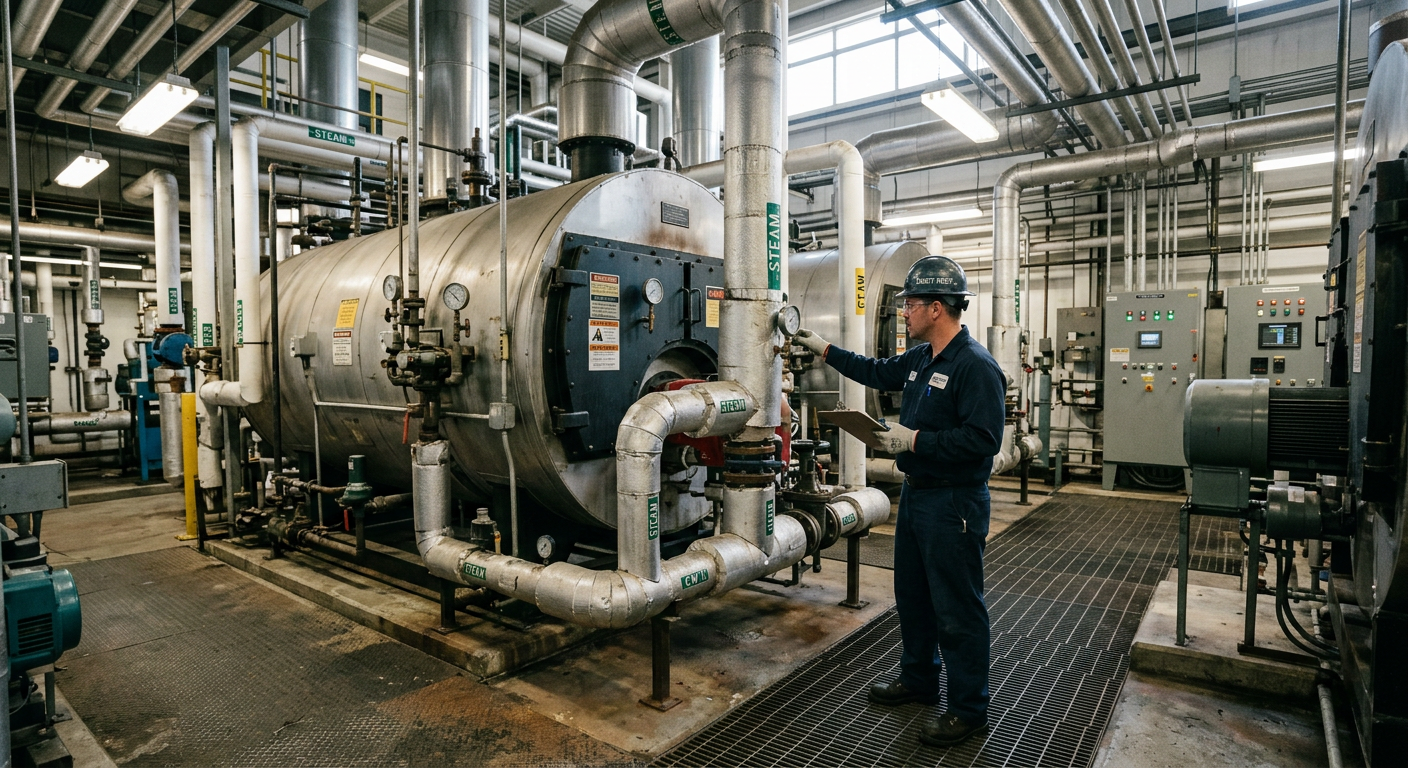
Investors, owner-operators, and private equity teams rarely lose money on food plants because the idea sounds bad. They lose money because the plant is too large, the process is too complex, utilities are underplanned, regulatory timing is missed, or demand assumptions are too optimistic. A disciplined food manufacturing feasibility study reduces those errors before engineering drawings are finalized, long-lead equipment is ordered, or construction capital is locked in. In the United States, feasibility work must go beyond a basic market report. It should connect demand assumptions to throughput, labor, utilities, site constraints, compliance obligations, and margin performance. That is especially true in major manufacturing corridors such as the Midwest protein belt, the dairy regions of Wisconsin and Idaho, the California beverage and specialty foods market, the Carolinas, Texas, and logistics hubs tied to the ports of Los Angeles/Long Beach, Houston, Savannah, and Newark. A food manufacturing feasibility study is a decision tool that determines whether a proposed plant, line expansion, co-packing operation, or product launch can be built and operated profitably in the United States. The best studies answer seven practical questions: Is demand real? Can the process run at target capacity? What utilities and building systems are required? What permits and food safety controls apply? What will the project cost? What does the operating model look like at different volumes? And what risks could break the investment case? For investors, the goal is not just to confirm technical possibility. The goal is to identify a commercially durable project structure. That means checking whether a ready-to-drink line in Texas should be hot-fill, cold-fill, tunnel pasteurized, or aseptic; whether a protein plant near Kansas City needs USDA inspection on day one; whether a sauce facility in New Jersey can support wastewater loads; and whether inbound ingredients, outbound freight, and labor costs support margin targets. A robust study normally includes market sizing, buyer analysis, product mix assumptions, line balancing, utility demand, layout concepts, preliminary capital expenditure, operating expenditure, financial scenarios, regulatory mapping, implementation timing, and a clear go/no-go recommendation. It should also tell decision-makers what to phase, what to outsource, what to automate, and what to avoid. The table above summarizes why feasibility is not a paperwork exercise. It is the bridge between a promising food idea and an investable manufacturing project. A food manufacturing feasibility study is a structured assessment of commercial demand, technical viability, operational requirements, financial performance, and regulatory readiness for a proposed food or beverage manufacturing investment. It may be prepared for a greenfield plant, brownfield retrofit, line addition, contract manufacturing launch, facility relocation, or major automation upgrade. In the United States, this study is often used by family-owned processors, strategic buyers, lenders, co-manufacturers, and institutional investors. It is especially useful when the project involves one or more of the following: A serious study should not end with “technically feasible.” It should specify the preferred manufacturing concept, expected bottlenecks, optimal project phasing, staffing assumptions, and a decision framework for investors. For example, a co-packer may discover that its true constraint is not floor space but controls logic, cleaning time, or changeover losses. In some cases, a lower-cost controls upgrade can unlock more throughput than a multimillion-dollar building expansion. That type of insight is precisely what feasibility work should reveal before capital is spent. The line chart illustrates a realistic upward trend in food manufacturing investment activity as processors expand capacity, modernize automation, and strengthen domestic production resilience. Demand analysis is the first test of feasibility because the best process design in the world cannot fix a weak market. In the United States, market assessment should move from macro to micro: category growth, regional demand, customer concentration, channel mix, pricing power, and replenishment economics. Start with the category. Is the proposed product serving grocery, club, foodservice, convenience, e-commerce, private label, or institutional channels? A frozen prepared meal line serving the Northeast has different demand rhythms than a shelf-stable sports drink line shipping nationwide from Tennessee. Similarly, a premium meat snack brand will face different velocity assumptions in Texas truck-stop channels than a refrigerated dip brand shipping into Chicago and Minneapolis. Then assess where growth is really happening. In 2026, U.S. food and beverage investors are watching several durable shifts: better-for-you formulations, higher-protein products, clean-label sauces and marinades, value-added dairy, low- and no-alcohol beverages, shelf-stable convenience formats, and systems that reduce labor intensity or water consumption. Demand is also being reshaped by retailer margin pressure, distributor consolidation, and private-label expansion. Geography matters. Facilities near the Central Valley can benefit from ingredient access but face California utility and compliance costs. Plants near Dallas-Fort Worth or Houston may gain distribution efficiency into the South and Southwest. The Midwest offers advantages for proteins, grains, and central freight positioning. The Carolinas continue to attract food and beverage capital because of logistics access, labor pools, and growing industrial corridors. This market table shows why a feasibility study must connect customer demand to plant design. Demand is not simply “how much can we sell.” It is also about order frequency, package count, service levels, and mix complexity. Decision-makers should also benchmark competition. Are there established co-packers in the Southeast? Are there import pressures on sauces through East Coast ports? Are local suppliers able to support specialty ingredients? In some sectors, the feasibility answer may be to launch with contract manufacturing first, validate customer pull, and then convert to owned capacity once margins and run rates justify a dedicated plant. The bar chart highlights where many investors see stronger relative demand in the current U.S. market, particularly in protein, convenience, and functional beverage segments. Once the market case is credible, the technical case must be tested. This is where food manufacturing feasibility becomes more than a spreadsheet exercise. Process engineering should define how the product is made, cleaned, controlled, packaged, and scaled. It should also identify the real production constraint: cooking, dwell time, filling speed, retort turnaround, cooling, label changeovers, allergen segregation, sanitation windows, or downstream packaging. For beverages, that evaluation may include blending and batching, in-line Brix control, carbonation, pasteurization, aseptic processing, bright tank design, water treatment, and filling technology. For food, it may include grinding, mixing, tumbling, cooking, smoking, slicing, portioning, retort, canning, emulsification, dairy processing, or plant protein hydration and texturization. In practical terms, a technical feasibility study should answer: For investors in the United States, technical evaluation must also reflect local realities. A facility near Milwaukee may support dairy specialization and cold-chain talent. A site near Omaha may support protein processing, but wastewater and rendering interfaces become critical. A beverage site near Phoenix may require deeper utility planning because of water and cooling loads. A port-adjacent New Jersey plant may simplify imported ingredient access but create higher occupancy and labor cost assumptions. The technical table clarifies why feasibility teams need engineering depth, not just market expertise. Production economics are shaped by utility integration, controls architecture, and sanitation design as much as by equipment purchase price. Companies evaluating full-scope technical options often benefit from partners that understand not only process design but also installation and integration. A firm such as Disruptive Process Solutions brings relevant technological capabilities in process, mechanical, electrical, plumbing, structural, controls, PLC programming, and SCADA, which helps feasibility assumptions stay grounded in what can actually be engineered and commissioned. Their experience across fermentation systems, pasteurization methods, aseptic processing, retort, batching, filtration, water treatment, refrigeration, CIP, and energy-aware utilities is particularly useful when the project crosses multiple disciplines instead of relying on a single equipment package. Readers can review broader capital planning and engineering services to understand how that type of integrated feasibility support is typically structured. Financial modeling translates the technical concept into an investment case. It should include at least three scenarios: base case, downside case, and upside case. A stronger model also tests phased expansion, delayed revenue ramp, commodity inflation, and startup inefficiencies. At minimum, the model should include: Many weak studies underestimate startup friction. New plants often run below planned utilization in the first six to twelve months due to operator learning curves, sanitation optimization, packaging adjustments, vendor punch-list items, and customer qualification timing. A good model reflects that reality. Another common mistake is treating all volume as equally profitable. In reality, SKU complexity can destroy margin. A 12-ounce carbonated beverage with frequent changeovers and retailer-specific packaging may generate more revenue but less contribution margin than a simpler multi-serve format. The same logic applies to food: a heavily seasoned protein line with multiple allergens and small batch runs can be harder to monetize than a standardized prepared-food SKU. The financial table shows how small changes in uptime, labor, or utility cost can alter project returns. This is why detailed process inputs are essential for credible modeling. Buying advice for investors: insist on an installed-cost view, not an equipment-only quote. A low sticker price on a filler, retort, or cooker can be misleading if electrical upgrades, steam distribution, controls integration, floor drains, structural steel, and commissioning support are excluded. Equipment should always be evaluated in full system context. Regulatory readiness is often a hidden driver of feasibility in the United States. Requirements vary depending on product, process, distribution model, and inspection authority. A study should map the compliance framework early because permit sequencing, food safety design, sanitation standards, and documentation requirements can affect both cost and launch timing. Typical U.S. considerations include FDA registration, FSMA preventive controls, current good manufacturing practices, allergen controls, labeling, environmental permits, wastewater discharge conditions, building and fire code compliance, OSHA requirements, and in some categories USDA inspection. If export is planned, additional customer or market-specific requirements may apply. Third-party standards matter too. Many retailers and branded customers expect SQF or BRCGS certification. That influences zoning of raw and ready-to-eat areas, hygienic design, traffic flow, traceability systems, and environmental monitoring plans. A feasibility study should flag these requirements before layout and utility planning are finalized. This compliance table is useful because permitting and food safety are rarely isolated tasks. They affect layout, utility planning, drainage, cleaning systems, materials of construction, and staffing. Projects involving aseptic, retort, dairy, protein, or high-acid systems often benefit from advisors with hands-on experience in regulated environments. DPS is notable here for its manufacturing capabilities across food and beverage sectors, including protein processing, prepared foods, sauces, dairy, retort, aseptic systems, brewing, spirits, carbonated drinks, juices, and co-packing operations. That range matters because feasibility decisions depend on practical understanding of how product types behave in real plants, not just in concept notes. Prospective owners evaluating system fit can also explore an illustrative process equipment portfolio to see how tanks, CIP systems, cooking vessels, and related assets align with different production models. The area chart reflects a strong shift toward automation, utility optimization, and sustainability-led capital planning as 2026 approaches. Risk analysis separates a polished presentation from a bankable feasibility study. It tests what happens when assumptions fail. In food manufacturing, the most common risk categories are market demand, startup timing, equipment performance, labor availability, ingredient cost volatility, utility cost escalation, compliance delays, customer concentration, and supply chain disruption. Risk should be addressed at two levels. First, identify discrete risks and define mitigation actions. Second, perform sensitivity testing to quantify impact. For example: Projects with thin margins often fail not because one major problem appears, but because five medium-sized problems arrive at once. That is why downside testing is essential. This risk table highlights the practical purpose of sensitivity testing: it prepares owners to protect returns when conditions change. For 2026 planning, sensitivity should increasingly include sustainability policy and resource risk. Water reuse, heat recovery, energy management, wastewater pretreatment, electrification pressure in some jurisdictions, packaging changes, and reporting expectations are becoming more material. In states with stricter environmental frameworks, these issues can directly change site ranking and process design selection. The final deliverable should help investors make a decision quickly and confidently. A useful feasibility package is concise enough for executives but detailed enough for lenders, technical teams, and operators. It should not just present data. It should recommend a path. Typical deliverables include: A strong decision framework normally compares at least three alternatives: build now, phase capacity, or outsource temporarily. In some cases, the optimal choice is to lease an existing building near Atlanta, install core process systems, and defer secondary packaging automation. In others, a Midwest greenfield site may outperform a coastal retrofit once cold storage and wastewater costs are correctly modeled. Local supplier strategy also belongs in this stage. Feasibility teams should evaluate regional mechanical contractors, electrical integrators, refrigeration partners, sanitary piping installers, utility providers, and waste handlers. Proximity to specialized trades can affect both cost and startup timing. Markets such as Chicago, Charlotte, Dallas, Fresno, and Cincinnati often offer stronger food-grade contractor ecosystems than smaller secondary locations. The comparison chart illustrates how different delivery models can change project control, integration quality, and scalability. For many complex projects, an integrated model scores higher because fewer handoff gaps exist between design, build, and execution management. Case evidence matters here. Reviewing project case examples can help investors judge whether a potential partner understands relocation, scale-up, utility-intensive builds, and multi-system integration under real operating pressure. Disruptive Process Solutions serves food and beverage manufacturers across the United States and Canada with an approach built around profitability, execution discipline, and direct communication. Rather than operating as a conventional contractor focused only on scope delivery, the company positions itself as a business-minded capital project partner that aligns engineering decisions with long-term operating performance. Its service capabilities are especially relevant during feasibility and preconstruction. DPS supports capital planning, feasibility studies, owner’s representation, project and program management, general contracting where licensed, equipment supply, installation, and full system integration. That breadth matters because early investment decisions tend to fail when planning is separated from field execution. By using a Design Build Manage model, the team can connect commercial objectives, engineering assumptions, construction logistics, and startup realities in a single framework. The firm is headquartered in Cary, North Carolina, with a West Coast presence in Lake Forest, California, allowing it to support projects from the Carolinas to Texas, the Midwest, the Pacific Coast, and beyond. For companies evaluating whether the cultural and technical fit is right, the best starting point is to learn more about DPS leadership and approach. That overview shows why many manufacturers value a partner willing to challenge weak assumptions before capital is committed. In practical terms, DPS is a strong fit for mid-market and enterprise manufacturers that need more than equipment procurement. It is particularly useful where process engineering, utilities, automation, installation, food safety compliance, and commercial planning must all align to make the project profitable in year one and scalable thereafter. 1. How long does a food manufacturing feasibility study usually take in the United States?Most focused studies take four to twelve weeks, depending on project complexity, data availability, regulatory scope, and whether site evaluations are included. 2. When should investors commission the study?Before signing long-term equipment contracts, leases, or construction agreements. The earlier the study is completed, the more options remain open. 3. Is a market report alone enough?No. A market report may support the demand case, but a true feasibility study must link demand to process capacity, utilities, labor, compliance, and project returns. 4. What industries benefit most from this work?Protein processing, dairy, beverages, sauces, prepared foods, shelf-stable meals, aseptic products, fermentation operations, and co-packing all benefit because they involve operational complexity and significant capital risk. 5. What product types are most sensitive to feasibility errors?Retort foods, aseptic products, refrigerated ready-to-eat foods, carbonated beverages, fermented products, dairy systems, and highly seasoned or allergen-sensitive lines are especially sensitive because small technical mistakes can cause major cost or compliance issues. 6. Should a company build its own plant or use a co-manufacturer first?It depends on demand certainty, margin structure, formulation control, customer commitments, and capital appetite. Many brands start with co-manufacturing and shift to owned production once volume and economics are proven. 7. What are the biggest buying mistakes in equipment-led projects?Buying the core machine before validating utilities, sanitation strategy, controls integration, packaging compatibility, labor model, and installed cost. The cheapest machine often becomes the most expensive decision. 8. How important are local suppliers and contractors?Very important. Access to qualified sanitary installers, controls technicians, refrigeration specialists, and utility contractors can materially affect cost, startup timing, and post-launch reliability. 9. What should be included in a lender-ready study?Clear market assumptions, process definition, CAPEX and OPEX detail, downside scenarios, project timeline, regulatory roadmap, and a documented basis for expected returns. 10. What trends will shape feasibility studies in 2026?Higher automation, tighter labor planning, better data integration, sustainability-driven utility design, water and energy efficiency, domestic supply resilience, and more scrutiny of food safety, traceability, and environmental performance. A food manufacturing feasibility study is ultimately a capital protection exercise. It helps owners decide where to build, what to build, how much to automate, when to phase expansion, and whether the commercial logic really supports the engineering plan. In the United States, where labor dynamics, utility constraints, regulatory requirements, and customer expectations vary dramatically by region and category, disciplined feasibility work is often the difference between a profitable project and a very expensive lesson. -
Private Equity Food Plant Investment Criteria: What PE Firms Look For in 2026
Private equity firms evaluating food plants in the United States in 2026 are looking for more than revenue scale. They want resilient cash flow, operational upside, defensible market positioning, compliance discipline, and a credible path to exit within a defined holding period. In practice, that means a food manufacturer usually becomes more attractive when it has stable customers, EBITDA that can support leverage, a plant layout that can be improved without major disruption, and a management team that can execute a growth plan under investor ownership. The most attractive targets are often companies serving protein, prepared foods, ingredients, dairy, beverages, aseptic products, and co-manufacturing niches where demand remains durable and where productivity gains can materially lift margins. In major U.S. manufacturing corridors such as Chicago, Dallas-Fort Worth, Atlanta, Los Angeles, the Inland Empire, the Carolinas, and ports tied to ingredient inflows like Savannah, Houston, Long Beach, and Newark, investors also pay close attention to logistics, labor access, utility resilience, and regulatory complexity. In simple terms, PE firms investing in U.S. food plants usually want companies with enough scale to matter, enough margin to carry debt, and enough operational inefficiency to create upside. Revenue often needs to be large enough to justify transaction costs, while EBITDA must be sufficient to support a leveraged capital structure and still leave room for reinvestment. Buyers also assess food safety systems, customer concentration, equipment condition, automation readiness, labor stability, energy use, and expansion capacity. A plant that can improve throughput, reduce waste, strengthen compliance, and grow through new SKUs or acquisitions tends to receive the most interest. In 2026, PE interest is especially strong in food facilities that can benefit from automation, utility optimization, better planning, and smart capital deployment rather than only greenfield expansion. That is why project execution partners matter: investors increasingly prefer businesses that can implement capex efficiently, preserve uptime, and translate engineering into EBITDA growth. The table above shows why private equity rarely evaluates a plant on one metric alone. A company with modest margins may still be attractive if throughput can be lifted quickly. Likewise, a company with strong EBITDA may still trade at a discount if it has severe customer concentration, outdated controls, or unresolved wastewater and utility constraints. Food manufacturing sits at the intersection of industrial operations, consumer demand, and regulatory oversight. Because of that, PE firms underwrite food plants differently than they would a software company or a commodity distributor. They begin with the basics: end markets, customer stickiness, gross margin profile, historical EBITDA conversion, and capex intensity. But for food plants, they also go deeper into line efficiency, sanitation design, process flow, utility reliability, shelf-life risk, traceability, and plant-level labor exposure. In the United States, investors also compare regional cost structures. A poultry processor in Georgia, a dairy operation in Wisconsin, a beverage co-packer in North Carolina, and a prepared foods plant near Southern California face very different labor markets, freight patterns, and permitting environments. Sites close to major interstates, rail access, or ports such as Houston and Savannah may benefit from ingredient access and outbound logistics, yet can also face land constraints, utility pricing volatility, or environmental review requirements. Product category matters too. Protein processing often brings higher sanitation complexity and USDA oversight. Aseptic and retort facilities can command investor attention because of shelf-stable demand and barriers to entry. Sauce, dressing, marinade, and ingredient plants often attract capital because line additions can produce attractive incremental margins. Beverage platforms, especially ready-to-drink, functional drinks, and co-packing, remain compelling where plant design supports rapid SKU turnover and scalable utilities. Investors also separate “good business, bad plant” from “good plant, weak business.” A highly efficient facility cannot save a company with unstable demand or poor pricing discipline. Conversely, a strong commercial platform with a constrained layout or outdated automation may still be an excellent target if capex can unlock EBITDA growth quickly. The line chart illustrates a realistic trend: PE appetite for food manufacturing has increased as investors look for essential-industry assets with operational levers. Even in periods of tighter credit, firms continue to favor plants where engineering improvements, automation, and capacity planning can drive predictable returns. There is no universal cutoff, but in the U.S. lower middle market, many PE firms begin serious interest once a food company reaches meaningful scale, often above roughly $20 million to $30 million in revenue, with stronger competition once revenue and adjusted EBITDA rise further. EBITDA thresholds matter more than revenue alone because debt providers and sponsors care about how much cash the business can reliably generate after normal operating costs. For platform investments, many buyers prefer businesses with EBITDA large enough to support professionalization, lender requirements, and add-on acquisition capacity. Add-ons can be smaller, especially when they provide geographic coverage, customer access, processing capability, or specialized equipment. In food manufacturing, normalized EBITDA quality is scrutinized carefully. Buyers test customer rebates, maintenance underinvestment, owner compensation add-backs, temporary pricing spikes, and one-time freight distortions. Margin profile varies by product type. Commodity-exposed processors may have thinner but stable margins, while branded niche manufacturers or specialty ingredient plants can support stronger EBITDA percentages. A co-manufacturer with long-term customer contracts may attract interest even at moderate margins if changeover efficiency, utility design, and line utilization are favorable. This table is directional, not absolute. A food plant below these levels can still be attractive if it serves a strategic niche, owns valuable equipment, or sits within a buy-and-build thesis. However, once EBITDA becomes too small, transaction costs, debt sizing, and management buildout become harder to justify. Valuation also depends on concentration risk. A $10 million EBITDA business with one dominant customer may trade lower than a $7 million EBITDA business with diversified accounts, broad end markets, and cleaner contracts. PE firms want visibility into future earnings, not only headline earnings today. Operational efficiency is often the heart of the investment thesis. PE firms are not only buying current EBITDA; they are buying the ability to improve it. In food plants, margin expansion frequently comes from better throughput, line balancing, labor productivity, utility optimization, packaging efficiency, maintenance planning, and reduced downtime. Waste reduction, yield enhancement, and stronger production scheduling can also create meaningful gains without building an entirely new facility. Many plants underperform because of legacy layouts, poor material flow, undersized CIP systems, manual batching, control limitations, fragmented utilities, or inconsistent changeover procedures. In those situations, modest capex can create outsized returns. For example, improved automation, updated PLC logic, or smarter recipe control may increase throughput faster than a major equipment purchase. From a product standpoint, investors look favorably on facilities that can handle multiple categories or expand into adjacent applications. A plant processing sauces and dressings may be able to enter marinades or shelf-stable ingredient systems. A beverage platform with robust blending, carbonation, pasteurization, or aseptic capability may expand into ready-to-drink tea, juice blends, functional beverages, or dairy-based drinks. Flexibility broadens the exit story. The bar chart highlights categories where investors often see stronger demand. Aseptic, retort, and scalable beverage assets tend to attract outsized interest due to shelf-stability, category growth, and technical barriers. Protein and ingredient operations also remain compelling where supply contracts, compliance, and efficiency are well managed. The explanation behind this table is straightforward: PE firms want to know whether the plant can become meaningfully better within two to four years. If a company requires massive greenfield spending just to remain competitive, returns become harder to underwrite. But if a few targeted interventions can improve OEE, reduce scrap, and unlock extra shifts or product mix, the asset becomes much more compelling. Even a strong plant can disappoint under weak leadership. That is why management quality sits near the top of PE diligence. Investors evaluate whether the leadership team understands cost control, quality systems, customer service, and capacity planning, and whether the business depends too heavily on a founder who holds all commercial and operational knowledge. A capable plant manager, finance lead, quality leader, and commercial head can materially improve deal confidence. Operational due diligence for food plants is unusually detailed. PE firms typically examine maintenance records, downtime data, safety performance, quality deviations, environmental exposure, cybersecurity of control systems, utility redundancy, and capital backlog. They also review whether expansion plans are realistic given refrigeration loads, wastewater capacity, compressed air demand, steam generation, and automation architecture. Food safety is central. Buyers want proof that preventive controls, traceability, allergen segregation, sanitation validation, and documentation processes are embedded in daily operations. Regulatory and certification readiness matter greatly, whether under FDA rules, USDA inspection environments, SQF, or BRC frameworks. Plants serving retail, club, private label, or large foodservice accounts often need especially mature quality systems. In many cases, third-party engineering and plant assessment support becomes critical during diligence. Investors want external voices that can distinguish cosmetic improvements from real operating capability. Each row above signals how PE firms connect plant facts to financial outcomes. Operational weaknesses are not always deal killers, but they do change valuation, financing, and post-close priorities. Most PE investments are made with a defined exit horizon, often around three to seven years. Therefore, food plants must fit a growth story that can be executed within that timeframe. The strongest strategies usually combine organic growth with operational improvement and, in some cases, add-on acquisitions. Investors ask: can the company expand into adjacent products, add shifts, open new customer channels, or replicate success across multiple sites? In 2026, growth strategies with the best reception often involve resilient end markets and practical capex. Examples include adding aseptic capability, increasing co-packing throughput, expanding protein value-added lines, modernizing dairy systems, or building ingredient blending and batching flexibility. Sustainability also increasingly shapes exit value. Buyers at the next stage may pay more for facilities with lower water intensity, better energy management, refrigeration efficiency, and documented waste reduction. Digitalization is becoming part of the exit story as well. Plants with better data capture, SCADA visibility, recipe control, predictive maintenance, and line-level performance analytics can scale faster and integrate acquisitions more easily. Policy trends around traceability, energy efficiency, and supply chain resilience will likely continue to reward plants that modernize sooner rather than later. This area chart reflects a major market shift: value creation is increasingly driven by plant-level improvements rather than pure multiple expansion. As financing becomes more selective, operational execution matters more. The explanation here is that a credible growth strategy must be executable. Investors prefer plans tied to identified customers, validated capacity, clear utility needs, and realistic implementation schedules. A vague promise to “grow nationally” does not carry much weight without the plant infrastructure to support it. Leverage in food manufacturing depends on earnings stability, working capital needs, capex requirements, and downside resilience. Lenders and sponsors favor businesses with recurring demand, strong customer relationships, and manageable raw material pass-through risk. Because food plants often require ongoing maintenance and periodic project spending, underwriters adjust leverage tolerance based on capex intensity and reliability of cash conversion. A facility with aging boilers, outdated refrigeration, overloaded wastewater systems, or compliance-driven expansion needs may support less debt than a similarly profitable plant with modern infrastructure. Seasonal working capital swings also matter. Frozen protein, beverage inventory builds, and ingredient purchasing cycles can affect revolver usage and covenant flexibility. PE firms want enough leverage to enhance returns but not so much that necessary plant improvements are delayed. That balance is especially important in food manufacturing because maintenance deferral can quickly undermine food safety, customer service, and labor morale. The best deals leave room for both debt service and smart capex. The comparison chart shows why execution partners matter after close. A PE-backed plant often benefits most from a partner that can connect engineering, installation, project management, and operational outcomes rather than simply supplying equipment or trade labor. Investors also compare local supplier ecosystems. Plants in manufacturing hubs such as Charlotte, Raleigh, Chicago, Minneapolis, Fresno, and Dallas often have better access to integrators, fabricators, controls talent, and mechanical trades. However, being near major suppliers is not enough. PE firms want disciplined project delivery, budget control, and accountability to the portfolio company’s EBITDA goals. For PE-backed food and beverage manufacturers, the challenge is rarely just deciding to invest in capex. The challenge is executing the right project at the right time, in the right sequence, without hurting production or overspending. This is where Disruptive Process Solutions, or DPS, is especially relevant. DPS supports manufacturers across North America with a model built around engineering the solution, building it through managed project execution, and overseeing delivery so projects improve profitability rather than simply consume budget. That operating approach is particularly useful for private equity owners who need every plant investment to connect to throughput, margin, compliance, or growth. From a technological standpoint, DPS brings broad engineering capabilities across process, mechanical, electrical, plumbing, structural, and controls disciplines. Its team works on automation, PLC programming, SCADA visibility, utility integration, and system design for applications ranging from fermentation and distillation to pasteurization, retort, aseptic processing, dairy systems, and batching. For PE portfolio companies, that matters because technical constraints often hide inside control architecture, utility bottlenecks, or poor system integration rather than in the obvious equipment list. From a manufacturing capability standpoint, DPS works across both food and beverage environments. On the beverage side, that includes brewing, spirits, wine, kombucha, ready-to-drink, carbonated and non-carbonated beverages, juices, functional drinks, and aseptic systems. On the food side, it includes protein processing, prepared foods, sauces, dressings, dairy, retort, and co-manufacturing operations. The company also designs and supplies proprietary process equipment, including tanks, CIP systems, tumblers, and cooking vessels. That combination helps portfolio companies move faster when they need custom-fit solutions instead of generic packages. From a service capability standpoint, DPS provides capital planning, feasibility analysis, owner’s representative support, project and program management, general contracting where licensed, installation, and full system integration. For a sponsor managing multiple plants, this can reduce fragmentation and improve decision speed. Instead of treating a project like isolated construction, DPS aligns scope with plant economics and operational reality. That practical mindset matters. Sometimes the best investment is not a multimillion-dollar expansion but a targeted control change, utility reconfiguration, or process redesign that creates more output from the existing footprint. For PE owners trying to improve EBITDA within a hold period, that approach can materially improve returns. Manufacturers exploring project support can learn more about food and beverage engineering services, review available process equipment capabilities, or see selected project examples and plant outcomes relevant to expansion, integration, and modernization efforts. Disruptive Process Solutions is a U.S.-based food and beverage engineering partner built for manufacturers that need operationally smart capital projects. Headquartered in Cary, North Carolina, with a West Coast presence in Lake Forest, California, the firm serves clients across all 50 states and Canada. Its work is especially relevant to middle-market and enterprise processors navigating growth, modernization, relocation, utility upgrades, or new facility planning. What makes DPS different is its business-first posture. The company is not structured to push unnecessary steel, oversell scope, or validate a poor investment thesis. Instead, it focuses on profitable project outcomes, honest planning, and disciplined execution. That aligns well with private equity ownership, where the quality of capex decisions can meaningfully affect leverage, valuation, and exit timing. DPS is particularly valuable for companies that need both strategic planning and rapid execution. Some clients need portfolio-level manufacturing roadmaps; others need immediate support for urgent plant constraints. In both cases, the goal is the same: build manufacturing capability that improves long-term economics. More background on the firm’s approach is available on the about our company page. For U.S. food plants preparing for PE diligence or post-acquisition improvement plans, a capable partner can help answer critical questions: Can existing utilities support growth? Is the layout limiting throughput? Which investment creates the fastest EBITDA lift? Which compliance improvements reduce risk before exit? Those are not theoretical questions. They directly influence deal quality. What revenue size do PE firms usually want in U.S. food plants?Many firms begin paying closer attention once a company has enough revenue to support transaction costs and institutional oversight, often in the $20 million-plus range. However, smaller companies can still attract interest as add-ons or niche platforms. Is EBITDA more important than revenue?Yes. Revenue shows scale, but EBITDA determines debt capacity, valuation, and reinvestment flexibility. Buyers also examine EBITDA quality, not just the number itself. Which food sectors are especially attractive in 2026?Aseptic, retort, beverage co-packing, specialty ingredients, value-added protein, prepared foods, and dairy-related processing remain attractive where compliance, operational flexibility, and customer demand are strong. Do PE firms prefer old plants with upside or newer plants with less risk?It depends on the strategy. Older plants can be attractive if operational upgrades are clear and affordable. Newer plants may receive stronger valuations because they carry lower capex and compliance risk. How important is food safety in valuation?Extremely important. Weak quality systems, poor traceability, or sanitation failures can reduce valuation or kill a deal entirely. Food safety is a core investment criterion, not a side issue. What role does automation play in PE interest?Automation improves consistency, labor productivity, traceability, data capture, and scalability. Plants with realistic automation upside often fit PE value-creation plans well. How much leverage can a food plant support?That depends on cash flow stability, capex needs, customer concentration, and working capital requirements. Plants with resilient margins and modest maintenance burdens typically support more leverage. Why do investors care about utilities and infrastructure?Steam, refrigeration, water, wastewater, compressed air, electrical capacity, and controls architecture often determine whether a growth plan is actually achievable. Hidden utility constraints can damage returns. How long is a typical PE hold period for a food manufacturer?Often three to seven years. The exact timeline depends on operational improvement progress, market conditions, add-on activity, and exit opportunities. How can a company prepare for PE diligence?Management should organize financials, quality documentation, capex history, customer data, plant KPIs, maintenance records, and growth plans. It also helps to validate facility constraints and project priorities before a buyer does. What should sponsors look for in plant project partners?They should look for partners who understand engineering, installation, controls, budgeting, and operational economics together. The best partner helps turn capex into measurable EBITDA improvement. Does location inside the United States matter?Yes. Labor availability, freight access, utility pricing, supplier networks, and regulatory conditions vary significantly between regions such as the Midwest, Southeast, Texas, and the West Coast. In 2026, successful PE investing in U.S. food plants will continue to depend on disciplined underwriting and disciplined execution. Revenue and EBITDA still matter, but the biggest differentiator is usually whether the facility can improve faster, safer, and more profitably than competitors. In that environment, operational diligence and intelligent project delivery are no longer optional. They are part of the investment thesis itself. -
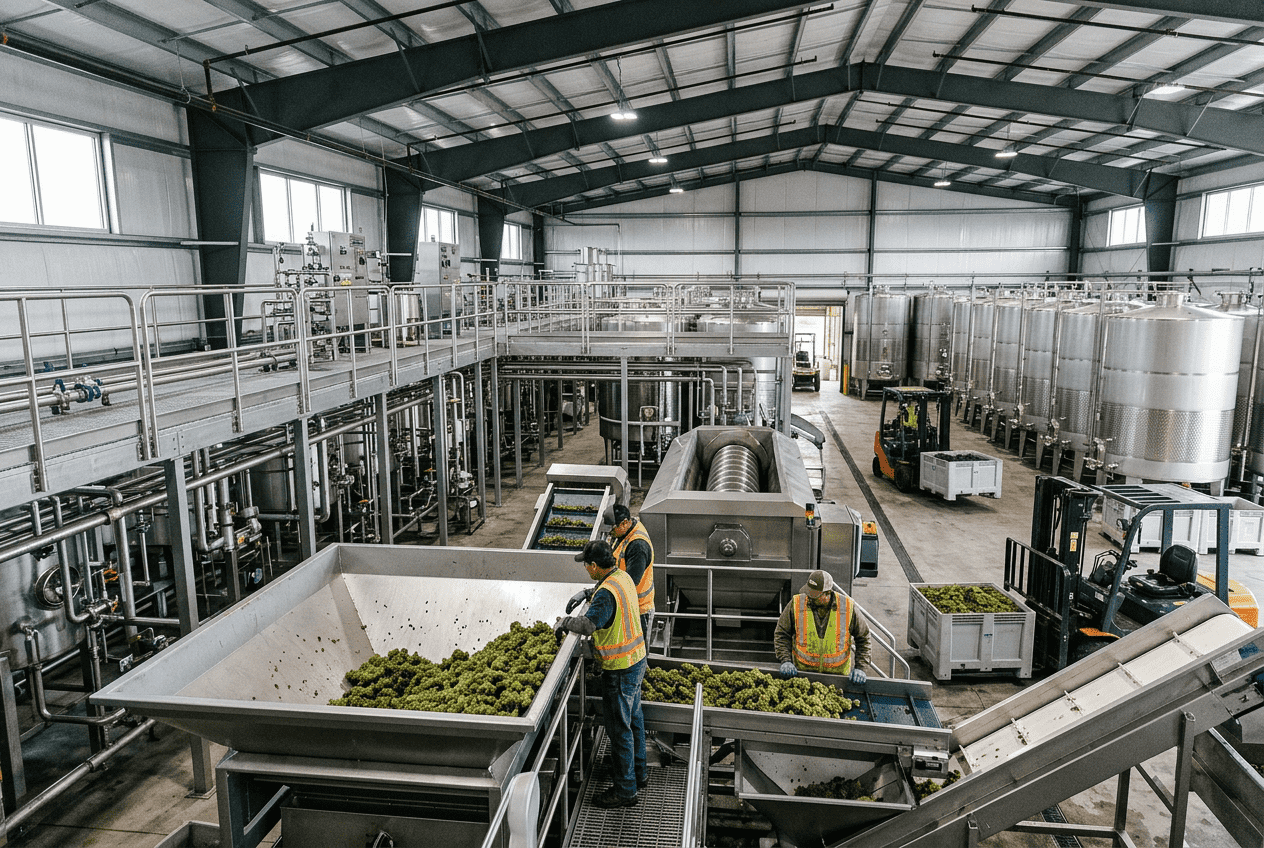
Food Processing Plant Design for Growth
Food processing plant design is no longer just a facilities task. In the United States, it is a strategic business decision that affects throughput, food safety, labor efficiency, energy use, audit readiness, and long-term profitability. Whether a manufacturer handles proteins, sauces, dairy, beverages, prepared foods, or aseptic products, the right layout can reduce bottlenecks, support compliance, and create room for future growth without forcing expensive reconstruction a few years later. For operators in major manufacturing corridors such as Chicago, Dallas-Fort Worth, Fresno, Atlanta, Charlotte, the Central Valley of California, the Midwest protein belt, and port-linked hubs like Savannah, Los Angeles, Long Beach, Houston, and New Jersey, design choices must also reflect logistics, labor access, utility infrastructure, and state or local permitting realities. This is why many growing manufacturers now treat plant design as part of capital planning rather than just a construction drawing package. An effective food processing plant design in the United States starts with three priorities: safe product flow, scalable capacity, and regulatory compliance. The best facilities separate raw and ready-to-eat traffic, size utilities for future growth, plan hygienic zoning from day one, and leave physical and operational room for added lines, packaging formats, automation, and warehousing. A strong design should support FDA or USDA requirements, SQF or BRC expectations, sanitation access, maintenance access, and labor efficiency at the same time. For most projects, the fastest path to success is to align plant layout with the commercial model. That means understanding the products being made, expected annual volume, shift strategy, packaging mix, shelf-life goals, cleaning needs, and expansion milestones before finalizing room sizes or equipment placement. Facilities that skip this step often face costly retrofits later. The table above shows why plant design should be treated as an operating model decision, not just a building project. Every row affects margin, compliance, or speed to market. The core principles of effective food processing plant design are straightforward, but applying them well requires industry-specific judgment. A protein facility in Nebraska or Arkansas does not have the same needs as a high-acid beverage co-packer in North Carolina or an aseptic dairy line in California. Still, several principles apply across product categories. First, start with process flow rather than architecture. Room placement should follow raw material receipt, ingredient staging, processing, packaging, palletizing, cold storage, and outbound logistics. Second, design around hygienic separation. Personnel, products, packaging, waste, tools, and air should not cross in ways that create risk. Third, right-size utilities based on future state demand, not only current equipment. Fourth, make maintenance and sanitation easy. If technicians and sanitation crews cannot safely access lines, the design will create downtime and quality risk. Another principle is flexibility. In the United States market, manufacturers frequently add SKUs, packaging sizes, allergen controls, retailer-driven compliance steps, and automation after start-up. A layout that only works for today’s exact product mix becomes obsolete quickly. This is also where experienced engineering partners make a difference. A team that understands process, controls, utilities, construction, and compliance can align equipment selection with building conditions and operational goals. Manufacturers evaluating strategic support can review the firm’s broader capabilities through food and beverage engineering services and compare whether the scope includes feasibility, design, installation, and execution oversight. Capacity planning should define the plant before walls are finalized. Too many facilities are designed around immediate sales forecasts only to discover that one successful retail launch, one foodservice contract, or one co-packing customer overwhelms the site. In the United States, where freight, labor, and utility costs vary significantly by region, rebuilding after start-up is especially expensive. A scalable layout begins with throughput assumptions: annual pounds, gallons, cases, or units; shifts per day; production days per year; changeover frequency; and planned utilization. From there, planners can size processing rooms, packaging halls, cold storage, dry storage, ingredient handling, and utility capacity. It is often wise to build shell space for future lines, oversize pipe racks and MCC capacity, and create utility tie-in corridors that minimize future shutdowns. For example, a beverage plant near Charlotte or Houston may open at 20 million cases and target 60 to 80 million cases over time. A protein or prepared foods operation near Kansas City or Indianapolis may need freezer capacity and wastewater systems designed with future load in mind. Growth planning must address not just the process line, but also CIP recovery, compressed air, hot water, refrigeration, dock positions, and employee welfare areas. The chart above illustrates a realistic upward trend: U.S. manufacturers increasingly prioritize scalable facilities as labor scarcity, retailer requirements, and automation adoption push plants toward higher efficiency and longer-term planning. The explanation is simple: growth does not happen only on the process floor. If utility rooms, loading areas, or sanitation infrastructure cannot grow with production, the plant still hits a ceiling. Some manufacturers try to manage design internally using plant personnel, a general architect, and individual equipment vendors. That approach can work for small modifications, but it often falls short on larger brownfield or greenfield food projects. The reason is coordination. Food plants require integrated decisions across process engineering, HVAC, plumbing, structural support, electrical distribution, controls, drainage, cleanability, and compliance. In-house teams know the product and daily pain points better than anyone. They should absolutely lead requirements and decision-making. But professional food processing plant design services bring cross-functional execution discipline and a broader view of capital efficiency. They can challenge assumptions, identify hidden bottlenecks, and keep the project aligned with production economics rather than just equipment wish lists. Disruptive Process Solutions, for example, operates across North America with a design-build-manage model that combines engineering, installation, and project execution. That matters to U.S. manufacturers because scope gaps between designer, builder, and integrator are a common source of delays and change orders. Companies can learn more about the team and operating philosophy on the company overview page. The key lesson from the table is that project delivery method should match project complexity. A national food or beverage operator expanding near Raleigh, Los Angeles, Milwaukee, or Toronto needs more than drawings. It needs coordinated execution that protects schedule, budget, and startup outcomes. Cross-contamination prevention starts with layout, not with sanitation alone. Smart facility design reduces the need to rely on heroic daily behavior. In practical terms, that means raw traffic should not intersect with ready-to-eat traffic, allergen handling should be controlled, drains should not move contaminants upstream, and air movement should support the hygienic intent of each room. Key controls include physical separation, traffic management, handwashing and gowning transitions, color-coded tools, dedicated forklifts or pallet jacks where needed, positive air pressure in sensitive areas, and room finishes that tolerate the required sanitation regime. In many U.S. facilities, the challenge is retrofitting old buildings that were never intended for modern SQF or BRC expectations. Here, smart design may include vestibules, partition walls, pass-throughs, directional traffic lanes, and revised dock or waste routes. The area chart reflects a broader industry trend: from 2022 to 2027, more U.S. processors are shifting capital toward hygienic zoning, environmental control, and contamination prevention instead of treating food safety as an afterthought. Processing zones should be clearly defined by product risk. Raw areas typically handle incoming ingredients and early processing steps before a kill step. RTE, or ready-to-eat areas, handle product after it is exposed post-lethality and therefore demand tighter controls. High-care areas are the most sensitive and often require stricter personnel entry, air handling, gowning, tool control, and sanitation protocols. In a U.S. meat, poultry, seafood, dairy, deli, or prepared foods facility, these distinctions are critical. A room that is functionally RTE but designed like a raw area will create long-term compliance and food safety problems. High-care environments may require airlocks, differential pressure monitoring, dedicated CIP or COP support, more restrictive finishes, and validated traffic barriers. The explanation here is important: zoning is not only about walls. It includes people flow, tools, forklifts, maintenance access, waste paths, and air. Facilities that treat zoning as only a color on a layout rarely perform well during audits or high-volume seasons. Pilot plants help validate assumptions before large capital is committed. This can include confirming cook curves, pumpability, mixing times, heat transfer, filling behavior, CIP effectiveness, packaging compatibility, and throughput. For new product categories such as plant-based proteins, functional beverages, fermented products, aseptic applications, or shelf-stable prepared foods, pilot work can save millions in design errors. Pilot validation is especially useful when a company is moving from batch to semi-continuous or continuous processing, changing viscosity ranges, entering new packaging formats, or scaling from regional to national distribution. It can also reveal whether the intended line speed is realistic and whether the plant needs more buffer tanks, different thermal systems, better automation logic, or more operator access around critical steps. This validation step can shorten commissioning and reduce startup surprises. It also strengthens capital justification because management can compare modeled performance against demonstrated process behavior. Companies evaluating major system choices often review available food processing equipment solutions alongside pilot findings to ensure the selected hardware matches the intended production model. Below are eight practical tips that repeatedly separate successful U.S. projects from expensive problem projects. The bar chart indicates strong demand across several industries, with beverage and protein projects leading due to co-packing growth, automation investment, and facility modernization. The table reinforces that maximum success comes from operational foresight. Each tip reduces a different type of future cost: labor, downtime, compliance, or reconstruction. The most expensive plant design mistakes are usually invisible at first. A layout may look clean on paper and still fail in real operation. One common mistake is underestimating non-process space such as ingredient staging, packaging storage, QA hold areas, or maintenance access. Another is placing lines too tightly, leaving no room for sanitation, troubleshooting, or future upgrades. Utility undersizing is another frequent issue. Plants often discover after startup that boilers, chillers, glycol loops, compressed air systems, drainage, or wastewater handling are limiting output. Controls can also be overlooked. In some cases, the true bottleneck is not mechanical capacity but poor PLC logic, slow changeovers, or missing data integration. Smart engineering teams identify these constraints before owners commit major capital. One reason some manufacturers choose specialized partners is the ability to connect engineering with execution and equipment integration. In addition to project design, DPS supports proprietary equipment manufacturing, installation, and complete system integration. This combination is particularly valuable for processors that need tanks, CIP systems, marination vessels, cooking systems, or custom process skids matched tightly to the overall facility concept. Companies interested in practical project examples can review selected food and beverage project case studies. The practical takeaway is that retrofits are rarely caused by one bad piece of equipment. They are usually caused by early planning assumptions that were never tested against real operations. The United States market is highly regional. Protein projects are concentrated in states such as Iowa, Arkansas, Nebraska, Kansas, Georgia, and Texas. Beverage growth remains strong in North Carolina, Texas, California, Nevada, Arizona, and the Midwest. Dairy and prepared foods cluster around Wisconsin, Idaho, California, and the Upper Midwest. Coastal markets such as New Jersey, Savannah, and Long Beach matter for imported ingredients and exported finished goods, while inland intermodal hubs such as Chicago, Memphis, Dallas, and Kansas City influence plant siting decisions for national distribution. Applications vary widely by product type. Food processing plant design may support grinding and forming, marinating, cooking, slicing, portioning, retort, aseptic filling, blending, carbonation, fermentation, hot fill, cold fill, dairy standardization, homogenization, or high-shear emulsification. Manufacturers should choose design partners based on whether they understand the specific operating conditions of the product category, not just generic industrial construction. Local supplier strategy also matters. A smart national project team often combines central engineering leadership with vetted local trades for concrete, mechanical, refrigeration, electrical, and sanitary installation. This is especially valuable when working across multiple U.S. states or in Canada, where local compliance and trade coordination can differ materially. The comparison chart shows why specialized food and beverage partners often outperform generic industrial suppliers on hygiene, compliance, integration, and scalable planning. For manufacturers seeking a partner that can bridge strategy and execution, Disruptive Process Solutions brings three capabilities that matter in U.S. food and beverage capital projects. First, on the technology side, the company supports structural, mechanical, plumbing, electrical, process, and controls engineering with practical experience in PLC programming, automation, and SCADA. That makes it possible to solve not just layout problems, but also hidden production constraints in logic, utility balance, or line integration. The team also works across thermal processing, fermentation, distillation, blending, filtration, carbonation, water systems, dairy processing, protein systems, and aseptic applications. Second, on the manufacturing side, DPS is not limited to third-party sourcing. The company also manufactures selected process equipment including tanks, CIP systems, marination tumblers, and cooking vessels. That matters when a client needs equipment geometry, cleanability, controls, or tie-ins matched tightly to the plant concept instead of forced into a generic package. Third, on the service side, the company supports capital planning, feasibility studies, owner’s representation, process design, general contracting or GC-equivalent coordination, installation, commissioning, and full project management. This integrated delivery approach is designed to help manufacturers move from concept to startup with fewer scope gaps and better alignment between spending and profitability. For U.S. processors that value honest planning, speed of execution, and long-term operating results, this model can be especially useful in both high-growth expansions and urgent relocation or modernization programs. Looking toward 2026, several trends are reshaping plant design in the United States. Automation will continue expanding beyond packaging into mixing, thermal processing, batching, material handling, and quality data capture. More facilities will design around digital visibility using SCADA, recipe management, energy tracking, and predictive maintenance inputs. Policy and compliance pressures will also increase. More operators are preparing for tighter traceability expectations, stronger environmental monitoring discipline, workforce safety scrutiny, and local water or wastewater constraints. Sustainability is moving from branding language to engineering criteria, particularly around heat recovery, water reuse where appropriate, efficient CIP, refrigerant strategy, insulation, compressed air optimization, and energy-aware controls. Facility flexibility will be another defining trend. With retailer shifts, private label growth, e-commerce pressures, and co-manufacturing demand, plants increasingly need to support multiple formats and rapid product turnover. In that environment, the best food processing plant design is one that can adapt without major reconstruction. What is the first step in designing a food processing plant?The first step is defining the operating model: products, throughput, shifts, packaging formats, shelf-life goals, sanitation needs, and growth targets. Layout should follow those requirements. How much expansion capacity should a new plant include?That depends on capital constraints and growth confidence, but most successful U.S. plants include spare utility capacity, reserved floor or shell space, and planned tie-in points for future lines. Do all facilities need separate raw and RTE zones?If the product and process create post-lethality exposure or ready-to-eat risk, yes. The degree of separation varies by product, but zoning should reflect actual hazard and compliance requirements. When should a pilot plant be used?Use a pilot plant when scaling a new product, changing process technology, entering aseptic or shelf-stable production, validating thermal or mixing assumptions, or testing fill and packaging behavior. Is in-house design enough for a growth project?For minor changes, often yes. For major brownfield or greenfield work, most manufacturers benefit from professional food processing plant design services that integrate process, utilities, controls, compliance, and construction. What industries benefit most from specialized food plant design?Protein, dairy, prepared foods, sauces, beverages, aseptic products, and co-packing operations all benefit because they require strong coordination between hygiene, throughput, and utility design. How can a company avoid costly retrofits?Model future capacity early, validate utilities, separate hygienic zones properly, protect maintenance access, and challenge process assumptions through pilot work or engineering review before construction. Why do controls matter in plant design?Because bottlenecks are not always mechanical. PLC logic, recipe control, changeover sequencing, and SCADA visibility can materially improve throughput without major equipment replacement. What should U.S. manufacturers look for in a design partner?Look for sector experience, integrated engineering depth, compliance fluency, practical construction execution, transparent project management, and a clear understanding of profitability rather than just installed equipment. In the end, food processing plant design for growth is about making capital decisions that still look smart five years from now. The strongest facilities in the United States are not simply larger. They are safer, cleaner, easier to operate, easier to expand, and more aligned with the business model from day one. -
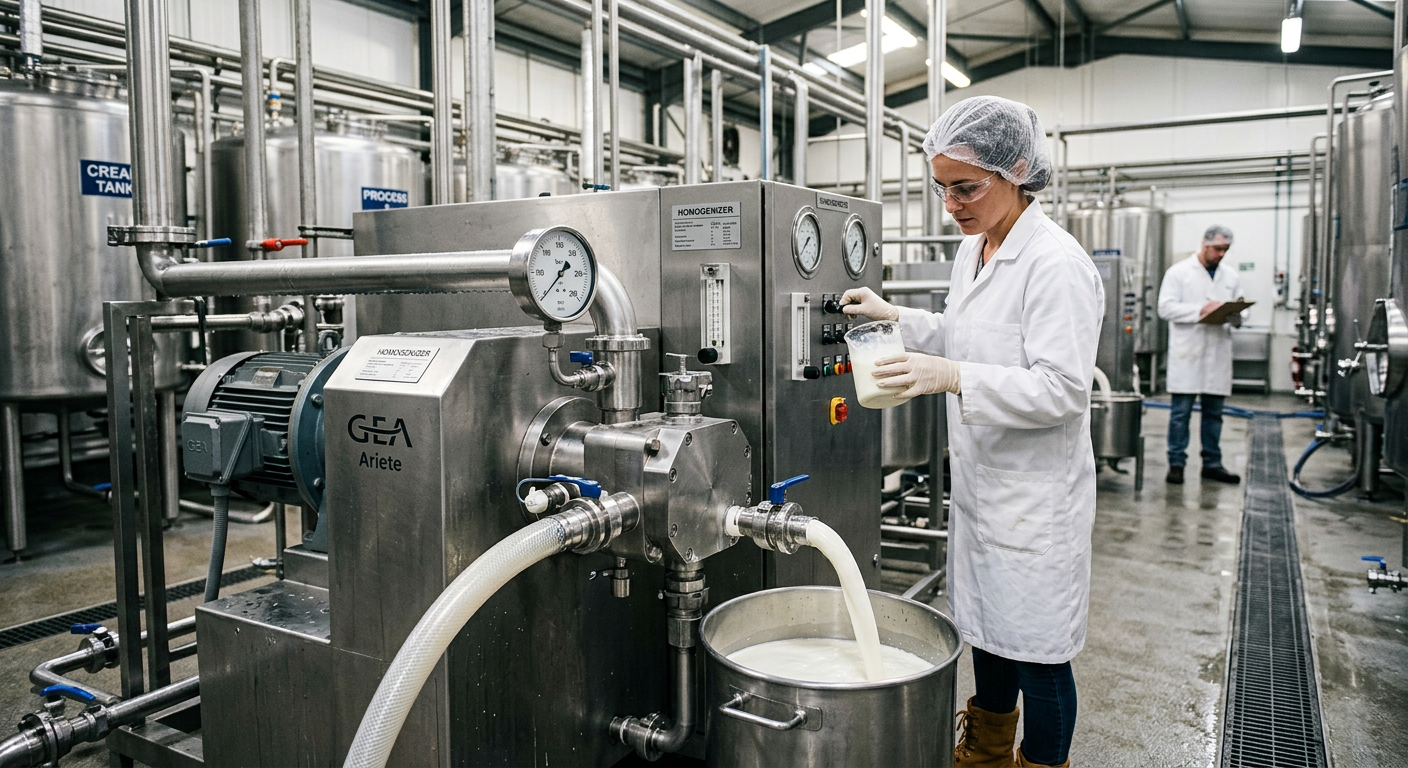
Beverage Plant Design Services
Designing a beverage plant in the United States is not just about fitting tanks, fillers, and utilities into a building. It is a business-critical exercise that affects throughput, product quality, labor efficiency, sanitation, compliance, and future expansion. Whether the project involves brewing, distilled spirits, juice, dairy beverages, RTD cocktails, kombucha, carbonated soft drinks, or aseptic products, the right plant design partner should connect process engineering, building systems, installation planning, capital strategy, and regulatory readiness into one workable roadmap. In major beverage corridors such as Chicago, Dallas-Fort Worth, Atlanta, Charlotte, Los Angeles, Milwaukee, Fresno, Houston, and the I-95 Northeast logistics belt, manufacturers face the same challenge: capacity has to grow without creating expensive bottlenecks. That is why many owners now prefer design partners that understand both the production line and the business model behind it. In the United States market, a strong beverage plant design service should cover concept development, process flow, utilities, structural coordination, sanitary design, packaging integration, automation, commissioning, and long-term scalability. Beverage plant design services in the United States typically include facility planning, process engineering, utility design, equipment integration, code and regulatory compliance, automation coordination, and construction support. The best providers do more than create drawings. They help owners define the right production capacity, utility loads, sanitation strategy, product flow, packaging line arrangement, and capital phasing so the plant can launch profitably and expand with less disruption. For beverage manufacturers, this matters because production environments are highly specialized. A brewery needs different fermentation logic than a juice or dairy beverage facility. A distillery has fire code and TTB concerns that differ from a nonalcoholic carbonated line. A co-packer running multiple SKUs requires flexibility in batching, changeovers, CIP, scheduling, and material handling. As a result, owners should look for firms with beverage-specific process experience rather than general industrial design alone. A practical example is Disruptive Process Solutions, a U.S.-based engineering partner serving beverage and food manufacturers across North America. Its approach is built around profitability, not just construction activity, which is especially important when a plant must scale from startup volumes to national distribution. In a competitive market where freight costs, utility rates, and retailer timing can make or break margins, design decisions made early have outsized financial impact later. The scope of beverage plant design can vary widely depending on whether the project is a greenfield site, brownfield retrofit, line expansion, utility upgrade, equipment relocation, or co-packing buildout. In the U.S., owners often need a blend of process, mechanical, plumbing, structural, electrical, and controls expertise to avoid fragmented execution. That is why plant design for beverage production is best understood as a coordinated discipline rather than a single engineering package. At the front end, plant design services usually begin with feasibility, capacity planning, and site fit. This includes evaluating building dimensions, floor loading, utility availability, drain layout, process adjacency, personnel flow, and shipping access. In logistics-heavy areas such as Inland Empire, Long Beach, Newark, Savannah, and Memphis, distribution access may be as important as production efficiency. A plant handling imported ingredients through the Port of Houston or the Port of Los Angeles may prioritize staging and warehouse integration differently than a regional dairy beverage processor in Wisconsin or upstate New York. Process specialization also matters by product type. Carbonated beverage plants require tight control of CO2 handling, de-aeration, syrup batching, and filler room conditions. Fermented beverage plants need yeast management, cellar sequencing, and CIP strategy. Distilled spirits plants must address mash processing, still support, barrel logistics, flammable vapor considerations, and TTB recordkeeping interfaces. Aseptic and dairy beverage plants need more rigorous hygienic zoning and often more robust utility redundancy. The table above shows why beverage facility design is broader than architecture or equipment purchasing alone. The strongest outcomes typically come from teams that can connect process requirements with buildability, procurement, and startup planning. For owners comparing delivery models, it is helpful to review firms that offer design, equipment integration, and field execution in one structure. On the service capabilities page, DPS outlines support spanning process engineering, capital planning, owner representation, project management, and installation coordination. That breadth reduces the handoff risk that often appears when one company designs the system, another buys the equipment, and a third tries to make everything work in the field. Process flow design is the backbone of a beverage facility. It determines how ingredients, packaging materials, people, utilities, product, and waste move through the building. A good process flow can increase output without adding square footage, while a poor one can permanently lock in congestion and sanitation conflicts. For most U.S. beverage projects, process flow design starts with a clear understanding of product families and volume targets. A single-SKU line producing shelf-stable tea has a very different flow pattern than a multi-SKU co-packing site producing energy drinks, flavored waters, sparkling products, and dairy-based beverages on shared assets. Designers must map receiving, storage, ingredient staging, batching, processing, filling, packaging, palletizing, warehousing, and outbound shipment in sequence. In beverage manufacturing, line balance is critical. There is little value in a high-speed filler if syrup preparation, blending, pasteurization, tunnel pasteurization, or finished goods palletizing cannot keep up. Similarly, a cellar expansion in a brewery may fail to deliver returns if packaging hall throughput remains fixed. Process flow design should therefore evaluate upstream, core, and downstream capacities as one system. Another major issue is hygienic separation. Facilities producing allergen-containing products, dairy beverages, fermented drinks, alcohol, and nonalcoholic products may need zoning that controls cross-contact, cleaning verification, and personnel movement. Modern design also places more emphasis on CIP recovery, reduced product loss, and in-line quality verification such as Brix, conductivity, dissolved oxygen, temperature, and fill weight monitoring. The best process flow work also anticipates future phases. A facility opening in Phoenix or Raleigh with one packaging line may plan a second line, additional syrup room capacity, more compressed air, and warehouse expansion within 24 months. If the first phase is laid out poorly, future capacity will cost more and interrupt live production. This is where experienced beverage-focused engineers create value: they design for what the plant needs now and what it should become later. The line chart above reflects a realistic growth pattern for U.S. beverage facility investment. It illustrates how capital spending tends to rise as brands add domestic capacity, regionalize co-packing, and invest in automation, utility efficiency, and packaging flexibility. Choosing a design firm is one of the most important buying decisions in any beverage capital project. A firm with general industrial experience may produce code-compliant drawings, but that does not automatically mean the team understands sanitary piping geometry, carbonation sensitivity, cellar sequencing, flavor changeovers, filler integration, allergen zoning, or the practical causes of operator delay. Beverage-specific expertise reduces that risk. Owners in the United States should ask direct questions about category experience. Has the firm designed for breweries, RTD cocktails, distilleries, wine, kombucha, soft drinks, juice, dairy beverages, or aseptic lines? Do they understand clean utility loads, process controls, and packaging hall realities? Can they coordinate with OEMs, local trades, and commissioning teams? Can they support both strategic planning and fast execution if a schedule collapses? Service capability is often the differentiator. Some firms stop at design documents. Others act as owner representatives, project managers, or design-build partners. DPS, for example, has built its reputation around a Design Build Manage model that aligns engineering, field coordination, and execution oversight. For many U.S. manufacturers, especially those expanding across multiple states, that integrated structure can reduce scope gaps, change orders, and schedule drift. This selection framework is especially useful for private-label beverage producers, brand owners entering manufacturing, and established companies relocating assets. If a firm cannot explain how it would sequence production startup, utility commissioning, quality verification, and staffing ramp-up, it may not be the right partner for a fast-moving beverage project. Buyers should also review project examples, not just capability statements. The project case studies section is a helpful reference point because it shows how engineering choices tie back to real operating outcomes. In beverage manufacturing, examples matter more than generic promises. Process engineering and structural engineering solve different problems, but beverage projects fail when they are not coordinated. Process engineers determine how the system should function. Structural engineers determine how the building and support elements safely carry that system. In a beverage facility, those two disciplines overlap constantly. Consider a distillery in Kentucky adding column stills, mash tanks, and elevated piping bridges. The process team may define vessel sizes, flow rates, and sanitary routing, but the structural team must confirm slab loading, anchorage, seismic restraints where needed, mezzanine support, access platforms, and clearances for maintenance. The same is true in a brewery adding large fermenters in Colorado or North Carolina, or a co-packer installing mezzanine syrup rooms in Texas. In high-density beverage layouts, structural constraints often shape process choices. Tall tanks may improve capacity, but roof height, column spacing, crane access, and foundation loads can limit practical installation. Heavy thermal systems, water treatment skids, and refrigeration components need support planning early. Access also matters: operators, maintenance technicians, and sanitation crews need safe paths to valves, instruments, and manways. Technological capability is where integrated firms stand out. DPS supports structural, mechanical, plumbing, electrical, process, and controls engineering under one project approach, which helps align sanitary production requirements with safe, constructible layouts. That matters in projects where process vessels, CIP systems, refrigeration loops, utilities, and packaging lines all compete for the same envelope. The lesson is simple: process engineering makes the plant work, and structural engineering makes it feasible, safe, and maintainable. Owners need both from day one, not as separate afterthoughts. Utilities are often underestimated during concept design, yet they are among the biggest determinants of reliability and operating cost. Beverage facilities depend heavily on plumbing, refrigeration, and HVAC systems for sanitation, thermal control, worker comfort, product stability, and code compliance. If any of these systems are undersized, poorly zoned, or hard to maintain, the plant will struggle no matter how advanced the process equipment is. Plumbing design in beverage plants goes beyond domestic water and drains. It includes process water distribution, chemical storage interfaces, floor sink strategy, trench drains, backflow prevention, washdown coverage, hot water availability, and wastewater handling. In high-cleanliness areas, drainage layout must support sanitary design rather than create standing water or cross-traffic hazards. Refrigeration design depends on product type and package requirements. Breweries and kombucha facilities often need robust glycol systems for fermentation and cellar control. Dairy beverage, juice, and some RTD plants may require chilled process water, cold storage, or low-temperature packaging zones. In warm U.S. regions such as Florida, Arizona, or Southern California, refrigeration loads can rise quickly, especially in buildings with frequent dock door activity. HVAC design supports personnel, process rooms, package integrity, and air quality. Filler rooms may require tighter control than dry warehouses. Distilleries may need ventilation strategies tied to vapor management. Aseptic areas need more stringent pressure and filtration logic. Even in conventional plants, humidity control can be crucial for carton performance, label adhesion, and operator conditions. The bar chart highlights which beverage segments are currently driving higher demand for engineering and plant design support. RTD, functional beverages, and carbonated products often generate strong design activity due to rapid SKU expansion and packaging complexity. In practical terms, utility design should always be tied to the production plan. A plant designed for 20 million cases annually in the Southeast may need a very different boiler strategy, compressor arrangement, cooling tower setup, and glycol redundancy than a lower-volume regional operation in the Pacific Northwest. Firms with broad technical capabilities can better coordinate these systems with process demand, automation, and future expansion. One of the most common requirements in U.S. beverage manufacturing today is product flexibility. Plants increasingly need to run multiple brands, flavors, pack sizes, sweetener systems, functional ingredients, and even different beverage classes on shared assets. This is especially true in co-packing, private label, and emerging brand production. Designing for flexibility starts with understanding which changes happen most often. If package format changes are frequent, line design should prioritize tool-less changeover, guided adjustments, digital recipes, and smart conveyor zoning. If flavor changes are the pain point, designers should focus on batching manifolds, pigging systems where appropriate, low-hold-up piping, and CIP segmentation. If allergen or dairy crossover is possible, segregation and validated cleaning become far more important. Product flexibility also affects warehouse design and scheduling. Shared lines create more packaging material variability, more WIP coordination, and more finished goods complexity. Facilities in consumer-dense corridors such as New Jersey, Southern California, and central Texas often need faster response to retailer launches and promotions, which increases the value of flexible design. Manufacturing capability matters here because the best engineering partners understand not only how a line should be designed, but also what equipment can realistically be fabricated, installed, and integrated for flexible operation. DPS supports both integrated project execution and proprietary equipment manufacturing, including tanks and CIP systems, which can be useful when a client needs custom dimensions, specific utility interfaces, or faster coordination between design and fabrication. In many cases, flexibility is what separates a merely functional plant from a profitable one. The owner pays a little more upfront for smart architecture, but gains faster changeovers, less waste, and greater commercial agility over time. The area chart shows a realistic increase in U.S. beverage projects focused on flexible, multi-SKU production. This trend is expected to continue through 2026 and beyond as brands seek faster innovation cycles and co-packers compete on responsiveness. Compliance should be designed into the facility from the beginning. In the United States, beverage manufacturers often navigate federal rules, state and local permitting, food safety expectations, fire and building codes, and environmental requirements all at once. The applicable framework depends on the product category, process type, and jurisdiction. For nonalcoholic beverages, FDA compliance is central, especially around sanitary design, preventive controls, traceability, and process validation where applicable. For alcoholic beverage operations, TTB requirements are also relevant, particularly for spirits and certain recordkeeping or bonded concerns. State agencies may add licensing, environmental discharge, or health department requirements. Local jurisdictions can affect occupancy classification, fire suppression, hazardous material handling, and utility permits. Owners should never assume that a process equipment supplier alone will cover facility-level compliance. The plant design team must translate regulatory obligations into room layouts, material flows, drain design, utility arrangements, cleaning systems, documentation pathways, and commissioning checks. The table above shows that compliance is not a single permit; it is a design condition affecting nearly every room and utility connection. This is one reason owners often seek firms fluent in FDA, TTB, SQF, BRC, and related operational standards rather than firms that only prepare basic permit drawings. For 2026, compliance pressure is expected to increase in three areas: water stewardship, energy reporting, and digital traceability. More facilities are designing with recovery, metering, and reporting in mind because retailers, investors, and regulators increasingly expect measurable performance, not just general intent. Three-dimensional modeling and BIM have become standard tools in modern beverage plant design because they reduce clashes, improve owner visibility, and support faster decision-making. In complex projects, 2D drawings alone rarely provide enough confidence when process piping, structural steel, drains, utility mains, access platforms, electrical distribution, and packaging equipment all compete in the same space. With 3D modeling, owners can see whether operators can reach a valve, whether maintenance can remove a pump, whether forklifts can turn safely, and whether future line additions have enough room. Clash detection is especially valuable in brownfield plants where ceiling heights, old trenching, undocumented supports, or uneven slabs can create expensive surprises. BIM also helps stakeholders communicate across locations. A brand team in New York, operations leaders in Chicago, a co-packing group in California, and local contractors in North Carolina can review the same model and resolve decisions faster. That is particularly useful in phased expansions where production must continue during construction. From a technological standpoint, firms with process, structural, and controls awareness can use BIM more effectively because the model reflects real operating conditions, not just geometry. This is where integrated engineering teams often outperform disconnected disciplines. A model should help answer practical questions: Can the CIP skid serve future tanks? Is there enough room for another compressor? Will the conveyor elevation interfere with sanitation access? Can an aseptic room maintain intended zoning? The comparison chart gives a realistic view of how different project delivery approaches can perform when measured against coordination, scalability, and execution strength. For beverage projects with multiple utility and process interfaces, integrated models tend to outperform narrower delivery structures. As BIM use matures, owners are also asking for digital turnover packages that support maintenance, spare parts planning, and future modifications. By 2026, digital twins, energy dashboards, and more connected asset data are likely to become more common, especially in larger U.S. beverage networks. What types of beverage facilities typically need professional plant design services?Breweries, distilleries, wineries, soft drink bottlers, juice processors, dairy beverage plants, kombucha producers, functional beverage manufacturers, RTD alcohol producers, and co-packers all benefit from professional design. Any operation adding significant capacity, changing process type, or trying to improve profitability should consider it. How early should a company engage a beverage design firm?Ideally before site lease finalization or major equipment commitments. Early engagement helps validate building fit, utility demand, process flow, and future scalability. Waiting too long often leads to layout compromises and costlier retrofits. What is the difference between a general engineer and a beverage-specific engineer?A beverage-specific engineer understands sanitary piping, changeover logic, thermal processing choices, carbonation systems, cellar sequencing, CIP design, packaging line balance, and the regulatory expectations that come with beverage production. That practical knowledge usually leads to fewer operational blind spots. Can one design support multiple beverage categories in the same plant?Yes, but only if the layout, utilities, cleaning strategy, zoning, and quality controls are designed for it. Shared lines across sparkling, still, alcoholic, dairy, or allergen-sensitive products require thoughtful segregation and validation planning. How important are local supply and logistics factors?Very important. Plants near Chicago, Atlanta, Dallas, Los Angeles, Houston, or New Jersey often benefit from transportation access, labor pools, and supplier density. Ports, intermodal yards, and regional ingredient availability can influence both design and operating economics. What should owners ask about utility design?Ask how the team will size water treatment, steam, compressed air, glycol, refrigeration, HVAC, wastewater, and electrical systems for both initial demand and future growth. Undersized utilities are one of the most common causes of lost performance. What role does equipment manufacturing play in plant design?It can improve integration when custom tanks, CIP skids, or process vessels are needed. Owners can review available process equipment options to see whether custom-fabricated assets may reduce fit-up issues or improve schedule control. How do I evaluate a firm’s real capability?Look for category-specific project examples, process depth, utility experience, 3D modeling capability, installation support, automation understanding, and a clear method for protecting ROI. A strong firm will discuss bottlenecks and profitability, not just drawings. What future trends should beverage manufacturers plan for through 2026?Expect more demand for multi-SKU flexibility, better energy and water performance, digital traceability, modular expansion, higher automation, more U.S.-based production resilience, and stronger sustainability reporting tied to customer and investor expectations. Why do many manufacturers choose DPS for beverage projects?Because the company combines process engineering, utility coordination, project management, installation integration, and practical capital planning in one execution model. With offices in Cary, North Carolina, and Lake Forest, California, and project reach across the United States and Canada, DPS supports beverage manufacturers that want smart technical decisions tied to long-term profitability rather than short-term activity. Ultimately, beverage plant design services should help a manufacturer answer five questions clearly: What capacity do we truly need, how should product flow through the site, what utilities will support reliable output, how can we stay compliant, and how do we expand without rebuilding the plant from scratch? When those questions are answered by a beverage-experienced team, the facility becomes more than a production site. It becomes a durable operating advantage. -
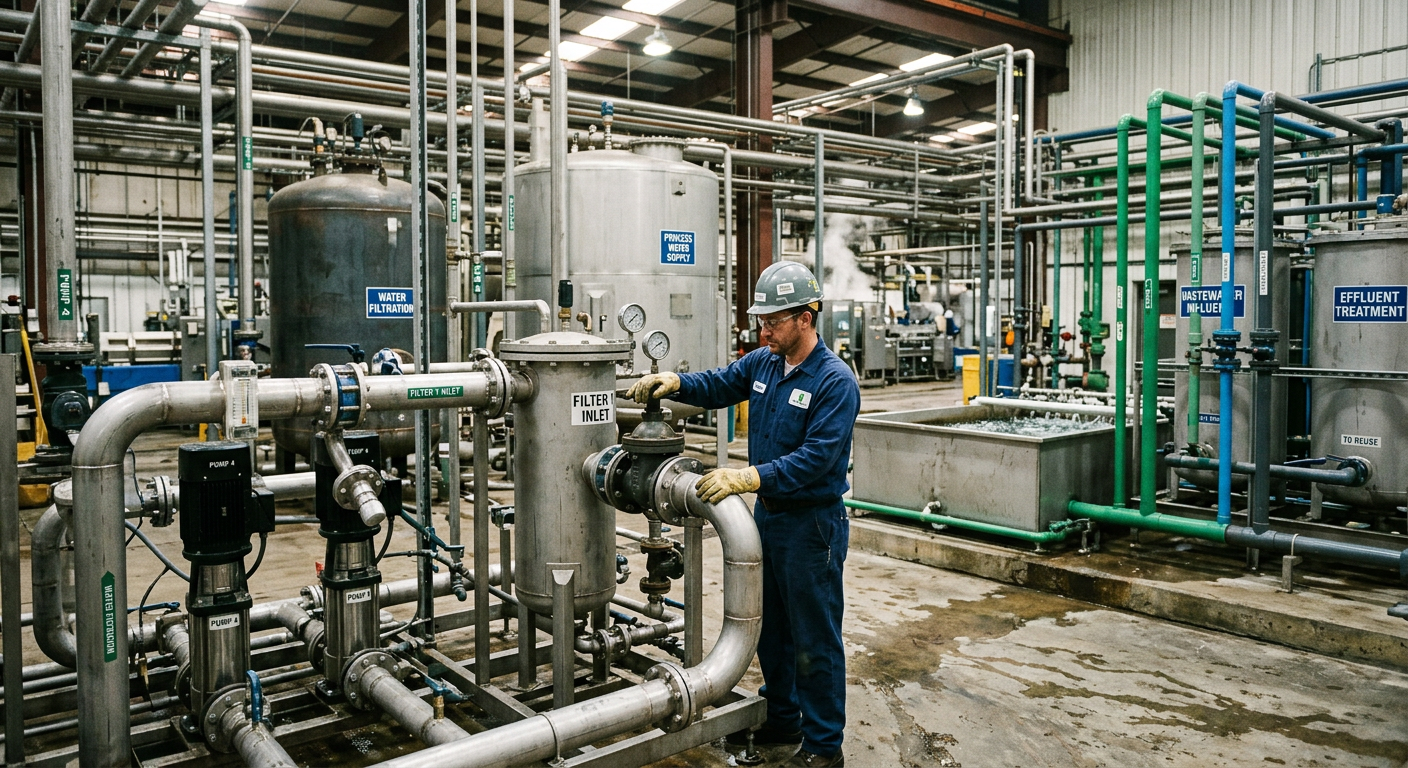
Food Plant Design Services for Manufacturers
For manufacturers in the United States, professional food plant design services go far beyond drawing a floor plan. A strong design partner helps define production goals, map sanitary zoning, size utilities, select equipment, control capital costs, support FDA and USDA expectations, and create a facility that can scale as product demand changes. Whether you are planning a greenfield plant near Chicago, expanding a protein line in Texas, upgrading a dairy system in Wisconsin, or building a beverage co-packing site near the Port of Los Angeles, the quality of plant design directly affects throughput, food safety, labor efficiency, and return on capital. Manufacturers increasingly need project teams that understand both engineering and operations. That is why many companies look for firms that can combine process knowledge, utility design, installation oversight, and execution management under one roof. In the U.S. market, where labor costs, regulatory complexity, and construction lead times continue to rise, good design is not a luxury. It is a profit protection tool. Professional food plant design services for U.S. manufacturers typically include process engineering, facility layout planning, GMP zoning, utility design, equipment selection, automation integration, regulatory compliance support, capital budgeting, construction documentation, and start-up coordination. The best firms align design decisions with product mix, sanitation requirements, throughput targets, labor availability, and future expansion plans. Before hiring a design partner, evaluate industry experience, code knowledge, execution capability, supplier neutrality, communication style, and ability to connect plant design to business performance. In the United States, demand is especially strong in beverage, dairy, prepared foods, protein processing, aseptic packaging, and co-manufacturing. Regions such as the Southeast, the Midwest, California, and Texas remain active because they combine logistics access, labor pools, and proximity to key consumer and agricultural markets. Plants near Atlanta, Dallas-Fort Worth, Charlotte, Fresno, Milwaukee, and Kansas City often prioritize fast startup, flexible production lines, and clear paths to expansion. The chart above reflects a realistic growth pattern in U.S. capital design activity as manufacturers modernize legacy plants, add automation, improve sanitary layouts, and invest in more resilient regional production networks. Food plant design services usually start with business questions, not construction drawings. What products will be made? How many SKUs? What package formats? What peak throughput is required? What sanitation regime applies? Will the plant run one shift or three? Once those variables are clear, the design team can translate commercial needs into an engineered manufacturing environment. At a practical level, manufacturers should expect support in several areas: process flow development, building layout, utility planning, equipment arrangement, hygienic design, employee and material flow, maintenance access, safety systems, code review, and permit-ready drawings. Strong providers also consider warehouse strategy, traffic patterns, waste handling, and digital controls early rather than leaving them as late-stage fixes. For many U.S. projects, design scope extends to coordination with architects, structural engineers, refrigeration specialists, electrical teams, civil consultants, automation providers, and local authorities. If a site sits near a major distribution corridor like I-35 in Texas, the Inland Empire in California, or the I-85 corridor in the Carolinas, truck staging, dock flow, and utility resilience can materially affect the layout. This table shows why design services should be evaluated as a full lifecycle function rather than a drafting exercise. The most effective teams understand how design choices affect margin, not just compliance. On the technology side, some engineering groups bring deeper capabilities in mechanical, plumbing, electrical, process, and controls integration. That matters if your project includes PLC programming, SCADA visibility, recipe management, or automated CIP verification. For manufacturers seeking one partner that can connect processing and controls, it helps to review full-scope engineering and project services instead of hiring multiple disconnected specialists. The design process normally moves through structured stages. First comes discovery and feasibility: understanding product requirements, business constraints, site conditions, and budget targets. Then the team develops conceptual layouts that establish adjacencies, room sizes, line orientation, utility rooms, docks, ingredient handling, and personnel flow. At this stage, a good designer can often identify whether the plant should be built around batch processes, continuous processing, or modular production cells. Next comes basis-of-design development. This is where throughput assumptions, sanitation categories, utility loads, and equipment strategies become specific. Refrigeration loads, steam demand, wastewater generation, floor slope requirements, clean-in-place logic, and compressed air quality are all defined in enough detail to avoid later surprises. For beverage and dairy projects, process water quality and thermal systems become especially important. For protein and prepared foods, chilled rooms, hygienic drainage, and separation between raw and ready-to-eat zones often dominate the design conversation. Design development and construction documents follow. These packages coordinate architectural, structural, utility, process, and controls information so pricing and execution can proceed with fewer gaps. In U.S. jurisdictions, local permitting and code interpretation can vary significantly, so drawings must be coordinated carefully with authorities, inspectors, and utility providers. The value of this stepwise process is predictability. When manufacturers rush from idea to equipment orders without a solid design basis, they often discover late conflicts involving structural support, utility capacity, sanitation access, or forklift circulation. Those errors cost far more to fix in the field than on paper. Companies evaluating modernization or new construction can benefit from partners that also understand capital planning, owner-side oversight, and execution risk. Background on team structure and project philosophy is often visible through an engineering firm’s company profile and leadership approach, which can reveal whether it acts like a strategic advisor or only a transactional vendor. Choosing a food plant design firm is not simply about finding the lowest engineering fee. The right partner can protect millions of dollars in capital and years of operating performance. The wrong one can lock a plant into poor flow, sanitary risk, underbuilt utilities, and expensive retrofits. Start with industry fit. A company experienced in dry ingredients may not be the best choice for aseptic beverage filling, and a firm strong in general industrial buildings may not understand USDA-inspected protein environments. Ask for project examples that match your process category, package format, throughput range, and compliance regime. Then assess execution depth. Can the firm handle process engineering, utility coordination, equipment integration, and startup support? Does it understand what actually happens during installation and commissioning? In food manufacturing, theoretical design without field experience often leads to impractical layouts. Communication style matters as much as technical ability. Good firms challenge assumptions, identify hidden risks, and explain tradeoffs clearly. They should be able to say no when a concept threatens profitability or sanitation performance. Manufacturers should also ask how the design firm manages change control, supplier alignment, long-lead equipment, and multi-state permitting. This evaluation table helps separate firms that can draw a plant from firms that can help a manufacturer build a profitable operating asset. In the U.S., manufacturers frequently benefit from design teams that are comfortable working nationally but can still coordinate with local trades, inspectors, and utility providers. That is especially important when projects span multiple regions, such as a beverage expansion in North Carolina followed by equipment relocation in Texas or a line installation in California. One of the biggest strategic decisions in a food plant project is whether to use an integrated design-build partner or keep design and construction separate. Each model has advantages, but the best choice depends on schedule urgency, internal resources, project complexity, and risk tolerance. With separate design and construction, the owner hires engineers first and then tenders the project to contractors. This can work well when the scope is stable, the owner has strong internal project management, and competitive bidding is a priority. However, it can also create handoff gaps. Contractors may discover constructability issues late, or pricing may exceed the assumptions built into design. Integrated design-build reduces fragmentation by keeping engineering, build execution, and project management more aligned. For food and beverage plants, where utility routing, equipment placement, controls, sanitary access, and startup sequencing are tightly linked, this can shorten timelines and reduce rework. It also tends to improve accountability because one team owns more of the outcome. Some firms use a broader model that combines design, build, and execution management. That approach is especially useful when the owner wants a partner that can engineer the system, manage local trades, coordinate installation, and keep decisions tied to long-term operating goals instead of short-term construction convenience. This comparison is useful for manufacturers deciding how much coordination risk they want to carry internally. In practice, food projects with significant process integration often benefit from tighter alignment between design and build teams. The comparison chart highlights a common U.S. project trend: integrated models often score better on coordination and accountability, while separate delivery requires more active owner management. Good Manufacturing Practice layout design is one of the most important parts of food plant planning. A productive plant that fails sanitation or cross-contamination control is not truly efficient. GMP layout design starts with product risk, then organizes space around cleanability, segregation, and controlled flow. Typical zoning categories include raw receiving, ingredient staging, primary processing, post-lethality handling, packaging, finished goods storage, sanitation support, maintenance, and employee welfare spaces. In higher-risk environments such as ready-to-eat meats, dairy, aseptic processing, and allergen-heavy operations, the design must also address air pressure relationships, personnel transitions, handwashing points, gowning, traffic control, and separation of tools and waste streams. Flow patterns should minimize backtracking. Ingredients, work-in-process, packaging, rework, employees, pallets, and trash should not collide in the same corridors if that creates contamination risk or slows operations. In many older U.S. plants, repeated expansions create crossed paths between raw and finished product zones. A redesign can often fix this with better room sequencing, dedicated doorways, and disciplined zoning. This table demonstrates that contamination control is built into the floor plan itself. It is not something added later with signs and procedures alone. Manufacturers in sectors such as prepared foods, meat, seafood, sauces, dairy, and RTD beverages should verify that their design team understands both GMP and production practicality. The goal is not only to prevent contamination but also to support real cleaning routines, realistic staffing, and unblocked maintenance access. Equipment selection should never happen independently from facility design. A filler, retort, cooker, tunnel pasteurizer, mixer, spiral freezer, homogenizer, or fermentation system may look acceptable on a vendor data sheet but perform poorly if the surrounding layout is wrong. Production efficiency depends on line balance, service access, utility connection points, operator reach, CIP strategy, changeover time, and upstream/downstream buffering. In food and beverage plants, layout optimization usually focuses on reducing touches, shortening transfer distances, improving operator visibility, and creating enough clearance for sanitation and maintenance. For example, a protein line may need extra room for trim handling and washdown. A beverage line may need bottle accumulation, syrup room adjacency, and high-speed packaging material feed. A dairy plant may need carefully sequenced thermal processing, ingredient addition, homogenization, and cold storage. Technology depth matters here. Some engineering groups can support not only process layout but also controls integration, PLC logic, SCADA visualization, and utility interlocks that improve uptime. On the manufacturing side, firms with experience integrating tanks, CIP systems, cooking vessels, blending systems, marination equipment, and custom processing skids often offer more realistic equipment planning. Manufacturers exploring options may also review available process equipment capabilities and custom system offerings to see whether a partner can align equipment supply with facility design. The bar chart reflects current demand patterns in the U.S. market, where beverage, co-packing, protein, and prepared foods continue to drive significant design and integration activity. Representative applications include: Across these sectors, the layout should reflect actual operating priorities: uptime, food safety, labor productivity, and flexibility. Many U.S. manufacturers regret designing plants only for current demand. By the time a line is stable, sales teams often want new formats, new pack sizes, more SKUs, or second-shift expansion. Future-proofing means creating capacity options without overspending on day one. Practical future-proofing strategies include reserving floor space for parallel lines, oversizing selected utility headers, planning structural capacity for future mezzanines, using modular utility corridors, and locating walls or drains so rooms can be reconfigured later. Warehousing strategy also matters. In tight metro areas such as Los Angeles, Newark, or Seattle, staged expansion may depend on smarter dock and cold storage design rather than immediate building enlargement. Future-proofing also includes digital readiness. Plants coming online in 2026 and beyond increasingly need historian data, energy monitoring, recipe control, maintenance analytics, and remote support capabilities. Sustainability pressure is rising as well. More owners are tracking water reuse, heat recovery, wastewater pretreatment, refrigerant strategy, and lower-energy clean-in-place design. Policy trends in the United States are also pushing more documentation around traceability, worker safety, and environmental performance. The area chart illustrates a clear design trend: more plants are being planned around flexibility, automation, data visibility, and sustainability rather than single-product optimization alone. For 2026, important future trends include: A well-designed plant should let you add volume, launch adjacent products, and respond to retailer or co-manufacturing opportunities without rebuilding the whole facility. Budget control begins in concept design, not after bids arrive. A common mistake is to focus on process equipment cost while underestimating utilities, sanitary finishes, refrigeration, wastewater handling, electrical distribution, controls integration, and startup requirements. In food facilities, these supporting systems can represent a very large share of project cost. Order-of-magnitude budgeting should be refined at each design stage. Early estimates help screen feasibility. Later estimates should account for regional labor rates, permitting timelines, long-lead equipment, and site-specific utility constraints. Costs in California, the Northeast, and certain high-demand metro areas may differ sharply from costs in parts of the Midwest or Southeast, even for similar process scope. Cost control also depends on scope discipline. If process assumptions, utility loads, packaging formats, or sanitation categories keep changing, design efficiency disappears quickly. The best teams make assumptions explicit, track changes, and show owners how each revision affects capital and schedule. This table shows why cost control is fundamentally a design management issue. Many overruns do not come from dramatic mistakes; they come from unresolved assumptions that turn into field changes. On the service side, some project partners stand out because they can support capital planning, feasibility analysis, owner representation, engineering, general contracting where licensed, installation coordination, and program management under one operating model. That integrated service capability can improve both budget realism and schedule control, particularly for projects ranging from targeted upgrades to multi-million-dollar facility builds. Real-world case patterns support this point. In one representative U.S. engagement, a manufacturer expected to spend millions on expansion for only a modest throughput gain. Detailed review of process controls revealed that programming constraints, not installed equipment, were the true bottleneck. A controls-driven fix unlocked substantial additional output and changed the client’s capital strategy. In another large beverage project, design planning centered on first-year profitability and phased utility infrastructure so the site could scale from an initial operating target toward much larger long-term capacity. These examples show that the best food plant design work often protects clients from unnecessary capital as much as it helps them spend wisely. If you want to see how project outcomes are framed in practice, selected food and beverage project examples can help illustrate what good execution looks like across different facility types. What is the difference between food plant design and general industrial design?Food plant design requires deeper attention to hygienic zoning, washdown conditions, allergen control, personnel flow, food-contact risks, thermal processing needs, drainage, and regulatory expectations. General industrial design usually does not address these issues in the same detail. How long does a food plant design project take in the United States?It depends on project size and complexity. A focused line upgrade may take a few months for engineering, while a greenfield food or beverage facility can require many months of planning, permitting, procurement coordination, and construction support. Should I hire a specialist for beverage, dairy, or protein processing?Yes, if your process category has unique sanitary, thermal, or regulatory demands. Aseptic, dairy, ready-to-eat protein, and high-speed beverage packaging all benefit from category-specific experience. When should equipment vendors be involved?Usually during conceptual and design development phases, after business goals and flow logic are defined. Bringing vendors in too early can distort the layout around one machine instead of the whole process. How can I reduce project risk before construction starts?Invest in a clear basis of design, coordinated utility studies, realistic budget validation, GMP zoning review, and constructability input. Confirm long-lead equipment requirements and local permitting assumptions early. Is design-build better for food plants?Often yes for complex process-driven facilities, especially when schedule, utility coordination, and startup execution are critical. Separate design and construction can still work well when scope is stable and the owner has strong internal management resources. What should be included in a future-ready facility plan for 2026?Expansion space, flexible utility routing, automation readiness, stronger traceability systems, energy and water efficiency measures, and room for SKU changes or added package formats should all be considered. Can one partner handle engineering, equipment integration, and project execution?Yes. Many manufacturers prefer firms that can combine process engineering, utility coordination, equipment integration, installation management, and owner-focused project oversight to reduce fragmentation and speed decision making. For manufacturers in the United States, the right food plant design partner should help answer one central question: will this facility make money reliably, safely, and at scale? When design aligns process, utilities, equipment, compliance, and expansion strategy, the plant becomes more than a building. It becomes a durable manufacturing advantage. -
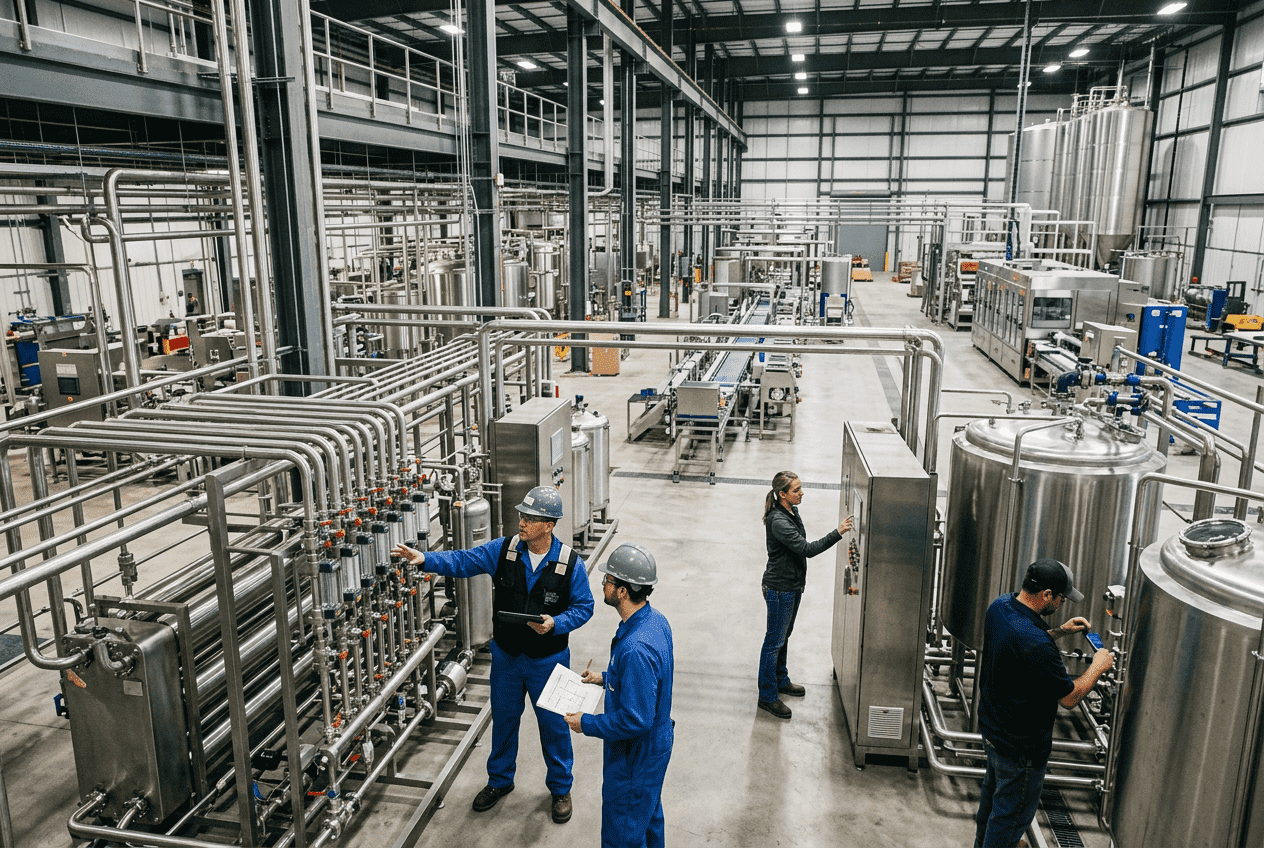
Beverage Manufacturing Engineering Services
U.S. beverage manufacturing engineering services cover the full technical and commercial framework needed to turn an idea, line expansion, or plant retrofit into reliable production. In practice, that means process design, utility planning, water treatment, ingredient handling, blending, carbonation, filling, capping, packaging, controls, sanitation, compliance, commissioning, and ongoing optimization. For manufacturers in major beverage corridors such as North Carolina, Texas, California, Illinois, Georgia, New Jersey, and the Midwest distribution belt, the right engineering partner should do more than size tanks and specify pumps. The partner should connect product requirements, throughput goals, labor constraints, utility loads, food safety, and return on capital into one executable plan. In the United States, beverage projects often succeed or fail on details that sit between processing and packaging: syrup room layout, clean-in-place logic, dissolved oxygen control, line changeover time, pasteurization method, warehouse flow, and the capacity of utilities such as compressed air, steam, chilled water, glycol, and process water. That is why many beverage producers look for engineering teams that can align production needs with real operating economics, especially when dealing with national retail deadlines, co-packing volume swings, and state-by-state permitting expectations. Beverage manufacturing engineering services are the specialized design, integration, and execution services used to build or improve beverage plants in the United States. They typically include feasibility analysis, capital planning, process engineering, automation, equipment specification, sanitary piping, utility design, filling and packaging integration, commissioning, compliance support, and line performance optimization. These services apply to carbonated soft drinks, juices, RTD beverages, dairy drinks, spirits, wine, kombucha, functional beverages, and aseptic products. If you are selecting a firm, prioritize one that understands both the product and the business model. A plant making shelf-stable tea for nationwide retail has different needs than a brewery in Charlotte, a spirits project in Kentucky, a dairy beverage operation in Wisconsin, or a co-packer near the Port of Long Beach serving West Coast accounts. The best beverage engineering teams reduce risk before equipment is purchased, not after it is installed. The table above shows why beverage engineering is broader than equipment procurement. A filler can be purchased from many suppliers, but its long-term performance depends on the process upstream and the utilities underneath it. Comprehensive beverage engineering begins with commercial intent. Before a drawing is issued, the engineering team should understand target case volume, package mix, future SKUs, required shelf life, ingredient sensitivity, sanitation regime, and labor model. A line intended to serve club stores in Chicago or Atlanta will need different buffering, packaging density, and palletizing logic than a smaller regional line serving the Carolinas. In technical terms, beverage manufacturing engineering in the United States typically covers raw material receiving, sugar or sweetener handling, syrup preparation, batching, blending, deaeration where required, carbonation, pasteurization or sterilization, filtration, holding, filling, closure application, coding, labeling, secondary packaging, warehouse interface, and utility support systems. It also includes process instrumentation, line controls, and data visibility for quality, traceability, and uptime. Many beverage producers also need cross-functional support beyond engineering. This can include owner’s representation, capital budgeting, contractor coordination, equipment sourcing, schedule control, installation oversight, and final startup management. That broader role is especially important in fast-moving U.S. projects where local trades, OEMs, controls vendors, and plant teams must all work to one timeline. For manufacturers seeking a partner that covers this full spectrum, beverage engineering and integration services are often most valuable when they unite process, utilities, controls, and field execution under one operating model. That reduces the handoff gaps that commonly slow projects during FAT, site installation, and startup. The line chart reflects the broader trend in U.S. beverage capital activity: projects are becoming larger, more automated, and more focused on flexibility. Through 2026, engineering demand is expected to rise as manufacturers pursue SKU expansion, utility efficiency, labor reduction, and faster product changeovers. High-speed beverage packaging is where small engineering mistakes become expensive operating problems. The core objective is not simply hitting nameplate speed; it is sustaining sellable output over time. In a U.S. market shaped by labor costs, freight pressure, and retailer compliance, the real target is stable OEE with low scrap, low rework, and predictable maintenance windows. Filling and packaging line engineering includes container handling, infeed accumulation, rinser or depalletizer interface, filler bowl or dosing configuration, cap sorting and delivery, torque verification, labeler integration, coding, inspection, case packing, palletizing, and finished goods flow. It also requires detailed attention to line balance. A 600 bottle-per-minute filler underperforms if cap supply, accumulation, or case packing is mismatched. Likewise, a packaging hall in Southern California may face power quality, compressed air, or floor space constraints that change the layout strategy compared with a newer site in Texas. Engineers should also evaluate sanitation and package integrity together. Carbonated products require better pressure stability and closure performance. Hot-fill lines need thermal management and container stability. Aseptic filling demands a different level of microbiological control, isolator design, and operator discipline. For all formats, the controls architecture should identify jams, starved equipment, blocked zones, micro-stops, and recurring speed losses. This table highlights that packaging engineering is about system interaction. When a line repeatedly misses production goals, the root cause is often one of the interfaces between machines rather than the main machine itself. Not every engineering firm is equally strong across every beverage category. Product-specific experience matters because process risks differ. Tea and juice may be acidified and hot-filled. Dairy beverages may need homogenization, separation, and tighter allergen controls. Spirits projects require a different approach to tank farm safety, permitting, and distillation integration. Kombucha and fermented beverages involve living systems, pressure behavior, and contamination risk that conventional soft drink teams may underestimate. When evaluating engineers, ask for direct experience with your product family, packaging format, sanitation method, and target throughput. Also ask whether the firm can support only design or can also manage procurement, installation, controls, startup, and troubleshooting. In the United States, many manufacturers prefer a single accountable partner because fragmented responsibility can stall a project when schedule pressure rises. Disruptive Process Solutions, for example, has built a cross-category model that spans brewing, spirits, wine, kombucha, RTD products, carbonated and non-carbonated drinks, dairy beverages, and aseptic applications while also supporting manufacturers across North America. A practical way to review a firm’s fit is to study its project case examples and compare them to your plant scale, product type, and utility profile. The key lesson from this comparison is simple: product chemistry, microbial risk, and packaging format should drive the engineer selection process, not just hourly rates or general industrial background. Carbonated and non-carbonated beverages may share packaging halls, but they differ significantly in process design. Carbonated products require tight control of temperature, pressure, deaeration, and filler conditions to preserve CO2 levels and minimize foam. Piping design, valve selection, bright tank strategy, and filler bowl behavior all affect final package performance. Plants producing sparkling water, flavored soda, hard seltzer, or carbonated RTDs also need strong attention to closure integrity and line pressure transitions. Non-carbonated beverages shift the engineering emphasis toward ingredient stability, thermal treatment, microbial control, and viscosity management. Juice, tea, protein drinks, dairy beverages, and plant-based products can have more complex shear sensitivity, solids behavior, allergen considerations, and cleaning demands. Even among non-carbonated products, engineering differs widely: an ambient shelf-stable drink is not engineered the same way as a refrigerated smoothie or a UHT dairy beverage. These distinctions affect more than process equipment. They influence line lubrication strategy, CIP recipe design, package selection, warehouse temperature assumptions, and utility loads. A carbonated line in Denver may need different process compensation than one near sea level. A non-carbonated line in Florida may require different HVAC and condensation planning than a dry-climate plant in Arizona. The bar chart shows where engineering demand is strongest today: carbonated products remain important, but functional drinks and flexible RTD platforms are driving many new investments because they require adaptable batching, traceability, and fast SKU changeovers. Ingredient dosing and blending systems are central to beverage quality and cost control. In a competitive U.S. market, small formulation losses add up quickly, especially for products with expensive vitamins, nutraceuticals, flavors, alcohol inputs, sweetener systems, or dairy solids. Engineering must therefore support both precision and repeatability. Well-designed batching systems include bulk and minor ingredient handling, load cells, metering technologies, inline mixing, Brix or conductivity verification, recirculation logic, tank sequencing, and recipe governance through PLC and SCADA layers. For co-packers serving multiple national brands, strong batch control is not optional. It is the backbone of traceability, yield management, and customer confidence. This is also an area where technological capabilities matter. Advanced beverage engineering teams can integrate PLC programming, automation, HMI design, SCADA dashboards, alarm management, and recipe-driven production control so operators can move from one SKU to another with less downtime and less risk of cross-contamination. When paired with proper sanitary design and CIP validation, batch automation improves uptime and reduces giveaway. Firms with in-house controls depth can be especially valuable. In real production settings, a throughput problem is not always mechanical. Sometimes the bottleneck is logic, sequence timing, or poor data visibility. That is why many U.S. beverage manufacturers prefer engineering groups that combine process and automation skill instead of treating controls as an afterthought. The explanation from this table is straightforward: dosing accuracy is both a quality issue and a margin issue. Better controls do not just make cleaner screens; they protect yield, compliance, and schedule reliability. Water is often the largest ingredient in a beverage plant, but engineering teams must treat it as more than an ingredient. Water system design affects taste, microbiological safety, membrane life, cleaning performance, and long-term operating cost. In the United States, source water conditions vary widely by region, from hard municipal feeds in parts of Texas and the Southwest to different mineral profiles in the Great Lakes region, the Southeast, and the Northeast corridor. Beverage-specific water engineering may include pretreatment, filtration, softening, reverse osmosis, carbon treatment, UV disinfection, ozone, degassing, remineralization, storage, loop design, and process water distribution. The right design depends on both source quality and finished product goals. A brewery in North Carolina, a juice facility in California’s Central Valley, and an aseptic plant near New Jersey ports will each have different treatment priorities. Utility engineering goes further. Beverage lines depend on reliable steam, hot water, chilled water, glycol, compressed air, HVAC, process drains, wastewater handling, and CIP support. Underdesigned utilities create hidden bottlenecks that appear only after startup. Overdesigned utilities waste capital. Strong engineering finds the right balance based on actual production scenarios, sanitation cycles, and future capacity stages. Disruptive Process Solutions is known in part for this utility and system-integration depth, including water treatment, custom CIP, tanks, automation, and complete support infrastructure. Manufacturers evaluating equipment and process trains can review available process equipment capabilities to understand how water, cleaning, storage, and production hardware connect within one plant architecture. The area chart reflects a major 2026 trend: U.S. beverage producers are investing more heavily in water efficiency, utility visibility, and targeted reuse strategies. This is being driven by sustainability commitments, local water stress, rising utility costs, and tighter investor scrutiny around operating efficiency. Production bottlenecks in beverage plants are rarely solved by guesswork. Effective troubleshooting starts with line data, utility mapping, operator feedback, and direct observation across shifts. Common bottlenecks include insufficient batch availability, poor filler infeed, slow package changeovers, cap supply interruptions, weak CIP sequencing, control logic delays, low air pressure, and warehouse congestion backing up finished goods. One of the biggest mistakes U.S. manufacturers make is assuming the visible stoppage is the root cause. A filler slowdown may actually be caused by unstable product temperature. Repeated seam or cap issues may trace back to container handling or closure storage conditions. Low throughput in a blending room may result from recipe sequencing or manual operator approvals inside the control system. In older plants around legacy beverage hubs such as Chicago, Philadelphia, or Los Angeles, infrastructure constraints can add another layer of complexity. The best troubleshooting partners combine process understanding, controls knowledge, and field pragmatism. They do not just recommend new equipment. They determine whether the issue is mechanical, operational, automation-related, or utility-based. This consultative approach is one reason some owners choose teams that act more like operating advisors than traditional contractors. The table shows why disciplined troubleshooting matters. Fixing the symptom may restore production for a day, but fixing the actual bottleneck creates durable gains in throughput and profitability. Consider a hypothetical but realistic U.S. project: a new beverage co-packing operation designed to run flavored water, carbonated soft drinks, energy beverages, and select hot-fill products in one expandable facility. The site is located with logistics in mind, close to interstate access, regional labor, and outbound freight lanes serving the Southeast and Midwest. It must support a year-one output of roughly 20 million cases with a path toward much higher volume as customer contracts expand. The engineering challenge is not just equipment selection. It is designing for commercial flexibility without overbuilding day one capital. That means a syrup room sized for multiple brands, utility systems staged for future growth, a packaging hall with room for additional lanes, and controls capable of supporting recipe segregation, traceability, and operator simplicity. Carbonated and non-carbonated products require separate process logic, while sanitation planning must prevent flavor carryover and reduce changeover losses. In this type of project, manufacturing capabilities matter as much as engineering. A partner that can supply custom tanks, CIP systems, and integrated process skids can reduce interface risk and shorten schedule coordination. That is particularly useful when the project team must manage local mechanical, electrical, and plumbing trades while keeping startup dates aligned with customer launch commitments. This is where DPS’s Design Build Manage approach is relevant in the U.S. market. Instead of stopping at design documents, the model connects engineering, construction coordination, and execution management. Combined with a lean team structure and national partner network, that approach can help beverage clients move faster while keeping capital disciplined. Companies wanting to understand the background and operating philosophy behind that model can learn more about the engineering team and project approach. On a multi-product line, the final design would likely include staged utility infrastructure, automated ingredient handling, inline verification, dedicated product pathways where necessary, flexible packaging change parts, and clear OEE reporting. The result is a plant that can adapt as customer demand shifts from one category to another, which is increasingly important in the U.S. beverage market where retailer and consumer preferences move quickly. The comparison chart illustrates a common U.S. buying decision. Integrated partners usually score better on utility alignment, product flexibility, and total project accountability, while fragmented models can create handoff gaps that show up during installation or startup. What do beverage manufacturing engineers actually deliver?They typically deliver process flow documents, layouts, equipment specifications, sanitary piping plans, utility loads, controls architecture, project schedules, installation scopes, startup support, and optimization recommendations. How are beverage engineering services priced in the United States?Pricing depends on scope. Early feasibility and conceptual work may be smaller, while full design, integration, installation oversight, and commissioning are much larger engagements. Costs are influenced by product complexity, line speed, utility needs, regulatory requirements, and whether the project is greenfield or retrofit. What industries use beverage engineering services besides soft drinks?Breweries, distilleries, wineries, kombucha producers, RTD brands, dairy beverage processors, nutritional drink manufacturers, juice companies, co-packers, and aseptic product facilities all rely on specialized beverage engineering. Why is local knowledge important in the United States?Utility conditions, labor markets, permitting, freight patterns, and regional construction realities vary by state and metro area. A project near Houston, Raleigh, Fresno, Milwaukee, or Newark may face different logistical and infrastructure conditions even if the beverage is similar. Should I choose a specialist by product type?Yes. Product-specific experience reduces risk. Carbonated beverages, dairy drinks, hot-fill teas, fermented products, and aseptic beverages all have different engineering priorities. Can a controls issue really be the main plant bottleneck?Absolutely. Poor PLC sequence timing, recipe logic, alarm structure, and operator interface design can reduce throughput even when the mechanical equipment is adequate. What future trends should U.S. beverage manufacturers plan for in 2026?Expect more investment in energy and water efficiency, plant data visibility, automated batch control, flexible multi-SKU lines, sanitation verification, and packaging systems designed for material changes and sustainability goals. Policy pressure around resource use and reporting is also pushing facilities toward smarter utility design. What service capabilities matter most in an engineering partner?Look for capital planning, process engineering, owner’s representation, project management, installation coordination, controls integration, commissioning, and post-startup support. These service capabilities matter because beverage projects often involve fast schedules and multiple vendors. What manufacturing capabilities are helpful from an engineering-led supplier?Custom tank fabrication, CIP system manufacturing, skid integration, and equipment package coordination can simplify the project. When manufacturing capability sits close to engineering, the final installation is often more coherent. What technological capabilities should I ask about?Ask about PLC programming, SCADA, recipe management, data reporting, inline analyzers, utility monitoring, and integration of process and packaging controls. Those technologies directly affect consistency, labor use, and uptime. As the checklist indicates, beverage plant engineering in the United States should be evaluated as both a technical discipline and a business decision. The right firm helps manufacturers launch faster, scale smarter, and avoid spending capital in the wrong place. For beverage producers across the United States, from East Coast ports and Southeast growth markets to Midwest production corridors and West Coast import-driven supply networks, the most valuable engineering services are the ones that connect product science, plant reality, and business performance. That is the standard manufacturers should expect when planning new capacity, upgrading legacy lines, or building the next generation of beverage operations. -
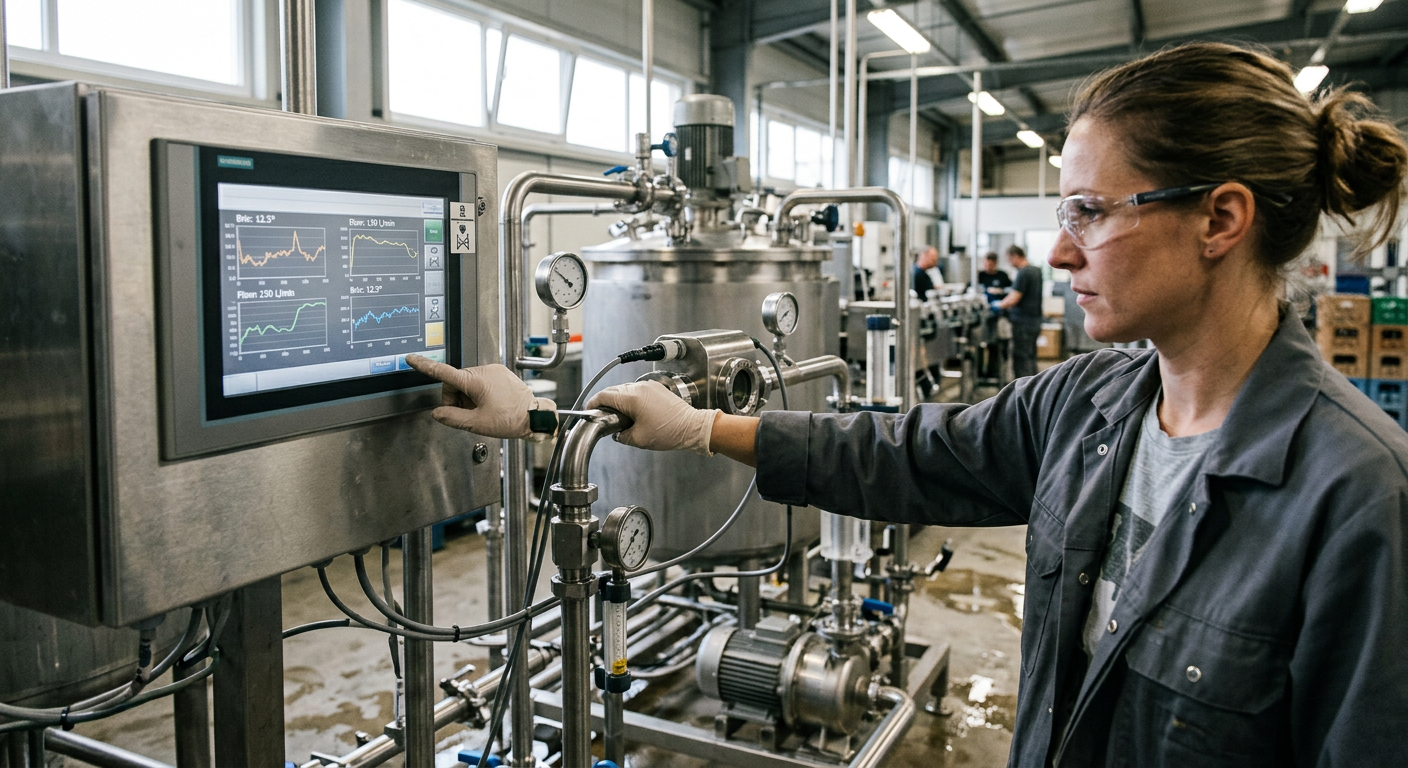
Food Manufacturing Engineering Services
Food manufacturing engineering services help processors design, upgrade, automate, maintain, and optimize production systems so plants can run safely, efficiently, and profitably. In the United States, these services often cover process design, utilities, equipment integration, controls, food safety compliance, packaging line improvements, capacity expansion, and plant modernization. For food and beverage companies operating in regions such as the Midwest protein corridor, California beverage hubs, Texas distribution networks, the Carolinas, and the Northeast cold-chain markets, the right engineering partner can directly affect throughput, labor use, uptime, and audit readiness. Food manufacturing engineering services in the United States include process engineering, facility layout, automation integration, utility design, sanitary system design, compliance support, line optimization, preventive maintenance planning, and project execution. Manufacturers typically hire engineering specialists when they need to increase capacity, improve Overall Equipment Effectiveness, reduce downtime, support allergen segregation, modernize controls, install new equipment, or prepare for FDA, USDA, FSMA, SQF, BRC, and ISO-aligned audits. For most U.S. processors, the best results come from an engineering firm that understands both design and plant-floor reality. That means knowing how a sauce batching system behaves during startup, how a protein line loses time during changeovers, how a brewery or RTD plant scales utilities, and how packaging equipment, CIP, refrigeration, compressed air, and SCADA all interact in the real world. This matters whether the facility is in Chicago, Fresno, Charlotte, Dallas-Fort Worth, Atlanta, or near logistics gateways such as the Port of Los Angeles, Port of Houston, Savannah, or New Jersey. Companies looking for a partner often want one team that can take a project from concept through commissioning. That includes feasibility, capital planning, equipment specification, controls architecture, installation support, commissioning, startup, and production ramp-up. This integrated approach reduces handoff risk and helps protect project profitability. The table above shows why engineering services are often tied to measurable business outcomes rather than abstract technical goals. A good project should improve line economics, not simply add hardware. The full range of food manufacturing engineering services stretches from early planning to post-startup performance support. At the front end, manufacturers may need feasibility studies, process mapping, budget development, utility load analysis, and conceptual layouts. During design, they may need piping and instrumentation diagrams, sanitary design review, process flow development, controls narratives, electrical single-lines, and equipment procurement support. During execution, they may need project management, trade coordination, installation oversight, FAT and SAT planning, startup assistance, and operator training. In practice, food plants usually require a mix of disciplines rather than a single specialty. A meat processor adding marination capacity may need stainless tanks, transfer pumps, tumblers, chilled water upgrades, floor drainage review, electrical distribution, and HMI changes. A dairy or aseptic beverage operation may need homogenization integration, CIP logic, recipe control, and hygienic zoning. A shelf-stable foods manufacturer may need retort, steam, condensate, water treatment, packaging synchronization, and thermal process support. Manufacturers in the United States also face regional realities. Water and wastewater constraints can be significant in California. Labor pressures can drive automation investments in the Southeast and Midwest. Cold storage expansion near major interstate corridors can reshape utility planning. Export-oriented producers near ports may prioritize traceability and documentation for customer audits. Engineering services have to fit those site-specific conditions. From a technology perspective, many projects now involve interconnected systems rather than isolated machines. Disruptive Process Solutions, for example, is known for combining process, mechanical, electrical, structural, plumbing, and controls knowledge so plants can align production goals with utilities, installation, and operating data. On the technology side, that can include PLC programming, SCADA, recipe and batch control, energy management logic, and integration across processing and support systems. You can learn more about its broader capabilities on the engineering services page. This table matters because many plants underestimate the overlap between service categories. A controls problem may really be a process design issue. A packaging choke point may really be a utility stability issue. A useful engineering team sees the whole system. The market growth trend above reflects rising demand for modernization, automation, and compliance-driven upgrades across U.S. food and beverage facilities heading into 2026. Automation engineering is one of the highest-value segments within food manufacturing engineering services because it influences throughput, consistency, labor efficiency, traceability, and troubleshooting speed. In food plants, PLCs control machine-level operations, SCADA provides plant-wide monitoring and supervisory control, and MES functions connect production execution with data collection, scheduling, lot tracking, and reporting. When these systems are integrated well, operators can manage production with more confidence and managers can make better decisions faster. In many older U.S. plants, automation is fragmented. Individual fillers, cookers, conveyors, or mixers may run on separate logic with limited data sharing. Recipe changes may rely on operator memory, paper logs, or spreadsheet instructions. Alarms may exist without root-cause context. That creates downtime, quality variation, and weak traceability. Integration solves these issues by connecting process assets, packaging systems, utilities, and reporting layers. PLCs are especially important for timing-critical and process-sensitive operations. In protein processing, they can synchronize conveying, portioning, tumbling, and chilling support. In beverage plants, they can control syrup rooms, blending, carbonation, tank management, CIP sequencing, and filler interfaces. In dairy or aseptic applications, automation logic must also support sanitary sequencing, temperature control, batch integrity, and exception handling. SCADA becomes valuable when a site needs visibility across multiple systems, shifts, or product families. It can centralize data from boilers, compressors, process vessels, retorts, pasteurizers, pumps, VFDs, and packaging assets. MES-level capabilities then build on this foundation to support genealogy, performance analysis, and electronic production records. DPS has developed a reputation for controls work that ties directly to production economics rather than technology for its own sake. Its process and controls teams support PLC programming, SCADA integration, utility coordination, and startup execution across food and beverage systems. That practical orientation is useful when a plant needs improvements that operators can actually sustain on the floor. The table above shows why automation should be designed as a stack, not a stand-alone PLC project. When integration is incomplete, many of the financial benefits remain unrealized. The bar chart indicates strong automation demand in beverage, protein, and aseptic applications, where traceability, speed, and recipe control are especially important. Choosing an engineering partner is not just about credentials or software capability. In food manufacturing, floor experience matters because projects must survive real operating conditions: sanitation windows, labor turnover, compressed schedules, changing production plans, and aging infrastructure. A design that looks efficient on paper can fail if it ignores washdown access, traffic flow, allergen zoning, valve maintenance access, forklift paths, or how operators actually run a line on second shift. Manufacturers should evaluate engineering partners based on several practical criteria. First, do they understand the specific product category, such as proteins, sauces, dairy, brewing, RTD beverages, or aseptic systems? Second, can they coordinate utilities, processing, controls, packaging, and installation as one operating system? Third, do they communicate budget and schedule risk honestly? Fourth, can they support both strategic planning and urgent execution? Fifth, have they worked across multiple U.S. jurisdictions and regulatory environments? DPS is a strong example of the type of partner many U.S. manufacturers seek when they want execution tied to business outcomes. Rather than functioning only as a designer, the company operates through a design-build-manage model that combines planning, construction coordination, and rigorous project oversight. For plants seeking a long-term capital partner, this approach can reduce gaps between concept, procurement, installation, and startup. More background on the company can be found on its about page. A good partner should also challenge assumptions. Sometimes the real constraint is not equipment size but controls logic, scheduling sequence, utility instability, or poor line balance. A firm with manufacturing floor experience can identify lower-cost fixes before a client commits to unnecessary capital. The buyer takeaway is simple: the best engineering partner is rarely the one with the most polished presentation. It is the one that understands how the line actually runs at 2 a.m. during a difficult SKU change and still protects your economics. Many food plants still spend too much money reacting to failures instead of engineering them out. A break-fix approach focuses on restoring equipment after a problem occurs. Preventive maintenance engineering, by contrast, designs reliability into the operation through asset criticality analysis, maintenance planning, spare strategy, condition monitoring, controls diagnostics, and better maintainability. In food and beverage plants, break-fix is particularly expensive because failures often ripple into sanitation, product loss, labor overtime, and schedule disruption. A failed pump may stop a blending room. A refrigeration issue may affect product safety windows. A PLC fault may halt multiple assets if interlocks are not designed clearly. An unreliable retort, pasteurizer, or filler can compromise output across the day’s run plan. Preventive maintenance engineering starts with critical assets and failure modes. It asks which systems create the highest operational or food safety risk: boilers, compressors, CIP skids, retorts, pumps, fillers, homogenizers, conveyors, refrigeration compressors, and controls hardware are common examples. Then it aligns maintenance intervals, alarm strategy, parts stocking, and operational checks around actual production risk. Engineering also improves maintenance by making systems easier to access, diagnose, and isolate. Better instrumentation, labeled piping, documented logic, remote access support, and clear utility segregation all reduce downtime. For multi-site manufacturers in the United States, standardizing these practices across plants can improve technician effectiveness and reduce spare complexity. This comparison shows why preventive maintenance engineering is not just a maintenance department issue. It is a production, quality, and capital efficiency issue. OEE improvement is one of the clearest ways food manufacturing engineering services create financial value. OEE combines availability, performance, and quality, making it useful for identifying where profit is being lost. The engineering challenge is not simply to measure OEE, but to determine which design, control, maintenance, utility, and workflow changes will raise it sustainably. Availability losses often come from long changeovers, startup instability, equipment failures, CIP duration, or poor utility reliability. Performance losses often come from minor stops, poor synchronization, conservative line speeds, and material flow interruptions. Quality losses may come from off-spec batches, fill variation, thermal inconsistency, damaged packaging, or startup waste. Engineering strategies for OEE improvement include line balancing, bottleneck analysis, conveyance redesign, recipe optimization, HMI simplification, alarm rationalization, utility stabilization, hygienic design upgrades, and better data collection. In prepared foods, this may involve reducing feeder interruptions or stabilizing cook-chill timing. In beverage, it may mean improving syrup room sequencing or filler changeover logic. In proteins, it may involve debottlenecking marination, slicing, or packaging handoff points. DPS has positioned itself around practical profitability, not just project completion. Its teams work across process, controls, utilities, and installation, which is exactly the cross-functional structure needed for real OEE gains. In many plants, the largest improvements come from fixing system interaction rather than buying more equipment. The area chart highlights a strong shift toward automation-led OEE programs in U.S. food manufacturing as plants seek better visibility and faster root-cause analysis heading into 2026. The table above is useful because OEE problems are often categorized incorrectly. Plants may blame operators for losses that are actually rooted in engineering design. Allergen control is a core engineering issue in modern U.S. food manufacturing, not just a sanitation or quality issue. As product portfolios expand, plants increasingly run dairy, tree nut, soy, wheat, egg, sesame, peanut, or other allergen-containing SKUs on shared equipment. That raises the need for physical segregation, hygienic design, validated cleaning, traffic control, and sequencing strategies that reduce both food safety risk and lost production time. Engineering for allergen control begins with plant layout and product flow. Raw materials, rework, utensils, mobile equipment, waste streams, and employee movement must be considered. Airflow, drainage, access points, and storage zoning can all influence cross-contact risk. On the equipment side, dead legs, difficult-to-clean surfaces, hollow bodies, poor gasket choices, and inaccessible transfer points can all slow validation and increase exposure. Changeover efficiency is closely related. A line that is hard to clean, hard to inspect, or difficult to reconfigure will consume labor and lose valuable production hours. Better engineering can support faster teardown, easier cleaning verification, cleaner product transitions, and more predictable startups. This is especially important in co-packing, where SKU complexity can be extreme and customer requirements are strict. DPS works across food and beverage sectors where allergen control, CIP, hygienic design, and product-family changeovers are central concerns. Its manufacturing capabilities span systems such as mixing, cooking, marination, tanks, vessels, CIP, aseptic and thermal processing infrastructure, and integrated utilities. That kind of range matters when allergen control must be designed at the system level rather than applied after installation. More on its equipment side is available at the equipment page. For U.S. plants supplying retailers, club stores, or national restaurant chains, this table reflects a critical reality: allergen control and changeover speed are now commercial capabilities, not back-room technical topics. A useful case example in food manufacturing engineering is when a company initially assumes it needs large capital spending to gain output, but the real bottleneck is controls logic and system coordination. This type of situation is common across the United States, especially in facilities that have expanded in phases and now operate with layered legacy systems. One notable example associated with DPS involved a client preparing to invest roughly $3 million for only about a 20 percent capacity increase. After technical review, the team determined the actual bottleneck was not the physical equipment footprint but PLC programming limitations. By reworking the controls approach, the plant achieved an estimated 30 percent output increase without the planned capital spend. That result did more than improve production. It strengthened trust, reduced unnecessary spending, and led to a larger follow-on project involving equipment relocation in Texas. This kind of case highlights several important lessons. First, not all capacity constraints are mechanical. Second, controls and process sequencing can be hidden value drivers. Third, an engineering partner willing to tell a client not to spend money unnecessarily is often more valuable than one eager to sell more scope. Fourth, line efficiency gains can create strategic momentum for broader modernization. For a broader view of project examples and execution style, manufacturers can review the company’s project case studies. The comparison chart illustrates why integrated partners with plant-floor execution knowledge often outperform design-only providers in food manufacturing settings. This example is especially relevant for U.S. manufacturers facing inflation, labor pressure, and tight ROI standards. Often, the smartest project is the one that solves the right problem before major capital is committed. Compliance is a major reason manufacturers hire food engineering specialists. In the United States, compliance expectations commonly involve FDA and USDA requirements, preventive controls under FSMA, customer audit programs, and globally recognized schemes such as BRCGS and SQF. ISO 9001 is different in that it focuses more broadly on quality management systems, documentation discipline, corrective action, and process consistency. Together, these frameworks influence how engineering decisions are made. From an engineering standpoint, compliance affects materials of construction, cleanability, zoning, drainability, access, process controls, traceability, calibration strategy, change control, documentation, and validation. A poorly designed line may still run product, but it can struggle during audits because it lacks segregation, records, alarm clarity, sanitary access, or procedural consistency. Food and beverage companies in the United States increasingly need partners who understand how engineering choices influence audit outcomes. For example, a BRC-minded redesign may require better hygienic zoning and documented maintenance controls. A FSMA-focused project may emphasize preventive controls, validation logic, and traceability. An ISO-aligned operation may prioritize standardized records, training interfaces, and corrective action support. In multi-site networks, standardization becomes even more valuable. DPS supports projects that must operate within FDA, USDA, SQF, and BRC environments and has experience spanning food, beverage, aseptic, and specialty applications. Its service capabilities include capital planning, process design, owner representation, project and program management, installation coordination, and system integration, which is helpful when compliance must be built into both project scope and execution discipline. The table demonstrates that standards are not just paperwork. They shape engineering choices from floor slope to control architecture. Looking toward 2026, three trends stand out. First, digital traceability will expand, pushing more plants toward integrated MES-style data capture, recipe control, and electronic records. Second, sustainability pressure will increasingly influence water reuse, heat recovery, compressed air efficiency, wastewater planning, and energy management. Third, policy and customer expectations around supply chain resilience, hygienic design, and documented preventive controls will continue to tighten. Plants that modernize now will be better positioned for both audits and operating margins. For U.S. manufacturers near major production and trade zones like California’s Central Valley, the Midwest meat corridor, the Carolinas, the Gulf Coast, and major port-driven distribution markets, these trends will influence capital planning over the next several years. Engineering services will increasingly be judged not only by project completion, but by measurable operational resilience. What are food manufacturing engineering services?They are technical and project delivery services that help food and beverage plants design, improve, automate, and maintain production systems. They often include process design, controls, utilities, compliance, equipment integration, installation, and startup support. When should a U.S. manufacturer hire a food engineering firm?Common triggers include capacity expansion, aging controls, repeated downtime, audit preparation, allergen risk, utility bottlenecks, new product launches, or relocation and consolidation projects. What is the difference between process engineering and automation engineering?Process engineering focuses on how product moves and transforms through the plant, including equipment, thermal steps, transfers, and balances. Automation engineering focuses on how systems are controlled, monitored, and integrated through PLCs, HMIs, SCADA, and MES-style data systems. Why is plant-floor experience so important?Because food plants do not operate in ideal theoretical conditions. Sanitation schedules, labor variation, maintenance limits, and real production pressure affect whether a design actually works. Floor experience helps engineers create solutions that operators can sustain. How can engineering improve OEE?Engineering can increase availability by reducing downtime, increase performance by balancing lines and improving controls, and increase quality by stabilizing recipes, thermal processes, and fill accuracy. Better data visibility also speeds root-cause correction. Can allergen control be improved through engineering, not just procedures?Yes. Layout, piping segregation, traffic flow, equipment cleanability, zoning, and recipe control all affect allergen risk and changeover speed. Strong engineering can reduce both audit exposure and lost production time. Do food plants really need SCADA or MES integration?Not every facility needs full MES immediately, but many benefit from at least better PLC standardization, HMI design, data collection, and SCADA visibility. As 2026 approaches, traceability and KPI transparency are becoming more important in the United States market. What should buyers ask before selecting an engineering partner?Ask about category-specific experience, startup history, controls capability, compliance familiarity, multi-discipline coordination, project delivery model, and how they identify bottlenecks before recommending capital spending. What kinds of plants benefit most from integrated engineering support?Protein processors, dairy plants, aseptic operations, prepared foods manufacturers, co-packers, breweries, RTD producers, and facilities with mixed product portfolios tend to gain the most because they have complex interactions between process, utilities, controls, and compliance. How does DPS fit into this market?DPS serves food and beverage manufacturers across the United States and Canada with an integrated design-build-manage approach. The company supports process and controls engineering, capital planning, owner representation, project management, installation, system integration, and branded process equipment for plants that want practical, profitability-focused execution. In summary, food manufacturing engineering services are most valuable when they connect technical design to plant economics. U.S. manufacturers need partners that can improve throughput, lower risk, support compliance, and guide smarter capital decisions across both immediate projects and long-term growth plans. -
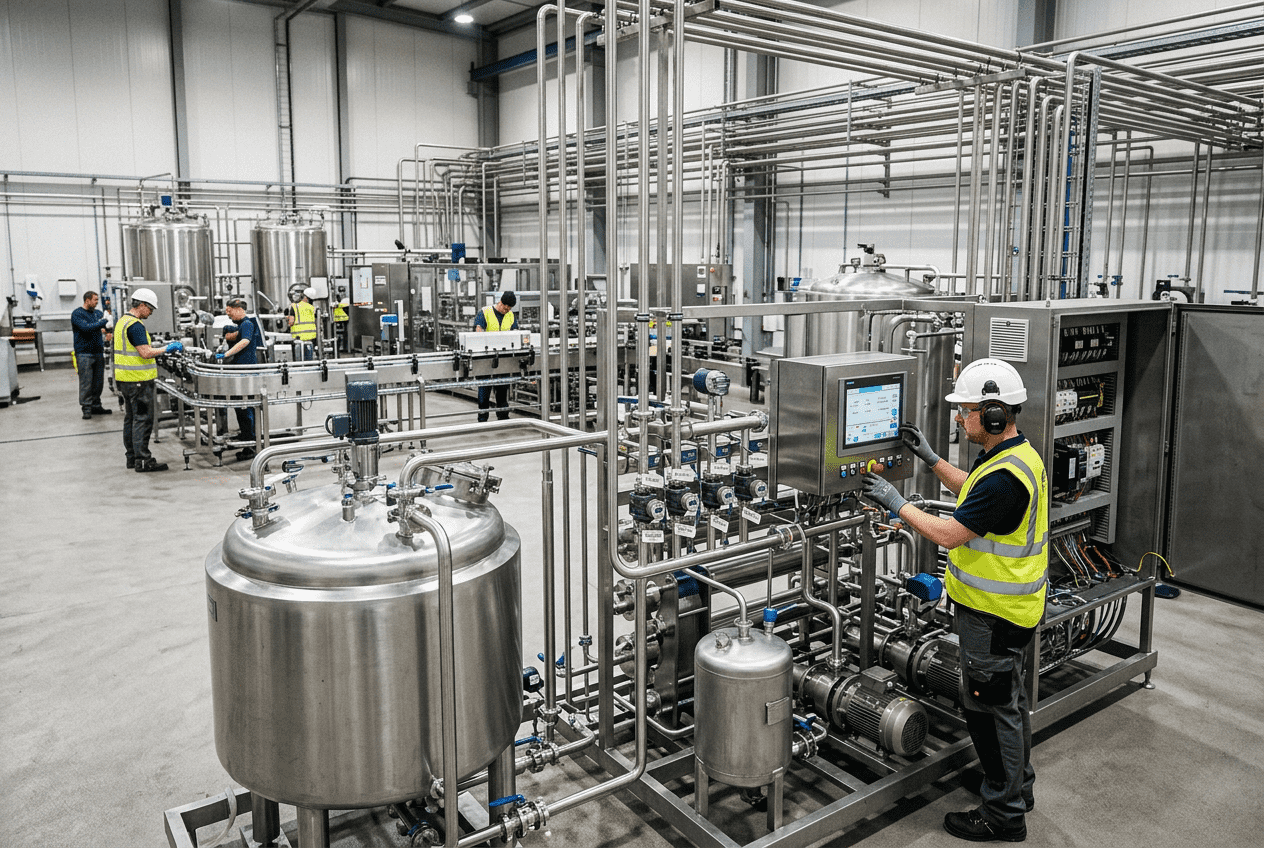
Process Engineering Consultants for Food & Beverage
Food and beverage manufacturers in the United States face a difficult mix of rising labor costs, tighter food safety expectations, energy volatility, supply chain risk, and pressure to scale without wasting capital. In that environment, process engineering consultants help companies make better decisions about capacity, equipment, utilities, automation, compliance, and project execution. The right advisor can uncover hidden bottlenecks, improve throughput, reduce utility use, protect sanitary design integrity, and prevent expensive overbuilding. This guide explains when to engage process engineering consultants, how to evaluate them, what return on investment to expect, and how to decide between a pure consultant and a full-service engineering partner. It is written for food plants, beverage producers, co-packers, protein processors, dairy manufacturers, aseptic facilities, and growth-stage brands expanding across the United States, from California and Texas to the Carolinas, the Midwest, and the Northeast. For manufacturers looking for a partner that combines consulting with execution, Disruptive Process Solutions operates across the United States and Canada with a business-first approach focused on profitable capital deployment, practical process design, and end-to-end delivery. Food and beverage process engineering consultants are most valuable when a manufacturer needs to increase capacity, solve recurring operational inefficiencies, evaluate a new facility, modernize utilities, improve automation, prepare for FDA or USDA scrutiny, or validate capital spending before committing significant money. In the United States, the best consultants combine sanitary process knowledge, industry-specific operating experience, utility and controls understanding, and a clear commercial view of payback. Engage a consultant when internal teams are too busy, too close to the problem, or missing specialized experience in areas like HTST, UHT, CIP, aseptic filling, carbonation, retort, fermentation, protein handling, dairy systems, wastewater, or batch automation. If the need goes beyond advice and into design, procurement, installation, and startup, a full-service engineering partner may deliver faster results with fewer handoffs. The table above shows that consulting is usually less about theory and more about avoiding costly mistakes. In many U.S. plants, the most expensive decision is not hiring a consultant; it is investing millions before confirming the real source of the problem. Most food and beverage companies do not need process consultants every day, but they do need them at key decision points. These usually include greenfield projects, brownfield expansions, line debottlenecking, plant consolidations, compliance upgrades, energy reduction programs, automation modernization, and pre-acquisition technical due diligence. In the United States, these triggers are especially common in fast-growth corridors such as Texas, North Carolina, Georgia, Tennessee, Illinois, Wisconsin, California, and New Jersey. Manufacturers near logistics hubs like Chicago, Houston, Atlanta, the Ports of Los Angeles and Long Beach, Savannah, and the New York-New Jersey port complex often face rapid demand shifts that put pressure on packaging speed, cold storage, ingredient handling, and utilities. There are several strong reasons to bring in outside process expertise: A credible consultant should understand not only process flow diagrams and mass balance calculations, but also operator behavior, maintenance realities, changeover time, cleanability, allergen segregation, downtime patterns, and production economics. The chart suggests a realistic upward trend in demand for process consulting services as U.S. manufacturers expand capacity, automate operations, and respond to 2026 sustainability and compliance expectations. Early involvement almost always creates better outcomes. By the time steel is ordered or concrete is poured, flexibility drops sharply and rework becomes expensive. Food and beverage processing is not generic industrial engineering. A consultant may be excellent in chemicals or general manufacturing and still be a poor fit for sanitary food production. U.S. manufacturers should look for firms with hands-on experience in the exact process family involved: brewing, distilled spirits, dairy, sauces, dressings, RTD beverages, juice, protein processing, prepared foods, retort, aseptic, fermentation, or co-packing. Strong consultants usually show competence in three categories: technological capabilities, manufacturing capabilities, and service capabilities. Technological capabilities should include process engineering, mechanical integration, controls understanding, PLC and SCADA familiarity, heat transfer, CIP strategy, sanitation design, and utility systems such as steam, chilled water, glycol, compressed air, HVAC, process water, and wastewater treatment. For beverage clients, that may extend to blending, carbonation, bright tanks, filtration, tunnel pasteurization, flash pasteurization, UHT, and aseptic design. For food clients, it may include grinding, mixing, emulsification, cooking, smoking, slicing, marination, retort, dairy homogenization, or plant protein hydration. Manufacturing capabilities matter because consultants who understand equipment fabrication and installation tend to design more buildable systems. A partner with exposure to tanks, CIP skids, vessels, utility modules, and integrated systems can more accurately judge footprint, serviceability, procurement lead times, and startup sequencing. Service capabilities should include feasibility studies, capital planning, owner’s representation, project management, process design, installation coordination, commissioning support, and startup troubleshooting. If the consultant can stay involved from concept through implementation, accountability improves and communication gaps shrink. The best buying advice is simple: ask for examples where the consultant advised against unnecessary spending. That answer often reveals whether the firm protects the client’s capital or simply tries to enlarge the project. A stand-alone consultant is often ideal for strategic evaluations, feasibility studies, due diligence, line audits, or independent technical review. A full-service engineering firm is often better when the client wants one accountable partner for design, procurement support, construction coordination, installation, controls, commissioning, and startup. For U.S. manufacturers with tight schedules, a fragmented model can create handoff risk. One party defines the concept, another redesigns it, a third installs it, and a fourth tries to start it. That structure can work, but only if the owner has a very strong internal engineering team. Many mid-sized food and beverage companies do not. A hybrid model can be especially valuable. Some firms begin as strategic consultants and then expand into execution support. That reduces the gap between what was recommended and what is ultimately built. It also helps align process requirements with contractor realities and local code issues. Disruptive Process Solutions is an example of this integrated model. The company supports clients with planning and process engineering, but it also provides broader project execution through a design-build-manage approach, acting as a practical capital project partner rather than a purely advisory organization. You can review its core engineering and project services to see how consulting, design, and implementation can be combined. The right choice depends on project size, internal resources, schedule pressure, and risk tolerance. If you need only a diagnosis, choose a consultant. If you need a result, consider a partner capable of carrying the plan through implementation. This comparison chart illustrates the usual trade-off: independent consultants often score higher in flexibility, while full-service firms usually lead in coordination and startup support. A disciplined process consulting engagement usually starts with business goals, not drawings. The consultant should first understand growth targets, margin pressure, labor availability, quality risks, distribution requirements, and service expectations for customers or retailers. Typical phases include: In food and beverage environments, implementation support is often where the most value appears. Paper studies do not clean tanks, reduce foaming, tune filler speeds, eliminate operator workarounds, or stabilize hold times. Field engagement matters. For clients that need both insight and delivery, DPS extends beyond consulting into project management, owner’s representation, equipment integration, and installation coordination. Its broader support model is especially relevant for plants that cannot afford communication gaps between engineers, trades, OEMs, controls integrators, and operations teams. Many plants assume their main problem is obvious: not enough tanks, not enough filler speed, not enough labor, not enough floor space. In reality, hidden inefficiencies often sit in changeovers, CIP duration, ingredient staging, valve logic, production scheduling, utility instability, poor line balancing, or packaging accumulation. Experienced consultants find savings by examining the system as a whole. They compare the rated capacity of equipment against actual throughput, then trace the difference through process, utilities, labor, controls, and maintenance practices. In beverage plants, they may discover that carbonation consistency or syrup room constraints are slowing the line. In protein or prepared food plants, they may find that thermal dwell time, conveyor synchronization, or sanitation sequencing is limiting available hours. Some of the highest-value savings areas in U.S. food and beverage plants include: A practical case pattern often seen in the market is that an operation plans a multimillion-dollar capacity expansion, but the true limitation is in programming, controls, or sequencing rather than hardware. Business-minded consultants can save clients major capital by proving that smaller interventions produce larger gains. The bar chart reflects realistic segment demand patterns, with co-packing, RTD beverages, protein, and aseptic systems showing particularly strong need for process engineering support due to rapid change, high compliance expectations, and complex throughput targets. These hidden savings are why process consulting often pays back quickly. The opportunity is rarely limited to one machine; it usually spans operations, engineering, maintenance, utilities, and product handling. Food and beverage manufacturers often share sensitive information with consultants: formulas, thermal profiles, process parameters, sanitation methods, supplier relationships, controls code, equipment customizations, commercialization plans, and plant economics. Confidentiality is therefore not a side issue. It is central to the engagement. Any serious consultant should be comfortable signing a mutual NDA and defining ownership of work product, process data, designs, and custom improvements. Clients should clarify who owns updated control logic, process flow documents, line layouts, SOP recommendations, and equipment modifications. This is especially important when the consultant also coordinates vendors, OEMs, fabricators, or local subcontractors. U.S. manufacturers should request clear policies on: Companies working on differentiated processes such as fermentation, aseptic packaging, plant protein texturization, dairy cultures, or proprietary flavor systems should go further and document information boundaries before site work begins. Because many projects involve equipment and integration decisions, clients may also want to understand where the consultant sources products. If the engagement extends into equipment supply, the relationship between consulting objectivity and vendor selection should remain transparent. For example, some clients value partners that can both advise and deliver equipment, provided the commercial structure is clear. DPS offers specialized process equipment solutions that can fit integrated project delivery when aligned with the client’s objectives. The return on process engineering consultation can come from many directions: avoided capex, increased throughput, reduced labor hours, lower giveaway, fewer sanitation hours, lower utility cost, improved audit readiness, less product loss, or faster startup of new capacity. In U.S. food and beverage operations, a good consulting engagement often creates value by preventing the wrong investment rather than simply enabling a new one. Typical ROI ranges vary widely by project type: Manufacturers should measure ROI through plant-specific KPIs, not generic benchmarks. Useful metrics include OEE, changeover time, pounds or cases per labor hour, water use per unit, steam per batch, product giveaway percentage, CIP hours per week, customer fill rate, and first-pass quality rate. The area chart reflects an important 2026 trend: consulting demand is shifting away from basic line layouts and toward integrated support that combines automation, sustainability, compliance, and commercial performance. For a practical view of project outcomes and delivery examples, manufacturers can also explore selected food and beverage project case studies relevant to process expansion, relocation, and integrated system execution. Not every consultant who uses the word “process” understands food and beverage realities. A weak consultant can waste time, miss sanitary risks, push generic recommendations, or create designs that look polished but fail in the field. Watch for these warning signs: In the United States, project success often depends on practical details: code variations by jurisdiction, utility availability, contractor quality, long-lead equipment routes, and local logistics. A consultant who understands manufacturing in places like Houston, Charlotte, Milwaukee, Fresno, Philadelphia, or Southern California will usually bring more usable advice than one offering only broad national generalities. One of the strongest positive signs is radical honesty. Good consultants sometimes tell clients not to spend money yet. They challenge assumptions, validate data, and keep commercial outcomes in focus. That mindset tends to produce better long-term partnerships than a “yes to everything” approach. What do process engineering consultants do for food and beverage manufacturers?They evaluate production processes, utilities, automation, sanitary design, and capital plans to improve throughput, safety, compliance, and profitability. When should a U.S. manufacturer hire a process consultant?Before a major expansion, facility move, new product launch, audit-driven upgrade, automation project, or large equipment purchase. Early engagement usually saves more money. Can consultants help both food and beverage plants?Yes, but the best firms have deep sector-specific experience. Brewing, aseptic beverage, dairy, protein, sauces, and retort processing all require different expertise. What is the difference between a consultant and a full-service engineering firm?A consultant usually focuses on analysis and recommendations. A full-service firm can often carry the project through design, installation, startup, and performance validation. How long does a consulting engagement typically take?A basic plant assessment may take a few weeks. A feasibility study may take one to two months. A larger integrated support engagement can extend through construction and commissioning. What should be included in a good feasibility study?Business objectives, current-state analysis, capacity assumptions, process options, utility impacts, budget ranges, implementation risks, and expected ROI. How do consultants uncover hidden inefficiencies?They combine plant observation, data review, utility analysis, controls evaluation, workflow mapping, and root-cause investigation instead of relying on assumptions. Will a consultant only recommend buying more equipment?A good one will not. Often the best answer is controls optimization, line balancing, CIP changes, utility upgrades, or operational improvements rather than major capex. How is confidentiality handled?Through NDAs, clear ownership terms, access controls, subcontractor restrictions, and written rules on process data, drawings, code, and formulas. What industries benefit most from process consulting?Dairy, protein, brewing, RTD beverages, aseptic products, prepared foods, sauces, ingredients, and co-packing operations all benefit substantially. What 2026 trends matter most?More automation integration, stronger traceability expectations, sustainability metrics, water and energy optimization, digital batch control, and resilience planning for supply chain and labor constraints. How should we choose a consulting partner?Select a firm with direct food and beverage experience, sanitary design competence, utility and controls literacy, strong references, and a clear commercial view of ROI. If you expect the project to move into execution, choose a partner that can stay involved beyond the study phase. For U.S. manufacturers that want a business-minded partner with food and beverage depth, national reach, and integrated support from planning through implementation, Disruptive Process Solutions offers a strong fit. Its experience spans beverage systems, protein and prepared food lines, dairy and aseptic applications, utility infrastructure, automation, equipment integration, and project delivery across North America.