-
Remote Monitoring Systems for Food Facilities: IIoT & Cloud Dashboards
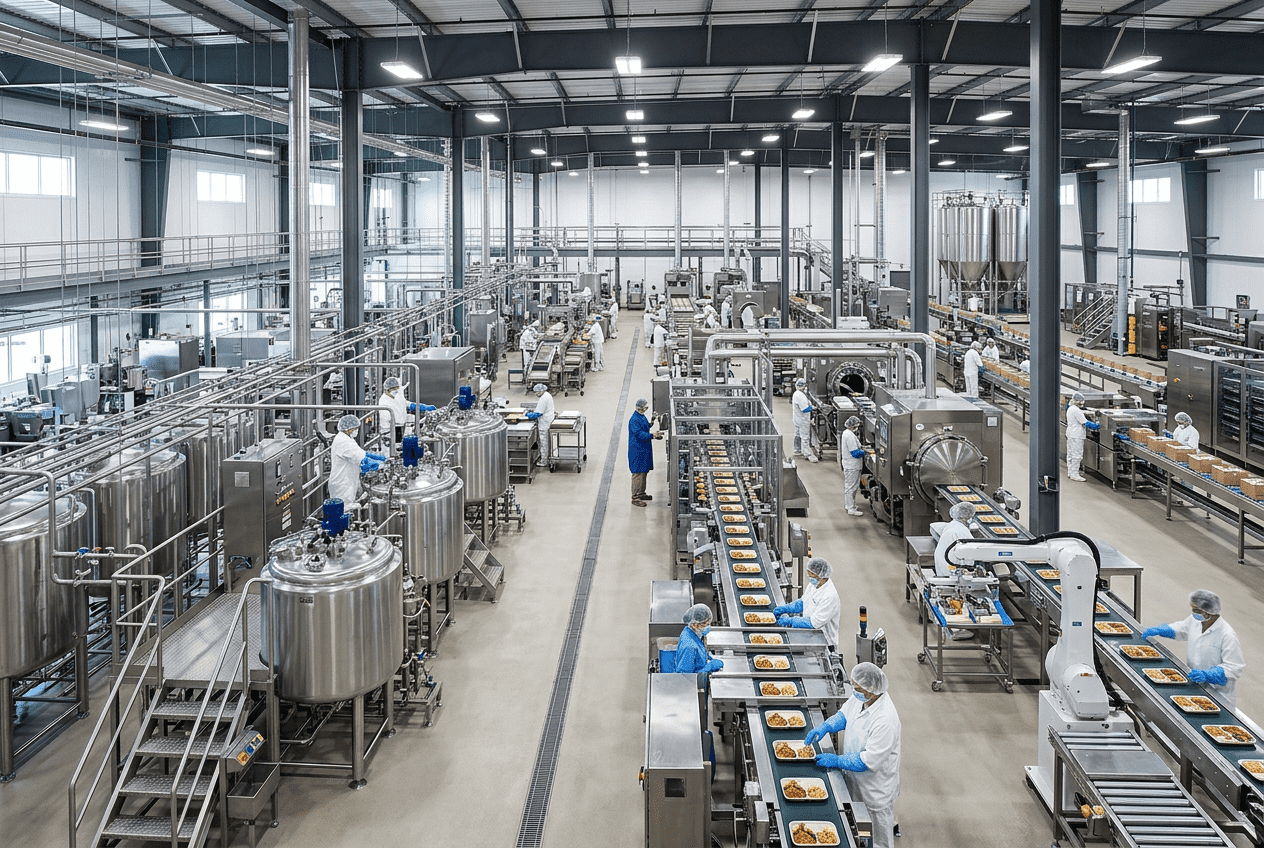
Food and beverage manufacturers across the United States are under pressure to reduce downtime, protect product quality, document compliance, and make faster operational decisions across one plant or many. Remote monitoring systems built on industrial IoT sensors, edge devices, cloud platforms, and role-based dashboards help plants track temperature, pressure, flow, tank levels, vibration, utility consumption, and sanitation-critical conditions without relying only on manual rounds. In practice, these systems are especially valuable in high-consequence environments such as protein processing in the Midwest, dairy plants in Wisconsin, beverage packaging lines in Texas, ready-to-drink facilities in the Southeast, and washdown-heavy operations near major logistics hubs like Chicago, Dallas-Fort Worth, Savannah, and Los Angeles. For U.S. processors, the best remote monitoring strategy is not just about adding sensors. It is about choosing the right connectivity path, selecting hardware that survives washdown, building dashboards that different teams can actually use, and creating escalation rules that turn data into action. It also means working with engineering partners who understand process systems, utilities, controls, plant operations, and compliance realities. That is where an end-to-end firm can provide an advantage, especially when remote monitoring is part of a larger capital project, line expansion, utility upgrade, CIP redesign, or plant modernization effort. Yes, remote monitoring systems are highly effective for food facilities in the United States when they are designed for sanitary environments, operational continuity, and practical user adoption. A modern system typically combines wireless or wired industrial sensors, secure gateways, edge processing, cellular or segmented network connectivity, cloud dashboards, alarms, historian functions, and mobile alerts. The most successful deployments focus on a limited set of critical variables first, such as refrigeration temperature, cook and hold temperatures, CIP parameters, compressed air pressure, tank levels, pump health, and utility performance. For many U.S. food plants, a cellular-first IIoT architecture is often the fastest route to value because it can bypass internal OT and IT bottlenecks while still keeping monitoring segregated from production control. In facilities with strict cybersecurity rules or multi-site visibility needs, cloud dashboards make it easier for plant managers, maintenance teams, quality leaders, and corporate operations to see exceptions in real time. When washdown is intense, IP69K-rated wireless sensors and enclosures matter. When uptime matters, the real return comes from automatic thresholds, escalation workflows, and dashboards tailored by role rather than generic charts that no one checks. The table below summarizes where remote monitoring usually delivers the fastest return in U.S. food and beverage plants. For buyers, the key lesson is simple: start with assets that cause the biggest financial or compliance pain when they drift out of spec, then scale the architecture plant-wide. One of the first decisions in any remote monitoring project is how data will leave the plant. In the United States, many food manufacturers operate in environments where IT teams are understandably cautious about allowing new devices onto the corporate network, and OT teams are even more cautious about anything near PLCs, SCADA, or validated process systems. That is why cellular-connected gateways and sensor hubs have become so attractive. They create a separate path for monitoring data without opening broad access into the plant control environment. Cellular is especially useful in brownfield plants where the network is fragmented, poorly documented, or difficult to extend into utility rooms, roof spaces, freezers, remote tank farms, and washdown zones. It is also valuable during pilot programs because plants can begin collecting data in days rather than waiting months for internal network approvals. In major food corridors such as California’s Central Valley, the Carolinas, Wisconsin dairy regions, and Texas beverage clusters, this approach lets corporate teams compare site performance without requiring every facility to adopt the same OT infrastructure first. Plant network connectivity still has an important place, especially when data volume is high, latency matters, or the monitoring system needs close integration with historians, MES, CMMS, or SCADA. A segmented plant network with firewalls, VLANs, and DMZ architecture can support more comprehensive industrial visibility. However, that path usually requires stronger governance, cybersecurity review, and a more formal change-control process. In most U.S. food applications, the best answer is not either-or. It is phased architecture. Start with cellular for isolated monitoring and fast wins, then bridge selected data into the broader enterprise environment later. This protects OT boundaries while still giving decision-makers immediate visibility. The chart above reflects a realistic market direction: adoption is accelerating because labor remains tight, corporate quality teams expect better data, and 2026 planning cycles increasingly include energy monitoring, sustainability reporting, and digital audit readiness. Food plants do not have the same environmental demands as dry industrial sites. Protein facilities, dairy rooms, sauce plants, seafood operations, and beverage filler areas often experience aggressive washdown, foam cleaning, caustic exposure, hot water, and pressure spray. That is why remote monitoring hardware must be selected for hygienic durability, not just measurement accuracy. IP69K-rated wireless sensors and enclosures are particularly relevant in washdown-heavy zones because they are built to withstand high-pressure, high-temperature cleaning. In practical terms, U.S. processors should evaluate not only ingress protection rating but also material compatibility, mounting style, battery strategy, antenna placement, calibration process, and wireless reliability around stainless equipment and insulated panels. A sensor that survives in a dry packaging mezzanine may fail quickly in a poultry deboning room or near a tunnel pasteurizer. Likewise, battery-powered wireless devices are attractive for retrofit speed, but they need a maintenance strategy if they are spread across dozens of points in freezers or wet rooms. Typical applications for washdown-rated wireless sensing include ambient and surface temperature, humidity, differential pressure in hygienic spaces, vibration on pumps and motors, tank level monitoring, conductivity during CIP, and door-open conditions in cold rooms. When chosen well, these devices reduce wiring cost and expand monitoring coverage into areas that would otherwise be skipped. The buying takeaway is clear: do not purchase based on sensor data sheet claims alone. Match the sensor package to the exact hygiene zone, cleaning chemistry, and process context. One of the most common mistakes in remote monitoring projects is presenting the same dashboard to everyone. Operators, maintenance technicians, supervisors, plant managers, and corporate quality leaders do not need the same view. The dashboard should reflect the decisions each person is responsible for making. An operator needs a simple current-state display: what is in alarm, what is approaching alarm, what line or room needs attention now, and what action should be taken. A maintenance technician needs equipment health trends, utility stability, battery status, signal quality, and indications of developing mechanical issues. A plant manager needs a higher-level summary: compliance exposure, downtime risk, site performance, utilities, and whether the plant is running within target. Corporate leaders may need cross-site comparison, exception reports, and audit-ready summaries rather than minute-by-minute noise. Role-based dashboards increase adoption because they reduce clutter and improve response speed. In a large operation near Atlanta or Houston, that can mean the difference between correcting a cold-room issue in minutes and discovering it after product quality is already at risk. In a multi-line beverage facility near Charlotte or Fresno, it can help teams pinpoint line imbalance and utility instability before packaging throughput drops. Well-designed dashboards also support training and handoffs. Teams can review shift events, see whether alarms were acknowledged, and understand what happened before a problem escalated. That is especially valuable in 24/7 plants or in organizations facing labor turnover. Data alone does not protect product or uptime. Threshold design does. Food facilities need alarm logic that reflects process reality instead of arbitrary setpoints. For example, a freezer door left open for thirty seconds may not matter, but five minutes might. A compressor suction pressure drift may need a warning threshold and a critical threshold. A cook room deviation may require immediate escalation to production and quality at once. A CIP cycle temperature gap may need a hold on release until the exception is reviewed. The best alerting frameworks use tiered thresholds, time delays, deadbands, and escalation rules based on severity. They also distinguish between advisory alerts and critical alarms. Too many alerts create fatigue. Too few create blind spots. In U.S. food plants, the right balance usually includes role-based notifications, after-hours rules, and integration with email, text, mobile apps, and sometimes CMMS ticketing. Escalation design should answer five questions: what variable matters, when should someone care, who should be notified first, when should the issue be escalated, and how should the event be documented. This is often where operational expertise matters more than software features. The trend is moving toward exception-driven management. By 2026, many food manufacturers will expect alert systems to support not only downtime prevention but also digital documentation for food safety, environmental monitoring, and utility sustainability targets. Many U.S. manufacturers now operate multiple sites with different vintages, brands, process types, and local practices. A corporate team may oversee a dairy plant in Wisconsin, a beverage site in North Carolina, a prepared foods facility in Ohio, and a protein site in Arkansas. Without a unified remote monitoring layer, comparisons are slow, inconsistent, and often based on spreadsheets after the fact. Multi-site visibility lets central quality and operations teams compare alarm frequency, refrigeration stability, utility efficiency, CIP adherence, and response times across plants. It also helps identify where capital should go first. A site with repeated deviations in refrigeration or chronic compressed air instability may need maintenance intervention, controls tuning, or a larger utility project rather than more operators. This is also where remote monitoring connects to broader engineering strategy. Companies planning expansions near major trade routes such as the Port of Savannah, the Port of Los Angeles, the Inland Empire, or Midwest distribution corridors need consistent operating data to support capital planning and network design. Standardized dashboards help management understand whether process issues are local, systemic, or tied to specific equipment families. The demand profile above reflects current U.S. priorities. Protein, beverage, and dairy continue to lead because temperature control, sanitation intensity, throughput, and spoilage risk create strong business cases for real-time visibility. A remote monitoring system should be treated as an engineered operational layer, not a generic add-on. The technical specification needs to define environmental conditions, data accuracy, sampling rates, power source, enclosure rating, communication protocol, cybersecurity architecture, historian retention, calibration requirements, dashboard roles, and integration expectations. If the site may later connect to SCADA, ERP, CMMS, or energy reporting tools, that should be considered at the front end. In food and beverage environments, engineering requirements often include stainless-friendly mounting, hygienic hardware choices, chemical compatibility, freezer and hot-zone operating limits, battery replacement strategy, and reliable wireless propagation in dense metal environments. Signal surveys matter. So does naming convention design. If sites use different labels for the same asset type, enterprise reporting becomes messy fast. Below is a practical specification framework used by many U.S. processors when evaluating systems. Another key requirement is integration discipline. If a facility already has PLC and SCADA assets, remote monitoring should complement them rather than duplicate confusion. The monitoring layer should answer operational questions more simply, especially for mobile use and multi-site reporting. That comparison illustrates a common selection tradeoff in the United States market: cellular-first architectures win on speed and separation, while plant-integrated architectures win on deep system interoperability. The most reliable path is a phased roadmap. First, define the business case. Second, choose critical assets and critical variables. Third, validate the connectivity model. Fourth, install a pilot in one area. Fifth, tune thresholds and dashboards with real users. Sixth, standardize naming, alarm logic, and reporting before scaling to other departments or sites. Food manufacturers often struggle when they start with too many points at once. A better approach is to launch with one to three high-value use cases: refrigeration reliability, CIP verification, utility monitoring, or environmental monitoring in quality-sensitive spaces. Once the team trusts the system and sees value, expansion becomes easier. Best practices also include operator training, response ownership, calibration planning, battery replacement scheduling, and documented alarm governance. A dashboard that looks impressive but has no accountable process behind it will not create measurable value. By 2026, implementation roadmaps should also include sustainability and policy considerations. More U.S. manufacturers are linking utility monitoring to energy intensity targets, water reduction programs, and carbon reporting. Food safety expectations are also moving toward stronger digital traceability and documented environmental controls. A future-ready monitoring system should support those needs without forcing a complete redesign later. When remote monitoring is part of a larger expansion, modernization, or utility upgrade, companies often benefit from working with an engineering partner that can align instrumentation, utilities, controls, installation, and project execution under a single plan. That reduces friction between what the data platform promises and what the plant can actually support. Disruptive Process Solutions supports food and beverage manufacturers across the United States and Canada with a business-first engineering approach that connects smart capital planning to practical plant execution. Rather than treating remote monitoring as a standalone gadget purchase, the company approaches it as part of a larger operating system for profitable manufacturing performance. From a technological capabilities perspective, DPS brings process, controls, and integration expertise that helps clients connect monitoring systems to real plant needs. That includes work across automation, PLC programming, SCADA-related environments, utility systems, batching, pasteurization, aseptic processes, fermentation, water systems, and broader plant infrastructure. For food and beverage operators evaluating digital visibility, this matters because the value of monitoring depends on understanding what process variable should be measured, where the sensor belongs, how the data should be interpreted, and which operational response is correct. Companies exploring broader modernization work can review DPS service capabilities here: food and beverage engineering services. From a manufacturing capabilities standpoint, DPS also designs and manufactures select process equipment, including tanks, custom CIP systems, marination tumblers, and cooking vessels. That practical fabrication and equipment knowledge is useful in remote monitoring projects because it improves the fit between sensor design, skid layout, tank geometry, hygienic access, and field installation constraints. It also helps when a monitoring initiative grows into equipment replacement, line modifications, or utility package improvements. More about this equipment side can be seen here: process equipment solutions. From a service capabilities perspective, DPS operates through an integrated design-build-manage model that supports capital planning, process engineering, owner representation, project and program management, installation oversight, system integration, and execution across local trades and specialty partners. For U.S. food facilities, that means remote monitoring can be planned alongside expansion, relocation, utility optimization, sanitary design upgrades, or compliance-driven projects instead of being handled in isolation. Companies wanting background on the team and operating philosophy can visit the company overview, while those looking for project examples can explore recent case studies and project work. This integrated model is particularly relevant for manufacturers that need more than a dashboard. Many plants need a partner who can connect data visibility to production economics, utility reliability, hygiene design, controls logic, and site execution. In those cases, monitoring becomes part of a measurable operations improvement plan rather than just another software subscription. What is the biggest advantage of remote monitoring in a U.S. food plant?The biggest advantage is faster intervention before quality, food safety, or equipment reliability issues become expensive. Real-time alerts reduce the delay between a deviation and a response. Is cellular connectivity secure enough for food facility monitoring?For many monitoring-only applications, yes. Cellular architectures can provide strong separation from the plant OT network when designed correctly. They are especially useful for brownfield sites and fast pilots. Do all sensors need to be IP69K rated?No. Only sensors installed in high-pressure washdown or similarly harsh environments need that level of protection. Dry packaging and office-adjacent spaces may require less robust enclosures. Which plants benefit most?Dairy, protein, beverage, prepared foods, aseptic processing, and cold storage all benefit strongly because process stability, sanitation, and temperature control directly affect quality and profitability. How long does a pilot project usually take?A focused pilot can often be scoped, installed, and reviewed within several weeks, depending on hardware availability, connectivity conditions, and internal approval speed. What data points should we monitor first?Start with the variables that cause the highest financial or compliance risk: refrigeration temperatures, cook and hold temperatures, CIP parameters, utility pressures, tank levels, and critical motor or pump health. Can remote monitoring replace SCADA?Usually no. It should complement SCADA, not replace it. SCADA remains essential for control, while remote monitoring adds easier enterprise visibility, mobile access, and exception management. How does this help central quality teams?It gives them standardized visibility across multiple plants, making it easier to review deviations, compare performance, support audits, and identify recurring risk patterns. What should buyers ask suppliers before purchasing?Ask about environmental rating, battery life, calibration method, data retention, alarm logic, cyber architecture, integration options, washdown survivability, implementation support, and total cost over three to five years. What are the most important 2026 trends?Expect stronger use of predictive maintenance, AI-assisted anomaly detection, broader energy and water monitoring, tighter digital documentation for compliance, and greater alignment between monitoring platforms and sustainability reporting. For food facilities in the United States, remote monitoring is no longer a niche technology. It is becoming a core operational layer for uptime, quality assurance, utility management, and enterprise decision-making. The plants that gain the most are the ones that deploy it with engineering rigor, clear ownership, and a roadmap tied to real business outcomes. -
Fermentation System Design Services
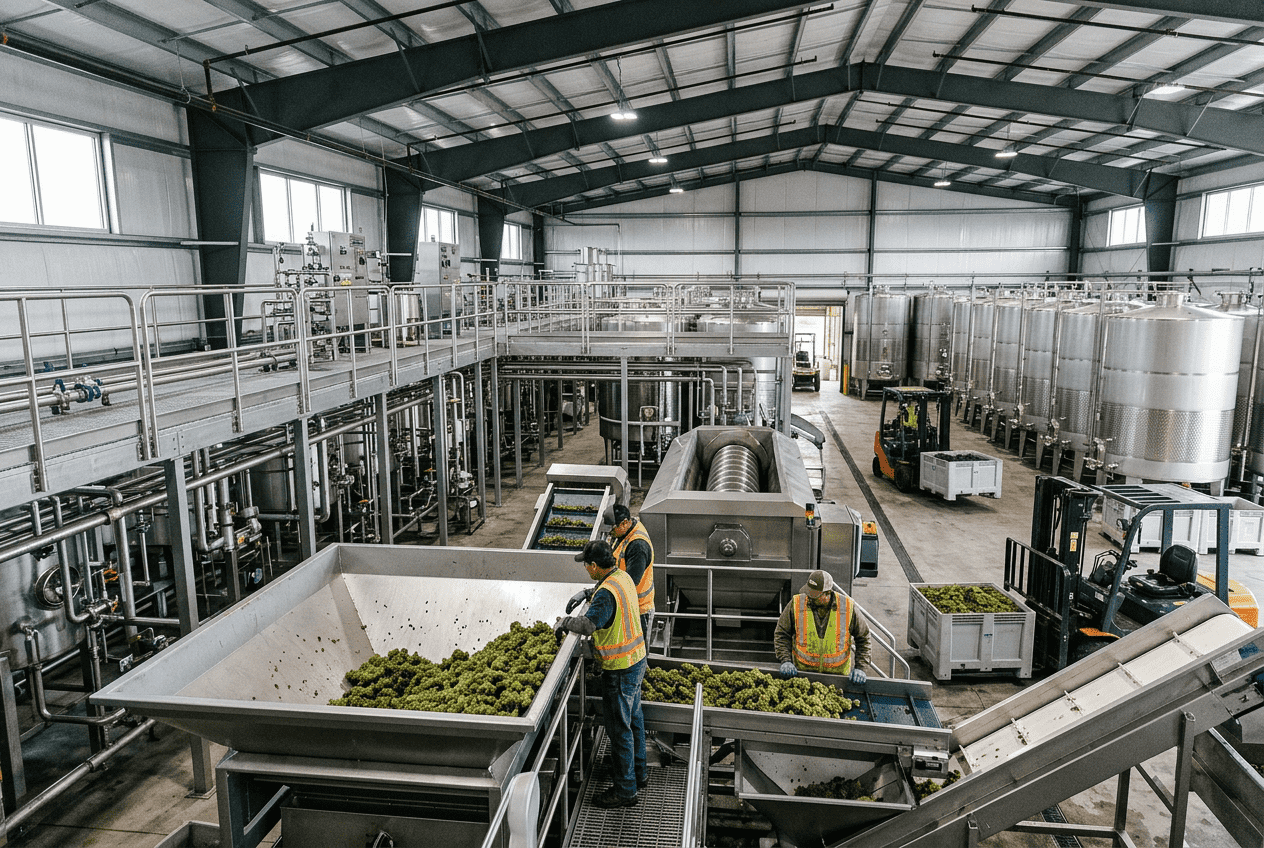
Fermentation system design in the United States is no longer just about buying a tank. It is about aligning vessel geometry, cooling, sanitation, controls, yeast handling, carbonation, utilities, and plant layout with a profitable production model. For breweries, distilleries, kombucha brands, RTD manufacturers, dairy fermenters, ingredient processors, and specialty food producers, the right system improves yield, reduces downtime, protects flavor consistency, and supports regulatory compliance. In practice, a well-designed fermentation platform should answer a few core questions early: What product are you making? How much heat will the process generate? Will the vessel hold pressure? How will you clean it? How will yeast or culture be harvested and reused? What data do operators need in real time? And how easily can the cellar scale from pilot runs to commercial output? Across major U.S. production corridors such as California, North Carolina, Texas, Illinois, Wisconsin, Colorado, and the Northeast beverage belt, manufacturers are investing in integrated fermentation systems that combine process equipment, controls, utilities, and installation planning. This is especially true near logistics hubs like Los Angeles and Long Beach, Houston, Chicago, Charlotte, and New York, where supply chain efficiency and plant uptime directly affect margins. The best fermentation system design depends on product style, batch size, residence time, pressure needs, sanitation strategy, and future expansion plans. Conical fermenters are often preferred for yeast collection and solids separation. Uni-tanks combine fermentation and carbonation or conditioning in one pressure-rated vessel, reducing transfers. Straight cylindrical vessels can be cost-effective for specific low-pressure or specialty applications. Most modern U.S. projects also require glycol jacket sizing, dissolved oxygen control, clean-in-place validation, automated monitoring, and a scale-up roadmap that matches utility capacity and floor space. For buyers evaluating a new cellar or process room, the most reliable path is an engineering-first approach. That means defining process goals before equipment selection, validating heat load and CIP coverage, modeling production throughput, and checking code, safety, and sanitary requirements before installation begins. The table above shows why fermentation design is best treated as a system, not a standalone vessel purchase. In many U.S. facilities, the real constraints are utilities, controls, operator access, and cleaning validation rather than tank volume alone. Fermenter geometry affects nearly every downstream outcome: yeast handling, sediment removal, carbonation options, cycle time, floor loading, and operator workflow. In U.S. beverage production, conical fermenters and uni-tanks dominate because they simplify solids collection and offer operational flexibility. However, straight-wall cylindrical tanks still have value in certain pilot, aging, blending, or specialty fermentation applications. Conical fermenters are especially useful when yeast harvesting matters. The cone promotes settling and concentrated collection, helping operators remove trub, recover healthy yeast, and reduce product loss. This makes conicals common in brewing, some cultured beverage applications, and fermentation steps involving biomass separation. Uni-tanks go further by combining primary fermentation and secondary conditioning in a single pressure-capable vessel. For breweries and carbonated fermented beverages, that means fewer transfers, lower oxygen pickup risk, and less cleaning labor. Uni-tanks are often favored by fast-growth regional producers in states like Colorado, Oregon, North Carolina, and Texas where throughput efficiency matters. Cylindrical vessels without a full cone may be selected where solids separation is less critical, where products are transferred quickly, or where the process is more focused on mixing, holding, or controlled conversion rather than repeated yeast cropping. These can also be useful in pilot systems or in hybrid food-and-beverage plants where multiple process uses are expected. This comparison shows that there is no universal “best” tank. The right choice depends on product behavior, turnover expectations, pressure requirements, and whether the vessel is part of a larger automated process line. For manufacturers seeking a broader systems view, it helps to evaluate tank selection alongside utilities, controls, and installation planning. A partner with integrated process engineering and project delivery services can usually identify hidden tradeoffs before procurement locks in the wrong platform. Temperature control is often the most underestimated part of fermentation design. Fermentation generates heat, and that heat must be removed at the right rate to maintain product quality. If cooling is undersized, the vessel may drift outside target temperature bands, leading to unwanted flavor development, inconsistent attenuation, stalled fermentation, or slow turnaround times. In most U.S. beverage installations, glycol is the preferred medium for vessel cooling because it supports low operating temperatures, stable control, and practical integration with cellar piping. A complete design should evaluate jacket zone placement, glycol supply temperature, return temperature, pump flow, control valves, insulation, and chiller redundancy. Large climate swings matter. A facility in Phoenix or Houston faces very different heat rejection conditions than one in Minneapolis or Portland. In the Southeast, summer ambient conditions can burden glycol systems and mechanical rooms if load assumptions are too optimistic. That is why thermal sizing should include batch overlap, crash cooling demand, pull-down targets, and future expansion. The table above highlights why “tank cooling” is really a plant utility design issue. Cooling must be sized not only for current tanks but also for future cellar additions, seasonal peaks, and simultaneous operations such as bright tank cooling, syrup room loads, or adjacent process demands. Engineering firms with broad utility experience can help align fermentation loads with chillers, cooling towers, pumps, PLC controls, and piping routes. DPS, for example, supports projects that combine process engineering with utilities, automation, and installation execution, which is especially valuable on expansion-heavy sites. Oxygen management can either support a healthy fermentation start or create flavor instability and shelf-life problems. The design goal is not simply “add oxygen” or “avoid oxygen.” It is to control when oxygen is introduced, how much is dissolved, and how exposure is prevented later in the process. For yeast-driven beverage fermentation, oxygen may be intentionally introduced before or at pitching to support growth and metabolic performance. Beyond that point, oxygen ingress usually becomes undesirable. Poor transfer design, leaky fittings, bad gasketing choices, and non-purged receiving tanks can all raise dissolved oxygen and damage product quality. U.S. producers increasingly specify sanitary inline aeration, sterile filtration, dissolved oxygen sensors, low-shear transfer pumps, and CO2 purging routines. These are especially useful in premium craft beverages, kombucha, functional drinks, and products destined for national distribution where shelf stability matters. In practical terms, oxygen management should cover inlet gas quality, transfer line design, tank purging, headspace management, valve specification, and instrument placement. Facilities shipping from coastal gateways such as Long Beach, Newark, Savannah, or Houston often prioritize this because transit time amplifies the cost of flavor drift. The explanation here is simple: oxygen must be managed as part of the process sequence, not treated as a standalone instrument issue. Good design reduces both biological variability early and oxidative damage later. Pressure-rated fermentation tanks create important flexibility for U.S. producers making beer, cider, kombucha, hard tea, sparkling wine-style beverages, or carbonated functional drinks. When the vessel is designed and certified for pressure service, operators can ferment, spund, condition, and sometimes carbonate in the same tank, reducing transfer steps and product exposure. However, pressure service is not an accessory. It affects vessel wall design, nozzles, manways, valves, relief protection, instrumentation, controls, and code compliance. Buyers should confirm the required operating pressure, test pressure, allowable temperature range, and intended gas service well before ordering. Carbonation integration also requires attention to stone placement, gas regulator stability, residence time, agitation or circulation strategy if used, and downstream transfer conditions. A pressure-capable tank without a well-designed carbonation system may still produce inconsistent dissolved CO2 results. For plants in the United States, pressure-rated tank decisions often intersect with insurance review, jurisdictional expectations, and maintenance procedures. This is why experienced project teams typically coordinate process goals with mechanical design and controls from the start. Manufacturing capability matters here. DPS not only supports engineering and integration but also develops branded process equipment such as storage and processing tanks and custom CIP systems. That equipment perspective can be useful when pressure design, utility tie-ins, and sanitation standards need to work together instead of being handled by disconnected vendors. Yeast management has a direct effect on cost, consistency, and fermentation speed. In facilities where yeast is reused, the design of the cone, dump ports, piping, storage vessels, and pitch lines becomes a critical operational issue. A strong system allows clean harvesting, controlled storage temperature, accurate pitching volumes, and minimal contamination risk. Harvesting starts with vessel geometry and bottom outlet design. The goal is to separate trub, non-viable cells, and healthy yeast fractions in a repeatable way. Once collected, yeast may move to brink tanks or other storage vessels with cooling and gentle agitation depending on the process. Pitching systems should then deliver accurate cell mass or slurry volume to the next batch under sanitary, low-stress conditions. For many mid-sized U.S. breweries and fermented beverage operations, the financial benefit is significant. Better yeast handling reduces culture waste, lowers batch variability, and decreases the chance of unplanned repitch failures. In larger plants, automation can extend these gains through recipe-linked pitch routines and digital records. The explanation behind this table is straightforward: yeast handling is one of the easiest places to lose value quietly. Good engineering prevents avoidable waste and supports consistent fermentation economics. Clean-in-place design is one of the most decisive factors in long-term fermentation performance. A vessel that ferments well but cleans poorly will eventually create downtime, contamination events, excessive chemical consumption, or difficult audits. CIP must be considered during vessel selection, nozzle placement, spray device choice, slope design, drainability review, and piping layout. Effective sanitation design includes verified spray coverage, correct flow and pressure, proper return routing, chemical compatibility, temperature capability, isolation strategy, and documented sequences. Dead legs, poorly oriented tees, trapped lines, oversized branch lengths, and inaccessible sample points are common sources of trouble in both legacy retrofits and rushed greenfield projects. For food and beverage plants in the United States, sanitation design also intersects with compliance expectations under FDA, USDA, SQF, and BRC frameworks depending on the application. Fermented dairy, cultured ingredients, alcoholic beverages, and mixed-use co-packing sites all carry slightly different sanitation priorities, but the underlying engineering principles remain the same. Service capability is especially important in this section. DPS operates with a design-build-manage approach that combines engineering, installation oversight, and execution management. For sanitation-intensive projects, that type of coordination helps ensure that the system designed on paper is the same system installed, tested, and handed over in the field. Well-designed CIP is not just a sanitation issue; it is a capacity issue. If cleaning takes too long or requires too much manual intervention, tank utilization drops. In high-throughput regions like Southern California, Central Texas, and the Carolinas, that lost capacity can quickly become the plant’s true bottleneck. Modern fermentation systems increasingly depend on real-time data rather than shift-end guesswork. The most useful variables often include temperature, pH, specific gravity or density, pressure, dissolved oxygen, level, and sometimes conductivity or flow depending on the system. When integrated into PLC and SCADA platforms, these points improve consistency, shorten troubleshooting time, and build more reliable batch records. Temperature remains the foundation, but pH and gravity trends are equally valuable. They reveal whether fermentation is starting on time, progressing normally, and reaching endpoint as expected. Inline or at-tank sensors can reduce manual sampling frequency and help operators catch deviations earlier. That matters for both pilot environments and large commercial cellars. Technology capability becomes a differentiator here. DPS supports controls engineering, PLC programming, automation, and SCADA integration across process systems. That matters because many fermentation issues are not caused by the vessel itself but by weak sequencing, poor alarms, lack of trend visibility, or manual data entry errors. In the U.S. market, manufacturers are also asking for remote visibility, recipe-linked control logic, historian functions, alarm escalation, and energy monitoring. These features become more important as labor constraints persist and multi-site operators seek standardized production methods across facilities. Scaling fermentation from pilot to commercial production is one of the most important challenges in process design. A successful pilot proves that a product can work. A successful production cellar proves that it can work profitably, repeatedly, and at the required service level. The gap between those outcomes is usually larger than expected. Scale-up affects thermal response, oxygen transfer, mixing behavior, hydrostatic pressure, residence time, cleaning coverage, utility demand, and operator workflow. A 5-barrel or 100-gallon pilot system may produce an excellent result that behaves differently in a 200-barrel or multi-thousand-gallon vessel. That is why scale-up planning should include engineering assumptions, control philosophy, utility infrastructure, and future capacity blocks. Across the United States, this challenge shows up in many forms: a kombucha company moving from local distribution in Austin to national retail; a craft brewer in Charlotte expanding into contract packaging; a dairy processor in Wisconsin launching cultured beverages; or a co-packer near Chicago adding fermentation to an existing blending and filling campus. Manufacturing and installation capability both influence scale-up success. DPS supports turnkey system integration and physical installation across North America, including utilities, process equipment, controls, and commissioning. That broader execution model helps clients connect pilot learnings to production-ready facility design instead of treating them as separate projects. This table shows why scale-up must be linked to capital planning. The most expensive mistake is often not overspending on a tank, but underplanning for utilities, controls, sanitation, and expansion sequence. When buyers compare suppliers, they should ask whether the provider can support only equipment sales or the full process path from feasibility through commissioning. Reviewing project examples and case experience can help clarify that distinction. What is the best fermenter design for a growing U.S. brewery?For many breweries, a pressure-rated uni-tank offers the best mix of fermentation, conditioning, and carbonation flexibility. If frequent yeast harvesting is central to the operation, conical geometry remains essential. How do I size a glycol system for fermentation tanks?Start with peak fermentation heat load, crash cooling demand, simultaneous tank usage, piping losses, insulation performance, and future capacity. Chiller sizing should be based on realistic operating scenarios, not nameplate tank volume alone. Do all fermentation tanks need to be pressure rated?No. Pressure rating is necessary when fermentation under pressure, carbonation, pressurized transfer, or integrated conditioning is part of the process. If the product and operating model do not require it, a lower-pressure design may be appropriate. Why is dissolved oxygen control so important?Because oxygen affects both fermentation health and finished product stability. Controlled oxygen at pitching may be beneficial, while uncontrolled oxygen later can reduce flavor quality and shelf life. What should I look for in a CIP-ready fermenter?Look for verified spray coverage, hygienic fittings, proper drainability, minimal dead legs, correct material finish, and a documented cleaning sequence that fits your plant chemistry and utility setup. Can fermentation controls be added later?Yes, but retrofits often cost more and may not fully solve sensor placement or wiring limitations. It is usually better to plan for temperature, pH, gravity, pressure, and key alarms at the beginning. How do I scale from pilot to production without losing quality?Use pilot data to define temperature profiles, oxygen strategy, sanitation requirements, and residence time assumptions, then validate those against utility loads and vessel geometry at production scale. What industries beyond brewing need fermentation system design?Kombucha, spirits, wine, cultured dairy beverages, ingredients, plant-based fermentation, specialty food production, and co-packing operations all benefit from engineered fermentation systems. What should I ask a fermentation system supplier in the United States?Ask about vessel code compliance, sanitary design, controls capability, CIP validation, utility integration, installation oversight, commissioning support, and whether they can support future expansion in multiple states. Who is a good fit for DPS?Manufacturers looking for process engineering, capital planning, installation integration, automation, and execution management under one partner are typically a strong fit. You can learn more about the company and its approach or review its process equipment capabilities. In the United States, demand for fermentation equipment and system design is expanding across alcoholic beverages, low- and no-alcohol innovation, cultured dairy, functional drinks, ingredient processing, and specialty food manufacturing. Buyers are no longer selecting vessels in isolation. They are evaluating entire production ecosystems: utilities, automation, sanitation, carbon footprint, labor efficiency, and expansion strategy. From a buying standpoint, the smartest process is to define business goals first. Are you building a pilot room, a regional production cellar, or a high-throughput co-packing facility? Are you producing in California for West Coast retail, in Texas for central distribution, or in the Carolinas for East Coast growth? Location affects labor availability, utility cost, permitting pace, logistics access, and climate load. Plants near ports like Long Beach, Houston, Savannah, and Newark may prioritize broader packaging and export flexibility, while inland hubs like Chicago, Kansas City, and Columbus may focus on truck distribution and network reach. Applications also vary. Brewing values yeast recovery and pressure conditioning. Kombucha may require precise acid balance and oxygen control. Distillation-related fermentation focuses on conversion efficiency and clean vessel turnover. Cultured dairy and food fermentation often demand tighter sanitary validation and compliance alignment. That is why the best supplier is often the one that understands the application, not just the hardware. Looking toward 2026, three trends stand out. First, automation will deepen, with more inline sensing, remote diagnostics, and historian-driven optimization. Second, policy and compliance pressure around water, wastewater, and energy use will push plants toward more efficient CIP loops, heat recovery, and right-sized utility infrastructure. Third, sustainability expectations will reshape capital projects, driving interest in lower chemical consumption, better insulation, modular expansion, and more resilient system design. For manufacturers planning new projects, it is worth choosing a partner that can bridge technological capability, manufacturing capability, and service capability. That means understanding controls and data, fabricating or supplying fit-for-purpose equipment, and managing the field execution required to turn design intent into operating reality. -
Dairy Beverage Processing Systems
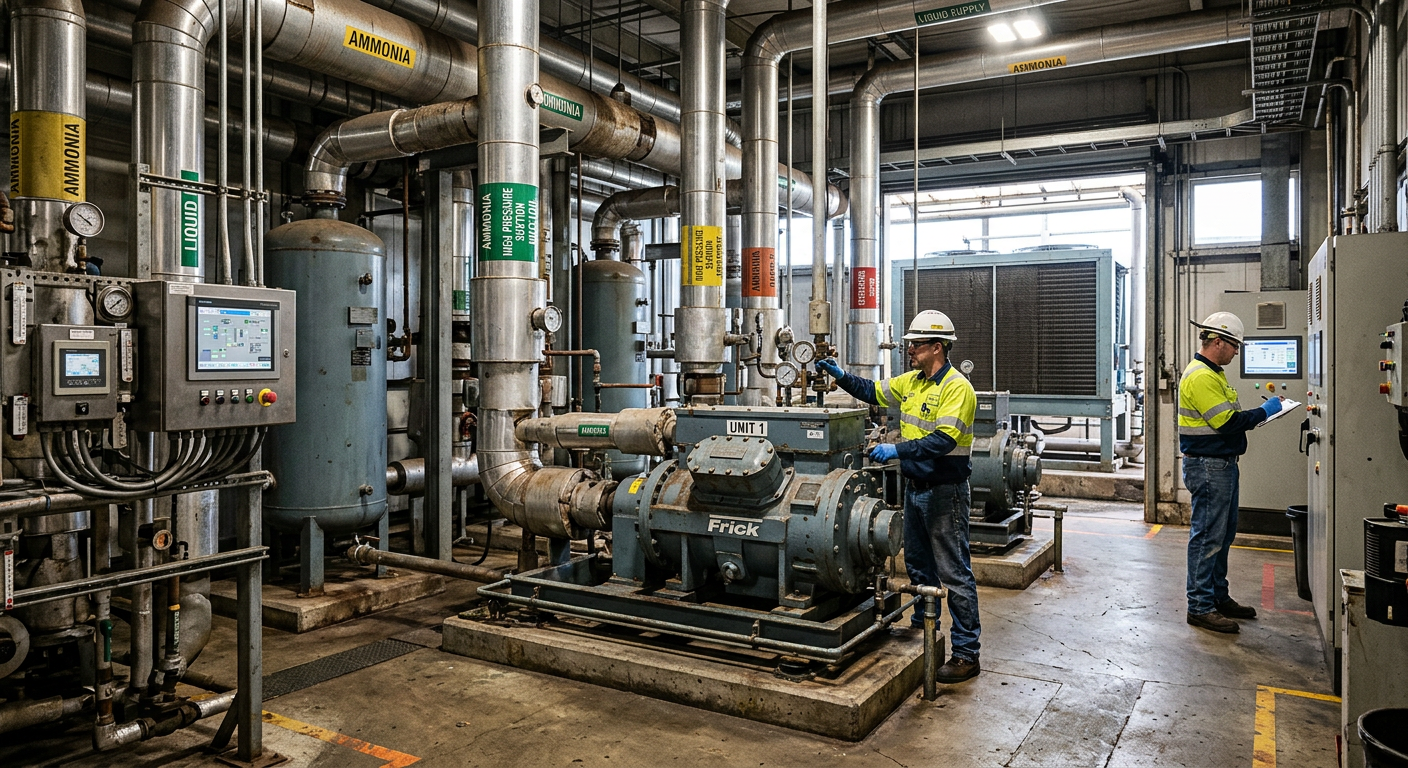
Dairy beverage processing in the United States requires a carefully engineered combination of thermal treatment, separation, homogenization, sanitary design, automation, and regulatory control. Whether a processor produces white milk, flavored milk, cream-based drinks, protein beverages, cultured dairy drinks, or plant-based alternatives, the production line must protect food safety, preserve flavor, support shelf life targets, and remain compliant with Grade A PMO expectations and broader FDA standards. For most facilities, the right system is not a single machine. It is a coordinated process that starts with raw ingredient receiving and ends with validated cleaning, documented controls, and efficient packaging integration. Across major dairy regions and food manufacturing hubs such as California’s Central Valley, Wisconsin, upstate New York, Texas, Idaho, and North Carolina, processors are investing in flexible systems that can run both traditional dairy and next-generation dairy alternatives. That shift is especially visible around logistics corridors near Chicago, Dallas-Fort Worth, Los Angeles, Fresno, Atlanta, and the Port of Savannah, where co-packers and branded manufacturers need faster changeovers, stronger sanitation programs, and scalable utilities. The best dairy beverage processing systems for the United States market combine pasteurization or sterilization technology matched to product risk, carefully sized homogenization, accurate fat and solids standardization, hygienic piping, validated CIP, and controls designed for traceability and compliance. HTST systems remain the standard for refrigerated fluid dairy. UHT supports ambient or extended shelf stable products. ESL systems fill the gap for premium refrigerated products requiring longer shelf life with less flavor damage than aggressive thermal treatment. For processors launching oat, almond, or soy beverages, the same core engineering principles apply, but viscosity, insoluble solids, enzymatic treatment, and allergen changeover become more critical. Buying decisions should be based on product portfolio, target shelf life, package format, line speed, available utilities, labor model, cleaning window, and the regulatory environment in the state of operation. A facility supplying schools, grocery private label, foodservice, or national retail chains may need a different level of redundancy and documentation than a regional specialty processor. In all cases, process design should support profitability, not just nameplate capacity. The table above shows why processors should start with business and product goals before selecting equipment. A lower-cost pasteurizer that cannot support future SKU complexity often becomes more expensive over time than a slightly larger, better-instrumented system. Thermal treatment is the backbone of dairy beverage safety. In the United States, the most common approach for refrigerated milk and dairy drinks is HTST pasteurization. This process delivers pathogen reduction while preserving fresh flavor and maintaining reasonable throughput. For products requiring substantially longer shelf life, UHT treatment is used in combination with aseptic handling and filling. Between these two sits ESL, or extended shelf life processing, which can combine higher thermal treatment, tight hygienic control, microfiltration in some designs, and ultra-clean filling to extend refrigerated life. HTST is often the preferred solution for regional dairies shipping within a few hundred miles of production. UHT is attractive for national distribution, export, emergency feeding programs, institutional channels, and products sold through ambient networks. ESL is increasingly popular for premium dairy beverages, cold coffee with dairy, higher-protein milks, and specialty formulations sold through refrigerated grocery channels. For processors in the United States, technology choice also depends on freight economics. Shipping refrigerated dairy from Wisconsin to Florida or from California to the Southeast introduces cost and shelf-life exposure. UHT or ESL may improve margin by expanding the distribution radius without constant dependence on rapid replenishment. Conversely, local dairy brands in cities like Minneapolis, Charlotte, Sacramento, and Denver often win with HTST because they can market freshness and shorter ingredient statements. This comparison shows that shelf life is not the only variable. Packaging environment, product quality goals, utility readiness, operator training, and maintenance strategy all matter. A processor considering ESL or UHT should also evaluate filler technology, sterile barriers, ingredient microbiology, and utility reliability. The growth trend above reflects a realistic increase in capital interest across dairy beverage processing categories in the United States, especially where processors are modernizing pasteurization, sanitation, and automation systems to reduce downtime and support more SKUs. An HTST system is much more than a plate heat exchanger. A well-designed unit includes balance tank control, timing pump, flow diversion valve logic, regeneration section sizing, legal temperature recording, pressure relationships that protect pasteurized product, and documentation that satisfies dairy inspections. In practice, beverage performance depends on how these functions are integrated into the rest of the plant, including ingredient batching, surge capacity, filler demand, and CIP scheduling. For dairy beverages with varying solids, sugar, cocoa, stabilizers, or protein content, heat transfer and fouling behavior can change dramatically. Chocolate milk, cultured drink bases, and high-protein beverages often require more careful section design and hold time verification than plain white milk. The best HTST systems are engineered around actual product rheology and expected production windows rather than generic capacity claims. Processors should also consider future expansion. Many United States plants begin with one HTST skid but soon need dual product paths, parallel homogenization, or added regeneration optimization. Designing utility headers, floor drains, electrical distribution, and controls architecture for future additions can save major retrofit cost later. This table highlights why good pasteurization is as much about controls and verification as it is about stainless steel. Plants with weak instrumentation often struggle more than plants with smaller but better-engineered systems. Companies needing a more strategic approach often benefit from working with an engineering-led partner rather than purchasing isolated skids. Integrated process system services can help align the HTST design with utility load, future expansion, and filler coordination. That is especially important for multi-SKU beverage sites where one bottleneck can undermine the economics of the entire line. Homogenization improves physical stability, mouthfeel, color uniformity, and cream distribution. In milk processing, it reduces fat globule size and helps prevent creaming. In dairy-based beverages, it also supports emulsion stability where cocoa, flavor oils, proteins, or added micronutrients are present. The correct homogenizer pressure is product-specific; too low may leave separation problems, while too high can alter texture, increase viscosity, or create excess wear. Single-stage homogenization can work for some products, but two-stage systems are common where emulsion control is more demanding. Product temperature at homogenization is also critical. Pressure setpoints that perform well on standard milk may not translate to cultured drinks, cream liqueur bases, protein shakes, or coffee dairy blends. A process line should therefore be commissioned against real formulas, not only water tests. Another trend in the United States is the use of high-pressure homogenization for plant-based beverages and functional drinks that need improved suspension stability. Oat and almond beverages especially benefit from careful particle size management and recirculation control. Excessive shear, however, can damage sensitive starch systems or increase oxidation risk, so equipment selection should be tied to formulation science. Homogenization is often underestimated during project budgeting, yet it directly affects consumer acceptance. A beverage that is microbiologically safe but visually unstable or gritty will fail commercially. For that reason, pressure, stage configuration, valve design, and hygienic serviceability should be treated as core process decisions rather than secondary equipment details. Separation and standardization are essential for processors producing multiple fat levels, cream streams, cultured bases, and ingredient blends. A centrifugal separator enables efficient cream removal and clarification, while inline standardization systems adjust finished fat content with high accuracy. This is critical for label compliance and margin control, particularly in high-volume milk operations where even small fat deviations affect profitability. For U.S. processors serving retail, foodservice, and private label channels, separation systems also provide flexibility. A plant can receive raw milk with variable composition and still manufacture a stable portfolio of whole, reduced-fat, low-fat, and skim products. Cream can be routed to separate products, blended into beverages, or sold into adjacent categories. Advanced systems pair separators with densitometry, flow measurement, and recipe automation for tighter control. Regional conditions matter. Plants in Wisconsin and Idaho may prioritize cream and cheese-linked balancing, while plants near large urban beverage hubs like Houston, Phoenix, or Newark may focus on fluid milk and value-added drinks. The right system therefore depends on raw milk profile, byproduct strategy, and SKU mix. Each of these systems contributes to consistency, but their real power comes from integration. When separation, standardization, batching, and pasteurization communicate through automation, processors gain tighter control over yield, waste, and product quality. The demand chart demonstrates where investment pressure is strongest: fluid milk remains large, but growth-oriented processors are increasingly adding protein, flavored, and plant-based beverage capabilities to improve margin and utilize shared utilities. Clean label dairy beverage processing has become a major purchasing driver in the United States. Consumers increasingly expect shorter ingredient statements, fewer stabilizers, and fresher taste. To support those goals, processors are exploring reduced heat load techniques such as optimized regeneration, precise hold-time control, microfiltration-assisted ESL, faster thermal response, improved deaeration, and tighter hygienic packaging practices that reduce the need for excessive thermal intensity. Reduced heat load does not mean reduced food safety. It means achieving the required microbial outcome with less unnecessary quality damage. This can be done through better raw ingredient control, lower initial bioburden, superior sanitary design, shorter preheat exposure, direct heating in some UHT applications, and reduced post-process contamination risk. Plants producing premium milk, high-protein beverages, and dairy coffee blends often gain the most value from this approach because flavor retention strongly influences repeat purchase. By 2026, more U.S. processors are expected to combine clean-label goals with energy reduction and water reuse targets. That means engineering choices will increasingly be evaluated not only by throughput but by thermal footprint, ingredient preservation, and total cost per sellable case. This table shows that clean label is not simply a formulation issue. It is a process engineering issue. The best results come when product development, quality, and capital project teams work from the same objective. The area chart reflects a steady trend toward technologies that preserve flavor while maintaining safety. This is particularly relevant in premium refrigerated dairy categories sold through metropolitan retail markets such as New York City, Seattle, Boston, Austin, and San Diego. In dairy beverage processing, sanitation performance directly determines uptime, shelf life, and compliance confidence. A CIP system should be designed around circuit length, pipe velocity, chemical concentration, return conductivity, drainability, and changeover frequency. Plants that run both allergen and non-allergen beverages, or both dairy and plant-based products, need especially robust sanitation planning. Typical U.S. dairy beverage plants use a combination of caustic wash, intermediate rinse, acid cycle, final rinse, and sanitation step, with verification through conductivity, temperature, time, flow, ATP, allergen testing where required, and microbiological trending. Recovery CIP can save water and chemicals, but only when properly segregated and controlled. Dead legs, poor valve matrix design, and unvalidated spray coverage remain common causes of cleaning failure. Facilities in water-stressed regions such as California and parts of the Southwest increasingly seek systems that reduce water use without sacrificing hygienic confidence. At the same time, national retailers are demanding stronger environmental and food safety documentation. That makes CIP automation, recipe management, and record integrity more valuable than ever. Strong CIP programs are easier to sustain when the equipment is designed for serviceability. Processors evaluating new projects should prioritize valve matrix layout, drainability, instrument access, and chemical handling safety as highly as production capacity. For facilities expanding or retrofitting sanitation systems, custom process equipment and CIP platforms can reduce manual intervention and improve repeatability. In many cases, a sanitation redesign produces faster returns than adding more production equipment because it unlocks additional available runtime. Grade A PMO compliance remains central to fluid dairy processing in the United States. Processors must align equipment, operating procedures, records, and preventive controls with state and federal dairy requirements, along with any additional obligations from FDA, customer standards, or third-party schemes such as SQF and BRC. The practical impact is clear: sanitary design cannot be an afterthought. It must be engineered into the process line from the beginning. Key compliance topics include pasteurization records, fail-safe controls, legal hold verification, product contact materials, CIP validation, personnel hygiene, environmental conditions, and documented preventive maintenance. Projects involving aseptic processing or plant-based alternatives may also intersect with broader FDA food safety modernization requirements, allergen controls, and labeling obligations. Because dairy regulation can vary in enforcement details by state, processors expanding across multiple U.S. regions should design systems to a consistent high standard rather than the minimum local interpretation. This is especially important for multi-state distribution from hubs like Illinois, Pennsylvania, California, and Texas. The explanation behind this table is simple: compliance is operational discipline made visible. Plants that build documentation and hygienic logic into system architecture are more resilient than plants that rely on manual workarounds. Plant-based dairy alternative processing shares many mechanical similarities with dairy, but the process challenges are distinct. Oat beverages often involve enzymatic conversion, starch management, and careful thermal handling to avoid excessive viscosity or sedimentation. Almond beverages require strong solids management, soaking or slurry preparation, and stable suspension through blending and homogenization. Soy beverages may require thermal steps to manage flavor, enzyme inactivation, and protein functionality. For U.S. manufacturers, the biggest operational question is often whether dairy and plant-based beverages should run in the same facility. Shared infrastructure can be cost-effective, but only if allergen segregation, flavor carryover, CIP validation, and scheduling are tightly controlled. Some processors dedicate separate tanks or filler windows. Others design fully segregated ingredient introduction while sharing utilities and certain downstream services. Market demand remains strongest in urban and health-focused channels, but plant-based beverages are now mainstream across the United States. Retail growth around Los Angeles, Portland, Austin, Miami, and the Northeast corridor continues to drive new installations, especially in co-packing facilities that need flexibility for both established and emerging brands. The comparison chart indicates that higher-value beverages often bring higher processing complexity. Oat and protein systems in particular require strong integration between formulation, thermal treatment, homogenization, and sanitation. Processors entering this category should consider pilot work, ingredient functionality, and scale-up risk before committing to full production assets. A line built only for standard white milk may not perform well for plant-based alternatives without changes to mixing energy, hold times, filters, and cleaning logic. Engineering partners that understand both food and beverage operations can help bridge that gap. About the DPS engineering approach explains how a lean project model can support rapid decisions without losing technical depth. For processors balancing speed to market with long-term plant economics, that combination is often more valuable than simply sourcing equipment one package at a time. For most refrigerated milk and standard dairy beverages, HTST pasteurization remains the best fit because it offers dependable safety, good flavor retention, established regulatory acceptance, and strong throughput economics. UHT is appropriate when the product needs ambient shelf stability, national distribution reach, export flexibility, or a longer retail window than refrigerated systems can practically support. ESL stands for extended shelf life. It is growing because processors want longer refrigerated life without the stronger cooked flavor often associated with full shelf-stable processing. It is especially useful for premium milk and specialty beverages. It is essential for many products. Homogenization supports stable emulsion structure, consistent mouthfeel, and visual uniformity. Without proper homogenization, separation and quality complaints become more likely. Yes, but only with careful design. Shared lines need strong allergen control, validated cleaning, disciplined scheduling, and controls that reduce recipe and label errors. Frequent causes include inadequate sanitation, poor filler hygiene, post-pasteurization contamination, weak temperature control, ingredient quality issues, and packaging integrity problems. Start with product mix, target shelf life, packaging, utilities, cleaning window, labor capability, and growth plans. Then evaluate equipment as a full system, not as isolated machines. Key trends include reduced heat load processing, more automation and digital records, utility efficiency, water reuse in CIP programs, cleaner labels, hybrid dairy and plant-based production, and tighter retailer expectations around traceability and sustainability. When purchasing dairy beverage processing systems, buyers should assess more than upfront equipment price. Total installed cost, startup support, controls integration, utility consumption, maintenance access, spare part strategy, and operator training all affect real project value. This is especially true for plants operating in high-cost labor markets or regions with constrained utilities. Many successful projects use a phased model: first confirm throughput and product roadmap, then align process design with packaging and warehousing, and finally optimize utilities and sanitation capacity. This approach helps avoid overbuilding one area while underbuilding another. For example, a large pasteurizer paired with undersized CIP or compressed air can create expensive hidden bottlenecks. Case-based planning is also valuable. A regional dairy adding flavored milk and RTD nutrition may need only targeted upgrades. A new greenfield co-packing site near a logistics corridor such as Dallas, Indianapolis, or the Inland Empire may need a far more flexible architecture. Selected project case examples can help illustrate how process decisions translate into execution outcomes. Disruptive Process Solutions supports dairy and beverage manufacturers across the United States and Canada with engineering-led capital project execution. The company’s technological capabilities include process engineering, controls integration, PLC programming, SCADA, utility coordination, and complete system design for pasteurization, sterilization, blending, filtration, water treatment, and hygienic process environments. That background is highly relevant for dairy beverage projects where thermal treatment, automation, and sanitation have to operate as one coordinated system. Its manufacturing capabilities include proprietary process equipment such as tanks, CIP systems, and custom stainless process components that can be incorporated into broader facility builds. For dairy beverage plants, that creates an advantage where custom geometry, skid adaptation, or utility integration is needed to fit existing buildings or phased expansions. On the service side, DPS operates through a design-build-manage model that covers planning, engineering, installation, integration, commissioning, owners representation, and project management. For processors in the United States who need more than a single equipment vendor, this kind of execution model can reduce coordination risk and keep the project aligned with operating profitability rather than just construction completion. Whether the project is a retrofit of an existing dairy in the Midwest, a sanitation modernization in the Southeast, or a new beverage platform on the West Coast, the strongest outcomes come from disciplined planning, honest capacity modeling, and engineering choices that support both compliance and commercial performance. -
Historian Data Management for Food Plants: Time-Series Process Intelligence
Across the United States, food and beverage manufacturers are under pressure to improve yield, protect product quality, reduce downtime, prove compliance, and make faster capital decisions. A historian data management platform helps plants do that by collecting high-frequency process data from equipment, utilities, automation systems, and quality checkpoints into a structured time-series environment. In practical terms, it gives plant leaders a trusted operational memory: what happened, when it happened, why it happened, and how often it happens. For facilities in major production corridors such as Fresno, Chicago, Dallas-Fort Worth, Charlotte, Milwaukee, Houston, and the Central Valley, historian systems are becoming a core part of digital plant infrastructure. Whether the operation produces sauces, dairy beverages, protein products, fermented drinks, shelf-stable foods, or aseptic products, the value is similar: capture the data once, contextualize it correctly, and use it for operations, quality, maintenance, and continuous improvement. A historian data management system for food plants is a specialized time-series database that continuously captures process values such as temperature, pressure, flow, tank level, conductivity, Brix, pH, line speed, valve states, alarms, and batch events. In the United States market, the best solutions are built to support food safety, operational efficiency, traceability, and regulated recordkeeping. They connect with PLCs, SCADA, MES, LIMS, and ERP platforms so teams can trend performance in real time, investigate deviations, verify cleaning cycles, compare shifts, and support continuous process verification. Plants typically invest in historian architecture when they need to solve one or more of the following issues: For U.S. food plants, an effective historian should not be viewed as a standalone software purchase. It should be engineered as part of plant architecture, with clear tag strategy, network segmentation, cybersecurity controls, data retention design, reporting logic, and business ownership. That is especially true in facilities tied to large retail, foodservice, export, or co-packing networks near ports such as Los Angeles/Long Beach, Savannah, Newark, and Houston, where traceable process intelligence can directly affect customer acceptance and shipment continuity. The market is also evolving. By 2026, more U.S. processors are expected to combine historian data with predictive analytics, anomaly detection, sustainability reporting, and enterprise-wide digital twins. Plants planning upgrades today should choose an architecture that can scale beyond simple trending. The backbone of a historian platform is the time-series database. Unlike a traditional relational database, a time-series engine is optimized for storing millions of timestamped values efficiently. In a food plant, each signal, or tag, represents an observable process point. That may include a steam pressure transmitter on an HTST skid, a valve position on a CIP loop, a load cell under a blend tank, a filler speed counter, a pasteurizer chart signal, or a compressor discharge temperature. A strong tag-based design begins with classification. U.S. food manufacturers often benefit from grouping tags into these layers: This table matters because poor tagging is one of the most expensive hidden mistakes in historian projects. If a plant only logs alarms and a few analog values, it may still lack the process context needed to explain a deviation. Conversely, oversampling noncritical points can create unnecessary storage and administration burdens. The right approach balances speed, resolution, event logic, and business purpose. At architecture level, most U.S. installations include edge data collection from PLCs and SCADA nodes, buffering for network interruptions, a central historian server or clustered environment, and downstream dashboards or analytics tools. Facilities with multi-site operations often standardize on naming conventions such as area-line-unit-parameter-state to support corporate reporting across sites in North Carolina, California, Texas, Wisconsin, and the Midwest. For manufacturers planning expansion, it is wise to architect for future load. A greenfield beverage site may start with 8,000 to 15,000 tags, while a mature multi-line protein or dairy plant can exceed 50,000 tags once utilities, packaging, warehousing, and environmental systems are included. The chart above reflects the broader market trajectory: adoption of process historians in U.S. food and beverage is increasing as plants modernize around labor shortages, traceability demands, and smarter capital planning. Not every food facility falls under the same regulated framework, but the expectations around trustworthy records continue to rise. Historian systems used in aseptic processing, dairy, nutrition products, high-risk ready-to-drink lines, and certain pharmaceutical-adjacent environments must support a defensible data integrity strategy. In practical terms, that means complete audit trails, secure user access, synchronized timestamps, protected configuration changes, and retention policies aligned to product risk and regulatory obligations. For U.S. plants, the main concern is not simply storing data. It is proving that the data is attributable, legible, contemporaneous, original, accurate, and retained appropriately. A strong historian design should therefore include role-based permissions, electronic change logging, backup policies, time synchronization across automation assets, and documented procedures for review and exception handling. The explanation behind this table is straightforward: data integrity is both a compliance issue and a production issue. If a pasteurization record cannot be trusted, a plant may hold product. If CIP confirmation cannot be demonstrated, production restart may be delayed. If access rights are too broad, configuration mistakes can propagate unnoticed. The right historian platform reduces these risks. Retention policy design should be specific, not generic. Many U.S. processors define different retention windows for high-frequency critical control data, lower-frequency utility data, alarm history, batch records, and archived reports. Some also preserve longer-term compressed data for corporate benchmarking. This is especially useful for groups operating multiple sites across the Southeast, Midwest, and West Coast where common records support network-level quality comparisons. One of the fastest ways a historian creates value is through real-time trending and deviation detection. Instead of waiting for end-of-shift review or customer complaints, teams can see process drift while production is still running. In food plants, this can mean catching a heat exchanger fouling trend before lethality margins tighten, identifying unstable carbonation before package defects rise, or detecting underperforming glycol loops before tank cooling is compromised. Deviation detection should go beyond simple alarms. The best systems use layered rules such as limit checks, rate-of-change alerts, duration logic, state-based conditions, and cross-variable relationships. For example, a CIP cycle may be considered abnormal not only when conductivity drops below target, but when the low conductivity condition persists during a specific step while return temperature also lags expected profile. This table shows why event logic should be engineered around process knowledge, not just software capability. The most useful alerts are those tied to actionable root causes and commercial consequences. Demand is especially strong in beverage, dairy, and aseptic applications because these sectors rely heavily on high-resolution process verification and utility reliability. A historian only becomes a true operational intelligence platform when it is integrated well. In most U.S. food plants, SCADA provides live supervisory control, MES manages production execution and work order context, and LIMS handles lab and quality results. The historian sits between real-time control and higher-level analysis, making it a bridge for unified data flow. Integration with SCADA allows direct collection of analog, digital, alarm, and event data. Integration with MES adds production order, SKU, lot, batch, shift, and downtime context. Integration with LIMS connects in-process and final quality results such as micro, pH, solids, moisture, viscosity, or sensory release data. When these streams are aligned by time and batch, plants can compare what the process was doing against what quality ultimately measured. For example, a dairy beverage plant in California may correlate homogenizer pressure, UHT outlet temperature, and filler bowl level with final viscosity and package defects. A protein facility in Arkansas may tie smokehouse temperature uniformity, line speed, and cook yield to customer complaint trends. A co-packing beverage site near Atlanta may analyze utility loads, syrup room timing, and filler performance by customer SKU. None of that works reliably if the systems remain isolated. The explanation here is important: integration is not just connectivity. It is context engineering. Many failed digital projects technically connect systems but never standardize naming, batch timing, asset hierarchy, or exception handling. That leaves teams with more data but not more clarity. Companies seeking broader project support often benefit from partners that can align controls, utilities, process equipment, and execution strategy together. Firms with end-to-end engineering and integration experience, such as food and beverage engineering service teams, are often better positioned to avoid fragmented implementations than software-only vendors. Continuous Process Verification and Statistical Process Control are natural extensions of historian use. Once a plant trusts its process records, it can move from reactive troubleshooting to statistical management. Historical data enables baseline models, control charts, capability analysis, golden batch comparison, and predictive thresholds. In a U.S. food environment, CPV often focuses on parameters with direct impact on safety, consistency, shelf life, and cost. SPC is then applied to identify common-cause versus special-cause variation. Together, they help answer practical questions: Is the cooker drifting over time? Are line one and line three behaving differently for the same SKU? Is one shift consistently overfilling? Is a utility bottleneck creating hidden process variation during summer demand peaks in Texas or Florida? Adoption is rising because CPV and SPC convert historian data into measurable financial outcomes. Reduced product giveaway, tighter process capability, fewer holds, faster root-cause analysis, and better scheduling confidence all support margin improvement. The point of this table is that CPV and SPC are not abstract quality programs. They are use-case driven and should start where process variation has the greatest cost or compliance consequence. Technical specification matters as much as software selection. Plants should define engineering requirements before procurement so vendors are bidding against the same scope. That includes tag counts, polling rates, failover expectations, cybersecurity standards, ISA/IEC-aligned network boundaries, user roles, backup methods, report needs, and integration obligations. For food and beverage operations, three capability areas deserve special focus. First is technological capability: the historian environment must support controls integration, PLC communications, SCADA interoperability, secure remote support, analytics readiness, and utility monitoring. Second is manufacturing capability: the system must fit actual plant operations such as fermentation, distillation, pasteurization, retort, batching, CIP, refrigeration, compressed air, and packaging line synchronization. Third is service capability: successful implementation requires project management, commissioning, training, documentation, and long-term support—not just installation. Organizations with broad plant execution experience, including teams that handle process engineering, controls, utilities, and site coordination, can often design historian programs that align better with real production needs. That is one reason some manufacturers look to integrated partners with backgrounds in complete processing systems, project delivery, and automation rather than relying only on a software reseller. You can review examples of broader equipment and system capabilities at processing equipment and integration resources. Another key engineering requirement is environmental fit. Plants in humid Gulf Coast conditions, high-throughput Midwest protein operations, and West Coast aseptic beverage sites can have different utility patterns, washdown conditions, and network architecture needs. Historian implementation should reflect those realities rather than forcing one generic template across every location. This comparison highlights a recurring market lesson: platform success depends heavily on process understanding and implementation quality, not only the software license. The best historian projects in the United States follow a phased roadmap. They start with business outcomes, continue through data architecture and controls integration, and end with user adoption and governance. Plants that skip these steps often end up with dashboards nobody trusts. A practical roadmap usually includes assessment, design, pilot, rollout, optimization, and sustainment. During assessment, the team identifies critical process areas, existing automation assets, pain points, and compliance requirements. During design, the project defines tag standards, naming hierarchy, network architecture, redundancy, reports, and integrations. During pilot, a high-value area such as pasteurization, CIP, packaging, or utilities is implemented first. Rollout expands by line or unit operation. Optimization adds SPC, KPIs, and event analytics. Sustainment formalizes ownership, training, and change control. Best practices include: When selecting partners, plants should favor teams with direct food and beverage execution experience, not generic industrial automation alone. A project may need understanding of CIP chemistry, aseptic boundaries, retort records, glycol balancing, syrup room timing, smokehouse profiles, or blending logic. Integrated delivery firms can often bring those disciplines together with stronger accountability. For examples of project outcomes and field execution, see selected process project case studies. Looking toward 2026, project roadmaps should also include future-ready elements: energy intensity dashboards, water-use normalization, carbon reporting interfaces, AI-supported anomaly detection, and stronger supply-chain traceability. Sustainability and policy expectations are increasing, especially among national brands and co-manufacturers serving retail and export channels. Disruptive Process Solutions supports food and beverage manufacturers across the United States and Canada with a practical, profit-focused approach to capital projects and plant performance. Rather than treating historian deployment as a narrow software task, the company approaches it as part of total manufacturing execution. From a technological capability standpoint, DPS works across process, controls, automation, PLC programming, and SCADA integration, making it well suited for historian projects that require real plant connectivity rather than isolated reporting layers. That technical depth matters when data must be pulled from thermal systems, blending skids, utilities, packaging lines, CIP networks, and custom equipment while preserving operational context. From a manufacturing capability standpoint, DPS understands the realities of food and beverage processing, including brewing, spirits, wine, RTD, dairy beverages, aseptic systems, sauces, proteins, prepared foods, and shelf-stable operations. That operational knowledge helps align historian design to the actual process behaviors that matter most—whether that means fermentation trends, retort records, cook-chill curves, Brix control, or sanitation verification. From a service capability standpoint, DPS delivers engineering, design, integration, project management, owner support, installation coordination, and execution oversight through its Design Build Manage model. For manufacturers that need a partner capable of connecting business goals to field execution, this broader scope can reduce risk and improve accountability across the full project lifecycle. More on the company’s background is available at about Disruptive Process Solutions. This model is especially valuable for plants balancing rapid execution with long-term planning. In a historian initiative, that can mean combining data architecture with utility upgrades, packaging improvements, tank expansions, or greenfield production planning so that digital infrastructure is not separated from the physical process it is meant to improve. What is the main benefit of a historian in a food plant?The main benefit is continuous, trusted visibility into how the plant actually runs. It helps teams detect deviations faster, improve quality consistency, reduce downtime, support compliance, and make better operational and capital decisions. How is a historian different from SCADA?SCADA is focused on live supervisory control and operator interaction. A historian is optimized for long-term storage, retrieval, compression, contextualization, and analysis of time-based process data. The two are complementary, not interchangeable. Which U.S. food sectors benefit most?Dairy, beverage, aseptic, protein, prepared foods, sauces, and co-packing operations all benefit. The highest value usually appears where there are strict process windows, frequent product changeovers, sanitation complexity, or heavy utility dependence. How many tags should a mid-sized plant plan for?A mid-sized plant often starts between 5,000 and 20,000 tags depending on line count, utility systems, and reporting goals. The right number depends on process complexity and whether contextual data such as batch and quality records are included. Can historian data support FDA, USDA, SQF, or BRC readiness?Yes, when properly designed. Historian records can support traceability, process verification, exception review, sanitation proof, and investigation readiness. However, the configuration, security, review workflows, and SOPs must be engineered correctly. How long does implementation usually take?A focused pilot can often be completed in 8 to 16 weeks. A broader multi-line or multi-site deployment may take several months depending on integrations, validation requirements, and available plant resources. Should a plant start with utilities or production lines?It depends on the pain point. If the site struggles with downtime, start with utilities or packaging constraints. If the major issue is quality drift or food safety verification, start with the critical process area such as thermal treatment, batching, or CIP. What should be included in the budget?Budget for software, licenses, server or cloud infrastructure, PLC/SCADA integration, networking, cybersecurity, report development, testing, training, and support. Plants should also include contingency for tag cleanup and legacy system mapping. Is cloud deployment practical for U.S. food plants?Hybrid models are increasingly common. Many plants still prefer on-premise or edge collection for operational resilience, then replicate selected historian data to cloud environments for enterprise analytics, benchmarking, and sustainability reporting. What trends will matter most by 2026?The biggest trends are AI-assisted anomaly detection, stronger cybersecurity controls, deeper integration of quality and production records, energy and water performance analytics, and wider use of historian data for enterprise-level continuous improvement and sustainability programs. In summary, historian data management is no longer just an archive. In the United States food and beverage market, it is becoming a central intelligence layer for process reliability, compliance confidence, and better capital deployment. Plants that design the system around real operational value—not just raw data collection—are the ones most likely to improve margins, reduce risk, and scale with confidence. -
Alarm Management for Food Facilities: ISA-18.2 Lifecycle Compliance
Food and beverage manufacturers in the United States face a difficult balancing act: they must protect people, product quality, food safety, equipment uptime, utilities, and regulatory compliance without overwhelming operators with too many alarms. A well-designed alarm management program aligned with ISA-18.2 helps facilities move from reactive operations to disciplined, measurable control room performance. In practical terms, this means defining why each alarm exists, assigning priorities correctly, removing nuisance alarms, suppressing alarms during startup and shutdown, documenting response actions, and tracking performance against targets such as fewer than six alarms per operator per hour. This matters whether the facility is a dairy plant in Wisconsin, a poultry processor in Georgia, a beverage co-packer in North Carolina, a meat operation in Kansas City, a brewery in Colorado, or a port-connected food exporter near Houston, Savannah, Long Beach, or Newark. In each case, bad alarm practices can create the same problems: operator fatigue, delayed response, product loss, CIP failures, utility upsets, refrigeration incidents, missed batches, and unnecessary downtime. The guidance below is written for plant owners, operations leaders, EHS teams, quality leaders, maintenance managers, controls engineers, and capital project teams evaluating alarm management for new lines, expansions, brownfield upgrades, SCADA modernization, batch systems, utilities, aseptic processes, and high-risk thermal operations. For most U.S. food facilities, alarm management should begin with an alarm philosophy document, followed by alarm rationalization workshops, priority setting, state-based alarming, operator response procedures, performance monitoring, and lifecycle governance. The fastest gains usually come from nuisance alarm reduction, where many plants can reduce alarm load by 30% to 60% after removing duplicate, stale, chattering, and consequence-free alarms. A strong target is to keep the average rate below six alarms per operator per hour during normal steady-state production, with tighter management for critical processes such as aseptic filling, retort, refrigeration, ammonia systems, pasteurization, and high-value batching. The table above summarizes the core structure. For buyers and plant teams, the key advice is simple: do not buy alarm management as only a software feature. Buy it as an engineered operating system that includes process understanding, controls logic, operator workflow, documentation, training, and governance. Facilities considering broader process integration often pair alarm strategy work with controls modernization, utility upgrades, line expansions, or plant-wide automation projects. Companies looking for that type of integrated execution often start by reviewing food and beverage engineering services that combine process, controls, project delivery, and commissioning rather than treating alarm work as a stand-alone programming task. An alarm philosophy is the foundation document that defines what an alarm is, what it is not, and how the site will govern alarm behavior over time. In food manufacturing, this document should bridge operations, quality, maintenance, engineering, and food safety disciplines. Without it, one controls engineer may configure every deviation as a high priority alarm while another uses alarms sparingly, resulting in inconsistency across lines, shifts, and sites. A strong philosophy document for the United States market should address ISA-18.2 alignment while also recognizing food-industry realities such as sanitation windows, allergen changeovers, batch sequencing, clean-in-place verification, USDA or FDA expectations, quality holds, refrigeration management, thermal processing limits, and utility interlocks. It should define the difference between alarms, alerts, events, trips, permissives, and maintenance notifications. This is especially important in mixed-use plants where SCADA, PLC HMI, packaging HMIs, OEM skids, boiler controls, and building systems all generate messages that operators may treat as alarms whether they are designed that way or not. The main explanation behind this framework is that alarm priorities should never be based on personal preference. They should be derived from documented consequences and operator response time. For example, a separator imbalance alarm, a brine chiller trip, an aseptic barrier loss, and a batch ingredient low-level warning do not deserve the same priority even if they all happen on the same line. From a buying standpoint, ask any supplier or integrator to show you how they translate process risk into alarm criteria. If they cannot explain alarm justification in terms of operator action, consequence, and response window, the design will likely drift toward alarm inflation. Plants in Chicago, Minneapolis, Fresno, Omaha, Charlotte, and Dallas often face a similar challenge during expansions: OEM equipment arrives with factory alarm sets that do not match site standards. A plant-level philosophy gives the project team authority to harmonize those alarms before startup. Alarm rationalization is the disciplined review of every configured alarm to determine whether it should exist, what priority it should have, what response is expected, and what settings are appropriate. In many food plants, this is the highest-value step because alarm loads often grow organically over years of line modifications, utility additions, emergency fixes, and OEM integrations. Nuisance alarms are especially common in batching, tank farms, boiler houses, refrigeration systems, wastewater pretreatment, packaging lines, and CIP systems. Typical examples include chattering pressure switches, duplicate low-flow alarms from multiple layers of control, out-of-service instrumentation still alarming, alarms active during idle state, and warnings that operators have learned to ignore because no real consequence follows. The explanation here is straightforward: nuisance alarms do not just create annoyance, they directly increase operational risk because they train operators to delay response. Rationalization workshops typically include operations, process engineering, controls, maintenance, and quality representatives. That cross-functional approach is essential in food and beverage facilities because what looks like a minor process deviation may be a major food safety or quality risk, and vice versa. Well-run rationalization sessions also consider product type. For example, high-acid beverage blending, beer fermentation, UHT milk processing, sauce batching, retort canning, protein marination, and frozen meal assembly all have different process sensitivities, hold times, contamination risks, and utility dependencies. Alarm design must reflect those realities. When evaluating local suppliers in the United States, manufacturers should ask whether the partner can rationalize both process alarms and utility alarms. Food plants often lose more money from utility instability than from line-level deviations. Steam pressure, glycol supply, compressed air dew point, hot water temperature, CIP chemical concentration, and refrigeration compressor health all deserve structured review. The chart shows a realistic growth trend in formal alarm program adoption across U.S. food manufacturing. Demand is increasing because plants are under pressure to improve labor efficiency, reduce downtime, support digitalization, and document operating discipline for audits and capital planning. State-based alarming is one of the most effective techniques for reducing false alarm floods. Instead of treating the process as if it were always in normal production, the alarm system adapts to actual equipment and process states such as startup, shutdown, CIP, SIP, idle, maintenance, product changeover, defrost, warmup, drain-down, or sanitation verification. This is particularly valuable in food and beverage environments because many operating modes are intentional departures from steady-state conditions. During startup, temperatures, pressures, flows, conductivity values, and levels can all be outside normal production targets for valid reasons. During shutdown or sanitation, pumps stop, valves move to maintenance positions, tanks drain, and instrumentation may be bypassed. If alarms remain fully active during these periods, operators can be flooded with messages that mask truly critical events. The explanation behind the table is that suppression should never be random or manual-only. It must be engineered and documented. If a no-flow alarm is suppressed during startup, the logic should show exactly when suppression begins and ends. If a CIP state enables caustic concentration alarms but disables product temperature alarms, that behavior should be part of the approved design. State-based alarming is highly relevant for applications such as breweries, dairy HTST systems, retort and aseptic lines, spirit distillation, protein marination, sauce batching, and central utility systems. Plants near major logistics hubs such as Memphis, Indianapolis, Atlanta, and Southern California often run tight production windows and frequent changeovers, so alarm suppression by state can materially improve shift performance. Alarm systems should be managed with metrics, not assumptions. The widely accepted target for normal operations is fewer than six alarms per operator per hour, although many high-performing plants aim lower in stable areas. Just as important are peak rates, standing alarms, stale alarms, flood frequency, priority distribution, and repeat offenders by unit operation. In food manufacturing, KPI review should be broken down by line, process area, utility system, and shift. A whole-plant average can hide severe problems in a filler room, fermentation cellar, boiler plant, or ammonia engine room. Metrics should also be compared across operating states because startup-heavy lines may show a different pattern than continuous-process utilities. The value of these metrics is that they create operational visibility. A plant may believe it has an alarm problem because operators complain, but the data often reveals where the issue is concentrated. Sometimes 70% of alarm traffic comes from one utility skid, one filler, one pasteurizer, or one CIP circuit. This bar chart reflects where demand for alarm optimization is strongest. Aseptic, dairy, and beverage projects tend to lead because they combine quality-critical conditions, sanitation transitions, and high automation density. Even a well-rationalized alarm system fails if operators do not know what to do when an alarm appears. Every important alarm should have a documented response procedure that is available in the HMI, SCADA, SOP system, or operator handbook. The procedure should be short, practical, and action-focused: likely cause, immediate action, escalation path, safe state, and product disposition guidance if applicable. In food plants, response procedures should connect process control with quality and food safety decisions. For example, a pasteurization deviation alarm may require the operator to divert product, hold affected material, notify quality, and verify recorder data. A brine chiller high-temperature alarm may require production slowdown, quality review, and maintenance escalation. A retort deviation may trigger hold-and-release rules. Alarm instructions must reflect those consequences clearly. Training should be role-based. Operators need response actions. Supervisors need prioritization and escalation guidance. Maintenance needs troubleshooting pathways. Engineers need configuration and KPI review methods. Quality teams need alarm interpretation for release decisions. New employees should receive alarm training during onboarding, and experienced operators should receive refresher training after system changes. The explanation is simple: alarm training should not be treated as a one-time controls handoff. It must become part of plant operating discipline. This is especially important in U.S. facilities with high turnover, multi-shift staffing, seasonal demand swings, and bilingual workforces. For capital projects, owners should require alarm help text and operator training deliverables as part of FAT, SAT, and commissioning closeout. Many teams already review wiring, recipes, and O&M manuals, but fail to require usable alarm response content. That gap shows up on day one of production. A successful alarm management system must be designed into the controls architecture, not layered on as an afterthought. Technical requirements should cover PLC logic, SCADA/HMI design, historian integration, data retention, cybersecurity, operator stations, auditability, change control, and testing. They should also define the interface between alarms generated by plant systems and messages generated by OEM assets. For food and beverage facilities, engineering requirements should account for batch phases, recipe states, sanitation modes, utilities, environmental conditions, hazardous areas where applicable, and regulatory data needs. Thermal processes, refrigeration systems, chemical dosing skids, water treatment, wastewater, steam, compressed air, and power monitoring may all need alarm integration into one operating environment. The explanation for this table is that the alarm management lifecycle depends on technical traceability. If the plant cannot identify where an alarm was created, why it exists, what state logic affects it, and who changed it last, lifecycle compliance becomes difficult to sustain. On the technology side, some engineering partners bring added value by combining process knowledge with controls design. For example, DPS supports structural, mechanical, plumbing, electrical, process, and controls engineering, including PLC programming, automation, and SCADA integration. That cross-disciplinary capability matters because many alarm problems are not just programming problems; they arise from poor process design, unstable utilities, bad instrumentation placement, or mismatched equipment interfaces. Manufacturers evaluating broader plant modernization can review integrated process equipment solutions when alarm work is tied to tanks, CIP skids, cooking vessels, utility systems, or complete line upgrades. This area chart illustrates a broader industry shift: by 2026 and beyond, U.S. food plants are expected to move away from raw alarm count reduction alone and toward smarter alarm design that uses operating state, analytics, and contextual operator guidance. The best implementation path depends on whether the facility is greenfield, brownfield, or in the middle of a controls migration. However, the most successful projects usually follow a staged roadmap rather than attempting to fix every alarm in a single sprint. A phased program reduces disruption while building site ownership. This phased roadmap works well for both individual plants and multi-site portfolios. Buyers should also decide early whether they need a narrow controls integrator or a broader design-build-manage partner. In complex food and beverage projects, alarm performance is often tied to piping design, tank architecture, utility stability, CIP philosophy, recipe sequencing, line layout, and commissioning readiness. A partner that understands all those layers can prevent rework. Best practices include piloting one area first, cleaning up instrument health before blaming logic, standardizing alarm naming conventions, defining one source of truth for alarm tags, reviewing OEM alarms before SAT, and creating monthly KPI ownership routines. Case studies from similar projects are especially helpful; manufacturers can explore project case examples when assessing how engineering teams execute integrated process and automation work in real production settings. In the United States market, local supplier selection should also consider travel coverage, commissioning support, and familiarity with regional codes and labor conditions. Plants in the Carolinas, Texas, California, the Midwest, and the Pacific Northwest may all expect different contractor ecosystems, but the best suppliers combine national project reach with reliable local trade coordination. The comparison chart highlights a frequent buying lesson: software tools matter, but food plant alarm success usually depends more on integrated process understanding, utility knowledge, commissioning, and operator adoption than on software features alone. Looking toward 2026, three trends are clear. First, more plants will combine alarm analytics with predictive maintenance and historian data to identify repeat failures before they become flood events. Second, policy and audit pressure will continue to favor better documentation, traceability, and change management, particularly in highly regulated or export-facing operations. Third, sustainability goals will push plants to alarm around utility efficiency, water reuse, refrigeration energy, steam losses, compressed air waste, and CIP resource performance without overwhelming operators. Disruptive Process Solutions serves food and beverage manufacturers across the United States and Canada with a practical, business-first approach to capital project execution. Rather than treating alarm management as an isolated controls exercise, the company approaches it as part of the larger manufacturing system: process design, equipment behavior, utilities, automation, startup, and operator performance all have to work together. From a technological capability standpoint, DPS brings process, controls, SCADA, PLC programming, automation, and full engineering coordination into one delivery model. That means alarm philosophy, alarm rationalization, state-based logic, operator interface design, historian reporting, and commissioning support can be aligned with the actual way the plant runs. This integrated view is particularly useful for complex applications such as aseptic systems, HTST and UHT operations, retort, brewing and fermentation, distillation, blending, batching, refrigeration, and utility-intensive food processes. From a manufacturing capability standpoint, DPS also understands the equipment side of the equation. The company works across beverage and food production systems, including tanks, CIP systems, marination tumblers, cooking vessels, thermal systems, water treatment, blending platforms, utility infrastructure, and complete processing environments. That matters because alarm behavior often starts with equipment design choices such as poor level control stability, improper sensor selection, inadequate pump protection logic, or utility architecture that creates repeated disturbances. From a service capability standpoint, DPS supports planning, engineering, project management, owner representation, installation coordination, integration, and commissioning for manufacturers seeking end-to-end execution. Its Design Build Manage model is designed to help clients move from concept to operational performance with stronger accountability across the project lifecycle. Companies evaluating fit can learn more about the DPS team and delivery approach before scoping a plant upgrade or greenfield initiative. This model tends to fit food and beverage operators that want straightforward advice, rapid decision-making, and execution tied to profitability rather than unnecessary scope growth. For alarm management specifically, that translates into disciplined standards, measurable KPI improvement, and practical operator adoption instead of a documentation exercise that sits on the shelf. What is the biggest alarm management mistake in food plants?The most common mistake is configuring too many alarms that do not require meaningful operator action. This causes alarm fatigue and delays response to real issues. How much improvement can a plant realistically expect?Many facilities can reduce nuisance alarms by 30% to 60% after rationalization, better priority assignment, instrument cleanup, and state-based suppression. Is ISA-18.2 only relevant for large plants?No. Smaller facilities benefit as much as large plants because even one overloaded operator station can create safety, quality, and downtime risk. The scale of documentation may differ, but the principles still apply. What types of food and beverage operations benefit most?Dairy, beverage, aseptic, brewing, protein processing, prepared foods, sauces, retort, cold storage utilities, and high-speed packaging all benefit strongly because of frequent state changes and high automation density. Should OEM machine alarms be left as supplied?Not automatically. OEM alarms should be reviewed against the site alarm philosophy so priorities, naming, suppression behavior, and operator expectations stay consistent across the plant. How long does an alarm management project take?A focused area may take a few weeks for assessment and design, while a whole plant or multi-site program may take several months. Phased deployment is usually the best approach. What systems should be included besides the production line?Do not ignore boilers, steam, compressed air, refrigeration, glycol, wastewater, water treatment, electrical distribution, and CIP systems. Utilities are often major alarm contributors. How does alarm management support food safety?It helps ensure operators respond correctly to deviations affecting time, temperature, pressure, concentration, sterility, product segregation, and sanitation verification. What should buyers ask an engineering partner?Ask about alarm philosophy experience, rationalization method, state-based alarming, KPI dashboards, operator training, multi-discipline engineering support, and post-startup sustainment. What will change by 2026?Expect broader use of analytics-driven bad actor detection, tighter change management, more sustainability-related utility alarms, and greater integration between alarm data, batch records, and operational performance systems. -
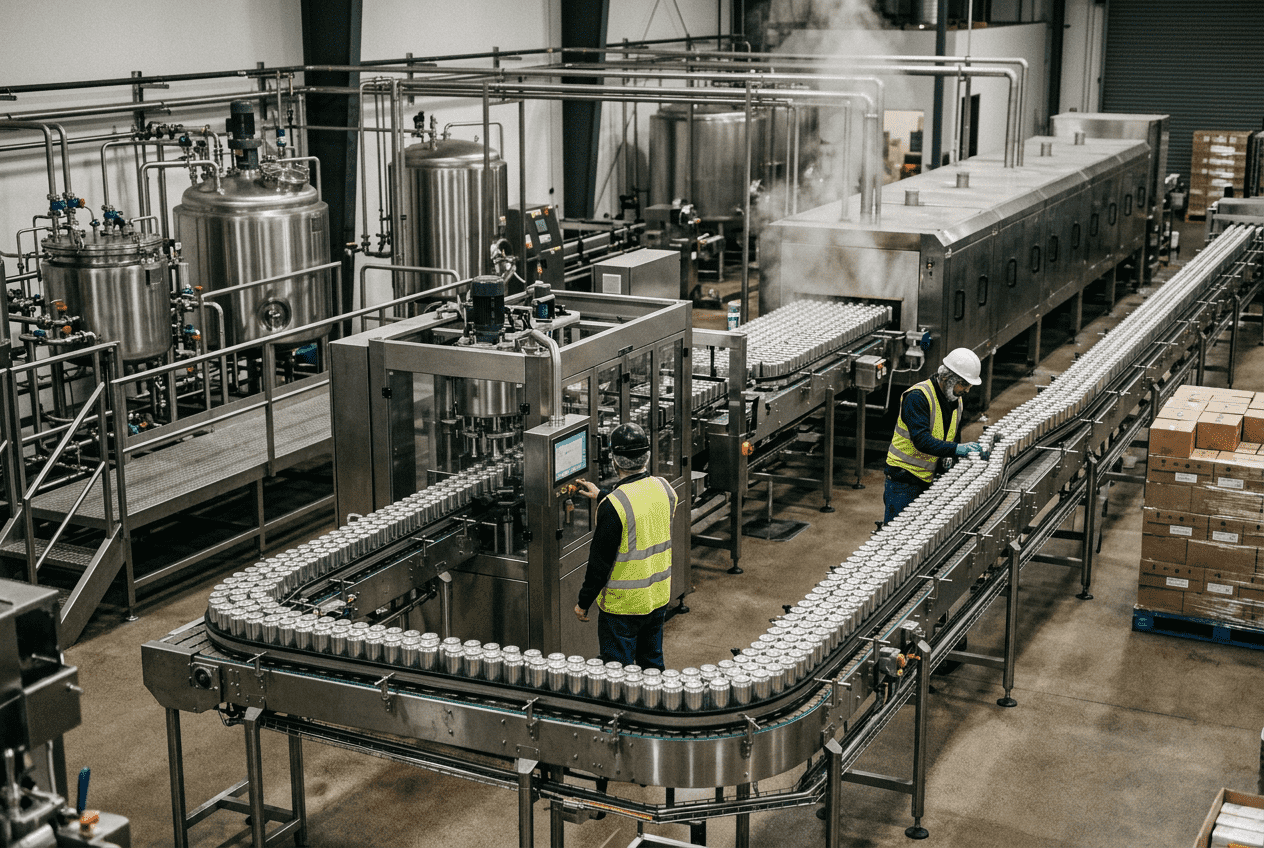
Kombucha Fermentation Systems
Kombucha fermentation systems are the integrated tanks, controls, sanitation methods, utility connections, and monitoring tools used to produce consistent fermented tea at commercial scale. In the United States, the best system design usually combines controlled primary fermentation, protected secondary conditioning, strong contamination prevention, and process data that supports repeatable flavor, acidity, carbonation, and shelf stability. For brands moving from pilot batches to regional or national production, system design matters as much as recipe development. Across the U.S. beverage market, kombucha producers in hubs such as Los Angeles, Austin, Chicago, Seattle, Portland, Denver, Atlanta, and the Research Triangle increasingly need fermentation systems that are not only food-safe and scalable, but also economically efficient. Freight access through ports such as Long Beach, Savannah, Houston, and Newark supports ingredient and packaging supply chains, while regional co-packing growth is raising expectations for automation, documentation, and sanitary design. That is why many manufacturers now evaluate kombucha equipment not as stand-alone tanks, but as part of a complete processing platform that includes brewing, blending, utilities, CIP, controls, packaging, and expansion planning. For most U.S. commercial kombucha operations, the most effective approach is a two-stage system: an oxygen-accessible primary fermentation setup for SCOBY activity, followed by a tightly controlled secondary system for flavoring and natural carbonation or a separate carbonation step for precise package performance. Open or semi-open primary vessels can support acetic acid bacteria performance, but they must be paired with rigorous sanitation, insect exclusion, airflow control, and environmental monitoring. Closed tanks are often preferred as producers scale because they simplify contamination control, improve data collection, and integrate more easily with automated cleaning and transfer systems. The right system depends on product type. Raw traditional kombucha, flavored kombucha, low-sugar functional beverages, and hard kombucha all have different process demands. A startup selling in one metro area may begin with jacketed atmospheric tanks and manual testing. A multi-state brand supplying grocery chains usually needs engineered vessel design, glycol temperature control, inline instrumentation, closed transfer paths, and documented sanitation programs that support FDA expectations and private-label quality audits. For companies seeking expansion, retrofits, or greenfield design, it is useful to work with a partner that understands both beverage process engineering and capital efficiency. Disruptive Process Solutions is known in North America for approaching projects from a profitability and execution standpoint, not just an equipment-sales perspective. The table above shows why equipment selection should match growth stage. Many U.S. brands outgrow early manual systems quickly, especially after retail placement expands from local natural stores to national chains. Commercial kombucha production is generally most stable when primary and secondary steps are treated as different process environments. Primary fermentation focuses on converting sweet tea into an acidic fermented base through a symbiotic culture of bacteria and yeast. Secondary fermentation or conditioning focuses on flavor integration, carbonation management, and packaging readiness. Trying to force both objectives into one vessel often creates inconsistency. In the primary stage, tea concentration, sugar load, inoculation ratio, vessel geometry, oxygen exposure, temperature, and residence time affect the balance between yeast metabolism and bacterial acid production. In the secondary stage, the process becomes more sensitive to residual sugar, fruit additions, botanicals, pressure, dissolved CO2, and microbiological risk from post-fermentation ingredients. A two-stage system design also helps with scheduling. Producers can keep primary fermenters running in a predictable rotation while conditioning tanks are used for product-specific SKUs such as ginger, berry, citrus, or adaptogen blends. This matters for co-packers and multi-SKU plants where tank occupancy directly impacts throughput and margin. The explanation is straightforward: a successful kombucha plant treats primary and secondary as linked but separate process systems. That reduces flavor drift, lowers contamination risk, and improves production planning. In practical U.S. operations, primary vessels may be grouped near brewing systems and sugar handling, while secondary tanks are positioned closer to blending, filtration if used, and packaging. This layout supports better labor flow and minimizes unnecessary movement of live product across the plant. Facilities in high-cost industrial markets such as Southern California or northern New Jersey often prioritize compact layouts, while larger greenfield sites in Texas or the Carolinas may have more room for dedicated process zones. Open versus closed fermenters is one of the most debated topics in kombucha processing. Open fermenters provide broad surface area and easier oxygen availability for acetic acid bacteria. They also allow visual observation of SCOBY formation. However, they are more vulnerable to airborne contamination, fruit flies, cleaning variability, and environmental swings. Closed fermenters improve sanitation control, transfer integrity, and automation compatibility, but they must be engineered to support the oxygen needs of the process or the fermentation profile may change. For many U.S. producers, the answer is not purely open or purely closed. Instead, it is a controlled atmospheric or low-pressure sanitary vessel with managed venting, screened air exchange, and cleanable internals. These hybrid approaches retain process functionality while reducing contamination exposure. The table makes clear that vessel selection depends on business goals, not only fermentation philosophy. A local artisanal producer in Portland may accept more manual involvement. A national contract manufacturer shipping through Chicago, Dallas, and Atlanta distribution lanes usually prefers closed sanitary systems with repeatable cleaning and control performance. Companies evaluating new vessels should also consider floor loading, utility availability, future SKU count, operator skill level, and whether tanks need to serve multiple beverages. A partner with broad beverage engineering experience can align these variables during planning. DPS supports such evaluations through process engineering and system integration services, which is especially useful when kombucha lines share infrastructure with tea, juice, or other functional beverages. SCOBY health is less about preserving a single visible pellicle and more about maintaining a stable microbial ecosystem across batches. At commercial scale, consistent inoculum management, acid reserve, sugar concentration, and vessel sanitation do more to protect fermentation performance than simply transferring thick cellulose mats. Producers need to understand their working culture biologically, not just visually. Healthy fermentation systems maintain proper starter strength, use validated hold times, prevent cross-contact with spoilage organisms, and avoid excessive mechanical stress that could alter microbial balance. Common contamination threats include wild yeast, mold spores, lactic acid bacteria not intended in the process, and residues from flavor additions. Fruit flies remain a serious concern in warm beverage facilities, especially during summer months in Gulf Coast and Southeast markets. Environmental control is essential. Positive room practices, screened drains, dry floor management, hygienic hose storage, and well-defined raw versus fermented product zones all reduce risk. Operators should also monitor pH decline curves and sensory changes that may indicate culture drift before finished product defects appear in the market. This checklist works because contamination rarely comes from one dramatic event. It more often comes from small repeated failures: a drain issue, an unclean gasket, a sugary hose left wet, or an inconsistent inoculation routine. Primary kombucha fermentation requires enough oxygen to support acetic acid bacteria without creating a chaotic, contamination-prone environment. Oxygen transfer in commercial systems depends on liquid depth, vessel diameter, exposed surface area, vent design, agitation policy, and air quality management. Unlike beer fermentation, kombucha typically benefits from more oxygen exposure early in the process, though the exact need varies by culture and product profile. Most commercial producers do not use aggressive aeration in the way some industrial fermentations do. Instead, they rely on vessel geometry and controlled passive exchange. In certain designs, low-shear recirculation or carefully filtered airflow can improve uniformity, but overhandling may disrupt pellicle development or shift the flavor profile too sharply toward acetic character. Facilities in humid climates such as Florida, Louisiana, and coastal Texas should pay special attention to intake air quality and condensation. Moist environments can raise the risk of microbial ingress if air pathways are not well managed. Cleanable vent systems, insect-proof barriers, and validated room conditions are therefore part of oxygen management, not separate concerns. The chart above illustrates realistic growth in U.S. kombucha processing capacity as more brands invest in engineered systems. As capacity rises, oxygen control becomes more deliberate and data-driven rather than artisanal alone. Kombucha quality depends heavily on the relationship between temperature, pH, and time. These variables should not be monitored independently. Temperature affects microbial activity rate, pH decline reflects acidification progress and safety direction, and time ties both together into a predictable fermentation curve. Commercial production should define acceptable windows rather than single-point targets. For example, a producer may target a specific temperature range to achieve balanced acidity and reduced process variance across seasons. In colder Midwestern winters, room-driven systems may ferment too slowly. In warm Arizona or Georgia summers, uncontrolled heat may accelerate fermentation and produce harsh acid notes. Jacketed tanks with glycol support give operators a more stable process regardless of climate. pH monitoring should be frequent enough to detect lagging fermentation early. Time alone is not a reliable release criterion because two tanks with the same age can show different acid development. The strongest plants combine online or nearline measurements with trained sensory review and written action limits. This table shows that consistency is not just a matter of checking final pH. It comes from controlling the entire fermentation path, especially in plants producing large weekly volumes. The bar chart reflects where demand for upgraded fermentation infrastructure is strongest. Co-packers, mass retail suppliers, and functional beverage producers often require the highest control precision. Wild microbe prevention is essential because kombucha is intentionally fermented, yet still vulnerable to unintended organisms. This creates a false sense of security in some facilities. A live process does not excuse poor sanitation; in fact, it requires more discipline. The goal is not sterility in the absolute sense, but controlled microbiology with no unwanted growth. Effective sanitation protocols begin with hygienic design: smooth internal finishes, drainable piping, minimal dead legs, proper spray coverage, gasket compatibility, and easy visual inspection. Cleaning chemistry must match residues. Tea solids, sugar films, cellulose buildup, and fruit particulates often require different wash and rinse performance than a simple water-based beverage. Sanitation programs should include pre-rinse, caustic or detergent wash as appropriate, intermediate rinse, acid cycle when needed, sanitizer step if required by the process, and verification. Verification may include ATP checks, visual inspection, conductivity confirmation, and periodic microbiological swabbing. The key is repeatability. Manufacturers seeking custom-cleanable tanks, CIP skids, and integrated sanitary layouts often benefit from working with firms that can align vessel design and utility design together. DPS also offers equipment solutions for processing systems, which is valuable when fermentation tanks must be matched with custom CIP, utilities, and plant expansion plans. This trend line highlights a clear 2026 direction in the United States: more producers are moving toward closed, monitorable, clean-in-place fermentation systems to satisfy retailer expectations, labor efficiency goals, and food safety discipline. Pressure management becomes critical once kombucha enters secondary conditioning, packaging, or any phase where residual fermentation can generate CO2 in a sealed environment. Naturally carbonated kombucha can be attractive from a branding standpoint, but it introduces package variability if sugar, yeast activity, temperature, and fill timing are not carefully controlled. Pressure-rated tanks, relief valves, sanitary sample points, and controlled transfer temperatures all help reduce the risk of overcarbonation. Producers should define whether carbonation will come primarily from natural secondary fermentation, forced carbonation, or a hybrid approach. Each method affects equipment selection differently. Natural conditioning requires tighter biological control. Forced carbonation requires gas handling accuracy and bright tank style infrastructure. Hybrid methods can offer better consistency while preserving some fermentation-derived texture. In U.S. distribution networks, especially summer freight lanes through Phoenix, Las Vegas, or inland Southeast warehouses, package heat exposure can amplify pressure issues. This is why pressure planning should include not only in-plant conditions but also downstream logistics. The explanation here is simple: pressure problems are usually process problems showing up late. Good tank design helps, but stable carbonation starts with fermentation control upstream. Automation in kombucha is no longer limited to large beverage corporations. Mid-sized U.S. producers are increasingly using sensors, PLC-based controls, and SCADA dashboards to track fermentation status in real time. The most useful data points typically include temperature, pH, batch age, transfer status, tank availability, CIP completion, and alarms tied to deviations from validated process windows. Automated monitoring does not replace microbiological understanding, but it allows teams to intervene earlier and document decisions better. This is especially valuable for operations running several tanks at once, managing multiple recipes, or supplying customers that require strong production records. Technologically, the best systems connect fermentation assets with broader plant infrastructure. That means tying tanks into glycol systems, utility consumption, sanitation skids, blending rooms, and packaging line scheduling. DPS is active in this area because its engineering capabilities span process, mechanical, electrical, controls, PLC programming, and SCADA integration. For manufacturers that need design-to-execution continuity, this multi-discipline approach reduces coordination gaps and helps the plant operate as one process instead of a collection of isolated machines. From a manufacturing standpoint, scalable kombucha systems benefit from custom tanks, CIP packages, sanitary transfer loops, and utility-ready layouts. DPS also manufactures selected process equipment, including tanks and CIP systems, which can be valuable when standard catalog equipment does not fit the product, footprint, or cleaning requirements. On the service side, the company supports capital planning, feasibility, owner representation, installation, integration, and project management, allowing beverage manufacturers to align fermentation expansion with commercial goals rather than treating it as a stand-alone purchase. The comparison chart shows how system sophistication generally improves scale readiness, auditability, and process repeatability. Higher-tech systems carry more upfront cost, but they often reduce long-term waste, downtime, and rework. For manufacturers considering future expansion, reviewing prior execution examples can help. The DPS project case studies illustrate how integrated processing and utility projects are planned around throughput, profitability, and long-term plant performance. What is the best fermentation tank for commercial kombucha?The best choice is usually a sanitary, cleanable tank designed around your production volume, oxygen needs, and cleaning method. Many growing U.S. producers prefer controlled atmospheric or semi-closed vessels for primary fermentation and closed conditioning tanks for secondary processing. Should kombucha be fermented in open tanks?Open tanks can work, especially for traditional primary fermentation, but they increase contamination exposure. They are more practical in tightly managed environments with strong sanitation and airflow control. As production scales, many plants move toward more enclosed designs. How important is temperature control in kombucha production?Very important. Temperature strongly affects fermentation speed, acid development, and flavor consistency. Seasonal room swings in the United States can create major variability if tanks are not jacketed or climate-controlled. Can kombucha be naturally carbonated safely at scale?Yes, but only with strong control over residual sugar, yeast activity, pressure-rated equipment, and package performance. Many producers use hybrid systems to improve consistency while keeping a natural fermentation story. What sensors are most useful in a kombucha fermentation system?Temperature and pH are the starting point. As plants scale, producers often add pressure monitoring, batch tracking, CIP verification, tank level sensing, and integrated SCADA dashboards. How do producers prevent wild yeast and unwanted bacteria?Through hygienic tank design, validated sanitation protocols, protected air exchange, careful ingredient handling, operator training, and lot-based culture management. Cleaning discipline is just as important as recipe discipline. What should U.S. co-packers prioritize when designing kombucha systems?Flexible tank scheduling, strong cleaning capability, clear batch records, closed transfer paths, flavor dosing control, and packaging compatibility. Multi-SKU operations benefit greatly from automation and well-zoned process layouts. What are the main 2026 trends for kombucha fermentation systems?The major trends are increased automation, more closed sanitary primary systems, stronger retailer-driven documentation, energy-efficient utilities, water-conscious CIP design, and sustainability-focused material and process choices. Policy pressure around food safety documentation and resource use is also pushing beverage plants toward smarter controls and more transparent operating data. How does sustainability affect fermentation system design?Sustainability now influences tank insulation, heat recovery, CIP water reuse strategies where appropriate, efficient glycol design, and reduced product loss during transfers. In states with tighter water and energy pressures, such as California and Arizona, these design choices can materially affect operating cost. Who should help design a commercial kombucha processing system?Ideally, a partner experienced in beverage process engineering, utilities, controls, installation, and capital planning. That reduces the risk of buying isolated equipment that does not perform well once integrated into a real production environment. In summary, kombucha fermentation systems should be designed around controlled biology, sanitary engineering, plant-wide integration, and business scalability. U.S. producers that invest early in clear primary and secondary process separation, good tank selection, contamination control, pressure management, and automation are better positioned to meet retailer standards, maintain flavor consistency, and grow profitably across regional and national markets. -
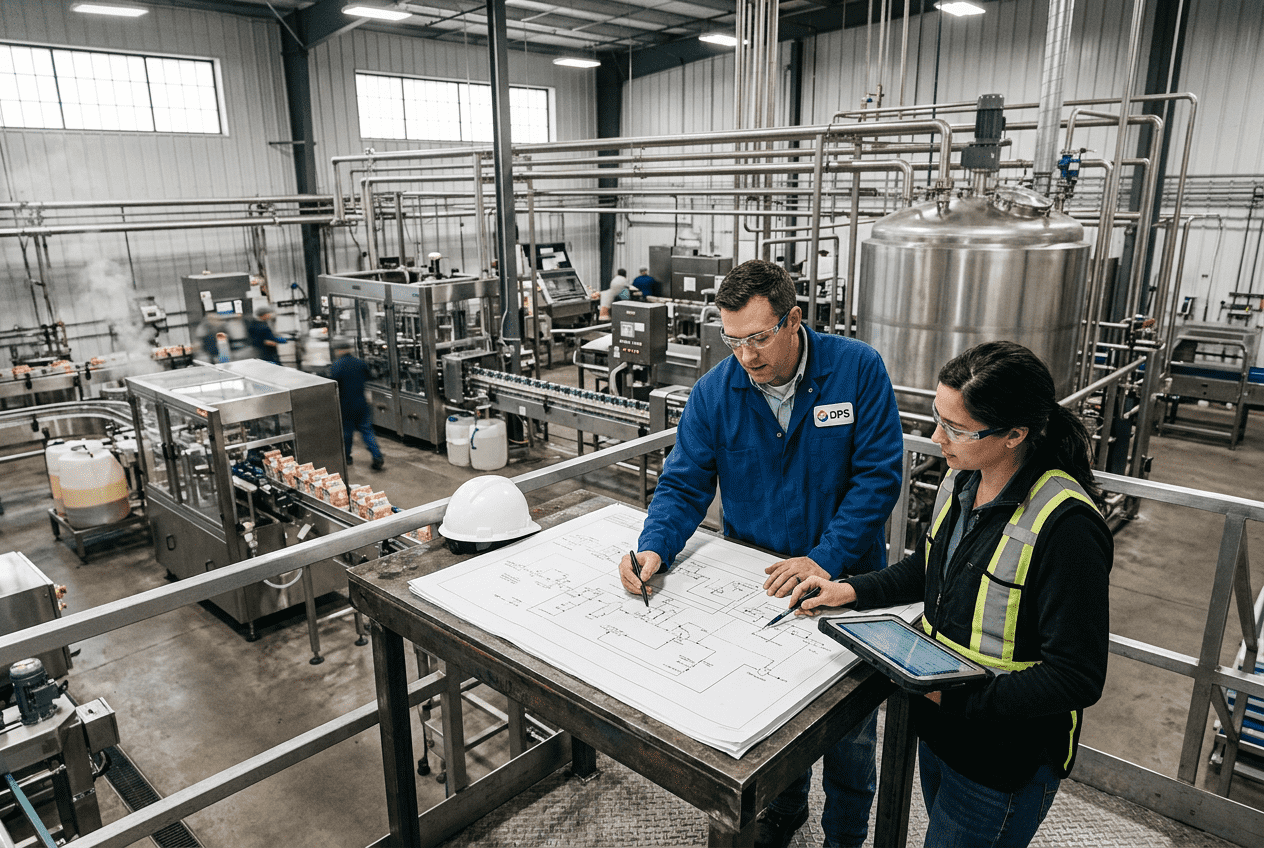
HMI Design Best Practices for Food Facilities: ISA-101 Operator Interface Guide
Human-machine interface design in food and beverage operations is not just a controls topic. In the United States, it directly affects operator response time, sanitation readiness, batch consistency, uptime, audit performance, and training efficiency. Whether a plant runs dairy, protein, prepared foods, brewing, aseptic filling, retort, or sauces, a poorly designed HMI can hide critical process conditions behind bright graphics, inconsistent navigation, and unclear alarms. A well-designed ISA-101 style operator interface does the opposite: it reduces cognitive load, highlights abnormal situations, and helps operators make faster, better decisions. Across U.S. manufacturing hubs such as Chicago, Charlotte, Dallas-Fort Worth, Fresno, Kansas City, Atlanta, Milwaukee, and Central Valley processing corridors, food plants are modernizing controls to support labor shortages, stricter traceability, water and energy targets, and 2026 readiness for more connected operations. That is why HMI design best practices now matter at the same level as hygienic layout, utility planning, and line integration. The short answer is this: for food facilities in the United States, the best HMI follows ISA-101 principles by using low-contrast graphics during normal operation, reserving red strictly for alarms, organizing screens in a clear hierarchy from plant overview to unit detail and faceplate control, and presenting process values with trends and normal operating ranges rather than isolated numbers. In washdown environments, screens must also account for glove use, water exposure, touchscreen readability, and cleanable mounting methods. The result is an interface that improves safety, product quality, training speed, and operator confidence. For buyers evaluating new automation or retrofits, the most practical approach is to treat the HMI as part of operations engineering rather than decoration. That means standardizing alarm priorities, navigation rules, object libraries, naming conventions, trend windows, historian tags, user roles, and hardware enclosure requirements before screen development begins. Plants that skip this foundation often end up with different HMIs on every line, higher support costs, and slower troubleshooting. In food and beverage settings, the stakes are unusually high. An unclear pasteurizer screen can jeopardize lethality margins. A poorly displayed CIP sequence can lead to chemistry misuse or incomplete verification. An overloaded fermentation dashboard can mask pressure drift. In a meat or prepared foods facility, a confusing batch transfer display can lead to rework, waste, or label-control risk. ISA-101 style design is valuable because it aligns the interface with operator action and process understanding. A calm-display philosophy means the screen should appear visually quiet when the process is healthy. Many legacy HMIs in U.S. food plants still use bright blue tanks, green pumps, flashing pipes, and complex shadows. These graphics may look impressive during a factory acceptance test, but they create visual noise. Operators begin to ignore the screen because everything appears urgent all the time. ISA-101 pushes the opposite approach: neutral backgrounds, restrained color, and emphasis only when intervention is needed. For food facilities, this matters in areas such as syrup rooms, blending skids, HTST systems, CIP sets, retort banks, evaporators, tank farms, and packaging lines. A calm display allows abnormal conditions to stand out immediately. It also helps supervisors and maintenance technicians review conditions from a distance without decoding decorative symbols. In practice, a low-contrast screen typically uses gray, charcoal, or muted neutral backgrounds with simple piping and equipment outlines. Running equipment may be indicated by subtle state changes instead of bright animation. Process values remain clear and legible, but not oversized unless they are action-critical. The design goal is not to make the screen look empty; it is to make important information visible at the moment it matters. The table above shows the central logic of calm-display design. In food facilities, operators often split attention between the HMI, line equipment, radios, quality checks, and sanitation constraints. A quiet screen supports this multitasking environment better than a graphic-heavy one. The line chart reflects a realistic trend in the United States: more food manufacturers are treating HMI modernization as part of broader digital reliability and workforce strategy. Growth is being driven by labor turnover, cybersecurity upgrades, line integration, and stricter performance expectations from ownership groups and private equity-backed operators. Color discipline is one of the most important rules in HMI design. If red is used for pumps, valves, backgrounds, logos, or decorative states, it loses its meaning when a real alarm occurs. In a food plant, that can delay reaction to a high-temperature deviation, low differential pressure, CIP conductivity miss, VFD trip, overpressure event, or safety interlock issue. Red should be reserved for alarms and other conditions requiring immediate operator attention according to the plant’s alarm philosophy. Amber or yellow can indicate warnings or abnormal conditions that are not yet alarms. Green should not be overused as a blanket “everything is okay” color, because a mostly green screen becomes almost as noisy as a flashy one. Instead, many high-performance HMIs rely on grayscale for normal operation, then use color sparingly for status meaning. This is especially useful in FDA, USDA, SQF, and BRC-driven environments where documented response and procedural clarity matter. During investigations or event reviews, clear visual logic helps explain what operators saw and when. The table above works best when paired with a written site standard. Plants with multiple vendors, co-pack lines, and acquisitions often inherit inconsistent color practices. Standardization across all facilities or at least all U.S. sites can sharply reduce training time. The bar chart highlights where HMI discipline is especially valuable. Beverage and aseptic operations often lead demand because they rely on precise sequence control, recipe management, sanitation confirmation, and continuous process visibility. Protein and dairy plants also score high because quality risk and audit sensitivity are substantial. Good HMI navigation follows a hierarchy. Operators should be able to move from a plant-wide overview to area screens, then unit screens, then device faceplates and detailed diagnostics without getting lost. This sounds simple, but many systems fail here. Screens are often built by equipment package, programmer preference, or project timeline rather than operator workflow. In a U.S. food plant, the ideal structure usually begins with a high-level plant or process area overview. From there, operators drill into systems such as utilities, receiving, batching, thermal processing, packaging, CIP, wastewater, or cold storage support. Unit detail pages then show one skid, line, or process module. Faceplates provide direct control and diagnostics for instruments, motors, valves, drives, and loops. This approach is especially useful for multi-building campuses near major logistics and manufacturing centers such as Houston, Memphis, Indianapolis, or the Port of Savannah supply corridor, where plants may have older utilities feeding newer process lines. A consistent navigation standard prevents confusion across expansions and relocations. The value of this hierarchy is operational speed. When a homogenizer faults, a transfer pump stalls, or a retort batch holds, the operator should not click through ten unrelated graphics to find device details. Screen transitions should be obvious, consistent, and available from every major view. Plants evaluating OEM packages should insist on these rules during procurement. Buying advice is straightforward: request navigation mockups, object libraries, alarm color definitions, and faceplate standards before code is accepted. That requirement reduces expensive standardization work later. An isolated temperature, pressure, flow, or conductivity value rarely tells the full story. Operators need context to know whether a process is drifting, stable, or recovering. That is why effective HMIs pair live values with mini-trends, target ranges, and normal operating envelopes. For food processing applications, this principle is essential. Examples include: When operators can see the trend and expected range, they intervene earlier and more accurately. This reduces false reactions, nuisance alarms, and product loss. In regulated environments, it also supports better investigations and training. The table above reinforces a core design principle: show meaning, not just measurement. This is particularly important in facilities with rotating labor, where not every operator has years of tribal process knowledge. The area chart shows a realistic industry shift toward trend-based operator displays. By 2026, more U.S. projects are expected to favor contextual displays because they better support remote engineering review, training, and root-cause analysis. Food plants face conditions that generic HMI guidance often underestimates: wet zones, caustic cleaning, changing gloves, condensation, temperature swings, and visibility issues under bright production lighting. In washdown environments, touchscreen design must support operation without compromising hygienic requirements or durability. Buttons need enough size and spacing for gloved hands. Touch targets should avoid edge-only activation. Fonts must remain readable at practical standoff distances. Critical actions should include confirmation logic, especially in sanitation, thermal processing, and transfer routing. If a plant uses mobile tablets or industrial handhelds, network coverage, user authentication, and role-based screen simplification must also be considered. Plants in coastal areas such as Southern California, New Jersey, or Gulf Coast regions may also account for humidity, corrosion exposure, and cleaning-agent compatibility. In meat, dairy, and ready-to-eat facilities, enclosure selection and mounting details are as important as software design. This is where equipment and supplier evaluation becomes practical. Local suppliers may offer attractive panel hardware, but buyers should ask whether the devices are proven in food washdown conditions, whether replacement parts are stocked in the United States, and whether the touchscreen remains reliable with gloves and moisture. Plants around Los Angeles, Raleigh-Durham, Milwaukee, and Minneapolis often benefit from regional support availability, especially when downtime windows are tight. Strong HMI outcomes depend on engineering discipline behind the screens. The visual layer should be tied to a documented technical standard covering PLC naming conventions, alarm classes, ISA-101 screen philosophy, ISA-18.2 alarm integration, historian strategy, cybersecurity, user management, and data integrity expectations. This section is also the best place to evaluate a partner’s technological capabilities. For example, a qualified engineering firm should be able to connect HMI design with structural, mechanical, electrical, process, and controls realities. In food and beverage environments, that includes PLC programming, SCADA architecture, utility coordination, sequence design, batch logic, instrument selection, and commissioning support. It also means understanding actual process technologies such as fermentation systems, distillation, pasteurization, aseptic lines, retort, carbonation, blending, filtration, water treatment, grinding, mixing, cooking, marination, dairy processing, and plant-protein systems. HMI standards work best when the team understands how the process truly runs. Companies such as DPS engineering and integration services are relevant here because food manufacturers often need more than a programmer. They need a partner that can tie interface design to utilities, process sequences, compliance expectations, and production economics. That alignment is especially important in capital projects where one screen issue can affect commissioning, training, and OEE at startup. The table above should be part of any RFP or automation scope package. It also helps compare products and suppliers beyond price alone. A lower-cost HMI package without documentation, alarm discipline, or reusable standards often becomes more expensive over the life of the plant. The comparison chart illustrates why many manufacturers prefer a food-focused systems partner over a generic graphics provider. Screen design quality depends heavily on process understanding, startup support, and the ability to integrate HMI choices with the broader capital project. The best implementation roadmap starts before graphics are built. First, define business goals: faster operator response, training consistency, fewer nuisance alarms, better sanitation verification, less downtime, or easier startup across multiple U.S. plants. Then establish a standard library and governance model before touching individual screens. A practical rollout sequence usually includes assessment, standard creation, pilot deployment, operator feedback, revision, and scale-up. Plants should also identify the right pilot area. Good candidates include a CIP system, blending skid, pasteurizer, boiler room, or one representative packaging line. These systems provide enough complexity to test navigation, trends, device faceplates, and alarm logic without exposing the entire site to simultaneous change. Project best practices include involving operators early, not just during acceptance. Maintenance teams should review diagnostics and faceplates. Quality teams should review trend visibility for CCPs, sanitation steps, or recipe checks. IT and OT teams should review remote access, backups, and user permissions. Training materials should include not just “how to click” but also “why the screen looks this way.” For larger capital programs, some firms use a design-build-manage approach because it keeps interface standards tied to equipment, utilities, schedule, and field execution. That is relevant for companies undertaking new facilities, major line additions, or relocations. A firm that can engineer the system, coordinate field trades, and manage execution often reduces the disconnect between screen design and actual plant startup. Readers exploring this broader model can review food and beverage project examples to see how integrated execution supports better outcomes. The roadmap table matters because successful HMI projects are organizational change projects, not just coding exercises. In the U.S. market, that is particularly true for multi-site manufacturers with facilities spread across the Midwest, Southeast, Texas, and the West Coast. Looking toward 2026, future trends include increased use of role-based mobile views, better contextual analytics inside SCADA, stronger OT cybersecurity requirements, energy and water dashboards linked to sustainability goals, and more policy attention to traceability and digital record confidence. Plants modernizing now should design standards that can support those additions later. Disruptive Process Solutions supports food and beverage manufacturers across the United States and Canada with a business-minded engineering approach focused on profitability, execution quality, and long-term plant performance. Rather than treating controls and HMI work as isolated graphics tasks, the company aligns operator interface design with process engineering, capital planning, utility integration, construction coordination, and startup success. From a technological capability standpoint, DPS brings process, controls, electrical, mechanical, plumbing, and structural understanding into one project framework. That matters when an HMI must accurately reflect real production behavior across fermentation, distillation, pasteurization, aseptic processing, batching, filtration, water treatment, protein processing, dairy operations, or advanced utility systems. Manufacturers looking for a partner that understands both automation and process consequence can learn more through the DPS team and operating philosophy. From a manufacturing capability perspective, DPS also designs and manufactures selected process equipment, including tanks, CIP systems, marination tumblers, and cooking vessels. That experience helps bridge the gap between what the operator sees on screen and how equipment actually behaves in the field. In practical terms, it supports better screen logic for skid operation, cleaner startup sequencing, and more useful maintenance diagnostics. Additional information on this side of the business is available through DPS process equipment solutions. From a service capability standpoint, DPS provides process design, feasibility support, owner’s representation, project and program management, general contracting functions where applicable, installation coordination, integration, commissioning, and end-to-end execution. This makes the company especially relevant for manufacturers building new lines, expanding utilities, relocating assets, or standardizing multiple sites. Its lean structure enables rapid decision-making while still supporting complex work across food, beverage, and regulated processing environments. For food manufacturers in the United States, this combination is valuable because HMI design best practices only deliver results when they are connected to process reality, field installation, startup pressures, and production economics. That is the difference between an interface that looks modern and one that genuinely improves plant performance. What is the biggest HMI design mistake in food facilities?The most common mistake is overusing color and animation, which makes abnormal conditions harder to detect. In food plants, this can slow response to quality, safety, or utility issues. Why is ISA-101 useful for U.S. food manufacturers?ISA-101 provides a structured approach to HMI design that improves consistency, operator awareness, and lifecycle maintainability. It is especially useful in multi-line and multi-site environments. Should every process value have a trend?Not every value, but every action-critical variable should have easy trend access. Temperatures, pressures, levels, flows, conductivity, pH, and Brix are strong candidates in food and beverage operations. Can old HMIs be upgraded without replacing the full control system?Often yes. Many plants modernize graphics, navigation, historians, and alarm handling while keeping core PLC hardware in place. The right path depends on platform age, network architecture, and cybersecurity requirements. What industries benefit most from these practices?Dairy, beverage, brewing, spirits, prepared foods, protein processing, sauces, aseptic operations, and co-packing all benefit because they rely on repeatable sequences, sanitation visibility, and clear operator action. How do I evaluate suppliers for an HMI redesign?Look beyond graphics samples. Ask about alarm philosophy, food process experience, washdown hardware knowledge, testing procedures, startup support, and the ability to standardize multiple lines or sites. How does mobile access fit into food plant HMI strategy?Mobile views are useful for supervisors, maintenance staff, and large campuses, but they must be role-based, secure, readable with PPE, and carefully limited for critical actions. What should be included in a pilot project?A pilot should include alarm handling, trends, navigation, faceplates, historian checks, operator feedback, and documented acceptance criteria. CIP systems, utility areas, and one representative process line are common starting points. What 2026 trends should plants plan for now?Expect more contextual analytics, sustainability dashboards, stronger OT security expectations, integrated mobile views, and tighter digital record expectations tied to quality and traceability. Does HMI design really affect profitability?Yes. Better interfaces reduce downtime, product loss, training time, nuisance alarms, and troubleshooting hours. In high-throughput U.S. food and beverage plants, those gains add up quickly. -
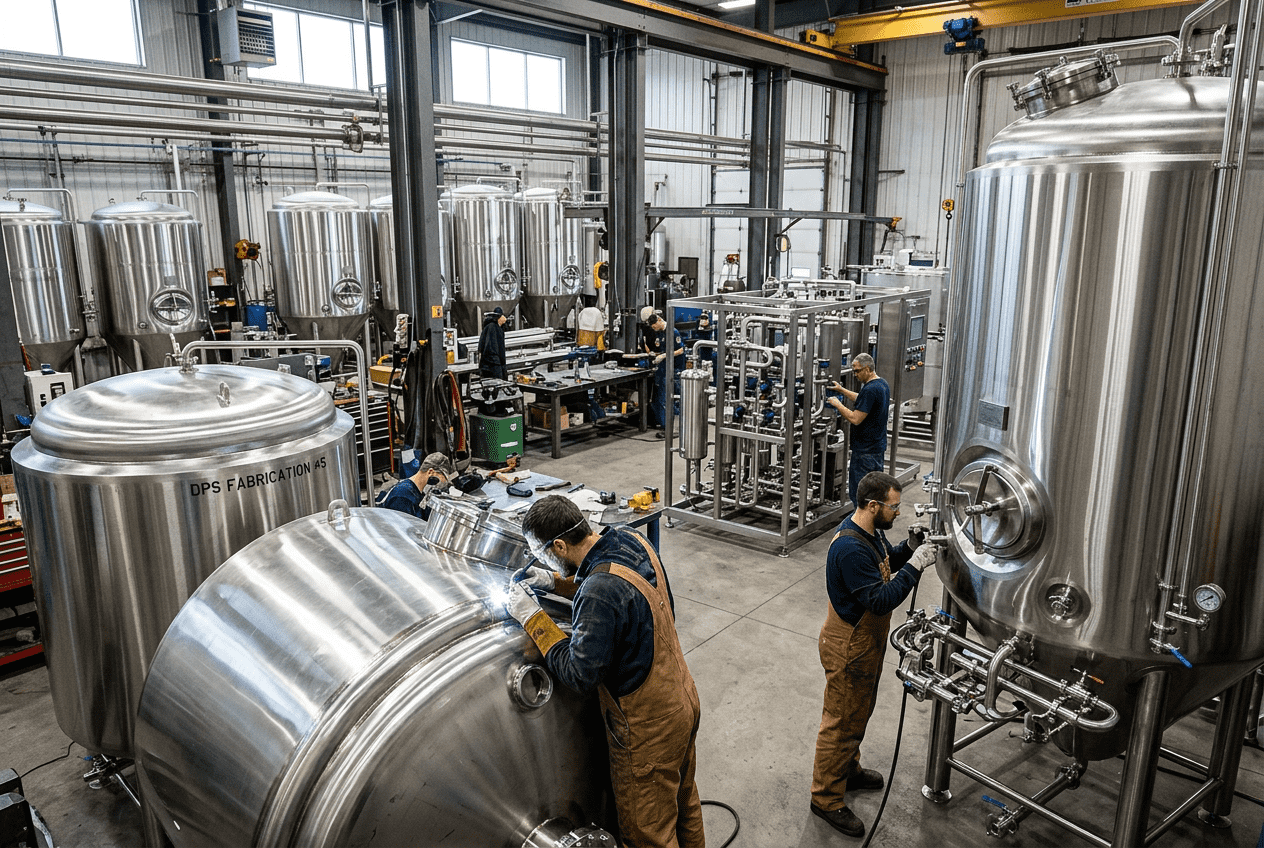
ERP Integration for Food Facilities: Connecting Shop Floor to Enterprise Planning
Food and beverage manufacturers in the United States are under pressure to run faster, document more, and protect margins in a market shaped by labor shortages, ingredient volatility, retailer compliance, and tighter traceability expectations. For many plants, the missing link is not another isolated software package. It is a practical integration layer that connects the shop floor to enterprise planning so that production, inventory, quality, maintenance, and cost data move in near real time. When implemented correctly, ERP integration for food facilities turns line activity into business visibility. That matters whether a processor runs protein lines in the Midwest, dairy systems in Wisconsin, aseptic beverages in California’s Central Valley, or co-packing operations near Atlanta, Dallas, Houston, Chicago, or the Port of Savannah. In each case, the business need is similar: plant events must update planning, and planning decisions must reach the floor without delay. The result is better schedule adherence, cleaner lot genealogy, faster issue response, and stronger operating profit. This page explains how food manufacturers in the United States can connect PLCs, SCADA, sensors, MES functions, maintenance workflows, and ERP platforms into one operational model. It also outlines where specialized engineering and integration partners add value, especially in regulated environments governed by FDA, USDA, SQF, and BRC expectations. The quick answer is simple: food facilities benefit most from ERP integration when they connect production orders, inventory movements, quality events, and maintenance costs directly to plant-floor signals and operator actions. Instead of waiting for end-of-shift data entry, the system captures events as they happen. That means a batch start updates ERP status, ingredient consumption reduces inventory, downtime creates maintenance activity, sensor excursions trigger alerts, and quality holds stop affected lots from moving forward. For U.S. food plants, the highest-value integration points usually include: Plants that make the biggest gains typically start with the processes that lose the most money when data is late: recipe execution, ingredient loss, changeover downtime, quality release delays, and manual reconciliation between operations and finance. The table above shows why ERP integration is not just an IT project. It is an operations and margin project. The most successful U.S. implementations are led jointly by plant leadership, finance, quality, maintenance, and engineering rather than software alone. In food manufacturing, production order visibility breaks down when the ERP system assumes work is on plan but the floor is already behind, short on ingredients, waiting on sanitation, or holding a lot pending quality release. Live order status closes that gap. As operators start a run, complete a batch, consume ingredients, or palletize finished goods, the connected system updates the ERP transaction layer automatically or through guided confirmation screens. This is especially important in high-volume U.S. corridors such as Southern California, the Chicago region, North Carolina, and Texas, where plants often coordinate inbound ingredients, copacker schedules, contract warehousing, and outbound truck appointments on tight windows. A delay in one syrup room, cook line, retort cell, or filler can ripple into labor, freight, and customer service cost. Real-time inventory synchronization should include: Plants handling allergens, proteins, dairy, or aseptic products gain additional value because accurate lot tracking reduces exposure during investigations and recall simulations. The system should also support localized plant realities, such as off-line staging near docks, freezer storage, or remote silos connected to bulk receiving. The table above illustrates why data ownership matters as much as system architecture. When responsibilities are clear, real-time order and inventory synchronization becomes reliable rather than noisy. The line chart shows a realistic growth path for digital integration adoption in U.S. food plants. The trend is driven by labor scarcity, retailer compliance, cybersecurity upgrades, and the move toward more automated reporting across multi-site operations. Many food facilities still depend on operators or supervisors to report equipment trouble after the fact. That approach creates blind spots, especially for utility systems and critical processing assets that run around the clock. A better model is to let sensors create a maintenance signal before the failure becomes expensive. When vibration, temperature, pressure differential, motor current, compressor runtime, pump cavitation, or tank level trends cross defined limits, the system can generate a work order or inspection task automatically. This capability is valuable in breweries, dairy plants, meat processing rooms, retort facilities, and beverage utilities where boilers, compressed air, glycol, chilled water, and CIP systems are central to uptime. In cities with high production concentration, such as Milwaukee, Fresno, Houston, and Charlotte, even a short failure can disrupt multiple customer commitments if the plant serves regional distribution. Automated work order generation requires more than attaching sensors to assets. It requires an engineered rule set. Thresholds must be practical, equipment criticality must be ranked, and alarm floods must be prevented. A boiler stack temperature alarm should not create the same workflow as a minor noncritical room fan fluctuation. The table above demonstrates how condition-based rules should be mapped by asset class. The best programs do not over-automate. They prioritize the assets with the highest effect on food safety, throughput, utility stability, and regulatory exposure. In practice, the workflow often looks like this: the sensor trend exceeds limit, SCADA or edge software validates the event, the CMMS or ERP maintenance module creates a work order, a supervisor receives notification, and technician labor plus parts usage post back to the financial record. That closes the loop between machine condition and business cost. Yield loss is one of the fastest ways to give away profit in food manufacturing. A few extra pounds of giveaway, higher-than-standard evaporation, overfill on a beverage line, protein trim loss, or an ingredient dosing issue can erode margin long before the month-end financial package reveals the problem. Yield variance reporting should therefore operate at the batch, lot, shift, and line level, not just in summary reports. In U.S. markets where ingredient and packaging costs remain volatile, batch-level cost deviation alerts help plants act sooner. If a sauce line in New Jersey runs 3.5% below expected yield, or a dairy blend system in Wisconsin shows repeated overuse of a high-cost ingredient, the system should flag the deviation while corrective action is still possible. This is particularly valuable for co-packers whose profitability depends on exacting conversion cost control. A robust setup includes: The area chart highlights a realistic shift toward proactive yield monitoring. As ingredient inflation and retailer pricing pressure continue, more U.S. processors are moving from retrospective yield analysis to live cost deviation alerting. The table above is most useful when paired with alert tolerances. Not every variance deserves the same response. High-value ingredients, short shelf-life products, and contract manufacturing programs often need tighter thresholds than commodity or low-complexity SKUs. Quality hold management is one of the clearest reasons to integrate ERP and shop floor systems in food facilities. When a lot fails a microbiological test, drifts outside a process control limit, misses a label verification check, or is linked to a sanitation concern, the affected material must be isolated immediately. If operators, warehouse teams, and planning systems do not see the same hold status, the risk of accidental use or shipment rises sharply. An automated hold and disposition workflow typically begins with a trigger from lab results, inline inspection, CCP deviation, environmental monitoring, or operator exception entry. The system should then assign a hold code, block movement in ERP, notify stakeholders, preserve genealogy, and route the case for disposition. Depending on plant policy, disposition options may include release, rework, downgrade, destruction, return to vendor, or further investigation. Food manufacturers shipping through major U.S. distribution hubs such as Los Angeles/Long Beach, Memphis, New Jersey, and Savannah benefit from this control because lots often move quickly across sites and third-party warehouses. A delayed hold can become a national issue in hours, not days. Effective hold management should include: The bar chart shows how demand varies by industry segment. Aseptic, protein, and dairy environments often place the highest value on automated hold management because of shelf life, food safety, and traceability complexity. The explanation behind this table is straightforward: hold workflows work best when they are pre-designed rather than improvised. Plants that try to manage holds through email, spreadsheets, and verbal communication almost always discover gaps during audits or urgent investigations. Many food plants know their total maintenance spend, but far fewer know the true cost by line, asset, and failure mode. When maintenance costs are connected to ERP and production data, leadership can see which assets are absorbing labor, spare parts, contractor support, overtime, and downtime losses. That insight changes capital planning. It becomes easier to decide whether a filler should be rebuilt, whether a CIP skid needs redesign, or whether a legacy conveyor network is costing more than replacement. Asset-linked maintenance cost capture should include technician time, parts withdrawals, outside service invoices, downtime duration, impact on throughput, and recurring defect categories. In a plant with multiple process areas, such as receiving, blending, thermal processing, packaging, warehousing, and utilities, this cost view often reveals that support systems are the hidden bottleneck. A compressor, glycol loop, or steam distribution issue can affect more value than the production line it serves. For U.S. facilities managing large footprints or multi-site networks, this information also improves spare parts policy. Plants near logistics hubs like Dallas-Fort Worth or Chicago may centralize parts differently than remote facilities that cannot wait on next-day freight. The comparison chart shows why integration depth matters. Plants that connect ERP, production, and maintenance systems typically achieve much stronger cost visibility than facilities relying on isolated modules or manual data transfer. Buying advice for maintenance integration is practical: This is also where engineering context matters. A system integrator that understands process equipment, utilities, controls, and line operation will define better asset logic than a purely software-led deployment. To work in a U.S. food facility, ERP integration must be designed around plant reality, not abstract software diagrams. The technical architecture should reflect sanitation constraints, hazardous washdown environments, regulated process steps, recipe control needs, and the difference between continuous, batch, hybrid, and utility operations. At minimum, the design should address: For plants with legacy equipment, gateway architecture is often necessary. Some assets can expose clean data from PLCs. Others may require retrofit instrumentation, edge devices, or manual confirmation steps. The correct answer depends on cost, criticality, and the value of automation. From a technological capability standpoint, Disruptive Process Solutions brings an important advantage. The company operates as a food and beverage engineering partner with process, mechanical, electrical, structural, plumbing, and controls capability, including PLC programming, automation, and SCADA integration. That means software integration can be paired with physical process understanding rather than treated as a separate exercise. Companies evaluating design standards or control layer upgrades can review DPS’s broader engineering and project services as part of a coordinated plant modernization strategy. On the manufacturing capability side, DPS also understands the actual process systems generating the data. Its experience spans fermentation, distillation, HTST and UHT systems, tunnel and flash pasteurization, retort, HPP, blending, batching, in-line Brix control, dairy systems, protein processing, aseptic environments, and utility infrastructure such as CIP, boilers, compressed air, cooling towers, refrigeration, and water treatment. That matters because integration logic is only as good as the process assumptions underneath it. A team familiar with tank farms, cook systems, marination lines, and packaging constraints can map events more accurately to business transactions. The explanation for this table is that integration success depends on engineering discipline. Plants often underestimate the importance of naming conventions, time stamps, test scripts, and exception handling. Those details determine whether data can be trusted in daily use. The best implementation roadmap begins with business goals, not software features. A plant should first identify the specific problems to solve: poor schedule adherence, inventory inaccuracy, excessive giveaway, manual lot tracing, weak maintenance planning, or slow hold release. Once the pain points are ranked by financial impact, the integration scope becomes easier to define. A proven project sequence for U.S. food manufacturers looks like this: Best practices include limiting the first phase to high-value use cases, designing around operator usability, and validating exception scenarios early. A pilot that only works under perfect conditions is not ready for a food plant. The system must handle rework, lot splits, sanitation delays, partial batches, shift handoffs, and network interruptions. Service capability is where DPS can be especially relevant for manufacturers that need more than software coordination. Through its design-build-manage approach, the company supports capital planning, process engineering, owner’s representation, project and program management, general contracting where licensed, equipment supply, installation, integration, and commissioning. For plants planning broader upgrades around ERP integration, such as utility expansion, line relocation, new process rooms, or control modernization, that service model can reduce handoff risk. Manufacturers can also review project case examples to understand how integrated execution supports schedule, cost, and startup performance. Local supplier and partner strategy also matters. In the United States, projects often involve a mix of enterprise software teams, local electricians, regional automation firms, OEMs, and plant engineering staff. The most reliable outcomes come from a single integration plan that defines responsibility boundaries clearly, especially when work spans multiple states or includes warehouse and utility infrastructure. The table above works as a buying guide as well. If a provider cannot explain how it manages testing, data governance, startup support, and cross-functional ownership, the project will likely struggle even if the software is strong. Looking toward 2026, future trends in the United States include stronger sustainability reporting, energy-intensity monitoring by line, expanding digital traceability expectations, more cybersecurity requirements for OT environments, and broader use of AI-assisted anomaly detection. Policy and customer pressure will continue pushing food manufacturers toward better electronic records, less waste, and more defensible process control. Integration strategies designed now should leave room for carbon tracking, utility optimization, and automated compliance reporting later. Disruptive Process Solutions is a U.S.-based food and beverage engineering company serving manufacturers across all 50 states and Canada. Headquartered in Cary, North Carolina, with a West Coast presence in Lake Forest, California, DPS is structured to support agile project execution and fast decisions for capital and integration programs. More detail on the company’s background is available on the about page. What makes DPS relevant in ERP and shop-floor integration discussions is that the company approaches projects from the standpoint of profitable manufacturing, not isolated software implementation. It works across food and beverage applications including brewing, spirits, wine, RTD beverages, dairy, sauces, proteins, prepared foods, aseptic systems, and co-packing operations. That breadth matters because data architecture, process control, and physical design are tightly connected in real plants. DPS also supports equipment-related execution, including its own branded process equipment offering such as tanks, CIP systems, marination tumblers, and cooking vessels. Companies evaluating plant integration alongside equipment modernization can explore the process equipment portfolio to understand how physical systems and controls can be aligned from the beginning. For U.S. manufacturers, especially those managing growth, relocation, line expansion, or utility bottlenecks, the value proposition is straightforward: one partner can connect process engineering, installation, controls thinking, and project management under a business-first model. That is particularly useful when the plant does not simply need software data movement, but a coordinated plan spanning infrastructure, process performance, and long-term profitability. 1. What is the first step in ERP integration for a U.S. food plant?Start with a current-state assessment of production, inventory, quality, and maintenance workflows. Identify where manual entries delay decisions or create risk. 2. Does every plant need a full MES to connect the shop floor to ERP?No. Some facilities benefit from a full MES, while others can achieve strong results with targeted middleware, SCADA integration, mobile workflows, and selected execution functions. 3. Which industries gain the most from live ERP integration?Protein, dairy, beverage, aseptic, and co-packing facilities often see the fastest return because of traceability complexity, short production windows, and high throughput. 4. How long does implementation usually take?A pilot can often be completed in a few months, while a broader multi-line or multi-site program may take six to twelve months depending on legacy systems and scope. 5. Can legacy PLCs still be integrated?Usually yes. Some assets connect directly, while others need gateway devices, edge software, or a combination of automated and guided manual transactions. 6. What KPIs should be tracked after go-live?Order schedule adherence, inventory accuracy, hold response time, yield variance, maintenance cost by asset, downtime, and lot trace search time are core measures. 7. How does integration support compliance?It improves electronic records, audit trails, lot genealogy, hold control, and documented response workflows that support FDA, USDA, SQF, and BRC expectations. 8. Is ERP integration only for large enterprise plants?No. Mid-sized U.S. manufacturers often benefit significantly because they have enough complexity to suffer from disconnected systems but still move fast enough to implement change efficiently. 9. How should food plants evaluate suppliers?Choose partners that understand food process realities, not only software. Ask for experience in your product category, controls environment, utility systems, and regulatory context. 10. What should a 2026-ready architecture include?Cybersecure OT/IT connectivity, scalable APIs, lot-level traceability, energy and utility data capture, support for predictive maintenance, and room for sustainability reporting. -
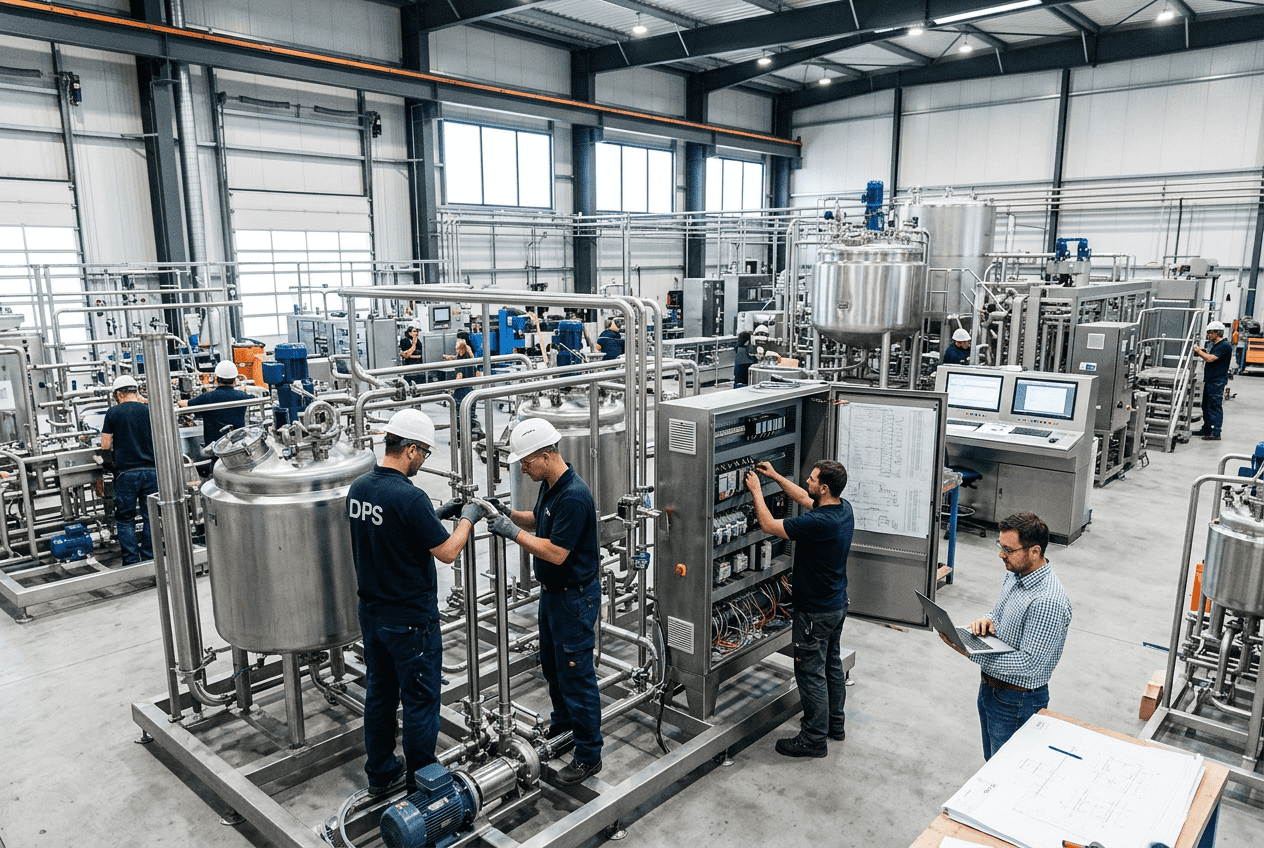
Non-Carbonated Beverage Processing
Non-carbonated beverage processing in the United States centers on one goal: delivering safe, stable, great-tasting drinks at the required shelf life and production cost. For juices, teas, enhanced waters, dairy alternatives, and functional beverages, the right approach usually comes down to product chemistry, target distribution, package format, and throughput. In practical terms, most U.S. manufacturers choose among hot fill, cold fill with preservatives or chilled distribution, and aseptic processing. They also balance pasteurization method, pH control, package selection, and filler technology to protect both product quality and plant profitability. Across U.S. beverage hubs such as Chicago, Dallas, Los Angeles, Atlanta, the New Jersey corridor, and the Carolinas, producers are reworking still drink lines to handle shorter runs, cleaner labels, and more demanding retailers. Import gateways like the Ports of Los Angeles and Long Beach, Savannah, Houston, and New York/New Jersey also influence equipment lead times, packaging sourcing, and co-packing strategy. For manufacturers planning new lines or retrofits, the best projects start with process design rather than equipment shopping. That is especially true when the portfolio includes multiple SKUs, varying acidity, pulp, botanicals, sweetener systems, or sensitive functional ingredients. For still beverages in the U.S. market, hot fill is commonly used for acidic products such as many teas and juices, cold fill works where refrigerated distribution or preservatives are acceptable, and aseptic is the premium route for shelf-stable, preservative-free products that need long distribution windows. The optimal system depends on pH, water activity, solids, viscosity, package type, desired shelf life, and retail channel. Gravity fillers fit low-viscosity drinks, piston fillers fit thicker or particulate products, and flowmeter fillers fit high-speed, high-accuracy operations. Strong line design also requires validated thermal processing, sanitary tanks and piping, effective CIP, package compatibility, and microbiological risk control. For buyers, the fastest way to reduce project risk is to align process authority, engineering, utilities, automation, and packaging decisions early. This is where an integrated partner matters. Disruptive Process Solutions approaches beverage projects with an engineering-first model designed to improve long-term profitability, not just install equipment. In the United States, that matters because labor, utilities, freight, and compliance costs vary widely by region, from California to Texas to North Carolina. The table above shows why still beverage processing should be treated as a full system decision. Choosing a filler before confirming product chemistry, sanitation philosophy, and package behavior often causes rework later. Hot fill remains one of the most common methods for acidic still beverages in the United States. Product is heated to a validated temperature, filled hot into compatible containers, and held long enough to sanitize the package interior and closure zone. This method is widely used for teas, juice drinks, and some functional beverages where the flavor profile can tolerate the heat impact. It is attractive because it can avoid preservatives and does not require a fully aseptic filling environment. The tradeoff is package limitation, thermal stress, and potential flavor darkening over time. Cold fill is simpler from a filling standpoint but depends heavily on microbiological strategy. In many cases, it is paired with chilled distribution, preservatives, tight hygienic design, or filtration. It can work well for fresh-positioned products sold regionally around markets like Charlotte, Miami, Phoenix, or Seattle, where rapid replenishment supports shorter shelf life models. Cold fill can preserve delicate aromas better than hot fill, but if the hurdle strategy is weak, spoilage risk rises quickly. Aseptic processing is the most robust shelf-stable route for many modern still drinks, especially premium, low-additive, and functional products. The product is sterilized separately from the package, and both are brought together in a sterile filling zone. This approach supports long ambient shelf life with excellent flavor retention versus prolonged heat exposure. It is common in carton packs, some PET applications, and specialized bottles. Capital cost, operational discipline, validation, and operator training are all higher. From a market standpoint, U.S. producers are increasingly interested in aseptic and advanced hot fill because retailers want longer shelf life and consumers want cleaner labels. National distribution through grocery, club, convenience, e-commerce, and foodservice all reward process consistency. For manufacturers planning a new facility, process selection should also account for labor availability, state utility rates, sanitation staffing, and the local warehouse network. A line that looks inexpensive on paper may become costly if it requires high manual intervention in a tight labor market. Juice, tea, and functional beverage line design starts with the product matrix. Juice systems often need blending accuracy, deaeration, pulp handling, and Brix control. Tea lines may need extraction, filtration, aroma protection, and color management. Functional beverages frequently require high-shear mixing, powder induction, hydration time, ingredient protection, and separation control. Some formulas also introduce vitamins, botanicals, proteins, emulsions, sweetener blends, or fiber systems that change viscosity and thermal sensitivity. A well-designed line typically includes water treatment, ingredient receiving, batching, thermal processing, surge capacity, filling, secondary packaging, and CIP. Utilities are just as important: steam, glycol, compressed air, chilled water, drains, wastewater handling, and controls integration often determine whether the plant can hit output targets. In fast-growing beverage corridors from Dallas-Fort Worth to inland Southern California to the Research Triangle, many expansion projects fail not because the filler is undersized, but because utility and changeover design were not solved early. On the technological side, DPS supports projects with process, mechanical, electrical, controls, and automation expertise. That means recipe control, SCADA visibility, in-line Brix monitoring, water treatment, sanitation design, and integration of thermal systems are developed as one coordinated production environment instead of disconnected pieces. For U.S. beverage operators, this is important when the same site may run tea in one shift, juice in another, and a functional line extension on weekends. Buying advice for U.S. processors: if your commercial plan includes club packs, foodservice jugs, and retail singles, design the backbone for the broadest sanitation and utility needs first, then optimize around container sizes. That usually protects capital better than chasing the cheapest individual machine quote. Pasteurization for still beverages is not one-size-fits-all. HTST and flash pasteurization are common for acidic beverages where the goal is to reduce spoilage organisms while limiting sensory damage. UHT goes further, using higher temperatures and shorter times to create a commercially sterile product suitable for aseptic filling. Tunnel pasteurization is less common for many still beverages than for packaged products in specific formats, but it can have niche applications. The right thermal process depends on the organism risk, acidity, package, storage temperature, and the product’s tolerance for heat. Juice drinks often perform well under carefully tuned HTST. Tea may require close attention to color pickup and aroma retention. Functional drinks with vitamins or botanical notes may benefit from UHT plus aseptic filling, especially when distributed nationally from hubs near Memphis, Indianapolis, or central Pennsylvania where warehousing feeds broad U.S. coverage. DPS also brings manufacturing capability into this part of the decision. The company designs and supplies process equipment such as tanks and CIP systems and integrates complete thermal and utility infrastructure. That matters because pasteurization performance is only as reliable as the surrounding surge control, valve matrix, temperature instrumentation, and sanitation execution. The key point is that thermal processing should be validated against actual product formulation, not a generic category assumption. A lightly acidified botanical drink can behave very differently from a standard juice blend. Filler choice affects speed, accuracy, foaming, sanitation complexity, and SKU flexibility. Gravity fillers are simple and effective for free-flowing, low-viscosity still drinks. They are common where foaming is manageable and the product does not contain heavy particulates. Piston fillers excel with thicker beverages, products with particulates, or applications where volumetric consistency across variable textures matters. Flowmeter fillers use mass or magnetic flow measurement and are favored in modern high-speed beverage plants because they offer strong accuracy, recipe flexibility, and reduced product giveaway. For a U.S. plant supplying both regional grocery and national chains, fill accuracy can have major margin impact. A 1% giveaway on a high-volume line can erase substantial annual profit. At the same time, an overengineered filler can be unnecessary for a narrow SKU mix. Matching the filler to the commercial model is essential. Service capability is critical here. DPS supports end-to-end project planning, installation, integration, and execution management so that fillers are not dropped into lines without upstream and downstream alignment. That includes owner-side advocacy, project management, and full-system coordination with conveyors, closure systems, clean utilities, controls, and commissioning. When comparing suppliers, U.S. buyers should also ask about spare parts lead times, local service coverage, recipe memory, CIP integration, closure torque verification, and integration with existing PLC standards. pH is one of the most important control points in still beverage processing. In broad terms, beverages below pH 4.6 are easier to stabilize microbiologically than low-acid drinks, but that does not mean they are automatically safe or stable. Acid-tolerant yeasts, molds, and certain spoilage organisms still create major issues. Acidification strategy must account for the acid type, buffering capacity, flavor impact, regulatory labeling, and ongoing process verification. Citric acid, malic acid, phosphoric acid, and blended acidulant systems are commonly used depending on flavor profile and brand positioning. Functional beverages with botanicals or minerals may show pH drift, precipitation, or flavor imbalance over time. In those cases, bench work and shelf life studies are essential before commercial launch. Best practice in U.S. plants is to combine formulation control with calibrated inline or at-line measurement, batch records, and operator verification. For high-risk products, this should link to automated recipe management and hold-and-release logic. Producers serving major retailers from distribution centers in Columbus, Kansas City, or Allentown cannot rely on manual memory when thousands of cases may ship across the country within days. The explanation behind this table is simple: pH is not just a lab number. It is a production variable tied to taste, sanitation, thermal process assumptions, and legal defensibility. Clean label demand continues to reshape the U.S. still beverage category. Many brands want to remove potassium sorbate, sodium benzoate, and similar preservatives while keeping ambient distribution. The main preservative-free pathways are hot fill, aseptic processing, refrigeration, validated thermal processing with tight hygienic design, or in selected chilled cases, HPP. Each route changes capex, logistics, and package selection. Preservative-free is not a single technology claim; it is a full operating discipline. Plants need strong hygienic zoning, sanitary piping, validated CIP, disciplined ingredient handling, and microbial environmental monitoring. A brand can remove preservatives from the label, but if the plant design is weak, the total business risk often increases. Here the U.S. market has shifted from simple shelf-stable tea toward more complex functional drinks with lower sugar, botanical inclusions, and protein or fiber systems. Those formulas may be less forgiving. A preservative-free strategy therefore works best when engineering, QA, and commercialization teams are aligned from the start. For manufacturers evaluating clean-label line upgrades, it often makes sense to review process engineering and integration services before buying hardware. In many cases, profitability improves more from better line architecture, controls, and sanitation planning than from a single high-profile machine purchase. Package selection affects process compatibility, shelf life, freight cost, sustainability claims, and consumer perception. PET dominates many U.S. still beverage categories due to cost, weight, and line speed. Heat-set PET is often used for hot fill, while standard PET may work in cold fill or aseptic applications depending on system design. Glass supports premium positioning and strong barrier performance but increases freight and breakage concerns. Cartons are popular for aseptic nutrition and shelf-stable products, especially where brand owners want strong sustainability messaging. Pouches are expanding in kids, value, and convenience channels but require careful product-package matching. Regional logistics matter. West Coast distribution through Los Angeles or Oakland may favor lighter packages to control freight, while Northeast urban delivery can raise warehouse and handling costs that also make lightweight options attractive. E-commerce introduces another layer because damage resistance and dimensional weight both affect profitability. If packaging is a major bottleneck, U.S. processors should also review domestic equipment and vessel support from partners with fabrication capability. A look at custom processing equipment options is useful when standard tank, CIP, or surge solutions do not fit the available floor plan or run strategy. Extending shelf life without refrigeration requires multiple hurdles working together. Thermal treatment, acidification, package barrier, oxygen control, hygienic design, closure integrity, and warehouse conditions all contribute. For some beverages, deaeration and low dissolved oxygen can substantially improve flavor stability. For others, light protection and oxygen scavenging closures are more important. Shelf life is never just one number from the lab; it is a total supply chain outcome. Ambient drinks in the United States may sit in summer heat in Phoenix, move through humid Gulf Coast warehouses near Houston, or spend weeks in inland distribution before reaching stores in Denver or Minneapolis. Real shelf life planning therefore includes transportation and retail abuse conditions, not ideal lab storage only. A practical extension strategy often includes: validated kill step, controlled pH, low oxygen pickup, sanitary hold tanks, closed transfers, package testing, accelerated studies, and periodic real-time verification. For brands moving from regional to national distribution, these measures usually become mandatory. A recent type of case frequently seen in U.S. beverage expansion is a manufacturer planning major capital spending to add throughput when the true bottleneck lies elsewhere. DPS has built a reputation for stepping back and diagnosing the entire operation first. That can mean identifying controls logic, utility constraints, or poor line balance before recommending major equipment purchases. This kind of business-minded execution is one reason larger food and beverage manufacturers across North America use the company for design, build, and managed delivery rather than isolated machine procurement. In 2026, future trends in the U.S. still beverage market are likely to include more automation-led recipe control, stronger traceability expectations from retailers, continued sustainability pressure on packaging, and growing state-level attention to water use, wastewater, and energy efficiency. Lines that can switch formats quickly, use less utility intensity, and support clean-label processing will be better positioned. For project examples and execution style, manufacturers can review selected case studies and project outcomes to see how integrated planning improves ramp-up and reduces hidden costs. Hot fill is often the most practical starting point if the flavor profile tolerates the heat and the package is compatible. Aseptic may be better for premium quality retention or broader format flexibility. Aseptic is often the better choice when the product is heat-sensitive, preservative-free, expected to have long ambient shelf life, or is low-acid. It also fits brands seeking premium sensory performance and national distribution. Usually yes for high-speed U.S. operations with multiple SKUs, tight fill accuracy goals, and significant product value. Reduced giveaway and better automation often justify the investment. It is critical. pH affects microbial risk, thermal process assumptions, flavor, and shelf life. It should be tightly monitored with documented verification. Yes, but only with the right total process. Hot fill, aseptic, strong hygienic design, validated sanitation, and package compatibility are usually required. There is no universal best option. PET works well for many mainstream products, glass fits premium positioning, cartons fit aseptic shelf-stable systems, and pouches fit convenience-driven applications. Ask about process validation, utility loads, CIP logic, filler accuracy, package flexibility, spare parts availability, service response, automation integration, and expansion path for future SKUs. Review regional service coverage, install base, fabrication support, code compliance, lead times through ports or domestic factories, and whether the supplier can integrate controls, utilities, and commissioning rather than only ship equipment. Juice, tea, functional wellness drinks, plant-based beverages, dairy alternatives, sports nutrition, school beverage programs, foodservice concentrates, and co-packing operations all rely on these systems. DPS combines engineering, equipment integration, project management, and on-the-ground execution for food and beverage manufacturers across North America. Its approach is especially valuable for companies that want complete process systems aligned with profitability, not just a collection of machines. For beverage manufacturers in the United States, the strongest non-carbonated beverage processing strategy is the one that aligns product science, equipment design, package selection, utilities, and commercial reality from day one. Whether the product is a value juice drink for the Southeast, a premium functional beverage shipping coast to coast, or a multi-SKU co-packing line near major freight lanes, profitable execution depends on treating the process as a complete engineered system. -
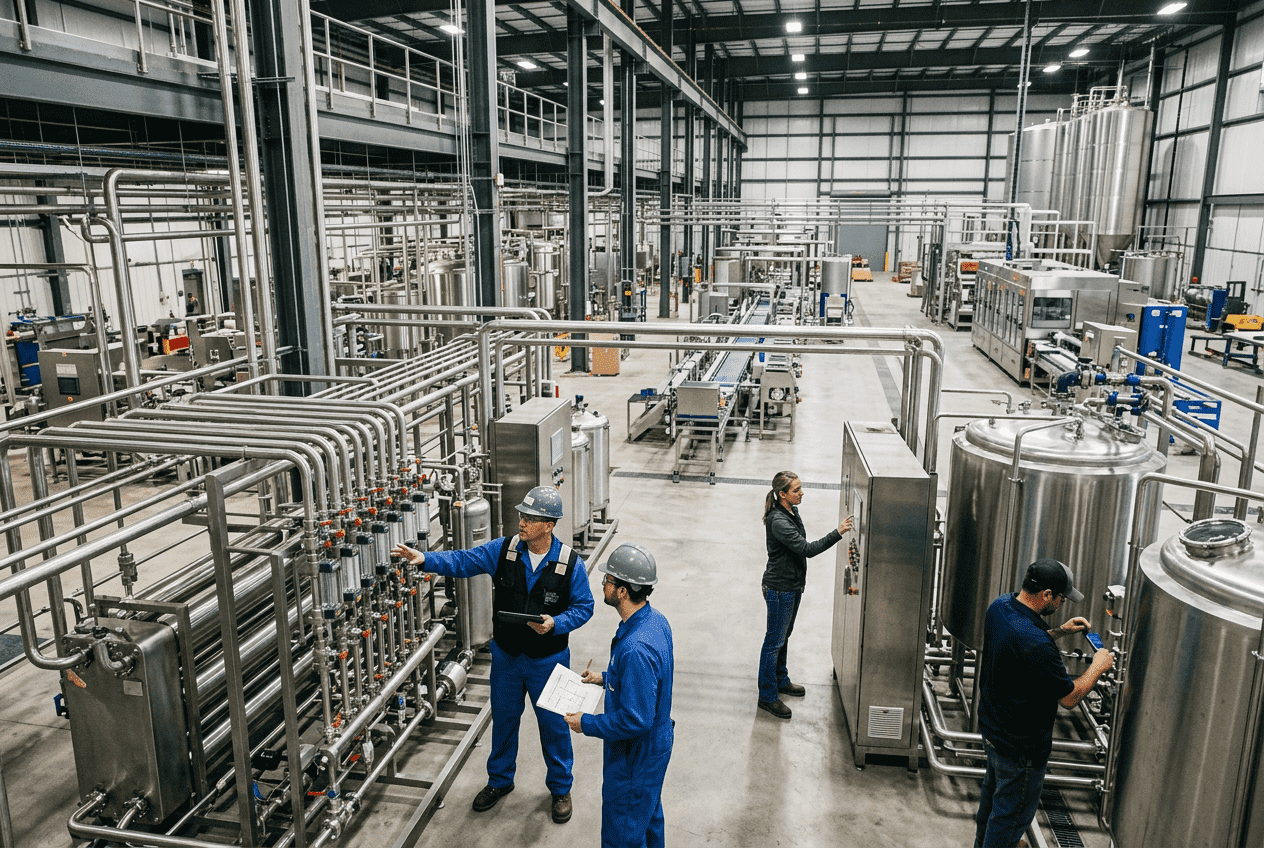
Kombucha Production Equipment
Commercial kombucha production equipment in the United States typically includes a tea brew kettle, sugar dissolution and ingredient handling systems, hot or cold liquor tanks, first-stage fermentation tanks, second-stage blending or conditioning tanks, brite tanks, refrigeration or glycol temperature control, sanitary transfer pumps, CIP systems, pH and quality monitoring tools, and a filling line suited to either still or carbonated live kombucha. The right layout depends on whether the brand will sell raw kombucha, pasteurized kombucha, or a hybrid product with flavoring, forced carbonation, and broader shelf distribution through grocery, foodservice, or co-packing channels. For manufacturers in markets such as Los Angeles, Austin, Chicago, Portland, Denver, Atlanta, and the Research Triangle, equipment decisions should be based not only on tank size but also on fermentation method, acidity management, packaging style, sanitation design, labor model, utility demand, and future expansion. Producers shipping through major logistics corridors near the Port of Long Beach, Port of Savannah, Port of Houston, or distribution hubs in New Jersey and the Midwest also need to think carefully about shelf stability, cold-chain reliability, and line uptime. Disruptive Process Solutions (DPS) supports beverage manufacturers across the United States and Canada with integrated process engineering, equipment supply, installation, automation, and capital project execution. For kombucha brands, that matters because the production system is never just a set of tanks; it is a complete operating platform that must support profitability, regulatory compliance, and scalable throughput. If you are selecting commercial kombucha brewing equipment, start with the production target and package format, then build backward. A small regional brand may begin with a 5 to 15 barrel tea brew and fermentation system, while a fast-growing brand serving multiple states may need 30 to 100 barrel fermentation capacity, dedicated blending tanks, brite tanks, a hygienic CIP skid, in-line instrumentation, and either a canning or bottling line with low-oxygen, counter-pressure capability. The core process usually follows this sequence: Most U.S. commercial producers also need documented sanitation procedures, pH logging, batch records, and thoughtful utility planning. CIP, glycol, compressed air, process drains, and floor layout are often more important than a shiny tank spec sheet. That is why many growing beverage companies use an integrated design-build approach rather than buying equipment piece by piece. The table above summarizes the minimum equipment categories found in most commercial kombucha plants. It also shows why equipment should be selected as a system: each item affects microbiology, quality consistency, and total production cost. A commercial kombucha line begins with the sweet tea base. The brew side normally includes water treatment, ingredient receiving, tea extraction, sugar addition, heat transfer, and transfer piping. In many U.S. facilities, producers adapt brewery-style hardware, but kombucha requires specific attention to acid exposure, sanitation, and culture management. The tea brew kettle should support repeatable extraction and complete sugar dissolution. Steam-jacketed kettles are common in larger plants because they deliver efficient heating and faster recovery between batches. Electric systems can work for smaller producers, especially in leased spaces where boiler installation is difficult. After brewing, the tea must be cooled quickly and transferred hygienically to fermentation or a holding tank. Plate heat exchangers are often used when the process design includes chilled water or glycol. On the downstream side, the brite tank becomes important when the product is force-carbonated, standardized, or held as a buffer before filling. Unlike primary fermentation vessels, brite tanks are pressure-rated and usually jacketed for precise temperature control. If the brand is producing a sparkling kombucha for retail chains in California, Texas, Florida, or the Northeast, a brite tank can help reduce package variability and improve filling line efficiency. Other important brewing-side components include: This table shows the equipment path from utility preparation to final packaging. For many brands, the biggest gains come from linking these stages through clean piping, automation, and smart tank scheduling rather than simply buying larger tanks. The line chart illustrates a realistic upward demand trend in commercial kombucha equipment across the United States, driven by premium functional beverages, multi-state distribution, and co-packing growth. SCOBY management is one of the clearest differences between kombucha and other beverage categories. A commercial producer cannot treat the culture like a casual ingredient. It is a biological production asset that needs traceability, protection, and predictable propagation. As operations scale, ad hoc culture handling becomes a major source of variation. Propagation vessels are used to maintain healthy starter liquid and, where relevant, pellicle formation. Many modern producers focus more on liquid inoculum control than on handling thick mats, but both require dedicated space and process discipline. Tanks should be easy to sanitize, easy to sample, and separated from non-culture activities. Exposure to aggressive cleaners, dead legs in piping, and poor temperature stability can all weaken performance. Fermentation tank design depends on process philosophy. Some brands use open or loosely covered vessels for traditional fermentation behavior; others prefer enclosed sanitary tanks with venting control and insect exclusion. In either case, material finish, port placement, sample valves, and cleanability matter. If the brand intends to maintain multiple flavor lines or regional SKUs, separate propagation and quarantine capacity is often wise. Important SCOBY management questions include: The table highlights how culture management moves from craft habit to engineered system as a kombucha producer grows. This is especially relevant for brands supplying chains that expect lot-to-lot uniformity. First-stage fermentation is where sweet tea becomes kombucha. The equipment choice here affects acid development, sugar depletion, microbial balance, and flavor complexity. Many U.S. producers prefer atmospheric or lightly vented vessels for primary fermentation. Tank geometry should allow manageable cleaning, low-stress transfers, and headspace appropriate to fermentation activity. Second-stage processing varies widely. Some brands conduct true secondary fermentation with flavor ingredients and natural carbonation; others use a controlled blending and conditioning step followed by force carbonation. The latter often provides better consistency for large retail programs, especially when products move through ambient staging before cold placement. Choose first- and second-stage equipment based on: A producer in Seattle serving specialty retailers may accept slower batch turnover for artisanal flavor complexity. A co-packer in the Midwest serving club-store programs will usually prioritize repeatability, CIP speed, and packaging compatibility. This comparison helps identify whether the plant should prioritize traditional fermentation character or packaging consistency. Many growing U.S. brands eventually adopt a hybrid approach: authentic primary fermentation followed by more controlled downstream handling. Temperature control is one of the most overlooked profit levers in kombucha production. Fermentation is biologically active, and seasonal changes in facilities from North Carolina to Arizona can create meaningful shifts in acidity, sugar use, and flavor development. Even a few degrees of drift can change batch timing and yield. Common temperature control methods include ambient-conditioned fermentation rooms, jacketed tanks with glycol loops, insulated vessels, and automated temperature feedback controls. For small operations, room conditioning may seem attractive, but it can become inefficient as tank count grows. Jacketed tanks offer better precision and make it easier to stagger batches. When evaluating temperature systems, consider: DPS regularly supports food and beverage clients with utility planning that includes glycol, boilers, compressed air, cooling towers, refrigeration, and controls. In kombucha projects, that broader utility expertise is critical because temperature performance depends on the entire plant infrastructure, not just the tank jacket. The bar chart shows where controlled fermentation infrastructure is most in demand: co-packers and national brands generally invest sooner because consistency and throughput are directly tied to margin and customer retention. pH monitoring is not optional in commercial kombucha. It is a core quality and food safety control point. Producers need reliable bench meters, calibrated probes, sampling procedures, and batch records that document acidification progress. In larger plants, pH data may be linked to SCADA or digital batch systems so supervisors can track trends across tanks and production weeks. Acidity control depends on more than measurement. It also requires control of inoculation rate, sweet tea composition, fermentation temperature, residence time, and transfer timing. If fruit additions are made after fermentation, their sugar and acid load must be accounted for. Brands seeking lower residual sugar or tighter sensory targets often benefit from formalized decision thresholds such as pH windows for transfer, flavor addition, or cold crash. Best practices in U.S. kombucha plants include: For companies scaling into retail chains across the United States, digital traceability becomes increasingly valuable. DPS brings automation, PLC programming, SCADA, and process integration expertise that can connect instrumentation, tank controls, utility systems, and reporting into a more manageable operating environment. The table above shows how pH control spans the whole process, not just the fermentation vessel. It is a plant-wide quality discipline. Carbonation is where many kombucha brands struggle as they scale. Live kombucha can continue changing in package, and the product’s acidity, solids, and biological activity can complicate fill performance. For sparkling products, the equipment must preserve carbonation while minimizing oxygen pickup and foam losses. Counter-pressure filling is often the preferred approach for live kombucha in cans or glass bottles when the product is carbonated in a brite tank before packaging. This method equalizes package pressure before fill, reducing breakout and improving consistency. For producers supplying natural grocery chains or refrigerated convenience channels, it can substantially improve finished quality and package appearance. Key carbonation equipment elements include: If the product contains pulp, puree, or botanical solids, filler selection becomes more specialized. Some brands also need package warmers or post-fill stabilization steps depending on the retail route. Canning lines in high-volume regions such as Southern California and the Northeast often justify more automation because labor cost and throughput expectations are higher. The area chart reflects the U.S. trend toward controlled carbonation systems rather than relying on unpredictable in-package refermentation. This shift is especially strong among brands pursuing wider distribution. One of the most important strategic decisions in kombucha production is whether the finished product will remain raw or receive a pasteurization step. The answer changes the equipment list, utility demand, quality program, and distribution strategy. Raw kombucha usually requires stricter cold-chain control and more careful package stability planning. It may preserve a brand identity built around live culture, but it also creates more sensitivity around residual fermentation, carbonation drift, and shelf variability. Equipment emphasis tends to be on culture integrity, refrigeration, sanitary handling, and rapid inventory movement. Pasteurized kombucha generally requires thermal processing equipment such as flash pasteurization, tunnel pasteurization, or another validated stabilization method. That can widen distribution and simplify some retail logistics, but it introduces additional capital cost and may alter sensory positioning. DPS has broad process experience with HTST, UHT, tunnel pasteurization, flash pasteurization, retort, aseptic systems, and integrated beverage processing. That wider thermal processing capability is valuable when a kombucha producer is evaluating not just equipment cost, but business model fit. The table makes it clear that shelf stability is not simply a quality question; it is a business and infrastructure decision. Brands planning to move beyond local cold distribution should evaluate this early. Scaling kombucha production is rarely a straight line. The move from pilot batches to regional commercial output usually exposes bottlenecks in utilities, labor flow, culture management, and packaging uptime before it exposes a lack of tank volume. Many producers discover that they do not need a larger system first; they need a smarter one. In the United States, successful scaling often follows these stages: Local conditions matter. A facility near Charlotte or Raleigh may have different utility economics than one in Oakland or Brooklyn. Access to ingredients, labor, cold storage, and freight lanes can change the best equipment configuration. Brands shipping nationwide also need to think about where co-packing, line balancing, or satellite production might lower delivered cost. DPS is especially relevant in this stage because its service model combines engineering, capital planning, installation, equipment integration, and project management. Through its Design Build Manage approach, the company works not just as an equipment seller but as a project partner focused on long-term profitability. Its technological capabilities include process, mechanical, structural, plumbing, electrical, and controls engineering, along with PLC programming and SCADA integration. Its manufacturing capabilities include proprietary process equipment such as tanks and CIP systems that can be integrated into broader plant solutions. Its service capabilities span feasibility, owner’s representation, turnkey installation, commissioning, and multi-trade coordination across North America. For kombucha producers, that kind of full-scope support can reduce risk during expansion, especially when adding new packaging, utilities, or facility infrastructure. You can learn more about the company’s background on the About Us page, explore broader beverage and food project support through its engineering and execution services, review available process equipment solutions, or see practical outcomes in selected project case studies. This table shows why each growth stage calls for a different investment mindset. Buying the largest possible fermenter is rarely the answer if filling, utilities, or culture control are the true constraints. The comparison chart shows why integrated project partners often outperform isolated equipment vendors for larger kombucha investments. Process, utilities, packaging, controls, and facility layout need to work together. At minimum, you need a brew kettle, sanitary fermentation vessels, transfer pumps, pH monitoring tools, refrigerated storage, cleaning equipment, and a packaging setup. Once volume increases, a dedicated CIP system, glycol control, and better filling technology usually become necessary. Not every component must be 316 stainless, but acidic products benefit from corrosion-resistant sanitary materials. Many plants use a mix of 304 and 316 depending on exposure, cleaning chemistry, and budget. Sometimes, yes. However, brewery tanks and piping should be reviewed for acid compatibility, venting, cleaning design, and process fit. A direct retrofit without engineering review can create sanitation and quality issues. If you sell carbonated kombucha and want consistent package pressure, a brite tank is highly recommended. For still kombucha or very small artisanal production, it may not be necessary. Counter-pressure filling is typically the best commercial option because it helps maintain carbonation and reduce oxygen pickup. The exact filler depends on package type, solids load, and line speed. That depends on brand positioning, shelf-life goals, and distribution model. Raw products often support a live-culture identity but require stronger cold-chain control. Pasteurized products can simplify broader distribution but require added equipment and process validation. Automation becomes increasingly valuable as batch count, SKU count, and retail commitments grow. PLC and SCADA tools help track temperatures, utilities, recipe steps, alarms, and production records more reliably. Three major trends stand out for 2026: first, more automation and digital batch traceability; second, stronger policy and retailer expectations around food safety documentation, sustainability, and utility efficiency; third, increased interest in flexible systems that can produce kombucha alongside adjacent functional beverages. Energy-efficient glycol systems, water reuse planning, low-loss filling, recyclable packaging compatibility, and future-ready controls will matter more every year. They should validate throughput assumptions, model utility demand, design for cleanability, and align equipment with actual distribution strategy. Working with a partner that understands engineering, installation, controls, and long-term operational economics can prevent expensive oversizing or the wrong process path. In summary, the best commercial kombucha production equipment is not defined by one tank or one machine. It is defined by how well the system supports safe fermentation, stable flavor, efficient cleaning, scalable packaging, and profitable growth in the United States market. From tea brew kettle to brite tank, and from culture propagation to plant-wide controls, the strongest projects are engineered around the full process and the business model behind it.