-
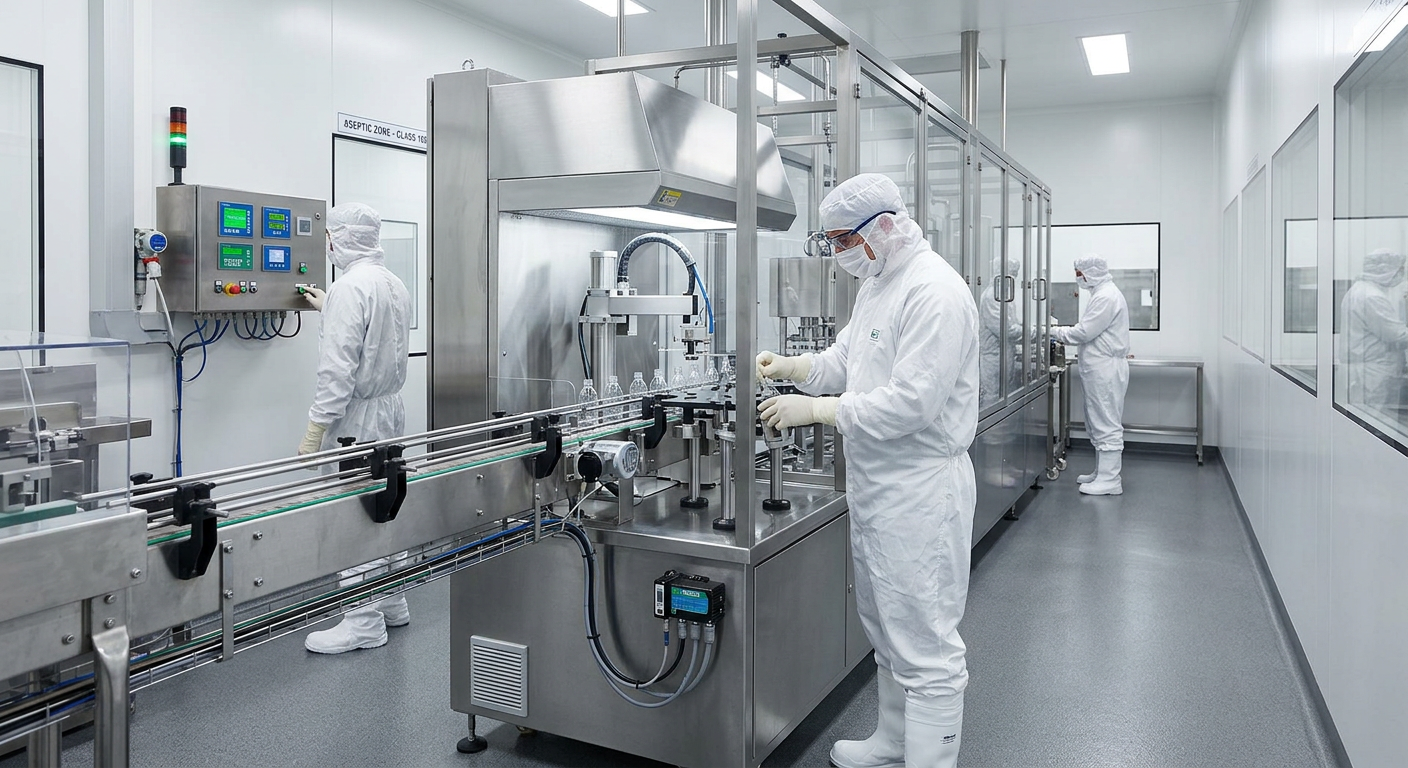
Carbonated Beverage Production Line
Carbonated beverage manufacturers in the United States need more than a filler and conveyor. They need an integrated production system that protects carbonation, controls foam, handles multiple package formats, minimizes utility costs, and supports profitable growth. Whether the product is sparkling water, CSD, flavored soda, RTD cocktails, kombucha, beer, or functional beverages with CO2, the best line design aligns process, packaging, automation, sanitation, and plant utilities into one coordinated operation. For plants in major beverage corridors such as Atlanta, Chicago, Dallas-Fort Worth, Southern California, New Jersey, and the Carolinas, line design decisions are also shaped by labor availability, freight access, warehouse flow, utility rates, and distribution speed. Manufacturers shipping through the ports of Long Beach, Savannah, Houston, and Newark often prioritize line flexibility, uptime, and spare parts strategy because packaging components and critical equipment can be affected by supply chain timing. A complete carbonated beverage line in the United States typically includes water treatment, ingredient handling, batching, deaeration, carbonation mixing, container supply, rinsing or air cleaning, isobaric filling, capping or seaming, warm-up or pasteurization if required, inspection, labeling, coding, secondary packaging, palletizing, and end-of-line warehouse integration. The highest-performing systems are designed around the true bottleneck, not the nominal filler speed. That means balancing mixer output, filler valve count, labeler speed, packer performance, changeover time, CIP strategy, and utility infrastructure from the start. For producers evaluating capital investment, the fastest route to a profitable decision is to compare three things together: target annual case volume, SKU complexity, and package mix. A line built for one high-volume PET SKU is very different from a multi-format operation running sleek cans, glass bottles, and multiple PET bottle sizes in the same week. In practice, many U.S. beverage plants succeed when they treat line engineering as a business case rather than a simple equipment purchase. This is where a project partner with process, utilities, controls, and construction expertise can create outsized value by preventing underbuilt infrastructure, mismatched speeds, sanitation blind spots, and expensive future rework. The table above shows why line selection should begin with commercial reality. A technically impressive machine can still be the wrong investment if it does not match the plant’s product strategy, labor model, and forecasted output. A modern carbonated beverage production line is a coordinated sequence of process and packaging operations. At the front end, incoming water may pass through filtration, softening, reverse osmosis, UV, ozone, or other disinfection steps depending on source quality and product standards. Ingredients are received, stored, metered, and blended in batch or inline systems. Syrup rooms are often designed with hygienic transfer loops, validated ingredient addition, and in-line Brix measurement. After blending, the product stream usually moves through deaeration before carbonation. Removing dissolved oxygen is essential because oxygen degrades flavor, can destabilize sensitive ingredients, and reduces shelf life. The carbonated product then enters a buffer tank or feeds directly to the filler bowl under controlled pressure. From there, packages are formed or supplied, cleaned, filled, closed, inspected, coded, labeled, packed, palletized, and transferred to warehouse or dispatch. The exact process flow depends on the package type. PET lines may include blow molding from preforms. Glass lines focus more heavily on depalletizing, bottle inspection, and breakage management. Can lines center on can rinsing, precise filling, seaming, and often tighter oxygen control. In the United States, line integration is especially important because manufacturers often need to fit new equipment into brownfield plants with legacy utilities, existing drains, mixed floor elevations, and active production. A well-engineered process flow is not just about what happens on paper. It must also account for sanitation routing, maintenance access, operator movement, forklift traffic, and future expansion. Companies looking for a partner that understands this broader picture often review engineering depth before machine brands. A firm such as Disruptive Process Solutions brings a plant-wide perspective by combining process engineering, controls, utilities, and execution planning instead of treating the filler in isolation. Combiblock systems combine blow molding, filling, and capping into one integrated PET packaging platform. For carbonated products, this approach can create meaningful advantages in hygiene, floor space, labor, and container handling. Since bottles move directly from preform heating and blowing to filling and capping with minimal exposure, contamination risk is reduced and conveyor complexity falls. The main business case for combiblock technology is strongest in high-throughput PET operations. In regions such as the Southeast and Southwest, where large beverage distribution zones support long production runs, this integrated architecture can improve efficiency by reducing empty bottle handling and lowering line footprint. It can also reduce air conveyor length and simplify bottle transfer stability. That said, combiblock is not automatically the best answer for every plant. A co-packer with frequent format changes or uncertain volume may prefer more modular equipment. The right decision depends on annual case forecast, preform strategy, cap and neck finish standardization, maintenance capability, and planned SKU mix. When evaluating a combiblock, manufacturers should model not only machine speed but total delivered line OEE. A system rated at high speed may underperform if upstream syrup preparation, downstream packaging, or utility capacity cannot sustain continuous production. This is one reason integrated design-build execution has become more valuable in the U.S. market, especially for new beverage plants where boilers, compressors, chilled water, and CIP need to be sized alongside the packaging line. Carbonated beverages must be filled under pressure to maintain dissolved CO2 and avoid foam-related losses. Isobaric filling valves work by equalizing pressure between the container and the filler bowl before liquid enters the package. Proper pressure balance, temperature control, snift timing, and venting design are critical to fill accuracy and product retention. Foam is one of the most expensive hidden losses on a carbonated line. Excess foam causes underfills, sticky conveyors, label adhesion issues, microbiological housekeeping problems, and reduced throughput. The causes are usually cumulative: warm product, unstable CO2, turbulent fill paths, package defects, inconsistent bottle dimensions, worn valves, poor vent tube settings, or excessive line vibration near the filler discharge. Effective foam control starts upstream. Product temperature should be tightly controlled, typically colder for higher carbonation products. Container cleanliness, proper pressure setpoints, and consistent closure application also matter. For cans, seam integrity becomes part of the quality equation. For PET, cap torque and neck finish consistency are major variables. For glass, dimensional consistency and chip-free finishes help reduce closure problems and leaks. Advanced fillers can support better product control through electronic valve management, recipe-driven parameters, and diagnostic feedback. Plants that run multiple products with different carbonation levels benefit from automation that stores pressure, snift, and timing settings by SKU rather than relying on manual adjustment. Engineering support also matters here. DPS, for example, has deep technological capabilities spanning process, mechanical, electrical, structural, plumbing, and controls engineering, including PLC programming and SCADA integration. In carbonated beverage facilities, that cross-functional capability supports tighter pressure control logic, cleaner HMI recipes, improved alarm management, and better troubleshooting across the line rather than only at the filler. Package format is one of the earliest decisions in a carbonated beverage project because it shapes nearly every downstream choice. PET offers lightweight distribution, broad retail familiarity, and compatibility with blow-fill-cap integration. Glass supports premium positioning, excellent gas barrier performance, and strong shelf presence. Cans offer recyclability, logistics efficiency, and rapid market acceptance for sparkling water, energy drinks, RTDs, and alcoholic beverages. The tradeoff is that no single format wins on every variable. A United States brand shipping nationwide from a central plant may favor cans due to freight efficiency. A premium mixer company selling through upscale bars and restaurants in cities such as Miami, Las Vegas, and Manhattan may prioritize glass. A high-volume family soda brand distributed through grocery and club channels may stay focused on PET. The table shows that format flexibility is not just a mechanical issue. It is a commercial strategy issue. Plants serving co-packing networks from Chicago to Phoenix often need to switch between bottle sizes, can heights, label types, and pack patterns with minimal downtime. In those environments, line architecture should emphasize servo changeover, clearly indexed parts, guided setup, quick-release rails, and recipe-based automation. For manufacturers reviewing integrated equipment and package-specific handling needs, the right path often starts with a plant-wide study rather than a machine quote. That is why many teams begin with engineering and integration services to align packaging choice with utilities, sanitation, labor, and future capacity. Deaeration and carbonation are the heart of carbonated beverage quality. If oxygen is too high or CO2 pickup is unstable, downstream filling cannot fix the problem. In most systems, deaeration lowers dissolved oxygen before the beverage enters a carbonation mixer, where water or finished beverage is combined with CO2 under controlled pressure and temperature. The goal is a repeatable carbonation level that remains stable all the way to the sealed package. Integration matters because the mixer cannot perform consistently without steady upstream flow, stable temperature, and properly controlled product composition. In higher-end systems, inline density, Brix, conductivity, and flow measurement support more precise recipe execution. Buffer tank sizing should be based on realistic line behavior, including microstops and sanitation transitions. Plants that expand into functional sparkling beverages often discover that added ingredients change foaming behavior and gas retention. Sweeteners, acids, botanicals, juices, and emulsions can all affect mixer performance. This is where process expertise becomes commercially important. A good integrator helps the manufacturer test assumptions before buying undersized or overcomplicated equipment. DPS has notable manufacturing capabilities in this area as well. In addition to integrating third-party process systems, the company designs and manufactures selected process equipment such as storage and processing tanks, custom CIP systems, and other stainless assets that fit larger turnkey projects. That matters to beverage clients because carbonated lines often depend on custom tank geometry, skid footprint, connection orientation, and sanitation access rather than off-the-shelf dimensions. The chart reflects a realistic market trend: manufacturers continue investing in flexible, automation-ready sparkling beverage capacity in response to SKU proliferation, convenience-channel demand, premiumization, and private-label growth. Changeover performance separates average lines from profitable ones. A line that runs fast for one SKU but loses hours every week during bottle, cap, label, and case changes will underdeliver on actual saleable output. This is especially true in the United States, where beverage portfolios increasingly include seasonal launches, channel-specific packs, retailer exclusives, and test-market production. Reducing downtime starts with design. Guide rails should be indexed and repeatable. Change parts should be minimal, light, and easy to identify. HMI screens should show setup values by format. Servo-driven stations can eliminate manual adjustments. Labelers, packers, and lane dividers should be evaluated as seriously as the filler, because many lines lose more time downstream than at the filling carousel. Operational discipline is equally important. Plants that track changeover by machine center, crew, and package family can identify hidden losses. Standard work, shadow boards, mobile carts for format parts, and pre-staged materials usually deliver quick gains. In multi-shift U.S. operations, digital work instructions and recipe verification reduce dependence on tribal knowledge. The best changeover programs are designed before steel is cut. They also require coordination across procurement, maintenance, scheduling, and controls. This is where service capability matters. DPS uses an end-to-end project approach that combines design, build, and execution management so clients can align equipment selection, installation, and startup around long-term throughput rather than one-time capital cost alone. Many beverage projects fail to reach expected output because the line was purchased around a headline filler speed instead of balanced throughput. The filler may run at 600 bottles per minute, but if the labeler repeatedly drops to 520, the shrink wrapper to 500, and the palletizer to 480 during peak accumulation, the real line speed is defined by the weakest stable center. Speed optimization depends on accumulation strategy, conveyor logic, reject handling, and controls integration. Well-placed accumulation can protect the filler from downstream interruptions and protect packers from filler microstops. However, too much accumulation wastes space and can increase package instability, especially for lightweight PET. Simulation and practical operating knowledge are both useful here. Manufacturers should review not only machine speed but also speed sustainability. Factors include cap supply reliability, label roll change frequency, case blank quality, pallet pattern complexity, and sanitation windows. In many U.S. facilities, the difference between a strong line and a weak one is not the machine brand. It is how well process, packaging, material flow, and utilities were engineered to work together. The demand mix shown above illustrates why line balancing must reflect category needs. Sparkling water and energy products often require faster package changes and premium label presentation, while classic CSD lines may favor long runs and high-volume efficiency. Energy and utility performance now play a central role in beverage line design. Electricity rates, natural gas costs, water use scrutiny, wastewater limitations, and sustainability commitments all influence capital decisions in the United States. By 2026, these pressures are expected to intensify as more states and large retailers push carbon accounting, water stewardship, and packaging sustainability targets. Energy-efficient design starts with the whole plant. Compressors should be sized and controlled for actual demand profiles, not rough estimates. Blow molding air recovery can generate meaningful savings on PET lines. Pump and fan VFDs reduce unnecessary power draw. Heat recovery can support hot water generation. Smarter CIP reduces water, chemical, and heating loads. Conveyor motors and lubrication strategies also affect consumption. Utility planning is especially important in new co-packing and expansion projects. A filler upgrade without matching chilled water, compressed air, boiler, or drain capacity often creates a new bottleneck. This is one reason advanced beverage projects increasingly involve firms that can engineer utilities and process together. DPS is active in that space across North America, supporting clients with capital planning, owners representation, project management, proprietary equipment supply, installation, and turnkey system integration across utilities, controls, and process assets. Below is a practical representation of packaging trend shifts influencing utility planning and line design decisions. This trend suggests continued investment in flexible canning capacity, but PET remains highly relevant for value, club, and family-size formats. Glass retains importance in premium and hospitality-focused segments. The U.S. market for carbonated beverage production lines is shaped by retail fragmentation and regional logistics. Club stores, convenience chains, foodservice, e-commerce, and contract manufacturing all demand different production economics. Plants located near Atlanta, Columbus, Indianapolis, Charlotte, Fresno, and Dallas often gain advantages from trucking access and warehouse distribution. Coastal plants near Los Angeles, Oakland, Seattle, Houston, Savannah, and Newark may prioritize imported packaging supply chain resilience and spare parts stocking. Product types now extend far beyond traditional sodas. Line buyers regularly evaluate equipment for sparkling waters, flavored waters, prebiotic sodas, energy drinks, carbonated juices, hard seltzers, RTD cocktails, kombucha, and premium mixers. Each category changes the line design slightly. Some need tighter oxygen control. Some foam more aggressively. Some use fragile labels or specialty closures. Some require pasteurization or tunnel warming based on formulation and distribution conditions. Buying advice for U.S. manufacturers is straightforward: define the business model first. Ask what package families will dominate, how many SKUs will run weekly, what utilities are already constrained, and where actual labor pain points exist. Then evaluate whether the line must support phased growth from, for example, 20 million cases to 80 million cases over time. That kind of staged thinking is where strong engineering can avoid expensive missteps. Relevant industries include soft drinks, craft beverage production, alcoholic RTD, brewing, spirits-based canned cocktails, kombucha, dairy-adjacent sparkling beverages, and functional wellness drinks. Applications range from startup commercialization and contract packaging to major plant expansion, brownfield debottlenecking, and utility retrofit. Case-study thinking is essential. In one common scenario, a plant assumes it needs a multi-million-dollar equipment expansion to gain output, when the real bottleneck is controls logic, accumulation management, or packaging synchronization. That is why analytical project teams often create more value than pure equipment sellers. A manufacturer can review practical examples and project experience through the company’s project case studies to understand how debottlenecking, relocation, and greenfield execution affect ROI. Local supplier strategy also matters. U.S. beverage lines depend on domestic fabrication, local mechanical and electrical trades, controls support, spare parts planning, and regionally available sanitation and utility contractors. The strongest project outcomes usually come from a coordinated network rather than one isolated OEM. This is particularly true when the line includes process skids, syrup rooms, boilers, compressed air, cooling towers, water treatment, and warehouse integration. As for our company perspective, DPS serves beverage manufacturers across all 50 states and Canada with a business-minded engineering approach focused on profitability, not just installation. Its capabilities span three areas that are especially relevant for carbonated beverage projects: First, technological capabilities: process engineering, automation, PLC programming, SCADA, sanitary system design, water treatment integration, carbonation and bright systems, pasteurization technologies, and complete utility engineering. Second, manufacturing capabilities: custom process tanks, CIP systems, and other equipment fabricated to fit the exact layout and operational needs of a project, rather than forcing a plant into generic hardware limits. Manufacturers can review available process equipment at custom equipment solutions. Third, service capabilities: capital planning, feasibility studies, owners representation, project and program management, general contracting where licensed, equipment supply, installation management, commissioning, and turnkey integration under a design-build-manage model. This matters because beverage producers typically need one accountable team that can align business goals, utilities, process systems, construction execution, and startup performance. What is included in a complete carbonated beverage production line?A complete line usually includes water treatment, syrup preparation, deaeration, carbonation mixing, container supply, rinsing, isobaric filling, capping or seaming, inspection, coding, labeling, case packing, palletizing, CIP, and supporting utilities. What package format is best for a new beverage brand in the United States?It depends on channel and brand position. Cans are popular for sparkling water, energy, and RTD categories. PET remains strong for value and family-size products. Glass works well for premium beverage positioning and foodservice presentation. Why is deaeration important before carbonation?Deaeration removes dissolved oxygen, which protects flavor, improves shelf life, and supports more stable carbonation performance. Skipping or undersizing this step can cause quality loss that downstream equipment cannot correct. How do isobaric fillers reduce carbonation loss?They equalize package pressure with filler bowl pressure before product enters the container. This reduces turbulence, limits CO2 breakout, and improves fill consistency. What causes excessive foaming on carbonated lines?Common causes include warm product, unstable CO2, worn filling valves, poor pressure settings, dirty or inconsistent containers, package handling vibration, and formulation-specific foaming behavior. Is a combiblock always the best choice for PET?No. Combiblock systems are excellent for high-volume, standardized PET operations, but plants with highly variable bottle formats or uncertain demand may prefer modular equipment for flexibility. How can I reduce changeover time between bottle sizes and SKUs?Use tool-less change parts, servo adjustments, recipe-based automation, clear part identification, and SMED analysis. Also track downtime by machine center to find where time is really being lost. What is the biggest mistake in line speed planning?Designing around filler nameplate speed without balancing the labeler, packer, palletizer, accumulation, and utility systems. Real throughput depends on the entire line’s stable operating speed. How important are utilities in beverage line design?They are critical. Inadequate chilled water, compressed air, steam, process water, drains, or electrical distribution can limit line performance more than the packaging equipment itself. What trends should manufacturers watch through 2026?Expect more demand for can flexibility, smarter automation, stronger sustainability reporting, lower water and energy intensity, digital maintenance tools, better line data visibility, and designs that support retailer and regulatory pressure on efficiency and packaging performance. How should I evaluate a project partner?Look for proven beverage process knowledge, utility engineering depth, controls expertise, installation management, startup support, and a record of solving plant-wide bottlenecks rather than only selling equipment. For U.S. beverage manufacturers, the right carbonated beverage line is the one that delivers repeatable product quality, commercial flexibility, and measurable operating profit. That outcome comes from integrated engineering, realistic throughput planning, and execution discipline across process, packaging, and utilities. -
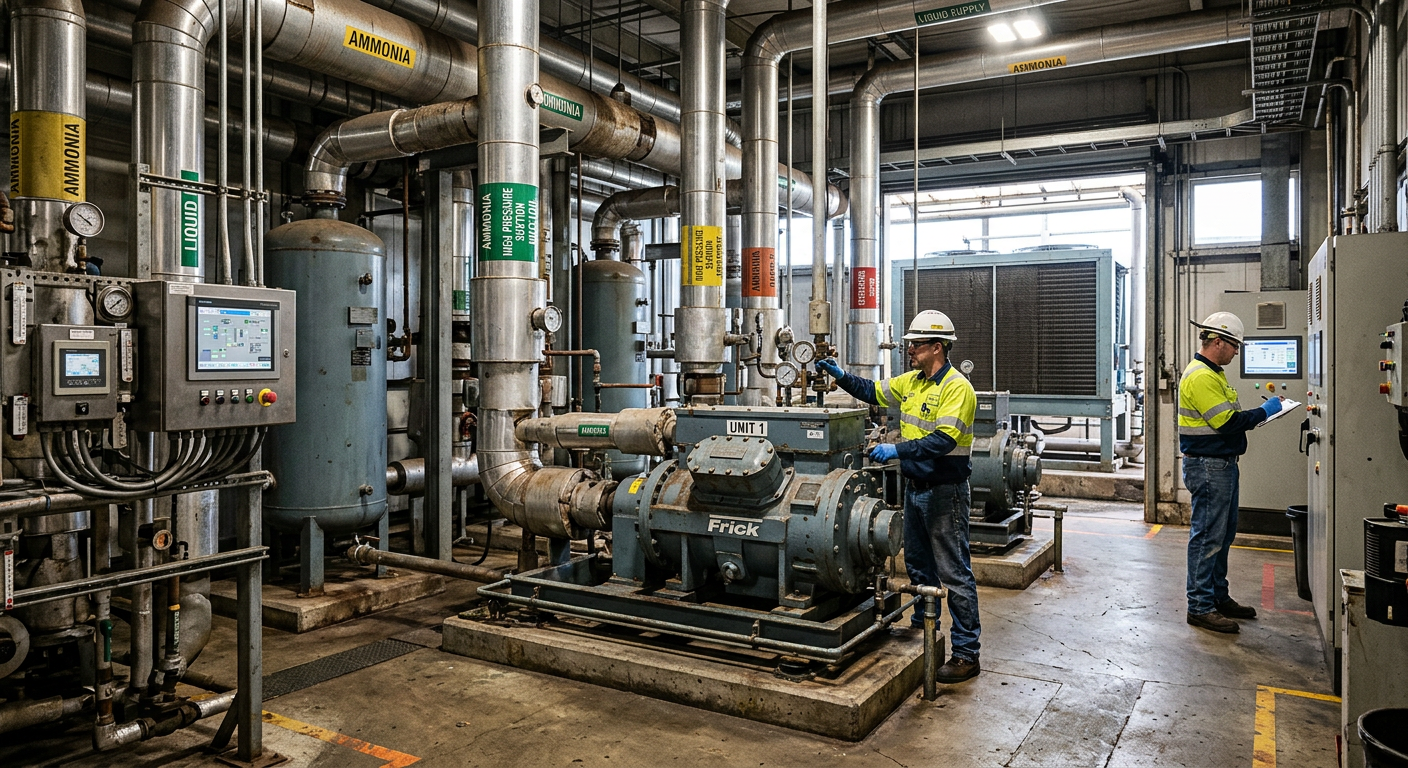
Food Plant Signage and Wayfinding: Safety and Compliance Requirements
Food plant signage in the United States is not just a visual add-on. It is a practical safety, compliance, and productivity system that helps manufacturers control traffic, protect product, reduce contamination risk, and support audits under FDA, USDA, OSHA, SQF, BRCGS, and site-specific programs. In food and beverage plants, the best signs do more than label rooms. They direct sanitation flow, identify controlled zones, reinforce personal protective equipment rules, mark allergen and chemical risks, and guide employees, visitors, truck drivers, and contractors through the facility without creating confusion. For facilities in major production regions such as Chicago, Dallas-Fort Worth, Fresno, Omaha, Charlotte, Atlanta, Philadelphia, Los Angeles, Houston, and the Port of Savannah logistics corridor, good wayfinding is increasingly tied to labor efficiency, audit readiness, and emergency preparedness. Whether a site handles protein processing, aseptic beverages, dairy, sauces, ready-to-drink products, or co-packing operations, signage must align with the actual process flow and hazard profile of the building. This guide explains how to build a signage and wayfinding program for food plants in the United States, including regulations, zone color systems, emergency egress design, HACCP point identification, hygiene station marking, allergen and chemical warnings, visitor routing, and supplier selection. It also outlines what buyers should evaluate when planning new signage for greenfield sites, expansions, retrofits, or equipment relocations. The quick answer is this: a food plant in the United States should use a coordinated signage system that satisfies OSHA life-safety expectations, supports FDA or USDA operational controls, aligns with HACCP and preventive controls, and reflects third-party certification requirements such as SQF or BRCGS. At a minimum, the system should include emergency exit signs, evacuation route signage, PPE and hygiene instructions, color-coded hygiene or risk zone identification, hazard communication labels for chemicals, allergen warnings, restricted-access notices, contractor and visitor directional signs, and process-specific signs at critical control points. Facilities often fail not because they have no signs, but because their signs are inconsistent. Common problems include mixed terminology between departments, faded print in washdown areas, poorly located signs at entry points, conflicting bilingual instructions, and visual clutter that hides the most important warnings. In a high-throughput plant, every second of hesitation at a door, sink, gowning station, allergen room, or forklift crossing can create risk. A high-performing system should achieve five goals: The table above shows why signage should be treated as part of the process design, not as a final decoration item. In many facilities, the most effective approach is to plan signs during layout development, utility design, sanitation zoning, and line integration rather than after construction is complete. In the United States, no single federal rulebook lists every sign a food plant must install, but several frameworks shape the requirements. OSHA governs workplace safety and emergency egress. FDA food facilities must support current good manufacturing practices and preventive controls with clear operational controls. USDA-regulated meat and poultry plants must maintain sanitary process control and controlled movement in inspected spaces. Third-party schemes such as SQF and BRCGS add further expectations around zoning, allergen management, visitor control, and hygiene practices. For procurement teams and plant managers, the key is to connect signs to hazards and procedures. A sign is defensible when it clearly supports a required behavior, restricted condition, emergency response, or validated process control. The practical explanation of this table is simple: plant signage is cross-functional. Engineering, EHS, quality, operations, maintenance, and sanitation all have a stake. A useful compliance review should verify sign content, placement, language, visibility, mounting material, washdown suitability, and consistency with SOPs. For plants near major distribution and trade centers such as Kansas City, Memphis, Newark, Long Beach, and the Inland Empire, fast-moving labor and contractor turnover make signage even more important. A worker arriving from another site may know general food safety rules, but unless the facility’s local signs are clear, they may not understand that one corridor is high-care, one room is allergen-controlled, and another requires cut-resistant gloves and hearing protection. Buyers should also avoid generic sign packages that are copied from non-food industrial facilities. Food plants need sanitation-resistant materials, edge-sealed graphics, chemical resistance, legibility in condensation-heavy environments, and mounting methods that do not create harborage points. The chart reflects a realistic upward trend in signage modernization demand. Spending is rising as plants combine audit readiness, workforce onboarding, and capital upgrades in one project cycle. By 2026, smart wayfinding, durable materials, and sustainability-focused sign replacement are expected to grow further. A color-coded zone identification system is one of the most effective visual tools in a food plant. It helps employees immediately understand whether they are entering raw areas, ready-to-eat zones, allergen rooms, maintenance corridors, utility spaces, or restricted process rooms. In large facilities, especially those processing proteins, dairy, prepared meals, and aseptic beverages, color coding reduces reliance on memory and speeds correct movement. The system should be standardized across walls, hanging signs, floor markings, door frames, and in some cases uniforms or equipment tags. The key is discipline. If blue means high-care entry in one wing, it should not mean forklift lane in another. This table shows a practical structure, but every facility should document its own legend and train employees on it. In many U.S. sites, a color key posted at shift entrances, time clocks, and training rooms helps maintain consistency. For multi-building campuses in places such as Raleigh-Durham, Milwaukee, St. Louis, and Sacramento, zone color coding is especially valuable because product, utilities, and sanitation functions may span several structures. Drivers, mechanics, sanitation crews, and co-manufacturing staff often move between buildings, so visual continuity improves control. By 2026, expect more plants to pair color zoning with digital work instructions, RFID-based access control, and illuminated door indicators linked to sanitation status or production readiness. These systems are becoming more attractive as labor training cycles shorten and facilities seek clearer, faster visual communication. The bar chart indicates where demand is strongest. Protein and aseptic operations typically require more rigorous segregation and therefore rely heavily on visual zoning. Dairy and prepared foods also rank high because of sanitation sensitivity and allergen complexity. Emergency egress signage is a legal and life-safety priority. In food plants, this category includes illuminated exit signs, directional arrows, route maps, area-of-refuge notices where required, stair and door identification, and assembly point signage outside the building. The challenge is that production equipment, mezzanines, pallet staging, racking, and utility drops can obstruct visibility if egress planning is not coordinated with operations. Design should account for normal sightlines during production, not only an empty building model. In refrigerated rooms, spiral freezers, tank farms, boiler areas, and packaging halls, signs may need larger formats or alternate mounting positions to stay visible around equipment or stacked materials. The explanation here is that egress signage is only effective when it reflects true plant conditions. During design reviews, managers should walk the route as if the line were running, forklifts were moving, and a new contractor had never been there before. Plants near ports and logistics hubs, including Houston Ship Channel, Port Newark, and Long Beach, often have larger warehouse and dock interfaces than inland-only sites. Those facilities benefit from stronger external directional signage because temporary drivers and service vendors are more common. HACCP critical control point signage should identify where product safety decisions are made and what must be controlled at that exact spot. In many plants, CCP signs are still too generic, stating only “CCP Area” without clear action requirements. A better sign tells the operator what parameter matters, what limit applies, who verifies it, and what to do if the limit is not met. CCP signs are especially useful in thermal processing, metal detection, pH adjustment, formulation validation, retort operations, fill temperature control, and foreign material control. Even in facilities operating under preventive controls rather than classical HACCP terminology across every step, visible control-point signage reinforces process discipline. The value of this table is that it translates food safety plans into visual action. During operator training, these signs can be paired with QR codes or workstation documents, but the sign itself should remain simple enough to process quickly. Facilities expanding or relocating lines should coordinate CCP signage with equipment integration and controls engineering. This is often where process specialists add value beyond a sign vendor alone. Companies looking at broader food and beverage project execution can review engineering and project delivery services that integrate layout, utilities, controls, and compliance considerations into one implementation plan. This area chart highlights a strong 2026 trend: manufacturers are moving away from broad, low-detail signs and toward targeted control signage tied to actual process risk, digital records, and operator accountability. PPE and hygiene station wayfinding has a direct effect on compliance. If an employee or visitor must guess where to wash hands, change boots, sanitize tools, or collect disposable gear, the system is already weak. Strong wayfinding should start before the hygiene point, not at it. The person should be guided from corridor to entry vestibule, from vestibule to locker or gowning step, and then into the controlled room in the right order. In food plants, the most effective hygiene signage usually uses a sequence format: stop, remove prohibited items, wash hands, sanitize, don hair restraint, apply gloves if required, verify footwear, then enter. This sequence matters more than decorative design. Sites with high employee counts, multiple shifts, or temporary labor pools, especially in regions like the Central Valley of California, Arkansas poultry corridors, and the Midwest dairy belt, benefit from simple icon-supported signs with strong contrast and bilingual options where appropriate. Wayfinding should also distinguish between employee, quality, maintenance, and visitor flows. A maintenance technician may need access to overhead utilities without entering the same gowning path used by ready-to-eat operators. Chemical and allergen warning signage is essential because both hazards can cause severe outcomes, but they behave differently. Chemical signage is largely about worker exposure and emergency response. Allergen signage is about product protection, line discipline, labeling accuracy, and preventing cross-contact. Chemical signs should align with hazard communication practices, SDS availability, eyewash and shower locations, PPE requirements, incompatible storage warnings, and spill response protocols. They must remain legible in utility rooms, sanitation closets, CIP chemical areas, water treatment spaces, and maintenance zones. Allergen signs should define where allergen ingredients are stored, weighed, mixed, transferred, or packaged. They should also mark dedicated tools, rework controls, label verification points, and sanitation expectations after changeovers. The table illustrates why chemical and allergen sign systems should not be merged into one visual language. Operators must instantly know whether a sign is protecting them, the product, or both. As sustainability expectations rise in 2026, many facilities are replacing solvent-heavy sign materials with more durable and lower-waste options, while also redesigning cleaning chemical rooms to improve visual segregation, spill readiness, and refill management. Visitor and contractor directional signage is frequently overlooked, yet these groups create disproportionate risk because they are unfamiliar with the site. A robust system begins outside the building with parking, reception, shipping office, and delivery entrance signage. It then continues with check-in, badge issue, escort requirements, PPE pickup, and restricted-route instructions. Contractor signs should clearly separate office renovation access, utility work access, roof access, and production-adjacent entry paths. In active plants, the safest route is often not the shortest. For example, a controls contractor working on a mezzanine panel may need to bypass a ready-to-eat room and enter from an exterior stair tower instead. This becomes especially important at large campuses and retrofit sites where multiple trades are on site during capital projects. Facilities handling expansions, line installations, or utility upgrades can gain from a partner that understands both construction management and food plant operating constraints. For example, project case examples can help buyers evaluate how integrated execution teams manage access, phasing, and production continuity in real plants. Directional signage should cover: The explanation is straightforward: better directional signage reduces interruptions. Supervisors spend less time giving directions, quality teams spend less time correcting access issues, and visitors receive a stronger impression of plant control. The comparison chart shows why supplier selection matters. A generic sign package may cost less up front, but it often performs poorly in washdown environments and rarely aligns tightly with process flow, access restrictions, and capital project phasing. Disruptive Process Solutions supports food and beverage manufacturers across the United States and Canada with an engineering-led approach to capital projects. Rather than treating signage and wayfinding as isolated procurement items, the company views them as part of a broader operating system that connects process design, sanitation flow, utility planning, equipment integration, and project execution. From a technological capabilities standpoint, DPS works across structural, mechanical, plumbing, electrical, process, and controls disciplines, including PLC programming, automation, and SCADA. That matters when signage must reflect how a plant actually runs. If a high-care room status is controlled by sanitation release, if a batching room depends on recipe management, or if a utility corridor serves multiple process systems, the visual communication should align with the technical reality of the facility. Buyers interested in the company background can visit about DPS to understand the team’s project philosophy and North American footprint. On the manufacturing capabilities side, DPS designs and integrates systems for both food and beverage operations, including fermentation, distillation, pasteurization, aseptic processing, blending, water treatment, grinding, mixing, forming, cooking, retort, dairy processing, and plant protein systems. The company also manufactures selected branded process equipment such as tanks, custom CIP systems, marination tumblers, and cooking vessels. For clients building new lines or expanding existing ones, signage planning can be synchronized with equipment layout, hygienic zoning, and operator touchpoints instead of being handled after startup. Additional information on available process systems and custom-built assets can be found through the company’s equipment solutions offering. From a service capabilities perspective, DPS provides process engineering and design, capital planning, feasibility support, owner’s representation, project and program management, general contracting where licensed, equipment supply, installation, and turnkey system integration. This service model is useful for signage-intensive projects such as greenfield co-packing plants, protein facility expansions, aseptic suites, and major equipment relocations, where access control, contractor routing, and phased production continuity all affect the final wayfinding plan. Because the firm operates with an end-to-end Design Build Manage model, clients can incorporate signage logic early during facility planning rather than discovering gaps during commissioning. For U.S. manufacturers, this integrated view is increasingly important. In a modern plant, a sign is often the last visible layer of many deeper decisions: where product moves, where sanitation starts, who may enter, what the operator must verify, and how emergency evacuation works around installed equipment. When those decisions are made well, the site feels intuitive, safer, and easier to audit. What signs are mandatory in a U.S. food plant?At minimum, most facilities need compliant exit and egress signs, fire and first-aid location signs, hazard communication signage for chemicals, required PPE notices, hygiene instructions, and restricted-access signs where hazards or food safety controls apply. Exact needs vary by process, local code, and audit scheme. Should food plant signs be bilingual?If a meaningful portion of the workforce or contractor base uses another language, bilingual signage is strongly recommended. The key is consistency, readability, and avoiding overcrowded wording. Icons are helpful, but they should support text, not replace critical instructions. How often should signage be reviewed?A full review should happen during annual EHS and food safety audits, after line changes, after product or allergen changes, and during major capital projects. Signs in washdown or chemical areas should also be checked routinely for fading, peeling, or damage. What materials work best in food plants?It depends on the area. Washdown zones typically require durable, non-corroding, easy-to-clean materials with sealed edges and strong mounting systems. Warehouses and offices may allow more standard materials. Cold rooms and chemical rooms need special attention to adhesion and resistance. Are floor markings enough for zone control?No. Floor markings help, but they should be part of a layered system that includes door signs, hanging signs, room labels, and procedural instructions. In crowded production spaces, floor-only communication is easy to miss. How should allergen areas be marked?Use a distinct visual system for allergen rooms, storage areas, tools, rework containers, and label verification points. The system should match the plant’s allergen program and be reinforced during changeovers and sanitation checks. Can signage help during audits?Yes. Auditors often look for visible proof that the site’s stated procedures are supported on the floor. Clear, consistent signs make it easier to demonstrate zoning, hygiene expectations, restricted access, and process control discipline. What should buyers ask a signage supplier?Ask whether the supplier understands food plant washdown conditions, OSHA egress needs, allergen segregation, contractor traffic control, and installation in active manufacturing environments. Also ask if they can coordinate with engineering drawings and room naming conventions. What are the biggest 2026 trends?The biggest trends include smarter zone identification tied to access control, more process-specific HACCP and preventive control signs, sustainability-focused material choices, stronger contractor routing systems during retrofits, and visual standards linked directly to digital SOPs and training systems. What is the best buying approach for a new project?Start early. Include signage in process design, layout planning, sanitation zoning, and safety review rather than waiting until punch list stage. This lowers rework, improves consistency, and produces a better result for operations, quality, and EHS teams. In summary, the best food plant signage systems in the United States are clear, durable, process-aware, and built around how the facility truly operates. They support worker safety, protect product, improve movement, and strengthen compliance across the entire site lifecycle. -
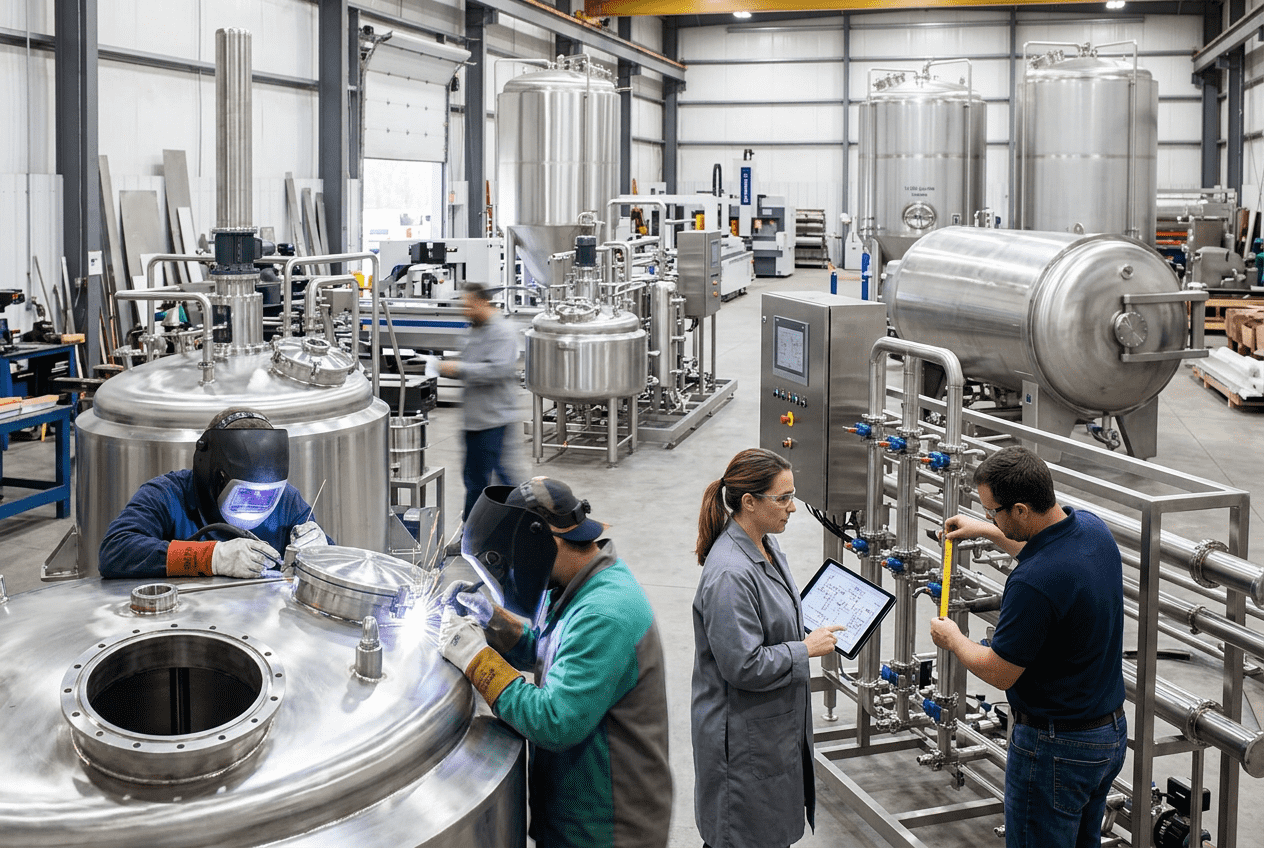
Food Facility Landscape Design: 8 Site Planning Considerations for Security and Compliance
Food facility landscape design in the United States is not just about appearance. It directly affects food safety, FSMA readiness, USDA and FDA compliance, truck efficiency, pest pressure, stormwater permits, employee safety, and long-term operating cost. For most plants, the best site plan separates clean and dirty traffic, protects the perimeter, manages runoff away from production areas, limits harborage for pests, provides secure lighting, and supports future capacity expansion. Whether the site serves meat processing in the Midwest, dairy in California, beverage production near the Port of Savannah, or co-packing in Texas, the exterior layout must be engineered as part of the manufacturing system rather than treated as a final landscaping task. The fastest way to evaluate a food plant site in the United States is to ask eight questions: Is the perimeter secure? Does stormwater move away from the building? Are loading docks and employee routes separated? Is exterior lighting designed for security without creating glare and shadow pockets? Do planting zones create pest risk? Is grading compatible with sanitation and utility protection? Are truck aprons sized for current and future traffic? Are local zoning and environmental requirements aligned with the operating model? If a project team cannot answer those clearly, the site plan usually needs revision before civil work begins. For processors building in hubs such as Chicago, Atlanta, Dallas-Fort Worth, the Inland Empire, or the I-95 distribution corridor, poor exterior planning can delay approvals and reduce throughput long after commissioning. A modern food site should support security, drainage, truck staging, emergency access, utility maintenance, and scalable production growth. That is why many owners now treat site planning as part of capital planning and early facility engineering rather than as a late-stage architectural detail. In practical terms, the best-performing sites usually include controlled entry points, high-visibility fencing, positive drainage away from personnel doors, dock canopies where needed, wide turning radii for 53-foot trailers, screened but non-harboring green areas, and exterior surfaces that are durable and easy to inspect. Owners comparing project delivery models often benefit from a partner that can connect facility operations, civil engineering, utilities, and compliance from day one. Companies looking for that integrated approach often start by reviewing food and beverage engineering services that cover planning, design, construction management, and startup together. The table below summarizes the most important exterior design priorities for a U.S. food or beverage facility and explains why they matter operationally. This matrix matters because food facilities are long-life assets. A grading decision made during permitting can affect pest control, dock safety, and sanitation for decades. Owners who view the site as an integrated operating platform generally experience fewer surprises during startup and expansion. The line chart shows the broader market direction: owners are spending more on site upgrades because insurance, food defense, and environmental compliance are all getting stricter. By 2026, facilities are expected to invest more in smart access control, electrified fleet yard layouts, and more resilient drainage systems that can handle heavier rainfall events. Perimeter planning is one of the most visible aspects of food facility security, but the best fence is not always the tallest one. In the United States, exterior security must balance food defense, employee access, emergency response, municipal aesthetics, and truck operations. The right design starts with a risk-based perimeter strategy: define where the public edge ends, where visitor access begins, where employee parking sits, and where freight enters the controlled zone. For most processors, a chain-link or ornamental steel fence with anti-climb measures, monitored gates, and camera-friendly lighting is more useful than a visually imposing barrier with poor visibility. At plants near the Port of Los Angeles, Port of Houston, or New Jersey intermodal corridors, high freight activity often means extra attention to gate stacking, seal checks, and guardhouse positioning. In rural meat and poultry operations, the bigger issue may be long property lines and blind spots rather than traffic congestion. Perimeter security should integrate with landscaping rather than fight against it. Dense shrubs next to fencing create hidden areas, reduce camera effectiveness, and increase pest risk. A clear inspection band along fences and building walls helps both security and pest control teams. Many U.S. facilities now maintain stone or mowed strips inside perimeter lines so teams can inspect for breaches, burrows, standing water, and debris quickly. When selecting fencing, owners should consider not only security but also frost heave, corrosion, visibility, maintenance, and compatibility with vehicle barriers. Facilities in the Northeast may need different footing details than sites in Arizona or coastal Florida. If the site has hazardous utility corridors, chemical storage, or high-value ingredients, layered controls are often better than relying on one continuous fence line. This comparison shows why integrated perimeter design matters. The best result is usually a layered approach: fence, gate control, camera coverage, lighting, landscaping setbacks, and a clean inspection zone all working together. Stormwater management is a major site planning issue for food and beverage plants because runoff can carry sediment, organics, chemicals, and debris into municipal systems or adjacent waterways. In the United States, owners typically face local stormwater ordinances, state environmental rules, and, depending on site conditions, NPDES-related permit requirements. The operational goal is simple: keep water moving safely away from food-sensitive areas, loading docks, employee entrances, utility rooms, and waste handling zones. Runoff design should be based on actual operations, not just a civil template. A beverage plant with frequent truck washdown, syrup delivery, and high hardscape coverage has different runoff patterns than a dry ingredient warehouse in Kansas City. A protein plant in Arkansas or Iowa may need more aggressive solids management near waste handling areas. Sites near the Gulf Coast or the Southeast should also consider extreme rainfall intensity and resilience to storm events that exceed older design assumptions. Best-practice systems often combine grading, trench drains, catch basins, bioswales, detention ponds, underground retention, oil-water separation where needed, and protected utility layouts. But green infrastructure must be selected carefully in food environments. While vegetated swales can support permits and community expectations, they should not create standing water or wildlife attraction near critical building edges. Owners should map runoff pathways from roofs, parking lots, employee entries, loading yards, tank farms, and waste zones. Special attention is needed where exterior ingredients, packaging, or pallets are staged. Water should never be encouraged toward dock pits, under-insulated lines, or exterior personnel doors. Civil, process, and sanitation teams need to coordinate so stormwater systems do not interfere with production utilities or maintenance access. The table highlights a key buying lesson: the cheapest stormwater feature at bid time may not be the lowest-cost option over the life of the plant. Facilities in constrained markets such as Southern California, Northern New Jersey, or central Atlanta often justify underground systems because they protect valuable operating space for parking, utilities, or expansion. The area chart reflects the ongoing trend shift in the U.S. market. Traditional hard drainage remains dominant, but sustainable and monitored systems are gaining share. By 2026, more food plants are expected to add sensor-based water level monitoring and digital inspection logs to support ESG reporting and preventive maintenance. Exterior lighting in a food facility has three jobs: improve security, support safe movement, and protect operating continuity after dark. Lighting design should cover the perimeter, guardhouse, employee parking, pedestrian routes, loading docks, tank farms, waste handling zones, and emergency egress paths. A fixture plan that looks bright on paper can still fail if it creates deep shadows, camera washout, or inconsistent color rendering. For food and beverage sites that run second or third shifts, dock lighting becomes especially important. Trailers backing at night, reefer checks, yard hostler movement, and employee arrivals all create overlapping risks. Plants in Memphis, Columbus, Indianapolis, and other logistics hubs often have dense nighttime traffic, so uniformity ratios and dock visibility deserve as much attention as average foot-candle levels. Security illumination should be paired with camera placement, access points, and landscape height limits. Trees that grow into fixture patterns or block camera lines are a recurring problem. Light pollution rules also matter, particularly in municipalities that cap spillover into neighboring residential or mixed-use areas. LED systems are now standard for most new U.S. projects because they offer better control, lower maintenance, and easier integration with motion sensing and smart scheduling. By 2026, more facilities are expected to use networked lighting tied to security systems, allowing higher output when movement is detected near gates or fenced utility yards. This table demonstrates why lighting should be zoned by use instead of specified as one average site standard. Security, sanitation, and yard operations each require different fixture strategies. The bar chart shows that higher-risk sectors such as protein and aseptic operations tend to invest more heavily in exterior lighting because of security expectations, inspection needs, and continuous operations. Loading yards are where civil design and plant economics meet. If truck movement is inefficient, every shift pays for it through higher labor hours, detention charges, missed appointments, dock congestion, and increased accident risk. A good food plant yard separates inbound ingredients, outbound finished goods, employee parking, tanker movement, and waste hauling as much as the site allows. In U.S. logistics markets, especially around Dallas, Louisville, Joliet, and the Inland Empire, the wrong turning radius or staging layout can reduce dock productivity for years. Most food facilities need to accommodate 53-foot trailers, refrigerated units, tankers, service vehicles, and occasionally oversized process equipment deliveries. If the project involves beverage operations, tanker access to syrup rooms, CO2 systems, or bulk ingredient receiving can add another layer of routing complexity. The best yards are intuitive. Drivers should understand where to queue, where to check in, where to stage, and where to exit without crossing employee walkways or backing through uncontrolled zones. Separate circulation loops are ideal, though not always possible on infill sites. Where space is tight, scheduling, striping, signage, and gate timing become even more important. Buying advice for owners: do not let dock count drive the whole conversation. The more important question is whether the site can support your real truck profile over time. A facility handling frozen protein, dry ingredients, and outbound parcel shipments has different needs from a high-volume RTD beverage plant or a co-packer scaling from 20 million to 80 million cases. This table explains why yard design is a throughput issue, not a purely civil issue. Every row affects how quickly raw materials come in and finished goods leave the site. Applications vary by industry. Protein plants often need intense reefer traffic control. Beverage sites need tanker routing and high trailer counts. Dairy plants may need rapid milk receiving access and sanitary separation. Prepared foods and co-packers frequently require flexible dock allocation. When planning future growth, owners should reserve expansion space not just for the building but also for trailer maneuvering, utility relocation, and possible automation such as gate kiosks or autonomous yard spotting support. Green space requirements often come from municipal zoning, stormwater permits, or neighborhood compatibility expectations. Yet in food manufacturing, planting strategy should support compliance rather than undermine it. The goal is to satisfy local approval standards while avoiding pest harborage, standing water, blocked sight lines, and maintenance burdens that grow over time. Sites in suburban office-industrial parks near Raleigh, Minneapolis, or Phoenix may face architectural review standards that demand more front-yard landscaping than heavy industrial sites near ports or rail corridors. The best response is not to remove landscaping altogether, but to place it intelligently. Use planting where it helps visual buffering, heat island reduction, or stormwater goals, while keeping critical walls, doors, loading areas, and utility equipment clear and inspectable. Buffer zones should also support neighbor relations. Food facilities often operate early and late, with refrigeration equipment, truck activity, and security lighting affecting adjacent parcels. Properly located berms, fences, and low-risk plantings can soften visual and acoustic impacts without creating food defense or pest issues. From a 2026 perspective, more U.S. municipalities are expected to push for sustainable landscapes, native planting palettes, and reduced irrigation demand. For food sites, that means drought-tolerant, low-seed, low-fruit, low-dense-canopy selections are likely to become even more valuable. This table shows how landscaping can still serve aesthetics and zoning needs without compromising sanitation. The best U.S. food facility landscapes are restrained, inspectable, and aligned with site operations. Pest pressure often begins outside the building. Rodents, birds, and insects are influenced by cover, water, food residue, standing vegetation, mulch depth, drainage failures, and waste handling practices. That is why exterior landscape design should be reviewed with the same seriousness as an interior GMP plan. Vegetation management starts with simple principles: maintain a visible perimeter around the building, minimize dense groundcover, avoid fruiting or heavy-seeding plants near process areas, keep trees trimmed away from roofs and fixtures, and prevent irrigation overspray that creates moist zones near walls. In many audited facilities, the recurring issue is not the landscape concept itself but weak maintenance discipline after startup. Local conditions matter. In the Southeast, moisture and warm temperatures can increase insect pressure. In the Midwest, seasonal weeds and grain handling attract rodents. In coastal markets, bird activity can be intense around open yards and rooflines. Facilities handling proteins, sweeteners, or byproducts should be especially cautious around waste compactors, grease handling, and exterior drains. Good vegetation management also supports security. Overgrowth around fencing, utility pads, and retention structures creates blind spots and slows inspections. Many U.S. operators now include pest and grounds reviews in the same weekly exterior audit. For buyers evaluating landscape and pest programs, service capability matters as much as specification. A strong partner should connect sanitation, groundskeeping, drainage maintenance, and audit readiness instead of treating them as separate vendors with separate goals. Exterior drainage and grading are foundational civil decisions that influence nearly every other site planning topic. If grades are wrong, stormwater systems underperform, pests find wet areas, pavement deteriorates faster, and dock operations become hazardous. The design intent should be clear: move water away from the building, protect critical equipment, maintain stable pavements, and preserve access for trucks and maintenance teams. Typical U.S. food facilities need careful grading at dock aprons, personnel entries, utility yards, waste handling zones, and connections between parking and freight areas. Facilities with washdown or utility condensate exposure need added attention around trenching, inlets, and pavement transitions. In freeze-thaw climates such as Wisconsin, Pennsylvania, or upstate New York, grading errors can quickly become icing hazards or pavement failures. Specifications should cover subgrade preparation, slope targets, inlet elevations, curb details, erosion control, and coordination with underground utilities. The most expensive mistakes usually happen when the civil and process teams do not coordinate elevations for tanker unloading, CIP utility corridors, external pads, or future expansion tie-ins. Product type also affects grading requirements. Beverage facilities may need resilient tank farm access and utility service pads. Protein facilities may need robust washdown containment and controlled runoff paths. Aseptic or pharmaceutical-adjacent operations often prioritize stricter access control and cleaner exterior transitions. The comparison chart illustrates a common market reality: local suppliers may know permitting well, but integrated food engineering teams usually produce better outcomes because they connect exterior grading, utilities, compliance, and process operations. Local civil, survey, and landscape partners remain essential, but they work best when guided by a food-specific operating strategy. Case studies across the U.S. repeatedly show that early coordination saves capital. In one common scenario, a manufacturer plans significant building expansion but overlooks how detention placement or employee parking blocks future dock growth. In another, a site appears adequate until tanker turning simulations reveal conflict with finished goods shipping. Project teams that test these issues upfront reduce change orders and preserve long-term capacity. Owners can learn a great deal by reviewing representative project case studies in food and beverage environments before locking civil design assumptions. Disruptive Process Solutions supports food and beverage manufacturers across the United States and Canada with an integrated Design Build Manage approach that aligns site planning with profitability, compliance, and speed of execution. Instead of treating the exterior as a separate civil package, the company connects process requirements, utilities, building interfaces, and operational flow so the site performs as part of the manufacturing system. On the technology side, DPS brings cross-discipline engineering capability that is especially valuable during early planning. Its teams work across structural, mechanical, plumbing, electrical, process, and controls scopes, including automation, PLC programming, and SCADA integration. That matters on site development projects because exterior decisions often affect utility routing, process expansions, sanitary connections, and control infrastructure. Manufacturers evaluating complex applications such as aseptic processing, brewing, distillation, dairy, protein handling, retort, or HPP can benefit from a partner that understands both the equipment inside the building and the site systems that support it. Companies exploring integrated solutions can review process equipment capabilities and manufacturing solutions to understand how site design and equipment planning connect. On the manufacturing side, DPS designs and supplies selected process equipment such as tanks, CIP systems, marination tumblers, and cooking vessels. That practical manufacturing knowledge helps inform exterior planning in ways many purely civil teams miss. For example, tank sizing, utility demand, cleaning access, and future modular additions all influence yard allocation, equipment pads, access routes, and drainage details. Whether the project is a new beverage facility scaling production, a protein operation upgrading utilities, or a co-packer planning phased expansion, site decisions are stronger when equipment realities are known early. On the service side, DPS supports capital planning, feasibility, owner’s representation, project and program management, general contracting where licensed, equipment integration, and turnkey installation. This service model is useful for owners who need one team to connect permitting, budgeting, scheduling, and operating outcomes. Rather than maximizing short-term construction scope, the company is known for helping clients make better business decisions, even if that means changing direction early. Manufacturers wanting to understand the team’s operating philosophy and background can visit the company overview and leadership page. For U.S. food site planning, that integrated model is important because success depends on more than code compliance. The site must support sanitation, security, expansion, utility reliability, and profitable throughput. Local suppliers such as civil engineers, surveyors, geotechnical consultants, lighting specialists, fencing vendors, and landscape contractors remain critical, but they deliver the best results when aligned under a food-specific execution strategy. In current market conditions, especially with projects near major freight corridors, owners should choose partners who understand not only construction but also plant operations. A civil layout that works for a generic warehouse may fail in a food plant if it ignores tanker movement, exterior washdown, utility redundancy, or audit visibility. That is where a specialized engineering and integration company can materially reduce risk. What is the first landscape design priority for a food facility in the United States?The first priority is usually controlled site function, not appearance. Start with secure access, drainage away from the building, truck routing, and pest-resistant perimeter conditions. After those are correct, landscape and aesthetic elements can be layered in safely. How far should vegetation be kept from food plant walls?Exact requirements vary by facility policy and local conditions, but many operators maintain a clear, inspectable strip along building walls to reduce pest harborage and improve maintenance visibility. The key principle is visibility, dryness, and easy inspection. Do food facilities need special stormwater systems?Often yes. Food plants may have unique runoff risks from washdown, waste handling, tanker areas, or high trailer volumes. Systems should be designed around actual operations, local permits, and future capacity, not just standard commercial site templates. What type of fencing is best for a U.S. food plant?There is no single best type. Chain-link is common because it offers visibility and cost efficiency. Ornamental steel may suit front-facing areas. The best solution usually combines fence type, monitored gates, lighting, cameras, and clear inspection zones. How should truck and employee traffic be separated?Whenever possible, use separate entrances or circulation loops. If the site is constrained, use barriers, striping, signage, controlled crossings, and scheduling to minimize conflict. Separation improves safety and reduces dock delays. Are bioswales and native landscapes a good idea for food facilities?They can be, if they are placed and maintained properly. Sustainable landscapes can support permitting and reduce irrigation demand, but they must not create standing water, wildlife attraction, or hidden areas near sensitive building zones. What should owners ask before approving a site plan?Ask whether the plan supports current and future truck traffic, expansion pads, utility corridors, stormwater compliance, pest prevention, lighting visibility, security controls, and local approval requirements. Also ask whether the site works for your specific product mix and shift pattern. How are 2026 trends changing exterior planning?U.S. projects are moving toward smarter lighting controls, more resilient drainage for heavier rain events, lower-water landscapes, digital inspection workflows, and stronger integration between food defense and site operations. Sustainability and resilience are no longer optional extras; they are increasingly part of core project value. -
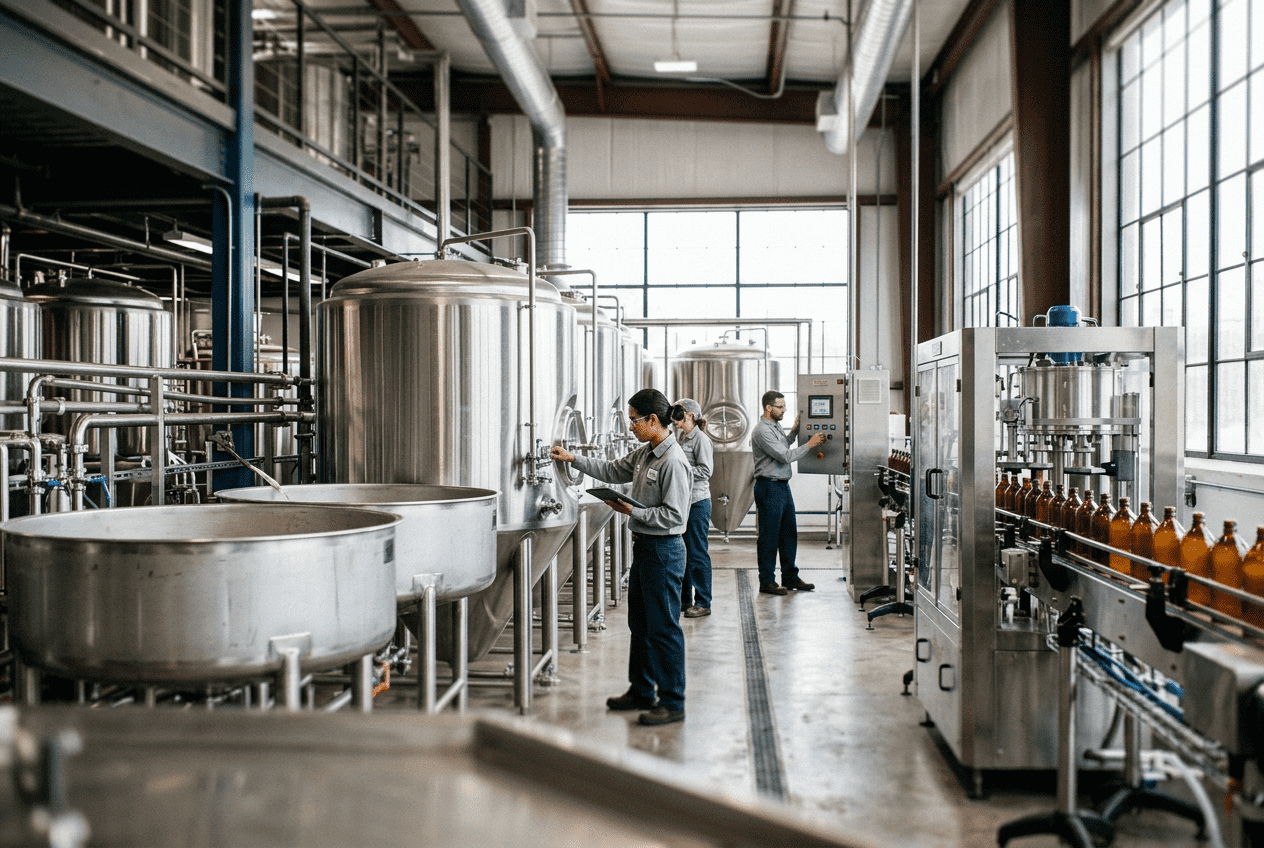
Beverage Blending Systems
Choosing the right beverage blending system in the United States comes down to product mix, throughput, ingredient sensitivity, sanitation requirements, and automation goals. For short runs, frequent flavor changes, or pilot-scale work, batch blending often provides the best flexibility. For high-volume soft drinks, energy beverages, juices, dairy-based beverages, and functional formulations, continuous in-line blending usually delivers tighter control, lower labor input, and better repeatability. The most effective systems combine accurate dosing, real-time Brix and density measurement, robust recipe management, strong CIP design, and equipment sized to the actual production and utility profile of the plant. Across U.S. beverage markets, manufacturers in hubs such as Chicago, Atlanta, Dallas, Los Angeles, Charlotte, Houston, Fresno, and the New Jersey corridor are under pressure to launch more SKUs while protecting margin. Co-packers near the Port of Long Beach, Port of Savannah, Port of Houston, and Port Newark also need blending systems that support rapid changeovers, ingredient traceability, and reliable integration with upstream water treatment and downstream filling. That is why blending is no longer just about tanks and pumps; it is now a profit-critical process tied directly to consistency, waste reduction, line uptime, and speed to market. If your operation runs many small to mid-size batches, seasonal formulas, premium ingredients, or frequent customer-specific recipes, a batch blending system is typically the better fit. If your plant produces stable, repeatable formulas at high volume and needs strong control of sugar solids, acidulation, functional additives, and carbonation, continuous in-line blending is usually the smarter long-term investment. In practical terms, U.S. beverage companies should evaluate five variables first: A well-designed beverage blending platform should align with commercial goals, not just mechanical specifications. That operating philosophy is central to how Disruptive Process Solutions approaches beverage processing projects in the United States: start with profitability, validate the bottlenecks, then engineer, build, and manage the right solution. Batch and continuous in-line blending both have strong use cases. The best option depends on whether your business values flexibility or throughput more, and how tightly your formula must be controlled while running at speed. This comparison matters because many U.S. beverage plants are trying to serve both club-store scale production and niche premium launches. A Texas co-packer producing flavored sparkling water may favor continuous in-line blending for speed and consistency, while a Pacific Northwest kombucha producer with varied botanicals may prefer batch systems for recipe flexibility and fermentation integration. Batch blending typically uses one or more mixing tanks, load cells or level measurement, recirculation loops, and manual or semi-automatic ingredient additions. This setup works well when solids hydration time matters or when you need visual verification of the batch before release. Continuous in-line blending, by contrast, meters water, sweetener, flavor, acid, and other components in a controlled stream with flow-based recipe logic. This approach shines in large-volume operations around Atlanta, Indianapolis, and Southern California where line efficiency and reduced variability directly improve plant economics. For many operators, the right answer is hybrid. A plant may use batch makeup for difficult slurries, concentrates, or vitamin pre-mixes, then feed those prepared ingredients into a continuous final blender ahead of pasteurization or filling. That architecture often gives the best balance of flexibility and throughput. The chart above reflects a realistic trend: rising investment in blending and process control as beverage manufacturers modernize facilities and add high-mix production. Growth is especially visible in RTD cocktails, low-sugar drinks, protein beverages, and premium non-alcoholic products. Every beverage blending system depends on how ingredients behave physically. Water-like products with fully soluble ingredients may only need a sanitary tank, transfer pump, and in-line controls. Products with gums, proteins, fibers, emulsions, creams, or oil phases require more advanced mechanical treatment. The right tank design is about more than volume. Headspace, spray coverage, agitation profile, bottom geometry, hygienic weld quality, valve manifold layout, and future utility expansion all matter. DPS supports projects with both process engineering and branded equipment manufacturing, including storage and processing tanks up to 12,000 gallons. That combination is valuable when U.S. manufacturers want one team that understands system performance as well as fabrication and field integration. High-shear mixers are especially important in today’s market because more beverages include functional ingredients such as plant proteins, fibers, micronutrients, caffeine systems, and stabilizer blends. Without strong dispersion, these formulations can create clumps, off-spec viscosity, poor mouthfeel, or filling issues. Homogenization becomes essential when emulsion stability and visual appearance drive brand perception, as in dairy beverages, nutritional drinks, and certain flavored RTDs. In plants serving major metro markets like Phoenix, Miami, and Philadelphia, where output targets are aggressive and downtime is costly, selecting the wrong mixing technology can quickly become a hidden margin drain. A tank-only design may appear inexpensive at purchase but expensive to run if it causes long batch times or inconsistent ingredient hydration. Modern beverage consumers expect consistency across every bottle, can, and carton. That makes precision dosing one of the most critical parts of the blending line. Flavors, natural colors, preservatives, sweeteners, acids, vitamins, botanicals, and active ingredients often enter the process at small inclusion rates, but small errors can create major quality deviations. Typical dosing technology includes mass flow meters, magnetic flow meters, positive displacement pumps, diaphragm dosing pumps, gravimetric skids, and loss-in-weight feeders for select dry additions. The right choice depends on viscosity, dosing rate, sanitation needs, and ingredient cost. For example, high-value botanical extracts used in premium beverages in California or Colorado may justify very tight metering logic and verification loops to protect every ounce of concentrate. Precision dosing is also a business issue. Overdosing erodes margin. Underdosing risks flavor drift, regulatory problems, or customer complaints. In crowded U.S. retail channels, especially club, convenience, and foodservice distribution, consistency is not optional. Automation helps, but recipe structure and instrumentation validation matter just as much. This is where full-system integration becomes valuable. Rather than treating dosing skids as stand-alone purchases, leading engineering teams tie them into plant controls, operator permissions, lot tracking, and CIP logic. Manufacturers evaluating expansion can review broader engineering and integration services at process and project services to understand how dosing, utilities, controls, and line performance should work together. Brix and density monitoring are central to beverage consistency. In syrup-based products, they help control sweetness, solids concentration, and blend ratio. In juices, teas, flavored waters, and alcoholic RTDs, they support standardization and help catch upstream variation before it reaches the filler. Real-time instrumentation allows operators to adjust the process immediately rather than relying only on lab checks after the fact. Common tools include in-line refractometers, density meters, conductivity systems, temperature compensation, and integrated control loops that modulate water or syrup flow automatically. For high-speed plants in the United States, this matters because every minute of off-spec production creates rework, waste, and scheduling disruption. A continuous line making carbonated soft drinks near St. Louis or Charlotte may run thousands of units per hour; if Brix drifts undetected, the cost accumulates fast. Real-time visibility sharply reduces that risk. Many beverage plants still underuse continuous data. The strongest systems do not just display numbers; they use alarms, trend analysis, recipe interlocks, and historian integration to prevent errors before a full batch or production run is compromised. The bar chart highlights why functional beverages and carbonated products often lead investment in advanced blend control. Their formulas are less forgiving, and brand expectations are high. Carbo-blender systems combine final blending with controlled carbonation, usually in a compact and highly automated configuration. These systems are widely used in soft drinks, sparkling water, flavored malt beverages, hard seltzers, and select RTD cocktails. The major advantage is synchronization. Rather than blending product and carbonating it in separate, loosely coordinated steps, the system controls flow, deaerated water, syrup ratio, temperature, and CO2 injection in one integrated process. That improves carbonation accuracy, reduces dissolved oxygen risk, and supports stable filler performance. In the United States, carbo-blenders are especially valuable in high-throughput facilities located near major retail distribution zones and logistics corridors. Plants serving the Southeast through Savannah and Atlanta, or West Coast networks through Los Angeles and the Inland Empire, often benefit from integrated systems because they simplify operations while supporting high production targets. Carbo-blender selection should consider: For producers adding sparkling products to an existing still-beverage portfolio, an integrated blend-and-carbonate skid can be a practical expansion path without redesigning the entire process room. This is often attractive for mid-sized U.S. manufacturers managing capital carefully but planning for future SKU growth. As beverage portfolios expand, the control system becomes as important as the mechanical system. Recipe management and SCADA are now core tools for plants producing multiple formulas, pack sizes, or customer-specific variations. Without them, operators rely too heavily on manual settings and tribal knowledge, which raises the risk of mistakes. Recipe management allows approved formulas to be stored with fixed parameters for ingredient ratios, process sequencing, agitation time, target Brix, temperature windows, hold steps, and sanitation confirmation. SCADA then provides visualization, trending, alarms, batch records, and integration with plant historians or ERP platforms. DPS brings strong controls and automation expertise into beverage projects, including PLC programming and SCADA integration. That matters because many process issues are not equipment failures at all; they are logic limitations, poor sequencing, or missing data visibility. U.S. manufacturers can also explore related equipment and systems at process equipment solutions when planning upgrades. Multi-SKU operations are especially common among co-packers and regional producers. A beverage facility near Nashville may run sports drinks in the morning, sparkling water in the afternoon, and private-label flavored beverages at night. In those settings, recipe automation protects both quality and throughput. It also supports labor efficiency when experienced operators are difficult to hire or retain. The area chart reflects a broader market shift toward automation-heavy blending rooms, driven by SKU proliferation, traceability demands, and a tighter labor environment. Deaeration is often underestimated, yet it has a major effect on shelf life, flavor stability, and carbonation performance. Dissolved oxygen can accelerate oxidation, damage sensitive flavors, affect color, and reduce product quality in juices, teas, functional drinks, and carbonated beverages. Removing oxygen before blending or before carbonation is especially important when products contain natural extracts, vitamins, or delicate aroma systems. In sparkling beverages, deaerated water also improves CO2 absorption and stability. That is one reason why high-performing carbo-blender systems usually depend on effective deaeration upstream. Common deaeration methods include vacuum systems, membrane-based approaches, and temperature-assisted configurations depending on process design. The right method depends on dissolved oxygen targets, throughput, utility availability, and beverage type. In export-oriented or long-distribution U.S. channels, dissolved oxygen control becomes even more valuable because products may travel from inland plants to ports or across multiple climate zones before final sale. For brands shipping through Houston, Oakland, or Savannah, shelf-life protection is not just a quality issue; it is a brand protection issue. A product that tastes fresh at packaging but degrades during distribution can create uneven customer experience across regions. Clean-in-place design is critical for beverage blending systems because hygiene failures lead to downtime, waste, and risk. Good CIP design starts long before startup. It involves sanitary geometry, spray device coverage, drainability, valve arrangement, dead-leg reduction, material compatibility, instrument placement, and automation logic that confirms cycle completion. Best practices for U.S. beverage plants include separate CIP strategies for sugar systems, allergen-containing products, dairy-based drinks, and highly functional formulations that leave persistent residues. Plants also need practical verification methods, such as conductivity transition monitoring, temperature recording, flow validation, and documented rinse endpoints. DPS has strong utility, sanitation, and compliance experience spanning FDA, USDA, SQF, and BRC-oriented environments, which is highly relevant for beverage processors that also run dairy, nutritional, or aseptic-adjacent products. On the manufacturing side, the company’s custom CIP systems and process vessels can be integrated into broader processing architecture, helping reduce the gap between equipment design and real plant operation. Sanitation is also a line-capacity issue. Poorly designed CIP extends changeover time and limits actual plant output. In a multi-SKU operation, even a 20-minute reduction in verified cleaning time can translate to meaningful annual capacity gains. The U.S. market for beverage blending equipment is being shaped by premiumization, wellness products, sugar reduction, sustainability pressure, and faster commercialization cycles. Manufacturers are expected to produce more recipes with fewer people while maintaining tighter documentation. As a result, blending projects now need to connect process performance with financial outcomes from the start. Common product categories that drive blending investments include: Buying advice for U.S. operations is straightforward: do not size the system only around today’s largest SKU. Instead, evaluate cleaning frequency, utility capacity, operator skill level, formulation complexity, and likely new-product introductions over the next three to five years. A lower-cost system can become expensive if it restricts future automation, requires heavy manual intervention, or cannot maintain quality across changing formulations. It is also smart to assess the project at a facility level. Blending performance depends on water treatment, steam or hot water, compressed air, glycol, electrical service, controls architecture, and downstream packaging rhythm. That whole-plant view is one of the reasons national clients use firms that can combine capital planning, engineering, integration, installation, and owner representation rather than buying isolated pieces. Beverage blending systems serve a wide range of industries in the United States. Core applications include sweetener dilution, syrup room design, flavor addition, emulsion blending, protein hydration, acid correction, carbonation, pre-fill standardization, and final product buffering. The correct process path varies significantly by industry. In soft drinks, repeatability and carbonation control dominate. In juice and functional beverages, ingredient protection and oxygen management matter more. In dairy-based beverages and cream liqueurs, homogenization and thermal integration are essential. In kombucha and fermented products, sanitation, dosing discipline, and microbial control take on greater importance. Real-world project logic often looks like this: a Southeastern co-packer needs to scale from regional launch volumes to national distribution; a West Coast premium beverage brand needs gentle handling for natural extracts; a Midwest dairy beverage processor requires stronger emulsification, CIP validation, and lot traceability. Each of these needs a different blend room architecture even if all are described generically as “beverage blending.” DPS has worked across beverage segments including brewing, spirits, wine, kombucha, RTD products, carbonated and non-carbonated soft drinks, juice, functional beverages, dairy-based beverages, and aseptic processing. That cross-category experience is useful when U.S. manufacturers need to compare design options across multiple beverage types rather than staying inside one narrow production model. For examples of project execution and operational problem-solving, manufacturers can review selected case experience as part of due diligence before a major blending investment. The comparison chart illustrates a common procurement reality in the United States: buying stand-alone equipment can work for straightforward upgrades, but integrated engineering-led delivery often performs better when sanitation, controls, utilities, and expansion planning all matter. When sourcing beverage blending systems in the United States, buyers should evaluate local service reach as carefully as hardware specifications. Access to field support in North Carolina, Texas, California, the Midwest, and major beverage corridors can reduce downtime and speed commissioning. Local trades, regional code knowledge, and utility coordination also influence project success. Many plants face a choice between equipment vendors, general contractors, and integrated process partners. The safest approach for complex projects is often a team that can bridge process engineering, mechanical and electrical coordination, controls, field installation, and startup support. This reduces handoff risk and makes accountability clearer. Disruptive Process Solutions operates across the United States and Canada with a model built around designing, building, and managing capital projects for food and beverage manufacturers. From a technology standpoint, the company supports structural, mechanical, plumbing, electrical, process, and controls engineering, including PLC programming, automation, SCADA, water systems, blending, batching, pasteurization, carbonation, filtration, and utility integration. From a manufacturing standpoint, DPS supplies custom process equipment such as tanks and CIP systems that can be engineered around the plant’s actual operating requirements. From a service standpoint, the company provides capital planning, feasibility, owner representation, project management, system integration, installation coordination, and commissioning support. That blend of capabilities is important because a beverage blending room rarely succeeds as a stand-alone purchase. It must fit the commercial plan, utility backbone, staffing reality, compliance standard, and expansion roadmap of the facility. In the United States, where market windows are tight and cost of delay is high, that full-scope execution model can offer a major advantage. What is the main difference between batch and continuous beverage blending?Batch blending prepares a defined volume in a tank before release, while continuous in-line blending meters ingredients continuously as product flows through the system. Batch offers flexibility; continuous offers speed and consistency. When should a U.S. beverage plant invest in in-line Brix monitoring?As soon as formula consistency, waste reduction, or line speed become major business priorities. It is especially valuable for syrup-based, sweetened, and high-volume products. Do all beverages need a homogenizer?No. Homogenizers are most useful for emulsified, dairy, dairy-alternative, and texture-sensitive beverages where droplet or particle stability affects appearance and mouthfeel. Why is deaeration important before carbonation?Deaerated water absorbs CO2 more effectively and helps reduce oxidation, improving shelf life and carbonation stability. Can one blend room support both still and carbonated beverages?Yes, if the system is properly designed with the right segregation, controls, sanitation strategy, and buffering. Many U.S. co-packers operate hybrid facilities successfully. How important is SCADA for smaller operations?Even smaller plants benefit from recipe control, alarms, trend data, and records. SCADA does not need to be overly complex to provide strong value. What should be included in a blending system buying specification?Product range, throughput, utility requirements, ingredient characteristics, sanitation standard, automation scope, packaging line interface, expansion plans, and performance acceptance criteria. How do 2026 trends affect blending system design?By 2026, U.S. buyers should expect greater demand for low-sugar formulations, AI-assisted process optimization, stronger traceability, water and energy efficiency, and cleaner-label ingredient handling. Policy pressure around sustainability and resource use will further favor high-efficiency dosing, better CIP recovery, smarter utility integration, and systems designed for reduced product loss. In short, the best beverage blending system is the one that supports profitable, repeatable production at the pace your market demands. For U.S. manufacturers, that means thinking beyond tanks and pumps and investing in a blending architecture built for quality, sanitation, automation, and growth. -
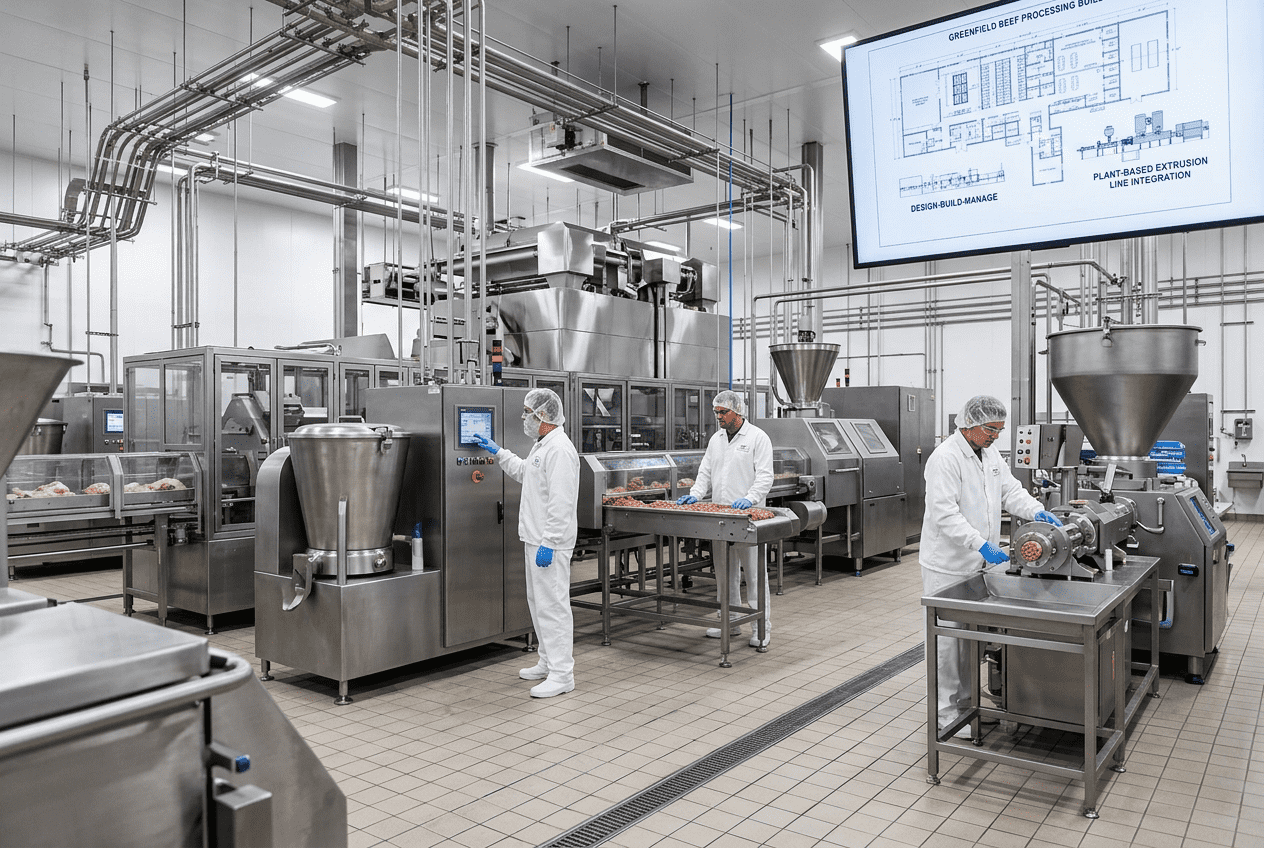
Beverage Carbonation Systems
Carbonation systems are the engineered process lines that dissolve carbon dioxide into water or finished beverages under controlled pressure and temperature conditions. In the United States, the most reliable beverage carbonation systems combine deaeration, precise CO2 dosing, pressure-stable tanks, sanitary piping, automated controls, and counter-pressure packaging to protect product quality from the carbonator to the filler. For manufacturers scaling soft drinks, sparkling water, RTDs, kombucha, beer, cider, wine spritzers, and functional beverages, system design matters just as much as gas supply. A well-built line improves carbonation consistency, protects flavor, reduces oxygen pickup, lowers CO2 loss, and supports profitable throughput. Across major U.S. beverage corridors such as Chicago, Atlanta, Dallas-Fort Worth, Los Angeles, Houston, and the I-95 distribution belt from New Jersey to Florida, producers are under pressure to increase line efficiency while meeting stricter food safety, sustainability, and cost targets. That is why many processors now evaluate carbonation as part of an integrated capital project instead of treating it as a stand-alone skid. Companies that think this way typically gain better utility planning, better automation, and fewer commissioning surprises. For manufacturers seeking a partner that understands both processing and execution, Disruptive Process Solutions approaches carbonation projects with an operations-first mindset. Rather than selling equipment in isolation, the company helps beverage manufacturers align engineering choices with production goals, packaging plans, utility capacity, and long-term return on capital. If you need a short answer, here it is: carbonation works by dissolving CO2 into liquid at low temperature and elevated pressure, then keeping that CO2 in solution through storage, transfer, and filling. The best results come from five core practices: remove dissolved oxygen before carbonation, chill the beverage, use accurate pressure and flow control, minimize agitation after carbonation, and fill under counter-pressure. In the United States market, most high-volume beverage plants favor forced carbonation because it is faster, more repeatable, and easier to automate than natural carbonation. Buying advice is straightforward. If you run a high-throughput plant in markets like California, Texas, the Carolinas, or the Midwest, select a system based on packaged product mix, target CO2 volumes, filler speed, utility availability, sanitation requirements, and operator skill level. A low-cost carbonator can become an expensive mistake if it cannot maintain pressure stability, CIP performance, or dissolved gas consistency across shifts. This is especially true for co-packers that must switch between SKUs with different carbonation targets, sweetener systems, and package types. Applications for beverage carbonation systems include sparkling water, CSDs, flavored malt beverages, ready-to-drink cocktails, beer, cider, hard seltzer, wine-based spritzers, kombucha, and select dairy-adjacent beverages with sparkling profiles. Industries that rely on these systems range from multinational bottlers to regional craft producers and fast-growing co-manufacturing facilities near logistics hubs such as the Ports of Los Angeles and Long Beach, the Port of Houston, and the Port of Savannah. The table above gives a practical framework for initial screening. Many plants focus first on the carbonator itself, but system success is usually decided by upstream water preparation and downstream packaging discipline. Carbonation is governed by gas solubility. As temperature decreases and pressure increases, more CO2 dissolves into the beverage. In practical terms, cold liquid absorbs carbon dioxide more efficiently than warm liquid, and higher contact pressure helps hold that gas in solution. This is why U.S. bottling facilities often chill water or blended product before the carbonator and maintain strict pressure control through bright tanks, surge vessels, and fillers. The process usually begins with prepared water or finished beverage entering the carbonation zone at a defined temperature. CO2 is introduced through a diffuser, injector, sintered stone, or specialized mixing device that maximizes contact area between gas and liquid. In inline systems, the beverage moves continuously through a static mixer or carbonator body. In tank-based systems, the liquid may circulate inside a saturation vessel until the target dissolved CO2 value is reached. Sensors and control valves adjust flow, gas pressure, and backpressure so the output remains stable. Temperature is critical. A beverage at 34°F to 38°F generally carbonates more efficiently than one at 45°F or higher. Pressure must also remain stable; sudden pressure drops release CO2 as foam, reducing specification accuracy and increasing product waste. This is why well-designed systems include pressure regulators, hygienic valves, instrumentation, and often PLC-based interlocks. From a technological capabilities perspective, DPS supports process engineering that connects carbonation with upstream blending, chilling, utilities, PLC programming, and SCADA visibility. That matters because carbonation performance depends on more than one skid. It depends on how pumps, tanks, control logic, heat exchangers, fillers, and CIP routines function together under real production conditions. This table shows why carbonation is a system science rather than a single machine setting. Plants that ignore one variable usually pay for it somewhere else, often through foaming, under-carbonation, or rework. The line chart reflects the continued rise in U.S. demand for carbonation-related equipment as sparkling waters, functional beverages, canned cocktails, and flexible co-packing continue to expand through 2026 and beyond. Forced carbonation and natural carbonation both create bubbles, but they do so in different ways. Forced carbonation injects CO2 directly into chilled liquid under pressure. Natural carbonation produces CO2 through fermentation, allowing the gas to dissolve into the product over time. In the United States, forced carbonation dominates commercial soft drinks, sparkling waters, most RTDs, and many large-scale beer and seltzer operations because it offers speed, predictability, and easier integration with automated filling lines. Natural carbonation still has an important place in craft brewing, bottle-conditioned beer, certain ciders, kombucha, and specialty fermented beverages. It can create a distinct mouthfeel and artisanal positioning, but it requires tight fermentation control and often more aging time. It also creates greater batch-to-batch variability if yeast health, sugar content, temperature, or package conditioning are not tightly managed. For buying decisions, forced carbonation usually makes sense when you need high throughput, rapid SKU changes, exact target volumes, and broad package compatibility. Natural carbonation may be appropriate where sensory differentiation and traditional processing are central to the brand. Hybrid strategies are also common, especially in breweries that ferment naturally and then fine-tune final package CO2 levels before filling. The comparison shows why U.S. plants expanding into co-packing, especially in Texas and the Southeast, often choose forced carbonation. It provides the control needed for contract manufacturing environments where product specifications can shift daily. A complete carbonation line is rarely just one machine. It is a coordinated set of components that condition the beverage, add gas, stabilize the product, and deliver it to packaging. Core equipment typically includes a deaeration system, chillers or heat exchangers, carbonator skid, saturation or bright tank, sanitary pumps, control valves, instrumentation, and counter-pressure filler interfaces. Depending on the application, plants may also use inline Brix monitoring, blending systems, pasteurization support, or aseptic integration. Inline carbonators are widely used for high-volume beverage production because they are compact and responsive. Saturation tanks provide added residence time and can be beneficial where extra stabilization is needed. CO2 injection systems must be designed for food-grade gas handling, cleanability, and precise control, especially in products sensitive to foam and oxygen pickup. On the manufacturing side, DPS supports custom process equipment and integrated tank solutions that fit broader beverage infrastructure. That can include storage and processing tanks, utility tie-ins, CIP compatibility, and packaging line connections, which is valuable when a client is building out a new room or expanding an operating facility without compromising throughput. The equipment list above should be evaluated as a process train. Plants often see the highest payback when they upgrade not just the carbonator, but the control architecture and packaging interface around it. Carbonation consistency depends on managing several variables at once. The most important are beverage temperature, line pressure, product composition, CO2 purity, residence time, pump behavior, and filling conditions. Sugar, alcohol, acids, flavor extracts, and suspended solids can all influence how a beverage takes on and retains carbonation. Products like energy drinks and RTD cocktails may behave differently than plain sparkling water, even if the target CO2 volume appears similar. Operators should monitor both process conditions and actual dissolved CO2 values. Inline sensors, calibrated gauges, and regular lab verification all matter. Consistency is especially important for co-packers serving national retail programs, where every pallet shipped from facilities in North Carolina, California, or Illinois must match the same sensory profile. Service capability also matters. DPS works across engineering, installation, integration, commissioning, and project oversight, which helps manufacturers reduce gaps between design intent and plant reality. For carbonation systems, this translates into better startup planning, utility checks, controls validation, and operator readiness before production targets go live. This table is useful during troubleshooting. When carbonated beverages drift out of specification, the root cause is often found in a combination of temperature movement, control instability, and packaging line mismatch rather than in the gas source alone. The bar chart reflects strong U.S. demand across established and emerging categories, with sparkling water, CSDs, and hard seltzer continuing to support capital investment in carbonation infrastructure. Deaeration is one of the most overlooked steps in beverage carbonation. Dissolved oxygen in water can impair flavor stability, reduce carbonation efficiency, and increase oxidation risk in sensitive beverages such as beer, flavored water, and functional drinks with botanical ingredients. A deaeration system removes oxygen and other dissolved gases before carbonation, creating a cleaner base for CO2 absorption. In practical terms, deaeration improves both product quality and process economics. Water with low dissolved oxygen accepts carbon dioxide more predictably and supports longer flavor shelf life. Many U.S. beverage producers near humid coastal environments or large municipal water systems, including plants around New Orleans, Tampa, and Newark, pay close attention to water preparation because source water variability can be significant. Common deaeration methods include vacuum deaeration, membrane-based systems, and thermal support in broader water treatment trains. The best choice depends on throughput, water chemistry, product sensitivity, and utility economics. Deaeration should also be considered alongside filtration, RO, disinfection, and mineral adjustment where those are part of the process design. Manufacturers planning new facilities can benefit from a full systems view. In carbonation applications, water treatment, blending, process piping, controls, and sanitation are tightly connected. For this reason, many beverage projects combine carbonation planning with broader utility and process scope rather than buying piecemeal hardware. Even a perfectly carbonated beverage can lose quality at the filler if pressure control is poor. Counter-pressure filling solves this by pressurizing the package before liquid enters, reducing the pressure differential that would otherwise force dissolved CO2 out of solution. This method is standard for carbonated cans, glass bottles, PET packages, and kegs. The goal is simple: maintain enough pressure stability that the beverage flows into the package without violent foaming or gas release. Accurate fill valves, good bowl pressure control, proper package purging, low turbulence transfer, and synchronized capper or seamer timing are all essential. If the filler is too warm, the bowl pressure unstable, or the package handling rough, carbonation losses increase quickly. This is especially important for U.S. co-packers running multiple package formats. A line serving 12-ounce sleek cans in the morning and PET bottles in the afternoon must adapt filling parameters without sacrificing package integrity or dissolved CO2 retention. Plants with better automation and recipe management typically achieve this more reliably. Counter-pressure performance is also where packaging engineering meets process engineering. DPS often supports this broader integration mindset by coordinating utilities, process equipment, controls, installation, and commissioning across a complete project. For beverage plants, that can mean fewer disconnects between tank pressure capability, piping design, filler settings, and startup performance. The area chart highlights a major trend through 2026: more U.S. projects are combining carbonation with automation, data visibility, and gas recovery features rather than installing basic stand-alone systems. CO2 recovery systems are attracting more attention as beverage producers try to reduce operating costs and improve sustainability metrics. These systems capture carbon dioxide from suitable process sources, purify it, compress it, and reuse it where allowed by design and quality requirements. In breweries and fermentation-driven plants, recovery can significantly reduce purchased gas dependence when properly engineered and validated. The financial case depends on plant scale, source consistency, gas demand, purification cost, and regional supply volatility. U.S. producers remember recent periods of CO2 tightness that affected production planning across the country. Facilities located farther from major gas distribution routes, or those with high freight exposure, may see additional value in recovery and storage strategies. Beyond cost reduction, recovery supports ESG and corporate sustainability goals. By 2026, more capital projects are expected to include lifecycle energy review, water stewardship metrics, and greenhouse gas reporting. Beverage manufacturers supplying national retailers increasingly face customer pressure to document responsible operations, and carbon dioxide management is part of that conversation. Recovery is not right for every plant, but it should be evaluated in feasibility studies for breweries, large kombucha operations, and fermentation-based beverage campuses. When paired with process controls and storage planning, it can strengthen business resilience. Not all carbon dioxide supply is equal. Beverage plants must use food-grade CO2 that meets purity requirements and is backed by supplier documentation, traceability, and quality controls. Verification should include certificates of analysis, impurity limits, moisture expectations where relevant, source information, and transport practices. Plants should also confirm how suppliers handle contamination prevention in tanks, trailers, and transfer connections. In the United States, procurement teams often evaluate both national gas suppliers and regional partners depending on geography and volume. Plants near major industrial hubs like Houston, Chicago, and Southern California may have more options, while remote sites may need stronger contingency planning. Dual-sourcing, bulk storage review, and emergency gas coverage are increasingly common risk-management steps. Verification should not stop with paperwork. Incoming gas systems, pressure regulators, tank conditions, connection sanitation, and internal QA release practices all play a role. Food safety frameworks such as SQF and BRC expectations make supplier approval and documentation discipline particularly important. The table above is a practical supplier checklist. It is especially useful for new plants, co-packers onboarding national customers, and processors upgrading from packaged gas to bulk systems. The comparison chart shows why many new U.S. projects prefer hybrid or recovery-integrated solutions when volume, flexibility, and long-term operating cost are all part of the business case. Carbonation systems are used for sparkling water, carbonated soft drinks, beer, cider, hard seltzer, kombucha, ready-to-drink cocktails, wine spritzers, and some functional beverages. Product formulation affects system design, so one setup is not ideal for every category. A carbonator is the device or skid where CO2 is introduced and dissolved into the liquid. A saturation tank is a pressure-rated vessel that gives the beverage more contact time and stabilization. Some systems rely mainly on inline carbonation, while others use both. Cold liquid dissolves carbon dioxide more efficiently. Lower temperatures increase CO2 solubility, reduce gas loss, and help maintain stable carbonation through transfer and filling. Plants measure carbonation using dissolved CO2 analyzers, package testing devices, and laboratory verification. Results may be expressed as volumes of CO2 or grams per liter depending on the beverage and quality program. Deaeration removes dissolved oxygen and other gases from water, improving carbonation efficiency and reducing oxidation risk. It is especially important for flavor-sensitive beverages and products with longer shelf-life expectations. Common causes include warm product temperature, unstable pressure, inaccurate flow control, recipe changes, poor filler settings, and gas quality issues. Troubleshooting should include both process and packaging conditions. For most carbonated beverages, yes. Counter-pressure filling helps preserve dissolved CO2 and reduces foam during packaging. Without it, carbonation losses and fill variability increase significantly. Yes, many breweries and fermentation-based beverage plants can recover and purify CO2 when volume and economics justify the investment. The system must be properly designed, validated, and maintained for beverage use. Ask for food-grade purity documentation, impurity data, traceability records, transport sanitation procedures, emergency supply plans, and service coverage in your region. This is especially important in areas with seasonal or logistical supply constraints. Look for a partner that understands beverage processing, utilities, automation, sanitary design, and plant execution. Strong integrators can connect carbonation to blending, water treatment, filling, CIP, and long-term throughput planning. If you are evaluating broader project support, review DPS capabilities in engineering and integration services, explore available process equipment solutions, and see how projects are applied in real settings through these case examples. The U.S. market for carbonated beverages continues to reward manufacturers that can balance speed, quality, and flexibility. This is especially true in regions with high co-packing growth, such as the Southeast, Texas, Southern California, and parts of the Midwest. Retail and foodservice customers increasingly expect quick new-product launches, stronger lot traceability, and sustainability reporting. As a result, carbonation projects are now frequently tied to broader modernization efforts that include automation upgrades, utility optimization, and layout redesign. For local supplier strategy, manufacturers should consider logistics and service response times in addition to equipment price. A plant near Charlotte or Raleigh may have different service partner options than one in inland Arizona or the Pacific Northwest. For bulk CO2, proximity to transport corridors and backup sourcing can affect plant resilience. For equipment, spare parts availability and field service coverage matter just as much as initial capital cost. Case experience also matters. The most successful projects usually start with a realistic front-end review of throughput, utility capacity, and product roadmap. That means asking whether the planned system can handle future demand, new package formats, additional SKUs, and compliance expectations through 2026 and beyond. In many situations, spending more upfront on integration, controls, and sanitary design creates a lower total cost of ownership over the life of the line. This final table turns strategy into action. It is particularly useful for plant managers, operations leaders, and procurement teams building a business case for a new beverage carbonation system in the United States. In summary, the best beverage carbonation systems are not just about adding bubbles. They are about designing a stable, sanitary, scalable process that links water preparation, CO2 management, temperature control, automation, and packaging performance into one profitable operating model. For U.S. beverage manufacturers navigating expansion, co-packing growth, or facility modernization, that integrated approach is increasingly the difference between acceptable production and standout operational performance. -
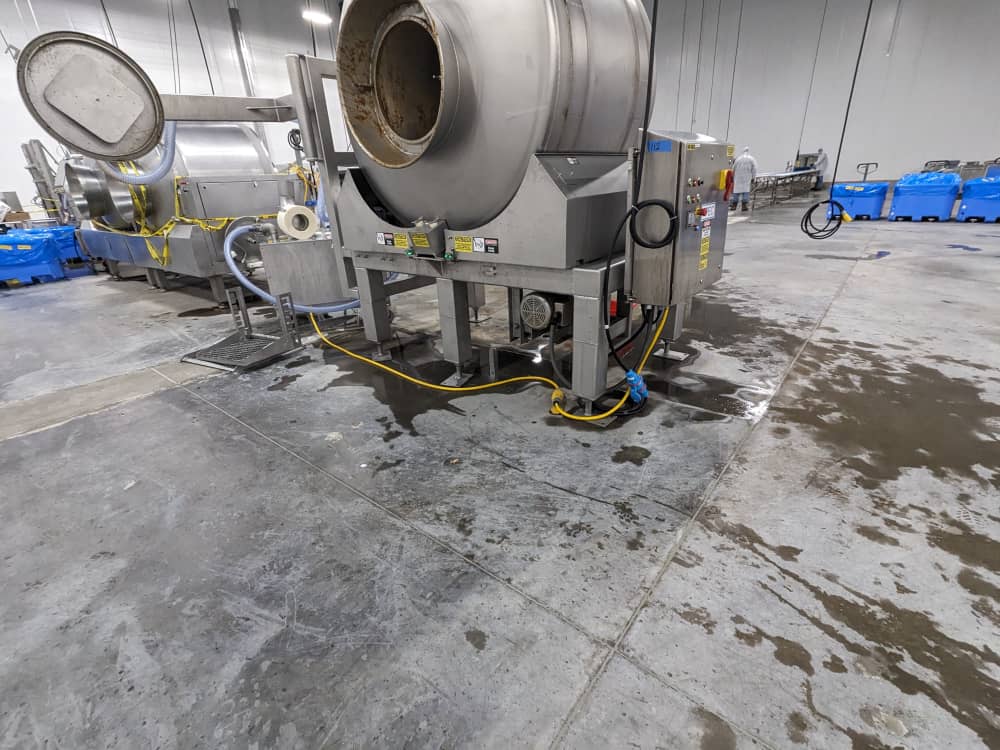
Food Plant Visitor Center Design: Observation Decks and Facility Tour Planning
Food plant visitor centers can create trust, strengthen brand value, support customer education, and make plant operations easier to understand without compromising food safety. In the United States, the best facilities separate public circulation from production, use enclosed observation decks, control sound and odor, establish clear PPE rules, and build a guided story that moves guests from ingredients to finished goods. A successful project is not only an architectural feature; it is also a regulated operational system that must align with FDA, USDA, SQF, BRC, local building codes, insurance requirements, and day-to-day production realities. Manufacturers across the United States are increasingly investing in guided factory experiences for customers, retailers, investors, schools, recruiting groups, and community stakeholders. This is especially relevant in major food and beverage corridors such as Chicago, Dallas-Fort Worth, Los Angeles, Fresno, Omaha, Atlanta, Charlotte, Nashville, Milwaukee, and the Northeast distribution belt linking New Jersey ports with Mid-Atlantic processing and warehousing hubs. Whether the facility handles dairy, protein, beverages, aseptic products, sauces, prepared foods, or co-packing operations, visitor center design must begin with one question: how do you let people see the story without exposing them to the process? The quickest and most practical answer is this: design the visitor center as a separate controlled environment with a dedicated entrance, isolated HVAC strategy, protected glazing at key process points, limited crossover to hygiene zones, and a scripted route that explains each production stage in the right order. In most United States food plants, visitors should not walk directly on the processing floor unless the business case truly requires it and the sanitation, gowning, and biosecurity procedures can support it. For many facilities, an elevated observation deck or enclosed viewing gallery delivers the best balance of safety, compliance, operational continuity, and customer experience. For buying teams, the decision usually comes down to three models: This comparison shows why enclosed viewing solutions dominate in regulated food environments. They reduce sanitation disruption, preserve uptime, and help plants host frequent tours without resetting production conditions after every group. From a market perspective, public-facing plant environments are expanding because U.S. brands are under pressure to show quality, traceability, and modern automation. Visitor centers are now used not just for tourism, but also for B2B sales meetings, distributor onboarding, talent recruitment, community relations, and investor confidence building. The growth trend above reflects rising demand for transparent manufacturing experiences, especially among premium food, beverage, dairy, and co-packing brands that want their facilities to function as both production assets and trust-building platforms. Observation decks and viewing galleries are the core architectural devices used to create a safe factory tour. In the United States, these systems must satisfy structural codes, fire egress requirements, ADA accessibility, sightline design, and food plant hygiene logic all at once. A good viewing gallery is not simply a window in a wall; it is a controlled environment that filters what visitors experience and prevents what operations cannot tolerate. For product types such as dairy beverages, sauces, ready meals, protein processing, craft beverages, and aseptic filling, the ideal gallery location is typically adjacent to the highest-value visual moments: ingredient handling, blending, cooking, filling, labeling, palletizing, and automated warehousing. Each stop should help viewers understand process progression, not just observe random equipment. Key design principles include: For tall process halls, especially in brewing, distillation, beverage batching, and bottling, an observation deck can create a dramatic and educational effect. For high-care food operations such as ready-to-eat protein, cultured dairy, aseptic packaging, and allergen-sensitive products, a sealed viewing gallery is usually superior because it preserves stricter environmental separation. This table highlights the difference between “seeing equipment” and “designing an experience.” The most effective visitor centers convert technical operations into a sequence that non-technical guests can absorb in real time. When selecting local suppliers or design partners, buyers in the United States should look for teams familiar with both industrial construction and food compliance. A conventional museum designer may create a compelling experience but miss sanitation and process realities. A conventional industrial contractor may protect compliance but miss storytelling value. The best outcome comes from combining process engineering, architecture, construction management, and exhibit planning from the start. A factory tour should tell the plant’s story in the same order the plant creates value. In most food and beverage environments, that means starting with raw materials or ingredient sourcing, moving through preparation and transformation, then showing filling or packaging, quality controls, logistics, and finished product use. This sounds simple, but many visitor routes fail because they are planned around spare hallways rather than narrative logic. In the United States market, audiences often include a mix of technical and non-technical visitors: retail buyers from Bentonville, distributors from Chicago, investors from New York, school groups from local districts, and community officials from surrounding municipalities. The route must serve all of them without overwhelming them. A practical storytelling sequence often follows this order: Plants near major transport corridors such as the Port of Los Angeles, Port of Savannah, Houston, the I-80 corridor, or the Midwest rail network often benefit from including logistics storytelling. Visitors increasingly want to understand not only how a product is made, but also how it reaches shelves, foodservice operators, and export channels. The bar chart shows where demand is strongest. Beverage, dairy, and co-packing facilities frequently pursue visitor infrastructure because they often host brand partners, auditors, customers, and strategic stakeholders who benefit from a polished, safe viewing environment. Buying advice: if your plant has multiple product families, do not try to show every process in one tour. Instead, identify three to five visual anchor points that best explain your operation. For example, a sauce facility may focus on batching, thermal processing, filling, and finished pack integrity. A protein plant may focus on controlled handling, portioning, packaging, and cold-chain integrity, while avoiding highly sensitive slaughter or raw exposure zones. Glass viewing ports are one of the most visible details in a food plant visitor center, but they must perform far beyond aesthetics. The glazing system must support hygiene boundaries, impact resistance, cleaning durability, condensation control, and safe visibility. In louder facilities, it should also contribute to acoustic separation. Plants with steam, washdown, refrigeration, or thermal variation need to choose glazing assemblies that can handle both environmental stress and cleaning protocols. Typical United States solutions include insulated laminated safety glass, fire-rated glass where code requires it, anti-fog coatings in high-humidity areas, and sloped sill or frame details that reduce dust and water accumulation. In washdown areas, stainless steel framing and sealed joints are usually preferred over decorative finishes that degrade over time. This comparison matters because poor glazing choices often create constant complaints: fogging, glare, scratching, sound bleed, or cleaning failures that make the gallery feel low quality after only a short period of use. Noise control should be treated as a system, not a single product decision. If guests are viewing depalletizers, fillers, cappers, conveyors, blow molders, grinders, or compressors, the space can become unintelligible without layered acoustic control. Use some combination of acoustic glass, insulated wall assemblies, sound-absorbing ceiling materials, vestibules, directional speakers, and headset-based audio for large tours. In beverage and packaging halls where decibel levels fluctuate sharply, audio guides can dramatically improve the visitor experience without adding loud public address systems. For future 2026 trends, expect more facilities to pair viewing windows with live production data overlays. Instead of seeing only a filler run, visitors may also view sanitized dashboards showing line speed, fill accuracy, downtime trends, water savings, or energy intensity. This is especially effective for brands that want to communicate smart manufacturing and sustainability at the same time. One of the biggest design decisions is where visitors enter and how far that path remains independent from employee and material flows. In a well-planned United States food plant, the public entrance should feel welcoming while remaining operationally detached from receiving docks, forklift traffic, employee locker access, and controlled processing transitions. The safest baseline strategy is a dedicated visitor entrance leading into a reception and orientation zone, then into the gallery route. This can share a building envelope with the main plant, but it should not share the same circulation logic. Separate entries reduce accidental breaches, make check-in easier, and support after-hours meetings even when production access is restricted. Separation should also include air, sanitation, and traffic logic: In urban and suburban industrial parks around places like Cary, Charlotte, Irvine, Dallas, or Minneapolis, manufacturers often retrofit existing plants that were never designed for tours. In those cases, a side-car visitor center addition or repurposed front-office wing is often more practical than trying to carve public circulation through active production support spaces. The trend shows how the industry is moving away from casual floor access and toward separated circulation models. This is driven by stricter quality expectations, audit readiness, insurance pressures, and the need to protect line uptime. When considering case-study logic, many of the best retrofit projects start by mapping all flows on one diagram: ingredients, packaging, waste, employees, maintenance, forklifts, and visitors. The point is not only to avoid contamination risk but also to prevent operational friction. Even one poorly located public door can create repeated security and sanitation issues. Tour safety protocols must be written before the space is built. PPE, conduct rules, capacity, escort ratios, emergency procedures, prohibited items, and photography policy all affect design choices. If the visitor center supports schools, public tours, customers, or overseas delegations, your SOPs must define different access levels. A retailer audit group and a middle-school field trip should not automatically receive the same route or permissions. In most United States plants, common baseline requirements include hair restraints, beard covers where applicable, closed-toe shoes, no jewelry in controlled areas, hand sanitation, sign-in, and escort control. If visitors never leave the enclosed gallery, PPE can often be lighter. If they cross into packaging halls or support spaces, requirements increase quickly. This table shows why many manufacturers choose a gallery-first model. It dramatically reduces PPE complexity, tour prep time, and the risk of introducing visitors into unstable environments. For 2026, policy trends will likely push stronger digital accountability in tours: pre-registered waivers, visitor category scoring, touchless check-in, temporary badge tracing, and tighter photo restrictions in plants producing private-label goods or proprietary formulas. Sustainability will also influence PPE planning, with more plants moving from disposable-only visitor materials to validated reusable systems where feasible and compliant. A visitor center should not stop at the viewing window. It should translate production into commercial meaning. This is where branding and product showcase integration become critical. After visitors see process, they should immediately understand what makes the brand distinct: taste, consistency, safety, speed to market, ingredient integrity, innovation, or scale. For consumer-facing brands, the showcase area can include tasting counters, package evolution walls, sustainability metrics, ingredient maps, merchandising displays, or seasonal launch stations. For B2B and co-manufacturing businesses, the focus may shift to capabilities: line formats, batch flexibility, certifications, thermal processing methods, clean utilities, and packaging options. In the United States, especially in competitive retail and foodservice markets, the visitor center increasingly supports sales. A private-label prospect touring a plant in California, Texas, Wisconsin, or North Carolina wants proof that the operator can scale reliably and protect quality. A well-designed showcase area can bridge that gap between operations and commercial confidence. Effective integration methods include: For manufacturers with broad process portfolios, this area is also the right place to explain capabilities visitors cannot safely see in person. That may include aseptic systems, retort lines, CIP architecture, automation platforms, water treatment, or utility redundancy. The comparison chart makes a common U.S. design conclusion clear: direct floor tours may feel more immersive, but observation galleries usually outperform them on safety protection, scalability, and throughput, which matters for plants that host frequent visitors. Implementation works best when visitor-center planning is integrated into plant engineering from the beginning. If the viewing route is treated as a late architectural add-on, it often creates poor sightlines, expensive structural changes, awkward door sequencing, or code conflicts. A design-build approach helps align process, structure, MEP systems, controls, compliance, schedule, and cost in one execution path. In practice, implementation usually follows six stages: feasibility, concept route planning, compliance review, detailed engineering, construction and integration, then SOP commissioning. For existing plants, laser scanning, utility verification, and production scheduling constraints are also critical before work begins. This framework is especially useful for facilities balancing expansion and public-facing improvements at the same time. It also helps procurement teams compare suppliers fairly by aligning everyone to the same implementation logic rather than only the lowest bid. For companies evaluating partners, strong selection criteria include: proven food or beverage engineering experience, code coordination skill, familiarity with hygiene zoning, ability to sequence work around live production, and enough storytelling fluency to translate equipment into a visitor experience. A partner that can engineer utilities and line integration while coordinating construction often shortens schedule risk substantially. Manufacturers looking for integrated support can review food and beverage project services that connect planning, engineering, construction management, and startup rather than splitting those responsibilities across disconnected firms. Disruptive Process Solutions supports food and beverage manufacturers across the United States and Canada with a practical, profit-driven approach to capital projects. Rather than treating a visitor center as an isolated architectural feature, the company approaches it as part of the operating system of the plant: one that must work with process flow, compliance, utilities, structural realities, production uptime, and the commercial goals of the owner. On the technological side, DPS brings engineering depth across process, mechanical, structural, plumbing, electrical, and controls disciplines. That matters when a visitor center must be coordinated with live processing areas, SCADA visibility, utility routing, CIP awareness, temperature-controlled spaces, or automation storytelling. Facilities handling brewing, distillation, carbonation, aseptic processing, pasteurization, retort, blending, dairy, prepared foods, or protein operations all require different viewing and isolation strategies, and those differences are easier to solve when the engineering team understands the process itself. Companies exploring an integrated capital partner can learn more about the DPS team and approach. On the manufacturing side, DPS also understands how equipment reality affects visitor design. A viewing gallery around tanks, cook systems, CIP skids, fillers, marination equipment, processing vessels, or custom stainless assets must account for maintenance clearances, sanitation access, service platforms, and operator movement. Because DPS also works with its own equipment offerings and broad integration scopes, it can help align display visibility with real production functionality instead of forcing cosmetic solutions that interfere with operations. Additional details on process assets and integrated equipment can be found in the company’s equipment capabilities overview. On the service side, DPS operates through a design-build-manage philosophy intended to reduce gaps between concept and execution. That means capital planning, feasibility support, owner’s representation, project management, general contracting coordination where applicable, installation oversight, and system integration can all be aligned toward one business goal: a facility that works profitably after handover. This is especially valuable for visitor-center projects because they sit at the intersection of operations, compliance, construction, and brand presentation. For examples of applied project thinking across industrial environments, visitors can explore selected project case examples. For U.S. manufacturers, this kind of integrated thinking is increasingly important. A viewing gallery is easy to draw. A viewing gallery that maintains food safety, protects uptime, supports tours, and still makes the brand stronger is a different level of project entirely. 1. Is an observation deck better than direct plant access?In most United States food and beverage facilities, yes. Observation decks and enclosed viewing galleries usually provide the best balance of safety, compliance, operating continuity, and visitor experience. 2. Can visitors ever go onto the processing floor?Yes, but only where the sanitation model, PPE protocol, traffic separation, and operational risk allow it. Many plants restrict floor access to packaging edges or non-critical support spaces rather than open product zones. 3. What industries benefit most from visitor centers?Beverage, dairy, prepared foods, sauces, co-packing, and selected protein operations often gain the most. The value is especially strong where customer confidence, retailer relationships, or community trust matter. 4. What is the biggest design mistake?Treating the tour route like leftover corridor space. The route should follow process storytelling, not building leftovers. Poor route logic leads to weak visitor comprehension and stronger operational friction. 5. How much should branding be integrated?A lot, but it should be grounded in operational truth. The strongest showcase areas connect visible plant systems to actual product performance, quality, safety, and scale claims. 6. What kind of glass should be used?It depends on humidity, acoustics, impact requirements, and code conditions. Laminated safety glass, insulated units, and acoustic laminated glazing are common solutions in U.S. food facilities. 7. Do visitor centers require separate HVAC and entrances?In many cases, yes. Separate entrances are strongly recommended, and HVAC separation is often necessary to maintain comfort, pressure logic, odor control, and hygiene boundaries. 8. How do tours affect audits and food safety programs?If planned correctly, they should not disrupt them. The facility should document visitor SOPs, access levels, PPE rules, sanitation controls, and photography policy as part of standard operating governance. 9. Are retrofits feasible in older U.S. plants?Yes, especially in front-office wings, side additions, mezzanine routes, and sealed corridors. The key is to map all process, people, and material flows before committing to design. 10. What trends will matter most in 2026?More digital visitor check-in, stronger access control, sustainability messaging tied to measurable plant data, higher acoustic expectations, and more use of real-time dashboards to explain production performance. For food and beverage manufacturers in the United States, the smartest visitor center is one that respects the plant first and impresses the guest second. When those two goals are engineered together, observation decks, galleries, and guided routes become powerful business assets rather than operational liabilities. -
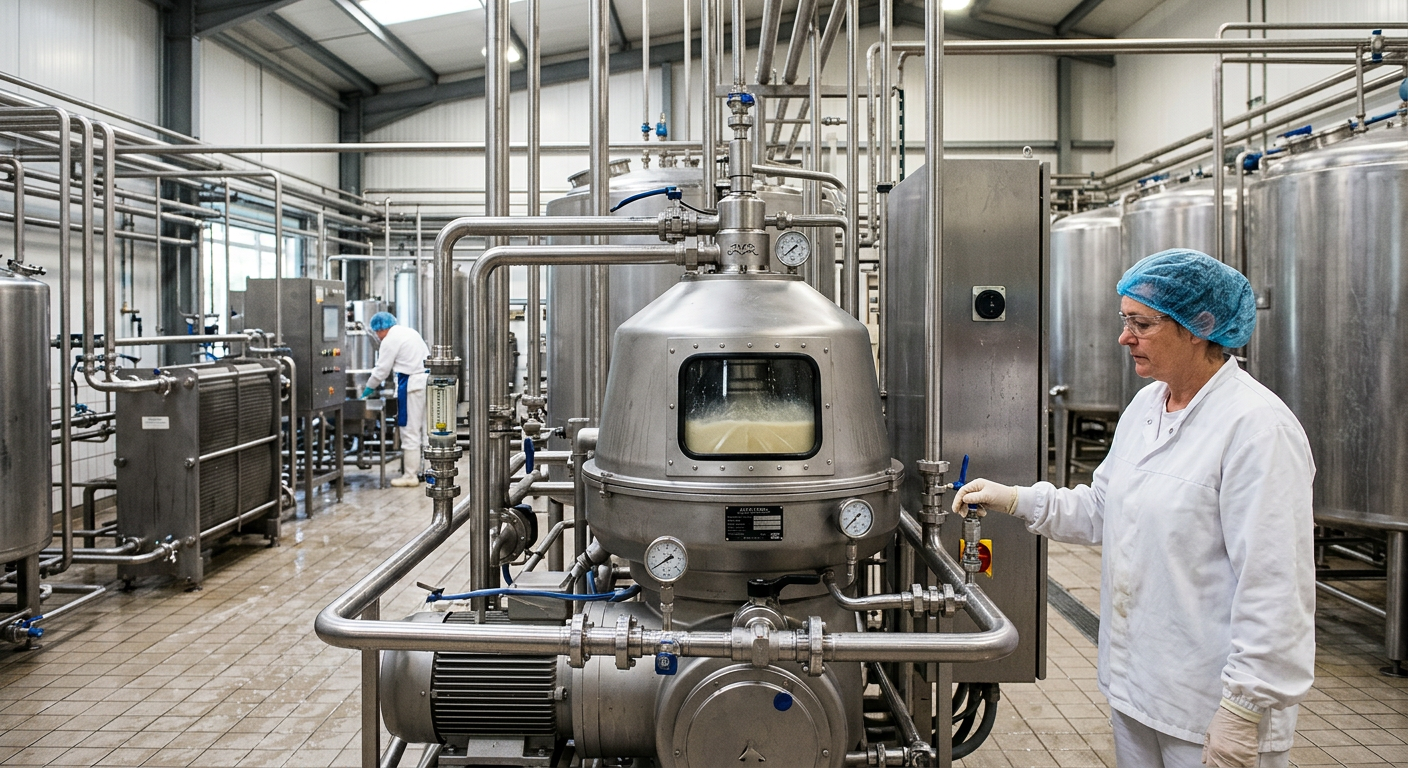
Juice Pasteurization Systems
Juice processors in the United States are under pressure to deliver microbiological safety, preserve flavor, reduce energy use, and stay compliant with FDA Juice HACCP rules. The right pasteurization system depends on product type, viscosity, pulp load, shelf-life target, package format, and plant economics. For a clear premium apple juice in Washington, UV may be worth evaluating. For orange juice in Florida with moderate pulp, HTST with a tubular or hybrid heat exchanger is often the practical choice. For shelf-stable ambient distribution through major U.S. retail networks, UHT paired with aseptic filling can create the strongest logistics advantage. The correct decision is rarely about one machine alone; it is about the full processing line, validation strategy, utilities, cleanability, operator workflow, and long-term profitability. If you need a direct answer, most refrigerated juice operations in the United States choose HTST or flash-style continuous pasteurization because it balances food safety, flavor retention, throughput, and cost. UHT is usually selected when brands want ambient shelf stability, reduced cold-chain expense, or access to long-distance distribution from hubs such as Chicago, Dallas, Atlanta, Los Angeles, and the Port of Savannah. UV pasteurization is best suited to very clear, low-turbidity juices where premium positioning and minimal heat impact matter. Ohmic heating remains an emerging option for specialized formulations and innovation-driven processors looking beyond conventional heat transfer. For buyers, five questions narrow the field quickly: This table shows why equipment cannot be selected in isolation. The best pasteurizer is the one that fits the full operating model, from raw juice receiving through filler sanitation and distribution. Across the U.S. market, demand is growing for systems that reduce thermal damage while lowering total cost of ownership. Processors in citrus-heavy Florida, apple-producing Washington, grape and berry regions in California, and multi-SKU co-packing corridors in Texas and the Southeast increasingly look for flexible lines that can switch between NFC juices, concentrates, functional beverages, and juice blends. HTST, UHT, and flash pasteurization are often discussed together, but they serve different commercial goals. In juice applications, “flash” is commonly used to describe rapid continuous heating for a short residence time; in practice, many flash systems are implemented as HTST-style processes. UHT pushes the process to a much higher lethality level and is typically linked to aseptic surge, sterile piping, and aseptic filling. The table highlights that the right choice is tied to the route to market. A chilled juice brand selling into grocery chains around Raleigh, Charlotte, Nashville, or the Mid-Atlantic may achieve the best economics with HTST. A brand shipping ambient product from a Texas facility to both U.S. coasts may justify UHT because refrigerated freight costs and retail handling constraints are lower. From a buying perspective, HTST is usually the best starting point when processors want predictable validation, easier integration with conventional fillers, and lower project complexity. UHT makes sense when shelf stability is central to the business model, not simply because it sounds more advanced. Processors should also examine formulation sensitivity; some high-aroma juices may suffer more noticeable sensory change under ultra-high temperature conditions, even with very short hold times. By 2026, expect U.S. buyers to place more emphasis on recipe flexibility. Producers are increasingly launching juice-plus products with vitamins, botanicals, adaptogens, and dairy-free functional ingredients. That trend favors automation-rich systems with precise temperature control, in-line Brix measurement, recipe management, and validated diversion logic. Heat exchanger selection is one of the most important design choices in a juice pasteurization system. Plate heat exchangers usually offer excellent thermal efficiency and compact footprint for low-viscosity, low-pulp products. Tubular pasteurizers are more forgiving for juices with fibers, pulp, puree inclusion, or higher fouling risk. In many U.S. plants, the wrong exchanger choice creates more downtime than the wrong pasteurization temperature. This comparison shows why viscosity matters far beyond pumping power. It affects residence time distribution, fouling rate, pressure drop, cleanability, and final flavor consistency. Plate systems are attractive for many juice processors because they are energy-efficient and easier to package in smaller mechanical rooms. However, narrow channels can become a liability with pulp, fiber, seeds, or unstable particulate load. Tubular systems typically cost more upfront and may have slightly lower thermal efficiency, but they often win on uptime in demanding applications. For a California processor running citrus blends one week and vegetable-fruit blends the next, a tubular or hybrid design can avoid costly production interruptions. In facilities near agricultural hubs such as Fresno, Bakersfield, Yakima, or central Florida, seasonal raw material variation is real. A system should be designed for the worst reasonable product condition, not just the ideal pilot sample. That means considering peak pulp, Brix swings, enzyme treatment variability, and cold storage behavior. UV pasteurization is most compelling when processors want a premium “minimally heated” position for clear juices. It is not a universal replacement for thermal systems. UV performance depends on optical properties such as absorbance, transmittance, turbidity, and path length. That means clarified apple, white grape, or some filtered fruit juices are the usual candidates. Cloudy orange juice is generally not. In the U.S. premium market, UV has gained attention among brands selling through natural retail, specialty food channels, farm-market networks, and direct-to-consumer refrigerated distribution. The appeal is straightforward: lower thermal impact can help maintain fresh-like notes, lighter color change, and a cleaner premium story. But the validation burden must be taken seriously. The process has to achieve the required pathogen reduction while accounting for product variability over time. The main lesson from the table is that UV is a product-specific technology. It should be evaluated with analytical data, not marketing assumptions. For processors near New York, Boston, Seattle, or San Francisco where premium refrigerated beverages can command higher price points, UV may offer differentiation. Still, many plants adopt it only for certain SKUs while keeping HTST as the backbone technology. That hybrid strategy can be smart: it protects production flexibility and allows premium experimentation without committing the entire portfolio to a narrower process window. Ohmic heating is often described as a non-thermal or low-impact alternative, but in practice it still uses heat; the difference is how the energy is generated within the product. Electrical resistance produces rapid internal heating, which can improve uniformity and reduce some limitations associated with surface heat transfer. This makes ohmic heating especially interesting for products with particulates or formulations that are difficult to process in traditional exchangers. In juice applications, ohmic systems remain emerging rather than mainstream in the United States. Capital cost, process familiarity, validation pathways, and workforce readiness all influence adoption. Yet the technology deserves attention for processors developing novel juice blends, high-value functional beverages, or particulate-containing formulations where conventional heating causes quality loss or fouling headaches. By 2026, adoption may accelerate if three conditions continue to improve: better commercial-scale supplier support, clearer regulatory confidence based on validated performance, and stronger sustainability pressure to reduce wasted thermal energy. Companies serving innovation-heavy beverage portfolios may begin pilot projects first, especially in regions with active food-tech ecosystems such as California, North Carolina, and Texas. For buyers, the right question is not “Is ohmic better?” but “Where does ohmic solve a problem that conventional thermal equipment cannot solve economically?” If the answer is nowhere, stay with proven thermal systems. If the answer is product integrity, particulate handling, or future portfolio flexibility, the technology may deserve a pilot-scale study. The holding tube is where many pasteurization systems either earn or lose their credibility. Good temperature control alone is not enough; processors need verified residence time under defined flow conditions. The design must consider flow rate, tube diameter, pressure drop, product rheology, and the location of critical instruments. A system that looks adequate on a P&ID can fail in practice if the time-temperature relationship is not properly validated. In U.S. juice plants, holding tube design is especially important when processors run multiple products with different viscosities or when they scale from pilot data to commercial throughput. Flow regime affects actual hold performance. Instrumentation placement, legal recording requirements, diversion logic, and fail-safe design are all part of the equation. During audits, documented evidence matters more than assumptions. This table shows that validation is both mechanical and procedural. A compliant system needs engineered hardware and disciplined operating practices. For processors seeking scalability, this is where experienced engineering support becomes valuable. Disruptive Process Solutions brings process, mechanical, electrical, structural, plumbing, and controls capability to system design, which matters when holding tube performance must align with pump curves, valve sequencing, PLC programming, and SCADA records. That technological capability is especially useful in retrofits where new pasteurization equipment must fit into existing utility and automation architecture. Energy recovery is one of the fastest ways to improve the economics of a juice pasteurization system. Regenerative sections in plate or tubular exchangers can transfer heat from outgoing pasteurized product to incoming cold feed, reducing steam or hot-water demand. In an era of volatile utility pricing and sustainability reporting, recovery performance is no longer a secondary feature; it is a primary buying criterion. Plants in high-throughput regions such as California, Texas, and the Southeast often process enough volume that a few percentage points of recovery translate into major annual savings. Facilities near ports like Los Angeles/Long Beach, Houston, or Newark handling imported concentrates also benefit because concentrated run schedules are often energy-intensive and highly repetitive, making savings easier to capture. Energy performance should be evaluated at the system level. A highly efficient pasteurizer can still underperform if the utility room, piping insulation, and production schedule are poorly managed. This is also where the manufacturing side of a partner matters. DPS designs and supplies process equipment including custom CIP systems and tanks, which can simplify matching pasteurization skids to upstream balance tanks, downstream surge vessels, and utility support. For processors expanding capacity, integrated equipment strategy often prevents expensive field modifications later. Clean-in-place design is not a supporting detail; it is central to uptime, sanitation, and product quality. Juice systems are vulnerable to sugar films, pectin fouling, pulp accumulation, flavor carryover, and microbiological risk in dead legs or poorly drained zones. The most profitable system is usually the one that can be cleaned predictably with minimal labor and lost production time. CIP integration should cover tank design, spray coverage, return conductivity, supply temperature, velocity, chemical concentration, circuit segmentation, and verification records. Plate systems may need gasket monitoring and regular opening intervals; tubular systems may require stronger focus on turbulent flow and deposit removal. For plants running allergen-adjacent functional ingredients, validation becomes even more important. The explanation is simple: maintenance scheduling is operational risk management. It is cheaper to monitor loss of heat transfer or valve drift early than to deal with a failed run, recall exposure, or unplanned weekend shutdown. Processors often underestimate the value of integrated services here. Through its design-build-manage model, DPS supports engineering, installation, integration, project management, and owner-focused execution across North America. That service capability helps plants coordinate equipment, local trades, automation, and commissioning under one accountable structure rather than splitting responsibility among disconnected vendors. Any juice pasteurization project in the United States must be built around regulatory compliance, not added to it later. FDA Juice HACCP requirements, sanitation controls, validation records, and performance expectations should shape the design from the beginning. The well-known benchmark for juice safety is the required pathogen reduction performance, but actual compliance also depends on monitoring, corrective action, verification, recordkeeping, and a sound hazard analysis. Processors should treat compliance as a business asset. A line designed correctly from the start moves faster through commissioning, supports smoother audits, and reduces operational ambiguity. This is especially important for co-packers, private-label manufacturers, and multi-state brands supplying large retail chains that expect rigorous documentation. Three recurring compliance issues deserve attention. First, processors must validate the process for the actual product, not an assumed equivalent. Second, any critical control point needs reliable instrumentation and records. Third, filler sanitation and downstream handling must match the microbiological intent of the pasteurization step. A strong thermal process can be undone by weak post-process hygiene. Across the market, buyers should also plan for policy and customer expectations through 2026. Sustainability disclosures, water-use scrutiny, traceability digitization, and stronger supplier verification are likely to affect capital planning. Plants that invest in SCADA visibility, recipe security, energy tracking, and robust CIP verification will be better positioned for both regulators and retail customers. For manufacturers that need a partner beyond equipment supply, learn about the DPS team and its project-first approach. For plants comparing scopes, the company’s engineering and project services reflect the kind of integrated support often needed in regulated juice and beverage work. Processors evaluating skids, tanks, and CIP assets can also review process equipment capabilities in relation to full-line integration. For buyers wanting real execution examples, selected project case studies are useful when benchmarking planning expectations. In practical terms, the best supplier in the United States is rarely the one with the lowest quoted skid price. It is the one that can align sanitary design, utilities, controls, startup, validation support, service response, and long-term plant economics. That is why local support matters. A processor in North Carolina may need rapid controls troubleshooting; a California site may need field coordination around compressed air and glycol tie-ins; a Texas co-packer may need expansion planning before phase two is fully funded. Supplier reach, technical depth, and honesty during scope definition are often more important than brochure claims. From a market perspective, U.S. juice processing continues to split into three segments: high-volume commodity production, premium differentiated refrigerated products, and flexible co-packing for emerging brands. Each segment values pasteurization differently. Commodity players emphasize throughput and energy efficiency. Premium brands prioritize sensory retention and clean-label positioning. Co-packers need versatility, quick changeover, and dependable CIP. That is why a one-size-fits-all system rarely performs well across a mixed portfolio. A useful buying framework is to score options across ten categories: food safety confidence, sensory impact, shelf-life fit, throughput, utility demand, CIP time, maintenance complexity, automation integration, expansion flexibility, and total delivered cost. Many processors discover that the “middle” option wins because it causes fewer hidden downstream expenses. For example, a modestly higher-cost tubular system may outperform a cheaper plate system once downtime, fouling, and SKU variability are considered. Case-based thinking helps. A refrigerated apple juice processor in Washington may choose a plate HTST line with strong regeneration and in-line quality monitoring. A Florida citrus producer with pulp-heavy SKUs may select a tubular flash pasteurizer with robust CIP and surge handling. A Texas-based co-packer serving national club-store accounts may justify UHT plus aseptic capability because ambient logistics lower cost per case. A premium clear juice brand near the Northeast corridor may test UV on select products while maintaining HTST for mainstream production. The point is not to chase trends but to match processing technology to commercial reality. What is the best pasteurization system for juice?There is no single best system. HTST is the most common choice for refrigerated juice in the United States, UHT is best for ambient shelf-stable distribution, and UV fits selected clear premium juices. When should I choose a plate heat exchanger?Choose a plate system for low-viscosity, low-pulp juices when high thermal efficiency, compact footprint, and lower utility use are priorities. When is a tubular pasteurizer better?Tubular designs are usually better for pulpy, viscous, or fouling-prone juices because they handle solids more reliably and often improve uptime. Is UV pasteurization accepted for juice in the United States?It can be used when properly validated for the product and process, but it is highly dependent on juice clarity and must support the required food safety objectives under Juice HACCP. Does UHT always mean better shelf life?For ambient storage, yes, UHT combined with aseptic handling can provide much longer shelf life. But it also requires higher capital investment and tighter sterile system discipline. How important is the holding tube?It is critical. The holding tube and associated flow-temperature controls determine whether the system truly delivers the validated residence time needed for safe processing. Can energy recovery really change project economics?Absolutely. On continuous juice lines, regenerative heat recovery can significantly lower steam or hot-water demand and improve total operating cost. What should be included in a CIP-ready pasteurization design?Validated cleaning circuits, appropriate velocities, temperature control, conductivity monitoring, sanitary drainability, and recordable cleaning recipes should all be included. How do I compare equipment suppliers?Compare more than price. Review process fit, validation support, controls depth, service reach, parts access, commissioning capability, and ability to integrate the full line. Why do many processors work with an engineering integrator instead of only buying a skid?Because the pasteurizer is only one part of the project. Utilities, tanks, controls, installation, validation planning, and future expansion often determine whether the investment is truly profitable. For U.S. juice manufacturers, the best path is a disciplined one: define product needs clearly, validate process assumptions early, and choose a system that supports both compliance and business growth. Whether the answer is HTST, tubular flash, UHT, UV, or a future-facing ohmic application, success depends on integrating technology, manufacturing practicality, and project execution from day one. -
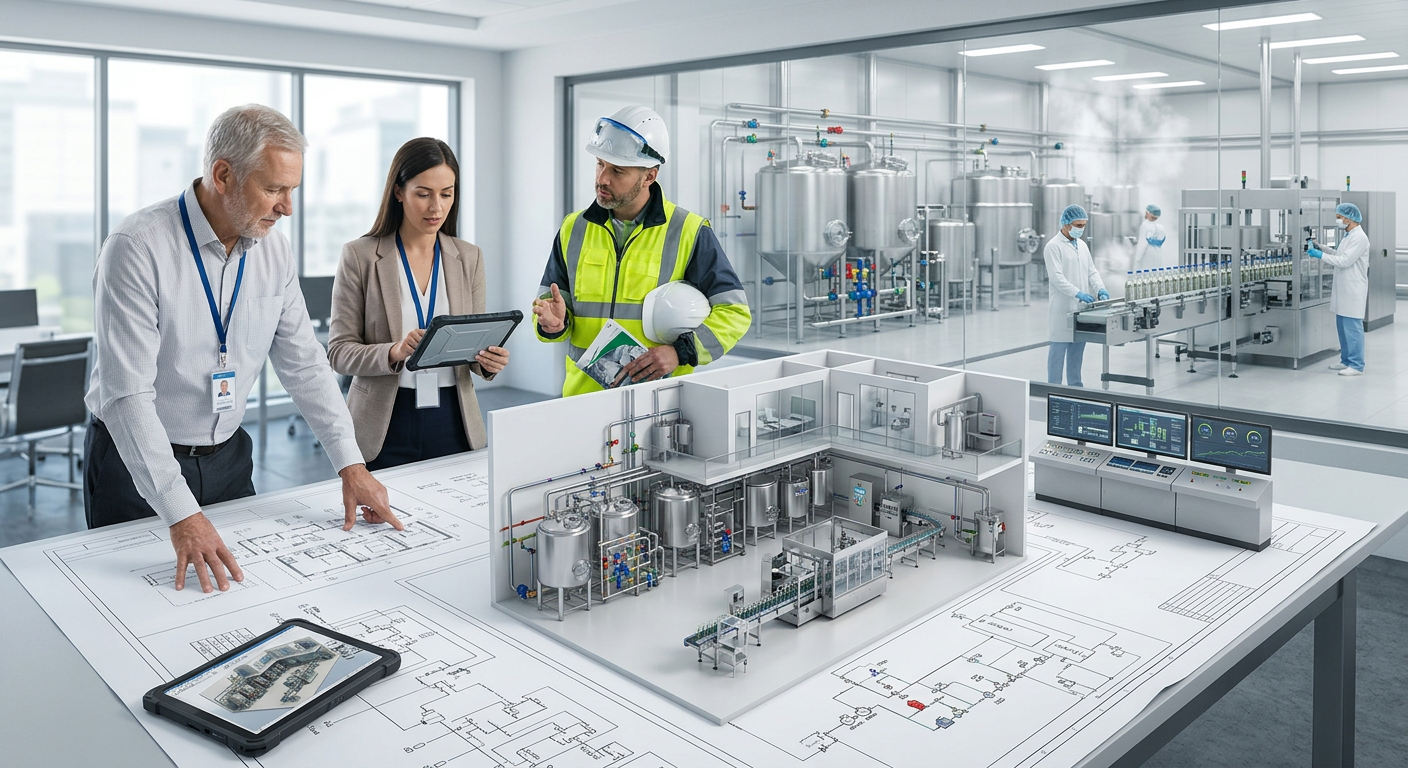
Food Facility Lab Design: Quality Control and R&D Laboratory Planning
In U.S. food and beverage plants, laboratory design is not just an architectural exercise. It directly affects product release speed, audit performance, shelf life confidence, sanitation control, worker safety, and the ability to launch new products without disrupting daily production. Whether a processor is expanding a dairy plant in Wisconsin, building a protein operation in Arkansas, fitting out an R&D pilot lab near Chicago, or supporting beverage growth around Los Angeles and the ports of Long Beach, the lab must be planned around workflow, contamination control, utilities, regulatory expectations, and long-term operating cost. Well-designed laboratories in food facilities usually separate high-frequency quality control tasks from more flexible research and development work. That separation reduces cross traffic, protects chain of custody, supports microbiological containment, and helps managers scale testing volumes as production grows. In the United States market, this is increasingly important for co-packers, aseptic processors, protein plants, ingredient manufacturers, breweries, distilleries, prepared foods operations, and multi-site manufacturers that need consistent methods across regions. The fastest path to a successful food facility lab design is to begin with function, not finishes. A QC lab should be optimized for repeatable, rapid, documented testing tied to production release. An R&D lab should be optimized for flexibility, pilot trials, formulation changes, and product iteration. Sample receiving should have a clean chain-of-custody path, microbiology spaces should be physically controlled, benches and hoods should be placed around utility demand and analyst motion, and HVAC must support proper pressure relationships and air cleanliness. Materials need to withstand acids, caustics, solvents, sanitizers, heat, and wet cleaning. Finally, the layout should support FDA, USDA, and ISO 17025 expectations without creating unnecessary operating burden. For U.S. food manufacturers, the best designs also reflect market realities: labor constraints, audit intensity, sustainability goals, digital traceability, and expansion potential through 2026 and beyond. Plants serving retail, foodservice, private label, and export channels need labs that can keep up with both compliance and commercialization. The table above summarizes the design priorities that create the most operational value. In practice, these decisions influence how quickly a lab can turn samples, how comfortably technicians can work, and how reliably the facility can pass both customer and regulatory scrutiny. A QC lab in a food plant is a production support environment. It exists to verify incoming ingredients, in-process conditions, packaging integrity, finished product specifications, environmental programs, and hold-and-release decisions. That means the room sequence, storage, and instrumentation should be optimized for high repetition, limited variability, and documented method control. Think pH, Brix, moisture, titration, viscosity, salt, ATP verification support, incubator checks, water testing, and packaging evaluations. By contrast, an R&D lab supports product development, scale-up, cost optimization, line trials, alternative ingredients, process modeling, and packaging innovation. It often requires more open work areas, pilot utilities, small batch vessels, flexible drains, additional storage for trial components, and room to stage failures, prototypes, and sensory review. In markets such as California, Texas, and the Northeast corridor, companies launching functional beverages, plant-based foods, or premium prepared meals often need R&D spaces that connect directly to pilot processing rooms. The most common design mistake is trying to make one room do both jobs. That usually leads to scheduling conflict, analyst frustration, and compliance weaknesses. A better model is to establish a dedicated QC core with controlled methods and a separate innovation zone where product developers can change process conditions without interrupting release testing. When planning new or renovated sites, manufacturers should also align the lab with likely product types. A beverage operation may prioritize dissolved oxygen, carbonation, Brix, microbiology, flavor stability, and package seam or closure verification. A protein processor may need stronger environmental monitoring support, USDA-oriented sample management, allergen segregation controls, and more robust sanitation interface planning. Dairy and aseptic sites often require a higher level of microbiological discipline and tighter environmental controls. From a buying perspective, companies should not select lab layouts solely from generic architectural templates. The right fit depends on throughput, staffing model, SKU complexity, hold times, and expected growth. A plant that starts at 20 million cases per year but is designed to scale to 80 million will need much more intentional laboratory planning than a static regional processor. This market growth curve reflects a realistic pattern seen across the United States: more automation, more documentation, more shelf-life and food safety scrutiny, and more investment in line-side quality verification as plants modernize. Sample intake is the control point where production reality enters the lab system. If this area is poorly designed, every downstream result becomes less trustworthy. In food plants, sample receiving should include controlled drop-off, barcode or digital logging, labeling supplies, quarantine staging, temperature-sensitive holding, retained sample storage, handwash access, and easy separation between raw and ready-to-eat material where applicable. A strong chain-of-custody flow usually follows this sequence: sample collection in production, secure transfer to receiving, accessioning and digital registration, pre-analysis storage, analyst assignment, testing, result review, retention or disposal, and records archiving. The layout should physically support this sequence instead of forcing staff to backtrack around instruments and desks. In high-throughput facilities near logistics hubs such as Atlanta, Dallas-Fort Worth, Kansas City, and the Inland Empire, lab sample traffic can spike during shift changes, receiving windows, or release deadlines. That makes staging and identification discipline essential. If there is USDA inspection involvement, or if customer specifications are especially tight, retained sample integrity becomes even more important. The table shows why sample flow design is more than convenience. Each stage serves an audit, release, or investigation purpose. For processors with allergen segregation programs or multiple production buildings, separate receiving windows or timed intake schedules may be needed to prevent confusion. By 2026, chain-of-custody systems in U.S. food plants will continue shifting toward direct integration between laboratory information management systems, ERP platforms, and line-side data collection. That trend supports faster recalls, better trend analysis, and lower manual transcription risk. Microbiology spaces in food facilities require more discipline than general chemistry or physical testing zones. Even when the work is not performed under a clinical biosafety model, the practical objective is clear: protect the product, protect the test, and protect the employee. Food microbiology design should control room access, hand hygiene, material movement, waste flow, incubation management, and aerosol-generating activity. Most food plant micro labs in the United States benefit from a suite approach rather than a single open room. That may include an entry gowning or handwash area, media prep, sample prep, incubation, read zone, and decontamination/waste support. If PCR methods are used, pre- and post-amplification segregation becomes critical. If the site handles ready-to-eat meats, dairy, high-acid beverages, or aseptic products, the micro design should be even more deliberate. Containment strategy should be calibrated to actual methods and organisms, but a general principle remains: the dirtiest processes should not cross paths with clean preparation steps. Pressure relationships, pass-throughs, dedicated tools, and clear SOP-driven material flow are more effective than simply adding more square footage. This matrix is useful during early planning because it ties activities to pressure and contamination logic. Not every site needs every room, but almost every site benefits from thinking in terms of directional flow. In poultry, beef, pork, seafood, and ready-to-eat manufacturing, environmental monitoring support should also be considered. Swab handling, incubator location, and dirty-to-clean movement can make or break the effectiveness of that program. Protein, dairy, and aseptic sectors tend to require the most rigorous microbiological design due to product risk, shelf-life sensitivity, and regulatory or customer verification demands. Bench planning should begin with the instruments, not the furniture catalog. Every analyzer has utility, heat rejection, service clearance, vibration sensitivity, and data requirements. Balances should be isolated from traffic and vibration. HPLC, GC, spectroscopic systems, moisture analyzers, titrators, and viscometers should be grouped by workflow and shared utility demand. Wet chemistry benches need sinks, splash-tolerant surfaces, and nearby waste handling. Dry analytical zones need clean power, stable conditions, and enough rear clearance for maintenance. Fume hoods are often overused in concept design and underused in operation. A hood should be selected only where chemical hazard, vapor generation, or method requirements justify it. Oversizing hoods increases HVAC load and operating cost. Undersizing creates safety and compliance problems. In food labs, common hood uses include acid digestion, solvent handling, cleaning of residues, and certain sample prep tasks. Some applications are better served by snorkels, filtered enclosures, or localized extraction instead of a full conventional hood. Placement matters just as much as selection. A hood should not sit in a high-traffic doorway path where air turbulence affects face velocity. Instruments sensitive to drafts should not be next to hoods or supply diffusers. Refrigerators and freezers should not block egress or maintenance access. Compressed gases, if used, need secure storage and code-compliant distribution planning. Processors evaluating renovation options should ask vendors for a utility heat map early. This is especially important in older plants from the Midwest or Northeast where existing electrical panels, drainage slopes, and ceiling service routes may constrain equipment placement more than the room size itself. HVAC is one of the most misunderstood parts of food laboratory design. In practice, it determines room stability, comfort, contamination control, and often instrument performance. A good laboratory air strategy aligns with room function. Micro prep or waste zones may need negative pressure. Clean review or media prep spaces may need positive pressure. General chemistry may only need stable neutral conditions with adequate exhaust replacement and temperature control. HEPA filtration is not required everywhere, but it is valuable where cleanliness targets, micro reliability, or air-sensitive processes justify it. The decision should be made room by room. Overdesigning filtration across the whole lab can waste capital and increase fan energy. Underdesigning can compromise testing integrity. U.S. operators focused on sustainability are increasingly evaluating variable air volume strategies, occupancy setbacks, and heat recovery where code and process conditions permit. Temperature and humidity control are also business issues. If analysts are uncomfortable, productivity drops. If rooms swing too much, balances drift, standards degrade, and some instruments perform less consistently. In coastal markets like Florida or the Gulf region, latent load control deserves extra attention. In dry interior climates, static and evaporation can affect some analytical processes. The area trend above reflects a broader shift happening through 2026: more digital sample logging, more environmental monitoring analytics, more remote equipment diagnostics, and tighter integration between plant controls and laboratory decisions. Surface selection must match the cleaning chemistry and abuse profile of the lab. A food facility laboratory may see acids, caustics, alcohols, quats, peroxide, chlorine-based sanitizers, heat, moisture, rolling carts, and repeated wipe-downs. Generic office-grade finishes fail quickly in this environment. Once a surface cracks, swells, or delaminates, it can create contamination niches and recurring maintenance cost. Countertops are often selected from epoxy resin, phenolic resin, or stainless steel depending on the work. Floors may use urethane cement or high-performance resin systems where wet cleaning occurs. Wall systems should be smooth, cleanable, and impact resistant. Casework should tolerate chemicals and moisture, especially near sinks and dishwashing areas. The right selection depends on the actual application. For example, a beverage QC room may do well with phenolic tops and seamless flooring, while a microbiology prep area or aggressive chemistry zone may justify epoxy resin and more robust coved transitions. In protein plants with frequent sanitation exposure, moisture tolerance becomes as important as chemical compatibility. Sustainability is also shaping finish selection. Through 2026, more U.S. owners are asking about low-VOC materials, longer lifecycle products, and finishes that reduce replacement frequency without compromising hygienic performance. Regulatory compliance should be designed in from the beginning rather than added as paperwork after the room is built. FDA-regulated food and beverage facilities need laboratories that support traceability, method control, sanitary conditions, accurate records, and reliable product disposition. USDA-regulated meat and poultry plants may have additional workflow, sample handling, and inspection-related considerations. Facilities pursuing ISO 17025 alignment or accreditation need even greater discipline around equipment calibration, method validation, competence, records, and environment control. The design does not need to be extravagant to be compliant. It needs to be logical, documented, and maintainable. A compact lab can outperform a larger one if zoning, utility planning, storage, and chain of custody are correctly structured. The best layouts make it easier to do the right thing every day. Companies building or upgrading labs should also think about local code and authority conditions. Fire protection, hazardous material limits, plumbing interceptors, emergency showers, ventilation rates, and electrical classifications can vary by jurisdiction. What works in North Carolina may need adjustment in California, Illinois, or Texas. As policy and customer expectations evolve through 2026, expect stronger emphasis on digital records, environmental data trending, risk-based preventive controls, and sustainability reporting. Labs that are designed around efficient data flow will adapt more easily. This comparison highlights why many U.S. manufacturers prefer integrated planning on capital projects. Lab design touches process, utilities, architecture, controls, sanitation, commissioning, and compliance, so fragmented delivery often creates gaps at the interfaces. For manufacturers looking at laboratory planning as part of a broader plant investment, Disruptive Process Solutions offers value because the team approaches projects from the perspective of food and beverage operations, not just construction. The company serves clients across all 50 U.S. states and Canada, with strong relevance for processors operating in growth corridors such as the Carolinas, Texas, California, the Midwest, and major logistics regions tied to export and domestic distribution. From a technological capability standpoint, DPS works across structural, mechanical, plumbing, electrical, process, and controls engineering. That matters for laboratories because successful lab environments depend on utility coordination, pressure strategy, automation integration, and compatibility with plant-wide systems. The team’s experience with PLC programming, SCADA, batch controls, utility infrastructure, aseptic systems, CIP, water treatment, pasteurization, retort, fermentation, refrigeration, and HVAC makes it easier to design labs that actually fit how the facility runs. Manufacturers can learn more about these broader capabilities through the company’s food and beverage engineering services. From a manufacturing capability standpoint, DPS understands the production realities behind the laboratory. The company supports beverage operations such as brewing, spirits, wine, kombucha, soft drinks, juice, dairy-based beverages, ready-to-drink products, and aseptic processing, while also serving food manufacturers in protein, prepared foods, sauces, dairy, plant-based processing, and shelf-stable applications. That practical range helps when defining what the lab needs to test, how quickly results are needed, and how the space should connect to production, warehousing, sanitation, and pilot work. Its in-house equipment expertise, including tanks, CIP systems, cooking vessels, and other custom process solutions, can also support integrated planning around pilot and support areas; additional details are available in the company’s process equipment portfolio. From a service capability standpoint, DPS operates through a Design Build Manage model that combines engineering, capital planning, general contracting coordination, installation, and execution oversight. For owners, that can reduce handoff risk between concept, design, procurement, and field implementation. It also aligns well with laboratory projects that are embedded inside larger expansions, relocations, or utility upgrades. Companies that want background on the organization can visit the DPS company overview, and those looking for examples of project delivery can review selected food and beverage project case studies. What often differentiates DPS in the United States market is the business-first approach. Instead of pushing unnecessary scope, the team focuses on profitable project outcomes, honest planning, and practical execution. For laboratory work, that means aligning the space with throughput, regulatory risk, utility constraints, and future commercialization goals instead of simply maximizing square footage. What is the biggest difference between a QC lab and an R&D lab in a food plant?A QC lab is built for standardized, repeatable testing tied to daily production release. An R&D lab is built for flexible experimentation, pilot batches, formulation changes, and process learning. Should microbiology be in the same room as chemistry testing?Usually no. Even in smaller plants, microbiology work benefits from physical separation or at least a tightly controlled suite arrangement to reduce contamination risk and protect test integrity. Do all food labs need HEPA filtration?No. HEPA should be applied based on room function, cleanliness goals, and risk. Many spaces only need well-controlled ventilation and pressure relationships rather than full HEPA treatment. How much space should sample receiving get?Enough to support secure drop-off, barcode logging, temporary holding, hand hygiene, and sorting without crowding analysts. Throughput, product mix, and shift timing determine the actual footprint. What surface material is best for counters?Epoxy resin is excellent for harsh chemistry and wet use, phenolic is strong for general analytical work, and stainless steel performs well where cleanability and moisture resistance are priorities. How can a lab support FDA, USDA, and ISO 17025 expectations at the same time?By designing for traceability, method control, calibration discipline, cleanable zoning, controlled records, and reliable environmental conditions from the start. What are the main U.S. trends through 2026?More digital traceability, stronger sustainability expectations, more automation, higher emphasis on environmental data trending, and lab layouts that scale with co-packing and multi-SKU production growth. When should lab planning begin in a plant expansion?At the earliest concept stage. Lab requirements affect utilities, HVAC, architecture, staffing, and compliance, so late-stage planning usually costs more and delivers less. In summary, food facility lab design in the United States works best when the owner treats the laboratory as a production-critical system. Clear distinction between QC and R&D functions, disciplined sample flow, controlled microbiology, practical bench and hood placement, room-specific HVAC strategy, durable materials, and compliance-ready documentation are the foundations. When these elements are aligned with market growth, product mix, and future operational goals, the lab becomes a profit-protecting asset rather than an afterthought. -
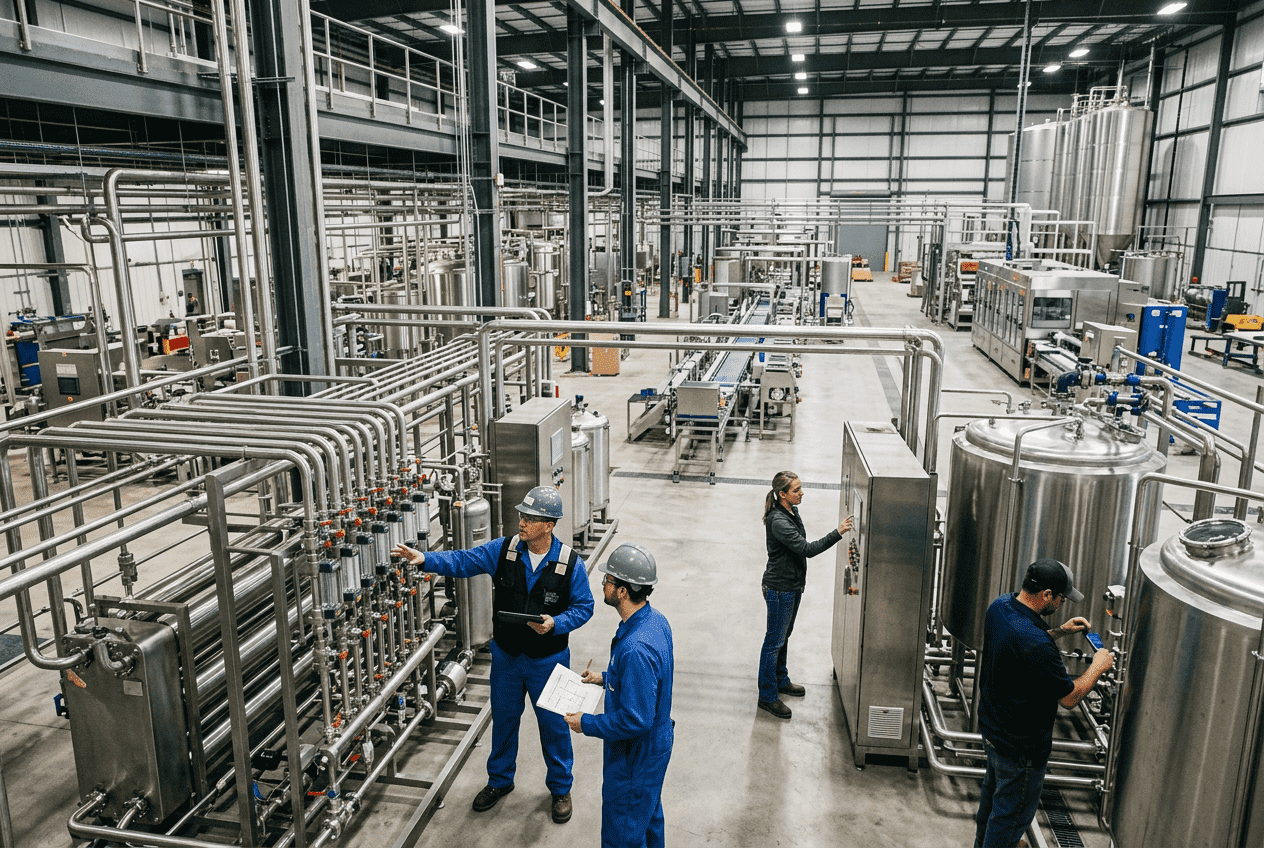
Food Facility Locker Room Design: Sanitation and Personnel Flow Best Practices
In food and beverage plants, locker rooms are not side spaces. They are frontline sanitation controls that shape how people enter production, change garments, wash hands, cross hygienic boundaries, and reduce contamination risk before they ever touch a line, tool, or ingredient. In the United States, this matters across protein processing, dairy, prepared foods, ready-to-drink beverage plants, aseptic operations, bakeries, seafood plants, and co-packing facilities from North Carolina to California, from Chicago distribution hubs to Gulf Coast import corridors. A well-designed locker room supports personnel flow, USDA and FDA expectations, SQF and BRC audit readiness, operator comfort, maintenance access, and long-term uptime. It also reduces line contamination events, wet floor hazards, congestion at shift changes, and the costly mismatch between building layout and sanitation policy. Facilities near major logistics and labor hubs such as Los Angeles, Houston, Dallas, Atlanta, Charlotte, Philadelphia, and Minneapolis often face expansion pressure, high turnover, and mixed product portfolios, which makes thoughtful locker room design even more important. This guide explains how to plan a food facility locker room with practical sanitation and personnel flow best practices for the United States market, including clean zone versus dirty zone design, stainless steel locker selection, hand wash and foot bath location, restroom and shower layout, airflow strategy, and two-door separation from processing areas. The fastest answer is this: a food plant locker room should create a one-way hygiene journey from street clothes to production-ready entry. That means employees should move from a dirty side to a transition point and then into a clean side without backtracking. Lockers, benches, handwashing stations, boot change points, footwear sanitizing systems, and access doors should all reinforce that sequence. In most United States food facilities, the best-performing locker room layouts include six core principles: For new builds and retrofits alike, the ideal solution depends on product risk, staffing level, wet versus dry processing, gowning intensity, and whether the plant handles allergens, raw proteins, post-lethality products, or aseptic lines. A poultry plant in Arkansas, a dairy expansion in Wisconsin, and a beverage co-packer in Texas will not use identical layouts, but all benefit from the same hygiene logic: controlled personnel flow is a process system, not an architectural afterthought. Across the United States market, owners are also looking beyond code minimums. They want locker rooms that support workforce retention, faster sanitation, measurable compliance, and future automation. That is why locker room design increasingly sits inside broader capital planning rather than being treated as a finishing package. The chart above reflects a realistic planning trend: as audit scrutiny, labor competition, and food safety expectations increase, investments in personnel hygiene areas are growing steadily through 2026. The heart of effective locker room design is clean zone versus dirty zone separation. In practice, the dirty zone usually includes exterior entry, personal belongings drop-off, street shoe traffic, and sometimes breakroom-adjacent circulation. The clean zone begins after the employee crosses a hygienic threshold such as a bench barrier, footwear change station, gowning point, or hand sanitation checkpoint. There are several proven separation models in U.S. food plants: For raw meat, seafood, dairy, and post-lethality operations, the separation should be more rigorous than in low-risk dry goods packaging. Plants operating under USDA inspection or servicing retail and foodservice customers with strict supplier quality programs often use visible floor markings, wall signage, barrier benches, and color-coded PPE to remove ambiguity during shift changes. Facilities in dense labor markets such as New Jersey, Southern California, and the Chicago metro area also need to plan for peak employee surges. If 80 people arrive in a 20-minute window, the clean-dirty sequence must still work without bottlenecks. That means bench length, aisle width, locker spacing, sink count, and turnstile or access control position should be modeled around shift density, not average daily headcount. This table shows how each element should serve a specific stage in personnel movement. The strongest layouts avoid mixed use. For example, if the street clothes locker bank is also the route to clean PPE storage, the separation logic starts to break down. For operators planning a renovation, it is often possible to improve separation without moving major walls. Reorienting locker rows, installing barrier benches, changing door swing direction, and relocating handwash sinks can create a meaningful hygiene upgrade at lower capital cost. Stainless steel locker selection is about more than appearance. In food plants, lockers must withstand repeated cleaning, humidity swings, chemical exposure, and rough daily use. Powder-coated steel may be acceptable in some low-moisture support spaces, but stainless steel is generally the preferred choice where corrosion, washdown, or sanitation validation are important. In the United States, most food manufacturers choose between 304 stainless and 316 stainless depending on the environment. 304 stainless is common for general locker room applications, while 316 stainless may be justified in coastal facilities, aggressive sanitation programs, or rooms exposed to chlorides. Plants near ports such as Long Beach, Savannah, Newark, and Houston should pay closer attention to corrosion risk, especially if outside air and washdown moisture are significant factors. Locker configuration should reflect how the workforce actually dresses. Single-tier lockers may suit heavy outerwear or full garment storage, while double-tier or Z-style lockers can improve density. Split clean/dirty lockers are highly effective where uniforms are issued and contamination control matters. The table above helps match locker type to actual operating conditions. Selection should also consider slope-top design for dust control, elevated legs or enclosed bases for cleaning access, tamper-resistant hardware, ventilation openings that do not trap debris, and lock management. Plants with multilingual workforces often prefer intuitive locker numbering and zone mapping to simplify onboarding. Buying advice for United States plants is straightforward: choose the locker system after finalizing gowning policy, laundry flow, PPE storage, and sanitation method. If you buy lockers too early, you may end up with the wrong mix of capacity, ventilation, or separation features. Manufacturers that want integrated planning can align locker design with broader process and utility needs through an experienced engineering partner. For example, food and beverage engineering services can tie hygienic room layout to plumbing, drainage, HVAC, and operational throughput rather than treating lockers as furniture only. This comparison chart illustrates a typical decision hierarchy. Split clean/dirty stainless systems usually score highest where hygiene control outweighs first cost, while 316 stainless leads in harsh washdown conditions. Handwashing and footwear sanitation only work when they are impossible to bypass and easy to use correctly. The best hand wash station placement is at the final approach to production access, after employees have changed into plant attire but before they reach process doors or turnstiles. Common errors include putting sinks too early in the sequence, mixing restroom handwashing with production handwashing, or placing foot baths where water splashes into dry traffic paths. In beverage facilities, bakeries, and snack plants with dry production rooms, wet foot baths may be less desirable than controlled sole scrubbers or dry-compatible sanitizing systems. In wet protein and seafood plants, however, robust footwear sanitation remains important. Sinks should support touch-free operation where practical, with warm water, soap, nail brush policy if required, hand dry method aligned with sanitation rules, and clear visual instruction. Footwear stations should include drainage design, chemical management, refill controls, and easy cleanout. Chemical concentration drift is a common reason why foot baths fail during real-world operation. The right sequence is important because every extra step between handwashing and product contact creates contamination opportunity. If an employee must touch a locker latch, hallway door, or crowd-control gate after washing, the hygienic benefit drops. That is why designers increasingly combine sinks, sanitizer, PPE dispense, boot control, and access systems into a single integrated hygiene station. Trend-wise, 2026 will likely bring more smart hygiene stations with usage counters, chemical monitoring, badge-triggered access, and maintenance alerts. These technologies are especially relevant in larger plants near major labor pools, where supervisors need objective compliance data across multiple shifts. Shower and restroom facility layout should support sanitation without creating direct contamination pathways to food production. In many facilities, showers are required for certain departments, environmental exposure conditions, or biosecurity practices. Restrooms are always necessary, but they must be carefully buffered from process areas. The basic rule is simple: toilet rooms should not open directly into processing rooms. Instead, use vestibules, ante areas, or circulation corridors. Employees should re-enter the hygiene sequence after restroom use, typically with a dedicated restroom handwash and then a final production-entry handwash if they are returning to the line. Shower areas should be designed for durability, privacy, and cleaning efficiency. Use moisture-tolerant wall systems, adequate exhaust, non-slip floors, and drainage that prevents standing water. In protein plants and some high-soil operations, shower locations may also connect to shift-end decontamination or welfare practices, but they should not disrupt the core clean-to-dirty personnel route. The explanation behind this table is practical: each support room affects hygiene status and should either feed the clean route or stay outside it. Restrooms and showers create moisture, touchpoints, and air movement issues, so their connection to the locker room must be planned as part of the sanitation system, not just the architectural code package. When retrofitting older plants in the Midwest or Northeast, one of the most common upgrades is adding a vestibule or offset corridor between existing restrooms and production-related circulation. This is usually less disruptive than moving core plumbing stacks and still provides a significant improvement in audit defensibility. Airflow management is one of the most misunderstood parts of locker room design. Not every locker room should run negative to every adjacent space, but pressure relationships do matter. The general objective is to keep odors, moisture, and contaminants from less sanitary spaces from migrating into cleaner gowning and production entry areas. Restrooms, janitorial closets, and some shower areas are usually maintained negative relative to adjacent circulation. Clean gowning rooms or high-care personnel airlocks may be neutral or slightly positive relative to dirtier spaces, depending on the plant’s overall HVAC strategy. The key is to coordinate the locker room design with the processing room pressure cascade, door openings, and makeup air volumes. In humid climates such as Florida, Louisiana, and the Gulf Coast, moisture control becomes especially important. Poorly balanced systems can create condensation, odor migration, and mold risk in locker rooms. In colder northern climates, winter pressure imbalances can pull in unconditioned air and create occupant discomfort or energy waste. For facilities that are scaling production, HVAC should be sized for actual people load at shift change, not just average occupancy. Locker rooms can experience short, intense peaks of temperature and humidity due to body heat, wet garments, and showers. The area chart shows a realistic trend shift toward integrated hygienic HVAC planning. By 2026, more United States projects are expected to link locker room airflow, process pressure cascades, and energy strategy from the start rather than after construction documents are issued. This is also where technical capabilities matter. An engineering partner with structural, mechanical, plumbing, electrical, process, and controls expertise can coordinate locker room airflow with utility routing, door interlocks, automation, and sanitation workflow. DPS brings that kind of cross-disciplinary capability to food and beverage environments, which is valuable when hygienic room design affects not just architecture, but production reliability and total project cost. Two-door separation from processing areas is one of the simplest and most effective design controls. A dual-door buffer, vestibule, or personnel airlock prevents a locker room or corridor from opening directly into production. It also reduces visual distraction, noise transfer, odor migration, and uncontrolled airflow exchange. In medium-risk plants, this may be a short corridor with two self-closing doors. In high-care or post-kill spaces, it may be a full personnel airlock with interlocked doors, hygiene verification, and controlled pressure relationships. The exact approach depends on the product and hazard profile. Applications where two-door separation is especially valuable include: Case experience across North America shows that facilities often underestimate how much contamination risk is created by uncontrolled traffic from support spaces. In one common retrofit scenario, adding a dual-door entry and relocating final handwash points can improve audit performance without changing the actual production line. For comparison shopping, buyers should ask whether the entry system can support future upgrades such as badge access, door position monitoring, occupancy limits, or electronic hygiene compliance checks. Those features are increasingly relevant in larger U.S. facilities with multiple departments and customer-specific standards. This bar chart highlights where demand is strongest. Protein, aseptic, and dairy applications tend to lead because the cost of personnel-borne contamination is high and customer audits are rigorous. Color-coding and hygiene station integration help turn design intent into daily behavior. Employees should be able to understand the flow at a glance, even during peak shift changes. Floor colors, bench colors, locker labels, boot colors, gown colors, wall graphics, and zone signage can all reinforce separation rules. Color systems should be simple. For example, gray for street-side circulation, blue for clean footwear, white for high-care garments, and red for soiled return. The exact palette matters less than consistency. If every department invents its own colors, confusion increases. Integrated hygiene stations combine multiple actions into one compact checkpoint: handwashing, sanitizing, glove and hairnet dispense, footwear treatment, compliance acknowledgment, and controlled door access. They reduce footprint, improve standardization, and make operator training easier. This table demonstrates that color-coding only works when it is tied to actual operating rules. It should never replace physical controls, but it can strengthen them. In multi-product plants, especially those handling allergens or varied sanitation regimes, visible segmentation helps supervisors catch errors quickly. By 2026, more facilities will pair color systems with digital compliance tools, including badge access records, occupancy analytics, and sanitation verification sensors. Sustainability will also shape design choices, with increased use of long-life materials, lower-water hygiene equipment, and energy-efficient HVAC strategies in personnel spaces. When selecting equipment packages, plant owners should also review broader food processing equipment capabilities so that hygiene systems align with the overall process environment, from utilities and CIP support to line-specific sanitation expectations. Disruptive Process Solutions, or DPS, supports food and beverage manufacturers across the United States and Canada with engineering-led capital project execution. Rather than approaching a locker room or support area as an isolated building task, DPS looks at how personnel flow, utilities, process risk, labor efficiency, and profitability connect inside the full facility. From a technological capability standpoint, DPS works across mechanical, plumbing, electrical, structural, process, and controls disciplines. That matters in hygienic facility planning because locker rooms often intersect with drainage, HVAC balancing, pressure control, access systems, automation, and sanitation utilities. In projects involving advanced food safety requirements, this integrated view helps prevent the common disconnect between architecture and operations. From a manufacturing capability standpoint, DPS also supports the food and beverage sector with process equipment knowledge spanning tanks, CIP systems, vessels, utility integration, fermentation systems, thermal processing, water treatment, and clean process environments. That broader production understanding helps hygienic support spaces fit the actual process risk profile rather than relying on generic layouts. A locker room serving a ready-to-drink beverage co-packer near Dallas should not be planned the same way as one serving a seafood processor in the Pacific Northwest or a prepared foods plant in the Carolinas. From a service capability standpoint, DPS provides planning, engineering, project management, owner representation, equipment integration, and contractor execution support through its Design Build Manage model. For clients evaluating expansion, retrofit, or greenfield work, that means personnel hygiene spaces can be addressed within the same capital strategy as processing lines, utilities, and operational scale-up. More about the company’s approach can be found on the DPS company overview page. For buyers who want evidence of real project thinking, it is useful to review execution examples and planning outcomes through selected food and beverage project case examples. In many successful projects, support spaces become high-value improvements because they reduce contamination risk, improve throughput during shift changes, and strengthen customer confidence without requiring major line downtime. This final comparison table serves as a buying checklist. The best locker room outcomes come from teams that understand both hygienic design and food plant operations, not from product-only procurement. What is the ideal separation method between dirty and clean zones?For most food facilities in the United States, a physical bench barrier or split-flow changing layout combined with final handwashing before production entry is the most practical baseline. Higher-risk plants may need airlocks, interlocked doors, and tighter gowning control. Are stainless steel lockers always necessary?Not always, but they are usually the best long-term choice in food plants. Stainless performs better in humid, washdown, and sanitation-heavy environments and generally offers better lifecycle value than lower-cost alternatives. Where should handwashing sinks go?The most important sink belongs at the final point before entering production. Additional sinks can be placed in changing or restroom areas, but they should not replace the final mandatory handwash station. Should foot baths be used in every plant?No. Wet foot baths are common in protein and other wet-processing environments, but dry plants may benefit more from sole scrubbers or low-moisture sanitation systems. The choice should match the process environment. Do restroom doors need a vestibule?Best practice is to avoid direct opening from restrooms into processing or hygienic changing spaces. A vestibule, offset corridor, or dual-door buffer is strongly preferred and often expected in well-designed facilities. How important is airflow in locker room design?Very important. Airflow affects odor migration, humidity, employee comfort, and contamination control. Restrooms and similar spaces are usually negative to adjacent areas, while clean transition spaces may need different pressure relationships depending on the plant. What should be planned first: lockers or layout?Start with personnel flow, hygiene policy, and process risk. Then select locker types and quantities to fit that strategy. Buying lockers first often causes costly redesign. How can older U.S. plants improve locker rooms without a full rebuild?Many plants can gain major improvement by reorienting locker banks, adding barrier benches, creating dual-door separation, moving handwash stations, improving drainage, and updating signage and color-coding. What trends are shaping 2026 projects?Expect more integrated hygiene stations, digital compliance tracking, lower-water sanitation equipment, corrosion-resistant materials, scalable HVAC planning, and stronger alignment between personnel welfare and food safety design. What industries benefit the most from advanced locker room design?Protein, dairy, aseptic beverage, ready-to-eat foods, seafood, and allergen-sensitive operations typically see the highest value, but nearly every food and beverage plant benefits from better personnel flow and sanitation control. -
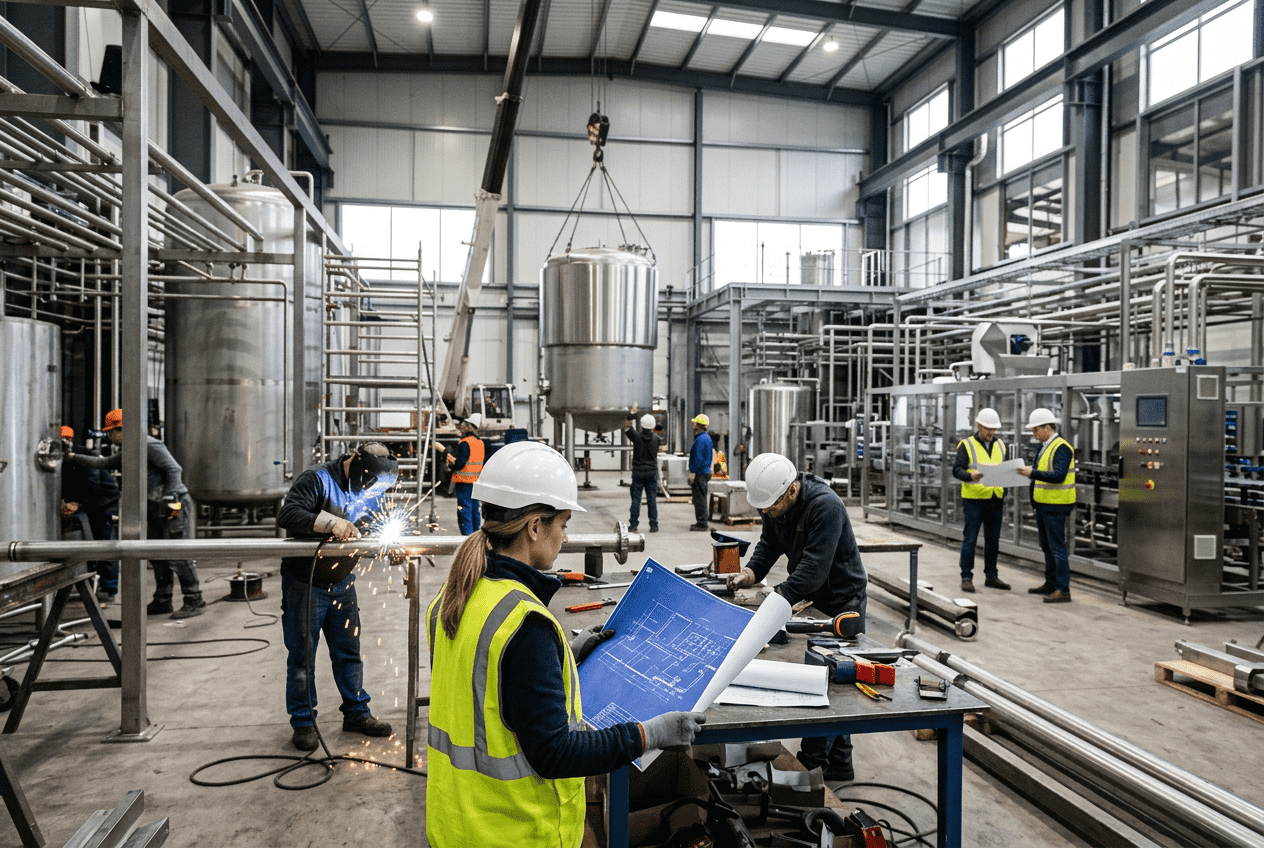
Canned Cocktail Production Line Design
Designing a canned cocktail production line in the United States requires more than selecting a filler and seamer. A profitable ready-to-drink beverage system must align formulation, alcohol compliance, carbonation performance, microbiological stability, package labeling, utility sizing, flavor changeovers, and long-term operating cost. Whether the product is a vodka soda, tequila cocktail, whiskey highball, wine-based spritz, or malt-based RTD, the production line must deliver legal compliance, sensory consistency, and dependable throughput from blend tank to finished pallet. Across the United States, growth in canned cocktails is strongest in retail corridors connected to major distribution and logistics hubs such as Los Angeles, Chicago, Dallas-Fort Worth, Atlanta, New York/New Jersey, Miami, and Seattle. Manufacturers near ports like Long Beach, Savannah, Houston, and Newark often gain freight advantages for imported spirits, sweeteners, cans, and flavor systems. At the same time, domestic co-packers and brand owners face increasing pressure to launch more SKUs with tighter margins and faster commercialization timelines. A United States canned cocktail production line typically includes water treatment, ingredient staging, batch blending, proofing and alcohol adjustment, in-line Brix and density verification, deaeration where needed, carbonation or nitrogen dosing, can rinsing, counter-pressure or equivalent low-oxygen filling, seaming, coding, package inspection, secondary packaging, and palletizing. The right line design depends on alcohol base, target ABV, carbonation level, shelf-life strategy, can size, flavor count, and whether the product will be tunnel pasteurized, flash treated, or cold filled with an approved preservative system. For most projects, the best design approach is to begin with regulatory and product decisions first, then engineer the line backward from desired shelf stability and throughput. In practice, that means confirming TTB formula needs, ABV tolerance targets, microbiological risk profile, can format, anticipated distribution temperature, and changeover frequency before equipment is specified. The table above shows why successful projects do not start with a filler quote alone. They start with a complete process and commercialization roadmap. Companies needing integrated engineering, equipment planning, and execution support often benefit from a partner that can combine processing, utilities, controls, and installation under one structure, such as the approach described in our company overview. The standard process flow begins with treated water, alcohol base, sweeteners, acidulants, flavors, colors, and functional ingredients entering a controlled batching system. Water quality is foundational. Reverse osmosis, carbon filtration, softening, and disinfection may be required depending on source water and flavor sensitivity. Spirits-based RTDs often expose mineral instability quickly, especially in clear beverages where haze is unacceptable. Blending generally takes place in jacketed mix tanks or bright-style vessels sized to campaign length and line speed. A common sequence includes water charge, sweetener addition, acid and flavor dosing, alcohol addition, final proofing, mixing, in-process analytical checks, and hold for packaging. For products with juice, dairy, botanicals, or emulsified ingredients, shear requirements and ingredient hydration times should be validated through pilot work. Carbonation is usually applied after blend standardization and before filling. A low temperature, low dissolved oxygen environment supports stable CO2 pickup and reduces foaming in the filler bowl. If a nitro-style mouthfeel is desired, the line may include nitrogen infusion, liquid nitrogen dosing, or a hybrid gas management strategy depending on the product profile and package presentation. After carbonation, cans are depalletized, rinsed or ionized, filled, seamed, coded, inspected, packed, and palletized. Critical control points include dissolved oxygen, fill temperature, net contents, seam integrity, and package stability after thermal exposure if pasteurization is used. This flow is not one-size-fits-all. A low-acid cream cocktail needs a different risk strategy than a clear vodka soda. A co-packer running six flavors in one shift needs different tank logic than a single-SKU high-volume line. That is why integrated process design, utilities, automation, and commissioning matter as much as the canning block itself. Brands evaluating full system execution can review broader engineering and project services relevant to beverage facilities. In the United States, canned cocktails sit at the intersection of manufacturing science and alcohol regulation. The Alcohol and Tobacco Tax and Trade Bureau, or TTB, governs many core requirements tied to formulation, class/type, labeling, tax category, and production records. The exact compliance path depends on whether the product is spirits-based, wine-based, or malt-based. It also depends on whether flavors, colors, juices, caffeine, sweeteners, or other ingredients trigger formula review. For many projects, formula approval should be addressed before equipment layout is finalized. If a product must be reformulated because of class/type or ingredient restrictions, that change can affect tank residence time, carbonation behavior, thermal sensitivity, or packaging claims. It is much less expensive to resolve this in development than after purchase orders are issued. Key compliance tasks often include confirming permit structure, determining formula filing needs, defining records for alcohol movement and usage, validating net contents and alcohol statements, and preparing label submissions where applicable. State-level registration, deposit laws, and distributor requirements add another layer beyond federal review, especially when launching in California, Texas, Florida, New York, Illinois, or multi-state retail programs. The table makes clear that compliance is not a side task. It directly influences manufacturing, cost, and timing. Engineering teams that understand beverage processing and regulated production environments can help align process design with compliance milestones, preventing expensive late-stage changes. ABV consistency is one of the most important quality and legal metrics in canned cocktail manufacturing. Consumers expect every can to taste the same, distributors expect brand reliability, and regulators expect the declared alcohol content to be truthful and supportable. Small mistakes in proofing can become large deviations at scale, especially when high-proof alcohol is blended into large water phases or when density shifts occur due to sugar and temperature. Strong ABV control starts with mass balance discipline. Alcohol storage, metering, transfer lines, and batch sequencing should be designed to reduce operator variability. Load cells, coriolis meters, density meters, and recipe-driven batch control all improve repeatability. Temperature correction matters because density changes can mislead proof determination if the measurement system is not properly compensated. In a high-throughput line, the best practice is to verify ABV at multiple points: during batching, after final blend adjustment, and during packaged product release. Multi-flavor lines should also account for residual dilution or carryover during changeover, particularly when moving between low-ABV and high-ABV products. Facilities with advanced automation can link recipe management, lot tracking, and analytical verification into SCADA or batch control systems. This reduces hand-entry error and gives operations better visibility into yield, loss points, and exception handling. Companies seeking integrated processing and controls capabilities often evaluate custom equipment and systems that fit their exact throughput and product mix rather than forcing a generic line into a specialized beverage application. Carbonation in RTD cocktails is not just a sensory choice; it is a process engineering discipline. Carbon dioxide pickup depends on product temperature, pressure, contact time, alcohol content, sugar content, and turbulence. A simple vodka soda may target a crisp, sparkling profile, while a canned espresso martini or creamy cocktail may rely more on nitrogen structure or a low-gas smooth texture. Common options include carbonating stones in bright or holding tanks, in-line carbonators integrated with heat exchangers, and liquid nitrogen dosing systems used for widget-free nitro presentation or package stiffening where appropriate. Each method has implications for capital cost, product flexibility, and line control complexity. For low-foaming performance, product should usually be filled cold, with consistent pressure balance through the filler. Long transfer runs, poor insulation, and unstable tank pressure are frequent root causes of carbonation inconsistency. Nitrogen systems require equal attention to gas purity, dosing repeatability, and worker safety protocols. The chart reflects how different RTD categories can drive different gas handling needs. High-volume sparkling categories typically justify tighter control over chilling, pressure regulation, and filler design. Nitro categories may need lower line speed initially until product behavior is fully characterized at commercial scale. The filler and seamer are the commercial heart of a canned cocktail line. For alcoholic beverages, the system must protect flavor, manage dissolved gas, minimize oxygen pickup, and maintain seam integrity over shipping, warehousing, and retail handling. Equipment selection depends on speed target, package sizes, headspace strategy, product viscosity, and whether products are still, sparkling, or nitro-dosed. Entry-level producers may start with compact monoblocks, while regional brands and co-packers usually move into higher-speed rotary systems with automated seam teardown checks, reject systems, and integrated rinse-fill-seam architecture. At larger scale, depalletizing, warmers or tunnel pasteurizers, case packing, and palletizing become essential parts of the performance equation. Seam quality is non-negotiable. Double seam inspection, can-end compatibility, and routine teardown procedures should be built into the quality program from day one. Many product complaints attributed to flavor or age are actually package integrity failures caused by poor seams or hidden oxygen exposure. For manufacturers expanding beyond pilot scale, the equipment must be considered together with utilities: compressed air, glycol or chilled water, steam if thermal processing is used, CIP, drains, floor loading, and electrical service. This is where beverage-focused engineering depth matters. DPS, for example, brings process, mechanical, electrical, controls, and utility integration into one project model, which helps avoid the frequent industry problem of buying equipment that the building cannot properly support. Stability strategy is one of the biggest design decisions in canned cocktail production. In broad terms, producers often compare tunnel pasteurization with cold fill using an acidified and preservative-supported formula. The correct answer depends on product composition, target shelf life, distribution conditions, and brand positioning. Tunnel pasteurization offers a robust packaged-product lethality step and is particularly valuable when microbial risk is meaningful and refrigerated distribution is not assured. It is often favored for products containing juice, botanicals, or other ingredients that raise spoilage concerns. However, thermal load can affect flavor freshness, color, carbonation retention, and package water usage. Cold fill with preservatives can preserve brighter top notes and reduce thermal stress, but only when the formulation, pH, hygienic design, sanitation, and validation package are strong enough. A weak sanitation program cannot be fixed by preservatives alone. Likewise, an aggressive thermal process cannot rescue poor package integrity. In the United States, products may travel through hot warehouses in Phoenix, humid docks in Savannah, or long truck routes through Texas and the Midwest. Stability decisions must reflect those realities, not just lab conditions. That is why pilot validation, shelf-life studies, and utility modeling should be part of the line design process. Labeling on canned cocktails must be handled with the same rigor as formulation. Mandatory content can include brand name, class or type where applicable, alcohol statement, net contents, producer or bottler information, government warning statement, and other regulated elements. Nutrition disclosure rules and facts panels may vary depending on product category and current regulatory framework, so every project should be reviewed for its exact labeling pathway. Artwork errors are expensive because printed cans, shrink sleeves, cartons, trays, and digital assets are often ordered before the first full commercial run. A mislabeled alcohol statement or omitted warning language can delay launch, force destructive rework, or create compliance exposure in multiple states. Brands should also think beyond mandatory text. UPC placement, date coding area, scuff resistance, and readability on curved can surfaces matter in real retail conditions. Products sold through grocery, convenience, and stadium channels need packaging that scans cleanly and communicates quickly. Good practice is to run a cross-functional label review that includes legal, regulatory, quality, operations, and commercial stakeholders before final artwork release. This is especially important for lineups that include zero-sugar claims, low-calorie positioning, natural flavor language, or functional ingredients. Multi-flavor production is where line design either creates long-term profit or long-term frustration. Brands now expect variety packs, seasonal launches, and fast-moving innovation pipelines. In the United States retail market, especially in chains that serve metropolitan areas like Chicago, Austin, Denver, and Charlotte, multi-flavor variety packs can materially increase shelf presence. But they also create operational complexity. The first challenge is changeover time. Shared syrup, flavor, and alcohol paths must be designed to minimize trapped volume and simplify CIP. Pigging systems, dedicated flavor manifolds, smart valve matrices, and recipe-driven automation can dramatically reduce product loss and downtime. The second challenge is scheduling. A line that runs only one flavor efficiently may perform poorly when asked to switch six times per shift. Layout matters as well. Adequate space for ingredient staging, can decoration change parts, quality checks, and repack work is essential. If variety packs are planned, secondary packaging equipment should be selected for pack pattern flexibility, not just single-SKU case output. From a manufacturing capabilities standpoint, DPS supports facilities that need full-system integration, including tanks, CIP systems, blending platforms, utilities, and controls. The company also manufactures selected process equipment, which can be useful when standard catalog hardware does not match project goals. For brand owners and co-packers, that integrated capability can help bridge the gap between process design and real production behavior on the floor. By 2026, three trends are likely to shape line design decisions even more strongly: smarter automation for changeovers, increased state and retailer scrutiny around packaging and disclosure, and stronger sustainability requirements tied to water, energy, and waste reduction. Facilities that invest early in utility efficiency, traceability, and modular expansion will generally be better positioned for both compliance and margin protection. The comparison above illustrates a common issue in beverage projects: equipment-only buying can look cheaper initially, but often performs worse in flexibility, compliance readiness, and utility fit. That gap becomes costly after startup. What is the best can format for canned cocktails in the United States?There is no universal best format. Slim and sleek cans often suit premium, lower-volume cocktails, while standard cans may offer broader equipment compatibility and lower supply risk. The right answer depends on brand positioning, line capability, and distributor preference. Do all canned cocktails need TTB formula approval?Not all products follow the same path. Approval needs depend on product base, ingredients, and regulatory classification. This should be reviewed before commercialization and before ordering packaging. How do manufacturers keep ABV consistent from batch to batch?They use controlled ingredient dosing, verified incoming alcohol strength, temperature-compensated analytics, validated mixing procedures, and documented QA release checks on both bulk and packaged product. Is tunnel pasteurization always better than cold fill?No. Tunnel pasteurization can provide stronger packaged-product stability for some formulas, but it may affect flavor and utilities. Cold fill can work well with the right formula, sanitation, and validation package. What throughput should a startup plan for?That depends on demand, SKU count, and co-packing versus owned production strategy. Many early-stage brands overbuy speed and underinvest in blending, utilities, and QA infrastructure. A balanced system is more important than a headline cans-per-minute number. How important is can seam inspection?It is critical. Seam defects can lead to leakage, oxygen ingress, reduced shelf life, and customer complaints. Seam monitoring should be routine, documented, and tied to preventive maintenance. What should be included in a full project budget?Not just processing and packaging equipment. Budget should include utilities, tanks, piping, controls, CIP, building modifications, drains, commissioning, spare parts, startup support, and contingency for compliance-driven changes. How should a brand choose an engineering and integration partner?Choose a team that understands beverage processing, alcohol compliance constraints, utilities, controls, installation, and commercialization timing. The strongest partners focus on total project profitability, not just equipment sales. For example, DPS serves food and beverage manufacturers across North America with a design-build-manage approach that combines technological capabilities such as process and controls engineering, manufacturing capabilities including custom tanks and CIP systems, and service capabilities spanning feasibility, owner’s representation, project management, installation, and commissioning. Readers can explore recent project case examples to see how integrated execution supports real production outcomes. In summary, canned cocktail production line design in the United States is a multidisciplinary challenge involving market strategy, compliance, process science, packaging performance, and capital efficiency. The most successful producers design their systems around product reality: actual ingredients, actual logistics, actual quality standards, and actual growth plans. When that happens, the result is not simply a working line. It is a line that supports profitable scale.


