-
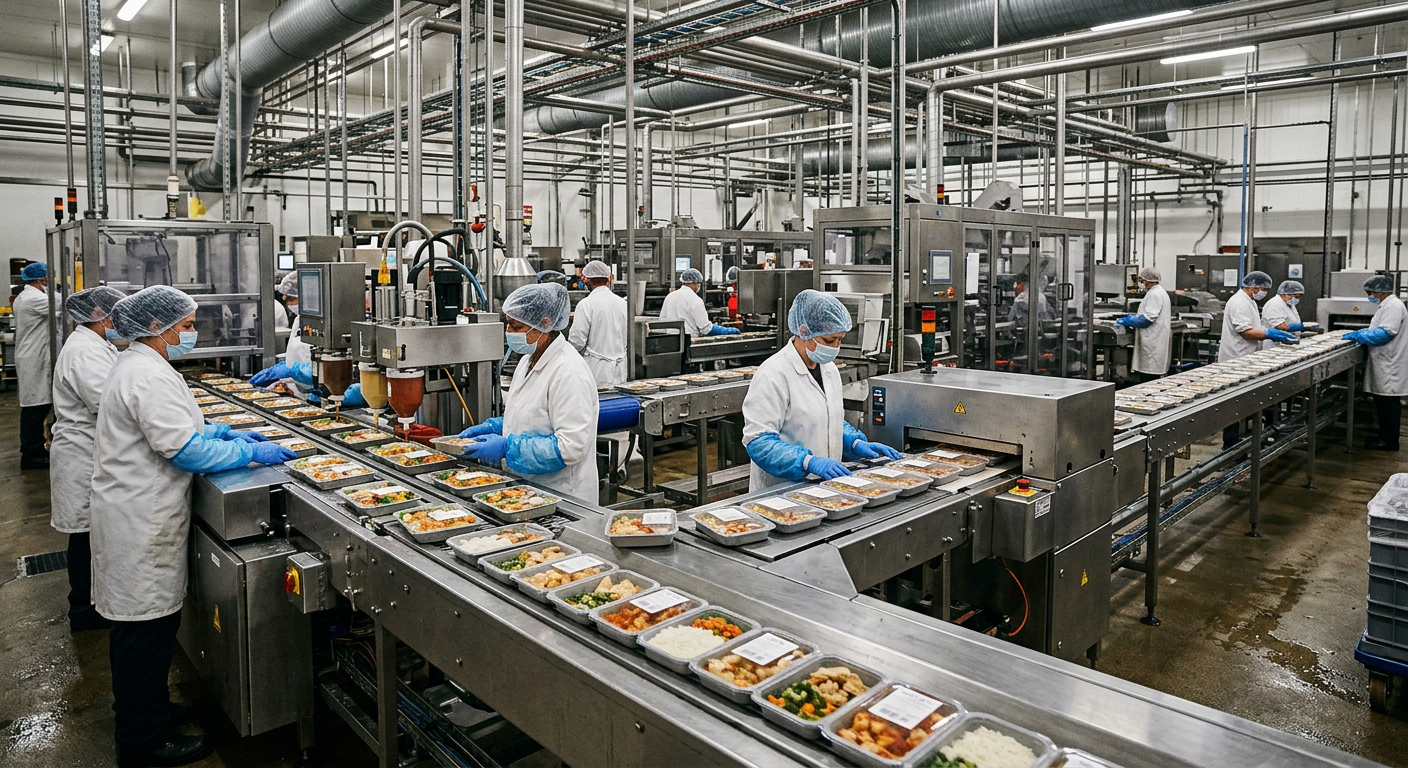
Clean-in-Place Systems for Beverage Production
Clean-in-place systems are the backbone of hygienic beverage manufacturing in the United States. A well-designed CIP program cleans tanks, lines, valves, pumps, heat exchangers, and fillers without disassembly, helping beverage plants reduce downtime, protect flavor, meet FDA and third-party audit expectations, and control water, chemical, and labor costs. For U.S. producers in markets such as beer, spirits, dairy beverages, juice, kombucha, carbonated soft drinks, and aseptic RTD products, CIP performance directly affects shelf life, brand protection, and plant profitability. Across major production hubs such as North Carolina, California, Texas, Illinois, Wisconsin, Pennsylvania, and Georgia, beverage manufacturers are modernizing sanitation systems to support higher throughput and tighter compliance. Plants shipping through trade corridors near the Port of Los Angeles, Port of Long Beach, Port of Houston, Savannah, Newark, and Chicago distribution networks are under pressure to keep lines available, especially in co-packing and multi-SKU operations. That makes CIP system design a capital decision, not just a sanitation task. For companies planning expansion, retrofit, or greenfield projects, CIP should be considered alongside utilities, automation, vessel sizing, wastewater loading, and production scheduling. Firms such as Disruptive Process Solutions approach beverage projects with a business-first engineering mindset, aligning sanitation infrastructure with throughput, product mix, and long-term operating cost rather than simply specifying oversized hardware. That approach is especially valuable when a syrup room, cellar, blending area, pasteurization loop, or filling hall must support future growth. A beverage CIP system is an engineered cleaning loop that circulates water, caustic, acid, sanitizers, and rinse solutions through process equipment at controlled time, temperature, flow, and concentration. Its goal is to remove beverage soils, reduce microbial risk, verify cleanliness, and return equipment to production-ready condition without manual teardown. In the United States, the best CIP systems are designed around product chemistry, line geometry, sanitary standards, automation needs, water reuse strategy, and validation requirements. For most beverage operations, successful CIP depends on five basics: correct chemical selection, turbulent flow, sufficient temperature, proper contact time, and validated coverage of all product-contact surfaces. If one of those factors is weak, cleaning results become inconsistent. A plant may pass visual inspection but still fail ATP checks, microbial swabs, or taste panels due to residual sugar films, protein buildup, flavor carryover, or biofilm formation. The table above shows why CIP selection should be tied to business outcomes. A cheaper system can become expensive if it lengthens changeovers, wastes water, or creates sanitation failures. Conversely, a right-sized system can improve uptime, limit labor exposure, and support faster product transitions. In beverage production, CIP typically begins when product is pushed out or recovered from a tank or line. The system then runs a programmed sequence that may include pre-rinse, caustic wash, intermediate rinse, acid wash, final rinse, sanitation, and verification. Automated skids use conductivity, temperature, flow, level, and return sensors to confirm each step. Recipes can be tailored for fermenters, BBTs, syrup lines, UHT loops, blending tanks, fillers, or transfer pipelines. The cleaning action depends on the classic four factors known across hygienic processing: chemistry, temperature, mechanical action, and time. Beverage plants also need strong control of the fifth factor: concentration verification. Inline conductivity meters are commonly used to distinguish water from chemical return and to support recovery of reusable caustic or acid. Advanced systems add SCADA-based recipe control, data logging, alarm management, and production integration. In practical terms, a U.S. bottling or brewing facility may operate one central CIP room feeding multiple circuits, or smaller dedicated skids close to the process area. A filler may have short, frequent cycles between SKU changes, while a fermenter or blend tank may run a longer sequence with stronger chemical exposure. High-risk products like dairy beverages, protein drinks, and aseptic formulations usually require more rigorous validation than standard carbonated soft drinks or filtered spirits. The line chart reflects a realistic growth pattern in CIP upgrade activity across the U.S. beverage market. Rising sanitation expectations, labor pressure, product diversification, and sustainability targets are pushing more manufacturers toward automated and better-instrumented cleaning systems. Beverage soils vary dramatically by product category, which is why a single generic CIP recipe rarely works across an entire plant. Sugary drinks leave sticky carbohydrate films that attract microbes and harden if heat dries them on surfaces. Juices and functional beverages often contain pectin, pulp fines, natural color compounds, and fruit acids. Dairy-based beverages leave protein and fat residues that can denature on hot surfaces and resist simple rinsing. Flavor emulsions, botanical extracts, and some nutraceutical ingredients may introduce oils, gums, and stabilizers that require specialized detergents. Acidic products are not necessarily self-cleaning. Citric acid, malic acid, phosphoric acid, and fermentation byproducts can interact with minerals or packaging-area residues to form deposits over time. In breweries and kombucha plants, yeast films, hop resins, krausen rings, and organic stone require targeted cycle design. In spirits and distillation environments, sugars, mash solids, congeners, and caramel color residues may build up in tanks, transfer lines, and blend systems. The table illustrates why recipe-based CIP matters. A protein RTD line near Chicago or a cold-fill juice plant in Florida should not be cleaned with the same parameters used for a filtered seltzer line in Arizona. Soil mapping by product family is often the first step in designing an efficient sanitation program. While details vary, most beverage CIP programs follow a predictable sequence. First is product recovery or push-out using air, water, or pigging where appropriate. Next comes a pre-rinse to remove gross residue. A caustic wash follows to dissolve organic soils. Many systems then run an intermediate rinse before an acid cycle to remove mineral scale and neutralize alkaline carryover. A final rinse, optional sanitizer, and line release complete the process. Critical equipment may also require post-CIP sterile air drying or aseptic hold procedures. Tanks rely on spray devices, return flow control, full drainability, and coverage of manways, agitators, vent filters, and upper shell regions. Pipelines need enough velocity to maintain turbulent flow, especially through tees, valve manifolds, meters, and dead-leg-prone areas. Filling equipment demands special attention because nozzles, bowls, product paths, cap chutes, and change parts may include complex geometries where residual product can persist. The process table shows that each asset class has different failure modes. In real U.S. plants, sanitation issues are often caused not by chemistry selection alone but by poor flow balance, incomplete return routing, valve misalignment, or filler circuits that were never fully validated after a line modification. From a technology standpoint, modern beverage projects increasingly combine CIP skids with PLC programming, recipe management, and SCADA dashboards. This is where an engineering partner with automation and process expertise matters. DPS, for example, supports structural, mechanical, plumbing, electrical, process, and controls engineering, which helps align CIP with utilities, blending, pasteurization, fermentation, carbonation, water treatment, and packaging integration rather than treating sanitation as an isolated utility. Sanitary design begins before the first cleaning cycle ever runs. If equipment contains dead legs, poor welds, non-drainable piping, hollow rollers, rough finishes, incorrect gasket materials, or inaccessible instrument tees, even the best CIP chemistry may not achieve repeatable results. That is why beverage manufacturers in the United States increasingly reference sanitary frameworks such as 3-A principles, EHEDG design guidance, and ASME BPE expectations where hygienic detail is critical. 3-A criteria are widely recognized in dairy and hygienic process applications. EHEDG is especially useful for evaluating cleanability and hygienic engineering practices. BPE is often associated with high-purity and bioprocess environments, but many of its principles on drainability, surface finish, documentation, and fabrication quality are relevant to aseptic or highly sensitive beverage systems. Plants do not always need every standard at every node, but they should understand how each applies to product risk. This comparison highlights a practical point: compliance is not just about paperwork. It shapes weld quality, pipe slope, instrument placement, valve selection, cleanout coverage, and maintenance access. Those design decisions influence every CIP outcome for years after startup. In a multi-line facility, one of the biggest strategic decisions is whether to install a centralized CIP room or decentralized skids near process zones. Centralized systems can reduce duplicate equipment, simplify chemical management, and support solution recovery. They are often attractive in large breweries, co-pack plants, and integrated beverage campuses with multiple tank farms and packaging lines. However, they also require careful circuit design, valve matrix control, longer piping runs, and scheduling discipline. Decentralized CIP systems place smaller skids closer to the equipment they serve. This can shorten cycles, reduce distribution losses, and increase flexibility for isolated operations such as aseptic blending, cellar cleaning, or a dedicated dairy beverage suite. The tradeoff is more equipment to maintain and, in some cases, less opportunity for chemical recovery. The bar chart shows that CIP demand is strong across beverage categories, with especially high modernization pressure in dairy beverages, beer, and fast-growing RTD segments. Multi-line co-pack operations often lead this demand because cleaning flexibility directly impacts changeover economics. The comparison shows why buying advice must be tied to plant reality. A beverage site in Dallas with multiple syrup rooms and fillers may benefit from a hybrid architecture, while a compact craft plant in Oregon may prefer a simpler skid. Location matters too: facilities in high-cost utility regions or wastewater-constrained municipalities often prioritize recovery and reuse features earlier in the capital planning process. As a service capability, DPS works across feasibility, capital planning, owner’s representation, project management, general contracting, installation, and integration. For clients expanding from one line to several, that end-to-end model can help evaluate whether CIP should be centralized, decentralized, or phased, while keeping construction, controls, utilities, and schedule aligned. No CIP system should be accepted on visual appearance alone. Validation confirms that the cleaning process consistently produces acceptable hygienic outcomes. In beverage operations, common tools include ATP testing, allergen swabs where relevant, conductivity confirmation, temperature records, concentration checks, microbiological swabbing, rinse water testing, and periodic teardown inspections for hard-to-clean components. ATP testing is useful for rapid feedback after cleaning, especially during startup, troubleshooting, and changeover verification. However, ATP does not replace microbiological testing. A surface can have low ATP and still present microbial risk if biofilms, niches, or post-clean contamination exist. Microbiological verification remains essential for dairy beverages, aseptic systems, low-acid high-risk products, and customer-audited co-packing operations. Validation should also include worst-case scenarios: longest line paths, lowest-flow circuits, highest-soil products, overnight holds, and seasonal temperature variation. Plants in humid Gulf Coast climates such as Houston or New Orleans may see different environmental pressure than facilities in dry inland regions. That matters for filler rooms, hose handling, and post-CIP exposure. The area chart shows how plants are moving from manual checks toward digitally recorded validation. This trend is expected to continue through 2026 as audit readiness, labor constraints, and traceability requirements increase. This table shows that no single tool is enough on its own. Effective validation layers fast release methods with periodic deeper verification. Plants that only swab external surfaces or only monitor conductivity are missing part of the picture. Water and wastewater costs are becoming major CIP design drivers in the United States, especially in California, Arizona, Colorado, parts of Texas, and municipalities with strict discharge permits. Beverage plants can reduce environmental impact and operating cost through recovered final rinse water, conductivity-based cutover, optimized line volume calculations, pigging for product recovery, chemical reuse, low-volume spray devices where appropriate, and automatic shutdown logic for incomplete circuits. Wastewater reduction is not just about volume. It also concerns pH swings, BOD, COD, sugar loading, suspended solids, and temperature. A plant discharging high-strength syrup residues near Atlanta or Los Angeles may face very different sewer surcharges than a smaller brewery in the Midwest. CIP design should therefore be coordinated with pretreatment, equalization, recovery tanks, and production scheduling. Manufacturing capability also matters here. DPS designs and supplies custom process equipment including tanks up to 12,000 gallons and custom CIP systems, which can be tailored to plant-specific recovery goals instead of forcing a one-size-fits-all skid. For beverage manufacturers scaling capacity, custom design may yield better utility efficiency than adapting a generic package unit. The comparison chart illustrates a common market reality: packaged skids may lower initial cost, but custom-engineered systems often outperform them in water reduction, recovery, automation, and long-term scalability. Buyers should compare lifecycle cost, not only purchase price. The most common CIP mistake is assuming that a cycle that worked for one product will work for all products. Another frequent issue is neglecting sanitary design during expansion projects. A new branch line, meter, or valve cluster can create a cleaning blind spot that did not exist before. Plants also underestimate the importance of instrument calibration, especially conductivity and temperature sensors that determine chemical strength and cycle completion. Other mistakes include oversized rinse times, undersized return pumps, poor spray device selection, lack of documented riboflavin or coverage testing where needed, failure to separate allergen or dairy circuits, insufficient operator training, and weak post-CIP hold controls. On fillers, manual workarounds often hide fundamental design issues. If operators repeatedly remove parts for hand cleaning that were intended to be CIP’d, the system may not be truly clean-in-place. The lesson from the table is simple: CIP problems are usually system problems, not just sanitation crew problems. They involve engineering, operations, maintenance, automation, and management decisions. This is one reason why beverage companies often benefit from integrators that can connect process design, utilities, controls, and execution in one model. In practice, a profitable CIP project often starts with a plant assessment. That may include mapping current circuits, measuring cycle duration, identifying rinse losses, reviewing microbiological trends, and evaluating future production goals. A co-packer in the Southeast running energy drinks, teas, and juice blends may have completely different sanitation economics than a craft distillery in Kentucky or a dairy beverage plant in Wisconsin. Local suppliers, chemical partners, utilities, and municipal discharge rules all influence the right answer. For manufacturers evaluating partners, it is useful to work with firms that understand both technology and execution. DPS serves beverage and food manufacturers across all 50 states and Canada, bringing process engineering, capital planning, installation, commissioning, and system integration experience across fermentation, distillation, pasteurization, aseptic processing, blending, filtration, carbonation, water treatment, and utility systems. That range helps ensure the CIP system supports the whole plant, not just a single asset. What is the ideal CIP frequency in beverage production?It depends on product type, hold time, process temperature, and risk level. High-protein, dairy, and aseptic lines typically need more frequent or more rigorous cleaning than filtered or low-residue beverage systems. Can one CIP system clean tanks, pipelines, and fillers?Yes, but only if the system is properly sized and the circuits are engineered for each equipment type. Many plants use separate recipes or dedicated skids for fillers or aseptic areas. How do U.S. beverage plants reduce CIP water usage?Common strategies include final-rinse recovery, conductivity-based cutover, product recovery before rinse, chemical reuse, and optimized recipe times. Wastewater pretreatment should be reviewed at the same time. Is ATP testing enough to validate cleaning?No. ATP is a fast screening tool, but it should be combined with microbiological verification, chemistry checks, temperature records, and periodic inspection of hard-to-clean components. What is better: centralized or decentralized CIP?Neither is always better. Large multi-line plants often use centralized or hybrid systems, while smaller or high-risk zones may benefit from decentralized skids. The best option depends on layout, product mix, utilities, and expansion plans. Do breweries and distilleries need the same CIP design as dairy beverage plants?No. Brewing and distilling typically deal with yeast, sugars, and organic residues, while dairy beverages add protein and fat challenges that require stricter validation and often more demanding chemistry. How important is sanitary design compared with cleaning chemistry?Both are critical. Poorly designed equipment cannot be made reliably clean by stronger chemicals alone. Drainability, weld quality, dead-leg control, and surface finish are foundational. What should buyers ask before purchasing a CIP system?Ask about hydraulic assumptions, recipe flexibility, recovery options, automation depth, validation strategy, future line additions, maintenance support, and integration with utilities and controls. What trends will shape beverage CIP through 2026?Expect more digital validation, stronger sustainability requirements, smarter water reuse, greater SCADA integration, predictive maintenance, tighter hygienic documentation, and more scrutiny on wastewater loading and energy use. Looking ahead to 2026, U.S. beverage manufacturers will likely see CIP become more data-driven and more closely tied to ESG, municipal water constraints, labor efficiency, and retailer-driven food safety expectations. Digital recipe enforcement, remote support, automated reporting, and recovery-focused utility design will move from optional upgrades to standard project requirements. Plants that align CIP with growth planning now will be better positioned for expansion, compliance, and profitability in the years ahead. -
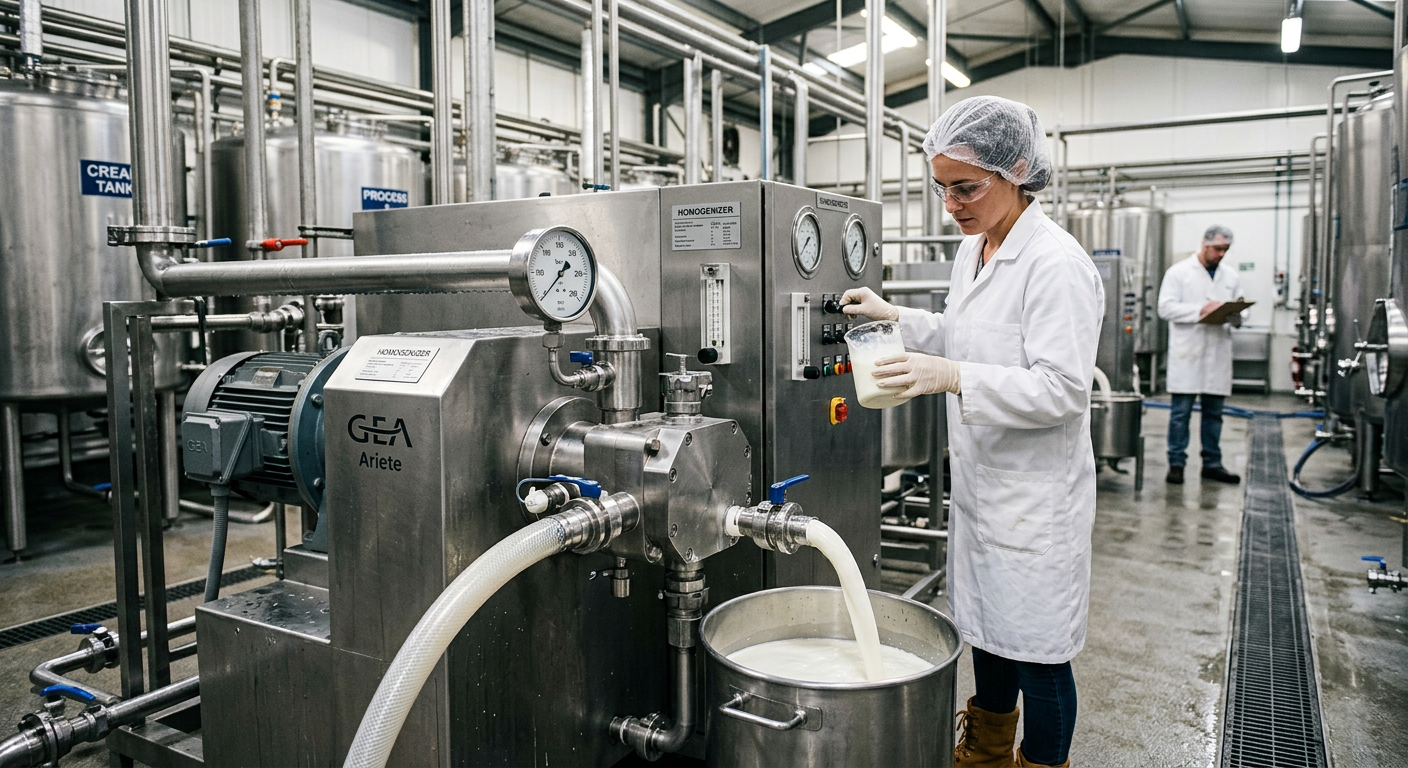
3 Types of Heat Recovery Systems for Food Plants
Food and beverage manufacturers in the United States are under constant pressure to lower utility costs, reduce carbon intensity, protect margins, and improve production resilience. In many plants, heat leaves the site every hour through boiler stacks, refrigeration condensers, hot effluent, and warm process streams. Recovering that energy can reduce fuel use, lower water-heating costs, and improve overall utility efficiency without changing the core product. For facilities in major production corridors such as the Midwest, the Southeast, Texas, California’s Central Valley, and the Carolinas, heat recovery is increasingly becoming a practical capital project rather than a sustainability talking point. The three most common heat recovery approaches for food plants are boiler economizers, process heat exchangers, and refrigeration condenser heat recovery. Boiler economizers capture stack heat to preheat boiler feedwater. Process heat exchangers move energy from one product or utility stream to another, such as warming incoming water with hot CIP return or cooking-loop discharge. Refrigeration condenser recovery systems turn rejected heat into useful hot water for washdown, sanitation, makeup water, or low-temperature process loads. The best choice depends on utility profile, temperature levels, sanitation constraints, operating hours, and whether the site needs hot water, preheated feedwater, or direct process energy. In the U.S. market, plants with high steam usage, large refrigeration loads, and year-round sanitation demand often see the fastest payback. Poultry plants in Georgia and Arkansas, dairy facilities in Wisconsin and Idaho, beverage producers around Dallas-Fort Worth, and prepared food manufacturers near Chicago or Charlotte often have strong conditions for recovery projects. If a site runs multiple shifts and already tracks gas, steam, ammonia, or glycol loads, the project can usually be evaluated with solid economic confidence. This table shows why the first three options receive the most attention in food processing: they connect a reliable heat source to a steady plant demand. That source-and-demand match is what usually drives the strongest business case. Most food plants do not need a complicated energy strategy at the start. They need a ranked list of where heat is being rejected, what temperatures are available, how often the load exists, and whether the recovered energy can be used every day. In practice, three system categories dominate because they are compatible with food safety requirements and can be integrated into existing utility rooms and process areas. Steam remains essential in protein processing, dairy, aseptic lines, cook rooms, retort operations, and sanitation systems. Every boiler sends energy up the stack. If excess oxygen, flue gas temperature, and feedwater conditions are suitable, an economizer can recover part of that loss. Plants in colder states such as Minnesota, Michigan, and Pennsylvania can also evaluate extended options that support makeup water heating during winter operation. For high-hours facilities, even a moderate reduction in stack temperature can produce meaningful annual gas savings. This category includes plate, tubular, shell-and-tube, and scraped-surface designs depending on viscosity, solids, fouling risk, and cleaning method. A common U.S. example is recovering energy from hot CIP return to preheat fresh make-up water. Another is using a cooked sauce discharge stream to temper an ingredient or water stream before final heating. Because these systems touch the process environment, design discipline around cleanability, pressure balance, product segregation, and thermal control is critical. Ammonia and mechanical refrigeration systems reject large amounts of heat. Traditionally, that heat is thrown away through condensers or gas coolers. In facilities with constant washdown or sanitation demand, that same energy can generate low-cost warm or hot water. This is especially relevant for dairy, beverage, frozen food, seafood, meat, and ready-to-eat operations. Plants near logistics hubs such as Los Angeles/Long Beach, Houston, Kansas City, and Atlanta often run large refrigerated footprints where condenser recovery becomes highly attractive. The growth pattern above reflects a realistic market direction: projects accelerate when energy prices stay volatile, ESG reporting expands, and producers seek margin protection instead of only capacity expansion. By 2026, plants that once viewed heat recovery as optional are more likely to treat it as standard utility optimization. A boiler economizer is one of the most straightforward heat recovery projects when a site has a stable steam demand profile. The device transfers heat from flue gas to incoming boiler feedwater, reducing burner fuel consumption because the boiler no longer has to raise water temperature from as low a starting point. In older facilities, this can be one of the least disruptive ways to improve thermal efficiency because the project is concentrated around the boiler room rather than the production floor. Successful economizer installation starts with stack data, not guesswork. Engineers should confirm current flue gas temperature, combustion conditions, boiler turndown, feedwater temperature, deaerator operation, water chemistry, and hours of operation. If the stack temperature is already low, the available savings may be limited. If sulfur, condensate, or corrosion risk is present, materials and controls must be selected carefully to avoid dew point issues. Food manufacturers should also review maintenance access and whether the unit can be isolated without interrupting sanitation or production schedules. At large campuses in places like Fresno, Modesto, Milwaukee, or Springdale, boiler plants often support multiple departments. That broad steam dependency can make economizers especially valuable. They also pair well with broader modernization efforts such as condensate return improvements, burner tuning, deaerator optimization, and steam trap repair. The key lesson from this checklist is that an economizer project succeeds when engineering, controls, and maintenance are considered together. Plants that only focus on equipment price often underestimate installation details and post-startup tuning. Process heat exchangers create some of the most elegant heat recovery wins because they use one plant stream to benefit another. In food manufacturing, the technology must be selected around product characteristics and cleaning requirements. Plate heat exchangers are excellent for low-viscosity fluids and compact footprints. Tubular designs handle particulates and more demanding hygiene needs. Shell-and-tube units may fit utility services or rugged process applications. Scraped-surface heat exchangers can address viscous or fouling products where traditional heat transfer surfaces lose performance quickly. Typical applications include preheating ingredient water before blending, recovering energy from pasteurizer discharge, tempering incoming product prior to thermal processing, and reclaiming heat from hot cleaning loops. In dairy and beverage plants, thermal regeneration within pasteurization skids is already well known. The next step is often to expand recovery beyond one skid to plantwide utility users, provided food safety separation remains absolute. Because these systems can affect validated process conditions, the design should include hydraulic review, control narratives, CIP logic, and instrumentation strategy. Facilities operating under FDA, USDA, SQF, or BRC expectations cannot afford cross-contamination or unstable thermal performance. That is one reason many manufacturers prefer partners with both process engineering and field integration experience instead of treating the exchanger as a simple catalog purchase. The comparison shows that “best” is not universal. The right exchanger is the one that fits the product, cleaning regime, and utility objective. A cheaper configuration can become expensive if it fouls quickly or creates sanitation delays. Industry demand is strongest where both thermal and refrigeration loads are large, where sanitation is frequent, and where plants run long schedules. That is why dairy, protein, and beverage operations often lead the market. Refrigeration systems are often the hidden engine of heat recovery in food plants. Compressors move heat out of cold rooms, blast freezers, process chillers, fermentation suites, and glycol loops, then reject it outdoors or to cooling water. If the plant also spends money heating washdown water, CIP water, or makeup water, an opportunity exists to recover part of that rejected energy before it leaves the site. Common designs include desuperheaters, heat reclaim heat exchangers, and integrated hot water packages tied to ammonia or packaged refrigeration systems. The useful output is often ideal for low- to medium-temperature water needs rather than high-pressure steam replacement. In a poultry or meat plant, recovered heat may support sanitation and washdown. In a brewery, it may warm brewing liquor or support CIP. In a dairy facility, it may preheat water feeding a larger hot water system. Projects in hot and humid climates such as Florida, Louisiana, and coastal Texas can be especially attractive because refrigeration plants often operate hard for long hours. That said, colder regions like the Upper Midwest also benefit when year-round refrigerated production is paired with continuous sanitation demand. The main rule is simple: do not evaluate the condenser side alone. Always match the recoverable heat profile to a real on-site water demand profile. The table highlights a central truth: refrigeration heat recovery is excellent where sanitation and hot water demand are constant. Without a dependable use for that heat, the economics weaken even if the refrigeration load is large. Hot water is often the easiest destination for recovered heat because nearly every food plant needs it. Sanitation, handwash systems, ingredient water, CIP makeup, crate washing, bottle cleaning, and utility support all consume heated water. Converting waste heat into hot water can therefore reduce boiler firing, cut direct-fired heater consumption, and flatten utility peaks. The most successful systems are designed around a realistic hot water ladder. Low-temperature recovered heat can first lift incoming water from, for example, 55°F to 95°F. A second stage may raise it further, and a final trim heater or boiler then brings it to the exact required setpoint. This staged strategy avoids demanding too much from one recovery source and makes low-grade heat economically valuable. Storage also matters. If refrigeration reject heat is available at one time but sanitation load peaks later, a well-sized insulated hot water tank can stabilize the system. Controls should prioritize recovered heat first, then call for supplemental energy only when needed. U.S. plants facing demand charges or seeking utility rebates may gain additional value from reducing concurrent gas and electric peaks through smart sequencing. Manufacturers evaluating these systems should also confirm local water quality, makeup volume, and scaling risk. In regions such as Phoenix, inland California, or parts of Texas where hardness can be a concern, heat exchanger design and treatment strategy should be aligned from the start. The area trend reflects a broad operational change: waste heat is increasingly viewed as a recoverable utility asset. By 2026, digital energy management, utility incentives, and internal decarbonization targets are expected to accelerate that shift. Preheating boiler feedwater deserves special attention because it bridges process engineering and utility economics. Any degree of temperature increase ahead of the boiler reduces the fuel required to produce steam. Heat sources can include economizers, condensate return, flash steam, and in some facilities even secondary heat recovered from process or refrigeration loops through an intermediate hot water system. This approach is particularly attractive in plants with high deaerator throughput and good condensate management. Where condensate return rates are low, preheat strategies may recover part of the missed opportunity. However, temperature alone is not the only decision factor. Engineers should review oxygen removal, pump NPSH considerations, control valve behavior, tank venting, and water treatment interactions. A badly integrated preheat system can create instability that offsets a portion of the savings. For facilities in strategic freight and production belts such as Indianapolis, Memphis, Omaha, and the Research Triangle, steam reliability often matters as much as efficiency. Feedwater preheat can help support a more stable boiler operation while reducing burner load, which is valuable for plants trying to maximize uptime during tight production windows. Capital approval in U.S. food manufacturing usually depends on measurable payback, not theory. A solid ROI calculation should include annual recovered energy, utility rates, operating hours, maintenance costs, installation complexity, controls integration, and any downtime risk during tie-in. It should also capture secondary gains where relevant, such as reduced cooling tower load, lower boiler cycling, improved hot water availability, or better utility capacity utilization. Too many ROI models fail because they assume nameplate conditions all year. In reality, production shifts, sanitation schedules, seasonal ambient changes, and partial load operation all affect savings. The best practice is to model several scenarios: conservative, expected, and high-utilization. For enterprise clients, tying the project to portfolio-level carbon or energy intensity goals can also strengthen the investment case. These example economics are illustrative, but they show why heat recovery projects often compete well for capital. When a plant operates year-round and can use the recovered energy every day, simple payback under three years is common. For buying advice, focus on five questions. First, is the heat source stable enough to model? Second, is there a dependable sink for the recovered energy? Third, can the system be cleaned, maintained, and isolated without production disruption? Fourth, will controls integration make the system easy to operate? Fifth, does the project partner understand food plant realities rather than only generic HVAC or industrial utility design? Those questions matter more than chasing the lowest quoted equipment cost. The comparison chart emphasizes a common procurement lesson in the U.S. market: integrated execution usually outperforms piecemeal sourcing for sanitary heat recovery projects. Equipment alone is only part of the value; engineering, controls, field coordination, and startup support often determine whether projected savings are actually achieved. When selecting local or regional suppliers, U.S. manufacturers should look beyond geography and assess food-sector relevance. A contractor in New Jersey may be close to a plant, but if the project involves aseptic systems, USDA environments, or ammonia refrigeration interfaces, sector experience matters more than distance. Strong local presence still helps, especially around dense manufacturing and logistics clusters such as Chicago, Charlotte, the Inland Empire, Nashville, and the I-35 corridor in Texas. Local fabrication, electrical support, insulation crews, and pipefitters can shorten schedule and reduce travel cost, but central engineering leadership is still essential for consistency. This procurement framework helps buyers compare suppliers on business value instead of unit price alone. The strongest partner is usually the one that can engineer, install, and commission the solution with accountability. For manufacturers that need more than an equipment quote, Disruptive Process Solutions operates as a food and beverage engineering partner focused on profitable project execution across the United States and Canada. The company is headquartered in Cary, North Carolina, with a West Coast presence in Lake Forest, California, and supports clients from early planning through field execution using a design-build-manage model. That structure is useful for heat recovery projects because these jobs often sit at the intersection of utilities, process, controls, structural considerations, and live production constraints. DPS brings cross-disciplinary engineering that matters in heat recovery work: process, mechanical, plumbing, electrical, structural, and controls expertise under one project framework. That means a boiler economizer can be evaluated not only for thermal gain, but also for feedwater behavior, automation changes, SCADA visibility, and physical integration in a constrained utility room. The same applies to process heat exchangers and refrigeration recovery systems, where sanitary design, PLC programming, and utility balancing are often just as important as the exchanger itself. Manufacturers exploring broader plant optimization can review engineering and integration services to understand how utility upgrades fit into larger capital planning. Beyond engineering, DPS also supports projects with proprietary equipment capabilities, including process tanks, CIP systems, marination tumblers, and cooking vessels. That manufacturing perspective is valuable when a recovery project must interface with existing process systems instead of standing alone. In practice, many U.S. plants need more than a heat exchanger; they may also need buffer tanks, sanitary skids, custom piping modules, or utility-ready assemblies designed for faster field installation. Companies considering complementary hardware can explore process equipment solutions as part of a broader recovery or modernization scope. DPS supports capital planning, feasibility, owner’s representation, project management, general contracting where licensed, turnkey installation, and system integration. For heat recovery, that matters because ROI depends on execution quality. An under-engineered tie-in or poorly sequenced startup can wipe out savings and disrupt production. DPS is known for taking a practical, financially driven view of projects: evaluating whether capital should be spent at all, identifying bottlenecks honestly, and aligning scope with long-term profitability rather than short-term vendor revenue. Manufacturers that want real-world examples of integrated execution can browse project case studies for context. In the U.S. market, that end-to-end approach is especially valuable for multi-site operators and fast-moving projects in beverage, dairy, protein, sauces, prepared foods, and aseptic environments. Whether the site is near the Port of Savannah, in California’s processing belt, or in a growing manufacturing hub like Raleigh-Durham or Dallas, the goal remains the same: engineer a heat recovery solution that saves money, works in daily operations, and supports long-term plant performance. Looking ahead to 2026, several trends are likely to shape project demand. First, more plants will use digital energy dashboards and historian data to find waste heat opportunities with better precision. Second, decarbonization goals from enterprise leadership and retail customers will push plants to measure thermal intensity, not just electrical use. Third, state and utility incentive programs may increasingly reward fuel reduction, water efficiency, and heat reuse. Fourth, low-charge refrigeration packages, smarter hot water storage, and advanced controls will make previously marginal recovery projects more viable. Finally, stricter attention to resilience will encourage facilities to use recovered heat as a way to reduce dependence on volatile fuel pricing. Policy and sustainability pressures will not replace financial discipline; they will reinforce it. The winning projects in 2026 will still be the ones with a clear source, a reliable heat sink, sanitary and operational integrity, and an execution plan that fits production reality. There is no single best option for every facility. Steam-heavy plants often favor boiler economizers. Plants with strong hot and cold utility loads may gain more from process exchangers or refrigeration condenser recovery. The right answer depends on hours, temperatures, and daily water demand. Many U.S. food plants target simple payback between one and three years. Continuous operations with stable heat loads often perform best. Projects with storage, controls upgrades, or difficult field conditions may take longer but can still be attractive. Usually not completely. It is more commonly used to preheat water or cover low- to medium-temperature loads. A boiler or trim heater often remains necessary for final temperature lift and peak demand coverage. Yes, when properly designed. Sanitary materials, hygienic connections, correct pressure zoning, validated cleaning procedures, and suitable controls are essential. The system should be engineered specifically for food or beverage service, not adapted casually from general industry. Dairy, meat and poultry, breweries, prepared foods, frozen foods, sauces, aseptic operations, and large beverage plants tend to benefit the most because they combine thermal processes, cleaning demand, and refrigeration loads. Start with utility bills, steam production, stack temperatures, hot water usage, refrigeration load trends, operating hours, sanitation schedules, water temperatures, and current controls architecture. Good baseline data improves project accuracy and speeds approval. Often yes. Many projects can be installed with prefabricated skids, weekend tie-ins, or planned shutdown work. The required downtime depends on the system type, piping access, and whether controls changes must be validated before restart. Compare validated savings assumptions, installed scope, controls integration, sanitation design, startup support, and accountability for field execution. Lowest first cost is not always lowest lifecycle cost. For U.S. food and beverage manufacturers, heat recovery is no longer just an efficiency add-on. It is a practical tool for lowering operating cost, strengthening sustainability performance, and improving utility resilience. Plants that start with a disciplined assessment of source heat, sink demand, sanitation requirements, and ROI can identify projects that are both technically sound and financially strong. -
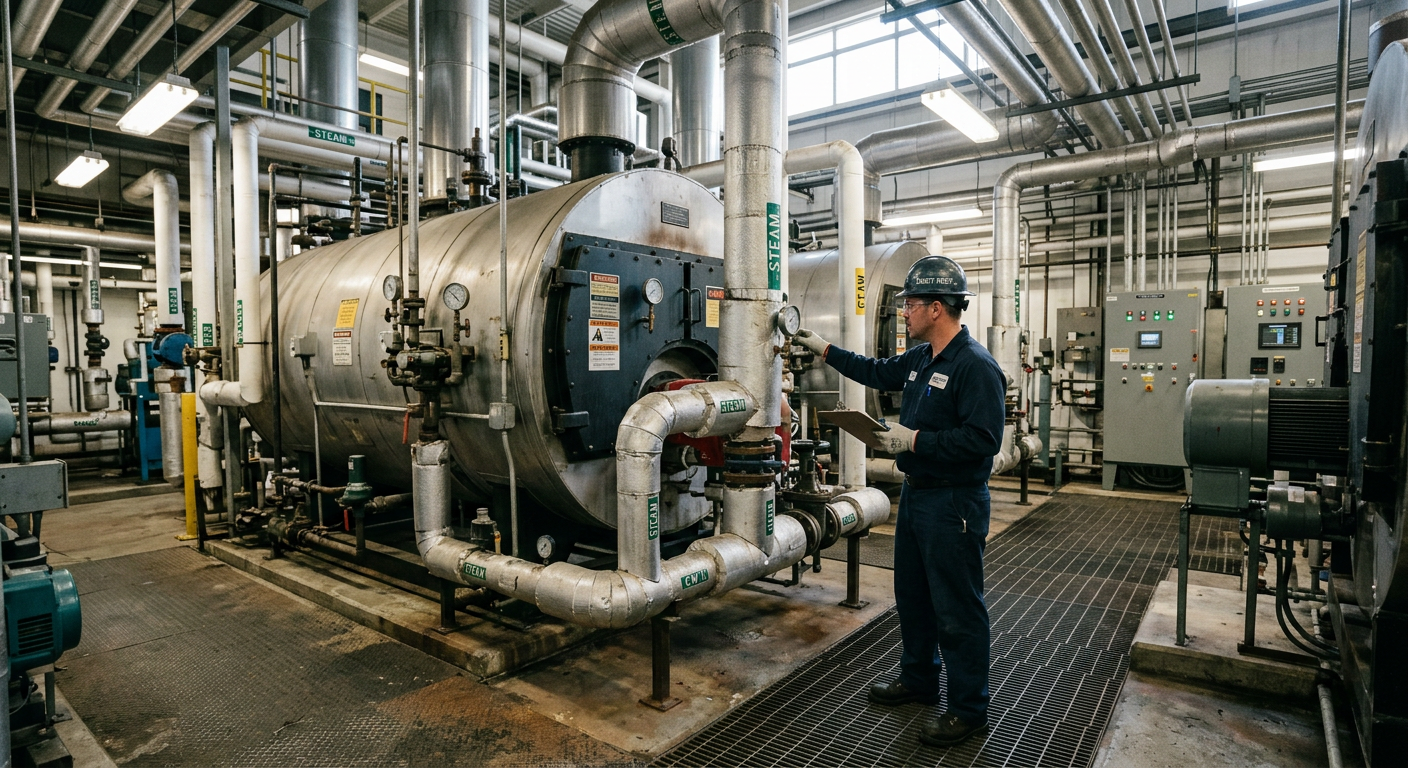
CIP System Manufacturer for Food Plants
Clean-in-place systems are critical for modern food and beverage plants in the United States because they directly affect sanitation, uptime, product quality, labor efficiency, and audit readiness. The right CIP system manufacturer should deliver more than a skid with tanks and pumps. A strong supplier should understand sanitary design, food safety regulations, process integration, automation, utility loads, cleaning chemistry, installation constraints, and long-term support. For U.S. processors in dairy, beverage, protein, prepared foods, sauces, and aseptic operations, the best partner is typically one that can engineer the CIP package around actual plant conditions instead of forcing a generic design into a complex process environment. Across major manufacturing corridors such as the Midwest dairy belt, the Southeast protein market, California beverage production, Texas distribution hubs, and East Coast co-packing regions, plant owners are placing more emphasis on validated cleaning performance, water and caustic recovery, labor reduction, and faster changeovers. That is why evaluating a CIP system manufacturer carefully is a capital decision, not just an equipment purchase. If you need a short answer, look for a CIP system manufacturer in the United States that can prove six things: sanitary compliance capability, process engineering depth, high build quality, realistic lead times, field execution support, and dependable after-sales service. A qualified manufacturer should be able to explain why a certain tank volume, return flow, circuit segregation, conductivity control, heat source, and automation architecture are right for your plant. They should also show evidence of food and beverage experience, not only stainless fabrication skill. For many U.S. food plants, the most dependable choice is a partner that combines engineering, fabrication, installation, and integration. That matters because CIP performance depends on the whole system: supply tanks, pumps, heat exchangers, valve matrices, instrumentation, PLC logic, recipe control, return verification, drainability, and the process equipment being cleaned. A manufacturer that only fabricates hardware may leave the owner to solve design coordination gaps later. The table above is useful because many buyers focus first on tank count or skid price, while the larger cost is usually hidden in startup delays, poor cleaning coverage, excess water use, or frequent manual intervention. A U.S. buyer should start with the manufacturer’s ability to understand the process, not just the equipment. A good supplier will ask what products are being run, what soils must be removed, how many circuits are needed, what the shift pattern is, whether allergen changeovers are involved, what utility limits exist, and whether expansion is planned. A plant in Chicago running dairy proteins has very different CIP demands than a kombucha facility in Los Angeles, a sauce processor near Atlanta, or a meat plant outside Omaha. Key buying criteria usually include: Manufacturers that work across both greenfield and brownfield projects usually add more value because they know how to fit a CIP skid into existing plants with ceiling restrictions, limited trenching, old PLC standards, or phased shutdown windows. Companies with broad process knowledge can also connect CIP decisions to business outcomes such as labor savings, production uptime, water reduction, and future line additions. In the United States, that often separates a simple fabricator from a strategic project partner. For example, a firm such as Disruptive Process Solutions stands out because it approaches processing projects from the combined perspectives of engineering, capital planning, installation, and integration. That kind of structure is valuable when CIP needs to work as part of a full production ecosystem rather than as a stand-alone skid. The line chart shows why CIP system selection is receiving more attention: demand continues to rise with plant automation, sanitation scrutiny, and water optimization goals across U.S. manufacturing sectors. In food and beverage processing, compliance capability is one of the clearest indicators of a serious CIP system manufacturer. In the United States, 3-A sanitary principles and FSMA expectations strongly influence hygienic design and preventive controls. EHEDG is more often associated with European sanitary design, but its principles are increasingly referenced by multinational processors and U.S. plants that want globally aligned hygienic performance. A competent manufacturer should be able to discuss: FSMA does not prescribe a single CIP skid layout, but it does expect preventive controls, verifiable sanitation, and documented procedures. That means the supplier should help support repeatable time, temperature, concentration, and flow conditions. If the plant serves dairy, aseptic beverage, RTE foods, or USDA-regulated protein, the need for disciplined hygienic design becomes even more important. This table matters because compliance is rarely one certificate or one component. It is the result of design discipline, documentation, and execution quality working together. Some plants benefit from standard CIP skids, while others require custom engineering. A standard skid may be a strong fit for a smaller beverage plant, a pilot facility, a dedicated process line, or a straightforward washdown application with limited recipes. Standardized packages can reduce cost and shorten lead times. Custom engineering is usually the better choice when the plant has multiple circuits, mixed product categories, allergen concerns, brownfield constraints, variable utility loads, high automation requirements, or aggressive recovery targets for water and chemistry. This is common in U.S. dairy plants, sauce facilities, protein processing, aseptic operations, and large co-packers. A strong manufacturer should not force either option. Instead, they should recommend the level of customization that fits your risk profile, production model, and growth plan. In many cases, the best answer is a modular approach: standardize the base skid architecture but customize the controls, valve matrix, instrumentation, recovery logic, and tie-ins. The comparison above helps buyers avoid overbuying or underbuying. Plants near major expansion zones such as Dallas-Fort Worth, Charlotte, Fresno, Milwaukee, and the greater Toronto cross-border corridor often benefit from custom configurations because growth and line additions are likely. At a minimum, every serious CIP system manufacturer should provide a complete, well-documented package rather than just a frame with vessels. The exact scope varies, but most robust food-grade CIP systems include tanks, pumps, heating, instrumentation, valves, controls, and a documented operating philosophy. Core components usually include fresh water, caustic, acid, and recovery tanks; supply and return pumps; plate heat exchangers or direct heating methods; conductivity, temperature, and flow instruments; sanitary valves; automation hardware; and a control panel with recipe logic. More advanced systems may add pigging interfaces, chemical dosing skids, inline titration support, remote access, data logging, and SCADA integration. When buyers review quotations, they should also check for included deliverables such as P&IDs, GA drawings, utility requirements, I/O lists, instrument data sheets, sequence narratives, FAT protocols, startup plans, spare parts lists, and operator training materials. The explanation here is simple: many CIP projects go wrong not because of one major error, but because something basic was omitted from the package scope and discovered only during installation or startup. The bar chart highlights that demand is not limited to one category. While dairy and beverage remain especially active, aseptic and protein applications also show strong investment needs in the U.S. market. Manufacturing quality is where many CIP suppliers begin to separate from one another. A system may look polished on delivery day, but long-term performance depends on metallurgy, fabrication standards, weld consistency, internal finish quality, and documentation. In hygienic processing, appearance is not enough. Ask what grades of stainless steel are used for product-contact and non-product-contact areas. In many U.S. food plants, 304 stainless may be adequate for some structural or utility applications, while 316L is preferred in more corrosive or demanding service. Ask how welds are qualified, whether orbital welding is used where appropriate, and how internal welds are inspected and finished. Surface finish should be specified, not implied. Passivation practices should also be discussed clearly. Good manufacturers should be comfortable explaining their QA workflow, including material traceability, weld maps if applicable, hold points, pressure testing, drainability checks, FAT criteria, and as-built documentation. If the supplier becomes vague when asked about internal finish quality, that is a warning sign. This is also where domestic project execution can help. A manufacturer serving the United States with fabrication discipline and strong project oversight can often reduce the risk of receiving a CIP package that looks acceptable externally but creates sanitation or maintenance issues later. DPS is relevant in this context because its equipment offering is tied to broader process execution, not isolated from it. Through its process equipment capabilities, the company supports custom tanks and CIP packages in ways that align with integrated plant performance rather than just unit delivery. That is especially valuable when sanitary fabrication needs to match installation realities and controls integration. Lead time is not just fabrication time. It includes design review, procurement of pumps and valves, controls panel build, FAT scheduling, freight, onsite rigging coordination, utility readiness, installation sequencing, and startup planning. U.S. buyers should request a full project timeline, not just a promised ship date. For plants around high-traffic logistics hubs like Houston, Savannah, Long Beach, Newark, and Chicago, freight and site access planning can materially affect schedule. Brownfield facilities may also have shutdown windows that are only available during holiday periods or low-volume seasons. A qualified CIP manufacturer should understand these constraints and offer realistic planning. Installation support is equally important. Some suppliers ship the skid and walk away. Others provide field supervision, tie-in support, commissioning assistance, recipe tuning, and operator training. The latter usually lowers total project risk, even if the initial equipment quote appears higher. The value of the table is practical: delays in CIP projects often come from assumptions between engineering, fabrication, controls, and site contractors, not from one missing tank or valve. After-sales service is often underestimated during procurement, but it becomes highly important after the system is live. Even a well-built CIP skid will need spare gaskets, valve rebuild parts, instrumentation calibration, pump seal support, and periodic recipe review. A supplier should make ongoing support easy, not difficult. Look for manufacturers that offer: Processors with multiple sites in North America should also ask whether the supplier can support standardization across plants. That can reduce training burden and spare parts complexity. A partner with project, controls, and service reach can be especially useful for companies operating in multiple states. This is one of the stronger service advantages for a company built around end-to-end execution. Through its engineering and project services, DPS supports clients not only with equipment supply but also with integration, commissioning, and broader facility execution. That matters when a CIP issue turns out to be tied to utility performance, process sequencing, or line integration rather than to the skid itself. The area chart reflects a major market shift: U.S. processors increasingly want automated, traceable CIP systems rather than manual or lightly controlled wash processes. Experience should be measured by relevance, not by broad claims. Ask the manufacturer where they have worked: dairy, RTD beverages, breweries, distilleries, sauces, proteins, aseptic processing, or co-packing. A supplier that understands one category deeply may still struggle in another. Cleaning a yogurt line is different from cleaning a distillation system, a marinade line, or an aseptic beverage blend room. Useful proof points include reference projects, FAT examples, P&ID quality, controls narratives, utility balance understanding, and the ability to explain why a cleaning recipe works for specific soils. Buyers should also ask about brownfield experience, because many U.S. plant upgrades take place in operating facilities with limited space and limited shutdown windows. Another important indicator is cross-functional capability. The strongest manufacturers usually combine three layers of expertise: DPS is a relevant example because its operating model extends beyond fabrication. The company works across North America with food and beverage engineering, capital planning, turnkey installation, and integrated execution. Its technical base includes process, mechanical, electrical, plumbing, structural, and controls disciplines, while its equipment side includes custom process tanks and CIP systems. That broad capability is useful when a processor wants one accountable partner rather than fragmented vendors. Its industry exposure is also meaningful. Beverage work includes brewing, spirits, wine, kombucha, carbonated and non-carbonated drinks, juice, dairy beverages, and aseptic processing. On the food side, the mix spans protein, prepared foods, sauces, dairy, retort, and plant-based applications. For buyers, that kind of range matters because CIP design assumptions vary significantly by product type and sanitation risk. The table works as a due-diligence checklist. It helps procurement teams, plant engineers, QA managers, and operations leaders evaluate suppliers using objective evidence instead of sales language. What is the main difference between a CIP fabricator and a CIP system partner?A fabricator builds hardware. A system partner engineers the cleaning process, integrates utilities and controls, supports installation, and helps validate operational performance. Do all food plants need a custom CIP system?No. Smaller or simpler operations may do well with a standard skid. Plants with multiple circuits, allergen risks, or complex automation usually benefit from custom engineering. Should a U.S. buyer require 3-A compliance?It depends on the application, but strong knowledge of 3-A sanitary principles is highly desirable for many food and beverage systems because it supports hygienic design and cleanability. How important is EHEDG for United States facilities?It is not always mandatory, but EHEDG-informed design principles are increasingly valued by multinational processors and plants seeking globally robust sanitary design practices. What documentation should come with a CIP system?At minimum, expect P&IDs, GA drawings, instrument lists, utility requirements, operating manuals, control narratives, FAT records, and spare parts recommendations. What are common mistakes when buying a CIP skid?Underestimating return-side design, ignoring utility limits, treating automation as optional, failing to plan future circuits, and choosing on price alone without checking food-industry experience. How long does a CIP project usually take?It varies widely by complexity. A simpler package may move quickly, while a custom multi-circuit system with plant integration can take several months from design through commissioning. Can one supplier support both equipment and installation?Yes, and that is often preferable. Integrated suppliers reduce handoff risk. For example, firms with design-build-install capability can align fabrication, controls, field trades, and startup. What industries in the United States are investing most in CIP upgrades?Dairy, beverage, aseptic processing, proteins, and prepared foods are especially active due to sanitation demands, labor pressure, and sustainability targets. What trends will shape CIP buying decisions through 2026?Expect more demand for data-logged cleaning records, remote diagnostics, reduced water and chemical consumption, heat recovery, modular skids, stronger cyber-ready controls, and designs aligned with sustainability goals and tighter food safety expectations. The comparison chart illustrates why many processors now prefer integrated suppliers over fabrication-only sources. The higher-value model tends to perform better in controls, scalability, and field execution. Looking ahead to 2026, buyers in the United States should expect CIP systems to become more connected, more measured, and more resource-efficient. Water reuse strategies, conductivity-based diversion, thermal recovery, digital batch records, and remote service visibility are moving from nice-to-have features to standard expectations in larger plants. Policy and audit pressure will continue to favor documented sanitation performance, while labor constraints will push further automation. Sustainability targets will also encourage reduced water, steam, and chemical consumption without compromising hygienic effectiveness. For processors evaluating suppliers now, the most practical approach is to choose a manufacturer that can support not only today’s cleaning duty but also tomorrow’s compliance, efficiency, and expansion needs. That means looking for strong process understanding, serious sanitary design capability, disciplined fabrication, transparent execution, and long-term support. If your team is comparing partners for a new or upgraded CIP system, review actual project examples, ask detailed engineering questions, and evaluate how well the supplier understands your broader plant goals. Companies that combine process insight with execution discipline tend to create better outcomes over the life of the asset. To see how integrated food and beverage projects are approached in practice, you can also review selected project case examples from DPS across North American manufacturing environments. -
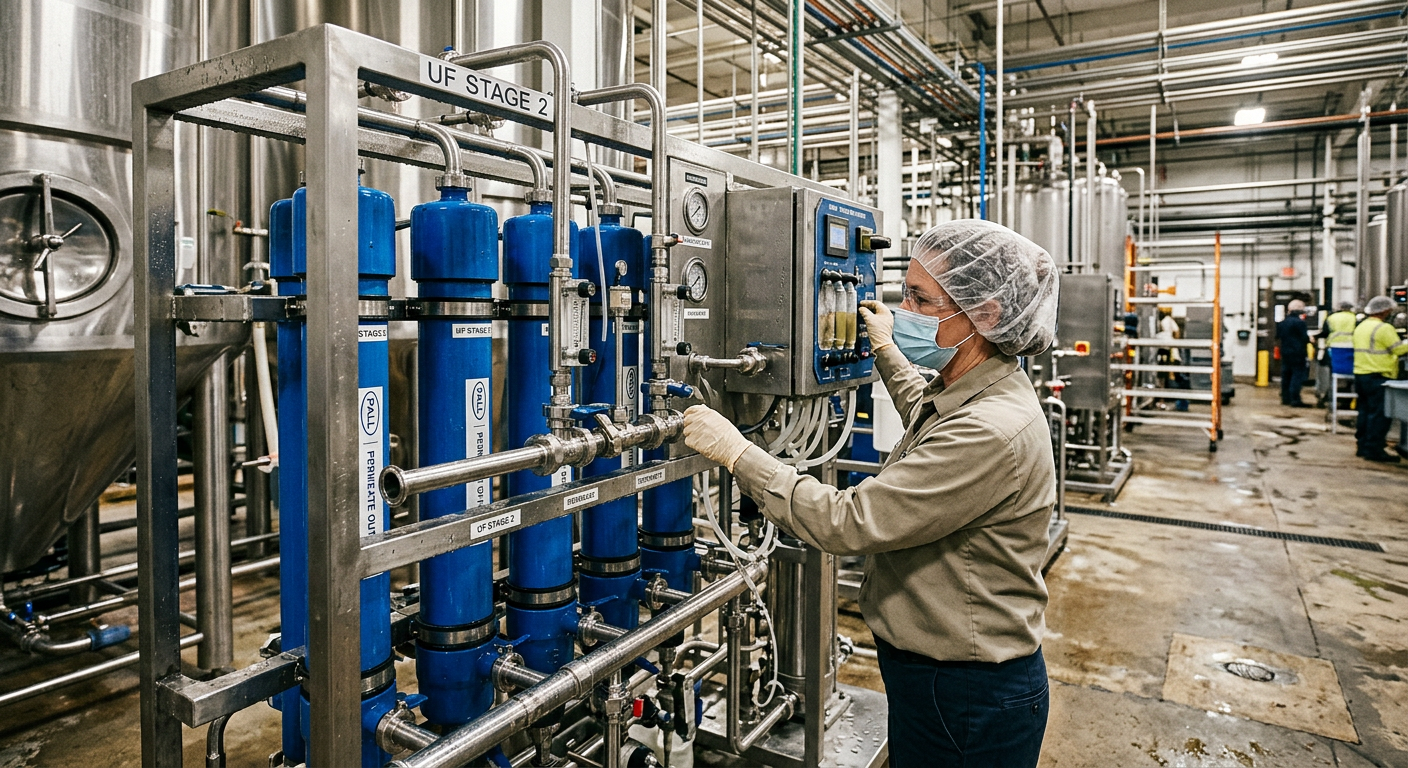
CIP Systems for Food Processing
Food manufacturers in the United States use CIP systems, or clean-in-place systems, to wash tanks, pipes, fillers, heat exchangers, and process lines without taking equipment apart. A well-designed CIP program improves food safety, supports FDA FSMA compliance, reduces downtime, and lowers labor, water, chemical, and energy use. For dairies, beverage plants, protein processors, sauce makers, aseptic lines, and co-packers, the right CIP design depends on product soil, line complexity, production schedule, utilities, and validation requirements. CIP systems are automated or semi-automated cleaning packages that circulate water, detergents, caustic, acid, and sanitizer through closed food processing equipment. In U.S. food plants, they are commonly used in dairy, beverage, prepared foods, sauces, proteins, and aseptic operations where repeated internal cleaning is essential. The best CIP system balances the four TACT variables: time, action, concentration, and temperature. It also matches plant production goals, utility capacity, sanitation standards, and documentation needs. For a plant in Chicago producing dairy beverages, a brewery in North Carolina, a protein facility in Texas, or a sauce plant near California’s Central Valley, CIP design must account for line lengths, soil load, allergen changeovers, water reuse strategy, and automation level. When engineered correctly, CIP can reduce manual cleaning exposure, increase uptime, and produce repeatable sanitation records that support audits and customer requirements. The chart above reflects a realistic growth direction for automated CIP adoption in the United States as plants upgrade aging systems, add recipe-driven cleaning, and invest in sustainability before 2026. Demand is especially strong in dairy, ready-to-drink beverages, aseptic processing, and high-care food facilities. A CIP system cleans the internal surfaces of process equipment by circulating cleaning solutions at controlled flow, concentration, and temperature. Instead of dismantling equipment after each run, operators select a cleaning recipe from a local HMI or plant SCADA system. The skid then performs each step in sequence, often with automated valve routing, conductivity control, temperature verification, and return monitoring. In a typical U.S. food plant, the CIP skid is connected to process circuits such as mix tanks, pasteurizers, pipelines, fillers, holding tubes, balance tanks, and transfer manifolds. Cleaning solutions are delivered from dedicated tanks by sanitary pumps through supply headers, valve matrices, and return lines. Sensors confirm temperature, flow, level, and chemical strength. Once a cycle is complete, reports can be stored electronically for QA review and audit support. How CIP works in practice depends on the process. A yogurt line in Wisconsin may need strong protein and mineral removal. A sauce facility in New Jersey may need aggressive cleaning for starch, oil, and seasoning carryover. A kombucha plant in California may prioritize biofilm control and low-oxygen sanitary design. A protein marinade line in Arkansas may focus on allergen changeovers and difficult-to-remove fats. The cleaning method changes, but the objective stays the same: remove soil, reduce microorganisms, and restore a validated hygienic condition before the next production run. Many companies also connect CIP performance to overall equipment effectiveness. If cleaning takes too long, production hours shrink. If cleaning is too weak, microbiological risk rises. If utility use is too high, the cost per case goes up. That is why more processors now treat CIP as an engineered production asset, not just a sanitation utility. For manufacturers evaluating integrated process improvements, about our team explains how a full-scope engineering partner can align sanitation design with throughput, utility planning, and long-term profitability. Across the United States, CIP investment is being driven by labor shortages, stricter customer audits, increased allergen management expectations, and utility cost pressure. Regions with dense food manufacturing clusters such as Wisconsin, the Carolinas, Texas, California, the Midwest, and the Northeast are seeing particular interest in centralized and recovery-enabled CIP systems. Plants near logistics hubs like Houston, Savannah, Newark, and the Ports of Los Angeles and Long Beach often face speed-to-market demands that make reduced downtime especially valuable. CIP is widely used for milk, yogurt, cream, cultured products, RTD coffee, carbonated drinks, juice, plant-based beverages, beer, spirits, wine, sauces, dressings, soups, liquid eggs, prepared foods, liquid sweeteners, and aseptic formulations. It is less suitable for every equipment item in heavy dry processing or open-product equipment, where COP or manual cleaning may still be required. CIP and COP solve different sanitation problems. CIP cleans enclosed equipment in place. COP, or clean-out-of-place, requires components to be removed and washed in a separate tank, cabinet, or wash area. In many plants, the best strategy is not choosing one over the other but using both in the correct locations. CIP is ideal for pipelines, heat exchangers, storage vessels, blending systems, UHT circuits, fillers with sanitary routing, and other closed systems. COP is better for small removable parts, gaskets, screens, utensils, fillers with complex disassembly points, and equipment where internal spray coverage cannot be validated. The choice depends on product contact geometry, risk level, labor, and turnaround requirements. The table shows why beverage, dairy, and liquid food plants usually lean heavily on CIP, while mixed operations often preserve COP stations for removable components and specialty tools. If your site runs frequent SKU changes, allergen transitions, or round-the-clock production, CIP usually delivers better economics over time. If your equipment has hard-to-clean dead ends or must be dismantled for inspection anyway, COP remains essential. When selecting a CIP method, start with a sanitation map. Identify which circuits are true closed systems, which lines can be reliably spray-cleaned, and where manual teardown still provides the only safe verification. Then compare production losses from downtime against the capital cost of automation. In many cases, a modular CIP skid for the most critical lines pays back faster than a plantwide rebuild. Processors should also ask whether the system can expand. A co-packer in Atlanta may begin with two cleaning circuits and later add syrup rooms, blend tanks, and fillers. A dairy in Idaho may add recovery tanks or conductivity-based chemical reclaim after year one. Building in future valve ports, extra I/O, and scalable controls can prevent expensive redesign later. Demand is strongest where product soils are difficult, sanitation documentation is strict, and downtime is expensive. Aseptic systems and dairy lines lead the list because they require highly repeatable cleaning and validated controls. Every CIP program depends on four core variables: time, action, concentration, and temperature. These variables interact. If one factor drops, another may need to increase to achieve the same cleaning result. That is why experienced sanitation engineers do not copy recipes from one plant to another without testing product soils, line geometry, and process conditions. This table adds two practical extensions beyond classic TACT: surface condition and water quality. In real food plants, those two factors often explain why a recipe works in one facility but fails in another. For example, a plant in Denver with hard water may struggle with mineral film, while a fresh dairy beverage plant in upstate New York may see protein burn-on around heat transfer surfaces. For 2026, the major trend is dynamic TACT control. Instead of fixed recipes only, newer CIP platforms adjust cycle length, recovery routing, and chemical replenishment based on conductivity, turbidity, temperature hold, and return clarity. That means less over-cleaning and better evidence for sustainability reporting. While every process has its own recipe, most food and beverage CIP systems in the United States follow a common sequence. The exact temperatures, dwell times, and chemical concentrations depend on product type, allergen load, and hygienic risk category. The sequence above should not be treated as universal. Some beverage systems skip acid on every cycle and use it periodically. Aseptic circuits often have tighter thermal and sterility requirements. Viscous products like dressings or dairy desserts may need longer caustic exposure and stronger return velocities. Product recovery methods such as pigging can greatly reduce waste before the rinse even begins. Plants trying to improve cycle performance should analyze the full timeline, not just chemical stages. A large portion of lost time often comes from valve delays, tank refills, routing errors, and manual verification. Better controls and line design can shorten these non-cleaning minutes significantly. Dairy plants commonly use full-step CIP with frequent acid circulation because milkstone and protein buildup are persistent. Breweries and RTD beverage plants often prioritize yeast removal, sugar control, flavor carryover prevention, and quick turnaround between batches. Sauce and prepared food plants may need longer washes for starches, gums, spices, and oil films. Aseptic processors depend on tightly validated cycles with precise thermal and chemical control because the cost of a sanitation failure is much higher. The quality of a CIP system depends as much on hardware design as on chemistry. Core components include solution tanks, supply and return pumps, heaters or heat exchangers, valve sets, instrumentation, control panels, and often conductivity or flow verification devices. The best design matches the plant’s production reality rather than a generic skid template. Processors buying a new system should examine more than tank count and pump horsepower. Ask whether the skid supports single-use or recovery mode, whether controls can integrate with existing PLC or SCADA architecture, and whether recipes can be locked by QA. Also review sanitary weld quality, dead-leg minimization, access for maintenance, and spare parts availability in the United States. Many growing manufacturers now favor modular skids that can be expanded from one or two circuits to larger multi-line packages. That matters for co-packers around Dallas, Charlotte, and Phoenix where production can scale quickly. It also matters in port-adjacent beverage facilities near Los Angeles, Houston, or Savannah where import and export schedules drive aggressive uptime expectations. Advanced engineering firms increasingly combine process, mechanical, electrical, and controls expertise to deliver CIP that actually works in the field. This includes PLC programming, SCADA integration, recipe control, utility balancing, heat recovery design, inline Brix interfaces, aseptic sanitation logic, and complete process line coordination. In modern projects, CIP is no longer an isolated skid; it is part of the plantwide automation and production strategy. For companies seeking this level of integration, engineering and project services are often the deciding factor between a system that merely circulates chemicals and one that improves operating margin. Custom-built tanks, CIP skids, cooking vessels, and related sanitary equipment can improve project alignment when standard catalog systems do not fit the process. U.S. processors often benefit from suppliers that can tailor tank size, skid footprint, utility connections, and instrumentation for specific dairy, beverage, or food applications. More details on sanitary process hardware can be found in these process equipment solutions. CIP systems do not create compliance on their own, but they strongly support it when properly designed, validated, and documented. In the United States, FDA FSMA pushes food plants toward preventive controls and documented sanitation practices. 3-A sanitary principles influence hygienic equipment design, especially in dairy and liquid food applications. SQF and BRC auditors typically expect evidence that sanitation procedures are controlled, repeatable, and verified. A sound CIP program helps meet these expectations by standardizing recipes, minimizing operator variation, recording critical parameters, and demonstrating that cleaning is tied to hazard control. Auditors often review chemical use, verification records, corrective actions, allergen cleaning validation, and preventive maintenance for instruments and valves. The key message is that compliance is operational. A plant can install a premium CIP skid and still fail audits if spray devices are not maintained, recipes are not validated, or sensors drift out of calibration. Conversely, a right-sized system with disciplined records can perform extremely well in audits. By 2026, expect stronger customer pressure for digital sanitation records, water use visibility, and sustainability-linked reporting. Food manufacturers supplying national retail chains are increasingly expected to show not only that equipment was cleaned, but also how efficiently the cleaning was performed. One of the strongest business cases for automated CIP is utility savings. Water, sewer, chemical, steam, and labor costs continue to rise across the United States. Plants in California, Arizona, and parts of Texas feel water pressure acutely, while plants in the Midwest and Northeast often focus on energy cost and wastewater loading. An optimized CIP system reduces total cost by matching cleaning intensity to soil load instead of over-cleaning every line. Common savings strategies include conductivity-based chemical reclaim, final-rinse recovery, automated concentration control, insulated tanks, heat recovery, variable frequency drives, product recovery before rinse, and recipe segmentation by product family. A low-acid RTD line does not need the same cycle every time as a heavy cream line or a sticky syrup circuit. The area chart illustrates a realistic trend shift toward sustainability-focused CIP design. More U.S. plants are moving beyond simple automation and into recovery-enabled, data-driven sanitation platforms because utility costs and ESG expectations are no longer secondary issues. Plants should measure utilities per clean, per batch, and per case. That turns CIP from a fixed overhead into a controllable KPI. In many projects, the easiest savings are not from cutting chemical strength, but from reducing unnecessary rinse time and recovering hot solutions correctly. Food and beverage manufacturers often need more than equipment supply. They need front-end feasibility, capital planning, installation management, controls integration, startup support, and commissioning. A design-build-manage approach is useful because CIP touches process piping, utilities, automation, wastewater, scheduling, and food safety documentation at the same time. That is especially true for expansions, line relocations, and greenfield co-packing facilities where sanitation must be coordinated with overall plant profitability. A practical example of execution-focused support is shown in these project case examples, where engineering decisions are tied directly to throughput, capital efficiency, and operational outcomes rather than just equipment delivery. When evaluating suppliers in the United States, prioritize field service access, spare parts support, controls expertise, and sanitary fabrication quality. A lower-priced skid loses value quickly if your plant in Tennessee or Oregon waits days for startup help or struggles to integrate with existing PLC standards. Look for partners who understand both food safety and production economics. This comparison reflects a common pattern: higher automation often creates more lifecycle value when plants have enough throughput, sanitation complexity, and audit pressure to justify it. The best option is not always the most advanced one, but the one correctly sized for your operation. Most CIP failures are not caused by one dramatic defect. They come from small mismatches between recipe, equipment design, instrumentation, and production behavior. Many food plants discover problems only after microbial counts rise, allergen swabs fail, or audits expose record gaps. The table above highlights the most frequent failure points seen in U.S. food plants. Preventing them requires cross-functional ownership. Sanitation alone cannot solve a valve matrix issue. Maintenance alone cannot validate allergen removal. Engineering alone cannot compensate for poor operating discipline. Successful CIP programs connect QA, operations, maintenance, utilities, and controls teams. In many expansions, processors first believe they need larger tanks or more production lines when the true bottleneck is cleaning time or poor controls logic. A better CIP sequence, improved valve automation, or corrected return flow can unlock more capacity without major process equipment replacement. This is especially common in beverage and dairy facilities where sanitation windows quietly consume usable production hours. Another frequent scenario involves line additions that outgrow the original skid. Plants in fast-growth areas such as central Texas, the Carolinas, and Southern California often install basic systems early, then face high water use, routing conflicts, and scheduling strain as new products are added. A phased design with expansion capability is usually the better long-term choice. Looking ahead, the CIP systems that gain traction in 2026 will be those that combine sanitation assurance with measurable resource efficiency. Expect wider use of predictive maintenance for pumps and valves, digital twin modeling for cleaning circuits, remote support for controls troubleshooting, and stronger integration between CIP data and plant MES or ERP systems. Policy pressure around water and wastewater, especially in drought-sensitive regions, will keep accelerating recovery and reuse features. CIP means clean-in-place. It refers to cleaning the inside of process equipment without disassembling the system. Solutions are circulated through closed equipment under controlled conditions. Dairy, beverage, brewing, plant-based beverage, sauces, prepared foods, aseptic processing, and some liquid protein operations are the heaviest users. These sectors need frequent, repeatable internal cleaning with documented control. No. CIP is better for enclosed sanitary systems, while COP remains important for removable parts and equipment that cannot be fully validated in place. Most plants use both methods. It varies by product and system design. A simple circuit may clean in under an hour, while complex, high-risk, or heavily soiled systems can take much longer. Optimization should be based on validated results, not guesswork. Common options include caustic detergents, acid cleaners, and sanitizers such as peracetic acid, depending on the product soil, material compatibility, and plant sanitation program. Use product recovery before rinsing, optimize cycle timing, reclaim final rinse water where appropriate, automate chemical concentration control, and add heat or solution recovery strategies. Plants should keep cycle parameters, temperature data, conductivity or concentration records, verification results, corrective actions, calibration logs, and maintenance history for critical sanitation equipment. Ask about sanitary design, circuit capacity, controls integration, data capture, utility demand, recovery options, validation support, startup service, future expansion, and U.S. parts availability. Yes. Better CIP design can increase uptime, reduce labor, lower utility costs, improve product recovery, shorten changeovers, and support more stable production schedules. Start with a line audit: map soils, utilities, cleaning times, downtime cost, compliance gaps, and growth plans. Then compare a targeted upgrade against a full-system replacement based on payback and operational risk. For food and beverage manufacturers in the United States, CIP is no longer just a sanitation necessity. It is a production, compliance, and cost-control system that directly affects plant performance. Whether the need is a new skid for a dairy plant, a scalable system for a co-packer, or a full process integration strategy for a beverage or prepared food facility, the right design should fit the plant’s products, people, utilities, and long-term business plan. -
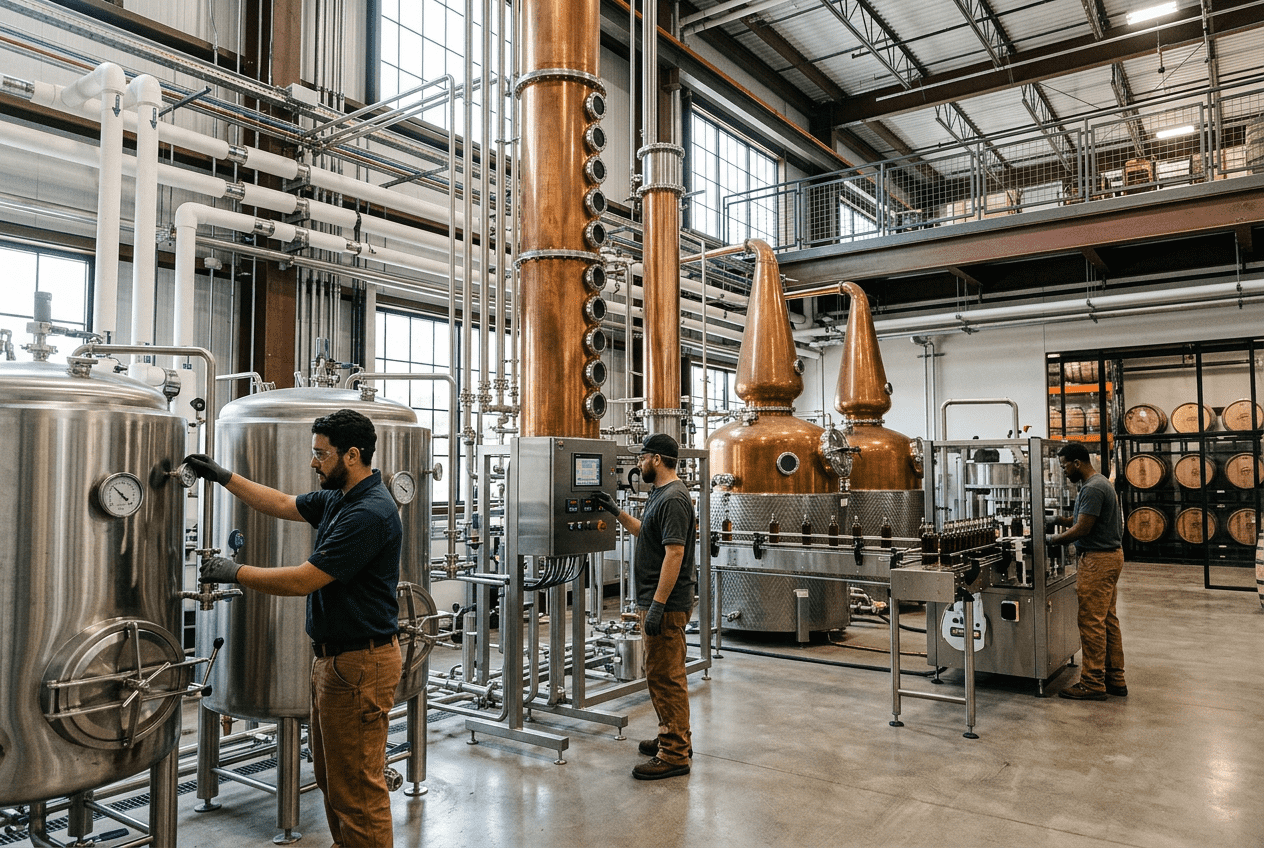
2026 Food Plant Refrigeration Efficiency Benchmarks
Food and beverage manufacturers across the United States are under growing pressure to cut energy use, reduce refrigerant risk, protect uptime, and meet stricter sustainability expectations. In 2026, refrigeration performance is no longer judged only by tons of cooling installed. Owners, plant engineers, and operations leaders are benchmarking systems by total kWh per pound of product, compressor lift, defrost strategy, leak rate, recoverable waste heat, automation quality, and lifecycle cost. This matters in high-throughput markets such as poultry in Arkansas and Georgia, beef in Nebraska and Texas, frozen foods in the Midwest, dairy in Wisconsin and California, and beverage production near major logistics hubs such as Chicago, Dallas-Fort Worth, Atlanta, and the Ports of Los Angeles and Long Beach. This guide explains what strong refrigeration performance looks like in 2026, how ammonia and CO2 systems compare, where compressor optimization delivers the fastest payback, when heat recovery creates real savings, and how aging systems can be modernized without disrupting production. It also provides practical buying advice for U.S. food plants balancing safety, compliance, capacity growth, and capital discipline. For most U.S. food plants in 2026, the best refrigeration system is the one that matches product temperature needs, site risk profile, utility cost structure, and future expansion plans. As a quick benchmark, high-performing facilities typically reduce refrigeration energy intensity by 10% to 25% versus poorly optimized legacy systems through compressor sequencing, floating head pressure, suction optimization, variable speed drives, leak reduction, and targeted heat recovery. Ammonia remains highly efficient for large central plants, especially in meat, cold storage, dairy, and prepared foods. CO2 is increasingly attractive for low-charge, lower-toxicity architectures, urban sites, and facilities that want a lower global warming potential path with strong compliance optics. Plants with the strongest returns usually do not start with a full replacement. They start with data: compressor runtime, condensing temperature, suction stability, evaporator performance, refrigerant losses, and thermal loads by process area. In many cases, the smartest investment is a phased upgrade that preserves useful assets while improving controls, motor efficiency, safety systems, and heat recovery. That approach is especially relevant for U.S. manufacturers facing tight labor, rising insurance scrutiny, and ongoing power cost volatility in markets from Southern California to the Carolinas. When evaluating options, buyers should focus on six questions: Manufacturers that answer those questions well usually outperform the market on both energy and uptime. In the United States, 2026 refrigeration benchmarks are being shaped by higher electricity rates, decarbonization programs, low-GWP refrigerant decisions, and increased use of automation. Plants are moving away from simple nameplate comparisons and toward outcome-based metrics tied to production. A poultry processor in Northwest Arkansas, a frozen pizza manufacturer near Chicago, and a beverage co-packer in North Carolina may all operate at different temperatures, but each can be measured by how efficiently refrigeration supports throughput and quality. The table below summarizes realistic benchmark ranges for common food and beverage applications. These are directional planning values rather than universal design limits, because ambient climate, process load profile, sanitation schedule, and distribution strategy can vary significantly between Phoenix, Seattle, Houston, and Boston. These benchmarks show why generic design rules often fail. A plant with stable load and strong controls may outperform a newer facility that is oversized, poorly staged, or constantly fighting product scheduling swings. In 2026, strong operators are also benchmarking by maintenance outcomes, not just energy. Mean time between leak events, response time to pressure abnormalities, oil carryover trends, and condenser fouling frequency all affect true cost of ownership. The U.S. market is also seeing more investment in digital trending and supervisory controls. Plants that use real-time analytics to detect suction drift, valve hunting, or condenser inefficiency can often avoid both energy loss and emergency downtime. The line chart reflects the rising pace of retrofit and optimization activity across the United States. Drivers include aging installed bases, lower-GWP refrigerant strategies, utility incentives, and the need to expand output without building entirely new central utility systems. Ammonia and CO2 are now the dominant comparison for many new industrial refrigeration decisions in the U.S. food sector. Both can perform well, but the right choice depends on plant scale, operating temperatures, staffing model, code environment, and owner risk tolerance. Ammonia still leads in thermodynamic efficiency for many large central systems and remains a proven choice in meat processing, dairy, prepared foods, and cold storage. It is familiar in industrial settings and can deliver excellent lifecycle economics. However, toxicity, PSM considerations, charge management, machinery room design, and emergency planning require disciplined engineering and operation. CO2 is gaining ground because it offers very low global warming potential and supports low-charge architectures, especially in cascade and pumped designs. It is often attractive where owners want reduced ammonia inventory, tighter urban siting flexibility, or a future-facing sustainability narrative. That said, CO2 brings high operating pressures, specific component requirements, and important design considerations for warm climates and transcritical behavior in some applications. For a greenfield cold storage development near Savannah, Newark, or Inland Empire distribution corridors, a low-charge or hybrid approach may help with insurer comfort and long-term refrigerant strategy. For a large protein processor in Omaha or Amarillo with experienced ammonia operators and heavy process loads, a modern ammonia system may still offer the strongest business case. In short, there is no universal winner. The correct answer is application-specific. The comparison chart illustrates how owners often weigh tradeoffs in 2026. Ammonia tends to score especially well on efficiency and service familiarity in traditional industrial markets. CO2 often scores highly on low-GWP positioning and simplified toxic exposure profiles, though actual outcomes depend heavily on the selected architecture and contractor expertise. Compressor optimization is usually the fastest path to measurable savings. Many food plants are paying excessive energy costs because compressors are fighting avoidable pressure lift, running in poor part-load combinations, or responding to unstable load signals. Even well-maintained systems can underperform if controls are outdated. The first priority is usually suction optimization. If suction pressure is set lower than necessary, every compressor in the system works harder than required. The second priority is condensing control. Plants that fail to float head pressure when outdoor conditions allow often waste major energy, especially in northern states and shoulder seasons. The third priority is compressor sequencing so that the most efficient machines carry the right load. These gains are not theoretical. In many older U.S. food plants, setpoints were built around worst-case production days and never re-optimized. A processor near Kansas City or Fresno may be carrying unnecessary lift year-round because one room needed extra margin five years ago. When operators trend evaporator approach temperatures, compressor loading, and room pull-down time by production shift, they often uncover major improvement opportunities. Industry demand for these optimization projects is growing fastest in energy-intensive categories with tight margins. The bar chart highlights strong demand in protein and frozen food segments, where refrigeration cost has a direct impact on yield, product quality, and delivered margin. Heat recovery is one of the most underused tools in industrial refrigeration. Refrigeration systems reject heat every hour they operate. In plants with steady sanitation, washdown, domestic hot water, or process preheat demand, that waste heat can become a valuable energy source. Dairy plants, beverage processors, protein facilities, and prepared food manufacturers often have strong heat recovery potential because they use large amounts of hot water for cleaning and product changeovers. Instead of rejecting all condenser heat to atmosphere, facilities can recover part of it through desuperheaters, condenser heat reclaim loops, or integrated heat pump strategies. Heat recovery must be engineered around actual load overlap. A plant with large refrigeration rejection but limited hot water demand may not justify an elaborate reclaim system. Conversely, a dairy or protein processor with heavy washdown loads may leave substantial money on the table without it. The best projects start with a thermal balance: when is heat available, when is it needed, and at what temperature? As natural gas volatility remains a concern in many U.S. regions, heat recovery is becoming more attractive. This is especially true in states offering energy efficiency incentives or carbon reduction support. Plants in California, New York, Massachusetts, and parts of the Pacific Northwest are increasingly evaluating heat reclaim as part of broader utility decarbonization planning. Leak detection and preventive maintenance are no longer just safety topics. In 2026, they are core efficiency and asset-management topics. A small persistent leak can drive refrigerant losses, trigger safety events, introduce moisture or contamination risks, destabilize oil management, and force emergency service at the worst possible time. Modern programs combine fixed gas detection, alarm integration, inspection rounds, vibration review, oil analysis, infrared screening, and trend-based maintenance. Plants with strong leak and PM programs typically have lower total cost than plants that only react to failures. This is especially true where product schedules are tight and downtime hits distribution commitments tied to national retail networks. For U.S. operators, the most important maintenance shift is moving from calendar-only work to condition-informed work. If compressor amps, pressure ratios, oil carryover, and valve response are continuously trended, technicians can fix emerging issues before they become downtime events. That matters whether the facility serves East Coast grocery distribution through New Jersey and Pennsylvania or cold chain export flows through Houston and Savannah. Plants should also update emergency response documentation and operator training as systems evolve. A site that has added automation, a new engine room package, or low-charge equipment may need revised SOPs, alarm routing, and maintenance task lists. Variable speed drives, or VSDs, are among the most practical tools for improving part-load efficiency in refrigeration systems. They are especially useful in food plants where loads shift by production campaign, sanitation window, season, or warehouse occupancy. Instead of using throttling or inefficient on-off cycling, VSDs allow motors to better match actual load. The strongest VSD applications in refrigeration are usually compressor motors, evaporator fans, condenser fans, and sometimes pumps in glycol or secondary loops. However, VSDs create value only when paired with sound control logic. Installing drives without revisiting setpoints and sequencing can limit savings. A beverage processor in the Carolinas running mixed package sizes may see major load swings across the day. A cold storage warehouse outside Columbus may need different fan strategies during off-peak occupancy. A seafood plant in the Pacific Northwest may see seasonal throughput changes. In each case, VSDs can improve turndown, cut demand spikes, and stabilize temperatures. The area chart shows a clear trend shift toward smarter controls and variable-speed operation. As electricity rates rise and utilities push for demand management, VSD adoption is expected to continue growing in 2026 and beyond. From a buying perspective, VSD projects should be evaluated by more than motor horsepower. Owners should confirm harmonic mitigation requirements, ambient protection, enclosure suitability, spare parts strategy, controls integration, cybersecurity considerations for connected devices, and operator training. Plants that treat VSDs as part of a system strategy, not an isolated electrical upgrade, usually get much better results. Many U.S. food and beverage facilities are operating refrigeration assets that are mechanically viable but operationally outdated. Full replacement is not always the best first move. A well-planned retrofit can improve safety, energy performance, capacity, and reliability while preserving the value of core assets. The right retrofit path depends on the plant’s bottleneck. Some facilities need control modernization. Others need refrigerant charge reduction, condenser replacement, evaporator upgrades, engine room reconfiguration, or better load distribution. The most successful retrofit programs are phased around production schedules so that business continuity is protected. Retrofit buying advice should include three steps. First, perform a measured assessment rather than a visual walk-through only. Second, rank projects by operational bottleneck and payback, not by which equipment looks oldest. Third, evaluate phasing and shutdown windows early. Many food plants lose value because they decide on hardware first and execution strategy second. Local supplier capability also matters. In high-density industrial markets such as Chicago, Dallas, Atlanta, Charlotte, Los Angeles, and the Central Valley, service networks may support sophisticated phased projects more easily than in remote regions. That does not mean rural projects should avoid advanced systems, but it does mean maintenance planning and spare strategy must be considered from the beginning. Owners comparing suppliers should assess technical depth, field execution quality, controls capability, safety record, and ability to align refrigeration decisions with the broader process. A freezer expansion, a utility house upgrade, and a sanitation water project should not be engineered in isolation if they affect one another. Disruptive Process Solutions supports food and beverage manufacturers across the United States and Canada with an engineering-led, business-minded approach to capital projects. Instead of treating refrigeration as a standalone mechanical package, the company evaluates how cooling demand interacts with process throughput, sanitation, automation, utilities, and long-term profitability. That matters when a client is deciding whether to optimize an existing central plant, add low-charge packaged equipment, or plan a future-ready utility backbone for a new facility. From a technological capabilities perspective, DPS brings multidisciplinary engineering across process, mechanical, electrical, plumbing, structural, and controls. That includes automation, PLC programming, SCADA integration, recipe and batch coordination, and energy-oriented utility design. In refrigeration-related projects, this means the cooling system can be integrated intelligently with product handling, CIP, glycol loops, boilers, compressed air, and facility controls rather than operating as a disconnected subsystem. More information about the company’s approach can be found on the About Us page. From a manufacturing capabilities perspective, DPS also designs and supplies proprietary process equipment, including tanks, CIP systems, vessels, and related utility-connected assets that frequently interact with refrigeration loads. That experience is useful when manufacturers need a coordinated solution instead of multiple vendors optimizing different parts of the plant in isolation. Details on available equipment capabilities are available through the equipment solutions section. From a service capabilities perspective, DPS operates through a design-build-manage model that helps manufacturers move from feasibility and capital planning through installation, integration, and execution oversight. Services include process engineering, owner’s representation, project and program management, general contracting support where applicable, utility integration, and turnkey installation. For plants evaluating refrigeration retrofits, that approach can reduce the gap between concept and real-world execution. Additional information on these capabilities is available on the services page. The company’s work spans both food and beverage sectors, including protein, dairy, prepared foods, aseptic systems, brewing, RTD beverages, and co-packing environments. That cross-sector experience is important because refrigeration is often tied to more than just room temperature control. It may influence fermentation, blending, chilling, retort support, process water, package stability, and product safety. Examples of project experience and execution context can be explored in the case studies section. For U.S. manufacturers, especially those balancing growth with capital discipline, the most valuable partner is often the one willing to challenge assumptions. Sometimes the answer is a new refrigeration plant. Sometimes the answer is smarter controls, better sequencing, or a utility redesign that unlocks capacity without unnecessary spending. That kind of honest evaluation is increasingly important in 2026. What is the most important refrigeration benchmark for a food plant in 2026?The most useful benchmark is energy and uptime performance tied to production output, not just installed tonnage. Plants should track kWh per pound or case produced, leak rate, head pressure control, suction stability, and unplanned downtime. Is ammonia still a good choice in the United States?Yes. Ammonia remains a strong option for large industrial applications where efficiency, experienced staffing, and central utility scale matter. Modern low-charge approaches can also reduce some traditional concerns. When is CO2 a better option?CO2 is often attractive where owners want a very low-GWP strategy, lower toxic refrigerant inventory, and a future-oriented compliance profile. It is especially relevant for hybrid systems, urban developments, and some low-charge applications. What retrofit usually pays back fastest?Controls modernization, compressor sequencing improvements, head pressure floating, suction optimization, and targeted VSD applications often provide the fastest returns, particularly when the existing mechanical assets are still sound. Can heat recovery really offset utility costs meaningfully?Yes, if the plant has consistent hot water or process preheat demand. Dairy, protein, and beverage plants often have strong opportunities to reclaim refrigeration heat for sanitation and CIP support. How often should leak detection systems be reviewed?Calibration and review frequency should align with code, insurance, site risk, and manufacturer recommendations, but quarterly checks and documented alarm testing are common parts of a strong preventive program. Are VSDs always worth installing?No. VSDs work best where loads vary and controls can use that flexibility. On constant-load equipment with poor control logic, expected savings may not materialize. Each application should be evaluated case by case. Should a plant replace an old system or retrofit it?It depends on safety exposure, refrigerant strategy, mechanical condition, efficiency gap, and expansion plans. Many plants benefit from a phased retrofit before considering full replacement. How do climate and location affect system choice?A plant in Minnesota, Georgia, Arizona, or coastal California will experience different ambient and utility conditions. Condenser strategy, refrigerant architecture, and heat recovery economics should always be localized. What trend will matter most after 2026?The biggest trends are likely to be low-GWP adoption, smarter automation, condition-based maintenance, tighter utility integration, and capital planning that connects refrigeration with full-plant profitability rather than treating it as a standalone utility. In summary, 2026 refrigeration decisions in the United States are being shaped by efficiency, resilience, compliance, and practical capital allocation. Plants that benchmark performance carefully, choose refrigerants by application instead of trend, and integrate refrigeration planning with the full production environment will be in the strongest position to control cost and support growth. -
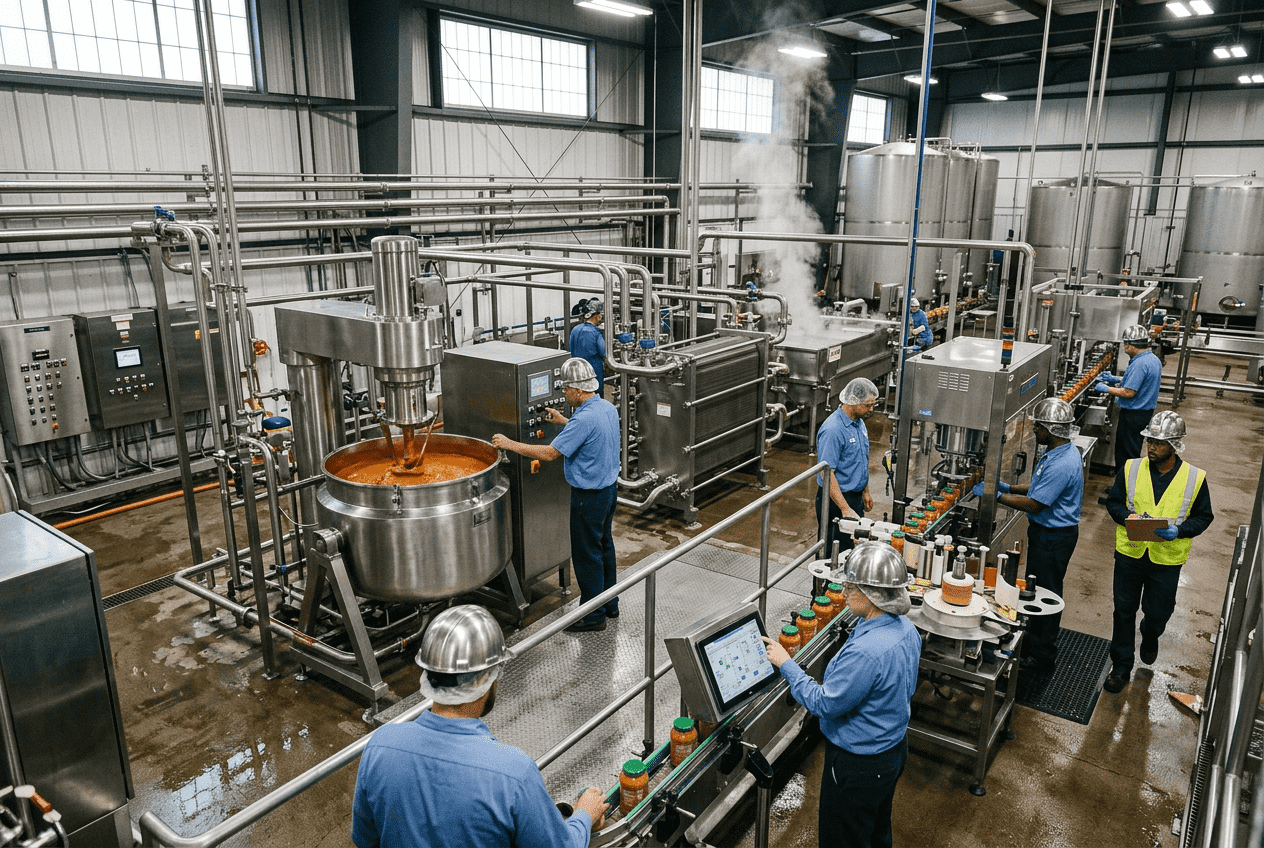
Food Plant Air Emission Control: Technologies and Compliance
Food manufacturers in the United States face growing pressure to control air emissions from cooking, drying, fermentation, wastewater handling, boilers, roasting, frying, smoking, ingredient handling, and packaging operations. The right solution is rarely a single device. Most successful projects combine source capture, process optimization, treatment technology, monitoring, and a permitting strategy that aligns with EPA rules and state air quality requirements. For facilities in major manufacturing corridors such as California’s Central Valley, the Chicago region, the Carolinas, Texas, Georgia, the Midwest protein belt, and port-linked processing hubs near Los Angeles, Houston, Savannah, Newark, and Seattle, air compliance can directly affect production uptime, expansion plans, and community relations. This guide explains where emissions come from in food plants, how VOC, odor, particulate matter, and NOx are typically managed, and how to evaluate scrubbers, biofilters, oxidizers, and filtration systems for U.S. operations. It also covers buying advice, industry applications, future 2026 trends, and how an engineering partner can integrate emission controls into broader plant utility and process upgrades. The fastest answer is this: food plant air emission control in the United States usually starts with identifying the emission type, the process source, and the permit trigger. Odors and volatile organic compounds often come from frying, roasting, smokehouses, seasoning, solvents, fermentation, and wastewater systems. Particulate matter is common in milling, mixing, conveying, drying, and bulk ingredient handling. NOx is tied mainly to combustion equipment such as boilers, thermal oil heaters, ovens, and direct-fired process systems. In practice, the most common control paths are: For buyers, the best option is not always the most aggressive technology. It is the system that matches airflow, contaminant profile, moisture, temperature, turndown, maintenance staffing, energy cost, and local permitting expectations. A poultry plant in Arkansas, a brewery in North Carolina, a dairy processor in Wisconsin, and a sauce manufacturer in California may all need very different solutions even if each reports “odor” as the primary problem. The table above shows why a plant-first diagnosis matters. The same “air issue” can mean very different engineering choices depending on pollutant chemistry, process temperature, and local permit drivers. Food processing operations generate air emissions from both production and supporting utilities. The market is broad: proteins, dairy, beverage, sauces, ready-to-drink products, breweries, distilleries, dry ingredient plants, snack foods, bakeries, aseptic operations, and prepared foods all have distinct emission profiles. Major source categories include: Different U.S. regions also influence priorities. California facilities often face more stringent district rules around VOC and combustion emissions. Midwestern grain and ingredient plants focus heavily on dust capture and explosion-safe design. Gulf Coast and Southeast facilities may prioritize odor management due to nearby residential growth and humid conditions affecting biofiltration performance. For plant owners, the best purchasing strategy is to map emissions by product type, seasonality, and production rate. A tomato processor near Fresno, a poultry complex in Georgia, and a distillery in Kentucky may all run high-volume operations, yet their peak air loads occur at different times and from different process steps. The line chart reflects a realistic market direction: U.S. investment in emission controls is rising as processors expand capacity, automate utilities, and modernize aging environmental systems. VOC and odor control technologies are often discussed together in food processing, but they are not identical decisions. A system that eliminates a permit-significant VOC stream may not be the most economical answer for low-level nuisance odor, and vice versa. The main product and technology options include: Buying advice: ask five questions before choosing a technology. First, what is the exact compound profile? Second, what are the airflow and temperature ranges? Third, does the plant run 24/7 or in batches? Fourth, what utility costs apply in your state? Fifth, what maintenance capability is available on site? In Massachusetts or New Jersey, for example, energy price sensitivity may steer selection differently than in Texas or Louisiana. The table shows that the “best” control is contextual. RTOs are strong compliance tools, but biofilters may be the better long-term answer for a wastewater odor problem if space and media management are available. Application examples by industry: Particulate matter control systems are essential in dry food manufacturing and in any process where solids are conveyed, milled, mixed, screened, dried, or packaged. PM control is not only about compliance. It also affects product loss, sanitation, visibility, employee safety, combustible dust risk, and equipment reliability. Common technologies include cyclones, baghouses, cartridge dust collectors, wet collectors, and enclosure-based source capture systems. Selection depends on particle size, stickiness, moisture, explosibility, airflow, and whether the dust has food reuse value. For example, a flour mill in Kansas City, a dairy powder line in Idaho, and a spice blending facility near Newark each create dust, but not the same kind. Flour is combustible and fine. Dairy powder can be hygroscopic. Spice dust may be oily, aromatic, or corrosive to some materials. When buying PM systems, manufacturers should review not only filter efficiency but also fan energy, housekeeping burden, clean-in-place compatibility, sanitary design, and dust hazard analysis. A lower-priced collector may cost more if it drives higher cleaning labor or frequent filter changeouts. The bar chart shows where demand is especially active: protein, dairy powder, bakery, and ingredient plants often require the greatest intensity of dust and odor management due to a mix of production volume, heat treatment, and powder handling. NOx reduction from combustion equipment is a major issue for food plants with boilers, thermal fluid heaters, direct-fired ovens, fryers, and process air systems. Even when the food process itself is clean, the utility backbone can create permit challenges, especially during capacity expansion. The main NOx reduction methods are: The correct choice depends on equipment size, load profile, fuel type, existing burner design, and local limits. Facilities in the South Coast Air Basin of California may face different practical decisions than those in North Carolina, Indiana, or Oklahoma. From a buying perspective, do not treat NOx reduction as a burner-only issue. Stack configuration, controls integration, steam demand swings, and maintenance discipline affect real-world performance. If a plant is adding new retorts, expanding hot-fill beverage lines, or increasing CIP hot water loads, the boiler system should be evaluated early. The table highlights a common market reality: many food plants start with burner optimization and staged retrofits, then move to higher-control solutions only when production growth or local regulation requires it. Scrubber and biofilter selection is one of the most frequent decision points in food plant odor control. Both technologies are proven, but they serve different operating conditions. Scrubbers are generally preferred when the air stream contains soluble gases, corrosive compounds, or abrupt concentration swings. They are compact compared with many biofilters and can perform well when carefully controlled for pH, recirculation, and chemical dosage. Biofilters are often preferred for large-volume, lower-concentration odor streams with strong organic character, especially wastewater and byproduct odors. They can offer lower long-term energy use and strong sustainability messaging, but they need space, moisture balance, and disciplined media management. Selection factors include: The explanation is straightforward: scrubbers usually win on responsiveness and compactness, while biofilters often win on sustainability and operating cost where the stream is biologically suitable and land is available. The area chart reflects a strong 2026 trend: more U.S. food plants are moving toward hybrid systems that combine capture improvements, scrubbing, biological treatment, and targeted polishing rather than relying on one large end-of-pipe device. Monitoring and reporting requirements depend on permit conditions, emission source type, and facility classification. Some plants need only routine records, maintenance logs, and periodic source testing. Others require continuous parameter monitoring, fuel use tracking, visible emission checks, malfunction reporting, and annual emissions inventory submissions. Key reporting elements often include: For buyers, this matters because monitoring can significantly affect total project cost. A lower-cost control device may become expensive if it creates heavy compliance labor or recurring testing burdens. Plants with lean maintenance teams should ask early whether data logging, alarms, remote visibility, and historian integration can be built into the design. Facilities that already operate automated utilities and process control platforms have an advantage. Integrating air control data into a plantwide SCADA environment can improve response time, reduce recordkeeping errors, and support internal environmental audits. EPA and state air quality compliance in the United States is layered. Federal rules may apply through New Source Review, NSPS requirements, NESHAP provisions, Title V obligations, greenhouse gas reporting, and sector-specific standards. States and local districts can impose additional limits, permit conditions, and testing expectations. Common compliance triggers include new lines, boiler replacements, production increases, fuel switching, new wastewater infrastructure, and changes that increase capture efficiency but alter stack characteristics. A plant in Houston, Sacramento, Minneapolis, or Charlotte may face different procedural paths even when installing similar processing equipment. Best practice is to treat environmental review as part of capital planning, not as a late permit box to check. This is especially important for brownfield expansions, co-packing facilities, and multi-phase food campuses near freight corridors, intermodal centers, and ports. 2026 policy and sustainability trends to watch include: For food companies planning expansion, future-ready compliance means selecting systems that can scale. It is often cheaper to design ductwork, pads, utility tie-ins, and controls architecture for future phases than to retrofit after a permit cap is reached. This comparison chart illustrates a practical decision framework. High control efficiency does not automatically mean best lifecycle fit; each product category should be judged against plant layout, utility cost, staffing, and state compliance exposure. Disruptive Process Solutions supports food and beverage manufacturers across the United States and Canada with integrated engineering, capital project execution, and system implementation. Rather than viewing air emission control as an isolated purchase, the company approaches it as part of the full production ecosystem: process equipment, utilities, controls, compliance, installation, and long-term plant profitability. On the technological capabilities side, DPS works across structural, mechanical, plumbing, electrical, process, and controls disciplines. That matters for emission projects because the best outcome often requires more than an environmental skid. It may involve duct routing, boiler integration, ventilation balancing, PLC programming, SCADA visibility, utility load review, or modifications to cooking, fermentation, CIP, or wastewater interfaces. Manufacturers can explore broader capabilities through the company’s engineering and project services. On the manufacturing capabilities side, DPS also designs and supplies proprietary process equipment, including tanks, CIP systems, marination tumblers, and cooking vessels. For plants adding or modifying process lines, that upstream equipment knowledge helps connect the source of emissions to the most practical downstream control strategy. Information on integrated equipment solutions is available in the company’s process equipment portfolio. On the service capabilities side, DPS operates through a design-build-manage approach that supports feasibility, capital planning, owner’s representation, project management, general contracting coordination, installation, and startup support. This is valuable for food processors that need air control upgrades tied to larger expansions such as beverage utilities, protein cook lines, dairy systems, aseptic installations, or complete plant retrofits. Background on the company and its execution philosophy can be found on the company overview page. Case-driven delivery is especially important in emission control, where successful results depend on execution detail. A duct routing error, control mismatch, or late permit assumption can compromise an otherwise strong equipment selection. Manufacturers looking for examples of integrated project delivery can review selected project case studies. From a buyer perspective, DPS is best aligned with manufacturers that want a practical operating partner rather than a catalog-only vendor. That includes clients expanding co-packing facilities, upgrading utilities, relocating equipment, modernizing fermentation systems, improving protein or prepared food processing, or planning phased capacity growth while protecting compliance and first-year profitability. What is the first step in controlling air emissions at a food plant?Start with a source-by-source assessment. Identify emission type, operating schedule, airflow, contaminant chemistry, and current permit status before selecting equipment. Which industries need the most odor control?Protein processing, wastewater-heavy operations, fermentation facilities, smokehouses, rendering-related systems, and some sauce or flavor plants typically need the most active odor management. Are biofilters better than scrubbers?Not universally. Biofilters can be excellent for large, lower-strength organic odor streams. Scrubbers are often better for variable, soluble, or corrosive gases and for tighter footprints. When is an RTO worth the cost?Usually when VOC destruction efficiency is a major compliance requirement, the airflow and concentration justify thermal treatment, and long-term permit certainty is more important than minimum upfront cost. How do I choose a particulate control system?Review particle size, moisture, stickiness, reuse value, sanitary needs, airflow, and combustible dust characteristics. Baghouses, cartridge collectors, and cyclones each suit different product categories. Can boiler upgrades reduce permit risk?Yes. Combustion tuning, low-NOx burners, oxygen trim, and in some cases SCR can materially improve compliance position and support future production expansion. Do all food plants need continuous monitoring?No. Monitoring depends on permit conditions and source type. Some facilities need only recordkeeping and periodic testing, while others need continuous parameter tracking and formal reporting. What should be included in a buying specification?Airflow range, contaminant list, temperature and moisture limits, turndown, expected uptime, utility requirements, materials of construction, control integration, maintenance expectations, and performance guarantees. How important is local geography in the United States?Very important. Regulations, utility costs, ambient climate, community sensitivity, and site footprint vary widely from California to the Carolinas, from the Pacific Northwest to the Gulf Coast. What trends are shaping 2026 decisions?Hybrid control trains, lower-energy treatment, tighter digital reporting, more predictive maintenance, integrated carbon and air planning, and stronger scrutiny of community odor and cumulative environmental impact. In summary, air emission control for U.S. food plants is a market shaped by product type, process design, location, and regulation. The strongest projects align compliance, production throughput, energy use, and future expansion from the start. Whether the need involves VOC reduction, odor control, particulate collection, or boiler NOx improvements, manufacturers gain the best results when environmental systems are engineered as part of the full facility strategy rather than added late as stand-alone hardware. -
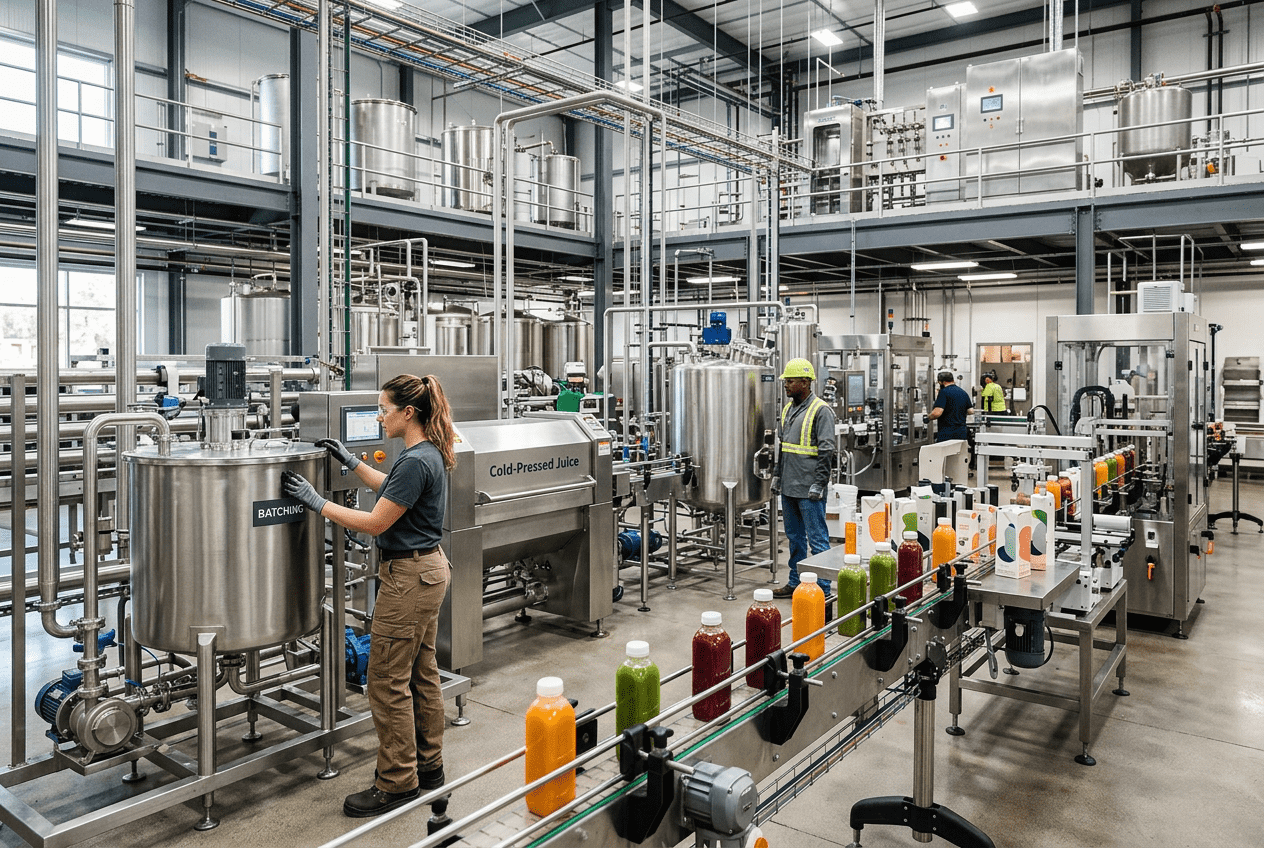
Beverage Batch Control System
For beverage manufacturers in the United States, a modern beverage batch control system is the digital and operational backbone that connects syrup preparation, recipe execution, tank scheduling, inline quality checks, clean-in-place validation, and end-to-end lot traceability. In practice, it helps plants produce the right drink, in the right sequence, at the right specification, with less giveaway and fewer changeover errors. Whether a facility is producing carbonated soft drinks near Atlanta, functional beverages in Southern California, kombucha in the Pacific Northwest, or spirits-based RTDs around Dallas and Houston, the value of recipe-driven batching comes from consistency, speed, and control. The U.S. market is particularly demanding because manufacturers must manage SKU proliferation, co-packing contracts, regional flavor variation, retailer compliance, and strict food safety expectations. Plants near large logistics corridors such as Chicago, the Port of Los Angeles, Long Beach, Savannah, Newark, and Houston often need to change products rapidly while still protecting quality and throughput. That is where integrated automation, engineered process design, and disciplined project execution matter most. For companies evaluating a new system, the buying decision should not focus only on software screens. The better question is whether the system can support the full production reality: raw material receiving, syrup rooms, blending skids, fermentation where applicable, tank farms, utilities, CIP, transfer routing, packaging demand, and operator workflows. The strongest projects combine controls, process engineering, utility integration, and plant-specific operating logic. That is also why many manufacturers look for a partner that can align engineering, installation, and execution rather than handing off responsibilities across multiple disconnected vendors. About the team behind DPS gives a useful overview of this integrated approach, while their broader service capabilities show how engineering, controls, and execution can be tied together from concept through startup. A beverage batch control system is an automation platform that manages formulas, ingredient dosing, tank usage, process sequencing, quality checks, cleaning validation, and production records across beverage operations. In the United States, it is commonly used in soft drink plants, breweries, distilleries, juice facilities, dairy beverage operations, and co-packing sites to reduce manual error, improve consistency, shorten changeovers, and support traceability. In direct terms, the system should answer five core plant questions at all times: That direct answer is especially important for U.S. operators facing retailer scorecards, co-manufacturing service level agreements, FSMA-oriented documentation expectations, and rising labor costs. A well-designed control system is not just a convenience layer. It becomes a profit-protection tool. The table above summarizes why batch automation has become a competitive requirement rather than a luxury. In markets with tight margins and demanding customers, each function contributes directly to throughput, compliance, and profit. The growth trend reflects how beverage producers are moving toward deeper digital control as labor pressure, SKU complexity, and quality expectations increase. The strongest demand is coming from co-packers, multi-line beverage campuses, and manufacturers upgrading legacy PLC logic into coordinated batch platforms. In a U.S. beverage plant, batch control usually starts in the syrup room and extends all the way to finished product storage or packaging feed tanks. This matters because the system boundary determines the business value. A narrow batching package that only controls one mix tank may look inexpensive, but it often leaves critical losses untouched: manual handoffs, tank conflicts, undocumented adjustments, and inconsistent startup procedures. At the front end, syrup room control covers water preparation, sweetener handling, dry ingredient addition, dissolve steps, heating or cooling, filtration, and intermediate syrup storage. In carbonated soft drink and juice plants, this is where repeatability is won or lost. In functional beverage and nutraceutical lines, the need is even greater because micro-ingredients, heat-sensitive compounds, and viscosity shifts can create quality variation quickly. From there, the system should coordinate transfers to blend tanks, bright tanks, hold tanks, or finished product tanks depending on product type. In fermented beverage operations, batch control may also bridge cellar operations, blending, proofing, dilution, and packaging staging. For dairy-based and aseptic beverages, the sequence may include homogenization, HTST or UHT integration, surge tank logic, and downstream filling readiness. Well-engineered execution is not only about the software. It depends on instrumentation quality, valve matrix design, utility stability, and equipment compatibility. That is why many manufacturers in the United States prefer partners who understand the entire process architecture. DPS, for example, supports beverage operations with process, controls, mechanical, plumbing, electrical, and structural coordination rather than treating automation as a separate island. Their experience spans blending, carbonation, fermentation systems, filtration, pasteurization, aseptic processing, and utility infrastructure needed to make the batch system reliable in daily operation. For plants planning expansion, this system-wide perspective becomes more important near major U.S. manufacturing and logistics zones. A facility outside Charlotte, Phoenix, Indianapolis, or Sacramento may have enough demand to justify additional tanks and utilities, but unless routing, sequencing, and CIP are integrated into the batch logic, the capacity gain often underperforms expectations. This table shows why end-to-end scope matters. A batch control project limited to just one process node often cannot deliver the expected ROI because losses happen at the interfaces between process areas. Recipe-driven blending allows a plant to execute approved formulas automatically, with each ingredient addition verified against target amounts, tolerances, sequencing rules, and production conditions. In beverage manufacturing, this is particularly valuable for flavor, color, acid, sweetener, and concentrate dosing because small deviations can create visible or tasteable defects. In the U.S. market, recipe automation is not only for large carbonated soft drink operations. It is equally relevant in premium juice lines, energy drinks, botanical beverages, kombucha blends, spirits-based canned cocktails, dairy beverages, and private-label wellness products. As SKU counts rise, the burden on operators becomes too high for dependable manual management alone. Advanced systems typically include: For buyers, one practical question is whether the system handles both macro and micro ingredients well. Bulk sugar or treated water are easy compared with flavors, extracts, vitamins, colors, and actives that may require higher precision and special sequence rules. Another is whether it can support campaign production for high-volume SKUs while still allowing short runs for regional products and retail test launches. This is also where equipment design and manufacturing capabilities matter. Companies that can supply tanks, custom CIP systems, and related process equipment in addition to integration often reduce fit-up risk. DPS manufactures select process equipment, including tanks and CIP systems, which can simplify alignment between mechanical design, automation requirements, and site execution when timing is tight. The key takeaway from this dosing table is that not all ingredients require the same automation strategy. A strong recipe-driven blending system matches the measuring method to the process risk and economic value of each ingredient. The bar chart highlights where U.S. demand is strongest. Functional beverages and RTD alcohol continue to invest because product variation, labeling sensitivity, and rapid commercialization all increase the need for dependable recipe management. Inline quality verification is one of the highest-value features in beverage batch automation because it detects problems while the batch can still be corrected. Brix and pH are especially important in many U.S. beverage categories because they affect flavor profile, regulatory labeling, microbiological stability, processability, and customer acceptance. Instead of relying only on end-of-batch lab checks, advanced plants use inline instruments to compare actual process values with target setpoints during execution. That does not replace laboratory quality assurance, but it reduces the risk of producing a full off-spec batch before discovering the issue. For high-volume operations, avoiding one bad batch can justify much of the instrumentation investment. Inline verification can support several actions: Plants producing refrigerated juices in Florida, shelf-stable teas in Texas, premium mixers in New Jersey, or dairy beverages in the Midwest all benefit from this approach. In each case, quality verification during execution reduces waste and prevents nonconforming product from advancing downstream. This table demonstrates that quality verification is broader than Brix and pH alone. A mature beverage automation system uses multiple data points to validate process state and reduce downstream uncertainty. The area chart reflects a clear industry shift: plants increasingly want quality data in motion, not just at the finish line. This becomes even more important heading into 2026 as digital quality records and tighter sustainability goals drive a push to reduce rework, water usage, and product disposal. Tank farm management is where many beverage sites either unlock capacity or lose it. When multiple products, tank types, cleaning states, and packaging demands are competing at once, the control system must do more than simply open and close valves. It needs to manage sequencing logic, readiness conditions, and conflict avoidance across the entire storage and transfer network. For non-fermented beverages, this includes intermediate syrup tanks, blend tanks, hold tanks, and finished product tanks. For breweries, kombucha plants, wine operations, and certain spirits applications, it also includes fermentation schedules, maturation windows, proofing, blending, and transfer priorities. The challenge is especially visible at co-packing facilities where one delayed packaging line can ripple backward through the tank farm. U.S. producers located near major freight hubs such as Memphis, Kansas City, and central Pennsylvania often push hard for high asset utilization because inventory timing affects outbound logistics. A well-designed batch control system can help by assigning route permissions, checking tank availability, confirming CIP completion, and coordinating transfer windows around downstream demand. This is an area where process engineering depth matters. DPS has worked across beverage categories including brewing, spirits, RTD, carbonated and non-carbonated beverages, aseptic operations, and fermented products. That multi-category exposure is useful because tank farm logic differs significantly between a CSD plant, a kombucha facility, and an RTD alcohol operation, even if all three use similar vessel hardware. The explanation is straightforward: tank farm control is less about vessel count and more about decision quality. The more SKUs and line interactions a plant has, the more value comes from software that understands sequence, state, and production priority. CIP integration is essential in beverage plants because changeovers are frequent and the cost of poor sanitation can be severe. A strong beverage batch control system should know whether a tank, line, or blend path is dirty, in wash, rinsed, verified, or ready for production. Without that status visibility, operators may rely too heavily on verbal communication and handwritten logs. In practical U.S. operations, CIP integration does three important things. First, it prevents accidental routing to equipment that has not completed the required wash cycle. Second, it captures the evidence that cleaning was performed to the required time, temperature, conductivity, and chemical concentration. Third, it helps schedule cleaning around production priorities so the plant avoids unnecessary waiting. This is particularly important for allergen transitions, flavor carryover risk, color-heavy products, dairy-based formulations, and alcoholic beverages where tax-sensitive inventory and strict brand quality standards both matter. Co-packers in the Southeast and West Coast, where customer portfolios can change daily, often see CIP validation as one of the most valuable features in automation modernization. Custom CIP system design is also a factor. Tank count, line length, soil load, and product family determine whether a single-use or multi-tank CIP approach makes sense. Because DPS designs and supplies custom CIP systems alongside engineering and integration services, it can align cleaning hardware and controls from the beginning rather than trying to patch logic onto an unsuitable skid later. Looking toward 2026, CIP systems in the United States are increasingly expected to support water and chemical optimization. Sustainability goals, local wastewater constraints, and utility cost inflation are pushing plants to validate cleanliness while using fewer resources. SKU proliferation is one of the biggest operational realities in beverage manufacturing today. Limited-time flavors, retailer-specific packaging, wellness line extensions, lower-sugar variants, and regional product tests all force producers to run more recipes in more batch sizes. A beverage batch control system must therefore scale recipes correctly, preserve tolerances, and protect process integrity whether the plant is making a large campaign batch or a short specialty run. In the United States, this challenge is most visible in energy drinks, enhanced waters, functional beverages, canned cocktails, premium mixers, and private-label products. Plants that were designed for a handful of high-volume SKUs are now being asked to run dozens or even hundreds. Manual batching becomes increasingly risky as the product mix broadens. Flexible batch control should include: This is also where buying advice becomes practical. If a manufacturer expects growth through co-packing, innovation, or regional retail expansion, it should avoid a system designed only for repetitive large-batch production. Instead, it should request demonstrations of recipe scaling, short-run execution, and changeover logic under real operating scenarios. Manufacturers can also review equipment options for process systems when assessing whether tanks, CIP skids, and transfer infrastructure are compatible with a more flexible production model. Hardware and software flexibility must develop together. Lot tracking and traceability are non-negotiable in modern beverage operations. Every formulation should have a digital genealogy showing which raw material lots were used, in what quantities, by which route, into which batch, and then into which finished product tanks or packaging runs. This is vital for quality investigations, customer complaints, recalls, internal audits, and regulatory readiness. In U.S. beverage manufacturing, traceability pressure comes from multiple directions: national retailers, co-manufacturing clients, food safety programs, insurer expectations, and internal brand protection. The more ingredients a product contains, the greater the value of automated lot capture. Functional beverages, dairy drinks, alcoholic RTDs, and premium juice blends often carry especially high traceability complexity. A strong traceability model should connect: For larger projects, this capability should align with plant-level SCADA, ERP, or MES strategy rather than operate as an isolated records module. The best results come when controls design, process flow, and data architecture are planned together. DPS approaches projects from that broader business perspective. Instead of focusing narrowly on equipment alone, the company is known for tying process engineering, automation, and project management back to client profitability. That mindset is relevant in traceability projects because the objective is not merely generating records; it is reducing business risk while keeping operations efficient. Manufacturers interested in delivery examples can explore project case studies to see how integrated execution supports real production outcomes. The comparison chart illustrates a common buying reality in the United States: manufacturers often get stronger outcomes when controls, process engineering, utilities, equipment fit, and startup support are coordinated through one integrated execution model rather than split among disconnected parties. The financial case for beverage batch automation usually comes from a combination of small repeated savings and avoided major losses. Reduced ingredient giveaway, fewer off-spec batches, lower manual labor dependence, faster changeovers, better tank utilization, and stronger traceability each contribute to ROI. In many U.S. plants, the payback case is strongest when management quantifies current losses honestly rather than estimating only labor savings. Typical ROI categories include: For plants in high-cost labor markets such as California, the Northeast, and major metro areas, automation labor leverage is meaningful. For plants in high-throughput hubs such as Texas, the Midwest, and the Southeast, throughput and asset utilization may dominate the business case. The point is that ROI should be modeled by product family, operating pattern, and plant constraints. The table shows that ROI is rarely one-dimensional. Management teams should build a multi-line business case that includes both recurring efficiency gains and risk avoidance. When selecting a partner, it is wise to ask how the project will be engineered, built, and managed on site. Technical capabilities should include controls programming, SCADA, process engineering, utility integration, and instrumentation strategy. Manufacturing capabilities should cover tanks, CIP systems, and custom process hardware where needed. Service capabilities should include feasibility support, capital planning, owner-side guidance, project management, installation coordination, commissioning, and startup optimization. DPS is notable in the U.S. market for combining those capabilities under a Design-Build-Manage approach intended to protect project economics, not just complete scope. That service model matters because many automation projects fail to deliver full ROI not from poor software, but from weak execution discipline. Missing valves, inadequate utility capacity, poorly placed instruments, operator confusion, and startup gaps can undermine an otherwise capable system. A business-minded execution partner can materially improve the outcome. What types of beverage plants benefit most from batch control systems?Soft drink plants, juice processors, breweries, distilleries, kombucha facilities, dairy beverage manufacturers, aseptic beverage plants, and co-packers all benefit. The highest value usually appears where recipe complexity, changeovers, or traceability demands are high. Can a batch control system work for both large runs and short seasonal SKUs?Yes, if the platform supports recipe scaling, batch-size guardrails, and flexible routing. This is critical for U.S. plants serving private label, club stores, regional retail chains, and innovation pipelines. How important is inline Brix and pH monitoring?Very important. It allows the plant to catch deviations during execution instead of after the batch is complete. That reduces giveaway, scrap, and production delay. Does tank farm management matter if the plant is relatively small?Yes. Even smaller facilities lose efficiency when operators do not have clear visibility of tank status, route availability, and cleaning state. The smaller the staff, the more valuable clean scheduling logic can be. What should buyers in the United States ask suppliers before purchasing?Ask about recipe version control, lot traceability, CIP verification, integration with existing PLCs and SCADA, operator usability, tank routing logic, startup support, and how the supplier handles utilities and mechanical interfaces. Also ask for examples from similar beverage categories and plant sizes. Should beverage companies choose a standalone controls vendor or an integrated engineering partner?It depends on in-house capability, but many manufacturers benefit from an integrated partner when the project affects process, utilities, equipment layout, and sanitation strategy. That approach reduces coordination gaps. How does this relate to 2026 industry trends?By 2026, leading U.S. projects are expected to emphasize deeper digital records, stronger sustainability performance, water and chemical reduction in CIP, more flexible production for SKU growth, and tighter integration between quality data and real-time process decisions. How long does implementation usually take?Project length varies by scope. A limited upgrade may take a few months, while a new syrup room and tank farm integration can take much longer. The timeline depends on engineering readiness, procurement, site conditions, and commissioning complexity. Can existing equipment be reused?Often yes. Many U.S. plants modernize controls while retaining usable tanks, pumps, and piping. However, instrumentation, valves, utility capacity, and CIP design may still need upgrades to deliver reliable automation results. What is the biggest mistake buyers make?Under-scoping the project. If the system controls only part of the process and ignores tank routing, CIP, utilities, or traceability, the plant may not realize the expected throughput or quality improvements. In summary, a beverage batch control system should be viewed as a production management framework rather than just a controls package. For U.S. manufacturers dealing with tighter margins, more demanding customers, and greater SKU complexity, the winning solution is the one that connects recipes, quality, tanks, cleaning, records, and plant execution into one dependable operating model. -
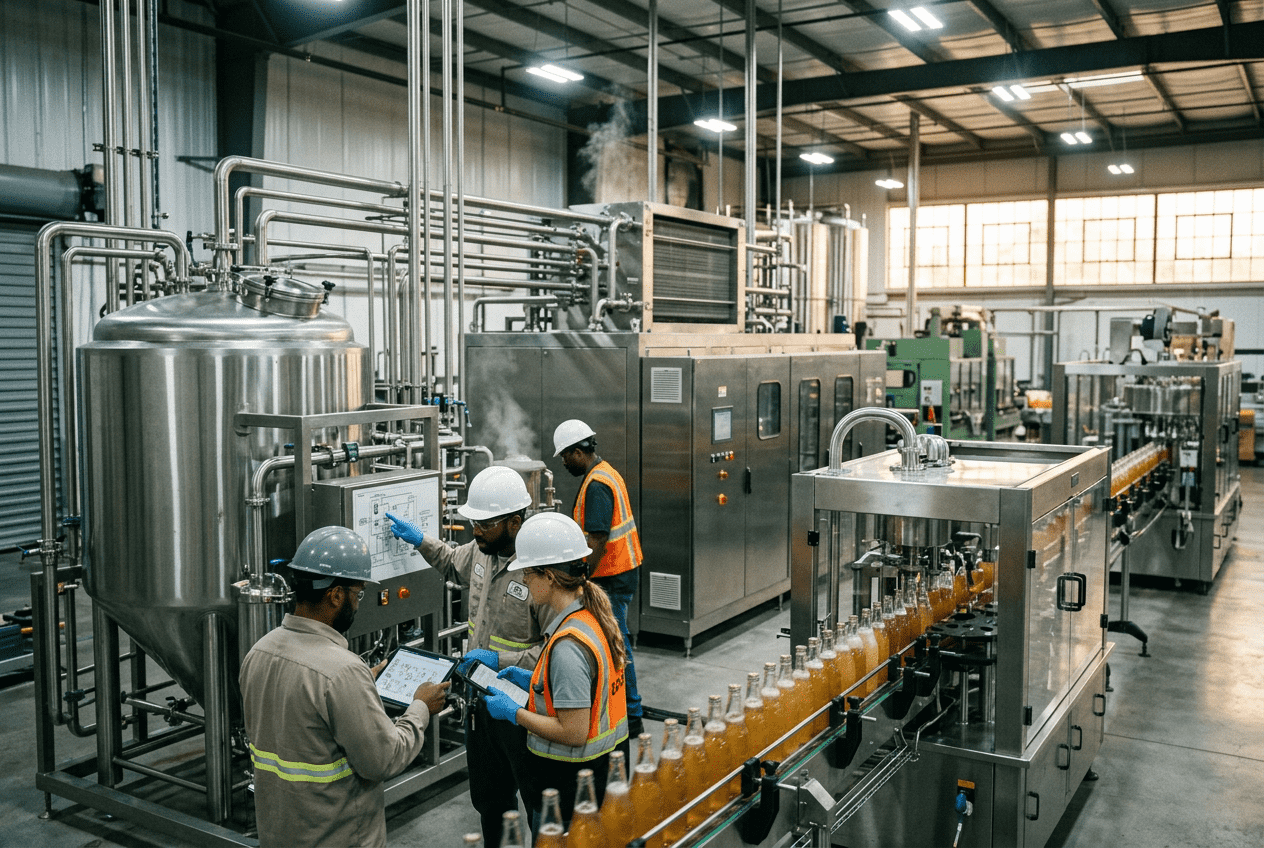
Recipe Management for Food Manufacturing
In the United States, recipe management in food manufacturing is no longer just a way to store formulas. It is the operating backbone that connects R&D, quality, purchasing, production, maintenance, automation, and compliance. A modern recipe management system controls ingredients, process steps, critical parameters, version history, allergen rules, lot traceability, operator instructions, and plant-floor execution. For manufacturers producing sauces, proteins, dairy, beverages, prepared meals, nutraceutical products, or aseptic items, recipe control directly affects yield, safety, uptime, labor efficiency, and margin. As U.S. food and beverage plants face tighter labor markets, rising ingredient costs, stricter FDA and USDA scrutiny, and growing customer demands from retail, foodservice, and co-packing channels, the old model of paper binders and tribal knowledge is becoming too risky. Plants in Chicago, Fresno, Dallas, Atlanta, Charlotte, Houston, Minneapolis, and the Los Angeles-Long Beach corridor increasingly need digital recipe systems that scale across multiple lines and facilities while supporting ERP, MES, PLC, and SCADA integration. Recipe management in food manufacturing is the structured control of formulas, processing instructions, batch logic, quality checkpoints, allergen data, and revision history so a product can be made consistently, safely, and profitably at production scale. In U.S. plants, effective recipe management usually includes: For many U.S. manufacturers, the best results come when recipe management is treated as part of a broader plant systems strategy rather than a standalone software purchase. That is why engineering-led partners with process, controls, and installation experience can add real value during design and implementation. Companies looking to understand that broader approach can review how DPS approaches food and beverage project execution as part of end-to-end processing and automation programs. This table shows why recipe management should be viewed as an operating control system, not simply a digital cookbook. In a manufacturing environment, a recipe is the full production definition of a product. It includes not only what goes in, but how, when, where, and under what conditions it is processed. A barbecue sauce formula in Kansas City, a cultured dairy product in Wisconsin, or a retorted soup in New Jersey each requires more than a list of ingredients. The plant needs sequence control, quality checkpoints, permissible substitutions, lot consumption rules, sanitation conditions, and instructions for startup, hold, rework, and changeover. U.S. manufacturers often operate under mixed regulatory and customer requirements. A protein processor may need USDA alignment, a beverage plant may need FDA beverage controls, and a co-packer may also need SQF or BRC expectations imposed by retailers. That means recipe management must connect to quality management and production records in a way that supports real audits, not just internal convenience. At a practical level, recipe management spans five layers: Plants with multiple SKUs, seasonal formulations, retailer-specific variants, or regional ingredient sourcing need even stronger controls. A salad dressing plant shipping through Savannah, a beverage facility supplying the Northeast via Port Newark, or a frozen prepared foods site serving the Midwest all benefit when recipe data is standardized and centrally governed. Many recipe failures do not begin with the formula itself. They begin with missing process detail. A recipe may call for 1,200 pounds of tomato base, 250 pounds of sugar, and 40 pounds of spice blend, yet still fail if the system does not define when the spice is added, how long to shear, when to open steam, how quickly to cool, or how long to hold before filling. This is where critical process parameters, or CPPs, become essential. CPPs commonly include temperature ramp rates, cook or pasteurization time, vessel pressure, agitation speed, in-line Brix limits, homogenization pressure, dwell time, retort profile, and final fill temperature. For dairy and aseptic applications, even tighter control may be required. If a process depends on pH or viscosity windows, those values should not live in an operator’s memory. They should be embedded in recipe logic and tied to alarms, prompts, and exception handling. Scaling logic is equally important. A formula that works in a 50-gallon pilot kettle can behave differently in a 2,000-gallon batch tank or a continuous blending skid. Ingredient sequencing, hydration time, heat transfer, foam generation, and solids dispersion may all shift with scale. Strong recipe management accounts for: For plants adding automation, this is where engineering depth matters. A partner with controls, PLC, and process design experience can align recipe logic to actual vessel, utility, and line capabilities. DPS is active in that space through integrated processing, controls, and project execution support, including services for engineering, automation, and project delivery tailored to food and beverage operations. A recipe is never static. New suppliers are approved. Salt levels are adjusted. Sugar is reduced. Spice is rebalanced. Packaging changes trigger net weight changes. Thermal process validations are updated. Customer-specific variants are introduced. Without strict revision control, these routine changes can create major risk. Version control in food manufacturing should answer six questions immediately: This matters during internal investigations, customer complaints, line deviations, and regulatory audits. If a product shipped from a plant in Texas to a retailer distribution center in Atlanta is later questioned for flavor inconsistency or allergen labeling, the company must trace exactly which formula revision was active, which lots were consumed, and what instructions were executed. Rollback capability is equally valuable. If a new supplier changes hydration behavior or a reformulation reduces finished-product stability, the plant should be able to return to a previous approved recipe without confusion or delay. Paper systems rarely do this well. Spreadsheets only do it if the organization is unusually disciplined. Purpose-built digital systems do it by design. The chart above reflects the broader direction of the U.S. market: more manufacturers are moving toward formalized, software-driven recipe governance as labor, compliance, and traceability demands increase. Allergen control is one of the strongest business cases for modern recipe management. In U.S. manufacturing, mismanaged allergen information can trigger recalls, brand damage, customer chargebacks, and direct regulatory exposure. A robust system should identify allergens at the ingredient level, carry them through every formula and variant, and connect that information to scheduling, line clearance, sanitation validation, label approval, and rework rules. For example, if a plant in California runs both dairy-based beverages and non-dairy functional drinks, recipe logic should prevent inappropriate rework, flag allergen-sensitive changeovers, and support the sequencing of products to reduce wash time and contamination risk. In protein and prepared foods, soy, wheat, milk, egg, sesame, and tree nut impacts must be tightly governed. Recipe management also supports broader compliance integration by linking to: In regulated environments, the best systems do not isolate recipe data from the rest of operations. They integrate it with quality and production workflows so compliance becomes part of execution, not an afterthought. Recipe management is also a financial tool. Ingredient markets in the United States can move quickly due to freight shifts, weather, commodity volatility, labor disruptions, and port congestion. Dairy solids, proteins, oils, sweeteners, packaging materials, and spice blends can all change in cost within weeks. A recipe system that only stores target percentages, without current cost linkage, leaves margin management blind. Real-time or near-real-time costing allows a plant to model the effect of ingredient substitutions, packaging changes, batch-size adjustments, and yield losses before they hit the P&L. This is especially useful for co-packers and multi-plant networks where margin can erode through small, repeated variances. Yield analysis should extend beyond final weight. Mature plants analyze: Prepared foods, proteins, and sauce operations often show especially strong demand because they combine formulation complexity with high SKU counts and tight margin pressure. When these insights are linked to purchasing and execution data, management can identify where margin is leaking: not only in raw materials, but also in line performance and formulation discipline. Many U.S. plants still operate with a mix of paper batch sheets, ERP notes, spreadsheets, and operator knowledge. That may work for a small facility with a limited SKU count, but it becomes fragile as the business grows. Multi-line sites, co-packing facilities, plants with frequent changeovers, and operations shipping nationally cannot rely on disconnected documents for recipe execution. Digitization should not begin with software alone. It should begin with process mapping. Before migrating recipes into a platform, companies should standardize naming conventions, units of measure, revision policies, approval workflows, ingredient master data, line capabilities, and batch record expectations. A practical digitization roadmap usually follows these stages: For manufacturers expanding or building new capacity, it is often more efficient to design recipe digitization alongside the facility and process architecture rather than retrofitting it later. That is particularly true for plants adding new syrup rooms, batching areas, thermal systems, CIP skids, or automated transfer networks. Companies evaluating hardware for those environments can review process equipment capabilities from DPS in conjunction with automation planning. The explanation is straightforward: digitization succeeds when companies treat recipes as controlled operational data, not just documentation to be uploaded. The strongest recipe management programs in the United States are integrated, not isolated. ERP, MES, PLC, and SCADA systems each play a different role: Recipe management sits across these layers. It should receive approved data from upstream business systems, drive execution logic on the floor, and return actual usage and performance data back into reporting and costing systems. For a beverage blending and batching line, that may mean the ERP releases a production order, the MES calls the approved recipe version, the PLC meters ingredients into a blend tank, SCADA records Brix and transfer events, and actual consumption posts back for inventory and costing. In a protein marination or prepared foods environment, it may involve weigh-up verification, thermal processing steps, hold-and-release status, and packaging reconciliation. This integration is particularly valuable in facilities that depend on utilities and process coordination, such as plants with CIP systems, boilers, glycol, compressed air, process water treatment, and automated transfer skids. The technical challenge is not just software compatibility. It is making sure the process design, controls architecture, and recipe logic all reflect actual operating conditions. The trend is clear: hybrid systems remain common today, but fully integrated digital environments are gaining share as manufacturers invest in plant modernization. This is also where a full-scope engineering and integration partner can be more effective than a software vendor alone. DPS works across process engineering, controls, project management, and installation, which matters when the objective is not simply to buy a system but to make recipe execution work reliably inside a real production environment. Manufacturers exploring complete processing and controls outcomes can also see examples in project case studies from DPS. Even the best recipe software will fail if the plant does not manage adoption. Sustainable recipe control depends on disciplined people, documented governance, and recurring review. Best practices usually include the following: Training is especially important in plants with high turnover or multilingual workforces. Instructions should be clear, visual where possible, and tied to practical line behavior. If operators routinely bypass prompts because they slow production, the workflow likely needs redesign. Recipe discipline should help the floor, not fight it. Continuous improvement also means using recipe data to improve the process itself. A plant may discover that two approved versions create unnecessary complexity, that one ingredient is driving outsized variance, or that an equipment bottleneck is forcing manual interventions. In some cases, the best fix is not a capital project. In others, process redesign, controls changes, or equipment upgrades may produce outsized gains. This is one area where DPS’s model stands out in the U.S. market. Rather than approaching projects as isolated installs, the company combines technological capabilities such as controls engineering, PLC programming, SCADA, utility integration, and process automation with manufacturing capabilities across beverages, proteins, dairy, prepared foods, aseptic, retort, sauces, and plant-based processing. On the service side, DPS supports capital planning, engineering, owner’s representation, project management, general contracting, equipment supply, installation, and commissioning. That combination can be valuable when recipe control must align with both business objectives and plant-floor realities. For buying advice, U.S. manufacturers should resist choosing solely on license cost. The right decision depends on product complexity, line automation level, audit exposure, and growth plans. A sauce plant with two kettles has different needs than a national co-packer launching a greenfield beverage facility. The comparison chart reflects a common market reality: the more closely recipe control is tied to execution and integration, the more operational value it tends to deliver. What types of products benefit most from recipe management?Products with variable ingredients, complex processing, strict allergen exposure, or frequent SKU changes benefit the most. This includes sauces, dressings, protein marinades, dairy products, RTD beverages, aseptic products, prepared foods, soups, cultured products, and co-packed formulations. Is recipe management only useful for large enterprise plants?No. Mid-sized U.S. plants often see some of the fastest payback because they are large enough to feel the pain of inconsistency but small enough to implement improvements quickly. Sites with annual revenue above roughly $20 million often have a strong case for structured recipe control. How does recipe management help with audits?It creates a controlled record of approved formulas, revisions, execution steps, and batch history. That supports FDA, USDA, SQF, BRC, customer, and internal audit requirements. Can recipe management reduce labor dependency?Yes. It captures process knowledge in a repeatable system, reducing dependence on a few experienced operators and improving training speed for new staff. What is the difference between recipe management and batch control?Recipe management defines what should happen. Batch control executes it through people, systems, and automation. In advanced plants, the two are tightly linked. Should a company digitize recipes before or after plant expansion?Ideally during planning. If a company is adding new lines, utilities, or processing areas, recipe architecture should be designed alongside the physical and controls infrastructure. How do local supply chains affect recipe strategy in the United States?Regional sourcing can create variability in cost, ingredient functionality, and logistics. Plants near Houston, Savannah, Chicago, or Southern California may face different freight profiles and supplier lead times. A strong recipe system helps model substitutions and manage those changes without losing control. How should companies evaluate local suppliers and integrators?Look beyond software brochures. Evaluate whether the partner understands your product category, can support field integration, has controls experience, and can translate formulas into executable line behavior. Local responsiveness matters, but so does national delivery capability if you operate across several states. Looking toward 2026, recipe management will become more connected to sustainability, resilience, and portfolio planning. Manufacturers will increasingly use recipe systems to reduce water usage during changeovers, lower energy intensity in thermal processing, manage supplier variability, and support reformulation for nutrition or label claims. Plants that still rely on static documents will find it harder to compete on speed, compliance, and margin. For U.S. manufacturers, the central lesson is simple: recipe management is not an isolated IT project. It is a production, quality, compliance, and profitability discipline. When it is designed well, integrated correctly, and maintained through training and continuous improvement, it becomes one of the most valuable control systems in the plant. -
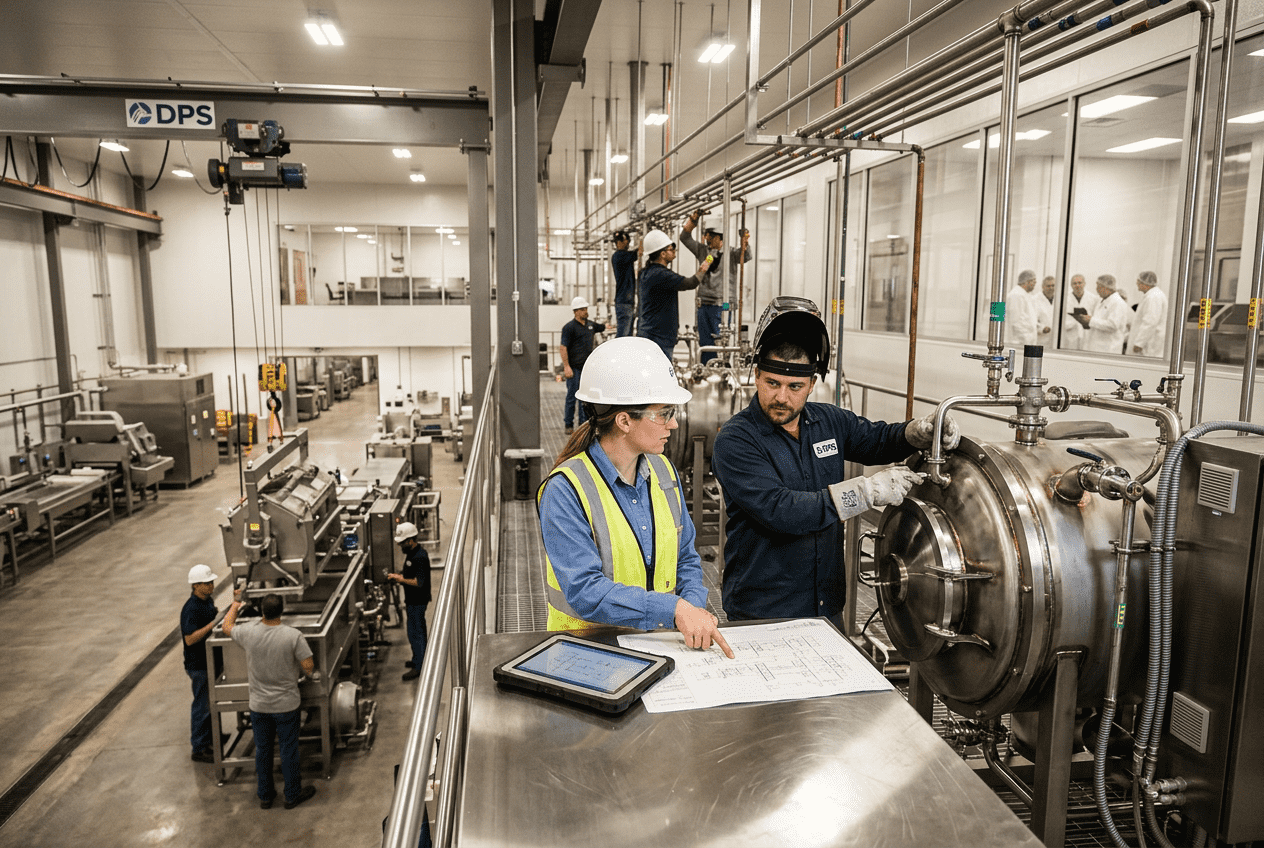
Food Plant HMI Design Services
In U.S. food and beverage manufacturing, human-machine interface design is not a cosmetic exercise. It directly affects line uptime, operator response time, sanitation readiness, batch accuracy, and audit confidence. A well-designed HMI helps a pasteurizer operator in Wisconsin respond to a temperature drift before product quality is affected. It helps a protein processor in Arkansas identify a conveyor fault without chasing five screens. It helps a beverage co-packer near Los Angeles, Houston, or Chicago move from startup to steady-state production with fewer nuisance alarms and fewer training delays. For facilities dealing with USDA, FDA, SQF, and BRC expectations, the HMI must support clear operation under pressure. That means alignment with ISA-101 for high-performance HMI design, thoughtful alarm management tied to ISA-18.2, strong visual hierarchy, context-rich trends, hygienic industrial hardware, and platform-specific expertise across FactoryTalk View, WinCC, and Ignition Perspective. Companies evaluating food plant HMI design services in the United States should look for integrators that understand both controls engineering and plant operations, especially where washdown, recipe management, CIP, utilities, and packaging all intersect. Disruptive Process Solutions (DPS) supports North American food and beverage manufacturers with integrated engineering, controls, installation, and project execution. Rather than treating HMI development as a standalone graphic task, DPS approaches it as part of a profitable production system: operator workflows, utility performance, product protection, and expansion planning all inform the final interface. That matters whether the plant is in the dairy corridors of California, the beverage hubs of Texas, the poultry belt of Georgia, the meat processing regions around Kansas City, or the port-driven manufacturing zones near Savannah, Newark, and Long Beach. Food plant HMI design services help U.S. manufacturers create operator screens that are faster to read, easier to trust, and safer to use during production upsets. The best designs follow ISA-101 principles, use a clear screen hierarchy from plant overview to equipment detail, reserve red strictly for alarms, embed trends and normal ranges directly on the screen, and run on washdown-ready hardware suited for food environments. In practice, that means fewer clicks, better alarm response, easier training, and less confusion during sanitation, startup, changeover, and troubleshooting. In the United States market, buyers should prioritize five things: food-process knowledge, alarm strategy, hygienic panel hardware, platform compatibility, and lifecycle support. A strong provider should understand beverage batching, brewing, distillation, dairy, sauces, prepared foods, aseptic systems, retort, protein processing, and utilities such as CIP, boilers, glycol, compressed air, and water treatment. They should also be able to connect HMI design to PLC logic, historian data, recipe control, OEE reporting, and remote support. For many plants, the HMI project is triggered by one of several common pain points: The table above shows why HMI work should be evaluated as a business decision, not just a controls deliverable. A more useful interface can reduce lost batches, support faster onboarding, and improve overall equipment effectiveness. In many U.S. plants, that return is stronger than expected because the HMI sits at the intersection of labor, quality, utilities, and throughput. Manufacturers exploring broader automation and integration support can review engineering and integration services as part of a complete modernization strategy rather than treating screen design in isolation. ISA-101 provides a practical framework for high-performance HMI design. In food plants, where an operator may be balancing product quality, sanitation discipline, recipe timing, and equipment safety, the standard helps prevent the most common interface failure: making the screen look impressive instead of making it operationally useful. Under ISA-101, the HMI is designed around situational awareness. Operators should be able to recognize normal conditions quickly and identify abnormal conditions even faster. This is especially important in U.S. facilities with lean staffing, multi-skill operators, and night-shift supervision structures. A screen must communicate what changed, how severe it is, and what the user should check next. That principle applies whether the process is HTST pasteurization in Idaho, aseptic beverage filling in New Jersey, or marination and tumble systems in the Carolinas. The standard also supports governance. Screen templates, symbol libraries, font rules, navigation conventions, and alarm color policies should be documented so the system remains consistent over time. Without that discipline, many plants end up with a patchwork of vendor screens, maintenance edits, and line-specific workarounds that confuse operators and complicate training. The value of ISA-101 grows as companies expand. A beverage producer operating in Phoenix, Dallas, and Charlotte benefits from a common screen language across sites. It shortens cross-training and makes support easier. For contract manufacturers and multi-plant food groups, that consistency also helps leadership compare line behavior, downtime causes, and operating discipline with fewer interpretation gaps. DPS applies this logic through its technological capabilities in controls engineering, PLC programming, SCADA integration, recipe and batch control, and utility system automation. Because the team works across both food and beverage processing, HMI standards are aligned not only with graphics but also with the realities of process temperature, flow, pressure, level, conductivity, Brix, and cleaning validation data. The chart illustrates the growing adoption of high-performance HMI design across U.S. manufacturing. Through 2026, adoption is expected to rise as labor shortages, cybersecurity modernization, and multi-site standardization push manufacturers to replace legacy screens with more disciplined operator interfaces. A strong visual hierarchy is the backbone of a usable HMI. In a food facility, users should never have to guess where to go next. The system should begin with a plant overview, then move into area screens, then equipment screens, and finally detail faceplates or device popups. This structure allows supervisors to assess the whole facility quickly while giving technicians and operators access to deeper details only when needed. At the overview level, the user might see packaging lines, process rooms, utility systems, clean-in-place skids, storage tanks, and key quality indicators. Area screens then break down each section, such as syrup room, fermentation cellar, cheese vat hall, retort room, or protein cutting line. Detail views provide commands, permissives, interlocks, and diagnostics for pumps, valves, VFDs, tanks, heat exchangers, and instruments. The right hierarchy matters in large U.S. plants where expansion has happened in phases. A site near Memphis may have one packaging wing built in 2012, a CIP skid added in 2017, and a new batching room added in 2024. Without a hierarchy, the HMI becomes a patchwork. With one, new assets can be added cleanly and operators can navigate by logic rather than memory. The table clarifies why screen hierarchy is more than visual organization. It maps the right information to the right user at the right moment. In high-speed beverage lines near Atlanta or Minneapolis, this structure helps teams isolate whether downtime is caused by utilities, filler constraints, depalletizer issues, or upstream batching delays. When evaluating service providers, ask whether they start with navigation maps and operator tasks before drawing graphics. Buyers should also ask for examples of multi-level screen architecture, especially for CIP, batching, thermal systems, and integrated utility plants. For a company that works from process engineering through installation and controls execution, see about the DPS approach to integrated project delivery. Color misuse is one of the most common problems in legacy HMIs. Many food plants still run interfaces full of bright greens, reds, yellows, and blues. These screens may look lively, but they reduce operator awareness. When everything is saturated, nothing stands out. Under pressure, that design works against the user. High-performance HMI design uses neutral grays for most equipment and process backgrounds. Color is saved for conditions that deserve attention. Red should indicate an alarm or trip condition. Yellow or amber may indicate warning or abnormal attention states. Blue or muted accent colors can be used sparingly for navigational cues, selected items, or informational overlays. Green is often overused; many teams now avoid using it as a dominant “running” indicator because motion or state can be conveyed more effectively through text, symbols, and line animation. In food plants, this discipline is especially valuable because operators often work in loud, wet, and time-sensitive environments. During a CIP transition, thermal deviation, or filler jam, the HMI must reduce mental effort, not add to it. A clear color strategy also improves visibility on outdoor utility kiosks, bright packaging rooms, and stainless panel displays exposed to reflected light. Good color policy should be documented in the standards manual and enforced across all future additions. This becomes critical during acquisitions, line expansions, and OEM integrations. A number by itself is often not enough. If a tank temperature reads 182°F, is that normal, rising, or falling? Is it on target for the current phase? Has it oscillated for the last ten minutes? Context-rich displays answer those questions without forcing the operator to leave the screen. For food and beverage processing, embedded trends are particularly powerful. A dairy operator can see whether homogenization pressure has been stable. A brewer can watch fermenter temperature movement. A sauce line operator can monitor kettle temperature against a target band. A utilities technician can check whether compressed air pressure is cycling abnormally before a line fault develops. Sparklines and normal-range shading give immediate context with minimal space. These features matter most in plants where small drifts create large consequences. A slight conductivity issue in CIP may affect rinse verification. A small fill temperature deviation may threaten shelf stability. A repeated pressure dip may cause package defects on a high-speed filler. With context-rich HMI design, operators see trends early and act sooner. The trend shift shown above reflects how U.S. manufacturers are moving away from static numerical screens and toward more informative operator views. By 2026, context-rich displays are likely to become a standard expectation in new controls projects, especially where traceability, energy use, and quality metrics are tightly monitored. Buyers should ask whether the HMI team can integrate historians, batch records, and time-series tools directly into the interface. It is also worth reviewing whether the same trends can be accessed from desktop, mobile, and control room environments without sacrificing clarity. In food manufacturing, software design fails if the hardware cannot survive the environment. HMIs in wet process rooms, high-foam sanitation areas, and raw protein spaces need the right enclosure rating, surface finish, sealing, and mounting approach. For many applications, this means stainless steel panel PCs or operator terminals rated from IP65 up to IP69K, depending on the washdown intensity and zone requirements. IP65 may be appropriate for splash-prone but not direct high-pressure wash zones. IP66 improves protection against strong jets. IP69K is often considered where hot high-pressure washdown is routine, particularly in meat, poultry, seafood, dairy, and some ready-meal facilities. But the rating alone is not enough. Buyers should consider cable entry, gasket integrity, bezel geometry, cleanability, and whether the hardware creates soil harborage points. In the United States, plant layouts vary widely. A brewery in Oregon may prioritize cleanability and condensation resistance in cellar spaces. A poultry plant in Alabama may need more aggressive washdown resistance and glove-friendly touch performance. A dairy facility in upstate New York may require reliable operation near cold, wet filling environments. Hardware selection should match the actual cleaning protocol, chemical exposure, operator PPE, and line ergonomics. This comparison helps buyers tie hardware choice to the actual process environment. The best decision is usually not the cheapest display but the one that prevents repeated replacement, sanitation conflicts, and operator frustration. DPS also brings manufacturing capabilities that matter when HMI deployment touches custom skids and fabricated systems. Because the company designs and manufactures selected process equipment such as tanks, CIP systems, marination tumblers, and cooking vessels, the interface can be coordinated with actual equipment geometry, instrumentation, access points, and cleaning requirements rather than treated as an afterthought. Many poor HMIs are built around what looks good in a project review rather than what an operator needs at 2:15 a.m. during a process upset. Task-based design fixes that. It begins by asking: what does the user actually need to do? Start a batch, confirm permissives, switch recipes, monitor sterilization hold time, acknowledge an alarm, isolate a failed pump, verify a valve lineup, or prepare a CIP circuit for sanitation release? Once those tasks are mapped, the interface is built to minimize delay and ambiguity. The most important controls and confirmations are placed where the user expects them. Supporting values appear nearby. Navigation follows the job flow. Instructions are clear and concise. Critical manual steps are not buried. This approach is particularly important in U.S. plants facing high turnover, bilingual crews, and compressed training schedules. Task-based HMI design also improves safety and quality. In a retort room, the system can guide the operator through the right sequence checks. In aseptic processing, the interface can make sterility-critical states impossible to miss. In brewery operations, it can simplify cellar transfers, CIP path verification, and tank readiness reviews. In dairy and protein environments, it can support sanitation transitions and allergen-sensitive changeovers with better visibility. For buyers, a useful test is simple: ask the vendor to show how a real operator completes a startup, changeover, and fault response on the proposed screens. If the demo focuses only on animation or color, the design process is probably not mature enough. The bar chart suggests where demand is strongest in the United States. Beverage, protein, and dairy sectors continue to lead due to washdown requirements, automation density, recipe complexity, and the cost of downtime. Prepared foods and aseptic systems also show strong demand as plants pursue traceability and labor efficiency. From a service standpoint, DPS supports this kind of operator-centered execution through end-to-end project management, installation coordination, controls integration, commissioning, and owner-focused planning. That broader service capability matters because HMI design frequently intersects with line modifications, utility upgrades, skids, and startup sequencing. Clients can explore relevant projects and outcomes through selected case studies and field examples. Alarm management is inseparable from HMI performance. If the screen is clean but the alarm system is chaotic, operators still lose trust. ISA-18.2 gives a lifecycle approach for developing, documenting, prioritizing, implementing, monitoring, and improving alarms. In food manufacturing, this is essential because nuisance alarms are common around level controls, utility fluctuations, packaging sensors, and CIP transitions. A trustworthy alarm should answer a clear question: what requires operator action now? If a message does not require action, it may belong as an event, status indication, or maintenance notice rather than an alarm. Rationalization reduces noise, protects operator attention, and improves event response during high-pressure situations such as temperature excursions, pump failures, line starve/block conditions, or sanitation deviations. Alarm philosophy should define priorities, deadbands, shelving rules, suppression logic, and response expectations. It should also connect to training. If every site and line uses different alarm conventions, the HMI becomes harder to trust. For multi-site U.S. operators, a standardized alarm lifecycle is often one of the highest-value improvements available. The value of this lifecycle is practical. A rationalized alarm system reduces flood events during startup and shutdown. It improves response during true process deviations. It also supports post-event review, which helps engineering teams understand whether the alarm setpoint, delay, or message text should change. In 2026 and beyond, expect alarm programs to be influenced by three broader trends: tighter integration with analytics, stronger cybersecurity controls around notification workflows, and more sustainability-driven alarms tied to energy, water, and compressed air losses. Plants trying to cut utility cost per unit produced will increasingly treat alarm strategy as an operational efficiency tool rather than purely a safety or maintenance tool. Platform choice affects architecture, licensing, mobility, maintainability, and future expansion. Three common choices in U.S. food and beverage projects are FactoryTalk View, WinCC, and Ignition Perspective. Each can support strong HMI outcomes if the design discipline is sound. FactoryTalk View is common in facilities standardized on Rockwell Automation, especially in North American packaging and process environments. It is often selected where Allen-Bradley PLCs dominate and where plant teams want close alignment with existing controls standards. WinCC is frequently considered in Siemens ecosystems and can be a strong fit in facilities with broader Siemens automation strategies, particularly where process and machine integration span multiple equipment types. Ignition Perspective is attractive for organizations seeking web-based visualization, flexible deployment, and scalable enterprise reporting across sites. The right decision depends on the plant’s installed base, IT policy, remote access needs, data architecture, and internal support capacity. A beverage company with multiple co-pack sites may prefer a web-native strategy for visibility across states. A meat processor with a heavy Rockwell installed base may prefer FactoryTalk for continuity. A greenfield dairy or aseptic project with mixed equipment could evaluate platform fit based on lifecycle support and historian integration. This platform comparison should be read as a strategic decision guide rather than a winner-take-all list. The best platform is the one your team can sustain while meeting hygiene, audit, reporting, and operator-use requirements. The comparison chart shows a realistic pattern seen in the market: FactoryTalk often leads on installed-base compatibility in U.S. food plants, WinCC performs well in structured automation ecosystems, and Ignition Perspective frequently stands out for enterprise and web-based flexibility. Companies planning an HMI modernization should also ask whether the provider can support the physical side of the deployment. DPS combines process engineering, controls integration, utility understanding, and equipment execution, which is important when the HMI ties into custom processing systems. Manufacturers evaluating broader hardware or process packages can also review process equipment capabilities in connection with interface design, skid integration, and line modernization. Looking ahead to 2026, three platform trends stand out in the United States: browser-based visualization will continue growing, sustainability dashboards will become more common at the operator and supervisor level, and policy pressure around traceability, cybersecurity, and energy reporting will make data architecture a bigger part of HMI scope. Plants near major logistics hubs such as Dallas-Fort Worth, the Inland Empire, Chicago, and the I-95 corridor are likely to accelerate these upgrades as competition and labor constraints intensify. What is the main goal of food plant HMI design services?The goal is to make operator interaction faster, clearer, and safer. A good HMI helps users identify abnormal conditions quickly, complete tasks accurately, and trust alarms and data during production pressure. Why is ISA-101 important for U.S. food plants?ISA-101 supports high-performance interface design. It reduces clutter, improves consistency, and helps plants create screens that are easier to use across shifts, lines, and facilities. Should every food plant use red only for alarms?Yes, in most high-performance HMI strategies red should be reserved for alarm or trip conditions. This keeps the most urgent events highly visible and reduces confusion caused by excessive color. What screen hierarchy works best?A typical hierarchy includes plant overview, area screens, unit screens, and detailed faceplates. This structure helps operators move from broad awareness to equipment-level action without wasting time. What are sparklines and why do they matter?Sparklines are small inline trends that show how a value has moved over recent time. They help operators see whether a reading is stable, drifting, or oscillating without opening a separate trend page. How do I choose between IP65, IP66, and IP69K hardware?Base the decision on the real sanitation environment. Dry or splash zones may only need IP65. Strong washdown often requires IP66. Aggressive high-pressure washdown zones usually justify IP69K hygienic hardware. What is alarm rationalization?It is the process of deciding which alarms are truly necessary, what priority they should have, and what response is expected. The objective is to eliminate nuisance alarms and improve operator trust. Which industries benefit most from HMI redesign?Beverage, dairy, protein, aseptic, brewing, prepared foods, sauces, and co-packing operations all benefit, especially where recipes, sanitation, utilities, and uptime are tightly linked. Can HMI work be done during a brownfield expansion?Yes. Many projects happen during line upgrades, utility expansions, equipment relocations, or controls refreshes. Good planning is required so legacy systems and new standards can coexist during transition. What should I ask a provider before hiring them?Ask about ISA-101 experience, alarm management process, washdown hardware selection, platform expertise, operator workflow mapping, historian integration, FAT/SAT support, and post-startup lifecycle support. Why does process knowledge matter so much?Because screen design depends on understanding the actual process. A team that knows CIP, pasteurization, fermentation, batching, retort, dairy processing, or protein lines can design screens around real operating decisions rather than generic icons. How does DPS fit into this work?DPS supports food and beverage manufacturers across the United States and Canada with integrated engineering, equipment, installation, project management, controls, and system integration. That means HMI design can be aligned with the real process, the real utility systems, and the real production goals from early planning through commissioning. For U.S. manufacturers, the strongest HMI projects are the ones that connect people, process, and plant economics. When the interface is designed around operator tasks, alarm trust, hygienic realities, and future scalability, it becomes a measurable production asset rather than a maintenance burden. That is the standard food and beverage companies should expect as they modernize lines, add capacity, or launch greenfield facilities across the United States. -
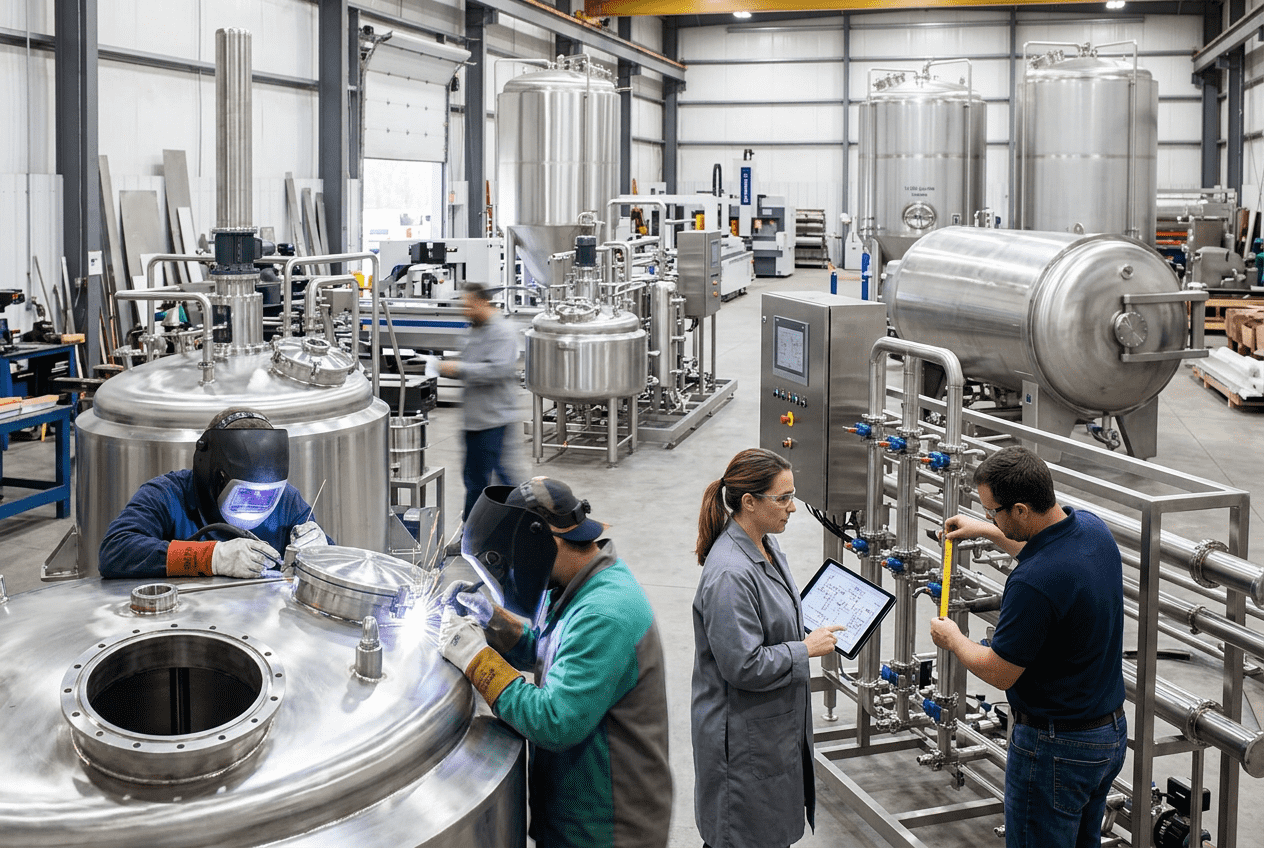
Beverage Plant HMI Design
Beverage plant HMI design works best when it is built around operator speed, food safety, washdown durability, and clear process visibility. In the United States, high-performing beverage HMIs give teams immediate access to carbonation, filling, CIP, pasteurization, Brix, CO2, temperature, flow, alarms, recipes, and line status without forcing operators to dig through complex screens. The most effective systems also connect PLCs, SCADA, and MES so supervisors, maintenance teams, and production leaders all see the same live data. For beverage manufacturers running carbonated soft drinks, juice, RTD, dairy beverages, kombucha, beer, wine, spirits, and aseptic lines, HMI design directly affects uptime, quality, labor efficiency, and compliance readiness. Across the United States, especially in production hubs such as Chicago, Houston, Los Angeles, Atlanta, Charlotte, Fresno, Milwaukee, and the I-95 corridor serving East Coast distribution, beverage producers are under pressure to increase throughput while controlling labor and utility costs. Plants near major ports such as Long Beach, Savannah, New York and New Jersey, and Houston also face additional scheduling complexity tied to raw material availability, seasonal spikes, and packaging changeovers. In that environment, an HMI is not just a touchscreen. It is the day-to-day operating layer that connects the process floor to business performance. For manufacturers seeking practical execution rather than theory, Disruptive Process Solutions approaches automation and interface design from an operations-first perspective. The company supports beverage and food manufacturers across the United States and Canada with engineering, integration, installation, and project delivery that align capital spending with measurable production gains. The best HMI design for beverage production environments in the United States uses simple navigation, role-based screen access, real-time process data, zone-specific graphics, high-contrast alarms, washdown-ready industrial hardware, and seamless integration with PLC, SCADA, and MES platforms. Operators should be able to confirm product state, line condition, critical control points, and response actions in seconds. The design should support carbonation systems, syrup rooms, blending, filling, CIP, pasteurization, utilities, and packaging with minimal training time and low error risk. Strong beverage HMI design usually includes: Plants that invest in better beverage operator interface design often reduce troubleshooting time, startup losses, flavor deviation, overfill risk, and sanitation errors. That is especially true on high-speed canning, bottling, and aseptic packaging lines where seconds matter. Beverage production environments are different from general manufacturing because process conditions change quickly and sanitation expectations are much higher. An HMI in a syrup room has different priorities than an HMI at a tunnel pasteurizer or filler discharge. Even so, several design principles should remain consistent across the plant. First, the screen hierarchy should be intuitive. Operators should move from plant overview to area overview to equipment detail in one or two touches. If a filler trips, the operator should not need five screens to find bowl pressure, capper status, reject rates, or conveyor backup. Second, key values should be readable at a glance from typical operating distance. In U.S. beverage plants with fast changeovers and rotating crews, usability must assume the user may be tired, wearing gloves, or stepping in to help outside their usual station. Third, alarms should inform action rather than create noise. Good alarm philosophy separates advisory conditions from line-stopping events. If every event is red and flashing, nothing is prioritized. Fourth, the interface should match how the process actually runs. Carbonation operators think in CO2 volume, pressure, and product temperature. Syrup room operators focus on batch status, ingredient sequencing, Brix verification, and transfer confirmation. CIP teams need phase, time, temperature, conductivity, chemical concentration, and destination proof. The HMI should speak the language of each role. Fifth, sanitation and environmental exposure must influence hardware and mounting decisions. Beverage lines in North Carolina, California, Texas, Wisconsin, and Pennsylvania often experience frequent washdowns, sugar exposure, steam, and condensation. A screen that looks acceptable on a specification sheet may fail early if the enclosure, connectors, gaskets, or ventilation are not suitable for the actual area classification and washdown intensity. The table below summarizes the most important beverage HMI design principles and why they matter on the plant floor. For beverage manufacturers planning plant upgrades, this is also where front-end engineering matters. Through its controls, process, and systems integration capabilities, DPS helps align HMI design with piping, utility infrastructure, equipment layout, and process intent rather than treating the screen package as a late-stage add-on. A beverage facility should never rely on one generic screen strategy for all process zones. Each zone has a different operating tempo, different control variables, and different consequences when visibility is poor. In carbonation, the operator needs a stable view of product temperature, carbonation setpoint, actual CO2, flow rate, pressure, hold consistency, and any upstream blending variation. Small drift can affect package quality, foaming, and consumer experience. A carbonation HMI should present trends in a way that shows rate of change, not only current values. In filling, priorities include filler speed, bowl level, bowl pressure, container infeed, capper or seamer state, reject counts, low vacuum or pressure alerts, and downstream accumulation status. For high-speed lines in the United States, especially in co-packing environments, changeover guidance is also essential. Operators should see recipe confirmation, package format, sanitation release, and startup checklist status. CIP interfaces must be extremely clear because errors can compromise product safety, create cross-contamination exposure, or waste chemicals and utilities. Display the active circuit, tank source, destination path, phase name, phase timer, conductivity, temperature, return confirmation, and valve proofing. A good CIP HMI also highlights interlocks that prevent accidental route conflicts with production. Pasteurization screens should emphasize lethality-related values, zone temperatures, conveyor speed where applicable, product residence factors, alarms tied to safety limits, and any diversion logic for HTST or flash systems. If the plant runs tunnel pasteurization, operators need quick visibility into zone balance, package heating profile, and water recirculation conditions. The following table shows how HMI priorities vary by zone. Plants operating multiple beverage types, from carbonated soft drinks to kombucha or dairy-based beverages, often benefit from standardized navigation with zone-specific detail logic. That helps operators moving between lines in multi-shift operations while still preserving the needs of each process area. Real-time process visualization is where beverage HMI design produces some of its most measurable ROI. In syrup blending and inline dosing, Brix trends tell operators whether formulation is stable or drifting. In carbonation, CO2 and temperature trends reveal whether the process can stay within specification as speed changes. In pasteurization and hot-fill systems, temperature and flow determine both quality and regulatory confidence. Good visualization does not mean filling every screen with gauges. It means displaying the right variables in the right context. For example, a Brix value on its own is less useful than Brix actual, Brix setpoint, recent trend, product being produced, and the active correction status. Flow is often best viewed alongside pump state, valve path, and destination confirmation. Temperature should be tied to the asset or stage where it matters most, such as blend outlet, carbonation inlet, HTST hold tube, filler bowl, or CIP return. For many U.S. beverage facilities, line leaders and quality teams also need historical access by shift, SKU, or lot. That is why HMI screens should be designed with the broader SCADA and historian strategy in mind from the start. The table below outlines how core beverage variables should be visualized. Below is a market-oriented line chart showing estimated growth in U.S. beverage investments tied to digital visibility and operator interface modernization. It reflects realistic momentum driven by labor shortages, quality demands, and multi-line integration projects. As more beverage producers move from isolated machine HMIs to unified visibility across blending, processing, packaging, and utilities, the value of real-time visualization continues to increase. Mobile HMI access has become far more relevant in U.S. beverage facilities that run two or three shifts, support multiple SKUs, and rely on maintenance and quality personnel who move constantly across the plant. Mobile access does not replace fixed HMIs at the machine. It extends visibility so supervisors, technicians, and managers can respond faster. In practical terms, mobile access is most useful for line overview, alarm acknowledgment workflows, CIP progress review, utility checks, changeover support, and supervisory approvals. A maintenance lead should be able to see whether a filler fault is electrical, mechanical, or upstream starvation before walking across the building. A production supervisor should be able to compare line states in real time during startup. A quality manager should be able to confirm process compliance trends without waiting for reports. However, not every control action should be mobile-enabled. For safety, security, and procedural reasons, many plants limit remote execution of critical commands such as starting pumps, forcing valves, or bypassing interlocks. Mobile design should follow role-based permissions, network segmentation, and cybersecurity best practices. For facilities with large footprints or split operations, such as blending rooms separated from packaging halls or utility centers, mobile visibility can save significant labor time per shift. This is especially valuable in co-packing, seasonal beverage programs, and distributed campus operations near logistics hubs such as Dallas-Fort Worth, Inland Empire, and central Florida. The bar chart below compares estimated demand for advanced HMI and mobile visibility across major beverage segments in the United States. When mobile access is implemented correctly, it improves handoffs between day, swing, and night shifts. It can also strengthen accountability because event history, response times, and process status become easier to review. Hardware selection is one of the most overlooked parts of beverage HMI design. A strong interface can still fail if the industrial PC or operator panel is poorly matched to washdown, temperature swing, sugar exposure, or enclosure conditions. In beverage production, fanless designs are often preferred because they reduce contamination ingress and improve reliability. Sealed front panels help protect against moisture and routine cleaning. In wet zones, washdown-rated hardware is often necessary, particularly around fillers, rinsers, conveyors, depalletizers, and open process areas. Stainless housings or suitable enclosures may be the better choice in aggressive sanitation environments. Screen brightness and touch performance matter too. Operators may use gloves, and ambient light can vary from dim packaging areas to bright process rooms. Mounting height, swing-arm accessibility, and cable protection also affect long-term usability. The best specification is not the most expensive one; it is the one that survives the real production environment with the least downtime. The table below compares industrial HMI hardware considerations for beverage plants. This is also where manufacturing capability matters. DPS supports processing environments with custom equipment, including tanks, CIP systems, and other integrated process assets, which allows interface hardware decisions to be coordinated with skid design, utilities, piping access, and sanitation realities rather than treated in isolation. More information on equipment integration can be found in the company’s process equipment capabilities. High-speed beverage lines demand interface discipline. When a line is running hundreds of containers per minute, a few seconds of hesitation can lead to product loss, package damage, or expanded downtime. The best operator interface designs support rapid comprehension under pressure. Use muted background colors and reserve strong colors for abnormal conditions. Keep primary KPIs on one line-state screen. Show machine relationships, not only machine names. A filler fault may actually start at depalletizing, cap supply, or downstream pack-out congestion, and the screen should help the operator understand that flow logic. Include plain-language prompts for recoverable events. “Low bowl pressure” is better than a cryptic tag, but “Check product supply valve open status and upstream balance tank level” is even better. Standardize buttons for home, alarm summary, trends, recipes, and acknowledgments across every screen. Avoid excessive animation that distracts from actual process condition. Changeover support is especially important in beverage co-packing and SKU-dense facilities. Operators should be able to confirm package format, product selection, target speed, sanitation release, and verification checklist completion from one guided workflow. This reduces startup errors and shortens the time between batches. The area chart below illustrates the trend shift in U.S. beverage facilities from basic local-machine interfaces toward unified, data-rich operator environments through 2026. From a service standpoint, successful HMI execution typically requires process engineering, controls programming, field installation, commissioning, and operator training to be coordinated. That integrated delivery model is a core reason beverage manufacturers engage firms like DPS for engineering and integration services when timelines are tight and uptime expectations are high. An HMI should never operate like an island. In modern beverage manufacturing, the interface must connect meaningfully with PLC logic, SCADA visualization, historian layers, and increasingly with MES or production management systems. That is how operators, supervisors, quality, maintenance, and leadership see one version of the truth. The PLC remains the control foundation. It handles interlocks, sequences, and machine logic. The local HMI should expose what the operator needs for safe, efficient control without overcomplicating the experience. SCADA adds broader visualization, trending, alarm management, and multi-area oversight. MES or reporting layers connect production orders, downtime, genealogy, quality checks, and performance analytics. For beverage plants with multiple processing steps, the benefit of integration is substantial. A syrup room issue should be visible to filling. A CIP lockout should be visible to production planning. Utility constraints should be visible before they stop packaging. This is especially valuable in enterprise environments operating across regions, from the Southeast and Midwest to the West Coast and cross-border Canadian operations. The comparison chart below shows a realistic view of capability gains when beverage plants move from isolated HMI systems to integrated HMI, PLC, SCADA, and MES visibility. Technologically, this is an area where DPS brings value beyond screen creation. Its team supports controls engineering, PLC programming, automation architecture, SCADA, process system integration, and utility coordination so clients can unify visibility from raw material handling through final packaging. That technical depth is particularly useful when retrofitting legacy beverage facilities that have grown through piecemeal expansions. For readers evaluating implementation partners, project examples and real execution context are often more useful than generic sales claims. Relevant examples of integrated capital and process work are available in these food and beverage project case studies. Many beverage HMI projects fail to deliver their full value because the screens look modern but do not actually help operators perform better. The most common mistake is clutter. Too many colors, symbols, animations, and values force the user to decode the interface rather than read it. Another major problem is inconsistent design between lines or skids. If every OEM screen works differently, training becomes slow and errors increase. Poor alarm philosophy is another frequent issue. If advisory notices, process warnings, and critical trips all appear the same way, operators lose the ability to prioritize. Hidden interlock information is also common. An operator sees that a pump will not start but cannot see the actual inhibit condition without opening multiple diagnostic screens. Some plants also underinvest in recipe confirmation and changeover guidance. That can lead to startup waste, wrong-package events, or delayed quality release. Others fail to include maintenance-friendly diagnostics, forcing technicians to work from raw PLC tags or scattered manuals. Finally, many sites ignore the environment and install office-grade or lightly protected hardware in washdown areas, creating repeated failures that operators eventually work around. The table below highlights common errors and practical corrections. Buying advice for U.S. beverage manufacturers is straightforward: do not purchase an HMI solution based only on graphics demos. Evaluate it against your actual process map, sanitation routine, staffing model, reporting needs, utility dependencies, and future expansion plan. Plants expecting rapid SKU growth or line additions in 2026 and beyond should design for scalability now. Future trends are also shaping beverage HMI strategy. By 2026, more plants are expected to use role-aware dashboards, contextual alarm guidance, energy visibility tied to utilities, stronger cybersecurity segmentation, and sustainability reporting linked to water, steam, and CIP performance. U.S. policy and customer pressure around resource use, traceability, and resilient domestic manufacturing will likely increase demand for integrated control and visibility systems. Interfaces that show water recovery, chemical use, utility intensity, and batch-level efficiency will become more common, especially in large co-packing, dairy beverage, and aseptic operations. What is the main goal of beverage plant HMI design?The main goal is to help operators make fast, accurate decisions while maintaining product quality, food safety, and uptime. A good beverage HMI shows the right information at the right time and supports clear action during normal running, changeover, cleaning, and troubleshooting. Which beverage processes need the most HMI attention?Carbonation, blending, filling, CIP, pasteurization, and utilities usually need the most attention because small deviations in those areas can quickly affect throughput, quality, and compliance. What data should always be visible on a beverage HMI?That depends on the zone, but common must-have values include Brix, CO2, temperature, flow, pressure, conductivity, tank level, line speed, machine state, alarms, and recipe or SKU confirmation. Is mobile HMI access safe for beverage plants?Yes, if it is designed with role-based permissions, segmented networks, secure authentication, and limits on critical control actions. Mobile access is best used for visibility, acknowledgment workflows, and supervisory review rather than unrestricted machine control. Do beverage plants need washdown-rated HMIs everywhere?No. They need them in exposed wet or sanitation-heavy areas. Dry control rooms and protected packaging spaces may use different hardware, but wet zones around processing and filling usually require sealed or washdown-rated options. How important is HMI integration with SCADA and MES?It is increasingly important. Integration improves traceability, downtime analysis, production visibility, reporting, and consistency across shifts and lines. It also helps management understand how process events affect business performance. What industries benefit from the same design logic?Beyond carbonated soft drinks and brewing, the same HMI principles help juice, dairy beverages, spirits, wine, functional drinks, kombucha, aseptic products, prepared foods, sauces, and other sanitary process industries. What should buyers ask a supplier before approving an HMI project?Ask how the design handles alarm philosophy, changeovers, CIP visibility, historical trends, washdown durability, PLC and SCADA integration, mobile access, training, cybersecurity, spare parts strategy, and future expansion. Why do some HMI projects underperform even after installation?Usually because the system was designed around equipment tags instead of operator decisions, or because process, controls, and operations teams were not aligned during design. Who is a strong fit for this kind of project support?Mid-market and enterprise beverage manufacturers looking for process engineering, system integration, equipment coordination, and disciplined execution often benefit most from working with a partner that understands both operations and capital planning. Companies looking to align throughput, quality, and profitability can learn more about the team behind that approach at DPS. In summary, beverage plant HMI design in the United States should be treated as a production performance tool, not just a controls accessory. The strongest systems combine intuitive operator screens, process-specific visibility, durable hardware, and full integration across control and reporting layers. When designed properly, they support faster startups, more stable quality, safer cleaning, and better decisions at every shift level.


