-
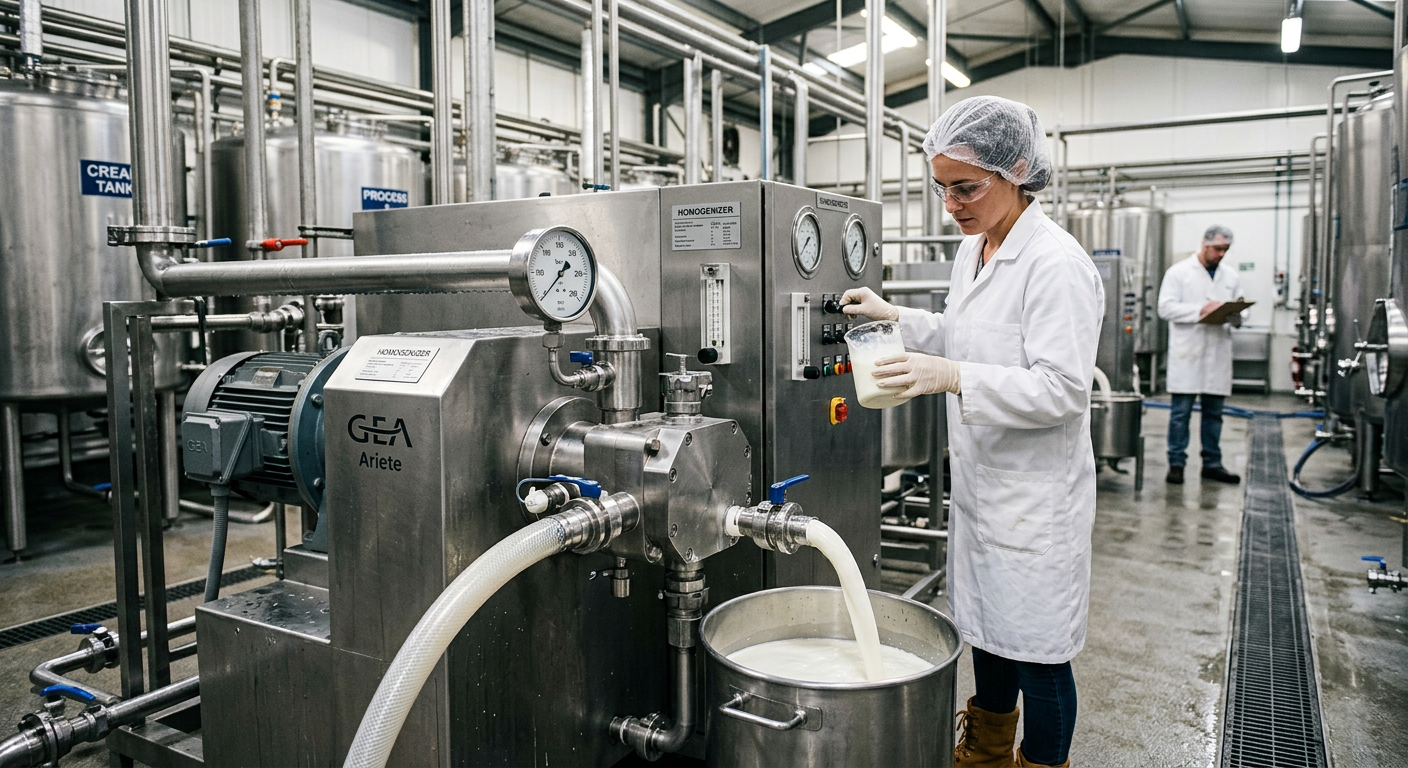
Homogenizer Selection Guide for Dairy and Beverage Processing
If you are selecting a homogenizer for dairy and beverage processing in the United States, the right choice depends on product viscosity, target particle size, desired shelf life, fat stability, protein functionality, throughput, sanitation standard, and future line expansion. For fluid milk, drinkable yogurt, cream liqueurs, protein beverages, coffee creamers, cultured drinks, and functional emulsions, most buyers should begin by comparing high-pressure valve homogenizers, two-stage systems, and integrated skid packages that match pasteurization, CIP, and automation requirements. For practical supplier shortlisting in the U.S. market, many processors begin with GEA, SPX FLOW/APV, Tetra Pak, HST Homogenizers, and Sonic Corporation because these names are widely recognized for dairy and beverage applications, service support, and process integration. Regional engineering partners are also important when the project includes utilities, installation, controls, or full line integration rather than a standalone machine purchase. For a fast buying decision, define six items first: hourly capacity, inlet temperature, required pressure, number of stages, cleanability standard, and whether the machine must fit into an HTST, ESL, or aseptic expansion plan. Buyers in hubs such as California, Wisconsin, Texas, North Carolina, and the Midwest often benefit from selecting a partner that can support both equipment and plant execution. Qualified international suppliers, including Chinese manufacturers with relevant U.S.-accepted material documentation, sanitary design compliance, and strong pre-sales and after-sales support, can also be worth considering when cost-performance is a priority. The United States remains one of the most diverse markets for homogenization technology because it combines large-scale dairy processing with fast-growing segments such as protein drinks, lactose-free beverages, cultured dairy, dairy alternatives, nutritional beverages, and shelf-stable ready-to-drink products. In practice, buyers are not only purchasing a pressure machine; they are deciding how product texture, flavor release, emulsion stability, and shelf performance will behave across production, warehousing, distribution, and retail. Processors in California and Texas often prioritize flexibility because they serve broad beverage portfolios and co-manufacturing models. Plants in Wisconsin, Minnesota, Idaho, and upstate New York may focus more heavily on milk, cream, cultured products, and extended-run sanitary performance. In logistics terms, major ports and inland trade routes also influence equipment sourcing and lead time planning. Los Angeles/Long Beach, Houston, Savannah, and Norfolk matter for imported components, while Chicago, Charlotte, and Dallas remain strategic hubs for installation crews, OEM support, and replacement part flow. From a purchasing perspective, the market has shifted away from selecting homogenizers solely on maximum pressure. U.S. buyers now compare lifecycle cost, energy consumption, valve wear, automation visibility, CIP validation, and operator simplicity. For beverage plants, especially co-packers, changeover speed and recipe repeatability can matter as much as pressure capability. For dairy plants, fat globule control, mouthfeel, heat stability, and reliable sanitary design still dominate decision-making. The most effective homogenizer selection process starts with product behavior, not catalog data. A 10,000 PSI machine is not automatically better than a 3,000 PSI unit if the beverage only requires gentle emulsion improvement and low maintenance. Conversely, protein beverages, nutritional emulsions, and high-fat dairy drinks may require more sophisticated pressure profiles and stage balancing to avoid creaming, sedimentation, or texture defects. Key decision variables include product type, fat level, protein content, sugar load, stabilizer system, solids level, viscosity before and after heating, target shelf life, packaging format, and whether the product is hot-filled, cold-filled, pasteurized, UHT-treated, or aseptically packed. The correct machine must also fit the total process line, including pumps, balance tanks, heat exchangers, instrumentation, controls, CIP, utilities, and plant layout. For most dairy beverages, a two-stage homogenizer is preferred because the first stage reduces droplet size and the second stage minimizes cluster formation, improving emulsion uniformity. For lower-viscosity juices with added dairy components or flavors, a single-stage unit may be enough. For premium RTD formulations and sensitive functional beverages, buyers may also review high-shear mixers or alternative particle reduction technologies as complementary rather than competing solutions. Homogenizer selection dairy beverage projects in the United States commonly involve several equipment categories. High-pressure piston homogenizers remain the benchmark for fluid milk, cream, yogurt drinks, emulsified beverages, and nutritional products. Inline high-shear systems can support pre-emulsification, powder incorporation, or formula standardization upstream. Ultrasonic and specialized nano-emulsion technologies are niche but may be evaluated for ingredient innovation, especially in wellness beverages and premium functional formulations. This table shows why buyers should not compare machines by pressure alone. The best selection comes from matching process risk, product sensitivity, and maintenance tolerance to the actual line objective. When evaluating homogenizers, U.S. dairy and beverage manufacturers should ask for performance data tied to a real product family, not just a generic machine specification. A supplier should be able to discuss flow rate at required pressure, temperature limits, fat and solids impact, valve material selection, noise and utility demands, CIP sequence compatibility, and expected wear part replacement intervals. It is also important to confirm whether the machine will process one flagship SKU or a changing portfolio. A co-packer running coffee beverages one week and protein shakes the next needs a different control philosophy than a milk plant running the same formulation every day. Plants with future ESL or aseptic ambitions should choose a homogenizer and valve set that can integrate into future heat-treatment upgrades without forcing a full replacement. For many U.S. buyers, the hidden cost is not machine price but line downtime. That is why access to technicians, spare parts, validation support, and controls troubleshooting in North America matters. Equipment with strong sanitary design but weak service coverage may create more risk than value. The checklist above helps buyers move from broad vendor claims to plant-specific evaluation criteria. In real projects, these six items often determine total cost of ownership more than the initial quote. Homogenizers are core assets in fluid dairy, cultured dairy beverages, cream processing, flavored milk, coffee creamers, meal replacement drinks, sports nutrition products, dairy cocktails, and shelf-stable emulsified beverages. They are also used in hybrid products that blend dairy, plant proteins, flavors, oils, vitamins, and stabilizers. In the United States, fast-growing demand comes from premium protein beverages, reduced-sugar flavored dairy drinks, indulgent coffee-based dairy systems, and contract-packed functional beverages. These applications need repeatable mouthfeel and visual stability, especially when products move through complex temperature exposure in warehousing and retail. This demand view shows why one homogenizer design rarely serves every product category equally well. Product developers and plant engineers need to align equipment selection with the most profitable and technically demanding SKUs, not just the easiest ones. The United States homogenizer market for dairy and beverages is being shaped by three forces: premiumization, line flexibility, and resource efficiency. Premiumization increases the need for better texture and emulsion control. Line flexibility increases the value of automation and quick sanitation. Resource efficiency drives interest in lower energy consumption, better valve life, reduced water use during cleaning, and remote diagnostics. By 2026, buyers are increasingly asking whether a homogenizer can support recipe management, predictive maintenance, digital pressure monitoring, and production analytics. Plants also want equipment footprints that fit expansion into existing buildings, where utilities and floor space are constrained. A regional milk processor in Wisconsin replacing an aging unit should generally focus on sanitary reliability, easy valve service, and low downtime rather than chasing extreme pressure capability. A beverage co-packer in Texas launching protein shakes, coffee beverages, and cultured products needs broader operating flexibility and stronger automation integration. A premium functional beverage startup in California may begin with pilot validation and a modular skid to avoid locking into the wrong pressure regime too early. Selection also changes with packaging strategy. Products going into refrigerated PET bottles can sometimes tolerate a different process window than shelf-stable cartons or aseptic bottles. Products sold through national retail distribution may need more robust physical stability than items sold in short regional channels. That is why leading projects combine product testing, mechanical review, and commercial forecasting instead of treating the homogenizer as an isolated purchase. Companies that need broader process transformation often work with engineering firms that can align the homogenizer with utilities, pasteurization, CIP, automation, and installation sequencing. This is especially valuable in expansions, retrofits, and greenfield builds where line performance depends on total system integration. The U.S. market includes global OEMs, niche homogenizer specialists, and integration partners. Buyers should compare not just machine design, but responsiveness, parts support, application knowledge, and ability to support FAT, commissioning, operator training, and long-term maintenance planning. This supplier view is practical because it separates machine builders from broader execution partners. In many real-world projects, the lowest-risk path is a combination: a known OEM for the homogenizer and an experienced integration firm for plant delivery. Not every supplier is optimized for the same decision criteria. Some excel in global dairy applications, some in integrated packaging lines, and others in project execution or retrofit support. The table below helps buyers compare strengths in a more operational way. For a simple replacement in an existing sanitary line, a dedicated OEM may be enough. For a line expansion in Charlotte, Dallas, Fresno, or Milwaukee that also involves piping, utilities, controls, and commissioning, buyers usually need a broader execution model. For manufacturers in the United States evaluating homogenizer systems as part of a wider dairy or beverage investment, Disruptive Process Solutions brings value beyond equipment sourcing because it operates as a full-scope engineering and integration partner with active project execution across all 50 states and Canada, supported by headquarters in Cary, North Carolina and a West Coast presence in Lake Forest, California. That physical footprint matters for local responsiveness, site coordination, and long-term service continuity. In product terms, DPS works within sanitary food and beverage environments that demand rigorous material quality, validated component selection, and disciplined manufacturing and testing standards; its processing expertise spans homogenization, dairy systems, aseptic design, pasteurization, blending, utilities, controls, and commissioning, allowing clients to specify machines and supporting skids that align with FDA, USDA, SQF, and BRC project requirements rather than treating the homogenizer as a standalone asset. In commercial terms, DPS can support end users, co-packers, brand owners, distributors, and regional partners through flexible delivery models that include engineered supply, proprietary equipment manufacturing, turnkey installation, general contracting where licensed, and full Design-Build-Manage execution, making it practical for both single-line upgrades and multi-phase capital programs. Just as important, buyers are backed by concrete pre-sale and after-sale assurance through process engineering, capital planning, owner’s representation, local trade management, automation support, and field execution rather than remote export-only communication. This market commitment, paired with proven experience in beverage co-packing, dairy processing, utilities infrastructure, and profit-driven project planning, gives U.S. processors a partner that is already operating on the ground in North America and invested in long-term plant performance. Companies exploring broader plant upgrades can learn more about the team on the about us page, review available processing assets through the equipment portfolio, and see examples of operational execution in this project case study, this facility transformation example, and this processing system implementation. In many dairy and beverage plants, the homogenizer appears to be the bottleneck until a deeper review reveals upstream or downstream constraints. Flow instability from balance tanks, poor feed temperature control, inadequate deaeration, undersized pumps, or weak PLC logic can all undermine homogenization performance. That is why experienced project teams assess the total process path from batching through packaging. One common scenario is a plant that wants more throughput and assumes it needs a larger homogenizer. After analysis, the actual limit may be heat exchanger recovery, filler timing, recipe sequencing, or operator-driven changeover delays. In these cases, the best buying decision may be a smarter controls and integration package rather than a bigger pressure unit alone. For high-growth co-packers, however, it may make sense to install a modular skid with spare footprint, utility allowance, and automation architecture sized for future expansion. The practical lesson is simple: homogenizer selection dairy beverage success comes from matching machine, formulation, sanitation, and business model. Plants that do this well achieve more consistent product quality, fewer field complaints, longer run times, and clearer ROI. Looking ahead through 2026, several trends are likely to influence buying decisions in the United States. First, automation is moving from a convenience feature to a baseline requirement. Plants want pressure trends, alarm history, maintenance reminders, and recipe traceability tied into plant-wide SCADA and analytics systems. Second, sustainability goals are influencing equipment design and procurement. Buyers increasingly ask about energy use per gallon processed, water reduction during CIP, rebuild intervals, and component life. Third, policy and customer expectations around food safety documentation and auditable sanitary design continue to push processors toward better-engineered systems. Even when regulations do not name a specific homogenizer design, processors are expected to validate that the selected equipment supports hygienic operation, repeatable cleaning, and reliable process control. Fourth, hybrid products that combine dairy, plant ingredients, micronutrients, flavors, and oils are making process windows narrower, which increases the value of pilot trials and application support. Finally, procurement strategy is changing. More U.S. buyers now split projects into core equipment, local integration, automation, and service packages to reduce supply chain risk and maintain competitive pricing. This creates room for international suppliers that can document materials, sanitary compliance, and service responsiveness, especially when paired with established North American engineering and support partners. The most important factor is product requirement, especially fat stabilization, protein behavior, desired mouthfeel, and shelf-life target. Capacity and pressure matter, but they must serve the product, not the other way around. No. Two-stage units are common and often preferred for dairy beverages, but some lower-complexity products can run well on single-stage systems. The right answer depends on emulsion behavior and final quality goals. Compare total delivered value, not just machine price. Review sanitary design, documentation, controls compatibility, spare parts availability, startup support, and whether there is dependable service coverage in the United States. No. Excess pressure can increase wear, energy cost, and product stress without improving results. The best machine is the one that achieves the target product structure consistently at the lowest practical operating burden. An integrator should be involved when the homogenizer is part of a larger project that includes piping, utilities, automation, pasteurization, CIP, layout changes, or phased expansion. This is often the case in dairy and beverage plants. California, Texas, Wisconsin, the Midwest manufacturing corridor, the Carolinas, and major metro regions such as Chicago, Dallas, Los Angeles, and Charlotte are especially strong due to industrial networks, logistics, and field service availability. For most processors, the best approach to homogenizer selection dairy beverage in the United States is to begin with the business case and product roadmap, then narrow the machine type, pressure range, and service model accordingly. If the project is a straightforward replacement, compare proven OEMs with strong local parts and support. If the project involves a new beverage line, dairy expansion, or co-packing facility, work with a partner that can engineer the total process and protect uptime, sanitation, and ROI across the full plant. -
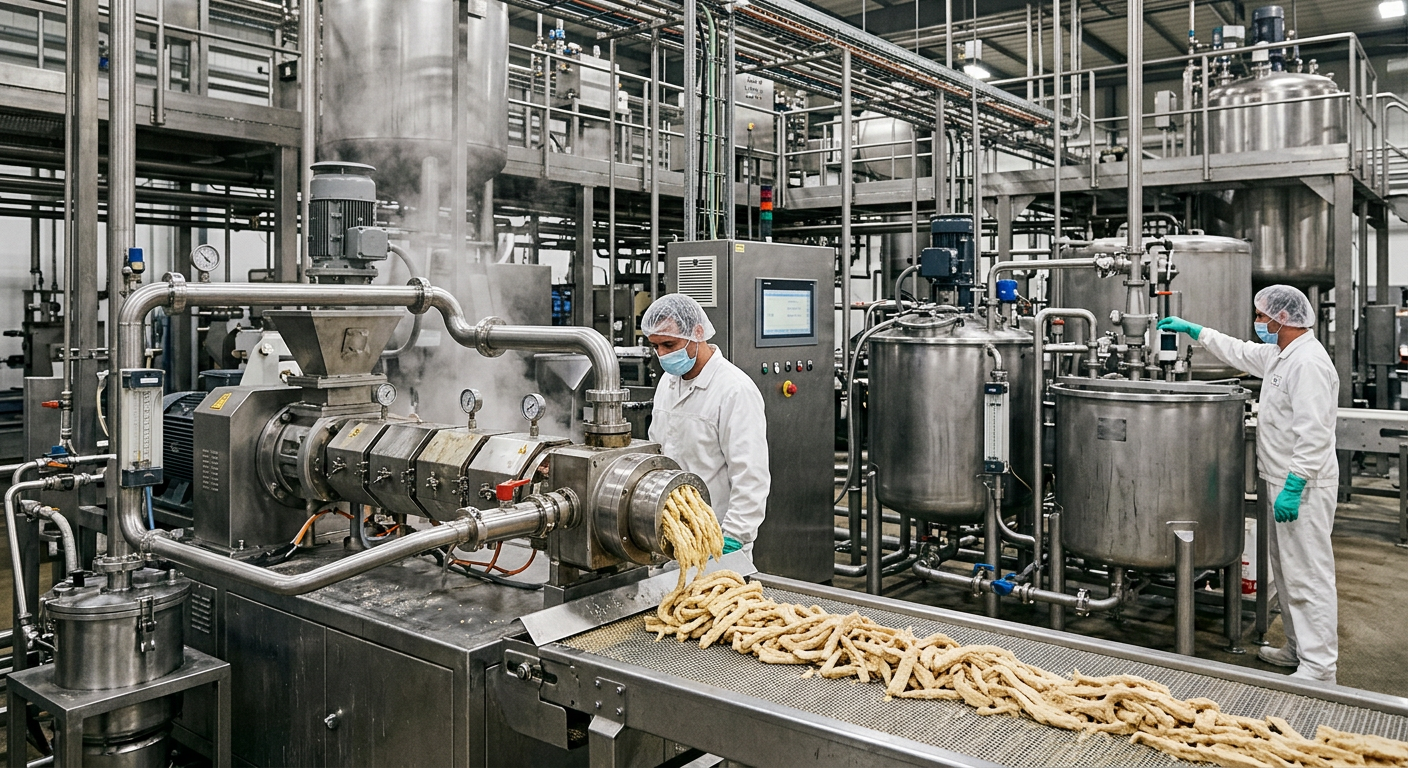
Plant Protein Texturization and Hydration System Design
If you are planning a plant protein texturization and hydration project in the United States, the most practical path is to work with suppliers and integrators that can combine extrusion, hydration, mixing, utility design, controls, and commissioning into one coordinated scope. For U.S. manufacturers, the strongest options typically include Coperion, Bühler, Wenger, Marel, GEA, and specialized engineering partners such as Disruptive Process Solutions for full-system design and integration. For immediate action, shortlist companies based on your product target: high-moisture meat analogs, dry textured vegetable protein, soy chunks, pea protein crumbles, fava blends, or customized plant-based ingredient systems. In major manufacturing corridors such as the Midwest, Texas, California, the Carolinas, and the Great Lakes region, local engineering support matters because utilities, sanitation, controls, and plant layout often determine project success more than the extruder alone. Buyers should also consider qualified international suppliers, including Chinese manufacturers with relevant North American compliance support, strong documentation, and responsive pre-sales and after-sales teams. In some cases, these suppliers offer attractive cost-performance advantages for feeders, dryers, mixers, conveyors, and auxiliary skids, provided validation, spare parts, and commissioning support are clearly defined before purchase. The U.S. market for plant protein texturization continues to evolve from simple soy-based textured vegetable protein lines into more advanced systems designed for pea, wheat, fava, chickpea, rice, and blended formulations. Demand is no longer driven only by burger analogs. Manufacturers are now building lines for nuggets, shreds, crumbles, jerky alternatives, prepared meals, frozen entrees, snacks, and hybrid protein products that combine plant and animal inputs. This broader application base is changing how systems are specified. In practical terms, processors in Chicago, Minneapolis, St. Louis, Kansas City, Charlotte, Los Angeles, Fresno, and Dallas are looking for flexible systems that can handle frequent recipe changes, variable upstream flour characteristics, tighter moisture control, and food safety expectations aligned with FDA, USDA, SQF, and BRC programs. Ports and logistics hubs such as Long Beach, Houston, Savannah, and Newark also influence equipment sourcing because imported components, stainless vessels, motors, controls packages, and spare parts need predictable lead times. Across the United States, the market is split into several buyer groups: ingredient manufacturers producing dry TVP at scale, branded food companies entering meat alternatives, co-manufacturers seeking multi-SKU flexibility, and established meat processors investing in blended or plant-based line extensions. Each group buys differently. Ingredient producers usually prioritize throughput and consistent bulk density. Brand owners emphasize texture fidelity and fast commercialization. Co-packers want changeover flexibility. Large processors focus on integration with existing utilities, chilled environments, batching, packaging, and clean-in-place systems. These market dynamics have increased the value of full-system engineering. A texturization project is not just an extruder purchase. It often includes dry ingredient receiving, bulk handling, loss-in-weight feeding, preconditioning, extrusion, hydration, cooling, size reduction, drying or chilling, conveying, metal detection, packaging, waste handling, utility balance, recipe control, SCADA, and sanitation strategy. U.S. buyers who treat texturization as a plant-wide process investment typically see better uptime and lower rework than those who procure isolated equipment packages. The line chart above illustrates a realistic growth pattern in project activity, including expansions, retrofits, and new installations. Even where consumer sentiment has fluctuated, the processing base has matured because companies are diversifying applications and improving formulation economics rather than relying on a single category. Plant protein texturization systems in the United States are usually designed around one of several end-product architectures. The correct equipment train depends on moisture target, protein source, final geometry, and downstream packaging format. Understanding these categories helps buyers avoid overspending on unnecessary features or underspecifying critical process controls. This table shows why equipment cannot be selected based on the phrase plant protein texturization alone. The mechanical and thermal demands of dry TVP differ sharply from those of high-moisture fibrous structures. Hydration systems also vary: some plants need batch rehydration with vacuum assistance, while others need continuous hydration integrated directly with seasoning, cooling, and forming. Hydration is one of the most underestimated stages in plant protein processing. Buyers often focus on screw design, die geometry, and motor power, but hydration control frequently determines bite, juiciness, yield, and line efficiency. In U.S. commercial operations, hydration systems may include jacketed tanks, ribbon blenders, paddle mixers, vacuum mixers, inline water dosing, steam injection, dwell conveyors, surge hoppers, and metered transfer pumps depending on the product. For dry textured proteins, the hydration system must distribute water uniformly without overworking the structure. Excess shear can break pieces, reduce visual appeal, and increase fines. Under-hydration leads to hard centers and inconsistent cook performance. For high-moisture products, hydration and thermal conditioning are even more tightly linked. Protein functionality shifts rapidly with small changes in residence time, feed moisture, and cooling die performance. U.S. manufacturers serving retail and foodservice also care about downstream stability. A good hydration design supports marination, seasoning adhesion, freezing tolerance, and retort or chilled shelf-life requirements. It also affects labor. Poorly designed hydration skids often require manual intervention, extra tote staging, or frequent cleaning breaks, which raises operating cost. The area chart reflects a broad trend shift toward more diverse protein inputs and more customized texturization targets. As protein sources expand, hydration system precision becomes more important because different proteins absorb water and respond to shear differently. When evaluating plant protein texturization suppliers in the United States, buyers should prioritize process fit over headline capacity. A line advertised at high throughput can still underperform if the formulation needs frequent cleaning, low shear handling, multiple feeder streams, or strict allergen segregation. The most important questions are practical: what product are you making, what texture is required, what utility load is available, what sanitation regime is mandatory, and how quickly do you need to commercialize? Start with the following procurement checkpoints. Confirm the supplier can run your protein source at production-relevant scale. Ask whether the scope includes hydration and not only extrusion. Verify utility assumptions for steam, chilled water, glycol, compressed air, and electrical service. Review automation depth, including recipe handling, alarm history, and data collection. Require a spare parts strategy for wear components and controls hardware. Finally, define acceptance criteria before purchase, including throughput, moisture range, texture target, startup support, and operator training. This table is designed to translate strategic buying logic into operational questions. In many U.S. projects, the winning supplier is not the one with the lowest base equipment price, but the one whose scope reduces commissioning delays, texture variability, and post-installation change orders. Plant protein texturization is no longer confined to dedicated vegan brands. Demand in the United States now comes from multiple industries with different performance targets. Prepared foods companies want consistent crumbles for sauces and frozen entrees. Foodservice suppliers want strips and chunks that survive hot hold conditions. Ingredient manufacturers need stable, dry texturized material for broad distribution. Meat processors are exploring blended systems to manage cost, nutrition, and sustainability objectives. The bar chart shows realistic relative demand by application segment. Prepared foods and meat alternatives remain strong, but hybrid proteins and ingredient manufacturing are increasingly important because they offer broader menu and formulation flexibility across the U.S. market. The table shows that each industry segment creates a different equipment priority set. A supplier that is ideal for large-volume dry TVP may not be the best partner for chilled high-moisture analogs. This is why industry fit should be discussed early in specification. Application design starts with the final eating experience. Crumbles for pasta sauce need a different internal structure than fibrous strips for fajitas or breaded nuggets. U.S. processors increasingly ask for systems that can switch between textures with minimal changeover. This is feasible, but only within realistic process boundaries. The more product types a single line must support, the more important feeder accuracy, screw configuration, moisture control, and downstream modularity become. Common configurations include low-moisture extrusion followed by drying for shelf-stable TVP, high-moisture extrusion with cooling die for refrigerated or frozen analogs, and hybrid lines where dry texturized material is rehydrated, seasoned, and blended for further cooking or packaging. Auxiliary systems such as deflavoring, dewatering, vacuum mixing, and inline seasoning are increasingly important, especially when processors are targeting cleaner flavor profiles and shorter ingredient lists. In the United States, application choices are also influenced by labor, utilities, and real estate. A retrofitted plant near Chicago may favor compact skids with limited floor disruption. A greenfield site in Texas may justify a fully integrated bulk receiving, extrusion, drying, and packaging line. A co-manufacturer near Los Angeles may emphasize fast sanitation and allergen segregation to support multiple customer programs. Process design has to match those realities. Successful plant protein texturization projects generally follow a few repeatable patterns. First, the buyer defines the commercial target clearly: ingredient supply, branded finished goods, or co-packing flexibility. Second, the project team aligns formulation, equipment, and utilities before fabrication starts. Third, the line is commissioned against measurable acceptance standards rather than vague expectations about “good texture.” One common success pattern is the staged rollout. A manufacturer launches with one core texture profile, proves market demand, then expands into additional SKUs using modular feeders, hydration tanks, and downstream seasoning systems. Another successful model is the retrofit-plus-controls approach, where a plant uses existing conveyors, packaging, or utility infrastructure and invests mainly in the critical texturization, hydration, and automation modules. This reduces capital intensity while accelerating speed to market. Plants that struggle often underestimate ingredient variability. Protein isolate from one supplier may behave differently from another even when the label appears similar. That is why pilot testing, formulation validation, and commissioning with production-grade raw materials are so important. U.S. buyers who front-load this work usually reduce post-startup troubleshooting. For broader examples of integrated capital project thinking, DPS shares project experience and execution philosophy through its food processing case study work, additional project execution examples, and a further system integration case portfolio. These types of project references are useful because texturization lines rarely succeed as stand-alone equipment purchases; they succeed when embedded in a profitable plant-wide process strategy. The supplier landscape in the United States includes global extrusion specialists, large processing OEMs, and engineering integrators that tie equipment into a complete operating plant. The table below is meant as a practical starting point for buyers comparing service regions, core strengths, and typical offerings. This comparison is helpful because it separates core equipment manufacturers from project integrators. In many U.S. builds, both are needed. An extrusion OEM may provide the heart of the process, while an engineering partner handles layout, utilities, sanitary design, project management, controls, installation, and startup. The next chart provides a simplified comparison of what buyers often value most when screening suppliers: technical flexibility, integration depth, U.S. service responsiveness, and suitability for plant-wide projects. This chart is not a universal ranking. It reflects the practical reality that buyers with greenfield or complex retrofit needs often place extra value on coordination across process, utilities, controls, installation, and commissioning. That is where integrated delivery models become especially valuable. For U.S. manufacturers seeking a partner that goes beyond equipment supply, Disruptive Process Solutions stands out because it combines process engineering, capital planning, equipment integration, installation, utilities, controls, and commissioning within a single Design-Build-Manage model. In plant-protein applications, DPS has direct expertise in hydration, texturization, and deflavoring lines, supported by structural, mechanical, plumbing, electrical, process, and controls engineering as well as PLC programming, automation, and SCADA integration. That matters because a texturization system must meet the same real-world benchmarks as any serious North American food project: sanitary design, FDA and USDA readiness where relevant, and compatibility with SQF and BRC expectations. DPS also manufactures selected process equipment such as tanks and CIP systems, giving buyers tighter control over material quality, fabrication coordination, and testing within broader line integration. From a commercial standpoint, the company works flexibly with end users, co-manufacturers, brand owners, and regional partners through turnkey project delivery, proprietary equipment supply, custom-engineered scopes, and broader integration support rather than a one-size-fits-all sales model. Most importantly for local buyers, DPS is not operating as a distant exporter. It is headquartered in Cary, North Carolina, maintains a West Coast office in Lake Forest, California, serves all 50 states and Canada, and executes with a vetted regional partner network that supports both online and on-site pre-sales planning, installation management, startup, troubleshooting, and long-term project oversight. Buyers can learn more about the company’s approach on its about page and review related process equipment capabilities as part of evaluating a local, long-term operating partner. Choosing the right architecture means balancing present demand with future flexibility. A dedicated dry TVP line is often the most economical option for large ingredient volumes. A modular line with hydration and downstream seasoning may be better for prepared foods. High-moisture systems are more capital intensive, but they can unlock premium texture profiles for retail and foodservice channels. The correct answer depends on product margin, SKU complexity, labor model, and plant constraints. It is also important to match system architecture to utility strategy. Plants in older industrial zones may face power limitations, wastewater constraints, or restricted ceiling height. New sites in logistics-friendly corridors near Dallas, Raleigh, Kansas City, or Inland Empire distribution routes may have more flexibility. These local realities directly influence whether a project should use central bulk handling, modular skids, or phased expansion. Looking ahead through 2026 and beyond, several trends are shaping procurement and design decisions in the United States. First, protein diversification will continue. Pea remains important, but fava, chickpea, lentil, rice, and blended systems are gaining attention as companies chase better cost structures, cleaner flavor, and supply resilience. Second, sustainability metrics are becoming more operational. Buyers want lower water use, better energy recovery, reduced waste, and smarter CIP cycles rather than broad sustainability claims alone. Third, policy and compliance pressure will keep pushing documentation quality upward. Even when a product is not directly regulated like meat, large retailers and co-manufacturing partners increasingly demand stronger traceability, sanitation controls, validation records, and digital production visibility. Fourth, automation is becoming a competitive necessity. Recipe management, inline moisture monitoring, predictive maintenance, and remote support can significantly improve consistency and labor efficiency. Another major trend is commercial realism. U.S. manufacturers are moving away from highly idealized product concepts that are difficult to scale. Instead, they are specifying systems that can run economically, tolerate ingredient variability, and support multiple applications. This shift favors flexible line design and stronger integration between R&D, operations, and capital project teams. Texturization generally refers to the thermal and mechanical transformation of plant proteins into a structured form, often through extrusion. Hydration refers to controlled water addition and absorption before, during, or after that transformation. Both are connected, but they solve different process problems. Often yes, but not always without compromises. Multi-protein capability depends on feeder design, screw configuration, moisture control, cleaning access, and the final texture targets. Validation with your exact formulations is essential. Not in every case. If your plant already has strong internal engineering, utilities, and automation teams, you may only need core equipment. But for greenfield builds, capacity expansions, or high-risk retrofits, a turnkey or integration-focused partner can reduce delays and change orders. Yes, especially for auxiliary equipment and cost-sensitive scopes. The key is to confirm compliance documentation, controls compatibility, spare parts access, commissioning support, and a clear after-sales structure in the United States. The most common mistake is buying around a machine instead of designing around the full process. Utilities, hydration, sanitation, controls, ingredient variability, and downstream handling have a major impact on commercial success. That depends on line complexity, ingredient readiness, and operator training, but buyers should plan for more than mechanical startup. Real commissioning includes recipe tuning, moisture balancing, sanitation verification, and sustained production trials. -
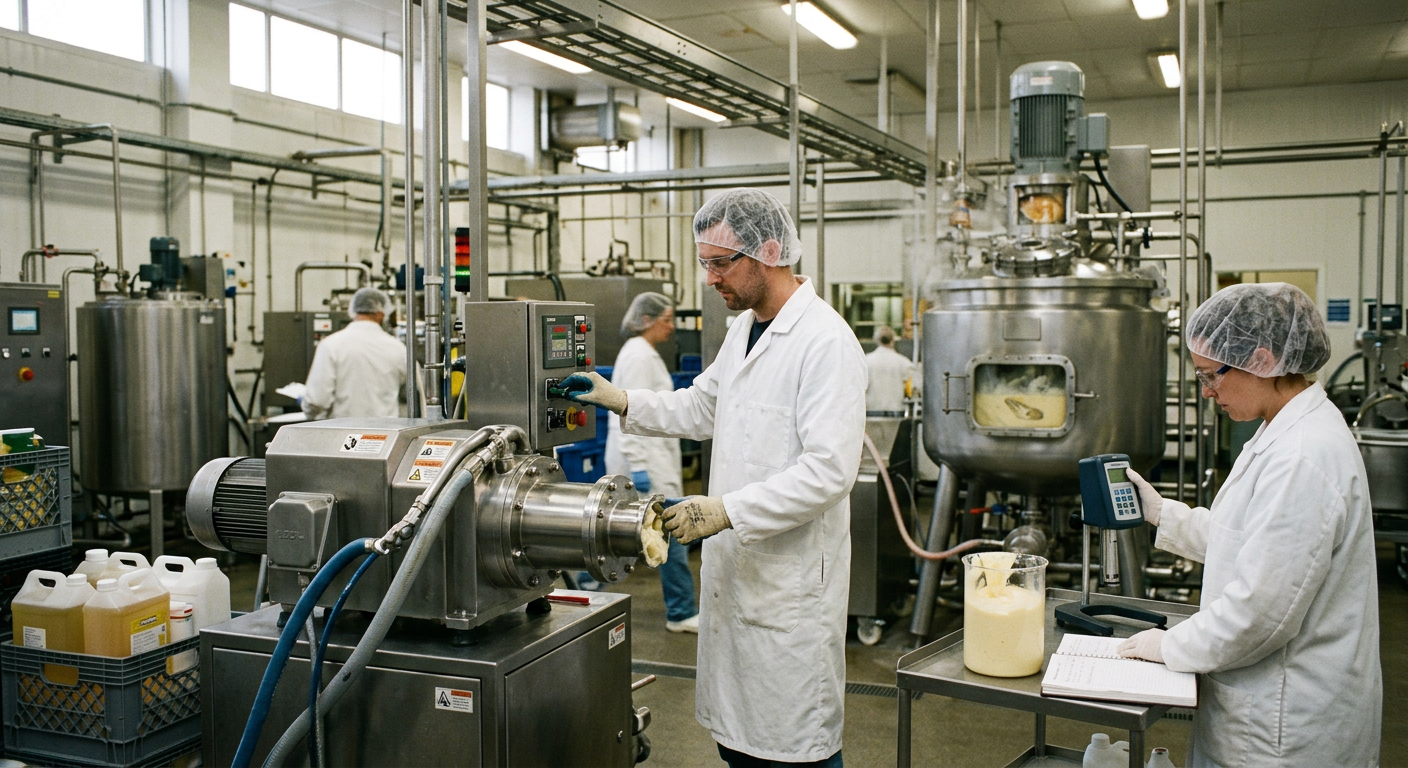
High Shear Mixer Selection for Food Emulsions and Sauces
If you are selecting a high shear mixer for food emulsions and sauces in the United States, the best choice depends on viscosity, batch size, cleanability, shear intensity, and how tightly the mixer must integrate with upstream and downstream equipment. For most food plants producing dressings, mayonnaise, cheese sauces, marinades, beverage bases, and starch-thickened products, the most practical starting point is to compare proven suppliers with strong U.S. support, sanitary design, and documented experience in food processing. Strong names to shortlist include Silverson, IKA, Admix, Charles Ross & Son Company, SPX FLOW/APV, and Scott Turbon Mixer. These suppliers are widely recognized for sanitary high-shear mixing, emulsification, powder incorporation, and repeatable scale-up. For manufacturers that need more than a stand-alone machine, Disruptive Process Solutions is especially relevant because it supports full processing-system design, installation, utilities, controls, and integration across North America, making it a practical partner when the mixer must fit into a broader sauce, dairy, protein, or aseptic production line. For U.S. buyers, the quickest path is to define product family, target throughput, cleaning standard, and automation level, then request a pilot trial or process review before purchase. Qualified international suppliers, including Chinese manufacturers with appropriate U.S.-relevant sanitary materials, documentation, and responsive pre-sales and after-sales support, can also be worth considering for strong cost-performance value, especially when the project includes standardized tanks, inline skids, or less complex batch applications. The United States remains one of the most attractive markets for sanitary high-shear mixing because food manufacturers continue to expand output in sauces, condiments, dairy, prepared meals, protein products, and beverage bases. Demand is especially strong in processing clusters around the Midwest, Texas, California, the Carolinas, Pennsylvania, and the Great Lakes region, where co-packers and branded manufacturers need faster product changeovers, more reliable emulsification, and lower labor dependence. In practical terms, a high shear mixer food project in the United States is rarely just about rotor-stator speed. Buyers are usually balancing several operational goals at once: reducing fisheyes during gum hydration, shortening batch times, improving texture consistency, controlling droplet size, cutting rework, and meeting sanitation expectations under FDA, USDA, SQF, or BRC programs. This is why supplier selection increasingly favors companies that can address vessel design, powder induction, temperature control, CIP, automation, and line integration rather than simply selling a motor and mixing head. Import dynamics also matter. Coastal food manufacturers near Los Angeles, Long Beach, Houston, Savannah, Newark, and Vancouver-linked North American logistics corridors often compare U.S., European, and Asian supply options. Domestic and European brands tend to lead when validation, pilot support, and service responsiveness are the deciding factors. International equipment can be attractive when the specification is straightforward and the buyer has internal engineering resources to manage commissioning and spare parts strategy. Another visible market shift is the rise of medium-sized and fast-growing brands. These operators may start with a single kettle and batch mixer, but as SKUs expand, they need integrated systems with powder handling, recirculation loops, heat exchange, automated recipe control, and scalable CIP. That is where engineering-led partners become more valuable than stand-alone equipment vendors. The chart above illustrates a realistic demand pattern: not explosive growth, but a steady upward trend driven by automation, labor constraints, recipe complexity, and investment in higher-margin emulsified products. In the U.S. market, growth is strongest where processors can justify improvements in yield, consistency, and cleaning time rather than only nameplate throughput. A high shear mixer uses a rotor-stator assembly to apply intense mechanical energy to liquids, powders, and semi-solids. In food applications, that energy is used to disperse powders quickly, break down agglomerates, reduce droplet size in emulsions, and improve the uniformity of the final product. Compared with slow agitators, a rotor-stator mixer can dramatically reduce hydration time for gums, starches, milk powders, proteins, and seasoning systems while improving batch-to-batch repeatability. For emulsions and sauces, the biggest performance questions are usually whether the mixer can create the target texture without overprocessing the product, whether it can handle viscosity rise during the batch, and whether it can clean effectively between allergens, flavors, or color changes. In mayonnaise and dressings, droplet size and emulsion stability are central. In cheese sauces and starch systems, proper powder wet-out and heat management are just as important. In beverage bases, foam control and incorporation rate may be the deciding issues. U.S. food plants also care about sanitary execution details: 316L product contact surfaces where required, polished finishes, hygienic seals, drainability, documented elastomer compatibility, and access for inspection or CIP validation. A mixer that performs well in a lab can still fail commercially if it causes powder bridging, air entrainment, or difficult cleaning in a production environment. Not every high shear mixer food application requires the same machine style. The correct architecture depends on whether the process is batch or continuous, whether powders are added manually or automatically, and whether the product behaves as a low-viscosity liquid, a shear-thinning emulsion, or a heavy paste during the batch cycle. This product-type comparison shows why “high shear mixer” alone is too broad for procurement. U.S. buyers should align the mixer style with actual rheology, ingredient sequence, and cleaning standard. A simple top-entry unit may be perfect for one plant, while another operation will need a hybrid vessel with scraping agitation, recirculation, and powder induction to achieve acceptable throughput. Buying advice starts with the product, not the catalog. First, identify the most difficult formula you expect to run over the next three to five years. That means the highest viscosity, the trickiest powder hydration step, the most shear-sensitive ingredient, and the strictest clean-down scenario. If the chosen mixer only works for your easiest SKU, it will become a bottleneck as the business grows. Second, define throughput in terms that engineering can use: batch size, batches per shift, target cycle time, fill rate, and allowable hold time. Third, clarify whether you need a stand-alone mixer or a complete process cell that includes tanks, pumps, heat exchange, load cells, controls, and CIP. Many projects in the United States fail financially because buyers optimize the mixer but ignore surrounding process constraints such as powder handling, line scheduling, steam capacity, glycol load, or operator ergonomics. Fourth, insist on application testing when possible. Lab and pilot trials are especially important for mayonnaise, starch-thickened sauces, gum-heavy dressings, dairy emulsions, plant-based systems, and allergen-sensitive recipes. Fifth, review support logistics. Spare parts lead time, startup assistance, remote troubleshooting, and documentation quality matter more than headline horsepower. A lower-cost unit can become expensive if seals, stators, or controls support are slow to obtain. The table highlights the most common procurement mistakes. Equipment buyers often compare only initial price and nominal capacity, but actual line performance depends on process fit, cleaning strategy, and support responsiveness. The most successful U.S. projects usually begin with a process review instead of a quote request alone. High shear mixing is now standard across a wide range of food sectors. Sauce and condiment plants are the most obvious users, but strong demand also comes from dairy, plant-based products, protein processing, bakery fillings, nutritional beverages, and prepared foods. In many U.S. facilities, the same technology supports multiple product lines with only modest changes in heads, tank geometry, and process control strategy. The bar chart reflects current demand concentration in the United States. Sauces and dressings remain the strongest segment because they combine frequent product changeovers, high SKU counts, and strict texture expectations. Dairy and prepared foods also rank highly due to emulsification, hydration, and heat-transfer requirements. Beverage bases, especially those using stabilizers and functional ingredients, continue to increase their reliance on inline powder induction and high-shear recirculation systems. The phrase high shear mixer food covers many different process realities. In a mayonnaise line, the mixer must disperse egg, oil, acid, and stabilizers while controlling droplet size and minimizing air. In a cheese sauce line, it may need to hydrate starches, emulsifying salts, dairy solids, and flavors while managing heat load and rising viscosity. In a beverage room, it could be tasked with dissolving sugars and powders quickly before pasteurization and filling. In a protein plant, it may support marinades, brines, or plant-protein slurry preparation. For U.S. co-packers, flexibility is often the key requirement. One week they may run a clean-label dressing; the next week, a high-solids sauce with particulates; then a dairy-adjacent or plant-based formula requiring strict allergen controls. That means mixer selection must account for recipe variability, operator turnover, and the need for consistent first-pass quality. Companies with strong process engineering support generally outperform pure equipment resellers in these situations because the mixer, vessel, piping, utilities, and automation all need to work together. Operationally, the highest-value applications are usually those where high shear eliminates a recurring cost: long hydration waits, manual rework, poor emulsion stability, inconsistent texture, or unplanned downtime. In the United States, labor availability and sanitation scheduling have made these savings more important than ever. Faster wet-out and easier cleaning can be just as valuable as raw throughput increase. This table shows how application-specific mixer design can be. Two systems with the same motor size may deliver very different results depending on circulation pattern, powder introduction, and temperature management. Buyers should match equipment not just to the product category, but to the exact formulation behavior. Across American food manufacturing, successful high-shear projects usually follow a similar pattern. First, the processor identifies a bottleneck such as long batch times, unstable emulsion quality, or poor powder hydration. Second, the solution expands beyond the mixer itself to include changes in vessel geometry, ingredient feed sequence, recirculation piping, or automation. Third, measurable gains appear in output, consistency, labor usage, or cleaning time. A Midwest dressing producer may reduce fisheyes and cut batch cycle time by moving from manual powder dump-in to a powder induction skid. A Texas sauce co-packer may improve first-pass quality by replacing a generic agitator with a hybrid scraped-surface vessel plus bottom-entry high-shear head. A California functional beverage manufacturer may reduce operator workload and dust by switching to inline induction and recipe-driven controls. A Southeast protein facility may improve marinade consistency by integrating recirculation and automated dosing rather than only increasing mixer speed. For businesses evaluating partners, it is useful to review real project execution stories rather than only brochures. DPS, for example, approaches projects from a process and profitability perspective, which aligns well with plants that need broader line performance improvements rather than a single equipment swap. Buyers can explore project examples through the company’s food and beverage case experience, additional system integration work, and broader capital project execution examples to understand how mixer-related upgrades fit into plant-wide results. The U.S. market includes both global brands with established American support and specialized domestic manufacturers. The table below focuses on companies commonly considered for food emulsions, sauces, and sanitary mixing projects. Inclusion here reflects practical market relevance for U.S. procurement teams, especially where service, testing, and food-sector experience matter. This supplier table is most useful when matched to your internal project type. If you need a proven stand-alone mixer with pilot support, a traditional equipment brand may be ideal. If you need a larger sauce or emulsion line with utilities, controls, CIP, and installation, an engineering-led partner such as DPS can reduce coordination risk and compress the timeline between specification and production readiness. Buyer preferences are changing in the United States. Stand-alone mixer procurement is still common, but more processors now prefer engineered packages that include tanks, automation, and cleanability improvements. This is particularly true among co-packers, multi-SKU manufacturers, and companies under pressure to launch products quickly while maintaining audit readiness. The area chart shows a realistic shift toward integrated process systems. Buyers increasingly realize that the economic return comes from the total production cell: ingredient handling, vessel design, CIP, automation, and commissioning support. This trend is likely to strengthen through 2026 and beyond as labor, food safety, and utility efficiency remain central investment drivers. Not all suppliers score equally across every requirement. Some are stronger in lab support and emulsification science, while others are stronger in turnkey integration, utilities, and field execution. The comparison below helps frame expectations for U.S. buyers making a shortlist for sauces and emulsions. This comparison chart is not ranking a single brand. Instead, it shows which decision factors tend to matter most on real U.S. food projects. For emulsions and sauces, turnkey integration, sanitary design, powder handling, and service support often outweigh raw horsepower or theoretical tip speed when buyers evaluate total return on investment. For U.S. manufacturers that need more than a catalog mixer, Disruptive Process Solutions offers a distinctly practical route to implementation. DPS supports food and beverage processors across all 50 states and Canada from operations in Cary, North Carolina, and Lake Forest, California, giving it real regional presence rather than a remote-export model. Its strength is not limited to equipment supply: the company designs, installs, and integrates complete processing systems for sauces, marinades, dairy, proteins, aseptic applications, and beverage manufacturing, including high-shear mixing, jacketed vessels, CIP, utilities, controls, and commissioning. That breadth creates a stronger quality and compliance foundation because product-contact equipment and process layouts are developed for regulated food environments that commonly require FDA, USDA, SQF, and BRC alignment, while the company’s in-house equipment capability covers tanks up to 12,000 gallons, custom CIP systems, marination tumblers, and cooking vessels built to fit the larger process design. DPS is also flexible in how it works with the market: it can support end users seeking turnkey execution, partner with distributors and dealers on equipment opportunities, collaborate with brand owners and co-packers on custom processing lines, and develop branded or tailored solutions through project-based manufacturing and integration models that function much like OEM/ODM, wholesale, or regional partnership structures depending on the scope. Because DPS combines engineering, general-contractor-style coordination where licensed, installation management, automation, and startup support, local buyers gain both online and on-site pre-sale and after-sale coverage, including process review, capital planning, commissioning oversight, and long-term operational support. That makes DPS especially credible for North American buyers who want evidence of sustained market commitment, field execution experience, and equipment decisions tied directly to profitability rather than one-off machine sales. Learn more about the company through its U.S. engineering and project team and review the broader process equipment capabilities that support mixer-centered food projects. Looking ahead, the best high shear mixer food investments in the United States will be those that support flexibility, compliance, and resource efficiency at the same time. Food companies are under pressure to launch more SKUs, document cleaning more thoroughly, manage labor constraints, and reduce utility intensity. As a result, mixer decisions are increasingly shaped by automation readiness, CIP performance, integrated data capture, and sustainable plant design rather than only immediate mixing speed. Future trends likely to matter most include recipe-driven automation, improved inline analytics, smarter powder induction systems, reduced water use in cleaning, and tighter integration between processing and packaging. Sustainability expectations are also influencing procurement, especially in states and customer channels where water, energy, and waste intensity are under scrutiny. For processors serving major retailers or foodservice chains, documented consistency and traceability will continue to grow in importance. Policy and compliance trends also reinforce the need for hygienic design and documentation discipline. Even when formal regulations do not mandate a specific mixer style, audit expectations increasingly reward equipment choices that simplify validation, reduce manual interventions, and support safer allergen changeovers. In that environment, suppliers that combine machinery with practical food-process knowledge will likely gain share. The best choice is usually an inline or vacuum-capable sanitary mixer designed for stable oil incorporation, low aeration, and repeatable droplet size. Plants producing premium mayonnaise often benefit from pilot testing before full-scale purchase. Sometimes, yes, but only if the viscosity range, cleanability, and allergen plan are compatible. Multi-product plants often need flexible controls, appropriate stator options, and validated CIP procedures to avoid compromises. For many U.S. processors, absolutely. If your formulas include gums, starches, proteins, or other difficult powders, induction can reduce lumping, shorten batch time, lower dust, and improve operator ergonomics. If your process is simple and your team can handle installation and controls, a stand-alone mixer may be enough. If your project involves tanks, utilities, automation, CIP, or throughput bottlenecks elsewhere, an integrated system usually creates more value. Yes, especially for buyers with clear specifications and good internal engineering support. International suppliers, including Chinese manufacturers, can offer competitive pricing, but U.S. buyers should verify sanitary materials, documentation, spare-parts strategy, and after-sales responsiveness. It is critical. Fast access to parts, startup help, and troubleshooting can determine whether a low-price purchase remains economical over time. For production plants, support quality often matters more than initial machine cost. Sauces, dressings, dairy, prepared foods, beverage bases, plant-based foods, bakery fillings, and protein marinades are among the most common beneficiaries because they rely on stable emulsification, rapid dispersion, and consistent texture. Because some projects are really process-system projects. When the challenge includes integration, utilities, controls, installation, or profitability-focused line design, DPS can coordinate the broader solution instead of leaving the buyer to manage multiple vendors alone. -
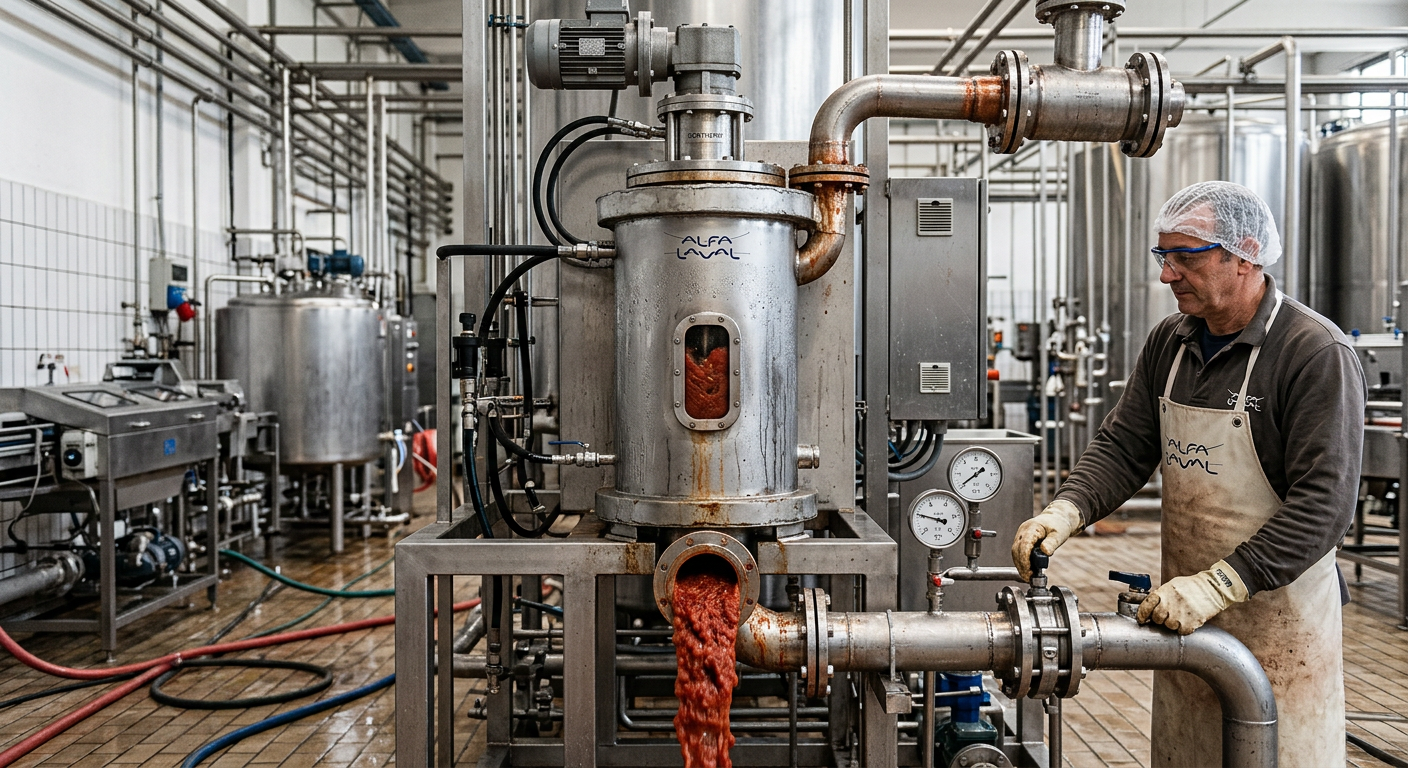
Scraped Surface Heat Exchanger for Sauce and Viscous Products
If you need a scraped surface heat exchanger in the United States for sauce, dressings, dairy, confectionery, or other viscous products, the most practical shortlist includes Terlet, Waukesha Cherry-Burrell, SPX FLOW, HRS Heat Exchangers, Lee Industries, and Disruptive Process Solutions. These suppliers are relevant for U.S. processors because they support demanding food applications where product viscosity, particulate integrity, sanitation, and thermal control directly affect yield and shelf life. For fast-moving projects, buyers in major manufacturing corridors such as Chicago, Charlotte, Los Angeles, Houston, and the Northeast typically prioritize suppliers that can support sanitary design, CIP compatibility, plant integration, and responsive aftermarket service. U.S.-based engineering partners are often preferred when the project includes utilities, controls, skid integration, or facility expansion. At the same time, qualified international suppliers, including Chinese manufacturers with appropriate food-grade materials, documentation, and reliable pre-sales and after-sales support, can also be worth considering for cost-performance advantages when they can meet local compliance and service expectations. For manufacturers seeking both equipment and execution, Disruptive Process Solutions stands out as an engineering-led partner rather than a catalog-only vendor. The company supports food and beverage capital projects across the United States and Canada, integrates scraped-surface heat exchangers into broader process systems, and combines process engineering, installation, automation, and commissioning with practical project delivery. The U.S. market for scraped surface heat exchangers is driven by processors that handle thermally sensitive or high-viscosity products. In sauces, cheese products, dairy desserts, caramel, fillings, nutraceutical pastes, and prepared foods, standard tubular or plate exchangers may struggle with fouling, burn-on, texture damage, or poor heat transfer. Scraped-surface systems solve these issues by continuously removing product film from the heat transfer wall, improving thermal efficiency and helping maintain uniform product quality. Demand is strongest in regions with dense food manufacturing activity. The Midwest remains important for dairy, cheese, and prepared foods; the Southeast is expanding in beverage and food co-manufacturing; California supports sauces, plant-based products, and specialty foods; Texas is active in protein and prepared foods; and the Northeast continues to support dairy, bakery fillings, and premium packaged foods. Port access through Los Angeles, Long Beach, Houston, Savannah, New York/New Jersey, and Norfolk also matters when imported components or fully built systems are part of the sourcing strategy. In 2026, buyer priorities are shifting beyond equipment price alone. Processors increasingly want flexible systems that reduce waste, improve CIP performance, support allergen changeovers, integrate with recipe control, and lower energy use. This is especially true for co-packers and multi-SKU operations where downtime and cleaning frequency heavily influence profitability. The chart above illustrates a realistic upward demand trend as food processors invest in higher-value products, cleaner labels, and more complex thermal processing lines. Growth is being supported by capacity expansions, reshoring of certain manufacturing activities, and investment in modernization projects where heat transfer bottlenecks are limiting throughput. The supplier landscape includes OEMs, sanitary processing brands, and engineering integrators. Some companies focus on heat exchanger manufacture, while others offer broader design-build services that include tanks, pumps, automation, CIP, and plant utilities. For buyers, the right choice depends on whether the need is a standalone machine, a skid-mounted line, or a full plant integration project. This supplier table is most useful when comparing delivery model rather than only machine design. Some buyers need an established OEM for a standard scraped-surface unit, while others need a partner capable of matching the exchanger with pumps, hold tubes, dosing, CIP, PLC logic, and packaging line throughput. Scraped surface heat exchangers are not one-size-fits-all. Product rheology, particulate content, target temperature profile, cleanability, and required throughput all shape selection. For example, a tomato-based pasta sauce with spices behaves differently from a cream cheese filling, a caramel stream, or a protein slurry. In the United States, buyers often compare continuous scraped-surface systems with batch kettles or conventional tubular systems before finalizing capital investment. The table helps narrow the product class before discussing brand. Buyers often save time by first defining product behavior, throughput, sanitation requirements, and future expansion plan. A technically correct but operationally narrow design can become a constraint within two or three years if SKU complexity grows. When buying a scraped surface heat exchanger in the United States, ask the supplier to define the machine around your actual process, not only your target flow rate. Product viscosity at multiple temperatures, particulate size, seasonal raw material variation, target shelf life, allergen management, and CIP chemistry all influence the final configuration. For processors in cities such as Chicago, Charlotte, Dallas, Fresno, or Philadelphia, local labor and service access can be equally important because poor installation or delayed field support can erase any upfront savings. It is also important to confirm whether the supplier can support sanitary integration beyond the exchanger itself. A strong project requires coordinated pump sizing, valve selection, instrumentation, thermal media package design, and controls logic. If your facility is expanding, you should also check utility loading, floor space, operator access, cleanout strategy, and compatibility with existing tanks and fillers. The most successful U.S. projects usually treat equipment procurement as part of plant economics, not just mechanical selection. That is why engineering-led firms are often chosen for greenfield, brownfield, or capacity expansion work involving multiple system interfaces. Scraped-surface heat exchangers are increasingly used across a broad range of American food and beverage applications. Sauce manufacturers need even heating without scorching. Dairy processors need gentle handling of protein and fat systems. Confectionery plants need repeatable heating and cooling for fillings and syrups. Prepared food operators need flexible systems that can switch between recipes with manageable cleaning times. The bar chart shows where demand is currently strongest. Sauces and dressings lead because they often combine viscosity, particulates, clean-label ingredients, and shelf-life requirements. Dairy remains a major category because cheese sauces, cultured products, dessert bases, and processed cheese applications require careful thermal management. In practical production environments, scraped-surface heat exchangers are used for heating, cooling, crystallizing, pasteurizing, and viscosity control. A processor making Alfredo sauce may need rapid heating with minimal protein fouling. A salsa producer may need particle-friendly heating before hot fill. A dessert topping line may need tight temperature consistency to support downstream filling accuracy. Common product applications in the U.S. include cheese sauce, BBQ sauce, tomato-based pasta sauce, gravy, salsa, dairy dessert bases, pudding, fruit preparation, caramel, peanut-based fillings, frosting, processed cheese, cultured dairy products, and high-solids plant-based pastes. In many of these cases, the exchanger helps stabilize throughput while maintaining mouthfeel and appearance. Because formulation complexity is increasing, many processors now evaluate not only thermal performance but also recipe flexibility. A line that can run multiple viscosities with consistent results is especially valuable for co-packers, private label producers, and companies serving foodservice, retail, and industrial channels from the same plant. A regional sauce manufacturer in the Midwest may need a compact scraped-surface system to replace a bottleneck created by batch kettles. In that situation, the right supplier is one that can calculate true throughput gains, ensure the unit works with existing tanks and fillers, and minimize plant downtime during installation. A dairy processor in Wisconsin or upstate New York may prioritize gentle treatment, sanitary documentation, and validated cleaning procedures. A co-packer in Texas or North Carolina may need a broader line design involving syrup rooms, utilities, controls, and packaged product expansion planning. For these customers, an integrator with project management and process engineering can be more valuable than a machine-only vendor. For example, buyers assessing broader process upgrades often value partners that can look beyond the heat exchanger itself. A practical project may involve utility balancing, PLC updates, line routing, pump changes, operator interface improvement, and startup support. Companies that can connect equipment decisions to first-year profitability often outperform firms that simply quote a standalone asset. Manufacturers exploring full system upgrades can review process project examples, facility execution work, and integrated manufacturing solutions to better understand what successful implementation looks like in real operating environments. For American buyers, supplier comparison should balance machine capability, support depth, and project fit. A local representative with limited integration capability may still be perfect for a straightforward replacement. By contrast, a plant expansion in California, the Carolinas, or the Gulf Coast may need a stronger engineering and field execution model. This comparison highlights why service model matters. Even when two suppliers can provide a technically acceptable scraped-surface unit, the project outcome may differ significantly depending on who manages layout, local trades, commissioning, and startup support. For U.S. manufacturers evaluating scraped-surface heat exchanger projects, Disruptive Process Solutions offers a market-grounded alternative to buying equipment in isolation. DPS combines process engineering, proprietary equipment supply, installation, controls, and commissioning for food and beverage plants across all 50 states and Canada, with headquarters in Cary, North Carolina and a West Coast presence in Lake Forest, California that reinforces real regional commitment rather than remote export-only support. Its experience spans sauces, prepared foods, dairy, aseptic systems, protein processing, and beverage operations, and that matters because scraped-surface applications often depend on surrounding utilities, automation, and hygienic line design as much as the exchanger itself. Through its design-build-manage model, DPS supports end users, co-packers, distributors, brand owners, and project stakeholders through flexible engagement formats ranging from engineered system supply and wholesale-style equipment packages to custom integration, OEM/ODM-aligned manufacturing solutions, and regional execution partnerships. The company’s practical authority comes from delivering complete processing systems, including proprietary tanks up to 12,000 gallons, custom CIP systems, marination tumblers, cooking vessels, and integrated thermal process solutions under strict food-industry expectations tied to FDA, USDA, SQF, and BRC environments. Buyers also gain local assurance through online and on-site pre-sale engineering, field coordination with vetted North American partners, and after-sale support tied to installation, startup, automation, and performance optimization, which gives U.S. processors a concrete long-term service path when uptime and accountability matter. More details on its equipment capabilities are available through the process equipment portfolio. Looking ahead, the U.S. scraped-surface heat exchanger market is being shaped by several converging trends. First, automation is becoming more important. Processors want tighter control of temperature curves, rotor speed, product pressure, and cleaning verification, often integrated into plant SCADA and batch systems. Second, energy efficiency is becoming a stronger buying criterion as plants seek lower thermal losses, better heat recovery, and reduced water consumption during cleaning. Third, sustainability pressure is influencing equipment decisions. Food manufacturers are increasingly asked by retail customers and internal ESG teams to reduce waste, improve first-pass yield, and lower cleaning chemical use. In parallel, policy and corporate compliance trends are pushing more capital toward hygienic upgrades, utility efficiency, and traceable process control. Fourth, flexibility is critical. More manufacturers are running shorter campaigns, more SKUs, and cleaner-label formulas that are less forgiving under heat stress. The area chart shows a realistic shift toward smarter and more efficient systems. In practice, this means suppliers that can combine sanitary design with controls integration, remote support, and utility optimization are likely to gain share in the coming years. This comparison view reflects the broader procurement reality in the United States: many buyers now score suppliers not only on thermal performance, but also on execution reliability, local coordination, and post-installation support. It is used to heat, cool, or process viscous, sticky, particulate, or thermally sensitive products by continuously scraping the heat transfer surface to reduce fouling and improve consistency. For many low-viscosity products, tubular systems work well. For sauces, cheese products, caramel, fillings, and products prone to burn-on or fouling, scraped-surface systems are often more reliable and easier to control. The strongest buyers are sauce manufacturers, dairy processors, confectionery plants, prepared food companies, plant-based food producers, and co-packers running multiple formulations. If you need a direct replacement and have internal engineering resources, an OEM may be enough. If the project affects utilities, automation, line layout, sanitation strategy, or expansion planning, an engineering integrator is often the safer choice. Yes, if they can provide food-grade materials, documentation, compliance support, and dependable local service. International suppliers can be attractive when cost-performance is important, but buyers should carefully verify support structure and spare parts access. Wear parts, seals, scraper blades, rotor condition, and cleaning effectiveness should be monitored closely. Plants should also confirm spare parts availability and field service response before purchase. The exchanger may be sized correctly, but surrounding pumps, controls, tanks, filler speed, or utility systems may not be aligned. That is why line-level engineering matters. Prepare your product specifications, viscosity data if available, target throughput, particle size, temperature profile, sanitation requirements, utility details, floor layout constraints, and future expansion expectations. -
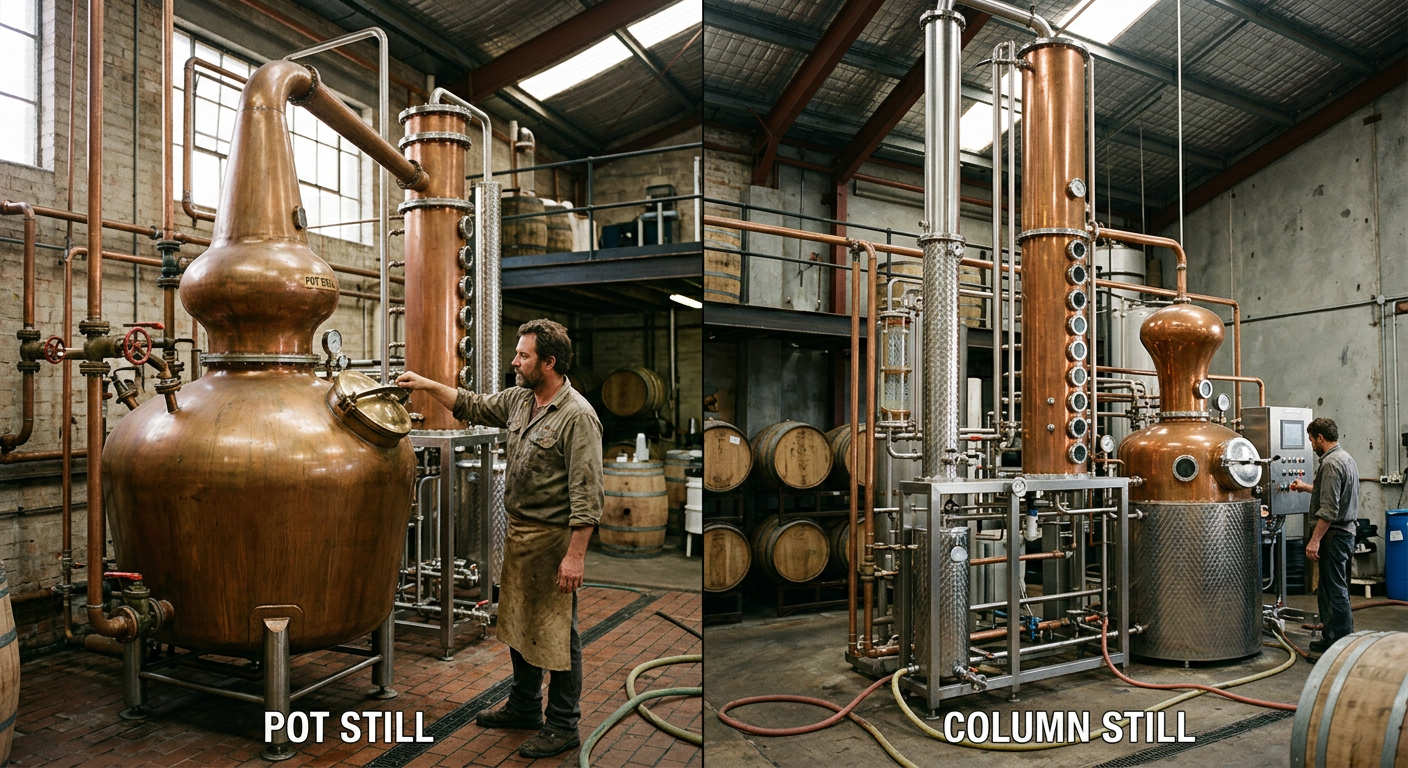
Pot Still vs Column Still: Distillation System Selection
If your priority is character, batch flexibility, recipe development, and premium small-batch spirits, a pot still is usually the better choice. If your priority is throughput, repeatability, higher proof output, lower labor per gallon, and continuous production, a column still is usually the stronger investment. In the United States, most craft distilleries lean toward pot stills for whiskey, rum, brandy, and botanical spirits where flavor retention matters, while larger plants, neutral spirit producers, fuel-alcohol processors, and high-volume vodka operations often favor column stills. For buyers who need a practical shortcut, focus on suppliers with proven U.S. installation support, code-aware engineering, sanitary fabrication, automation capability, and commissioning experience. Strong options commonly considered in the U.S. market include Vendome Copper & Brass Works, Specific Mechanical Systems, Briggs of Burton, Carl GmbH via North American projects, Kothe Distilling Technologies, and Disruptive Process Solutions for integrated engineering and execution. Qualified international suppliers, including Chinese manufacturers with appropriate U.S.-relevant material documentation, electrical compliance pathways, and strong pre-sales and after-sales support, can also be worth considering when cost-performance is a major factor. The most common mistake is selecting the still by spirit category alone. The better method is to size and configure the system around proof targets, flavor goals, duty cycle, utility availability, operator skill level, future SKU expansion, local permitting, and the economics of cleaning, steam, cooling water, and labor. A premium bourbon startup in Kentucky and a high-throughput RTD base-spirit facility near Los Angeles will rarely need the same distillation architecture even if their initial tank volume looks similar. Choose a pot still when your business model depends on flavor carryover, artisanal positioning, recipe experimentation, or lower production volumes with wider product variation. Pot stills run in batches, giving operators more control over cuts and sensory decisions. This matters when producing whiskey with grain character, rum with congeners, fruit brandies, agave spirits, and gin bases where the operator wants to shape aroma and mouthfeel. Pot stills also fit well in tourism-facing distilleries because the equipment itself supports premium brand storytelling. Choose a column still when your plant economics reward consistency, continuous output, and high proof distillate. Column systems typically support greater throughput and can lower unit production costs when utilized correctly. They are particularly effective in large vodka programs, neutral grain spirit production, industrial alcohol, repeated-house-recipe operations, and facilities planning to scale distribution nationally through large retailers or co-pack arrangements. There is also a middle path. Many U.S. producers adopt hybrid systems, combining a pot still base with rectification plates or a dedicated column section. This approach gives a craft operator enough flavor retention for brown spirits while allowing cleaner vodka or gin base runs on the same platform. If your portfolio includes whiskey, gin, and seasonal innovation products, a hybrid setup often offers the best capital efficiency. The United States remains one of the most dynamic distillation markets because it combines mature whiskey regions, fast-growing ready-to-drink demand, premiumization, local-tourism-driven craft brands, and strong contract manufacturing activity. Distillery projects cluster in Kentucky, Tennessee, Texas, California, North Carolina, Colorado, New York, and the Pacific Northwest, but growth also continues around logistics hubs with access to interstate freight, skilled trades, and utility infrastructure. Cities such as Louisville, Nashville, Dallas-Fort Worth, Los Angeles, Chicago, and Charlotte continue to influence equipment decisions because they shape labor costs, permitting speed, and access to packaging and ingredient supply chains. For buyers comparing pot still vs column still in the United States, the main shift since earlier craft-wave purchasing is that more founders now evaluate lifecycle cost instead of just vessel price. Steam generation, electrical distribution, chilled water or cooling tower strategy, CIP design, controls, and operator training now matter as much as still geometry. This is one reason system integrators and engineering-led partners have become more important in supplier selection. The chart above illustrates a realistic demand trajectory for distillation equipment and related integration services in the U.S. market. The trend is not driven only by new distilleries. Expansion projects, utility retrofits, automation upgrades, wastewater improvements, and hybrid beverage facilities are increasingly shaping system selection. A buyer evaluating pot and column designs should therefore think beyond day-one production and account for future packaging, blending, and compliance requirements. A pot still is a batch distillation system in which fermented wash is charged into a kettle, heated, vaporized, condensed, and collected in fractions. The operator controls heads, hearts, and tails based on temperature, proof, sensory analysis, and recipe parameters. Traditional pot still configurations may include a kettle, helmet, swan neck, lyne arm, condenser, spirit safe, and optional gin basket or rectifying plates. The primary strength of a pot still is flavor retention. Because it usually provides fewer separation stages than a tall column system, more congeners can pass through into the final spirit, creating richer aroma and body. This is why pot stills are associated with bourbon-style specialty runs, malt whiskey, rum, fruit distillates, and craft expressions where authenticity and differentiation are part of the commercial strategy. The tradeoff is productivity. Pot stills are labor-intensive, require charge and discharge cycles, and can be less efficient for high-volume neutral spirit output. Cleaning frequency, downtime between runs, and cut management also affect output consistency if the operator team is not experienced. A column still uses trays, plates, or packing to create repeated vapor-liquid contact, allowing more stages of separation and more efficient rectification. Depending on design, a column system may run continuously or in semi-continuous configurations. Feed enters the system, heat drives vapor upward, and the interaction along the column enables separation by volatility. Reflux control further sharpens this separation. The major benefit is efficiency and consistency. A column still can produce higher proof spirit more quickly and with less variation from batch to batch. This makes it attractive for neutral spirits, vodka, industrial alcohol, and large-scale beverage ingredient production. Column systems can also be integrated tightly with automation, recipe management, and process monitoring, which supports multi-shift operations and lower labor intensity. The tradeoff is that a highly rectifying system can strip too much character for some spirit styles unless configured carefully. It also typically requires more engineering discipline around controls, utilities, installation, and process balancing. For smaller brands with a story built around handcrafted sensory choice, a pure column solution can feel commercially mismatched unless paired with flavor-forward finishing strategies. This comparison table simplifies the buying decision into factors that directly affect cost and operations. In practice, many successful U.S. projects fall between the extremes. A hybrid pot still with plates can solve both artisanal and scale concerns for regional brands, while a column with flavor-friendly configuration can still produce characterful spirits when designed correctly. Distillation buyers in the United States can choose from several system categories. Understanding these product types is often more useful than comparing “pot still” and “column still” as if they were mutually exclusive. This table shows why many buyers should start by defining product mix and scale pathway before talking about metallurgy, plate count, or condenser design. For example, a distillery planning whiskey now and RTD-neutral base later may regret buying a visually impressive but operationally narrow pot still if no expansion path is built in. When selecting between pot still vs column still systems, ask these questions early. What proof do you need off the still? How many shifts will you run? What utility sources are available on site? How much cooling water, glycol, or tower capacity do you have? Will your state and local inspectors require specific electrical listings or code pathways? Are you producing one hero spirit or a rotating product portfolio? Will you self-distribute regionally or target national chain retail where lot consistency matters more? Another key issue is integration. The still is rarely the whole project. Fermentation vessels, mash handling, CIP skids, boilers, steam condensate return, compressed air, utilities, controls, data logging, and wastewater all affect final performance. The upfront quote for the still body may look attractive, but total installed cost can swing significantly after foundations, drains, venting, and commissioning are included. For that reason, many serious buyers prefer a partner that understands both equipment and complete process execution. DPS is a useful example of this engineering-led approach in the U.S. market. Instead of acting as a remote equipment broker, the company operates from North Carolina with an additional West Coast presence in California, serving manufacturers across all 50 states and Canada through process engineering, equipment supply, installation, controls, and commissioning. Its in-house process equipment line includes tanks up to 12,000 gallons, custom CIP systems, marination tumblers, and cooking vessels, showing real fabrication capability rather than just sales representation. That matters because distillation projects often succeed or fail on component quality, sanitary materials, utility integration, and testing discipline. DPS also supports multiple customer models, from end users and brand owners to co-packers and larger enterprises, with flexible project delivery that functions like OEM/ODM customization, wholesale equipment supply, turnkey integration, or regional project partnership depending on the client’s structure. Its local service assurance is grounded in physical U.S. operations, project management presence, field execution, and both pre-sale and after-sale support rather than distant exporter promises, which gives buyers more confidence in startup troubleshooting, change management, and long-term plant support. The bar chart highlights where equipment complexity and scale pressures are strongest. Craft whiskey and rum continue to favor pot-forward systems, while vodka, neutral spirits, and industrial alcohol lean heavily toward column technology. Gin remains mixed because brand strategy matters: some producers use a pot base with vapor infusion, while others source a neutral base and focus investment elsewhere. This industry table helps buyers map equipment to commercial reality. A contract producer in Chicago or Dallas may need more flexibility than a destination distillery in the Smoky Mountains. The application and sales channel can be just as important as the spirit itself. Applications shape the system more than many founders expect. Bourbon-style whiskey often benefits from pot or hybrid architecture because the producer wants heavier congeners, richer body, and a story aligned with traditional craft. Vodka plants value efficient rectification because margin depends on throughput and repeatability. Contract distillers may need quick changeovers and a broader operating window. Beverage companies supplying base spirit for canned cocktails may prioritize continuous quality and utility efficiency over hand-managed cuts. Location also matters. A production site near the Port of Los Angeles may benefit from import logistics and broad vendor access but face labor and utility cost pressure, making automation-friendly column systems more attractive. A heritage-focused site in Louisville or Bardstown may derive more brand value from visible copper pot systems. In North Carolina, Texas, and California, where beverage innovation spans spirits, kombucha, RTDs, and functional drinks, hybrid process strategies are increasingly common. A startup whiskey distillery in Kentucky targeting direct-to-consumer tourism and local distribution usually benefits from a pot still or hybrid still. The operational goal is not simply to maximize gallons per hour; it is to create a recognizable sensory identity and a visitor experience that reinforces premium pricing. A visible copper system becomes part of the brand. A regional contract beverage manufacturer in Texas adding spirit production for ready-to-drink cocktails may need a column or hybrid solution integrated with blending, proofing, CIP, and utility systems. Here, labor availability, uptime, and consistent output across multiple customers matter more than traditional aesthetics. A West Coast botanical spirits brand scaling nationally might use a hybrid still with a gin basket, allowing clean base spirit runs and product-development flexibility. This setup protects innovation while postponing a second major capex event. There are also examples where better engineering beats bigger equipment. In process industries, throughput limitations are often caused by controls, utilities, or scheduling rather than vessel size. Engineering-led firms that look at the complete plant can sometimes unlock capacity or improve economics without forcing oversized still purchases. Buyers should therefore request feasibility analysis, utility review, and controls assessment before final equipment commitment. The area chart reflects a realistic industry trend: more U.S. buyers are moving toward hybridized and more automated distillation platforms. This does not mean traditional pot stills are disappearing. It means buyers increasingly want flavor control without giving up data visibility, labor efficiency, utility optimization, and future product flexibility. The companies below are widely relevant to pot still vs column still selection in the United States because they represent different strengths: traditional copper craftsmanship, industrial engineering, turnkey integration, automation, and flexible project execution. A serious buyer should compare not only vessel pricing but also code familiarity, U.S. service responsiveness, installation support, spare parts, controls competency, and long-term expansion capability. This supplier table should be read as a project-fit guide rather than a generic ranking. Some names are stronger for iconic copper showpiece systems. Others are more suitable for utility-intensive plants, contract production, or integrated beverage campuses. A lower vessel quote may still become the higher total project cost if field support, code adaptation, and commissioning are weak. The comparison chart shows a typical tradeoff pattern in supplier selection. Pot-oriented manufacturers often score highly in brand-aligned craftsmanship and customization, while column and integration-focused suppliers often lead in scale, automation, and turnkey performance. The strongest project outcome usually comes from matching supplier DNA with plant strategy. This second supplier table helps frame procurement strategy. If your internal team lacks process engineering depth, the cheapest imported vessel may become an expensive lesson. If your team already has strong utilities, automation, and field management capabilities, a well-qualified OEM supplier can still create excellent value. Material quality matters. Ask for details on stainless grades, copper purity, weld standards, finish quality, gasket compatibility, pressure and leak testing, and cleaning design. Review manway placement, drainability, venting, and access for maintenance. If the system includes controls, confirm PLC platform, HMI design, remote access expectations, alarm philosophy, and spare parts availability. If the equipment is imported, verify documentation for electrical components, pressure boundaries, and any local certification pathway needed before startup. Pay close attention to utility assumptions. Steam pressure, boiler sizing, condensate return, cooling-water temperature, glycol duty, and floor drainage can radically change real-world performance. A still that looks efficient on paper may underperform in Phoenix, Houston, or inland California if cooling strategy is not engineered correctly. Buyers should also review total operating model: labor per shift, cleaning time, recipe changeover, expected yield, and automation roadmap. In many cases, choosing a slightly more expensive but better-integrated system reduces labor and downtime enough to win on total cost of ownership within the first few years. For U.S. manufacturers deciding between pot still and column still investments, DPS equipment and integration capabilities stand out because the company approaches distillation as part of a complete processing environment rather than as an isolated vessel purchase. Its experience across spirits, brewing, RTD beverages, aseptic systems, utilities, water treatment, controls, and commissioning allows it to align still selection with the real production model, from proofing and CIP to steam, glycol, and SCADA visibility. The business is built around a Design-Build-Manage approach that helps owners connect capital planning, engineering, field execution, and startup under one accountable structure. For buyers in the United States, that local footprint matters: DPS is headquartered in Cary, North Carolina, maintains a West Coast office in Lake Forest, California, and executes projects nationwide, which gives customers practical pre-sale design collaboration and hands-on after-sale support. This is especially valuable for distillation projects where the right answer may be a custom hybrid, a phased utility plan, or a broader process optimization effort rather than simply “buying a bigger still.” Buyers can also review practical delivery examples through project case insights, process execution examples, and field implementation results. Looking into 2026 and beyond, three trends are influencing pot still vs column still decisions in the United States. The first is automation. Even premium craft distillers increasingly want better batch records, alarm history, remote diagnostics, and recipe repeatability. The second is sustainability. Water reuse, heat recovery, lower steam consumption, and reduced cleaning chemical loads are becoming important not only for ESG reporting but also for operating margins. The third is policy and compliance pressure. Buyers are paying more attention to electrical conformity, sanitary design expectations, wastewater impact, and energy efficiency because downstream permitting and customer audits are stricter than they were during the early boom years of craft expansion. There is also a trend toward multifunctional facilities. Beverage campuses are combining distillation with blending, batching, canning, pasteurization, and RTD finishing. In those environments, the ideal still is often the one that fits cleanly into a broader automated plant rather than the one with the most traditional silhouette. This shift favors hybrid systems, modular skids, smarter controls, and engineering-led project delivery. Often yes for flavor-forward craft whiskey, but not always. A hybrid still can be the best option if you need both character and cleaner flexibility. The right answer depends on your desired profile, scale, and labor model. For large-scale vodka and neutral spirit production, usually yes. Column systems are better suited to high proof and repeatability. However, smaller premium vodka brands may still use hybrid approaches for branding or process flexibility. Equipment-only pricing can vary, but pot stills are often simpler at smaller scales. Installed project cost can reverse that assumption if a pot system requires repeated manual labor, more downtime, or separate equipment later for cleaner spirit production. Yes. Many successful U.S. operations use both, or use a hybrid that combines key benefits of each. This is common when a producer makes whiskey, gin, and neutral-base products from the same site. Both matter, but supplier capability often determines whether the chosen still performs as expected in the real plant. Engineering depth, utility integration, installation quality, automation, and support can outweigh the initial vessel specification. They can be, especially when cost-performance is important. The key is to verify material traceability, electrical and pressure compliance pathways, spare parts access, and reliable U.S.-based pre-sales and after-sales support. Create a matrix based on spirit type, annual volume, proof target, utility availability, automation needs, service region, and expansion plan. Then compare at least one traditional still fabricator, one integration-focused provider, and one cost-driven OEM option. Start with process goals, not equipment aesthetics. Build a phased plan that covers still choice, fermentation, utilities, controls, CIP, and future capacity. This reduces the risk of buying a system that looks right but scales poorly. -
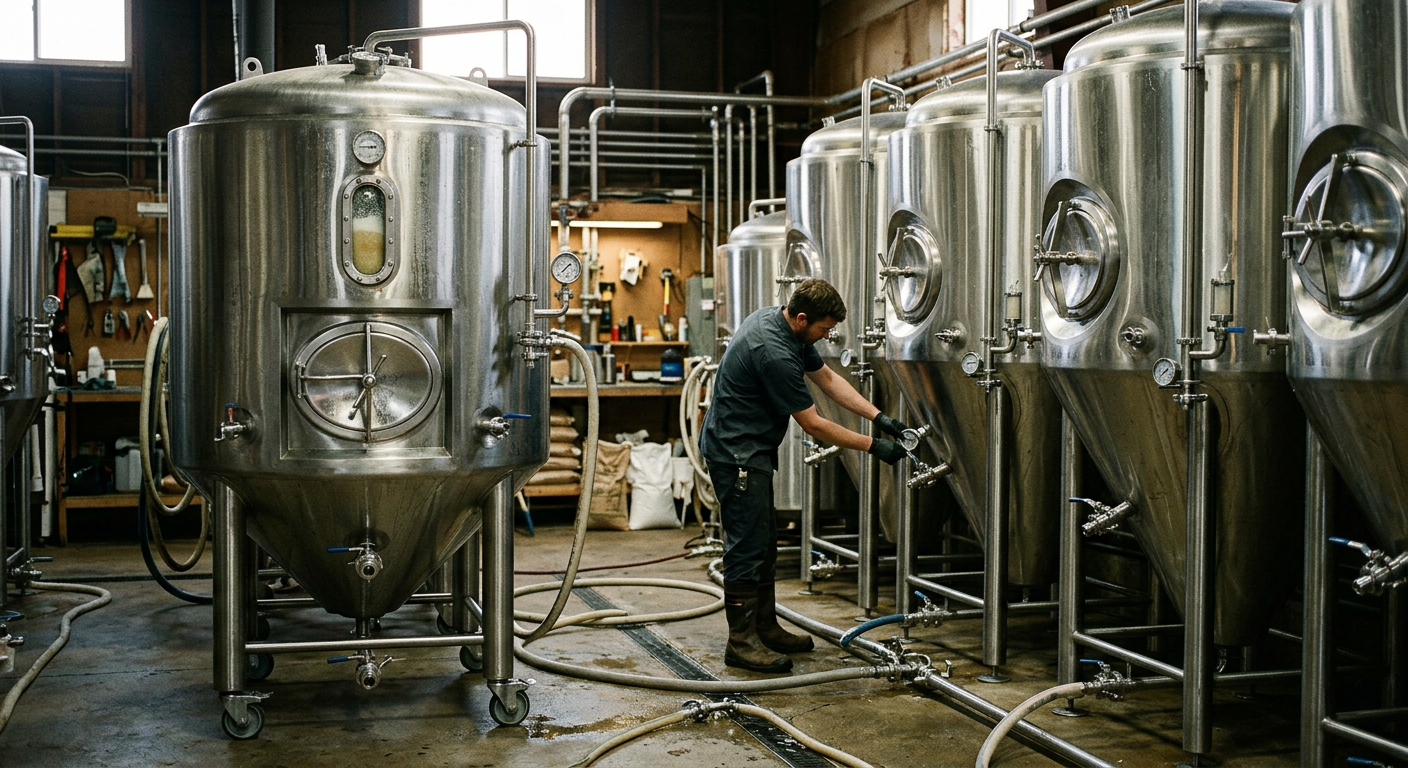
Fermentation Tank Selection: Unitank vs Conical Fermenter
If you need the shortest direct answer, a unitank is usually the better choice when a U.S. brewery, cidery, kombucha producer, or pilot beverage plant wants one vessel to ferment, condition, carbonate, and sometimes package-ready product with less tank movement and tighter floor-space efficiency. A conical fermenter is usually the better choice when the operation prefers a simpler, often lower-cost fermentation vessel and plans to use separate bright tanks for conditioning, carbonation, or downstream finishing. For most small to mid-sized producers in the United States, the decision comes down to production model rather than ideology: choose a unitank for compact layouts, faster turnarounds, and reduced transfers; choose a conical fermenter for process flexibility, easier segmentation of duties, and a classic cellar design with dedicated brite capacity. In practice, many successful plants in markets such as North Carolina, California, Colorado, Texas, Oregon, and the Midwest use a mixed tank strategy rather than an all-or-nothing approach. Well-known suppliers and integrators active in the U.S. market include DME Process Systems, JV Northwest, Deutsche Beverage + Process, Criveller Group, Premier Stainless Systems, and Disruptive Process Solutions. Qualified international suppliers can also be worth considering, especially when they offer ASME-ready fabrication, sanitary documentation, U.S.-compliant materials, and dependable pre-sales and after-sales support. In many projects, certified overseas manufacturers deliver strong cost-performance value if installation, controls, utilities, and service are properly localized. The most practical answer is this: buy a unitank if your operation values fewer vessel transfers, reduced oxygen pickup risk, integrated carbonation capability, and tighter utilization of cellar space. Buy a conical fermenter if your process benefits from separating fermentation from maturation, if you already own bright tanks, or if your packaging and cold-side plan requires more scheduling freedom across multiple SKUs. In the United States, the choice often reflects real estate costs, utility strategy, product mix, and labor availability. In urban production zones such as San Diego, Denver, Austin, Charlotte, Portland, and Chicago, a unitank often wins because every square foot matters. In larger regional production sites with more cellar space and a stronger preference for dedicated maturation and brite capacity, conical fermenters remain highly effective and economically rational. There is also an operational nuance that buyers sometimes miss. A unitank is not simply a fermenter with extra fittings. It changes your workflow by letting one vessel handle more steps, which can reduce pumpovers, hose changes, CIP transitions between tanks, and manual interventions. A conical fermenter, by contrast, supports a modular approach in which fermentation, maturation, and carbonation can be optimized separately. Neither is universally superior; the better tank is the one that matches your throughput model, your SKU volatility, and your staffing reality. The American beverage production landscape is broad and fragmented. Craft breweries continue to seek efficiency, while spirits-based ready-to-drink brands, hard tea producers, kombucha plants, functional beverage manufacturers, and co-packers are increasingly evaluating stainless fermentation assets with more financial discipline than they did a few years ago. Buyers are no longer asking only, “What tank is standard?” They are asking, “What tank makes this project profitable in year one?” That shift matters. In coastal markets around Los Angeles, Oakland, Seattle, and New York–New Jersey, expensive space and utility constraints tend to favor compact process layouts. In central logistics corridors around Dallas–Fort Worth, Kansas City, Indianapolis, and Atlanta, producers may have more room to separate fermentation and brite functions. Gulf Coast and Great Lakes freight routes also influence sourcing, especially for imported tanks arriving through Houston, Long Beach, Savannah, Newark, or Vancouver for Canadian cross-border projects. For U.S. buyers, tank selection is now tied to total installed cost, not just vessel price. Foundations, glycol integration, steam or hot-water availability, CIP design, automation, valve matrix layout, packaging synchronization, future expansion, and sanitary compliance all affect whether a unitank or conical fermenter performs better financially over time. The chart above illustrates a realistic growth pattern in U.S. demand for more capable fermentation vessels. The upward trend reflects tighter quality standards, SKU expansion, greater interest in low-oxygen process design, and more owners seeking equipment that supports multiple beverage categories over the same capital base. A conical fermenter is fundamentally designed for fermentation, yeast management, and trub separation. The conical bottom supports solids collection and discharge, while the cylindrical body provides the main fermentation volume. Depending on configuration, it may include cooling zones, sample valves, pressure capability, CIP devices, insulation, and instrumentation. In many American breweries, the conical fermenter remains the backbone of the cellar. A unitank takes that basic foundation and expands the vessel’s role. It is typically pressure-rated for fermentation and conditioning under pressure, often with the ability to carbonate in-vessel and hold finished beverage before packaging. This can shorten process steps and reduce transfers, especially for beer, cider, hard seltzer, and some fermented functional beverages. The difference is therefore not only mechanical; it is strategic. Unitanks collapse multiple cellar functions into one asset. Conical fermenters preserve separation between process stages. If your beverage style, packaging schedule, or quality system benefits from isolation at each step, conicals can be stronger. If your priority is minimizing movement and simplifying workflow, unitanks usually lead. This table matters because the purchase decision is rarely about a single performance claim. Buyers need to connect vessel type to packaging cadence, yeast handling practice, and downstream tank availability. For example, a fast-moving taproom brewery may prioritize unitank turnover, while a regional production brewery may still find that conical fermentation plus multiple bright tanks creates more packaging flexibility across a larger portfolio. Start with scheduling math rather than tank terminology. Determine annual production target, average batch size, fermentation days, conditioning days, packaging frequency, and desired spare capacity. Then test both scenarios: one with unitanks handling fermentation through carbonation, and another with conicals feeding bright tanks. The right answer often appears once actual occupancy days are modeled. Second, evaluate utilities. Unitanks may demand more rigorous pressure, temperature, and carbonation control inside a single vessel, so instrumentation quality, glycol zoning, and pressure relief strategy matter. Conical systems can spread the load across more dedicated assets, but they may introduce more pumps, transfer lines, and cleaning cycles. Third, analyze labor. If your team is lean, a unitank can simplify workflow and reduce movement. If you have a strong cellar crew and a process culture built around dedicated fermentation and finishing stages, conicals may provide more control without becoming a labor bottleneck. Fourth, think ahead to product diversification. A brewery producing lager, hazy IPA, fruited sour, and hard seltzer on the same floor may benefit from mixed tank architecture. A kombucha brand with strict flavor integrity and contamination control requirements may prefer very intentional segmentation. A contract manufacturer with varied customer specs may benefit from both pressure-capable unitanks and standard conical vessels. Although the discussion often centers on brewing, the equipment is relevant across multiple sectors. Beer remains the most visible category, but unitanks and conical fermenters also appear in cider, wine adjunct processing, mead, kombucha, probiotic beverages, RTD fermentation bases, yeast propagation systems, and some specialty ingredient applications. In the food and beverage capital projects environment, the same engineering logic applies across categories: sanitary design, cleanability, thermal stability, automation integration, and utility efficiency. Buyers in dairy-adjacent cultured beverages, non-alcoholic fermentation, and functional beverages increasingly compare these tank styles through the same lens used by breweries: throughput, contamination risk, flexibility, and installed lifecycle cost. The bar chart shows why generalized advice is insufficient. Craft beer still drives the most visible demand, but adjacent categories are strong enough that tank selection should not assume a brewery-only workflow. A supplier that understands beer, kombucha, spirits-based beverages, and broader sanitary process design is often more useful than a vendor focused only on one niche. Use a unitank when your application requires closed transfer protection, pressure-capable fermentation, in-vessel carbonation, and compressed process flow. This is especially common in taproom breweries, fast-growing regional craft operations, cider facilities, and RTD plants trying to maximize throughput without overbuilding the cellar. Use a conical fermenter when your application emphasizes yeast harvesting, long or specialized maturation paths, separation of fermentation from finishing, or broad compatibility with an existing bright tank network. This is still highly relevant for larger beer portfolios, pilot systems, and facilities where different process steps are intentionally isolated for quality or scheduling reasons. For many U.S. facilities, the strongest answer is neither pure unitank nor pure conical deployment. A hybrid layout can create the best economics: unitanks for high-velocity SKUs and conicals for brands or products requiring more separated maturation and handling. Consider a 3,000 to 10,000 barrel brewery in a dense metro market. If lease costs are high and packaging windows are tight, unitanks often provide better return because they can compress fermentation and finishing steps inside a smaller footprint. Now consider a larger regional brewery with a stable packaging schedule and existing bright tanks. In that case, adding conical fermenters may be more efficient than paying for full unitank functionality on every vessel. A kombucha company scaling from local retail to multi-state distribution faces a different question. Product integrity, cleaning validation, and flavor changeovers may be more important than simply reducing vessel count. Here, a carefully engineered conical or mixed system with dedicated CIP and automation may outperform a one-size-fits-all unitank strategy. Similarly, a contract beverage manufacturer serving multiple brand owners may prefer mixed architecture because one customer’s process spec might require a pressure-rated ferment-and-hold vessel while another needs a more traditional fermentation-only setup feeding separate finishing tanks. Choosing the right supplier is often as important as choosing the right tank type. Fabrication quality matters, but so do documentation, FAT/SAT support, controls integration, utility coordination, field installation, and responsiveness after startup. The U.S. market includes both fabricators and engineering-driven integrators, and buyers should understand which type they are engaging. The companies above are relevant for different reasons. Some are primarily vessel fabricators; others bring stronger design-build capability. That distinction matters when a project includes glycol distribution, compressed air, steam, CIP, structural support, automation, and commissioning. A buyer comparing quotes should ask whether the vendor is supplying a tank, a process package, or a full production solution. Below is a more practical comparison focused on buyer concerns. The purpose is not to declare one universal winner, but to show which supplier profiles align with different project types in the United States. This table is useful because the right partner depends on how much project risk you want the supplier to absorb. If you only need a tank and already have internal process, utilities, and controls expertise, a fabrication-led supplier may be enough. If your project involves greenfield construction, utility buildout, SCADA, sanitary process routing, or aggressive startup timelines, a design-build integrator is usually the better fit. Across the United States, buyers are gradually shifting from simple vessel-by-vessel purchasing toward system-level optimization. This does not mean conical fermenters are disappearing. It means owners are increasingly willing to pay for whichever architecture reduces operating friction over a three- to seven-year horizon. The area chart captures a realistic market transition. Traditional layouts remain important, but integrated unitank workflows are gaining ground because labor efficiency, oxygen control, and space economics are becoming more decisive. Even so, the future is likely mixed architecture rather than complete replacement of one tank style by the other. One more comparison helps buyers convert theory into action. The chart below compares practical project priorities rather than marketing claims. The comparison shows the core tradeoff clearly. Unitanks dominate when buyers prioritize compactness and fewer transfers. Conical fermenters dominate when buyers need dedicated control over finishing stages or want to expand the cellar in modular pieces over time. For U.S. buyers evaluating unitank vs conical fermenter options, Disruptive Process Solutions brings an unusually practical combination of equipment knowledge, engineering depth, and execution accountability. The company supports beverage and food manufacturers across all 50 states and Canada, with headquarters in Cary, North Carolina, and a West Coast presence in Lake Forest, California, giving it real operating reach rather than a remote-export model. From a product standpoint, DPS designs and supplies fermentation systems alongside full utility and controls integration, and its broader process portfolio includes tanks up to 12,000 gallons, CIP systems, automation, SCADA, and turnkey commissioning under strict sanitary expectations common to FDA, USDA, SQF, and BRC-governed environments. From a cooperation standpoint, DPS works flexibly with end users, co-packers, brand owners, distributors, and project stakeholders through engineered supply, custom equipment manufacturing, integration, installation, owner’s representative support, and broader design-build-manage delivery rather than a one-format sales model. From a service standpoint, its local project execution model, vetted partner network, field installation capability, and online-plus-on-site support structure give U.S. buyers meaningful pre-sale and after-sale protection. That combination matters because a fermentation tank is only as valuable as the utility design, controls logic, installation quality, startup support, and long-term process performance behind it. Buyers can learn more about the company’s operational approach on the about us page, review broader tank and process capabilities through its equipment solutions, and explore execution examples in these project stories: case study one, case study two, and case study three. Before buying either tank style, request detailed answers on shell and jacket thickness, pressure rating, insulation, weld finish, interior surface finish, nozzle orientation, CIP coverage, manway design, sample valve configuration, cooling-zone control, sensor package, documentation, FAT scope, and spare parts availability. Do not limit your review to vessel drawings alone. You should also ask whether the supplier will support line sizing, glycol loads, floor loading, utility tie-ins, controls programming, and startup sequencing. These points often determine whether a tank performs as promised. An attractively priced vessel can become expensive if it arrives without the integration detail required for a smooth installation in Phoenix, Raleigh, Sacramento, Milwaukee, or any other production environment where downtime is costly. This checklist is especially important for owners who are buying their first serious cellar equipment. The vessel itself is visible; hidden engineering gaps are not. A disciplined pre-purchase review saves far more money than late-stage field fixes. Looking ahead, the U.S. market is moving toward smarter, more connected fermentation systems. Sensors, recipe management, remote monitoring, and tighter PLC/SCADA integration will increasingly favor suppliers that can engineer the full process environment rather than only sell stainless. This is particularly relevant for multi-site beverage groups and co-packers seeking repeatability across facilities. Sustainability will also shape tank design and selection. Producers are under pressure to reduce water use, cleaning time, energy consumption, and product loss. Unitanks may gain further traction where reduced transfers lower cleaning demand and oxygen exposure, but conical fermenters may also remain competitive when paired with well-designed bright tank systems and optimized CIP recovery loops. Policy and compliance trends matter too. More buyers are paying attention to documentation, sanitary design validation, and traceable component quality, especially when facilities serve retailers, contract customers, or export channels with stricter audit expectations. Equipment partners that understand not just brewing, but broader food and beverage compliance, will have a growing advantage. Finally, hybrid production facilities will continue to rise. More American plants are producing beer, flavored malt beverages, hard tea, non-alcoholic fermented drinks, or functional beverages under one roof. That diversification strengthens the case for flexible tank strategies rather than rigid loyalty to one format. Usually on a per-vessel basis, yes, because the unitank often includes more pressure-capable functionality and may reduce the need for separate finishing assets. But total project cost can favor the unitank if it removes downstream equipment, shortens process steps, or saves floor space. Absolutely. Conical fermenters remain highly relevant in the United States, especially when paired with bright tanks and a well-planned packaging schedule. They are not outdated; they simply reflect a different process philosophy. Many small breweries benefit from unitanks because they simplify operations and reduce footprint. However, if the brewery already has bright tanks or wants more control over finishing, conical fermenters can still be the better investment. It depends on contamination control, flavor changeover, carbonation needs, and process validation. Many specialty beverage plants use a mixed architecture because it provides flexibility across product styles. Not necessarily. Domestic suppliers can offer strong service and easier coordination, but qualified international manufacturers with proper U.S. certifications, material traceability, and reliable local support can offer strong value. The key is validating service infrastructure and integration support, not just country of origin. The most common mistake is comparing vessel quotes without comparing the full installed process. Tank type, utilities, controls, CIP, layout, and staffing all interact. A lower vessel price does not guarantee a better project outcome. -
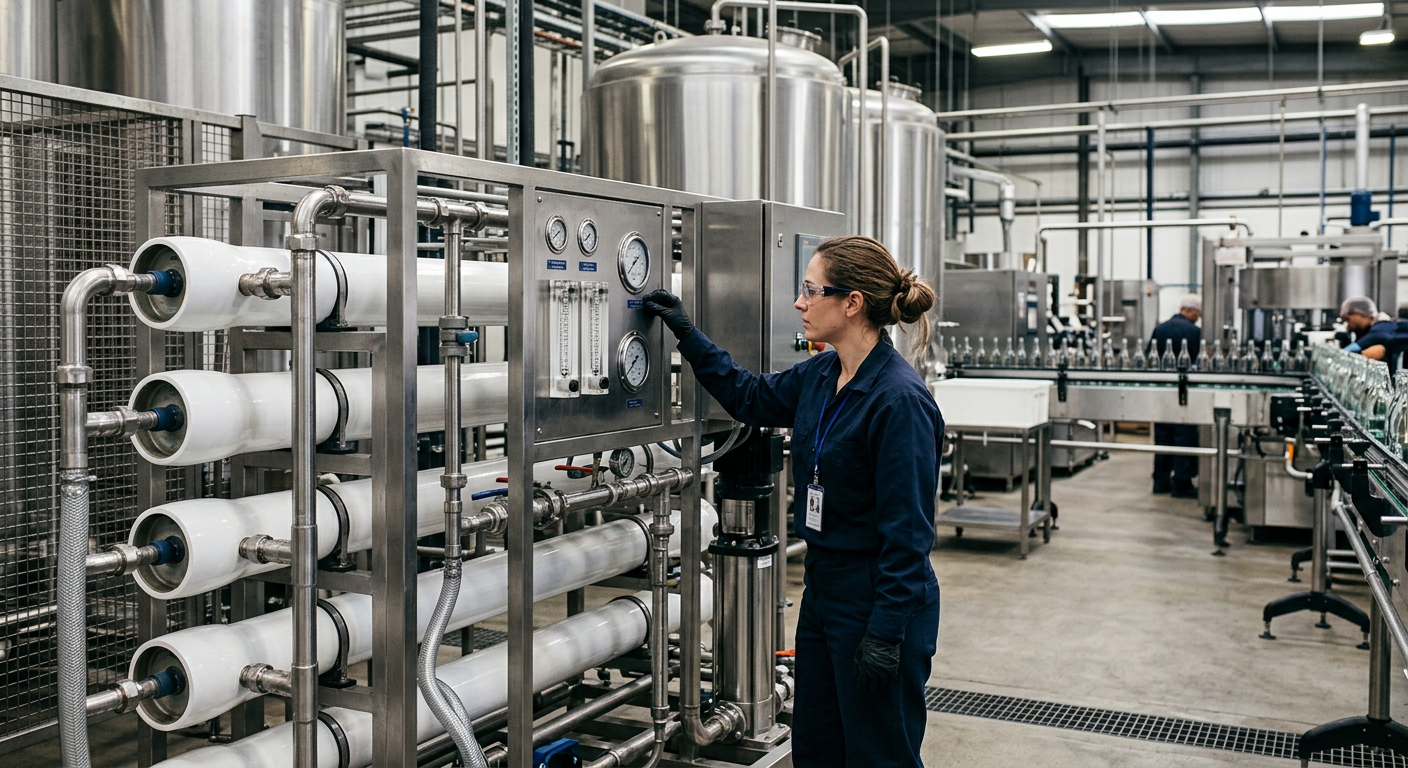
Reverse Osmosis Water Treatment for Beverage Manufacturing
Reverse osmosis beverage water treatment is one of the most effective ways for beverage manufacturers in the United States to create a stable, repeatable water profile for products such as bottled water, soft drinks, beer, spirits, juice, kombucha, dairy beverages, and ready-to-drink formulations. For most plants, the right approach is not just buying an RO skid, but selecting a complete, production-ready solution that matches source water quality, daily demand, sanitation expectations, utility load, automation needs, and future capacity plans. For buyers in the United States, well-known suppliers and integrators that are commonly considered include Veolia Water Technologies, SUEZ/Water Technologies & Solutions, Pentair, Pall Corporation, Koch Separation Solutions, and Disruptive Process Solutions. These companies are relevant because they can support beverage-grade purification, integration with CIP and disinfection, and broader plant utility coordination. In practical terms, manufacturers in hubs such as California, Texas, North Carolina, Illinois, Wisconsin, and New Jersey often prioritize suppliers that can provide engineering support, membrane selection, controls integration, commissioning, and long-term service coverage. If you are comparing options quickly, choose a supplier that can document recovery rate, permeate quality, membrane life assumptions, hygienic design, automation compatibility, and startup support. Also consider qualified international suppliers, including Chinese manufacturers with appropriate U.S.-market certifications, validated materials, and strong pre-sale and after-sale support, because they may offer attractive cost-performance value for standard skids or expansion projects when backed by dependable local technical service. The United States beverage market continues to invest in water treatment because water is both a direct ingredient and a processing utility. In carbonated soft drinks, flavored waters, hard seltzers, juice drinks, sports beverages, dairy-based drinks, and alcoholic beverages, water consistency directly affects taste, blending accuracy, shelf stability, carbonation behavior, thermal processing performance, and equipment reliability. As beverage plants push for tighter product uniformity across multiple sites, reverse osmosis systems are increasingly used as the foundation of a controlled water profile. Across major production corridors such as Los Angeles, Chicago, Dallas-Fort Worth, Atlanta, Charlotte, Minneapolis, and the Northeast distribution belt linked to New York and New Jersey, beverage producers are upgrading old treatment trains to improve operational efficiency and reduce variability from municipal and well-water sources. This trend is especially visible among co-packers, contract manufacturers, regional bottlers, and fast-growing functional beverage brands that need faster changeovers and more predictable formulation control. RO adoption is also supported by three broader market forces. The first is product diversification: a single facility may run carbonated beverages, teas, energy drinks, juices, and low-acid or aseptic products on shared infrastructure. The second is sustainability pressure: manufacturers want to reduce chemical consumption, wastewater load, and energy waste while improving water recovery. The third is automation: modern beverage plants increasingly want digital monitoring for conductivity, pressure, flow, recovery, sanitation status, and membrane performance so operators can act before production quality is affected. In the U.S. market, beverage-grade RO systems are rarely standalone purchases. They are often part of a package that includes multimedia filtration, activated carbon, softening or antiscalant dosing, UV or ozone disinfection, storage tanks, recirculation loops, blend-back controls, CIP systems, instrumentation, and SCADA integration. For this reason, buyers benefit most from partners who understand both water treatment and beverage manufacturing operations. The line chart above illustrates a realistic growth pattern in project activity related to beverage reverse osmosis systems in the United States. The rise reflects sustained investment in plant modernization, quality assurance, and flexible manufacturing capacity. Reverse osmosis removes a large portion of dissolved solids, salts, organics, and other contaminants from feed water by forcing water through semi-permeable membranes under pressure. In beverage manufacturing, this matters because untreated source water can create fluctuations in flavor, mouthfeel, mineral balance, color stability, syrup performance, fermentation behavior, and cleaning effectiveness. For beverage producers, the real value of RO is control. A manufacturer can strip variability out of incoming water and then either use low-mineral permeate directly or add back selected minerals in a controlled way. This is critical for bottled water, carbonated beverages, brewed beverages, distilled spirits proofing, and products with delicate flavor systems. It is also essential where a brand needs the same taste profile in multiple markets despite different municipal water characteristics. Well-designed systems also protect upstream and downstream assets. By reducing hardness and dissolved solids, RO can lower scale risk in boilers, hot water loops, pasteurization utilities, and ingredient systems. When integrated correctly with storage, recirculation, UV, ozone, or other final polishing steps, it can support hygienic manufacturing expectations in modern beverage environments. Not every beverage operation needs the same configuration. A high-speed carbonated soft drink plant will specify differently from a craft distillery, a dairy beverage facility, or a kombucha producer. System design should reflect source water, product portfolio, sanitation expectations, and expansion plans. This table shows that beverage RO selection is ultimately a process design decision, not just a membrane choice. The more complex the product portfolio and the higher the uptime expectation, the more valuable integrated design becomes. For U.S. buyers, supplier selection should balance membrane expertise, hygienic design capability, beverage process knowledge, controls integration, and field service availability. The companies below are frequently relevant when evaluating reverse osmosis beverage water treatment projects. This supplier overview is useful because it separates component-driven providers from project-driven integrators. Some manufacturers already know what equipment they want and mainly need a packaged skid. Others need full planning, utility coordination, construction management, and startup assistance across an active plant environment. Those are very different buying situations. Demand for reverse osmosis systems is not evenly distributed across beverage categories. High-growth and quality-sensitive segments usually place the strongest emphasis on water consistency, ingredient compatibility, and low total dissolved solids. The bar chart highlights why bottled water, carbonated soft drinks, and ready-to-drink segments often lead investment in beverage water treatment. These categories typically require very consistent source water behavior and experience brand risk if flavor or sensory characteristics drift between batches or regions. When buying a reverse osmosis beverage water treatment system in the United States, start with feed water analysis rather than equipment brochures. Municipal water in Phoenix behaves differently from source water in Milwaukee, Houston, Sacramento, or Newark. Seasonal changes, drought pressure, local treatment chemistry, and well-water mineral swings all affect membrane performance and pretreatment design. Buyers should request a design basis that clearly identifies feed water assumptions, product water targets, daily production demand, peak flow, operating hours, cleaning strategy, and future expansion load. Many underperforming RO systems are technically capable on paper but were sized without realistic assumptions for sanitation downtime, product changeovers, or simultaneous utility demand. It is also important to ask how the system will fit into the broader plant. Questions that matter include: For U.S. projects, another practical buying factor is service logistics. A supplier that can ship membranes is not the same as a partner that can coordinate site trades, integrate controls, manage startup, and support production ramp-up. Facilities near major logistics corridors such as the Ports of Los Angeles and Long Beach, Houston, Savannah, New York-New Jersey, and rail-connected Midwest manufacturing centers often prioritize suppliers that can shorten lead times and coordinate project execution across multiple vendors. RO systems are used differently depending on the beverage segment. Understanding the intended application helps buyers avoid overengineering or underengineering. The table above shows that the same RO technology can support very different production goals. That is why industry-specific system design is more valuable than a one-size-fits-all skid approach. The U.S. market is moving beyond simple purification toward smarter, more integrated water management. Manufacturers increasingly ask for better recovery rates, lower chemical use, predictive maintenance, and data visibility that ties utility performance to production output. This area chart reflects the growing share of projects in which buyers want more than clean water. They also want measurable efficiency, reporting, remote visibility, and easier integration with plant operations and ESG targets. Although every plant is different, several common case patterns appear across beverage facilities in the United States. A regional soft drink co-packer in Texas may add an RO and blend-back system to normalize municipal supply variation and reduce taste drift during summer demand peaks. A West Coast functional beverage producer may install a compact RO with UV and sanitary storage to support cleaner formulation water for multiple SKUs. A Midwest brewery may shift to RO-based brewing liquor preparation so that seasonal water variability no longer affects flagship recipes. A Southeastern spirits producer may use RO permeate for proofing and selected process uses to improve product consistency and reduce mineral-related issues. These projects often succeed when buyers define business outcomes before equipment scope. For example, the real goal may be fewer batch adjustments, improved flavor consistency, reduced scaling, higher line uptime, or easier expansion to a second production shift. Suppliers that understand these operating goals tend to design better systems than those focused only on membrane rack sizing. For more insight into integrated project execution, beverage and food manufacturers can explore examples through the company’s project background pages, including processing project experience, system integration examples, and plant execution case studies, which show how infrastructure, equipment, and production objectives need to align in real facilities. Below is a more practical comparison focused on how U.S. buyers often evaluate suppliers beyond brand visibility. The key issue is not who has the biggest catalog, but who can deliver the right level of project support for your plant. This comparison helps buyers match supplier style to project complexity. If the work involves only a skid replacement, one category may fit. If it involves plant expansion, contractor coordination, utility relocation, controls integration, and commissioning, a broader project partner is usually a better fit. Disruptive Process Solutions brings a distinctive advantage to reverse osmosis beverage water treatment projects in the United States because it operates as a full-scope food and beverage engineering partner rather than a remote equipment seller. Its capabilities in complete water treatment, reverse osmosis, disinfection, utilities, controls, and commissioning are backed by real processing expertise across brewing, spirits, wine, kombucha, ready-to-drink beverages, soft drinks, juice, dairy beverages, and aseptic operations. That technical depth matters because beverage water systems must work seamlessly with blending, carbonation, pasteurization, CIP, compressed air, boilers, cooling systems, and plant automation. DPS supports end users, co-packers, brand owners, regional operators, and strategic partners through flexible delivery models that can include engineered supply, proprietary equipment fabrication, wholesale-style equipment integration, custom project execution, and broader design-build-manage support tailored to local business goals. The company’s in-house branded equipment portfolio, strict focus on engineered integration, and ability to manage local trades as a general contractor where licensed provide buyers with evidence of controlled execution rather than fragmented vendor handoffs. Its physical presence in Cary, North Carolina, and Lake Forest, California, along with project coverage across all 50 U.S. states and Canada, demonstrates direct regional commitment and not a purely export-based model. For U.S. manufacturers, that means practical pre-sale planning, on-site coordination, startup assistance, and after-sale project support from a team experienced in local compliance, capital planning, and fast decision-making. Companies exploring broader plant upgrades can learn more through the DPS company overview and review available process equipment capabilities to see how water treatment fits into full-facility performance. The right configuration depends on five practical inputs: feed water quality, product water specification, plant throughput, sanitation strategy, and future growth. Beverage producers should evaluate these in sequence rather than starting with membrane brand alone. If feed water has high hardness or scaling potential, pretreatment becomes critical. If the plant produces multiple beverages, blend-back and recipe control may be more important than chasing the lowest conductivity possible. If the site plans a second filling line within two years, it may be wiser to size tanks, controls, and utilities for expansion now instead of replacing undersized infrastructure later. Another often-overlooked issue is operator usability. The best-designed RO system on paper can still underperform if alarms are confusing, cleaning procedures are cumbersome, or spare parts are difficult to source quickly. Buyers in the United States usually benefit from asking for a startup plan, operator training scope, spare parts recommendation, and service response expectations before placing an order. Looking toward 2026, reverse osmosis beverage water treatment in the United States will increasingly be shaped by smarter controls, resource efficiency, and more disciplined capital planning. Plants are expected to adopt more sensor-rich systems that track membrane fouling risk, conductivity trends, normalized flow, and cleaning effectiveness in real time. This reduces unplanned downtime and helps maintenance teams schedule interventions before production is disrupted. Policy and compliance expectations are also influencing investment decisions. Beverage manufacturers are paying closer attention to water stewardship, wastewater generation, sanitation verification, and documentation that supports internal quality systems and customer audits. While RO is not the only answer, it often becomes a central platform in broader water management strategies. Sustainability will continue to push adoption of higher-recovery designs, better reject-water management, lower chemical dependence, and more efficient pump and control packages. Co-packers and larger brand owners increasingly want utility systems that support both operating margin and ESG narratives. In that environment, suppliers that can connect water quality, production reliability, and total cost of ownership will be better positioned than those selling equipment in isolation. No. Some facilities with stable, low-mineral source water may rely on simpler treatment. However, many beverage plants use RO because it creates a repeatable baseline for formulation and reduces water-related variability. Bottled water, carbonated soft drinks, flavored waters, energy drinks, spirits proofing applications, brewing, and many ready-to-drink beverages benefit significantly from controlled low-mineral water. It should be sized based on peak production demand, cleaning cycles, storage volume, shift pattern, utility usage, and future expansion. Daily average consumption alone is not enough for proper sizing. Common pretreatment may include multimedia filtration, activated carbon, softening, antiscalant dosing, cartridge filtration, and disinfection or dechlorination depending on the feed water profile and membrane design. Yes. Some products, especially brewing and certain flavor systems, may require controlled mineral content. In those cases, manufacturers often use blend-back or remineralization after RO. Because successful beverage water treatment projects often involve utilities, controls, installation sequencing, commissioning, operator training, and ongoing optimization. Local or regional support reduces startup risk and speeds problem resolution. -
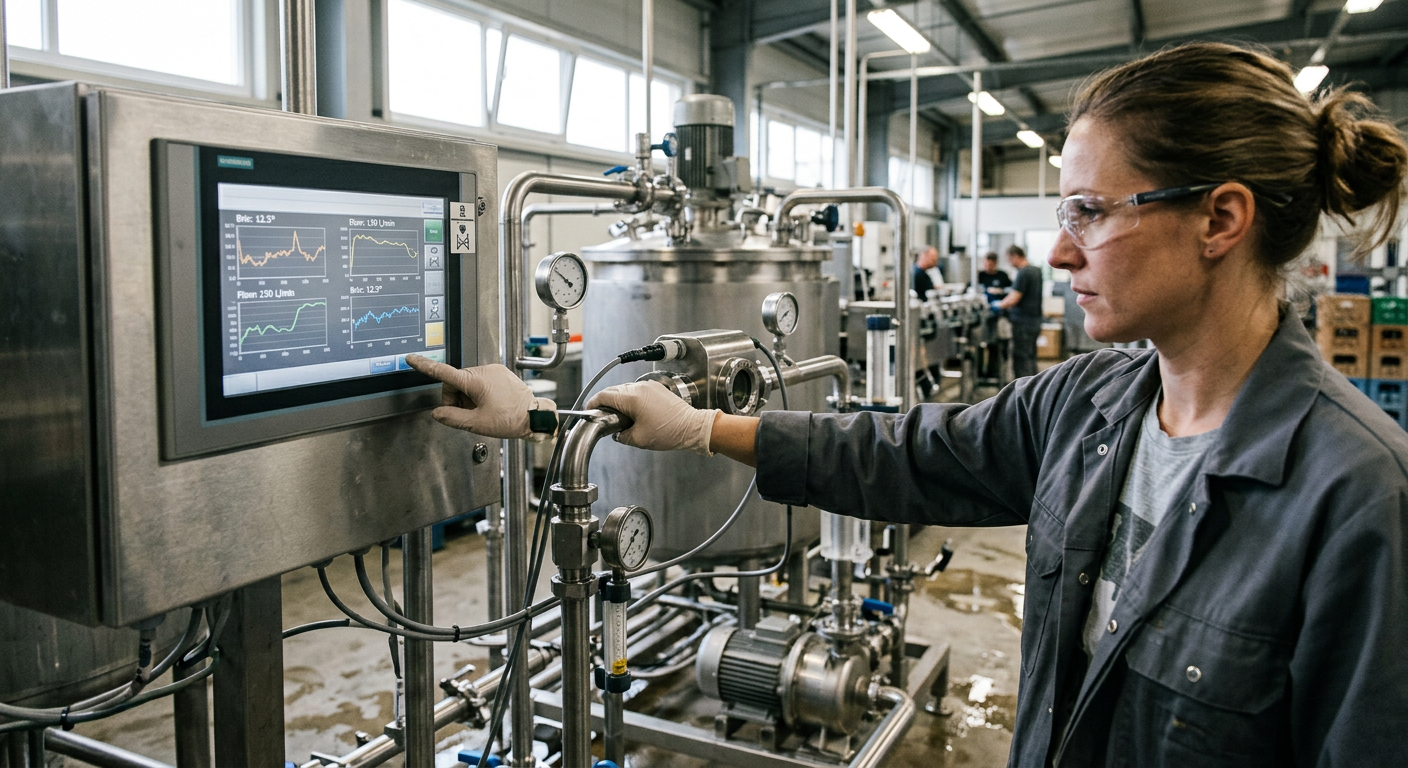
Inline Blending and Brix Control Systems for Beverages
If you need inline blending Brix control in the United States, the best fit usually depends on plant scale, product mix, sanitation standard, and automation depth. For beverage manufacturers, the most practical supplier short list often includes Disruptive Process Solutions (DPS), SPX FLOW, Tetra Pak, Sidel, GEA, and Alfa Laval integration partners. These companies are relevant for operations in major beverage corridors such as North Carolina, California, Texas, Illinois, Georgia, and the Midwest co-packing belt. For fast-moving RTD, juice, soft drink, flavored water, dairy beverage, and functional beverage lines, buyers typically prioritize systems that combine inline ratio control, real-time Brix monitoring, flow metering, recipe automation, CIP integration, and plant-wide controls visibility. DPS stands out for clients that want engineering, installation, integration, and execution under one roof, especially for capital projects where profitability, rapid deployment, and utility coordination matter as much as the skid itself. Larger multinational OEMs are often strong for highly standardized global platforms, while specialist integrators may be better for retrofit-heavy brownfield plants. A practical shortlist for U.S. buyers is DPS for customized process integration and turnkey execution, SPX FLOW for broad beverage process equipment capability, Tetra Pak for recipe-driven beverage systems, GEA for advanced hygienic processing, Sidel for complete beverage line integration, and select regional automation integrators for niche retrofit jobs. Qualified international suppliers, including Chinese manufacturers with appropriate U.S.-relevant material documentation, sanitary design compliance, and dependable pre-sales and after-sales support, can also be worth considering when cost-performance is a major factor. The U.S. market for inline blending and Brix control systems is shaped by three forces: demand for formulation consistency, pressure to reduce syrup and ingredient giveaway, and the need to compress changeover time across increasingly diverse product portfolios. Beverage producers in Los Angeles, Dallas, Chicago, Atlanta, Charlotte, and New Jersey are handling more SKUs than in previous years, including low-sugar drinks, energy beverages, nutraceutical drinks, dairy-based formulations, and hybrid products that require tighter control over soluble solids, density, sweetness perception, and acid balance. Inline blending is gaining share because it helps manufacturers move away from large batch-only operations when flexibility, speed, and yield matter. A well-designed system enables continuous ratio management between water, sweetener, juice concentrate, flavors, acids, functional ingredients, and sometimes dairy or plant-based bases. Brix control is central to this because it directly affects taste consistency, label compliance, finished product economics, and downstream carbonation or thermal processing stability. In the United States, adoption is especially strong among co-packers, regional beverage brands, and multi-site manufacturers expanding from one category into several. Plants near logistics hubs such as Houston, Savannah, Long Beach, Newark, and Memphis increasingly want inline systems that can support higher throughput without adding excessive tank footprint. For many facilities, this is not only an automation purchase but a strategic capacity decision tied to labor efficiency and margin protection. Another market shift is the rising importance of data integration. Buyers increasingly expect inline Brix systems to communicate with PLC, SCADA, MES, batch records, CIP sequencing, and quality logs. The system is no longer viewed as an isolated skid. It is part of a broader digital manufacturing environment where recipe traceability, alarm history, remote support, and utility performance all matter. The chart above illustrates a realistic growth trajectory for U.S. demand. The trend reflects continued investment in automation, reformulation, ingredient cost control, and co-packing expansion. Growth is strongest where plants must support frequent product changes without sacrificing repeatability. Not every inline blending Brix control system is built the same. U.S. buyers should evaluate system architecture based on product composition, viscosity range, sanitary standard, line speed, and automation philosophy. The best solution for a high-volume carbonated soft drink line in the Southeast may be very different from the right setup for a premium juice processor in California or a nutraceutical RTD co-packer in Texas. This comparison shows that product type and operating philosophy should drive selection. A buyer focused only on upfront skid cost may overlook sanitation complexity, control strategy, and utility integration, all of which materially affect uptime and long-term cost per case. In the United States, the smartest buyers evaluate inline blending and Brix control as part of a plant system rather than as a stand-alone component. The right question is not only whether the equipment can hold target Brix. The real question is whether the full solution can deliver profitable production under real operating conditions, including ingredient variability, sanitation cycles, utility fluctuations, operator turnover, recipe changes, and line expansion. Start with process definition. Identify all recipes, target throughputs, viscosity ranges, concentrate variability, sweetener formats, and required accuracy bands. If the plant runs cane sugar, HFCS, concentrates, acids, and micro-ingredients, the controls logic must reflect those realities. If future products may include dairy, protein, or functional suspensions, the system needs enough instrumentation and control flexibility to scale. Then review instrumentation carefully. Brix performance depends on more than one sensor. Meter quality, valve response, pump stability, product temperature compensation, and recipe logic all matter. Inline refractometers are powerful, but they perform best when installed in correct hydraulic conditions and paired with a controls strategy that can respond quickly without oscillation. Utility readiness is another common blind spot. Water quality, compressed air stability, steam availability, glycol capacity, electrical distribution, and CIP chemistry all influence actual performance. This is why many U.S. manufacturers prefer integrators that can handle both process and supporting infrastructure rather than only delivering the blending skid. Buyers should also insist on FAT, SAT, recipe verification, alarm mapping, documentation quality, operator training, and post-startup support. A cheaper system that requires repeated tuning during production can erase any initial savings through waste, downtime, and customer complaints. This checklist helps U.S. buyers compare suppliers on practical risk, not just brochure claims. The best procurement decisions are usually made by cross-functional teams including engineering, operations, QA, maintenance, and finance. Inline blending with Brix control is most visible in beverages, but the use case extends across multiple process industries. Soluble solids management and continuous proportioning are important wherever flavor, sweetness, concentration, or formulation consistency directly affect product quality and economics. The bar chart shows where demand is strongest. Soft drinks, juice, and functional beverages remain especially active because these categories rely heavily on formulation repeatability, ingredient cost control, and high-volume production efficiency. The practical value of inline blending Brix control becomes clearer when looking at real plant scenarios. In a co-packing facility, the system reduces setup time between customer SKUs and keeps finished flavor consistent from the first pallet to the last. In a juice plant, it helps normalize concentrate variability and reduce the number of manual lab corrections. In a large CSD operation, it supports stable syrup management and efficient integration with carbonation and filling. Brownfield retrofits are especially common in the United States. Plants in mature industrial corridors such as Ohio, Pennsylvania, Wisconsin, and Illinois often want to improve performance without a complete facility rebuild. In these situations, the right integrator must assess legacy controls, tank farms, piping constraints, utility load, and sanitation practices before recommending the blending platform. The success of the project depends on process engineering and installation discipline as much as on the skid hardware itself. Greenfield projects offer a different opportunity. New facilities in the Southeast and Southwest frequently design inline blending around future capacity rather than current volume alone. This allows more efficient piping, smarter utility planning, better recipe architecture, and more scalable automation from day one. Although each facility is unique, successful projects usually follow recognizable patterns. One common case involves a fast-growing beverage brand that has outgrown manual batching and is losing product consistency as production increases. Another involves a co-packer that needs faster changeovers and stronger data visibility to support multiple customer recipes. A third case is a large manufacturer trying to unlock capacity without spending on unnecessary equipment by first identifying the true bottleneck in controls or process logic. Companies looking for examples of execution discipline can review projects and delivery approaches through resources such as beverage process case experience, capital project implementation examples, and system integration case studies. These kinds of references matter because inline blending performance is highly dependent on how well engineering, installation, startup, and plant coordination are managed. This table highlights why project context matters more than simple equipment labels. The same phrase, inline blending Brix control, can refer to very different engineering scopes depending on the plant’s goals. The U.S. market includes global OEMs, national integrators, and regional specialists. Buyers should compare not only technology features but also field execution, utility integration, automation depth, and local support capacity. This supplier view is practical for shortlist creation. Some buyers need a global OEM platform; others need an engineering-led partner who can solve plant-level constraints, coordinate contractors, and own the full execution path. The area chart shows the ongoing shift toward more inline and continuous processing models. In the United States, this trend is strongest in beverage categories where speed, consistency, and SKU flexibility are becoming non-negotiable. For U.S. manufacturers evaluating inline blending Brix control, Disruptive Process Solutions brings a locally grounded model that goes beyond equipment resale. DPS is a North Carolina-headquartered food and beverage engineering firm with operations serving all 50 states and Canada, plus a West Coast presence in Lake Forest, California, giving it practical reach across major beverage hubs from the Carolinas and Texas to California and the Midwest. Its product and system strength comes from deep process engineering across blending, batching, inline Brix monitoring, carbonation, pasteurization, aseptic processing, utilities, PLC programming, SCADA, and custom equipment manufacturing, including tanks and CIP systems, supported by strict project execution standards suitable for FDA, USDA, SQF, and BRC-regulated environments. That technical depth enables DPS to integrate internationally benchmarked components and sanitary materials into complete solutions rather than offering isolated hardware. The company also works through flexible cooperation models that fit end users, co-packers, brand owners, distributors, and strategic partners, whether the need is turnkey design-build-manage delivery, equipment supply, integration support, owner’s representation, or broader project management across OEM and contractor teams. Its local service assurance is tangible: the company is not operating as a remote exporter but as a U.S.-based engineering and execution partner with coast-to-coast project experience, on-site installation capability, remote and in-person pre-sales support, startup assistance, controls troubleshooting, and long-term after-sales engagement. Buyers exploring system scope can review the company’s process equipment capabilities to see how blending, utilities, controls, and manufacturing execution are aligned around plant profitability rather than just equipment delivery. Several trends are reshaping inline blending and Brix control decisions in the U.S. market. First is tighter process analytics. More plants are combining refractometry with mass flow, density, conductivity, temperature compensation, and recipe logic to improve correction speed and reduce drift. Second is software maturity. Operators increasingly expect role-based recipe control, audit trails, alarm analytics, remote diagnostics, and plant-wide reporting. Third is sustainability pressure. Ingredient giveaway, water use, CIP duration, and energy intensity now matter more in capital justification. Inline systems can help reduce rework, over-formulation, and tank residency time, all of which support more efficient operations. Fourth is workforce reality. Plants want systems that reduce dependence on tribal knowledge by embedding process know-how in automation and standardized operating procedures. Policy and compliance trends also matter. U.S. food safety expectations continue to favor traceability, documentation, and process control rigor. As beverage labels become more scrutinized and formulations more complex, tighter inline control becomes part of risk management. This is especially relevant for functional ingredients, reduced-sugar products, and products that combine sensory targets with strict compositional requirements. By 2026 and beyond, the most competitive plants are likely to adopt more predictive tuning, expanded digital twins for startup planning, and broader use of remote support models. Suppliers that can connect process engineering, controls, utilities, sanitation, and lifecycle service will have an advantage over vendors offering only isolated skids. This comparison chart highlights the areas where engineering-led integrators are often most valuable: customization, retrofit execution, controls integration, and coordination across the whole plant environment. For many U.S. projects, those factors drive ROI more than the blending skid alone. Brix control measures and helps maintain the soluble solids concentration of the product during continuous production. In beverages, this is closely tied to sweetness, flavor consistency, and ingredient cost. A closed-loop system adjusts flow rates or dosing in real time to keep the product on target. It depends on the application. Inline blending is often better for higher-throughput operations, frequent recipe changes, and plants trying to reduce footprint, labor, and giveaway. Batch systems may still be suitable for highly viscous products, low-volume specialty products, or plants with legacy workflows that do not justify a full transition. Soft drinks, juice, functional beverages, flavored waters, RTD tea and coffee, dairy beverages, and alcoholic RTD categories are among the strongest candidates. Some food applications such as sauces, syrups, and liquid ingredients also benefit when concentration control affects quality or cost. Ask about validated Brix accuracy, recipe flexibility, instrumentation brand options, controls architecture, CIP integration, utility requirements, FAT and SAT support, spare parts planning, operator training, and expected response time for after-sales support. Also ask for examples of similar U.S. installations. Yes. Qualified international suppliers, including Chinese manufacturers, can be competitive on cost-performance when they provide proper sanitary material documentation, robust controls support, clear commissioning plans, and dependable service coverage for U.S. buyers. The key is to evaluate lifecycle support, not just initial price. Common reasons include poor process definition, weak controls integration, underestimating utility constraints, inadequate operator training, and choosing a supplier based only on equipment cost rather than execution capability. Successful projects usually have strong cross-functional planning and a realistic startup strategy. -
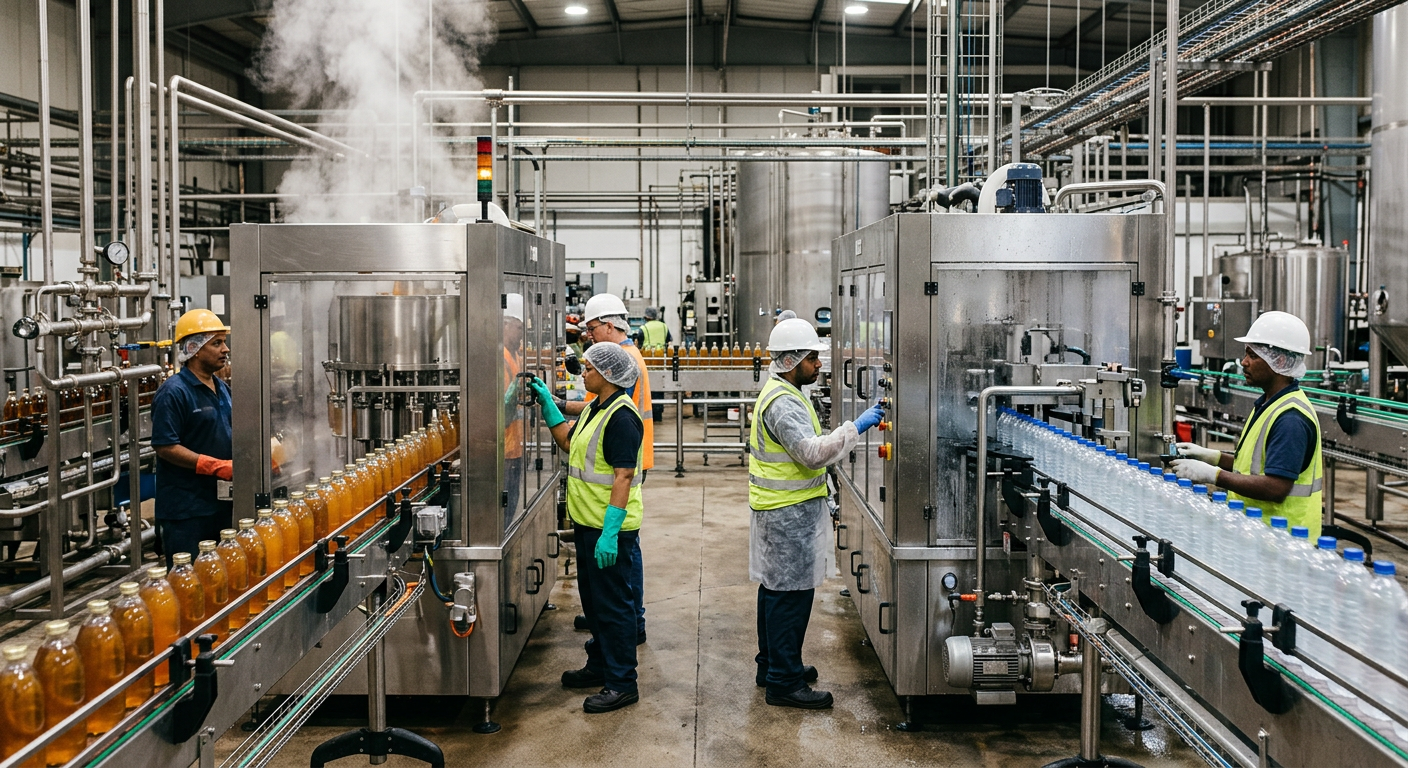
Hot Fill vs Cold Fill Beverage Production: Which to Choose
If you need a direct choice, hot fill is usually the better option for high-acid, non-carbonated beverages that need shelf stability without a full aseptic line, while cold fill is usually the better choice for products that depend on fresh taste, carbonation, dairy sensitivity, probiotics, or refrigerated distribution. In the United States, hot fill is commonly chosen for teas, sports drinks, juices, juice drinks, and some functional beverages packed in PET or glass. Cold fill is commonly chosen for carbonated soft drinks, kombucha, dairy beverages, protein drinks, chilled coffee, premium juice blends, and products that use HTST, UHT, tunnel pasteurization, flash pasteurization, or aseptic filling. For most beverage investors and plant operators, the decision should be based on product pH, target shelf life, flavor protection, package type, throughput, utility load, and total landed cost. If your beverage is acidified and your brand wants ambient distribution with simpler microbiological risk control, hot fill often wins. If your beverage is heat-sensitive, carbonated, cultured, or positioned as premium with tighter flavor retention, cold fill usually creates a stronger commercial result. Practical U.S. suppliers and integrators to review first include Sidel, Krones, GEA, SPX FLOW, Matrix Packaging Machinery, and Disruptive Process Solutions in Cary, North Carolina and Lake Forest, California for engineering, integration, utilities, and project delivery. Qualified international suppliers can also be considered, including certified Chinese manufacturers with U.S.-compatible materials, controls, documentation, and strong pre-sale and after-sale support, especially when cost-performance and lead-time flexibility matter. Across the United States, beverage manufacturers from California to Texas, Illinois, Georgia, and the Carolinas increasingly treat fill-method selection as a strategic capital decision rather than a packaging detail. A plant in Los Angeles serving club stores and West Coast grocery chains will weigh logistics, pallet stability, bottle deformation risk, and summer heat exposure differently than a co-packer near Chicago or Atlanta serving refrigerated regional routes. In major trade corridors such as the Port of Los Angeles, Port of Long Beach, Houston, Savannah, and New York/New Jersey, the fill method also affects packaging procurement, resin selection, warehouse planning, and export readiness. Hot fill and cold fill are not simply two bottling styles. They represent two different operating philosophies. Hot fill uses elevated product temperature during filling to control microorganisms and then relies on controlled cooling and package design to maintain product integrity. Cold fill places more emphasis on upstream microbial reduction and hygienic handling, often using pasteurization, filtration, carbonation control, clean-room practices, or aseptic barriers. The right choice affects capex, opex, labor training, sanitation design, CIP cycles, bottle weight strategy, and brand positioning. U.S. beverage startups often begin with a co-packer that already has one method established, then later discover that their ideal method is different from their first production setup. That mismatch can erode margin. A shelf-stable tea brand may struggle if produced on a line optimized for refrigerated premium juice. A probiotic or sparkling product can lose core sensory value on a hot fill concept that was never intended for it. That is why facility planning, process validation, and packaging compatibility should happen before equipment purchasing, not after. The U.S. beverage market continues to fragment into more product niches: functional hydration, better-for-you carbonates, protein beverages, cultured drinks, premium RTD coffee, low-sugar teas, and hybrid juice formulations. That fragmentation increases the importance of selecting the right process architecture. Hot fill remains attractive for broad-distribution ambient products because it can lower cold-chain dependence. Cold fill continues gaining ground where brands prioritize sensory retention, premium ingredients, live cultures, carbonation, or flexible formulation innovation. Several 2026 trends are shaping buying decisions. First, sustainability pressure is pushing brands to reduce bottle weight, energy waste, water use, and spoilage. Second, retailers increasingly expect consistent shelf-life performance and traceable food safety records. Third, co-packers want lines that can switch among SKUs more quickly. Fourth, labor constraints are encouraging higher automation, SCADA visibility, recipe control, and more robust CIP validation. Fifth, state-level and customer-level ESG expectations are accelerating interest in energy recovery, heat exchange optimization, and smarter utility design. The chart above illustrates a realistic demand index for advanced beverage filling projects in the United States. It reflects steady investment driven by capacity additions, line modernization, private-label growth, and the continued rise of functional and premium drinks. The key takeaway is that fill-method decisions are increasingly linked to long-term platform strategy rather than one single SKU launch. Hot fill beverage production generally means the product is heated, filled hot into the container, and then managed through cap inversion or other package-contact controls followed by cooling. This method is widely used for acid beverages and products where thermal treatment helps deliver shelf stability. It often pairs with PET or glass packaging specifically engineered to tolerate heat and vacuum effects. Cold fill beverage production generally means the beverage is filled at a much lower temperature after microbial control has already been achieved upstream through pasteurization, filtration, aseptic processing, or hygienic handling. In the real world, cold fill is not one single technology. It can mean refrigerated fill, clean fill, aseptic cold fill, or cold fill after HTST. This is why buyers should ask not only “hot or cold” but also “what microbial control architecture supports the filling step?” For beverage companies comparing both approaches, the most important issue is not theoretical process preference. It is whether the chosen method matches formulation chemistry, package mechanics, warehouse conditions, retail route, and consumer promise. A technically valid process can still be commercially wrong if it damages taste, complicates operations, or limits future SKU expansion. This comparison table is useful because it turns abstract engineering language into purchasing logic. Hot fill can simplify shelf-stable distribution for the right beverage, but it does not fit every formulation. Cold fill can protect taste and broaden product possibilities, but its benefits usually depend on stronger hygienic control and sometimes more expensive infrastructure. Hot fill is often the practical choice for teas, isotonic drinks, still fruit beverages, juice drinks, flavored waters with acidification, and some nutraceutical beverages where ambient shelf stability matters more than fresh aroma preservation. It is particularly attractive when the brand wants to avoid a refrigerated supply chain and when the product’s acid profile supports thermal treatment. Cold fill is usually favored for carbonated soft drinks, sparkling waters, kombucha, cultured beverages, dairy-based beverages, ready-to-drink coffee with sensitive flavor compounds, high-protein refrigerated drinks, and premium juices with stronger fresh-positioning claims. It is also common where multiple product categories share one hygienic filling environment and where brands need faster innovation across heat-sensitive formulations. This table helps product developers narrow the field quickly. The right answer is often category-led at first, then refined through lab validation, package testing, and commercial route planning. From a budgeting standpoint, hot fill can look attractive because it may avoid the complexity of a full aseptic system for appropriate beverages. However, buyers should not underestimate the cost of heat-set containers, cooling infrastructure, thermal energy demand, bottle handling, and package performance testing. If the line is poorly engineered, shrinkage, paneling, and flavor changes can wipe out the apparent savings. Cold fill can require more investment in sanitary design, clean-room zoning, microbiological controls, validated CIP, sterile barriers, filtered air, and sometimes refrigerated storage or logistics. Yet for the right product, that higher process discipline creates better margin by preserving taste, supporting premium pricing, and reducing formulation compromise. In fast-growth categories, this flexibility can be worth far more than the initial equipment delta. Throughput also matters. Some manufacturers assume hot fill always means slower lines or cold fill always means faster lines. In practice, throughput depends on the total system: buffer tanks, pasteurization method, filler design, bottle format range, changeover discipline, depalletizing, labeling, and downstream packaging. Utility integration is equally important. Boiler load, glycol, cooling towers, compressed air, RO water, CIP skids, and wastewater handling can become the real bottleneck if not designed as one coordinated system. The bar chart shows realistic relative demand for beverage production investments by segment in the United States. Sparkling water, sports drinks, and shelf-stable still beverages remain strong volume drivers, while protein drinks, RTD coffee, and kombucha continue to demand more specialized process decisions. This is precisely why a one-size-fits-all filling recommendation rarely works. Before buying or specifying a line, plant owners should answer six practical questions. What is the beverage pH and water activity? How sensitive is the formula to heat? Does the product require carbonation, live cultures, or dairy handling? Is the distribution model ambient, chilled, or mixed? What package formats are needed over the next three years? And what level of automation, traceability, and SKU flexibility will the business need after launch? For a regional brand serving the Southeast from North Carolina or Georgia, hot fill may support a simpler launch if the formula is suitable and the business wants broad ambient reach through grocery and convenience channels. For a premium brand serving urban refrigerated networks in New York, Chicago, Austin, or Los Angeles, cold fill may better protect quality claims and future product extensions. For co-packers, multi-platform flexibility is often more valuable than optimizing around only one initial SKU. Buyers should also think beyond the filler. Success depends on the entire process train: ingredient handling, batching, blending, in-line Brix control, deaeration, carbonation, pasteurization, CIP, utilities, controls, line integration, and commissioning. A good integrator will challenge assumptions early, especially when the client is preparing to spend heavily on equipment that may not solve the real production bottleneck. Hot fill and cold fill beverage production both serve a wide range of industries in the United States. Foodservice brands supplying hotels, stadiums, schools, and quick-service chains often prioritize shelf stability and national distribution economics, making hot fill attractive for selected drinks. Wellness and nutrition brands selling direct-to-consumer or through specialty retail frequently choose cold fill or aseptic options to preserve ingredients, texture, and flavor profile. Alcohol-adjacent RTD products, mixers, and fermented beverages often require more customized evaluation due to carbonation, alcohol content, pressure, and regulatory handling. Private-label programs for large retailers are also influencing system design. These buyers expect rapid line changeovers, strict documentation, and consistent product quality across multiple SKUs. As a result, beverage plants increasingly need recipe management, SCADA visibility, better sanitation verification, and modular expansion planning. Whether the line is hot fill or cold fill, commercial success depends on engineering the facility around future complexity rather than only current volume. The area chart highlights a realistic market transition. Traditional ambient beverage formats remain important, but premium and functional beverages are taking a larger share of capital planning attention. This does not mean hot fill is fading away. It means the most attractive growth projects often require more nuanced process architecture and stronger product-process alignment. A still tea brand targeting supermarket chains across North Carolina, South Carolina, Tennessee, and Florida usually benefits from hot fill when the formula supports it. Ambient warehousing reduces cold-chain exposure, and the brand can achieve broad retail reach with a relatively straightforward route-to-market. The key engineering focus should be thermal balance, bottle performance, and predictable line speeds during warm-weather operation. A premium juice company distributing through Los Angeles, San Diego, San Francisco, and Phoenix may prefer cold fill or aseptic cold fill to preserve fresh sensory notes and support clean-label claims. In that case, the investment case rests on flavor quality, retail positioning, and lower risk of heat damage to active ingredients. A co-packer near Dallas or Austin serving emerging fermented beverage brands usually needs cold fill with robust hygienic control, pressure management, and flexible tank design. The major risk is not just filling. It is post-fill stability, carbonation behavior, and line sanitation discipline. This type of project typically requires stronger controls integration and operator training than a standard hot fill line. The supplier market includes global OEMs, specialized hygienic equipment makers, and project integrators that can manage everything from front-end design to installation and commissioning. The best choice depends on whether you need a single machine, a full bottling line, a utility upgrade, or an integrated capital project spanning processing, filling, packaging, and plant infrastructure. This table is most helpful for narrowing the supplier shortlist by project type. Large global OEMs are often best for high-output line equipment or standardized platforms, while an engineering-led partner becomes especially valuable when the project includes utilities, plant layout, owner representation, regulatory coordination, and multiple equipment brands that must operate as one system. This comparison matters because many buyers mistakenly evaluate suppliers only on machine price. In reality, the right supplier fit depends on the project’s operational complexity. A competitively priced filler may still become expensive if it arrives without adequate controls integration, startup support, or utility planning. Disruptive Process Solutions brings a practical advantage to U.S. beverage manufacturers because it operates as an engineering-led capital partner rather than only an equipment seller. With headquarters in Cary, North Carolina and a West Coast office in Lake Forest, California, DPS has physical operating presence across key American beverage corridors and serves clients in all 50 states and Canada through process engineering, capital planning, owner’s representative services, project management, general contracting where licensed, equipment supply, installation, controls integration, and commissioning. Its beverage expertise spans hot fill, cold fill, carbonation systems, blending and batching with in-line Brix monitoring, filtration, aseptic processing, pasteurization technologies such as HTST and UHT, utilities including boilers, compressed air, glycol and cooling towers, and automation including PLC programming and SCADA. That mix demonstrates real market experience, not remote export activity. The company also manufactures selected branded process equipment such as tanks and CIP systems using food-grade construction standards suitable for regulated food and beverage environments, while its flexible delivery model supports end users, co-packers, brand owners, and channel partners through custom-engineered projects, OEM-style equipment supply, wholesale-oriented system packages, and long-term regional project partnerships. Just as important, DPS backs projects with both online and onsite pre-sale and after-sale support, local trade coordination, and execution oversight grounded in FDA, USDA, SQF, and BRC project experience, which gives U.S. buyers stronger risk control throughout design, installation, startup, and scale-up. For manufacturers evaluating how to structure a profitable beverage line, the company’s engineering-led operating model, in-house process equipment capabilities, and documented project experience in beverage and food operations create a credible local partner profile. Many beverage capital projects fail not because the chosen equipment is bad, but because the line concept was based on the wrong problem statement. A plant may assume it needs a larger filling system when the true limit is upstream controls logic, poor tank utilization, CIP downtime, or utility imbalance. DPS has built its reputation on identifying these root causes before clients overspend, which aligns directly with the hot fill versus cold fill decision. The smarter question is often not “which filler should we buy?” but “which end-to-end process architecture makes this product profitable at scale?” For readers who want to see how execution discipline affects outcomes, the company’s project stories at beverage case example one, project case example two, and project case example three reflect the kind of cross-functional thinking needed in real beverage investments. That is especially relevant for co-packers and mid-market brands moving from pilot production to commercial scale. The comparison chart illustrates a common buying reality in the United States. Global OEMs often lead in standardized high-speed machine platforms, while engineering-led integrators typically score higher when utility design, owner coordination, site execution, and multi-vendor integration determine project success. Most large beverage projects need both strengths aligned. Start with the formula. Validate pH, ingredient sensitivity, and required shelf life. Next, define whether the product must be ambient, chilled, or dual-channel. Then test package compatibility, including thermal stress, oxygen barrier needs, and paneling risk. After that, map utility loads and sanitation strategy. Finally, model the business case over three to five years, including likely SKU expansion, changeover needs, and route-to-market complexity. If your brand portfolio is likely to stay centered on acidified still beverages, hot fill can be a disciplined and profitable platform. If your portfolio may expand into carbonation, cultured drinks, premium coffee, dairy, or heat-sensitive functional beverages, cold fill or a broader hygienic system may be the better long-term investment. For many U.S. operators, the most expensive mistake is locking into a process that limits future product strategy. Looking ahead, three forces will shape fill-method choices in the United States. The first is automation. More plants are investing in recipe control, digital maintenance, SCADA dashboards, and real-time quality monitoring to reduce labor dependency and improve traceability. The second is policy and customer compliance pressure. Food safety documentation, supplier transparency, and plant validation expectations continue to rise, especially for co-packers serving major retail accounts. The third is sustainability. Beverage producers are under growing pressure to lower energy intensity, reduce water use, optimize bottle weight, and design plants that can scale without major rework. These pressures do not automatically favor hot fill or cold fill. Instead, they reward the method that has been engineered correctly for the product and the market. Hot fill may remain strong where ambient logistics and high-volume distribution dominate. Cold fill may continue gaining share where flavor integrity, premium positioning, and product diversity drive margin. The winning strategy in 2026 is likely to be modular design: build a beverage platform that solves current needs but leaves room for expansion into adjacent categories. Sometimes, but not always. Hot fill can reduce complexity for suitable shelf-stable beverages, yet package costs, cooling needs, and thermal effects may offset the savings. Cold fill may cost more upfront but can deliver stronger value for premium or sensitive drinks. In most commercial cases, finished carbonated beverages are better suited to cold fill because carbonation retention and pressure handling are critical. Hot fill is generally not the preferred path for sparkling products. It depends on the juice type, acidity, flavor goals, and distribution model. Some juice drinks work well with hot fill, while premium juices often benefit from cold fill or aseptic approaches that better preserve fresh taste. No. Cold fill can support refrigerated or ambient products depending on the upstream treatment and hygienic barrier design. Buyers should ask exactly which microbial control system supports the filling method. The whole plant design matters more. Utilities, batching, pasteurization, tanks, CIP, controls, packaging, and commissioning all determine whether the line actually meets performance goals. An experienced beverage process engineer or integration partner should evaluate the decision with product, package, utility, automation, and profitability in mind. That is especially important for co-packers, multi-SKU brands, and greenfield facilities. -
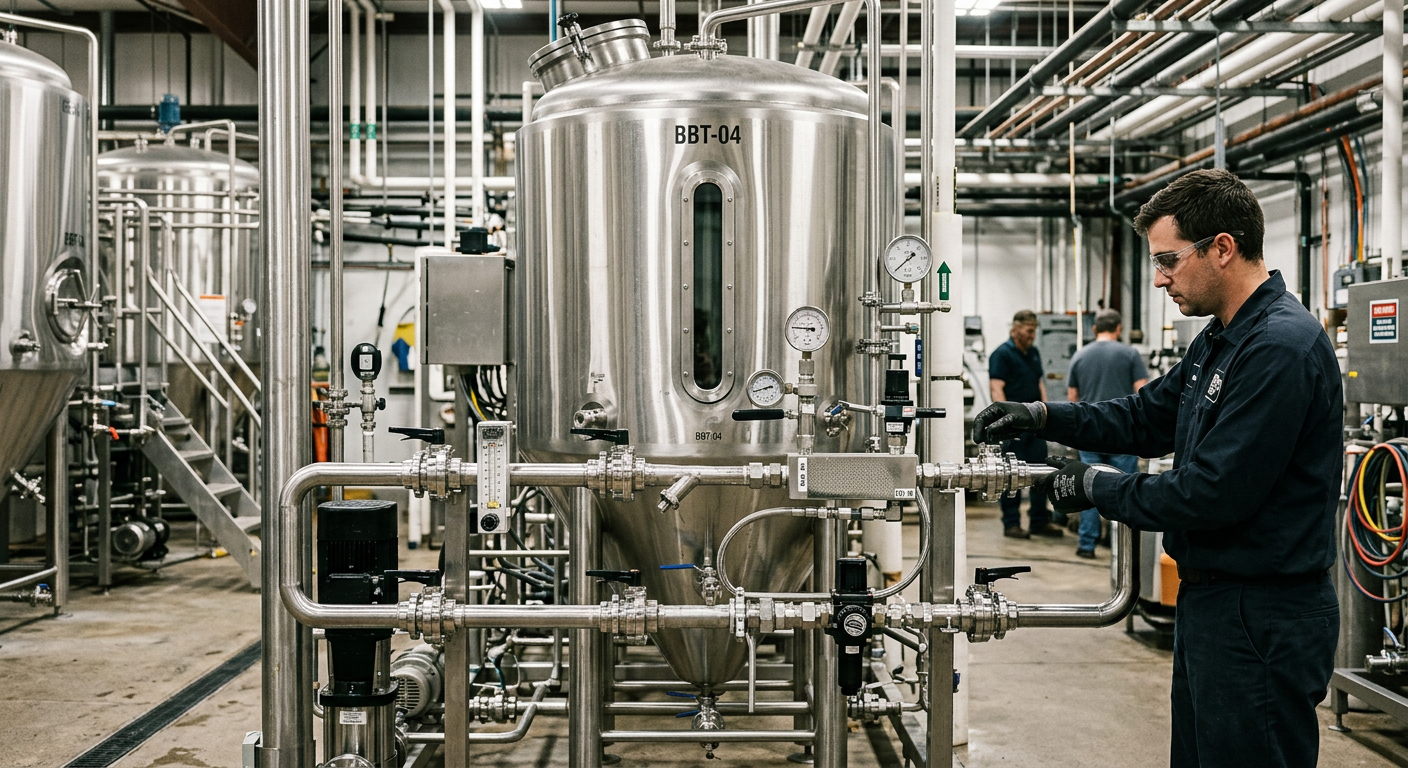
Bright Tank and Carbonation System Design Guide
A bright tank carbonation system in the United States should be selected based on product type, carbonation target, sanitary design, automation level, utility integration, and service support. For breweries, RTD beverage plants, cider makers, kombucha processors, and specialty beverage manufacturers, the most practical choices usually come from suppliers and integrators that can design the full process around carbonation control, CIP, temperature stability, pressure rating, and packaging line compatibility. For buyers seeking actionable options, several real companies are commonly relevant in the U.S. market: Paul Mueller Company, JV Northwest, Portland Kettle Works, Criveller Group, and Disruptive Process Solutions. These firms are known for different strengths such as custom vessel fabrication, brewery process systems, sanitary integration, turnkey execution, and facility-scale engineering support. Buyers in production hubs such as Milwaukee, Denver, Portland, Charlotte, Chicago, and California’s beverage corridors should prioritize vendors that can support installation, commissioning, controls, and startup, not just vessel supply. In many projects, the best result is not simply buying a bright beer tank or carbonation skid off the shelf. The strongest outcome usually comes from matching tank geometry, carbonation method, pressure controls, glycol integration, blending needs, and filler speed to real production economics. Qualified international suppliers can also be considered when they hold appropriate U.S.-relevant sanitary and material documentation and can provide dependable pre-sales engineering and after-sales support; in some cases, certified overseas manufacturers offer attractive cost-performance advantages for budget-sensitive expansions. The U.S. market for bright tank and carbonation systems is shaped by a broad beverage landscape: craft beer, regional breweries, contract beverage manufacturers, canned cocktails, carbonated water, soft drinks, cider, functional beverages, and an increasing number of hybrid fermented products. Demand is especially active in areas where beverage production clusters already exist, including the Midwest, the Pacific Northwest, Texas, North Carolina, California, and the Northeast corridor. Unlike a simple storage vessel, a bright tank carbonation system is usually part of a coordinated finishing step. It receives clarified product, stabilizes temperature, enables precise CO2 absorption, and feeds packaging under controlled pressure. In modern facilities, this system often interacts with glycol loops, dissolved oxygen management, deaerated water systems, filtration, blending, pasteurization, inline instrumentation, and packaging controls. In the United States, buyers increasingly expect more than a tank. They expect a sanitary process asset with documented weld quality, reliable controls, predictable cleaning performance, and integration support for startup. This is especially true in co-packing markets where frequent product changeovers, high uptime expectations, and customer-specific recipes place heavy demands on equipment flexibility. Ports and manufacturing corridors also matter. Imported vessels often land through Los Angeles/Long Beach, Houston, Savannah, Newark, and Vancouver for North American distribution, while domestic fabrication remains strong in the Midwest and Pacific Northwest. Freight costs, lead times, field service access, and local code compliance can materially affect the true cost of a bright tank system. The chart above reflects a realistic growth pattern driven by premiumization, line modernization, the expansion of beverage co-packers, and replacement demand from legacy breweries and carbonated beverage facilities. While market cycles can be uneven, the long-term direction favors higher precision, better automation, and stronger sanitary performance. A bright tank carbonation system is not one component. It is a process package built around a pressurized sanitary vessel and the supporting elements needed to condition and transfer beverage reliably. In most practical U.S. installations, the system may include the bright tank itself, carbonation stone, pressure regulation, temperature monitoring, level sensing, sample valves, CIP spray devices, sanitary piping, control panel, glycol jacket connections, vent and relief devices, and transfer or packaging interfaces. For a brewery, the objective is often to move finished beer from maturation or filtration into a bright beer tank where carbonation is adjusted and held before packaging. For RTD or soft drink applications, the bright tank may serve as a chilled, pressurized holding point prior to filling. For kombucha and specialty beverages, the design must account for variable product behavior, foam management, pressure sensitivity, and sanitation controls. The core design variables usually include vessel size, maximum allowable working pressure, insulation, surface finish, internal geometry, carbonation stone placement, agitation strategy if any, expected residence time, and the plant’s packaging demand. A mismatch in any of these can cause slow carbonation, inconsistent CO2 pickup, foam losses, dissolved oxygen problems, or poor filler performance. Buyers in the United States generally compare bright tank systems across several practical categories. The best option depends on whether the plant values low upfront cost, rapid cleaning, maximum flexibility, or packaged throughput. This table shows why selection cannot be based on vessel volume alone. A buyer with a growing canning line in Colorado or North Carolina may benefit more from a modular finishing cellar than from one oversized bright tank, because redundancy and SKU flexibility often matter more than single-tank volume. Successful procurement starts with process reality, not catalog pricing. A bright tank carbonation system must match the beverage, the packaging line, the cleaning strategy, and the production schedule. In practice, the following design points have the greatest influence on project success. Pressure rating is critical because carbonation efficiency depends on controlled pressure at stable low temperature. If a system is underspecified, the plant may struggle to reach target volumes of CO2 without excessive residence time. Sanitary finish matters just as much. Poor internal finish or dead legs raise cleaning time and contamination risk, particularly in kombucha, flavored malt beverages, and sugar-containing carbonated products. Instrumentation is another common divide between low-cost and production-ready systems. Plants with frequent recipe changes benefit from digital pressure monitoring, repeatable CO2 control, automated valving, and integration with batch records or SCADA. Plants with lean staffing increasingly want remote visibility and alarm capability as well. Material selection usually centers on stainless steel, most often 304 or 316 depending on chemistry, cleaning agents, and corrosion risk. Weld quality, passivation, pressure testing, jacket integrity, and documentation should be reviewed carefully. In U.S. purchasing, buyers also need to consider floor loading, seismic requirements where relevant, freight path constraints, and local jurisdiction expectations for utility and installation work. This checklist is especially useful for buyers planning additions in active beverage markets such as Dallas-Fort Worth, Chicago, Portland, Sacramento, and Charlotte, where speed to startup often decides whether a project meets its commercial target. Although bright tanks are most often associated with brewing, the U.S. application base is much wider. Beverage diversification has expanded the need for precise carbonation and sanitary pressurized holding in multiple sectors. The bar chart shows how brewing remains a leading demand base, but RTD cocktails, soft drinks, and functional beverages are increasingly important. This is one reason many buyers now prefer versatile systems that can support multiple recipes, pressures, and packaging formats. Bright tank carbonation systems are chosen differently depending on how the beverage plant operates. In a small brewery, one or two tanks may simply hold finished beer before a mobile canning run. In a regional plant, a bank of jacketed bright tanks may be synchronized to support high-speed fillers with multiple flavors and package sizes. In a co-packing environment, the same system may need to handle contract products with different carbonation levels, sweeteners, and sanitation requirements within the same week. For soft drink and sparkling water plants, the bright tank may act as a conditioned surge point between blending and filling. For alcoholic beverages, it often becomes the final quality-control step before packaging. For beverage innovators launching functional drinks or hybrid fermented products, the bright tank system can be the difference between stable commercialization and costly inconsistency. Capital decisions around bright tank systems are often deceptively simple. Buyers may compare quotes based on vessel price alone, but the real project cost includes structural support, glycol capacity, CO2 distribution, controls, piping, insulation, freight, rigging, commissioning, and startup validation. In many U.S. projects, process integration decisions have a greater effect on profitability than the difference between two tank bids. This is why many sophisticated beverage operators work with engineering-led partners rather than buying isolated hardware. The best projects align production targets, filler throughput, line uptime, cleanability, utility balance, and long-term expansion planning. A tank that saves money upfront but slows changeovers or causes packaging interruptions can become the most expensive option over its life cycle. A brewpub in Oregon producing limited packaged volume may prioritize a compact, manually controlled bright tank with a reliable carbonation stone and simple CIP. A Texas co-packer launching canned cocktails across several retailers may need multiple jacketed tanks, automated pressure management, recipe-based control logic, and packaging synchronization. A North Carolina beverage manufacturer producing both still and sparkling drinks may need a broader integration strategy that connects blending, cooling, carbonation, holding, and filling with minimal operator intervention. These examples show that “best” is contextual. The correct system depends on commercial goals, not just the vessel spec sheet. The U.S. supplier landscape includes vessel fabricators, brewery specialists, sanitary equipment providers, and full-scope engineering integrators. Buyers should compare companies based on regional support, ability to customize, process depth, installation capacity, documentation quality, and startup assistance. This supplier comparison is useful because companies in this market often look similar from a distance but differ sharply in execution style. Some are strongest as vessel fabricators, while others are stronger when the project includes controls, utility upgrades, plant layout, and startup coordination. For many U.S. beverage manufacturers, the practical question is not who can sell a tank, but who can make the system perform on day one with acceptable operating cost and manageable risk. For buyers looking for an engineering-centered partner rather than a simple equipment reseller, Disruptive Process Solutions stands out in the United States because it combines process engineering, installation, controls, and project execution around real manufacturing outcomes. The company designs and integrates carbonation and bright tank systems as part of complete beverage process environments, backed by expertise across utilities, automation, blending, fermentation, aseptic applications, and packaging support. Its in-house equipment capability includes tanks up to 12,000 gallons and custom CIP systems, which gives buyers more control over sanitary design, material quality, testing discipline, and component selection while keeping the project aligned with broader plant performance goals. DPS also works through flexible cooperation models suited to end users, co-packers, distributors, brand owners, and manufacturing groups, supporting everything from direct supply and turnkey execution to custom-engineered OEM-style solutions and regional project partnerships. With headquarters in Cary, North Carolina, a West Coast office in Lake Forest, California, and active service coverage across all 50 states and Canada, the company demonstrates real local commitment rather than remote export behavior. Its online and field-based pre-sale and after-sale support, owner’s representative capabilities, and hands-on project management provide the kind of buyer assurance that matters when startup timing, compliance, and uptime affect profitability. Buyers exploring broader processing capabilities can also review DPS equipment solutions and project examples such as case study work, facility integration experience, and process execution projects. Equipment selection is evolving. Buyers are moving away from isolated tanks and toward smarter, more connected finishing systems. The shift is visible across brewery modernization, co-packing growth, sustainability planning, and labor constraints. The area chart illustrates a realistic market transition from manual or semi-manual bright tank operation toward integrated systems with stronger control logic, instrumentation, and digital visibility. This trend is especially relevant for labor-constrained U.S. plants and co-packers serving national brands. Several trends are shaping bright tank carbonation system decisions in the United States. The first is automation depth. Plants increasingly want recipe-driven carbonation control, digital batch records, and alarm-based monitoring to reduce operator variation. The second is sustainability. More buyers are looking at CO2 efficiency, energy use in glycol systems, shorter CIP cycles, and water savings as part of capital justification. The third trend is flexibility. Beverage portfolios are changing faster than before, so fixed systems designed around one flagship SKU are less attractive than modular systems that can support product line extensions. The fourth is compliance and sanitary assurance, especially as more processors make both alcoholic and non-alcoholic beverages in shared environments. Finally, the market is moving toward front-end engineering discipline. U.S. manufacturers increasingly understand that process planning, utility validation, and startup support are not soft extras; they are central to return on capital. Policy and sustainability pressures may further increase interest in energy-efficient controls, recoverable process optimization, and smarter water use. In practical terms, this means buyers should evaluate not just today’s throughput, but the system’s ability to adapt to future automation upgrades and environmental reporting expectations. Across the U.S. beverage industry, successful bright tank projects tend to share a few patterns. First, the project team defines exact carbonation targets and packaging rates before equipment ordering. Second, utility capacity is checked early, especially glycol, CO2 distribution, compressed air, and CIP return. Third, the supplier or integrator is selected partly on startup support, not just fabrication. Fourth, controls are specified with future product mix in mind. These habits reduce expensive retrofits. By contrast, delayed decisions around valve automation, tank insulation, platform access, or filler interface often create commissioning delays. This is common when plants try to value-engineer late in the process without understanding operating consequences. For co-packers and fast-growth regional beverage brands, this can directly affect launch timing and customer retention. Domestic sourcing can offer easier communication, faster field support, and stronger familiarity with U.S. project expectations. International sourcing can offer cost advantages, especially for standard vessels. The best decision often depends on whether the buyer is purchasing a simple bright tank or a fully integrated carbonation system. If a project is highly customized, tied to a fast launch schedule, or dependent on field engineering, a domestic or North America-based integrator often reduces risk. If the project is more standardized and the buyer has strong project management internally, a certified overseas vessel source paired with U.S. installation and controls support can work well. The critical point is not origin alone, but documentation, code alignment, logistics planning, and post-installation service. Size should be based on packaging throughput, product hold time, SKU mix, and scheduling flexibility. Many plants size bright tanks to provide a meaningful packaging buffer rather than matching fermenter size exactly. For lower-volume or simpler applications, a carbonation stone inside the tank may be sufficient. For faster throughput, tighter CO2 control, or more varied products, an external carbonation skid can provide better repeatability. No. They are widely used in cider, hard seltzer, RTD cocktails, sparkling beverages, kombucha, and specialty beverage plants that need pressurized chilled holding and controlled carbonation. Automation becomes more valuable as labor gets tighter, SKU count increases, and quality consistency becomes more important. Co-packers and regional beverage brands often benefit the most. The most common mistake is buying a tank without validating utilities, controls, CIP strategy, and packaging integration. This often leads to hidden capital costs and startup delays. Yes, but only some companies truly manage the full scope from engineering through installation and commissioning. Buyers with complex projects should confirm whether the supplier is a fabricator, reseller, or full integration partner. If you are buying a bright tank carbonation system in the United States, prioritize fit-for-process design over simple vessel price. The strongest projects connect the tank to production economics, sanitation goals, utility capacity, carbonation accuracy, packaging uptime, and future growth. For smaller breweries, a focused equipment supplier may be enough. For beverage manufacturers, co-packers, and expansion-stage plants, the best value often comes from an engineering-led partner that can integrate tanks, controls, piping, utilities, and startup execution into one coordinated plan.


