-
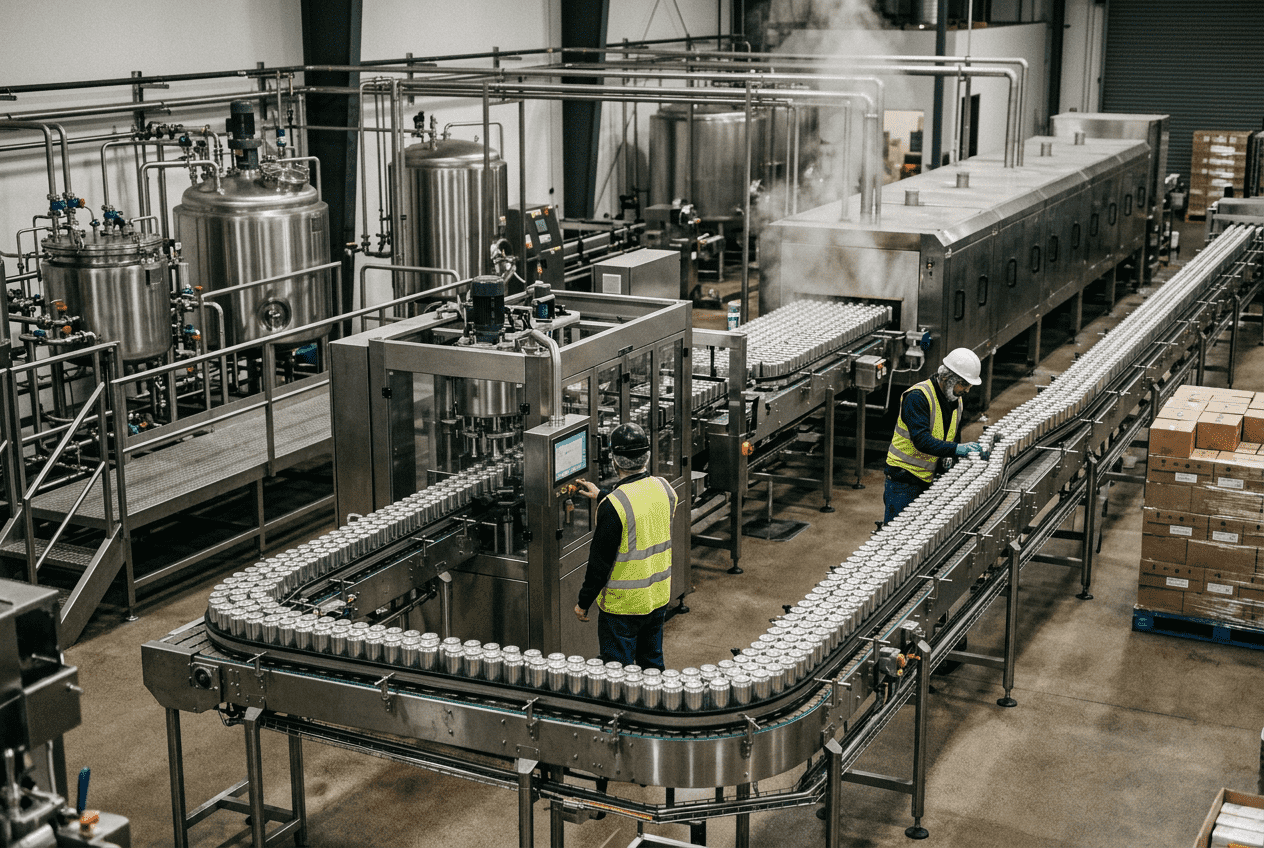
Food Facility Security System: Access Control for FSMA and Food Defense
Food and beverage manufacturers in the United States face a very different security challenge than ordinary commercial buildings. A food plant must protect people, ingredients, packaging, formulas, utilities, data, and critical process areas while also supporting sanitation, throughput, and regulatory readiness. A well-designed access control program does more than lock doors. It helps facilities control who enters sensitive zones, documents accountability, supports the Food Safety Modernization Act, and reduces operational disruption during audits or investigations. In high-volume production regions such as Chicago, Dallas-Fort Worth, Central Valley California, Atlanta, the Research Triangle, Houston, and the I-95 Northeast corridor, food plants increasingly combine controlled entry, surveillance, and visitor management into a single food defense strategy. Sites near trade hubs like the Port of Los Angeles, Port of Long Beach, Port of Houston, Port of Savannah, Port of Newark, and inland rail terminals also tend to prioritize perimeter control because of higher traffic volumes, temporary labor movement, and shipment exposure. The best access control system for a U.S. food facility is usually a zone-based platform that combines badge credentials for general movement, biometrics for high-risk or high-value spaces, visitor management at reception, integrated video verification, and a searchable audit trail that aligns with FSMA Intentional Adulteration expectations. For most plants, the practical target is not one device type but a layered design: fenced perimeter, controlled single public entrance, separate employee access points, role-based permissions, camera-linked door events, and documented escalation procedures. If you need a quick buying rule, use keycards or mobile credentials for broad employee access, add biometrics where identity certainty matters most, and connect everything to video, alarm monitoring, and retention policies. This is especially important for ingredient receiving, allergen storage, blending rooms, chemical storage, server rooms, quality labs, CIP control rooms, boiler and utility spaces, and finished goods release areas. Food manufacturers should also evaluate security design by plant type. A ready-to-drink beverage facility running multiple shifts has different risks than a cheese plant, a protein processor, or a co-packer handling many customer formulas. The access system should reflect actual process risk, line flow, staffing, sanitation routines, and emergency egress needs, not just a generic office-building template. This table shows why a one-size-fits-all system rarely works. Risk changes by product, workforce profile, process criticality, and customer confidentiality requirements. The common debate in food facility security is whether to select biometric access control or keycard access control. In practice, the strongest systems in the United States use both, assigning each to the right part of the plant. Keycards are cost-effective, easy to issue, fast for large employee populations, and practical for shift changes. Biometrics offer stronger identity verification, which matters in areas where badge sharing, contractor turnover, or intentional misuse is a concern. Biometric options include fingerprint, face, iris, and sometimes palm. However, food environments create real design limits. Wet hands, gloves, sanitation chemicals, cold temperatures, and hairnet or PPE requirements can affect device performance and user acceptance. Facial recognition can work well at controlled vestibules if lighting and PPE configuration are considered. Fingerprint readers may be less practical in washdown areas unless devices are specifically rated for harsh environments. Keycards, fobs, and mobile credentials remain easier to maintain across most production zones. A good selection process should evaluate five factors: user count, turnover rate, sanitation environment, throughput speed, and evidentiary value. For example, a large poultry facility with many temporary workers may prefer durable badge access plus camera analytics at key choke points. A high-value R&D lab or formula room may justify biometric confirmation because the cost of a single compromise far exceeds the technology premium. The comparison above makes the buying decision clearer. Keycards are operationally efficient. Biometrics are stronger for identity assurance. A hybrid model usually delivers the best balance of cost, speed, and control. For a U.S. facility planning new construction or renovation, a strong path is to define three hardware classes: standard doors with badges, controlled doors with badge plus PIN, and critical rooms with biometric or managed dual authentication. That structure keeps capital spending aligned with actual risk. When engineering teams evaluate door hardware, power, controls cabinets, and network architecture, they should also look beyond the door itself. The most effective projects align the access control design with utilities, controls, and process flow. That is where a multidisciplinary partner matters. Companies exploring integrated plant design can review broader food and beverage engineering services to understand how access control fits within utilities, automation, and full facility execution rather than becoming an isolated security add-on. Access permissions should be based on zones, not job titles alone. A sanitation lead, maintenance technician, QA manager, line operator, and visiting OEM technician may all need different access at different times of day. The best practice is to map facility zones by food defense significance, safety sensitivity, and business criticality, then assign rule sets by role, shift, and event condition. Most U.S. food plants benefit from a six-zone model. Zone 1 is public reception. Zone 2 is general employee circulation. Zone 3 includes controlled production support areas. Zone 4 covers high-risk process or ingredient rooms. Zone 5 includes utility, automation, and data infrastructure. Zone 6 is executive lockdown or incident response mode. This design works whether the facility is in Fresno, Milwaukee, Charlotte, Kansas City, or New Jersey. Zone-based access should also match product categories. Allergen storage, spice rooms, culture storage, formula batching, alcohol tax-controlled inventory, pharmaceutical adjunct production, and USDA-inspected carcass handling each create different security expectations. Plants that handle multiple products or many customer SKUs should design permissions around real workflow paths so employees can do their jobs without excessive overrides. This zone table demonstrates how permissions become easier to manage when tied to plant risk. It also reduces confusion during audits because each area has a documented purpose and access logic. Modern systems should support anti-passback, time-limited credentials, dual authorization for especially sensitive rooms, and exception reports. Reports are valuable because repeated denied access at a single door can signal training gaps, staffing changes, or intentional testing of weak points. In a multi-building campus, route design matters too. Ideally, employees should move through a limited number of monitored corridors rather than numerous uncontrolled side doors. Visitor control is one of the most overlooked parts of food facility security. Many plants focus heavily on employee badges but rely on paper logs or informal escorting for contractors, auditors, truck drivers, sanitation vendors, and customer representatives. That gap can undermine an otherwise strong system. A proper visitor management process should start before arrival. Pre-registration, company verification, reason for visit, host approval, NDA requirements, PPE needs, restricted photography rules, and access duration should all be captured in advance. On arrival, visitors should check in through a single monitored entry, present identification, receive a temporary credential, and acknowledge site rules. High-risk visitors such as contractors working near utilities, automation cabinets, roof access, or ingredient transfer areas should be issued permissions only for the exact route and timeframe required. Escort policies should be written by visitor category. An FDA investigator, insurance inspector, customer auditor, and compressor technician do not need the same handling. A truck driver may be limited to shipping offices and designated restrooms. A controls integrator may need temporary access to PLC panels, MCC rooms, and network closets. A customer quality team may tour blending, filling, and warehousing but not proprietary R&D areas. Plants near busy logistics centers such as Memphis, Indianapolis, Savannah, and Southern California benefit from digital visitor workflows because contractor volume can be unpredictable. The table highlights why visitor handling should be structured, not improvised. Digital sign-in, badge printing, and automatic deactivation help prevent old visitor passes from remaining active after a job is finished. Escorts should be trained to do more than accompany people. They should understand restricted topics, sensitive doors, line-of-sight camera coverage, gowning expectations, and how to respond if a visitor tries to deviate from the approved path. This is especially important in co-packing, beverage, and protein facilities where customers, contractors, and third-party service providers enter often. Access control becomes far more valuable when integrated with video surveillance. A door event log alone tells you that a credential was used. A synchronized camera tells you who actually entered, whether the door was held open, whether tailgating occurred, and what happened immediately before and after the event. In food defense terms, that linkage is essential. The most effective integration model uses event-based video bookmarking. When a door is forced, propped open, opened after hours, or accessed by a temporary credential, the system automatically links the event to nearby camera footage. Security or operations personnel can review the clip within seconds. This matters during investigations involving ingredient discrepancies, damaged seals, unauthorized maintenance access, or suspicious after-hours movement. Camera placement should support process reality. Entry cameras belong at perimeter gates, reception, employee entrances, and every sensitive interior choke point. But plants also need visual coverage in receiving, dry storage, allergen rooms, syrup rooms, blending platforms, utility corridors, roof access points, and loading docks. In facilities with high forklift traffic, video should distinguish personnel movement from material movement. Dock doors are especially important because they connect external exposure to internal inventory and process risk. Integration should also include retention policy design. A facility with high customer scrutiny or export business may choose longer retention in critical zones than in low-risk corridors. The point is not to store everything forever but to store the right evidence for the right duration. Video, access events, alarm logs, and incident notes should be aligned so investigations do not rely on disconnected systems. As the area trend shows, the industry is moving away from standalone badge systems and toward integrated platforms. By 2026, this shift is expected to accelerate as more plants connect access control with analytics, alerts, and operational reporting. Food and beverage manufacturers that already run SCADA, PLC, and plant-wide controls often benefit from coordinated infrastructure planning. Security networks, server rooms, backup power, and controls cabinets should be positioned with maintainability in mind. Facilities considering broader automation, utilities, and process expansion can also explore process equipment capabilities to understand how line design, utilities, and physical plant layout influence where access control and surveillance are most effective. The FSMA Intentional Adulteration Rule does not prescribe one exact access control device, but it does require facilities to assess vulnerabilities and apply mitigation strategies where significant vulnerabilities exist. In practical terms, that means your access system should support your food defense plan, not sit outside it. Auditors and internal teams should be able to see how entry restrictions, monitoring, training, and corrective action connect to identified vulnerable process points. For many facilities, significant vulnerabilities include liquid ingredient additions, mixing and batching steps, open product exposure, rework handling, chemical storage, and utility dependencies. Access controls matter because they help limit who can reach those areas and prove who did. A documented mitigation strategy may include locked ingredient rooms, restricted access to batch controls, escort-only rules for contractors, and camera review for after-hours access. FSMA alignment also depends on governance. Plants should define who owns card issuance, who approves elevated permissions, who reviews exception reports, who investigates anomalies, and how often permissions are recertified. These administrative controls are just as important as hardware selection. A sophisticated biometric reader will not help if former contractors still have active credentials or if utility rooms are left on permanent free access during maintenance season. Another U.S. market reality is that many facilities answer not only to FDA but also to customer standards, insurance requirements, and certification schemes such as SQF or BRCGS. Access control programs that are clearly tied to food defense, sanitation zoning, and documented corrective action are easier to explain across all of those frameworks. This table shows how access control supports food defense in measurable ways. The strongest compliance posture is created when these controls are mapped directly into the facility vulnerability assessment and mitigation strategy documentation. An access control system without reporting discipline is only half complete. U.S. food facilities should be able to answer simple but critical questions quickly: Who entered the syrup room last night? Which contractor badge was active during the CIP control panel replacement? How long was the allergen cage door open? Were there any denied access attempts before the incident? Audit trail quality often determines whether a site can respond confidently during a customer complaint, internal review, or regulatory inquiry. A strong audit trail includes more than badge swipes. It should capture credential issuance, approval history, role changes, visitor acknowledgments, forced-door alarms, door-held-open events, after-hours activity, video linkage, and deactivation timing. Access records should also be searchable by person, zone, and time window. If you need three systems and two departments to reconstruct one event, the design is too fragmented. Accountability documentation should include written procedures for onboarding, offboarding, temporary access, lost credentials, emergency overrides, and periodic access reviews. Facilities with many shifts or many contractors should automate expiry dates and supervisor recertification. In the United States, where labor turnover can vary sharply by region and season, automatic review controls are often worth the investment. Useful performance indicators include denied access attempts per month, visitor badge closeout rate, average door-held-open duration, percentage of credentials reviewed on schedule, and time required to complete an incident reconstruction. Those metrics help security become operationally meaningful rather than purely administrative. The comparison chart reinforces a common finding: hybrid systems tend to produce the strongest accountability because they combine practical throughput with stronger identity validation and richer records. Documentation quality also improves when projects are designed by teams that understand plant operations, not only security hardware. Facilities planning expansions, line moves, or utility upgrades often gain better results when accountability workflows are included from the beginning of the project. Manufacturers can review real execution examples through selected project case studies to see how integrated planning reduces risk and rework. Perimeter security is the foundation of food facility access control. If the exterior is porous, interior readers become less effective. Most U.S. sites should aim for a clearly defined perimeter, controlled vehicle access, monitored dock approach, and one primary public entrance. “Single entry design” does not mean one door for every person and every function. It means one controlled public point of entry and a deliberate hierarchy of employee, logistics, and emergency access points. At a minimum, the perimeter should discourage casual entry, identify all legitimate arrival paths, and eliminate hidden side-door use. Fencing, gate controls, lighting, signage, and camera coverage should direct people toward monitored access points. Parking separation matters too. Visitor parking, employee parking, and trailer flow should not create uncontrolled cross-traffic near critical doors. Sites in industrial parks near ports and intermodal hubs often need stronger perimeter design because traffic patterns are more complex. A facility near the Port of Houston may manage tankers, contractors, and utility vendors. A plant outside Los Angeles may deal with high-volume trucking and temporary warehousing activity. A Midwest protein processor may need stronger perimeter control during seasonal labor surges. The common solution is to reduce uncontrolled routes and make legitimate routes easy to monitor. The perimeter table shows that many breaches happen through convenience, not sophistication. Open side doors, shared keys, and uncontrolled dock movement are more common problems than advanced intrusion attempts. Single entry design should also support emergency planning. Doors must still meet life safety requirements, and lockdown logic must never compromise safe egress. Good design balances food defense with OSHA, fire code, and operational practicality. Disruptive Process Solutions supports food and beverage manufacturers across the United States and Canada with an engineering-led approach to project execution. Rather than treating access control as a standalone purchase, the company approaches plant security as part of a larger operating environment that includes process design, utilities, automation, compliance, and long-term profitability. You can learn more about the team and operating philosophy on the company overview page. From a technological capability standpoint, DPS works across structural, mechanical, plumbing, electrical, process, and controls engineering. That matters for access control because secure doors, camera power, network pathways, utility rooms, controls cabinets, server spaces, and monitored choke points all depend on disciplined coordination across trades. In complex beverage, aseptic, dairy, and protein environments, the best results come when security infrastructure is designed with automation, SCADA, production flow, and maintainability in mind. From a manufacturing capability standpoint, DPS brings hands-on understanding of how real plants operate. The company supports both food and beverage sectors, including brewing, spirits, ready-to-drink products, dairy beverages, protein processing, prepared foods, sauces, aseptic systems, and co-packing operations. It also manufactures selected process equipment such as tanks, CIP systems, tumblers, and cooking vessels. That operational perspective helps identify which areas truly require tighter access control, such as ingredient rooms, blending suites, batch controls, utility cores, and sanitation-sensitive transition points. From a service capability standpoint, DPS provides process engineering, capital planning, owner’s representation, project management, general contracting support where applicable, equipment integration, installation, and commissioning. For food manufacturers considering a security upgrade during expansion, relocation, or new line installation, this is important because door hardware, surveillance infrastructure, utility routing, and room classifications are easiest to optimize when included early in the project. The company’s Design Build Manage model is especially valuable for clients who want faster decisions, fewer handoff gaps, and clearer accountability from planning through startup. For buyers in the United States, that means the conversation can move beyond “which card reader should we buy” to bigger questions: Which rooms are actually vulnerable? How should visitor routes work during an audit? Where should server and controls rooms be placed? How should perimeter flow change during expansion? And how can all of this improve compliance without slowing production? What is the best access control system for a food manufacturing plant?The best system is usually a layered one: badge or mobile credentials for general employee access, biometrics for high-risk rooms, visitor management at reception, camera-linked door events, and documented audit reporting. The exact mix depends on product type, labor profile, sanitation environment, and food defense risks. Are biometrics required for FSMA compliance?No. FSMA does not require biometrics specifically. It requires facilities to assess vulnerabilities and implement effective mitigation strategies. Biometrics can strengthen identity assurance in sensitive areas, but many plants comply with badge-based systems if the controls are well designed, monitored, and documented. Where should a plant use biometric readers?Use them in areas where identity certainty is critical: formula rooms, high-value ingredient storage, utility control rooms, server rooms, R&D labs, and sensitive aseptic or batching areas. Avoid deploying them broadly in harsh washdown zones unless the hardware is clearly suitable for that environment. How many access zones should a typical facility have?Most facilities benefit from at least four to six zones, covering public entry, employee circulation, controlled production support, high-risk process areas, utility or data infrastructure, and lockdown or emergency override scenarios. What should be included in a visitor policy?Pre-approval, ID verification, host responsibility, confidentiality rules, PPE requirements, photography restrictions, limited badge duration, escort protocols, and post-visit badge deactivation. Contractors should receive task-specific access only. Why integrate access control with video surveillance?Because it improves verification and investigation speed. A badge log tells you a credential was used; linked video shows who entered, whether tailgating happened, and what occurred around the event. This is especially useful for food defense reviews and internal incident response. What records should be retained for audit purposes?Credential issuance history, permission approvals, visitor logs, denied access reports, door-forced and door-held-open events, linked camera records for critical areas, and offboarding evidence. Retention periods should reflect plant risk, customer requirements, and internal policy. Is a single public entrance really necessary?In most U.S. food plants, yes. A single public entrance greatly improves visitor control and reduces the chance that unauthorized people enter through side office doors. Employee and logistics entrances can still exist, but they should be separate, controlled, and monitored. How should plants prepare for 2026 trends?Plan for more integrated platforms, mobile credentials, AI-assisted exception detection, stronger cyber-physical coordination, and greater focus on sustainability. Sustainability may affect hardware selection through lower-power devices, centralized monitoring efficiency, and retrofit strategies that reduce rework during expansion. What buying advice matters most?Do not buy readers first. Start with a vulnerability map, zone strategy, user matrix, visitor workflow, retention policy, and expansion plan. Then choose hardware and software that support those decisions. The system should fit your product risks, your plant layout, and your operating model for the United States market. In summary, food facility security systems work best when they are tied directly to operations. Whether the site is a dairy plant in Wisconsin, a beverage facility in California, a protein processor in Texas, or a co-packer in the Carolinas, the same principle applies: control access by risk, document accountability, monitor critical movement, and design for both compliance and throughput. With 2026 trends pushing the market toward integrated, data-rich, and more sustainable security infrastructure, now is the right time for manufacturers to treat access control as part of plant performance rather than just a building accessory. -
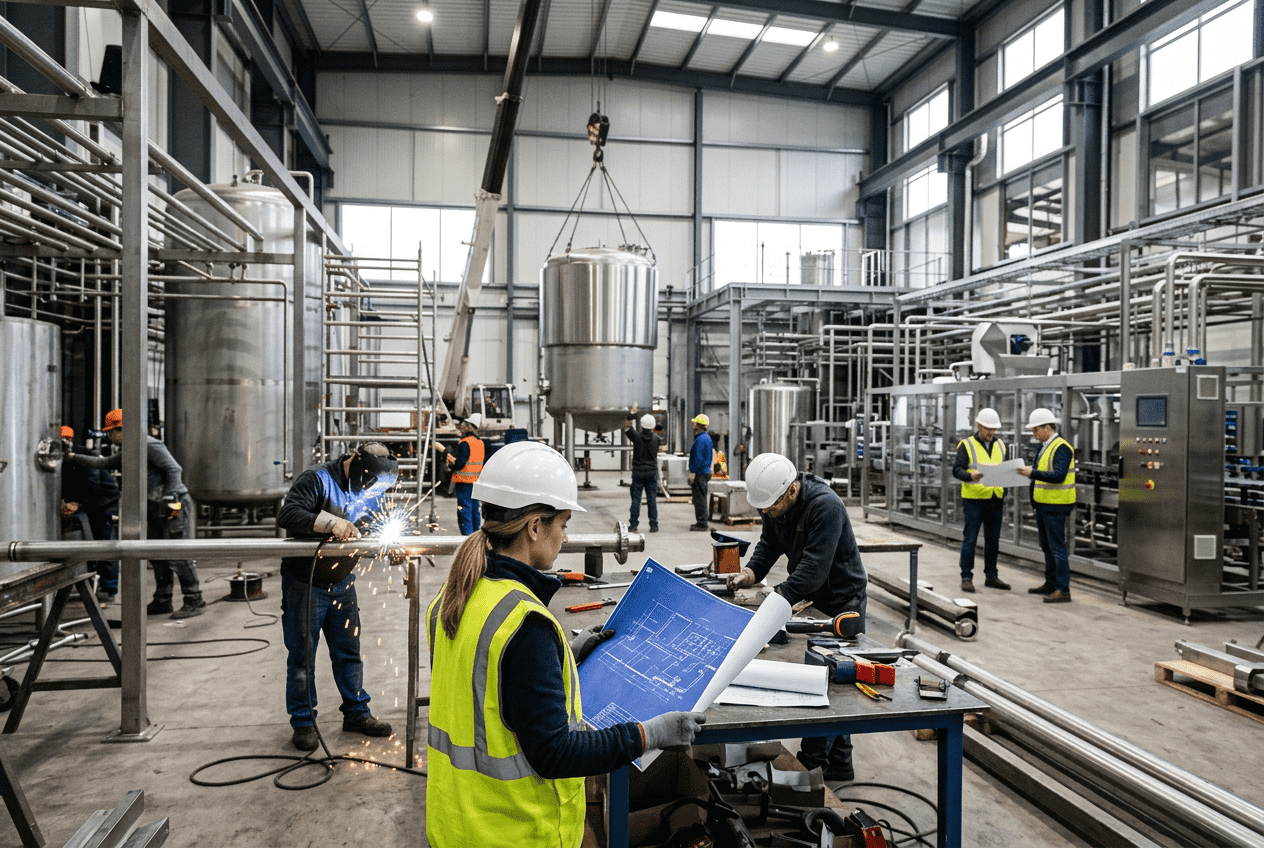
Canned Cocktail Production Line Design
Designing a canned cocktail production line in the United States requires more than selecting a filler and seamer. A profitable ready-to-drink beverage system must align formulation, alcohol compliance, carbonation performance, microbiological stability, package labeling, utility sizing, flavor changeovers, and long-term operating cost. Whether the product is a vodka soda, tequila cocktail, whiskey highball, wine-based spritz, or malt-based RTD, the production line must deliver legal compliance, sensory consistency, and dependable throughput from blend tank to finished pallet. Across the United States, growth in canned cocktails is strongest in retail corridors connected to major distribution and logistics hubs such as Los Angeles, Chicago, Dallas-Fort Worth, Atlanta, New York/New Jersey, Miami, and Seattle. Manufacturers near ports like Long Beach, Savannah, Houston, and Newark often gain freight advantages for imported spirits, sweeteners, cans, and flavor systems. At the same time, domestic co-packers and brand owners face increasing pressure to launch more SKUs with tighter margins and faster commercialization timelines. A United States canned cocktail production line typically includes water treatment, ingredient staging, batch blending, proofing and alcohol adjustment, in-line Brix and density verification, deaeration where needed, carbonation or nitrogen dosing, can rinsing, counter-pressure or equivalent low-oxygen filling, seaming, coding, package inspection, secondary packaging, and palletizing. The right line design depends on alcohol base, target ABV, carbonation level, shelf-life strategy, can size, flavor count, and whether the product will be tunnel pasteurized, flash treated, or cold filled with an approved preservative system. For most projects, the best design approach is to begin with regulatory and product decisions first, then engineer the line backward from desired shelf stability and throughput. In practice, that means confirming TTB formula needs, ABV tolerance targets, microbiological risk profile, can format, anticipated distribution temperature, and changeover frequency before equipment is specified. The table above shows why successful projects do not start with a filler quote alone. They start with a complete process and commercialization roadmap. Companies needing integrated engineering, equipment planning, and execution support often benefit from a partner that can combine processing, utilities, controls, and installation under one structure, such as the approach described in our company overview. The standard process flow begins with treated water, alcohol base, sweeteners, acidulants, flavors, colors, and functional ingredients entering a controlled batching system. Water quality is foundational. Reverse osmosis, carbon filtration, softening, and disinfection may be required depending on source water and flavor sensitivity. Spirits-based RTDs often expose mineral instability quickly, especially in clear beverages where haze is unacceptable. Blending generally takes place in jacketed mix tanks or bright-style vessels sized to campaign length and line speed. A common sequence includes water charge, sweetener addition, acid and flavor dosing, alcohol addition, final proofing, mixing, in-process analytical checks, and hold for packaging. For products with juice, dairy, botanicals, or emulsified ingredients, shear requirements and ingredient hydration times should be validated through pilot work. Carbonation is usually applied after blend standardization and before filling. A low temperature, low dissolved oxygen environment supports stable CO2 pickup and reduces foaming in the filler bowl. If a nitro-style mouthfeel is desired, the line may include nitrogen infusion, liquid nitrogen dosing, or a hybrid gas management strategy depending on the product profile and package presentation. After carbonation, cans are depalletized, rinsed or ionized, filled, seamed, coded, inspected, packed, and palletized. Critical control points include dissolved oxygen, fill temperature, net contents, seam integrity, and package stability after thermal exposure if pasteurization is used. This flow is not one-size-fits-all. A low-acid cream cocktail needs a different risk strategy than a clear vodka soda. A co-packer running six flavors in one shift needs different tank logic than a single-SKU high-volume line. That is why integrated process design, utilities, automation, and commissioning matter as much as the canning block itself. Brands evaluating full system execution can review broader engineering and project services relevant to beverage facilities. In the United States, canned cocktails sit at the intersection of manufacturing science and alcohol regulation. The Alcohol and Tobacco Tax and Trade Bureau, or TTB, governs many core requirements tied to formulation, class/type, labeling, tax category, and production records. The exact compliance path depends on whether the product is spirits-based, wine-based, or malt-based. It also depends on whether flavors, colors, juices, caffeine, sweeteners, or other ingredients trigger formula review. For many projects, formula approval should be addressed before equipment layout is finalized. If a product must be reformulated because of class/type or ingredient restrictions, that change can affect tank residence time, carbonation behavior, thermal sensitivity, or packaging claims. It is much less expensive to resolve this in development than after purchase orders are issued. Key compliance tasks often include confirming permit structure, determining formula filing needs, defining records for alcohol movement and usage, validating net contents and alcohol statements, and preparing label submissions where applicable. State-level registration, deposit laws, and distributor requirements add another layer beyond federal review, especially when launching in California, Texas, Florida, New York, Illinois, or multi-state retail programs. The table makes clear that compliance is not a side task. It directly influences manufacturing, cost, and timing. Engineering teams that understand beverage processing and regulated production environments can help align process design with compliance milestones, preventing expensive late-stage changes. ABV consistency is one of the most important quality and legal metrics in canned cocktail manufacturing. Consumers expect every can to taste the same, distributors expect brand reliability, and regulators expect the declared alcohol content to be truthful and supportable. Small mistakes in proofing can become large deviations at scale, especially when high-proof alcohol is blended into large water phases or when density shifts occur due to sugar and temperature. Strong ABV control starts with mass balance discipline. Alcohol storage, metering, transfer lines, and batch sequencing should be designed to reduce operator variability. Load cells, coriolis meters, density meters, and recipe-driven batch control all improve repeatability. Temperature correction matters because density changes can mislead proof determination if the measurement system is not properly compensated. In a high-throughput line, the best practice is to verify ABV at multiple points: during batching, after final blend adjustment, and during packaged product release. Multi-flavor lines should also account for residual dilution or carryover during changeover, particularly when moving between low-ABV and high-ABV products. Facilities with advanced automation can link recipe management, lot tracking, and analytical verification into SCADA or batch control systems. This reduces hand-entry error and gives operations better visibility into yield, loss points, and exception handling. Companies seeking integrated processing and controls capabilities often evaluate custom equipment and systems that fit their exact throughput and product mix rather than forcing a generic line into a specialized beverage application. Carbonation in RTD cocktails is not just a sensory choice; it is a process engineering discipline. Carbon dioxide pickup depends on product temperature, pressure, contact time, alcohol content, sugar content, and turbulence. A simple vodka soda may target a crisp, sparkling profile, while a canned espresso martini or creamy cocktail may rely more on nitrogen structure or a low-gas smooth texture. Common options include carbonating stones in bright or holding tanks, in-line carbonators integrated with heat exchangers, and liquid nitrogen dosing systems used for widget-free nitro presentation or package stiffening where appropriate. Each method has implications for capital cost, product flexibility, and line control complexity. For low-foaming performance, product should usually be filled cold, with consistent pressure balance through the filler. Long transfer runs, poor insulation, and unstable tank pressure are frequent root causes of carbonation inconsistency. Nitrogen systems require equal attention to gas purity, dosing repeatability, and worker safety protocols. The chart reflects how different RTD categories can drive different gas handling needs. High-volume sparkling categories typically justify tighter control over chilling, pressure regulation, and filler design. Nitro categories may need lower line speed initially until product behavior is fully characterized at commercial scale. The filler and seamer are the commercial heart of a canned cocktail line. For alcoholic beverages, the system must protect flavor, manage dissolved gas, minimize oxygen pickup, and maintain seam integrity over shipping, warehousing, and retail handling. Equipment selection depends on speed target, package sizes, headspace strategy, product viscosity, and whether products are still, sparkling, or nitro-dosed. Entry-level producers may start with compact monoblocks, while regional brands and co-packers usually move into higher-speed rotary systems with automated seam teardown checks, reject systems, and integrated rinse-fill-seam architecture. At larger scale, depalletizing, warmers or tunnel pasteurizers, case packing, and palletizing become essential parts of the performance equation. Seam quality is non-negotiable. Double seam inspection, can-end compatibility, and routine teardown procedures should be built into the quality program from day one. Many product complaints attributed to flavor or age are actually package integrity failures caused by poor seams or hidden oxygen exposure. For manufacturers expanding beyond pilot scale, the equipment must be considered together with utilities: compressed air, glycol or chilled water, steam if thermal processing is used, CIP, drains, floor loading, and electrical service. This is where beverage-focused engineering depth matters. DPS, for example, brings process, mechanical, electrical, controls, and utility integration into one project model, which helps avoid the frequent industry problem of buying equipment that the building cannot properly support. Stability strategy is one of the biggest design decisions in canned cocktail production. In broad terms, producers often compare tunnel pasteurization with cold fill using an acidified and preservative-supported formula. The correct answer depends on product composition, target shelf life, distribution conditions, and brand positioning. Tunnel pasteurization offers a robust packaged-product lethality step and is particularly valuable when microbial risk is meaningful and refrigerated distribution is not assured. It is often favored for products containing juice, botanicals, or other ingredients that raise spoilage concerns. However, thermal load can affect flavor freshness, color, carbonation retention, and package water usage. Cold fill with preservatives can preserve brighter top notes and reduce thermal stress, but only when the formulation, pH, hygienic design, sanitation, and validation package are strong enough. A weak sanitation program cannot be fixed by preservatives alone. Likewise, an aggressive thermal process cannot rescue poor package integrity. In the United States, products may travel through hot warehouses in Phoenix, humid docks in Savannah, or long truck routes through Texas and the Midwest. Stability decisions must reflect those realities, not just lab conditions. That is why pilot validation, shelf-life studies, and utility modeling should be part of the line design process. Labeling on canned cocktails must be handled with the same rigor as formulation. Mandatory content can include brand name, class or type where applicable, alcohol statement, net contents, producer or bottler information, government warning statement, and other regulated elements. Nutrition disclosure rules and facts panels may vary depending on product category and current regulatory framework, so every project should be reviewed for its exact labeling pathway. Artwork errors are expensive because printed cans, shrink sleeves, cartons, trays, and digital assets are often ordered before the first full commercial run. A mislabeled alcohol statement or omitted warning language can delay launch, force destructive rework, or create compliance exposure in multiple states. Brands should also think beyond mandatory text. UPC placement, date coding area, scuff resistance, and readability on curved can surfaces matter in real retail conditions. Products sold through grocery, convenience, and stadium channels need packaging that scans cleanly and communicates quickly. Good practice is to run a cross-functional label review that includes legal, regulatory, quality, operations, and commercial stakeholders before final artwork release. This is especially important for lineups that include zero-sugar claims, low-calorie positioning, natural flavor language, or functional ingredients. Multi-flavor production is where line design either creates long-term profit or long-term frustration. Brands now expect variety packs, seasonal launches, and fast-moving innovation pipelines. In the United States retail market, especially in chains that serve metropolitan areas like Chicago, Austin, Denver, and Charlotte, multi-flavor variety packs can materially increase shelf presence. But they also create operational complexity. The first challenge is changeover time. Shared syrup, flavor, and alcohol paths must be designed to minimize trapped volume and simplify CIP. Pigging systems, dedicated flavor manifolds, smart valve matrices, and recipe-driven automation can dramatically reduce product loss and downtime. The second challenge is scheduling. A line that runs only one flavor efficiently may perform poorly when asked to switch six times per shift. Layout matters as well. Adequate space for ingredient staging, can decoration change parts, quality checks, and repack work is essential. If variety packs are planned, secondary packaging equipment should be selected for pack pattern flexibility, not just single-SKU case output. From a manufacturing capabilities standpoint, DPS supports facilities that need full-system integration, including tanks, CIP systems, blending platforms, utilities, and controls. The company also manufactures selected process equipment, which can be useful when standard catalog hardware does not match project goals. For brand owners and co-packers, that integrated capability can help bridge the gap between process design and real production behavior on the floor. By 2026, three trends are likely to shape line design decisions even more strongly: smarter automation for changeovers, increased state and retailer scrutiny around packaging and disclosure, and stronger sustainability requirements tied to water, energy, and waste reduction. Facilities that invest early in utility efficiency, traceability, and modular expansion will generally be better positioned for both compliance and margin protection. The comparison above illustrates a common issue in beverage projects: equipment-only buying can look cheaper initially, but often performs worse in flexibility, compliance readiness, and utility fit. That gap becomes costly after startup. What is the best can format for canned cocktails in the United States?There is no universal best format. Slim and sleek cans often suit premium, lower-volume cocktails, while standard cans may offer broader equipment compatibility and lower supply risk. The right answer depends on brand positioning, line capability, and distributor preference. Do all canned cocktails need TTB formula approval?Not all products follow the same path. Approval needs depend on product base, ingredients, and regulatory classification. This should be reviewed before commercialization and before ordering packaging. How do manufacturers keep ABV consistent from batch to batch?They use controlled ingredient dosing, verified incoming alcohol strength, temperature-compensated analytics, validated mixing procedures, and documented QA release checks on both bulk and packaged product. Is tunnel pasteurization always better than cold fill?No. Tunnel pasteurization can provide stronger packaged-product stability for some formulas, but it may affect flavor and utilities. Cold fill can work well with the right formula, sanitation, and validation package. What throughput should a startup plan for?That depends on demand, SKU count, and co-packing versus owned production strategy. Many early-stage brands overbuy speed and underinvest in blending, utilities, and QA infrastructure. A balanced system is more important than a headline cans-per-minute number. How important is can seam inspection?It is critical. Seam defects can lead to leakage, oxygen ingress, reduced shelf life, and customer complaints. Seam monitoring should be routine, documented, and tied to preventive maintenance. What should be included in a full project budget?Not just processing and packaging equipment. Budget should include utilities, tanks, piping, controls, CIP, building modifications, drains, commissioning, spare parts, startup support, and contingency for compliance-driven changes. How should a brand choose an engineering and integration partner?Choose a team that understands beverage processing, alcohol compliance constraints, utilities, controls, installation, and commercialization timing. The strongest partners focus on total project profitability, not just equipment sales. For example, DPS serves food and beverage manufacturers across North America with a design-build-manage approach that combines technological capabilities such as process and controls engineering, manufacturing capabilities including custom tanks and CIP systems, and service capabilities spanning feasibility, owner’s representation, project management, installation, and commissioning. Readers can explore recent project case examples to see how integrated execution supports real production outcomes. In summary, canned cocktail production line design in the United States is a multidisciplinary challenge involving market strategy, compliance, process science, packaging performance, and capital efficiency. The most successful producers design their systems around product reality: actual ingredients, actual logistics, actual quality standards, and actual growth plans. When that happens, the result is not simply a working line. It is a line that supports profitable scale. -
RTD Beverage Production Line Design
Ready-to-drink beverage producers in the United States need production lines that do more than simply fill cans or bottles. They need systems that connect formulation, blending, carbonation, sanitation, packaging, controls, and long-term capacity strategy into one reliable operating model. Whether the product is a canned cocktail, hard tea, functional beverage, sparkling water, dairy-based RTD, or non-carbonated wellness drink, the best line design starts with understanding product behavior, packaging goals, SKU complexity, utility demand, regulatory requirements, and future growth. Across major beverage corridors such as Chicago, Dallas, Los Angeles, Atlanta, Charlotte, and the New Jersey distribution hub, manufacturers are investing in flexible lines that can handle multiple package formats while keeping changeover time low. In port-driven regions such as Long Beach, Houston, Savannah, and Newark, supply chain resilience also matters: the choice of depalletizer, filler, seam inspection, labeler, date coder, case packer, and palletizing logic directly affects labor, uptime, and speed-to-market. For companies evaluating a new installation or expansion, the line should be designed around three realities: upstream process consistency, downstream packaging balance, and smart capital deployment. That means sizing tanks, pumps, fillers, conveyors, and controls based on both current sales and the next several years of expected growth, not just today’s forecast. A complete RTD production line in the United States typically includes raw ingredient receiving, water treatment if needed, batching and blending vessels, syrup or ingredient dosing, carbonation or deaeration depending on the product, buffer tanks, product feed systems, filling and closing equipment, inspection, coding, labeling, secondary packaging, palletizing, utilities, CIP, and plant-wide automation. The most effective designs match product characteristics and packaging format to target speed, sanitation requirements, SKU flexibility, and expansion plans. For multi-SKU operations, the strongest line designs minimize downtime between can sizes, bottle types, closures, label formats, and flavor changes. For high-acid, alcoholic, dairy, or sensitive functional products, process integration becomes even more important because fill temperature, dissolved oxygen, carbonation level, mix accuracy, hygienic design, and cleaning validation all influence shelf life and product quality. In practical terms, an RTD line should answer five questions before equipment is purchased: That is where a full-scope engineering partner matters. Disruptive Process Solutions works with beverage manufacturers across North America on profit-focused plant planning, line integration, and capital execution, helping teams avoid overspending on equipment that does not solve the real bottleneck. An RTD line is only as strong as its weakest link. Many facilities focus on the filler because it is visible and expensive, but overall performance depends on the full chain from blending through palletizing. A well-designed line balances hygienic processing, packaging efficiency, operator access, maintenance windows, and material staging. Typical upstream components include ingredient receiving stations, liquid sugar or sweetener systems, powder induction, batching tanks, in-line blending skids, heat treatment where required, carbonation systems, product surge tanks, sanitary pumps, and product feed loops. Midstream equipment includes rinsers where applicable, fillers, seamers or cappers, and inspection tools. Downstream systems generally include warmers or tunnel pasteurization if required by the product, drying, labelers, coding, cartoning or tray packing, shrink wrapping, case packing, palletizing, and finished goods conveyance. The table above shows why line design must be holistic. A plant may buy an excellent filler and still struggle if syrup batching is inconsistent, CIP turnaround is slow, or the packer cannot keep up. In the United States, this is especially common in converted warehouse facilities where electrical service, drain layout, floor slope, and compressed air distribution were not originally designed for beverage production. Market demand is also broadening. RTD categories now include cocktails, hard seltzers, hard coffee, energy drinks, hydration beverages, botanical infusions, protein beverages, and dairy-based products. Each category has different process and packaging sensitivities, so the equipment list should be product-led, not vendor-led. The growth trend above reflects a realistic pattern seen in U.S. RTD investment: more capacity is being added, but with stronger emphasis on flexibility, lower labor dependence, and plant data visibility. Many RTD plants are no longer single-product or single-format facilities. One shift may run 12-ounce sleek cans for a functional beverage, while the next runs 355 ml standard cans for a sparkling tea or PET bottles for a still product. Because of this, multi-SKU flexibility is often more important than peak nameplate speed. Effective changeover design begins with identifying which components are truly format-dependent. These usually include infeed timing screws, guide rails, starwheels, neck handling parts, fill valves, lid feed components, cap sorters, labeler setup, packer tooling, and pallet patterns. Plants that run both cans and bottles should also consider whether a shared downstream section is practical or whether separate pathways reduce cumulative downtime. In major co-packing regions such as Southern California, the Carolinas, and Texas, flexible format capability is often the deciding factor in winning new business. A line that changes quickly between SKUs can produce more billable hours than a faster line with long setup windows. The table shows that format flexibility is not just a machine feature; it is an operating strategy. Plants should evaluate changeover by elapsed time, labor required, skill required, first-good-package timing, and quality loss during ramp-up. In many cases, the most profitable investment is not a bigger filler but a better change-parts strategy combined with operator training and digital setup recipes. Facilities can also reduce disruptions by grouping similar package runs, designing mobile parts carts, color-coding tooling, and using barcode-based recipe confirmation. Those details matter when a plant is running six to twelve SKUs per week. Upstream integration determines whether the filler receives a stable, specification-ready product. If blend accuracy drifts, temperature rises, carbonation varies, or dissolved oxygen increases, packaging performance and shelf life will suffer. For alcoholic RTDs, tea-based drinks, juice blends, nutraceutical products, and dairy beverages, this section of the line is often where product quality is won or lost. Core design factors include batch size, ingredient sequencing, shear requirements, hold time, agitation profile, cleanability, thermal sensitivity, carbonation setpoint, and fill pressure matching. Some products benefit from batch blending for traceability and formulation control. Others are better served by in-line blending to improve speed and reduce tank footprint. DPS brings process engineering depth into this stage through capabilities that include blending and batching design, in-line Brix monitoring, carbonation and bright tank systems, water treatment, pasteurization options, and advanced controls integration. On projects where the process recipe and the packaging rate need to align tightly, this technical capability is critical because upstream variability often appears downstream as filler inefficiency. This table highlights why a universal upstream layout rarely works. In the United States, a producer serving retail chains in New York, Miami, Denver, and Seattle may have regional demand for entirely different product families. Designing a process room that can adapt to those categories improves asset utilization and reduces future retrofit cost. For example, the fill-preparation system should not be isolated from packaging controls. If the packaging line is running at 220 cans per minute but the carbonator and product feed system only support 190 cans per minute under real conditions, the plant will experience chronic starvation and low efficiency. Integration prevents that mismatch. Wild Goose filling systems and similar modern canning technologies are frequently considered by RTD producers looking for dependable can line performance, compact layouts, and scalable throughput. For many beverage brands and co-packers, canning remains the dominant package format because it supports convenience, strong shelf presence, shipping efficiency, and excellent compatibility with carbonated and alcoholic products. When evaluating canning technology, buyers should look beyond filler valve count and published maximum speed. Important factors include seam integrity monitoring, dissolved oxygen management, sanitation design, operator ergonomics, parts availability in the United States, remote support response time, lid handling reliability, and integration with depalletizers, conveyors, labelers, and case packers. DPS supports equipment integration and complete line development, not just machine placement. That includes evaluating the canning system as part of the full production environment: utilities, automation, packaging balance, changeover logic, and growth planning. For clients that also need fabricated process equipment, custom equipment capabilities can complement third-party line machinery with tanks, CIP skids, and supporting process assets. The comparison above shows that the right canning solution depends on business model. A craft-scale brand entering grocery distribution near Charlotte or Phoenix may prioritize footprint and startup affordability. A contract manufacturer near Dallas-Fort Worth or Inland Empire may instead prioritize fast SKU changeovers and service support. Equipment choice should reflect margin structure, labor availability, and customer commitments. The chart provides a realistic comparison profile for what U.S. buyers often value when benchmarking filler and canning line options. Quality assurance and service access usually rank near the top because downtime and packaging defects carry immediate commercial consequences. A beverage line should be engineered around sustained balanced throughput, not isolated machine speed. One of the most common mistakes in RTD line projects is buying a filler that outpaces the rest of the packaging system. If the filler can run 300 containers per minute but the labeler averages 240 and the case packer dips to 220 during normal operation, the practical line speed will settle near the slowest stable point. Line speed optimization uses machine data, accumulation modeling, package handling analysis, and real-world downtime assumptions to determine sustainable output. Small microstops across coding, labeling, orienting, pack formation, or discharge lanes can erase the benefits of a larger filler. DPS approaches this from a profitability standpoint. Through its engineering and project execution model, the goal is not simply to install equipment, but to make sure capital is aimed at the actual bottleneck. That aligns with its broader service capability in capital planning, owner representation, process engineering, project management, and turnkey system integration. Companies can review broader project experience through selected case studies. This table illustrates the concept of effective line speed. The filler may still be the most expensive machine, but it is not always the dominant limiter. Often, downstream packaging variations create the largest hidden losses. A layout with strategic accumulation can absorb short disturbances, but it cannot fix a chronically undersized packer. The bar chart shows relative project demand by RTD category. Alcoholic and functional beverages are driving significant investment, which is why flexible line balancing has become essential for co-packers and branded manufacturers alike. Frequent flavor rotation and multi-product scheduling make CIP design a major strategic issue in RTD manufacturing. A cleaning system that takes too long or uses excessive water, chemicals, and labor can materially reduce plant profitability. On the other hand, an undersized or poorly engineered CIP system can create hygiene risk, flavor carryover, and lost production time. For plants producing cocktails, juices, teas, dairy beverages, or sweetened functional drinks, the sanitation challenge is different in each case. Sugar residues, proteins, botanicals, colors, and flavor oils may require different cleaning sequences, temperatures, chemical strengths, and verification methods. DPS has strong capability in CIP engineering and supporting utilities, including custom CIP systems, process piping, controls, and integration with broader plant infrastructure. On the manufacturing side, the company also designs and supplies its own tanks and CIP-related process equipment, allowing sanitation strategy to be coordinated directly with process layout. The table emphasizes that CIP is both a sanitation system and a scheduling tool. When changeovers are frequent, CIP performance directly affects capacity. For example, a plant in the Midwest running six flavored SKUs plus one allergen-sensitive product may gain more annual output by improving clean-turnaround cycles than by increasing filler speed. Water and wastewater considerations are also growing in importance in 2026 planning, particularly in regions with tightening utility costs such as California, Arizona, Colorado, and parts of Texas. Sustainable CIP design increasingly includes conductivity-based recovery, optimized rinse volumes, heat recovery, and digital verification to reduce unnecessary cycles. Automation is no longer optional for competitive RTD plants in the United States. Even modest facilities benefit from integrated PLC controls, batch management, recipe handling, alarm tracking, OEE monitoring, and SCADA visualization. The reason is simple: labor is expensive, downtime is costly, and inconsistency multiplies across every shift. Plant-wide automation should connect upstream processing, filling, packaging, utilities, CIP, and production reporting. Recipe selection should flow from blend preparation to labeler setup, coding logic, and pallet patterns where practical. Operators should be able to see the status of tanks, pumps, filler conditions, seam checks, utility alarms, and CIP completion from a central interface. DPS has in-house controls engineering, PLC programming, automation, and SCADA capability as part of its technological service base. That matters because line automation should not be added after equipment arrives; it should be designed as part of the overall process, utility, and packaging architecture. For RTD producers managing customer specifications, automation can also support traceability. Lot records, ingredient usage, critical process values, temperature history, and sanitation completion records become easier to retrieve for audits and investigations. This is especially relevant for operations serving national retail, club stores, and regulated alcoholic beverage channels. The area chart shows the expected shift toward integrated plant controls. By 2026, more RTD facilities are expected to invest in connected automation not just for visibility, but for faster troubleshooting, easier compliance, and better labor utilization. Future trends are also shaping automation choices. Cybersecurity requirements are rising, especially for larger manufacturers. Sustainability reporting is becoming more data-driven, requiring meter integration for water, steam, compressed air, and electrical use. AI-assisted maintenance and predictive downtime alerts are also moving from pilot projects into practical operations, particularly in higher-volume co-packing plants. Capacity planning is where engineering meets business strategy. A line should not be sized only for launch volume, but it also should not be overbuilt so severely that capital efficiency suffers. The right answer usually depends on forecast credibility, SKU mix, customer concentration, seasonal peaks, and whether the facility will act as a branded plant, co-packer, or hybrid operation. In the United States, capacity planning often needs to reflect distribution geography. A plant shipping throughout the Southeast from North Carolina or Georgia may need different storage, staging, and line utilization assumptions than a West Coast producer serving California, Nevada, and the Pacific Northwest. Freight lanes, warehouse access, labor supply, and utility expansion options all influence sizing decisions. DPS is particularly relevant in this phase because its service model combines capital planning, feasibility, design-build execution, owner representation, and full project management. Instead of treating equipment as a stand-alone purchase, the company works from a broader operational and financial view, helping clients align process design, utilities, construction, and phased expansion with profitability goals. More on these services can be found at engineering and project services. The best equipment sizing plan is phased. Phase 1 should support current launch or contract demand. Phase 2 should be enabled in the layout, controls, utility headers, and floor space. Phase 3 should remain commercially justifiable but not fully purchased until market evidence supports it. A strong example is a beverage co-packing facility designed to ramp from early-year volume into much larger full-capacity output over time. That kind of strategy requires utility infrastructure, syrup or blending systems, and production layouts that can scale without tearing out recently installed assets. This is where practical engineering discipline prevents expensive rework. For buyers comparing suppliers, local presence and execution model matter as much as machine specifications. U.S. beverage plants often benefit from a partner that can manage process engineering, construction coordination, utilities, controls, and commissioning in one integrated framework rather than handing off responsibility between separate firms. That integrated approach is a defining part of DPS’s value. Its manufacturing capability includes custom tanks up to 12,000 gallons, CIP systems, and other process equipment. Its technological capability includes process, mechanical, electrical, structural, and controls engineering. Its service capability includes capital planning, general contracting where licensed, installation management, owner advocacy, commissioning, and turnkey integration. For beverage producers trying to reduce project risk, that combination helps keep decisions aligned from concept through startup. What is the most important factor in RTD production line design?The most important factor is alignment between product requirements, packaging format, and sustained throughput. A line that looks fast on paper but does not fit the product or changeover profile will underperform. Should a new RTD plant choose cans, bottles, or both?That depends on the product portfolio, retailer expectations, shipping economics, and capital budget. Cans dominate many RTD categories, but bottles remain important for still beverages, premium positioning, and certain closure needs. How much flexibility should be designed into a line?Enough to support the realistic 24- to 60-month SKU roadmap. Flexibility has value, but it should be targeted. The goal is not to prepare for every possible product, but to avoid costly retrofits for likely growth paths. Why is upstream process design so critical?Because blend accuracy, temperature control, carbonation consistency, and oxygen management determine what reaches the filler. Packaging performance depends heavily on stable upstream product preparation. How do I know if my filler is too large or too small?Compare the real sustained rate of the full line, not the filler nameplate alone. If the labeler, case packer, CIP turnaround, or product supply cannot support the filler, the extra speed may not create value. What should I ask equipment suppliers during evaluation?Ask about sustained speed, parts availability in the United States, sanitation design, changeover time, operator skill requirements, controls integration, and references for similar products and formats. How important is SCADA for an RTD plant?Very important, especially for plants with multiple SKUs, sanitation documentation needs, utility monitoring requirements, or co-packing customers demanding visibility and traceability. What are the major RTD line trends for 2026?Key trends include smarter changeover systems, wider use of SCADA and digital reporting, sustainability-driven CIP optimization, tighter utility metering, predictive maintenance, and stronger compliance around data, sanitation, and packaging quality. Can DPS support both process and packaging line integration?Yes. DPS supports engineering, installation, integration, project management, utilities, process systems, controls, and custom equipment as part of a broader design-build-manage model for food and beverage manufacturers across North America. Where should a U.S. manufacturer start if planning a new RTD line?Start with a feasibility and capacity study covering product mix, package formats, utility loads, sanitation requirements, line balance, labor model, and phased growth. That prevents capital from being spent in the wrong place. For RTD producers in the United States, the right line design is ultimately a business decision supported by engineering. When blending, carbonation, filling, sanitation, packaging, controls, and future capacity are planned together, the result is not just a functioning line, but a more profitable operation. -
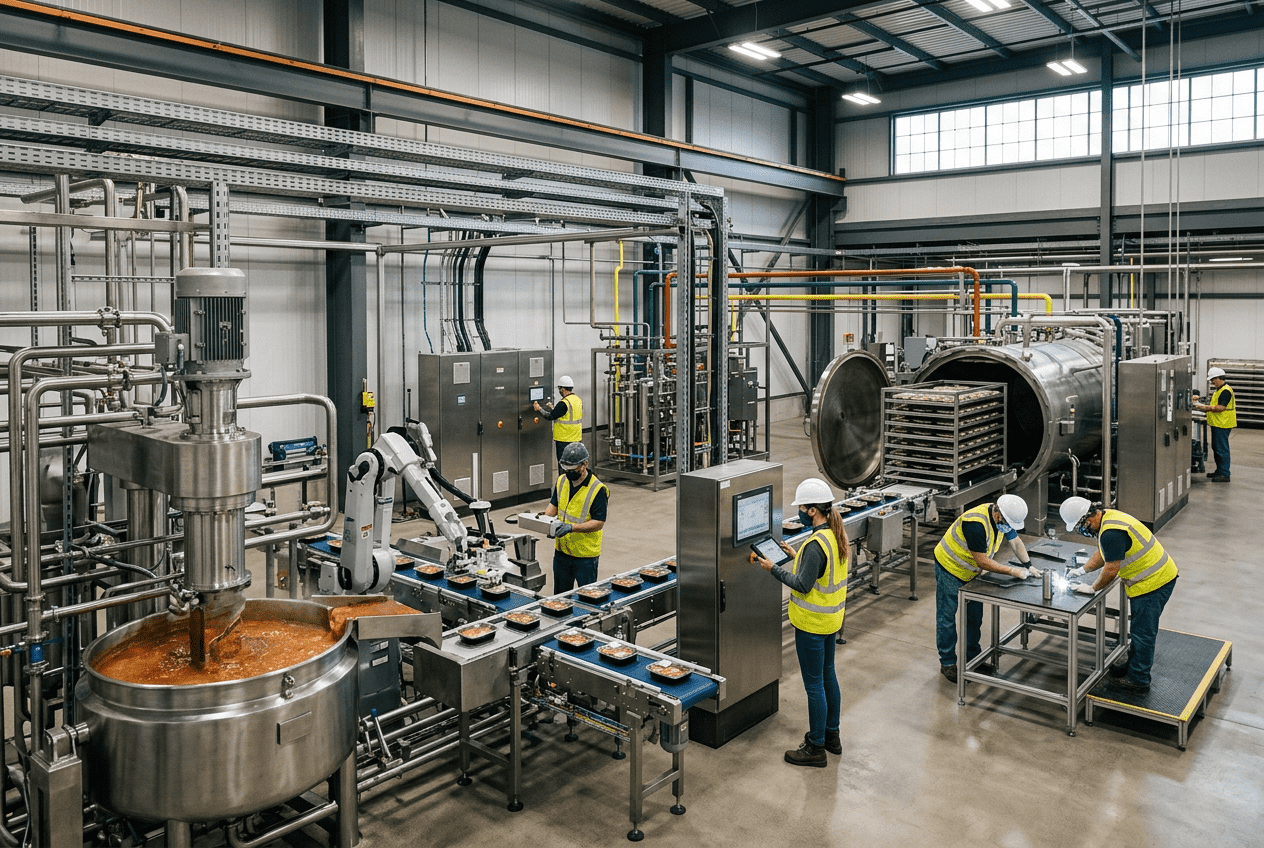
Custom Process Equipment for Food & Beverage
Food and beverage manufacturers in the United States often reach a point where standard equipment no longer fits their throughput, sanitation, footprint, product quality, or automation goals. In those cases, custom process equipment becomes the practical path forward. A well-engineered custom system can improve yield, reduce labor, support FDA and 3-A sanitary objectives, integrate with existing utilities and controls, and align capital spending with long-term profitability rather than short-term convenience. For companies expanding in markets such as Texas protein processing, California beverages, Midwest dairy, or East Coast co-packing, the decision is rarely about buying a tank alone. It is about how vessels, CIP, pumps, heat exchangers, automation, utilities, structural supports, and installation work together inside one production strategy. That is where a design-build-manage partner can make the difference between a line that merely runs and a line that produces margin. Custom process equipment makes the most sense when off-the-shelf systems cannot meet a plant’s required capacity, product characteristics, sanitation standards, space limitations, utility conditions, or automation architecture. In the United States, food and beverage manufacturers typically choose custom equipment for high-value applications such as blending, thermal processing, aseptic service, CIP, fermentation, distillation, marination, dairy, proteins, sauces, and specialty ingredient handling. A successful custom project usually includes front-end engineering, 3D layout review, material selection, code and sanitary compliance review, fabrication, factory testing, shipment planning, field installation, controls integration, startup, and operator handoff. Companies that treat custom equipment as part of a broader production and profitability model tend to see the strongest results. The table above shows the central buying truth: standard equipment can be appropriate for simple needs, but custom process equipment usually wins when the operating environment is complex, regulated, or margin-sensitive. Custom equipment is not automatically the better option. It is the better option when the economics of operation, compliance, uptime, or expansion justify the added engineering. For example, a co-packer in Chicago may need a syrup room skid sized for future line additions, while a poultry processor in Arkansas may need washdown-ready product handling equipment designed around USDA expectations, labor flow, and existing utility corridors. Off-the-shelf systems work well for standardized processes with predictable duty conditions. A stock transfer tank, utility cart, or basic pump set may be enough when product variability is low and layout flexibility is high. But once the project involves difficult heat transfer, corrosive ingredients, high viscosity, foam control, allergen segregation, hygienic weld details, or SCADA-driven batch management, the limitations of catalog equipment appear quickly. Manufacturers often move toward custom process equipment in five situations: This is especially common in logistics corridors such as Houston, Charlotte, Atlanta, Los Angeles, and Milwaukee, where plants frequently combine legacy infrastructure with new capacity targets. In those environments, the right solution is rarely a simple equipment purchase. It is a systems integration exercise. As a buying rule, if poor fit will cost more than custom engineering over three to seven years, custom usually makes sense. The chart indicates a realistic upward trend in U.S. demand as manufacturers modernize plants, reshore production, and push for more flexible line design heading into 2026. The best custom equipment projects start before drawings. They start with process goals, product characteristics, operational constraints, and expected business outcomes. That means understanding not only what the equipment should do, but why the plant needs it and how it affects yield, labor, utility demand, sanitation time, and packaging throughput. A disciplined process typically follows these stages: In practice, this work is often coordinated by an engineering partner that can connect process, mechanical, electrical, controls, structural, and installation scopes. That matters because many projects fail not on vessel design, but on poor coordination between trades. A well-run project prevents conflicts around access, cleanability, drainage, pipe routing, steam service, glycol distribution, electrical loads, and control panel placement. Disruptive Process Solutions approaches these projects with a design-build-manage model that aligns engineering decisions with installation execution and business performance. Instead of isolating design from field realities, the model helps owners connect concept development, procurement strategy, general contracting, integration, and commissioning into one capital plan. More about the company’s operating approach can be found on its about page. The table shows why the design phase is not just paperwork. It is where cost control, startup speed, and sanitation performance are largely determined. Material selection directly affects corrosion resistance, cleanability, fabrication cost, weld behavior, and total lifecycle value. In U.S. food and beverage processing, 304 stainless steel remains common for general applications, but 316L is often preferred when chloride exposure, aggressive clean-in-place chemistry, acidic products, or longer service life are important. For especially demanding environments, AL-6XN and other specialty alloys may be justified. Choosing the right metal is not about selecting the most expensive alloy. It is about aligning chemistry, temperature, pressure, cleaning regime, and expected duty cycle with the real operating environment. For example, a brewery in Portland may use 304 for some non-critical support applications but specify 316L for product-contact surfaces exposed to harsher chemicals. A sauce or brine application near the Gulf Coast may justify more robust alloy decisions because of corrosive conditions and washdown demands. This comparison helps buyers avoid overspecifying every surface while still protecting critical product-contact zones. Good engineering often uses different materials intentionally within one project. Special finishes, weld passivation, electropolishing, and surface roughness targets may also matter, especially in dairy, aseptic, or high-care systems. Material selection should be tied to cleaning validation, not just corrosion charts. Integration is where many projects either create long-term value or create years of frustration. Installing a custom tank, skid, tumbler, kettle, or thermal system into an active plant means dealing with real-world constraints: low ceilings, existing trench drains, overloaded utility headers, old PLC architecture, sanitation pathways, forklift traffic, allergen zones, and line balancing. Successful integration begins with accurate site data and realistic shutdown planning. For brownfield facilities in places like New Jersey, Ohio, and North Carolina, even a well-built piece of equipment can become a costly problem if tie-in points, access clearances, and operator movement were not evaluated early. Key integration questions include: DPS is particularly strong in this area because its technical capabilities extend beyond process design into structural, mechanical, plumbing, electrical, and controls engineering, including PLC programming, automation, and SCADA. That cross-discipline capability matters when integrating a new processing asset into a live facility. Owners can review broader engineering and integration services when evaluating project support. The bar chart highlights where custom food process equipment is in strongest demand. Beverage, protein, and dairy continue to lead due to sanitation complexity, recipe variation, and utility intensity. Custom equipment does not mean informal equipment. In regulated food and beverage operations, one-of-a-kind systems still need disciplined design documentation, material traceability where required, sanitary detailing, and code alignment. Depending on application, equipment may need to satisfy ASME pressure design requirements, 3-A sanitary principles, and FDA-focused hygienic considerations for product-contact surfaces. For some plants, compliance also intersects with USDA, SQF, BRC, customer audit expectations, and internal corporate engineering standards. That is why compliance should be built into the project from the start rather than checked near shipment. Important compliance elements often include: For processors serving retail, foodservice, export, or pharmaceutical-adjacent applications, compliance also affects customer confidence and insurance posture. A tank or skid that looks sanitary is not enough. It must be engineered and documented in a way that supports validation, operations, and audit readiness. The value of this matrix is simple: compliance is not one item; it is a stack of overlapping requirements that can influence fabrication, installation, startup, and future audits. Custom equipment schedules are shaped by engineering depth, material lead times, shop capacity, controls complexity, shipping method, and plant shutdown windows. For U.S. projects, realistic timeline planning also needs to account for local permits, freight constraints, contractor availability, and seasonal production peaks. A beverage plant in California may need installation before summer volume ramps, while a protein plant in Kansas may require holiday blackout planning. A disciplined project schedule should include formal milestones rather than broad promises. Owners need visibility into design approval, long-lead procurement, shop completion, FAT readiness, field installation, utility tie-ins, dry commissioning, wet commissioning, and performance confirmation. The explanation is important here: delays usually do not come from fabrication alone. They often come from late owner decisions, weak site information, poor coordination between trades, or underestimating controls integration. DPS serves manufacturers across all 50 U.S. states and Canada, which is useful for multi-site operators that need repeatable project management rather than one-off local coordination. The company’s service capabilities include capital planning, owner’s representation, project and program management, general contracting where licensed, and turnkey installation and integration. Not every project begins with a full-size system. In many product development or process improvement cases, manufacturers first need pilot-scale equipment to validate heat transfer, residence time, ingredient incorporation, sanitation behavior, or operator workflow. That is especially true in functional beverages, plant-based proteins, fermented products, specialty sauces, and aseptic concepts. Fabrication flexibility matters because the right approach may be a prototype vessel today, a pilot skid next quarter, and a full production train next year. A capable equipment partner should be able to support that progression without forcing owners to start over each time. DPS has been growing its proprietary equipment manufacturing around practical food and beverage applications, including storage and processing tanks up to 12,000 gallons, custom CIP systems, marination tumblers, and cooking vessels. That manufacturing capability becomes more valuable when combined with engineering and field integration support, because the equipment is designed with the site and project outcome in mind rather than treated as an isolated product. You can review the company’s process equipment offerings for examples of manufactured systems. For many U.S. manufacturers, modular fabrication is becoming the preferred strategy because it reduces field labor, shortens installation windows, and simplifies future capacity additions. The area trend reflects how buyers are moving toward flexible, modular, and automation-ready equipment strategies, especially as labor pressures and SKU complexity continue into 2026. Many buyers make the mistake of comparing only purchase price. The better comparison is total delivered value over the asset’s operating life. That includes engineering, fabrication, freight, structural support, installation, controls, startup, operator training, maintenance burden, sanitation time, utility usage, spare parts, uptime, and future expansion potential. Custom equipment can carry a higher initial price than catalog equipment, but the lifecycle economics are often stronger when the system reduces downtime, prevents product loss, shortens cleaning, or eliminates labor-intensive workarounds. In high-volume facilities, even a small gain in OEE or yield can outweigh the initial engineering premium quickly. Consider a simple example: if a custom batching system reduces ingredient giveaway by 1.5%, cuts sanitation time by 30 minutes per shift, and improves line utilization by 4%, the annual financial impact can be substantial. This is why sophisticated operators increasingly evaluate capital through throughput, margin, and payback, not unit price alone. This comparison chart shows a common commercial reality: standard equipment may appear attractive on initial price, but custom equipment often performs better across operational value drivers. When evaluating suppliers, buyers should ask for a cost model that includes: For plants making large capital decisions, case-based review is often useful. DPS shares project examples and outcomes through its project case studies, which can help owners compare approaches across beverage, food, and utility-intensive applications. What types of custom process equipment are most common in the United States food and beverage market?Common examples include process tanks, blending systems, CIP skids, cooking vessels, marination systems, fermentation equipment, distillation systems, thermal processing skids, utility modules, and integrated packaging support systems. How do I know whether 304 or 316L is the better choice?304 is often suitable for general service, while 316L is typically preferred where higher corrosion resistance, aggressive cleaning chemistry, or more demanding sanitary conditions are expected. The final decision should be based on product chemistry, cleaning protocol, and lifecycle goals. Can custom equipment be installed into an older facility?Yes, but the project needs careful field verification, utility review, layout modeling, and controls planning. Brownfield integration usually requires more engineering attention than greenfield installation. Does custom equipment always cost more?It usually costs more upfront, but not always more over the equipment’s life. If custom design improves uptime, yield, sanitation time, labor efficiency, or future expansion options, the total value can be better than a cheaper standard unit. What compliance standards matter most?That depends on application, but ASME, 3-A, FDA-related hygienic design principles, USDA expectations for certain food sectors, and private audit frameworks such as SQF or BRC are common factors in U.S. projects. How long does a custom project take?Simple projects may move in a few months, while larger integrated systems can take much longer. Timeline depends on design complexity, material lead times, controls integration, and the owner’s shutdown window. What industries benefit most from custom process equipment?Beverage, dairy, protein, prepared foods, sauces, ingredient processing, distilling, aseptic operations, and co-packing are among the strongest candidates because they often combine sanitation demands with changing throughput and product requirements. What trends are shaping 2026 buying decisions?The biggest 2026 trends include energy-aware system design, water and chemical reduction in CIP, increased automation and SCADA visibility, modular skid construction, stronger traceability expectations, and more capital planning tied to sustainability and labor resilience. U.S. manufacturers are also watching policy developments around domestic production, infrastructure reliability, food safety modernization, and environmental efficiency. Why do some owners choose a partner like DPS instead of separate designers, fabricators, and installers?Because combining engineering, manufacturing understanding, project management, and field execution can reduce coordination gaps. For many projects, especially complex food and beverage expansions, that integrated approach lowers schedule risk and aligns the equipment decision with broader plant profitability. In summary, custom process equipment is most valuable when it is treated as part of a complete operating system. For U.S. food and beverage manufacturers, the smartest projects are the ones that connect process performance, sanitary design, utility realities, compliance, integration, and long-term business value. Whether the need is a pilot-scale skid, a 12,000-gallon process vessel, a custom CIP system, or a fully integrated production upgrade, the right solution starts with honest engineering and ends with reliable startup. -
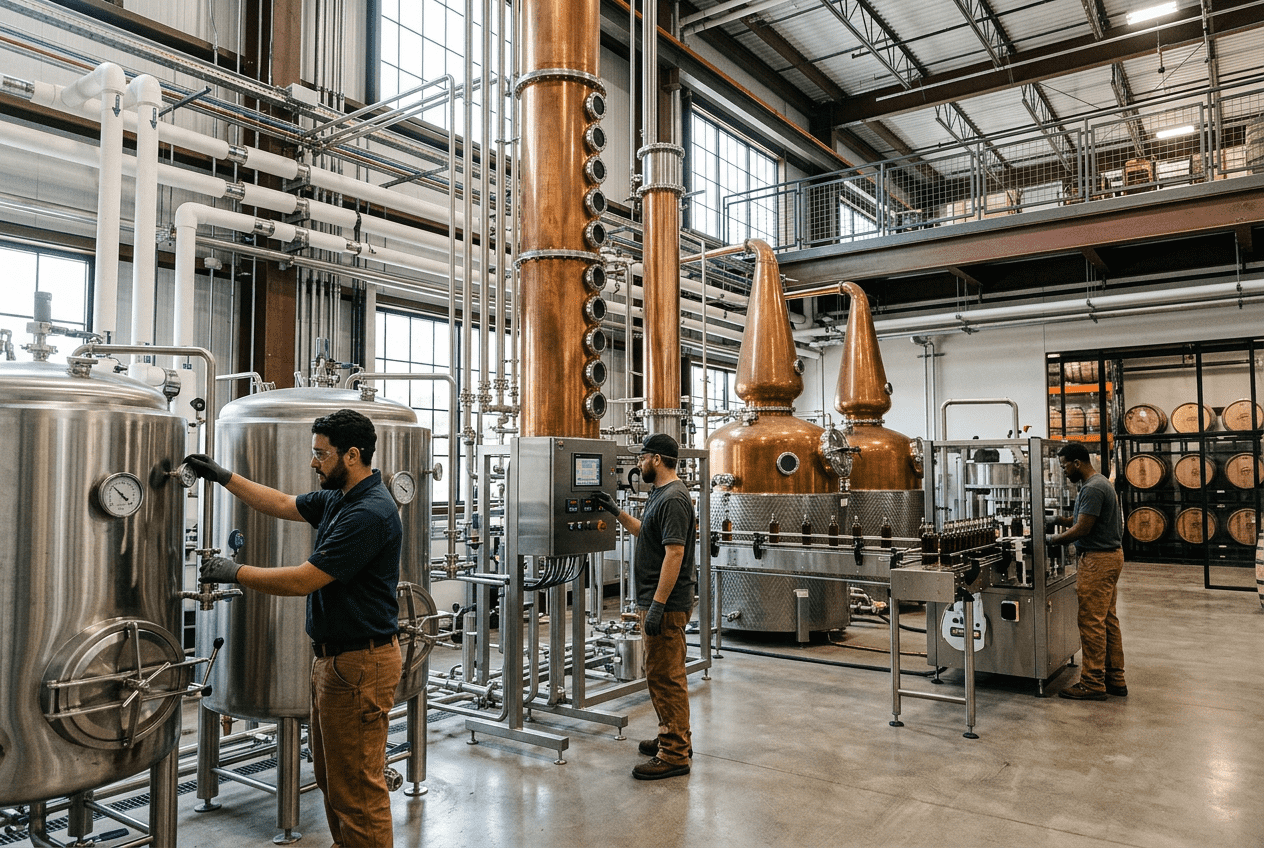
Food Plant Drainage System Design: Trench Drains and Slot Drain Solutions
Drainage design in a food or beverage facility is not a minor plumbing decision. In the United States, it directly affects sanitation, employee safety, line uptime, wastewater control, inspection readiness, and long-term operating cost. Whether a processor is building a greenfield poultry plant in Arkansas, expanding a dairy line in Wisconsin, retrofitting a ready-to-drink beverage facility in California, or modernizing a seafood plant near the Port of Seattle, the choice between trench drains and slot drains must be made in the context of product flow, washdown intensity, debris load, traffic patterns, clean-in-place integration, and regulatory expectations. This guide explains how to compare trench drain and slot drain systems, when to specify stainless steel 304 or 316, how to set slope and estimate flow, what USDA, FDA, and NSF sanitary drainage expectations mean in practice, and how to align drain layouts with HACCP plans. It also covers maintenance planning, debris capture, radius-corner geometry, local market trends, and practical buying advice for U.S. food and beverage manufacturers. For most U.S. food plants, trench drains are the better choice in high-solids, heavy washdown, and forklift-traffic areas such as protein processing, produce trim rooms, kill floors, and central wash zones. Slot drains are often the better choice in beverage, dairy, bakery, aseptic, packaging, and cleaner low-solids processing rooms where aesthetics, easy floor cleaning, and low-profile drainage matter. If chlorides, brines, aggressive cleaners, or coastal corrosion risks are present, stainless steel 316 is usually worth the premium over 304. If the area is low-chloride and budget-sensitive, 304 can perform well when properly designed and maintained. A well-designed drainage system in the United States should include: If a facility handles meat, poultry, seafood, sauces, dairy, fermentation, or sugary beverages, drainage should be engineered as part of the full process layout rather than added late in construction. That is especially true in major U.S. processing corridors such as the Midwest dairy belt, Texas protein hubs, California beverage manufacturing zones, and port-linked import/export regions around Savannah, Los Angeles, and Newark. The table above provides a quick screening view, but the final design should always be based on actual sanitation method, line throughput, floor area, utility routing, and wastewater handling constraints. Trench drains and slot drains solve the same problem in different ways. A trench drain uses a wider open channel, usually covered by grating or plate, to capture significant water volume and solids. A slot drain uses a narrow top opening connected to a concealed channel below, minimizing exposed drain width while preserving hydraulic capacity. In U.S. food plants, trench drains are widely used in protein rooms, washdown corridors, receiving areas, and equipment-cleaning spaces. Slot drains are increasingly common in beverage filling halls, fermentation cellars, dairies, bakeries, and premium hygienic retrofit projects where floor cleaning access and visual simplicity are important. The practical comparison depends on several criteria: For a beverage packaging line in Chicago or Atlanta, slot drains often support cleaner movement patterns because operators and carts encounter fewer wide drain interruptions. For a poultry deboning room in Georgia or a seafood plant in Boston, trench drains often outperform because they tolerate higher solids and permit faster manual removal of debris. A hybrid system is common in best-in-class U.S. facilities. For example: This blended approach helps separate high-risk and low-risk hygiene zones, supports targeted sanitation, and can reduce unnecessary capital cost. Choosing between stainless steel 304 and 316 is one of the most frequent drainage specification questions in the U.S. market. Both are widely used in hygienic fabrication, but their value depends on chemistry, cleaning agents, product contact risk, and environmental exposure. Grade 304 is commonly selected for general food and beverage applications where chloride exposure is limited. It is widely used in dry packaging, breweries, bakeries, dairy rooms with controlled chemical regimes, and many interior process areas. Grade 316 contains molybdenum, improving corrosion resistance against chlorides, salt, and some aggressive sanitizing environments. It is often preferred in seafood, brine systems, marination rooms, coastal plants, chemical-intensive washdown programs, and high-humidity environments. Processors in coastal California, the Gulf Coast, Florida, and the Mid-Atlantic often benefit from selecting 316 more often than inland facilities because corrosion exposure can be amplified by ambient conditions and sanitation practices. Likewise, seafood processors near ports such as New Bedford, Seattle, or Norfolk often justify 316 quickly because corrosion failures can create both sanitation and replacement issues. That said, simply upgrading to 316 does not solve poor design. If welds are rough, crevices exist, slope is inadequate, or drain baskets are inaccessible, even a premium alloy can underperform. Sanitary geometry and maintenance discipline matter as much as alloy selection. Drainage failures in food plants often come from one of three problems: not enough slope, not enough hydraulic capacity, or the wrong drain placed in the wrong location. Floor drainage should be designed around real washdown behavior, not assumptions. In practical food plant design, floor slope usually needs to balance water movement with safety and equipment stability. If slopes are too shallow, water ponds and biofilm risk rises. If slopes are too steep, rolling equipment, ergonomic stress, and forklift handling can become problems. In many U.S. facilities, the best answer is a coordinated floor plan with local sloping around process islands rather than one aggressive building-wide pitch. Flow rate sizing should account for: A simplified design method begins by estimating peak gallons per minute entering a zone during the most intense sanitation event. For example, if three hoses each discharge about 15 gallons per minute and one equipment dump contributes another 20 gallons per minute peak equivalent, the zone may see 65 gallons per minute before safety factor. Many engineers then apply a margin for blocked screens, poor operator aiming, or simultaneous line events. Below is a realistic market-growth view showing how U.S. food manufacturers have steadily increased investment in hygienic drainage upgrades as part of broader sanitary modernization programs. From a buying perspective, U.S. processors should ask suppliers for hydraulic data under realistic operating conditions rather than ideal clean-water laboratory assumptions. In sticky, particulate-rich, or foamy environments, usable capacity can differ materially from nominal capacity. Drainage systems in U.S. food plants sit at the intersection of sanitation design, plumbing compliance, and food safety expectations. While exact requirements vary by facility type, authority having jurisdiction, and product category, designers should expect review against sanitary principles associated with USDA-inspected operations, FDA-regulated food facilities, and recognized hygienic equipment and material standards often associated with NSF expectations. In practical terms, sanitary drainage design should support: For USDA environments, especially meat and poultry plants, open drain details are scrutinized because standing water and retained solids can lead to microbial harborage and cross-contamination risk. For FDA-regulated sectors such as dairy, beverages, sauces, aseptic systems, and ready-to-eat foods, drain design must support preventive controls and documented sanitation practices. NSF-style hygienic design principles further reinforce smooth geometry, corrosion resistance, and cleanability. Manufacturers should coordinate drainage decisions early with quality, sanitation, engineering, and EH&S teams. A drain that passes a plumbing review but complicates sanitation or environmental monitoring can still become a long-term liability. In modern U.S. food and beverage plants, drainage design increasingly connects with CIP strategy rather than operating separately from it. This is especially true in dairies, beverage blending facilities, breweries, wineries, fermentation plants, sauce rooms, and aseptic operations where controlled cleaning cycles are central to food safety and uptime. Drain channels should be designed to receive expected CIP discharge conditions without causing turbulence, overflow, or residue retention. Temperature, chemistry, and flow surges all matter. A drain that handles ambient wash water may not tolerate repeated hot caustic and acid cycles as effectively unless the alloy, weld finish, and geometry are chosen correctly. Radius corner design is equally important. Sharp internal corners trap soil, slow rinse effectiveness, and create recurring sanitation labor. Hygienic channels with smooth radiused transitions improve cleanability and can reduce manual scrubbing time. In facilities running multiple SKU changes per day, even small sanitation time savings add up materially. Technological capability matters here. Companies that understand process engineering, utility systems, CIP skids, automation logic, and plantwide integration can design drains that work with process reality rather than against it. Disruptive Process Solutions brings that broader systems perspective through food and beverage engineering, utility integration, controls knowledge, and sanitary process planning across dairy, beverage, protein, aseptic, and prepared foods environments. That systems approach is valuable when drainage must align with tank farms, syrup rooms, kettles, retort spaces, or fermentation areas instead of being treated as an isolated floor detail. For example, a beverage co-packer scaling from startup volumes to tens of millions of cases annually may need drainage that supports future CIP intensification, utility expansion, and revised line routing. Designing for present conditions only can create expensive slab rework later. The area chart above reflects the shift toward slot and hybrid systems in cleaner, higher-throughput U.S. food and beverage projects. This does not replace trench drains in heavy-solids rooms, but it does show that hygienic layout expectations continue to evolve. No drainage system remains hygienic without a structured maintenance plan. Debris capture is the first line of defense. Screens, baskets, interceptors, and solids collection points should be selected according to actual waste type: bone fragments, labels, pulp, grain, curd fines, vegetable trim, breading, fat, and packaging scrap all behave differently in water. Many U.S. processors underspend on drain maintenance planning during capital projects and overpay later in labor, blocked lines, odors, and emergency cleanouts. A preventive maintenance plan should be written at startup, not after the first sanitation failures. Facilities with multiple shifts, high turnover, or contract sanitation crews should document drain-specific standard operating procedures. Visual management helps: drain maps, basket labels, PM logs, and escalation thresholds reduce dependency on tribal knowledge. Buying advice: ask potential drain suppliers how quickly operators can remove, clean, and reinstall debris baskets while wearing PPE in a wet environment. A design that looks elegant on paper but adds minutes to every sanitation cycle will increase lifetime labor cost. Drain placement should support the plant’s hazard analysis, not undermine it. HACCP-compliant drainage layout means wastewater paths are intentionally managed to reduce cross-contamination risk between raw and ready-to-eat, allergen and non-allergen, high-moisture and dry zones, and clean and dirty traffic paths. Key layout strategies include: Industry demand in the United States varies by sector, with proteins, dairy, beverages, and prepared foods all investing heavily in hygienic floor drainage, though for different reasons. In a real facility layout, HACCP-compliant drainage is often tied to zoning: Case experience across the United States shows that the most successful projects treat drainage as part of process flow, people flow, waste flow, and clean flow at the same time. In a retrofit, this can mean sequencing slab work around live production windows. In a greenfield project, it means locking elevations early enough to prevent field improvisation. Service capability becomes critical at this stage. A partner that can support capital planning, process engineering, general contracting coordination, installation management, owners representation, and full project execution can reduce conflicts between slab, utilities, equipment, and sanitation design. That integrated model is one reason manufacturers work with firms such as DPS for engineering and project services when drainage must fit into a larger processing investment rather than stand alone. Disruptive Process Solutions supports food and beverage manufacturers across the United States and Canada with a business-first approach to capital projects. Headquartered in North Carolina with a West Coast presence in California, DPS works with processors ranging from rapidly scaling operators to large enterprise manufacturers in sectors including dairy, beverage, protein, aseptic, prepared foods, and specialty sanitary applications. From a technological capabilities standpoint, DPS integrates structural, mechanical, plumbing, electrical, process, and controls engineering, including automation, PLC programming, and SCADA. That matters for drainage because floor systems often intersect with utility routing, CIP strategy, line automation, wastewater interfaces, and sanitation workflows. A drain decision is rarely just a drain decision in a modern food plant. From a manufacturing capabilities standpoint, DPS also designs and manufactures selected process equipment, including tanks, CIP systems, marination tumblers, and cooking vessels. This manufacturing understanding helps the team think beyond floor drains alone and design for the way equipment is actually cleaned, operated, and expanded over time. Manufacturers evaluating drainage in connection with larger process upgrades can explore process equipment capabilities from DPS as part of a coordinated project strategy. From a service capabilities standpoint, DPS operates through a Design Build Manage model, helping clients plan, engineer, install, and execute profit-focused projects. For a drainage scope, that can mean anything from early feasibility and conceptual layout through utility coordination, contractor management, field integration, and startup support. Manufacturers wanting background on the company can visit the DPS company overview, while those looking for real-world examples can review project case studies covering broader food and beverage execution. One of the strongest indicators of project success is whether the engineering partner is willing to challenge assumptions. In drainage design, that may mean recommending a lower-cost fix when controls or process flow are the real constraint, or escalating to a larger sanitary redesign when hidden lifecycle risks would make a patchwork approach more expensive later. For U.S. manufacturers, especially those operating in growth corridors such as Texas, the Carolinas, the Midwest, Southern California, and major logistics zones around ports and interstate distribution hubs, drainage modernization is often most successful when paired with broader throughput, sanitation, and utility optimization. What is the main difference between trench drains and slot drains?Trench drains have a wider collection opening and are usually better for heavy solids and very high washdown volumes. Slot drains have a narrow visible opening and are often preferred for cleaner processing areas with lower solids and strong hygienic floor-cleaning requirements. Is slot drain always more sanitary?Not always. Slot drains can be highly sanitary when properly fabricated and maintained, but they are not automatically better. In heavy-solids areas, a trench drain may be easier to inspect, clean, and keep operational. When should a U.S. food plant choose 316 instead of 304 stainless steel?Choose 316 when the plant handles salt, brine, seafood, acidic or chloride-heavy sanitation chemistry, or operates in corrosive coastal conditions. For many general interior applications with controlled cleaners, 304 is acceptable and more economical. How do I know if my drain capacity is undersized?Common signs include ponding during washdown, overflow around equipment legs, solids collecting upstream of drains, repeated sanitation workarounds, and frequent emergency cleaning. Peak flow during actual cleanup should be measured and compared with design assumptions. Can one plant use both trench drains and slot drains?Yes. Hybrid layouts are common in U.S. facilities. Many plants use trench drains in raw and high-solids rooms, slot drains in cleaner process and packaging areas, and point drains in low-water support spaces. How important is floor slope?It is critical. Even a high-quality drain performs poorly if the floor does not direct water effectively. Slope must be coordinated with equipment base elevations, traffic safety, and sanitation method. What sanitary features should buyers request from suppliers?Request full weld quality details, smooth finishes, radiused internal corners, removable debris baskets, documented cleanout access, chemical compatibility guidance, and load ratings appropriate for carts or forklifts. Are there regional considerations in the United States?Yes. Coastal plants often need stronger corrosion resistance. High-throughput export and import hubs near ports may face more aggressive sanitation schedules. Cold-climate facilities may manage thermal cycling differently than warm, humid southern plants. What are the biggest 2026 trends in food plant drainage?Key trends include greater use of hybrid trench-slot layouts, stronger focus on sanitary retrofit ROI, better integration with environmental monitoring and HACCP zoning, more corrosion-resistant specifications in coastal and chemical-intensive facilities, digital PM tracking, and sustainability-driven water management. Policy trends are also pushing processors to document sanitation performance more rigorously, while sustainability goals are driving reduced water use and smarter wastewater segregation. How should a plant evaluate local suppliers?Review hygienic fabrication quality, U.S. service availability, reference projects in similar industries, lead times, installer network, engineering support, and whether the supplier understands food safety compliance rather than only general drainage hardware. Local presence in manufacturing regions such as the Midwest, Southeast, Texas, and California can improve response time and field coordination. In summary, the right drainage system for a U.S. food plant is the one that fits the product, the sanitation regime, the regulatory environment, and the business case. Trench drains, slot drains, and hybrid systems all have strong roles. The key is to engineer them early, size them honestly, detail them hygienically, and maintain them proactively. -
Food Plant Electrical Classification: Class II Division System for Dust Hazards
Food and beverage facilities across the United States routinely handle sugar, flour, starch, cocoa, spices, dairy powders, grain fines, and other materials that can create combustible dust hazards. In plants from Chicago and Kansas City to Fresno, Houston, Atlanta, and the Port of Los Angeles region, electrical design must account for where ignitable dust may be present and how equipment can become an ignition source. A correct Class II Division system approach helps plant owners protect people, maintain code compliance, reduce insurance exposure, and support stable production. In the United States, food plants that handle combustible dust generally use the Class II Division system to classify hazardous electrical locations. Class II applies to combustible dust. Division 1 covers areas where dust is present in the air under normal operating conditions, or where mechanical failure can frequently create ignitable concentrations. Division 2 covers areas where dust is not normally suspended in hazardous amounts but may accumulate on equipment or become airborne only under abnormal conditions. Designers typically evaluate the hazard using NFPA 499, the National Electrical Code, the process layout, cleaning methods, dust collection performance, and actual operating history. For most food facilities, the answer is not simply “use explosion-proof gear everywhere.” The practical solution is to identify where the hazard truly exists, match the correct dust-ignition-proof or dust-tight equipment to that zone, detail enclosures and seals properly, and maintain grounding, bonding, housekeeping, and inspection programs over the life of the system. Plants that integrate this work early during capital planning usually avoid expensive retrofits later. In real projects, the classification often changes by room and even by elevation. A packaging room for powdered drink mix in New Jersey may need different treatment than a grain receiving pit in Iowa, a sugar unloading point near the Port of Savannah, or a seasoning room in Arkansas. The direct answer is that area classification must follow the dust behavior of the process, not just the product label. The table above shows why classification in food manufacturing is process-specific. Two rooms in the same facility may require very different electrical strategies depending on release frequency, dust accumulation, and upset conditions. The most important distinction in dust hazard design is whether the area is Division 1 or Division 2. In simple terms, Division 1 means the dust hazard is expected during normal operation. Division 2 means the hazard is not normally expected in ignitable concentrations, but it could occur due to leakage, process upset, poor containment, or excessive layer buildup. For example, a blender charging point in a powdered soup facility in Ohio may be Division 1 because operators open bags, charge ingredients, and generate visible dust as part of normal work. By contrast, the aisle ten feet away may be Division 2 if good capture ventilation keeps the dust source localized and only occasional migration is expected. The same logic applies in spice rooms in Texas, bakery mix plants in Pennsylvania, cocoa processing lines in New Jersey, and dairy powder systems in Wisconsin. One common mistake is classifying too broadly because stakeholders want a conservative answer. Another common mistake is classifying too narrowly because they want to control cost. Both can be expensive. Overclassification drives unnecessary spend on equipment and installation. Underclassification creates serious safety and compliance risk. Good design depends on field observation, dust release mapping, operating interviews, and coordinated review between process, mechanical, controls, and electrical disciplines. This comparison matters during equipment procurement as well. If the classified boundary is defined correctly, the plant may place non-classified VFD panels, PLC cabinets, and operator stations outside the hazard envelope while keeping only the field devices inside the classified area. That can materially reduce both cost and maintenance burden. The chart reflects a realistic market trend: spending on dust hazard mitigation and classified electrical upgrades in U.S. food plants has been rising steadily, driven by stricter owner standards, insurer expectations, aging plants, and expansion in powdered and dry ingredient processing. NFPA 499 is widely used to help evaluate combustible dust hazards and support classification decisions. It does not replace engineering judgment, but it gives a structured basis for understanding dust characteristics, release behavior, and likely electrical area classification. In food manufacturing, this evaluation should tie closely to dust testing data, process flow, housekeeping standards, ventilation design, and incident history. A proper combustible dust hazard evaluation often includes the following: identifying where dust is generated, whether it can become suspended, expected particle size, the amount of dust accumulation, cleaning methods, enclosure leakage points, deflagration isolation strategy, and whether process changes are planned. In the United States, many older plants in legacy industrial districts such as St. Louis, Milwaukee, and Baltimore have expanded over time without a full re-baselining of hazard zones. That is where an updated NFPA-aligned review becomes especially valuable. Food product type also matters. Fine sugar dust behaves differently than coarse grain, milk powder, or spice blends with oil content. A cereal plant in Minneapolis, a tortilla ingredient facility in Dallas, and a protein powder operation in Southern California may all be Class II environments, but their hazard profile and device selection can differ significantly. The best hazard evaluations are field-based, not desk-only. A drawing review may suggest a fully closed system, but an on-site walk can reveal operators cracking access hatches, changing totes manually, or bypassing dust capture during sanitation. That difference is often what separates a compliant design from a theoretical one. Once classification is established, equipment selection must match both the hazardous location and the practical operating environment. In a food plant, electrical gear is not dealing only with dust. It may also face washdown, caustic cleaners, vibration, cold storage, thermal cycling, and frequent sanitation. The correct device is one that satisfies code, survives the process, and remains maintainable. For Class II areas, designers usually review motors, junction boxes, sensors, lighting, disconnects, conduit fittings, cable glands, instrument enclosures, and heat-trace accessories. Surface temperature control is critical because dust layers can insulate a hot surface and create ignition conditions. Device listing, ingress protection, gasket materials, corrosion resistance, mounting height, and cleanability all matter. A seasoning line in Nashville or a bakery premix room near Philadelphia may need gear that handles both dust classification and aggressive washdown cycles. Plants should also consider lifecycle cost. A low-cost component with poor gasket durability may require repeated replacement, increase downtime, and undermine the original classification strategy. Procurement teams often benefit from involving plant maintenance and operations before final specification. Buying advice for U.S. manufacturers is straightforward: do not purchase classified electrical equipment by catalog title alone. Confirm the listing, ambient limits, dust group relevance, enclosure details, spare parts availability, sanitation compatibility, and service support in the states where the facility operates. National brands matter, but so does local support in markets such as North Carolina, California, Texas, Illinois, and Georgia where response time can affect startup schedules. The bar chart highlights where demand is strongest. Grain milling, sugar handling, dairy powder, and bakery sectors remain heavy users of Class II electrical design because they combine fine particulates, continuous handling, and large-scale throughput. Enclosures and sealing are often where strong design intent succeeds or fails in the field. A well-classified installation can still underperform if conduit entries are poorly sealed, covers are left loose after troubleshooting, or field cuts compromise the enclosure. In food plants, the issue is amplified by washdown and sanitation cycles that stress gaskets and hardware. Designers should evaluate enclosure material, rating, sealing methods, cable entry approach, drain and breather considerations, condensation risk, and accessibility for maintenance. The goal is to prevent dust ingress, control ignition risk, and keep the system workable for operators. Facilities near humid coastal markets such as Charleston, New Orleans, and the Port of Houston may also need extra attention to corrosion and condensation. There is no one-size-fits-all enclosure strategy. Stainless steel may make sense in sanitary food contact-adjacent spaces, while coated heavy-duty enclosures may work in dry utility zones. The most common issue is mixing incompatible field components: a good enclosure body, a poor gland, and an improvised site modification. From a procurement standpoint, local supplier relationships can help, but plants should avoid buying piecemeal without a coordinated submittal review. Whether materials are sourced through distributors in Charlotte, Dallas-Fort Worth, Milwaukee, or the Inland Empire, the installation package should be checked as a system rather than as disconnected parts. Grounding and bonding are foundational in combustible dust environments. They help control static electricity, support fault clearing, and reduce the chance that conductive equipment or transfer systems become ignition sources. In food processing, this extends beyond branch circuits to process equipment, ductwork, flexible connectors, dust collection systems, bulk bag stations, pneumatic transfer components, and portable vessels. Plants handling flour, sugar, cocoa, starch, or dry nutraceutical blends should pay particular attention to product transfer steps. Powder movement through chutes, flexible hoses, sifters, and filling heads can generate electrostatic charge. If bonding paths are inconsistent or grounding is neglected during maintenance, the hazard increases. The issue is especially important in high-throughput dry facilities located around major grain and logistics corridors such as Omaha, Wichita, Indianapolis, Memphis, and the Port of Tacoma. Fast transfer rates and frequent truck, rail, or tote changeovers increase the value of disciplined grounding procedures. The practical takeaway is that grounding and bonding should not be left only to an electrician at the end of the job. They must be built into the mechanical and process design from the start, especially where portable ingredient handling is involved. This area chart shows an important industry shift. More owners are moving away from reactive retrofits toward integrated design-build execution, where process, utility, controls, and electrical classification are coordinated from the beginning. Even the best classified installation degrades without inspection and maintenance. Food plants often run long hours, cycle between production and sanitation, and operate in facilities where maintenance teams are balancing urgent uptime demands. That environment can gradually erode enclosure integrity, grounding continuity, labeling, and temperature safety margins. An effective program should include routine visual inspection, documented torque and seal checks where appropriate, cleaning verification, replacement part control, and revalidation after modifications. When a conduit is moved, a motor is swapped, or a level sensor is upgraded, the classified design basis should be reviewed. Too many incidents begin with an apparently small field change. Case patterns across the market are consistent. A Midwest bakery may replace a failed motor with a standard unit during an emergency shutdown. A snack seasoning plant in Georgia may leave an enclosure latch partially open after troubleshooting. A dairy powder room in Idaho may accumulate dust on fixtures because overhead cleaning access is difficult. These are maintenance management issues as much as design issues. Inspection programs work best when they are tied to operating reality. If a plant has heavy seasonal demand, schedule deeper inspection ahead of peak throughput. If a facility adds new powder products, review whether the original dust hazard assumptions still hold. Dust hazard control in food plants works best when electrical classification is integrated with process engineering, mechanical systems, controls architecture, sanitation planning, and construction sequencing. A design-build approach reduces the disconnects that commonly appear when multiple parties work from different assumptions. It can also improve startup speed, procurement alignment, and budget accuracy. In practice, electrical classification affects equipment layout, dust collector placement, access platforms, utility routing, panel locations, operator interfaces, and cleaning procedures. If these are decided in isolation, the project often ends in late-stage redesign. That is especially common in fast-moving greenfield and brownfield programs around major U.S. manufacturing corridors such as the Carolinas, the Dallas-Fort Worth region, Central California, the Upper Midwest, and the Southeast logistics belt. Integrated execution is also valuable when balancing product types. Dry ingredient receiving, conveying, blending, filling, and packaging all interact with dust hazards differently. A project team needs to understand the market, the plant’s production targets, the available labor, and the local inspection environment. Buying advice here is simple: ask not only whether a contractor can install classified gear, but whether the team can align process flow, code compliance, startup, and long-term maintainability. Future trends through 2026 and beyond are clear. U.S. owners are increasingly requesting digital asset tracking for classified equipment, smarter maintenance documentation, better dust collection monitoring, and sustainability-aligned designs that reduce energy waste while improving safety. Policy pressure is also moving toward more formalized combustible dust documentation, stronger insurer review, and higher expectations for integrated hazard analysis during capital projects. Applications are broad across industries: bakery, cereal, snack foods, dairy powder, spices, protein ingredients, pet food, grain handling, nutraceuticals, and dry beverage mixes. In many of these sectors, the right electrical design is not a back-end compliance exercise. It is a production-enabling investment. The comparison chart illustrates a reality many plant owners have already experienced: the lowest initial electrical bid is rarely the strongest long-term option when combustible dust areas are involved. Integration quality matters more than line-item cost alone. For manufacturers reviewing partners, it is useful to study actual outcomes. You can explore examples of execution through these food and beverage project case studies, where integrated planning and field coordination drive better startup and operational performance. Disruptive Process Solutions supports food and beverage manufacturers across the United States and Canada with practical, business-minded engineering and execution. Rather than treating hazardous area electrical work as a stand-alone code exercise, the company aligns it with throughput goals, utility planning, sanitation realities, and capital efficiency. You can learn more about the team and operating philosophy on the company overview page. From a technological capabilities standpoint, DPS works across structural, mechanical, plumbing, electrical, process, and controls engineering. That includes automation, PLC programming, SCADA, utility integration, and process system design for applications ranging from aseptic lines and beverage processing to dry ingredient handling and protein production. This multidisciplinary capability is especially relevant in Class II areas because process changes, ventilation strategy, controls placement, and electrical classification all influence one another. From a manufacturing capabilities standpoint, DPS also designs and supplies its own process equipment, including tanks, CIP systems, tumblers, and cooking vessels, while integrating third-party equipment into complete lines. That matters in dust hazard environments because equipment geometry, access, cleaning method, and connection strategy can either reduce or increase the classified footprint. More detail on available systems can be found in the process equipment section. From a service capabilities standpoint, DPS delivers process engineering, capital planning, owner’s representation, project and program management, general contracting where licensed, installation oversight, commissioning, and turnkey integration. Its Design Build Manage approach is structured to help manufacturers avoid fragmented decision-making and late redesign. Service details are available through the engineering and project services page. For U.S. food plants evaluating dust hazard electrical upgrades, that integrated model can be useful in both greenfield and brownfield settings. It supports early classification review, procurement alignment, constructability planning, startup coordination, and long-term plant maintainability instead of treating safety, process, and budget as separate conversations. What does Class II mean in a food plant?Class II refers to hazardous locations where combustible dust may be present. In food plants, that often includes flour, sugar, starch, grain, spice, cocoa, dairy powder, and similar materials. What is the difference between Division 1 and Division 2?Division 1 means ignitable dust concentrations are expected during normal operation. Division 2 means they are not normally present in hazardous concentrations but could occur under abnormal conditions or from layer disturbance. Does every room in a powder handling facility need classified equipment?No. Classification should be based on actual dust release and accumulation behavior. Many facilities can keep some controls and power distribution outside the classified boundary with proper layout and containment. Is NFPA 499 enough by itself to classify the area?NFPA 499 is an important guide, but the final design should also consider the National Electrical Code, site conditions, dust test data, process operation, housekeeping, and engineering judgment. Can washdown-rated equipment automatically be used in Class II areas?No. Washdown suitability and hazardous location suitability are different requirements. A device may survive sanitation but still not be listed for combustible dust locations. What products in the U.S. food market most often trigger Class II reviews?Flour, sugar, starch, grain products, cocoa, spices, dairy powders, protein powders, and dry beverage mixes are among the most common drivers. How often should classified equipment be inspected?Frequency depends on process severity and plant policy, but monthly visual checks and periodic documented inspections are common. Always inspect after modifications or equipment replacement. What are the biggest buying mistakes?The biggest mistakes are overgeneralizing the classification, buying equipment by catalog label without listing review, and separating electrical decisions from process and mechanical design. What trends should plants watch in 2026?Expect more digital documentation of classified assets, stronger insurer scrutiny, broader use of integrated design-build delivery, smarter dust collection monitoring, and more pressure to combine safety with energy-efficient plant design. How can a plant start if it is unsure about its dust hazard status?Begin with a structured combustible dust hazard evaluation, field survey, and review of process flow, sanitation, maintenance history, and equipment layout. That creates a defensible basis for classification and investment decisions. Across the United States, from inland production hubs to port-adjacent processors, combustible dust electrical classification remains a high-value discipline for food manufacturing. Plants that evaluate the real hazard, select the right equipment, maintain enclosures and bonding, and integrate safety into project delivery are better positioned to protect people, satisfy regulators and insurers, and keep production profitable. -
Sauce Cooking Kettles for Production Plants
For U.S. food manufacturers, the right sauce kettle is not just a cooking vessel. It is a heat transfer, mixing, food safety, and throughput decision that affects yield, flavor consistency, packaging uptime, utility costs, and changeover speed. Whether a plant is making tomato sauce, queso, barbecue sauce, hot sauce, fruit glaze, curry base, salsa, or heavy paste products, the best production kettle is usually one that combines controlled heating, scraper agitation, sanitary construction, and line integration with upstream batching and downstream filling. In the United States, demand is especially strong among prepared foods, co-packers, refrigerated dips, shelf-stable sauces, and aseptic processors. Plants in Chicago, Dallas, Los Angeles, Atlanta, Houston, New Jersey, and California’s Central Valley often need equipment that handles variable recipes, seasonal demand swings, and strict allergen protocols. For that reason, many processors move beyond simple open kettles and choose engineered systems with automated recipe controls, CIP readiness, load cell batching, and transfer connections to holding tanks, cooling systems, and packaging lines. This guide explains how to choose a sauce kettle system for real production conditions in the U.S. market, with practical advice on agitation, viscosity, metallurgy, heating methods, sizing, automation, cleanability, and expansion planning. The best sauce kettles for production plants are sanitary, jacketed cooking vessels designed for even heat transfer, controlled agitation, repeatable temperature ramps, and fast cleaning. For most U.S. sauce applications, a steam-jacketed kettle with scraper agitation, variable-speed drive, 316L product-contact surfaces for acidic formulas, and CIP-capable design offers the strongest balance of quality, scalability, and operating efficiency. If your product is thin, such as a vinegar-based hot sauce, a lower-torque mixer and gentle recirculation may be enough. If your product is thick, sticky, particulate, or sugar-rich, such as pasta sauce, cheese sauce, mole, glaze, or fruit preparation, scraper agitation becomes critical to prevent burn-on and maintain uniformity. Kettle size should match not only batch volume but also filler speed, changeover pattern, dwell time, and future expansion plans. Integration matters as much as the vessel itself. For companies that need engineering depth as well as equipment, Disruptive Process Solutions works with food and beverage manufacturers across North America on capital projects that prioritize throughput, sanitary design, and long-term profitability rather than one-off equipment sales alone. The table above summarizes the core buying logic. In practice, the right system depends on product rheology, utility availability, sanitation standards, and the commercial goals of the plant. Scraper agitation is one of the most important features in sauce processing because many sauces do not behave like simple liquids. Tomato solids settle. Sugar phases can overheat. Dairy proteins stick. Starches thicken rapidly. Spices and particulates stratify. A standard propeller mixer may create bulk movement in the center of the vessel while leaving a thin film of product on the heated wall. That wall film is where burn-on starts. A scraper agitator continuously wipes the kettle wall while moving product away from the hot surface and back into the batch. This improves heat transfer, reduces fouling, and keeps temperature distribution more uniform. In products such as ketchup, enchilada sauce, cream sauce, and fruit fillings, scraper agitation often means the difference between a clean flavor and a scorched note that causes a full batch hold. In larger U.S. plants running multiple shifts, scraper design also affects labor and sanitation. Less burn-on means easier cleanup, shorter turnaround, and lower water and chemical usage. Plants near major throughput hubs like Houston and Memphis that rely on tight production windows often gain more from reduced downtime than from any energy savings alone. Plants selecting scraper agitation should also look at blade material, spring loading, wall contact pressure, shaft sealing, gearbox serviceability, and access for inspection. In high-acid recipes or premium sauce lines, design details that look minor during quoting can become major reliability factors after six months of continuous operation. Viscosity is the foundation of kettle selection. A thin liquid transfers heat differently than a heavy paste, and a chunky sauce behaves differently than a homogeneous emulsion. If viscosity changes during cooking, which is common in starch-thickened or reduction-based products, the agitation system must perform across the full process window, not just at the start of the batch. Thin products such as pepper sauce, vinegar dressing base, or light marinades may only need modest agitation and careful deaeration control. Medium-viscosity products such as pizza sauce, wing sauce, and gravy need more wall movement and better bottom turnover. Heavy products such as refried bean sauce, concentrated cheese blend, paste-based curry, or reduced fruit filling require strong torque, close-clearance mixing, and heat control that does not create hot spots. Chunky products add another layer of complexity. Kettles must move particulates like diced tomato, onion, peppers, beans, or meat inclusions without shredding them. Impeller geometry, agitator speed, and discharge valve design all matter. A system that handles smooth queso may not be suitable for salsa or stew base. In buying decisions, many U.S. processors underestimate how wide their recipe envelope really is. If a co-packer in New Jersey or a prepared foods plant in Ohio expects to run both a smooth cheese sauce and a chunky tomato salsa in the same vessel, the kettle must be selected around the most difficult product and the fastest required changeover. For commercial sauce production, steam-jacketed kettles are generally preferred over direct gas-fired systems because they provide more even heat transfer, better control, easier sanitation, and stronger integration with plant automation. Steam jackets transfer heat through the vessel wall and support gentle, controllable heating curves. This is especially important for sauces containing sugars, proteins, starches, or high solids. Gas-fired kettles can still have a place in smaller operations or locations with limited boiler infrastructure, but they are less common in larger sanitary process environments. Direct flame introduces more risk of hot spots and can complicate washdown, ventilation, and operator access. In large U.S. production plants where repeatability and QA documentation matter, steam is typically the better long-term choice. The utility decision should also consider site-wide capital planning. If the plant already uses boilers for CIP, pasteurization, blanching, or other thermal systems, adding steam-jacketed kettles often fits naturally into the utility strategy. If a greenfield plant is being built near logistics corridors like Dallas-Fort Worth, Inland Empire, or Savannah distribution networks, the steam system may be justified by future line expansion even if initial sauce volumes are modest. The line chart shows a realistic upward trend in U.S. demand for more automated and integrated sauce kettle systems. Growth is being driven by labor pressure, SKU proliferation, food safety compliance, and co-packer demand for flexible equipment. When comparing options, plants should look beyond burner efficiency or initial equipment price. The more important metric is total cost per saleable pound after accounting for yield loss, rework, sanitation labor, utility integration, and filler uptime. Acidic sauces create a demanding corrosion environment. Tomato products, vinegar-based barbecue sauces, hot sauces with low pH, citrus glazes, and fermented pepper sauces can all challenge lower-grade stainless over time. For those products, 316L stainless steel is often the preferred material for product-contact surfaces because it offers stronger resistance to corrosion, pitting, and chemical attack than 304 stainless. In practical terms, 316L can improve equipment longevity, help preserve product integrity, and reduce maintenance headaches. That matters for plants running around the clock, especially where aggressive cleaning chemicals are also used. A kettle exposed to acidic product plus frequent caustic and acid wash cycles needs metallurgy that supports long service life. Material selection should cover more than the shell. Processors should check agitator components, valve internals, pump housings, instrument fittings, and weld quality. A single weak point can become the first failure point. In export-oriented U.S. facilities shipping through ports like Los Angeles, Newark, or Houston, consistent product quality and reduced contamination risk are important not just operationally but commercially. For processors planning long asset life, spending more on metallurgy at the start often saves more than it costs. This is especially true for multi-SKU facilities where one vessel may run tomato basil in the morning, citrus glaze in the afternoon, and a vinegar reduction at night. Good sauce processing is rarely about hitting one final temperature. It is about following the correct thermal path. Some recipes need ingredient hydration before full heat. Others need a staged addition to protect particulates, preserve volatile spices, or avoid protein shock. Reduction-based sauces may need a long hold at a controlled range, while dairy or starch systems often need tightly managed ramps to achieve target texture without overcooking. Temperature profiling uses automation to control ramp rates, hold times, agitation speed changes, and ingredient addition points. This improves consistency across shifts and reduces dependence on operator memory. It also helps QA teams document that the product followed the intended process, which matters in regulated and audited environments. Modern systems may include PLC-driven recipe management, SCADA visibility, jacket control valves, inline temperature feedback, and integration with load cells or ingredient batching. These are areas where the technological capabilities of DPS are relevant. The company supports process engineering, controls integration, PLC programming, and supervisory systems that help manufacturers turn a kettle into a repeatable production asset rather than a manual cooking station. More on those capabilities can be found through DPS process engineering and integration services. The area chart reflects a broad trend across North American food manufacturing: more plants are moving from manual temperature judgment to recipe-controlled thermal processing. By 2026, this shift is expected to accelerate due to labor constraints, audit pressure, and demand for tighter SKU consistency. Plants that process premium sauces often gain measurable value from thermal profiling because flavor development, sheen, viscosity, and fill behavior become more consistent from batch to batch. Kettle sizing is not simply a gallons question. It is a production economics question. A kettle must be large enough to support packaging demand, but not so oversized that it creates long residence times, difficult partial batches, or poor thermal response. The correct size depends on batch yield, filler speed, SKU schedule, hold time, downstream accumulation, and how quickly the vessel can be cleaned and restarted. For example, a plant filling hot sauce into small bottles at high speed may need less batch volume than a plant filling pasta sauce into glass jars with slower handling and more frequent label changeovers. A co-packer in California serving multiple regional brands may need smaller, faster-turning kettles. A high-volume Midwest processor supplying national retail might prefer larger vessels feeding buffer tanks and multiple fillers. It is also wise to size for demand growth. The U.S. market continues to see private label growth, foodservice rebound, and regional brand expansion. A system that fits only today’s minimum demand can become a bottleneck quickly. The bar chart highlights relative production demand by sauce category in the United States. Tomato and salsa applications remain strong, while cheese and specialty sauces are growing where convenience foods and prepared meal channels are expanding. A good sizing study should include yield assumptions, operator staffing, CIP duration, utility capacity, and a practical future-state model. This is where front-end planning often saves more money than negotiating a lower purchase price. No sauce kettle should be evaluated in isolation. In production reality, the kettle is one node in a larger process system. Upstream, it depends on ingredient delivery, dry addition methods, liquid metering, and utility stability. Downstream, it must feed a hold tank, cooling system, aseptic buffer, hot-fill line, retort prep area, or direct packaging line without starving equipment or damaging product quality. Integration is especially important for temperature-sensitive sauces. A batch may leave the kettle at the correct viscosity but lose performance if held too long, cooled too slowly, or pumped with excessive shear. Product transfer pumps, line diameters, valve manifolds, hold times, and insulation all influence final quality. From a manufacturing standpoint, DPS supports not only individual vessels but complete processing system integration, including storage and processing tanks, CIP systems, utilities, controls, and installation coordination. Manufacturers looking at broader system options can review available process equipment solutions in the context of full-line design rather than stand-alone hardware. Plants in strong distribution corridors such as Atlanta, Indianapolis, and the I-35 Texas corridor often benefit from integrated systems because their customer commitments depend on packaging uptime. A kettle that performs well in a stand-alone demo but cannot stay synchronized with the plant’s filler, retort, or cooler will not deliver value in live production. The comparison chart shows why integrated designs generally outperform stand-alone kettles in throughput and consistency. The highest scores usually come from systems engineered around flow, hold, control, and packaging demand together. Well-integrated lines usually produce the strongest ROI because they reduce hidden losses between unit operations. The biggest gains often come from what does not happen: no filler starvation, no excess hold time, no avoidable recirculation, and no confused operator handoffs. For sauce plants, cleanability is a production issue as much as a sanitation issue. Allergen changeovers, strong flavor carryover, visible spice residues, and sugar burn-on can all increase downtime and create QA risk. A CIP-ready kettle design helps plants clean faster, validate more confidently, and return to production with less manual intervention. Key features include spray devices with verified coverage, sloped drainable surfaces, sanitary welds, minimal dead legs, gasket compatibility, cleanable agitator seals, and valve arrangements that support full circulation. If the vessel is expected to run allergen and non-allergen products, or sharply different flavor profiles such as garlic-heavy marinara followed by mild cream sauce, the design should be evaluated around the most difficult cleanup scenario. This is also where service capabilities matter. DPS approaches projects through an engineer-build-manage model that combines planning, installation oversight, and execution management. That matters when CIP skids, utilities, automation, and vessels must all work together. Companies that need system-level support can explore project examples and field execution through selected processing case studies. From a local supplier perspective, U.S. buyers should look for partners that can support fabrication quality, sanitary standards, commissioning, and after-installation troubleshooting. A low-cost importer may offer a vessel, but not necessarily the engineering support required to make it perform inside a live sauce plant in North Carolina, California, Wisconsin, or Texas. By 2026, cleanability expectations are likely to tighten further as labor remains expensive, audit scrutiny increases, and sustainability metrics push plants to reduce water and chemistry use without compromising food safety. What industries use production sauce kettles in the United States?Prepared foods, condiment manufacturing, salsa and dip processing, dairy-based sauce production, meat and poultry further processing, ethnic foods, co-packing, aseptic processing, and institutional foodservice manufacturing all use sauce kettles. What product types are commonly made in these kettles?Tomato sauces, barbecue sauces, gravies, queso, Alfredo, curry bases, fruit glazes, hot sauces, salsas, marinades, dressings, chili bases, fillings, and reduced concentrates are common applications. Is steam always better than gas?For most medium to large sanitary production plants, yes. Steam usually offers better control and product quality. Gas may still be acceptable for smaller or less complex operations, but it is usually less attractive for scalable food manufacturing. Do all sauces need scraper agitation?Not all, but many do. Thin, low-solids products may not need heavy scraping. Thick, sticky, acidic, sugar-rich, dairy, or particulate sauces generally benefit greatly from scraper agitation. Why is 316L stainless often recommended?Because many sauces are acidic and cleaning regimes are aggressive. 316L provides stronger corrosion resistance and is often the better long-term choice for product-contact surfaces. How should a buyer compare suppliers?Compare sanitary design, utility requirements, mixing performance, material specifications, controls capability, validation support, service responsiveness, and ability to integrate with the full line. Do not compare only vessel price. What should U.S. buyers ask before purchase?Ask for heat-up time estimates, agitation torque ranges, batch uniformity data, CIP approach, metallurgy details, controls architecture, spare parts strategy, and references for similar products. Also ask how the kettle will interact with your filler, hold tank, cooling step, and utility systems. What are the main 2026 trends?More recipe automation, stronger traceability, reduced water and energy use, tighter allergen controls, expansion-ready modular systems, smarter utility management, and greater demand for integrated cook-hold-fill cells. Policy and market pressure will continue to favor designs that improve labor efficiency, sustainability reporting, and documented process control. What should a plant look for in a project partner?Look for a company that can align process engineering, equipment selection, utilities, controls, installation, and execution management. DPS is positioned in that space, combining technology, manufacturing know-how, and project delivery support for food and beverage processors throughout the United States and Canada. How can a plant reduce project risk?Start with a clear process definition, realistic throughput model, utility review, and sanitation strategy. Then select a partner that understands not only vessels but the business case behind the line. That approach often avoids overspending on the wrong capacity or underbuilding a system that becomes a bottleneck within a year. In summary, the best sauce kettle for a production plant is the one that matches product behavior, sanitary requirements, and commercial goals. U.S. manufacturers that treat the kettle as part of a full processing system usually achieve better yield, lower downtime, faster changeovers, and more reliable growth. -
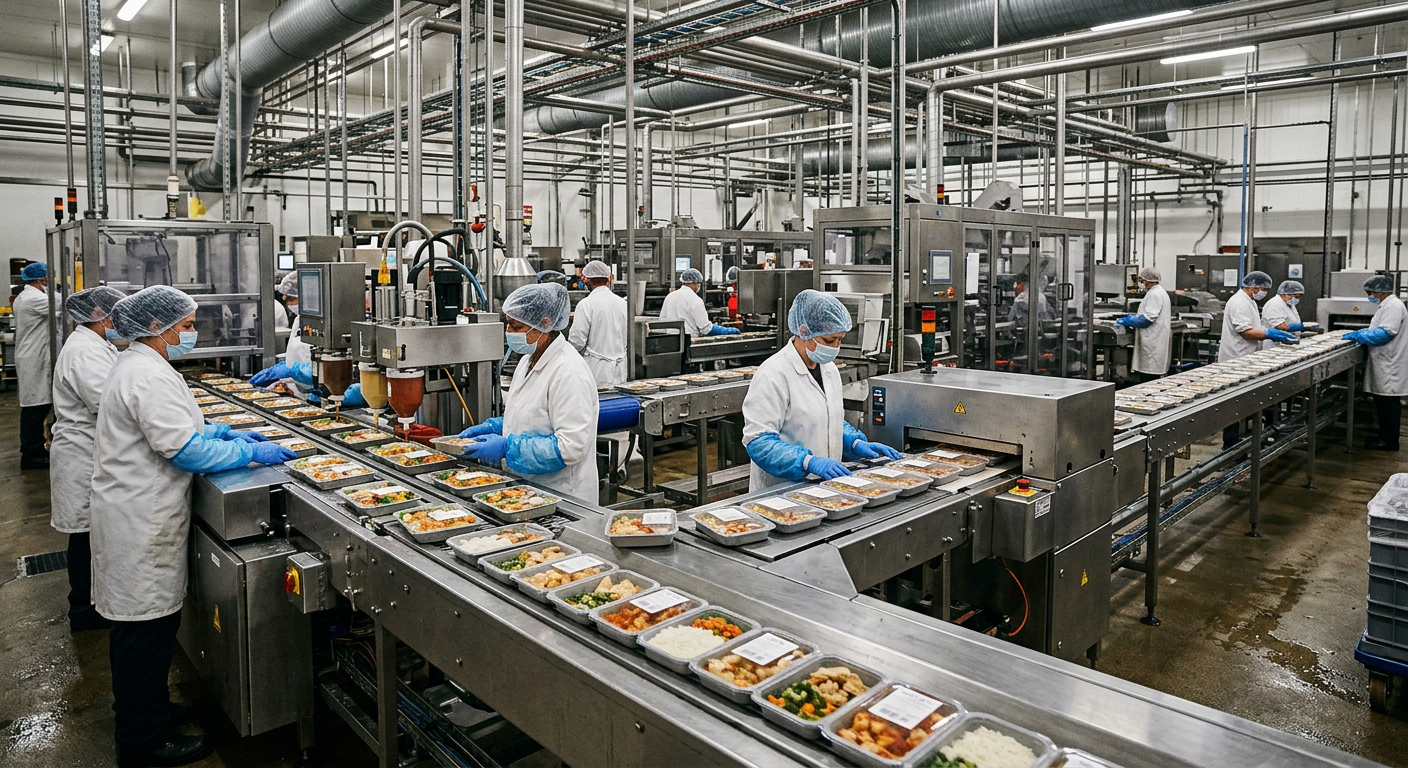
Salad Processing Line Design in 2026: Fresh-Cut Facility Engineering
The best salad processing line design for 2026 combines gentle raw product handling, multi-stage washing, reliable foreign material detection, precise cutting, recipe-controlled blending, sanitation barriers, packaging flexibility, and a tightly engineered cold chain. In the United States, successful fresh-cut facilities are being designed around food safety, labor efficiency, water reuse strategy, data visibility, and the ability to run multiple pack formats such as pillow bags, bowls, and clamshells on one integrated platform. Whether a processor serves grocery retail in Chicago, club stores in Dallas, meal kit programs in Los Angeles, or foodservice hubs near Atlanta and New Jersey, the winning layout is the one that protects leaf quality while delivering profitable throughput. The U.S. market for ready-to-eat leafy greens and mixed salad kits continues to favor operations that can scale across romaine, iceberg, spinach, kale, spring mix, cabbage, carrots, onions, cucumbers, proteins, toppings, and dressings. Engineers now have to consider not only production rate, but also FSMA expectations, retailer audit pressure, sanitation validation, sustainability metrics, utility cost, and future automation. This is why line design must start with process flow and risk reduction, not just equipment selection. For processors planning new builds or retrofits, a practical approach is to align the process with local logistics realities. Facilities in California’s Salinas and Yuma seasonal supply network prioritize rapid inbound receiving and wash capacity. Plants shipping through distribution centers near Philadelphia, Columbus, Houston, or the Inland Empire need strong pallet movement and refrigerated dock design. Southeastern plants near Charlotte or Jacksonville often focus on mixed SKU flexibility for regional retail replenishment. In each case, engineering decisions should support shelf life, labor performance, and total landed cost. A salad processing line in the United States should be designed as a sequence of controlled zones: raw receiving, trim and prep, wash and flume transfer, dewatering and drying, optical inspection, cutting or slicing where needed, recipe weighing and blending, post-process sanitation controls, primary packaging, secondary packaging, cold storage, and refrigerated shipping. For 2026, the most competitive facilities emphasize four outcomes: lower microbial risk, less product damage, lower labor dependence, and higher line flexibility. For most fresh-cut salad operations, the highest-value engineering priorities are: Buying advice for U.S. processors is straightforward: do not buy stand-alone machines first and then try to connect them later. Start with throughput targets, crop mix, sanitation plan, labor model, pack formats, and shelf-life objectives. Then create an integrated layout that includes utilities, controls, floor drainage, allergen separation if dressings or toppings are added, and room-by-room temperature strategy. The table above shows the practical issues that most directly affect profitability. In U.S. fresh-cut operations, failures usually come from interaction between steps, not from a single machine. That is why engineering discipline matters from day one. Washing and drying are the heart of a fresh-cut salad line. A strong system usually starts with dumpers or receiving flumes that minimize leaf breakage. Product then moves through one or more wash stages, often beginning with heavy soil removal and followed by cleaner, controlled antimicrobial stages. Final rinse logic depends on product type, water quality goals, and the processor’s food safety program. Leafy greens such as romaine, spinach, baby kale, and spring mix each behave differently in water. Spinach may trap more water and require gentler drying parameters. Romaine and iceberg can tolerate more robust handling but still suffer edge damage if transfers are too abrupt. U.S. plants serving premium retail often use product-specific recipes for flume velocity, sanitizer concentration, dwell time, and spin cycle intensity. A good wash system also needs strong utility design: water supply pressure stability, chemical injection points, drain capacity, access for cleanout, and instrument visibility for operators. Facilities in drought-sensitive regions such as California increasingly evaluate water recirculation, filtration, and make-up water optimization. However, water reuse must always be engineered around food safety validation, not just conservation goals. The most common drying equipment choices are basket centrifuges, continuous centrifugal dryers, and air knife or vibration-assisted systems. In larger U.S. installations, hybrid drying is often used. For example, a processor may use spin drying for spinach and air-assisted finishing for mixed greens. This combination can improve throughput while protecting tender leaves. Future design trends for 2026 include inline moisture analytics, predictive maintenance on dryer bearings and motors, and variable-speed automation that changes settings by product code. Plants aiming to reduce labor dependence are also adding automated tote handling between wash and dry zones. After drying, inspection becomes a major control point. Optical sorting technology for leafy greens now goes beyond color separation. Modern systems can identify dark defects, yellowing, insect damage, stem load, and some non-product contaminants. In U.S. facilities handling high-volume baby leaf products, optical sorting helps reduce both consumer complaints and expensive over-trimming upstream. Foreign object detection should be considered as a layered defense. Optical systems can catch plastics, wood, insects, and off-color material. Metal detection remains valuable for metallic risk. X-ray may be justified in select applications, especially where mixed kits include denser components or where customer standards demand broader detection capability. No single technology should be treated as a complete safeguard. Line layout matters as much as sensor capability. The best inspection zone has stable product presentation, controlled feed depth, good lighting management, and an easy-to-verify reject path. If the product mat is too thick, defects can hide. If the feed is too sparse, throughput suffers. A strong engineering team balances width, belt speed, and throughput so detection performance remains realistic under production conditions. Processors near major logistics corridors such as the I-5 route in California, the Midwest distribution network around Indianapolis, or the Northeast corridor near Newark and Philadelphia often see pressure from large retailers for detailed QA documentation. Inspection systems should therefore be integrated with production data capture, reject trending, and audit-friendly reporting. The explanation from this table is simple: foreign object control works best when technologies are layered and connected to plant operations. A processor that pairs intelligent inspection with disciplined upstream trimming and washing will usually outperform one that tries to solve all quality problems at the final package stage. Not every salad line is all-leaf. Many mixed kits include shredded cabbage, sliced carrots, chopped romaine, cucumber rounds, onions, radishes, and other value-added ingredients. Cutting systems must therefore be selected by ingredient behavior, not just desired throughput. Blade style, infeed stability, sanitation access, and cut consistency all influence yield and shelf life. For cabbage and lettuce, shredders need to produce a clean cut with minimal fines. Carrot and cucumber lines often require strong wash-down construction and accurate feed alignment. Onion cutting demands attention to odor management, local exhaust, and room zoning so neighboring ingredients are not affected. Mixed facilities should consider whether ingredient prep happens in a separate room or a fully separated processing cell. The buying advice here is to avoid over-sizing cutters without considering downstream blending and package fill. If the cutter can run faster than the wash, blend, or pack-out system, product will queue and quality will drop. Integrated line balancing is more valuable than peak machine speed. Across the United States, processors serving foodservice in cities like Las Vegas, Orlando, and Nashville often need a broader ingredient mix than retail-only salad plants. As a result, flexible prep rooms with mobile equipment, quick sanitation changeover, and modular conveyance are becoming more common. In 2026, expect more cutter systems linked to recipe scheduling software so line crews can switch SKUs faster with fewer setup errors. Mixed salad kits live or die on recipe accuracy. Giveaway hurts margin, while underweight packs trigger retailer penalties and consumer dissatisfaction. Effective recipe weighing and blending systems combine controlled ingredient dosing, low-drop transfer, and synchronized communication with packaging equipment. For leafy base mixes, multi-head scales are not always the right answer. Many operations use linear weighers, volumetric feeders, or hybrid solutions that better protect product structure. Toppings such as croutons, seeds, cheese, dried fruit, or proteins may require separate lanes and allergen-conscious staging. Dressings and toppings can be inserted in the package or added as secondary components depending on format and customer expectation. Blending should be gentle and short. Over-mixing damages leaves and creates fines that settle to the bottom of the bag. The best systems create distribution uniformity without tumbling product excessively. This is especially important for premium kits destined for high-turn grocery chains in markets such as New York, Seattle, Boston, and Minneapolis. The table highlights that weighing and blending are not only mechanical tasks; they are commercial controls. Small improvements in giveaway or rework can make a major difference when a plant runs millions of units annually. As fresh-cut processors search for additional shelf-life support, UVC treatment and advanced sanitation tools are drawing more attention. UVC is not a substitute for a validated wash system, proper temperatures, or hygienic facility design. Instead, it can serve as one more hurdle in a broader contamination control strategy when properly validated for the product and the process environment. In salad operations, advanced sanitation goes beyond equipment foam cleaning. It includes zoning of personnel and tools, drain strategy, hygienic air handling, boot sanitation, traffic control, dry storage separation for packaging materials, and validated clean-in-place or clean-out-of-place procedures where applicable. U.S. customers increasingly expect documented environmental monitoring and faster corrective action. For 2026, several trends matter: more automated sanitation verification, greater use of ATP and environmental data trending, pressure to reduce water and chemical consumption, and stronger retailer focus on preventive controls. Sustainable sanitation is becoming a real engineering topic, especially in regions with rising utility costs. Applications vary by plant type. A high-volume bagged leaf facility may use UVC in targeted conveyor or product presentation zones. A premium salad kit plant may focus more heavily on room segregation, utensil control, and rapid sanitation changeovers between allergen-bearing toppings. The right design depends on hazard analysis, throughput, and customer requirements. Packaging integration is where upstream process quality becomes commercial output. The 2026 U.S. market demands flexibility: value bags for club channels, premium stand-up pouches, single-serve bowls, and rigid clamshells for grab-and-go or higher-end merchandising. A well-engineered facility should accommodate current pack formats while leaving a clear expansion path. Bag lines usually offer the highest throughput, but they require careful product feed control, seal integrity management, gas flush strategy where applicable, and smooth integration with coding, checkweighing, case packing, and palletizing. Bowl and clamshell lines generally require more footprint and more precise product placement, but they open the door to premium merchandising and higher average selling prices. Facilities serving mixed channels often build one flexible packaging hall rather than isolated mini-lines. This can work well if changeover design, labor allocation, and material flow are carefully planned. The engineering challenge is to avoid crossover congestion between film rolls, rigid containers, finished packs, and QA hold areas. When comparing packaging solutions, processors should assess not only speed but also OEE, labor per thousand units, material cost, rework rate, and customer mix. For many U.S. operators, a line that runs slightly slower but changes over quickly between bags and bowls creates better annual profitability than a rigid high-speed line dedicated to a single format. Cold chain design is the final safeguard for freshness and shelf life. For fresh-cut produce, refrigeration must be treated as a process system, not simply a building utility. Room temperature targets, air distribution, loading patterns, product dwell time, and dock traffic all affect results. The goal is to limit respiration, maintain appearance, and preserve microbiological stability. Most U.S. fresh-cut facilities operate key process rooms and storage areas in the mid-30s Fahrenheit range, with exact targets depending on product mix and stage. However, temperature alone is not enough. Engineers must address air balance, humidity, door management, evaporator selection, defrost strategy, and sanitation compatibility. Warm staging near docks is a common weak point, especially in hot climates such as Texas, Arizona, and Florida. Facilities shipping nationwide through cold carriers or regional DC networks need strong pallet handling design. Finished goods should move quickly from packaging to blast pull-down or cold storage, then to dock staging timed to truck arrival. Excess dwell at the dock can erase gains made through careful upstream processing. The explanation from this table is that refrigeration must match actual product movement. Too many facilities design good coolers but weak transitions. In 2026, expect wider adoption of smart sensors, alarm dashboards, and energy optimization tied to occupancy and door-opening patterns. Disruptive Process Solutions supports food and beverage manufacturers across the United States and Canada with practical engineering built around profitability, execution, and long-term operating success. Rather than acting like a traditional contractor that only installs what is requested, the company approaches projects as a strategic partner focused on helping clients make better capital decisions and build systems that perform in the real world. From a technological capability standpoint, DPS brings process, mechanical, electrical, structural, plumbing, and controls expertise into one coordinated model. That matters in salad line design because washing, drying, conveyors, inspection devices, recipe control, utilities, and refrigeration must work as one operating system. Clients looking for integrated planning can review the company’s broader engineering and project support approach here: food manufacturing engineering services. From a manufacturing capability standpoint, DPS also develops and supplies selected process equipment and integrates third-party technologies into complete operating lines. This is useful for fresh-cut plants that need custom skids, utility modules, tanks, CIP support elements, or application-specific equipment interfaces. More on available equipment capabilities can be seen at process equipment solutions. In salad facilities, this manufacturing mindset helps when standard equipment needs to be adapted to room constraints, sanitation requirements, or utility realities. From a service capability standpoint, DPS works across planning, design, installation, integration, project management, and execution oversight. Its Design Build Manage model is especially relevant for processors who want one accountable partner from concept through startup. For companies evaluating fit, background and operating philosophy are available at about Disruptive Process Solutions. Examples of real project execution and field results are available through these project case studies. For U.S. fresh-cut produce facilities, the value of this model is speed with discipline. A project may involve hygienic room layout, wash system utility planning, controls integration, packaging expansion, dock refrigeration improvements, or a plant-wide retrofit phased around live production. In each case, the objective is not just to install equipment, but to engineer a profitable operating result. What throughput should a new salad line be designed for?Design for realistic daily and peak seasonal demand, then check whether sanitation time, labor availability, and packaging capacity support that target. A line rated only on machine nameplate speed is often misleading. How many wash stages are usually needed?It depends on product mix, soil load, and food safety strategy. Many U.S. processors prefer at least a staged approach with early debris removal and a controlled antimicrobial step, followed by final rinse logic where validated. Is centrifugal drying always necessary?Not always, but for many leafy greens it remains one of the most effective ways to reduce free moisture before packaging. Product trials are essential because some tender mixes need gentler settings or hybrid drying. Should a processor choose bags, bowls, or clamshells?Choose based on customer channel, price point, shelf presentation, case cube, labor model, and line flexibility goals. Many facilities now need a combination rather than a single format. How important is optical sorting for leafy greens?It is increasingly important for retail-quality consistency and foreign material reduction. However, it works best as part of a full quality system that includes good wash design, trimming, and final verification. What are the biggest 2026 trends in salad facility engineering?More automation, stronger sanitation data systems, sustainability-driven water and energy design, recyclable packaging adaptation, AI-supported inspection, and smarter refrigeration monitoring are the biggest shifts. What local supplier factors matter in the United States?Processors should evaluate field service coverage, spare parts access, installer availability, and response time by region. Support needs look different in Salinas, Phoenix, Chicago, or Raleigh, especially during peak production windows. How should a company compare suppliers?Use a scoring model that weighs hygienic design, service support, integration experience, controls compatibility, total cost of ownership, and proof of performance with similar ingredients. For companies planning a new fresh-cut plant or a targeted retrofit in the United States, the strongest results come from engineering the entire process around product protection, verifiable sanitation, packaging flexibility, and cold-chain discipline. That is the practical path to better shelf life, better retailer performance, and better returns on capital in 2026. -
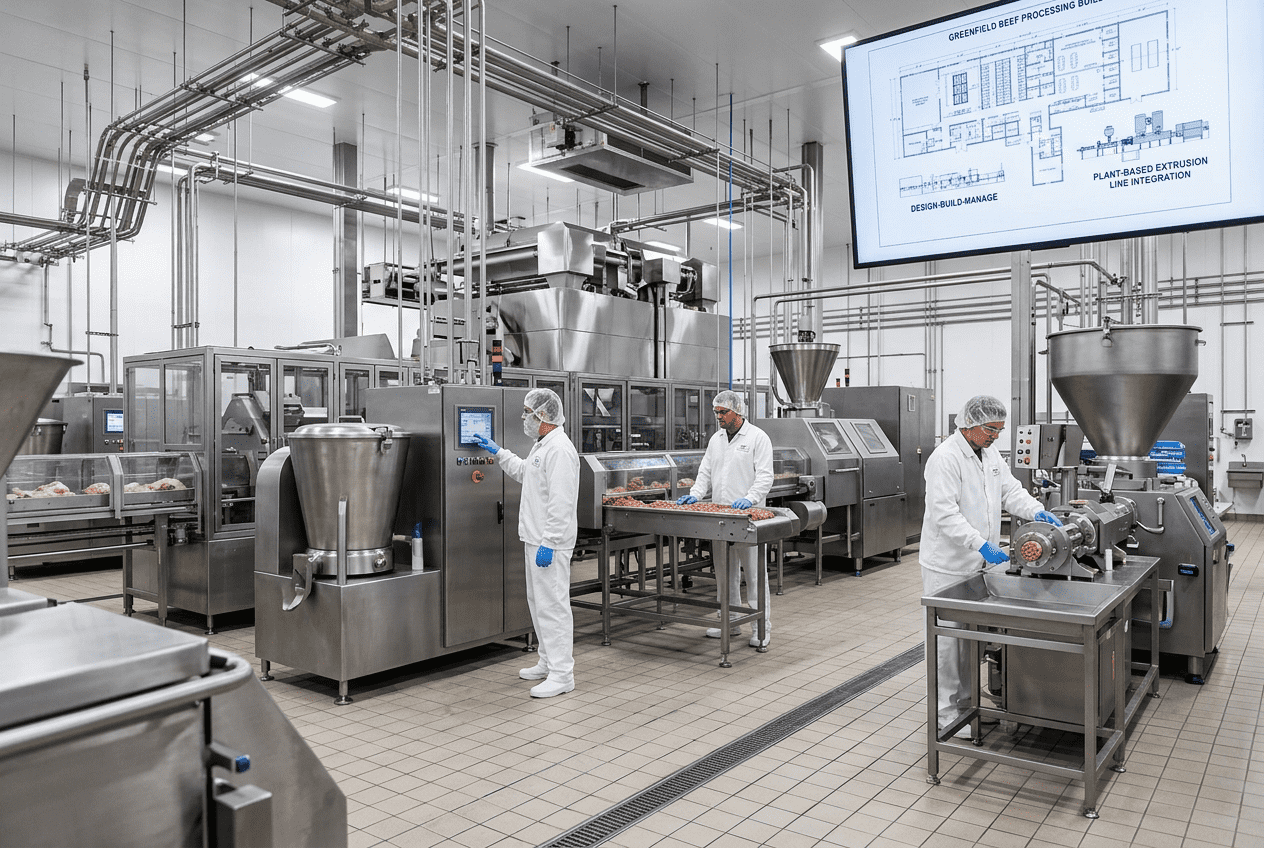
Food Processing Tank Manufacturer
Food processors in the United States need tanks that do more than hold product. A well-designed food processing tank supports sanitation, protects product quality, fits the process flow, and works reliably under the right pressure, vacuum, and temperature conditions. Whether the application is dairy in Wisconsin, sauces in Chicago, proteins in Arkansas, beverages in California, or aseptic ingredients near major logistics hubs like Houston, Savannah, and Los Angeles, the right vessel specification directly affects uptime, labor, food safety, and long-term operating cost. For many U.S. manufacturers, the best approach is not simply buying a vessel from a catalog. It is matching tank type, metallurgy, finish, controls, and installation scope to the actual production goal. That is especially true for plants adding new lines, retrofitting legacy facilities, or scaling capacity for co-packing, prepared foods, dairy, protein, or beverage operations. Companies looking for a practical partner often evaluate engineering depth, field execution, documentation quality, and startup support as closely as they evaluate the tank itself. Disruptive Process Solutions (DPS) serves this market as a food and beverage engineering partner across North America, combining process design, equipment supply, installation, and integration. Learn more about the DPS team and operating approach, explore broader engineering and project services, review available process equipment solutions, and see selected project examples and field results. A food processing tank manufacturer for the U.S. market should be able to supply sanitary vessels for cooking, holding, buffering, storage, and CIP return; recommend 304, 316L, or duplex stainless steel based on chemistry and cleaning conditions; provide finish options from mill 2B to sanitary polish; size volume to line throughput and dwell time; verify pressure, vacuum, and temperature ratings; customize manways, nozzles, mixers, and instrumentation; document weld quality and hydrotesting; and support installation, commissioning, and startup. The strongest suppliers also understand FDA, USDA, SQF, and BRC expectations and can integrate tanks into complete processing systems rather than treating them as isolated components. In the United States, buying decisions increasingly favor suppliers that can bridge design and execution. That means understanding not only tank fabrication, but also process utilities, controls, CIP strategy, operator access, cleanability, and site-specific code requirements. This is especially important in major production regions such as the Midwest dairy corridor, Southeast poultry belt, Texas protein and beverage markets, and West Coast beverage and specialty foods clusters. The chart above reflects the steady expansion in demand driven by automation, sanitation upgrades, nearshoring, co-packing growth, and modernization of aging stainless equipment in U.S. facilities. Food processing tanks are not interchangeable. The right tank depends on whether the vessel must transfer heat, stabilize flow, provide dwell time, receive CIP solutions, or simply store ingredient or finished product. A cook tank for soup or sauce has very different requirements than a buffer tank in front of a filler or a return tank in a cleaning loop. In production environments from Charlotte to Fresno, common tank categories include: This table matters because wrong tank selection can create bottlenecks even when nominal capacity looks adequate. For example, a storage tank placed where a buffer tank is needed may cause filler starvation. A hold tank without proper agitation may create phase separation in dressings or dairy beverages. A cook tank without the right jacket design may extend batch times and reduce plant throughput. In fast-growing U.S. co-packing operations, buffer and surge tanks are especially important because packaging speed often changes faster than upstream batching. In protein and prepared foods, cook and hold tanks must support thermal performance and cleanability under heavier soils. In beverage plants near distribution hubs like Dallas-Fort Worth or Southern California, storage and blend vessels frequently need to interface with automation, syrup rooms, and packaging controls. The bar chart shows how beverage, dairy, and prepared food operations remain among the most active buyers of sanitary tank systems in the U.S., though demand is broad across virtually every hygienic processing segment. Material selection should be based on product chemistry, chlorides, acids, cleaning chemicals, temperature, service life, and budget. In many food plants, 304 stainless steel is adequate. In others, especially where chlorides, aggressive CIP chemistry, or higher corrosion risk exists, 316L or duplex can be the better investment. As a practical rule, 304 works for many standard food products and utility-related services. 316L becomes the safer specification when chloride exposure rises, cleaning cycles are frequent and aggressive, or the product is more acidic or mineralized. Duplex can make sense in harsh applications, coastal environments, or systems with especially demanding corrosion and mechanical performance requirements. U.S. facilities along the Gulf Coast, Florida, and other marine-influenced regions may see more value in upgraded metallurgy because ambient chloride exposure can accelerate exterior corrosion. Likewise, plants processing salty marinades, brines, or seafood often lean toward 316L or beyond. A tank supplier should review not just the product inside the vessel, but also the washdown environment outside it. DPS approaches material selection from a process engineering perspective, not a catalog-only perspective. Its technical capabilities extend into process, mechanical, structural, electrical, and controls engineering, which helps ensure the vessel material choice aligns with CIP, utilities, instrumentation, and operating realities. That is particularly valuable on integrated projects where a tank connects to pasteurization, blending, fermentation, marination, or aseptic systems. Internal finish affects cleanability, appearance, residue retention, and ultimately sanitation performance. Not every application requires a high-polish sanitary finish, but many food and beverage products benefit from smoother internal surfaces, especially where sticky, protein-rich, dairy, or microbiologically sensitive products are involved. The table above shows why finish specification should not be copied from an old drawing without review. For example, a 2B finish may be acceptable for some non-critical service tanks, but a yogurt base tank, aseptic ingredient vessel, or high-sugar beverage blend tank may justify a more sanitary polish for improved cleanability and reduced biofilm risk. Finish also affects validation. Plants operating under strict customer audits, retail compliance requirements, or export programs often benefit from clearly documented interior finish standards. In some projects, external cosmetics matter too, especially in customer-facing breweries, beverage centers, or pilot facilities. By 2026, finish specification is expected to become more closely tied to sustainability and water use. Smoother, easier-to-clean surfaces can shorten wash cycles, reduce detergent use, and lower wastewater loading. As municipalities from California to the Northeast continue tightening water and discharge expectations, sanitary design that supports efficient cleaning will remain a competitive advantage. This area chart illustrates the shift toward more sanitary finish requirements as processors modernize plants, increase automation, and respond to tighter quality and audit expectations. Tank sizing starts with throughput, but it should not end there. The right volume depends on batch size, surge needs, dwell time, CIP cycle timing, product changeover frequency, headspace requirements, thermal lag, and future expansion. Oversized tanks waste capital, floor space, and sometimes cleaning resources. Undersized tanks create chronic bottlenecks. The sizing ranges above are only starting points. A high-speed line in New Jersey or Illinois may need extra surge to protect an expensive packaging asset. A batch cook system in Tennessee may need more dwell time to synchronize with downstream fillers. A co-packing site in Texas may intentionally oversize for customer changeovers and future SKUs. Good sizing practice normally includes the following questions: DPS often works from the production model backward, rather than starting with a generic vessel size. That manufacturing-focused method helps clients avoid buying “safe” oversized equipment that looks flexible on paper but reduces return on capital. The company’s manufacturing capabilities include proprietary tank systems up to 12,000 gallons as part of a broader equipment offering, which is especially useful when a plant wants a tank supplier that can also understand line integration, utilities, and project execution. Pressure, vacuum, and temperature ratings must be tied to actual service conditions, not assumptions. Tanks can fail or deform if they are exposed to higher pressure, deeper vacuum, or hotter cleaning cycles than originally considered. Even a storage tank can see vacuum conditions during fast pump-out, cooling, or CIP events. Processors should also confirm whether the specification covers operating conditions only or includes upset conditions. Examples include blocked vents, accidental valve closure, pump deadhead scenarios, and thermal shock from cleaning and sanitizing cycles. This is where experienced engineering input matters more than a generic data sheet. From 2026 onward, policy and sustainability trends are likely to increase interest in energy-efficient heating, heat recovery, and smarter temperature control. Tank systems may increasingly be evaluated on how well they integrate with heat exchangers, hot water sets, steam management, and automation-driven energy monitoring. Custom fabrication is often the difference between a tank that fits the process and one that forces operators to work around it. Details such as access manways, nozzle orientation, spray device selection, bottom outlet geometry, agitation type, ladder access, load cells, insulation, and instrumentation ports all affect daily usability. Typical customization points include: Plants in seismically active areas such as California, or hurricane-prone Gulf and Southeast regions, may need additional structural considerations. Facilities in older urban footprints like Philadelphia or Newark often need tanks designed around tight access, existing mezzanines, or limited crane paths. At inland manufacturing hubs such as Indianapolis, Kansas City, and Memphis, layout efficiency and installation speed often dominate. DPS supports this level of customization with a service model that connects process engineering, project management, equipment supply, installation, and controls integration. That matters because nozzle orientation should align with pipe routing, instrument strategy should match the controls architecture, and access design should reflect actual maintenance practice. When those decisions are coordinated early, field rework drops significantly. This comparison chart highlights why many U.S. buyers move toward engineered tank suppliers when projects involve sanitary compliance, controls, utilities, and startup risk, not just vessel purchase price. Quality control is where tank specifications become reliable equipment. Buyers should ask how welds are qualified, how internal surfaces are protected during fabrication, how vessels are pressure or hydro tested, what inspection records are provided, and whether documentation is packaged for maintenance, audit, and validation use. Documentation is often overlooked until an audit, warranty claim, plant expansion, or troubleshooting event exposes the gap. A complete package helps maintenance teams identify spare parts, helps QA teams answer customer questions, and helps engineering teams modify systems later without reverse engineering everything from the floor. DPS places value on execution discipline because it operates across engineering, equipment, field installation, and integration. That broader project view makes quality documentation more important, not less, since the vessel is only one part of a larger manufacturing system involving piping, controls, utilities, and startup sequencing. A tank arriving at the dock is not the end of the project. Installation, commissioning, and startup often determine whether the equipment pays back quickly or becomes a source of delays. In the U.S. market, this is especially important for multi-trade projects where rigging, mechanical installation, controls, utilities, and validation must align. Manufacturers should look for support that includes: For a facility in North Carolina, Georgia, or Ohio expanding under a compressed schedule, startup support can be worth more than a slightly lower tank purchase price. Delays in commissioning may idle labor, postpone product launch, or interrupt co-packing commitments. Conversely, a supplier that understands field realities can reduce startup surprises. This is one of the strongest reasons many buyers prefer a partner like DPS. The company’s service capabilities extend beyond fabrication into design-build-manage execution, project oversight, installation coordination, and commissioning support. Because DPS works nationally across the United States and into Canada, it can support projects ranging from emergency line modifications to full greenfield or brownfield process integration. That combination is particularly attractive to clients who want one accountable team instead of separate engineering, equipment, and field silos. Real-world examples in the market show that the best outcomes come from solving the actual production constraint, not just supplying hardware. In many projects, the right answer may involve controls changes, line balancing, or utility redesign along with the vessel itself. That business-minded approach tends to produce better ROI than simply maximizing stainless volume. Local supplier evaluation should also consider freight and field service access. A plant near major logistics corridors such as Atlanta, Chicago, Houston, or the Inland Empire may have more options for delivery and installation support, but remote facilities still need reliable startup coverage. Ask each supplier how they handle scheduling, subcontractor coordination, and post-startup troubleshooting. What is the best stainless steel grade for a food processing tank?There is no single best grade for every use. 304 is common for general food service, 316L is preferred for more corrosive or sanitation-sensitive duty, and duplex is considered for harsher environments or high chloride exposure. When should I specify a sanitary polished interior instead of a mill finish?Specify a sanitary polish when product residue, microbiological sensitivity, sticky ingredients, dairy, protein, or audit requirements make cleanability critical. Mill finishes may be acceptable for less demanding service. How do I size a hold or buffer tank?Start with line throughput and required dwell time, then account for headspace, surge protection, changeovers, and cleaning intervals. Buffer tanks support flow stability; hold tanks support process timing and temperature control. Do all food tanks need pressure or vacuum ratings?No, but every tank should be reviewed for potential pressure and vacuum exposure. Atmospheric tanks can still see vacuum during pump-out or cooling, so the operating scenario matters. What documentation should a manufacturer provide?At minimum, request drawings, material certificates, test records, manuals, and inspection documentation. More critical systems may require expanded turnover packages for QA, validation, and maintenance. Can one supplier handle tank fabrication, installation, and startup?Yes. Many manufacturers prefer that model because it reduces coordination risk. An integrated supplier can align fabrication details with piping, utilities, automation, and startup plans. What industries use food processing tanks most heavily in the U.S.?Major users include dairy, beverages, proteins, sauces and dressings, prepared meals, ingredients, aseptic processing, brewing, spirits, and co-packing operations. How important is local code and regional operating environment?Very important. Seismic zones, coastal corrosion, wastewater restrictions, utility availability, and plant layout constraints all affect final tank specification. What trends should buyers watch through 2026?Expect higher demand for automation-ready tanks, more sanitary finish requirements, stronger interest in water and energy efficiency, more rigorous documentation, and greater focus on sustainability and total lifecycle value. How do I choose between a commodity tank supplier and an engineered process partner?If your project is simple storage only, a commodity supplier may be sufficient. If the vessel affects sanitation, throughput, controls, utilities, or startup success, an engineered partner usually delivers better long-term value. For U.S. manufacturers planning capital improvements, the most effective purchasing strategy is to define the process need first, then match the tank specification to operating reality. That includes product chemistry, cleaning regime, throughput, floor space, utilities, automation, and expansion goals. A food processing tank is not just stainless steel capacity; it is a critical process asset. When it is engineered, fabricated, documented, and commissioned correctly, it supports profitable production for years. -
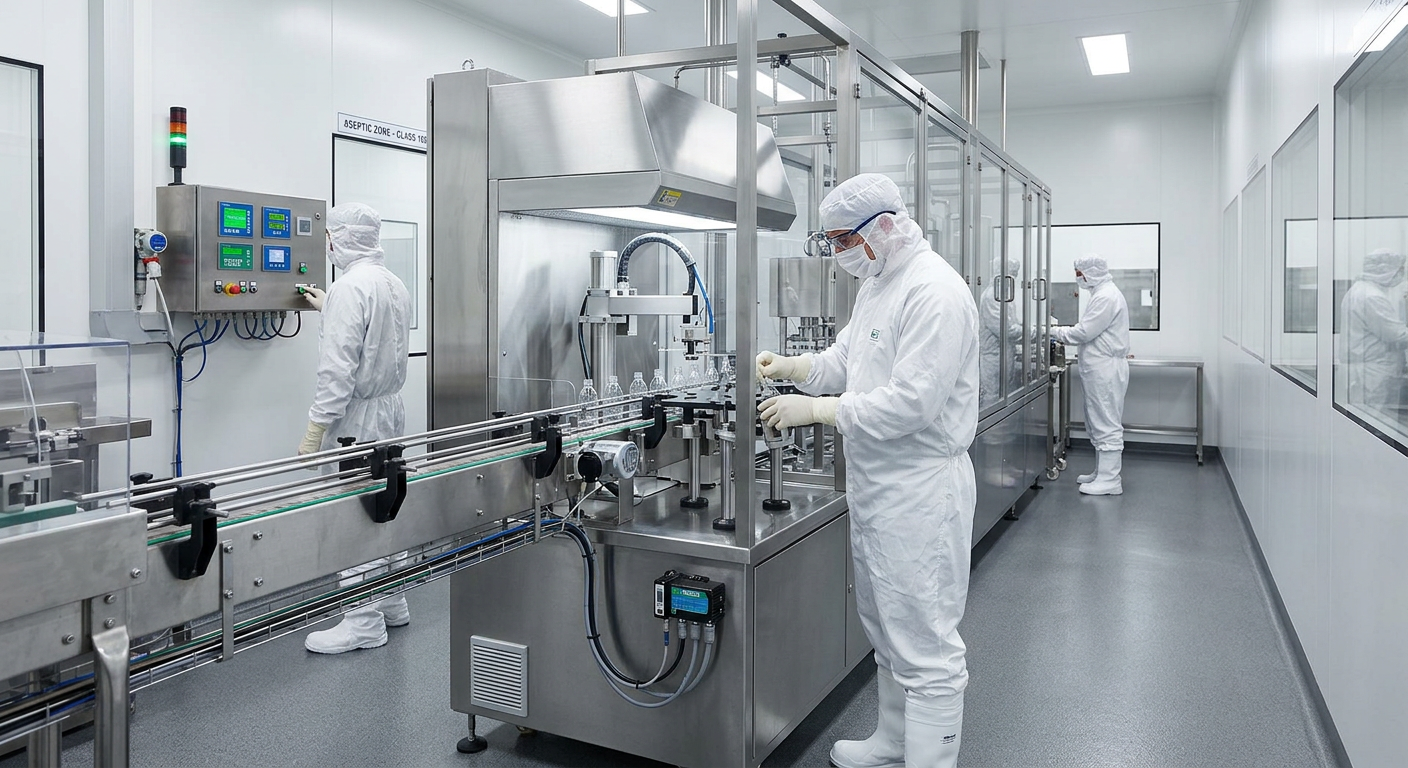
Beverage Mixing Tank Manufacturer
Choosing the right beverage mixing tank is not simply a matter of vessel size. In the United States, beverage producers must balance product quality, sanitation, carbonation retention, acid resistance, batch flexibility, utility efficiency, and compliance with FDA, SQF, BRC, and customer audit requirements. Whether you are blending juices in Florida, functional beverages in California, dairy drinks in Wisconsin, RTD cocktails in Texas, or syrups near major logistics hubs like Chicago, Charlotte, Los Angeles, Houston, or Newark, the tank design directly affects throughput, consistency, cleanability, and total operating cost. A beverage mixing tank for U.S. operations should be selected based on product viscosity, acid level, carbonation sensitivity, batch size, temperature needs, sanitation standards, and automation requirements. For many acidic, flavored, or carbonated products, 316L stainless steel is preferred because it offers stronger corrosion resistance than 304 stainless. Propeller agitators fit low-viscosity blending, turbines support stronger top-to-bottom circulation and powder incorporation, and paddle or sweep agitators work better for higher-viscosity or solids-sensitive products. Tanks intended for commercial beverage use should also be CIP-ready, have sanitary welds, suitable surface finish, well-placed baffles where needed, and controls that match the plant’s recipe and traceability requirements. In practical terms, U.S. beverage manufacturers often look for a system rather than a standalone vessel. That means integrating the tank with ingredient handling, load cells, inline Brix monitoring, carbonation, pasteurization, transfer pumps, CIP skids, and plant utilities. For growing producers, the best investment is usually a mixing system designed around future expansion, not only today’s first SKU. The current U.S. market also favors flexible systems that can handle multiple formulations, allergens, cleaning validations, and shorter production runs. Co-packers and multi-SKU beverage brands increasingly need tanks that can switch between sports drinks, energy beverages, flavored waters, dairy-based beverages, and syrups with minimal downtime. This is why engineering detail matters as much as tank capacity. The chart above reflects a realistic trend seen across North American beverage capital spending: demand is rising as brands reshore production, co-packers add capacity, and manufacturers upgrade older vessels to cleaner, more automated, more flexible systems. Agitator selection is one of the most important design decisions because it determines blend uniformity, solids suspension, foaming tendency, and cycle time. In beverage processing, the wrong impeller can create excess vortexing, poor powder wet-out, flavor inconsistency, carbonation loss, or unnecessary energy use. Propeller agitators are commonly used in low-viscosity beverages such as flavored water, tea bases, electrolyte solutions, and many syrup dilution steps. They generate axial flow, moving liquid vertically and creating rapid circulation. They are efficient and relatively simple, but they are not always ideal for heavier concentrates or products that need stronger shear. Turbine agitators are often chosen when producers need a stronger mixing pattern, better gas or powder dispersion, or more controlled blending performance. Depending on the blade style, turbines can produce axial or radial flow. They are suitable for syrup rooms, ingredient blending, and formulations with functional powders, stabilizers, or moderate solids loading. Paddle agitators are generally used for gentler mixing, broader wall coverage, and products that do not require aggressive shear. They can be useful in dairy beverage bases, pulp-containing beverages, or heavier flavor systems where minimizing damage to suspended particles matters. This table shows why no single agitator fits every beverage. U.S. buyers should ask suppliers for impeller recommendations based on actual product rheology, not assumptions drawn from water tests. A system designed for sports drinks may perform poorly with smoothie bases or dairy emulsions. Material selection is central to product safety and tank life. For many beverage applications, especially acidic drinks and carbonated products, 316L stainless steel is the preferred choice because it improves resistance to corrosion, pitting, and chemical attack. This is particularly relevant for products containing citric acid, phosphoric acid, fruit concentrates, flavor compounds, salt systems, or aggressive cleaning chemicals. 304 stainless still has a place in some non-aggressive beverage utilities or lower-risk applications, but when the process fluid is acidic, chloride exposure is possible, or long-term cleanability matters, 316L is typically the stronger investment. The “L” grade also supports better weld integrity for sanitary fabrication because of its lower carbon content. For U.S. beverage producers shipping nationwide, the longer equipment life of 316L often reduces total ownership cost. It also aligns well with premium sanitation expectations from major retailers, brand owners, and co-manufacturing customers. If your facility handles kombucha, juice concentrates, sodas, RTD cocktails, or functional drinks with low pH, 316L should be evaluated early instead of treated as an upgrade at the end. Tank geometry matters as much as impeller style. Baffles, wall sweeps, and high-shear devices each solve different process problems. Baffles are vertical strips installed on the interior tank wall to disrupt rotational flow and reduce vortexing. In low-viscosity beverages, they often improve top-to-bottom mixing and reduce air entrainment. However, for some sanitary applications or certain vessel sizes, the designer may use alternative anti-vortex strategies to simplify cleaning. Sweeps or anchor agitators help move product along the vessel wall. They are useful when product viscosity is high enough that dead zones can form or when heat transfer through the jacket is important. Smoothies, concentrates, dairy bases, and certain flavor pre-mixes may benefit from this approach. High-shear mixers are used when powders must be rapidly dispersed, gums need hydration, emulsions must be stabilized, or a formulation contains ingredients that do not easily wet out. They can be top-entry, bottom-entry, or inline. Many beverage systems use a hybrid design: a main tank agitator for bulk circulation plus an inline high-shear loop for powder induction. The best approach depends on the product. For example, a clear carbonated beverage base may only need gentle agitation and careful anti-foam control, while a protein shake might require aggressive powder induction followed by slower finishing agitation. Matching agitation to the formula prevents quality complaints and avoids overspending on unnecessary horsepower. This industry view highlights where future U.S. demand is strongest. Functional beverages and alcohol RTD continue to drive new blending projects, especially around major markets such as Southern California, the Carolinas, Texas, and the Midwest. Temperature control can be essential in beverage mixing. Some products require warming for sugar dissolution, some require cooling to protect flavors or carbonation, and others need precise thermal management before downstream pasteurization or filling. Dimple jackets are common because they provide efficient heat transfer around the vessel exterior without placing obstructions inside the tank. They are sanitary, durable, and widely used for heating or cooling with glycol, chilled water, or hot water. Internal coils can increase heat transfer area and are useful in certain applications, but they add internal surfaces that must be thoroughly cleaned. In sanitary beverage design, they should be used only when the thermal benefit justifies the added cleaning complexity. Full jacket or half-pipe jacket arrangements may also be specified for special thermal loads. The choice depends on product fouling risk, utility availability, and target batch cycle time. For U.S. facilities where utilities vary by region, the thermal system must fit the site. Plants near the Gulf Coast may have different cooling strategies than those in Minnesota or upstate New York. Utility cost, water availability, and maintenance support all matter. Good heat-transfer design should be reviewed alongside process scheduling, not afterward. Sanitary design is non-negotiable for commercial beverage manufacturing. A mixing tank should support fast cleaning, repeatable validation, low contamination risk, and easy inspection. This includes hygienic weld quality, drainability, proper gasket materials, sanitary fittings, spray coverage, and elimination of dead legs. For flavor systems and sensitive beverage bases, common sanitary design requirements include polished product-contact surfaces, sloped bottoms for drainage, sanitary manways, CIP spray devices, orbital welds where appropriate, and instrumentation selected for hygienic service. Valves, pumps, and transfer lines should be designed as part of the full process path. Many U.S. producers also need the tank design to align with customer audits, not just regulation. Large retail and brand accounts often inspect more than code compliance. They review cleanability, documentation, preventive maintenance access, traceability, and operator safety. Sanitary design becomes especially important in systems that handle allergen changeovers, dairy-based beverages, aseptic ingredients, fermented drinks, or high-sugar products that can leave residue. If the system cannot be cleaned and verified quickly, actual plant capacity drops regardless of the tank’s nameplate size. The U.S. trend is clear: by 2026 and beyond, automated CIP-ready systems are becoming the standard, especially in facilities serving multiple brands or running high-SKU production schedules. One large tank is not always better than multiple smaller tanks. The right configuration depends on SKU mix, scheduling, inventory strategy, utility constraints, and risk tolerance. Single-tank systems may be cost-effective for simpler operations with stable volume, fewer recipes, and predictable production runs. They reduce equipment count and can simplify controls. However, they create a single point of failure and can reduce scheduling flexibility. Multi-tank configurations offer better changeover management, product segregation, phased production, and redundancy. A co-packer in Atlanta or Dallas producing several beverage families may benefit more from three medium tanks than from one oversized vessel. Multi-tank systems also make expansion easier because capacity can be added in stages. When reviewing batch sizing, manufacturers should consider minimum fill level, agitator performance at partial volume, and future SKU growth. Tanks that mix well only at full capacity can become operational bottlenecks if product demand shifts. For startup and mid-market producers, modular planning is often the smartest capital choice. It keeps early spending aligned with demand while preserving a path to larger throughput as distribution expands across the United States. Surface finish affects product hold-up, microbial risk, cleaning time, and inspection outcomes. In beverage applications, product-contact surfaces are commonly specified with a sanitary finish appropriate for the product and cleaning method. Smoother finishes generally improve cleanability and reduce residue retention. A truly CIP-ready tank should include more than a spray ball. It should have documented spray coverage, proper return flow, pump sizing that supports cleaning velocities, compatible valve sequencing, and instrumentation that can confirm temperature, time, conductivity, or other cleaning parameters. Dead zones around nozzles, probes, jackets, and agitator shafts should be minimized. U.S. buyers should review these details before placing an order:Internal finish target and verification methodWeld finishing standardsBottom geometry and full drainabilityCIP spray device type and coverage patternGasket and elastomer compatibilityAccess for inspection and maintenanceIntegration with plant CIP skid and controls These design details have direct financial impact. Faster, validated cleaning means more sellable production hours. In plants producing premium beverages with strict flavor-change control, cleanability can matter more than maximum motor size. Mixing time and motor horsepower should be calculated from actual process conditions, including tank geometry, fill volume, product density, viscosity, solids loading, and the target degree of homogeneity. Oversized motors waste energy and can damage product quality; undersized systems create long cycle times and incomplete blending. As a rule, low-viscosity beverages can often be mixed efficiently with lower specific power inputs than thick concentrates or powder-heavy formulations. But power alone does not guarantee performance. Impeller type, diameter ratio, RPM, baffle arrangement, and batch level are equally important. Operational efficiency should also include:Utility consumptionCleaning cycle durationProduct loss during heel and transferOperator intervention timeRecipe repeatabilityMaintenance access and seal life In modern beverage plants, the most efficient system is usually the one that balances product quality with automation, not the one with the largest mixer. Variable frequency drives, load cells, recipe controls, and inline instrumentation can reduce rework and improve consistency across shifts. The values in this table are directional only, but they illustrate how scale changes design logic. A 12,000-gallon tank is not simply a larger version of a 500-gallon tank; circulation patterns, structural loads, cleaning dynamics, and transfer strategy become much more important. The United States beverage sector is broad, with strong regional clusters. California and the Pacific Northwest support functional drinks, kombucha, wine, and premium RTD products. Texas and the Southeast continue expanding in soft drinks, spirits, and contract manufacturing. The Midwest remains a core region for dairy beverages and large-scale food-grade stainless fabrication. Northeast corridors around New Jersey and Pennsylvania benefit from port access, dense population, and brand distribution infrastructure. Common applications for beverage mixing tanks include:Syrup preparation and storageIngredient hydration and powder inductionFlavor batchingBrix adjustmentAcid blendingCarbonated beverage base preparationDairy and protein beverage premixesFermented beverage process supportCIP chemical preparation When buying a system, U.S. manufacturers should ask these practical questions:Can the tank perform at both minimum and maximum batch size?Is the material of construction suitable for the product pH and cleaning chemistry?Will the agitator preserve carbonation, pulp, or emulsion quality as needed?Is the system truly CIP-capable and documented for sanitation review?Can the controls integrate with existing PLC, SCADA, and recipe systems?Does the supplier understand utility routing, installation, and startup in live plants? These questions matter because many tank purchases fail not at fabrication but during integration. A vessel may look correct on paper yet create plant-wide bottlenecks if the controls, pumps, floor loading, access, drains, or utility tie-ins are not engineered correctly. Advanced beverage mixing projects increasingly require multidisciplinary engineering. Beyond vessel fabrication, buyers need process design, mechanical and piping coordination, electrical integration, controls strategy, and utility planning. This is especially true for high-growth beverage facilities where blending systems interact with pasteurization, filtration, carbonation, filling, compressed air, glycol, steam, and water treatment. Disruptive Process Solutions brings this broader technical view to projects across the United States and Canada. Rather than treating a tank as an isolated asset, the company approaches beverage processing as a connected production system. That includes process engineering, structural and mechanical coordination, automation support, PLC and SCADA integration, and planning for upstream and downstream process impact. For beverage manufacturers adding tanks to larger process lines, this systems perspective is often the difference between theoretical capacity and profitable capacity. For operations seeking complete modernization, DPS also supports complex beverage technologies such as blending and batching with inline Brix monitoring, carbonation and bright tank systems, water treatment, pasteurization approaches, and aseptic or clean processing environments. More about this integrated engineering approach can be found on the company’s process and project services page. Tank buyers often want to know whether a partner can only specify equipment or also deliver fit-for-purpose hardware. DPS has developed proprietary process equipment manufacturing capabilities, including storage and processing tanks up to 12,000 gallons, custom CIP systems, and related sanitary process equipment. This matters for beverage producers that want tighter alignment between design intent and fabricated equipment. Because the company works in both beverage and food environments, equipment solutions are designed with practical plant realities in mind: sanitation, operator access, maintenance, utility connection, and future line expansion. Manufacturers comparing options can review the broader equipment scope through the equipment portfolio, where tanks are positioned as part of larger production solutions rather than standalone catalog items. This manufacturing capability is particularly useful when a project needs custom nozzle orientation, specific agitator geometry, integrated skid structures, or site-driven modifications that off-the-shelf imported tanks may not address well. For U.S. beverage companies, supplier value is measured after the PO as much as before it. Engineering support, installation coordination, startup, and project management often determine whether a tank system launches on time. DPS operates with a design-build-manage approach that combines engineering, general contractor-style execution where applicable, installation oversight, and system integration. That model can reduce handoff risk in capital projects, particularly when beverage brands are scaling fast or retrofitting active facilities. The company serves manufacturers throughout all 50 states and Canada, supporting both emergency execution and long-range capital planning. Its experience spans brewing, spirits, wine, kombucha, RTD beverages, carbonated and non-carbonated soft drinks, juices, functional beverages, and dairy-based beverage systems. Businesses evaluating project partners can learn more on the company overview page. In practice, this service scope helps when tank projects involve floor modifications, utility upgrades, CIP expansion, controls programming, commissioning, or phased cutovers that must happen without shutting down the whole plant. One reason beverage producers seek experienced integrators is that capacity problems are not always solved by buying more stainless steel. In some projects, the true bottleneck is controls logic, transfer sequencing, or utility limitation rather than tank volume. DPS has built its reputation partly by identifying those issues early and steering clients away from unnecessary capital spend when a smarter process change can produce better returns. That philosophy aligns well with co-packers and growing brands that need profitable expansion, not just visible expansion. Examples of project thinking and execution can be explored through selected case studies and project examples. This comparison chart illustrates a common U.S. buying reality: the lowest upfront vessel quote may not deliver the best plant outcome. Suppliers that understand process integration usually score higher on scalability, sanitary execution, and long-term value. When sourcing beverage mixing tanks in the United States, location affects freight, startup support, and installation scheduling. Producers near ports such as Los Angeles, Long Beach, Houston, Savannah, Newark, and Seattle may have more import options, but imported vessels still require domestic sanitary review, documentation, and often field adaptation. Plants in inland manufacturing corridors like Chicago, Milwaukee, St. Louis, Charlotte, and Nashville may prioritize regional fabrication and faster on-site support. Local supplier selection should be based on more than geography. Buyers should review:Sanitary fabrication qualityDocumentation package and QA recordsAbility to support FAT, SAT, and commissioningUnderstanding of beverage chemistry and CIPAccess to controls and utility integration expertiseSpeed of service after startup For national beverage operations, the strongest partner is often one that can manage design consistency across multiple sites while still adapting to local codes, labor conditions, and utility constraints. Looking ahead to 2026, beverage mixing tank design in the United States will be shaped by three major forces: automation, compliance pressure, and sustainability. Technology trends include wider use of recipe-driven controls, load-cell batching, inline quality measurement, remote support, and digital maintenance tracking. Smart mixing systems will increasingly connect to SCADA and MES platforms for traceability and performance optimization. Policy and compliance trends include deeper customer scrutiny on sanitary documentation, allergen control, food safety plans, and validation records. More producers will expect equipment suppliers to support audit-ready documentation rather than just fabrication drawings. Sustainability trends include lower water usage in CIP cycles, more efficient agitator geometry, heat recovery strategies, better insulation, and process layouts that reduce product loss. As energy and water costs remain volatile, tank efficiency will become a financial issue, not only an environmental one. Manufacturers planning new capacity today should therefore think beyond the vessel shell. The most future-ready systems will combine corrosion-resistant materials, flexible agitation, strong cleanability, automated controls, and expansion paths that support new SKUs without rebuilding the room. What size beverage mixing tank is best for a startup?It depends on SKU count, batch economics, and filling rate. Many early-stage producers start in the 250- to 1,000-gallon range, but the right choice should match future distribution plans and minimum efficient run size. Is 316L always necessary?Not always, but it is often the safest recommendation for acidic, flavored, or carbonated beverages and for plants using aggressive cleaning chemistry. It usually offers better long-term value than 304 in demanding beverage service. Can one tank handle multiple beverage types?Yes, if the design supports the full viscosity range, cleaning validation, allergen or flavor changeovers, and proper agitation at different fill levels. Multi-product flexibility should be engineered upfront. Do carbonated beverages need special mixing?Yes. Agitation must minimize CO2 loss and foaming. Gentle mixing, proper pressure considerations, and careful transfer design are important. Are baffles always required?No. They are common in low-viscosity blending, but some sanitary or product-specific designs use different strategies. The decision should be based on process needs, not habit. What makes a tank truly CIP-ready?Validated spray coverage, drainability, hygienic surface finish, proper return flow, suitable instrumentation, compatible seals and valves, and integration with the site’s cleaning system. Should I buy a tank only or a complete system?For most commercial beverage operations, a complete system approach is better. It reduces risk around utilities, controls, cleaning, and downstream performance. How do I compare U.S. suppliers?Compare sanitary quality, engineering depth, ability to integrate controls and utilities, project execution support, documentation quality, and after-installation service, not just vessel price. What industries use these tanks besides soft drinks?They are widely used in brewing, spirits, wine, kombucha, dairy beverages, juices, RTD coffee and tea, functional beverages, nutritional drinks, and syrup or flavor manufacturing. What is the best next step before requesting a quote?Prepare your product list, batch sizes, utility data, cleaning method, future capacity goals, and automation expectations. A better scope leads to a better tank design and a more accurate budget.


